
This was originally posted January 7, 2019. Since then we have stumbling over many stolpersteine. Each time we find one, either by chance or intent, we take a picture and add it here. Countries included- Germany, Hungary, Netherlands, Italy, Croatia, France. We see stoplersteine throughout Europe; big cities and tiny, repulsed by the reach of such hate. Remembering is even more essential now.
The past is far more salient in Europe compared to the US. Being that we are Californians living in Oregon, our day to day life generally does not include walking past anything that is more then 75 year old with the exception of our past LA subway commutes at Campo de Cahuenga http://www.laparks.org/historic/campo-de-cahuenga.
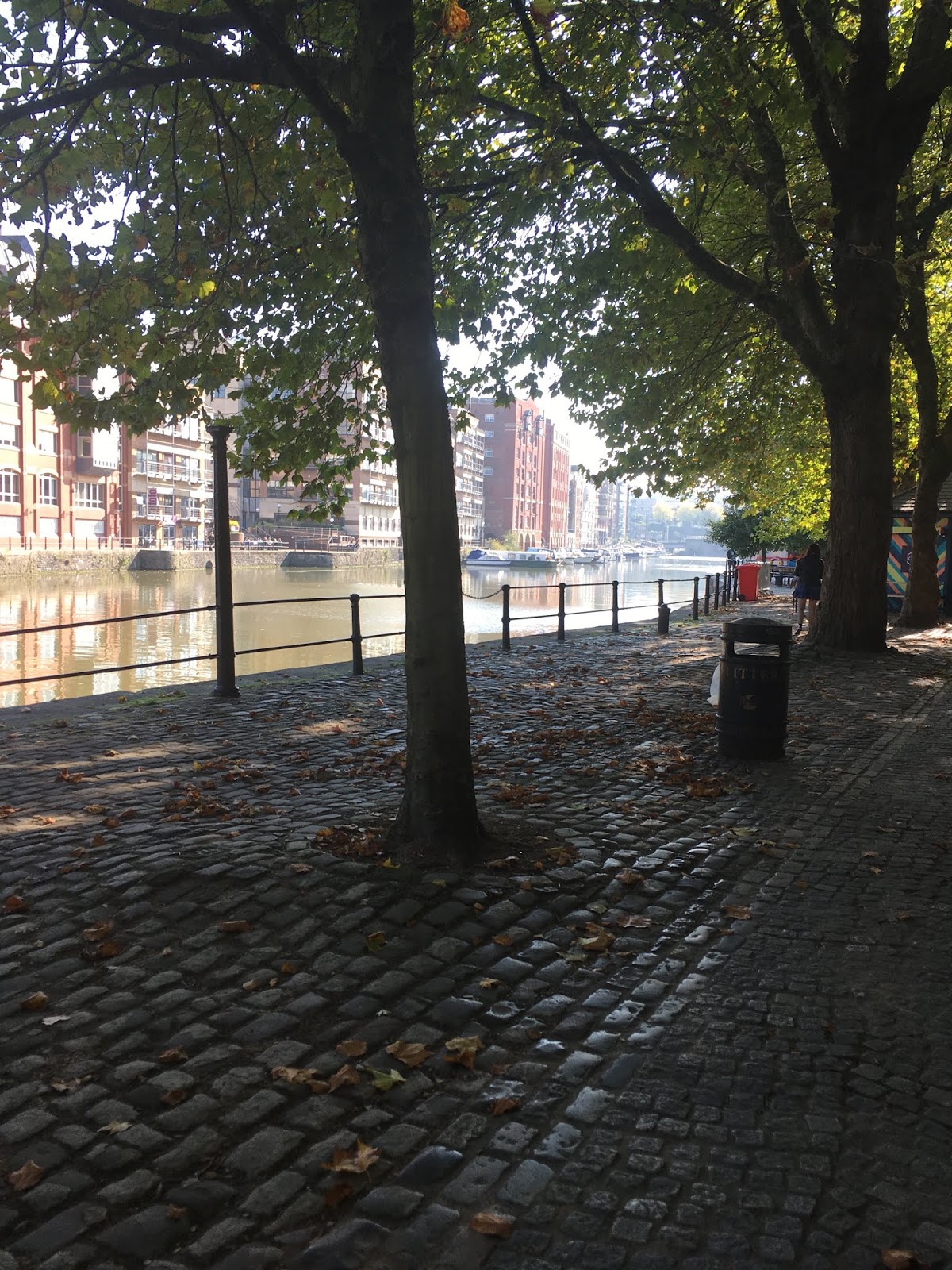
The past in Europe is at your feet; on cobblestone streets or just while
shopping or eating.The existence of many towns are reminders of the past, but there are also many distinct memorials.
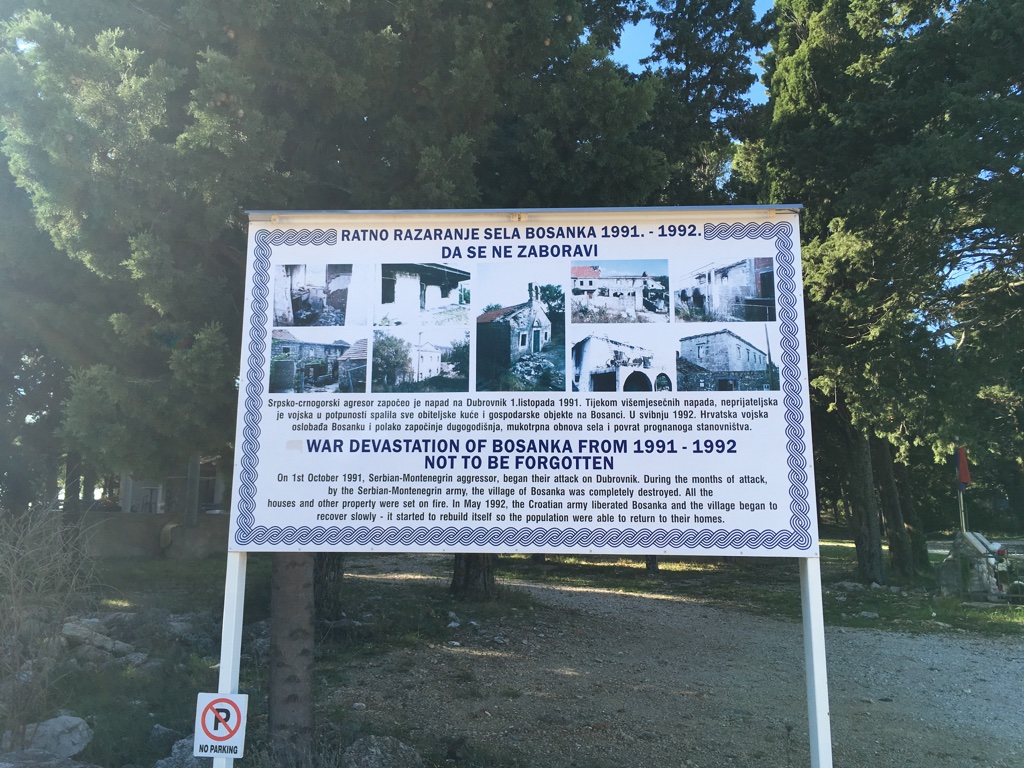
We have found fascinating memorials, both formal memorial and informal https://chosenfugue.wordpress.com/2019/07/21/the-budapest-marathon/
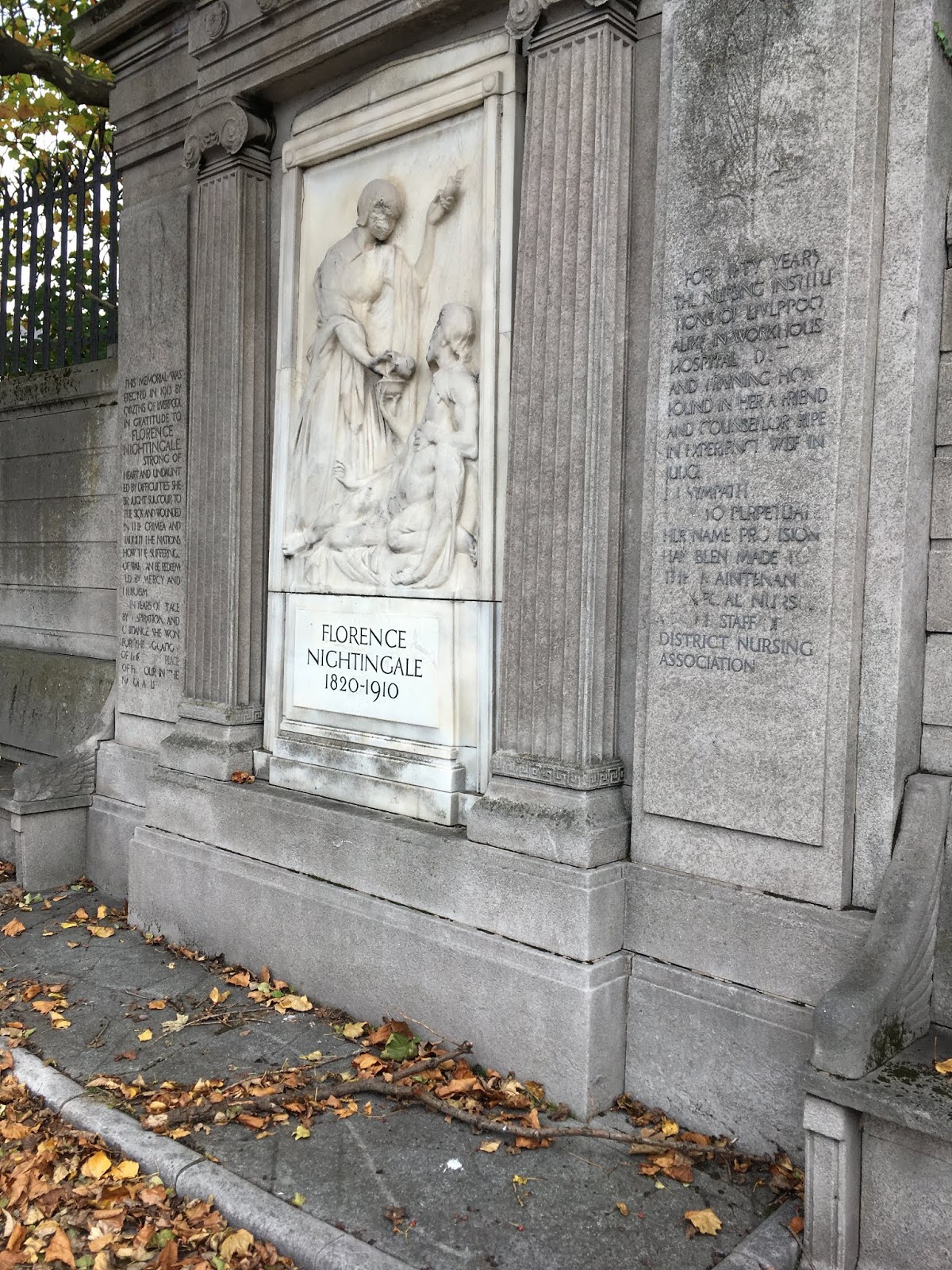
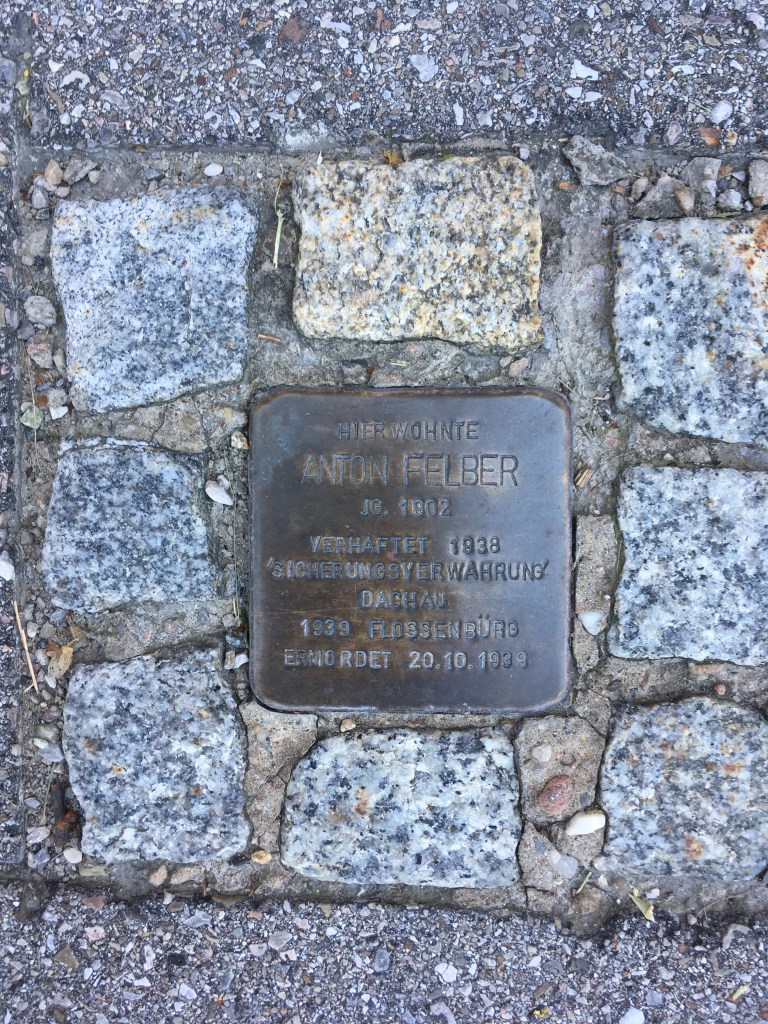
Effective memorials are difficult to create. Stolpersteine are very effective. Stolpersteine, or stumbling block are remembrances of those murdered or displaced by the holocaust. They are placed at the last chosen home, work or school or where someone was forced to live. The people honored were murdered, forced to immigrate or just lost. They are placed for individuals or whole families who are then “reunited” by the Stolpersteine. http://www.stolpersteine.eu/en/
We first saw them in Berlin about 10 years ago, very concentrated in the old Jewish area. Some countries do not allow Stolpersteine or have proportionately few, many of these are countries that are reluctant to reflect on their own participation/complicity in the holocaust (Romania, Croatia). https://en.wikipedia.org/wiki/List_of_cities_by_country_that_have_stolpersteine
It is decimating each time we stumble on the brass plaques. You are there, in their place.
Saarbrüken

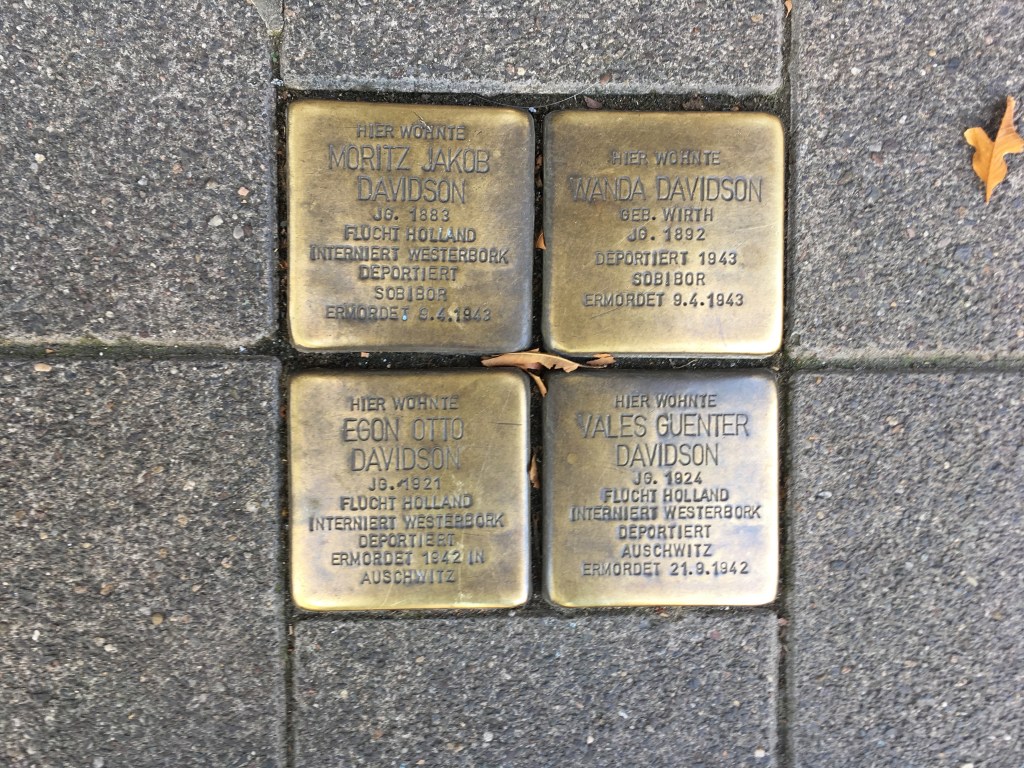
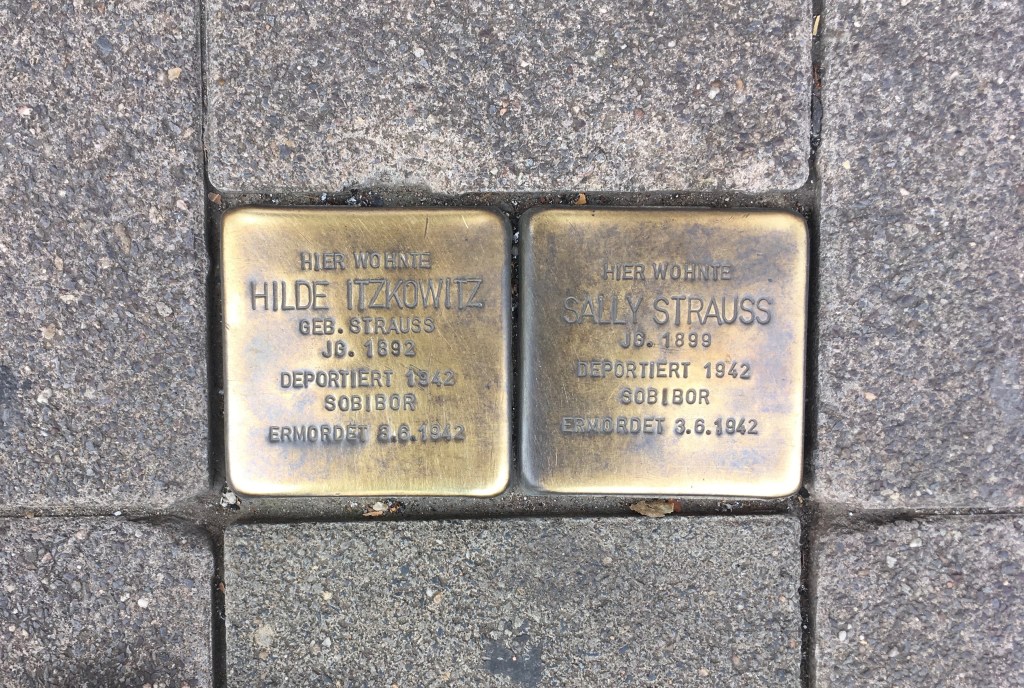
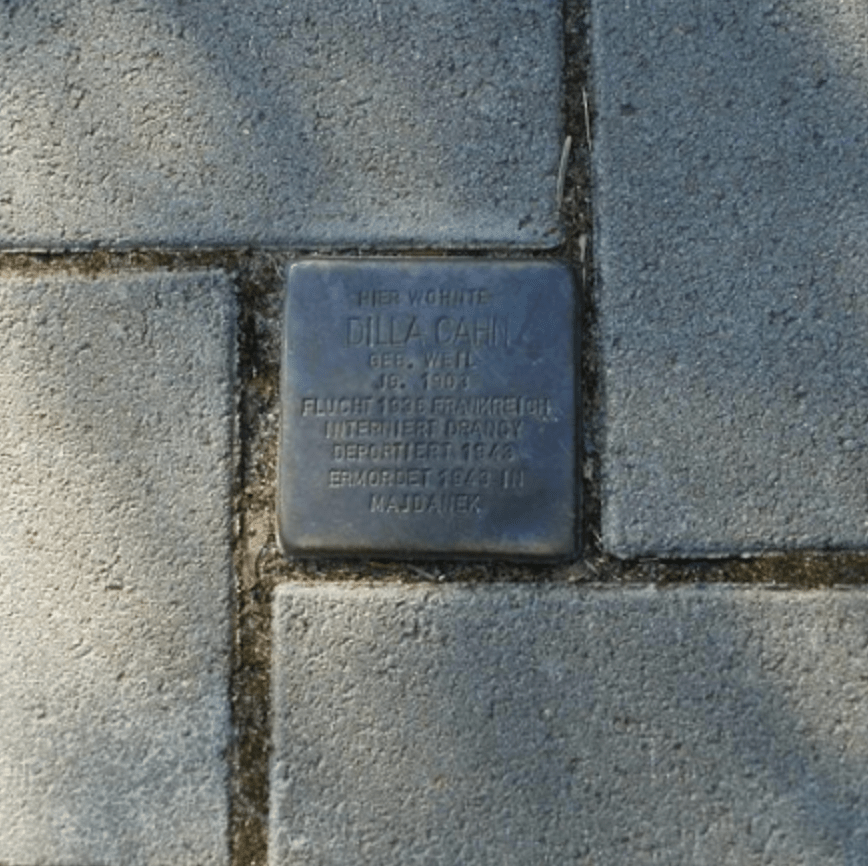
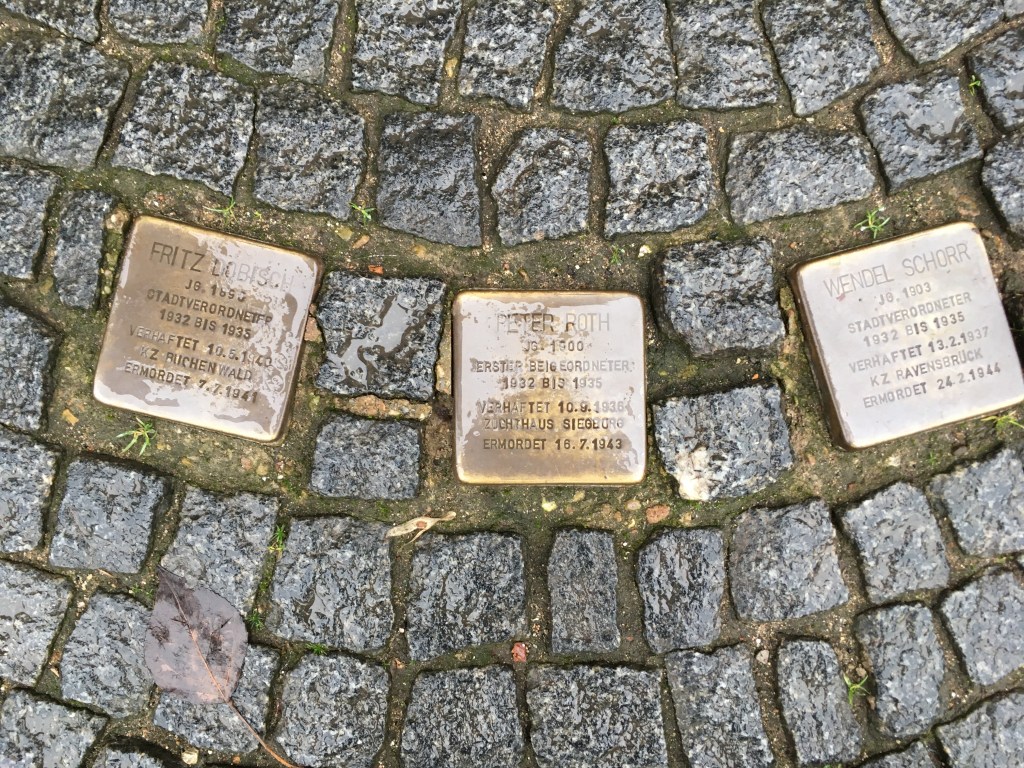
Frankfurt
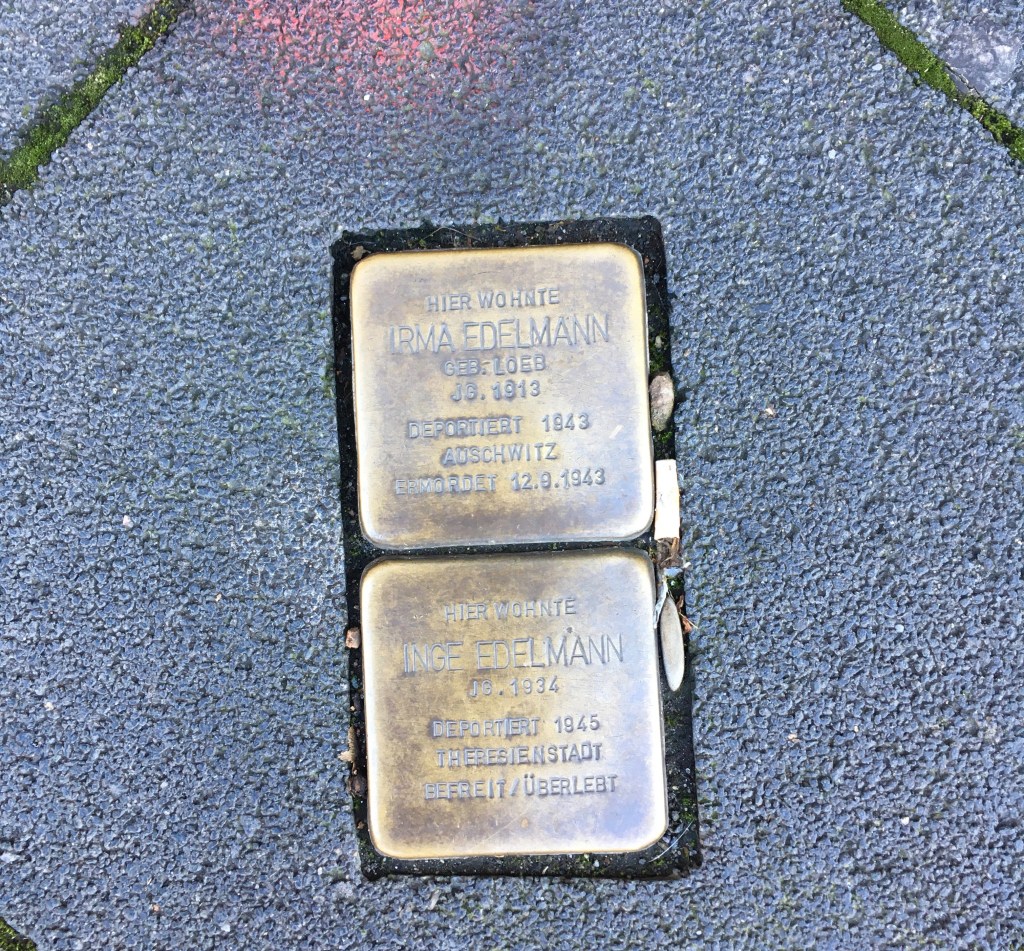
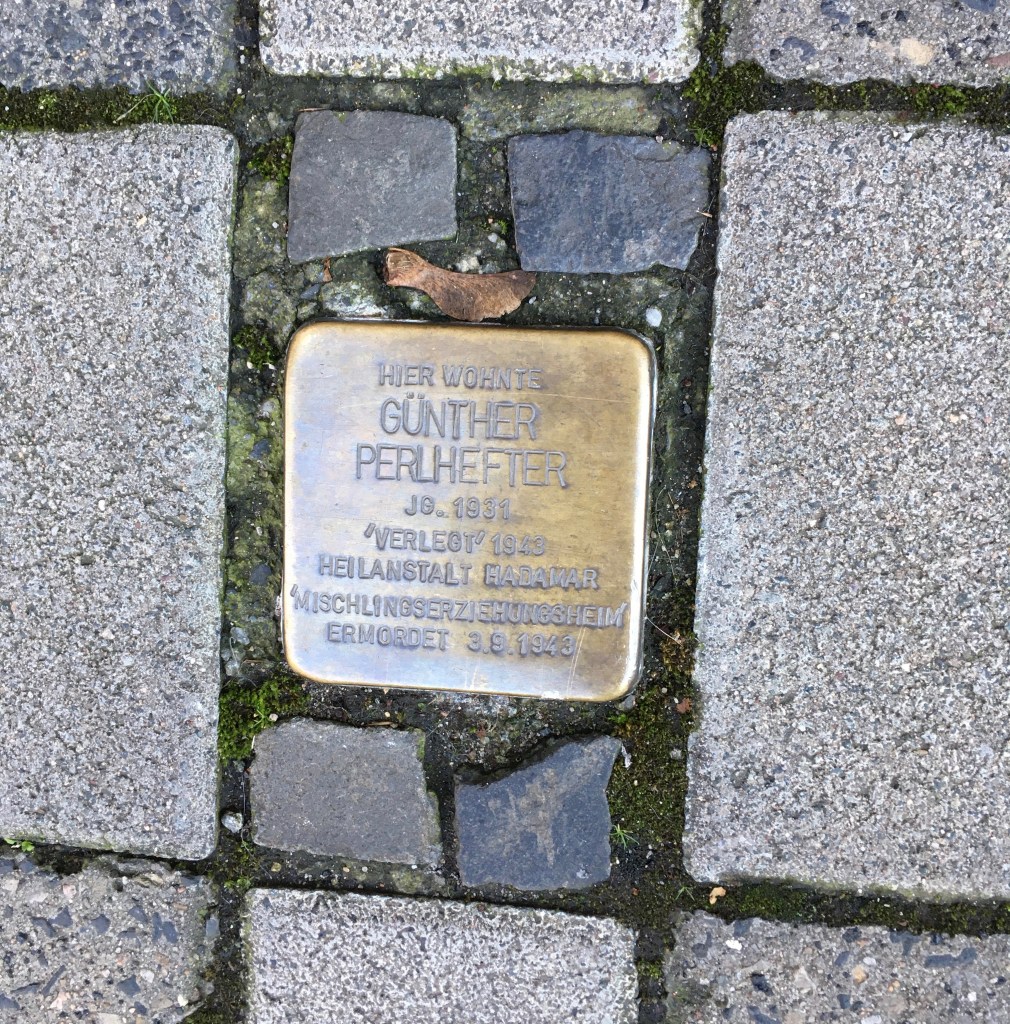
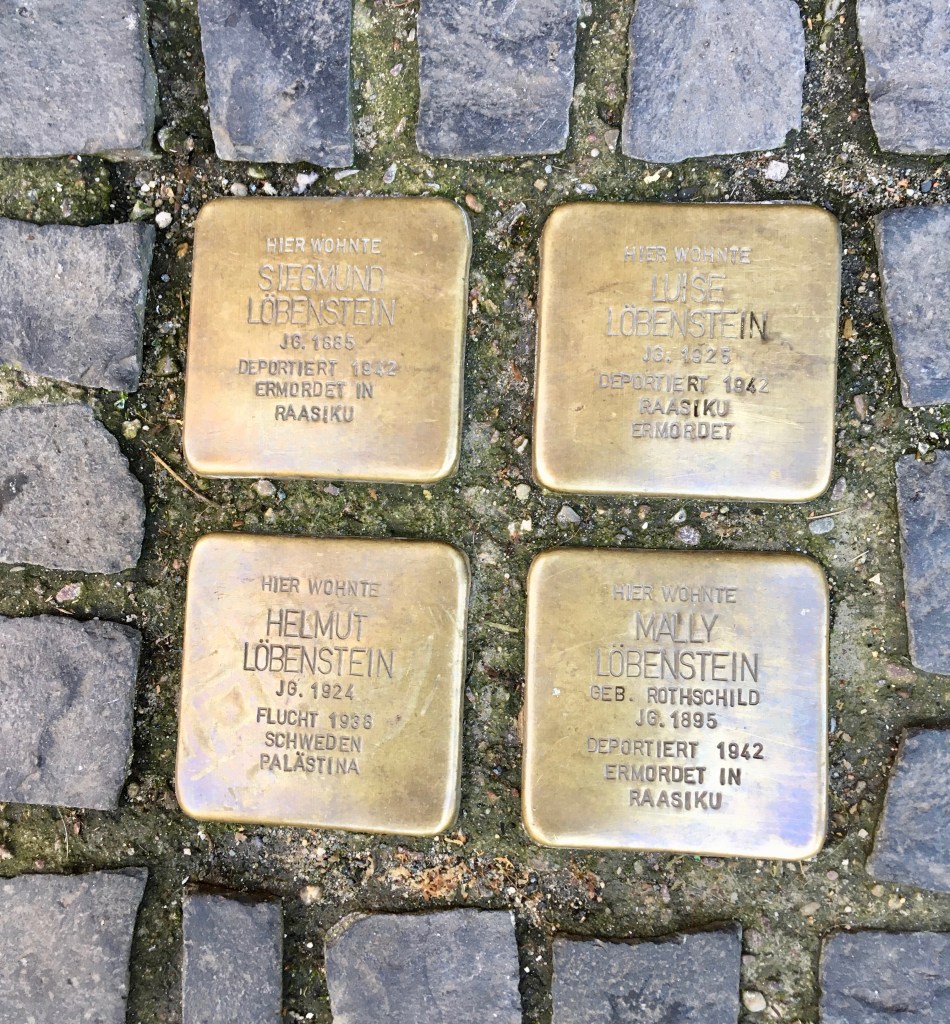
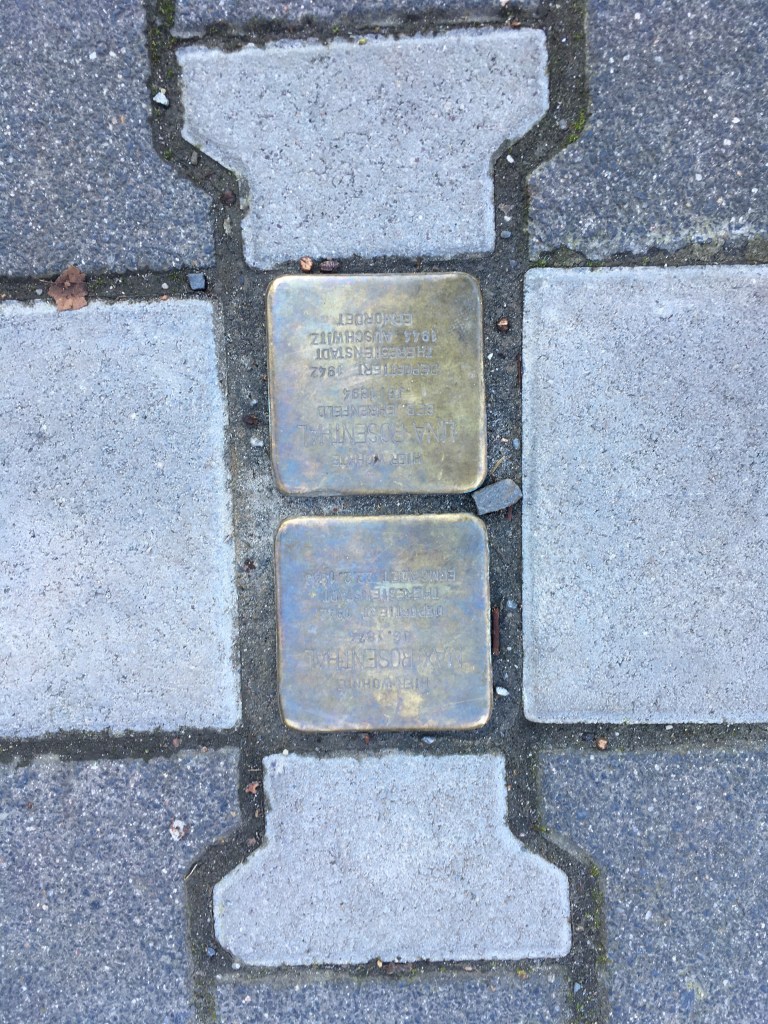
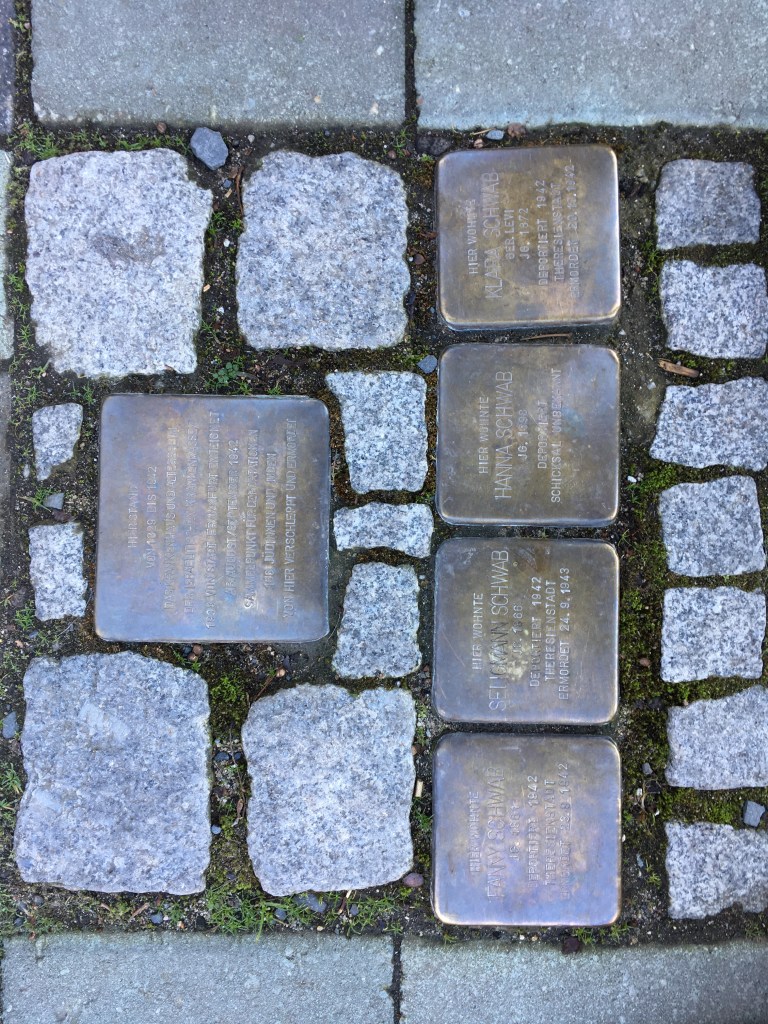
Most of the Stopersteine are for Jews who were murdered since they were the primary group targeted but they also exist for slave laborers, the Sini, the Roma, developmentally disabled, Catholics, Jehovah’s Witness, partisans or LGBTQ who were also targets for extermination. Most are for individuals but there are some at hospitals or slave labor factories where the individual names will never be known.
Worms
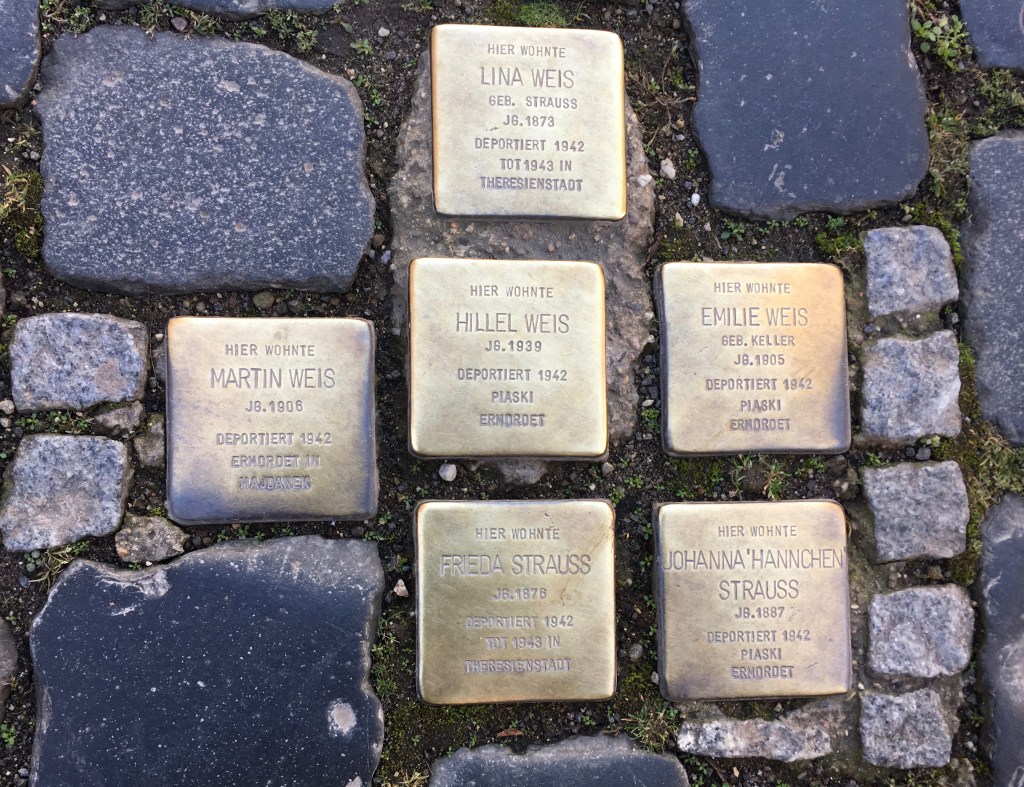
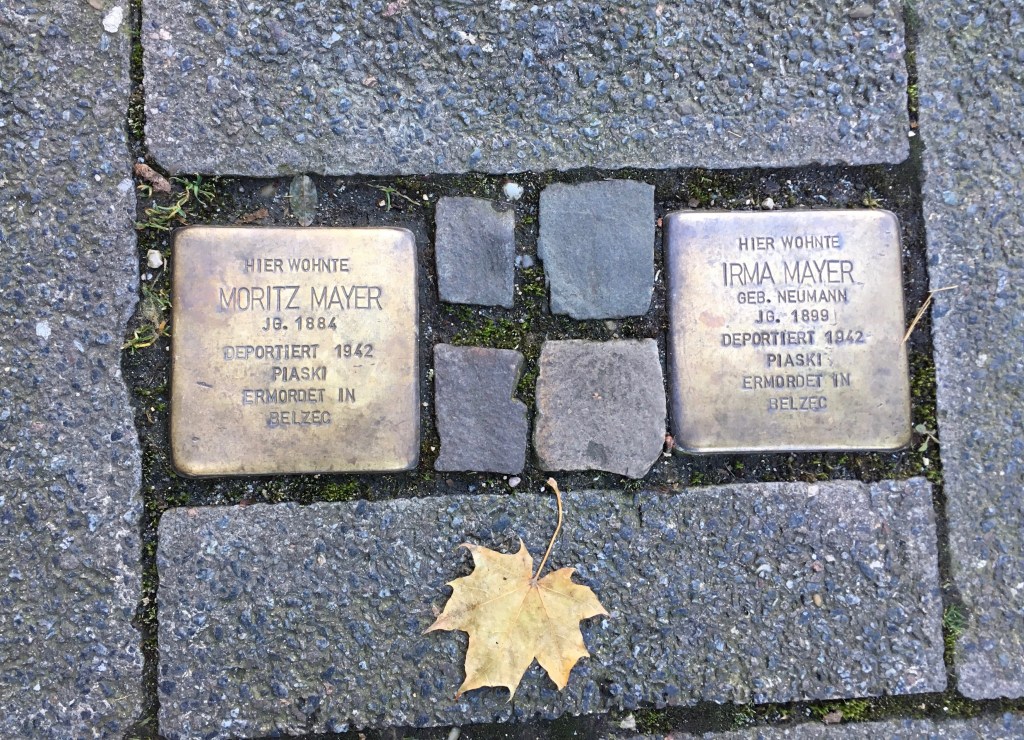
Cologne (Köln)/ Bonn
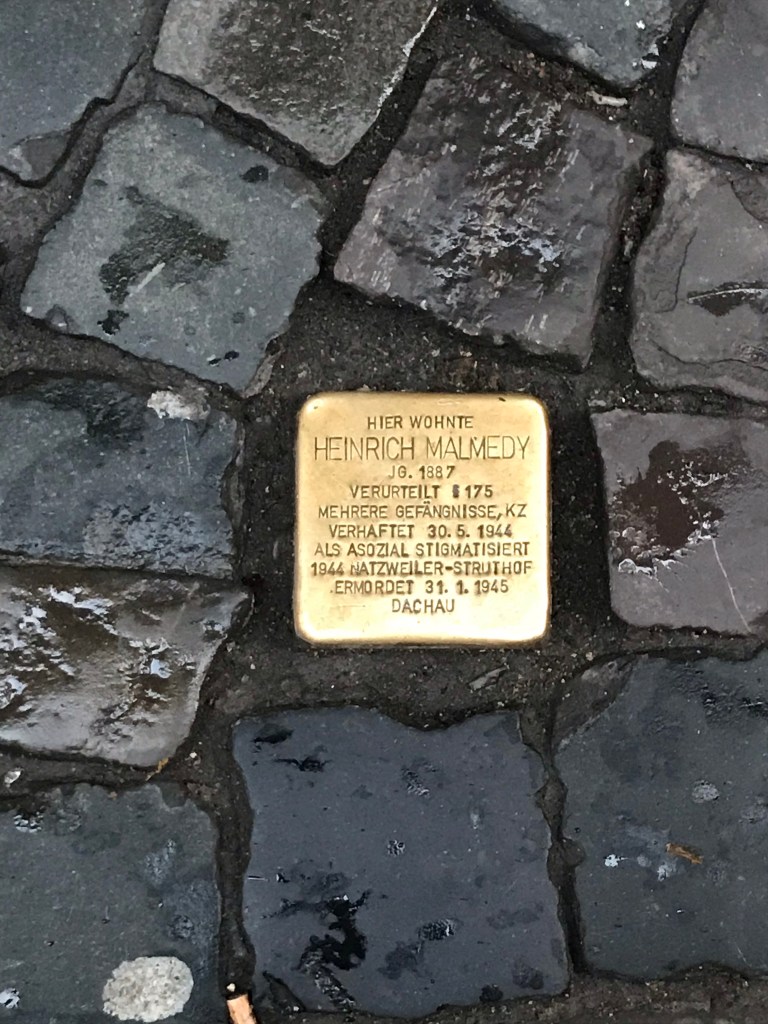
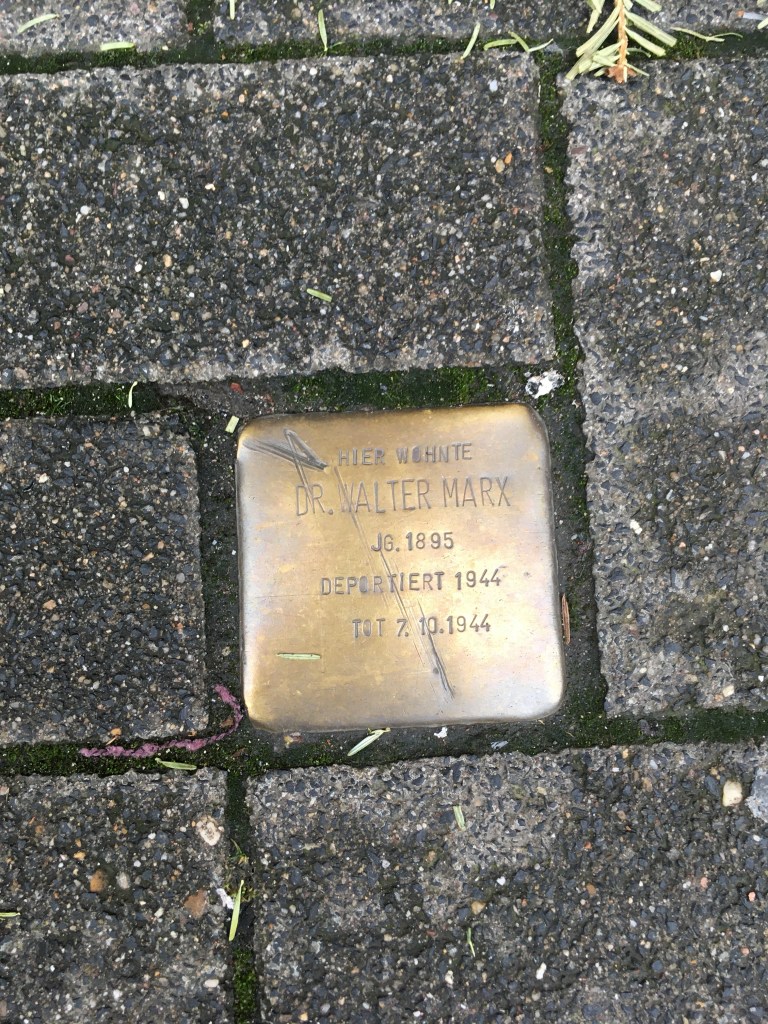
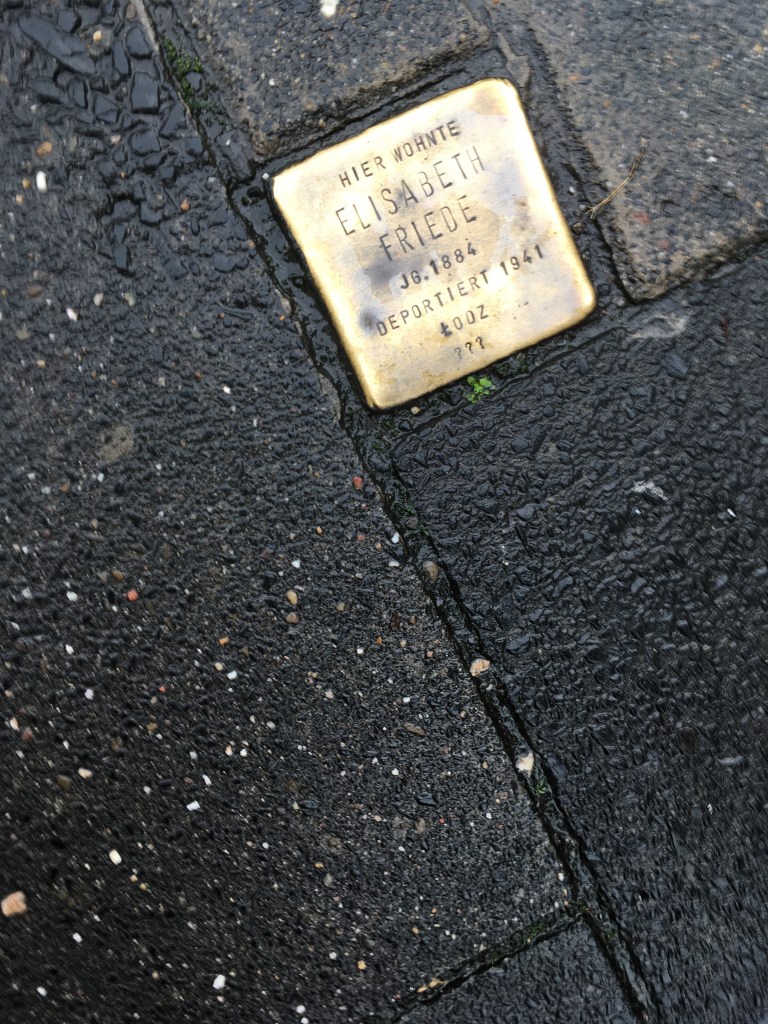
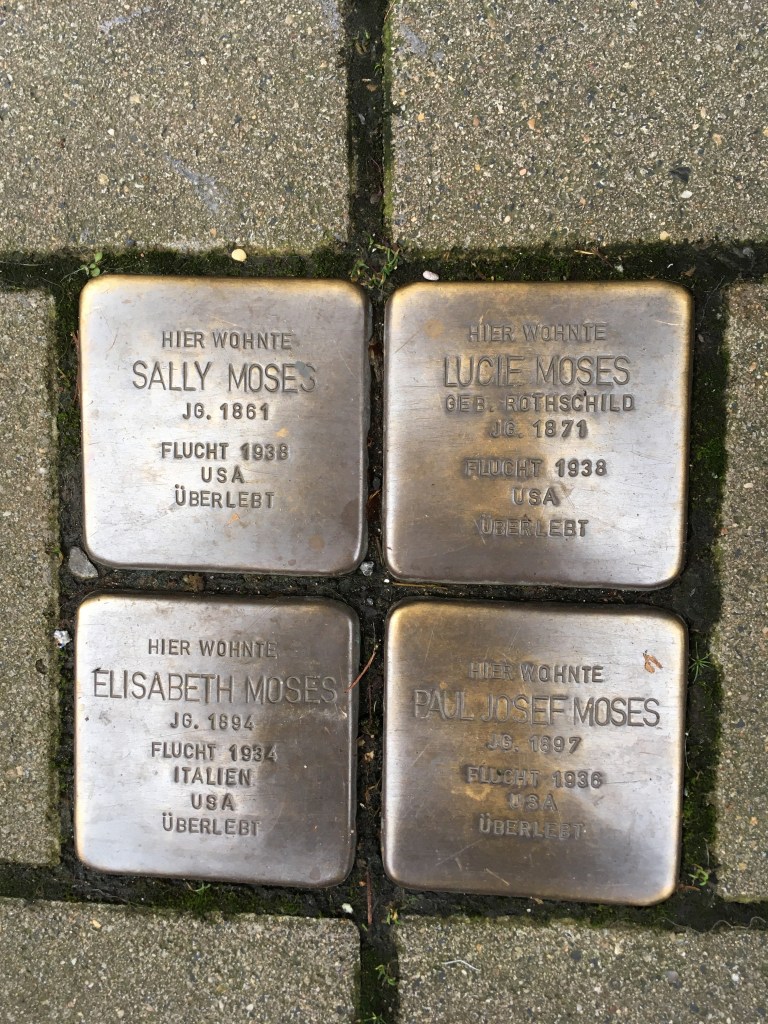
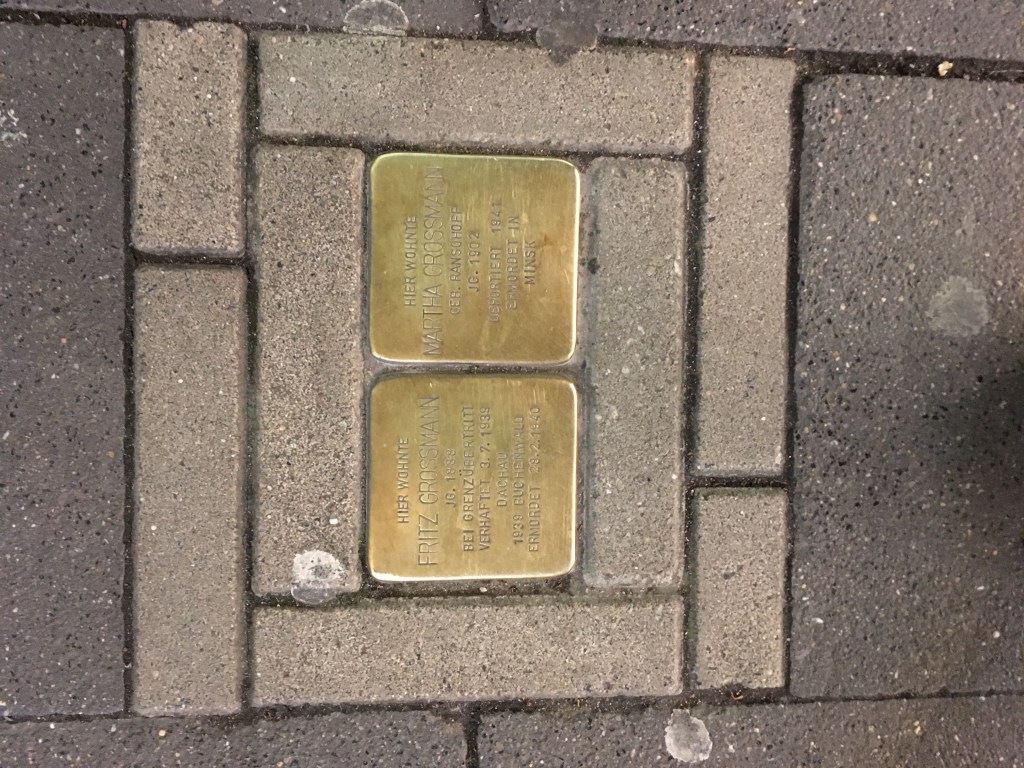
Gegenbäch (Black Forest)
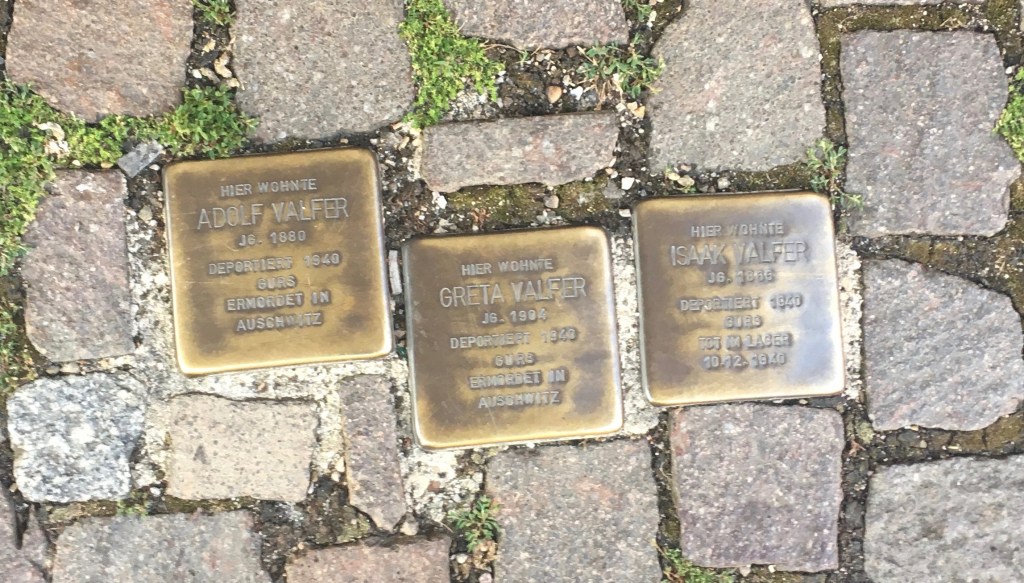
Heidelberg
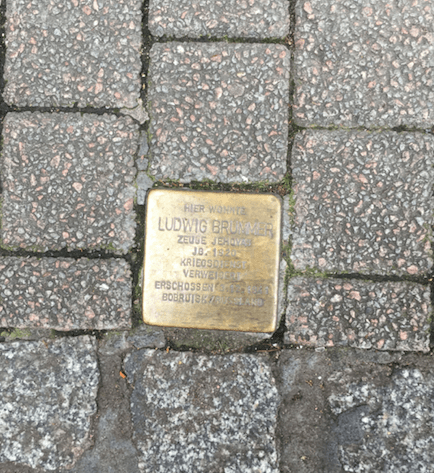
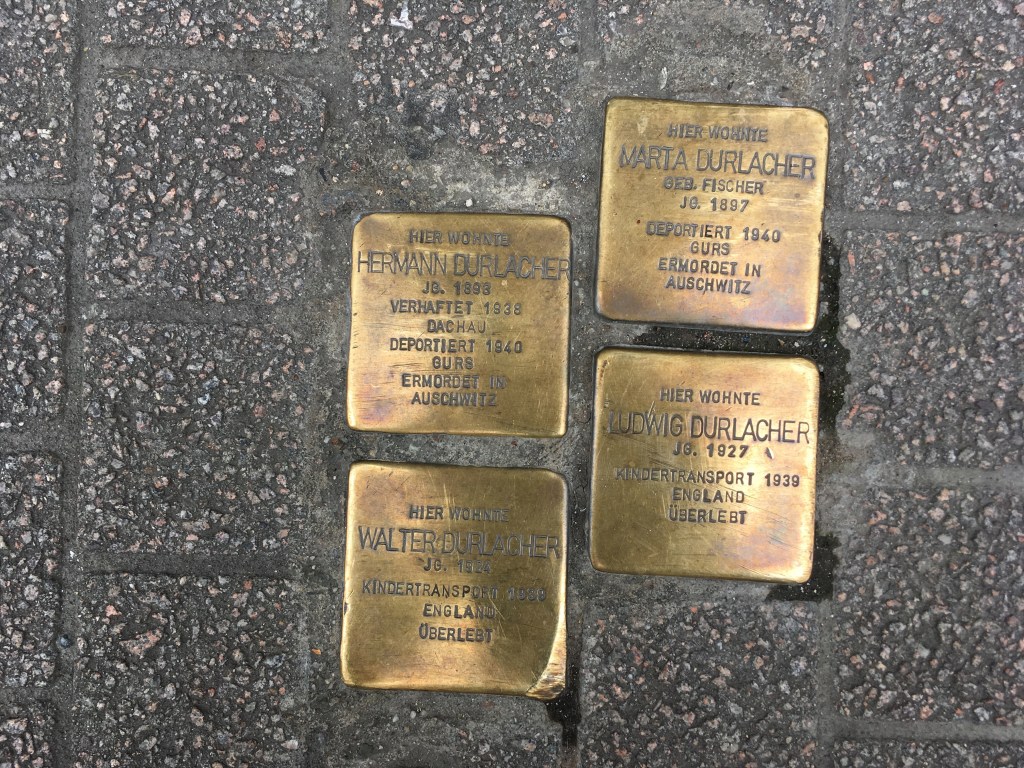
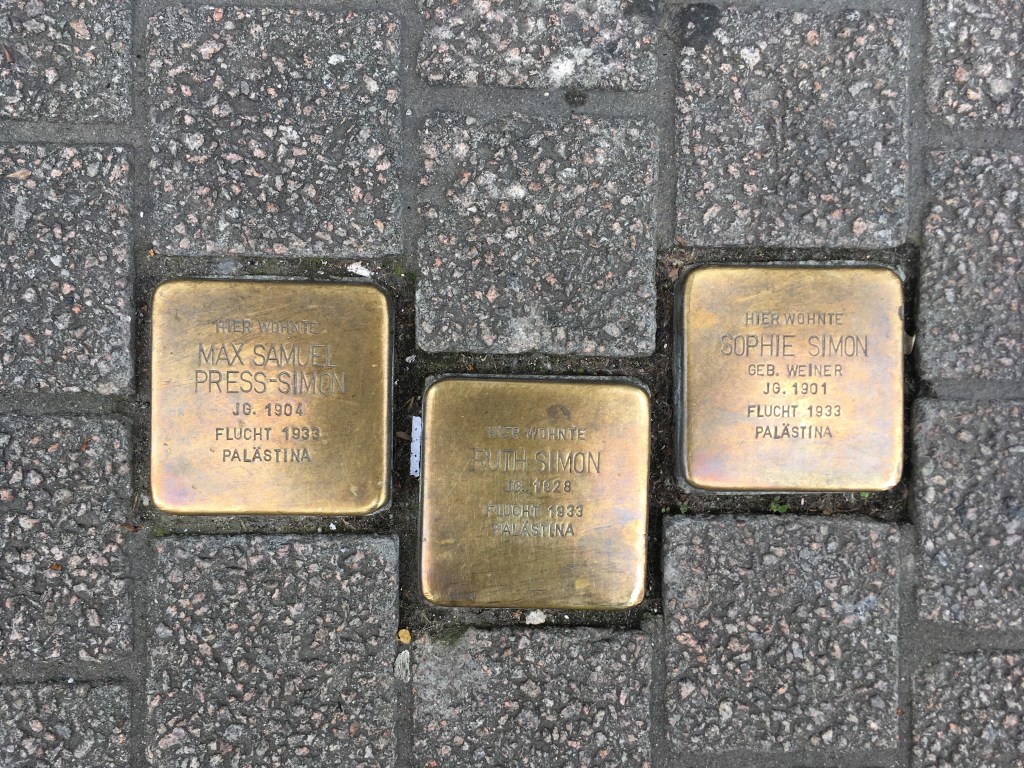
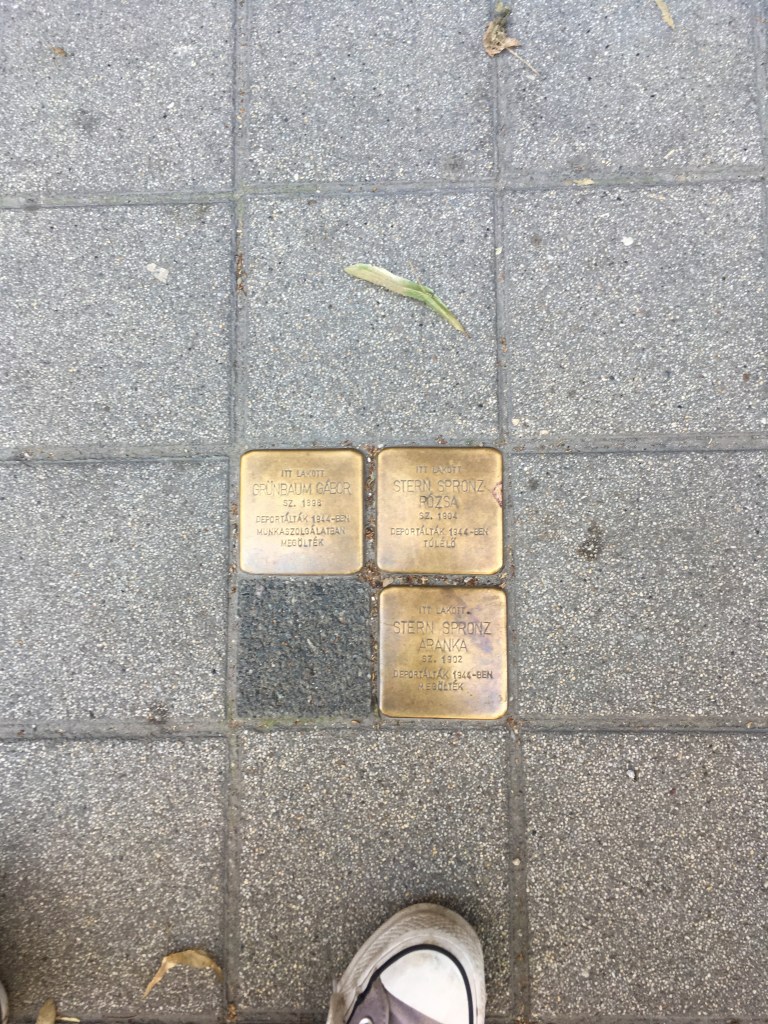
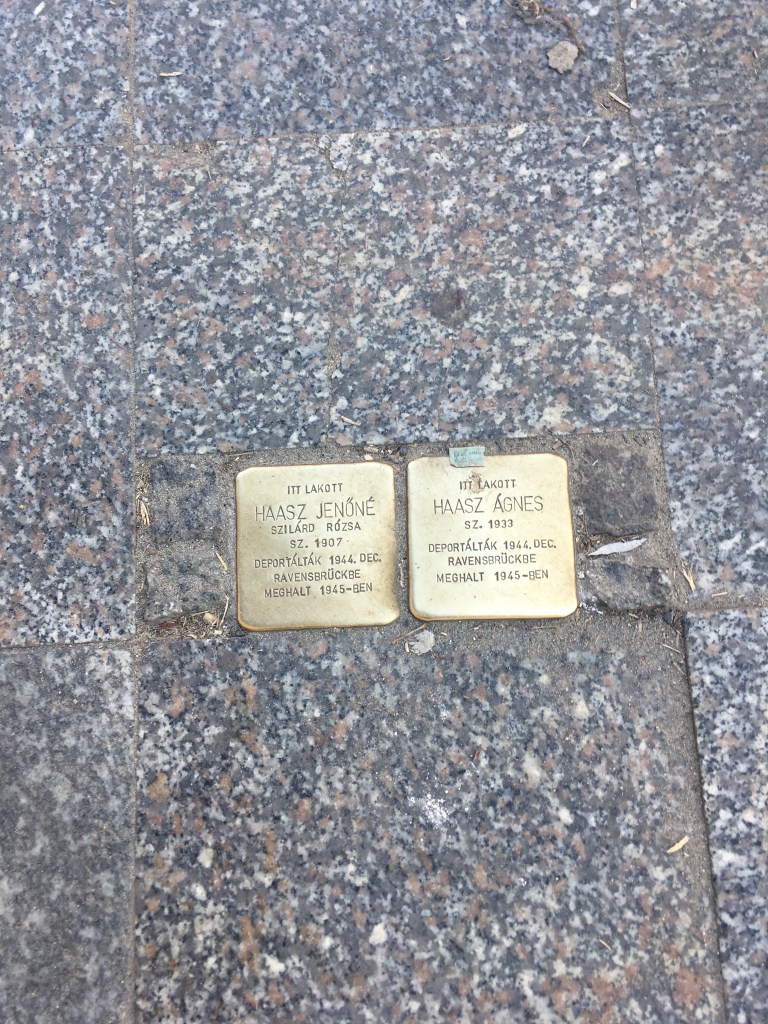
Budapest
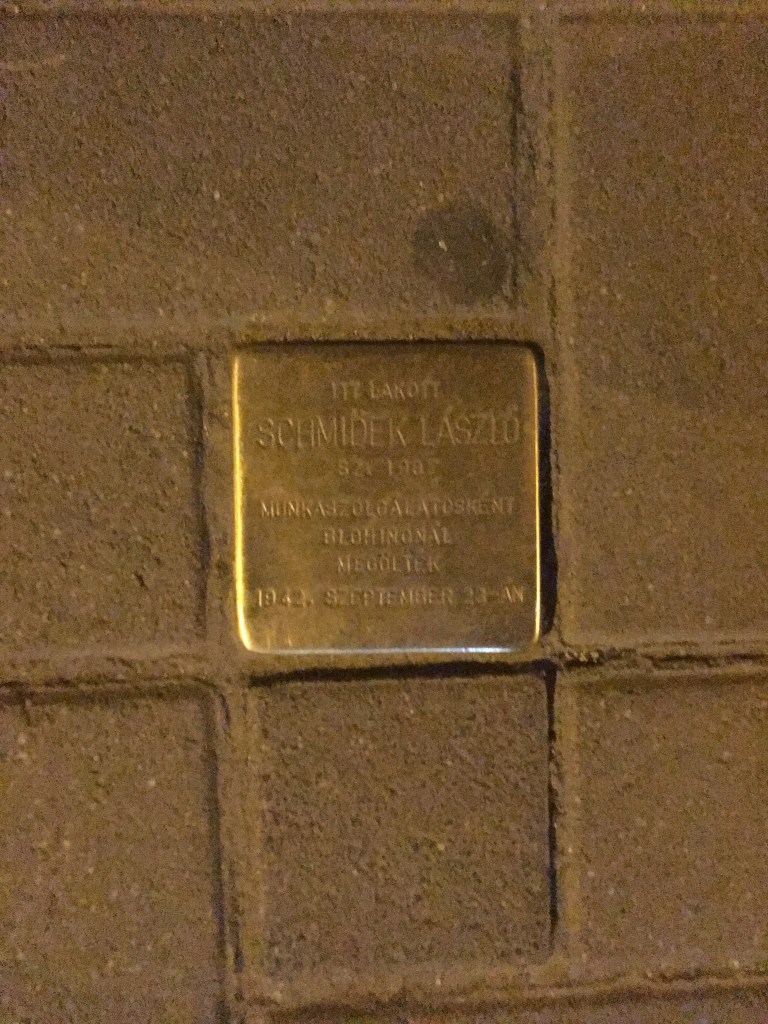
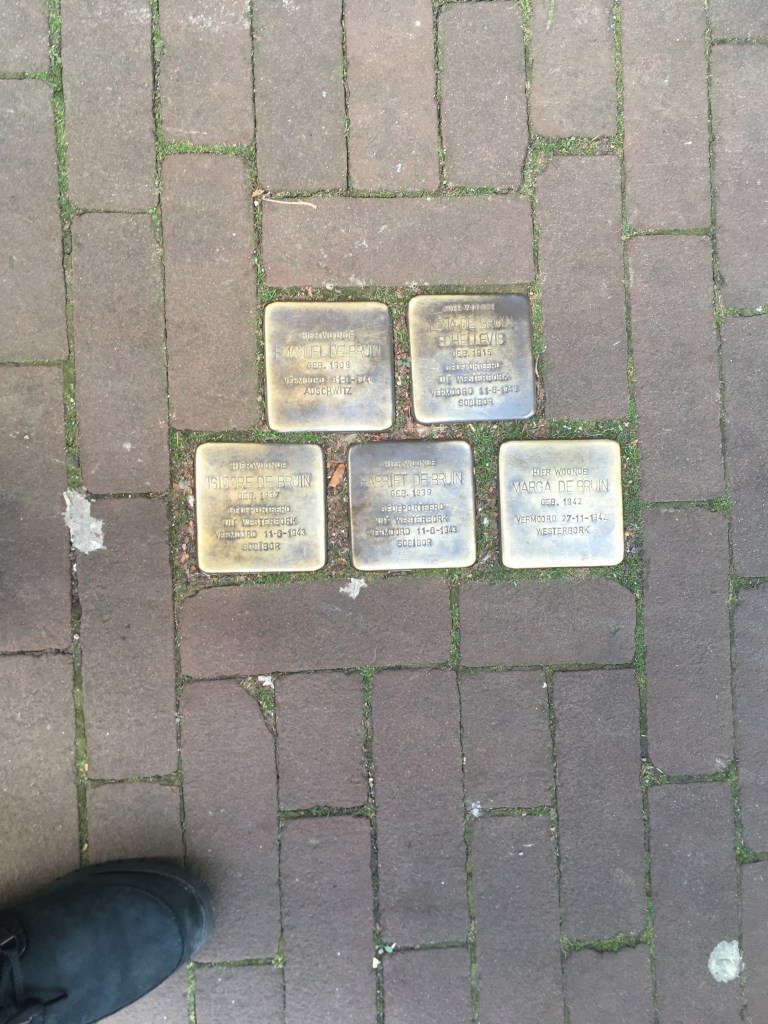
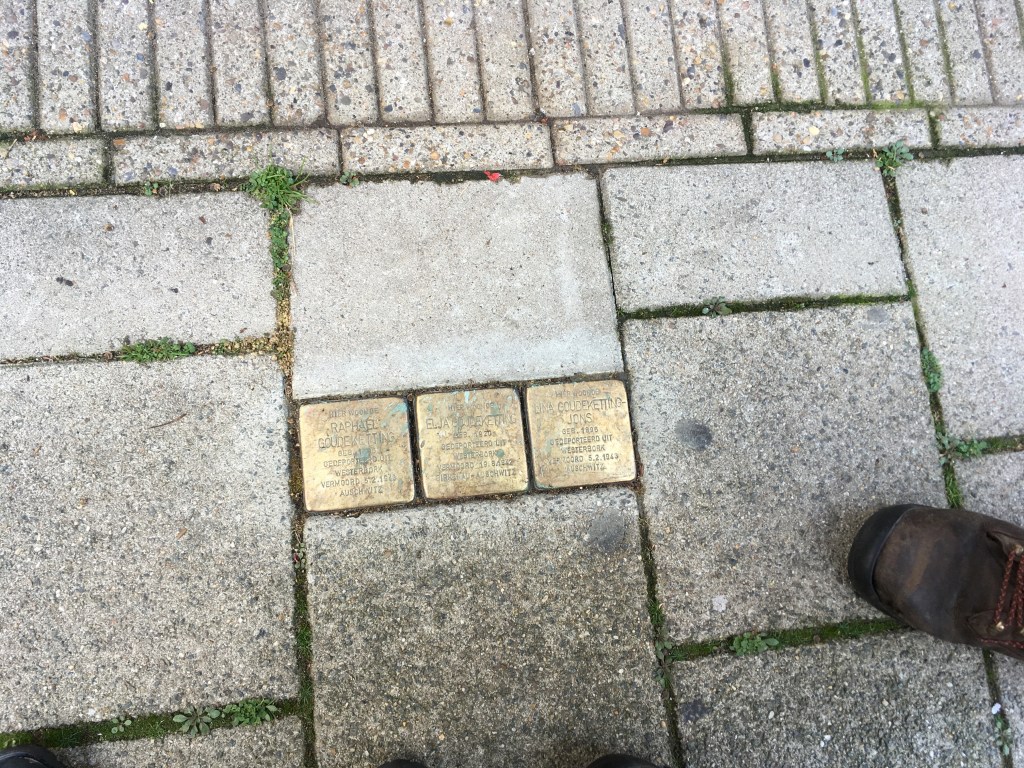
Amsterdam
Freiburg, they were everywhere (liberal, university town).
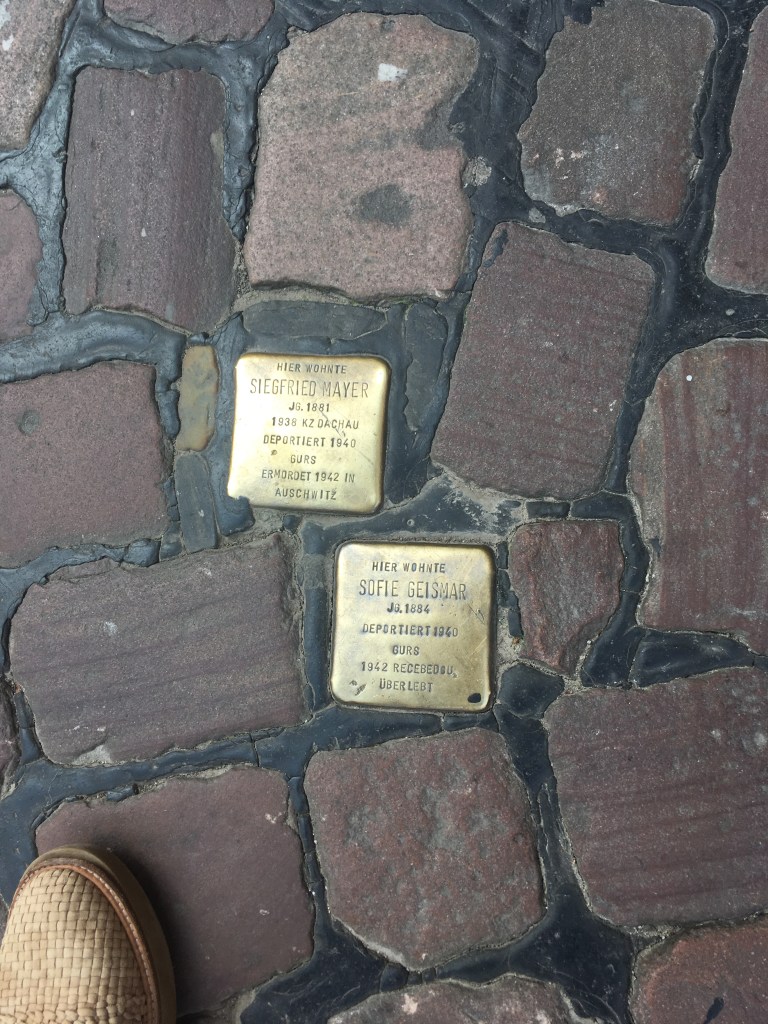
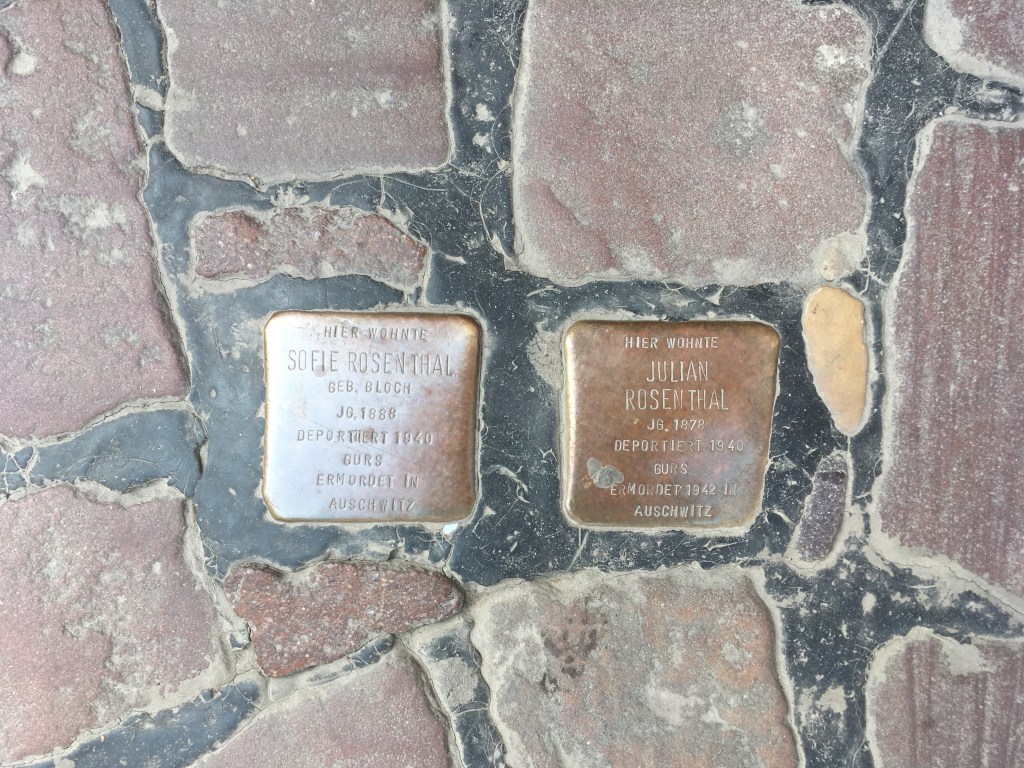
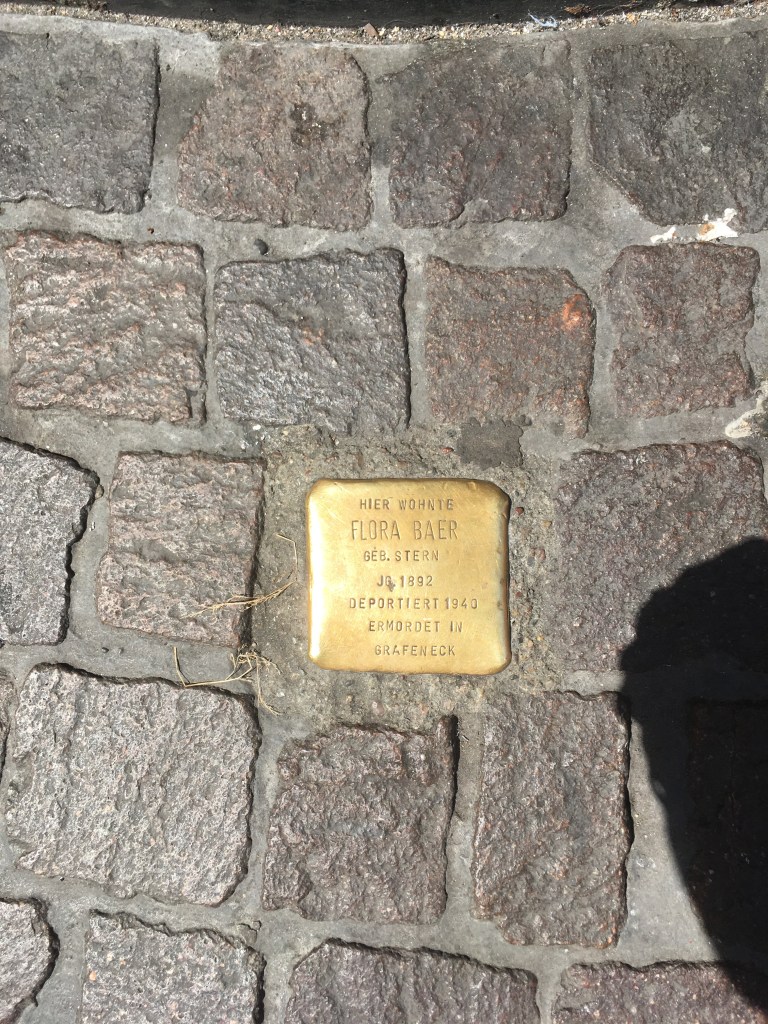
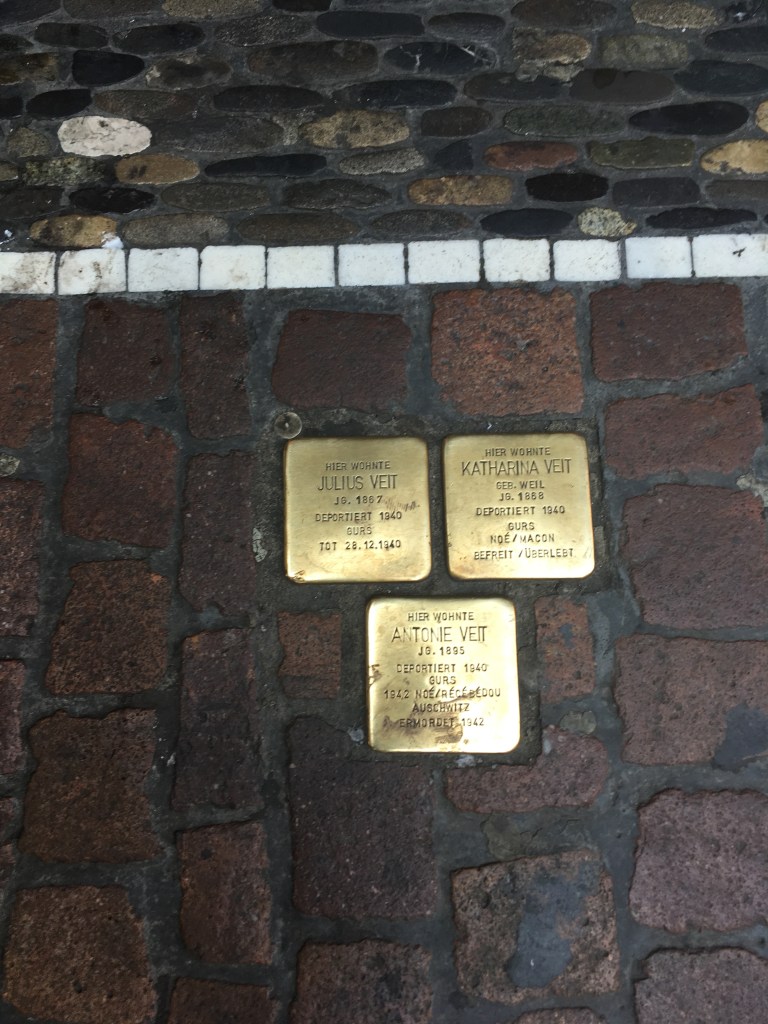
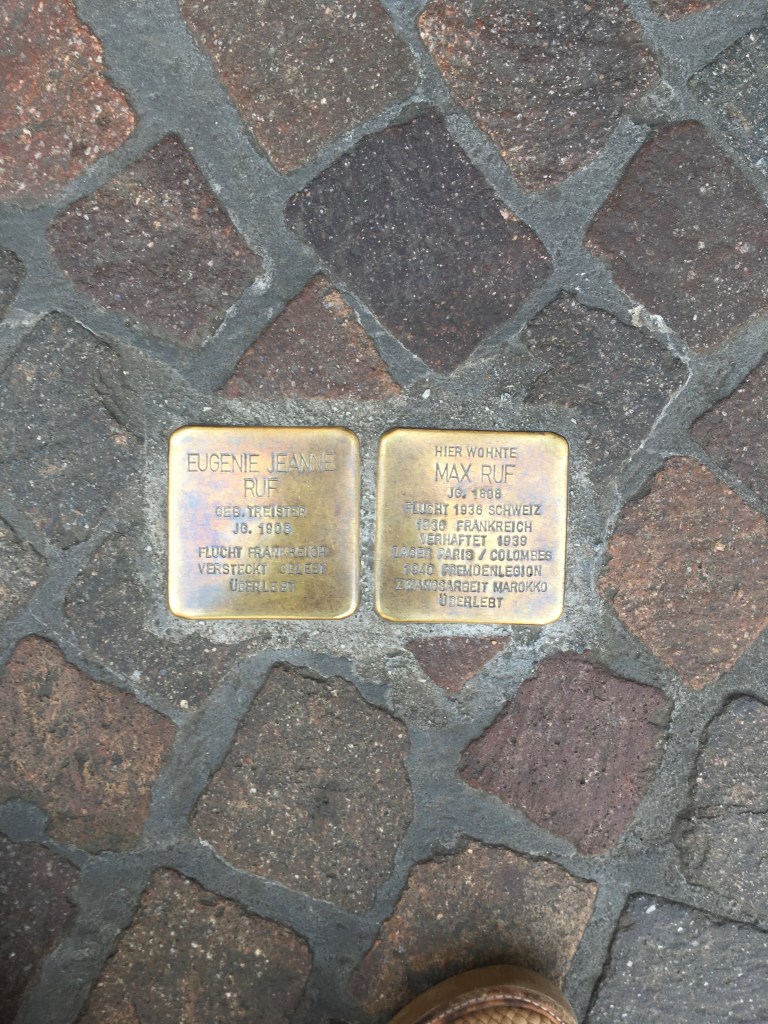
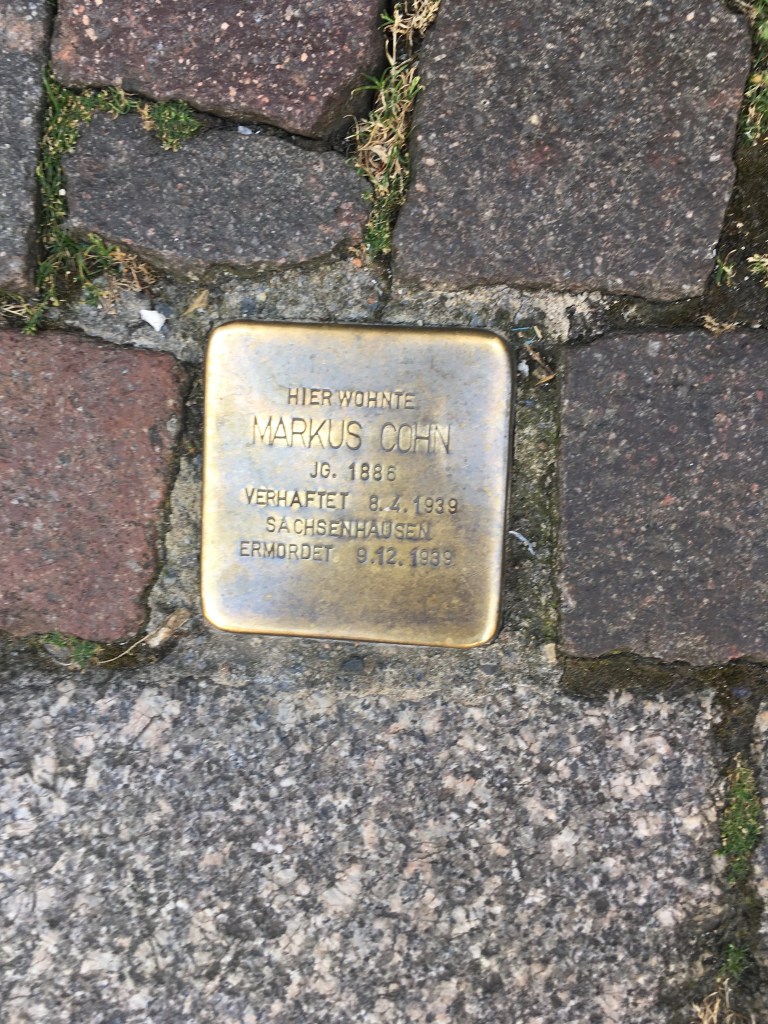
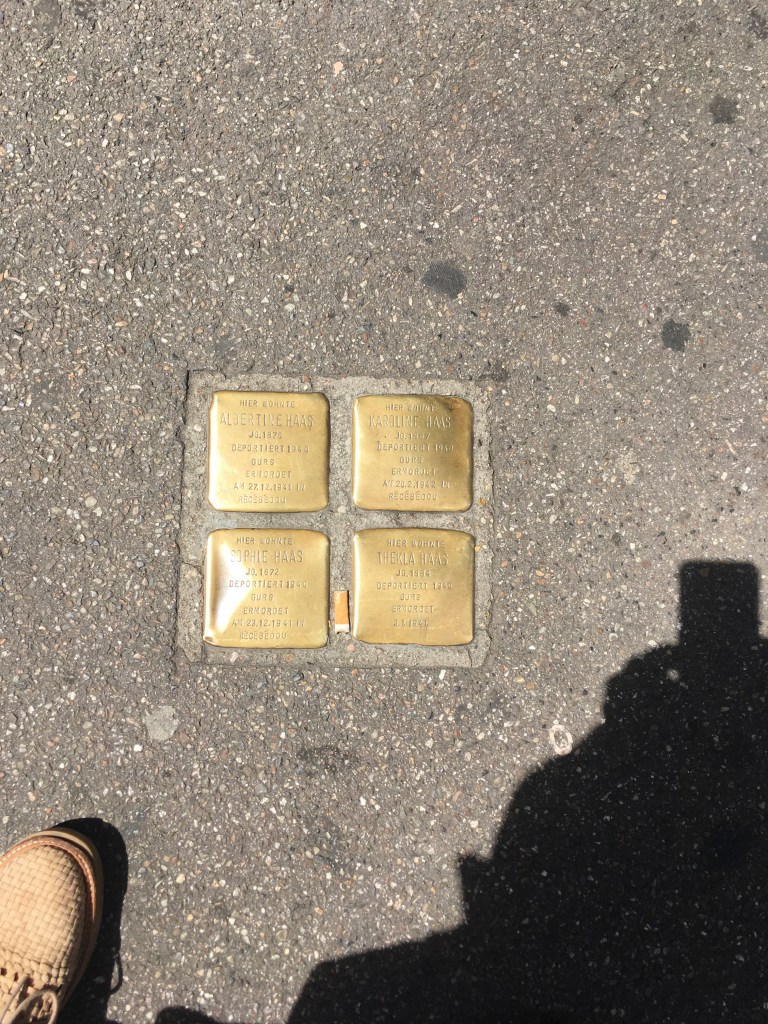
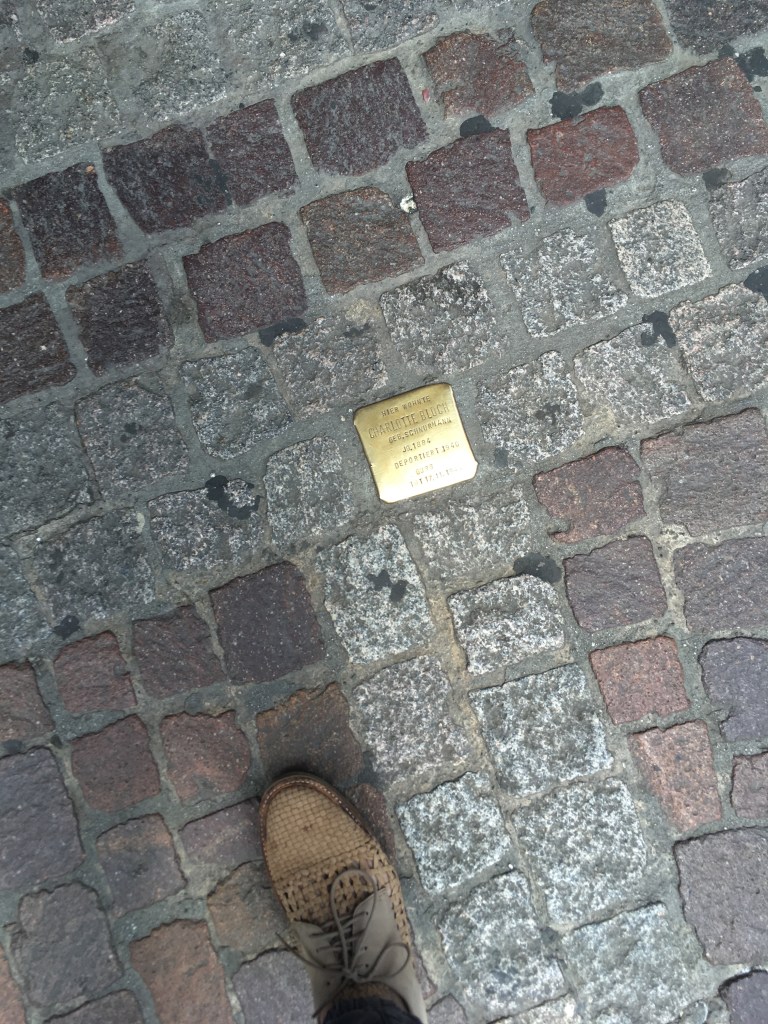
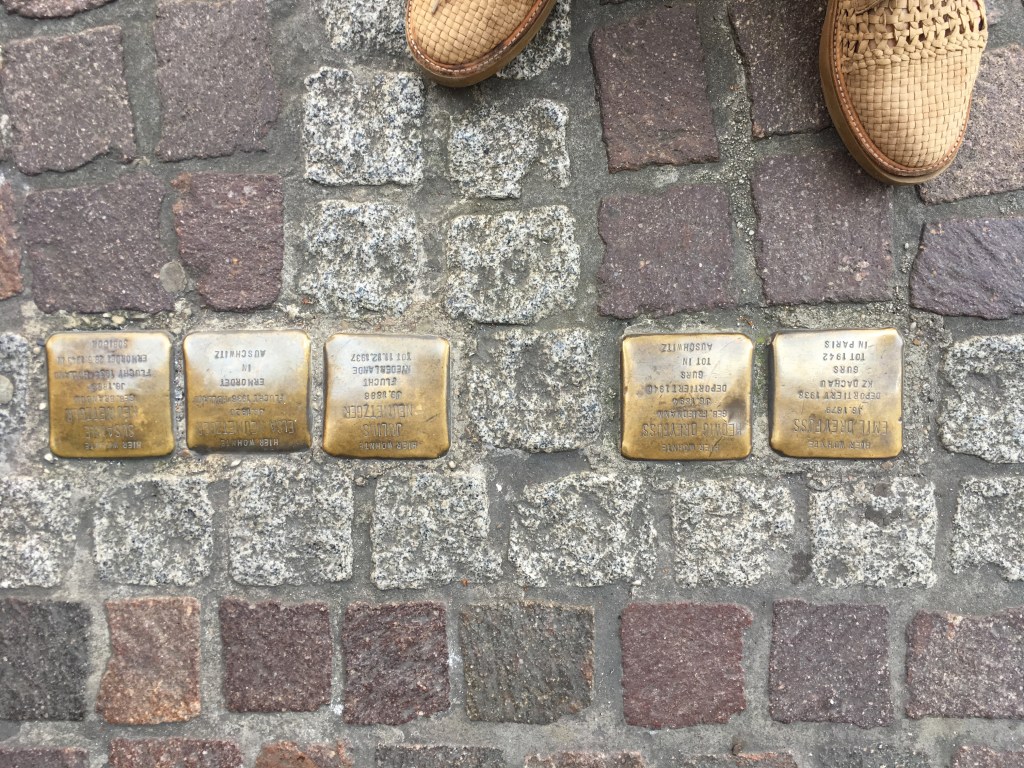
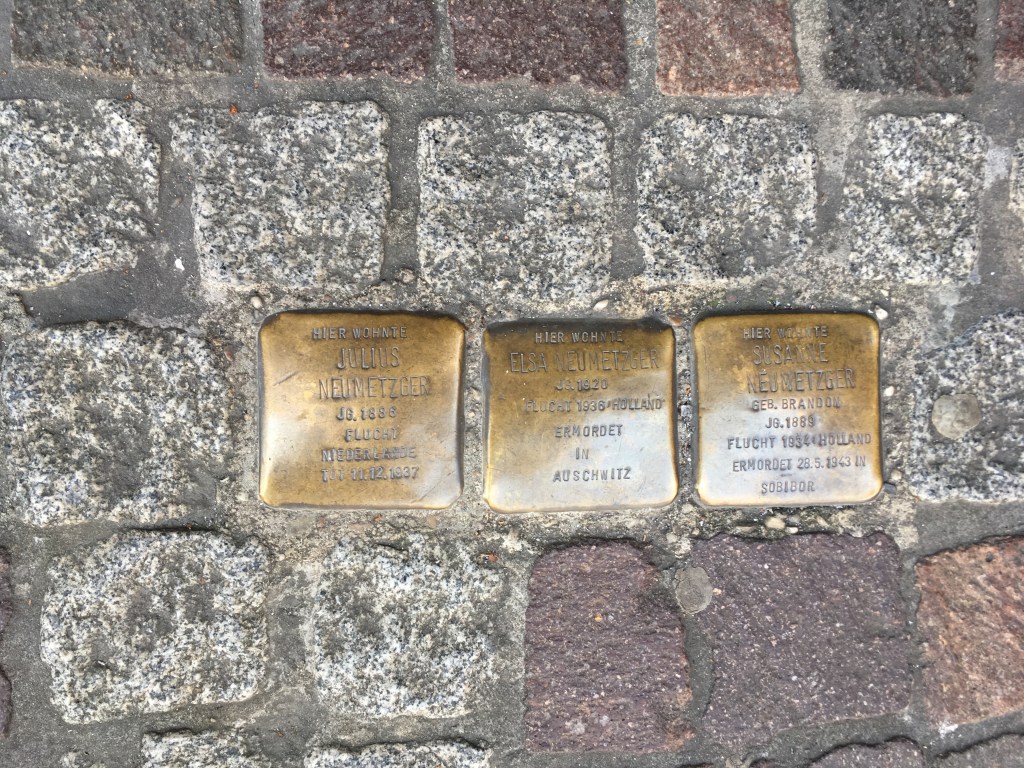
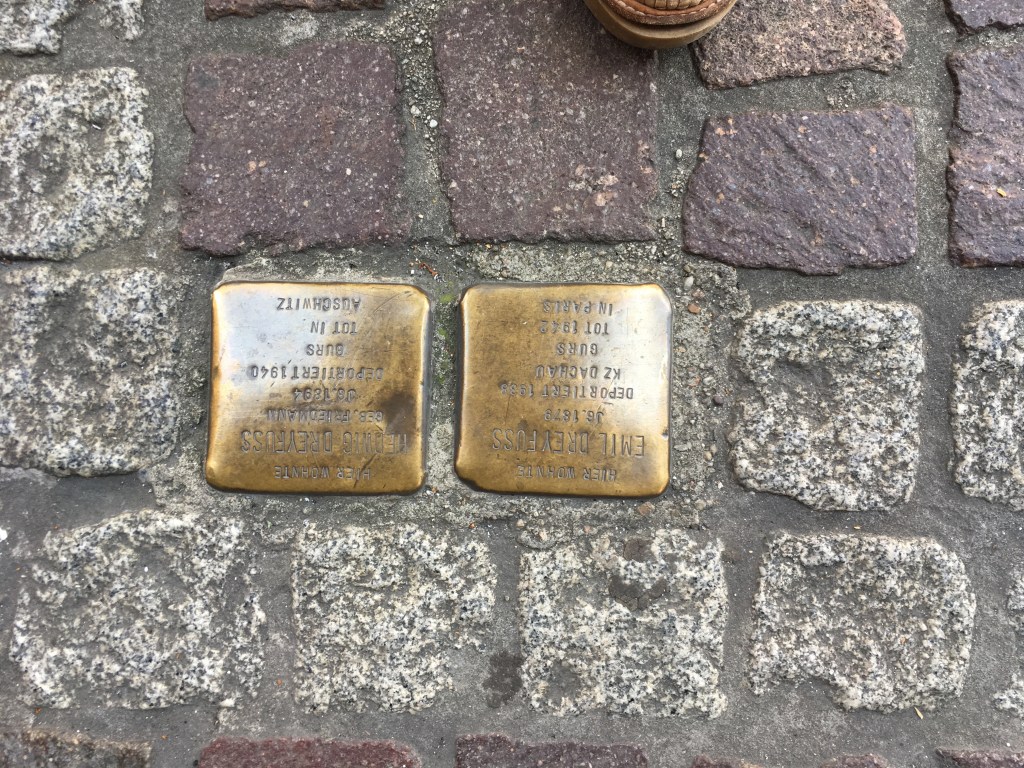
Even in countries where there are many throughout the country, like Germany, there was local controversy as we saw in Munich, allowed only on private property. https://thechosenfugue.blogspot.com/search/label/Munich.
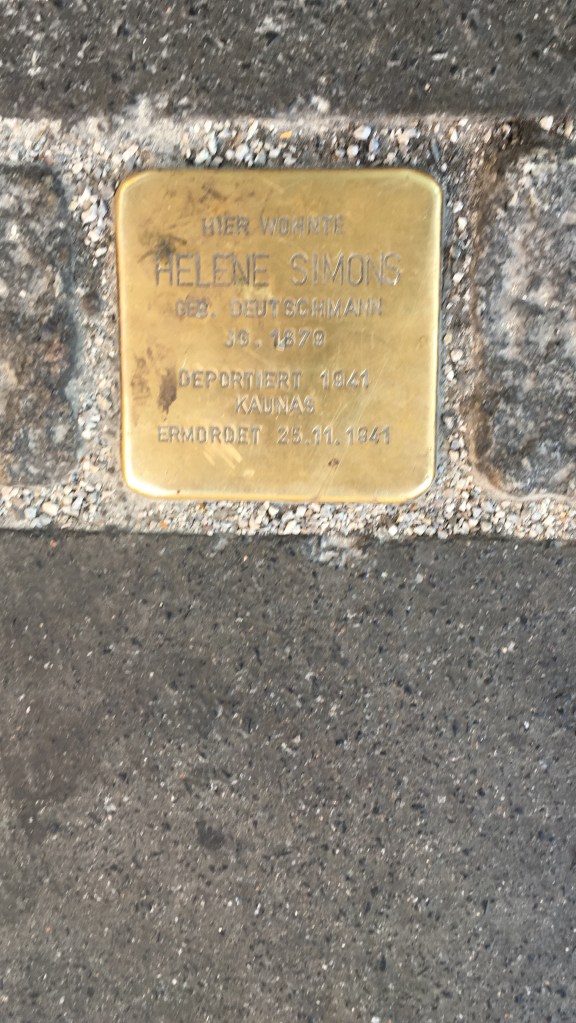
Some countries, like Bulgaria, that do not have Stolpersteine have a history that is far more benign than most.
https://encyclopedia.ushmm.org/content/en/article/bulgaria
While others, like Croatia, have a more complicated history. In Split, Croatia, we did not see any Stolpersteine, but we did see this plague on the ground, which describes the destruction of the synagogue during Shabbat on 1942.
This was put in place in June 12 2018, 76 years after the attack on the synagogue “for the sake of the Split residents so that they become aware of this event that was repressed from their memory and that it must not happen again” (Mayor statement).
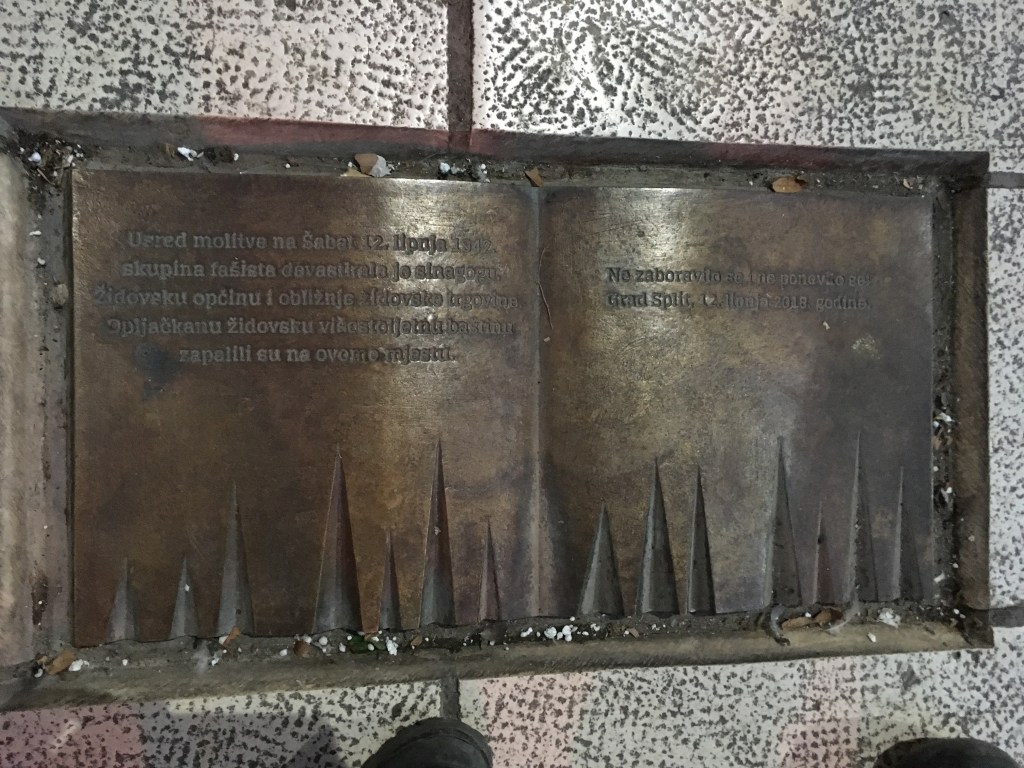
As with the Stolpersteine, this was placed in a sacred space. The plaque is in front of the now closed (in 2017) Morpurgo bookstore, which was the third oldest bookstore in Europe. We stumbled across it just after visiting the Jewish cemetery and seeing quite a few Morpurgo family member’s graves. The Morpurgos were the owners of the book store and the store (and family) were key players in the Croatian nationalism movement in the late 1800s. And then we saw a Stolpersteine for a Morpurgo outside the synagogue in Trieste, just up the coast from Split.
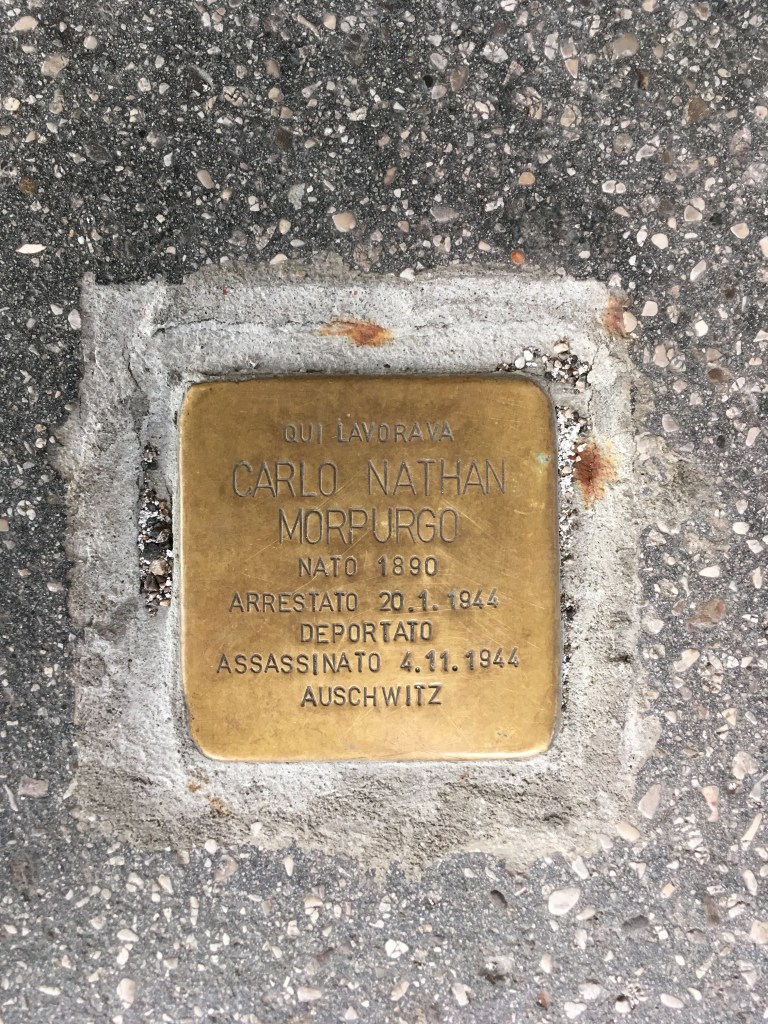
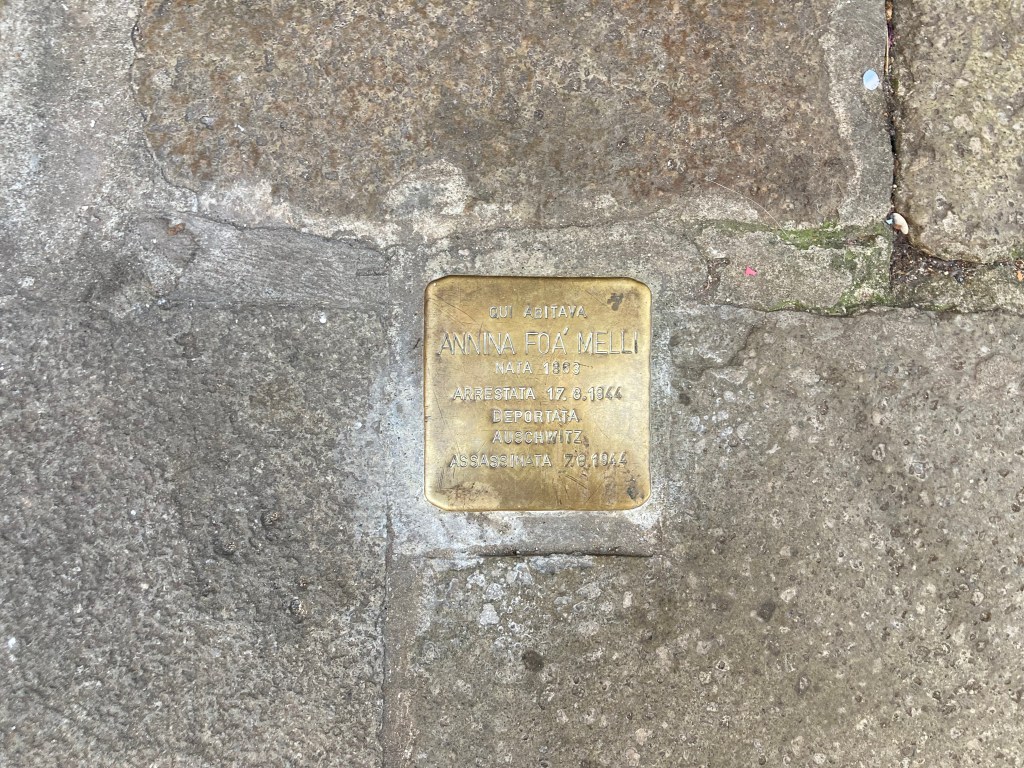
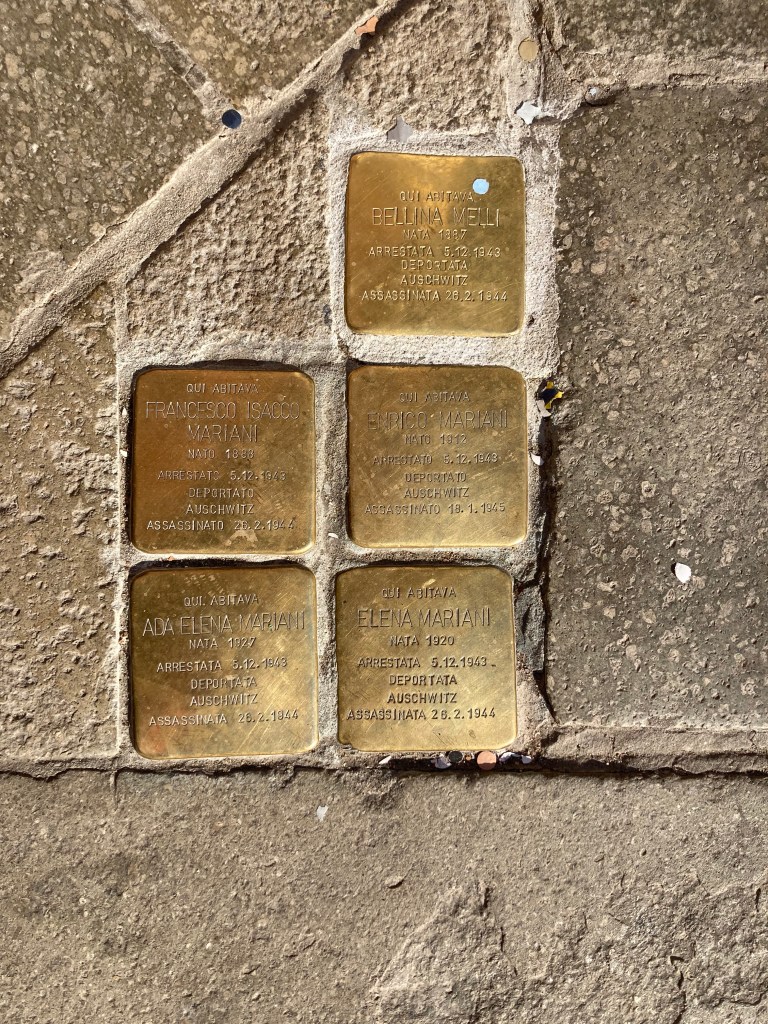
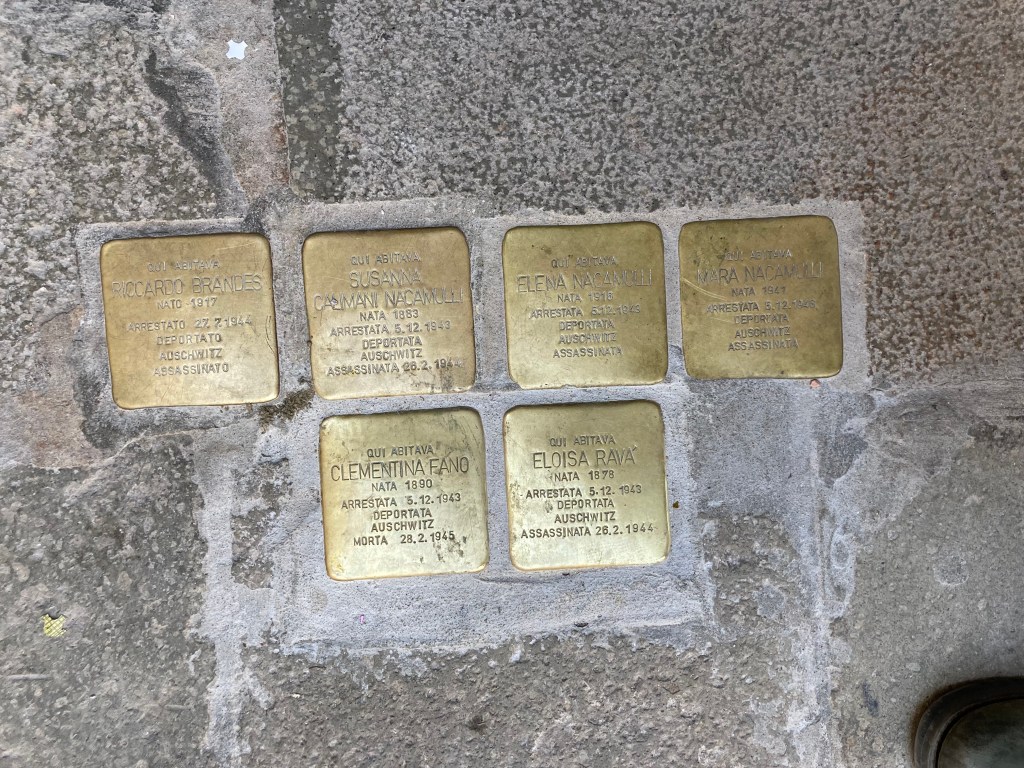
In Italy, they are called pietri d’inciampo and we found them throughout the country. These are just ones we saw, there were many more. Another reminder of how far the reach was.
While we did not go to Padua, the website for their pietri d’inciampo was staggering. http://www.lepietredinciampoapadova.it/index_english.html
Genoa https://it.wikipedia.org/wiki/Pietre_d%27inciampo_in_Liguria#Provincia_di_Genova
Florence https://it.wikipedia.org/wiki/Pietre_d%27inciampo_in_Toscana
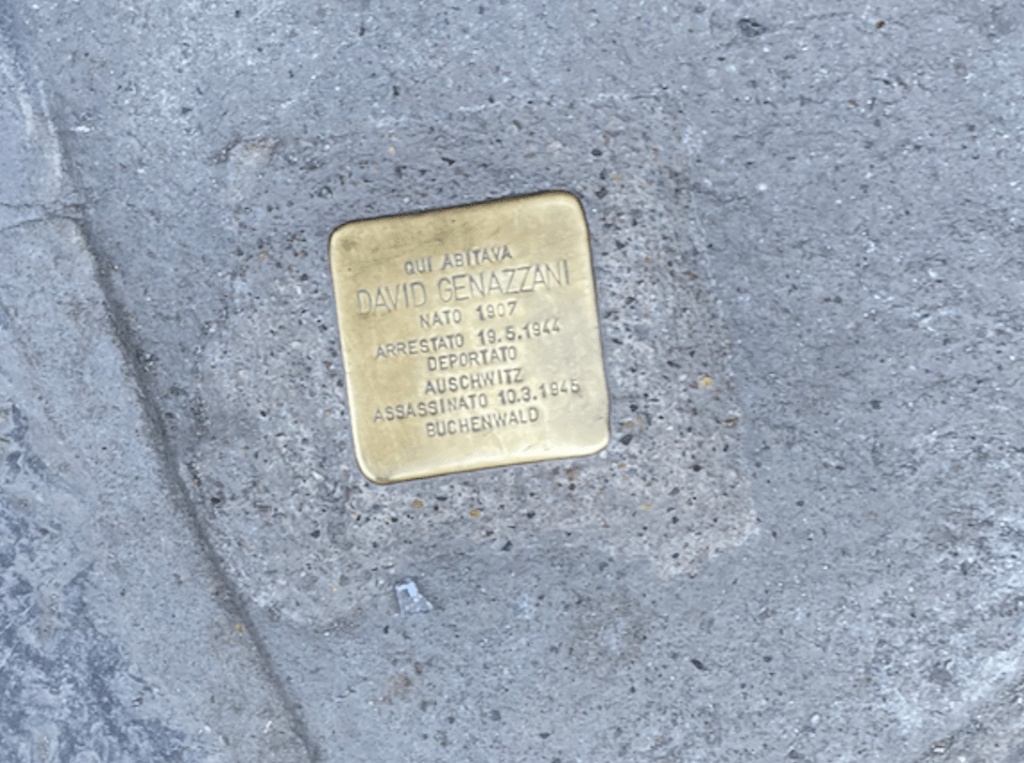
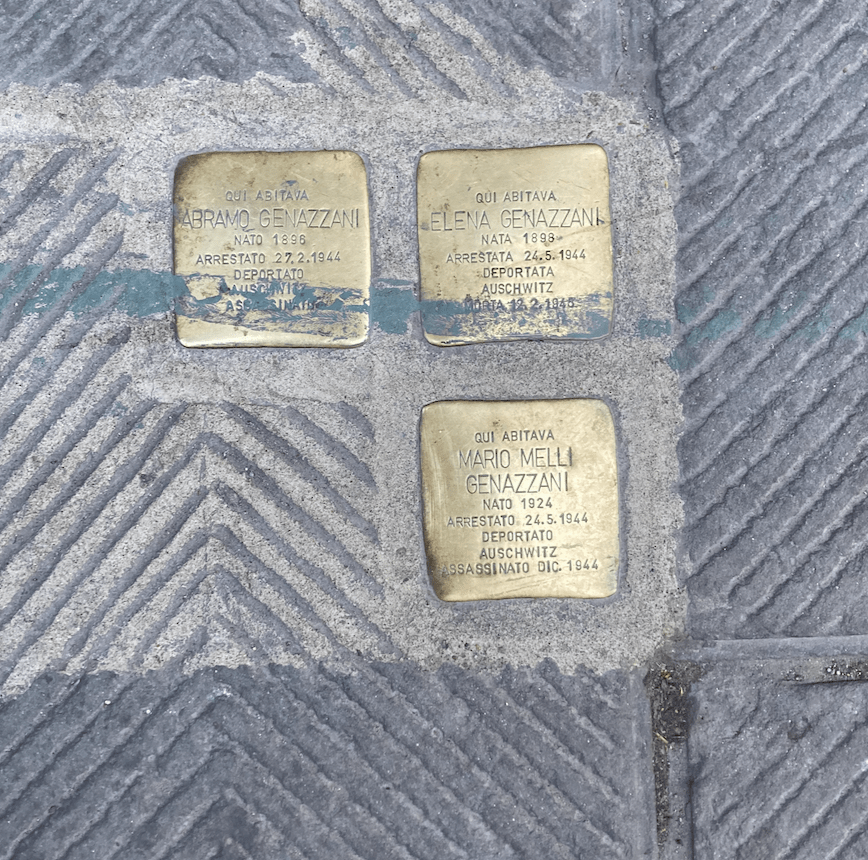
Venice was the home of the original Jewish Ghetto and pietri d’inciampo were scattered throughout.https://sites.google.com/view/pietreinciampovenezia/le-pose/2022
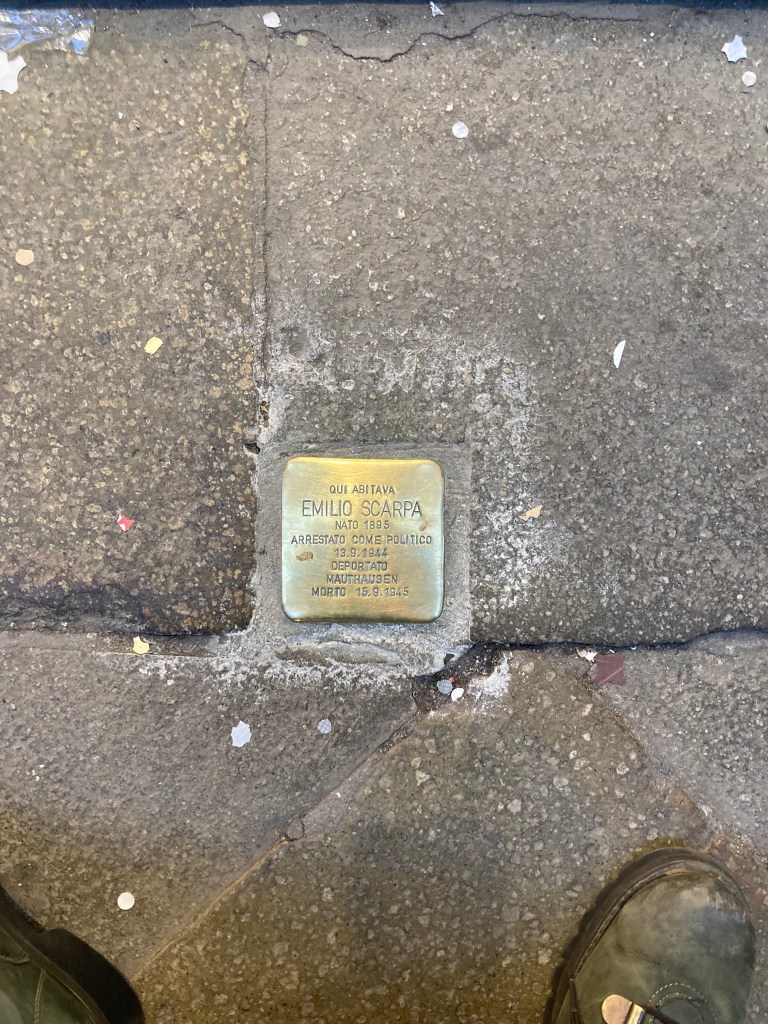
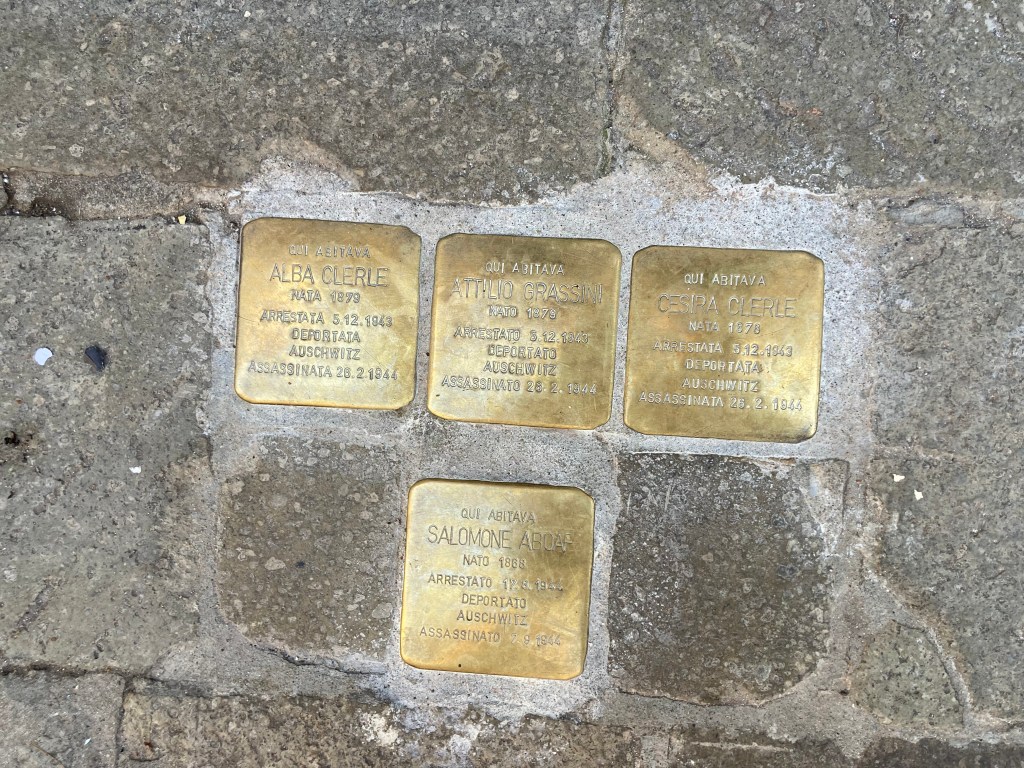
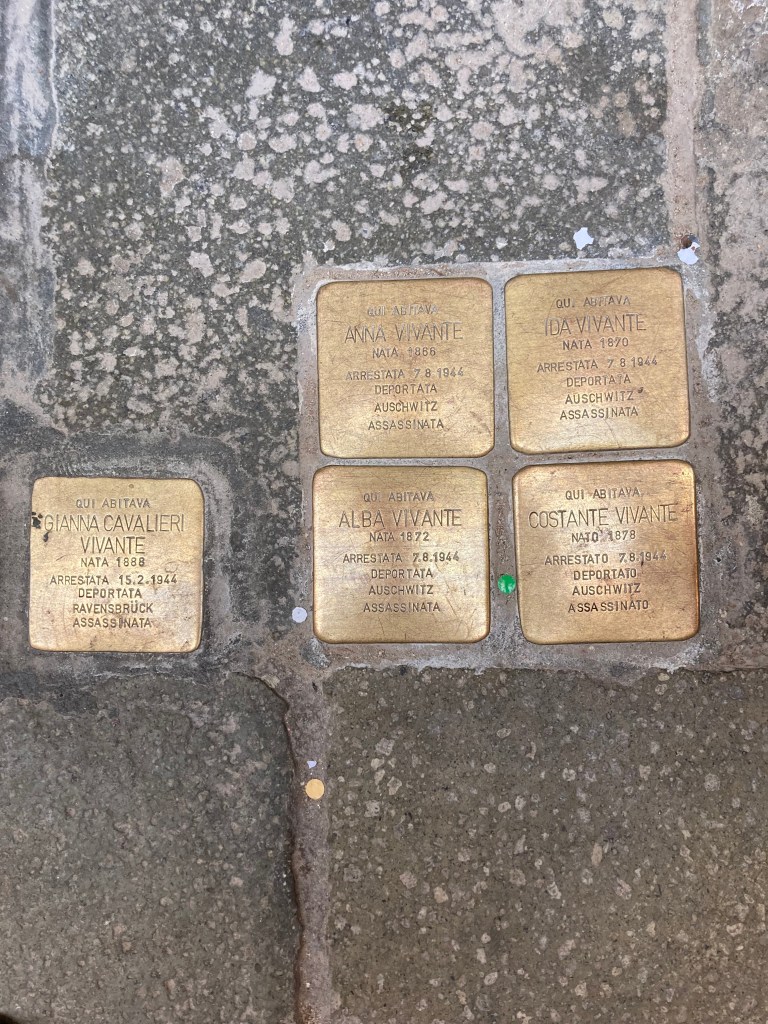
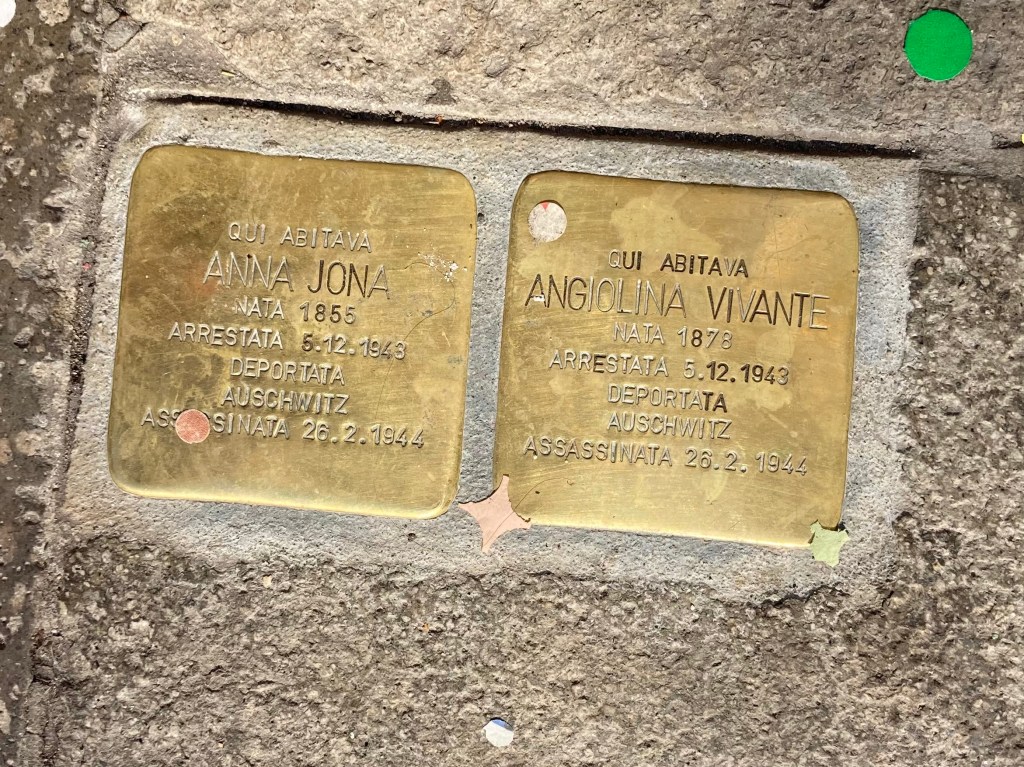
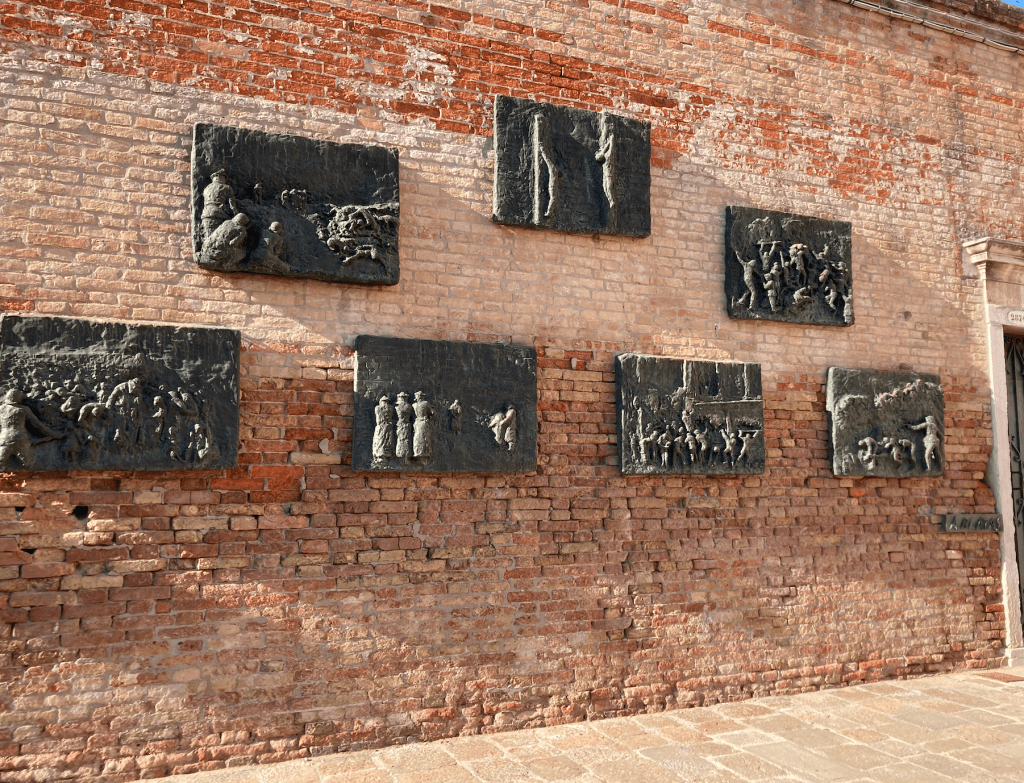
In the Novo Ghetto were also bronze reliefs detailing the round up of Jews between 1943-1944
Bologna https://www.comune.bologna.it/servizi-informazioni/pietre-inciampo
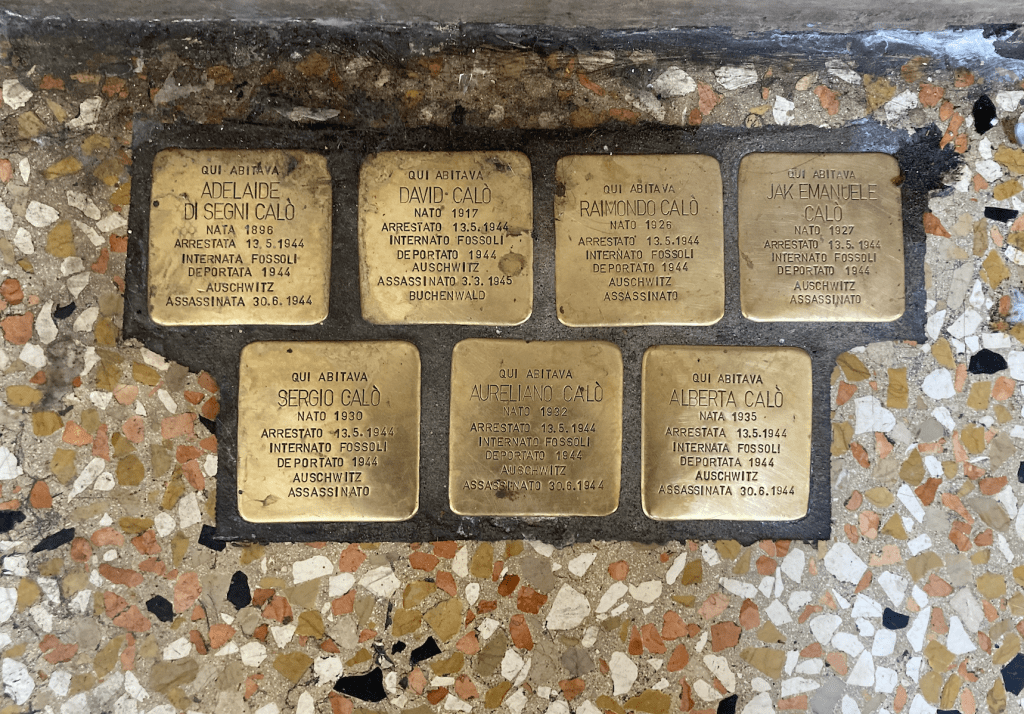
Naples
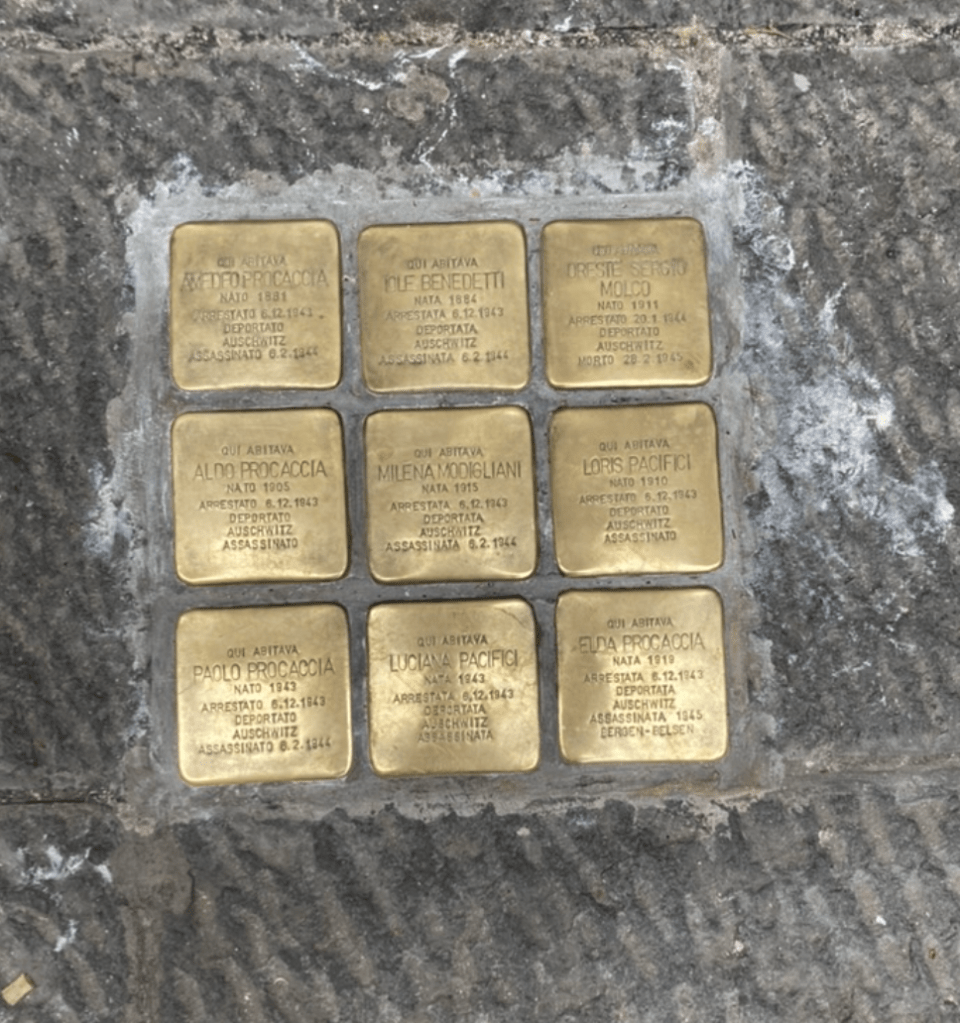
Rome https://it.wikipedia.org/wiki/Pietre_d%27inciampo_a_Roma
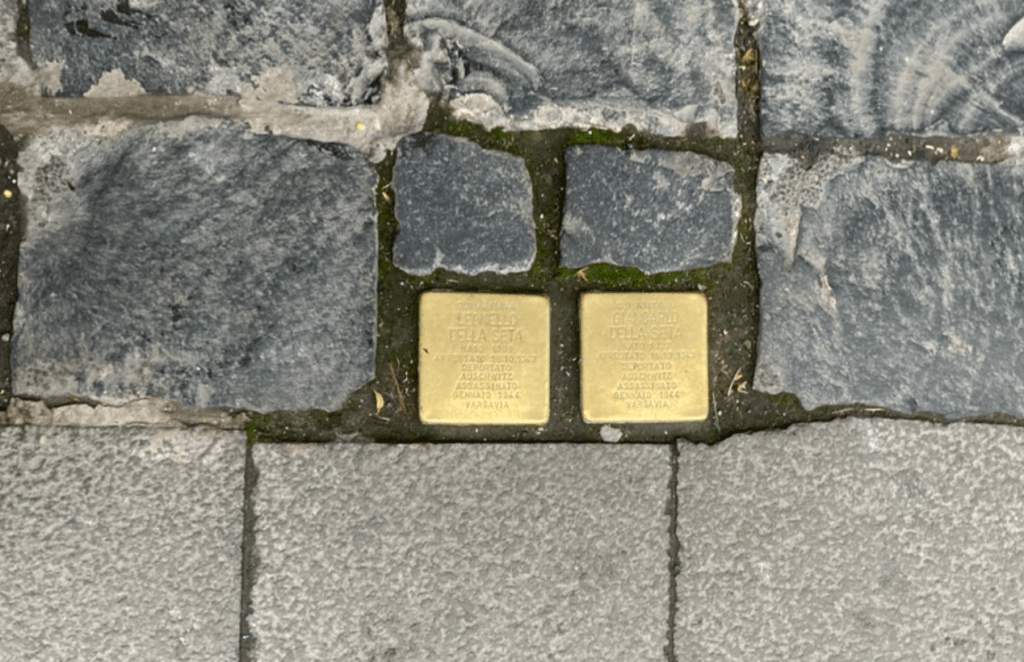
Ravenna, in front of an elementary school on a little side street.
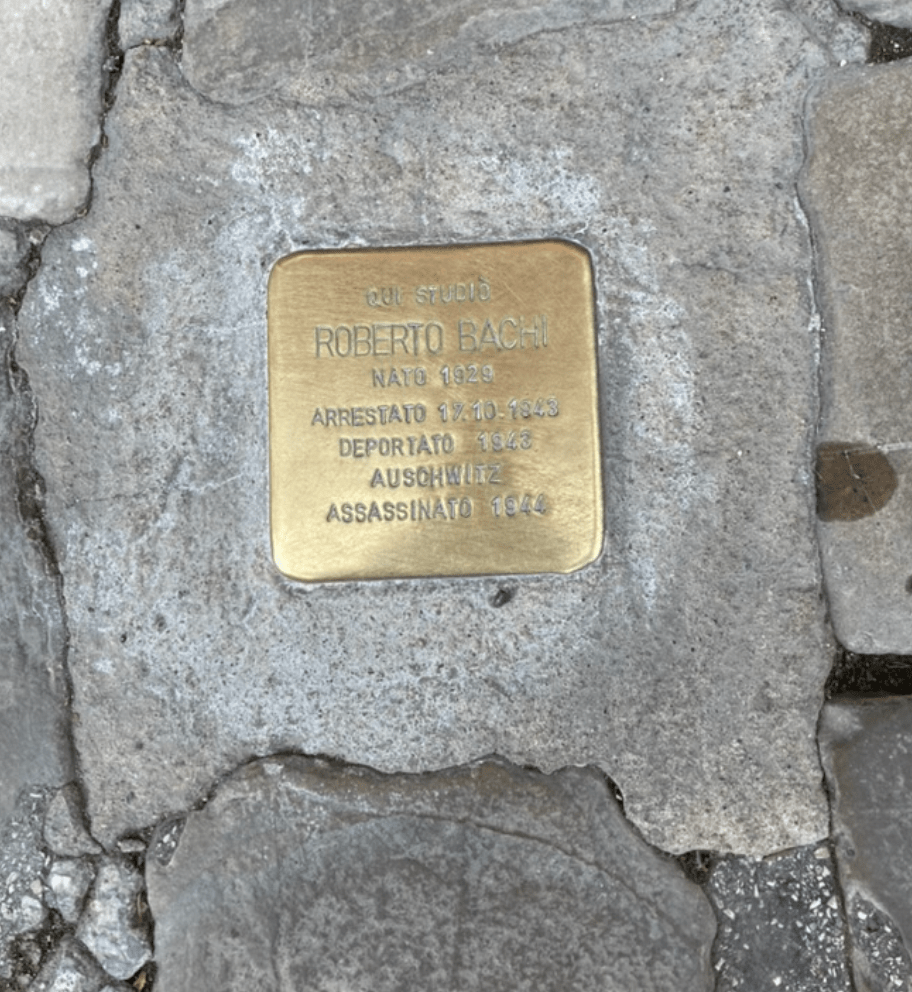

Bordeaux, France
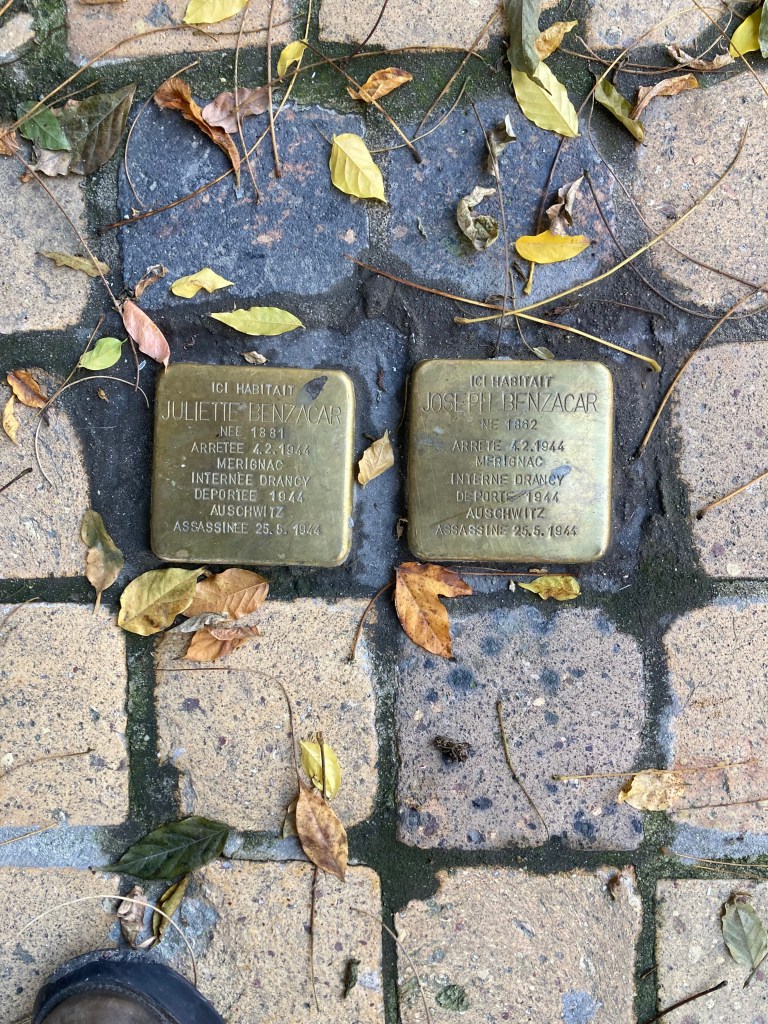
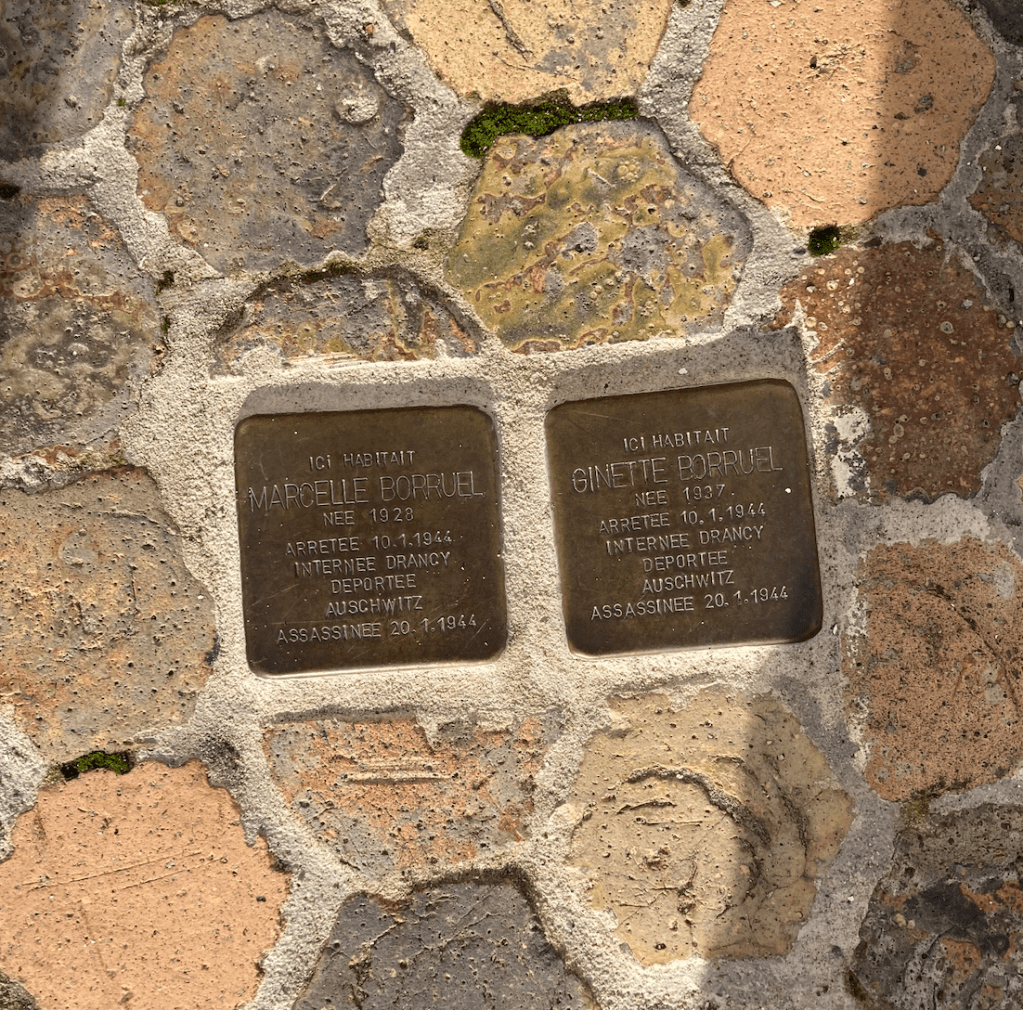
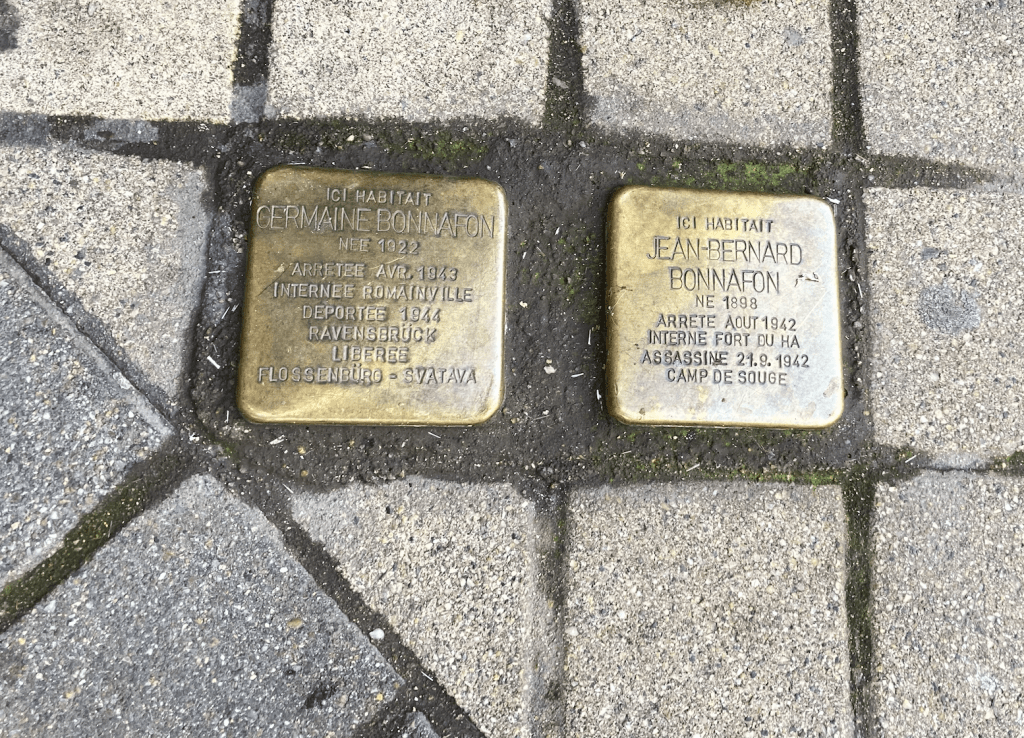
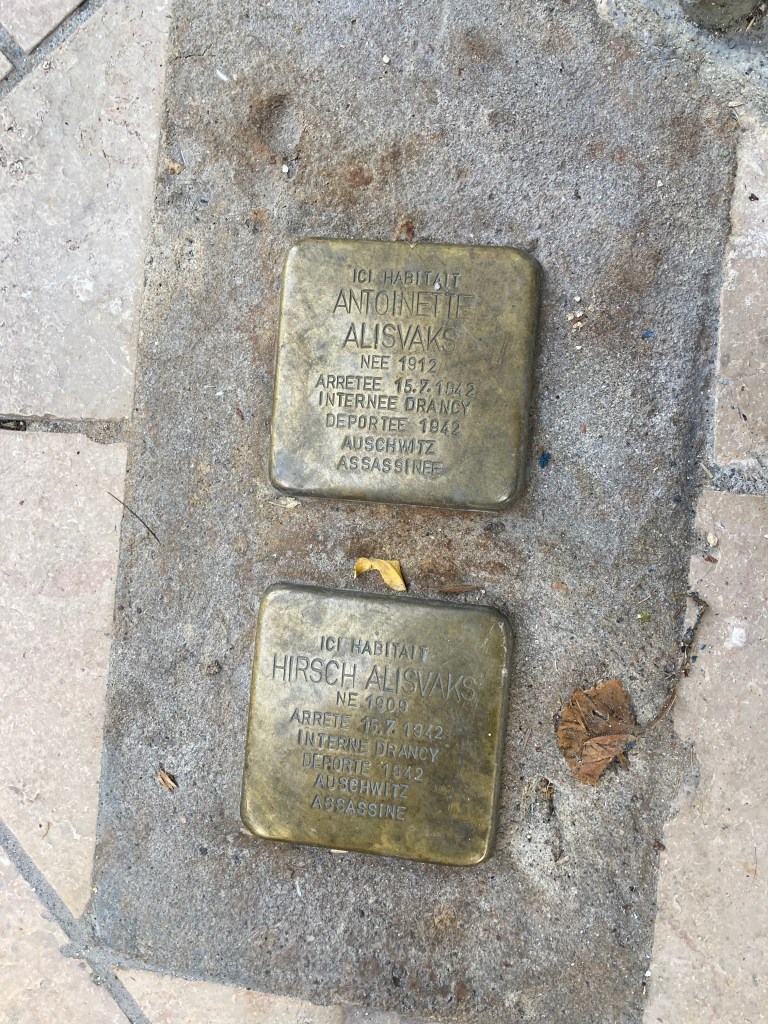
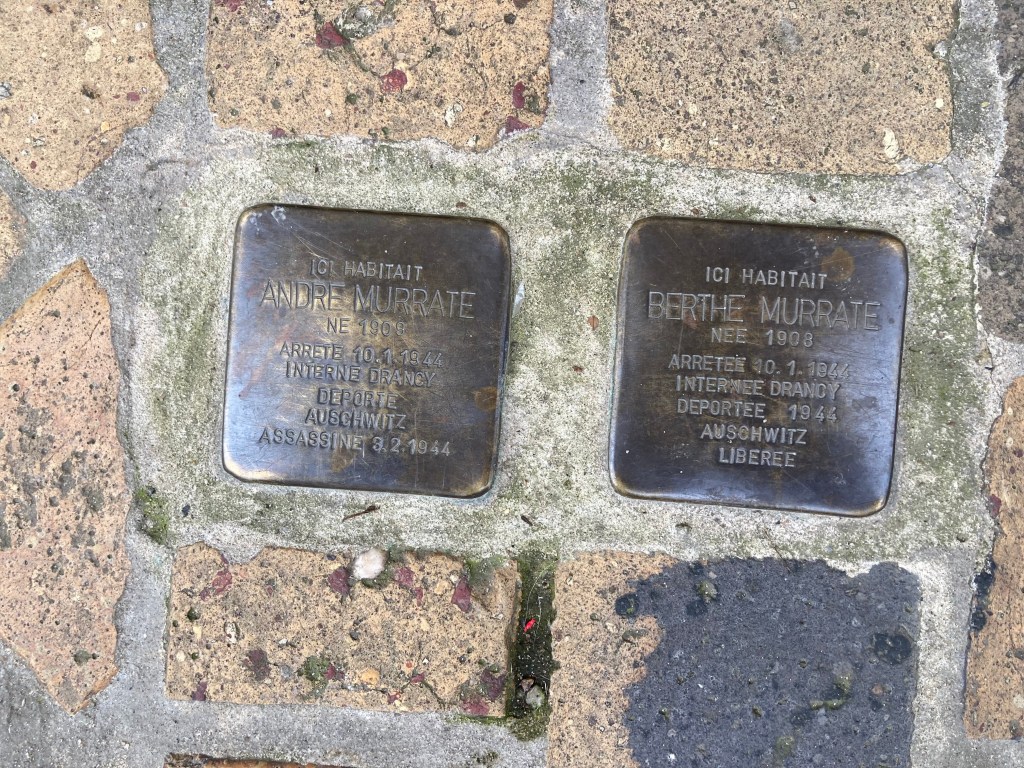
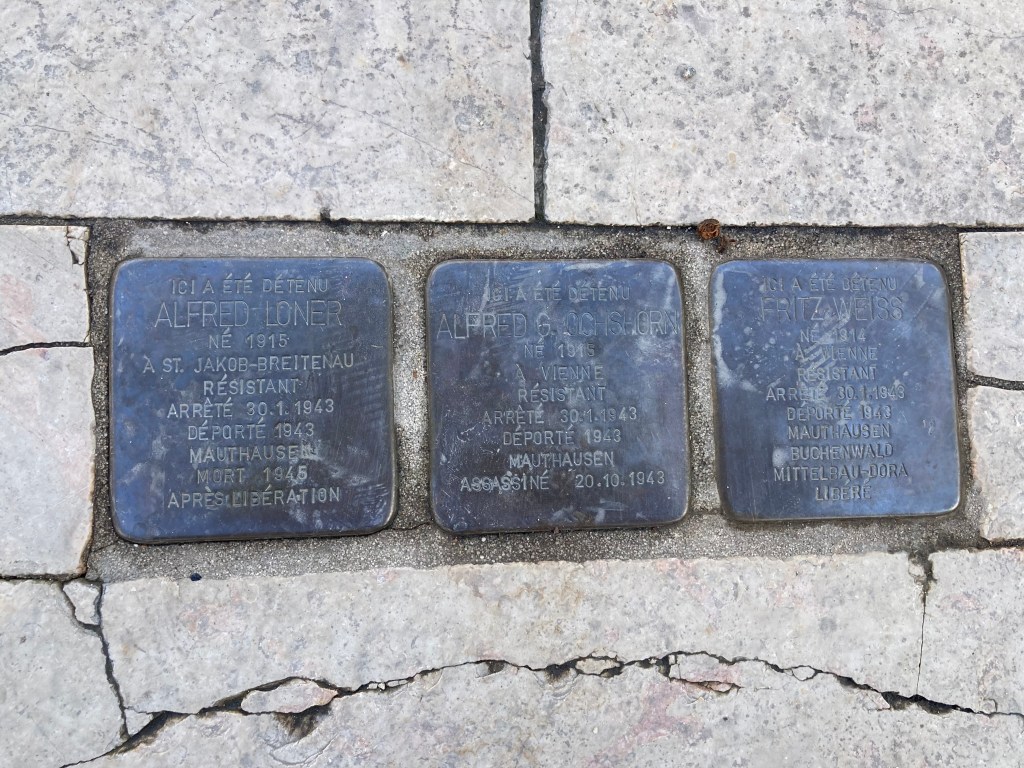
Lyon, France
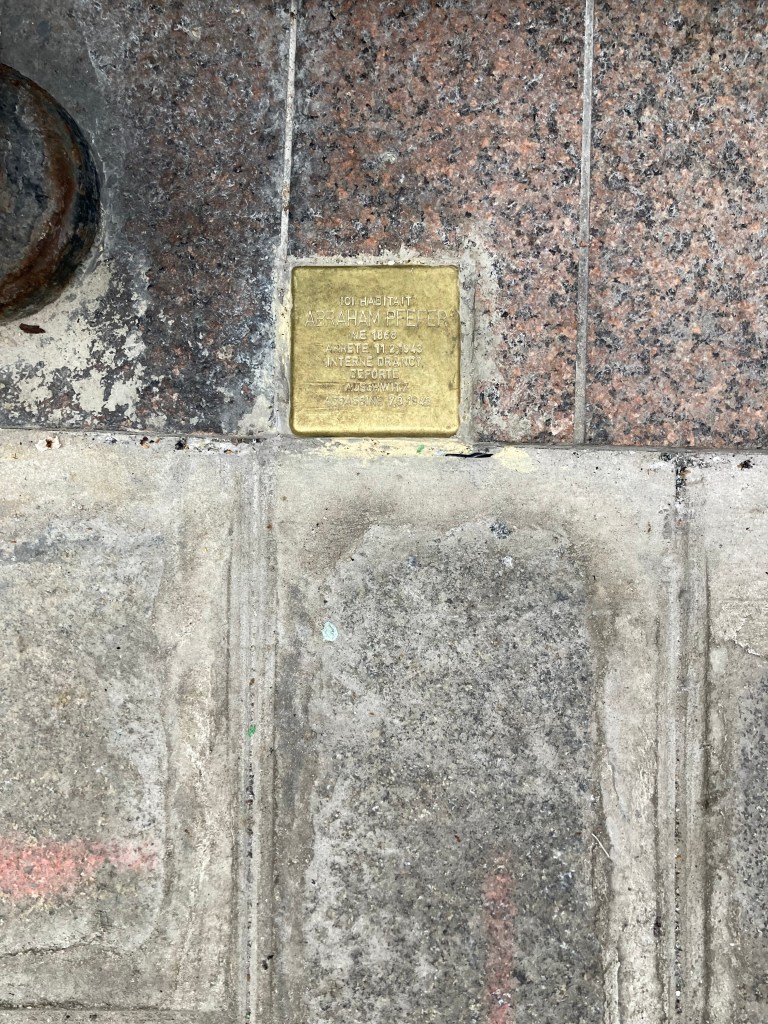
Stolpersteine, have become a constant. Wherever we go, we look for them, almost everywhere in Europe. Their presence or absence, in countries or cities that do not allow them, both serve as devastating memorials.
 Chosen Fugue
Yes. This is a beautiful art project. Alivia pointed out to me the one up the street from them. I sent the wikipedia article to my nephew who is working on a similar public art project, Street Memorials, that tells the stories of black people gunned down in the streets of America. https://www.emerson.edu/news-events/emerson-college-today/public-artist-residency-wraps-rose-memorial#.XDSs_S2ZOfU
LikeLike
Very powerful
LikeLike
Thanks for writing about this.
LikeLike