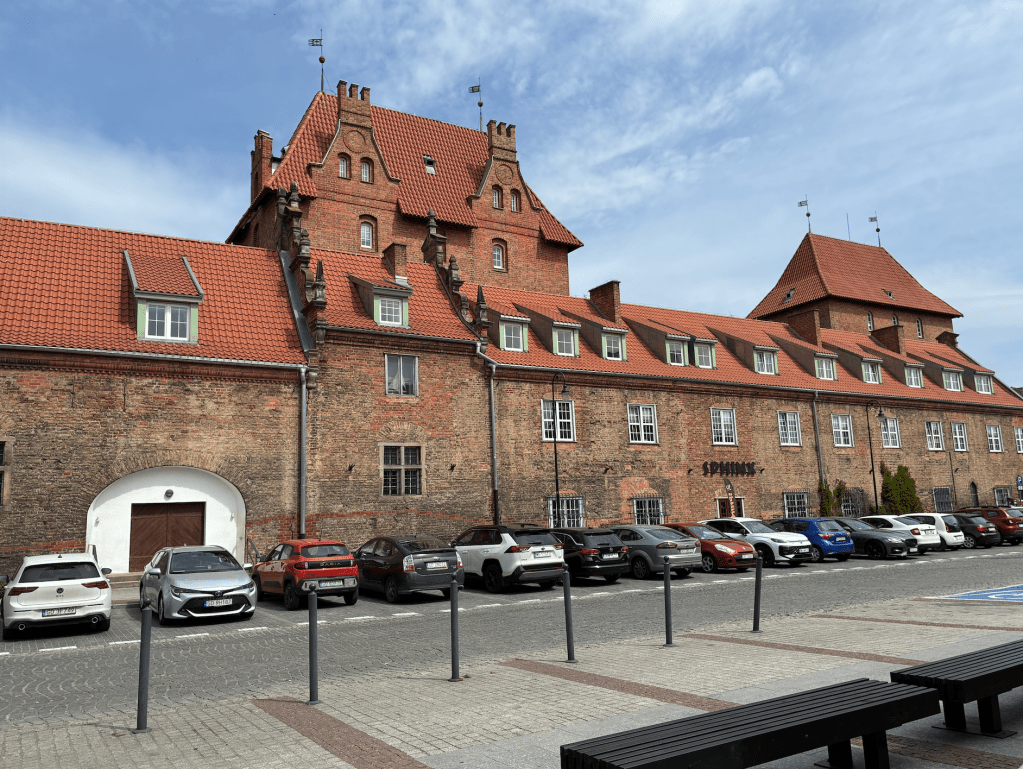
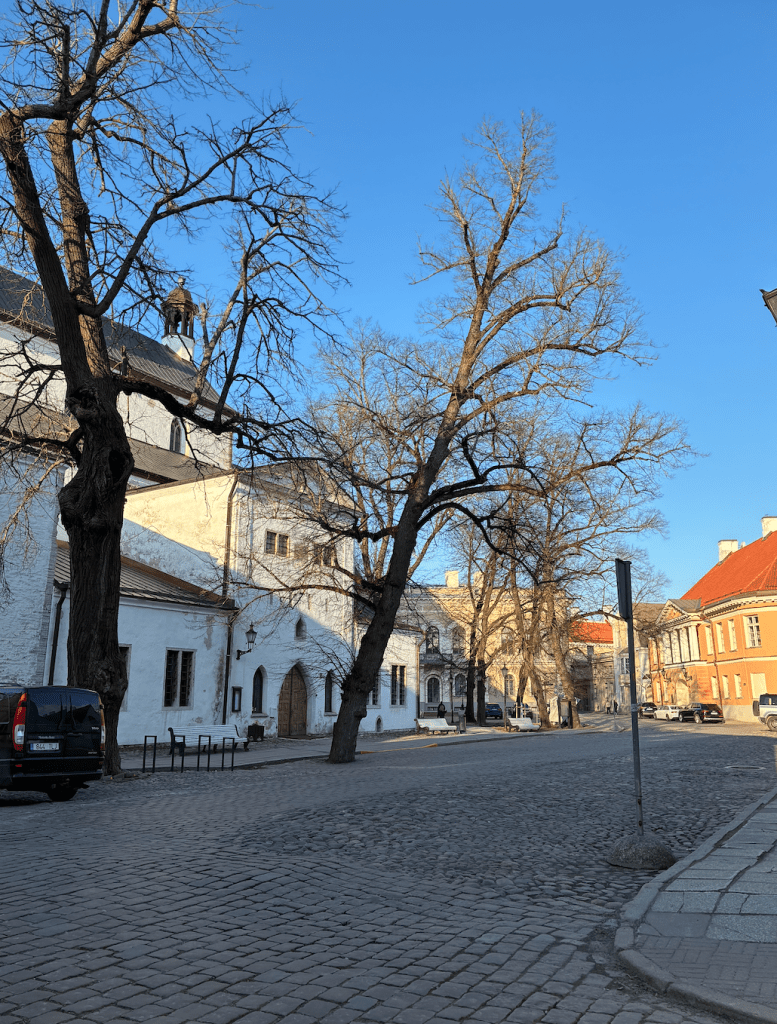
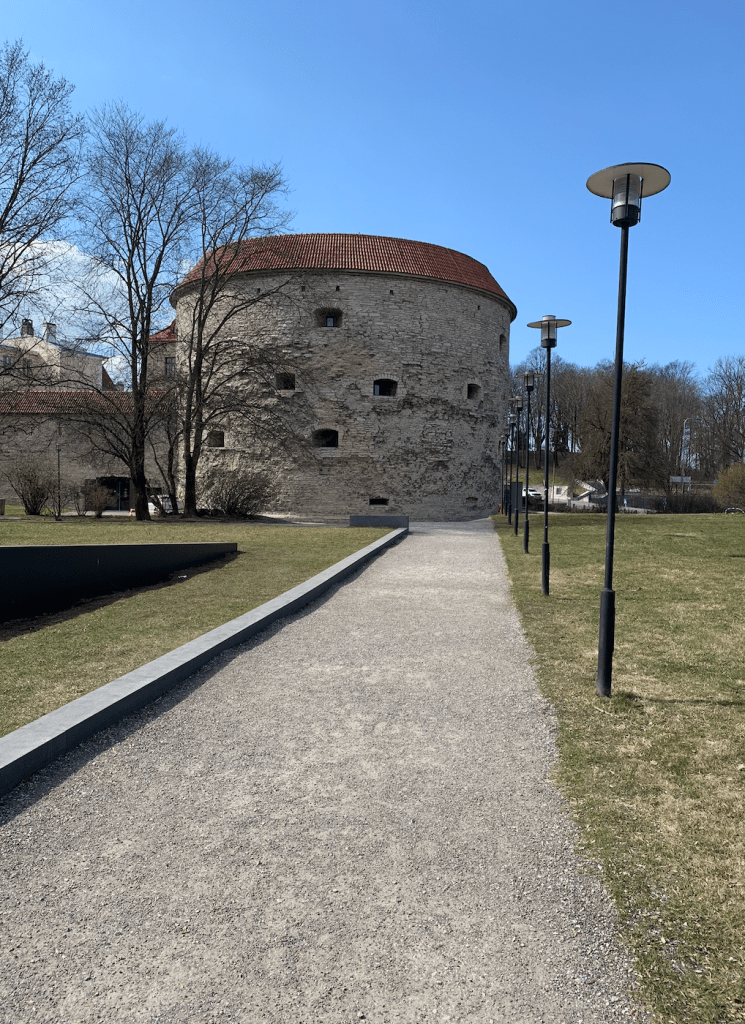
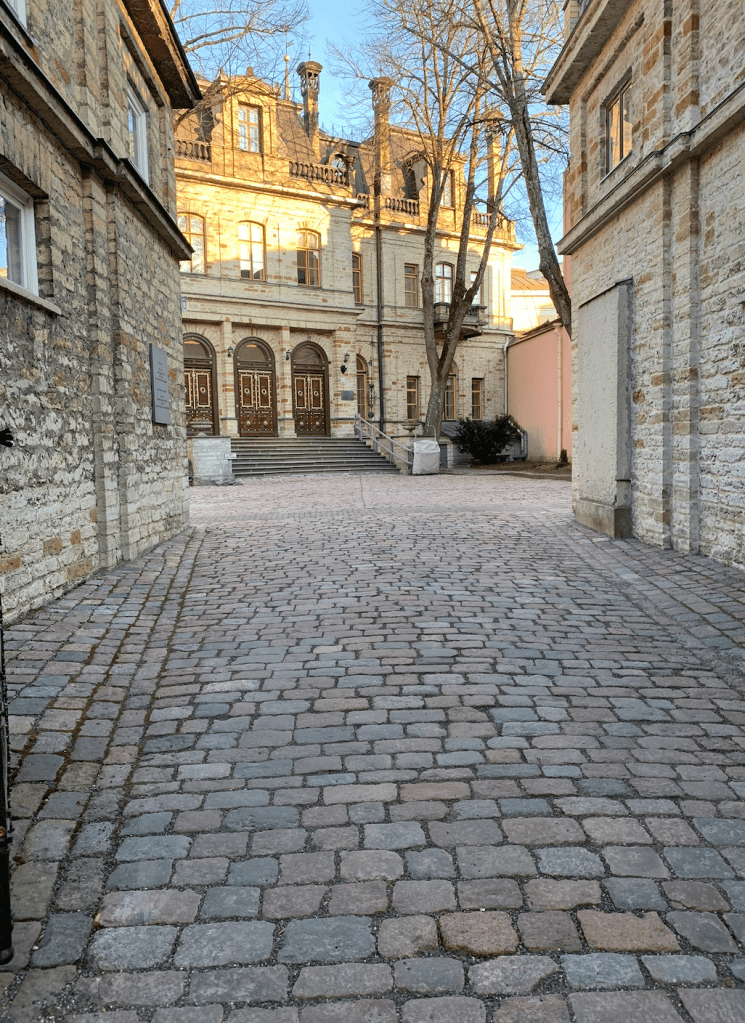
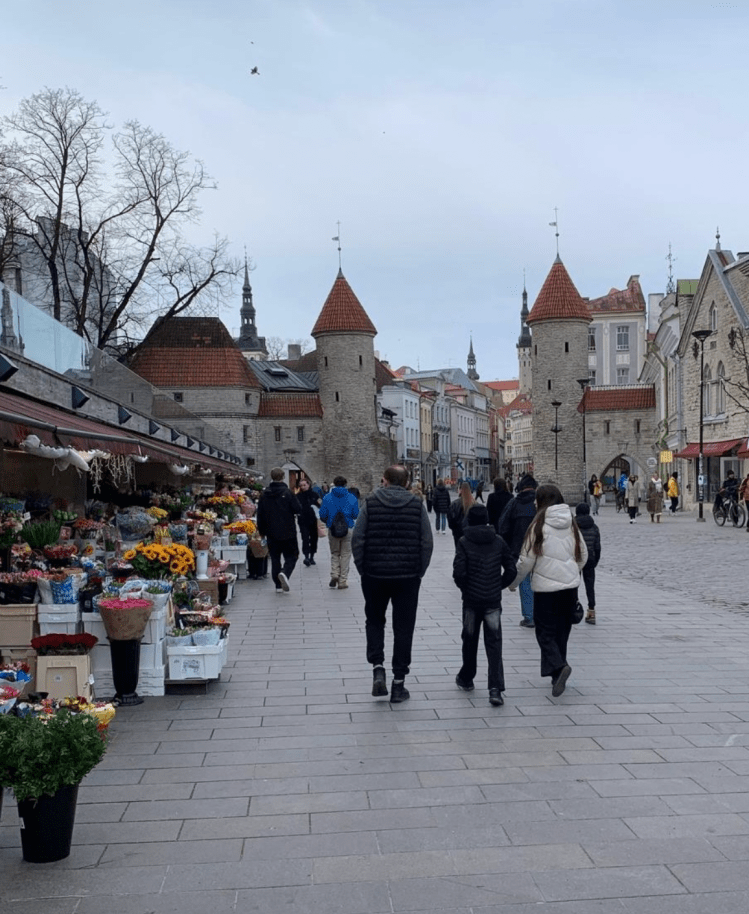
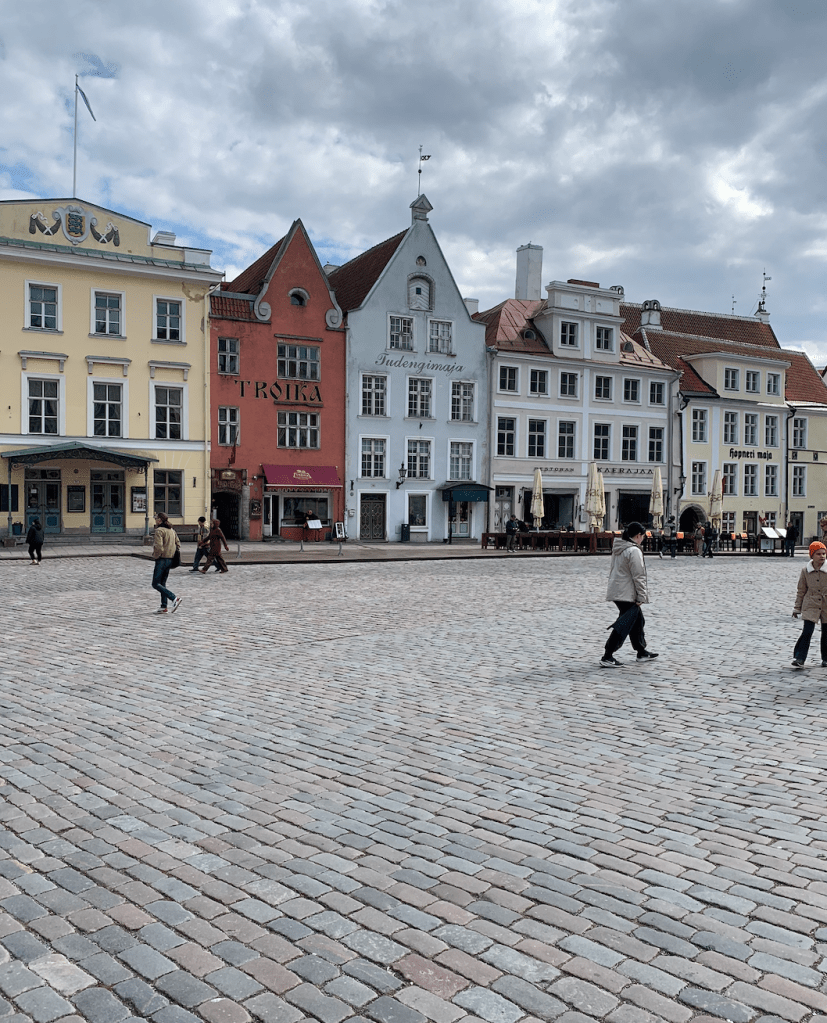
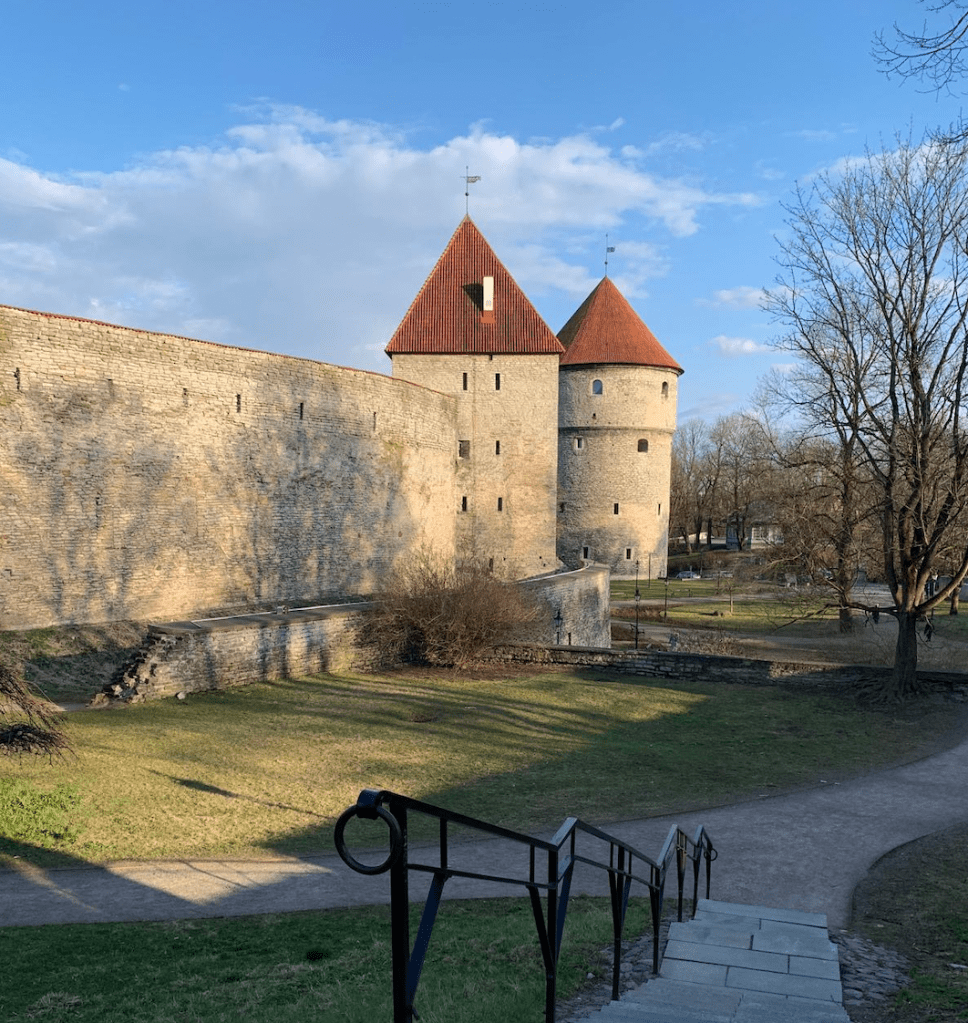
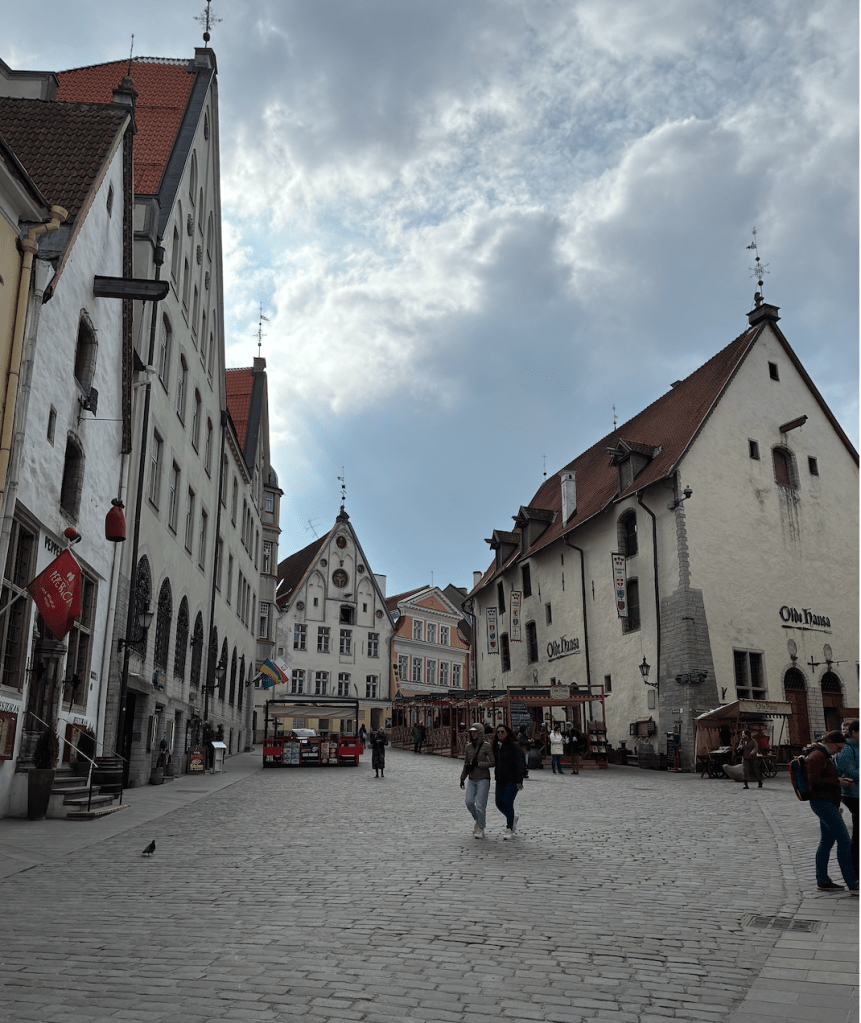
(as always, pictures look better if you read on blog site not email).
We began this round of travel December 1, 2025. It was a patchwork that included Malta, Southern England (Lewes, Ditchling), London, Sarajevo, Montenegro, The Baltics (Estonia, Latvia, Lithuania) and Poland (reports all found on this website). But we always start and end with a stop in Liverpool because that is where the real attraction is.
The city has begun to feel a bit like home. We have our favorite restaurant
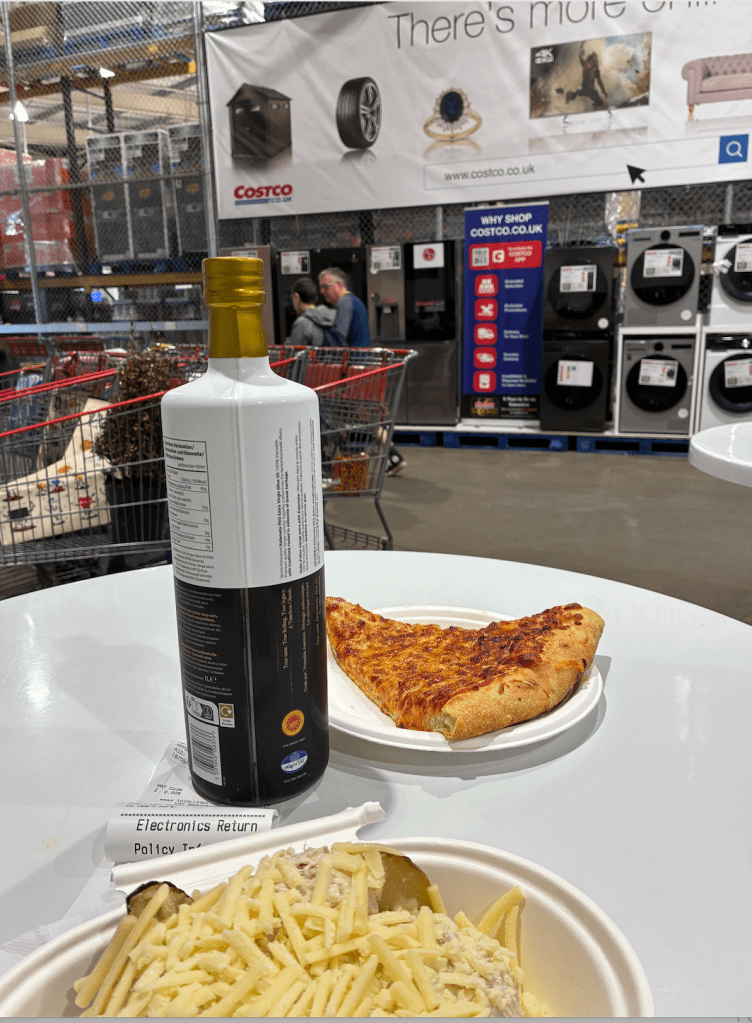
Jackie P with tuna + cheese; 1/2 of the tuna and cheese gets put on the pizza. Olive oil optional and a separate take home purchase (*jackie p is of course a jacket potato, aka baked potato)
We have our market
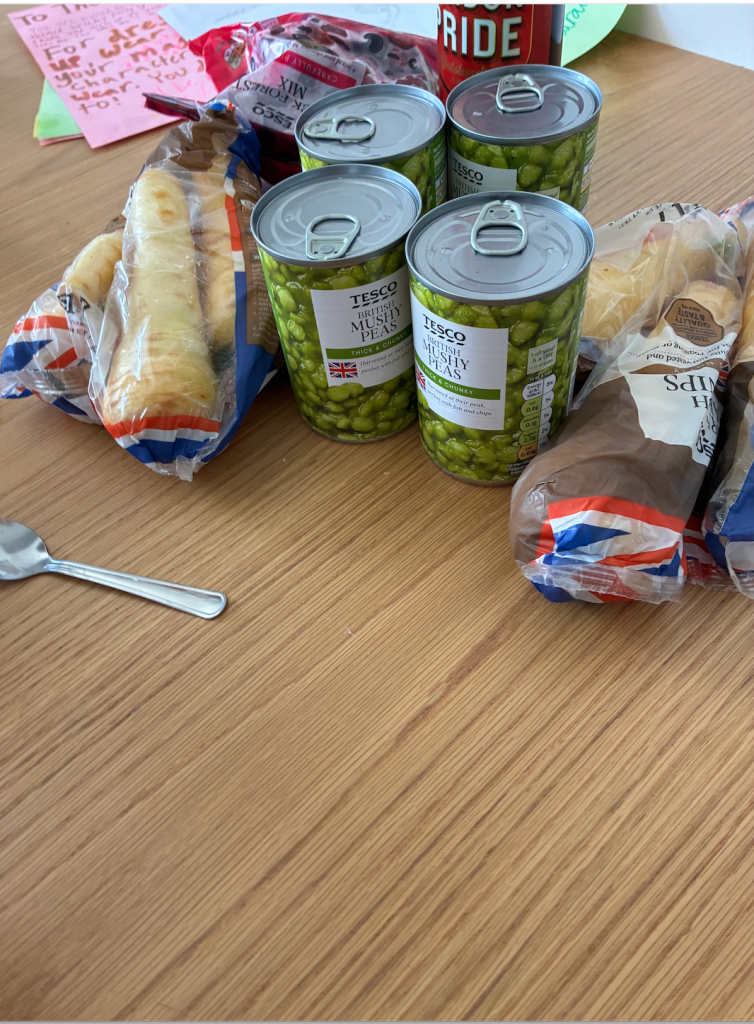
where we get our favorite meal ingredients (well, Nick does)
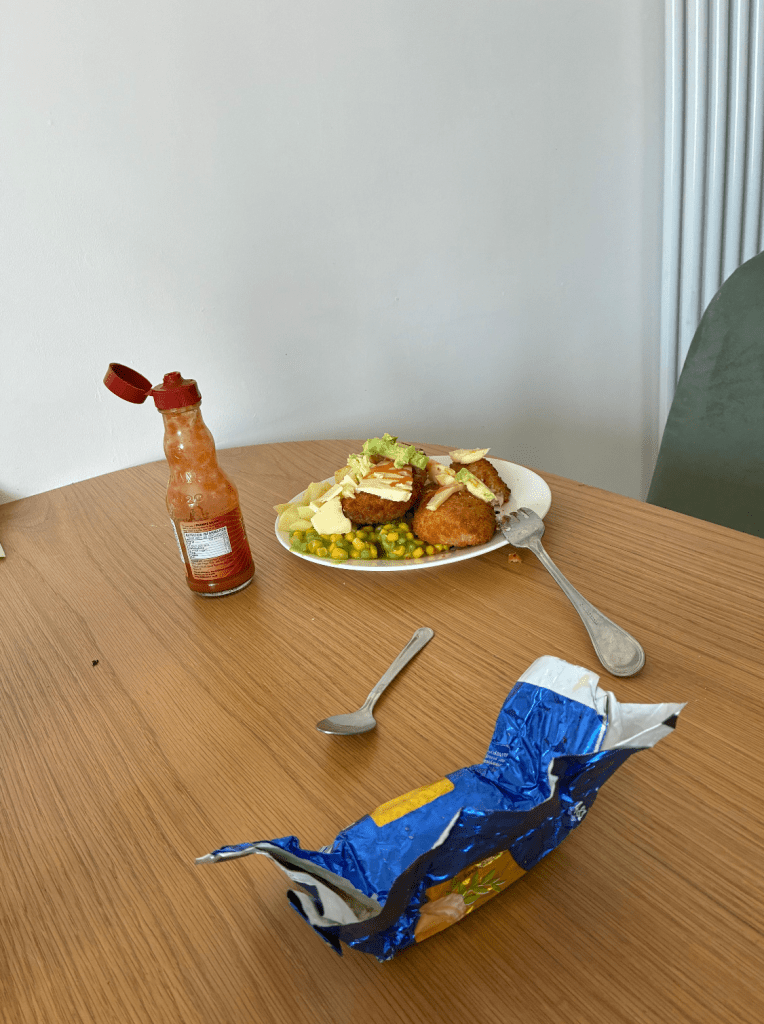
Parsnips and mushy peas plusCathedral city cheddar, air fried haddock and Franks
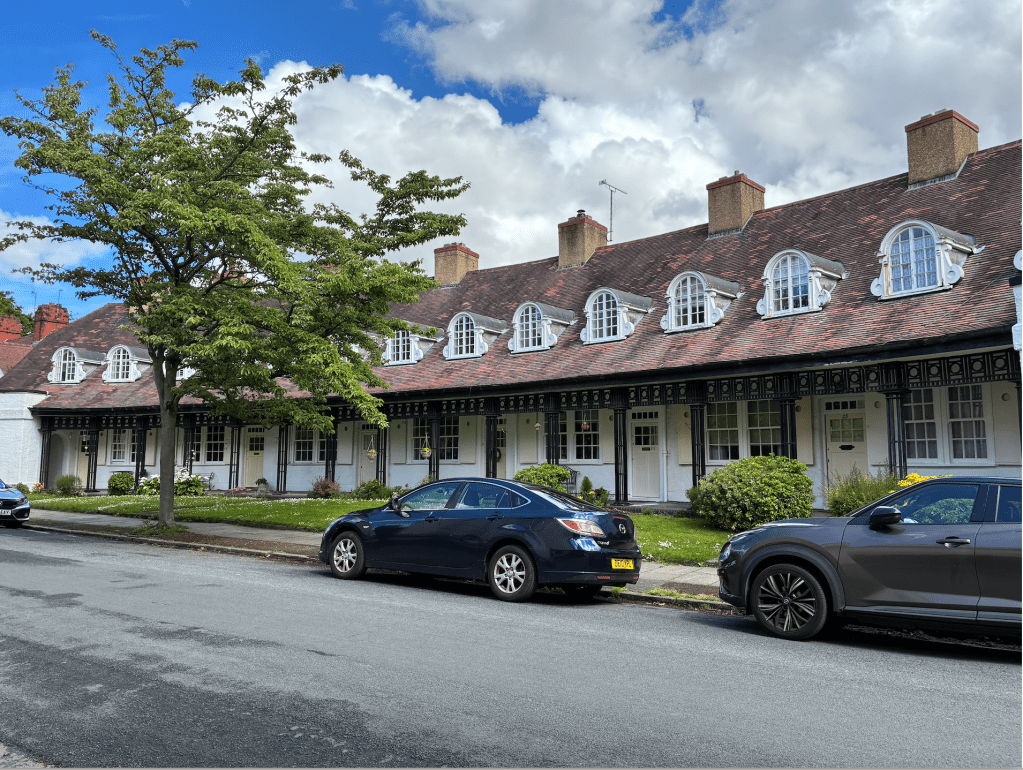
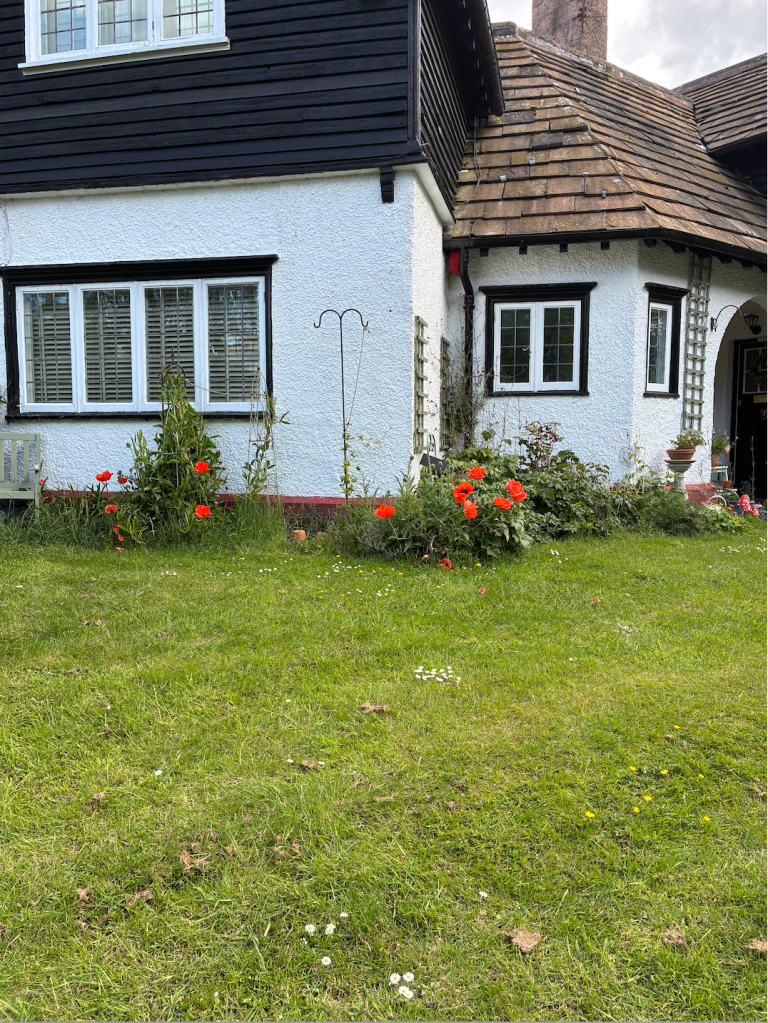
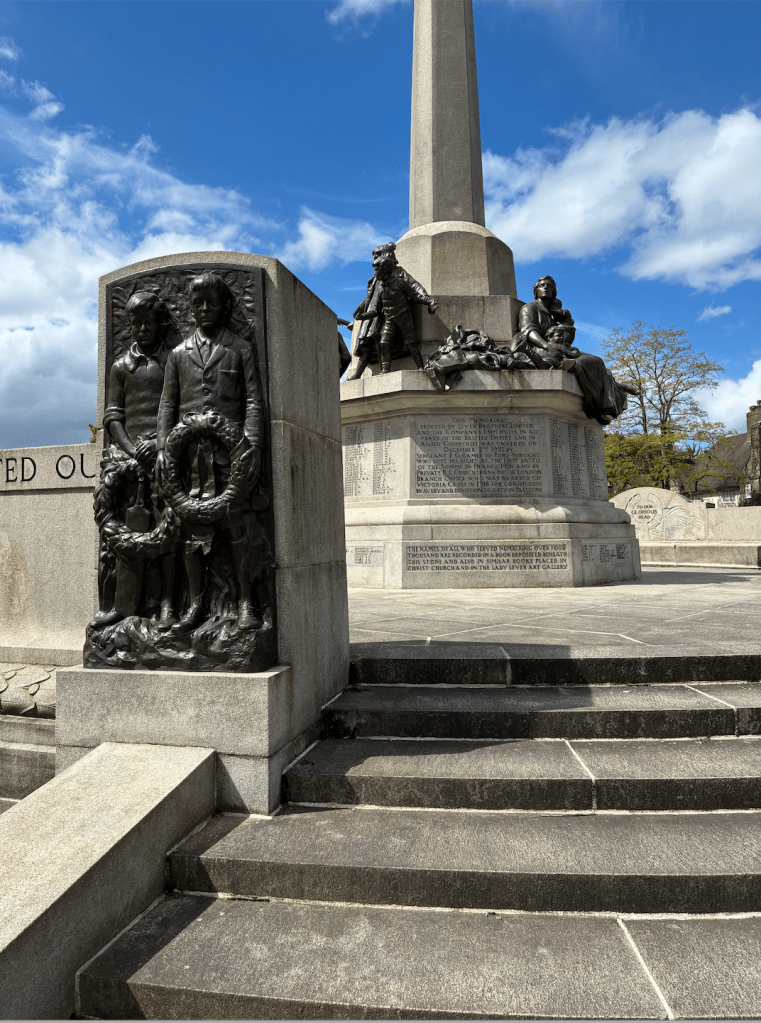
This time Port Sunlight. Port Sunlight is a model community built beginning in 1888 for the workers at the Lever Brothers soap factor (now UniLever). Since this is northern England, it was not named for its weather, rather after their most popular soap. https://en.wikipedia.org/wiki/Port_Sunlight.
Very weird war memorial, honoring the Lever employees who died in WW1. The bronze statues of children along the sides noted how proud the children were to have lost their fathers in the war. Very different approach.
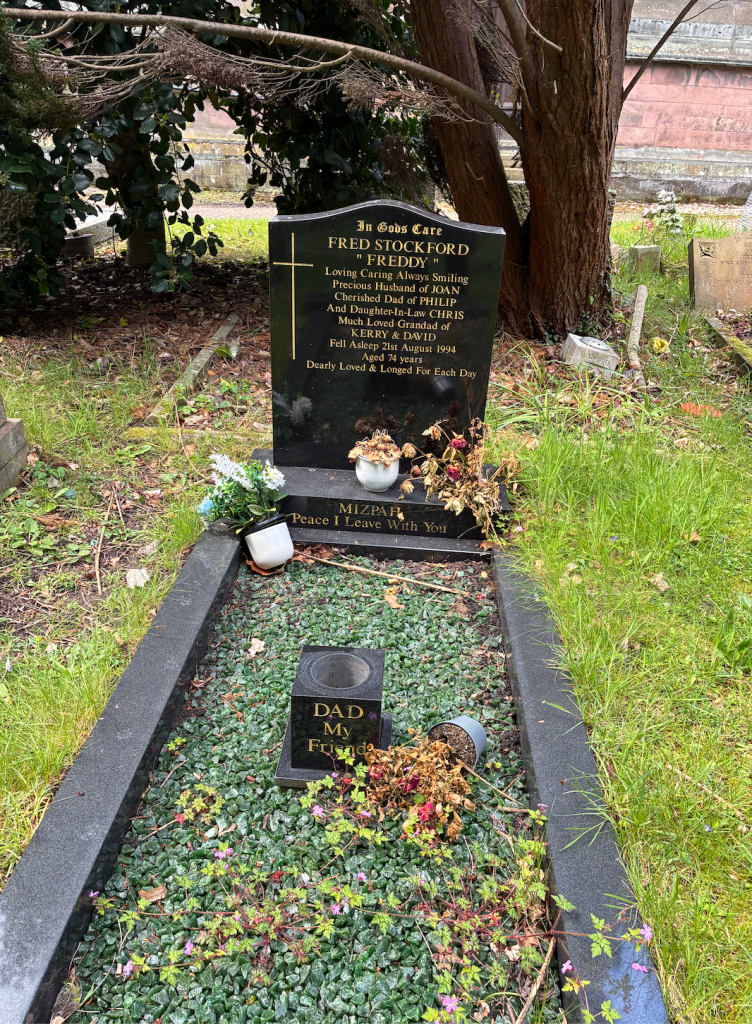
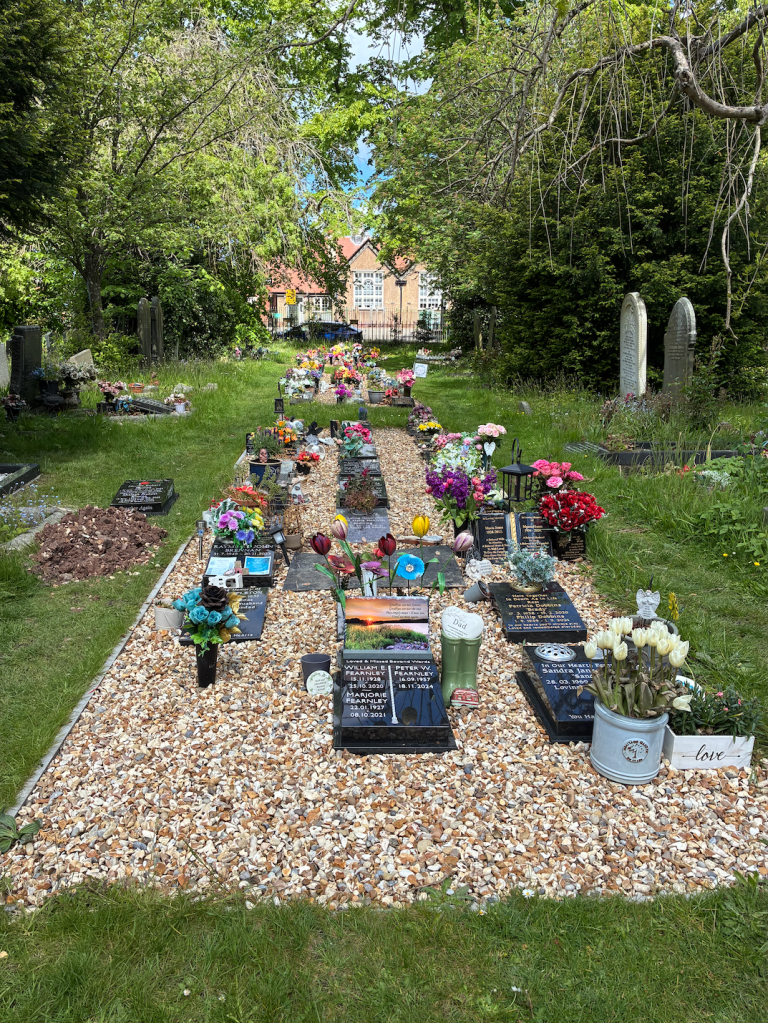
A really beautiful, Truman show like community. What gave it an even more surreal feel was the cemetery.
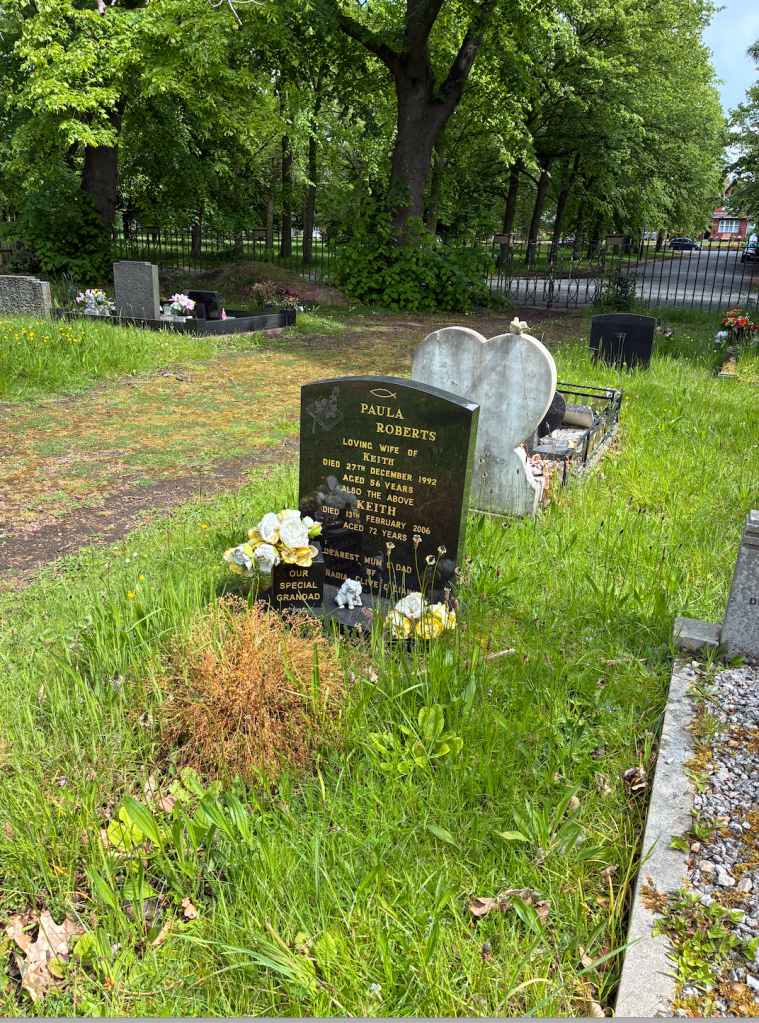
Most people did not die rather they fell asleepDoesn’t having “also” before your name kind of feel like an afterthought into the afterlife?Here is the afore mentioned KeithA lot of real and fake flowers and tchtchhokes throughout
and then a flight from Liverpool John Lennon airport to Dublin and onward to the US. A perk in leaving from Dublin, is that you go through US customs in Ireland, before you leave, instead of on arrival in the US.
It was very hard to leave, but the long flight allowed us to get caught up on all the movies we missed over the past 6 months, and gave us time to reprogram and accept our return to everything that we did not miss over the last 6 months.
We returned to a warm welcome in Seattle.
Followed by a stop in Mendocino for more gradual re-entry to the US with our emotional support animals, Mack and Phil. Then on to Los Angeles where we will spend the summer and figure out where to next. Mack and Phil recommend South America. We will let you know.
Dziękuje, pronounced Jen Koo Ya is thank you. As suggested by the mismatch of spelling and speaking for us English speakers, Polish was as difficult to attempt as the Cyrillic and Hebrew we attempted in the past. We always try to learn the basics- “good morning”, “hello”, “thank you”, “excuse me”. A lot of times, it feels a bit performative to do this, and usually the response is in near perfect English so it feels awkward, especially when everyone just says “hello” or “ciao”. But it was different in Poland. We got a surprised smile from the stoic Jubilat supermarket cashier and even better, our young train conductor gave us a solid “Niiiice” in response to our Dziękuję.
Our Poland reports probably sounded redundant. On the surface many things in Poland were repetitive, but the overlay of familiarity kind of made the unique things of each city stand out, like a splotch of color on a black and white background.
From 1794- 1918, Poland was ruled by others. After a brief 20 year of self rule, Poland was occupied by the Nazis in 1939, followed by Soviet control from 1945-1989. Since 1989, independence has been fluid- a totalitarian government followed by a more democratic, Western oriented one. Maybe it is just our perception, but Poland seems to be working out how to tell their story which makes sense since it is a very long and messy one. Sometimes, the story told defines Poland to include all cultures and ethnicities that have lived there and shaped it; including (but not limited to) Poles, Slavs, Germans, Roma, Jews, Ruthians (always mentioned, never knew who they were- Eastern Slavs https://en.wikipedia.org/wiki/Ruthenians).
Other times, Poland was rigidly defined; with the focus on the glory of pre-1790s Poland with a strong exclusive, nationalistic bent, like many countries now. With Poland’s history, and the horrors that occurred on their soil, we would have hoped for something else. We saw these differing narratives, in museums, memorials and most things tourist related.
Some consider cossacks emblematic of Russian rule, others see them as the knights of 1700’s Poland while still others see them as perpetrators of the murderous pogroms between the 1700-early 1900s. Regardless, an interesting choice for a pickle style.
How Poland sees itself also plays out in what is rebuilt, like Warsaw’s old town or what is remembered.
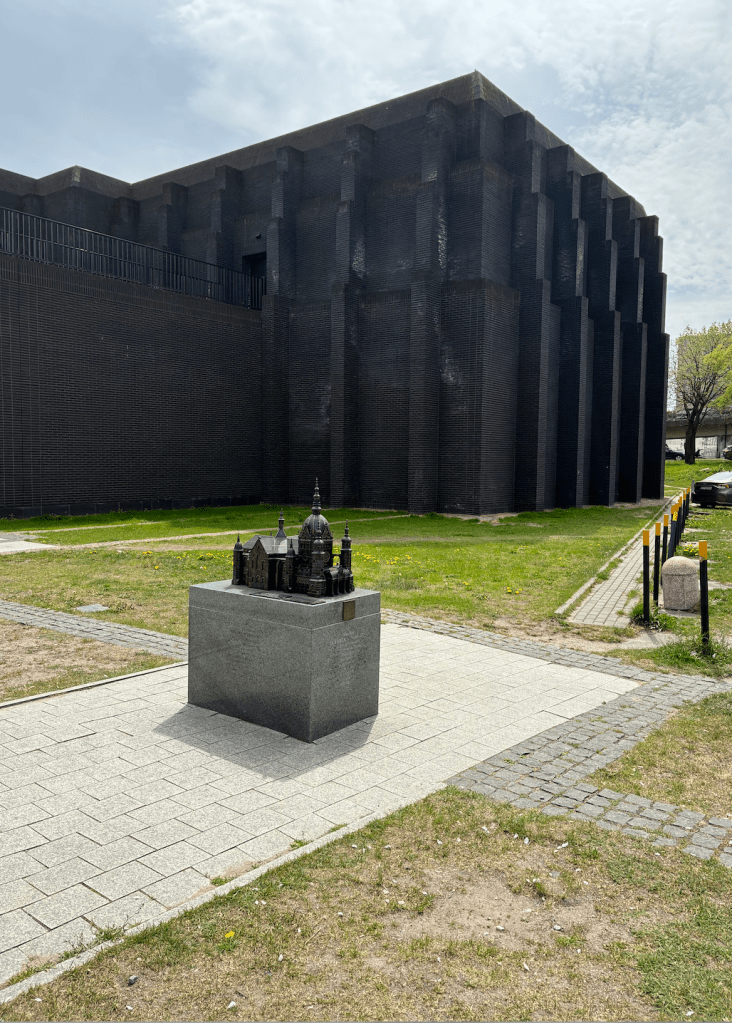
Giant synagogue that was in Danzig, was not rebuilt in Gdansk (not a need) but nicely remembered with a mini one. The Shakespeare theatre has replaced the destroyed synagogue
To us, Poland was a giant casserole, each bite emphasized a different ingredient. What did we think? Poland elicited an array of feelings, and we are still digesting them.
Other than its complicated history and beautiful cities, what stood out?
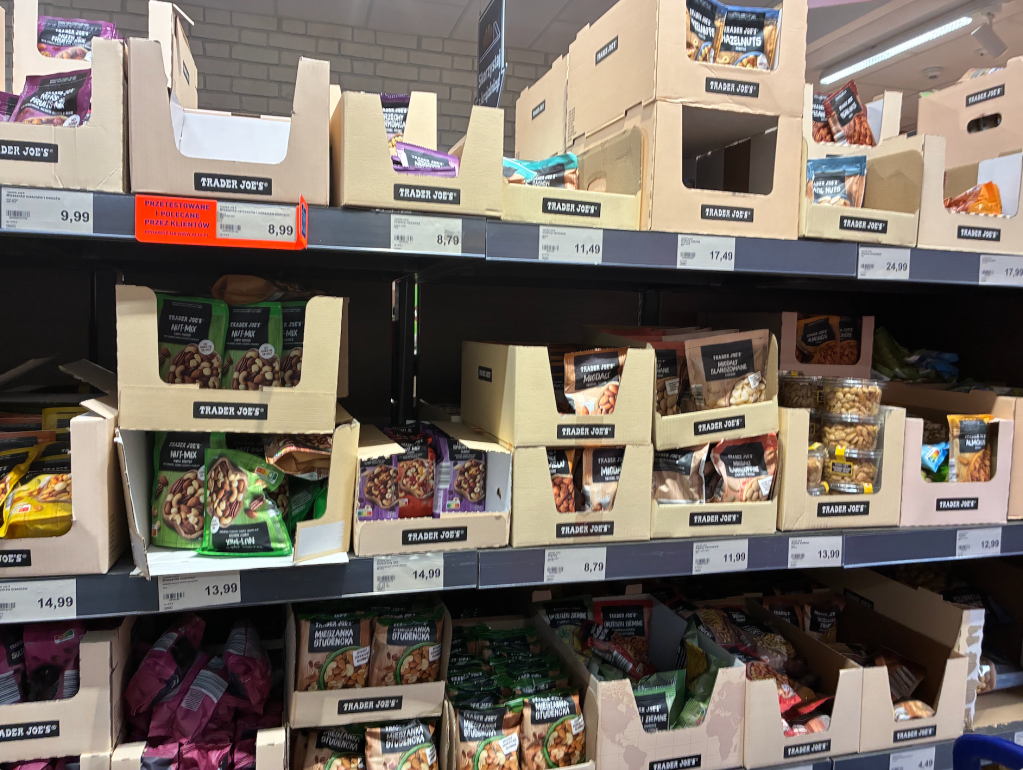
Supermarkets. Supermarkets were everywhere, in each neighborhood, easily walked to no matter where you were. Most small by US standards, some German chains; Lidl, Netto or Aldi (Owner of Trader Joe’s) that were moderately sized.
Confusing seeing the Trader Joe name on packages that are not consistent with our Trader Joe’s packaging
But occasionally we found ourselves in a giant Carrefour (French chain) usually in a mall (embarrassed to say how much we enjoyed encountering a Carrefour).
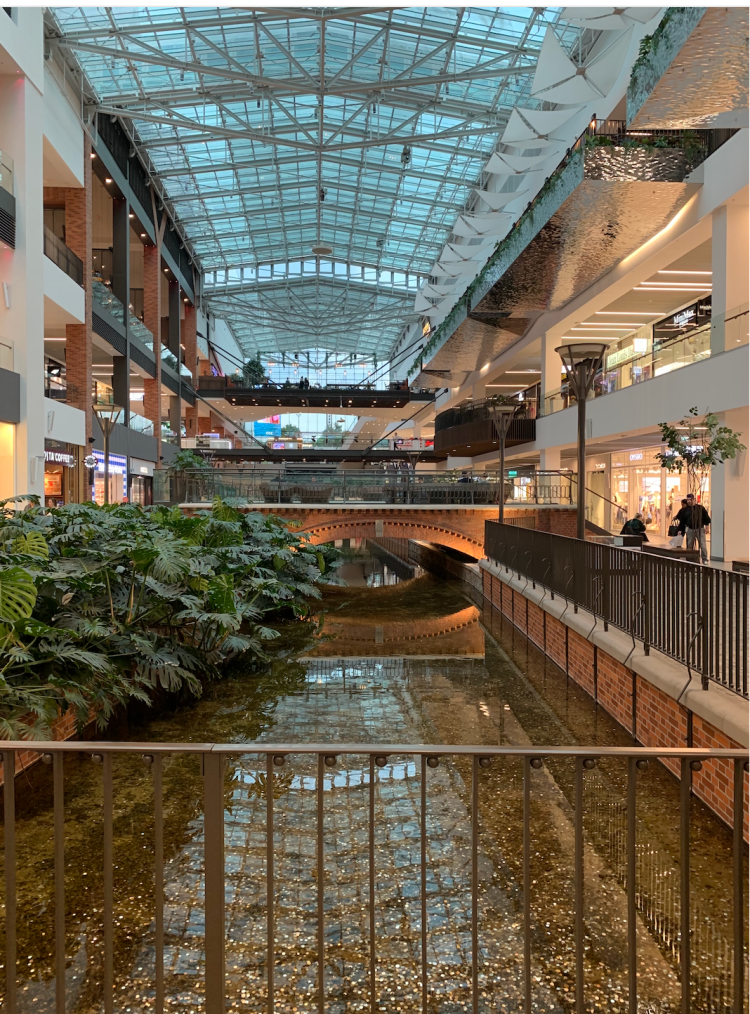
We spent a lot of time in malls. Good for the bigger supermarkets, mid-day internet and finding a bathroom.
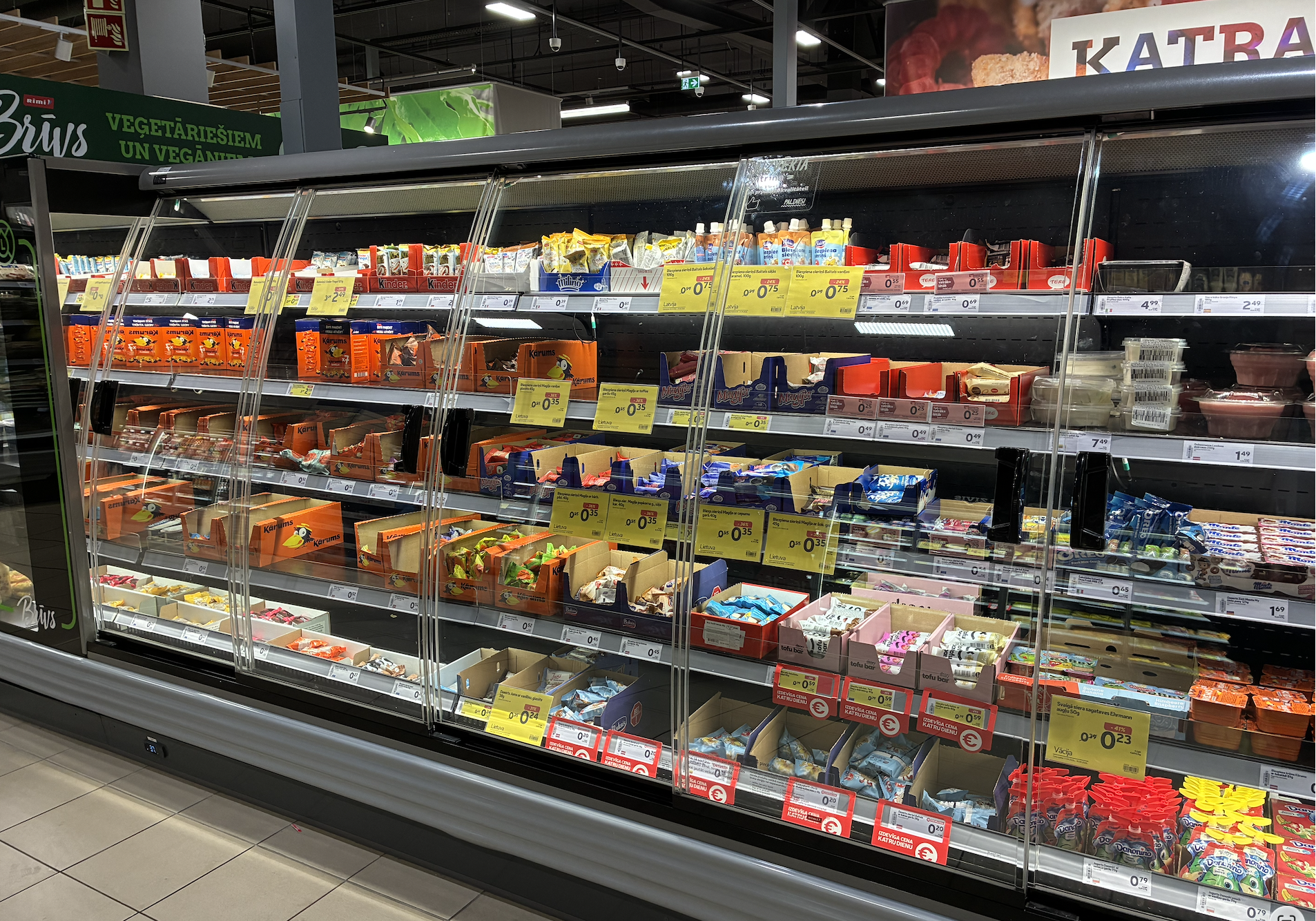
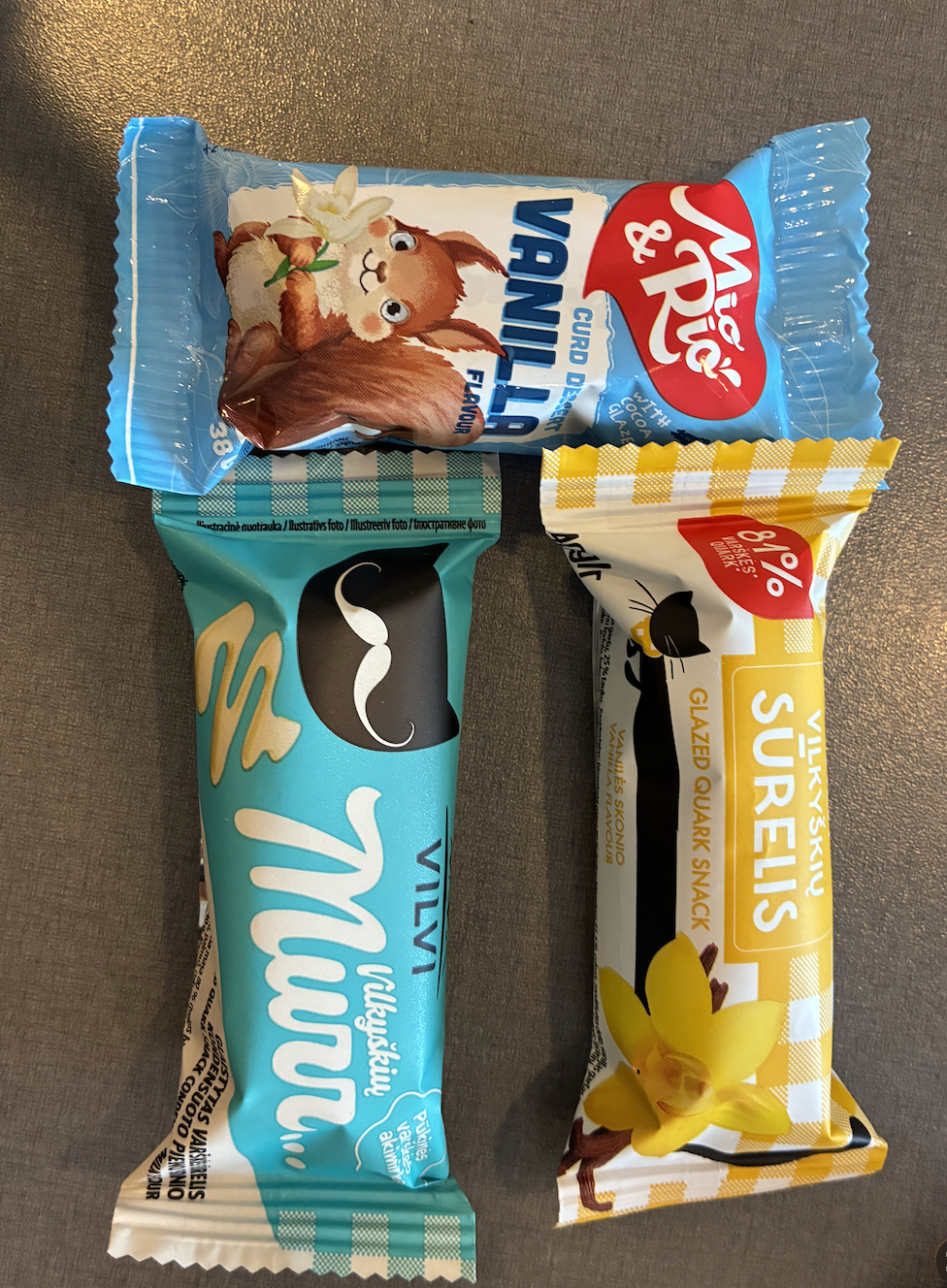
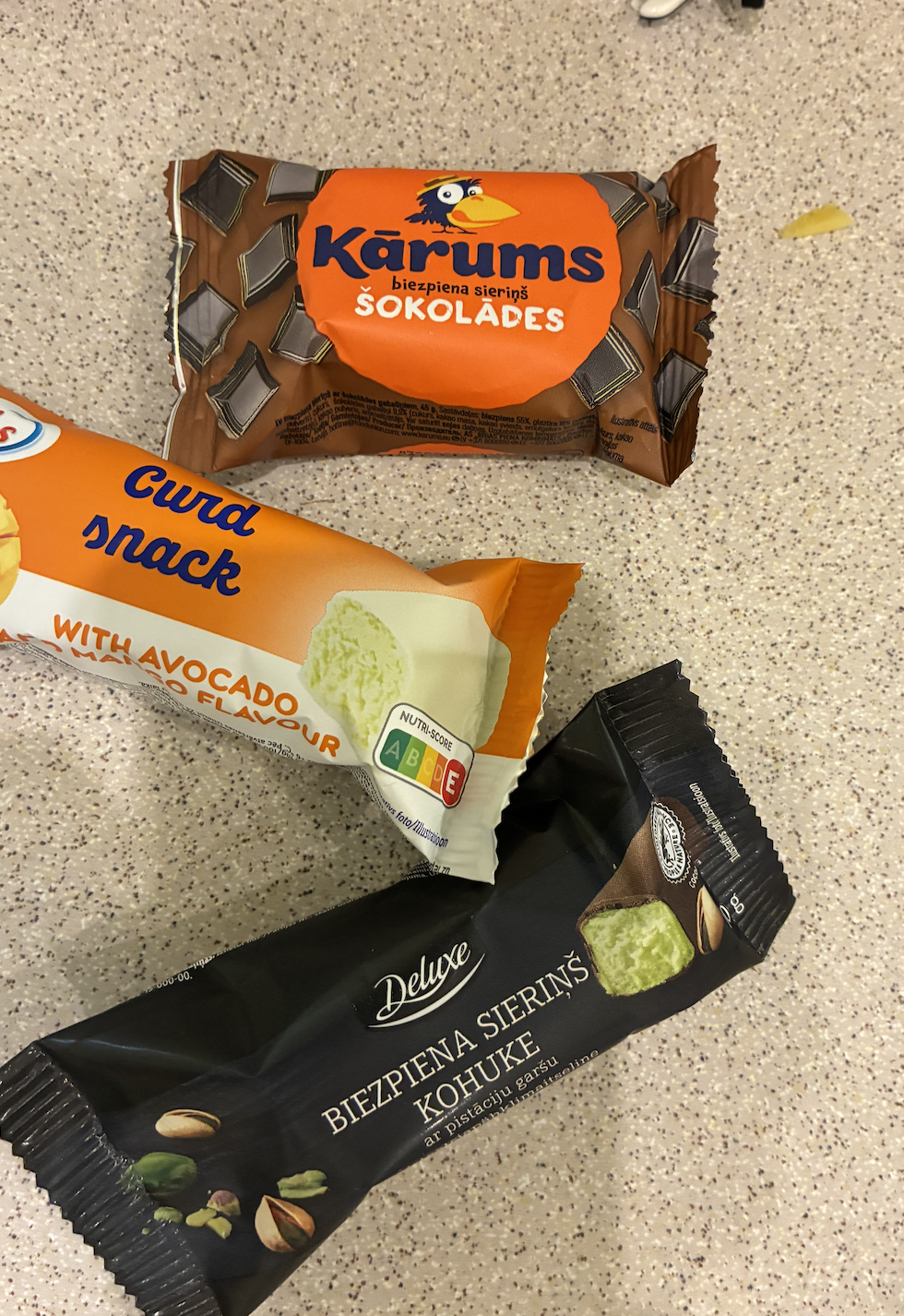
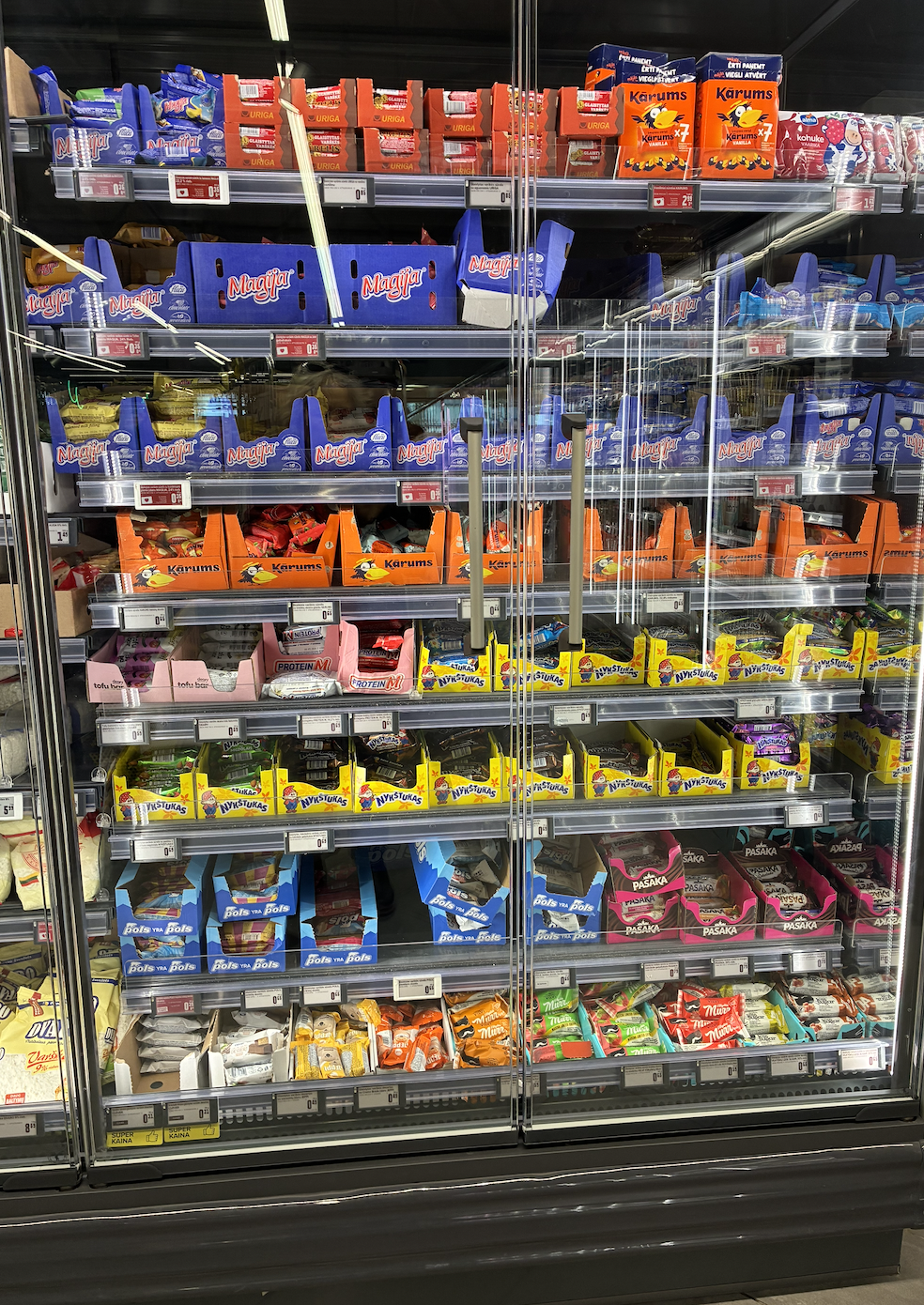
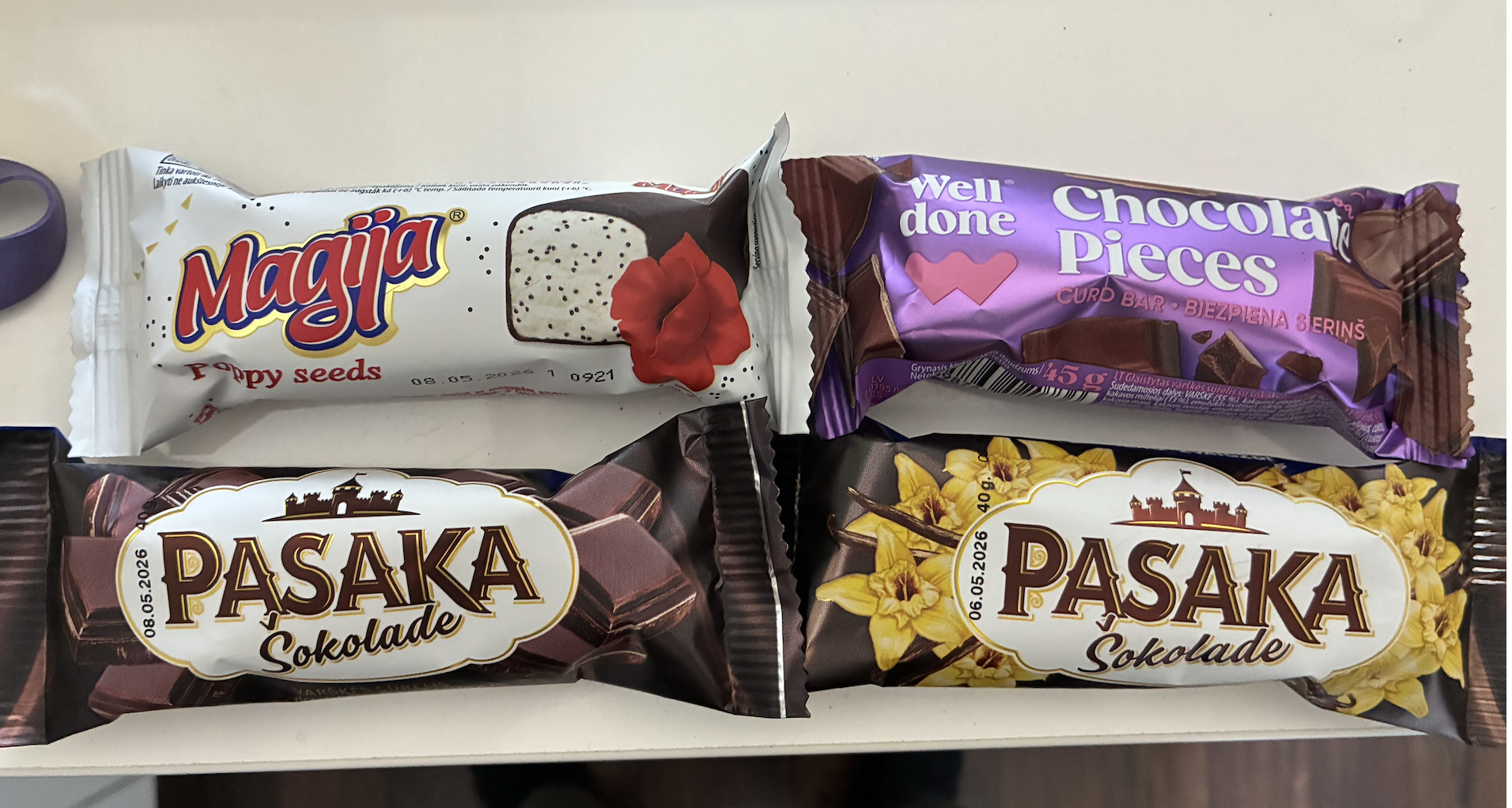
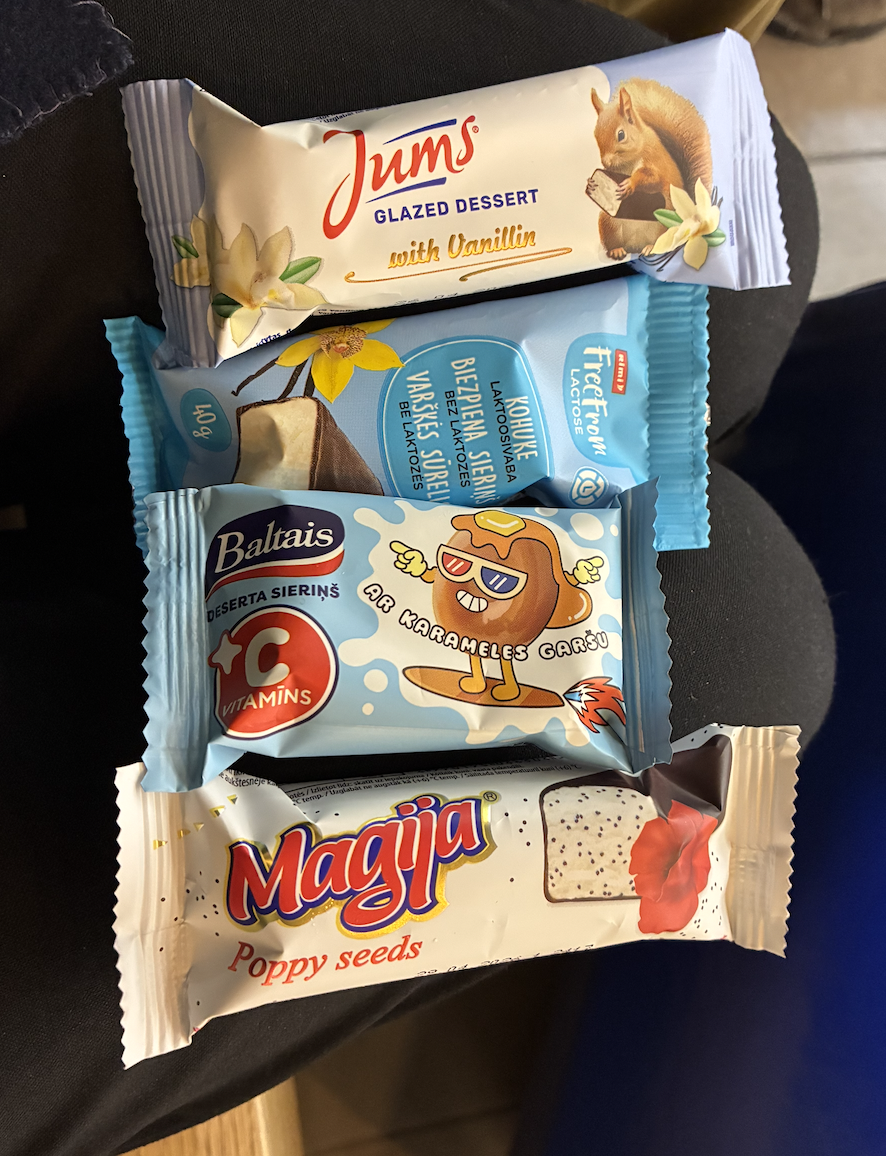
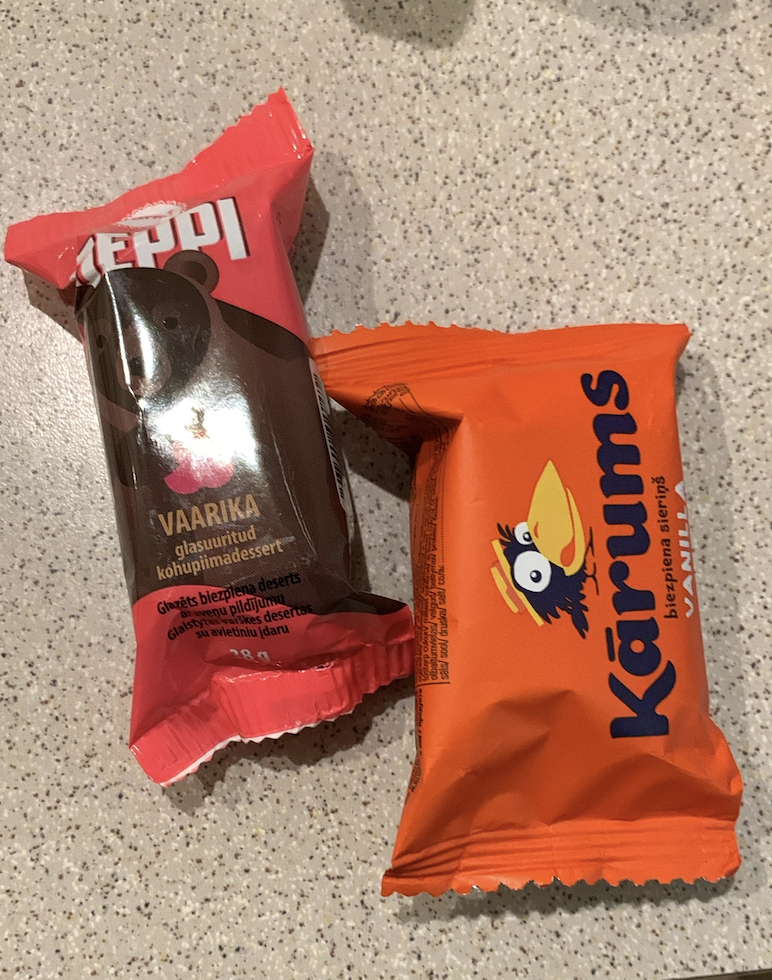
It was hard to find our beloved Kahuke in Poland. We discovered them in Estonia and ate them multiple times a day throughout the Baltics https://chosenfugue.xyz/2026/05/06/baltic-balagon/. This food geography reminded us that while the Baltics WERE part of Russia, Poland was not. Thankfully, although it was hard we did find them.
The proof of the market math
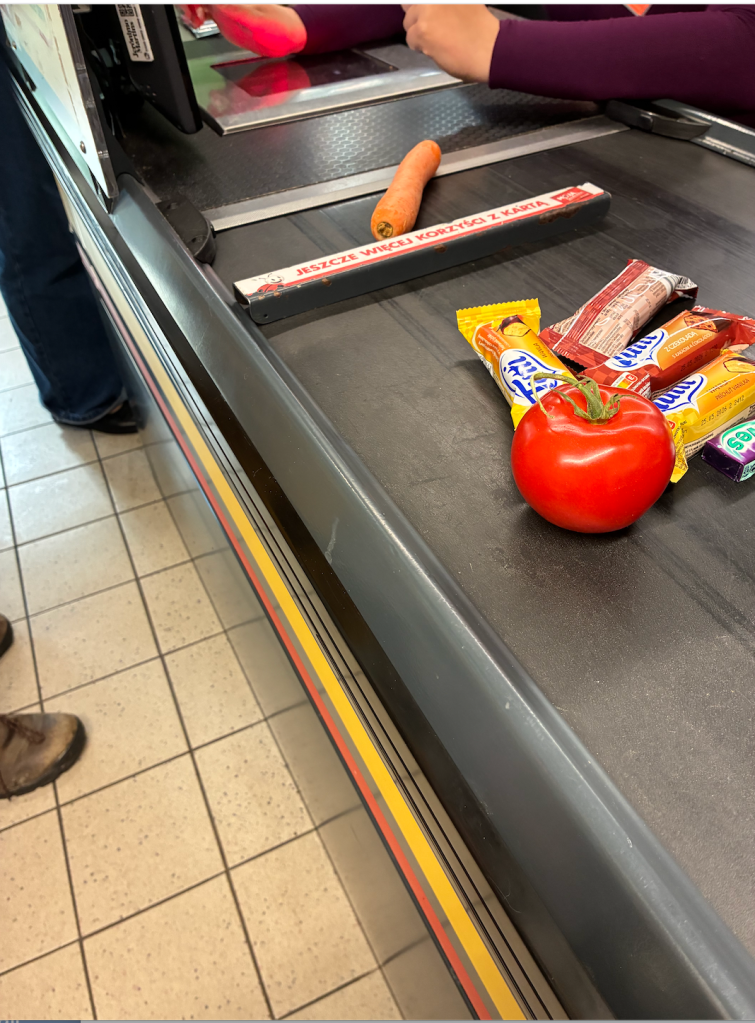
The market also was one of our last stops in Poland. Instead of Euros, Poland has its own currency, the Polish zloty, the PLN, which we enjoyed as those are Patricia’s initials, so everything at the market had a PLN value. Our goal was to leave Poland with just our PLN. The last day was spent doing market math. We were down to 9.72 zlotys (about $2.56 USD). Nick’s math word problem was to spend 9.72 PLN with the purchase to include our last kahukes, Airwaves gum (with flavors not seen elsewhere), while calculating in the 5% tax, the confusion of “on sale” item tags (3 for the price of 2, buy 7 get one free). To add to the arithmetic level of difficulty, Nick decided to purchase fruit and/or vegetables of an exact weight, knowing the price per kilogram, but utilizing a poorly calibrated (not exactly zeroing) scale. The final answer was……. Nick purchased a single carrot (which elicited an appreciative smirk from the cashier). He then handed over the change to Patricia to purchase the mathematically determined 4 kahukes (on sale) 1 pack of Airwaves and a tomato of appropriate weight. 9.62 PLN’s spent, 0.10 zloty in change which Nick attributed to a vegetable scale error. The remainder 10 zloty cents (.026 US cents) were given to a guy drinking a can of beer in front of the store.
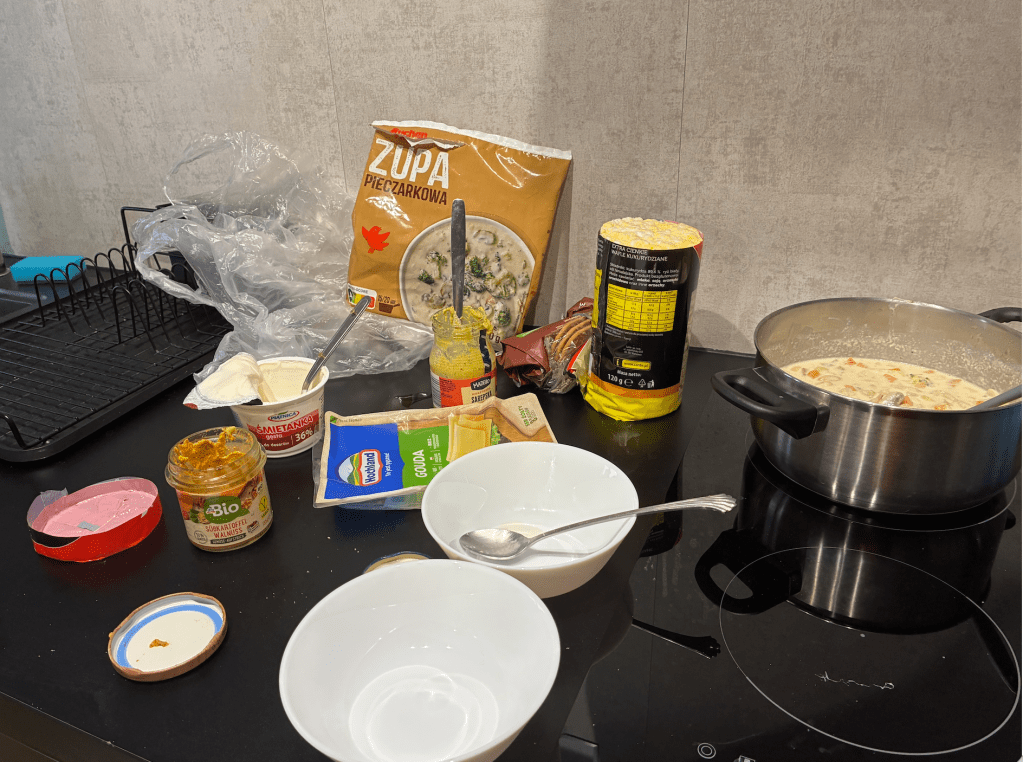
We did explore Polish foods, as much as possible for us to do. We define authentic food as what we find at the market. In contrast with US, Poland’s prepared soups were frozen not canned, so we had to try some, with added vegetables and sour cream; corn thins, walnut pate, mustard and cheese along side.
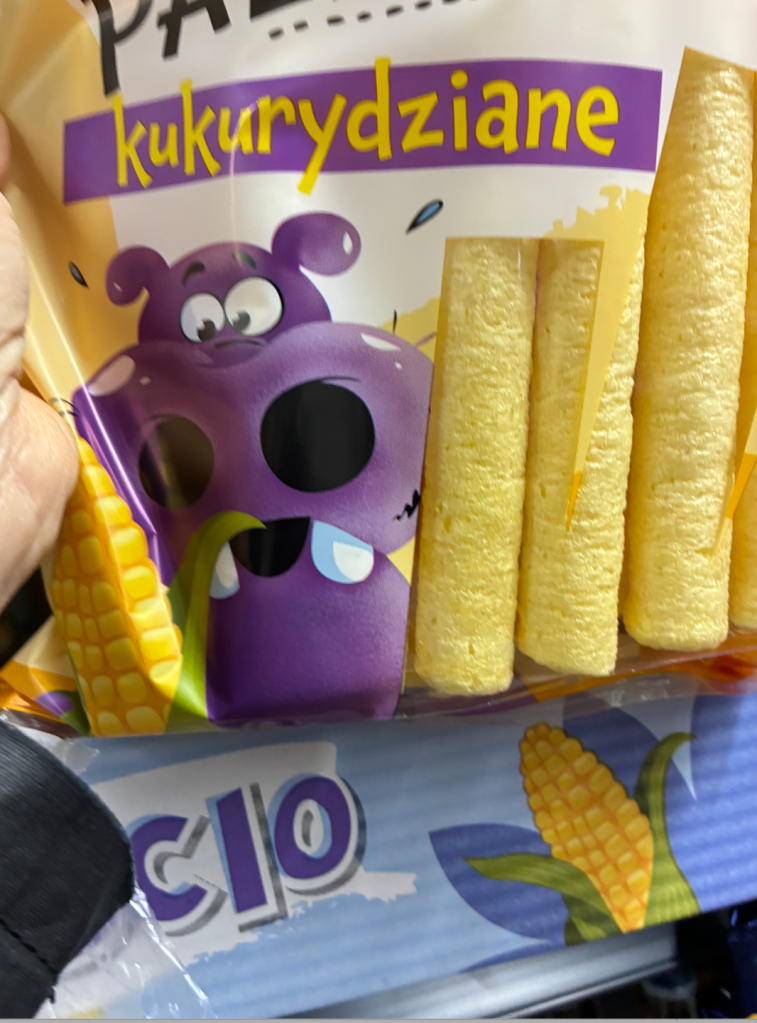
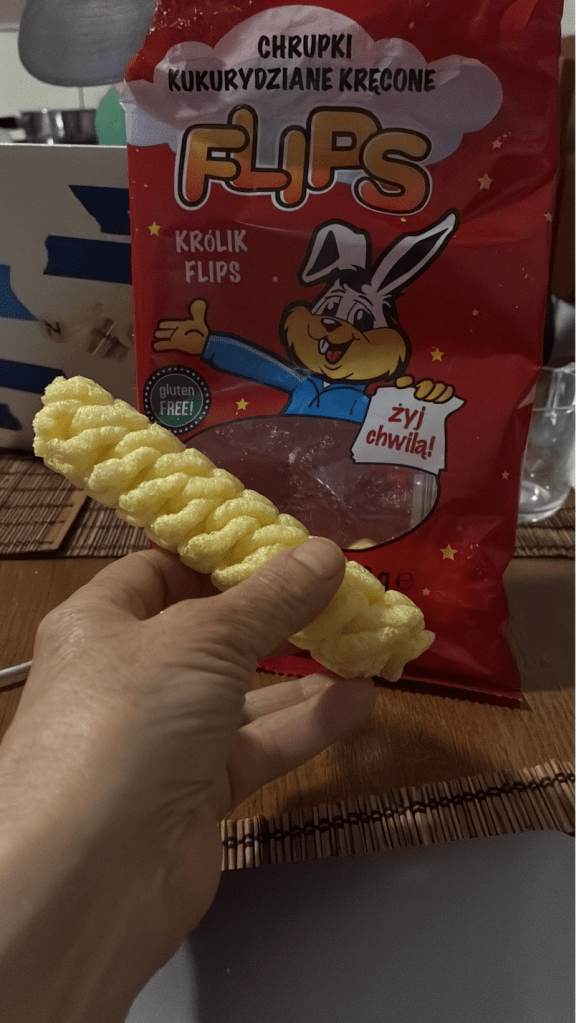
Like it’s neighbor Lithuania, a lot of basic (at least the non-meat) Polish food looked like typical Jewish-American food although Patricia’s favorite Polish food were kukurydziane
How to describe? Like a big corn puff but not sweet. Kinda good dunked in coffee,. They were everywhere and weirdly all packages had animals on them
Also like their Baltic neighbors, Poland showed respect for street lights and crosswalks. You just look at a crosswalk and the cars stop for you. Everywhere sidewalks and bike paths are separated, a big plus for us. Transportation was great. Trains and buses were plentiful, reasonably priced and on time. Often there was no difference in price or duration between the two. We needed to take a car (a taxi) just once, to go to and from the train station to Treblinka. It felt icky that other than Auschwitz, many of these sites were hard to get to; somewhat understandable since they were usually out of the way.
Surprises.
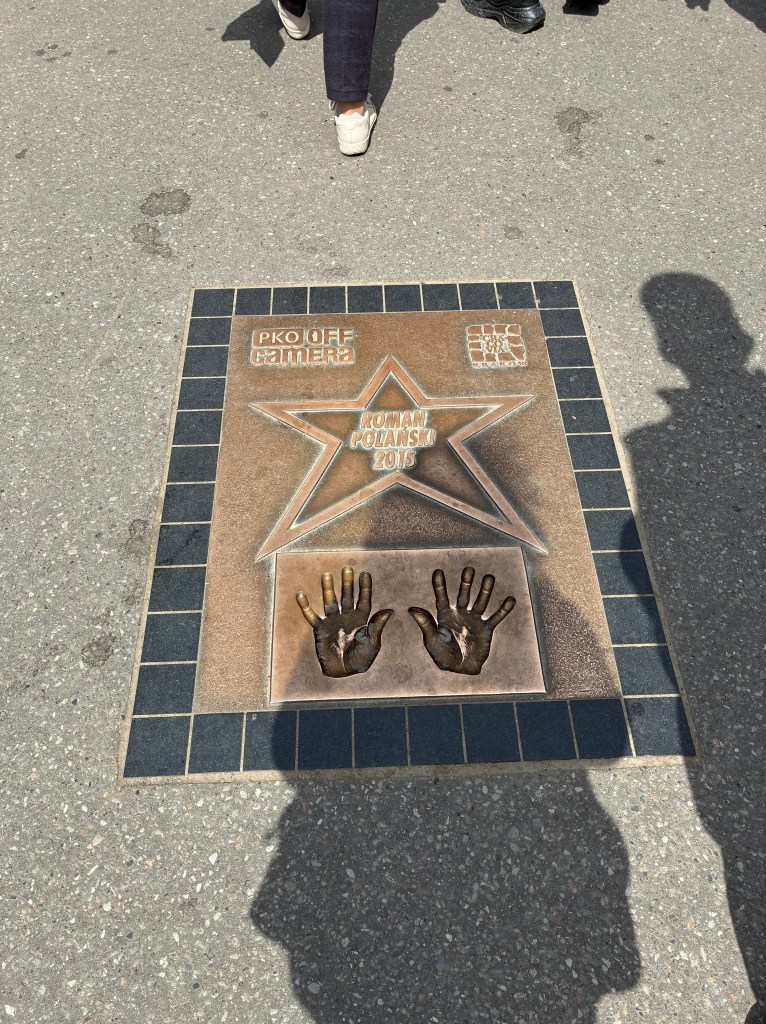
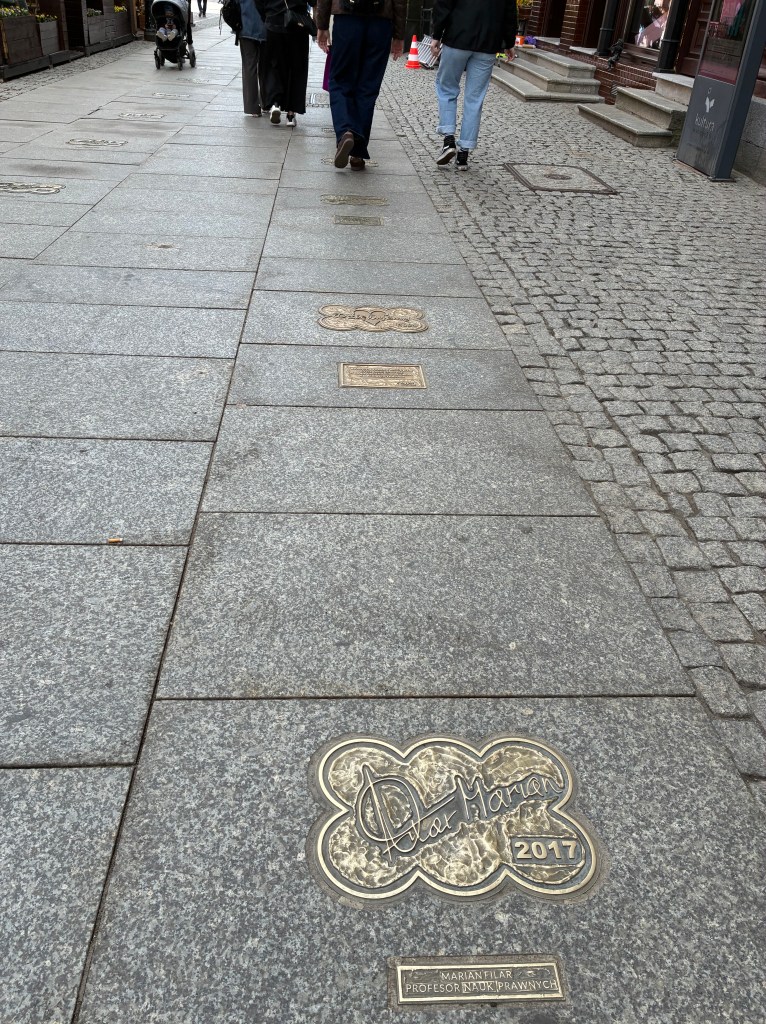
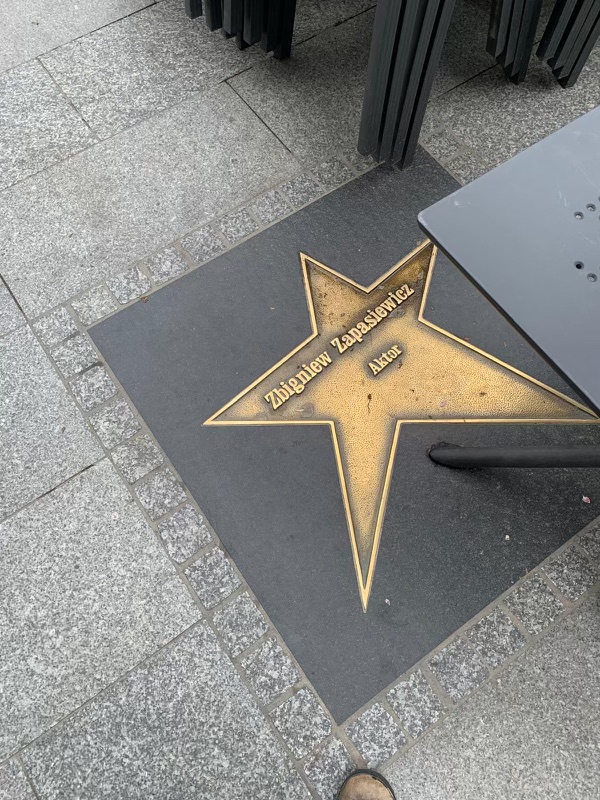
We saw multiple walks of fame.
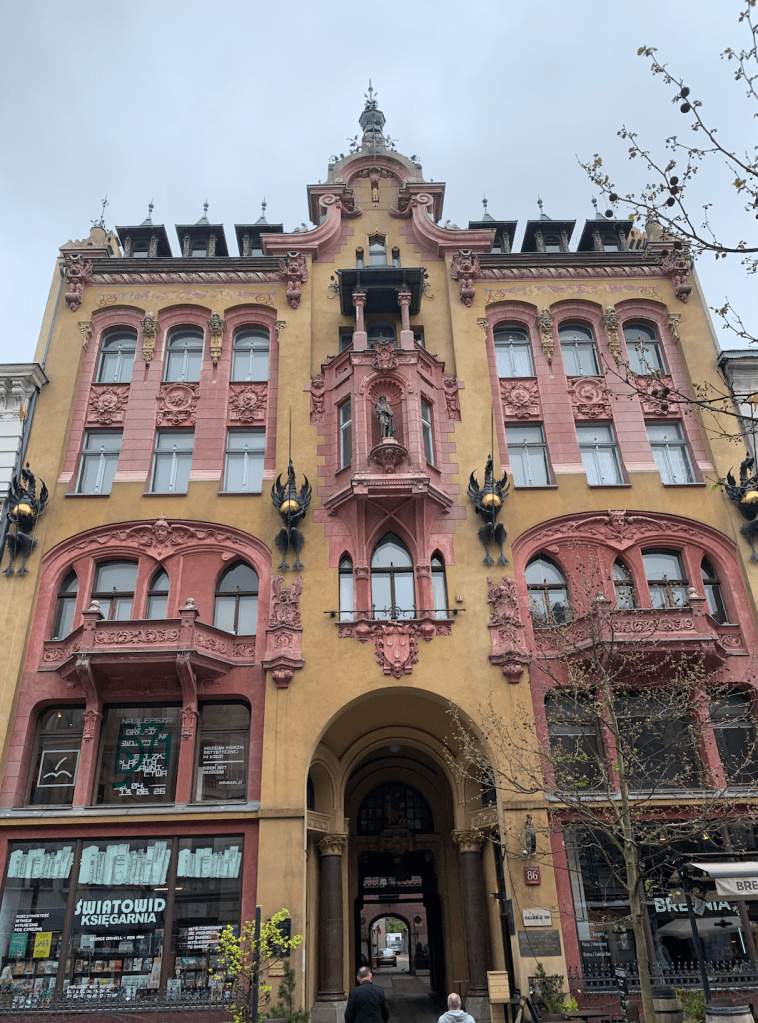
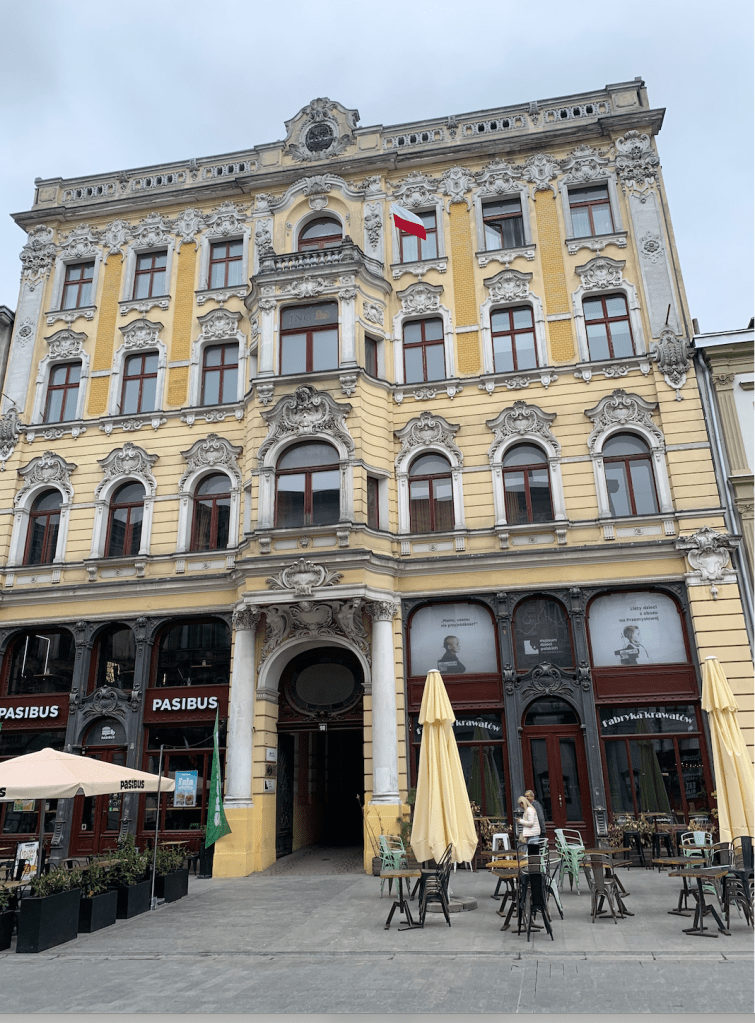
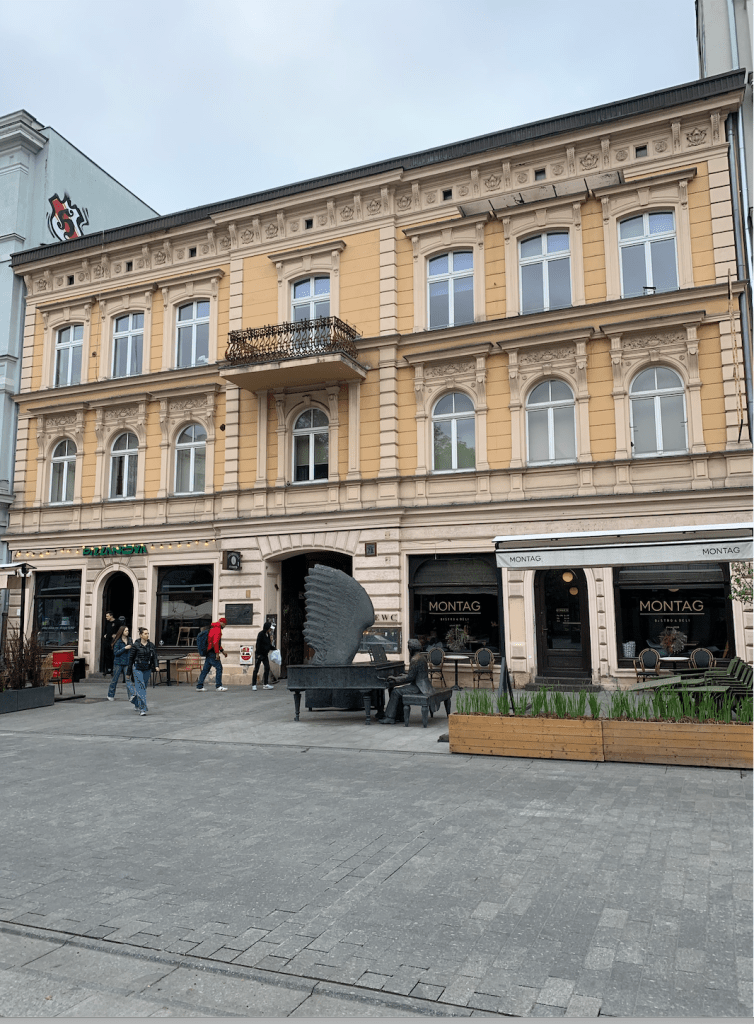
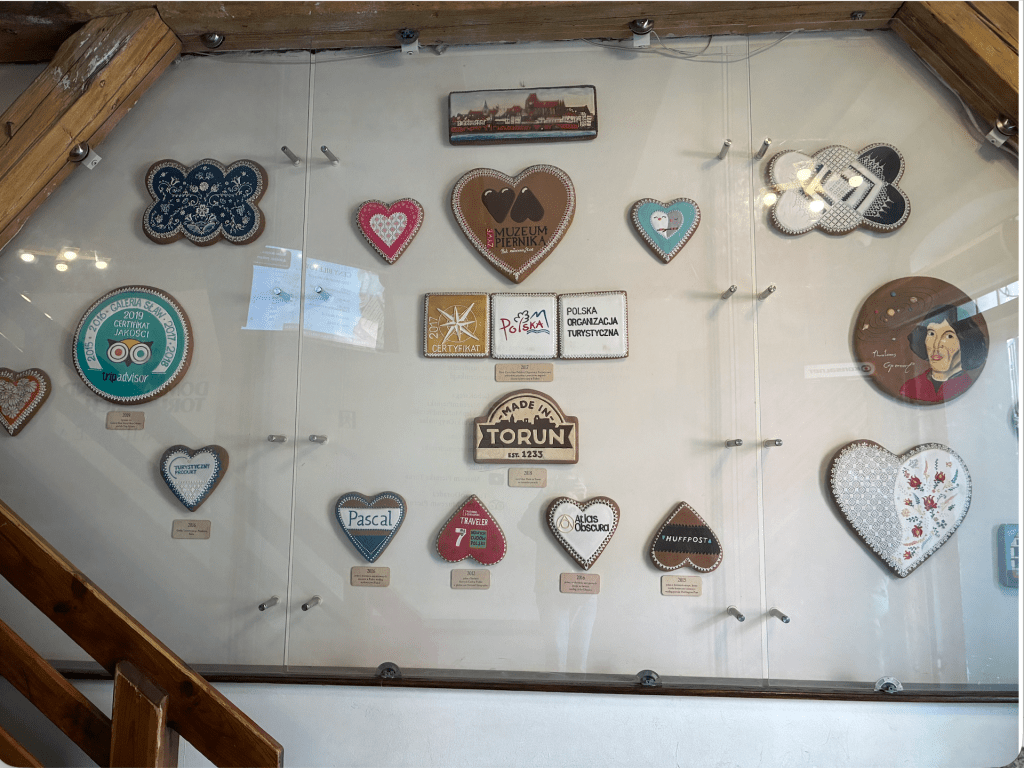
Krakow’s take on Grauman’s Chinese Theater in Hollywood?A gingerbread walk of fame in TorunDistant Greek-Polish relative in Łodz?
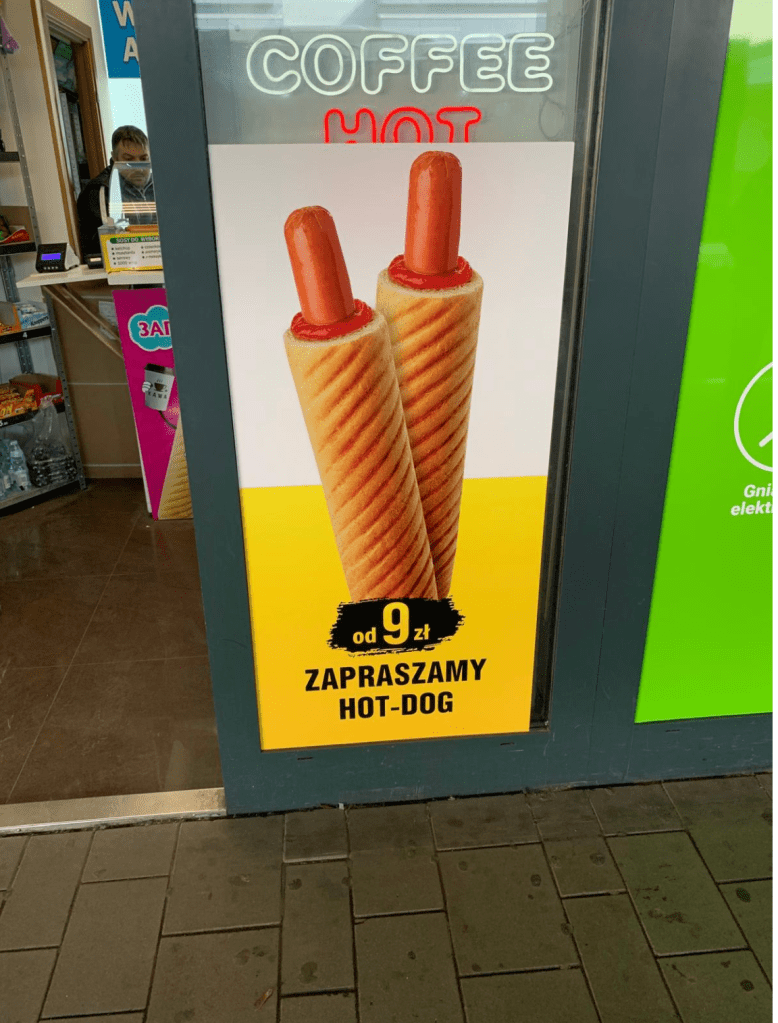
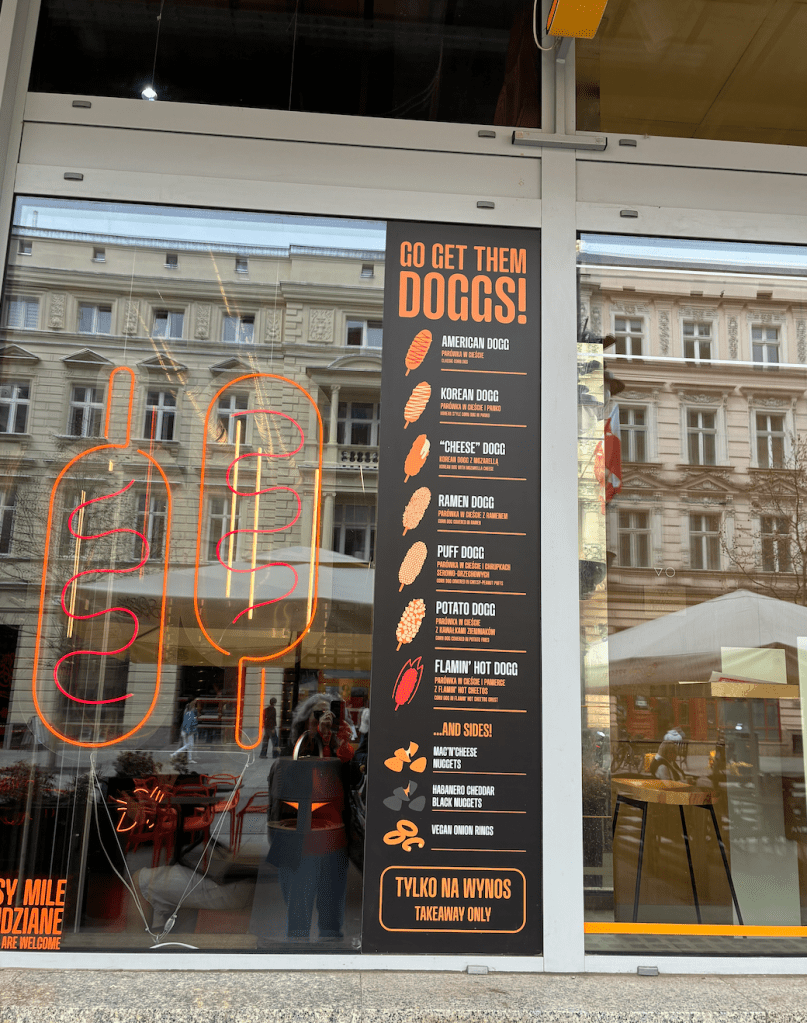
Everyone always seemed to be eating hot dogs or ice cream (especially on the holiday weekend).
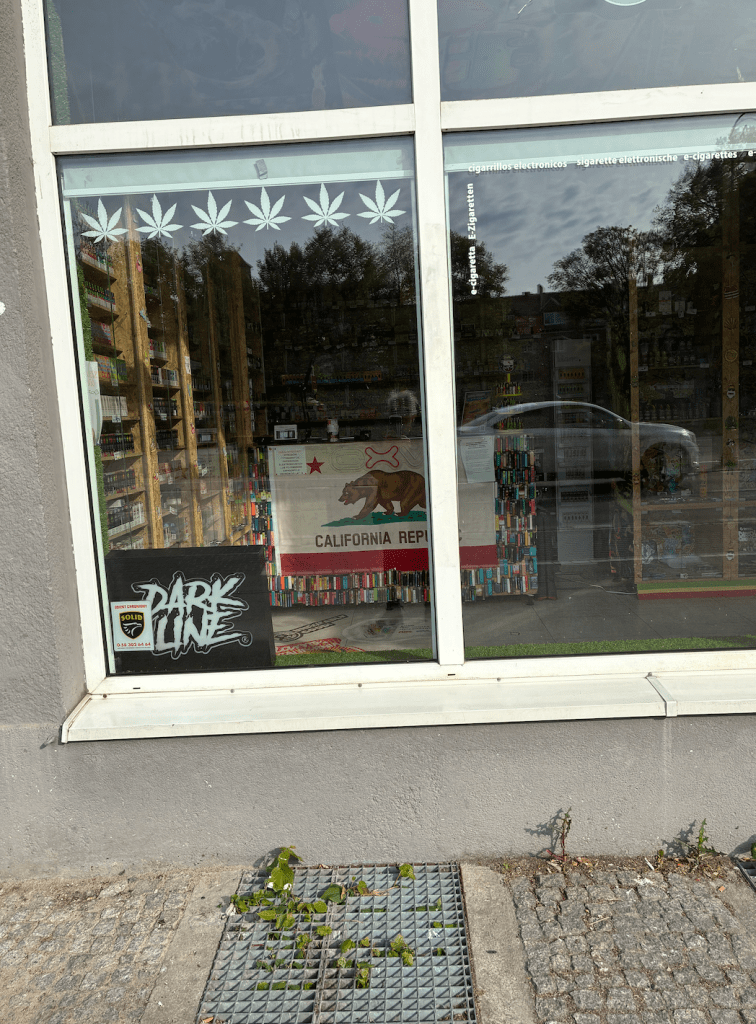
California was represented, multiple vape/smoke shops bore the bear flag.
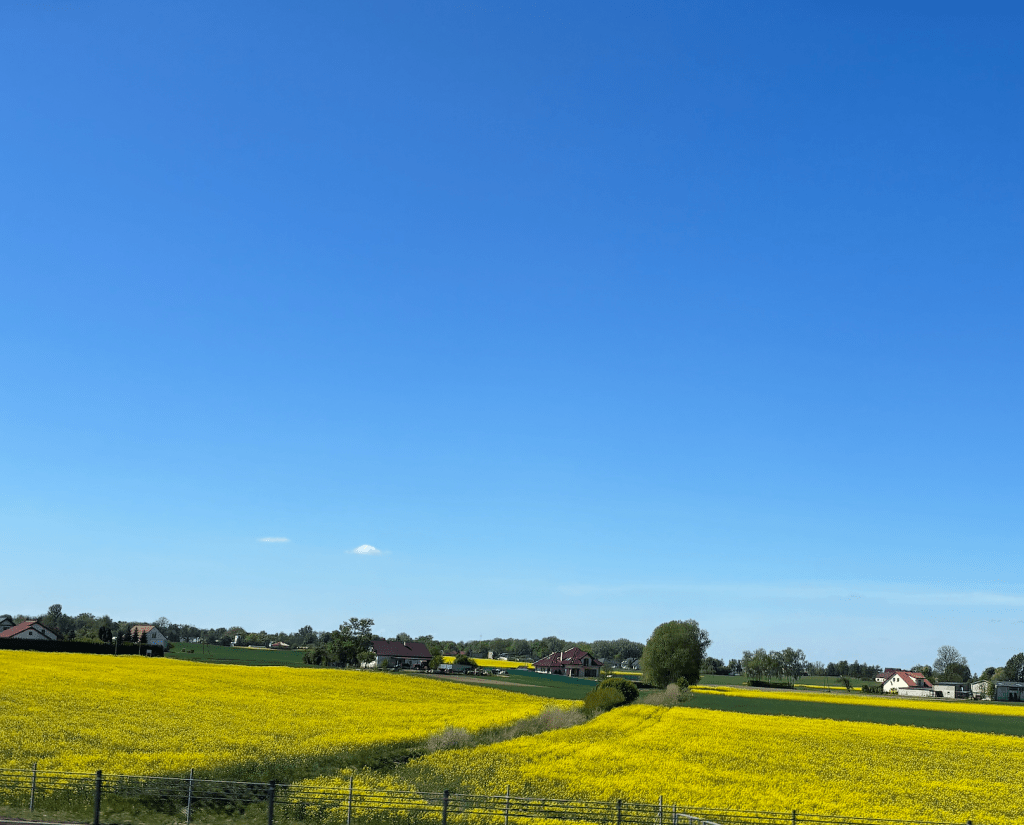
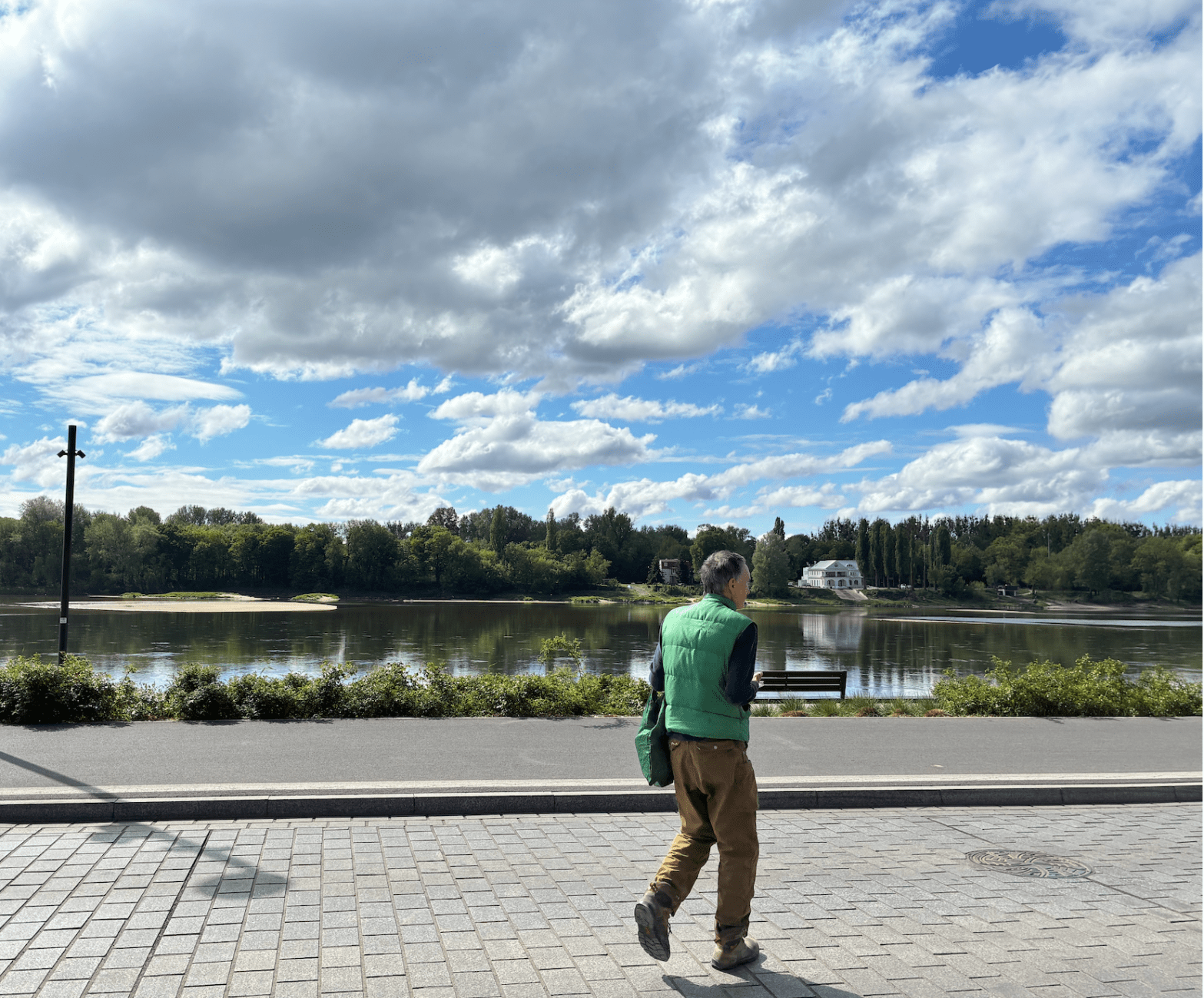
We were also surprised by the fields and fields of yellow rapeseed (canola) viewed from our train or bus windows. These were a constant sight during our three weeks in Poland as we crossed and recrossed the Vistula river going from city to city.
Our last surprises were as we were walking at dawn to the Gdansk airport from our nearby hotel. A lovely goodbye from an equally early rising stork, still in it’s nest.
Although we both were early morning blurry, the blurriness is due to taking the pic from far away, the nest is atop the roof.
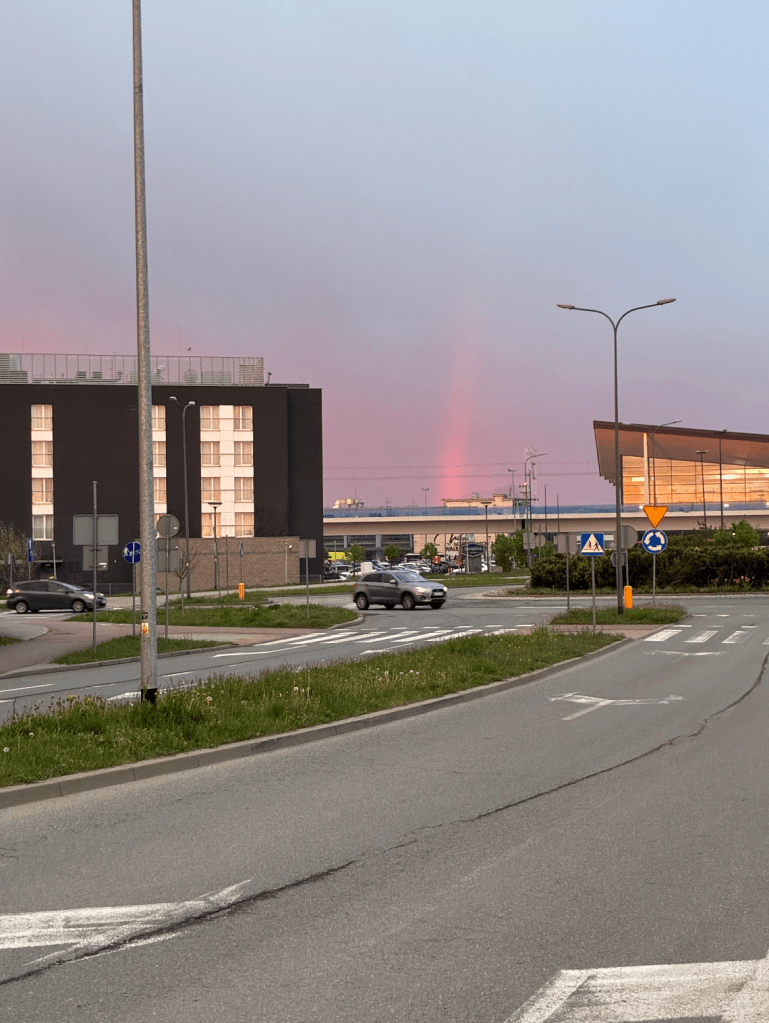
An even more memorable good bye was waiting for us at the airport, a morning mist rainbow
Early in our 2026 travels in Sarajevo, we stood at the corner in Sarajevo where Gavrilo Princip assassinated Franz Ferdinand beginning WWI https://chosenfugue.xyz/2026/03/27/history-repeats-itself/ Fittingly, we wrapped up this round of travel where WWII began with Germany’s Polish invasion in Gdańsk September 1939. (Pics will look better viewed on the blog not the email).
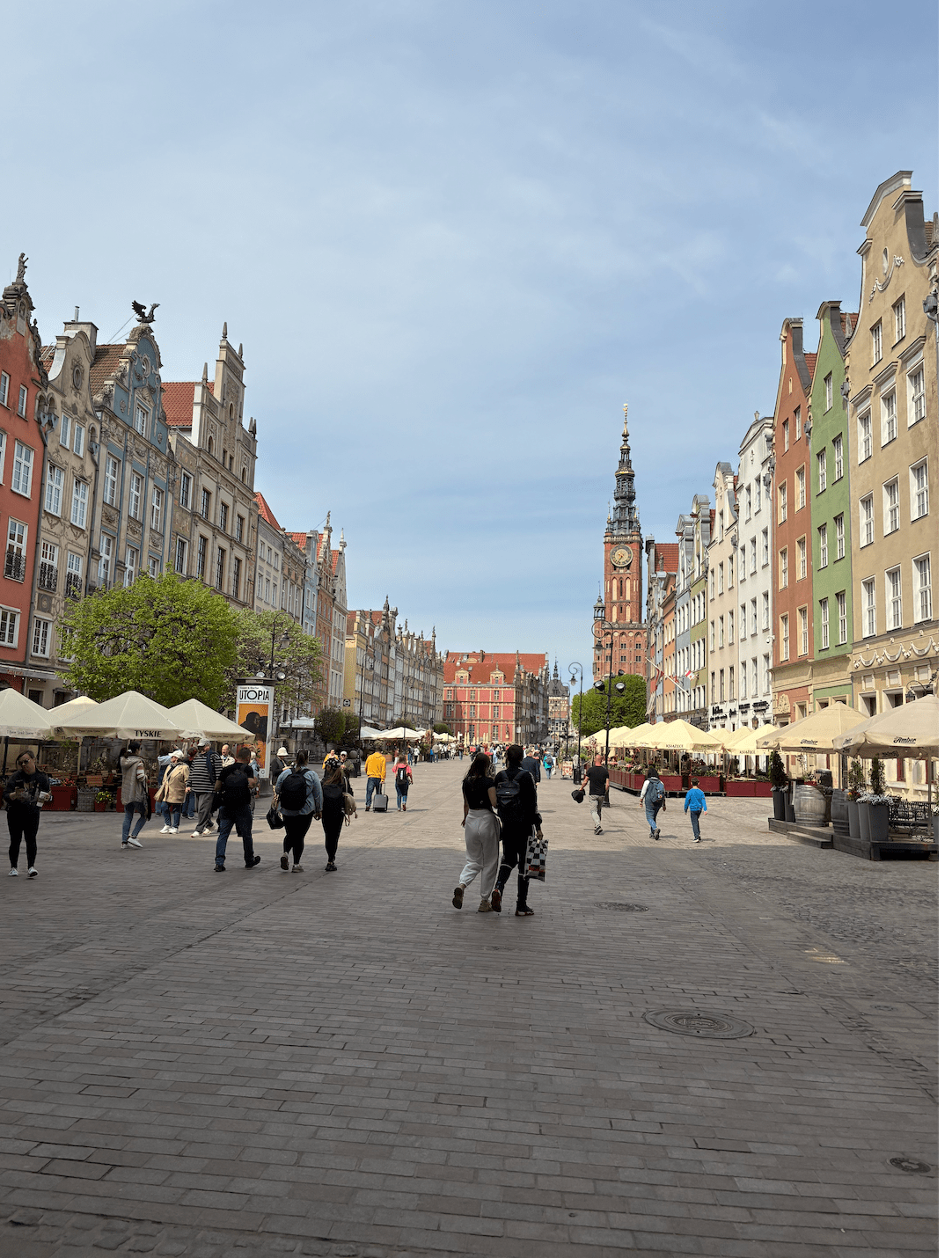
Gdańsk was also fitting as the last city on this round, as it truly met or exceeded every characteristic of a northern European, ex-Nazi occupied, ex-communist country. Eastern Europe definitely is a type.
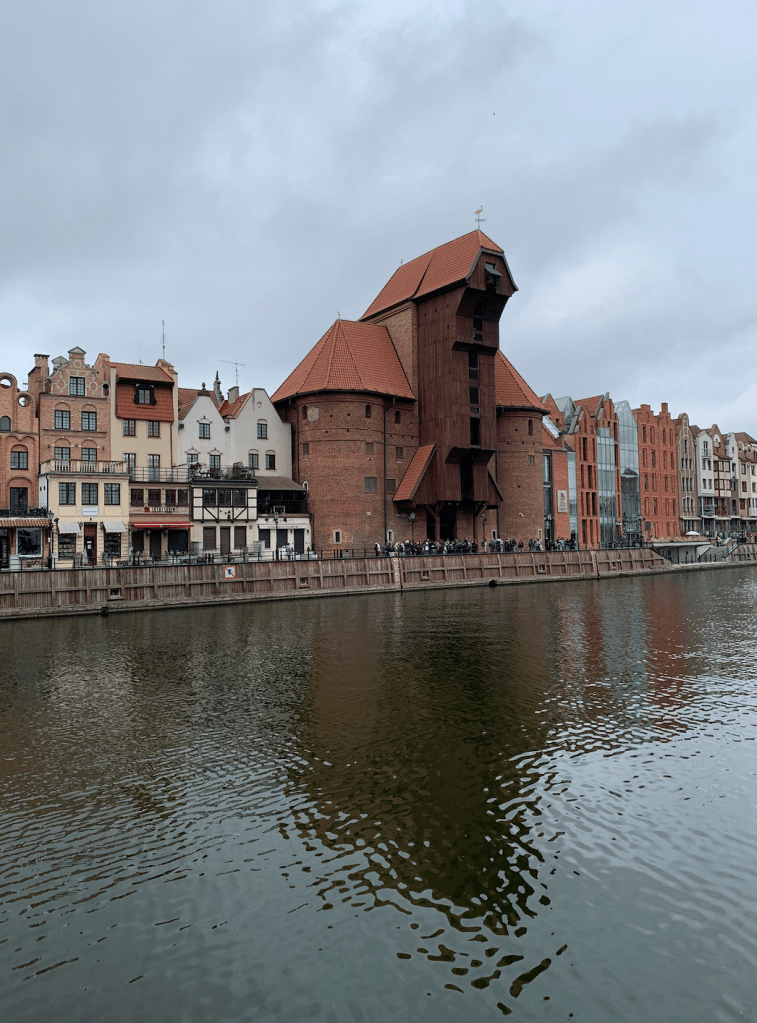
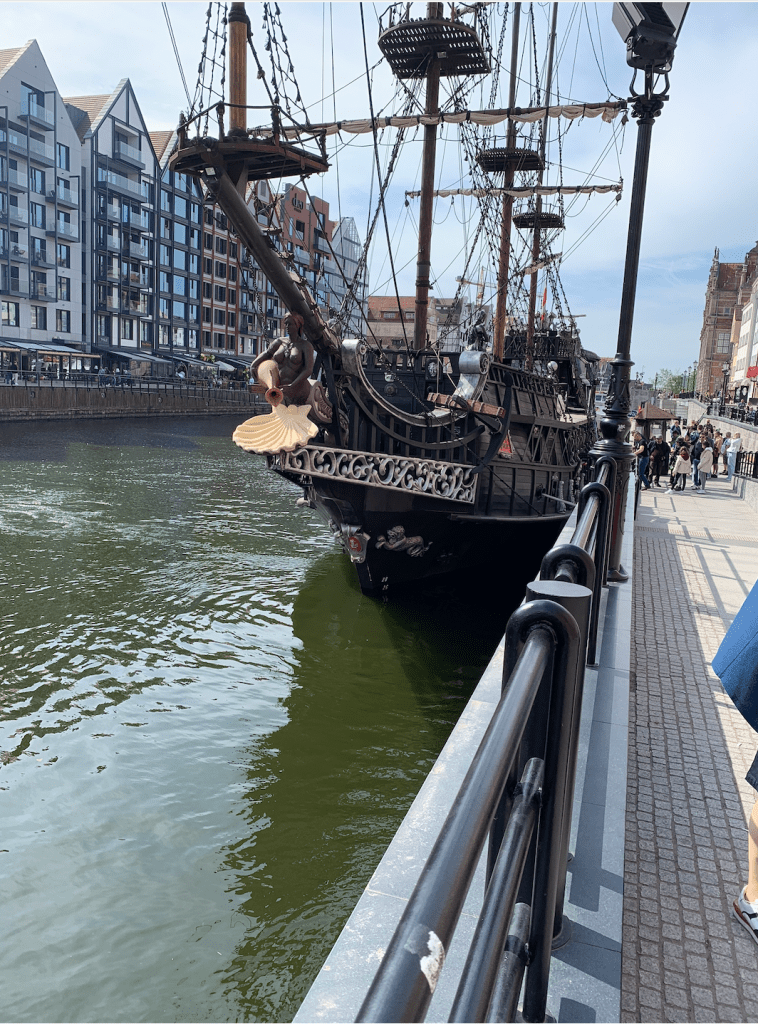
Gdańsk is a major seaport where the Motlawa River meets the Baltic Sea, a location so desirable, that since 997, it has been fought over.
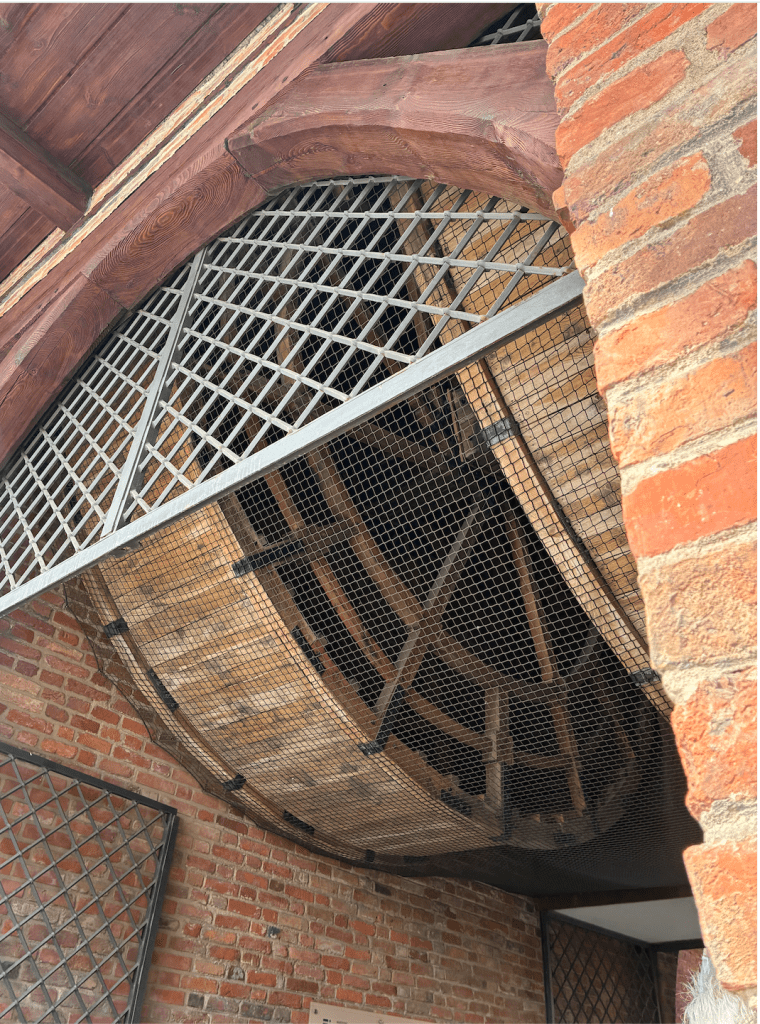
The Gdańsk crane built in 1444, on the banks of the Motlawa River, the largest medieval crane- it has been partially rebuiltit required multiple men walking on two human sized hamster like wheels (treadwheels) to raise the crane cargo of up to 4 tonnes in weight.
The city has alternated between being Polish Gdańsk and German Danzig, but also with some Russian (mid 1700s) and French (short term after the Napoleonic Wars in 1807) control. The Prussian Germans retook the city in 1815 and had it the next 100 years. With this history, it was a bit of a challenge to determine what to do with this German Polish city after WWI. The Treaty of Versailles decided that Danzig/Gdańsk should be the independent Free City of Danzig, with Poland maintaining some military and shipping presence. But fairly soon after independence, the majority German population embraced the emerging Nazi party triggering a wave of anti-Polish laws and practices and pogroms/restrictions against Jews and Roma. It was not surprising that in 1939, Nazi Germany demanded Danzig be returned to them and when denied, as retribution, it was invaded to begin WWII.
Of course, Gdańsk suffered greatly during WWII. Towards the end of the war in March 1945, Polish and Soviet troops captured Danzig/Gdańsk during a 2 week siege. The city was left in ruins. The remaining German residents fled, Poles who had been exiled in Russia returned and no Jews or Roma were left to return. During the 1950s and 1960s Gdańsk old town was rebuilt, but not as it was before the war. Reconstruction sought to minimize the “German character” of the city, instead it was built to reflect the Flemish-Dutch-Italian-French influences of the 1700s. A unique hybrid.
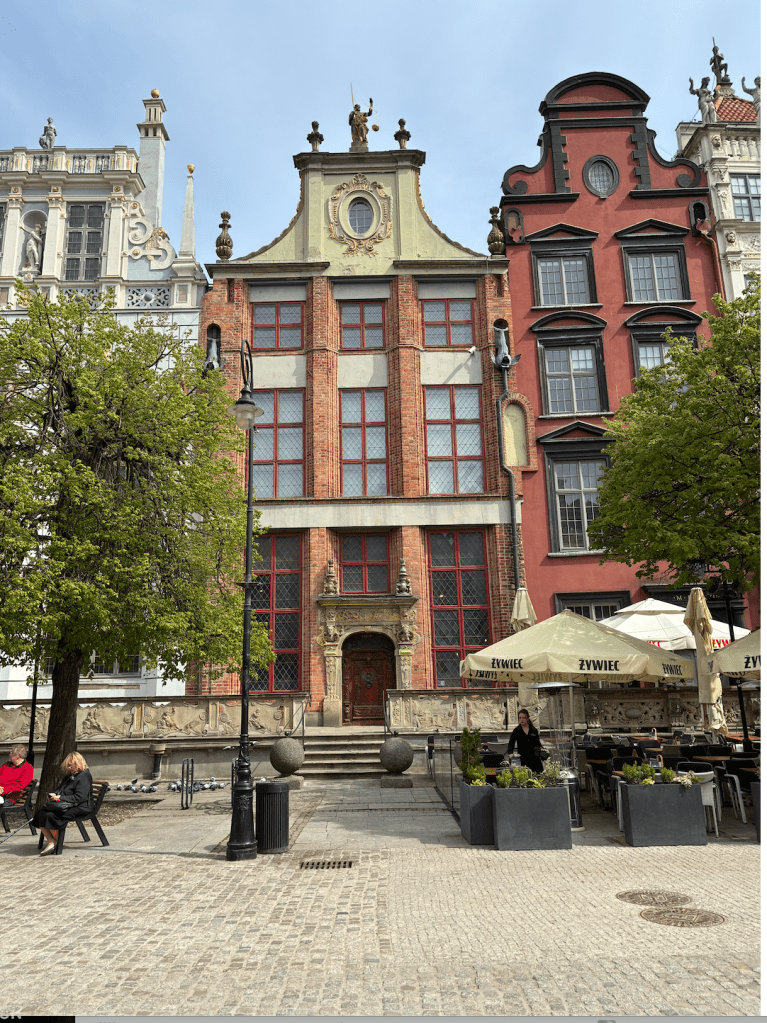
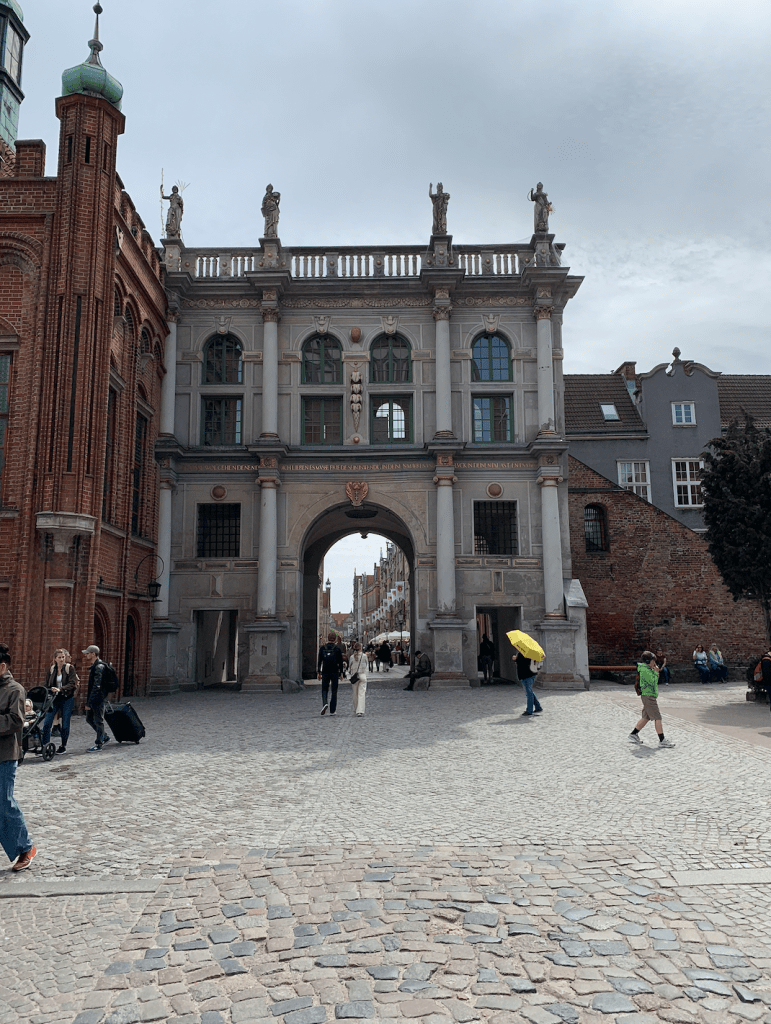
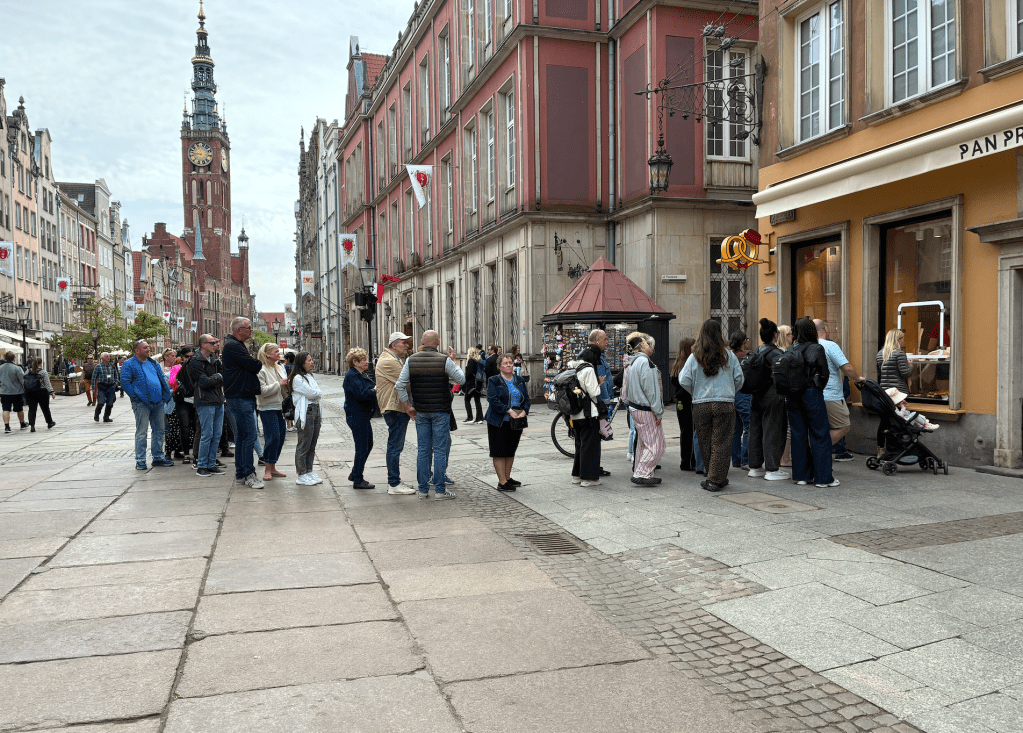
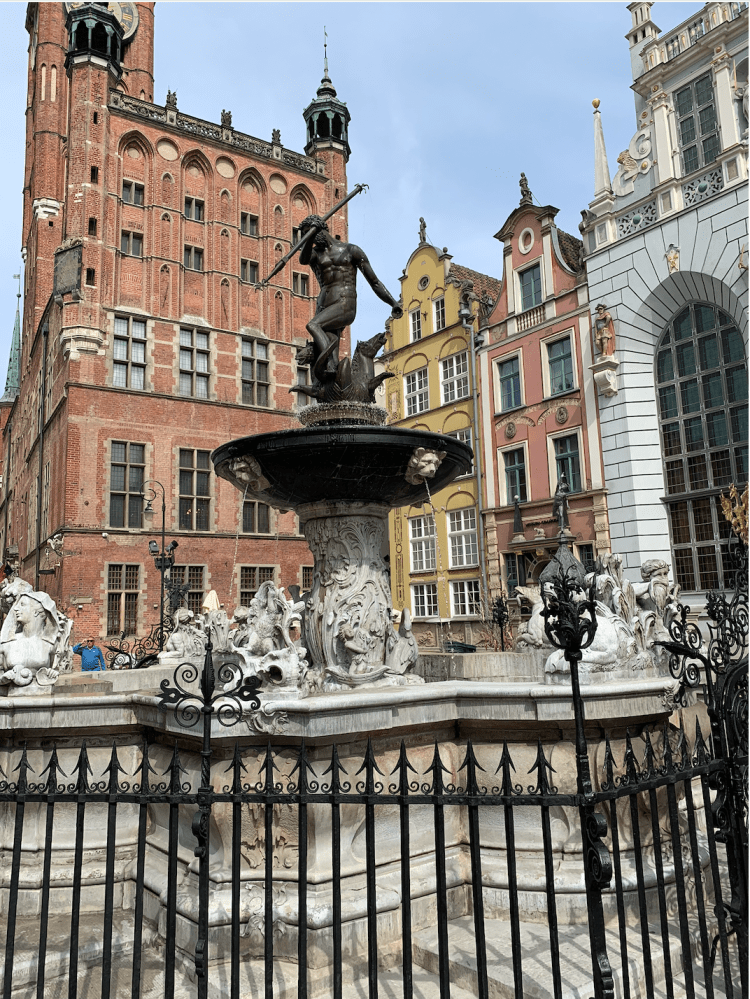
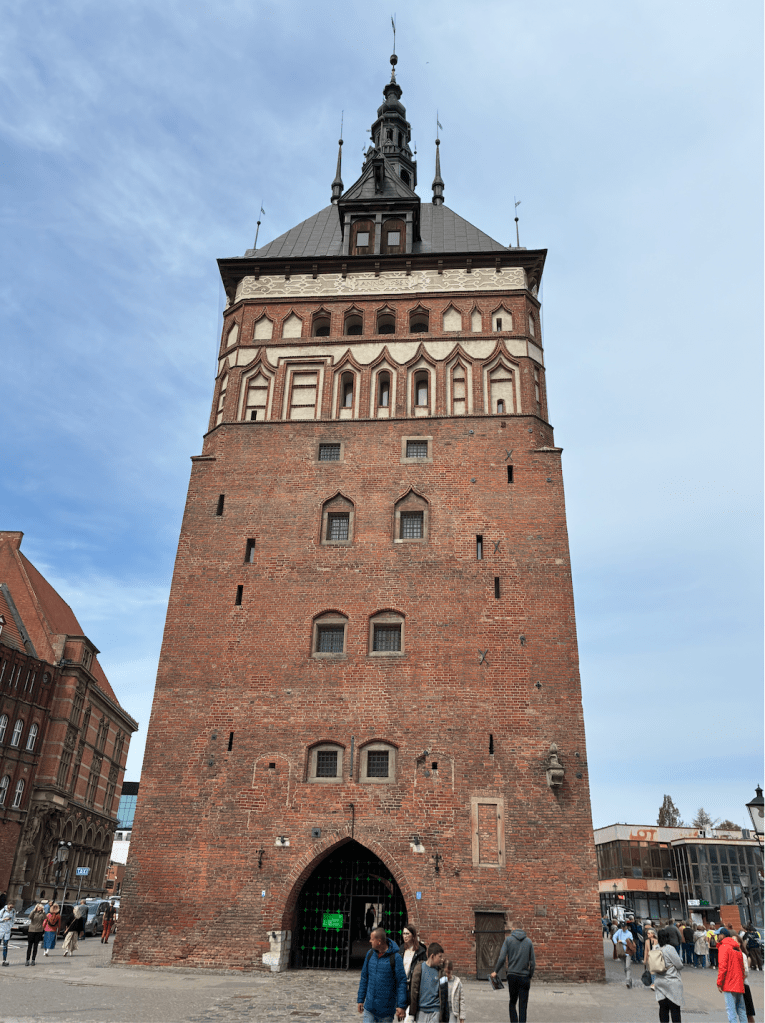
Crazy mix of every stylecity gates, a bunch of them throughout the old town, but no wall? And all looked inconsistent. There was always a line at this pretzel place, they sell stuffed pretzels, menu here https://panprecel.pl/menu/. We walked around it.
Although these buildings were rebuilt, depending on the degree of ruin, the outside is remarkable, but the inside is usually not, generally very basic.
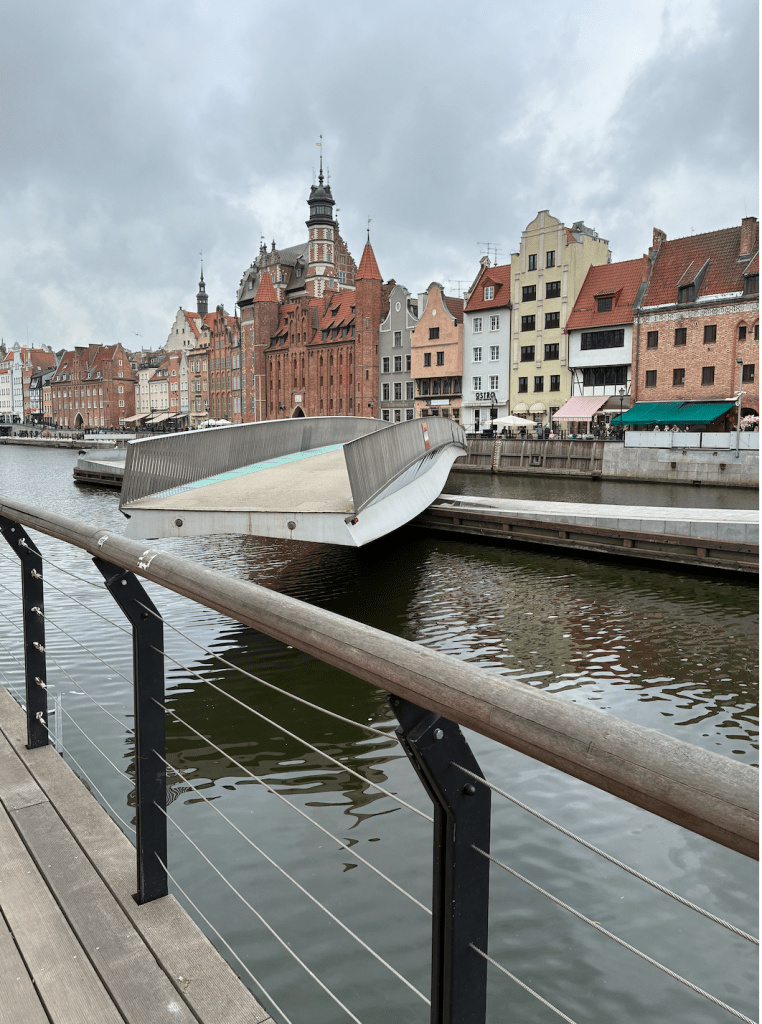
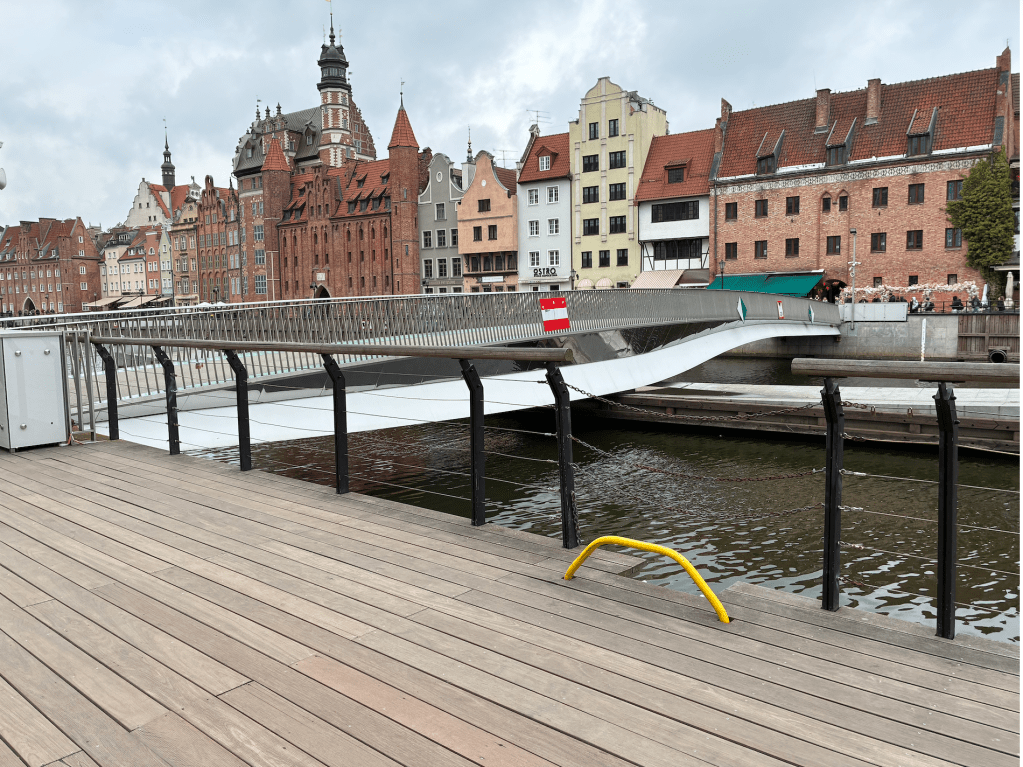
The old town was pretty stellar and Gdańsk kept getting more interesting. We walked around the river and as we wondered how we were going to cross the river, the bridge went from parallel to the street to perpindicular. It just started moving on it’s own. It was very exciting!
We overheard someone saying that the tourist/non-shipping area of the river port area was rebuilt just in the last 10 years. We appreciated that new buildings, were built to blend in, not exact but in the same style.
Kind of amazing that this city was at the center at two major events-start of WWII and the fall of communism. Gdańsk is the home of Solidarity, the first independent labor union in Poland formed in 1980 which contributed to Poland’s move from communism to democracy https://en.wikipedia.org/wiki/Solidarity_(Polish_trade_union). You can visit the shipyards and churches that were home to the dockworkers of Solidarity. There is also a museum, which is supposedly very good, and but we did not visit them. So much for Solidarity.
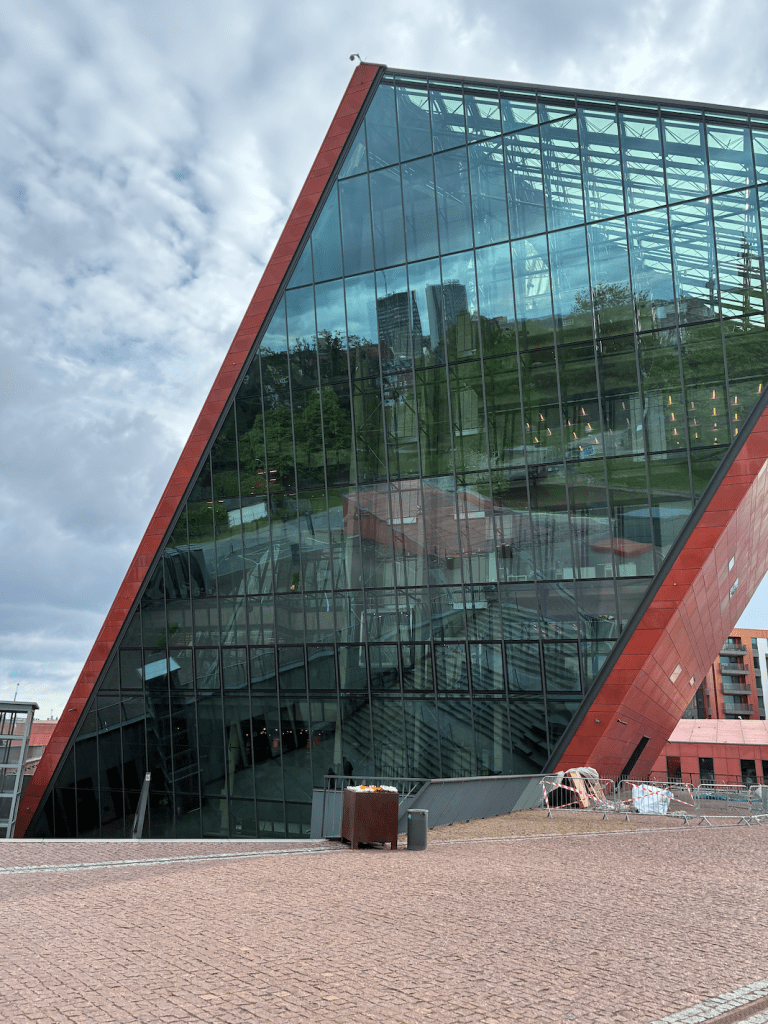
Instead, we spent 4 hours in the massive new (opened in 2017) World War II museum. The presentation understandably was from a Polish point of view and was an interesting twist. A lot of emphasis on the Polish plight at the hands of occupiers pre (Soviets), during (Germans) and post (Soviets) war. Very little coverage of Allies contributions to the war’s end. It was kind of refreshing to get this perspective. Overall, an excellent museum and learning experience.
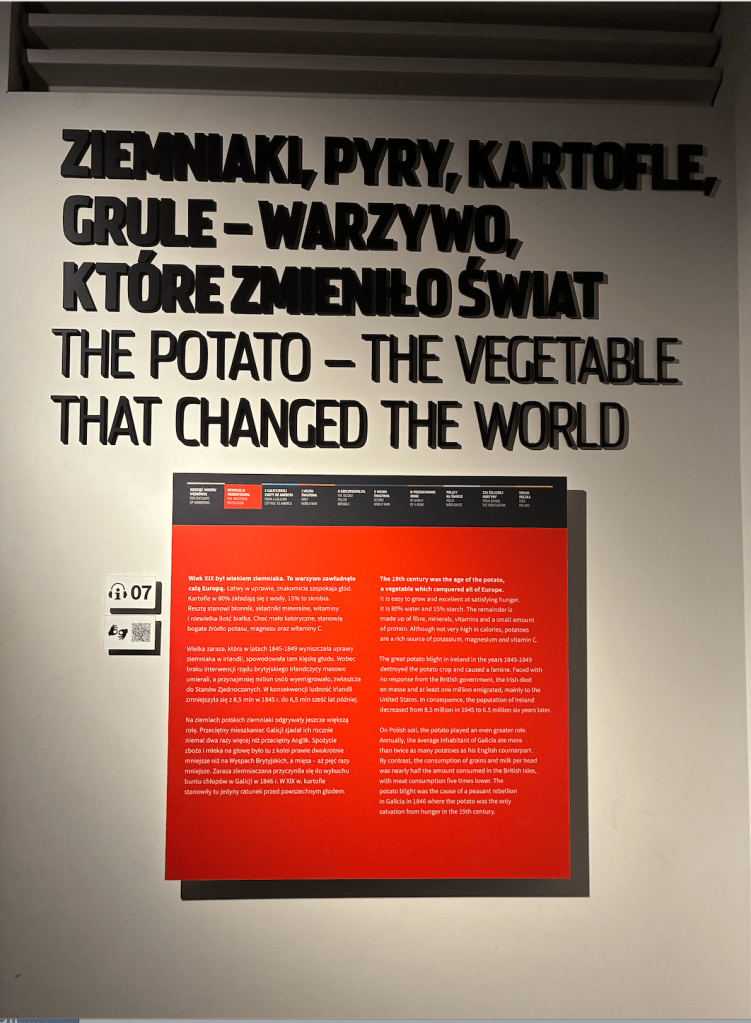
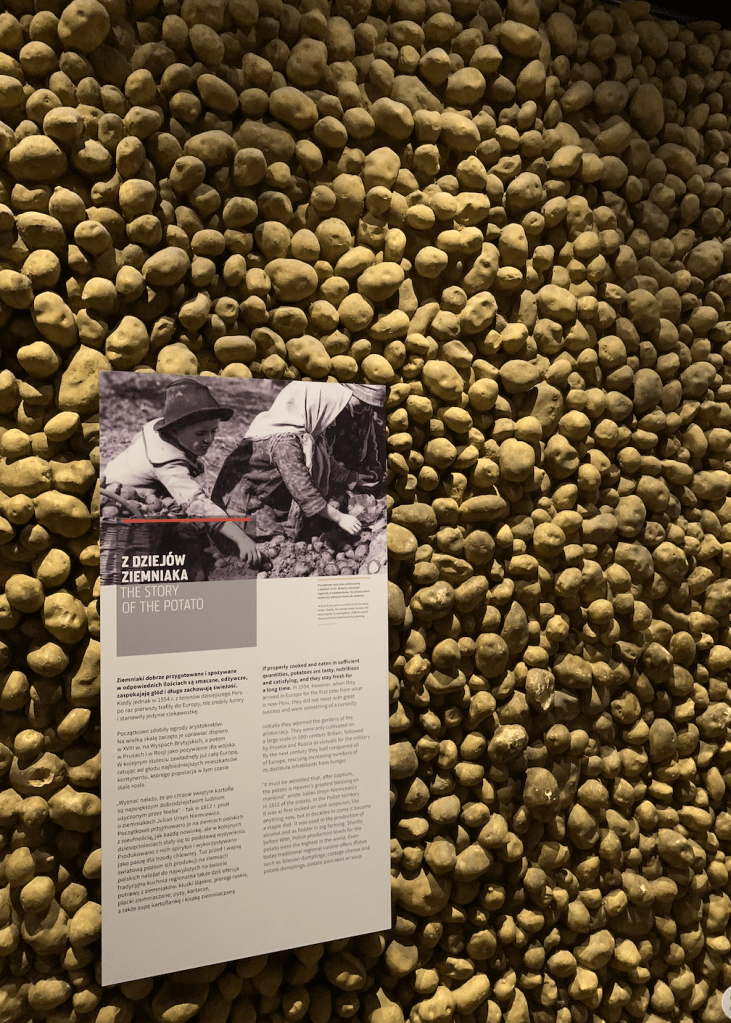
Another excellent, but smaller museum was the Emigration Museum in nearby Gdynia, a neighbor port city. It was a comprehensive history of Poles emigrating to other countries over the past several centuries. We both found this personally relevant. Four of Patricia’s great-grandparents and one of Patricia’s grandparents emigrated from Poland in 1900 and 1904, following the routes described in the exhibits. Obviously, the potato exhibit captivated both of us.
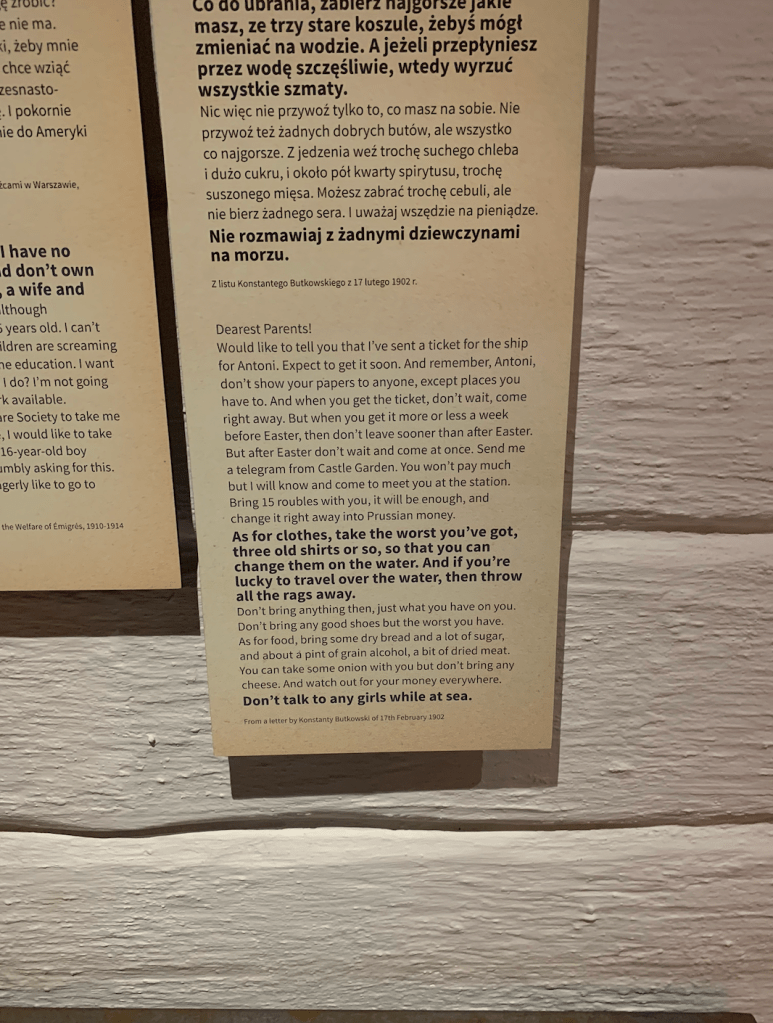
But clearly, Nick found a kindred spirit. Always looking to lighten his backpack Nick thought he had originated the wear and toss technique of travel, by wearing old clothes that he could eventually toss as they wore down on the trip. But, there at the Emigration Museum, in a letter from February 17, 1902, one Konstanty Butkowski writes the very premise of the wear and toss practice to his soon to be traveling brother Antoni. Nice! Excellent advice.
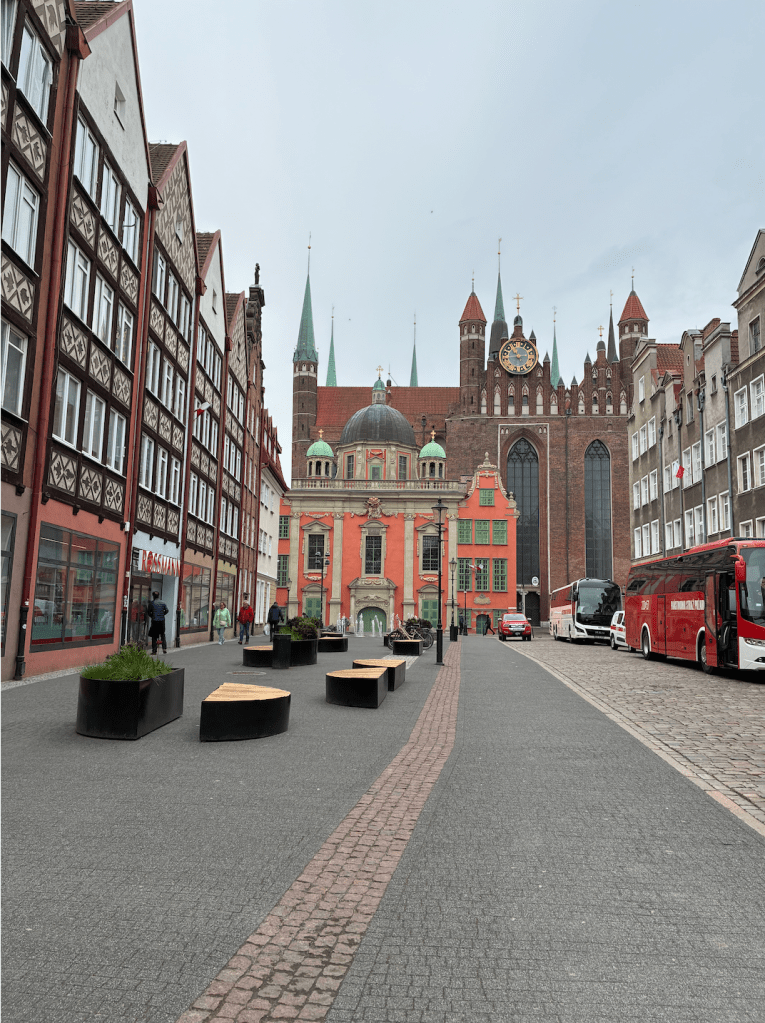
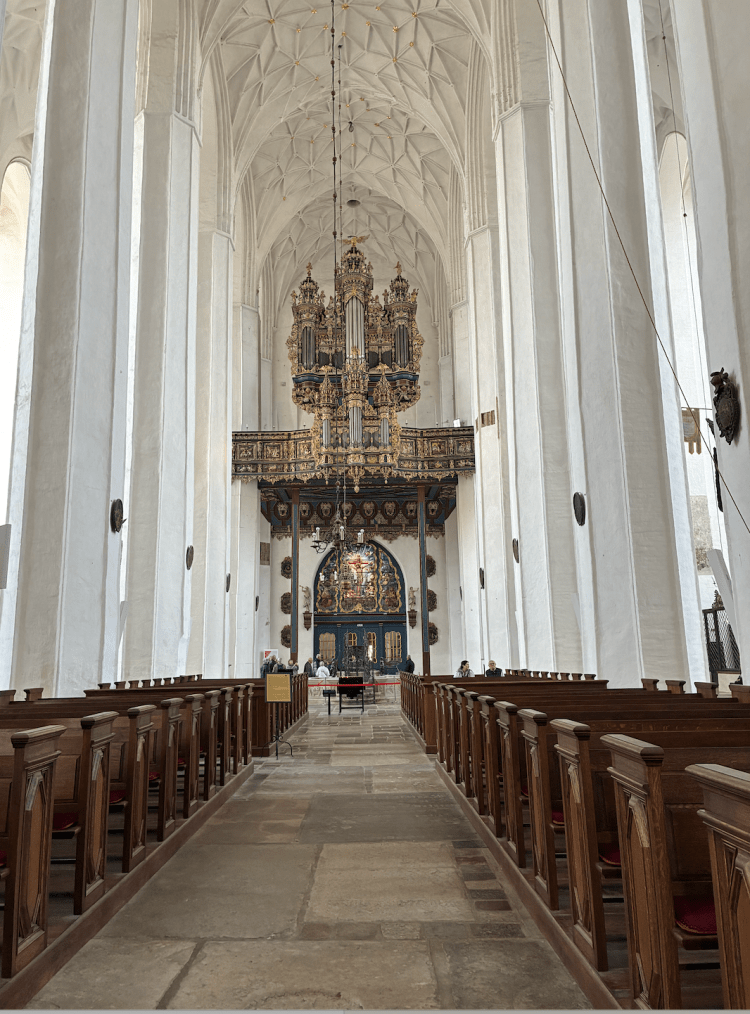
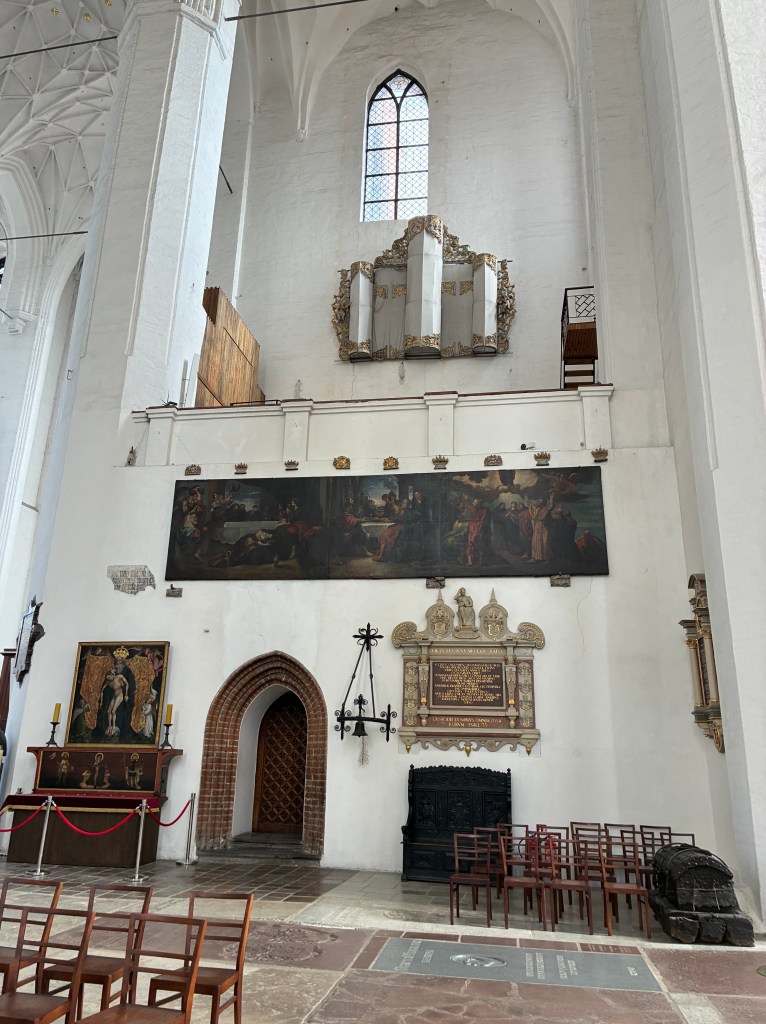
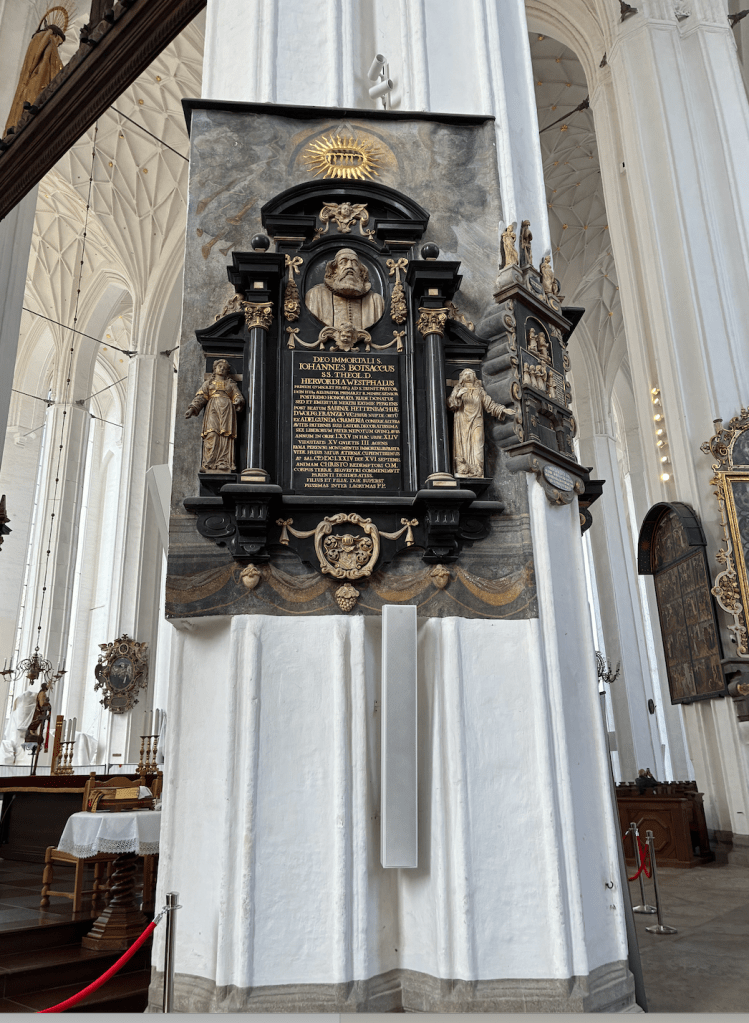
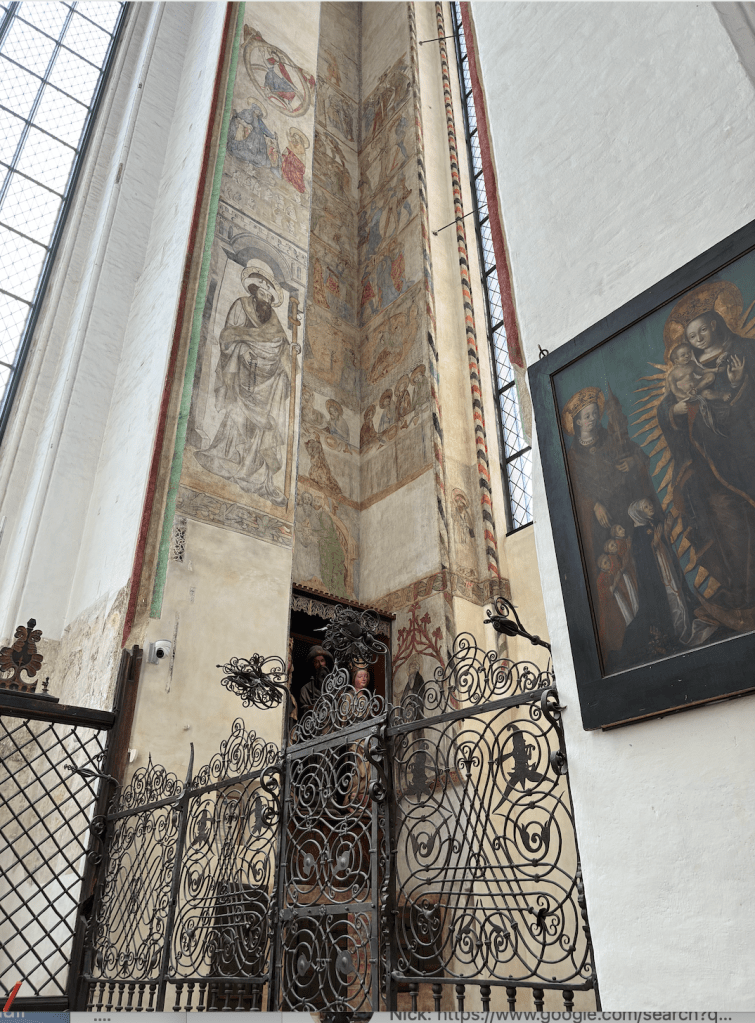
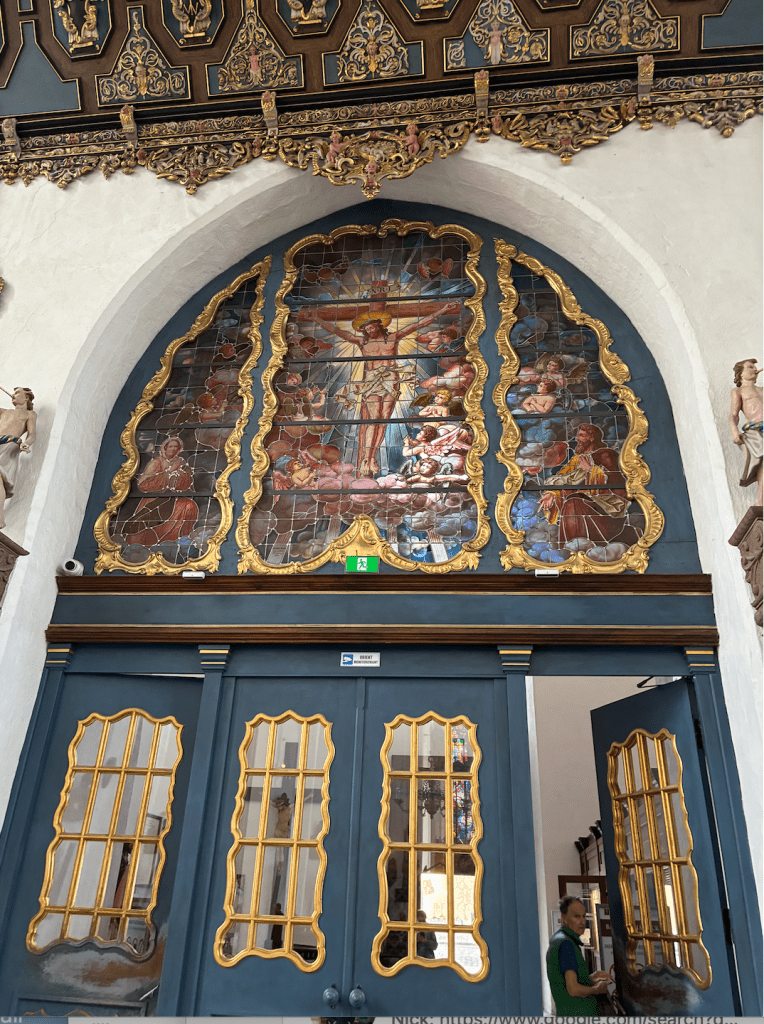
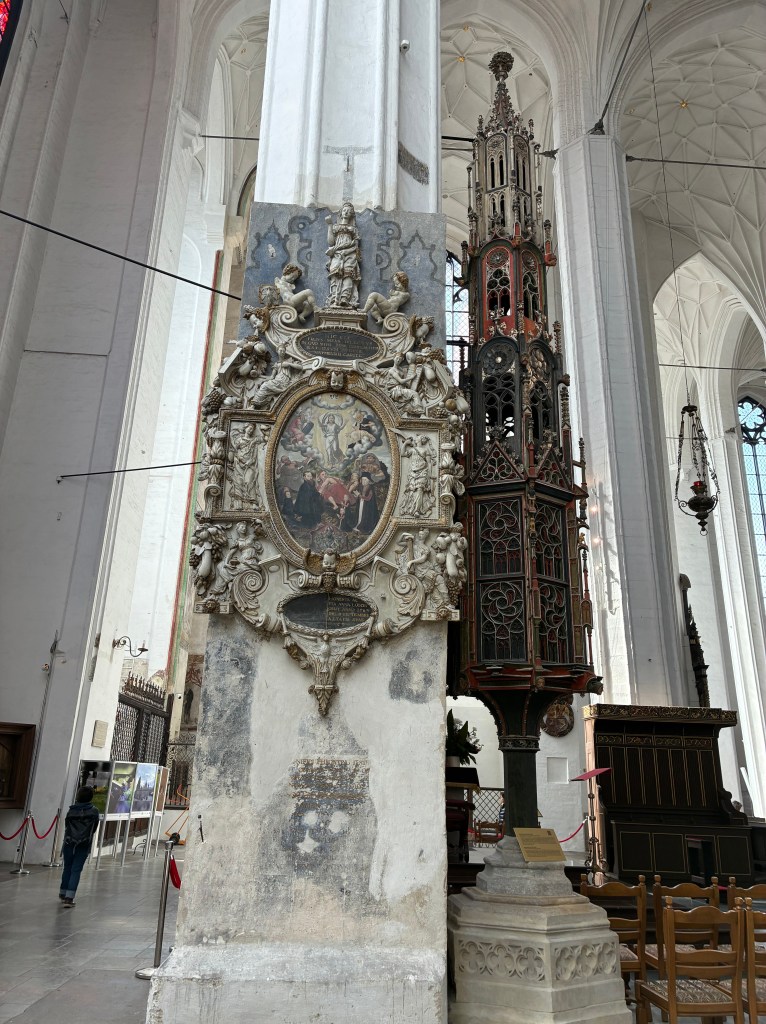
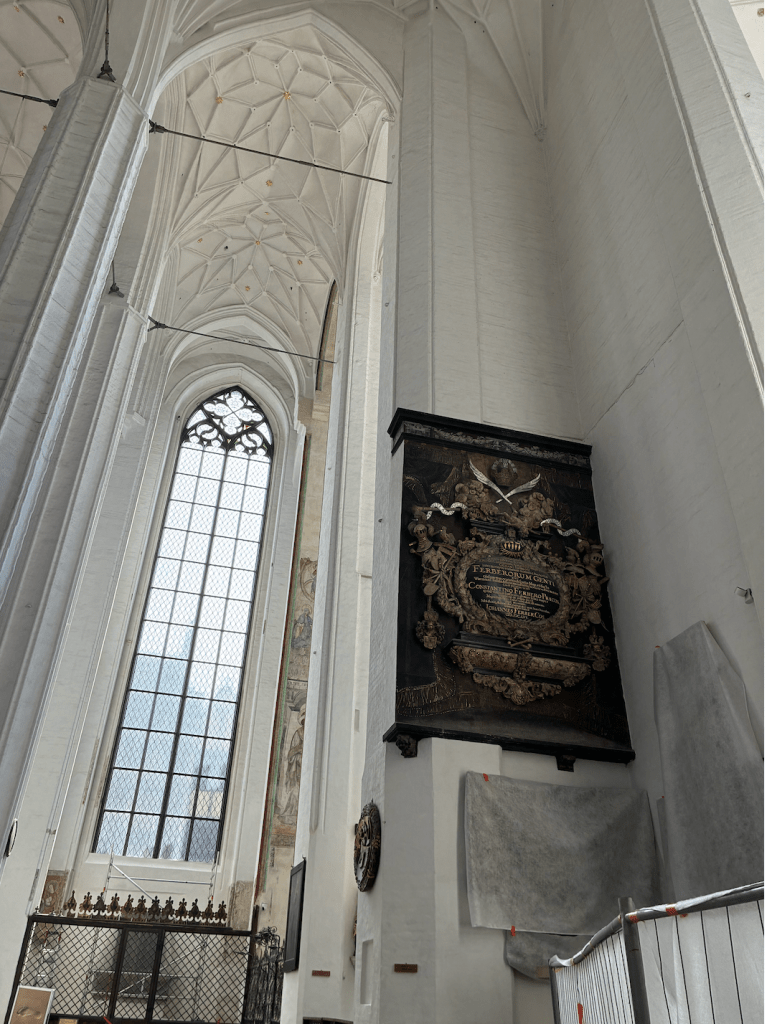
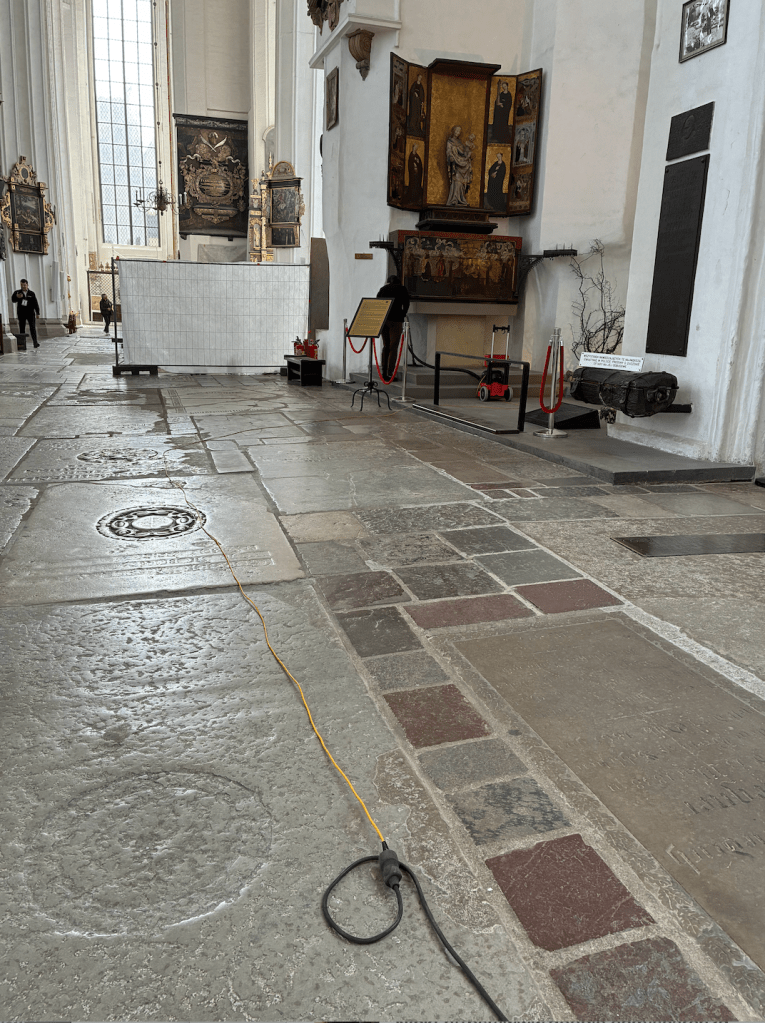
Of course there were churches. And of course, Gdańsk kind of overshot the mark with a very ungapatchka, beautiful church – St Mary’s, a co-cathedral. Building started in 1379 and apparently never stopped (Winchester House East?). The Church of the Perpetual Remodel.
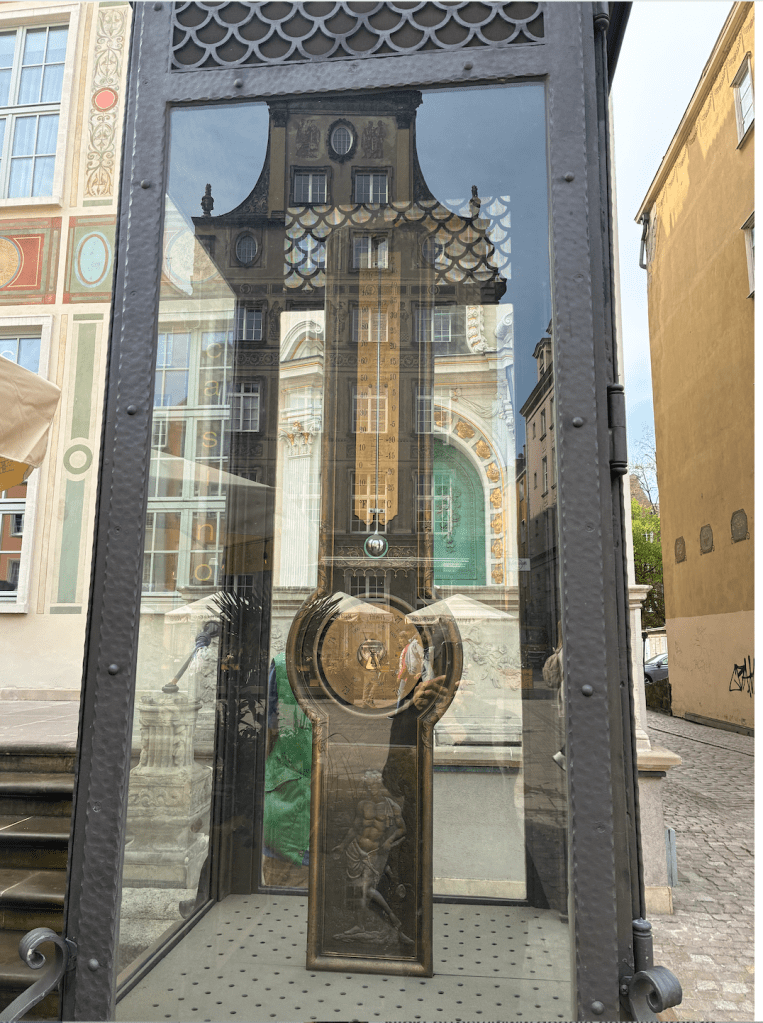
Poland loves their home town heroes, here a monument to Daniel Gabriel Fahrenheit of Fahrenheit scale thermometer fame.
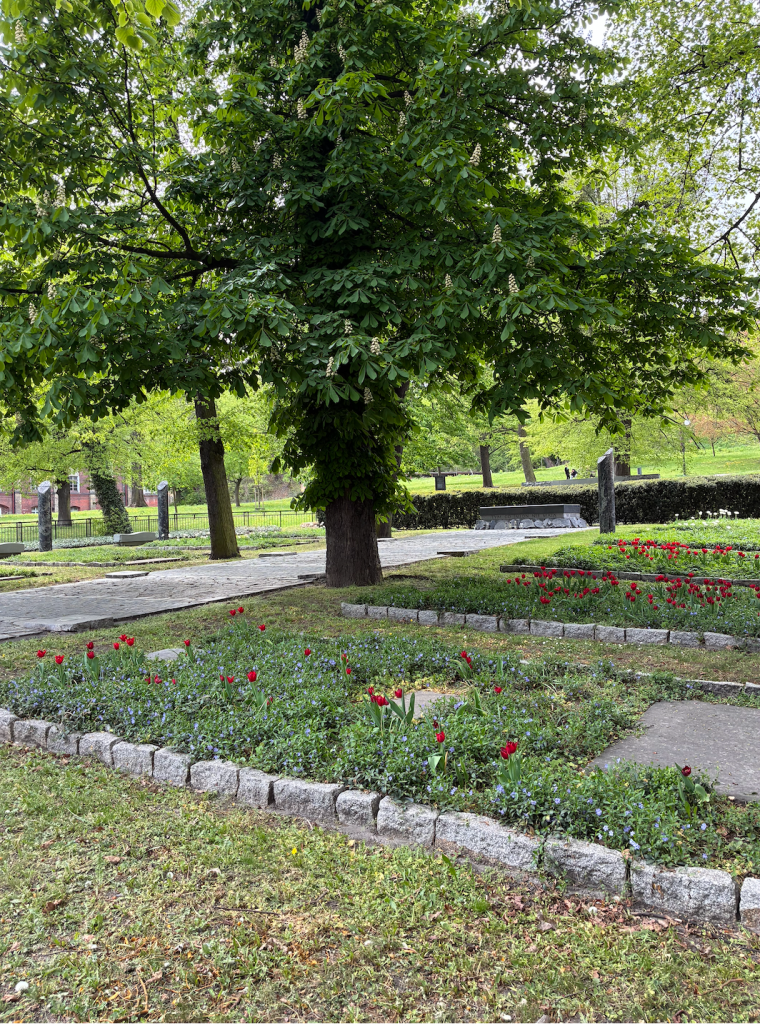
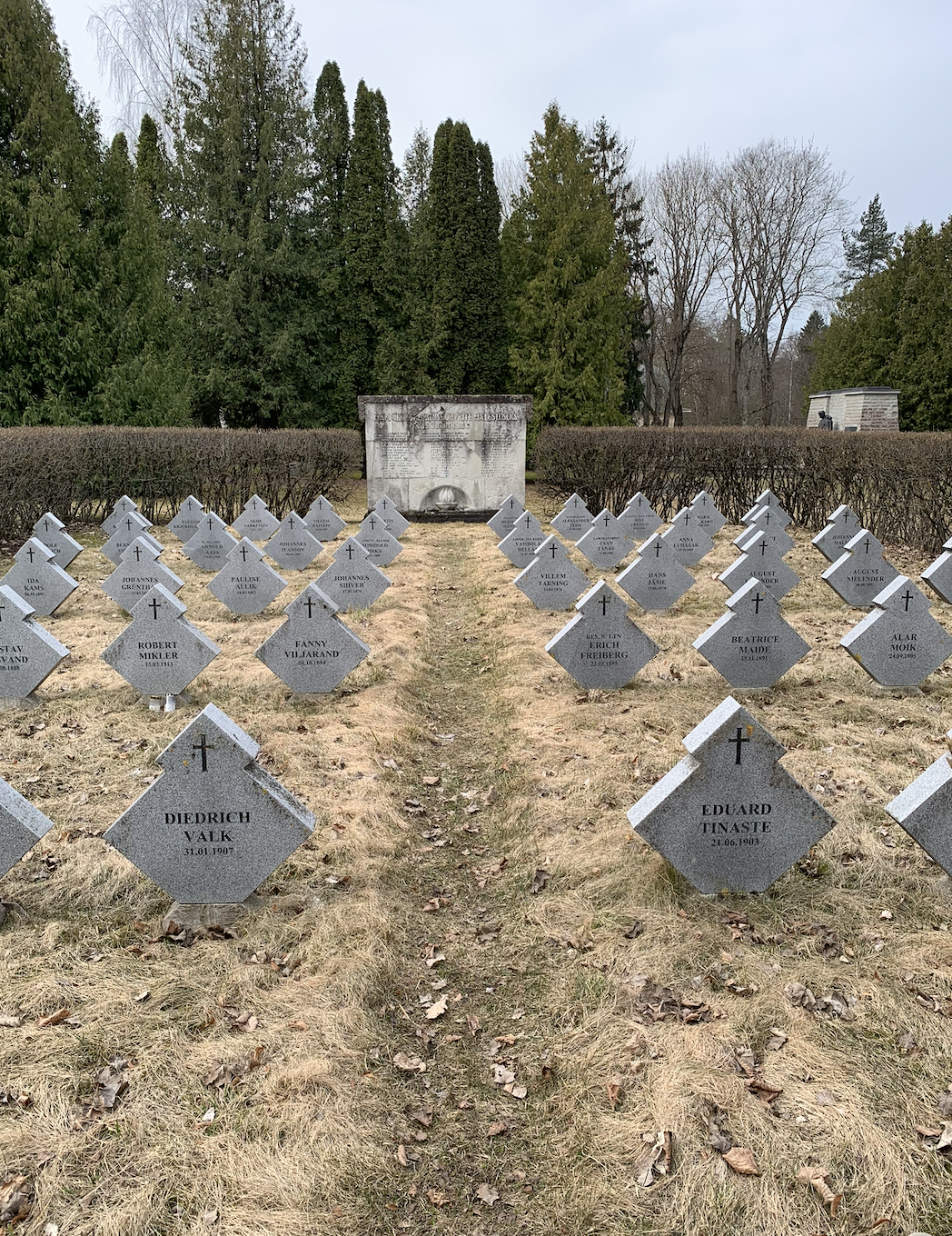
As a fitting farewell for our tragedy tour, our last stop was this very touching little cemetery; the Cemetery of Forgotten Cemeteries. Tombstones from the many destroyed and neglected cemeteries of Poland.
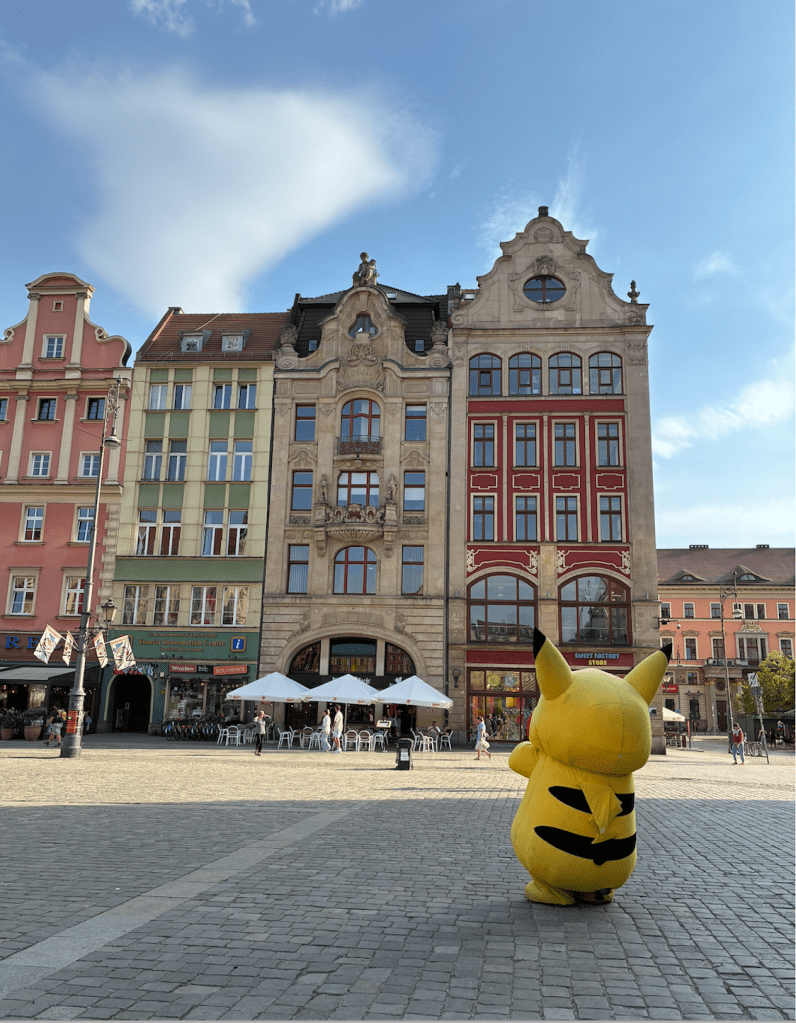
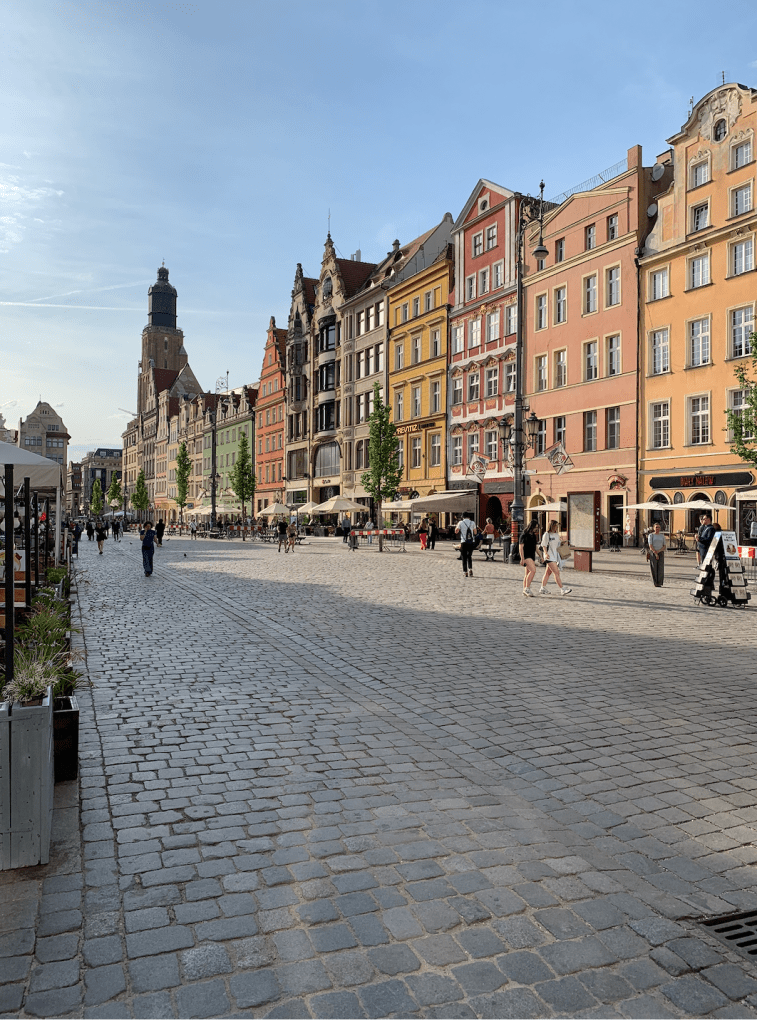
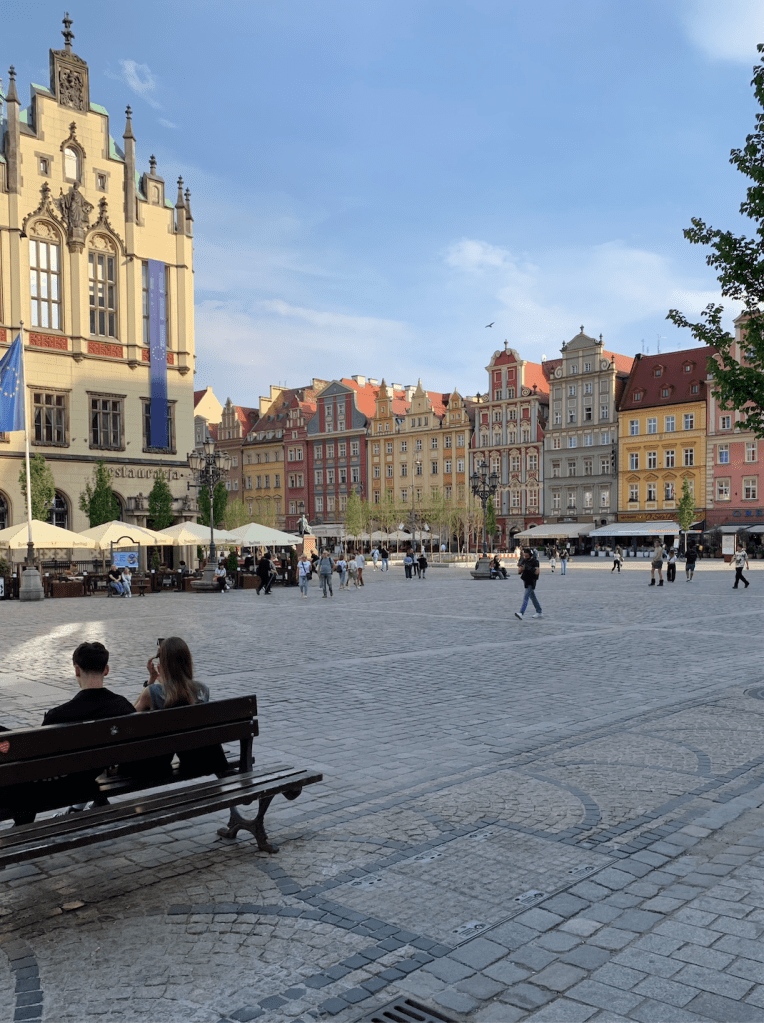
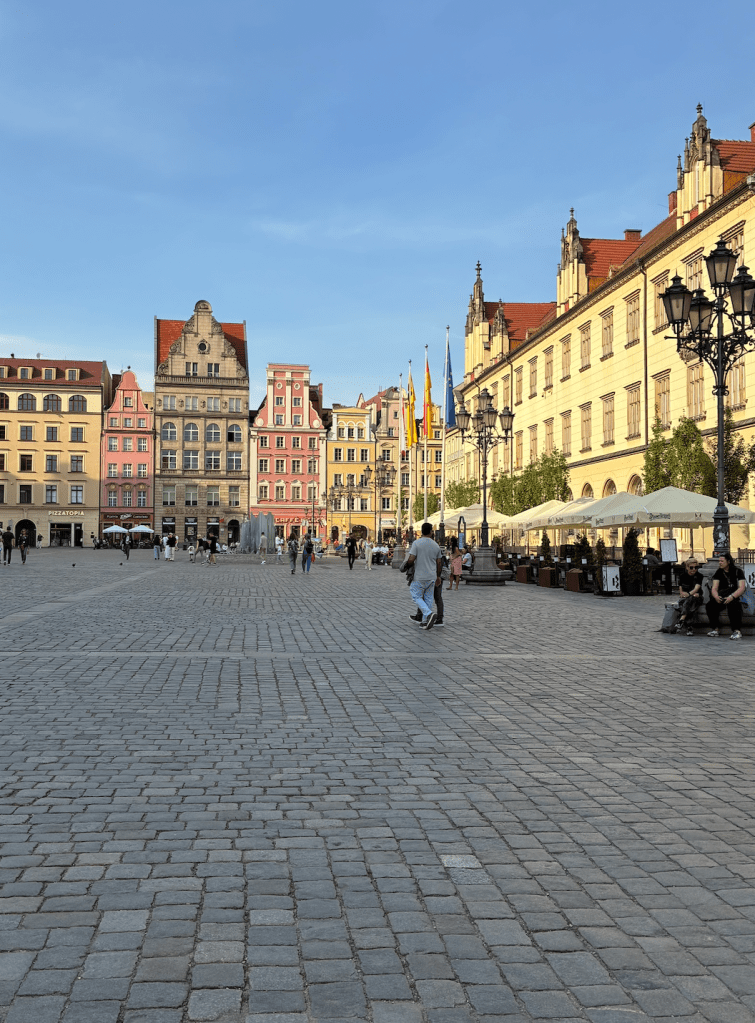
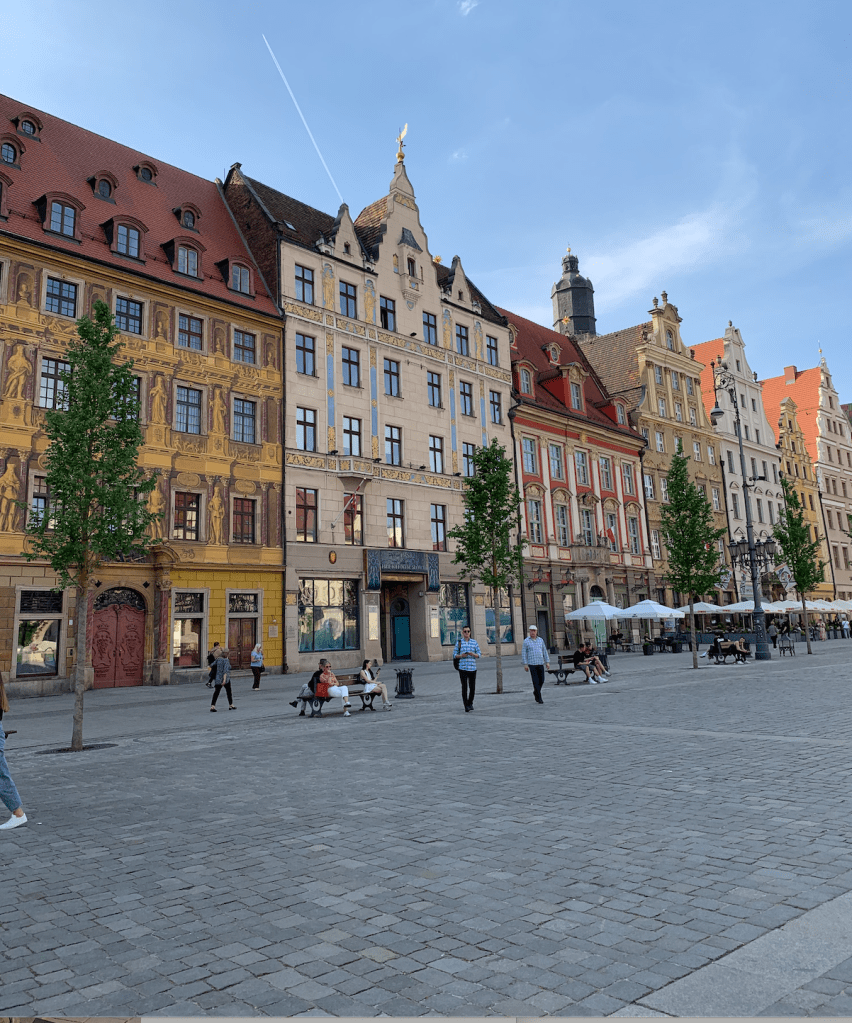
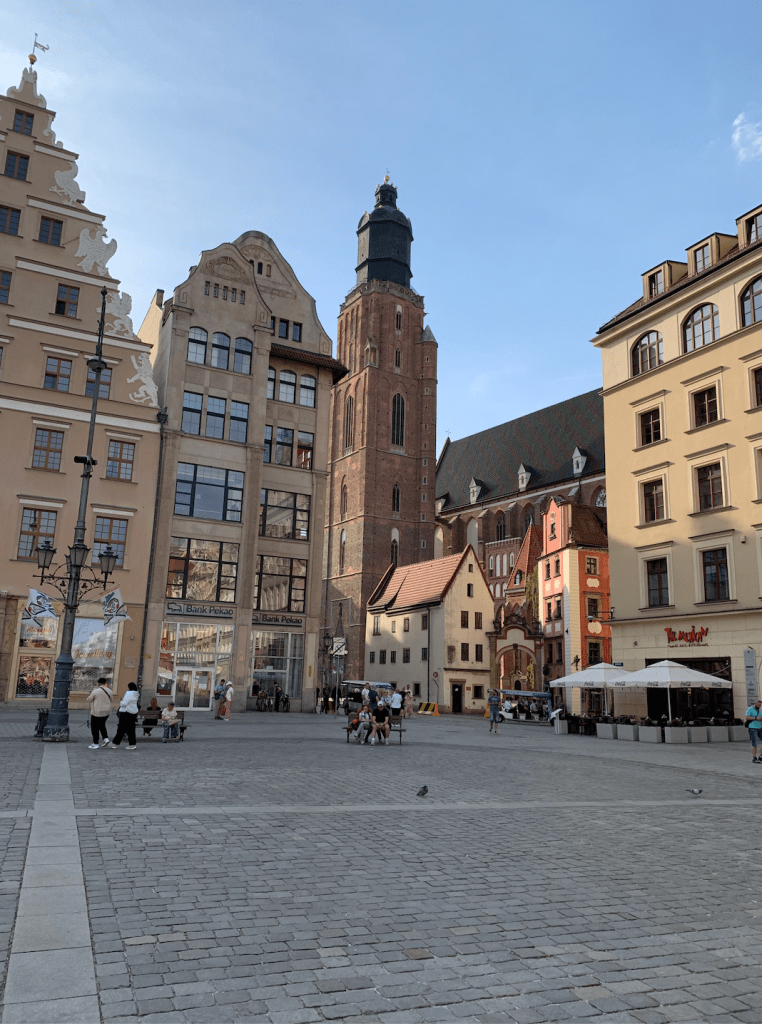
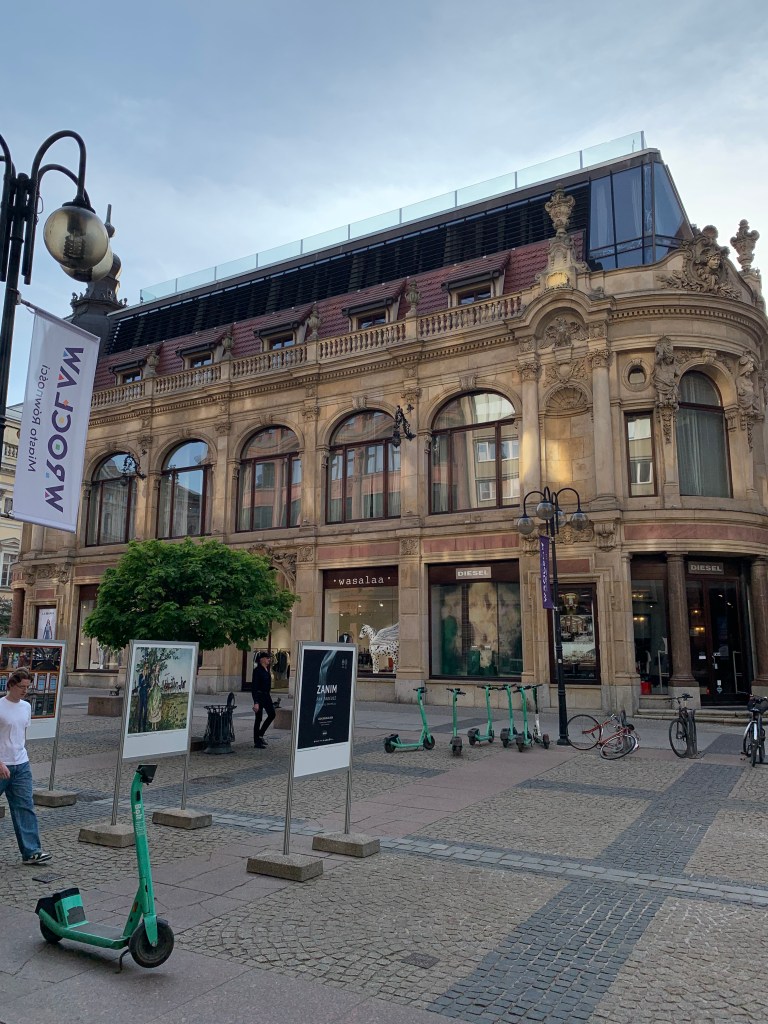
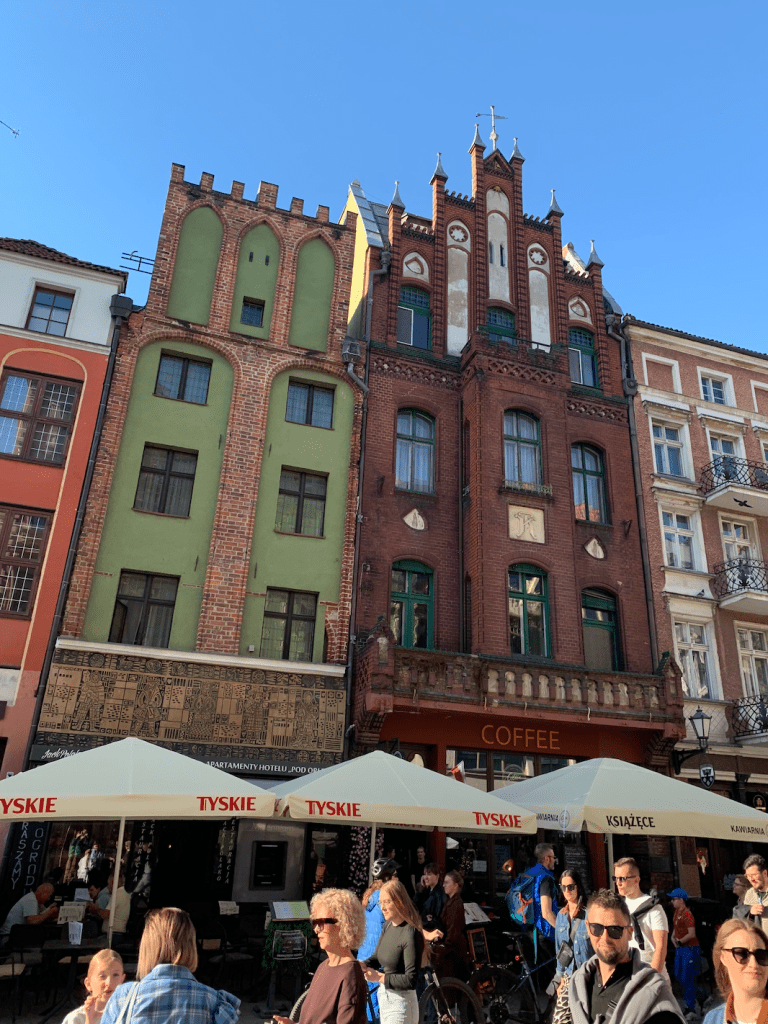
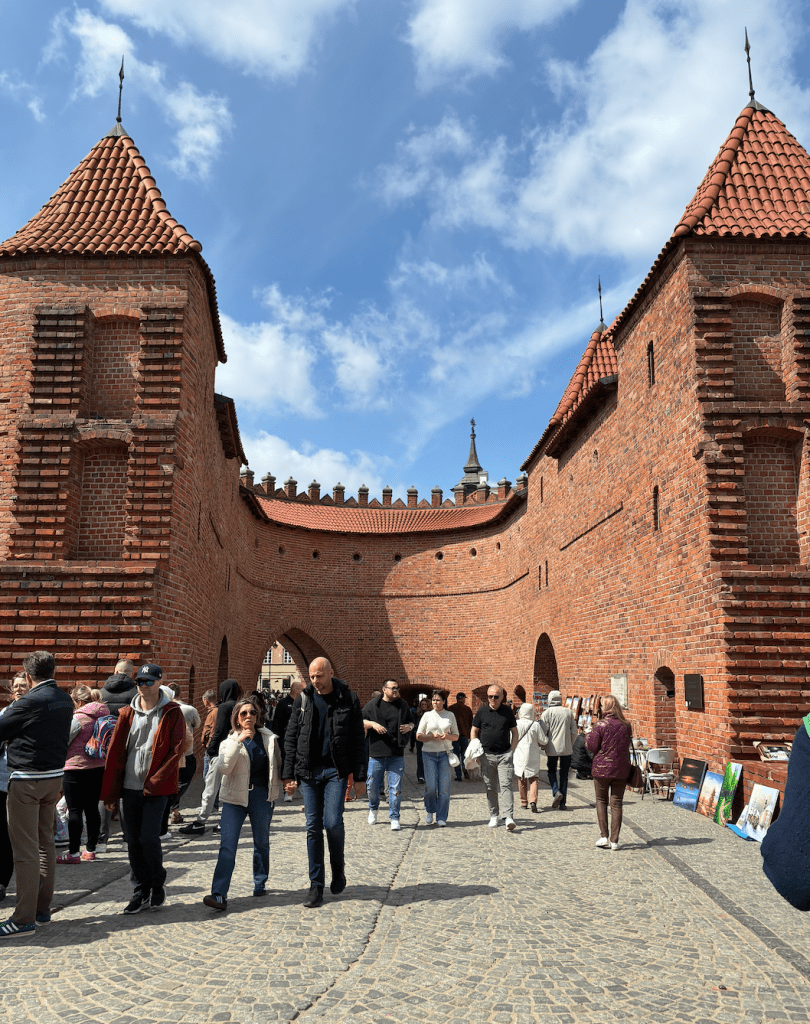
Although the temperature has not gotten past 15 C (59 F), spring is coming, tourists invading (including us), accommodations getting limited. Time to stop the spontaneity and cram three cities into a 5 day work week. Kind of like the 1969 movie “If it’s Tuesday, it must be Belgium”. As a result Wroclaw, Łódź and Toruń were a blur, This also could be because they were all postcard perfect and we were kind of punchy from never ending tragedies on this tour. It was like driving through the San Fernando Valley and trying to distinguish Valley Village from North Hollywood from Van Nuys except instead of a car we were on a Flix bus or the very efficient and inexpensive Polish trains. (as always, pics look better viewed on the blog, not email, click on in the corner.)
Wroclaw (pronounced Vorshlaf)
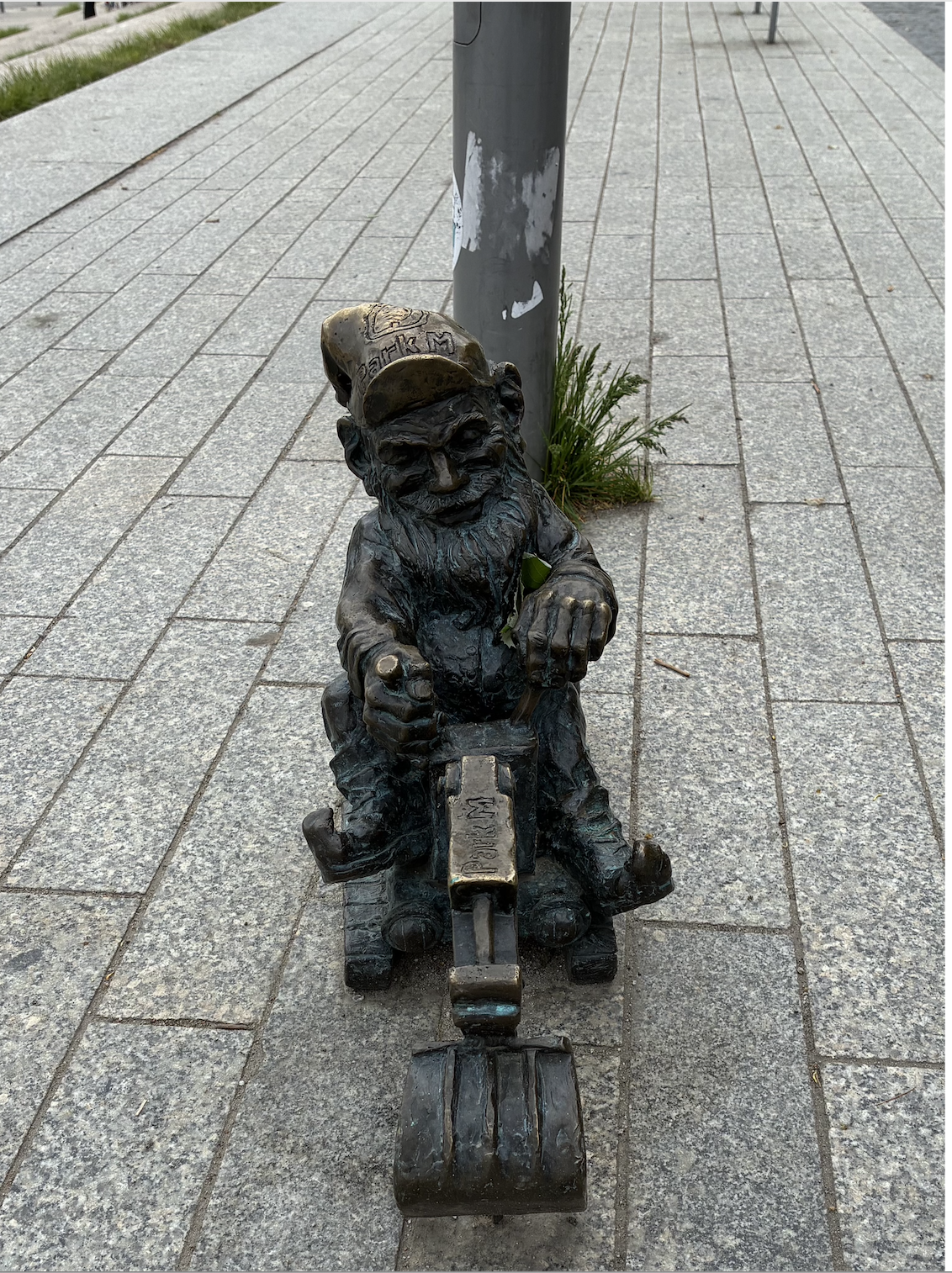
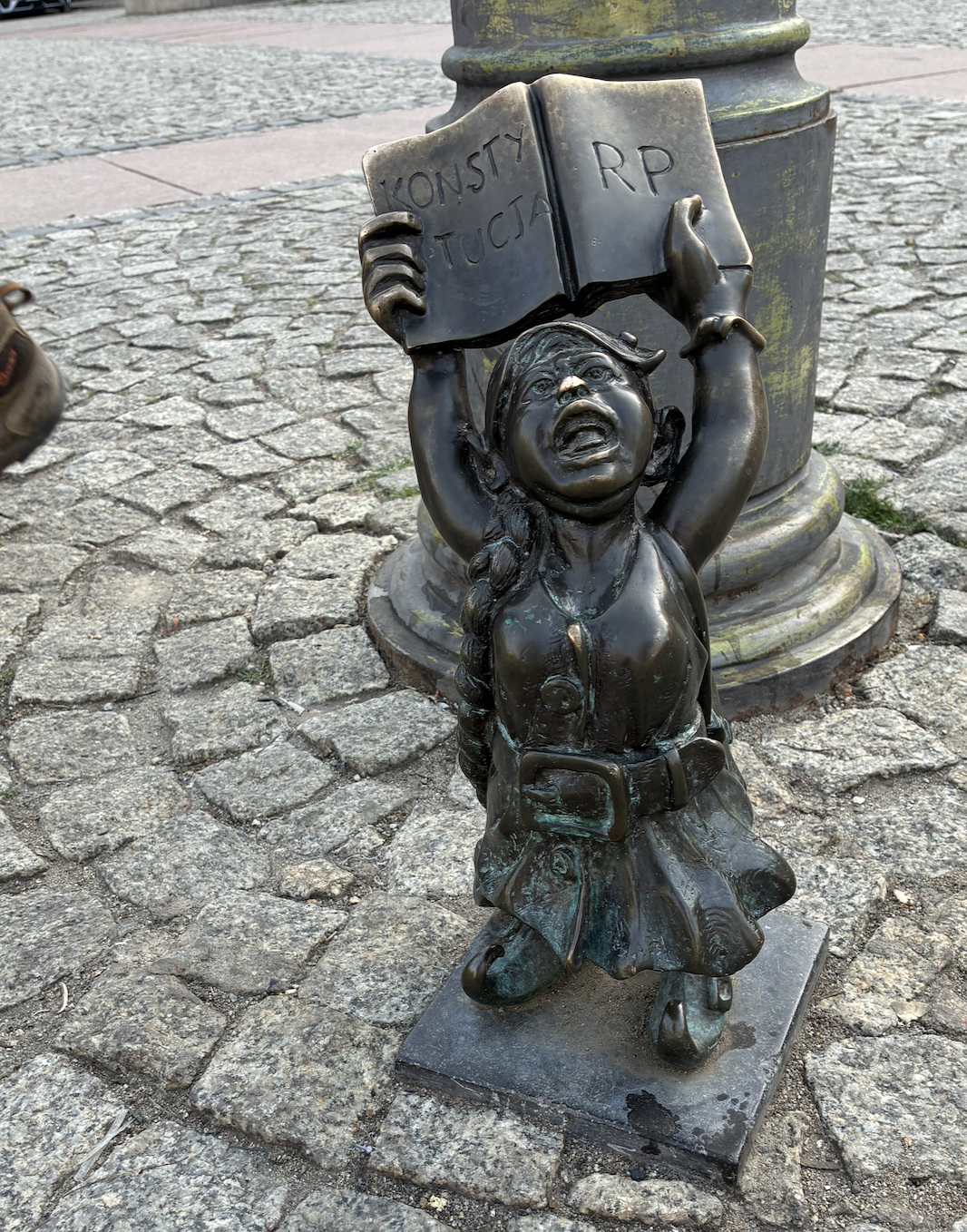
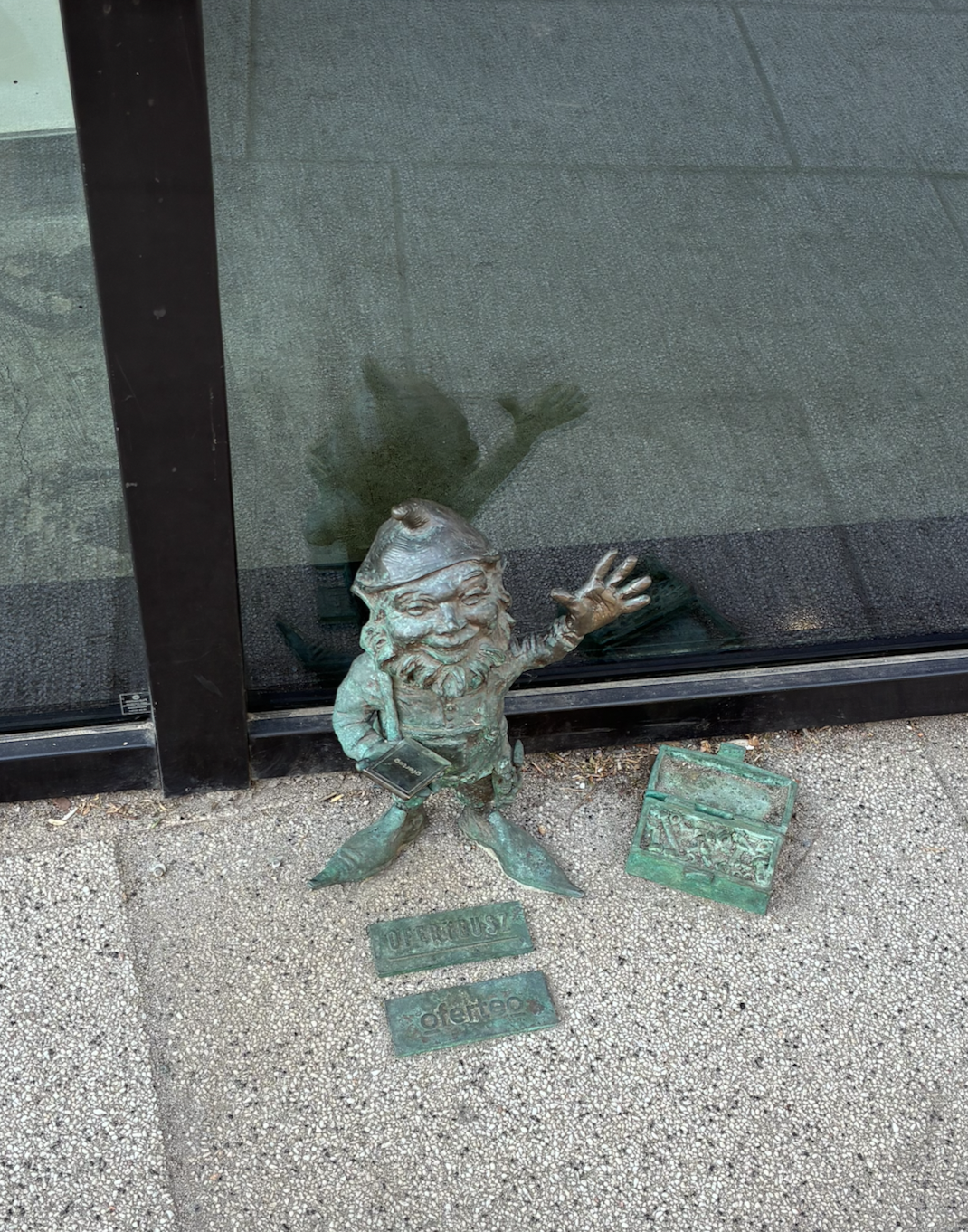
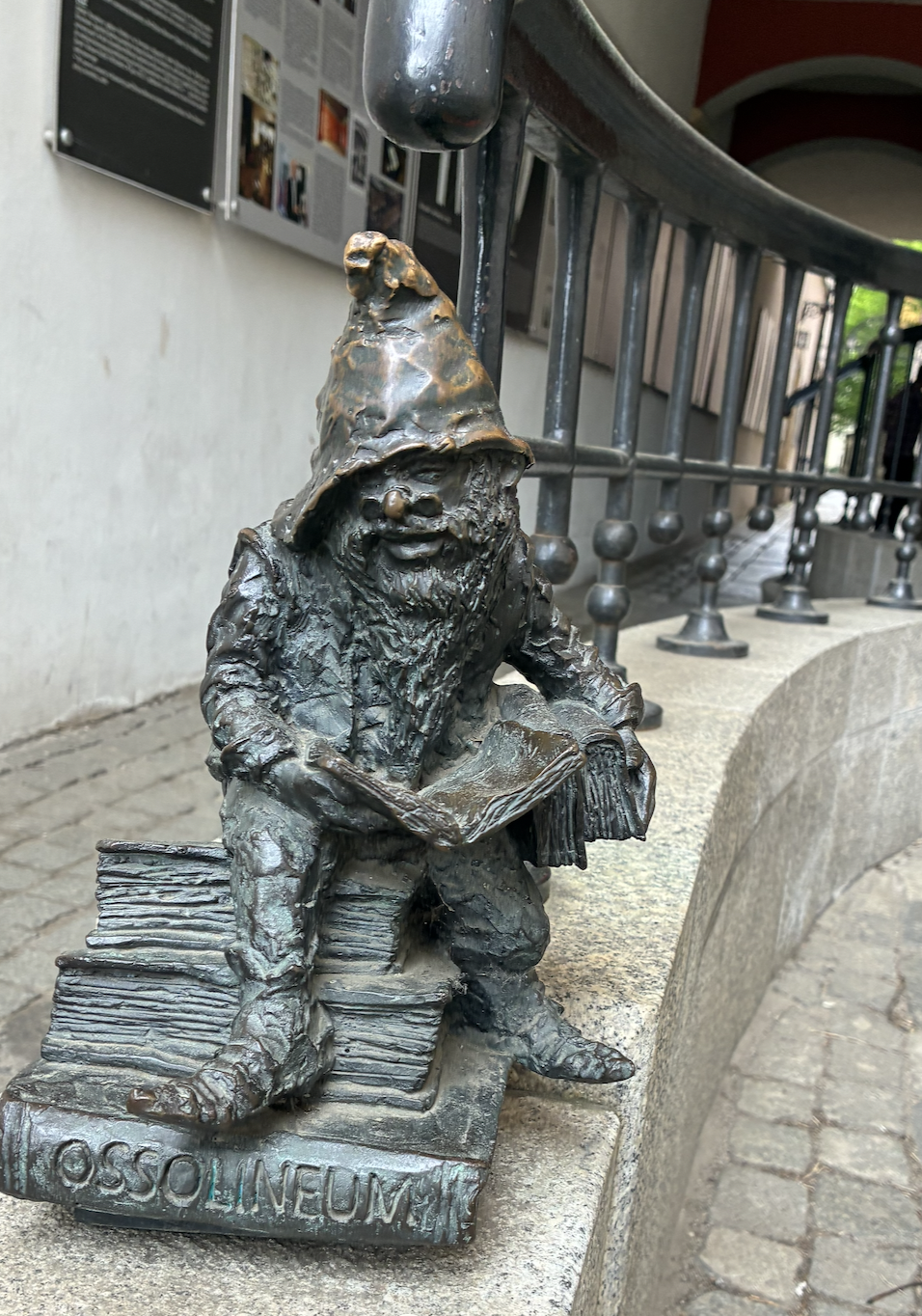
So much travel blog love for Wroclaw; it’s picturesque old town and little dwarf statures thematically sprinkled throughout the town (like a reading dwarf near a library).
We had a lot of expectations but few plans before we arrived late in the day. We immediately walked through the renown beautiful old town, well deserved accolades.
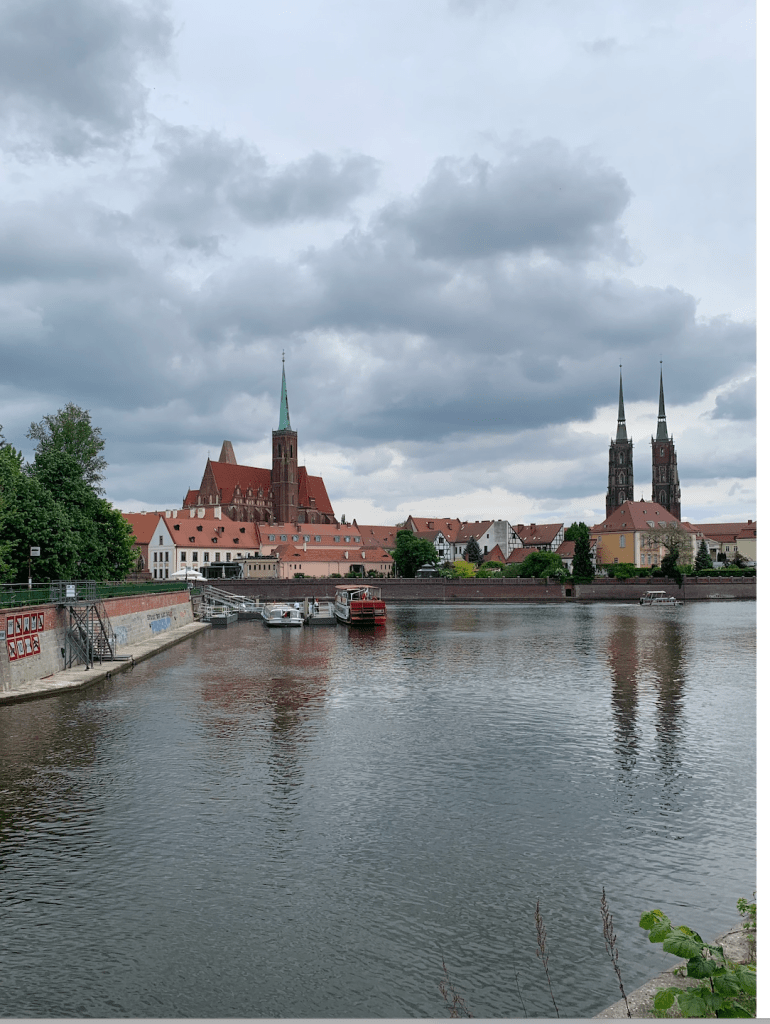
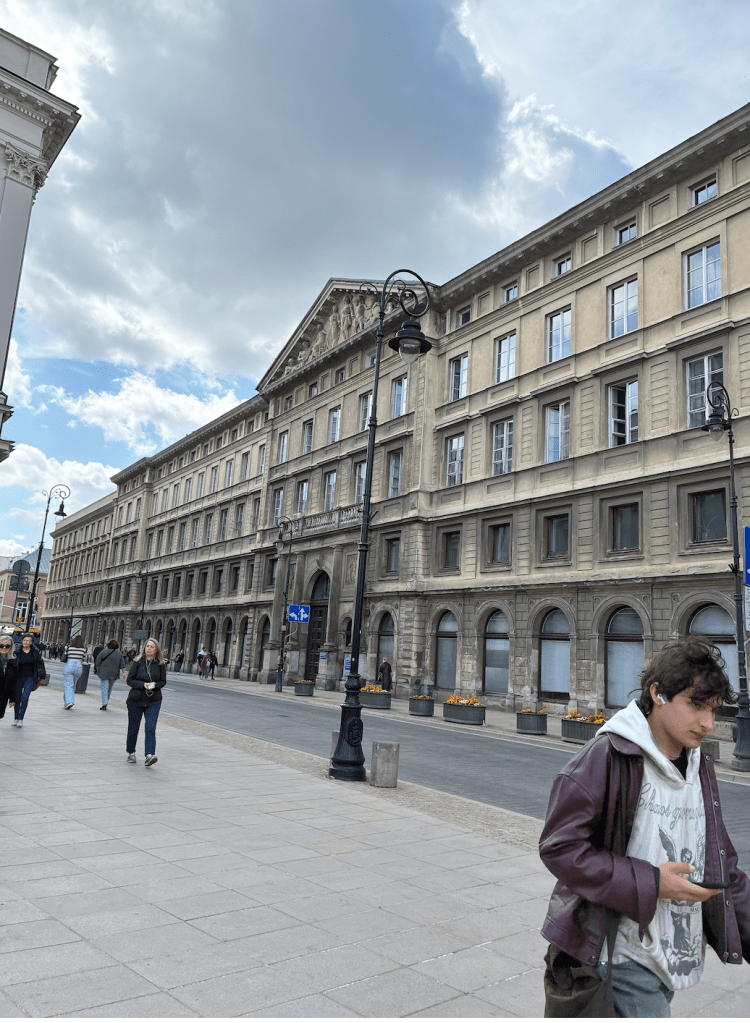
In planning our next day, Nick made his Crazy Tourist/Atlas Obscura list and Patricia culled from Rick Steves and Trip Advisor and then we realized that prior to WW2, Wroclaw had been Breslau, the 7th largest city in GERMANY, and another city heavily bombed in the final months of the war, another city with between 50-80% of the buildings significantly damaged https://en.wikipedia.org/wiki/Siege_of_Breslau Most of the beautiful old town rebuilt? You could have and you did fool us. it was a lovely, typical European town with a splendid old town square, a pretty river (the Oder River) running through it.
As always, distinct buildings.
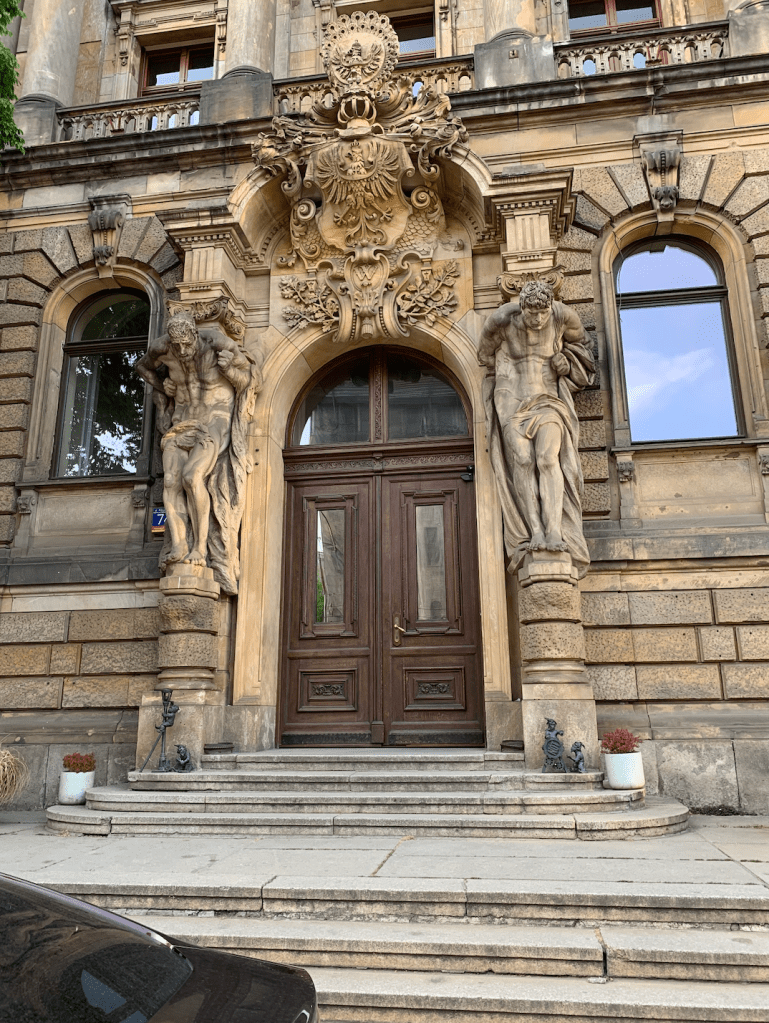
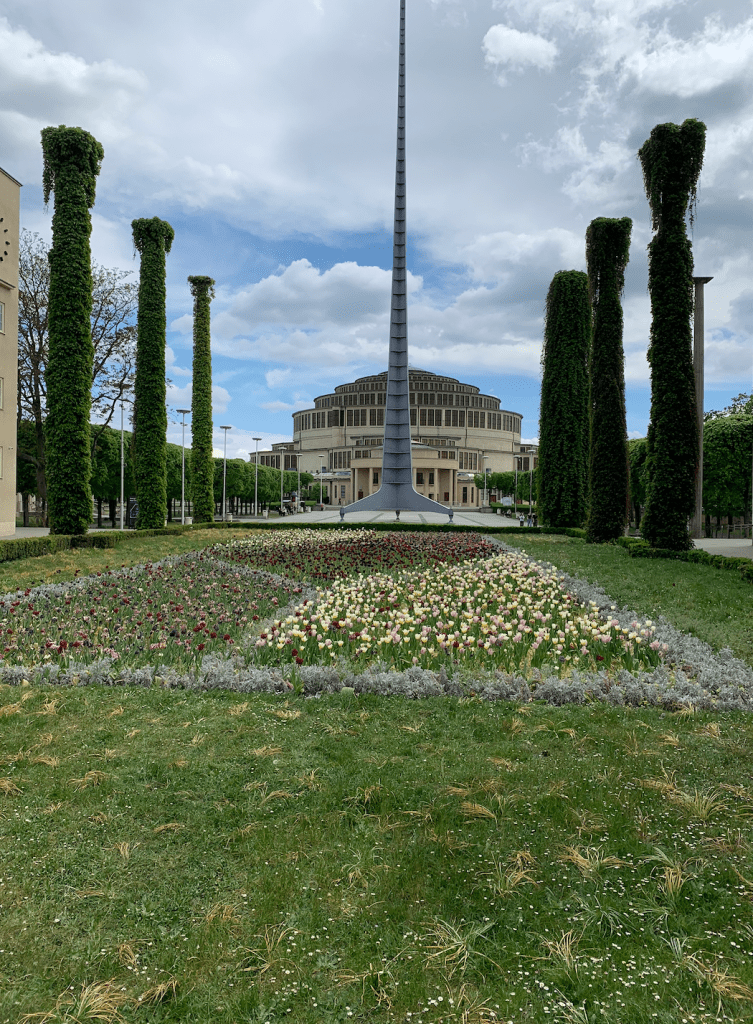
Hotel Monopol built in 1892, a lot of famous guests, the front portico was added so Hitler could speak there. Not damaged in the war.These guys are holding up buildings all through Europe but we always enjoy seeing them. We can relate with our backpacks.Centennial hall built between 1911-1913 to celebrate the German defeat of Napoleon (remember this WAS Germany), The Iglica or needle was added by the communist Polish government in 1948 to be a very big monument to the Regained Territories and to overshadow the German built big building.
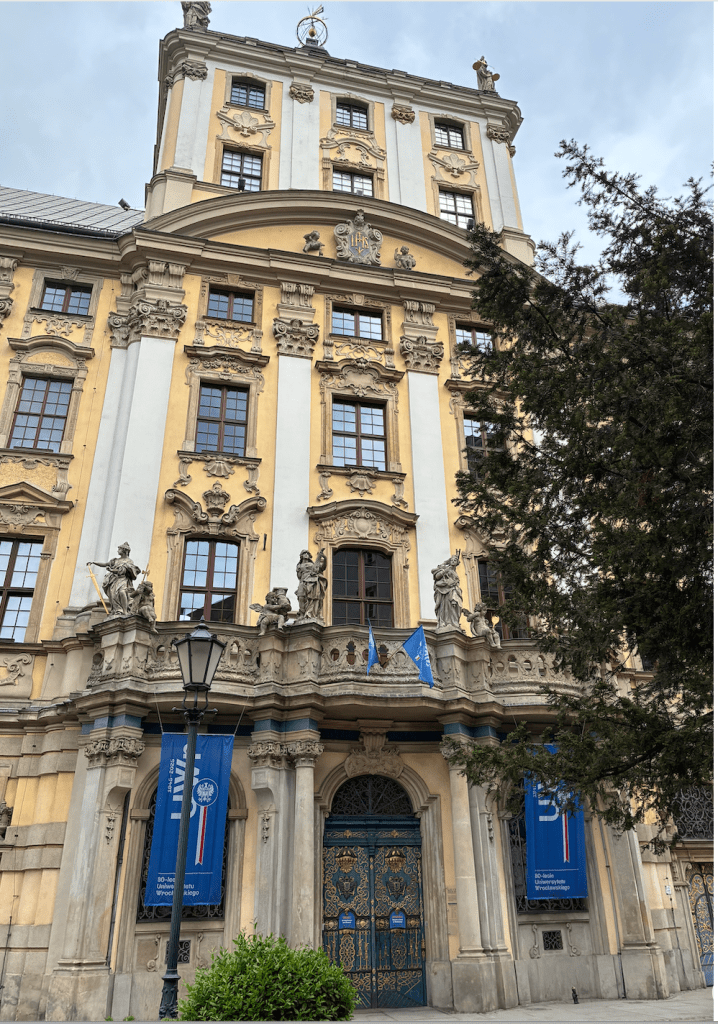
Wroclaw is also a university town, with university buildings sprinkled throughout the city- some new and some old (this was partially rebuilt, paid for by Germany).
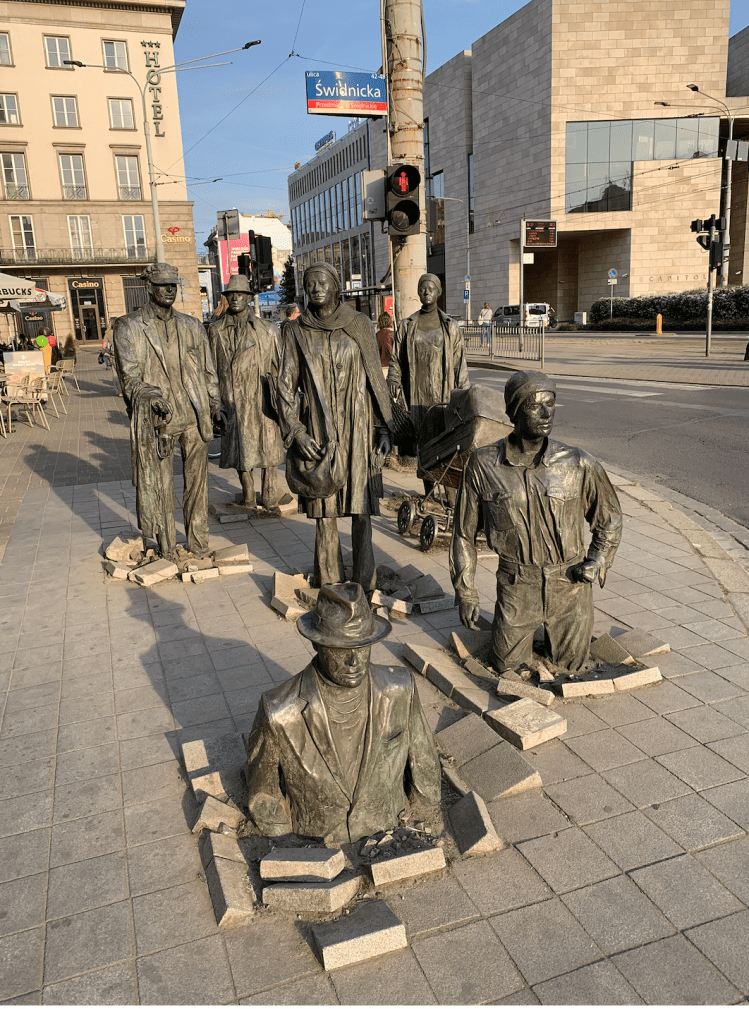
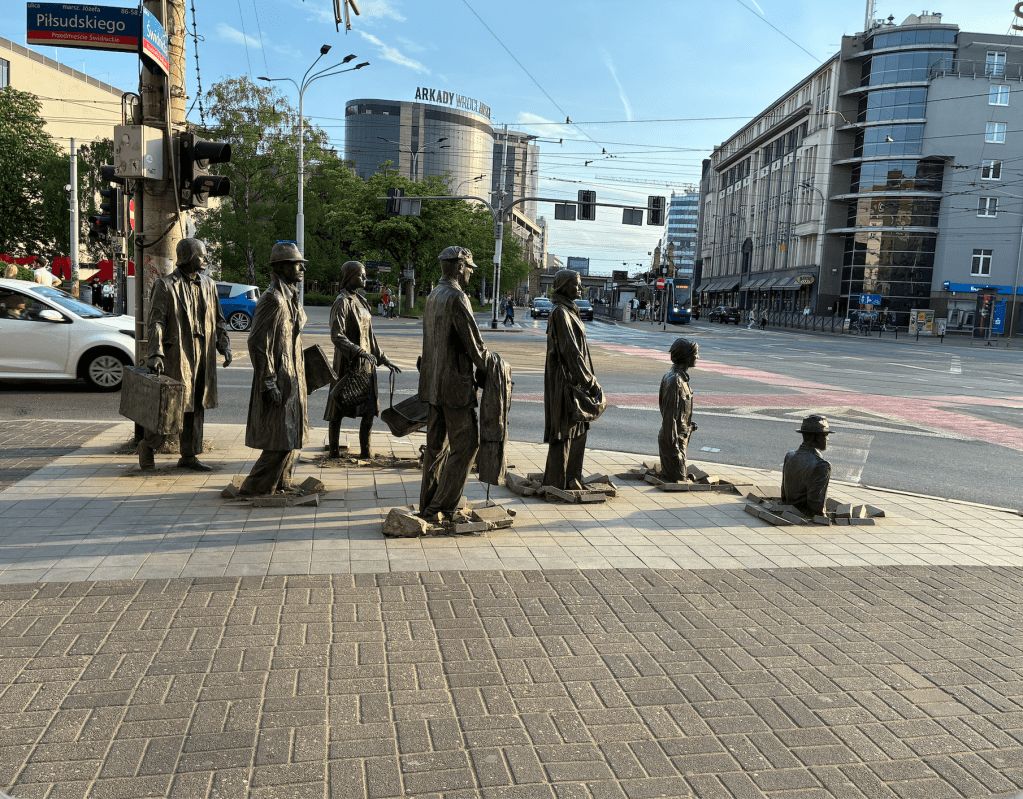
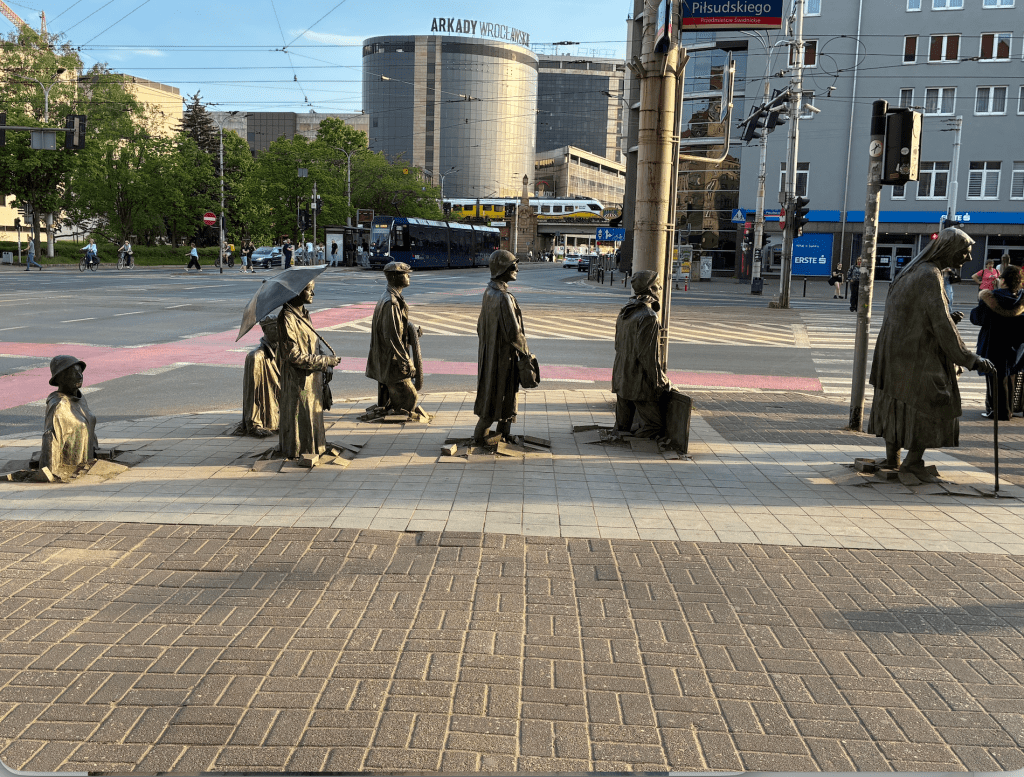
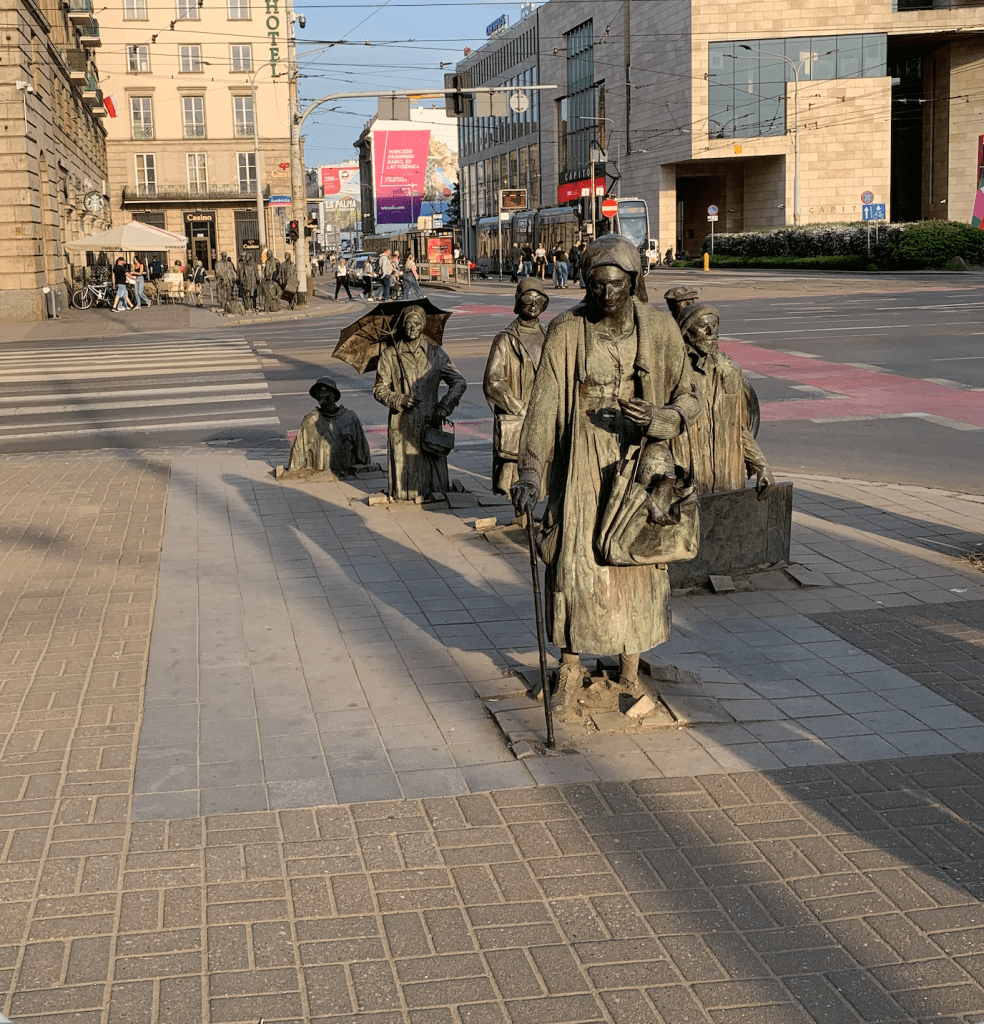
Maybe our favorite thing in Wroclaw was this group of statues by Jerzy Kalina. It has many names- Passages, Transition or the Anonymus Citizens. It memorializes all the people who went missing during martial law from 1981-1983 when the communist Polish government was cracking down. Installed in 2005, it depicts people who disappeared or in fear, went underground and then the reemergence of citizens when martial law was lifted.
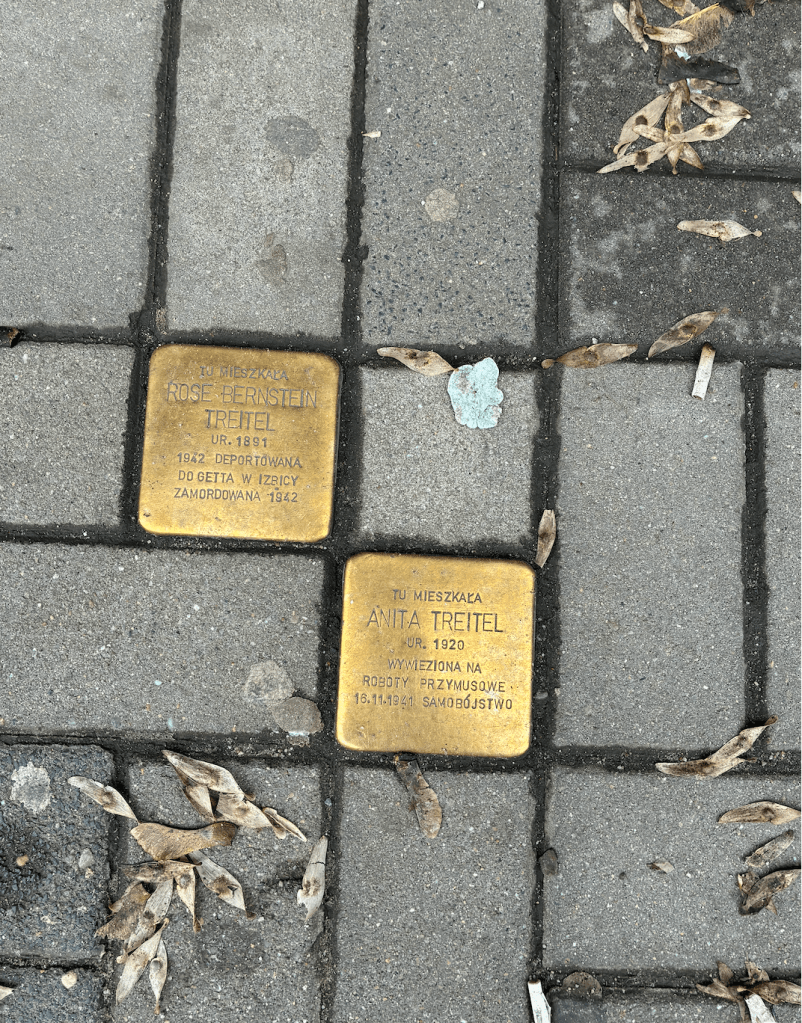
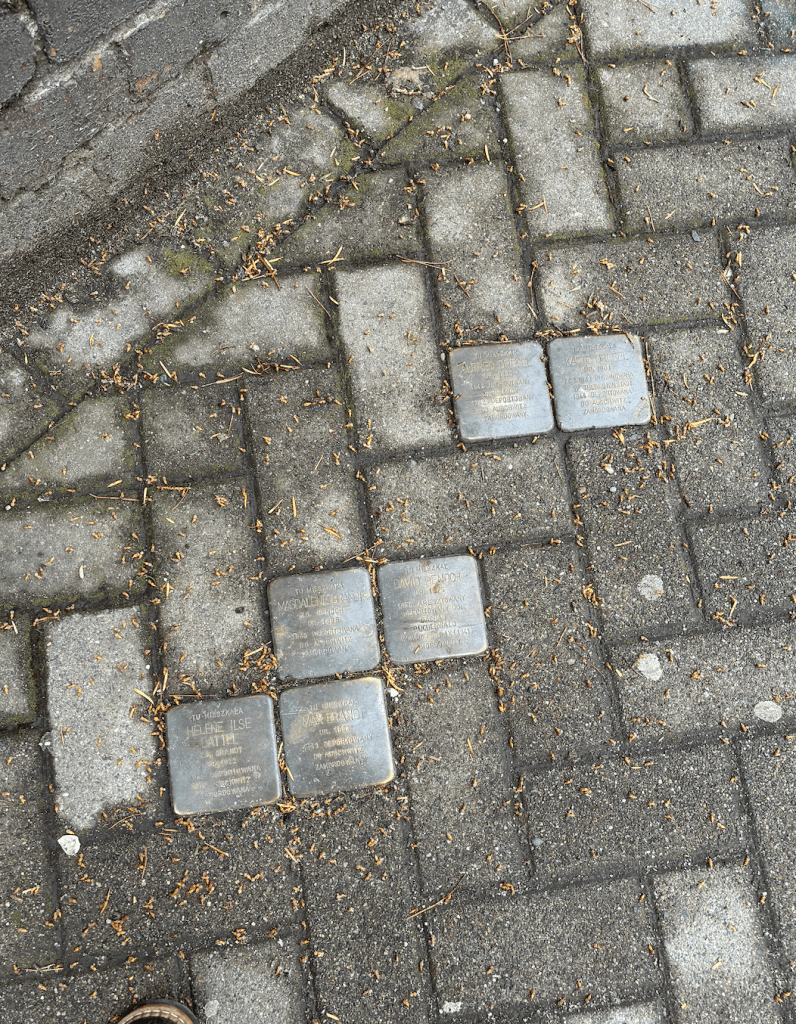
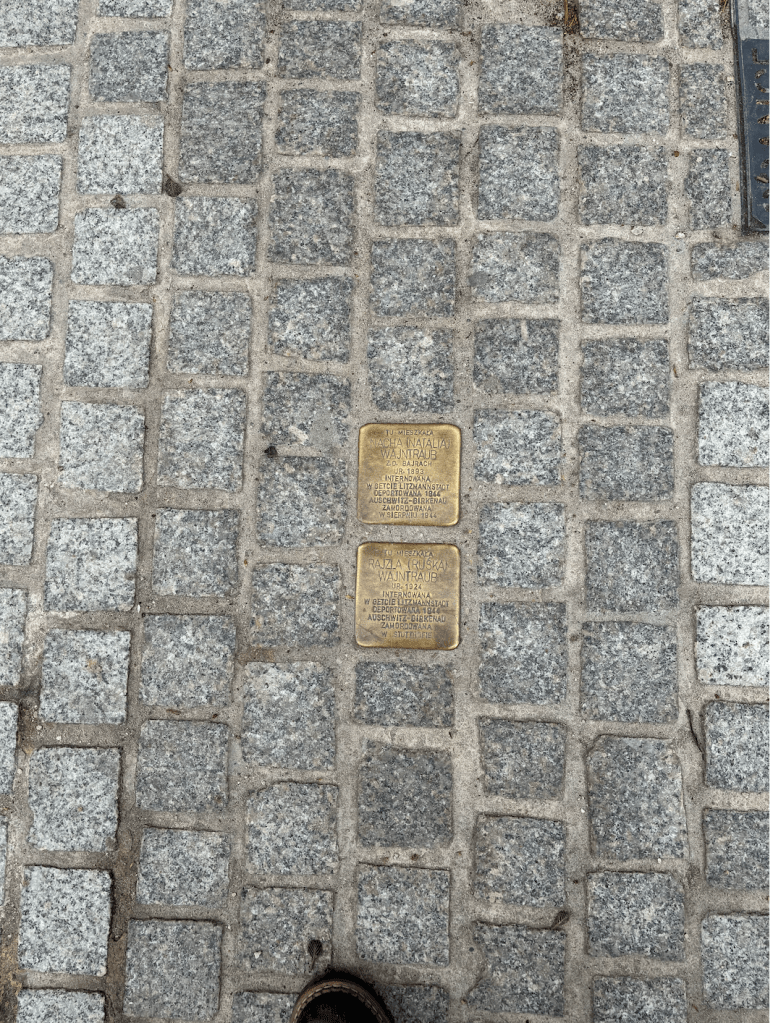
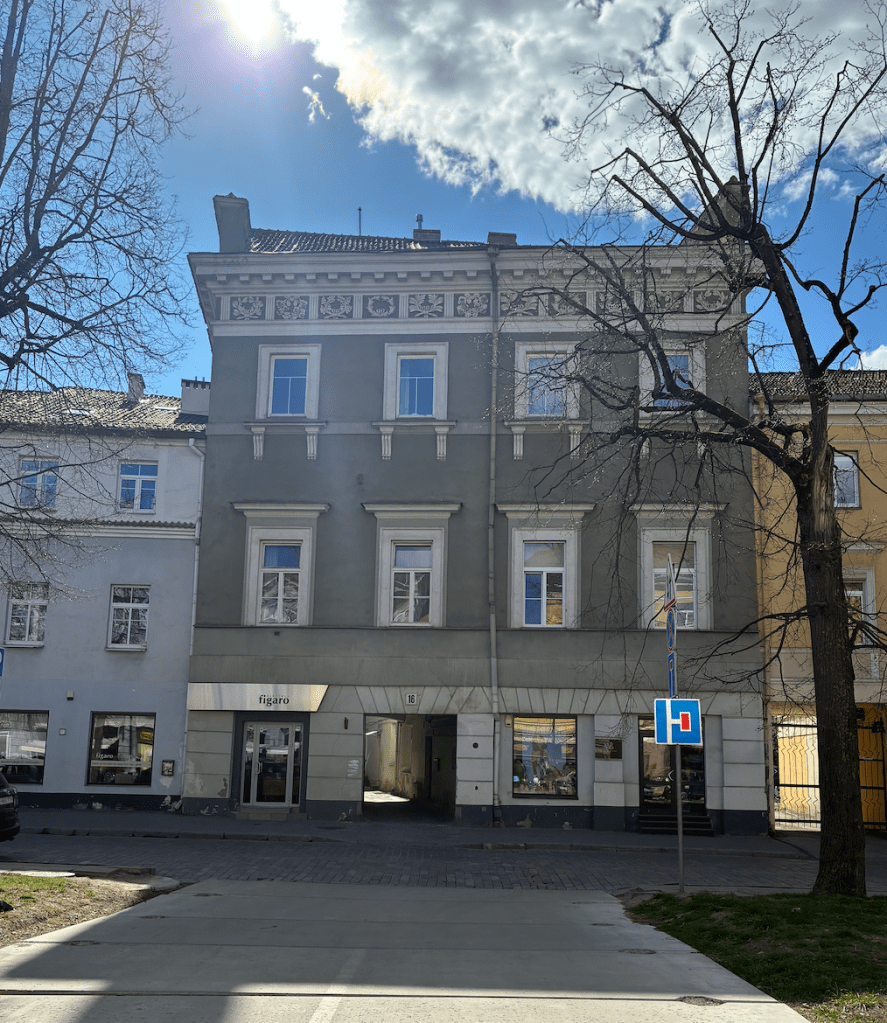
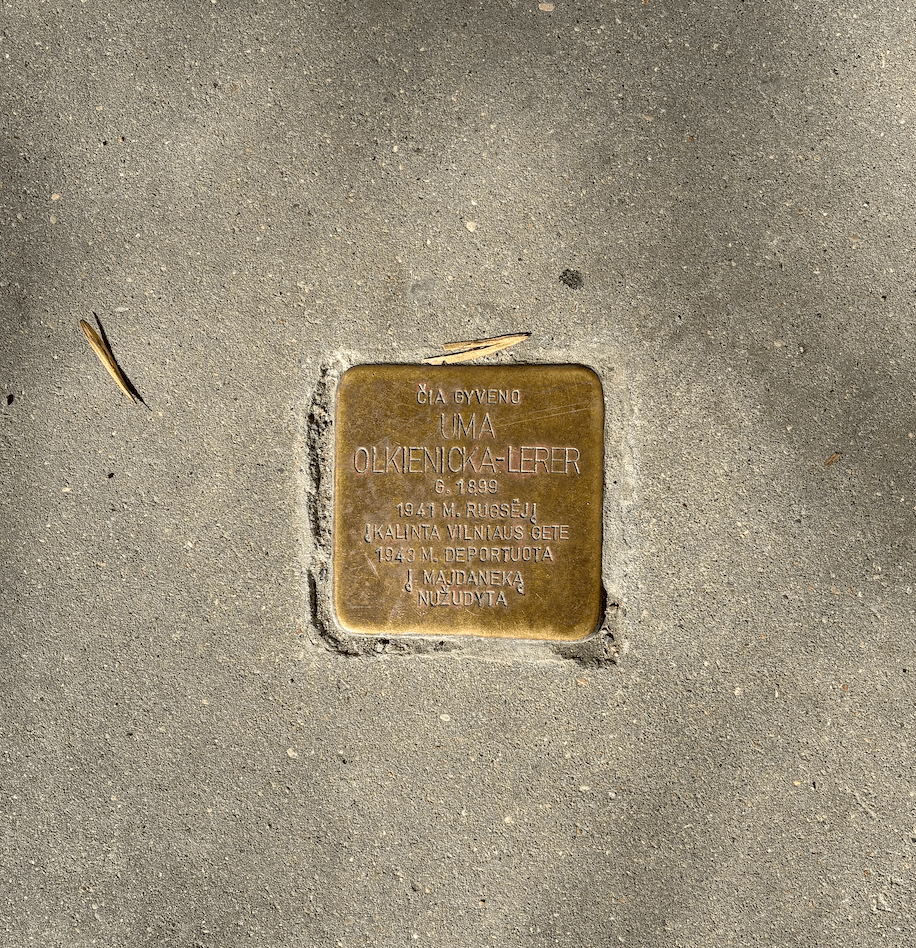
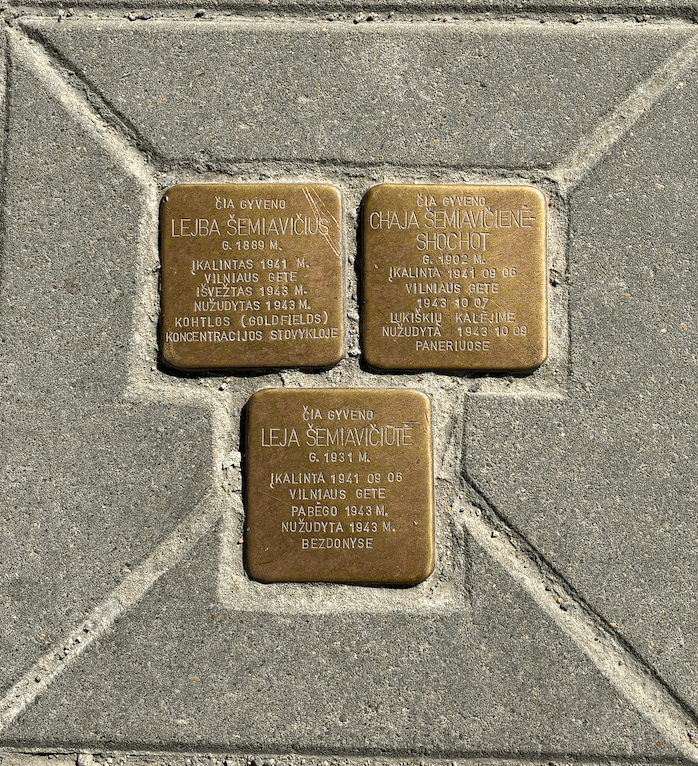
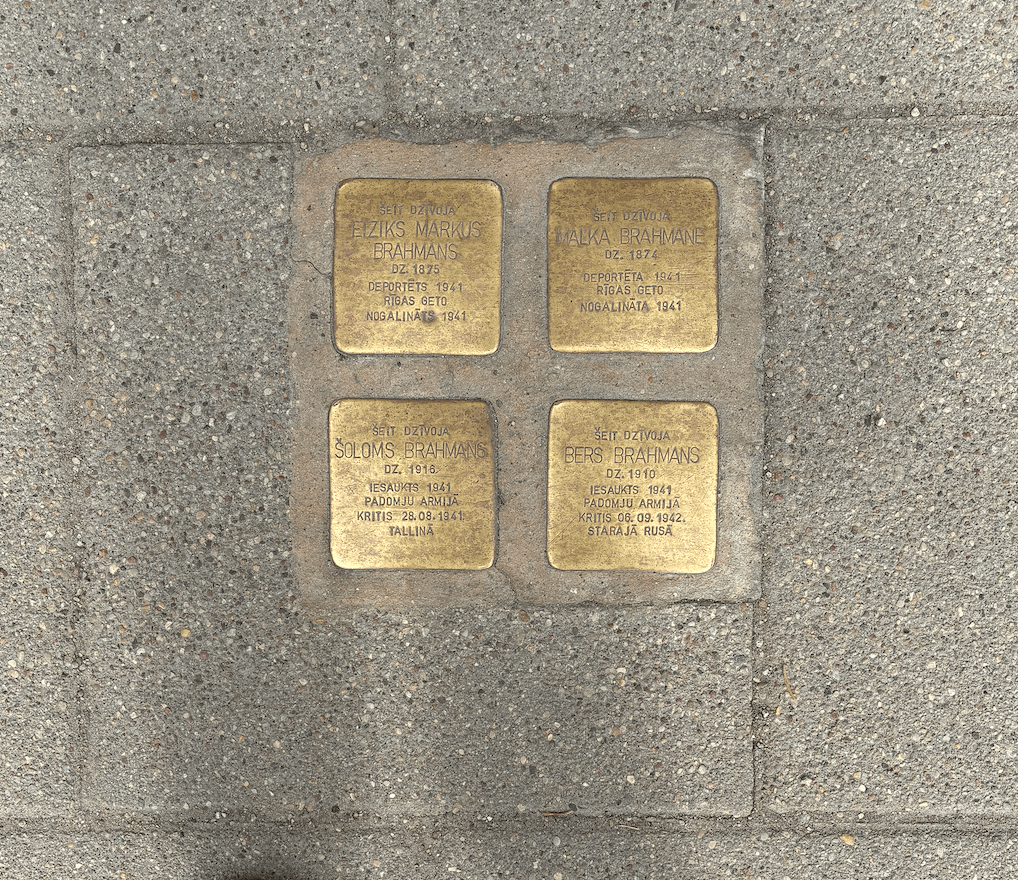
There were about 6 houses with stolpersteine, a few were too far out of town for us to seeone was impossible to find even though we were at the address, seems to be common with new buildings but these were easy to locate, although hard to see
Łódź (pronounce it Woodge)
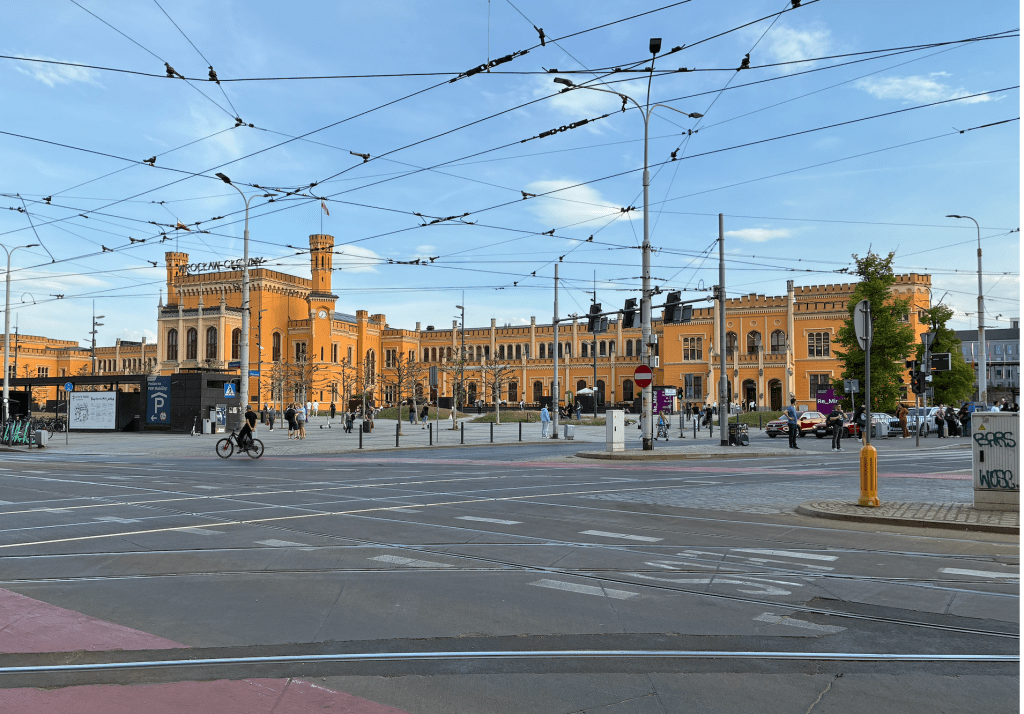
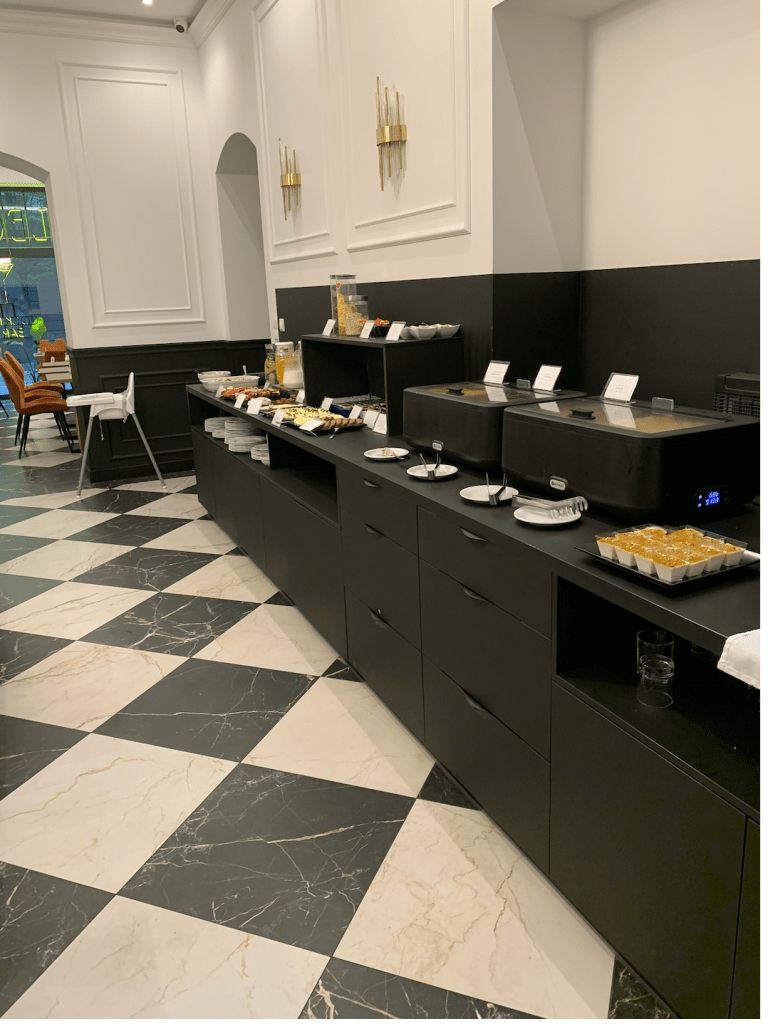
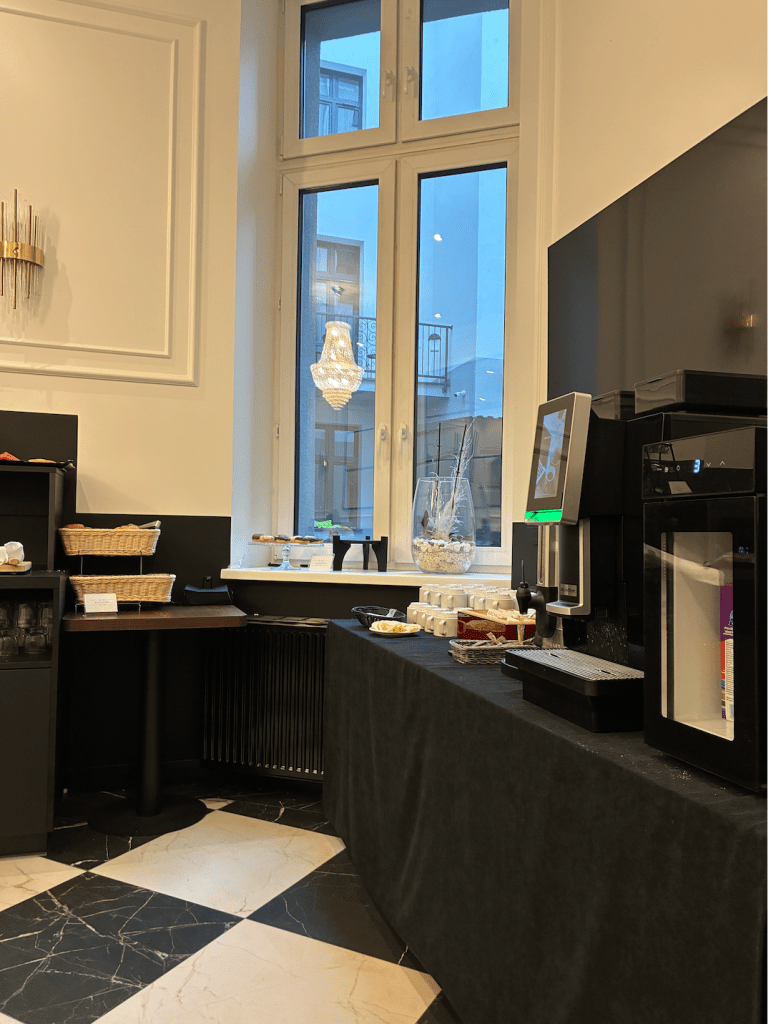
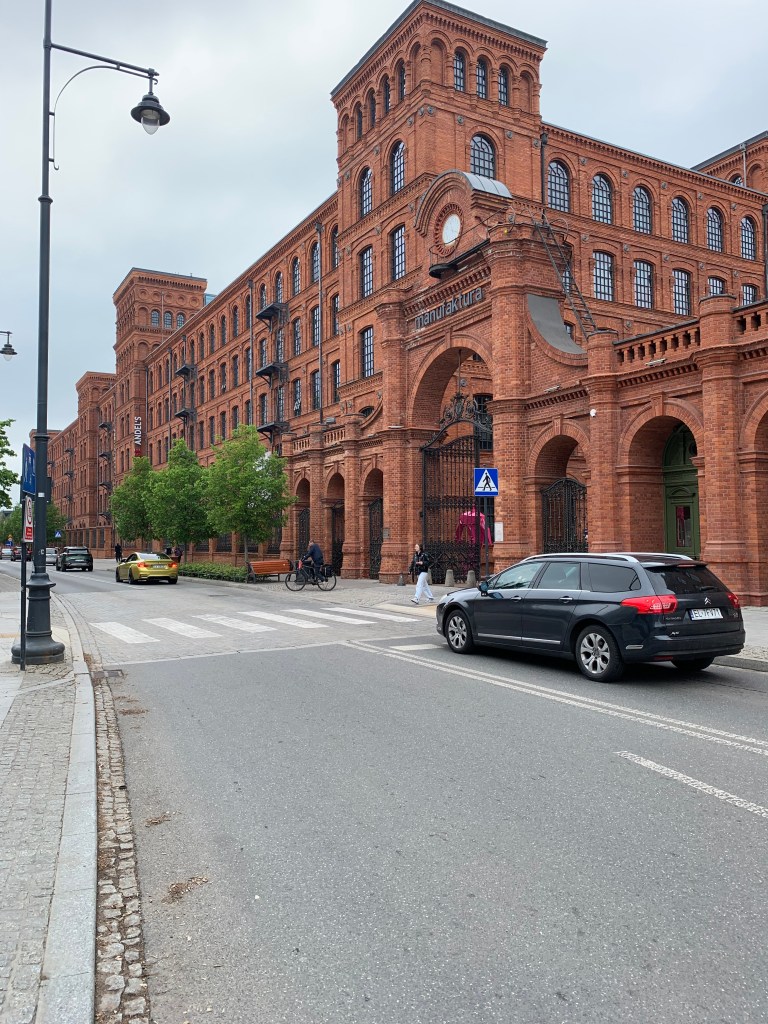
Took the train (pic of the Wroclaw station) to spend 24 hours in Łódź where we stayed in a lovely aparthotel with breakfast! Wow we felt like tourists. No matter how modest, European hotel breakfasts are always better than US.
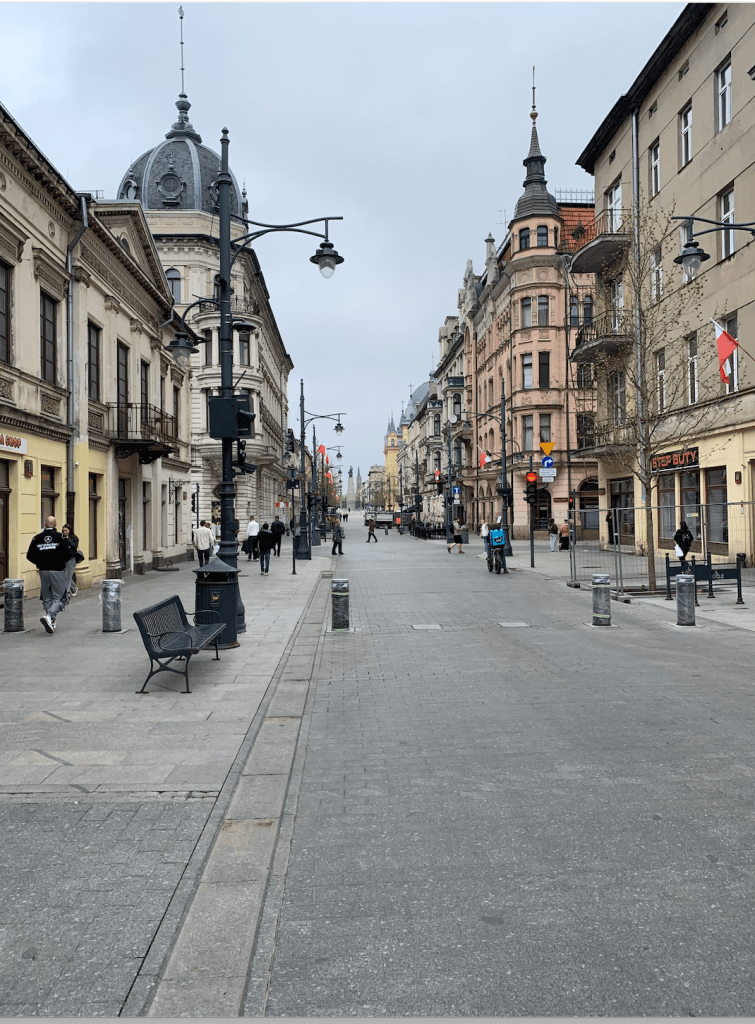
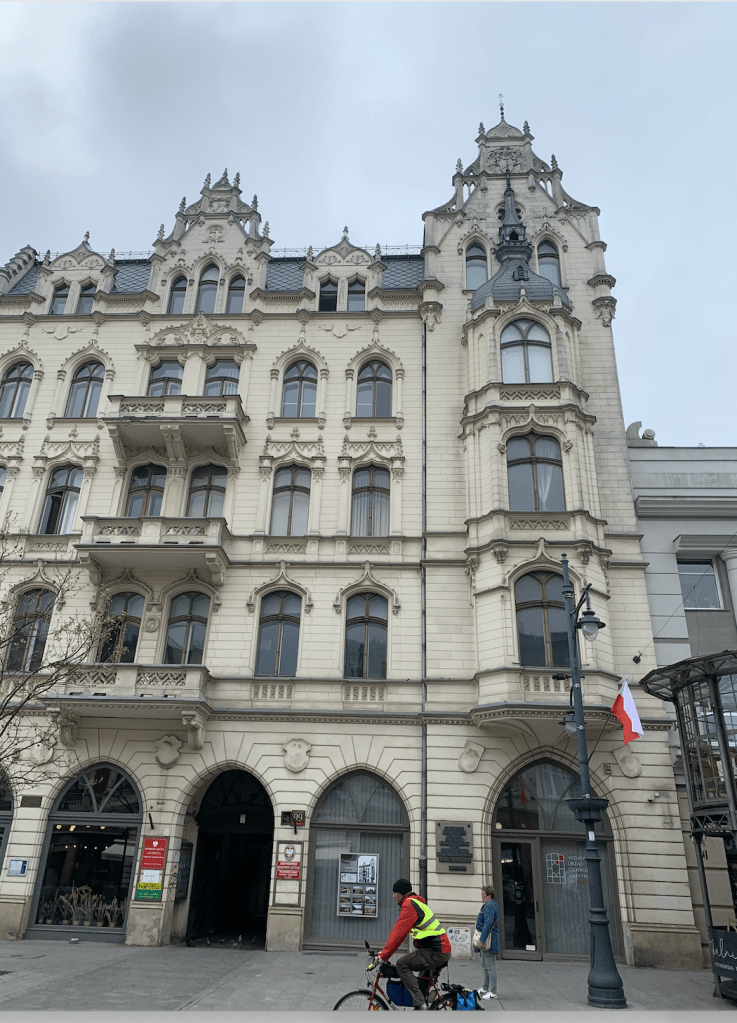
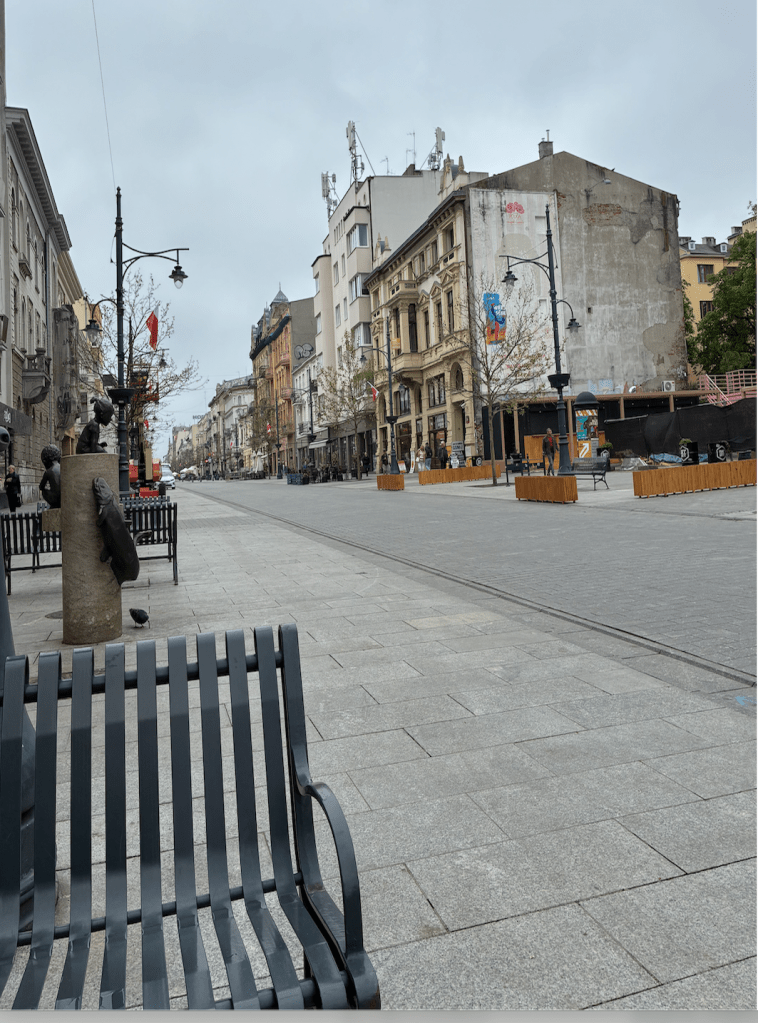
Łódź is well built for a short visit. We arrived at the train station at the bottom of Piotrkowska street (pronounced Ventura Boulevard) and we walked straight up 3.5 km- a perfect snapshot of the city.
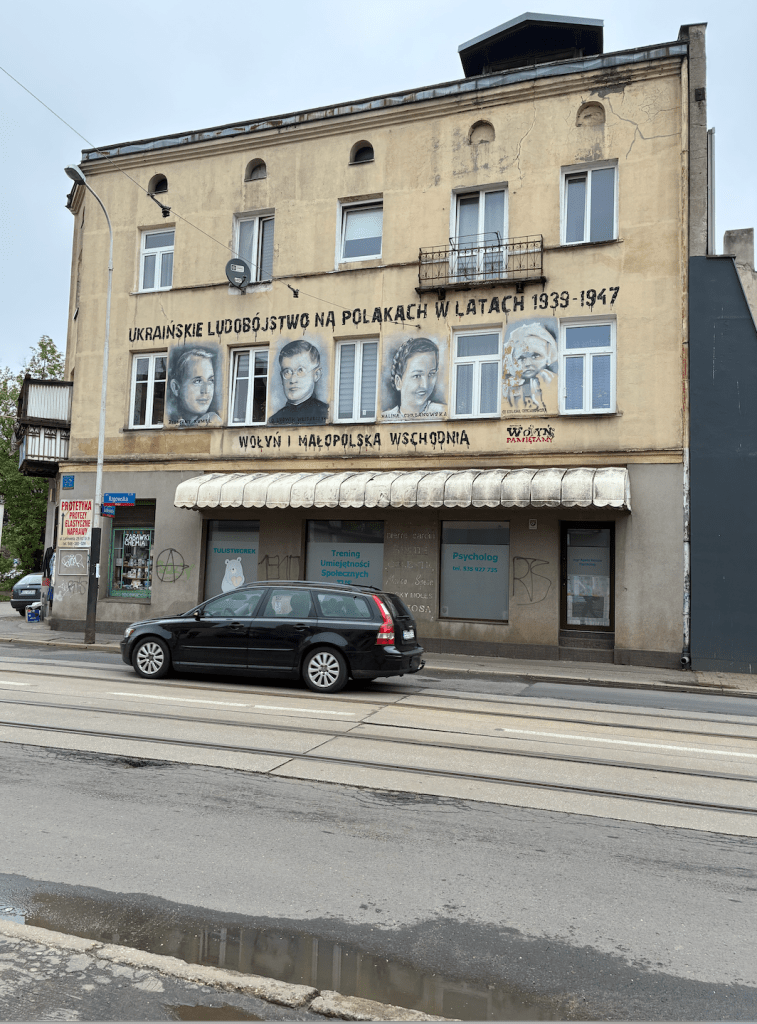
Beginning of the street was pretty run down and this was an interesting start. Again, something we knew noting about, a horrible massacre (all are) during WW2 by Ukrainians against Poles. https://en.wikipedia.org/wiki/Massacres_of_Poles_in_Volhynia_and_Eastern_Galicia Since memory lasts long we could understand a bit more why it was hard and controversial for Poland to accept so many Ukrainians with the Russian invasion.
This was a very different Polish city mainly because it was a nothing place until the 1800s when textile factories came in and the city took off.
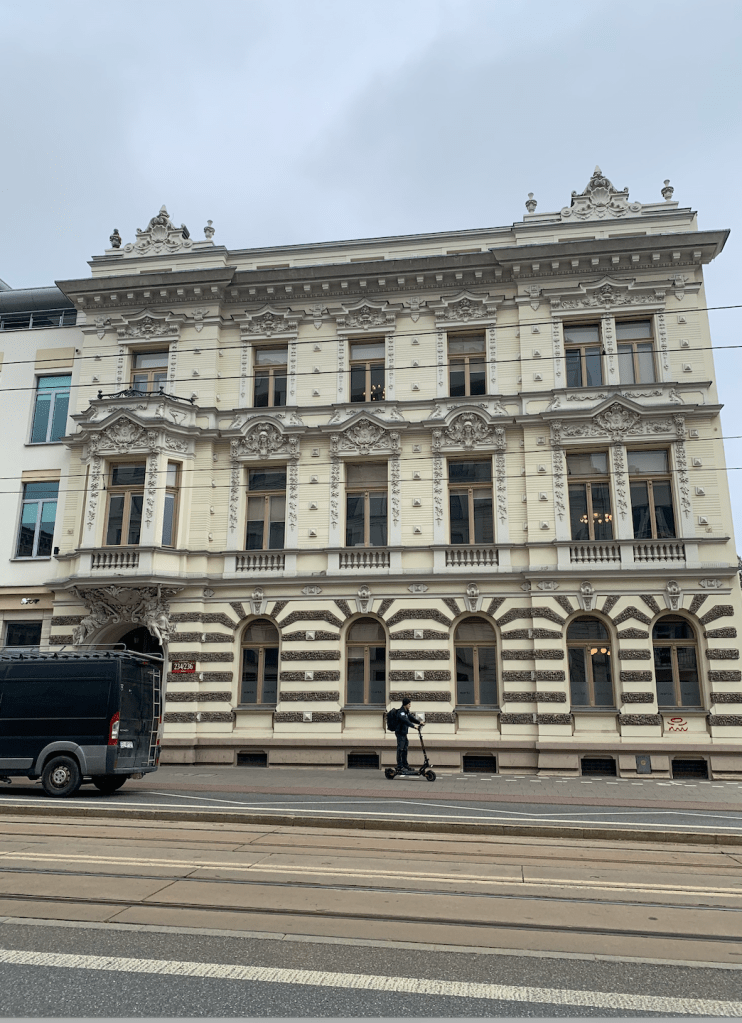
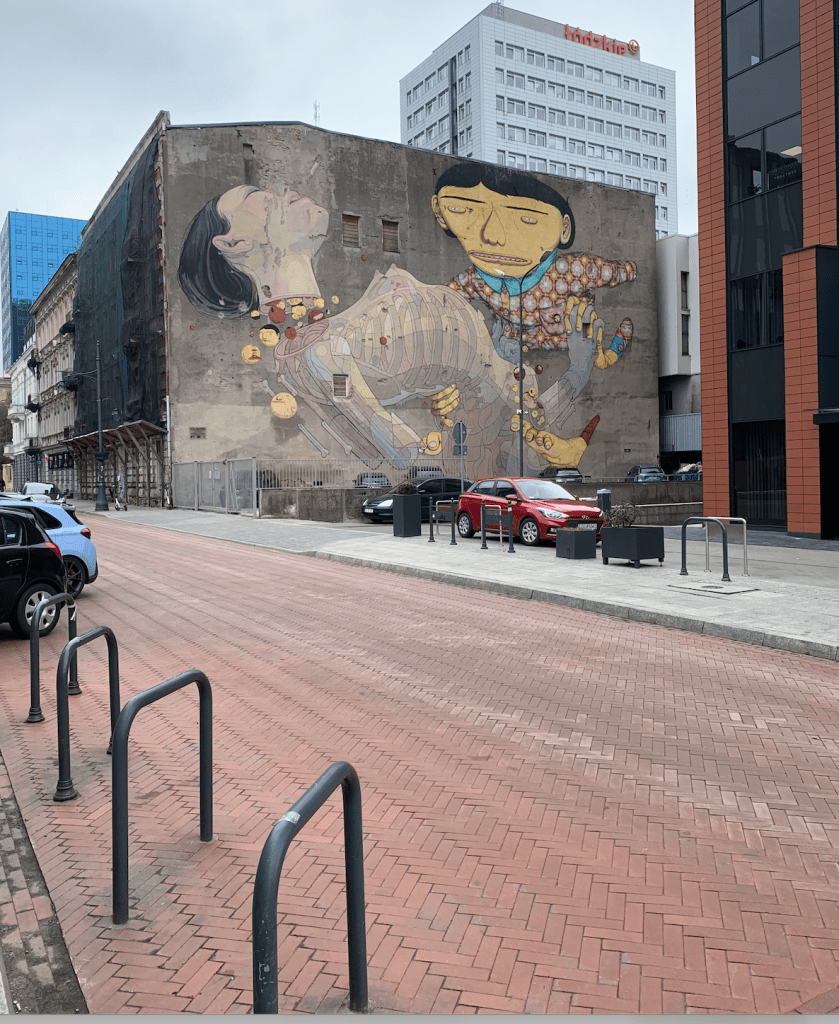
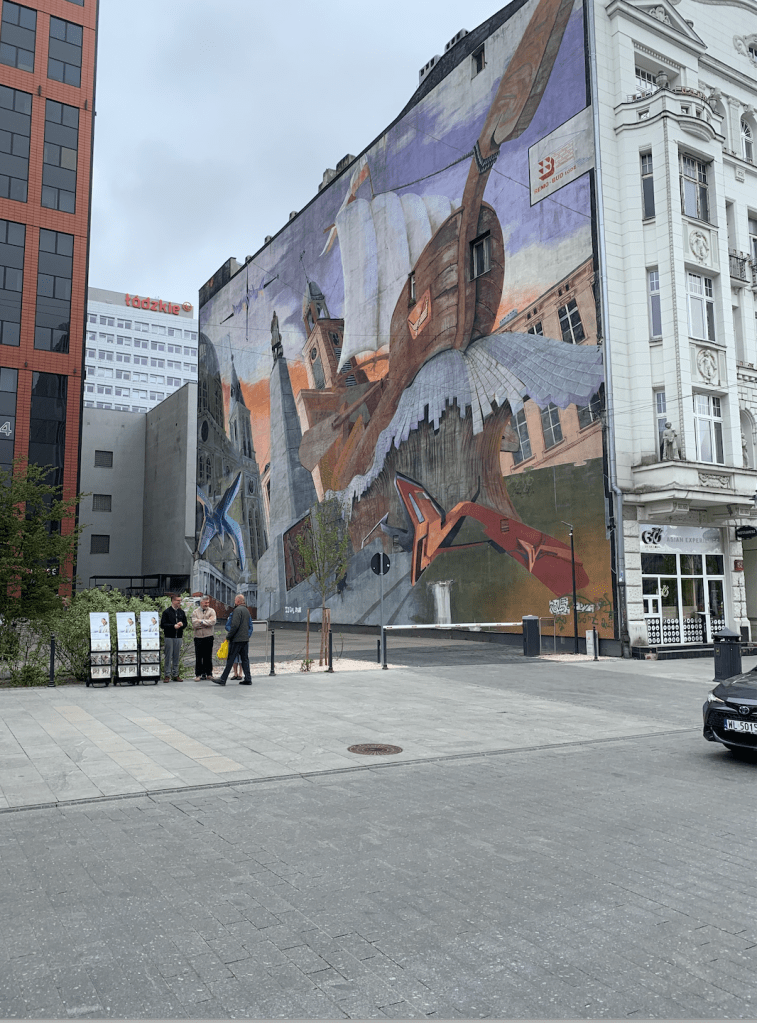
The murals were clustered around a few streets that are it’s Silverlake/Brooklyn areaŁódź is getting to be known as an artsy citynote the weird fountain, there were a few of those
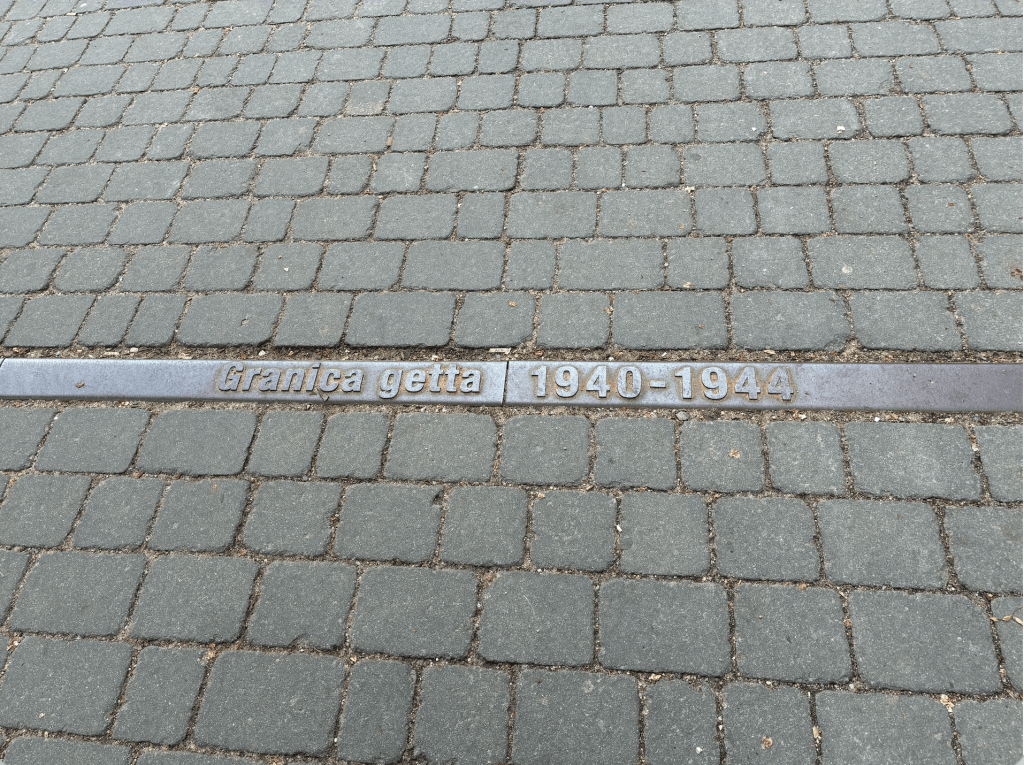
As this was Poland, there was Jewish ghetto formed in 1940, which was at the edge of town, established in the poorer part of the city. This was a very unique ghetto as it kinda was a combo ghetto-labor camp with 91 factories to supply the German military, and over 200,000 people passing through it, either workers or on their way to Nazi extermination camps. It was very large, very productive, very creepy. A lot of info on this website http://www.lodz-ghetto.com
It is always so weird to see signs like this especially when it is right between the mall and the parkThe large beautiful park separated the ghetto area from the cityGestapo building in the ghetto
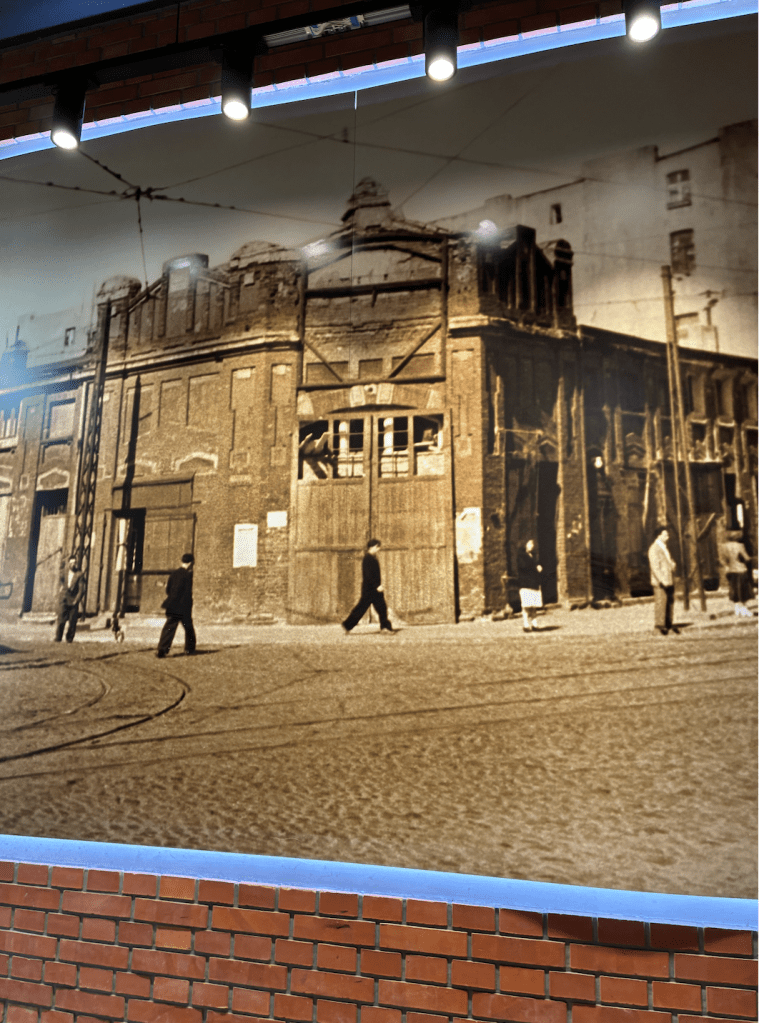
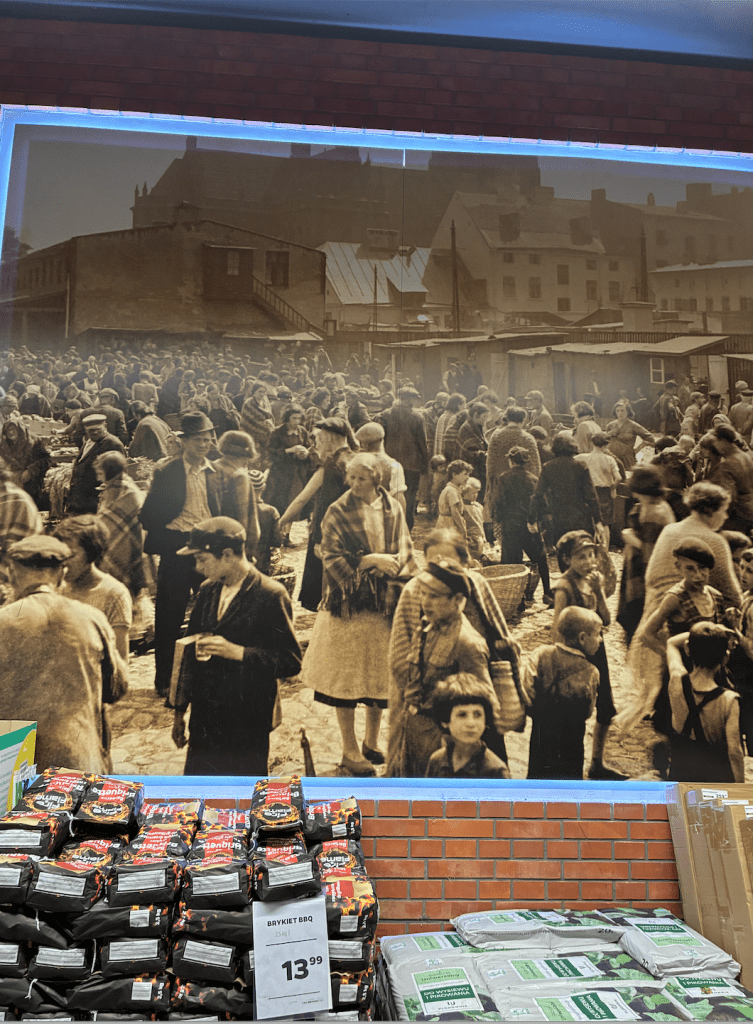
Despite the years, the ghetto streets felt icky, maybe because the buildings looked almost unchanged. We walked through only a tiny part, stopping into the German chain supermarket, Netto, which was in the ghetto. These pictures were just inside the entrance, based on how people were dressed, they look like pictures from the ghetto. Maybe not, but felt disturbing never-the-less.
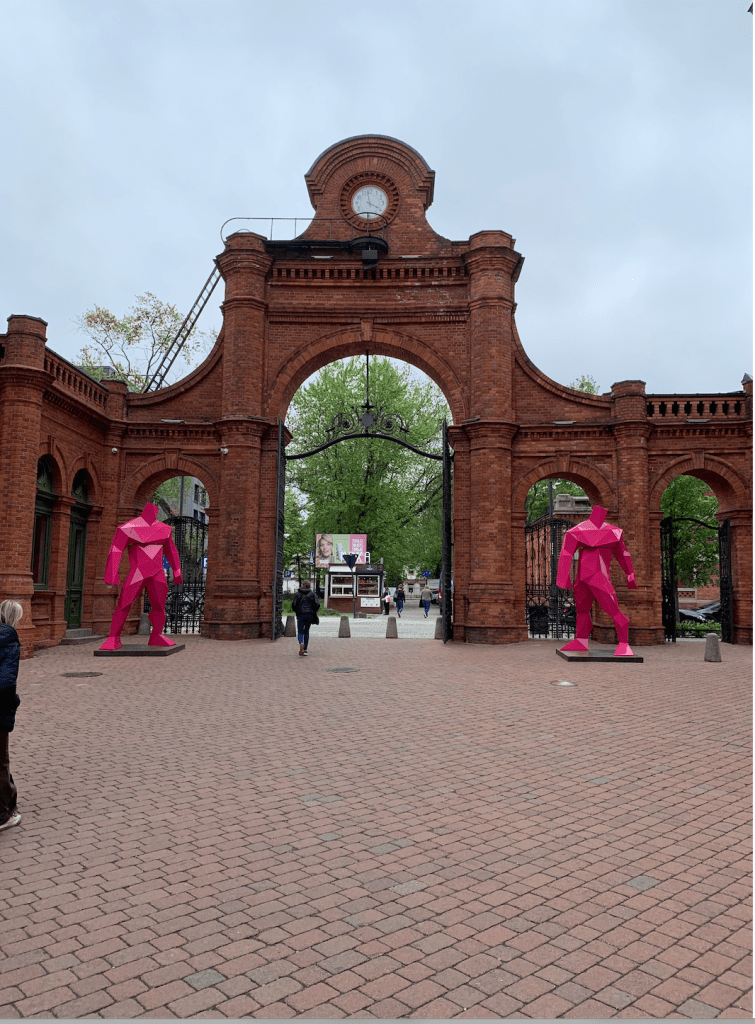
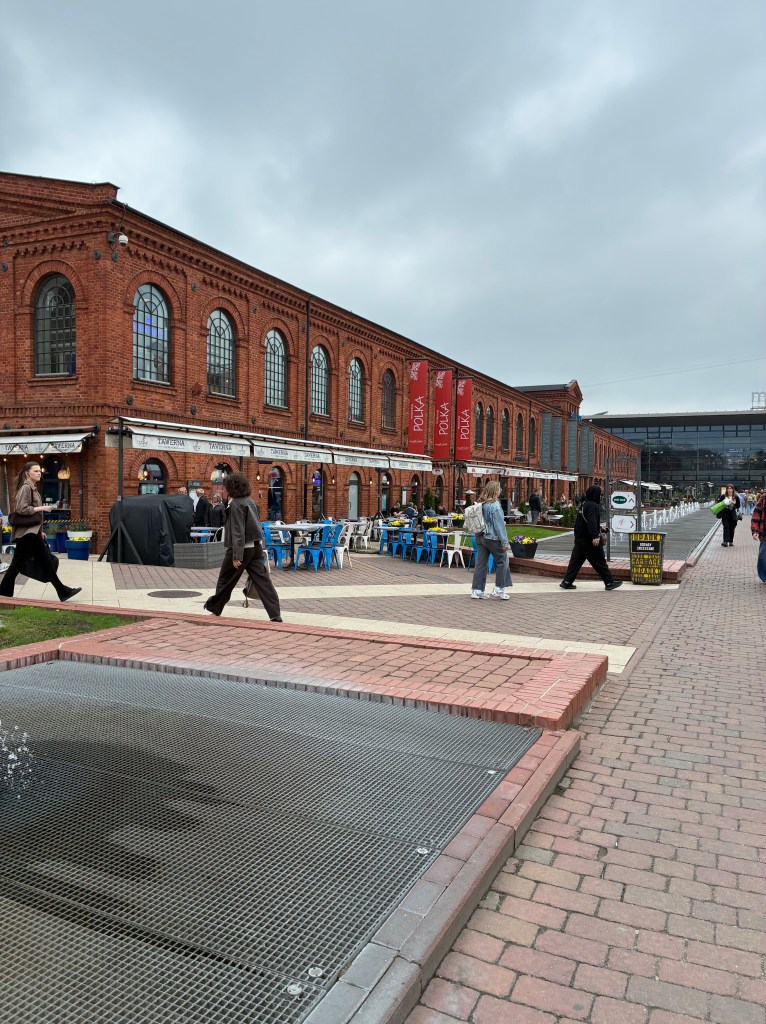
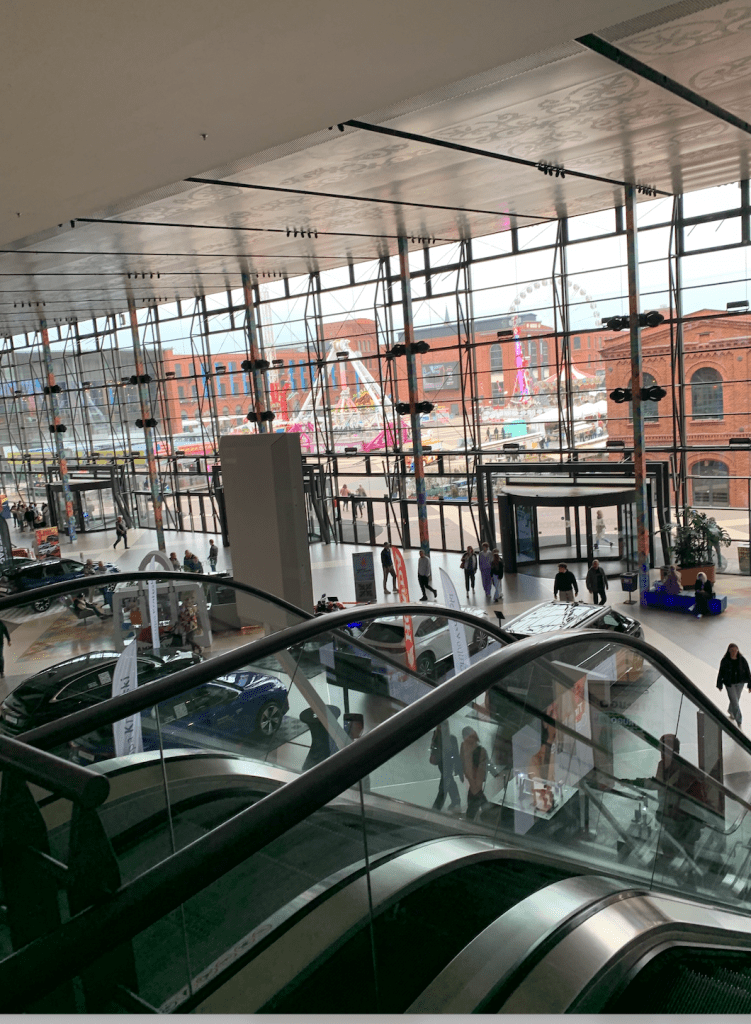
At the end of Piotrkowska street, just before the ghetto sign, was a HUGE shopping/entertainment area (pronounced The Grove) built in an old textile factory.
We ended our stay with a stop at the one stolpersteine site in Łódż. which apparently was very controversial to place, as unfortunately are many. Just stolpersteine for one family, even though before the war Jews made up 34% of the population in 1939.
Placed for his mother and sister by Leon Weintraub.. As a teenager, he went through a number of camps and after the war, became a doctor but had to leave Poland and emigrate to Sweden in 1969 when he lost his university position due to antisemitic laws (really, again.) https://en.wikipedia.org/wiki/Leon_Weintraub
Toruń(pronounced toe-roon)
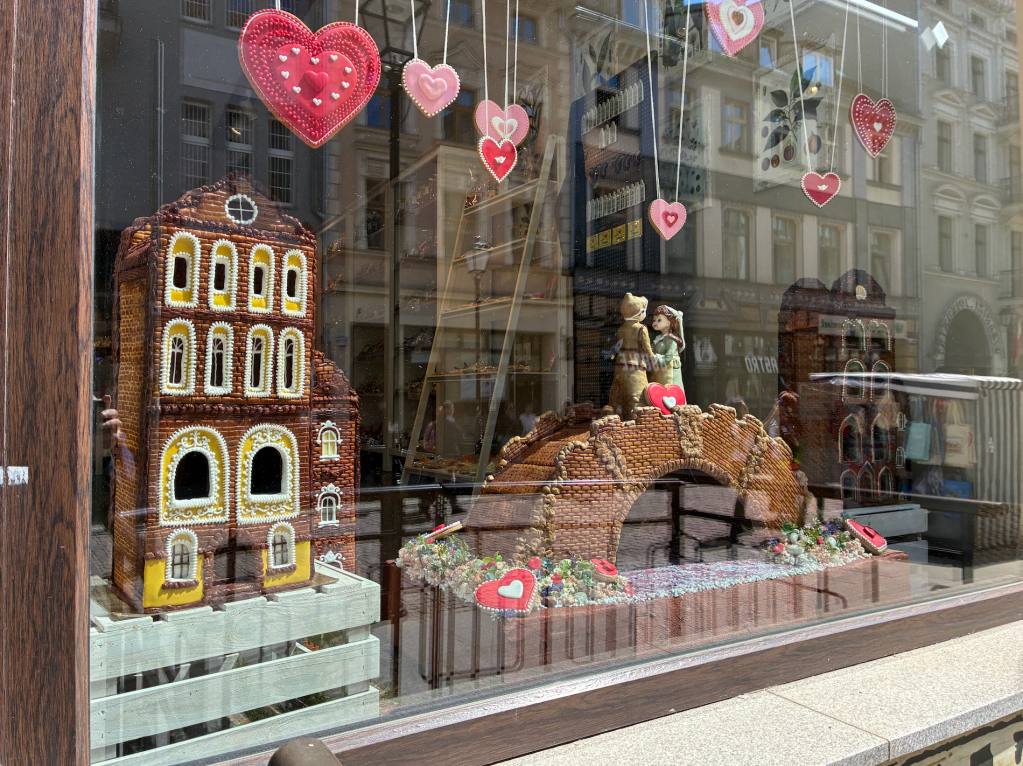
Wroclaw had its dwarfs, Łódż, had its textiles, Toruń has its gingerbread, a specialty since 1380.
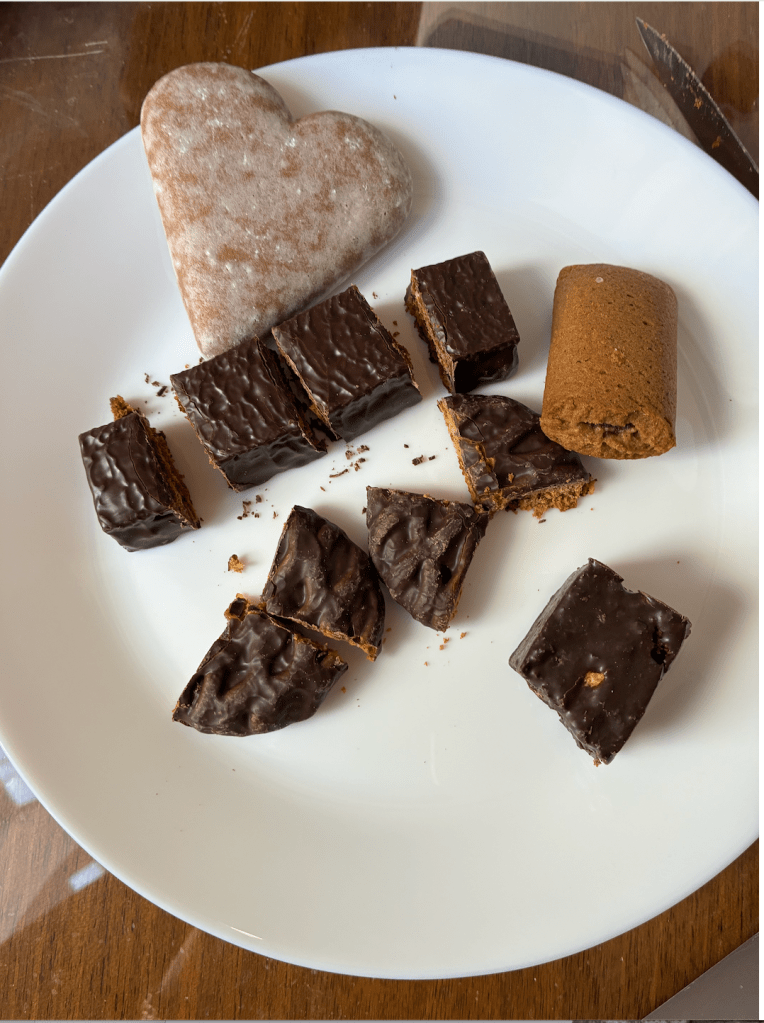
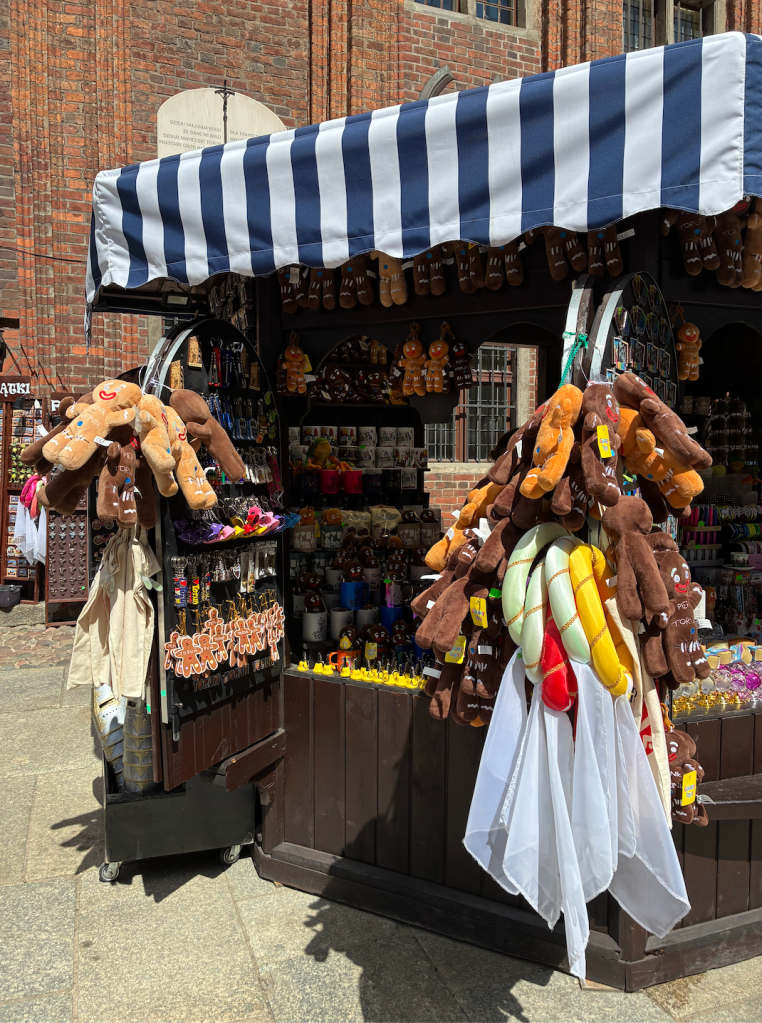
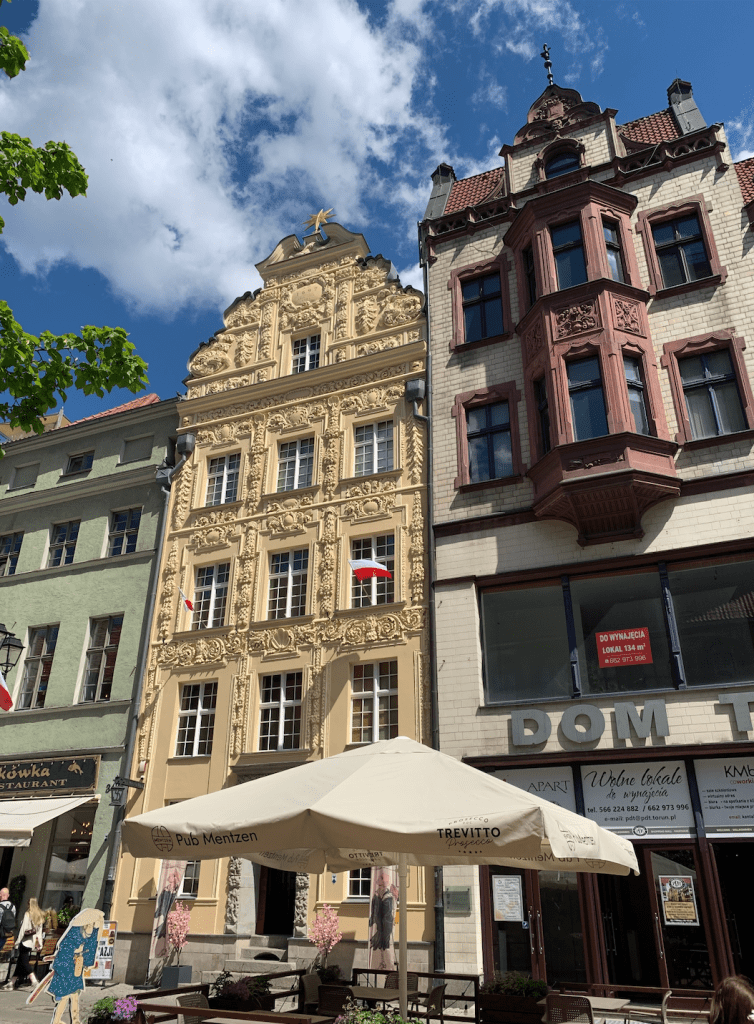
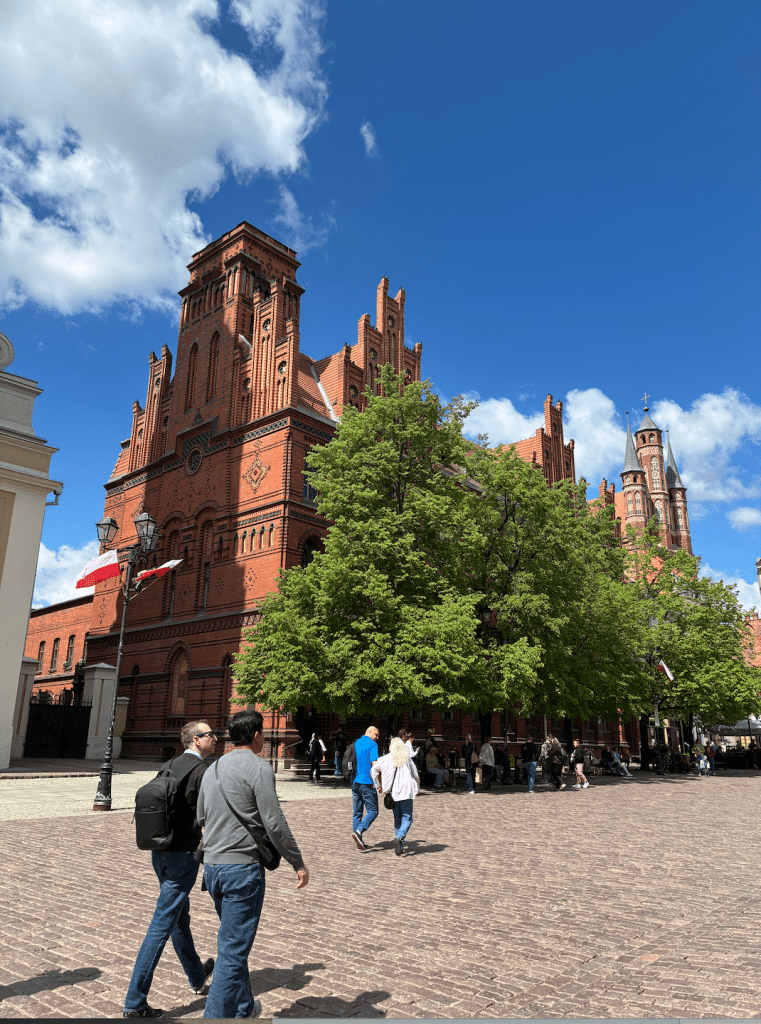
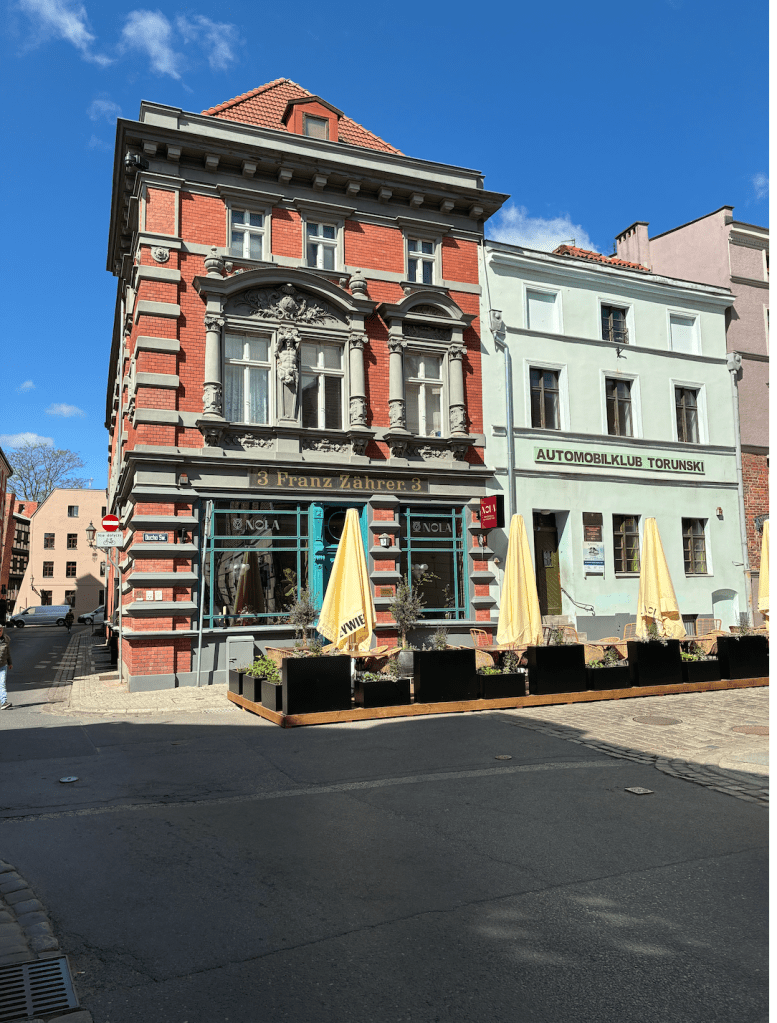
We did not like the gingerbread; it was heavy on the bread, light on the ginger. Toruń felt like a tourist town; two pretty squares full of gingerbread bakeries and souvenir stores connected by a street full of more gingerbread and souvenir stores with a sprinkling of cafes and pierogi restaurants .
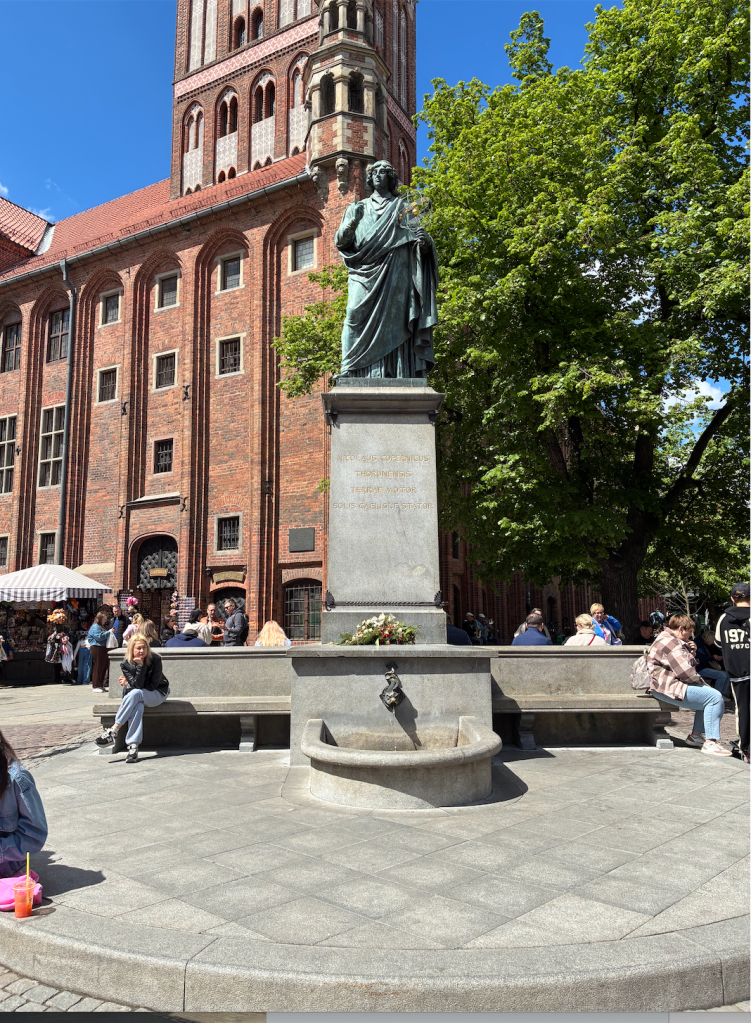
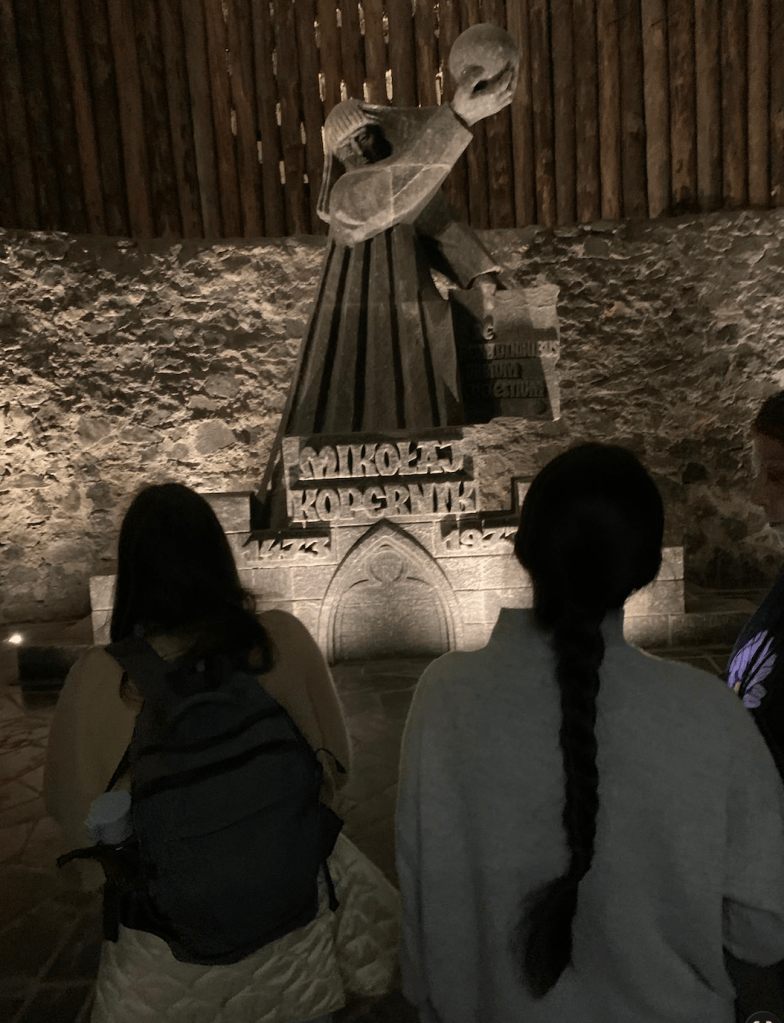
But it actually was a little more than gingerbread and pierogis. It was the birthplace of Nicolas Copernicus.
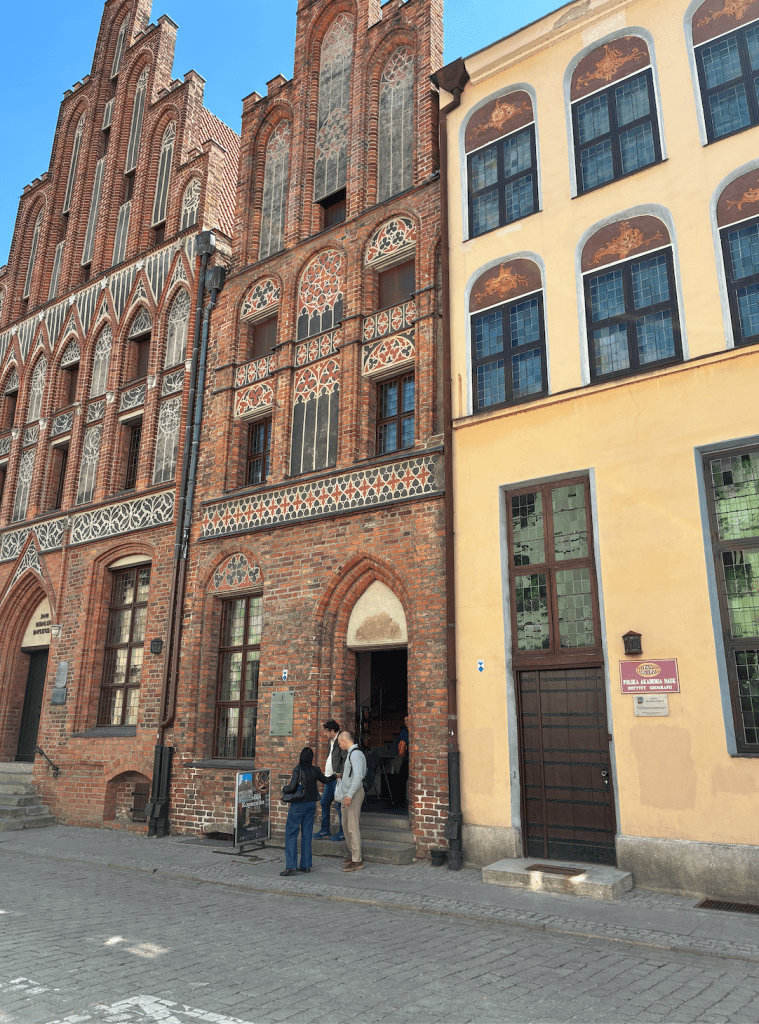
NicolasHis home and museum
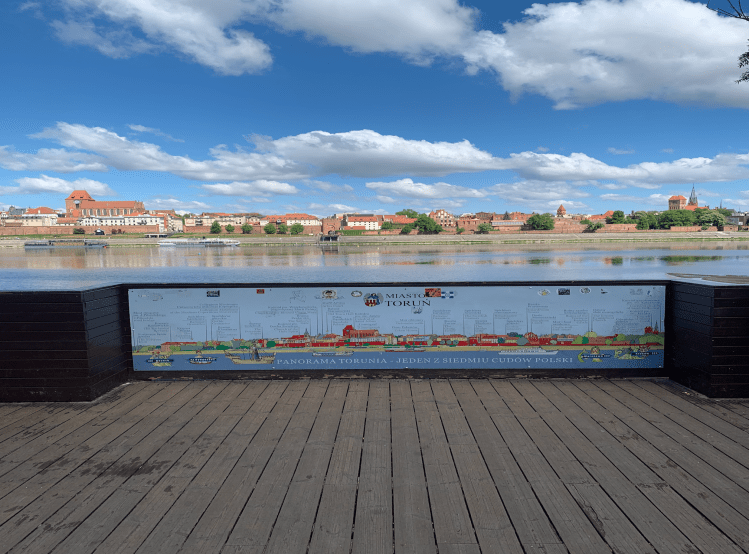
It also had a picturesque river (the Vistula River), with a viewing platform mural nicely describing what we were seeing.
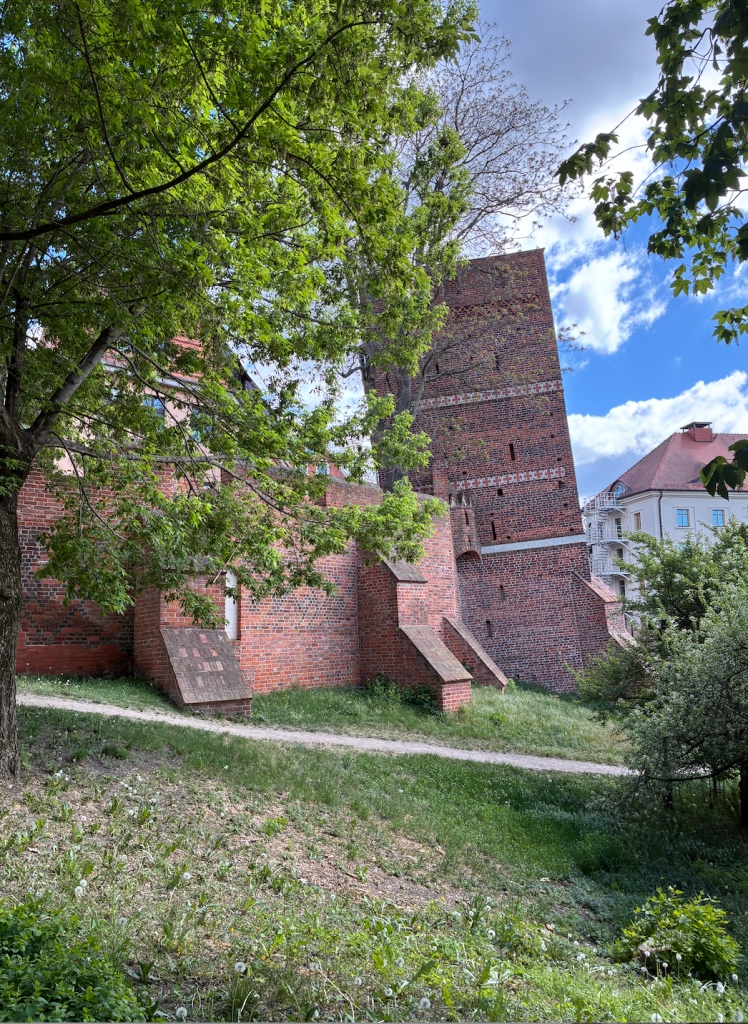
It also had it’s own leaning tower
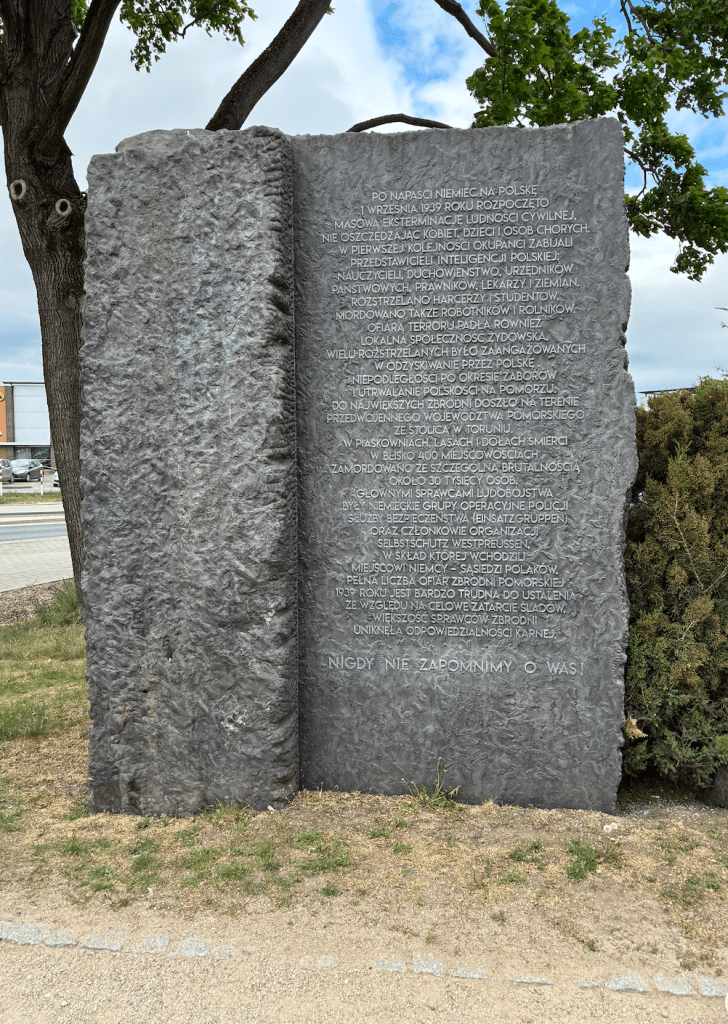
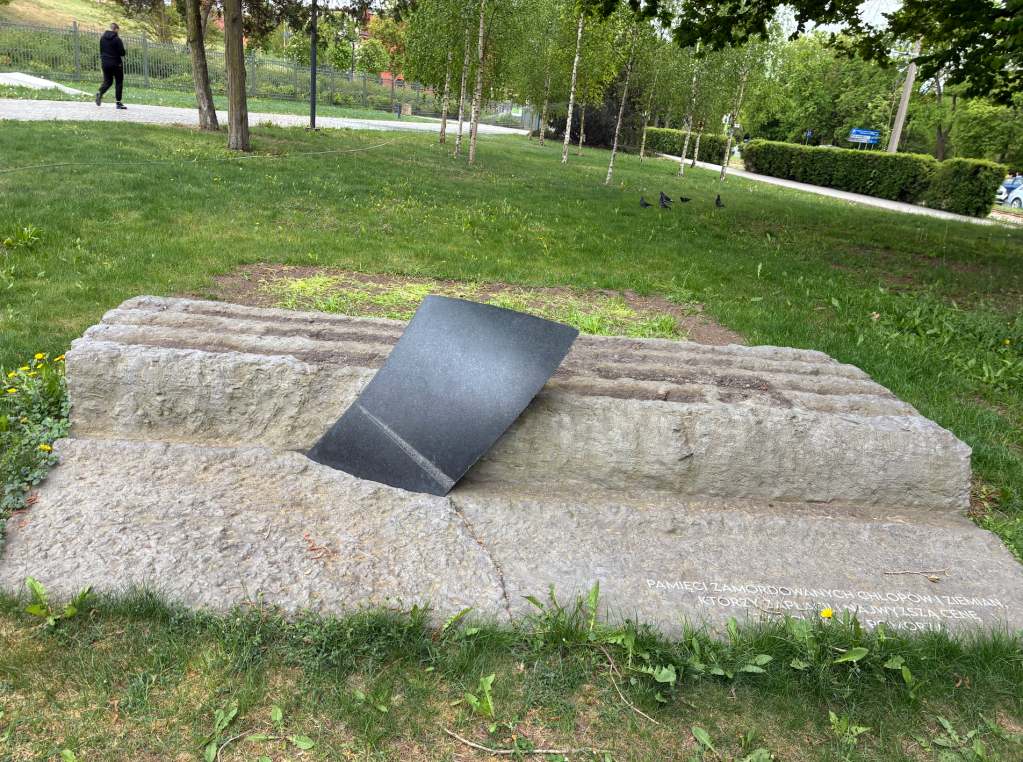
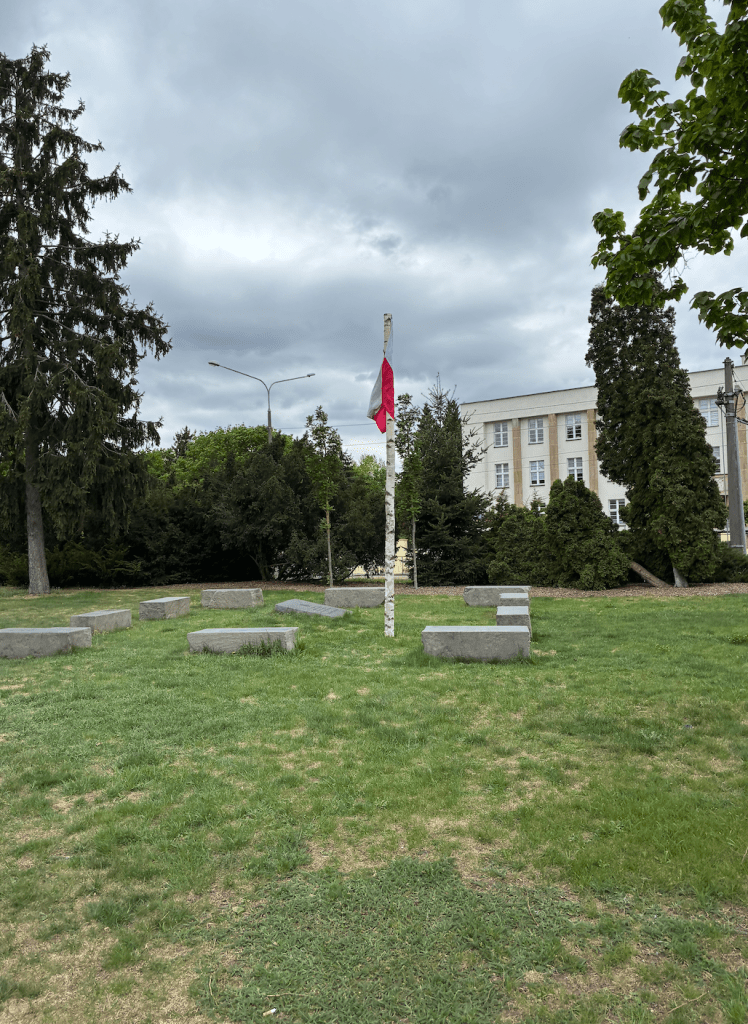
It also had a small memorial park which instead of ethnic separation, honored pretty much everyone who died in all the wars; Poles, Jews, Roma, etc. A rare display of unity.
Toruń, like Krakow, was not destroyed in WW2 so most of what we saw was actually original, it is pretty interesting comparing the rebuilt cities to ones in their original state.
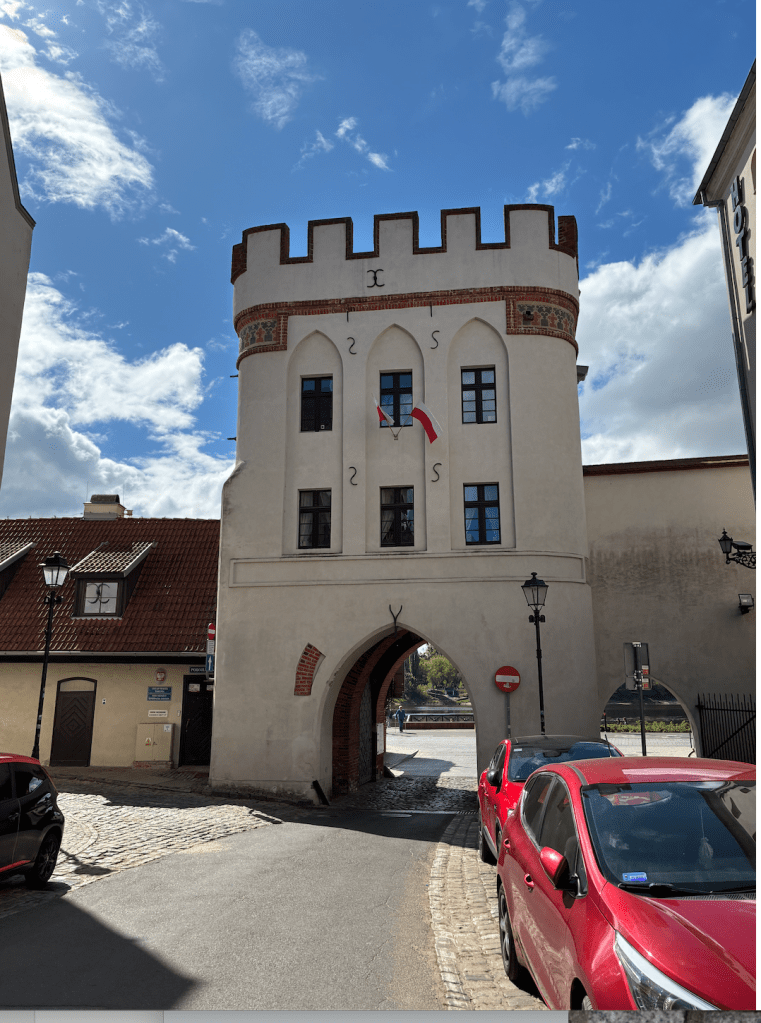
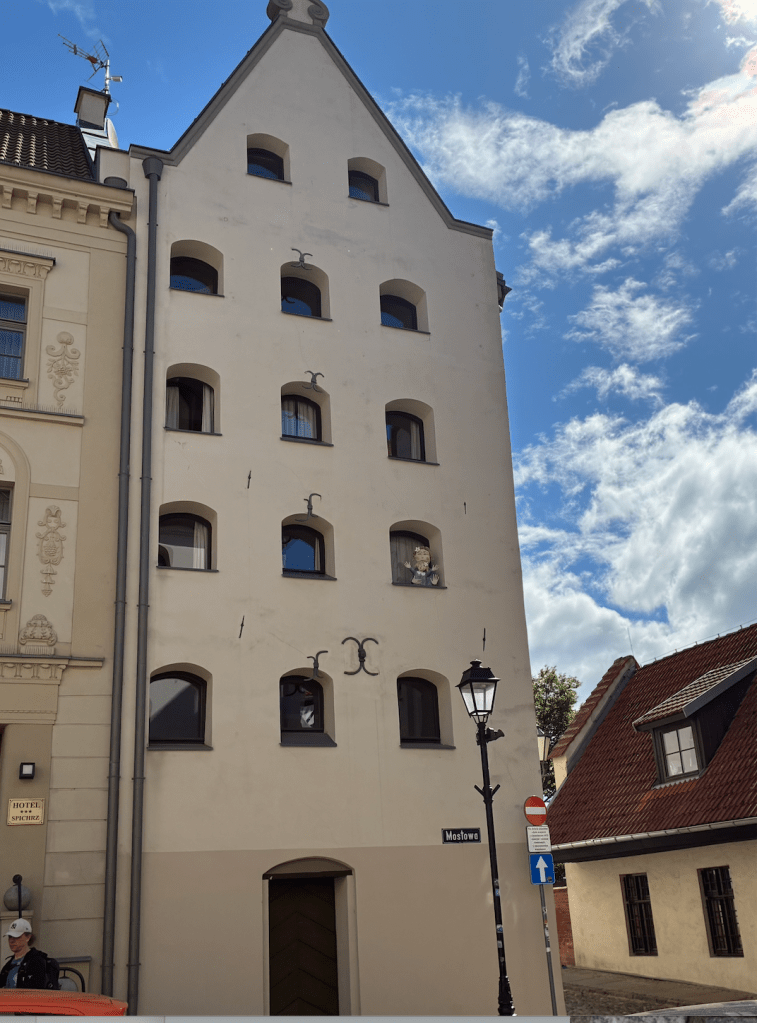
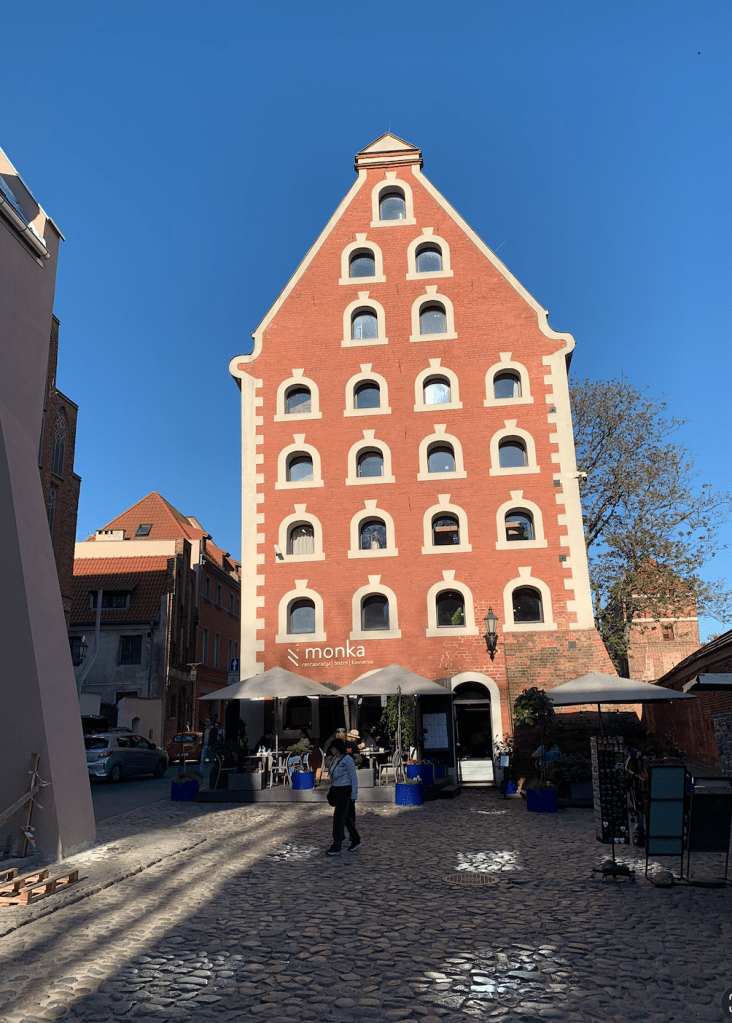
City gate, yes that car just drove through itA granary, can you see the painted people in some of the windowsAnother granary
Another captivating city to end a beautiful blur of week, “if it’s Tuesday, where are we?”
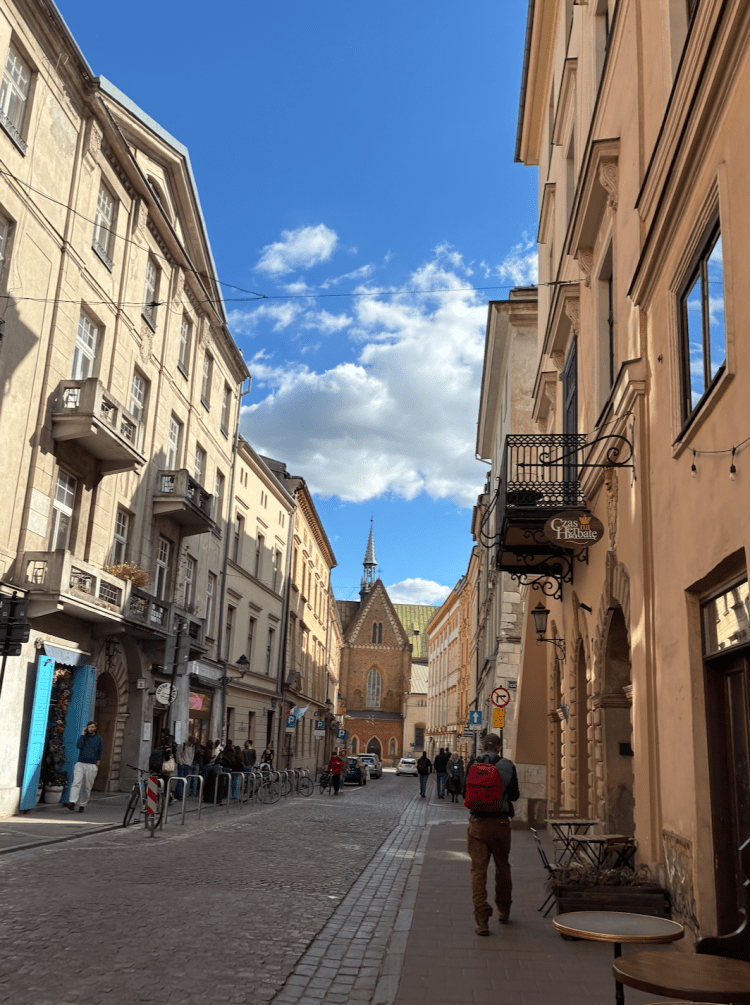
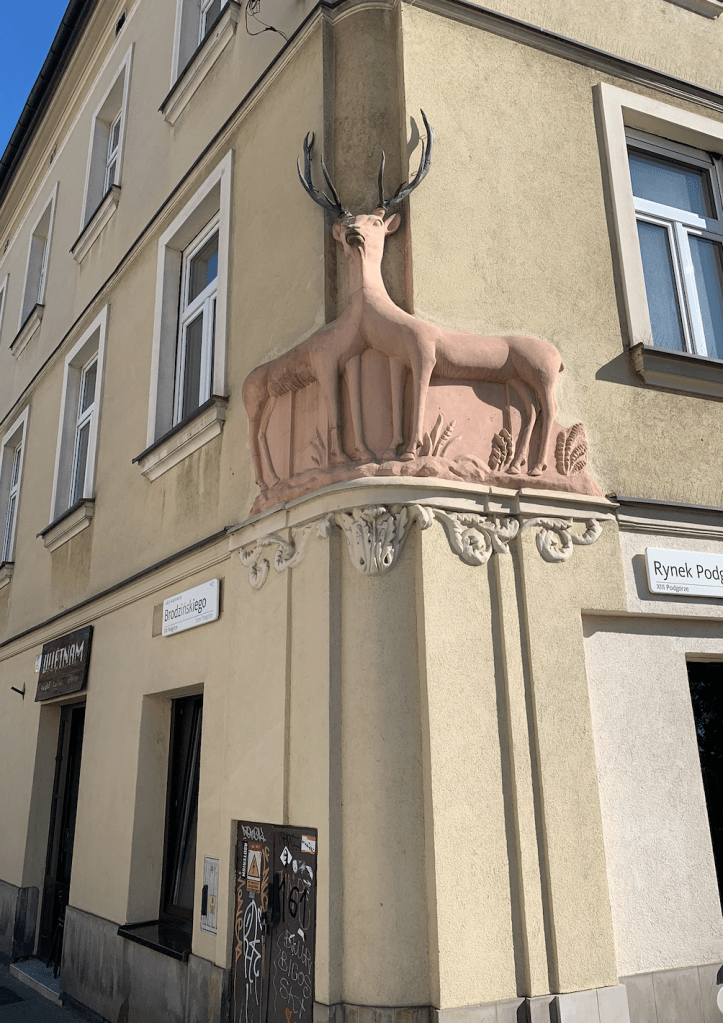
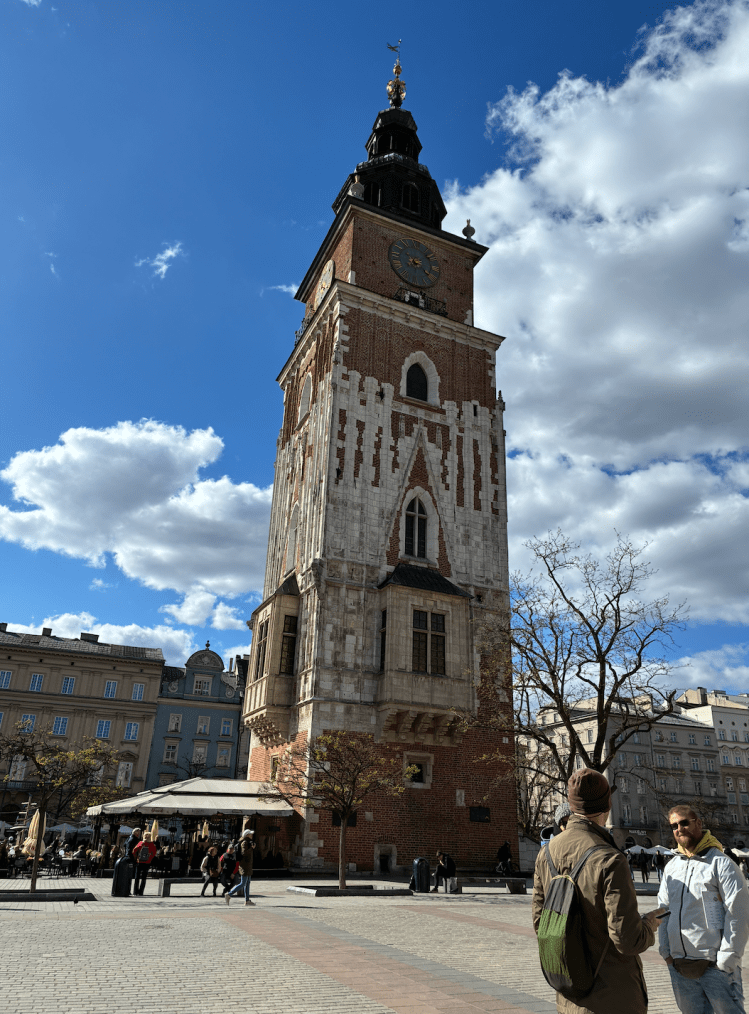
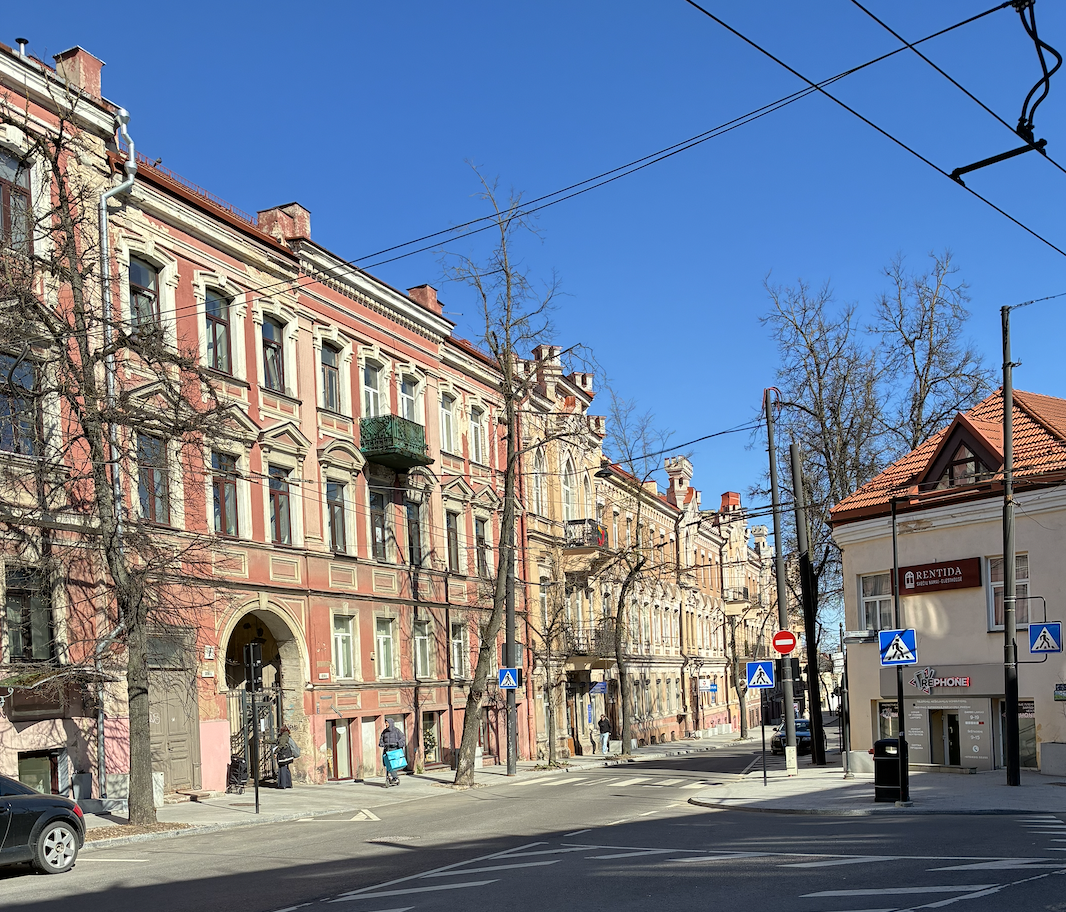
We stumbled into Krakow and walked into a fairy tale illustration.
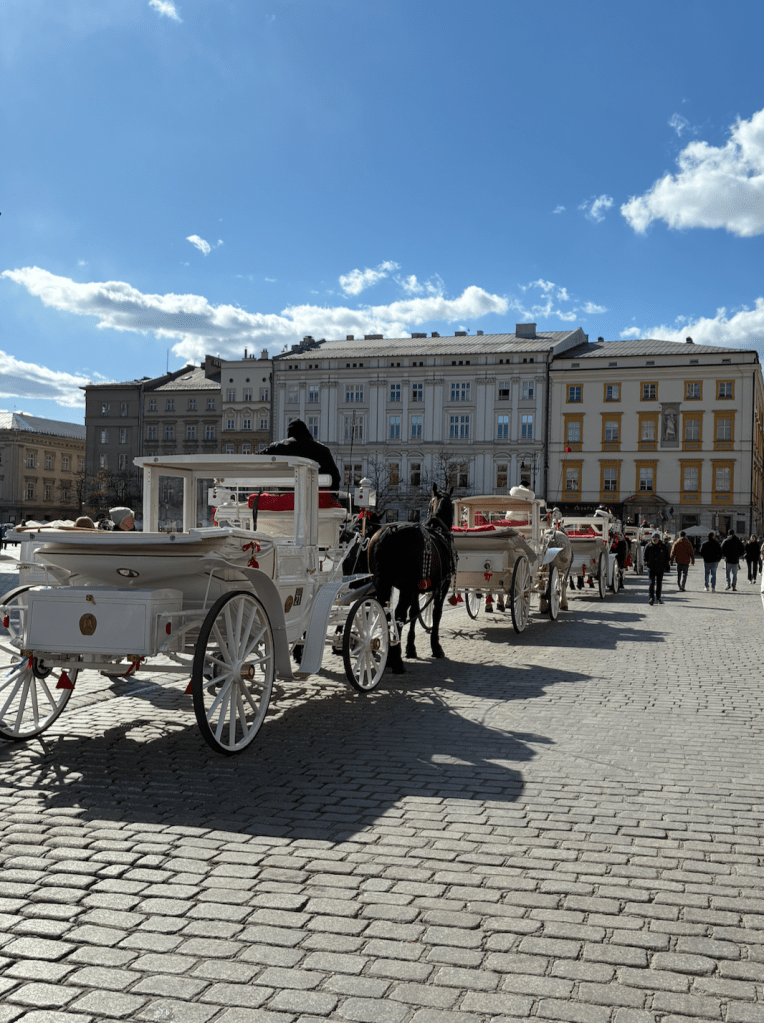
Carriages were even waiting for us
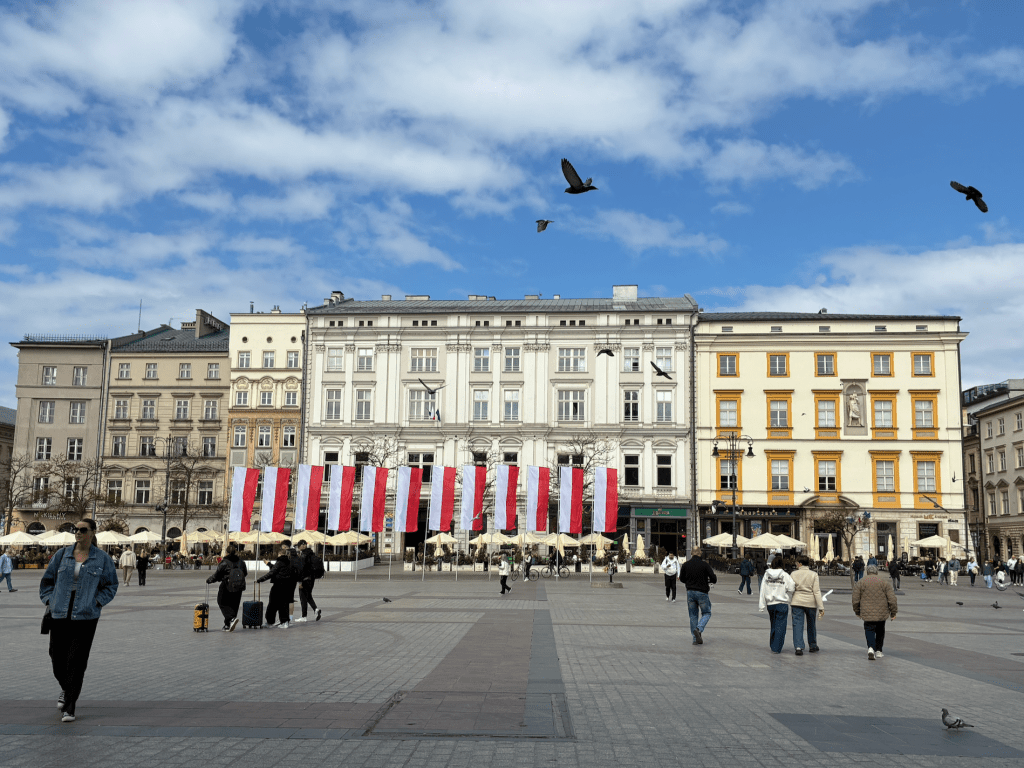
We arrived on a national 3 day Holiday Weekend, “Majowka”. May 1st is May Day aka Labor Day, May 2nd is Flag Day and May 3rd is Constitution Day.
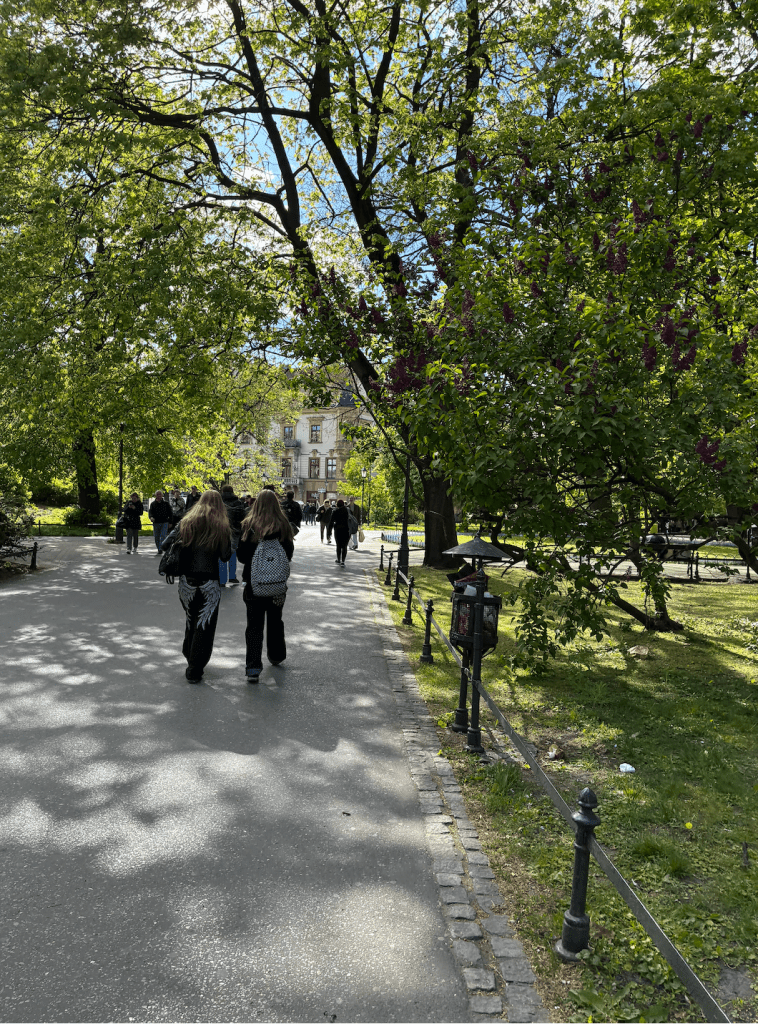
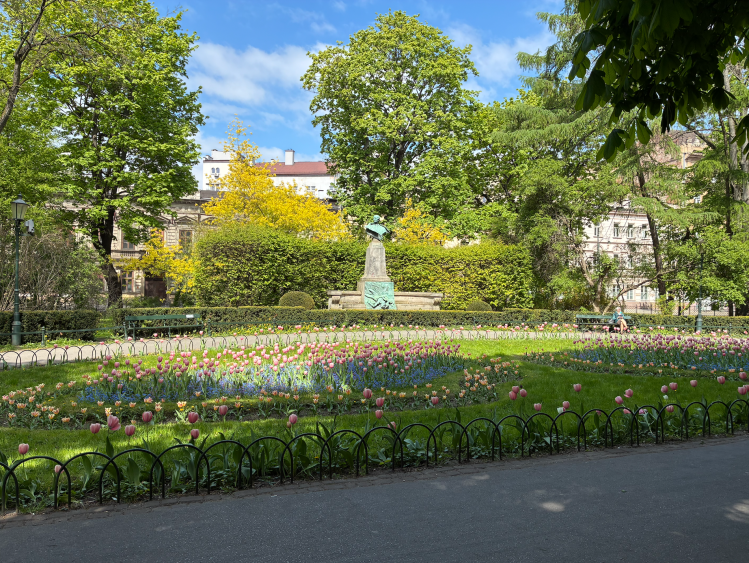
The city was in a festive mood; Planty Park, the greenbelt encircling the city was full of flowers, people walking, babies in strollers and dogs on leashes. (PS-pics show up better viewing on the blog not the email)
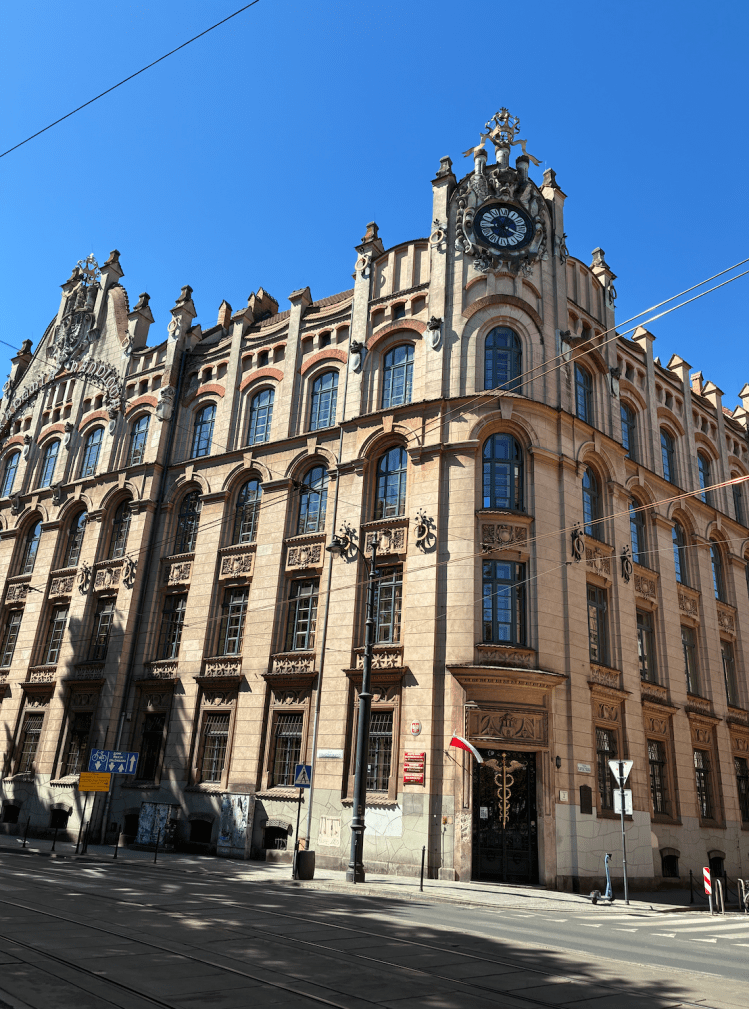
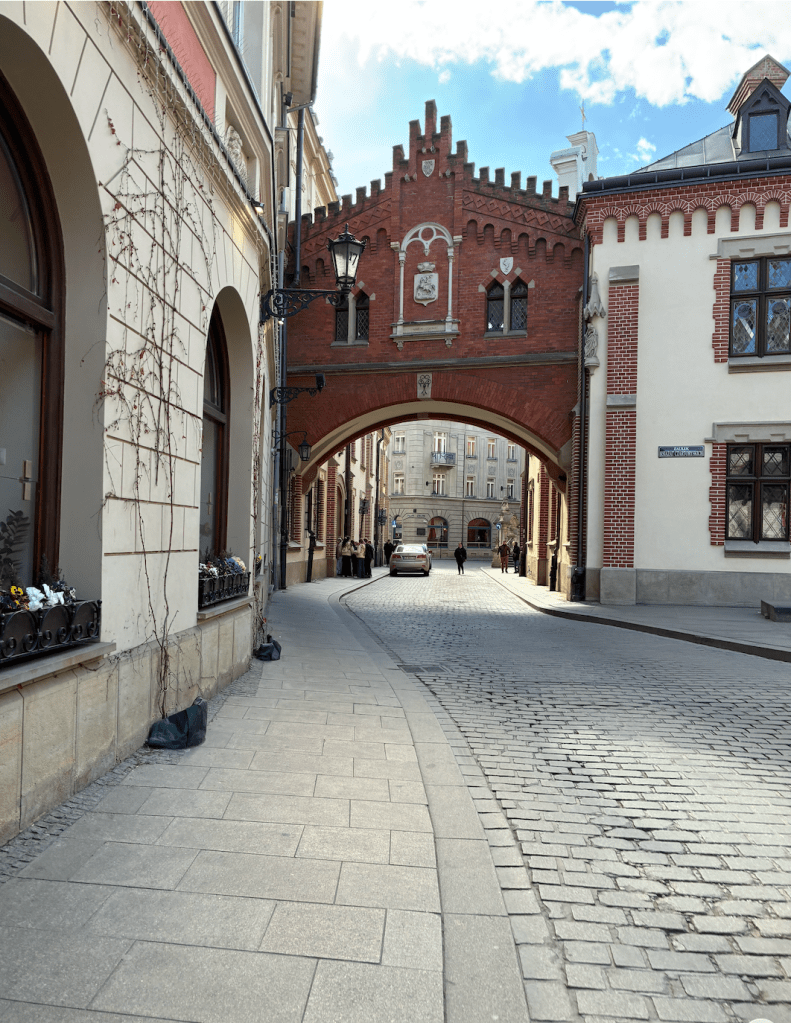
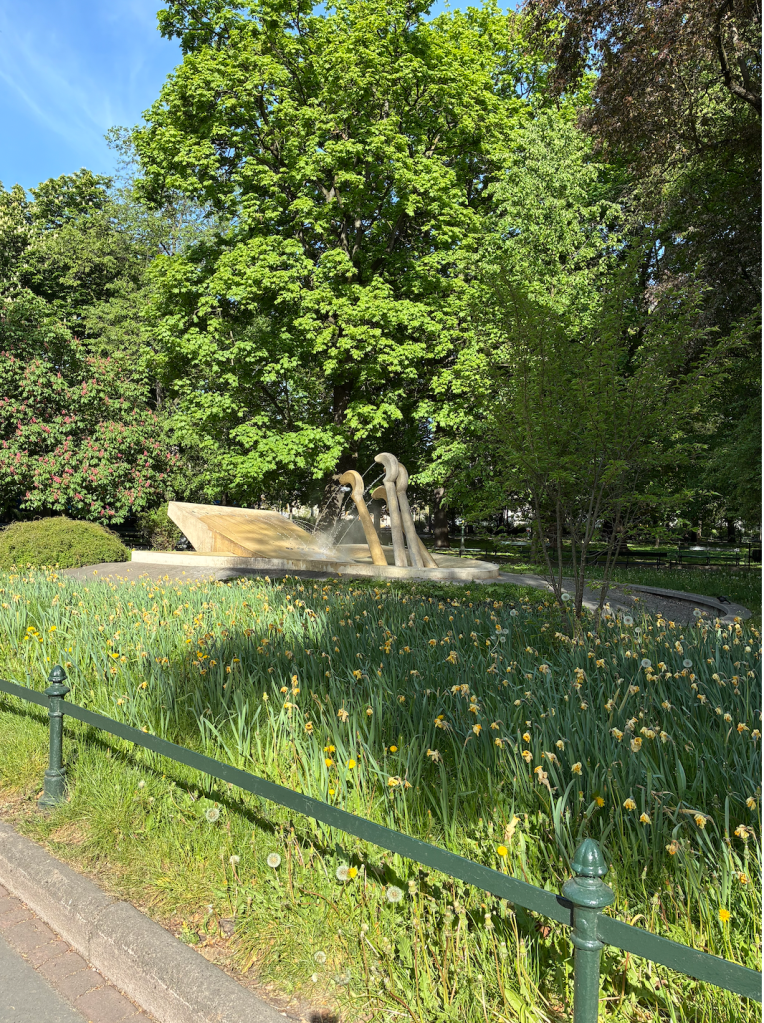
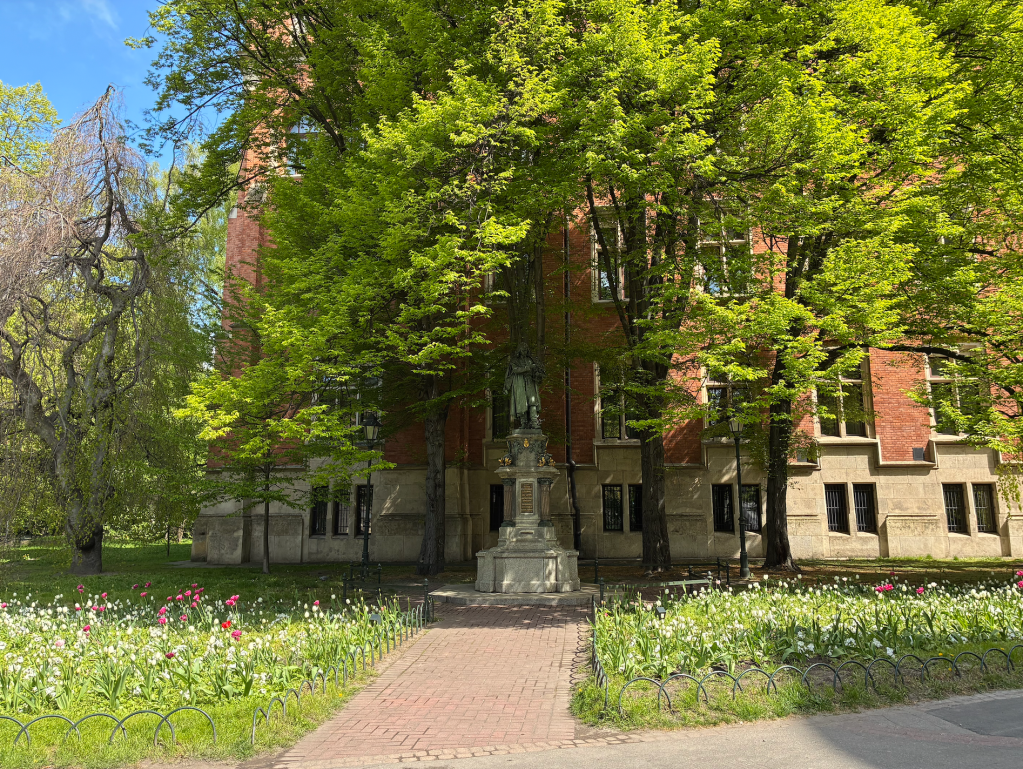
Jagiellonian University, Poland’s oldest university, it’s lovely buildings along the PlantyThis fountain kinda reminded us of dental flossers
The beautiful old town was alive with parades, singing, free hot dogs, ice cream booths (tons of ice cream) and Polish flags for everyone.
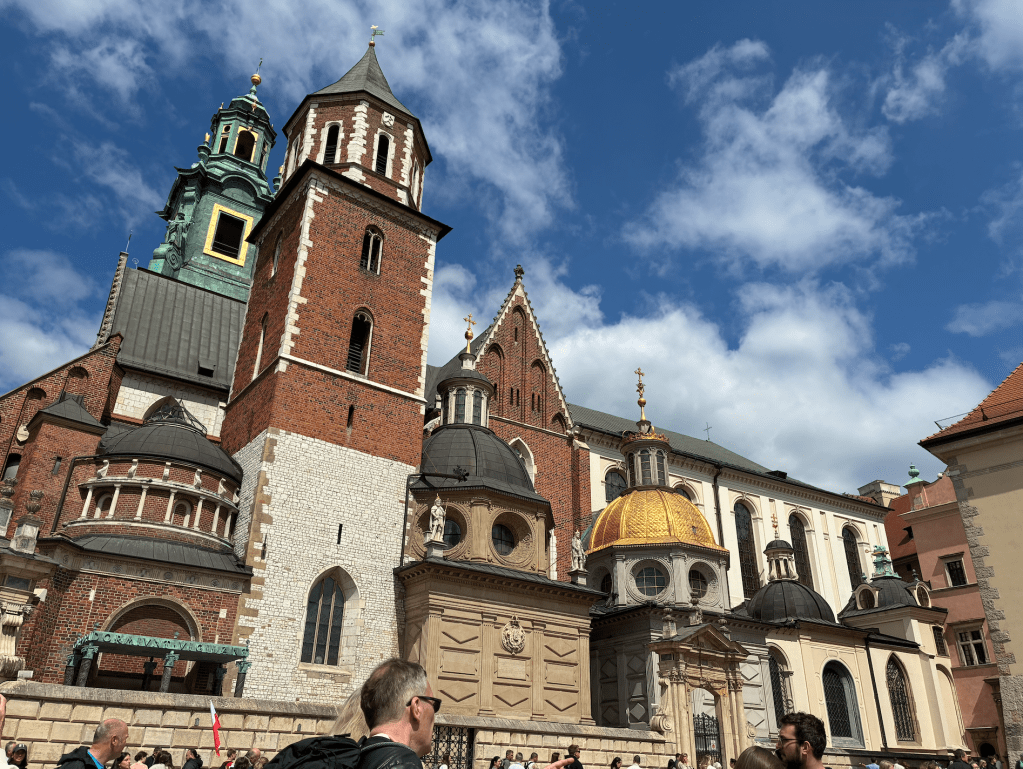
The Wawel castle area was packed,
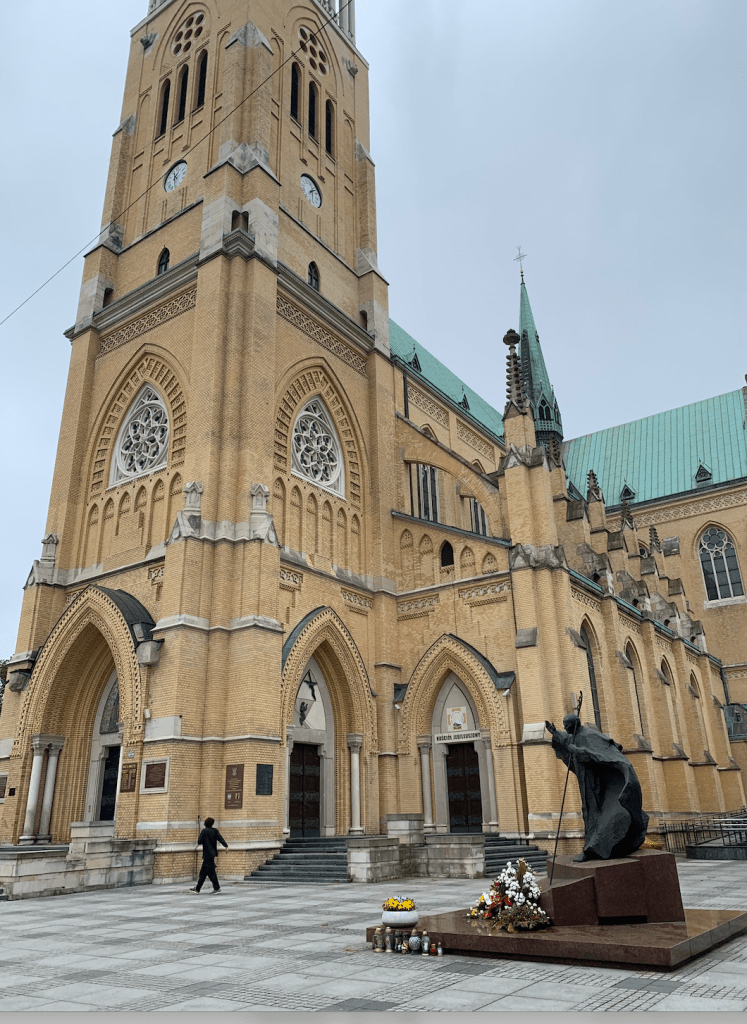
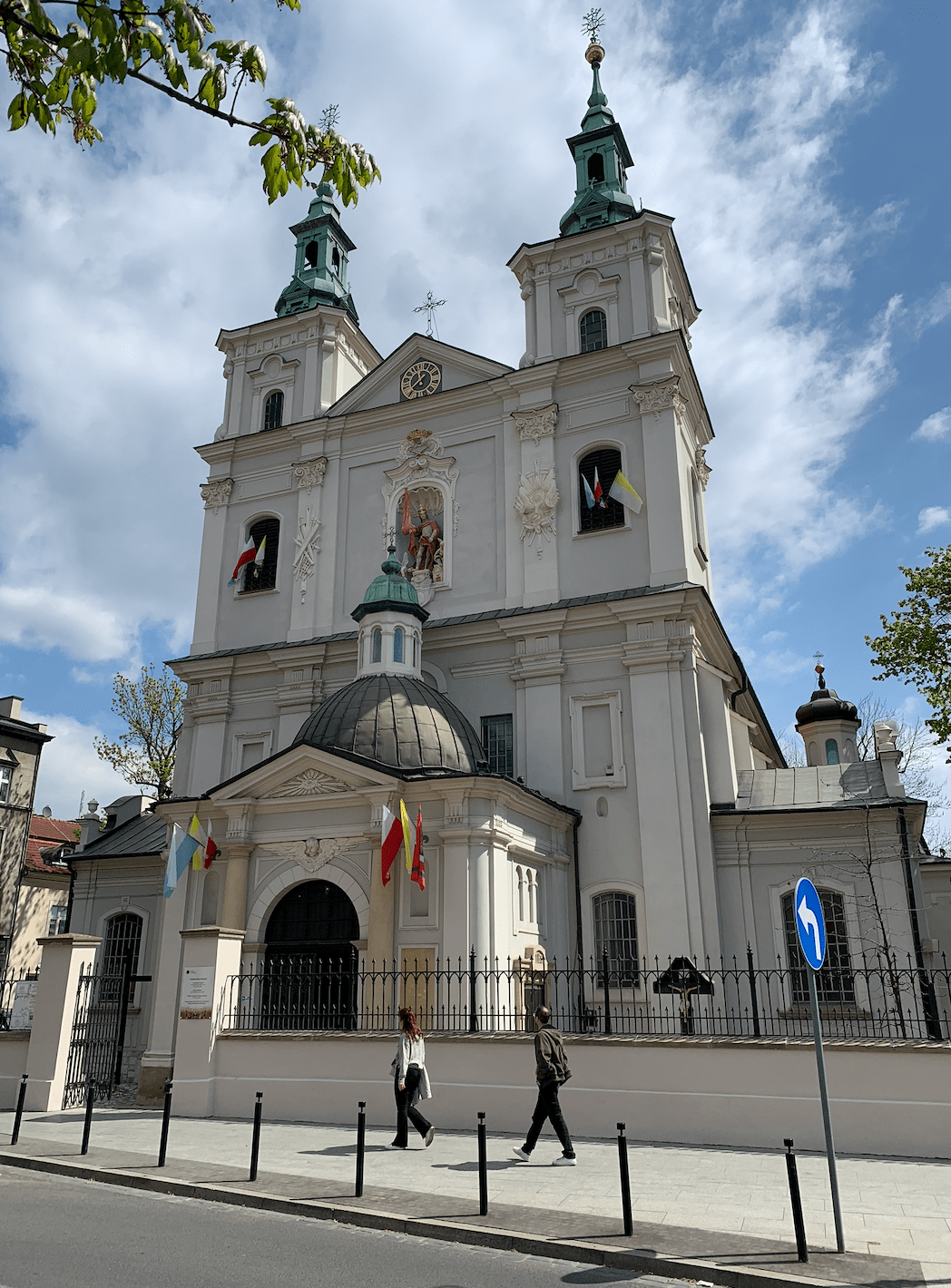
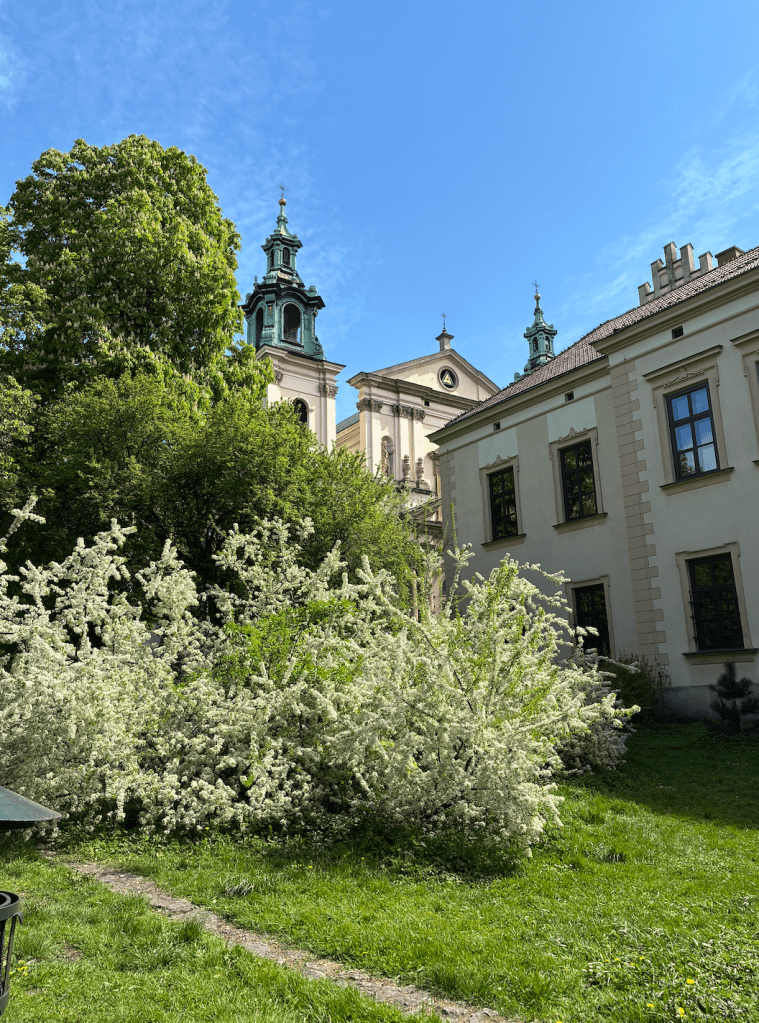
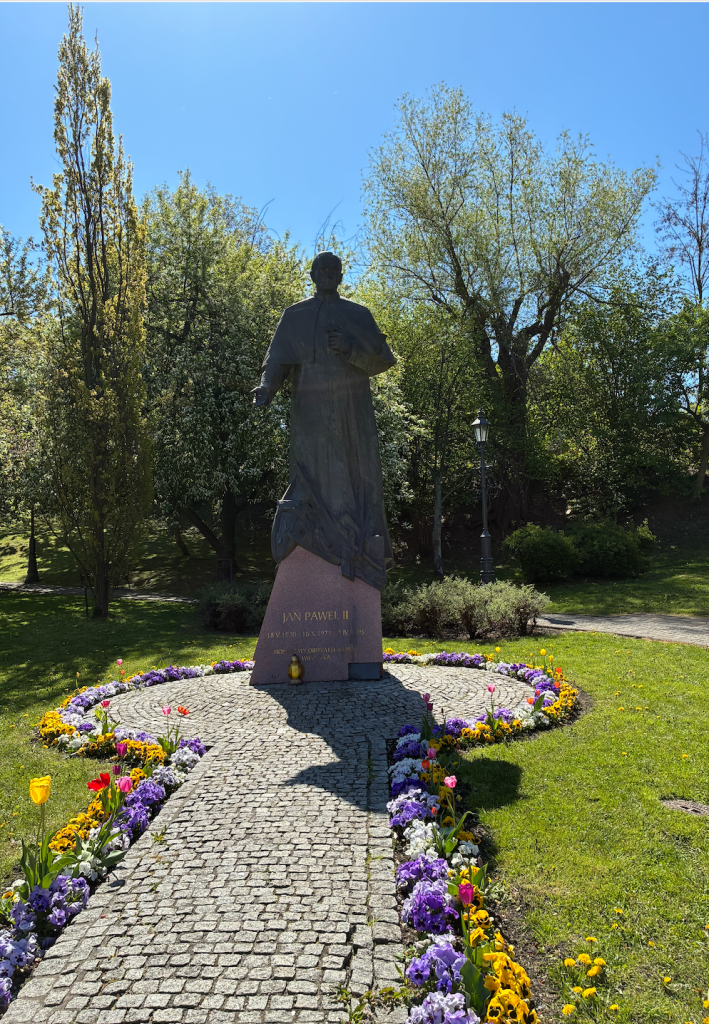
Poland clearly loves Pope John Paul II, but Krakow, in particular, really loves John Paul his roots are there; he was born in a nearby city, lived in Krakow as a child, studied for the priesthood in Krakow and was a priest at St Florian in Krakow (the pic at the top of the blog). The church near this John Paul statue, The Basilica of St Francis was one of the craziest churches we have seen, uniquely beautiful, pics here https://www.atlasobscura.com/places/art-nouveau-church-st-francis-basilica
There are 11 Pope John Paul II statues in Krakow
In contrast to Warsaw, and most of Poland, Krakow was largely unscathed during WW2 , at least the buildings, as it served as the administrative center of the Nazi General Government. The inhabitants however suffered significant damage. As with most cities, Jewish residents were herded into a walled ghetto then either starved to death, annihilated on the spot or after being shipped to nearby concentration camps, in this case Auschwitz.
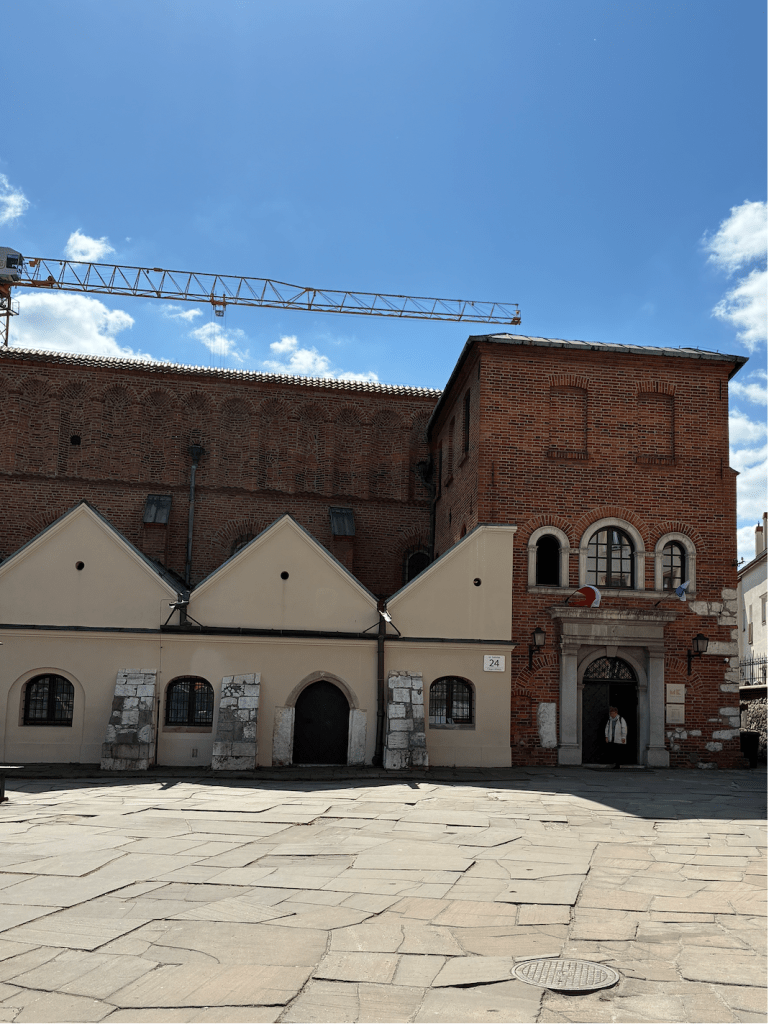
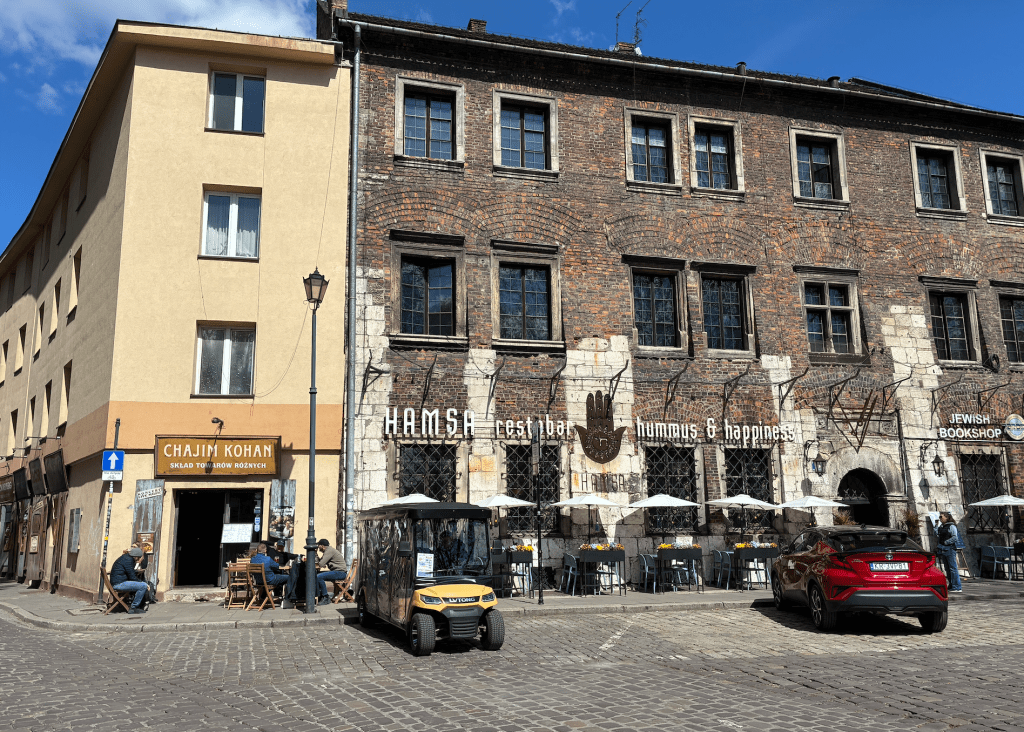
In Kazimierz, the Jewish area,The old synagogue, and across the street, another synagogue and cemeteryIt was a bit touristy around the two synagogues, but it wasn’t too hokey, just thematic restaurants
The traditionally Jewish area of Krakow remained intact, the ghetto was created just across the river from Kazimerz.
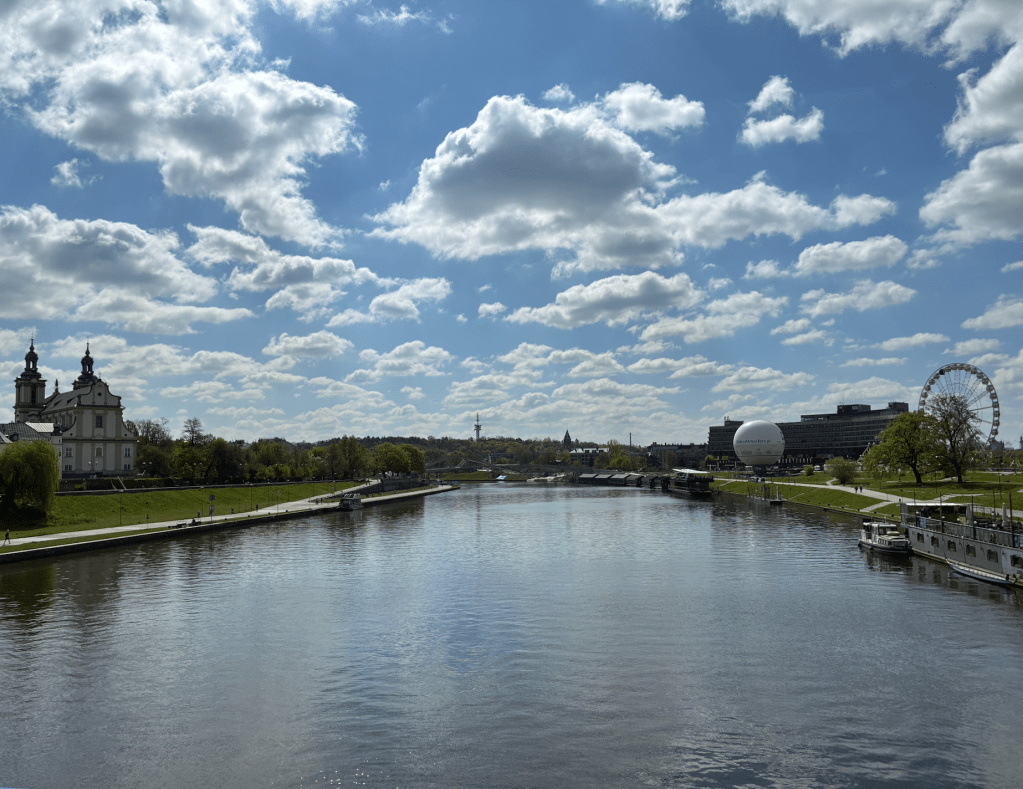
Kazimerz. is just behind the beautiful white Monastery church, the ghetto was in the area just beyond the Ferris Wheel.
As in Warsaw, we wondered about what happened to the non-Jews living where the ghetto was built (not as big of an issue in Warsaw as the ghetto was in the Jewish neighborhoods, somewhat) but then we realized the Germans didn’t care about displacing Poles either.
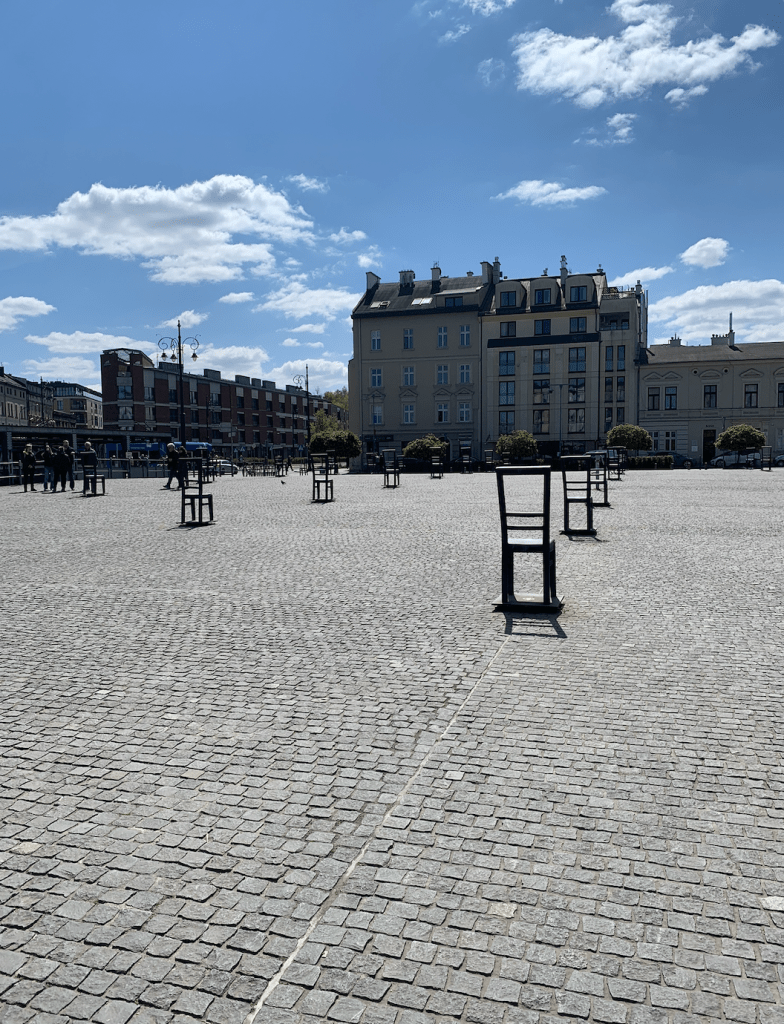
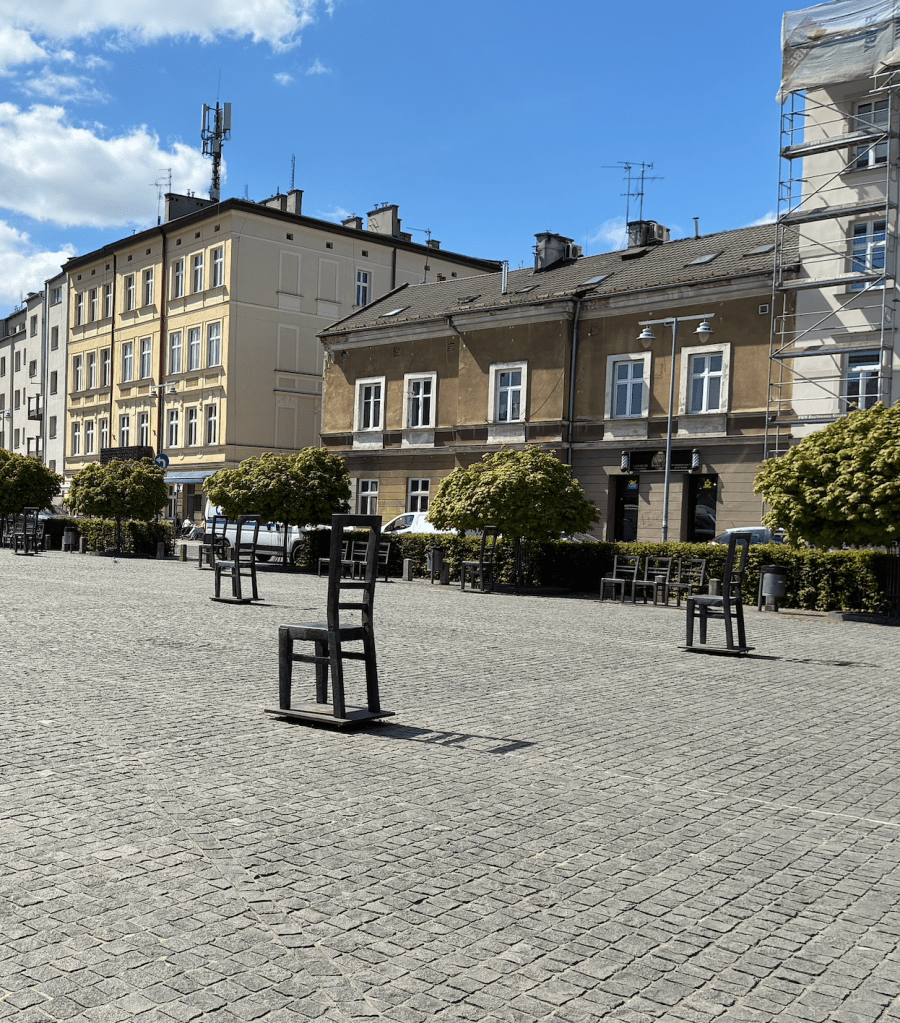
The ghetto memorial was a bunch of empty chairs of different sizes symbolizing absence. The square was near the railroad tracks to Auschwitz.
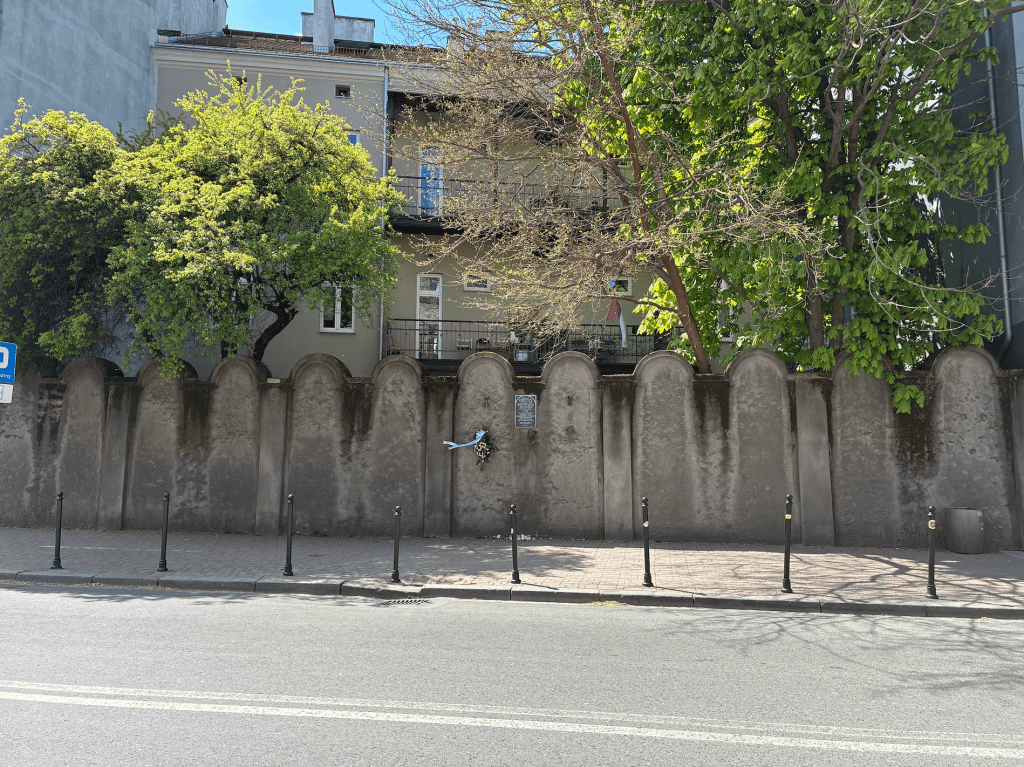
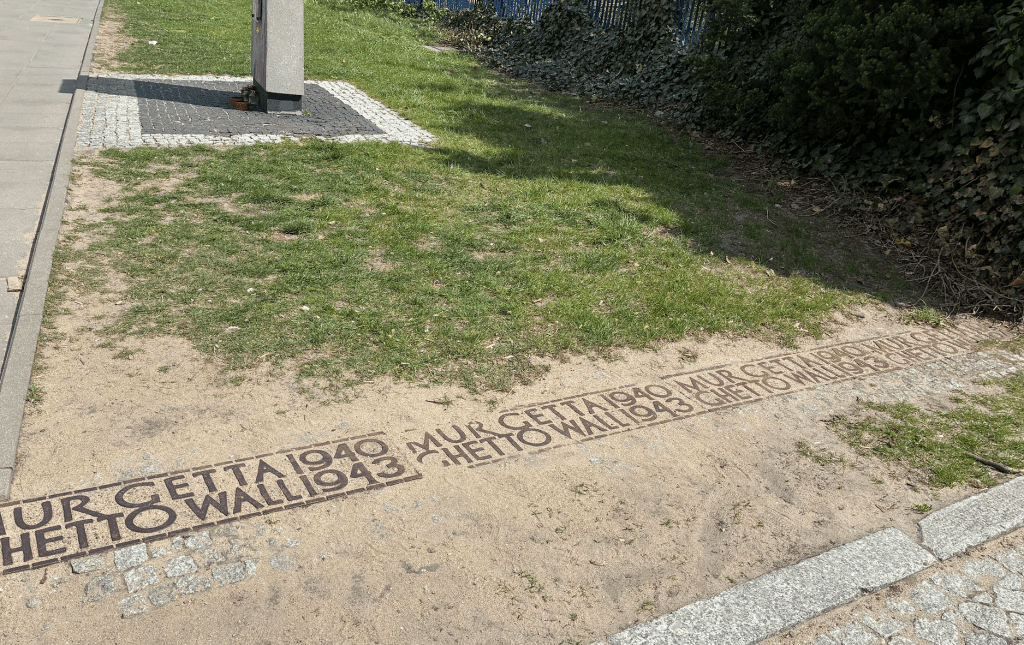
Ghetto wall. It was pointed out that these were made to look like tombstones.
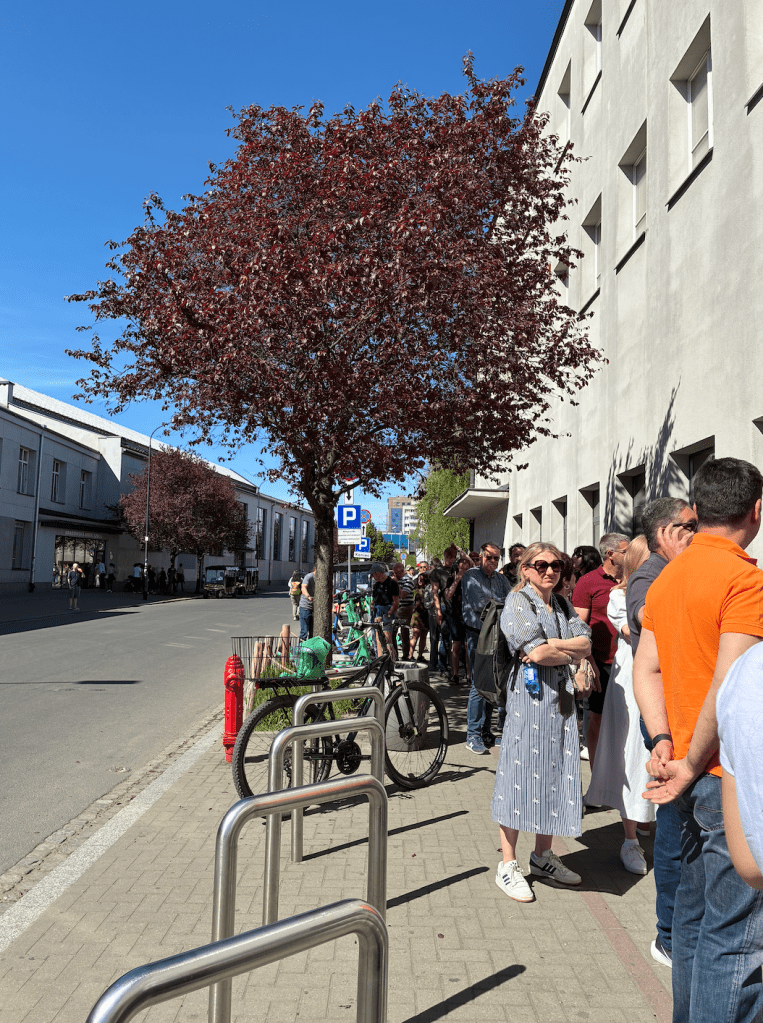
To bring the vibe even further down we visited the Schindler factory, the actual factory that inspired the book/movie Schindler’s List. Very popular, judging by the lines we saw on two different days. To us, it seemed that in it’s efforts to be engaging, it was a bit chaotic, a lot of information about Krakow during the Occupation but sorrily lacking a lot of context about the heroics of Oscar Schindler. But any info is good info. It didn’t help that we chaotically hurried through it to get to our next stop that day, Auschwitz.
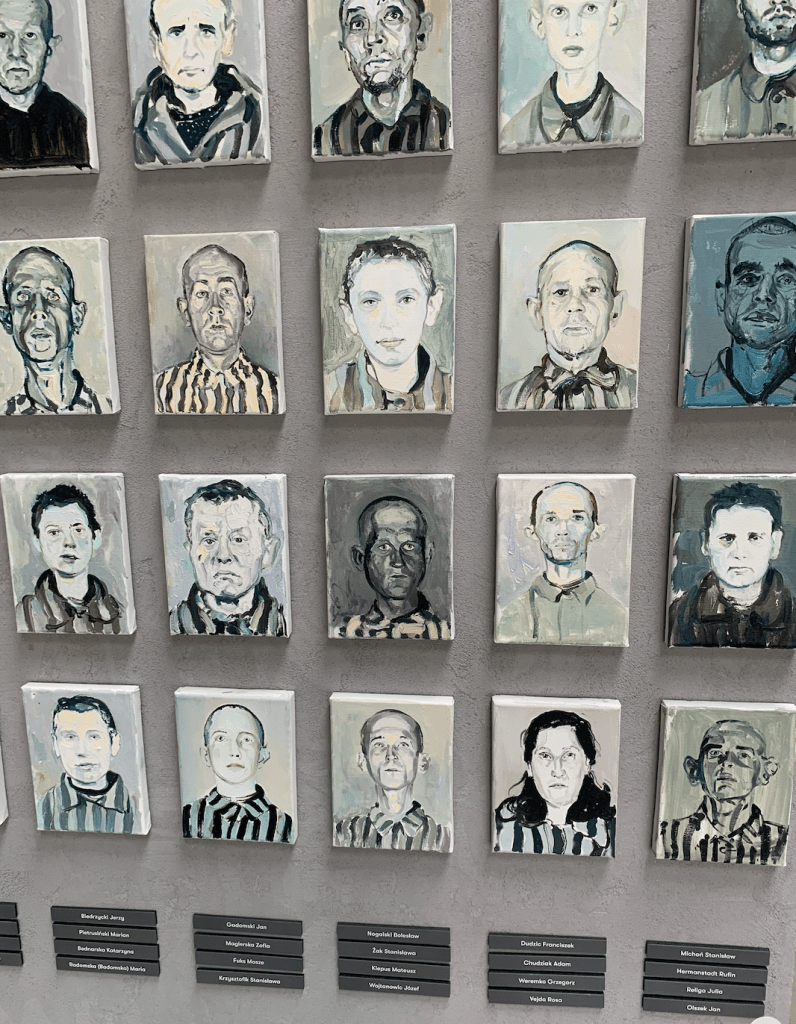
It is ridiculous to critique holocaust sites, especially concentration camps, but Auschwitz did not have the impact for us as other related places. We were hit harder by Dachau, The White Rose museum https://chosenfugue.xyz/2019/08/06/munich/, Treblinka, Jewish Historical Museum https://chosenfugue.xyz/2026/05/10/time-warp-in-warsaw/ and stumbling over stolpersteine throughout Europe https://chosenfugue.xyz/2019/01/07/they-do-make-you-stumble/. It didn’t help that we got there 4 hours earlier than our scheduled time hoping we could go to the bookstore, or to Auschwitz 2-Birkenau as some travel sights indicated you can walk around there before your scheduled time at the Auschwitz 1 portion (the museum). So, it gave us hours to observe the buses and buses of tourists, the plethora of vending machines (with ham sandwiches) and the precision efficiency of the site. Our wait did give us a chance to see what ended up being the most compelling part of the visit; in a lounge area next to some vending machines (so many coffee machines) , restrooms and restaurants was an exhibit of 650 portraits painted from the entry photos of prisoners. These were Artur Kapurski’s doctoral work. He views this as a continuing, long term project.
Once we entered Auschwitz 1, the museum portion, the under produced signage and odd sterility did not help. We chose to go during the short window at the end of the day when you could go without a guide (for a variety of reasons) and perhaps that also impacted our impression, although after passing a number of guided groups, it probably did not.
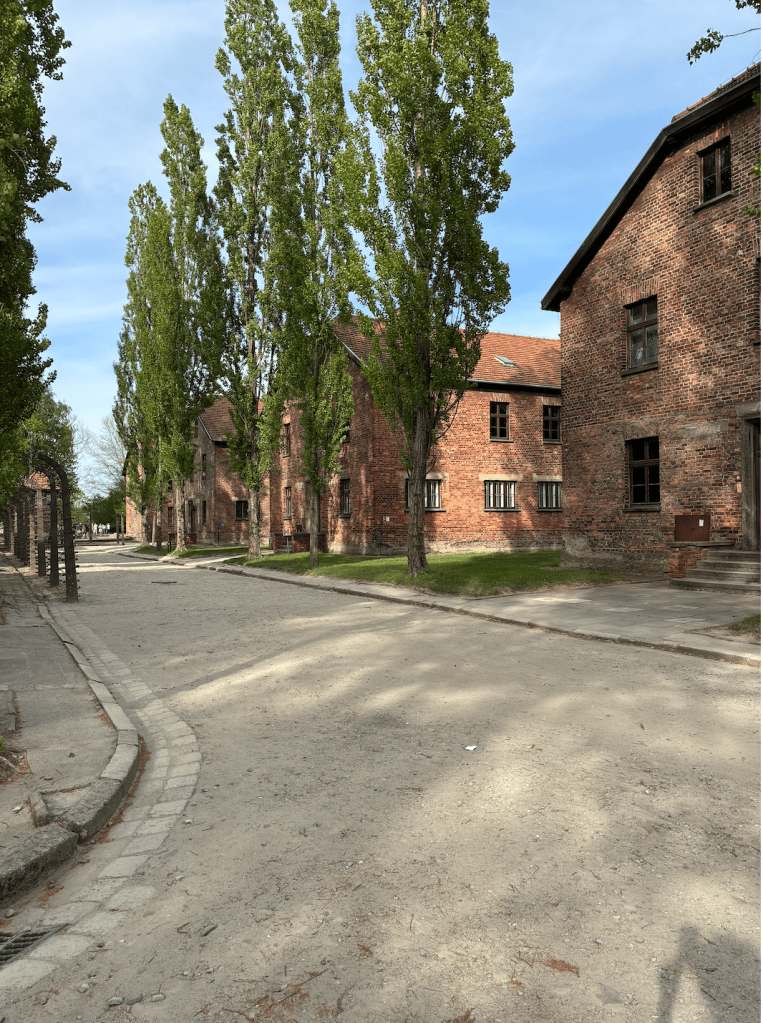
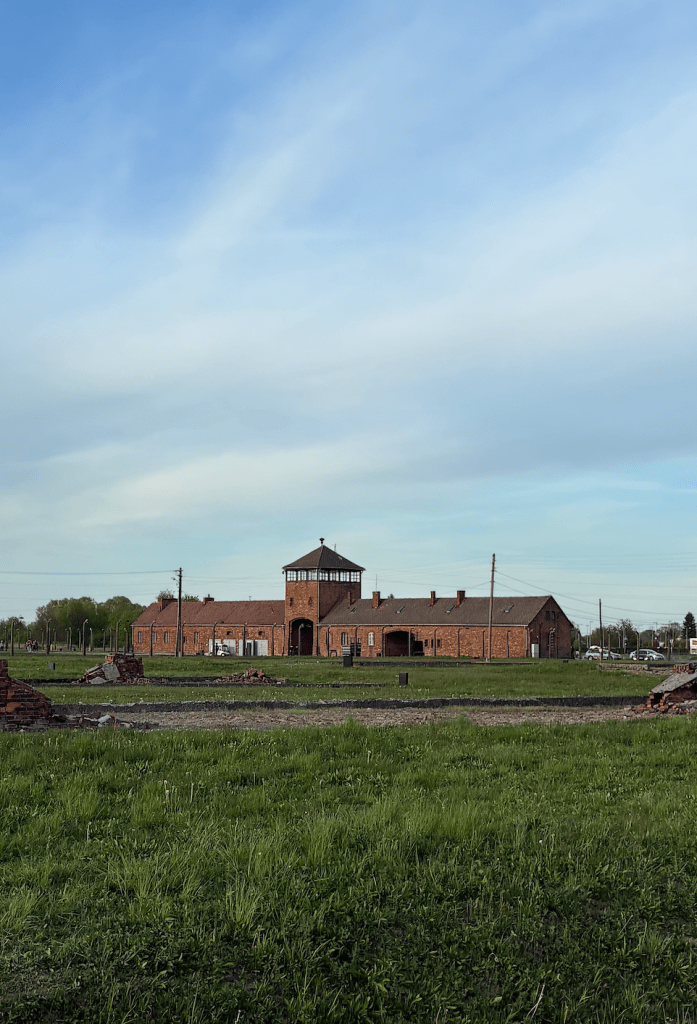
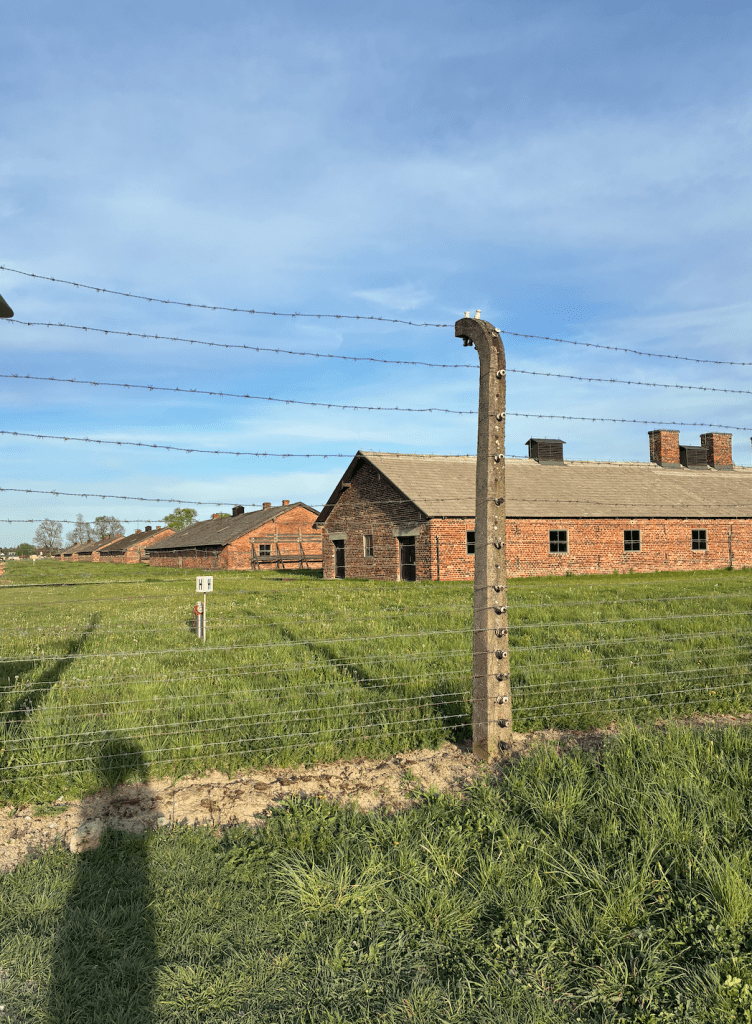
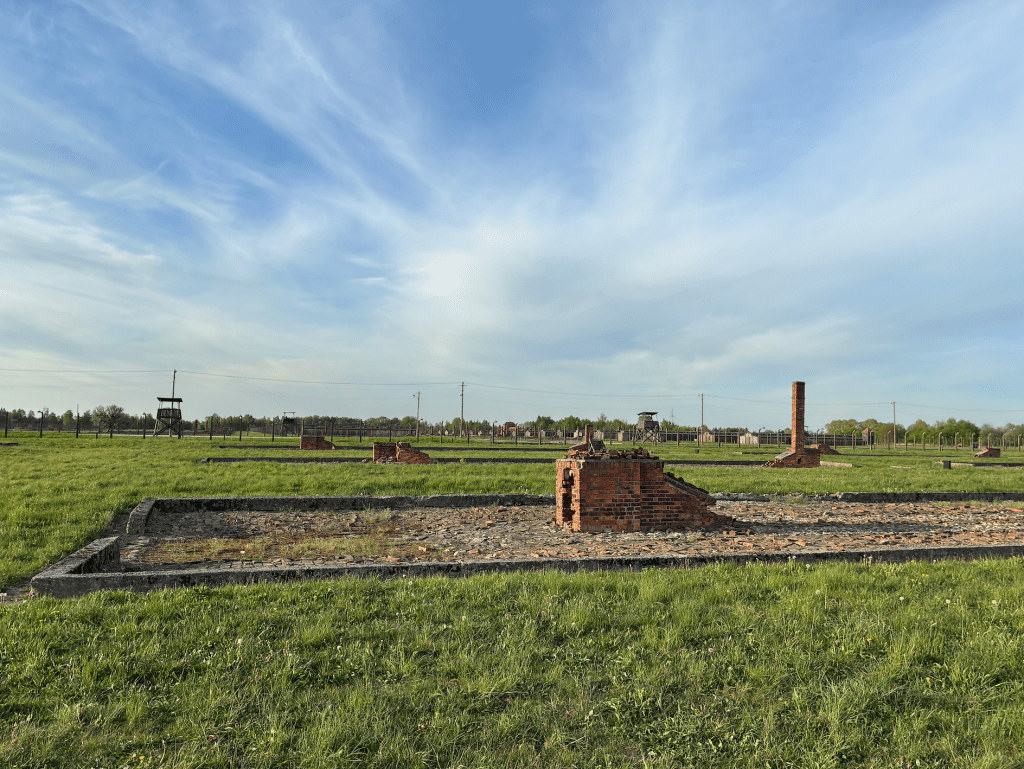
Auschwitz 1 was originally Polish army barracks so the exterior was rather pretty. Each building had exhibits, some were just posters about different countries during the war and the people who were brought here. Others were presented as proof of the crimes- prison cells, execution yard, personal effects of the prisoners (suitcases, pots and pans, shoes, and yes, hair)Auschwitz-Birkenau, the iconic gate where the trains came and selection occurredgoing into the barracks was rather chilling.The immensity of the area, the expanse was sickening
We often think about how the order in which we see cities, museums, etc influences our impressions. So perhaps it was that, we have seen a lot of related sights on this round of tragedy touring. Of course we appreciate that we could go there and that there were tons of people here and that it is one of the most visited sites in Europe, this is so important now when they are so many people who have no clue that the holocaust happened.
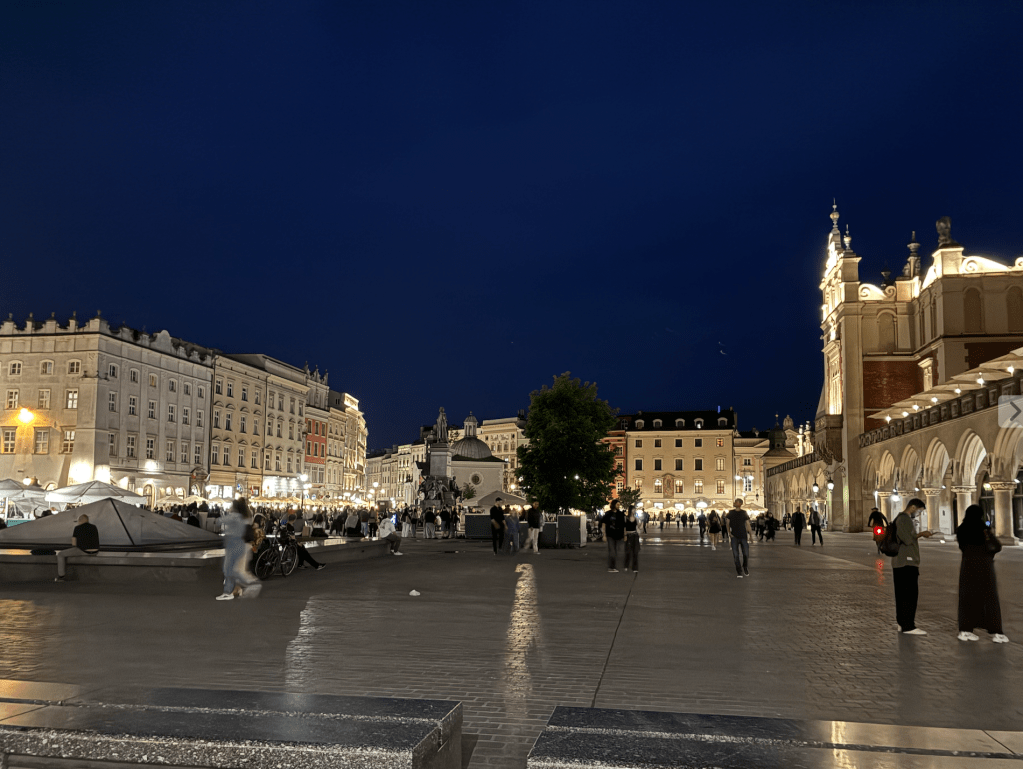
We returned to Krakow in the evening, to a beautifully lit up city. The contrast confounding.
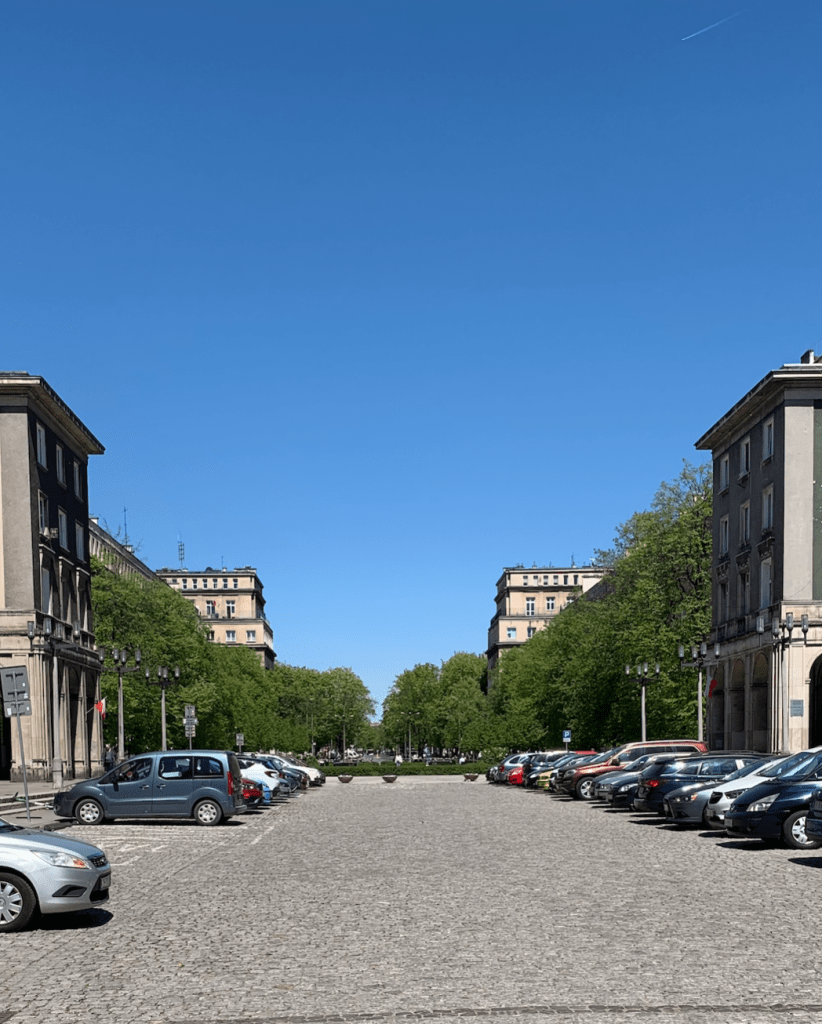
Our next excursion was to the outskirts of town to Nowa Huta, a planned Communist community built in 1949 for 250,000 workers at a nearby iron works facility. Despite our enthusiasm for Soviet style buildings, it was disappointingly bland, not even a stylized Soviet bland.
Next was the Wieliczka Salt mines, a bit older attraction. Salt was once an extremely uncommon and valuable commodity. So, its production and harvesting led to great wealth. Monks started gathering salt here in 1044, with more organized production beginning in 1400. It ceased salt production in 1996 switching to tourism, which seems to be just as profitable judging by the crowds, lines, costs and hype.
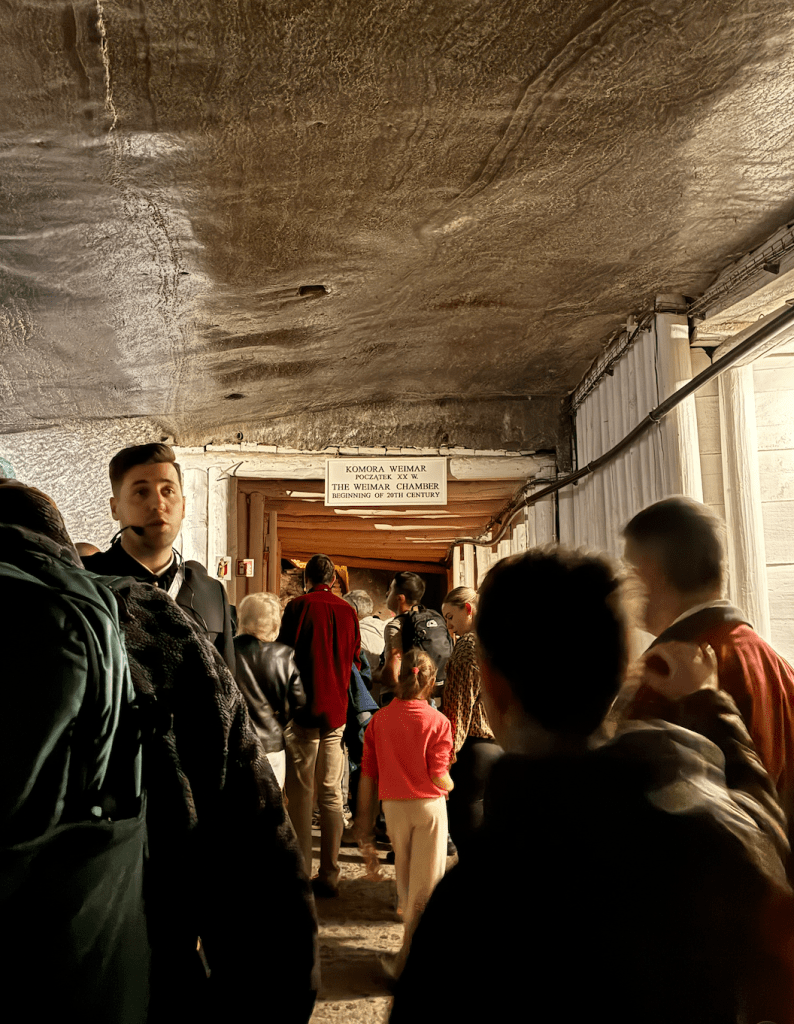
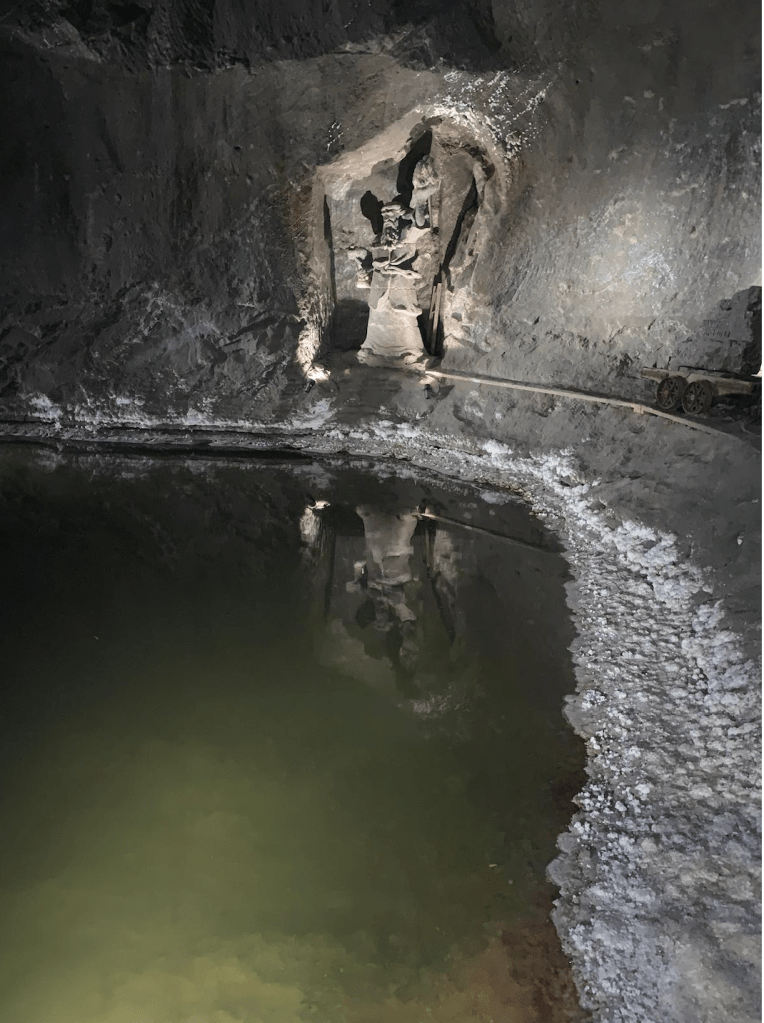
Our 2 hour tour through this underground Disneyland covered only 1% of the actual size of the mine. We walked roughly 2/12 miles through tunnels and gigantic mined out rooms, past underground lakes, gift shops and of course concession stands.
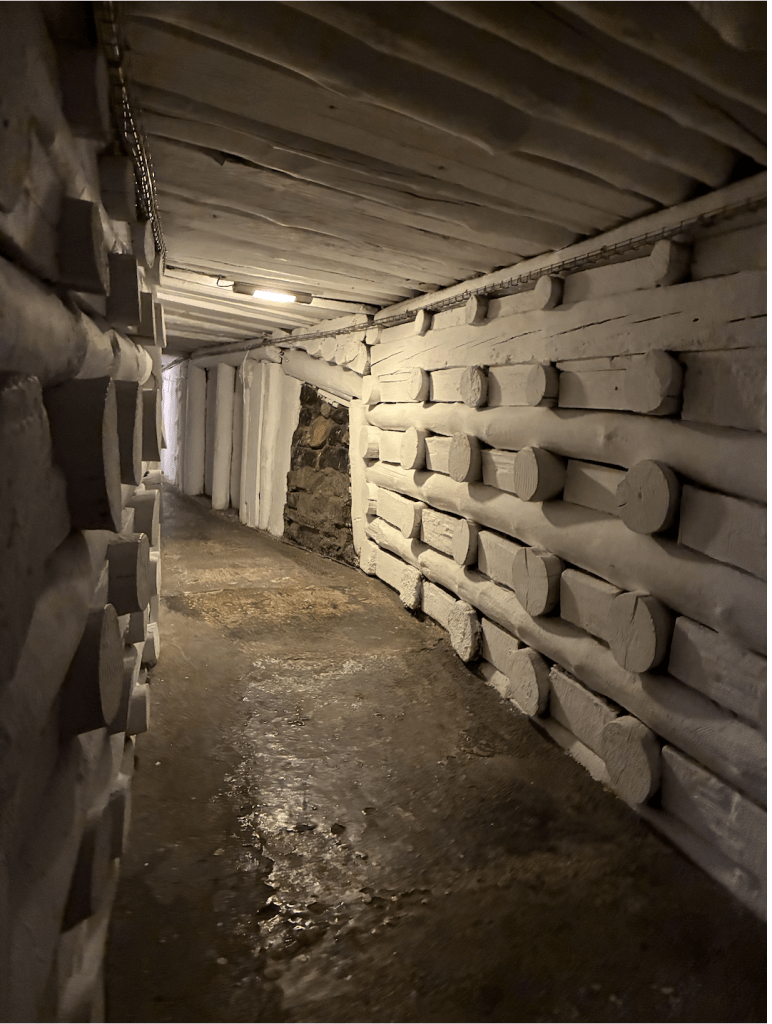
Walls were painted white to reflect light, walked through a lot of tunnels and down a lot of stairs with moisture + evaporation, the salt crystalizes to the familiar white
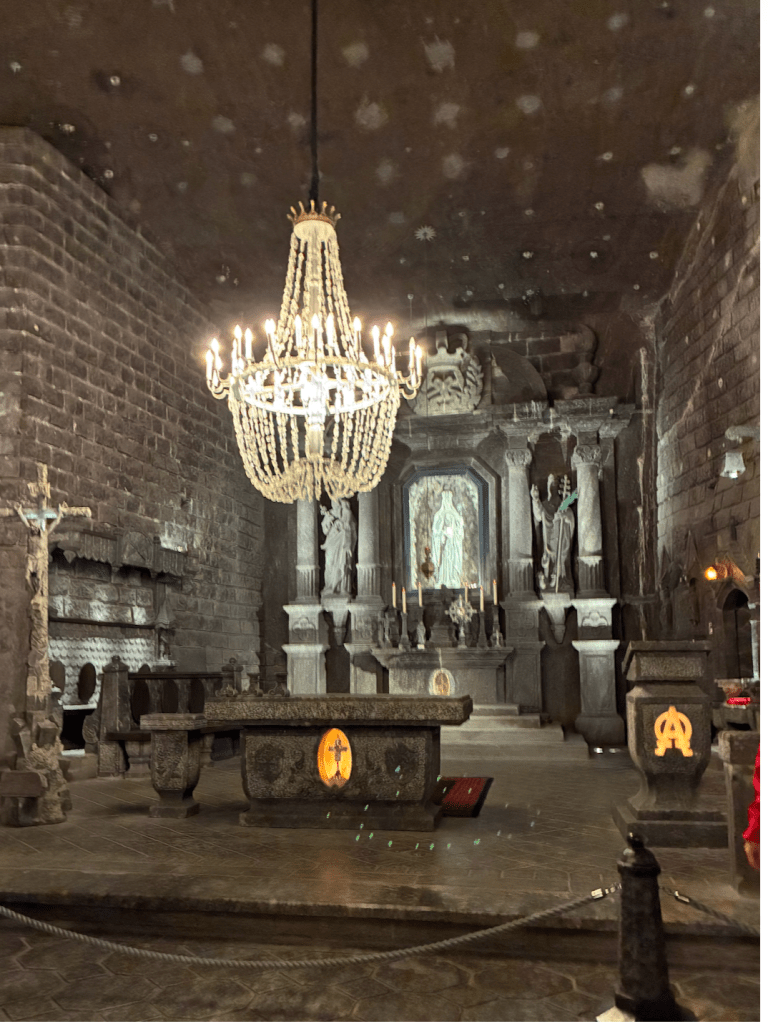
This being Poland, there was also a complete Catholic church and yes you can have a wedding there. All of this over 100 meters underground!!
EVERYTHING is salt, even the chandeliers. Those aren’t bricks, the walls are just carved to look like brick. The tour guide kept telling people they could lick the walls. We abstained.
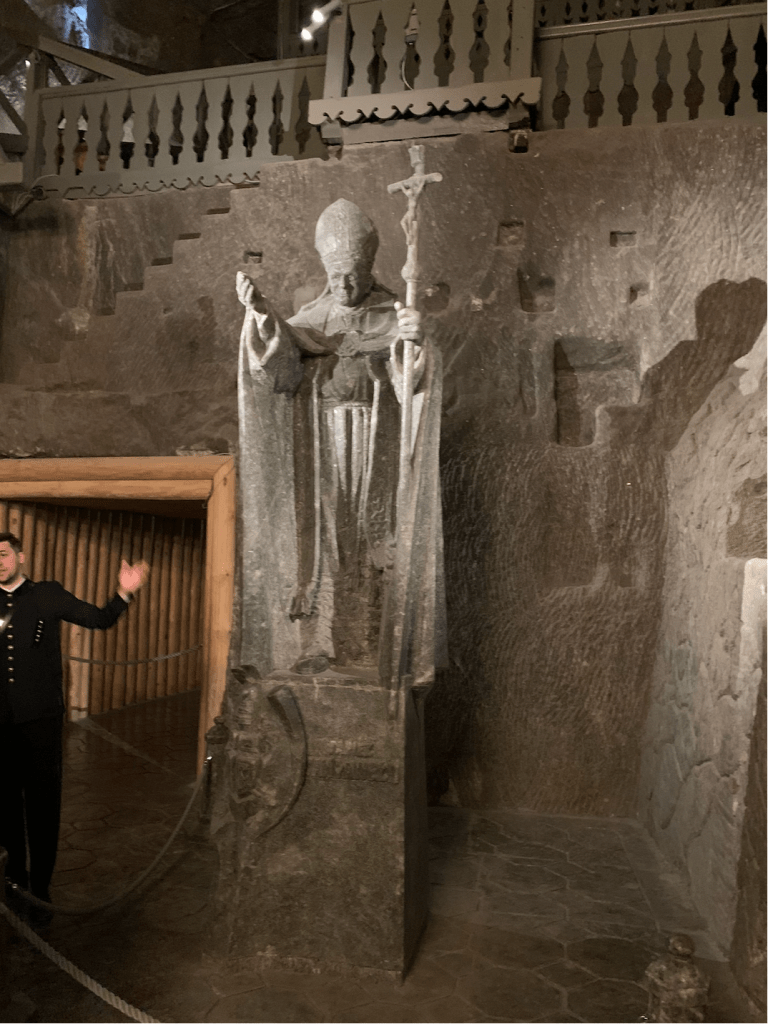
There were salt statues of Polish heroes such as Nicholas Copernicus, Pope John Paul II and Chopin, although, after just a week in Poland, we kind of expected these guys as they are everywhere.
you can see the lines in the walls from the miners pick axes
We did not expect to see Goethe but he was there too because once, he visited the mines as did President Clinton, but he did not get a statue. There were also some pretty good diorama;
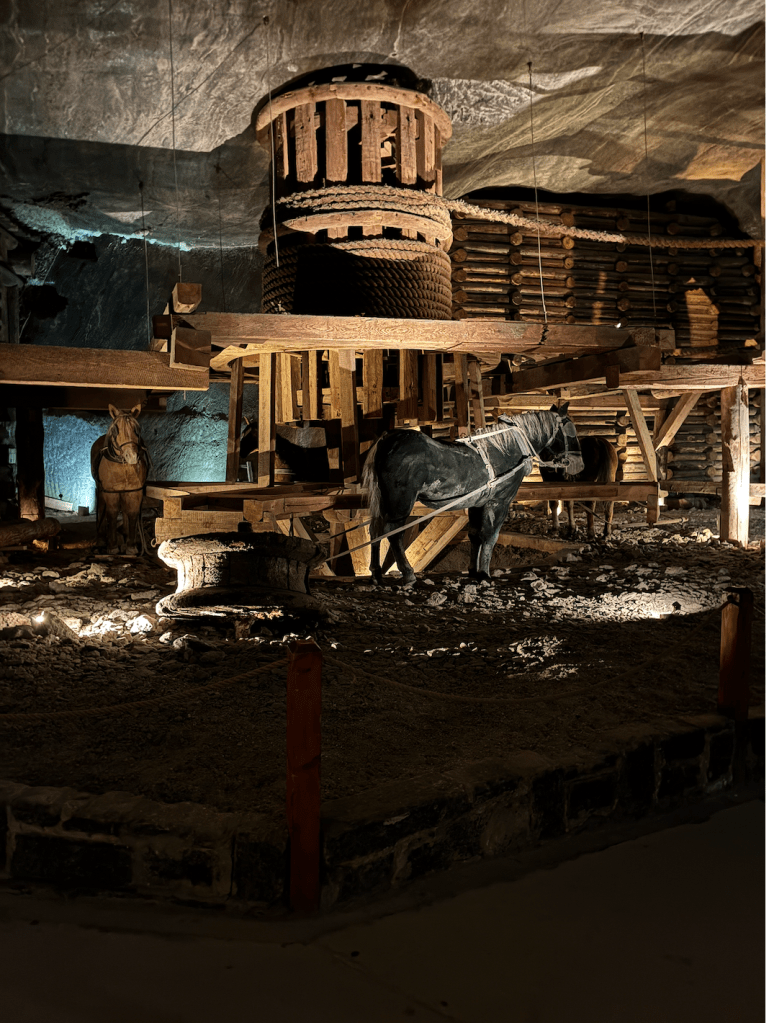
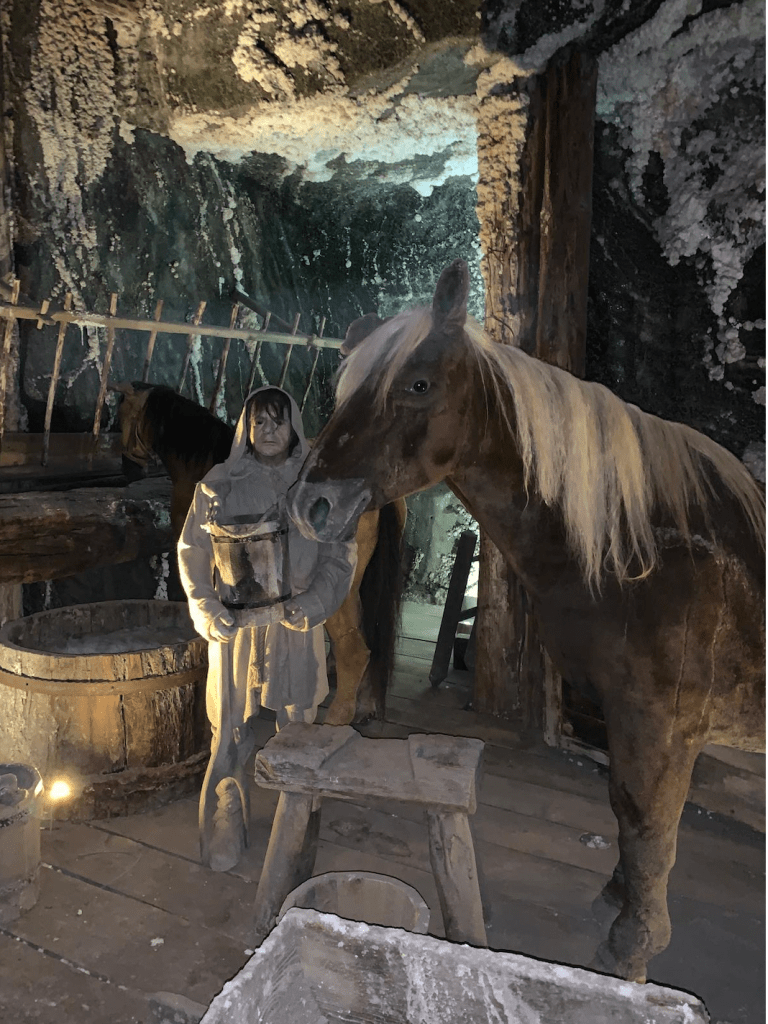
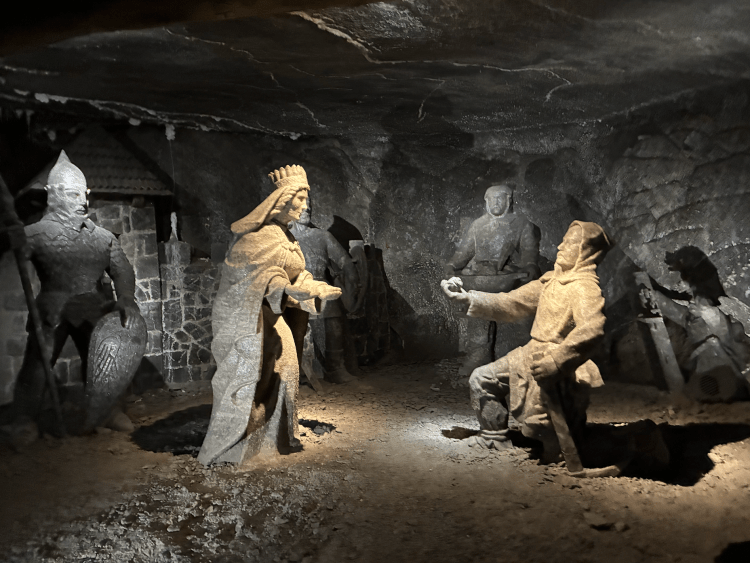
Early mining equipmentWorking horses spent their lives underground!Depicts the folk tale about how Princess Kinga gave Poland the gift of salt
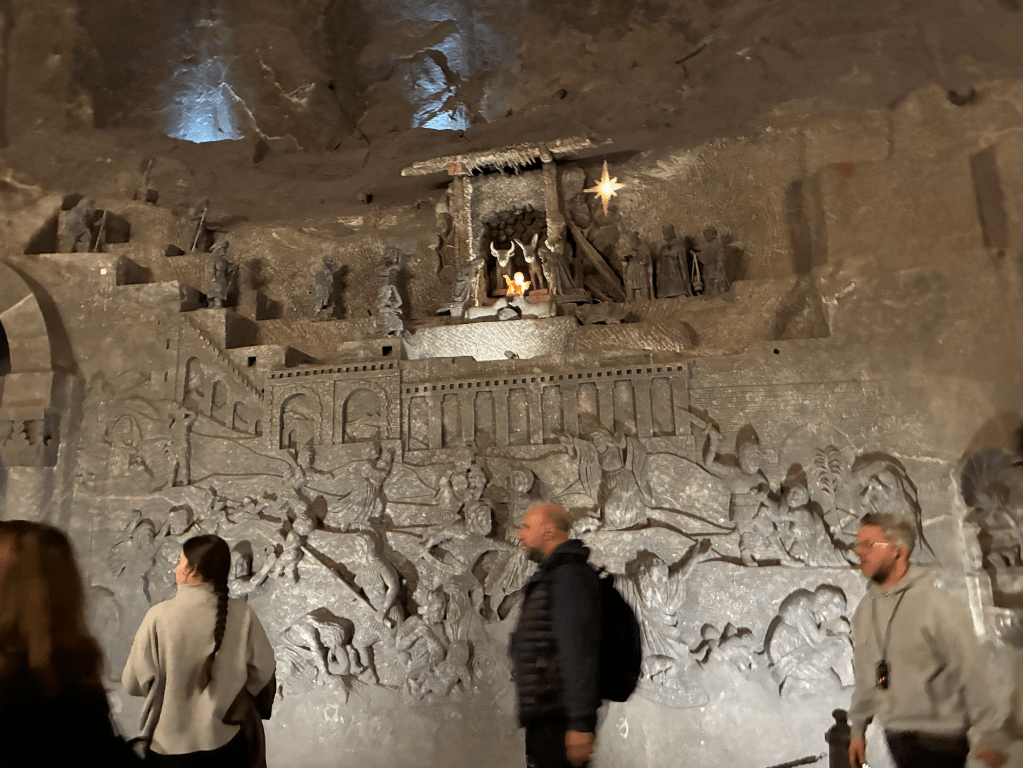
plus religious art.
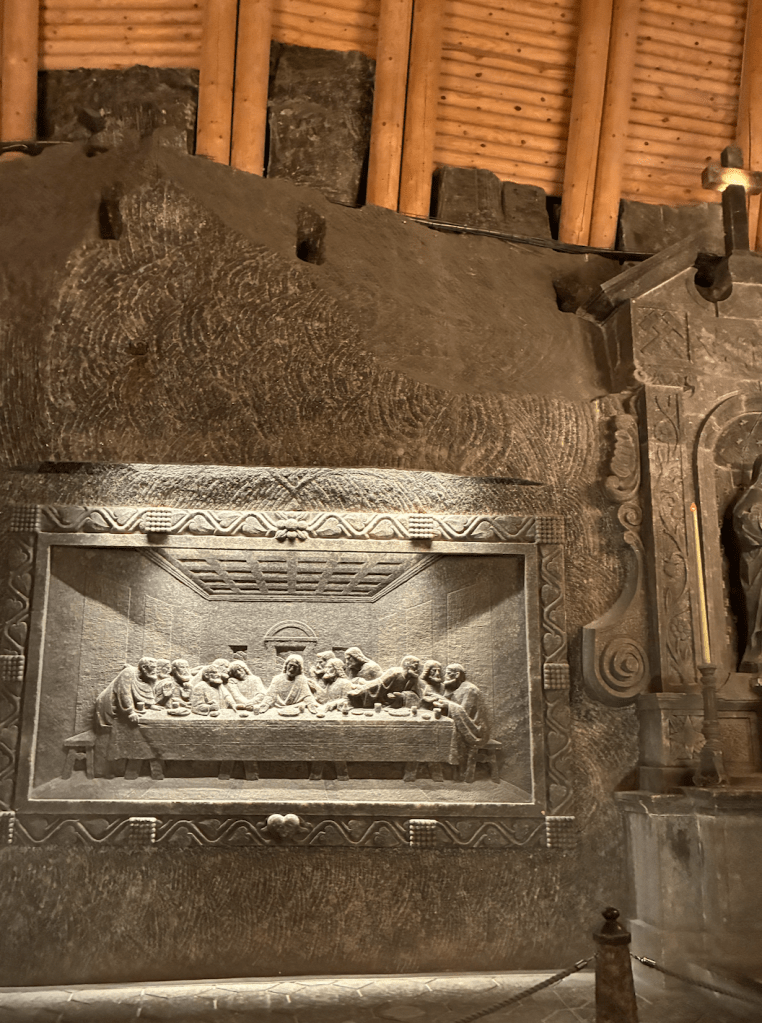
Last Supper with table salt
Despite the Pirates of the Caribbean kind of hokey-ness, it was amazing to see the immensity of this man-made subterranean “city” and the effort to construct it over hundreds of years, an engineering marvel but somehow the sum did not add up to the parts. A bit of a Loehmann’s moment, amazingly done, though, like Loehmann’s in it’s prime.https://chosenfugue.xyz/2026/04/08/montenegro-highs-and-loehs/
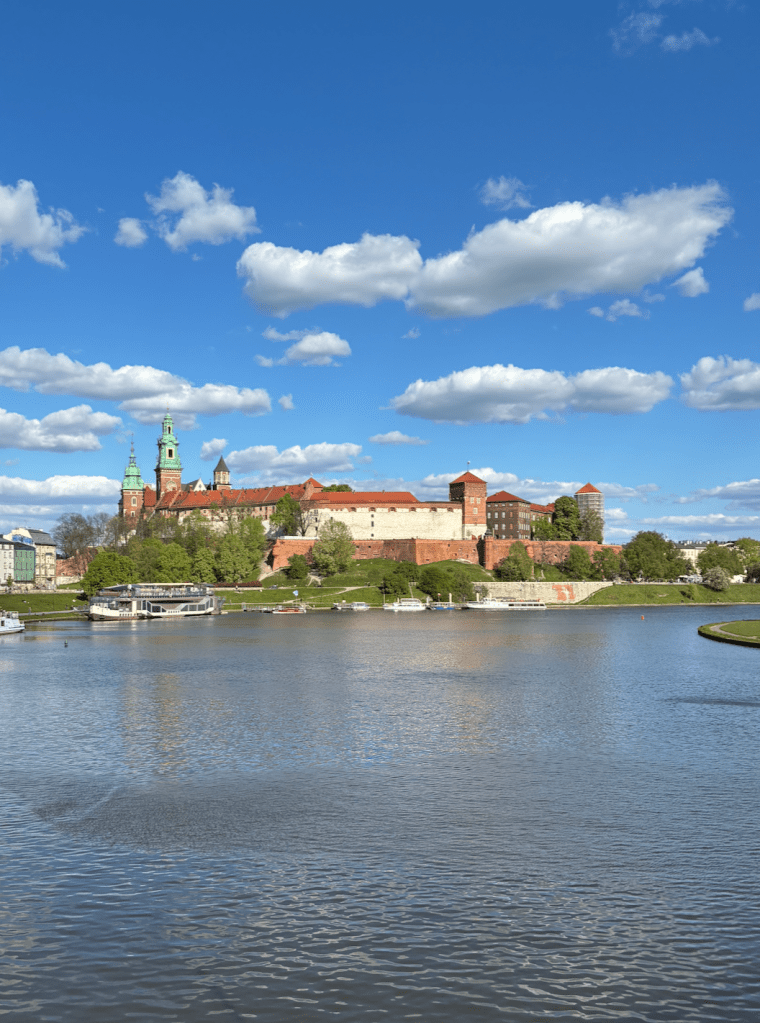
In our week in Krakow, we never tired of walking across the bridge and seeing the old town and castle along the Vistula river.
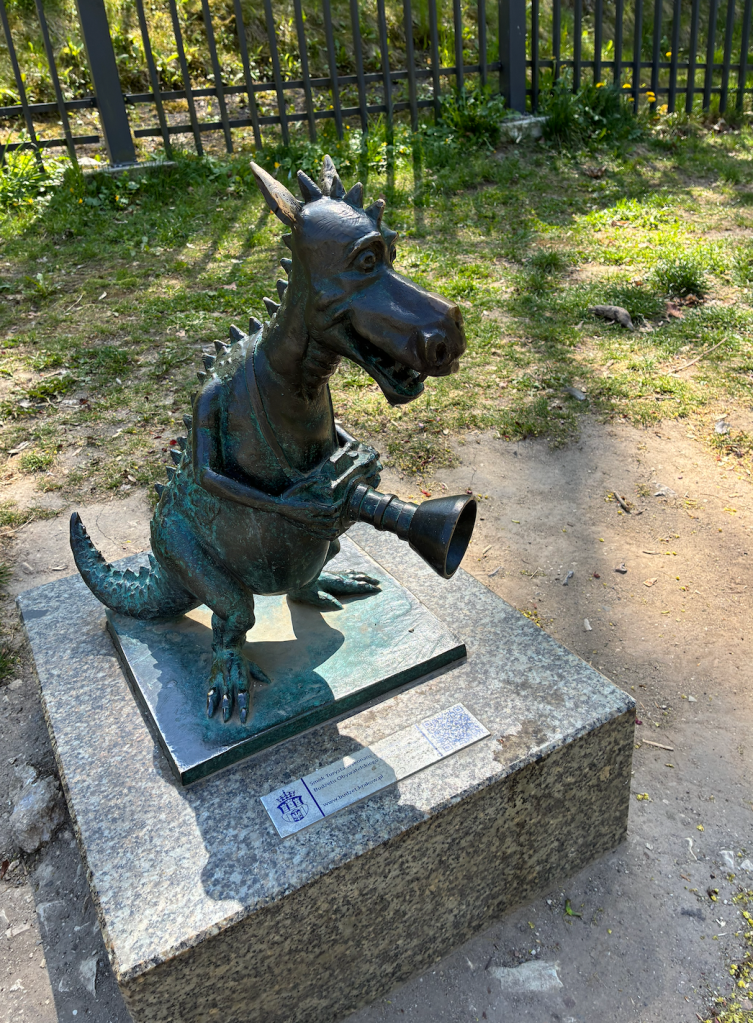
A lot of the tourist info refers to Krakow as the “heart of Poland”. Perhaps that is because Krakow was the royal seat, and Polish kings (and dragons) are buried in Wawel castle. Perhaps it’s because parts of the city are almost unchanged after hundreds of years. We could have added so many more pictures, described so many more beautiful things from our week here. (and a lot more dragon pics as these little guys were sprinkled through town).
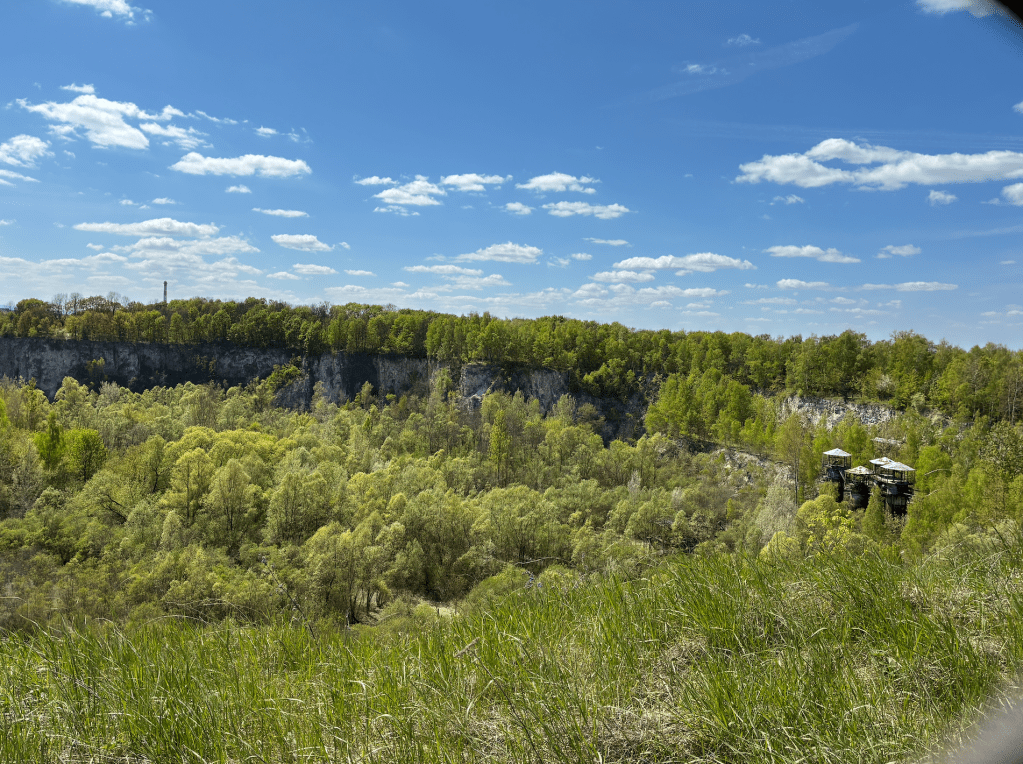
In contrast, there was Auschwitz, the ghetto and a city forest that once was another concentration camp https://plaszow.org/en/history-of-the-camp (those ruined buildings were part of the movie set for Schindler’s List). Krakow kind of embodies Poland, exemplifies the Beauty of what man can make and the Beast that man can be with the Nazi and Soviet occupations
We’ve been reading a book series called On the Calculation of Volume by Danish writer Solvey Balle. Four of the 6 books are available in English (7 books planned). It’s a variation on the Groundhog’s Day theme of a repeated day. In her case, the day is November 18th. It began while she was on a business trip in Paris. She can travel, return home and talk to people like her husband. But, no matter how many times she describes what happened, even if they believe her, once the day turns to the next, they forget what she has explained. She initially tries to make sense of the circumstances then eventually decides to travel throughout Europe, sleeping in empty houses. Regardless of where she is and what she does, the next day is always the same, November 18th.
Sometimes in our travels it can feel like we are stuck on a loop. Our daily routine is the same no matter what city we are in; breakfast (usually the same), then we wander or walk to tourist sites, museums. We stop at a minimum of 3 markets trying to figure out our second and final meal of the day, “linner”. We usually return to our lodging about 2 pm, make linner, eat off Ikea plates (no matter where we are, they have them), read about what we saw that day, research for the next day, then read the US morning news, sports (Nick) and then back to reading a book. Repeat.
We wander through cities, mostly unnoticed, and wonder. Wonder why mankind is on a loop as well. Everywhere we go, war with the resulting tragedy is on a loop. Nowhere has this been so visible as Warsaw, Poland, a crowded and vast ghost town. In Warsaw we wandered and wondered, endlessly.
After an 8 hour Flix bus ride from Druskininkai, Lithuania https://chosenfugue.xyz/2026/05/06/baltic-balagon/ we made it from the bus station to our lodging and to quote Patricia’s Nanie, it was in Kishinev (translation from Yiddish-out in nowhere), well, actually it was in Warsaw but 3+ miles from the bus station and 4+ miles from central Warsaw. With the help of our constant companion, Google Maps, we followed a nutso route as the sun was going down through parks, soviet style apartment complexes (one after another) and a few streets, finally coming up on our Aparthotel in darkness. (As always, the pictures show up better in the blog not email, click the link to the blog)
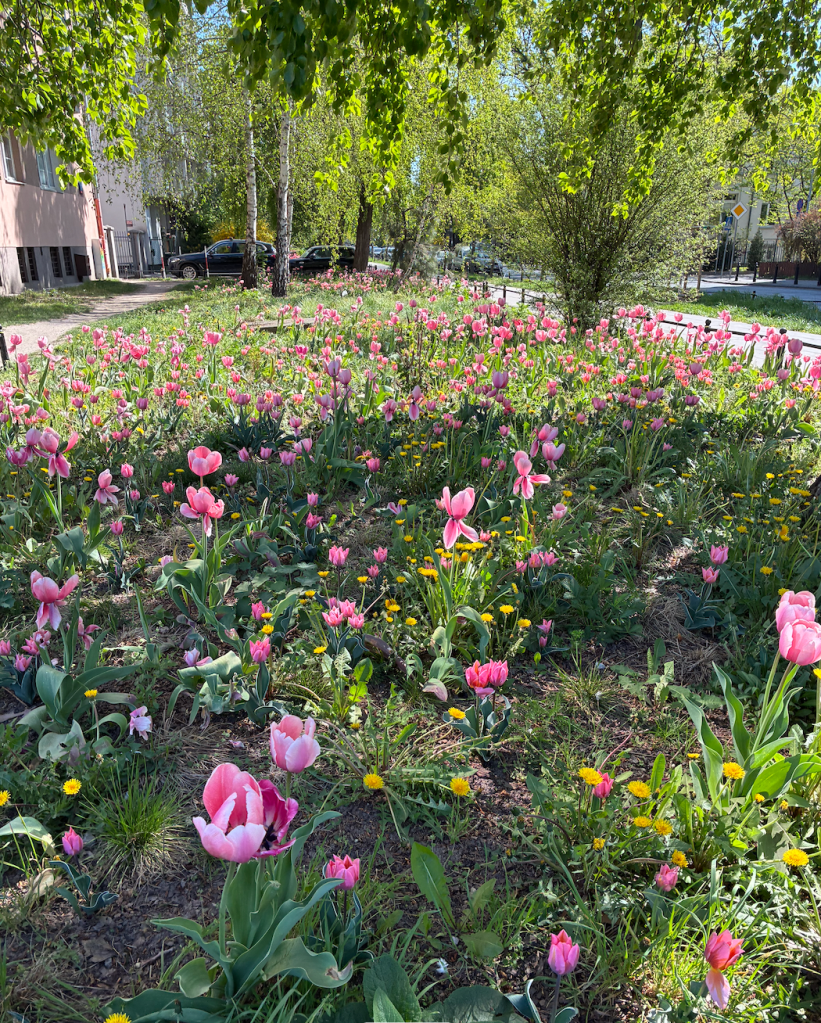
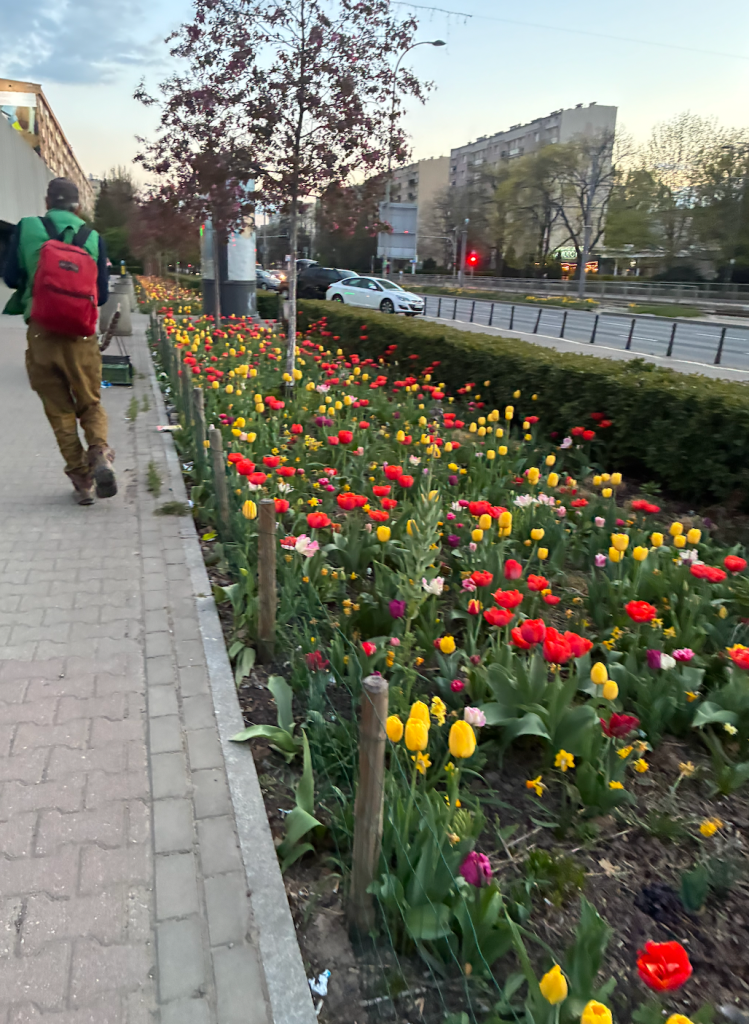
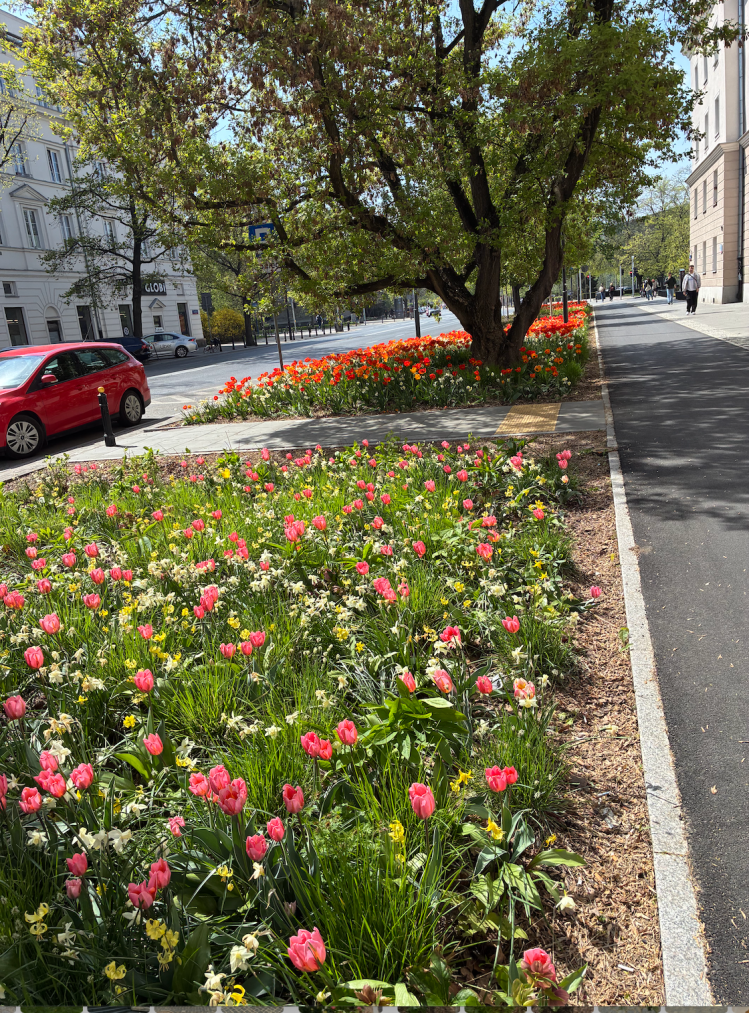
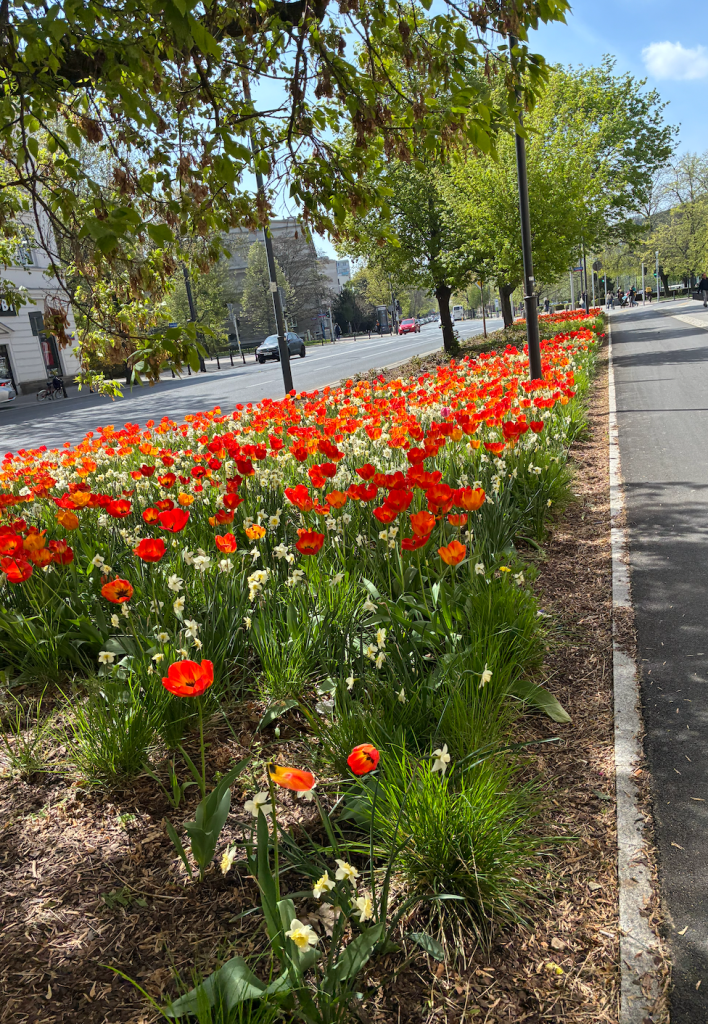
Lovely planters filled with bulbs throughout the cityWe reduced our luggage to one daypack each Separate pedestrian and bike paths everywhereVery long and wide streets
The next day we walked more than a half marathon, 13 1/2 miles. The city felt very well planned, with buses, trams and trains. Tons of parks, big and small everywhere. We could walk the roughly 5 miles from our hinterland home to the crowded center almost exclusively through green space.
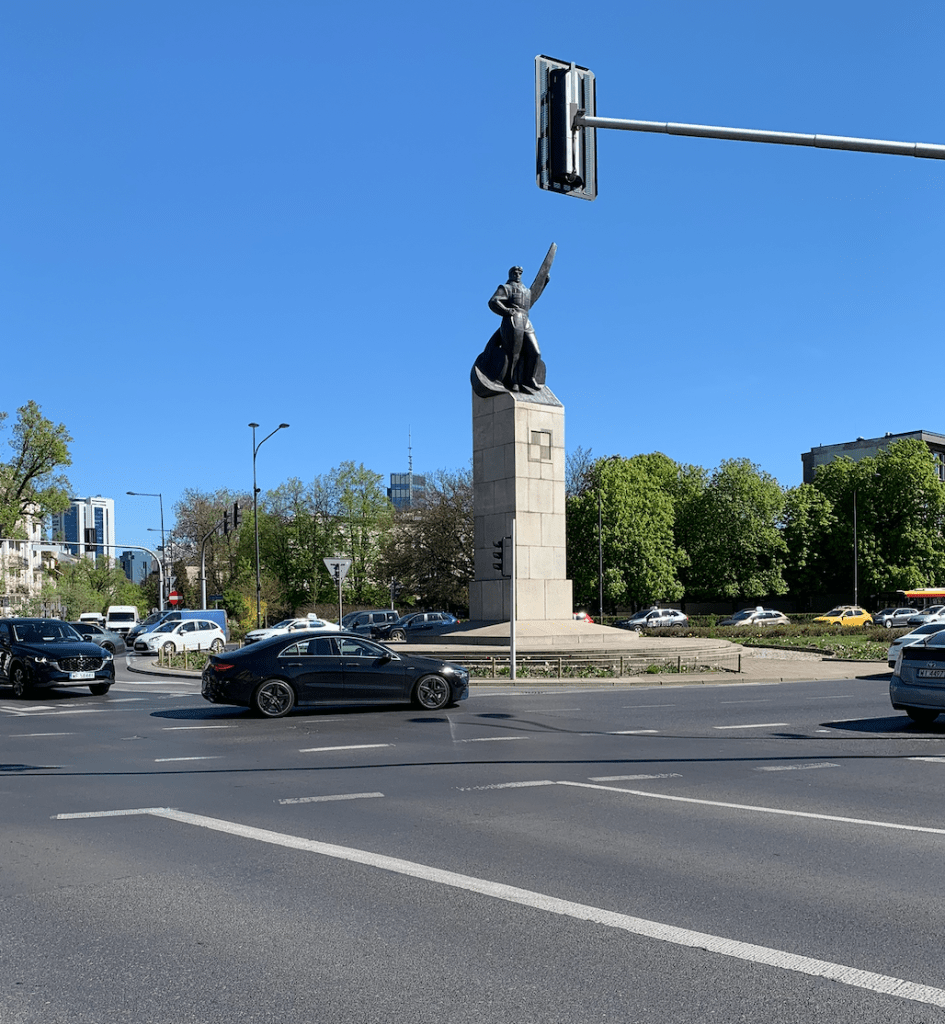
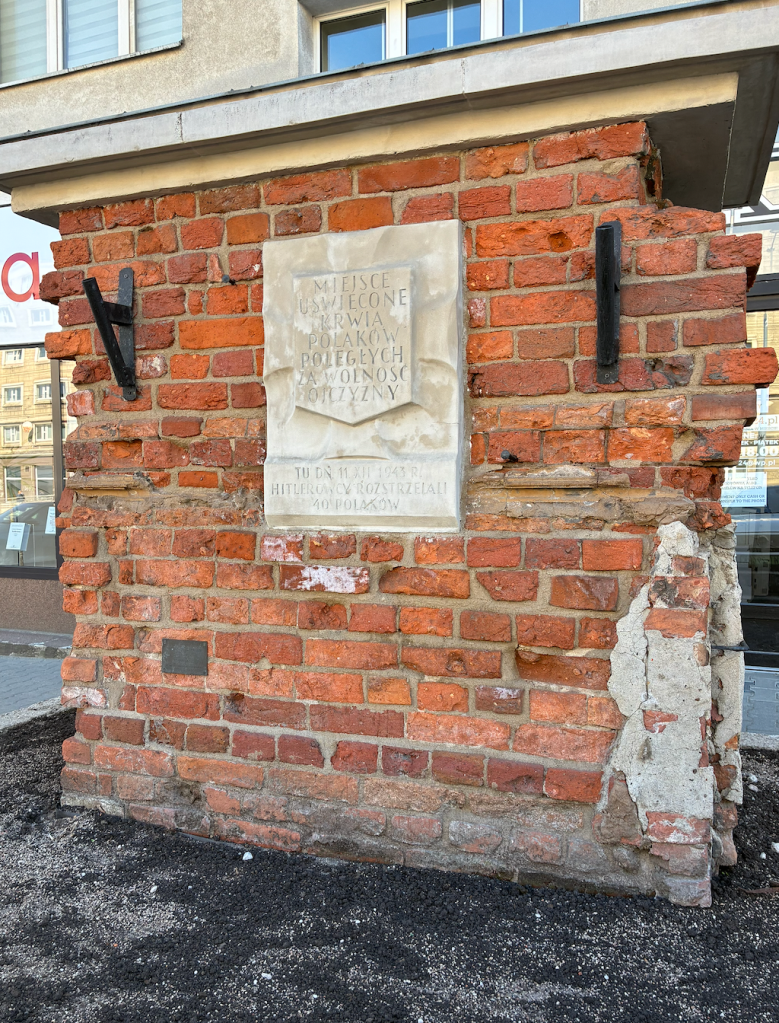
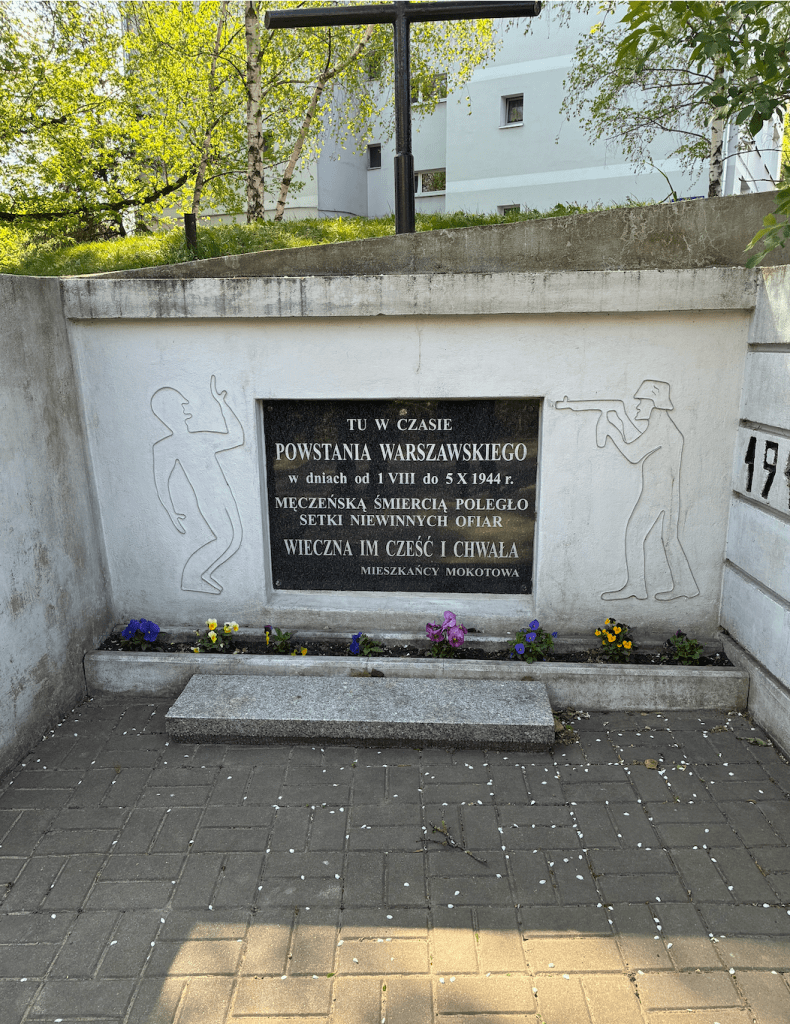
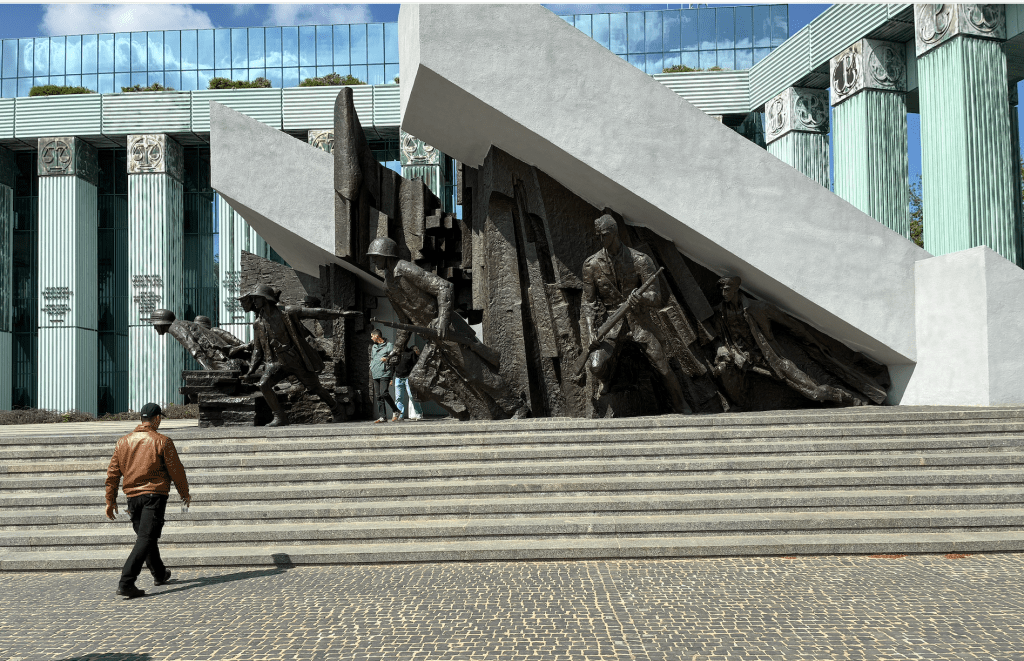
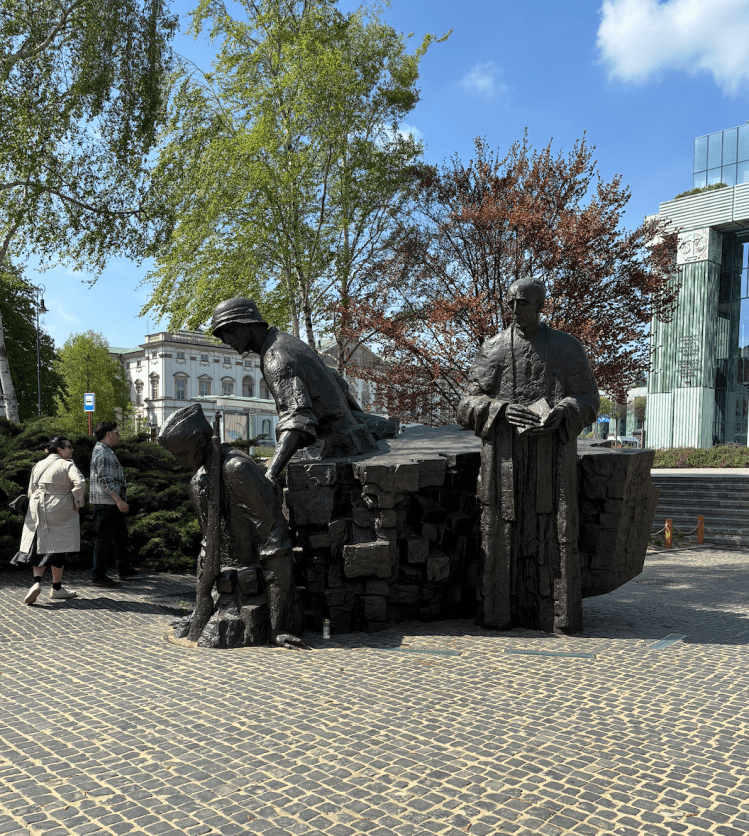
Warsaw itself was almost completely razed by the Germans. First during the 1939 siege when 10% of buildings were destroyed. As the war was ending, with the Soviets days away from liberating the city, the final 85% of buildings were destroyed by the Germans in retaliation for the Warsaw Uprising. Seemingly, every block in Warsaw, and we walked them all, had a plaque, a monument, or a statue commemorating some historical catastrophe, this being Poland it was usually related to WWII, but not always.
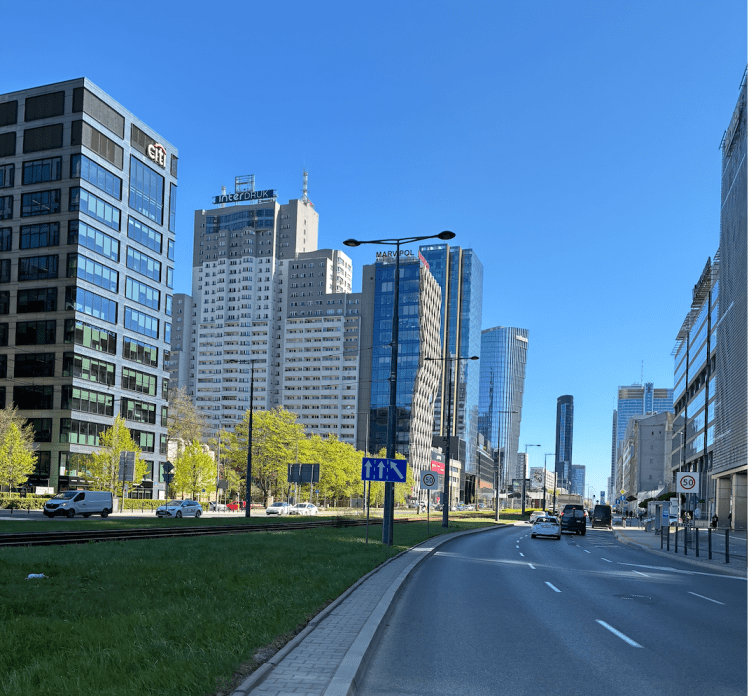
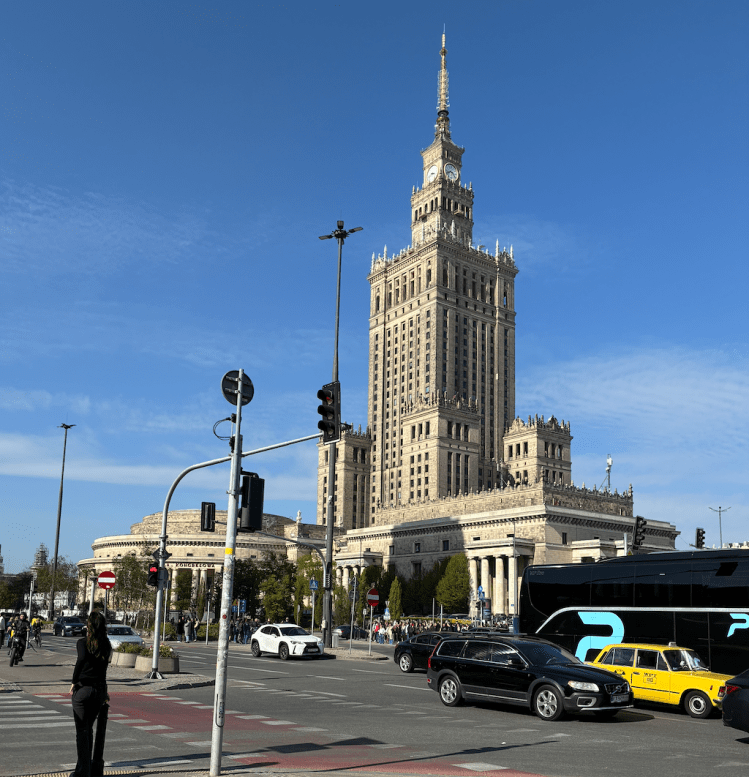
So, pretty much almost everything in Warsaw is more or less new, built after 1945. From the skyscrapers
to the Soviet style buildings- stark concrete blocks and ones that look a bit off, like maybe they are old and classic but not really.
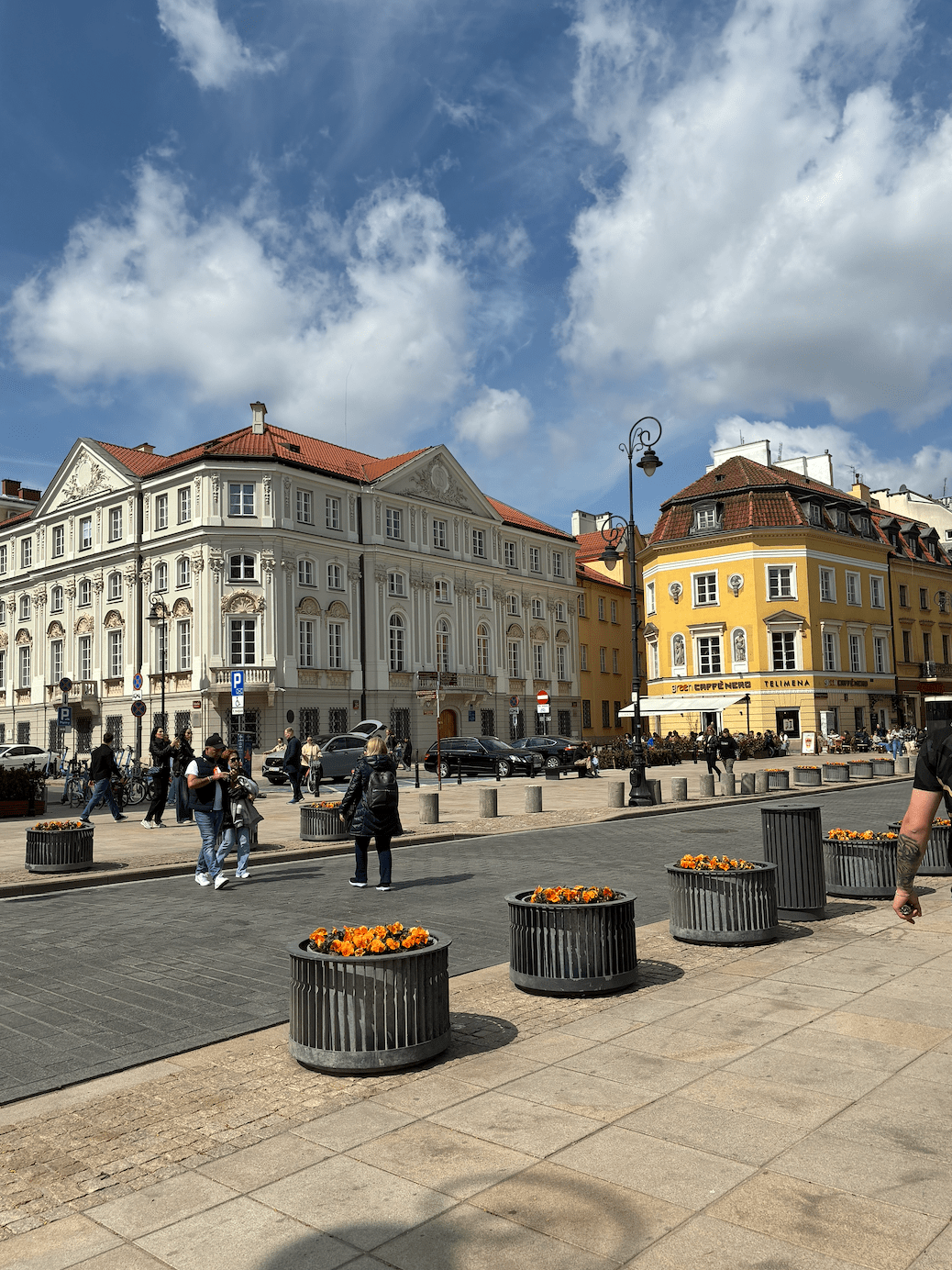
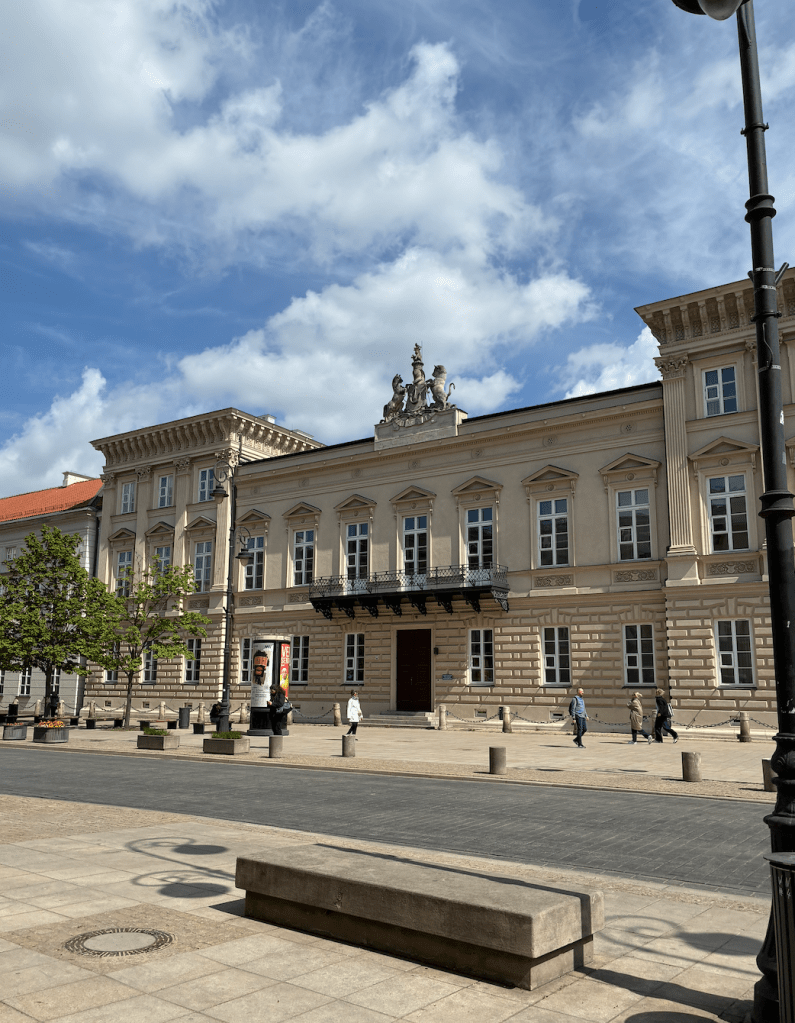
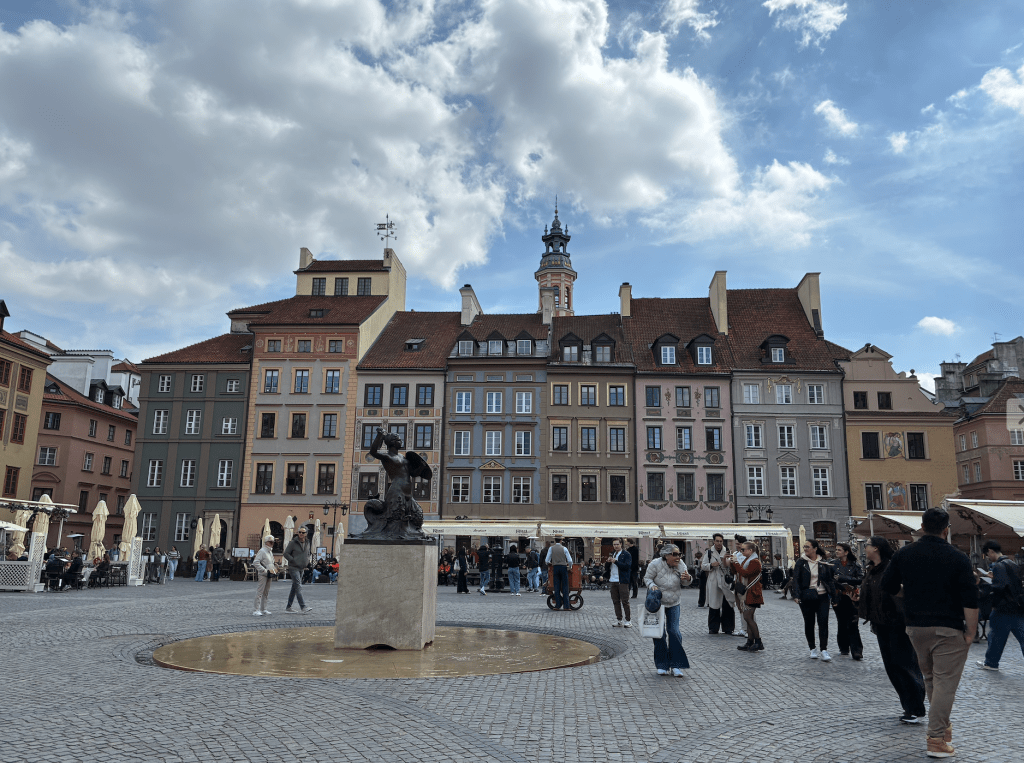
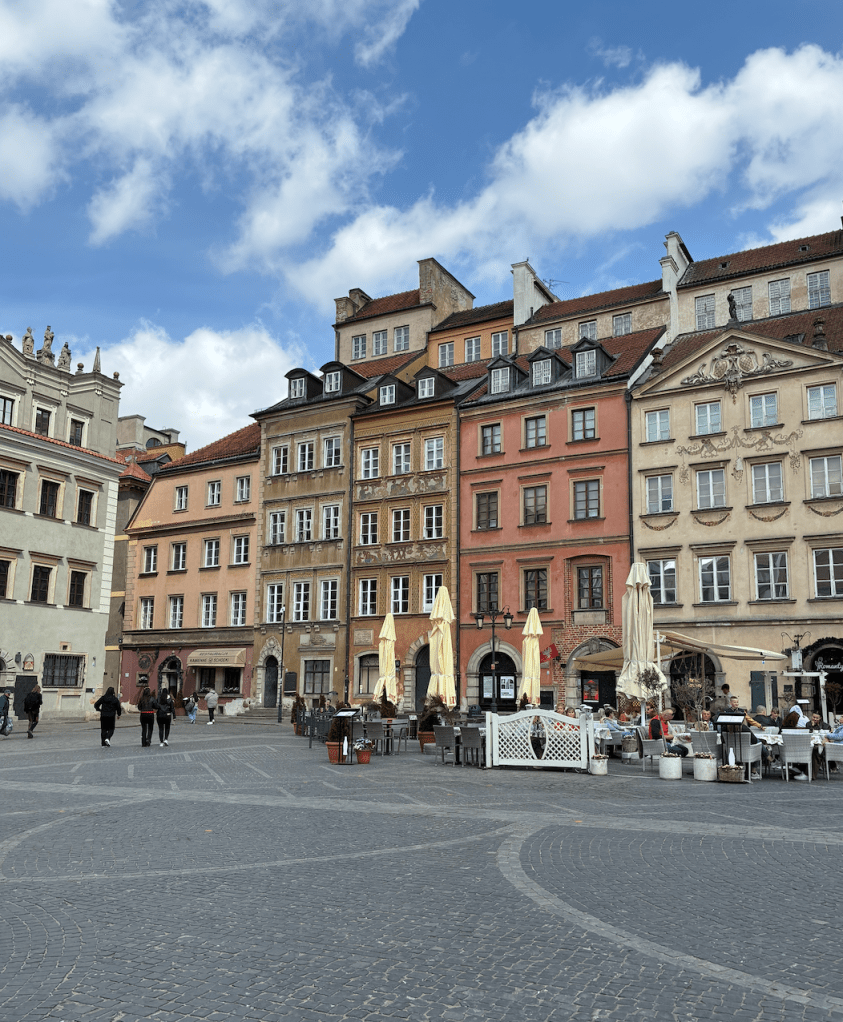
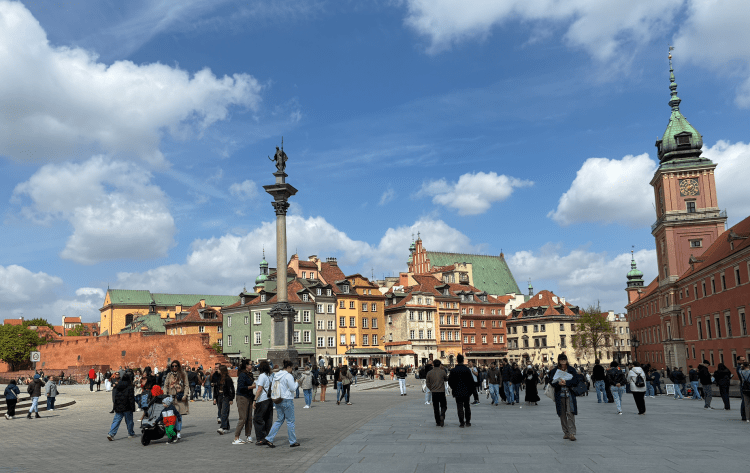
It is really weird when you go to the lovely old town which really isn’t old. Post war Warsaw chose to rebuild the old town as an exact replica, like a movie set. It’s beautiful, but knowing the buildings are midcentury moderns and not medieval adds to the odd vibes of loss and emptiness. A ghost town.
As per UNESCO, it was rebuilt from 1945-1951 replicating buildings from the 14th and 18th centuries, recreating the late-medieval network of streets, squares, and the main market square, as well as the circuit of city walls
The loss was not just the buildings, 200,000 Poles and 400,000 Jews killed. A ghost town. Any Pole associated with the Polish intelligencia (doctors, writers, professors) or the Polish independence movement were either murdered or imprisoned and used for slave labor. Since the fall of communism in 1989, new museums have opened telling the story of the Polish resistance; the Warsaw Uprising https://www.1944.pl/en , https://dulag121.pl/?lang=en. Many monuments and tributes to the Pole’s experiences during Nazi occupation were scattered through the city.
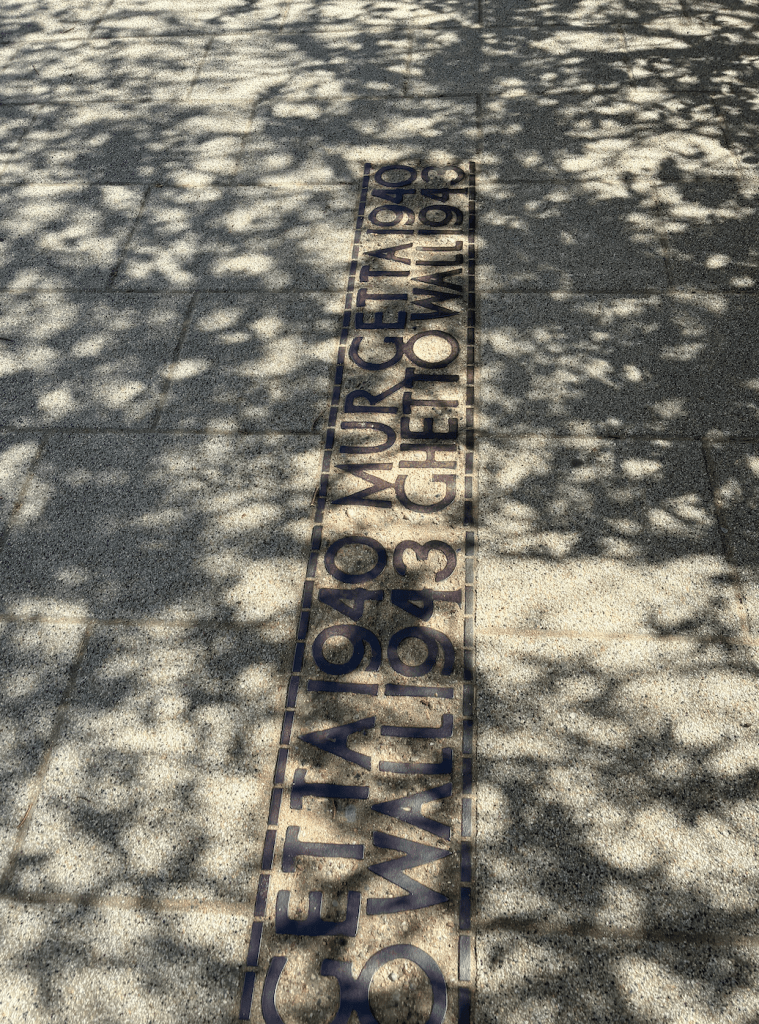
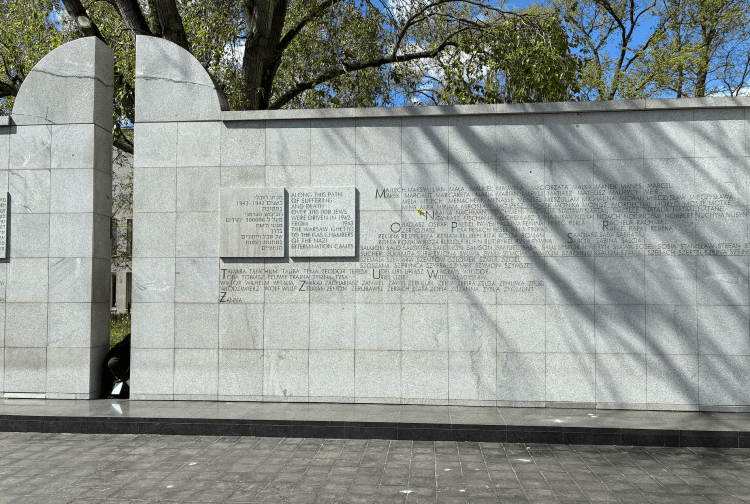
It is a challenge to mark and memorialize the approximately 400,000 Jews who lived in Warsaw before the war, how do you mark the absence of these people? The 400 synagogues and houses of worship destroyed (only one left)? The schools? The community? The primary memorials were related to the ghetto. The construction of the walled ghetto began on Yom Kippur, October 1940. The ghetto lasted until May 1943 when it was destroyed after the Warsaw Ghetto uprising. About 300,000 died by gassing or bullets, 92,000 died of starvation and related diseases and 56, 000 died when the ghetto was burned down.
As the ghetto was being liquidated, they buried 10 metal boxes and two metal milk cans full of this trove. Two of the three burial sites were found. Only three of the 36 members of this group, called the Oneg Shabbat, survived. Some of the original documents are displayed.This museum shattered us in ways that others have not. https://www.jhi.pl/en/oneg-shabbat/biographies
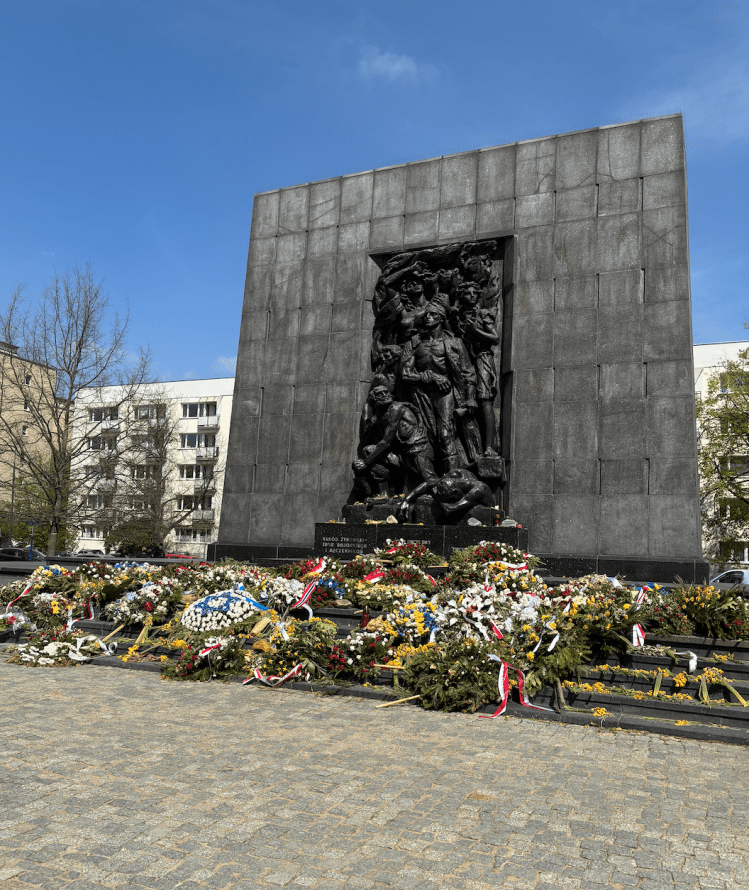
The 83rd anniversary of the Warsaw Ghetto uprising was about a week before we were there.
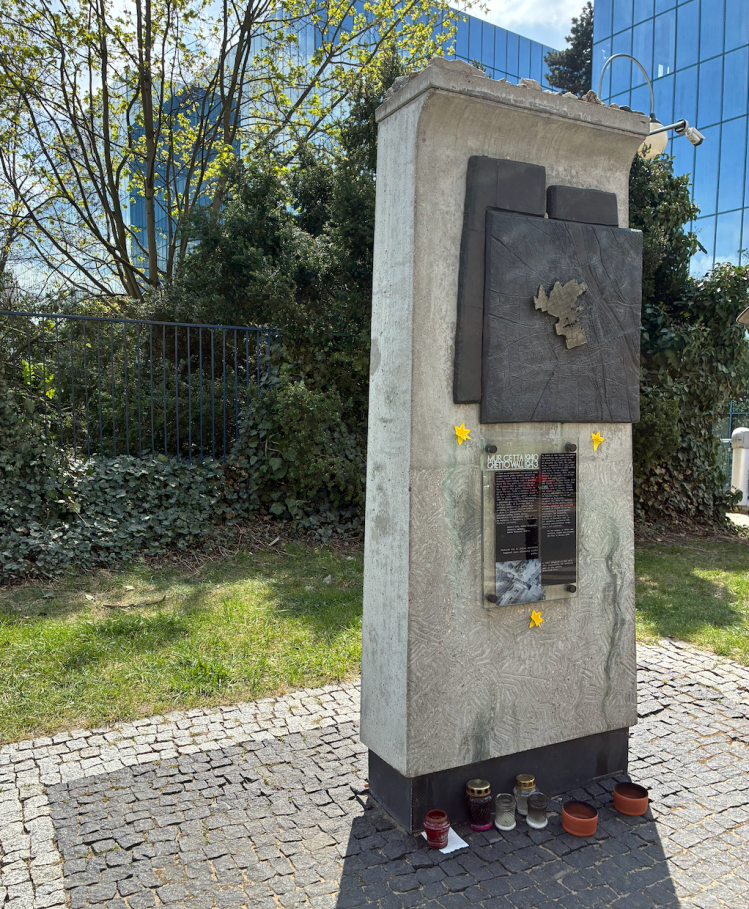
Ghetto Uprising memorial
Across from this memorial, sits the massive POLIN museum, which tells the broader story of Jews in Poland. It opened in 2013. (history of Jews in Poland) . Walking from one site to another, we could experience how large the ghetto was (1.3 sq miles/850 acres). The last ghetto site we walked to was where the Jews from the ghetto were sent to Treblinka concentration camp, an hour’s train ride away.
From July 22, 1942, and September 21, 1942, over 265,000 Jews were sent from the Ghetto to Treblinka
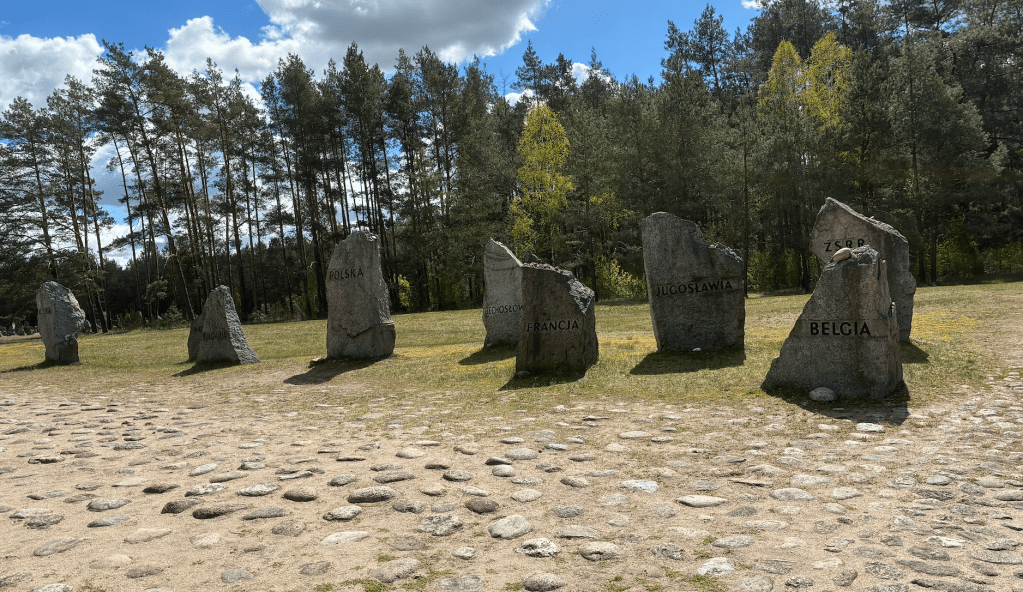
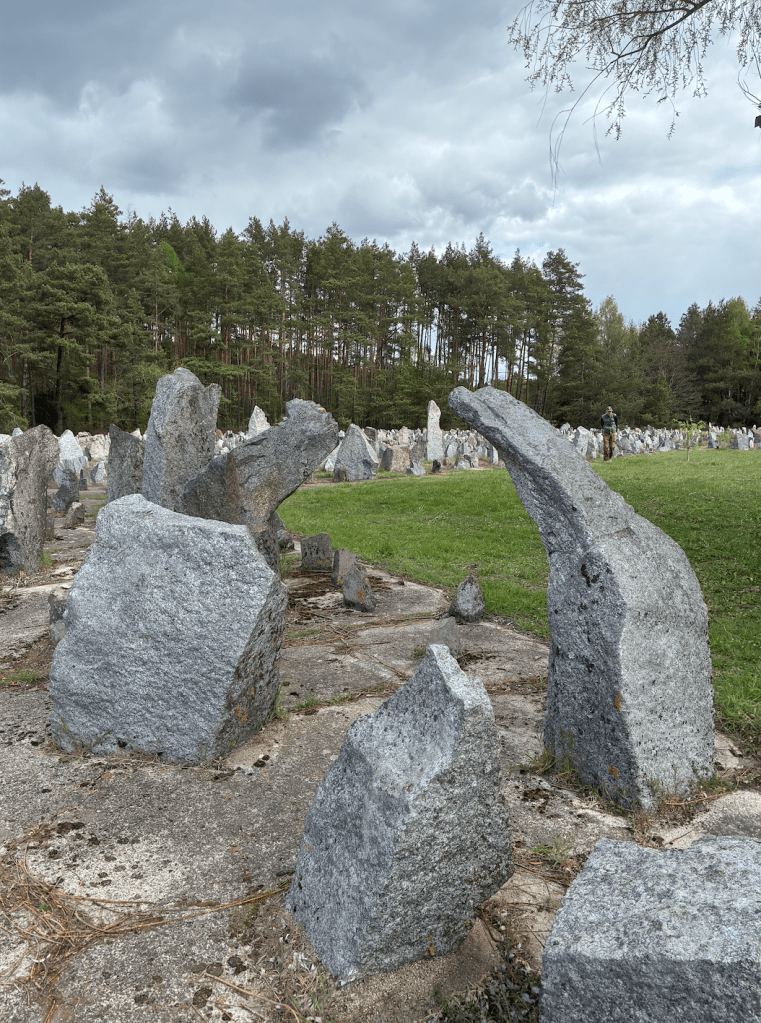
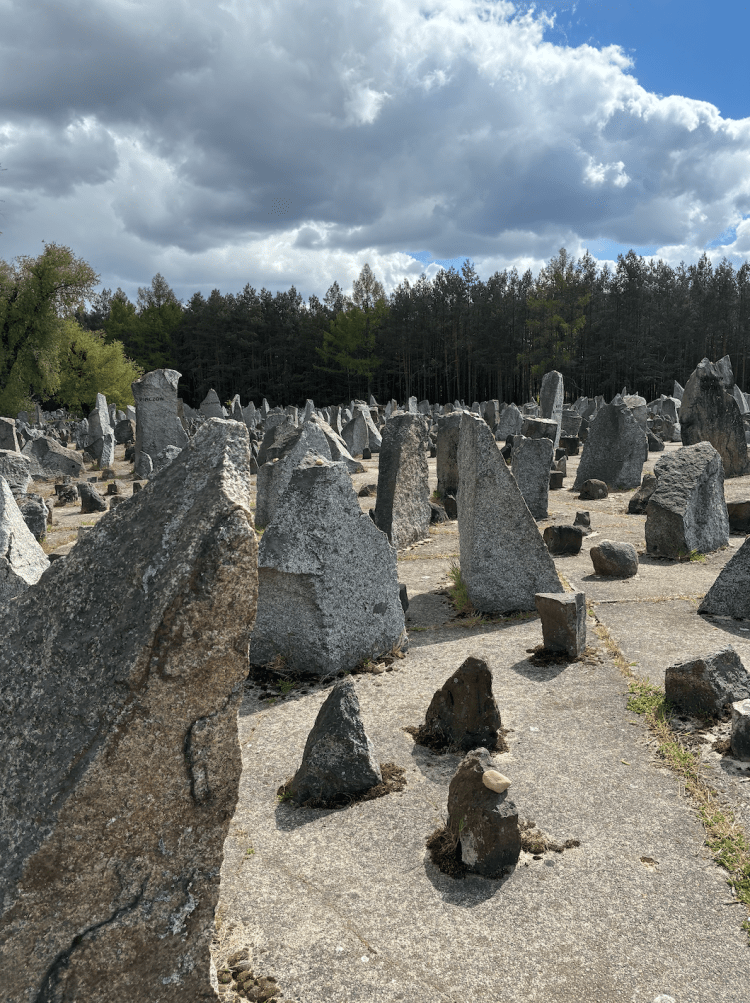
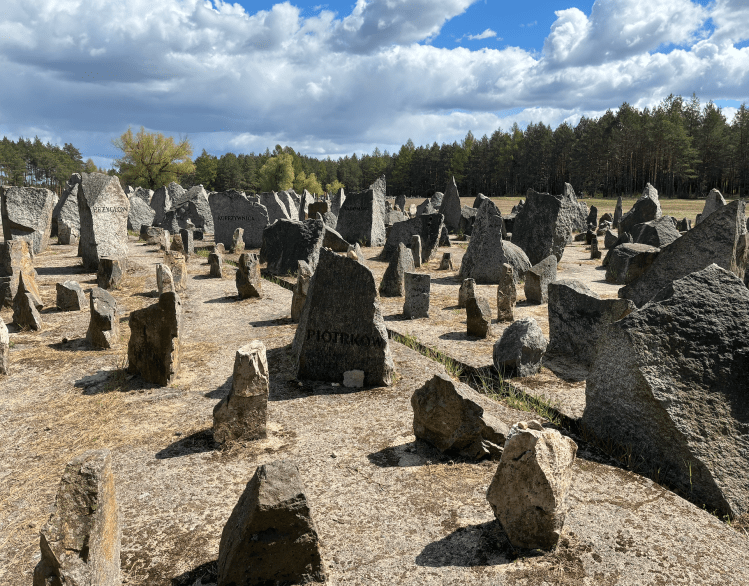
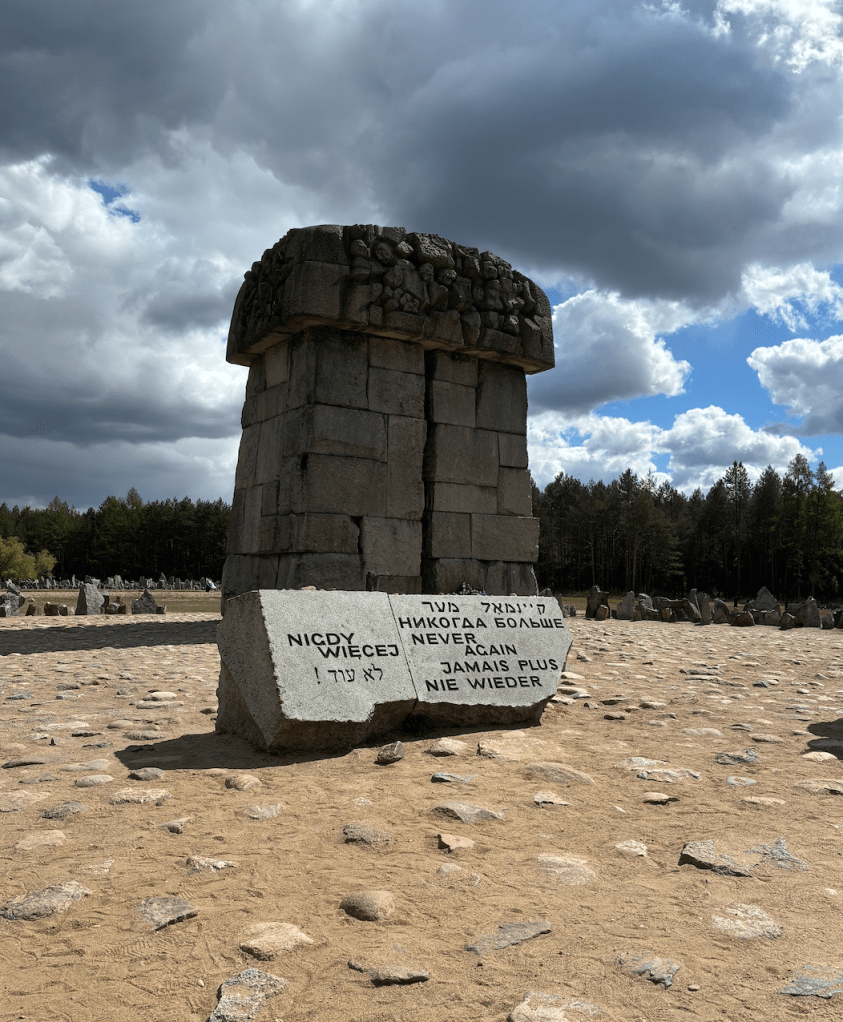
These rocks near the site’s entrance were inscribed with the names of countries where Jews were brought from to Treblinka
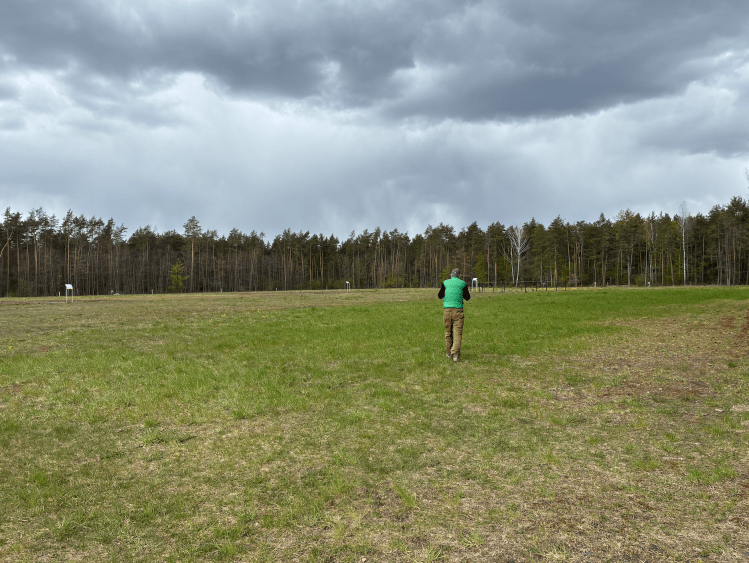
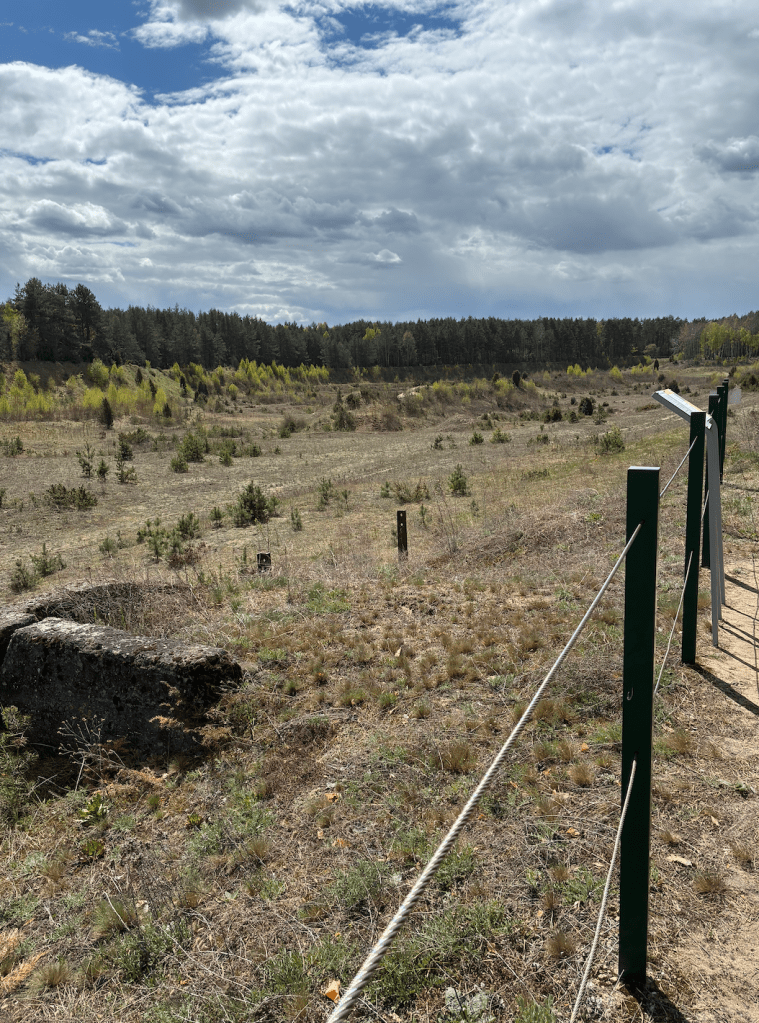
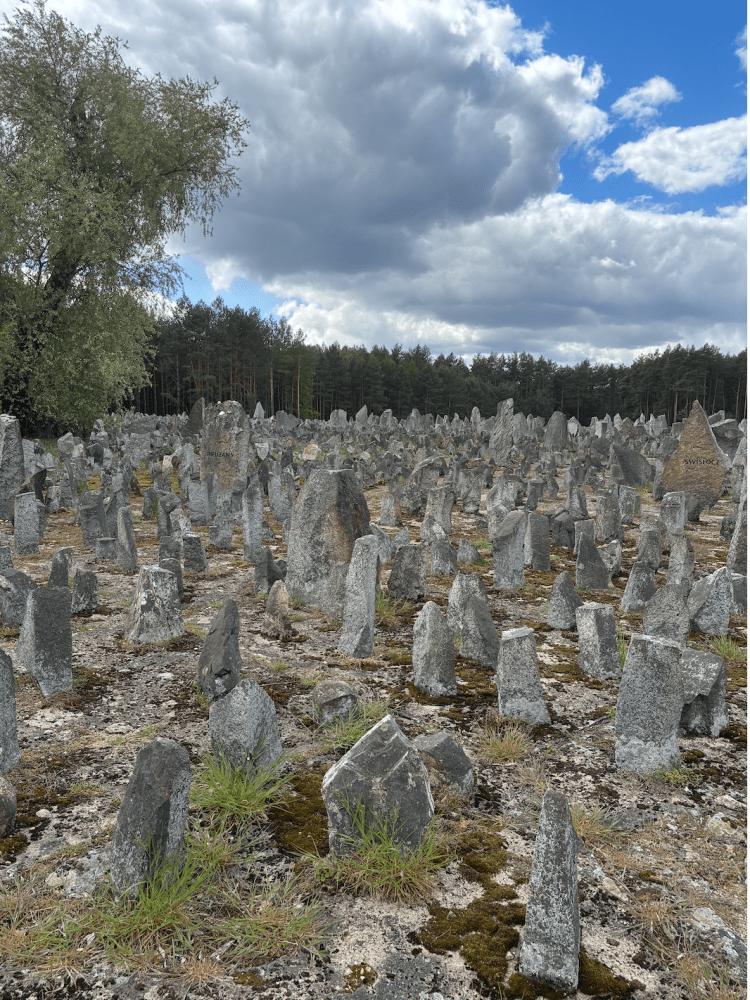
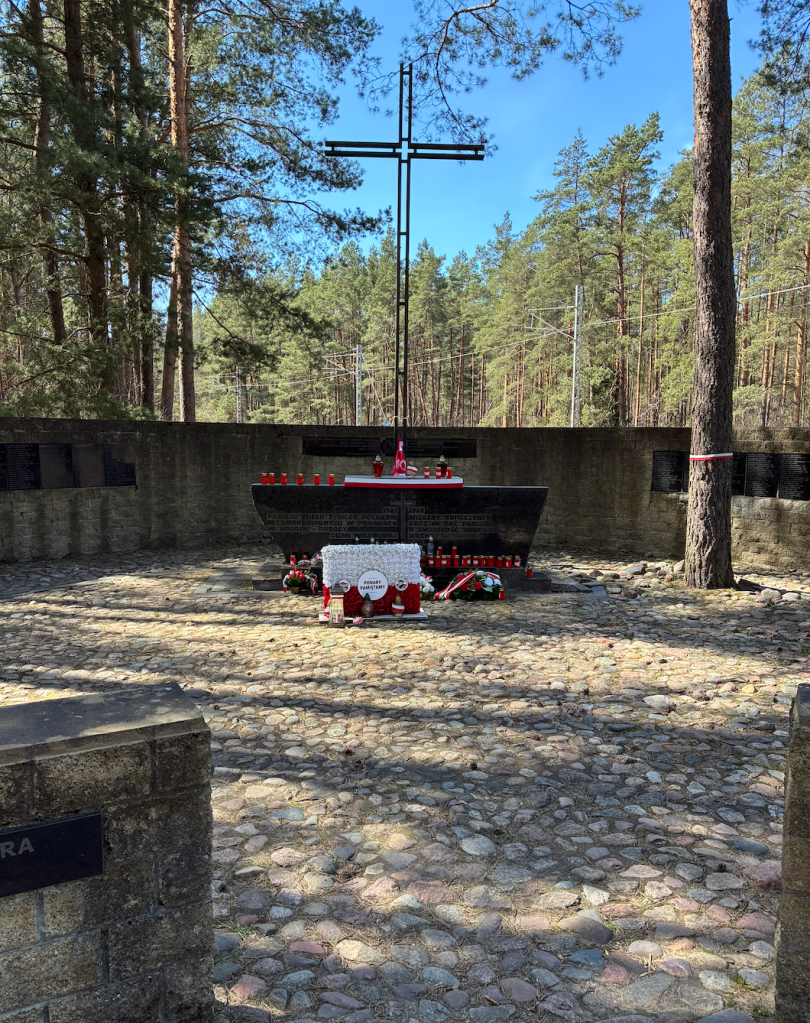
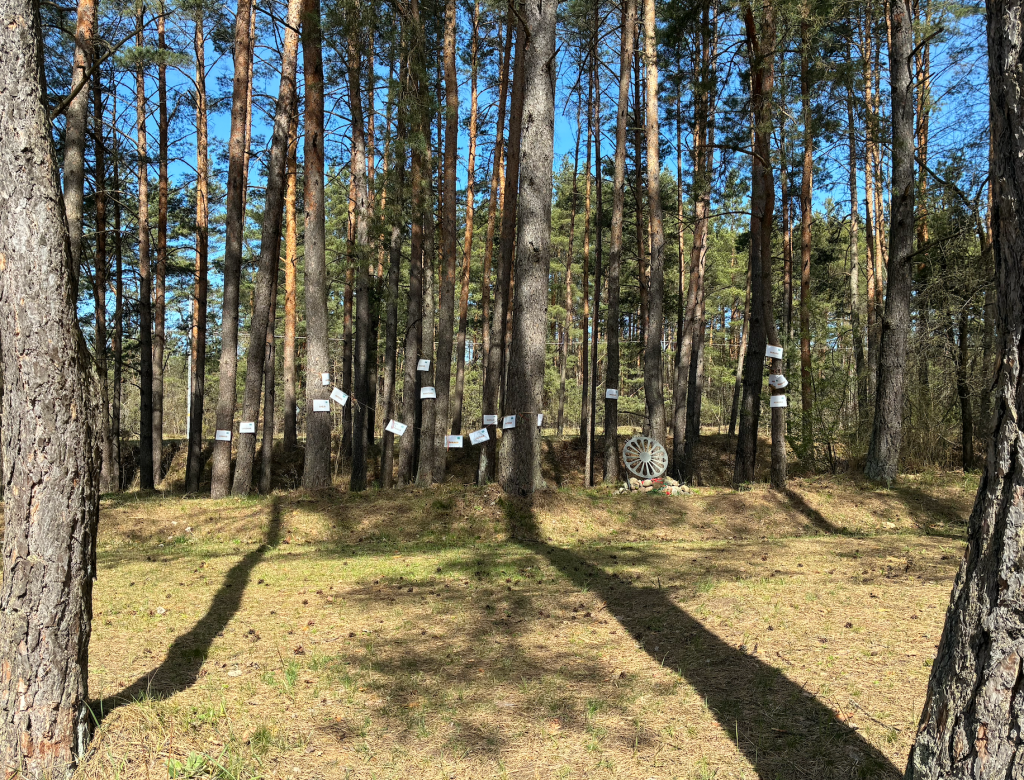
Treblinka was destroyed by the Nazis as the war was winding down; both in response to an attempted rebellion by the prisoners and to hide the evidence of what they did. But there was some residual evidence with the chilling remains of Camp 2, the labor camp. The remaining footprints of the buildings, educational signs, maps of the layout of the camp, and signs with quotes from survivors combined with the isolation and vastness of the area effectively and viscerally illustrated the horror.
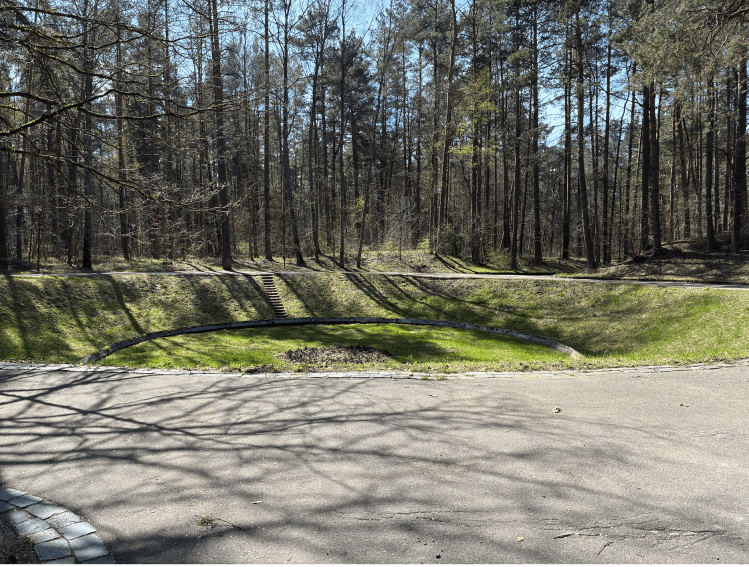
A huge quarry where the prisoners worked digging gravel
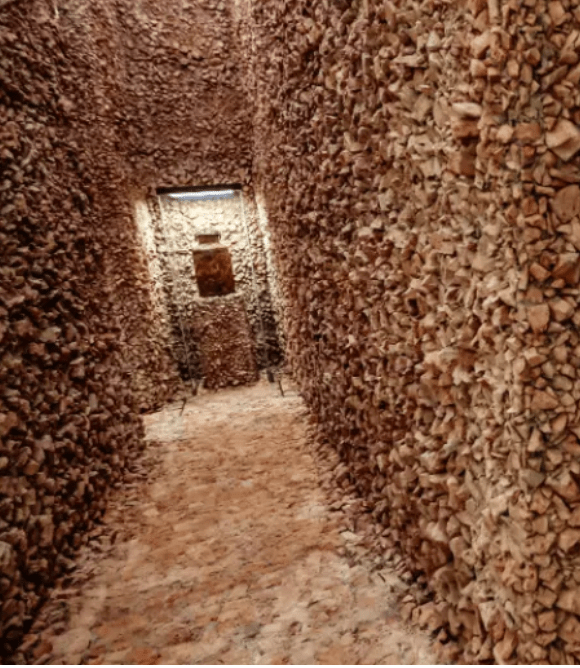
Camp 1 the extermination camp, was filled with symbolic rock shards, some with names of towns where people were brought to Treblinka. There was little else to provide evidence or information of what happened there.
Despite the presence of this new, bustling city, we could not forget what had been, what was underneath. The famous rallying phrase etched in stone at Treblinka “never again” felt pretty hollow, we kept thinking “and yet again”. Why?
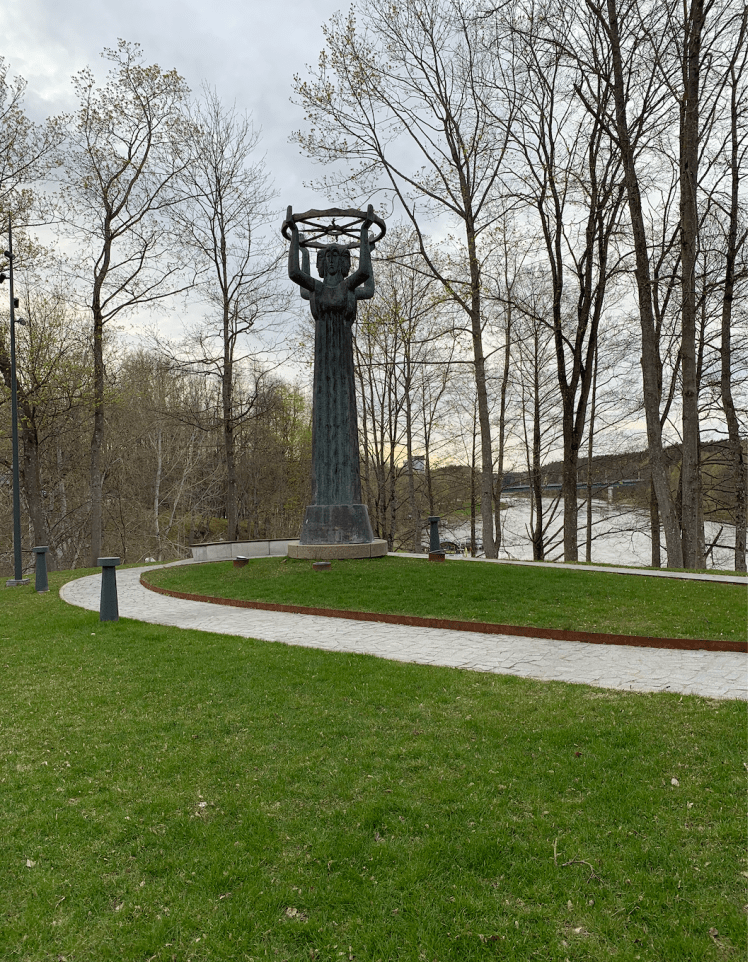
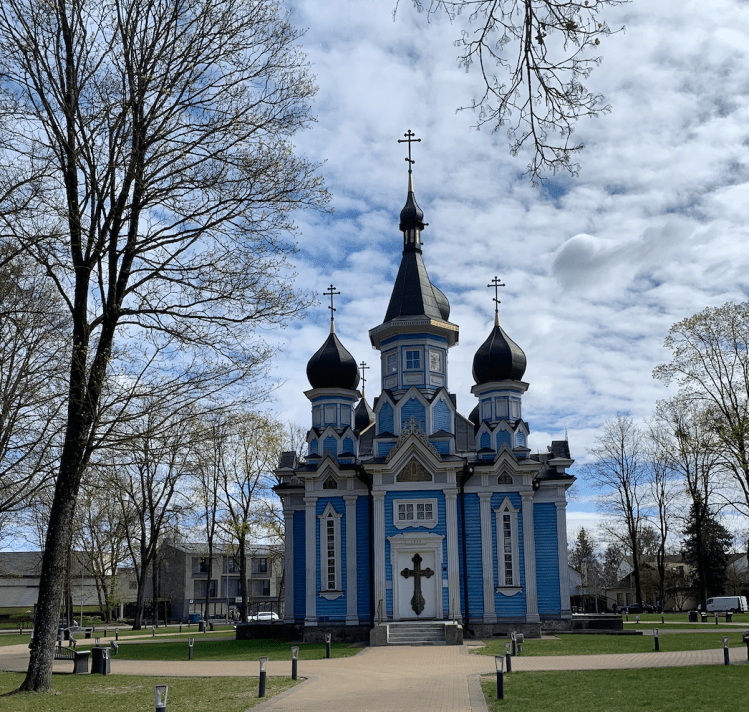
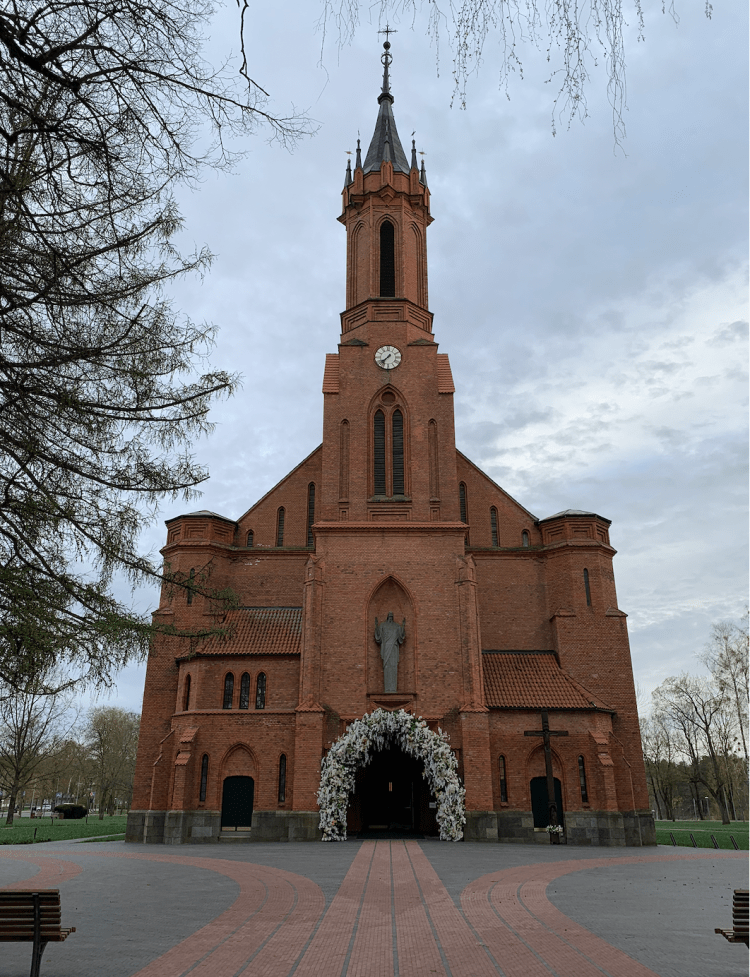
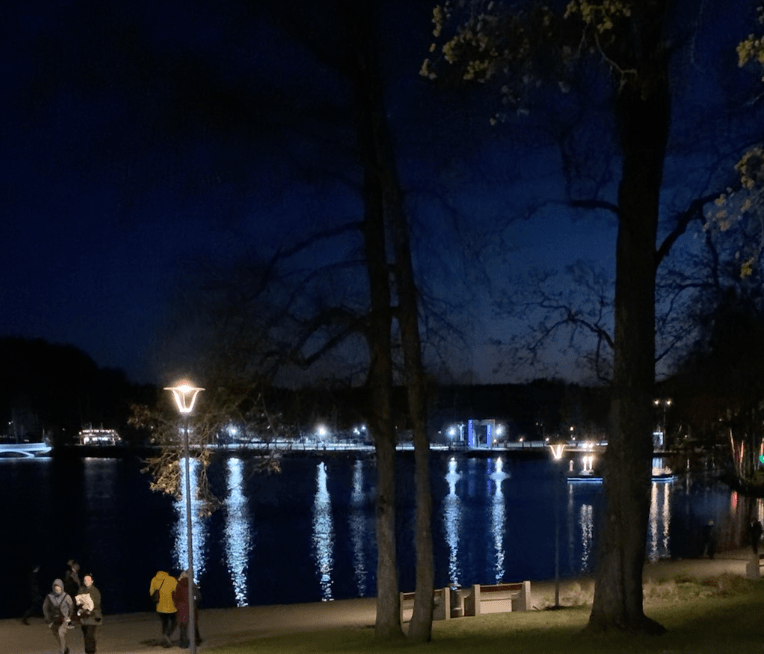
After our emotional visit to Vilnius we elected to have a spa day. Not that we have ever had a spa day. Regardless, we headed to Druskininkai a well known spa resort on the Nemunas River in southern Lithuania renown for its mineral waters. (pictures show up better on the blog, click on the link in the email)
People have been coming here for therapeutic relief from as far away as Moscow since the 1700’s when Polish Kings sought out its healing powers. Now, it is even more popular as in the nearby winter ski slopes, it has added one of Europe’s largest indoor skiing slopes. We walked past multiple fancy spa/hotel resorts, and even people carrying skis.
However, we neither skied nor spa’d. Other than our hotel and the market, we didn’t enter any buildings. Instead we enjoyed the spring day.
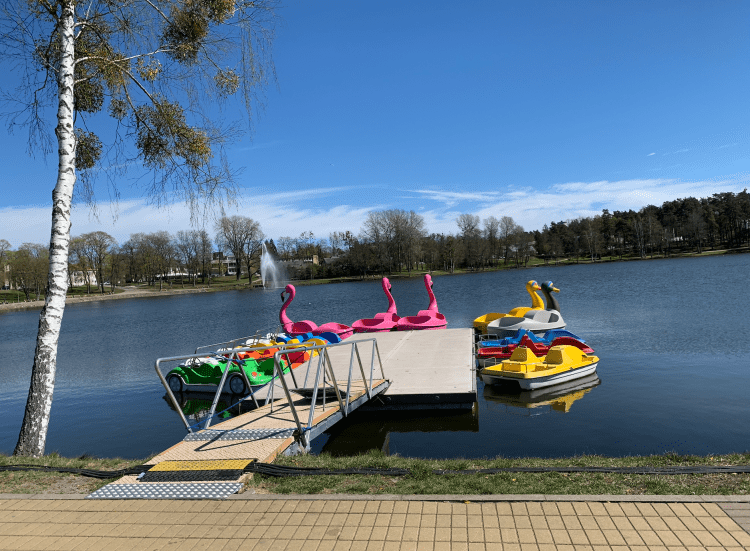
All over the world, nothing says resort town more than flamingo boats
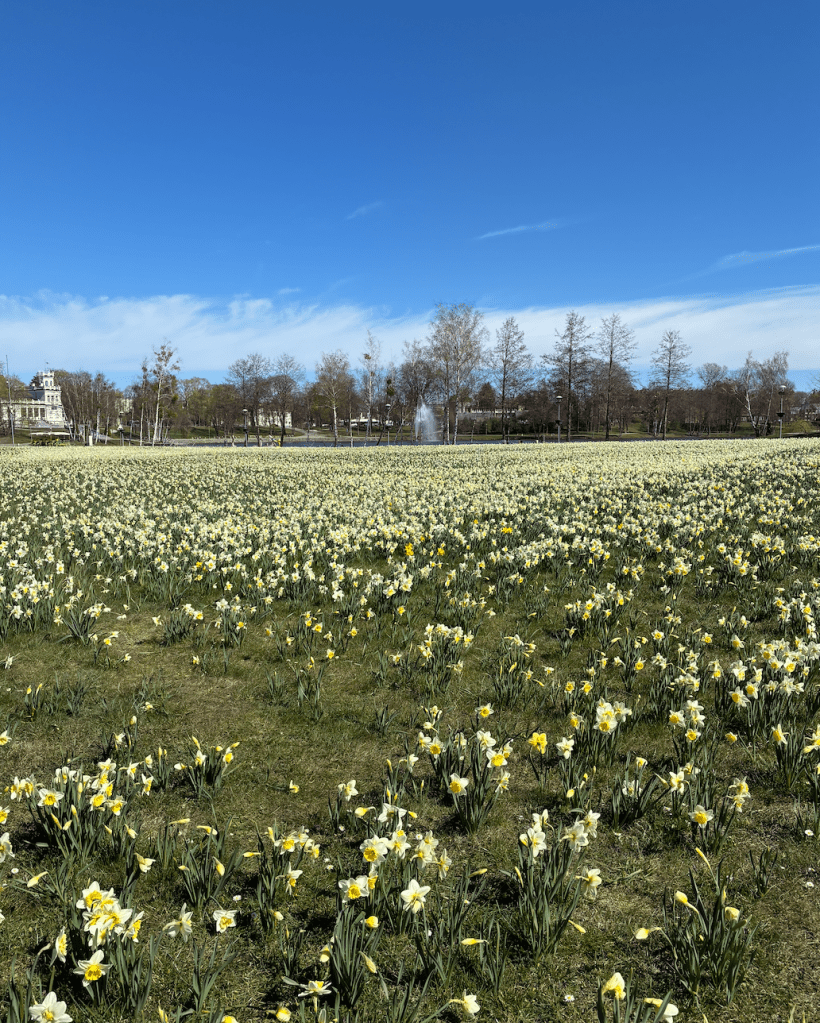
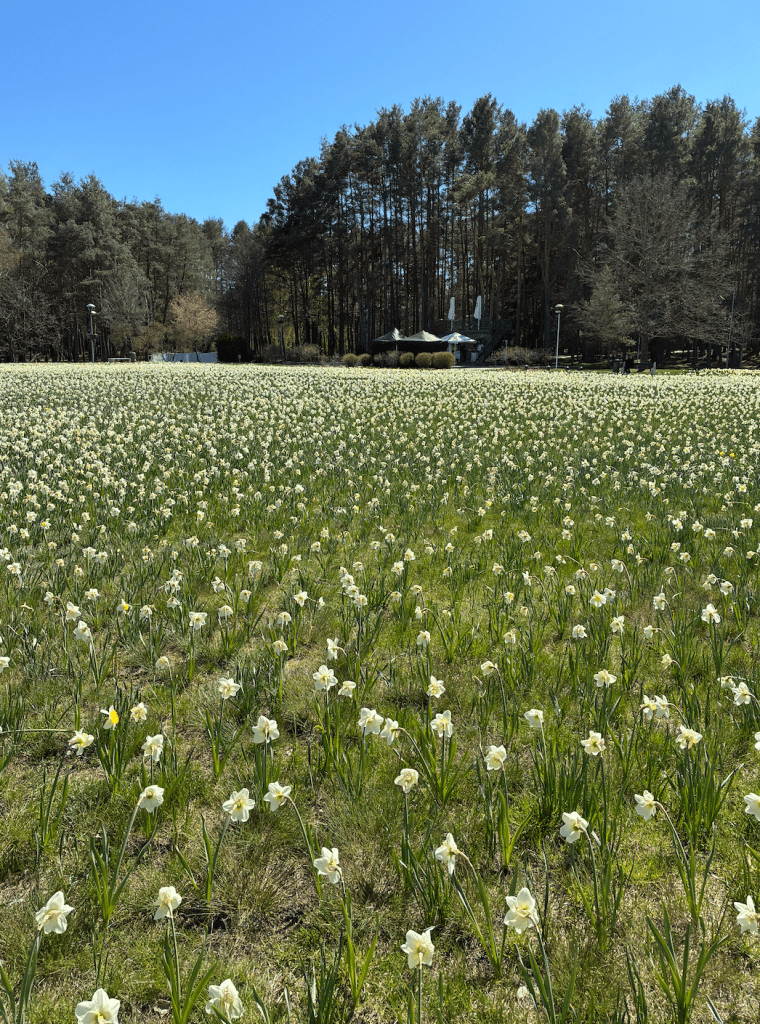
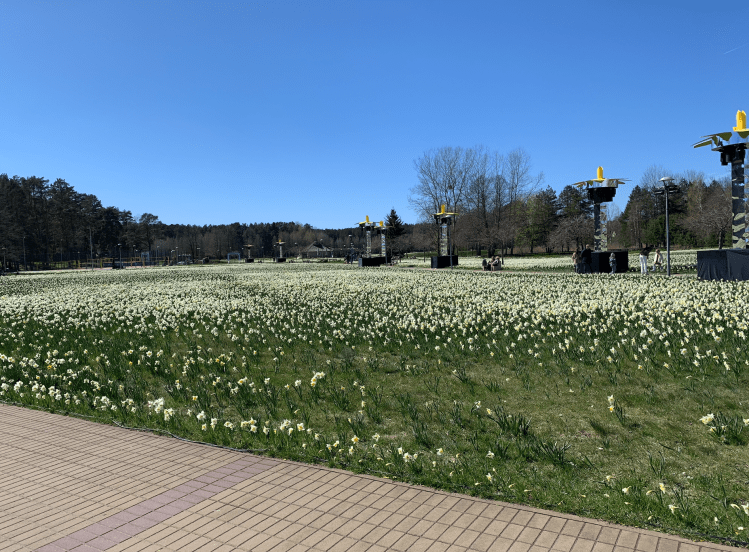
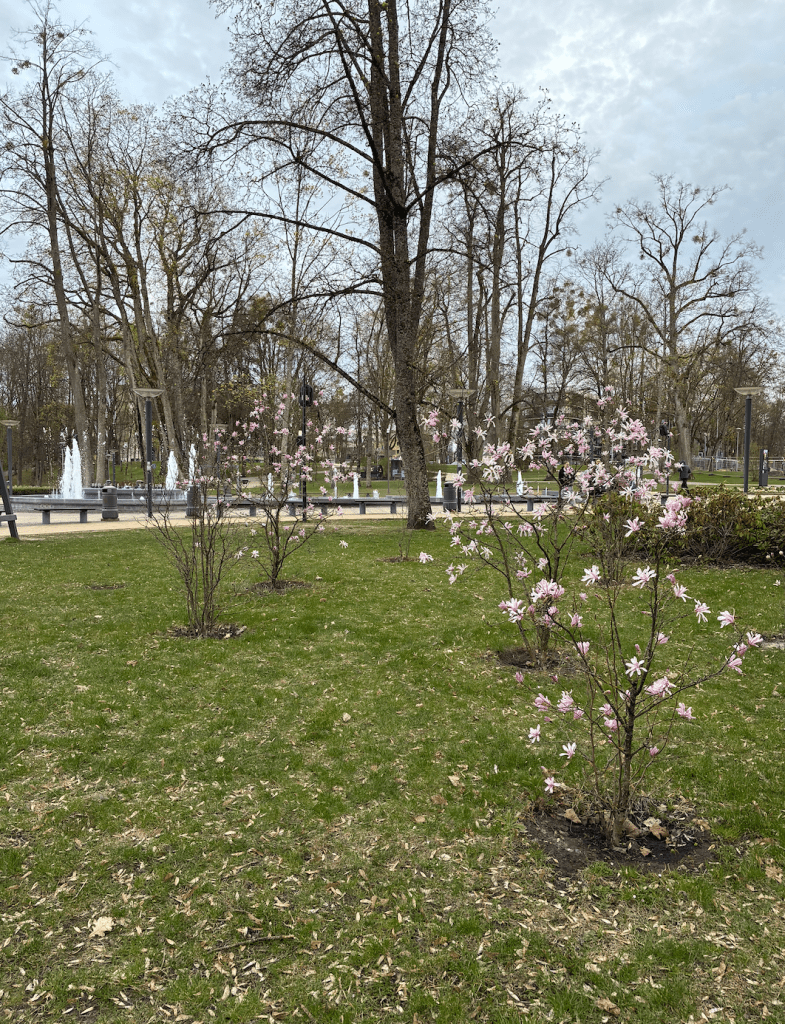
Flowers and trees were blooming. There were king sizes beds of daffodils with piped in music by a famous local composer and artist who died in the early 1900’s, M.K. Ciurlionis.
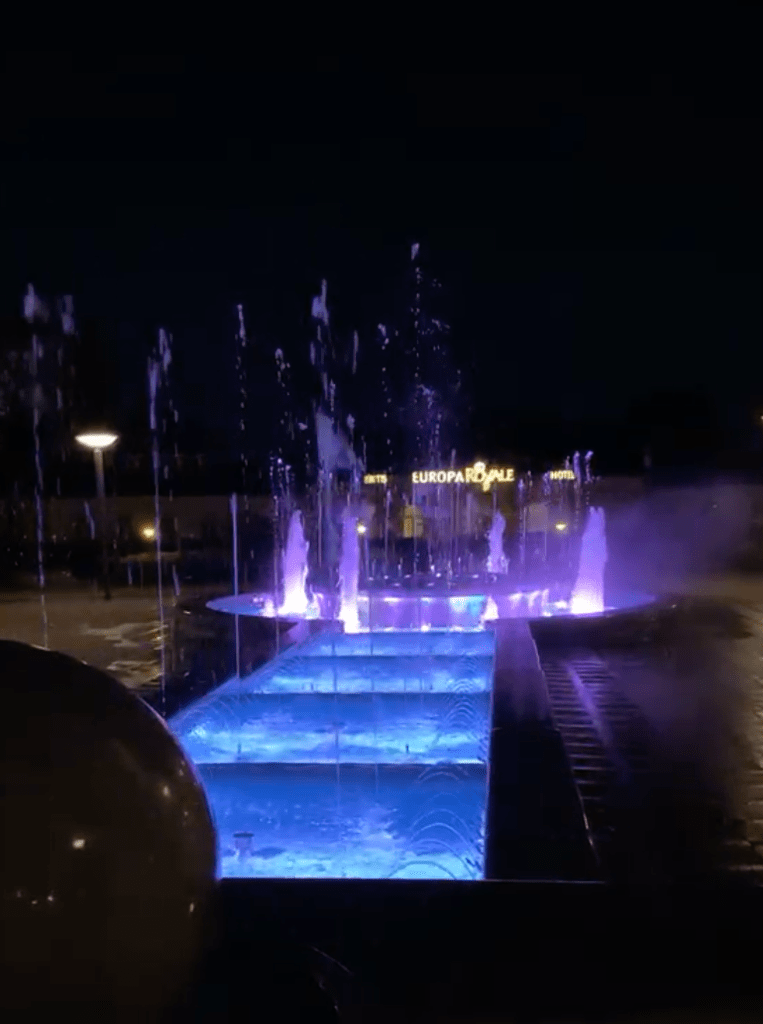
His music was also playing at the singing fountain. Both the fountain and the daffodil field combined music with a light show at night.
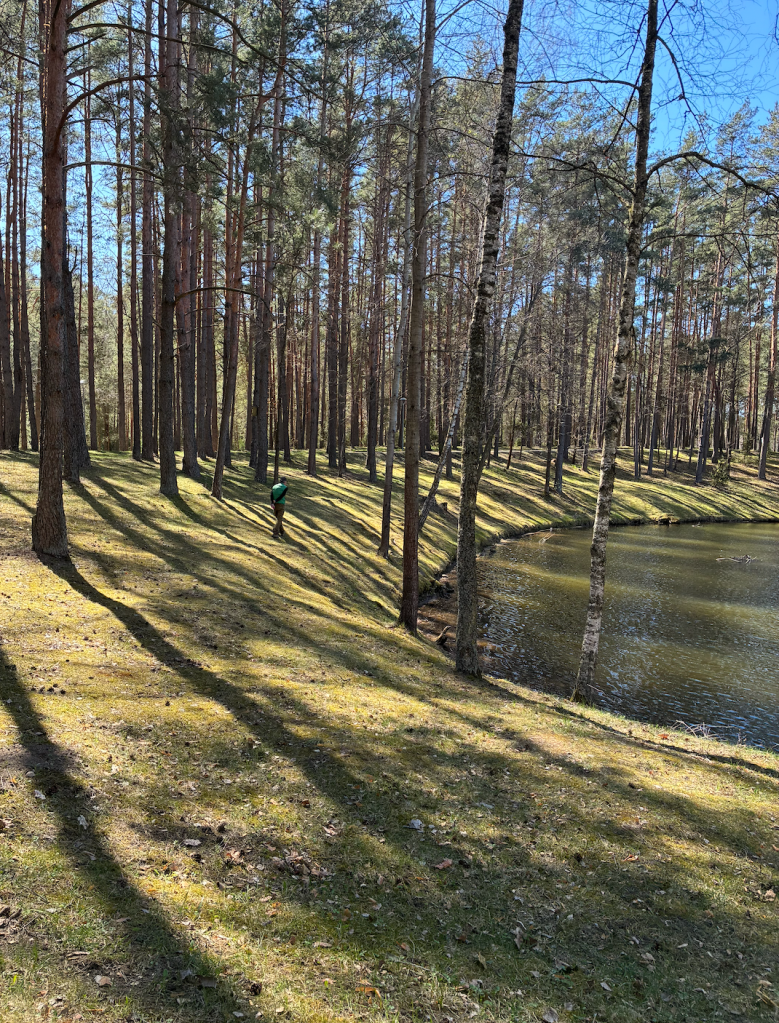
Our afternoon walk through the daffodils extended into the surrounding forest and hills.
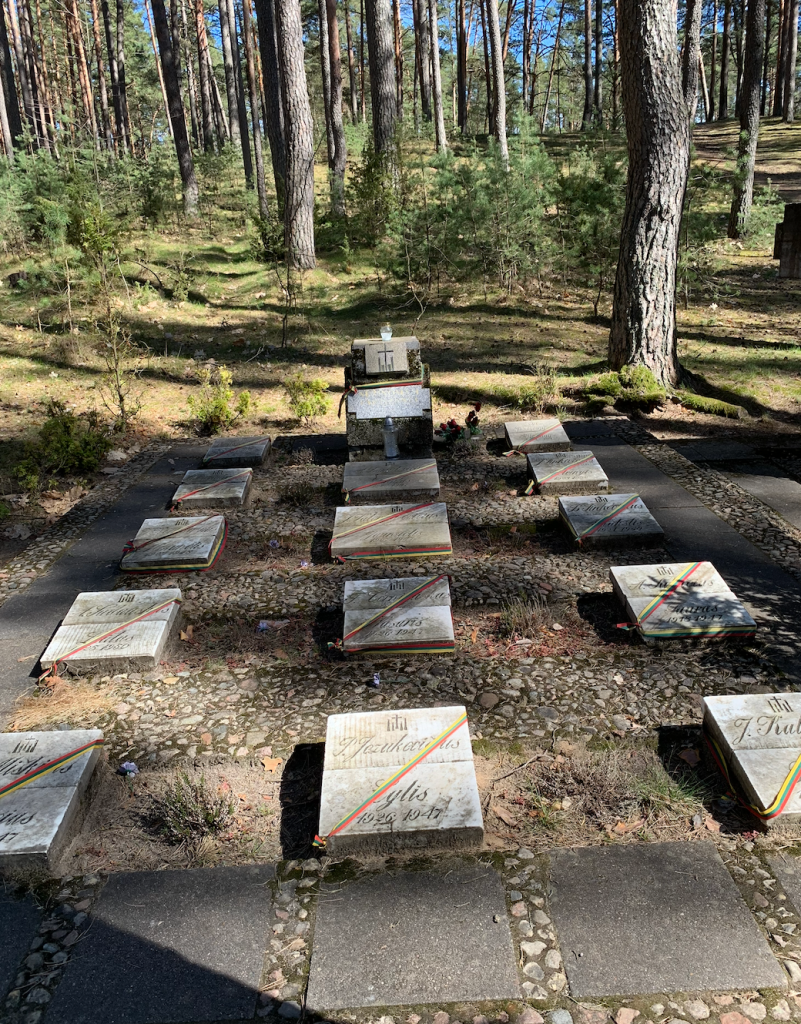
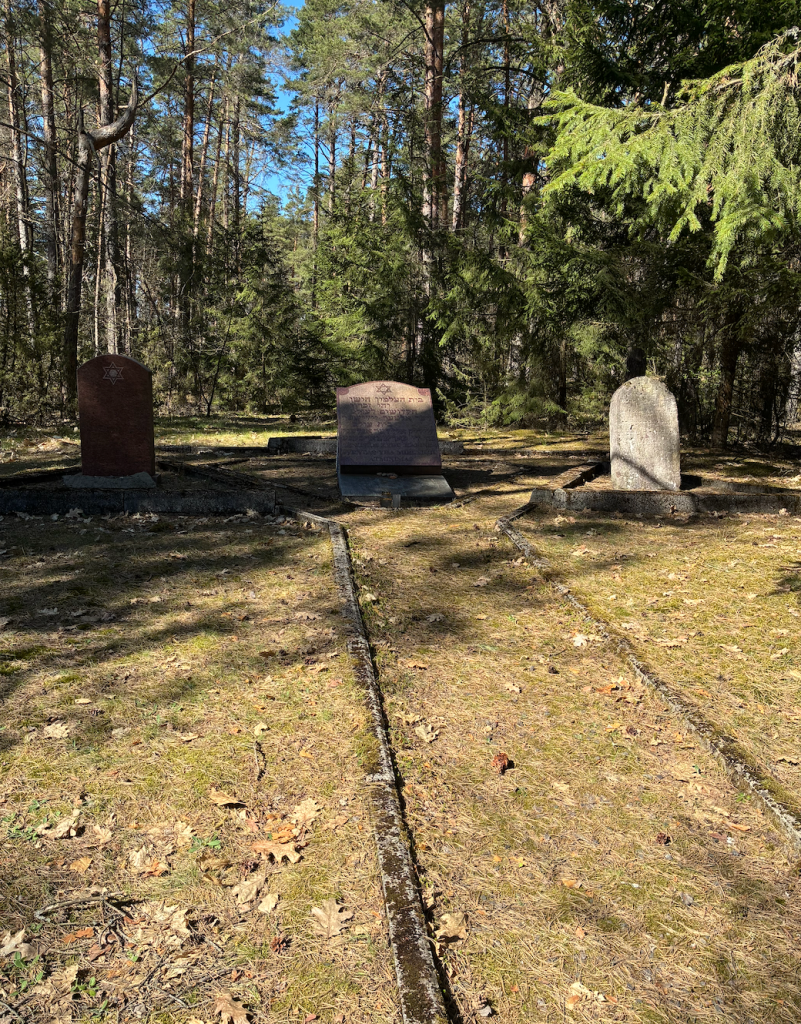
But, this being Lithuania we did stumble onto a memorial for Lithuanians killed by Soviets and a destroyed Jewish cemetery.
Memorial to the Forest Brothers partisans who fought against the soviets from 1944-1953Jewish cemetery, used from 1870-1941. After 1941, all the Jews were sent to concentration camps. It was demolished in 1967 by Soviets. Three remaining tombstones.
Kind of epitomized our Balkan trip; areas of beauty and serenity shattered by historic events of human cruelty. Not even a spa town could wash this away. This wrapped up our Baltic tour, the trifecta visit to the three Baltic Capitals and a spa day in Druskininkai.
Our lodging in each city was also very different from each other.
Tallinn-in quaint, old townRiga-Soviet style apartments but on a street with Art Nouveau-ish buildingsVilnius-new building, 9th floor with an elevator
But there were also plenty of similarities.
1. Kohuke. We embraced these chocolate covered curd bars. Making sure to taste a variety of flavors and brands At least 2-3 per day.
2. Quiet buses. Very quiet even when full of teenagers.
3. Clean streets. No trash.
4. Pedestrian friendly. A lot of walking paths and sidewalks. Cars stopped before you even entered the crosswalk (a challenge for Nick). . Besides Nick, hardly anyone jaywalks, and they wait at the light (another challenge for Nick). Separate bike lanes along pedestrian lanes which was great because there were so many bicycle food deliveries.
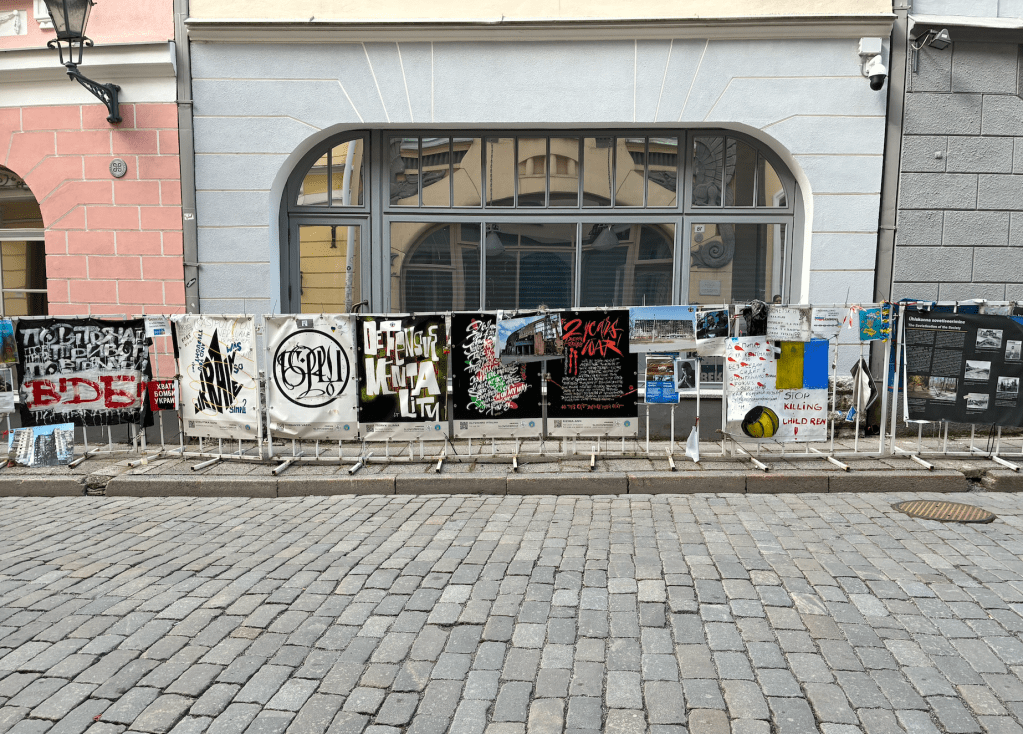
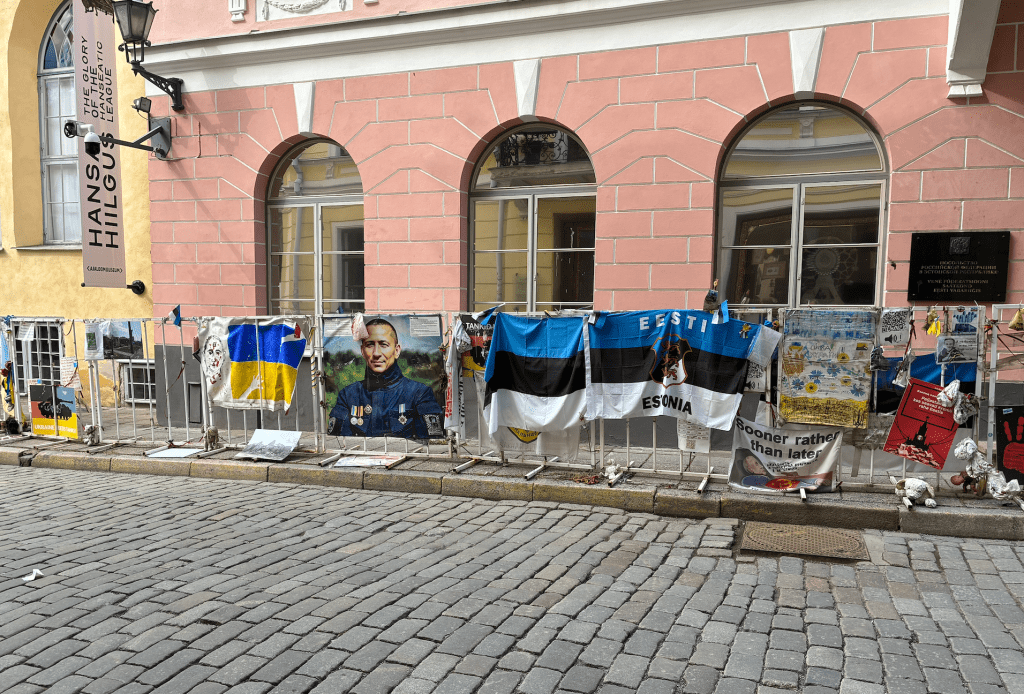
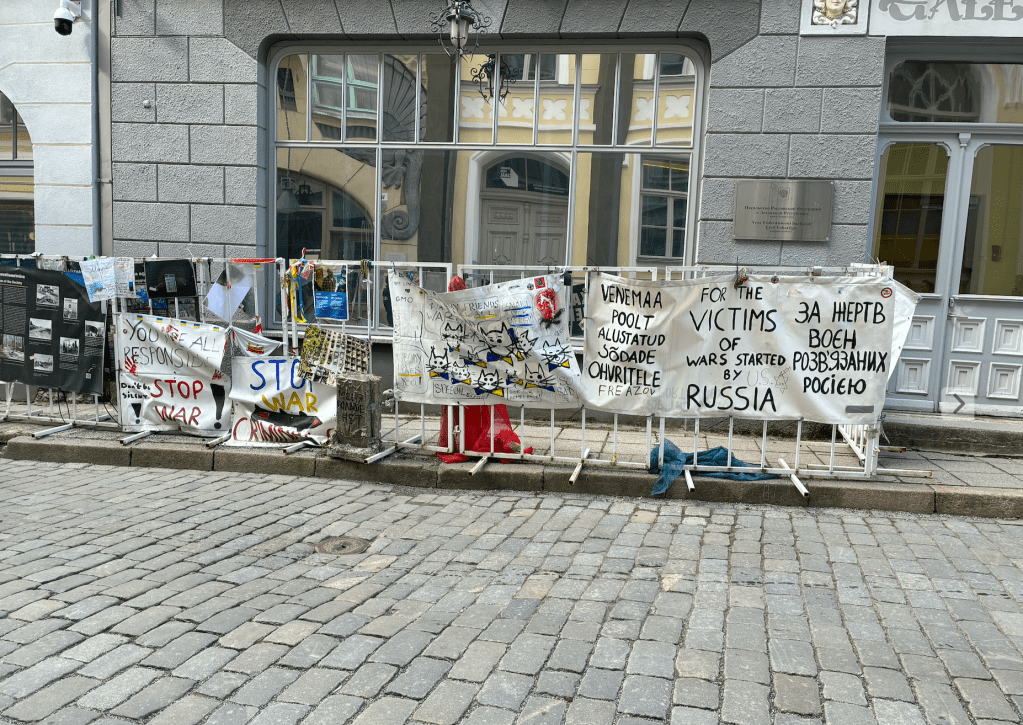
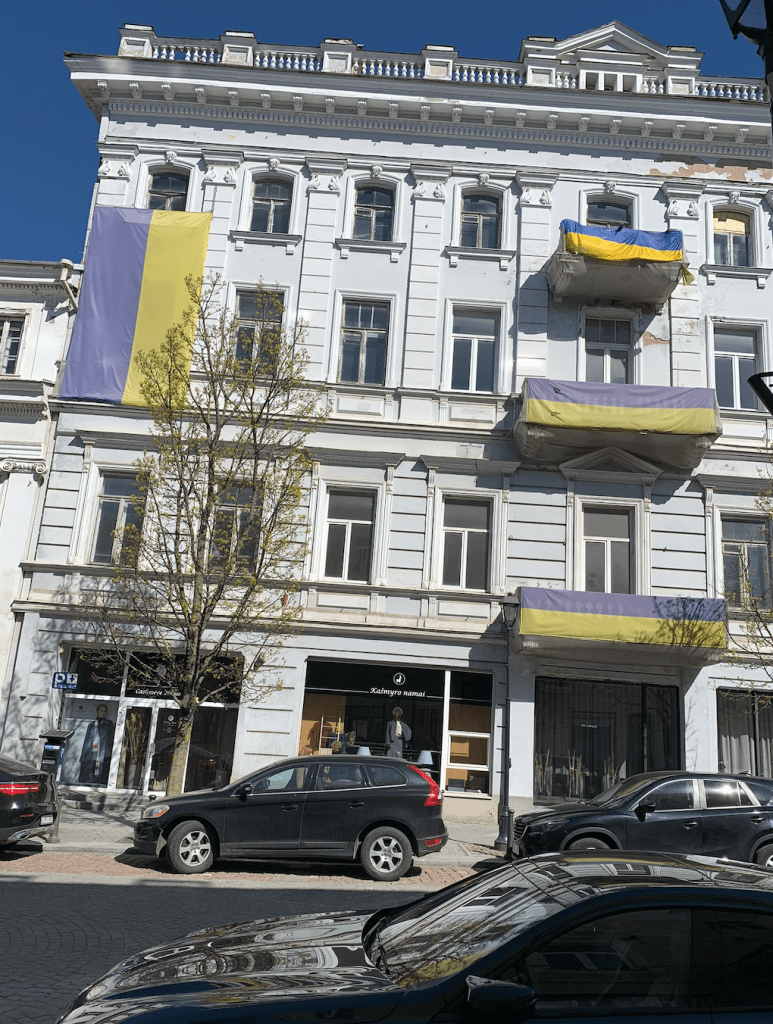
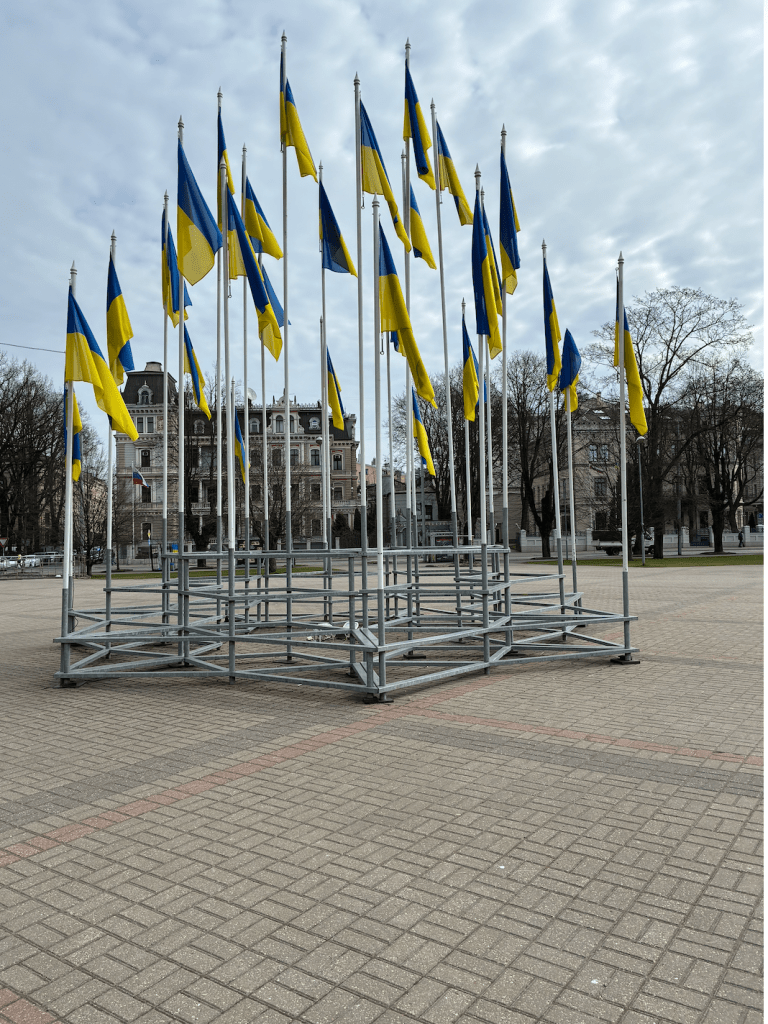
5. Soviet occupation. We felt pretty ignorant about the post WW2 period. Once the Nazi’s left, the Russians just kept up the momentum; deporting, exiling, jailing anyone who did not stay in line. Russian citizens were moved from Central Russia to establish an ethnically Russian population in Estonia, Latvia and Lithuania. These cultures were rewritten as Russian; their languages essentially banned. These tactics were used not only in the Baltics but in all of Russian occupied territories and now, again in Ukraine. It is understandable why the Ukrainian flag was flying everywhere.
block long protest signs in TallinnVilniusRiga
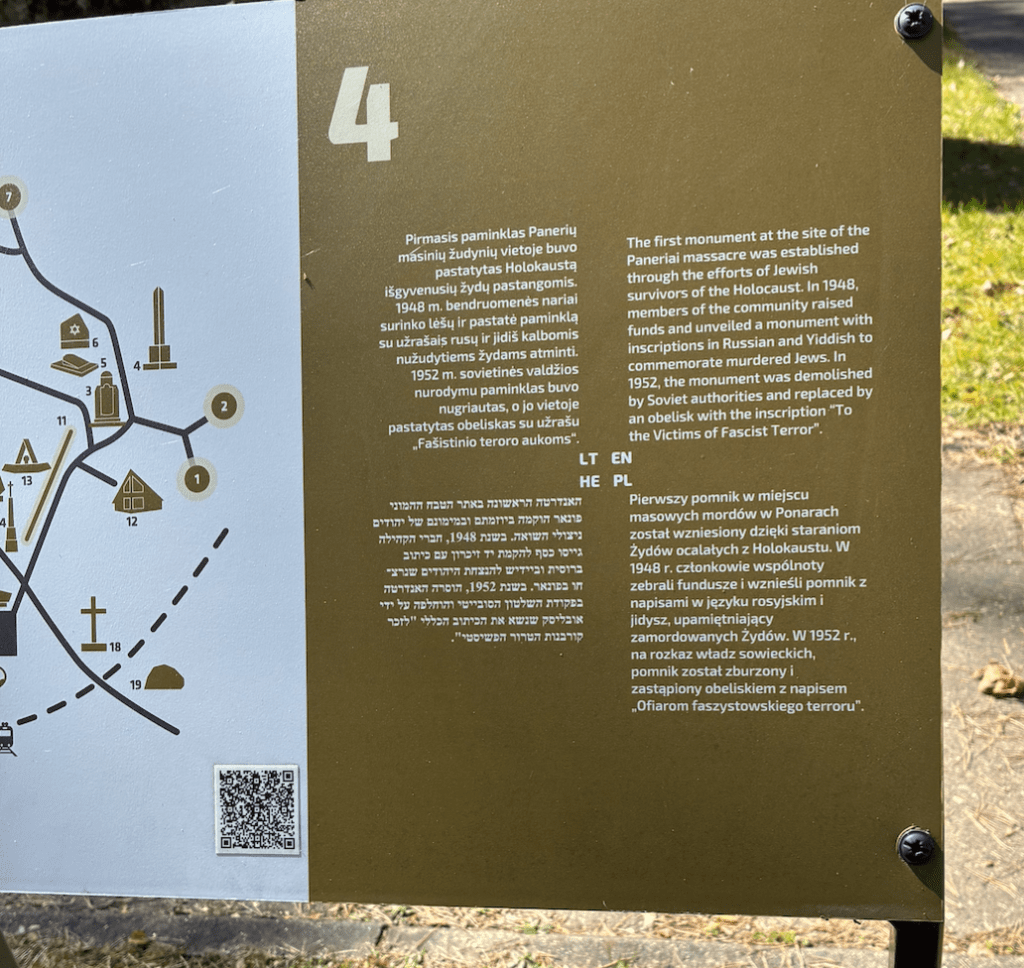
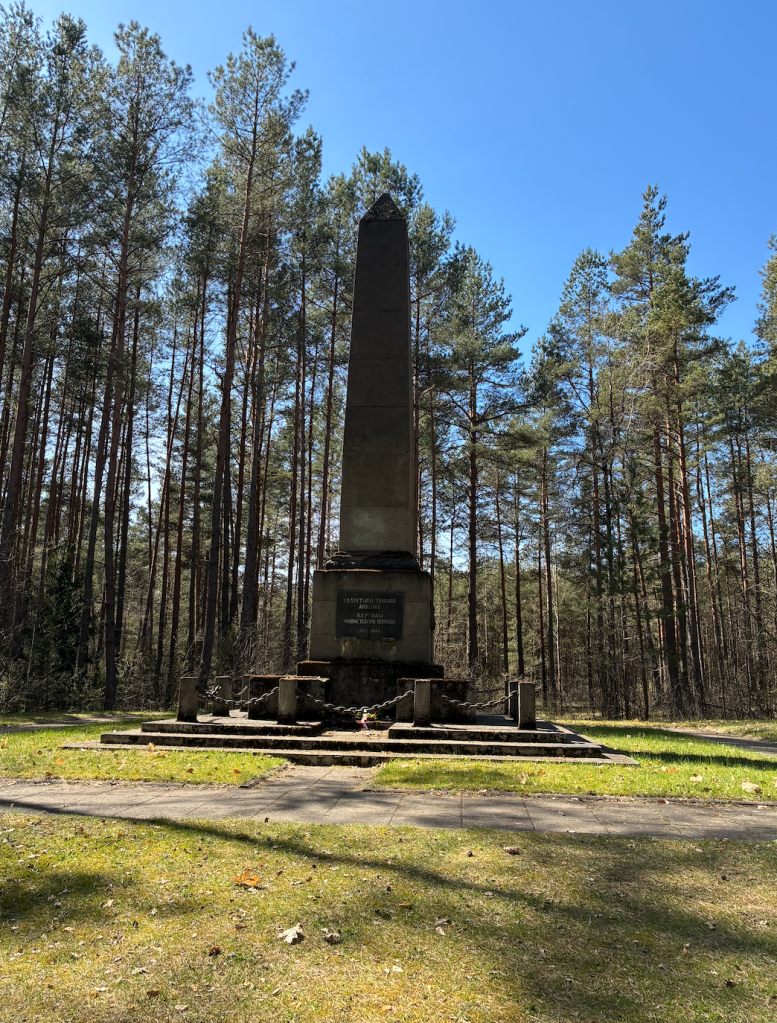
The Soviets also tried to re-write WW2. According to them, the only real victims of WW2 were the Soviets, yes, some Jews were killed, but the Soviets were the real victims. As indicated by one of the placards at the site of the Paneriai Massacre, a 1948 monument by and for Holocaust survivors was demolished by the Soviets who then built their own; telling a different story. Current Baltic governments are trying to correct this. We appreciated statements seen on these placards when referring to the Soviet narrative; “this is inaccurate”.
6. Nazi devastation. It is unavoidable. In travel prep, we looked up cities we would be passing through, from Tallinn to Druskininkai. Along with the usual citations like best food, there was usually a citation noting “forest massacre”, “ghetto”, “concentration camp”. Prior to 1939, this area was where Jews lived, had lived for hundreds of years. So they were killed here. Estonia had Nazi concentration camps (really, who knew?) 11,000 Jews and Roma killed there. In the Riga ghetto, 30,000 Rigan Jews +20,000 German Jews; most, plus an unknown number of Roma, were killed in forest massacres in the Riga suburbs- 25,000 in Rumbula and 46,000 in Biķernieki.
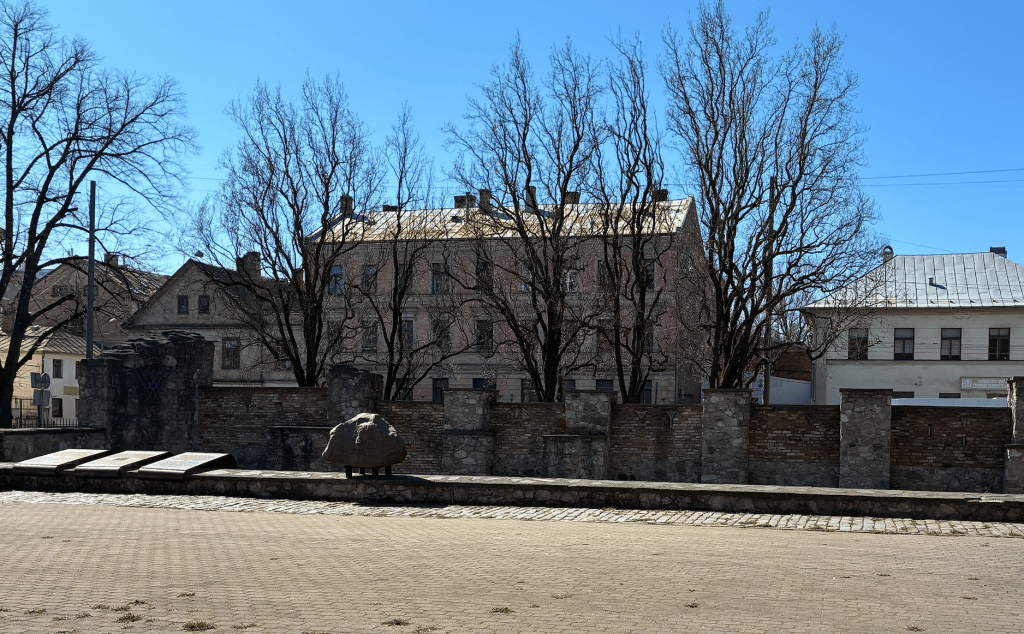
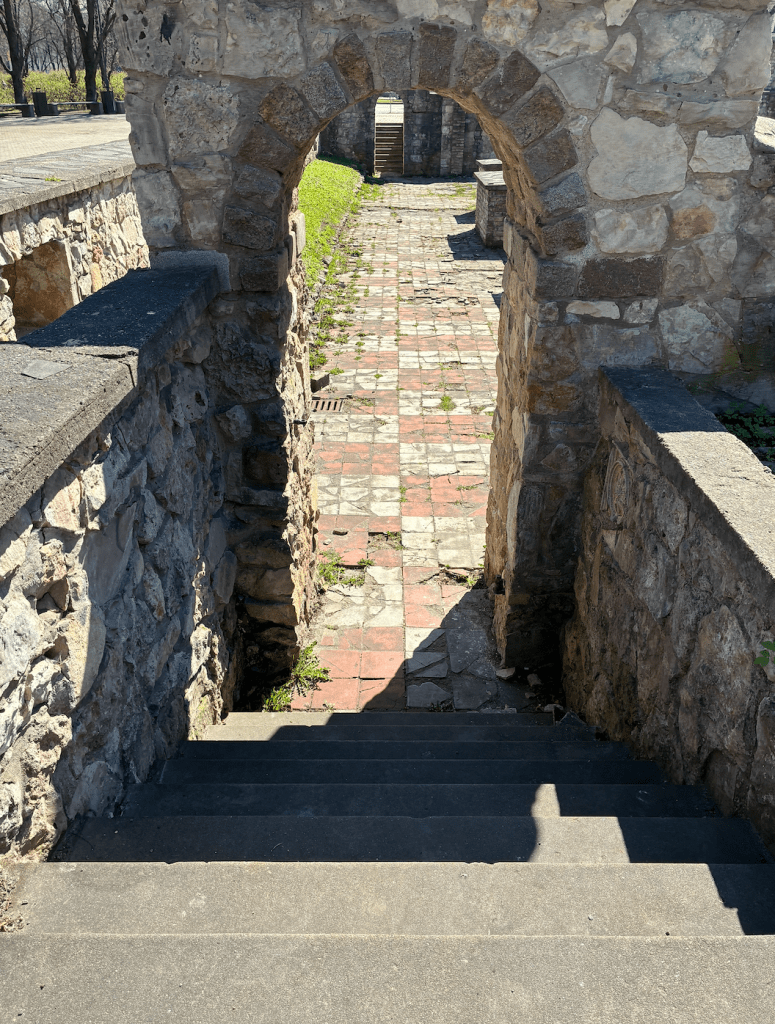
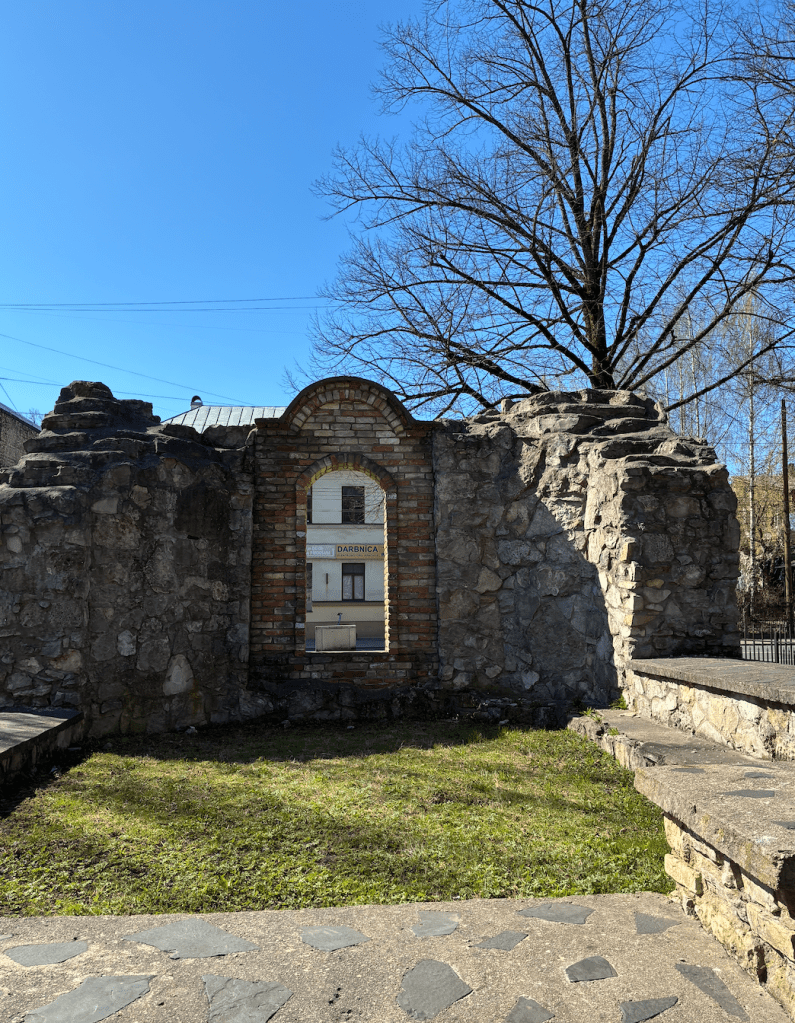
The foundation and some walls is all that is left of he Riga Synagogue. This was pretty much the only significant indication of the existence of ghetto. Not much else was marked or noted.constructed from 1868-71., burned on July 4, 1941
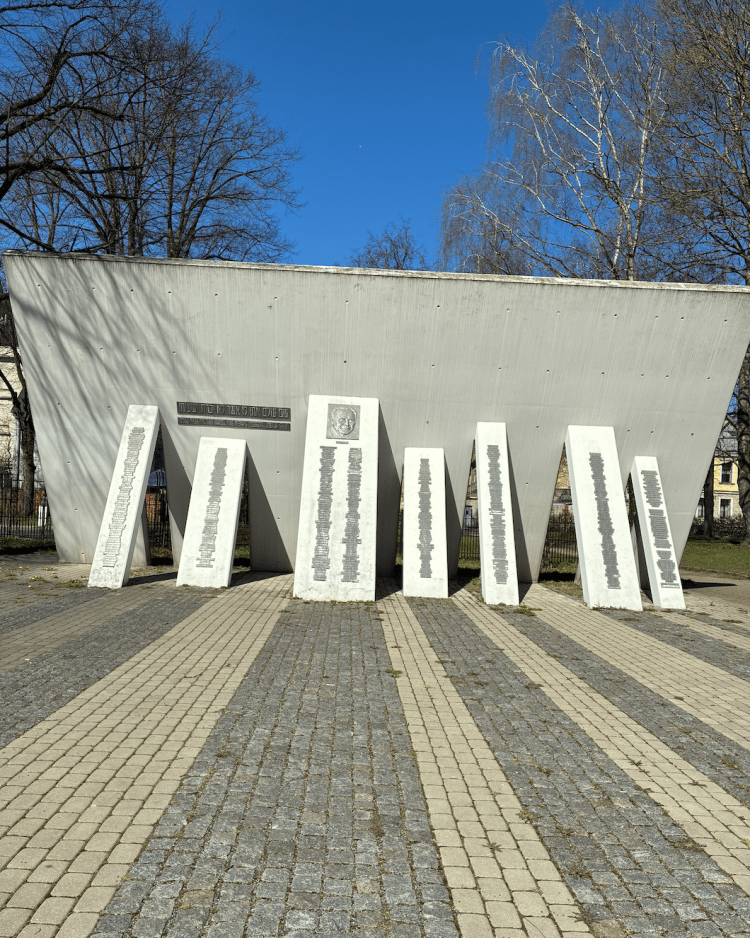
Next to the synagogue is the monument honoring Janis Lipke, a Lithuanian. From 1941-44, Janis with his wife Johanna, provide support to Jews in the ghetto and rescued about 50 Jews from the ghetto; that is 1/5 of the 200 survivors from Latvia.
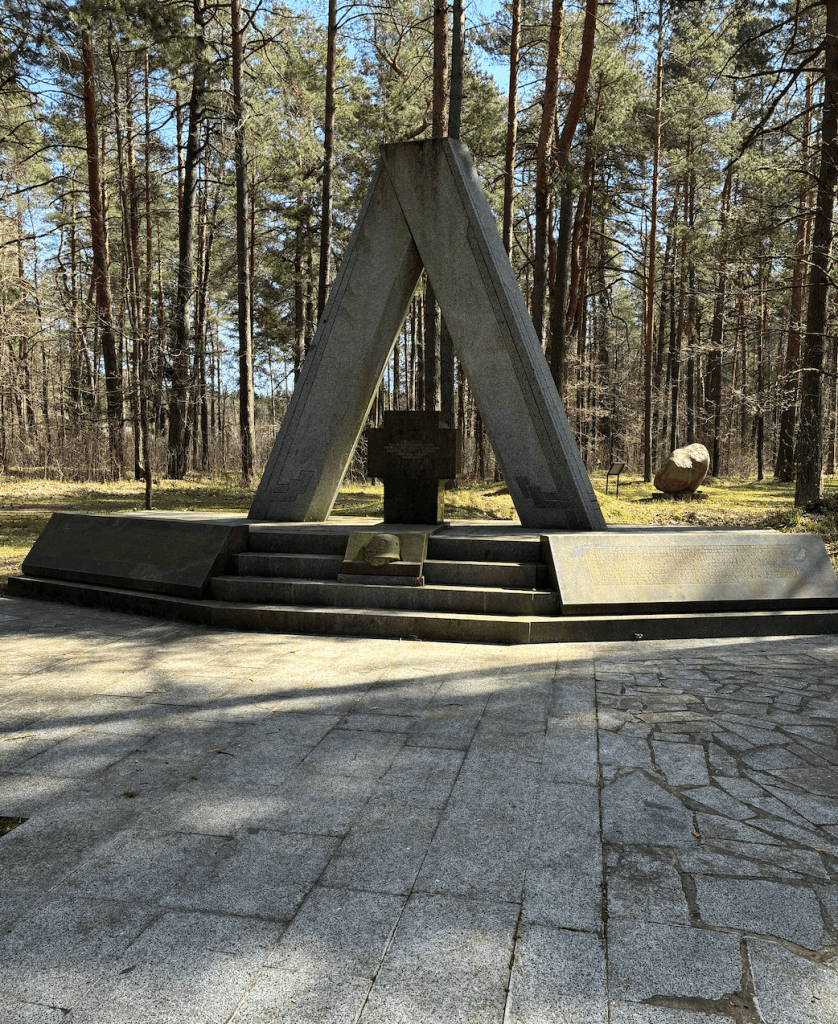
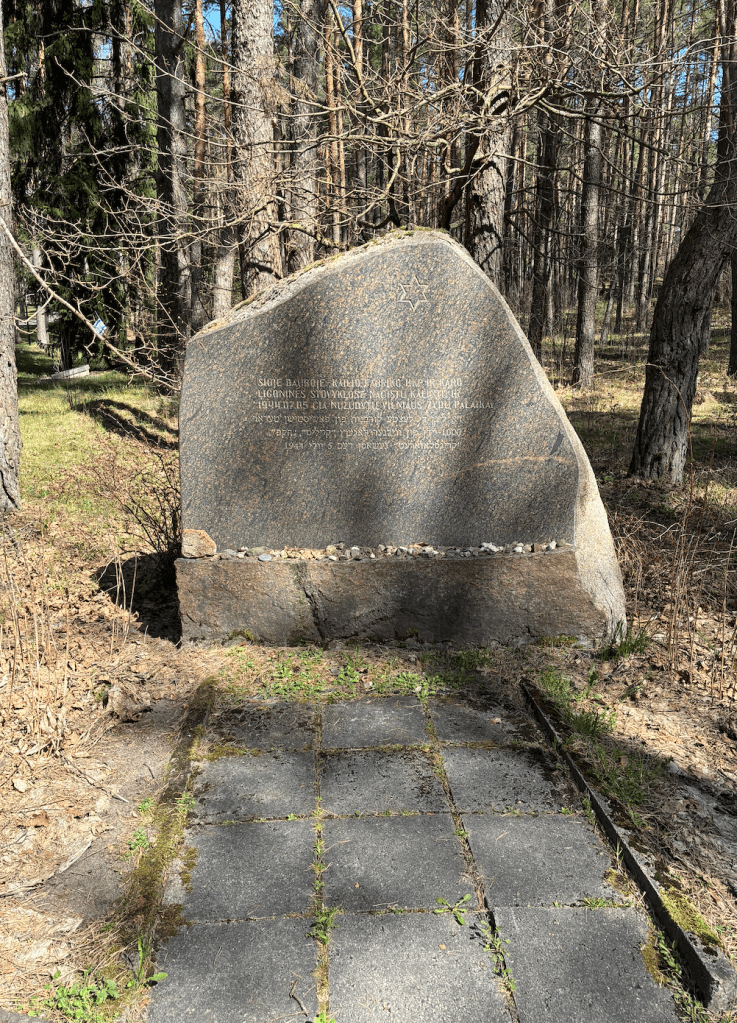
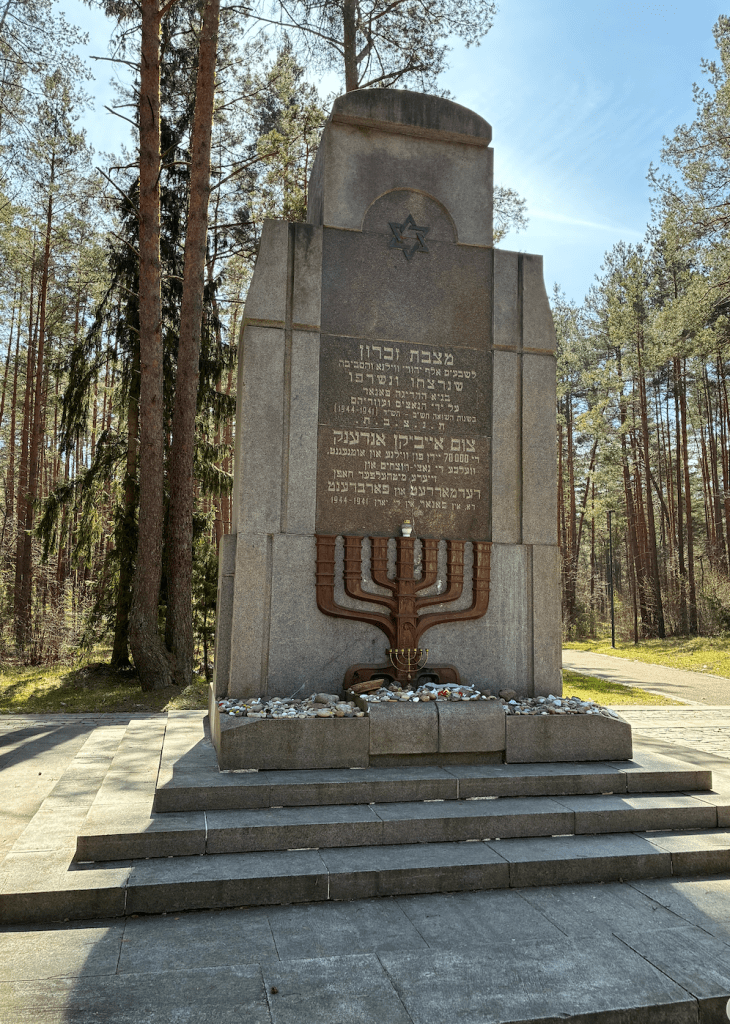
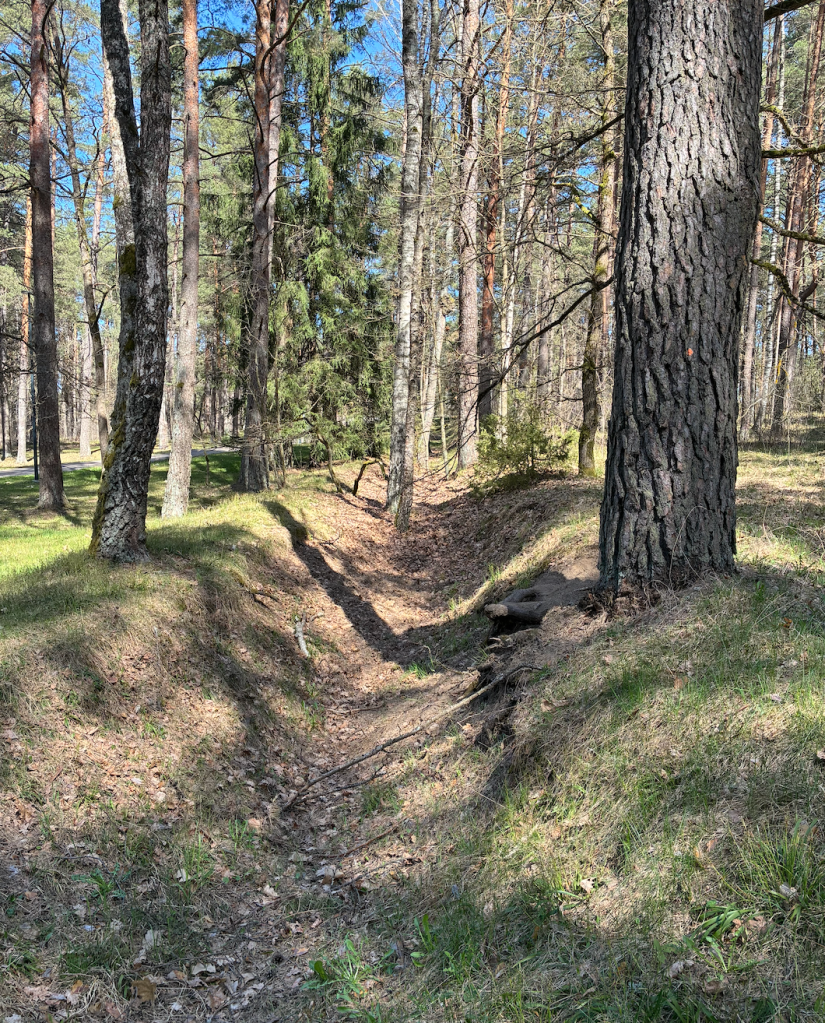
And then Vilnius, which was the center of world Yiddish culture. From Vilnius, we took a train just 11 kilometers away to the forest in Paneriai (also called Ponary) the site where 100,000 Jews, Poles, Roma, Lithuanian partisans and yes, also Soviet prisoners, were shot and burned. Memorials to each of these groups were scattered between the killing and burn pits.
After being there, it didn’t take much imagination to envision what the forests must have been like during the second world war. Mass killings, soldiers and partisans fighting, and civilians (mainly Jews) trying to escape, usually unsuccessfully. There were countless memorials; it became hard to travel past the forests and only see trees.
While the systematic industry of killing Jews was a unique horror, the political parallels to now are very obvious. Predators calling themselves the victims; altering historic facts to fit a racist ideology; dehumanizing groups of people; deporting/imprisoning/killing innocent people, separating children from their parents.. This is what people did and keep doing. It is still happening.
We bring this up at the end of our Baltic summaries, not at the start, because we wanted to consider these countries, these cities as what they are now. Not to leave the wrong impression; we thought the places we went remarkable. The bad aftertaste was primarily due to the occupation by outsiders. But sometimes history makes it hard to see the now because of the then.
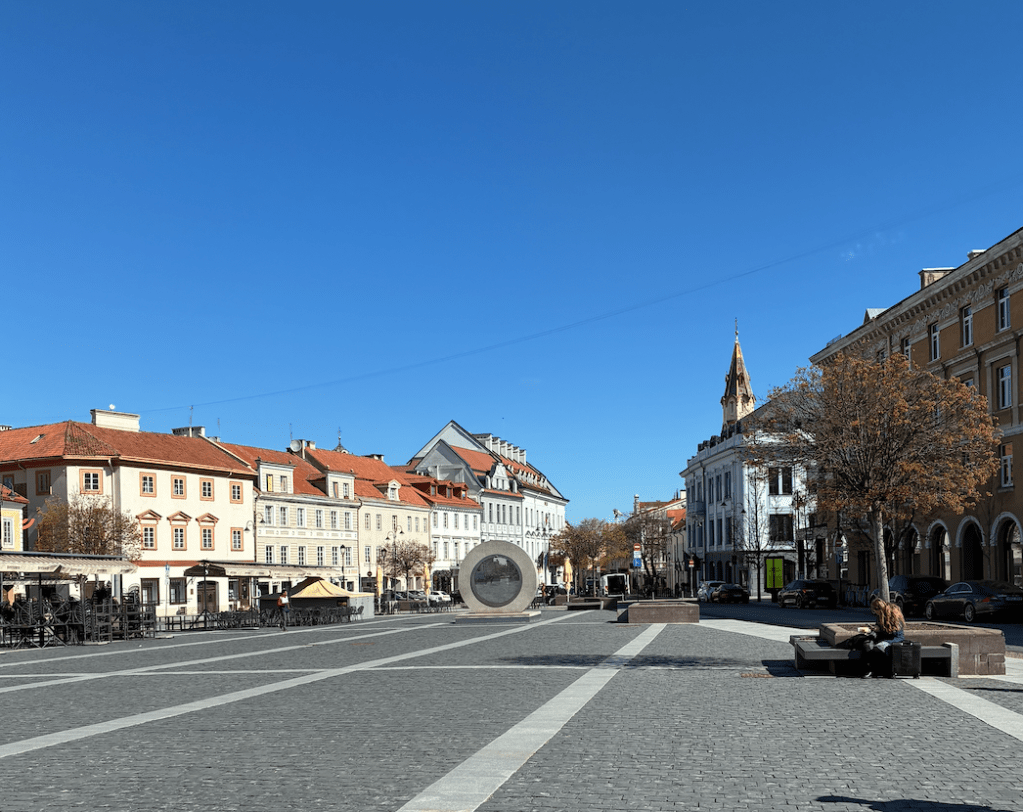
Vilnius, Lithuania; Wilno to Poles who called it home until after WW2, Vilna in Yiddish. Dubbed the Jerusalem of North by Napoleon. Nicknamed Babylon in the 16th-18th due to its multi-ethnic demographic. It was not until independence in 1990, that for the first time in modern history Lithuanians became a majority at 63%. of the population.
Maybe this historic mishmash contributed to our mixed feelings about Vilnius. Endearing though was a weird collection of quirky sites. First and foremost, right after arriving-
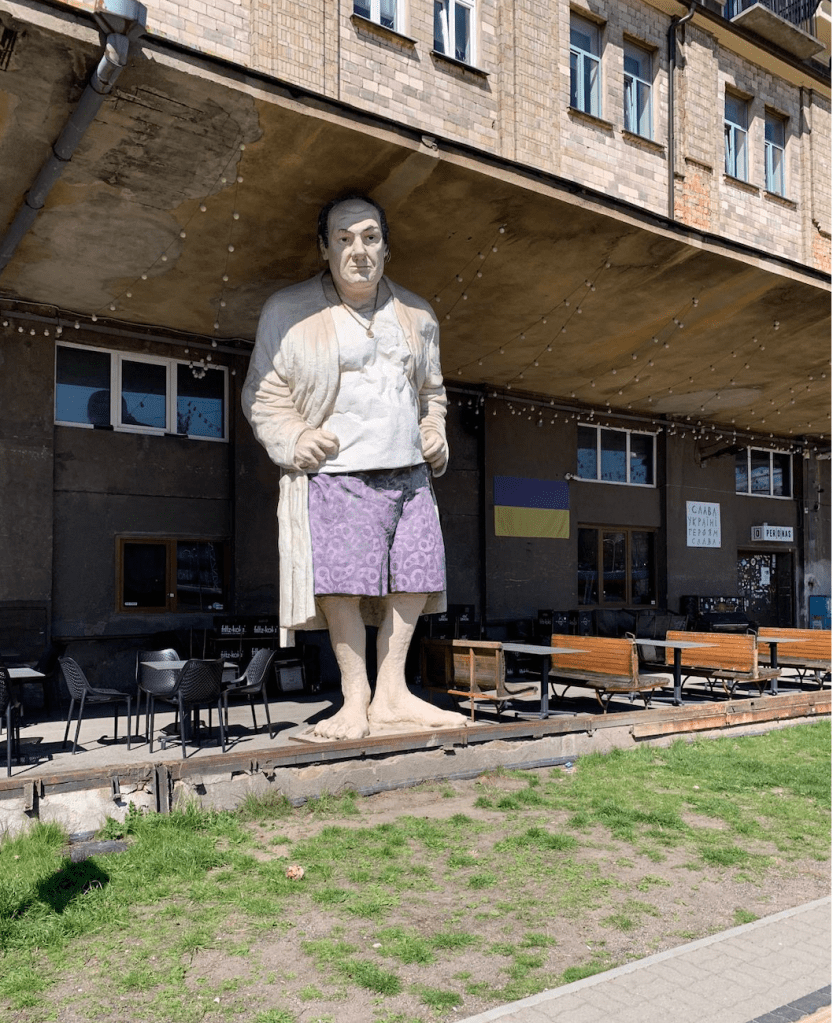
A giant Tony Soprano at a restaurant along the train tracks at the rail station
(PS- pics show up better on the blog, which you can click on in the email)
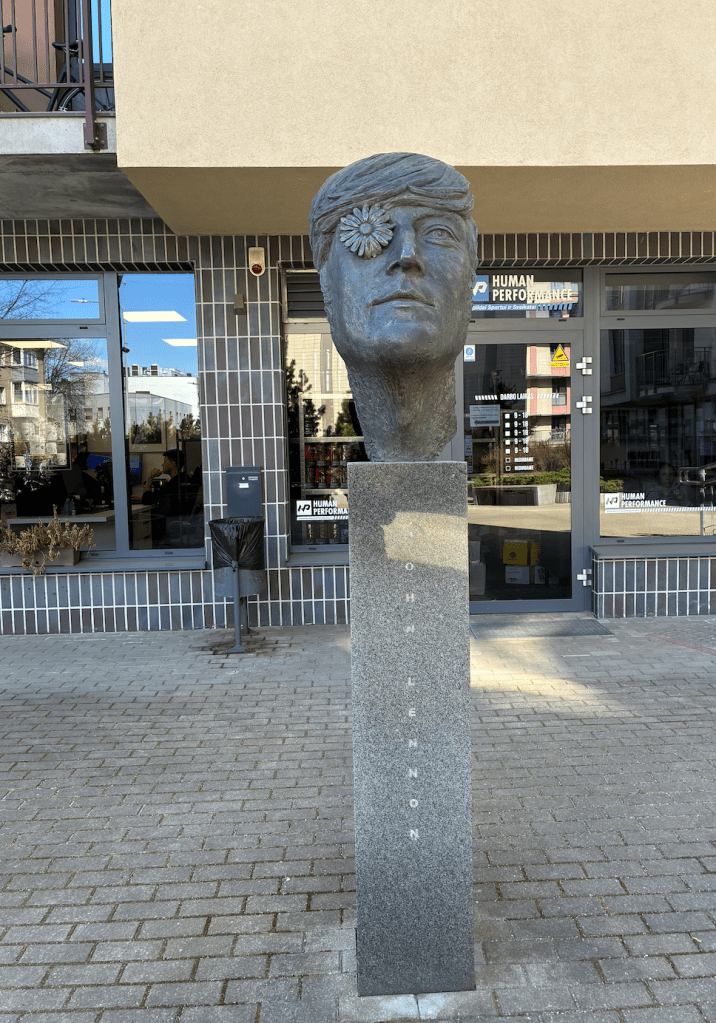
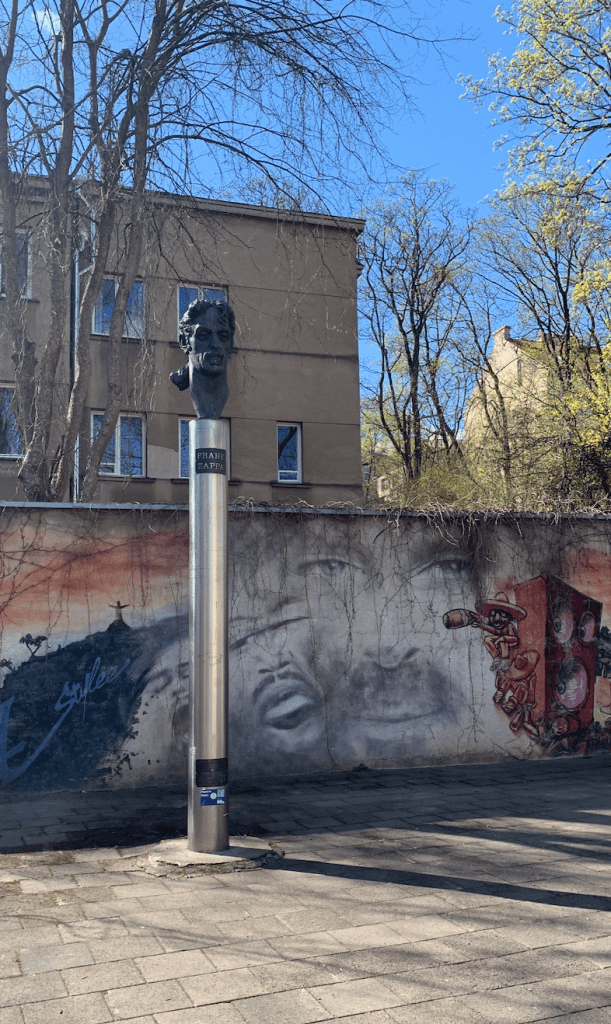
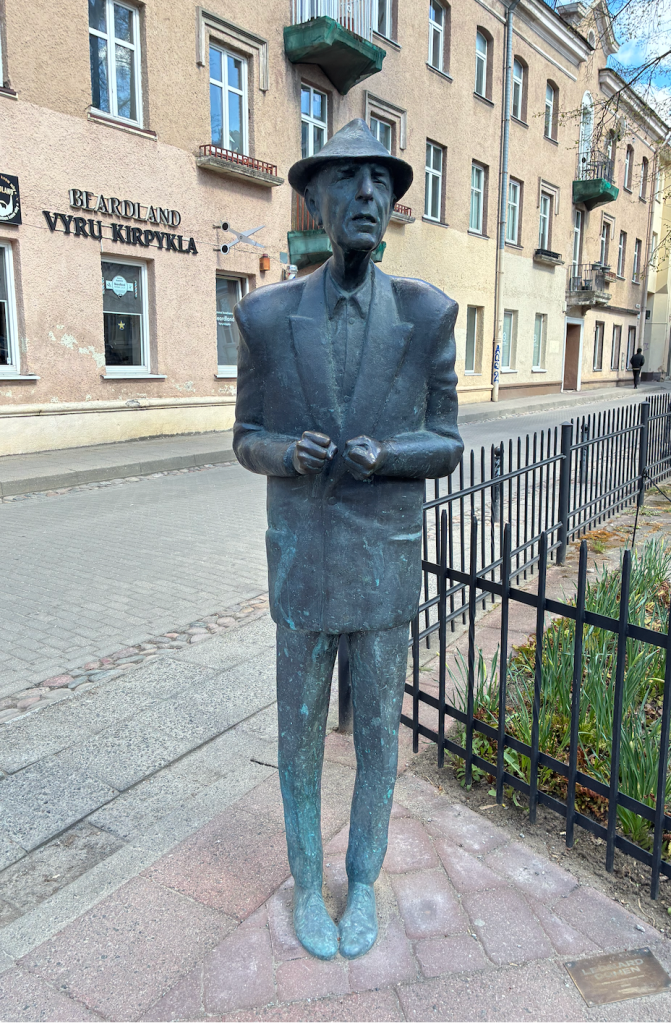
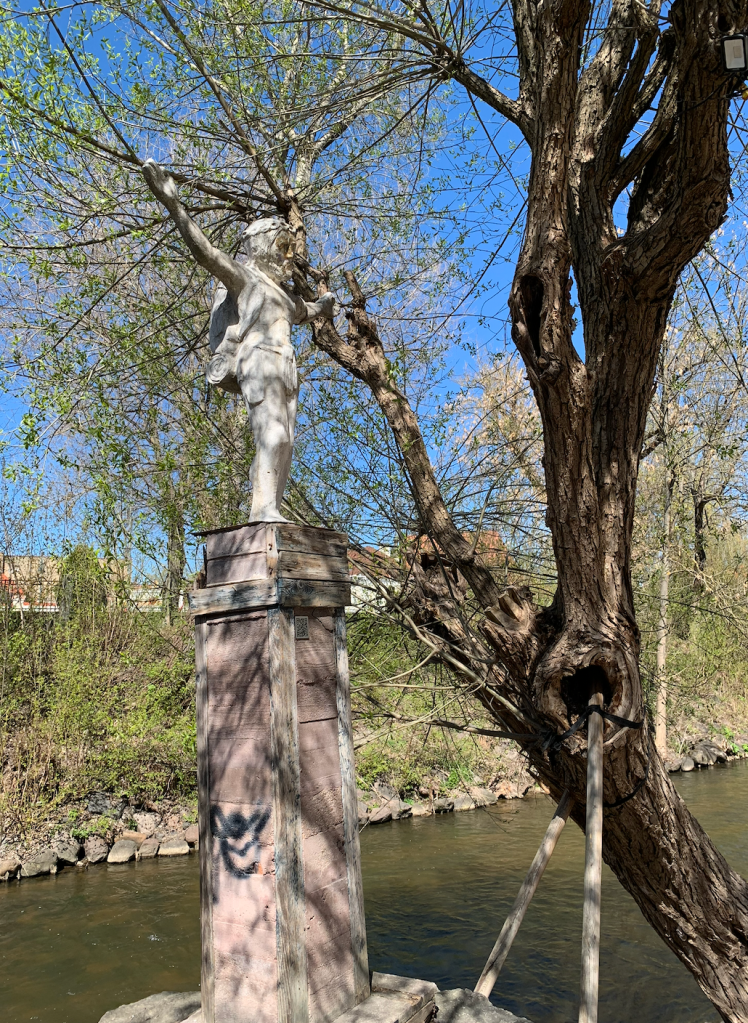
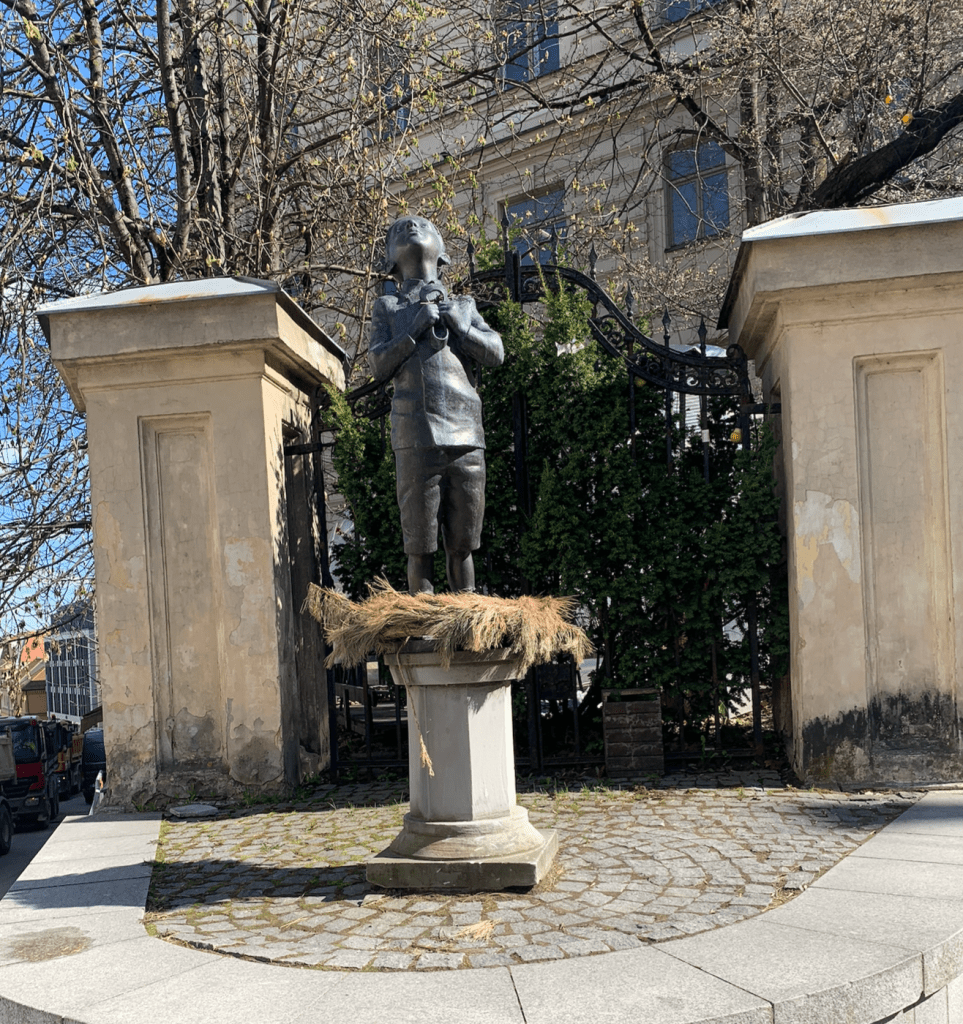
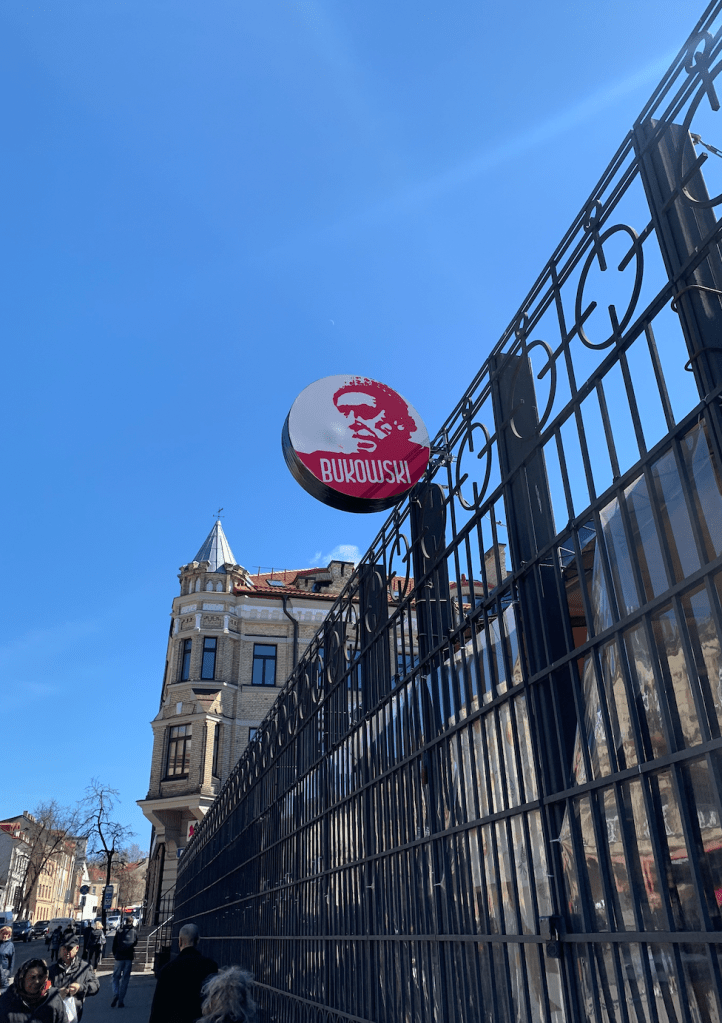
John Lennon in front of our apartmentFrank Zappa in front of a random buildingA diminutive Leonard Cohen in the Jewish ghetto (his mother was from Kaunas, Lithuania)Backpacking JesusWistful boy in a stork nest. Folk tale?Charles Bukowski, German/Polish American but here anyway We have not figured this one out.
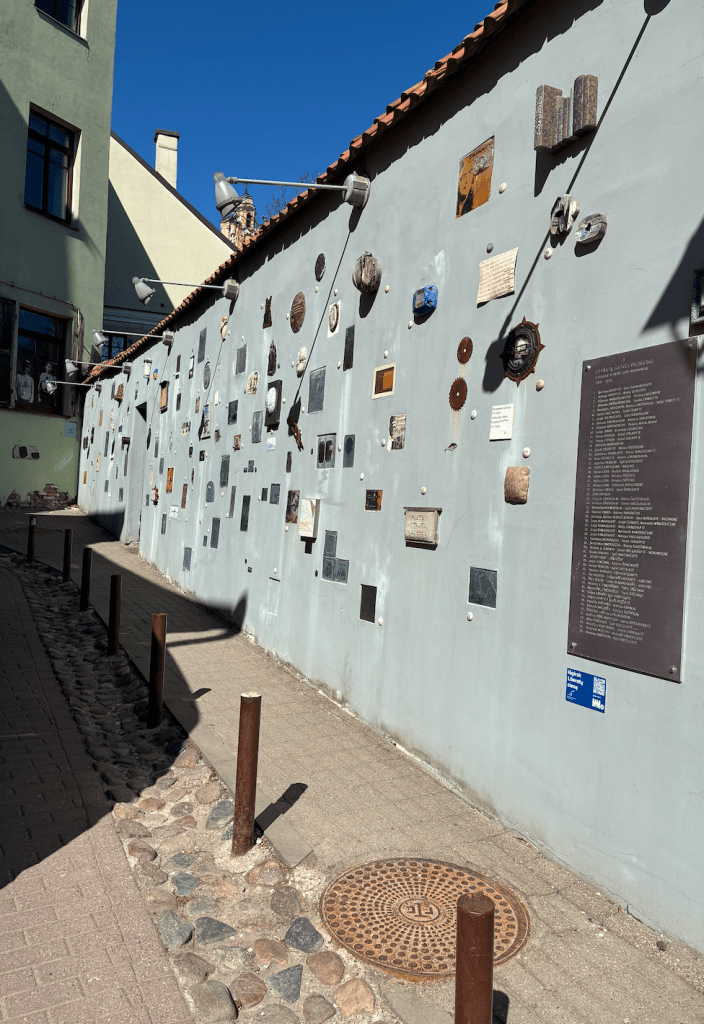
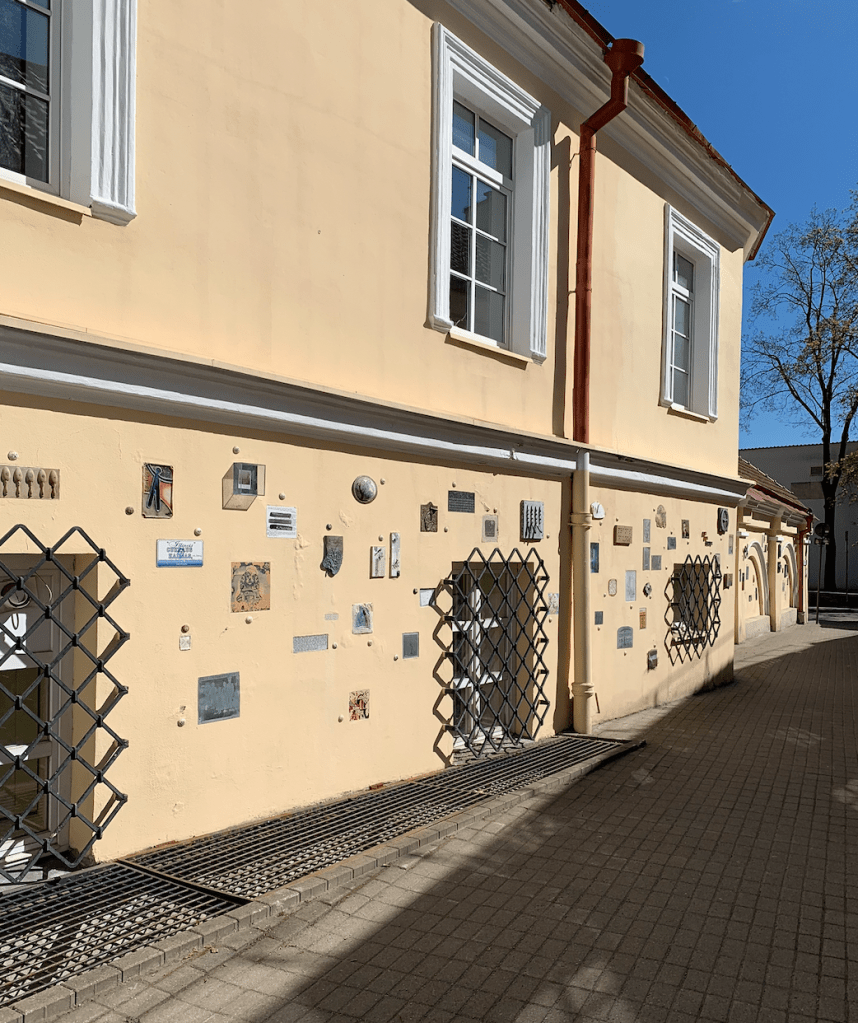
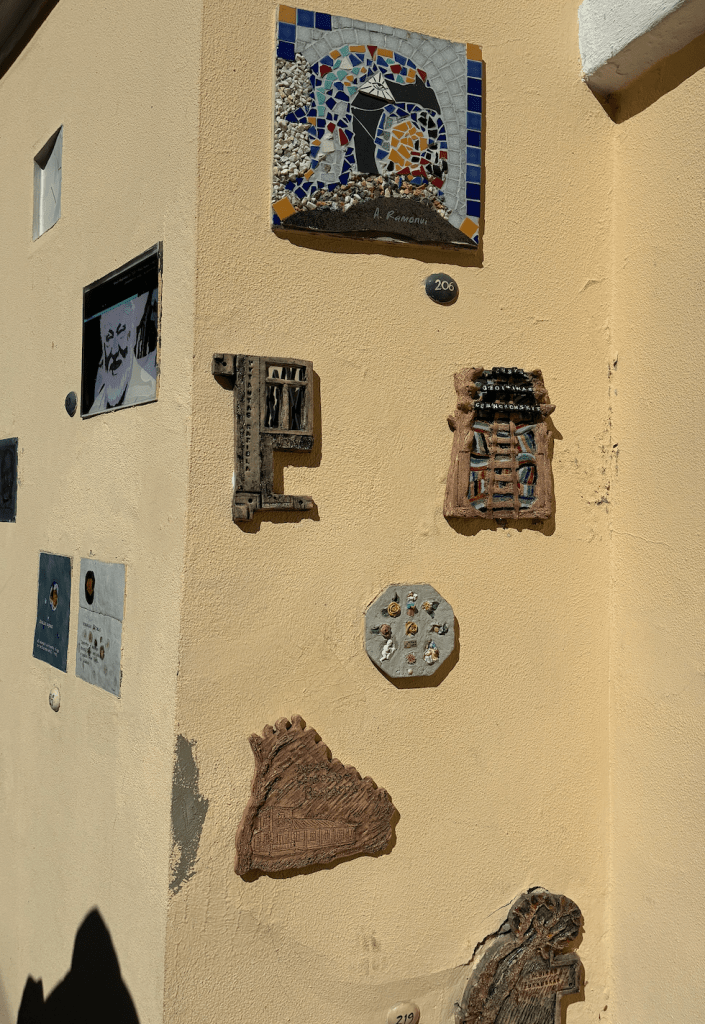
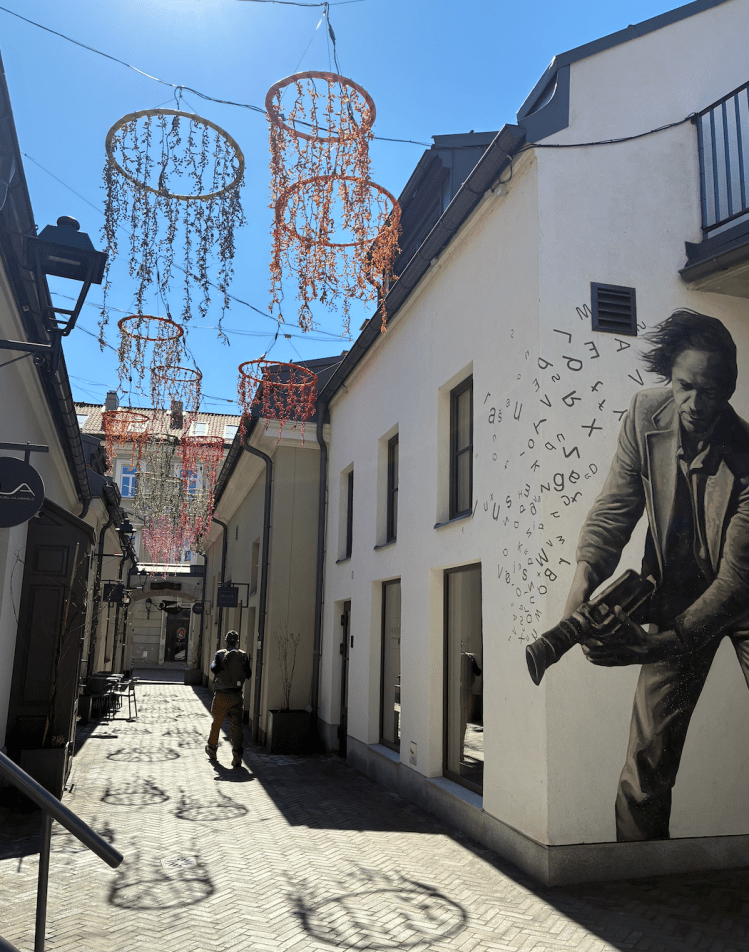
In addition to Charles Bukowski on the fence, Vilnius has Literatai Street a street decorated with plaques and pieces dedicated to authors, who have some connection (many tenuous like they visited) to Vilnius. The street has historic ties to literature, the poet Adomas Mickevičius lived there (19th C) and printing houses and bookshops operated there (20th C).
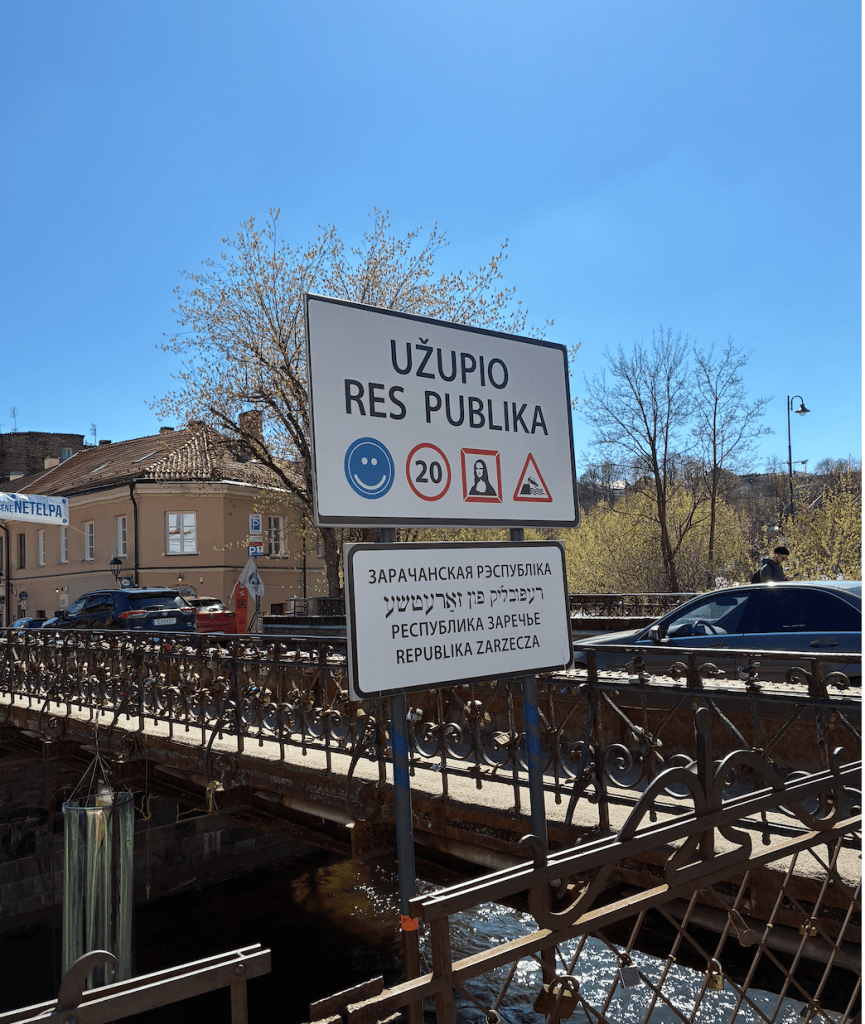
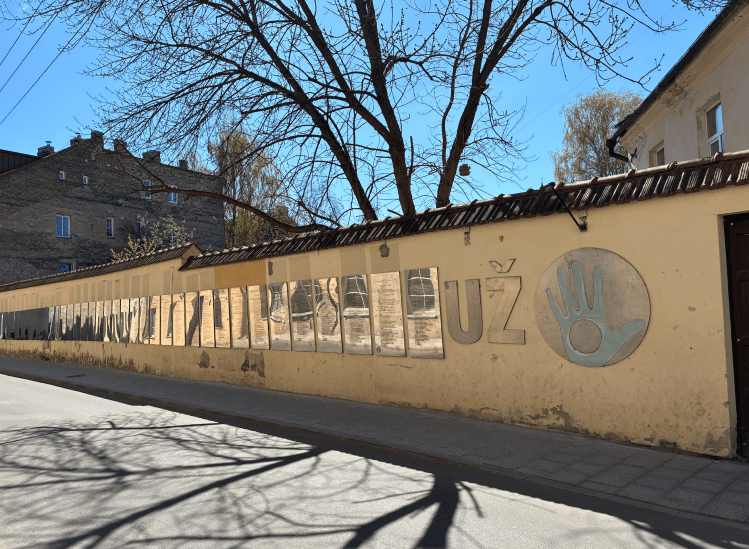
There was the Williamsburg/Silverlake/Berkeley hipster area- Uzupis, “Uz” a self-proclaimed independent republic.
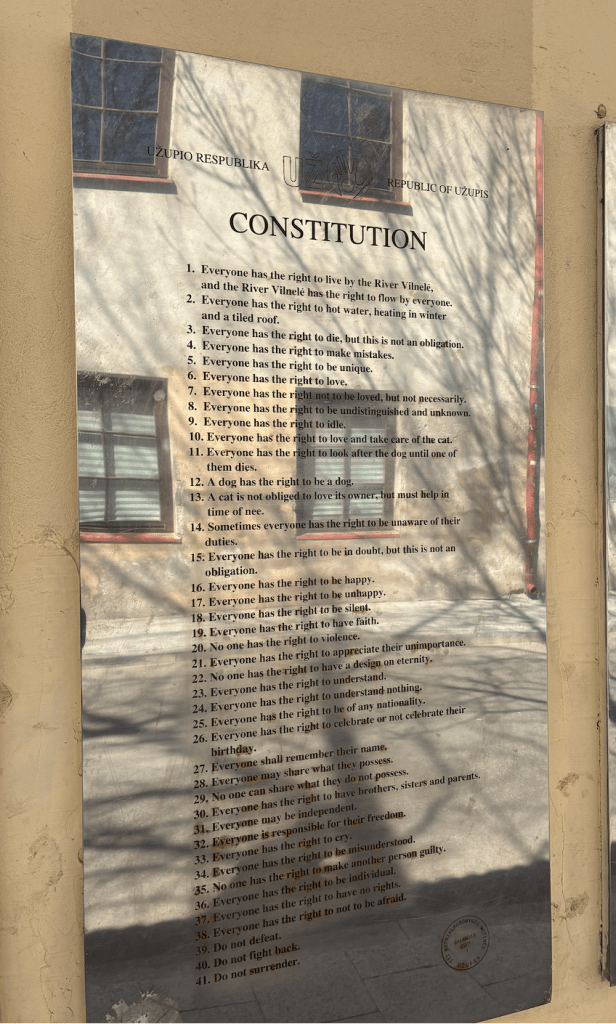
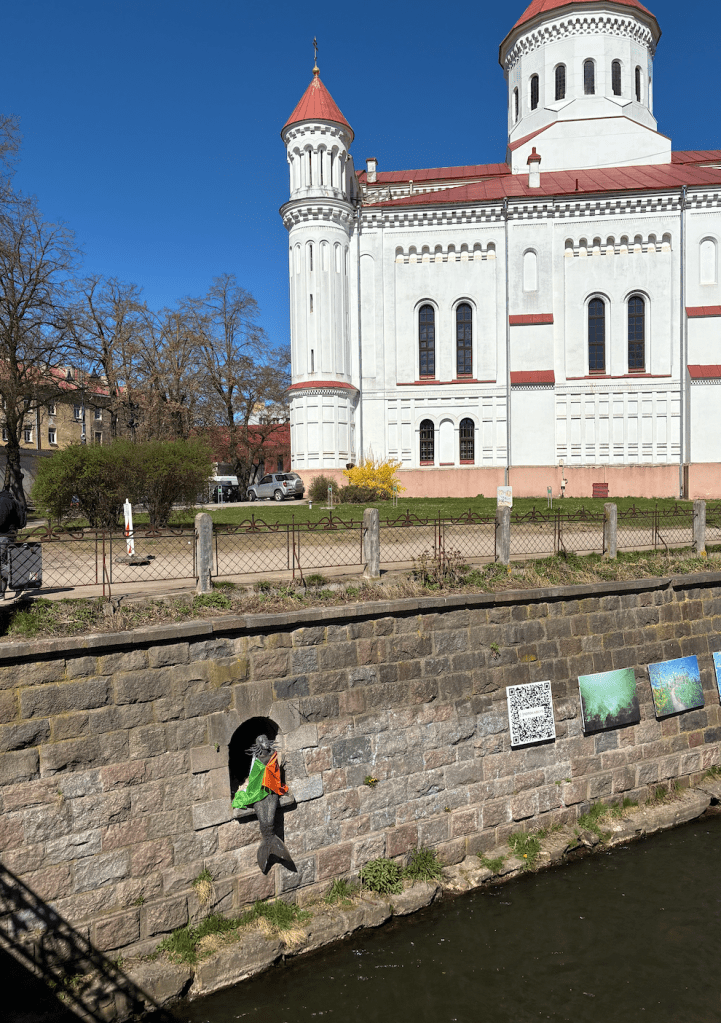
Valid constitution, more than most.If you fall in love with the mermaid, you are destined to stay in Uz forever. We don’t know why she’s wearing the Irish flag.
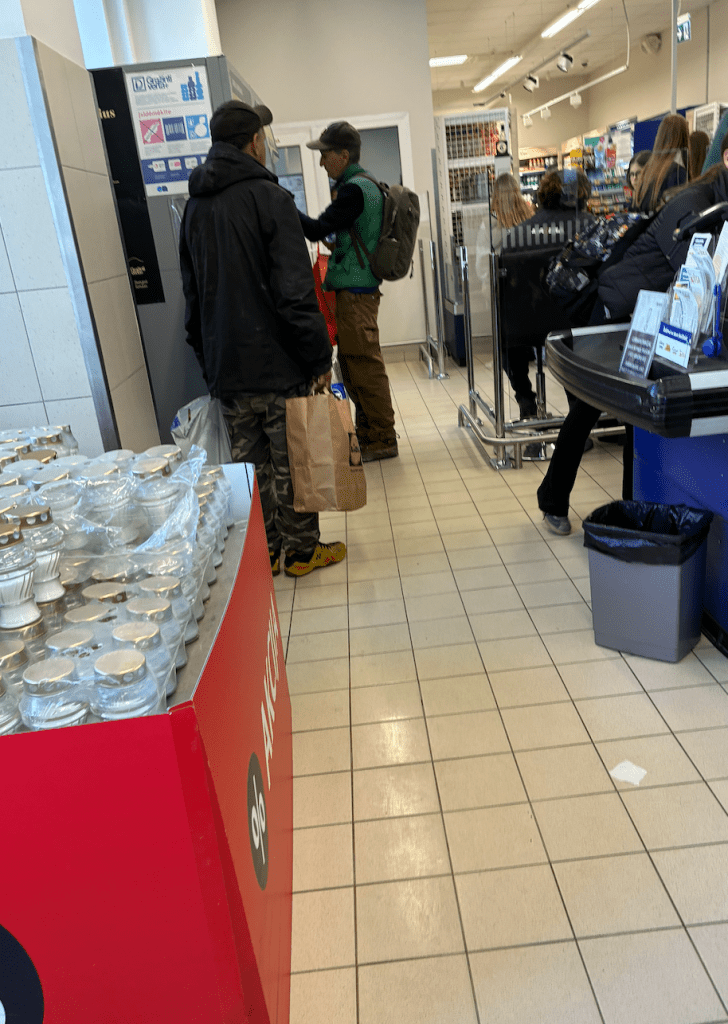
And Nick was even able to experience Lithuanian recycling!
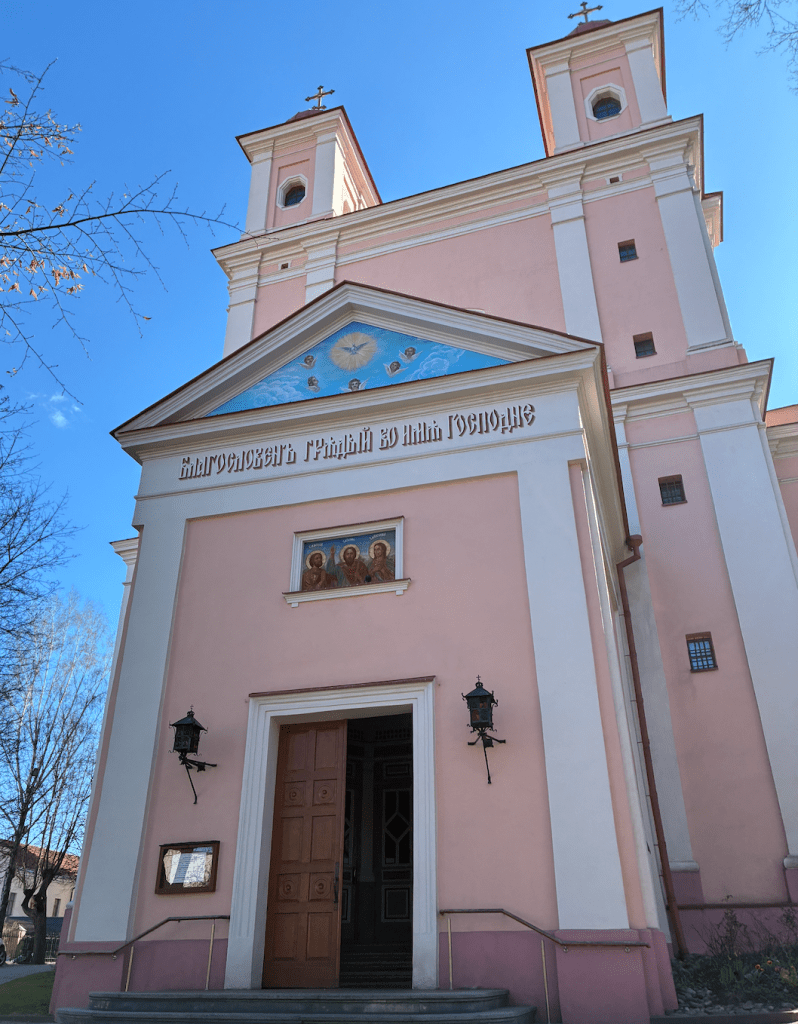
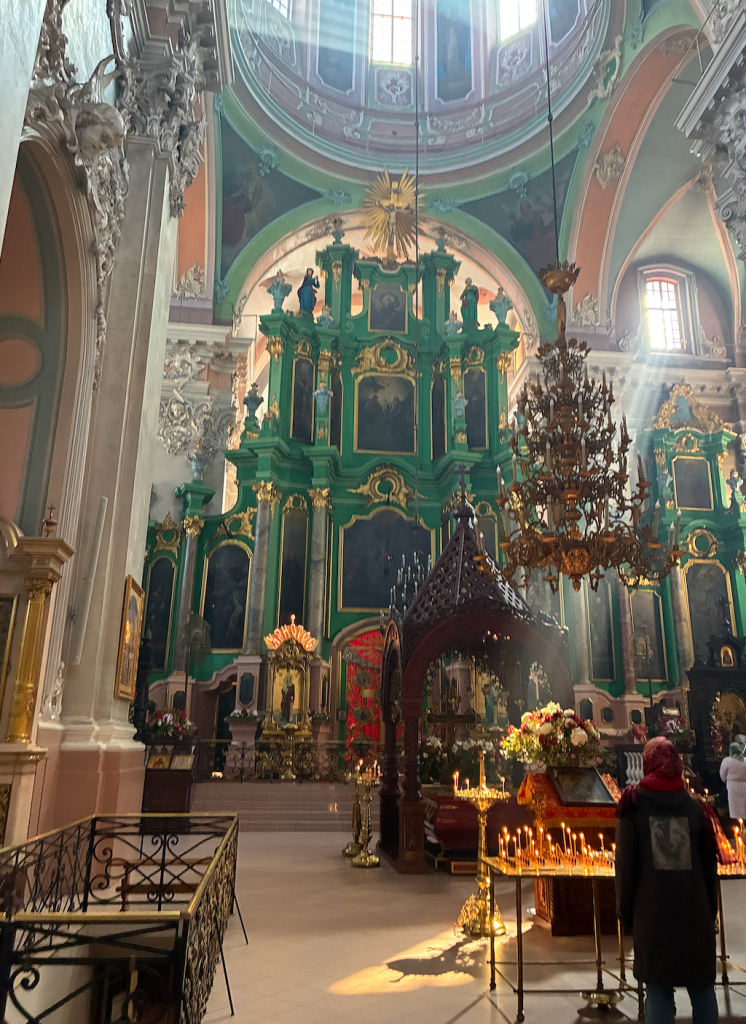
If this was not enough, there were the traditional sights like churches, tons of churches which was surprising since during the soviet period many were destroyed or repurposed into warehouses, factories, museums or government buildings.
Orthodox Church, simple on the outsideDifferent than most Orthodox churches because it was a Roman Catholic church once
Ukraine flag colored ribbons on the tree outside
Very nice big park
In the 1200s, Lithuania was a powerhouse and included parts of Russia, Prussia and Poland. Then began the classic European revolving door of leaders, and Vilnius was part of Poland up until 1918. So as with other Baltic states, there were also many monuments promoting Lithuanian culture, memorializing those killed during the soviet occupation and celebrating independence.
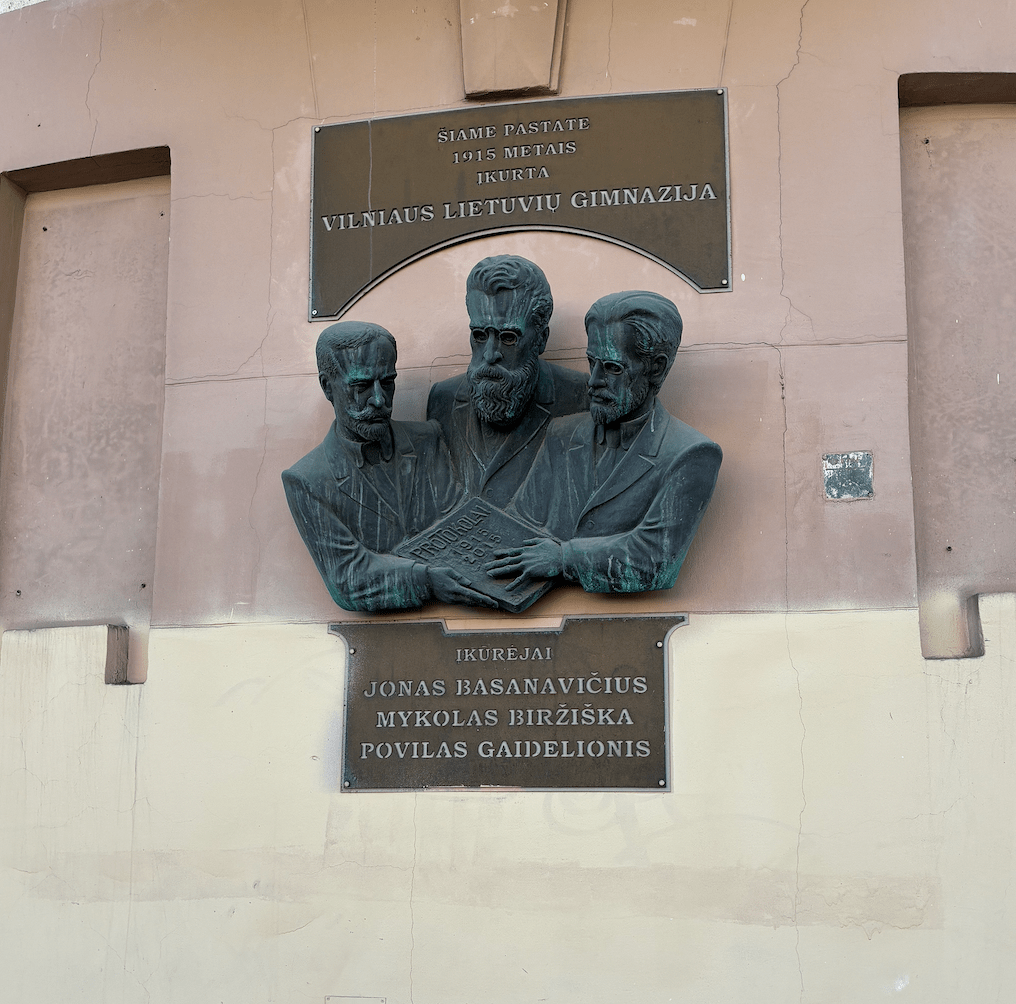
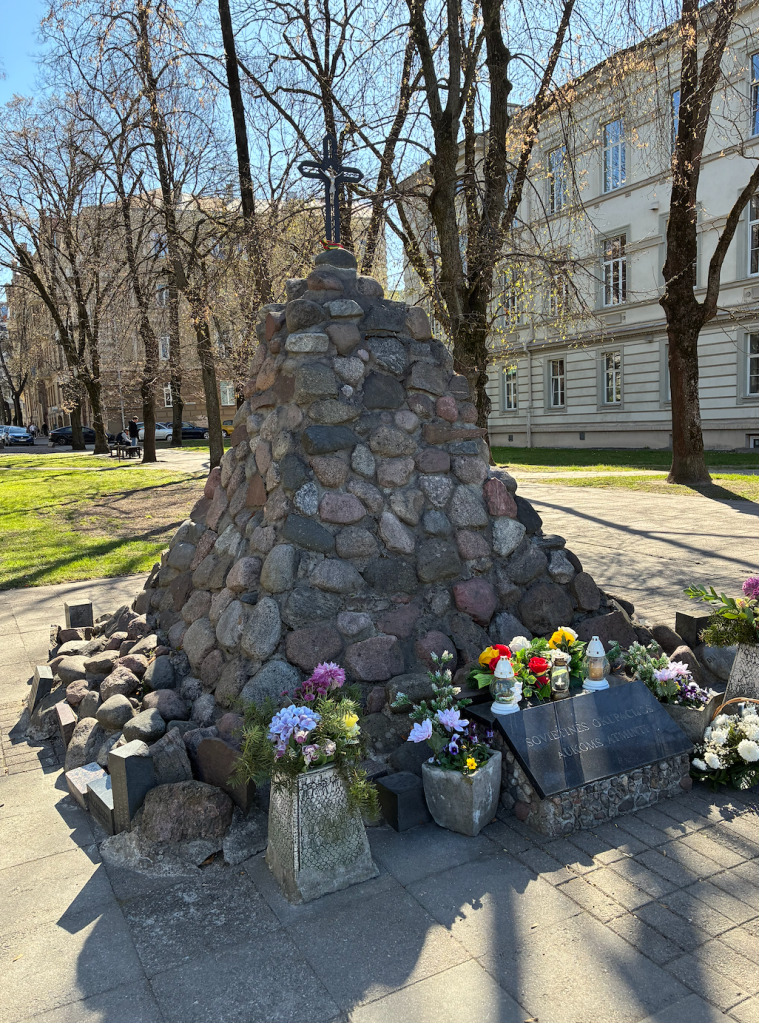
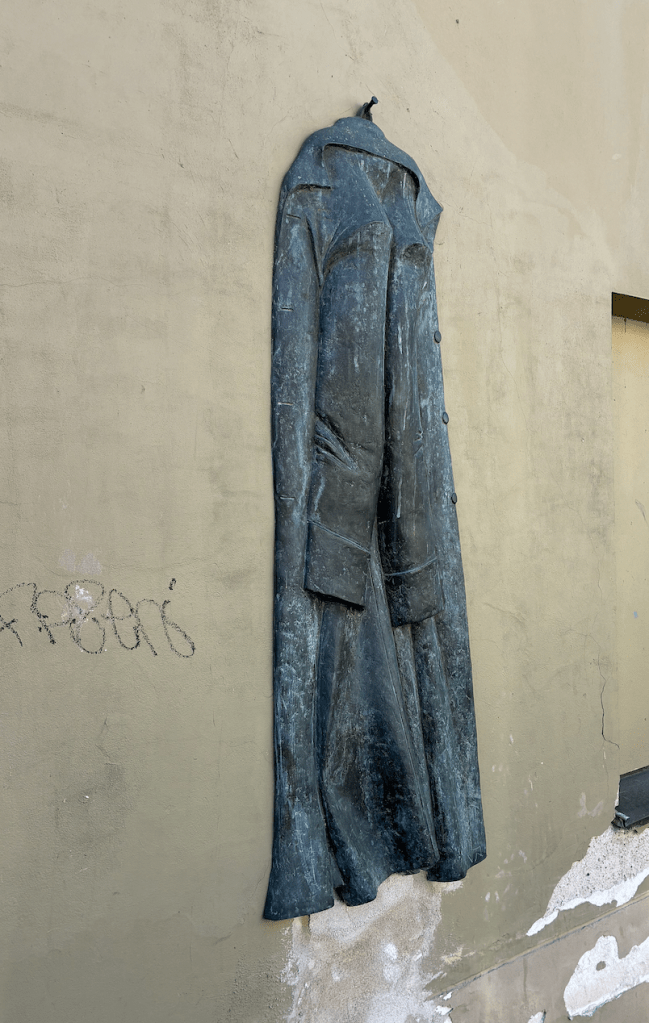
Writers and academics who fought for Lithuanian independenceRemembering those killed during the soviet occupationLoved this sculpture of a soldier’s coat-in 1919, a young soldier, Antanas, gave his coat to an ill soldier, in doing so, Antanas got pneumonia and died.
Before WW2, Jews made up about 42% of the population. Vilna was the center of secular Yiddish culture- theater, literature, music and politics. The YIVO and Bund were born here (see links below). Lithuania suffered the full brunt of Germany’s racism, 95% of the over 250,000 Jews there died.
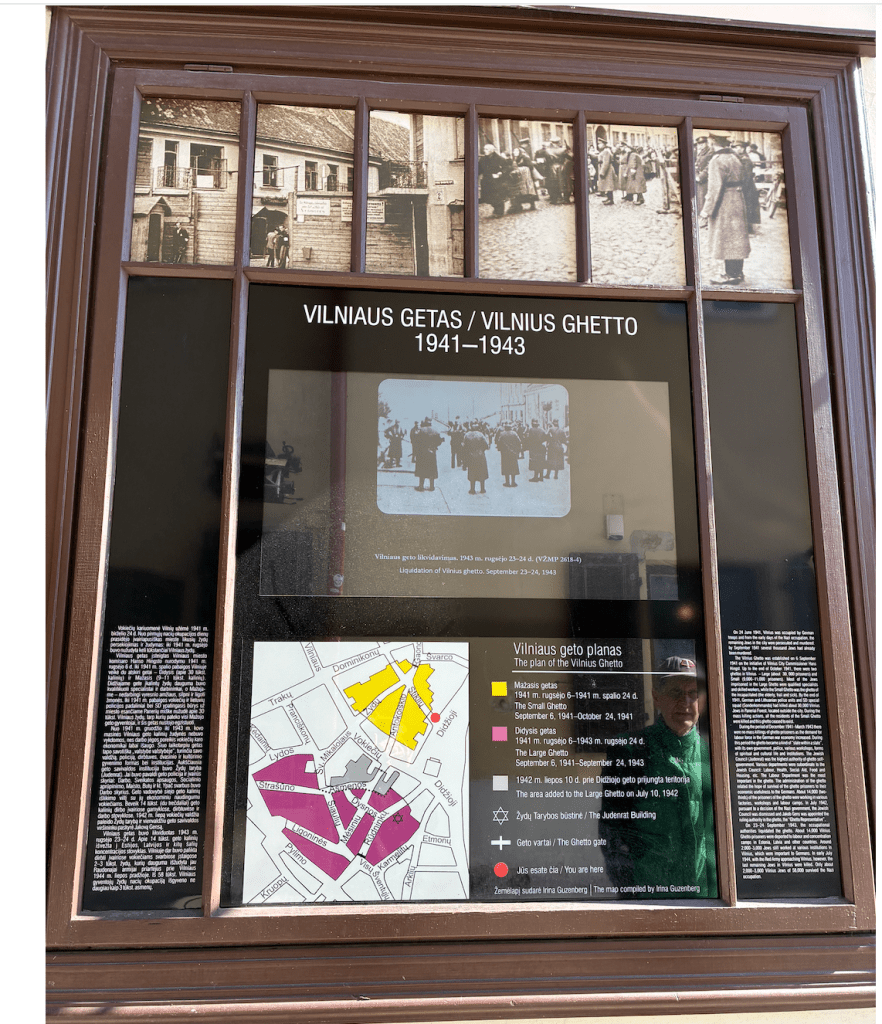
The Nazis established the Vilna ghetto in 1941, divided into the large and small ghettos.
The historically poor, vibrant Jewish quarter was the site of the little ghetto, now a lot of restaurants and upscale shops. A handful of murals of people depicting Jewish life were painted in 2019 using old photographs plus (another diminutive) statue, a milk-man, kind of Tevya-esque from Fiddler on the Roof. For some reason we did not really take pictures here, but here is a good link to some https://litvakshtetls.com/ekskursijosvilniuje/virtual-tours/#jp-carousel-2241
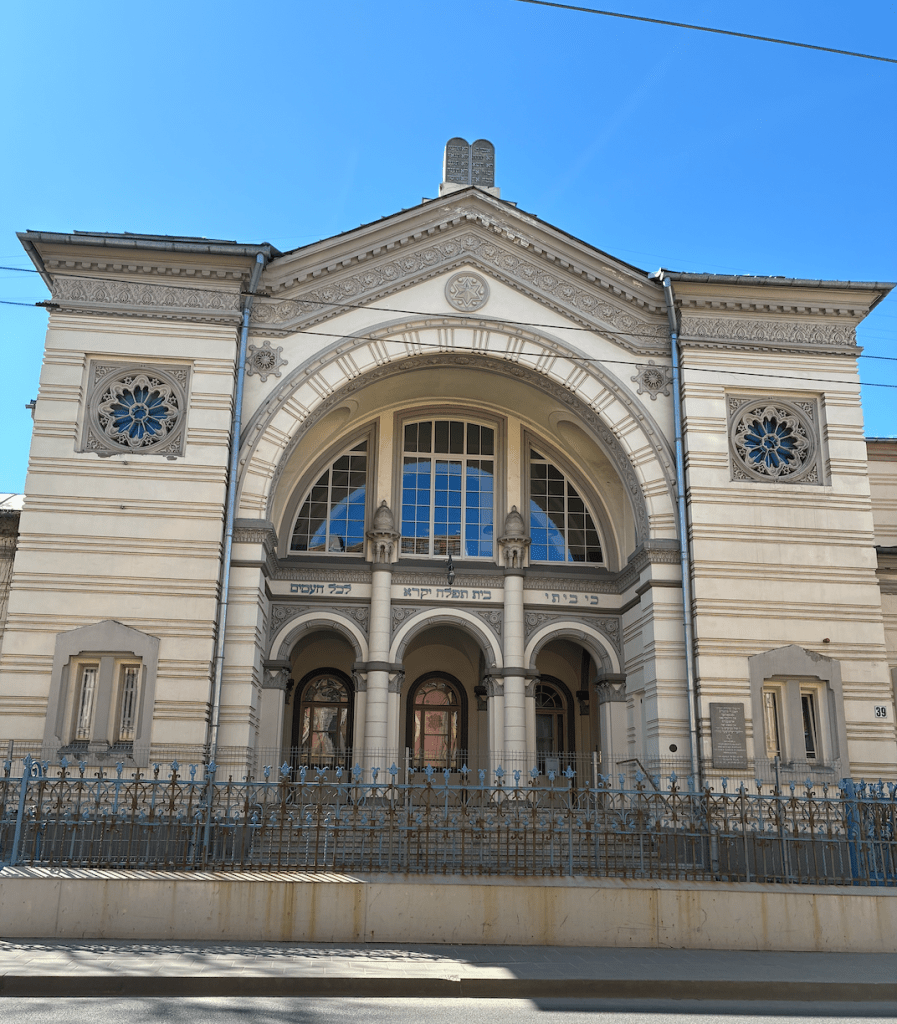
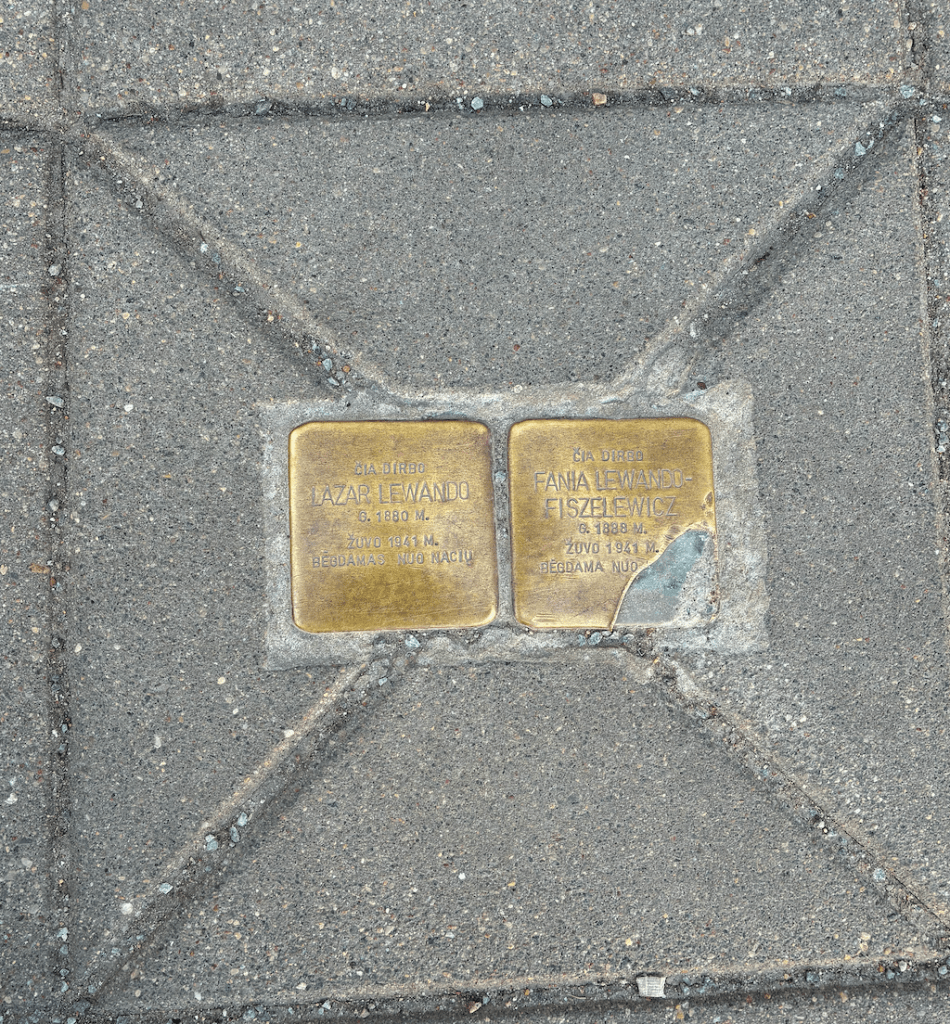
This temple still exists, most don’tPast site of a famous Vilna Vegetarian restaurantFania Lewando wrote a vegetarian cookbook and owned the restaurant and cooking school. Shame it is damaged, we sought this one out, https://en.wikipedia.org/wiki/Fania_Lewando
The large ghetto extended into a different area of town which may have been a bit more prosperous and secular area than where the smaller ghetto was located.
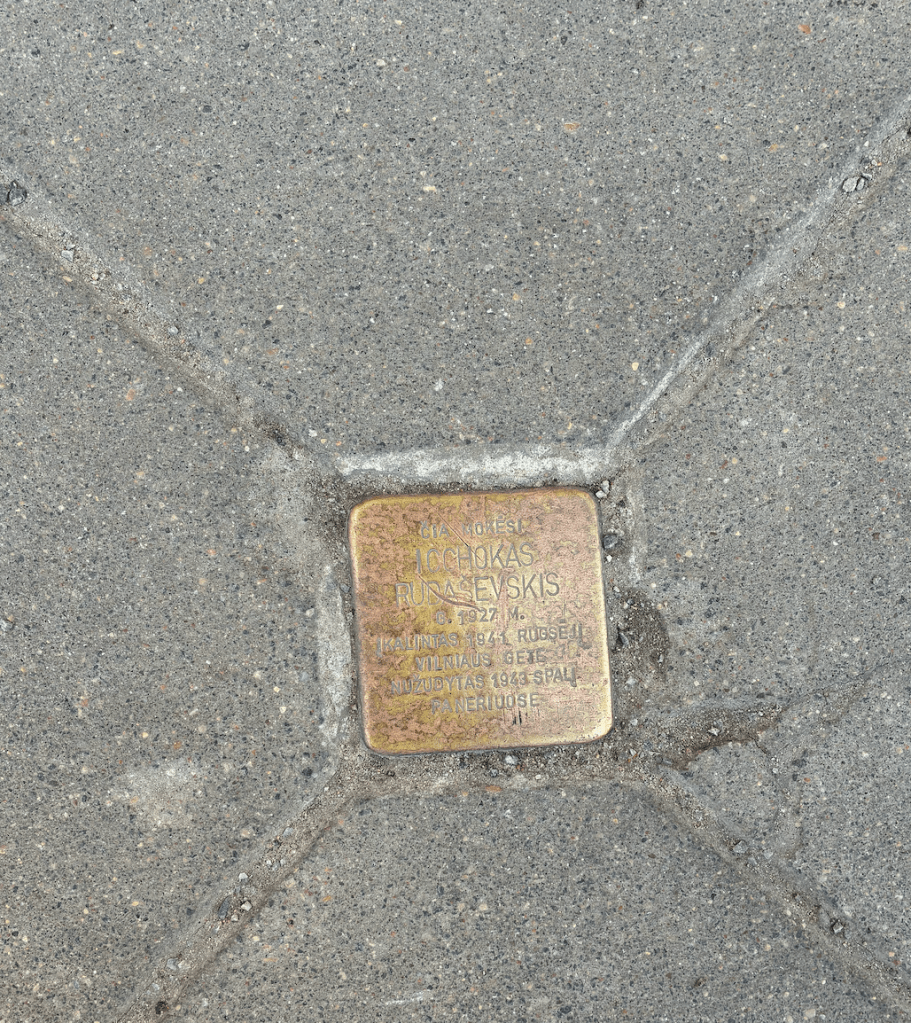
We did have some trouble finding some of the Jewish sites on our list, things did not always seem to be well marked, or maybe it was us. Perhaps if we had hit all of the sites on our lists or had a guide, we may have felt the memory of this integral part of Vilnius’s history more strongly. Regardless, the Yiddish world flourished in Vilna and then perished, mainly in the Ponary/Paneriai forest, just a few miles from Vilnius. Site of over 100,000 murders (mainly Jews from Vilnius, as well as Romas, Soviet POW’s and Poles).
So, despite the quirky areas, lovely parks, churches and buildings; Vilnius felt like it was missing a center, like a bagel. It left an undertone of sadness, a more visceral, uncomfortable sadness very different than the historical sadness we felt in the other Baltic capitals. So, we had trouble fully enjoying our visit, or to quote Tony Soprano “The things I take pleasure in, I can’t do.”
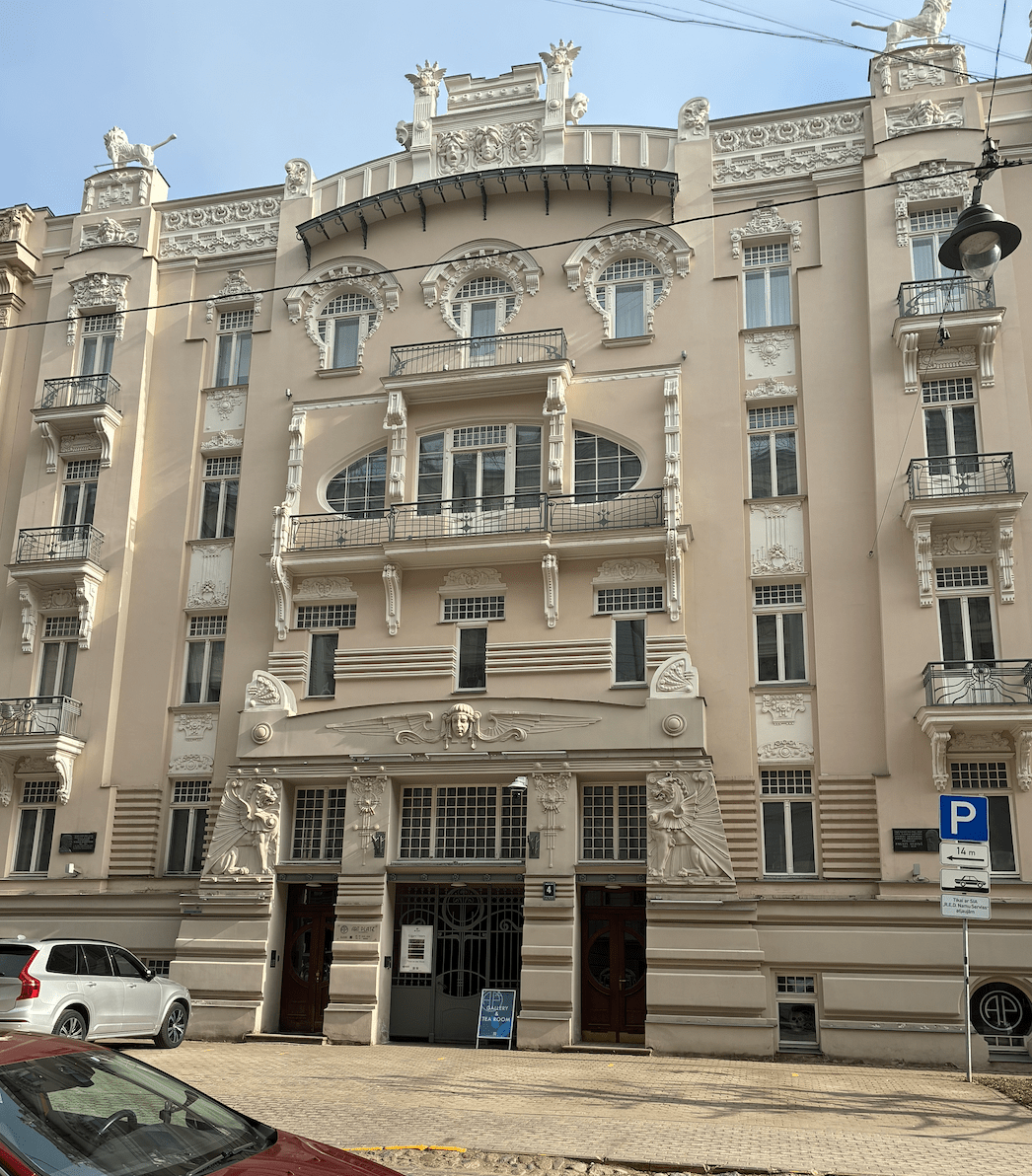
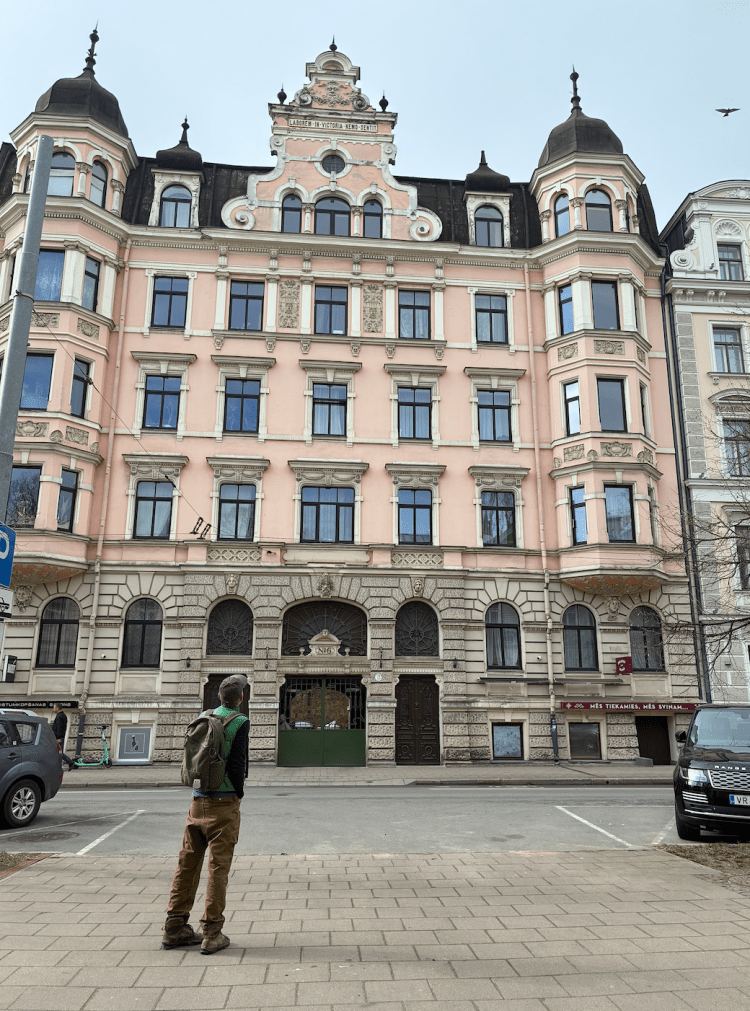
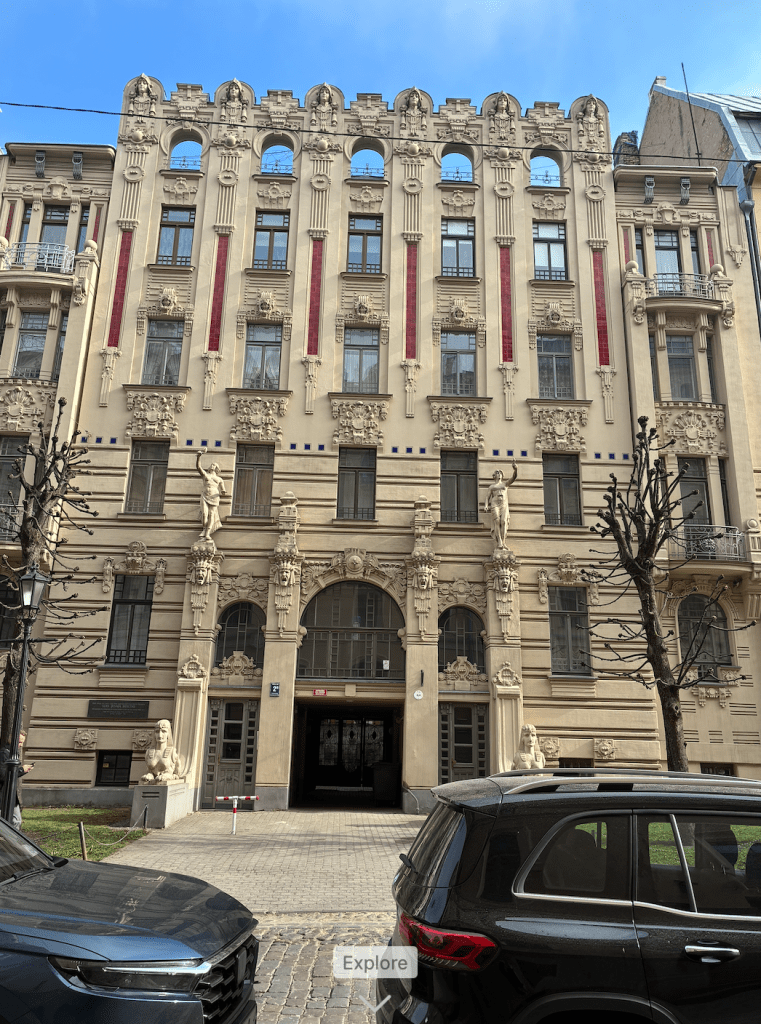
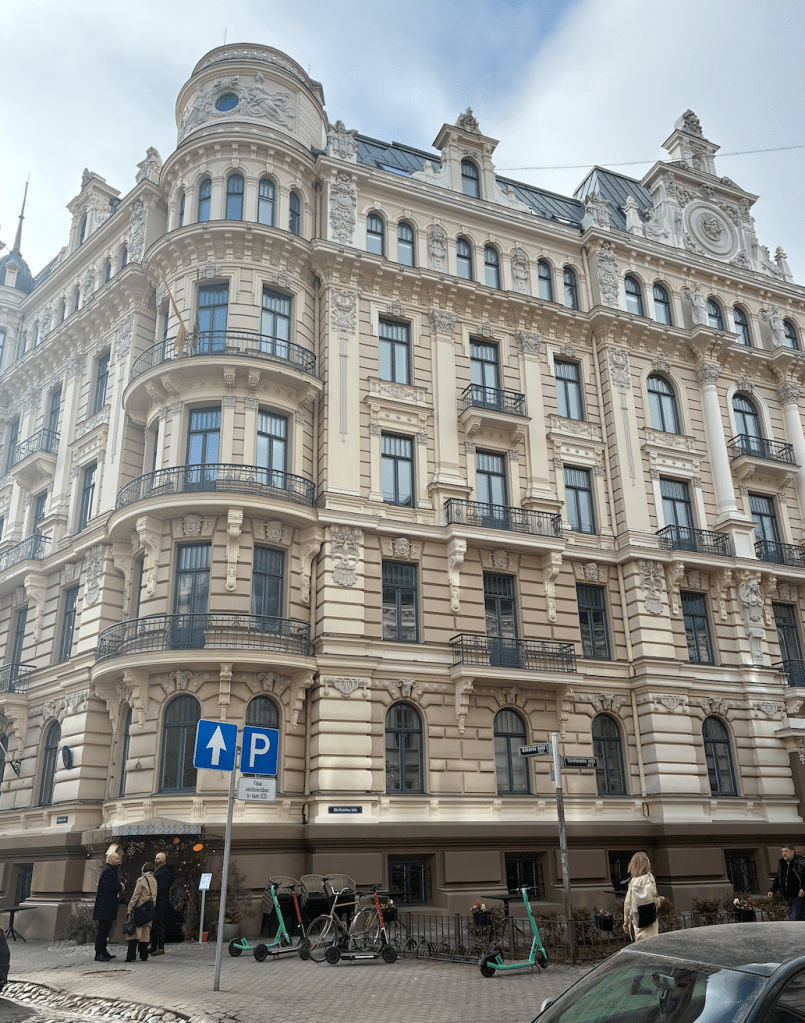
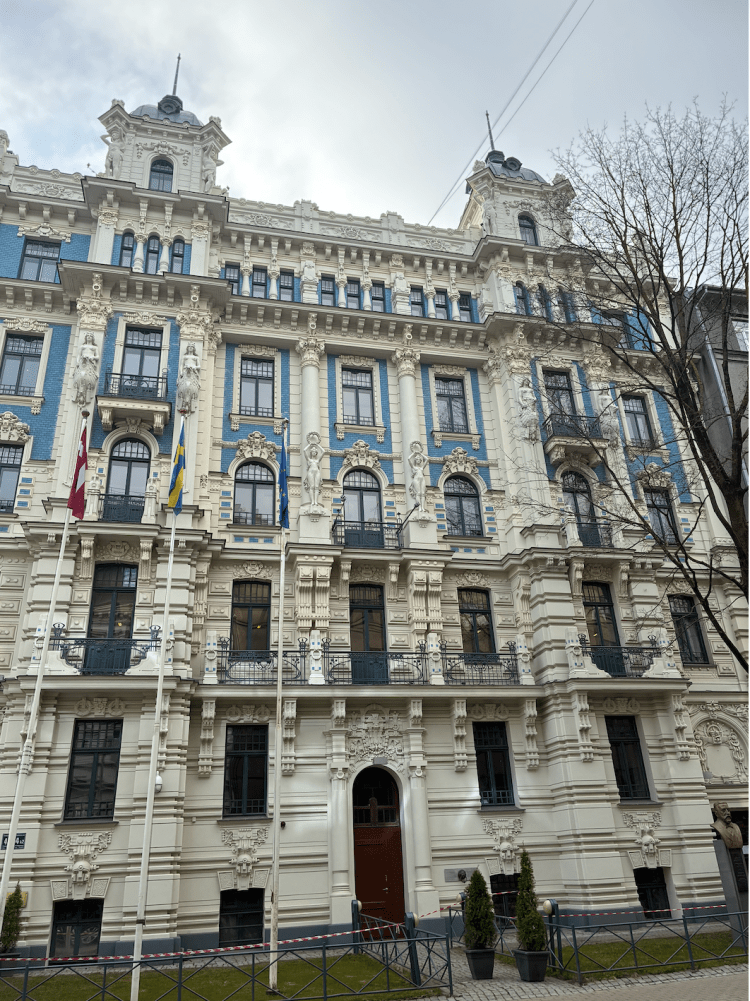
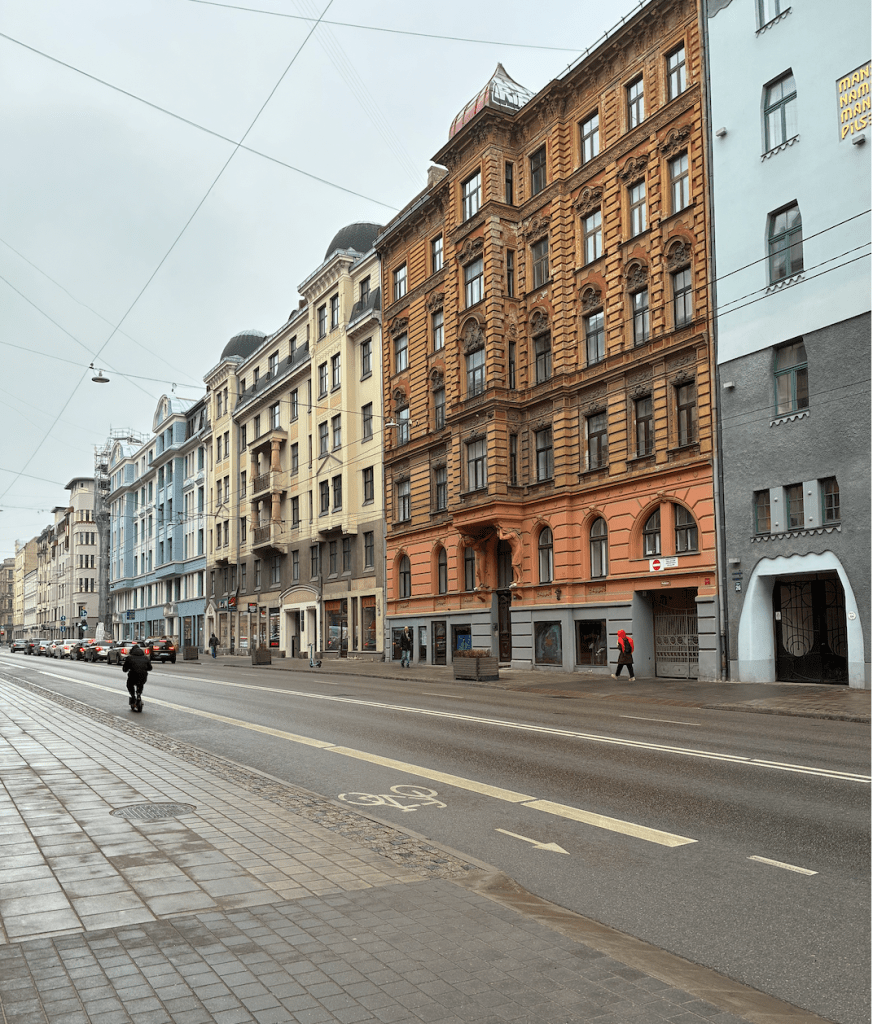
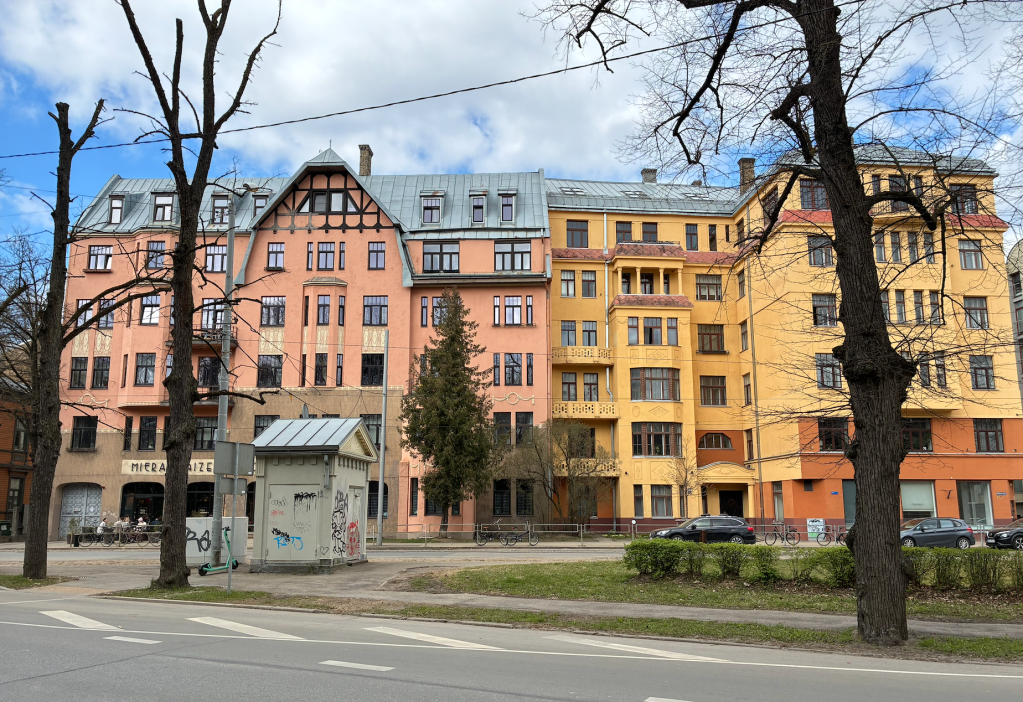
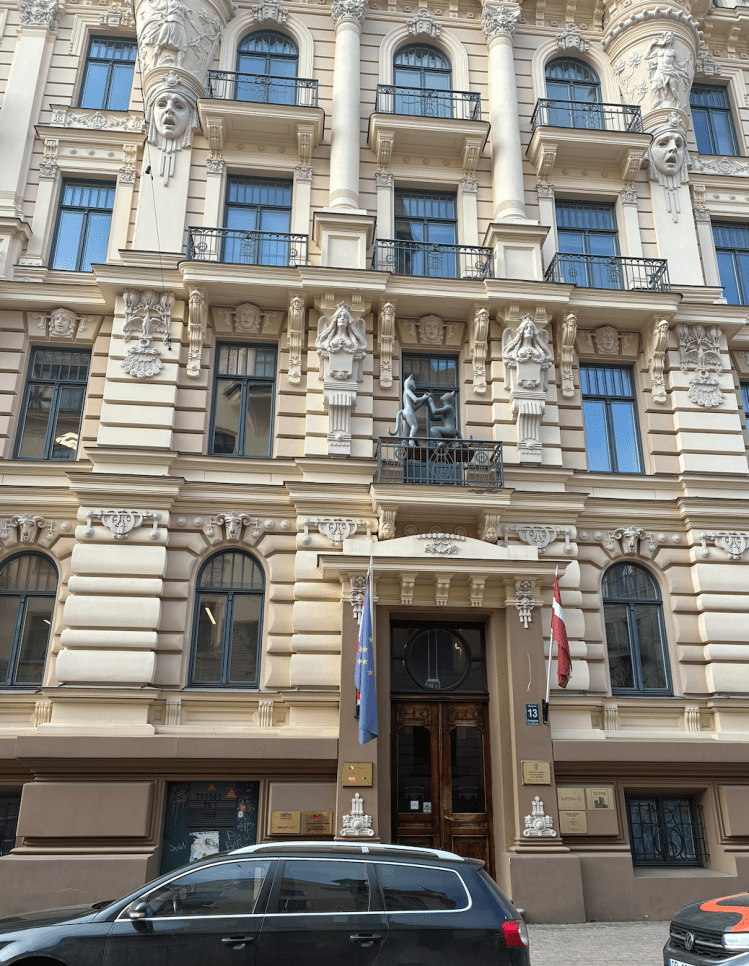
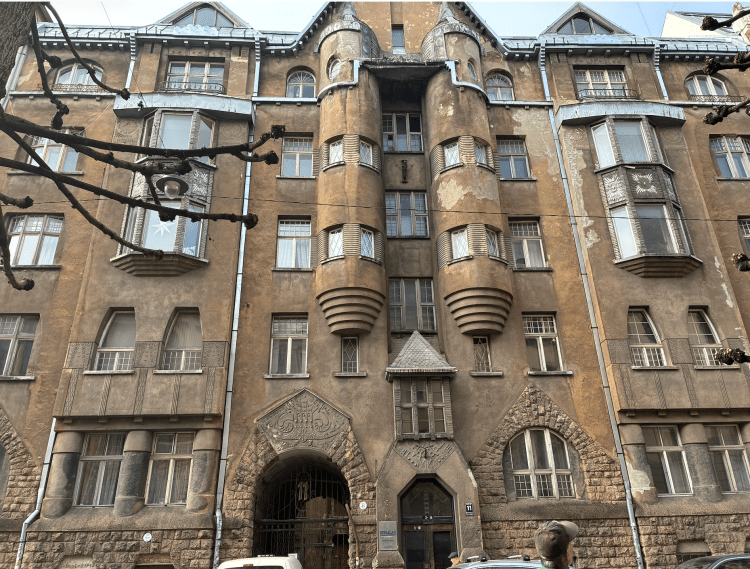
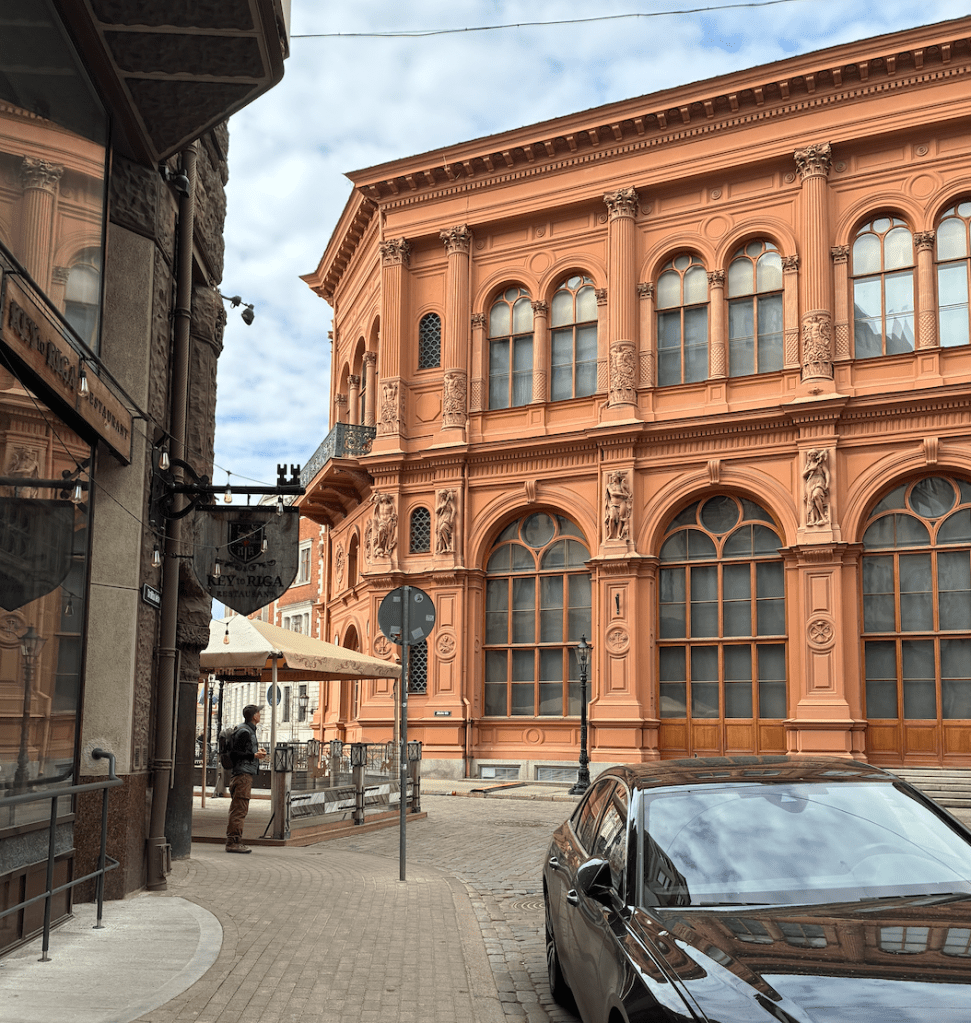
Riga was a surprising delight mainly because of the streets upon streets of Art Nouveau buildings and Riga’s propensity to go big. Towards the end of the 1800’s, Riga was Russia’s third largest city (Russia captured Riga in 1721). From 1897-1914, Riga’s population increased by over 80%. With this influx of people and money the townspeople invested in artistic buildings and urban planning, which was fashionable at the time. The result was over 800 very ornate buildings, each one crazier than its neighbor, a town of architectural one-upmanship. Kind of like Las Vegas casinos but with taste, incredibly awe inspiring. Fortunately, despite, two world wars and a 50 year Soviet rule, the majority of Riga’s Art Nouveau buildings still stand. (PS pics will look better read on the blog, not email)
Unfortunately, Riga’s old town positioned along the Daugava River, near where it empties into the Baltic Sea did not escape the war damage due to the port’s strategic position.
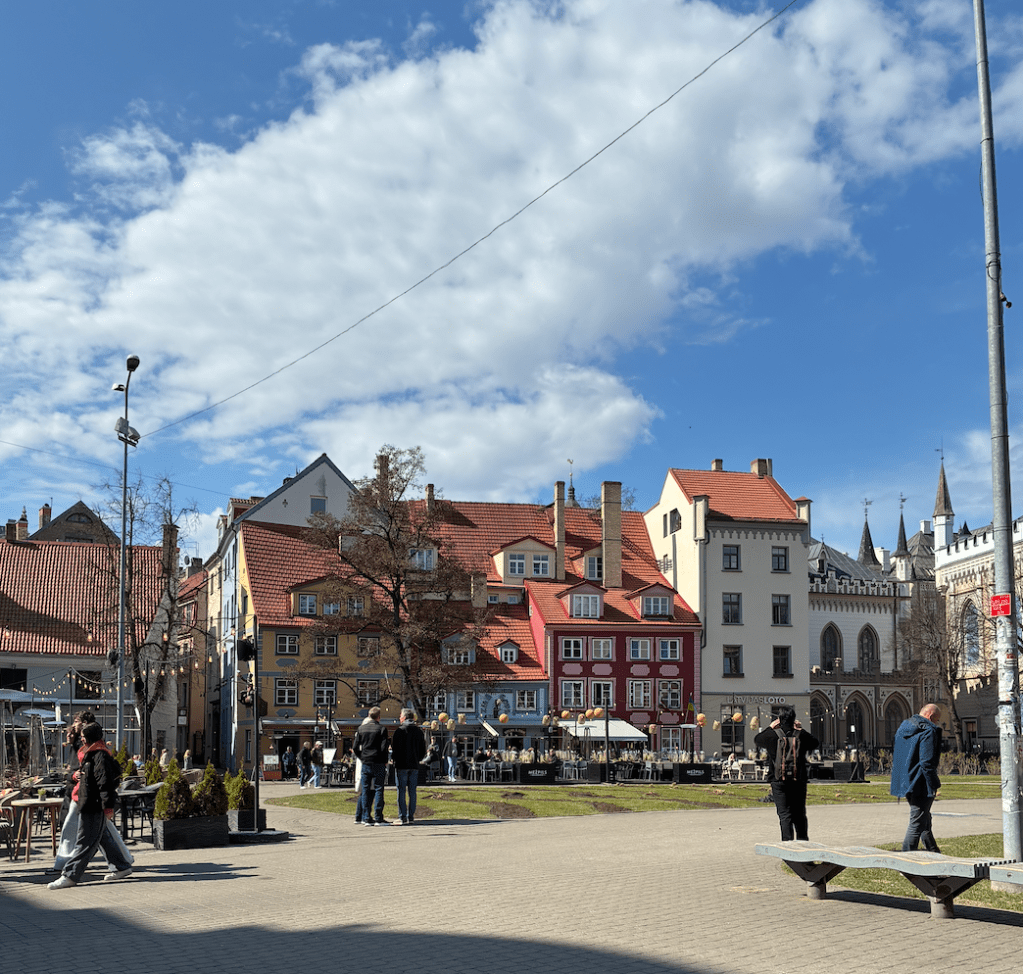
The riverside old town is now mostly full of bars, restaurants and tourist shops
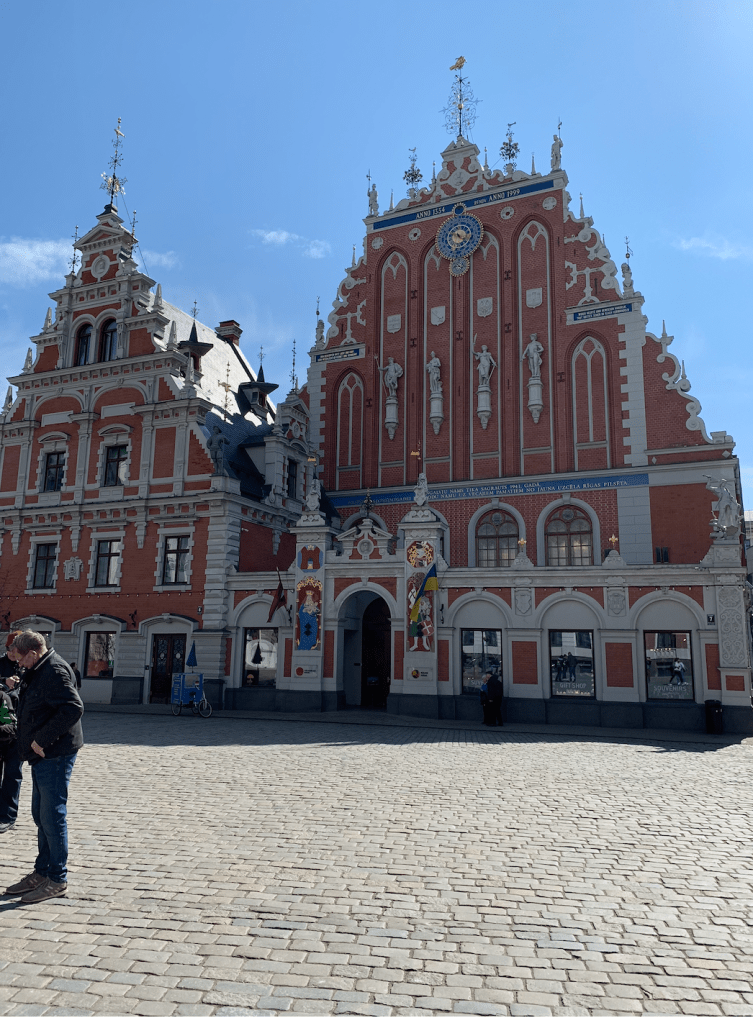
While damage was to only about 10% of old town, the most iconic buildings were destroyed including the famous House of Blackheads. The 15th century house was initially built by the Brotherhood of the Blackheads, a brotherhood of (pimply?) unmarried male merchants, ship owners and foreigners. Once Latvia regained independence in 1991, the House of Blackheads was completely rebuilt and re-opened in 1999.
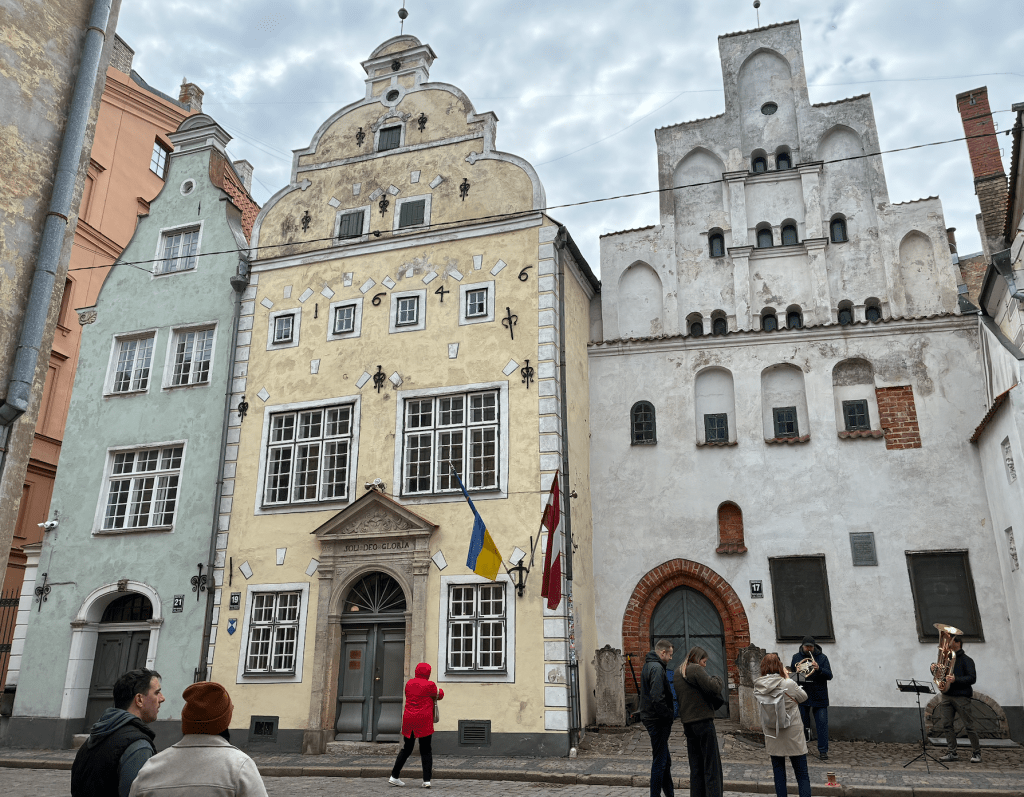
House of the Blackheads, great name for a dermatology officeThe Three Brothers, oldest buildings in the Old Town. A band just stood in front until a tour group walked out, then they played. Hard to tell if this was rebuilt, repainted or a replica
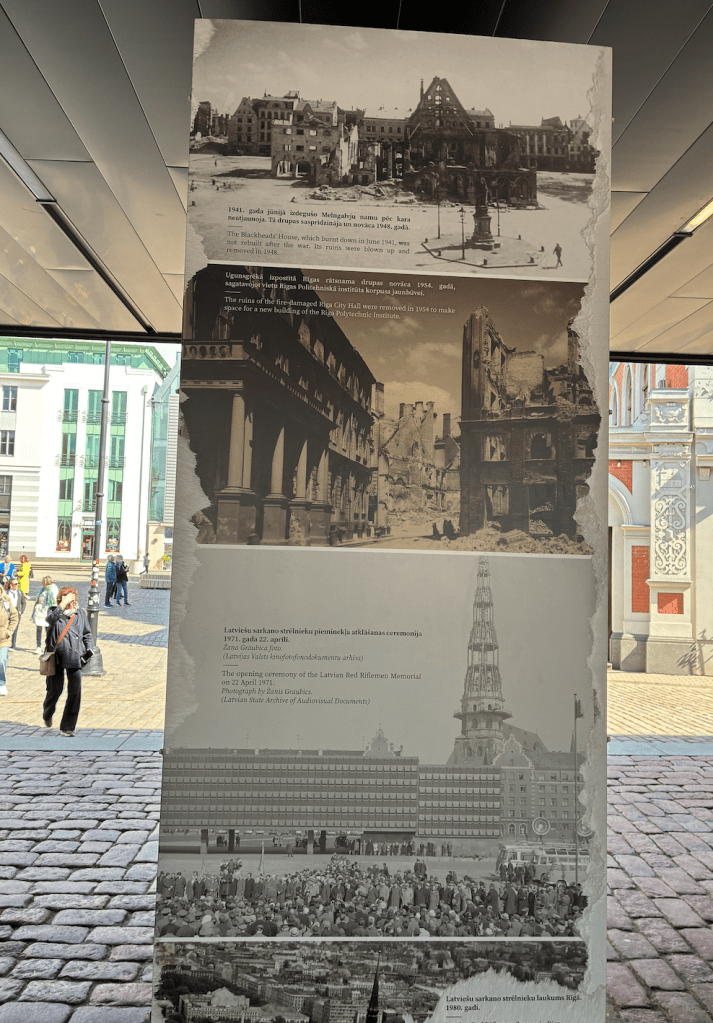
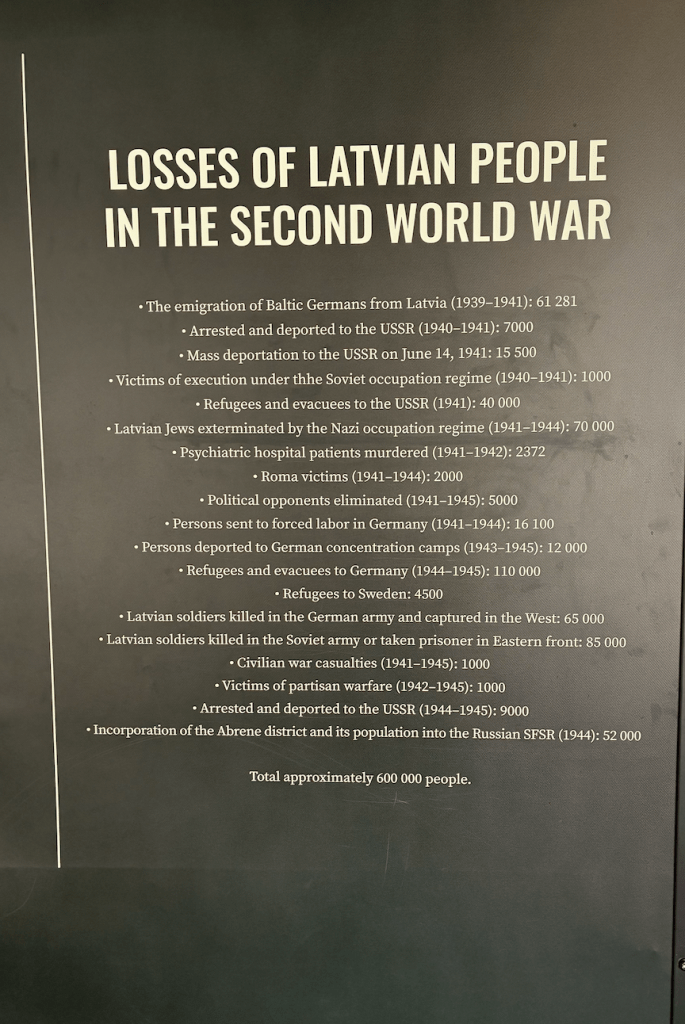
The old town also had a small but moving museum highlighting the Nazi and Soviet occupations. The Soviet occupation of Latvia mimicked what was experienced in Estonia; the Nazis started the destruction, the Soviets continued it; eradicating the culture, integrating Latvian history into Soviet history, then deporting, imprisoning or murdering anyone who disagreed.
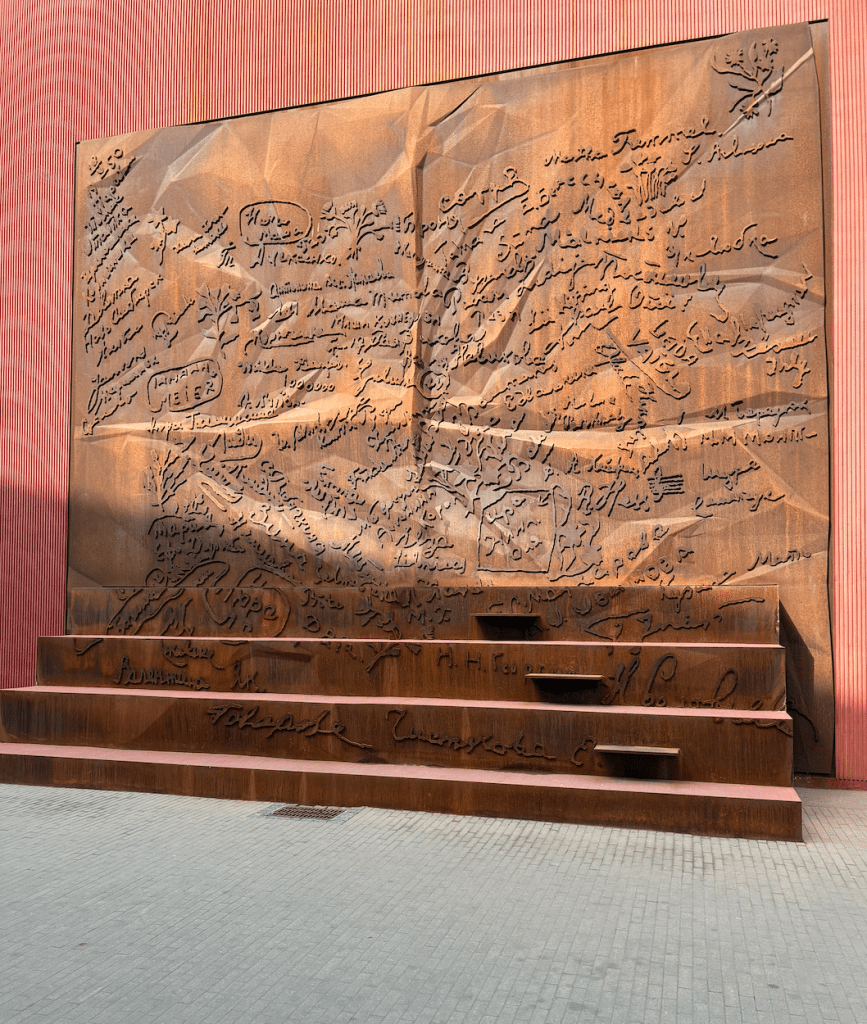
We appreciated that this was in the middle of old town, in a covered outdoor area, always open and freeA big copper replica of Mērija Stakle’s handkerchief which she had embroidered signatures of other woman prisoners when in the gulag
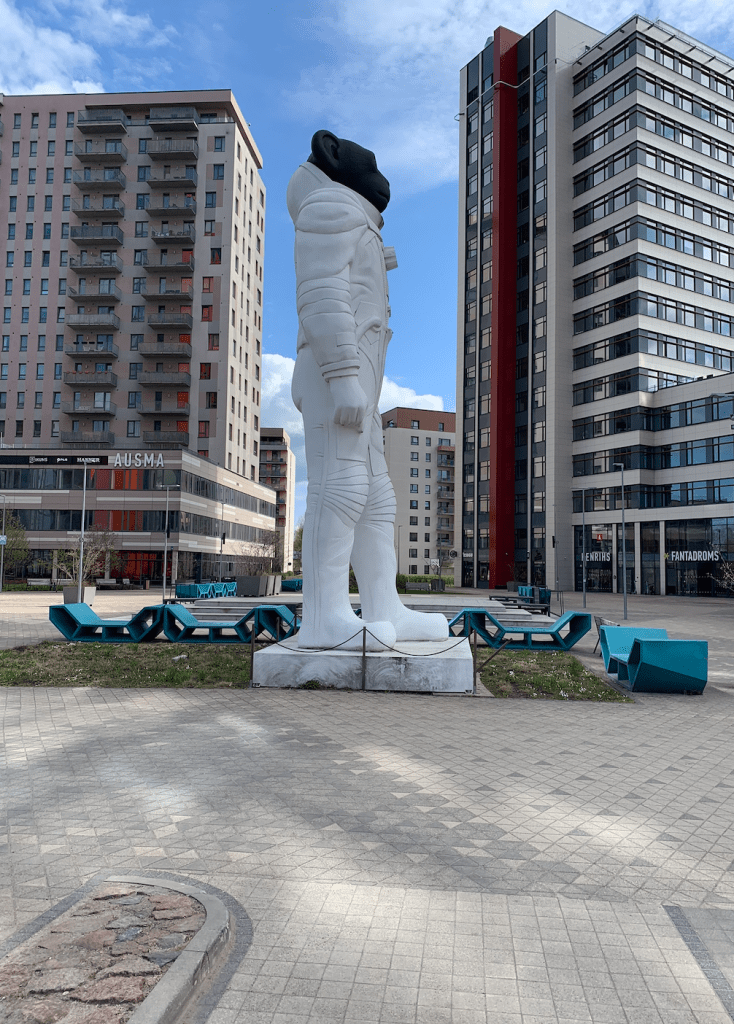
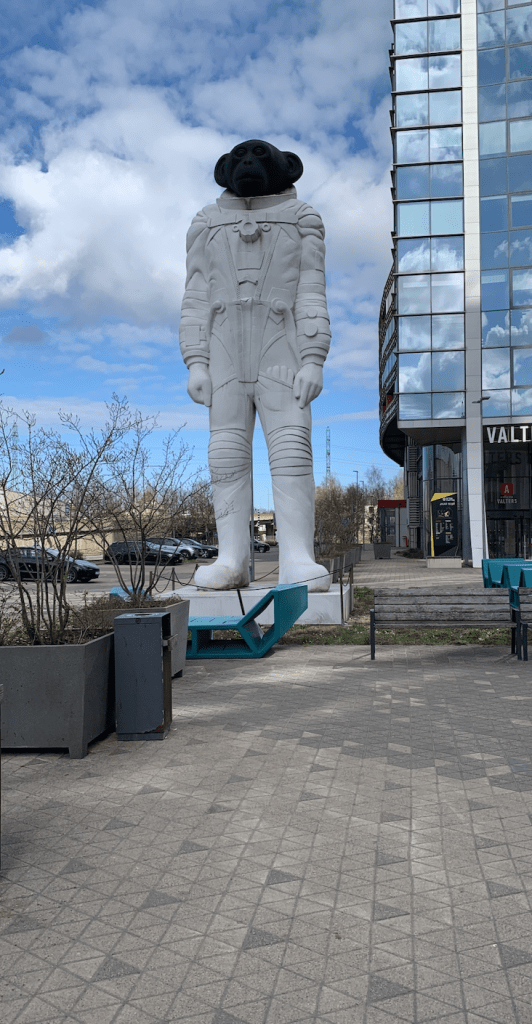
Like Estonia, Riga moved most of the Soviet era statues out of the city, many were destroyed and some were reworked to emphasize a different message. But like Las Vegas, Riga thinks big, and they did save one big Soviet relic which was the only one we could locate; Sam, the monument to Soviet space animal astronauts. Very big Sam appears to be an ape with excellent posture and wearing an appropriately Las Vegas Elvis style spacesuit.
when the city looked to unload Sam, someone moved him out to the outskirts to a business parkAnd yes we did walk 2 miles to the edge of town to see him.
Another big statue, another big story.
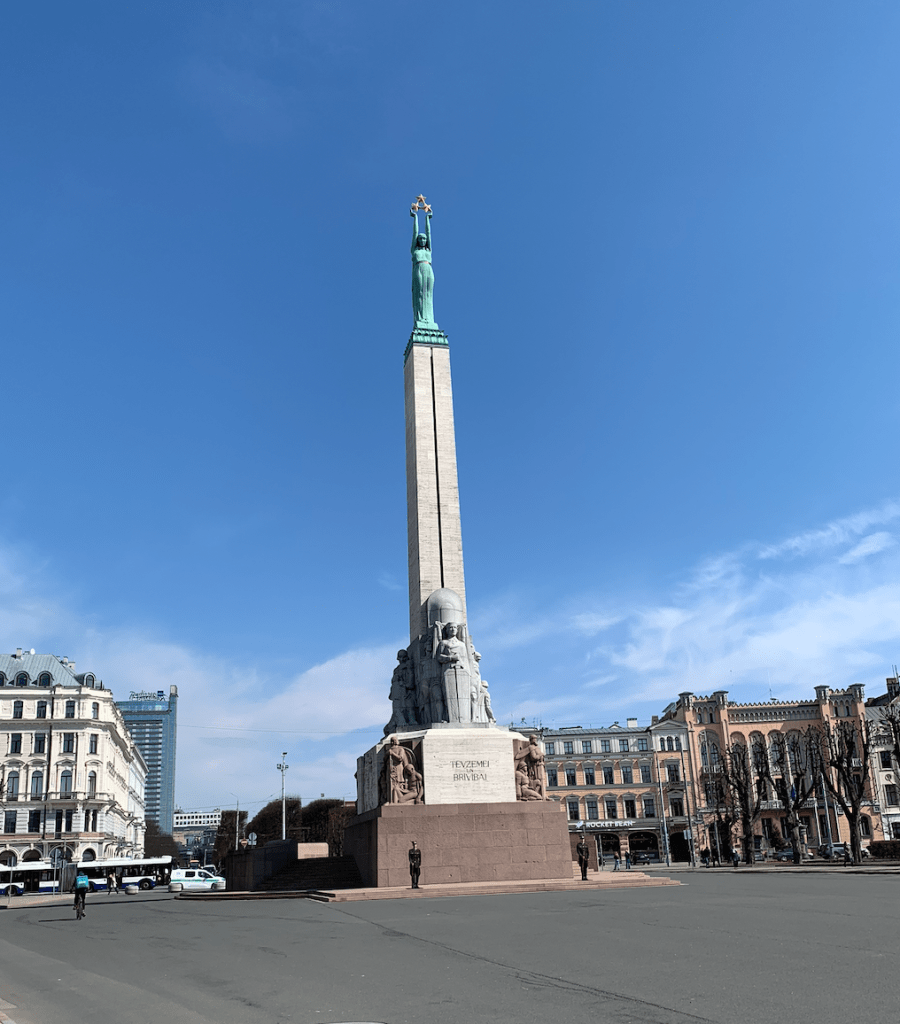
The “Freedom” statue was created to honor soldiers killed in the war for Latvia’s independence (1918-1920) with the three stars representing historical regions of Latvia. After WW2 and Latvia returning to Soviet occupation, Russia wanted to tear it down since they did not allow any reference to Latvian independence. So instead of demolishing it, they changed the story (sound familiar?). The three stars now represent the three Baltic republics held high by Mother Russia and was touted as a sign of gratitude towards Stalin for liberating these countries.
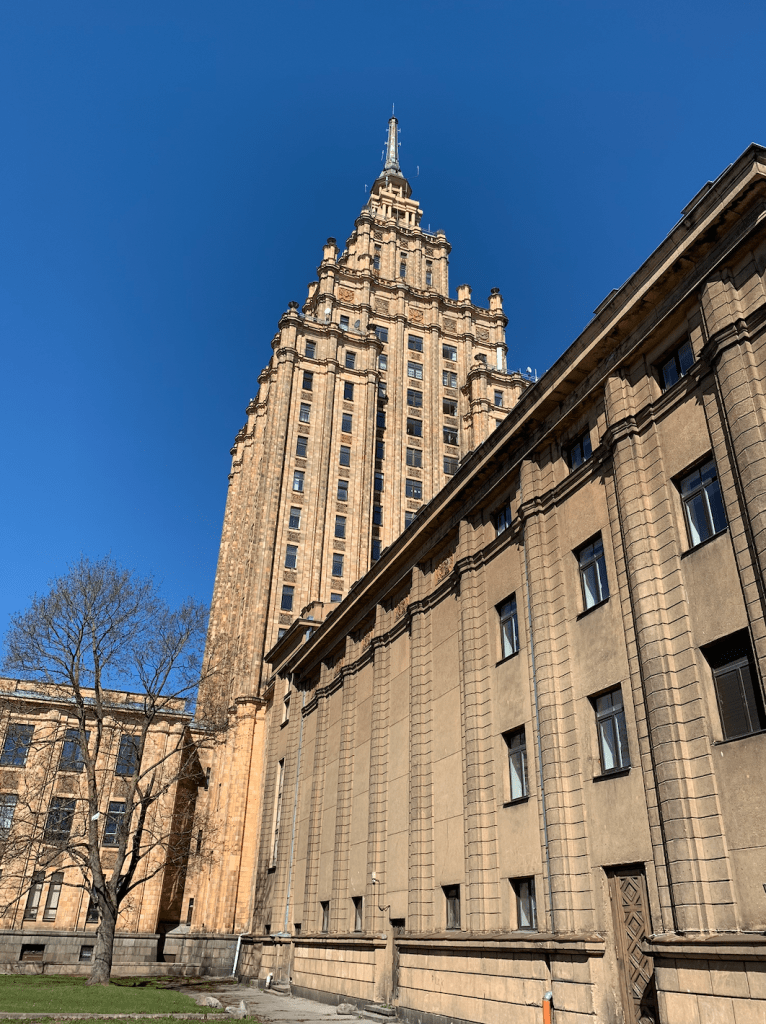
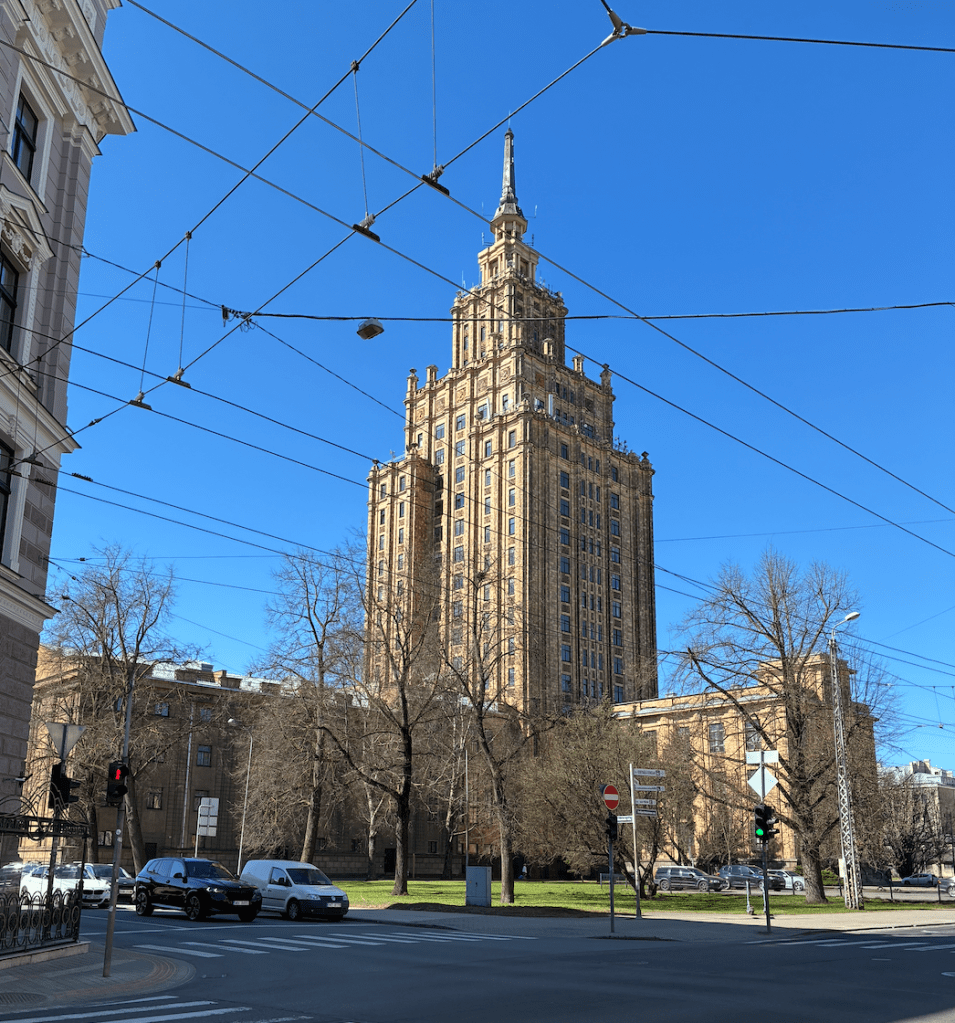
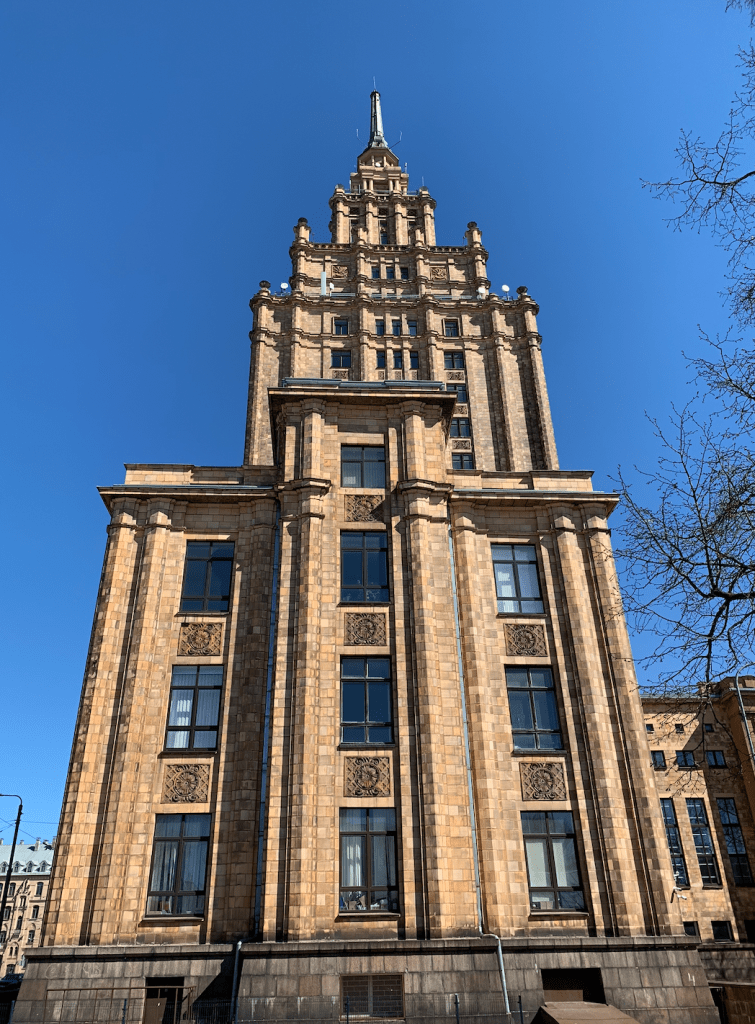
The Soviets also really wanted everyone to think that the Latvians really liked having them there, so they built this massive building for the Latvians to give to Stalin, it was easily the biggest building in Latvia for years. It still distinctly stands out in the city skyline – it’s called Stalin’s Birthday Cake. (However, he died before construction was completed.)
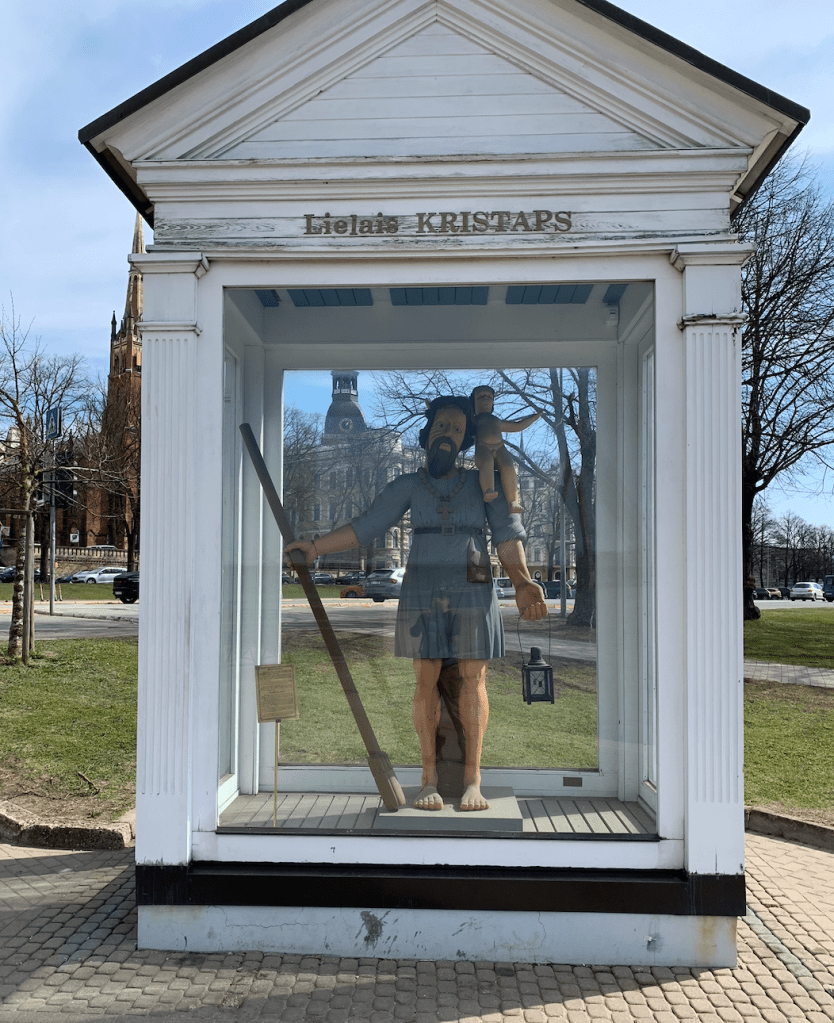
Another Las Vegas style big is Big Christopher. He could be tacky enough for Las Vegas.
Big Christopher is either a folktale character of a big guy that carried a baby across the River Daugava, or St. Christopher carrying baby Jesus if you prefer the non-secular version. Or he could be a casino greeter.
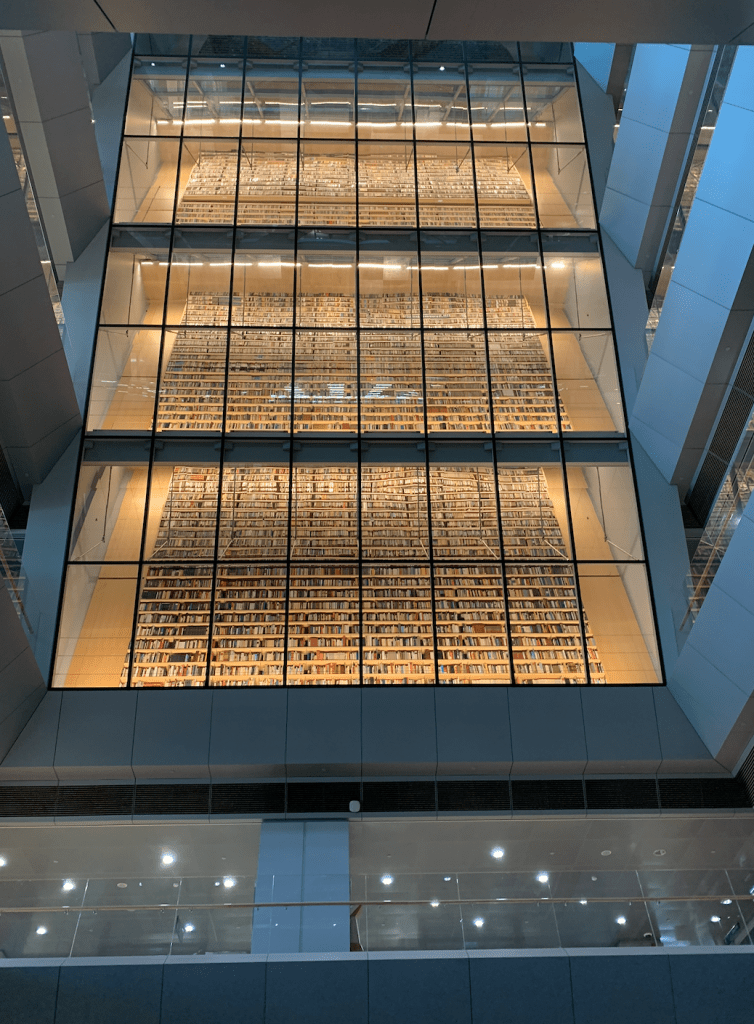
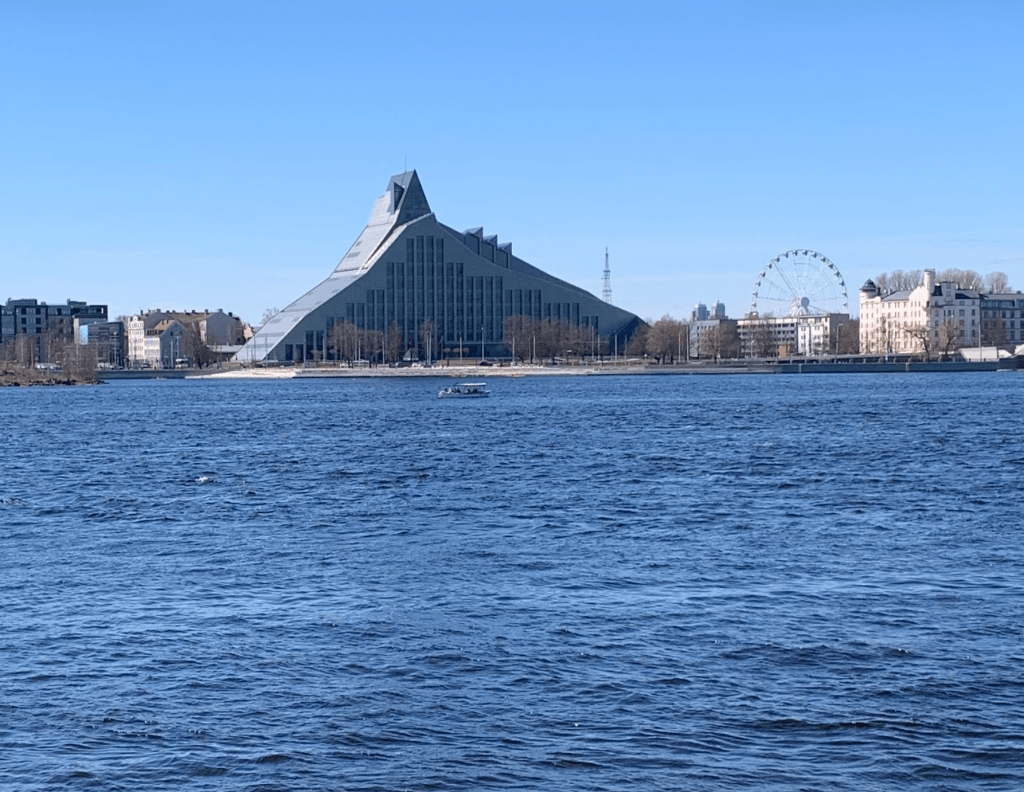
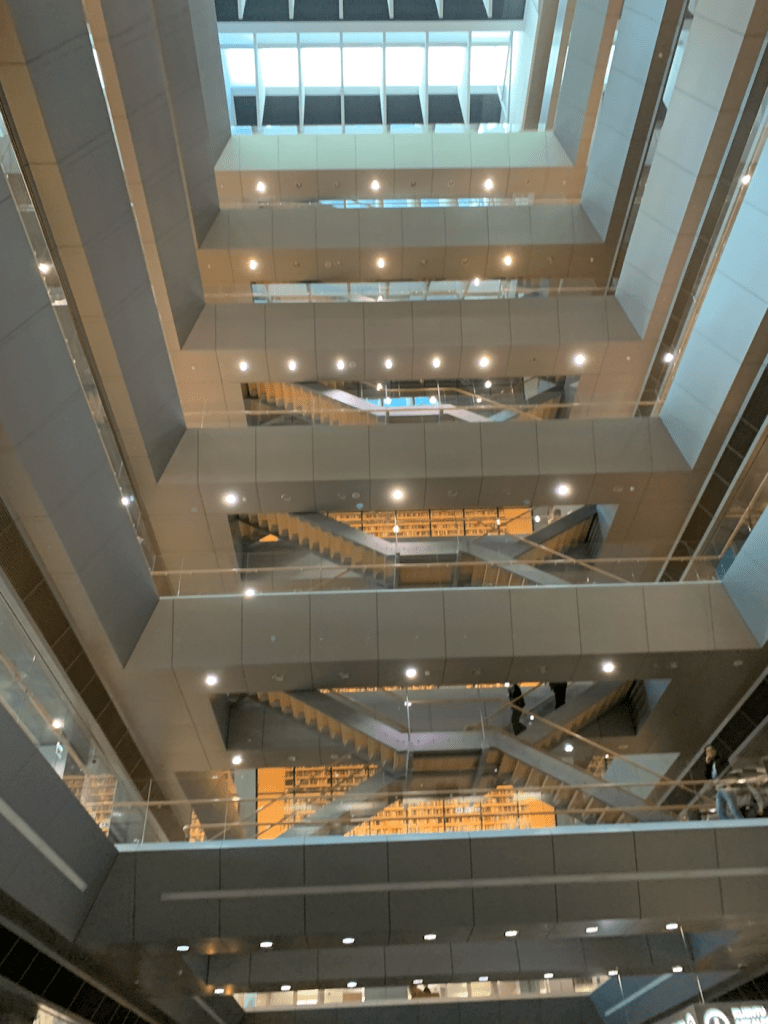
Across the river is yet another example of how Riga goes big. The National Library.
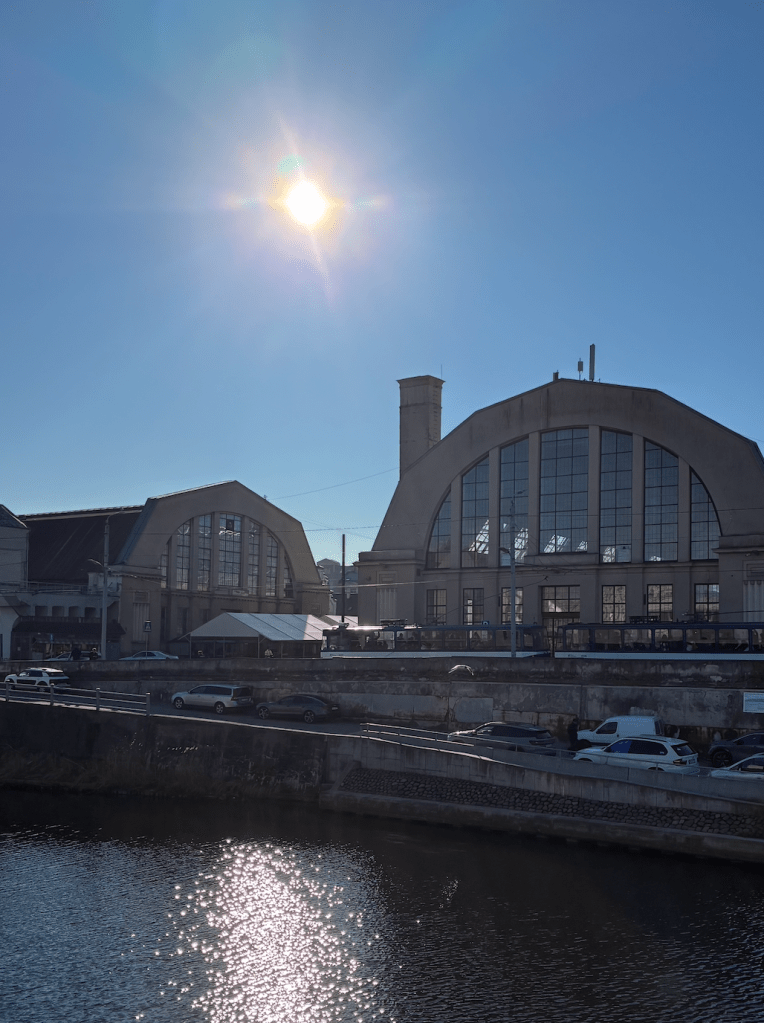
All European cities have a covered market, Riga’s were big; 3 converted Nazi-built aircraft hangers.
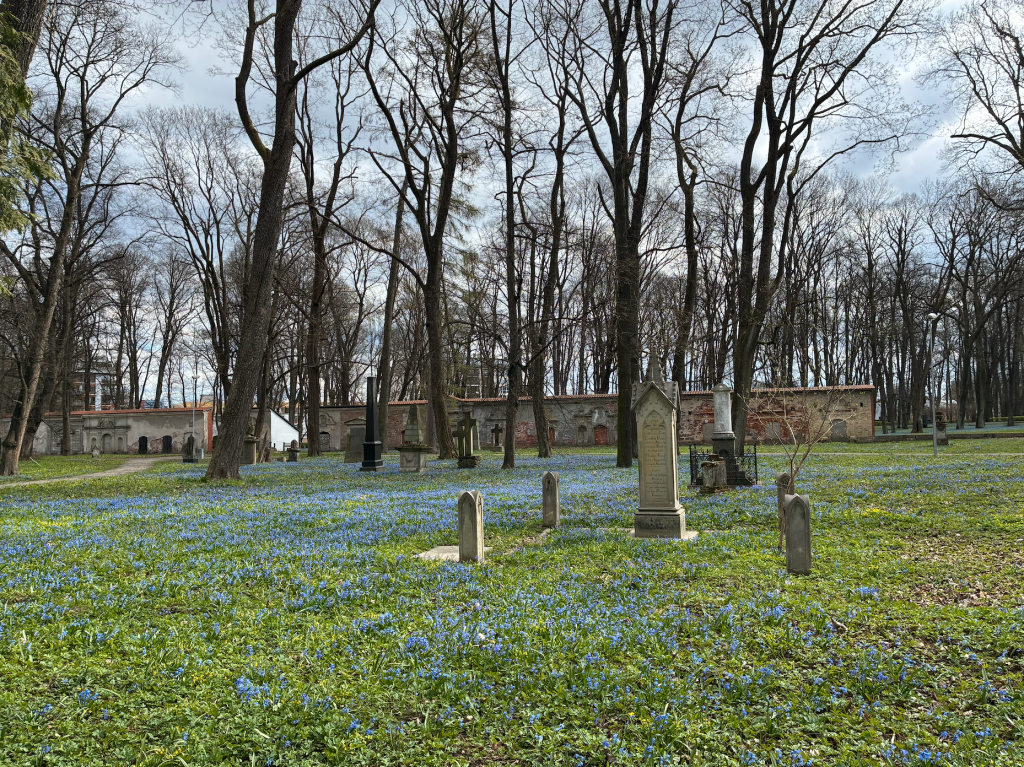
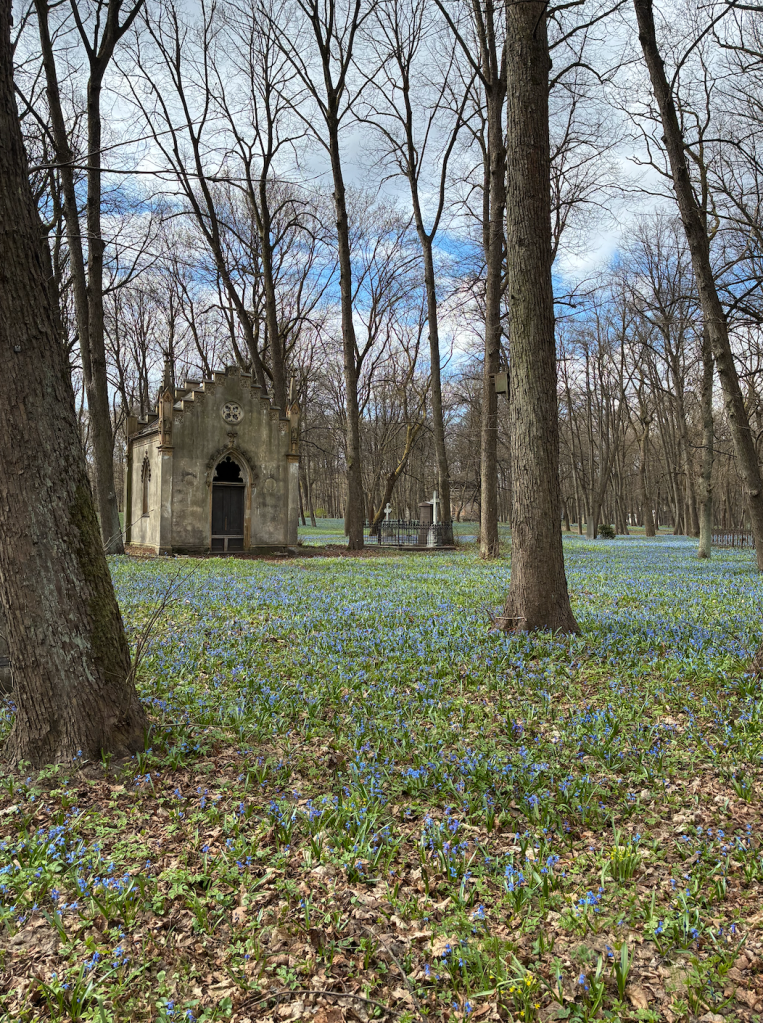
The Great (big) Cemetery, established in 1773, is now more of a hint of cemetery in a park. The Nazis destroyed the grave sites and then the Soviets just continued the destruction using tombstones for building material. It eventually evolved into a park with residual tombstones and crypts. It was remarkably beautiful.
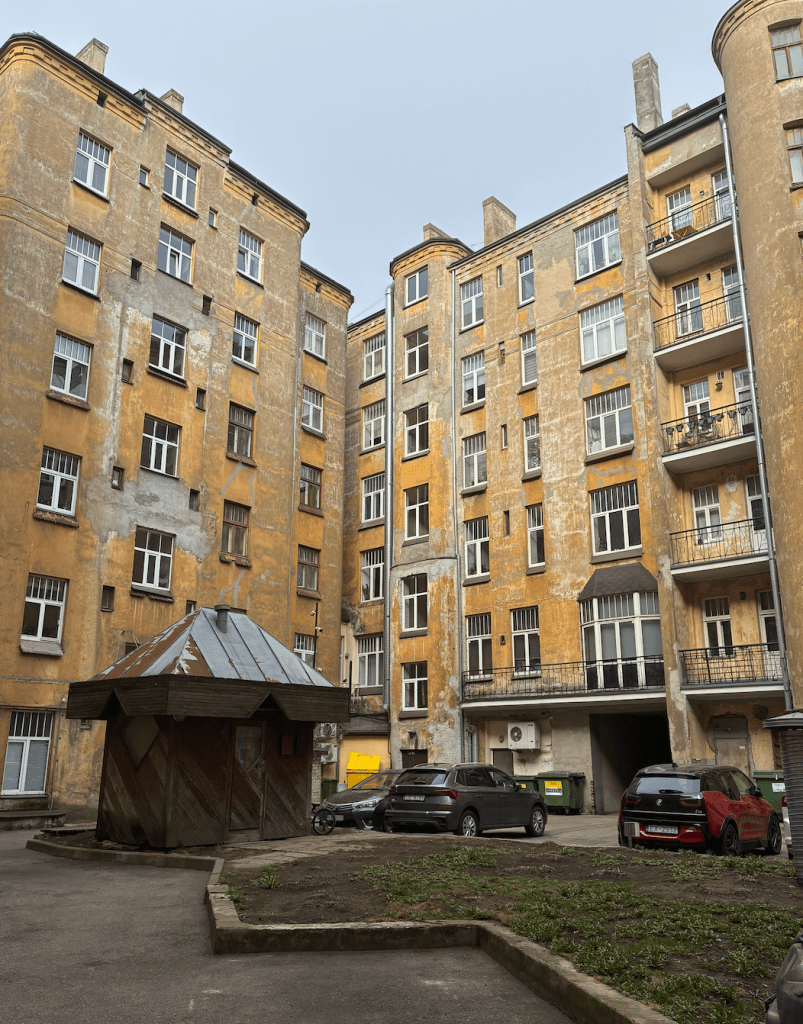
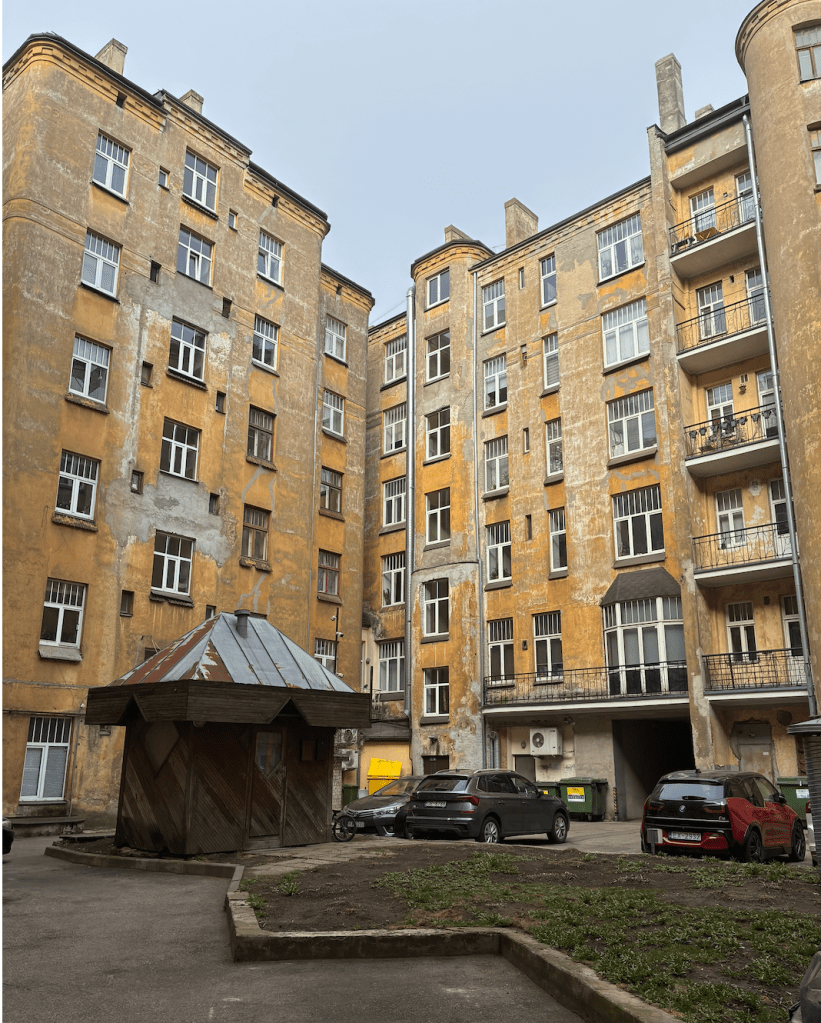
We did our usual, and stayed center adjacent rather than center, in a big, classic Soviet-style apartment block. Like we have found in so many ex-communist countries, the apartments inside the building were in better condition than the outside.
In addition to finding much better value staying on the edge, it also requires us to walk through the city and get to know neighborhoods beyond the touristic center, neighborhoods we would not have encountered staying only in the tourist center. Seeing a bit more how people live in Riga now, and then. https://chosenfugue.xyz/2019/01/07/they-do-make-you-stumble/
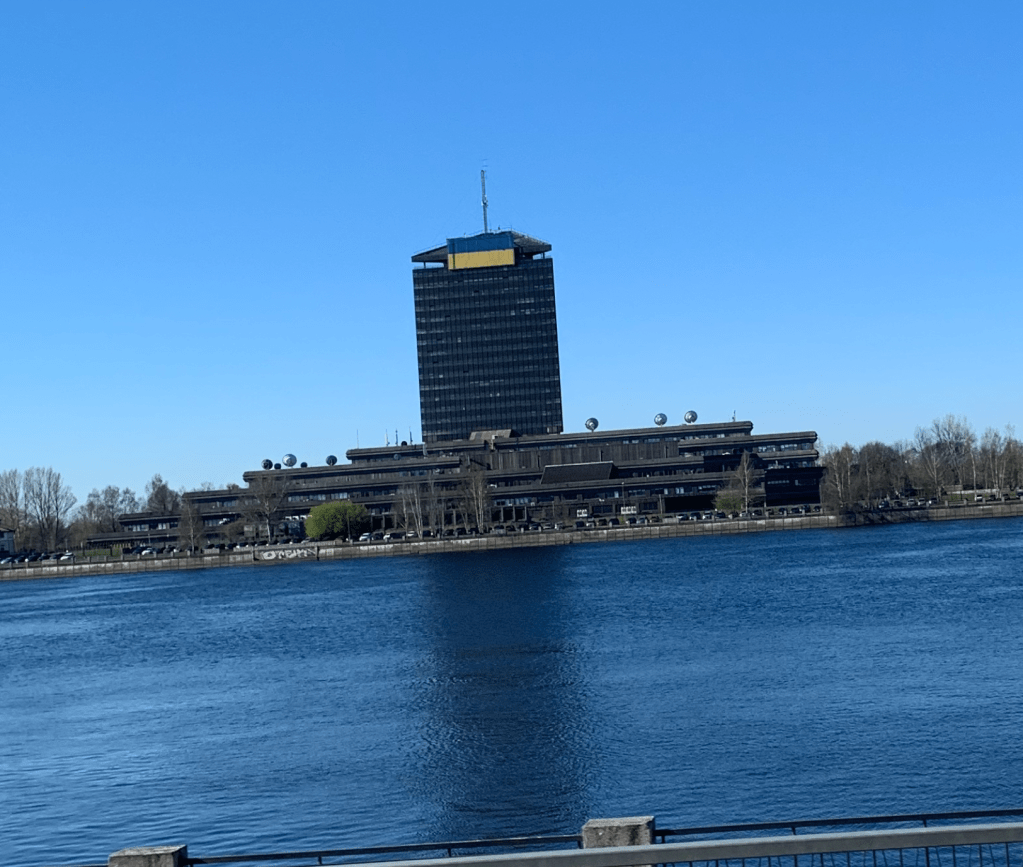
One consistent thing we saw, throughout Riga, similar to Tallinn, Ukraine flags on virtually every block, large building or just on their own.
(pictures better viewed on the blog not the email)
Travel, obviously, takes you somewhere you haven’t been. It forces you to figure out how to get somewhere, where to stay, how to shop and how to work those weird tumbler washing machines with instructions in another language. New experiences, doing routines differently.
Much of the joy of travel comes from surprise; seeing , tasting, feeling something you have not before. But, as we travel more, some of the newness loses it’s freshness, In Europe, every city has a square, a cathedral which is somehow the biggest/tallest/voluminous Gothic/Baroque/Medieval cathedral in all of Europe, a walled old town with cutesy-touristy- windy streets. There’s always a fortress, castle or church (or all 3) at the highest point plus somewhere a Roman ruin. Always a Roman ruin. And all of these are truly magnificent, interesting and we love them, but it can become repetitive.
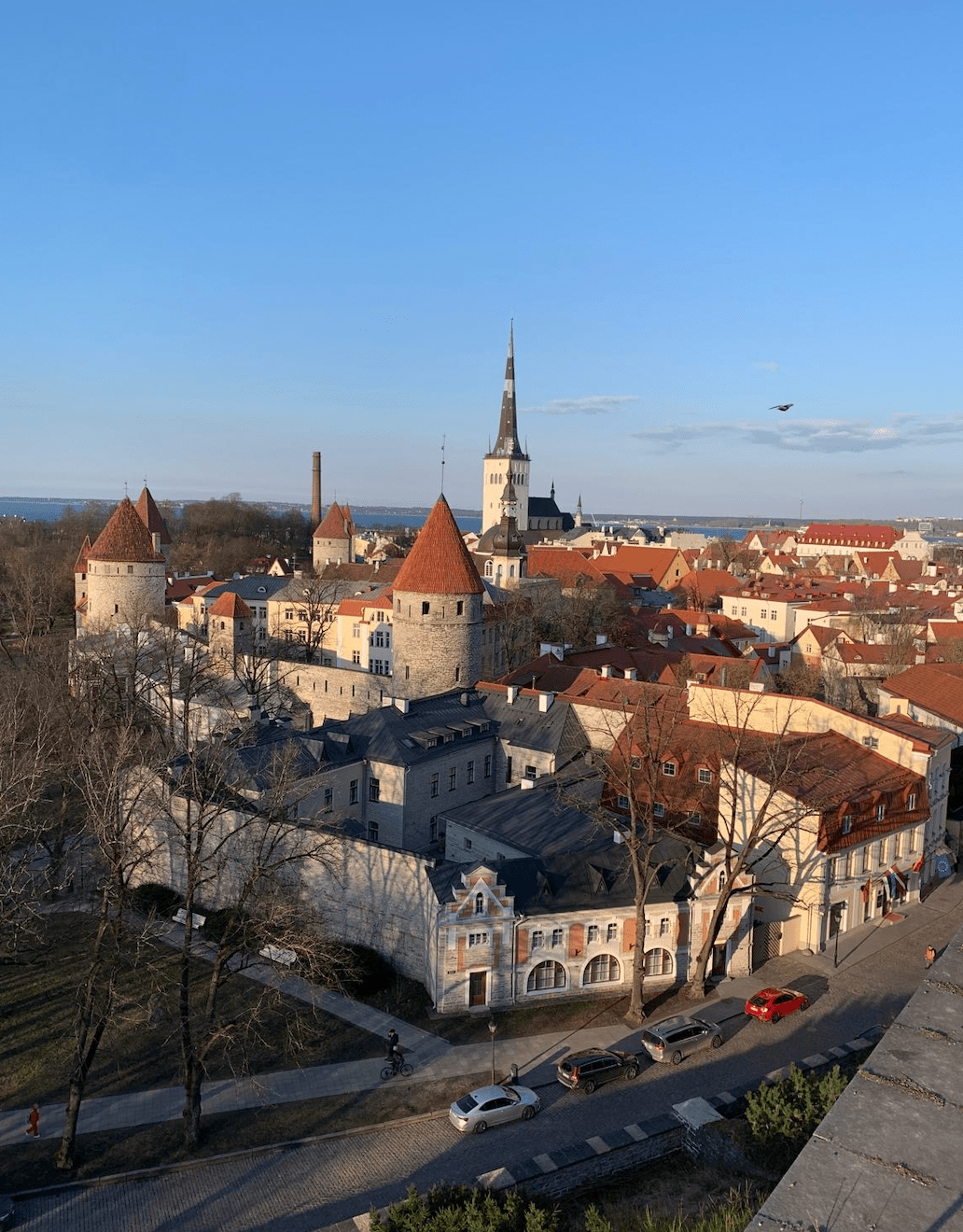
On this round of travel, our travel complacency was upended starting with Sarajevo, https://chosenfugue.xyz/2026/03/27/history-repeats-itself/ and now amplified in Tallinn, Estonia. Off the plane, and it immediately felt unique, refreshing. What was different? There was this ineffable calm. The air had a mellowness, a gestalt we haven’t felt elsewhere.
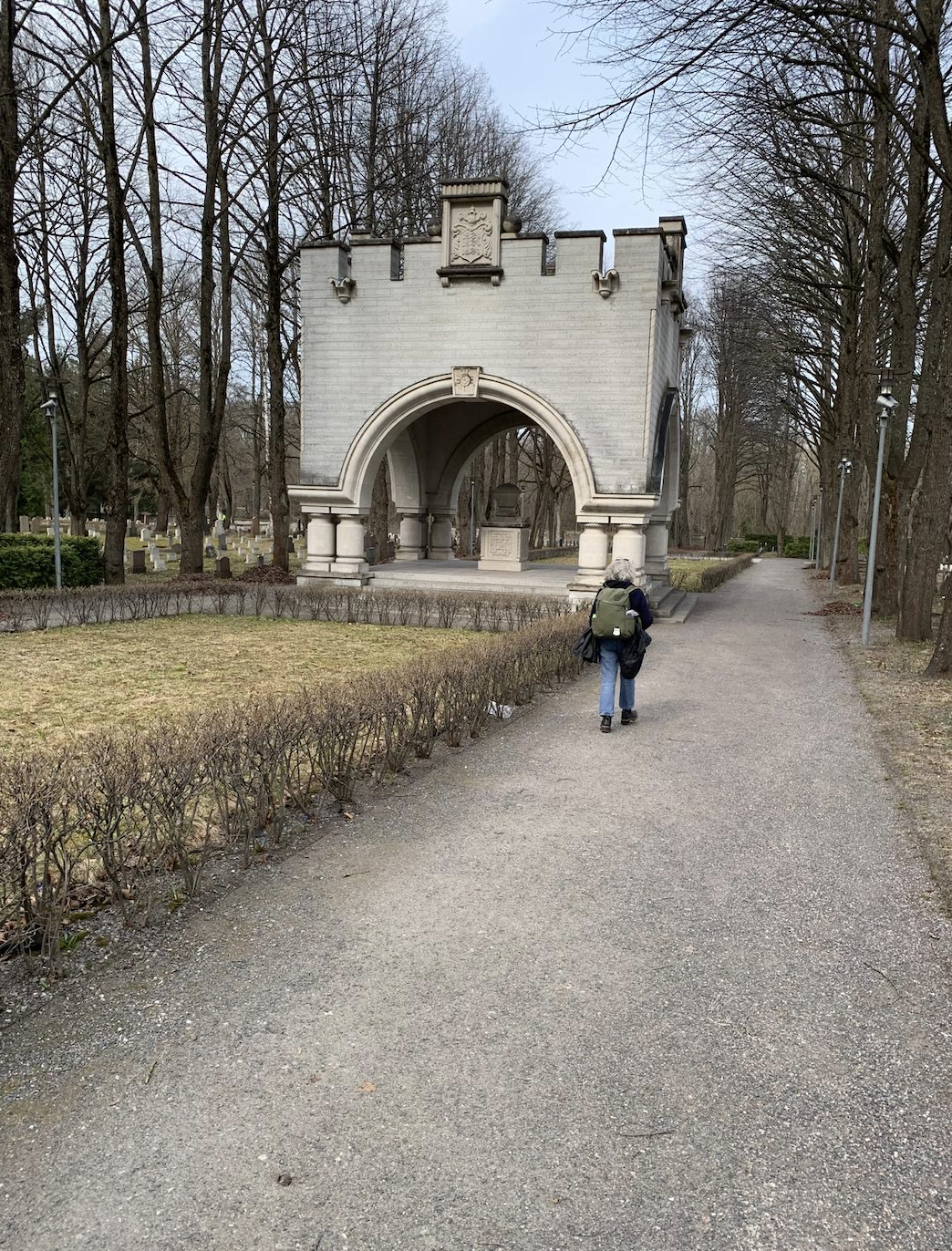
We walked from the Tallinn airport 3 km to the old town where we stayed. Through pedestrian tunnels under the freeway, along a main thoroughfare, an old Soviet military cemetery, residential and commercial areas. Everywhere there were sidewalks, many places there were sidewalks AND bike paths.
Minimal billboards throughout the city, always nice.
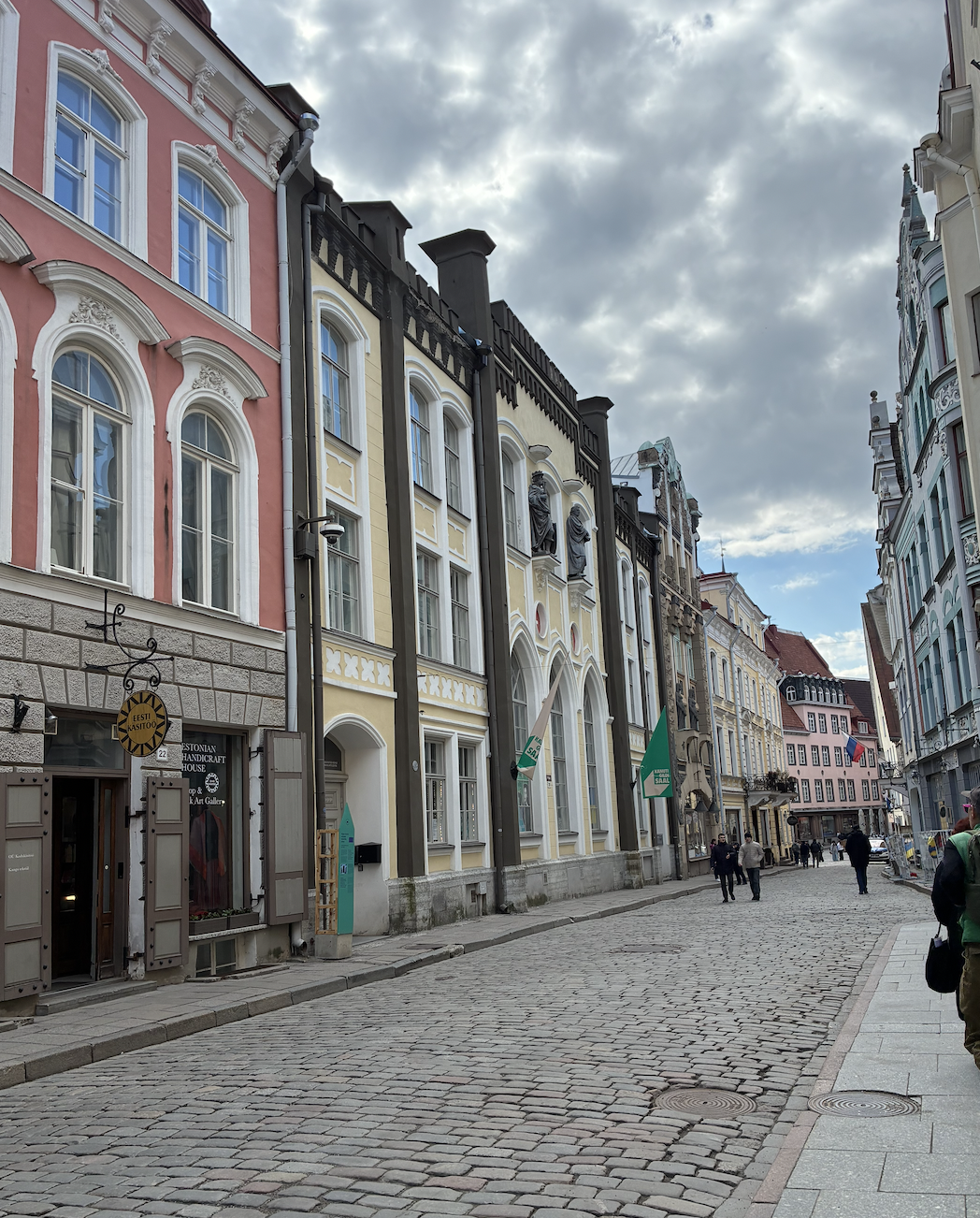
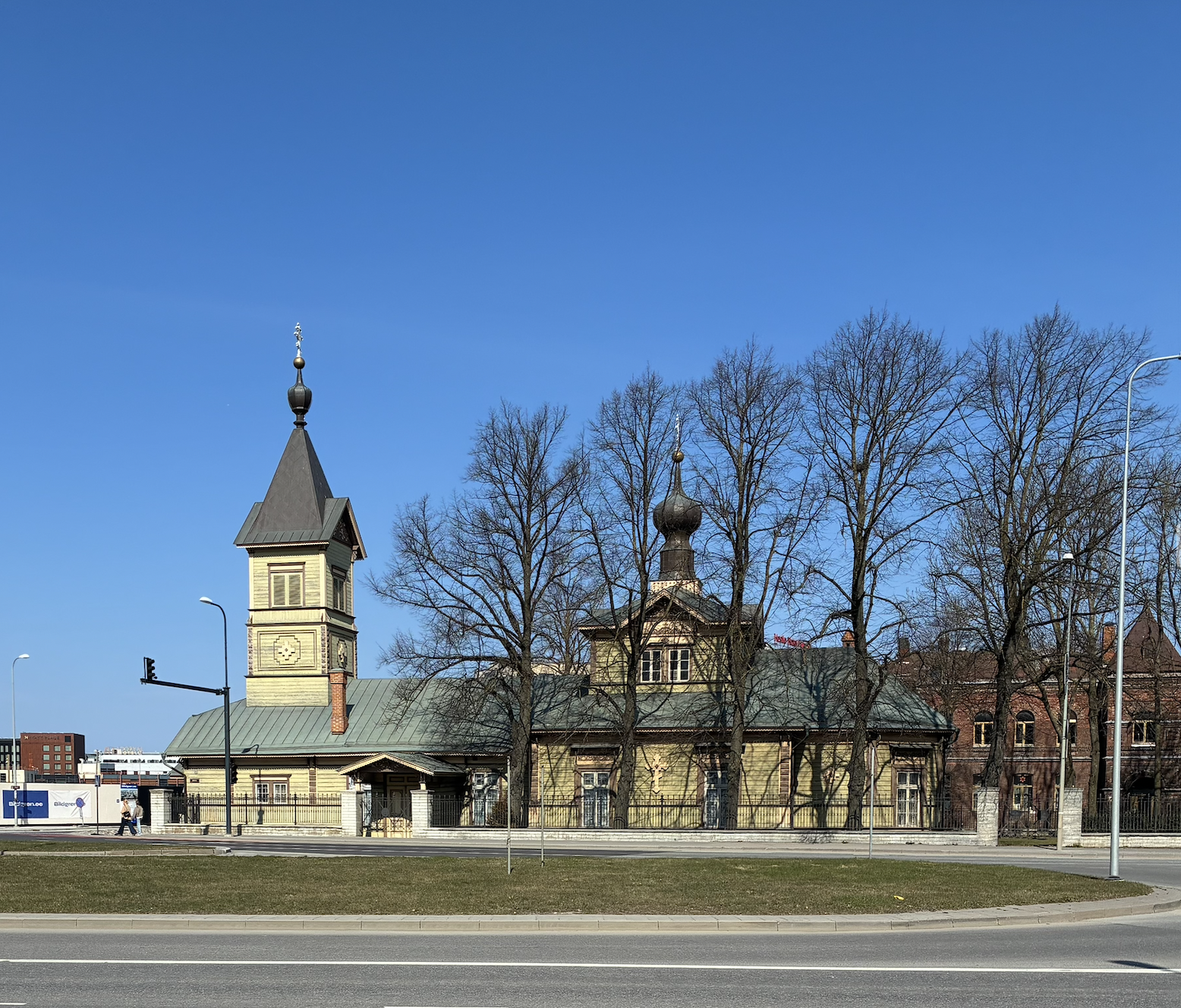
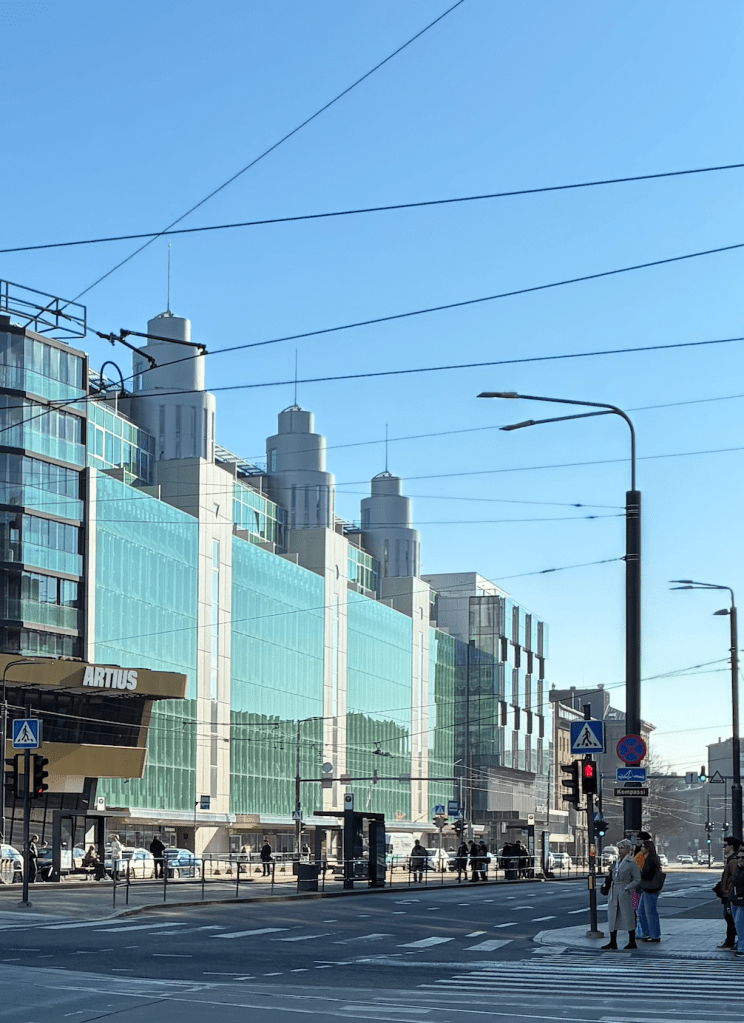
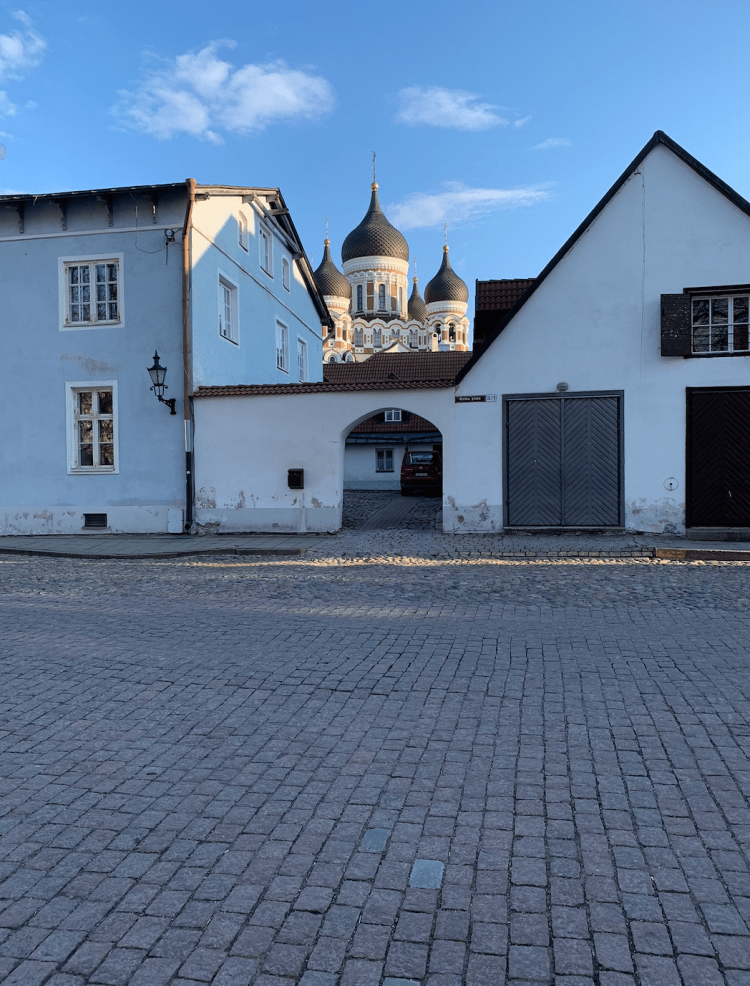
We just kept snapping pictures of buildings. Old and new, each had very distinct personalities. This was not a cookie-cutter European city.
The old town was not just for tourists, sure, there were plenty of souvenir stores, but there were regular shops, government buildings and consulates.
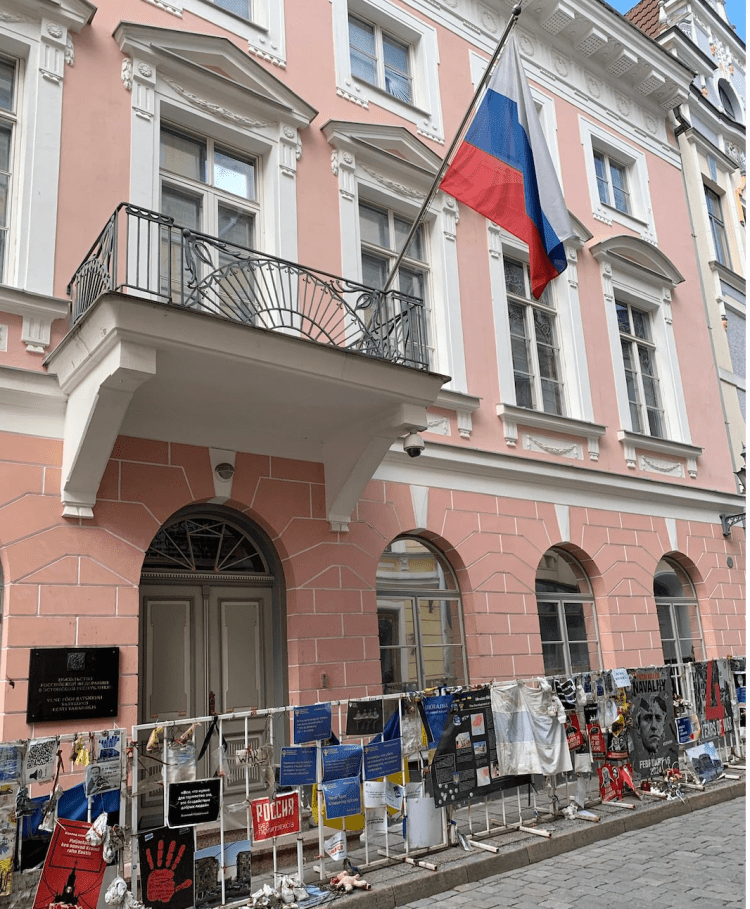
Block long Ukraine protest signs in front of the Russian ConsulateThe flower marketThey even were able to calm the dementors.
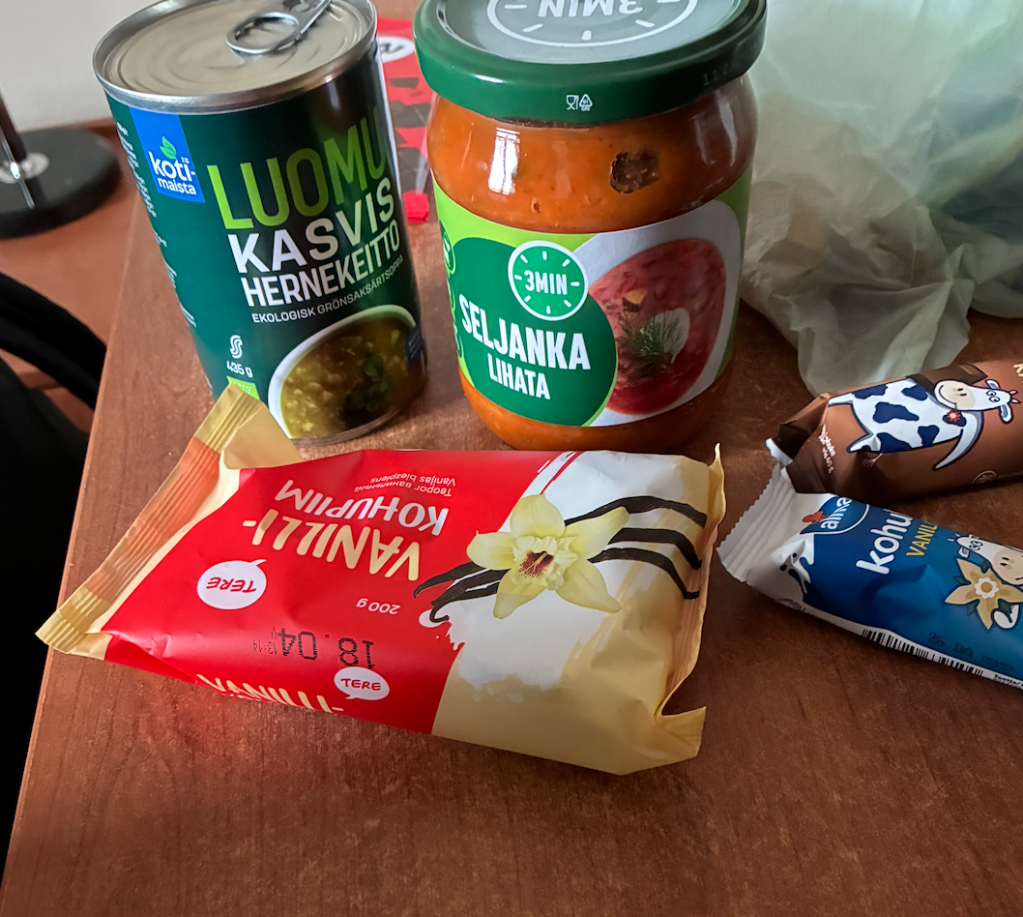
While we were presented with our usual challenges of eating, we were able to find all that we needed (pea soup substitute for Nick’s mushy peas), experience new tastes (Sejlanka-sour soup) and a new favorite food (kohuke).
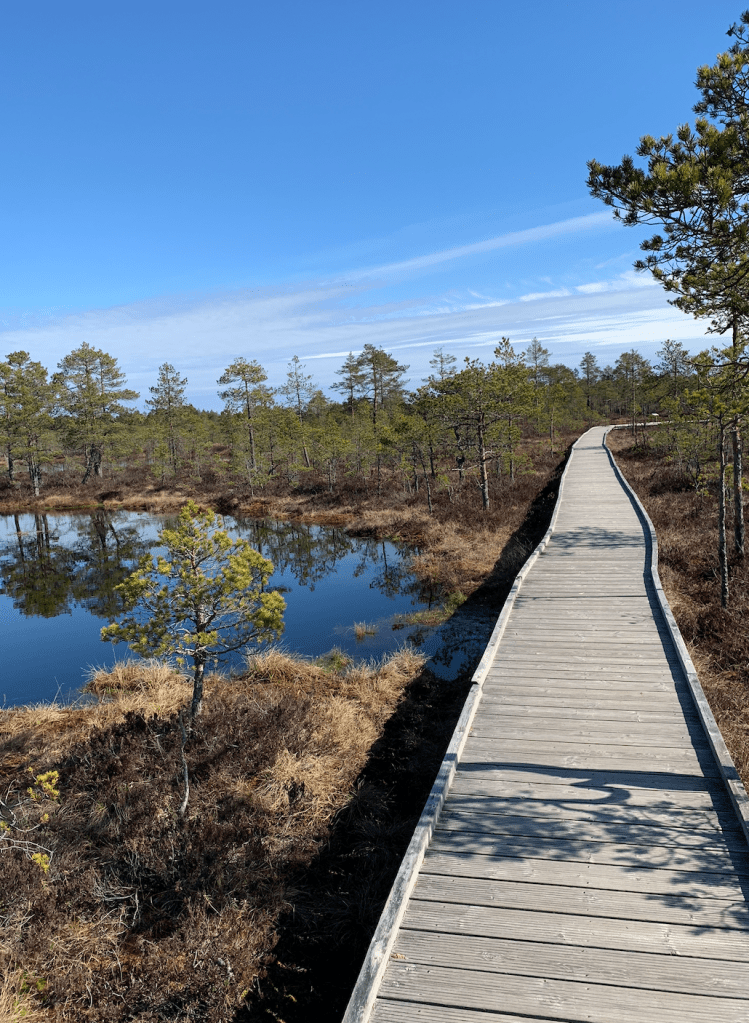
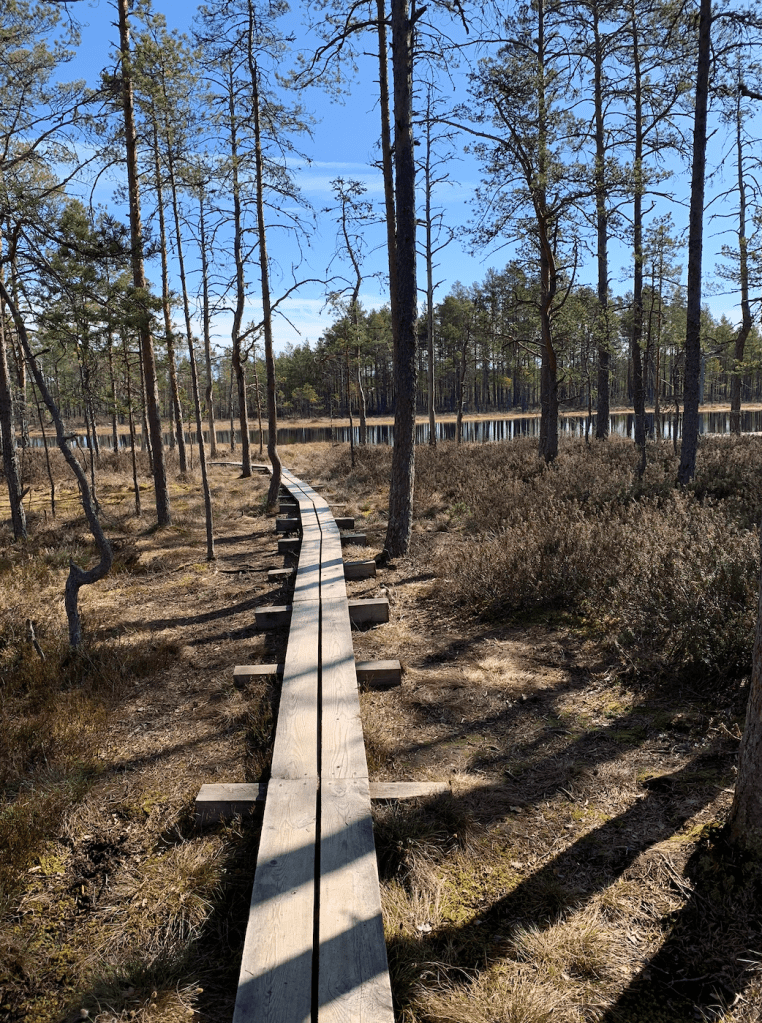
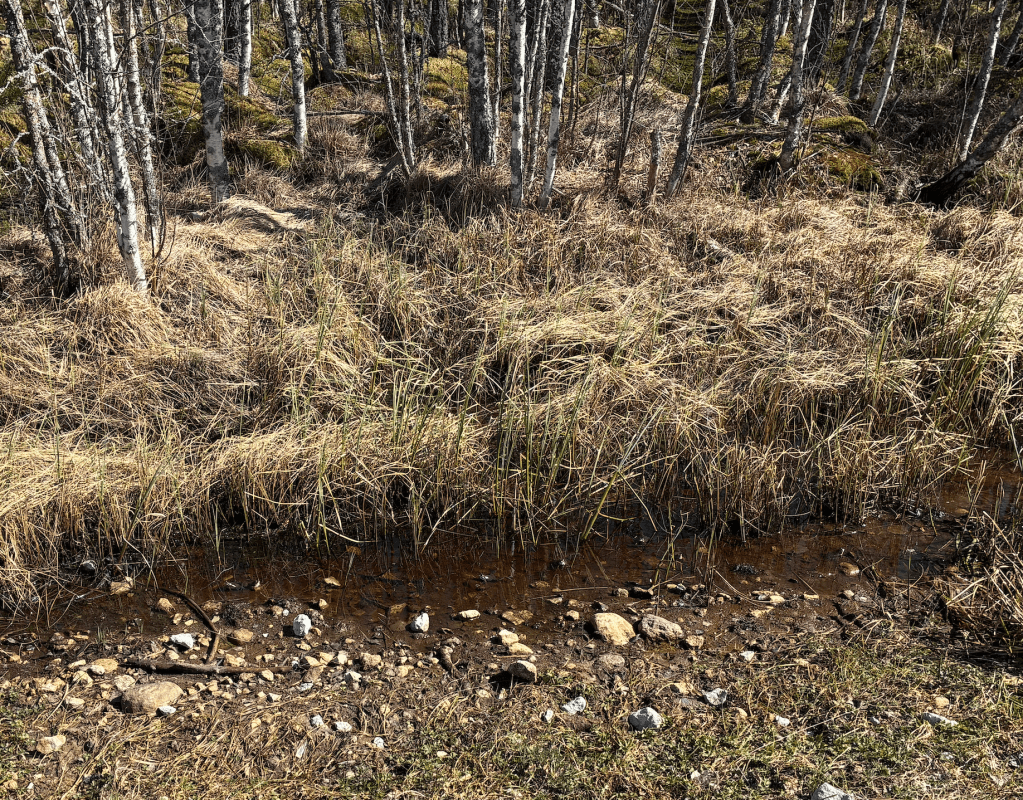
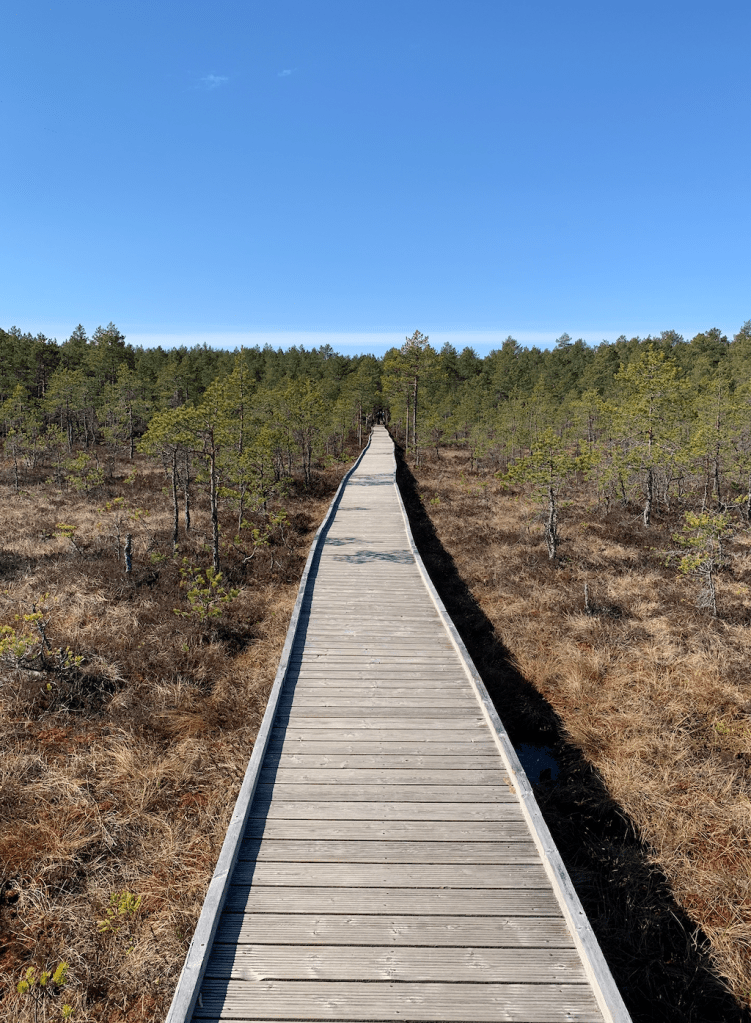
Not only were the buildings distinct, so was the terrain. Very flat. We bussed out to the Viru Bog trail to walk a plank path through a 3 mile stretch of a bog and a forest. Even got to see some bog frogs.
Can you see the frogs?
Estonia shares its entire eastern border with Russia and Russia has sought to master Estonia over the centuries. Historically, Sweden ruled until the mid 1500’s followed by Russia. Estonia gained independence with the end of WWI and the fall of the Russian Tzar. The new Estonia sought neutrality during WW2 but Hitler ignored that, signed a pact to give Estonia to Russia in 1939, but when Russia entered the war, Estonia became a battleground between Germany and Russia, with Russia attacking both Estonians and Germans. At the end of WW2, Estonia was given to the Russians.
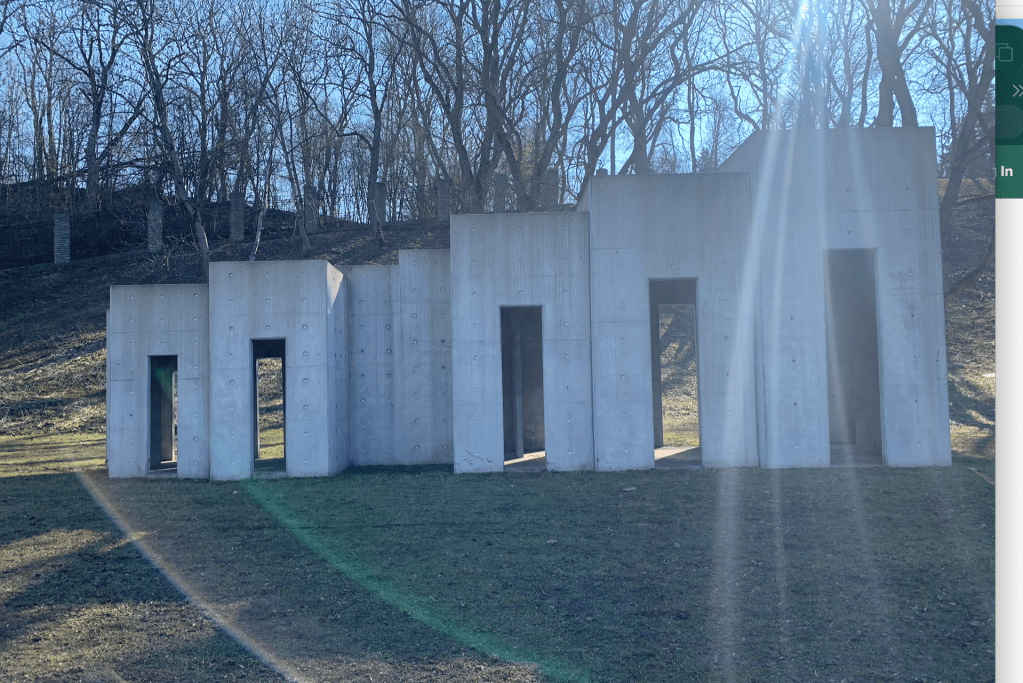
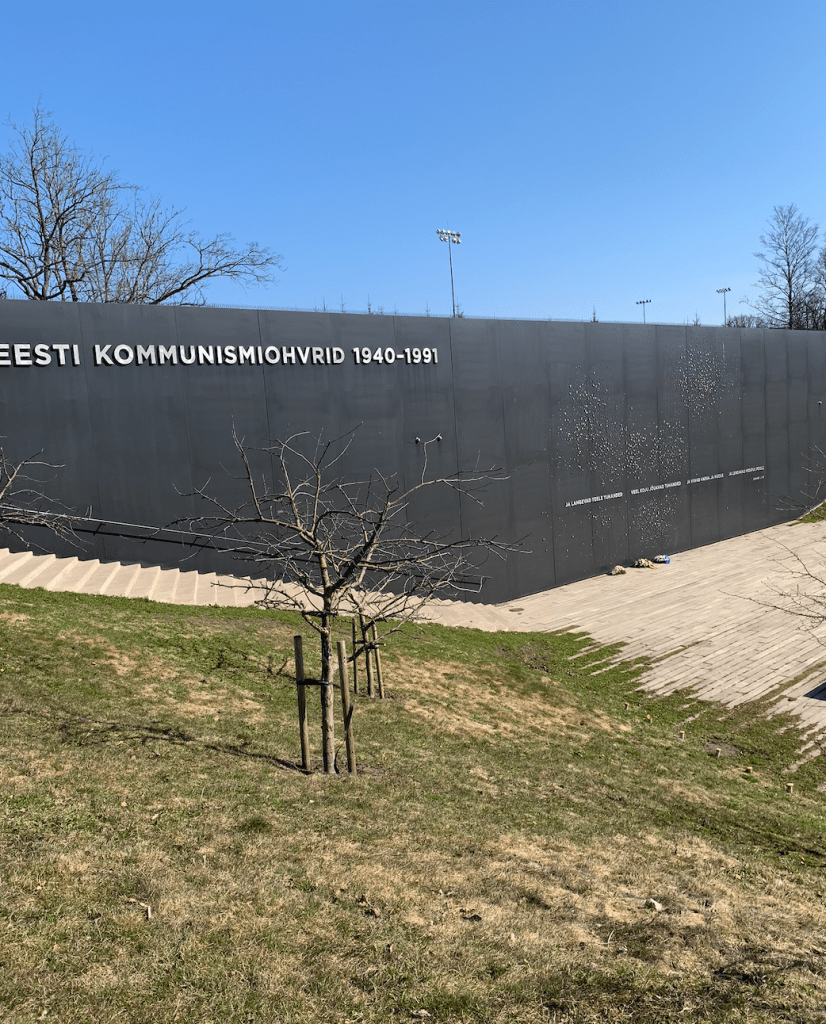
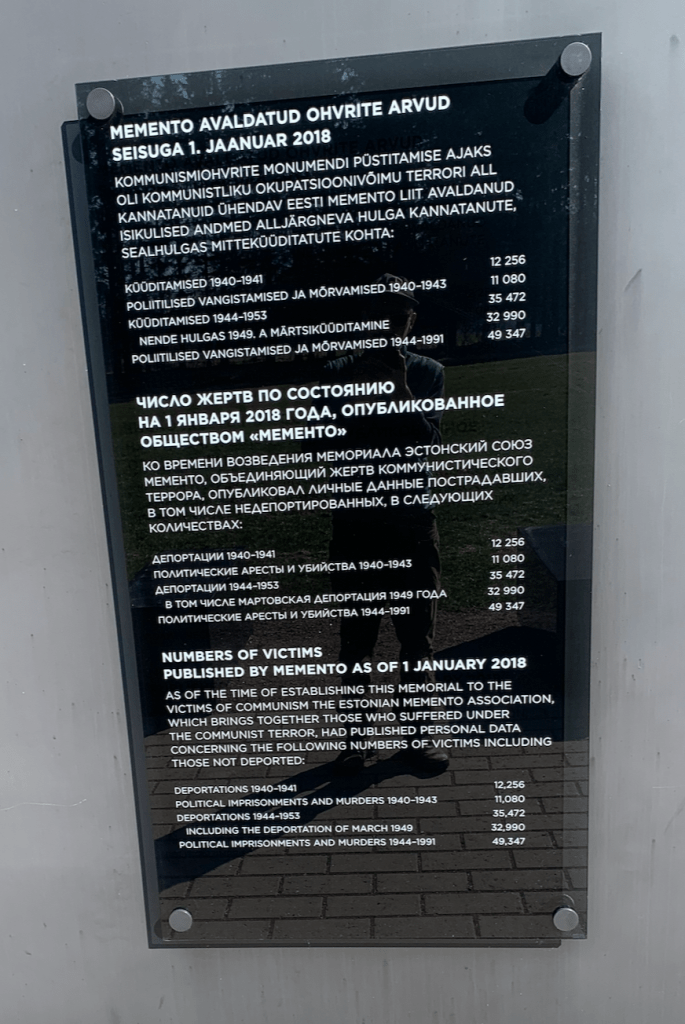
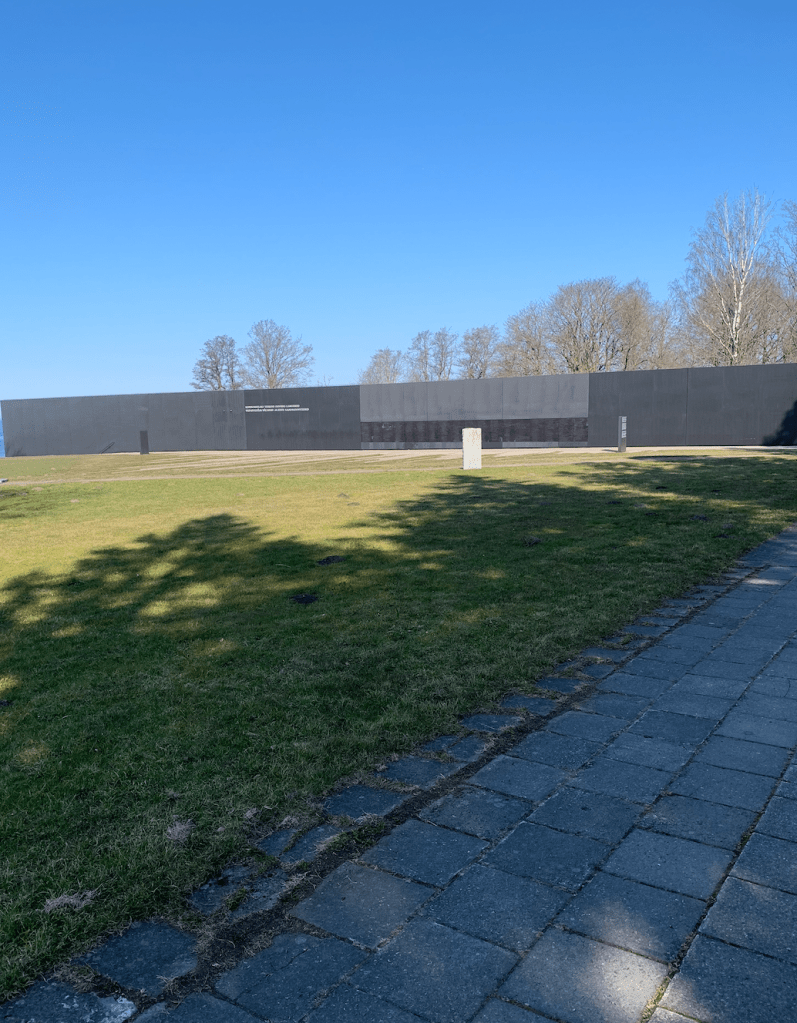
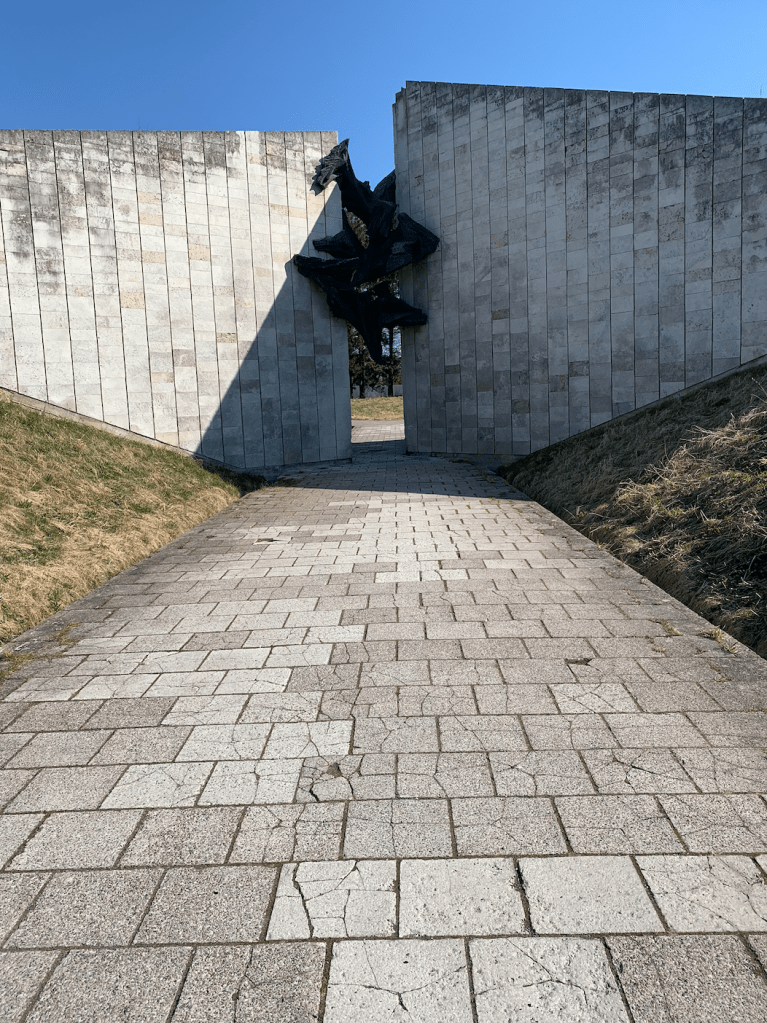
The continued anger and disgust with Russia was apparent at the Maarjamae Memorial. We reached it after a long walk through the city.
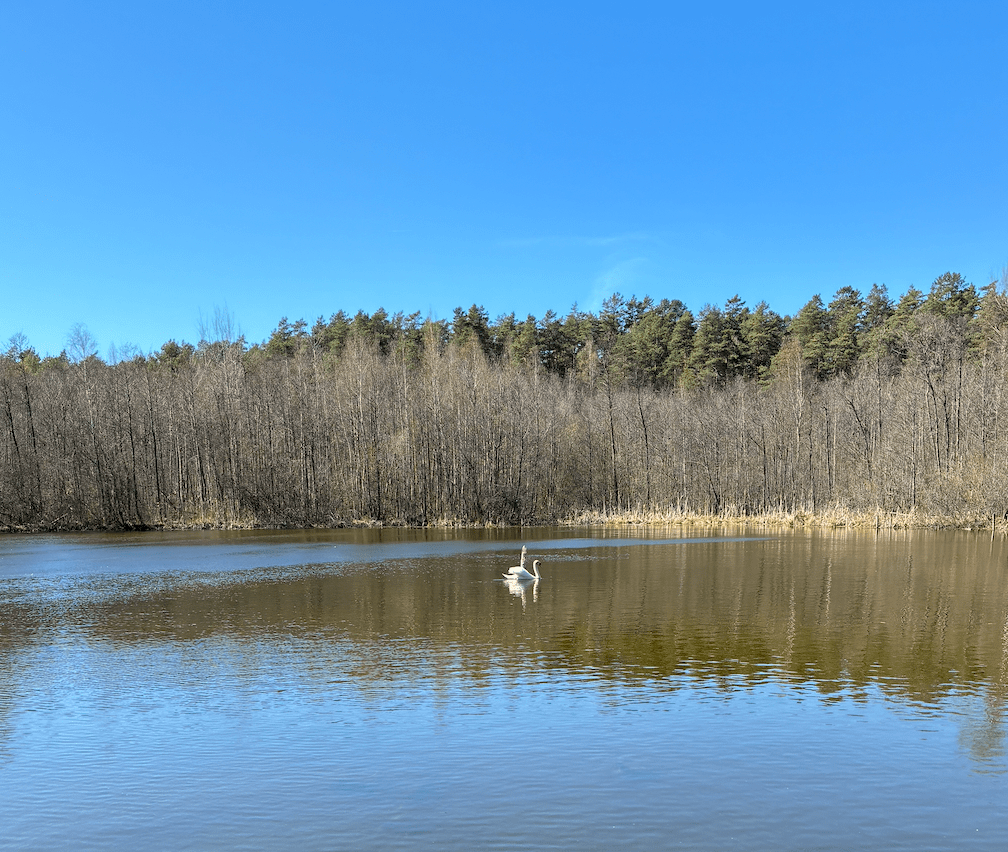
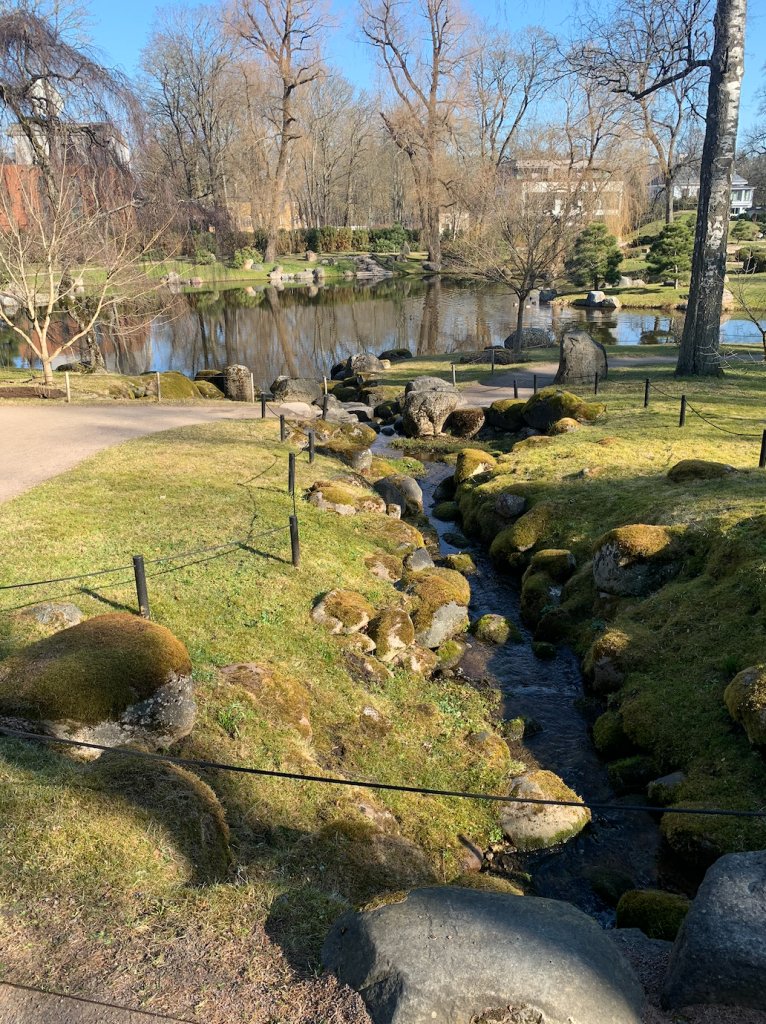
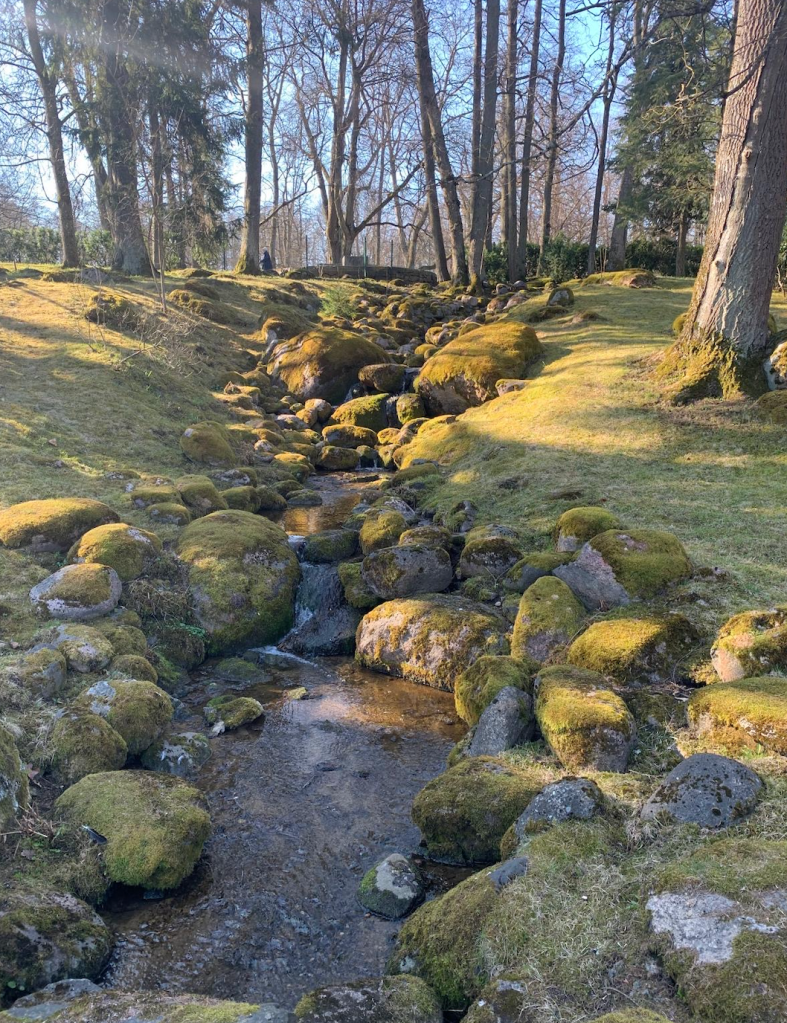
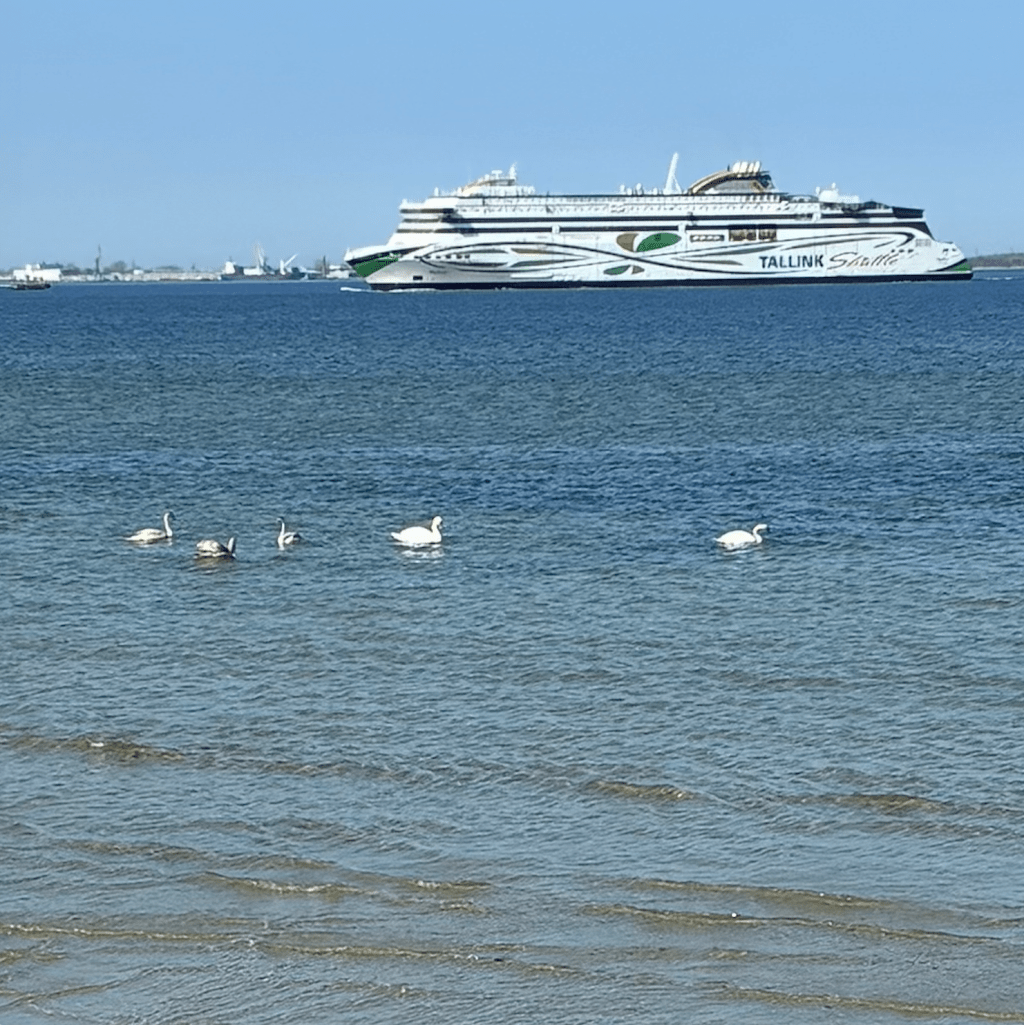
Walked through Kadrioru Park-a Japanese garden with Estonian twist, since many of the original plants needed to be replacedNow with cold hardy plants, this fusion garden was wonderfulThe Baltic sea with the Helsinki Ferry. Very shallow here and very low salinity, low enough that the swan family was happy to be there. Did not smell like an ocean.In Lauluväljak Park – The Tallinn Song Festival GroundsAlso in the park, the Cromatic, a visual representation of an octave
Who were those Estonians who were deported, imprisoned or killed ? Anyone who fought for or encouraged Estonian independence, anyone who promoted Estonian culture; that included military, politicians, writers, artists, intellectuals and their spouses and their children (a lot of children).
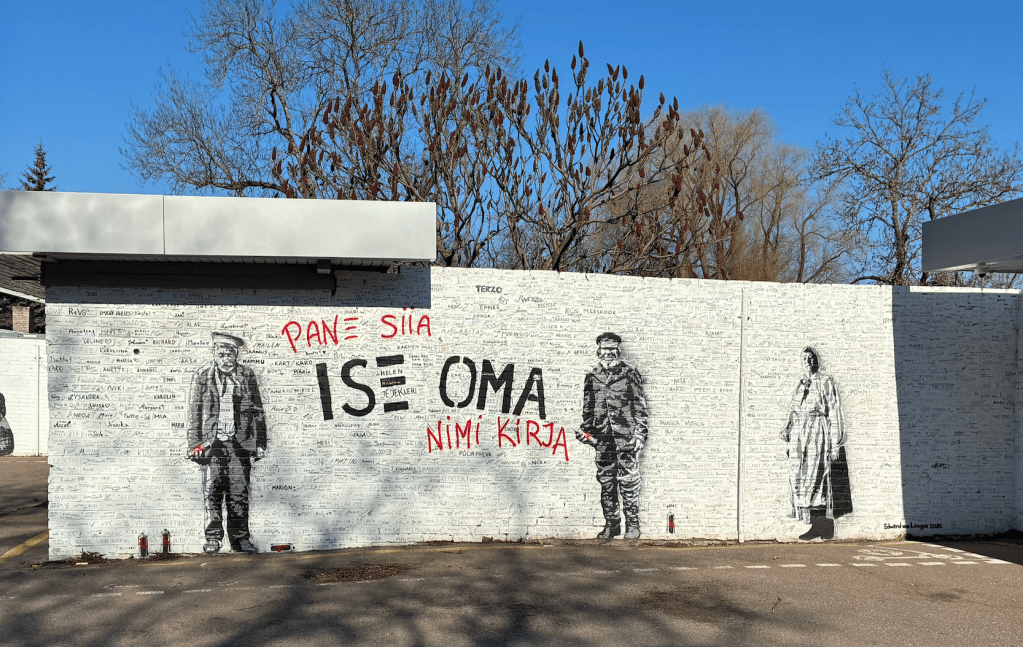
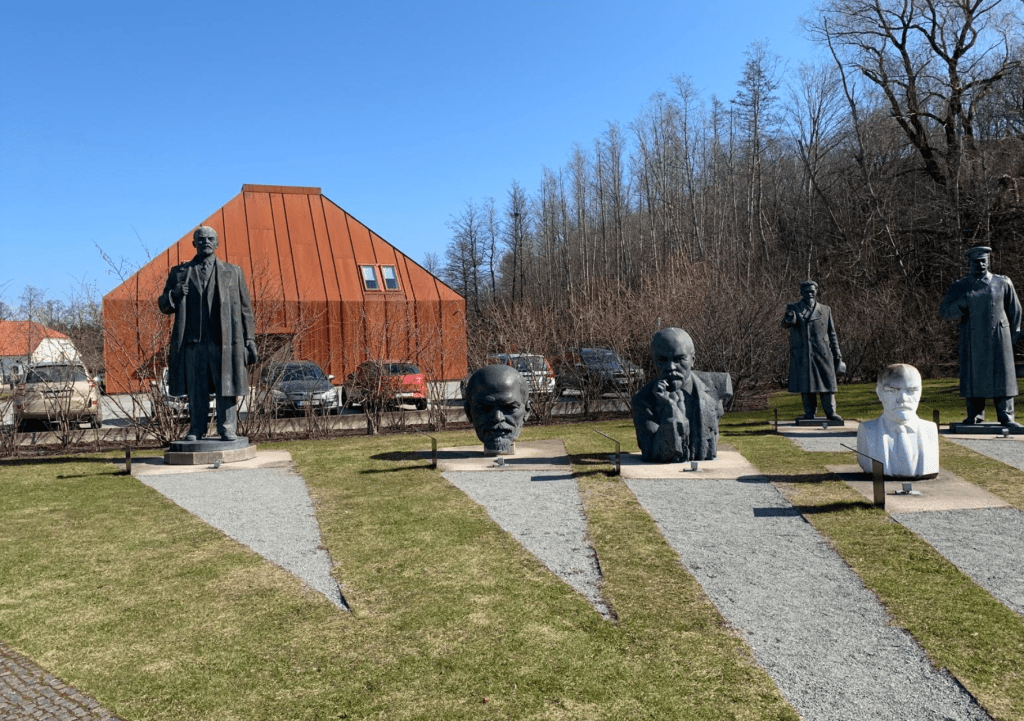
Another area with informational plaques telling the sad sad story of Soviet occupation The black wall and this sculpture were massiveA park full of soviet statues removed from locations throughout Estonia, again with information on who and where. Fascinating.
So, yet again another “new” country formed after 1989, trying to recapture its identity after decades of Soviet attempts to cross-out Estonian culture and replace it with Russian.
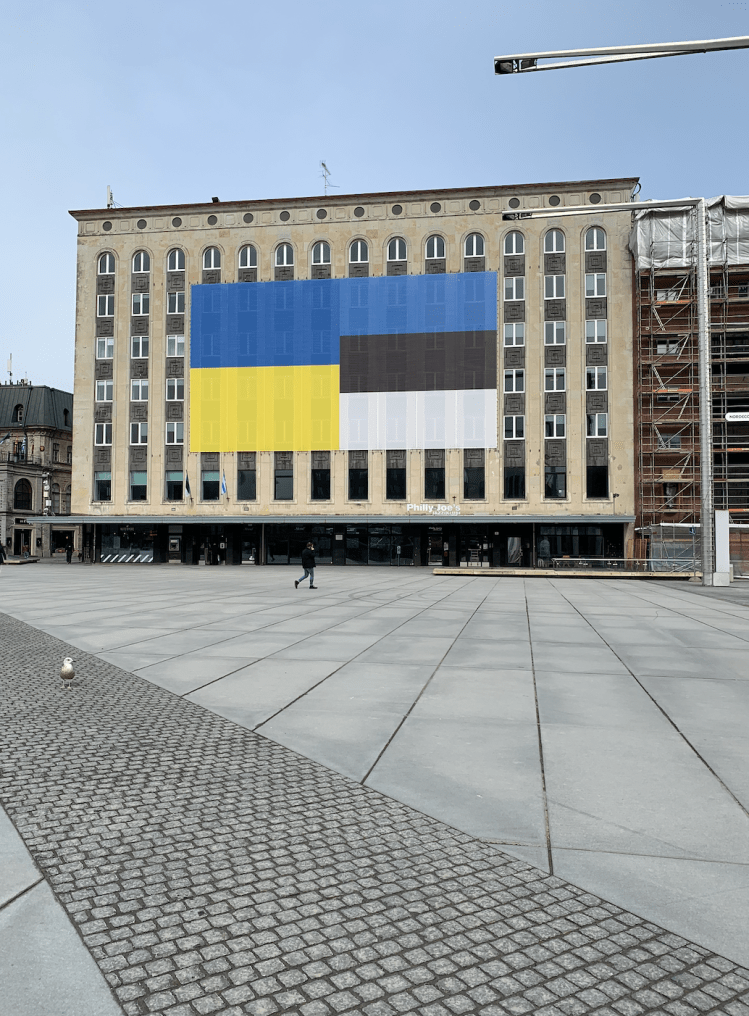
Freedom Square. The Ukraine flag is everywhere, often flying in tandem with the Estonian. They truly understand the suffering and oppression of the Ukrainians at the hands of the Russian government.
So maybe that feeling in the air is a huge sigh, a release from occupation.
Scandinavian and Baltic people are known for their stoicism and quiet reserved manner. We were on a local bus for an hour and it was silent (even though it was filled with teenagers just out of school) with the bus driver calmly waiting for you to sit down before driving off.
Scandinavian and Baltic people are also always scoring high for personal happiness. And, somehow that came across just walking around. An unpretentious chill vibe throughout. Refreshingly weird. We loved it.