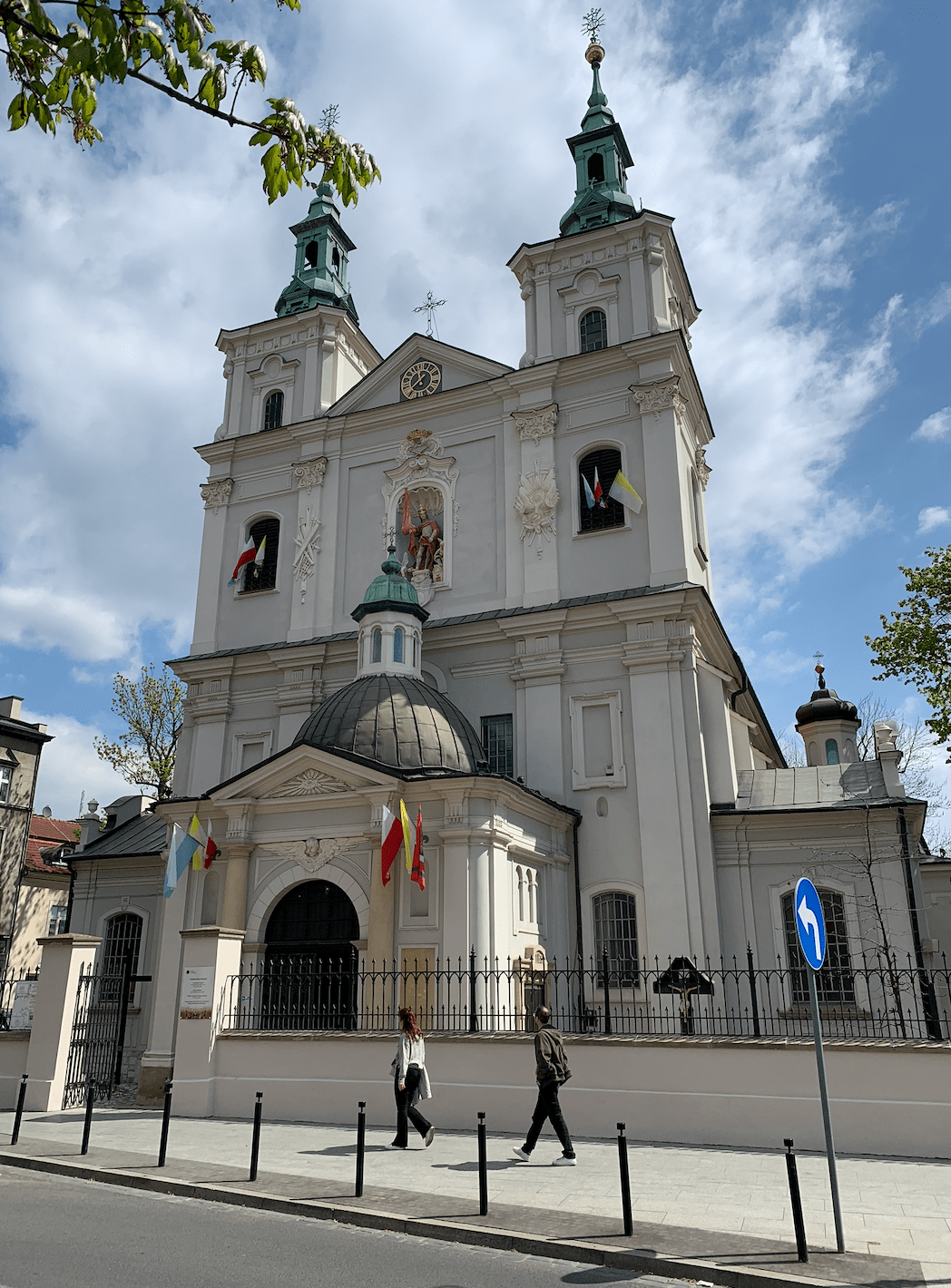
We stumbled into Krakow and walked into a fairy tale illustration.
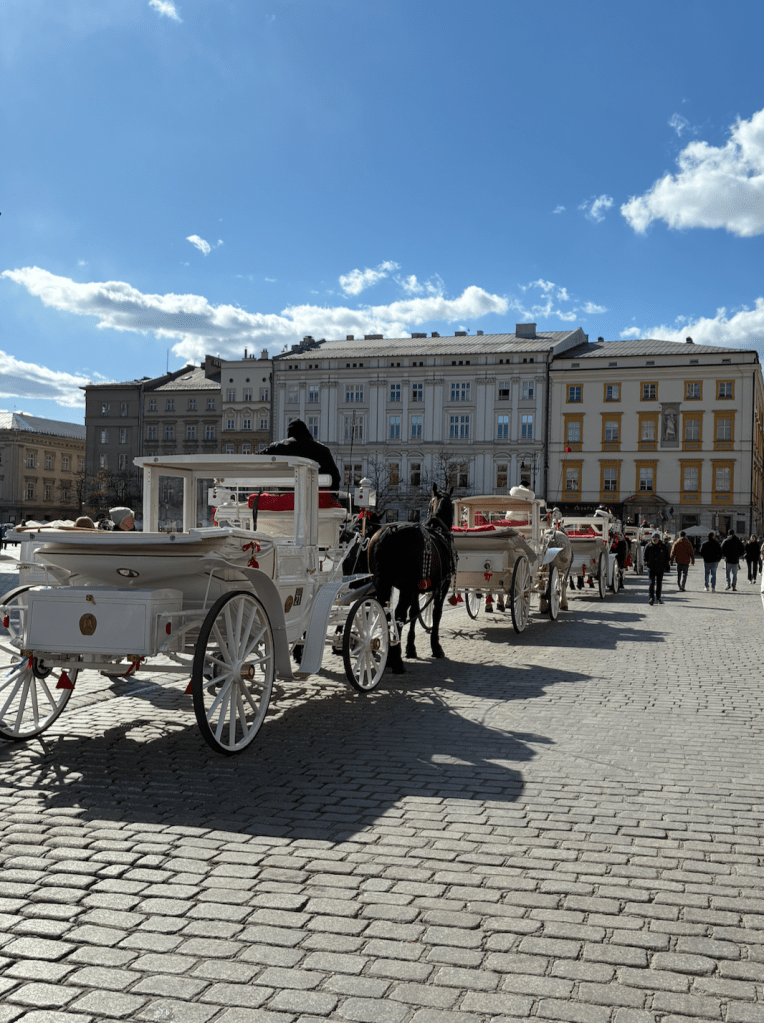
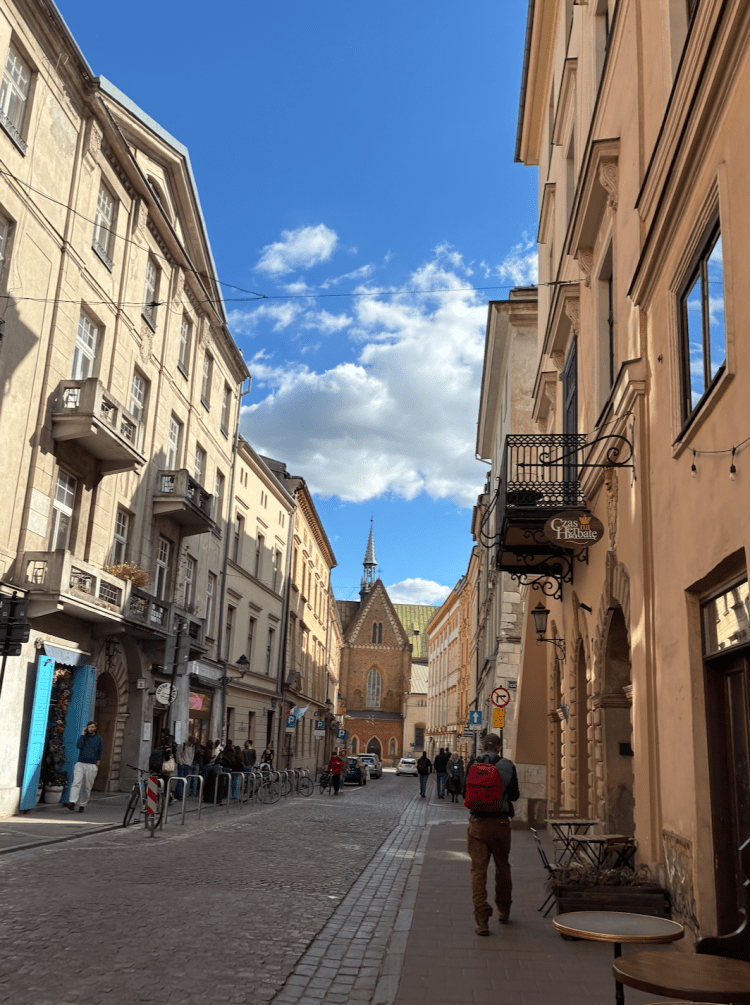
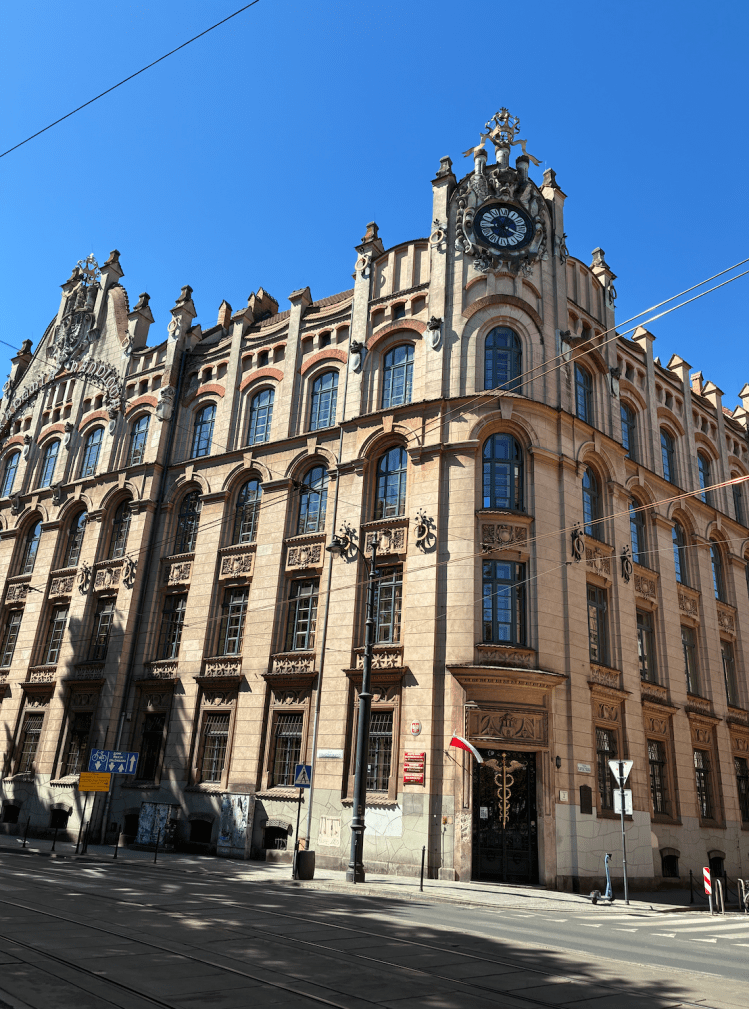
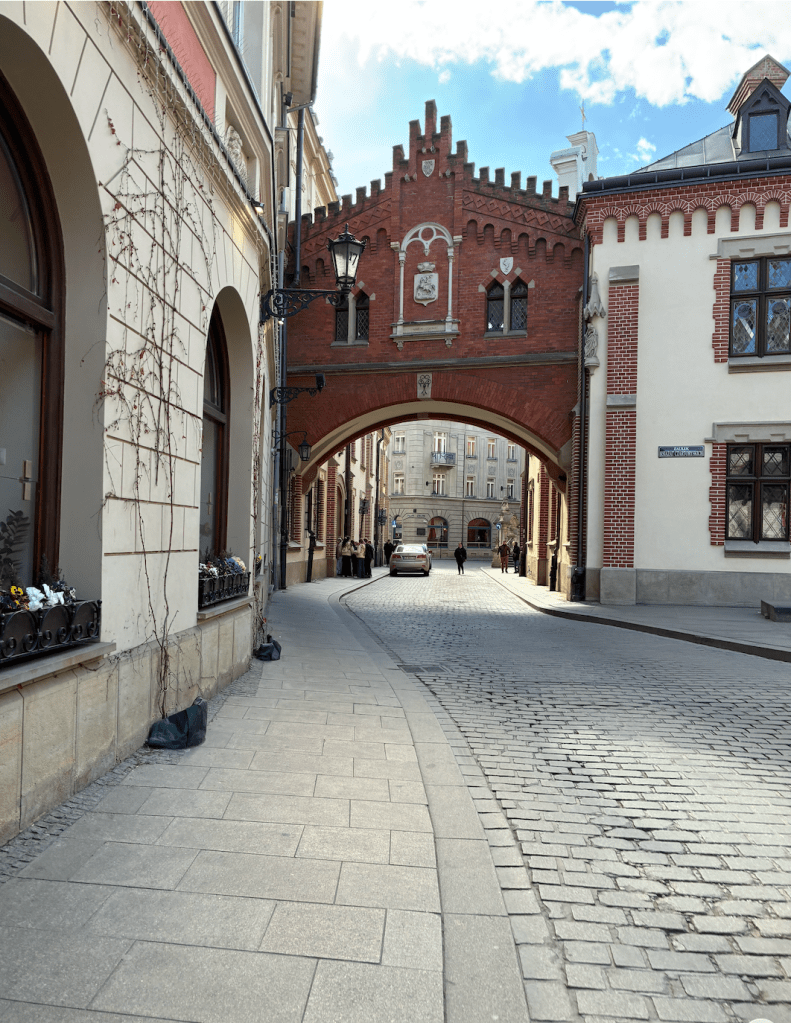
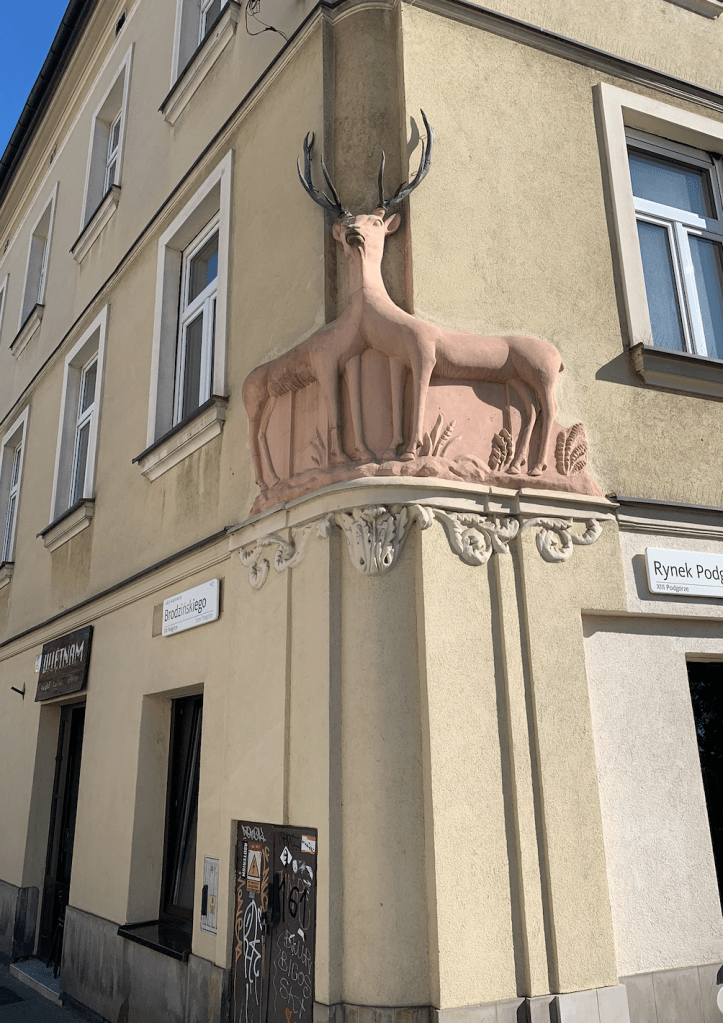
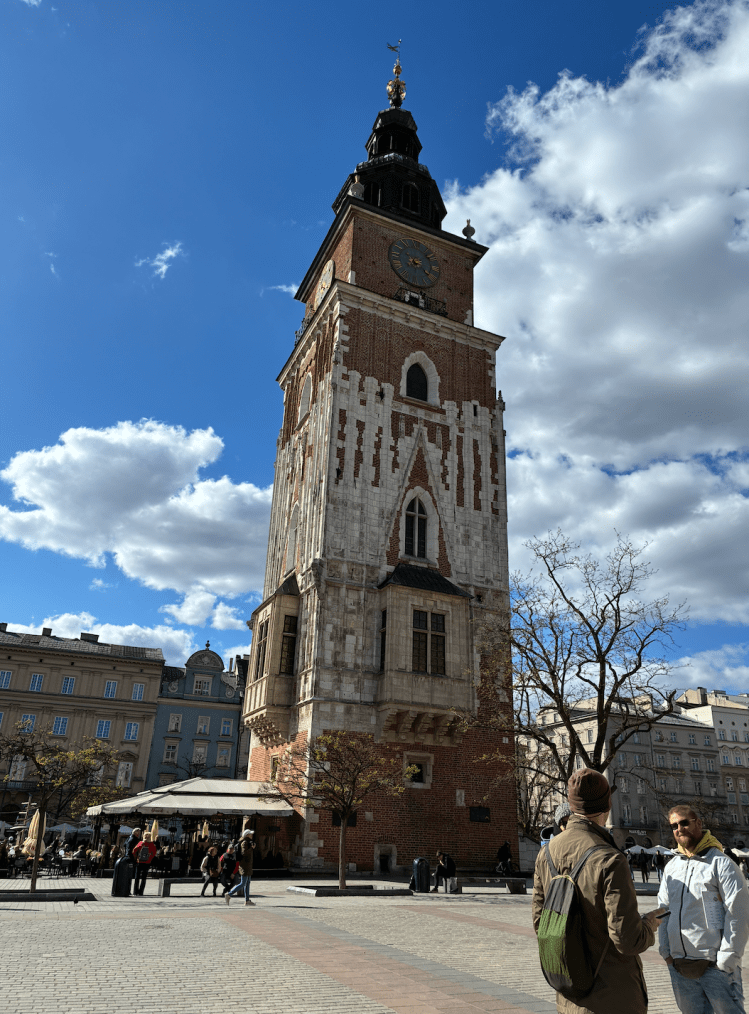
We arrived on a national 3 day Holiday Weekend, “Majowka”. May 1st is May Day aka Labor Day, May 2nd is Flag Day and May 3rd is Constitution Day.
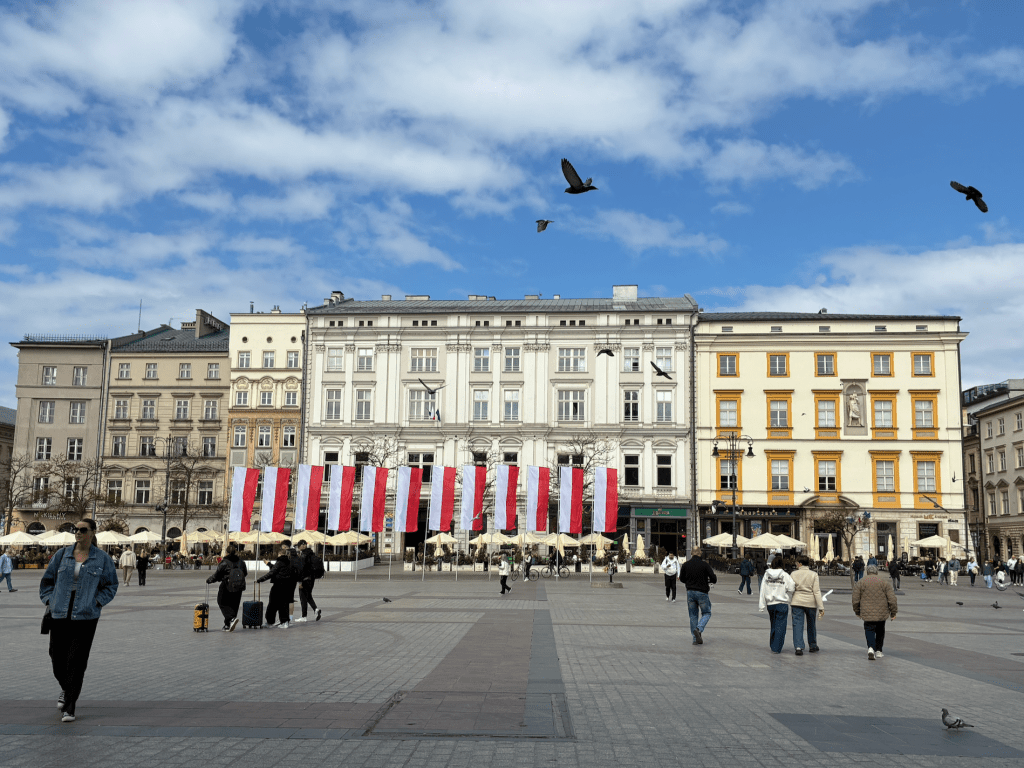
The city was in a festive mood; Planty Park, the greenbelt encircling the city was full of flowers, people walking, babies in strollers and dogs on leashes. (PS-pics show up better viewing on the blog not the email)
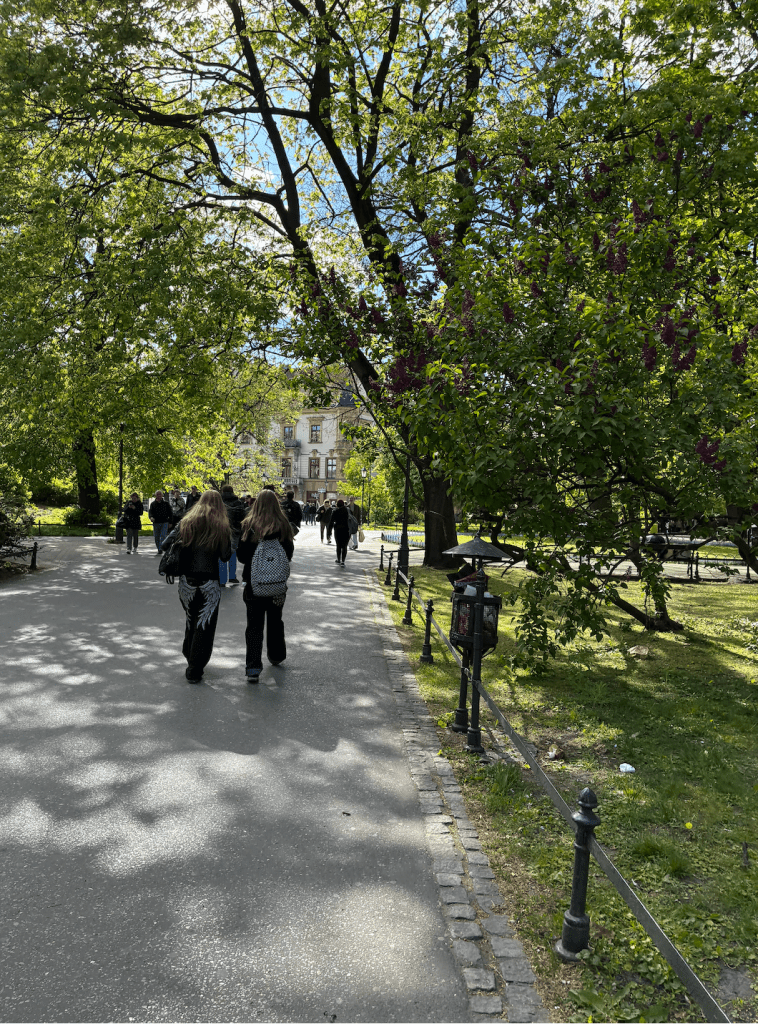
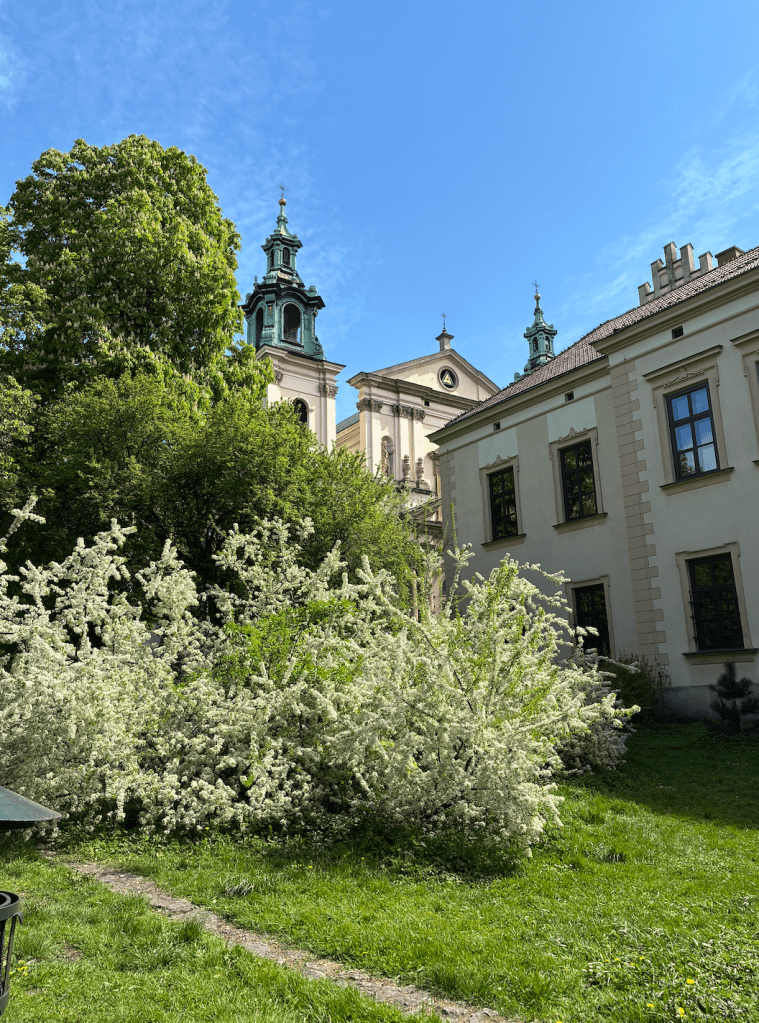
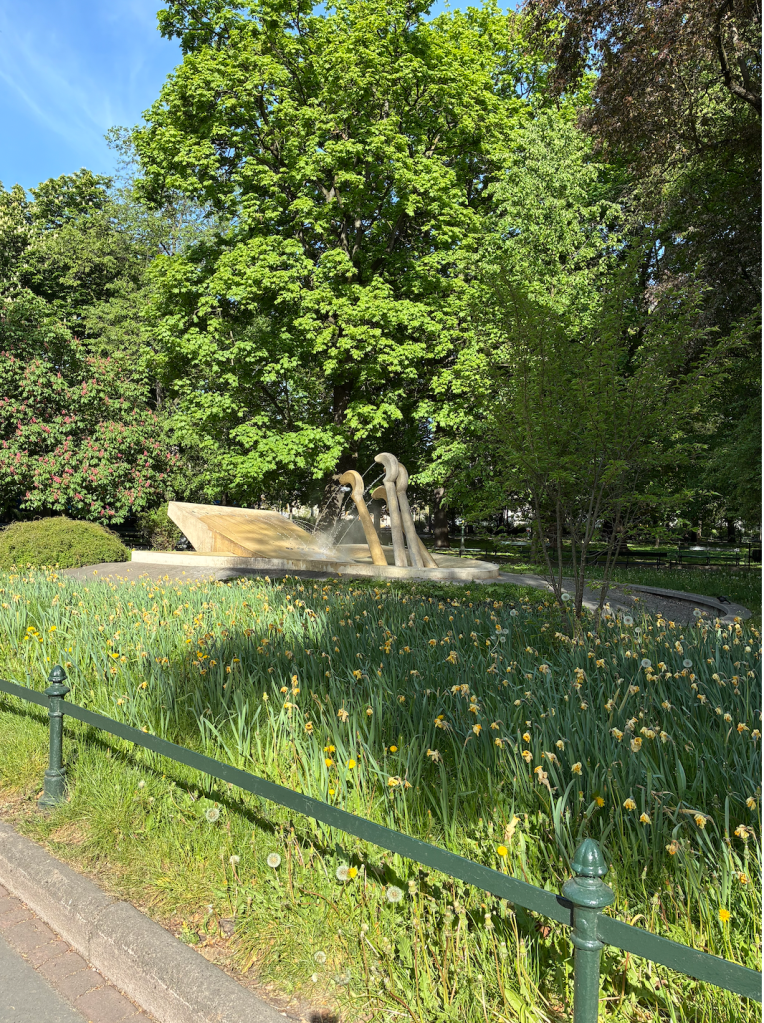
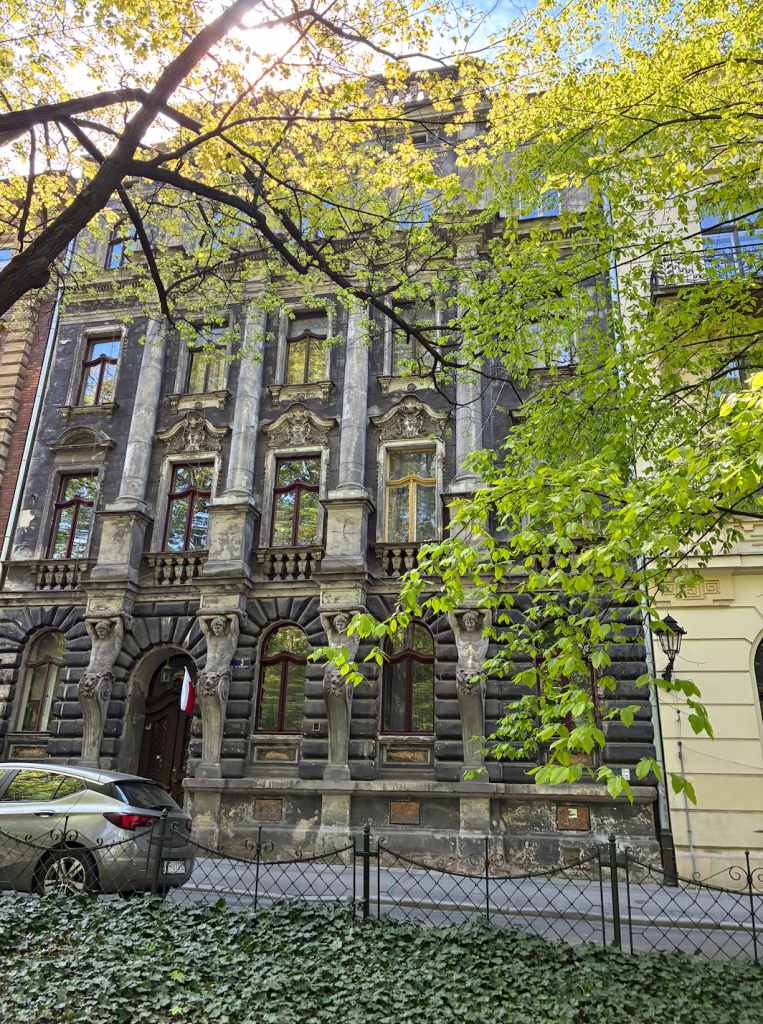
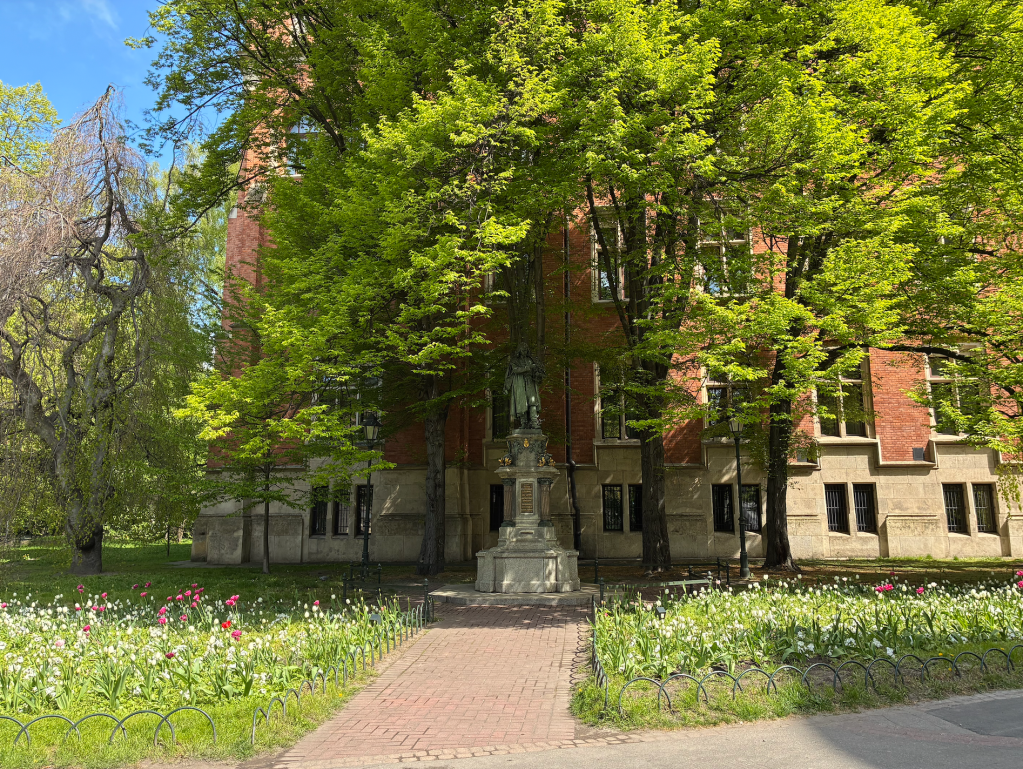
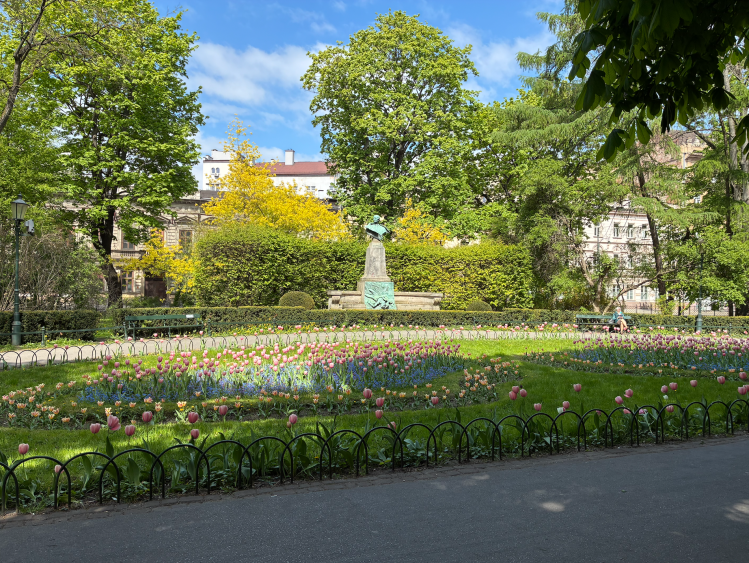
The beautiful old town was alive with parades, singing, free hot dogs, ice cream booths (tons of ice cream) and Polish flags for everyone.
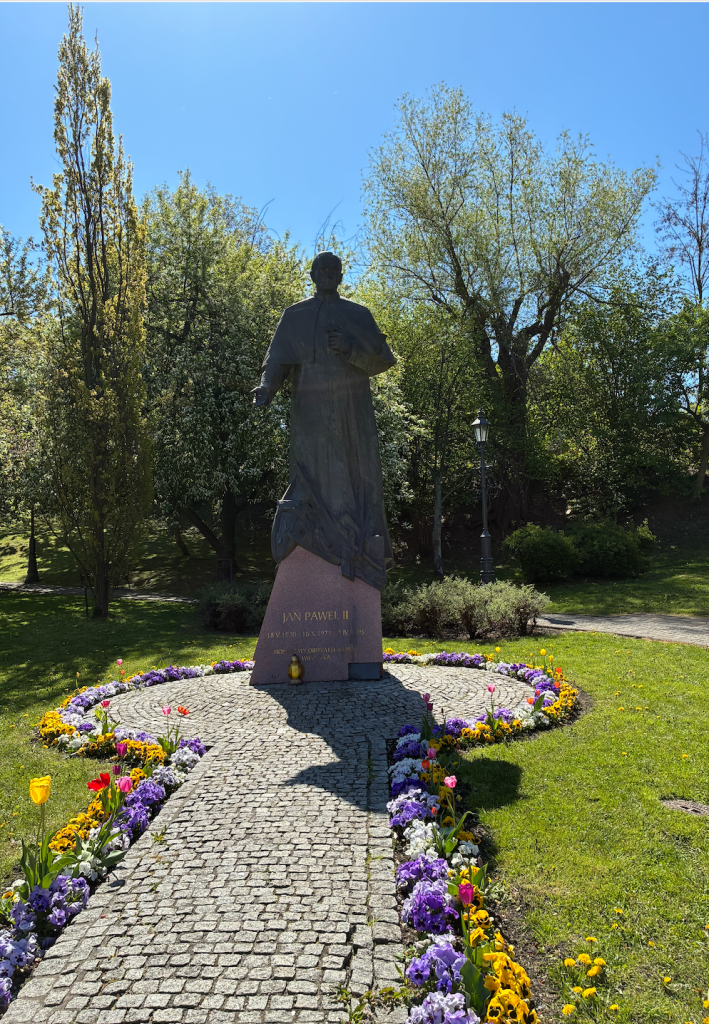
Poland clearly loves Pope John Paul II, but Krakow, in particular, really loves John Paul his roots are there; he was born in a nearby city, lived in Krakow as a child, studied for the priesthood in Krakow and was a priest at St Florian in Krakow (the pic at the top of the blog). The church near this John Paul statue, The Basilica of St Francis was one of the craziest churches we have seen, uniquely beautiful, pics here https://www.atlasobscura.com/places/art-nouveau-church-st-francis-basilica
In contrast to Warsaw, and most of Poland, Krakow was largely unscathed during WW2 , at least the buildings, as it served as the administrative center of the Nazi General Government. The inhabitants however suffered significant damage. As with most cities, Jewish residents were herded into a walled ghetto then either starved to death, annihilated on the spot or after being shipped to nearby concentration camps, in this case Auschwitz.
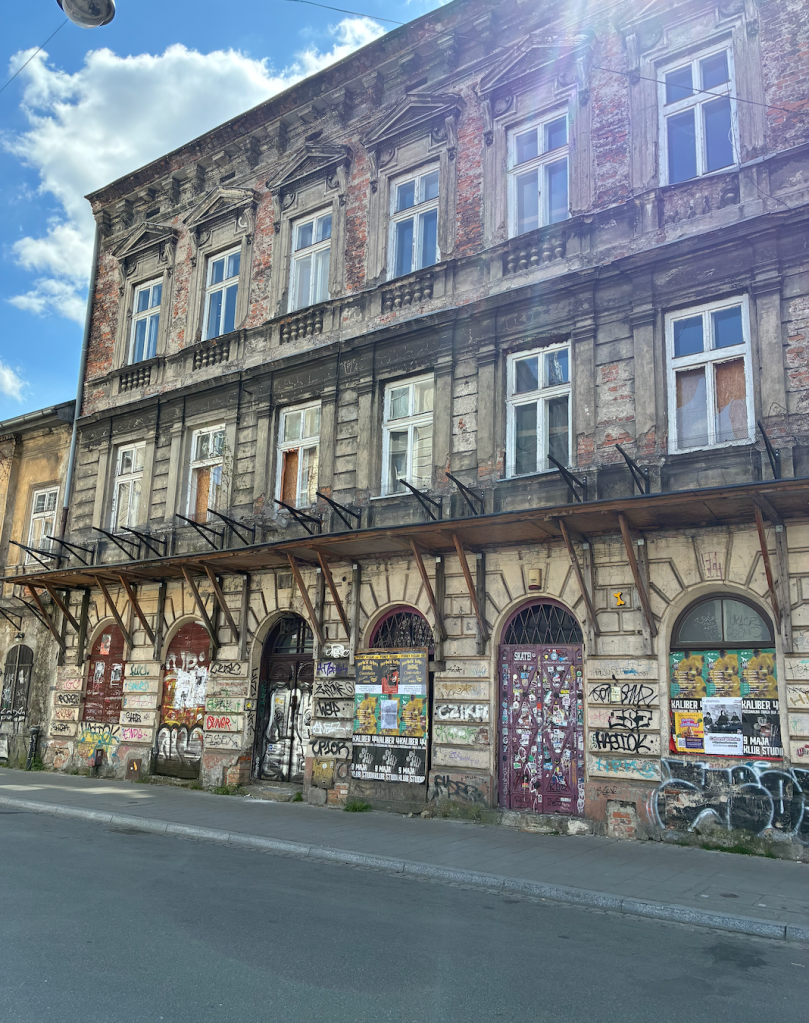
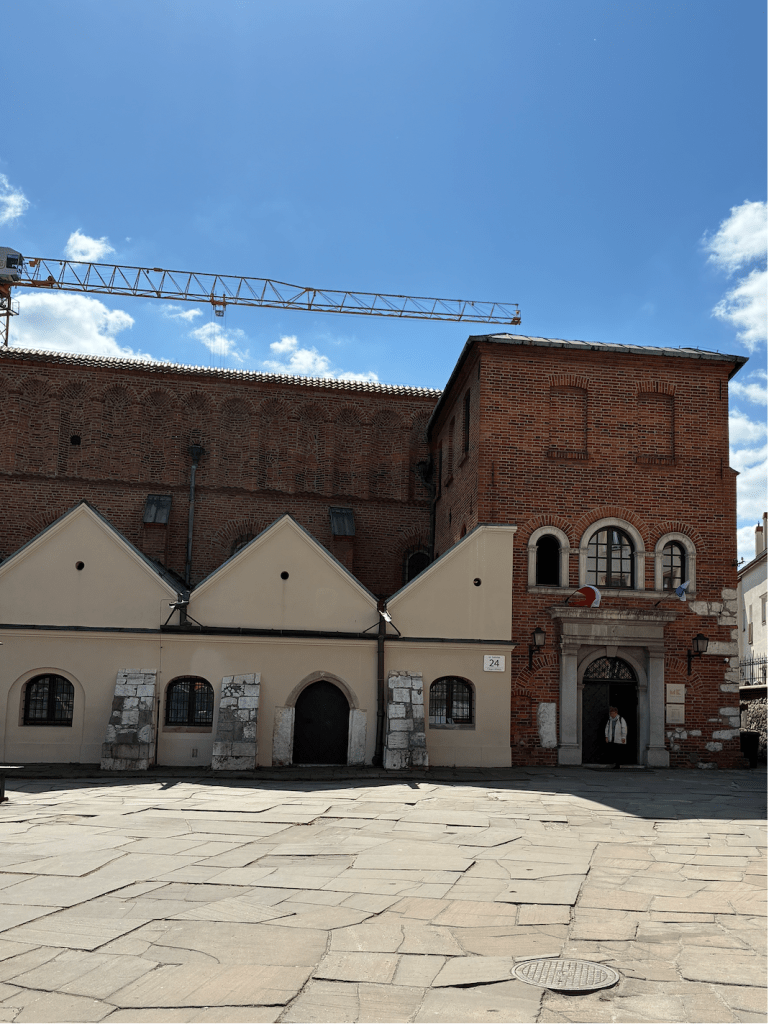
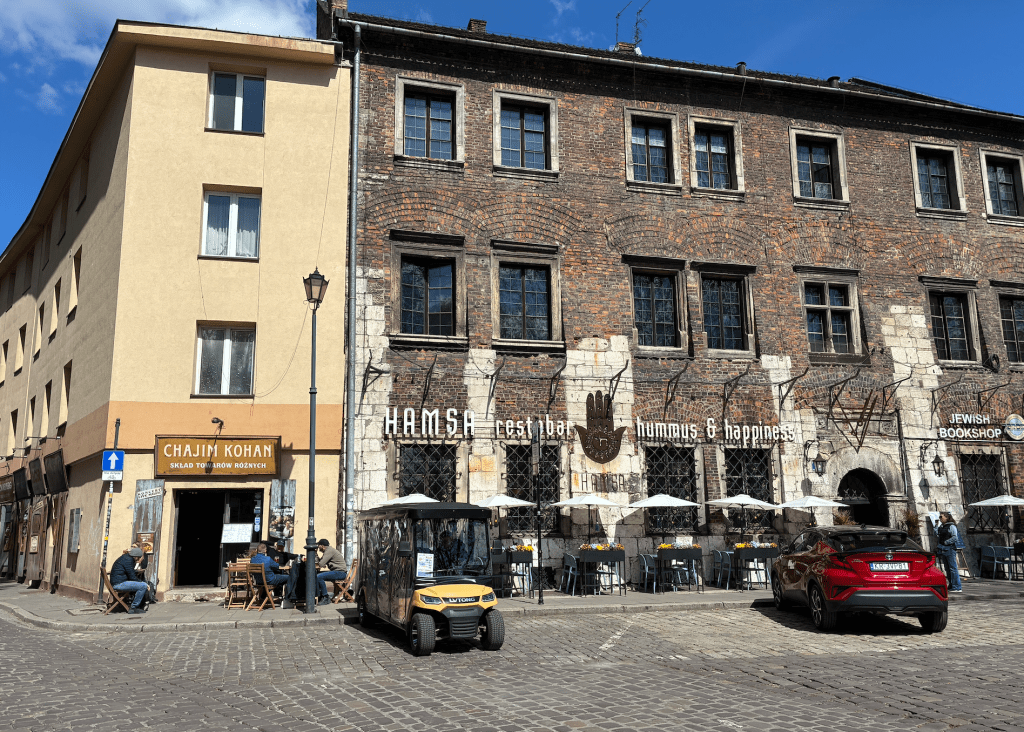
The traditionally Jewish area of Krakow remained intact, the ghetto was created just across the river from Kazimerz.
As in Warsaw, we wondered about what happened to the non-Jews living where the ghetto was built (not as big of an issue in Warsaw as the ghetto was in the Jewish neighborhoods, somewhat) but then we realized the Germans didn’t care about displacing Poles either.
The ghetto memorial was a bunch of empty chairs of different sizes symbolizing absence. The square was near the railroad tracks to Auschwitz.
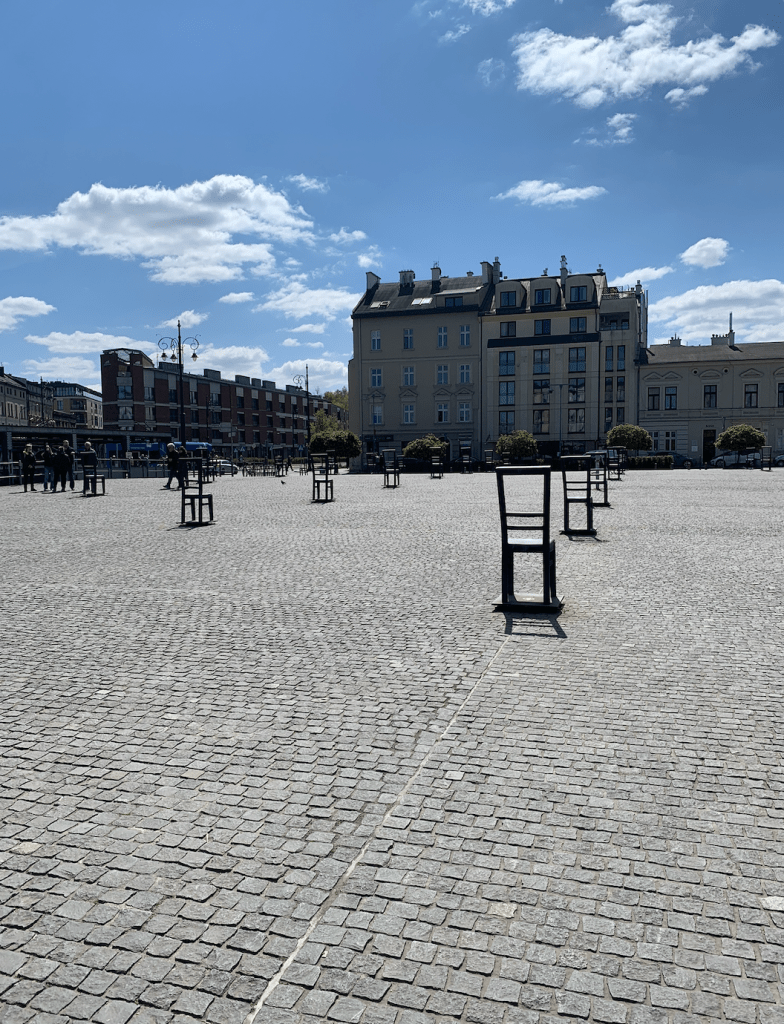
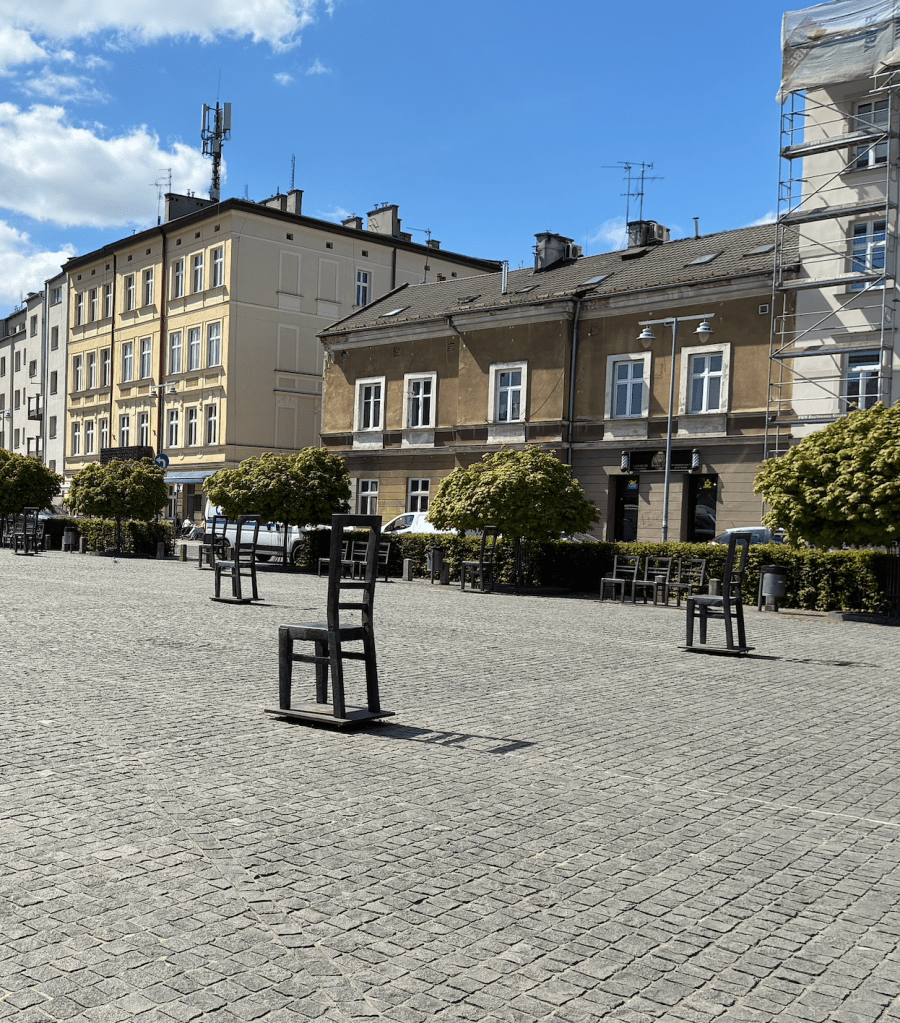
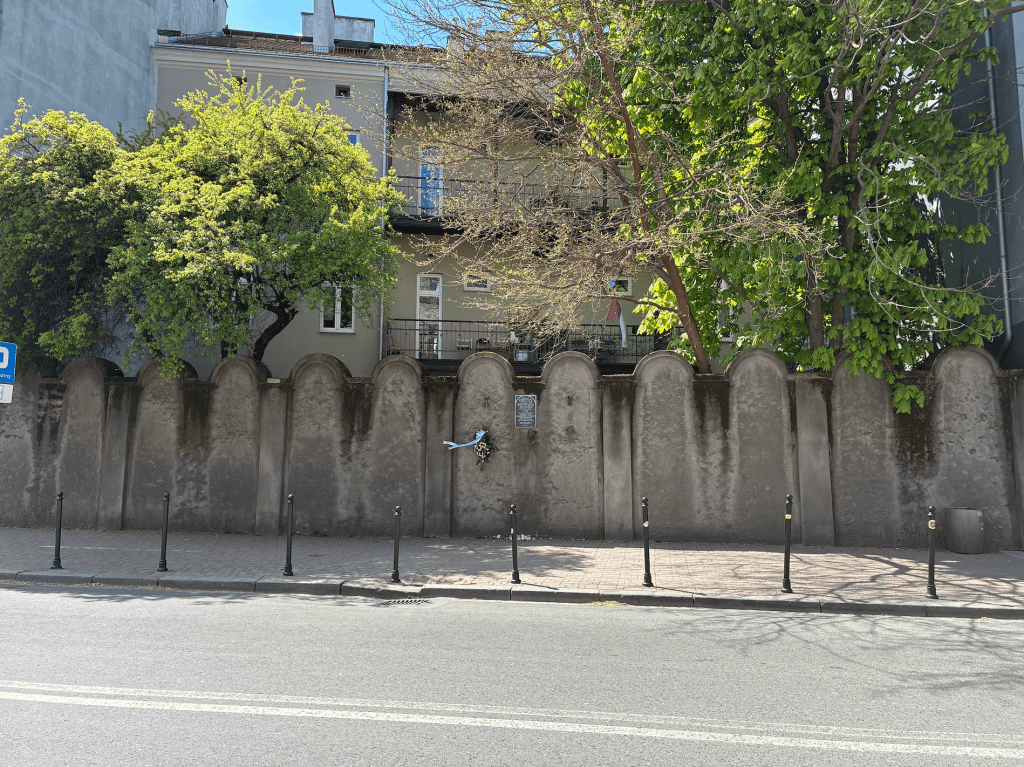
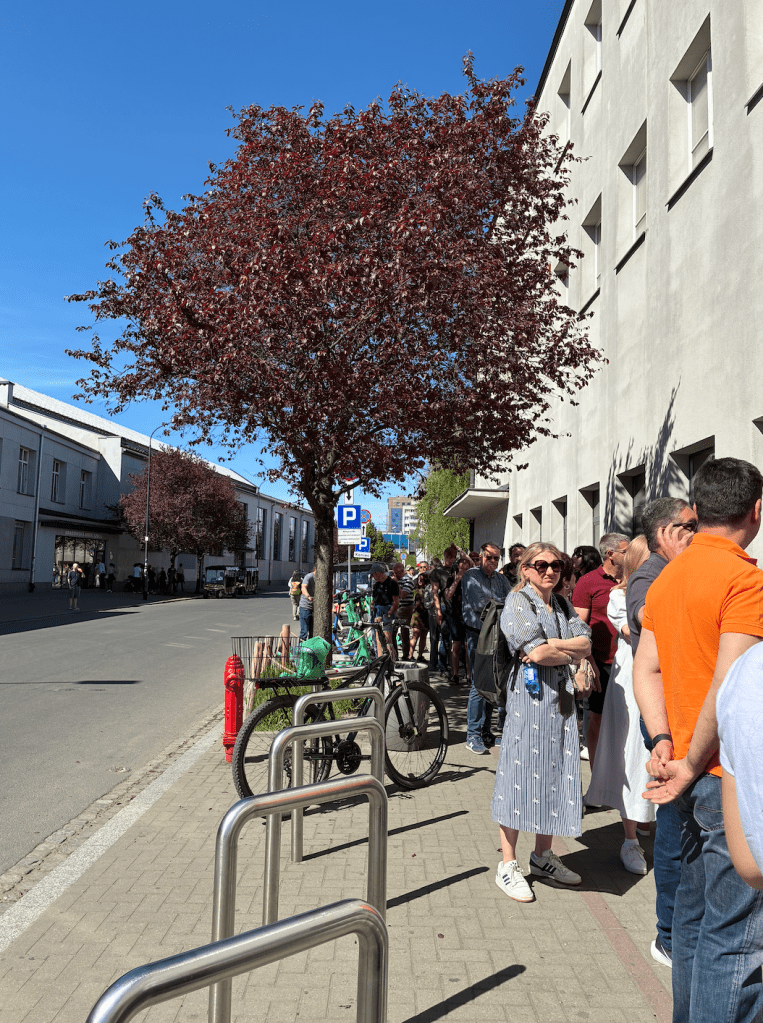
To bring the vibe even further down we visited the Schindler factory, the actual factory that inspired the book/movie Schindler’s List. Very popular, judging by the lines we saw on two different days. To us, it seemed that in it’s efforts to be engaging, it was a bit chaotic, a lot of information about Krakow during the Occupation but sorrily lacking a lot of context about the heroics of Oscar Schindler. But any info is good info. It didn’t help that we chaotically hurried through it to get to our next stop that day, Auschwitz.
It is ridiculous to critique holocaust sites, especially concentration camps, but Auschwitz did not have the impact for us as other related places. We were hit harder by Dachau, The White Rose museum https://chosenfugue.xyz/2019/08/06/munich/, Treblinka, Jewish Historical Museum https://chosenfugue.xyz/2026/05/10/time-warp-in-warsaw/ and stumbling over stolpersteine throughout Europe https://chosenfugue.xyz/2019/01/07/they-do-make-you-stumble/. It didn’t help that we got there 4 hours earlier than our scheduled time hoping we could go to the bookstore, or to Auschwitz 2-Birkenau as some travel sights indicated you can walk around there before your scheduled time at the Auschwitz 1 portion (the museum). So, it gave us hours to observe the buses and buses of tourists, the plethora of vending machines (with ham sandwiches) and the precision efficiency of the site. Our wait did give us a chance to see what ended up being the most compelling part of the visit; in a lounge area next to some vending machines (so many coffee machines) , restrooms and restaurants was an exhibit of 650 portraits painted from the entry photos of prisoners. These were Artur Kapurski’s doctoral work. He views this as a continuing, long term project.
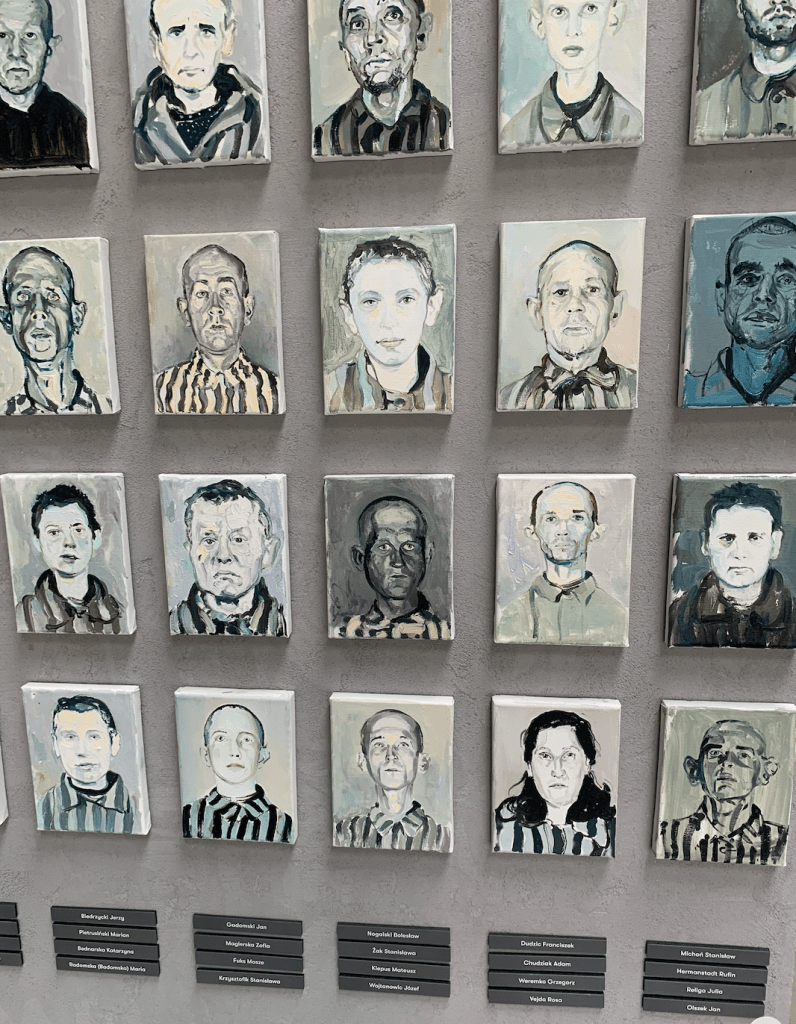
Once we entered Auschwitz 1, the museum portion, the under produced signage and odd sterility did not help. We chose to go during the short window at the end of the day when you could go without a guide (for a variety of reasons) and perhaps that also impacted our impression, although after passing a number of guided groups, it probably did not.
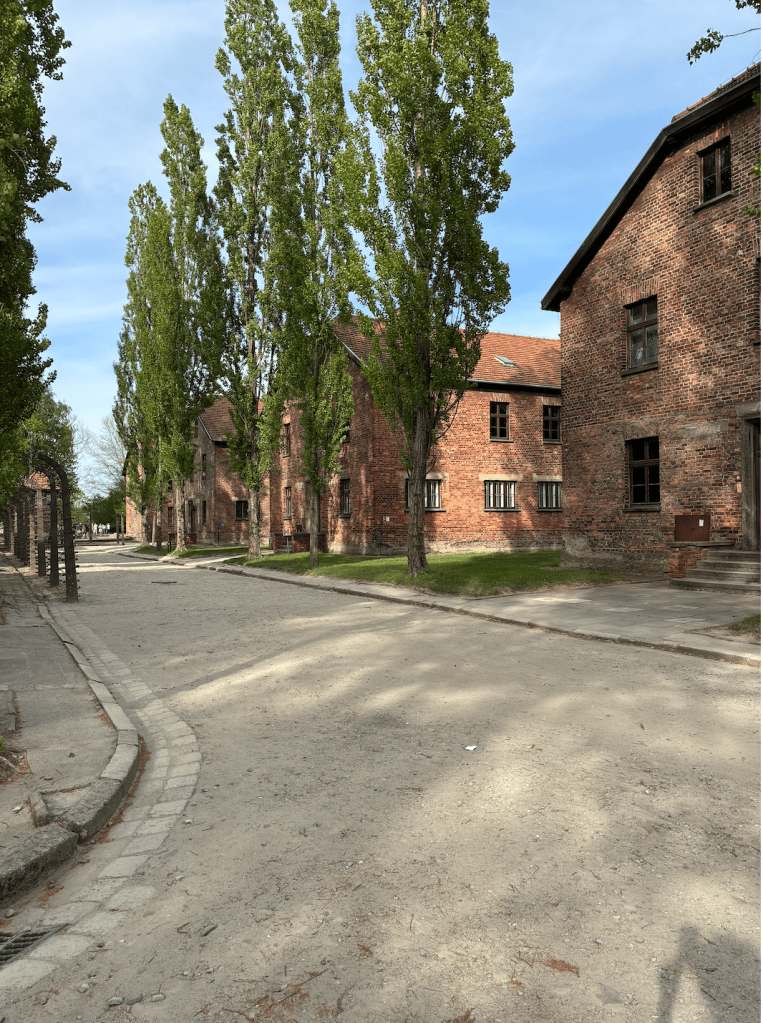
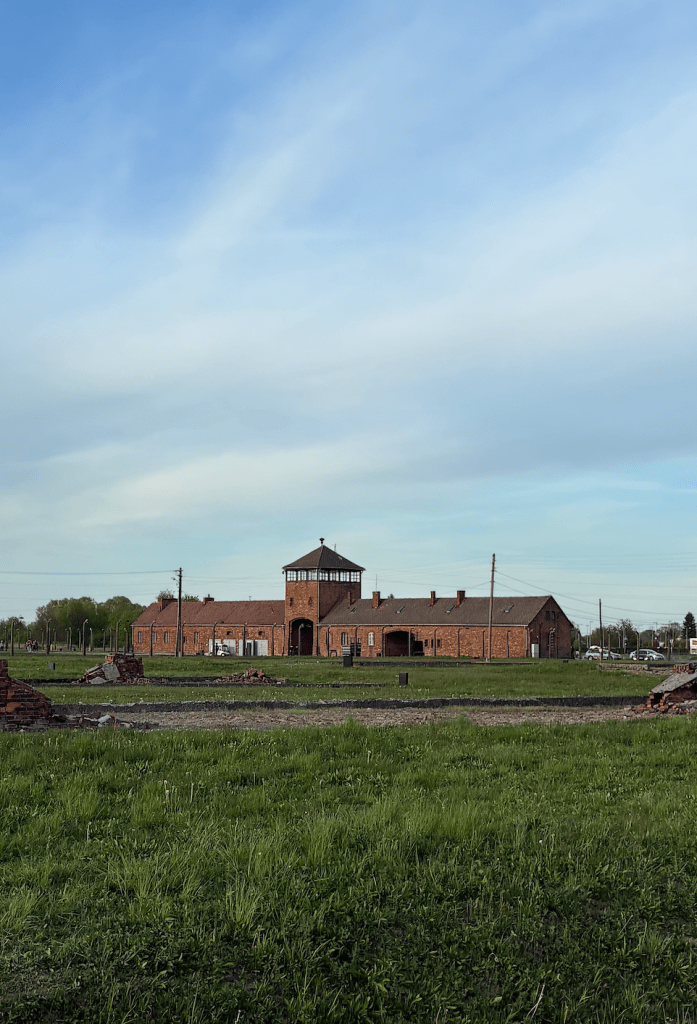
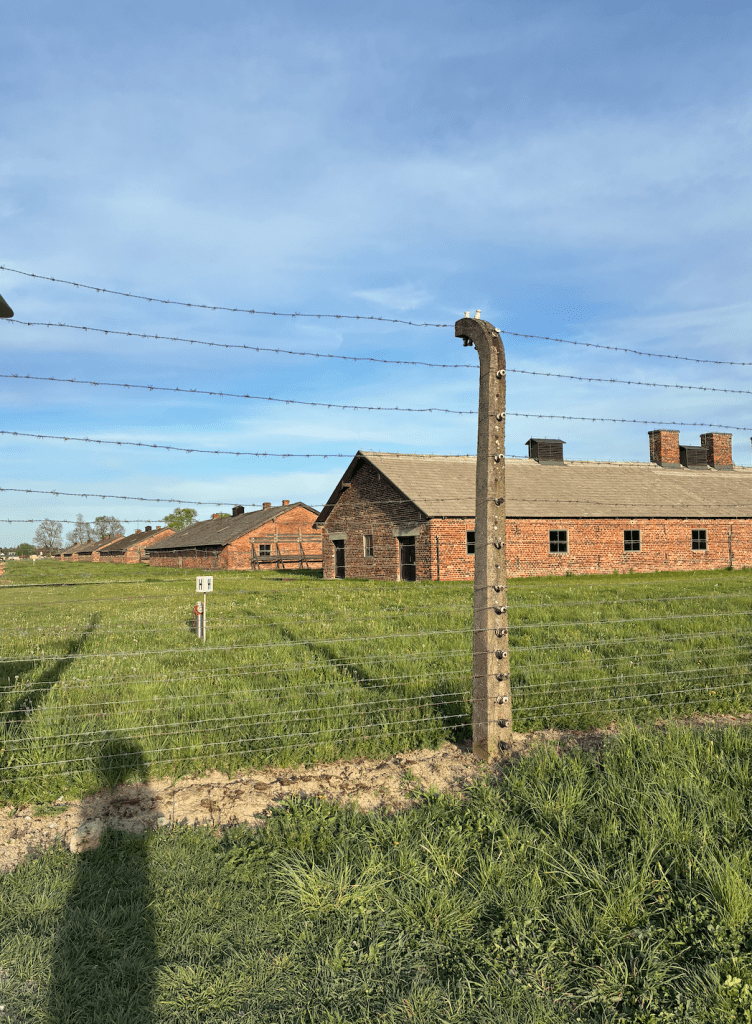
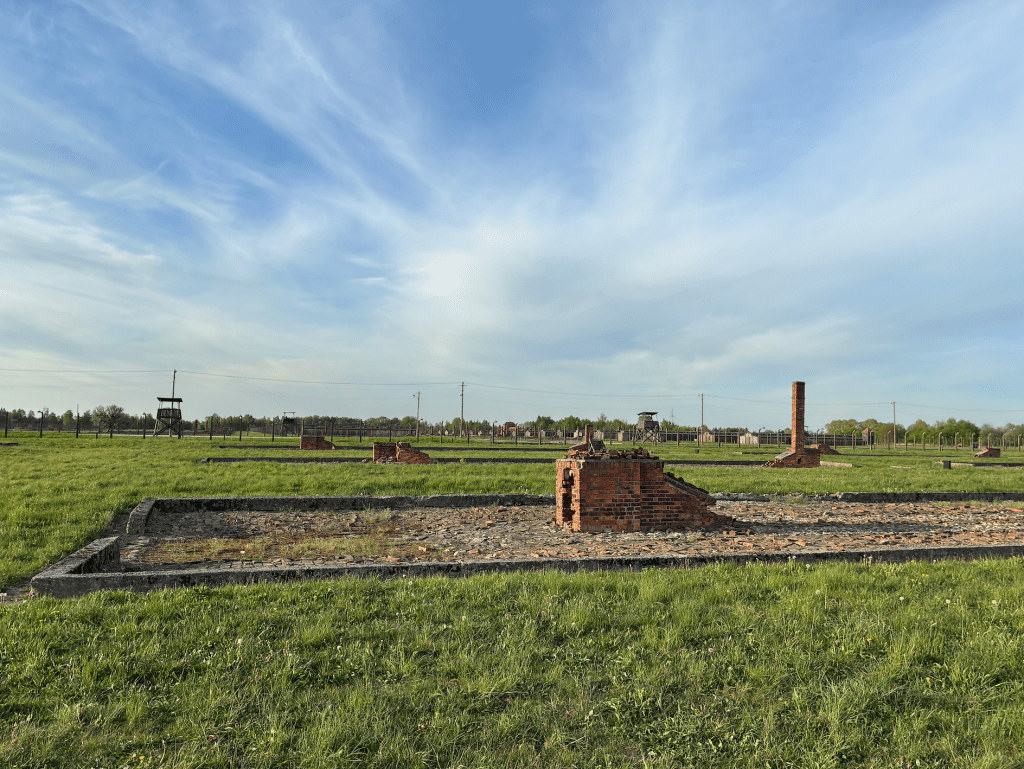
We often think about how the order in which we see cities, museums, etc influences our impressions. So perhaps it was that, we have seen a lot of related sights on this round of tragedy touring. Of course we appreciate that we could go there and that there were tons of people here and that it is one of the most visited sites in Europe, this is so important now when they are so many people who have no clue that the holocaust happened.
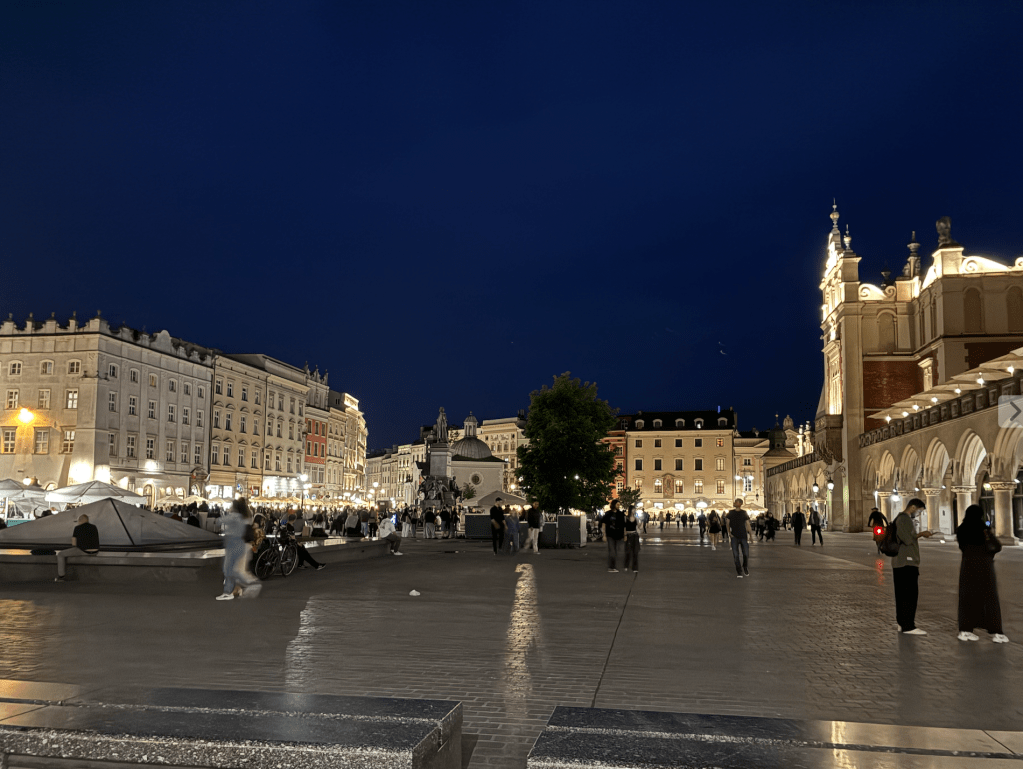
We returned to Krakow in the evening, to a beautifully lit up city. The contrast confounding.
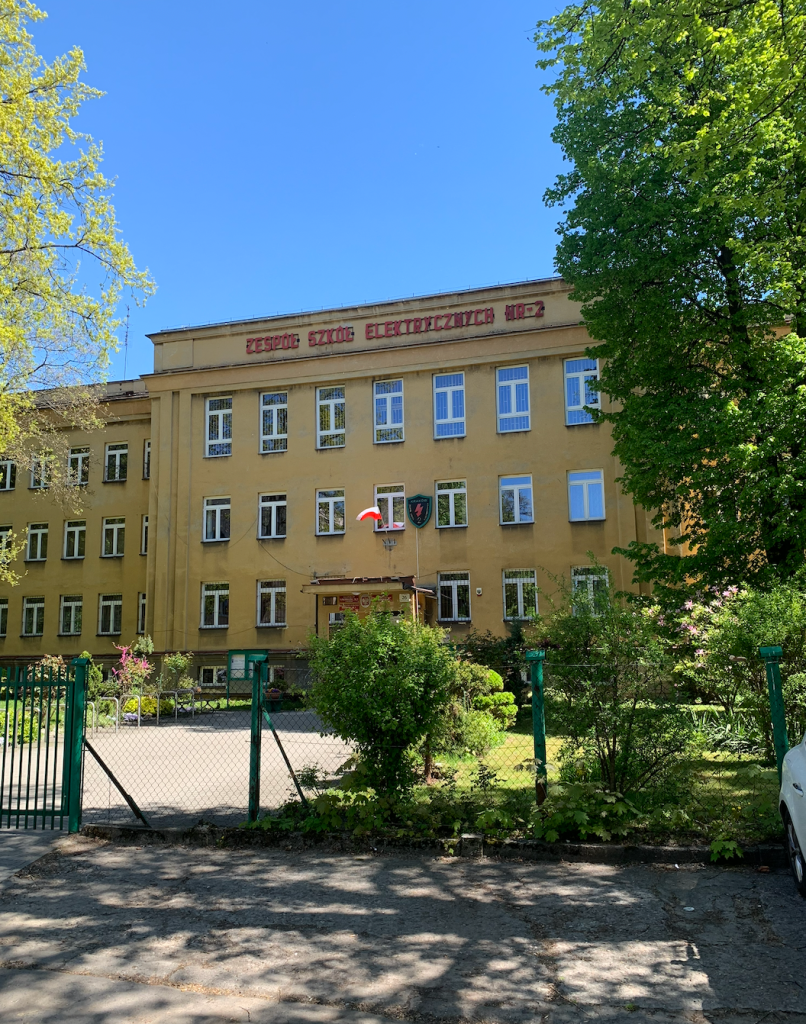
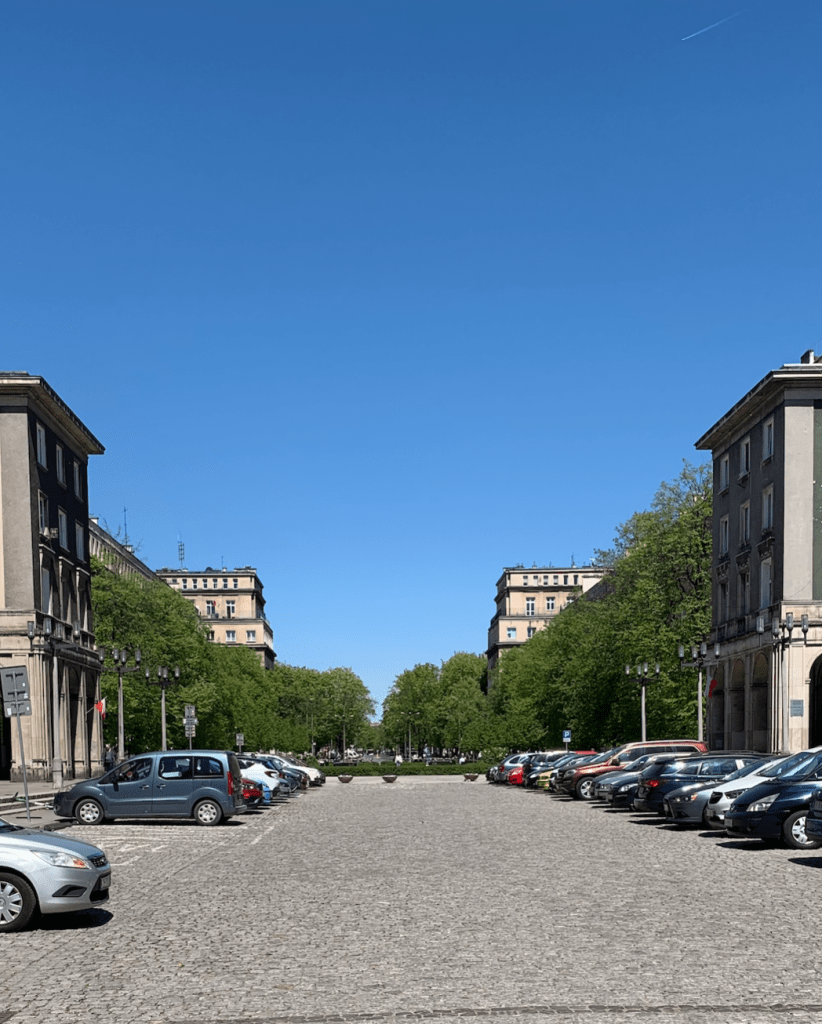
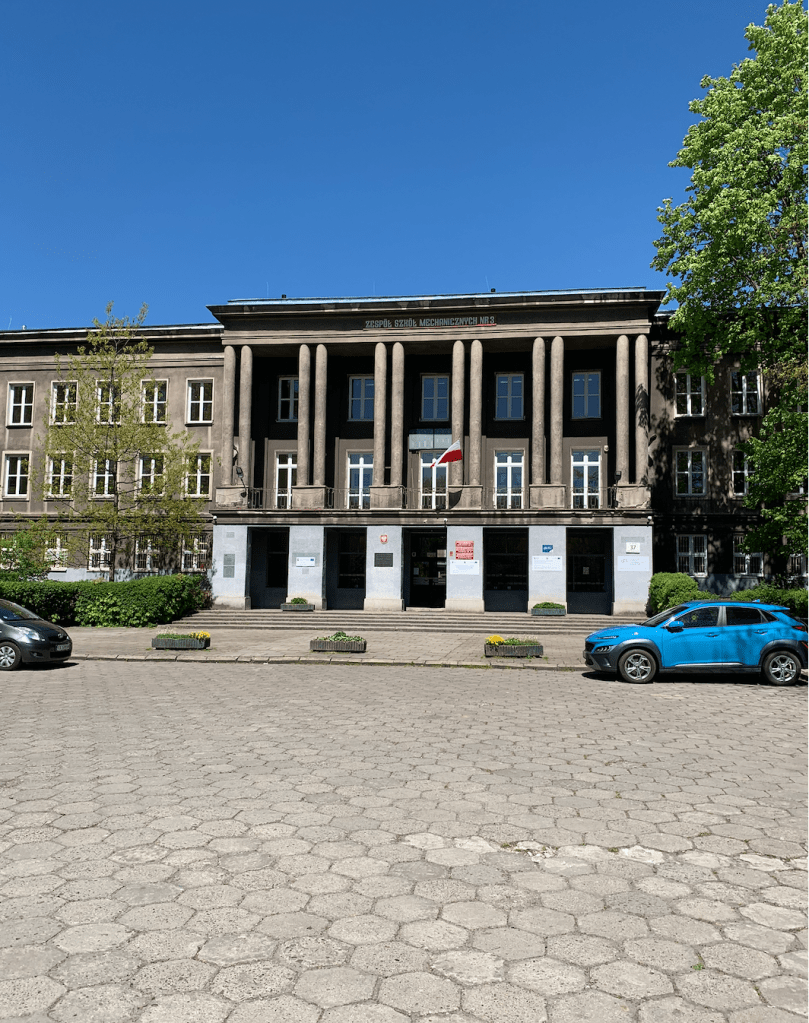
Our next excursion was to the outskirts of town to Nowa Huta, a planned Communist community built in 1949 for 250,000 workers at a nearby iron works facility. Despite our enthusiasm for Soviet style buildings, it was disappointingly bland, not even a stylized Soviet bland.
Next was the Wieliczka Salt mines, a bit older attraction. Salt was once an extremely uncommon and valuable commodity. So, its production and harvesting led to great wealth. Monks started gathering salt here in 1044, with more organized production beginning in 1400. It ceased salt production in 1996 switching to tourism, which seems to be just as profitable judging by the crowds, lines, costs and hype.
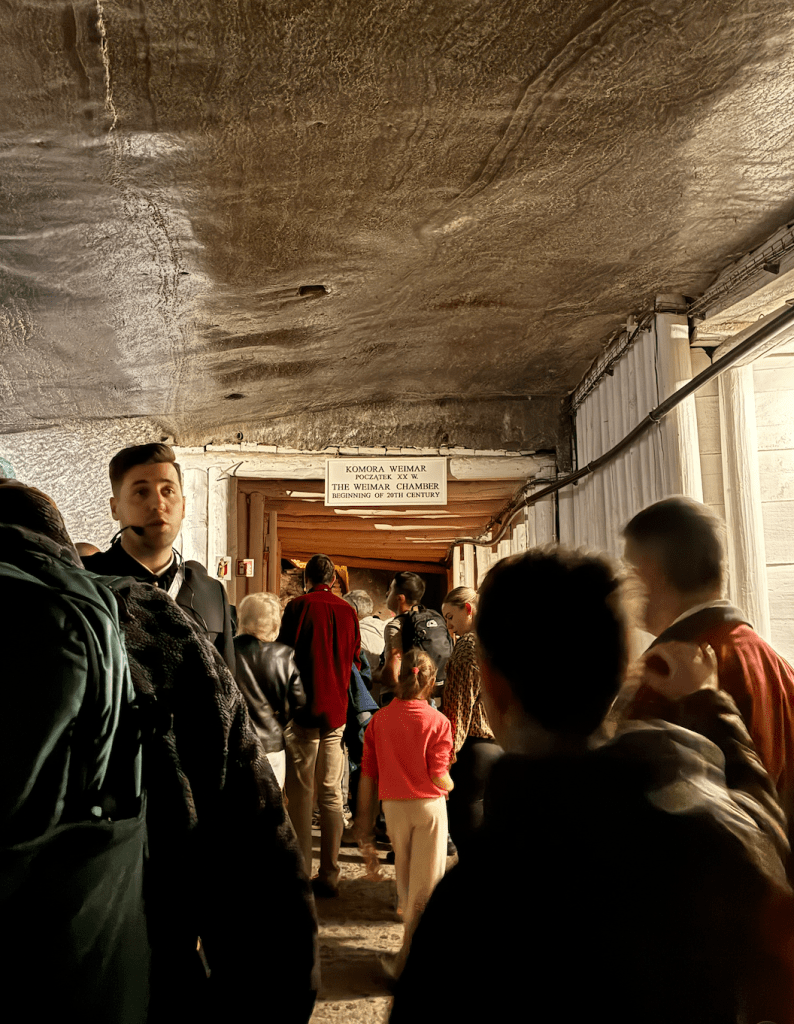
Our 2 hour tour through this underground Disneyland covered only 1% of the actual size of the mine. We walked roughly 2/12 miles through tunnels and gigantic mined out rooms, past underground lakes, gift shops and of course concession stands.
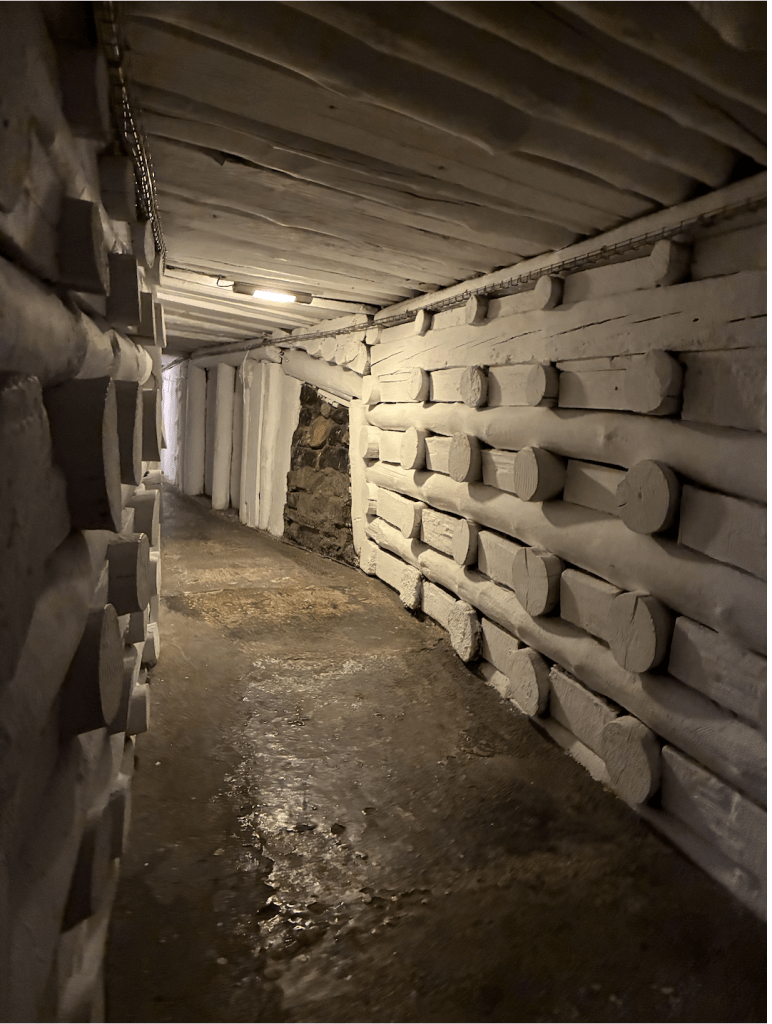
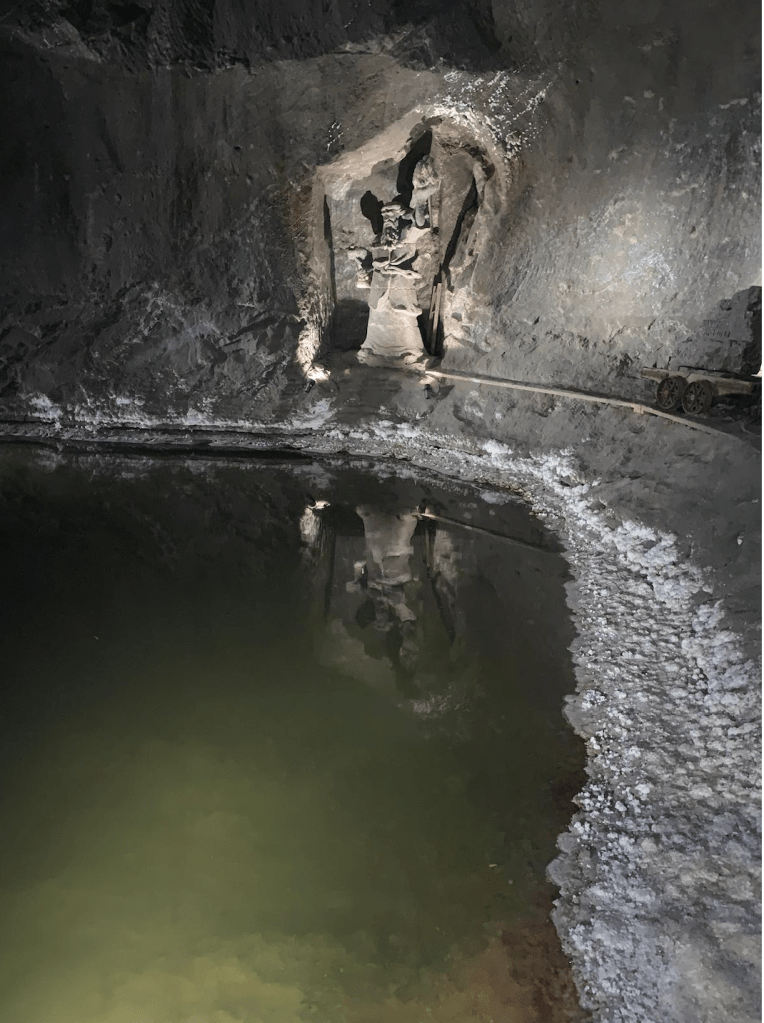
This being Poland, there was also a complete Catholic church and yes you can have a wedding there. All of this over 100 meters underground!!
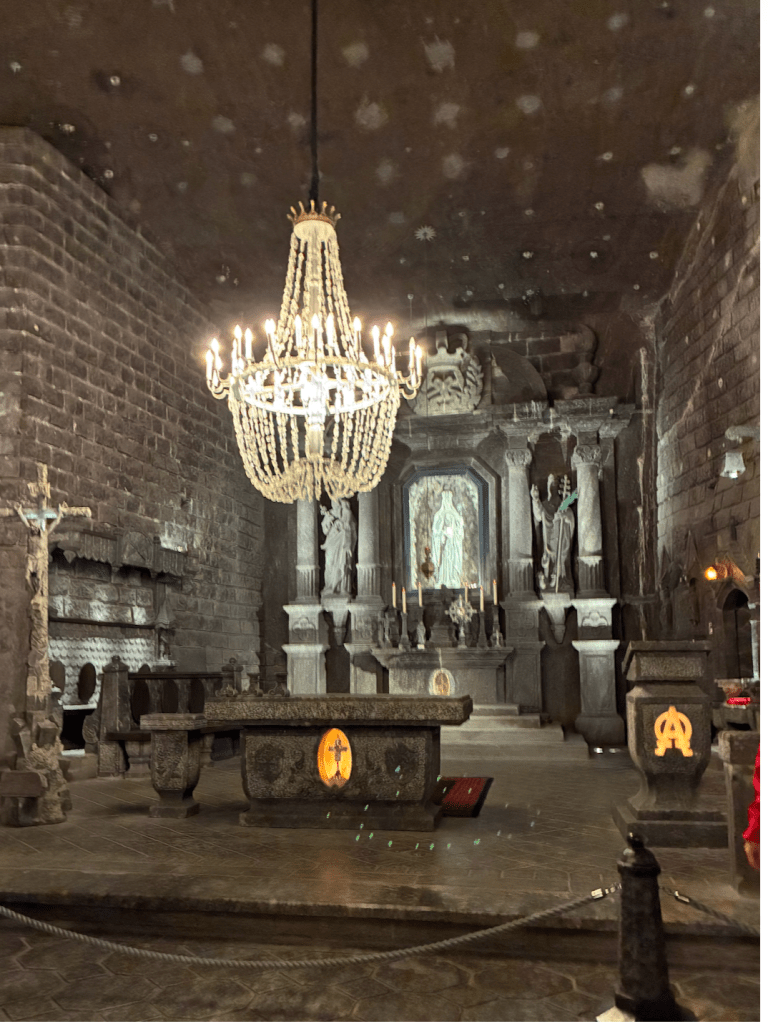
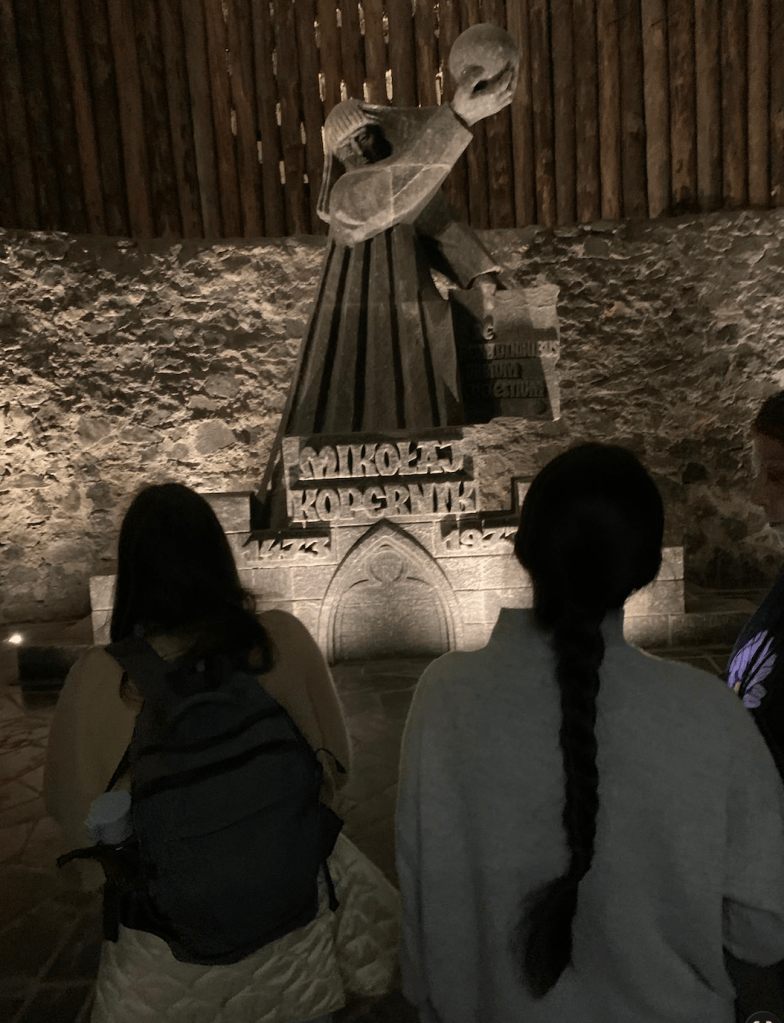
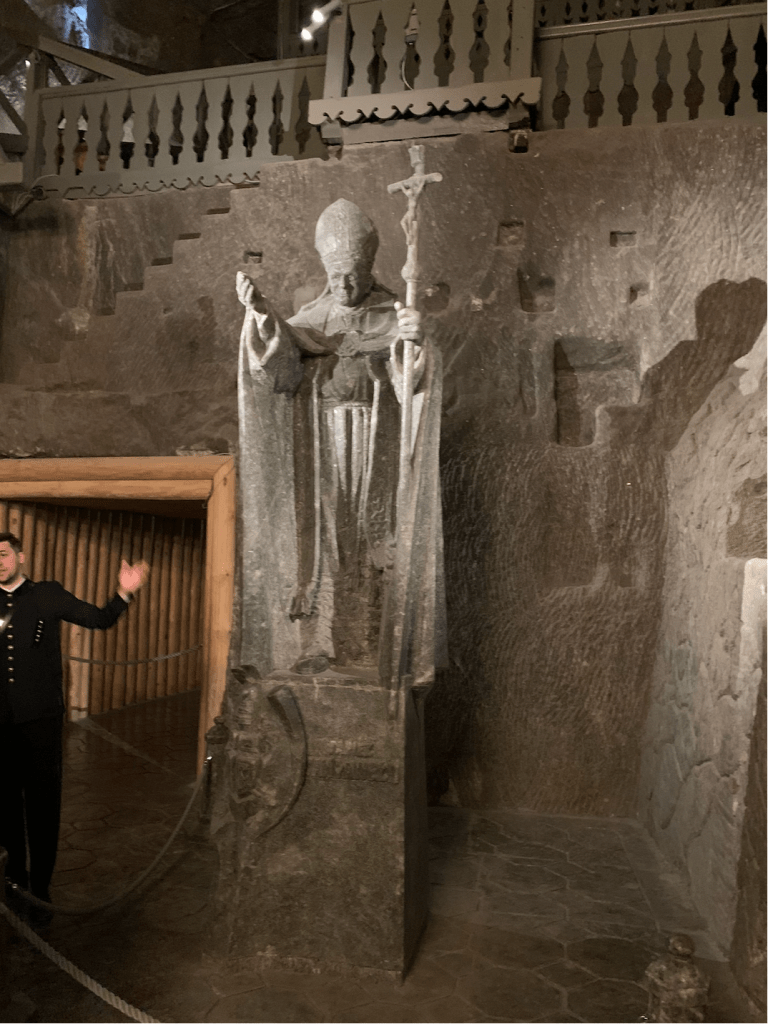
There were salt statues of Polish heroes such as Nicholas Copernicus, Pope John Paul II and Chopin, although, after just a week in Poland, we kind of expected these guys as they are everywhere.
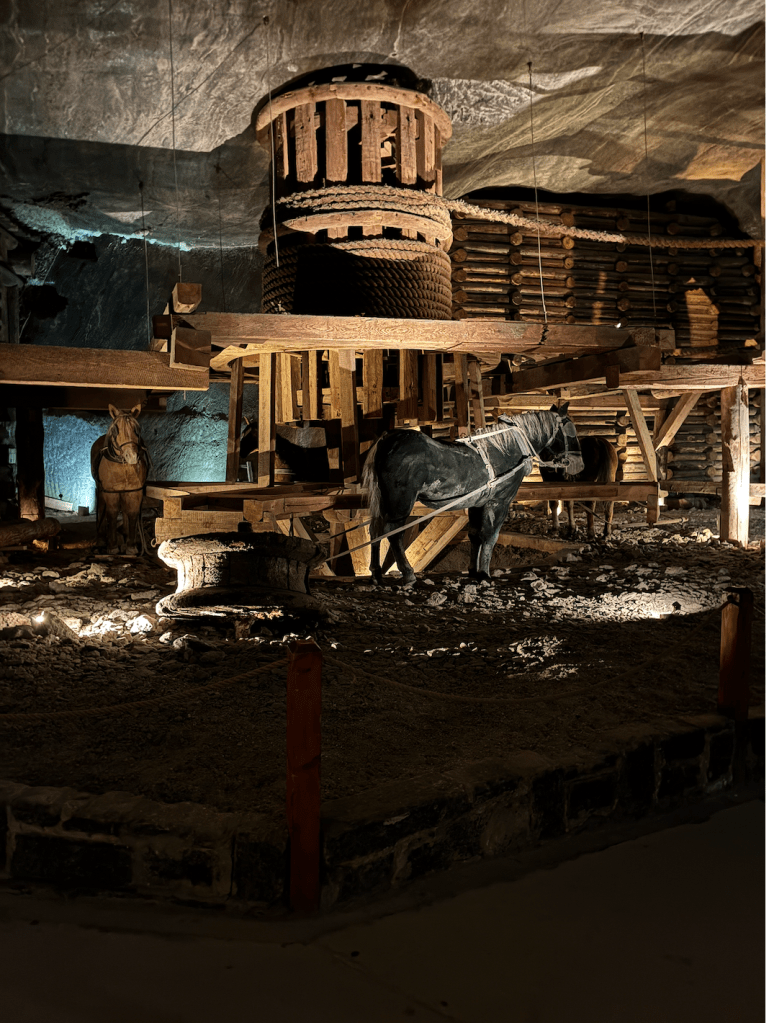
We did not expect to see Goethe but he was there too because once, he visited the mines as did President Clinton, but he did not get a statue. There were also some pretty good diorama;
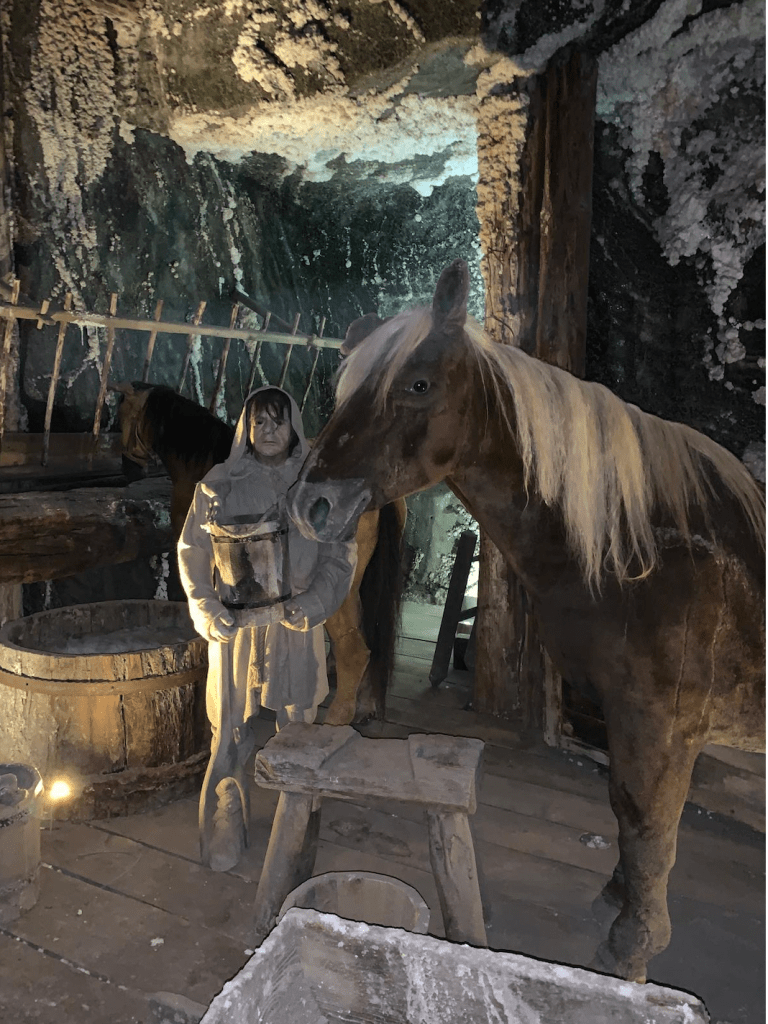
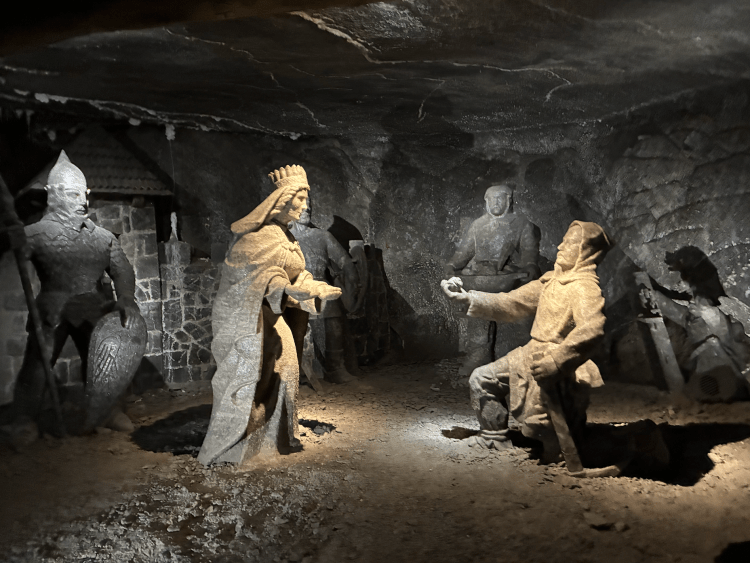
plus religious art.
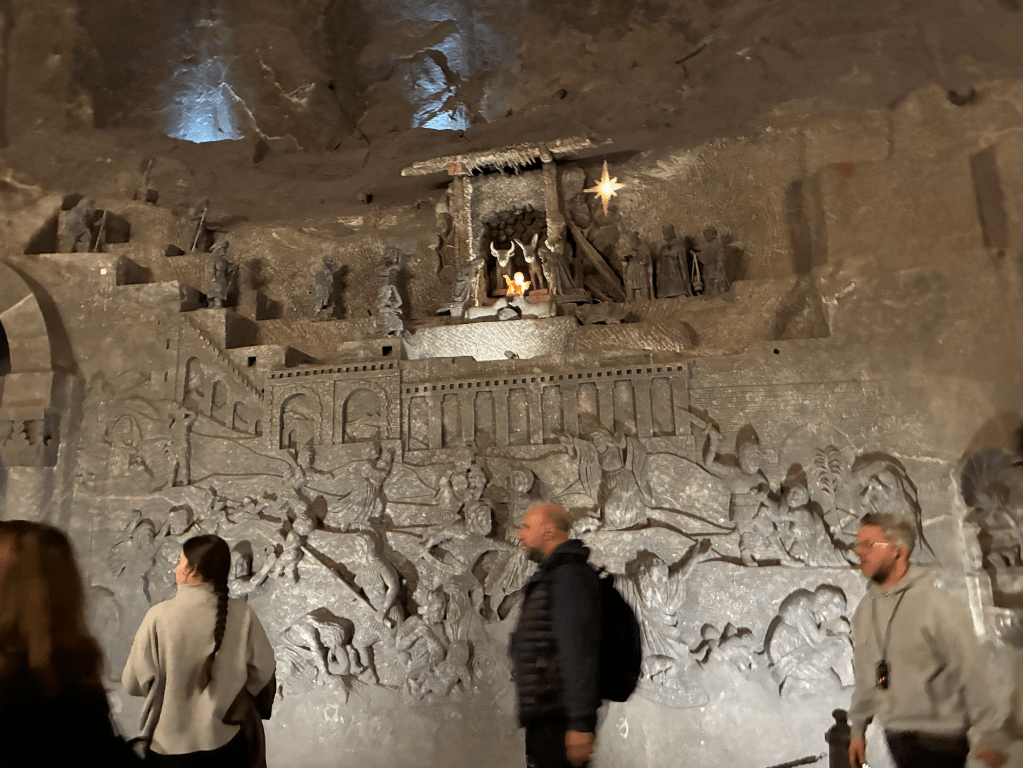
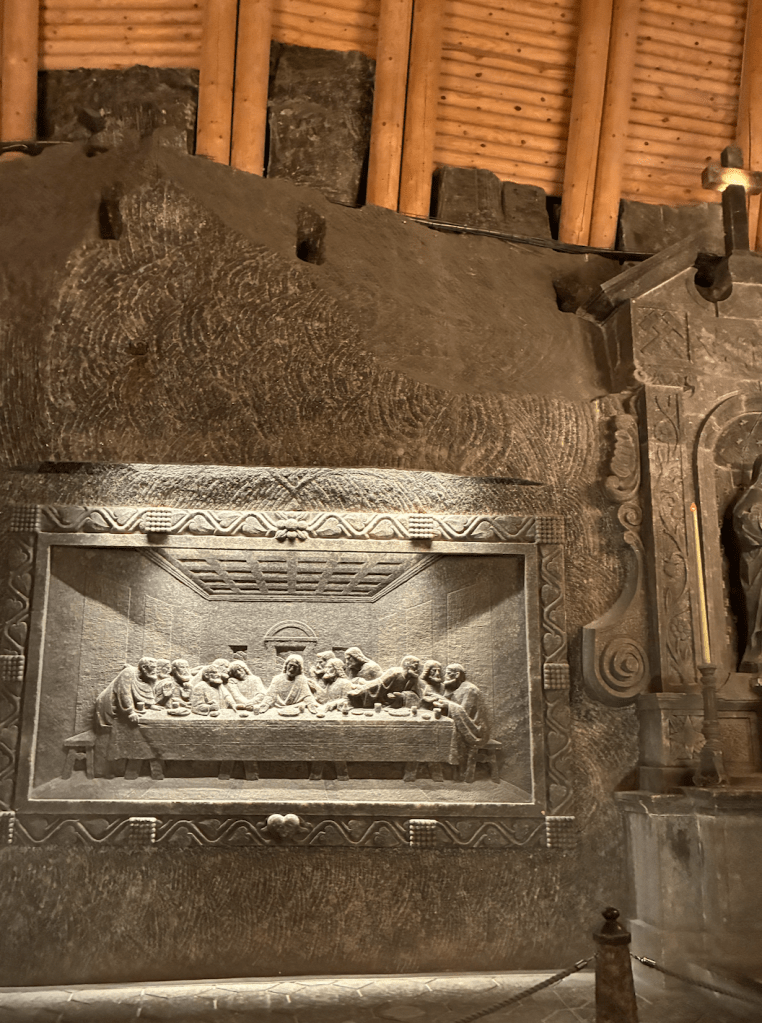
Despite the Pirates of the Caribbean kind of hokey-ness, it was amazing to see the immensity of this man-made subterranean “city” and the effort to construct it over hundreds of years, an engineering marvel but somehow the sum did not add up to the parts. A bit of a Loehmann’s moment, amazingly done, though, like Loehmann’s in it’s prime.https://chosenfugue.xyz/2026/04/08/montenegro-highs-and-loehs/
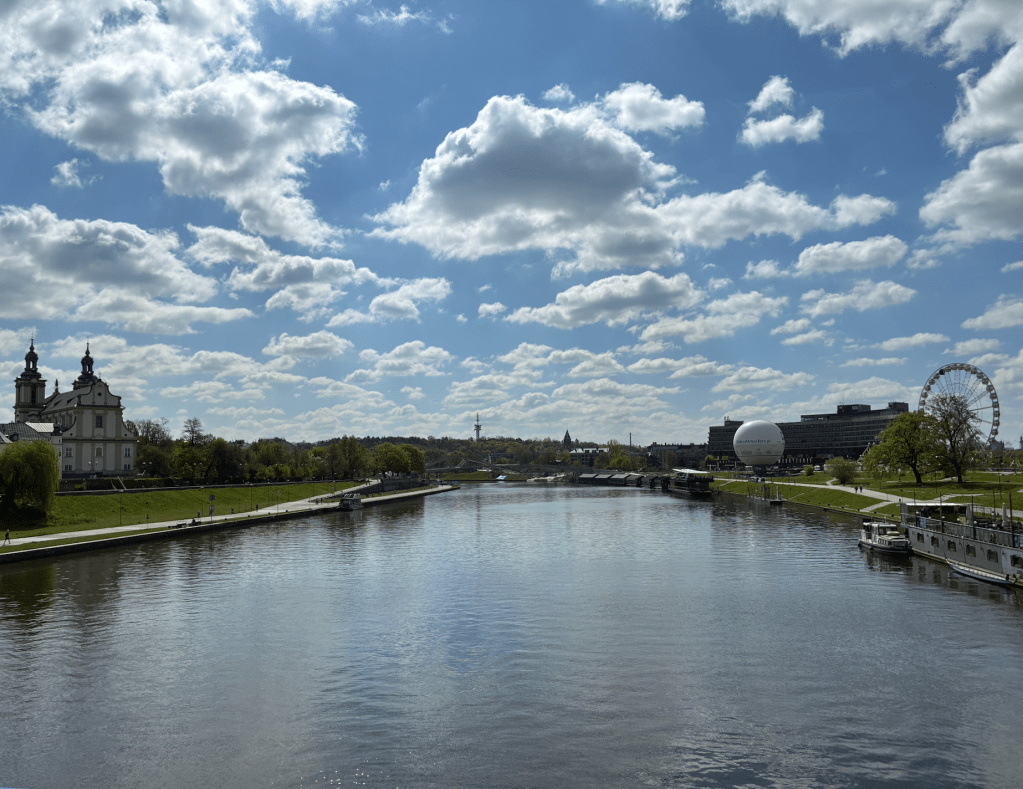
In our week in Krakow, we never tired of walking across the bridge and seeing the old town and castle along the Vistula river.
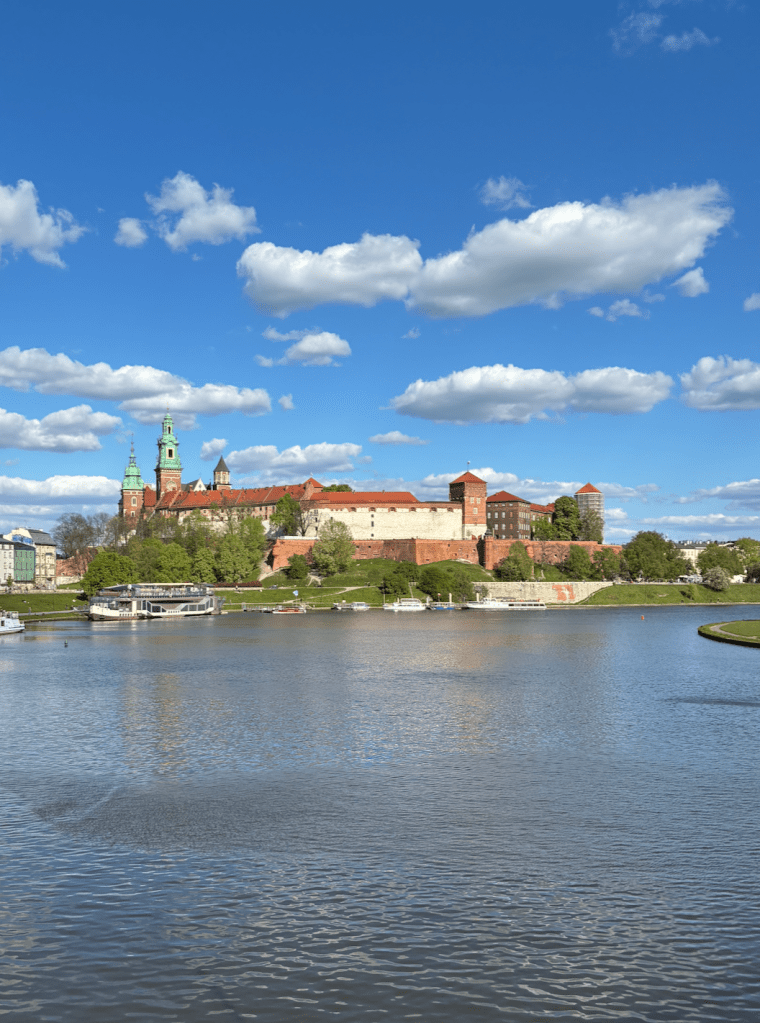
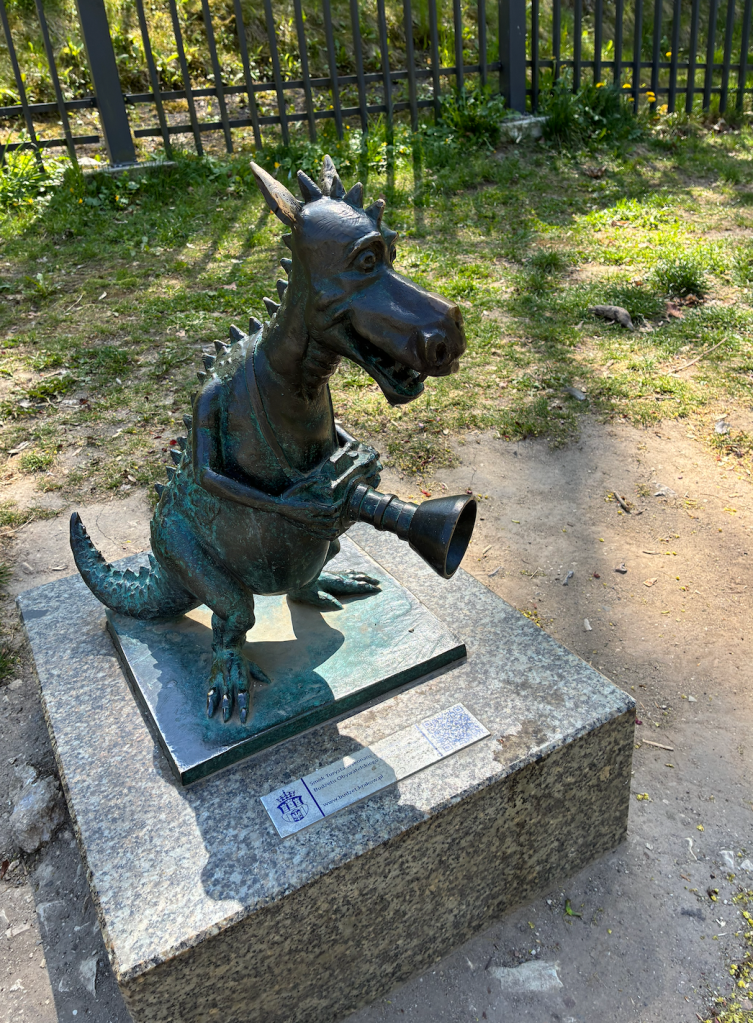
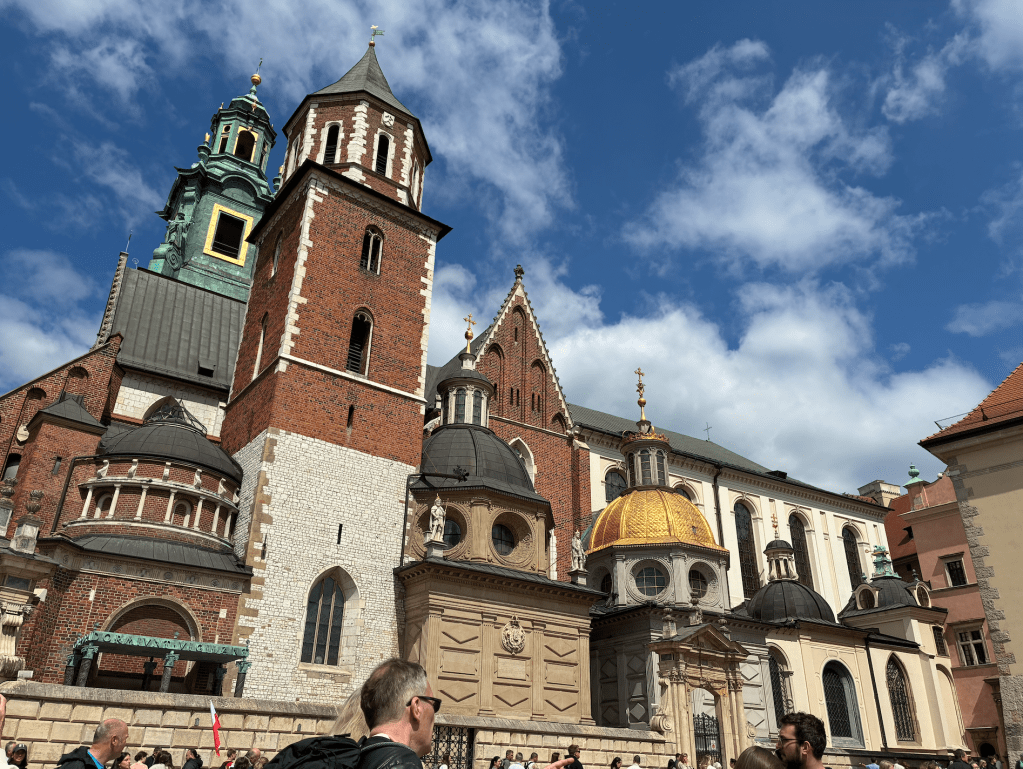
A lot of the tourist info refers to Krakow as the “heart of Poland”. Perhaps that is because Krakow was the royal seat, and Polish kings (and dragons) are buried in Wawel castle. Perhaps it’s because parts of the city are almost unchanged after hundreds of years. We could have added so many more pictures, described so many more beautiful things from our week here. (and a lot more dragon pics as these little guys were sprinkled through town).
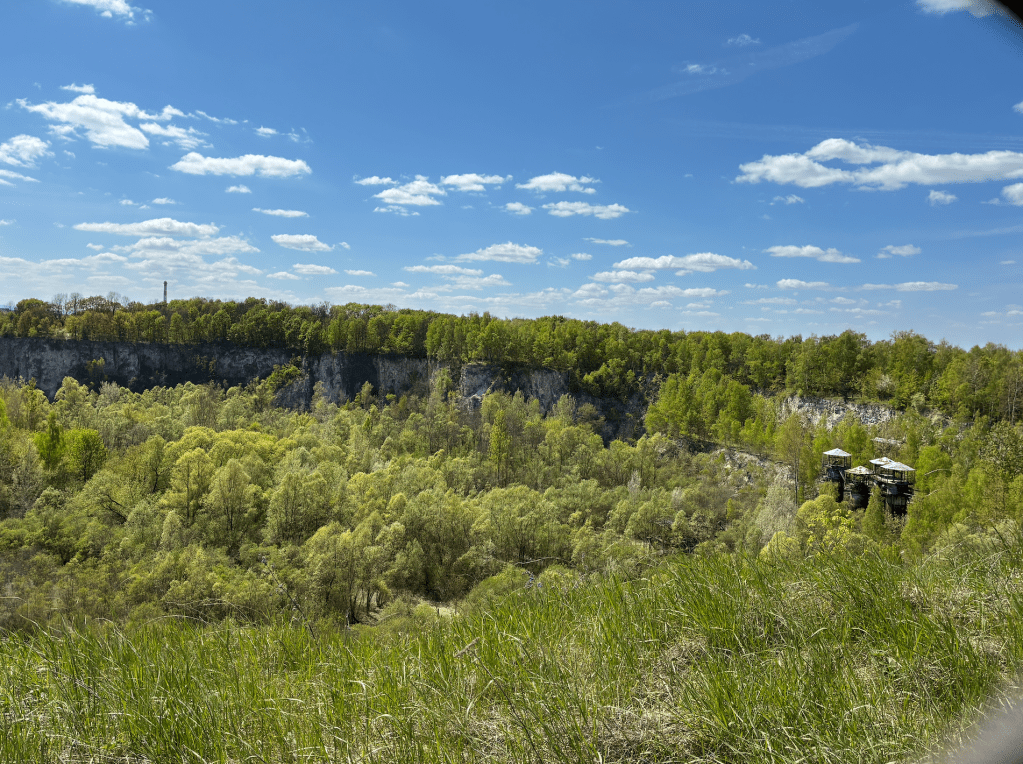
In contrast, there was Auschwitz, the ghetto and a city forest that once was another concentration camp https://plaszow.org/en/history-of-the-camp (those ruined buildings were part of the movie set for Schindler’s List). Krakow kind of embodies Poland, exemplifies the Beauty of what man can make and the Beast that man can be with the Nazi and Soviet occupations


One thought on “Beauty and the Beast”