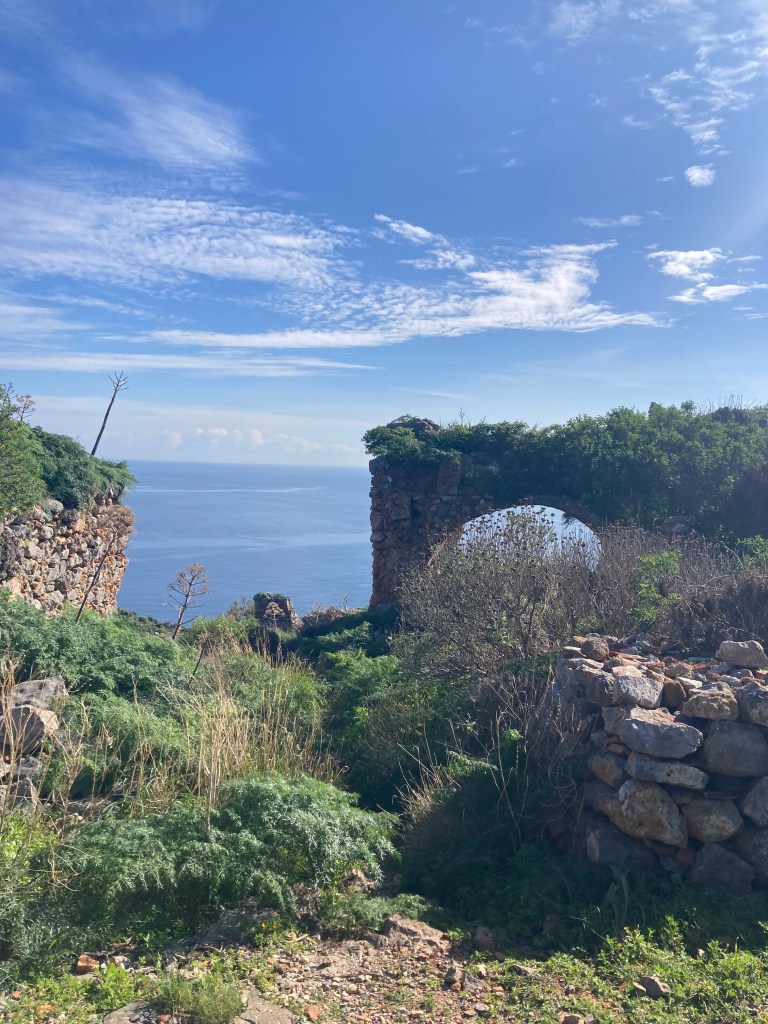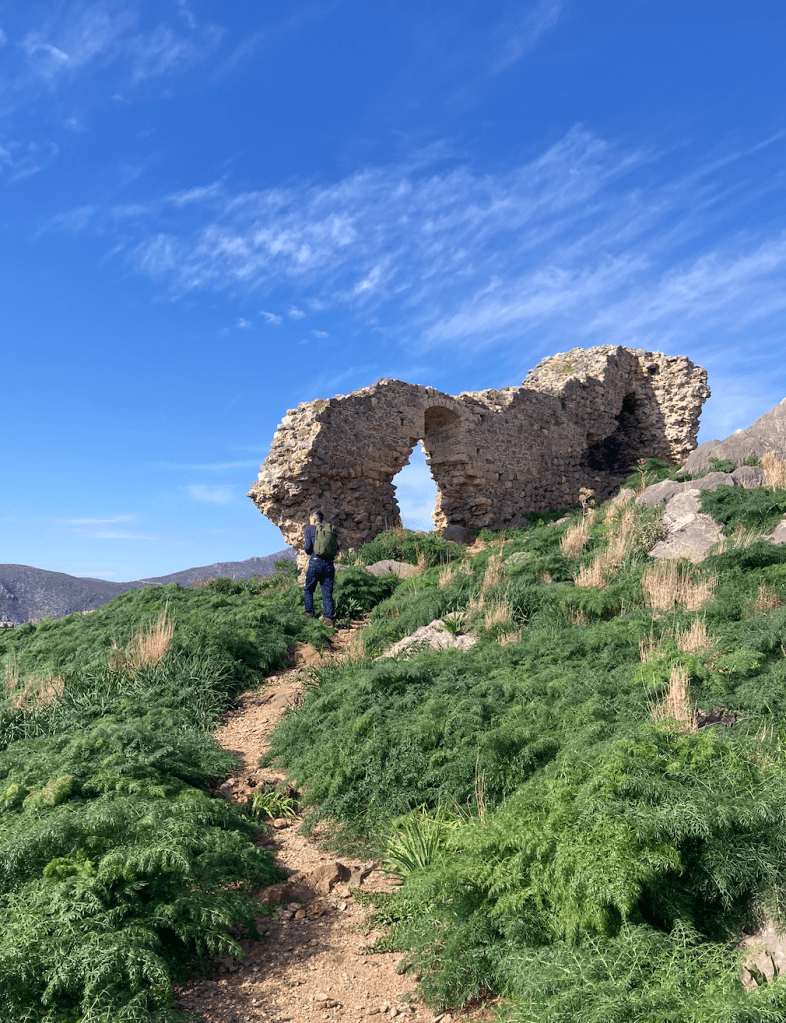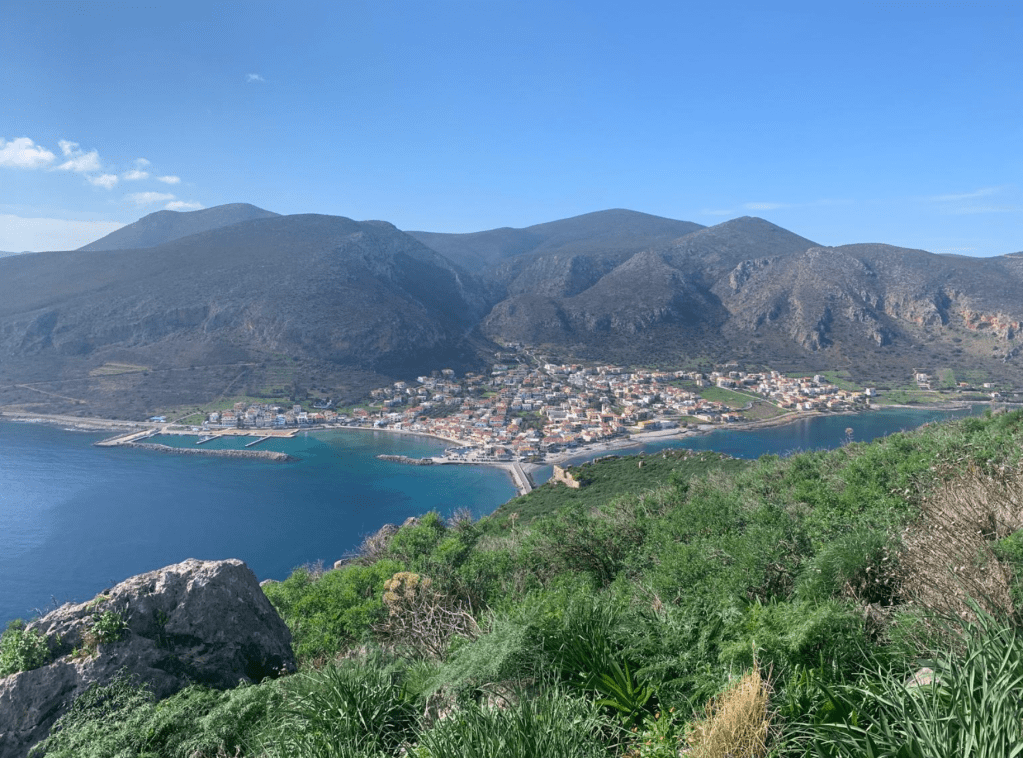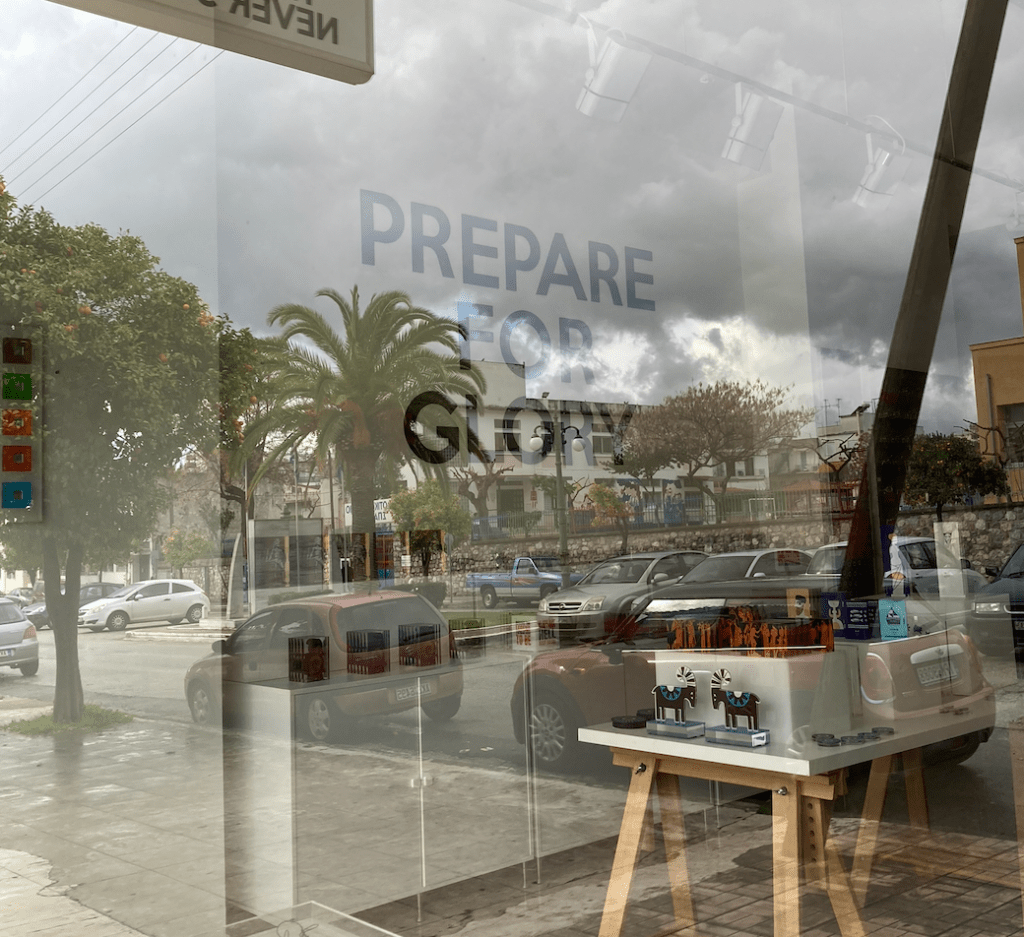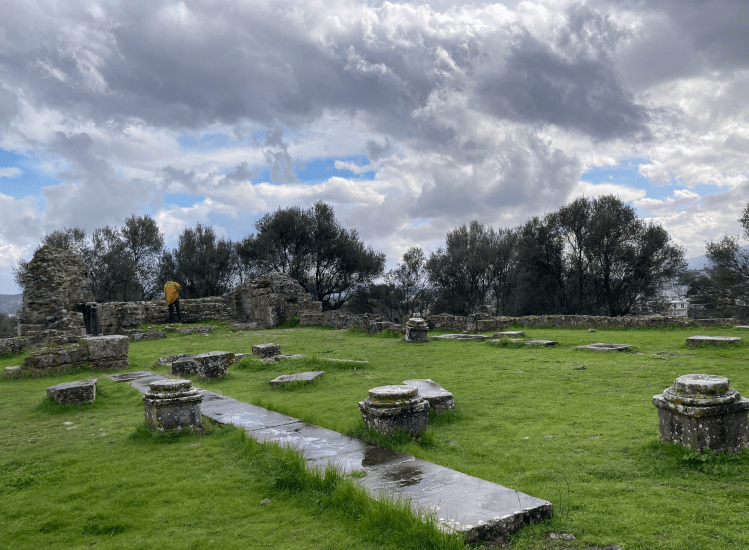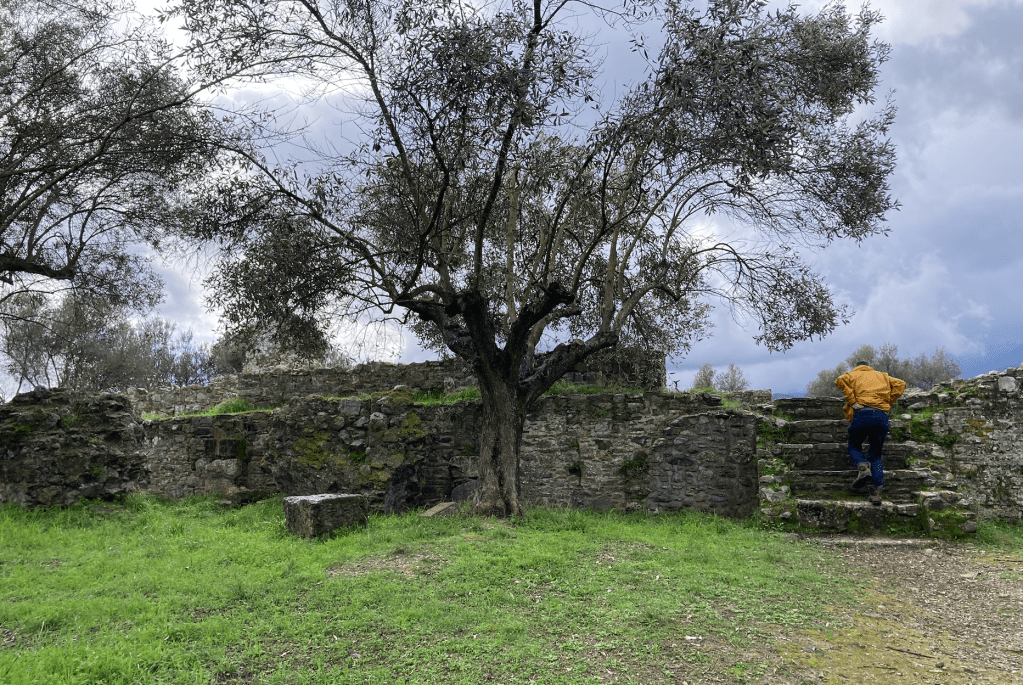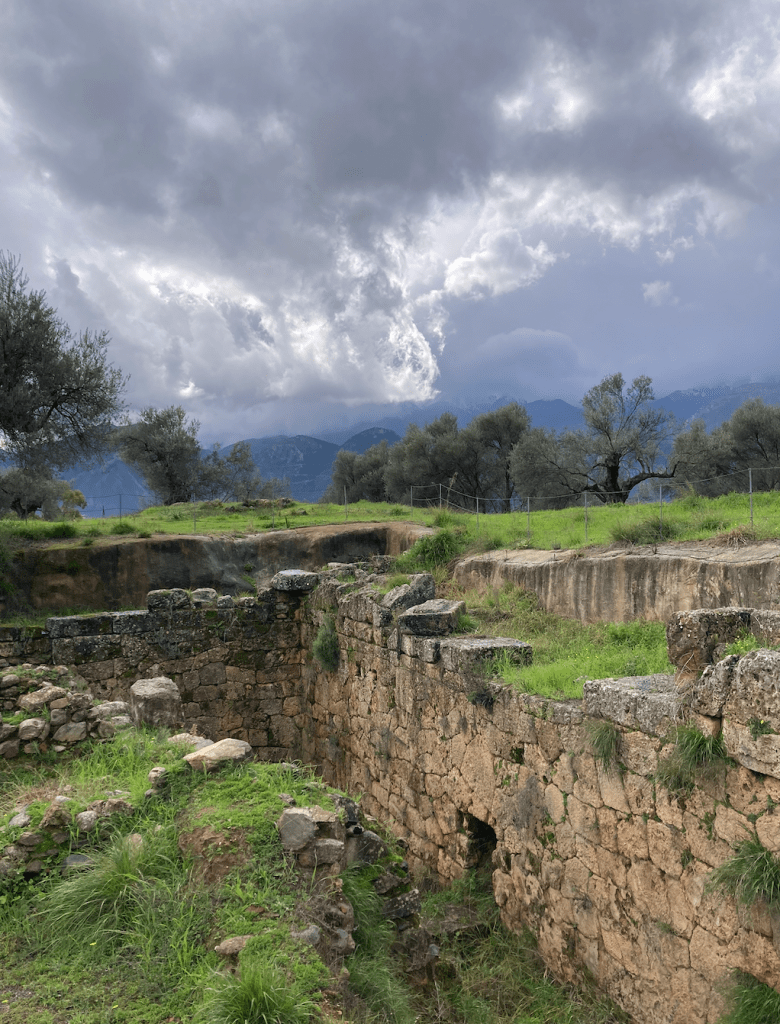
Our Ancient Olympic Trials

We don’t really like to bounce between towns with one night stays, it feels pretty superficial and it’s difficult to cook when you are leaving the next day (our packing is pretty tight, we try not to carry a pantry).  In order to approximate what we wanted to do with the KTEL schedule, that is what we did. 

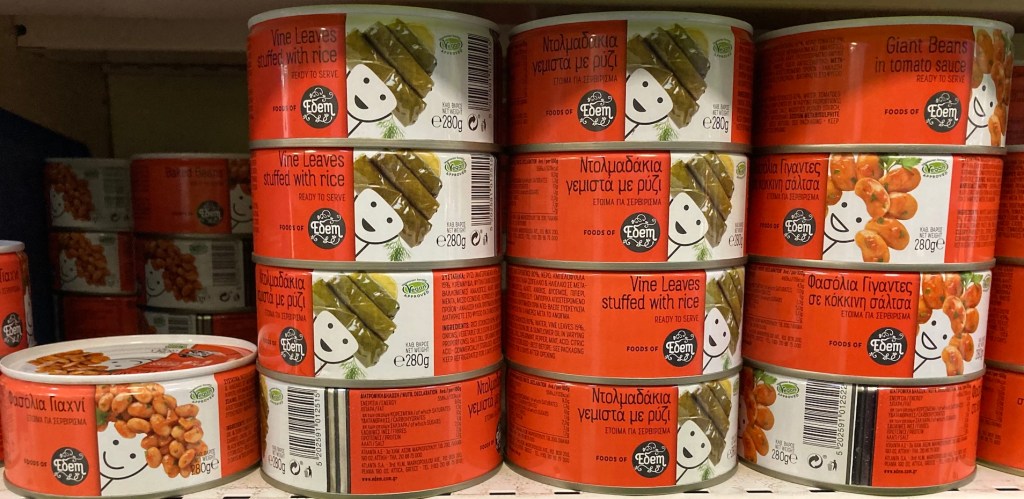
We were really happy when we met our new travel chefs; adorable, easily transported and pretty good. 
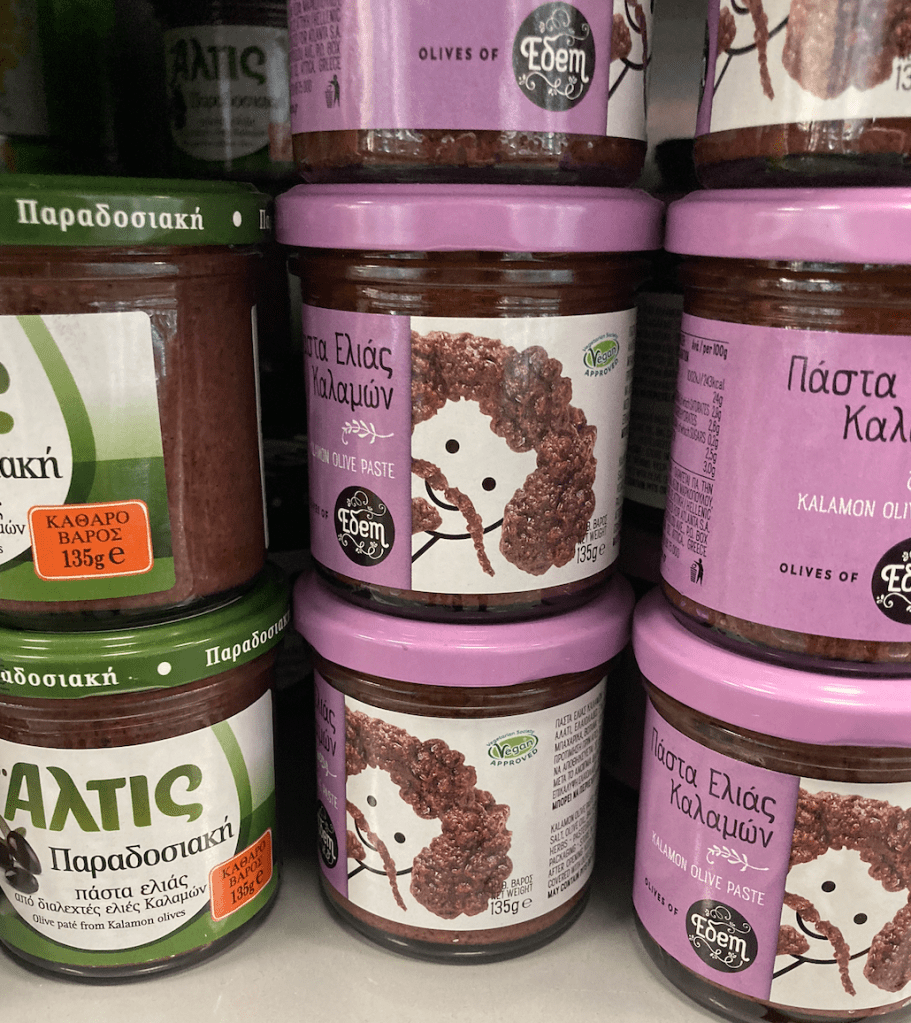
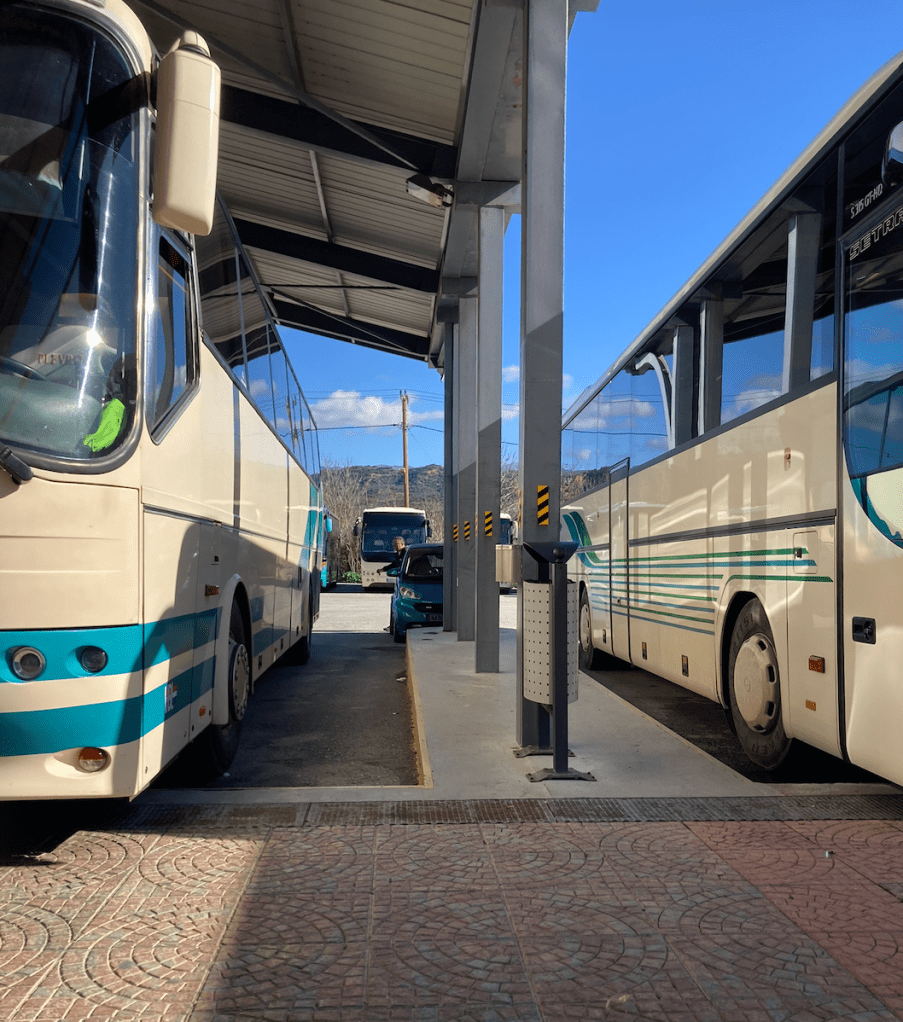
So, in preparation for our next KTEL designated stop-Kalamata, we got a tub of olive tapenade. With time to kill waiting for the bus at the Sparta depot, and eager to get a preview taste of Kalamata, we ended up devouring the entire tub of olive tapenade to the point of feeling sick and never wanting to see another olive. We recovered on the smooth bus ride via a very nice freeway looping through the central valley, avoiding the windy coastal mountain road (our stomachs appreciated the chosen route).

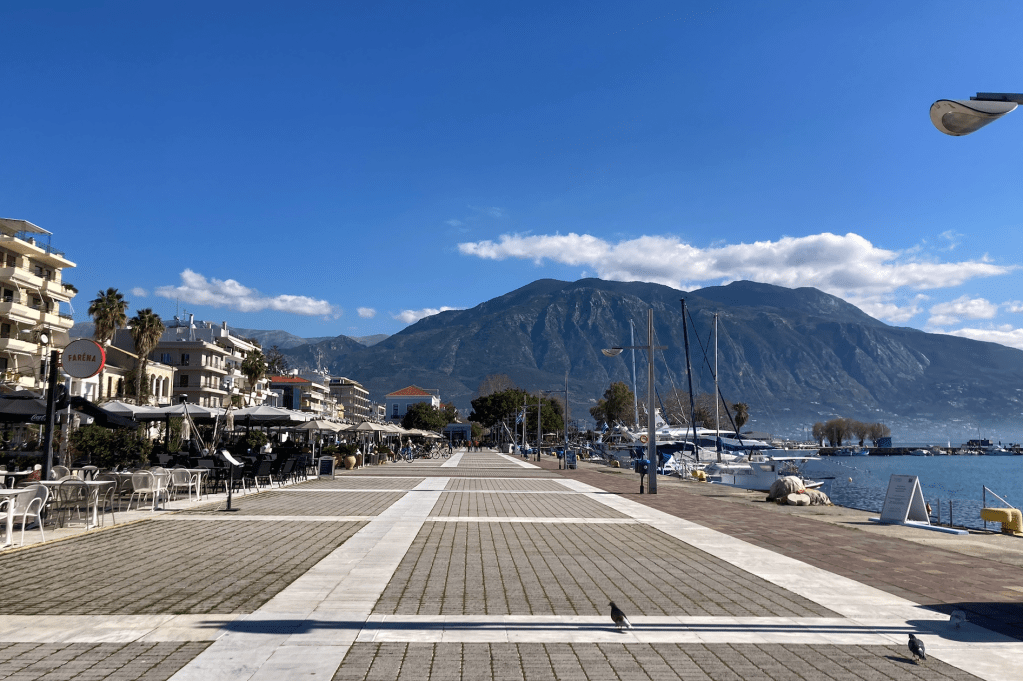
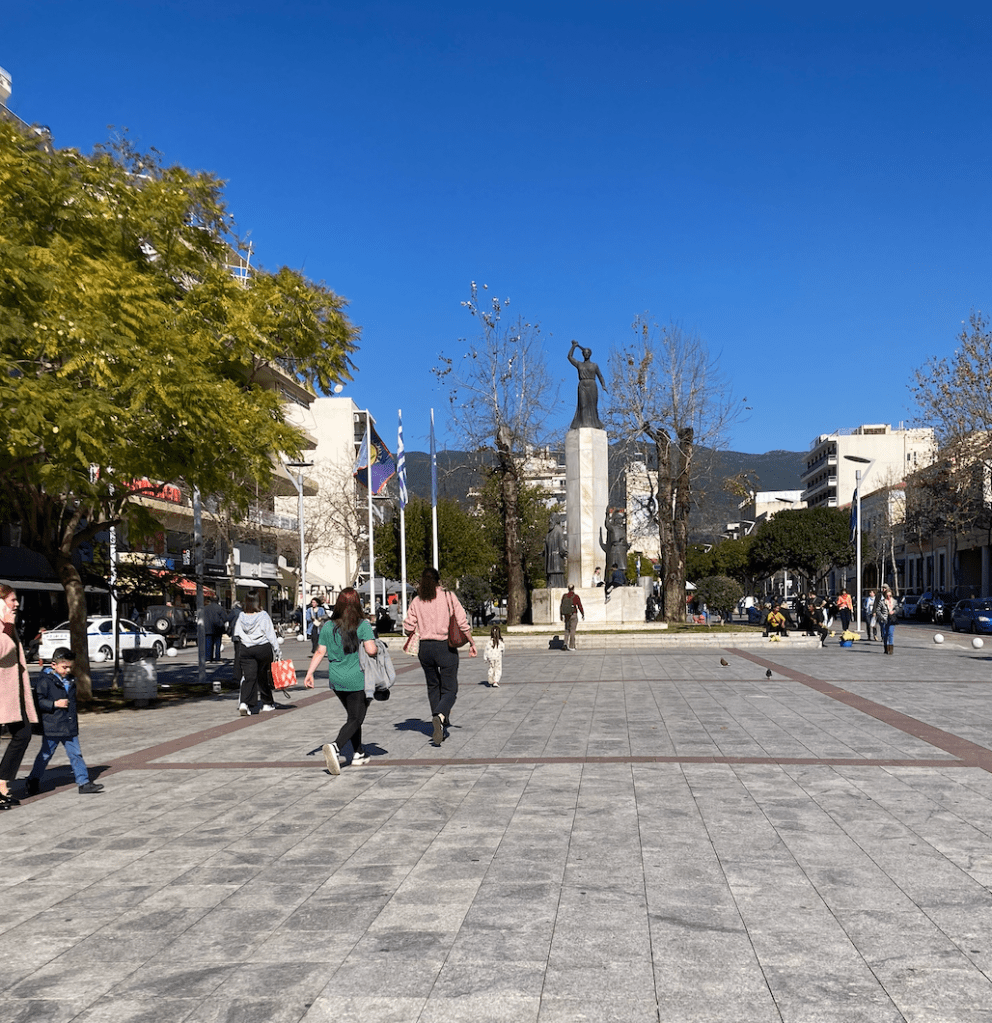
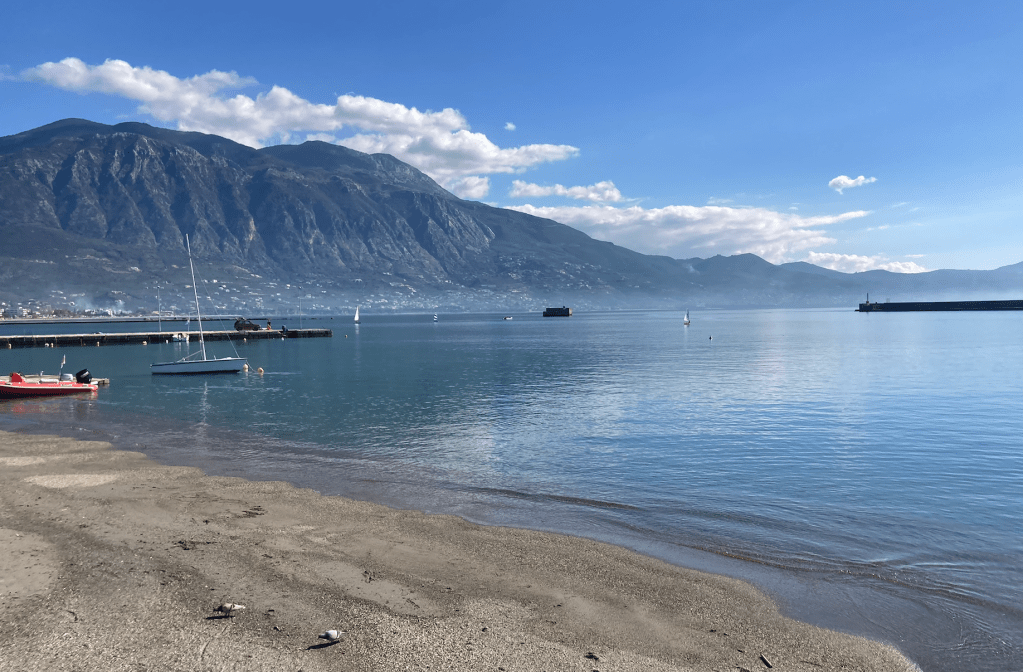
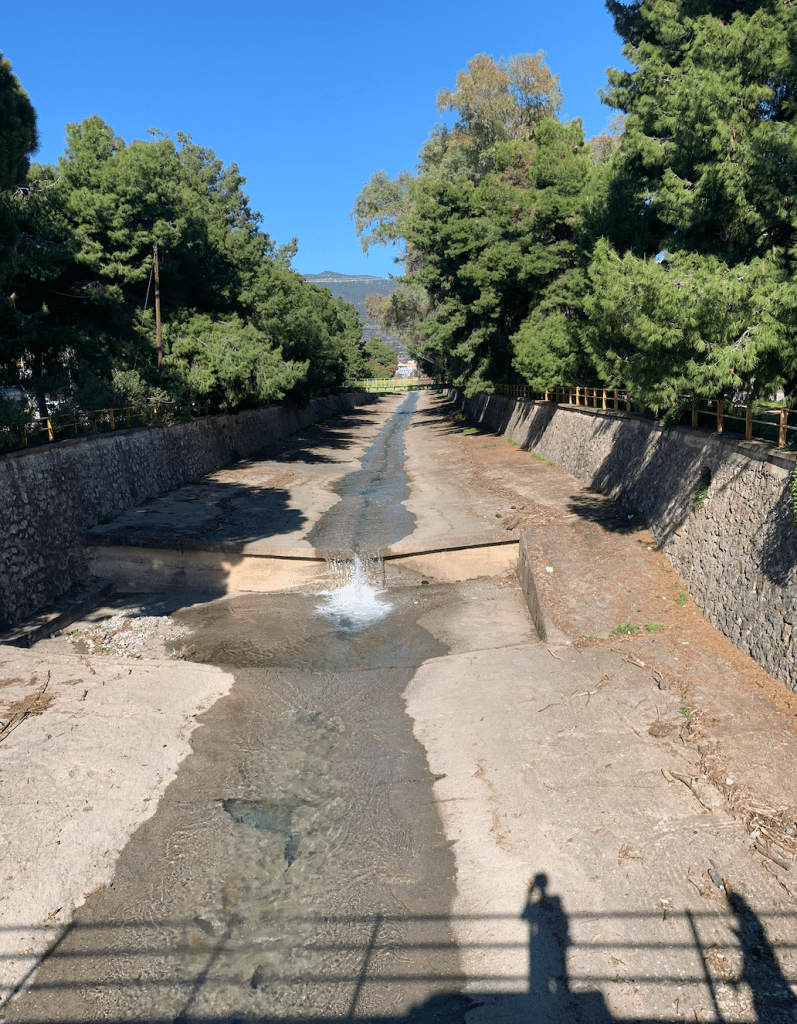
Kalamata’s lovely central plaza and park were full of families, shops were bustling, beach was breezy, all just very pleasant. You could envision this area being packed (like olives) with tourists in the summer. Kalamata even had its own version of the LA River. It’s understandable that it keeps showing up on lists of great places for ex-pats (ex-pits?). In contrast with the olive tapenade, we could easily have had more of this Kalamata.
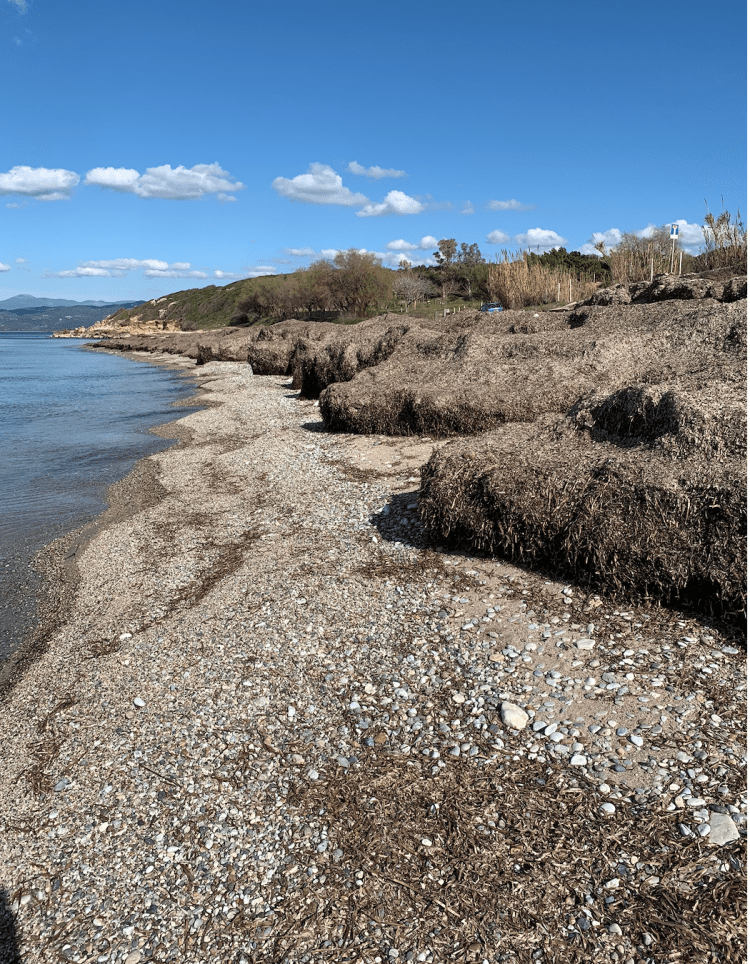
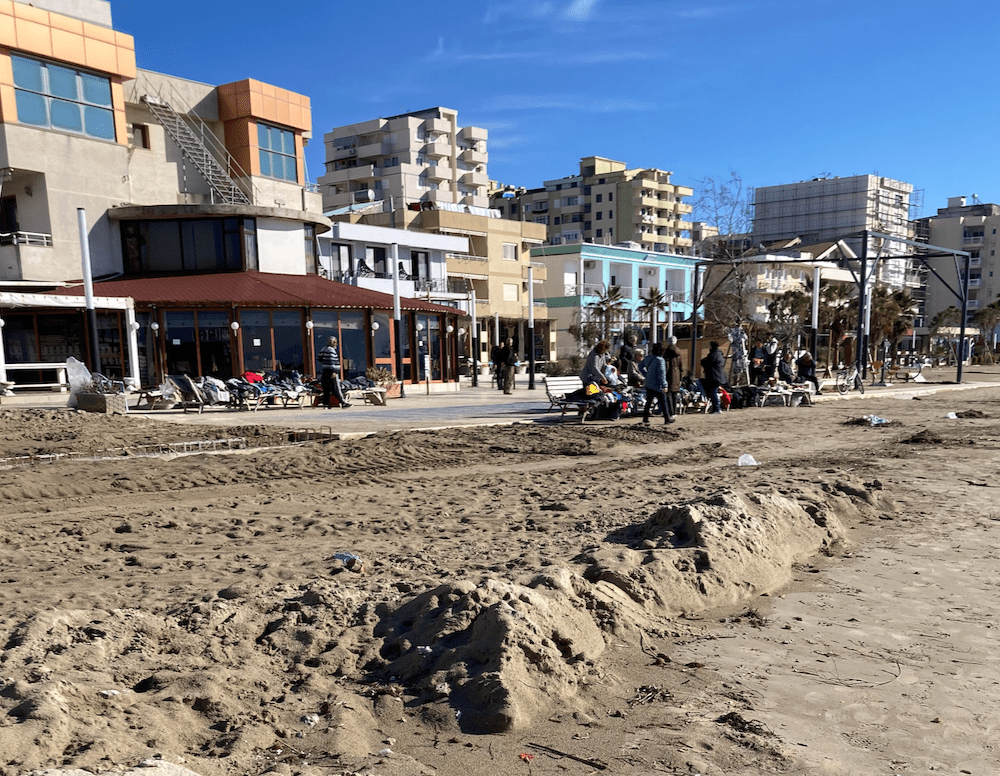
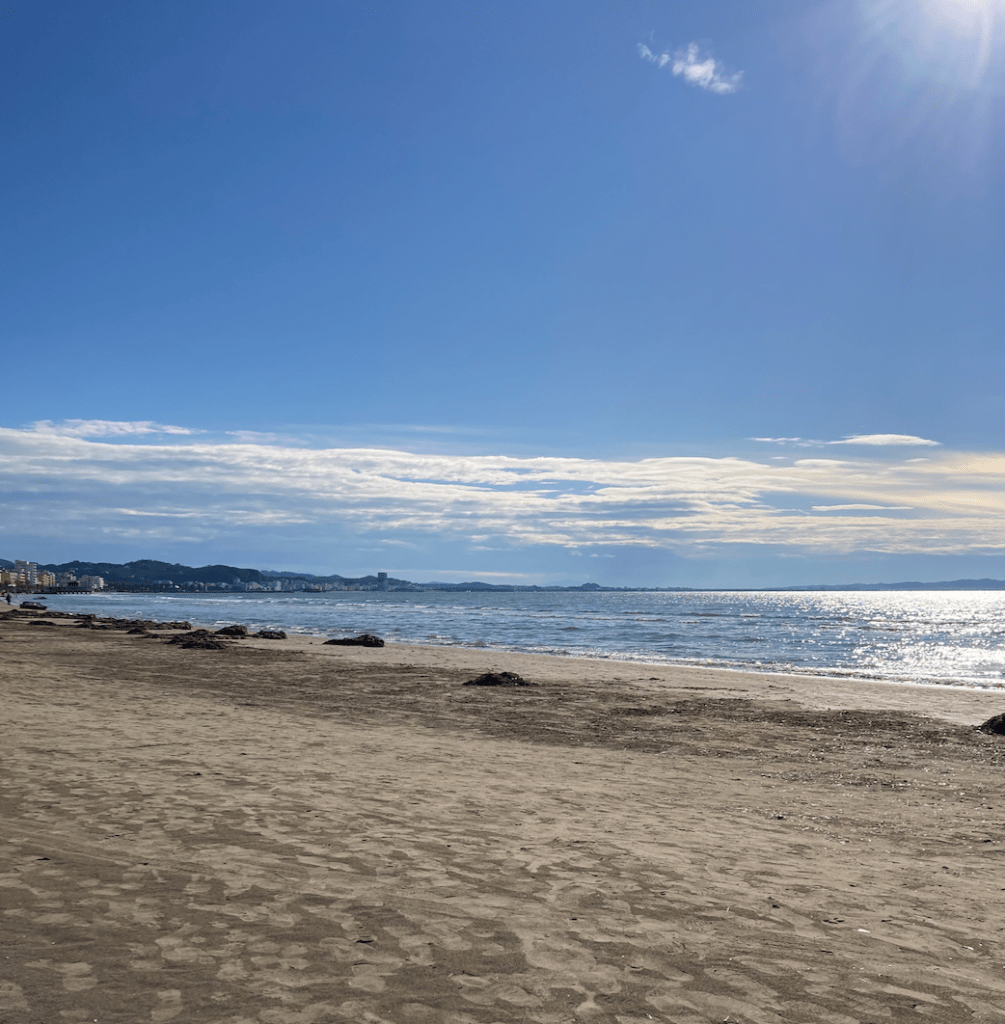
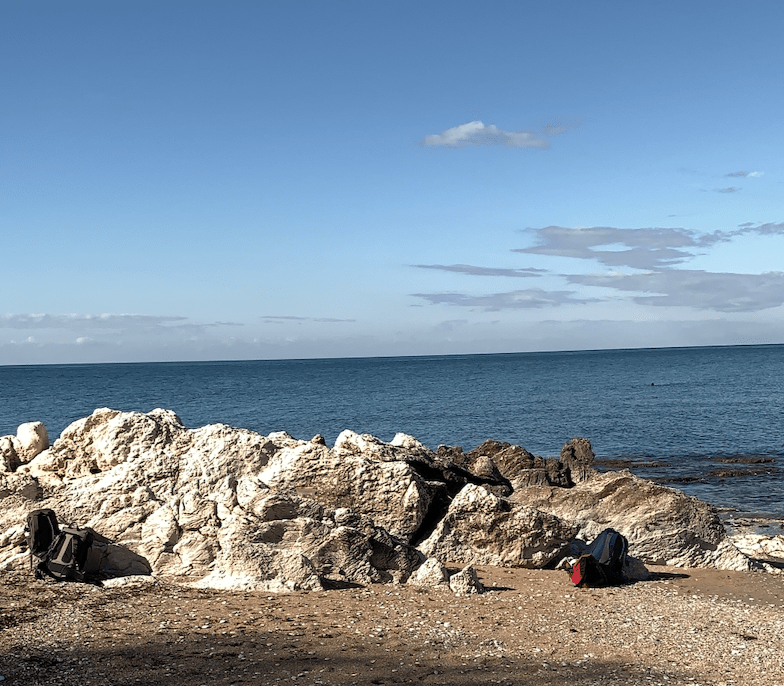
Our next KTEL required stop on our way to our ultimate goal of Ancient Olympia was Kyparissia. Since we had very briefly lived in Olympia, WA we were eager to connect with its ancestry. Kyparissia is another beach town, but with unusually boggy beaches of seaweed drifts (felt like walking on sponges). This town did not feel like it was reliant on tourists.  

Other than the beach, we struggled to find things to do for the 20 hours we were there (and 3 of those hours were spent waiting on the boggy beach to check in). In fact, Kyparissia may mean struggle in Greek as we also struggled to find our lodging in Kyparissia, then we struggled finding places to eat especially since it was Sunday and markets were closed. Actually, neither of those things were unique to Kyparissia for us.
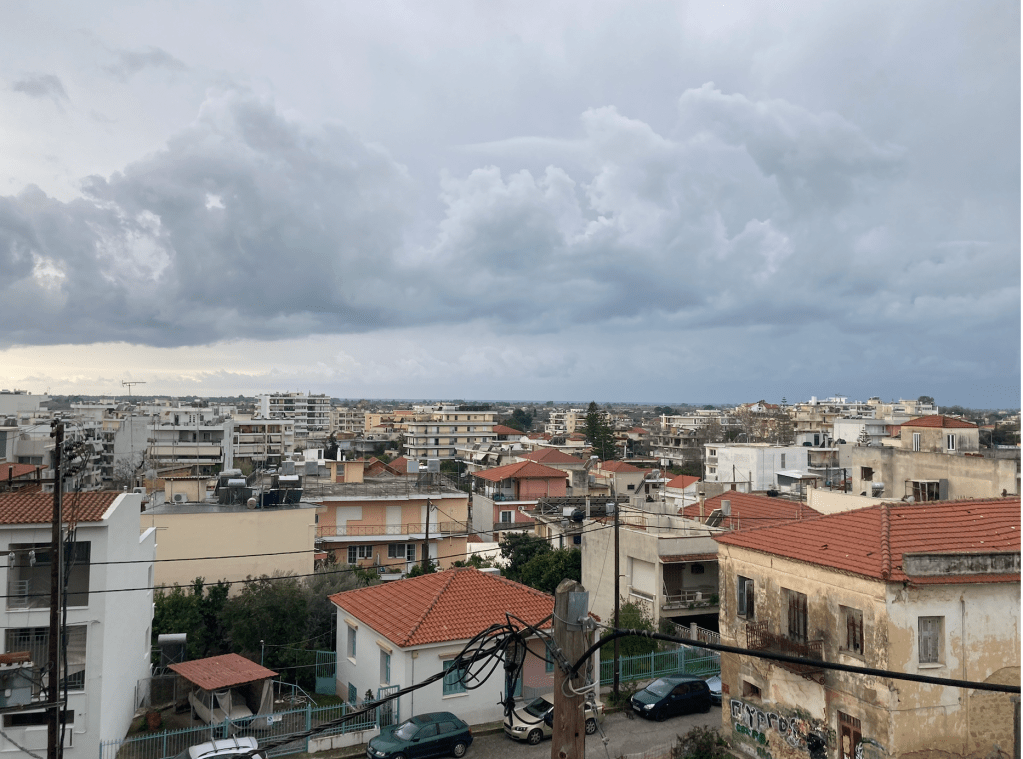
Pyrgos, our next KTEL destination, and our stay for a couple of nights also did not feel like a major tourist draw, which we appreciated here as it felt like just a working city. It was a short 30 minute meandering local bus ride to the site of Ancient Olympia.
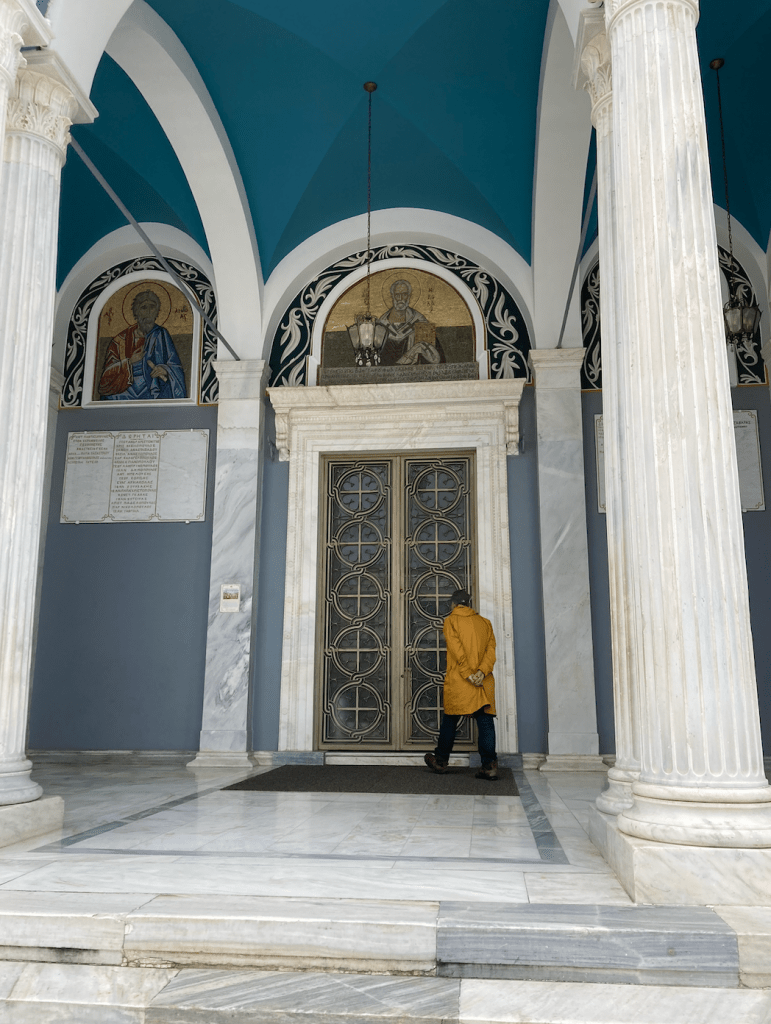
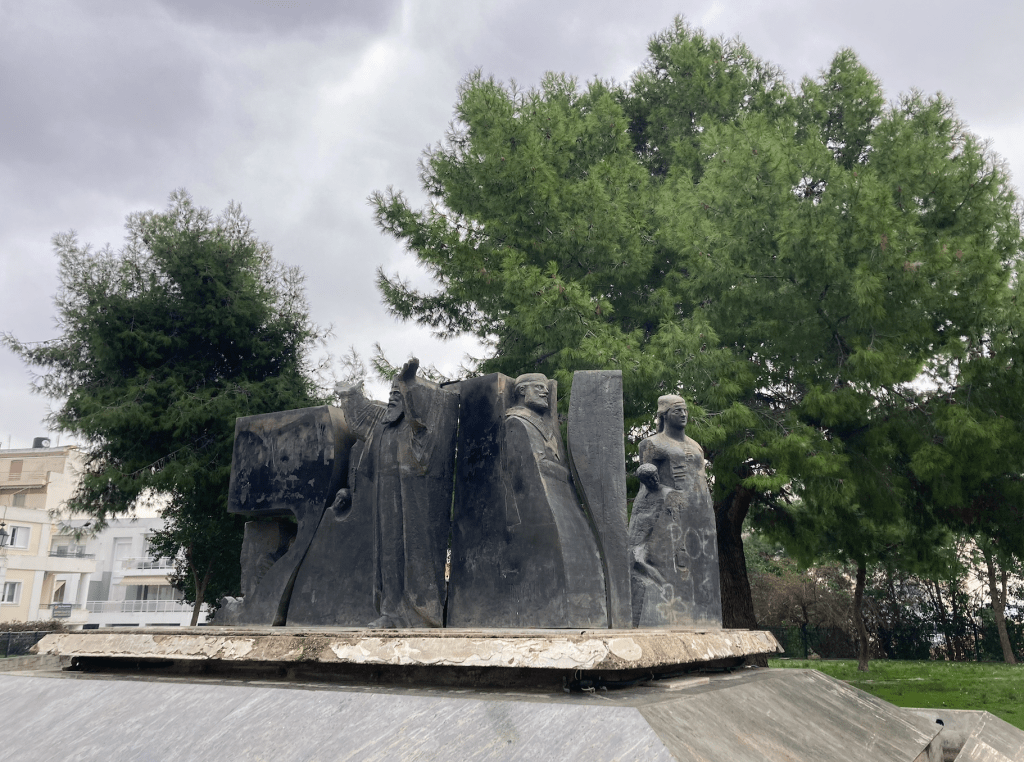
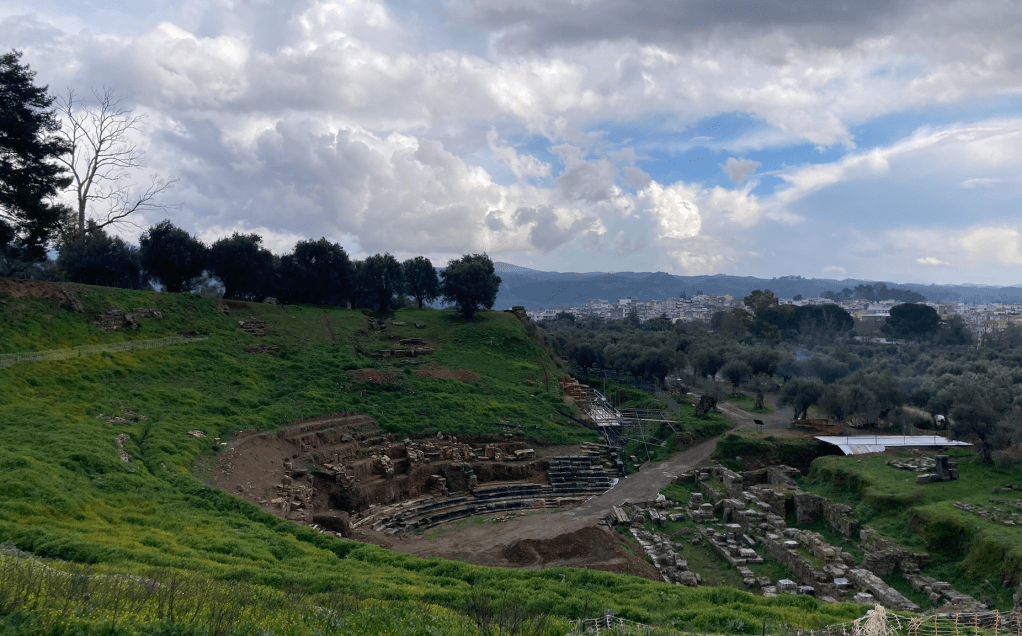
Like Sparta, many travel guides dismissed Ancient Olympia and like Sparta we found it pretty emotionally compelling. Maybe these guides focus on restaurants,  easy access, transportation time and shopping which apparently are low on our list of important things.

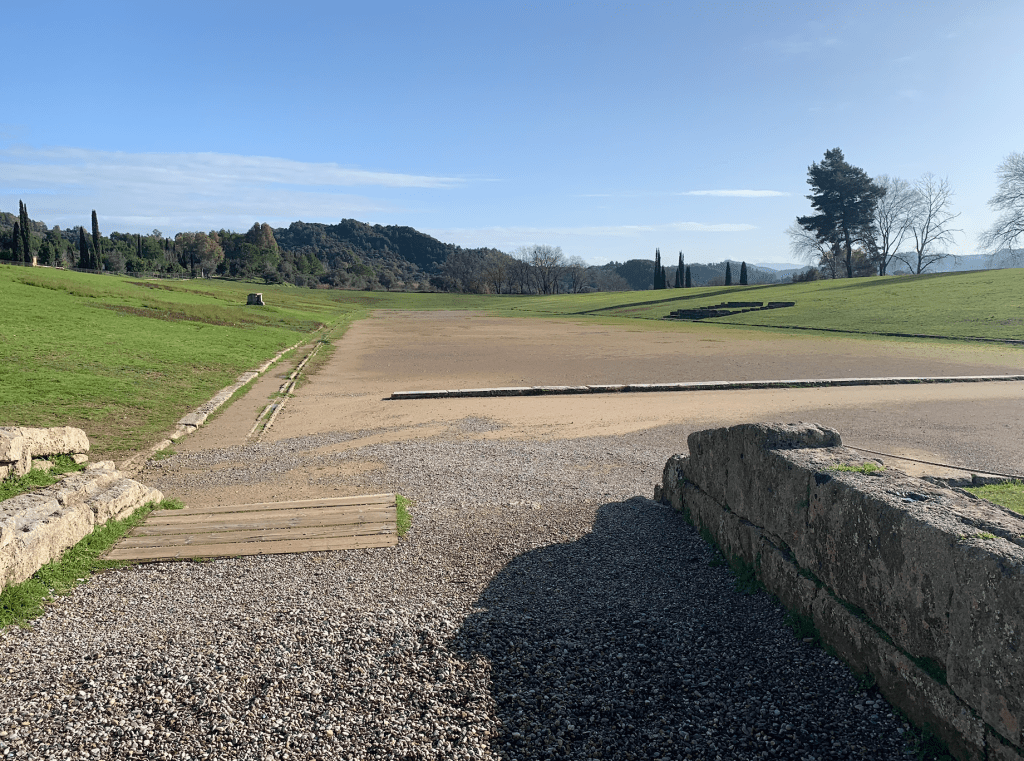
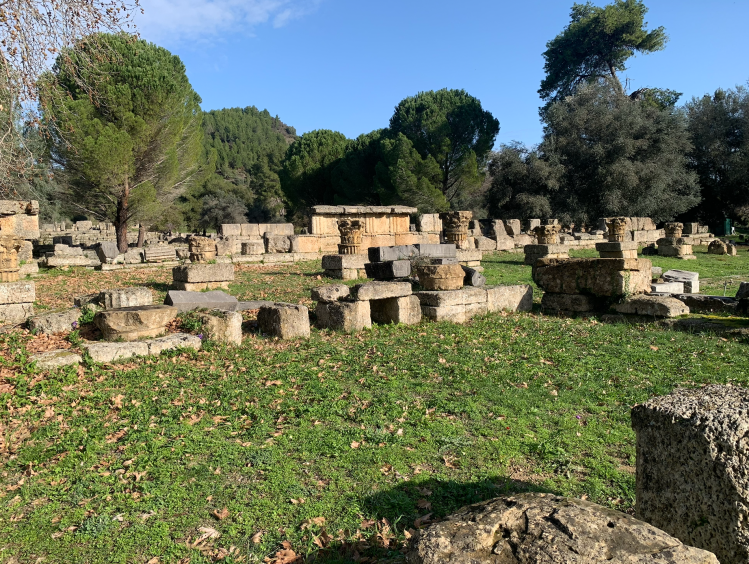
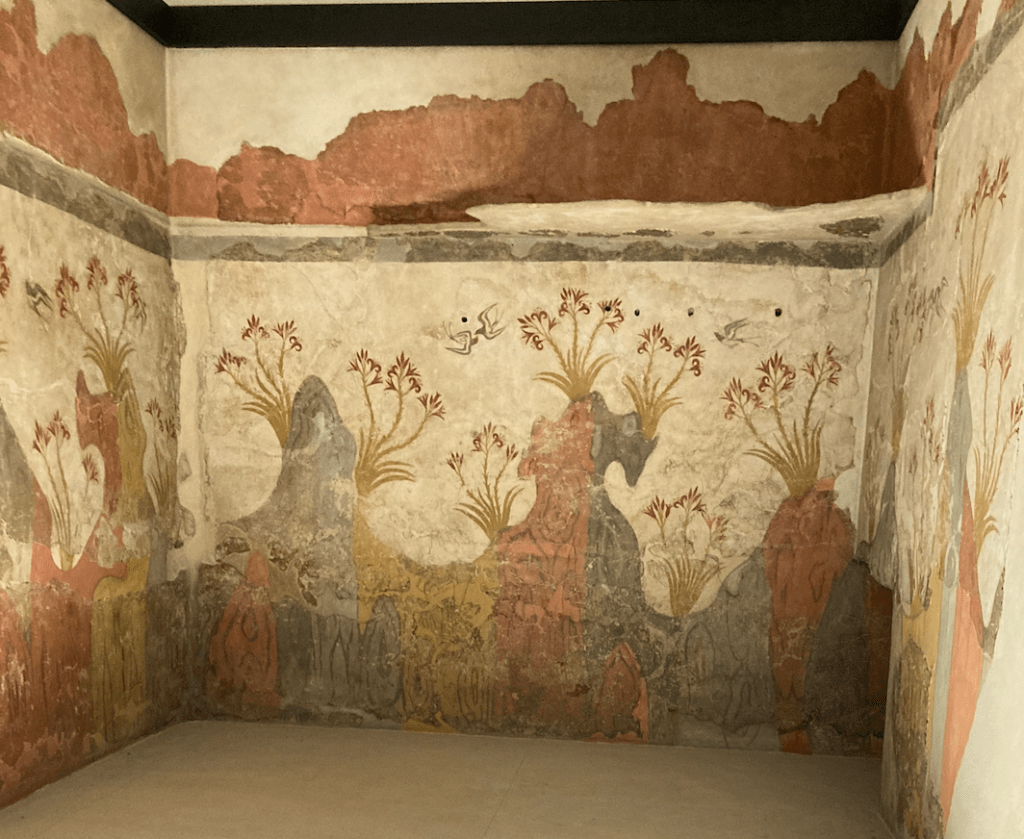
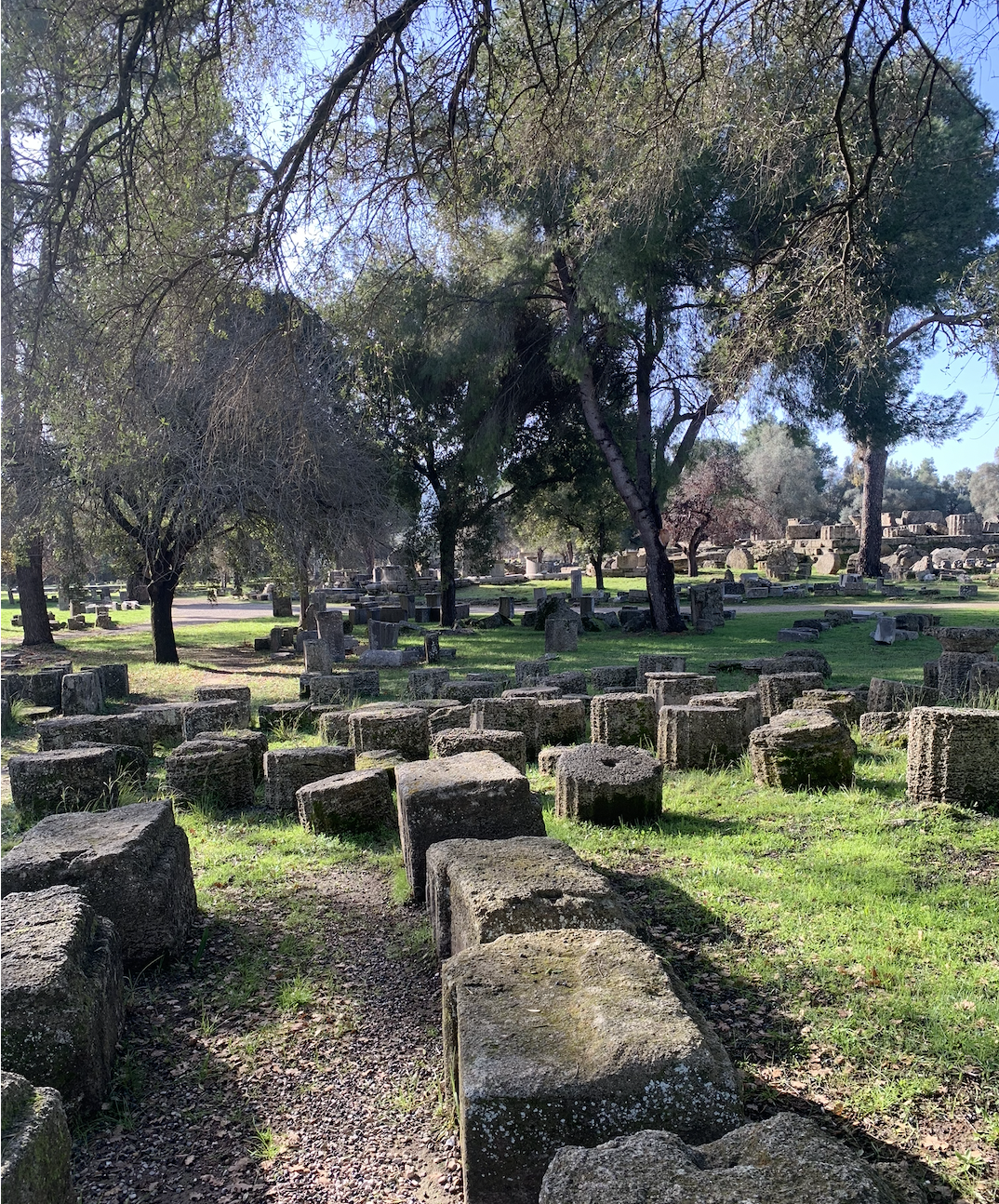
Ancient Olympia was magical, Nick’s favorite place in Greece (Nick also likes modern Olympia in WA state).  While the ruins were ruins, good written descriptions plus an imagination made it feel complete. You could envision the grandeur of the Ancient Olympic Village. The pageantry of the Games. To be able to walk or run on the original track. A true celebration of art, sport and athletics. You could feel the appreciation they had for the athletes and competition.
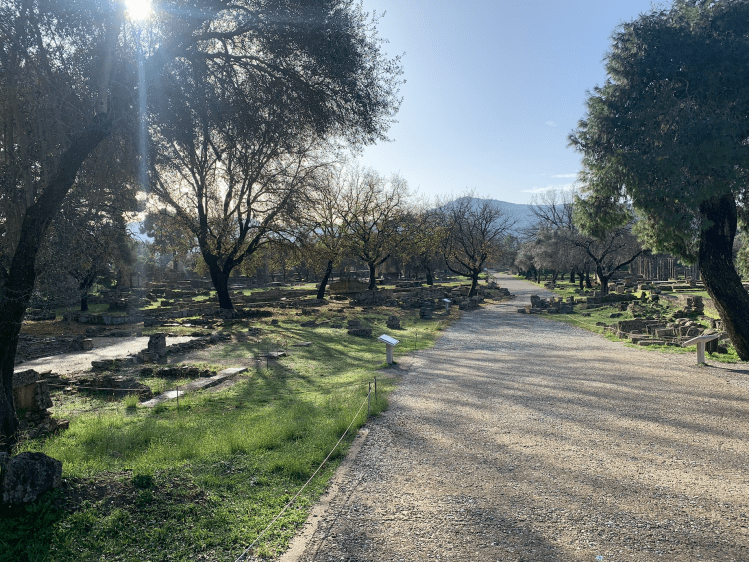
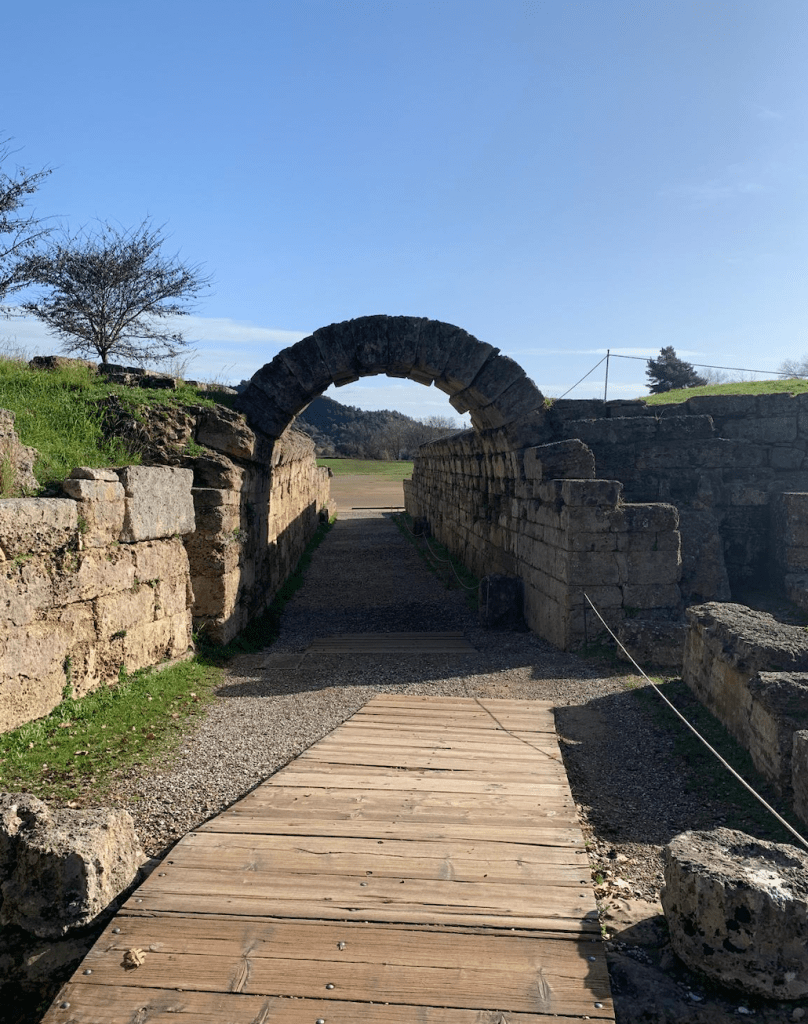
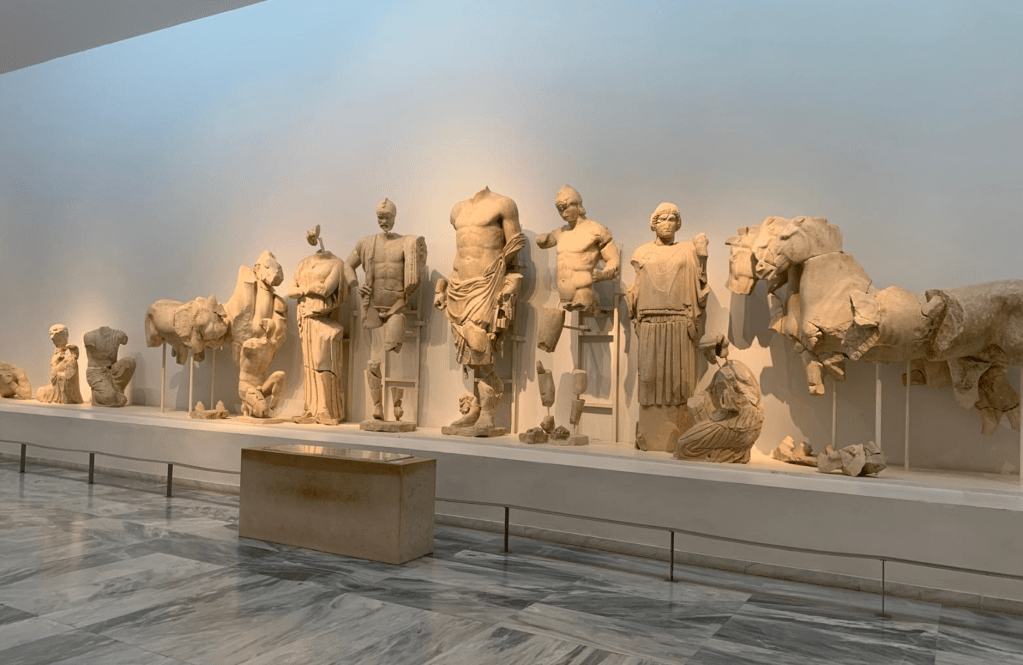
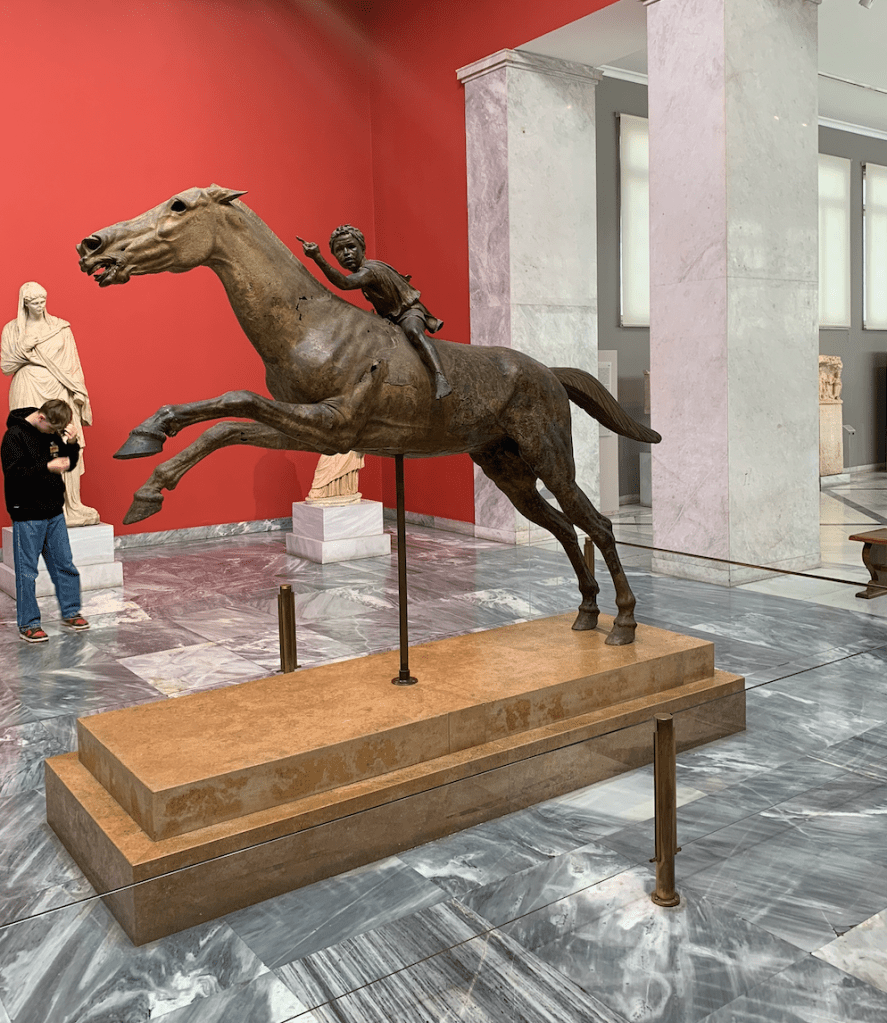
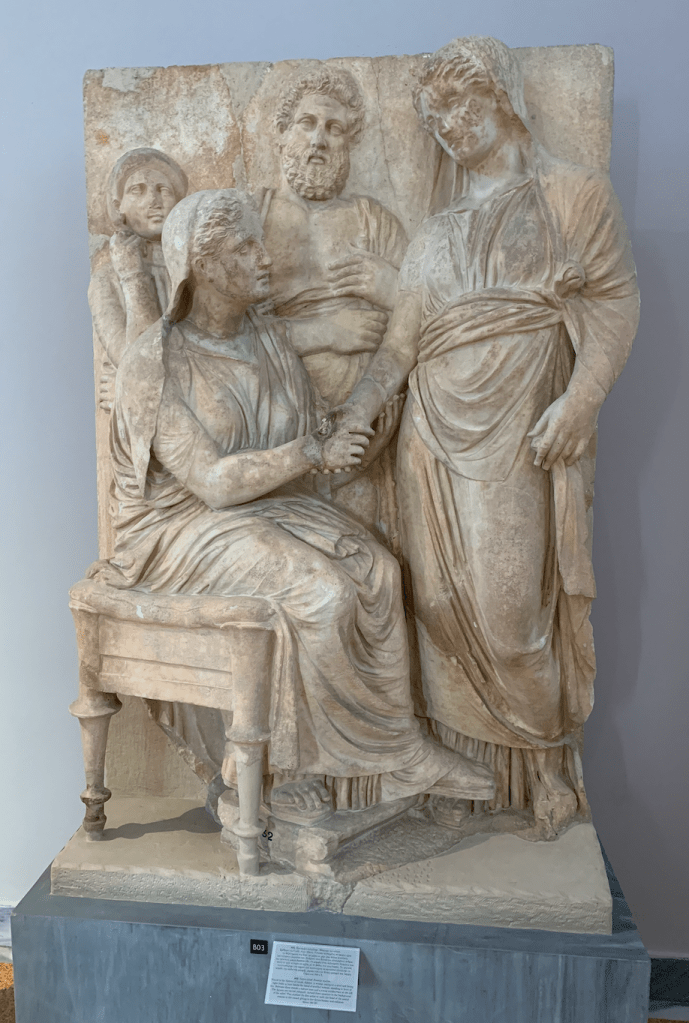
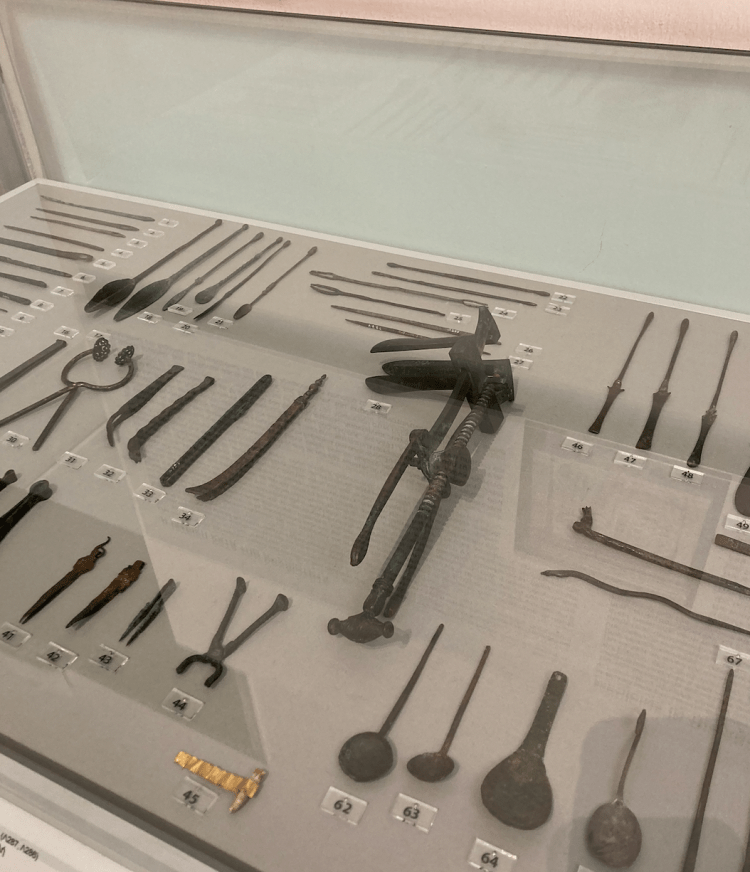
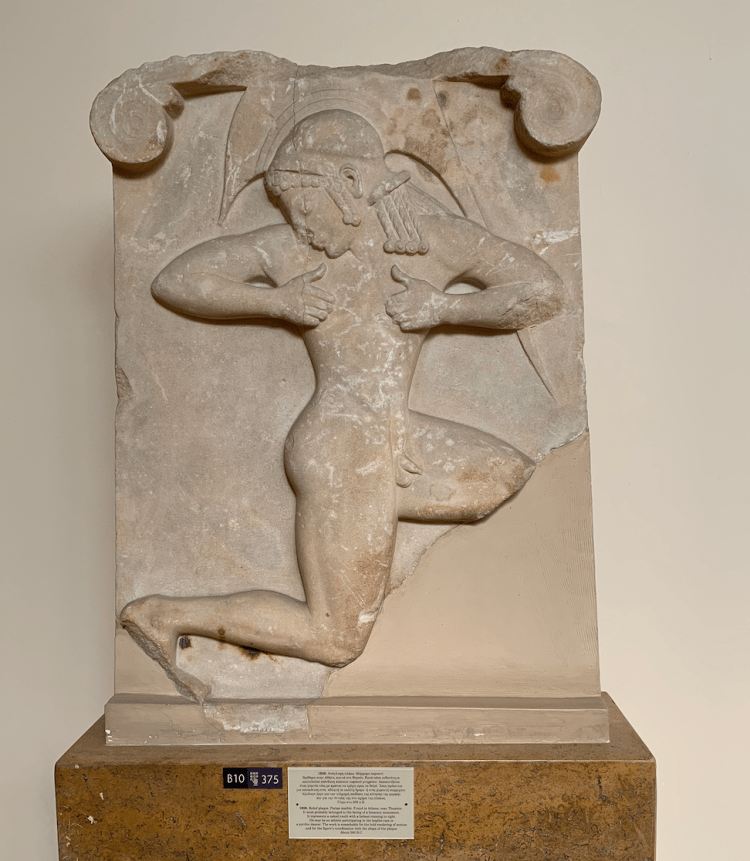
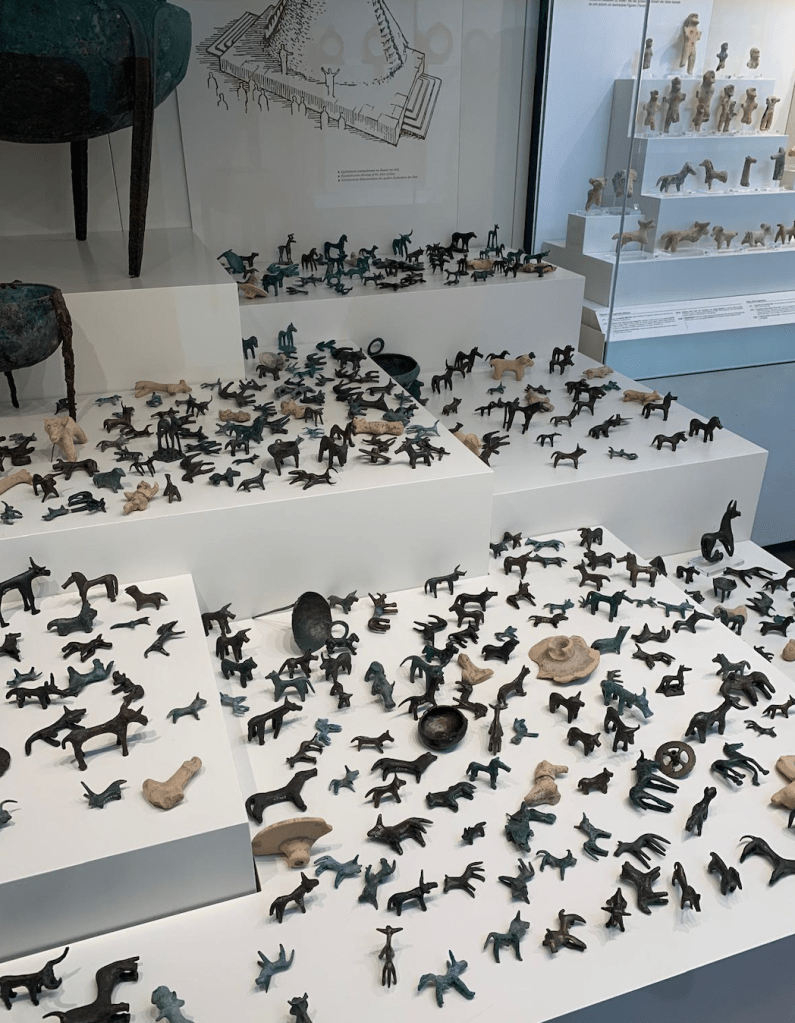
The museum was tremendous and there is something special about seeing these items where they were found rather than in a city miles away.
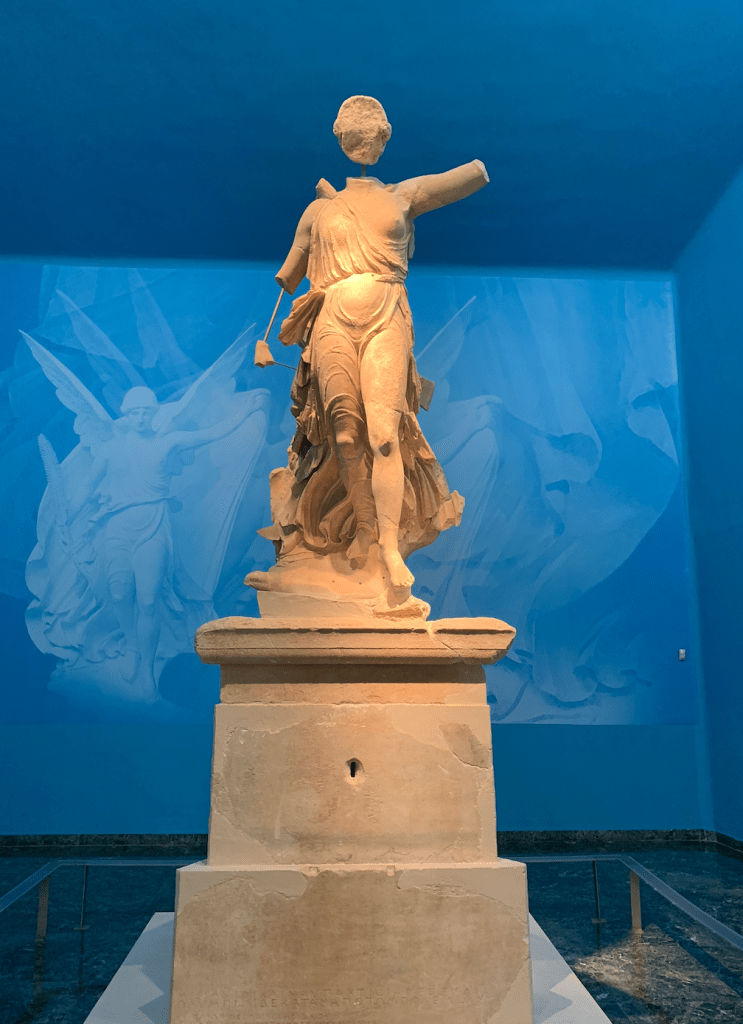
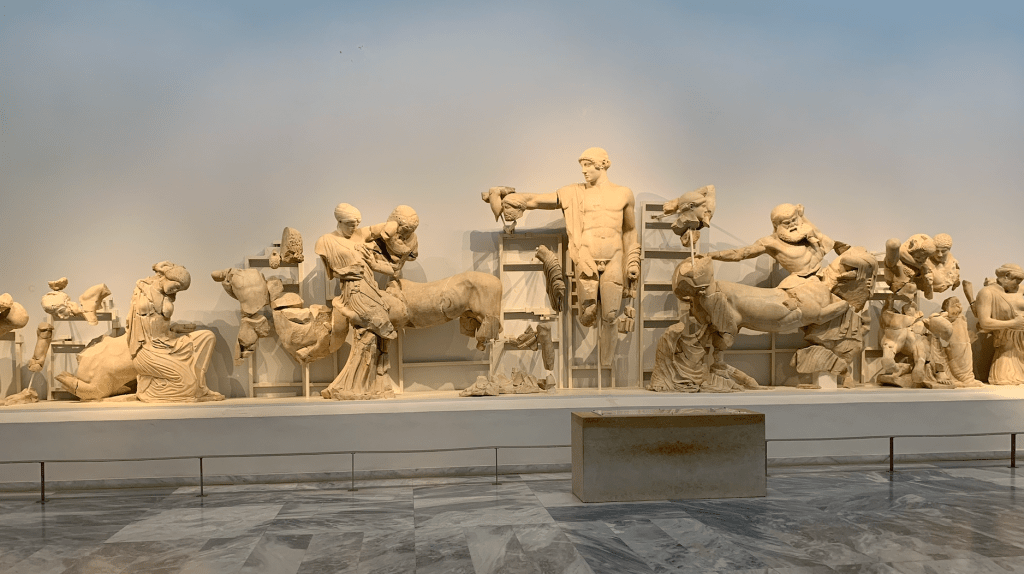
These two displays, positioned across from each other in the museum and originally on the east (above) and west (below) pediments of the Temple of Zeus. Beautiful, and fascinating to imagine fully intact in ancient times. The east depicts the chariot race of Pelops and Oinomaos (the fundamental myth of Olympia, which was a battle for the hand of Hippodamia, Oinomaos’s daughter). The west (below) depicting the Battle of Lapiths and Centaurs. A drunken revelry, with the Centaurs (those beasts) attempting the abduction of the lovely Lapith women and fighting during a wedding. Sounds like a modern day TV reality series told in statues.
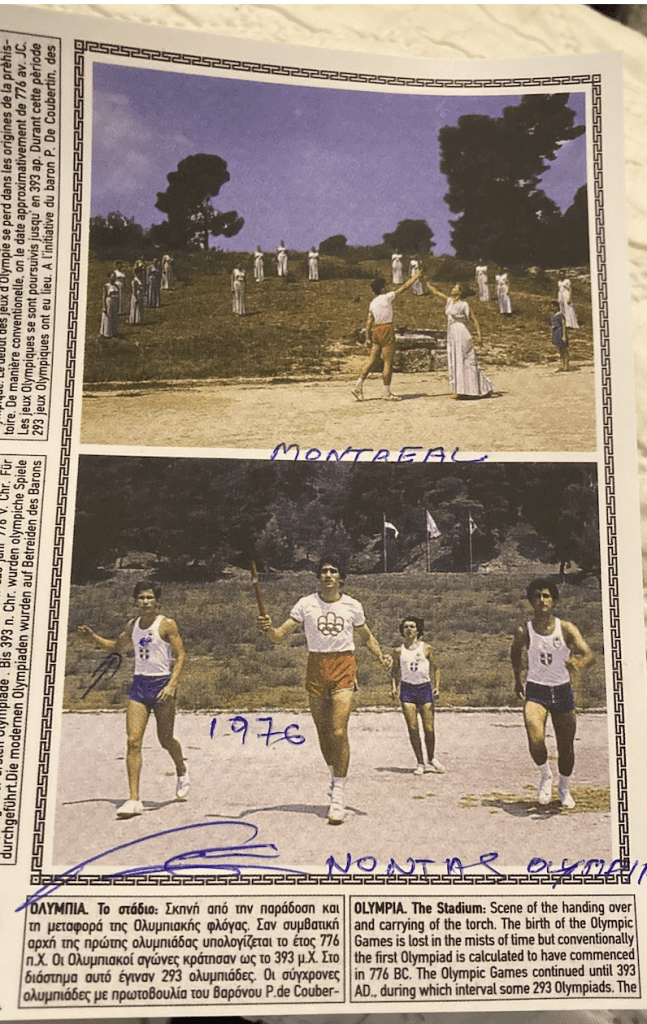
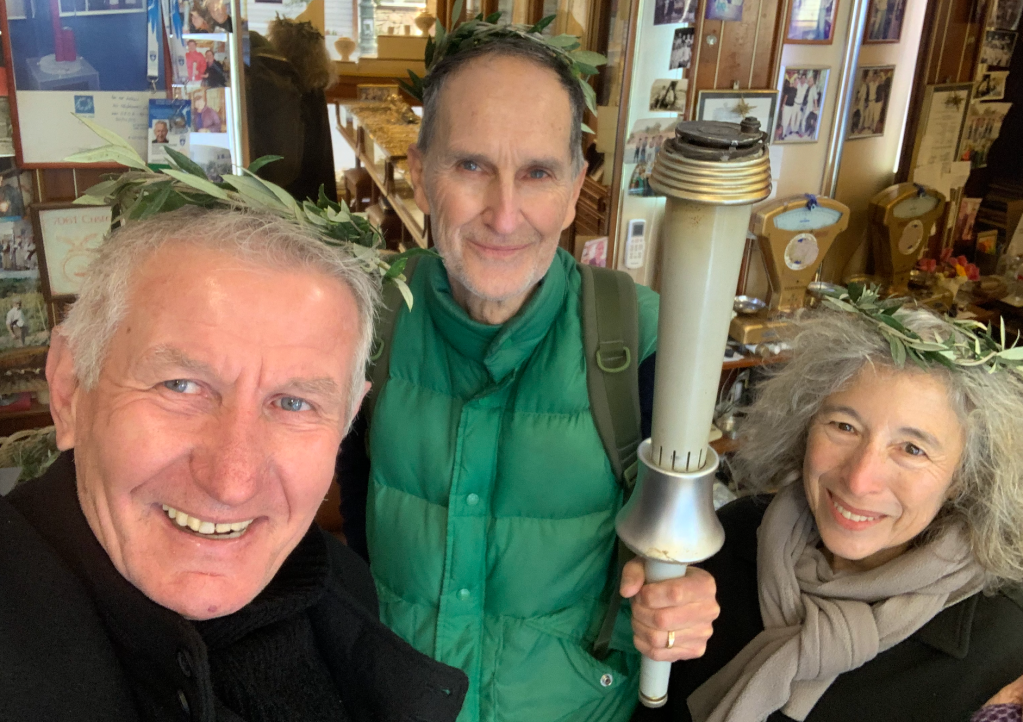
Another highlight of our Ancient Olympia visit occurred as we were walking over to the site. We had a a chat with a very gregarious gentleman who seemed to be the unofficial city greeter.  Called into his souvenir and jewelry shop, he proceeded to share with us files and files of pictures with celebrities; a lot of US military, George and Barbara Bush and tourists from all over. His photo collection included a picture of him as a teen carrying the Olympic torch as it began its journey from ancient Olympia to Montreal for the 1976 Olympics. Our send off was a picture with him, wearing our laurels and holding an Olympic torch.
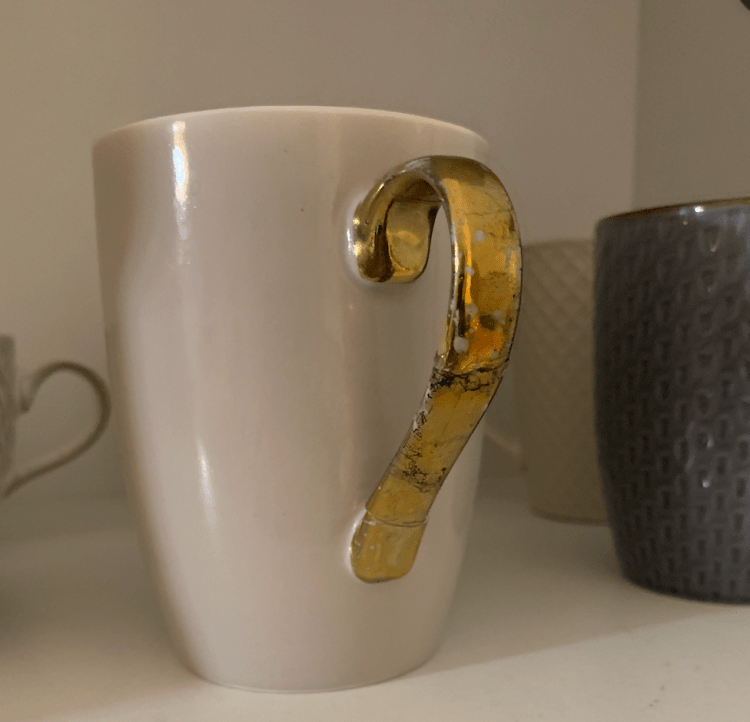
Back to Pyrgos, we tried to celebrate our triumphant day with a cup of hot milk (Centaurs, we are not!). Nick put a cup with a gold painted handle in the microwave. It cracked and the handle broke into 3 pieces. He grabbed the pieces then realized they were burning hot, torching the tips of multiple fingers. The pieces were hurled to the ground. The place started smelling, he thought it was the microwave, but it was the broken pieces singeing the rug. A quick clean up of the burned rug and slight shift of the coffee table to cover the medal-sized burn spots. He re-glued the cup handle with super glue we had from an earlier shoe repair of Patricia’s boots but the results were not a winning effort. We then dashed to 5 different stores in Pyrgos to find a decent substitute to replace the broken mug. The final result is we really got to know Pyrgos, saw a rainbow and Nick found a 10 euro bill on the street. We bought a matched pair of mugs, but once back we noticed one had a cracked handle, so he raced off to exchange it, completing the accident pentathlon. Quite an Olympic day! Be careful when you reach for the gold!
Leave a Reply

KTEL Presents Greece’s Greatest Rocks and Ruins

Having successfully mastered Albania’s no bus system-no bus station minibus-sedan-tag-team transportation we felt ready to tackle the Greek bus system.  Greece had big buses and actual bus stations with staffed information counters, tickets, gift shops and cafeterias.  However, efficient travel off season was mythical.  Greece’s Achilles heel was its bus schedule.  

Buses usually ran twice a week; typically just Fridays and Sundays, and connections usually did not line up.  Partially because each municipalities had its own bus company (and website) and there was limited to no coordination between them, even if they were all called KTEL, all 62 of them. KTEL Leftkadis, KTEL Ioannion, KTEL Fokidas, and on and on. 

From Athens we debated our next move studying geography, schedules and timing.  Multiple Venn diagrams later, the conclusion was we’d have to stay someplace longer or shorter than desired, and skip planned stops since the buses did not stop where we wanted in the winter, there are no trains and we don’t rent cars. Solution was to go to places not on our plan or that we had never heard of.  Our travel planner became the KTEL buses.  Unfortunately, not the always reliable/always dependable K-TEL of Veg-O-Matic, Miracle Brush and other late night products infomercial fame. 

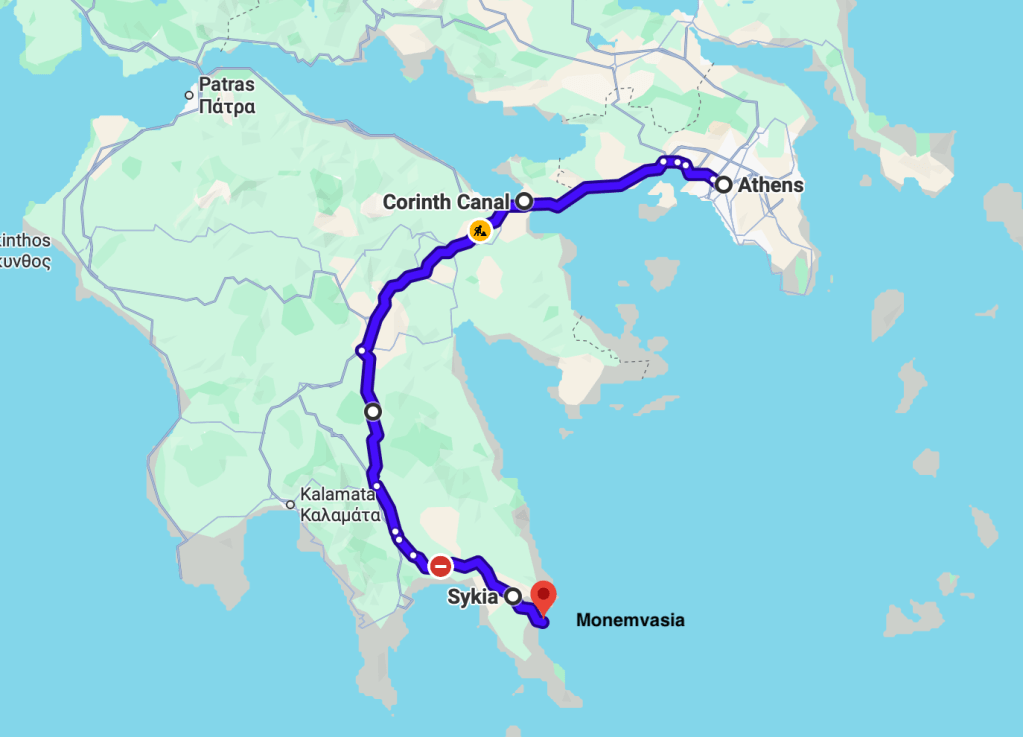
Our goal was the south east tip of the Peloponnese peninsula, Monemvasia.  The added benefit of this journey would be passing through Nick’s Papou’s (grandfather’s) birthplace of Sykea.  It was a long ride, an exciting pass over the Corinth canal https://en.wikipedia.org/wiki/Corinth_Canal and then a transfer in Sparta. (Looks far but just 4 hours of car driving, 6 hours by bus)

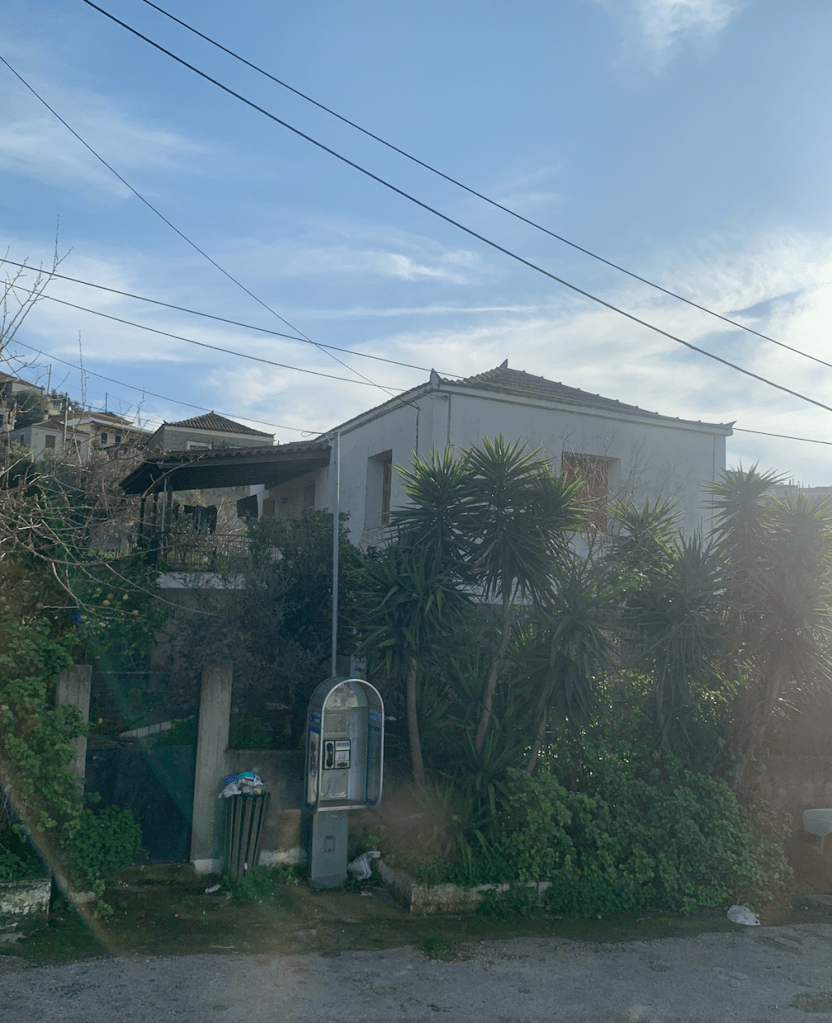
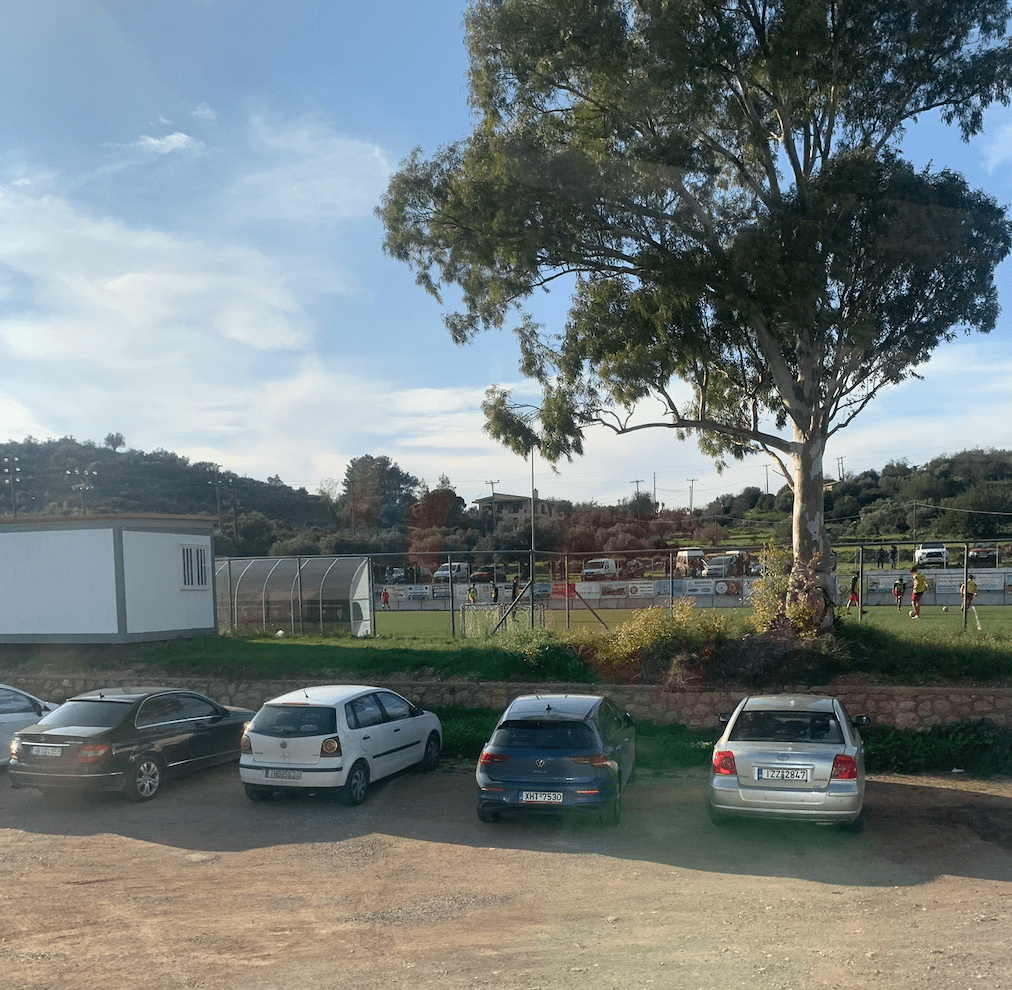
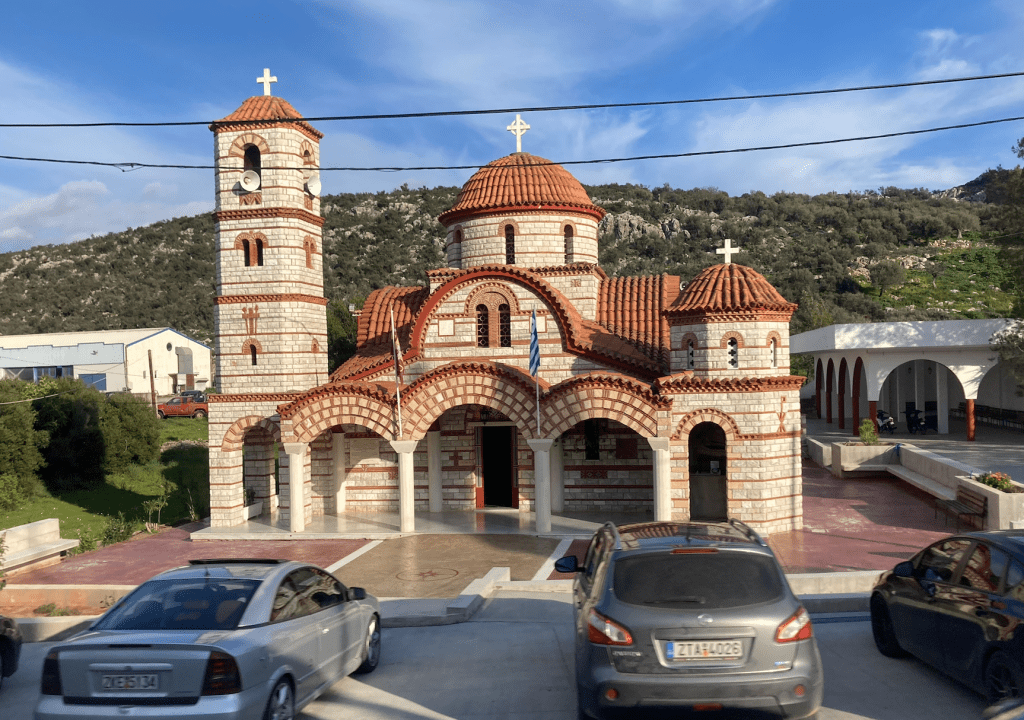
The buses often stop in every little town, but Sykea was so small and insignificant that the bus barreled through (barreled=30mph).  Sykea was a good place to be from.  It appeared to consist of a few houses, a soccer field and an Orthodox Church. 

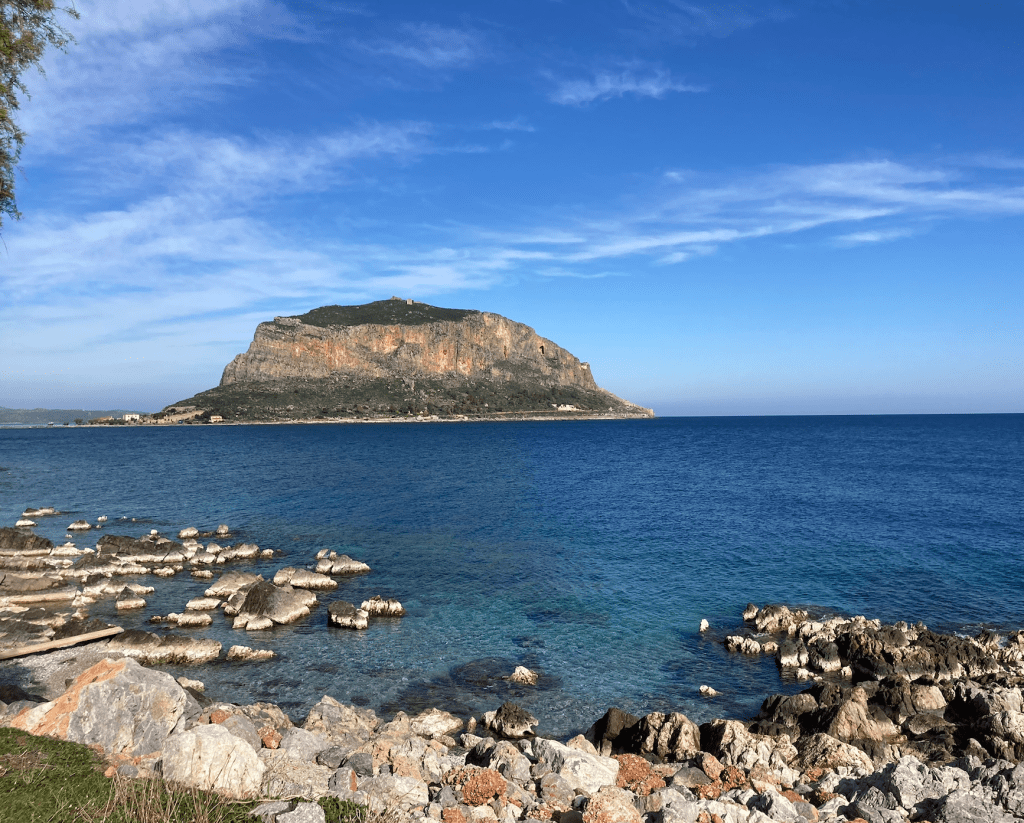
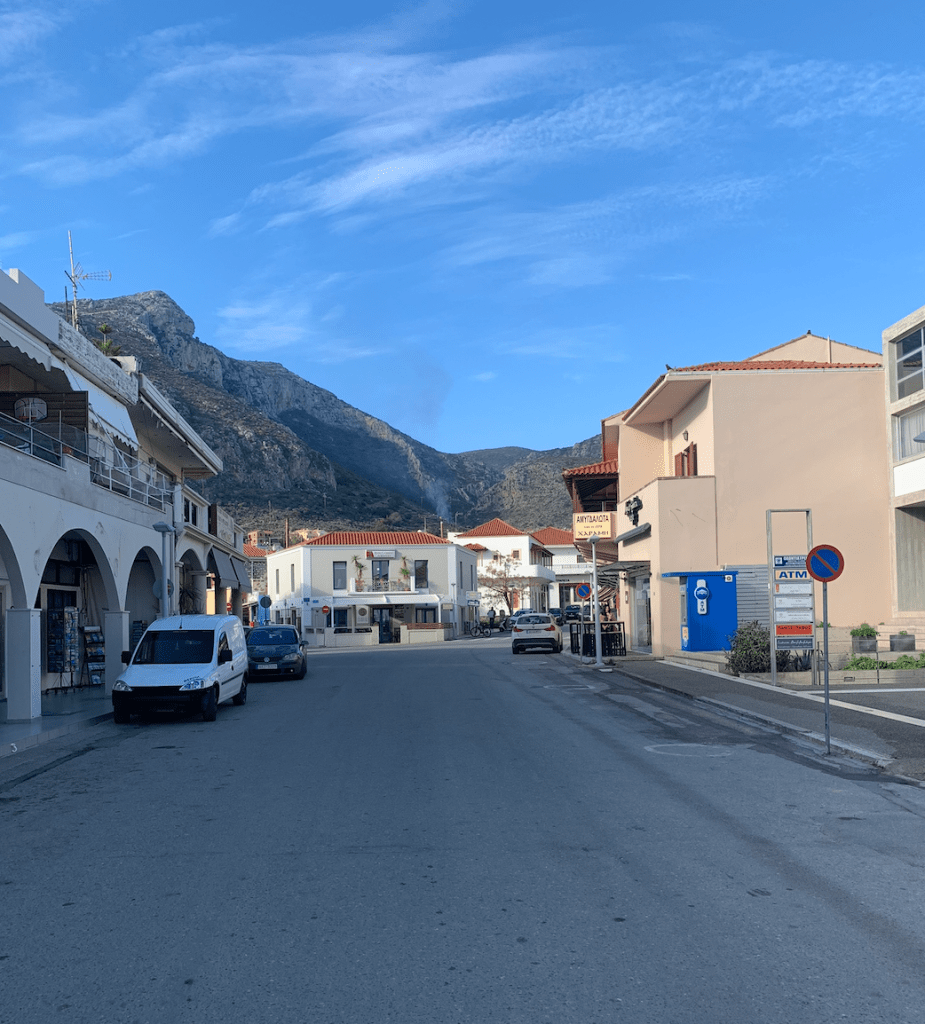
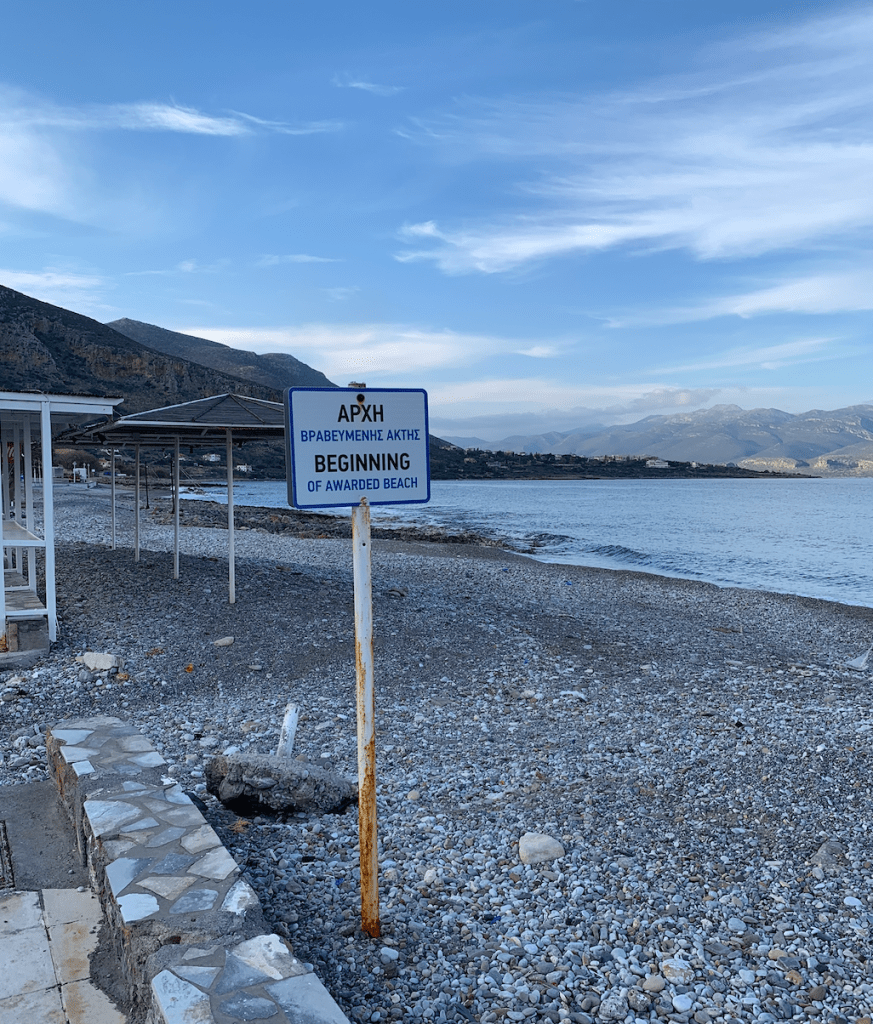
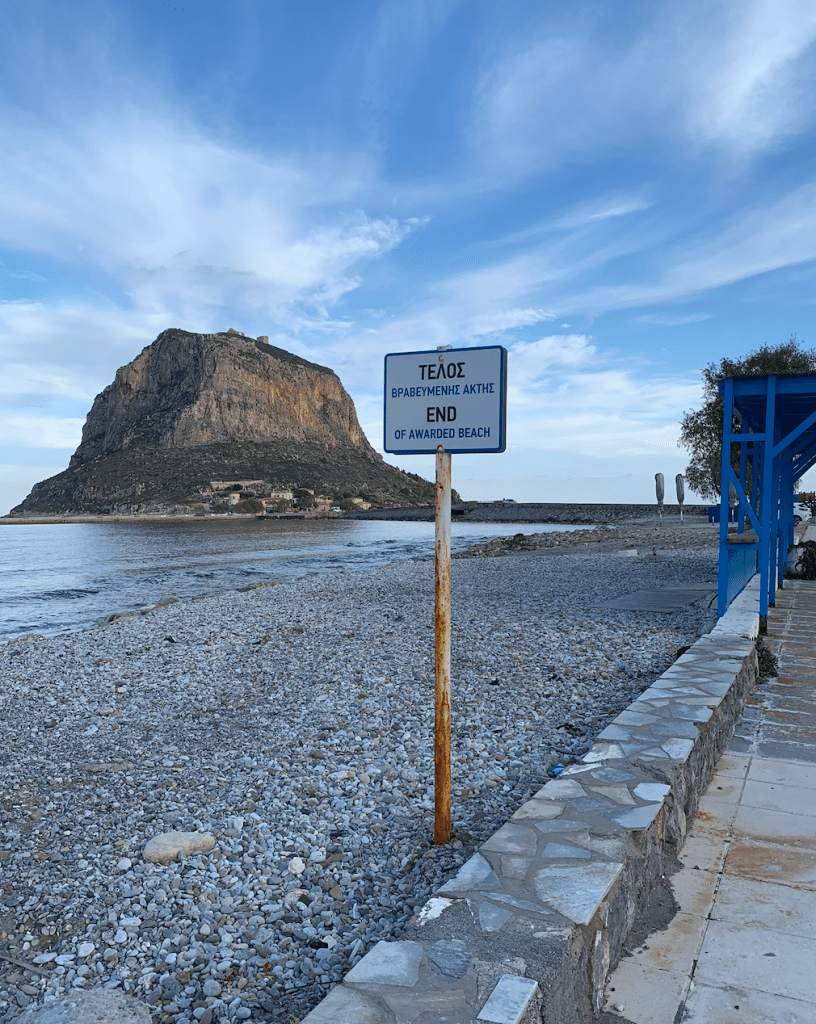
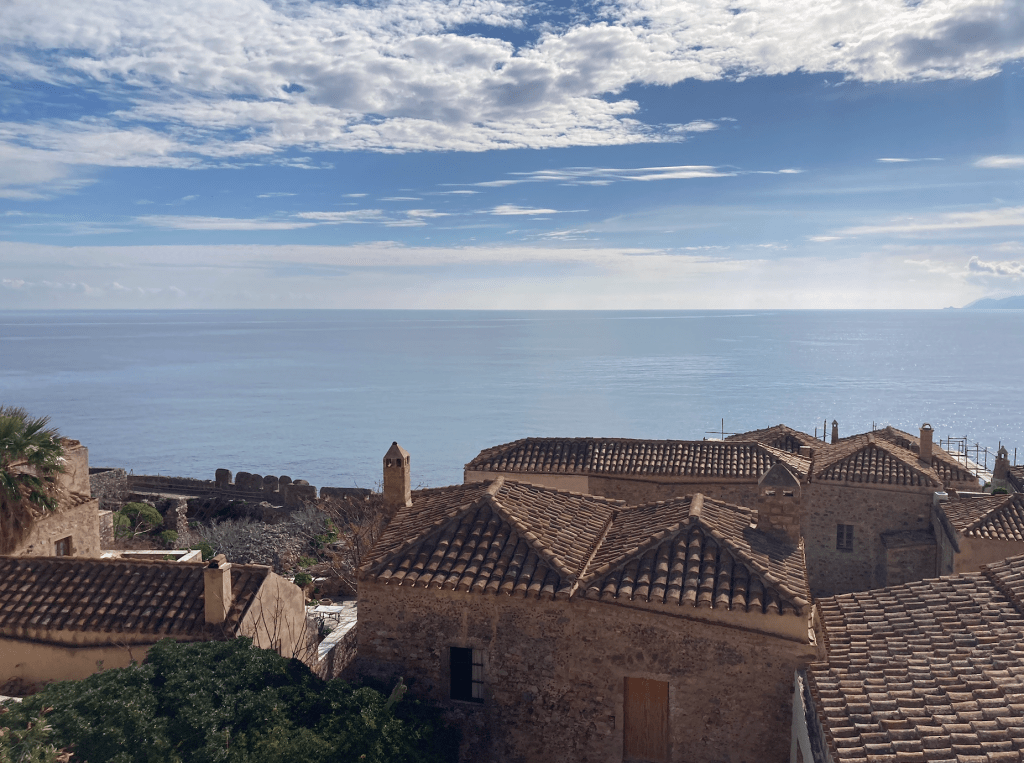
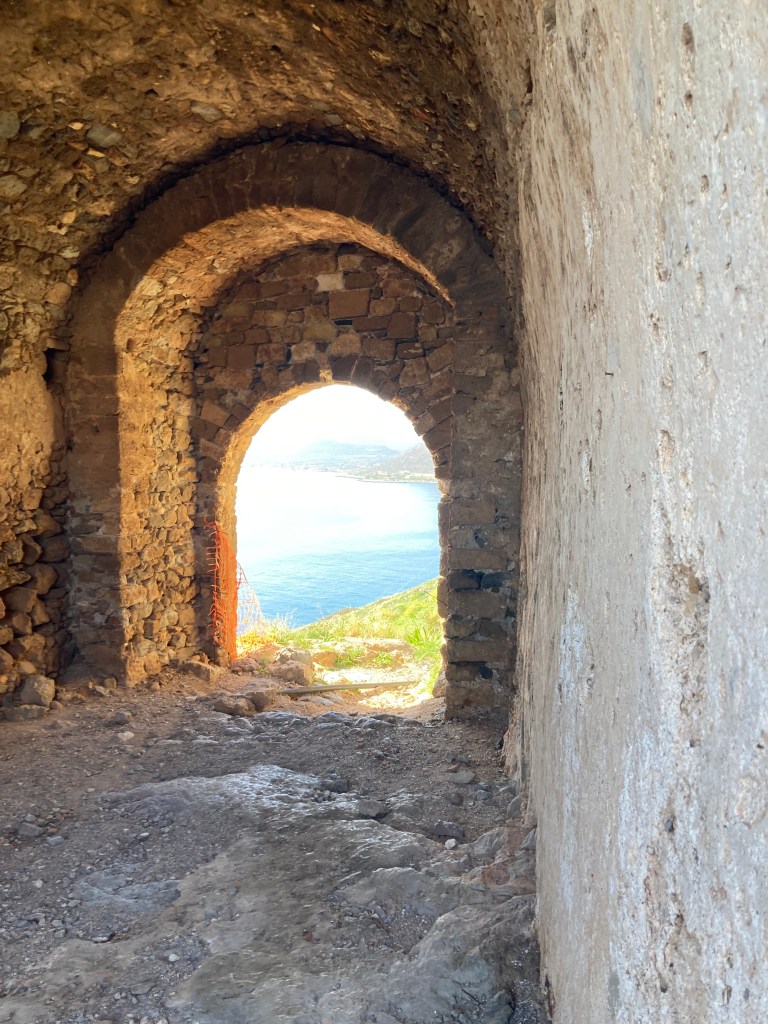
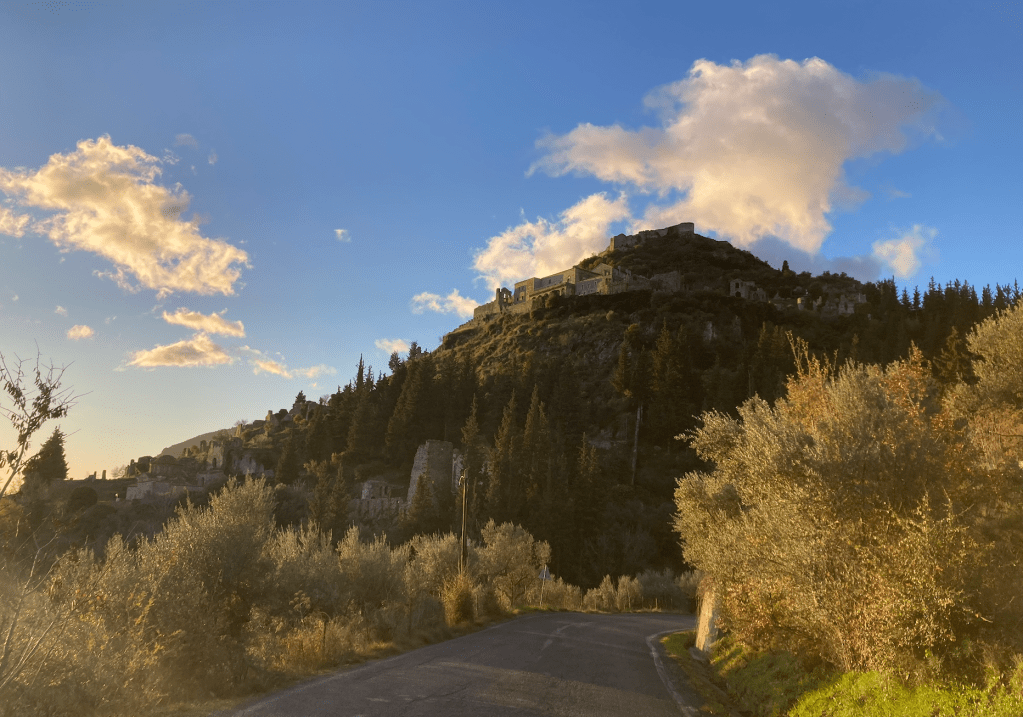
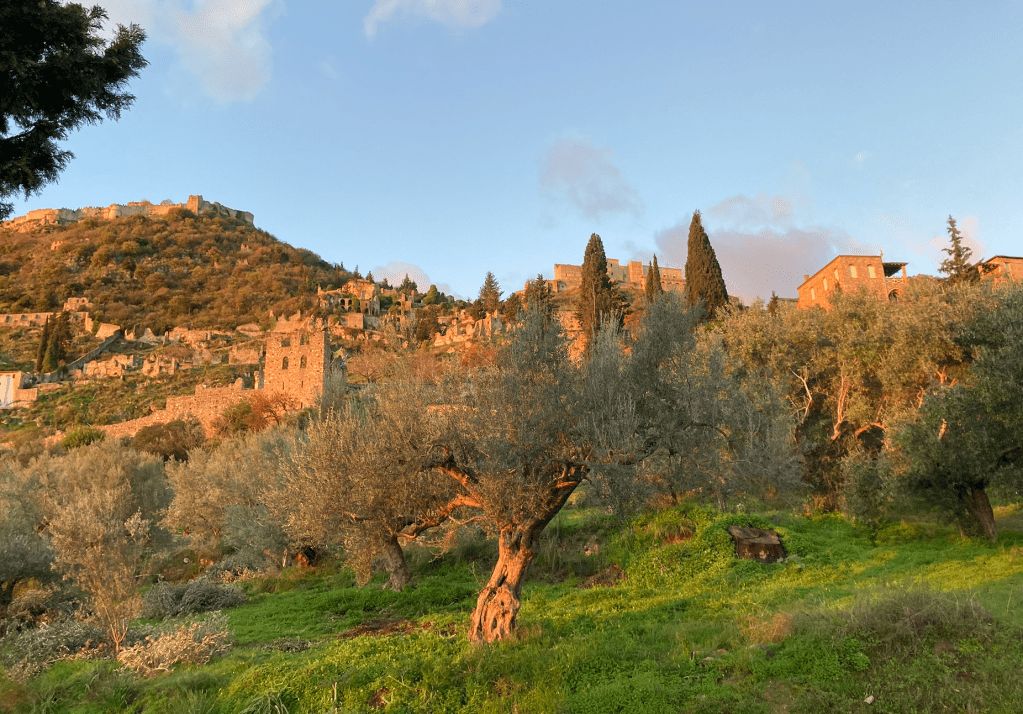
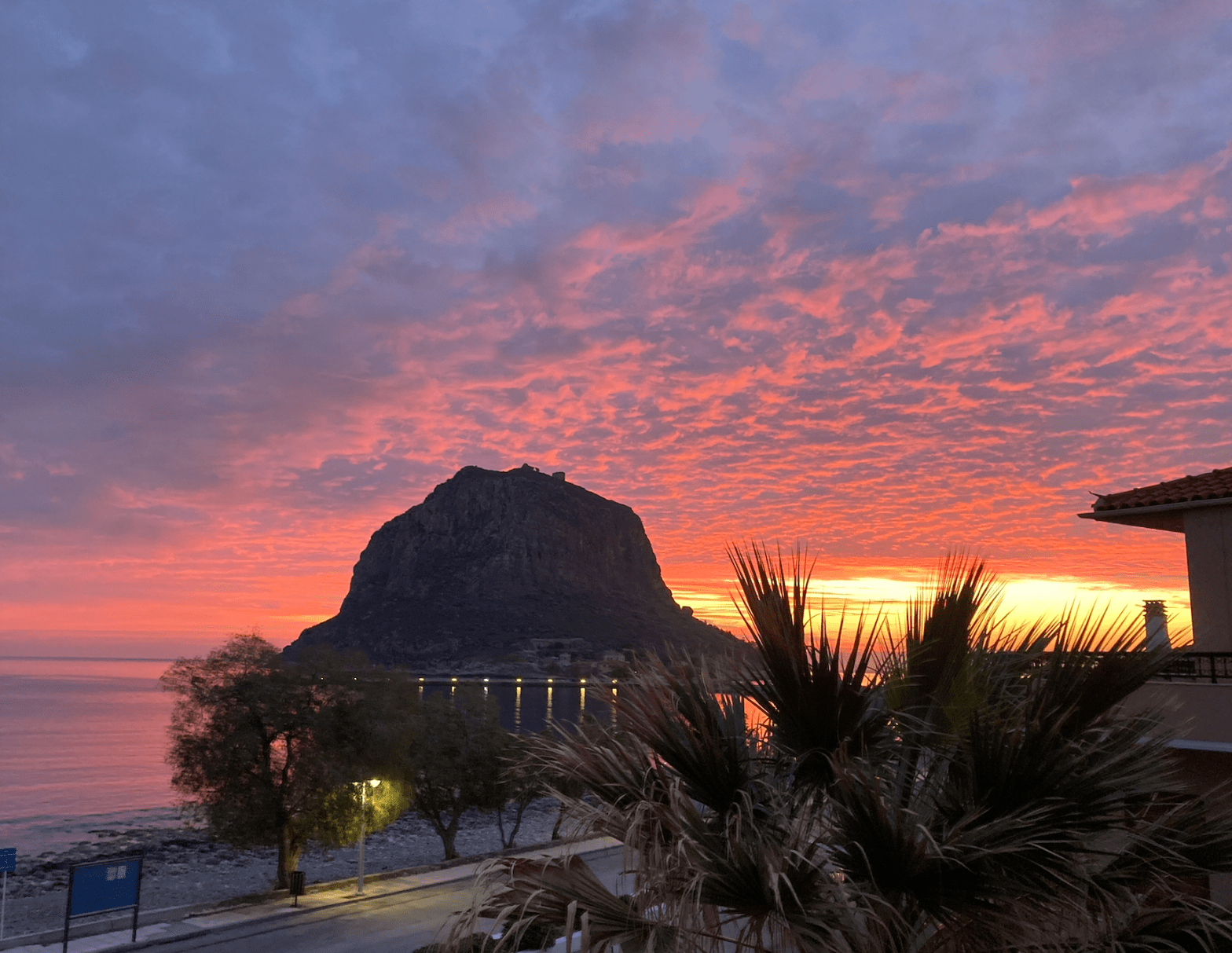
Monemvasia, just a bit further down the road, was a bigger draw because it had the Rock with the fortress at the top. Momenvasia is the rock that seems to have rolled a bit off the tip of the continent, that little tip is the tiny town of Gafira. 

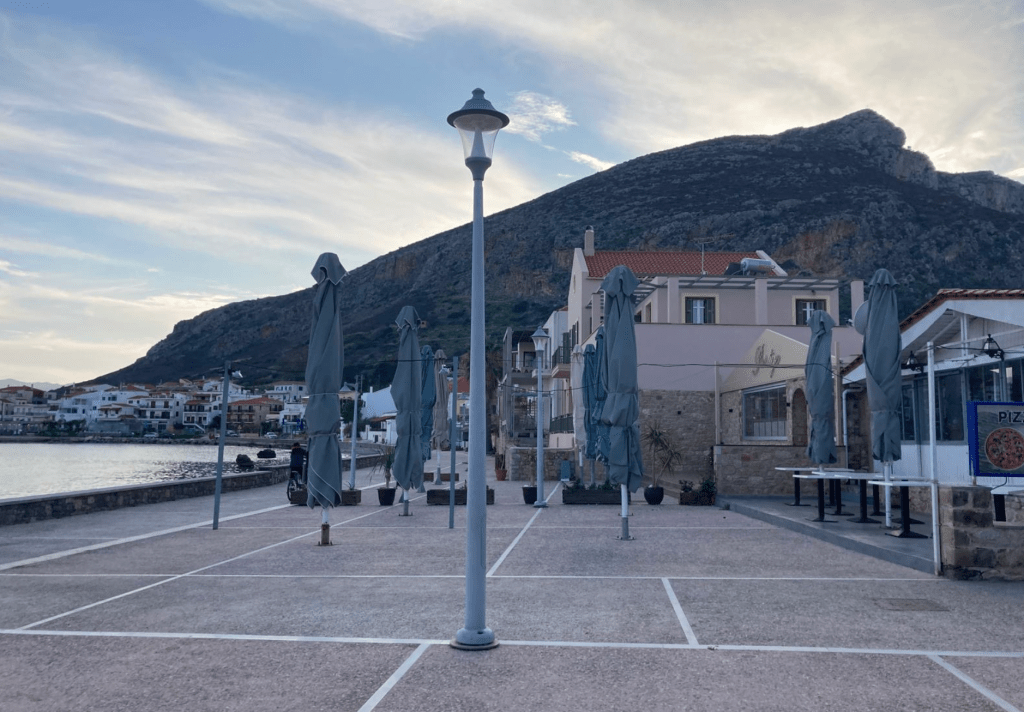
Definitely a summertime place so we went in the winter. A bit of the end of the world feel with empty streets except for the occasional tourist (oh, that would be us). 

Stayed in a family run Inn. The innkeeper, who looked like a Greek version of Patricia’s mother,  set up the little guest breakfast buffet each morning then sat down with her husband, read the paper, they drank their coffee and ate their breakfast. Starting to really feel like home? Patricia’s roots were felt, as well.

Momenvasia is like a Greek Mt St Michel only more layered and ruined https://chosenfugue.xyz/2025/10/11/brittany-rocks/.

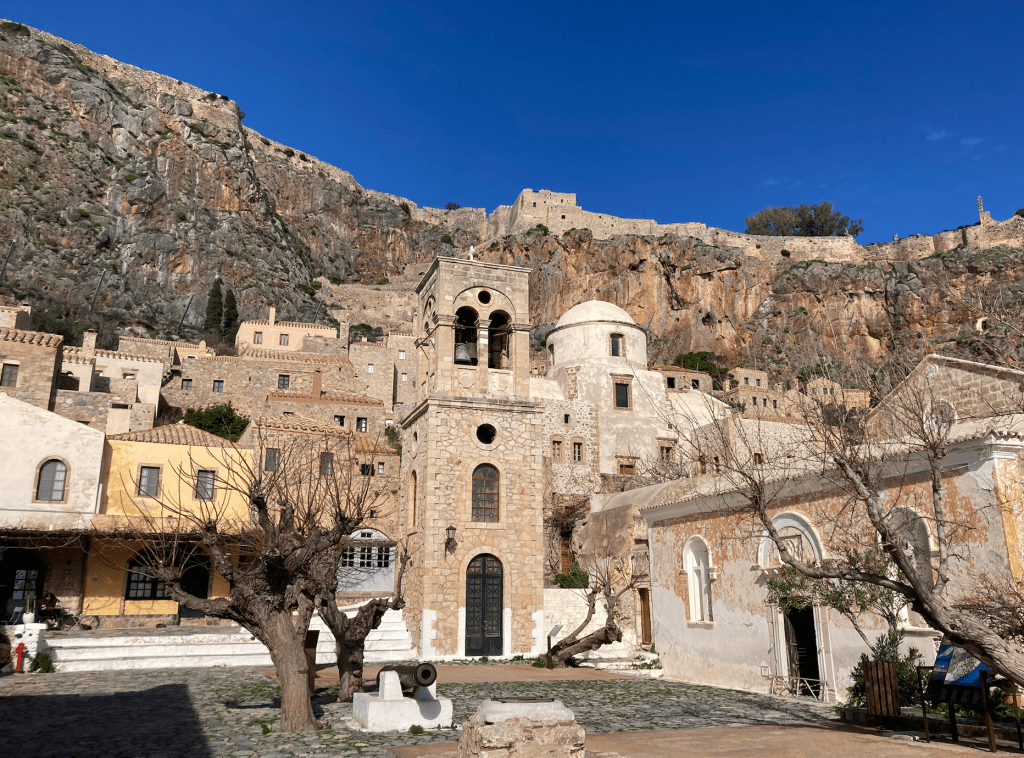
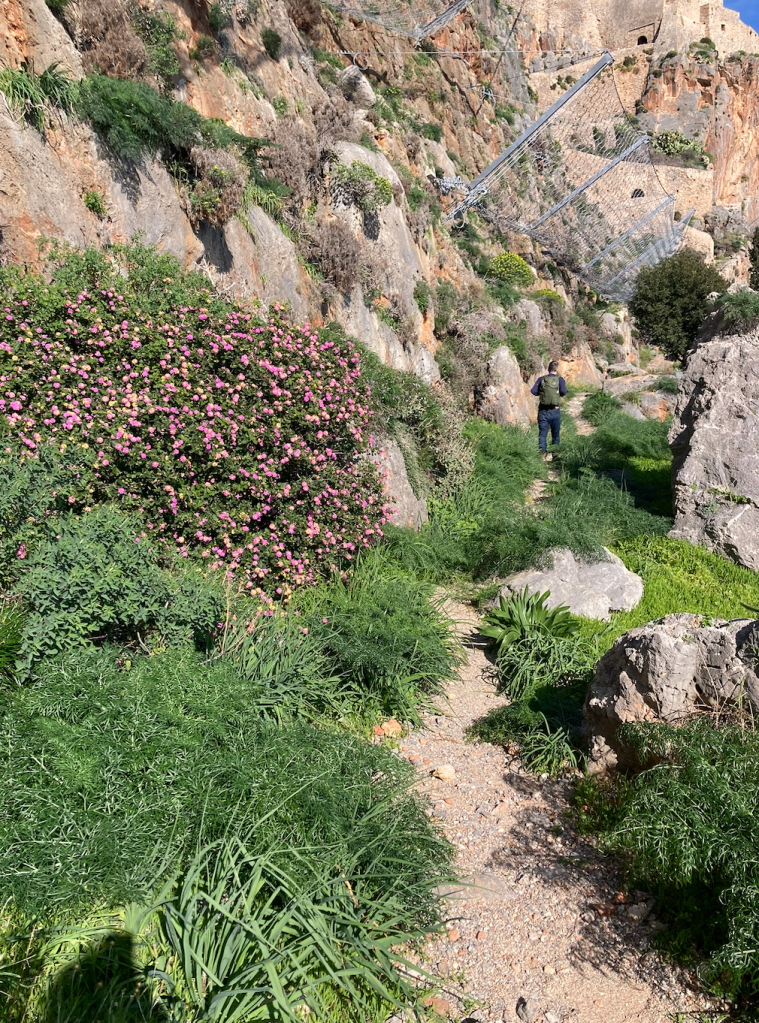
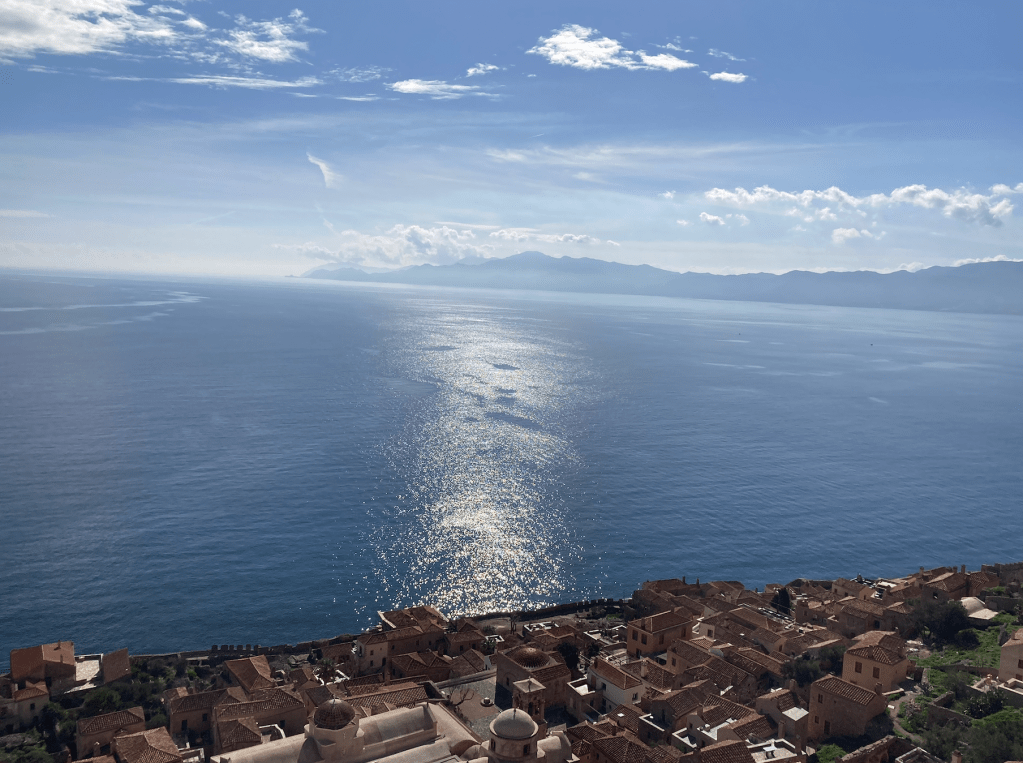
Starting at the bottom layer, it’s all up hill, leveling out a bit to a small plaza and you get the first view of the sea.  

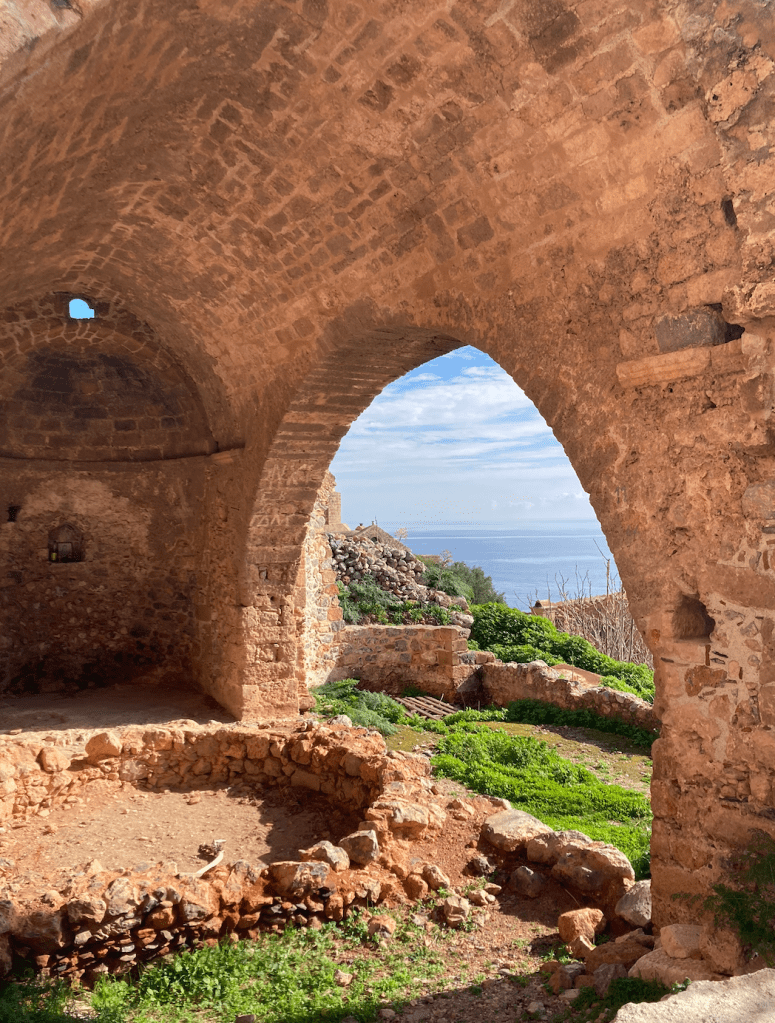
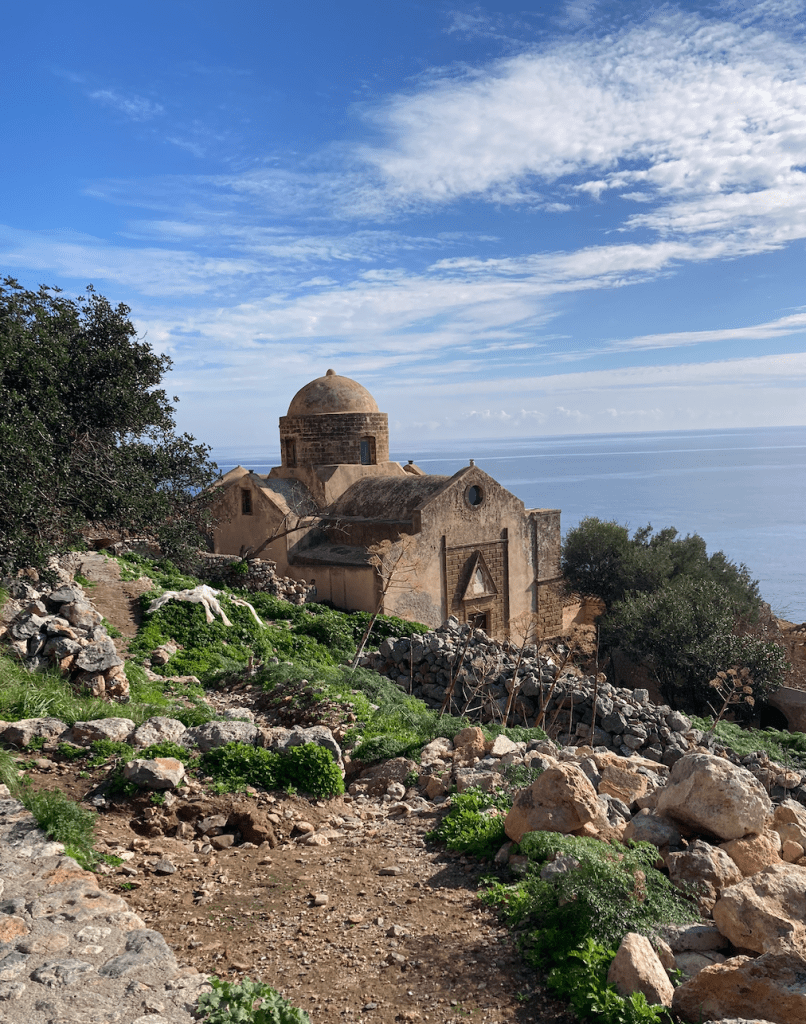
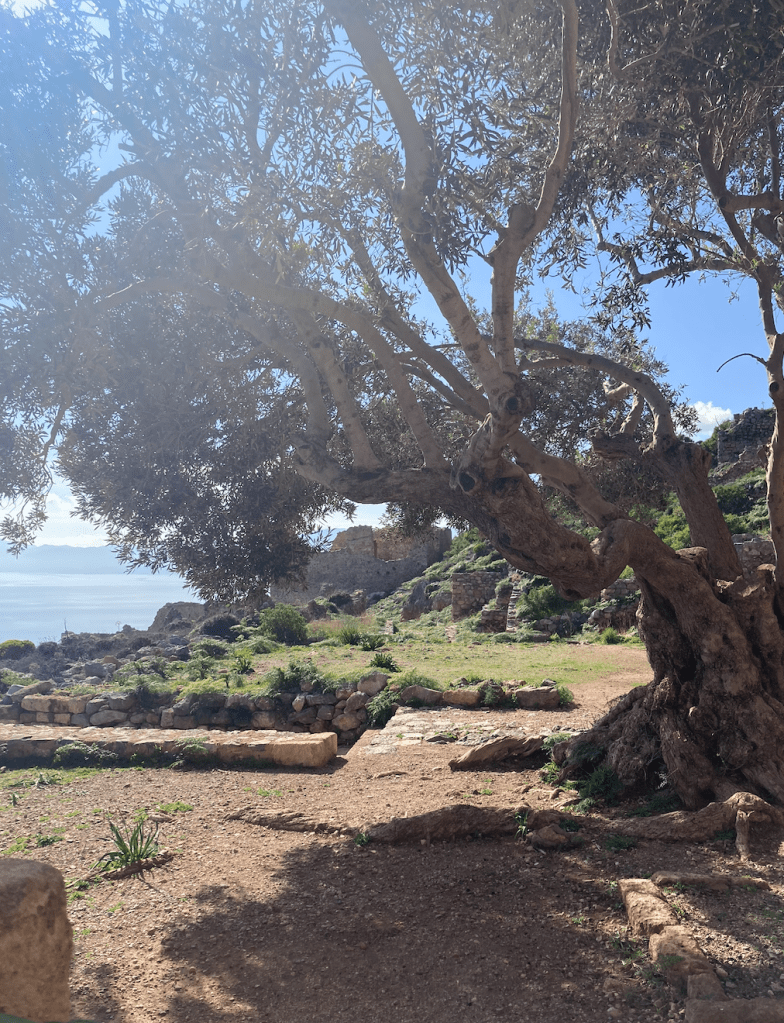
Each layer, a different flavor with churches, parts of undetermined buildings and views of the Myrtoan/Aegean sea.

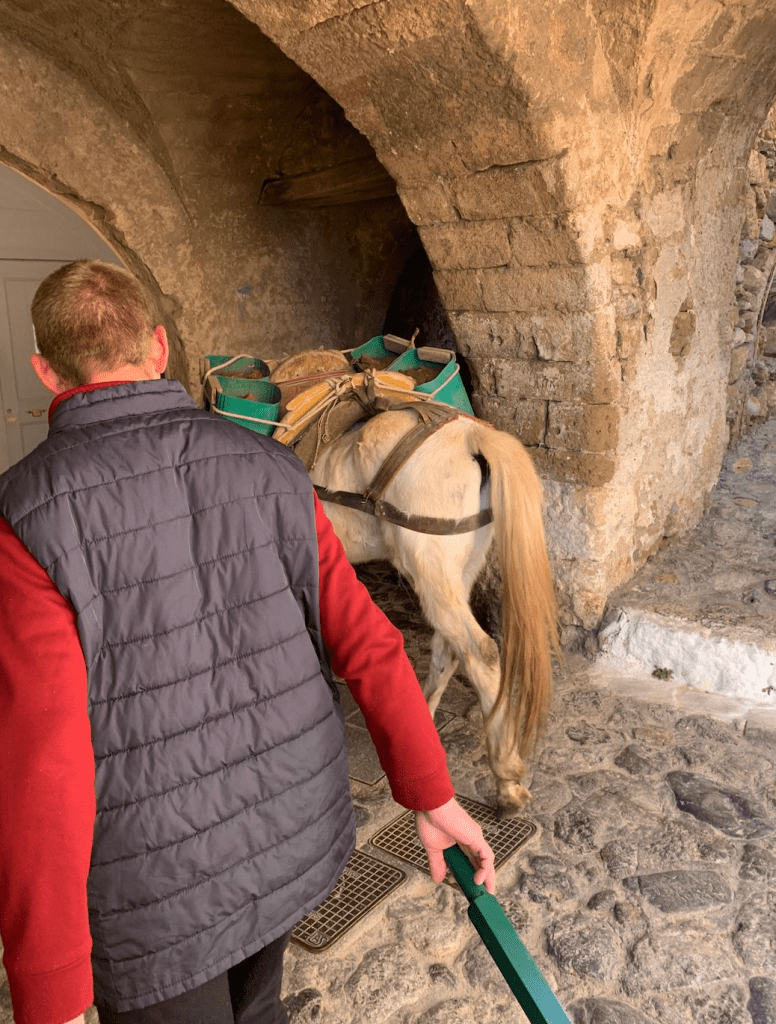
Coming down we were slowed down by some construction traffic, horses hauling bricks and dirt.

We actually really enjoyed this little town so we and the KTEL bus schedule decided we should stay an extra day.

After wrestling the rock, we decided to go on to Sparta. A lot of travel guides discouraged but not KTEL, it was the only stop we could do and hey, it was Sparta. It defines our lifestyle, so we went.  Thank you K-TEL, the Spart-a-matic stop was a good deal, we really loved it, we couldn’t live without it! 
Walked through the small but vibrant downtown to get to the Spartan ruins. Nothing fancy, no gates, no fences, you could walk right into them. Evocative and really, really beautiful.

It was glory. “But wait, there’s more”. The next day we bused up to the larger ruins Mystras.

But decided we were happy with just Sparta, turned around and walked back since it had been like a week without walking along dangerous narrow roads.  

And of course, found hidden gems, off the beaten track.

Leave a Reply

Los Athens

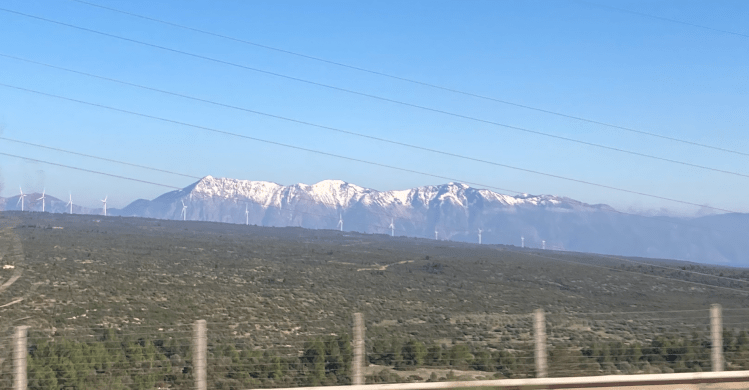
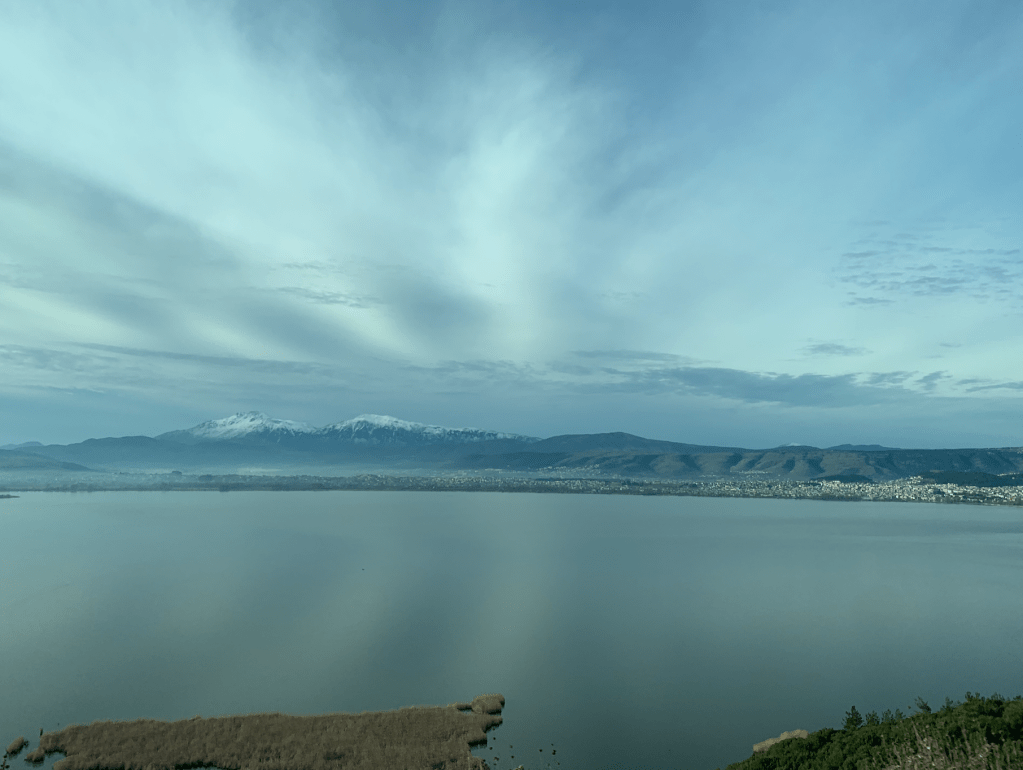
The spiritual high of walking through the majestic monasteries perched on the Meteora lingered as our bus traveled southeast towards Athens. The landscape changed to familiar, looking like the drive south from Northern California through the Grapevine on the 5. But then the snowy caps of Mt Olympus, home of the Gods, came into view.

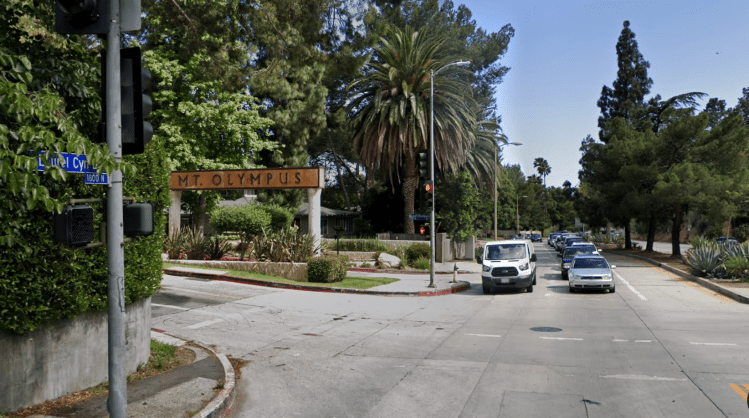
Far more impressive than the ungodly Mt Olympus in Los Angeles. Different idols, different snow.

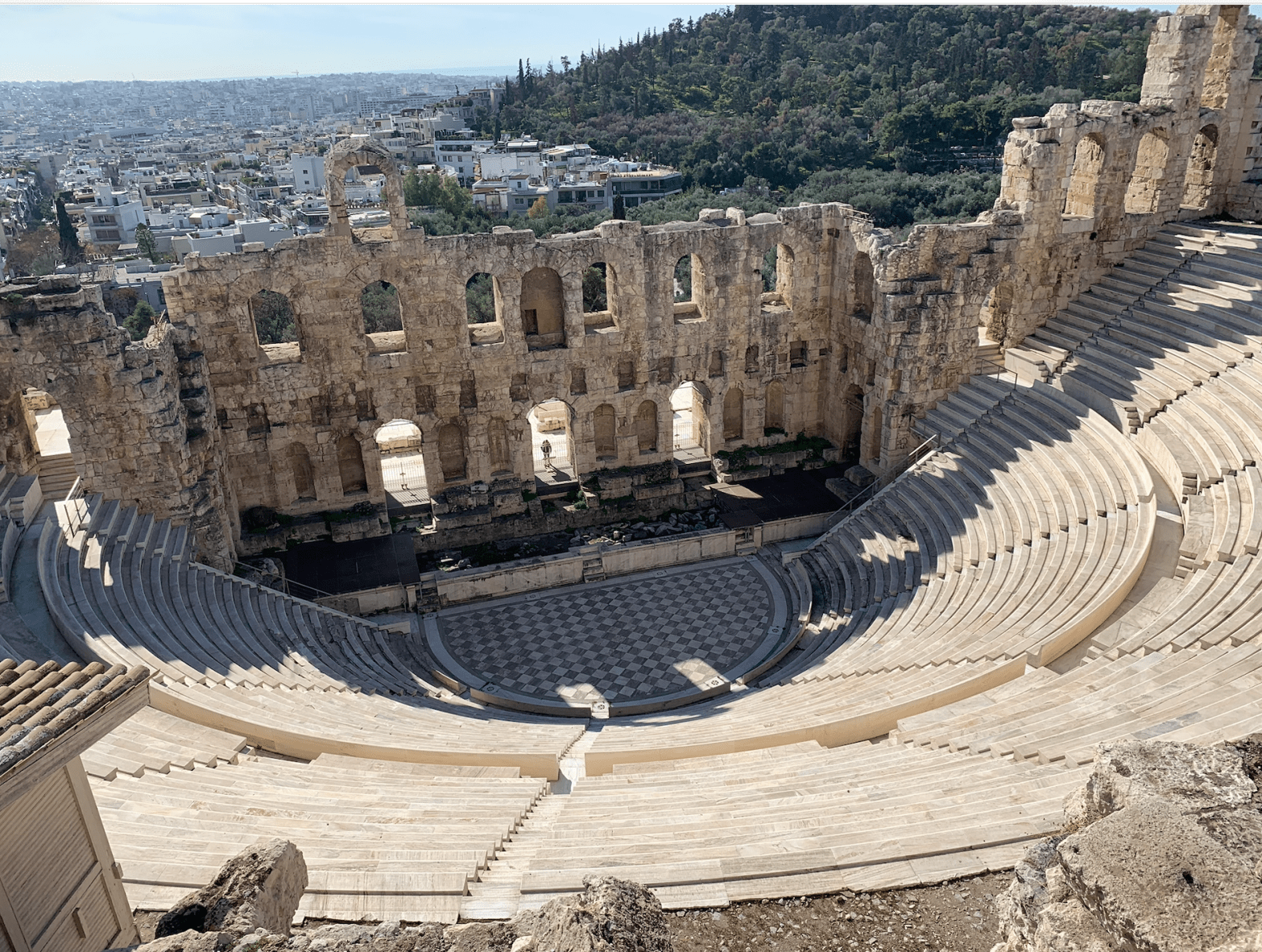
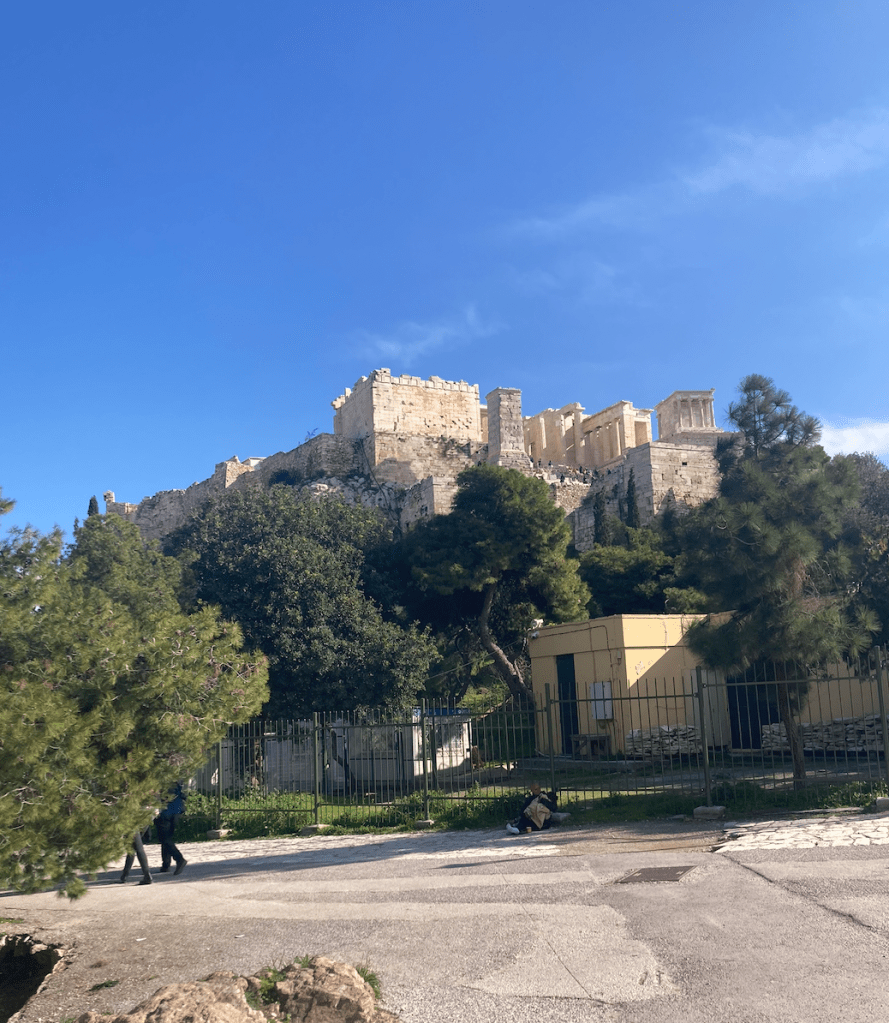
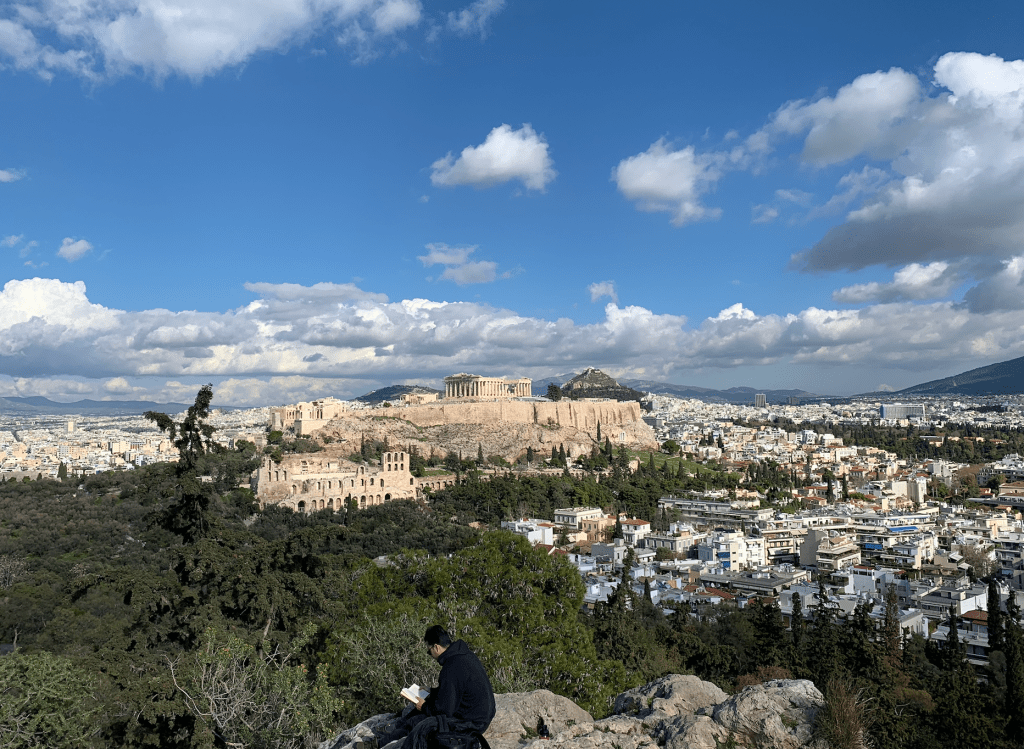
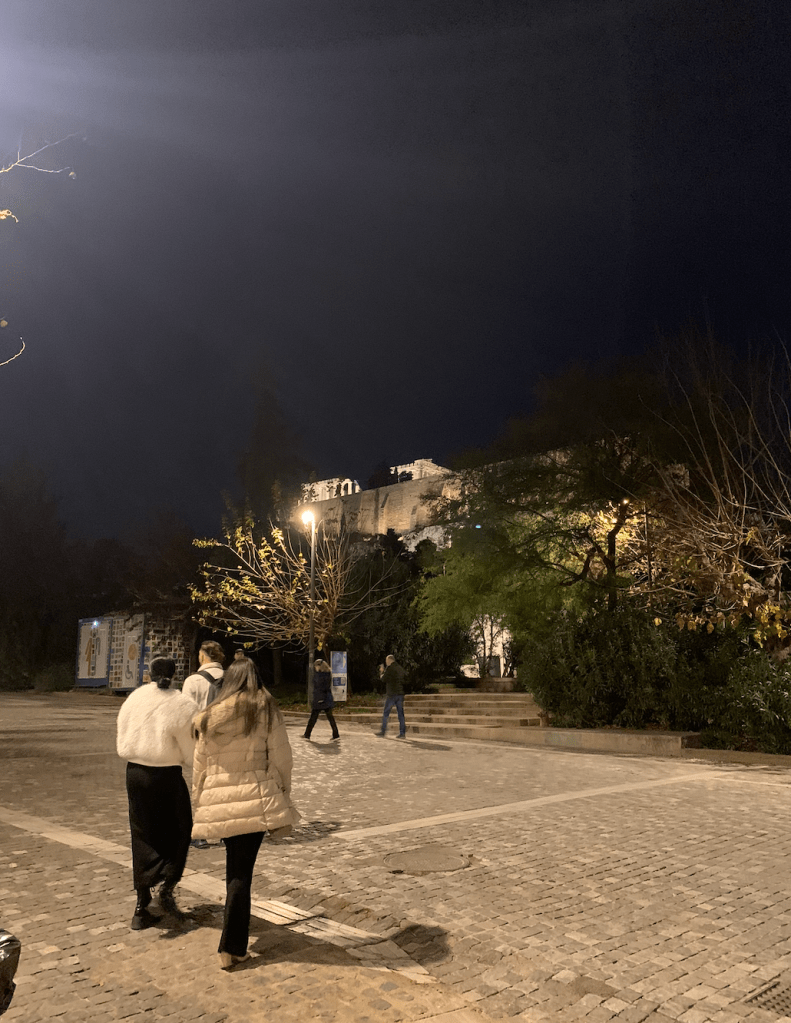
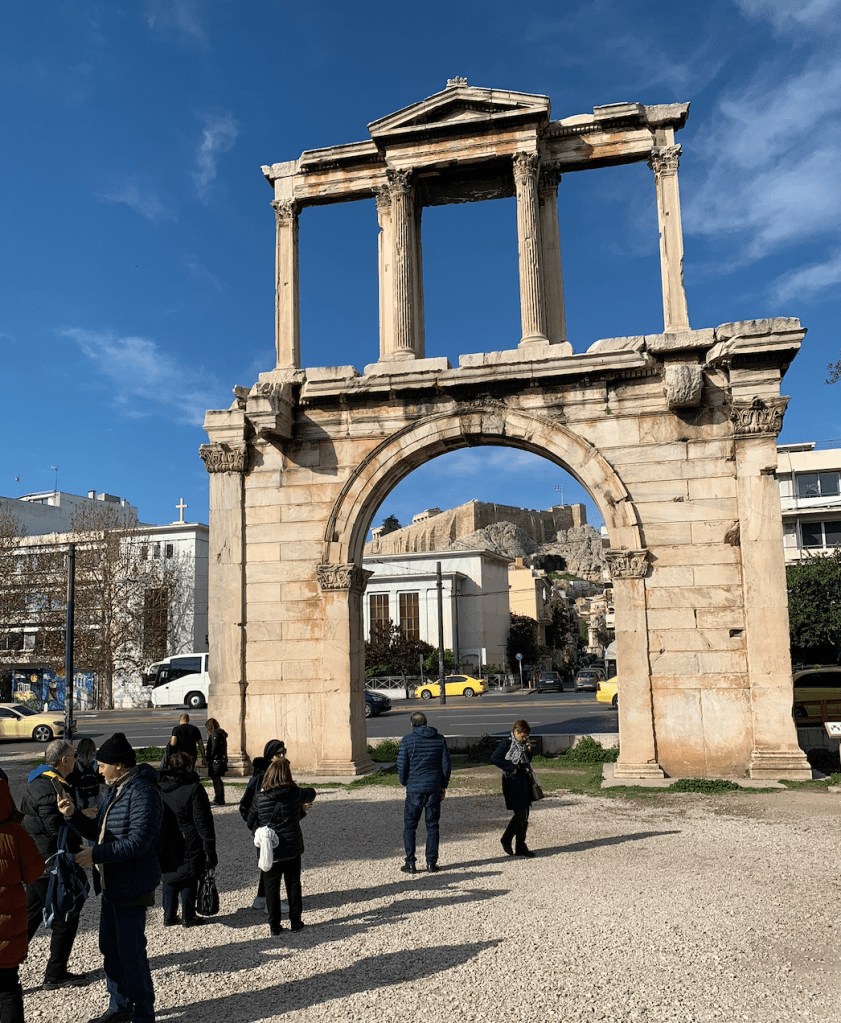
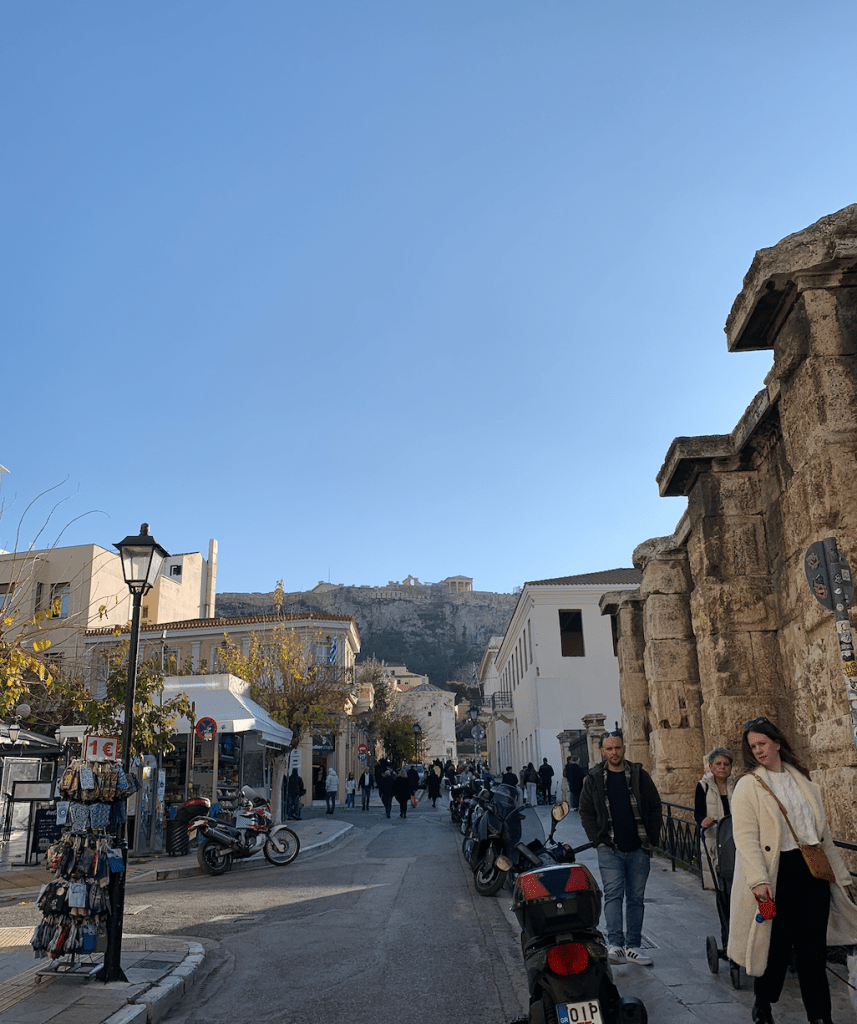
It was nice to have a landmark to guide us in a new city.  The Acropolis sitting atop the hill in the middle of Athens served as such.  Walking around town, it directed us back to our apartment in the Makriyanni neighborhood.  We knew to approach it from a certain side, swing around until it was behind us to find our street. 

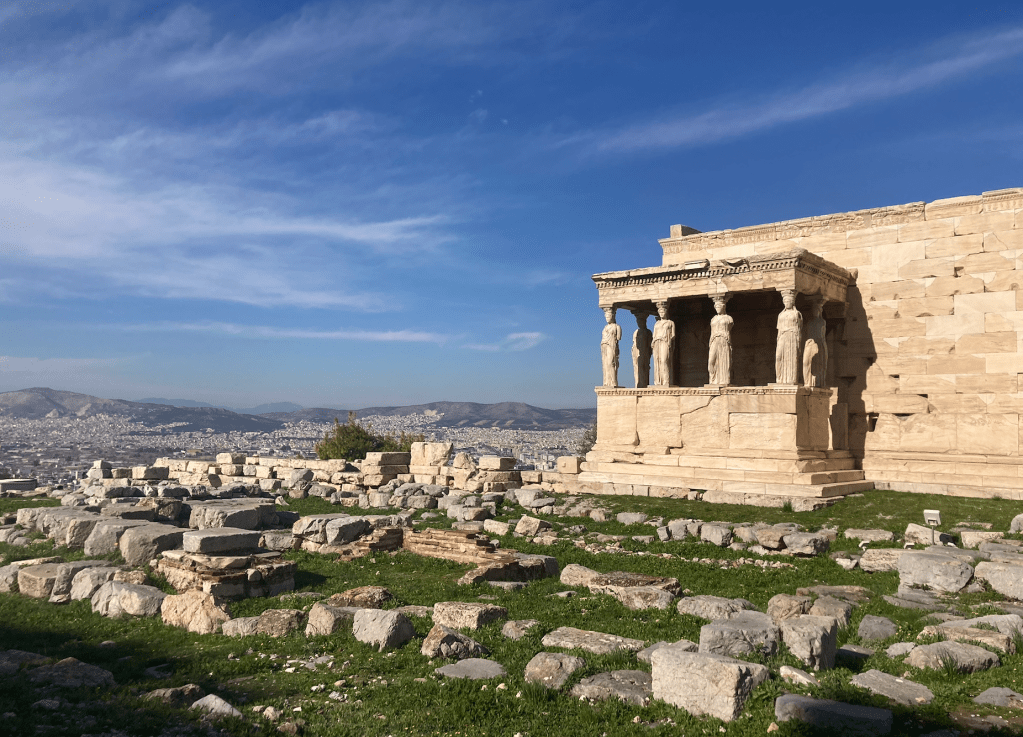
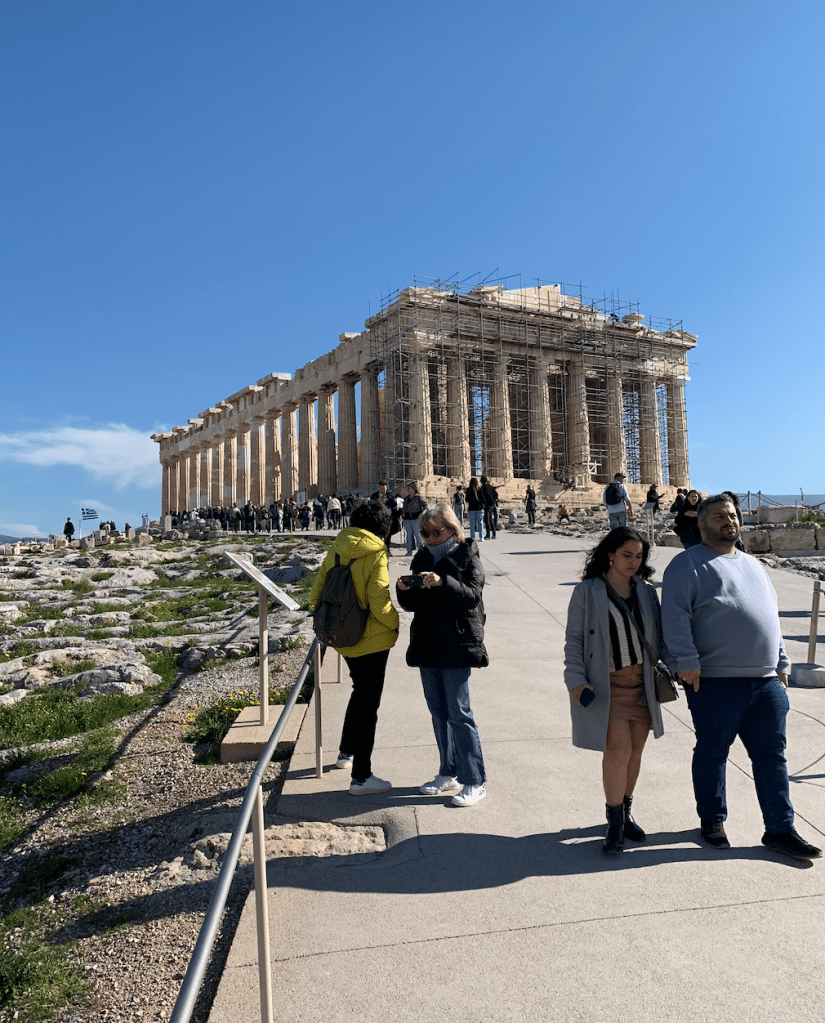
Seeing it daily made us think of the ancient Greeks who looked up to it daily, as well.  What was their life like, always looking up to where the gods were honored?  For Los Angelenos, similar to the Hollywood Sign. Building of the Acropolis began in 415 BCE, but with each subsequent owner (Mycenaeans, various Greeks, Romans, Byzantines and Ottomans) and earthquakes it was remodeled. Just like a LA.

The first day we walked up to  the Acropolis;  no reservation needed, half price tickets because it was January (2025).

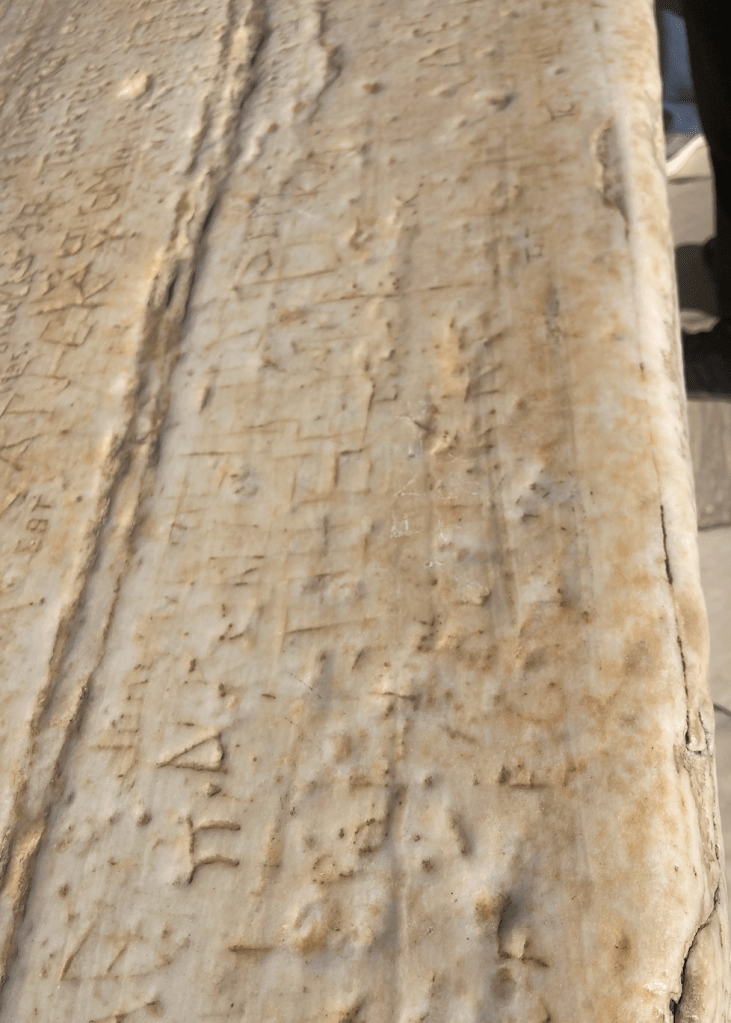
Of course it was awe inspiring, but maybe more thought provoking was seeing graffiti spanning thousands of years or hearing people speaking languages from all over the world, common curiosity. 

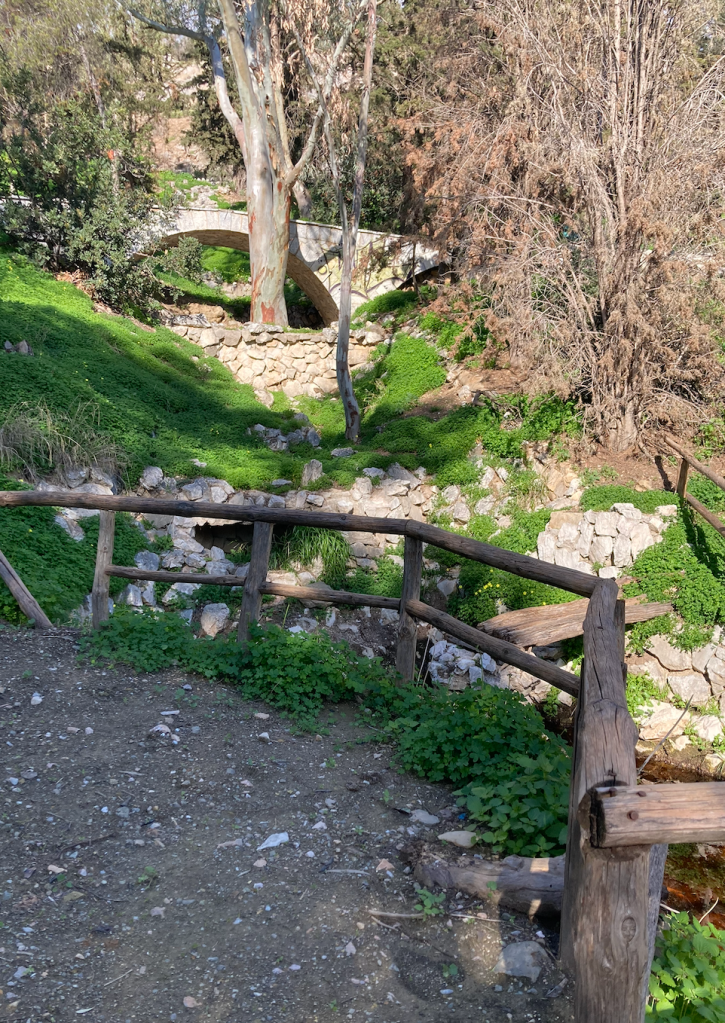
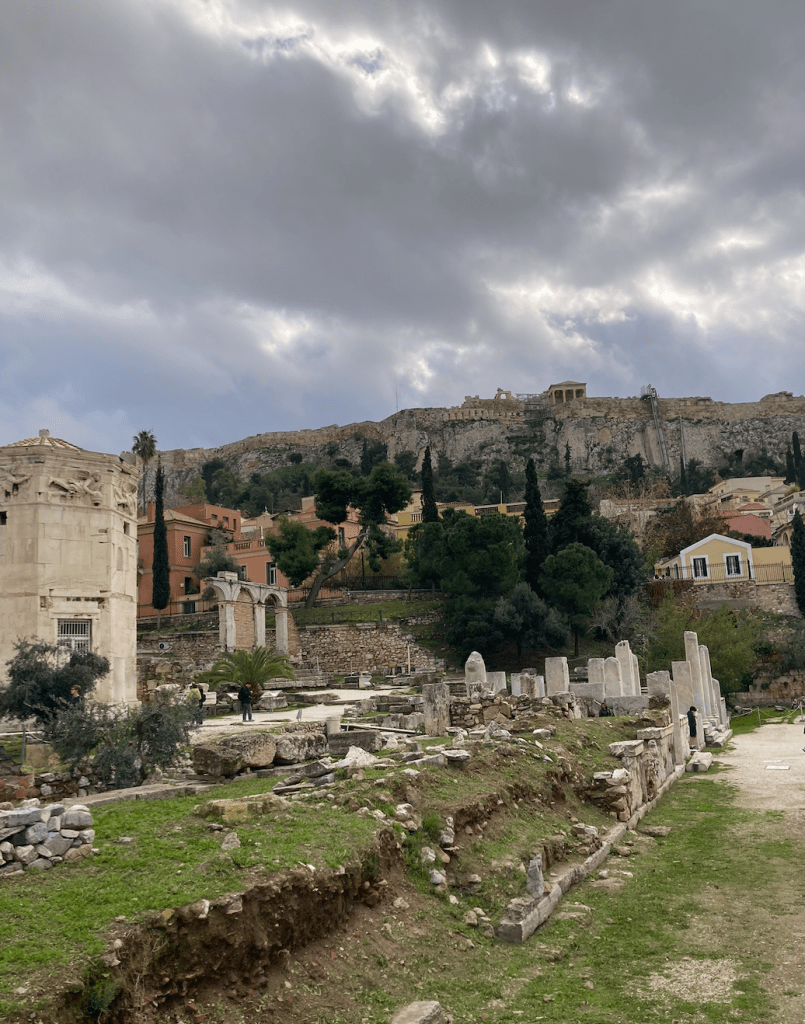
While it was magnificent, in some ways more striking were the remnants of the village below on the flat lands and the archeological sites that popped up through the city. On the hill below the Acropolis, you could see outlines of houses and shops with the scattered ruins. 

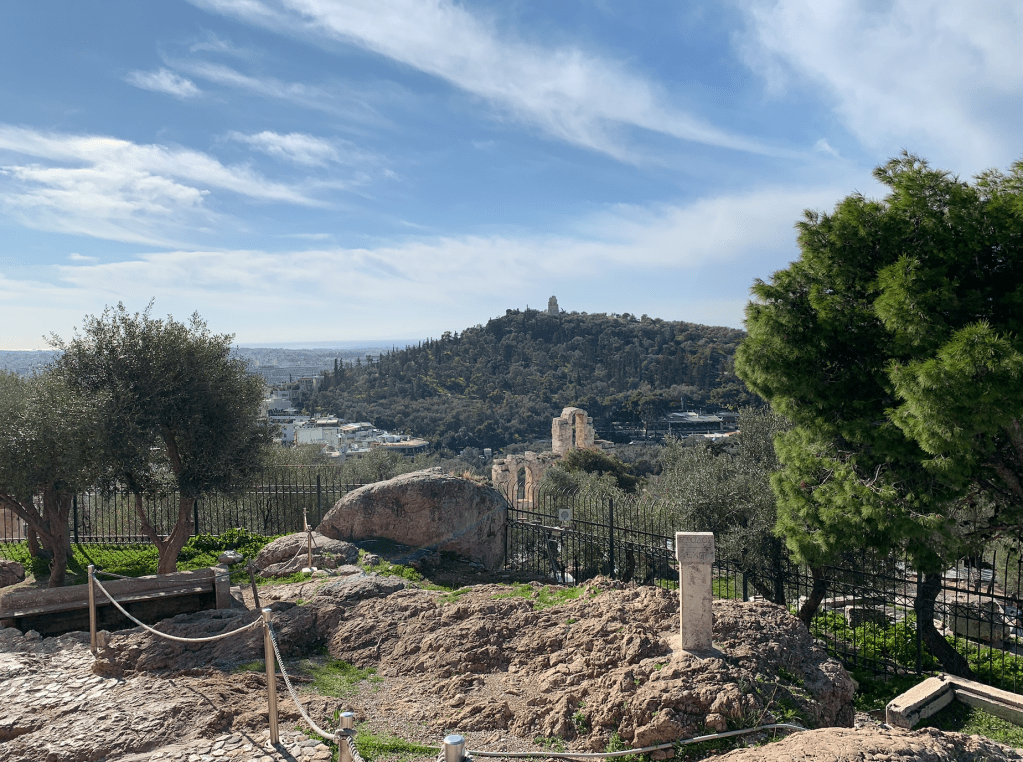
The winding dirt roads providing another sense of the ancient city planning around the Acropolis center. Throughout, striking juxtaposition of buildings, one communicating with the other from across the city. 

The Tomb on Filopappou Hill as seen from the Acropolis

But Athens is not just the old. it’s a nice mix of modern, ancient with a lot of in between, but mostly the 1960’s.  A  new building  adjacent to an archeological excavation adjacent to midcentury apartment blocks adjacent to a mini-mart in a 1920’s storefront.

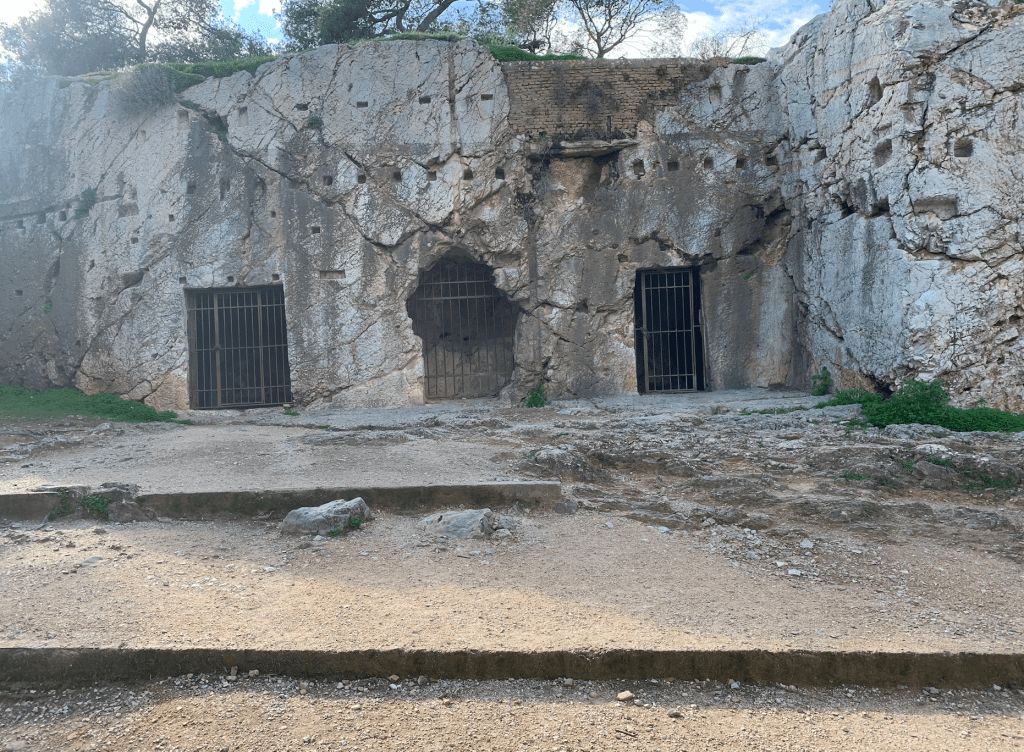
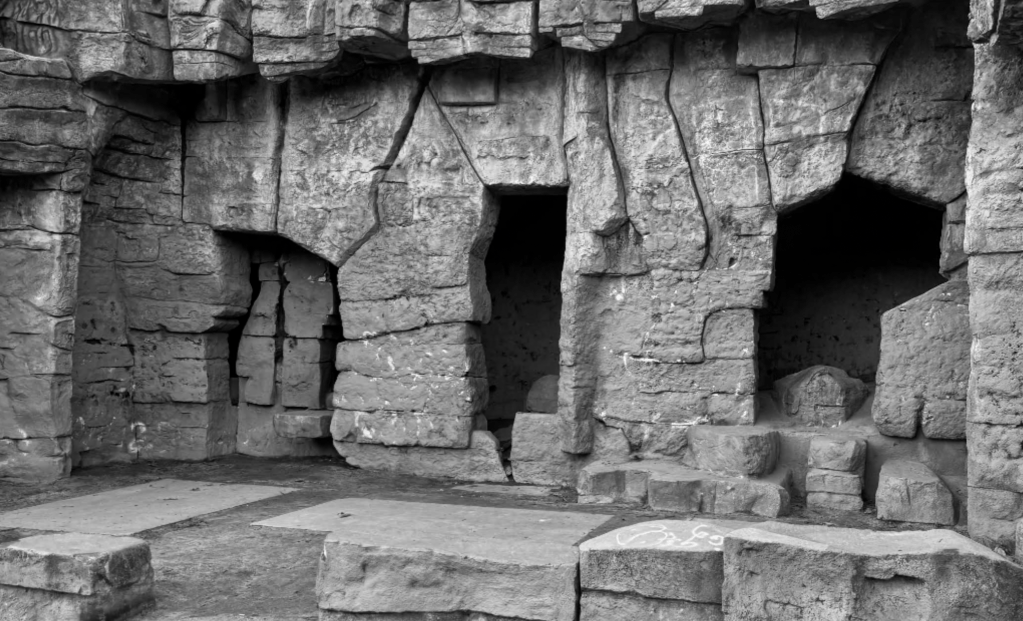
Socrates’s prison eerily like the old Los Angeles Zoo in Griffith Park

Like all of Europe, wandering through the streets and museums of Athens was like seeing snapshots from a rotation of civilizations and governments.

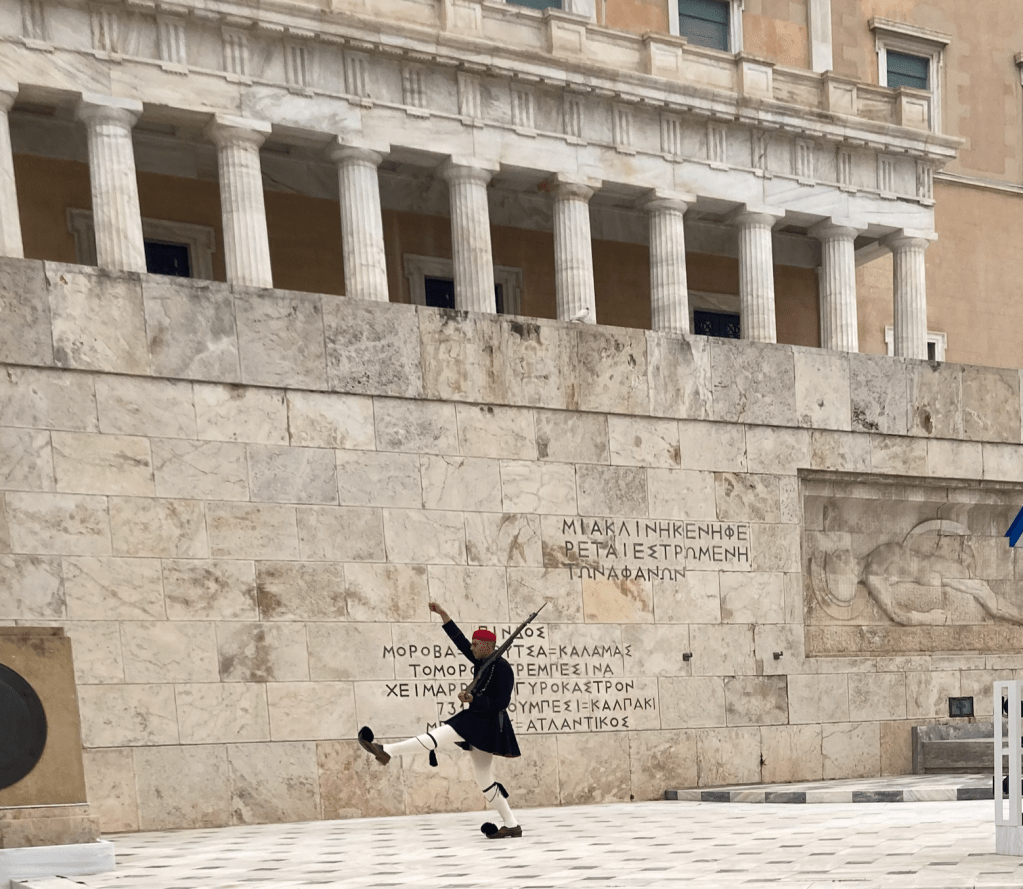
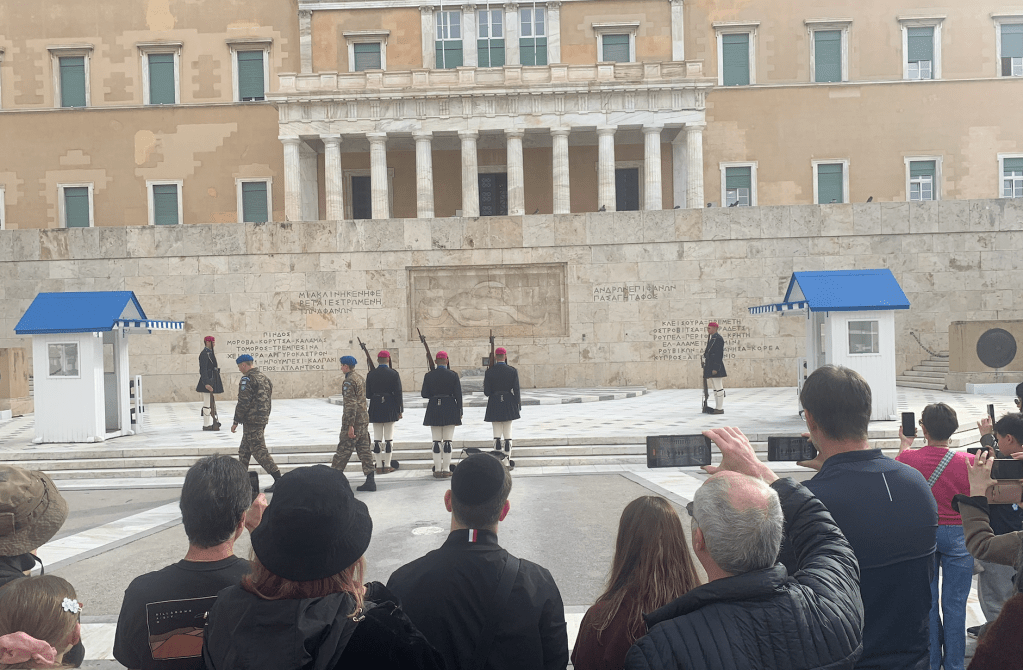
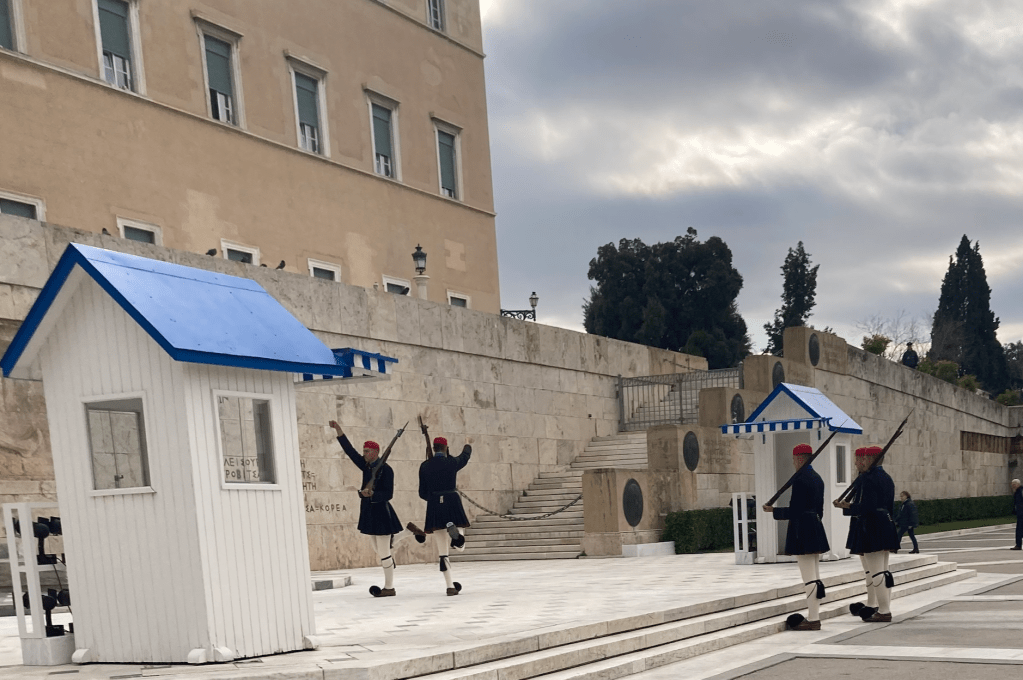
The changing of the guards(evzones) at the tomb of the unknown soldier on the hour was surprisingly fun to watch https://en.wikipedia.org/wiki/Presidential_Guard_(Greece), watch here https://www.youtube.com/watch?v=AsSx47j6gmU

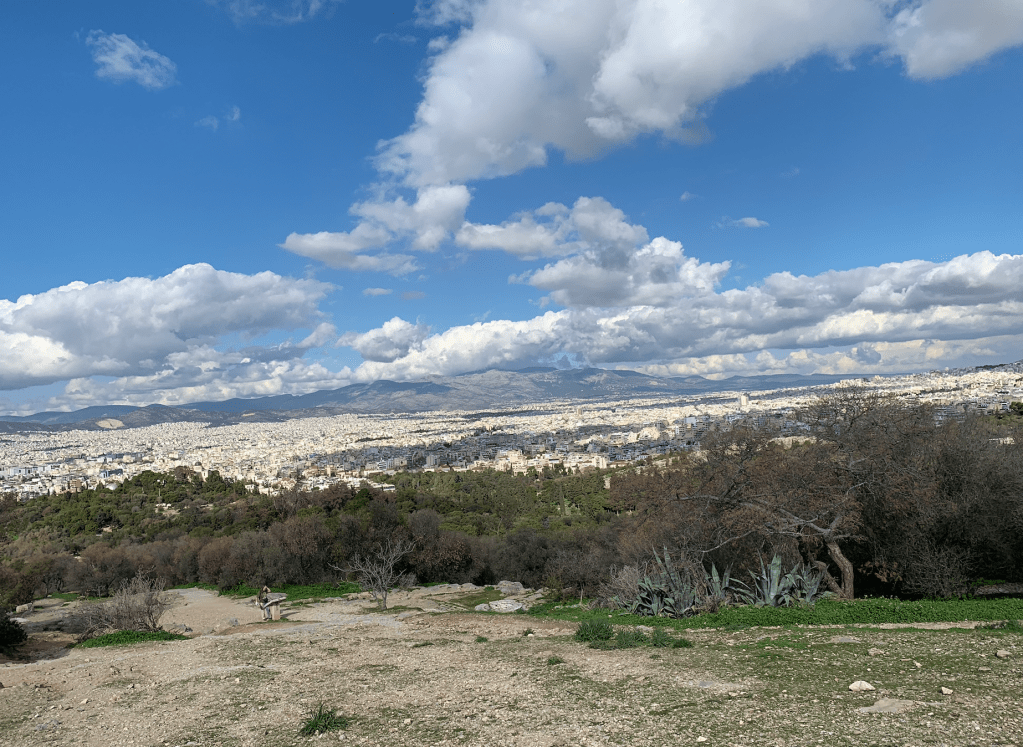
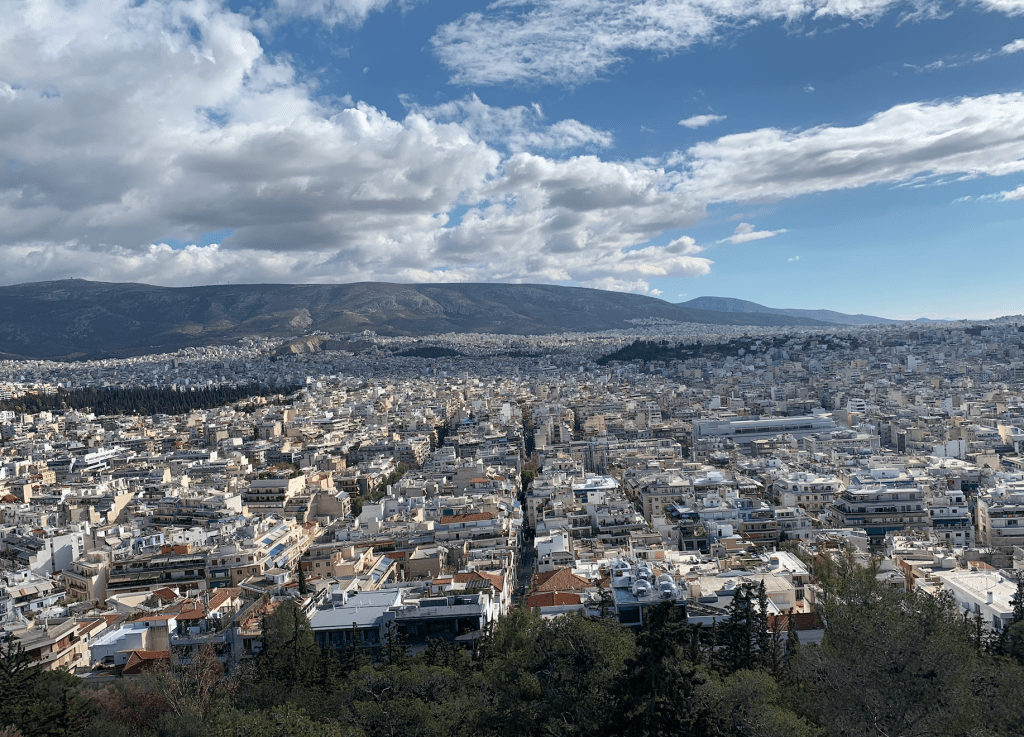
Consistent with most mediterranean cities,  Citrus trees (and cats) lined the streets.  Despite our continued enthusiasm for city fruit trees,  we’ve learned from experience in Cyprus, Croatia and Spain, not to pick because of course we have.  They’re terrible.  But not wasted, they are used to make marmalade, but more commonly for compost. The plants though were kinda of as beautiful as the buildings- the citrus trees, cypress, bougainvillea, lone pine, oak, the ubiquitous olive, and even the random jacaranda tempering the massive, massive, massive city metropolis sprawl from the the sea and up along the surrounding low lying hills. Again, kinda like LA. 

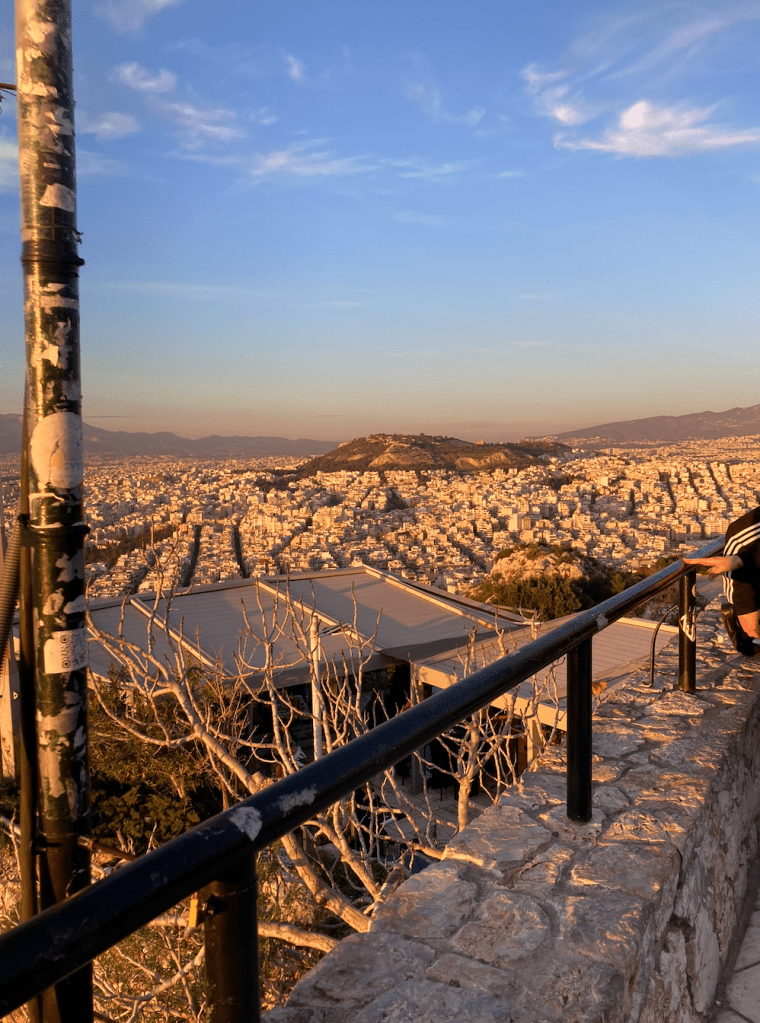
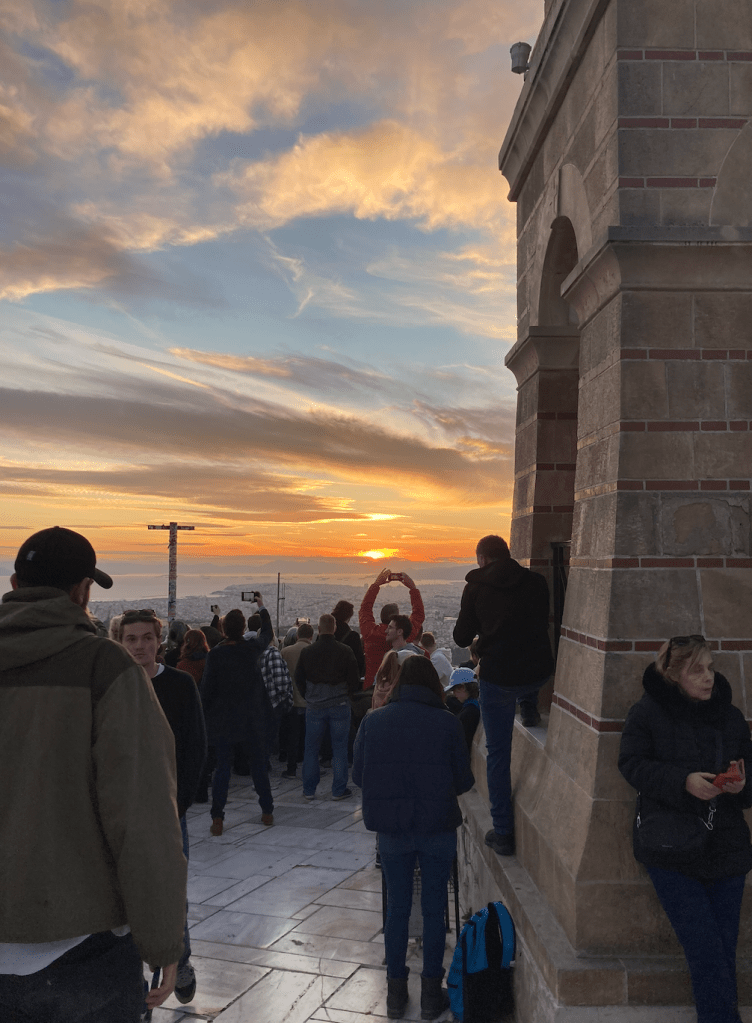
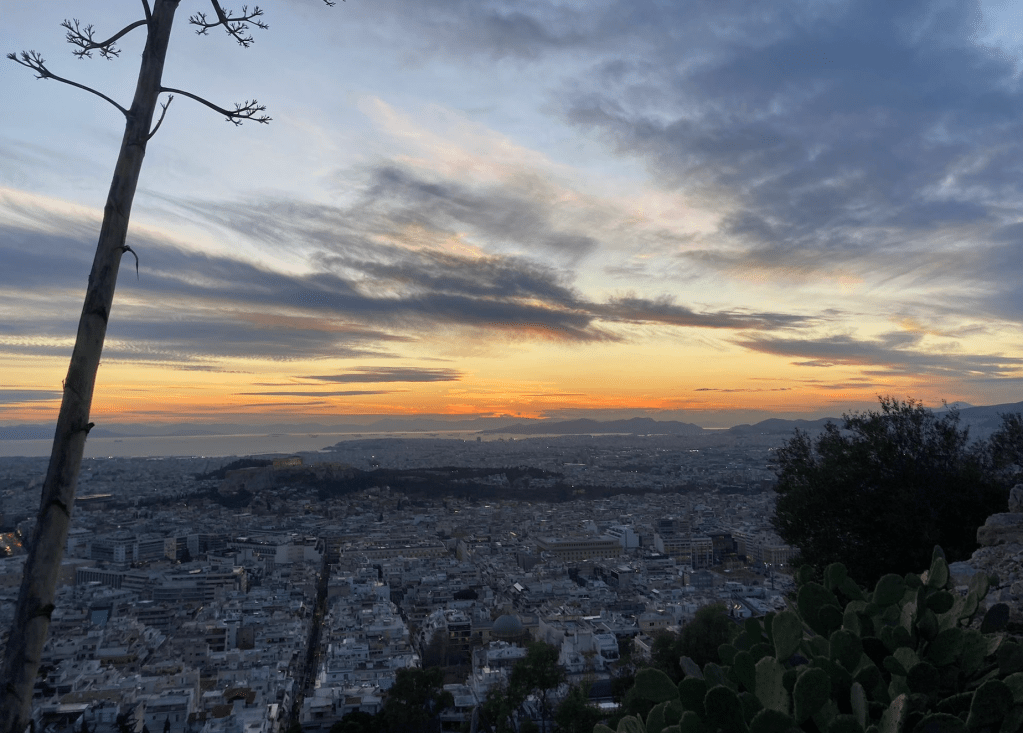
We joined the crowds to watch the sunset on one of Athen’s 7 hills and then time to leave the next day.

We walked to the bus station at the edge of town to head to the Peloponnese, of course not taking the tram, but walking the couple plus kilometers to the bus station. Walking along the outskirts, away from the original town centers you get a more complete view of what life is like now.  Those off-the-beaten track, hidden gems everyone wants to find. We do enjoy the meandering, especially when there are good sidewalks.

Two thumbs up, Athens.

Leave a Reply

Meteora is a hit

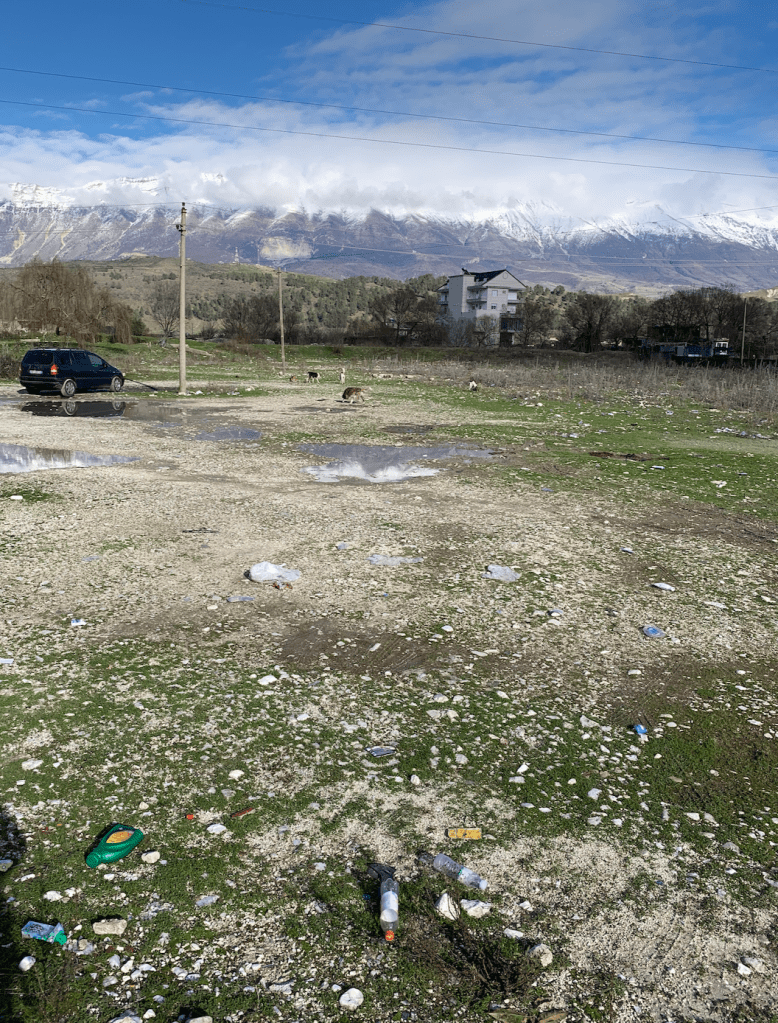
A scenic bus ride out of Albania; snowy and mountainous, entertained at the Greek border bus stop with stray dogs and puppies (nice watching the border patrol guys get bags of dog food from their cars and feed the dogs).

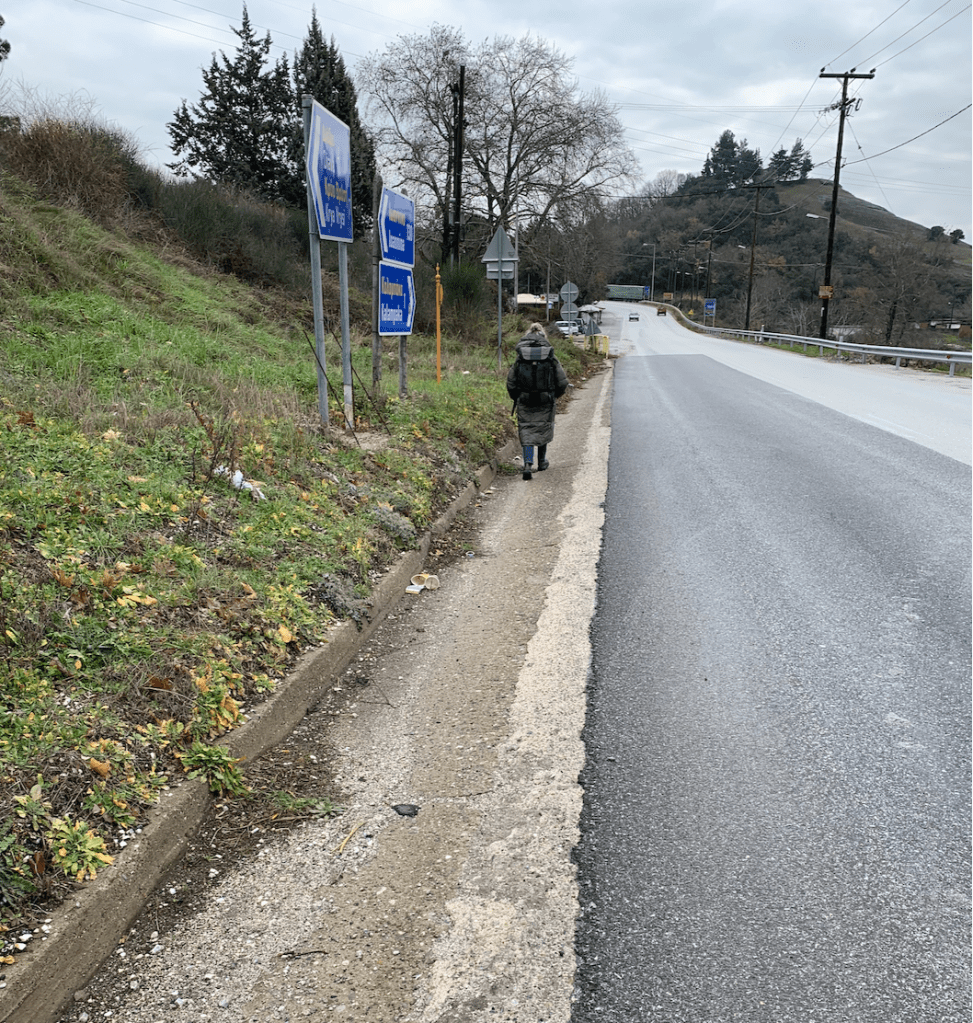
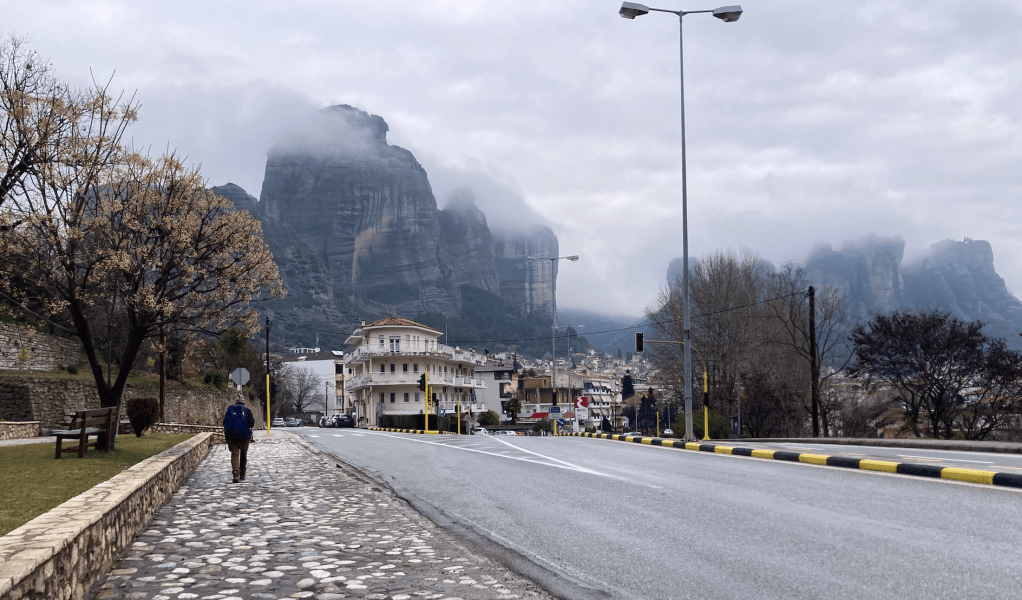
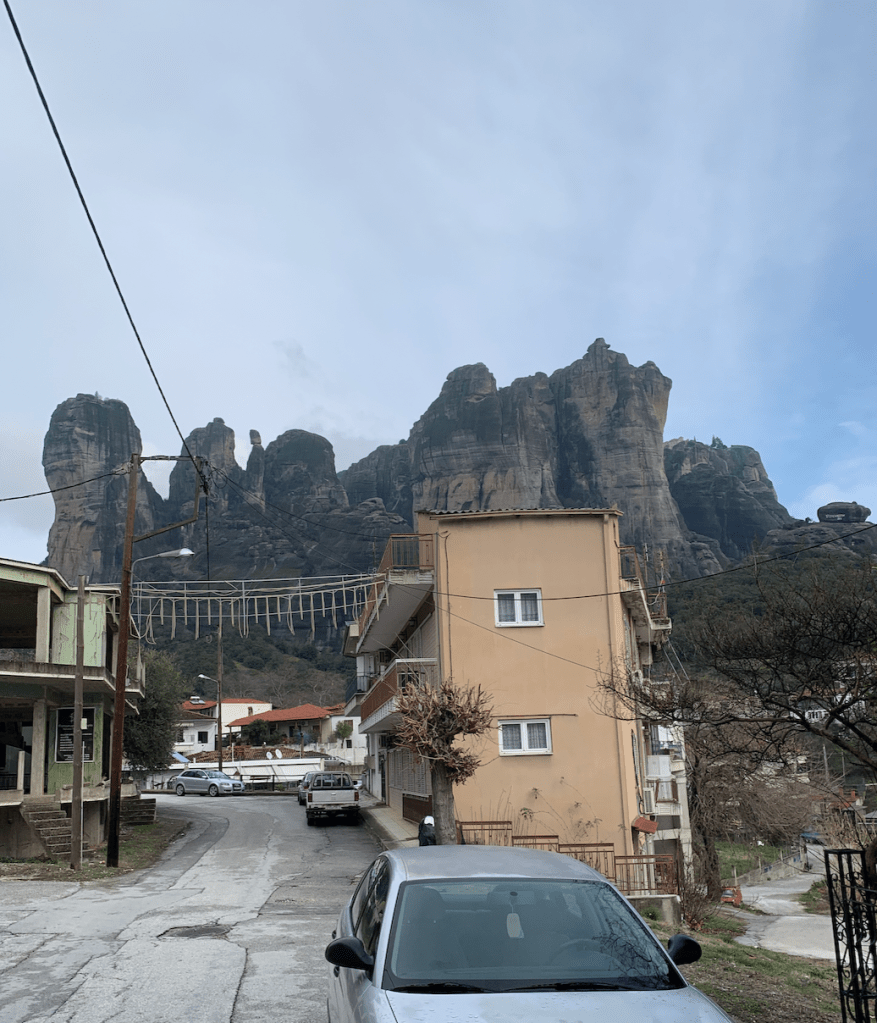
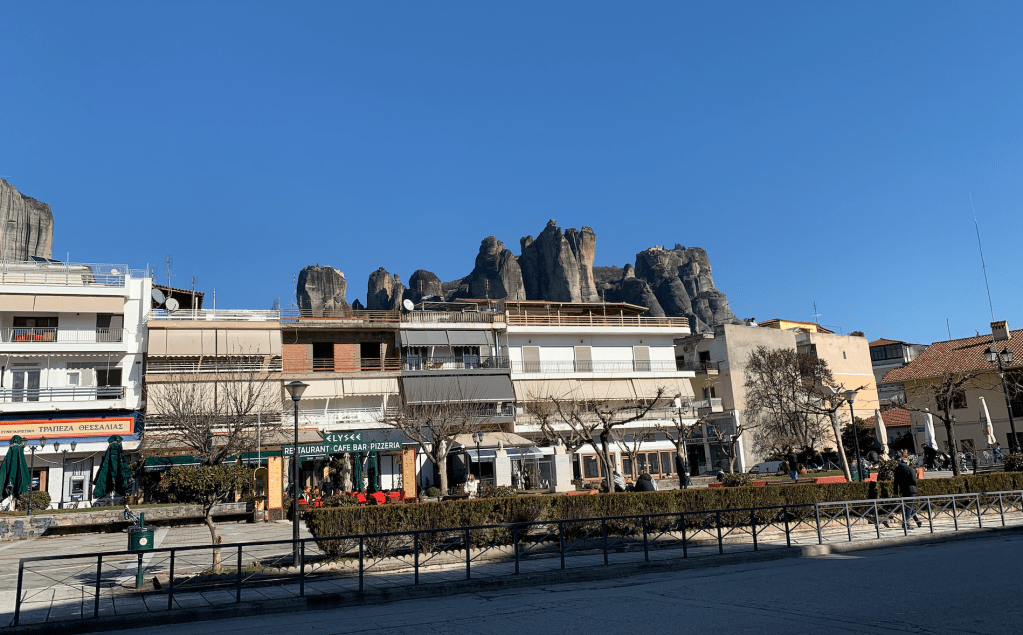
Dropped off in the parking lot of a cafe on the edge of town, which made a lot of sense since although we were now in Greece, the bus originated in Albania (see last post). We walked towards our lodging in the town of Kalabaka. A typical walk for us along an unsafe road with Patricia complaining about the road being unsafe as we hugged the edges when cars and trucks passed. And then this appeared in front of us.

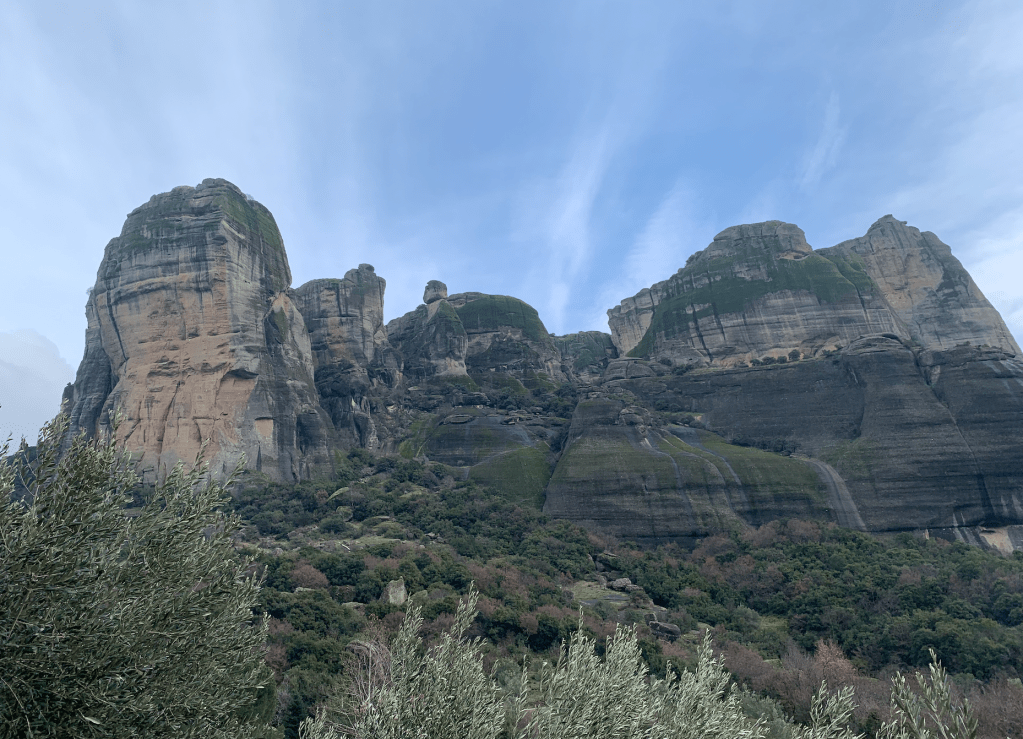
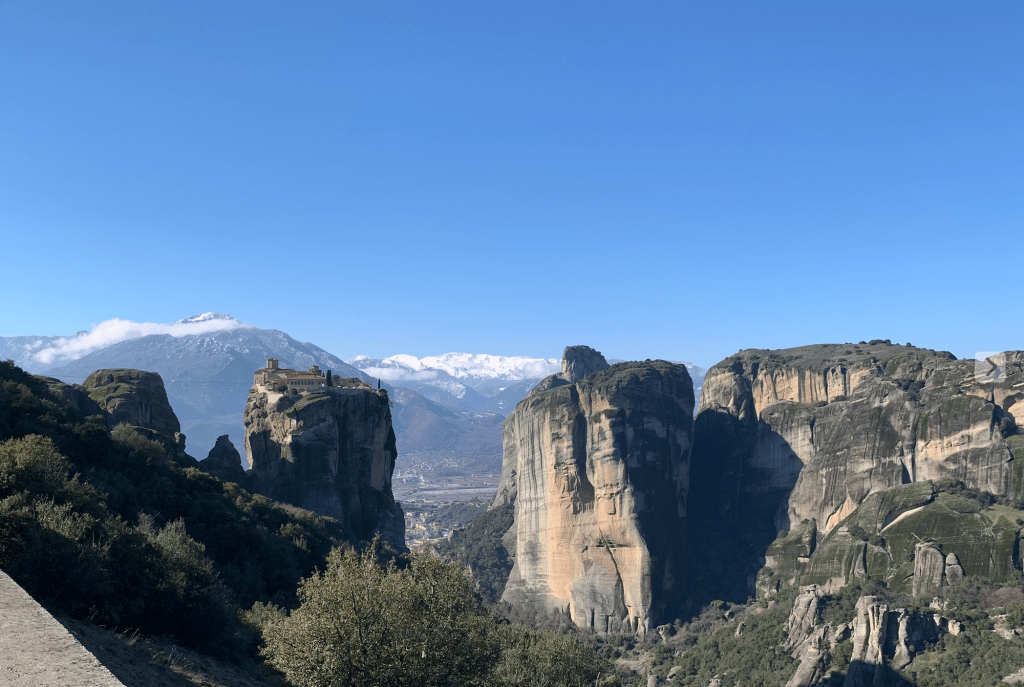
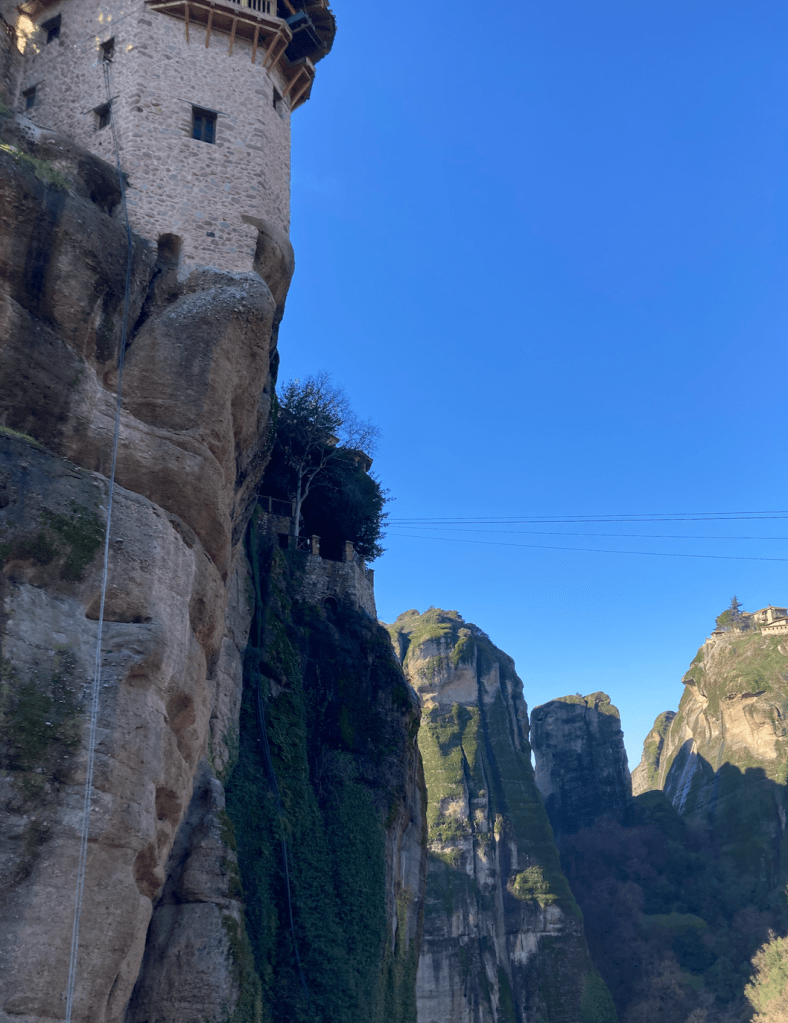
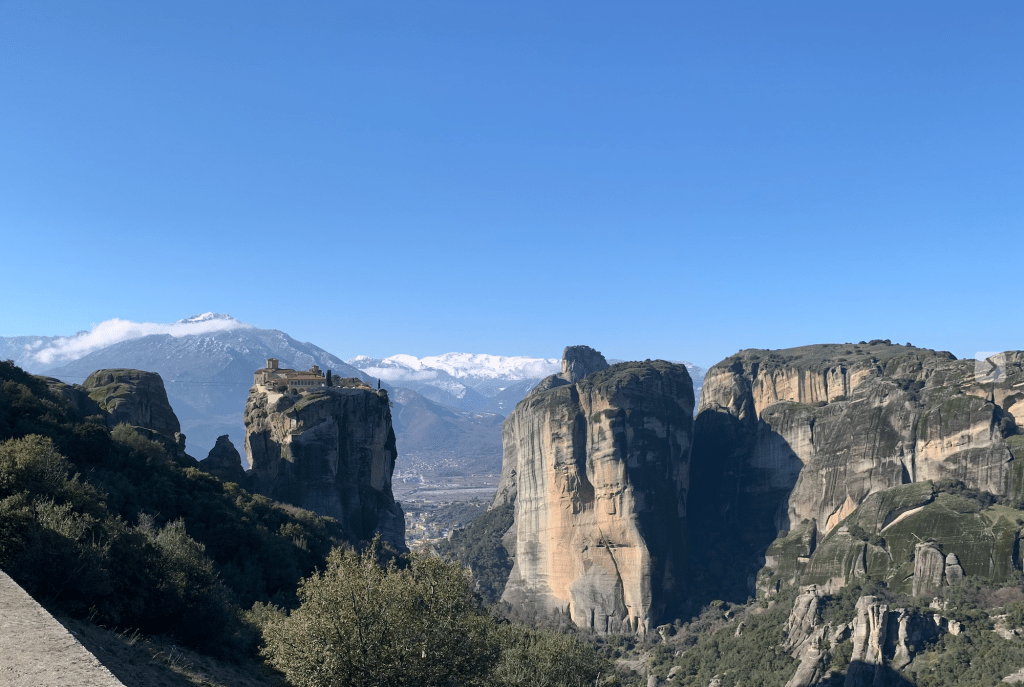
Pictures do not come close to showing how massive these are. A series of enormous pillars shooting out of the ground creating a compact forest of rock, like rainbow magic rocks from childhood. But these were not the only awe inspiring features.

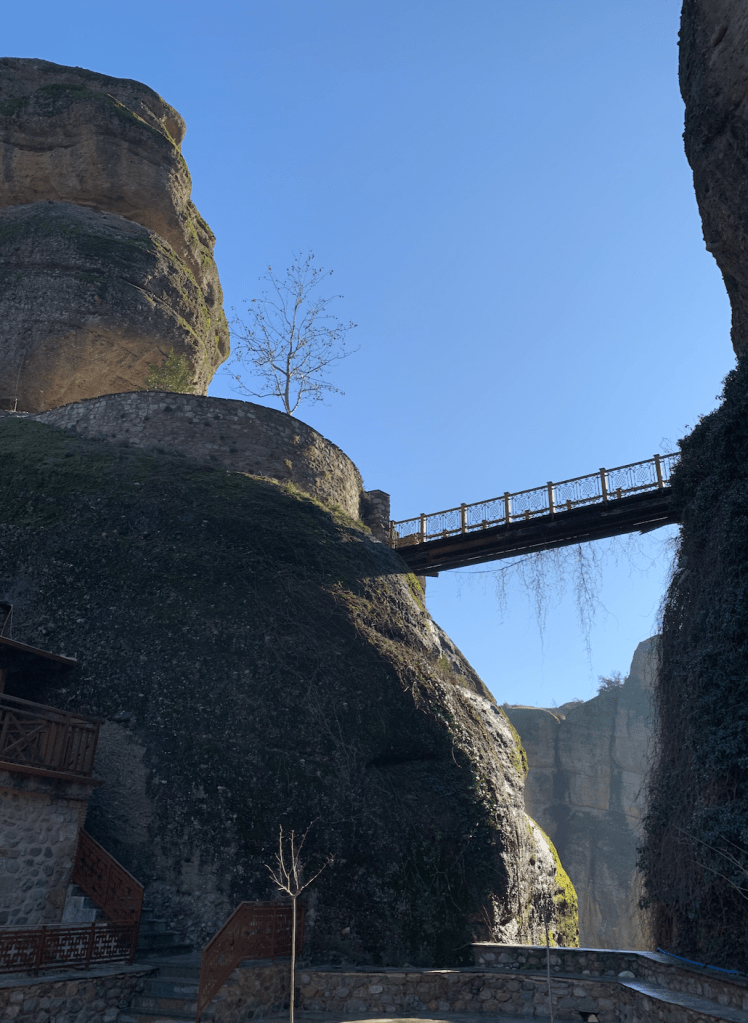
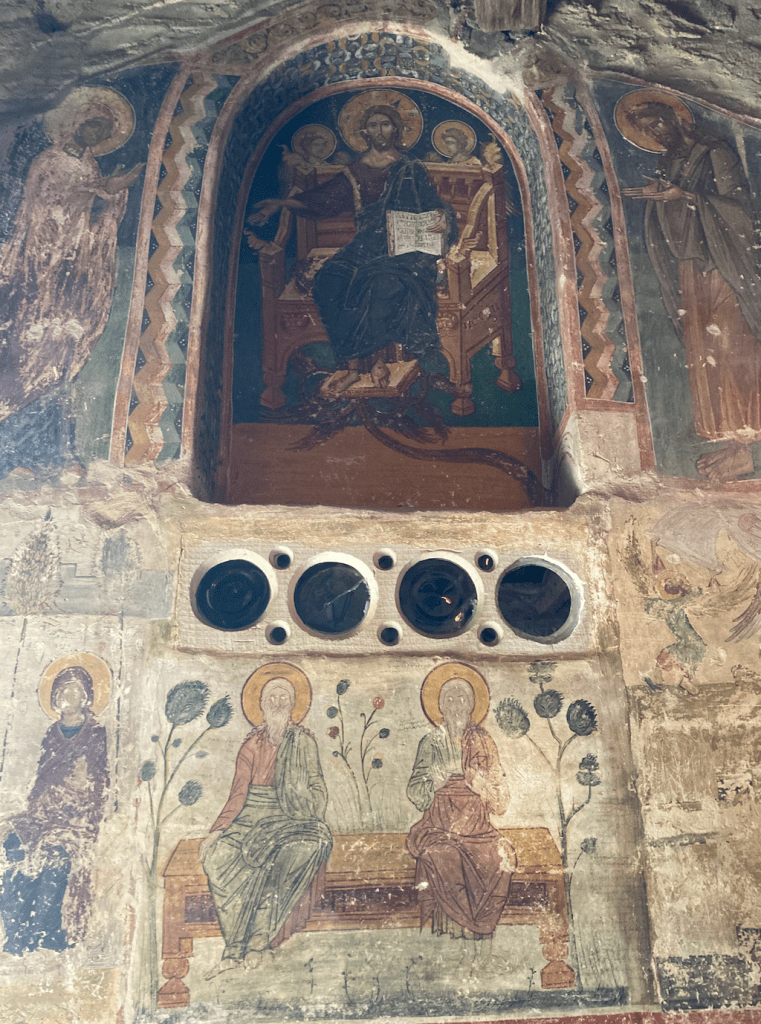
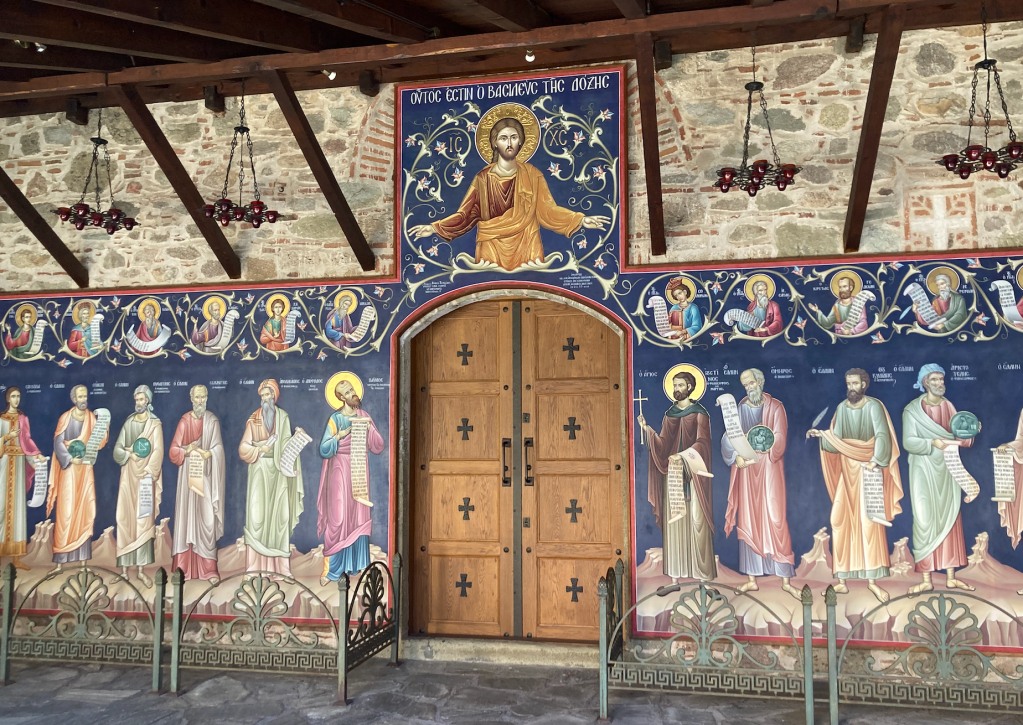
At the top of the columns were massive monasteries plus one convent, all built in the 1300s.

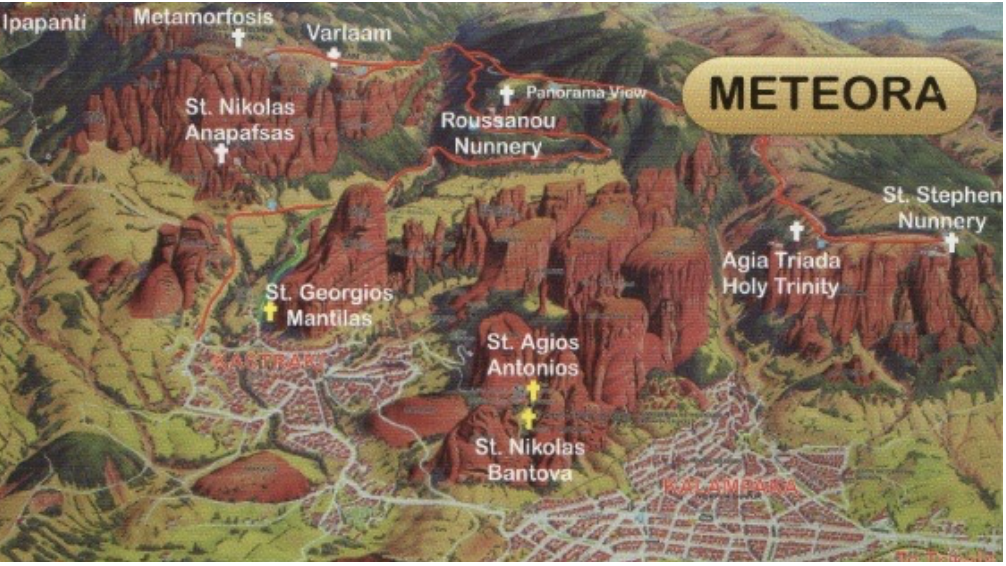
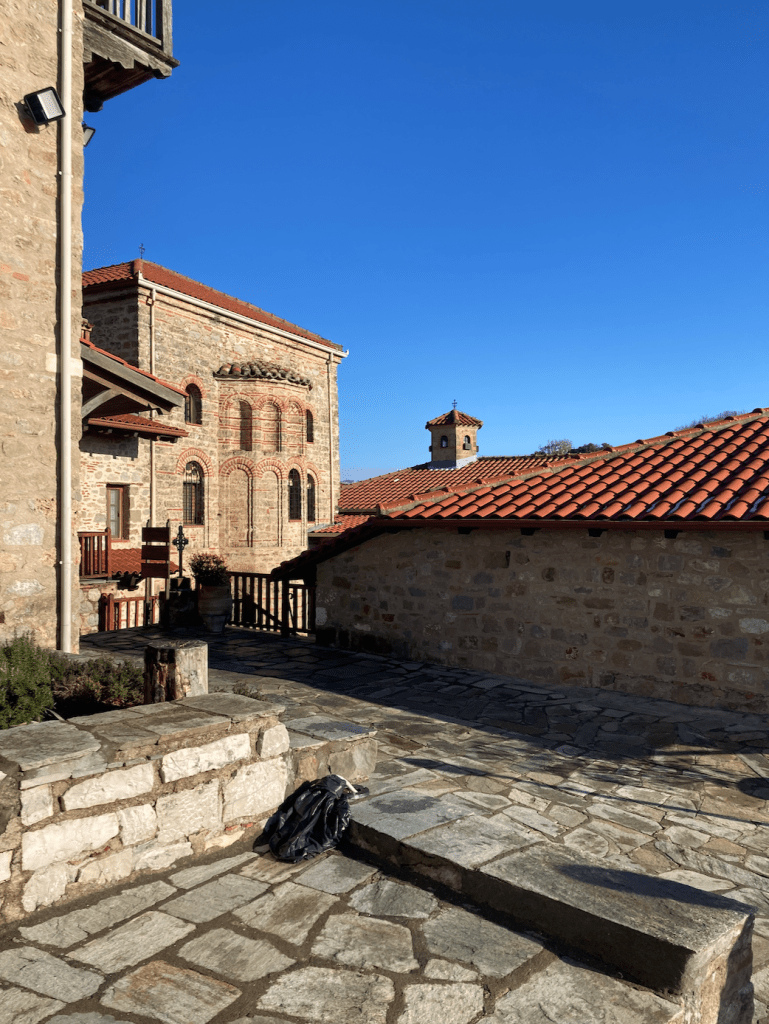
We took a bus up to the top to the first monastery, Agios Stefanos, then walked to Roussanou, Varlaam, Great Meteoron, Agios Nikolaos, and Holy Trinity.

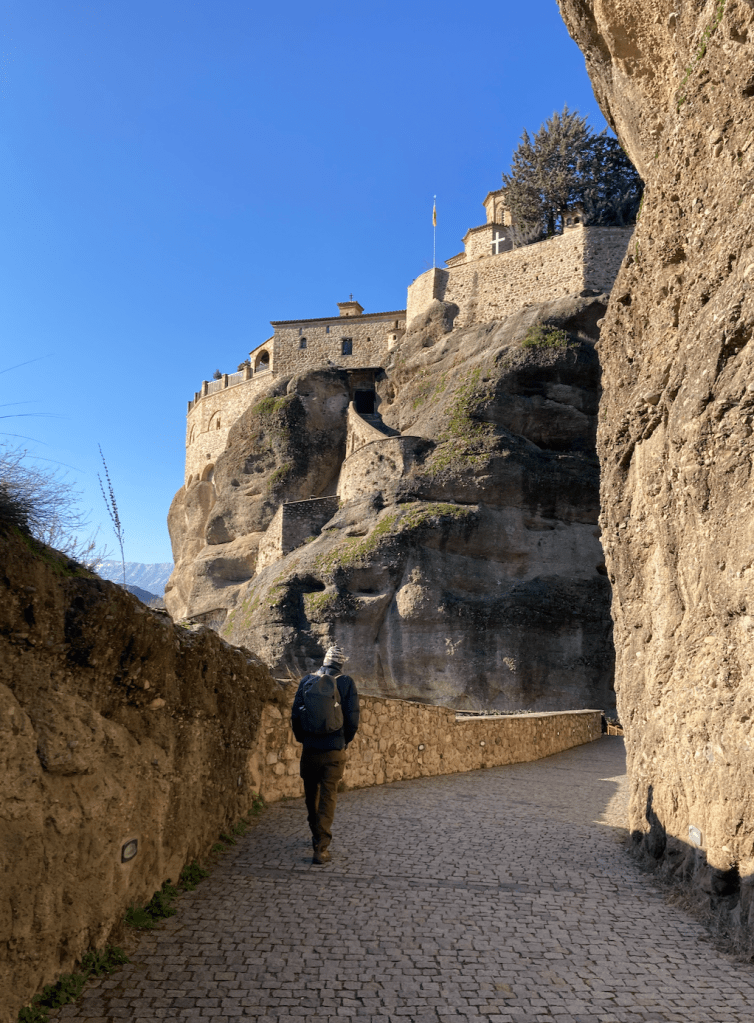
We walked, of course, on a somewhat narrow road, which would have been a bad idea in the high season.

Stopping frequently to pause and stare.

The town of Kastraki at the base of the Meteora

Again, another example of people the finding highest point(s) in an area, and then the insane addition of a seemingly impossible to build religious structure (or sometimes defense structures). Gods and Wars, describes almost all of history.

So many buildings, in so many places, massive edifices, exceptional efforts. Tsarevets in Veliko Tarnova, Bulgaria. Mont St Michel in France, Santuario Madonna di San Luca in Bologna, the Alhambra in Granada, Spain……. Just crazy in terms of devotion, labor, and engineering ingenuity.

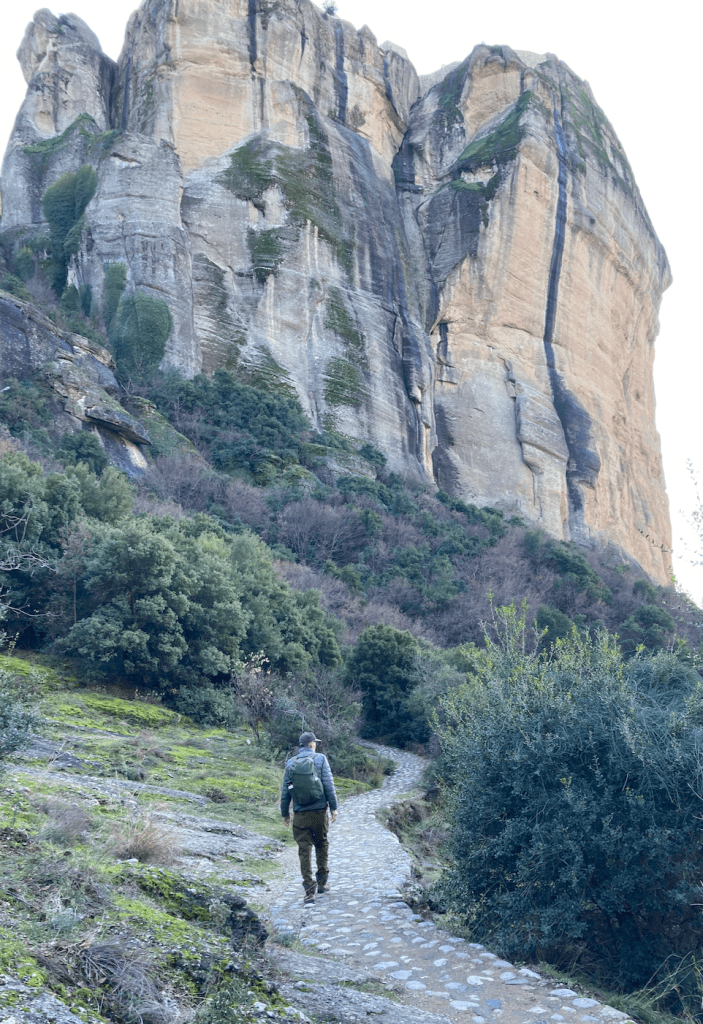
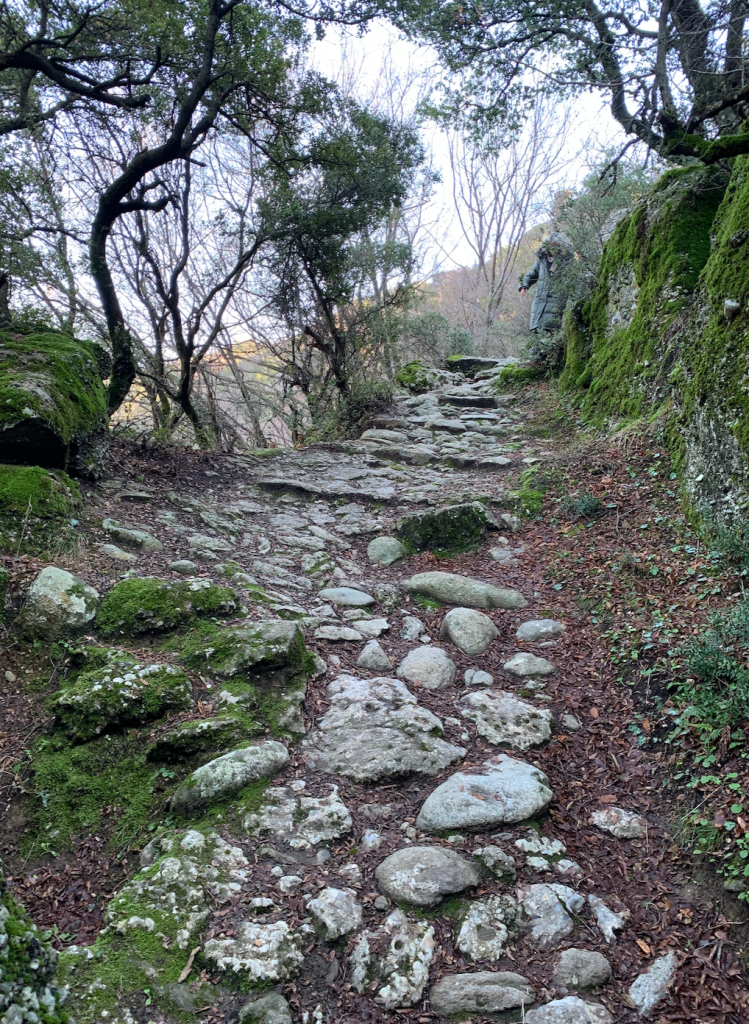
In awe, we then returned back to town, following a path down through the Meteora.

Return to Kalabaka.

Albania Mania #2

There’s a degree of inherent awkwardness to foreign travel, and we took it up a notch in Albania.  Simple conversations, grocery shopping, figuring out other countries appliances.  Anything can turn strange, and everything turned strange in Albania. That’s a part of the experience we really enjoy.

Since there are virtually no trains in Albania, our only option to get to our next stop, Greece, was by bus.   We truly enjoyed Tirana and were not ready to leave Albania. We had heard the coast of Albania was amazing, the beaches were being strongly promoted as the Albanian Riviera,  it was January, but why not go? 

We decided to work our way down towards the Greek border by first attempting the intercity bus from Tirana to the nearby coastal town of Durres. Sounded straightforward, as it was only 25 miles away. The Tourist Information Center agent gave us guidance and assurance that our plan to head south to Greece via the Albanian bus system was indeed sound and straightforward.  She also awkwardly mentioned that she had heard that the LA fires (it was January 2025, the LA fires were raging) were started deliberately by homeowners so they could build new nicer homes.  Conspiracy theories everywhere.  This should have been our first clue that we shouldn’t trust the Tourist Information Center.

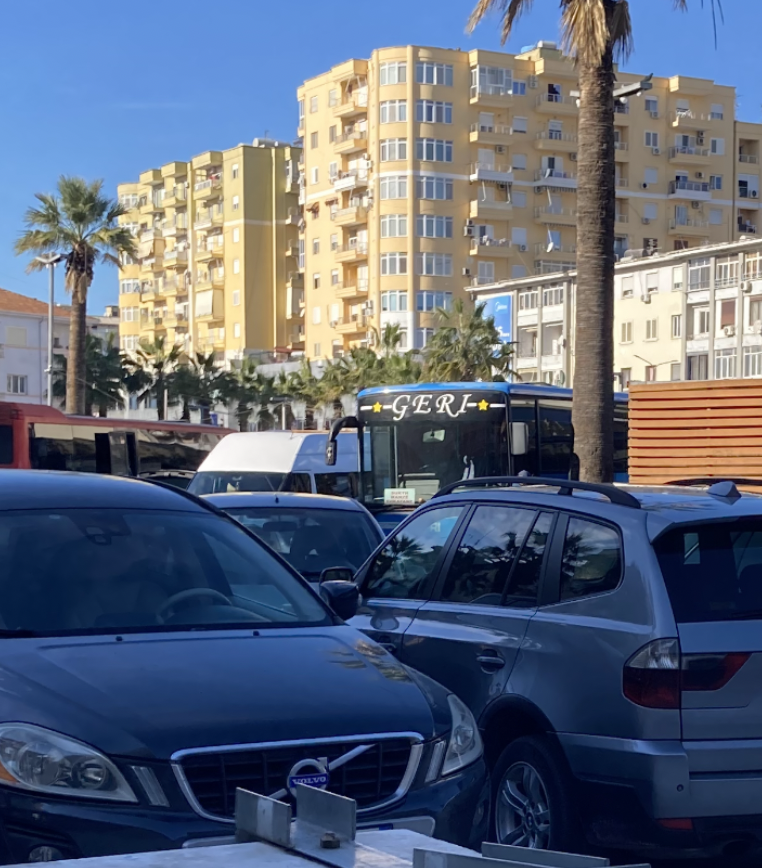
 So, we headed out to Durres.  We quickly learned that the bus system in Albania is arbitrary and we were clueless (but, we knew that).  They do not follow any listed schedule, not online or posted at a bus depot.  Actually, bus depots, were empty lots or a spot on the street, maybe identified by a food stand. We took a regular city bus to the edge of Tirana, fortunately, a local rider, an older woman with shopping bags told us where to get off – without us even needing to ask, she knew (otherwise we may have ended up in a bunker in the hills). It was a large lot with buses coming and going, white minibuses/vans, food stands, and multiple guys hustling around trying to convince us to let them take us the final 24 miles to Durres.  Everything had to be in cash (in Albanian Leks which convert to about 1/100th of a dollar, so 100 L equaled 1 US dollar).  We were able to bypass the hustlers find a bus, not the bus we were looking for, but still headed to Durres.  

Durres in Duress. 

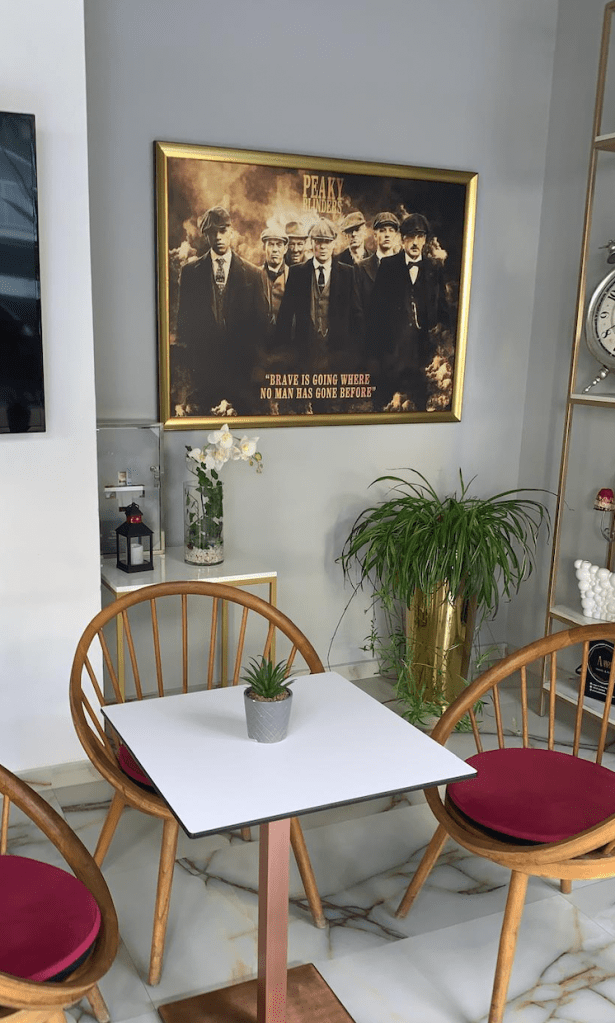
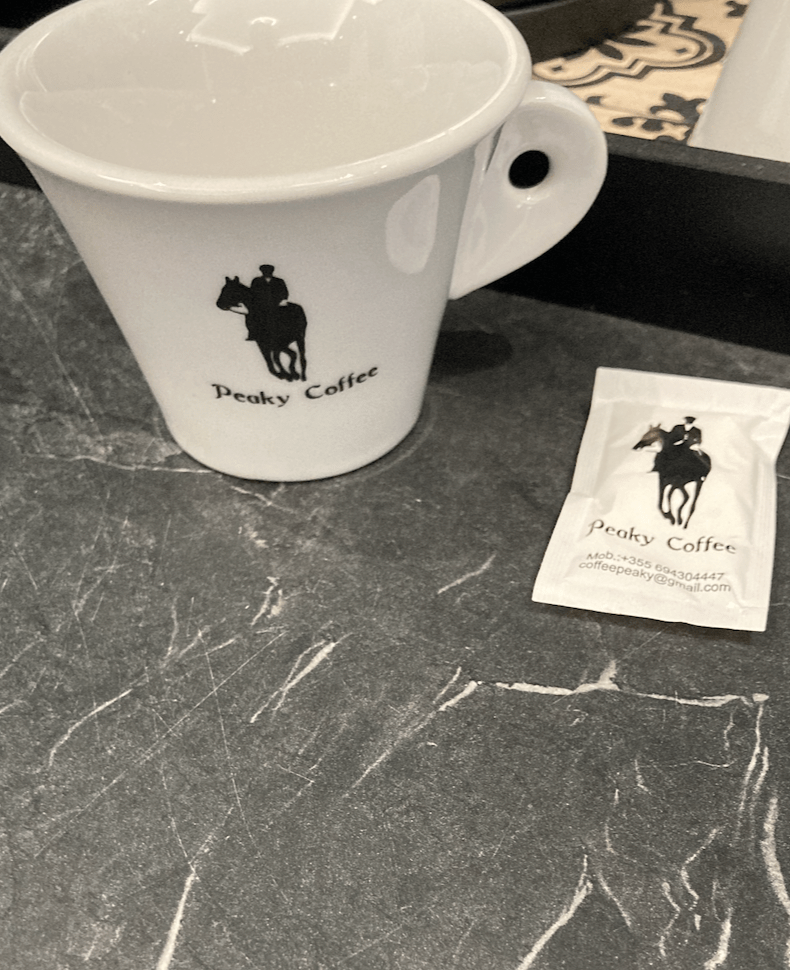
We were dropped off in a new busy lot with vans and buses and a new group of transport hustlers inviting us to get on their bus or van, we successfully ignored them, and walked through the city, along the beach boardwalk to our hotel- The Peaky Hotel. The best part of the Peaky Hotel (unknown to us until we entered the lobby) were the multiple references to the British TV show Peaky Blinders, apparently the hotel owner was a huge fan of the show. Admirable attention to theme.

Our rate included breakfast (fancy for us) and we finally got to taste homemade Albanian mountain tea (which every Albanian kept pushing on us), not bad. 

Another awkward Albanian moment occurred in the Peaky Hotel. First, we had to pay. We assumed in Leks and had gotten the exact amount ready, but it was Albania, so the receptionist preferred Euros, but didn’t want any Euro coins). Then Nick needed to count it out, again. A bit problematic since we needed the Euros for the transport to Greece and Albanian ATMS give Leks.   So, the receptionist took most of our Euros.  Use of credit cards, like trains are rare in Albania.

An hour later the power went out, so Nick went out to the hall to check, then a young man also came out into the hall from next door, except he was only wearing a towel. Apparently, he was in the shower when power went out. He spoke minimal English. Nick started to go to front desk via emergency stairs, and the hotel neighbor followed in his towel. We were on the second floor but, the door to the first floor was locked so the toweled guy started banging on the door. Finally, someone opened door, the receptionist Nick had just flashed all this cash while checking in.  Some Albanian irritation and shrugging between toweled neighbor and front desk woman while Nick innocently looked on.  Then, the lights went back on mid conversation. Towel guy started to leave back upstairs, Nick smiled at receptionist and she gave him a weird smile back.  Nick confused said thank you in Albanian and followed the towel guy back up the stairs.

Durres beaches seemed fine, nothing incredible, but it was hard to judge due to the extensive construction of new hotels/resorts that was going on along most of the beach front. 

No, that is not a fisherman, it is a sculpture of a fisherman. A lot of public art in this plaza.

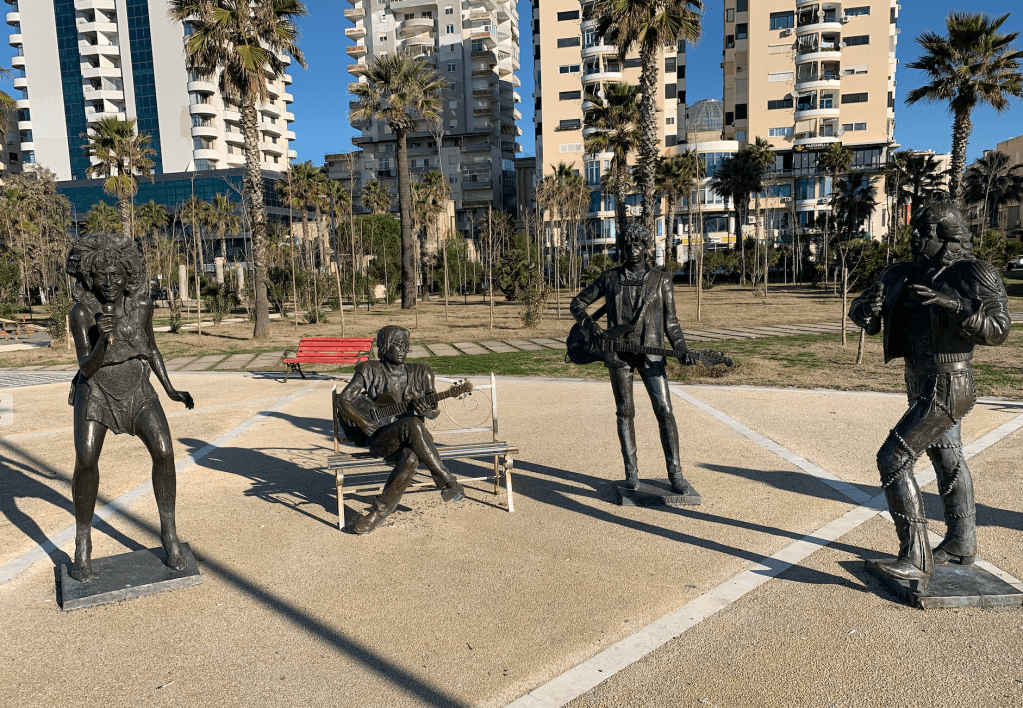
Although, we did get to see Tina , John, Bob and Mick along the promenade. 

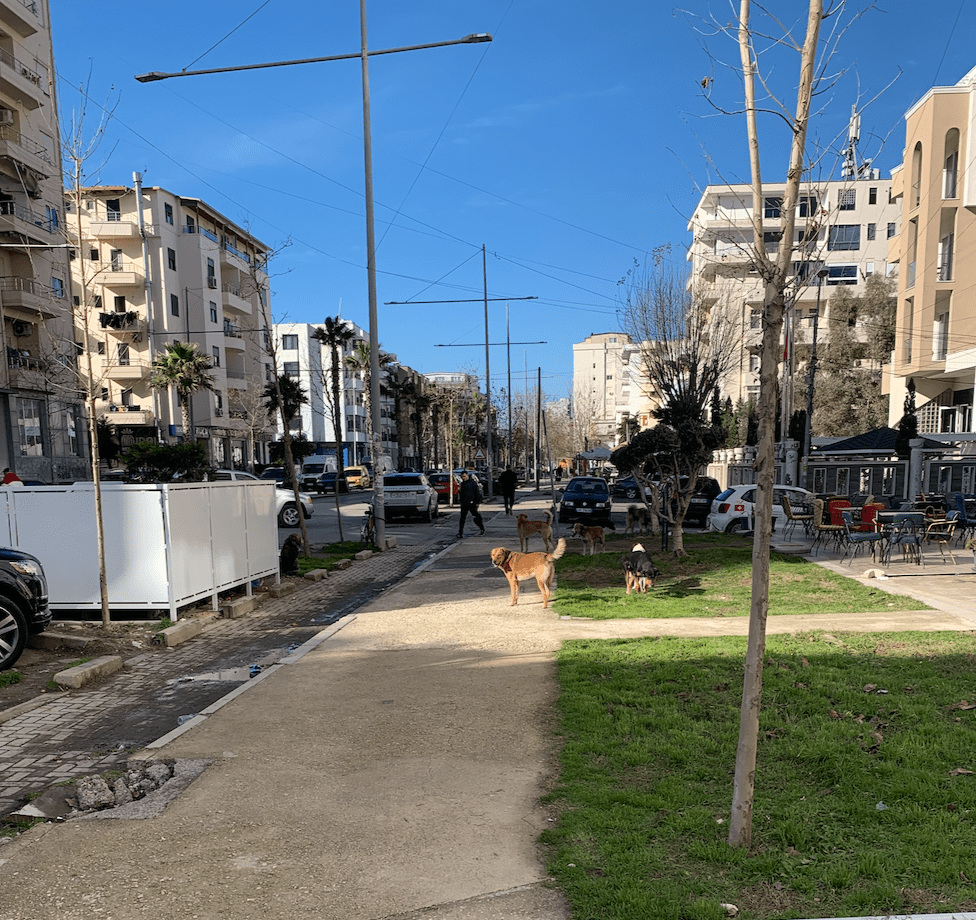
Not sure how these famous four were chosen.  We were more intrigued by all the stray dogs roaming the streets.  Many European cities have numerous street cats, Albania had some, but the dogs were everywhere.  And, they were extremely friendly, big, beautiful and seemed very healthy. They also seemed to understand the roads and when to cross much better than us.  

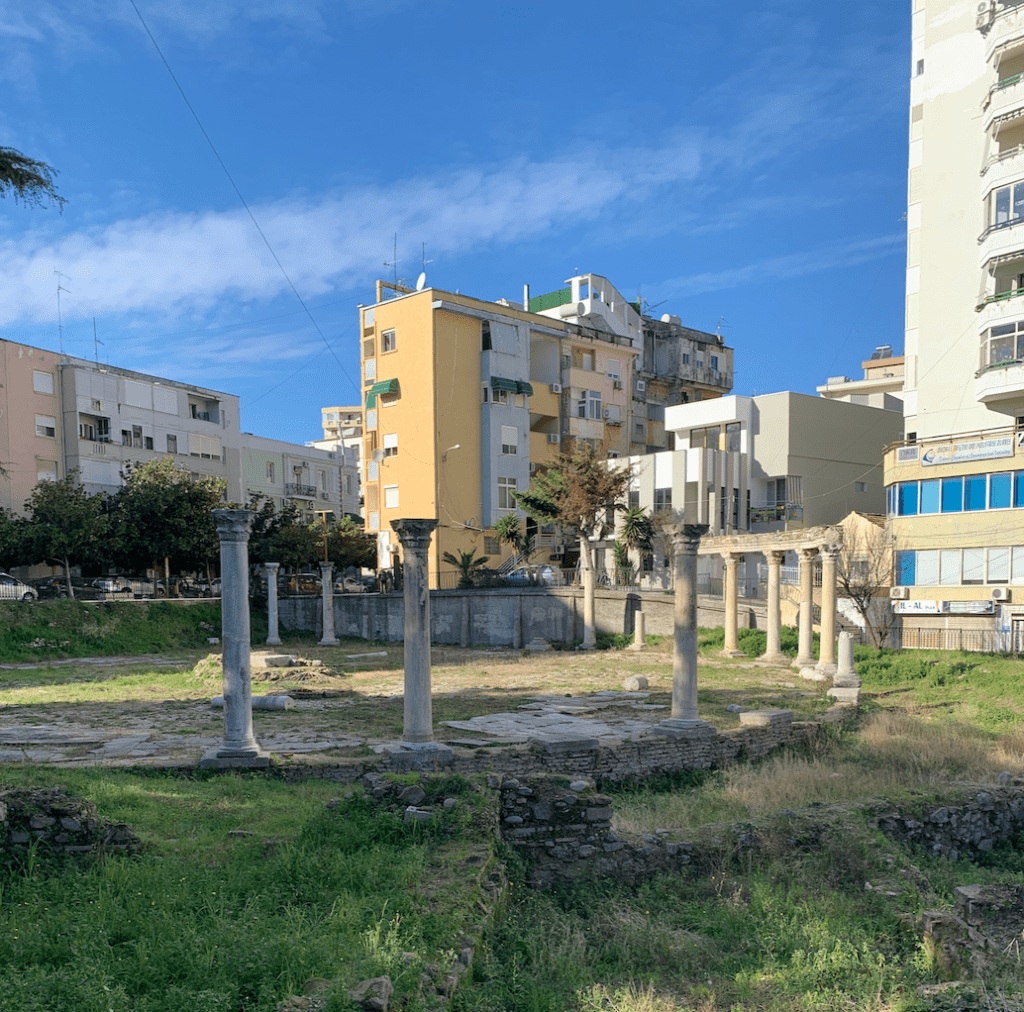
Similar to other European cities, there were the requisite Roman ruins (even Albania couldn’t keep the Romans out), but Albania differed in these were just “there”. In the neighborhood.

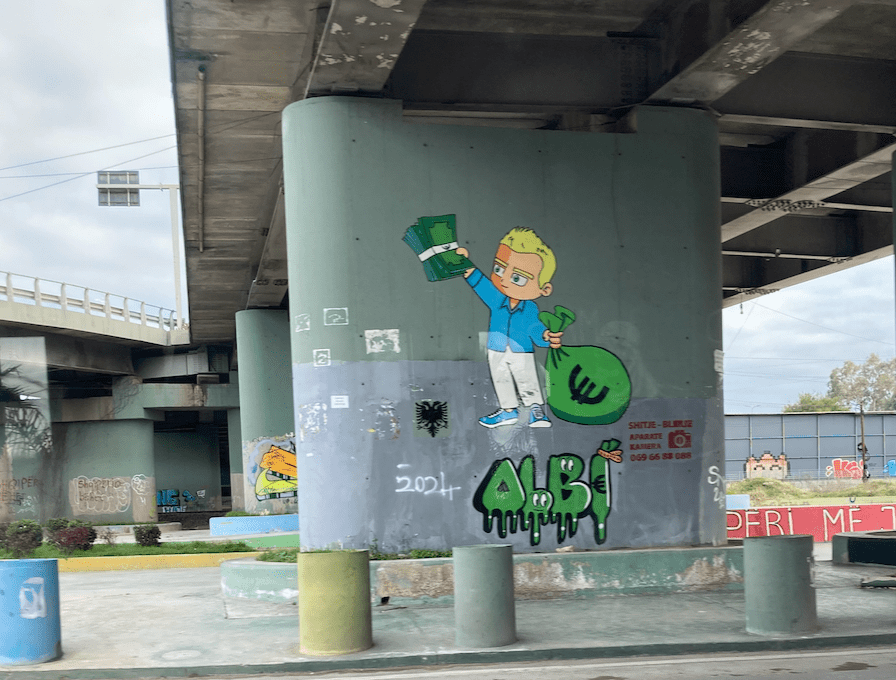
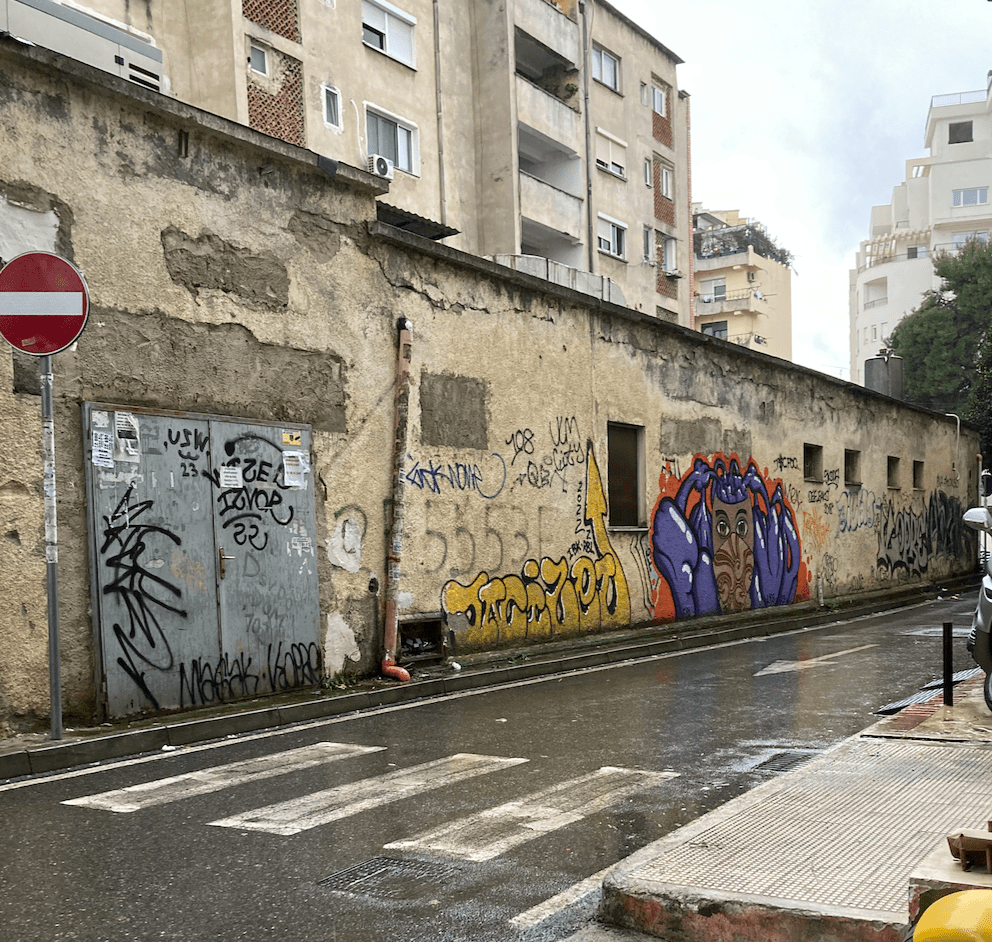
Again, consistent with post-communist countries, a lot of graffiti and we generally like street art, but knowing how novel it must have felt to be able to actually DO street art for Albanians, made these even better.

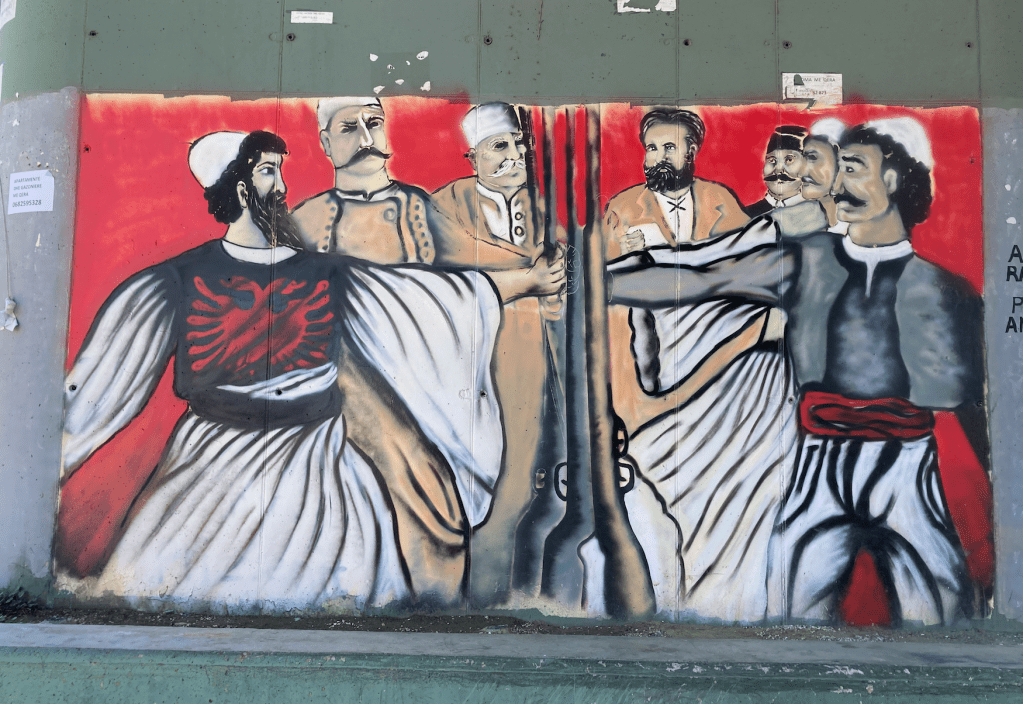
And of course, statues honoring invasions and war

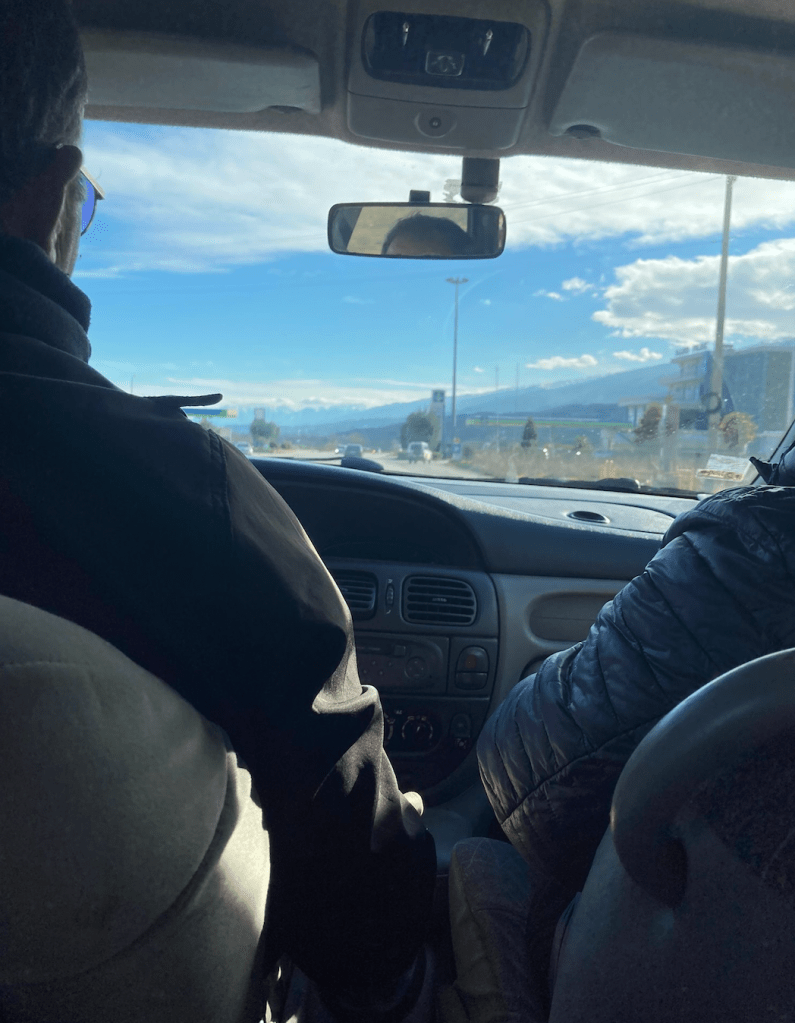
After two nights of Peaky Blinders, we continued our blind path to Greece.  Our goal was Gjirokastër, Albania near the Greek border.  Per the internet there was a direct 4 hour bus once a day from Durres to Gjirokaster.  We walked a mile to the original pseudo bus station, they told us to go stand at the “semaphore”(whats a semaphore? A traffic light, at least in Spanish-semaforo) to catch another bus to the southern direction pseudo bus station.   At the semaphore bus stop, a local bus for 40 Leks (about 40 cents US) took us to another empty lot with a snack bar on the outskirts of Durres. No physical station, just guys trying to get you on their minibus or taxi.  We talked to the food stand guy, he pointed out a guy to talk to.  By this time we were running low on Leks, and didn’t want to convert anymore Euros, so we began to barter for transportation. We asked about the daily bus to Gjirokastër.  Guy said no bus (not sure if he was completely honest) but he would take us to Lushnje for 400 lek each ($4) in his minibus and his friend would pick us up and take us to Gjirokastër for 800 Lek.  He then drove us in a very slow white van (no 4th or 5th gear), the whole time he was making phone calls.  Finally, he dropped us and our backpacks off at a gas station next to a roundabout outside Lushnje(?), said wait here for 10 minutes. 

Another white van eventually did come, not in the promised 10 minutes, but maybe all the white vans lacked 4th and 5th gears.  The new driver asked for another 1000 leak each, but the other guy had said it would be 800 each (and that’s all we had left), so he took us.  He then drove most of the way before dropping us and another woman (she was not happy) off to an older couple (we think the driver’s in-laws).

The father-in-law loaded the three of us into the backseat of the car for the final stunningly beautiful 15 mile drive (40 minutes) to Gjirokastër before unloading the 3 of us at some random corner in Gjirokastër. Once in town, we (minus the woman from the backseat), found the private bus company to buy tickets to go over the border to Kalabaka, Greece with our last 40 euro. An exact change trip. (With a lot of left over awkward.)

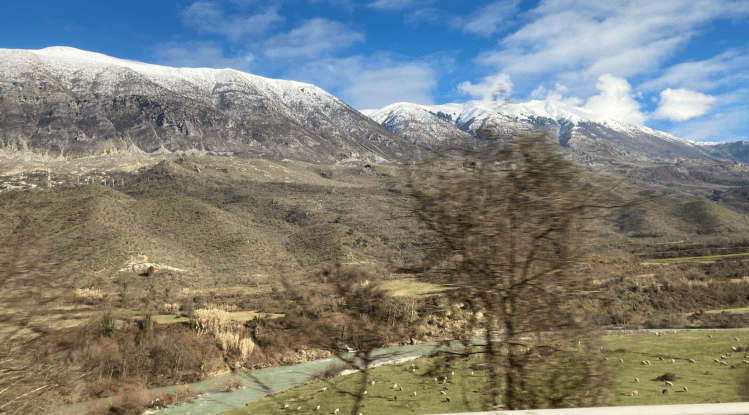
Taken from the window, sheep, shepherd, sheep dogs, and crazy light blue water from the calcium deposits.

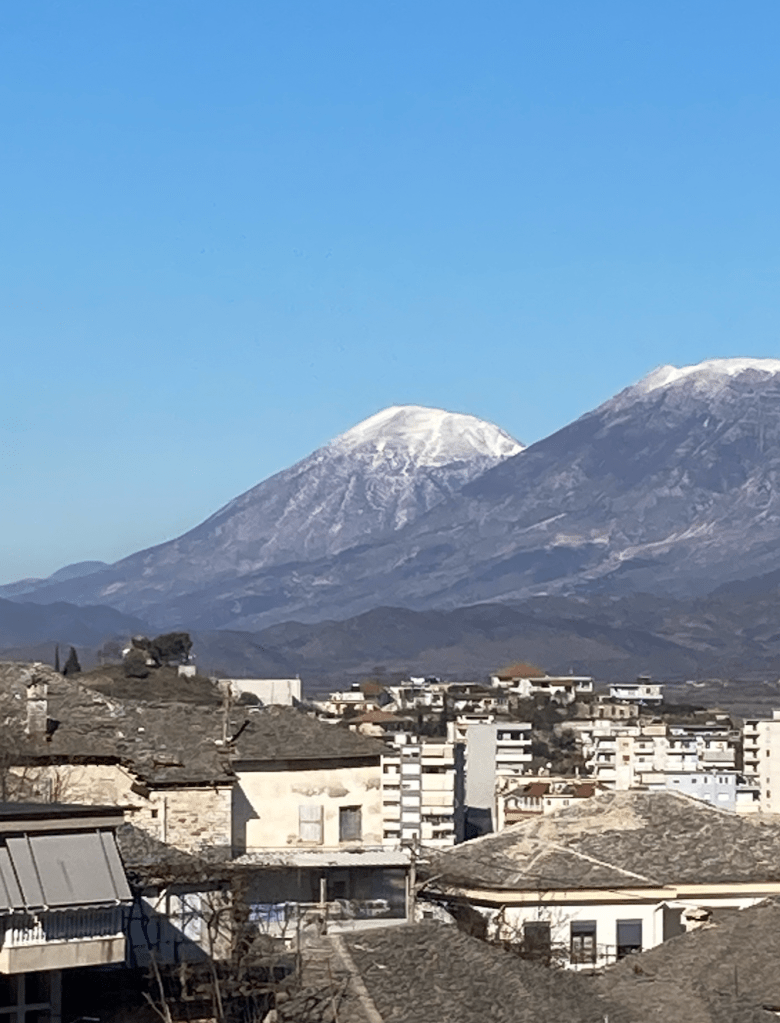
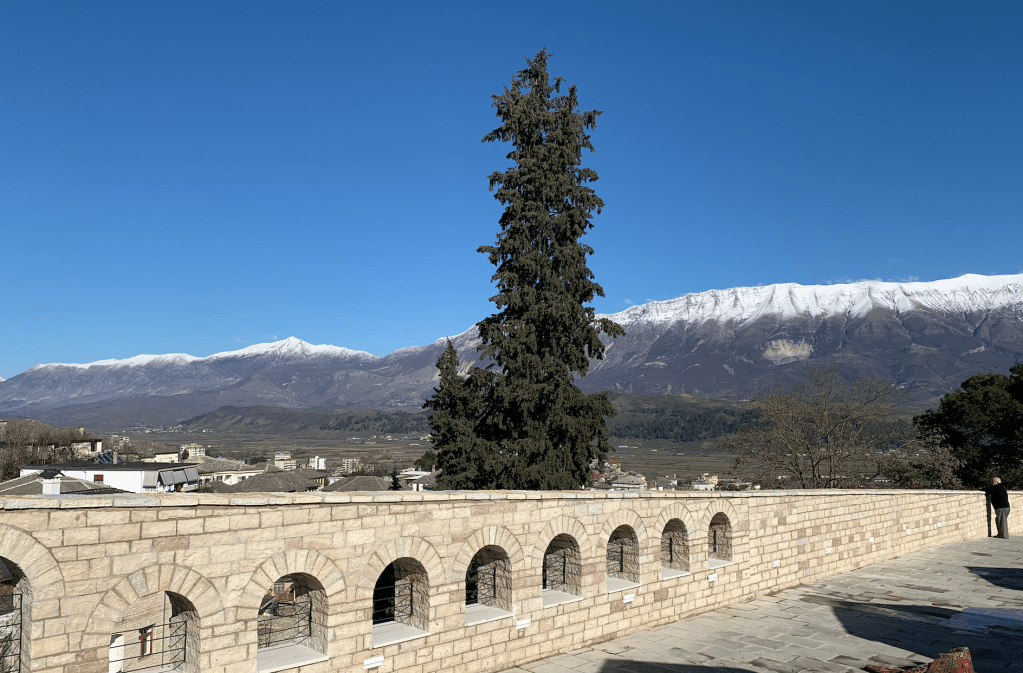
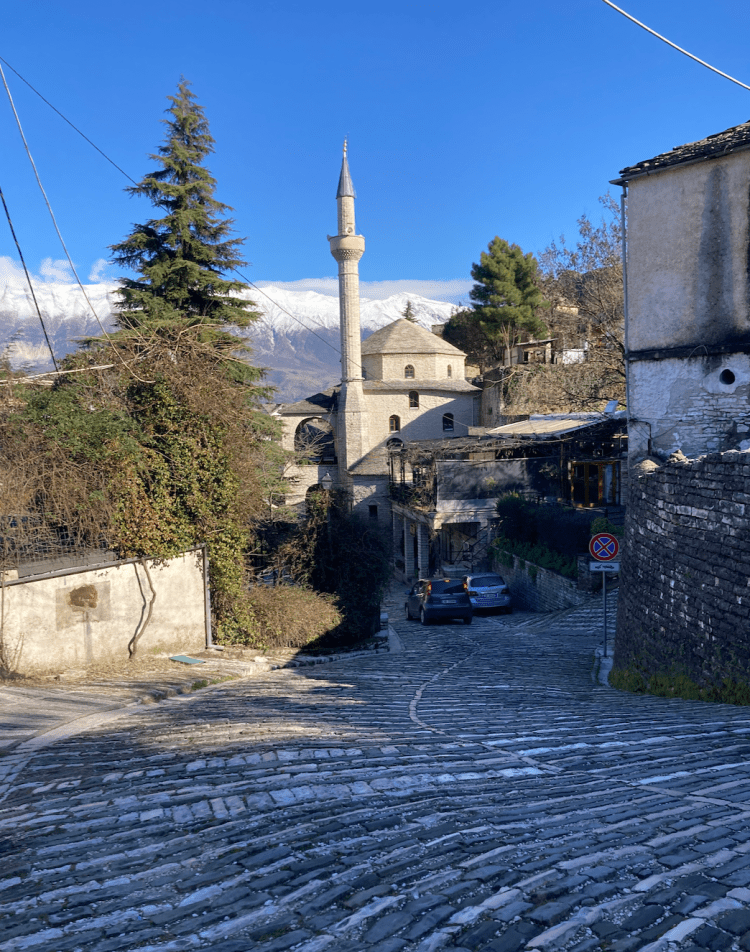
Little tiny Gjirokastër has had a huge impact on Albania as the birthplace of the dictator Enver Hoxha (and author Ismail Kadare). Its history is as multi-layered as is the town. It was Greek, it was independent Epirus, it was Albanian, etc. Then about 1300 it was contested by Serbians and Italians, eventually won by Albanians, then eventually taken by the Ottomans, followed by the Albanians again in 1909-1912 The Greeks tried to reclaim it during the first Balkan wars (1912-1913). The Italians took over during WW2 and of course the Germans had a short stay. Despite the constant change, Gjirokastër seemed to stay uniquely itself.

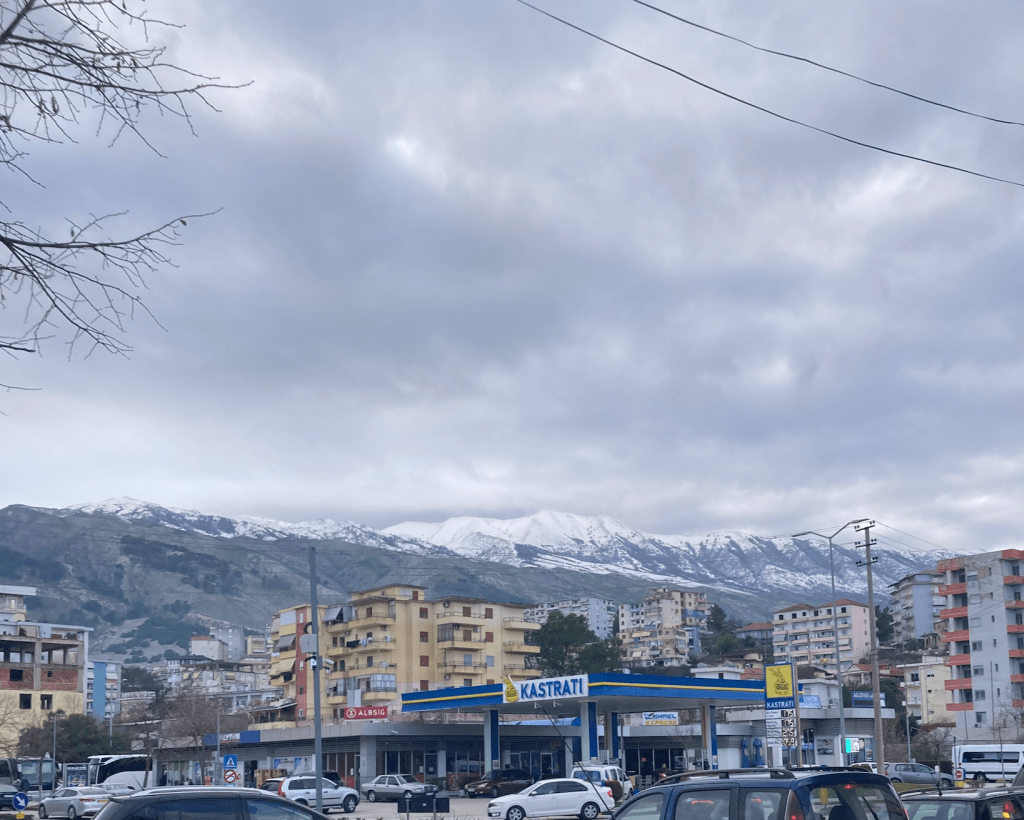
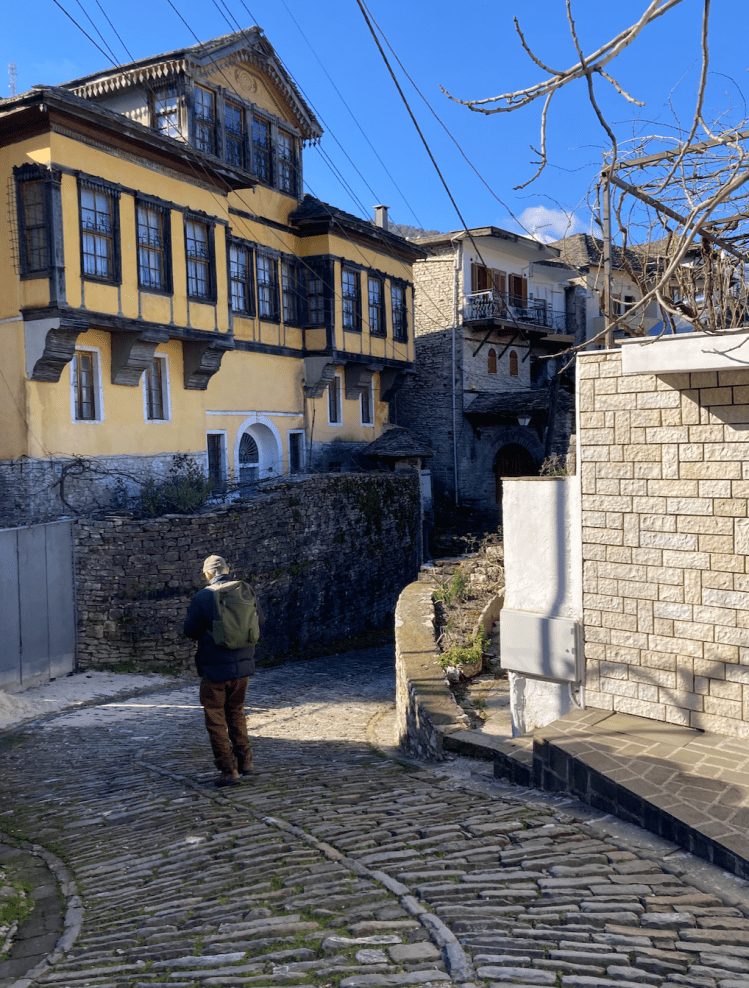
The ugly new town was at the bottom

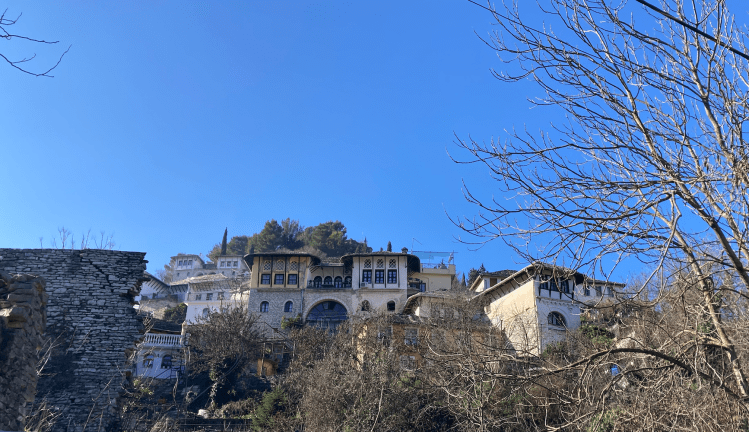
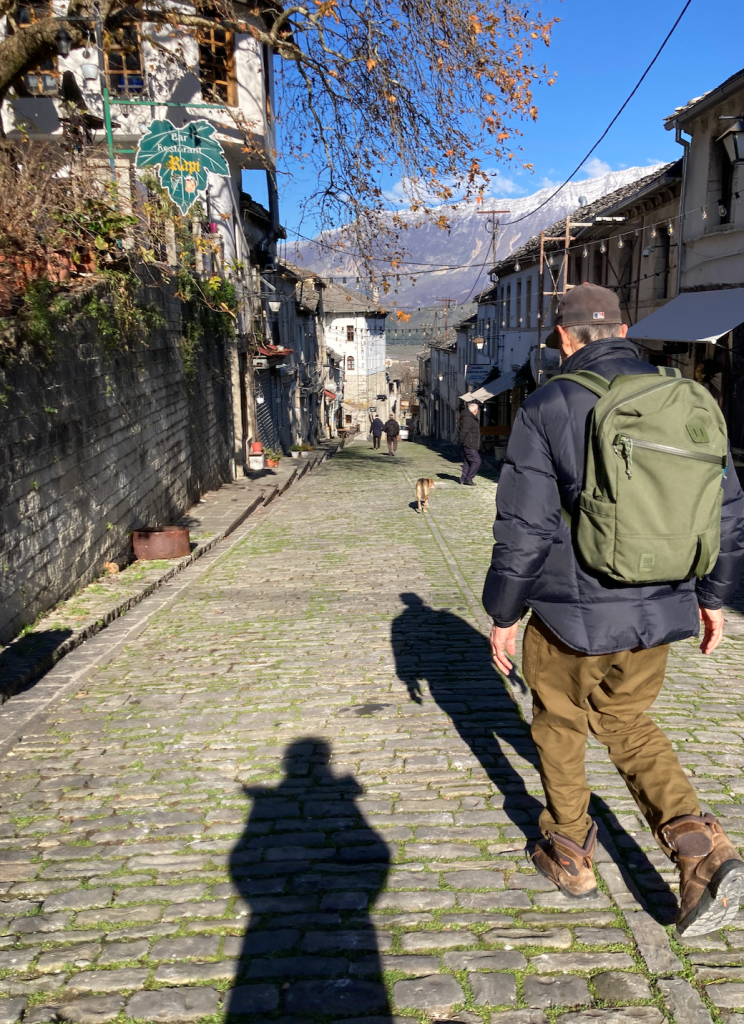
and the old town was just straight up beautiful and straight up the mountain.

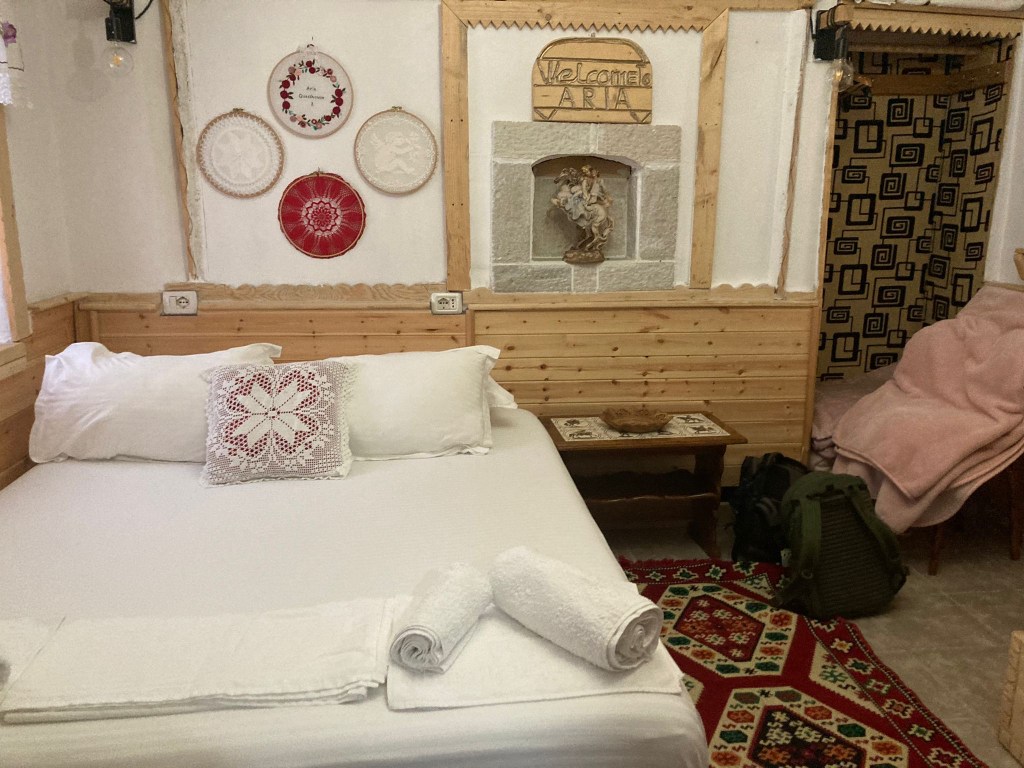
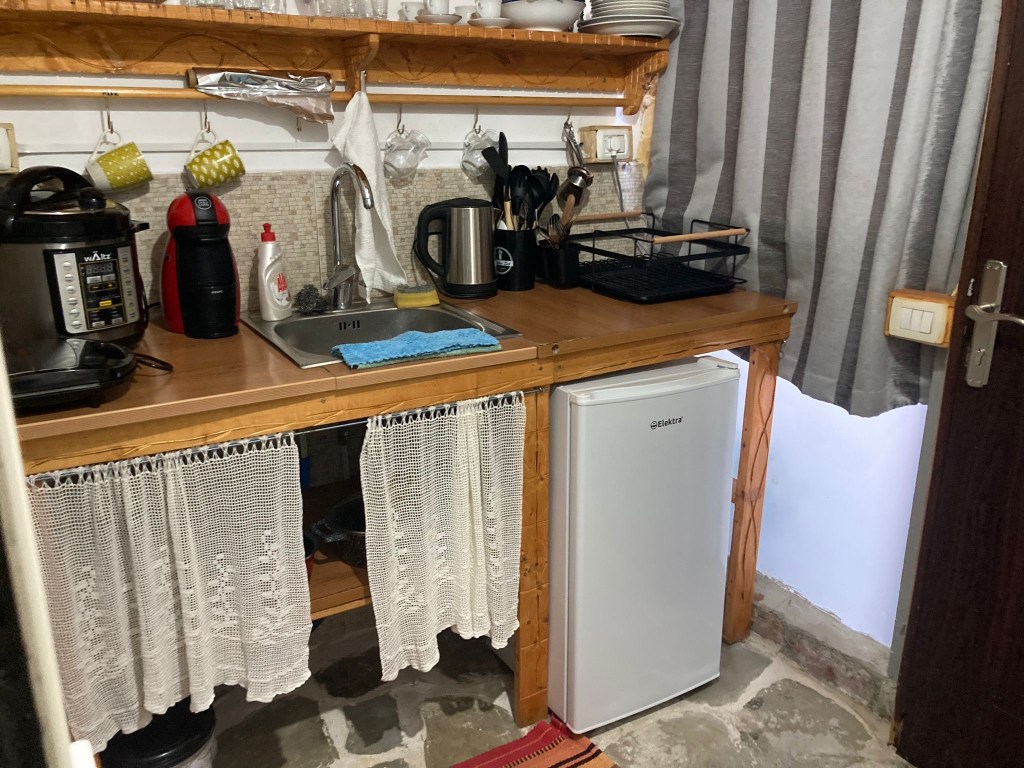
Our tiny apartment was just as cute as Gjirokastër, but colder than being outside. It was good that we were just here for 2 nights because it was just way tooo cold to shower.

A more successful attempt to find our bus this time, first going to the bus company office where we had bought the ticket, they pointed us across the street to in front of the gas station which was apparently the bus stop du jour. Tucked in the warm bus, another strikingly beautiful drive to Northern Greece.

Leave a Reply

Albania Mania #1

January’s (2025) plan was 6 weeks in Greece but flights to Albania were half the price, and if we had a bucket list, Albania would have been on it, so we bought the tickets. Our trips to post-communist countries; Croatia, Bosnia-Herzegovenia, Bulgaria, Romania and Hungary, have been fascinating. In some ways these are new countries, less than 40 years old, but they carry long histories.   Some have done better than others; Croatia (aided by tourism) has been stable, although in many ways still recovering from the Croatian-Serbian War of the early 90’s.  Bosnia-Herzegovenia is still a mess.  Bulgaria and Romania struggle with corruption and political and economic instability. Hungary has slid back into a dictatorship.
Albania is a completely unique entity.  Under the very oppressive, very paranoid dictator, Enver Hoxha, it was the most isolated of the communist aligned countries, even breaking ties with USSR (1956) and China (1978). Hoxha died in 1985, but real changes did not begin until after 1990.

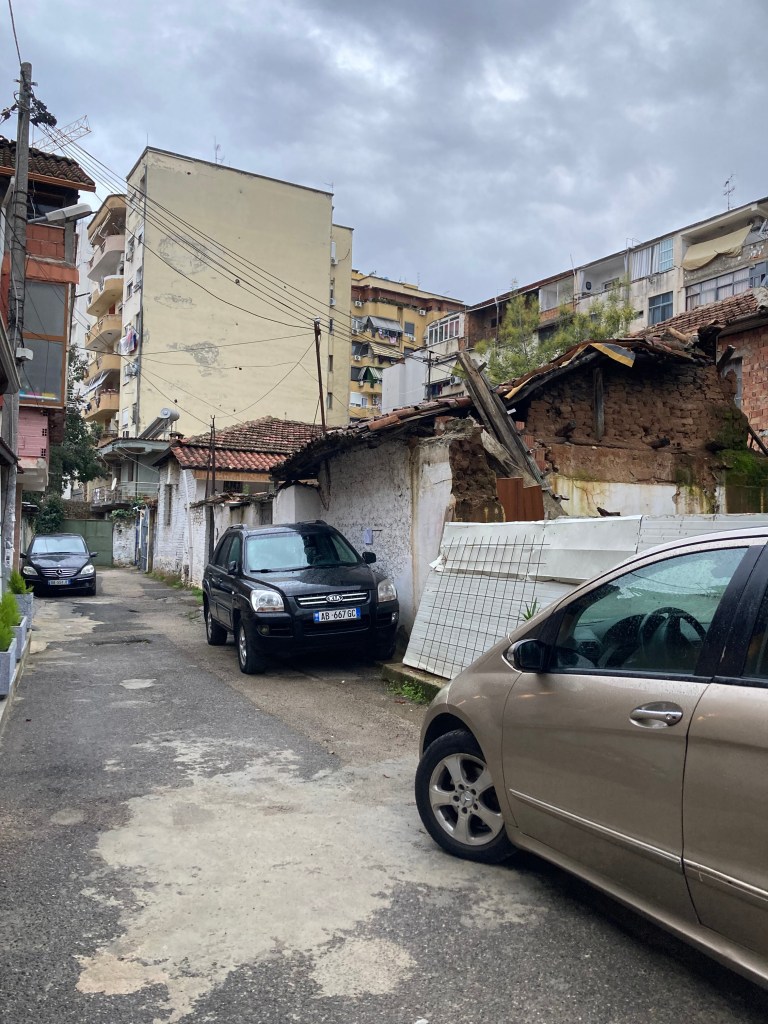
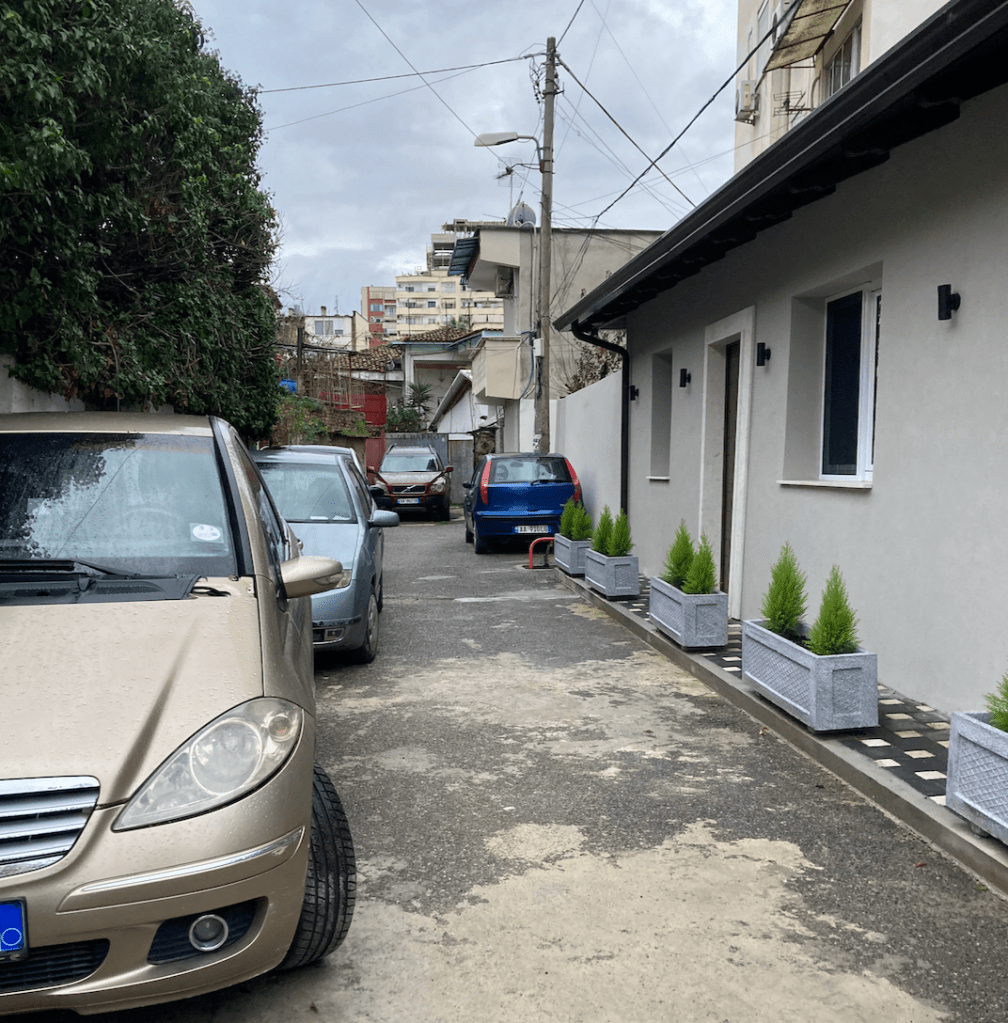
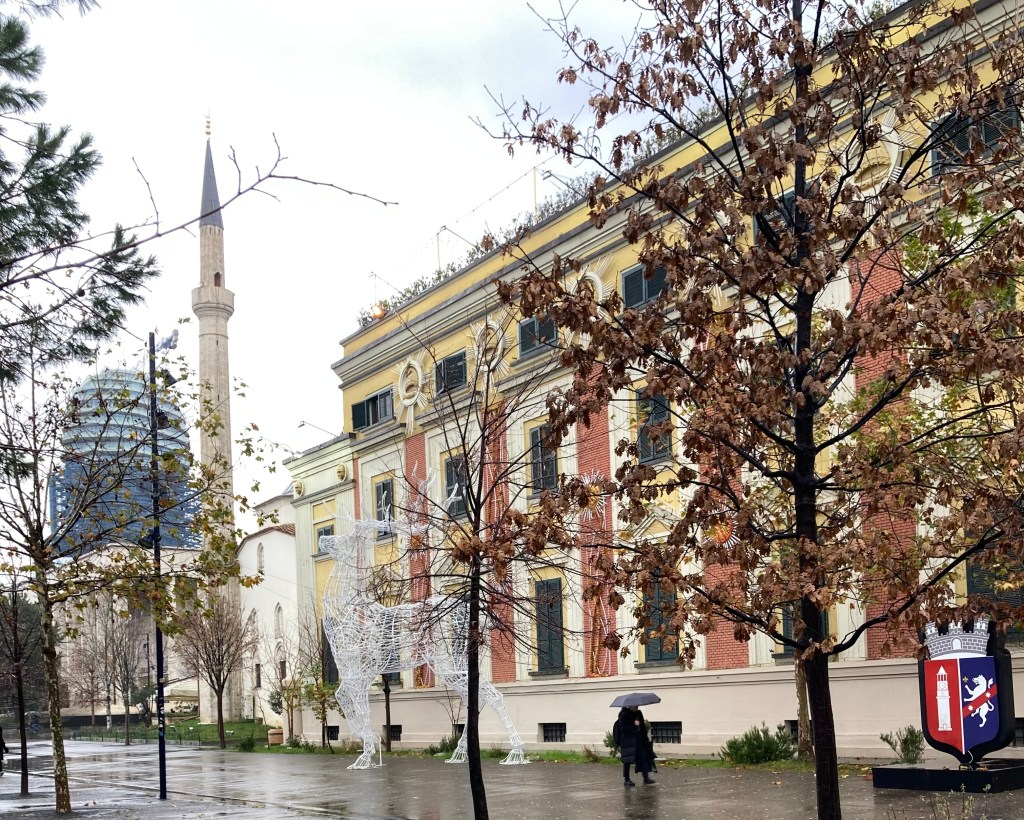
Albania felt like a mash up of Ottoman, Communist , Italian and Baltic style. Our first few hours were a perfect snapshot of the country. Driving to our lodging, through a narrow, graffitied, dilapidated alley we arrived at a very modern row of little bungalows, absolutely beautiful and perfect inside.

Despite flight delays causing us to arrive many hours after our original time, our super nice apartment host was waiting for us, speaking perfect English. After a good night sleep, we easily found our way from our alley through a little passage, and the center of Tirana was right there.

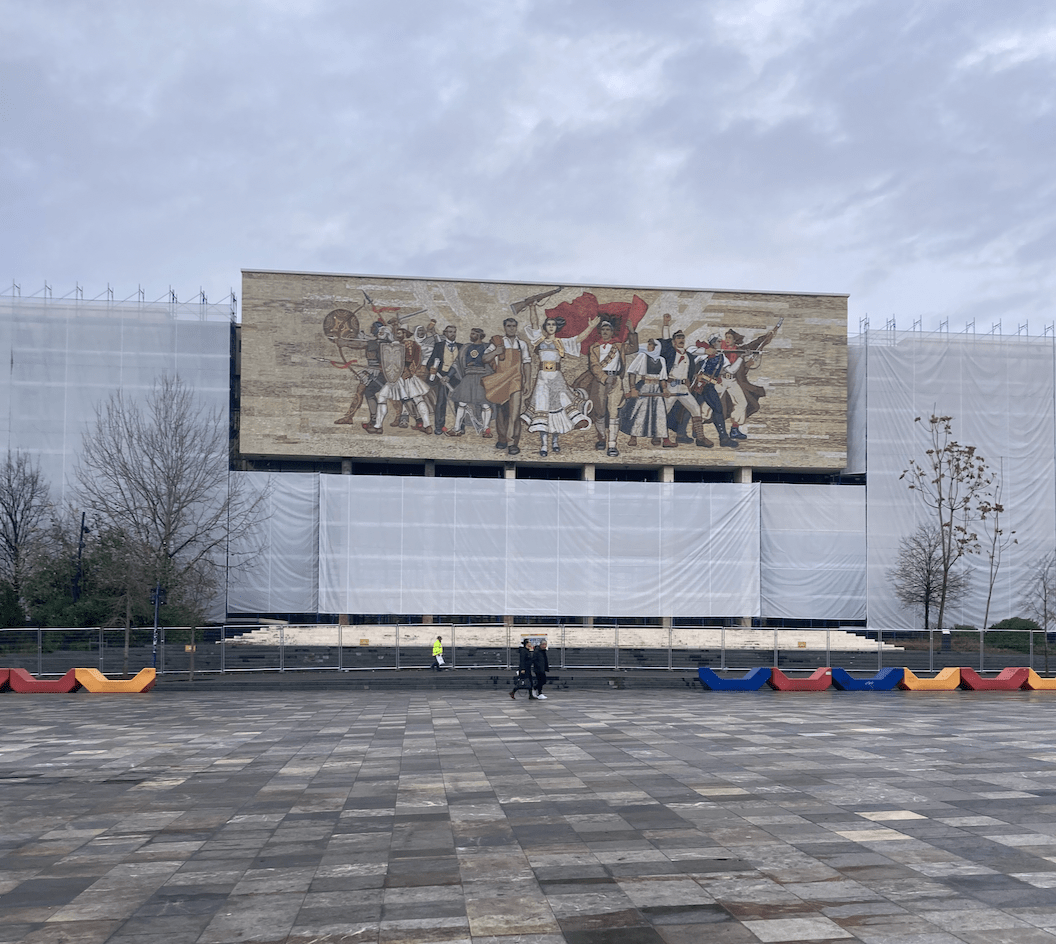
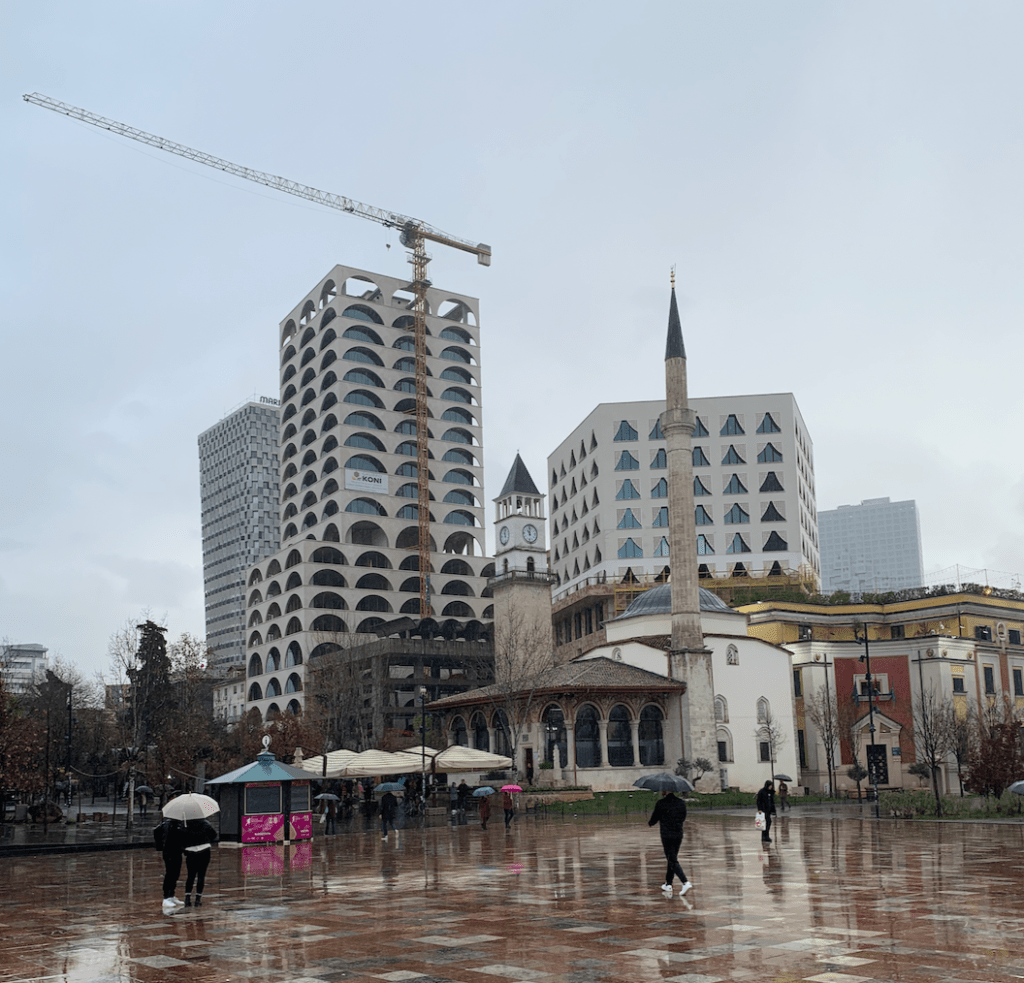
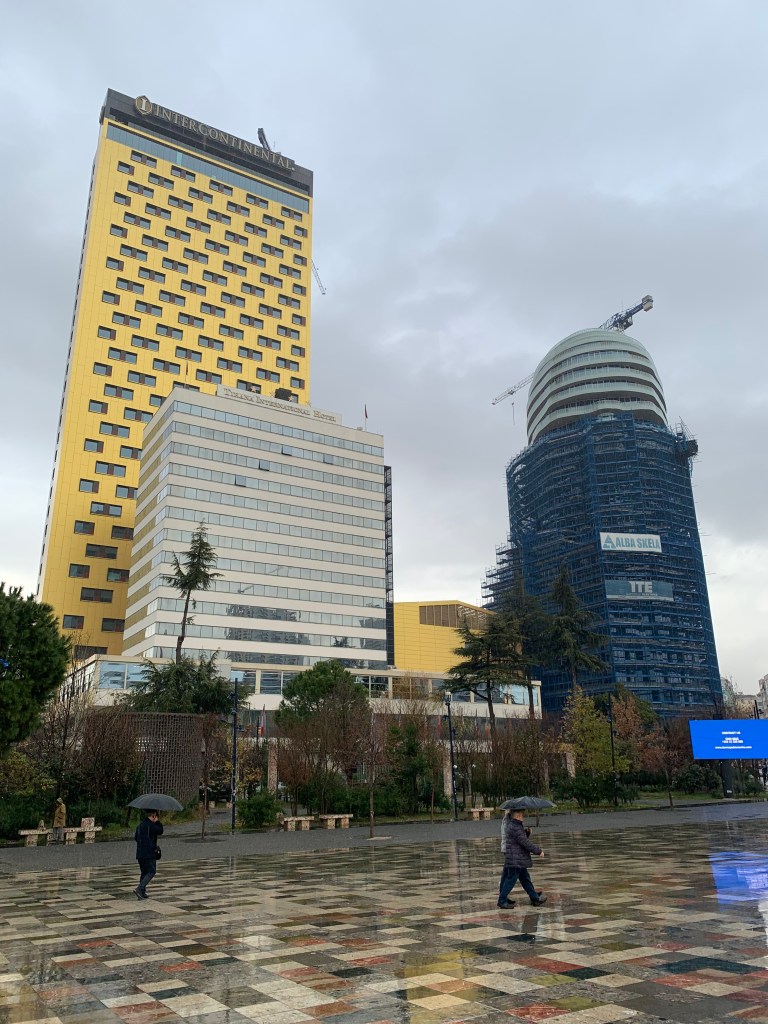
A confluence of buildings of all different eras and styles with multiple large construction sites in progress.  All signs of an establishing tourist industry and a solid jump into capitalism. 

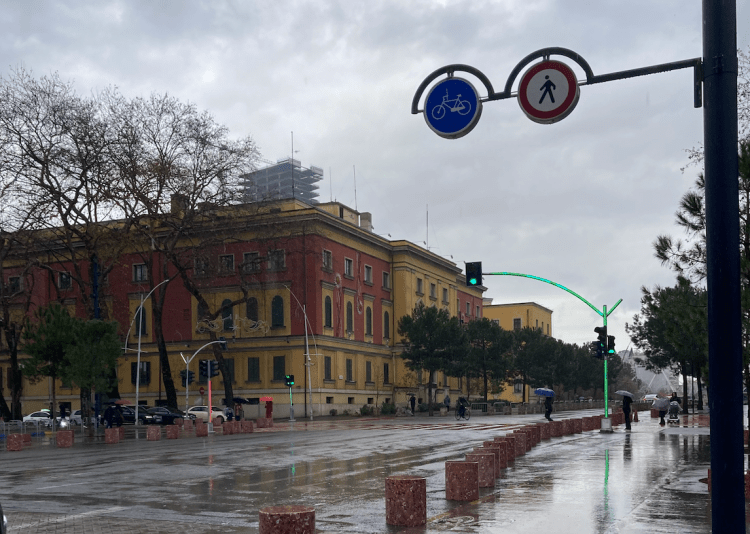
We were told that drivers just ignored the single elevated lights so the entire streetlight, pole and all, light up. Smart.

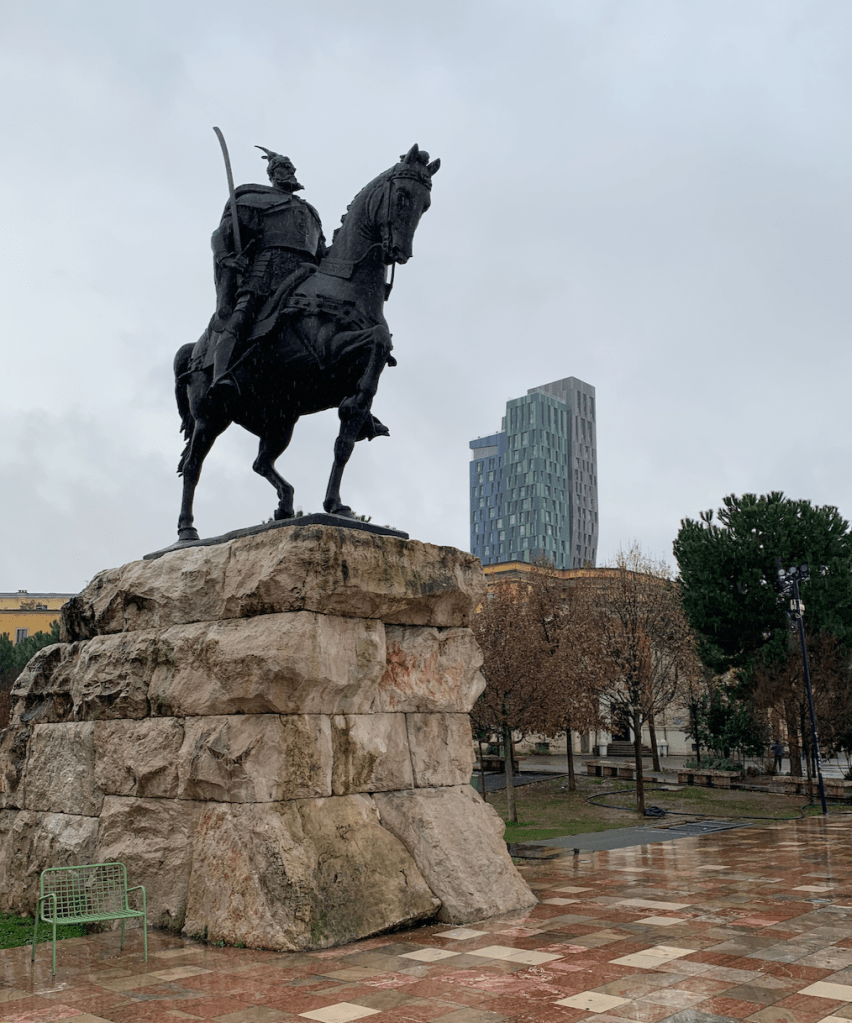
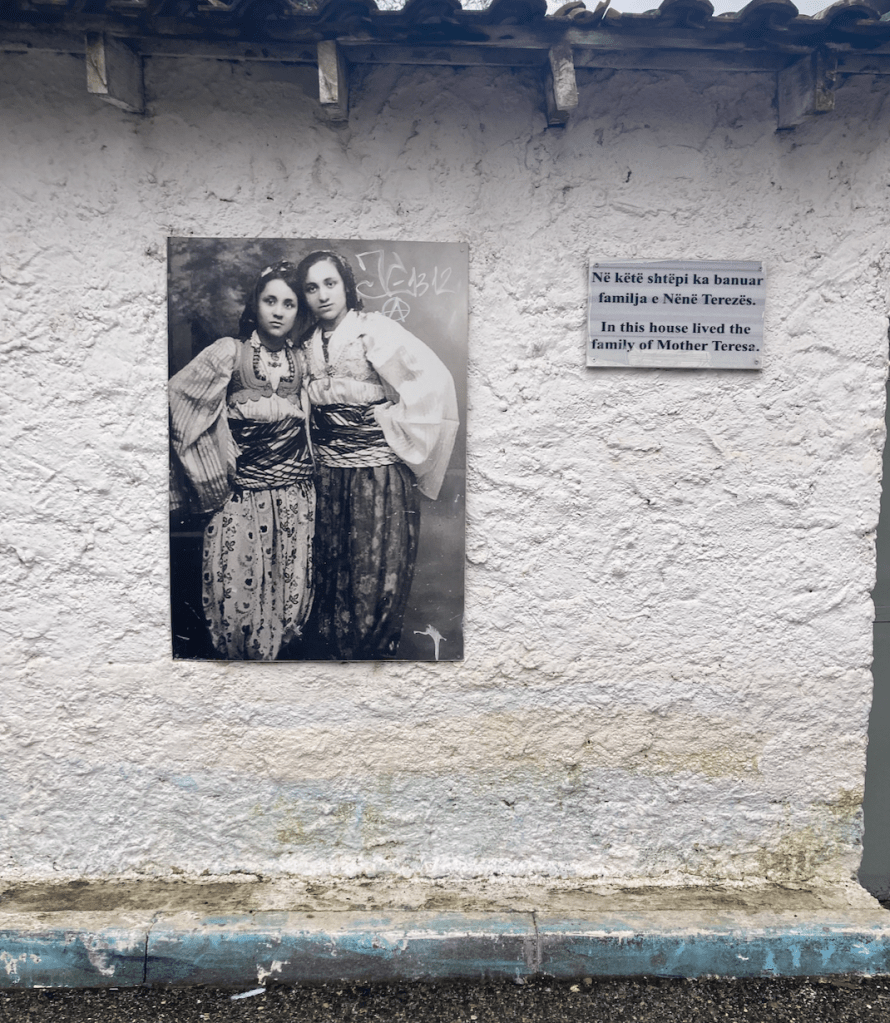
People were extremely friendly, many spoke English and everyone made a point of offering help even if we didn’t need it. The new Albania is changing their narrative; a lot of the hero of the Ottoman rebellion, Gjergi Kastrioti Skënderbeau

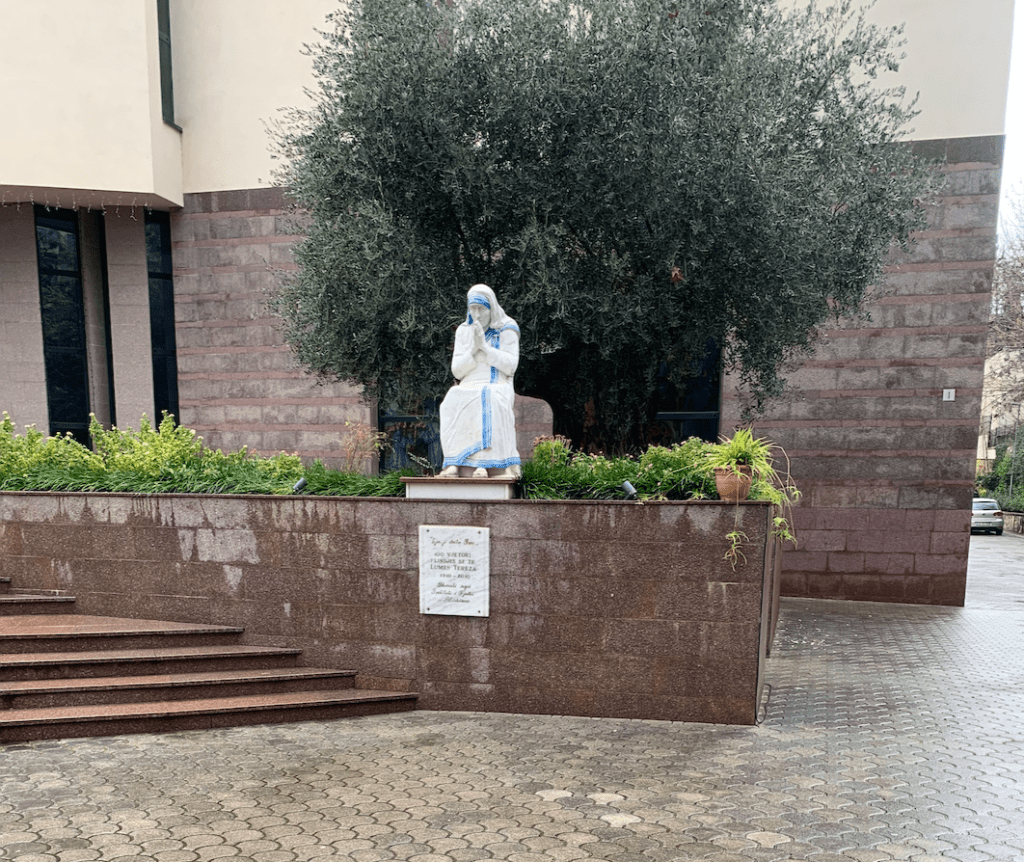
and favorite daughter MotherTeresa but not a lot of Hoxha.  

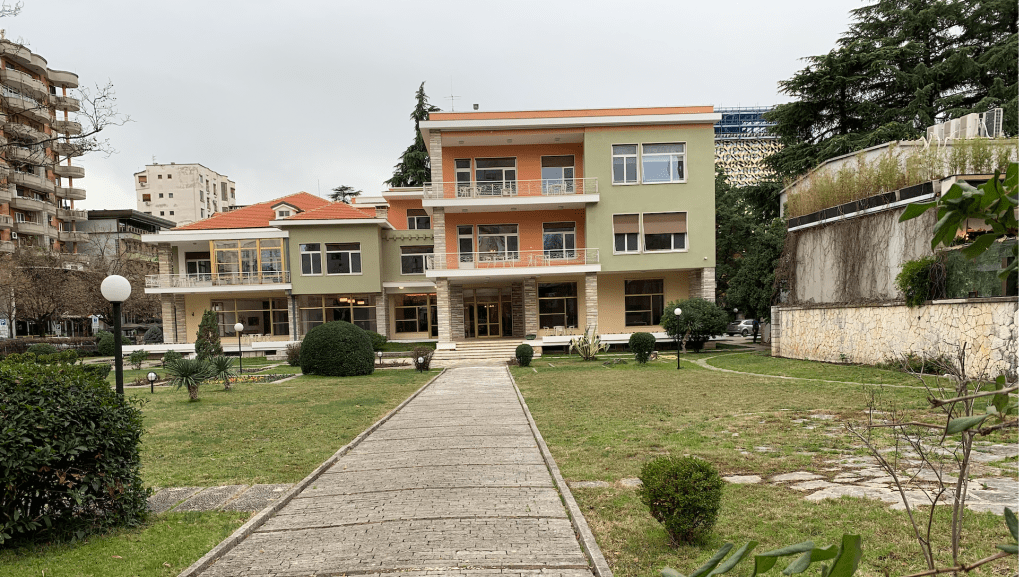
The former dictator’s house sat in the middle of town.  A beautiful, baltic interpretation of midcentury modern, but completely vacant, not marked on maps or with signage. Strangely not repurposed as a museum or government building.   He was so hated, that after 41 years, they don’t want to be reminded. (update: a few weeks after we left, the building was put in use for an artist in residency program in partnership with the French organization Art Explora)

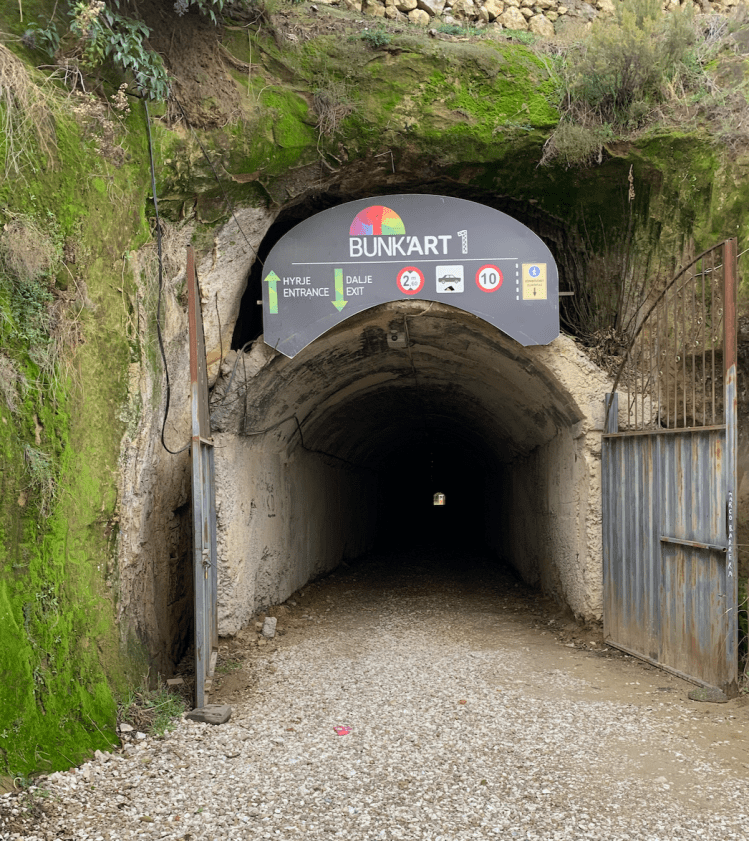
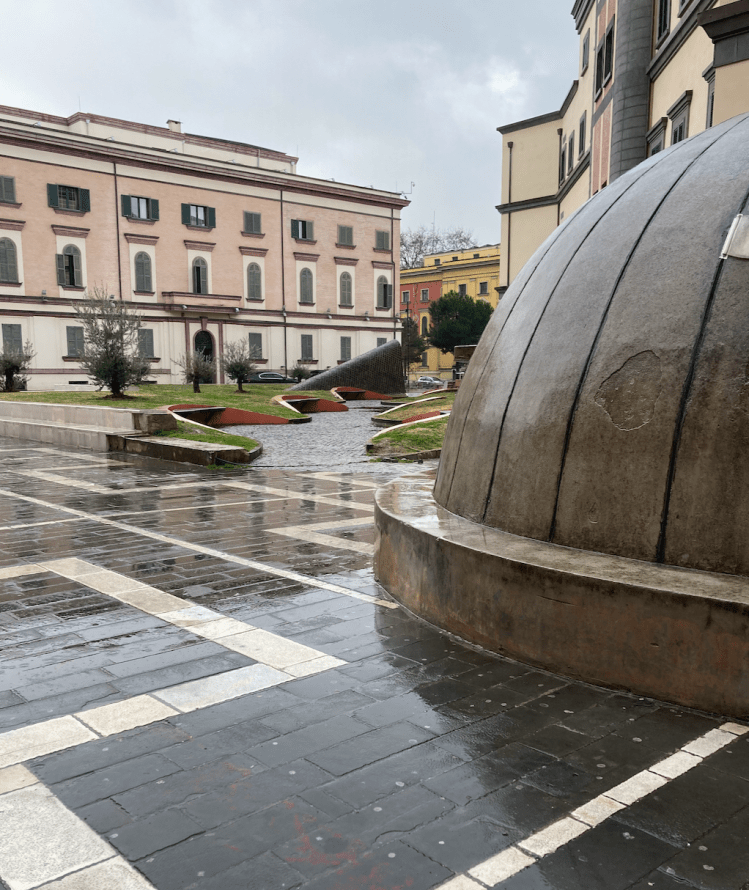
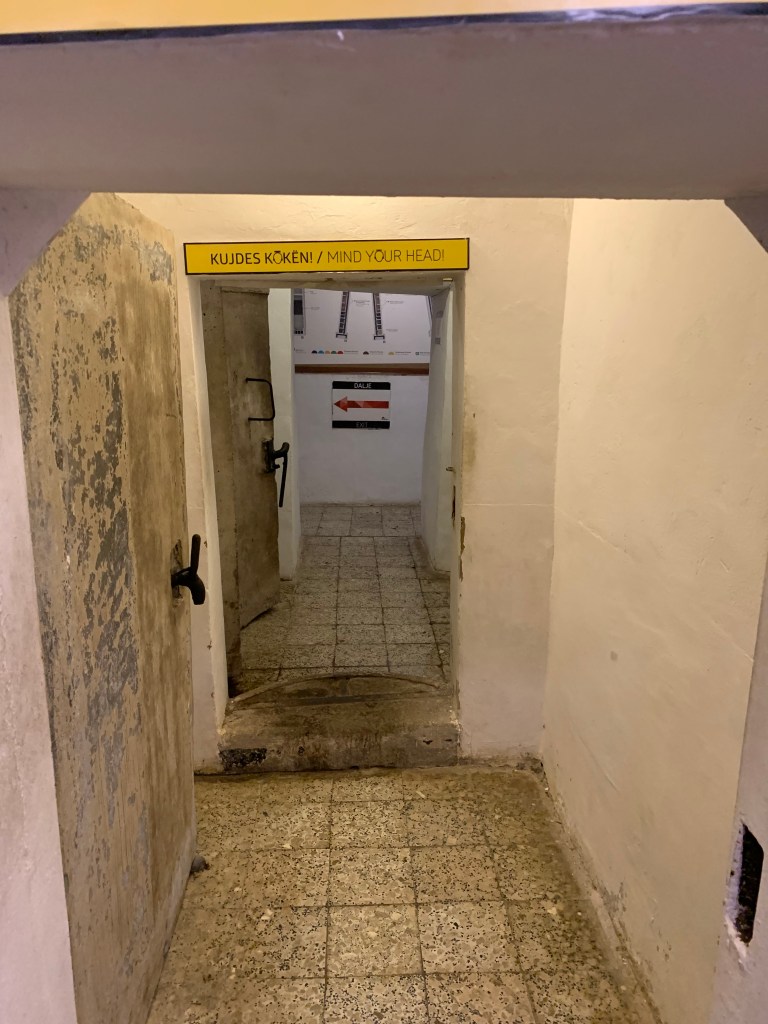
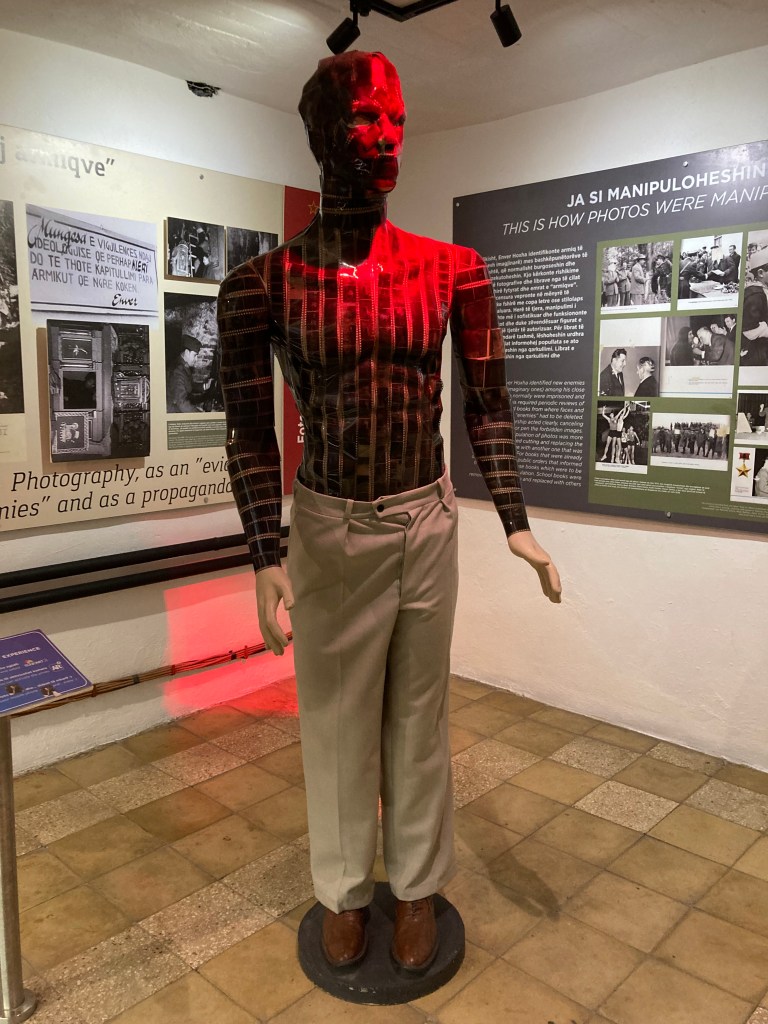
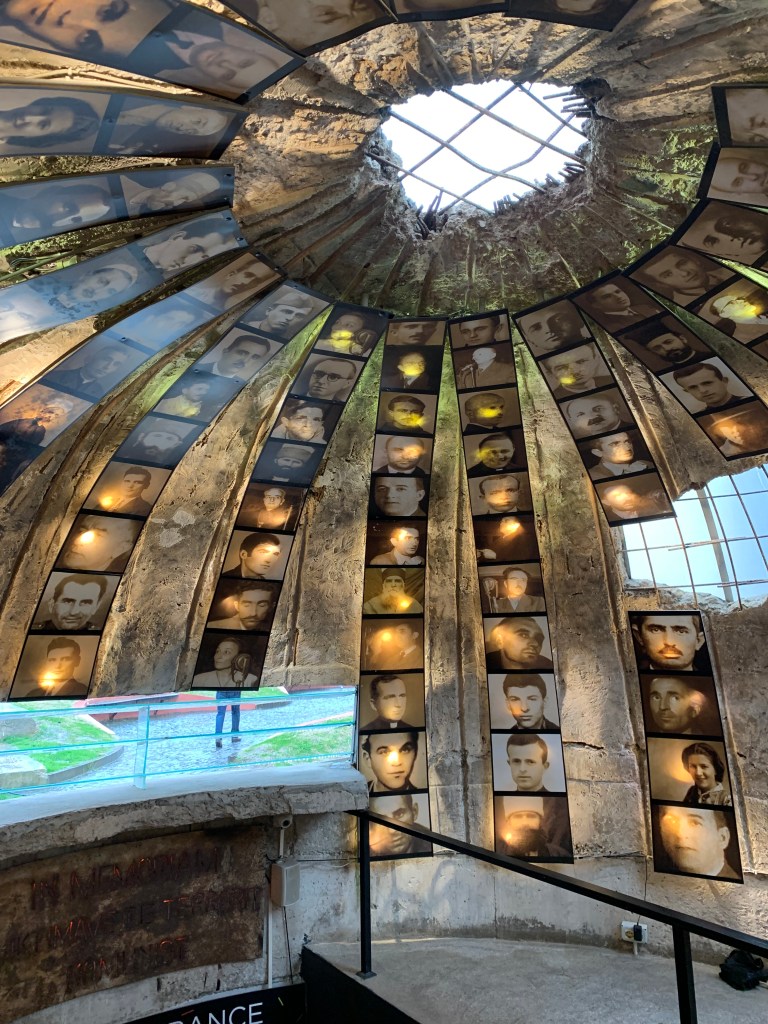
How do they tell the story of those hellish, repressive years that truly affected every Albanian? Two thoughtful, low tech museums devoted to the Hoxha regime were created in two underground bunkers. Why bunkers? Hoxha’s paranoia led to the building of between 173,000 and 750,000 bunkers throughout the country https://en.wikipedia.org/wiki/Bunkers_in_Albania. Like other memorials and museums made by the people who suffered through the events, as in Timisoara, Romania https://chosenfugue.xyz/2019/07/12/timisoara-the-revolution-will-not-be-televised/ this was heartbreaking. One was on the far edge of town, built into a mountain, the other in the middle of town with just a small entry on the street.

The bunkers traced the history of the county’s quick slide into isolation, highlighting the rise of Hoxha, the paranoia of Hoxha, the cruelty of Hoxha and life under Hoxha, while honoring and memorializing the opposition and those who were murdered by Hoxha  

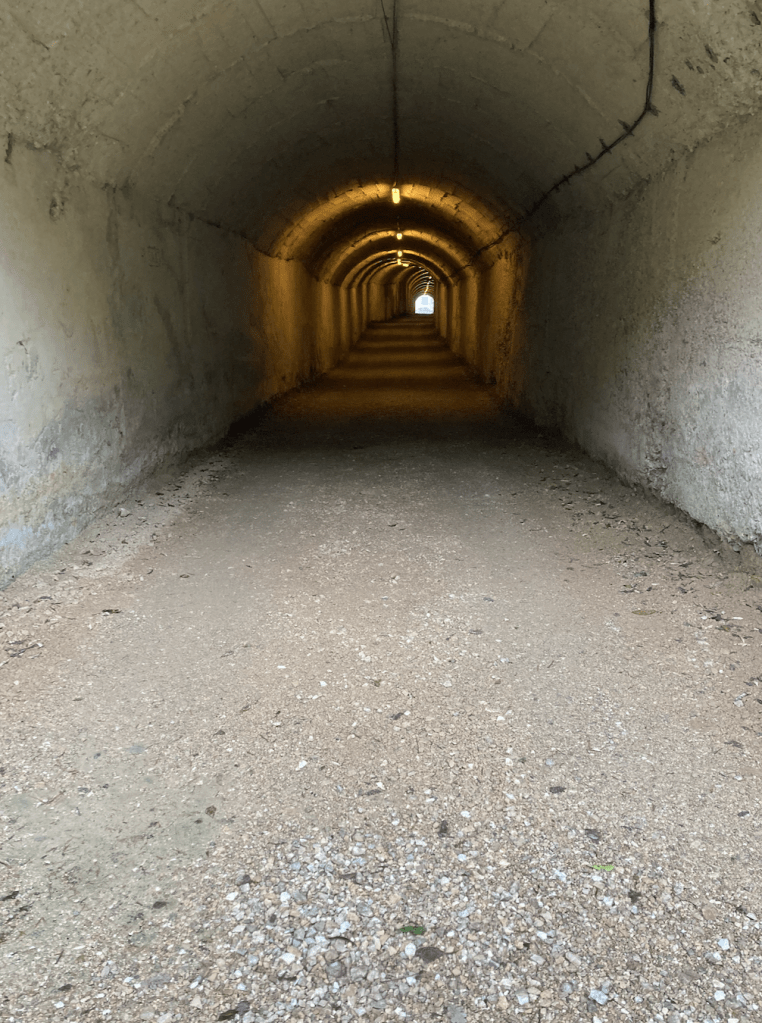
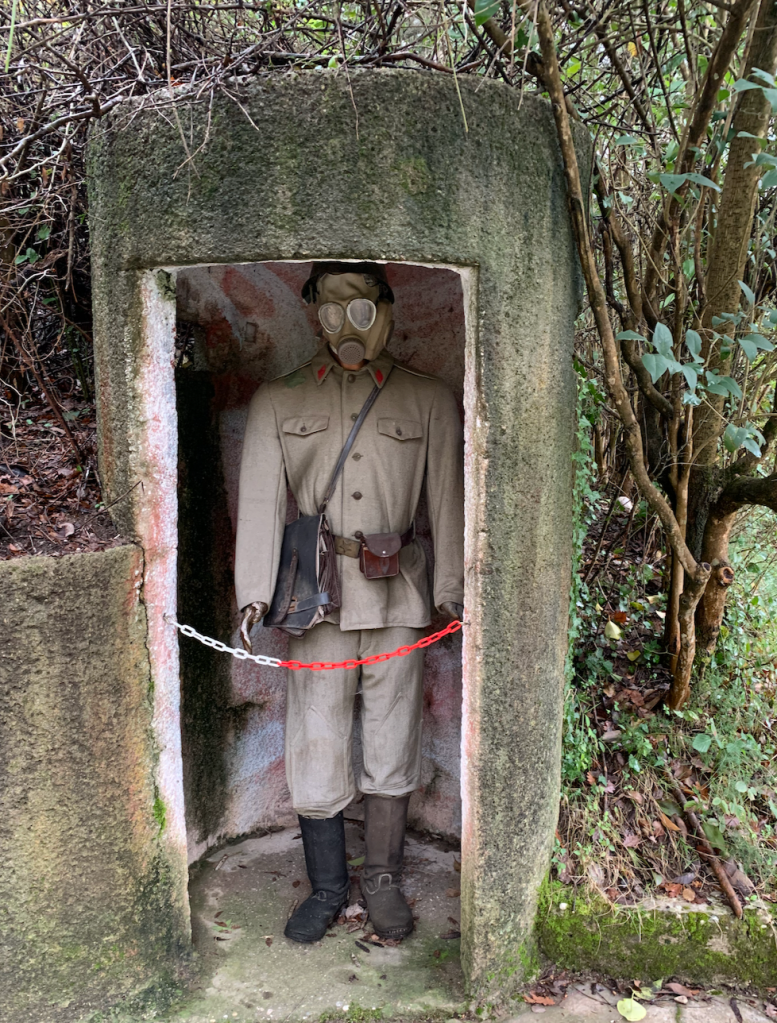
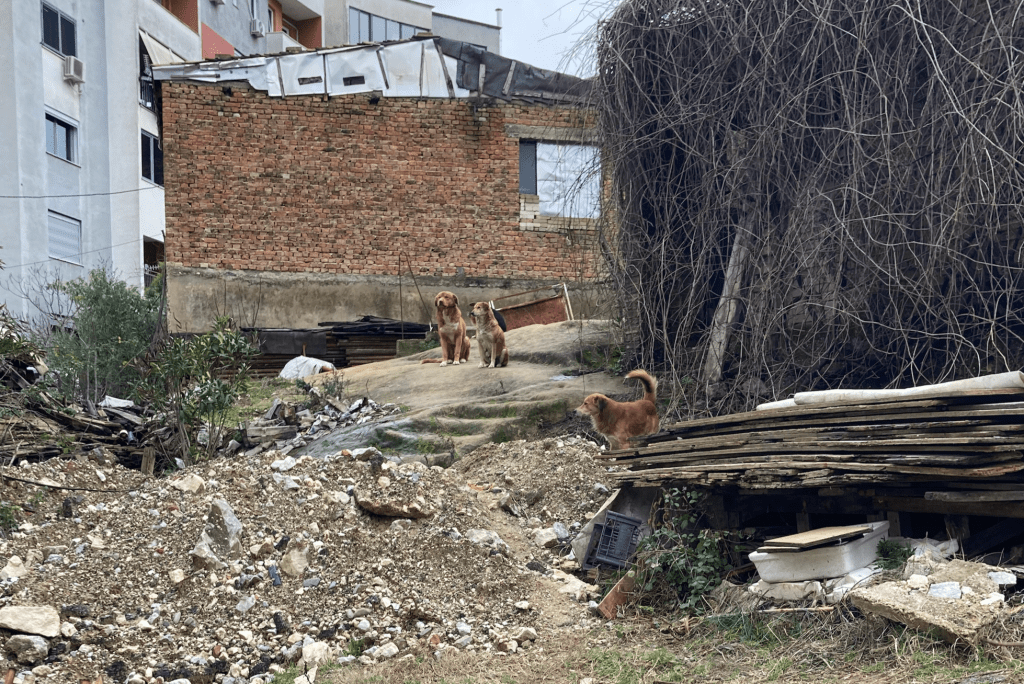
The approach to the hillside bunker was through a loooong tunnel, where we were greeted by a faux guard and a bunch of stray puppies

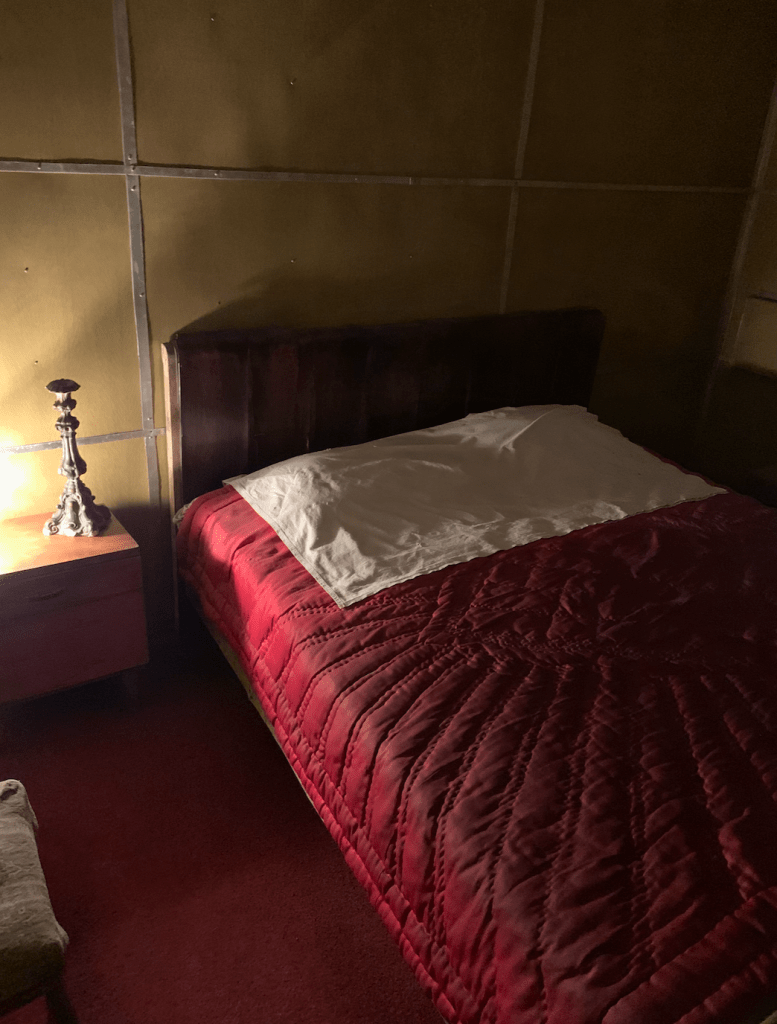
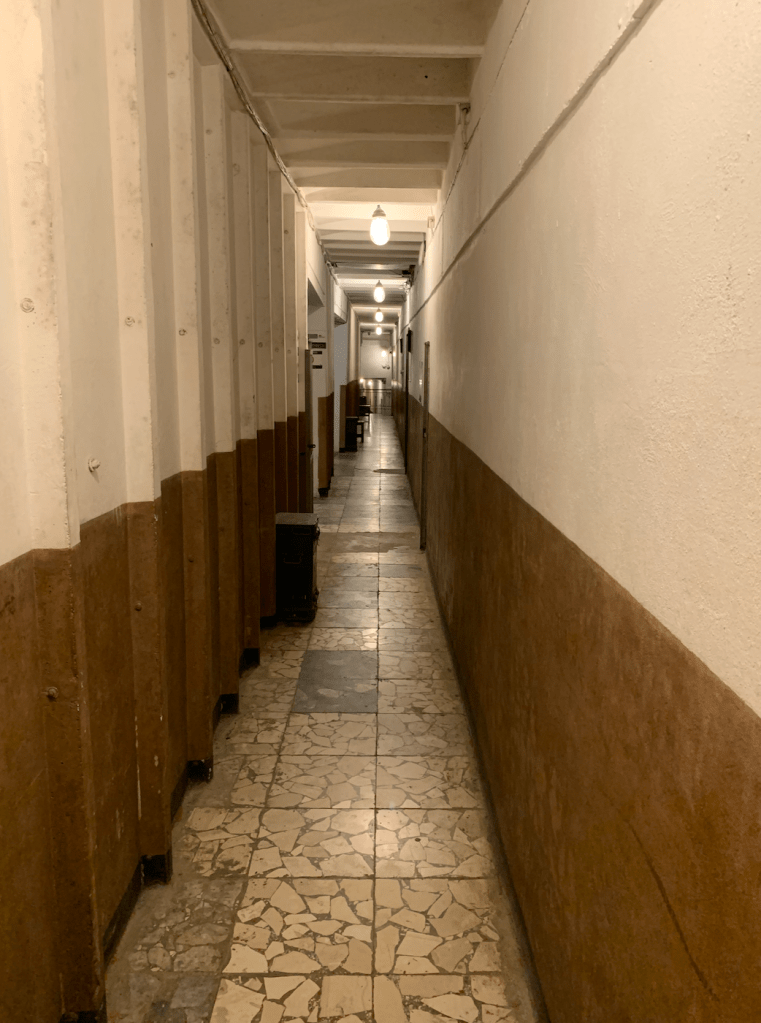
This was a secret bunker, built for Hoxha and the political elite in case of a nuclear attack. The bunker’s structure is unchanged, Hoxha’s bed and room are still waiting (he never slept in it).

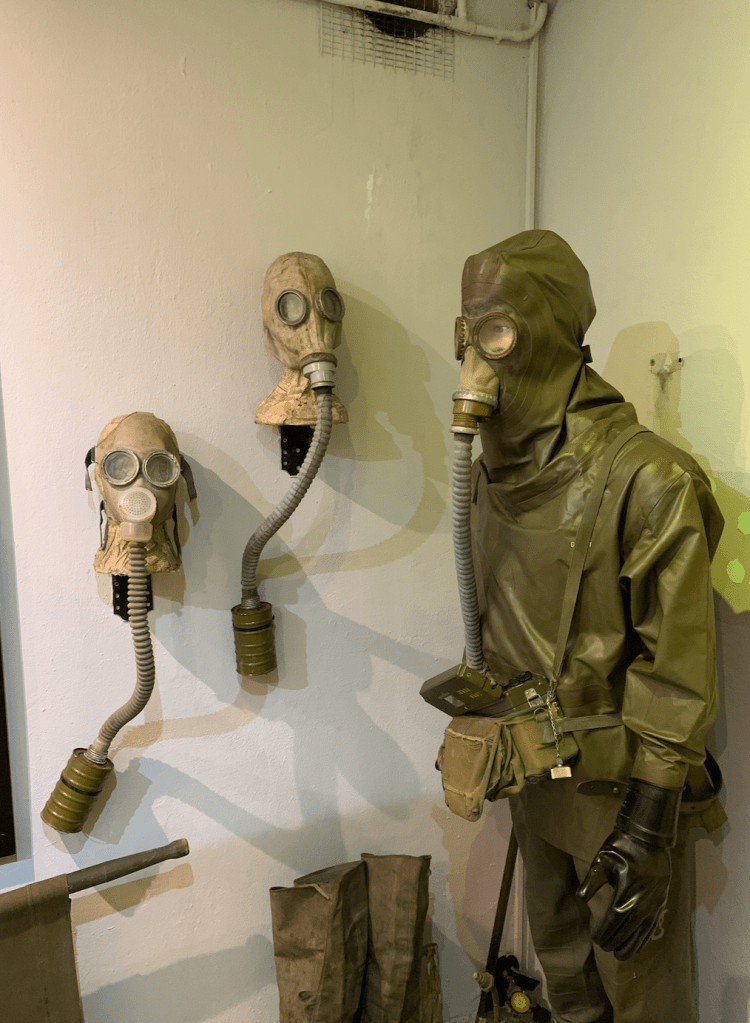
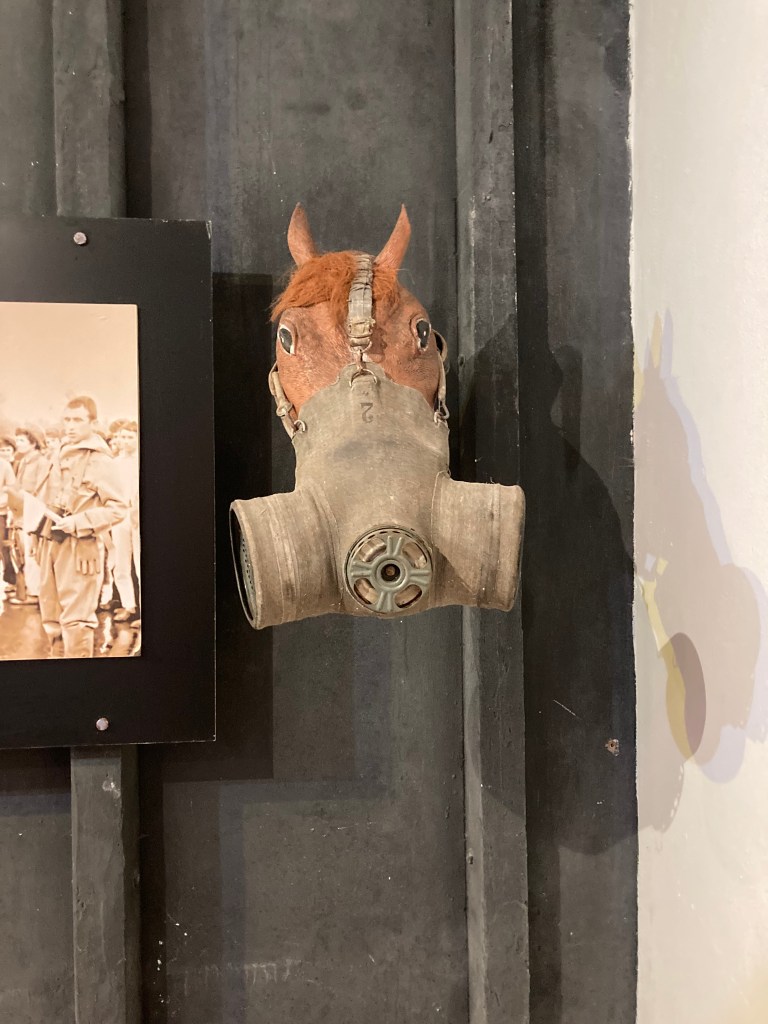
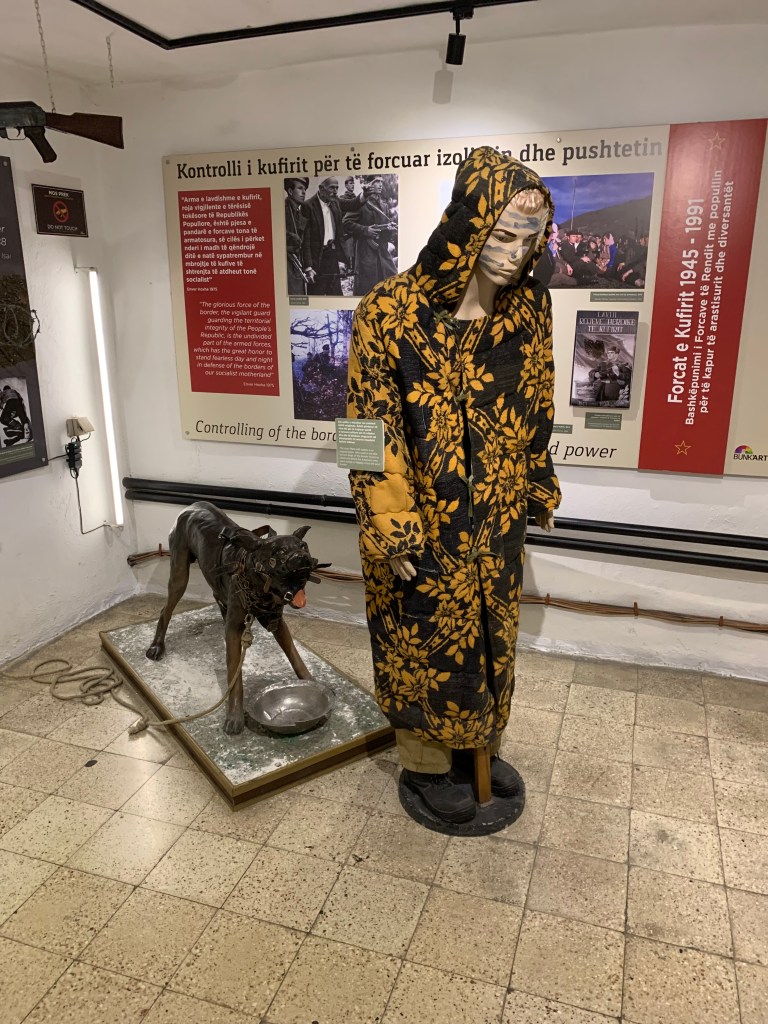
It is hard to describe how massive the bunker is; multiple very long hallways, a large assembly room and 106 rooms now telling the story of the surveillance, torture, murder, propaganda, constant threat of chemical warfare and the use of concentration camps for Albanian men, women and children.

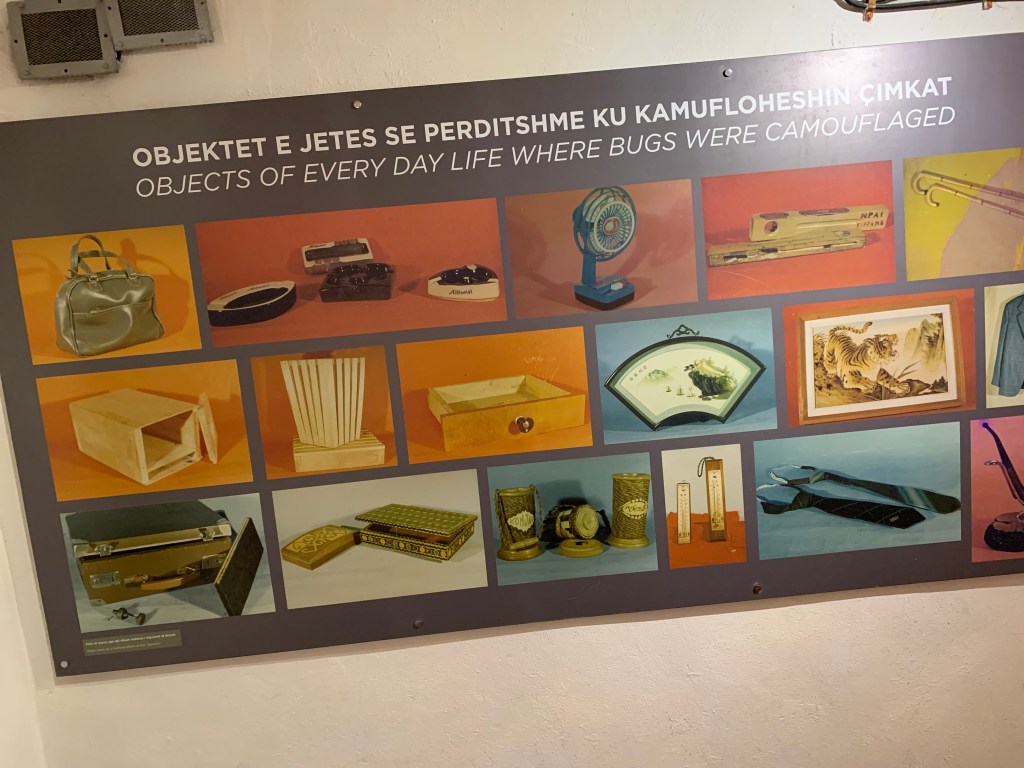
The exhibits did an amazing job of emphasizing the absolute constant day to day control exerted by the government from surveillance,

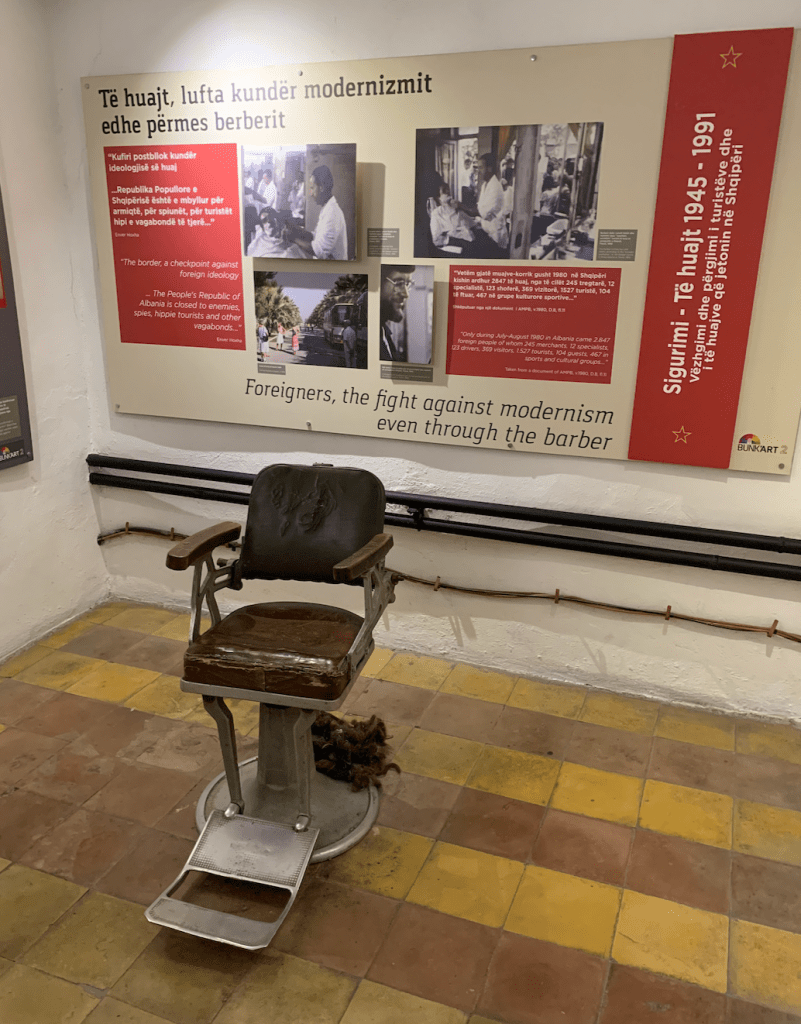
to forced haircuts (to combat foreign influences),

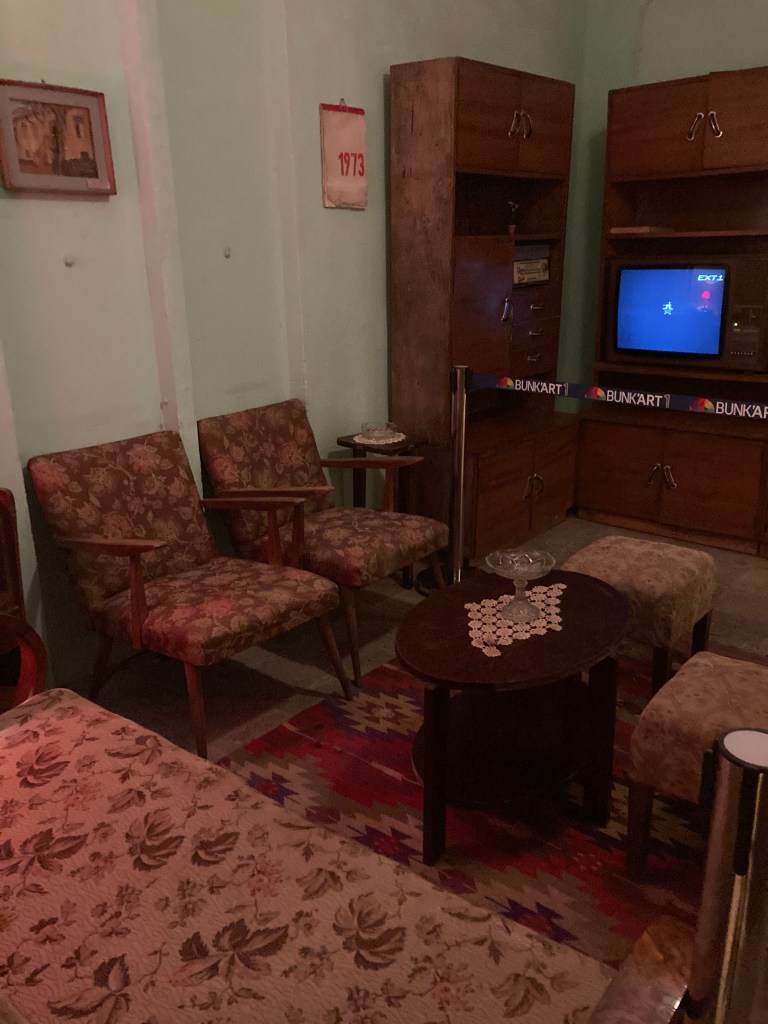
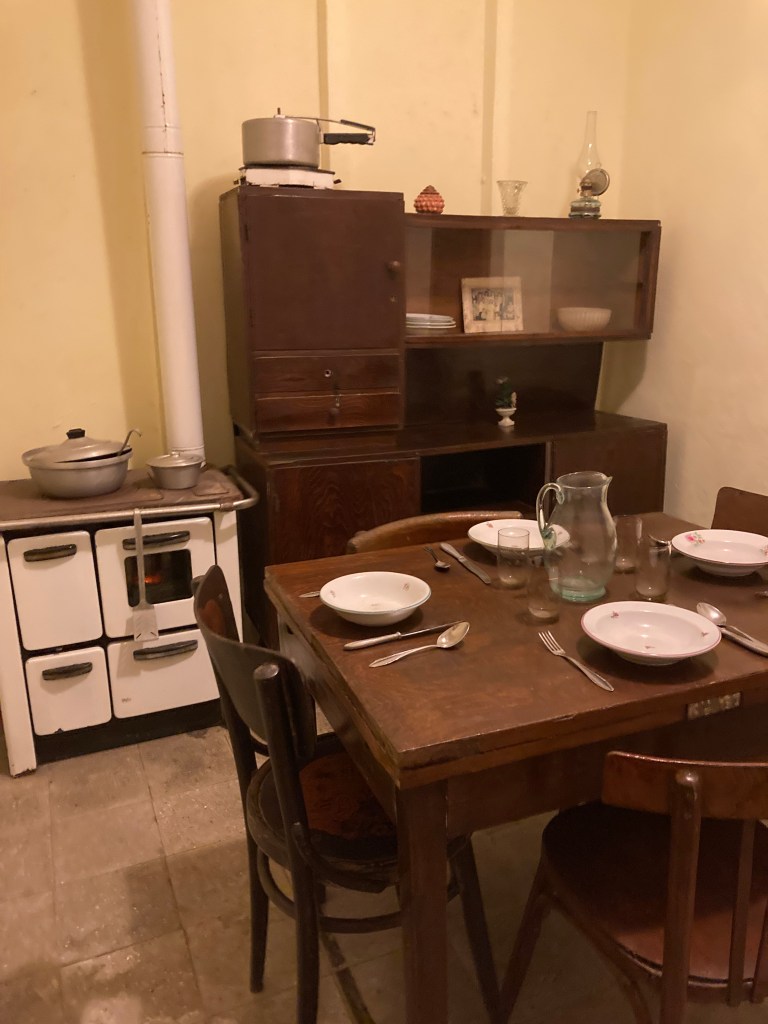
to the standardization of everything people owned and encountered- everyone had the same furniture and kitchen.

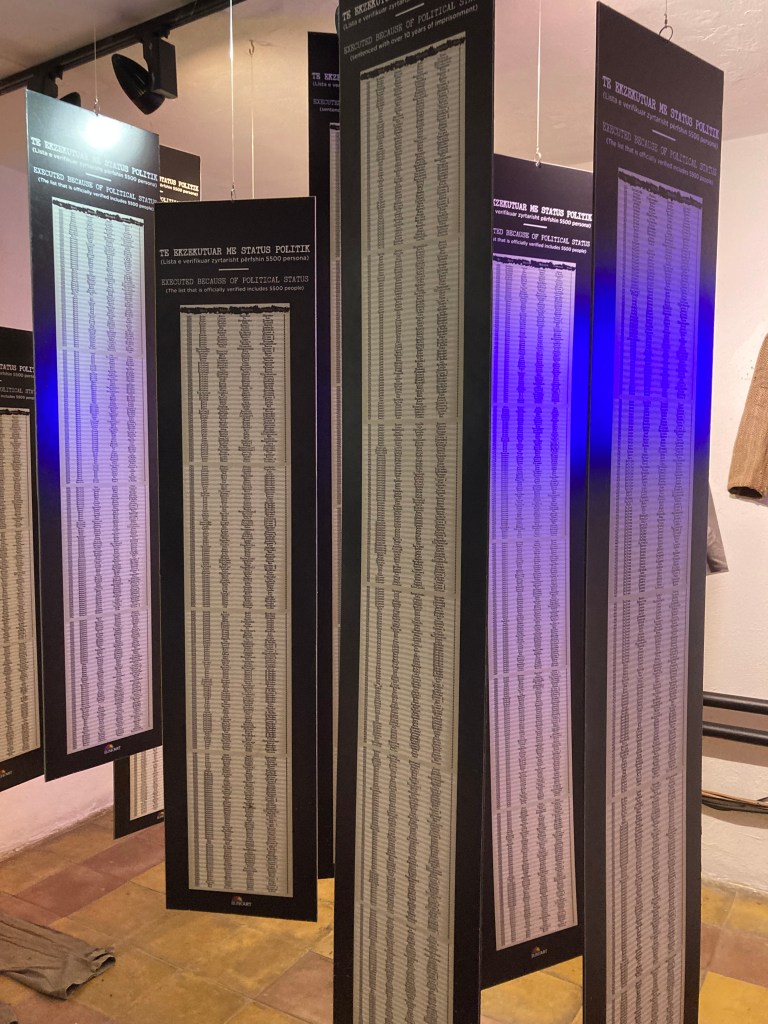
The bunker in town told other stories, and shared names and images of the thousands of people killed by Hoxha. While this bunker felt smaller, it actually was five stories deep.

The bunkers were filled with fake mustard gas mist and the sound tracks of screaming, sirens, singing and bombing. .  Incredible.    Just very powerful, evocative and overwhelming documentation of the years of horror the Albanian society endured.

Leaving these, walking in a very vibrant city, felt very significant.

We found the book Free by Lea Ypi to be a great companion through Albania. https://en.wikipedia.org/wiki/Free_(Ypi_book)

Leave a Reply

The Brrrritish Coast

We are predominately off-season winter travelers, so weather has a huge influence on our perception of place. Usually the effect is positive, like when we strolled through an empty, beautiful and warm (inside) Uffizi Gallery in Florence in mid January or not needing reservations to go to the Acropolis, again in January (plus all Greek archeological sites are 1/2 off in winter). Croatia for us was a moody, snowy Zagreb cemetery, warm Raki in an old stone apartment in Split rather than a beer on the beach. The primary negative effect is bad weather! We need to be outside, we like to be outside, we bus, train or walk everywhere and dogs (and Nick) need to be walked, so we are outside. Being Californians we only have bad winter clothes. Yes, we could buy warmer clothes, but generally we don’t. Patricia’s solution is to get hand-me-downs from daughters and sisters who live/have lived in cold weather. Nick’s solution is to basically empty his backpack and wear all his old bad winter clothes all at once, 6-7 layers (“it works because the holes don’t overlap”). A walking closet as opposed to a walk in closet.
Another solution is to seek out more temperate locations. As we were headed to Liverpool to spend Christmas with our daughters, we saw there was a dog sit on the southwest Somerset coast for a week before Christmas. We thought it might be warmer than Liverpool in Northern England. So, why not? Plus the description was so lovely; a seaside Victorian house right across the street from the beach with two smallish dogs. Did we say ignorantly thought? So from Paris, we rode the Eurostar train under the English Channel and headed to Burnam-on-Sea.

Burnam-on-Sea was the epitome of decay, English style.  A classic seaside resort gone to seed.  Faded in every way. It contained every British trope but not necessarily in a good way.

Burnam-on-Sea is just below the larger Weston-super-Mare, bizarre name apparently derived from its ancient Roman name (Super Mario?). Burnam-on-Sea sits at the mouth of the River Parrett which flows into the Bristol Channel before it reaches the Irish Sea. It boasts the second highest tidal change (49 feet) in the world, with the first being the Bay of Fundy in Nova Scotia. Apparently we are tidal junkies, always searching for the highs and lows, as we actually went to the Bay of Fundy just because it had the highest tidal change in the world (52 foot change)! https://chosenfugue.xyz/2023/03/12/lohw-canada/ We also went to Gloucester, England to see the Severn River Tidal bore https://chosenfugue.xyz/2018/10/12/wonders-man-made-and-natural/. Maybe we are not the best people to ask for destination advice? And our stay here might confirm that.

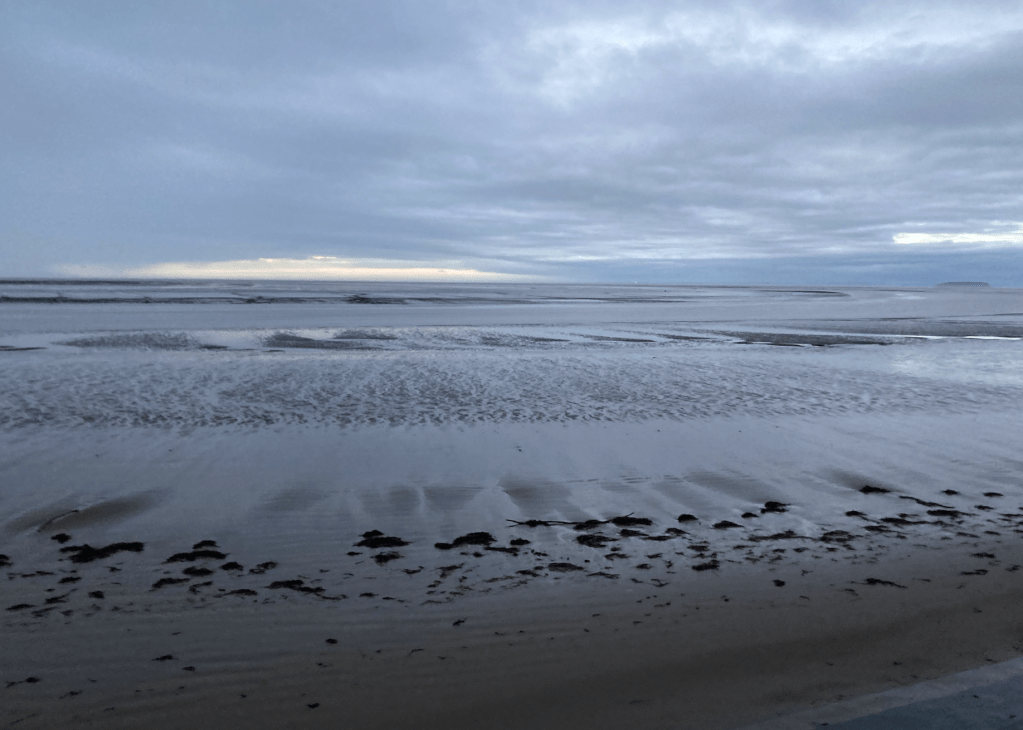
When the tide is low you can see the river still flowing. When the tide is high, the river runs under the water and contributes to the dangerous undertow.

These extreme tides (the bay tide can recede over 1.5 miles) are not without risk.  The gigantic tidal changes coupled with a severe undertow results in extremely dangerous conditions, especially for a seaside resort. If the out going tide doesn’t pull you away, there is even greater danger if you walk out as the tide goes out and then get stuck in the mudflats, literally quicksand. People get trapped and slowly sink or get caught and even drown as the returning tide comes rushing in. Lifeguards on special hovercrafts and rescue helicopter are always on watch and ready to rush in.

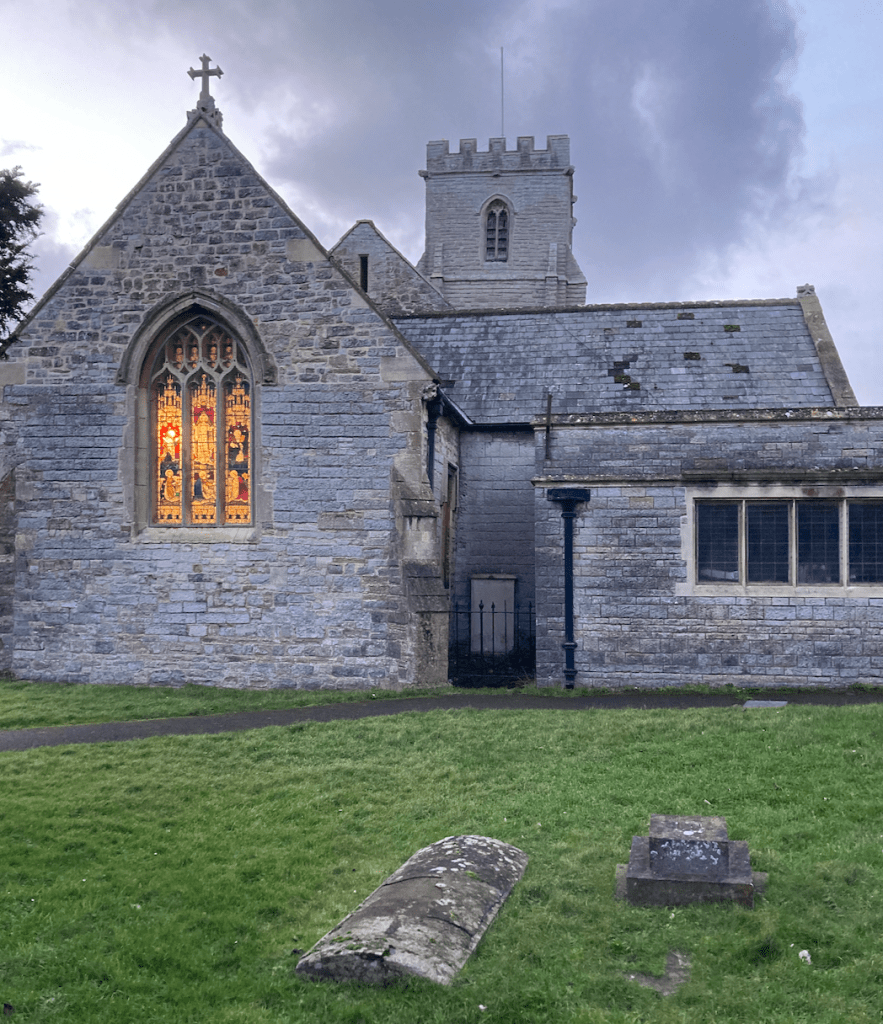
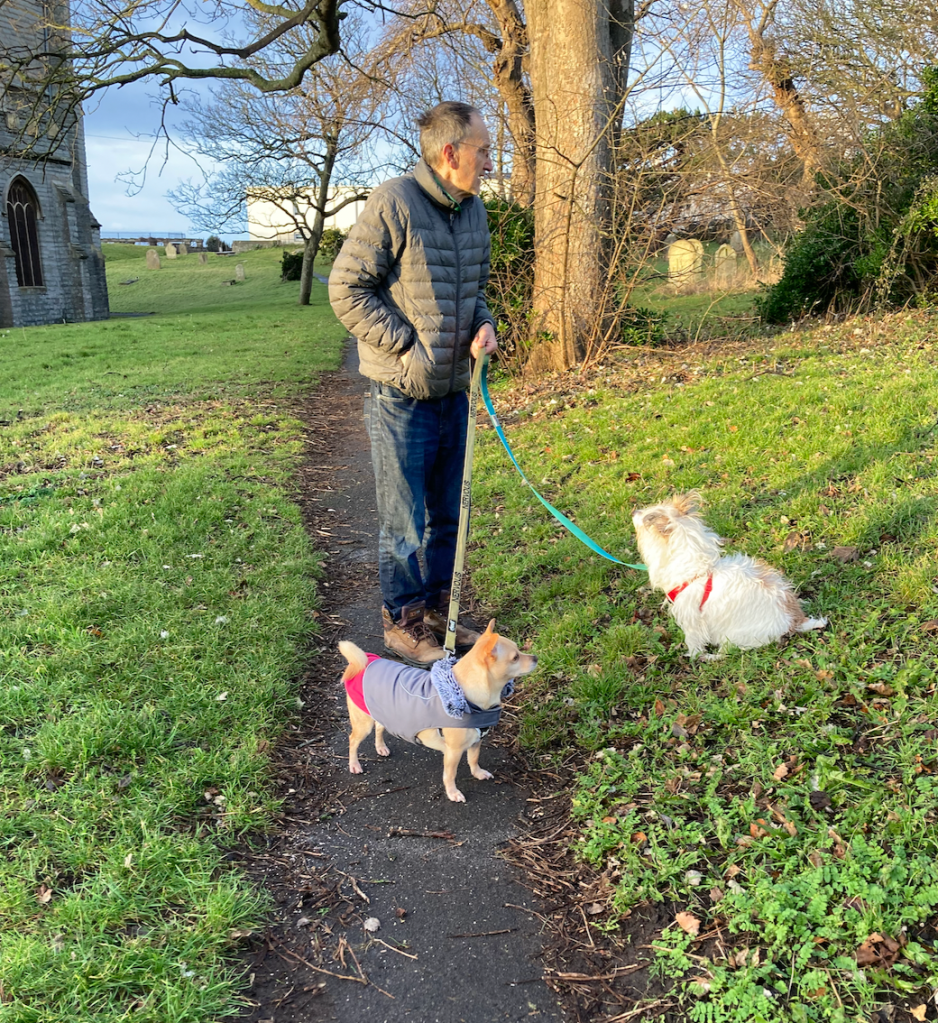
On our introductory walk through town, our lovely pet owner told us to always keep the dogs on the leash when near the water and an eye on the tide and then proceeded to point out gravestones of Victorian children lost at sea as we walked through an old cemetery at the slightly creepy church.

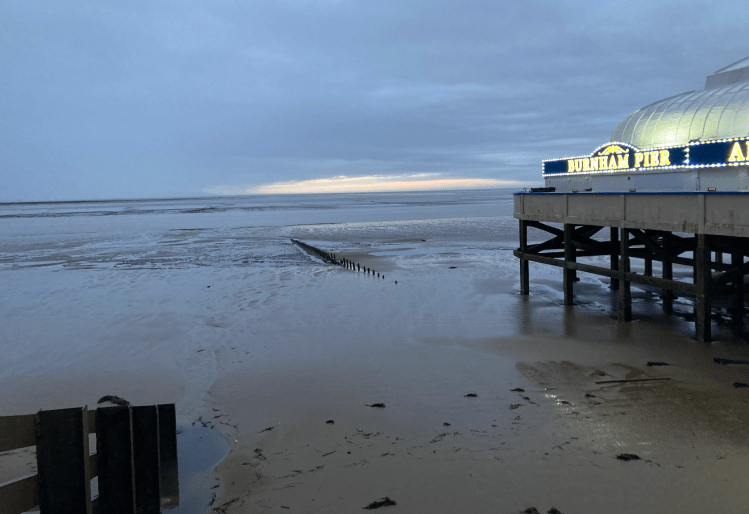
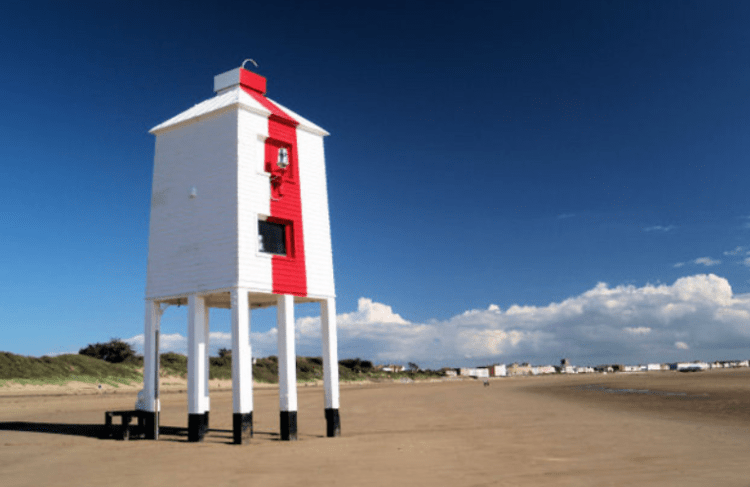
She also pointed out the arcade on the pier. Reportedly the UK’s shortest pier, although the country’s piers peers dispute this claim acknowledging it as a pavilion, not a pier. Burnham-on-Sea is also famous for its low lighthouse built in 1832. It stands 36 feet high. It may have been higher in 1832, but maybe slowly sinking into the quicksand? (pic from Wikipedia)

After the warning walk, we went with our sit host for dinner at the local Chinese restaurant, where she called ahead to secure a table for our party of 3. We were the only people in the restaurant for the entire time. On our way there, we passed the touristy center of town, which was 2-3 blocks of the main street. A row of charity shops, a Costa coffee, a souvenir shop with beach supplies, an Army surplus store, a B&M discount store and of course, a chippy (we are in the UK). Welcome to Burnam-on-Sea.

The dogs were cute while we were at home, but turned into raging wolves whenever we passed another dog on the street. That was not the only issue with going out. It was unclear what was worse: the Hounds of the Baskervilles flying like kites in the gale-force , the risk of being blown into the sea and quicksand, even from blocks away or a wind induced mid air dogfight. In addition to the hurricanesque winds, torrential downpours added another dimension, with all 6-7 layers of clothes getting soaked through waterproof gear. The weather may have explained the need for an Army Surplus store.

Burnam-on-Sea helped us to acclimate to the UK before meeting up in London with the US contingency coming to Liverpool for Christmas. We successfully met up and were on our way to spend Christmas with the Liverpool based contingency.

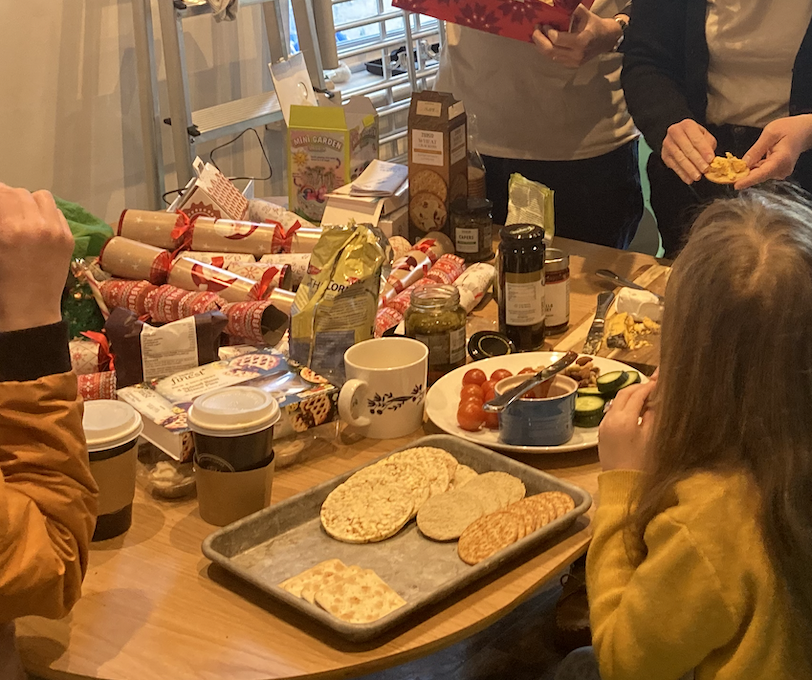
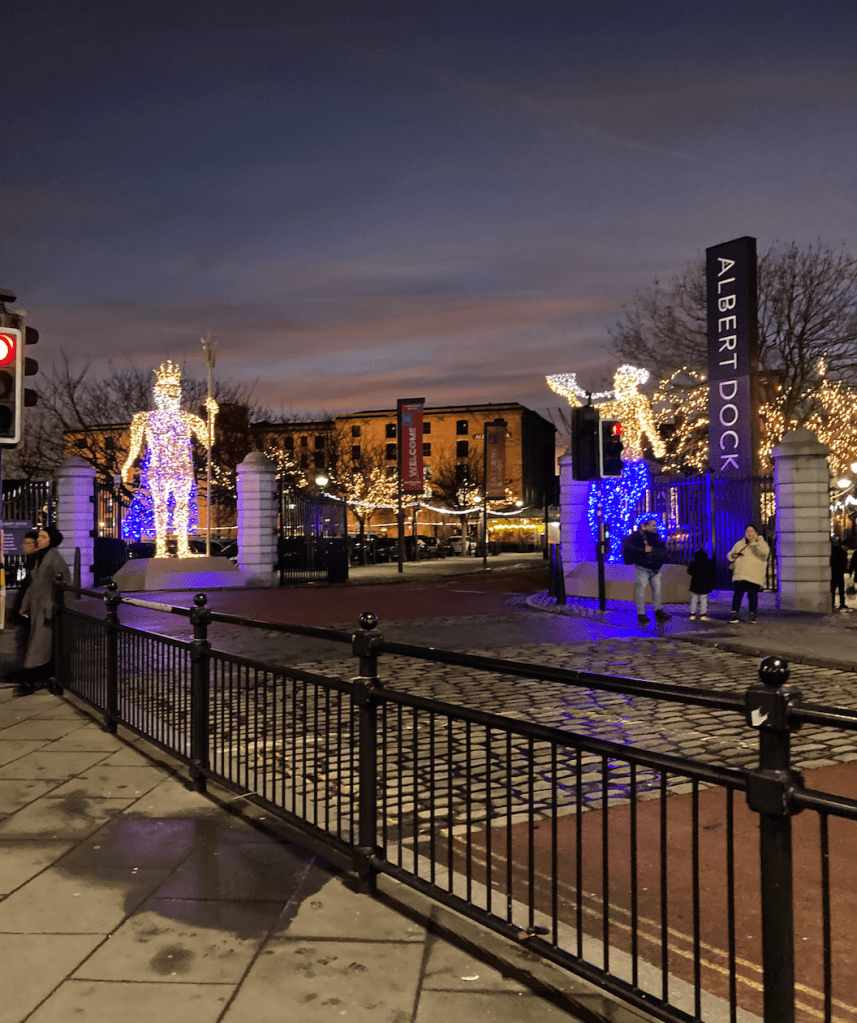
Started out strong with exploration of British holiday traditions

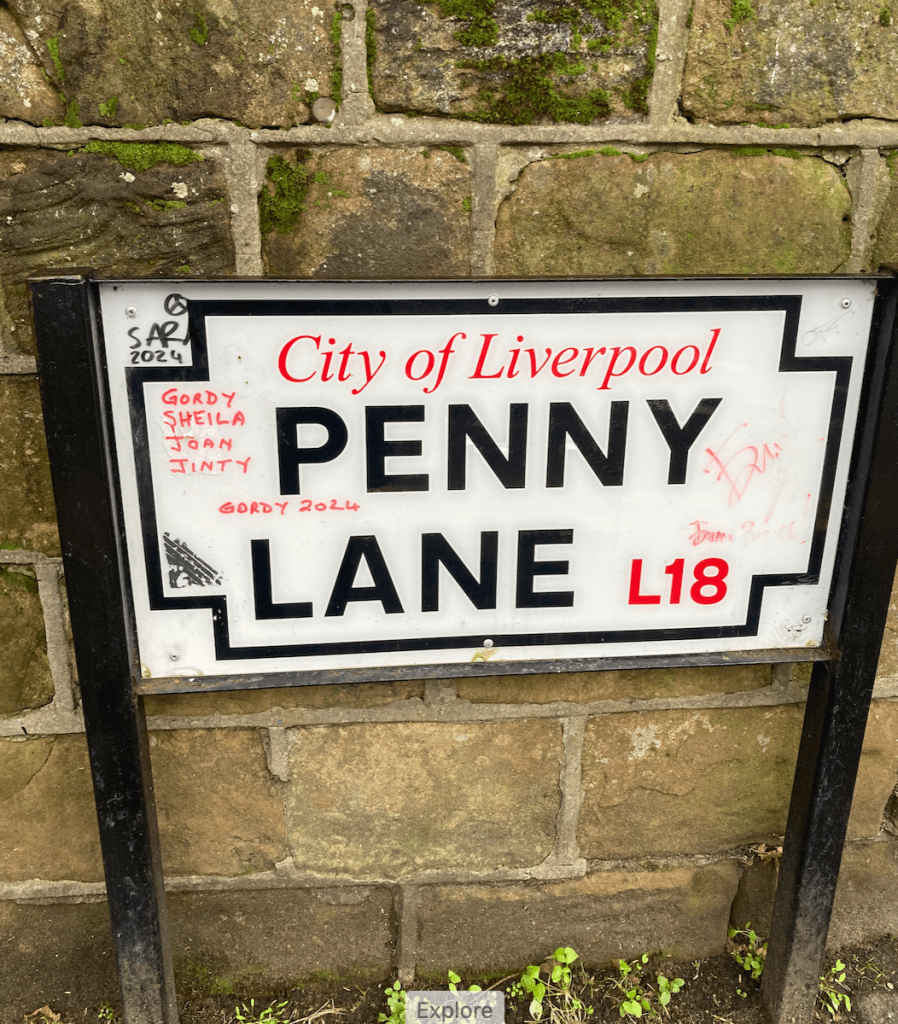
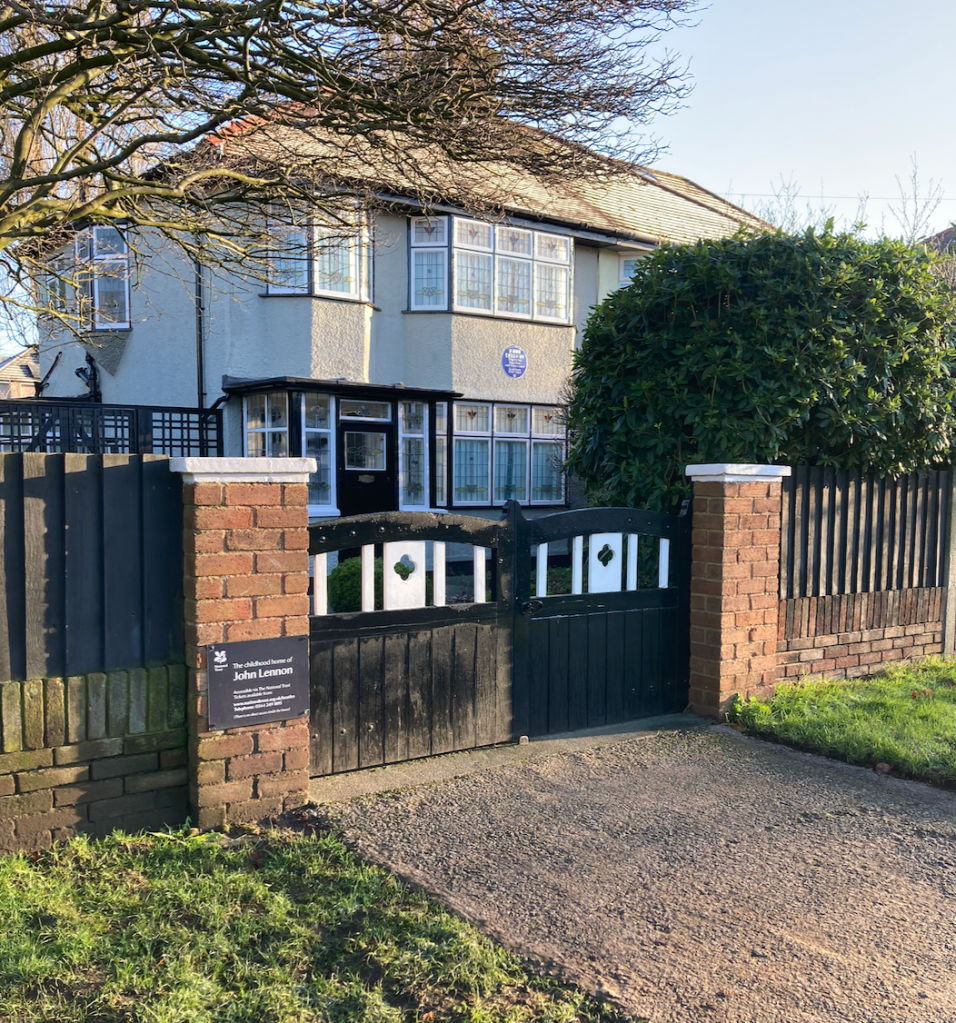
We tempered tradition with Beatlemania ( after the visitors left, we eventually went to each Beatle’s childhood homes) and song inspired sites.

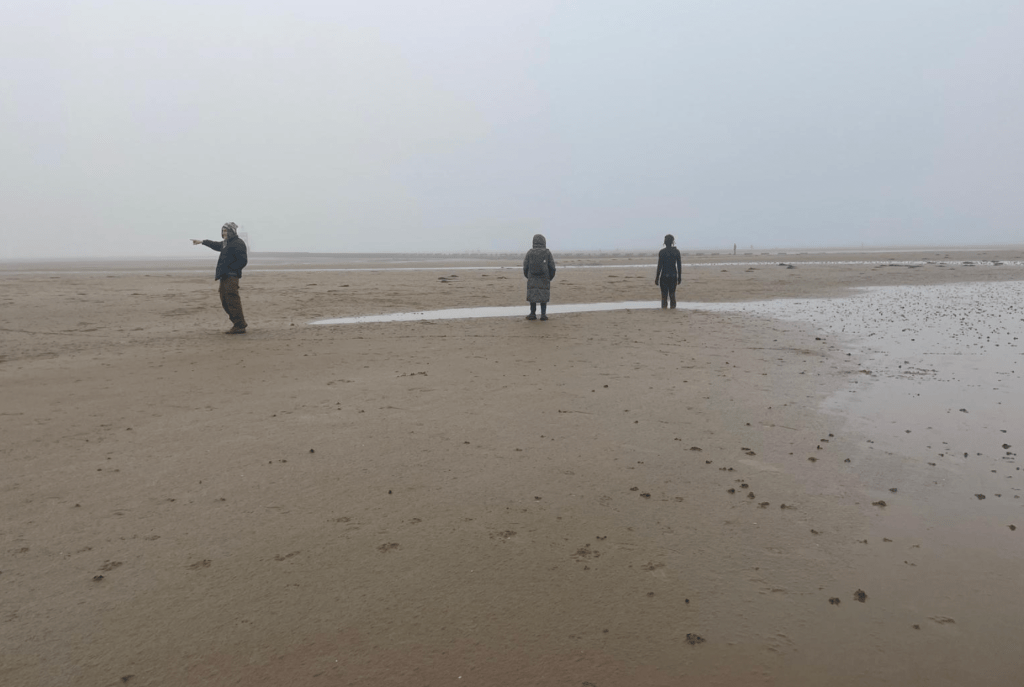
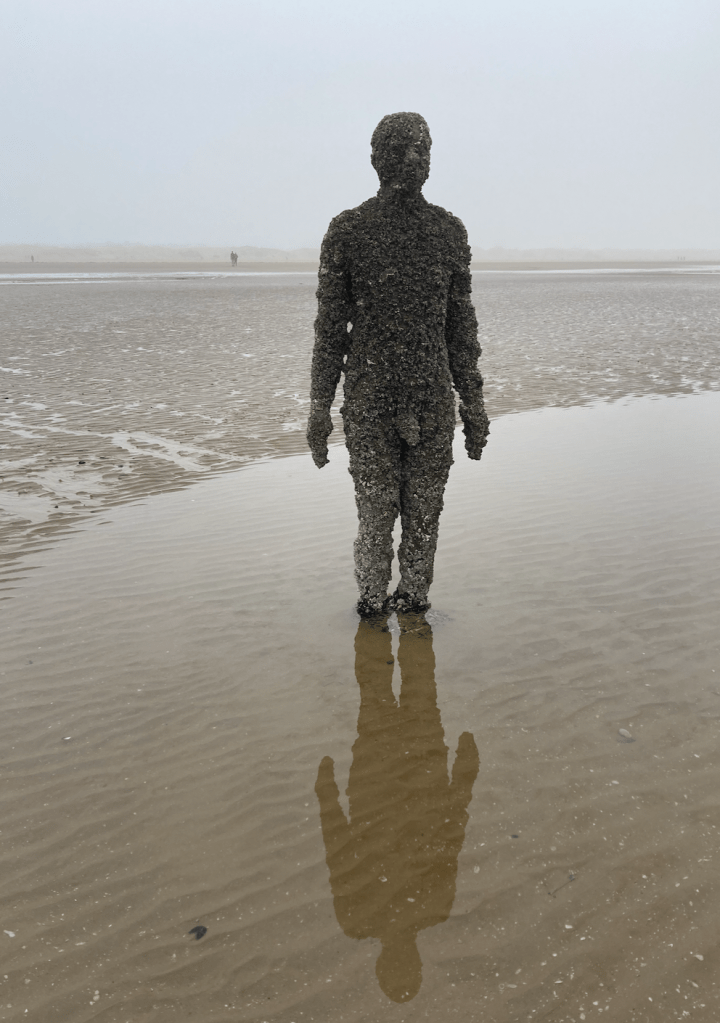
Plus we shared our favorite Liverpool tourist destination, Crosby Beach, https://chosenfugue.xyz/2018/10/21/liverpool/

which also has very low, low tides and the Antony Gormley statues https://en.wikipedia.org/wiki/Another_Place_(sculpture)

Nick after falling in quicksand?

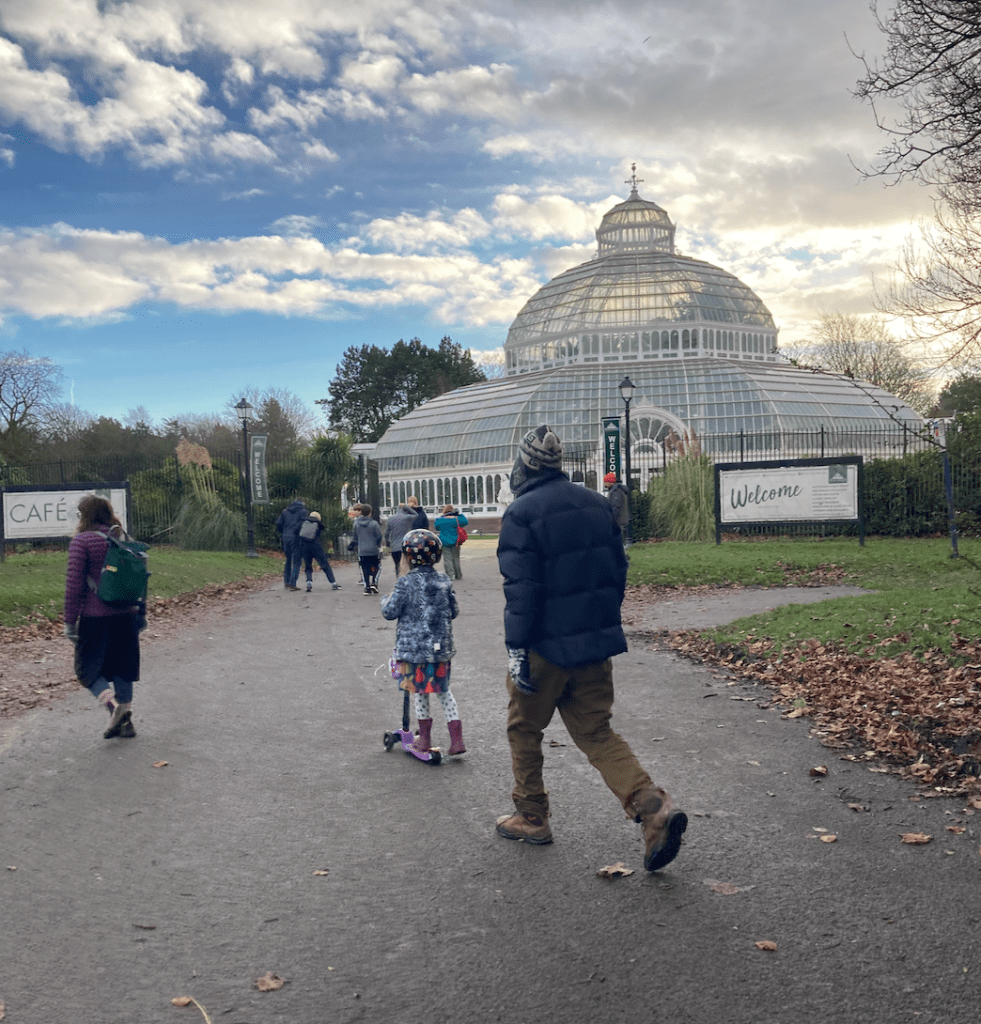
After Burnam-on-Sea, Liverpool felt almost temperate and we could enjoy classic English parks.

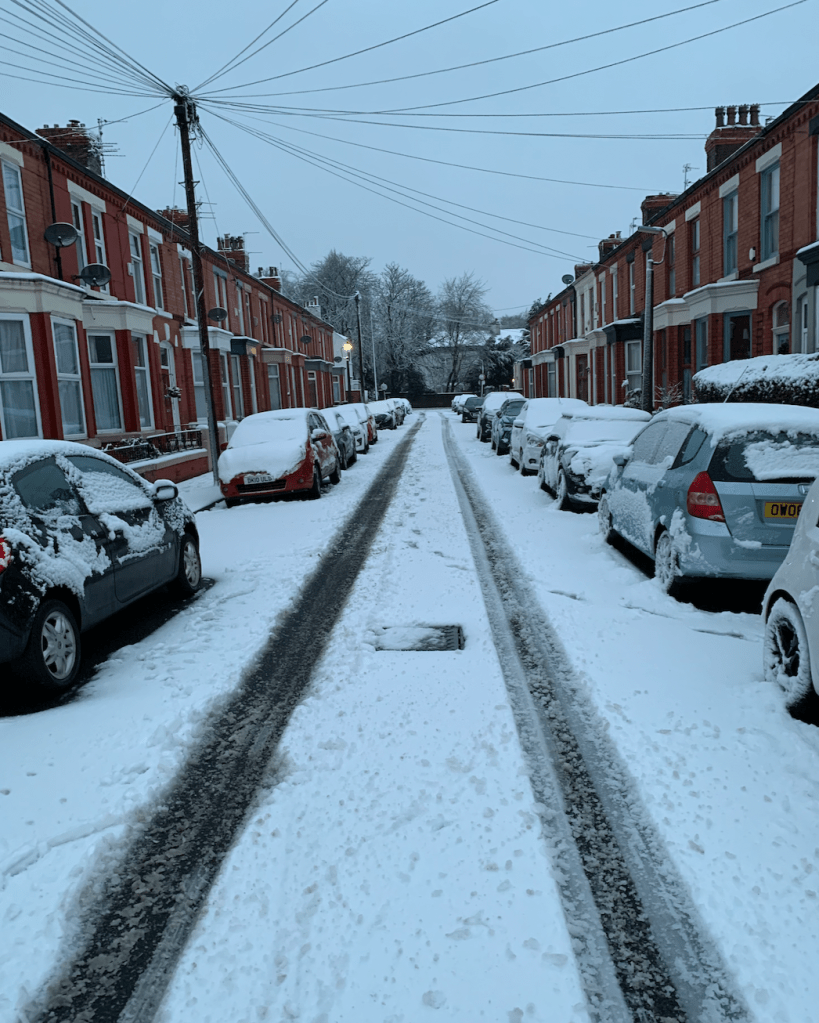
But suddenly, we were reminded this was the UK, when we woke up to a slightly atypical snowfall! That was Christmas 2024!

Leave a Reply

Final Flâneur in France

Mainly what we do is walk.
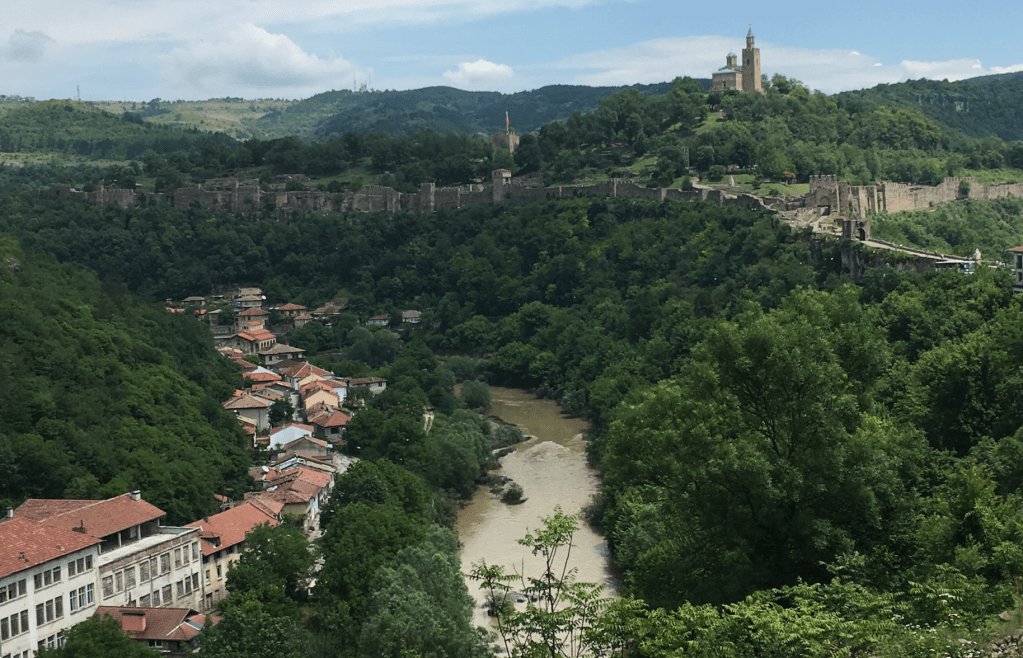
Part of the joy of our endless fugue through Europe is walking, just walking. Cities and countryside.  The pleasure is being startled by ineffable beauty. You turn a corner in Veliko Tarnovo, Bulgaria and see the Tsarevets Fotress on the hilltop.https://chosenfugue.xyz/2019/06/18/into-the-cyrillic-part-1-bulgaria-interior/

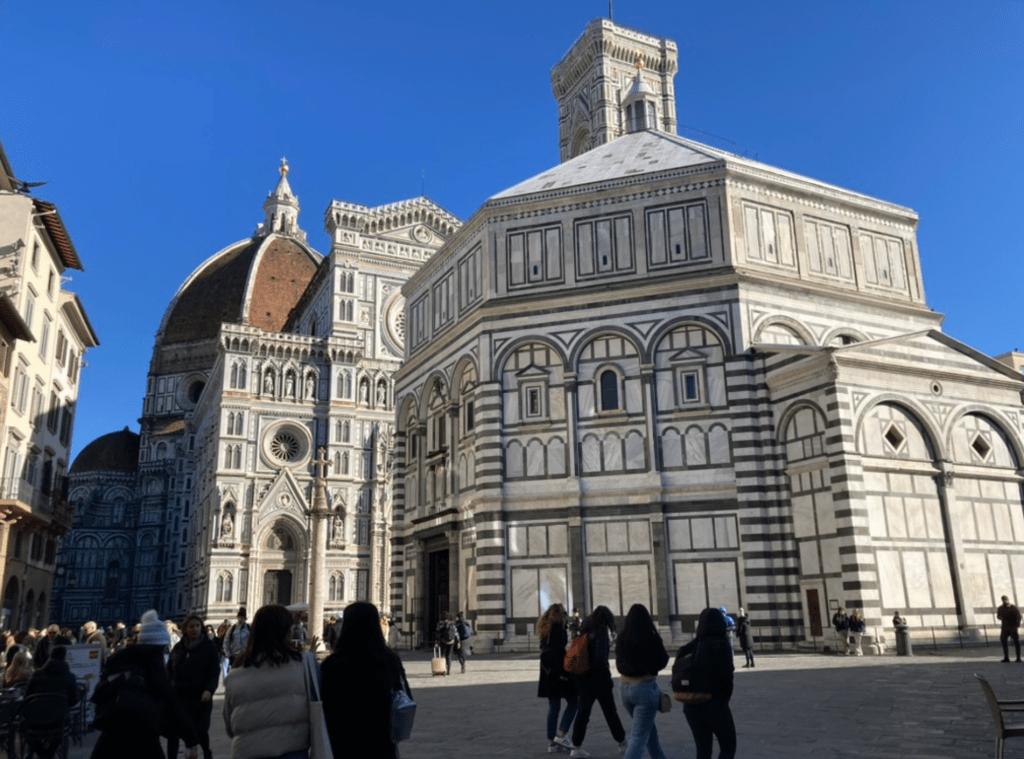
You leave the train station in Florence, walk a few blocks, enter the Piazza del Duomo and the Cathedral, Giotto’s Campanile and Baptistery of St. John are right in front of you. You understand the word stunning. https://chosenfugue.xyz/2023/04/11/frenzied-firenze/ It is not just the main attractions, but also the everyday beauties you pass as you walk.

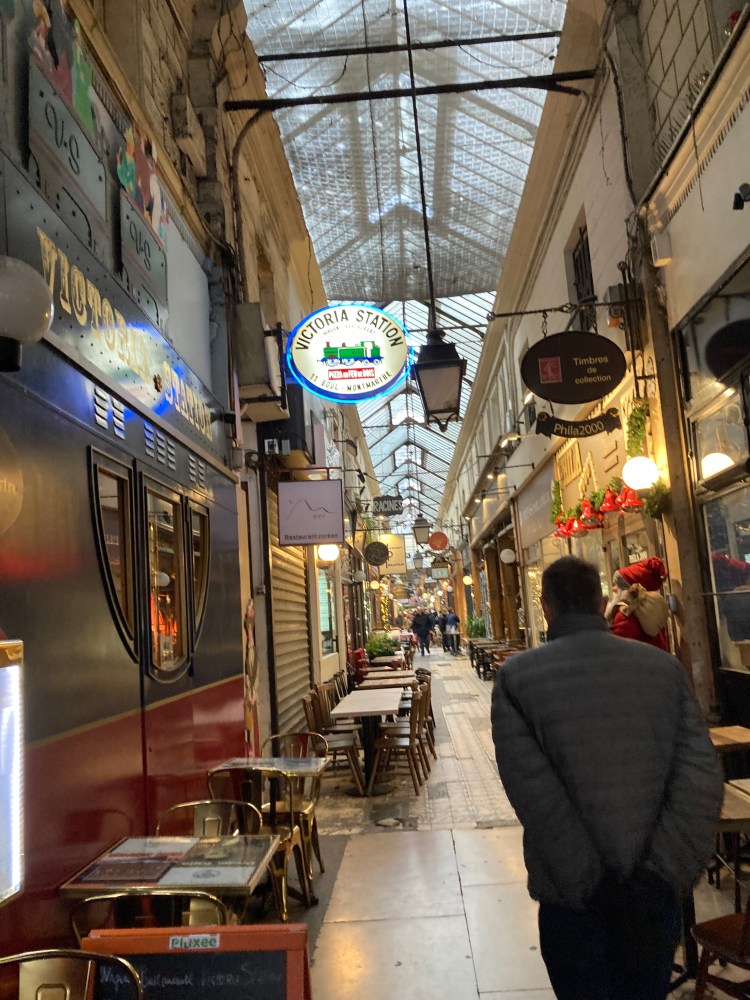
New York City, San Francisco (even with the hills) are great walking cities, but Paris is better than all of them.  The art of flaneur was invented in and for Paris.

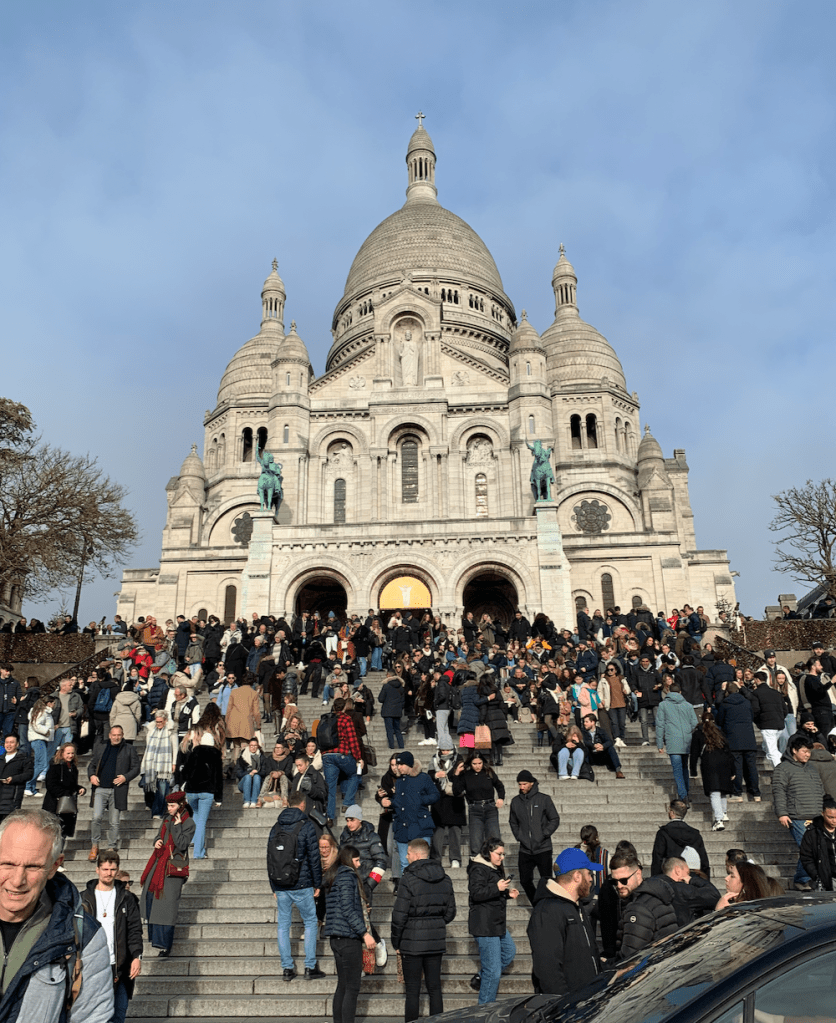
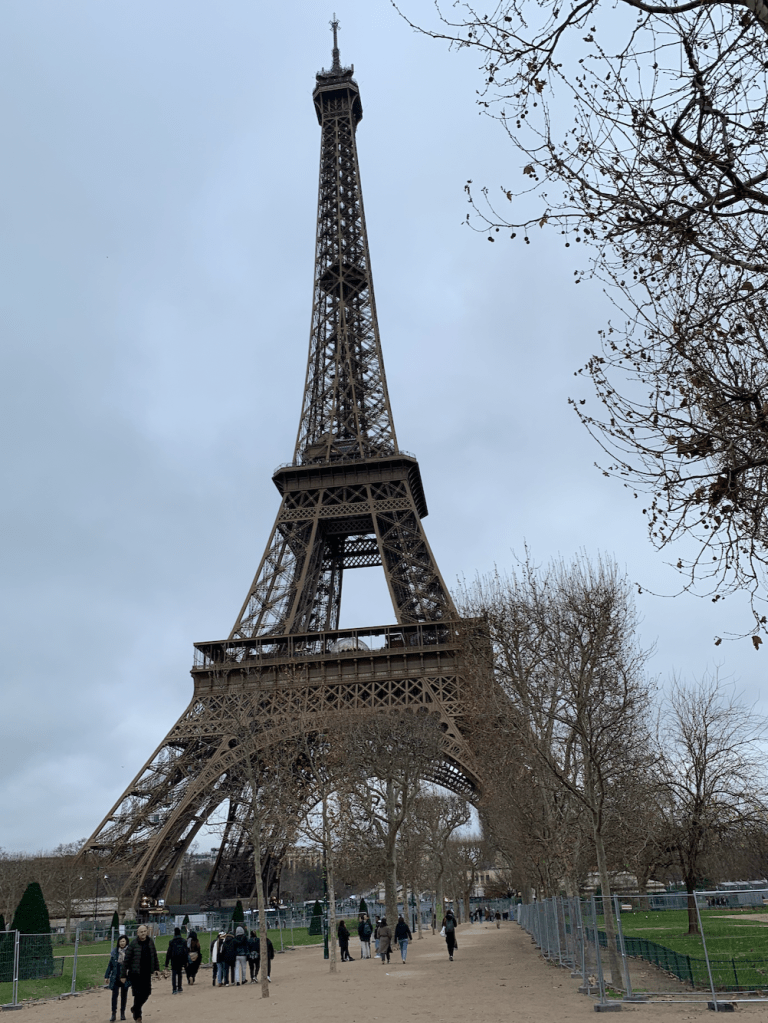
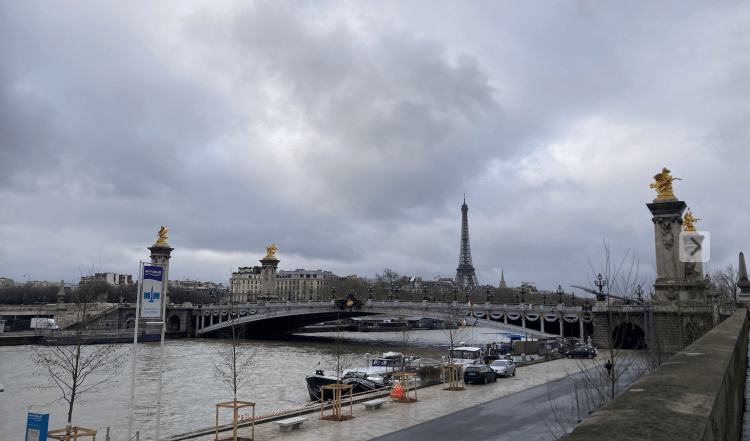
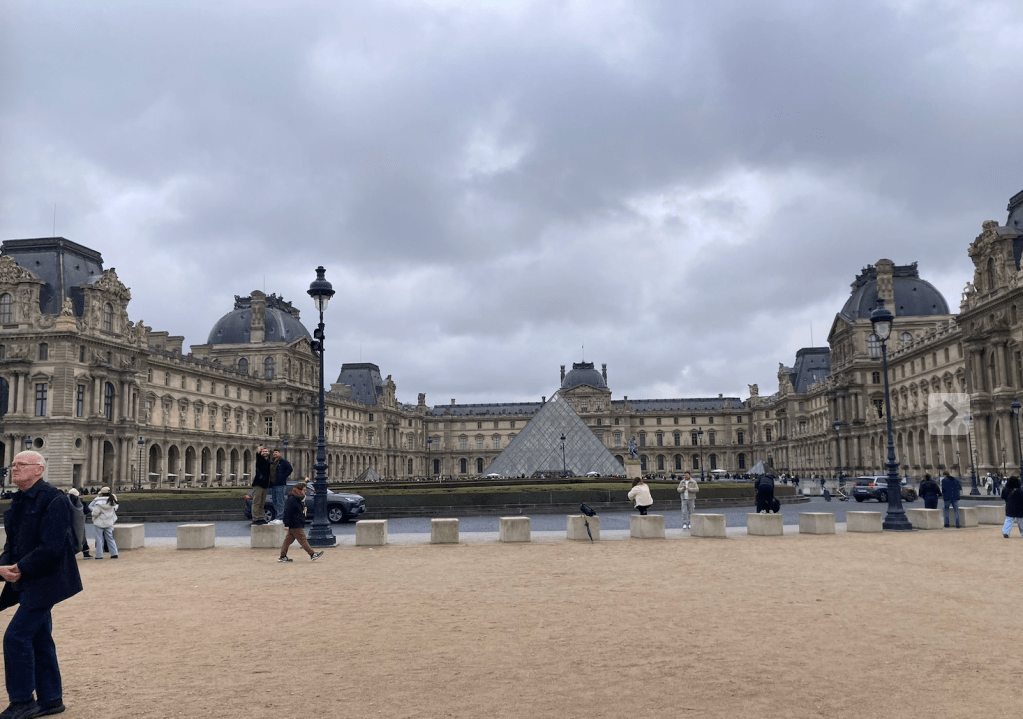
The expanse, the history, the elegance just leads you to wander. We didn’t go to any museums, no fancy restaurants, no tours, no trip up the Eiffel Tower.

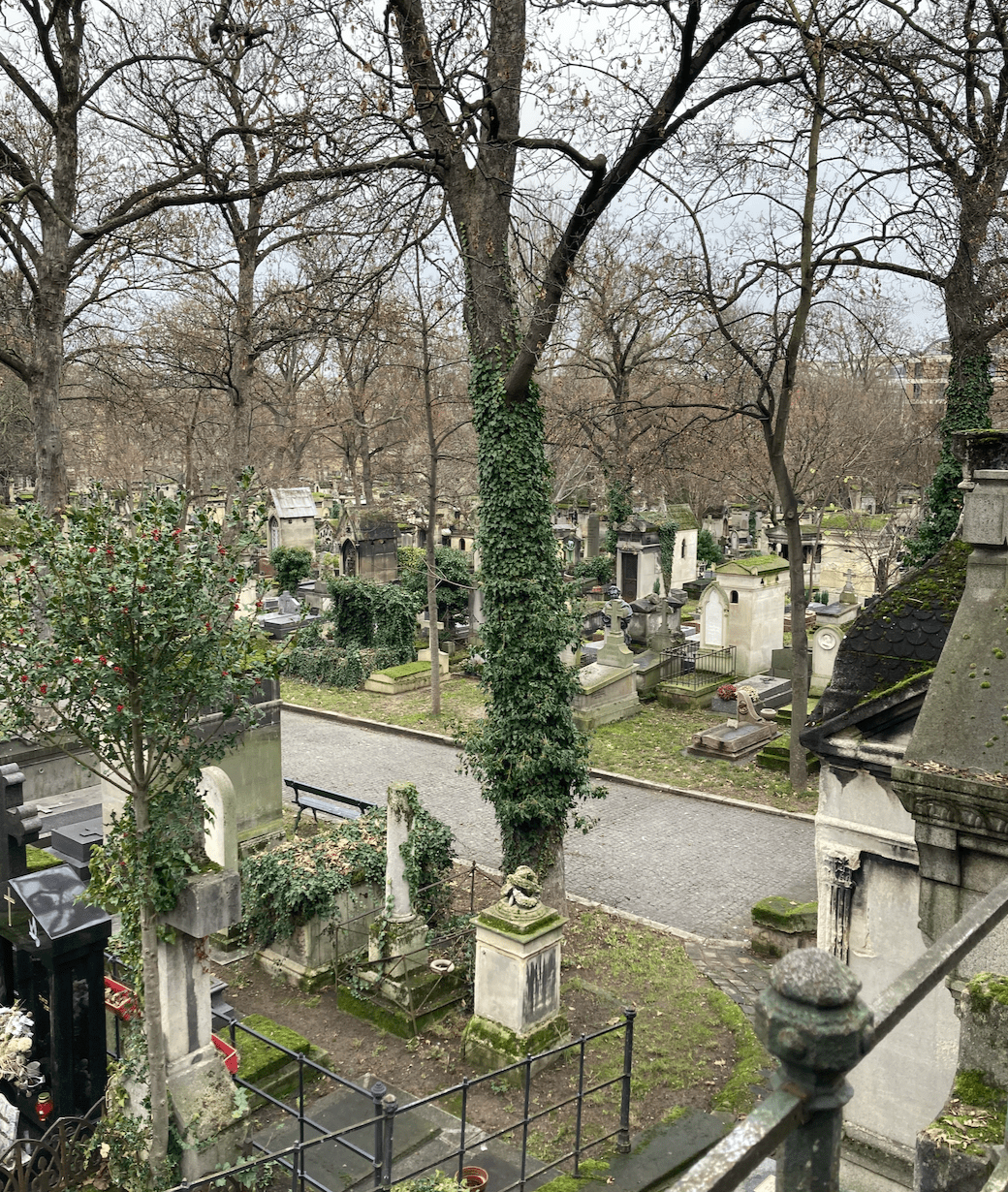
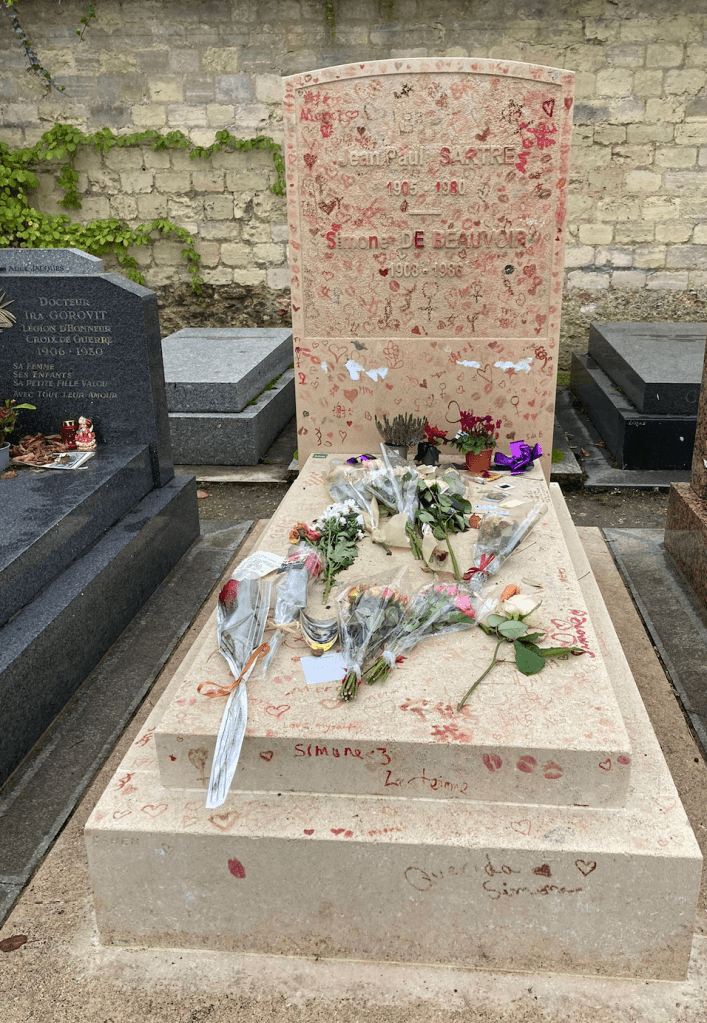
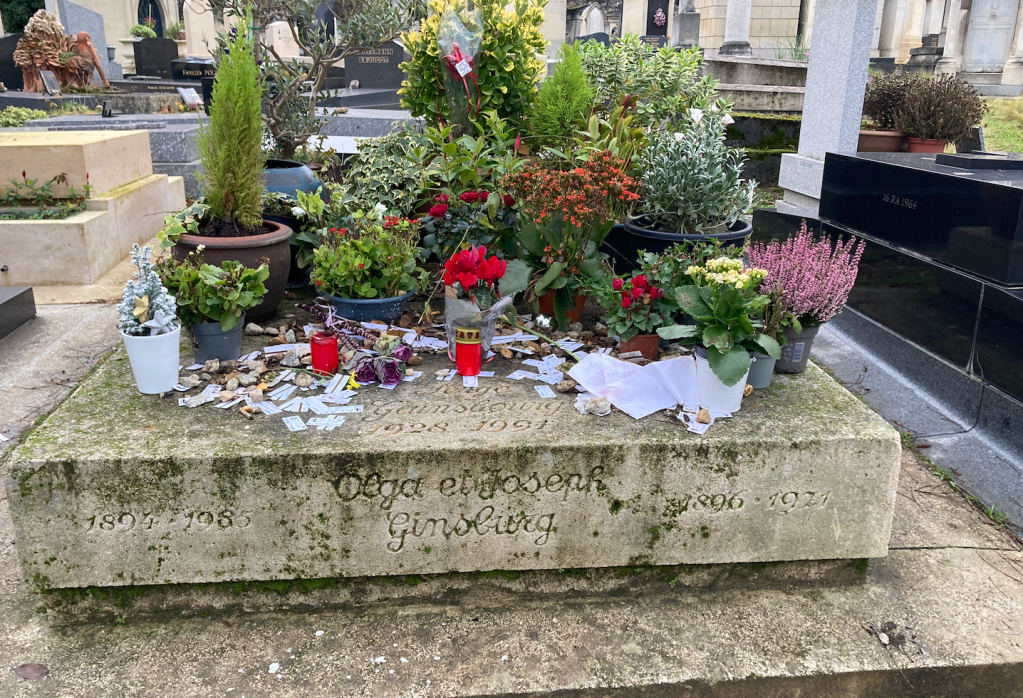
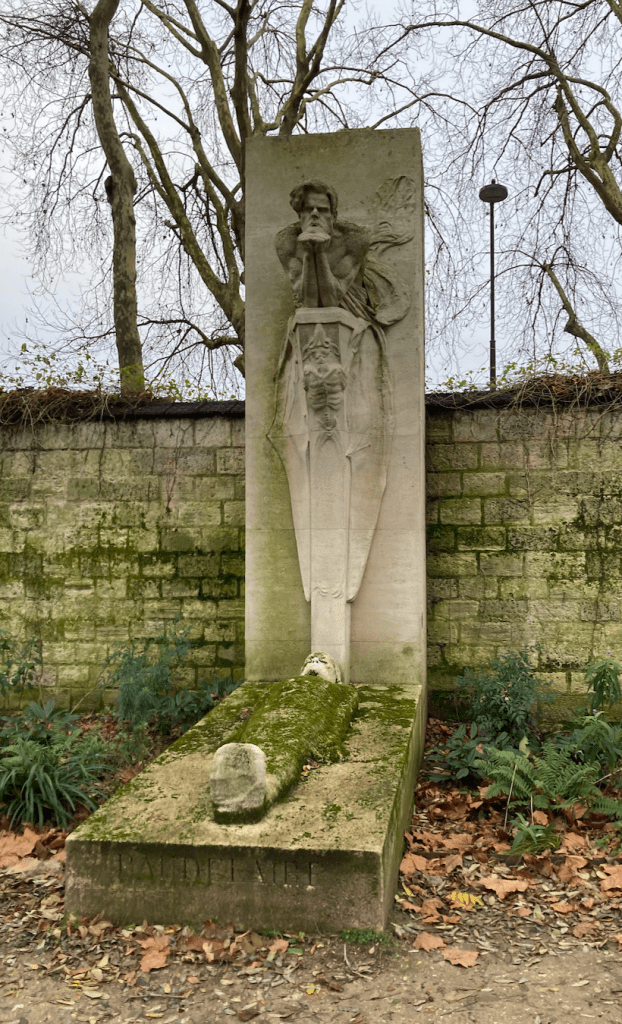
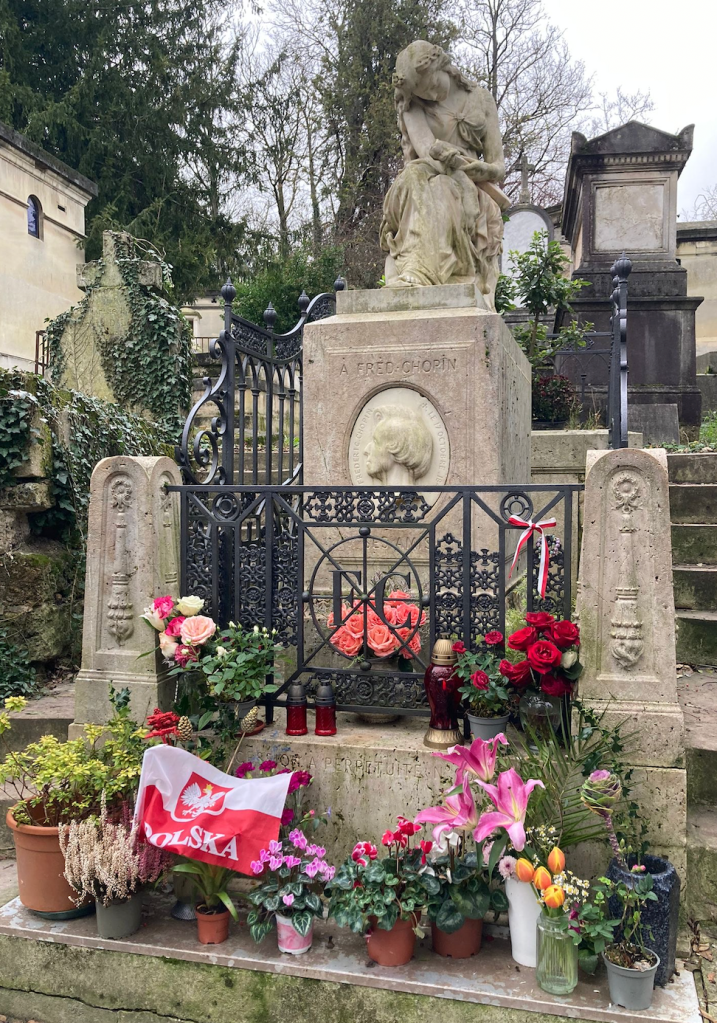
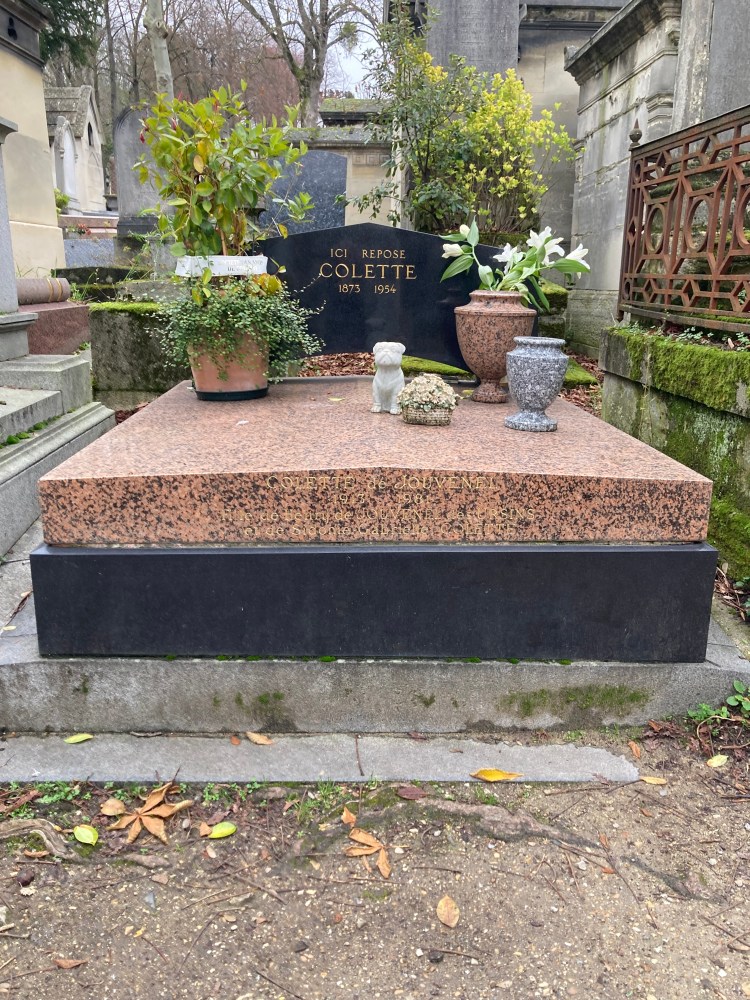
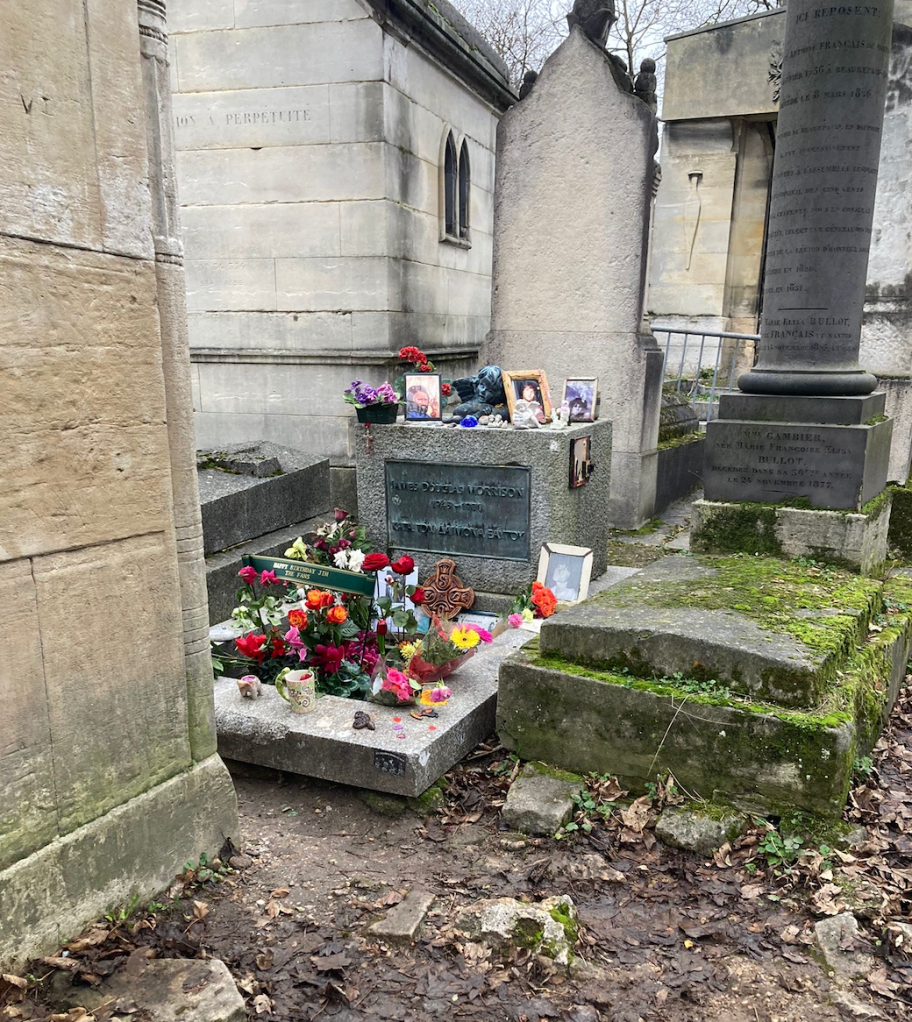
Walking through Paris, is following the footsteps of icons like Simone de Bouvier & Sartre, Serge Gainsbourg, Truffaut, Baudelaire, Chopin, Collette, Jim Morrison and Oscar Wilde and countless others.

Simone + Sartre

After our first fugue from 2018-2020, it seemed odd that we had not really explored the heavyweights- Italy and France. We checked off Italy in January 2024 and it just kind of felt like, oh now we should finish up France, we did not expect how great these five weeks would be with vast differences between regions, between villages, towns and cities. Time traveling from cave paintings to roman amphitheaters to Haussmannian boulevards https://en.wikipedia.org/wiki/Georges-Eugène_Haussmann to the Eurostar cross channel trains. Emotionally, spiritually and artistically, satisfying

 Paris was the fitting end of our tour de France. We will be back.

A Date with Lyon

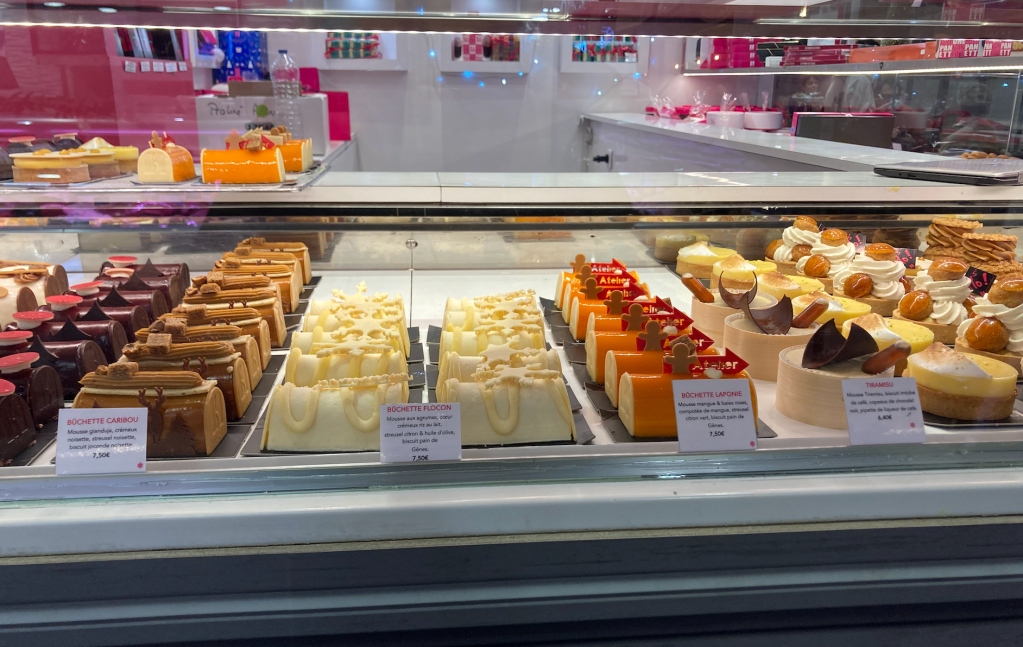
There is the assumption that as we fugue through Europe we are having these incredible meals- street fare, cafes, restaurants, Christmas market tastes, this is wrong.   Partly because our of diet restrictions: vegetarian (we do eat eggs and fish), gluten free, low oxalate, or any food starting with letters from the second half of the alphabet, so finding acceptable restaurants is difficult.  But the main reason is because Nick is still traveling with and living by his Fodor’s Europe on $5/day book from 45 years ago.  So our incredible meals are generally based on ingredients we find at local markets, in France it is Carrefour.

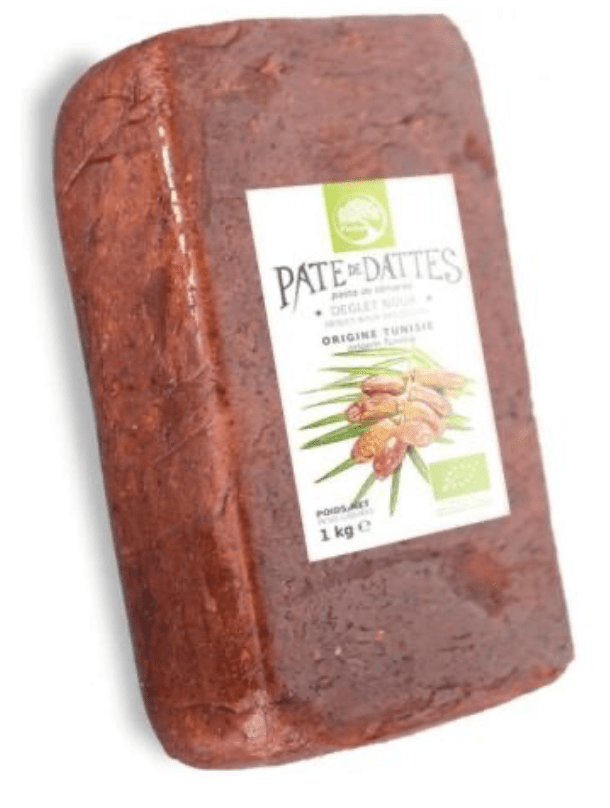
Just before we escaped the hellcats in Montpellier, Nick saw a kilogram (2.2 pounds) very solid block of date paste on sale at Carrefour which seemed like a great buy since dates are on our repeat market list.  However, we carry our lives on our backs, any extra weight in our backpacks can be back breaking.  But, we (mainly Nick) are always up for a new Herculean task of Olympic proportion.  We soon realized that date paste is extremely dense and a little goes a long ways. (context: our past obligatory food blogs:  https://chosenfugue.xyz/2023/05/01/obligatory-food-blog-rehashed/ and https://chosenfugue.xyz/2018/11/30/obligatory-food-blog/)

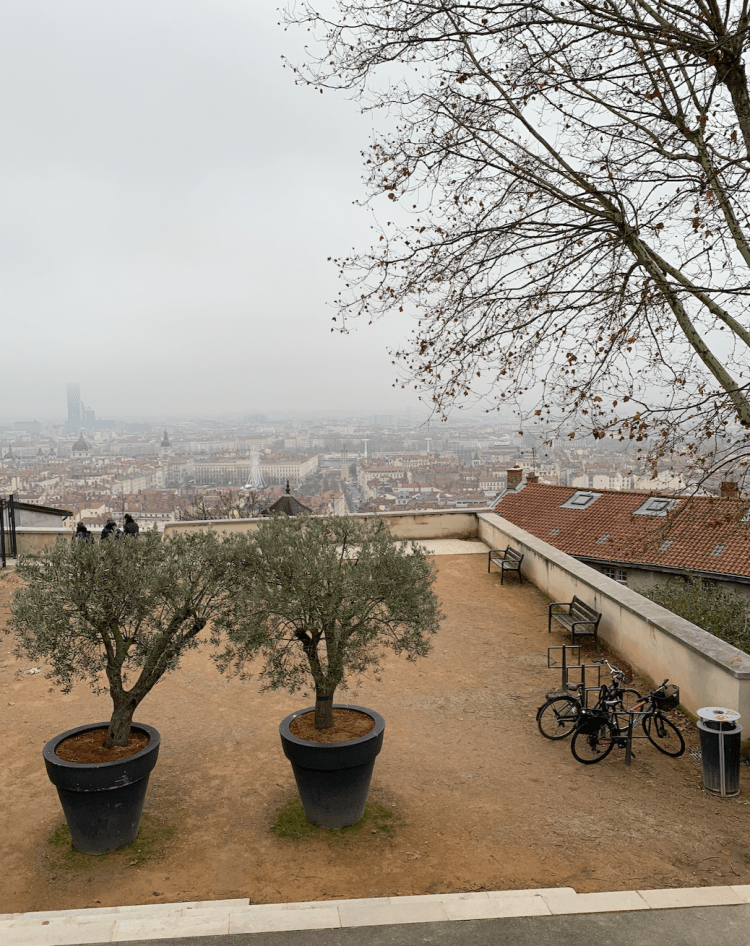
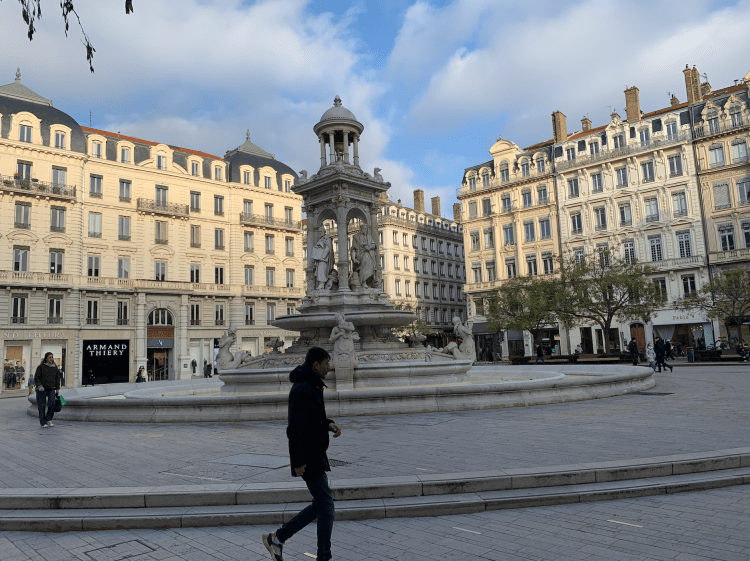
So feeling date-logged we rolled into a chilly Lyon, famous for their Lyonnaise cuisine

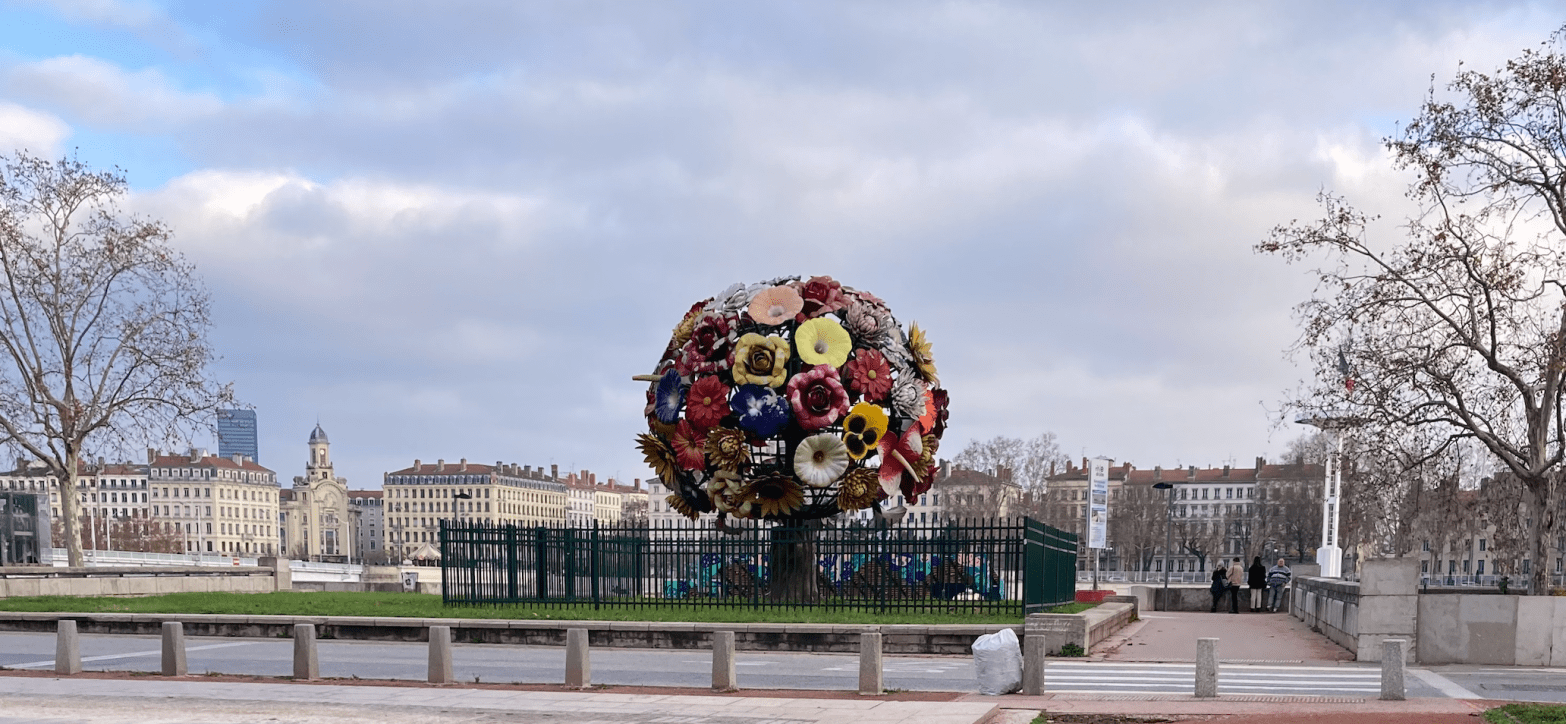
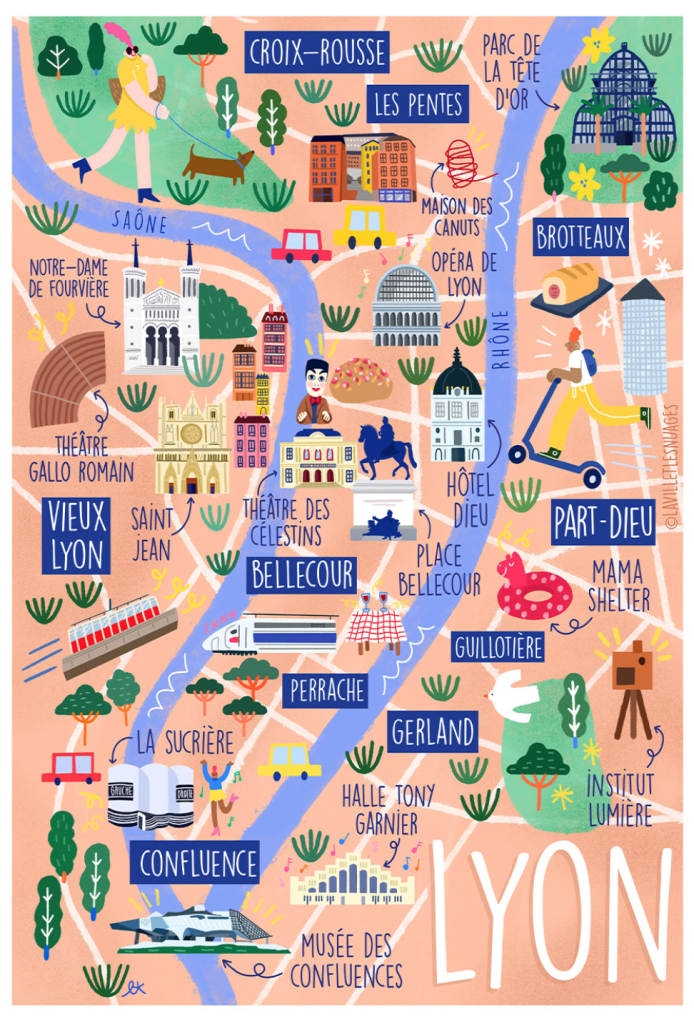
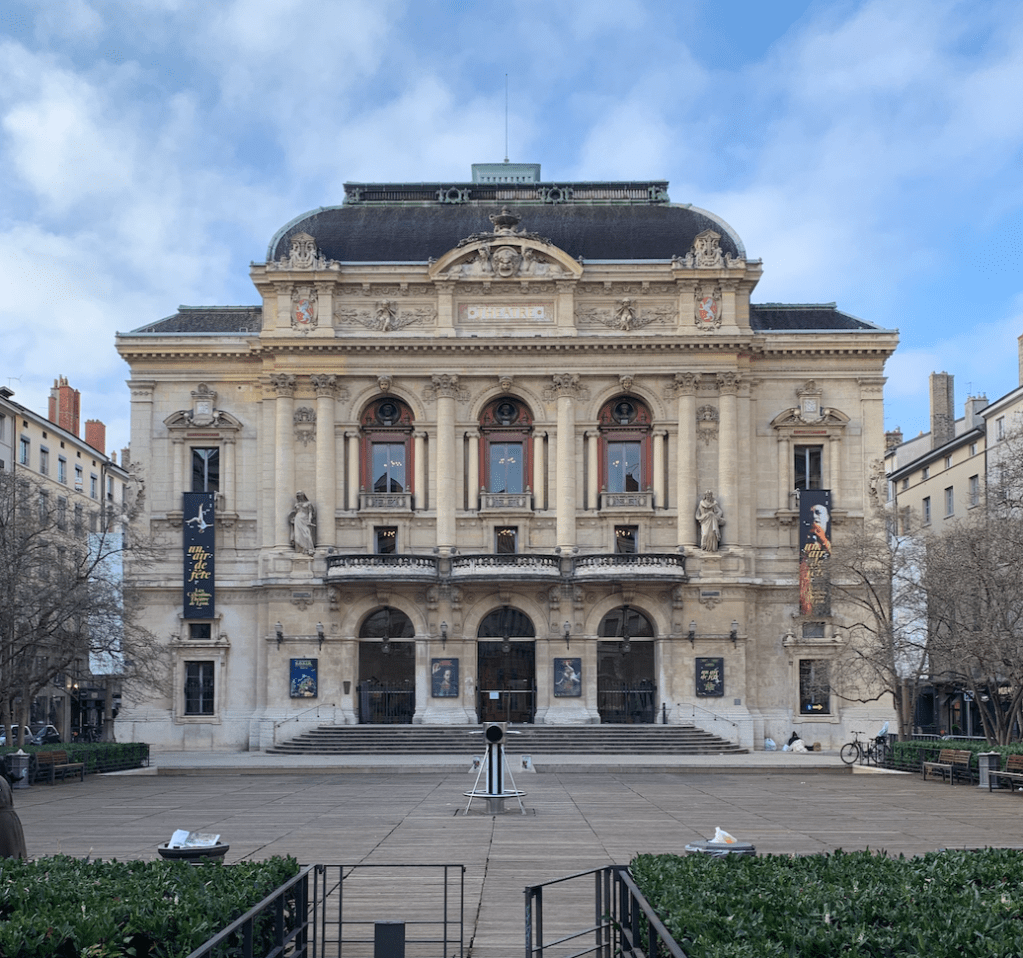
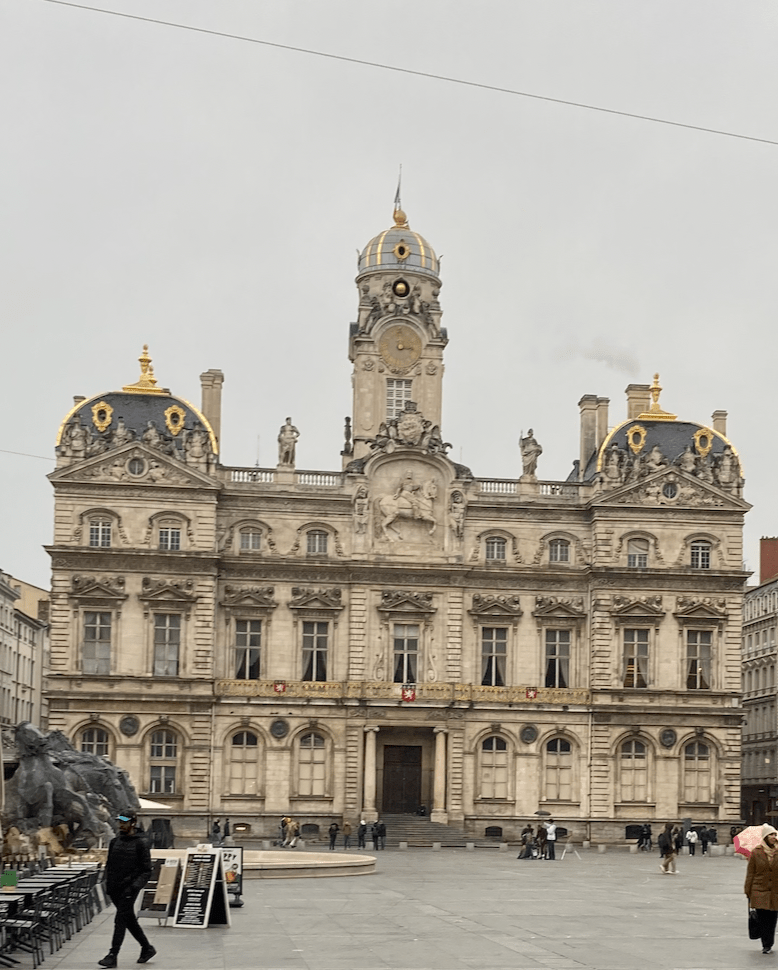
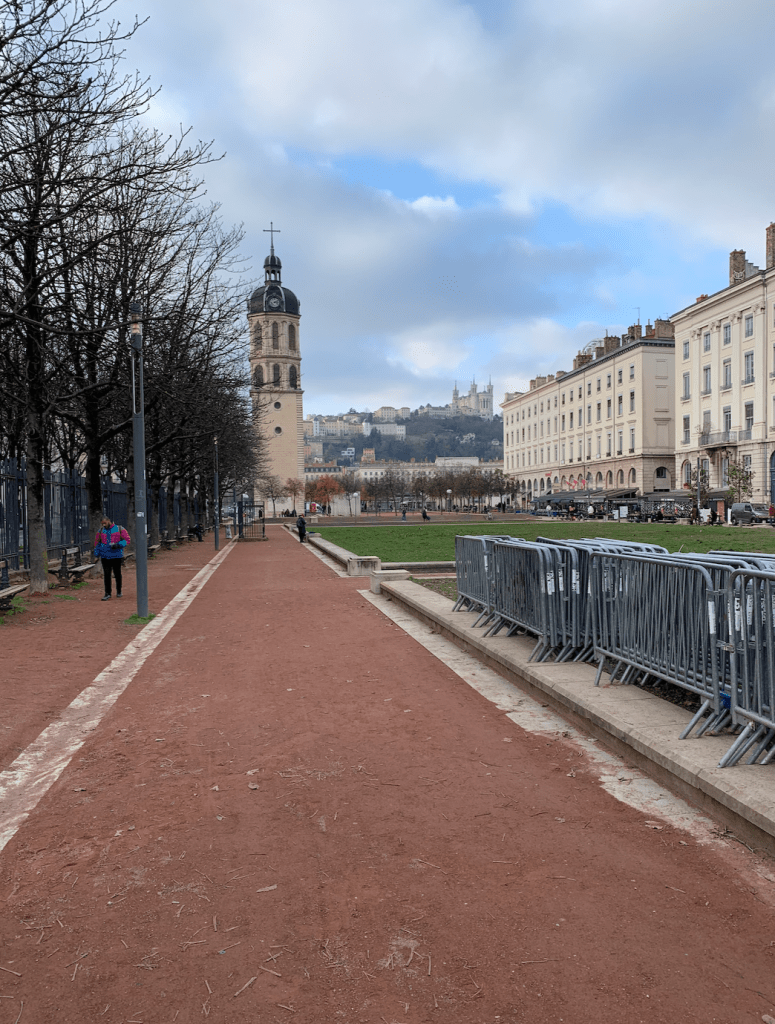
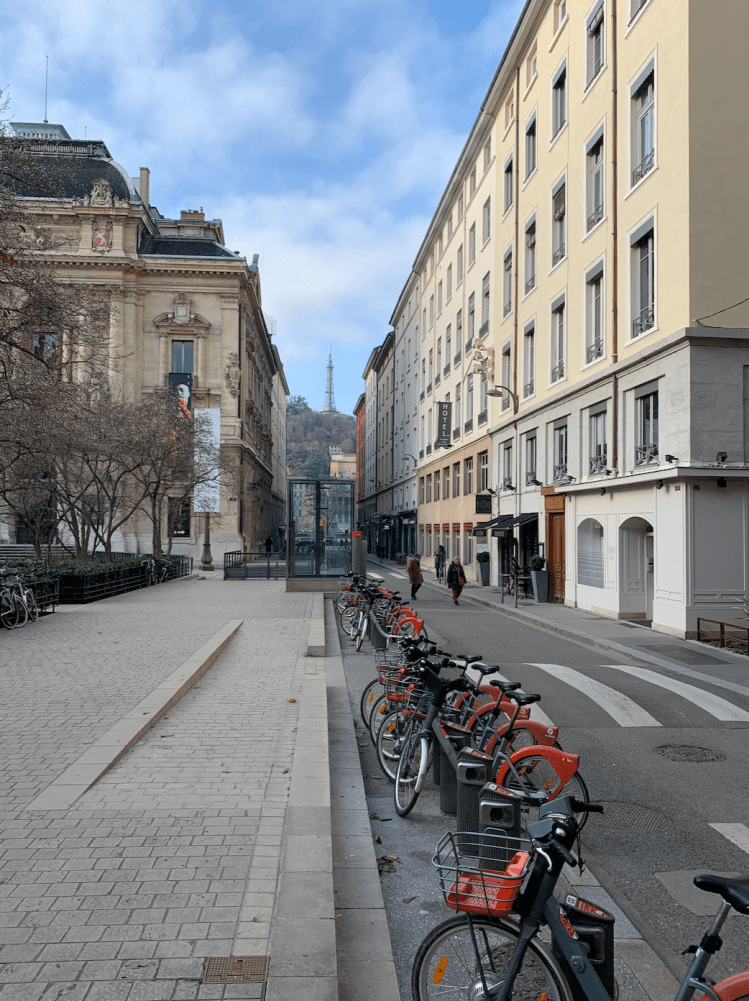
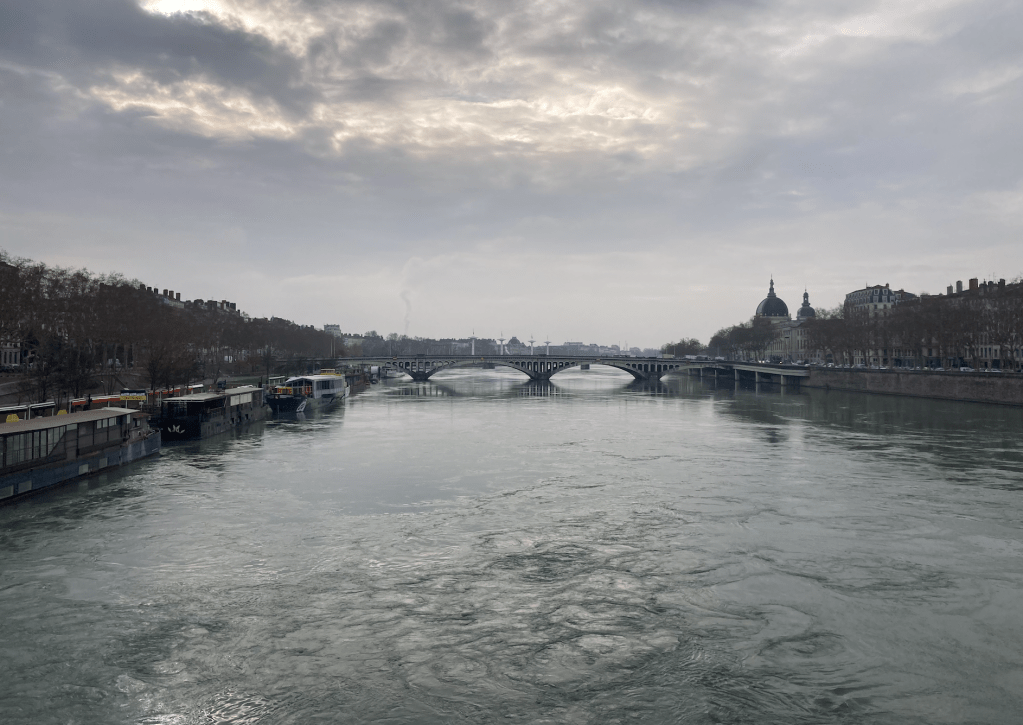
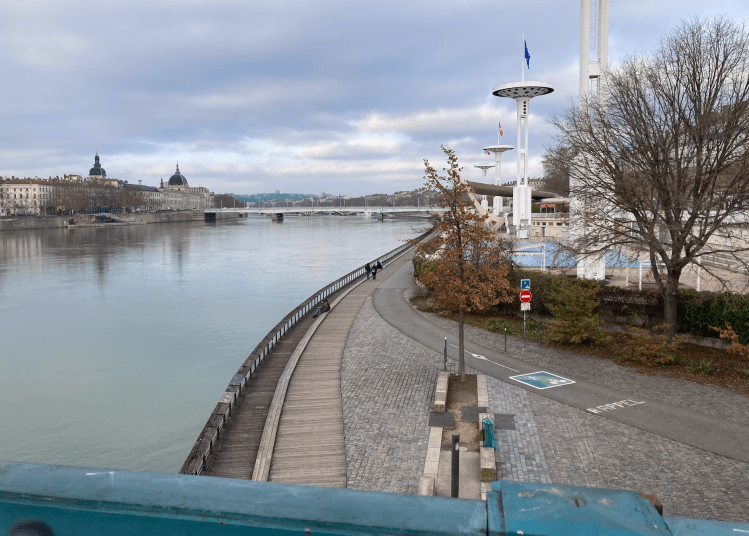
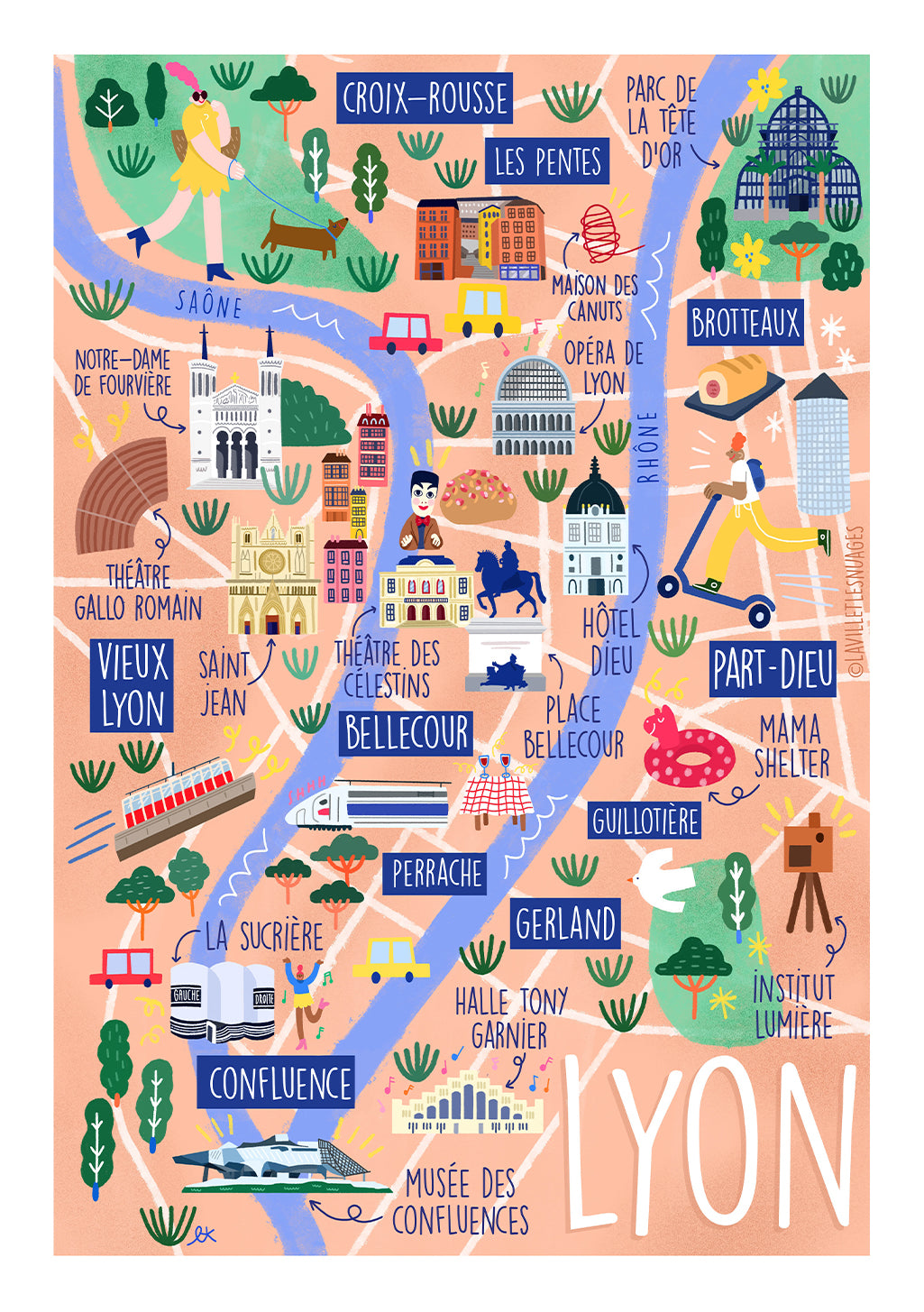
Despite the gloomy winter smog, Lyon, like all of our stops on our Tour de France, hit the mark. The Rhone river and its tributary, the Saône, converge in Lyon, creating very distinct time capsule neighborhoods. (map: https://www.sergeantpaper.com/)

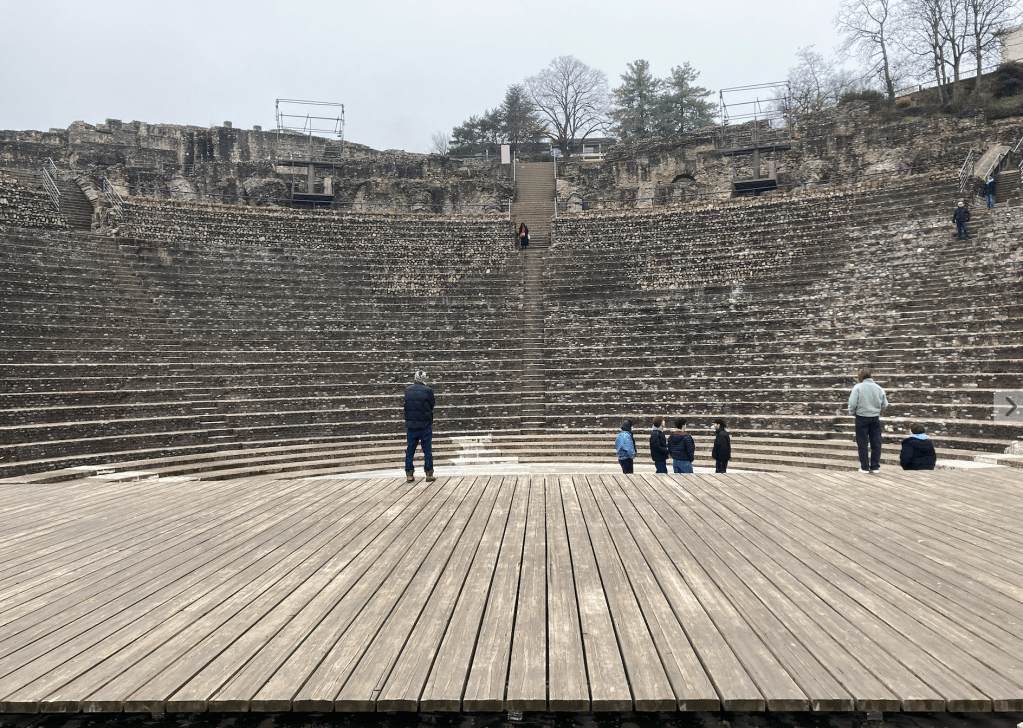
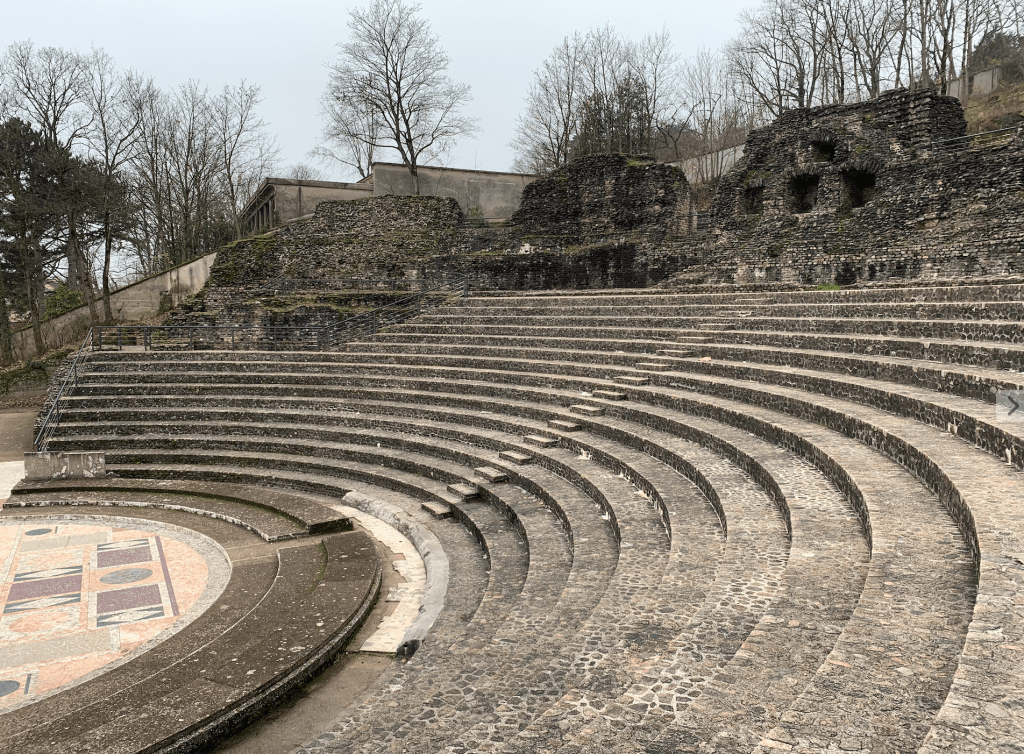
Wandering through the different areas, it kinda felt like a time travel Disneyland.  Following Roman footprints through the Fourvière hillside to the Roman amphitheater.

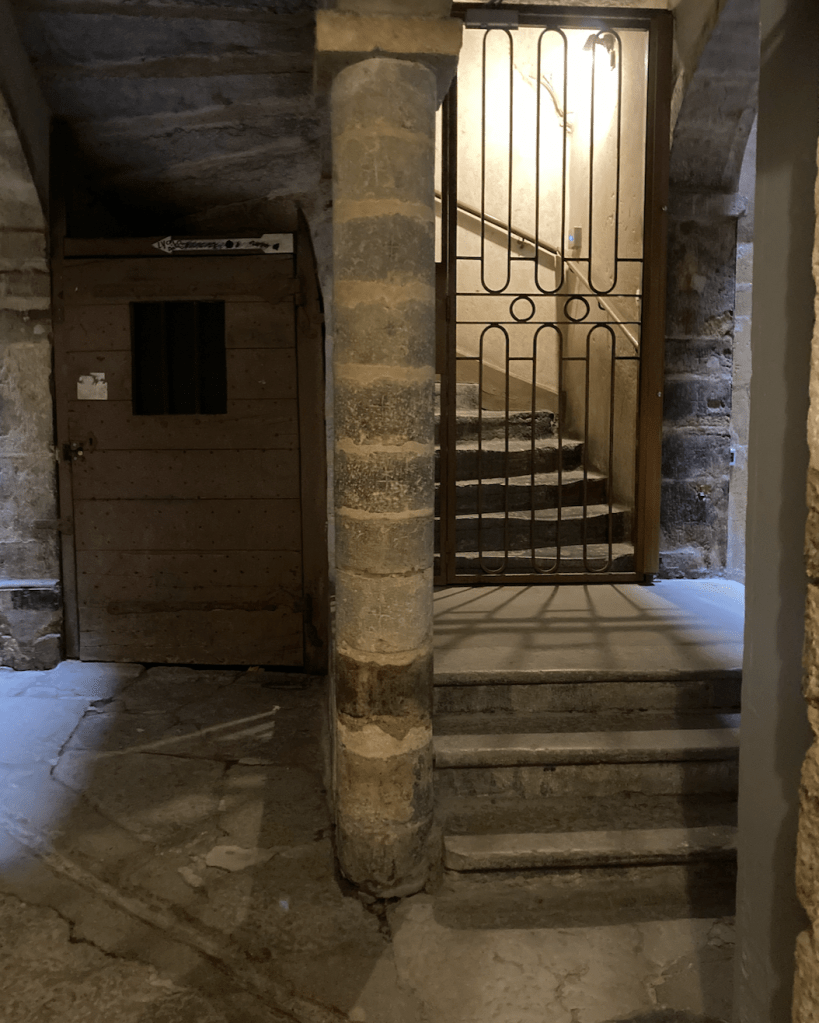
Moving on to the 15th, 16th and 17th centuries silk industry in Vieux Lyon and Croix-Rousse. Croix-Rousse is where the only-in-Lyon traboules are found. These are odd underground corridors running through multiple privately owned buildings (and still lived in) which allowed the silk workers direct access from the building down to the rivers. 

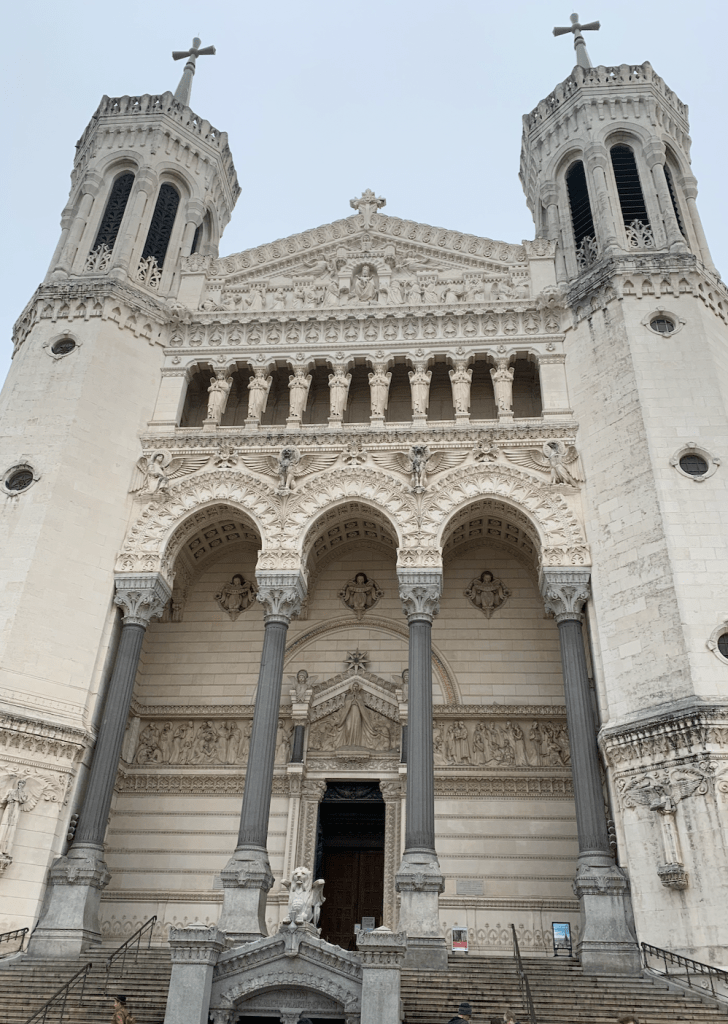
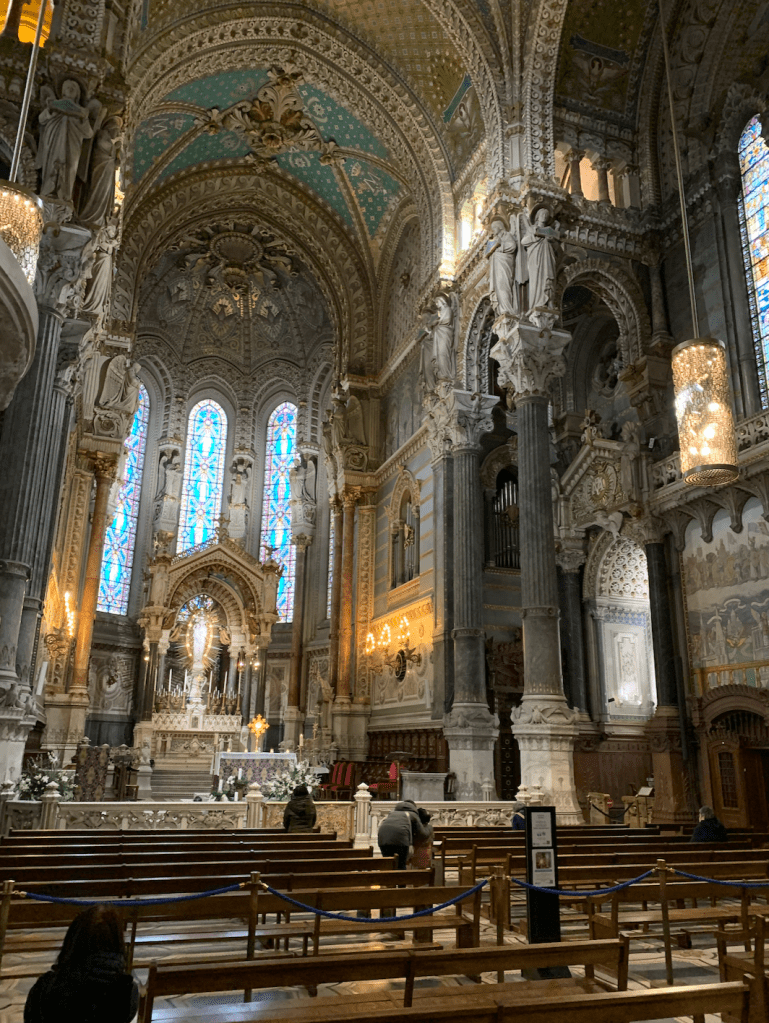
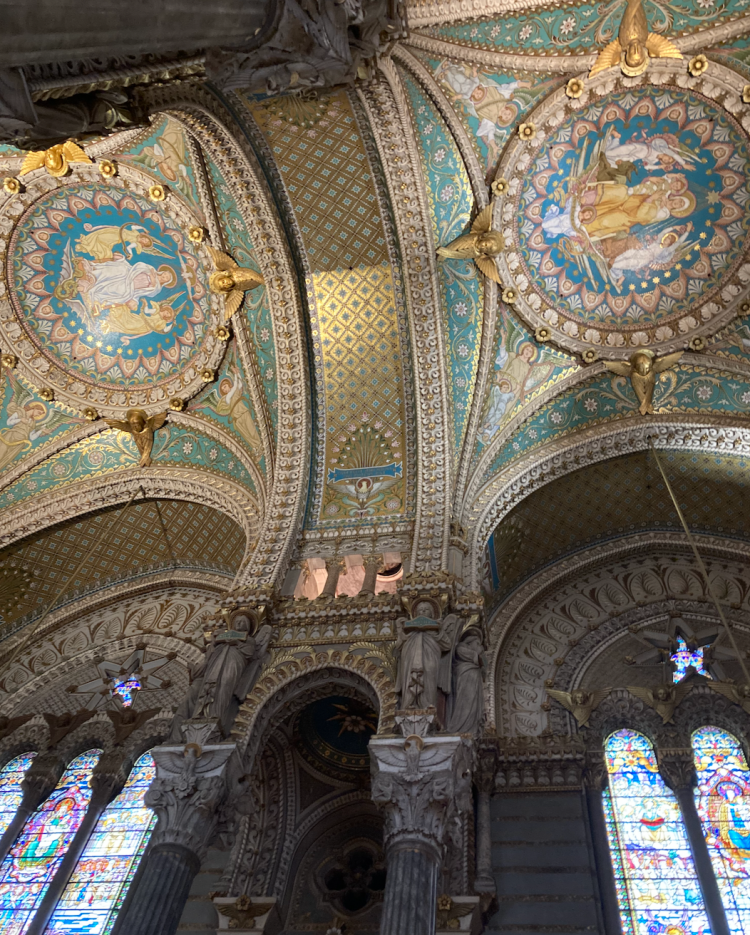
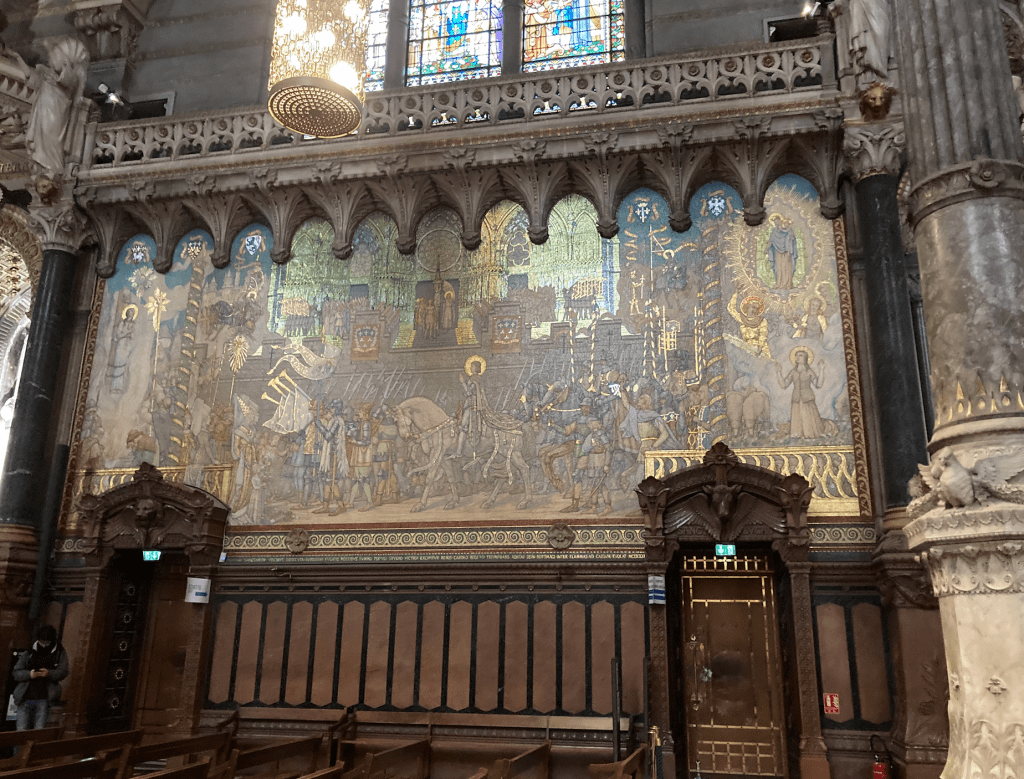
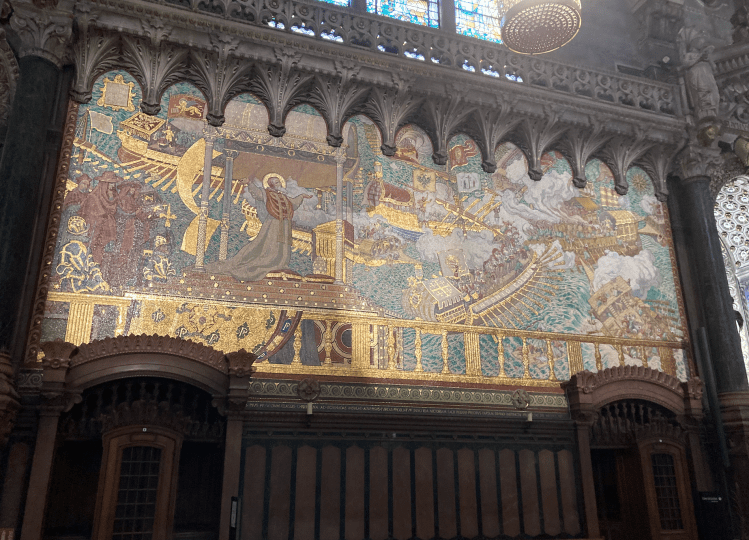
A climb up to the extremely elaborate 18th C Basilica on Fourvière Hill, built to give thanks for saving residents from the bubonic plague. Mosaics maybe inspired by the much older ones in Ravenna? (https://chosenfugue.xyz/2023/03/16/ravenna-pieces/

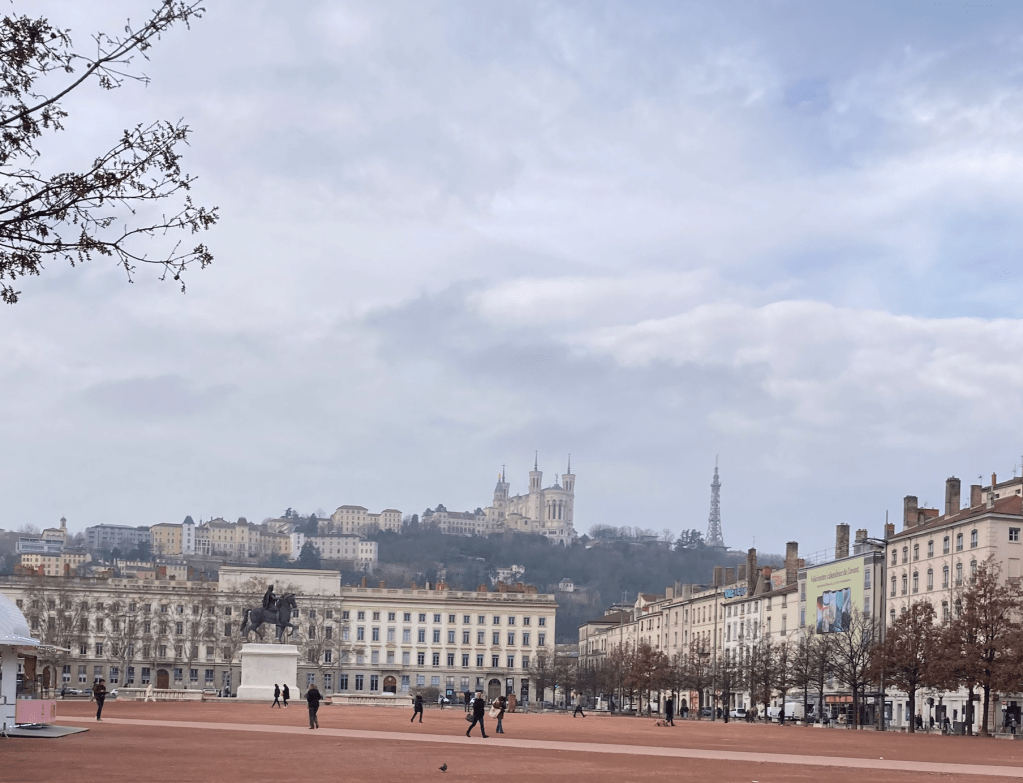
Down to one of the many bridges to the 19th C peninsula, Presqu’île, constructed from draining the swamps and marshes between the two rivers (another early engineering wonder), now the center of the city.

Basilica looming over the Place Bellecour

Across another bridge and to the other side of the rivers; neighborhoods built from the 1900’s through today, with a bunch of neighborhood names we are too tired to list.  

Here is where you find a typical city with Lyonnaise flavor; smog producing factories on the outskirts, wealthy neighborhoods, rundown neighborhoods, immigrant areas, shopping centers, modern trams, gentrifying post-industrial streets and a Westfield mall. Lyon is known as the city of gastronomy, with bouchons, only-in-Lyon cafes (did not eat in one)  and the pride of this side of the city, the Halles de Lyon Paul Bocuse, https://www.halles-de-lyon-paulbocuse.com , chef Paul Bocuse, a native son.

This historic (what isn’t?) 1850’s French market was converted to a food wonderland in 2004; we did not eat there, either. We were on our way back to our hotel in the Perrache (yet another right bank neighborhood characterized by a Christmas market and train/bus station), tired, cold and hungry, bypassing all these great food options while desperate to eat something other than cans of mackerel from Carrefour and slices from Nick’s date paste log. Just before we crossed another bridge,

we stumbled by a burrito place. It was excellent, a rare and hidden treasure proving that Lyon truly is the city of gastronomy.  We enjoy sampling European interpretation of Mexican food (Vienna, Keswick, Reykjavik, Saarbrücken, Berlin, Ghent, Antwerp, Zagreb) which does not make sense because with the exception of Berlin and Ghent, it is rarely good, https://chosenfugue.xyz/2018/10/04/belgium-part-1/ and Amsterdam’s was so bad, we won’t even list or link it. It is also is difficult to make Mexican food at home because the markets do not have corn tortillas or masa and only have Old El Paso products in their “Mexican” section. Weak. Ketchup is spicier than OId El Paso salsa.

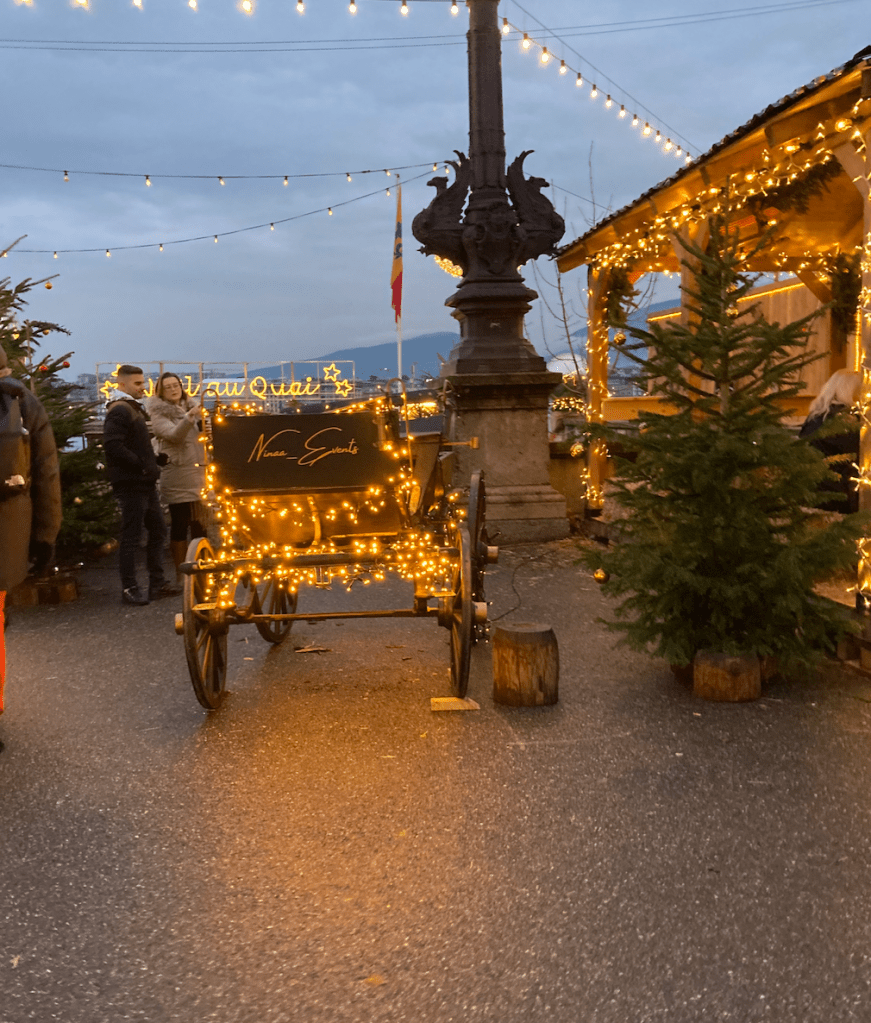
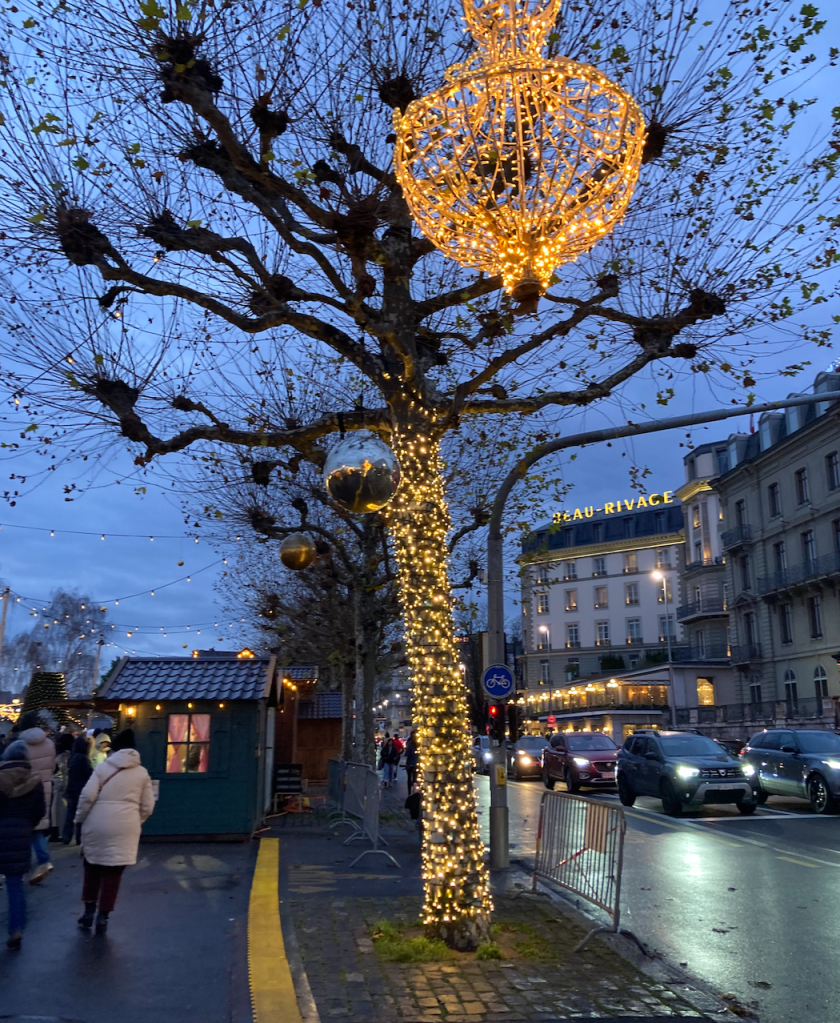
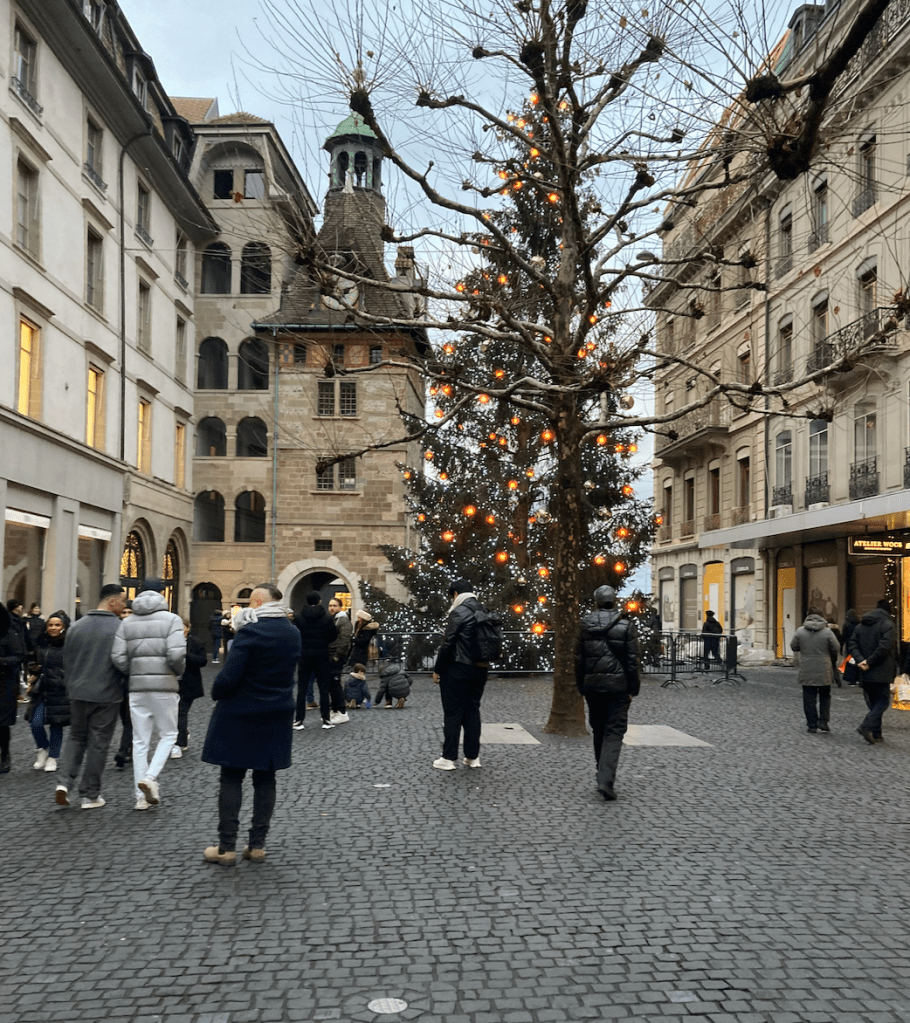
We capped off our exploration of different lands with a day trip to Geneva, Switzerland just two hours away on a Flix bus, to visit Nick’s nephew and his family. It was a great visit, but we were pressed for time to catch our Flix back to Lyon. So, our Geneva sight seeing consisted of a speed walk through the fancy downtown, the less fancy downtown on the opposite side of the lake and a huge Christmas market which led us to the Manor market.

Tired, cold and hungry again, we entered the most comprehensive market we’d ever experienced.  We were overmatched.  A futbol pitch sized market of gastronomy; rows and rows of gluttony. Bread bakery, pastry bakery, chocolate counter, cheese shop, sushi, seafood, an entire aisle of Old El Paso products, dim sum, soup, sausage bar, butcher, produce, etc. So incredibly overwhelming that we don’t even remember what we ate, it must have been fast food because we did speed eat it on the street before we went to wait forever in the freezing cold with intermittent freezing rain for our very delayed Flix bus. Flix bus stops are typically at odd locations (does FLIX stand for Finding Location Is eXistential ?). This one was centered in an extremely busy square with other bus services, as well. Keeping warm by busily dodging buses, cars pedestrians, bicycles and rain drops. It was like the wild, wild west, or at least Old El Paso.

Montpellier Cat-a-blog

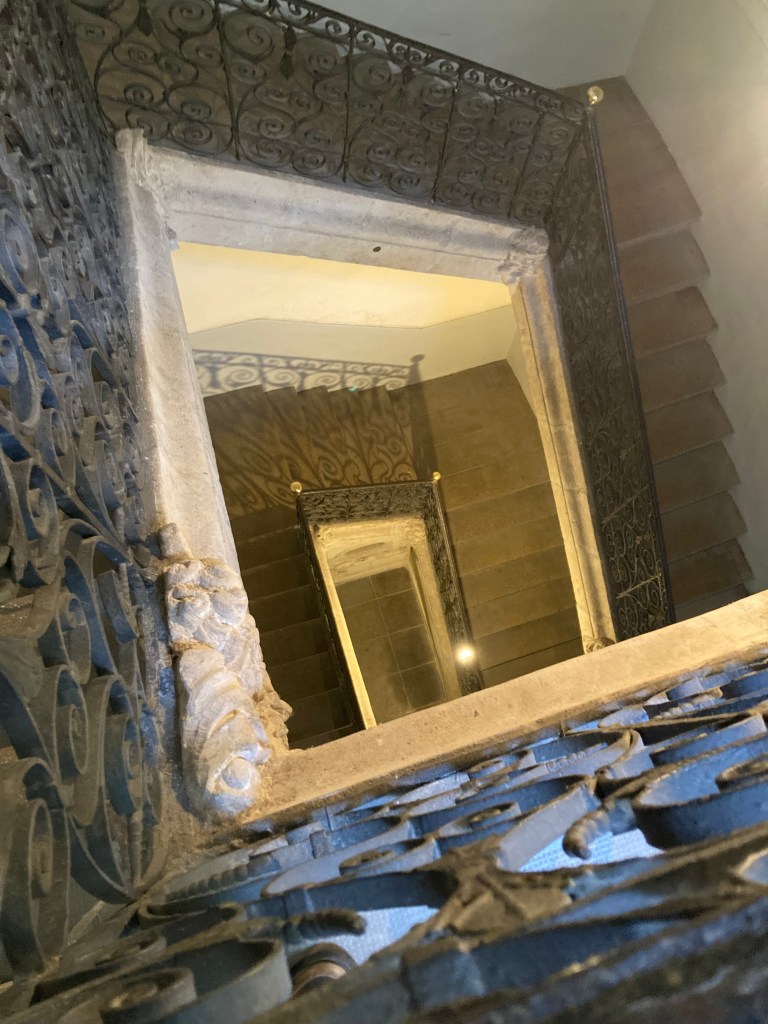
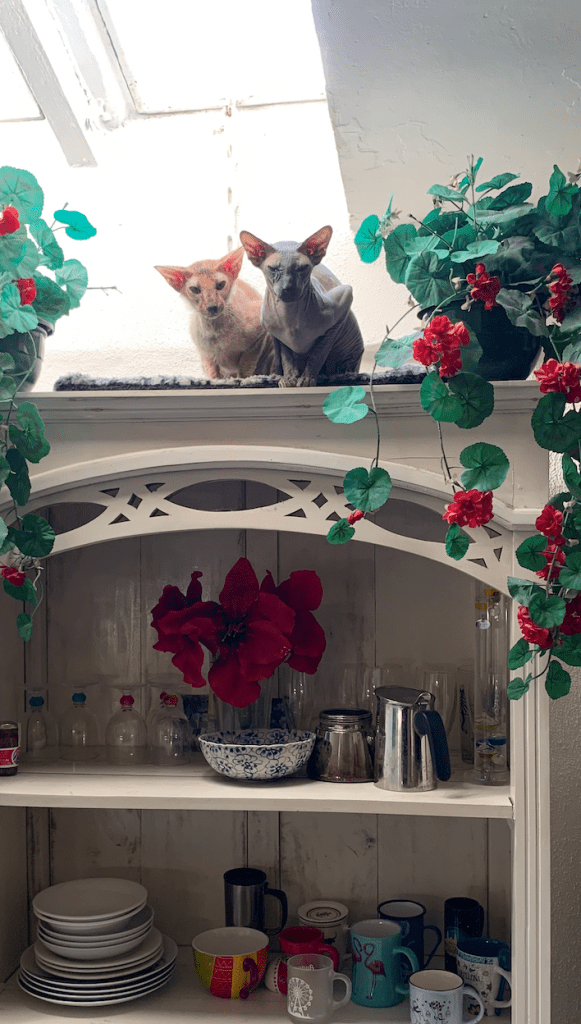
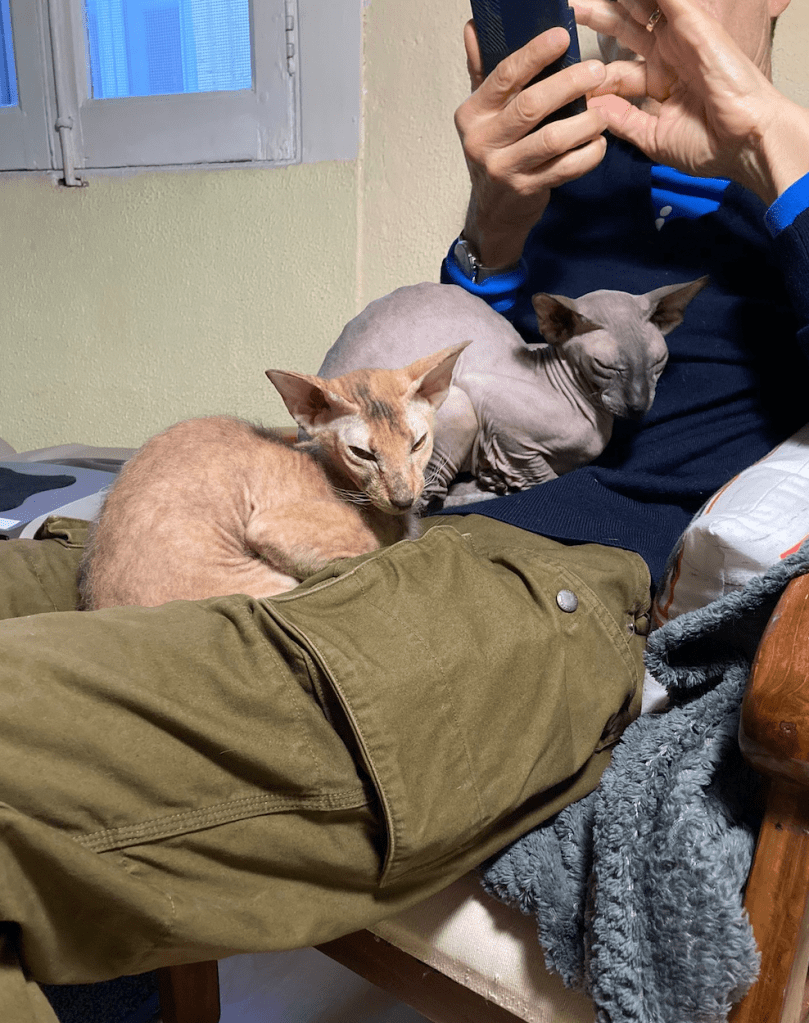
For Hercules’s twelfth labor, he had to descend into Hades to capture the three-headed dog beast, Cerberus, who prevented the dead from leaving and the living from entering Hades.  Our task in Montpellier, France wasn’t dissimilar to Hercules’s, except our Herculean task was to ascend five flights of stairs and guard three hairless cat beasts.

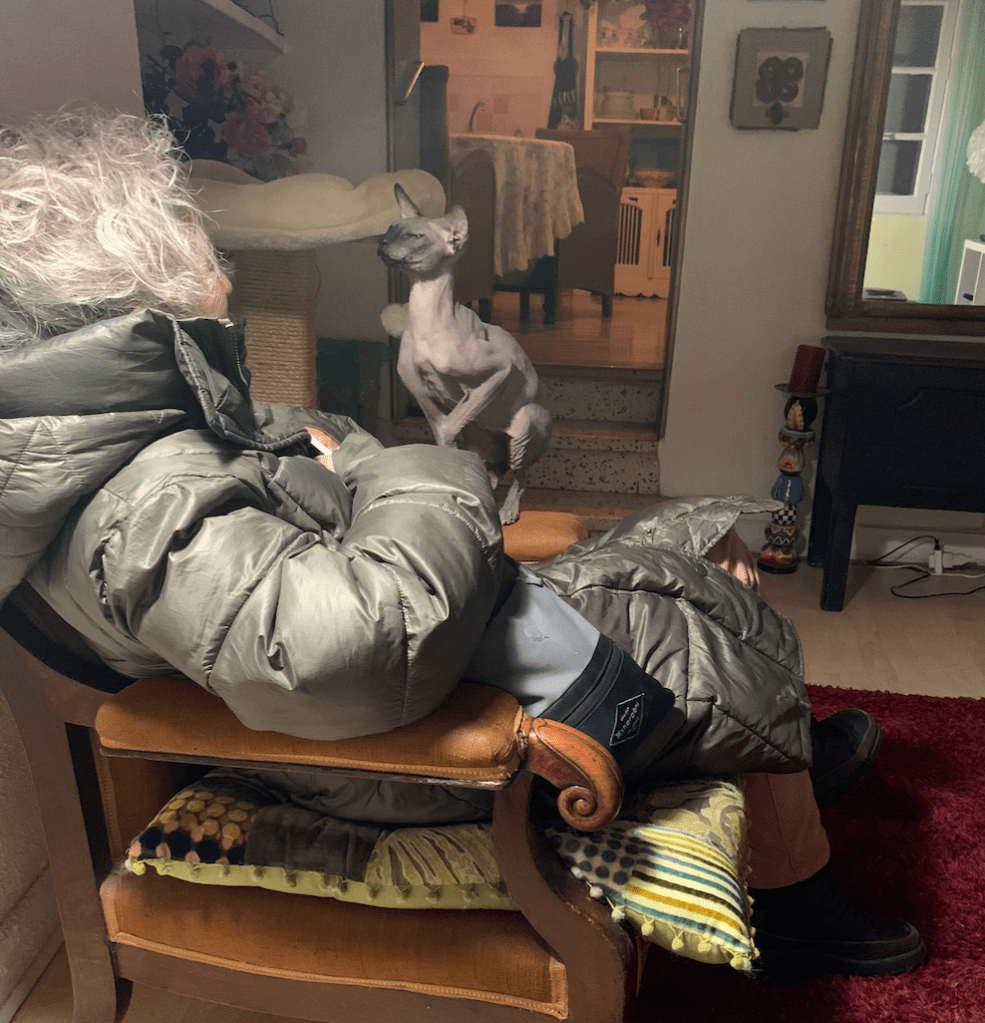
Our lovely host warned us, providing detailed instructions of the cats’s idiosyncrasies, previous reviews further emphasized their behavior, but our underestimation of the task was quickly apparent. Within minutes we were terrorized, as one slapped Patricia on the forehead. We had entered a different reality, the modern day underworld of these hairless cats. 

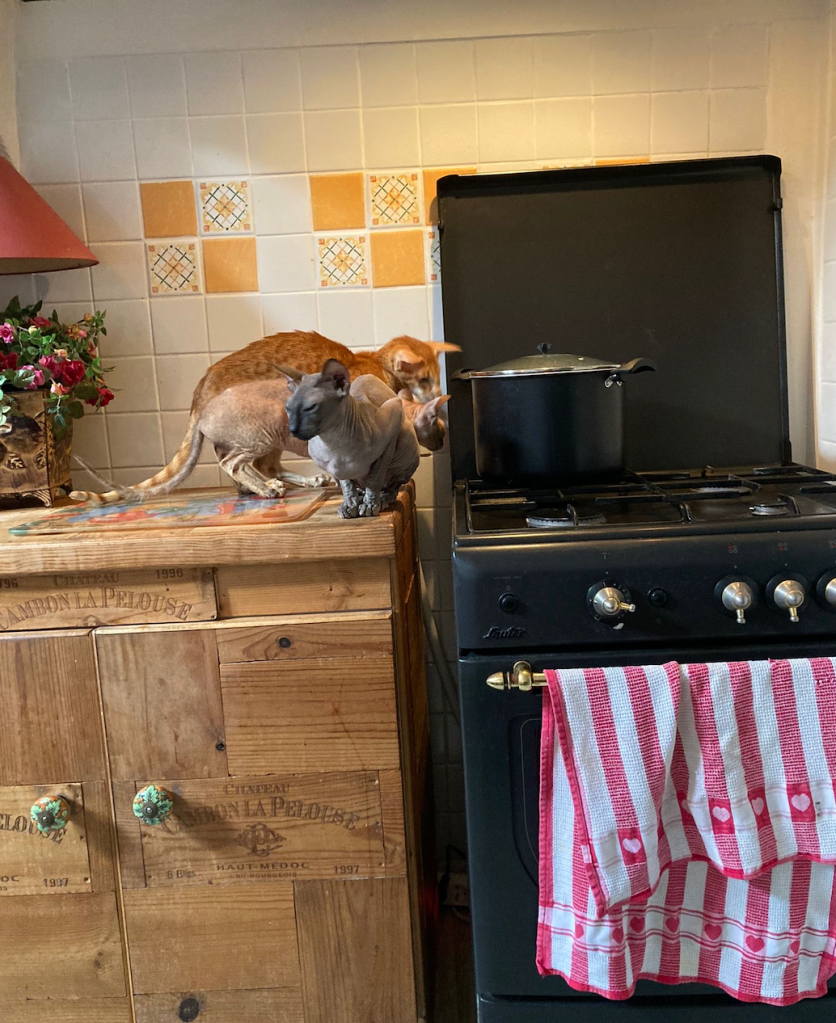
The presence of any food, maybe even the thought of food, made the cats swarm.  

We had made fifteen oatcakes, secured them in a cabinet, returned from a short walk to the market to discover the oatcakes completely gone and the cats relaxed and content.  For 3 days we waited in fear of oatcake-obstructed cat bowels or that the cats would force us to make more for them.  Cat and human meals were choreographed.  To feed the cats we had to quickly dispense their individualized meals, and then separate them into different rooms of the house; bedroom, bathroom and kitchen. To feed us, we enticed the cats into the room that had a closed door, made dinner, then one of us would release the cats and the other would quickly bring the food into the only room where the door closed so we could eat dinner.

It was not all frightening, once the Hellcats were fed, they would calm down, and sit on our laps in a search of warmth. The desire for warmth and company extended to bedtime with the cats crawling under the covers with us. This was its own level of creepiness; one felt like a buzzcut, another a poorly shaved leg, and the other like a four legged scrotum; all with claws and teeth.

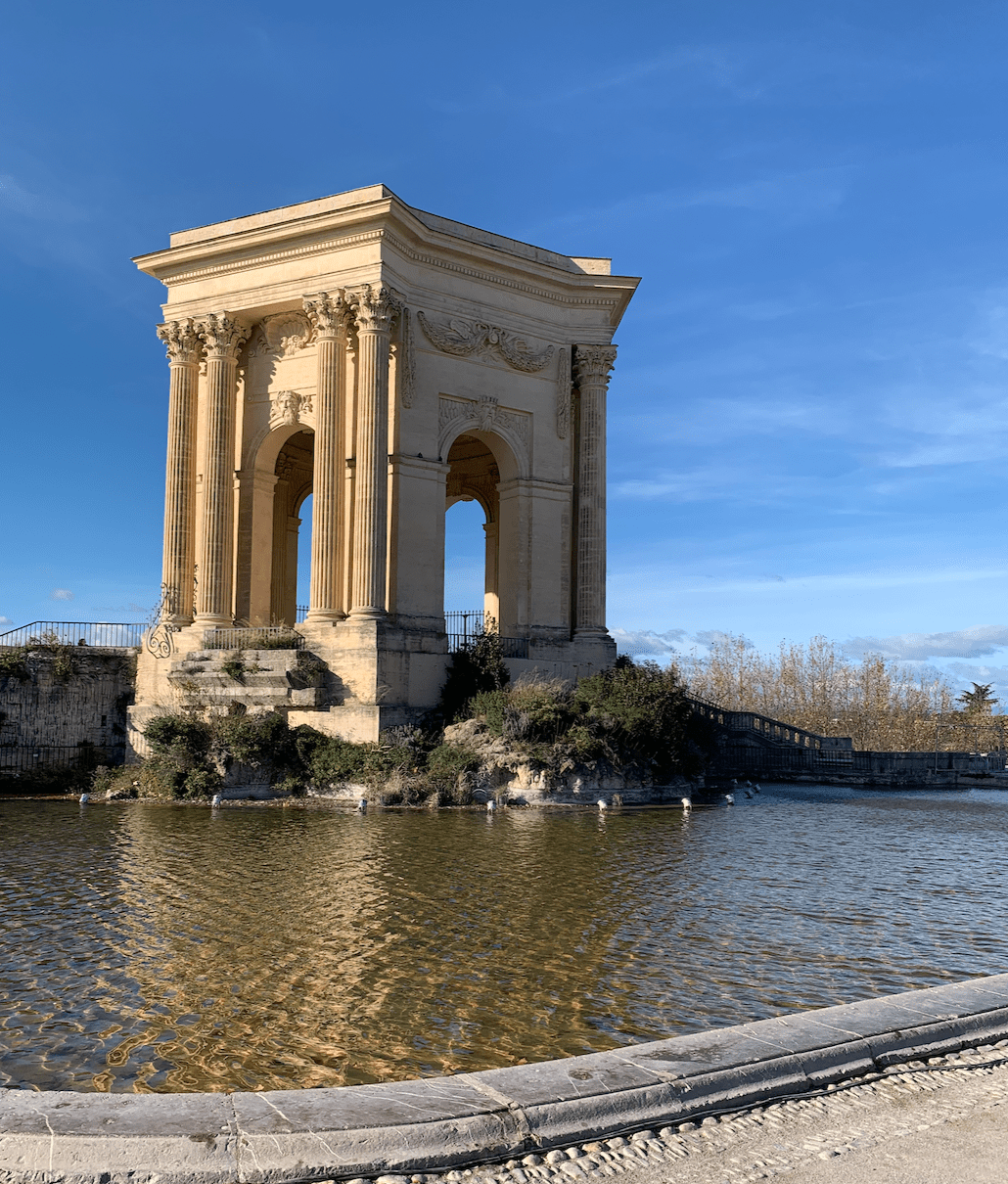
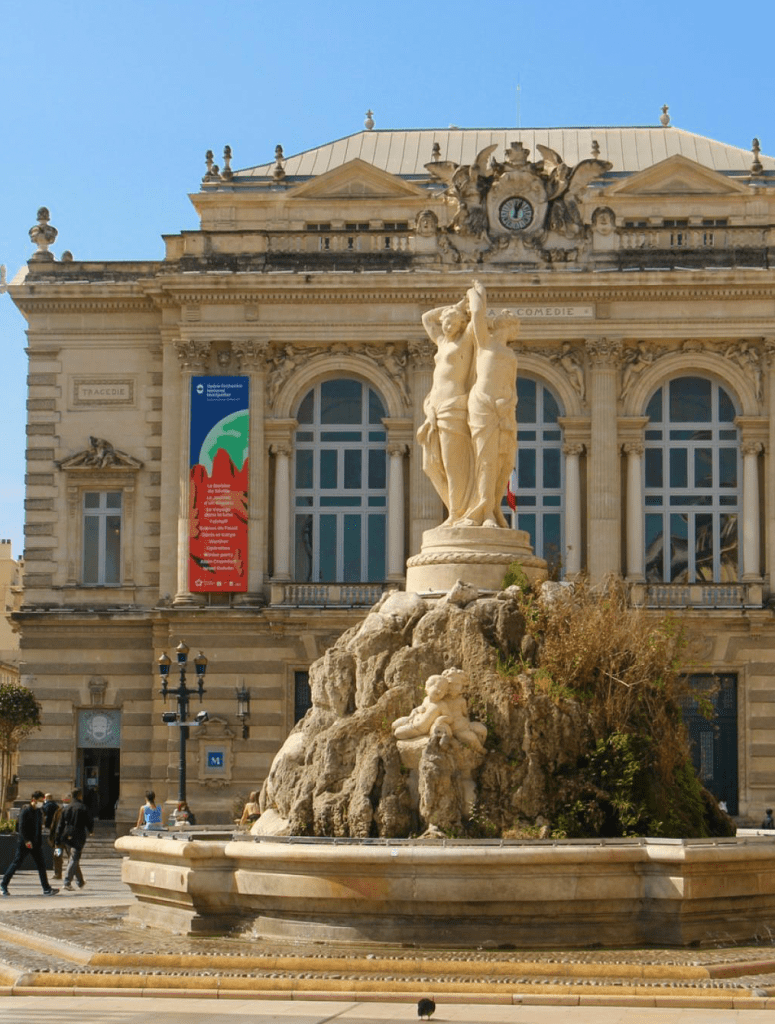
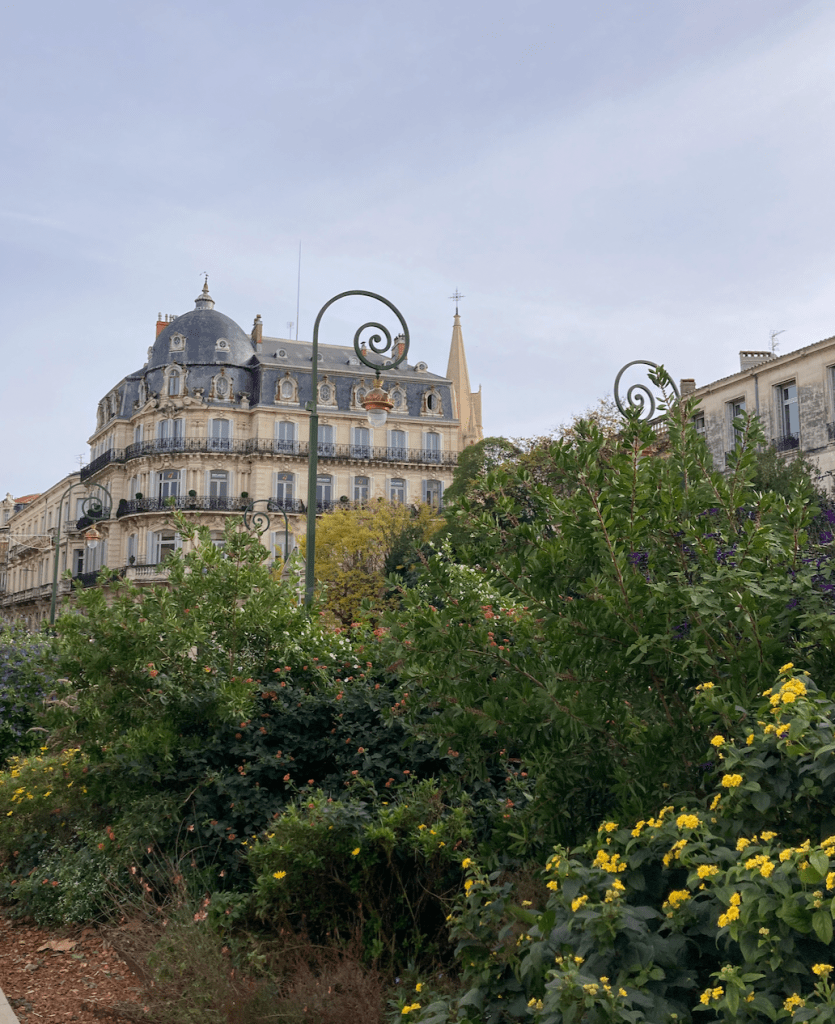
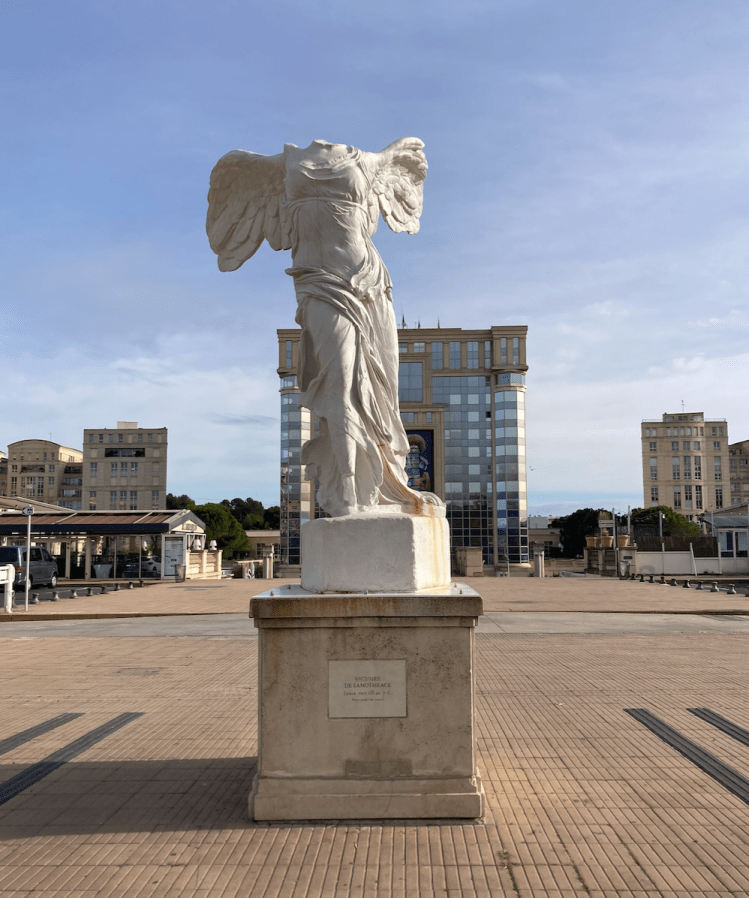
We made daily escapes from feline Hades, there was plenty to explore in Montpellier. The apartment was a quirky converted attic apartment, on a picturesque narrow street (duh, it’s France) lined with high end boutiques, cheese shops and cafes (again, it’s France).  We were just up from the Place de la Comedie, anchored in the center by the fountain of the three Graces (beauty, charm and joy), considered an emblem of Montpeillier.

we forgot to take a picture, this is from Montpelier-France.com

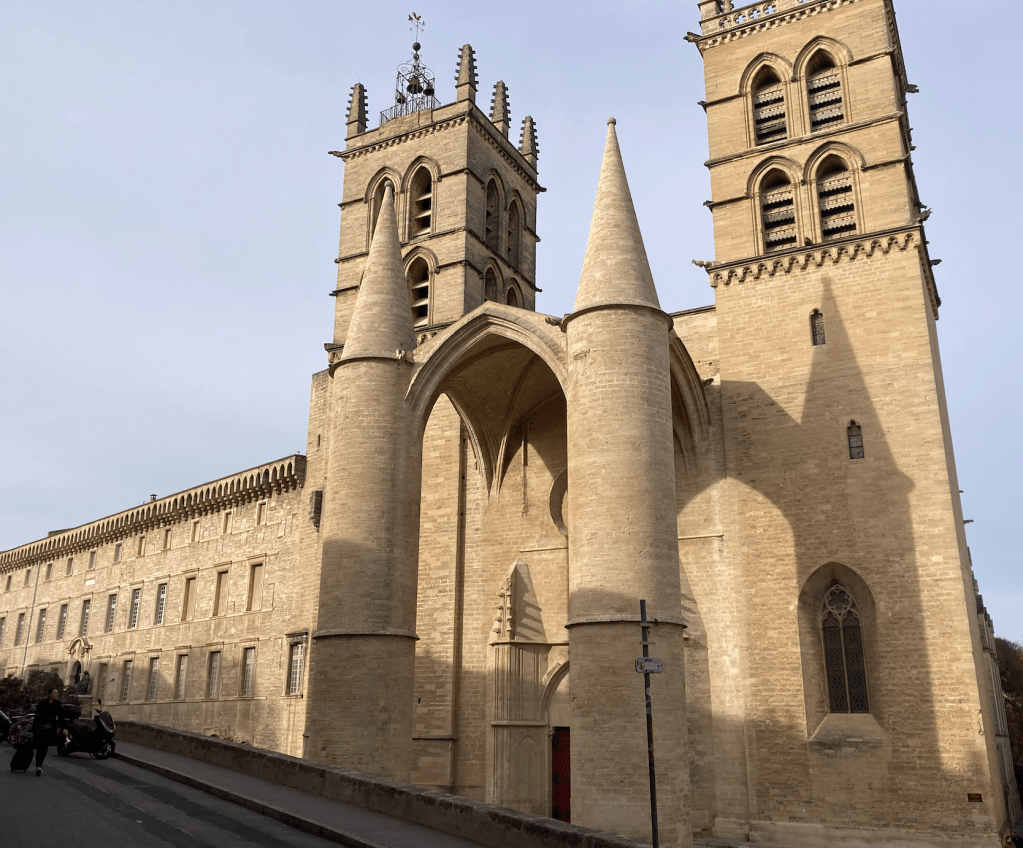
Montpellier is a university town with very distinct neighborhoods, all beautiful. The old town with buildings dating back to the 1600s.

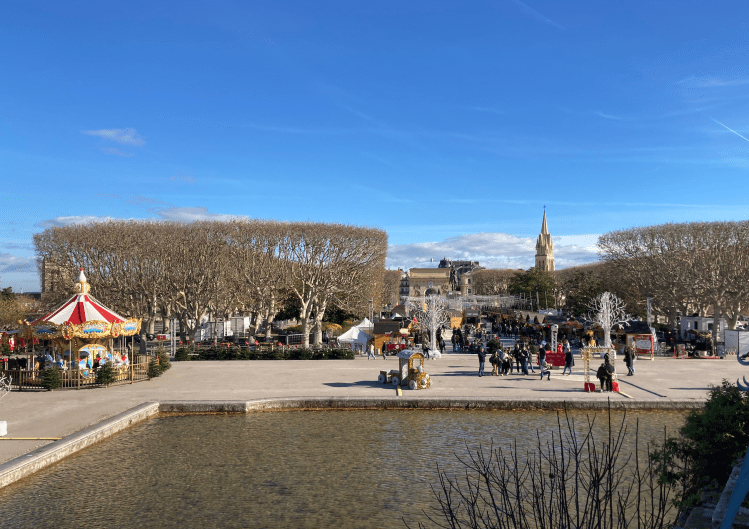
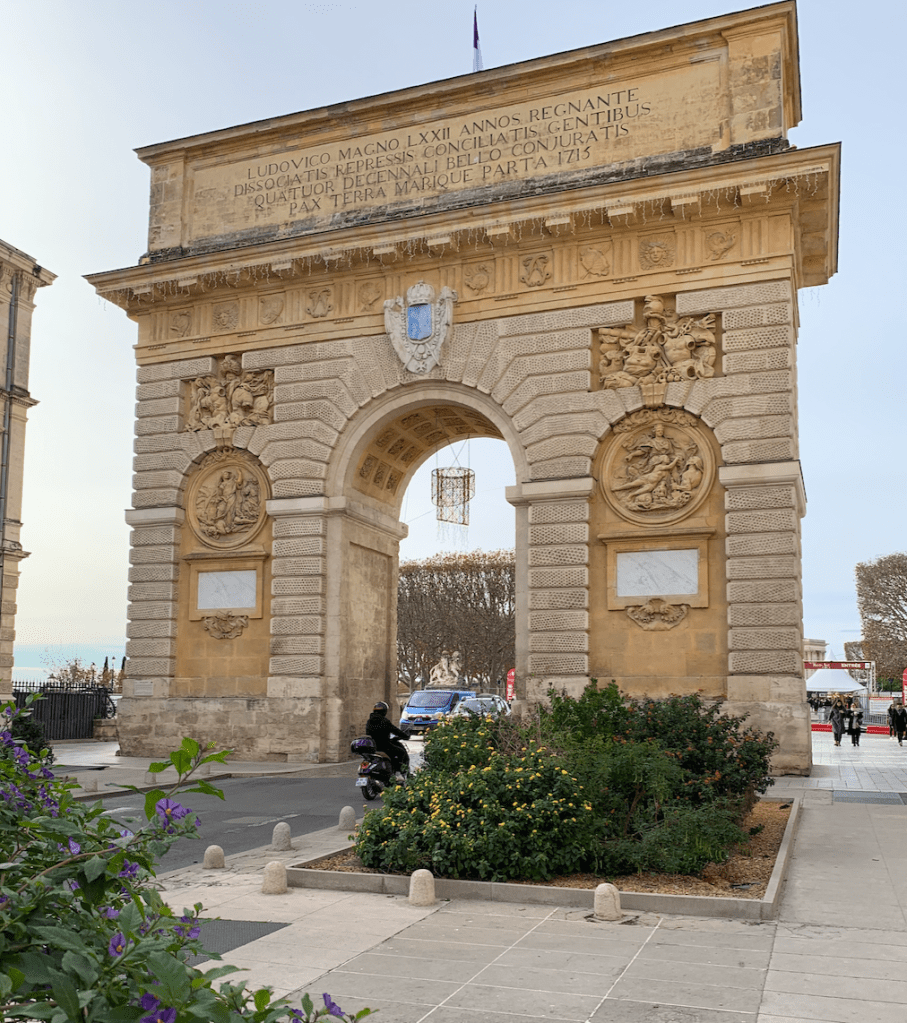
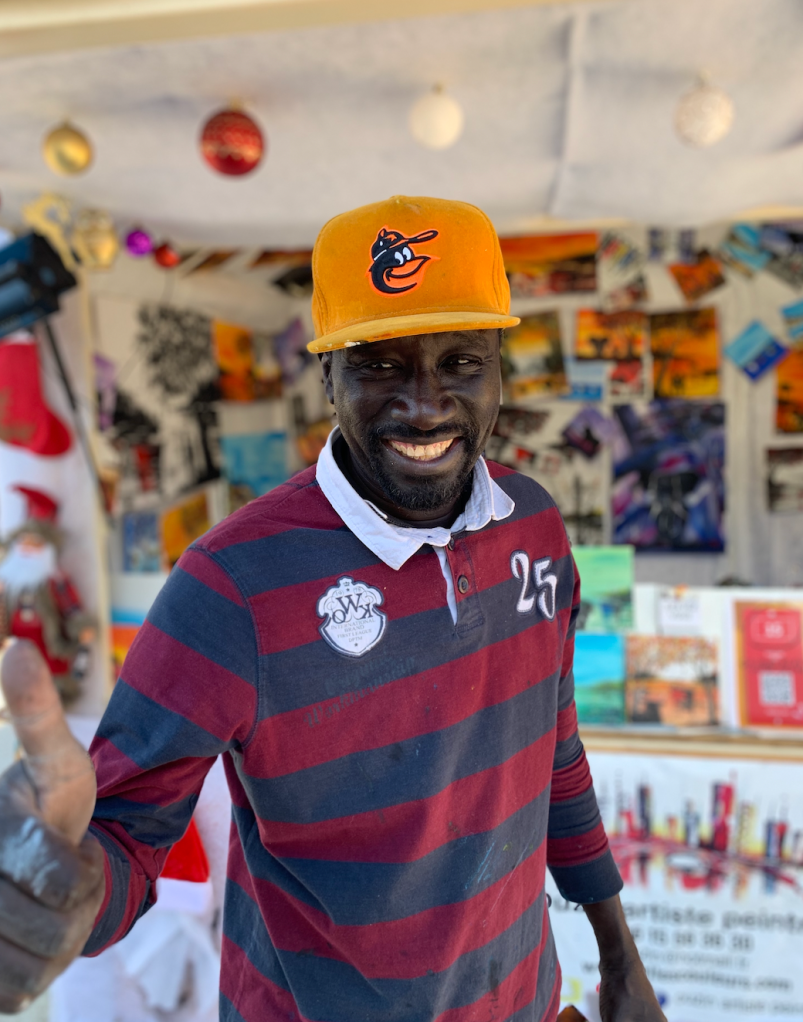
Of course, there was a Christmas Market, tucked behind their Arc de Triumph, with a great view and pleasantly a man who we thought was a Baltimore Orioles fan, but he had no idea who the Orioles were or what baseball was either. He just liked the hat.

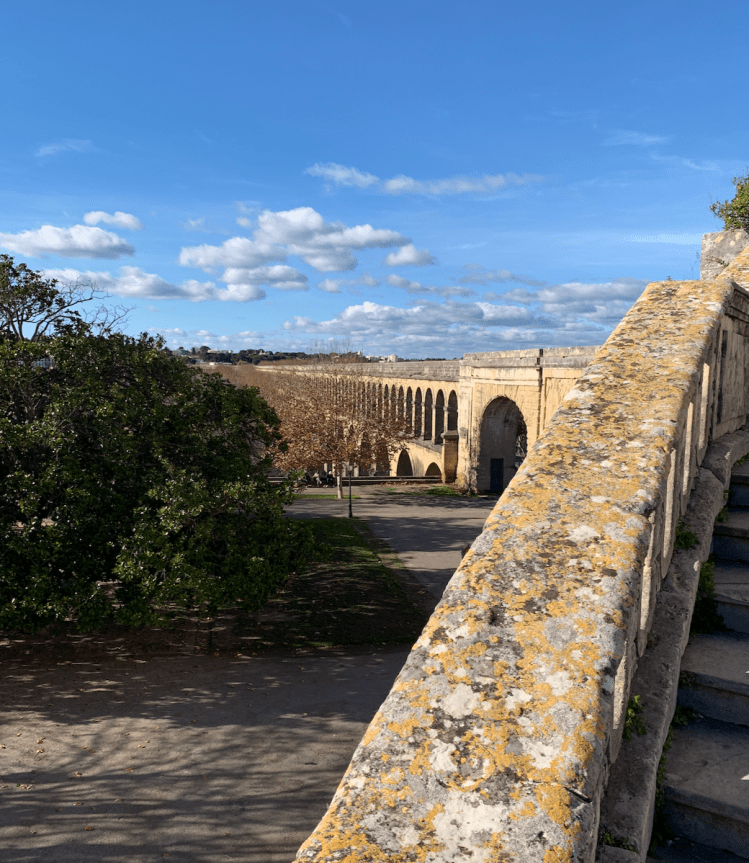
Plus, like most French cities, there were flea markets. The Peyrou flea market is below the aqueduct (constructed in the 1750s),

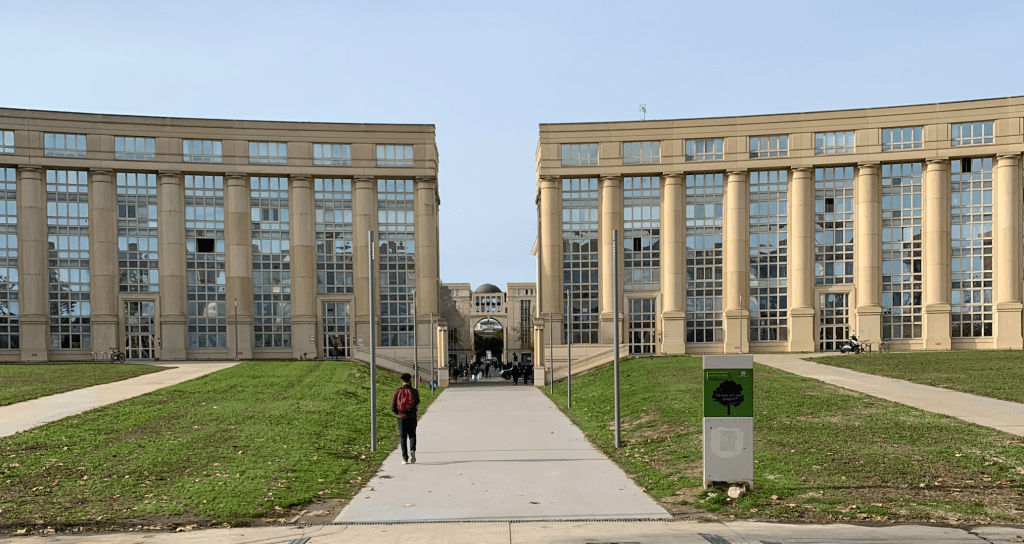
and another in the most remarkable (bizarre?) part of town, Antigone. Antigone is an award-winning faux Roman planned community (housing, shopping) complete with replicas of classic Roman buildings and sculptures.

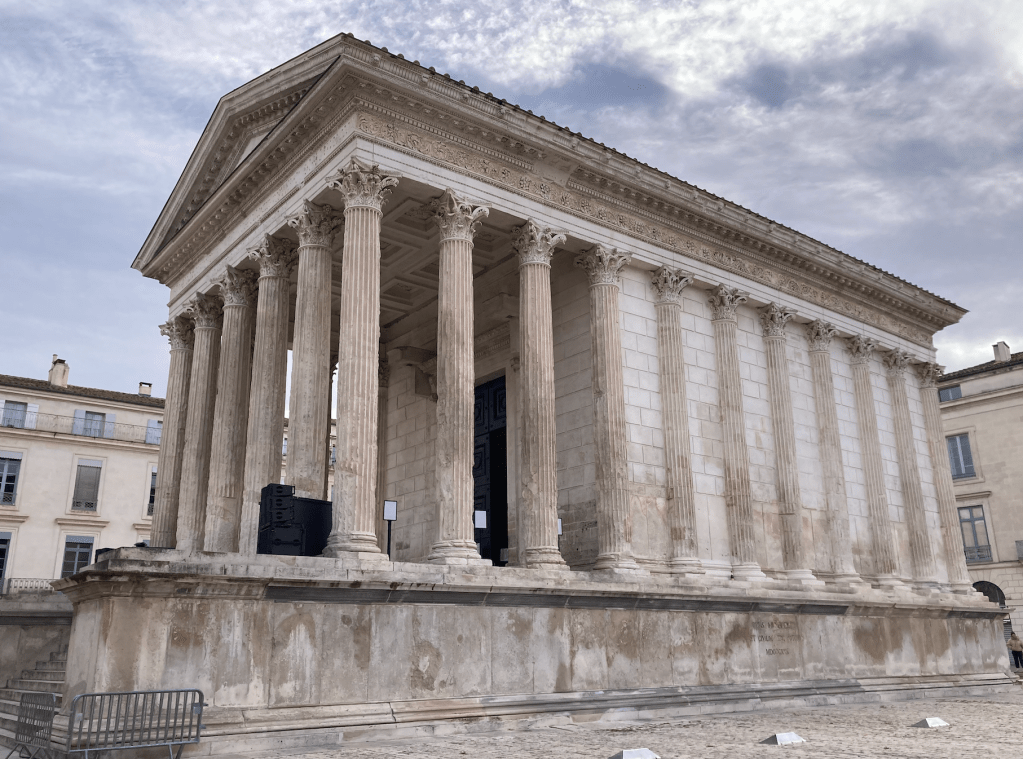
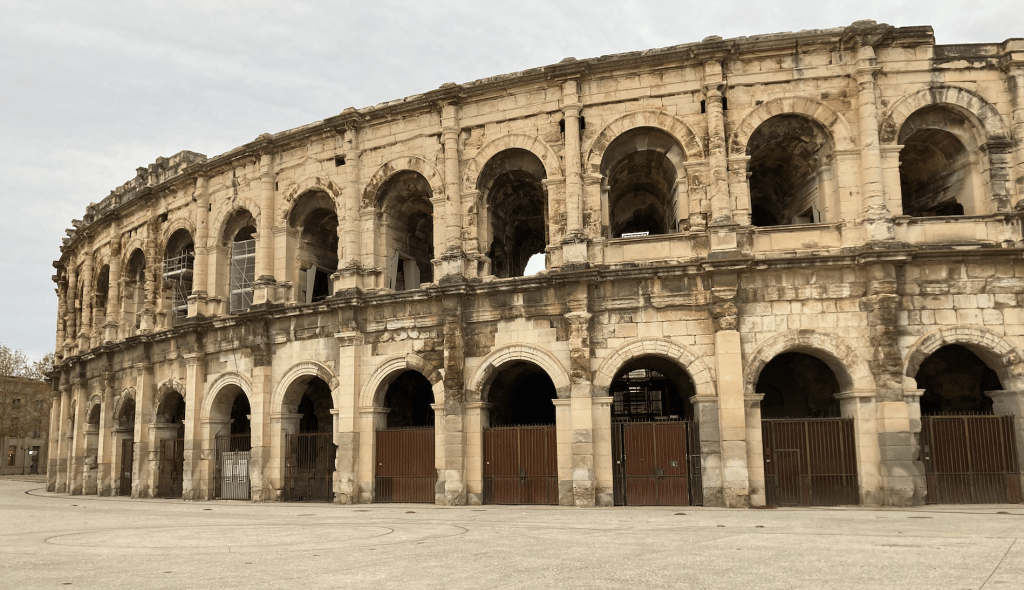
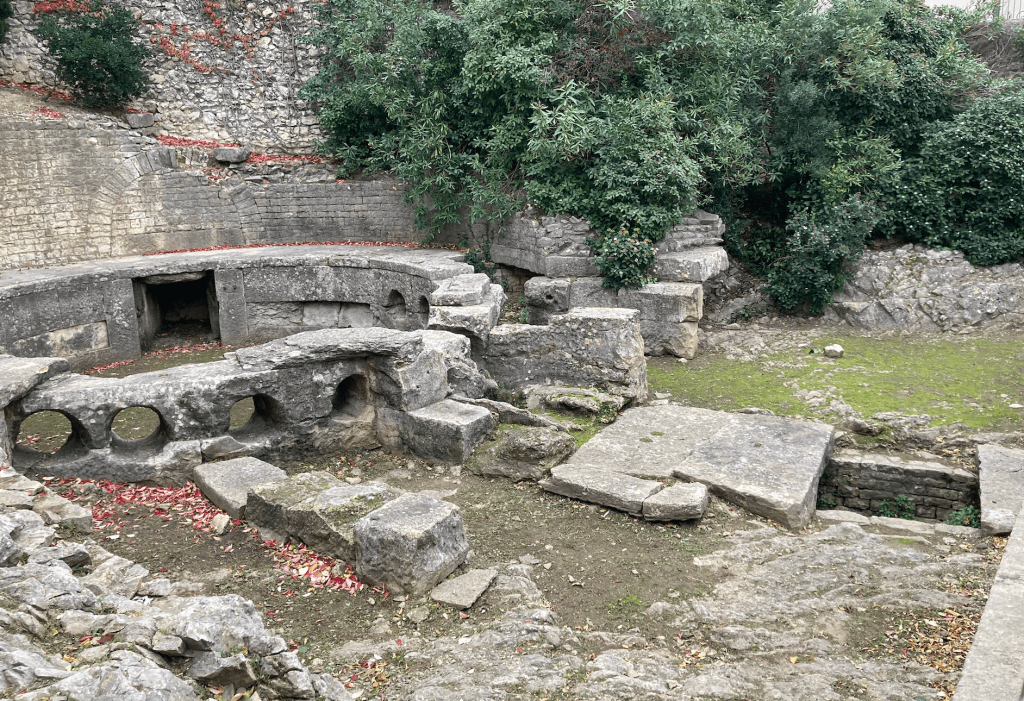
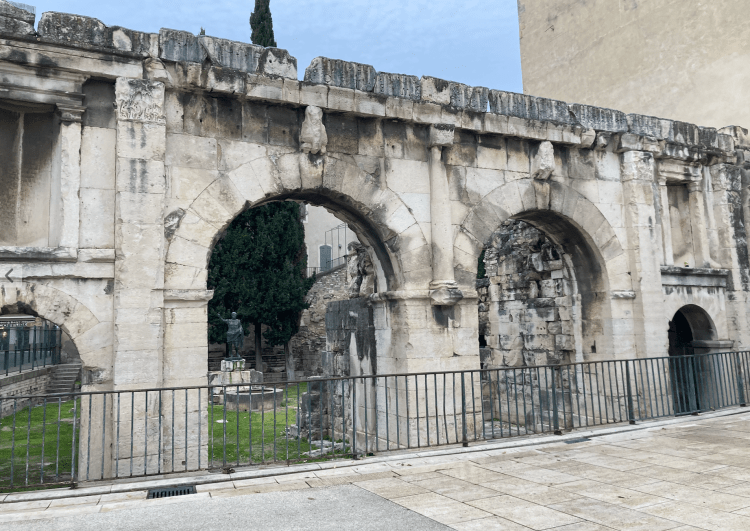
Faux Rome inspired us to voyage to Nimes, dubbed the most Roman city outside of Rome.  Why? Well it has a pantheon (Maison Carrée) amphitheater (les Arènas)-still used, a roman aqueduct on the outskirts of town (Pont du Gard), the terminus of the aqueduct (Castellum Divisorium)- the only other one in existence is in Pompei, and ancient gates on the Via Domitia (main Roman road).

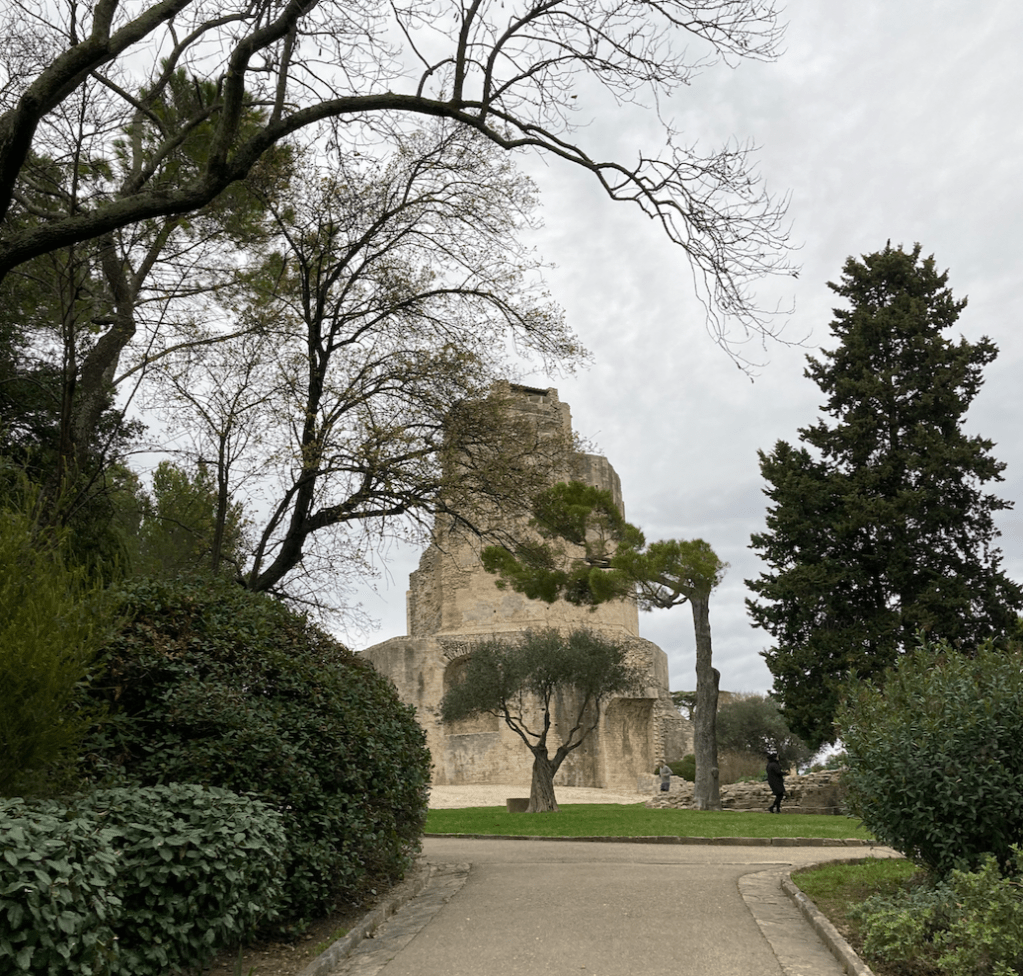
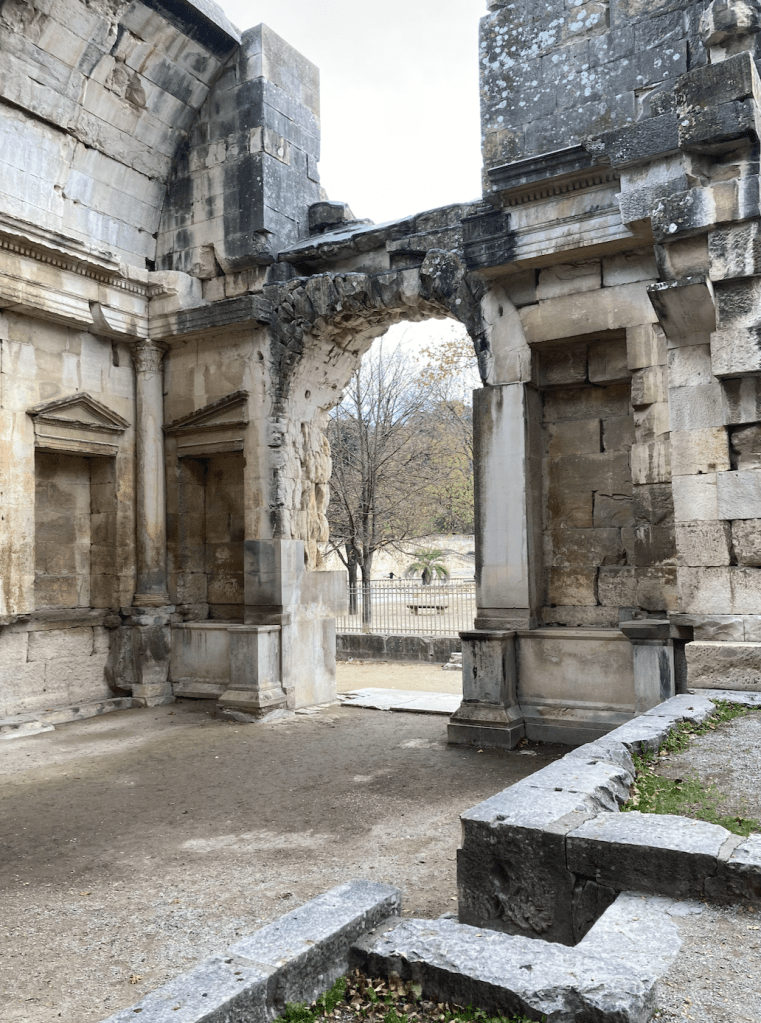
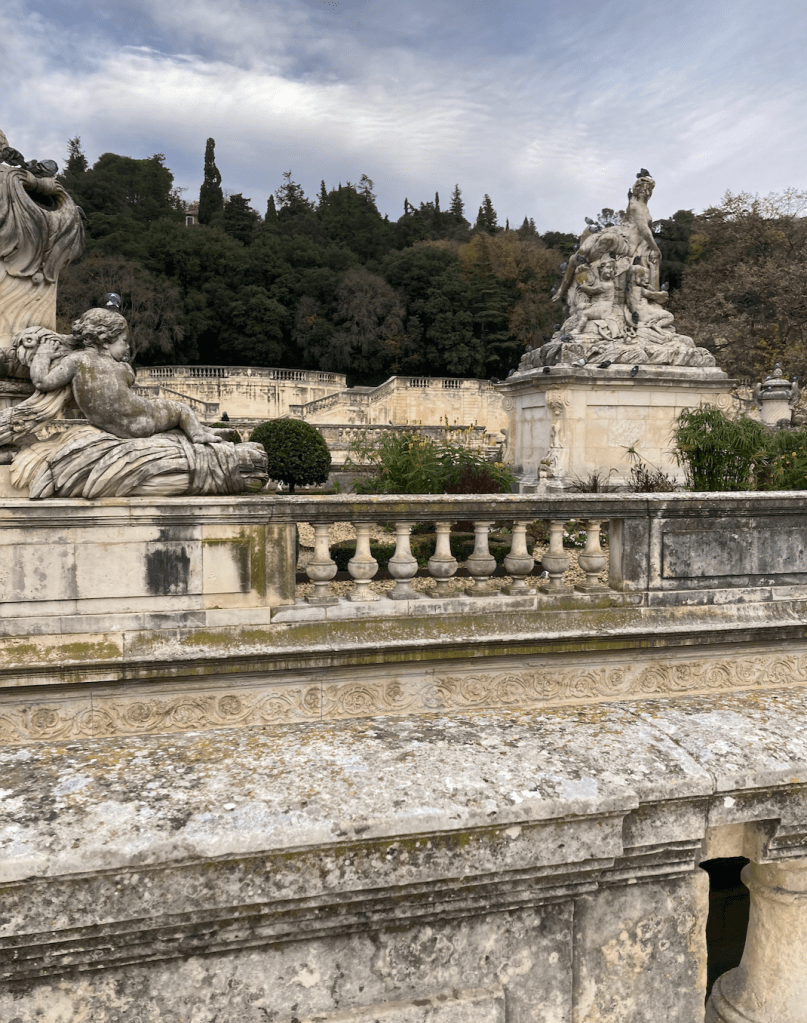
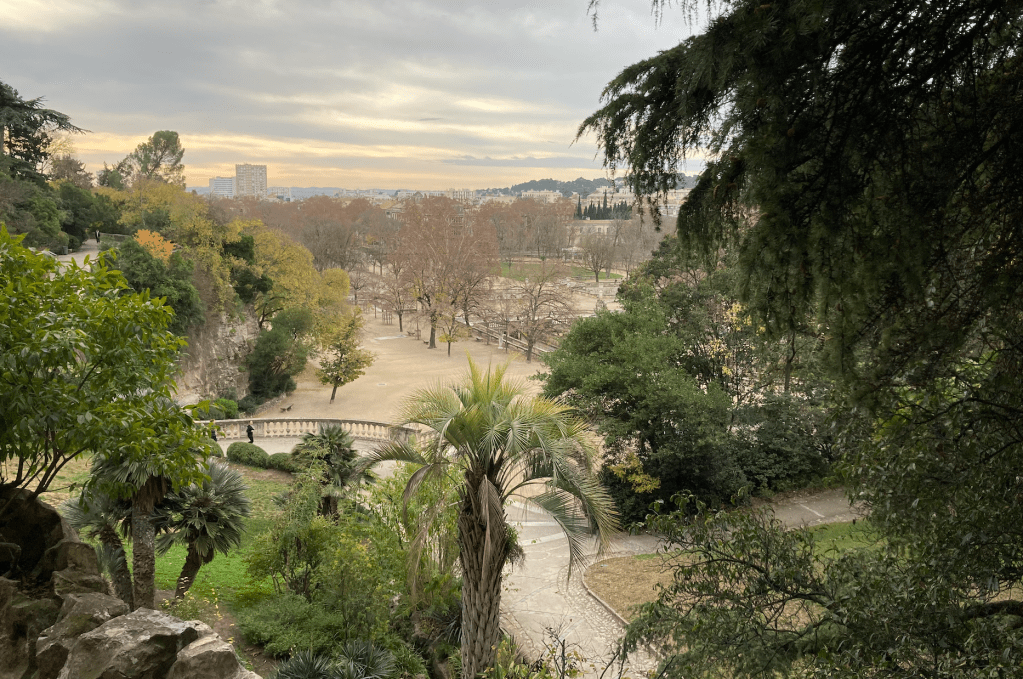
More roman ruins in the Jardines de la Fontaine, a French/Roman mashup park designed in 1745 around a spring and ancient temple. The Quais de la Fontaine channels the spring into fountains and then out through the city. The gardens also include “the great tower” dating from 15 BC. The ancient roman temple to Diane was probably a roman library but the garden designers thought temple to Diane sounded better.

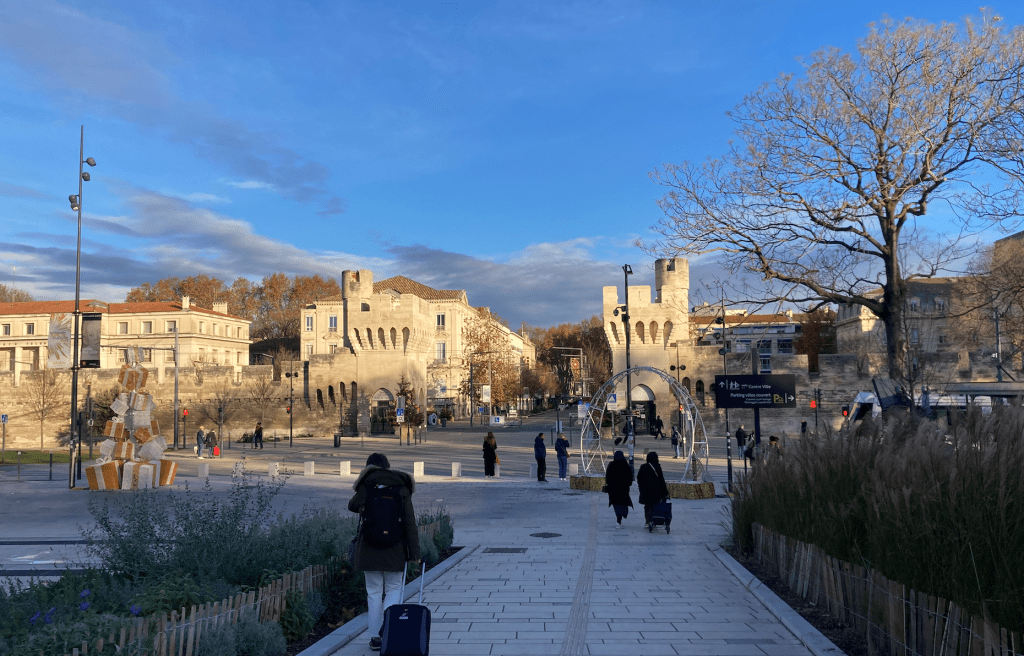
If that was not enough, Nimes has a beautiful esplanade leading from the train station to the coliseum which of course included an Advent market and carnival. 

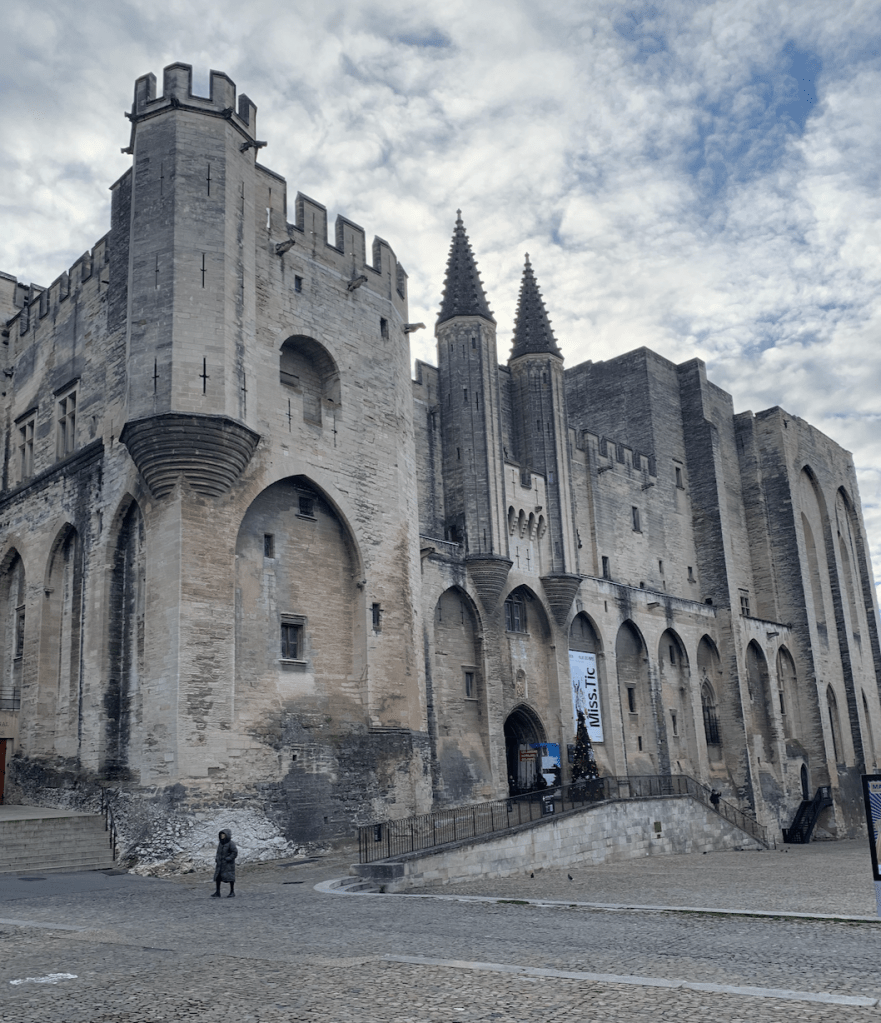
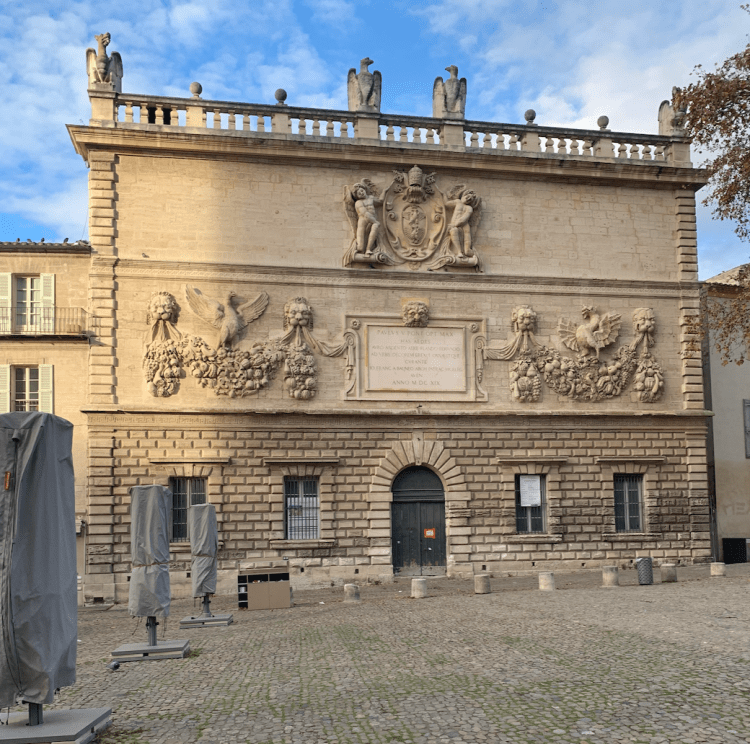
Another short 1 euro train ride to Avignon. For us, another classically French, emotionally destabilizing moment when approaching this massive, overwhelmingly massive Palais des Papes. This was the massive, very massive home of the popes during the 14th century.  

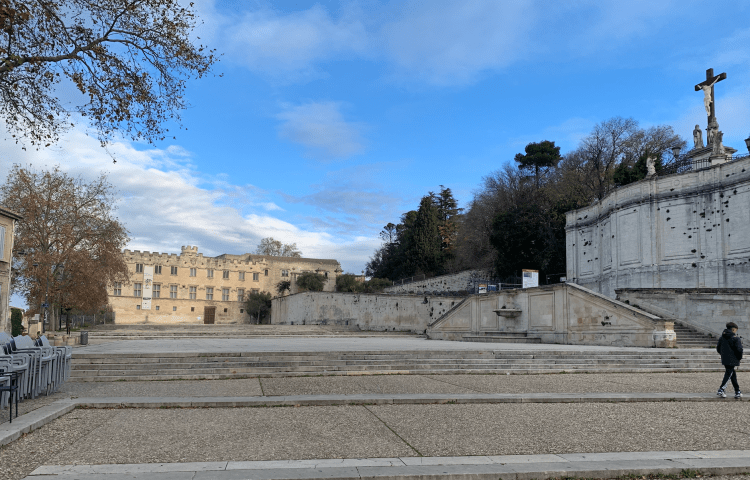
Why were the popes living in France? Italy was in turmoil so the King of France, demanded invited the entire Catholic infrastructure to move and expand here until a return to Rome. Construction began in 1252 with the pope and company moving there in 1309, leaving in 1377 and then the “antipopes” moved back in 1403( who were the antipopes?) then eventually the popes left but held on to the property for 350 years. This massive, truly massive complex entered years of shabby chic, until the French Revolution, followed by Napoleon, who reclaimed the massive property, turning it into army barracks and a prison. Crazy that the largest medieval gothic church, reflecting the height of 14th C artistry and construction was just left to molder. Now it sits, the Palais des Papes an anchor to two other massive, massive buildings built into the old city ramparts and a huge rock. 

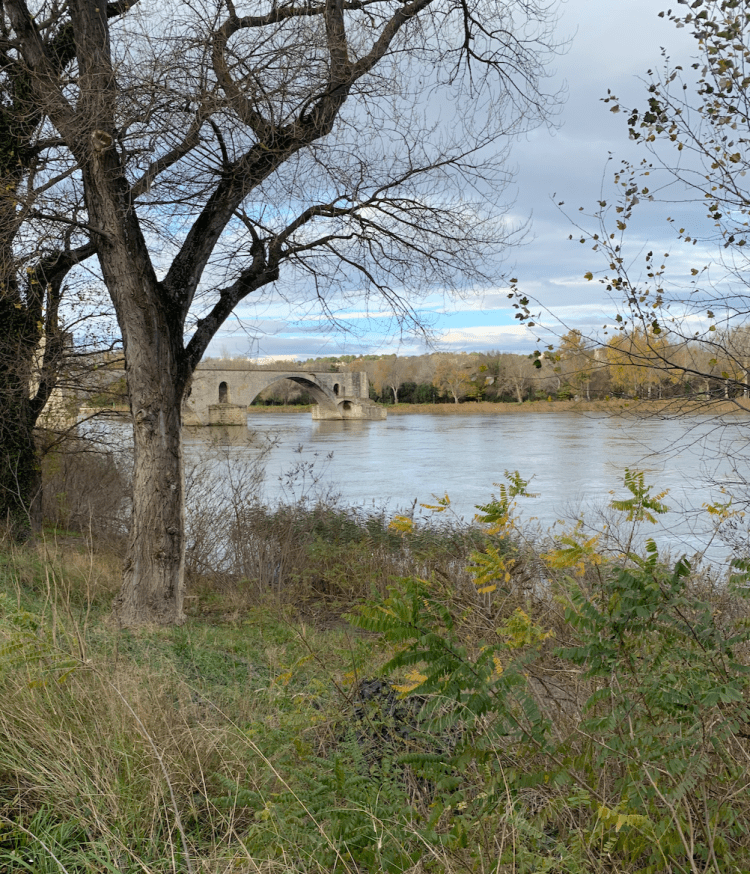
The rest of Avignon  was a bit less intense. We walked along the river to see the Pont d’Avignon, which used to link the rest of France to the Palais des Papes, but now just stops in the middle of the river, destroyed by repeated floods.

note the bridge ends mid-stream

Then a walk along the canal, on the  charming Rue des Teinturiers  which was the center of Avignon’s silk spinning and dyeing industry from the 1300s – 1800s and now is just “painfully cute” as per the Crazy Tourist website.

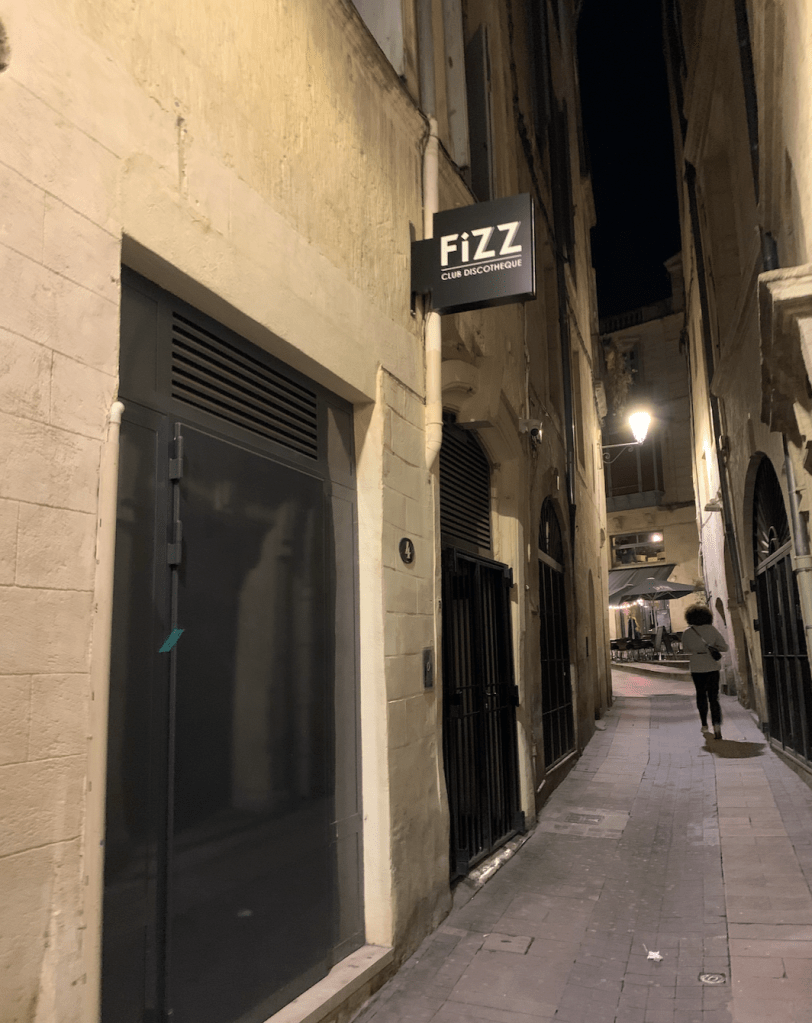
Each day we returned to our own personal Herculean labors, cleaning the 4 litter boxes, playing keep-away with the food, performing the meal dance. and going to bed with the triple threats while listening to the pounding bass of the almost all night discotheque downstairs, last call 5 am. Hades after hours.  Even hell has its routines, but they were never mundane, rather an entertaining challenge. Would we attempt to do this Herculean labor, again? Hell and back? Absolutely.

Leave a Reply