Journey to the Center of the Universe

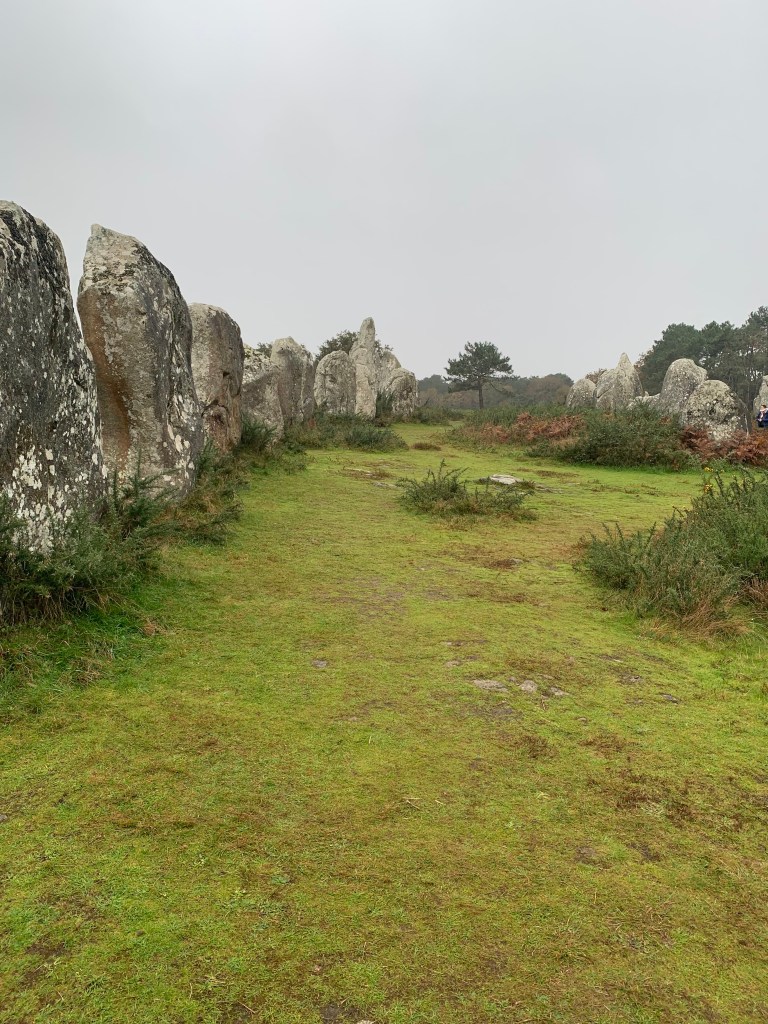
Fast and furious first weeks time traveling through France. Disoriented from the deeply, essential humanness of the cave paintings, and Carnac megaliths compounded by the amazing engineering + slavery of Mt St Michel juxtaposed with the graves, battlefields of WW1 and WW2. That sums up France so far. Everywhere is history that we continue to forget and repeat.

We left on this trip with no set itinerary. Days were busy, evenings were consumed with “where to next” and “how do we get there”. As noted before, public transport in France in the winter was a major player in choosing where we went and at this point we just wanted to stop moving for a bit but stay entertained. So we went to Narbonne. Not sure why other than it sounded good, our train ride would parallel the Canal du Midi and we found a nice place to stay. It was a good choice. 

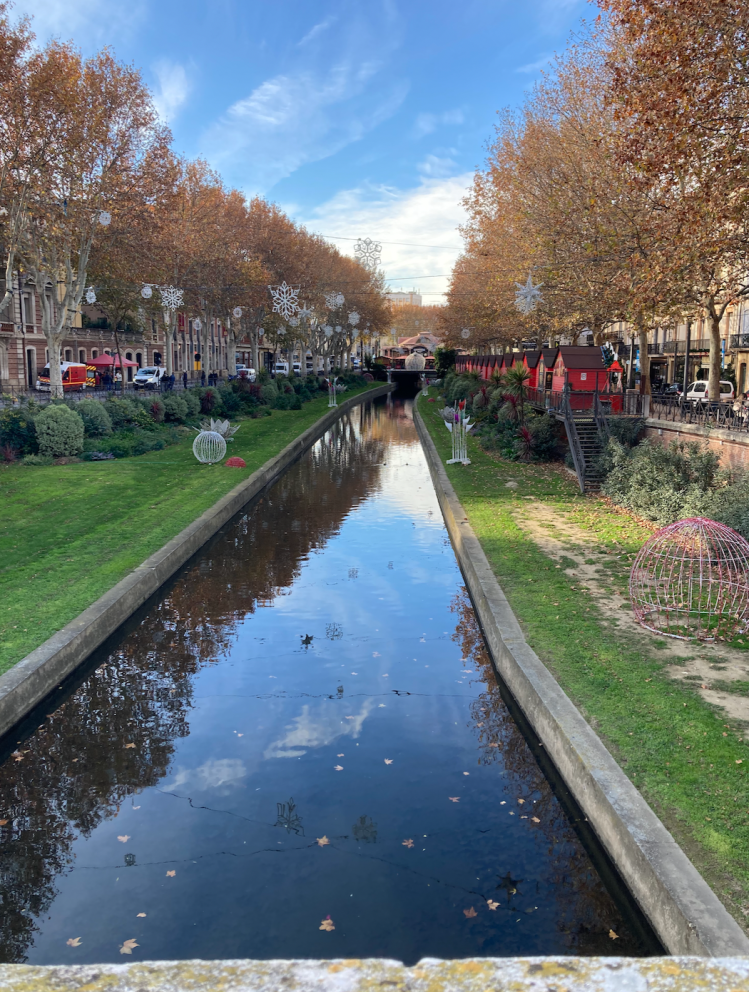
A cat sit in Montpelier awaited us, so we went ahead and booked a week since a longer stay equals significant discounts. A beautiful apartment in the center of town, opposite our newly beloved Canal du Midi (https://chosenfugue.xyz/2025/10/30/everything-toulouse/).   The apartment itself was extravagant mainly because it had a washer and DRYER. Dryers are not easy to find in Europe, and the weather was getting too cold to rely on hanging clothes to dry.
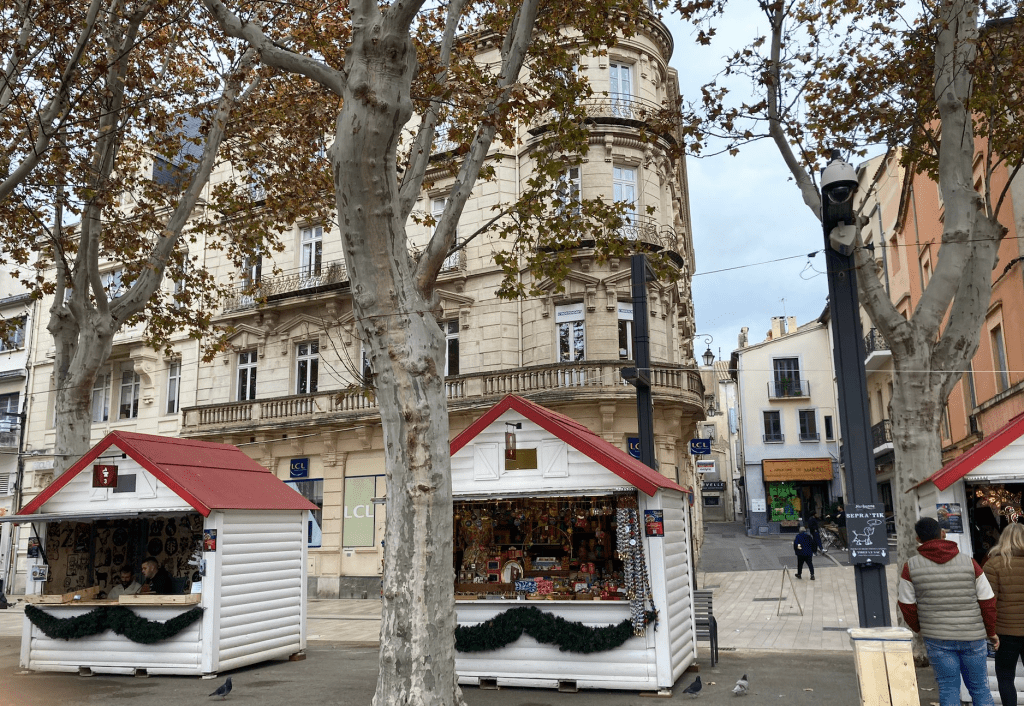
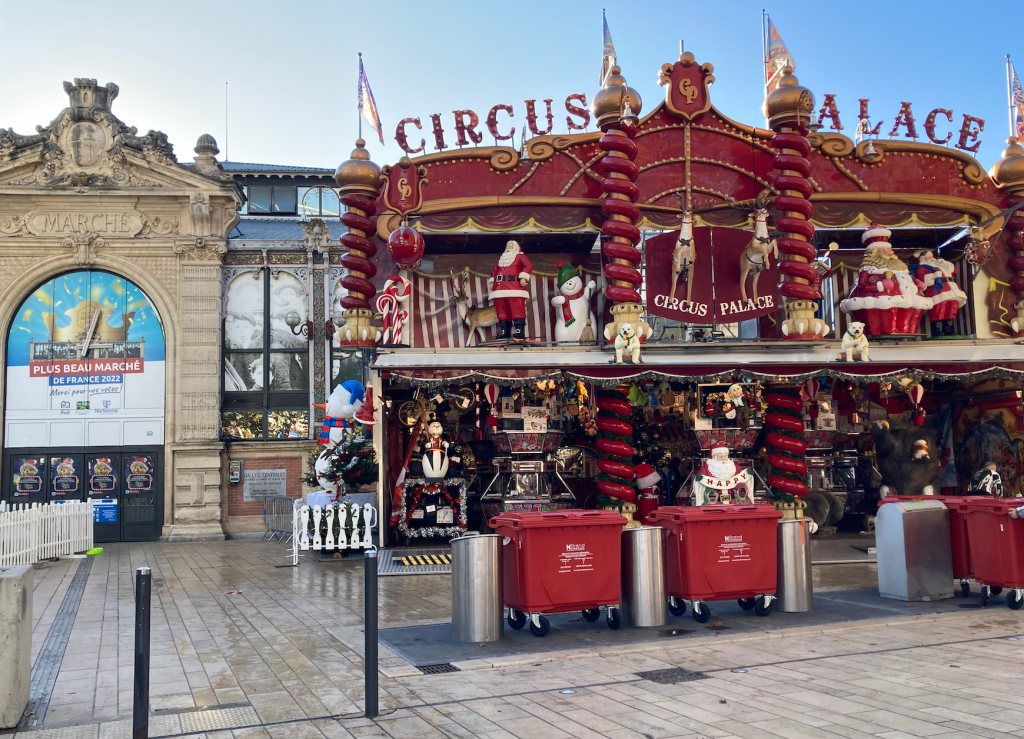
Our timing was perfect, we arrived to the grand opening of the Christmas Market, including free cup of wine (tasted and felt like bar mitzvah/wine!).
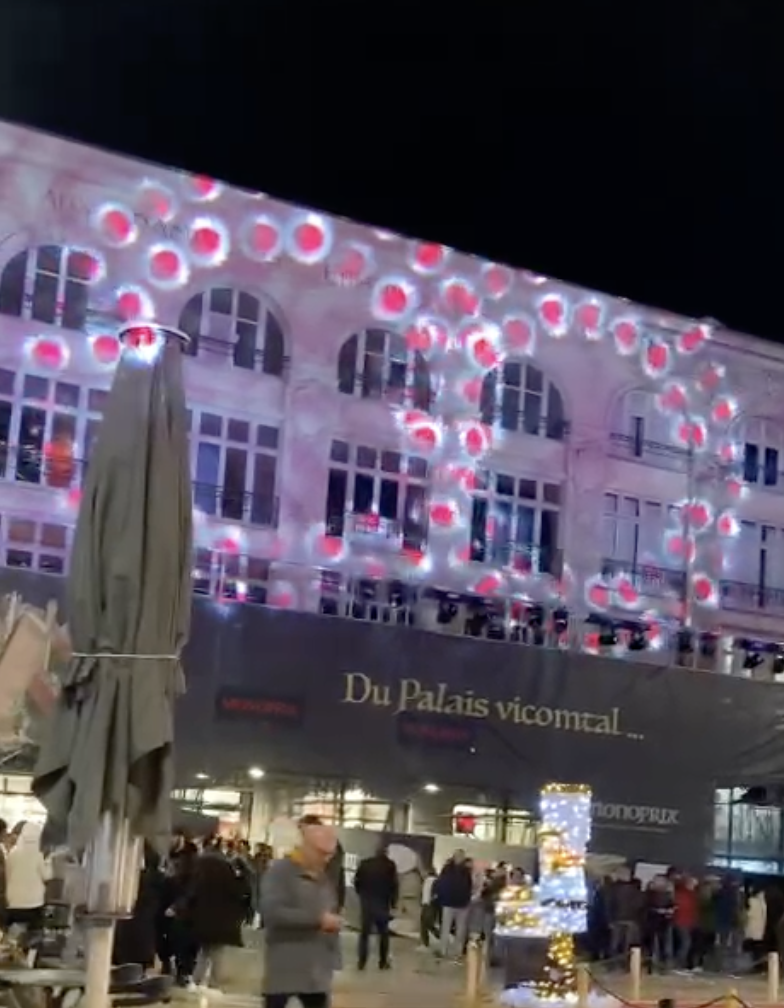
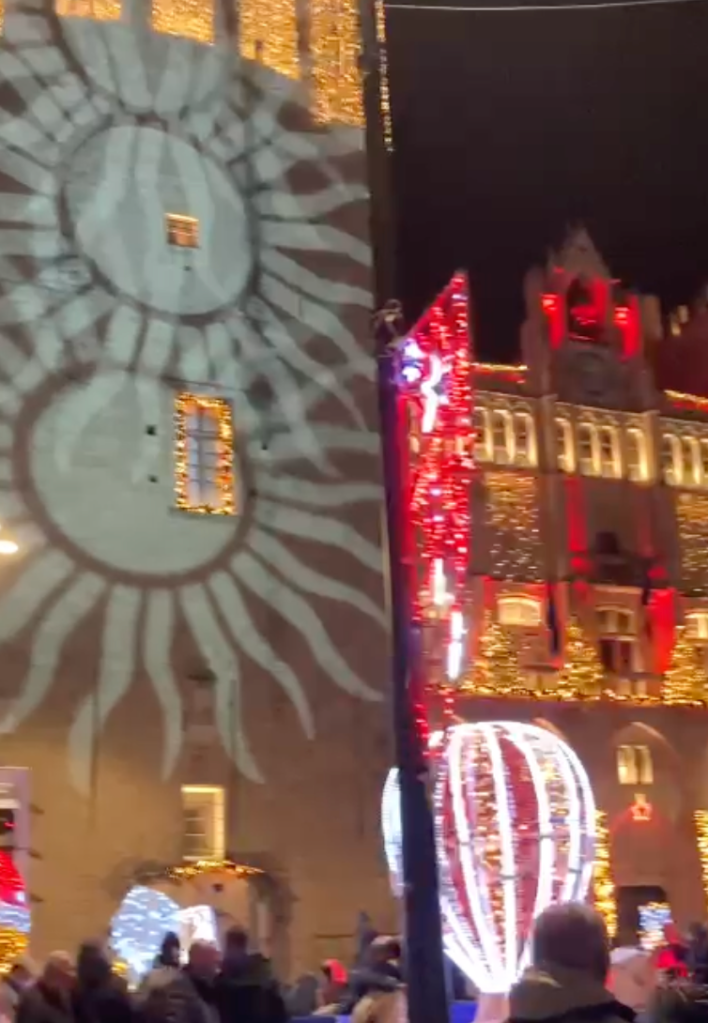
Our offseason travel has given us the gift of experiencing Christmas Markets in multiple towns and countries; from the extravagant drunken fueled ones of Germany https://chosenfugue.xyz/2020/06/02/cologne-not-alone-for-christmas/ to the neighborhoody, almost quaint drunken ones of Croatia https://chosenfugue.xyz/2018/12/04/pula-treiste-and-rijeka-the-istrian-trilogy-part-2/  The French ones have more of a carnival party feel with carnival and pony rides, ice skating, shopping huts and of course food and drink booths followed by drunken dancing lights shows nightly.  After the inauguration event of the Advent season, we left our apartment everyday to the sounds of Christmas music- it actually was better than it seems (hello Felice Navidad on repeat)
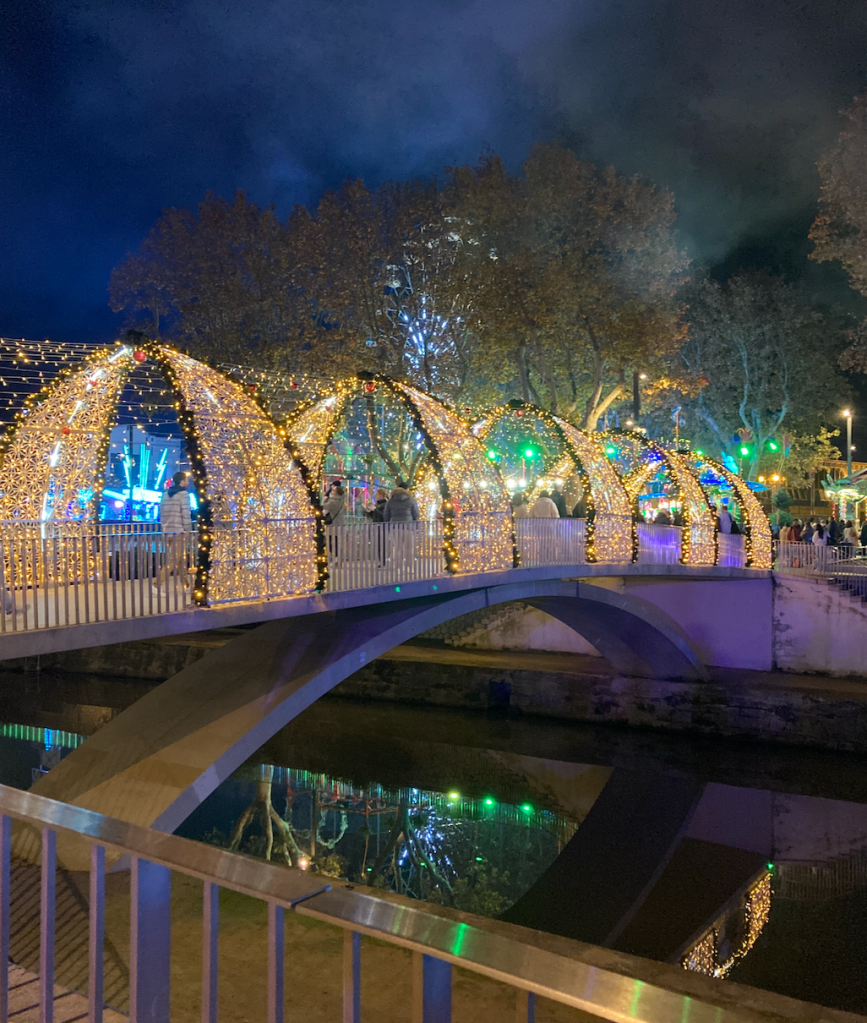
Despite it’s small size, there was a lot to walk to (basically what we do) , but also, importantly, it had good access to day trips, although we ended up just doing one since we were enjoying our time truly getting to know Narbonne.   

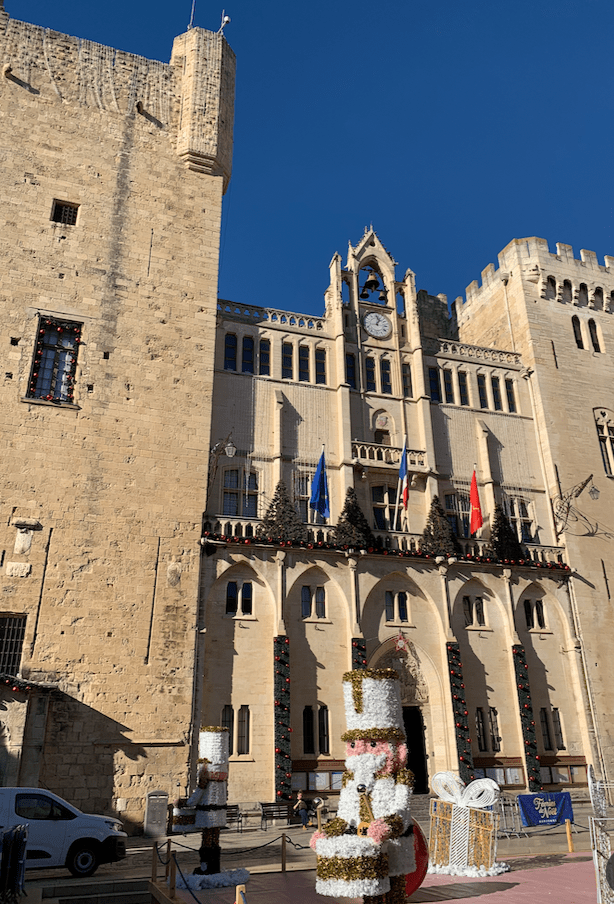
Narbonne like pretty much all European cities has a very long varied history but due to it’s location close to Spain and the sea plus on a primary Roman road (Via Domitia), influences were a bit different then other French cities. Romans, Visigoths, Arabs, Carolingians, Capets, Jews all called it home from 118 BC until the 14th C  but then the main river changed course and no one wanted to call it home. Resurgence in popularity occurred in the 16th century when the Canal de la Rabine was started which eventually linked to the Canal Du Midi and it’s role as a transit hub returned.   It was very cool to walk along these historical canals that are still here today.
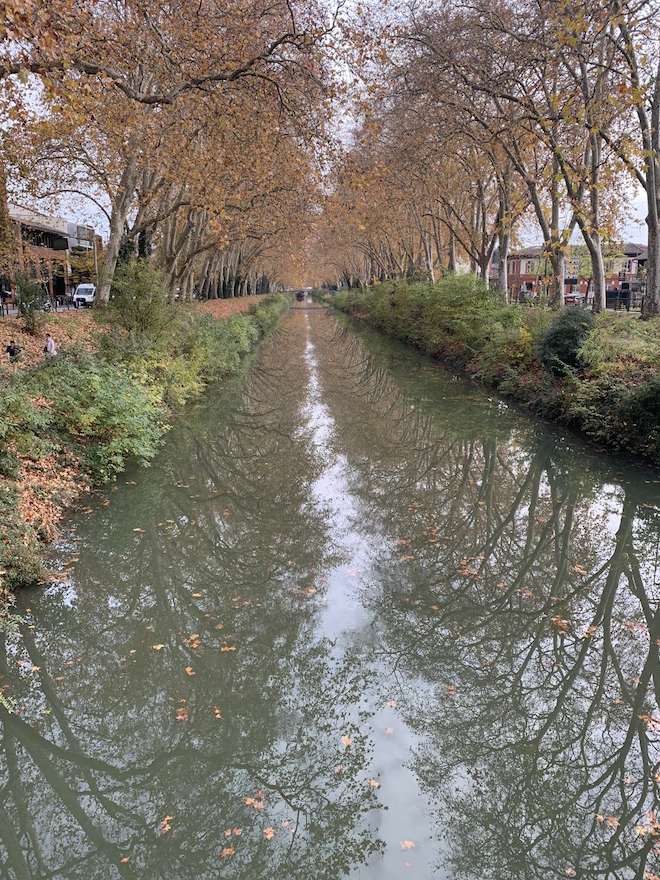
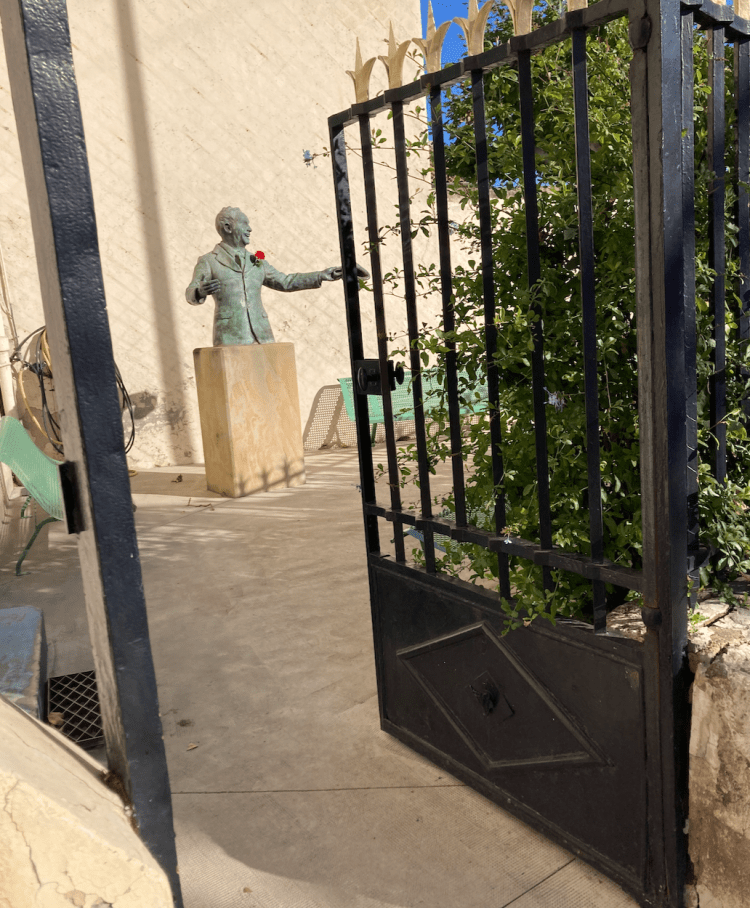
The town itself was fairly small, and we managed to walk the length from the mall (GIANT Carrefour market dwarfing a super Target) on the outskirts to the  other outskirts for a Turkish market (where we discovered walnut butter-pretty good, not great or worth repeating) next door to Lidl (GIANT bargains). In between we passed the Cathedral, the Lapidaire Museum, underground Roman ruins (Horreum Romain), Les Halles (food hall), and even Charles Trenet birth home and museum.  We had never heard of him either, until we learned he wrote and sang La Mer, aka Beyond the Sea ( https://www.youtube.com/watch?v=m8OlDPqYBLw).  
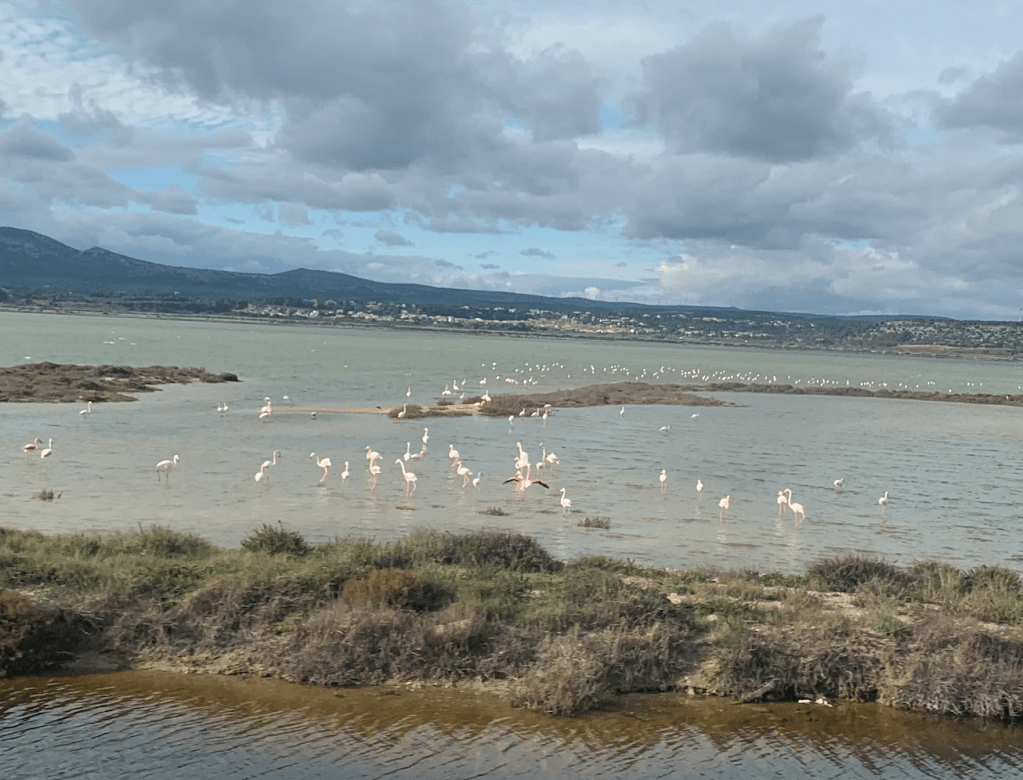
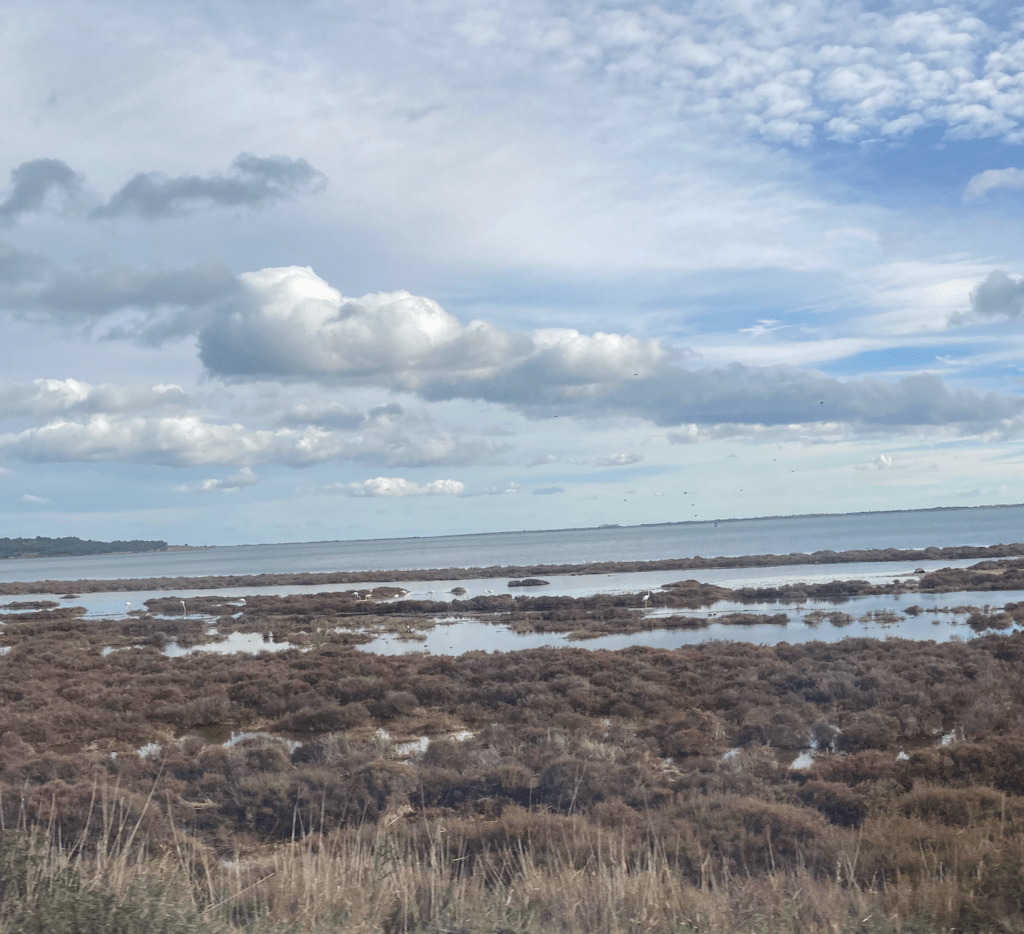
We almost did not go on our day trip to Perpignan because we got pretty comfortable in Narbonne walking around the canal, or to the various Carrefour markets; Giant, City and Express. But we were here and there were 1 Euro tickets available, so why not, we went.  The train south toward the Spanish border traveled along the French Mediterranean past flamingo filled ponds.  
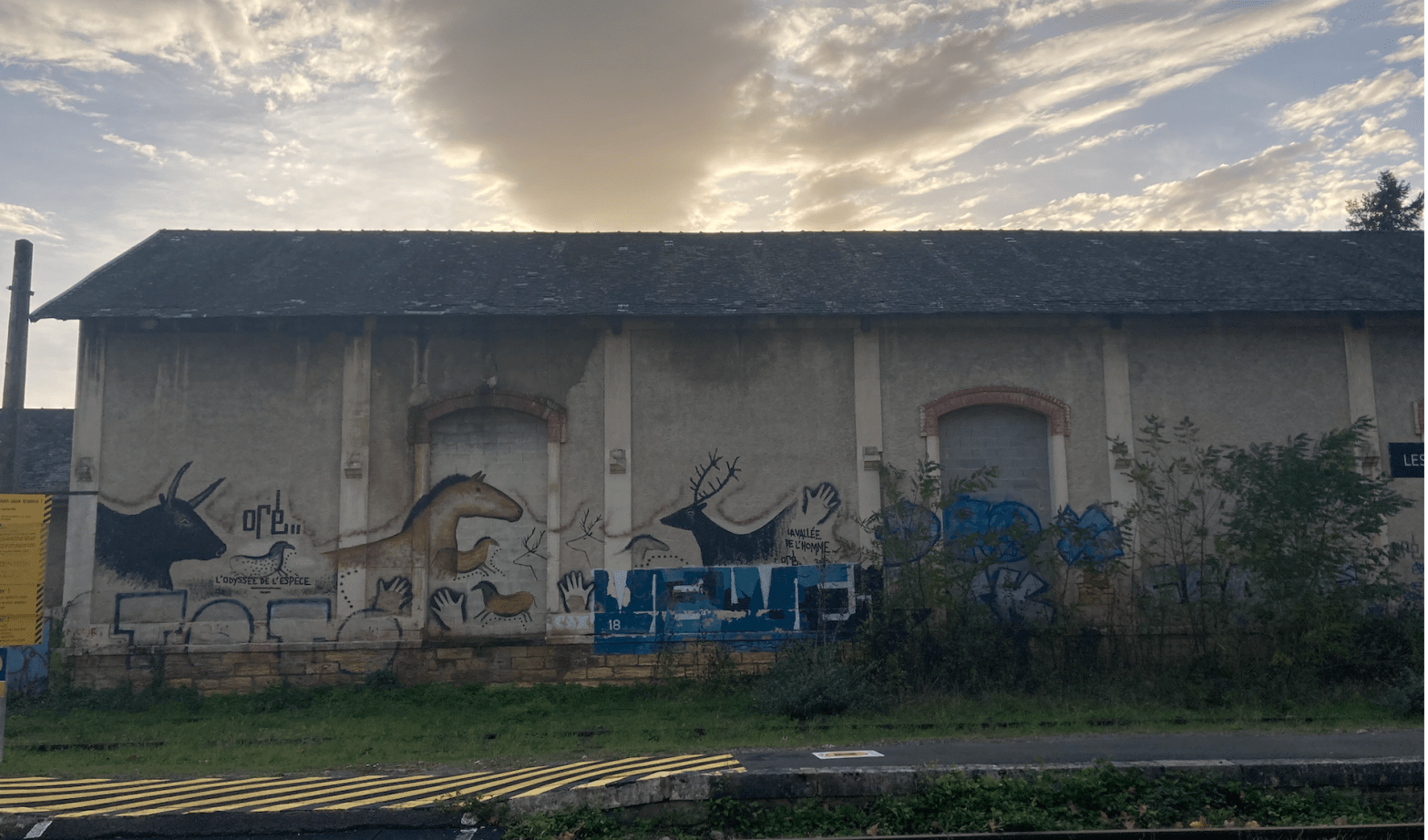
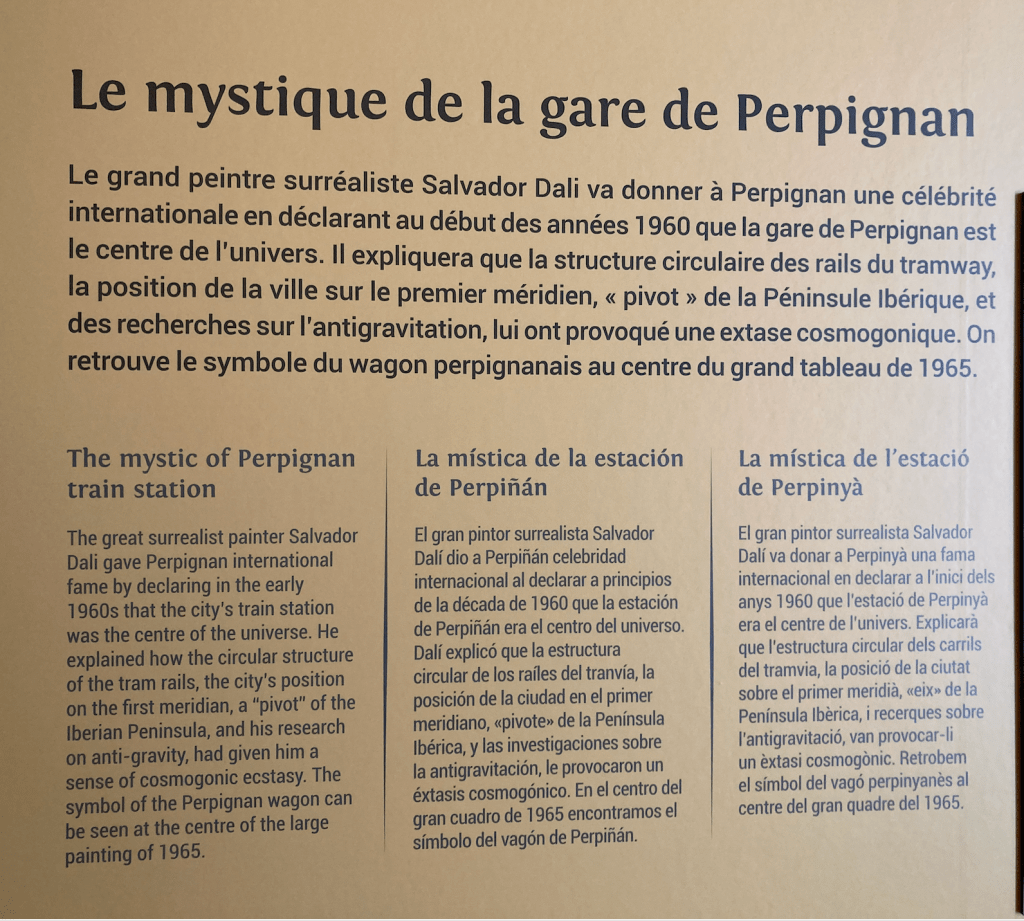
The train dropped us at the Perpignan railway station defined by Salvador Dali as the “Center of the Universe”  after he experienced cosmogonic ecstasy on September 19th 1963.  This is documented in a painting called La Gare de Perpignan in 1965 https://en.wikipedia.org/wiki/La_Gare_de_Perpignan.  We had to agree, although we always thought that the Woodman + Moorpark intersection in Sherman Oaks was the center of the universe, albeit absent the cosmogonic ectasy.
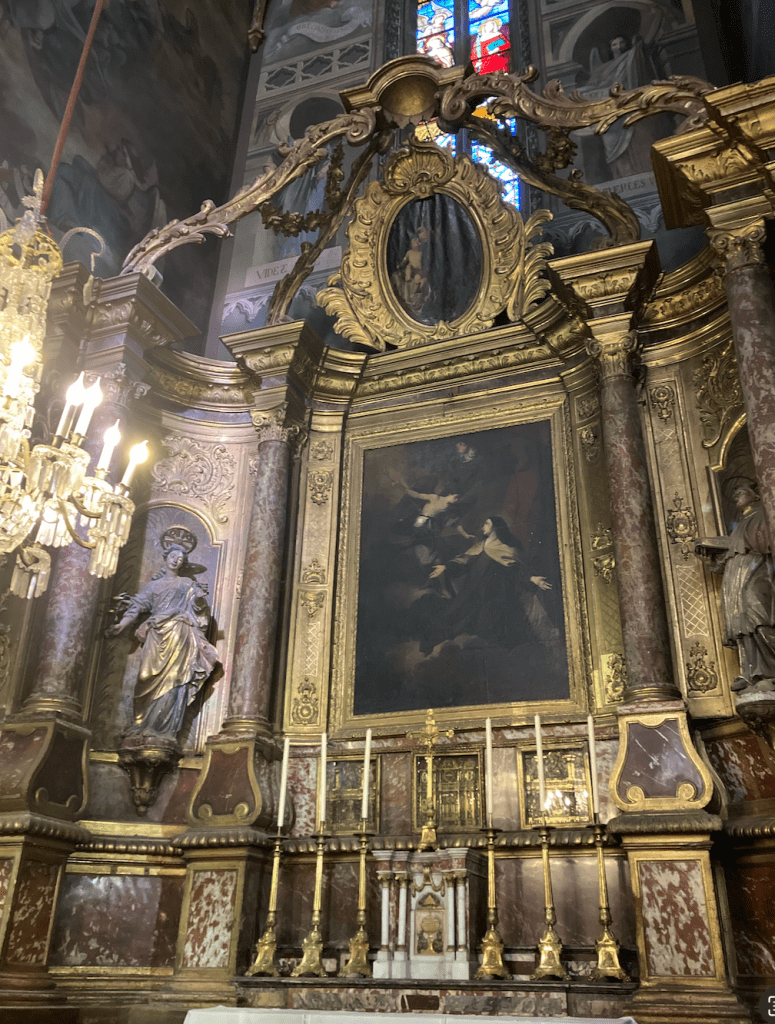
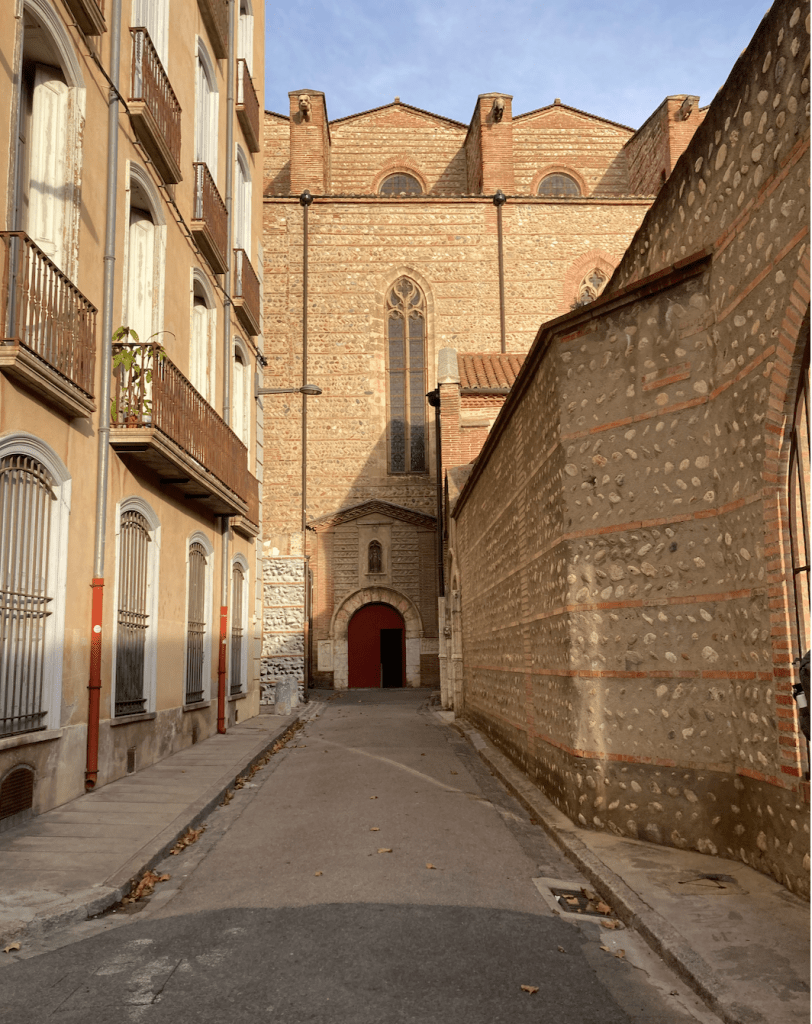
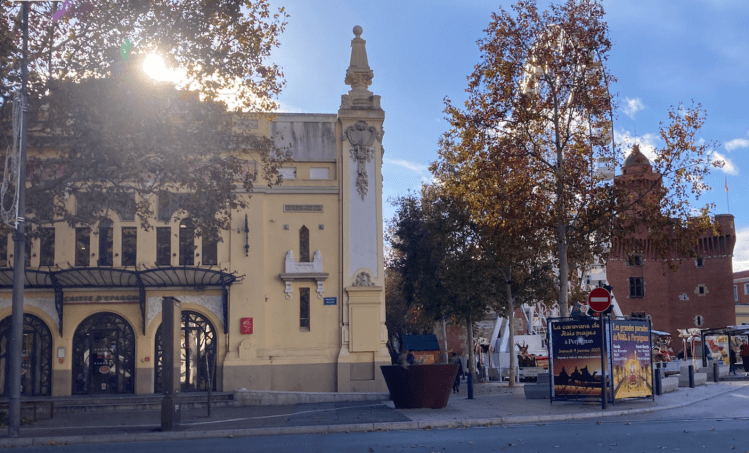
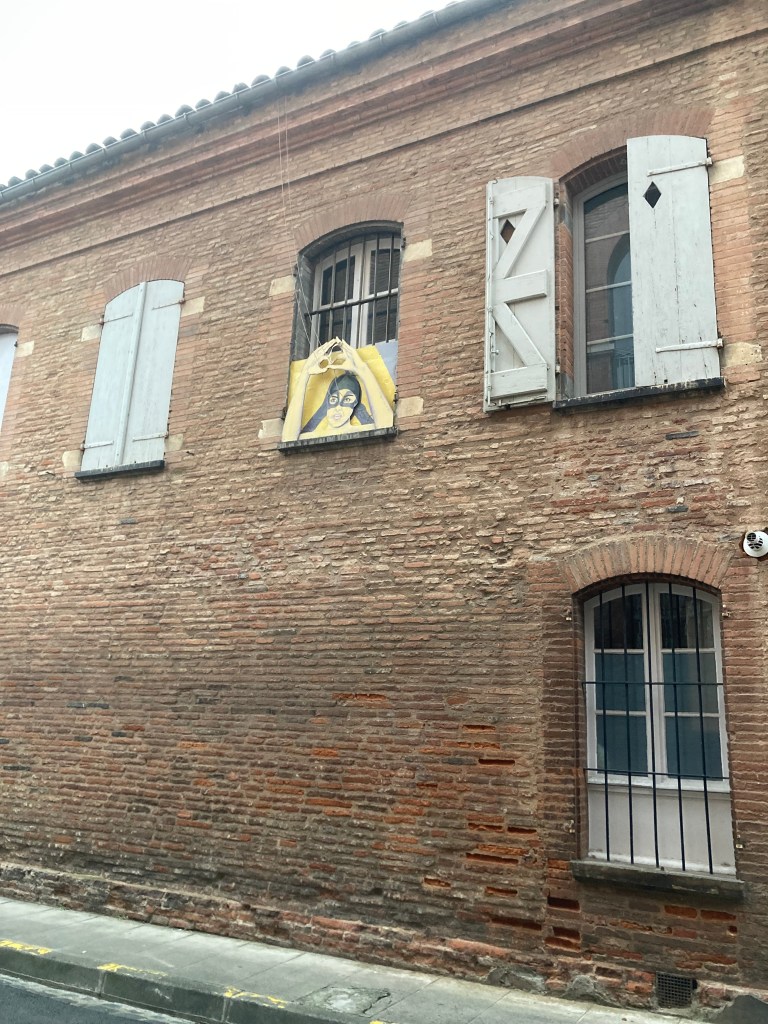
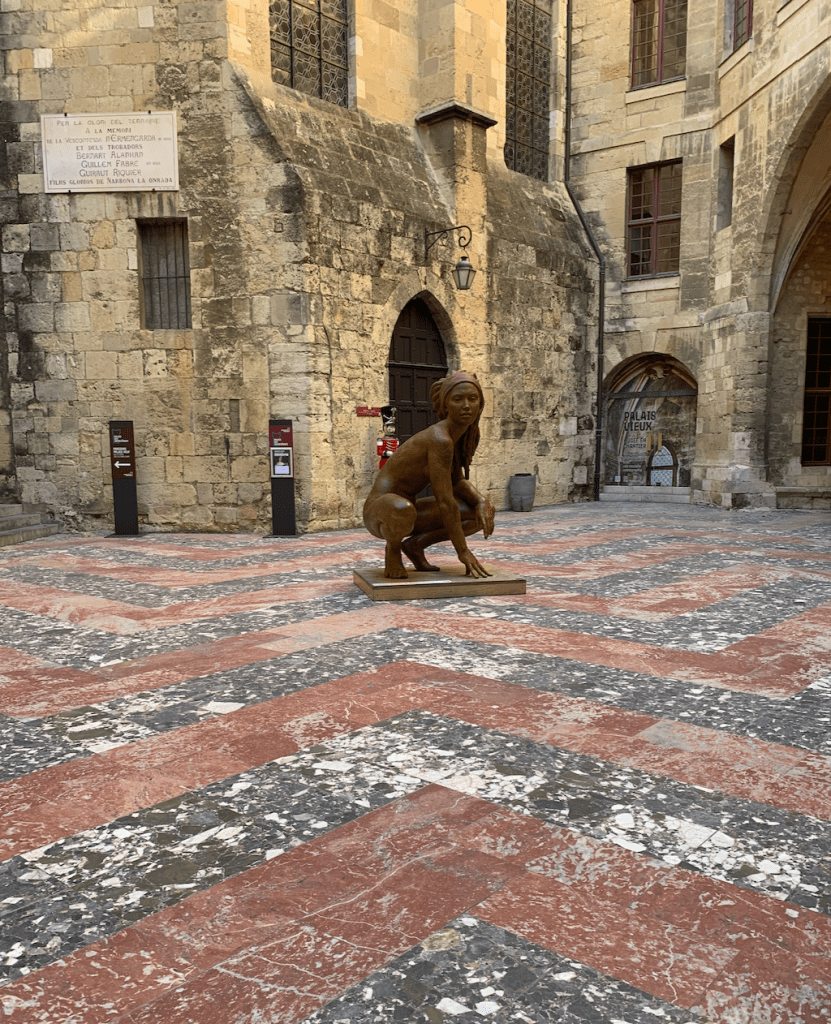
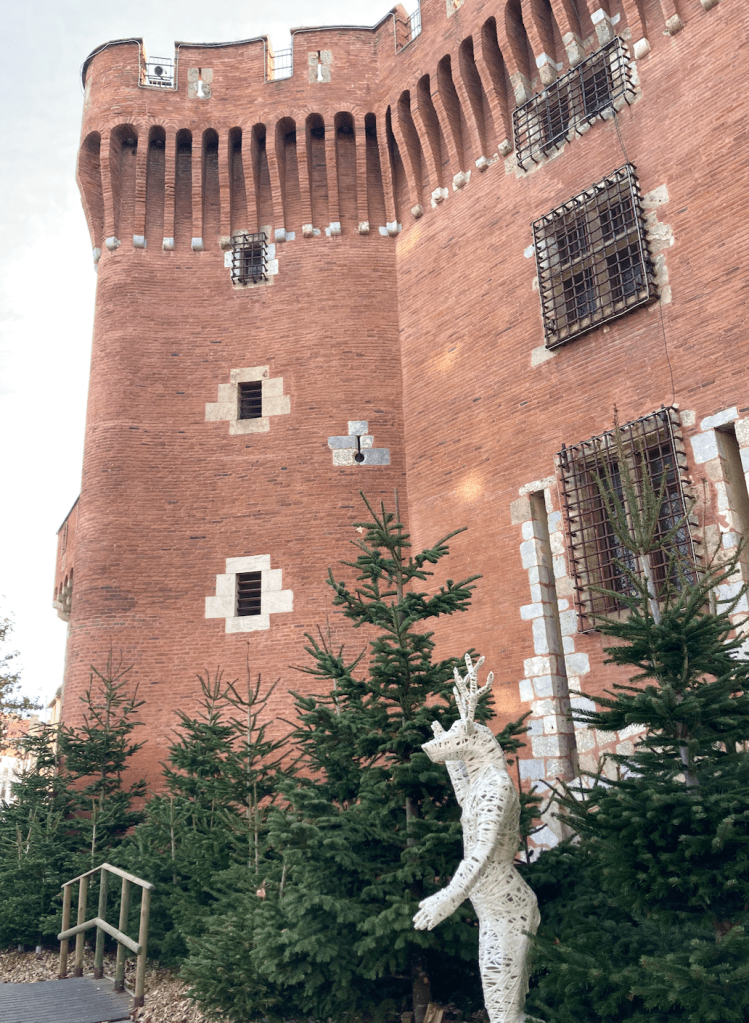
Perpignan had a pretty different history then Narbonne, the influence here is Majorcan, it was the capital of the kingdom of Majorca and it’s brick buildings reflect that. It did have a different look from other French cities. It’s about 50 km from the Spain and Catalan is still a prominent language and culture. There are all the expected things, castles, palaces, cathedrals, canals, Christmas market, Galleries Lafayette department store (good place to find a bathroom). 
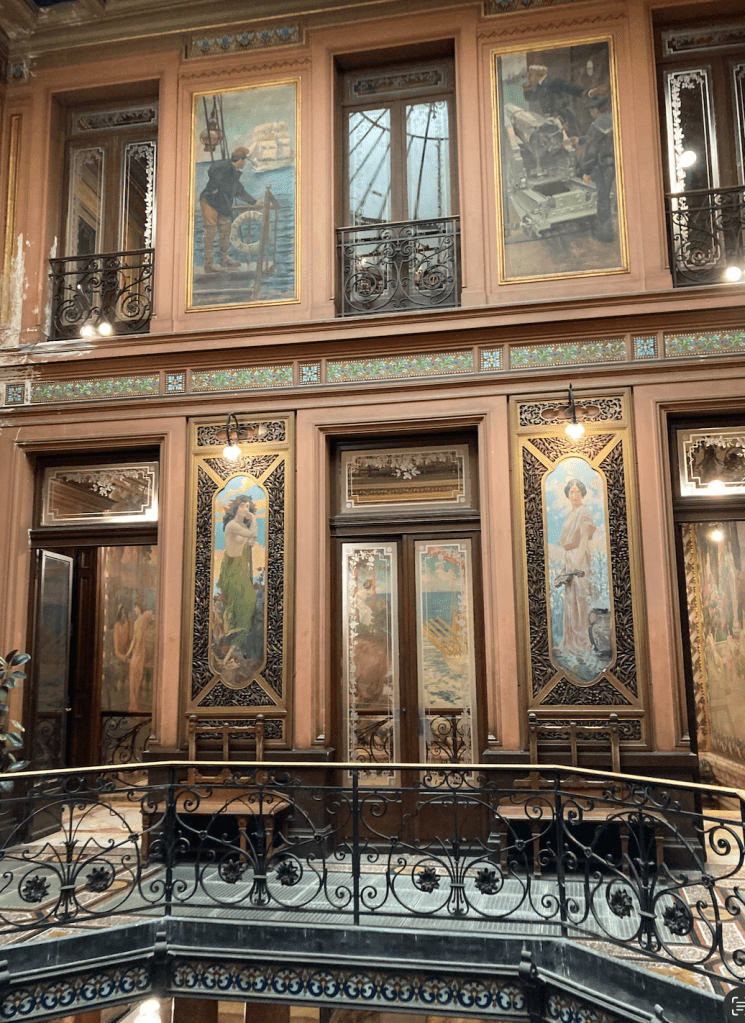
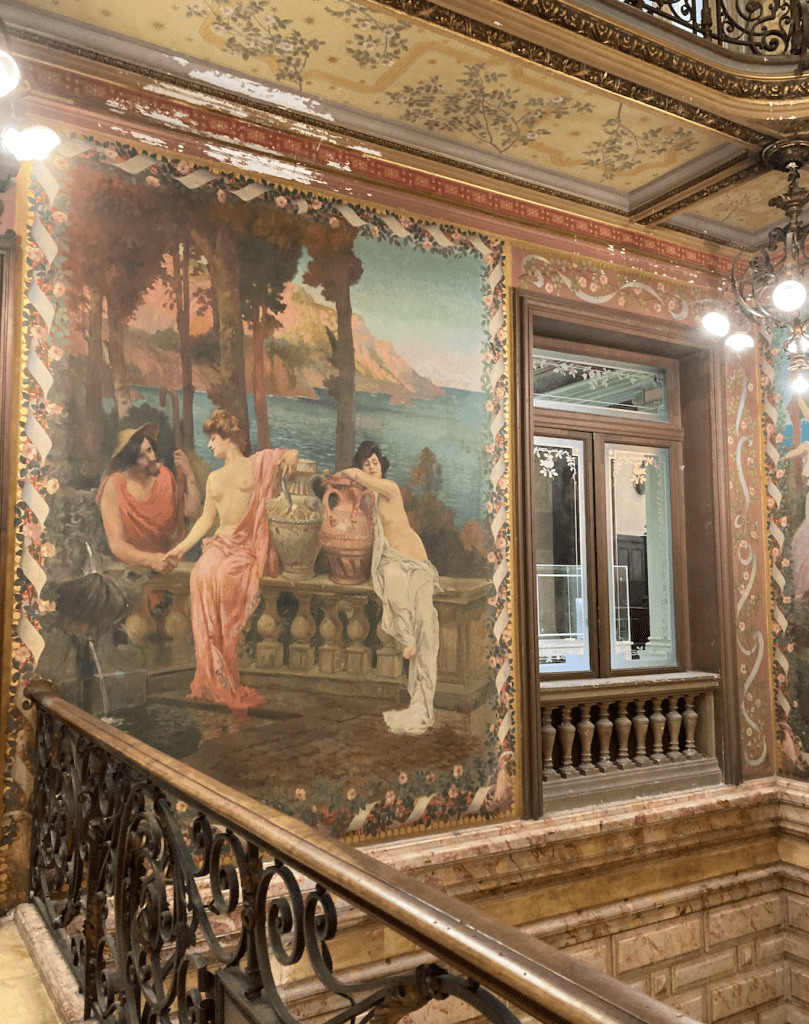
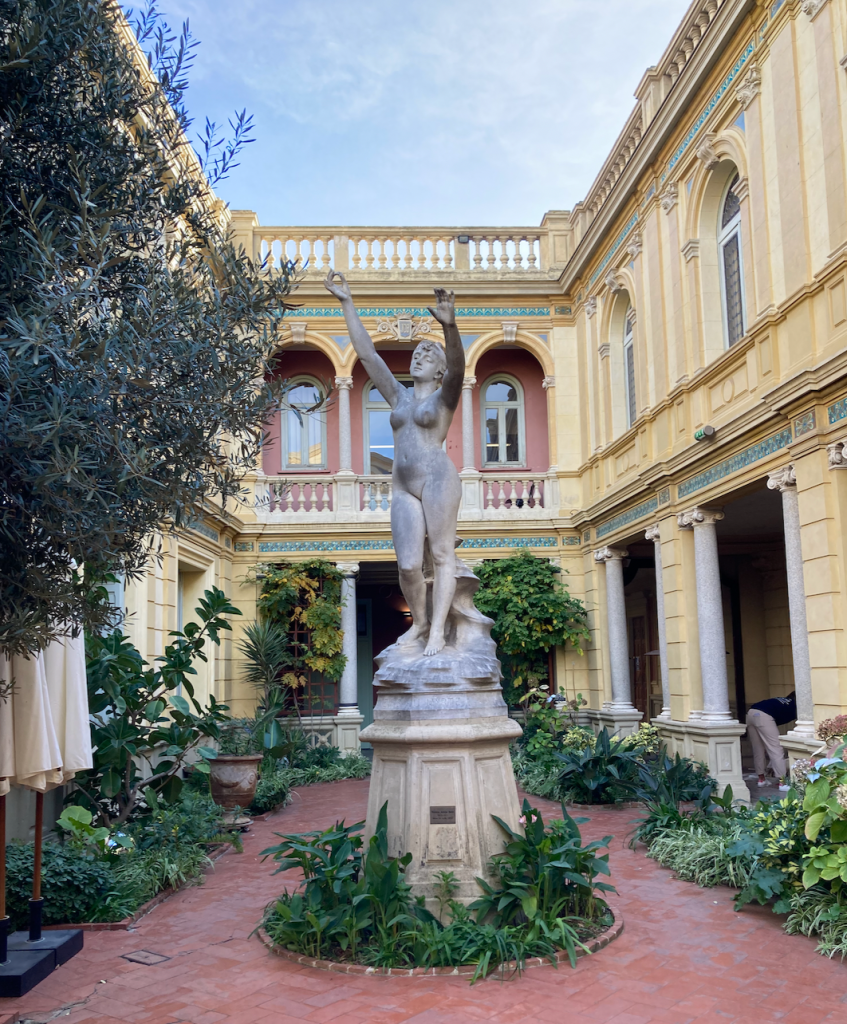
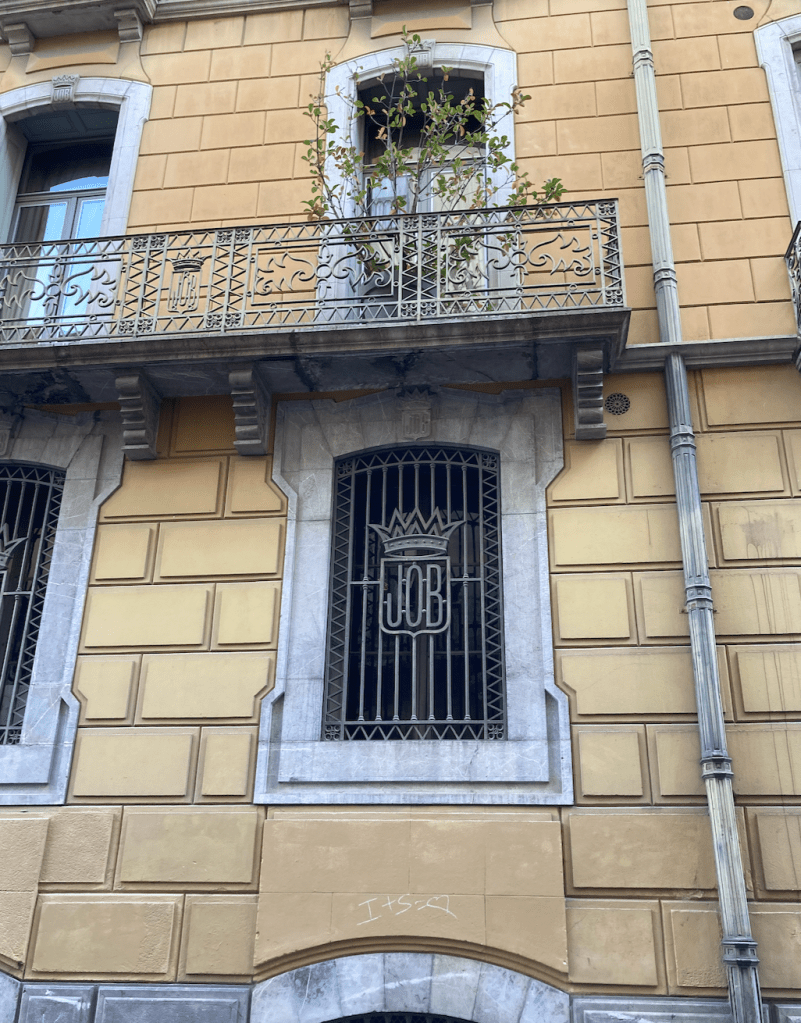
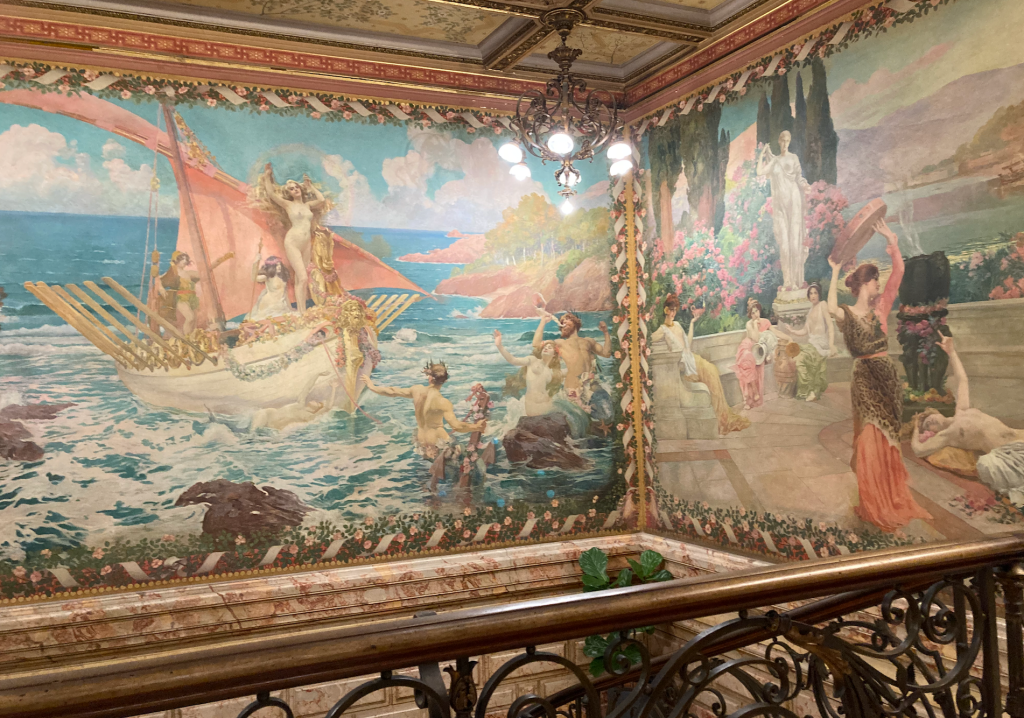
Unexpected, we wandered to the Hôtel Pams, the home of Pierre Bardou, one of the founders of the JOB cigarette papers (aka ZigZag) and then expanded by his son in law Jules Pam (hence the name) between 1852 and 1872. Like the Toulouse City Hall, https://chosenfugue.xyz/2025/10/30/everything-toulouse/ it was spectacular. Apparently, all those guys in high school rolling joints and the weird guys rolling their own tobacco cigarettes were just celebrating this exquisite art filled house.
Unexpected, there was the Centre d’art contemporain Walter-Benjamin and yes we did go in because of the name. This tiny museum, the exhibit was good,  did not have a connection to Walter Benjamin although Walter Benjamin did start his escape from the Nazis from Perpignan to Portbou, Spain. We are apparently suckers for Walter Benjamin marketing. https://en.wikipedia.org/wiki/Walter_Benjamin

We loved our stay in far southeastern France, in fact it has never left our mind, it won’t leave yours either as you already probably have La Mer stuck in your head https://www.youtube.com/watch?v=tKOpxCP5TGM.
Everything Toulouse

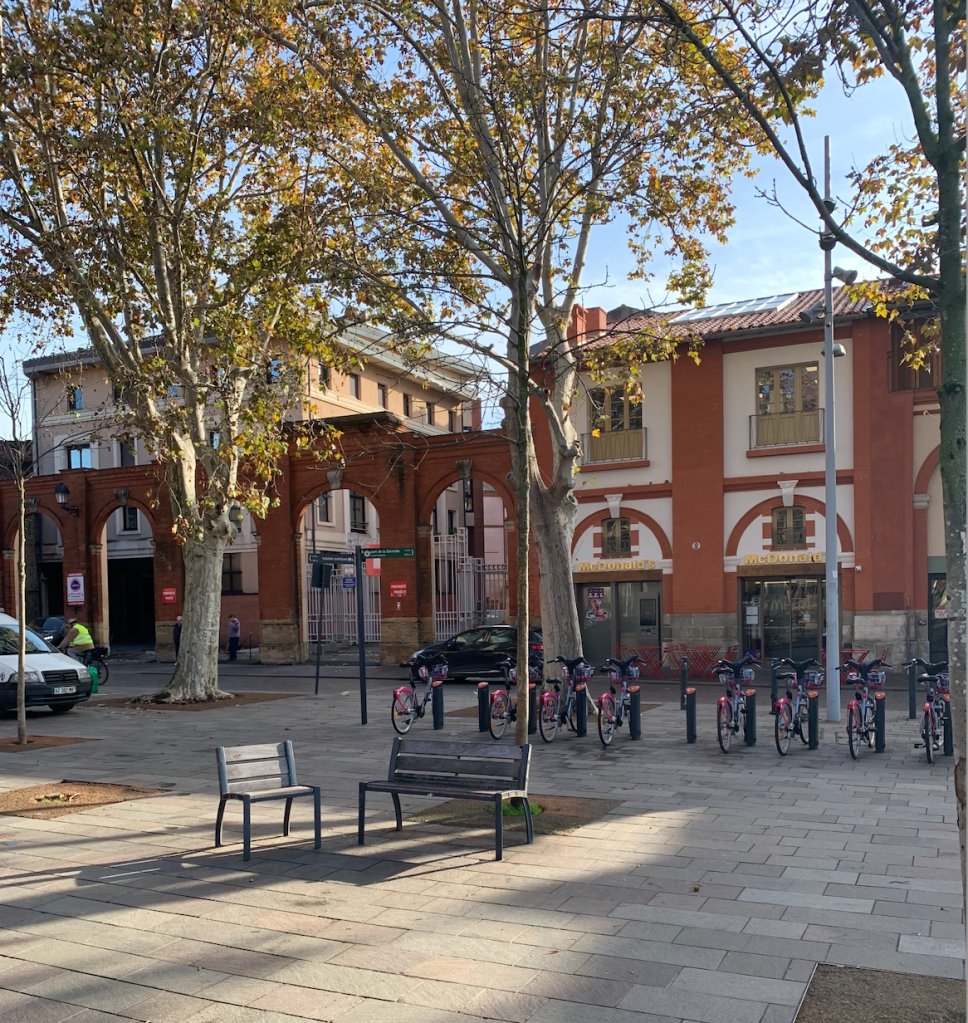
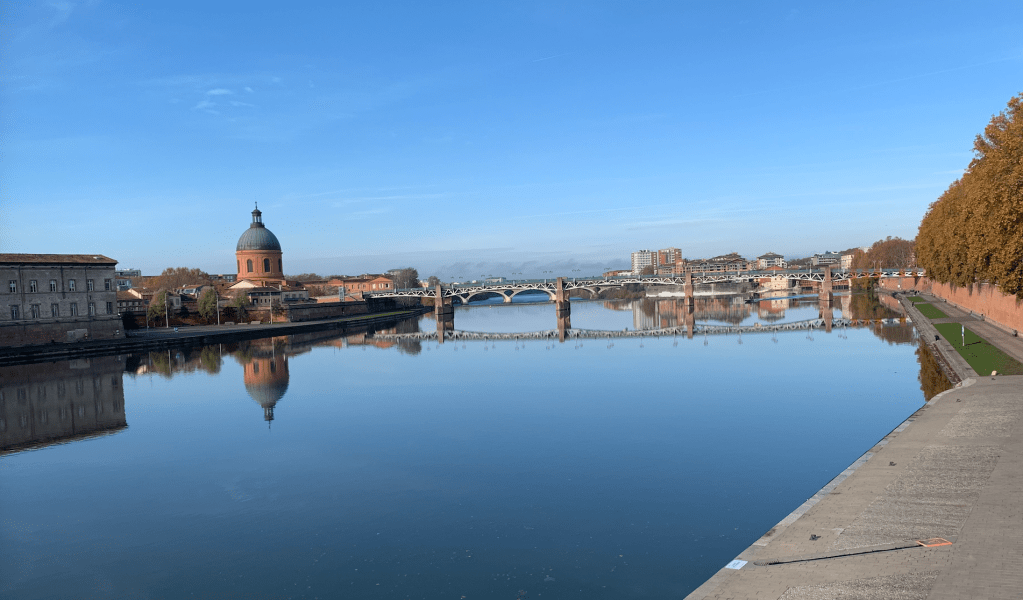
Perhaps foolishly, we don’t always know where we are going. Onward to the Pyrenees was the original goal, but a lot of travel days and maybe snow, made it not appealing. Based on ubiquitous travel blogs, we thought Albi, (maybe Patricia thought it was Aldi?) https://www.albi-tourisme.fr/en/autour-dalbi/grand-site/visiter-albi-10-bonnes-raisons/ The city is an UNESCO site (isn’t everywhere in Europe?) and despite his name, actually where Toulouse-Lautrec was born, but to go there we had to change trains in Toulouse, so we thought why not Toulouse since we had nothing Toulouse? Despite being a 25 minute train ride away, we didn’t even day trip to Albi because Toulouse was a great surprise. After seeing a lot of European cities they can sometimes feel a bit repetitive, not Toulouse. It was striking. Off the train, out the door and we immediately fell for the city’s terracotta brick buildings- they were almost glowing (okay, it was dusk and it had just rained….).

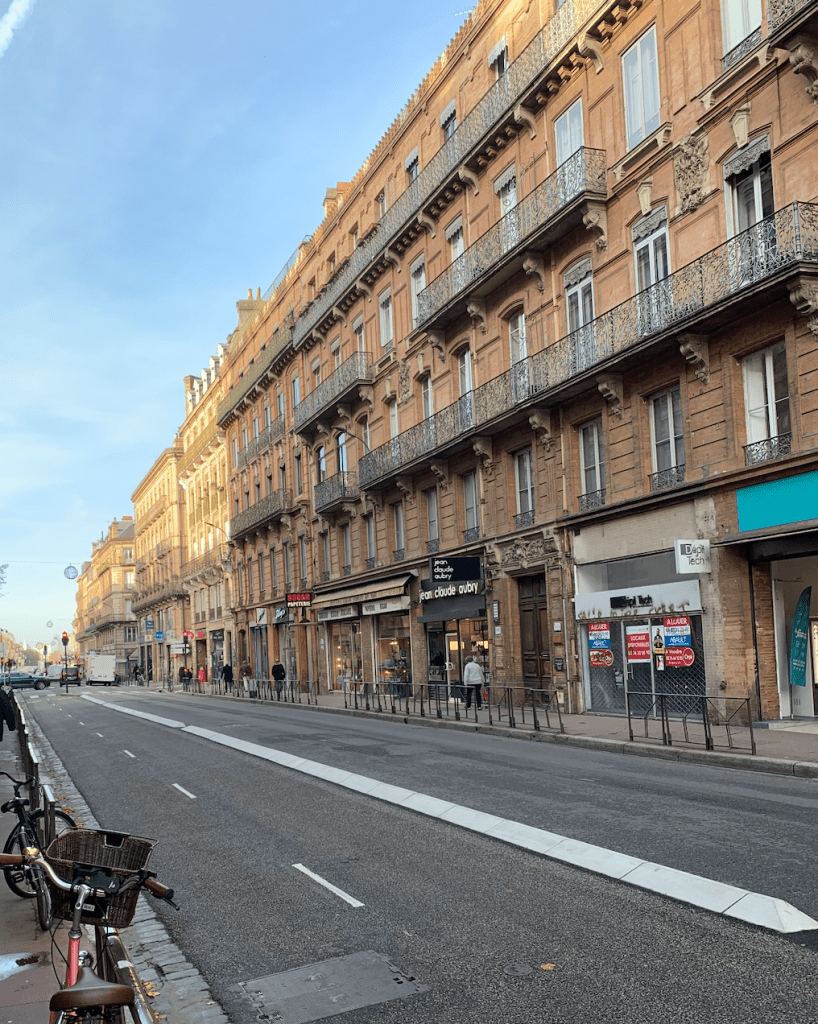
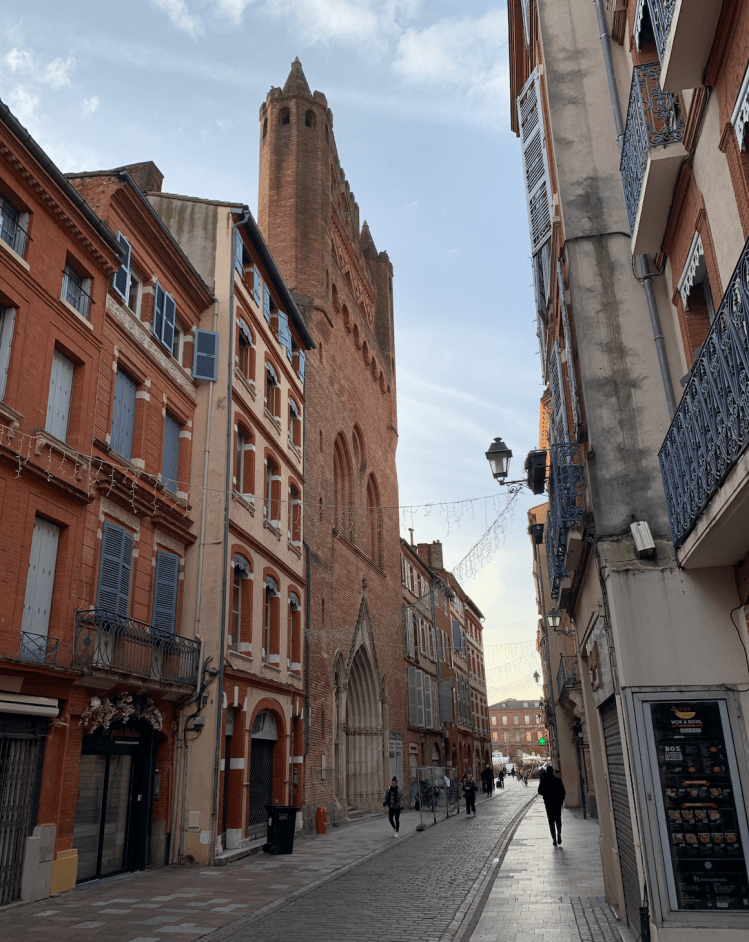
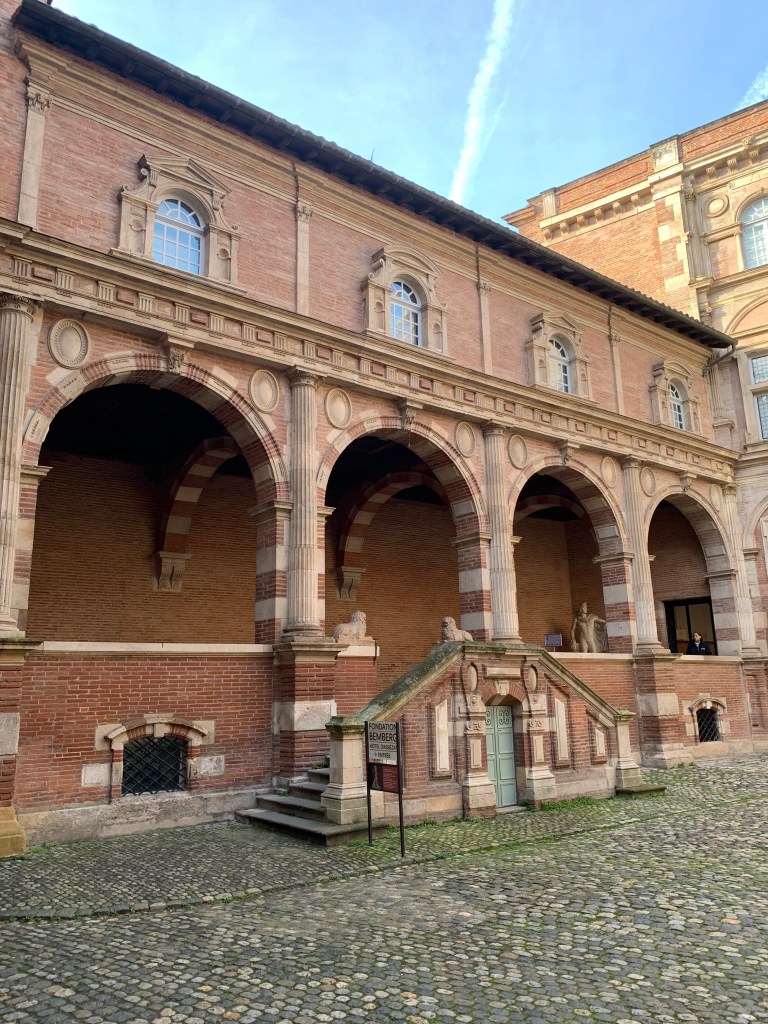
Well known (but not by us) as the Pink City it was just very pretty.  Almost every building was brick- this trend was started by the Romans in 1 AD because stone was scarce, so they used brick made from clay with a lot of iron oxide-hence the pink. In the 19th century rebellious residents toyed with yellow bricks, but the pink city remained pink.

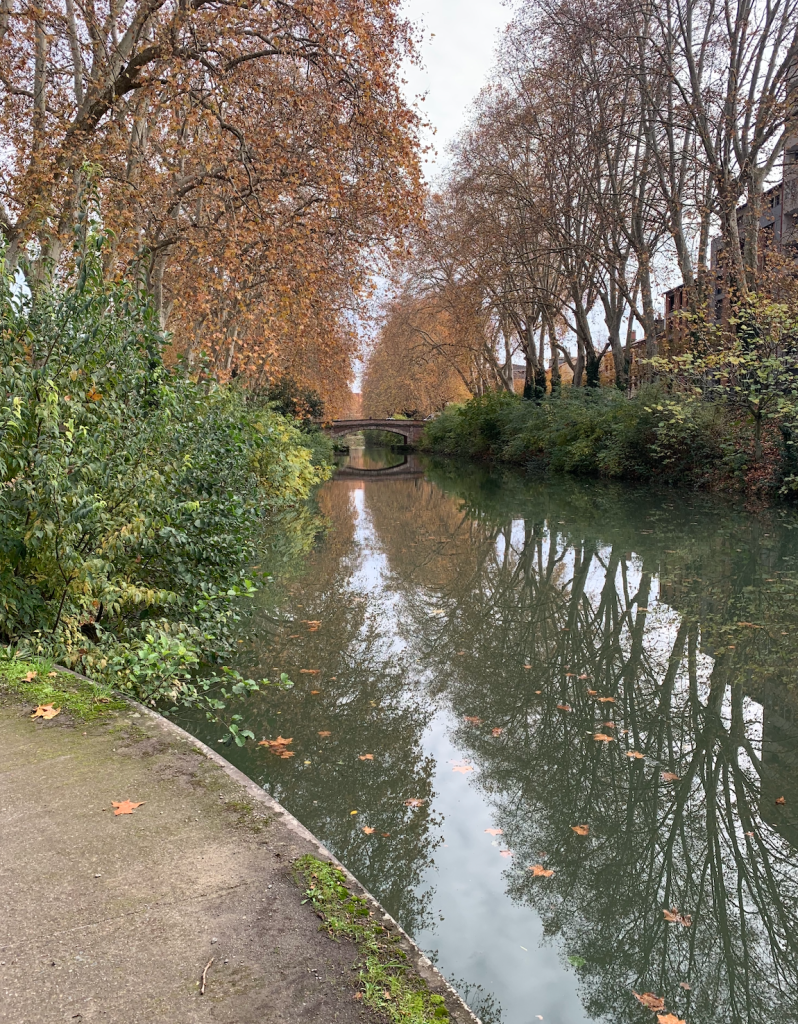
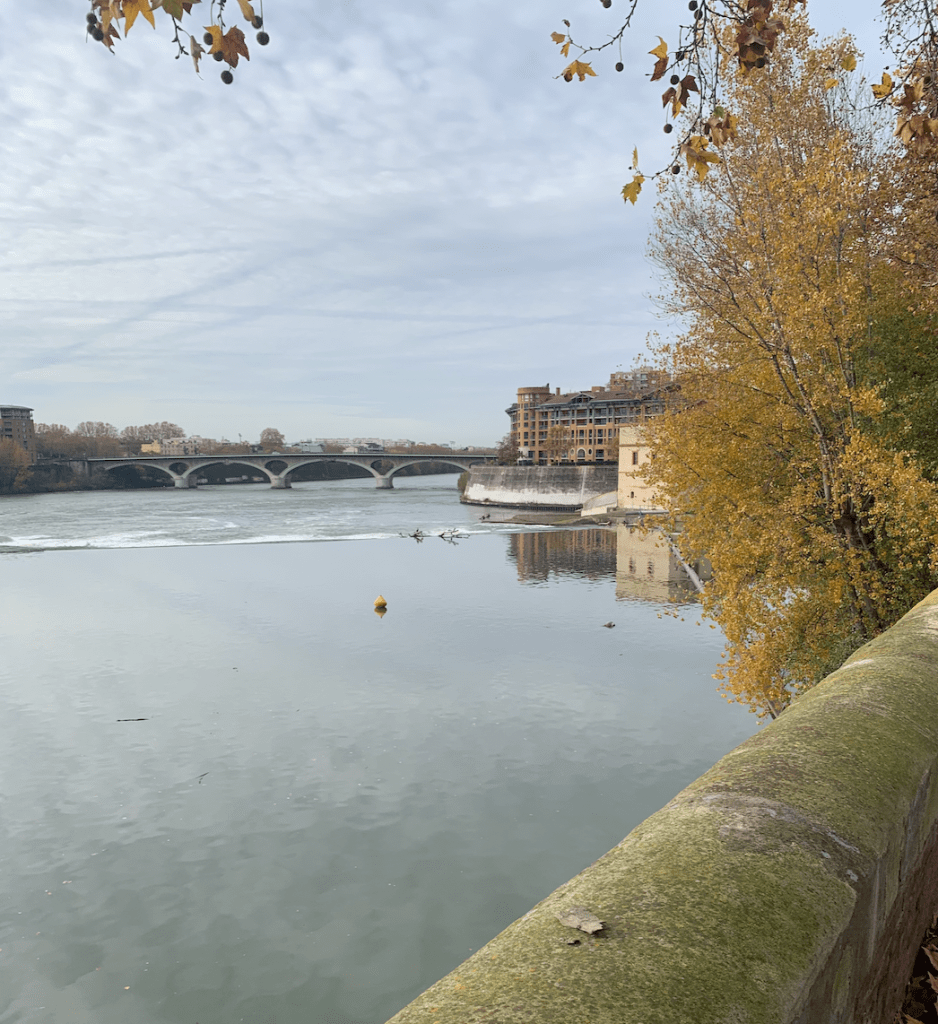
Wide boulevards emptied into cute neighborhood plazas, narrow residential lanes radiating out; some with fancy houses (historically a rich city with money from the pastel trade- there was a pastel trade? How do you trade pastel?) others with rows of simple (well, for Europe) apartment buildings. There were pedestrian only areas, a vibrant university neighborhood plus a beautiful sycamore lined canal.

The Canal du Midi, is part of a 430 km canal system called the Canal des Deux Mers. This network of ingeniously engineered canals built between 1667-1681 connects the Atlantic Ocean to the Mediterranean Sea. The Canal du Midi links to the Canal du Garonne north of Toulouse, and the south end links up to the Canal de la Robine in Narbonne then to the Mediterranean at Sete. Brilliant!

Mount. St Michel, the cave paintings and a 17th century sea to sea canal, in comparison, we were feeling rather unaccomplished in France. And, they all speak perfect French!

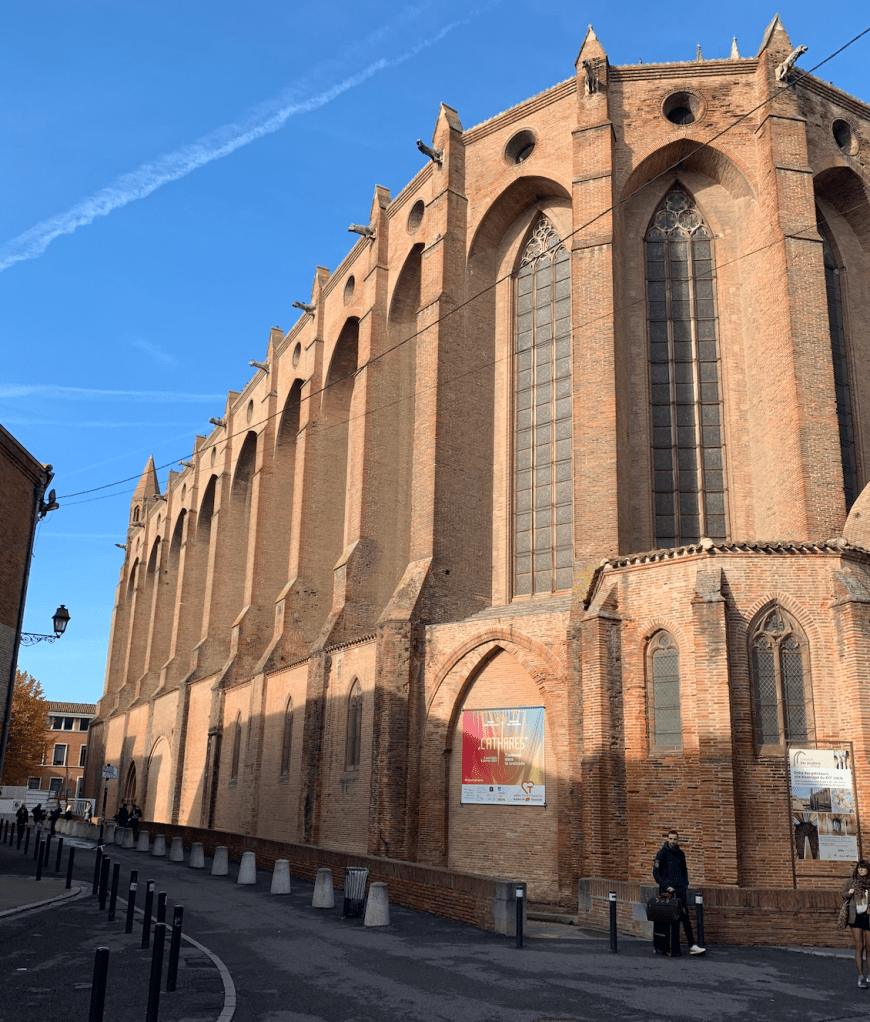
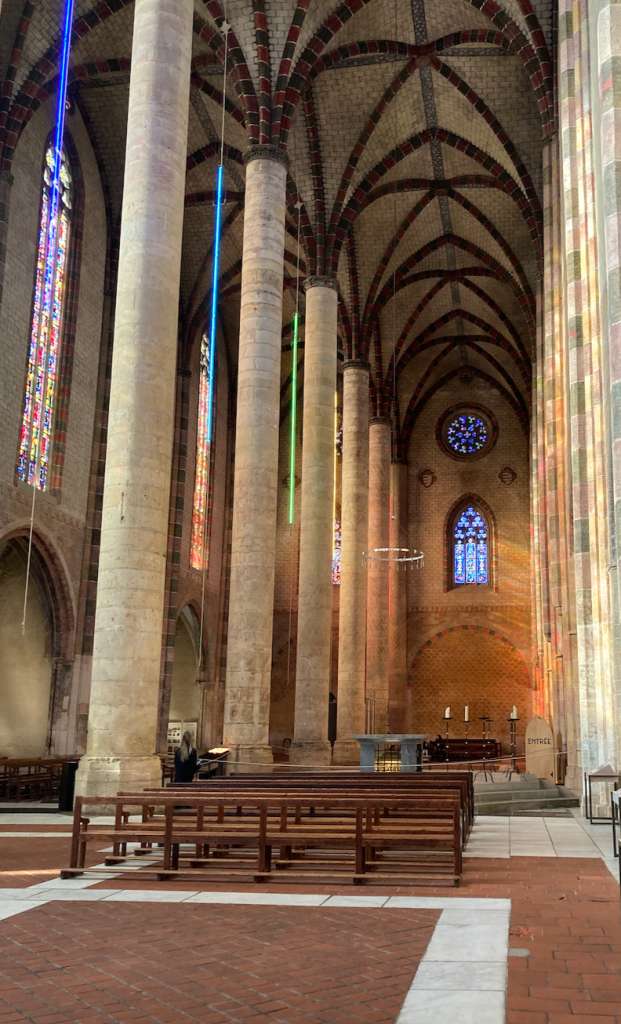
Even the churches offered a bit of a stunning twist. The Dominican order of the Catholic church was found in Toulouse and their Church of the Jacobins (Jacobins was the original name of the Dominicans) had a kind of brutalist look to it, made even more brutalist by the teenage boys tossing lit matches out in front. This church even had the relics of the foremost Scholastic thinker and priest Thomas Aquinas.

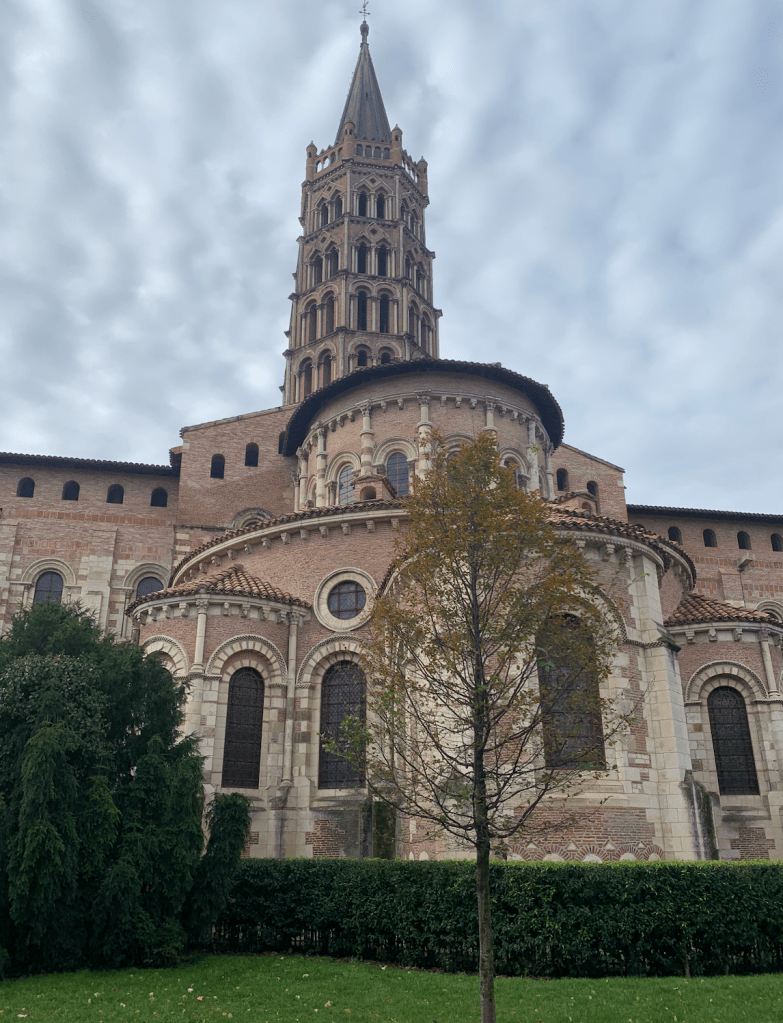
Basilica of Saint-Sernin has St Sermin’s relics and is a stop on the Camino de Santiago, another stop for us https://chosenfugue.xyz/2019/06/07/walk-this-way/

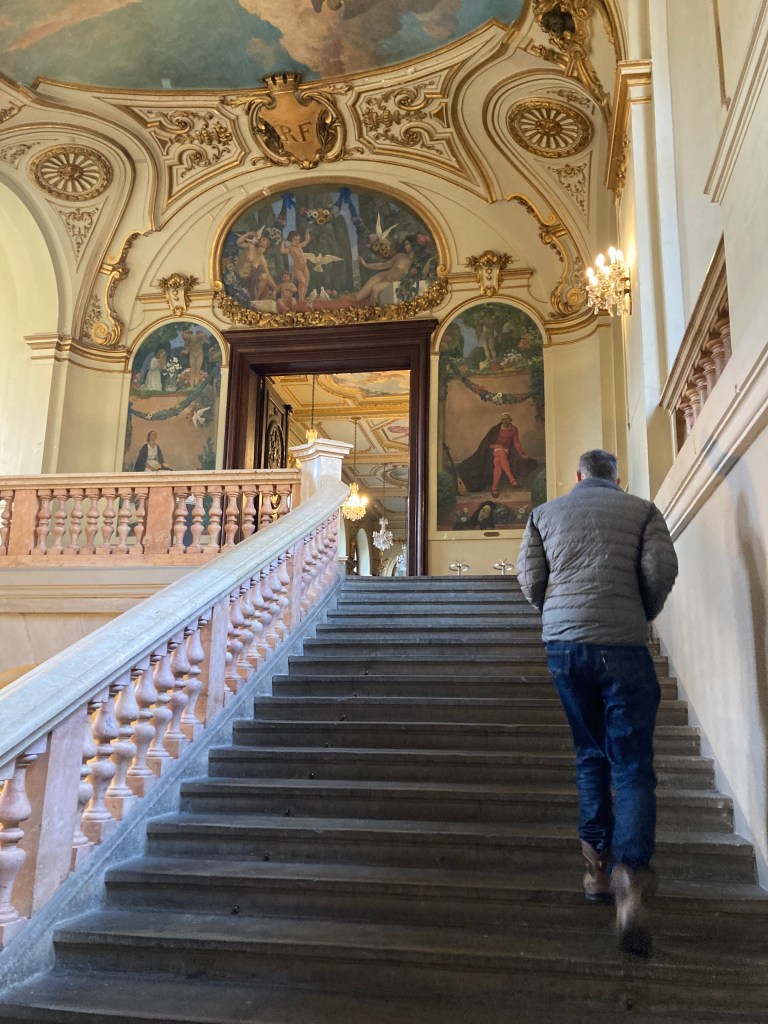
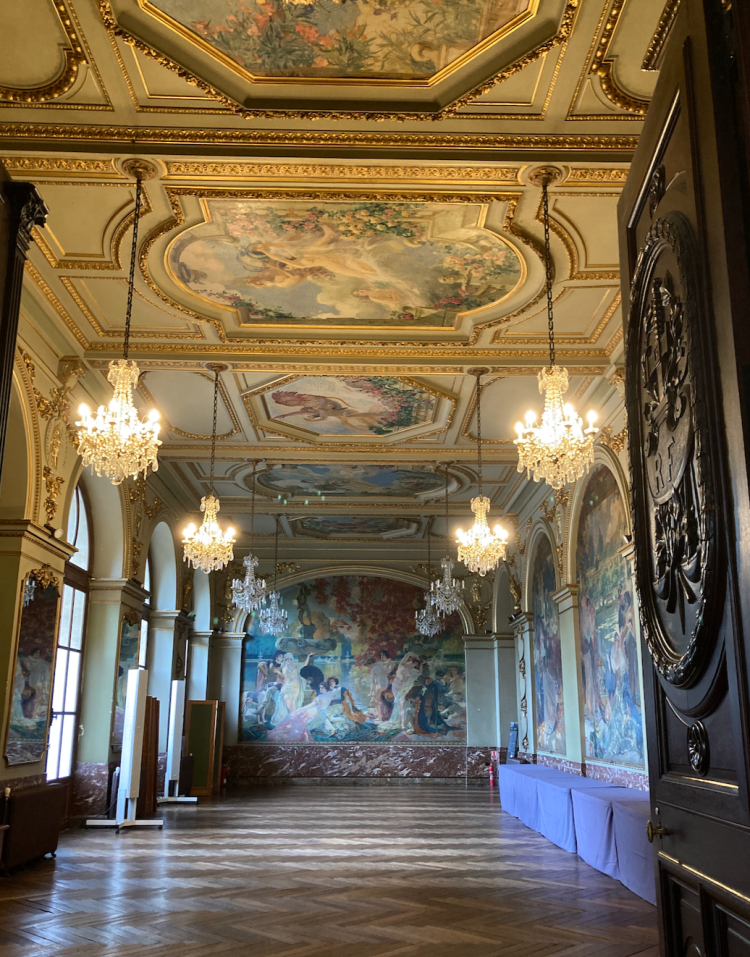
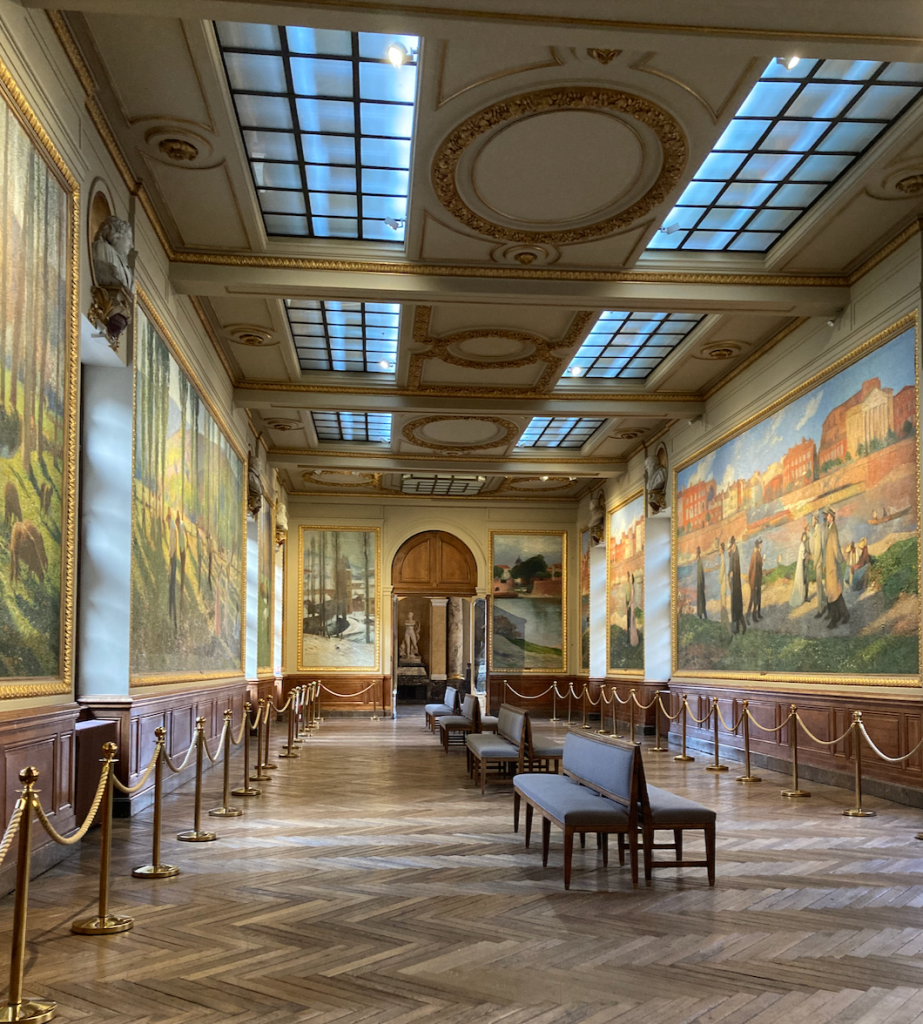
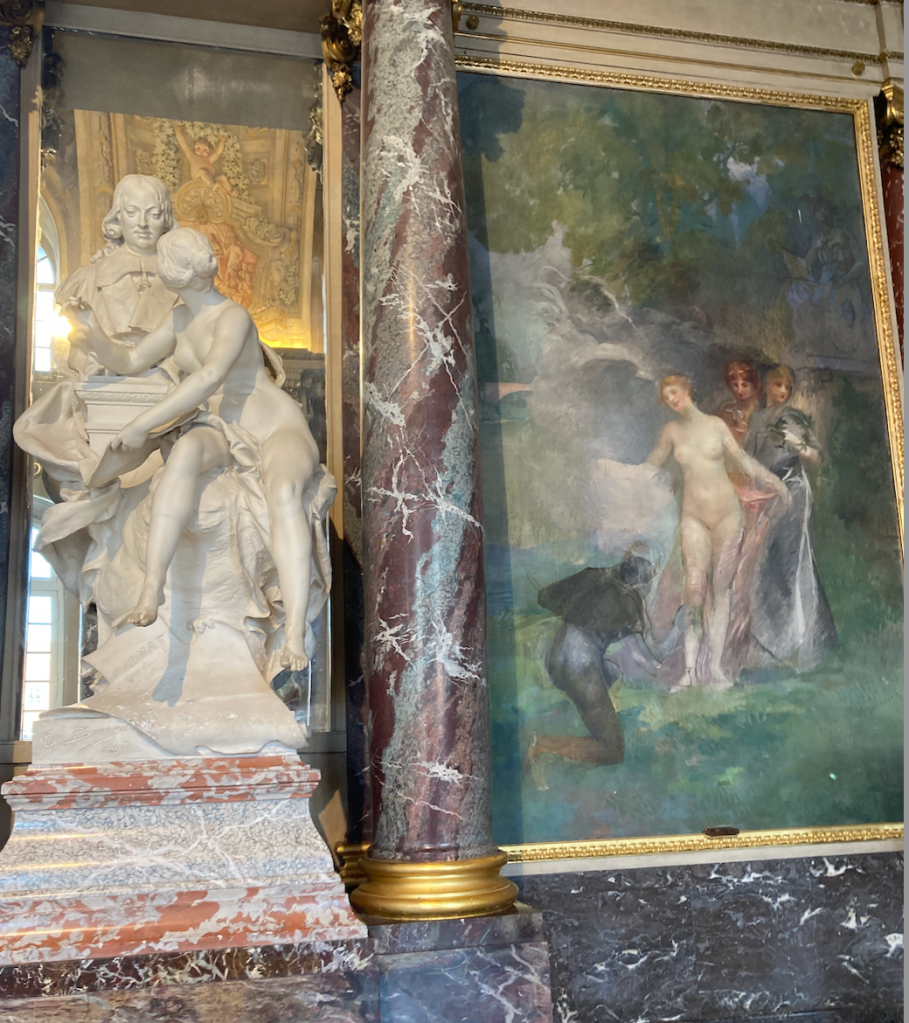
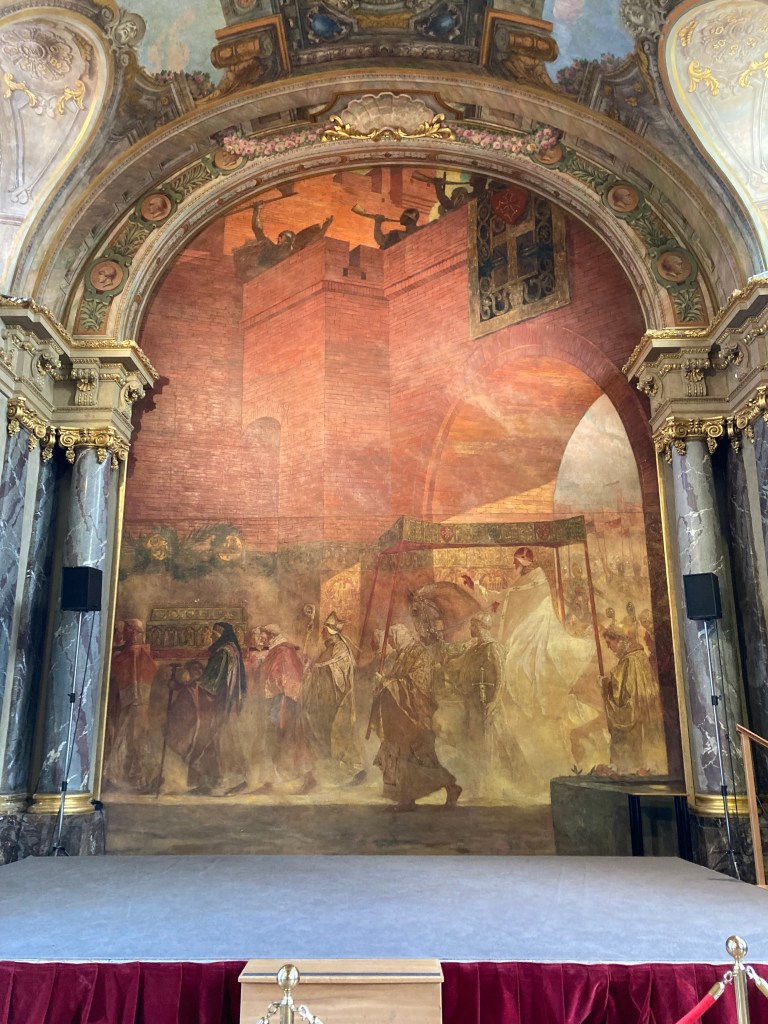
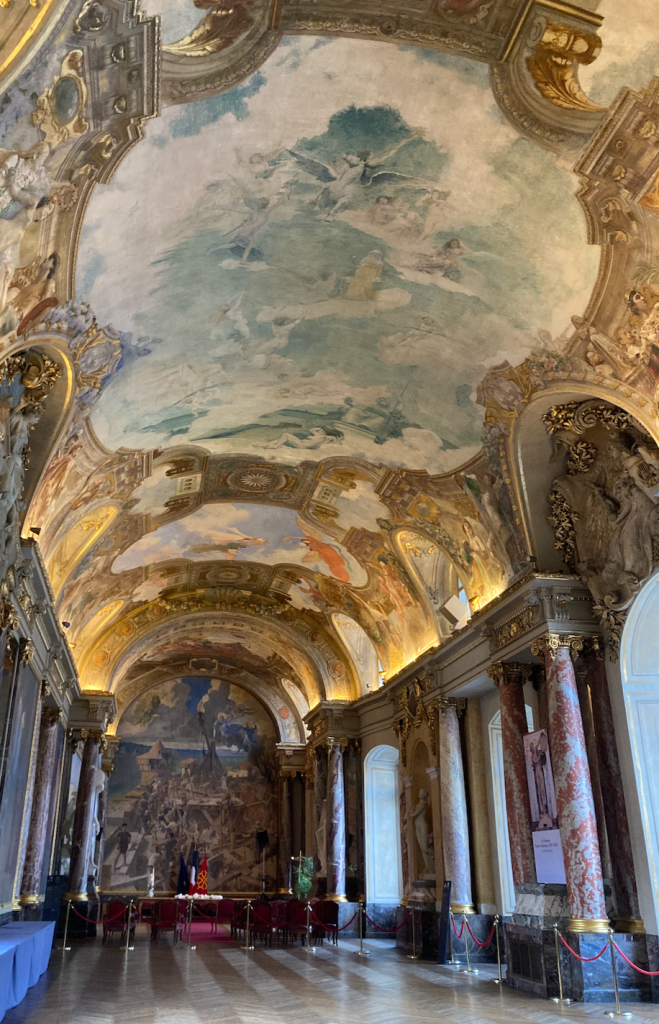
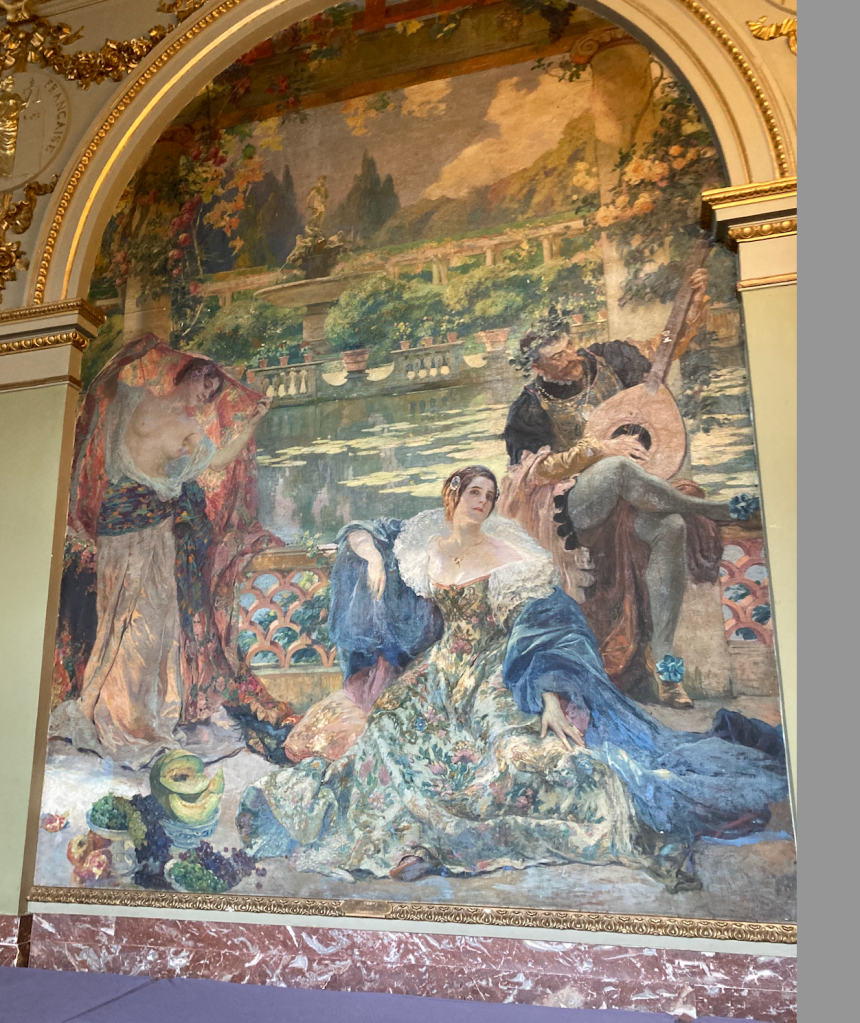
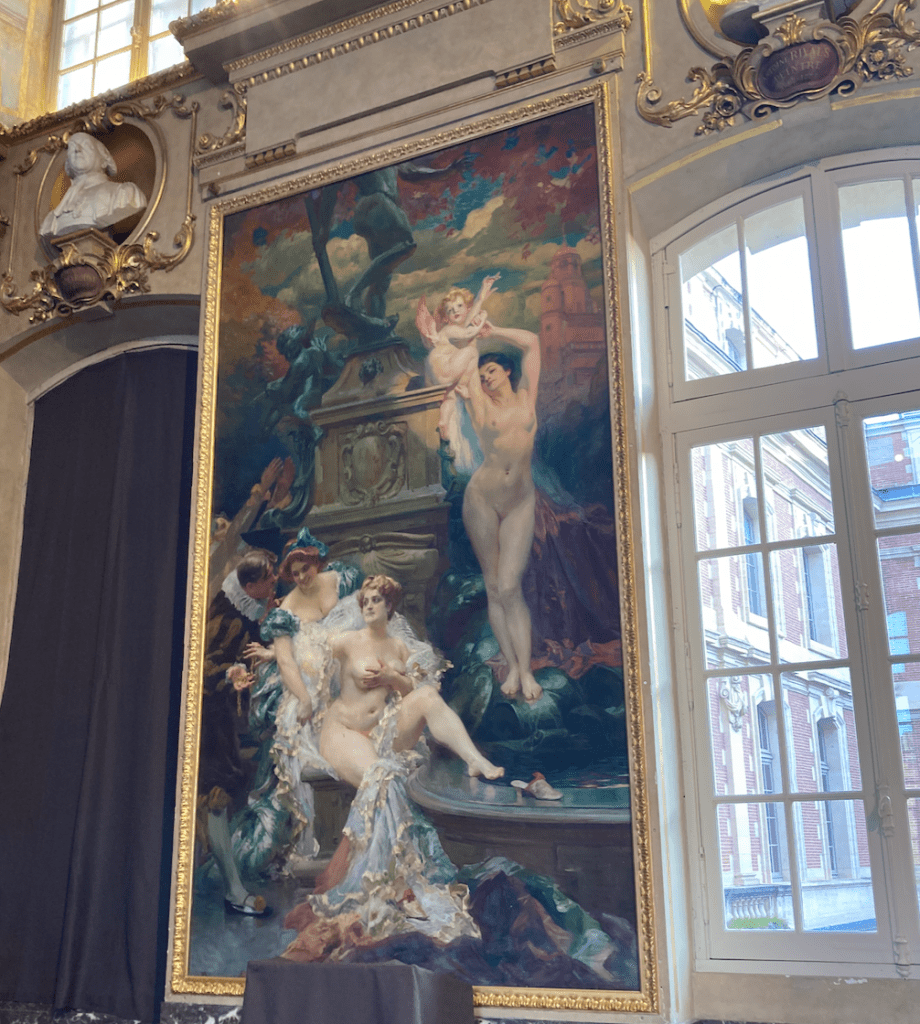
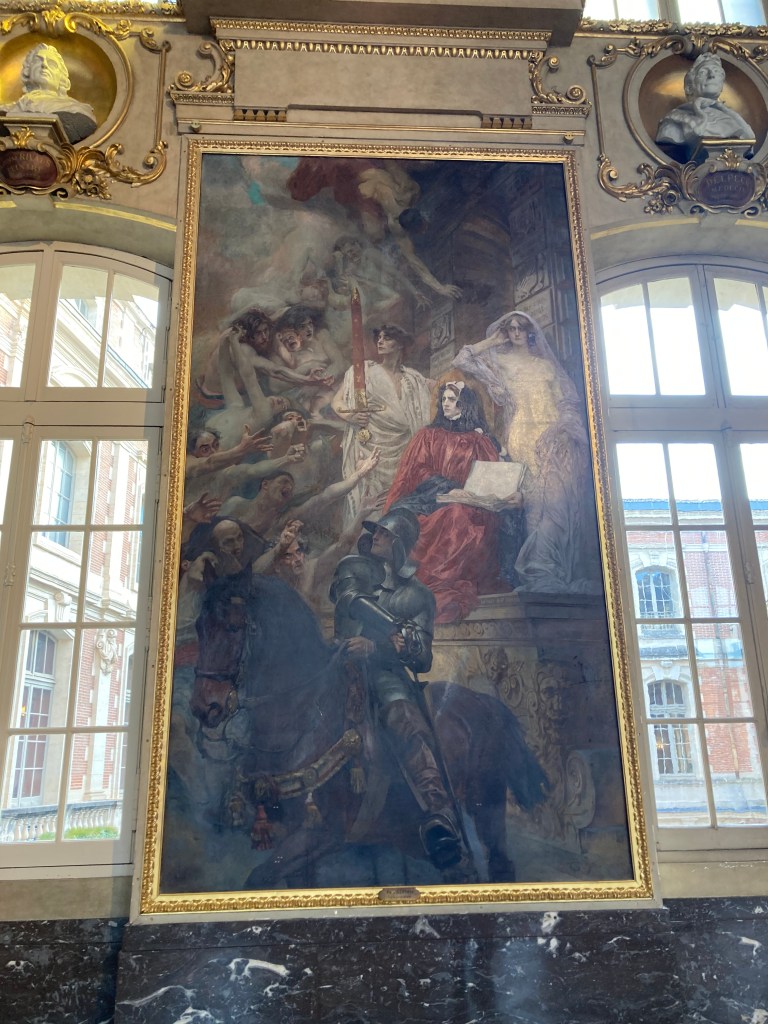
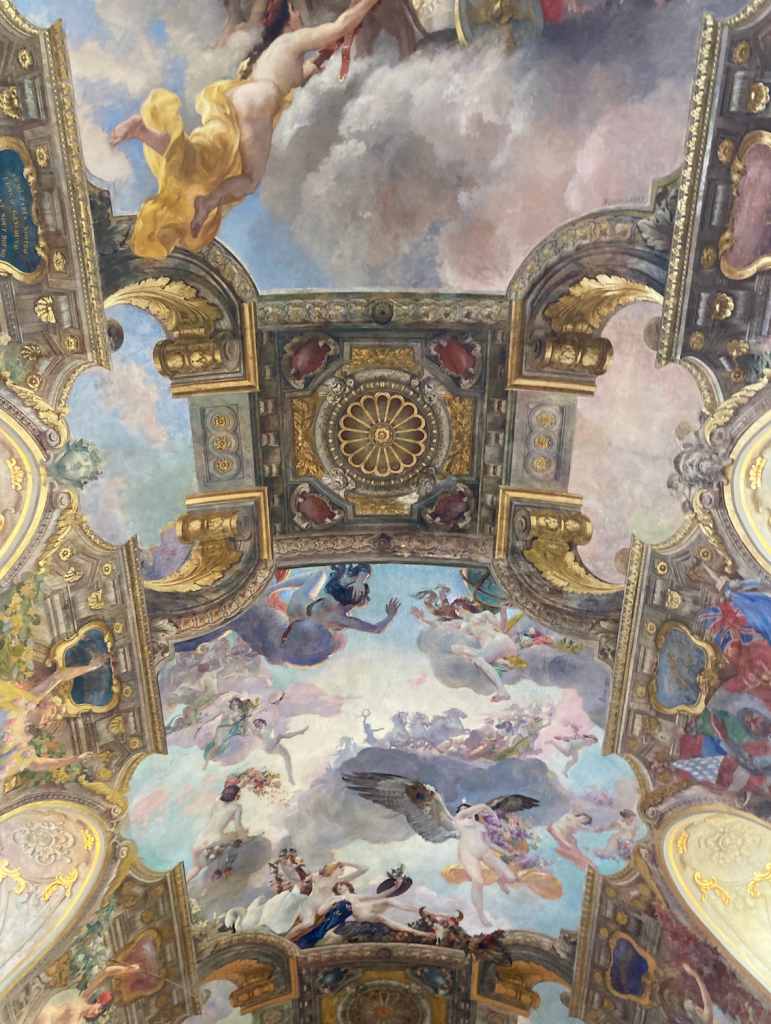
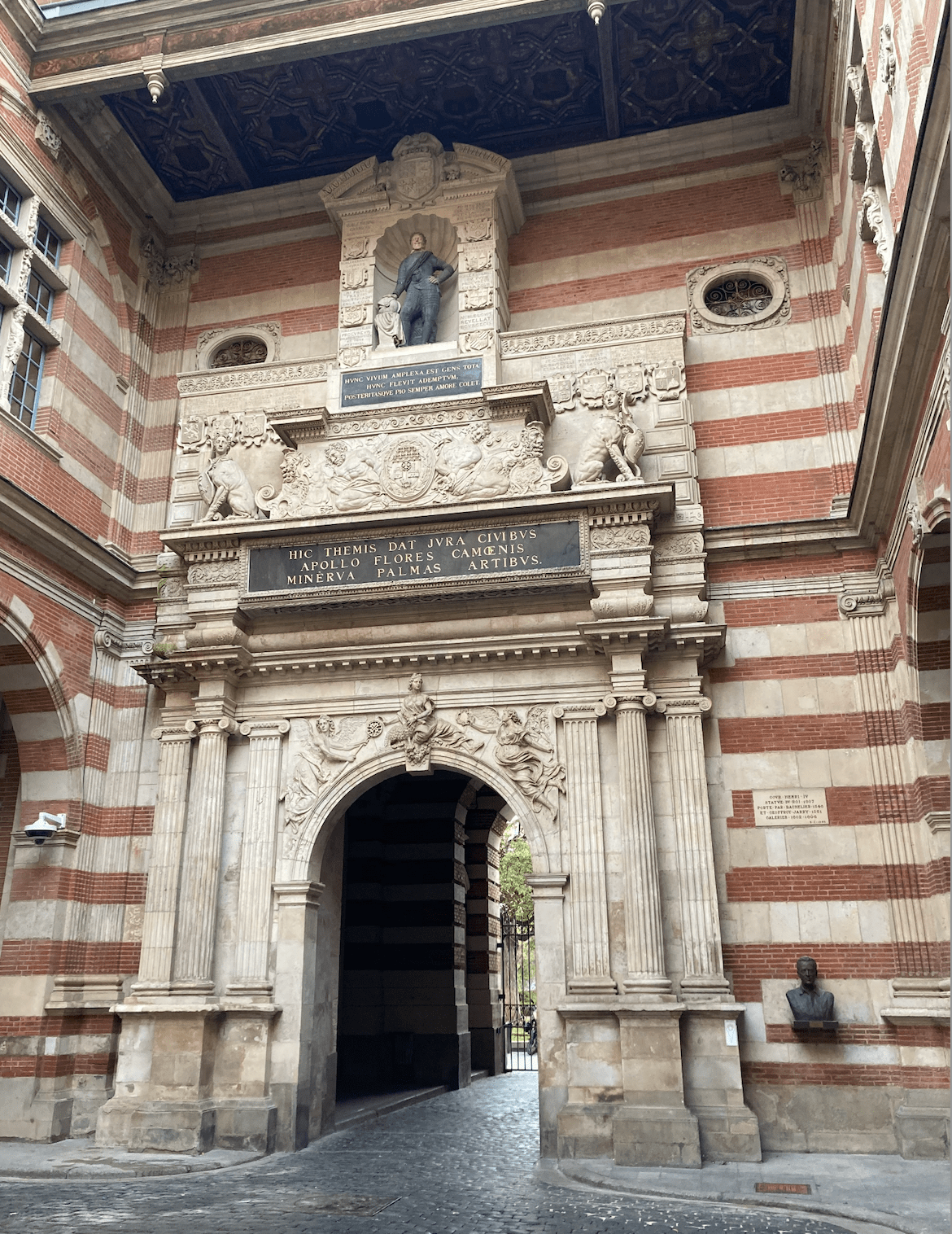
Many cities have distinctive city halls, but Toulouse’s was awe-inspiring, Another striking surprise.  The outside of the Capitole building is a mix of styles going all the way back to 1100 but it’s the inside that is where you want to be.

Three galleries, two filled with huge paintings by Toulouse artists. Salle Gervais, paintings by Paul Gervais depicting love; Eros nymphs, and love at 20, 40 and 60 years. This was where weddings used to be held.

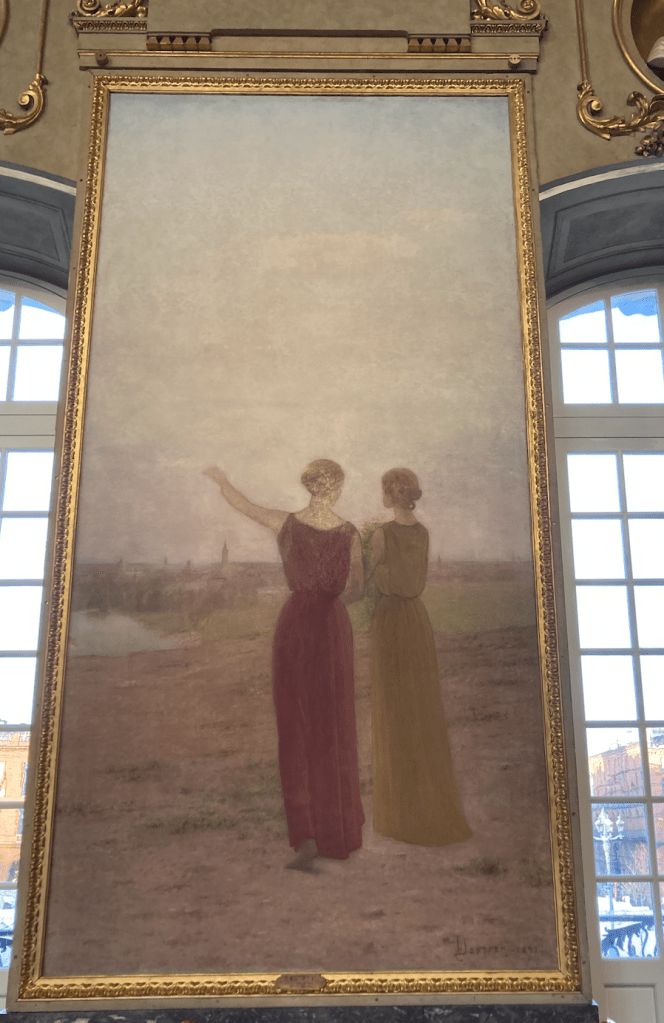
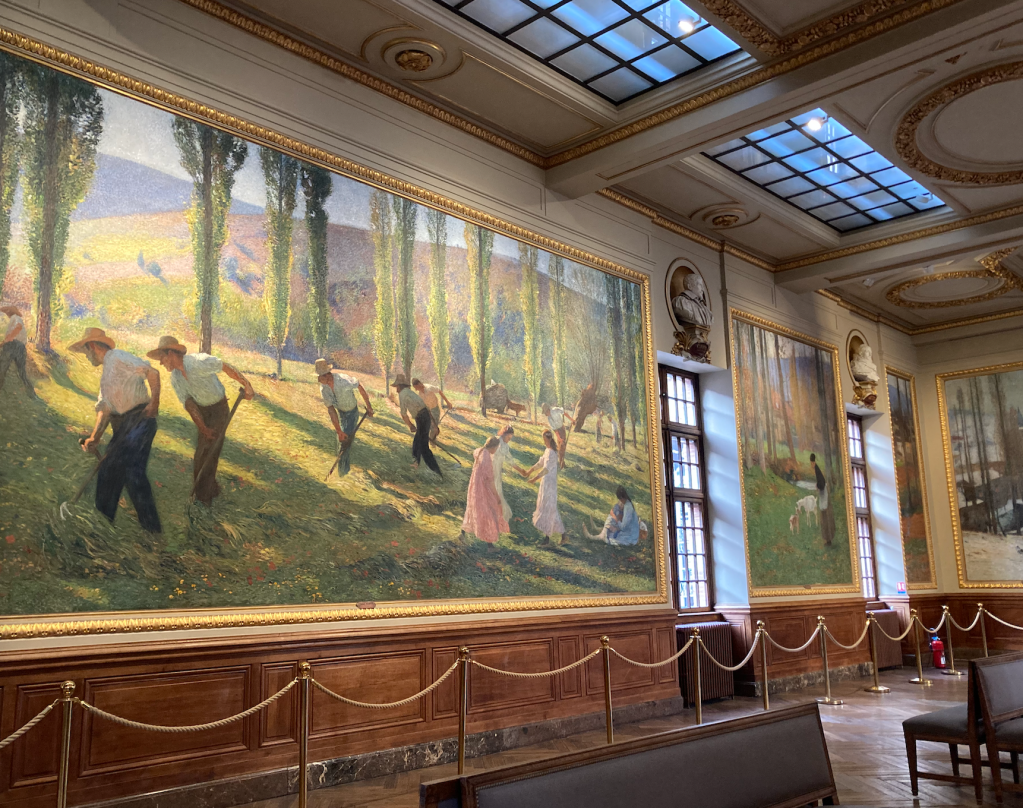
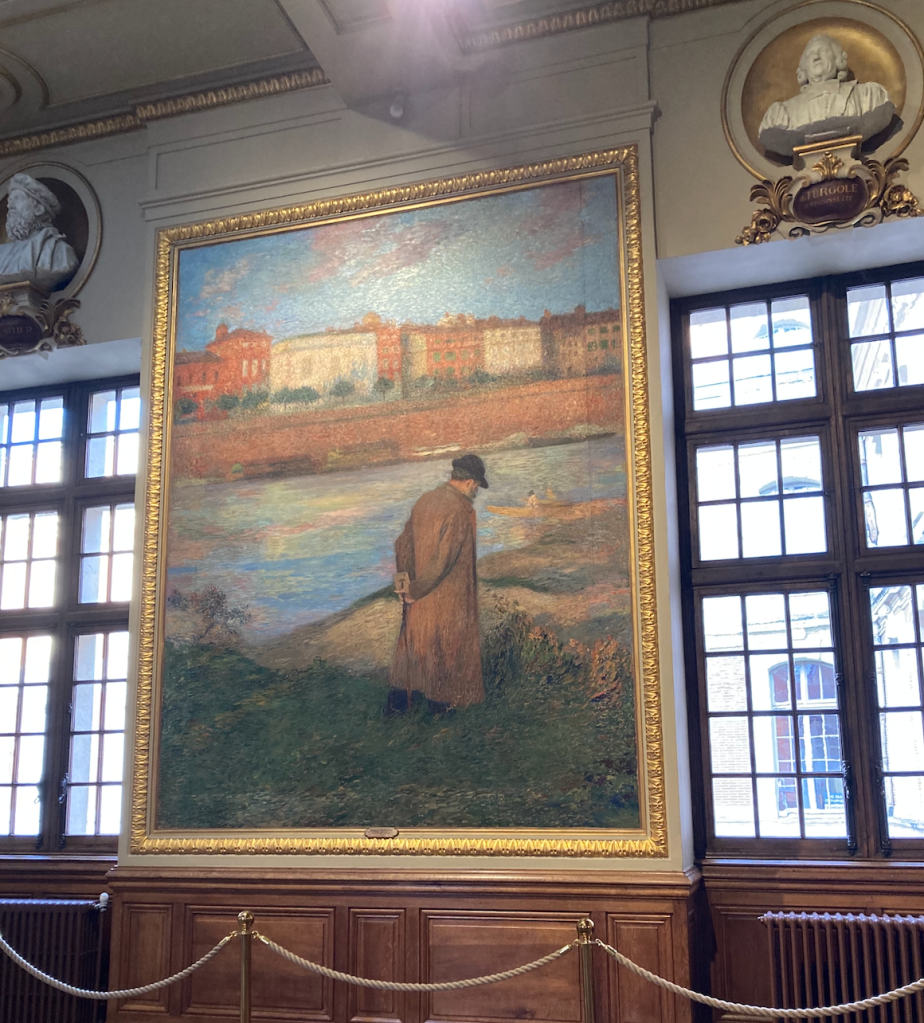
Henri Martin filled his gallery with paintings of the four seasons in Toulouse plus portraits of famous Toulousians (?) walking through the city.

Finally, the Salle des Illustres where weddings are now held. Again, art by local painters and sculptors celebrating the history and people of Toulouse and the most elaborate!

Kinda nuts thinking that you go pay your parking ticket in this building.

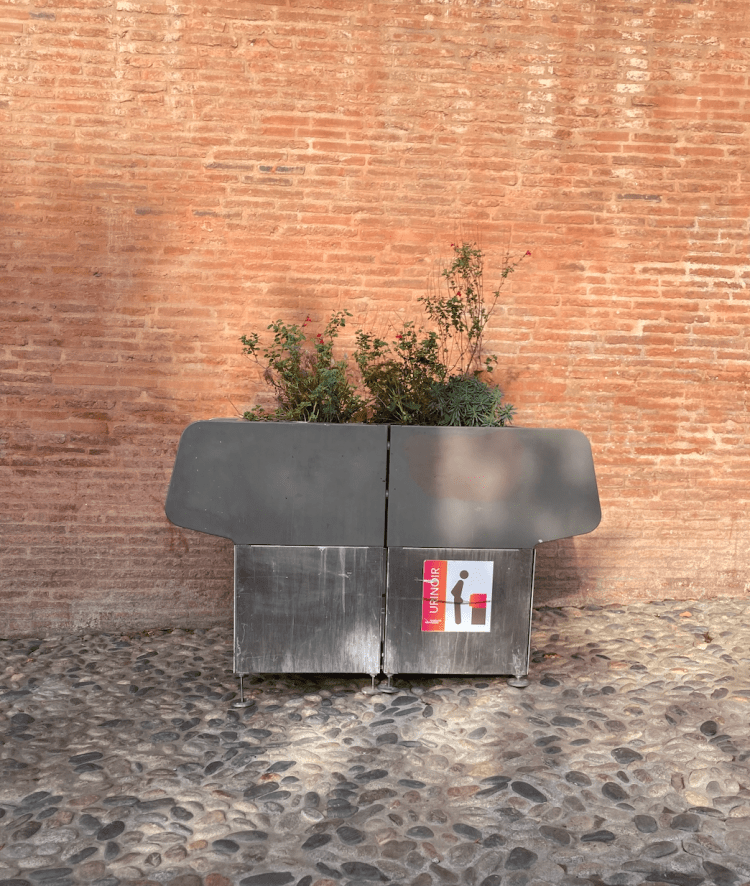
A bathroom break. Unlike the US public bathrooms are difficult to find in Europe. Bathrooms are uncommon in European malls, gas stations or parks. Train stations are an exception, but often at a cost, and we don’t usually have pocket change. France, again, was thoughtful in terms of access and creativity. There were open areas in the park designated to relieve oneself (mainly men) into planters. Genius! Only a wine centric country would have thought of this use of public planters. Other countries had similar, slightly more enclosed urinals (again, at train stations), but France’s were basically open.  France also cleverly had self cleaning public toilets. When in use, a red light is on, after someone exits, a yellow light goes on, indicating cleaning. A green light means it’s available to use. Pleased to find a free one at a mall, Patricia went first and before she closed the door to leave, Nick eager to go, went in without waiting for the green light- not wanting to wait for the cleaning. Unfortunately, seconds after the door closed , self cleaning started, cleaning both the entire restroom and Nick. Lights went out and water jets- a cross between supermarket produce misters and a car wash power hoses- popped out from the walls, dousing the room and Nick. What idiocy.

continuing the brick theme

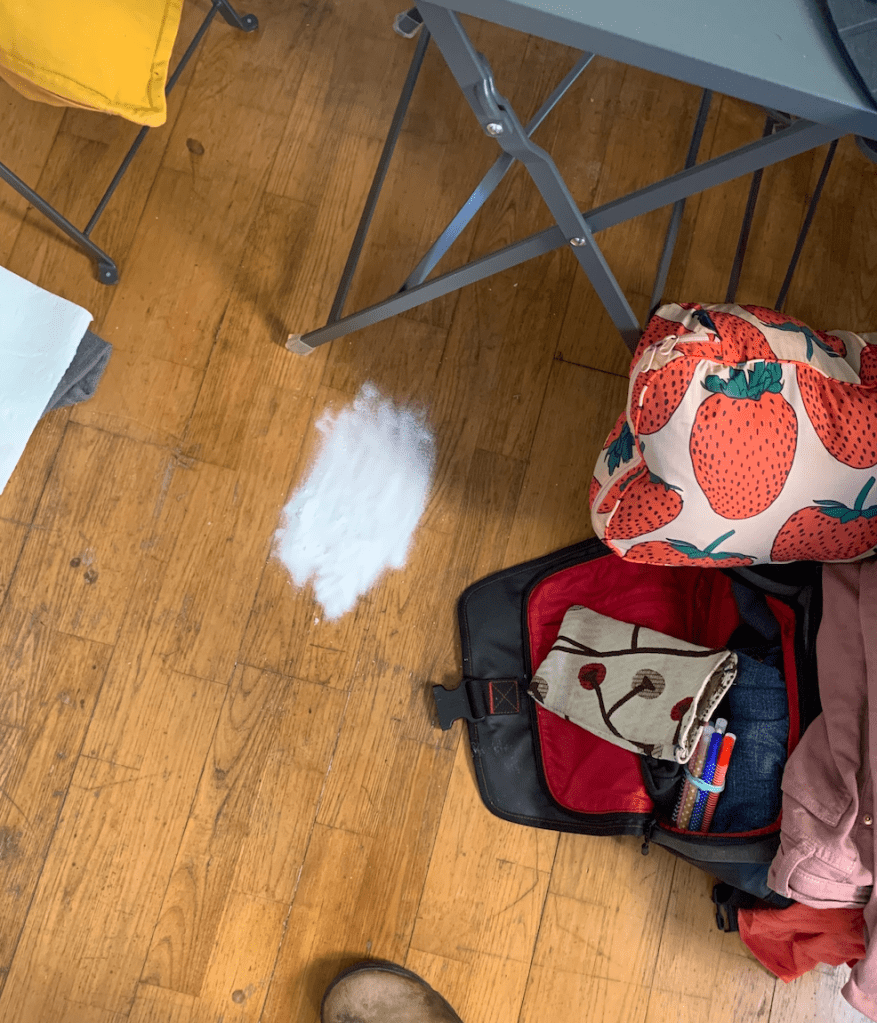
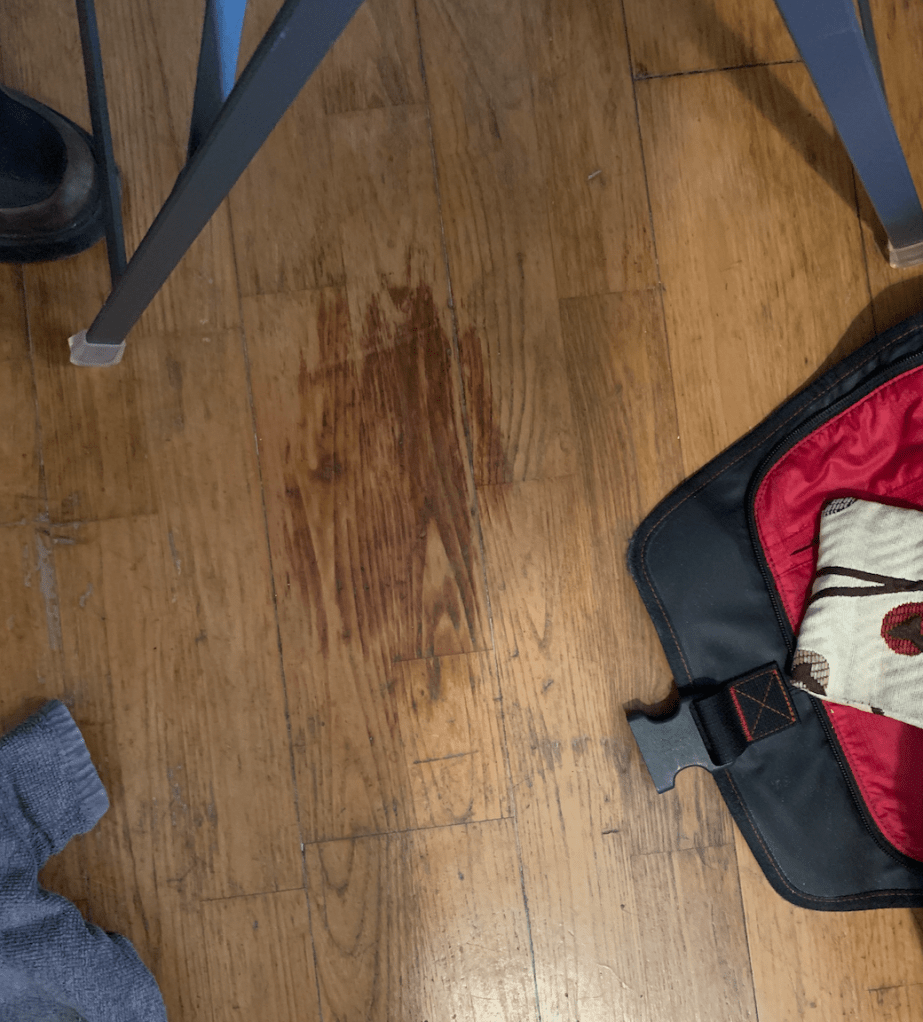
Our couple of days of wandering through this lovely city were almost marred by our almost worse fear coming true- ruining something in our lodging . Everywhere we stay we live in fear of causing some damage, and so we usually do, accidentally. Typically, a mug, so we find a replacement. In France, stupidly, we had been traveling with a bottle of olive oil. Dumb and Dumber, we spilled most of the bottle (we thought the cap was on!) onto our studio apartment’s very worn wood floor.  The positive of spilling-relieved us of the obligation of carrying the bottle, lightening Nick’s backpack. The negative, for 2 days we tried to make the stain un-noticeable. Baking soda. Hair dryer. Some relief, but it was still noticeable.  Should we oil the whole floor?

Panicking we sent text pictures to the host, who couldn’t care less because it was actually hard to see our stain amongst the multiple others. The French, smarter than us and tolerant of our ignorance as dumb, and continuing to be dumber Americans. We love France.

We Caved

Inspired by Werner Herzog we added to our itinerary. Actually, we are always inspired by everything Werner Herzog does except getting shot www.youtube.com/watch?v=HrRNM9cMBDk, but specifically we were inspired by his documentary Cave of Forgotten Dreams. https://en.wikipedia.org/wiki/Cave_of_Forgotten_Dreams  so we added on a visit to Grotte de Font-de-Gaume Cave to experience prehistoric paintings. 

Due to damage from human exposure, most of the caves in France are no longer accessible to people, rather recreations are (including the Herzog filmed Chauvet cave).  The cave-viewing tourist is directed to the big center at Lascaux and we are sure it is wonderful. https://lascaux.fr/en/ ; but we wanted to go to an actual cave so we went to the one exception; the Font-de-Gaume Cave near Les Eyzies, Drodogne department of southwest France.  The only original cave with polychrome paintings dating back 17,000 years that is still open to the public. Most cave paintings only used black coloring, these had pigments of red, brown and black.

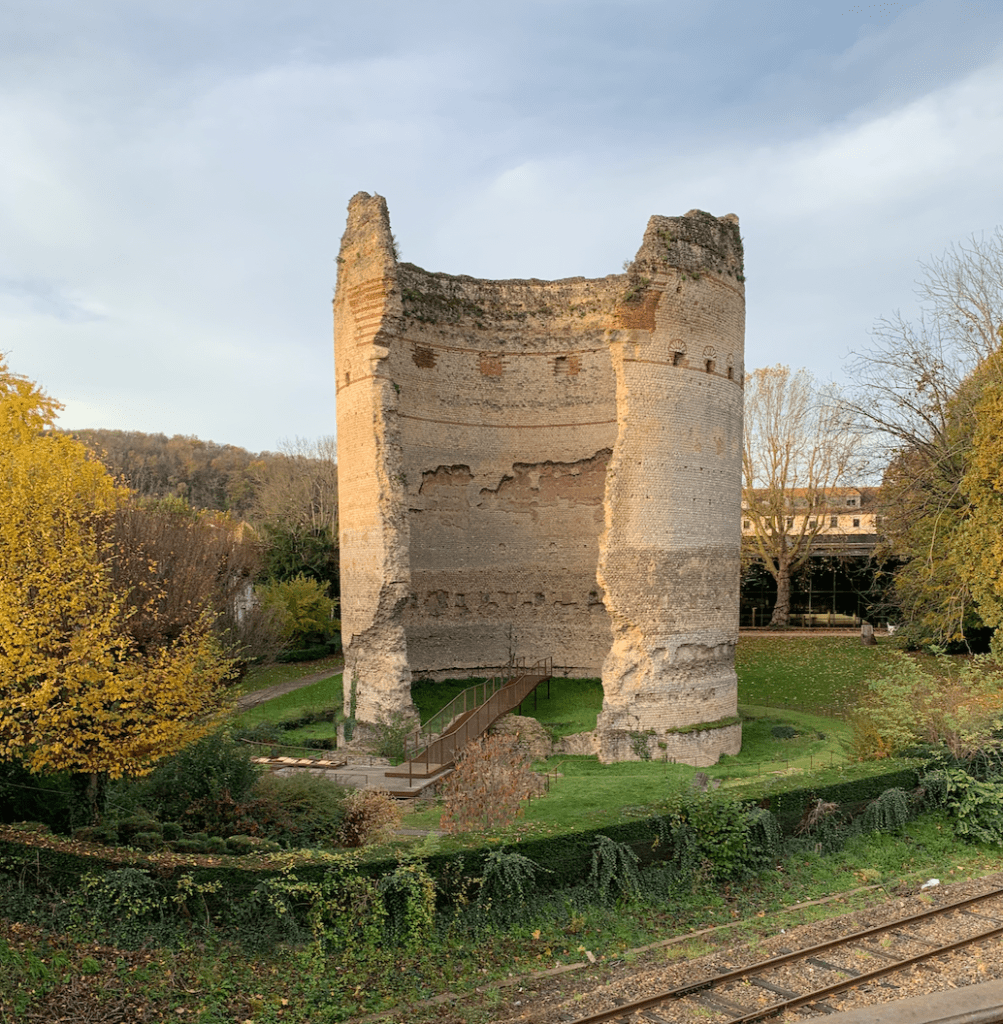
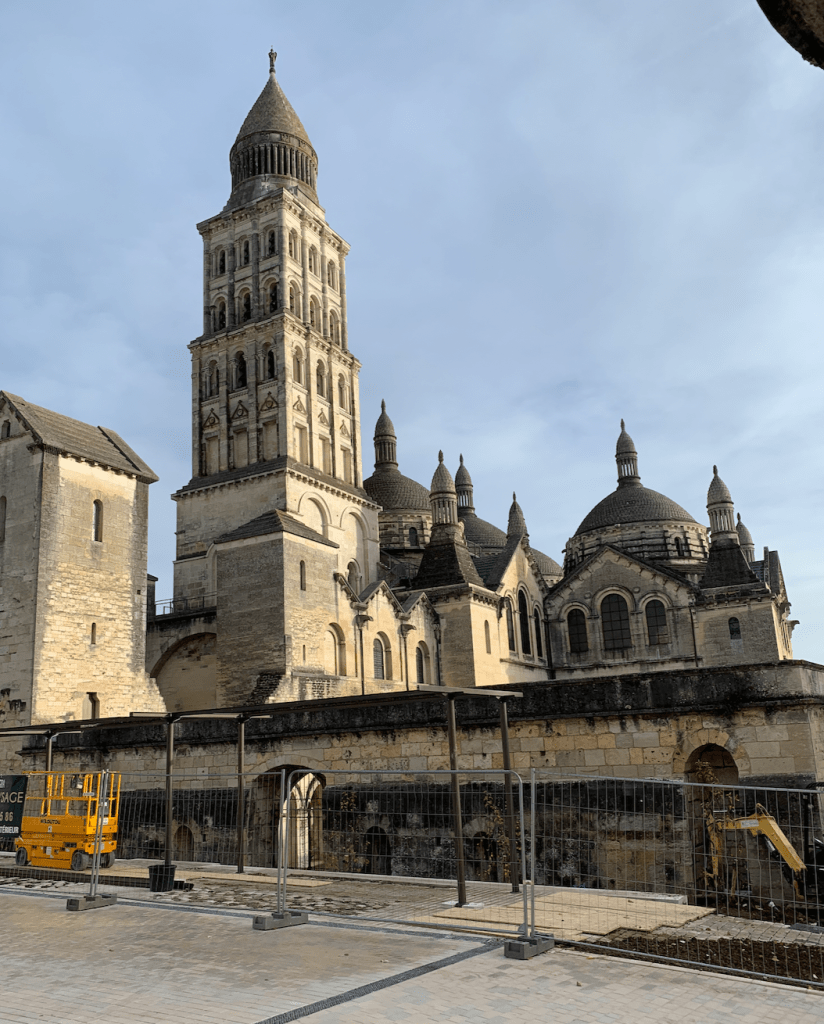
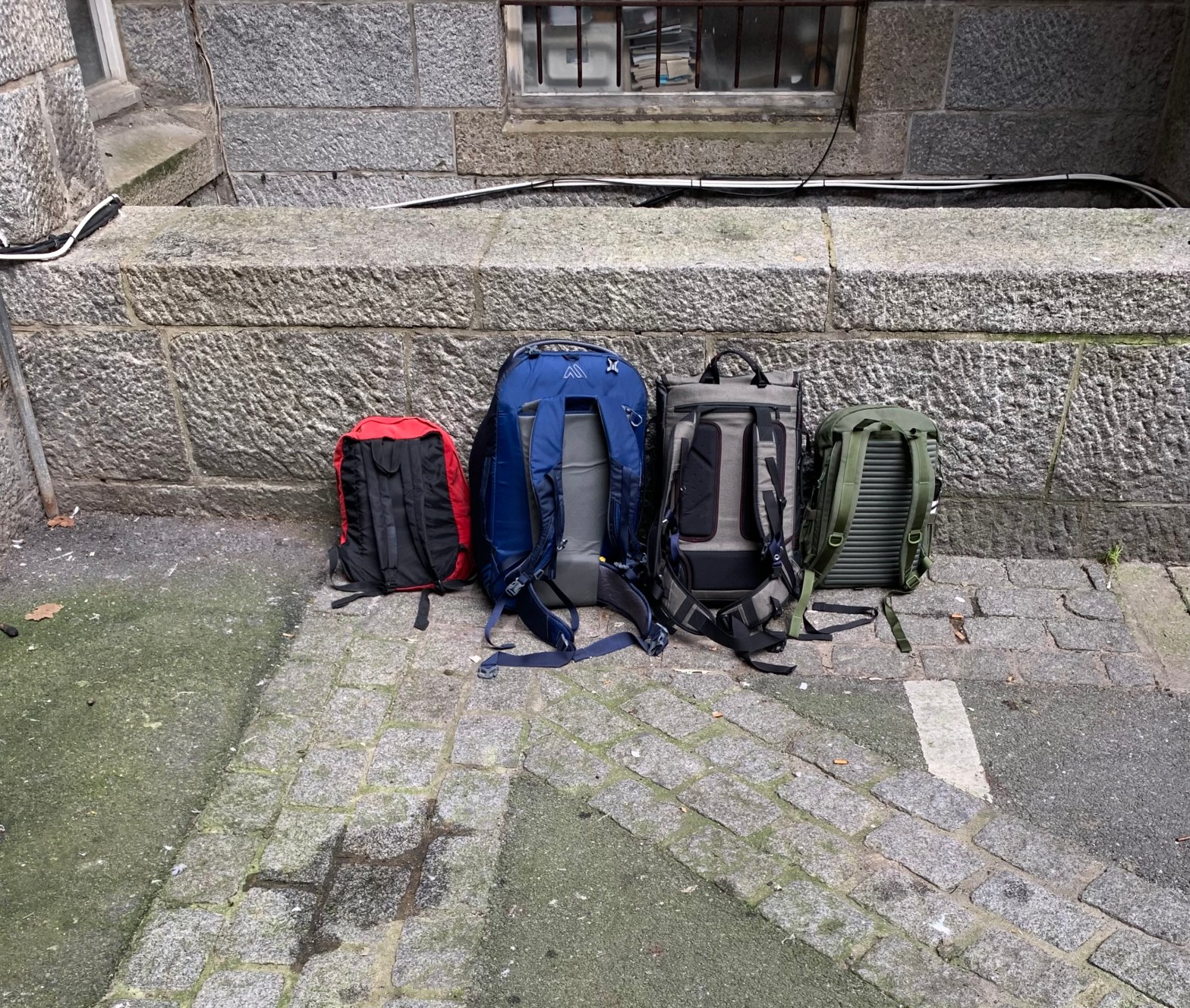
The cave is located in a sparsely populated area of southwest France. We first took a train from Bordeaux to the small town of Perigueux to spend the night.  Arrived at a rather boring little train station, that opened to a pretty unattractive street, unusual for France. We continued a few blocks to our Ibis Budget, which basically is a closet sized bathroom attached to an even smaller bedroom, dropped off our backpacks and continued to walk around what we thought was an “eh” town. But no French town seems to be “eh”, and it turned out neither was Perigueux. First we stumbled on unique Roman ruins, the temple to the Gaul goddess Vesunna, (very Game of Thrones), Vesunna was the original name of Perigueux.

There was a requisite massive cathedral (built in 1669) and designed on the model of St. Mark’s Basilica in Venice..

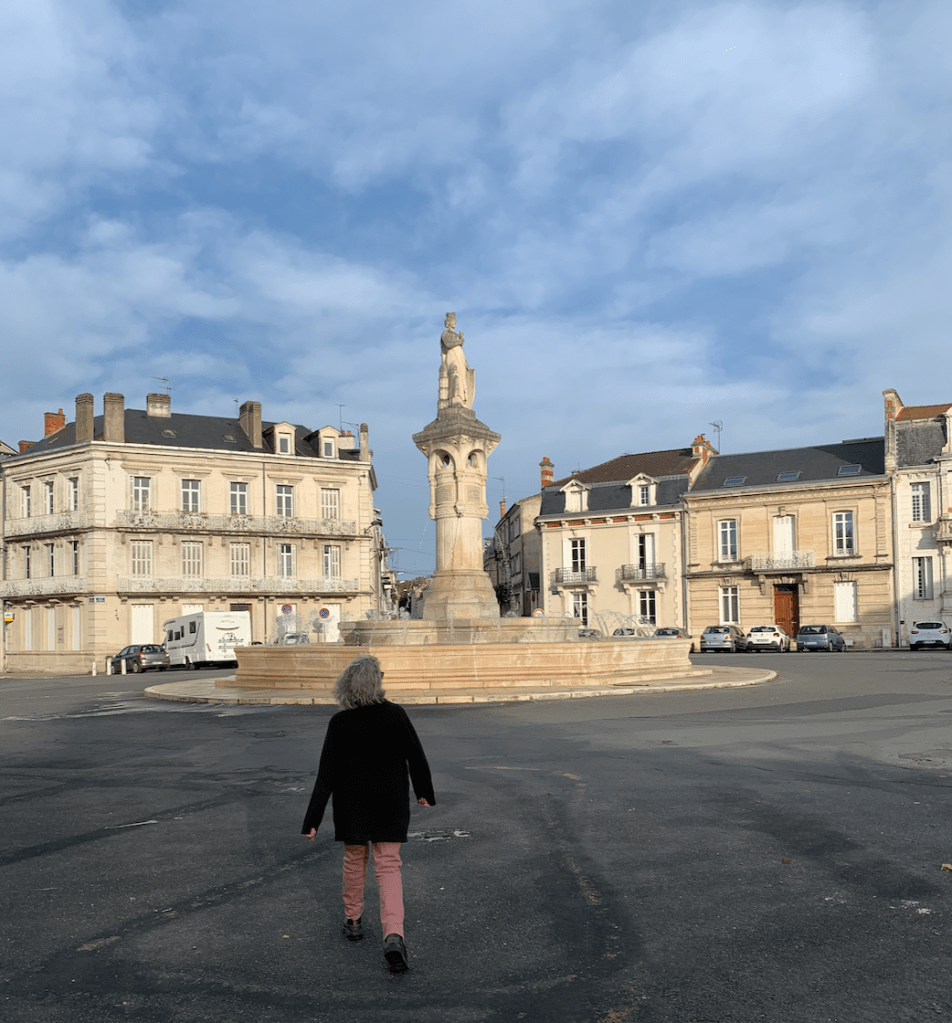
Plus a central square with fountain. Each area of town felt very different from each other architecturally.

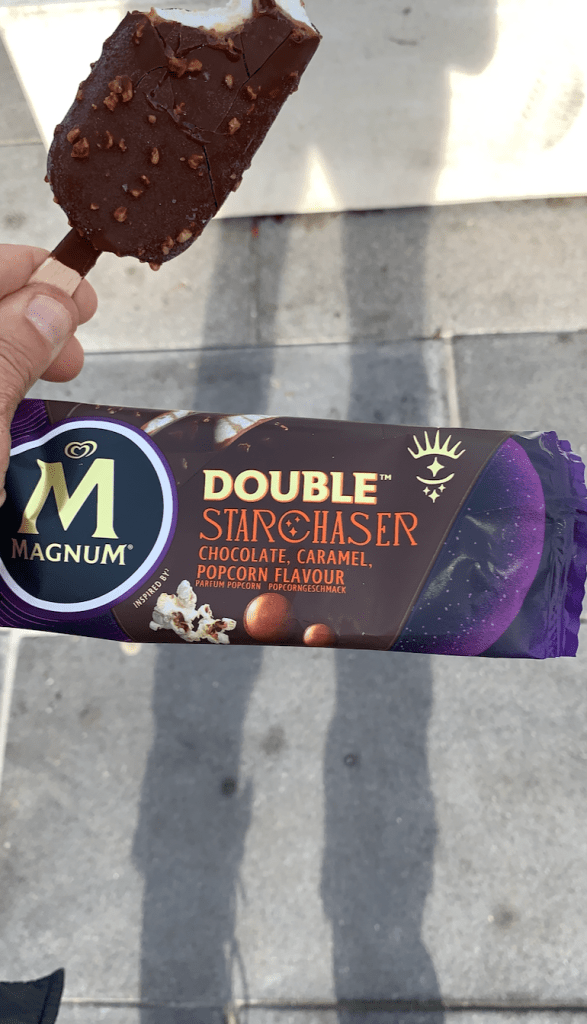
But, the highlight was finding a long-searched for Magnum Double Starchaser ice cream novelty at the tiny, nondescript train station kiosk.  Our daughter and granddaughter had raved about them. We thought it was okay, table wine level, but it made up for the missed frozen Mars ice cream bars.

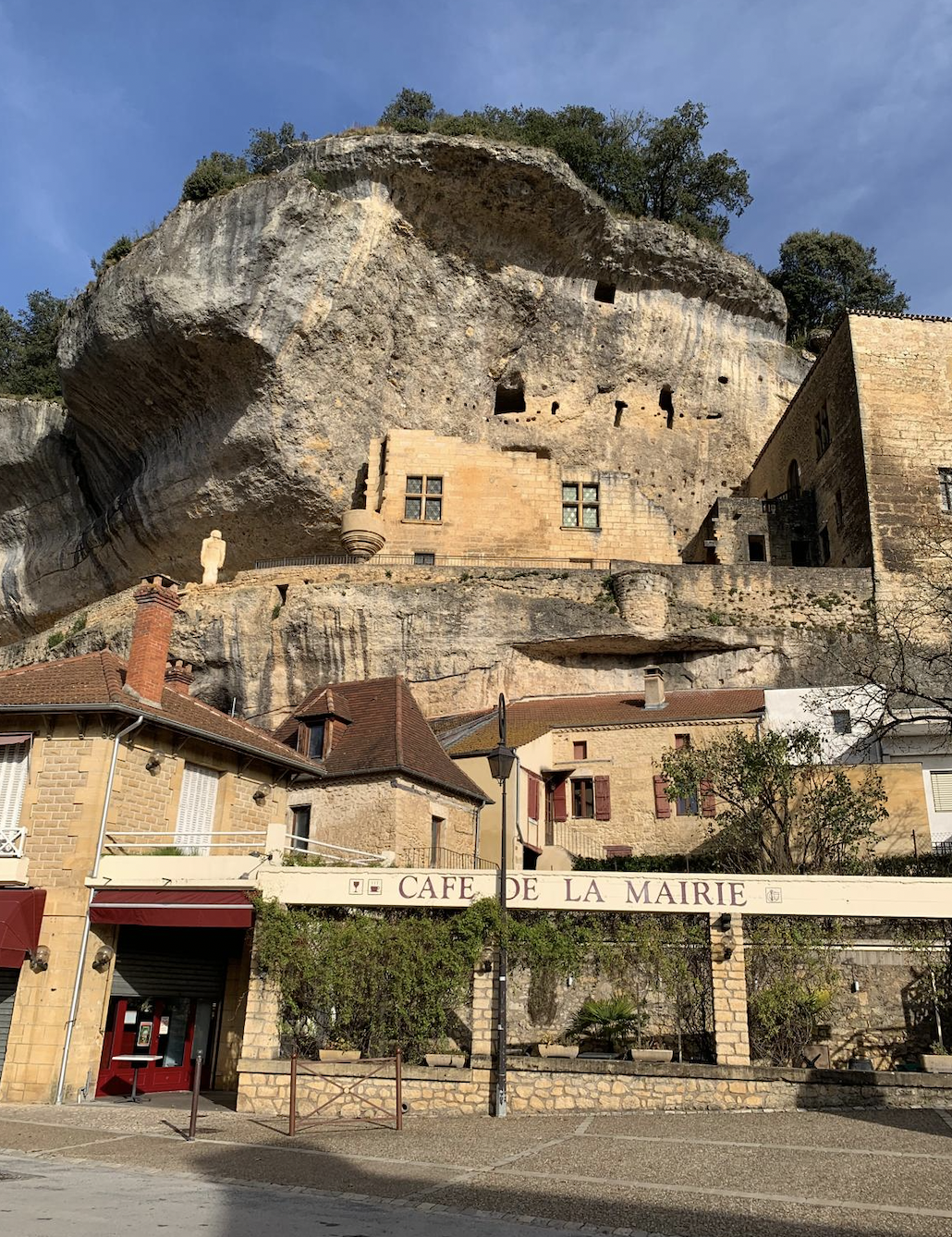
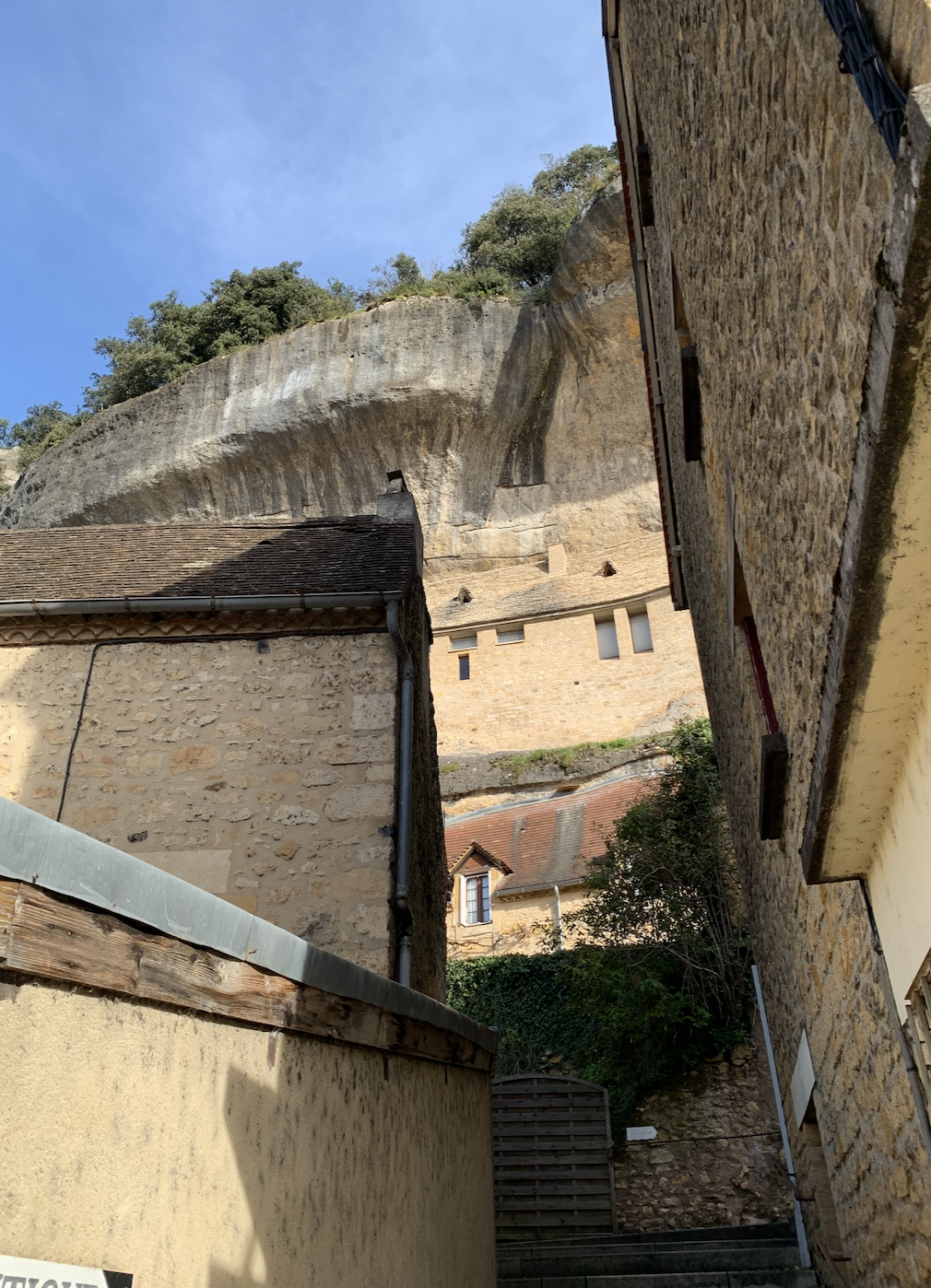
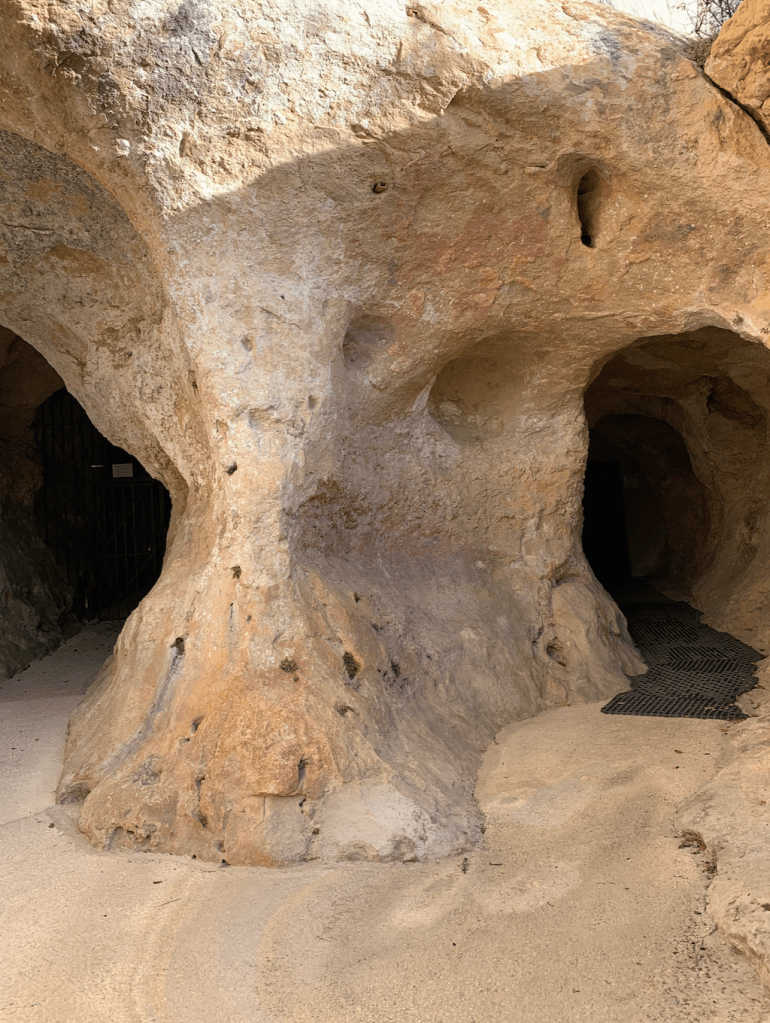
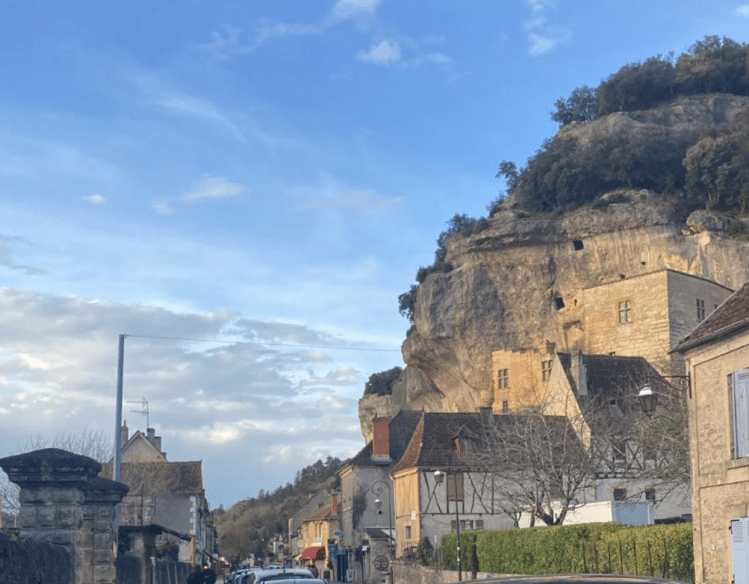
After a cramped Ibis Budget night (prep for the cave?) we took an early morning half hour train ride to the tiny town of Les Eyzies. A two kilometer walk through the gorge nested town, dotted with overhanging cave dwellings .

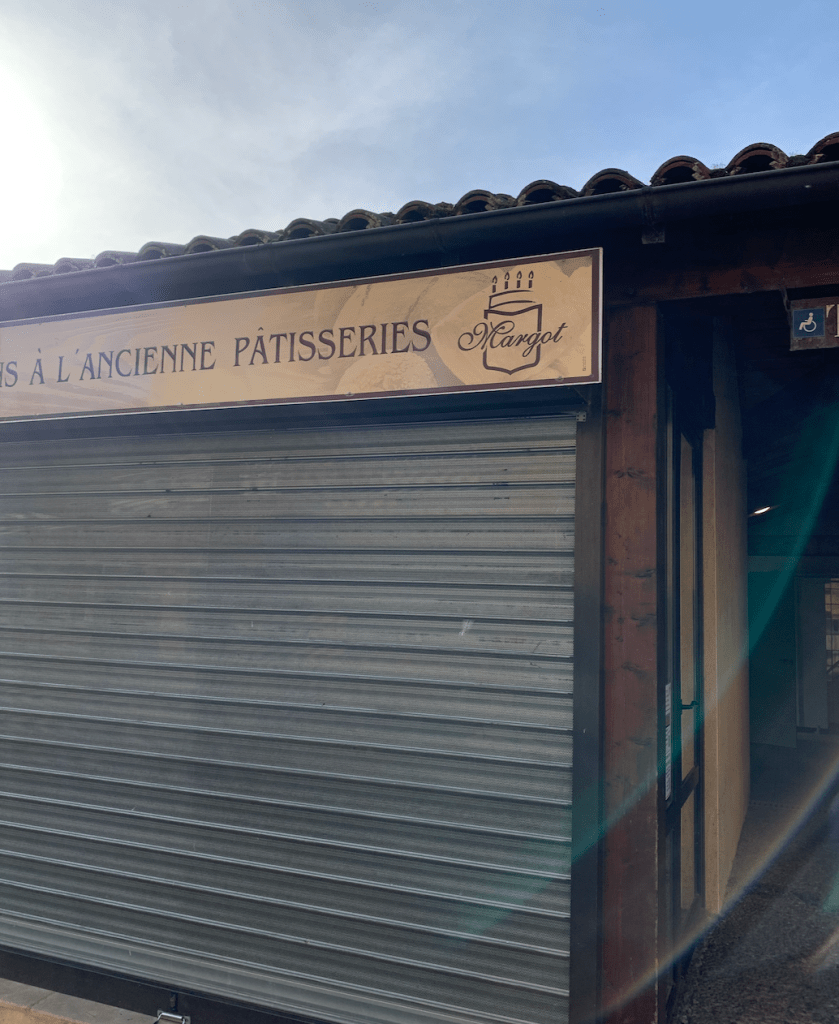
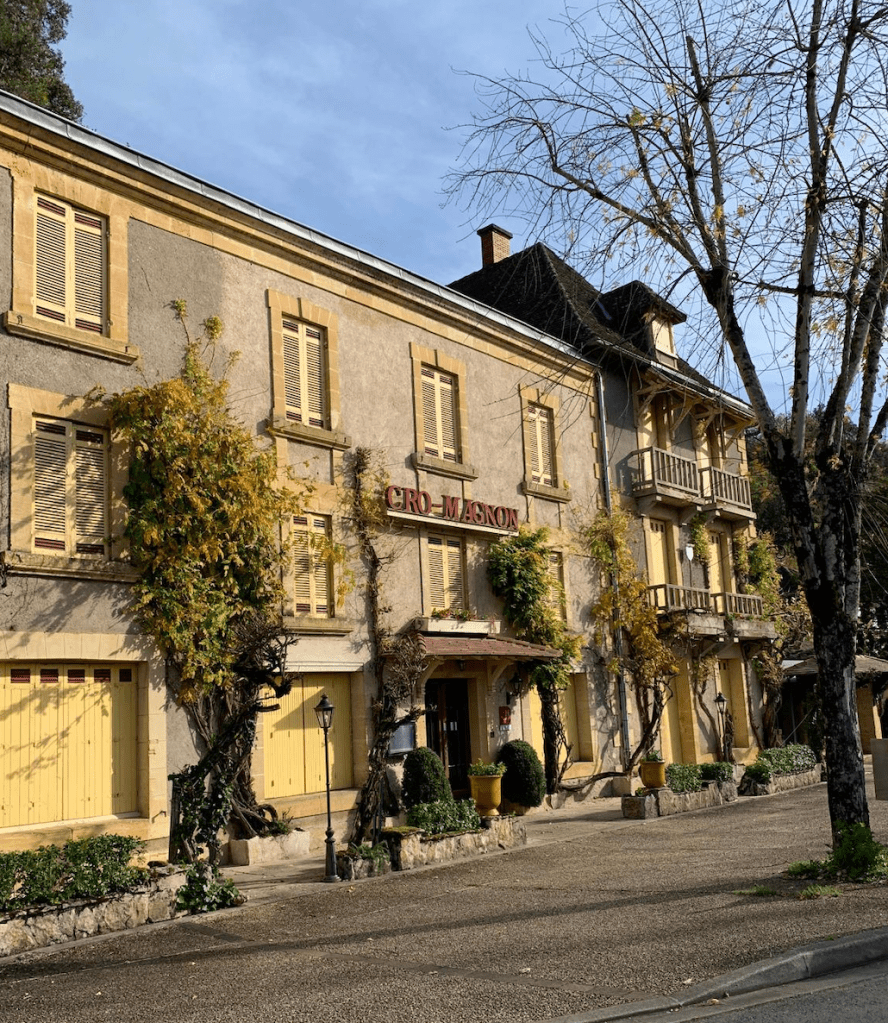
Fully committed to prehistoric commerce. It was quiet, beautiful, and very kitsch .

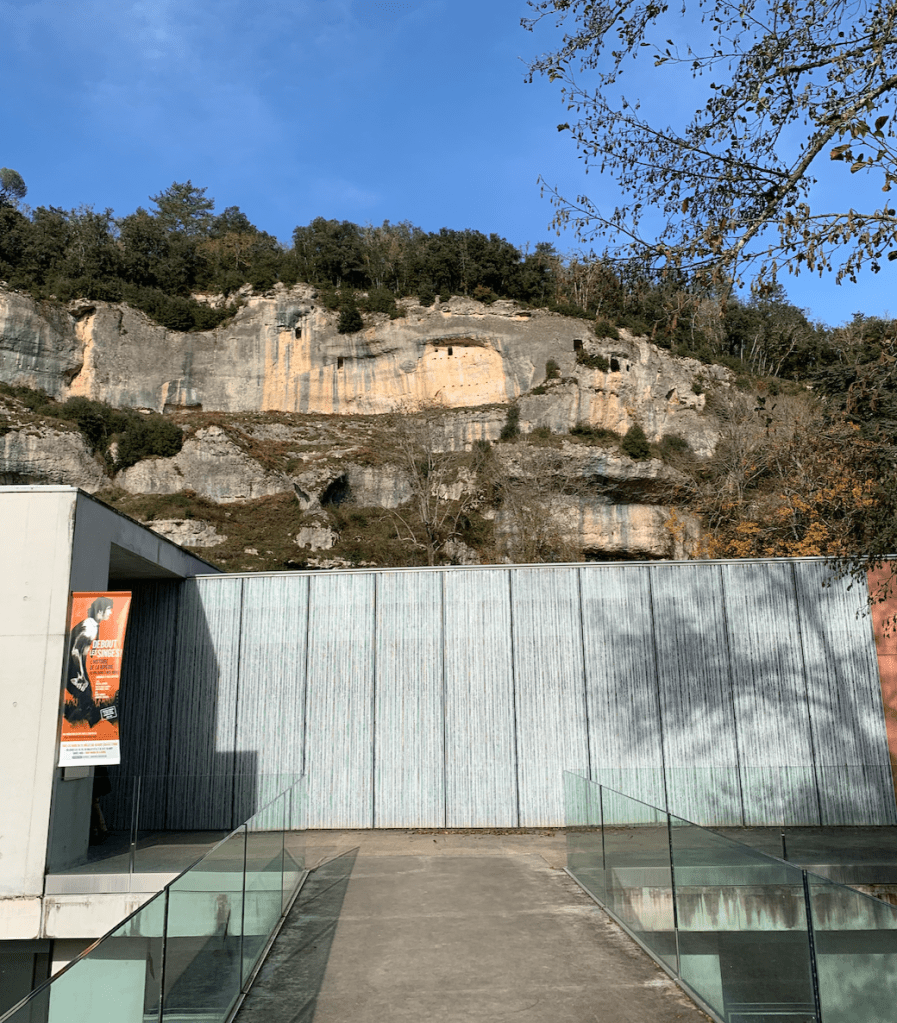
The museum prepped us to the geology, ecology and timeline

and we were ready for the final approach to the caves. (and gift shop), Grotte de Font-de-Gaume https://www.lascaux-dordogne.com/en/patrimoine-culturel/grotte-de-font-de-gaume/

We were very fortunate to be on the English language tour as there was only one other English speaking tourist joining us and the tour guide, 15 people were waiting for the French tour. No cameras were allowed.
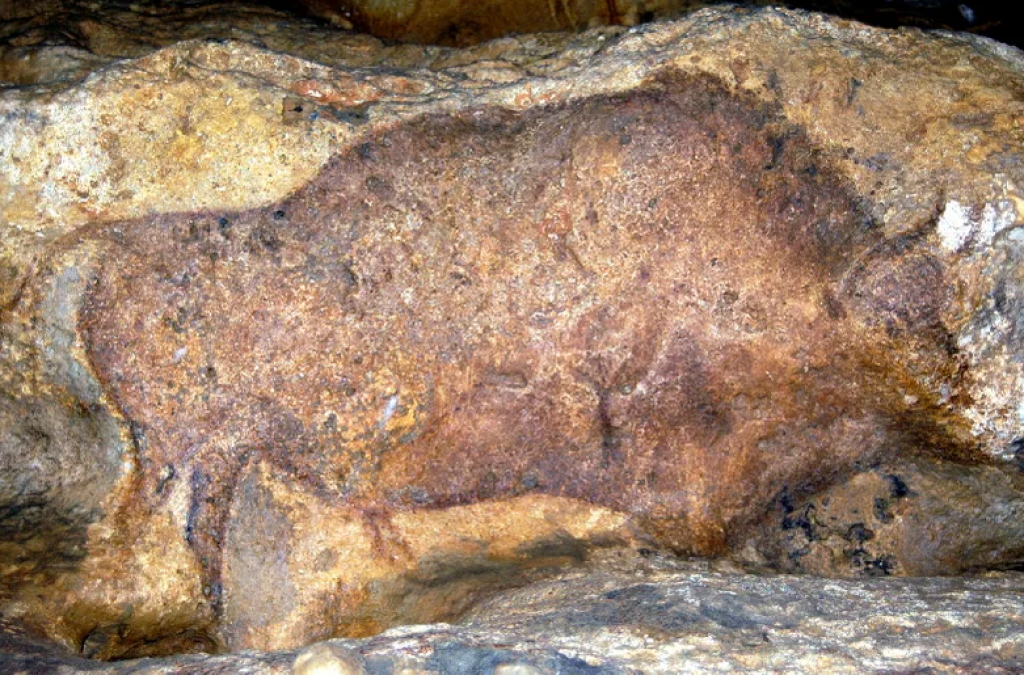
A tight squeeze through the entrance (felt like we were back at the Ibis Budget), but it gradually opened up and there was plenty of room for the four of us. The tour guide’s flashlight led us through the minimally lit cave as we passed drawings of reindeers, horses, bison and mammoths and handprints (kind of startling). The guide would dramatically turn off the lights and illuminate the painting with his flashlight and laser pointer illustrating how the contours and ridges of the walls were incorporated into the paintings of the animals bodies, pointing out aspects of the paintings like the hump of the bison’s shoulders conforming to the convex out-pouching of the wall. I would have never thought to do that, it’s embarrassing to realize Cro-Magnon were smarter than me.

From the Grotte Font-de-Gaume website

Walking through the narrow caves, seeing how these drawings, captured the art of living and story telling 20,000 years BC made us feel differently about ourselves, about humans, kind of about everything. Maybe the most sublime thing we’ve ever seen.  

France has been taking us time traveling. From the absolutely glorious cave paintings and megaliths to the magnificent boulevards and buildings then de-evolving to the ubiquitous evidence of the destruction from WW1 and WW2. Everywhere is history that we continue to choose to forget and repeat. Our Existential French tour continues..

A sip of Bordeaux

There were a lot of other Brittany possibilities but since it was off off season visits to the islands or other beaches were not really in the cards. With rain up ahead, we chose to skip Nantes (birthplace of Jules Verne), forego the pottery of Quimper (where would we put it), and sadly did not see the competitive church closes, https://francetoday.com/travel/brittanys-spectacular-parish-closes/ , because those would take forever to reach by bus even if we could work out the timing.  Despite some initial whining, we decided to go to Bordeaux. 

We have seen a lot of promotions and social media encouraging visits to “second cities” to reduce the tourist concentration in major cities. We agree, not just to avoid the dense spots but because we like “second” and “third” cities, they often provide the most full-bodied taste of a country, best embodying the local terroir.

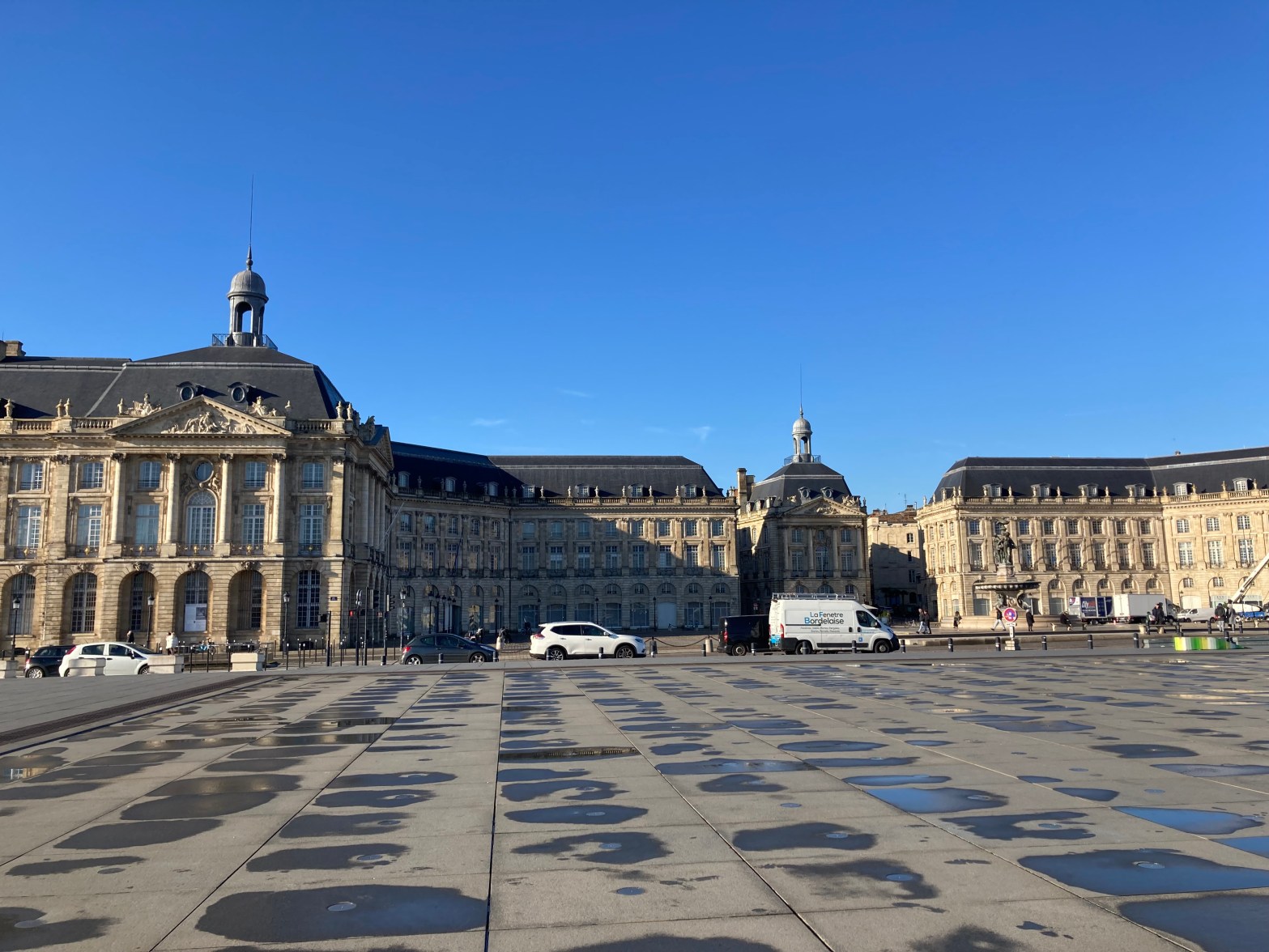
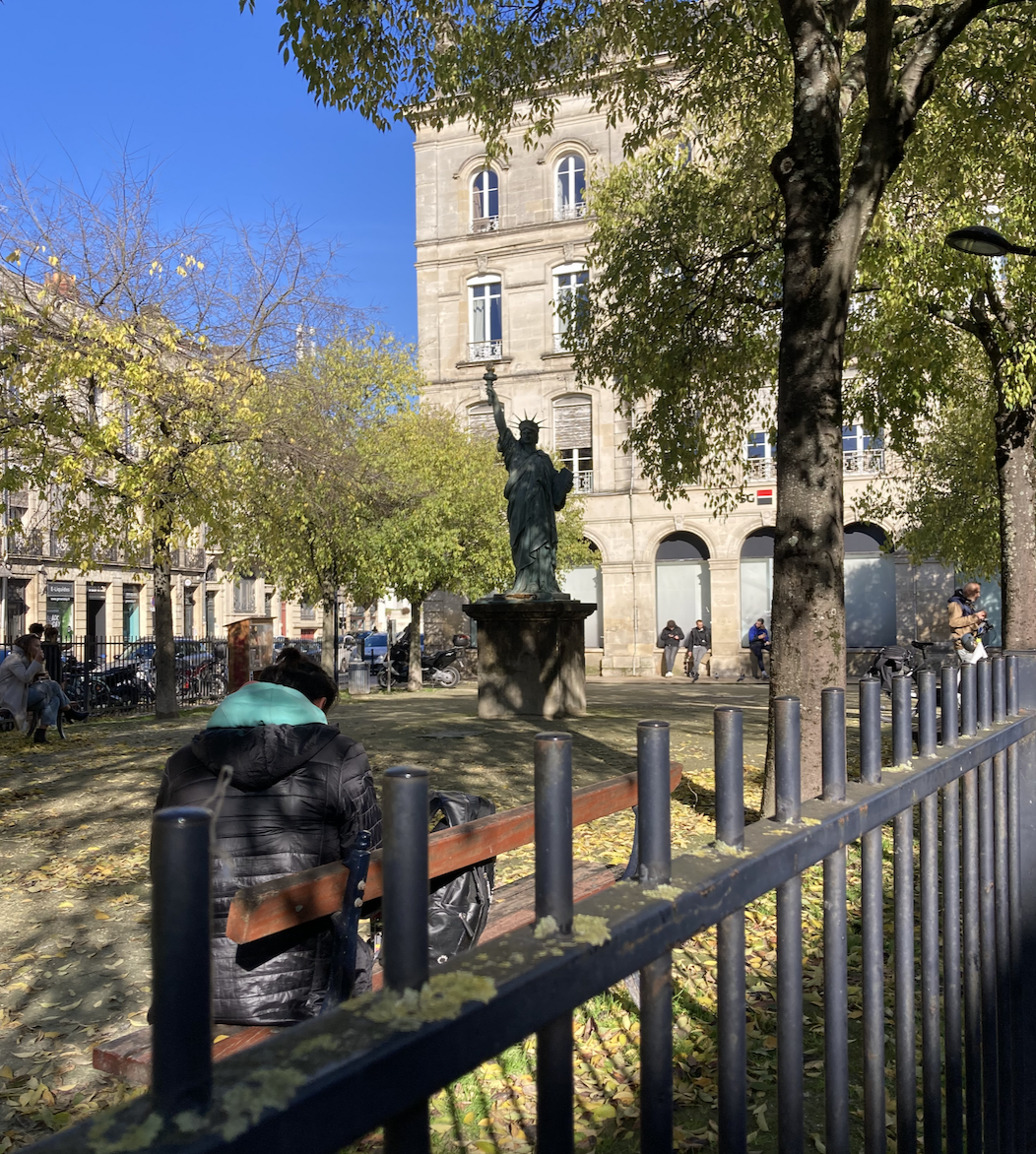
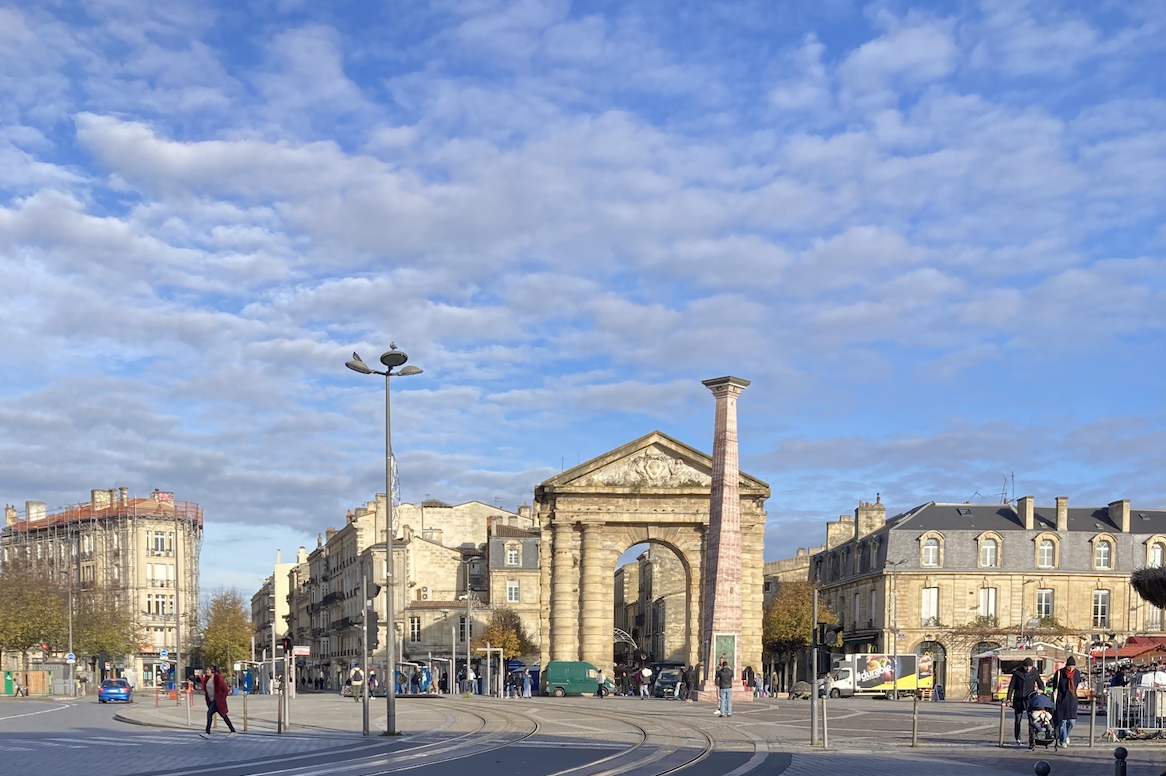
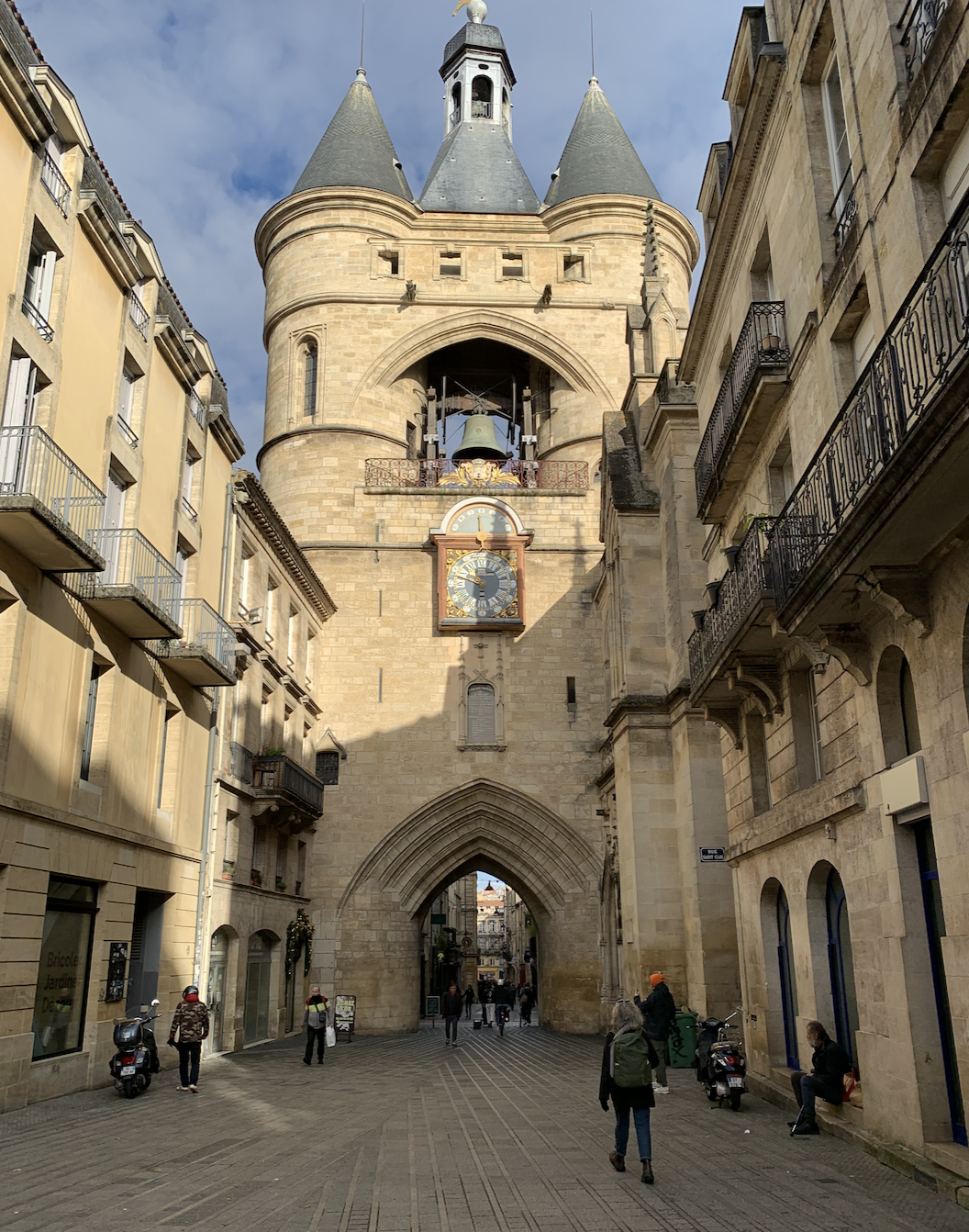
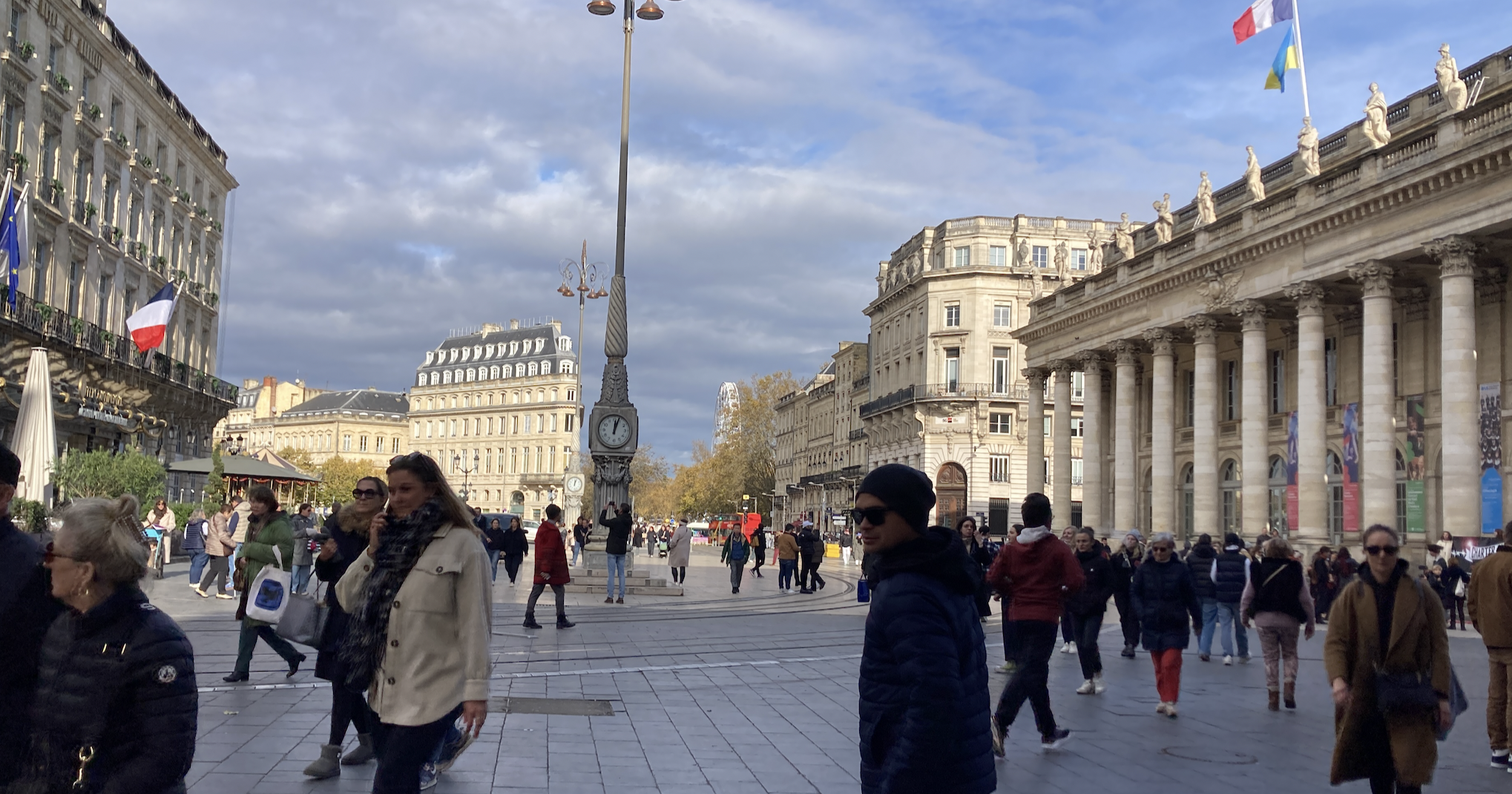
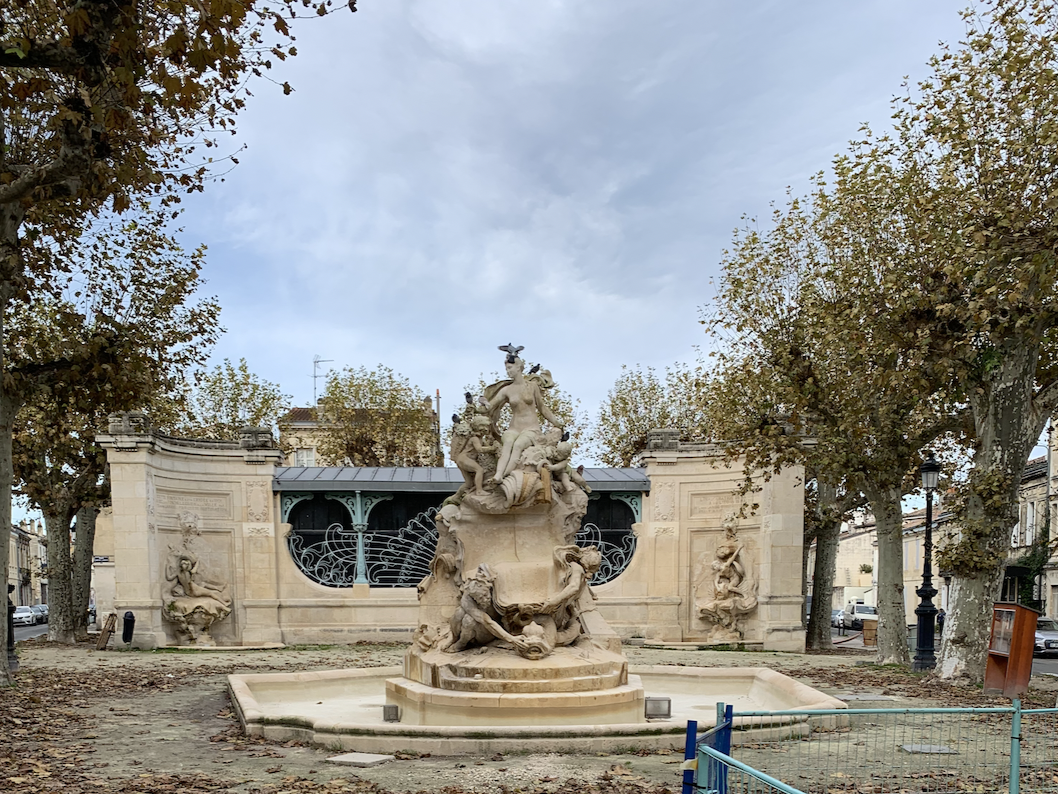
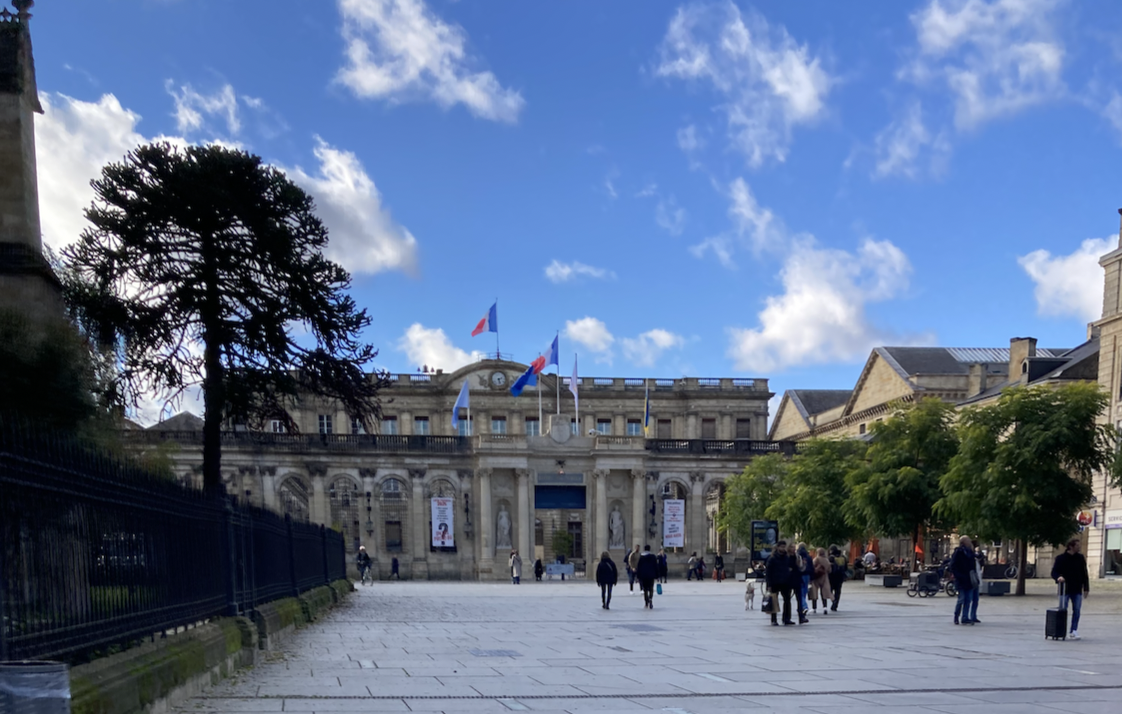
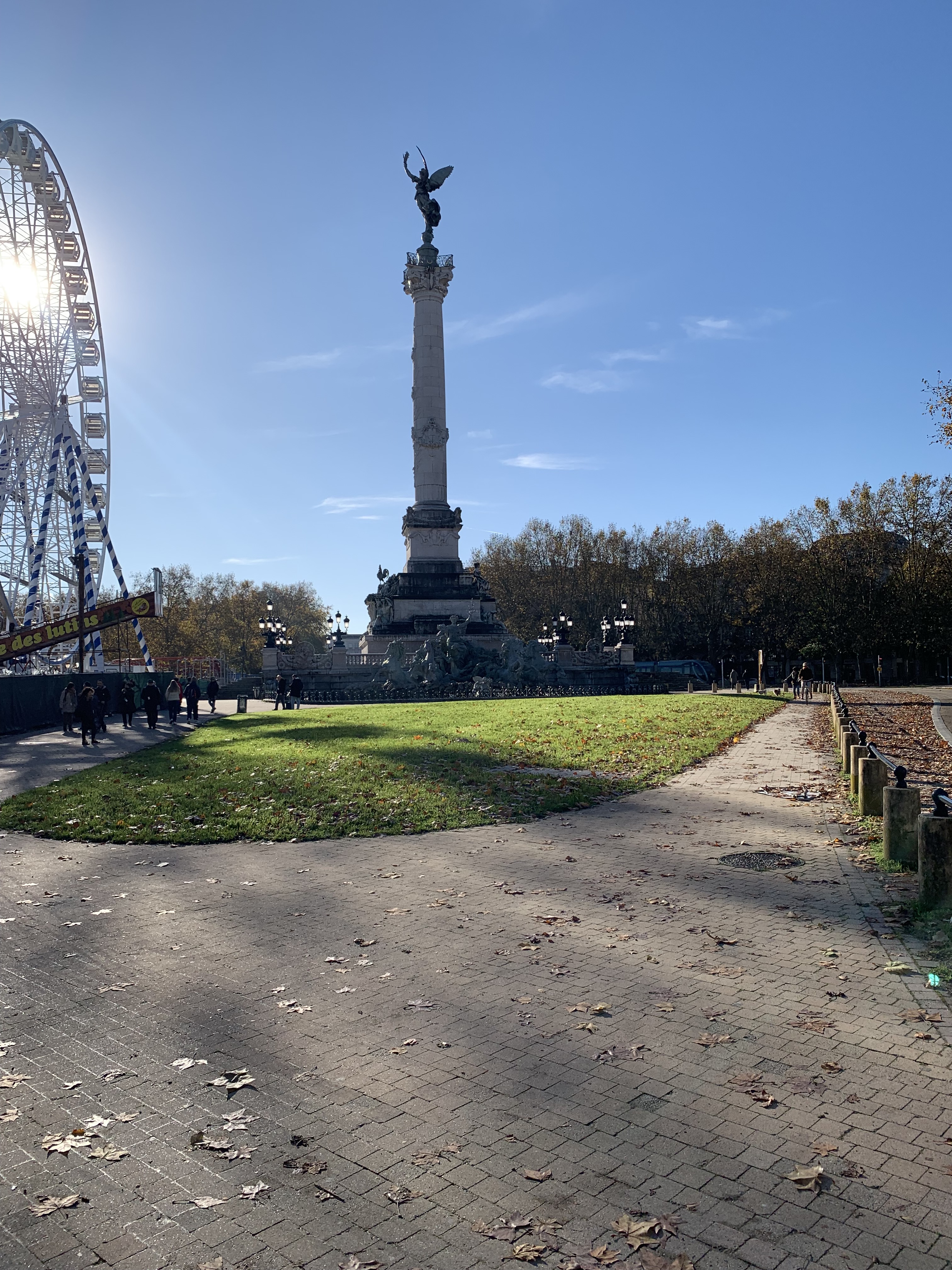
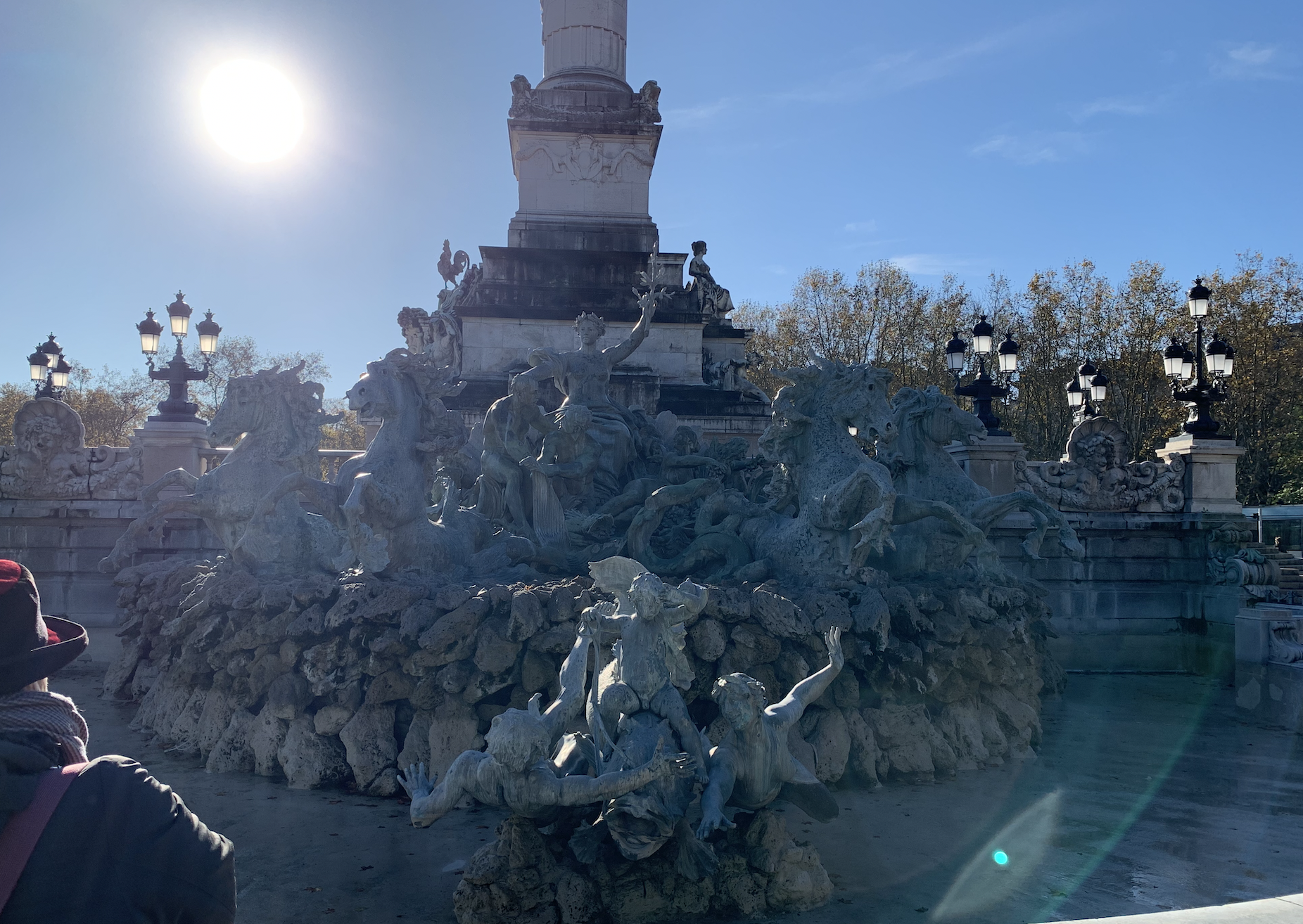
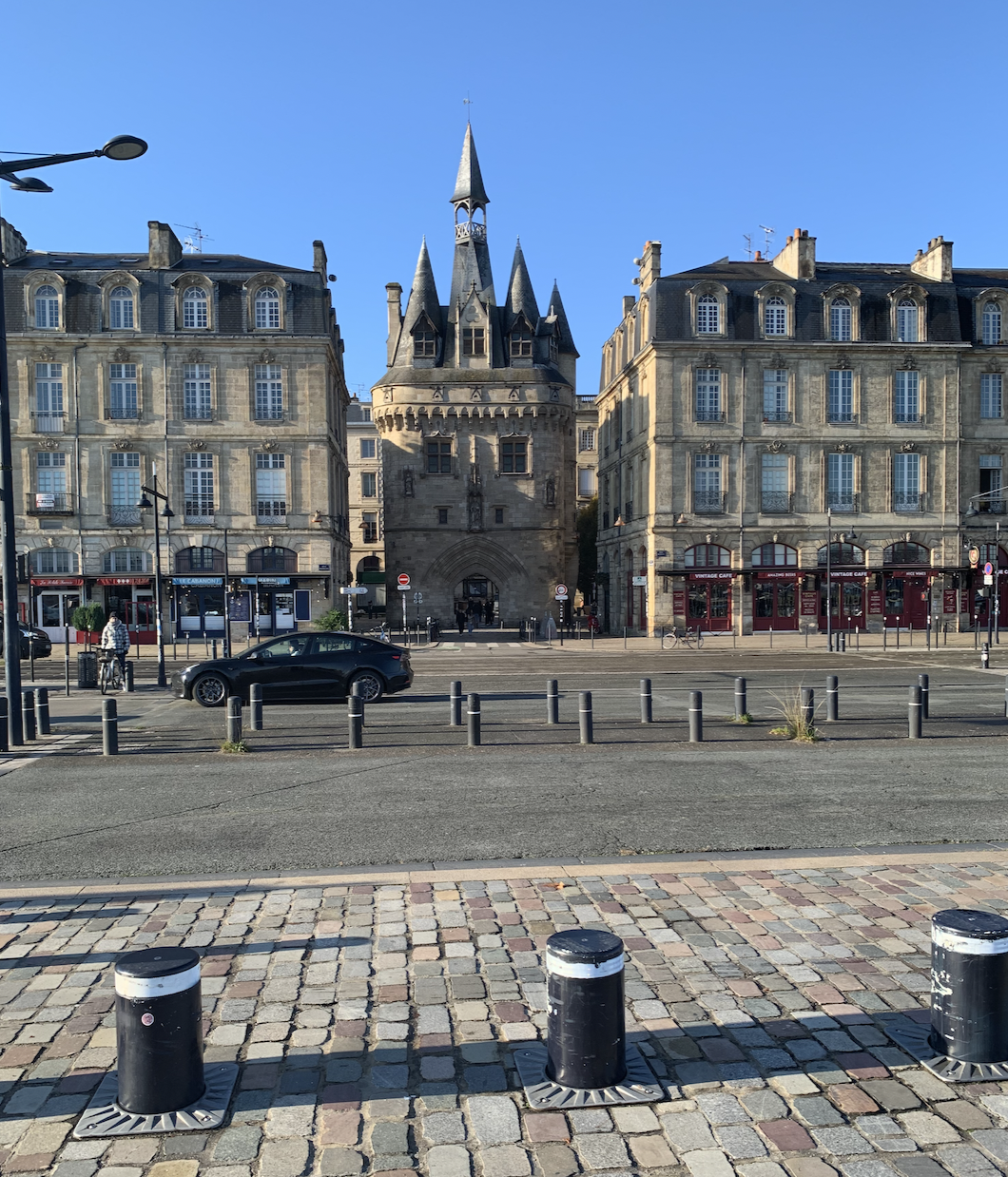
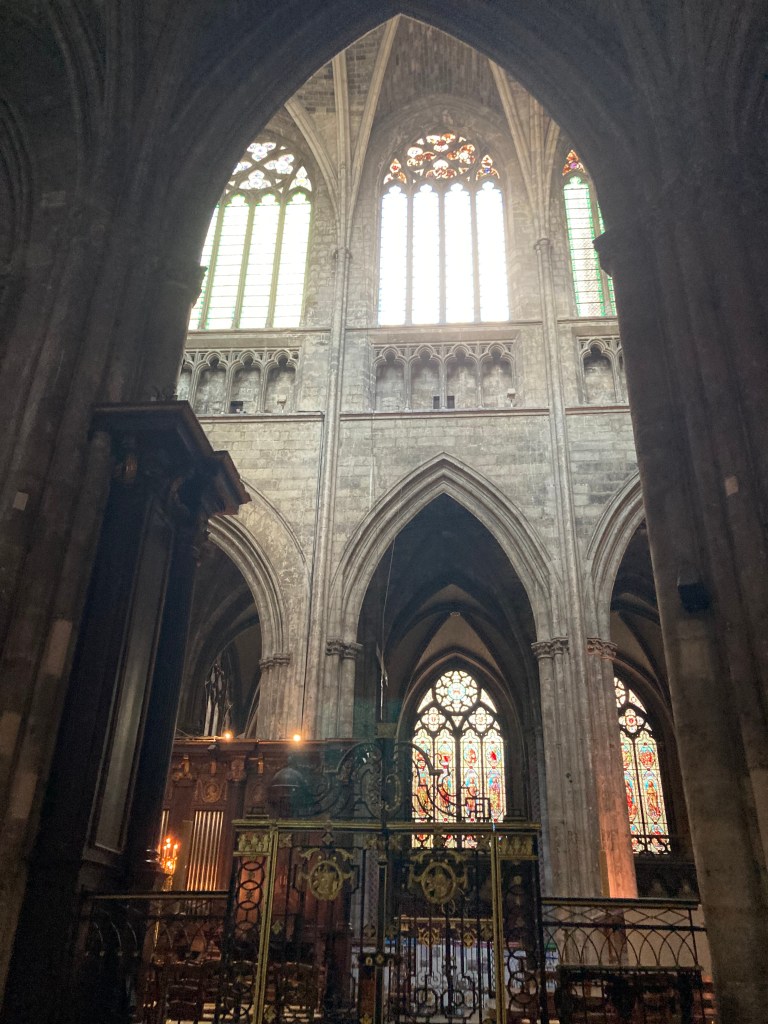
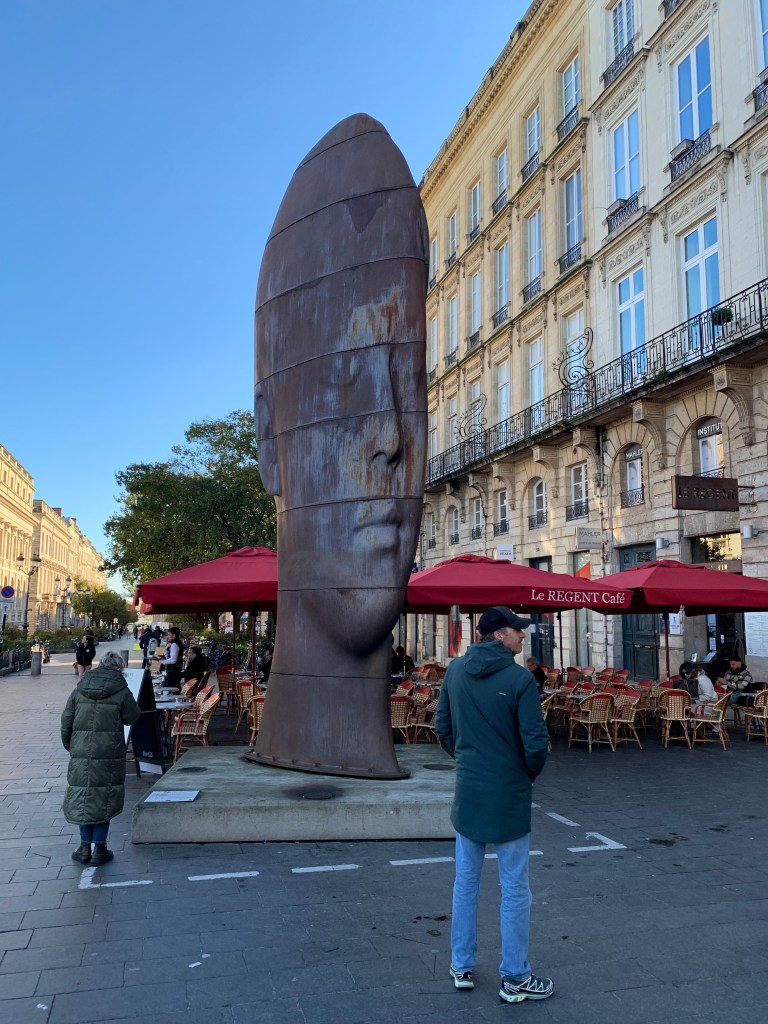
Bordeaux has all the standard European city color; the grand train station, memorable cathedral, rich riverside promenade to stretch our legs , and the longest pedestrian shopping lane in Europe (Rue Sainte-Catherine). Opulent boulevards poured onto classic city “places” (squares) which were a heady balance of complexity- vintage city gates remnants from the old city walls, subtle gardens woody with bouquets of autumn flowers, sparkling fountains, brilliant museums, massive memorials and elegant buildings (but why is there always a ferris wheel?).

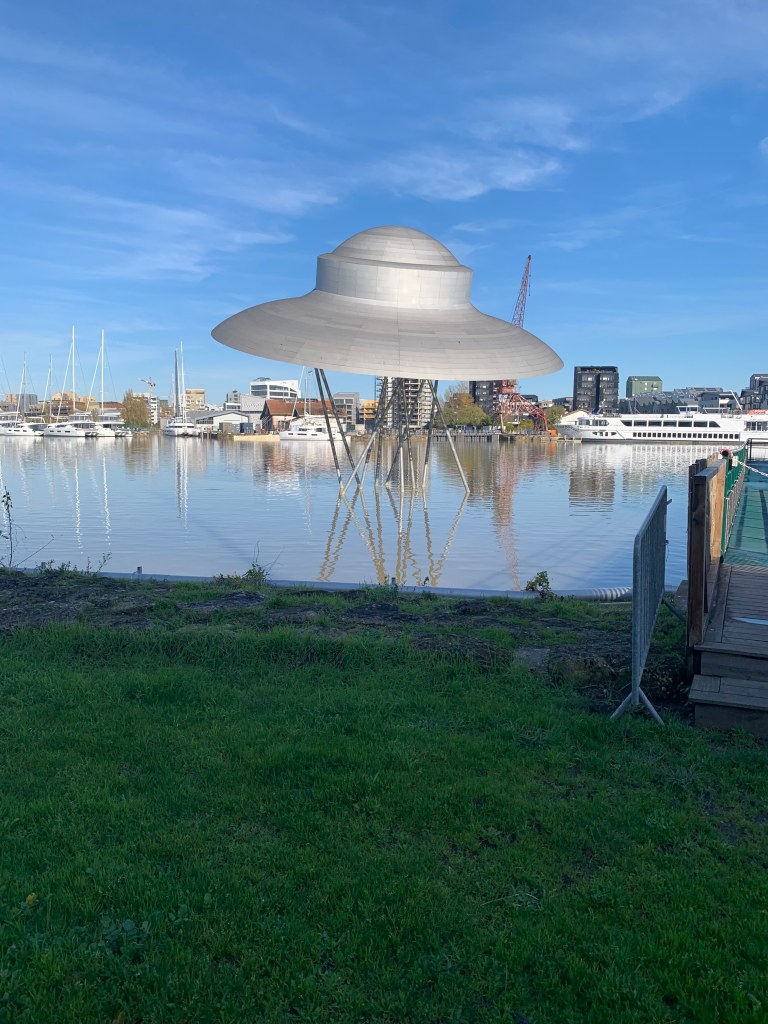
Bordeaux is not just mature Europe, it is also nouveau, having a steely structured, vertical lift bridge, the tallest in Europe (Pont Jaques Chalban-Delmas)  that hungover the River Garrone at the far end of town and a unique wine museum, Cité du Vin, although we abstained. There was also a bit of funk; spaceship, vibrant graffiti and bold public art.

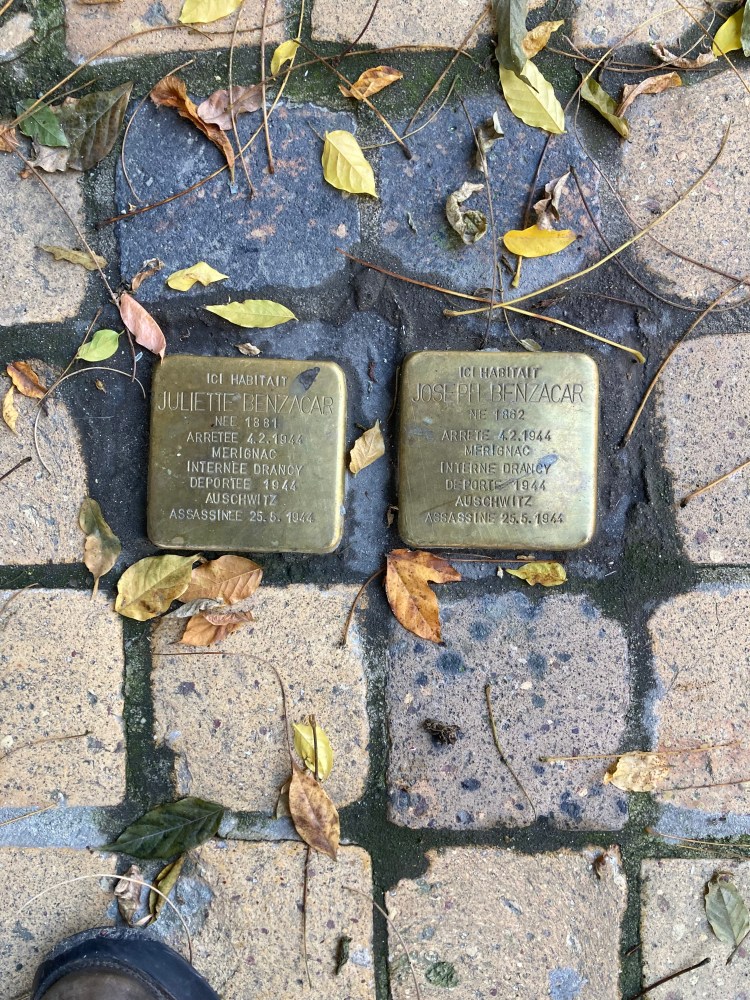
It really felt that we were back in Europe when we passed our first stolpesteine, unfortunately a constant companion through-out Europe, here are pics of all that we have seen so far with Bordeaux’s added https://chosenfugue.xyz/2019/01/07/they-do-make-you-stumble/

We stayed between the train station and downtown in a building that was a blend of tourist and student residence, we never quite figured out what blend but despite it being a bit austere it was sweet enough that we did not mind a day inside to keep dry when the wind and rain were a bit too robust for even us, nominal Pacific Northwesterners. Our only regret with our housing was when we were leaving, and checking the cigar-box sized fridge, we noticed that we had missed that a previous resident had left a carton of frozen Mars ice cream bars in the freezer. At 6 am with a train to catch, an existential moment. We chose to punt.

Bordeaux, felt like maybe the San Diego of France, multi-layered, pleasant but not distinct, like a table wine. Perhaps, though, our review will not be on-the-nose because we are a hard pair to rate this city as we did not even have one glass of wine.


Brittany Rocks


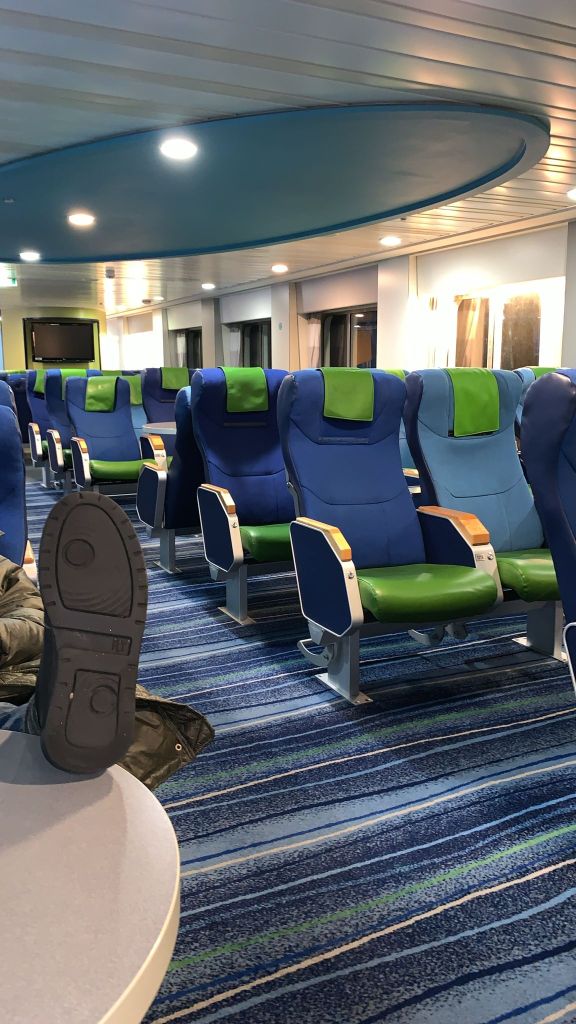
St Malo was chosen to start our five weeks in France because Patricia remembered it from a book… oh yeah that kinda dumb book and Netflix movie (All The Light We Cannot See), too late we were on the ferry.  Sleeping on the near-empty Portsmouth, UK-St Malo ferry was fine, it would not be fine if it was crowded which it is in the spring and summer but not in early November. This is why we love off-off season travel. The Eurostar might have been a better choice, stay tuned for more on that. We beached in Brittany, south of Normandy. 

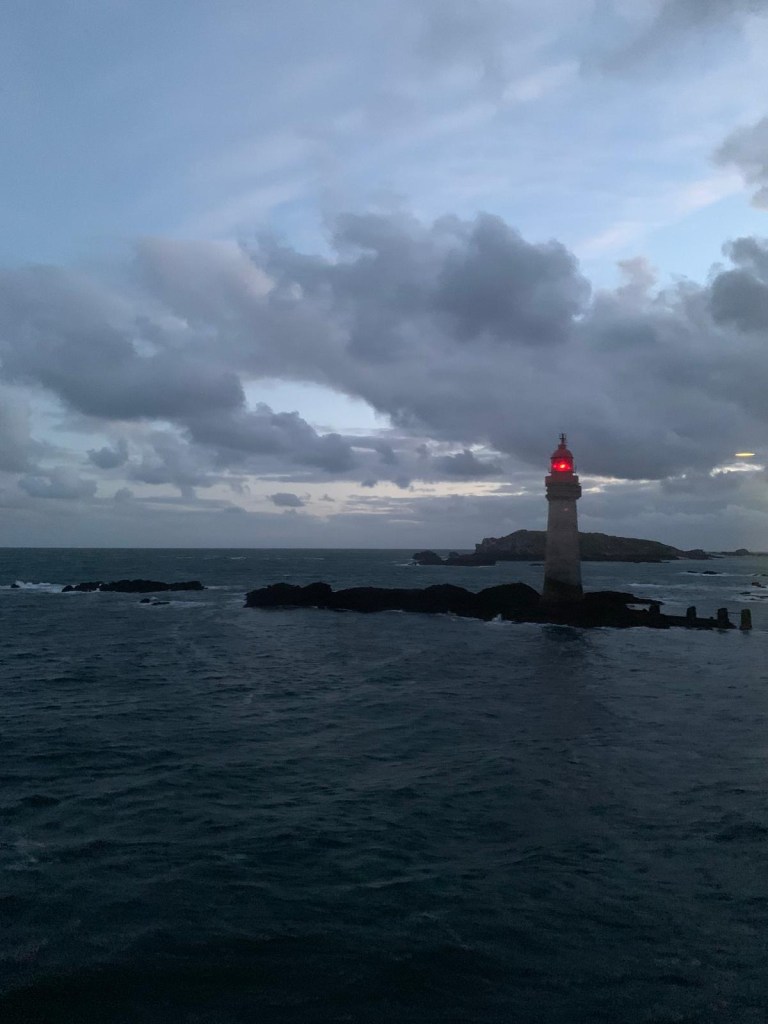
The uneventful night ended with a dramatic sunrise approach 

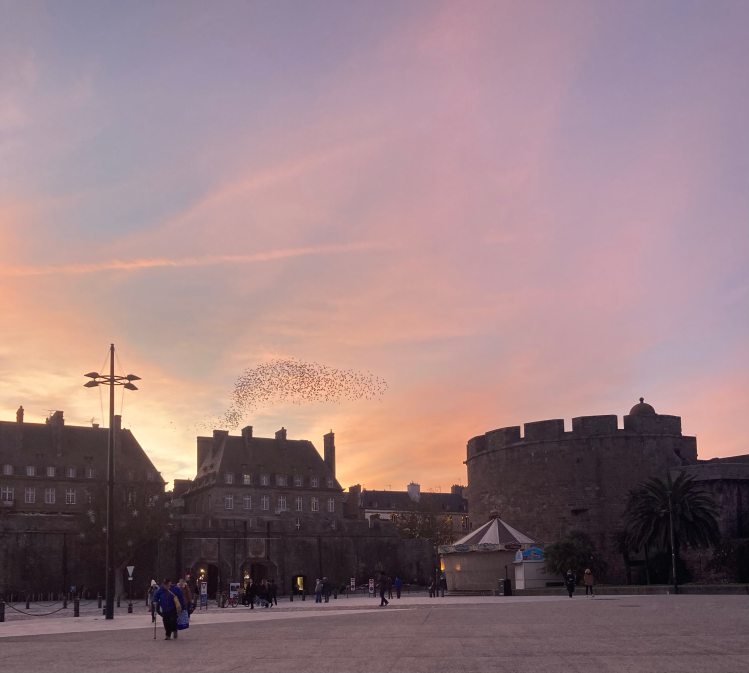
Immediately, we had to shake off our European travel rust.  Trains, buses, markets, language.  It felt so good to be confused and foreigners, again. Ex-Pat and ex-Nick. We fell back into our cobblestone routine with the picturesque, Disneyesque quaint beach town of St. Malo. We thought St. Malo would be a good base to explore nearby Mont. St. Michel, Dinan and Rennes but in the off off season, not the best choice as transportation is a bit limited, but it worked out.   Like much of Europe, St Malo was rebuilt after massive WW2 bombing, opting to build a stronger replica of the original. A good example for us post the current US democracy destruction. There is hope.

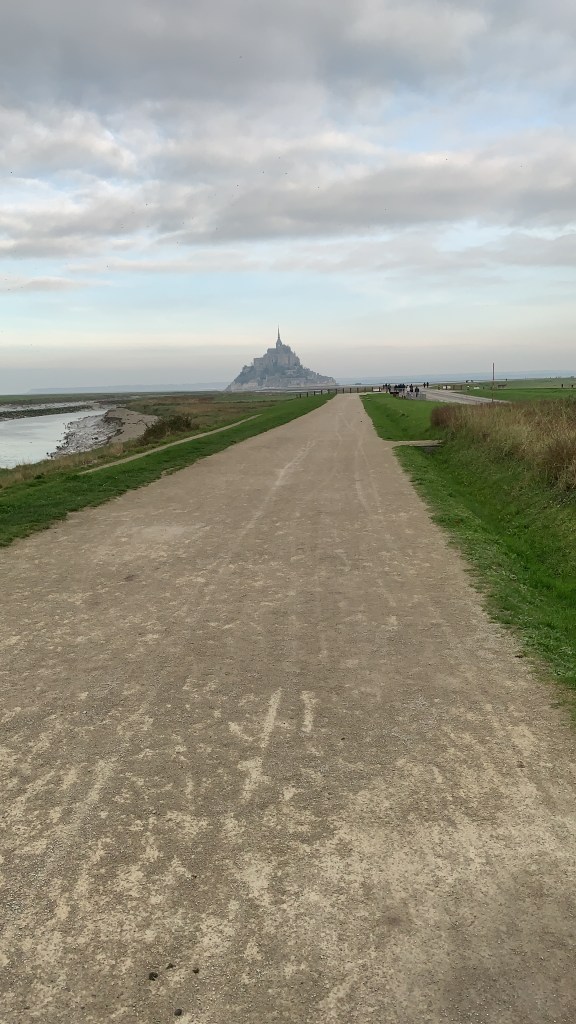
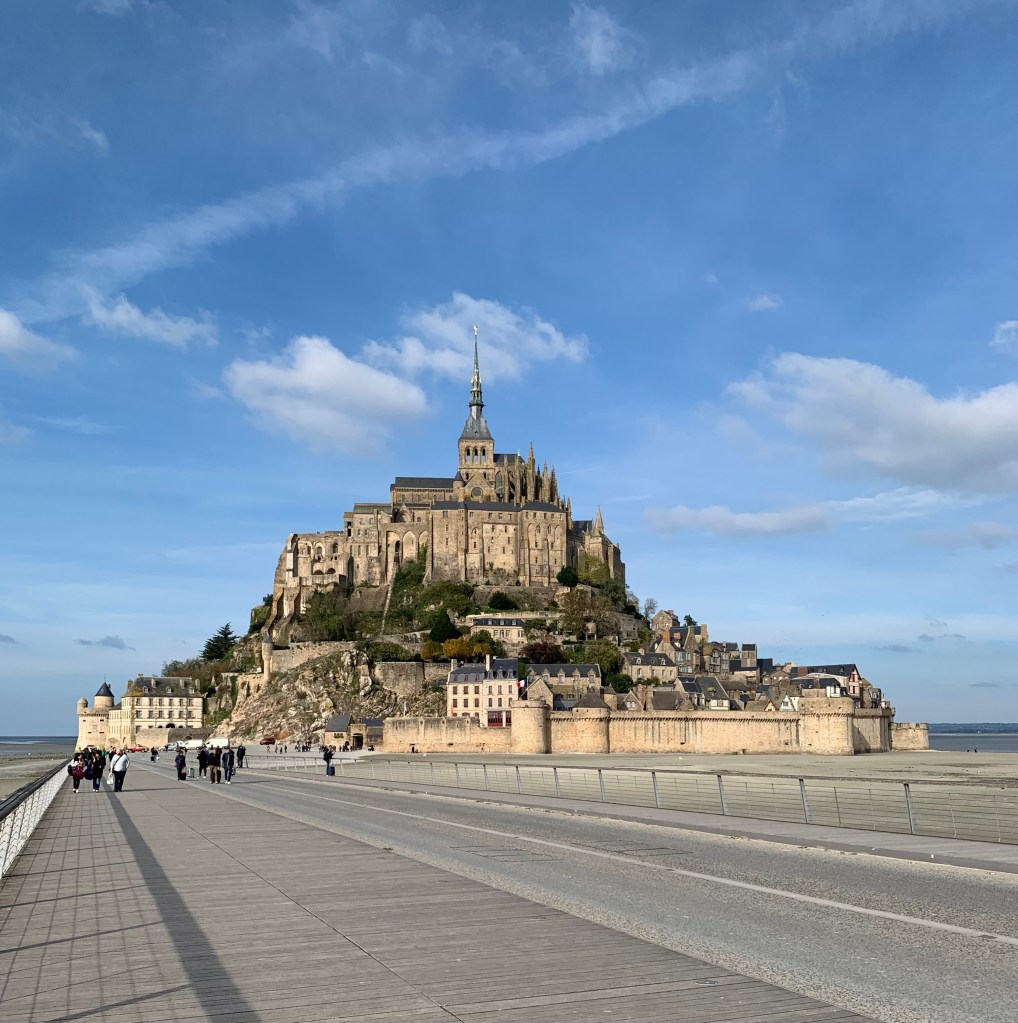
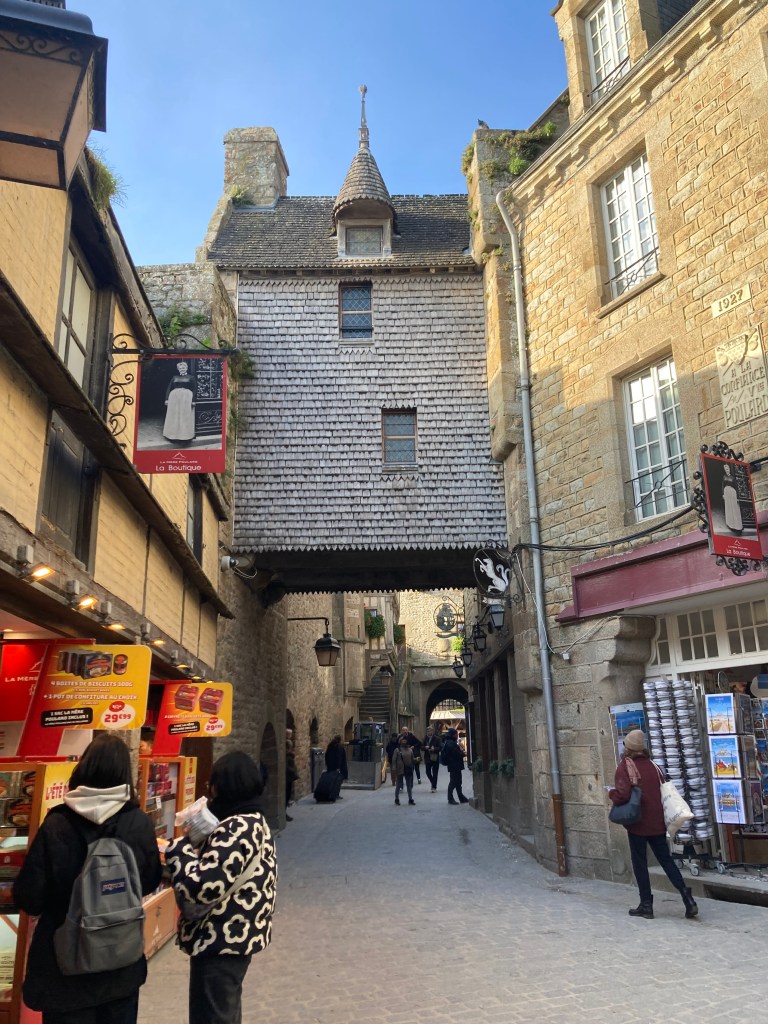
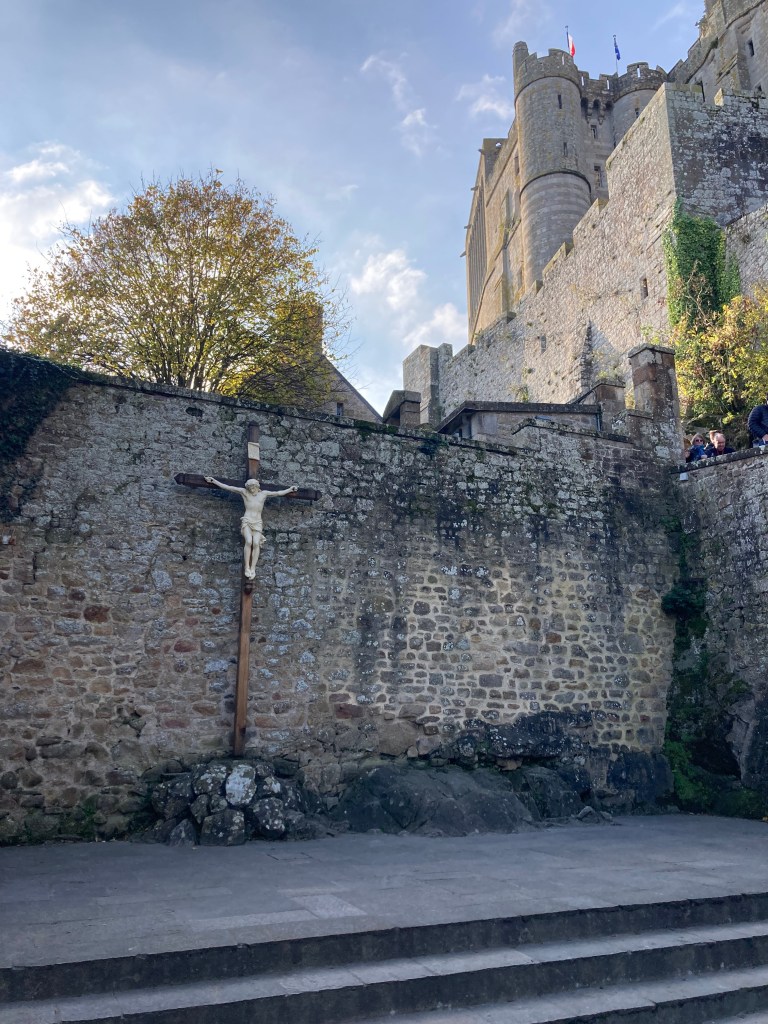
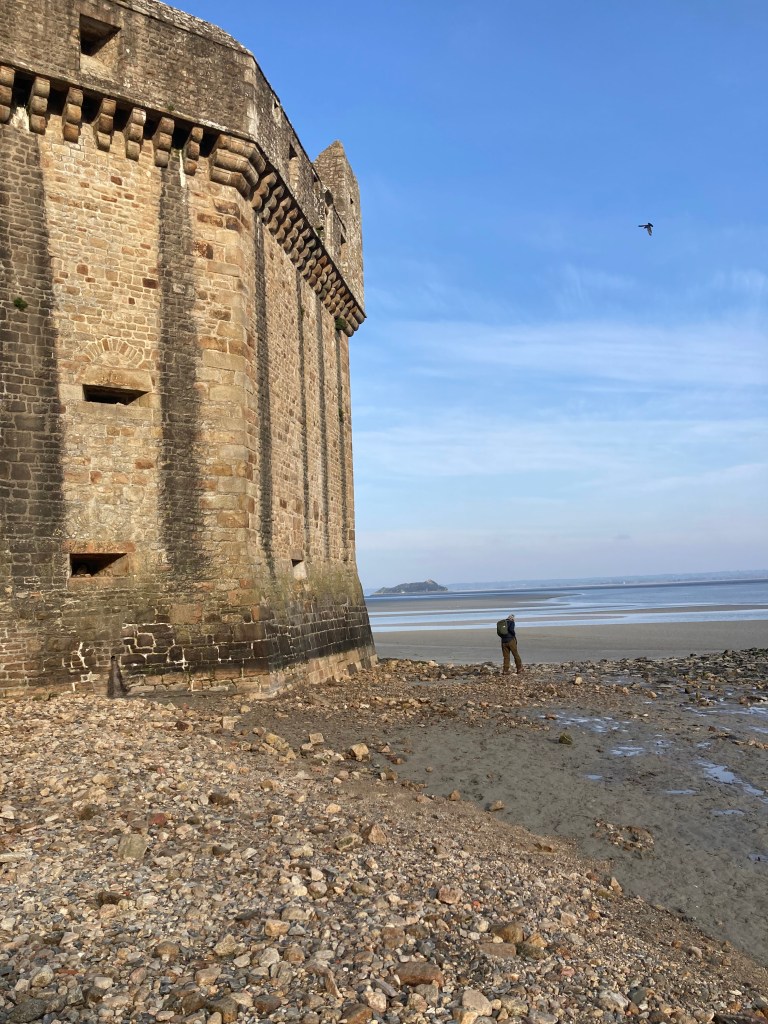
A tourist bus went directly to Mt St Michel; one bus in the morning and one back in the afternoon. This is in contrast to the hourly buses other times of the year. Upon arrival to the little tiny town of just souvenir shops, you can approach Mt. St. Michel by shuttle bus or by a pleasurable long walk. We of course chose to walk, a bit mesmerized as the Mount (is it a castle, cathedral, fortress-three things mixed together?) slowly materialized . https://en.wikipedia.org/wiki/Mont-Saint-Michel

A distant foggy mass transformed into a massively beautiful structure. It was like approaching Oz.   Always, with these huge, detailed buildings we ask; how was it built? Why is it here? How long did it take to build? And, why are these massive structures always on a mountain or the highest point in the area? Strategically, mystically, we understand, but physically, the poor guys that had to build it, and the tourists struggling to ascend them.  Location, location, pain medication.

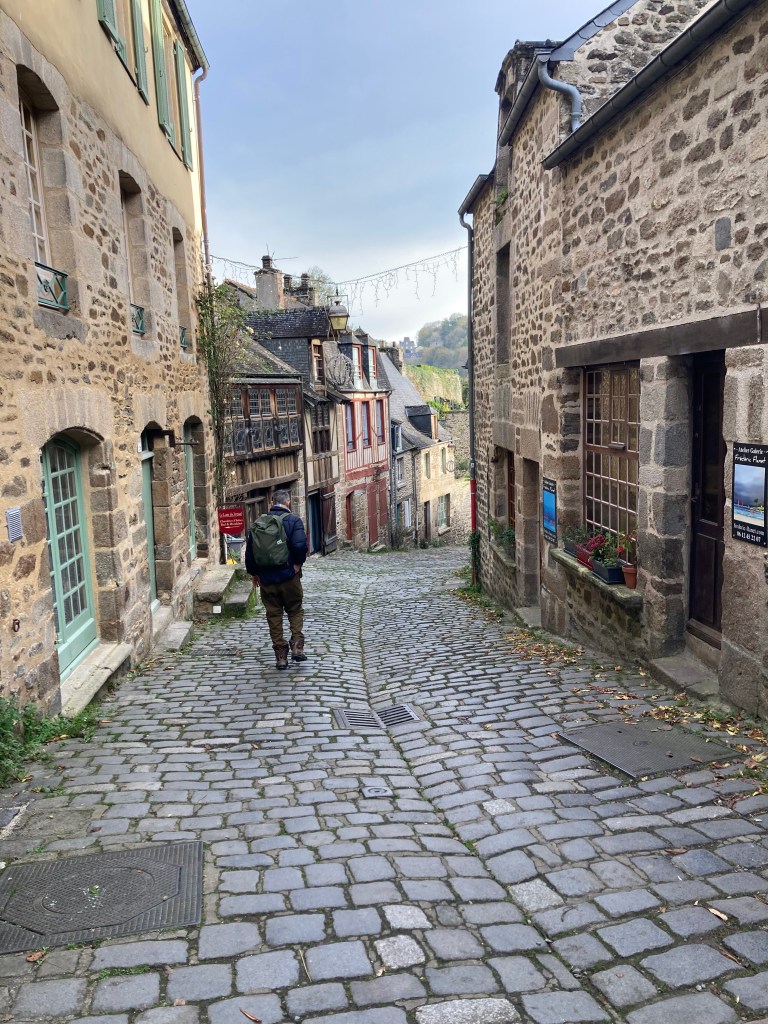
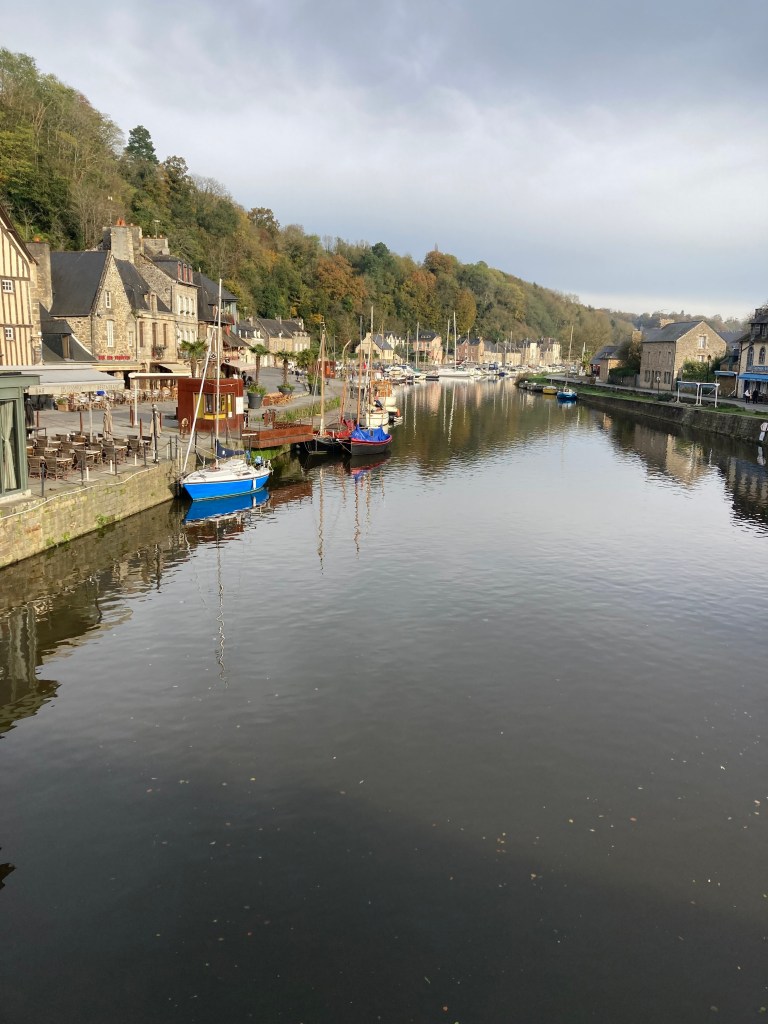
As committed public transportation users, we scoffed at all of the Rick Steves forum comments on how you need a car in France. We shouldn’t have scoffed.   Despite maps suggesting direct routes, routes were rarely direct, not necessarily frequent but always picturesque. Our eventual France itinerary was shaped by bus/train schedules. First a day trip from St Malo to Dinan (33 km, would be a 30 minute drive) required  a stop at the transit hub of Rennes (68 km, 1 hour drive or train) where we took a brief walk around town-great train station, lovely city. Another hour on the train so we could take a brief walk around Dinan, down a beautiful cobblestone street to the river then back up the beautiful cobblestone street to the train station. Back to Rennes, to go back to St Malo.

The rest of our time in Brittany got rocky, very rocky.  But, we like rocks.  To travel from St Malo to Perros-Guirec (164 km away) we needed to take the train back to Rennes, then to Lannion, then pick up a local bus that only goes to the coast twice a day, once in the morning, once in the afternoon. We made it to our apartment downtown in Perros-Guirec, total 247 km traveled from St Malo for a 164 km trip. How did we find all these local buses? Rome2Rio, google maps does not usually include local.

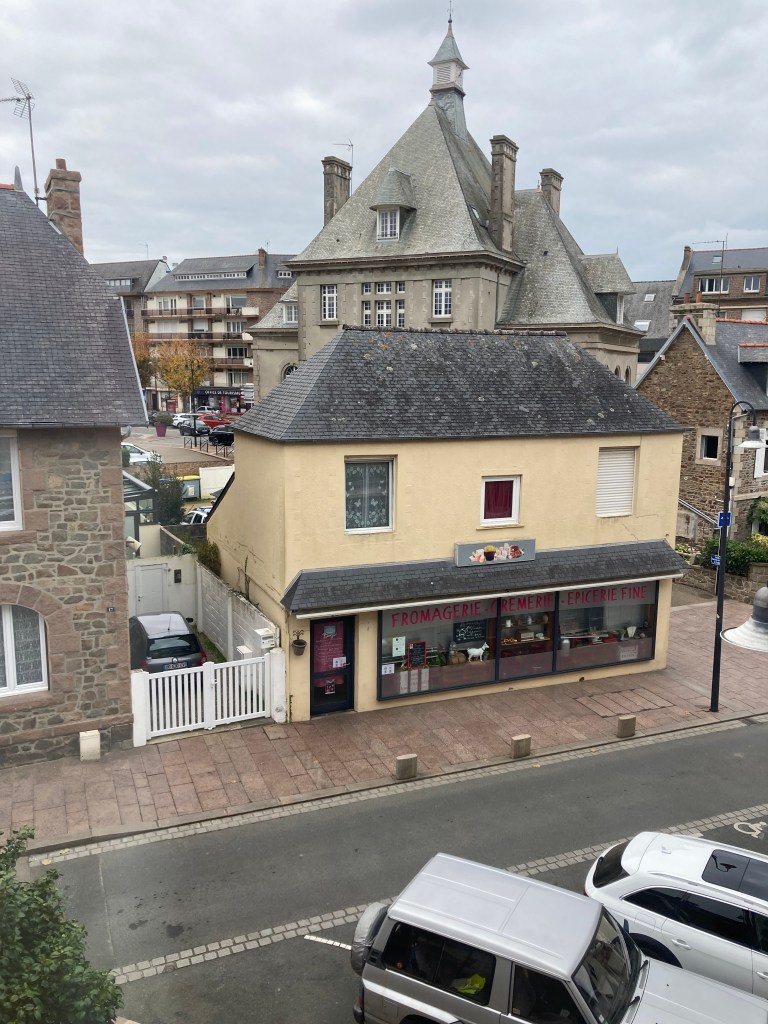
Perros-Guirec was also damaged during the war, and the rebuilt center of town had a 60-70s vibe mixed with classic older Breton buildings. A Carrefour market was close by and we rekindled our appreciation of the French Carrefour hierarchy,  stay tuned.  

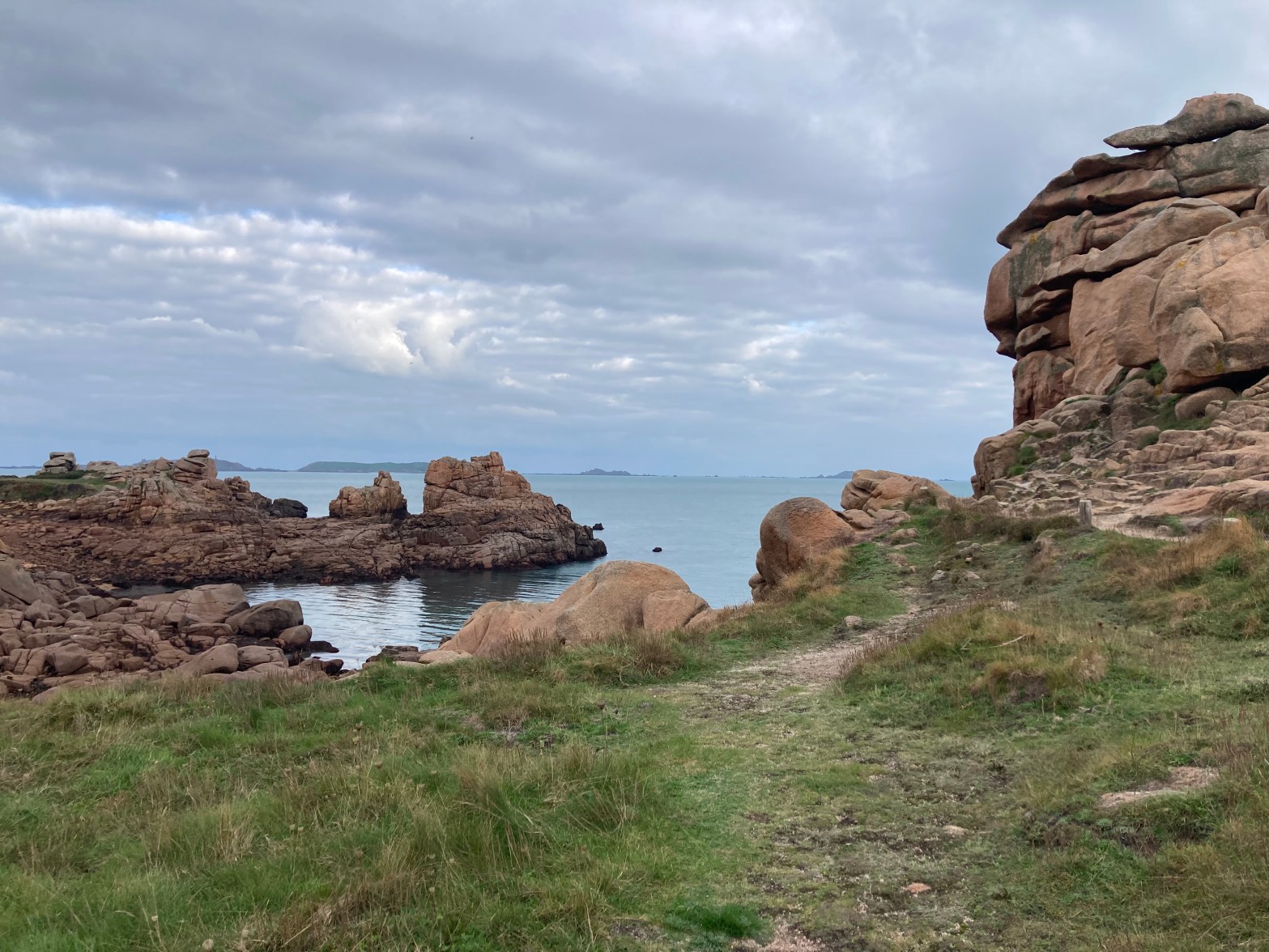
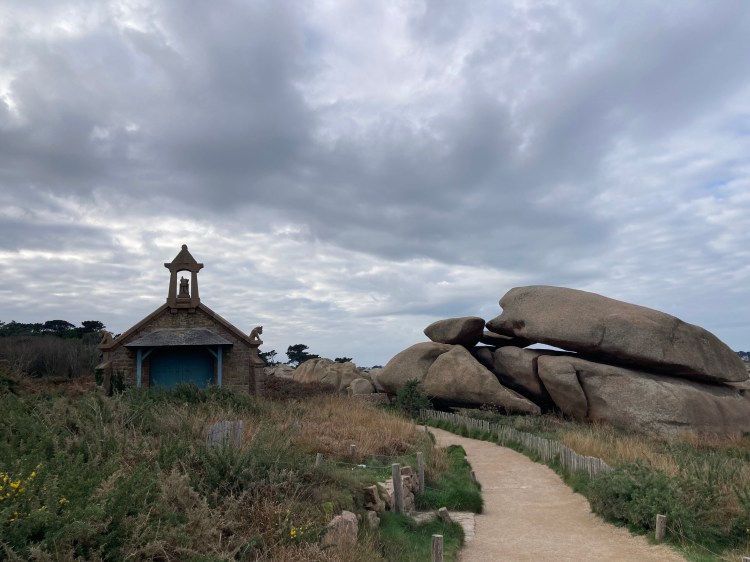
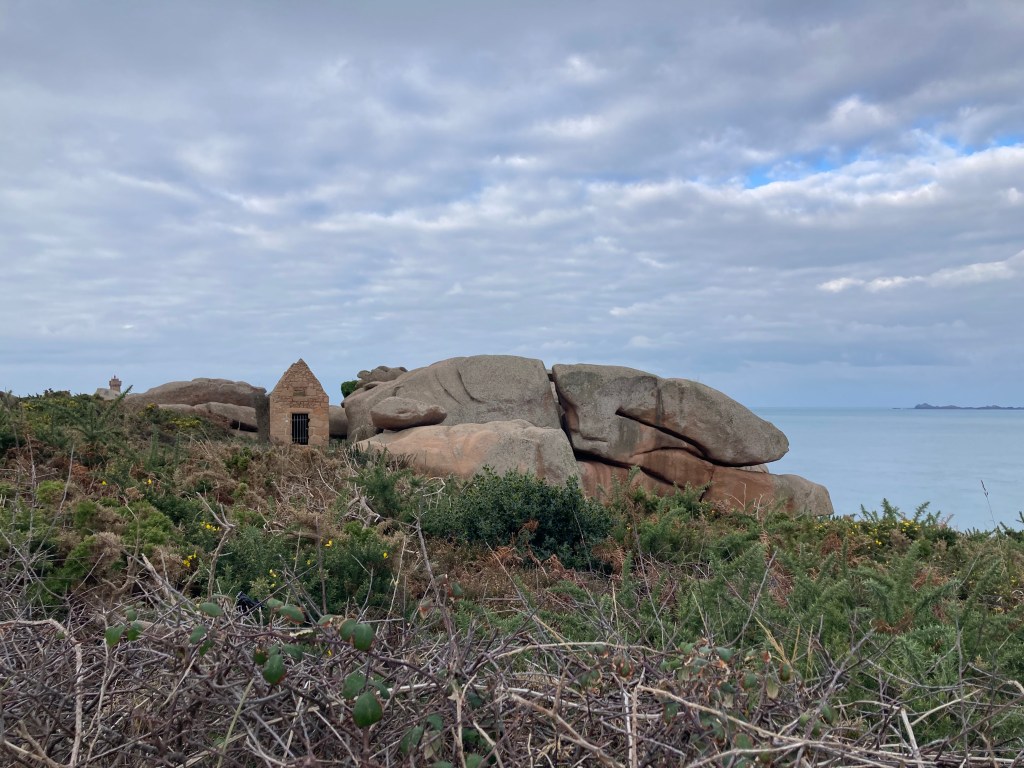
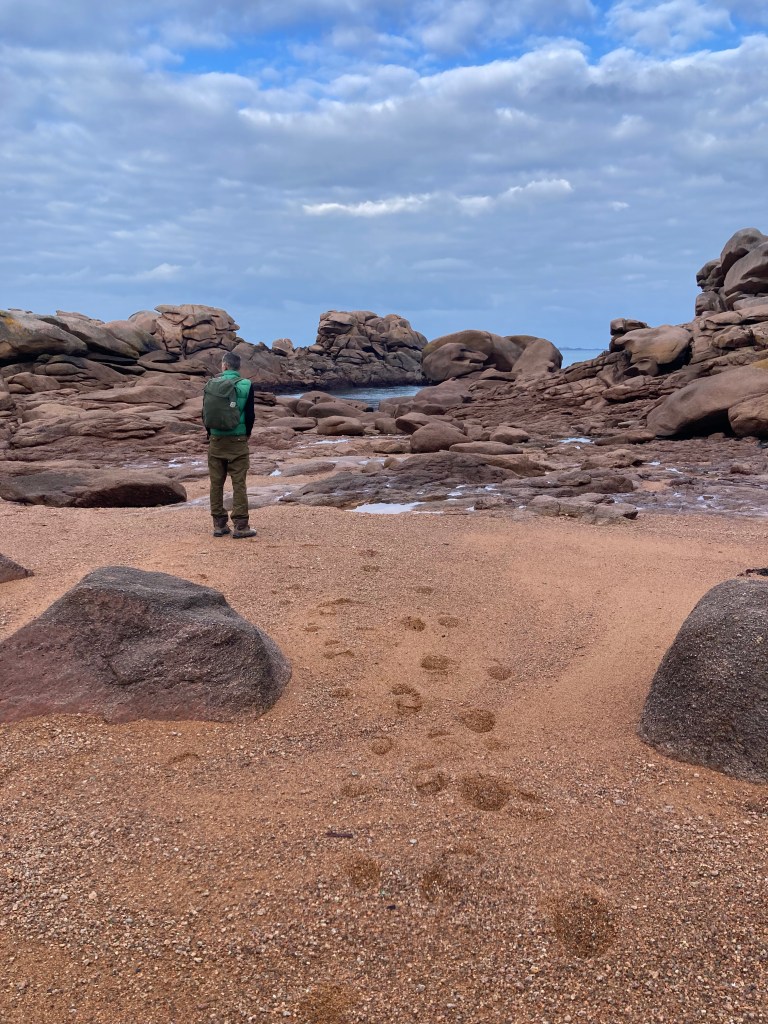
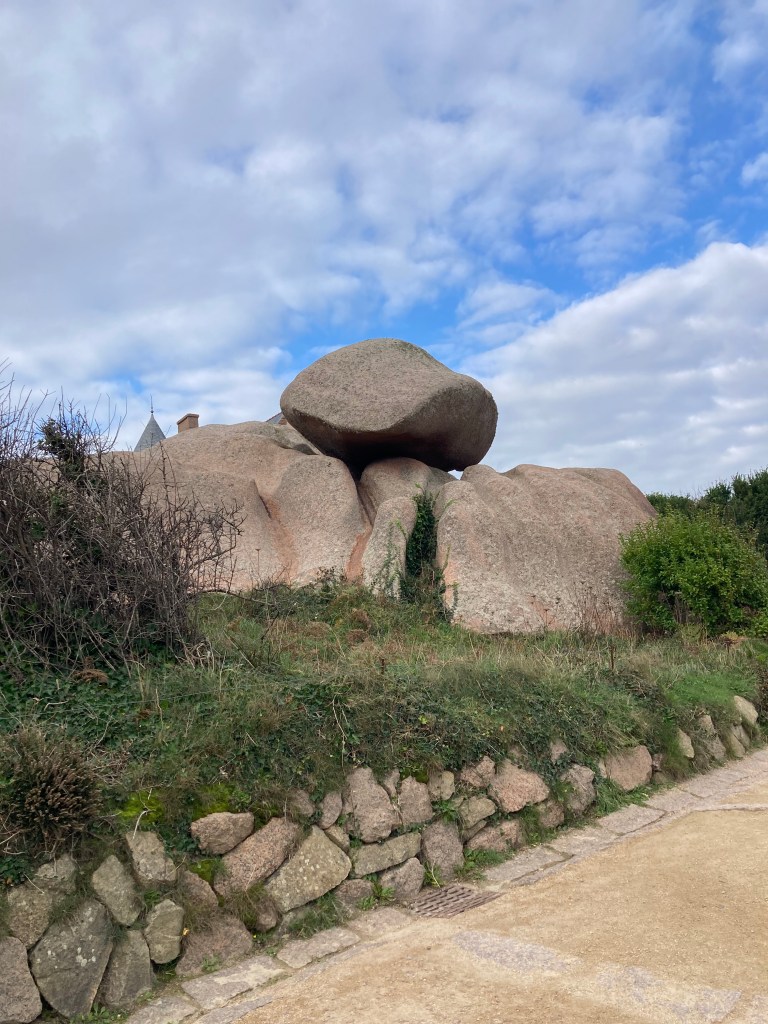
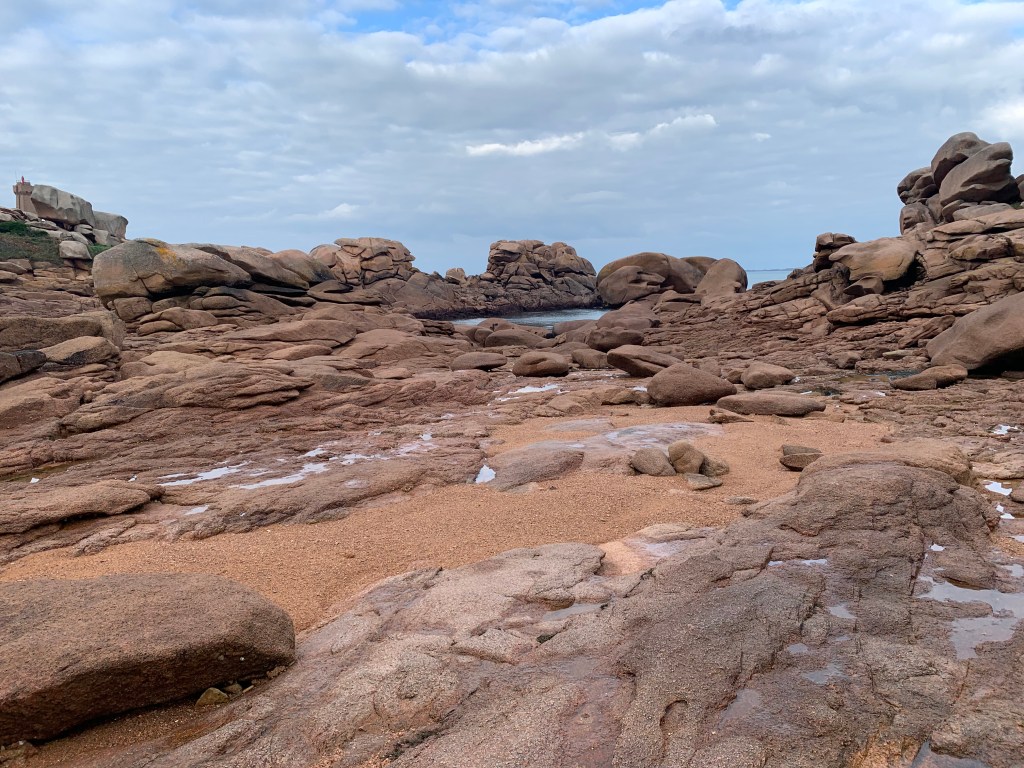
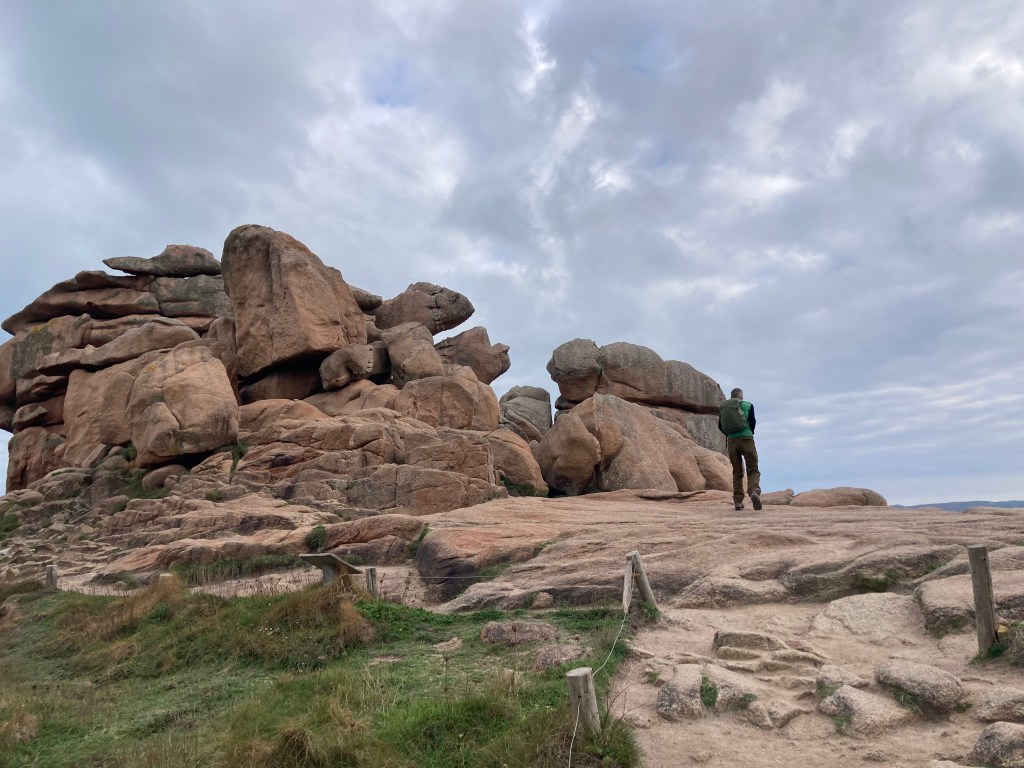
But we actually came for the coast not the market. Surprisingly.  The reason we chose Perros-Guirec was to walk along the coast to Plumanac’H (4.4 km), one end of the Côte de Granit Rose https://www.brittanytourism.com/matching-what-i-want/outdoor-and-nature-activities/the-most-beautiful-areas-to-explore/the-pink-granite-coast/

Astonishing and crazy natural rock formations, almost more like what you’d expect to see in Zion, Northern Arizona or Star Trek (when Kirk fought the Gorn) but along the coast. Our reverential walk was capped off as we entered the tiny town of Plumanac’H to a rousing chorus of “Happy Birthday” sung in English by a group of people as a very, very old woman entered a restaurant.

The morning bus back to Lannion train station, then on to Vannes, for another brief walk around town. Vannes was another pretty town (it is France!), although this was a bit more bustling than the other pretty towns.  The main reason to come here was to take another local bus, a short rainy walk and….

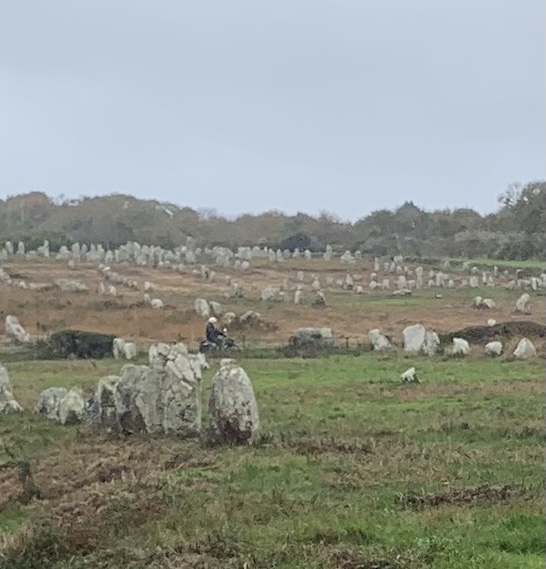
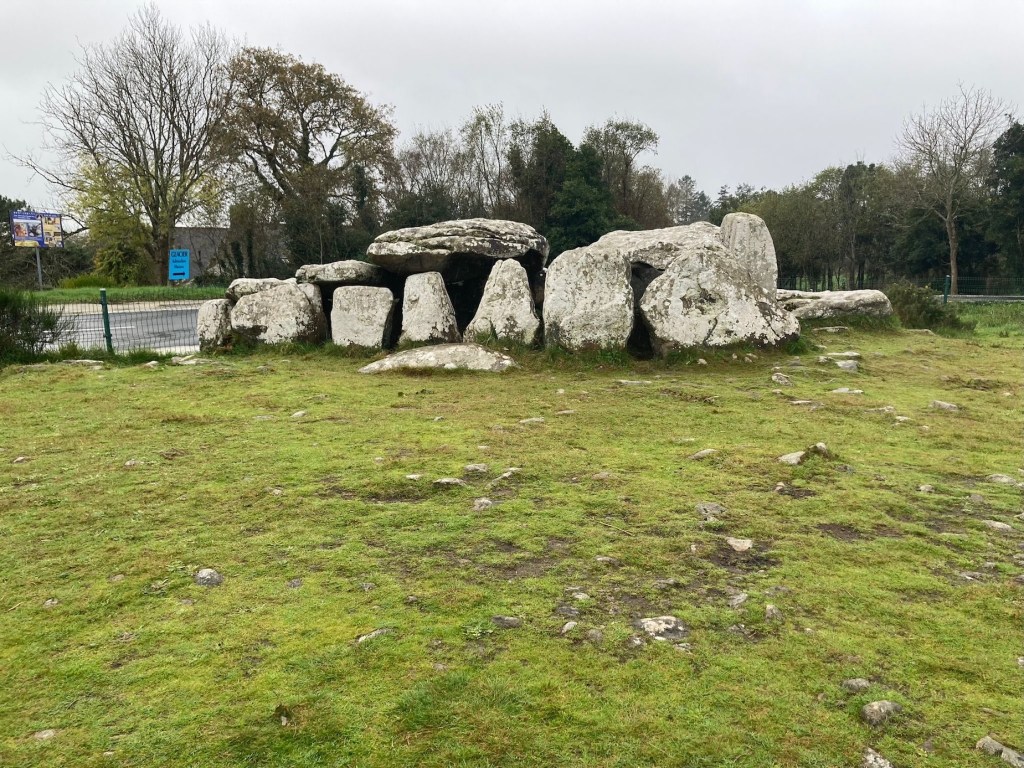
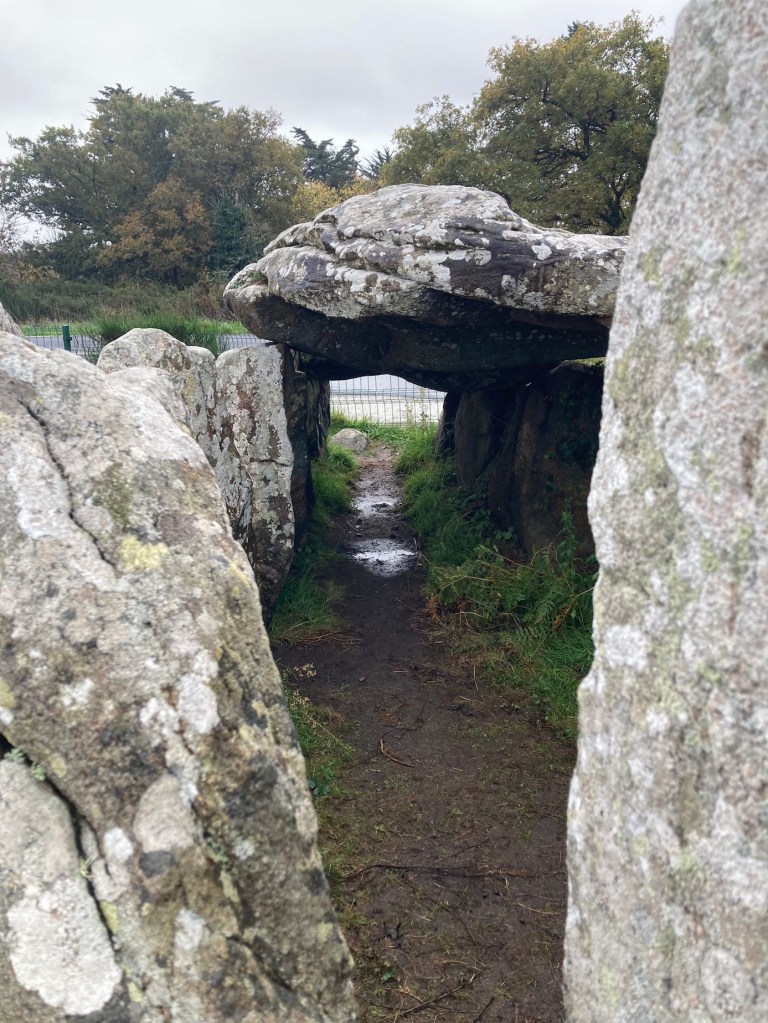
Why are these here? Who arranged these astonishing, crazy man made rock formations.  The Carnac Megalith Stones, 3000 prehistoric stones arranged in orderly rows sometime between 4500-3300 BC.  The largest collection of standing stones in the world.  Hard to show how expansive (especially when the rain was clouding the lens). There is no good explanation for the formations, several theories-religious, astrological (representing stars, lining up with solstice), but no one knows.  They could have just been bored, had all these rocks, so why not. Prehistoric existentialism.

The Fugue-itives, back on the run

why keep writing. 

Back to the blog.https://chosenfugue.xyz/2023/03/12/what-have-we-just-done-again/ 

It’s all a fugue.  A year slips by, and a few more months, maybe almost two years.  Patricia says we need to blog, people were left hanging with us still in Northern Italy in late Feb 2023  https://chosenfugue.xyz/2023/04/27/milano-dog-ciao/

A year and a few months, maybe more than two years. Time seems ill defined pandemic adjacent, less focused, less describable.  More forgotten, what did we do?  It’s all a fugue.

The Timeline. After Milan, we stopped in Lisbon for Patricia to buy shoes and for us to grab an inexpensive TAP flight back to the US. With no home to return to, https://chosenfugue.xyz/2023/03/12/what-have-we-just-done-again/ we just continued to pet sit.

https://chosenfugue.xyz/2023/03/12/sitting-part-2-animals-animals-animals/ https://chosenfugue.xyz/2023/03/12/sitting-part-1-location-location-location/

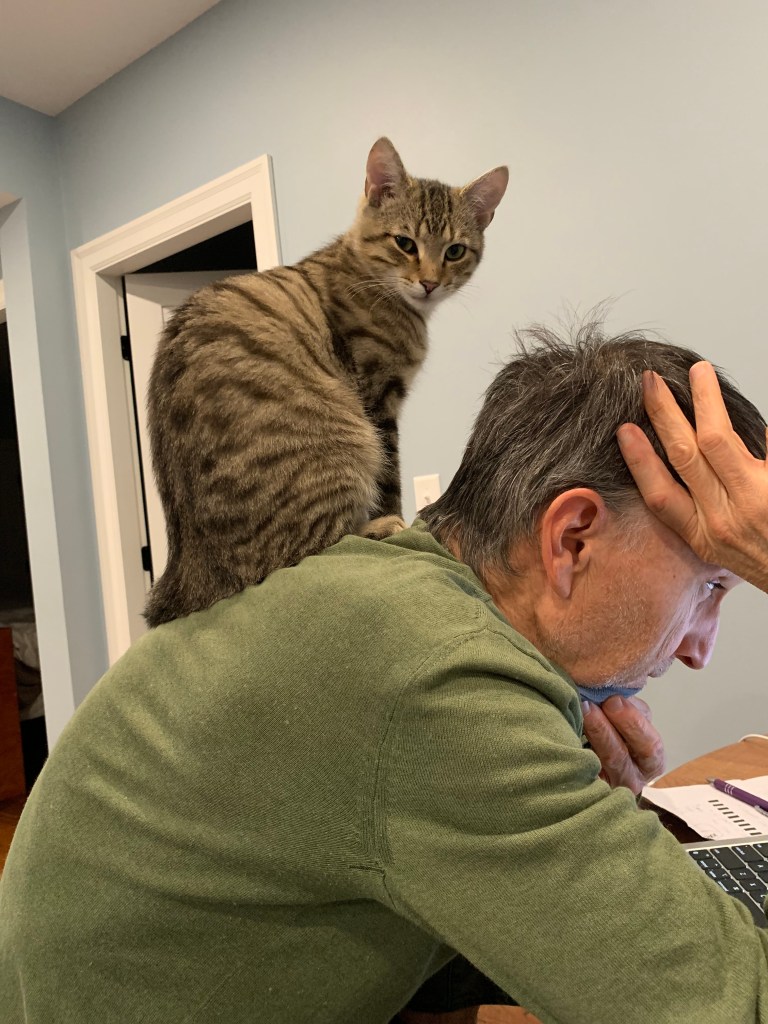
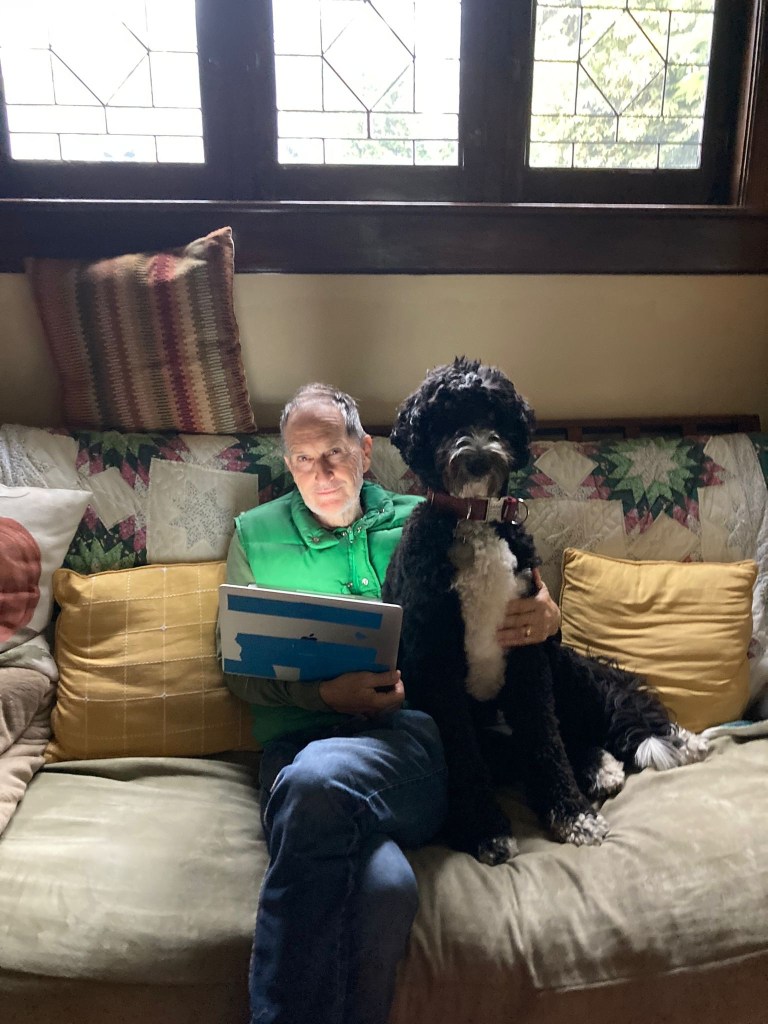
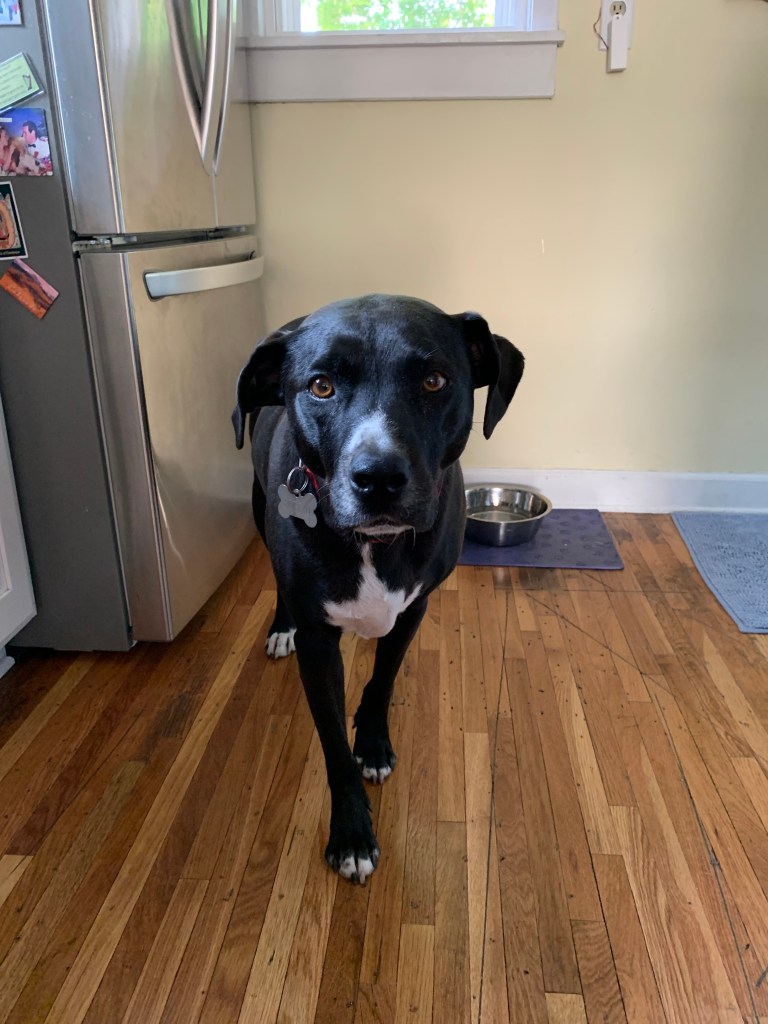
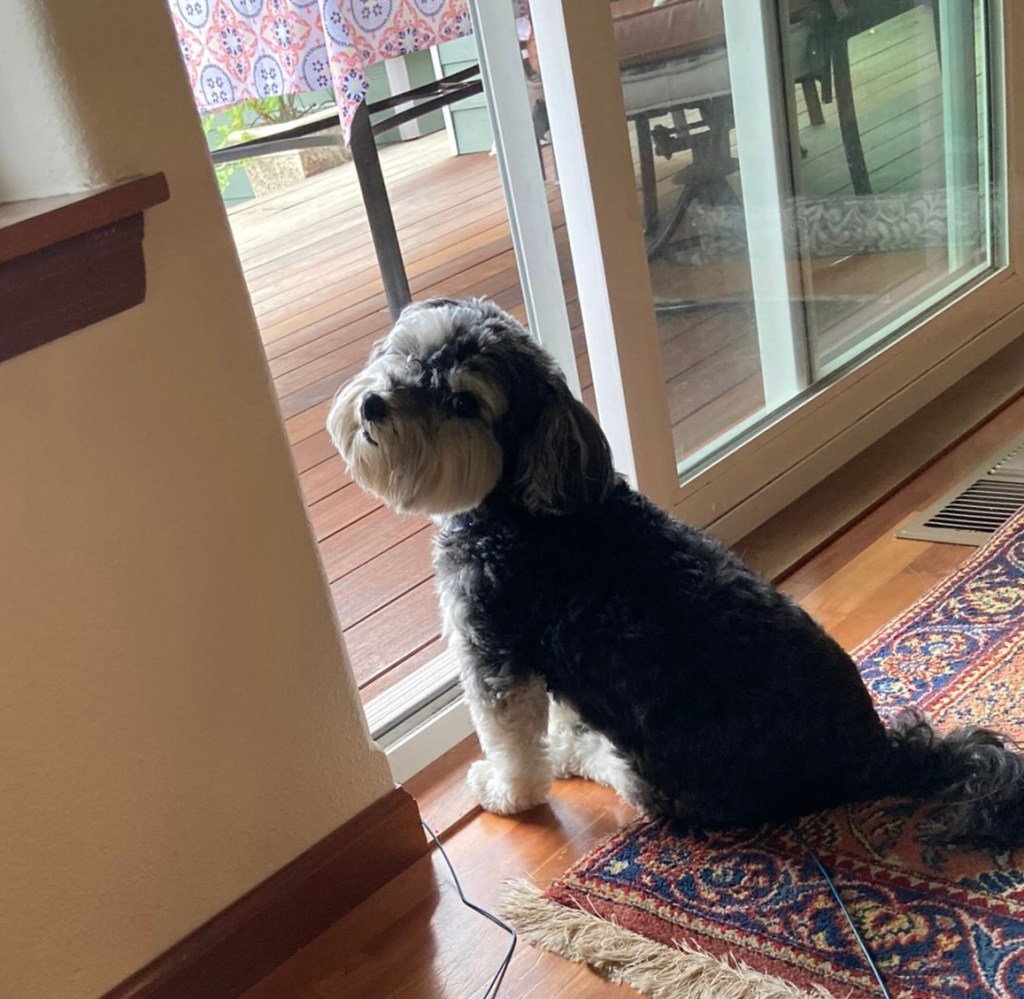
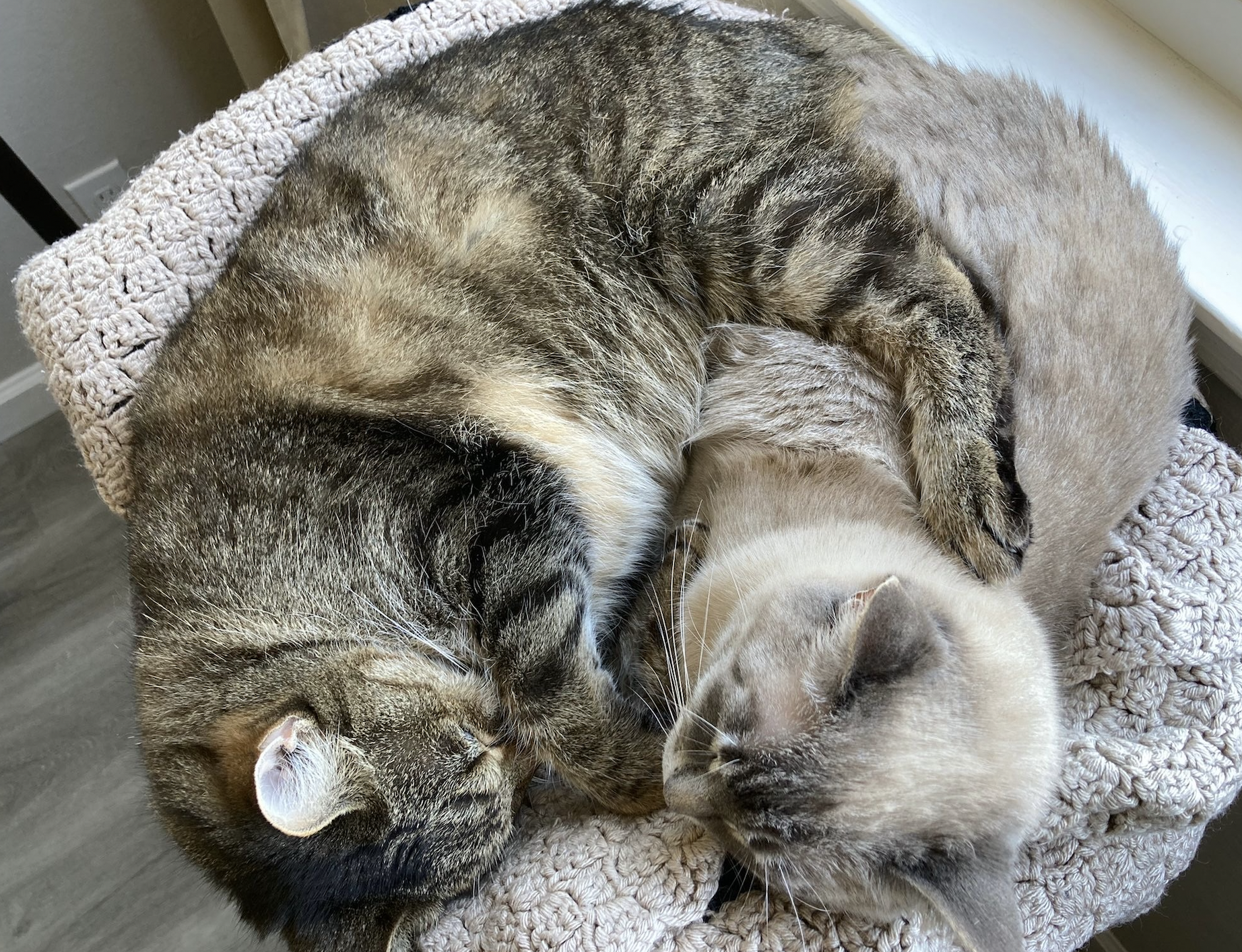
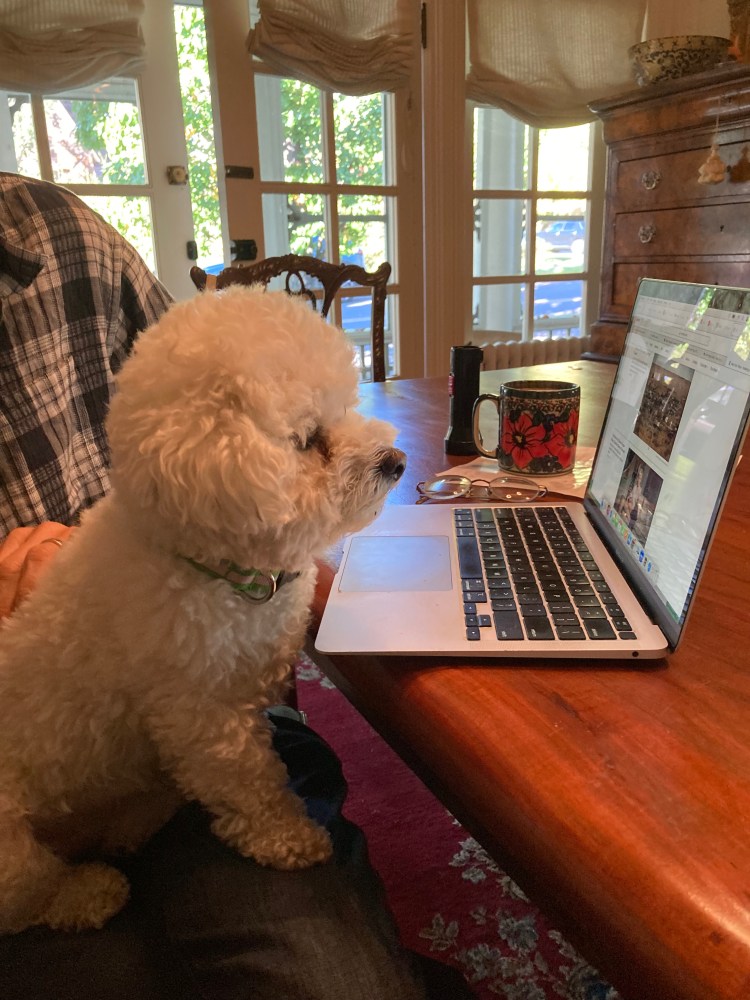
An adorable kitten in Medford MA that liked to perch on our shoulders, chubby cats in rural Leverett MA , exuberant King Charles Spaniels in Eugene OR, dogs who liked to watch TV in Vancouver WA,  we fell in love with a giant Bernadoodle in Eugene OR and a were a little afraid of a Cujo-pit-lab mix on maximum dose steroids in Minneapolis.

After finishing these Trusted Housesitter sits https://www.trustedhousesitters.com/refer/RAF531870/?utm_source=copy-link&utm_medium=refer-a-friend&utm_campaign=refer-a-friend we moved into grand-parent mode; watching Finn, Pip and Posy (grand-dogs/cats) for two months in Amherst Mass while daughter, son-in-law and granddaughter went to Helsinki for the summer.  

A New England summer of sweat and tick avoidance was followed by a sit in Olympia, with a dog who rang a bell to go outside (a lot!) while we tried to find a house and settle down. That did not work . We unsuccessfully tried to buy a house four times; were outbid three times and when we were not outbid, but it did not work out when inspection revealed a buried oil tank! So, we found a 6 month rental in Olympia where we slept in the kitchen because Patricia was allergic to the new carpet. That did not work out.

In retrospect, that was good.  Things happen for a reason, or not, things do work out, eventually.  

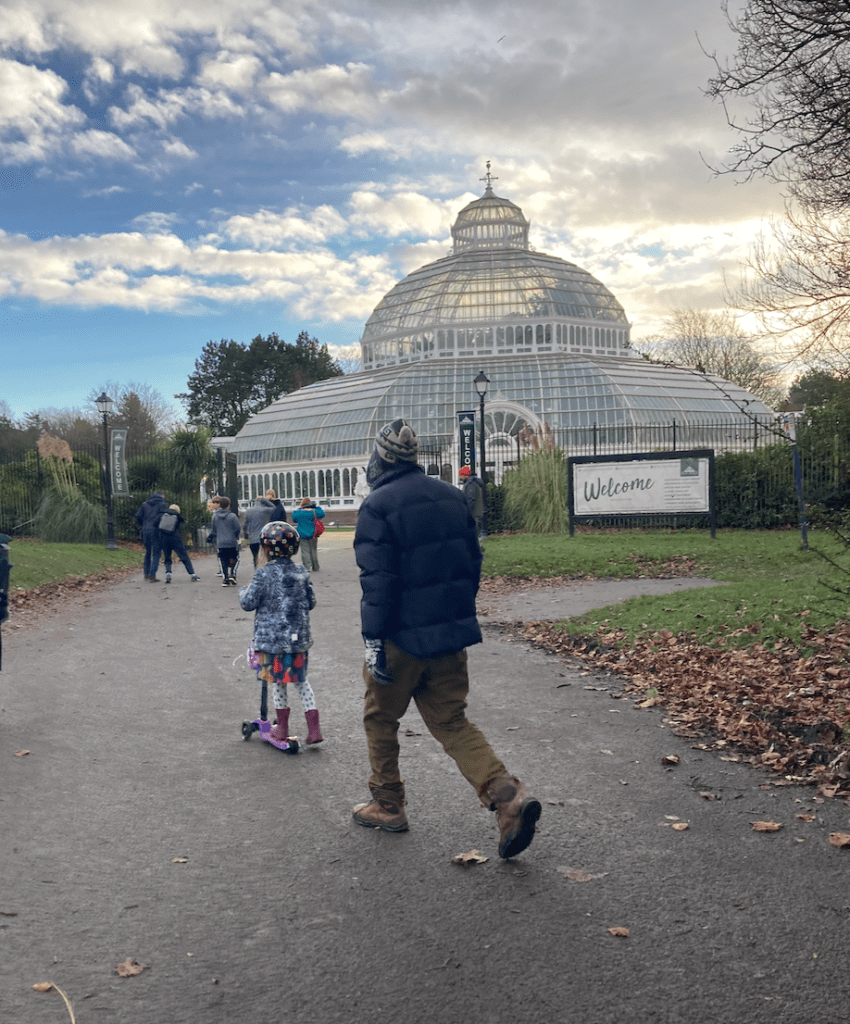
With homeownership tossed aside, we headed back to the Amherst family to sit again while they prepared for a move to Liverpool. We tossed in some trips during the 2 month move prep just to go away to reduce their level of irritation with us.

Watched a dog in New Haven CT and had some of the famous New Haven pizza- good but not as good as Marseille’s Pizza Charly (still the best-https://www.nytimes.com/2024/09/10/travel/marseille-france-pizza.html?unlocked_article_code=1.sE8.88Mv.AOPK9yMFmRKV&smid=url-share). Then we headed up to Canada with a worthwhile stop at the Baseball Hall of Fame in Cooperstown, NY. We enjoyed 2 fun dogs in Kingston Ontario (why Kingston, who knows), 2 good cats in suburban Ottawa, CA and a great hound-dog in an empty U Mass dorm in Amherst.

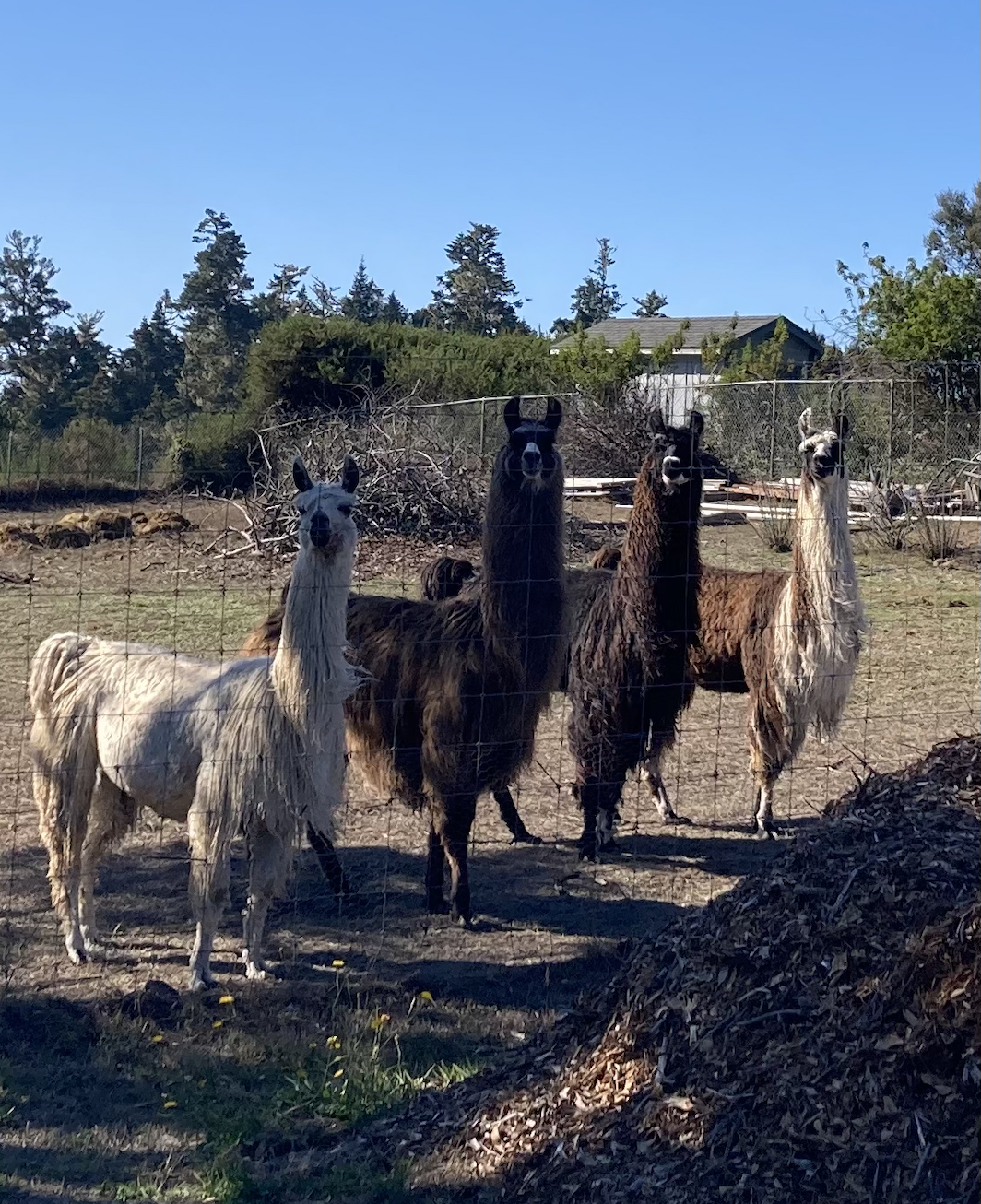
Finally, they moved to the UK and we went West: a few random dog and cat sits in LA, a summer painting our brother-in-law’s house in Santa Barbara, more cute cats in Oakland CA and then a visit to Mendocino, CA ( llamas!).

Maybe almost two years have passed.  15 cats, 21 dogs, 1 bird and 4 llamas. We went from knowing what we couldn’t do, to not knowing what we could do.  In this maybe almost  two years we helped people move from Minneapolis to Seattle, Mendocino to Caspar and Amherst to Liverpool.  We slept in cars, in rented apartments, on daughters’ couches, in a house being remodeled, on airbeds, floors, hotels, and in stranger’s houses while we watched their pets.  We drop in people’s lives and live a short story, enjoy the moment and turn the page. It’s all a fugue, did I say that already?

We write to remember. 

Now where are we in the book?  Back to the travelogue.  A month in Reno, dog-sitting and campaigning for Harris/Walz, we were feeling so optimistic…. then we were horrified. It did not work out.

We left November 6th, the day after the election for Liverpool, initially following the granddaughter migration.  

But, when life feels existential the only place to go is France the home of existentialism.  Oui, oui, non?

So, rejoin our travels on our bike-less Tour de France, rucking, “hang it up and see what tomorrow brings” 


Obligatory Food Blog, Rehashed

Now would be the point where we share pictures of pasta on vibrant ceramic plates, or paella bursting with weird looking seafood, with one of us sitting at the cafe, with the city scene behind us, holding a glass of wine or espresso. If you expect that, you have not been paying attention.

Instead, it is time for an updated food blog (first one from 11/30/2018). https://chosenfugue.wordpress.com/2018/11/30/obligatory-food-blog/

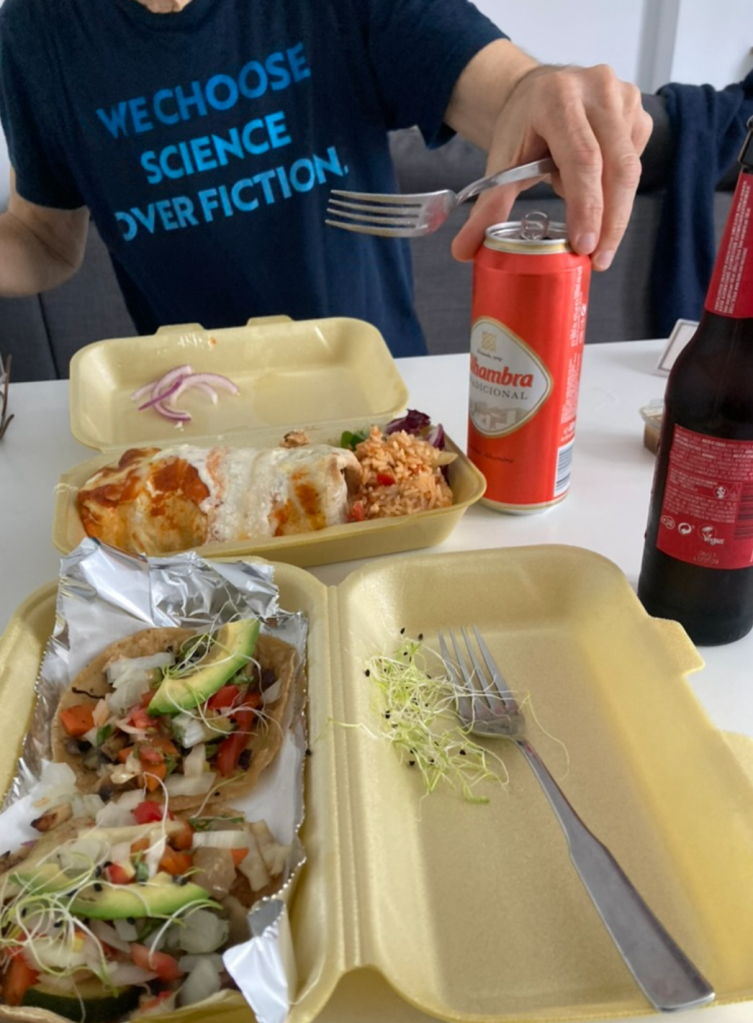
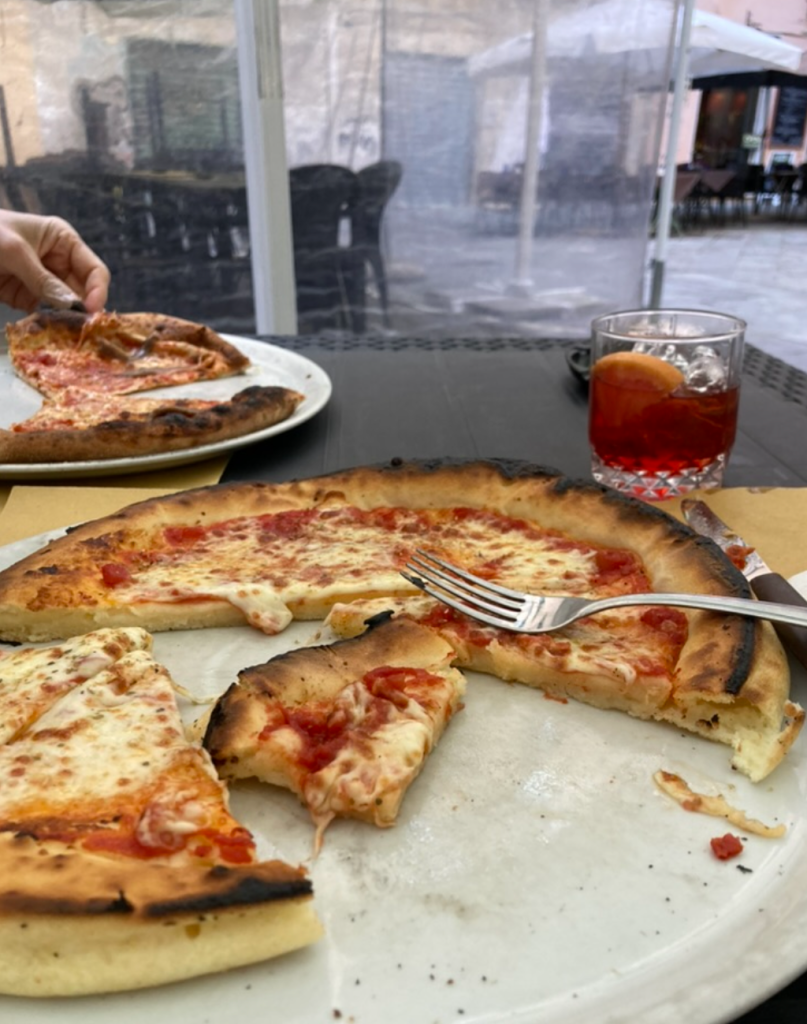
Despite travel to food Meccas, our eating habits have not really changed. Pre Covid we didn’t venture out much to restaurants, and because we are us, we still don’t. We ate at restaurants (outside) 4 times over the 3 months; sushi in Valencia (when we had to be out of the apartment for the housekeeper), Pizza in Genoa & Naples, plus fish in Lisbon on our last night. Take-out 6 times (4 of those pizza) and usually on travel days. Wondering if we were missing out on some travel magic by not going out was quickly disregarded due to the awkwardness of restaurant ordering (even with picture menus) plus our love of going to local markets.

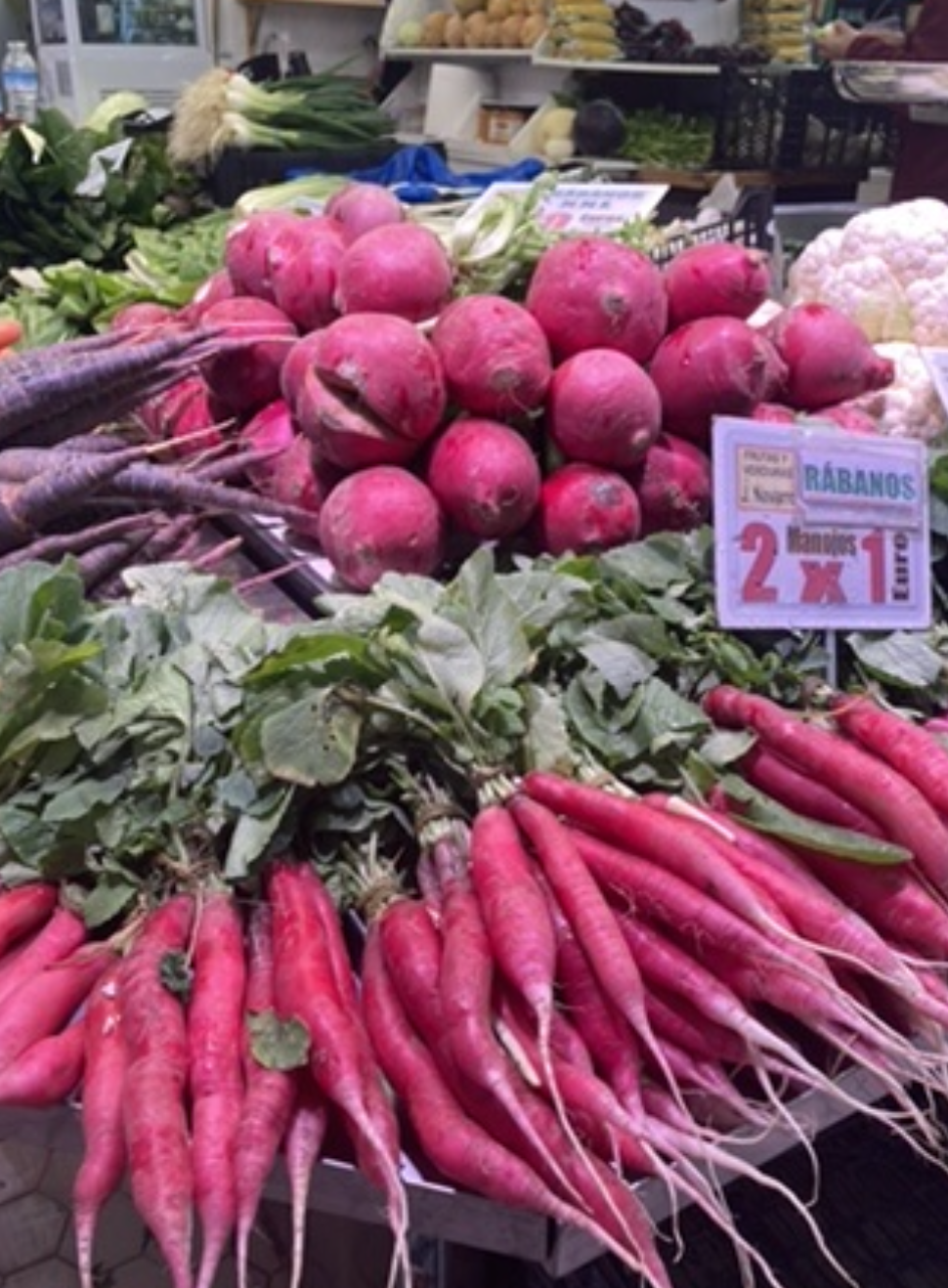
Going to the market is one of our favorite things to do.  We probably remember certain markets better than certain museums or churches.  We probably remember cheese displays better than art or altars.   After a day of exploring, we did not discuss art or religion, but rather the many shapes of pasta or new flavor of yogurt. Although we generally buy the same five basic items and make the same five basic meals in every city, going to the market never failed to be an adventure; intriguing presentation, confusing foods and varying variety made shopping simultaneously easy and difficult, but always entertaining.

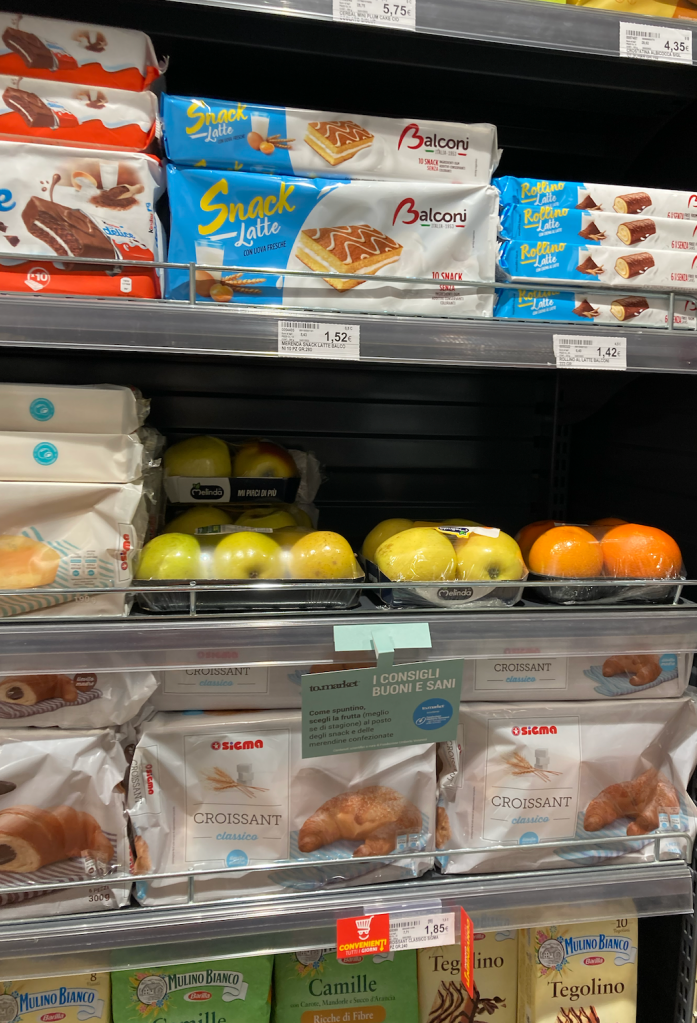
Our enjoyment starts with the anticipation of google-mapping the closest market when we arrive. Do we try a new market like a Mercadano or Dia (Spain), Essalunga, Pam or Eurospin (Italy) or go with the familiar like Carrefour, Aldi or Lidl?   We can recognize a chain market’s logo from 2 km’s away.

With the exception of a few “super-stores” , often at the edge of town, or groceries taking up an entire floor (usually the basement) of a department store, almost all European markets are small, not much bigger than an AM/PM.  There’s plenty of room for essentials, once you remove the aisles and aisles of American sweetened cereals, candy, salad dressings and 20 choices of every item, which we don’t appreciate or use in the US. The narrow aisles frowned on indecision, after you enter the labyrinth of one way aisles that end at the checkout stand, you often can’t go back. Confusion, poor translation, overstimulation would force us to try to swim back up-aisle, or check out and re-enter the store for a new lap. 
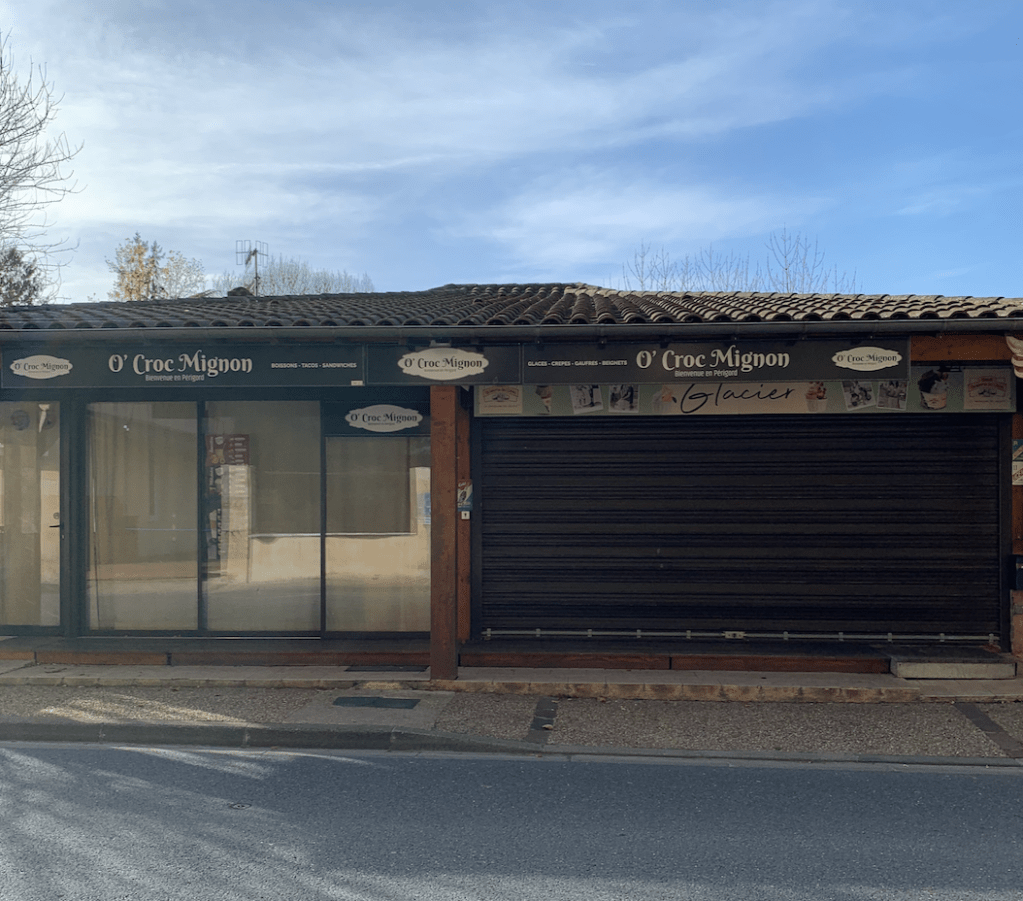
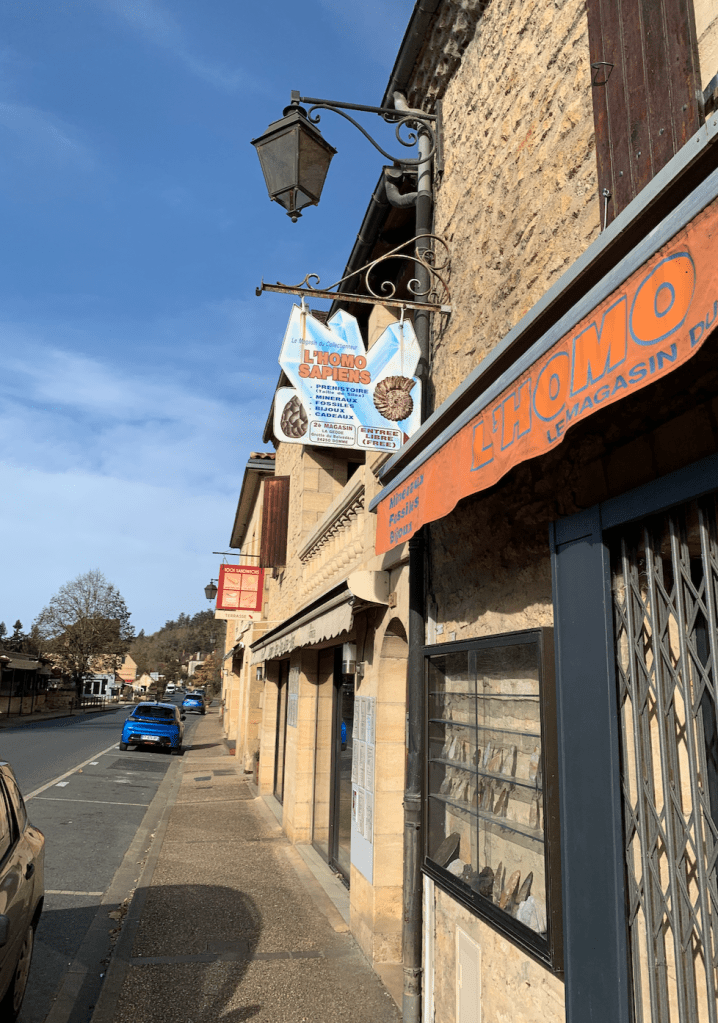
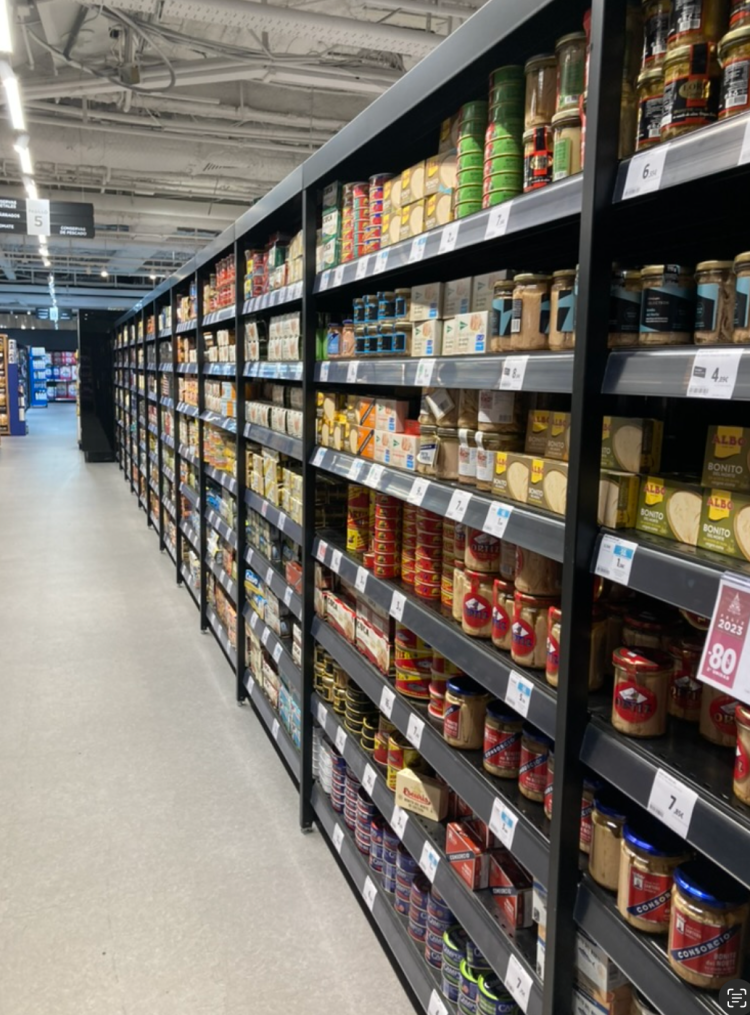
the huge Cortes de Ingles corridor of tinned fish (throughout Spain). Priorities.

Waiting in the checkout line provided its own level of enjoyment combined with trepidation.  Our reusable market bag out and visible, we would avoid the first question (we think) of needing a bolsa/sac/or borsa. Then we would start bagging, smile, nod a lot, add an occasional (probably always inappropriate) laugh and show them our credit card. Once in Croatia a checker asked if that was Bob Marley on our credit card.

What did we buy? We ate “authentically”, kind of, looking for traditional and local where we could. Bomba and calasparra rice in Spain, borlotti beans in Italy, pesto in Genova, tarallini in Naples, and any chocolate made in whatever country we are in.

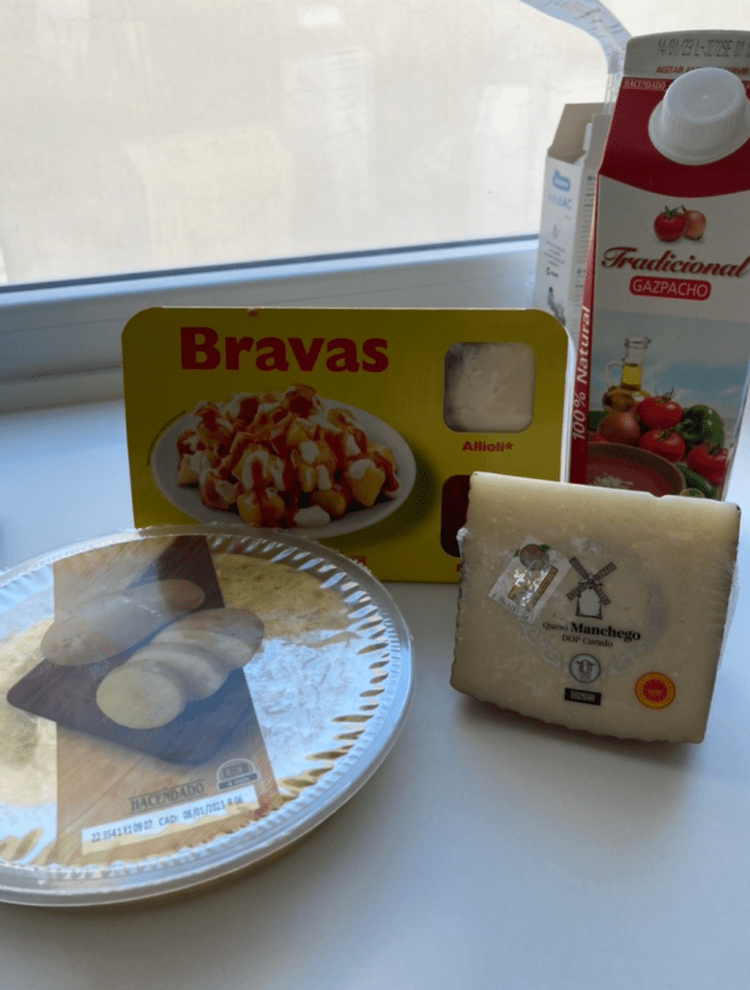
Egg+ potato tortilla, Manchego cheese, Papas Braves and a carton of Gazpacho in Valencia

Would it be embarrassing to say that one of the highlights was a great frozen GF pizza in Italy? Or embarrassing that Nick bought and enjoyed frozen paella (twice) in Marseille since we were unable to make a reservation to have it in Valencia, the home of paella (Christmas time apparently is popular for paella)?  Or embarrassing that the best polenta ever eaten was the prepared polenta we bought at the Pam markets?

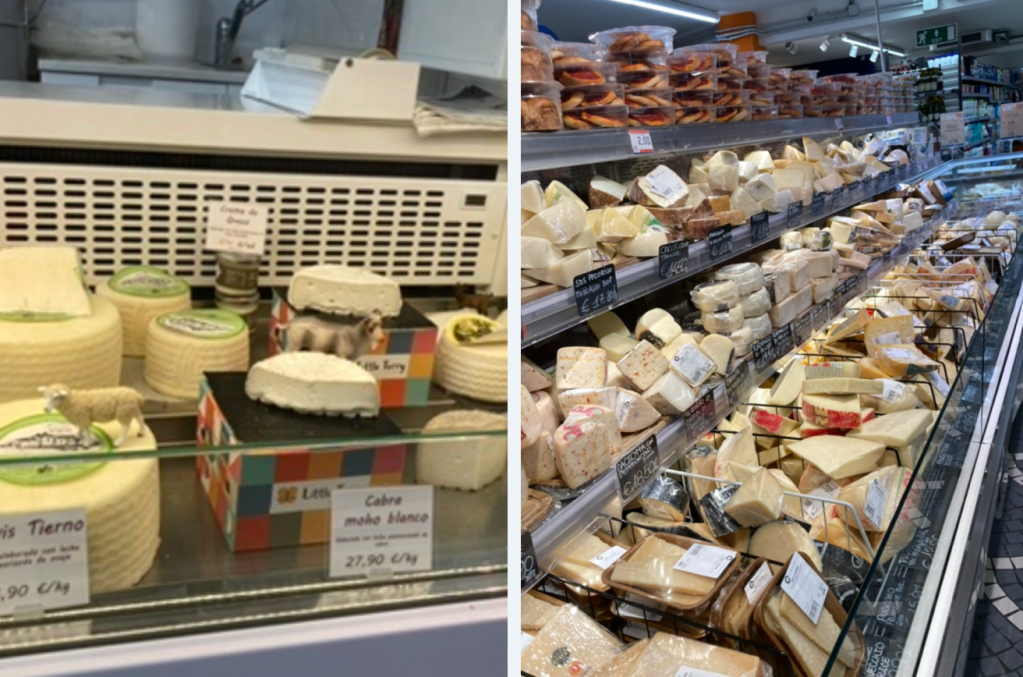
Cheese was an ongoing surprise as we never quite knew what we were buying, but it was always great and we met some new ones, mixed milk cheese in Spain was something we did not know existed https://www.tasteatlas.com/spain/mixed-milk-cheeses.

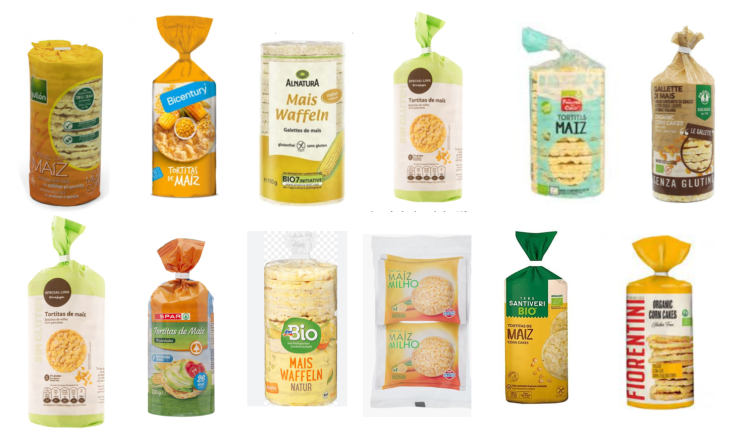
Even our “basics” looked or tasted differently from city to city and country to country; eggs, yogurt, pasta, tinned fish, vegetables, fruit, walnuts (Nick), chocolate (Patricia). We always found what we needed and did not desire any food from an American market, although we had to adapt to the dearth of frozen berries/cherries (Europe seems to love their frozen currants) for our yogurt and the absence of sunflower butter to spread on our main staple, the corn/maiz thins/cakes/tortititas/waffein/galletas which we are now the foremost international expert of.

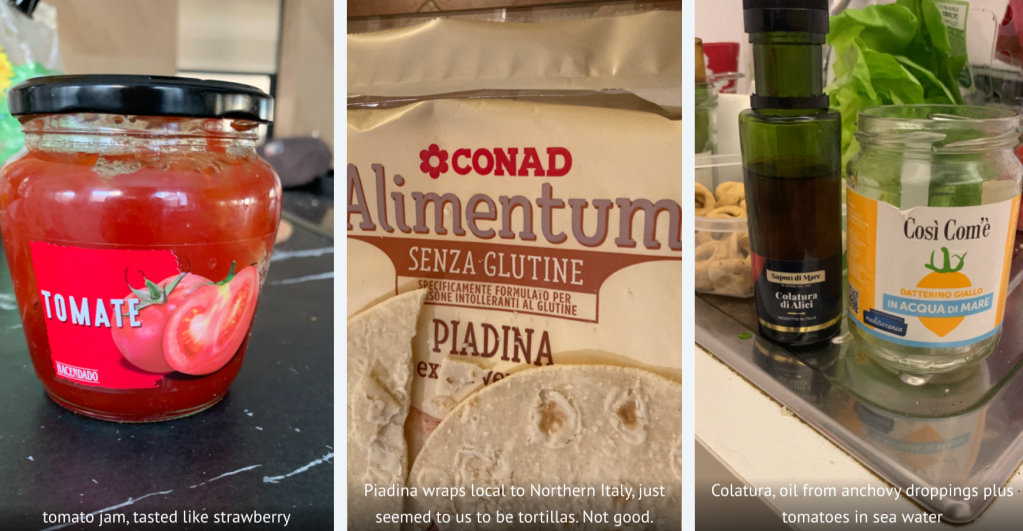
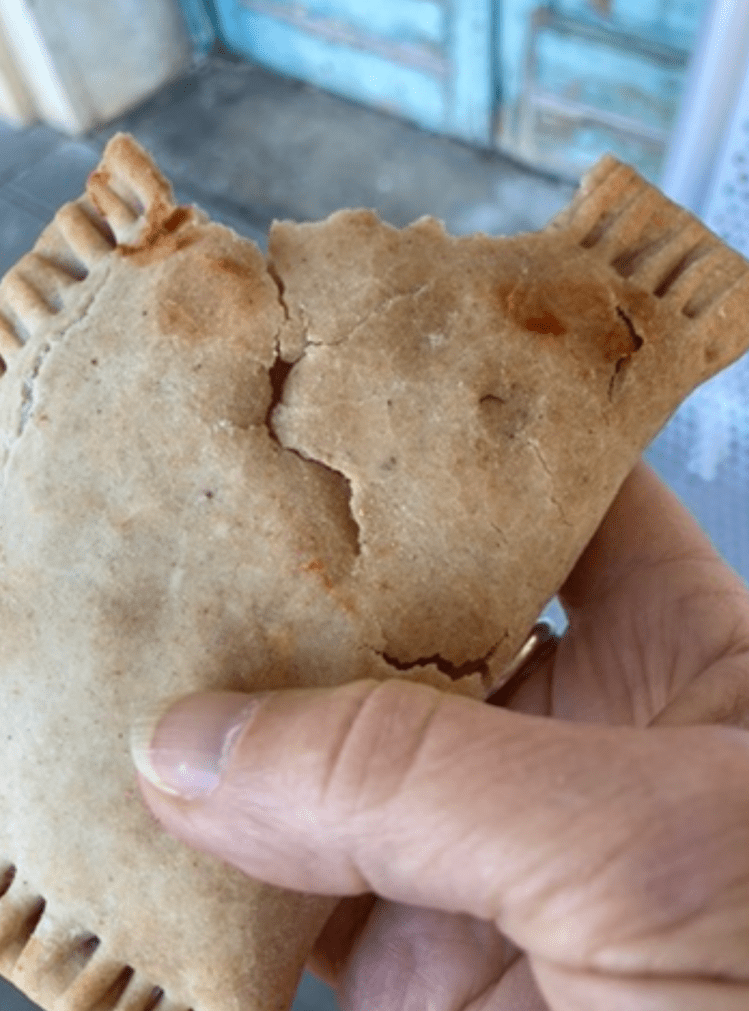
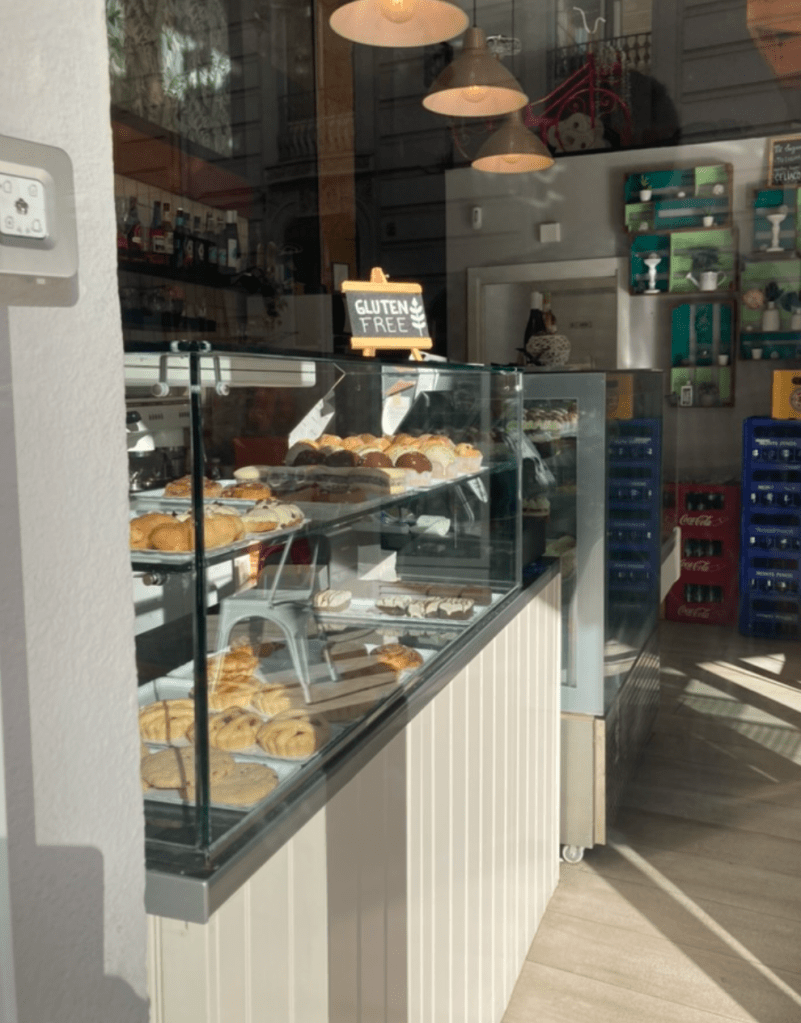
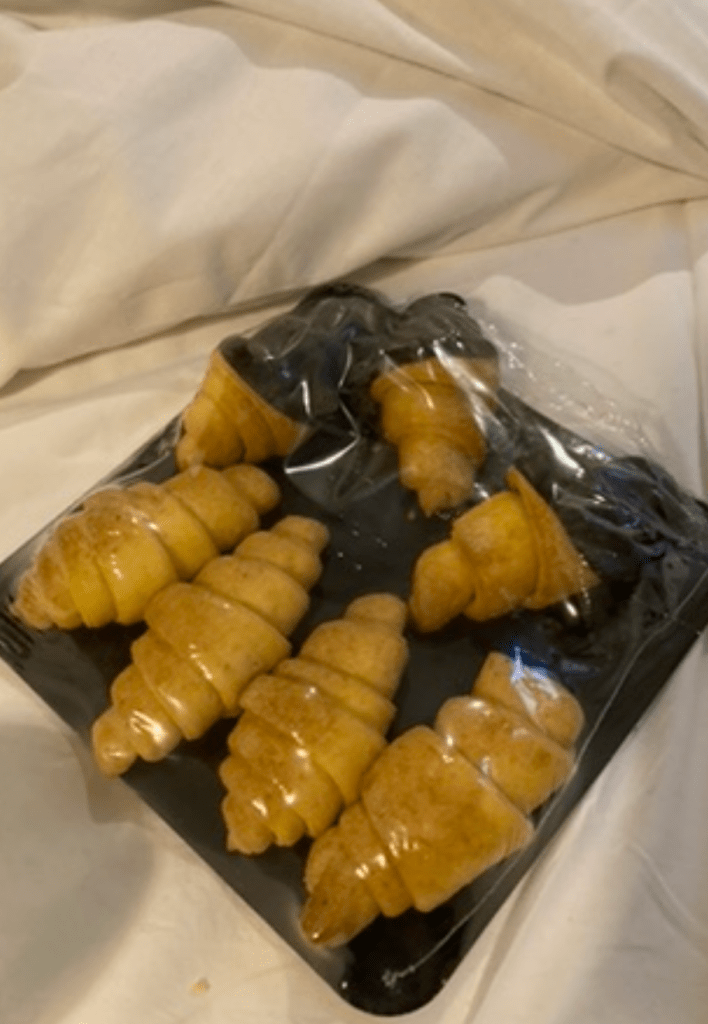
While we generally favored each country’s chain market, we did go to a few gluten free bakeries , even though every market, no matter how small, had gluten free items. Unlike the US, gluten free products were consistently priced equivalently to the gluten full products (even the beer) and were good (except for the piadina, pictured above). 

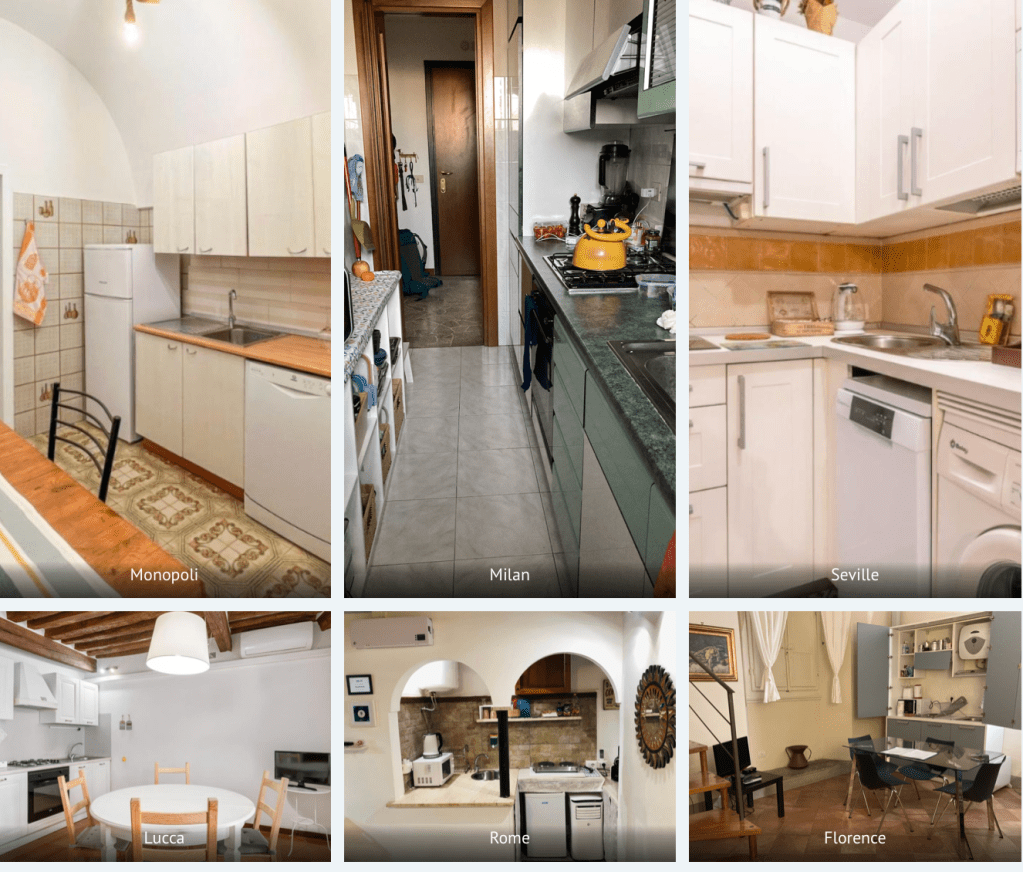
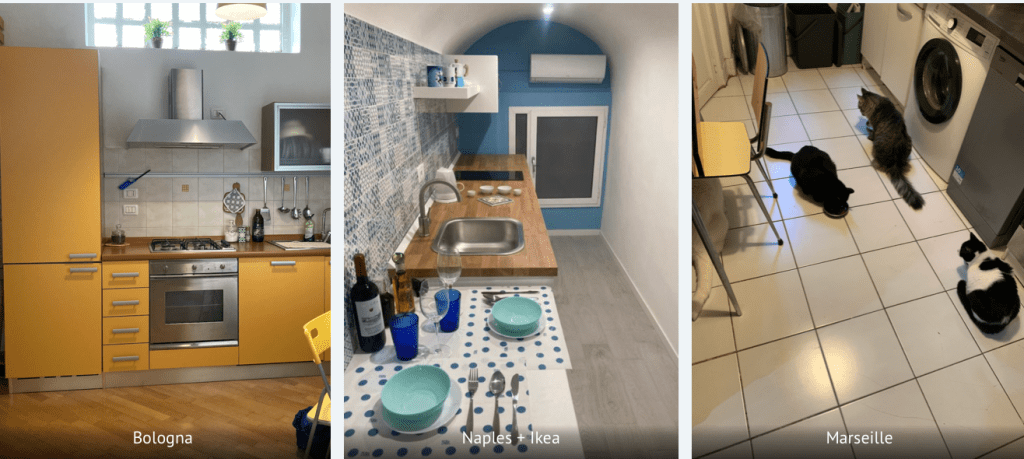
We would cook in a variety of different kitchen constellations, but always equipped with badly scratched Ikea pans, blue or white Ikea plates and blue or green Ikea mugs. Ikea kitchen equipment, is more ubiquitous than the ubiquitous Roman ruins since Ikea conquered more territory .

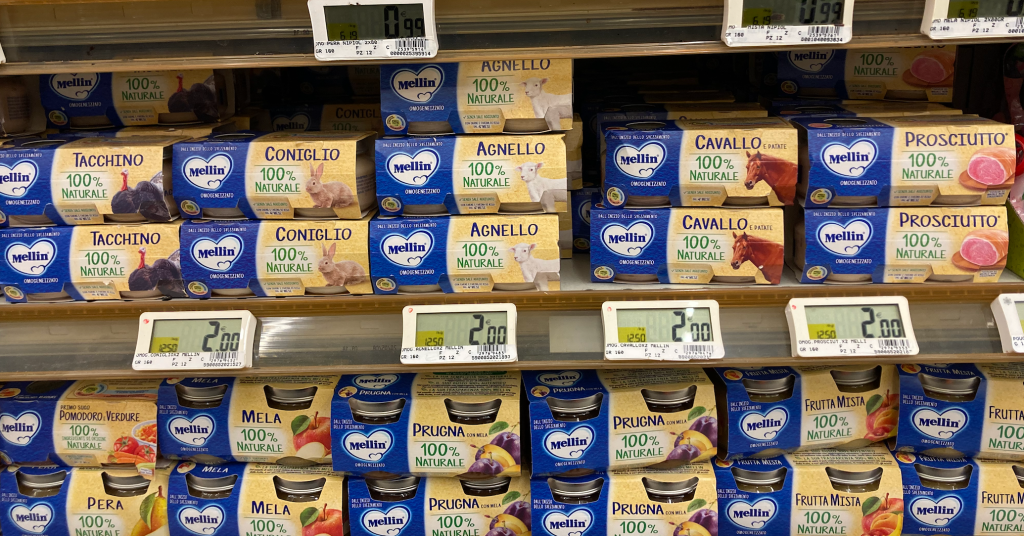
Taking inspiration from the artistically arranged prepared foods at the market and the many restaurant menus read but not accessed, we combined disparate ingredients creating our fusion meals like tinned fish+vegetables+ whatever cheese on pasta or borsotti bean and provolone nachos and travel day scones- yogurt + oatmeal+ whatever we have left . Even with our extensive market exposure, there was always something that turned our heads but fortunately not our stomachs since we left these on the shelf.

Starting early, horse-meat baby food?

Milano Dog Ciao

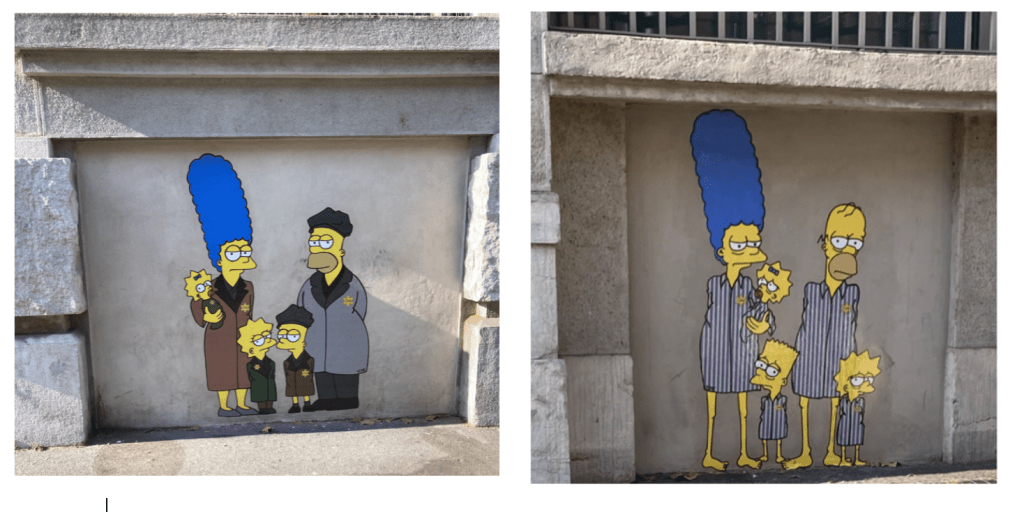
Train delays of more than a few minutes are rare in Europe, so we were very confused by our hour plus wait when boarding in Desenzano del Garda for Milan.  This was our introduction to the rolling train transportation worker’s strike in Northern Italy.   We made it to Milan, arriving to a striking, gigantic Facist era train station. This same train station, around the back at Track 21, was used for deporting Jews to concentration camps and in that location there is now a memorial museum. As we walked there, we stumbled on these on the walls, https://designyoutrust.com/2023/01/simpsons-characters-portrayed-as-holocaust-victims-at-the-milan-shoah-memorial/ painted just days before we got there, and sadly recently vandalized and defaced (on 4/23/23).

These were not commissioned, rather they just appeared as has much of the artist’s other works https://www.instagram.com/alexsandropalombo/?hl=en (worth looking at).

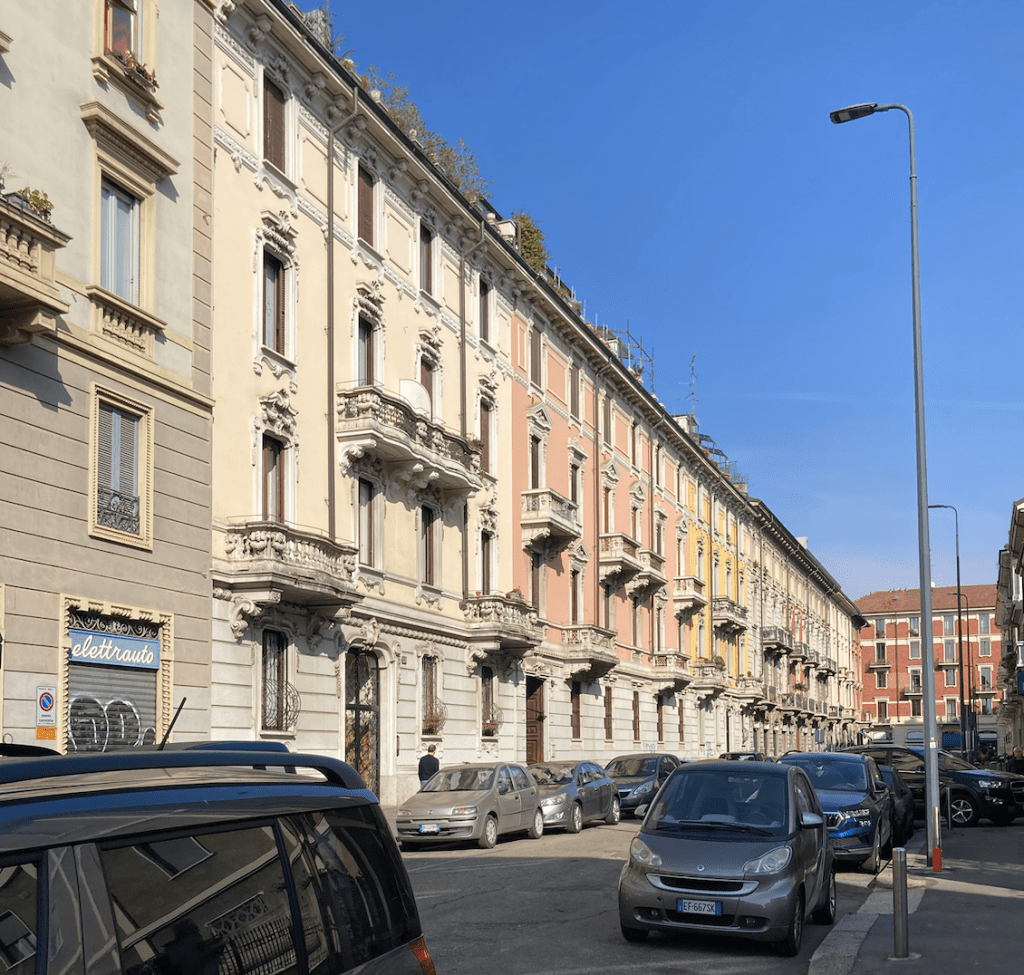
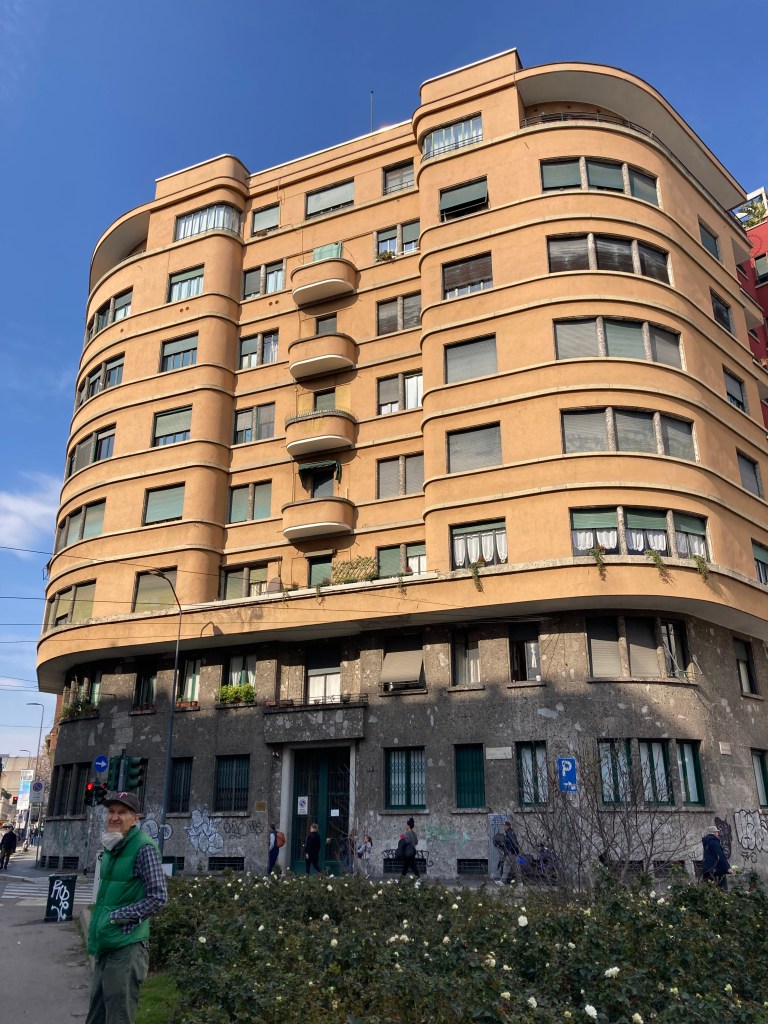
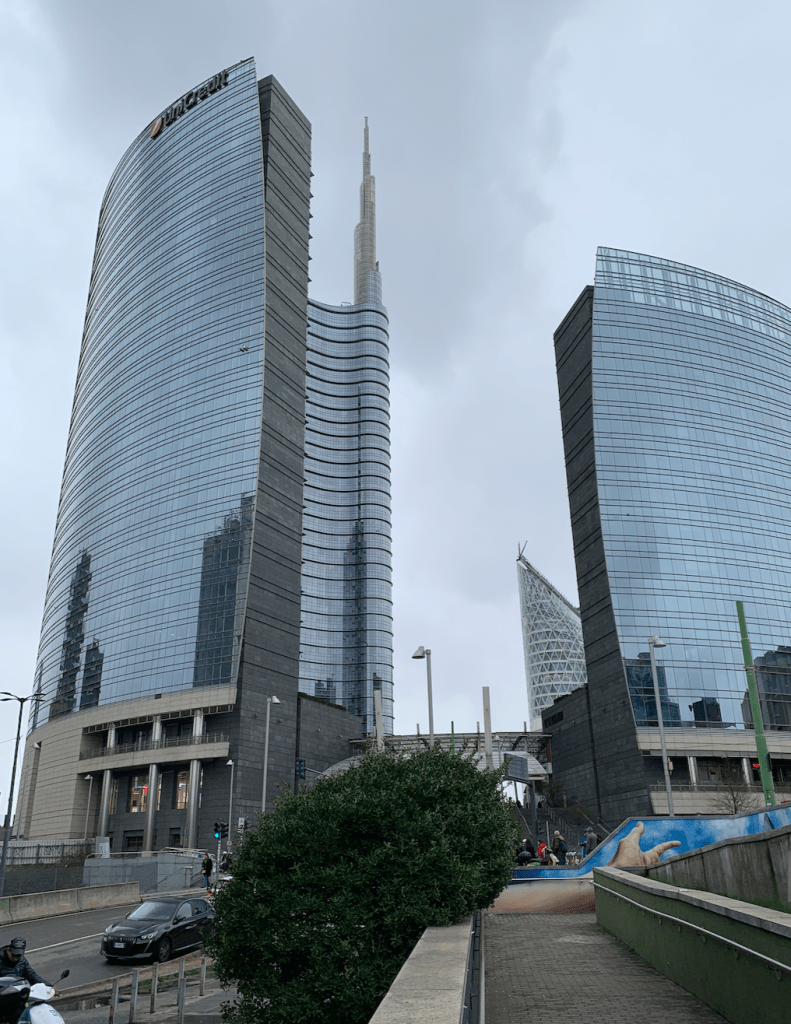
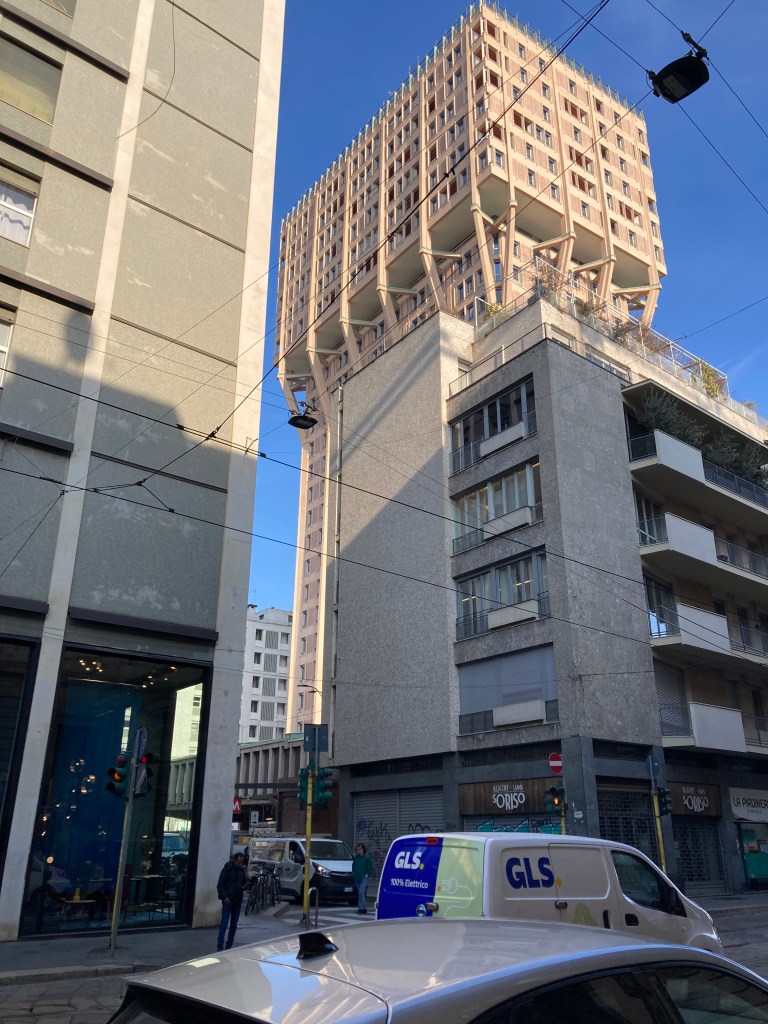
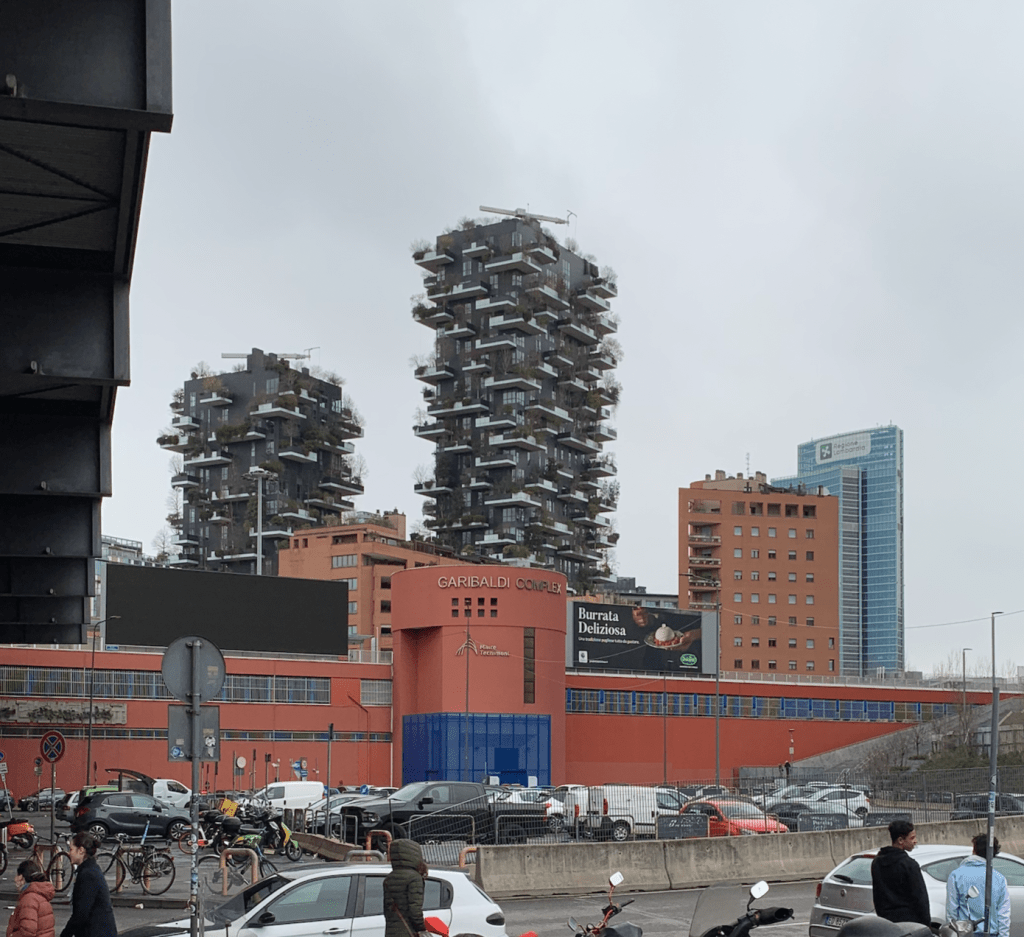
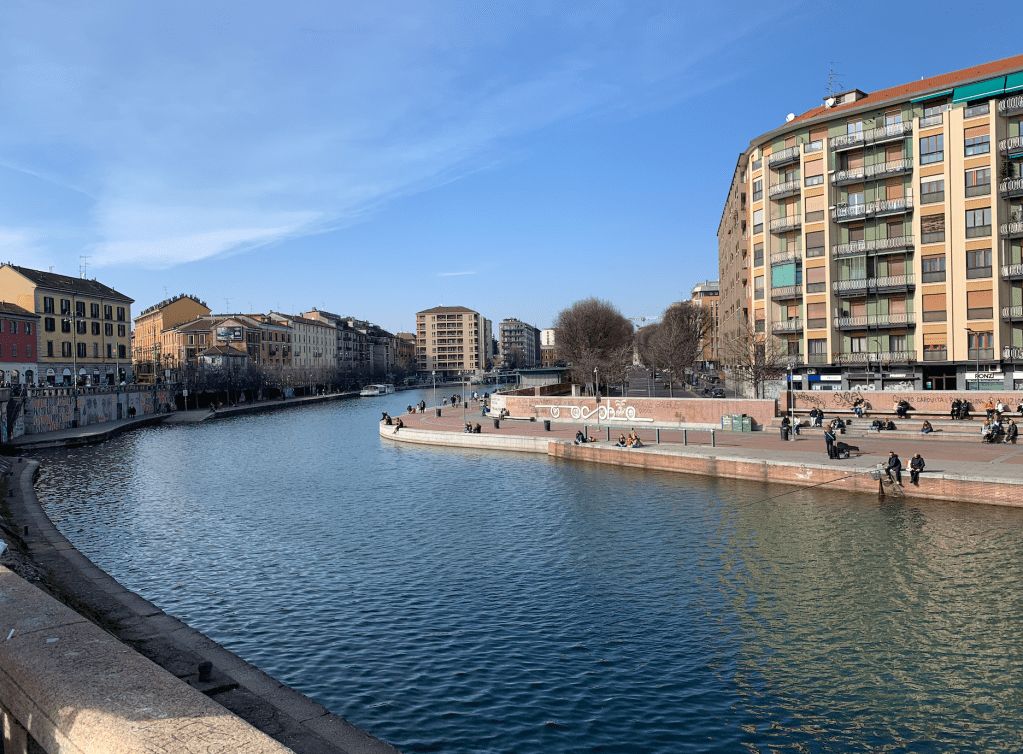
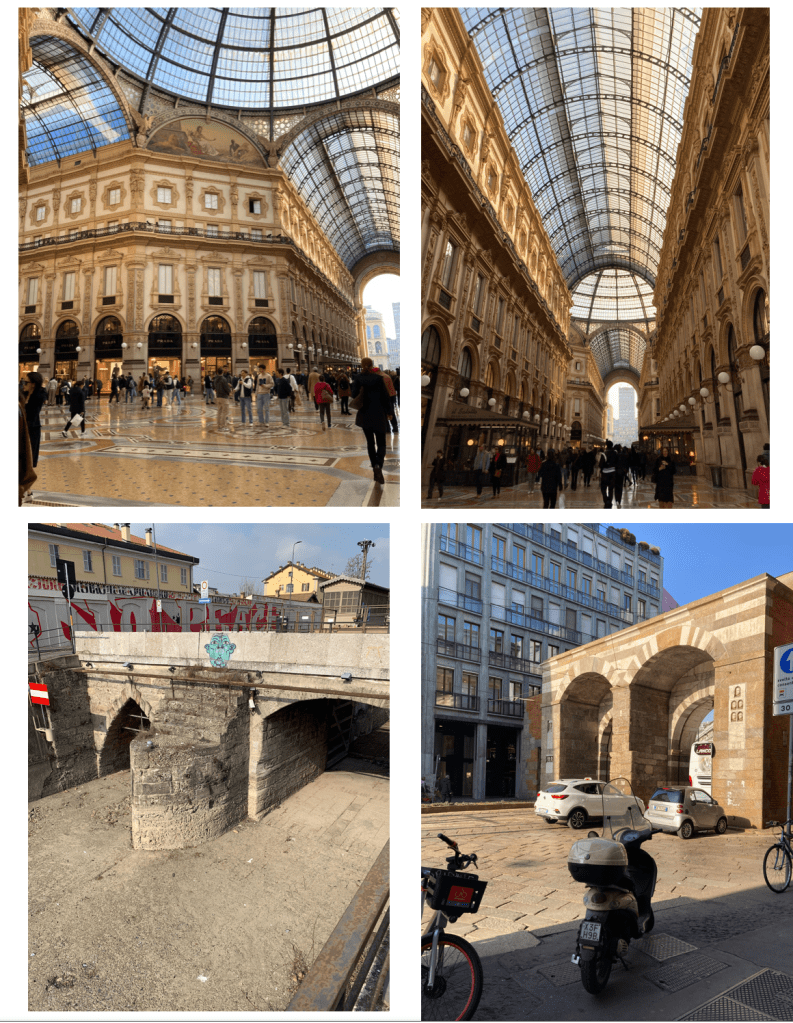
After dropping off our bags at the hotel, we covered as much ground as we could before settling in the next day with our dog sit.  Milan, the second largest Italian city and the center of most of Italy’s industry was one of the heaviest bombed cities during WW2, and that legacy is pretty clear.   Rows of classic turn of the century (20th) style buildings were interrupted by post war buildings, and bordered by some pretty outstanding modernist architecture. 

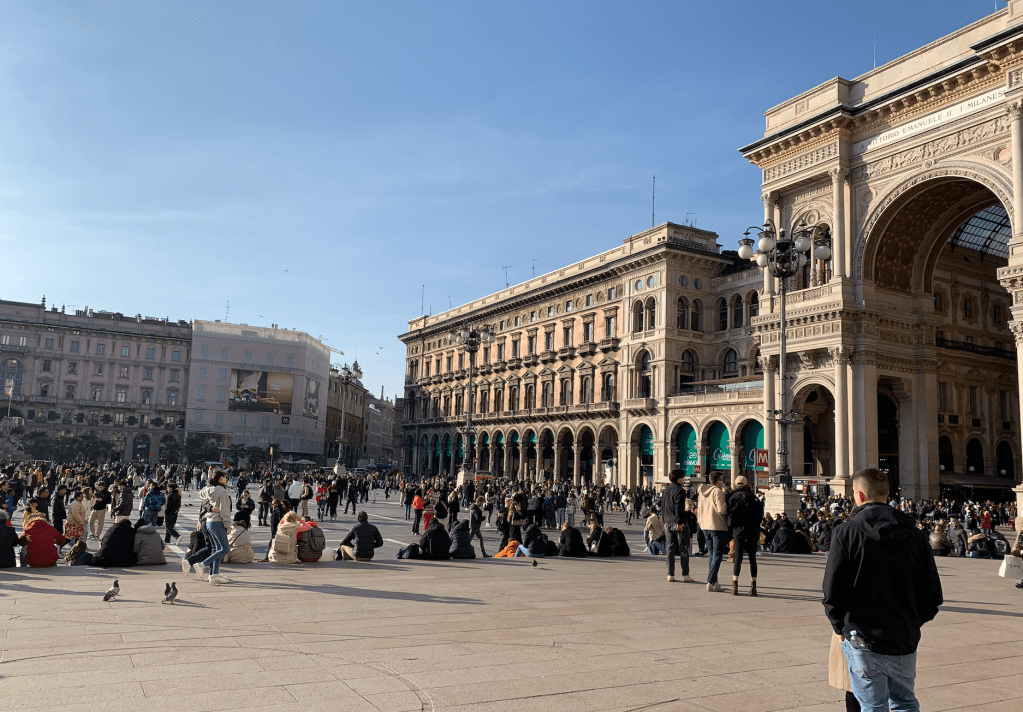
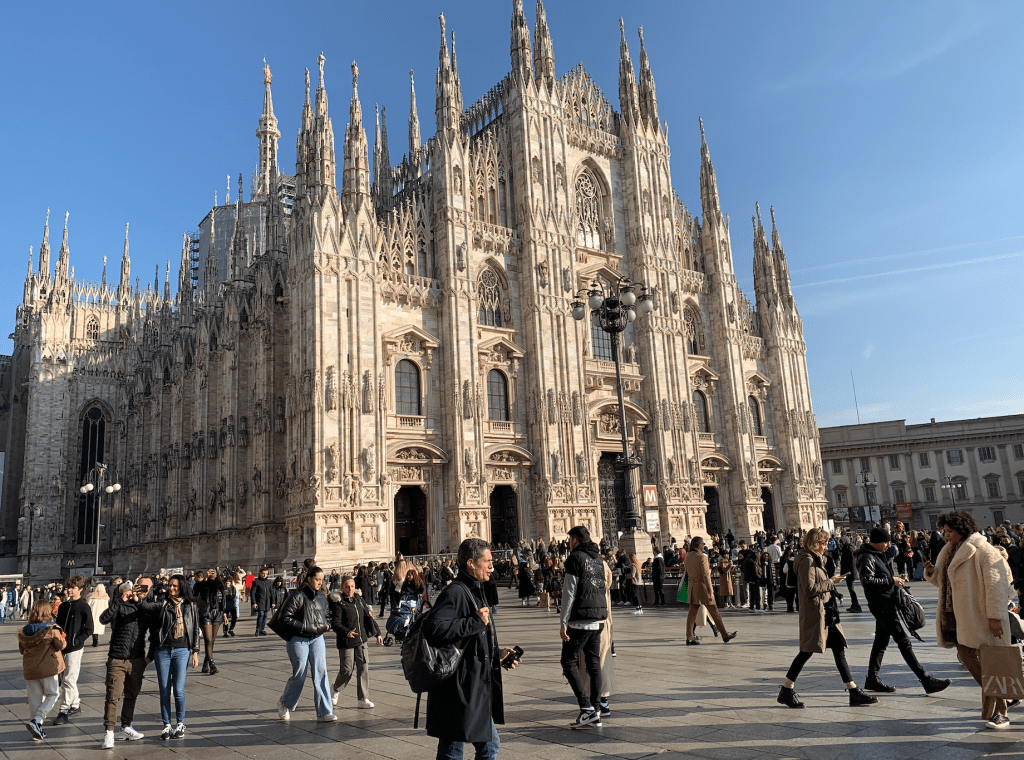
Our jaunt through the city was slightly complicated by the transportation strike which resulted in a rainy night crosstown walk with no phone battery left for directions. It was actually fortuitous so we could see the huge cathedral lit up .(more on this Cathedral https://www.nytimes.com/2023/02/19/world/europe/milan-italy-duomo-cathedral.html )

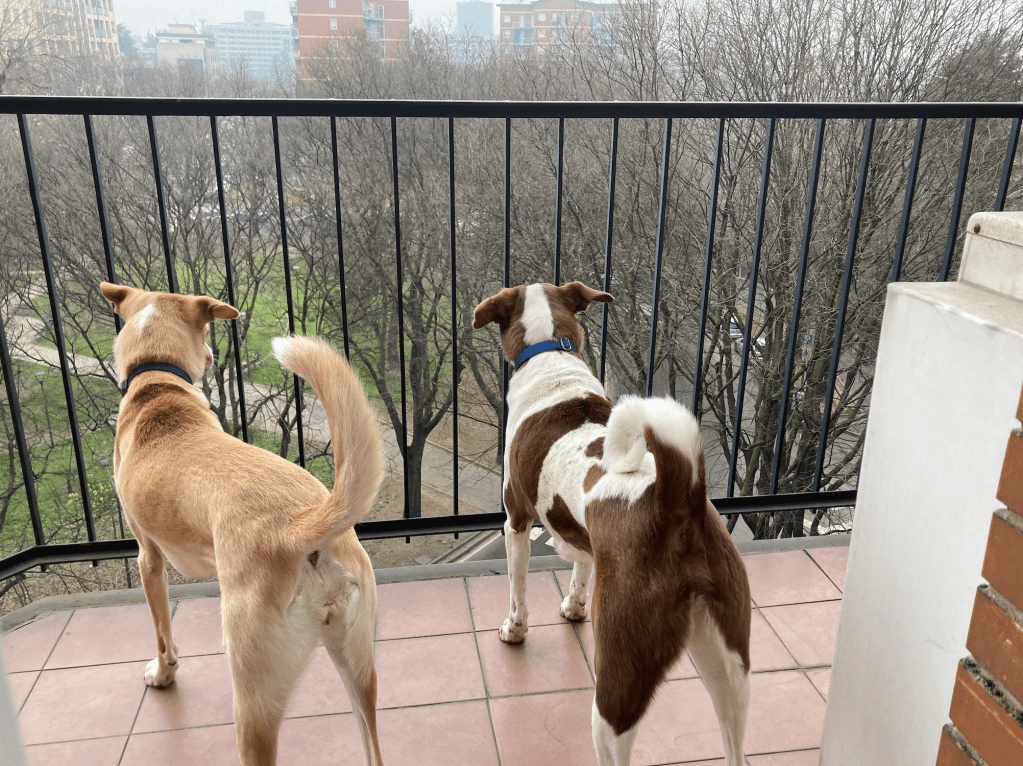
The next day we headed out to the edge of town where Olive and Odin, two skittish dogs rescued from the streets in India and brought to Milan, were waiting for us. 

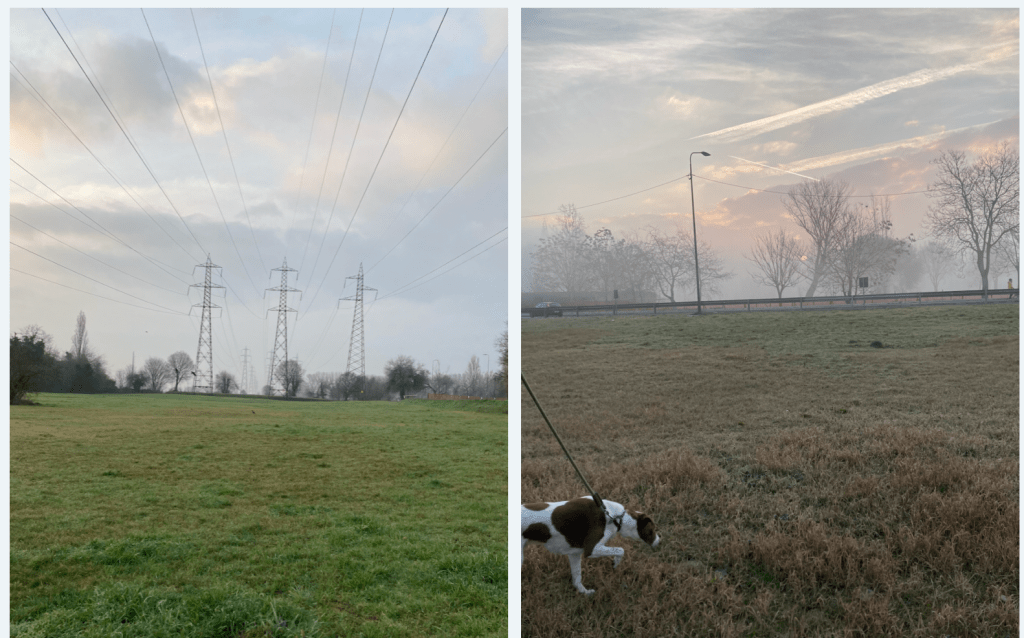
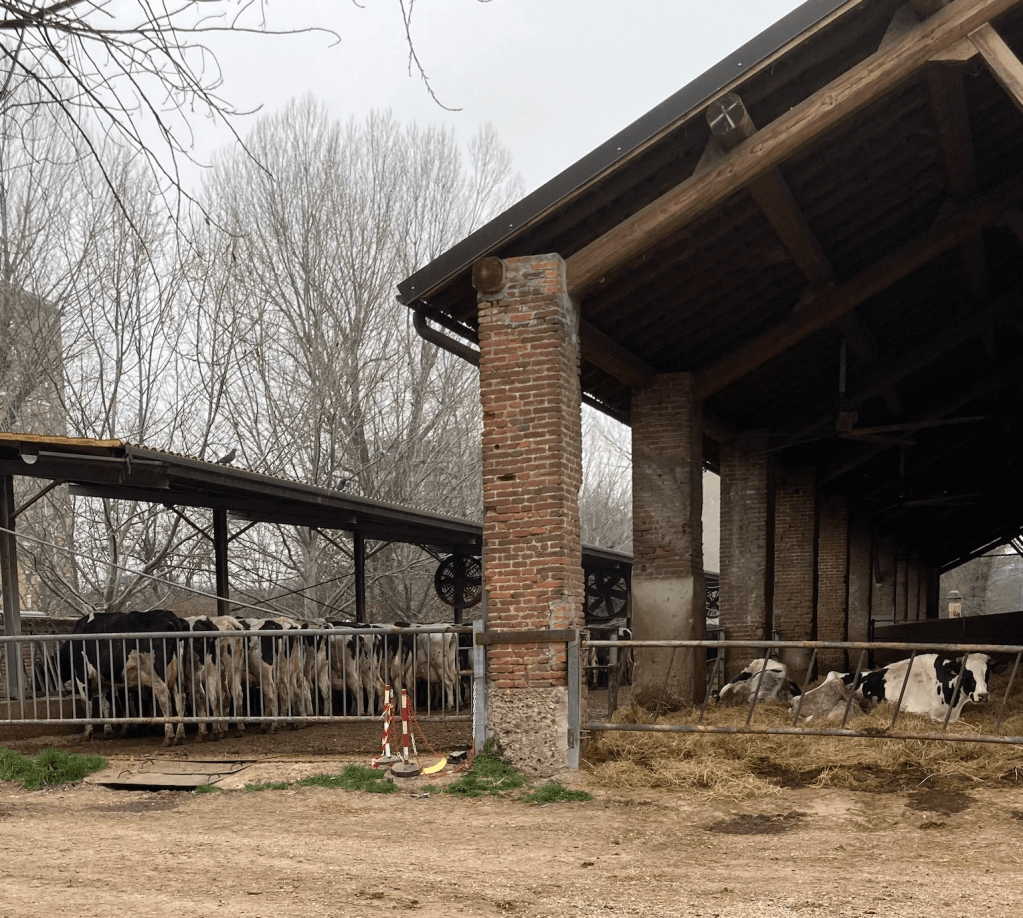
It was interesting staying in a big apartment building, feeling very local, as we walked the dogs every few hours through an agricultural area just behind the buildings.  It was an odd area, with either very spooky or very pretty misty fields spread out under the cackling electricity towers. 

We did take some dog-free excursions through Milan’s very distinct neighborhoods.

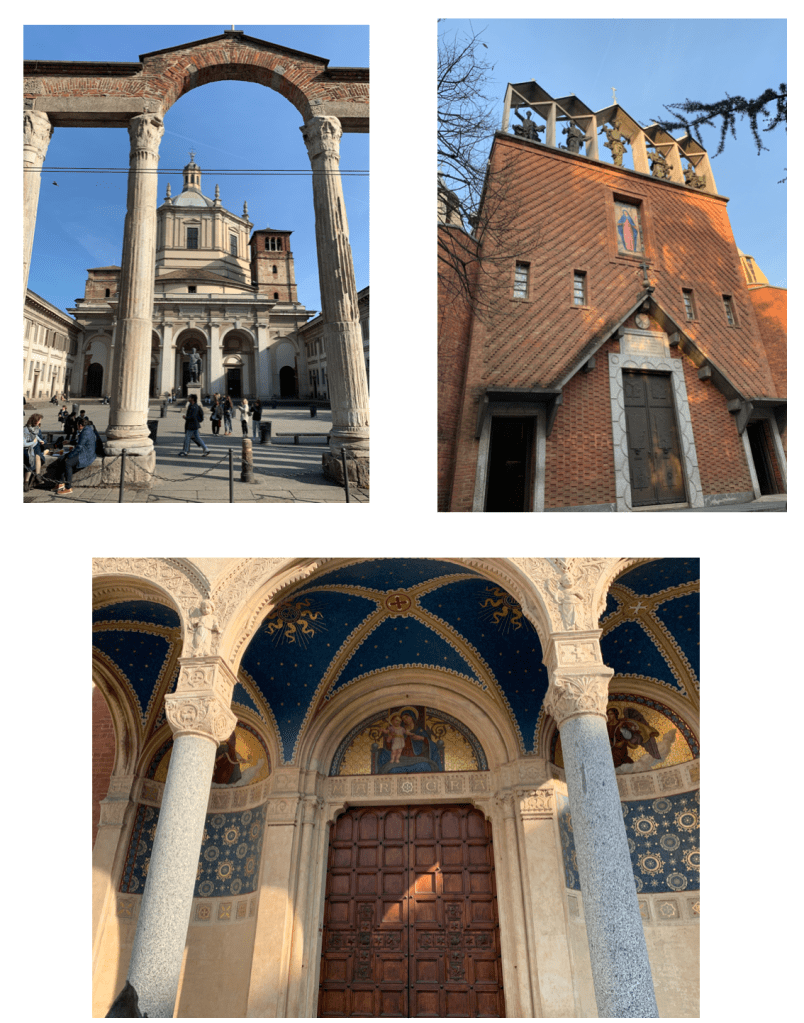
VERY distinctly different churches throughout the city

Due to its proximity, some areas of Milan felt very German, while other neighborhood’s character and ambience were partially dictated by  the degree of bombing and rebuilding. 

Visually, depending on where you are standing, Milan is a really beautiful city, or is not. 

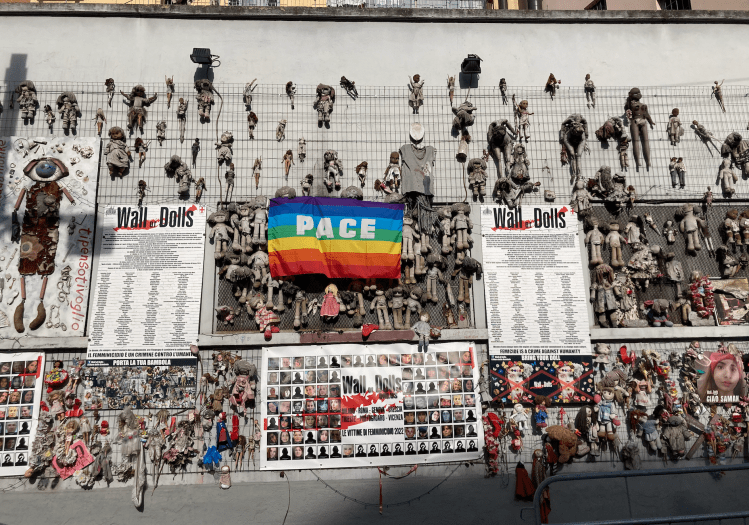
Installation began in 2014 condemning femicide and violence against women https://www.atlasobscura.com/places/the-wall-of-the-dolls

We thought our sight-seeing might be slowed down by photographers, because it was fashion week, but, alas no interest in our street fashion. Maybe it was because we have been alternating the same 5 outfits for the past 11 unfashionable weeks.  For our trip we tried to pack lightly, even still, our backpacks felt fairly heavy with all our walking. So, anytime we could shed weight was a win. Throwing away our nightly used dental floss was always the best part of the day. So, Nick was very delighted when he was able to locate an E-waste center to recycle his dead Kindle. However, it required him standing in front of a Milan library for half an hour repeatedly trying to ask locals to open the locked E-waste bin that required a specific neighborhood resident keycard to open the bin. Mission accomplished, a huge weight lifted off his back.

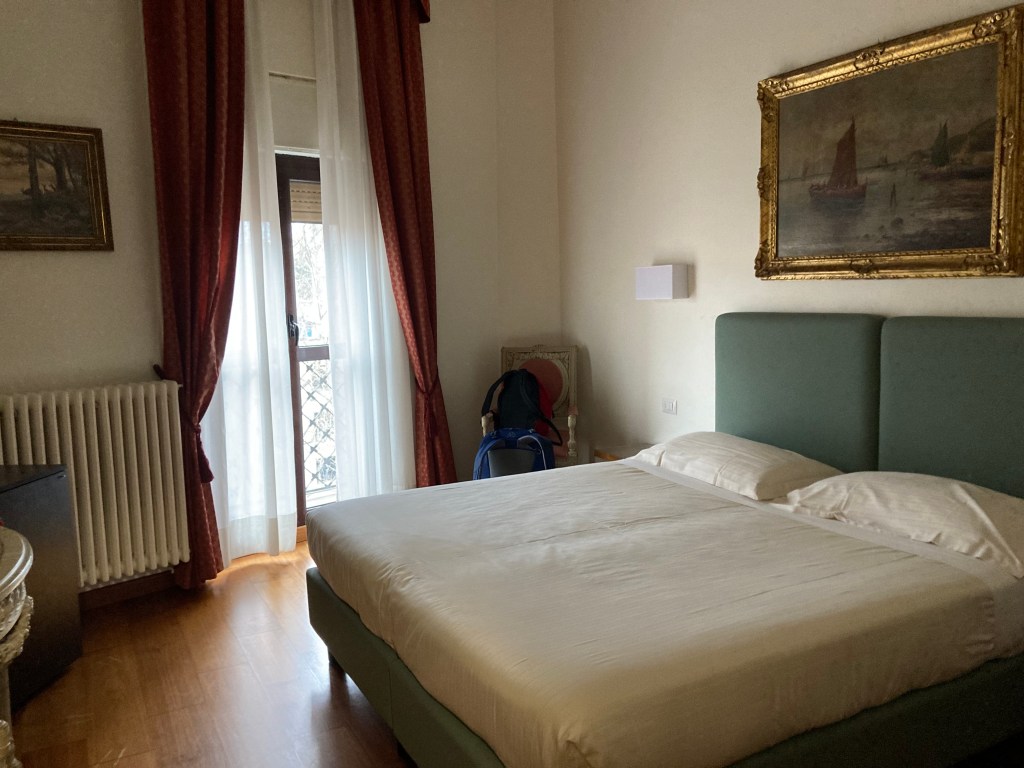
We said ciao to the dogs, and then made one last attempt at Italian pizza, although this time we were reduced to eating it while we walked, again, in the rain back to our classically 1950’s hotel. It was not great (the pizza, the hotel was). With that after 9 days in Milan, 6 weeks in Italy, it was ciao to Milan and Italy.

Letting Our Garda Down


In Venice, limited to narrow, canal-lined paths broken up by sudden bridges, we felt like game pieces trying to navigated a board game like Chutes & Ladders (Canals & Bridges?). We needed open space.

Our upcoming Milan dog-sit owners recommended Lake Garda, a local, Northern Italy favorite, although they had never been, which for us was a resounding endorsement.

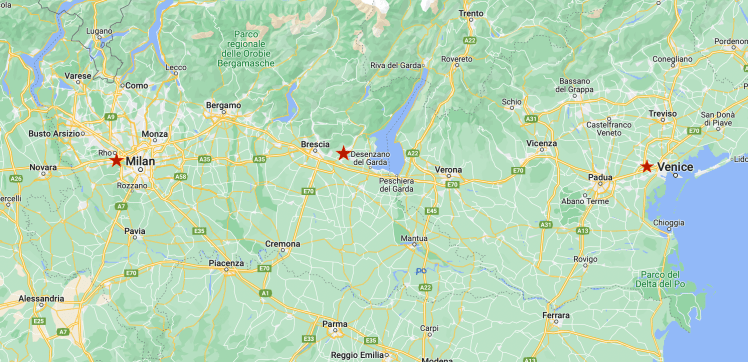
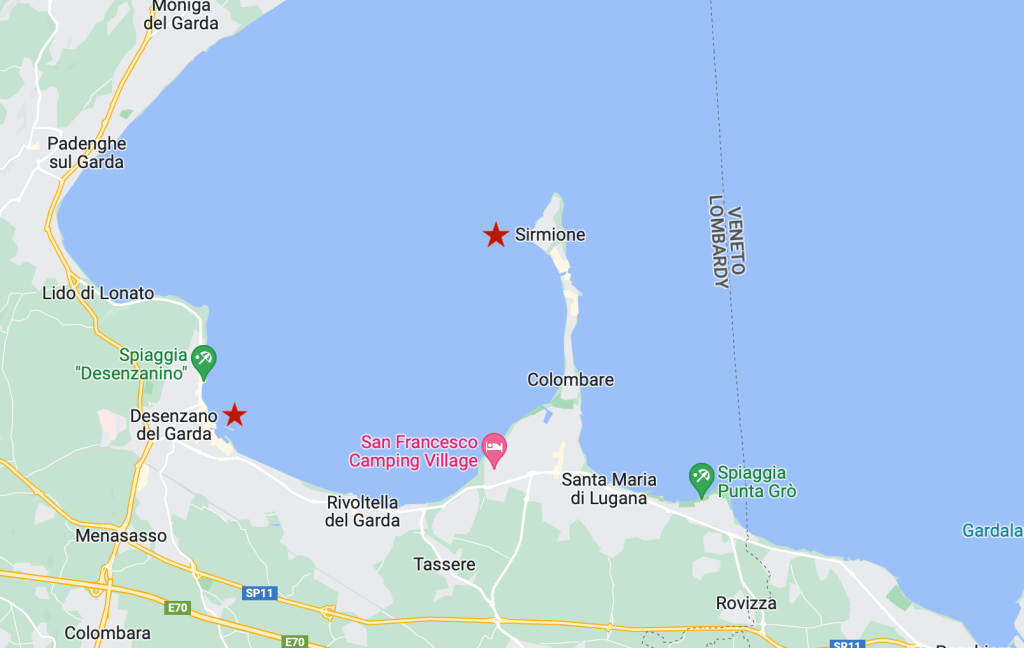
We elected to bypass Verona and Padua (seen by bus coming and train going from Venice and that was enough for us) and headed to the town of Desenzano del Garda, the closest train stop to the lake and just about 45 minutes from Milan. The name is bigger than the town. 

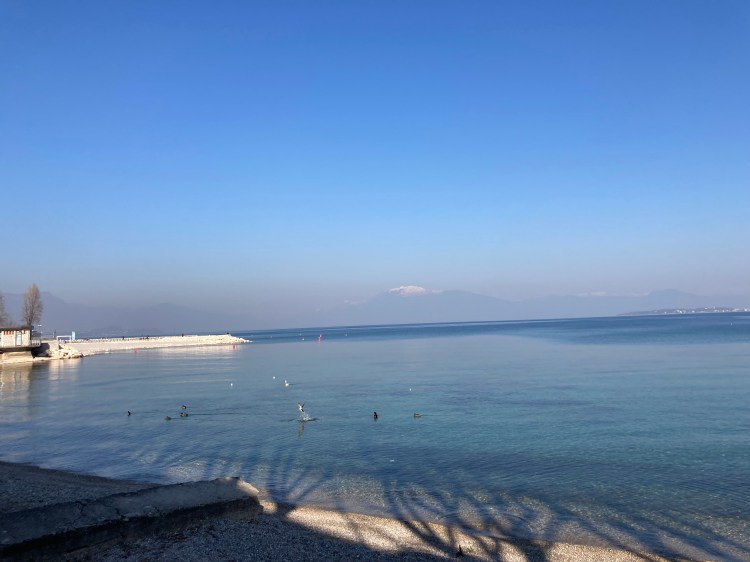
Lake Garda is a summertime vacation spot for Italians so of course we went in the winter when the area is typically covered in a blanket of smog. It was. Our apartment was on the main road, just behind a Chinese restaurant.  Our landlord for our short 3 day stay was glad we were Americans and not “dopey Italians that ruin everything in an apartment, especially in the kitchen since they don’t know how to operate anything”.  She proceeded to point out all the previous damage to the apartment. She was Italian.

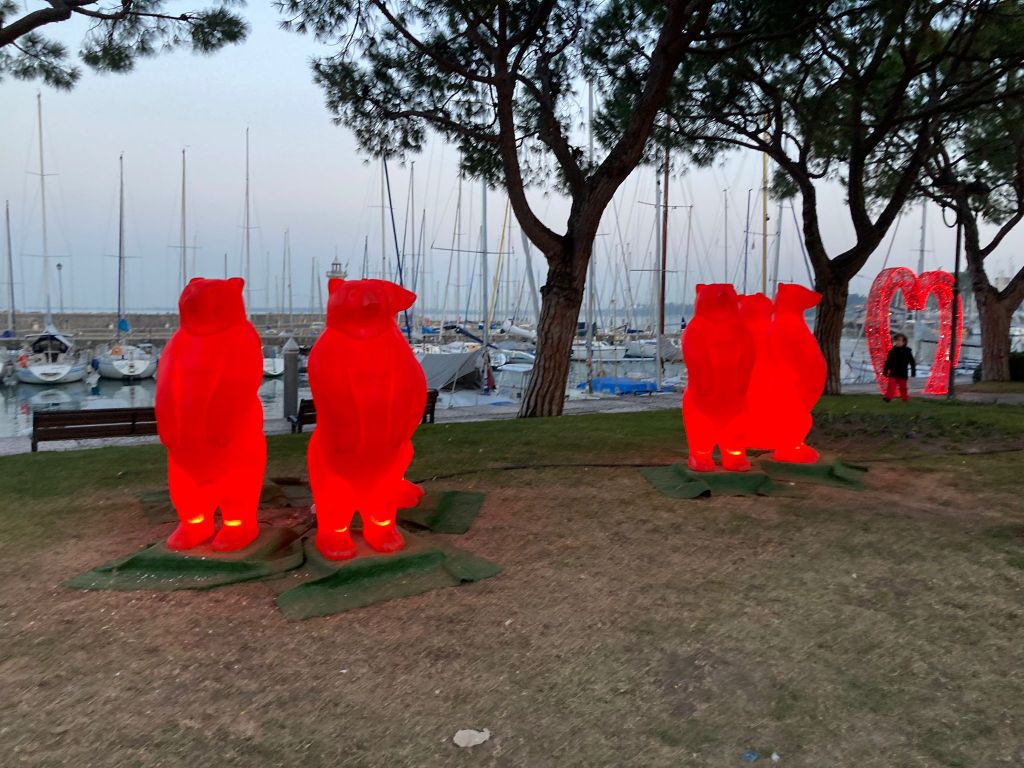
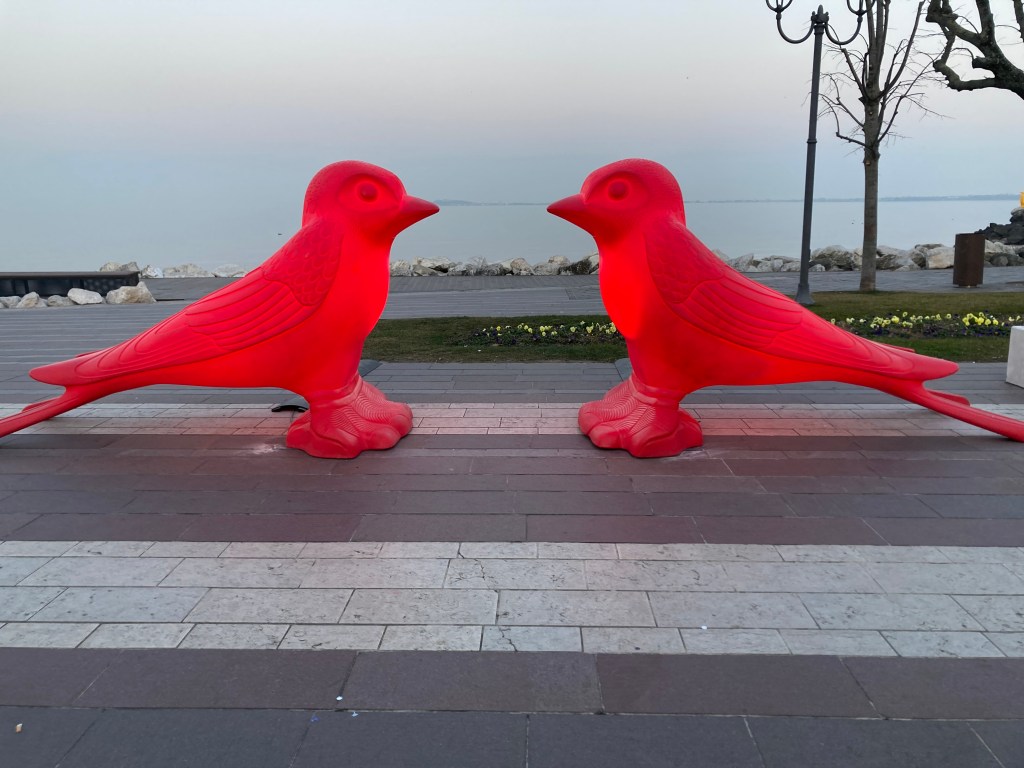
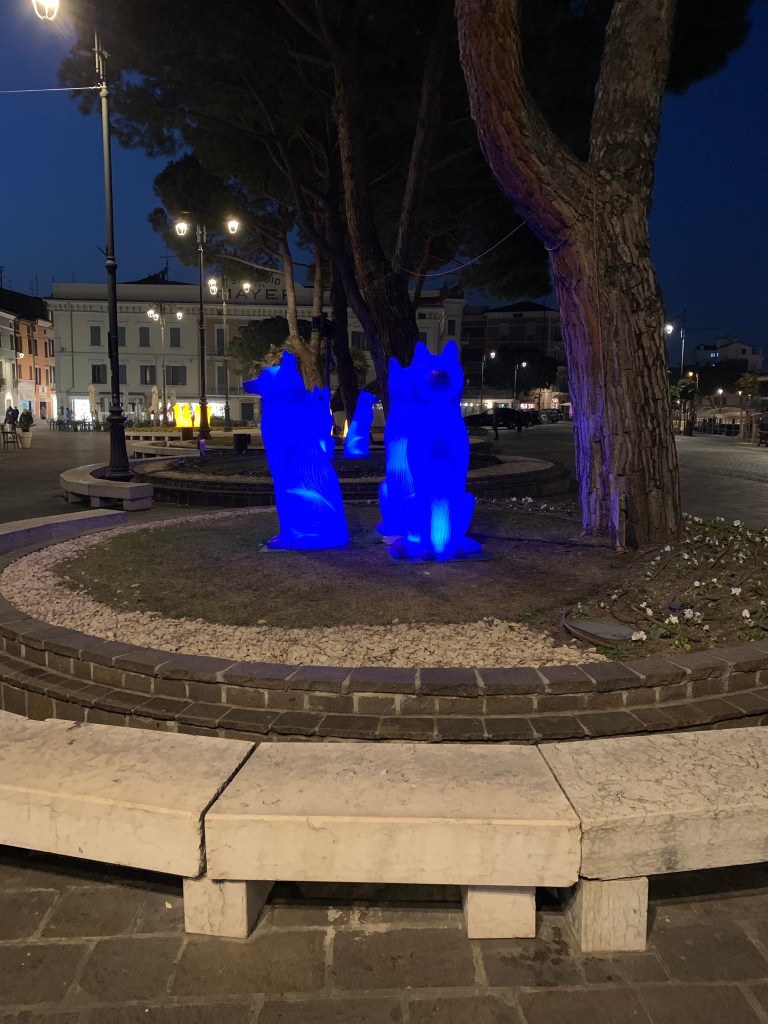
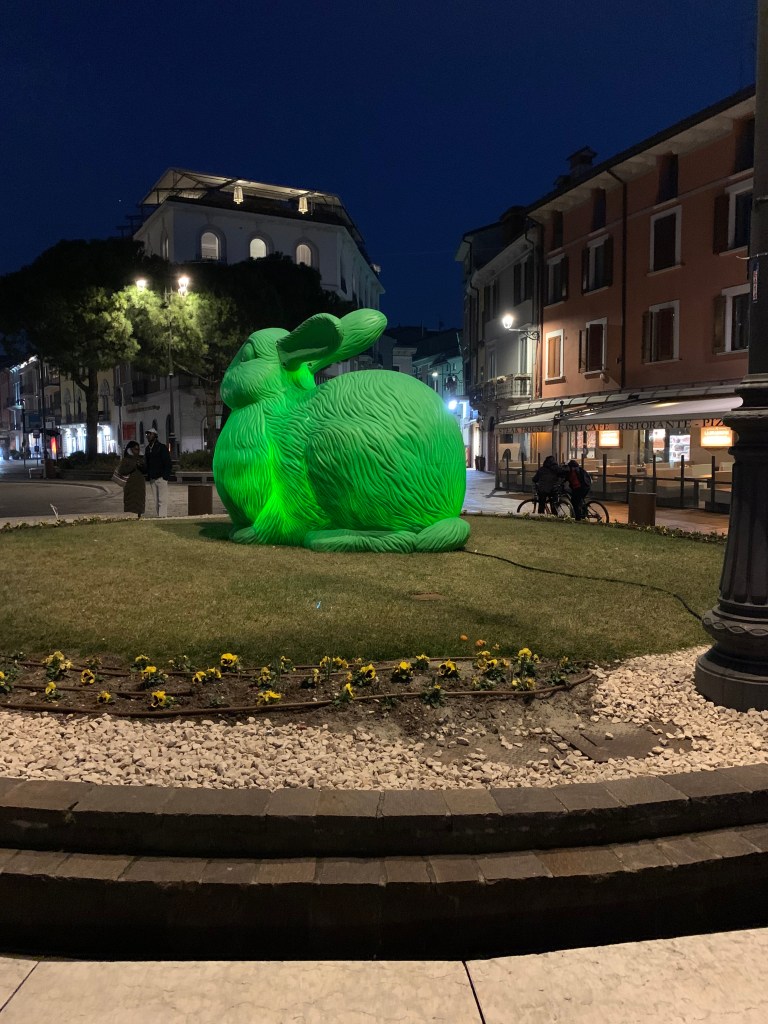
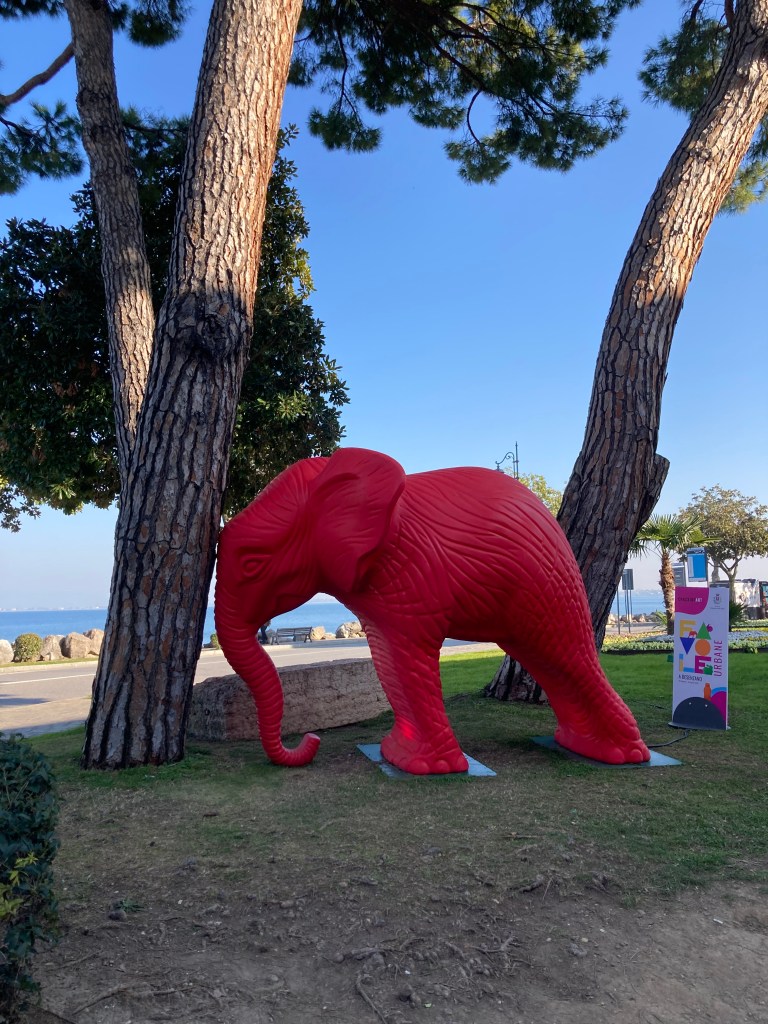
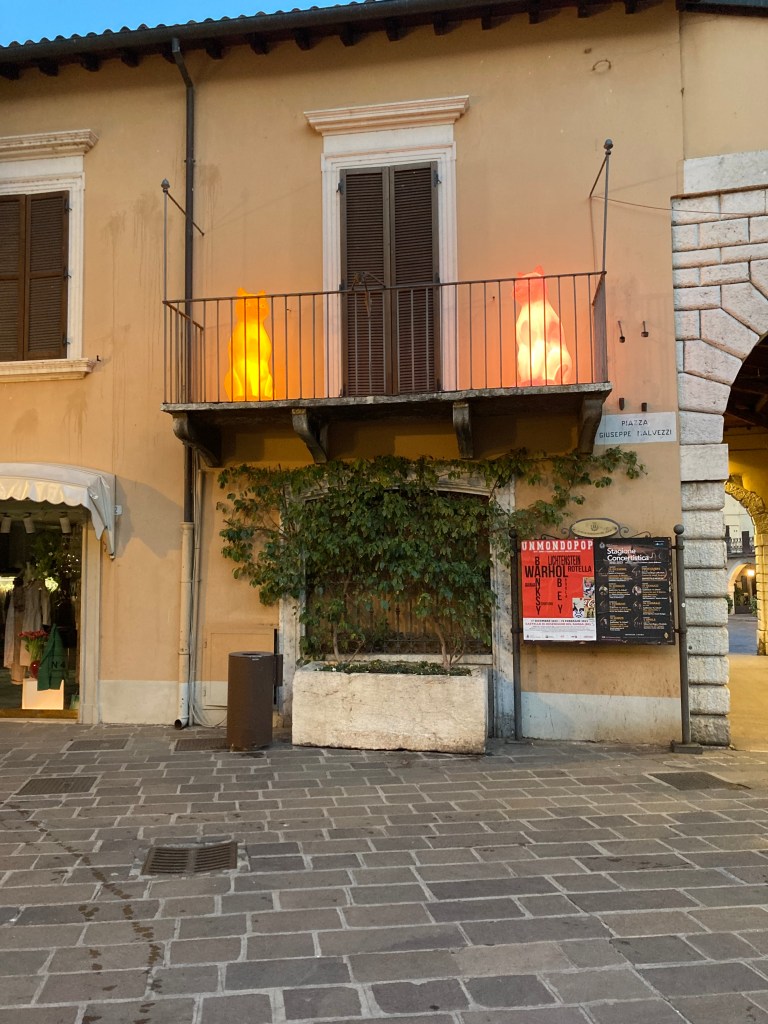
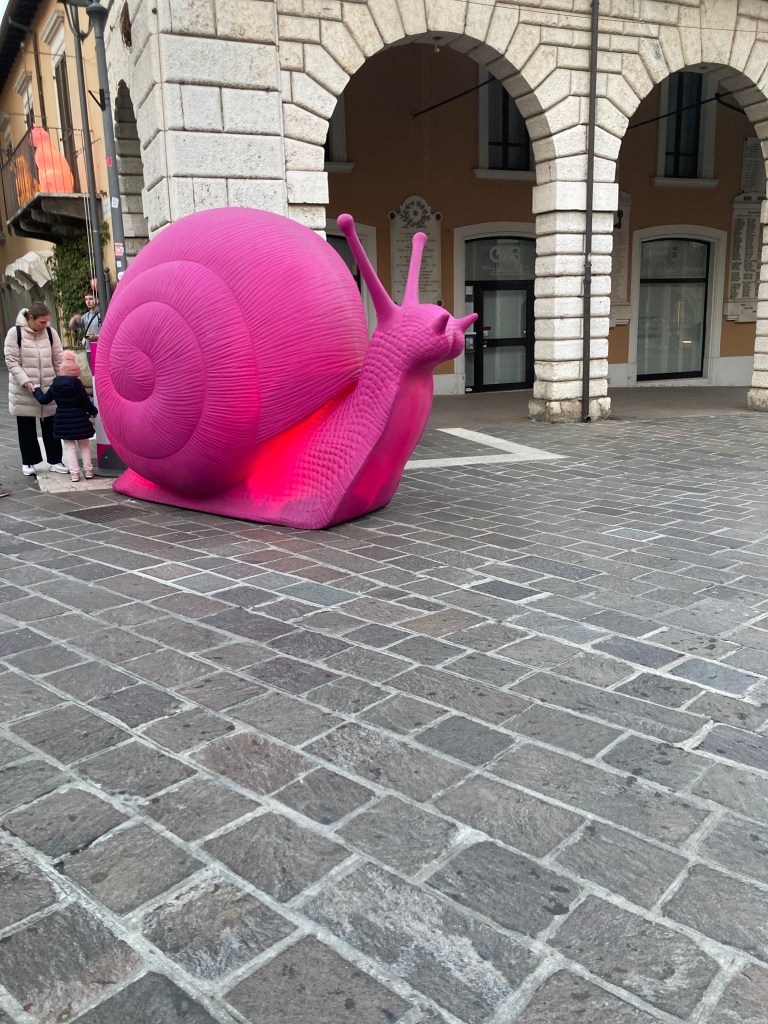
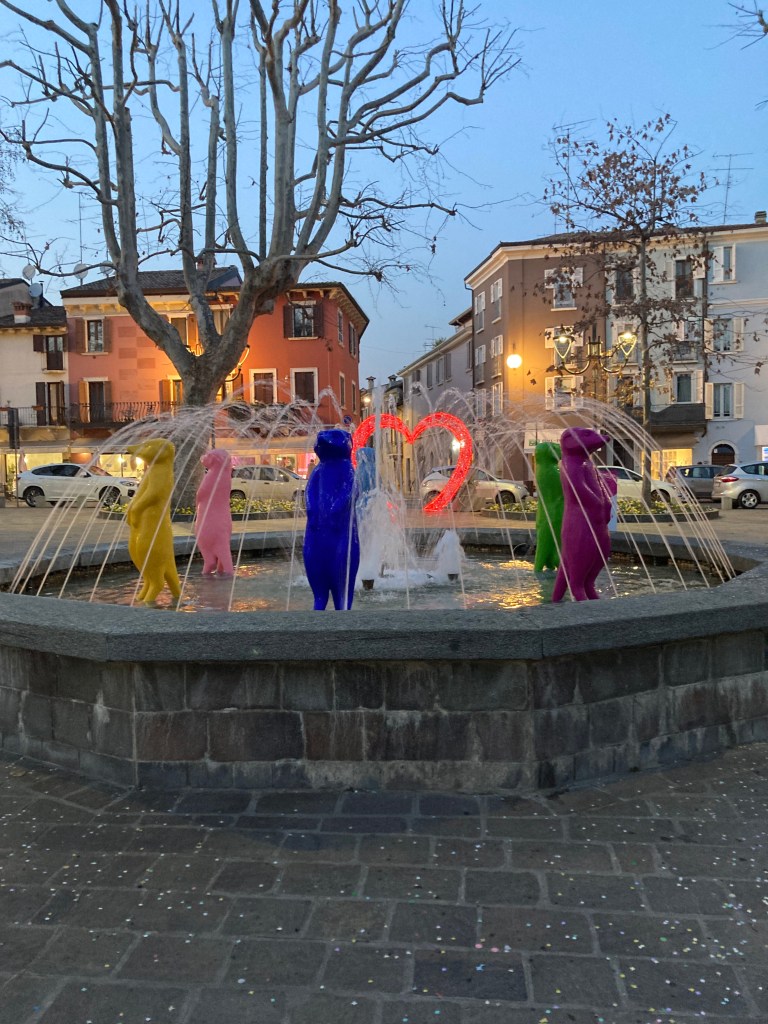
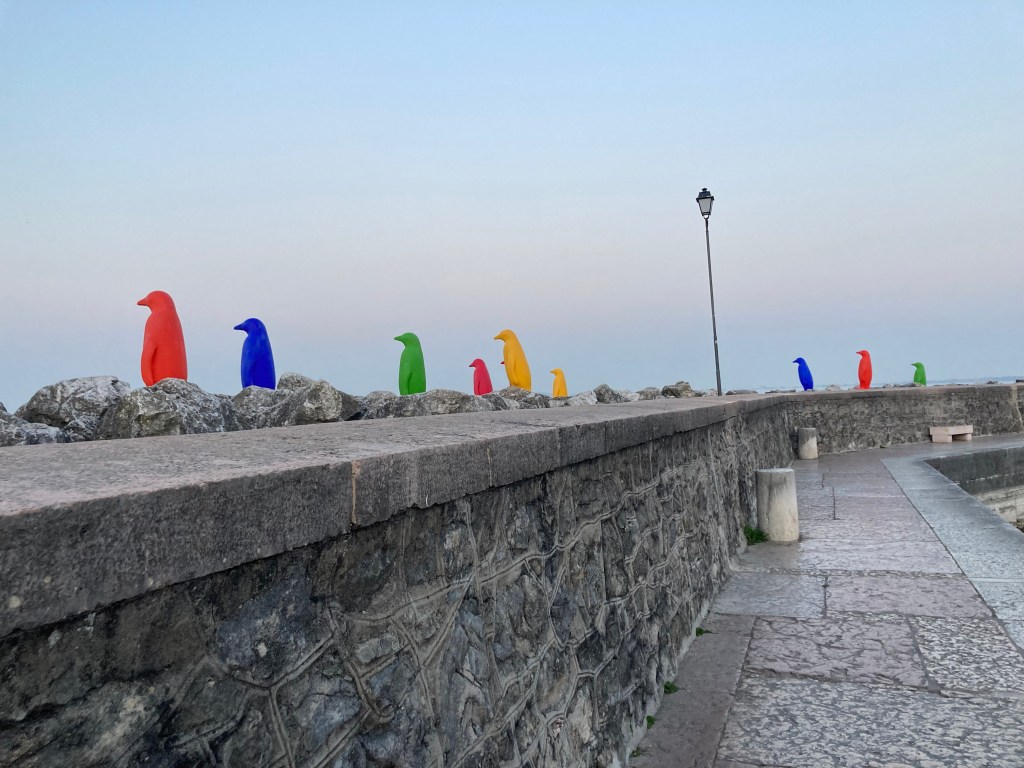
Desenzano del Garda didn’t have much, mainly a kind of cute touristy strip of shops and restaurants across from the waterfront plus a Eurospin market, which maybe is the only European market chain we were not intimately familiar with since supermarket shopping is a favorite pastime. Its name also aligns with our haphazard travel style. We were delighted like in Salerno, and Marseille, coming across another alternative zoo.   (https://chosenfugue.wordpress.com/2023/03/12/san-frenchisco/ + https://chosenfugue.wordpress.com/2023/03/12/coast-to-coast/

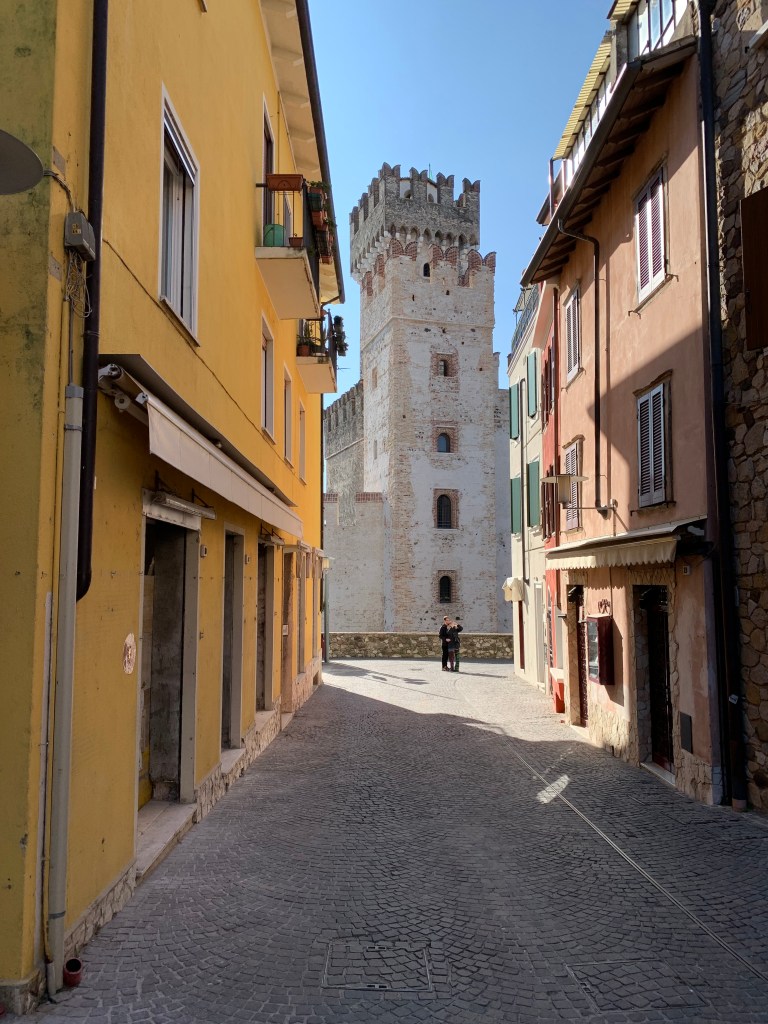
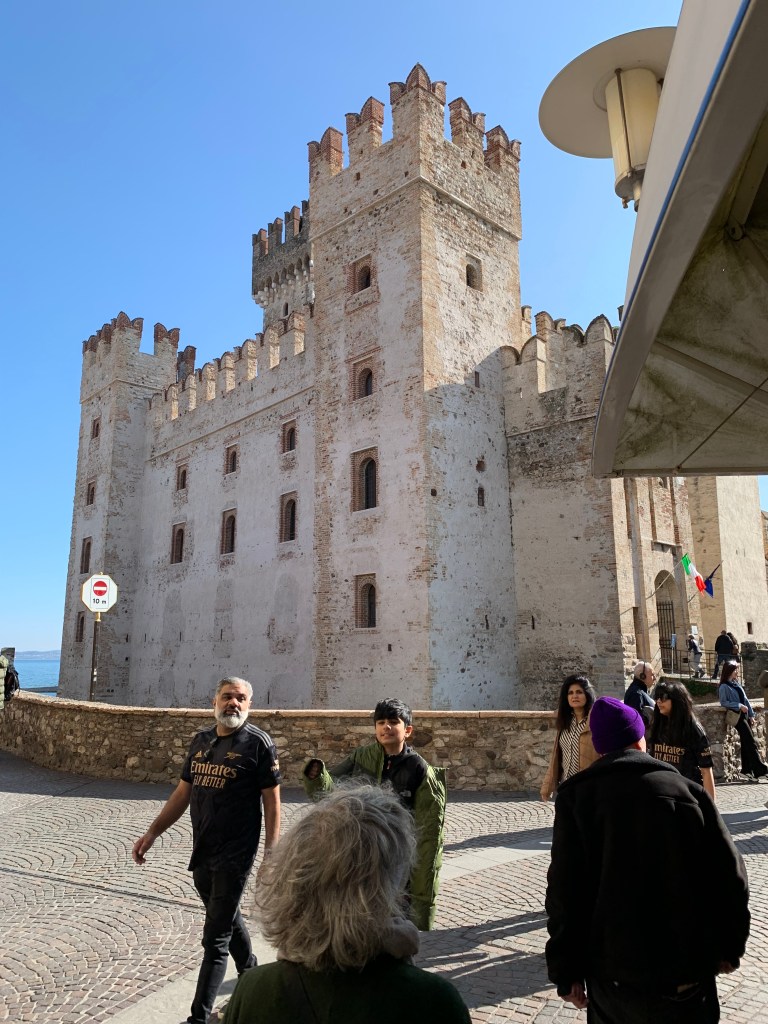
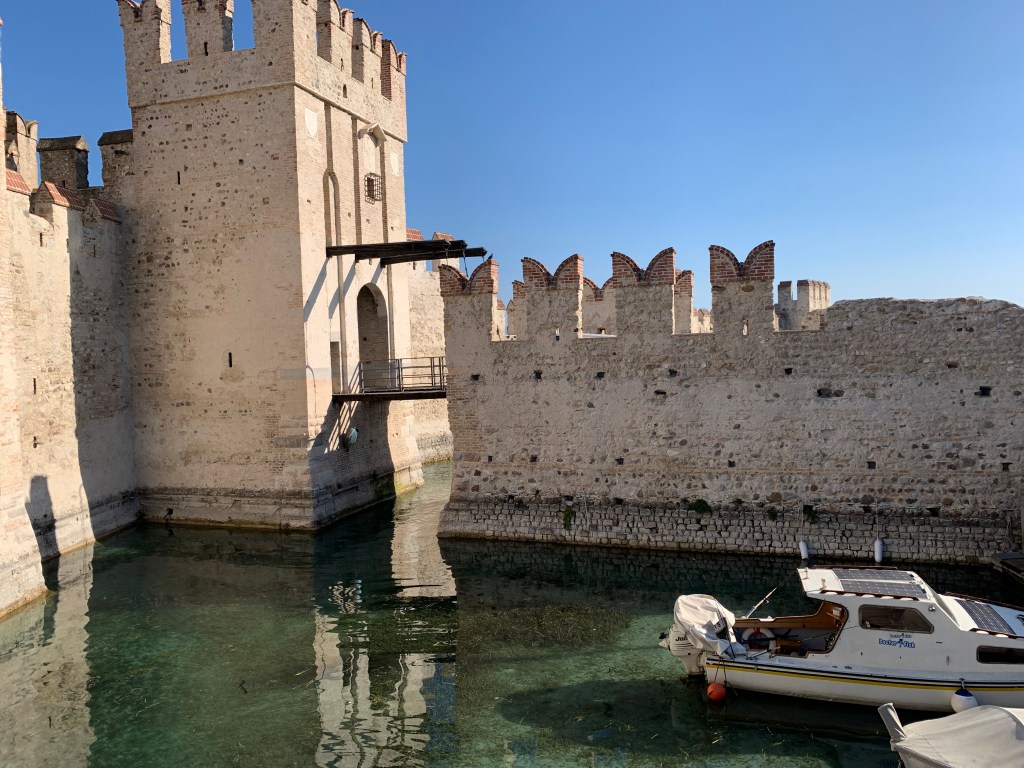
The draw of the area was the town of Sirmione, which is located on the tip of a broken finger of land that jutted into the lake.  Easy bus ride there and a 10 km walk back. Like most Italian tourist towns, Sirmione, had a Castle (Scaliger), abandoned fortress plus it’s share of  spa hotels, gelato (closed for the winter) and espresso bars.

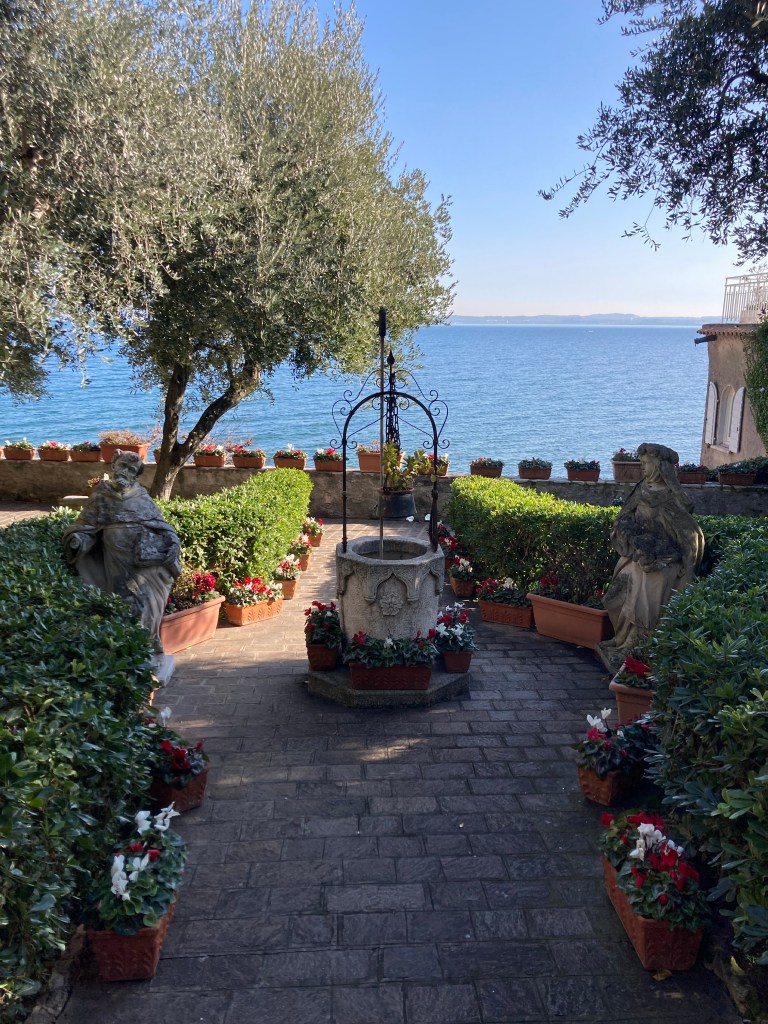
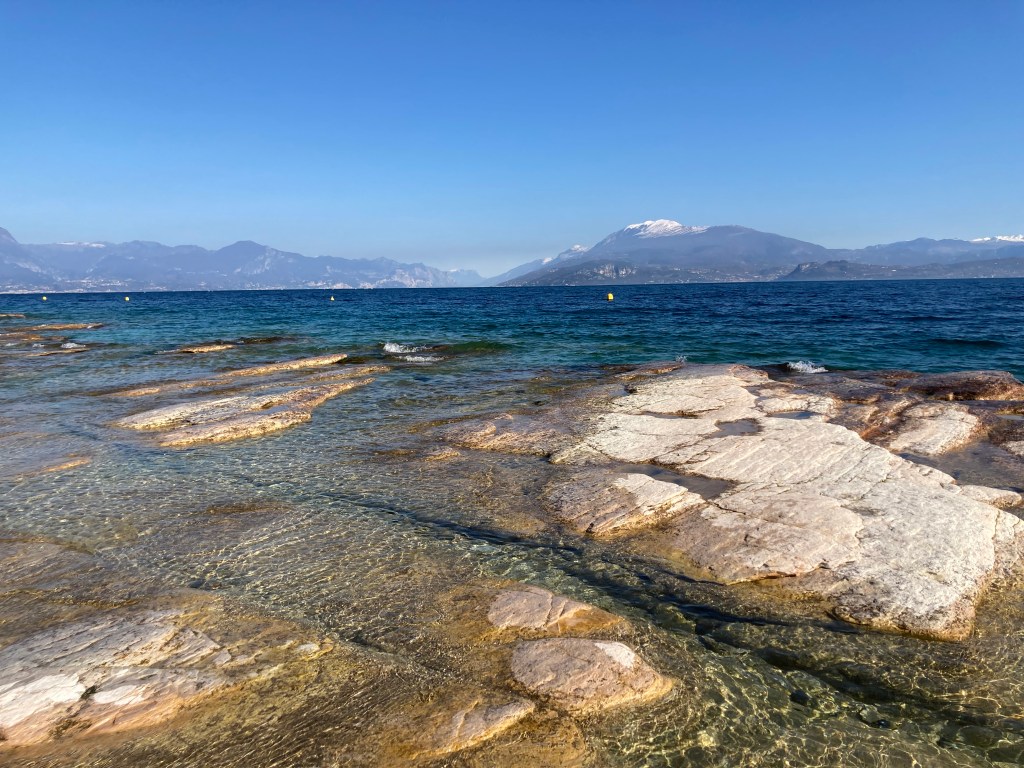
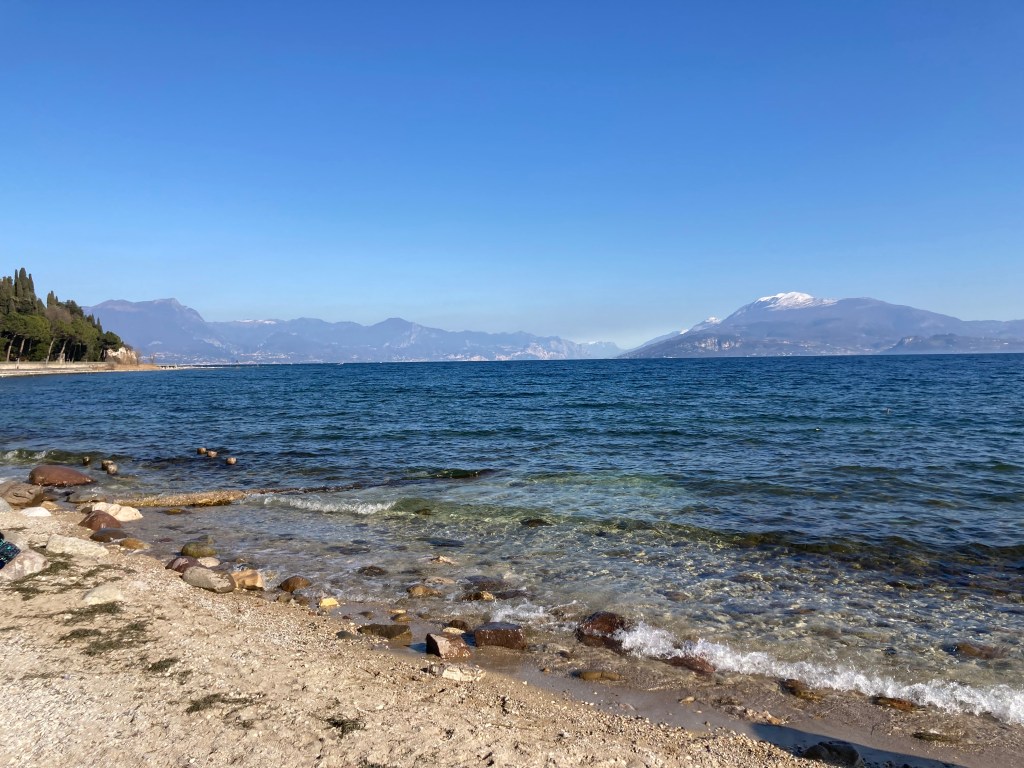
But the highpoint was an amazing walk around the rocky tip of the peninsula with the Dolomite mountains shrouded (by smog) in the background. 

Lake Garda was an unexpected pleasure and we didn’t break anything.

A couple of Dumbos in Venezia

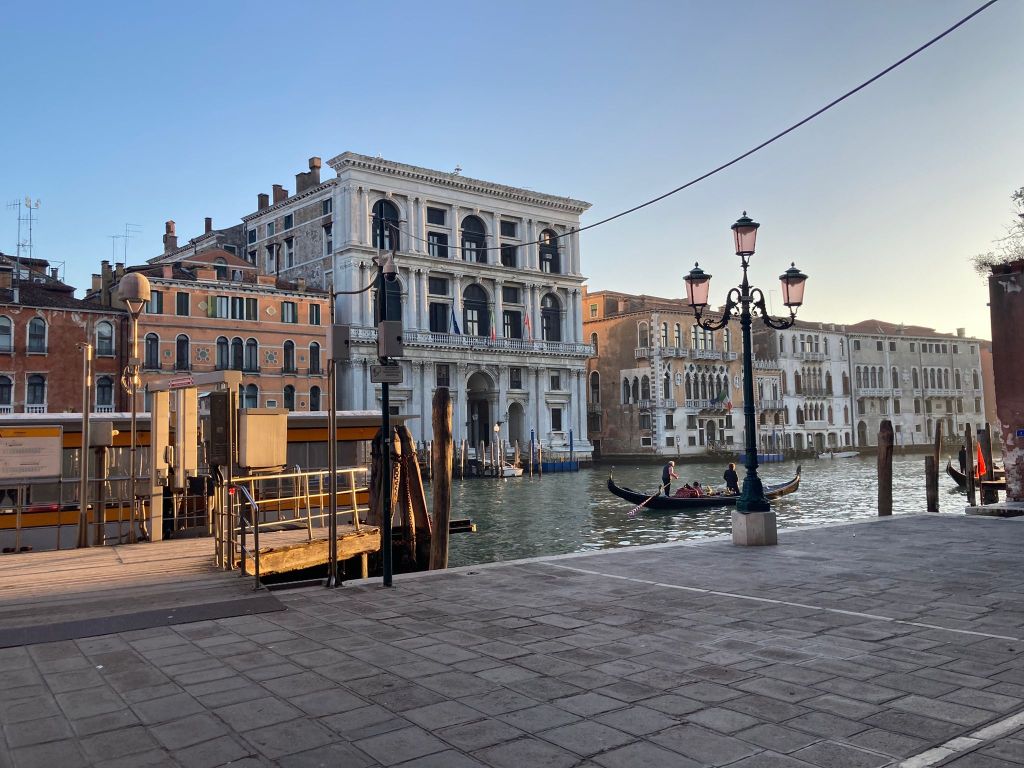
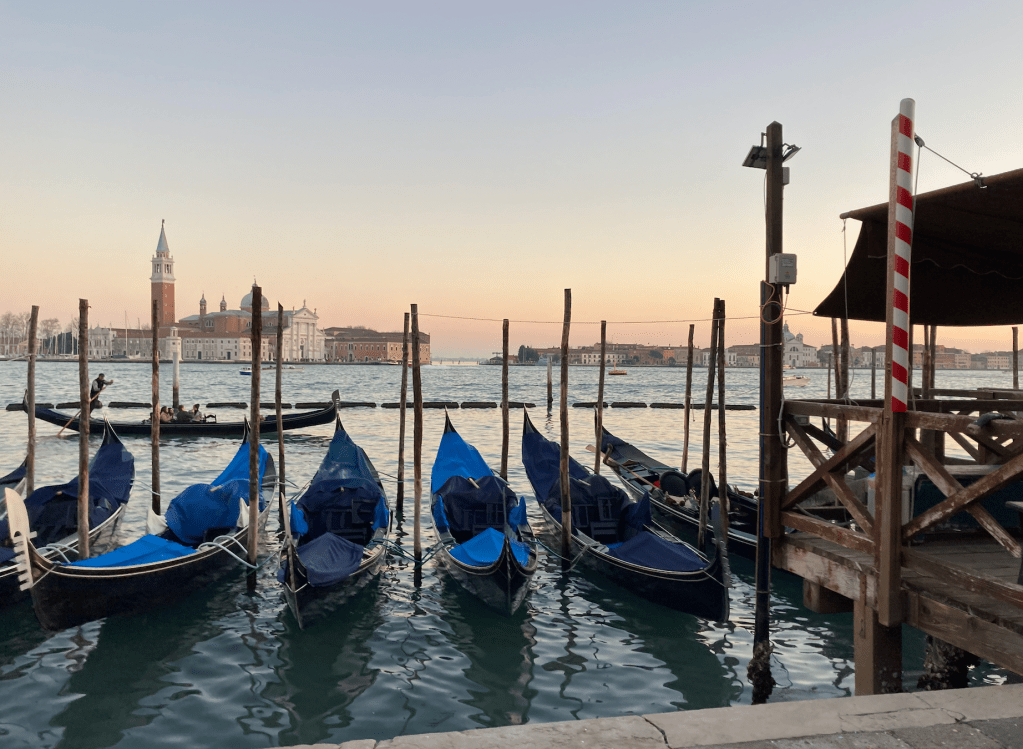
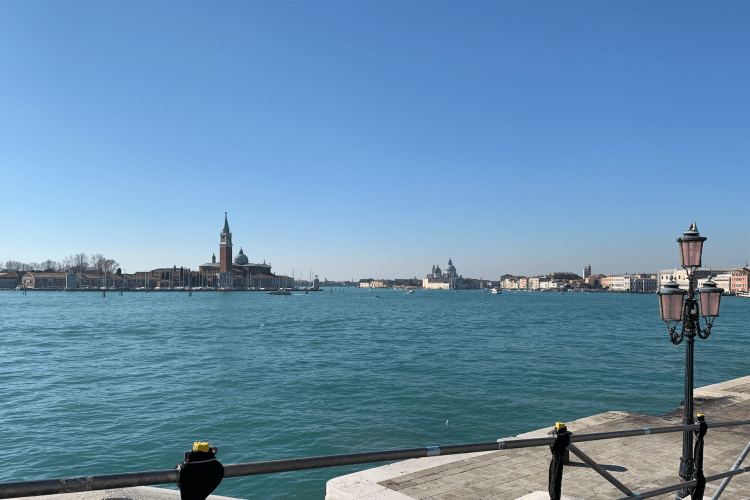
In 697 AD, the twelve founding families of Venezia (Venice), refugees from wars (sound familiar?)  chose it’s location as a safe harbor.  Eventually, this strategic location led Venice to become a major financial and political powerhouse in the area; a staging site for wars and trade.  Based on our experience, they still are a powerhouse in trade, at least the tourist trade. 

We got off the bus to Disneyland, whoops Venice, in one of the ugliest spots we have ever gotten off a bus at the outskirts of town.  We bypassed the monorail that would take us into town, opting instead to walk for about a half a mile of ugly over the first of many bridges and then found ourselves in a a cross between Fantasy Land and New Orleans Square. Yo ho, yo ho!

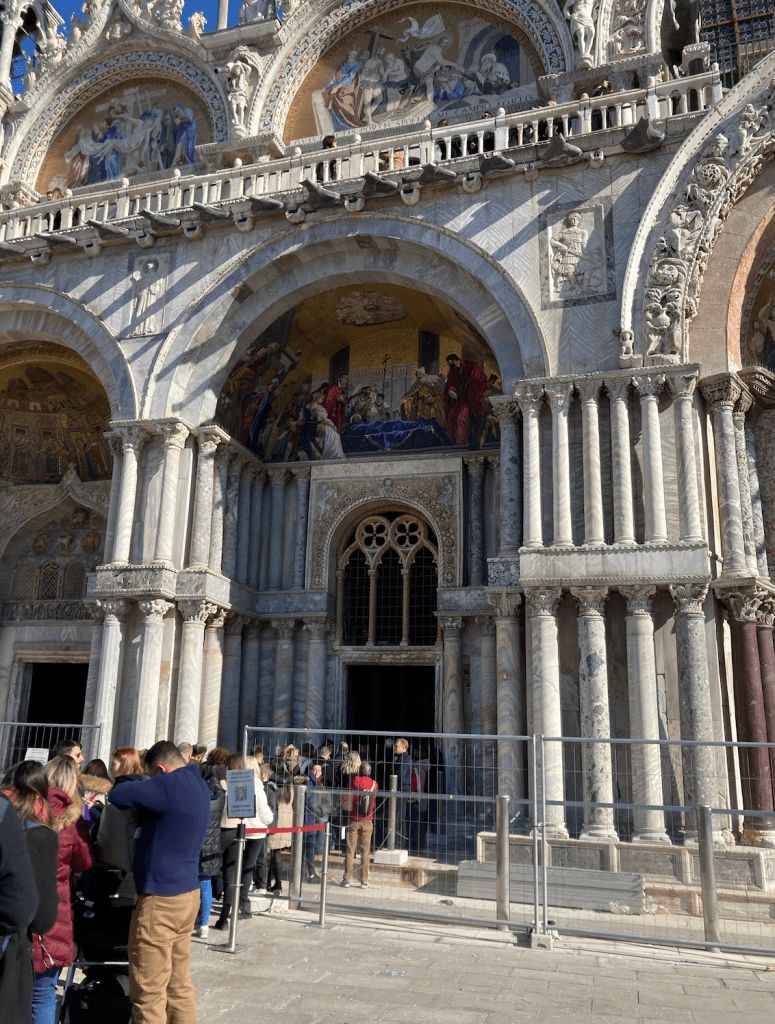
St Marks Square, scale and detail were pretty astounding

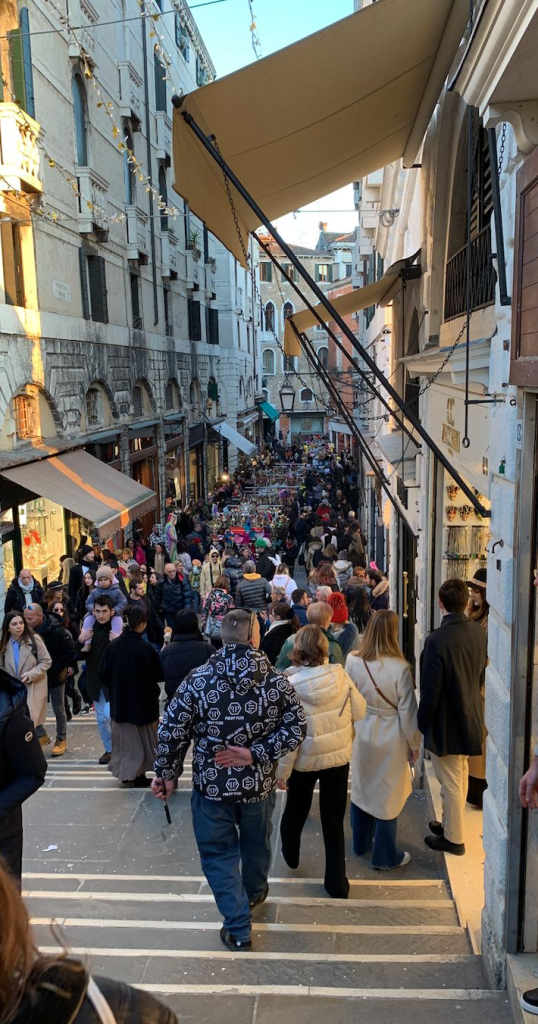
Raised on Disneyland, it was hard to comprehend that Venice, like Dubrovnik, was real https://chosenfugue.wordpress.com/2018/11/12/croatia-1-dubrovnik-on-the-rocks/, especially, since like Disneyland, we were trapped in a series of lines and crowds, carried along to the next attraction, unable to identify distinct landmarks (no Matterhorn!) to make our way home as every storefront window had the same souvenirs.   Any wrong turn, or any right turn could lead you right into a canal.

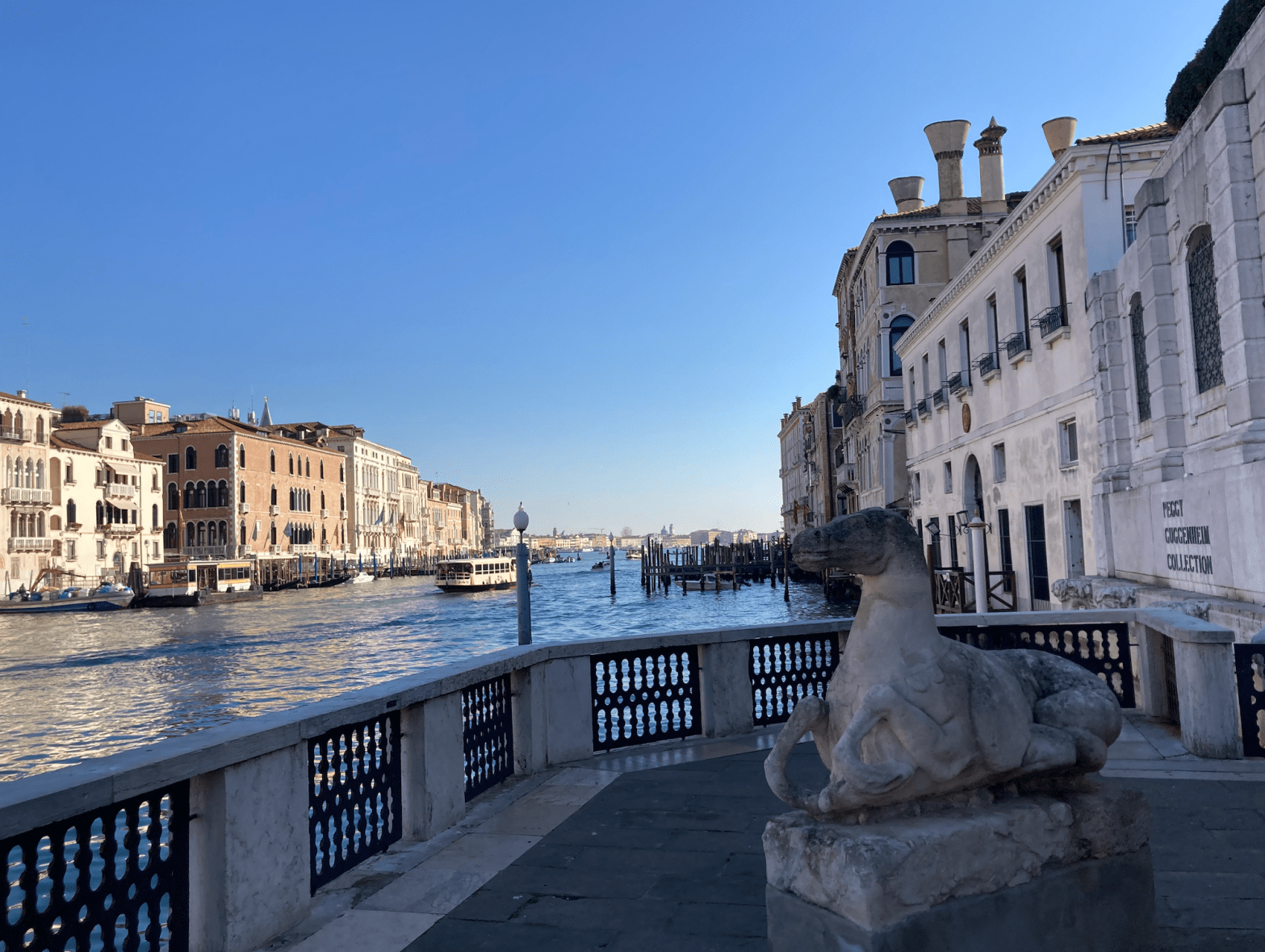
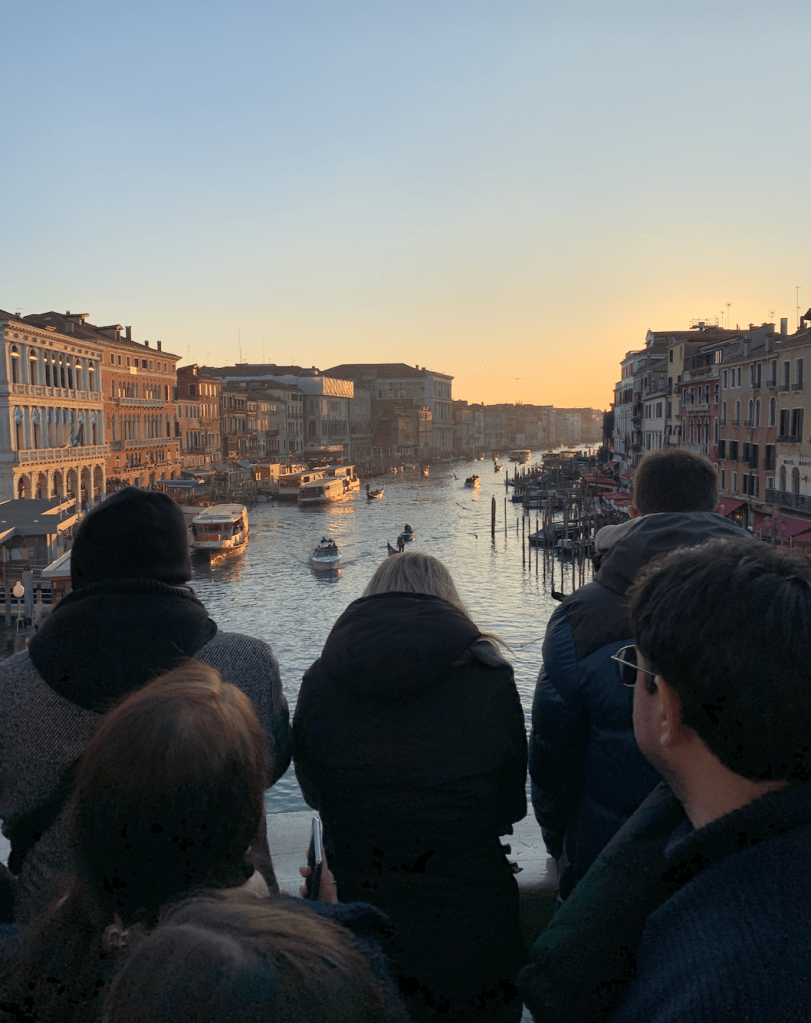
every picture seemed to capture an iconic scene

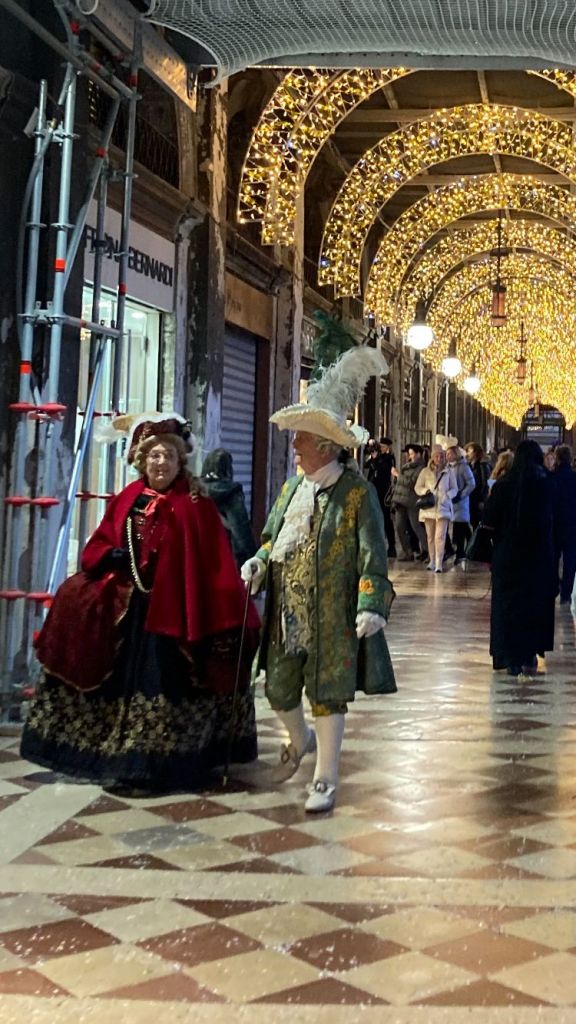
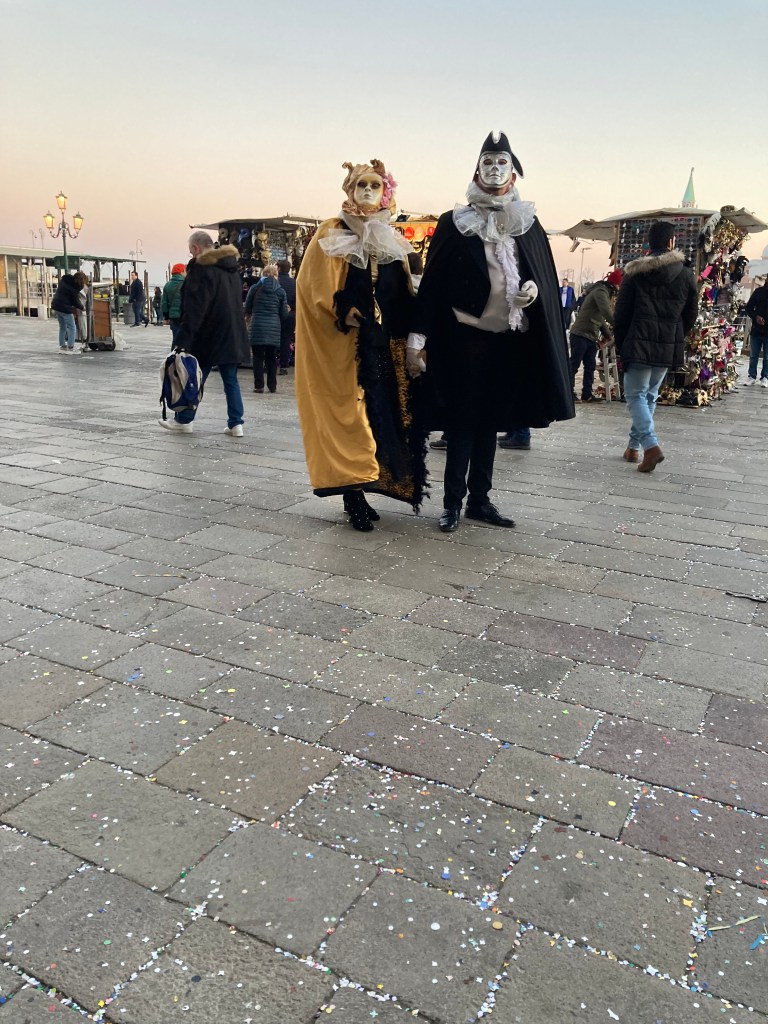
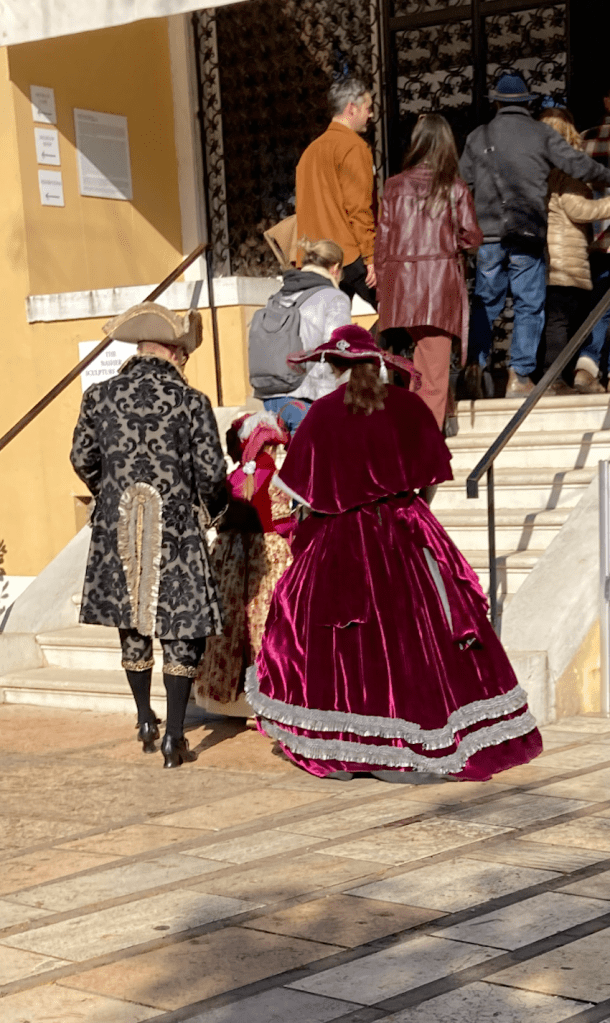
Although we were off season, we arrived on the very crowded Sunday of Carnival, so like Disneyland, there were plenty of characters walking around, getting their pictures taken, they were all Goofy. 

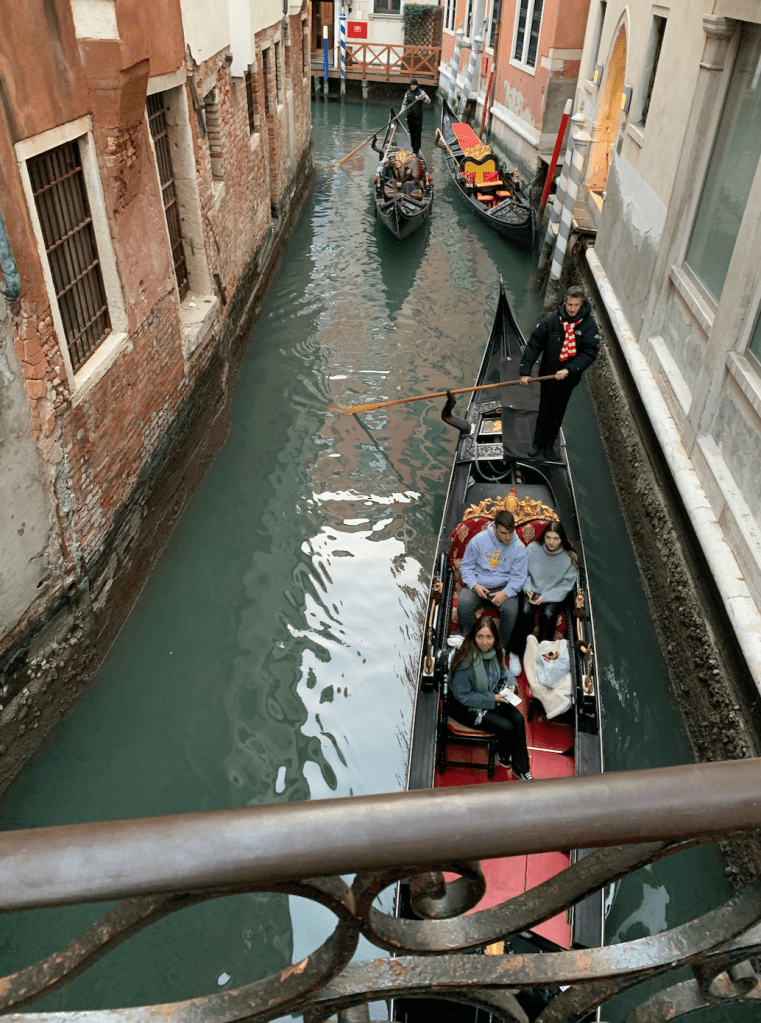
And there were rides, canal rides, we of course did not take one, having used our E tickets for the Flixbus to get to Frontierland at the edge of town.

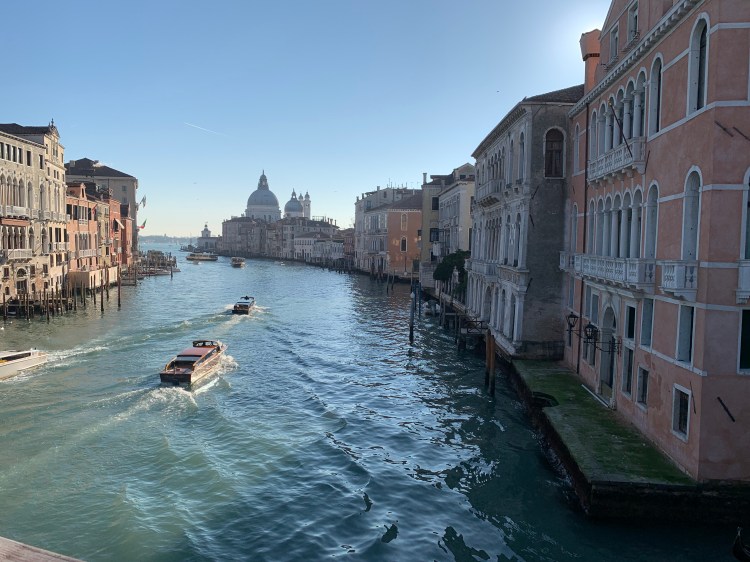
With 400 bridges linking the 118 islands of Venice, there weren’t any scooters, bicycles or cars to dodge, which was good because we could not do much lateral movement due to the shoulder to shoulder crowds carrying us along.  By Monday, the streets were emptier and we were able to cross almost all 400 bridges as we time-traveled throughout the city 

.

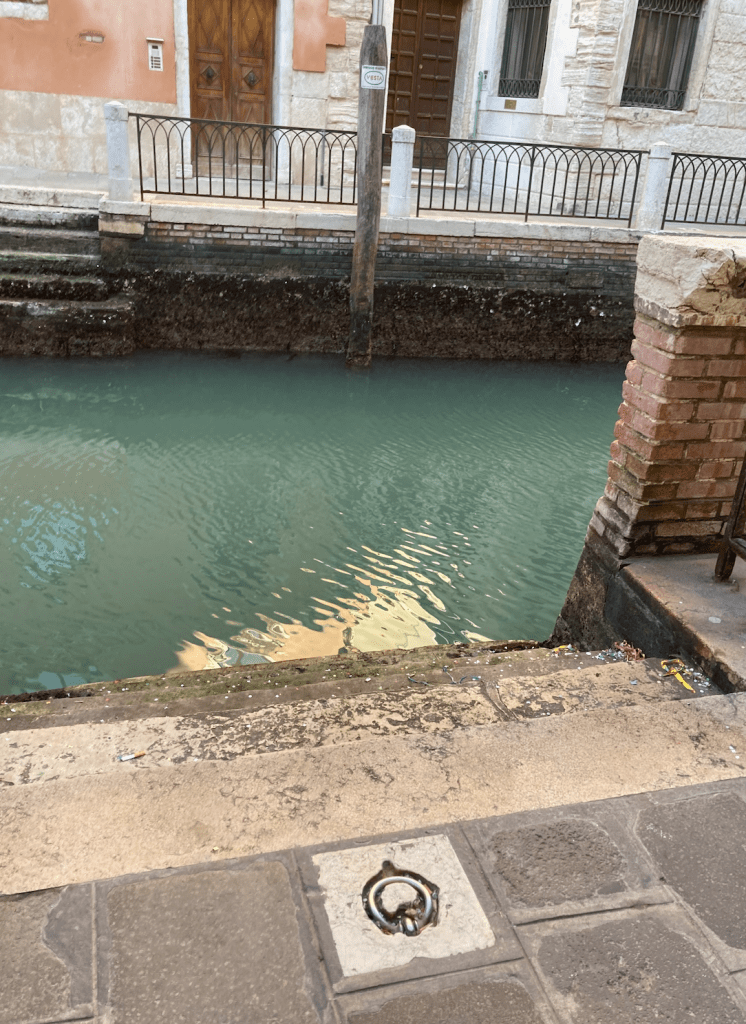
After a day or so we started to wonder how many people fall into the canals, specifically drunk or selfie seeking tourists.  Our research was inconclusive (we did not try), but there will always be fools like this to test the waters https://www.cnn.com/travel/article/italian-authorities-venice-canal-intl/index.html . The canals sparkled aquamarine, masking how filthy and polluted they are since sewage and industrial waste goes directly into the canals.  Falling in risks catching a severe infection.  Katherine Hepburn fell into the canal during a scene of the 1955 “Summertime” that left her with a permanent eye infection.

Flooding has been an issue in Venice.  Fortunately, we didn’t experience that.  In fact, a week after we left, due to the dry winter and tidal effects, the canals almost went dry. https://www.nytimes.com/2023/04/01/world/europe/venice-mose-flooding.html?searchResultPosition=1

Low water in the canals does not just lead to a huge smelly wetland, but it also significantly impacts all functions of the city since the canals are the only transport system for people (boat taxis), trash collection, food deliveries, ambulances, basically everything in town relies on the canals to function. 

Venice, like Disneyland, is an incredible man-made achievement, that is definitely worth a one time visit. Venice, though unlike Disneyland, was built to be a city not an amusement park, and is being overwhelmed by tourism. We felt fortunate to be there during the off season, but also a little guilty for contributing to the decay. (well to our credit we did not spend or do much). On the flip side, Venice, like Disneyland, financially depends on tourism (well not to our credit we didn’t spend or do much) which Venice is beginning to better manage for their survival. Venice, like many of the places in Italy, was another reminder of the incredible beauty we can make, and how carelessly we take care of it. The rise and fall.