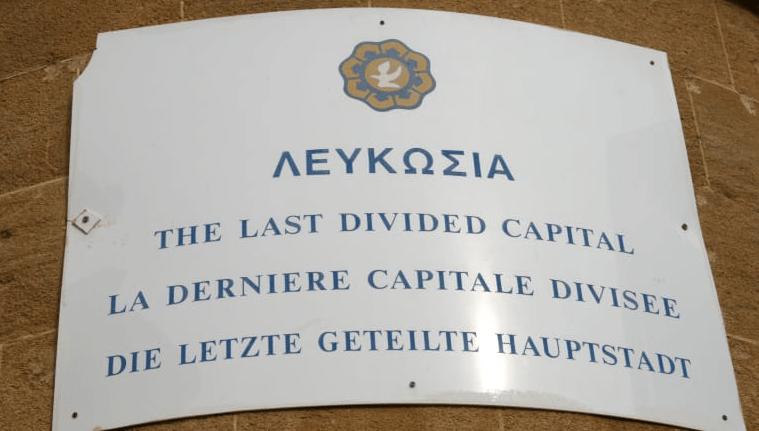
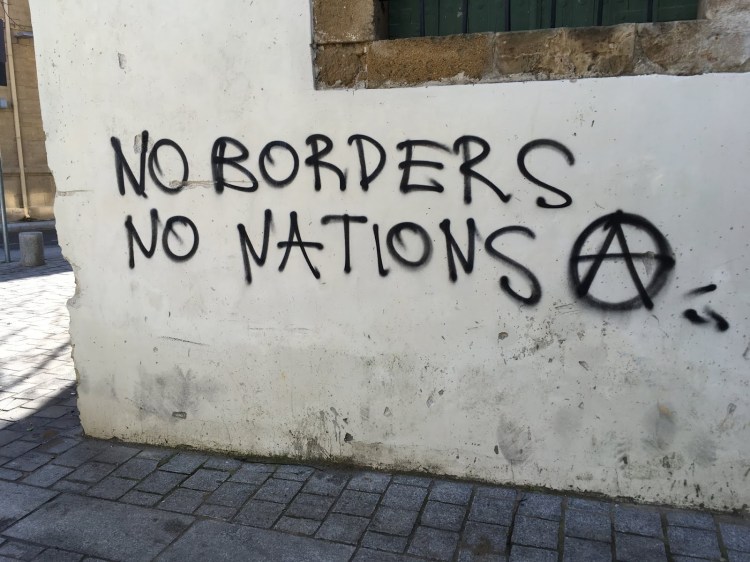
Nicosia (Lefkosia in Turkish) is the last divided country capital in the world. The division is marked by the Green Line, named for the color of the ink on the map to draw the country boundaries in 1964. The southern 2/3 of Cyprus is “Greek”, the northern 1/3 is Turkish although Turkish rule is not recognized by any country other than Turkey. Technically, the island is just Cyprus with an occupied northern terriority.
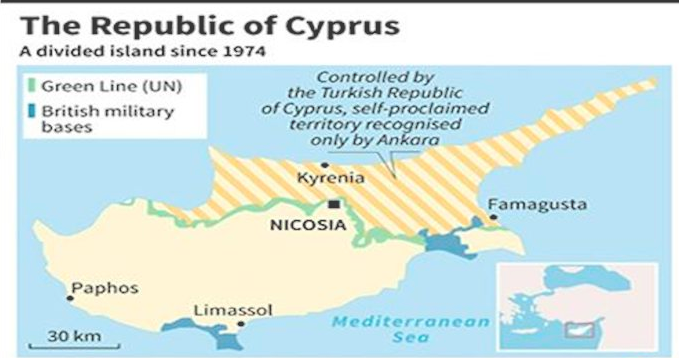
The history of Cyprus appears to be as convoluted as the Balkans. Like the Balkans, different groups, Turks (18% of the population) and Greek Cypriots have lived together contently, for centuries. Most spoke some of each language. Also like the Balkans, roots of conflict go deep, all the way back to Greek mythology where the island has a significant role. Aphrodite and Adonis were born here. This deep attachment to Greece has led to modern Cyprus longing for enosis-return to Greece.
Even though Cyprus is a tiny country it is the 3rd largest island in the Mediterranean, it has been geographically significant as a gateway to the east. For centuries it has been the stopping point for merchants, crusaders and armies. Like all areas with a long history, villages dating back to 8000BC, it has traded hands multiple times-the Greeks, Alexander the Great, Byzantines, Lusignans (wow, new players, they are from France), Venetians, Ottoman, British-only Napoleon seems to have been off the Cypriot dance card.
With the fall of the Ottomans, Britain picked up Cyprus in 1878 but was ready to offload Cyprus after WWI. Turkey and Greece declined. After WW2, turbulence between Great Britain, Greece, Turkey and the Cypriots led to Great Britain finally giving Cyprus its independence in 1960. The turbulence only increased. Years of political manipulation and maneuvering between Greece and Turkey leading to increased tension, hostilities and violence.
July 15, 1974, the Greek majority staged an unsuccessful coup to unite with Greece (Enosis). In retaliation, Turkey invaded 5 days later resulting in thousands dying, hundreds still missing and many thousands displaced from their homes. 180,000 Greek Cypriots were forced out of Northern Cyprus and their property confiscated. 80,000 Turkish Cypriots, prodded by their own leaders, were similarly forced to desert their lives in the south and live in camps in the north. An entire northern city, Famagusta, previously Greek Cypriot remains a ghost town. It is now a tourist attraction. In an effort to bolster the Turkish population, Turks were encouraged to move from the mainland to the island and now 28% of the population is Turkish.
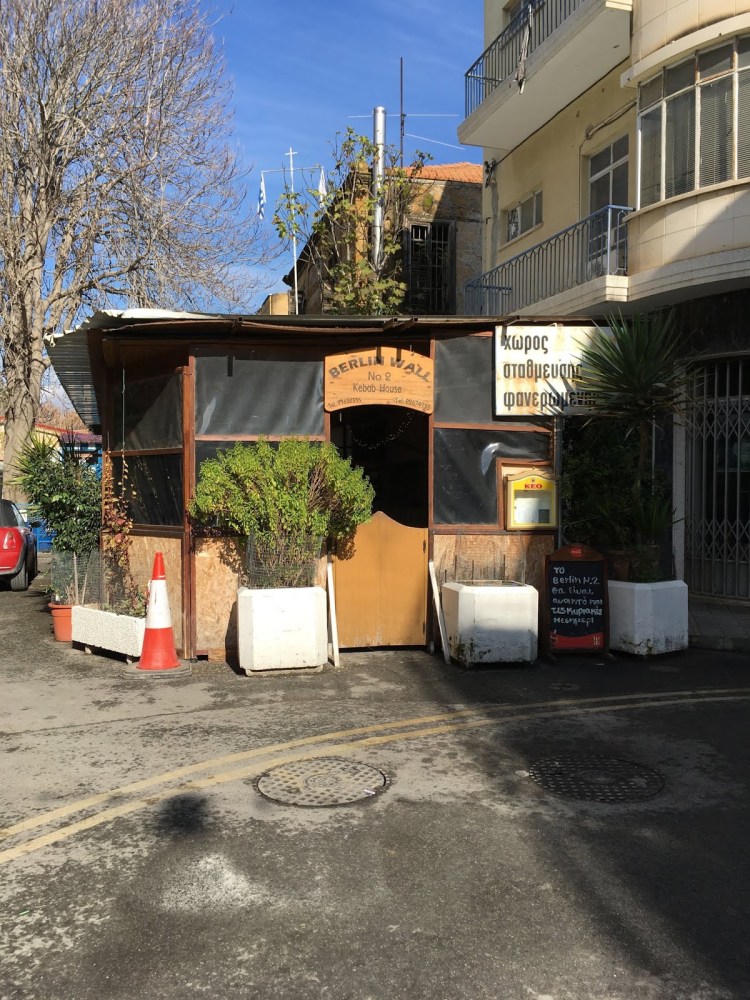
Much of the continued animosity is due to the forced relocation, on both sides, with generations still hurting.
 How
How 
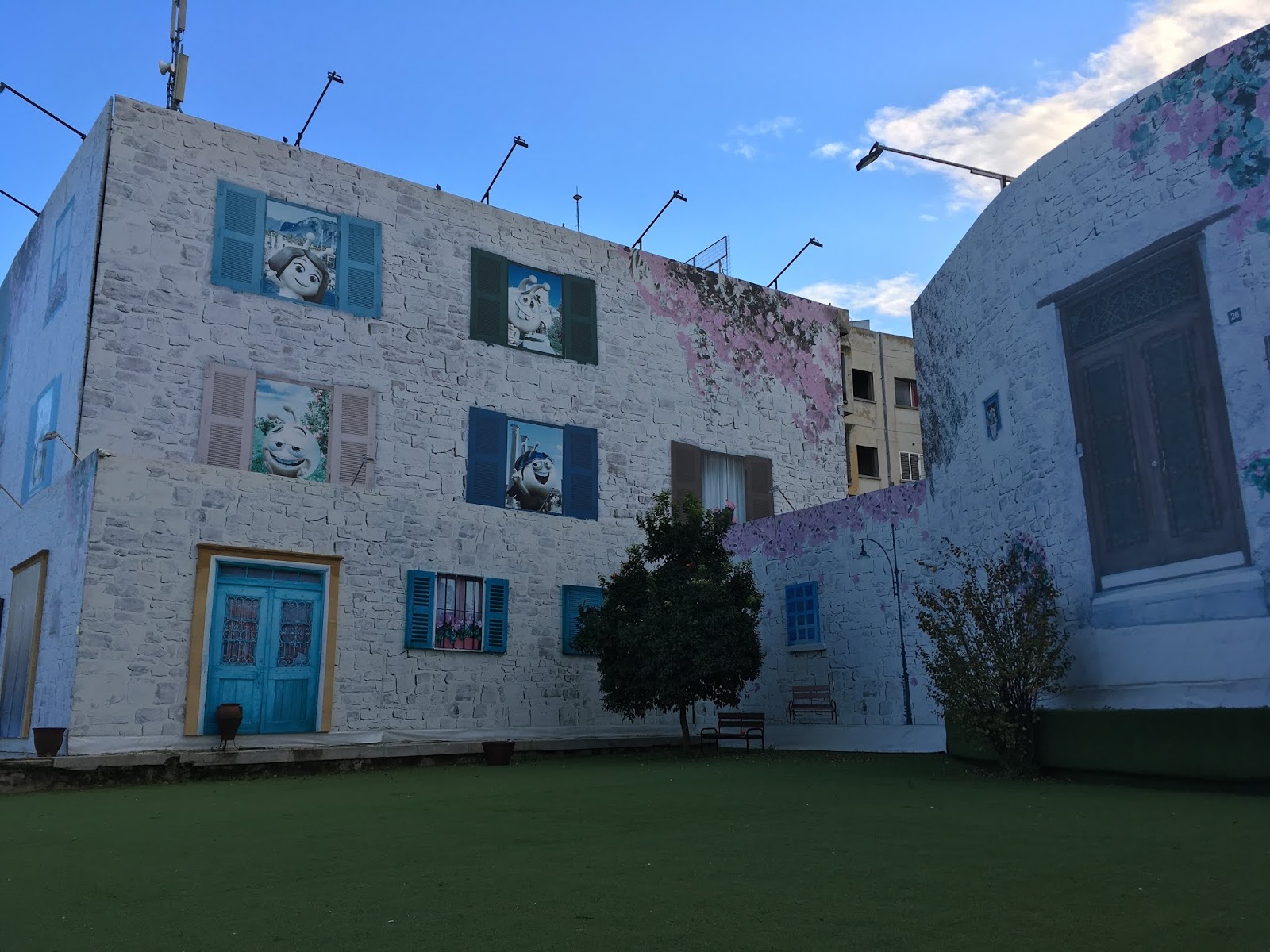 |
| Urban renewal? A nylon facade wrapped around an empty building |
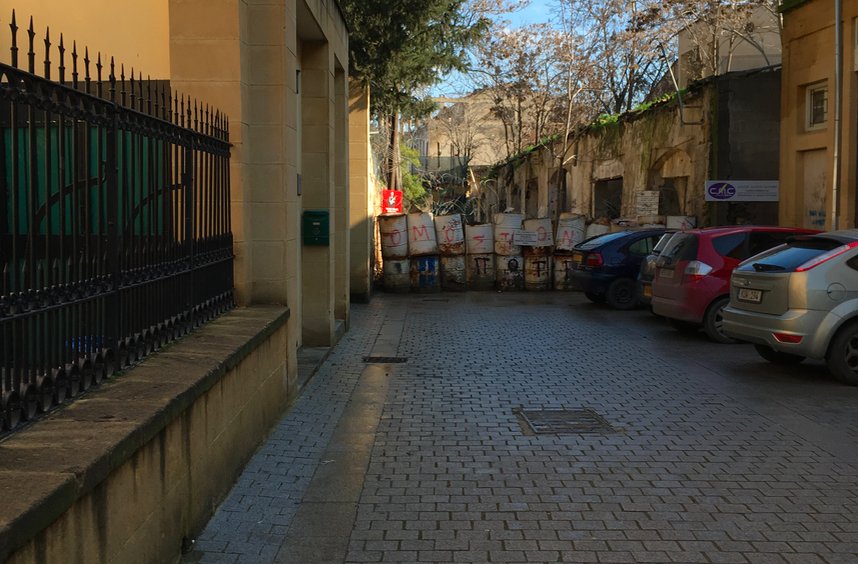
There is a slight undercurrent of tension or maybe it is just or imagination spurred by the occasional sightings of Turkish or Cypriot armed military but really minimal compared to what we felt in Belfast and Jerusalem. Again, unfortunately and stupidly, religion plays a role as the north is Muslim and the south, Greek Orthodox but from vantage point the country seems pretty secular. We were in the south for Epiphany and Greek Orthodox Christmas and most stores were open, although there was a police presence around the churches.
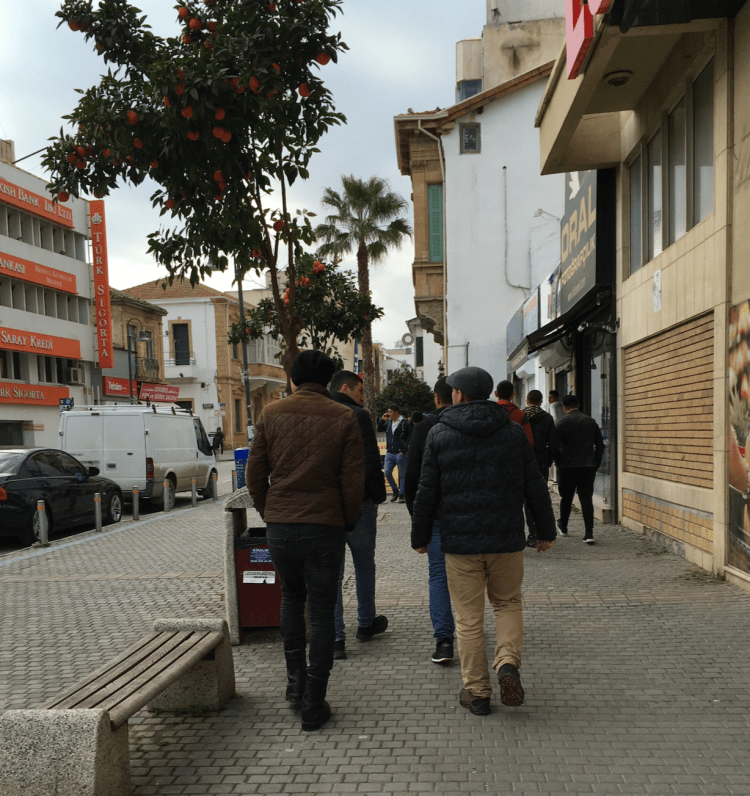
In the north, it also felt secular. We heard the call to pray multiple times, but nothing seemed to stop. There were women with head scarves but most were in western clothes, not covered up, and men and women holding hands. Although, we did see a lot of groups of young men in the North just walking around.
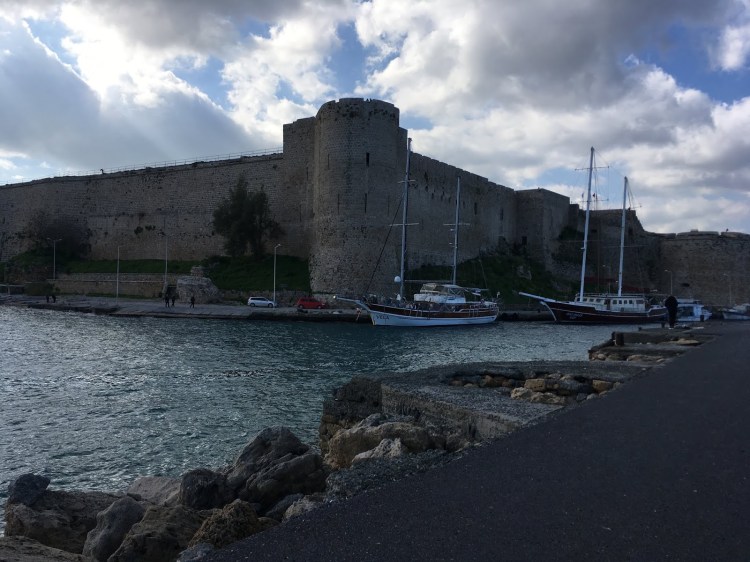
Despite the islamic ban on alcohol, there were plenty of bars in the north, including in the courtyard of the mosque. Gambling, illegal in other moslem countries is legal . Kyrenia (Greek)/Girne (Turkish), where we went, was kind of a mini-Las Vegas but with an ancient fort, Ottoman cemetery and beautiful coast line along with the multiple casinos
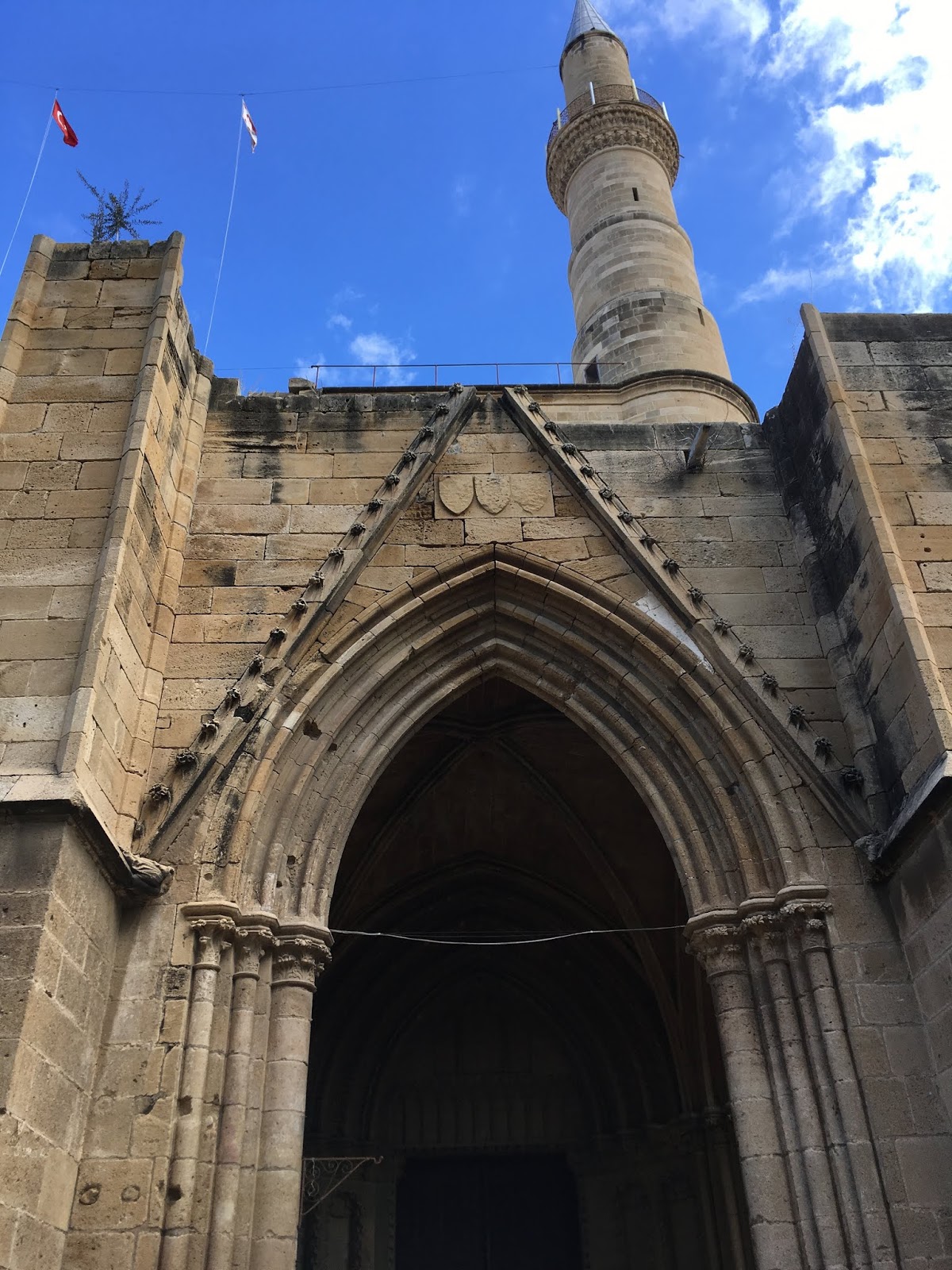 |
| St Sophia minus exterior gargoyles, angels and saints now Selimiye Mosque |
 Chosen Fugue