Ravenna wasn’t initially on our map, but should have been considering that for almost 70 years (408-476 AD) it was the capital city of the Western Roman Empire. We have been to Benicia, the capital of California (from 1853-54), so we were obligated to go to Ravenna plus Patricia’s sister recommended it (hat tip to Lorie).
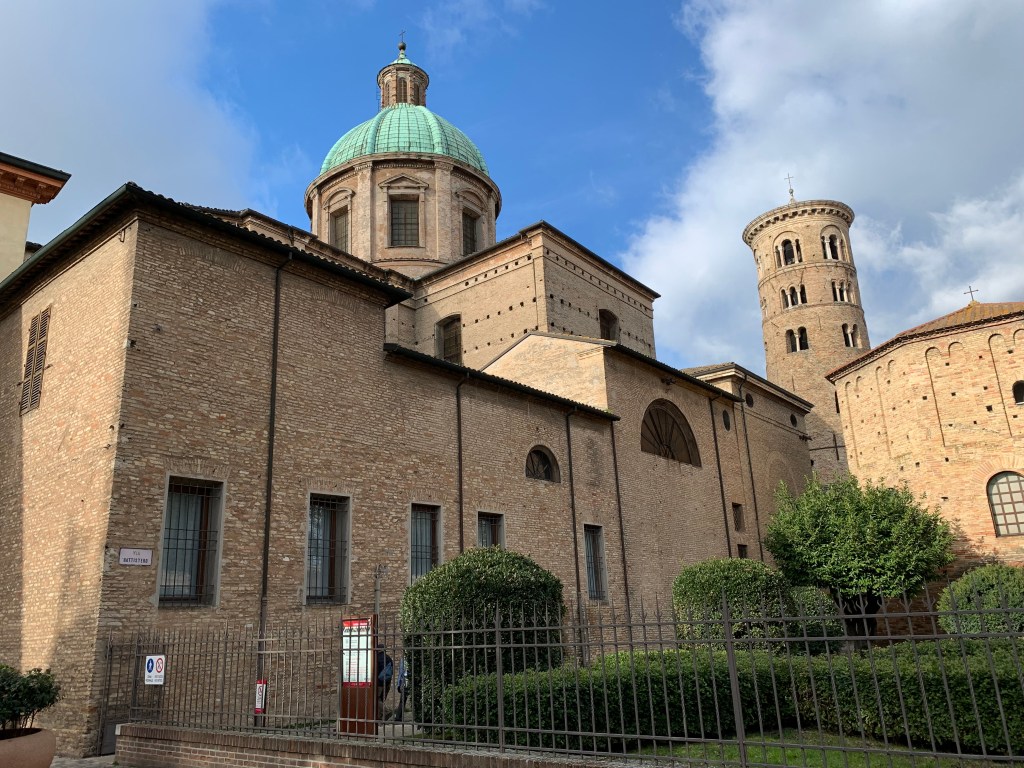
Ravenna is a UNESCO world heritage site due to its well-preserved Byzantine architecture and mosaics. You go to Ravenna, and you hit the circuit of the five buildings; two basilicas, a chapel, a mausoleum (although no one is buried there), and a baptistery. https://www.ravennamosaici.it/en/
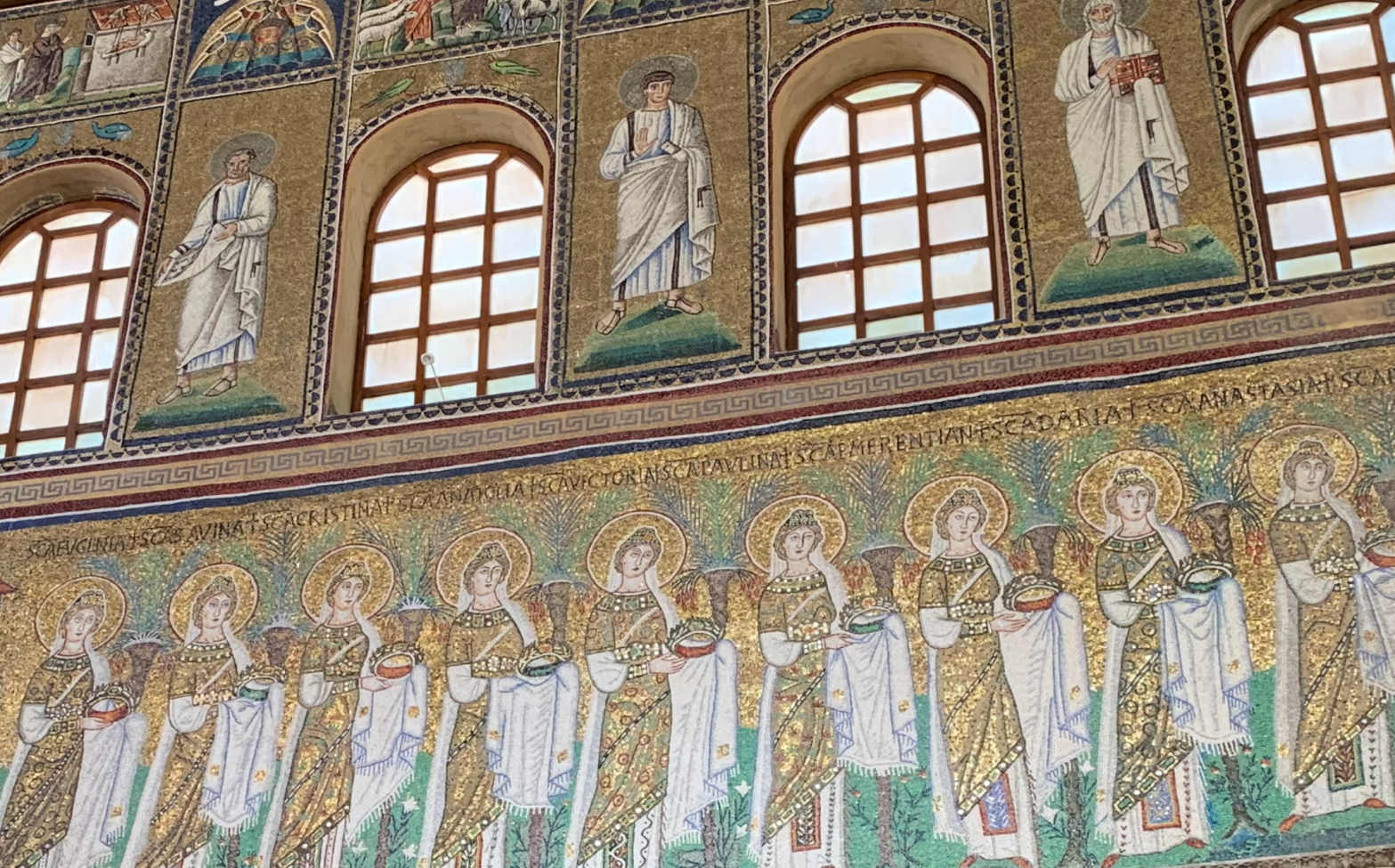
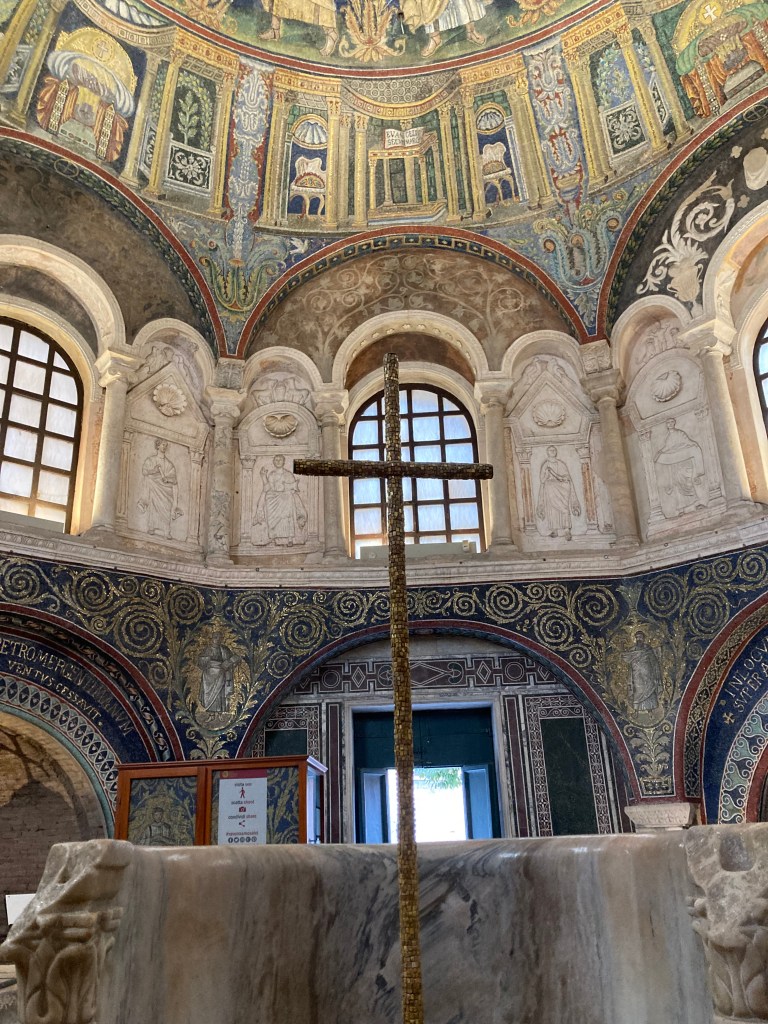
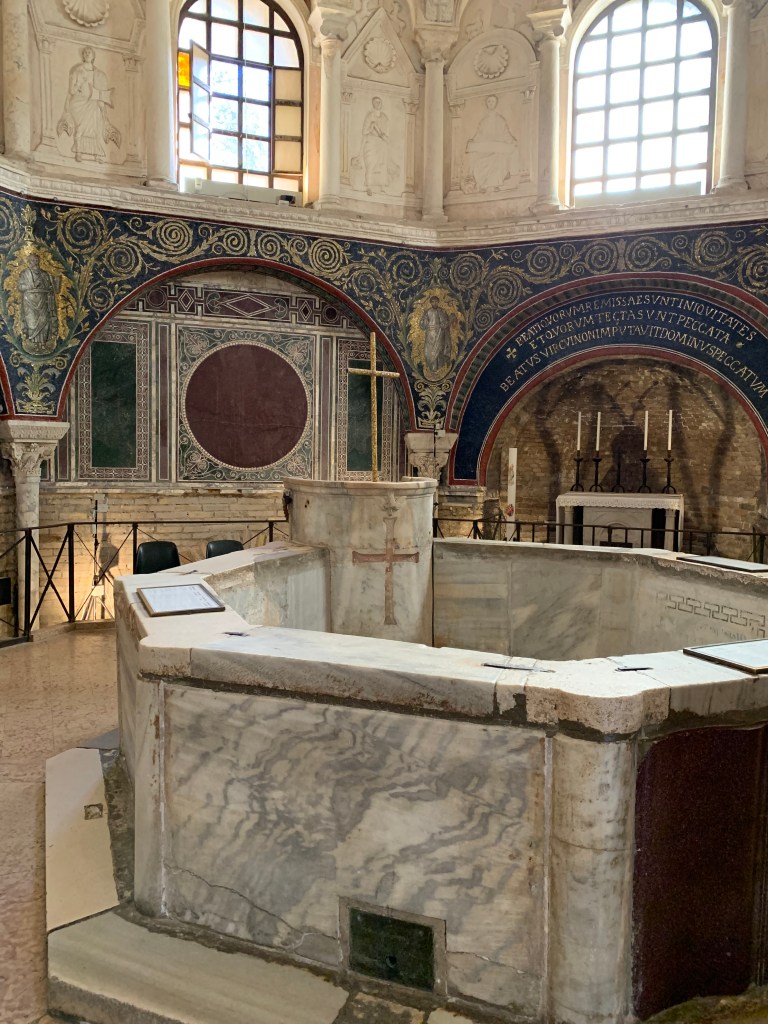
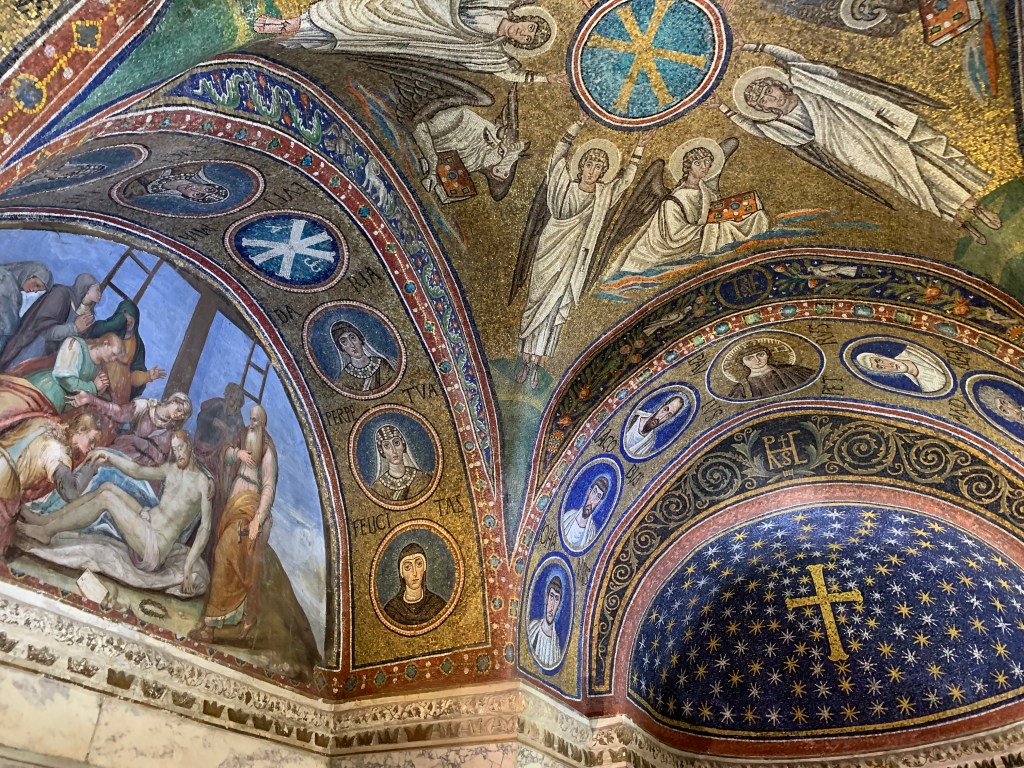
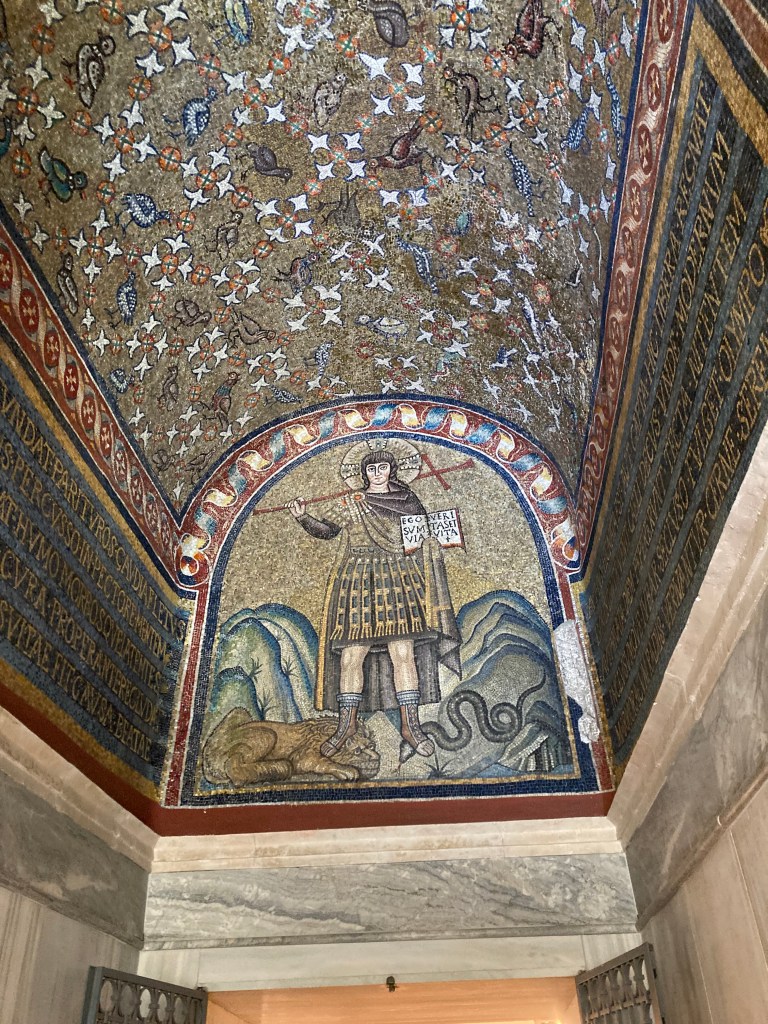
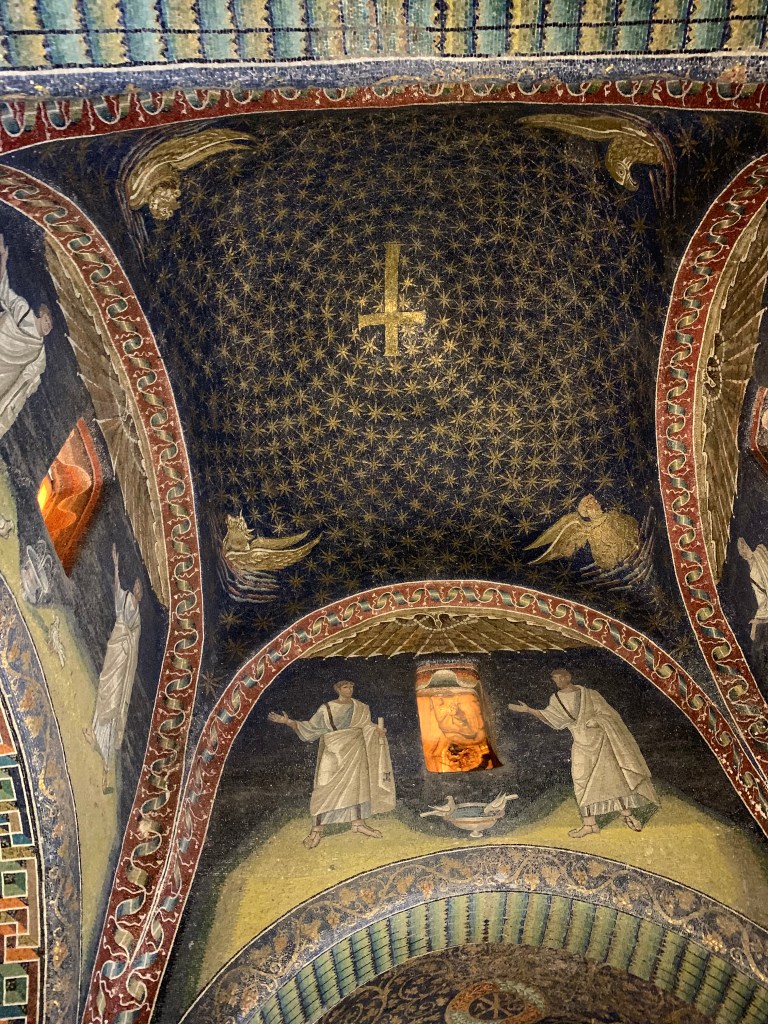
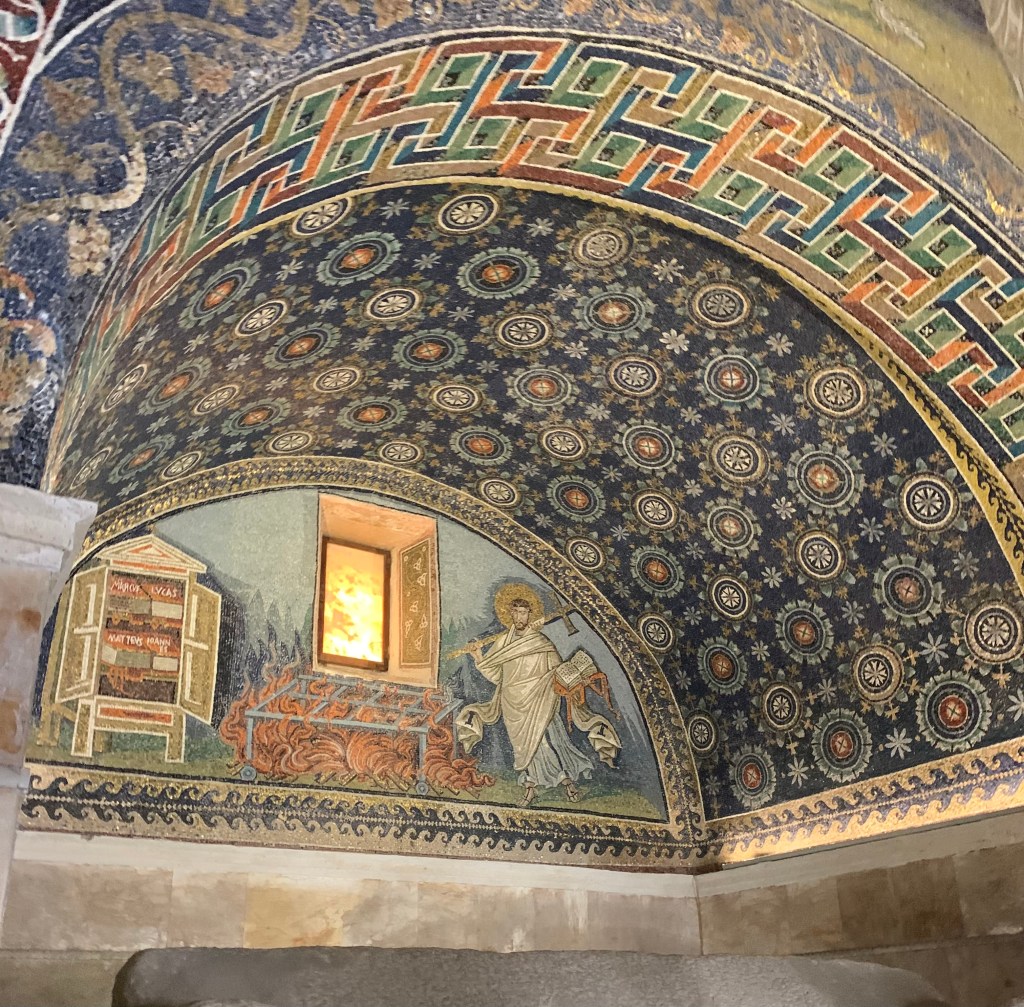
It is difficult to describe the impact of walking into these impressive-but-rather bland on the outside building and being walloped by sparkling, deep-hued, intricate mosaics. Seeing religious mosaics were a nice break from seeing religious paintings and the themes of the mosaics were a bit different than the norm as well. They were primarily designed and created starting in 500 AD during the reigns of Justinian and Theodoric the Great, an Ostrogoth who conquered the city as the Roman Empire was waning. Theodoric practiced a slightly different form of Christianity, Arian (not to be confused with Aryan). When Theodoric was deposed, of course, some remodeling and re-mosaicing was done to align the imagery with the Roman Catholic symbology. As you look at these, consider that most of the ceilings and walls are mosaic, not painted. The paintings were added after the mosaics and have the more traditional Catholic images.
Neonian Baptistery
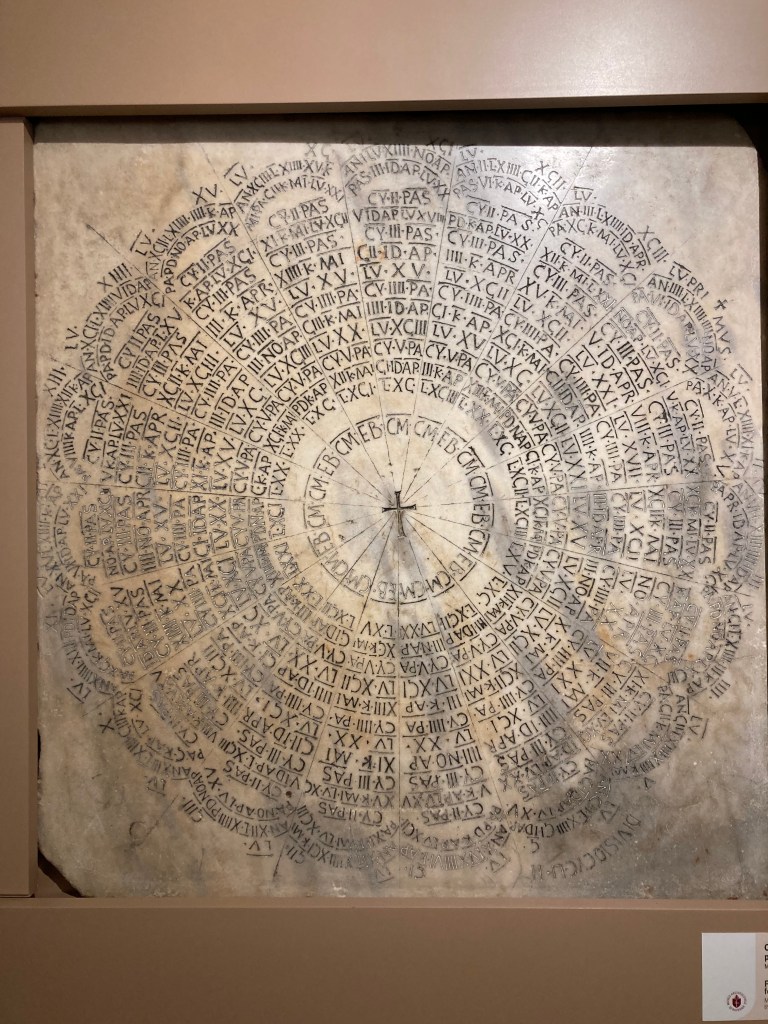
Saint Andrew Chapel and Museum
Basilica Saint’ Apollinare Nuovo
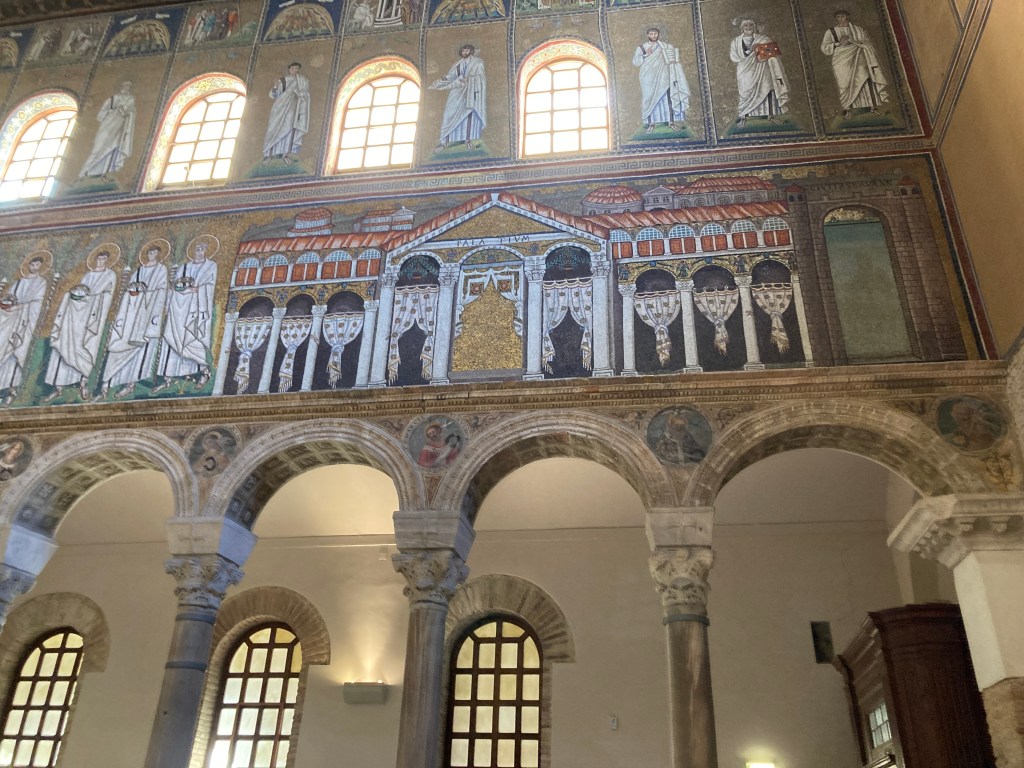
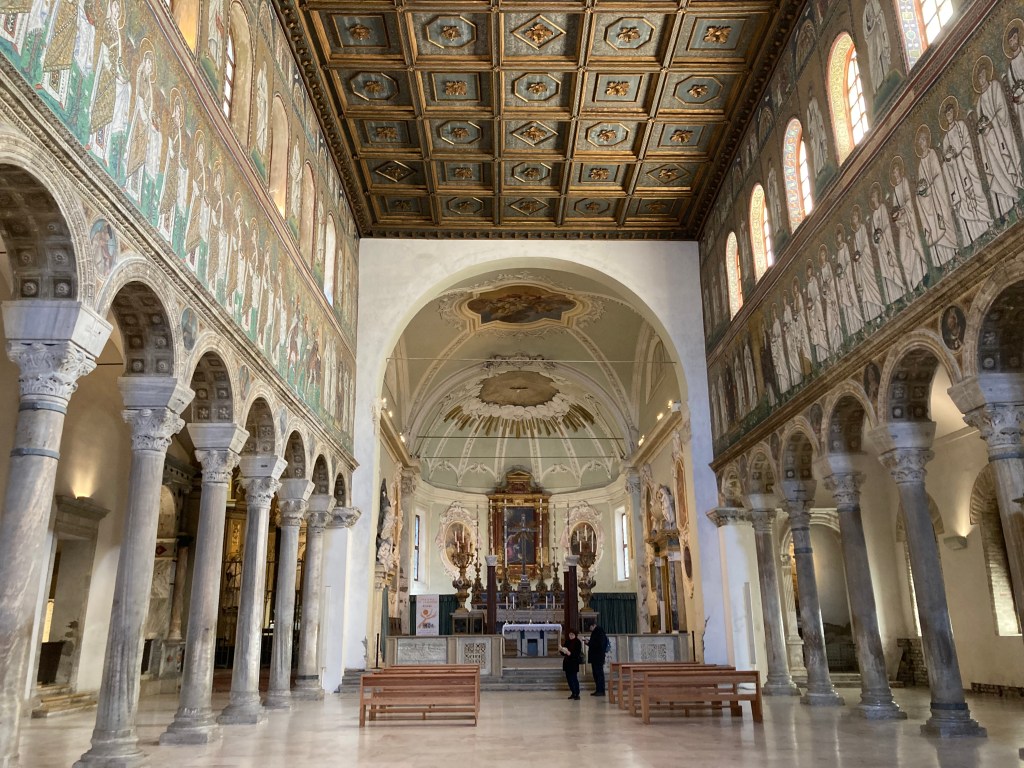
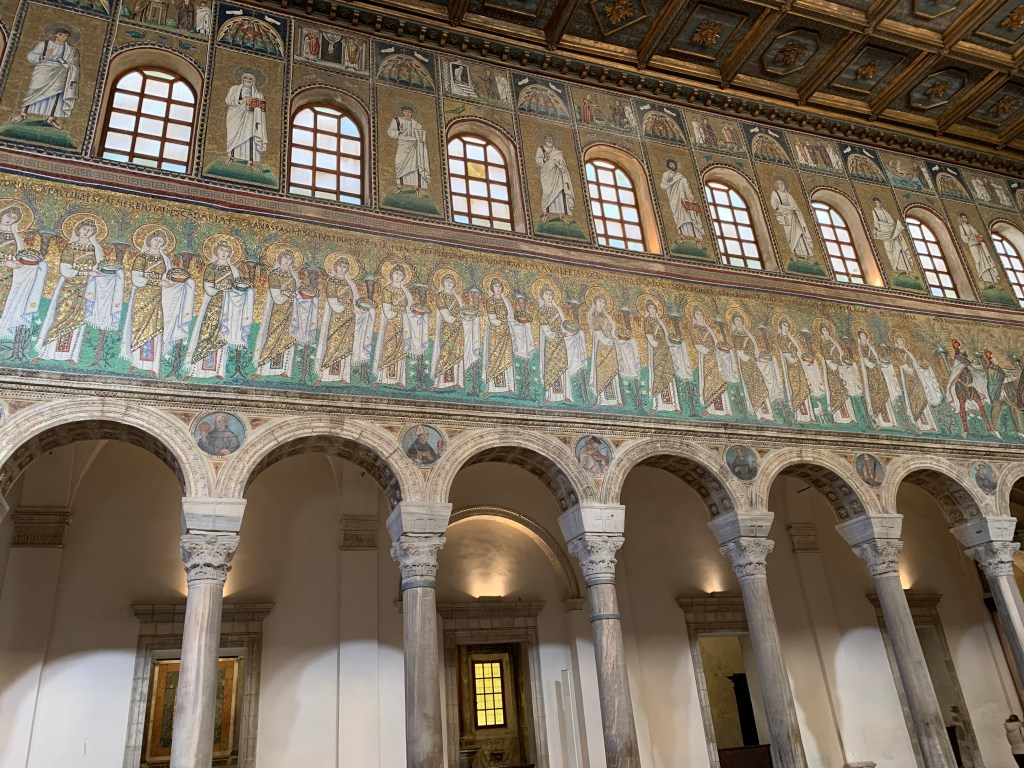
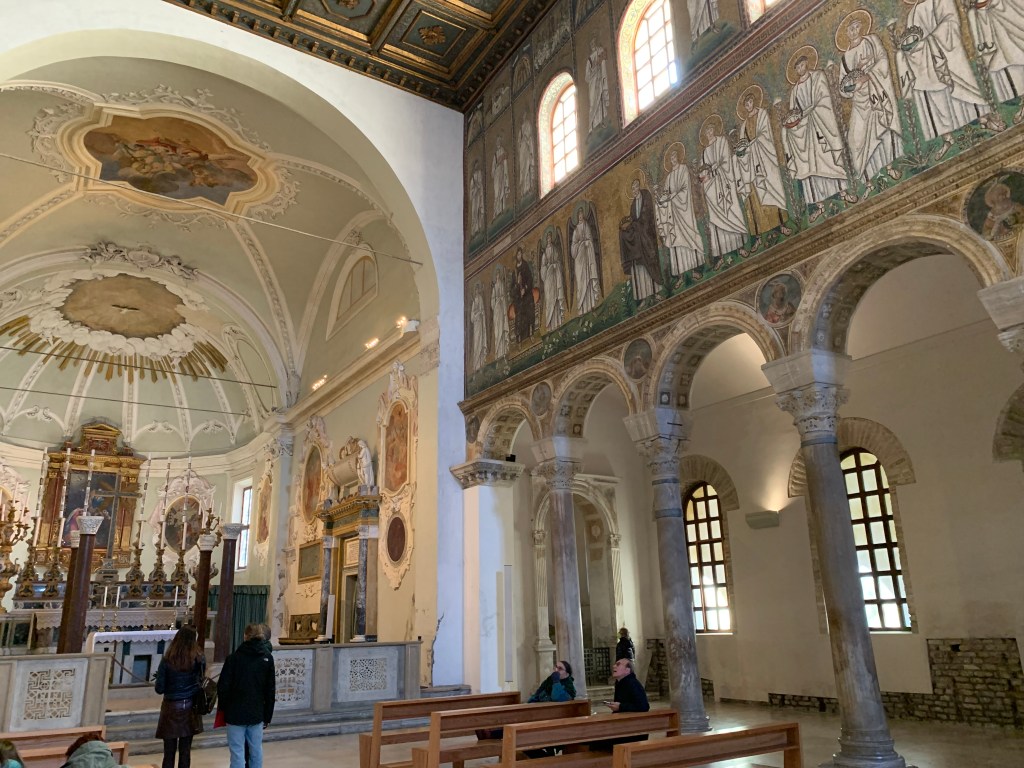
Basilica San Vitale, good video that also explains Jesus, bearded or not? https://classroom.ricksteves.com/videos/ravenna-italy-exquisite-byzantine-mosaics
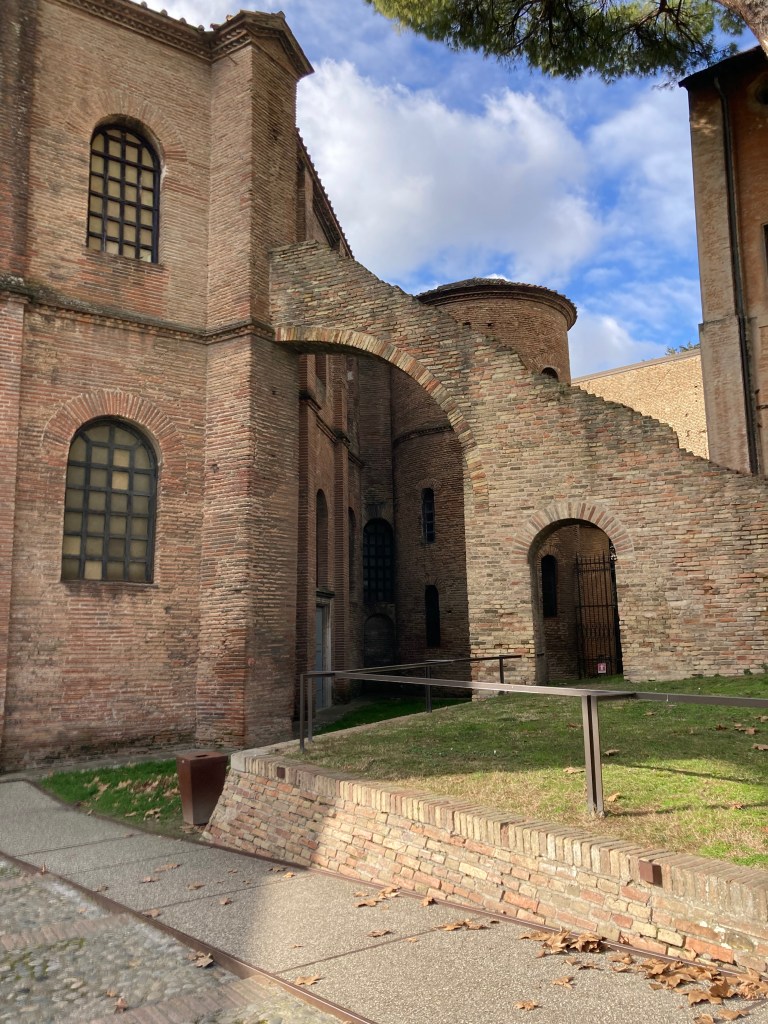
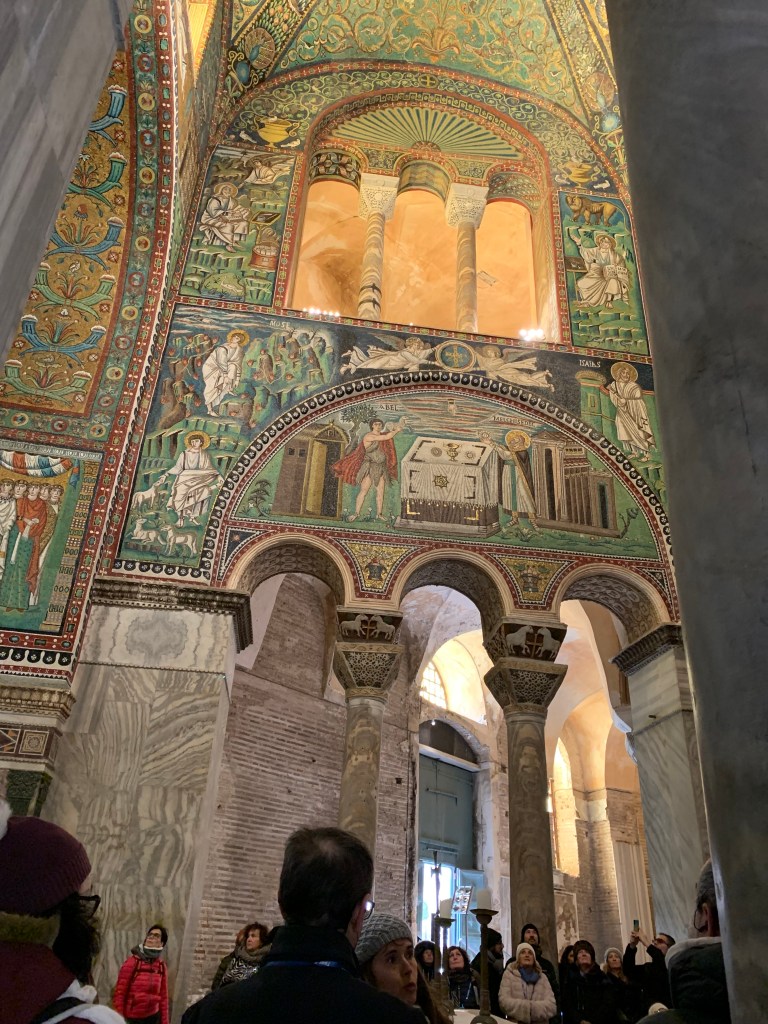
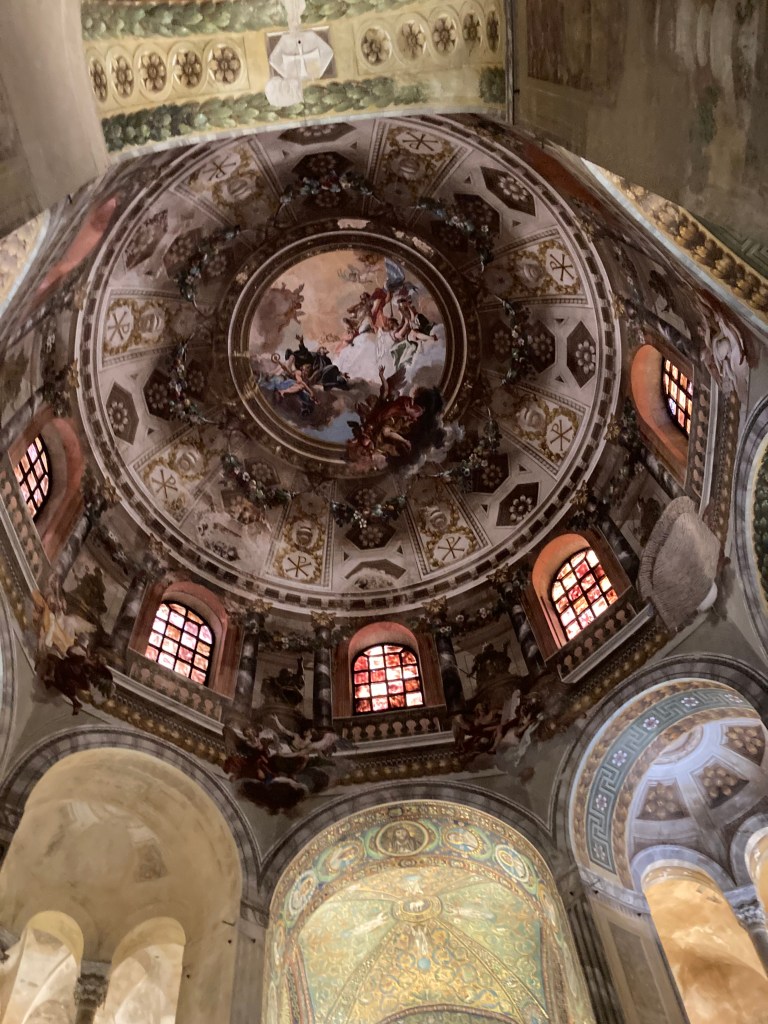
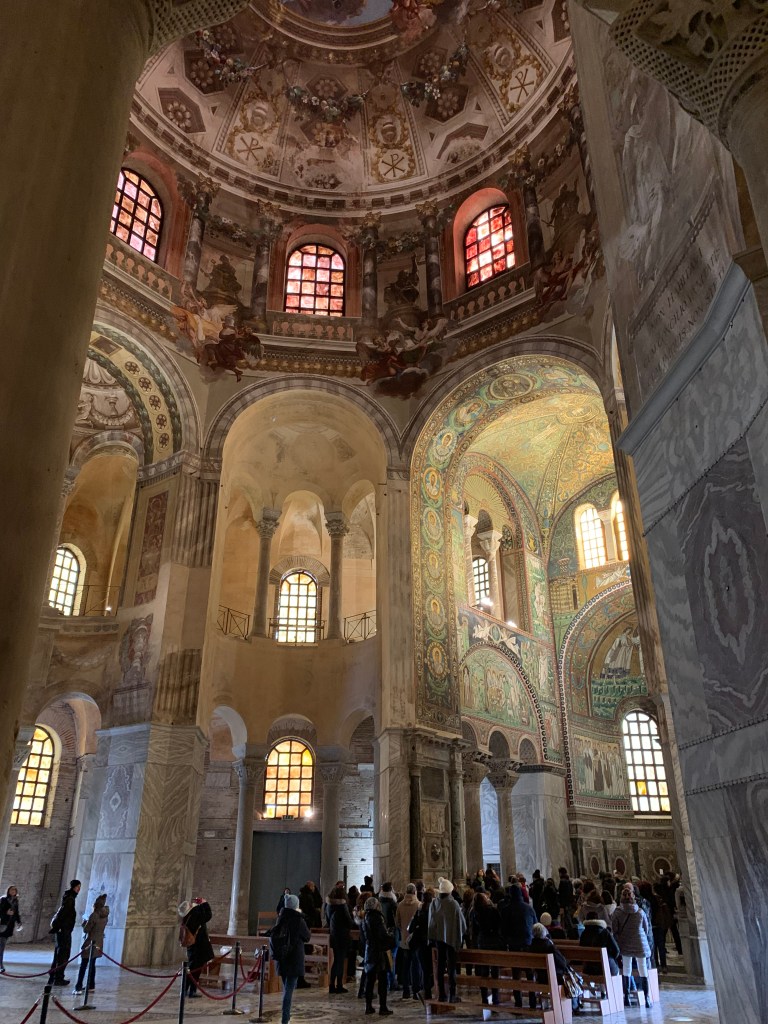
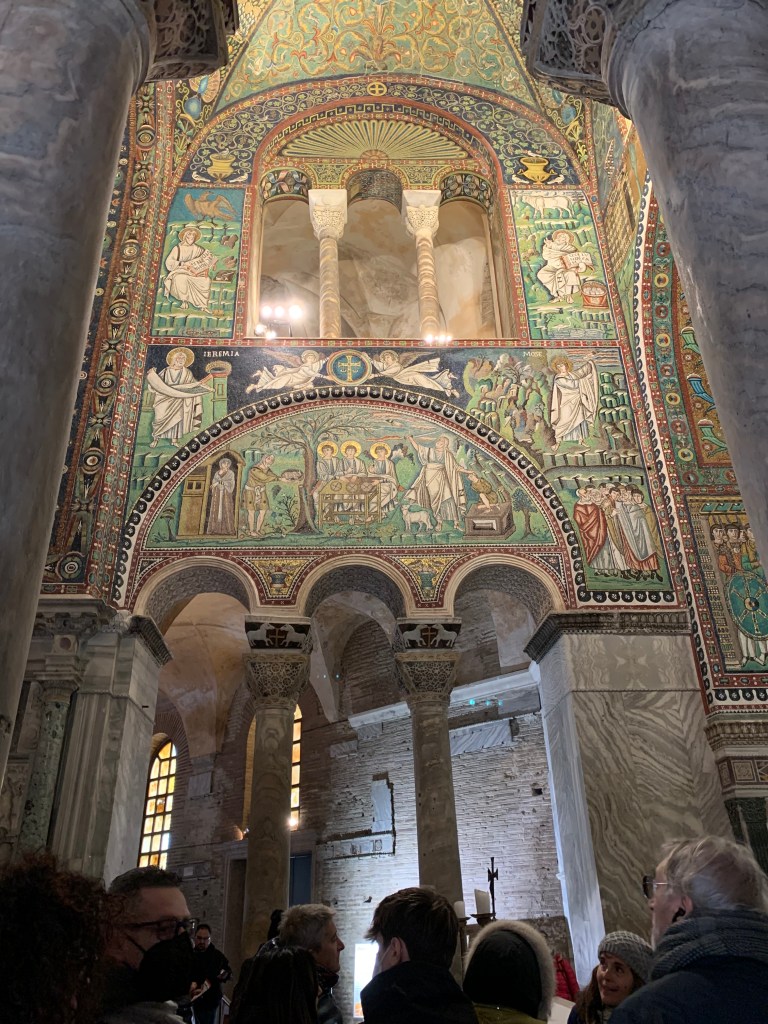
Mausoleum of Gaia Placidia
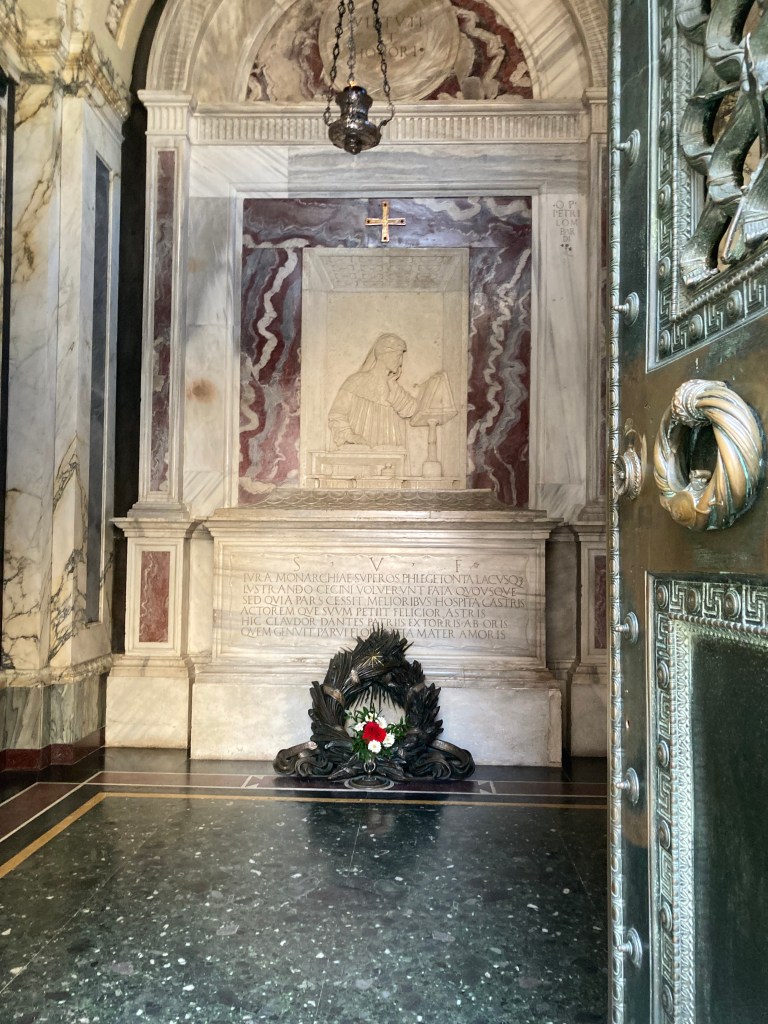
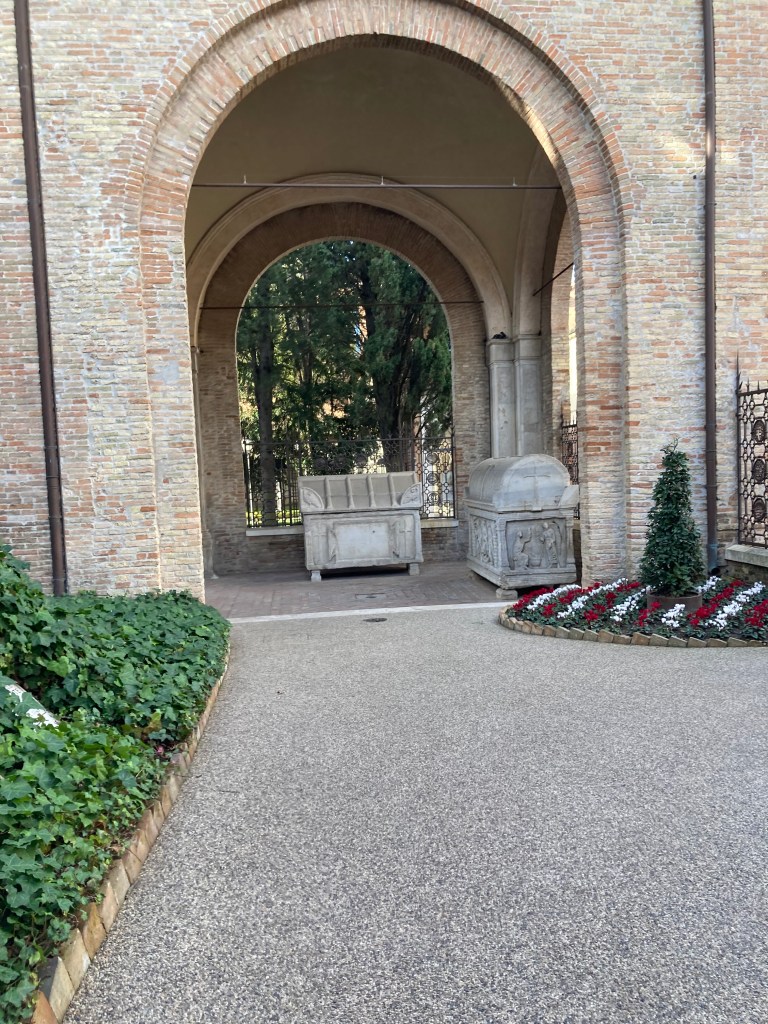
Dante’s (1265-1321) tomb is also in Ravenna, as he spent his last few years there in exile from his native Florence. Florence, later realized their error in condemning and wanting to execute him (for political reasons) and requested his bones back, even building their own tomb for him in 1829, but that tomb still sits empty in the Basilica de Santa Croce in Florence (we saw the outside of the church while in Florence), but felt no need to pay to see an empty tomb since we saw the real one for free in Ravenna.
We varied the theme of our lodging and stayed at a Bed and (Bad) Breakfast, mainly due to availability. It essentially was the person’s house, it seemed, with his two kids the only other guests for the weekend. They made efforts to create a modern, keyless hotel which resulted in us being locked out-twice.
 Chosen Fugue