Wrapping up our six weeks in Italy was kind of like cleaning out the fridge, what looks good? Venice was to follow Florence but we needed a palate cleanser in between these two major cities. Bologna it was (although traditionally Bologna is not a classic palate cleanser).
Once we started reading about Bologna, it was obvious we should go there as it seemed to a have a different flavor than other Italian settings. Bologna is nicknamed ” La Grassa” (the Fat City) due to it’s rich cuisine, the “La Rossa” (Red City) due to red roofs in the historic center and “La Dotta” (the learned one) since the University of Bologna is one of the oldest universities in Europe (and the world) founded in 1088 AD. We can’t resist three things mixed together.
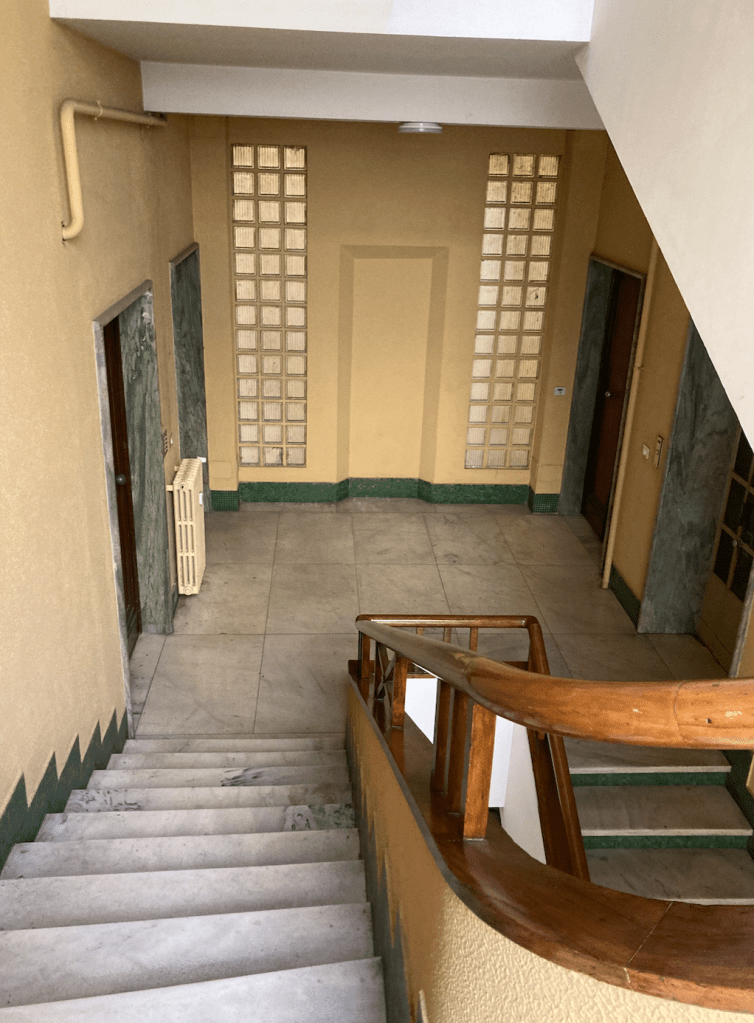
Bologna DID feel different from the start. Our apartment was in a Facist, modernist building, a change from the early 1900s buildings we generally had been staying in. It was great. As usual, we were city-centered but not sandwiched in the middle of the tourist area. Again, it allowed us to sample neighborhoods that we probably would have not seen if we stayed in the thick of it.
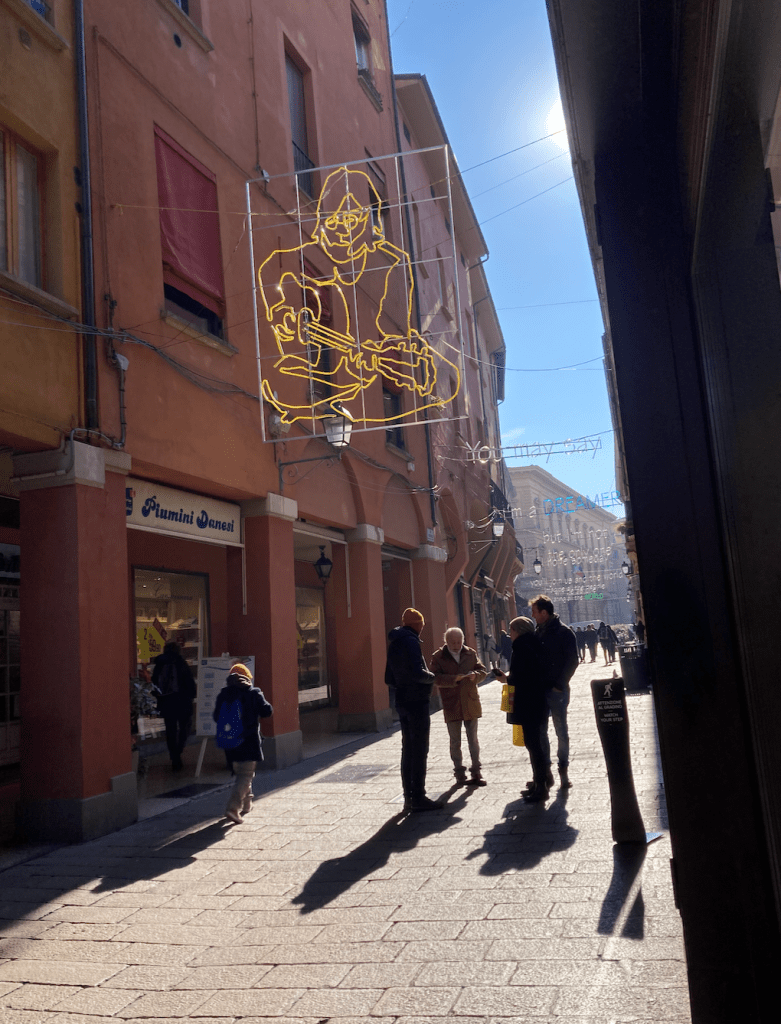
Bologna was not the Italy we had come to know, definitely a different slice of Italian life. Maybe it was because it was further north or maybe it was the porticos. Miles and miles of portico (62 kilometers) providing shade and shelter while moving through the city since the 12th century https://whc.unesco.org/en/list/1650/gallery/ Walking through Bologna, we felt swallowed into the city, looking at everything through the frame of the portico. When you step out of the portico there is weird feeling of exposure, unwrapped as we stepped back into the real world. (note the smog-we were pretty shocked how bad the air was in Northern Italy)
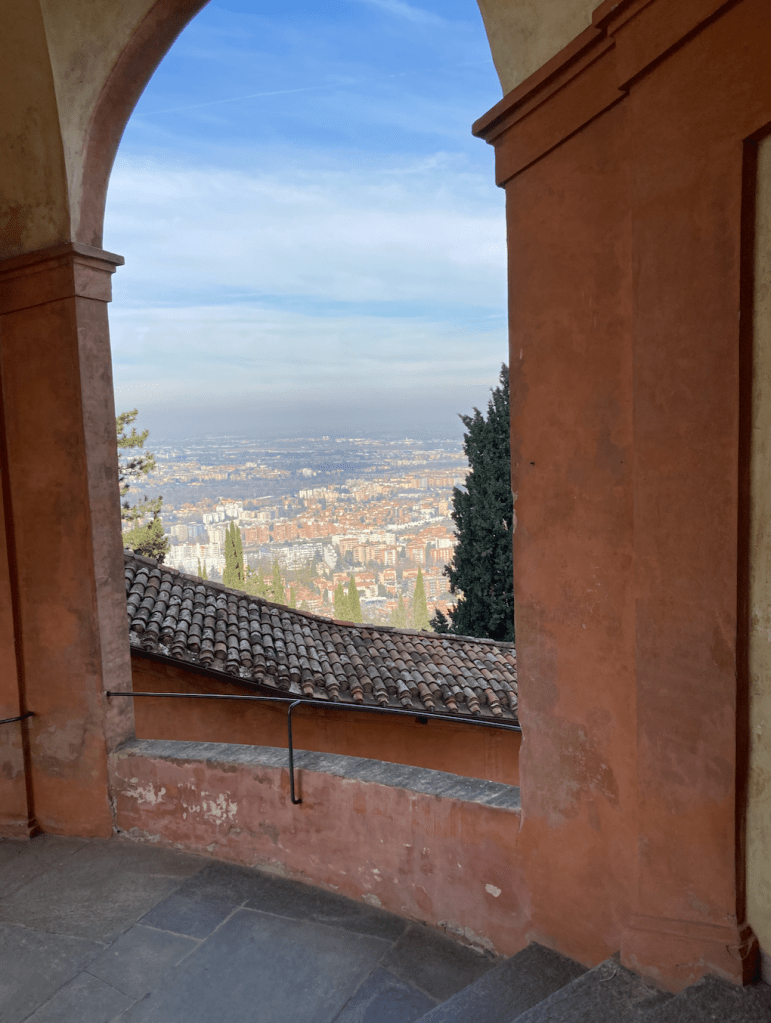
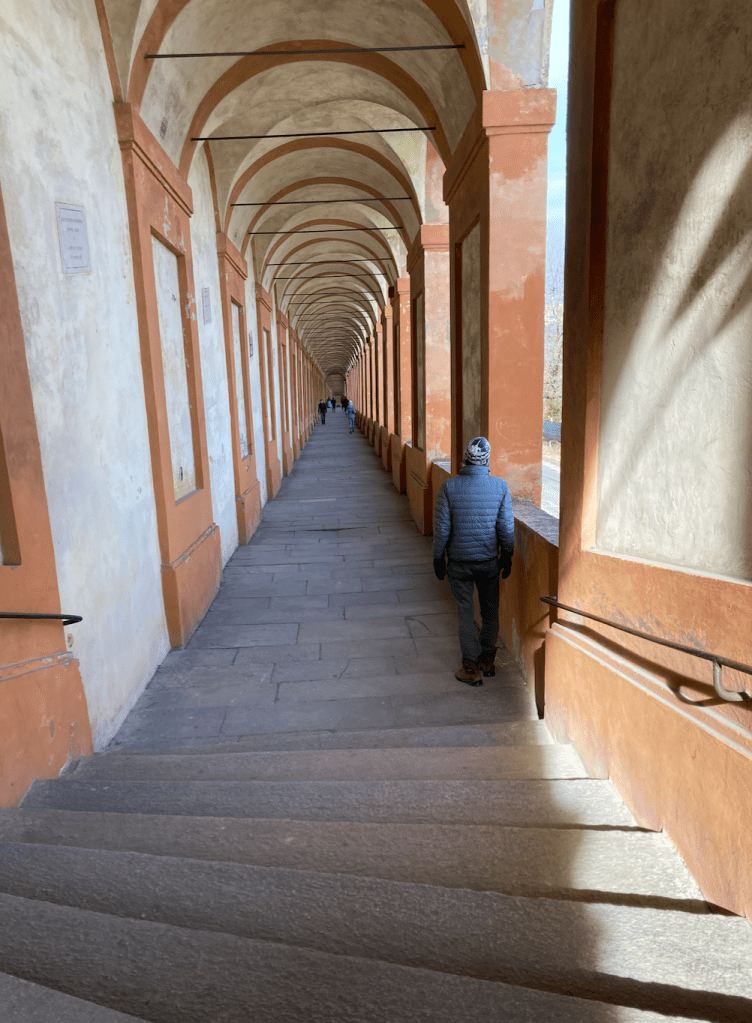
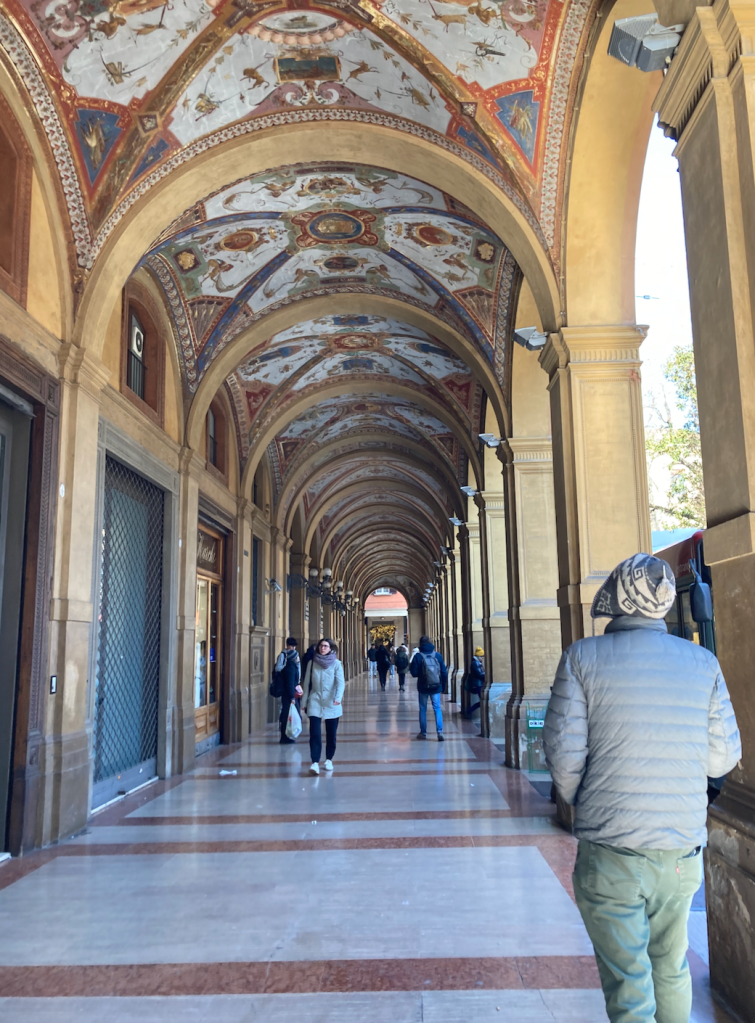
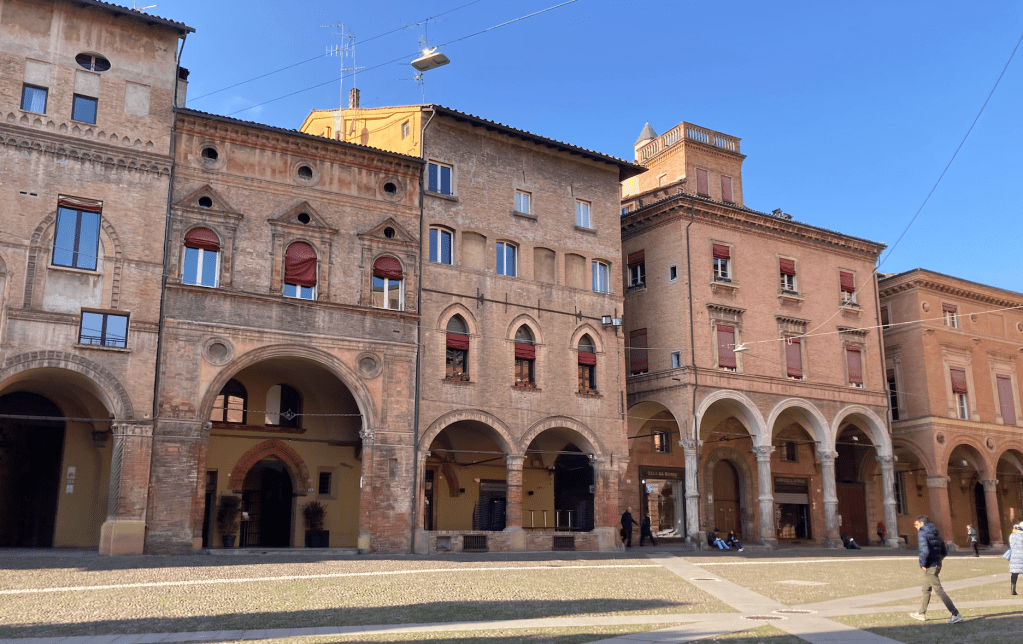
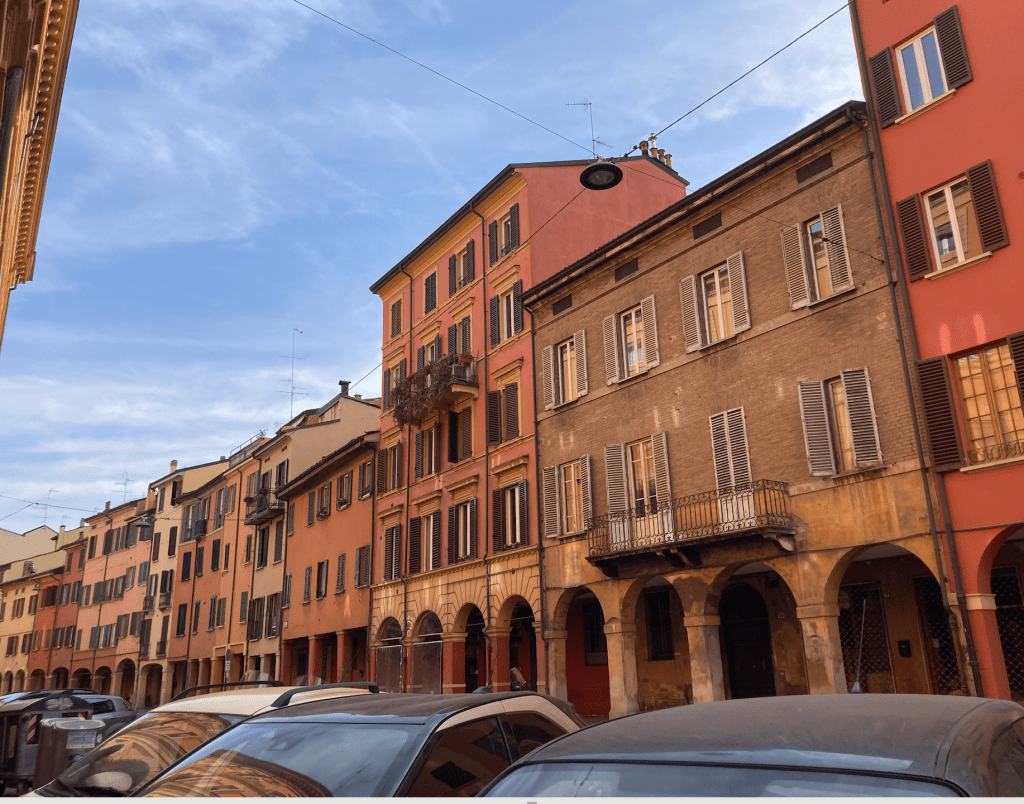
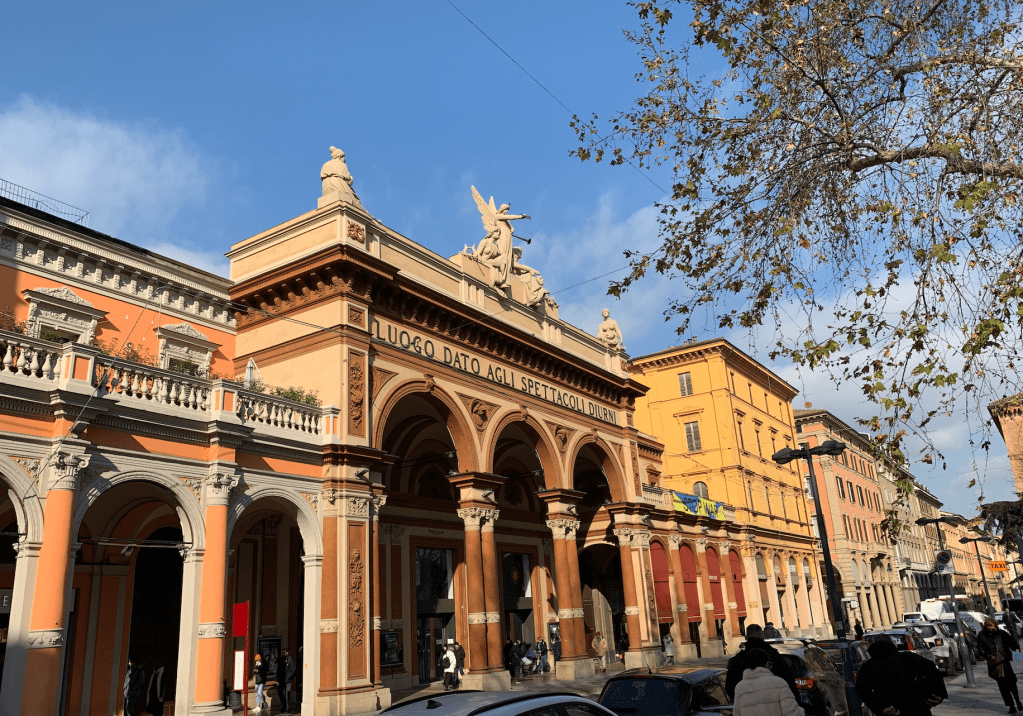
Many of the other Italian cities we visited felt defined by specific time periods. While there were often differences in neighborhoods, there was frequently a visual cohesion of sorts. Not in Bologna, all the eras were cured and ground together. (notice all of the porticos!)

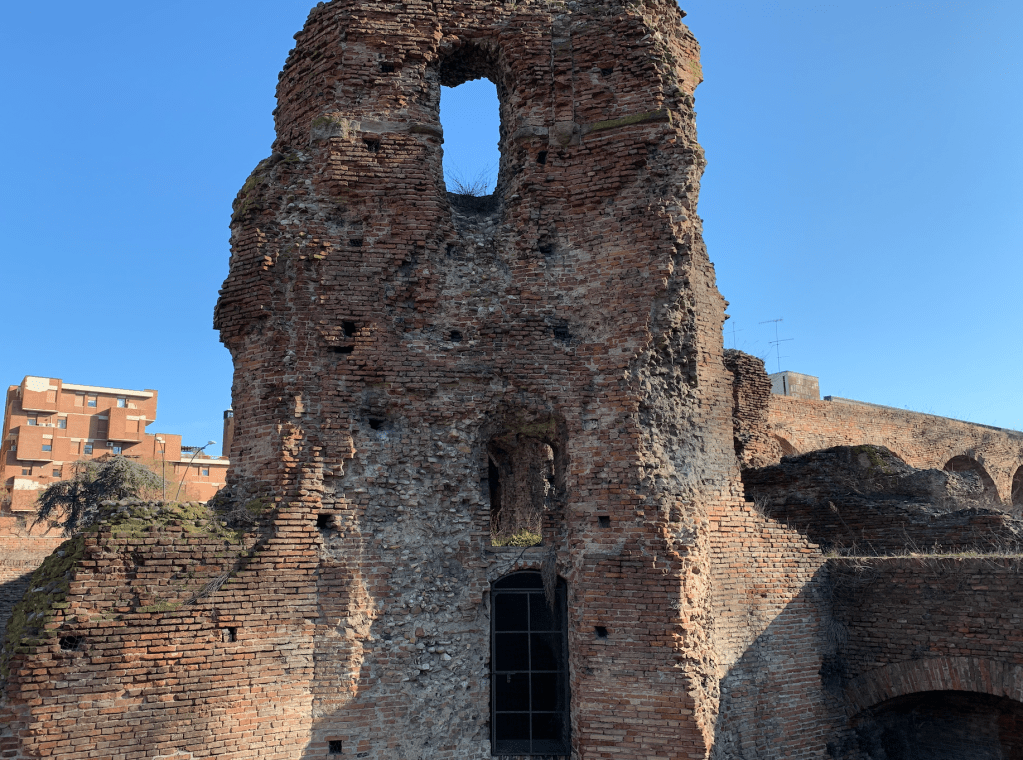
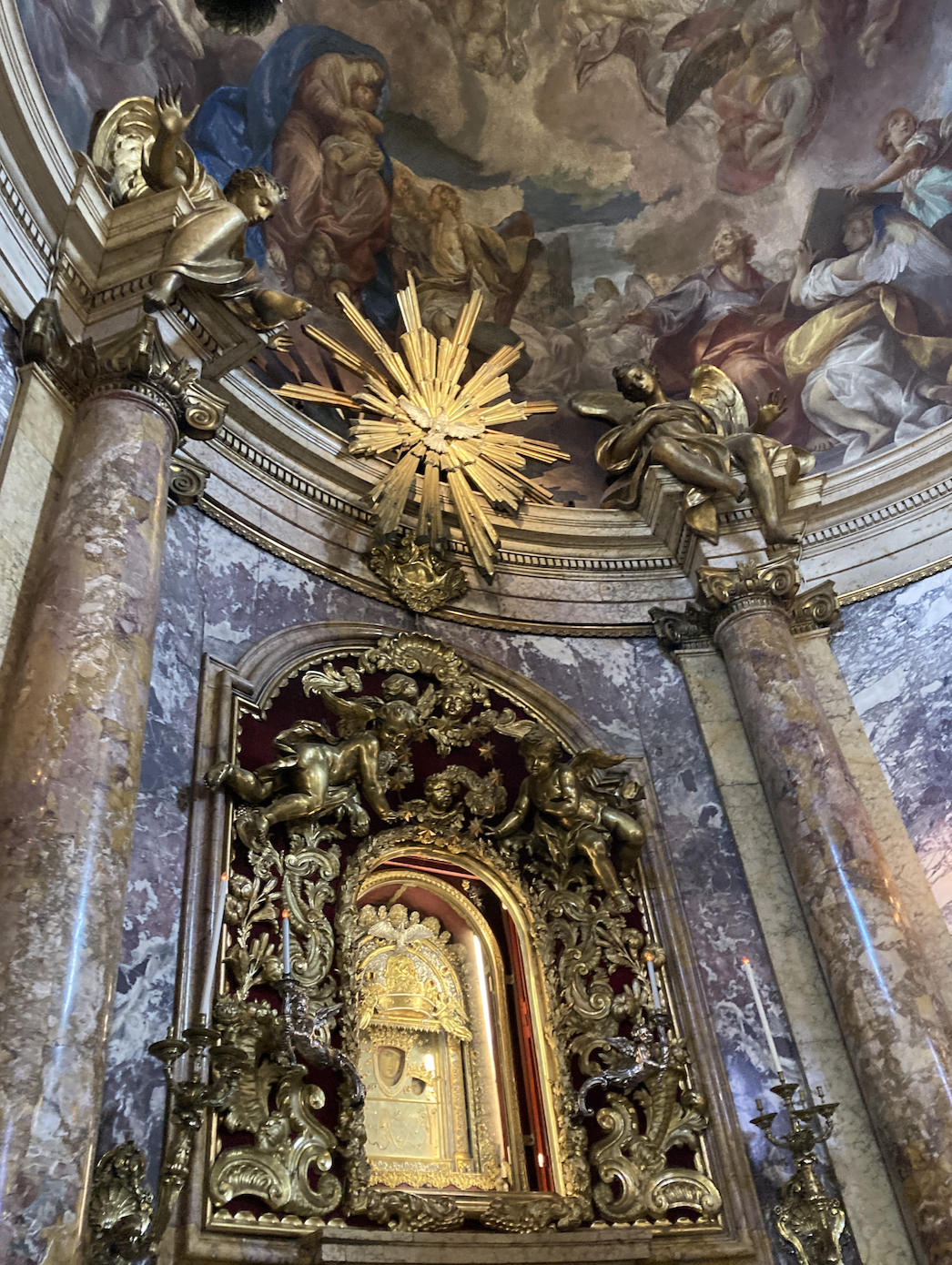
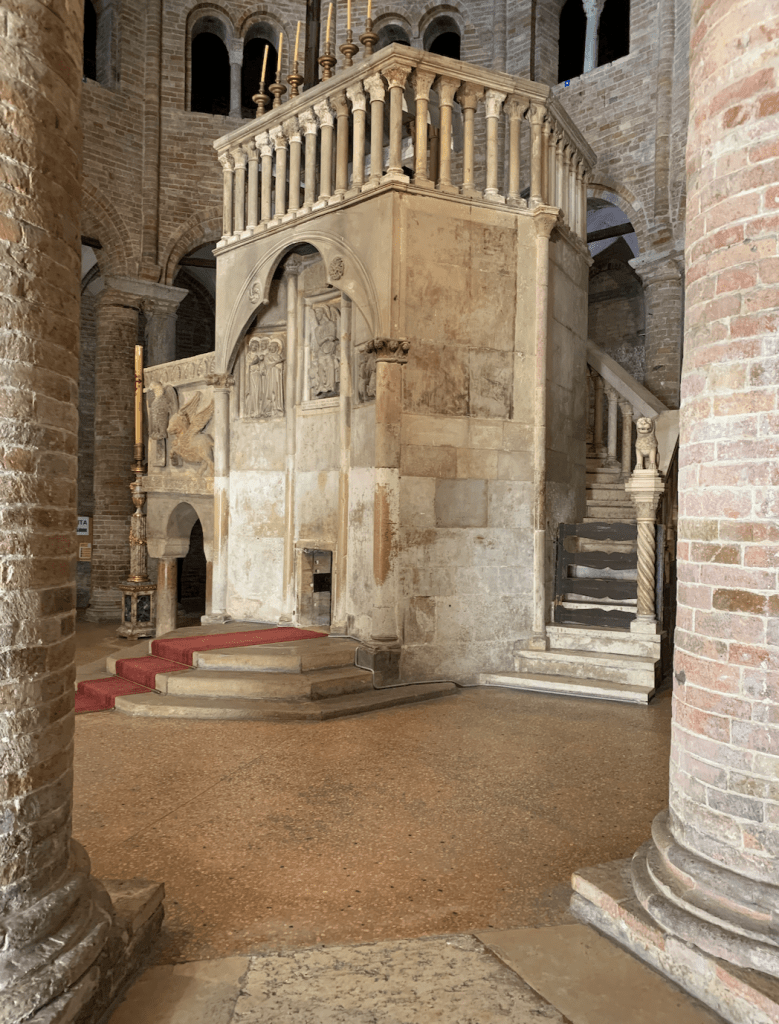
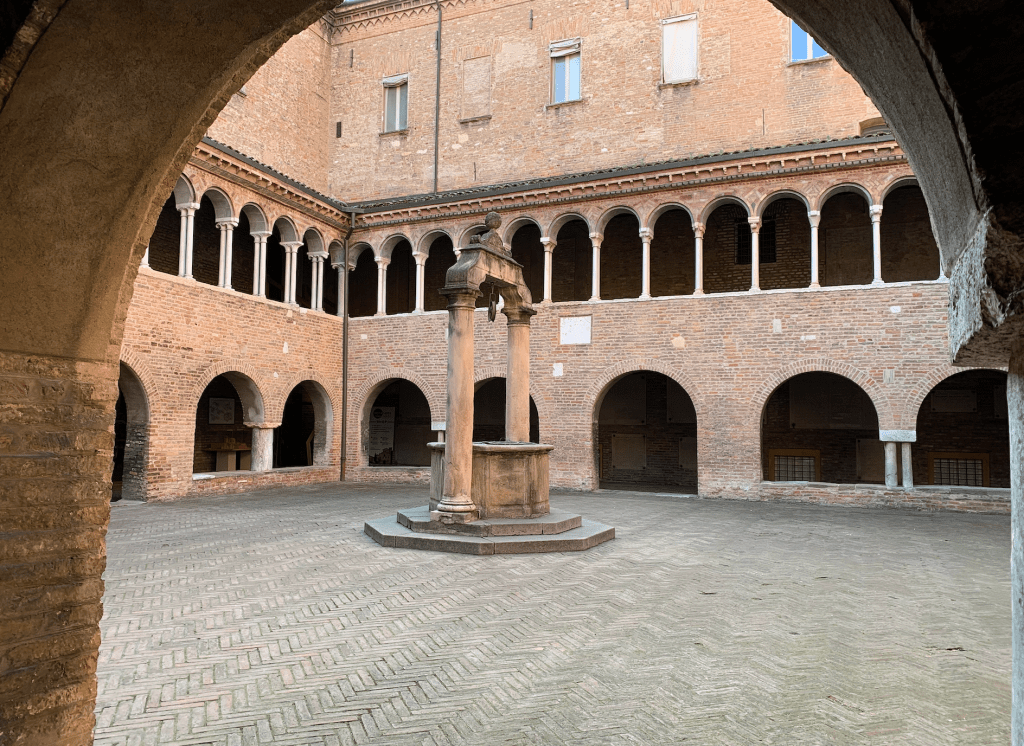
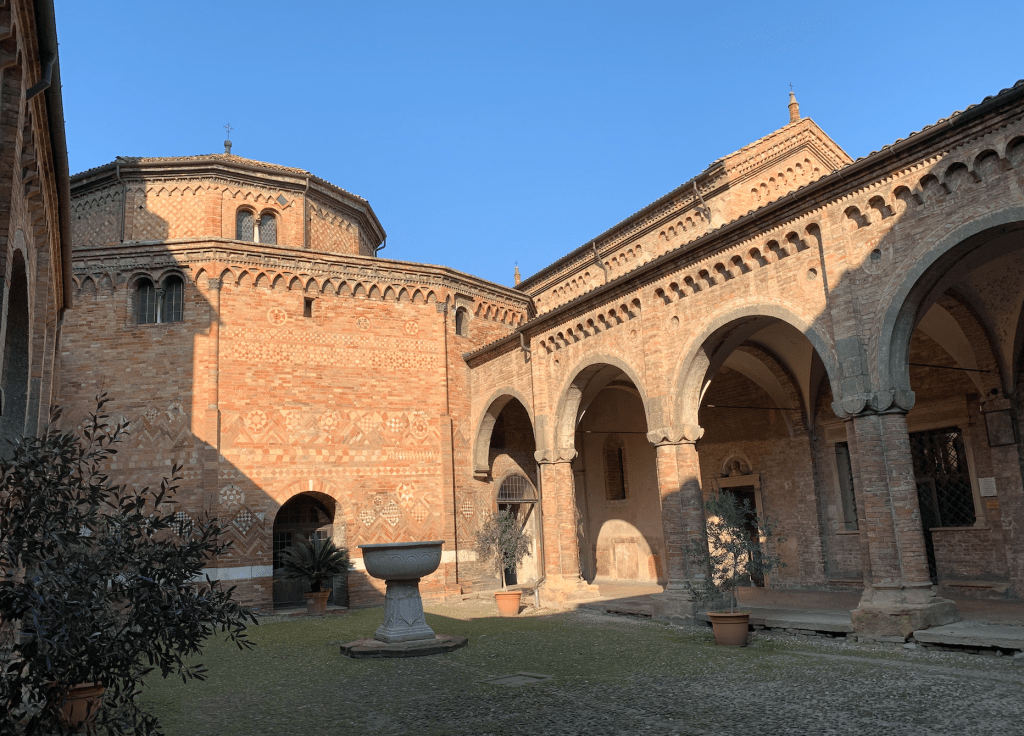
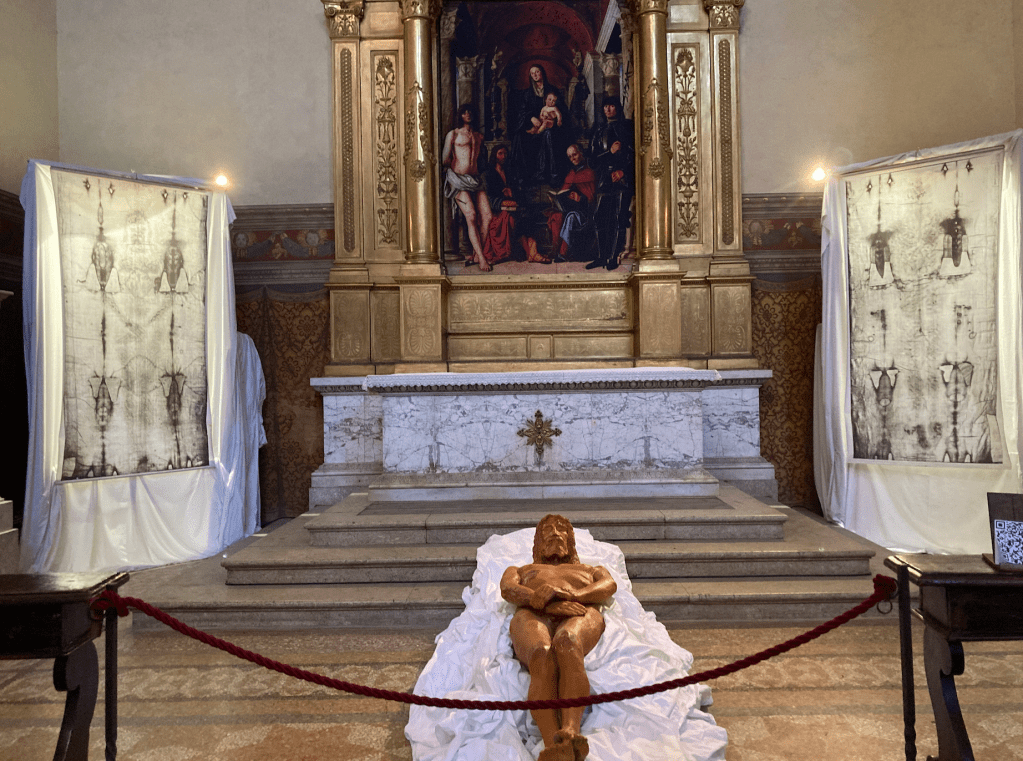
This time-mash up is evident in the Sette Chiese, Seven Churches, a matruska doll of a church. It was like an architectural Mystery Date, you walked through one church, opened the door and entered another church, etc. from the 4th century to the 17th. Which church will you choose from the Church of Saint Stephen, Church of the Holy Sepulchre, Church of Saints Vitale and Agricola, Courtyard of Pilate, Church of the Trinity or of the Martyrium and Chapel of the Bandage (referring to Mary’s headband)?


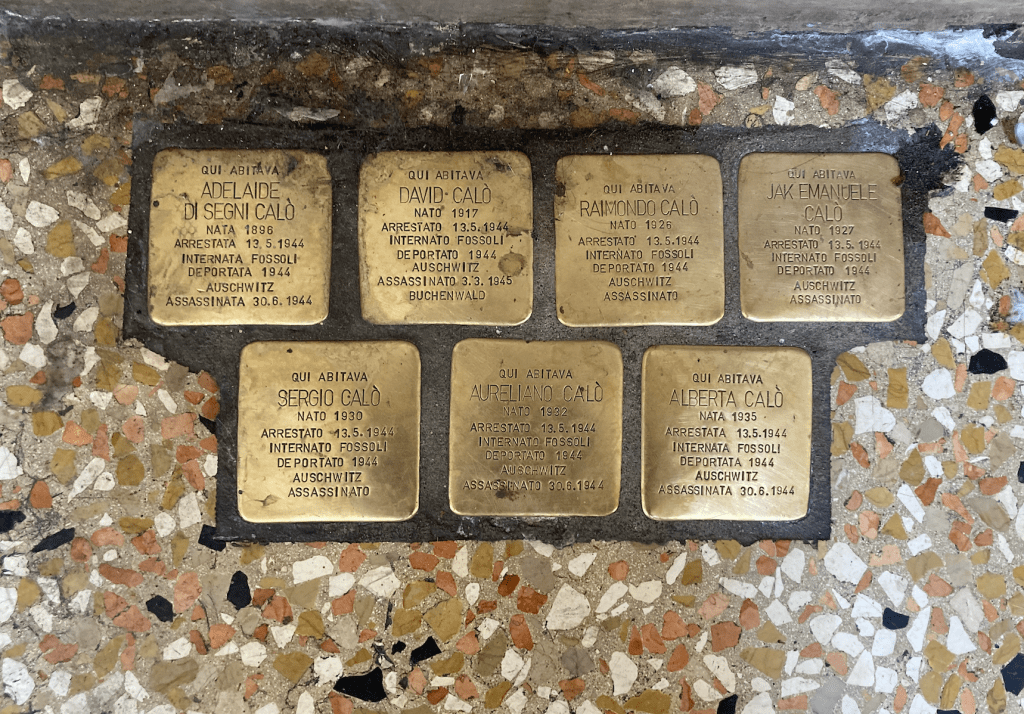
As you walk along the porticos to the main square, there was another twist. As per most of Europe, we passed many stolpersteine https://chosenfugue.wordpress.com/2019/01/07/they-do-make-you-stumble/
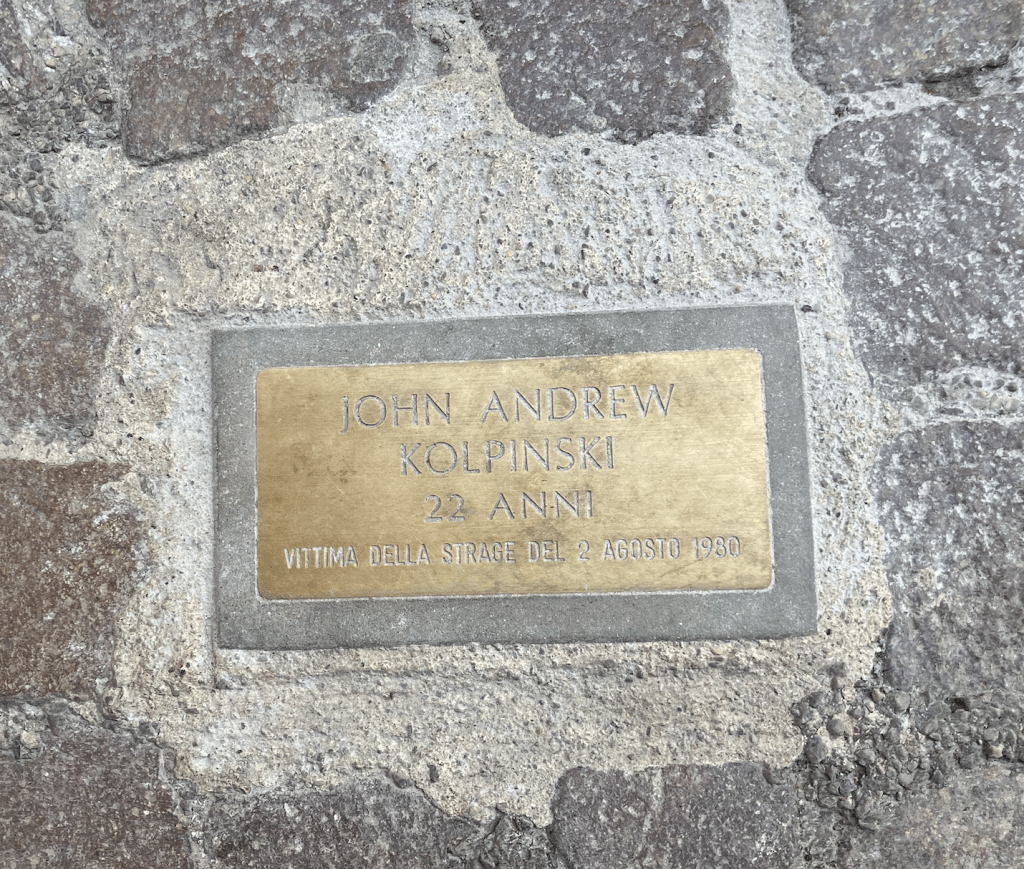
but we also passed a variation. A row of bronze rectangles memorializing the 85 people killed and 200 wounded in the 1980 bomb attack on the Bologna train station by a neo-facist group https://en.wikipedia.org/wiki/Bologna_massacre

The smorgasbord of styles was evident in the the main square, bordered by an eclectic mix of structures.
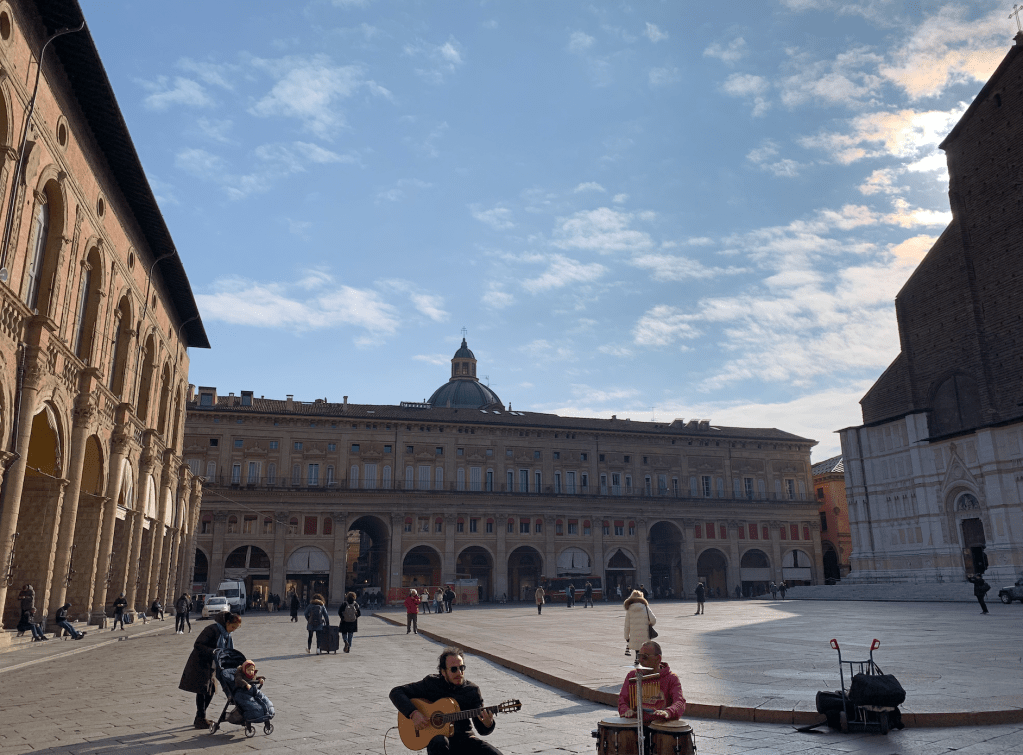
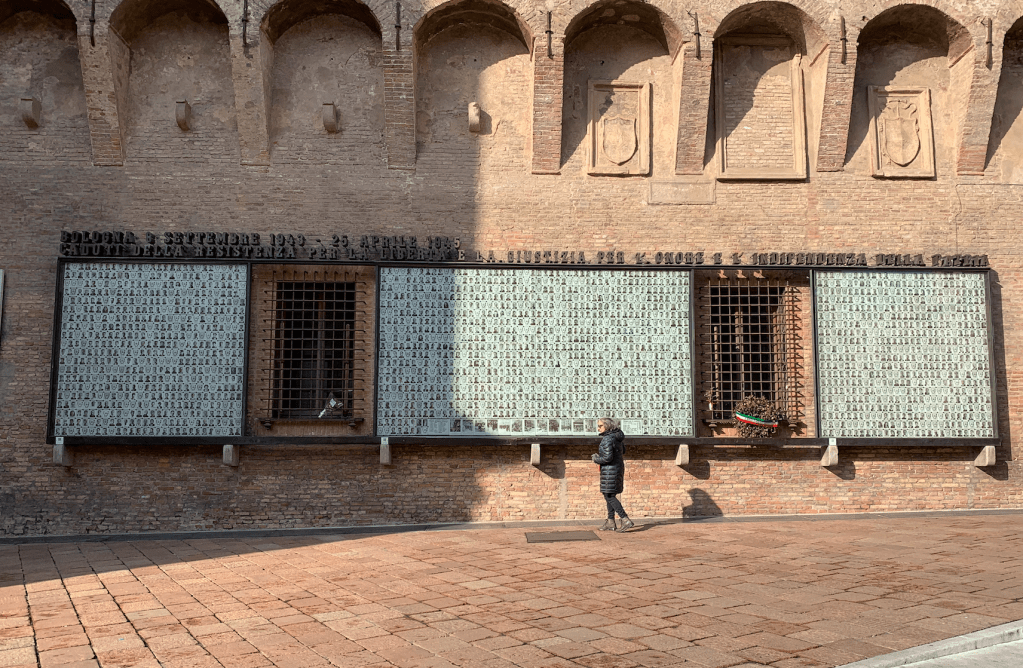
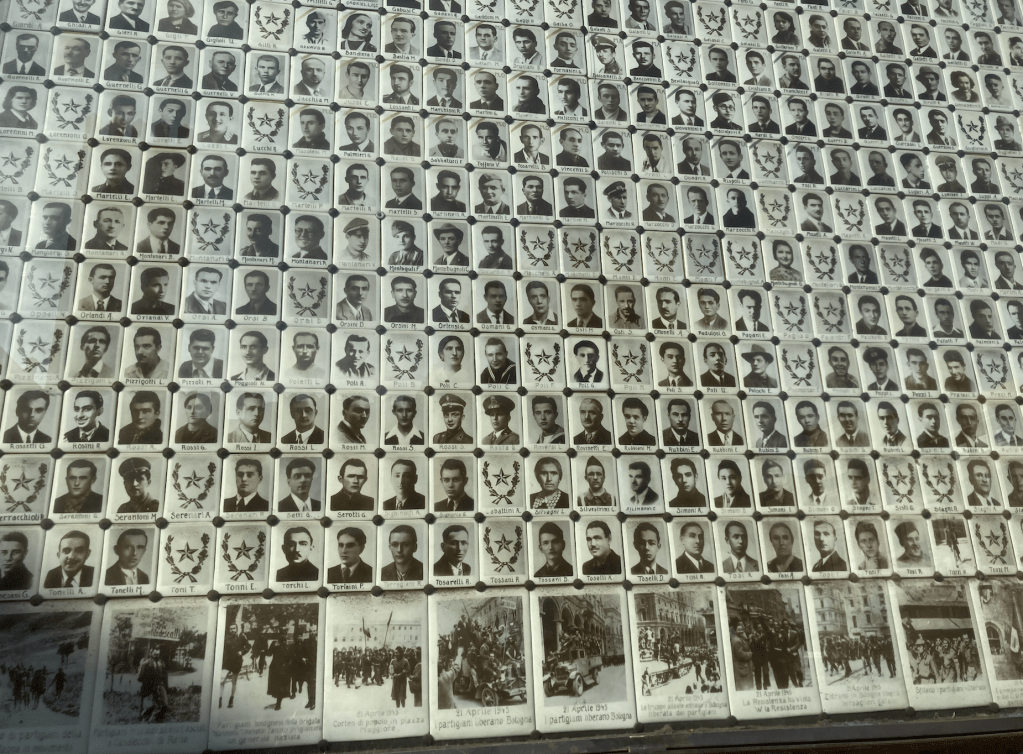
The square is bordered on one side by a heart-felt memorial to the partisan and resistant fighters of WW 2. (Bologna has always been very independent and was a hotbed of resistance during the Facist era)
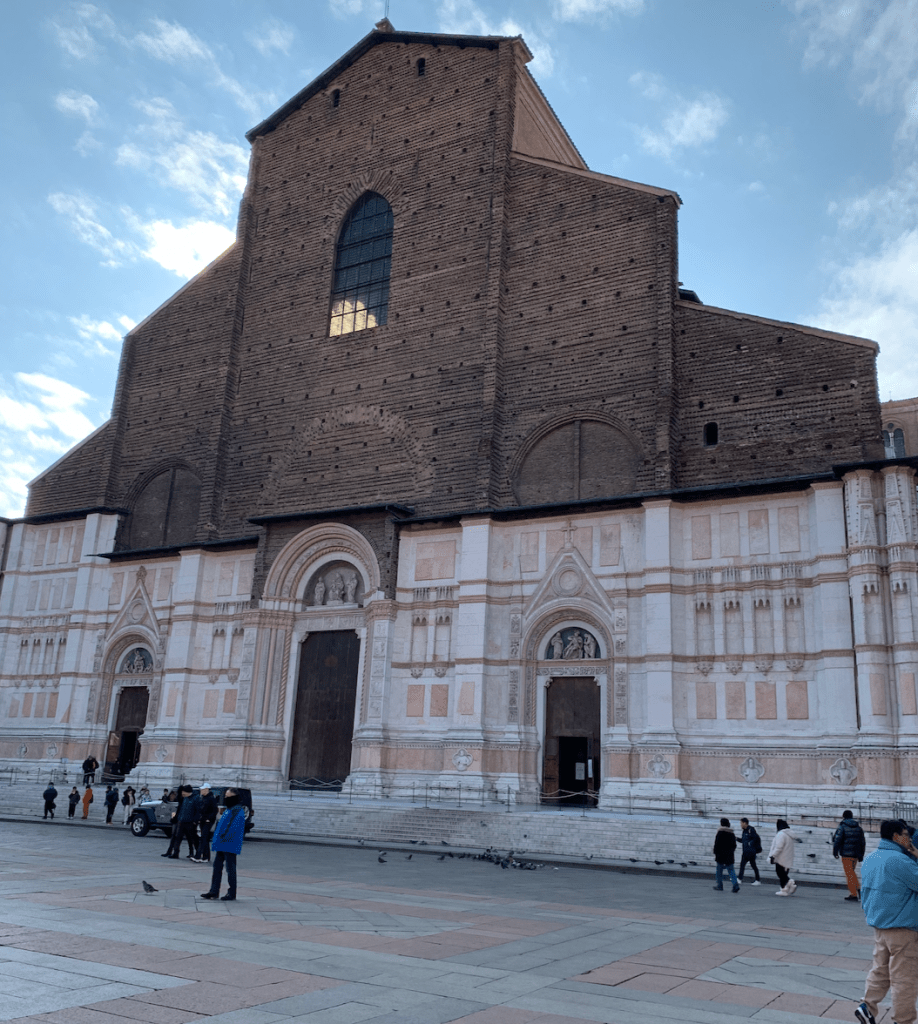
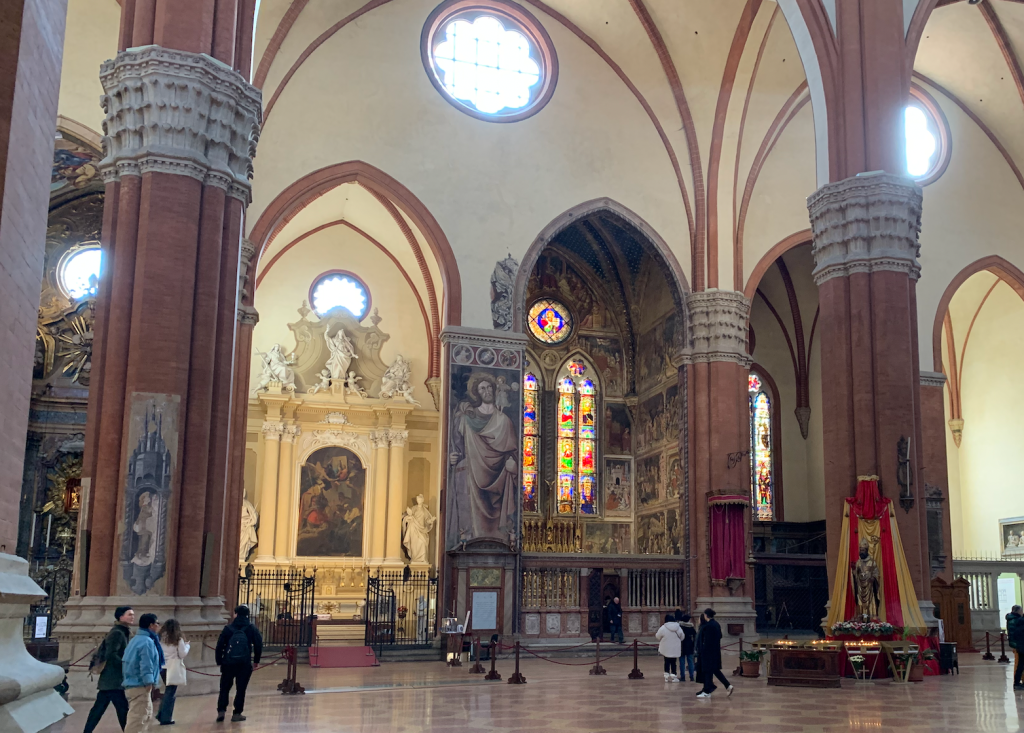
Finishing the sides of the square, are the Palazzos ( D’Accursio and del Podesta), started in 1200 and the Bascilica San Petronio. The Bascilica was started in 1308 as a public space not a church. In 1514, expansion began in the 1500s but was stopped by the Catholic church since it would have been bigger than St Peter’s in Rome. It actually remains unfinished. (A novel church claim to fame- the church has the longest indoor meridian line)
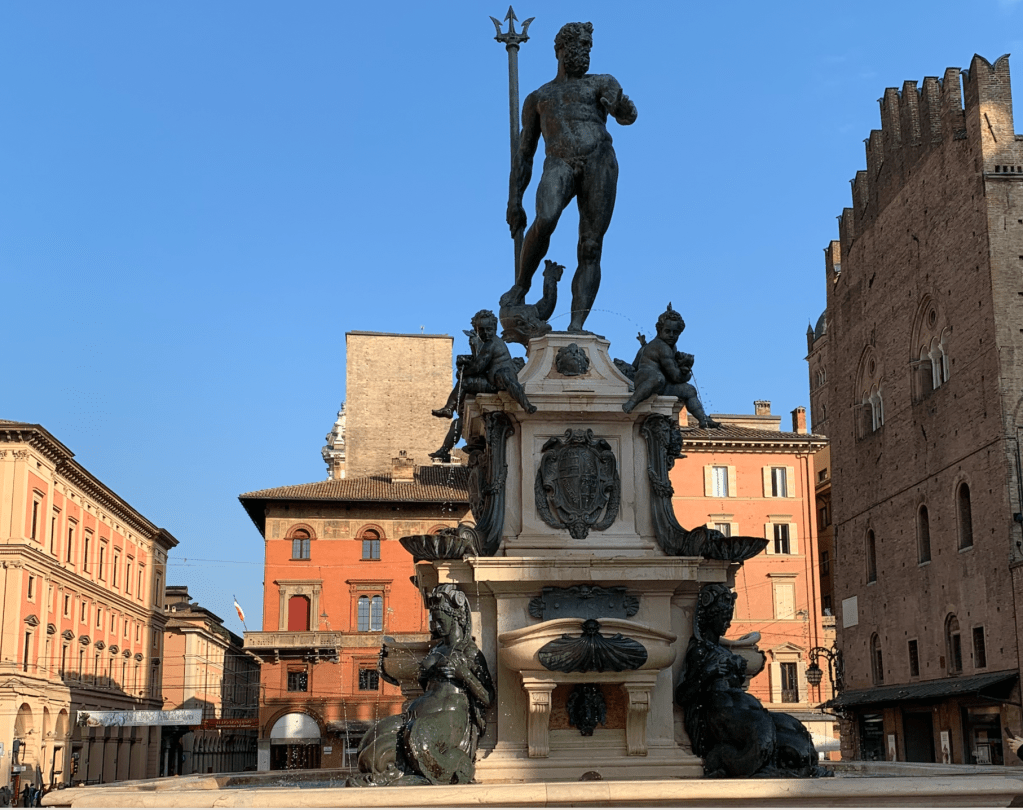
The Neptune fountain, created by the aptly named Flemish sculptor Giambologna is super popular because if you stand in a certain spot, it looks like he has a huge erection (yes that is noted in the tour books). The anti-David.
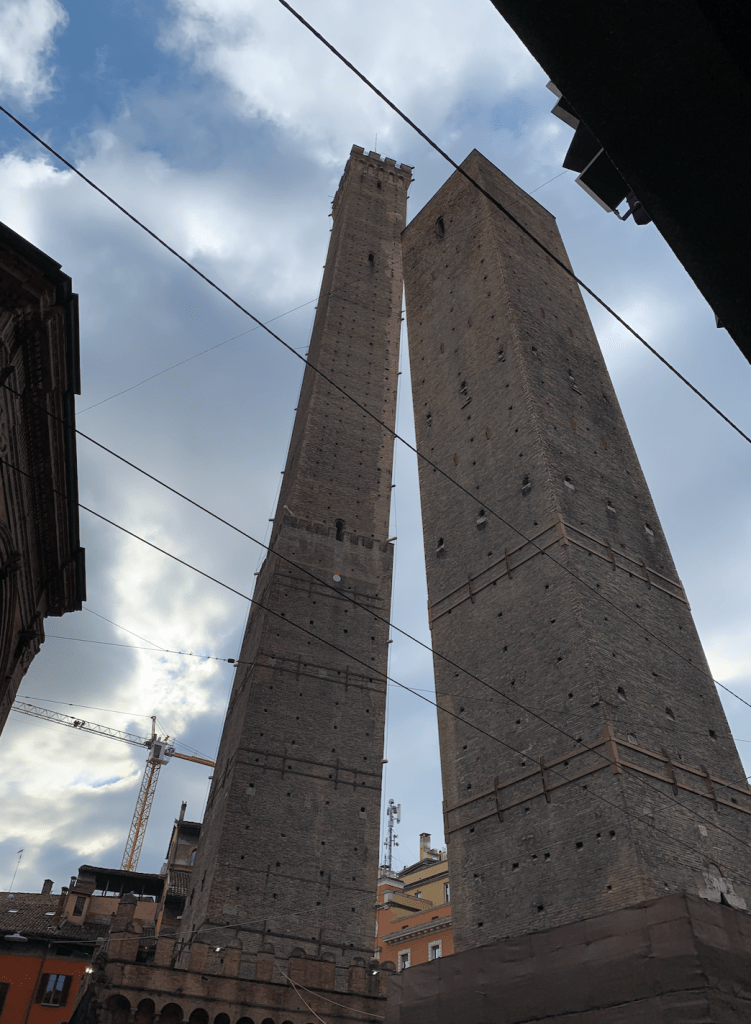
This desire for the biggest one was also on display in the nearby two towers, the Garisenda Tower and Asinelli Tower. These were built in 1000 AD by two families who each wanted the biggest tower. And yes, these are both truly leaning.
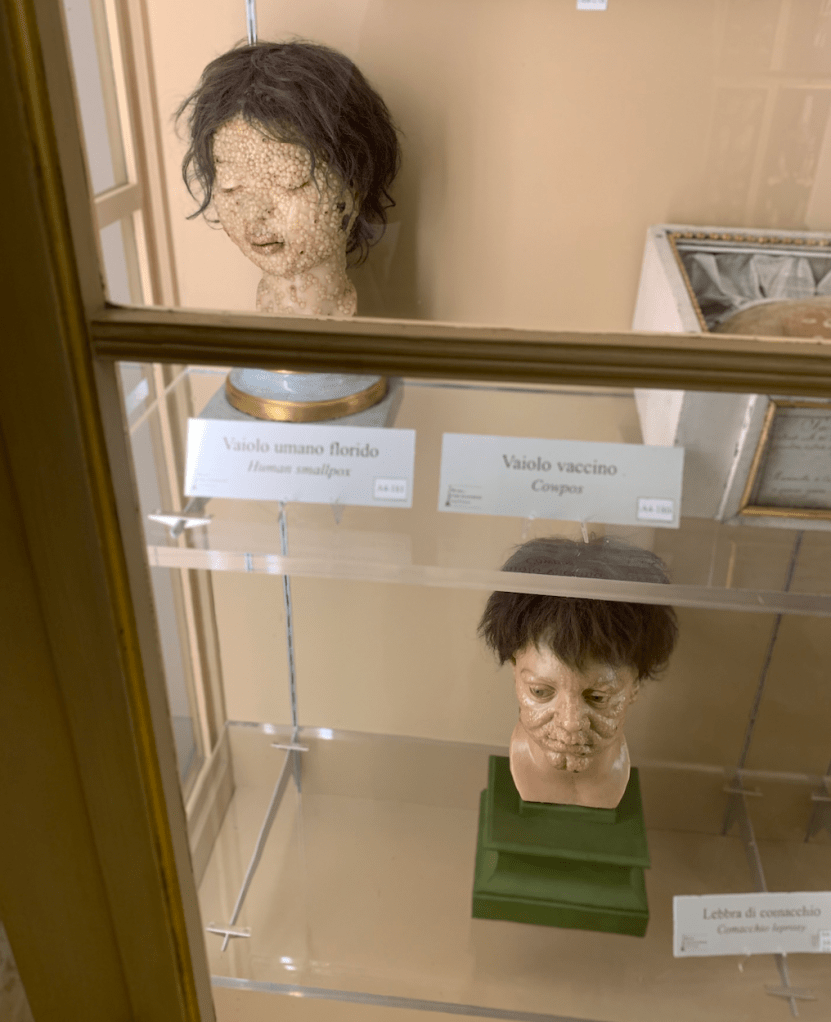
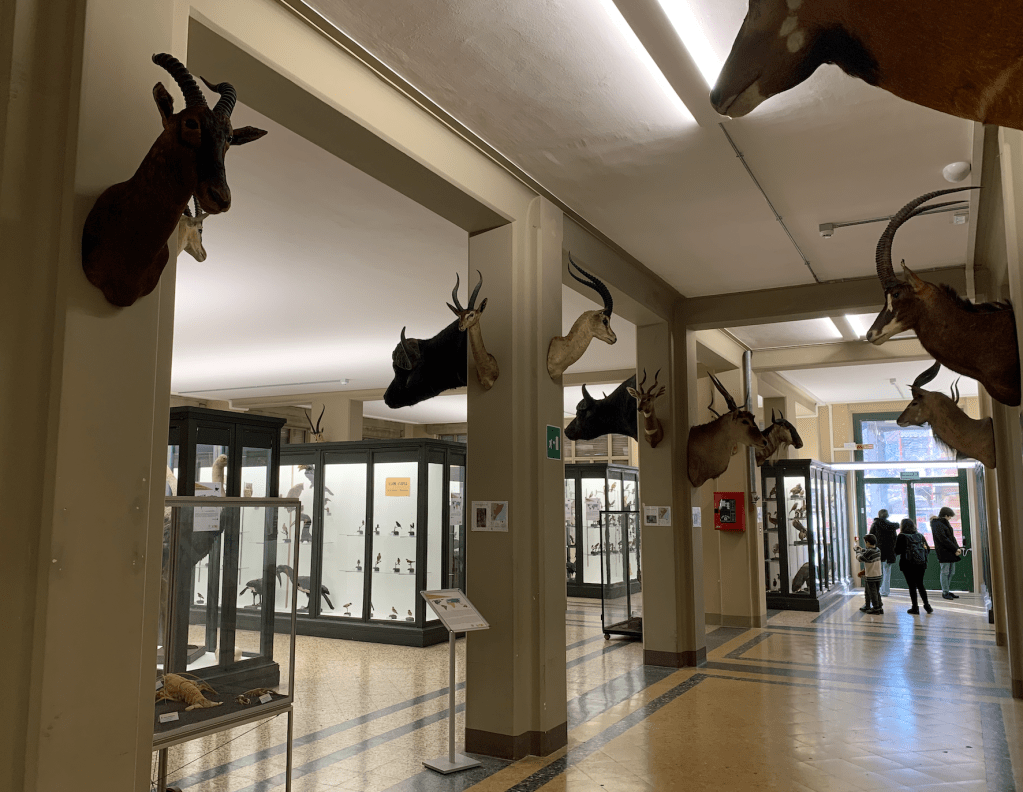
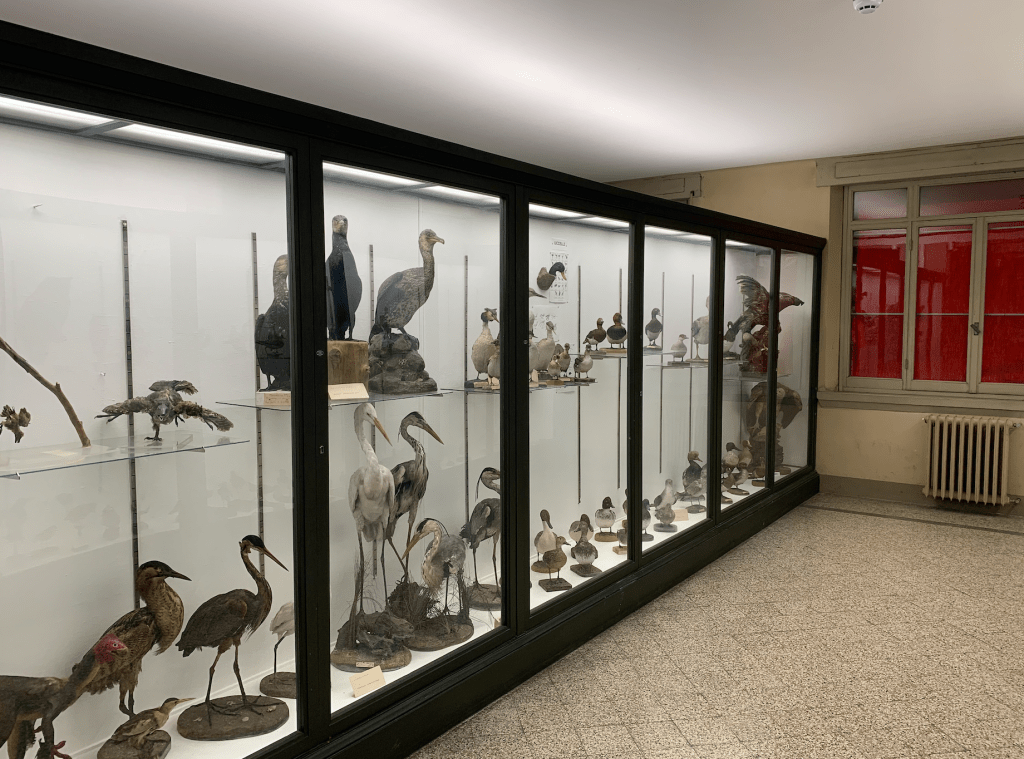
Even the type of museums we went to in Bologna were a bit different- the wax anatomical model museum https://sma.unibo.it/en/the-university-museum-network/luigi-cattaneo-anatomical-wax-collection and the natural history museum, both at the University. We even stopped at the Chemistry museum which was essentially was a hallway with old beakers and pipettes behind a glass door.
Bologna is considered a “foodie” destination. The area is the home of the Italian food classics- Bolognaise, prosciutto, mortadella (aka bologna), Parmigiano reggiano, Modena balsamic vinegar and tortellini. Although we did not eat any of these in Bologna, we did leave feeling pretty well sated.
 Chosen Fugue