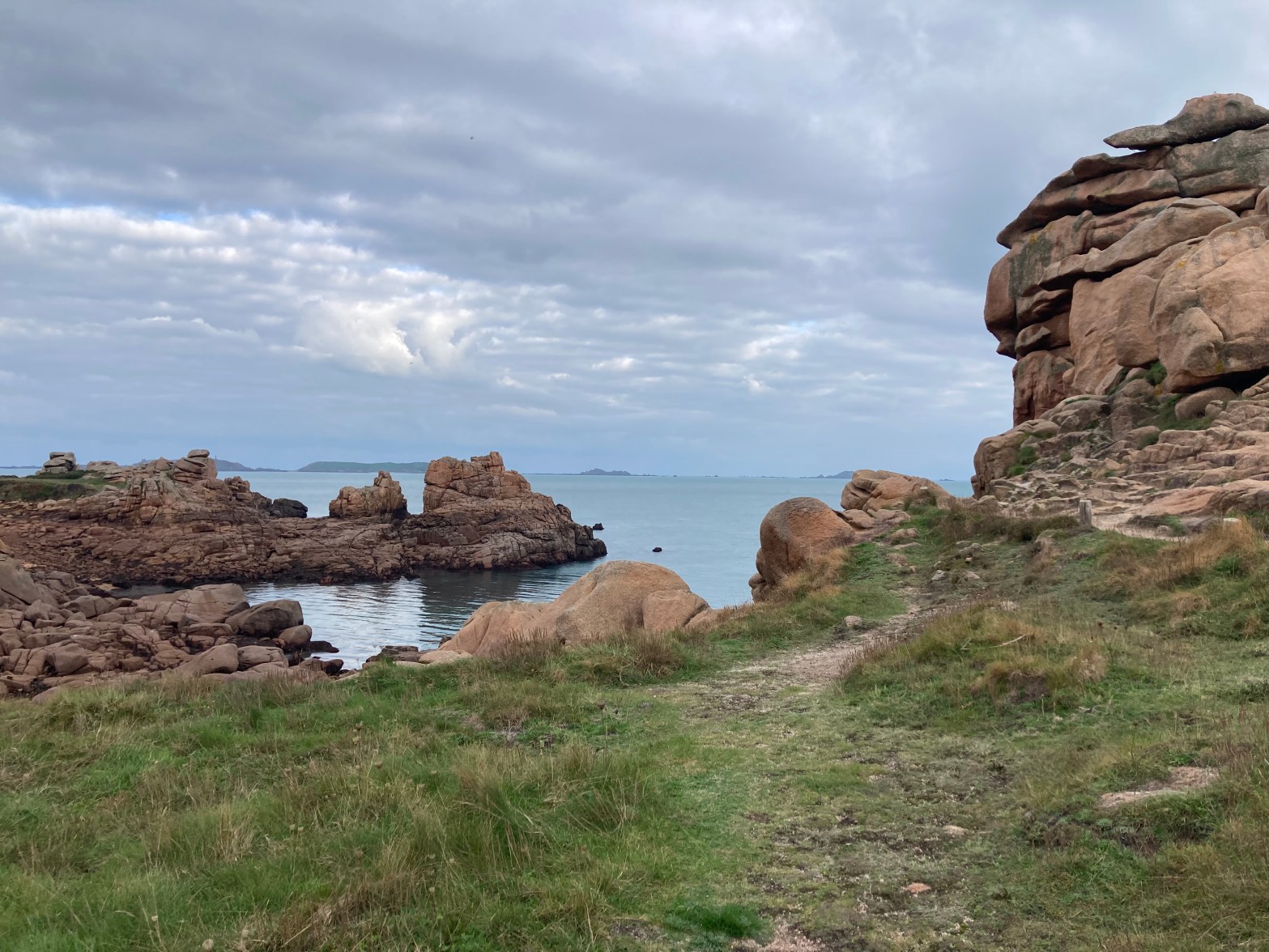
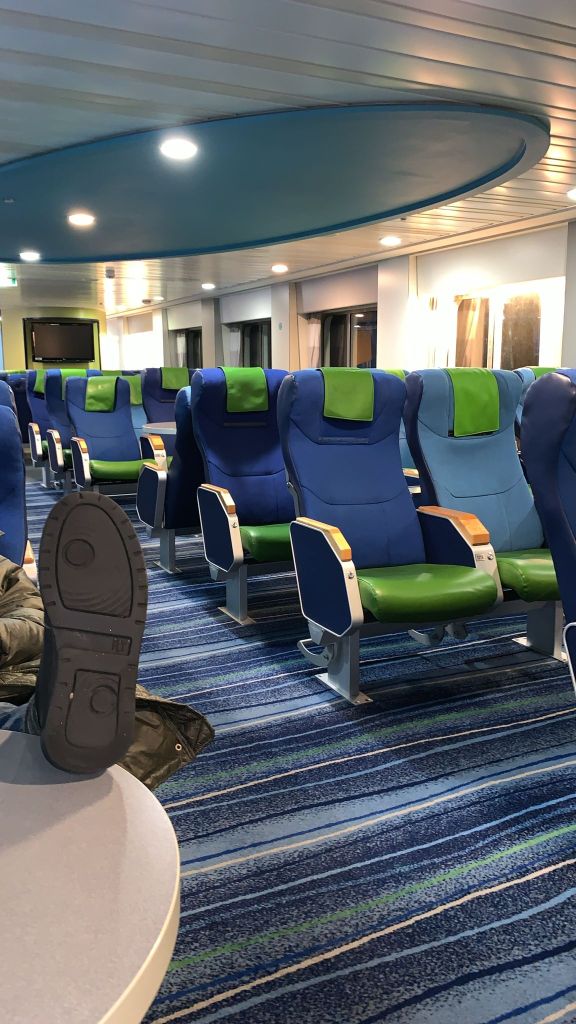
St Malo was chosen to start our five weeks in France because Patricia remembered it from a book… oh yeah that kinda dumb book and Netflix movie (All The Light We Cannot See), too late we were on the ferry. Sleeping on the near-empty Portsmouth, UK-St Malo ferry was fine, it would not be fine if it was crowded which it is in the spring and summer but not in early November. This is why we love off-off season travel. The Eurostar might have been a better choice, stay tuned for more on that. We beached in Brittany, south of Normandy.
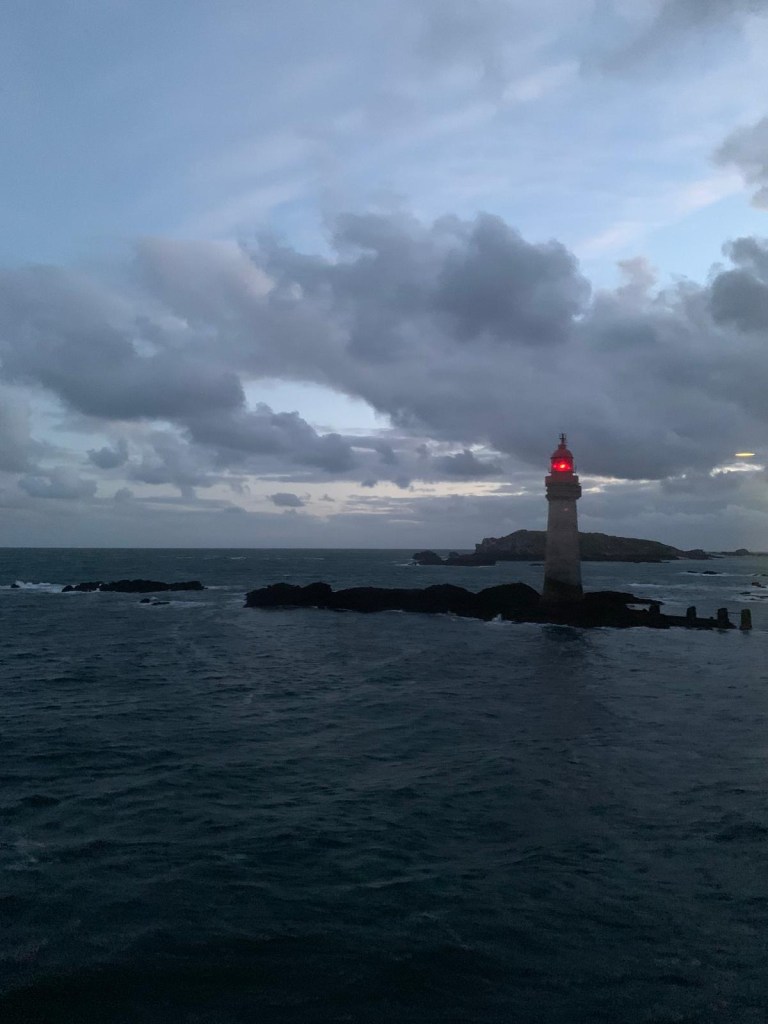
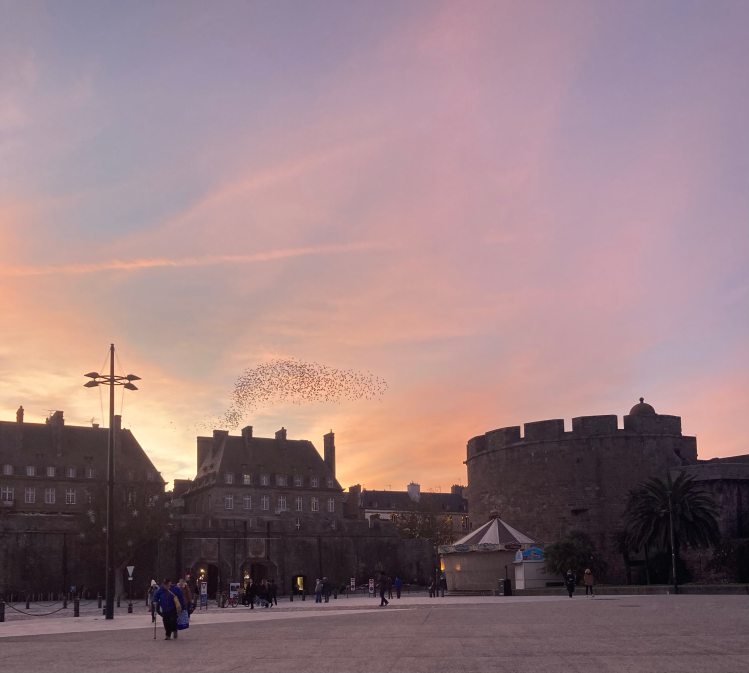
Immediately, we had to shake off our European travel rust. Trains, buses, markets, language. It felt so good to be confused and foreigners, again. Ex-Pat and ex-Nick. We fell back into our cobblestone routine with the picturesque, Disneyesque quaint beach town of St. Malo. We thought St. Malo would be a good base to explore nearby Mont. St. Michel, Dinan and Rennes but in the off off season, not the best choice as transportation is a bit limited, but it worked out. Like much of Europe, St Malo was rebuilt after massive WW2 bombing, opting to build a stronger replica of the original. A good example for us post the current US democracy destruction. There is hope.
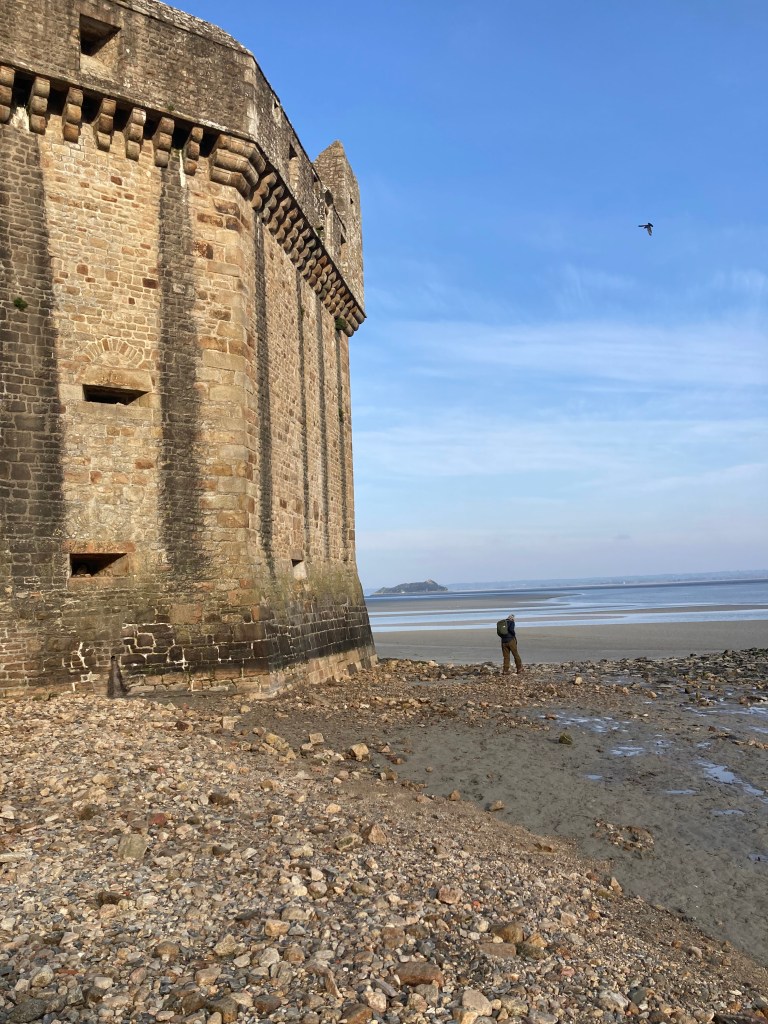
A tourist bus went directly to Mt St Michel; one bus in the morning and one back in the afternoon. This is in contrast to the hourly buses other times of the year. Upon arrival to the little tiny town of just souvenir shops, you can approach Mt. St. Michel by shuttle bus or by a pleasurable long walk. We of course chose to walk, a bit mesmerized as the Mount (is it a castle, cathedral, fortress-three things mixed together?) slowly materialized . https://en.wikipedia.org/wiki/Mont-Saint-Michel
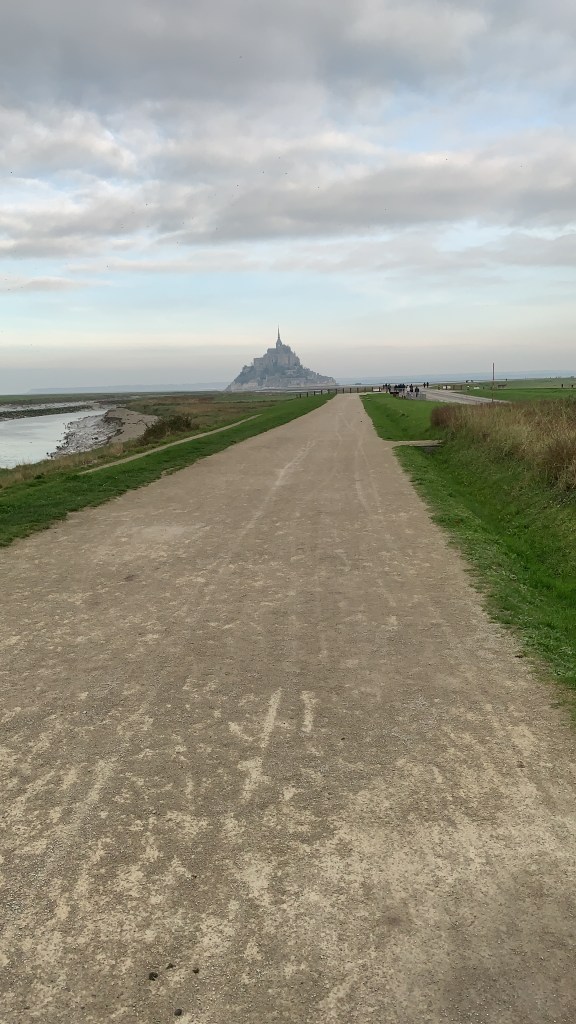

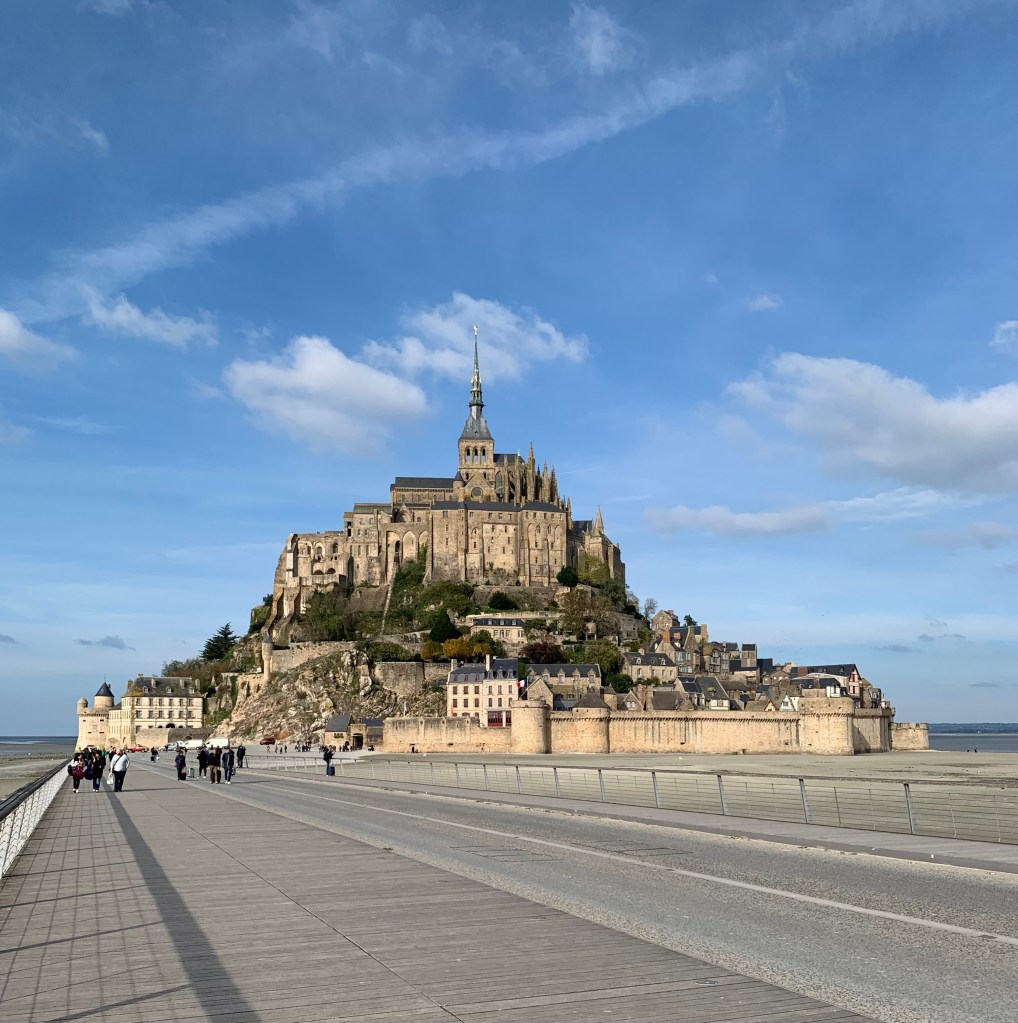
A distant foggy mass transformed into a massively beautiful structure. It was like approaching Oz. Always, with these huge, detailed buildings we ask; how was it built? Why is it here? How long did it take to build? And, why are these massive structures always on a mountain or the highest point in the area? Strategically, mystically, we understand, but physically, the poor guys that had to build it, and the tourists struggling to ascend them. Location, location, pain medication.
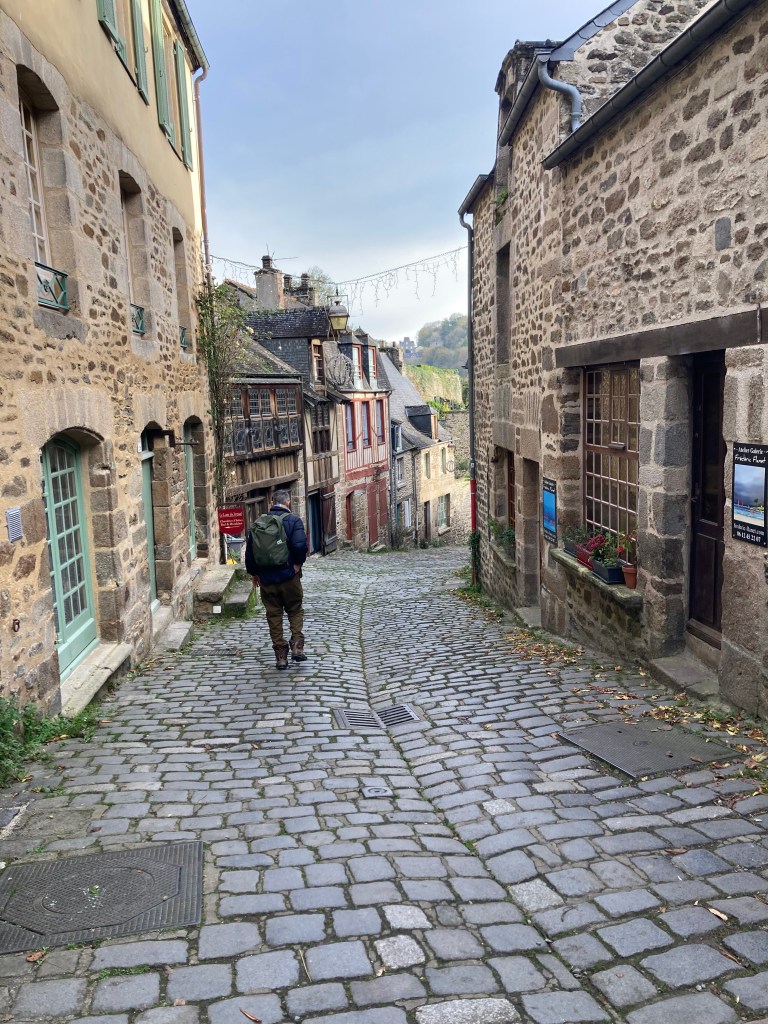
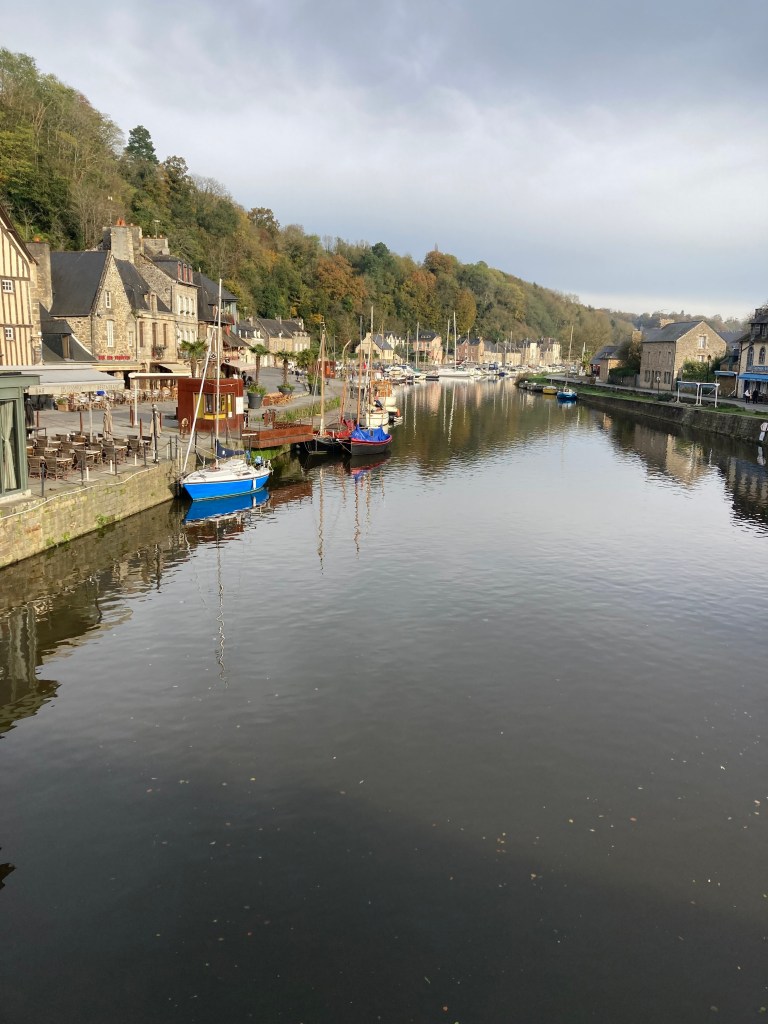
As committed public transportation users, we scoffed at all of the Rick Steves forum comments on how you need a car in France. We shouldn’t have scoffed. Despite maps suggesting direct routes, routes were rarely direct, not necessarily frequent but always picturesque. Our eventual France itinerary was shaped by bus/train schedules. First a day trip from St Malo to Dinan (33 km, would be a 30 minute drive) required a stop at the transit hub of Rennes (68 km, 1 hour drive or train) where we took a brief walk around town-great train station, lovely city. Another hour on the train so we could take a brief walk around Dinan, down a beautiful cobblestone street to the river then back up the beautiful cobblestone street to the train station. Back to Rennes, to go back to St Malo.
The rest of our time in Brittany got rocky, very rocky. But, we like rocks. To travel from St Malo to Perros-Guirec (164 km away) we needed to take the train back to Rennes, then to Lannion, then pick up a local bus that only goes to the coast twice a day, once in the morning, once in the afternoon. We made it to our apartment downtown in Perros-Guirec, total 247 km traveled from St Malo for a 164 km trip. How did we find all these local buses? Rome2Rio, google maps does not usually include local.
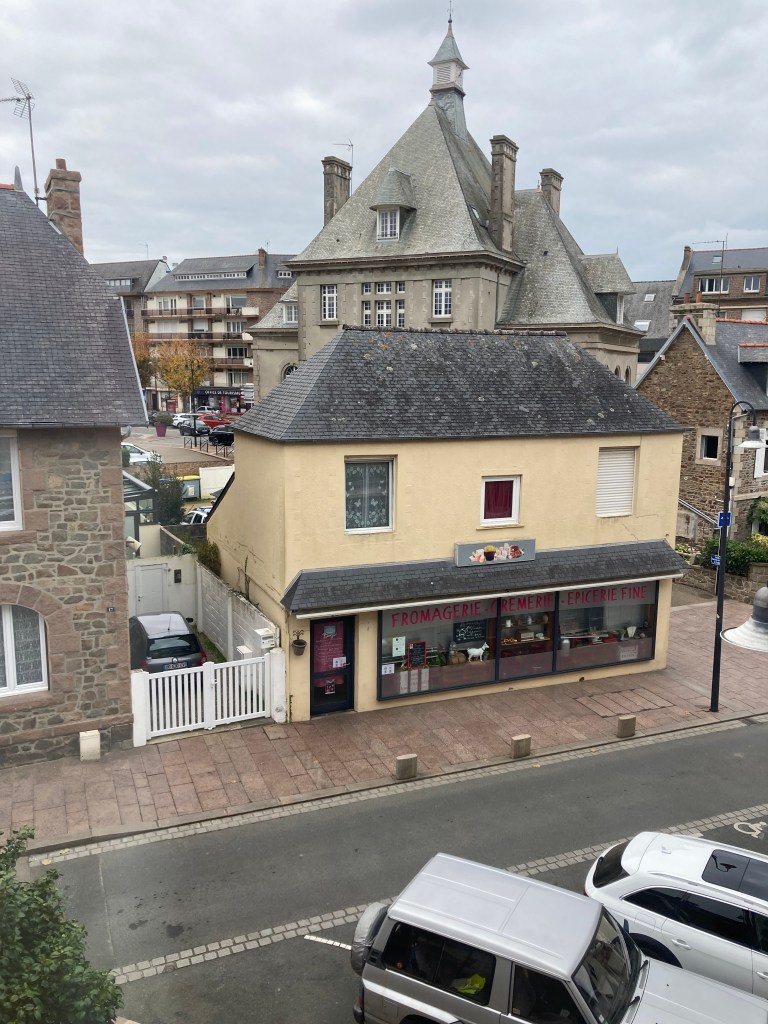
Perros-Guirec was also damaged during the war, and the rebuilt center of town had a 60-70s vibe mixed with classic older Breton buildings. A Carrefour market was close by and we rekindled our appreciation of the French Carrefour hierarchy, stay tuned.

But we actually came for the coast not the market. Surprisingly. The reason we chose Perros-Guirec was to walk along the coast to Plumanac’H (4.4 km), one end of the Côte de Granit Rose https://www.brittanytourism.com/matching-what-i-want/outdoor-and-nature-activities/the-most-beautiful-areas-to-explore/the-pink-granite-coast/
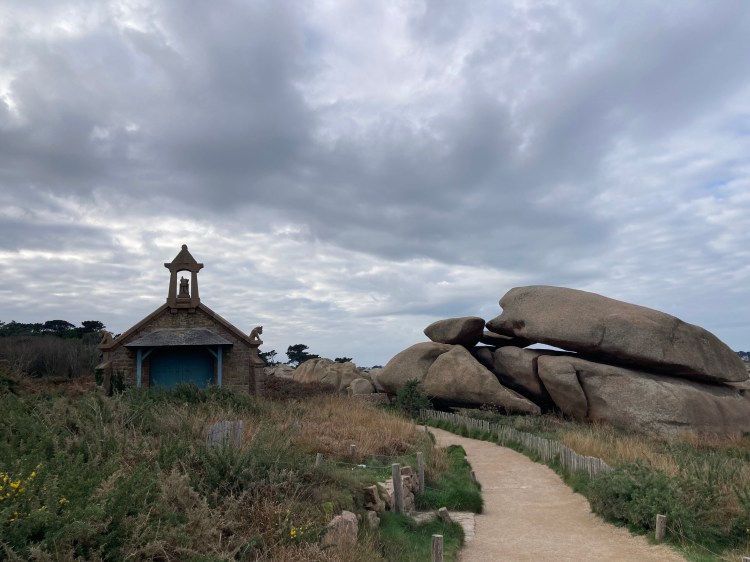
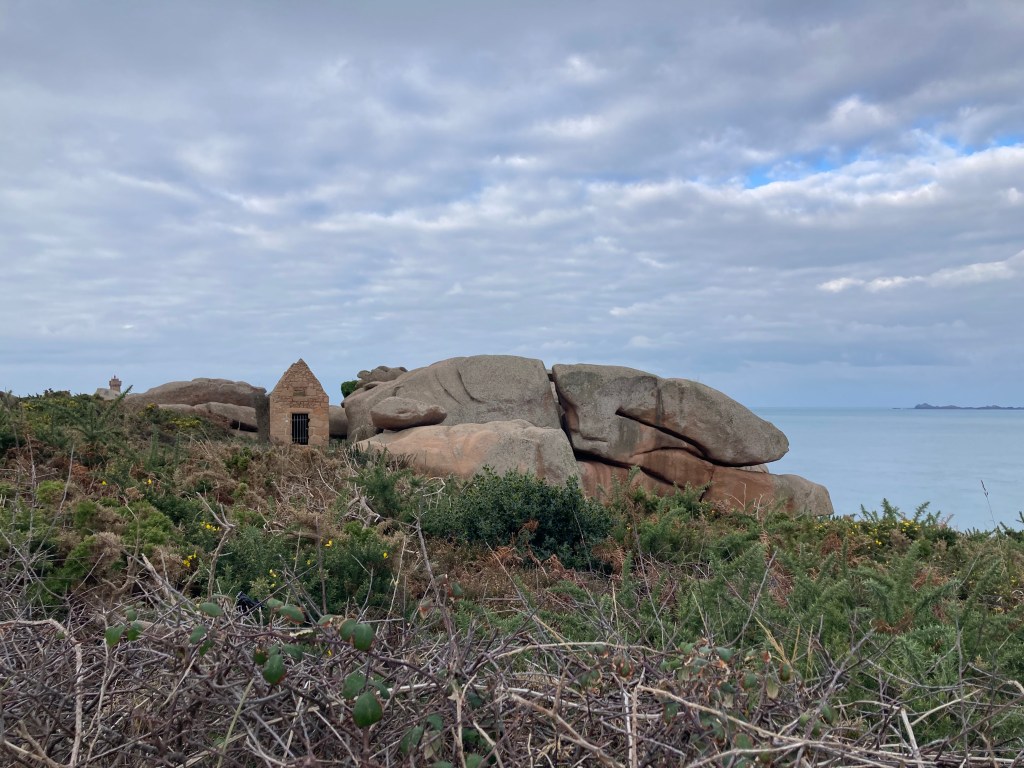
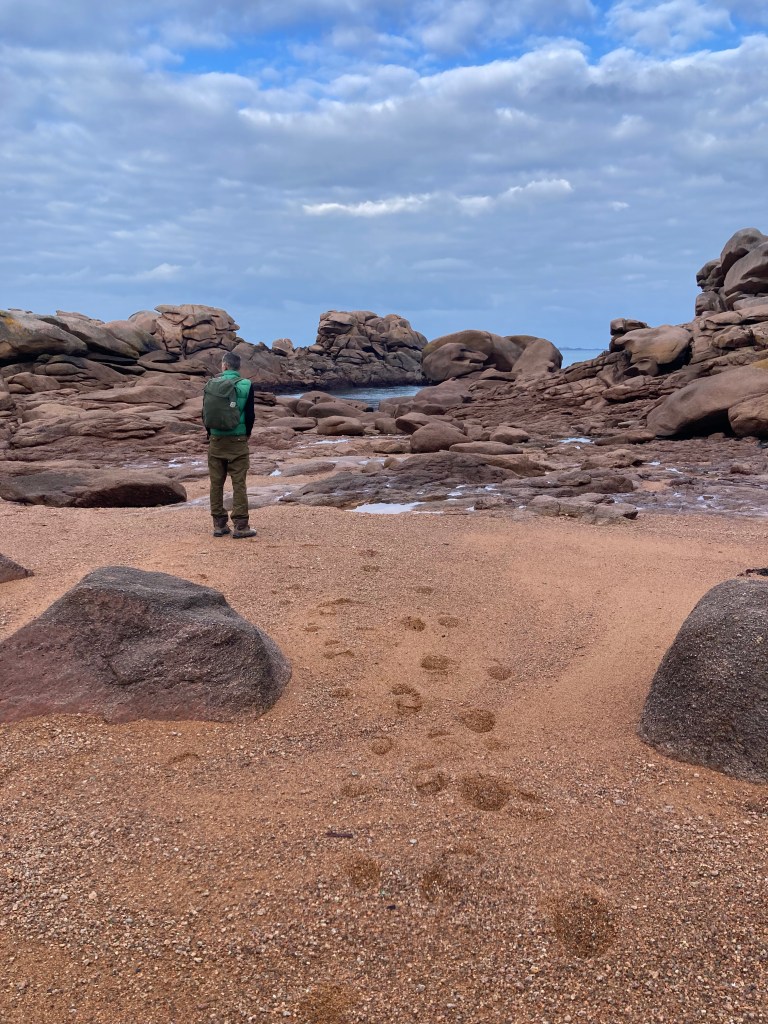
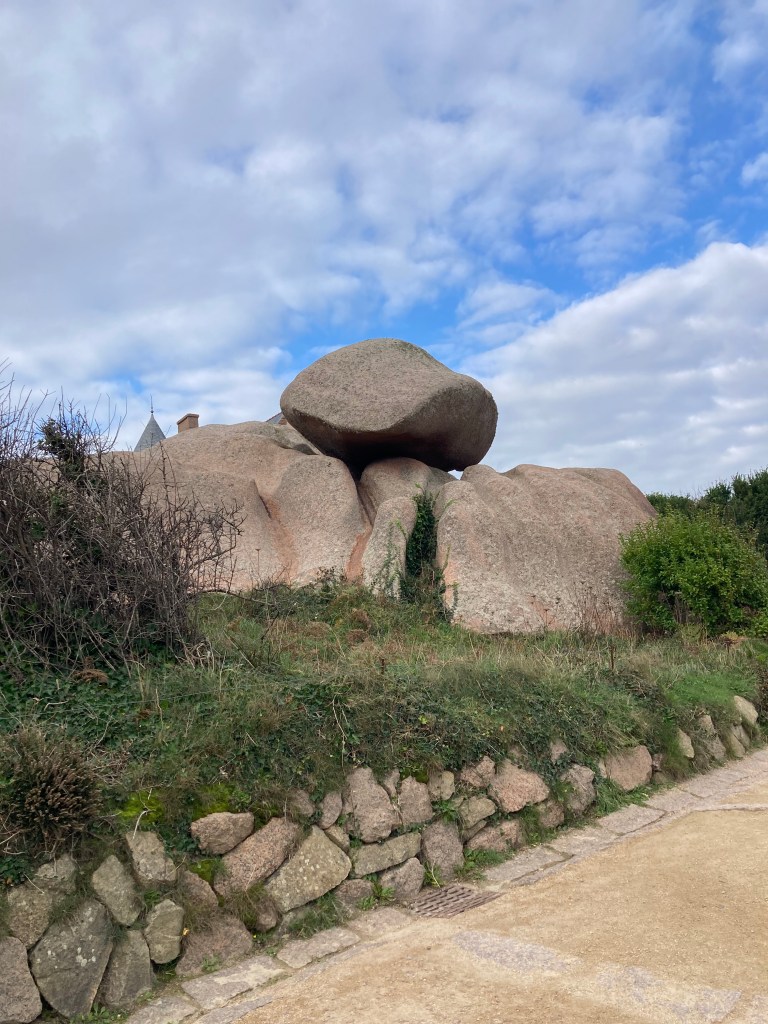
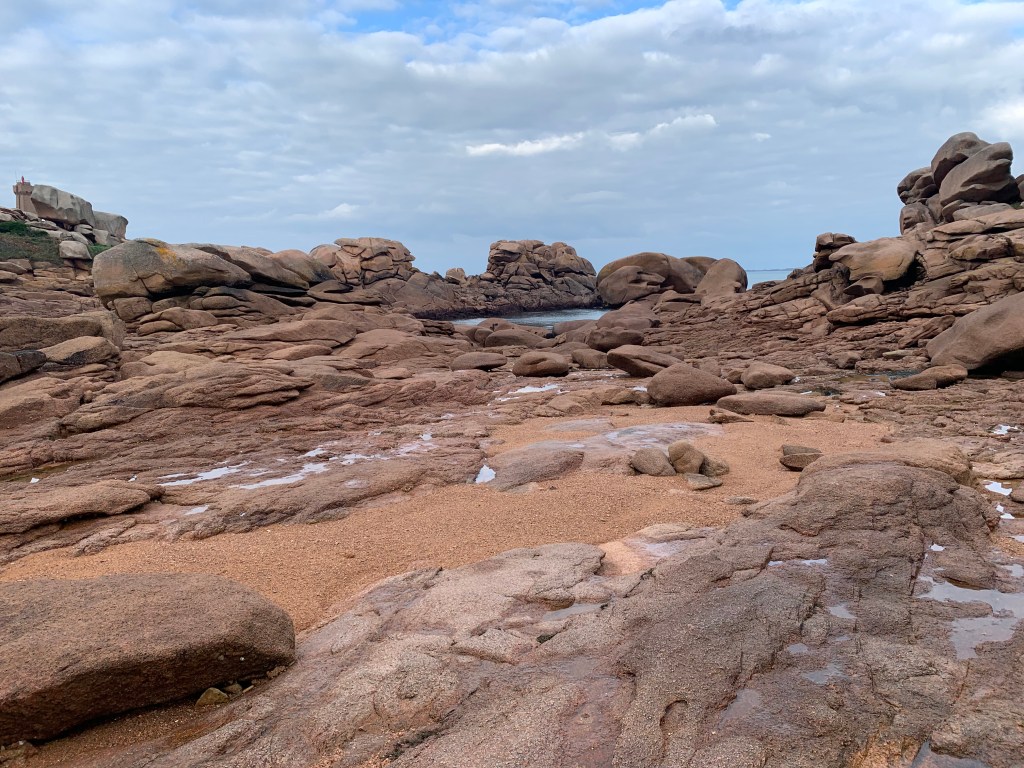
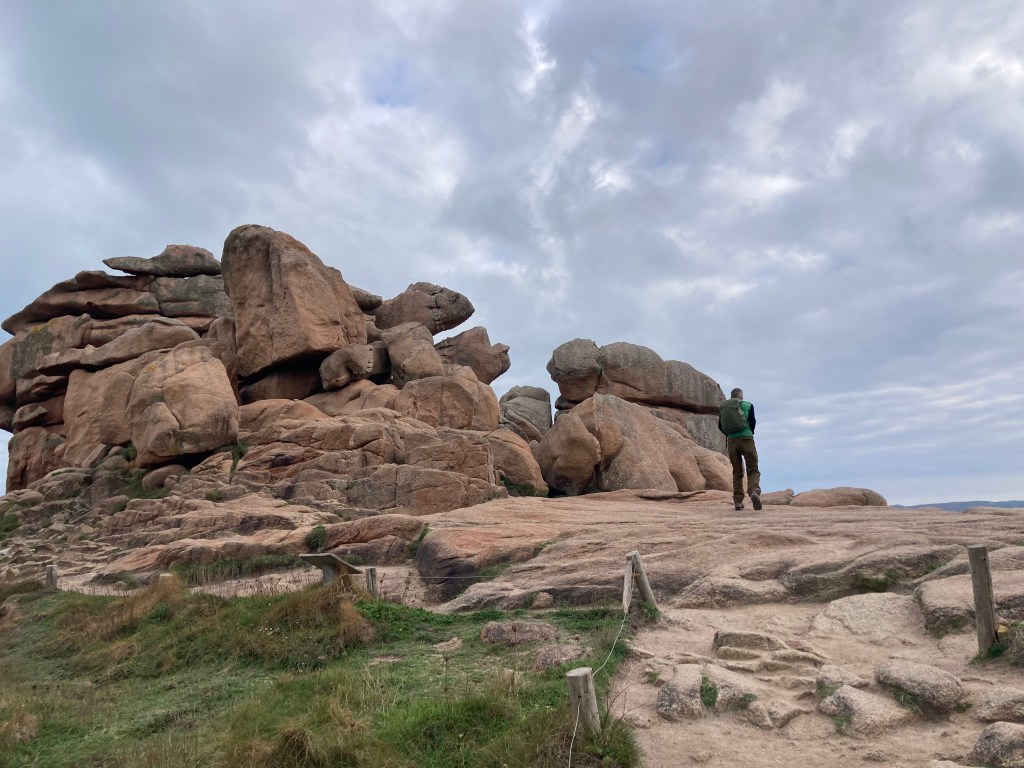
Astonishing and crazy natural rock formations, almost more like what you’d expect to see in Zion, Northern Arizona or Star Trek (when Kirk fought the Gorn) but along the coast. Our reverential walk was capped off as we entered the tiny town of Plumanac’H to a rousing chorus of “Happy Birthday” sung in English by a group of people as a very, very old woman entered a restaurant.
The morning bus back to Lannion train station, then on to Vannes, for another brief walk around town. Vannes was another pretty town (it is France!), although this was a bit more bustling than the other pretty towns. The main reason to come here was to take another local bus, a short rainy walk and….
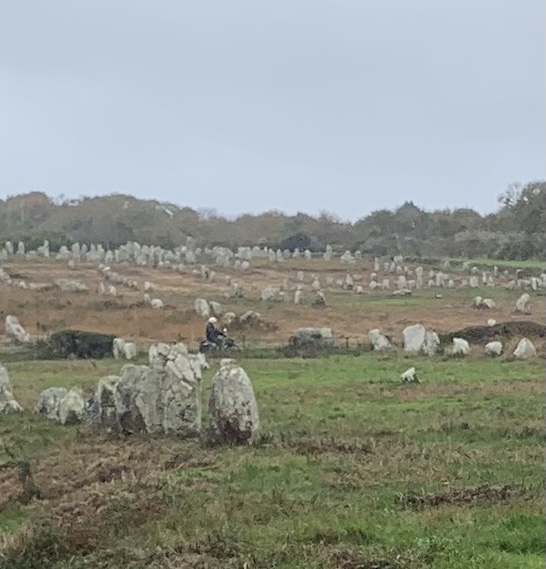
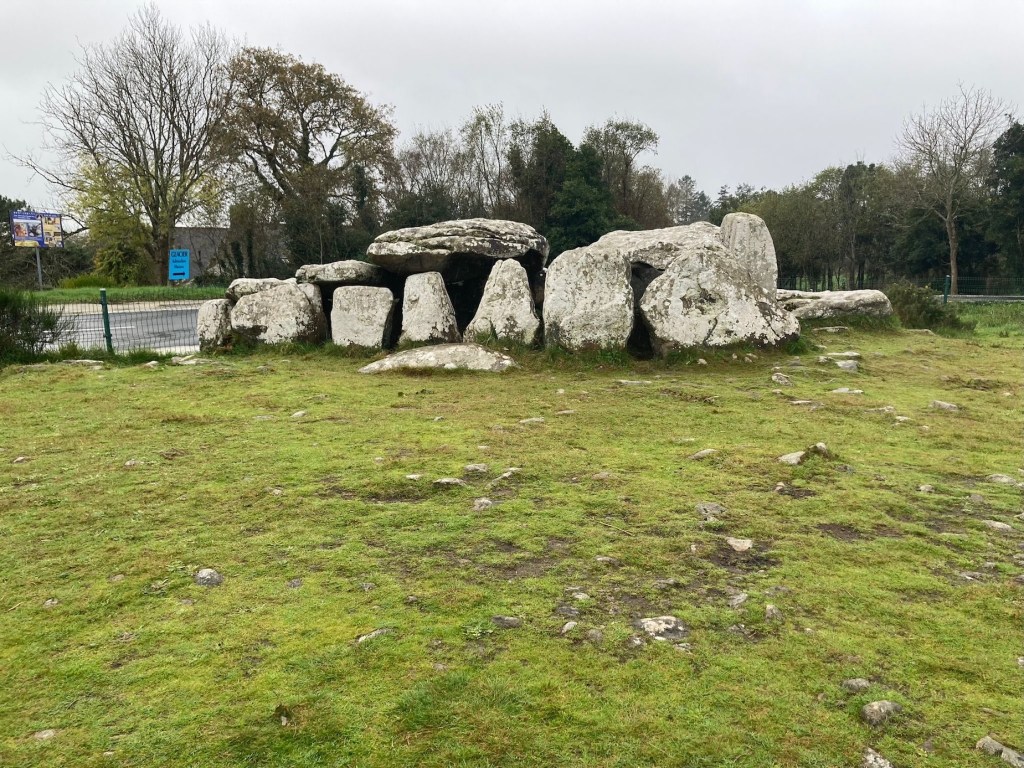
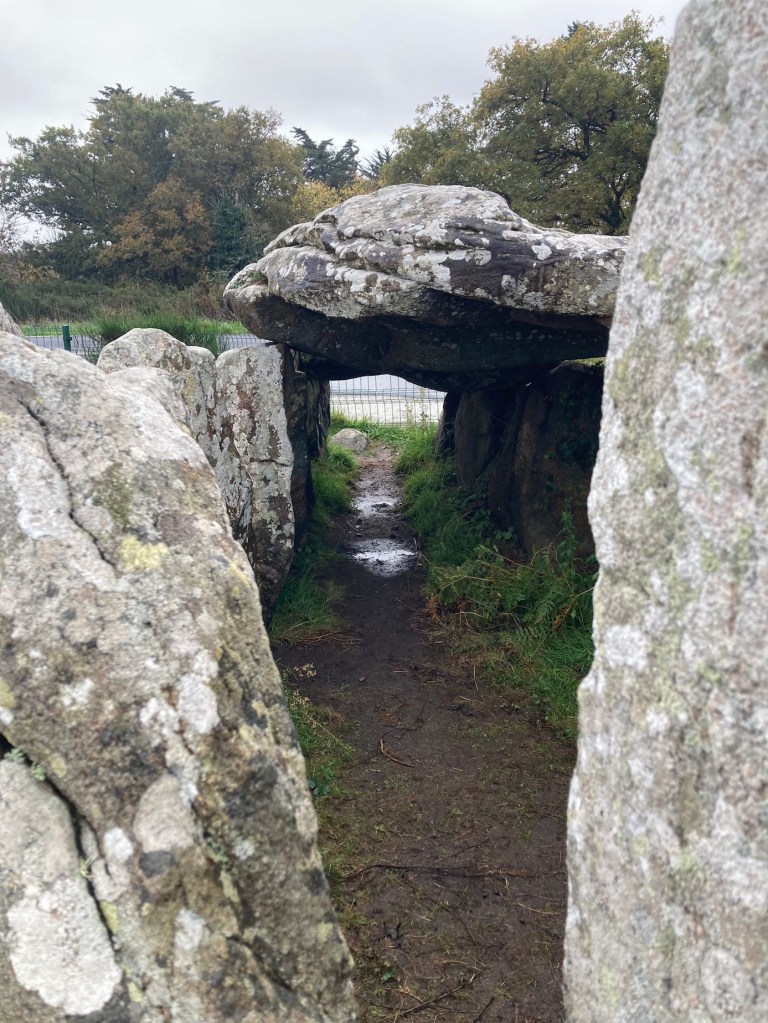
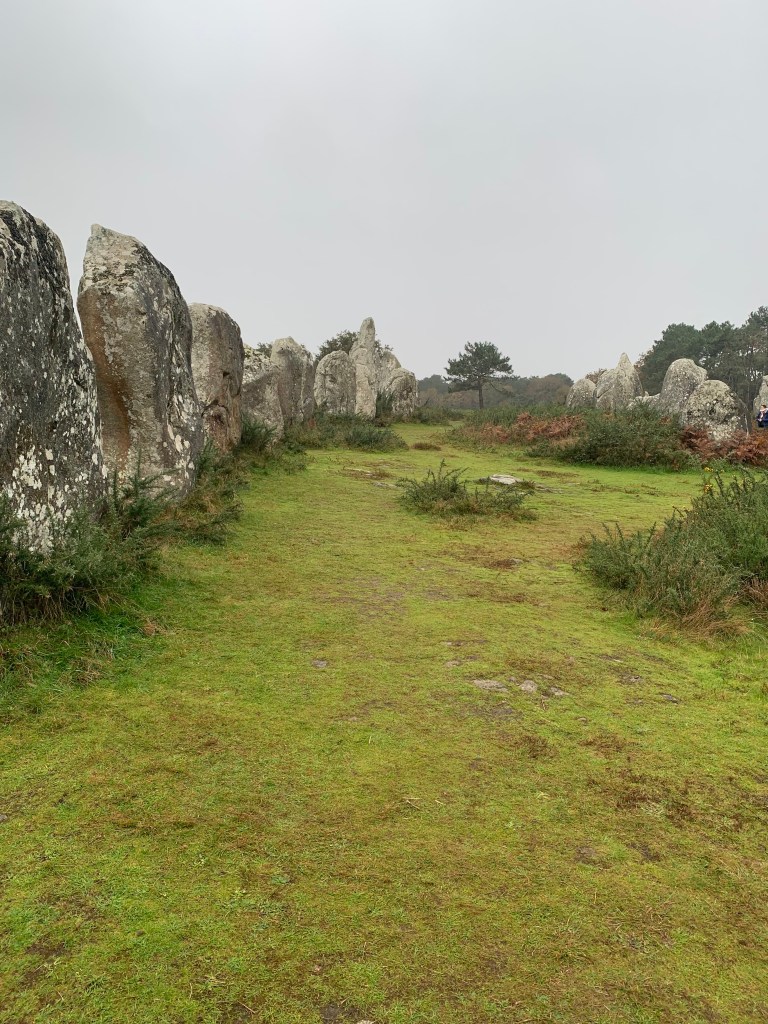
Why are these here? Who arranged these astonishing, crazy man made rock formations. The Carnac Megalith Stones, 3000 prehistoric stones arranged in orderly rows sometime between 4500-3300 BC. The largest collection of standing stones in the world. Hard to show how expansive (especially when the rain was clouding the lens). There is no good explanation for the formations, several theories-religious, astrological (representing stars, lining up with solstice), but no one knows. They could have just been bored, had all these rocks, so why not. Prehistoric existentialism.
 Chosen Fugue