There is the assumption that as we fugue through Europe we are having these incredible meals- street fare, cafes, restaurants, Christmas market tastes, this is wrong. Partly because our of diet restrictions: vegetarian (we do eat eggs and fish), gluten free, low oxalate, or any food starting with letters from the second half of the alphabet, so finding acceptable restaurants is difficult. But the main reason is because Nick is still traveling with and living by his Fodor’s Europe on $5/day book from 45 years ago. So our incredible meals are generally based on ingredients we find at local markets, in France it is Carrefour.
Just before we escaped the hellcats in Montpellier, Nick saw a kilogram (2.2 pounds) very solid block of date paste on sale at Carrefour which seemed like a great buy since dates are on our repeat market list. However, we carry our lives on our backs, any extra weight in our backpacks can be back breaking. But, we (mainly Nick) are always up for a new Herculean task of Olympic proportion. We soon realized that date paste is extremely dense and a little goes a long ways. (context: our past obligatory food blogs: https://chosenfugue.xyz/2023/05/01/obligatory-food-blog-rehashed/ and https://chosenfugue.xyz/2018/11/30/obligatory-food-blog/)
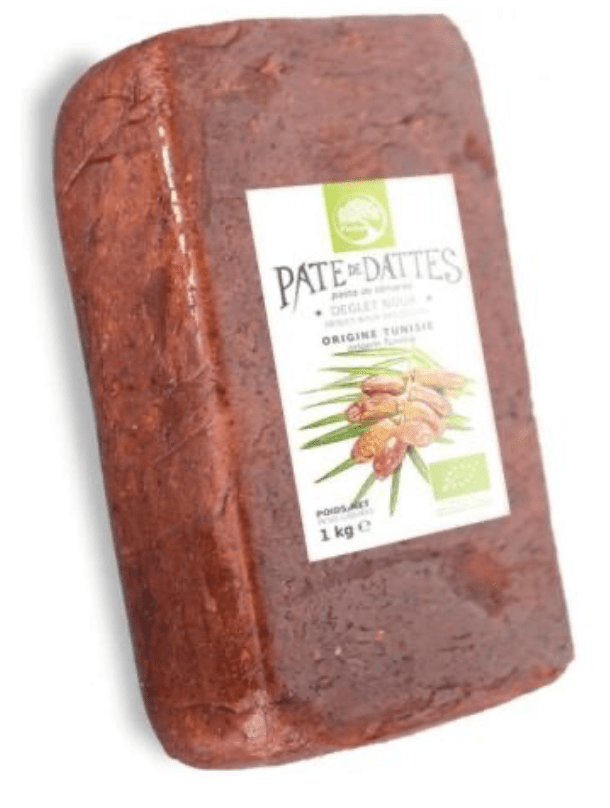
So feeling date-logged we rolled into a chilly Lyon, famous for their Lyonnaise cuisine
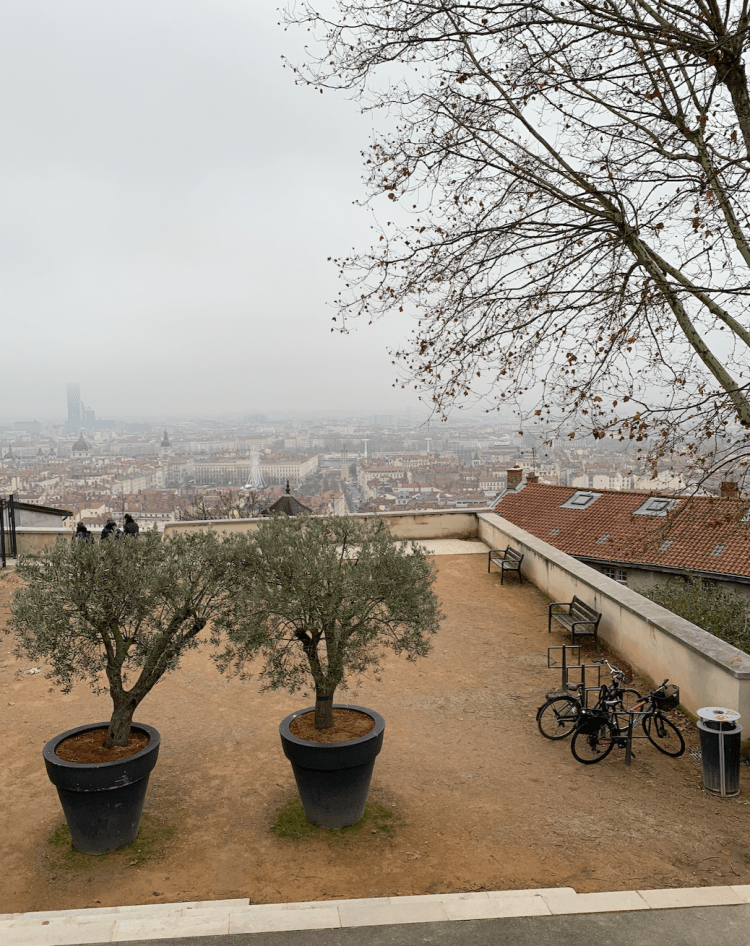
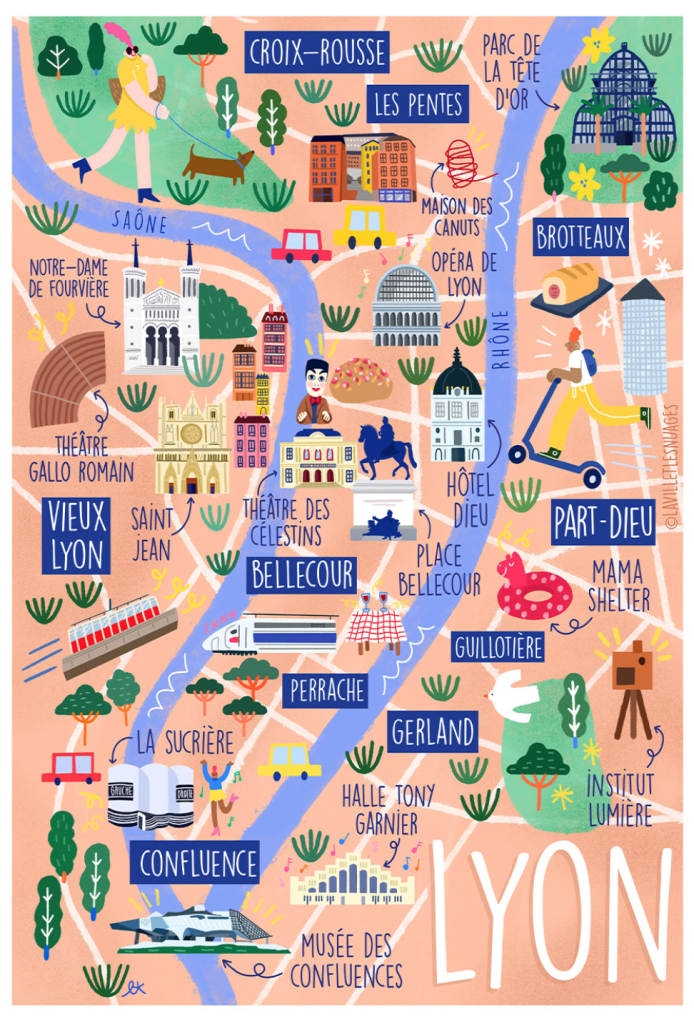
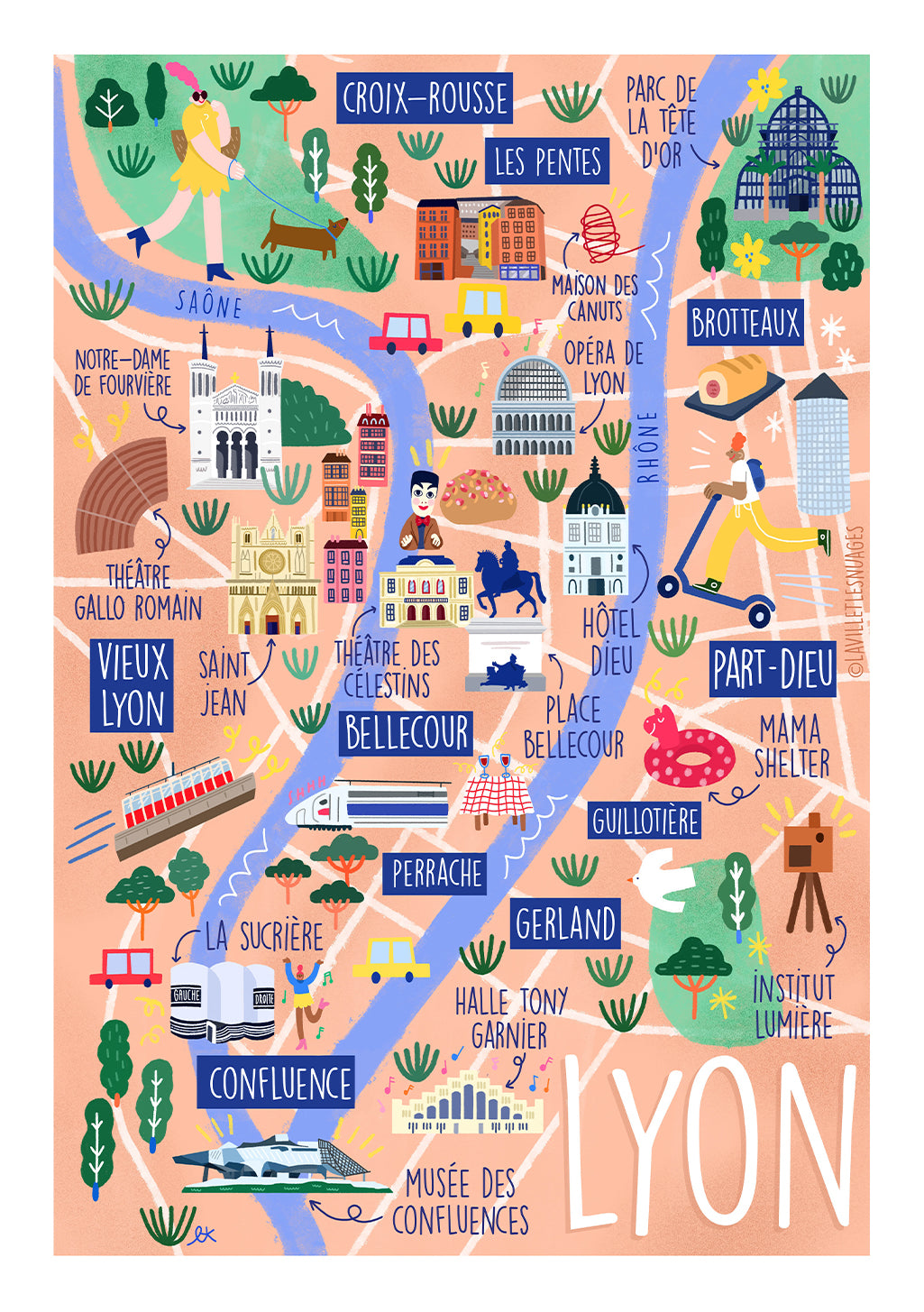
Despite the gloomy winter smog, Lyon, like all of our stops on our Tour de France, hit the mark. The Rhone river and its tributary, the Saône, converge in Lyon, creating very distinct time capsule neighborhoods. (map: https://www.sergeantpaper.com/)
Wandering through the different areas, it kinda felt like a time travel Disneyland. Following Roman footprints through the Fourvière hillside to the Roman amphitheater.
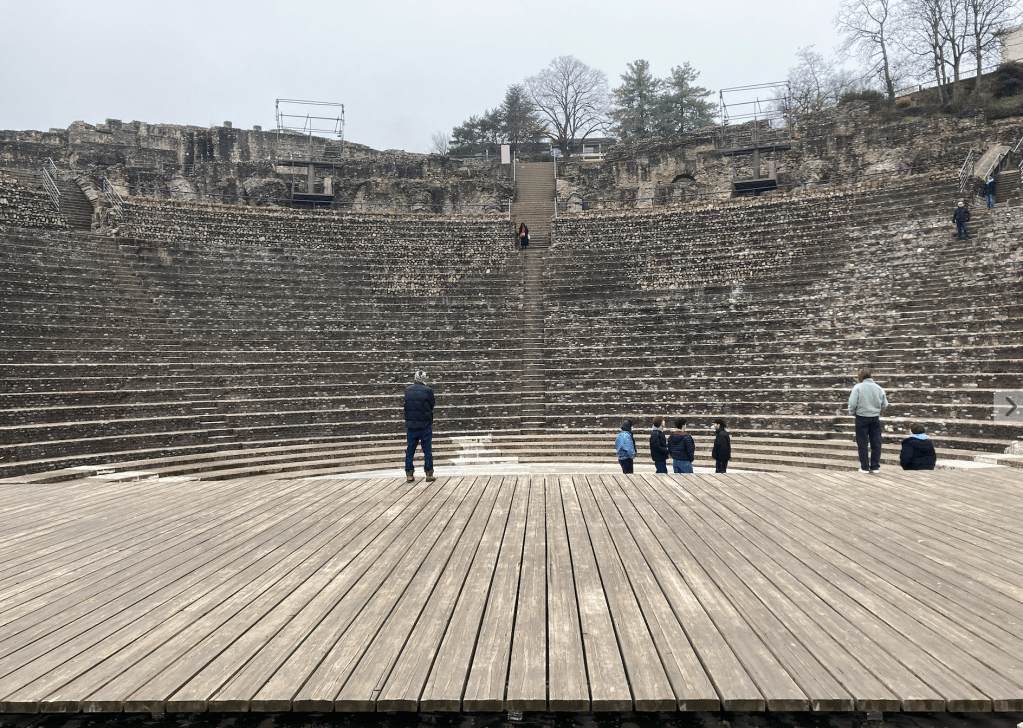
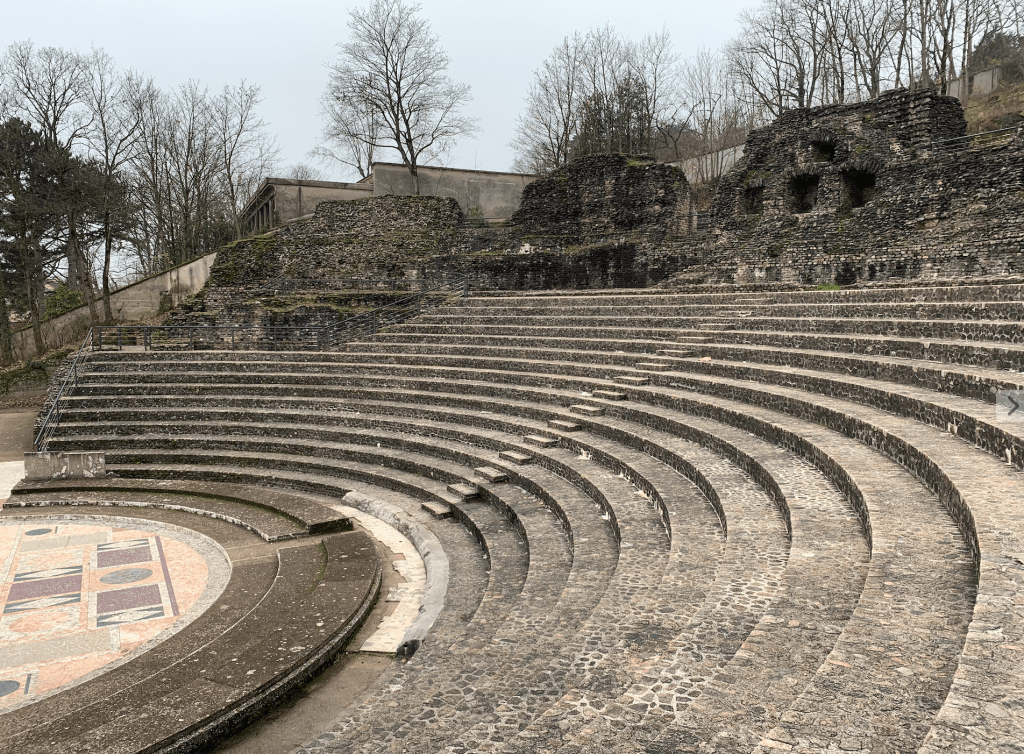
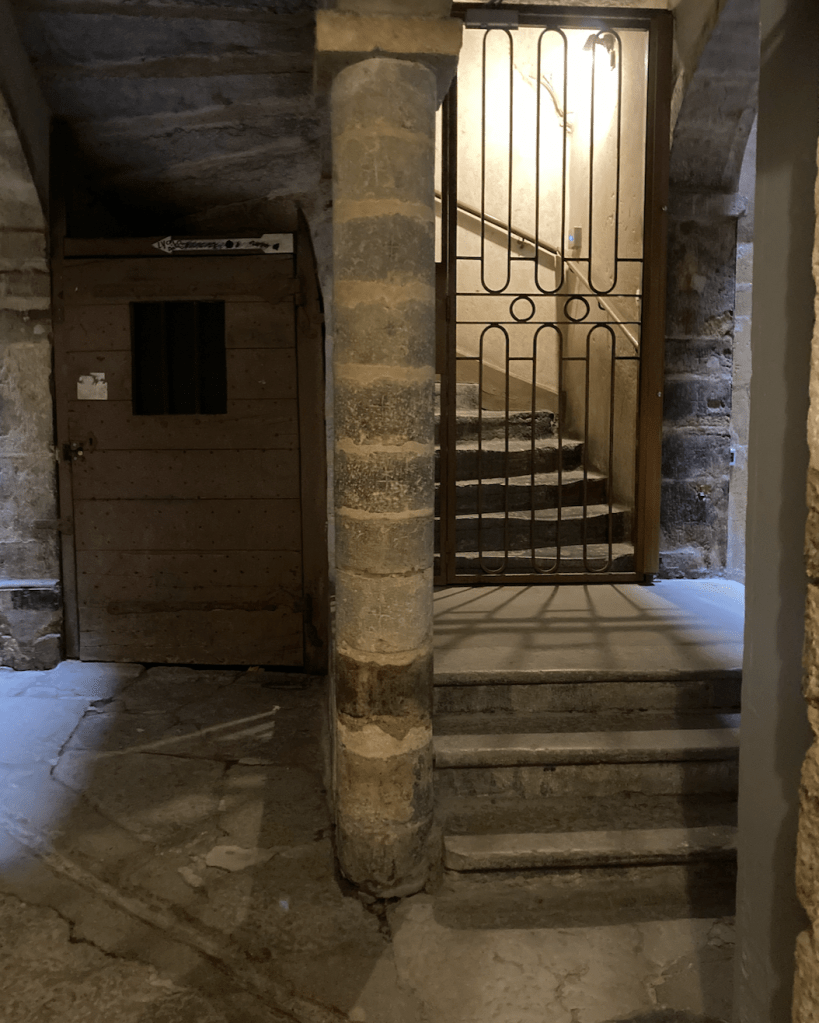
Moving on to the 15th, 16th and 17th centuries silk industry in Vieux Lyon and Croix-Rousse. Croix-Rousse is where the only-in-Lyon traboules are found. These are odd underground corridors running through multiple privately owned buildings (and still lived in) which allowed the silk workers direct access from the building down to the rivers.
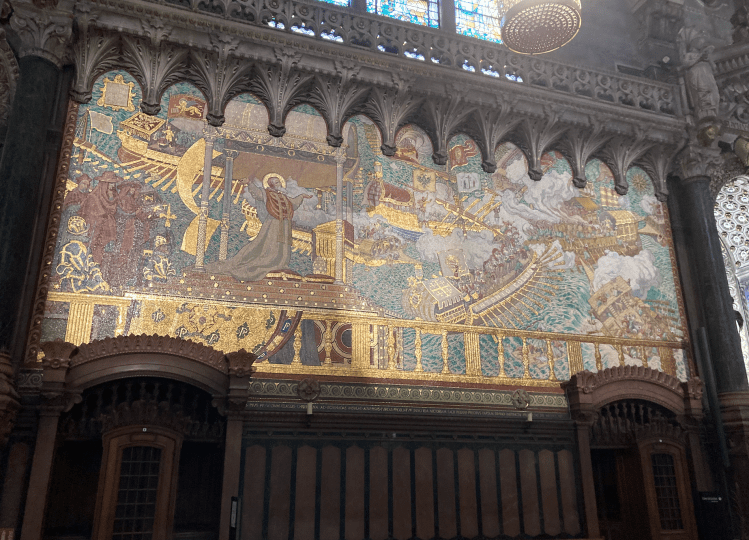
A climb up to the extremely elaborate 18th C Basilica on Fourvière Hill, built to give thanks for saving residents from the bubonic plague. Mosaics maybe inspired by the much older ones in Ravenna? (https://chosenfugue.xyz/2023/03/16/ravenna-pieces/
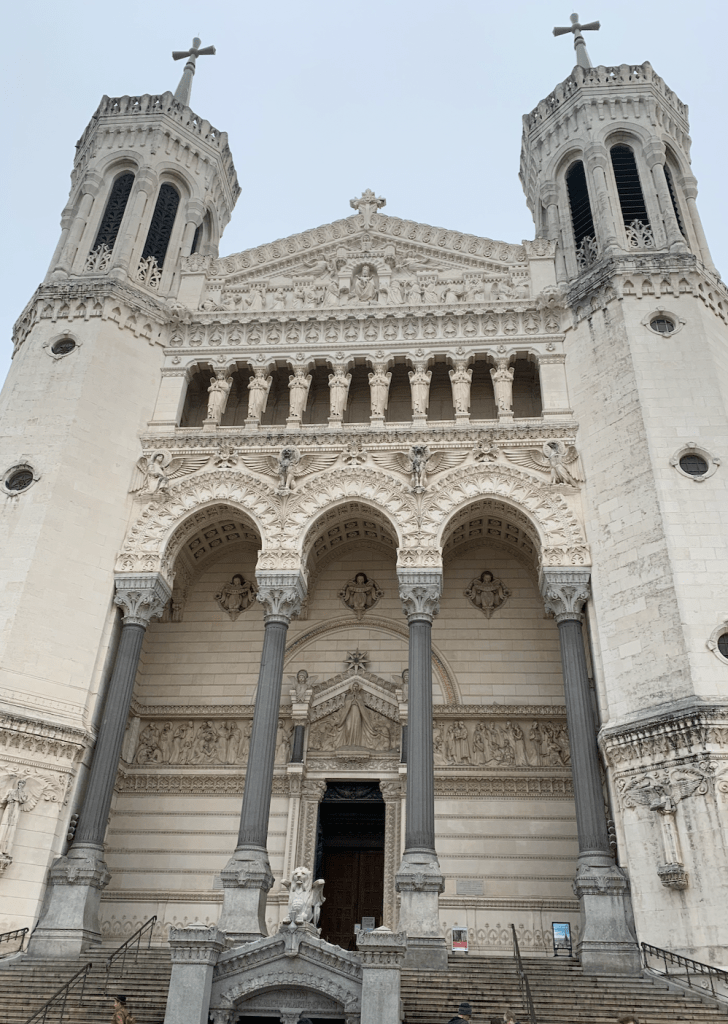
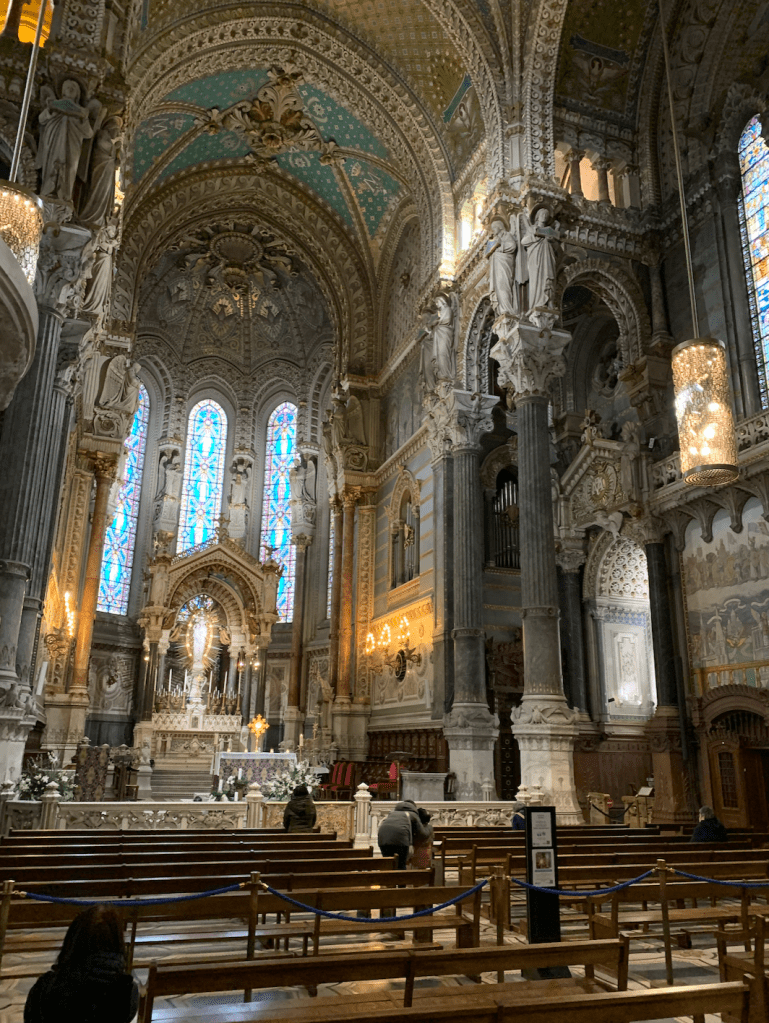
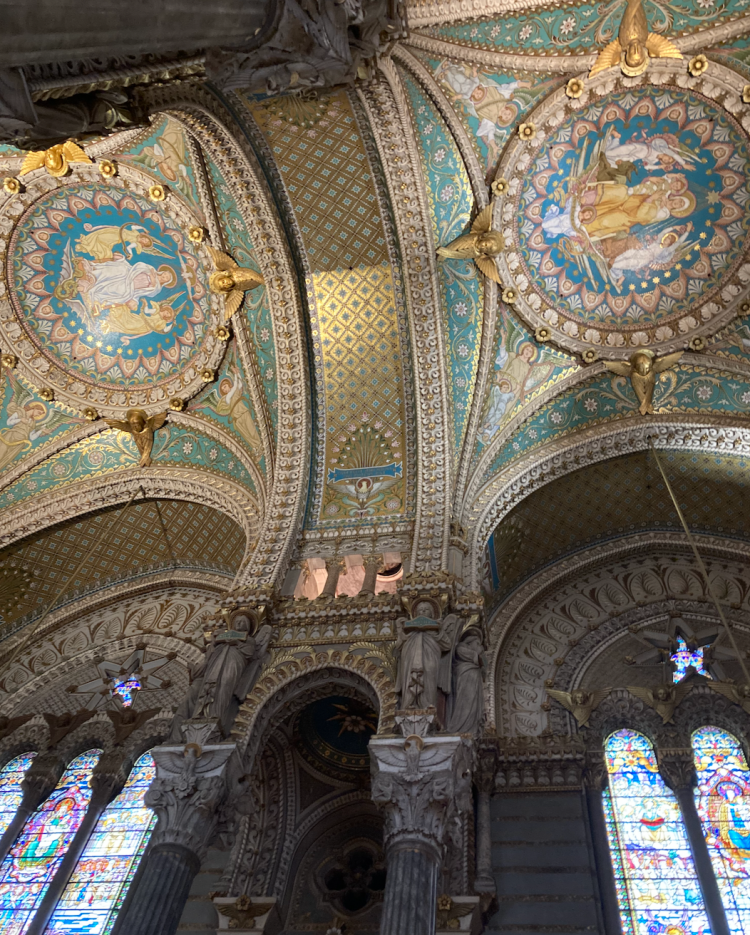
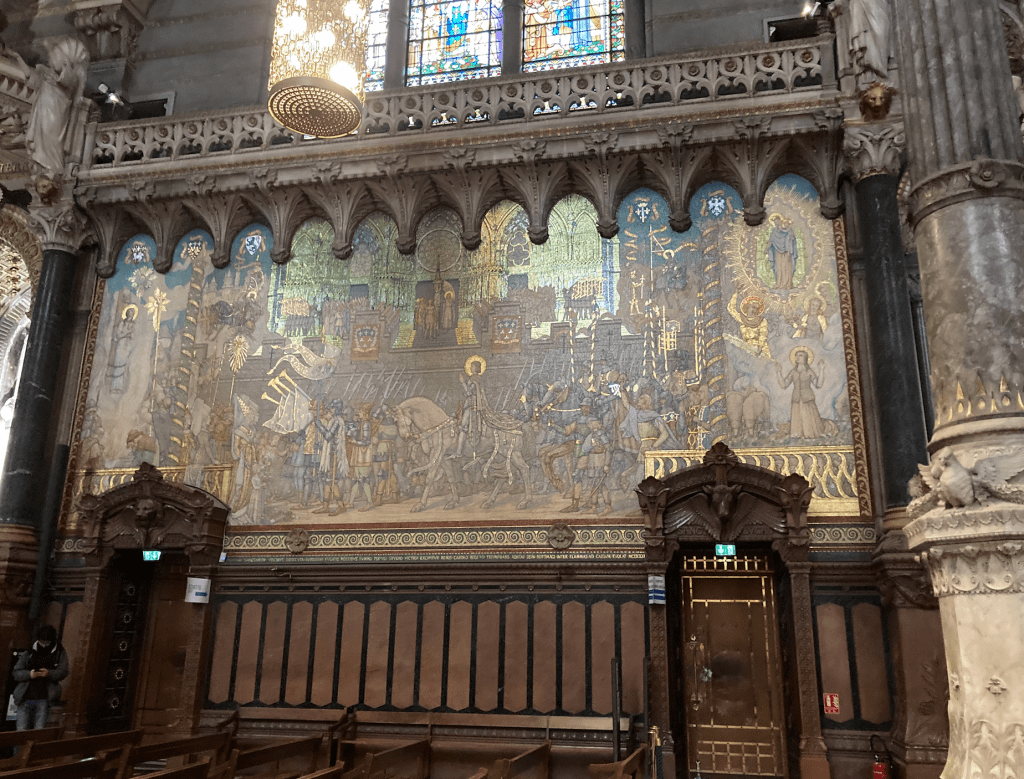
Down to one of the many bridges to the 19th C peninsula, Presqu’île, constructed from draining the swamps and marshes between the two rivers (another early engineering wonder), now the center of the city.
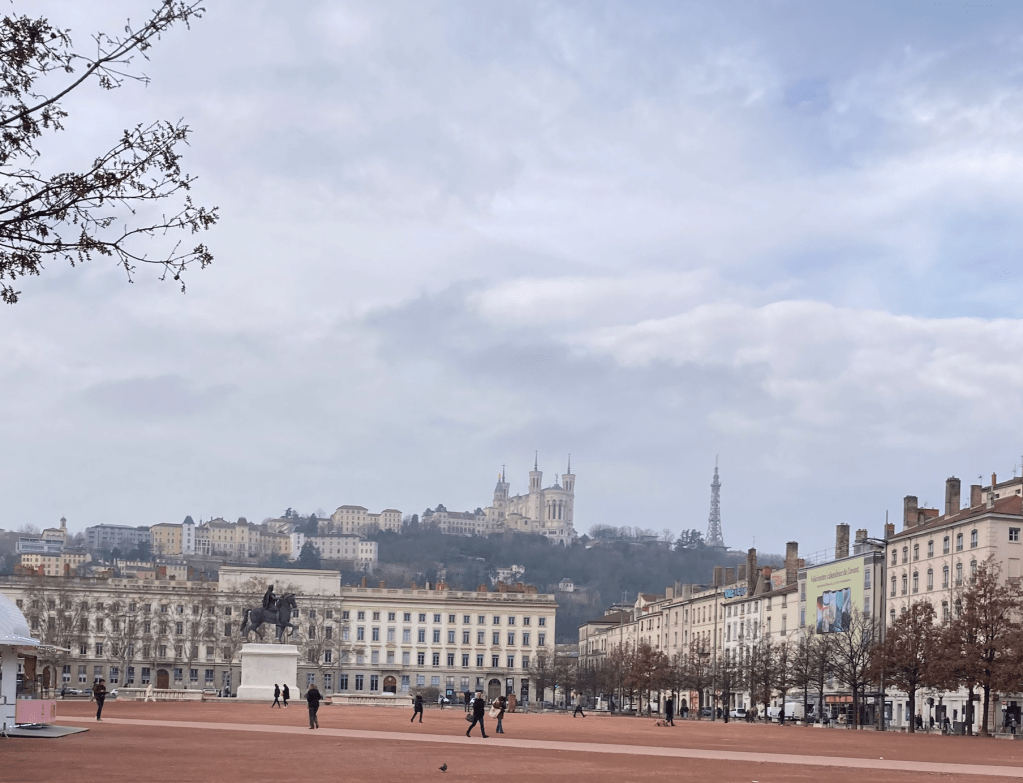
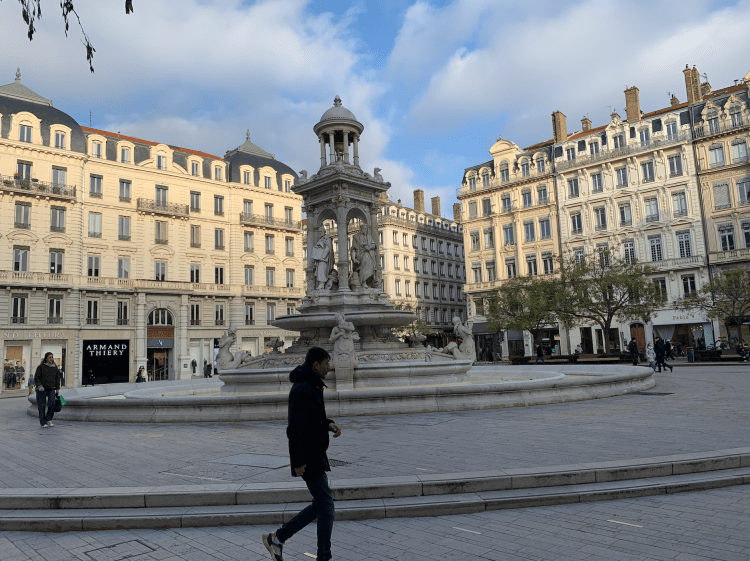
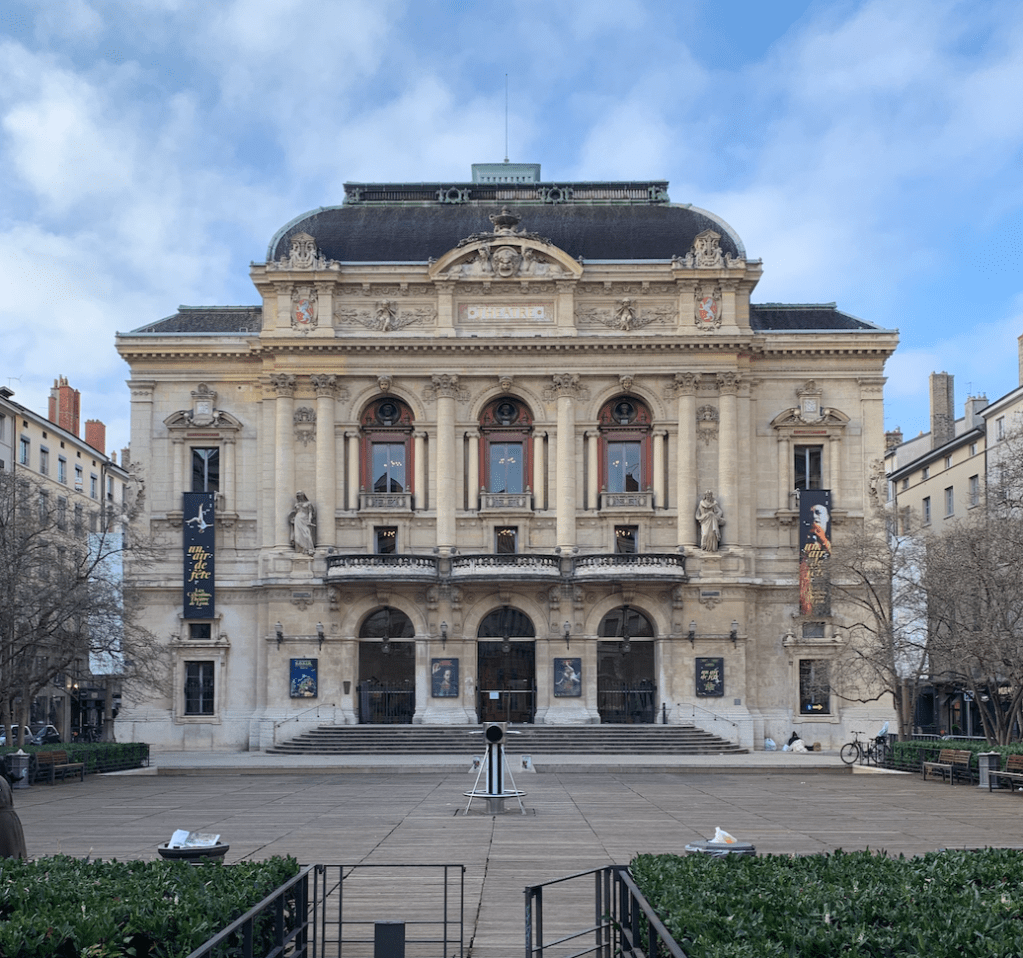
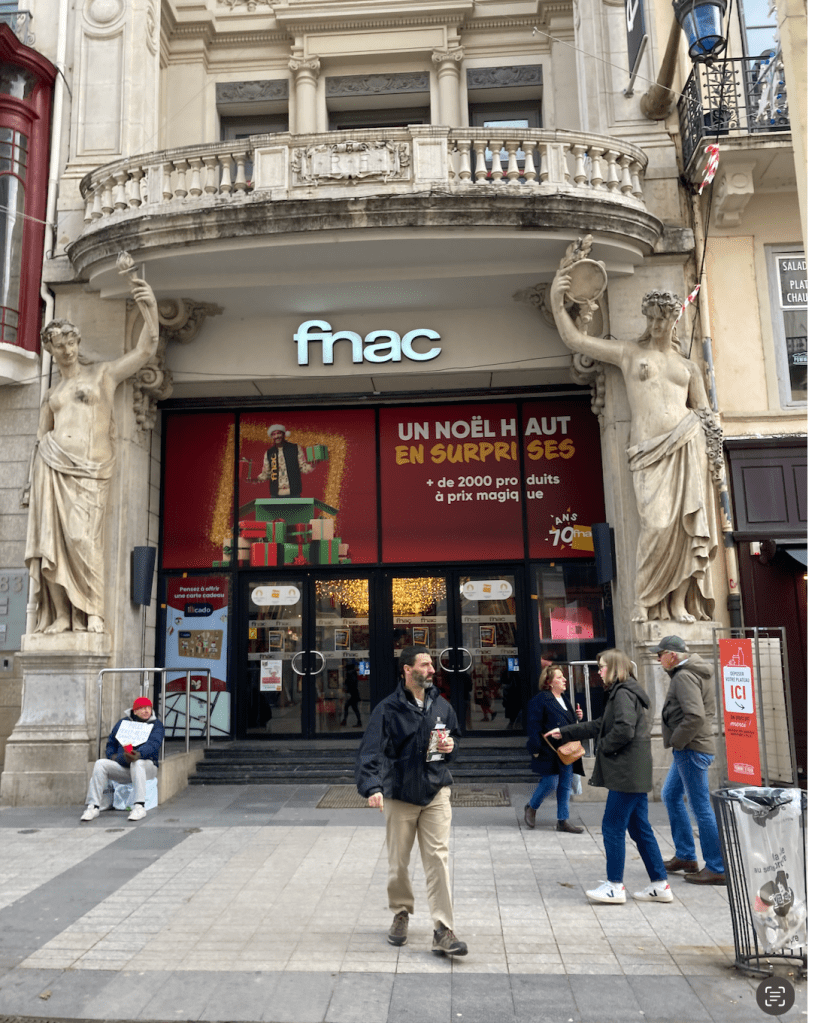
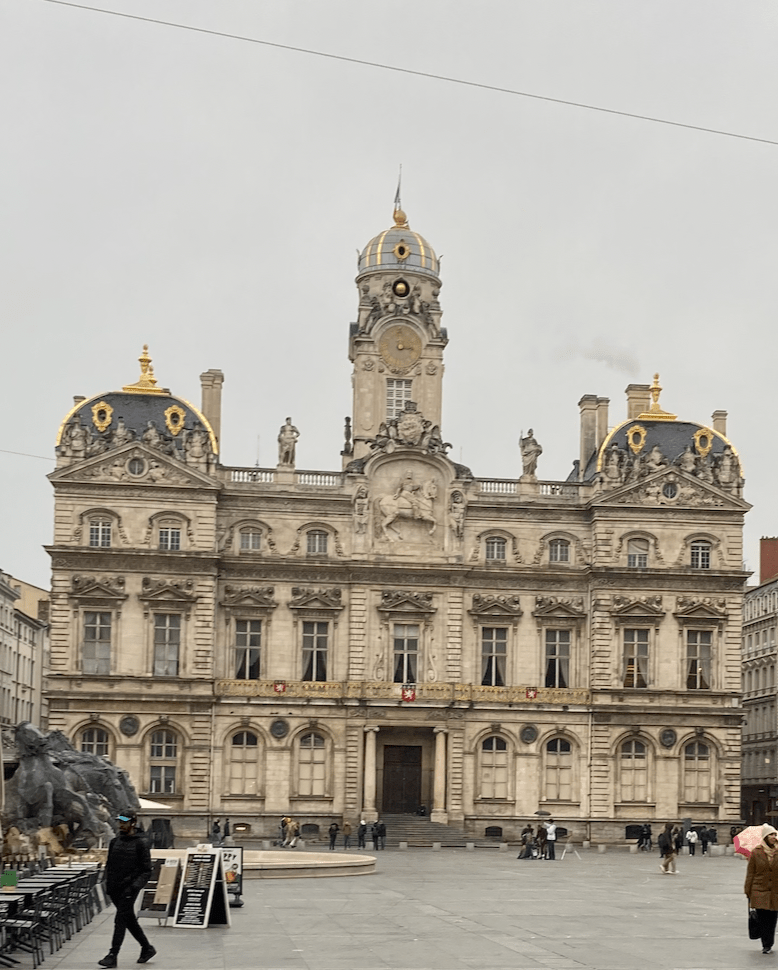
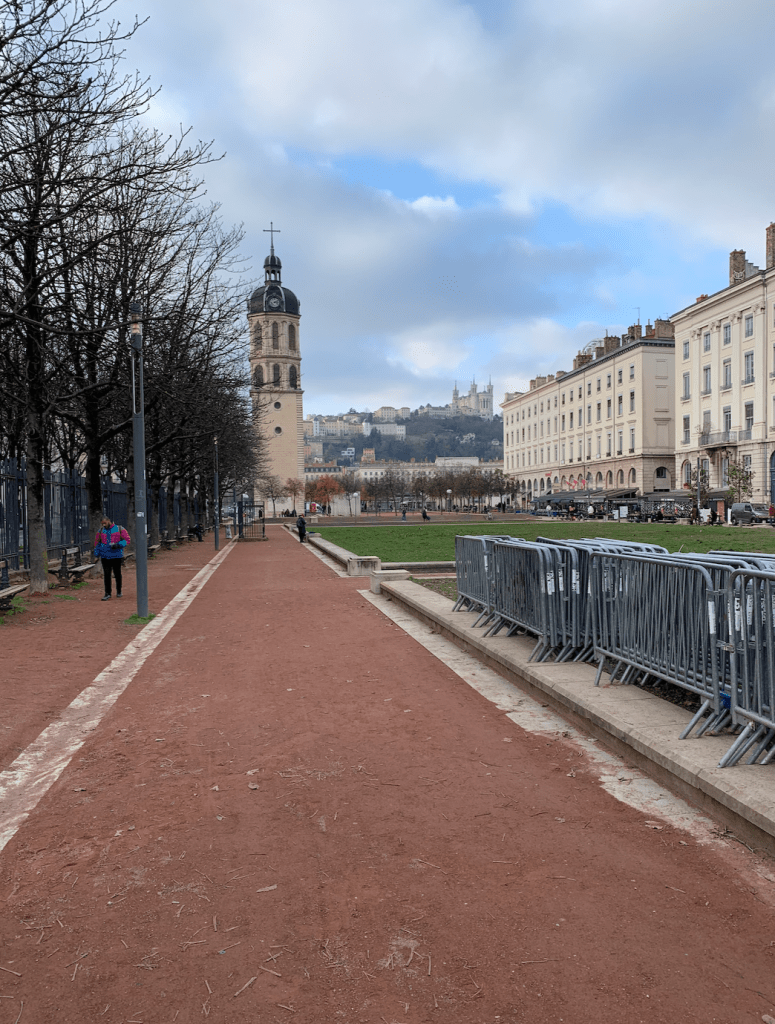
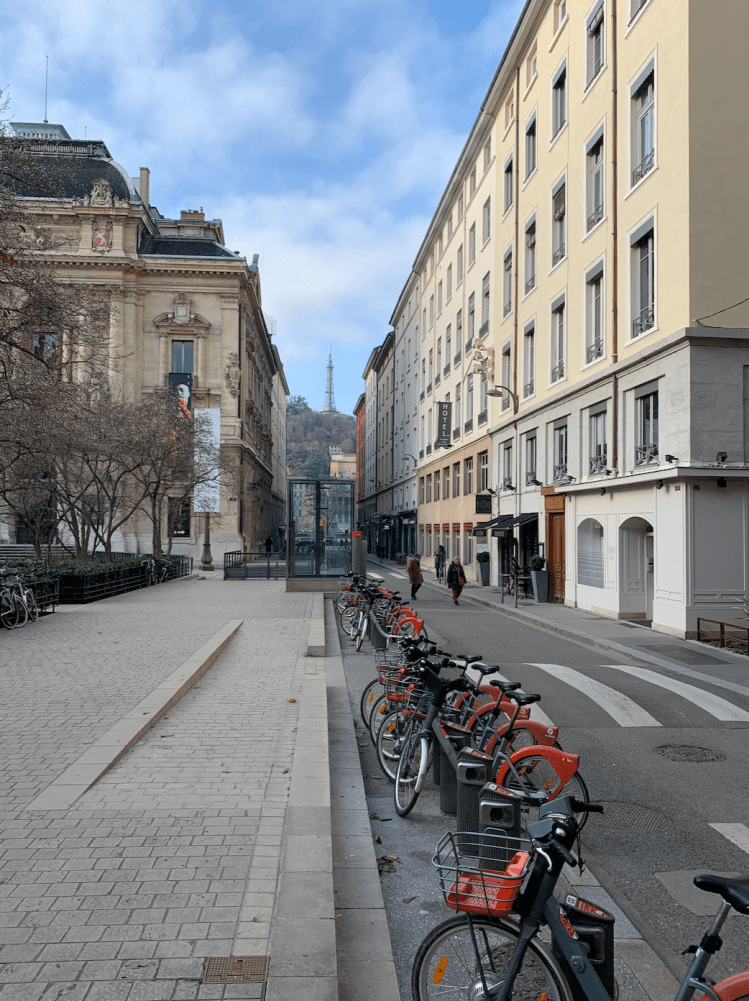
Across another bridge and to the other side of the rivers; neighborhoods built from the 1900’s through today, with a bunch of neighborhood names we are too tired to list.
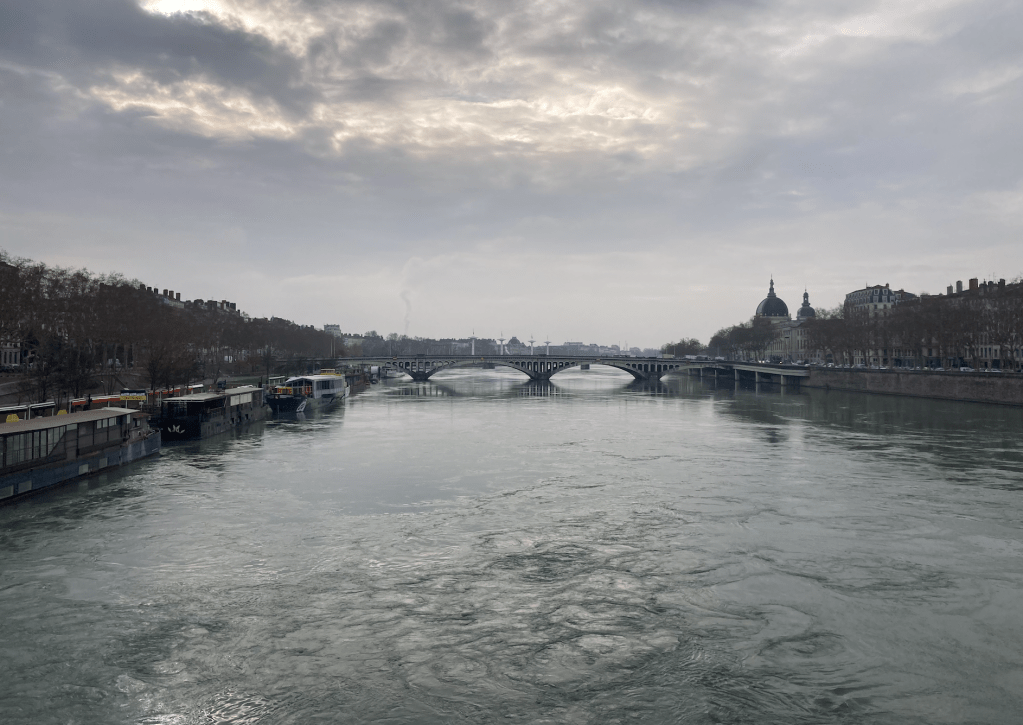
Here is where you find a typical city with Lyonnaise flavor; smog producing factories on the outskirts, wealthy neighborhoods, rundown neighborhoods, immigrant areas, shopping centers, modern trams, gentrifying post-industrial streets and a Westfield mall. Lyon is known as the city of gastronomy, with bouchons, only-in-Lyon cafes (did not eat in one) and the pride of this side of the city, the Halles de Lyon Paul Bocuse, https://www.halles-de-lyon-paulbocuse.com , chef Paul Bocuse, a native son.
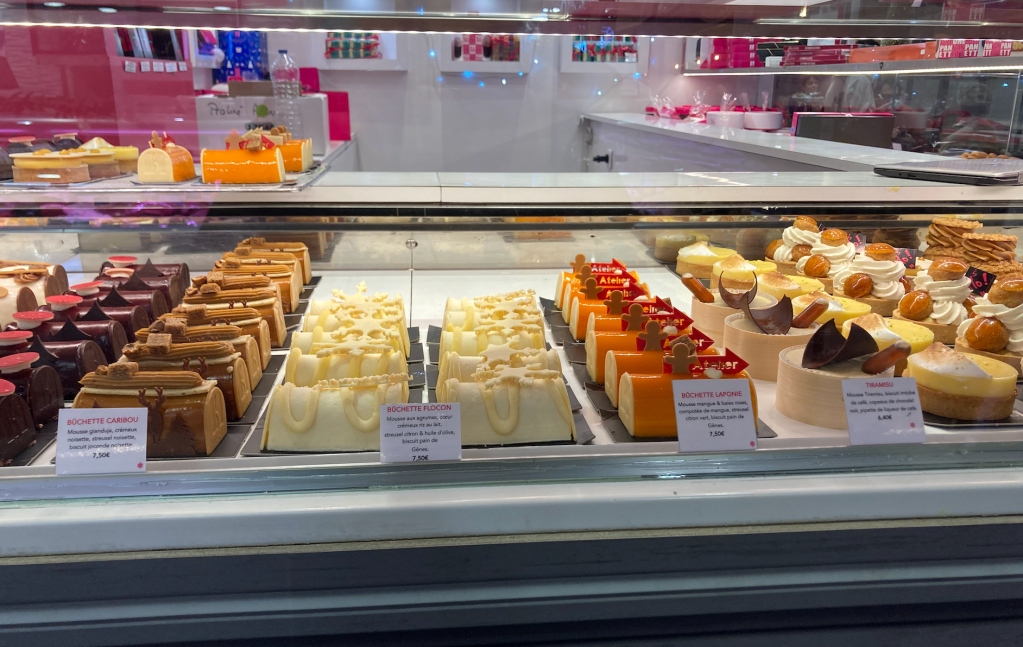
This historic (what isn’t?) 1850’s French market was converted to a food wonderland in 2004; we did not eat there, either. We were on our way back to our hotel in the Perrache (yet another right bank neighborhood characterized by a Christmas market and train/bus station), tired, cold and hungry, bypassing all these great food options while desperate to eat something other than cans of mackerel from Carrefour and slices from Nick’s date paste log. Just before we crossed another bridge,
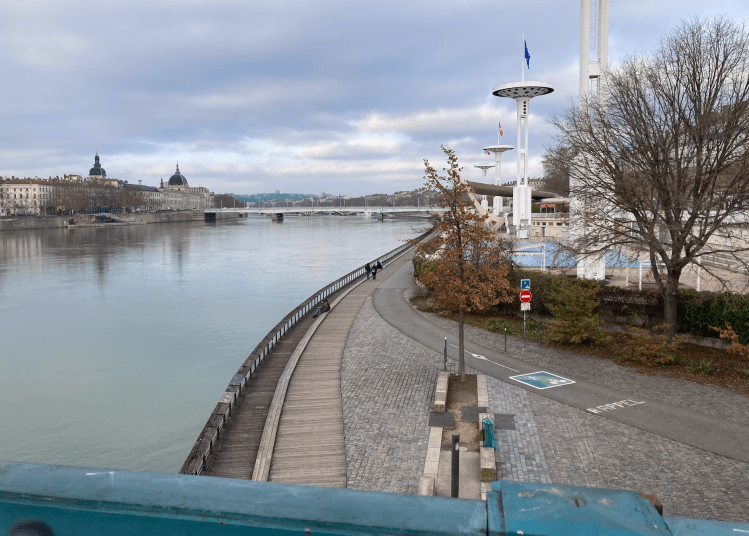
we stumbled by a burrito place. It was excellent, a rare and hidden treasure proving that Lyon truly is the city of gastronomy. We enjoy sampling European interpretation of Mexican food (Vienna, Keswick, Reykjavik, Saarbrücken, Berlin, Ghent, Antwerp, Zagreb) which does not make sense because with the exception of Berlin and Ghent, it is rarely good, https://chosenfugue.xyz/2018/10/04/belgium-part-1/ and Amsterdam’s was so bad, we won’t even list or link it. It is also is difficult to make Mexican food at home because the markets do not have corn tortillas or masa and only have Old El Paso products in their “Mexican” section. Weak. Ketchup is spicier than OId El Paso salsa.
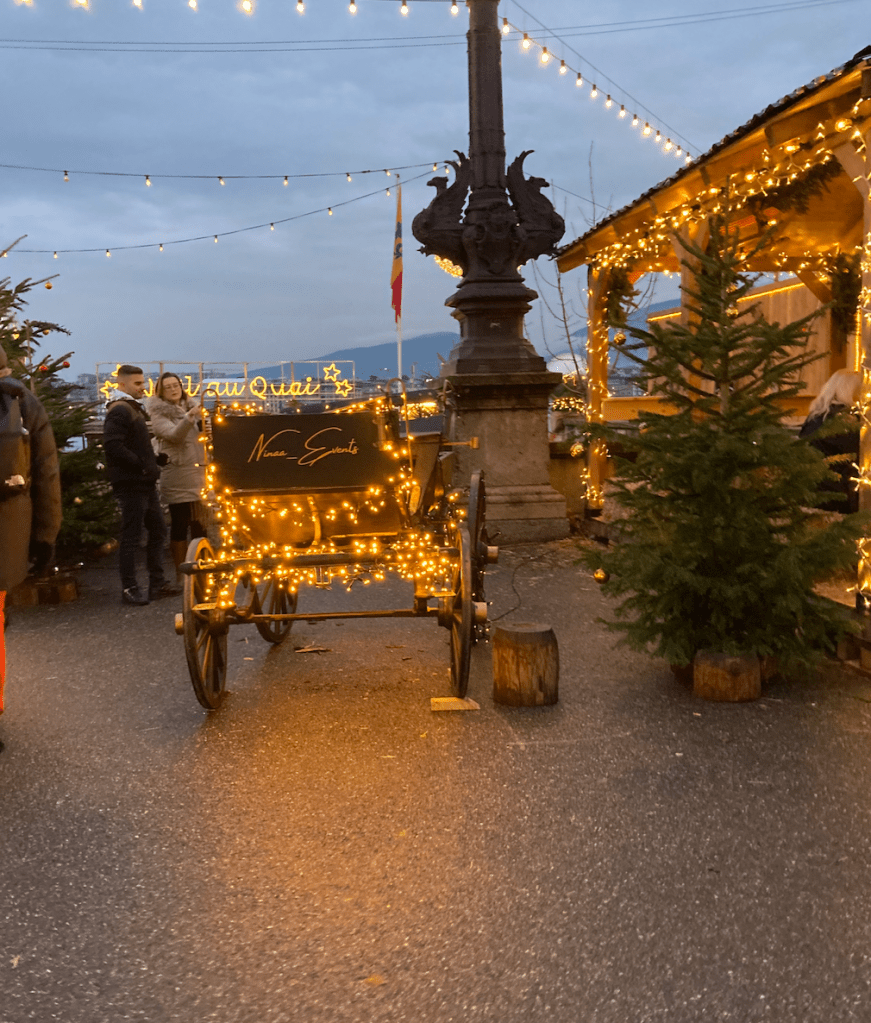
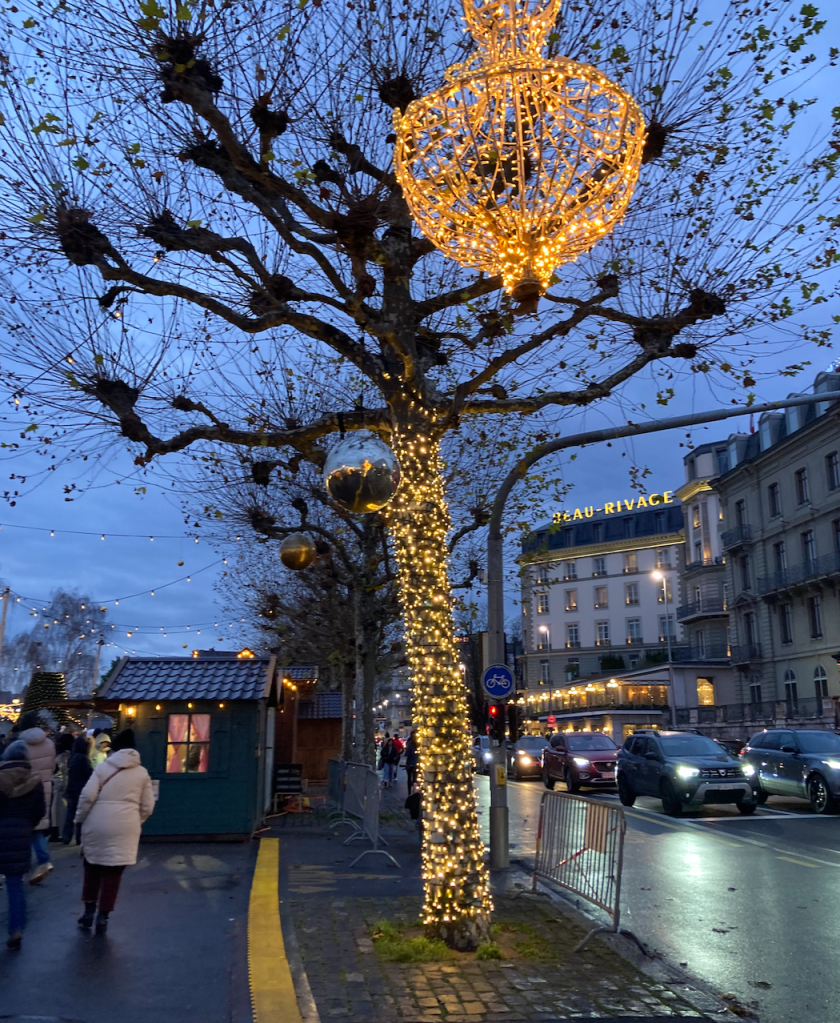
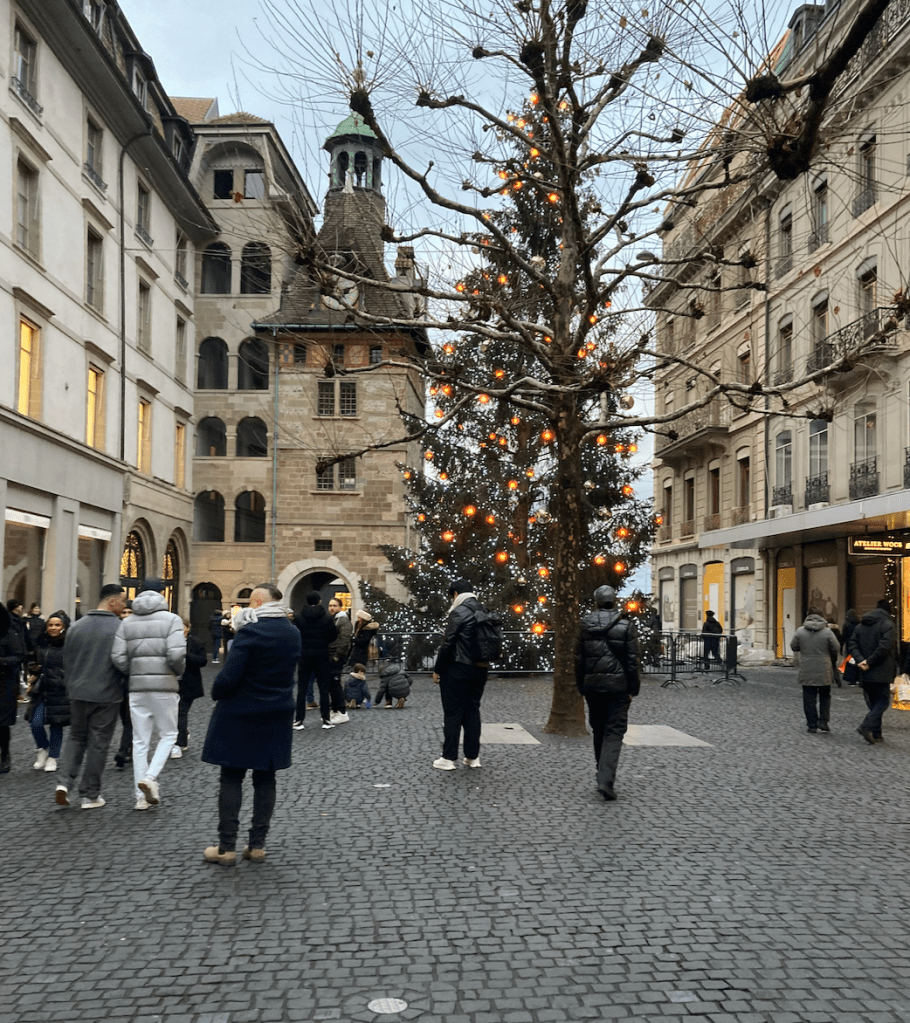
We capped off our exploration of different lands with a day trip to Geneva, Switzerland just two hours away on a Flix bus, to visit Nick’s nephew and his family. It was a great visit, but we were pressed for time to catch our Flix back to Lyon. So, our Geneva sight seeing consisted of a speed walk through the fancy downtown, the less fancy downtown on the opposite side of the lake and a huge Christmas market which led us to the Manor market.
Tired, cold and hungry again, we entered the most comprehensive market we’d ever experienced. We were overmatched. A futbol pitch sized market of gastronomy; rows and rows of gluttony. Bread bakery, pastry bakery, chocolate counter, cheese shop, sushi, seafood, an entire aisle of Old El Paso products, dim sum, soup, sausage bar, butcher, produce, etc. So incredibly overwhelming that we don’t even remember what we ate, it must have been fast food because we did speed eat it on the street before we went to wait forever in the freezing cold with intermittent freezing rain for our very delayed Flix bus. Flix bus stops are typically at odd locations (does FLIX stand for Finding Location Is eXistential ?). This one was centered in an extremely busy square with other bus services, as well. Keeping warm by busily dodging buses, cars pedestrians, bicycles and rain drops. It was like the wild, wild west, or at least Old El Paso.
 Chosen Fugue