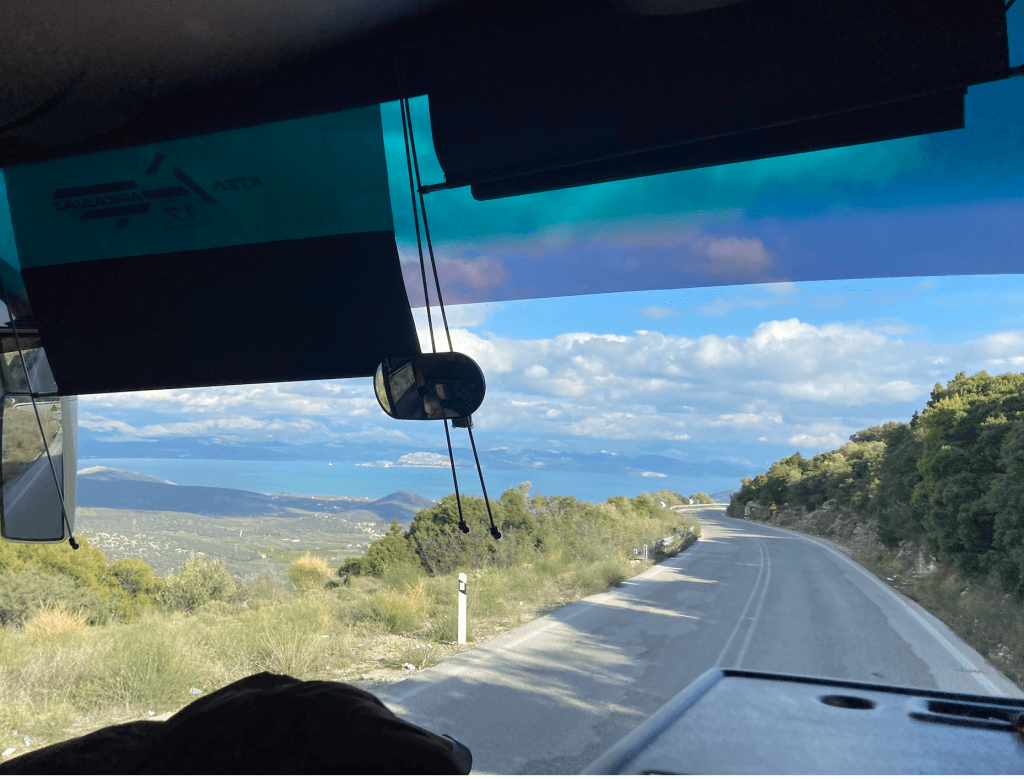
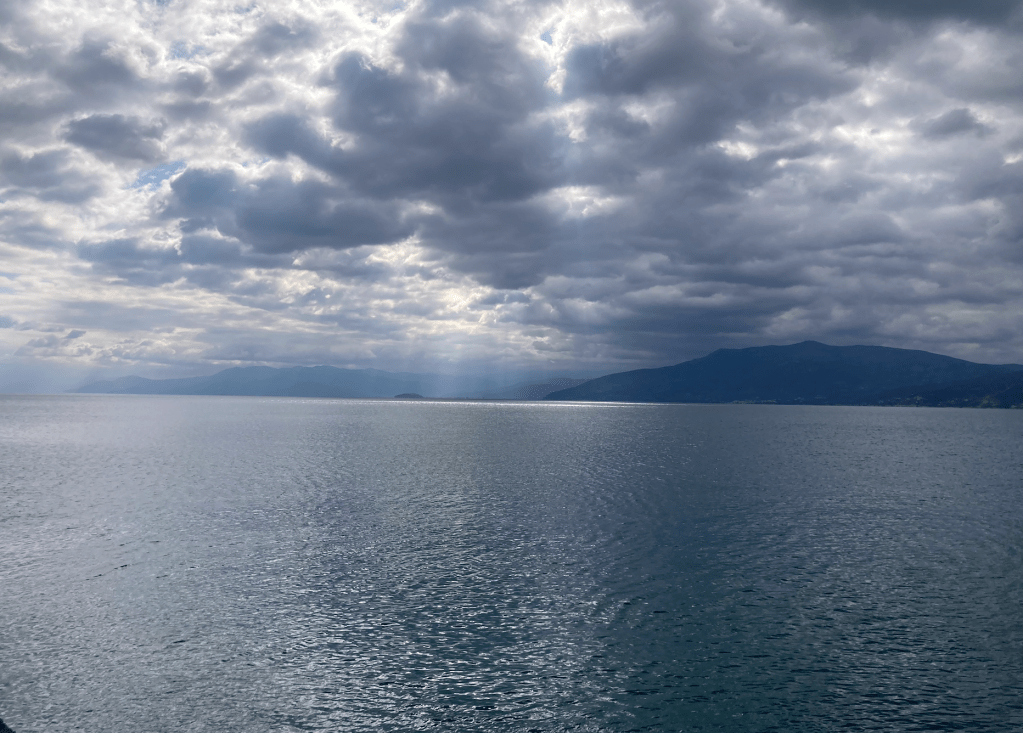
Nafplio was a 6 night finale to our month in Greece. We took a very scenic, twisty bus ride, from Pyrgos to Nafplio with a stop at every village, no matter how narrow the road. The ride ended with a very dramatic approach as we reached the Argolic gulf.
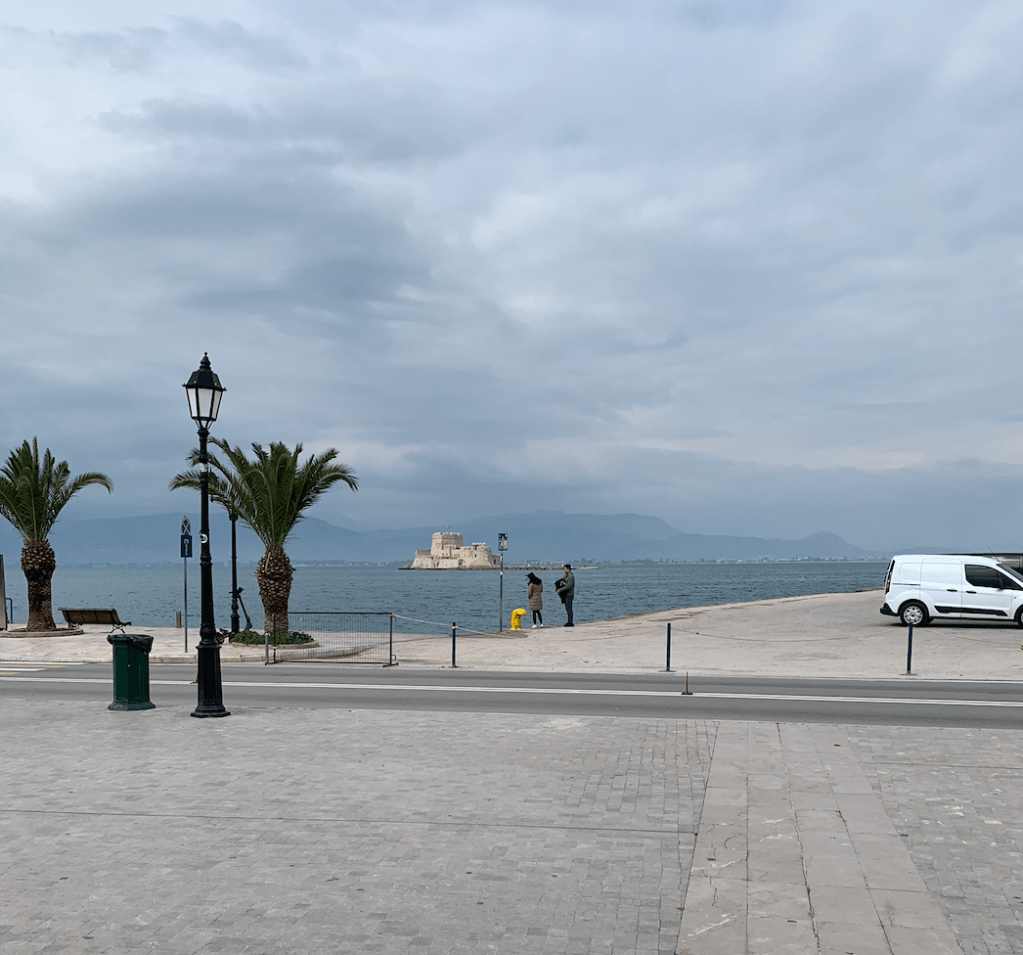
Nafplio is a star on the ex-pat and Peloponnese travel sites, so expectations were high, but so were the winds and the temperature kind of low. The high expectations coupled with no heat in our apartment, may have tempered our enthusiasm but things did improve when the lodging owner, after 3 days, had told us that yes, the solar heated water could be warmed if we just flipped the switch in the bathroom, but yes heat is very expensive in Greece, so, if possible don’t use it. And, BTW the apartment heater doesn’t work. Yeah ,we noticed. Greek buildings are not built for temperatures in the 40’s. The apartment was lovely though with lemon trees in the garden. But the travel guides were right when they praised the Italian architectural influence, the beaches, the restaurants,
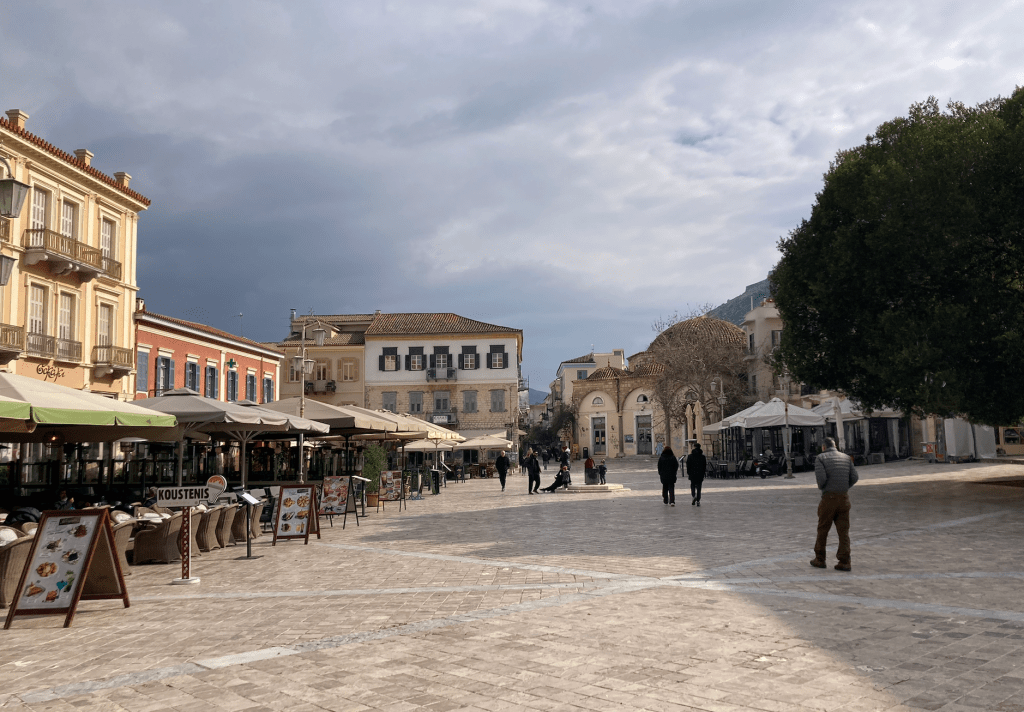
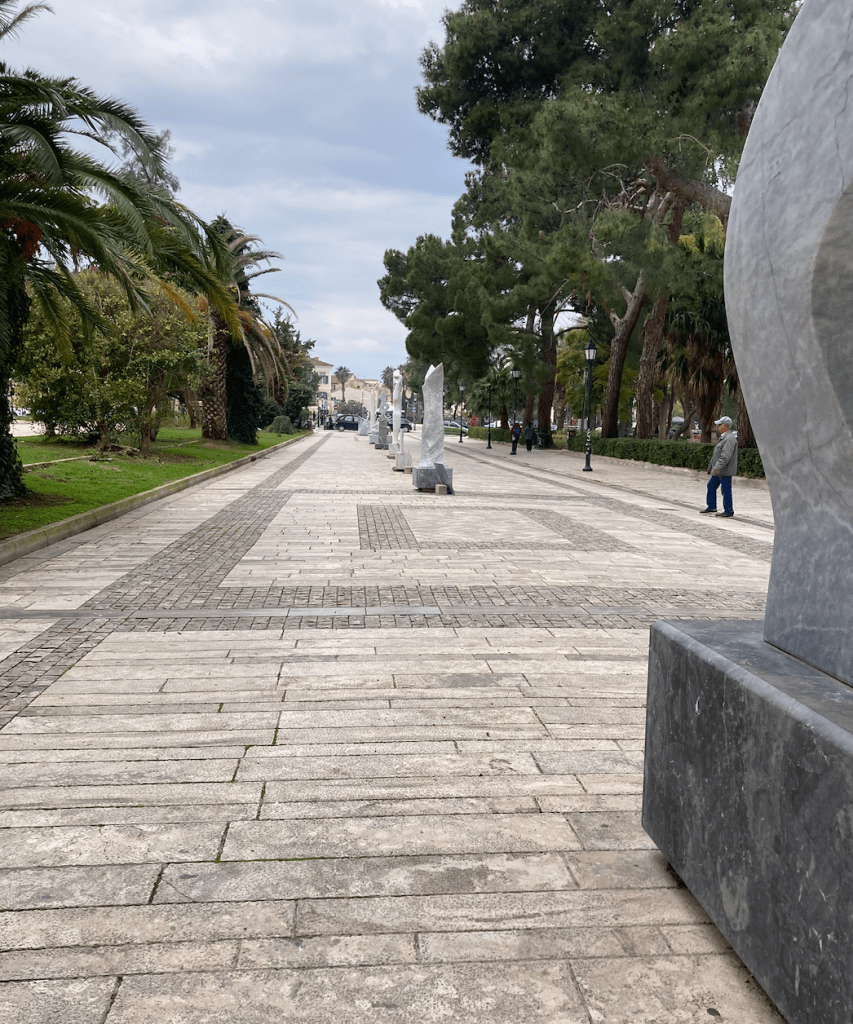
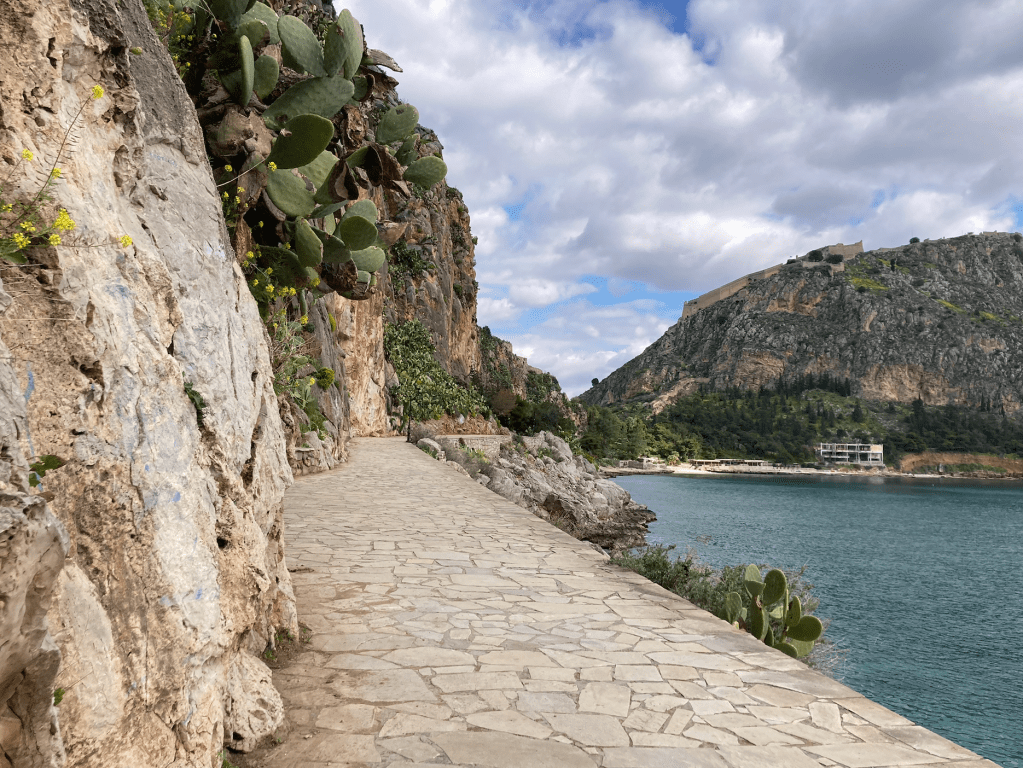
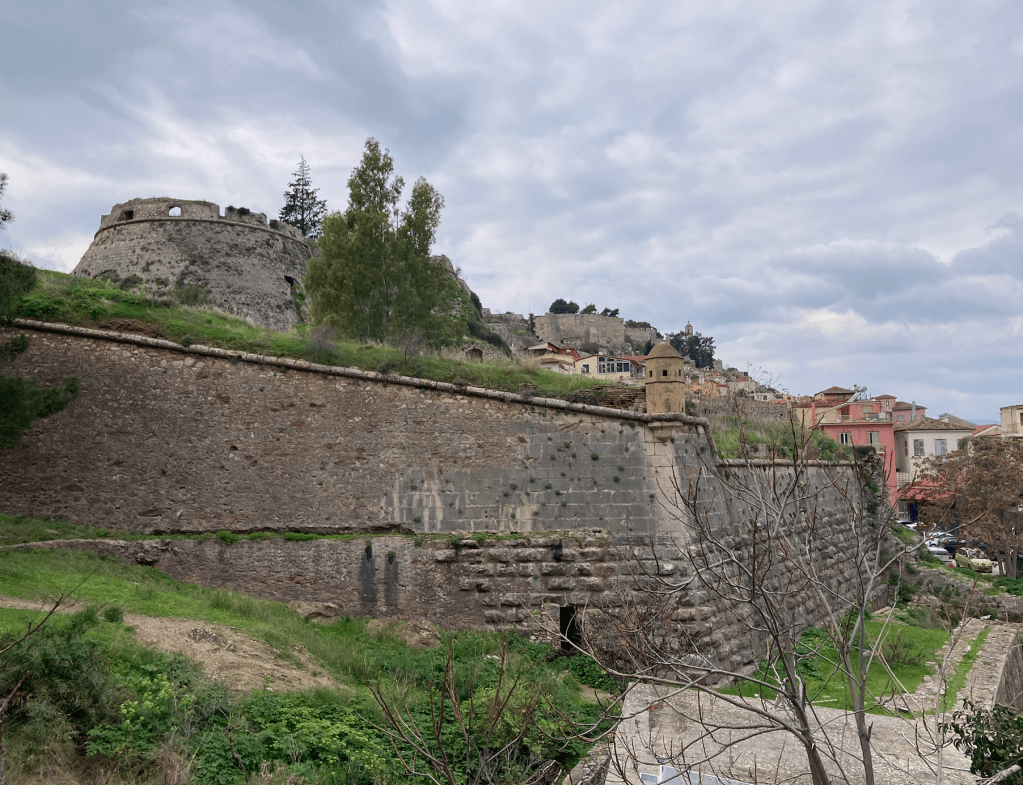
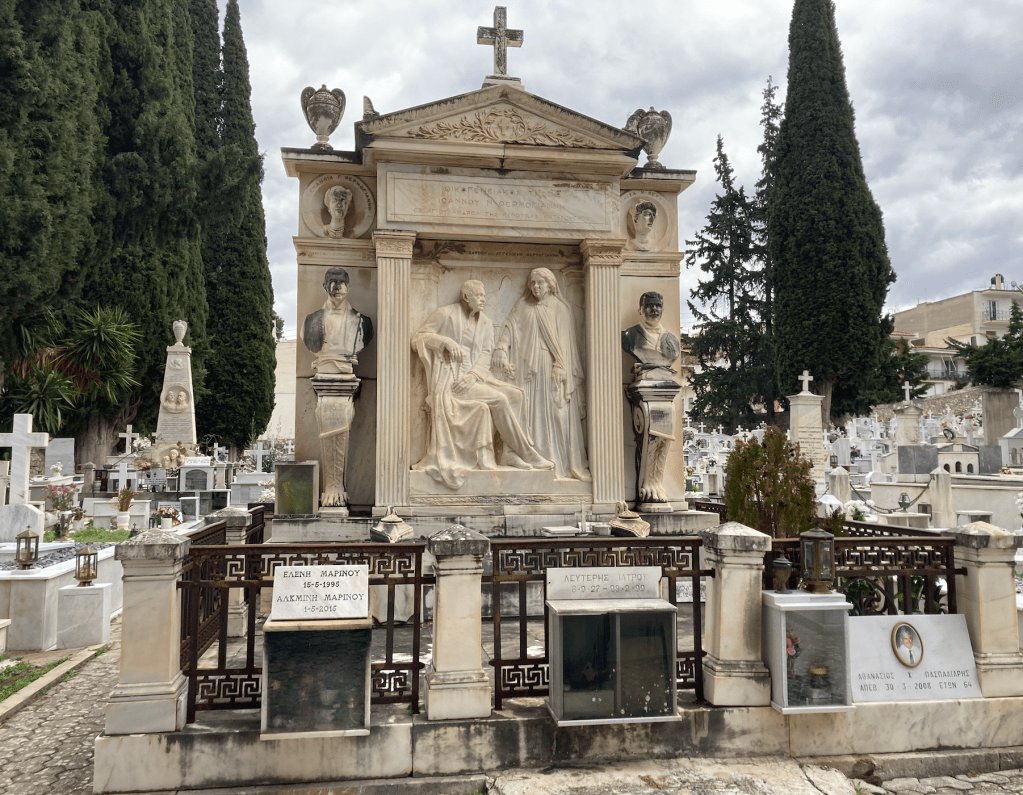
and the proximity to ruins and the islands. We don’t really know about the restaurants (we did walk by a lot) and winter denied access to the islands but we did appreciate the nearby prime archeological sites.
We continue to marvel at the construction of ancient structures https://chosenfugue.xyz/2025/10/11/brittany-rocks/, https://chosenfugue.xyz/2026/01/25/meteora-is-a-hit/ https://chosenfugue.xyz/2019/06/18/into-the-cyrillic-part-1-bulgaria-interior/.
As mentioned, they are typically built at the highest point in an area, using stones larger than cars, appear to defy gravity and are still or partially standing after thousands of years; attesting to the engineering aptitude of the builders. Whereas, we struggle to construct an Ikea coffee table and have it last longer than a Swedish summer. Another chapter in the big book of astonishment and embarrassment for us.
We learned the official word to describe these structures made of giant rocks, Cyclopean, meaning only giant Cyclops could have built them https://en.wikipedia.org/wiki/Cyclopean_masonry. So all our architectural questions answered. Mystery solved. The area around Nafplio is prime cyclopean country, easily explored by bus or by foot.
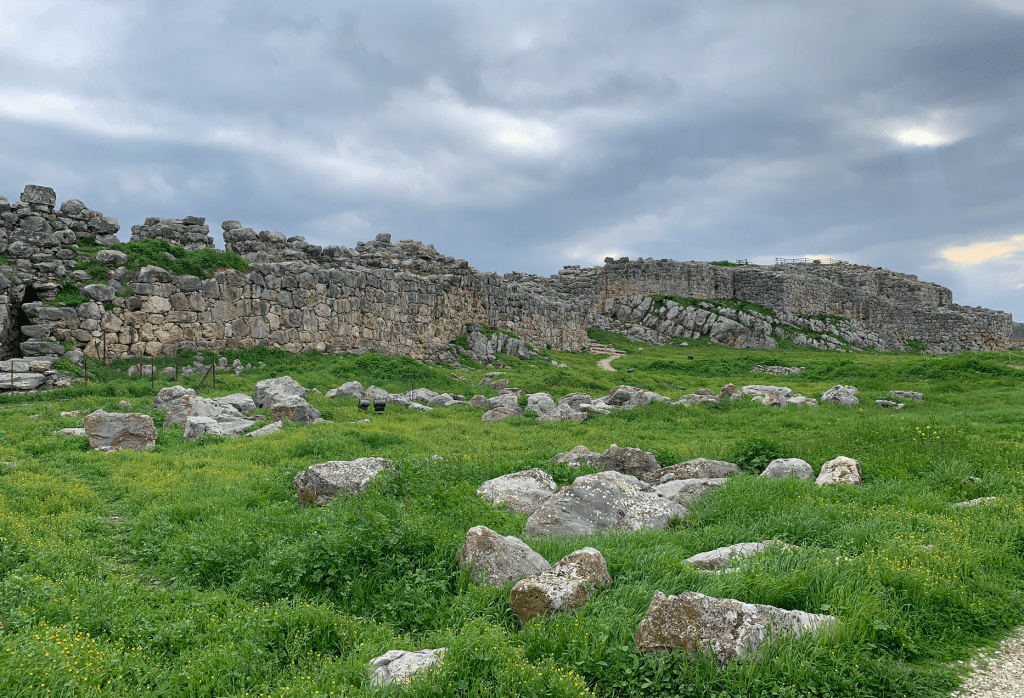
First stop was Tiryns, https://en.wikipedia.org/wiki/Tiryns, a straight 4 km shot north of the Lidl market, with a good mix of sidewalk, dirt path, wide roads and curse-worthy thorn filled paths on narrow roads. A collage of our Greek walks, but as always, worth it. Another salute to winter travel, Tiryns was just us and 2 middle aged British guys.
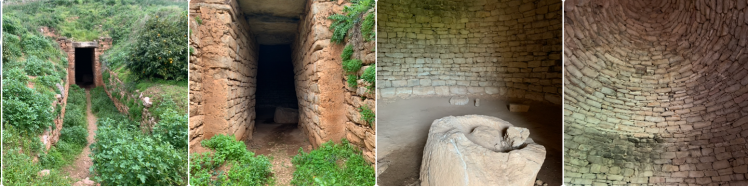
The tombs were a kilometer or two away from the ancient city, but these tombs were not just off the main road rather they were nestled in orange groves which were nestled in a residential area. While the tomb was noted in blogs and guides, it was pretty hidden and it was an absolute gem.
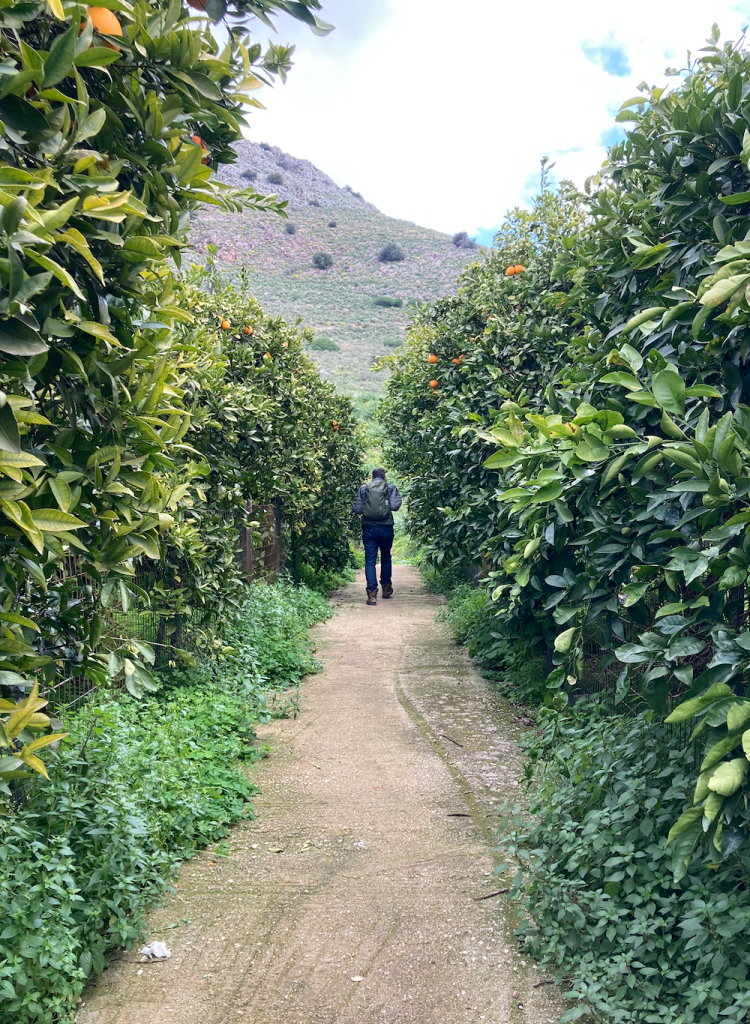
Plus we ended up with a few oranges. Very tasty, not street oranges.
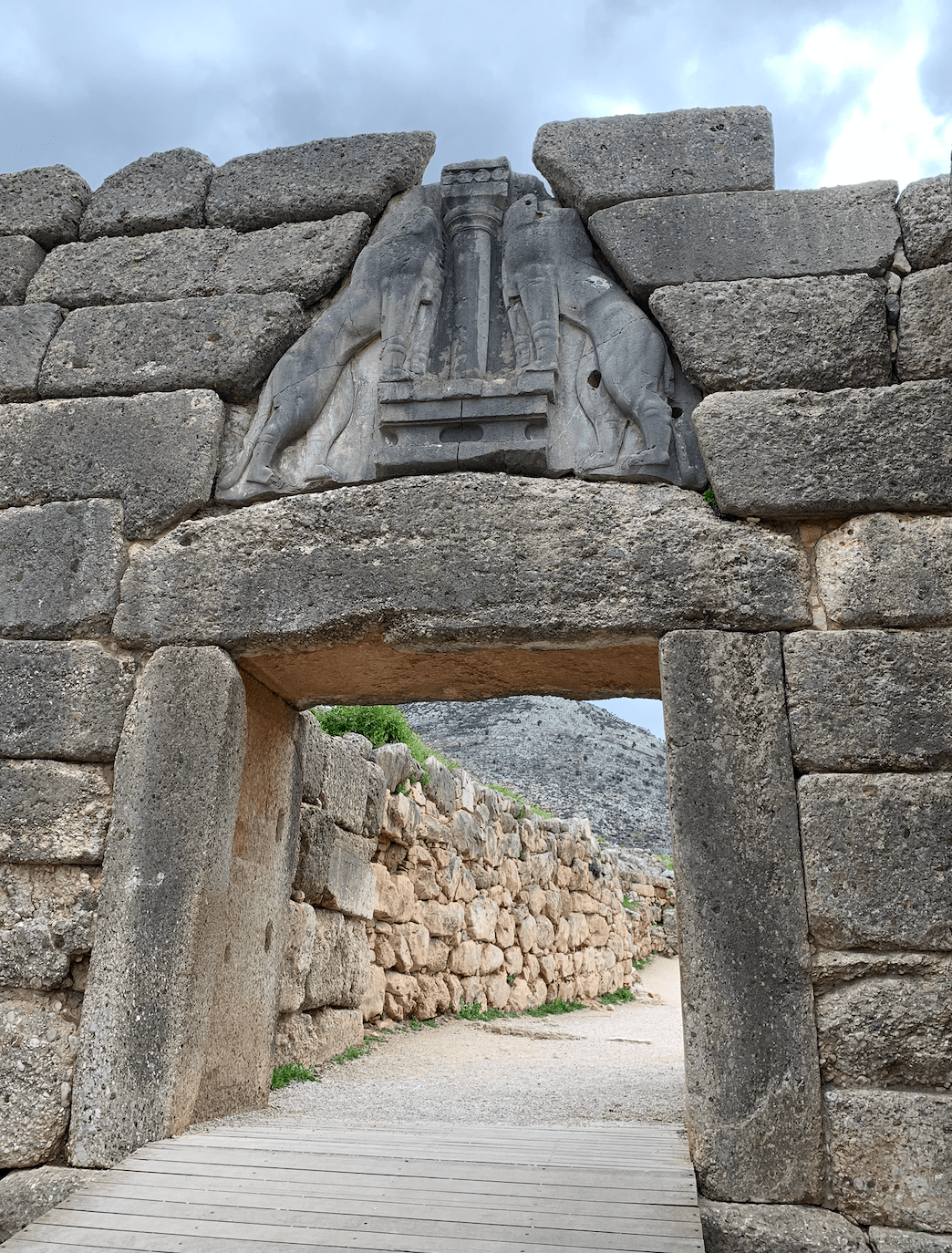
Our second trip was to Mycenae (https://en.wikipedia.org/wiki/Mycenae). A bus dropped us off just outside of the town of Fichti. Taxis waited at the bus stop, but why take a taxi when you can walk 3 miles, uphill. Our politely stated preference for walking, shocked the persistent taxi driver who now had to change his vision of Americans from lazy to crazy. It was a great walk, primarily because we were joined by a dog, who happily led us on a leash free stroll right up to the Tomb of Agamemnon.
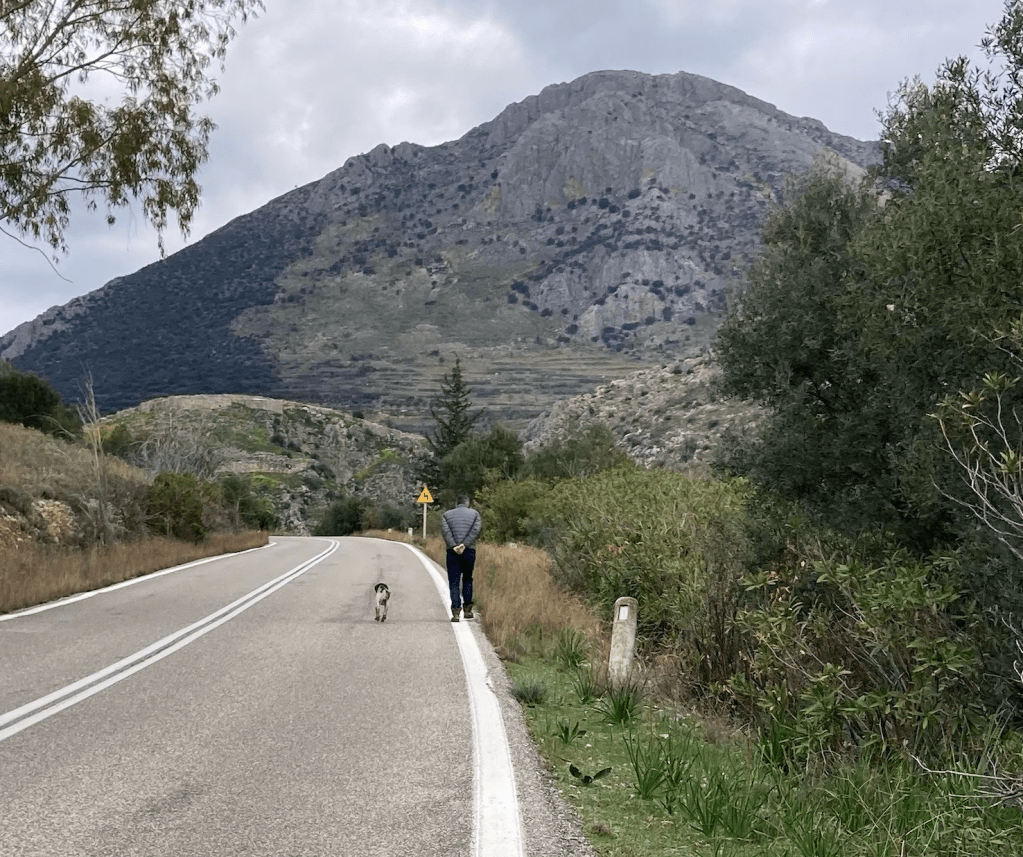
Like the tombs at Tiryns, the Tomb was just outside of the ancient city site .
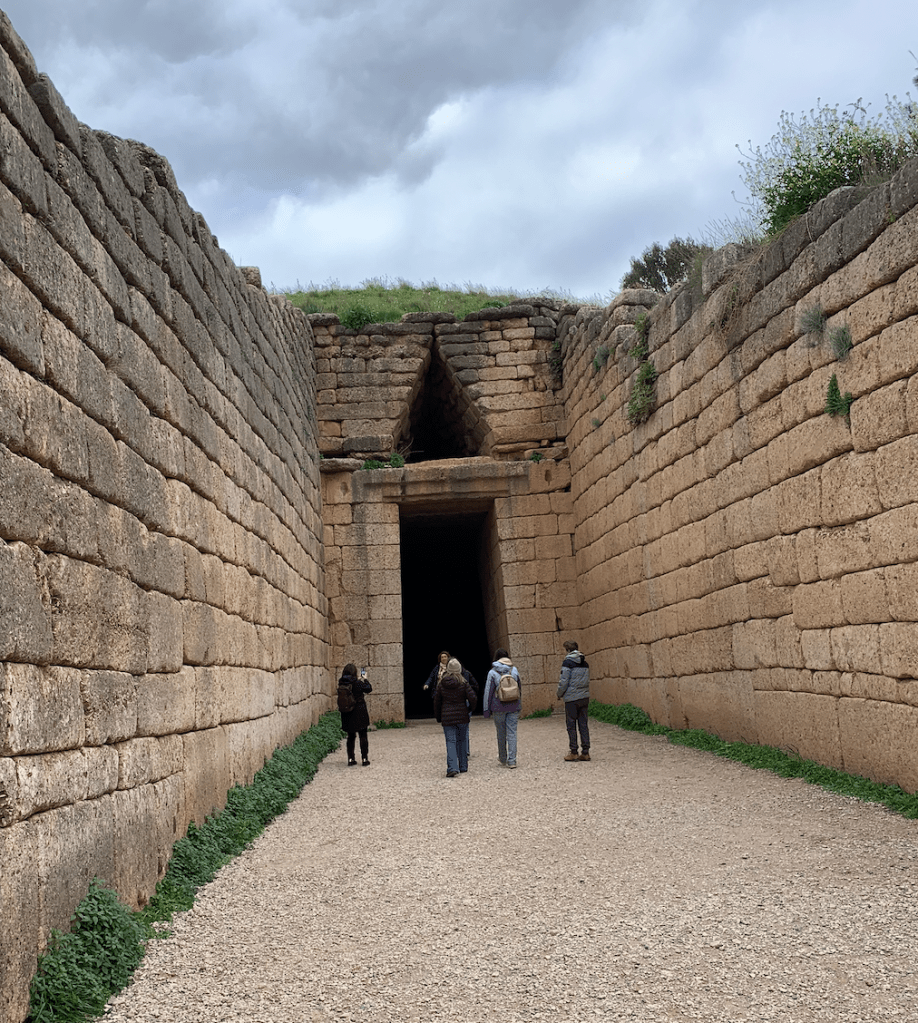
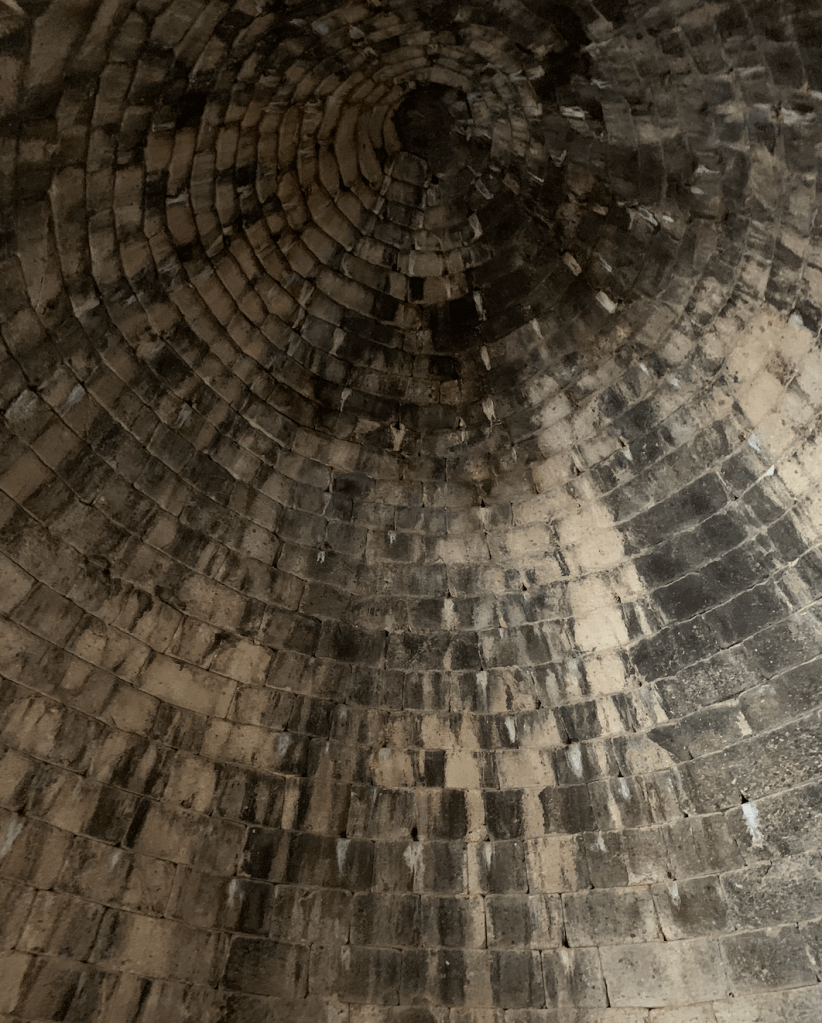
And the city was huge, able to easily accommodate the school and tour groups, which we had not seen at really any of the other sites outside of Athens.
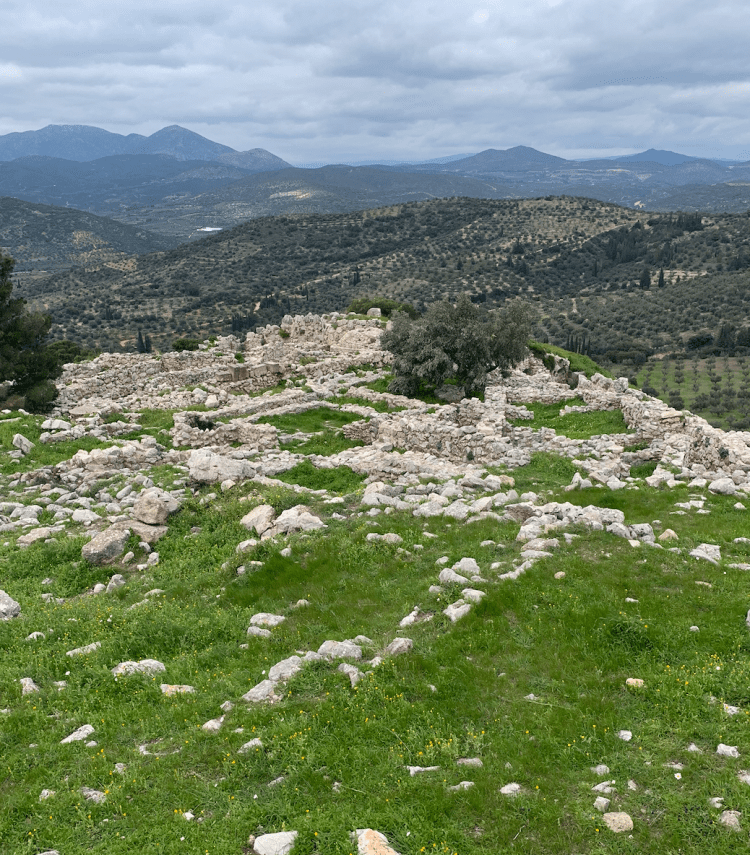
The pictures are better at doing the heavy lifting of describing the ruins.
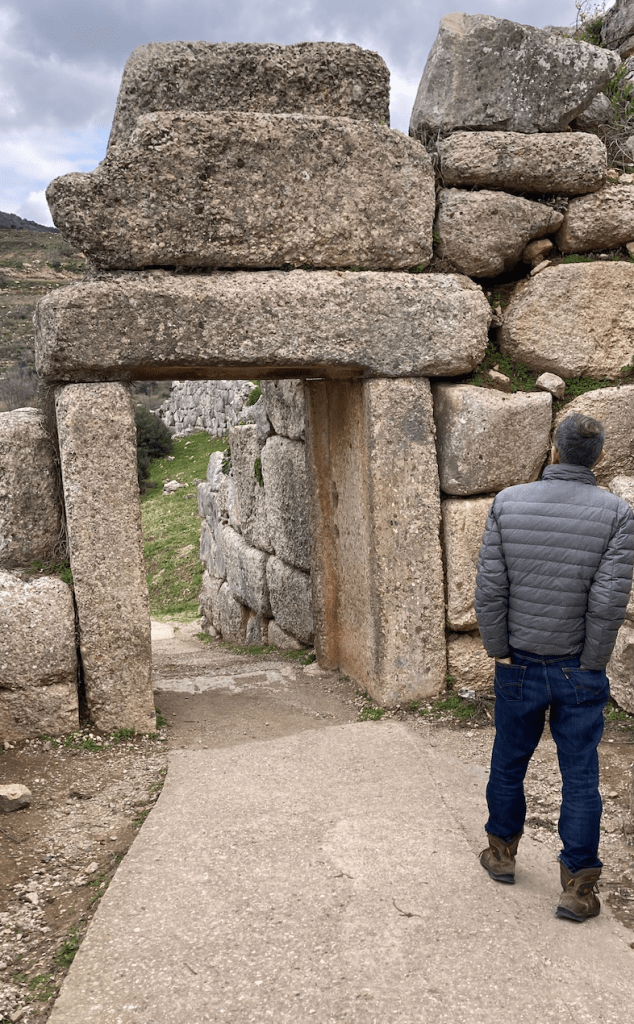
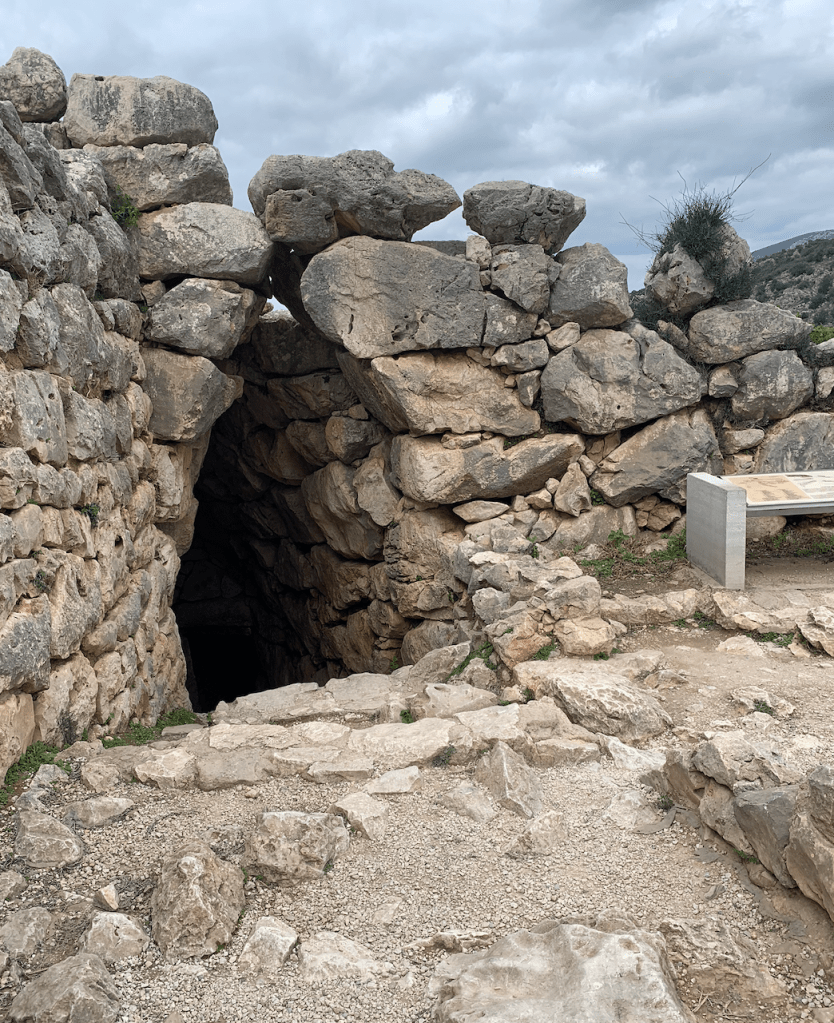

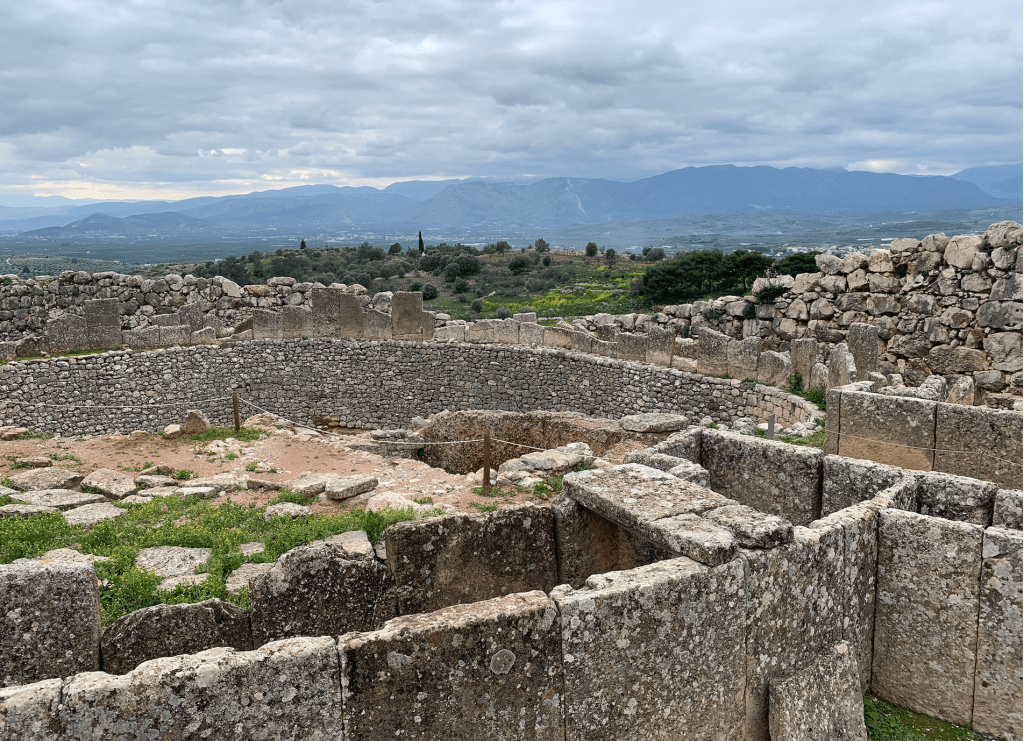
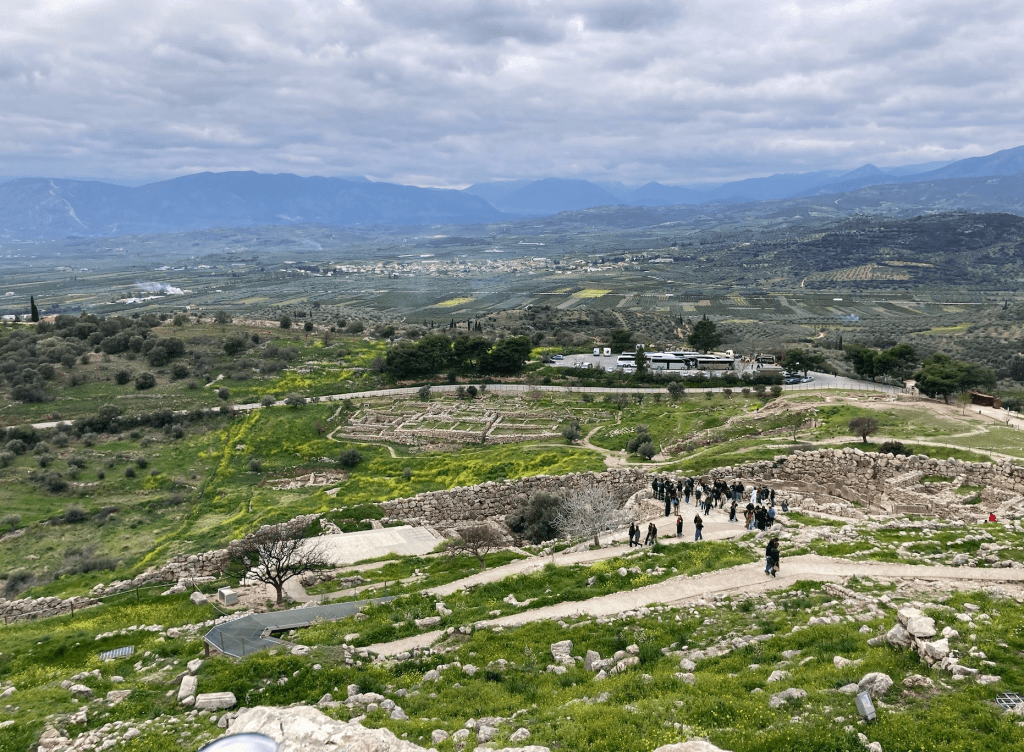
There were other sites- some we could see from the road (Castle of Argos) and a few others a bit further away, but still doable, but we decided to spend our last few days in Greece exploring Nafplio and its 3 supermarkets, happy to have a kitchen and not constantly on the move. However, due to an unrealized mixup at the checkout, we ended up with a kilogram (2.2 pounds) package of spaghetti noodles that had spilled over on the conveyor belt from the order before us. Since Patricia doesn’t eat wheat, it became spaghetti week for Nick. Doing the math (Nick is always willing) that was 167 gm of spaghetti a night. A normal serving size 75-100 grams. A six night marathon of Cyclopean portions of spaghetti. Carbo loading for no event, but all the pasta cooking kept the apartment warmer.
Our month long odyssey through mainland Greece over, we returned to Athens for our flight back to the UK. Thank you (efcharistó) Greece for a perfectly ruined vacation.
 Chosen Fugue
Leave a comment