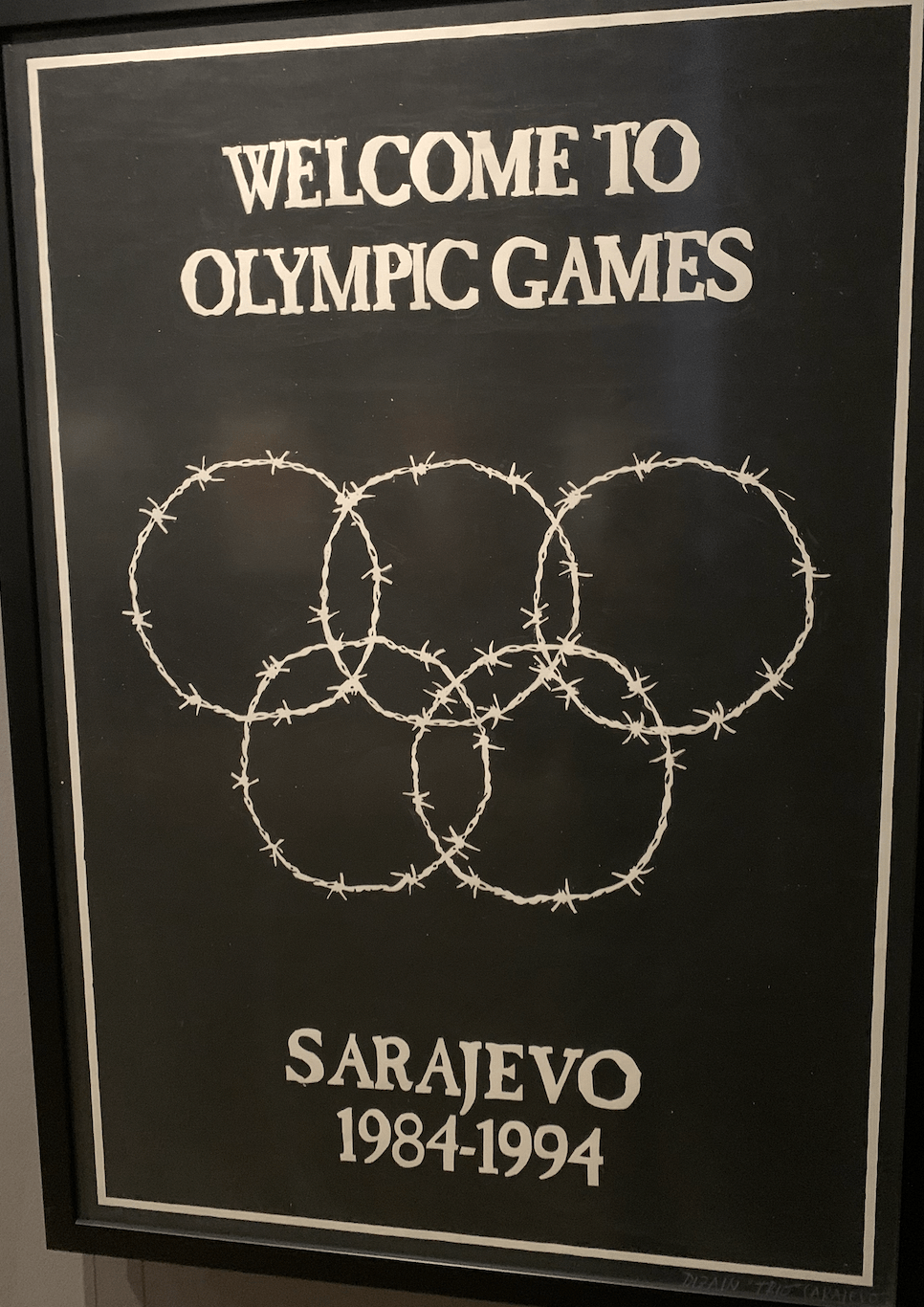
Sometimes in our travels we are just emotionally overwhelmed by a place. Sometimes it is staggering beauty, other times it is the history; cities whose names represent the worse of humans, places where religious differences are used for hatred and killing people. Cities such as Munich, Jerusalem, Belfast and now Sarajevo have evoked these emotions. Sarajevo seems unique as it has a long history of coexistence between different groups of people, that history has been upended by recent history; the trigger point of World War I, ethnic massacres in World War II and genocide in the 1990s.
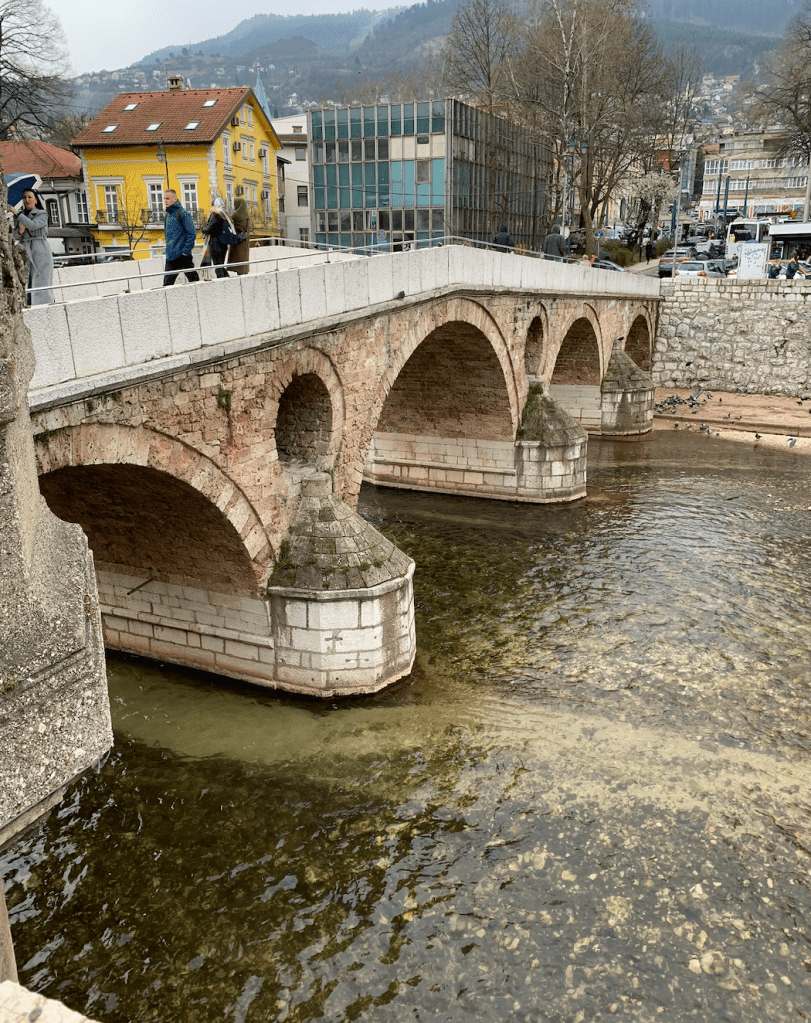
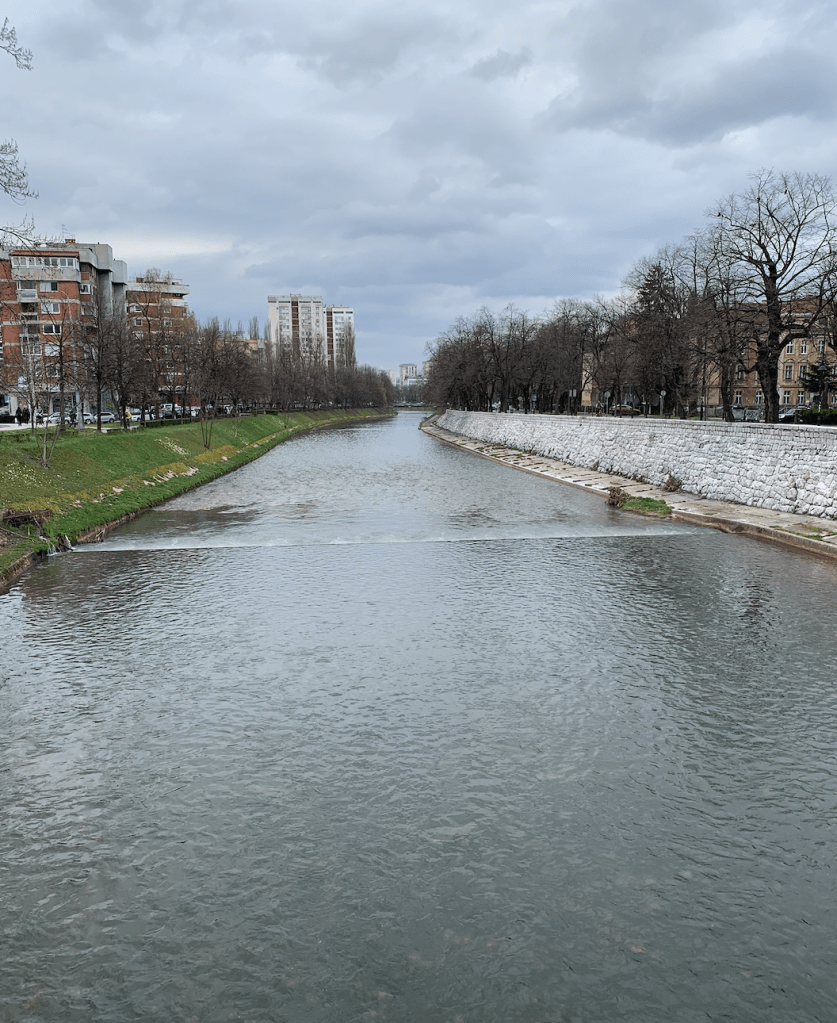
Sarajevo’s geography is a timeline. Starting at the eastern edge, where the Miljacka river curves and enters the city.
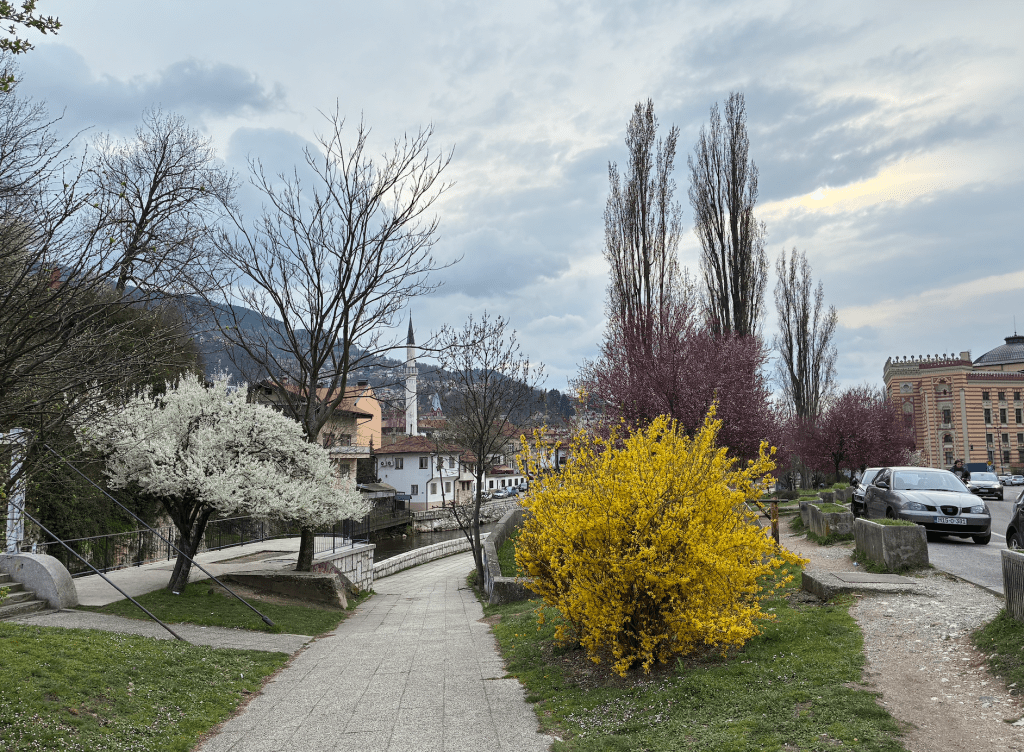
Ottoman Sarajevo was a city that was proud of it’s acceptance of others, seeing someone different than yourself as a neighbor. Rather refreshing right now.
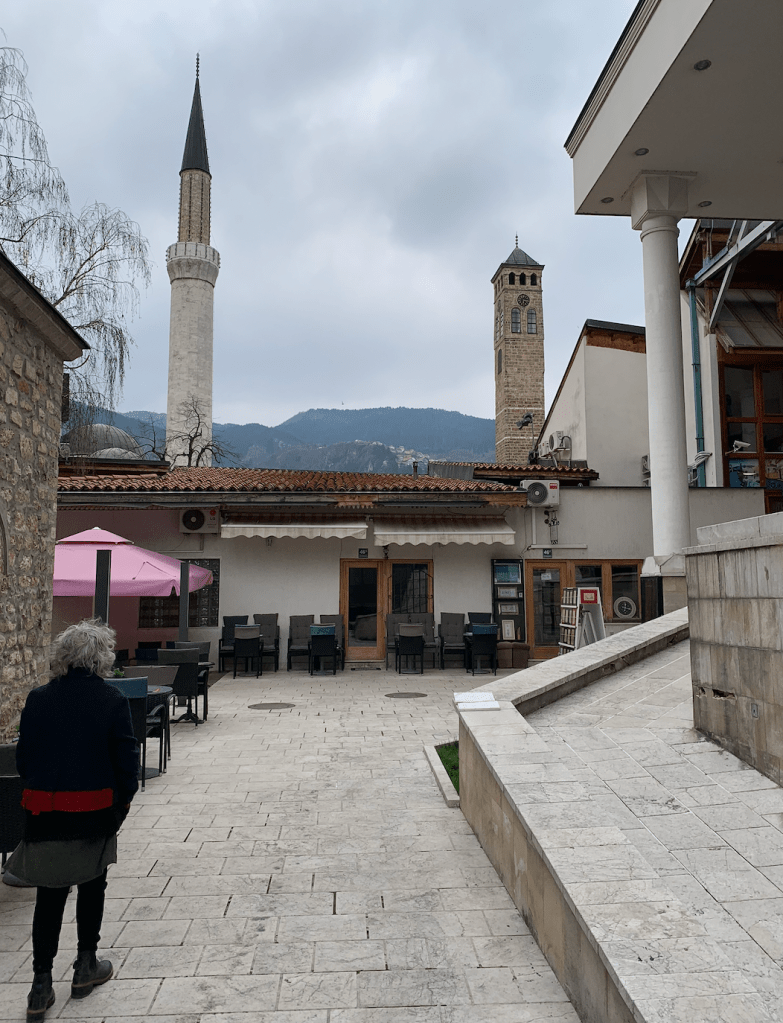
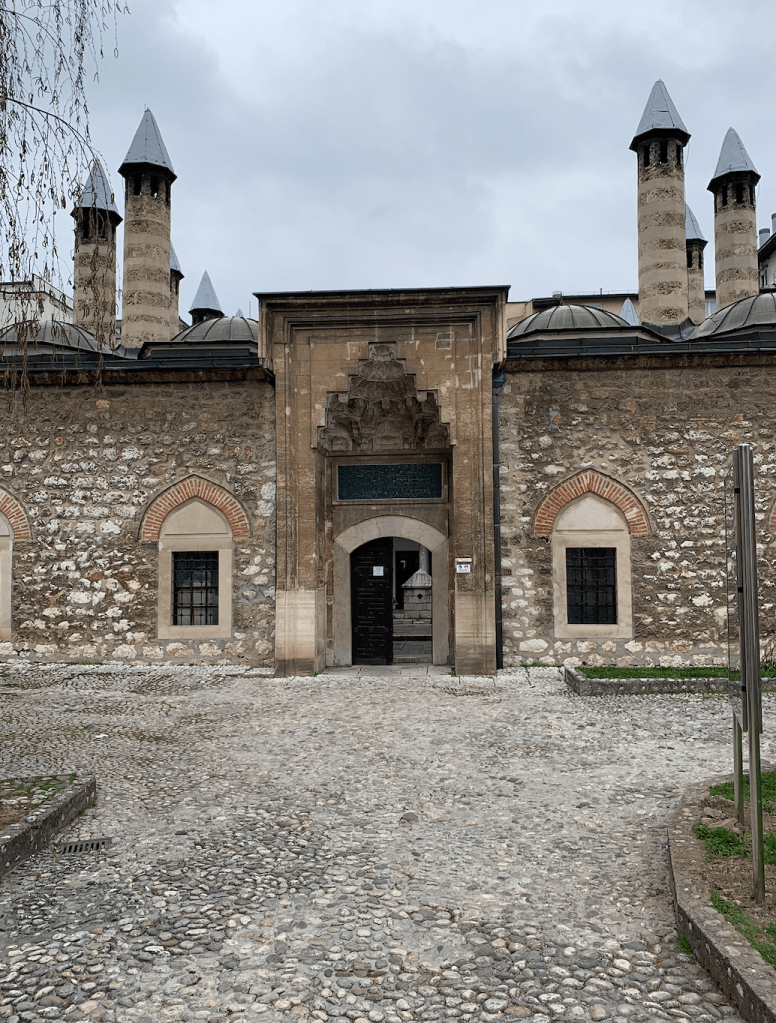
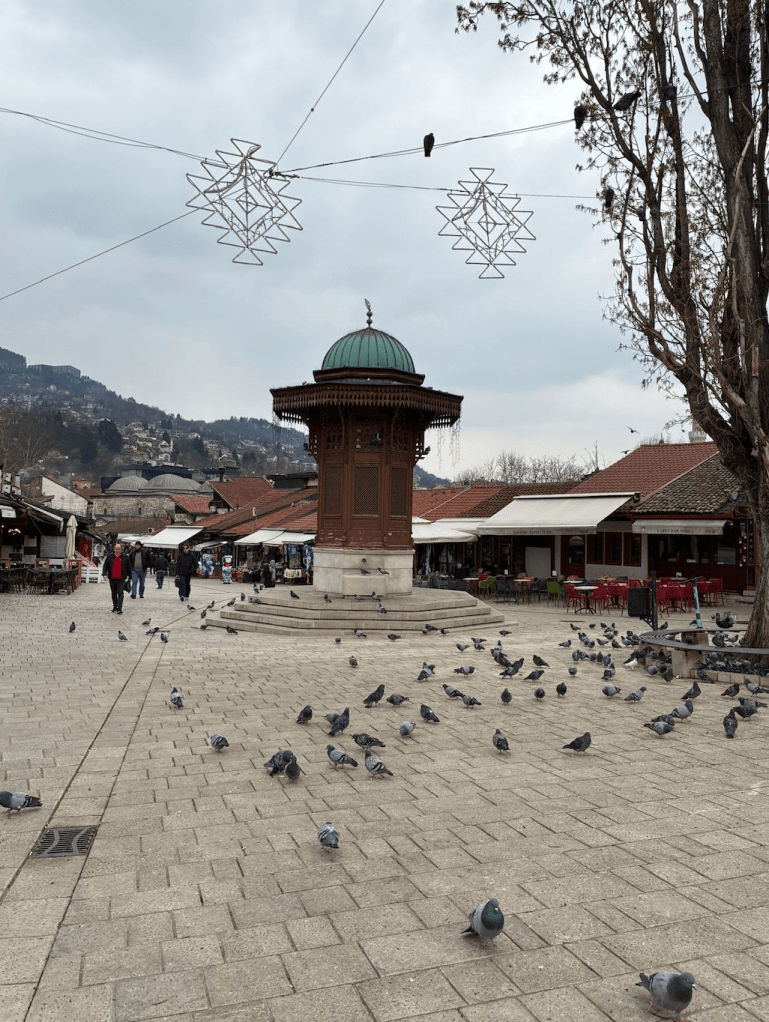
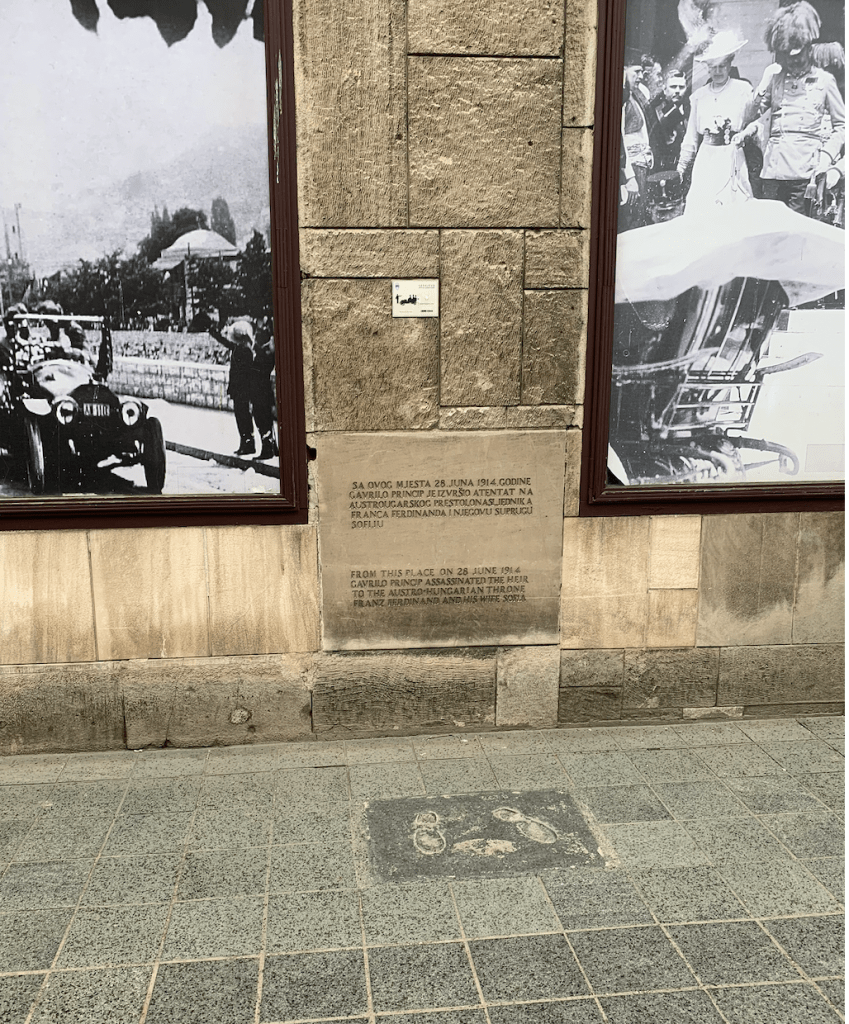
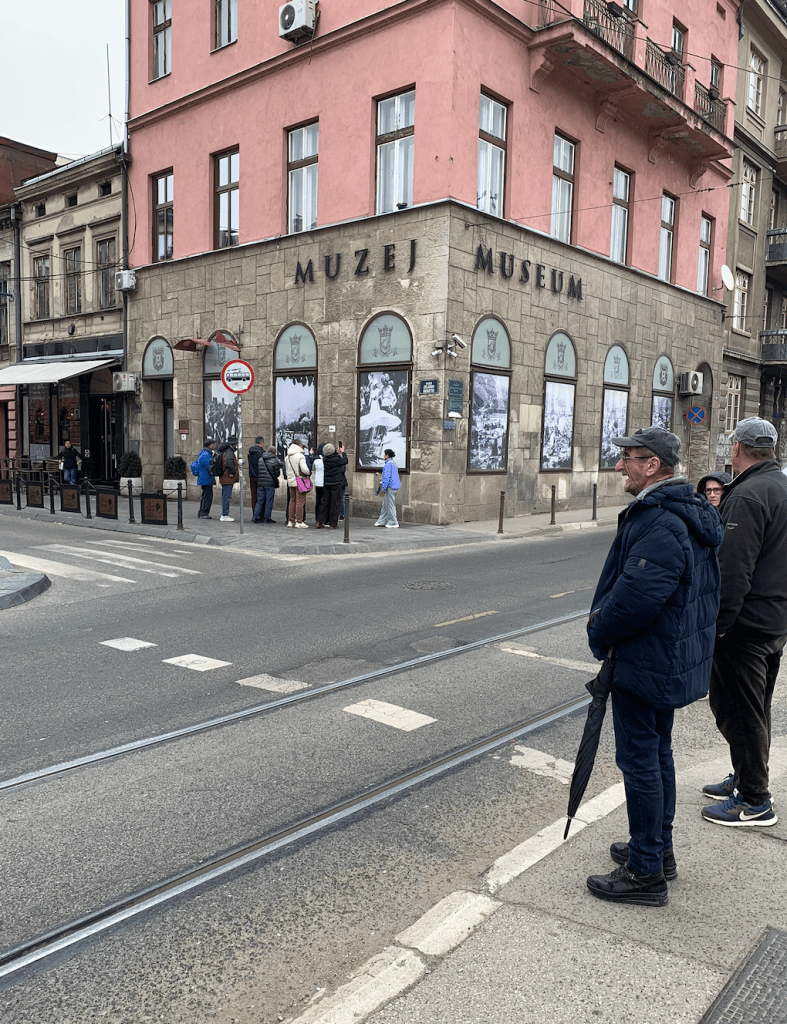
With the fall of the Ottoman empire, Austria-Hungary was gifted much of Bosnia; occupation began in 1878 than annexation (1900). The local population was not consulted or pleased. To celebrate the opening of the national museum, Archduke Franz Ferdinand, the heir to the empire, came to Sarajevo, and was assassinated by a Bosnian Serb revolutionary, Gavrillo Prencip, WW I followed.
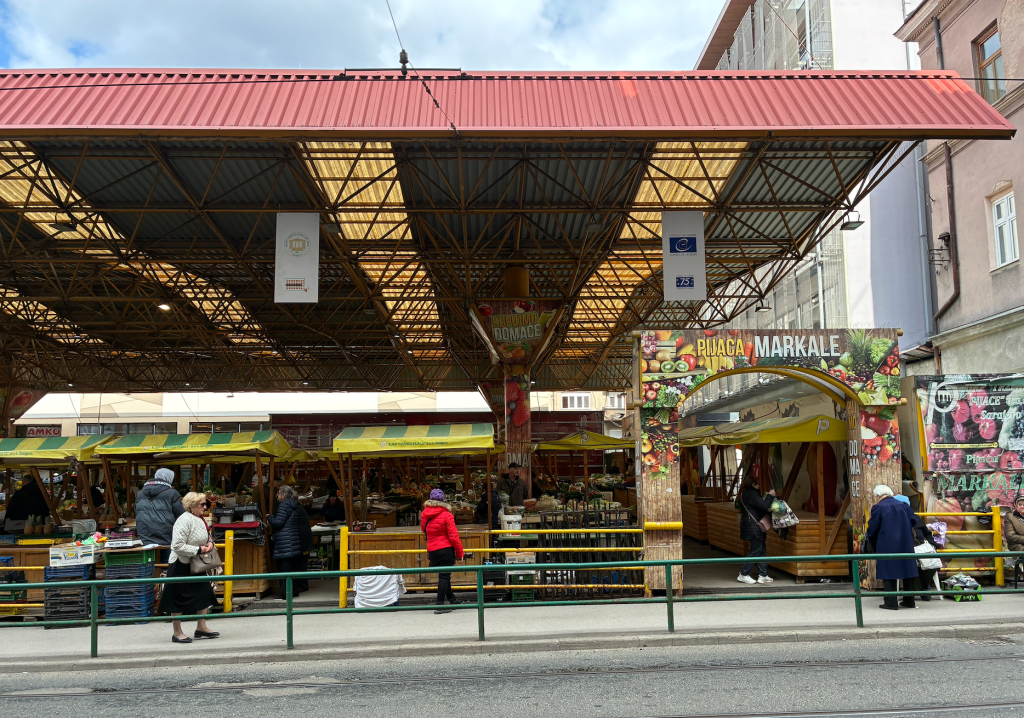
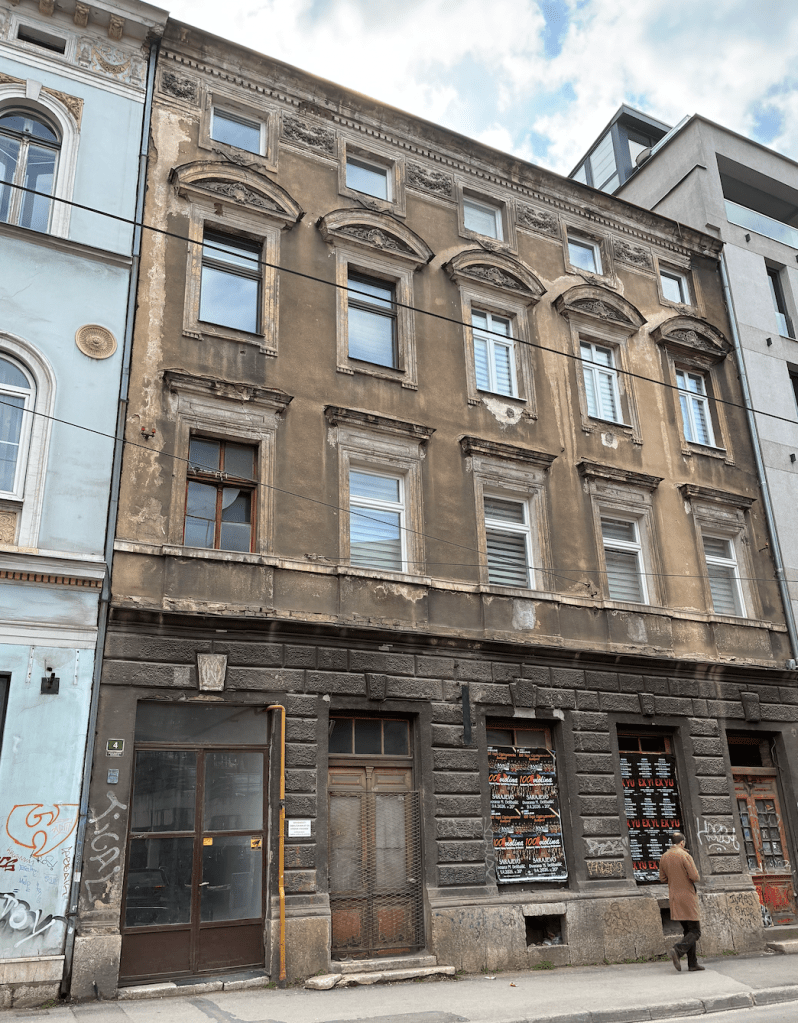
Our apartment was across from the Merkale market. The buildings here are the stereotypic European Succession reflecting the massive modernization and building spree after occupation by Austria-Hungary. This is the outside of our very, very lovely modern and clean apartment. Typical in these post-communist countries that the exterior -jointly owned- gets little attention.
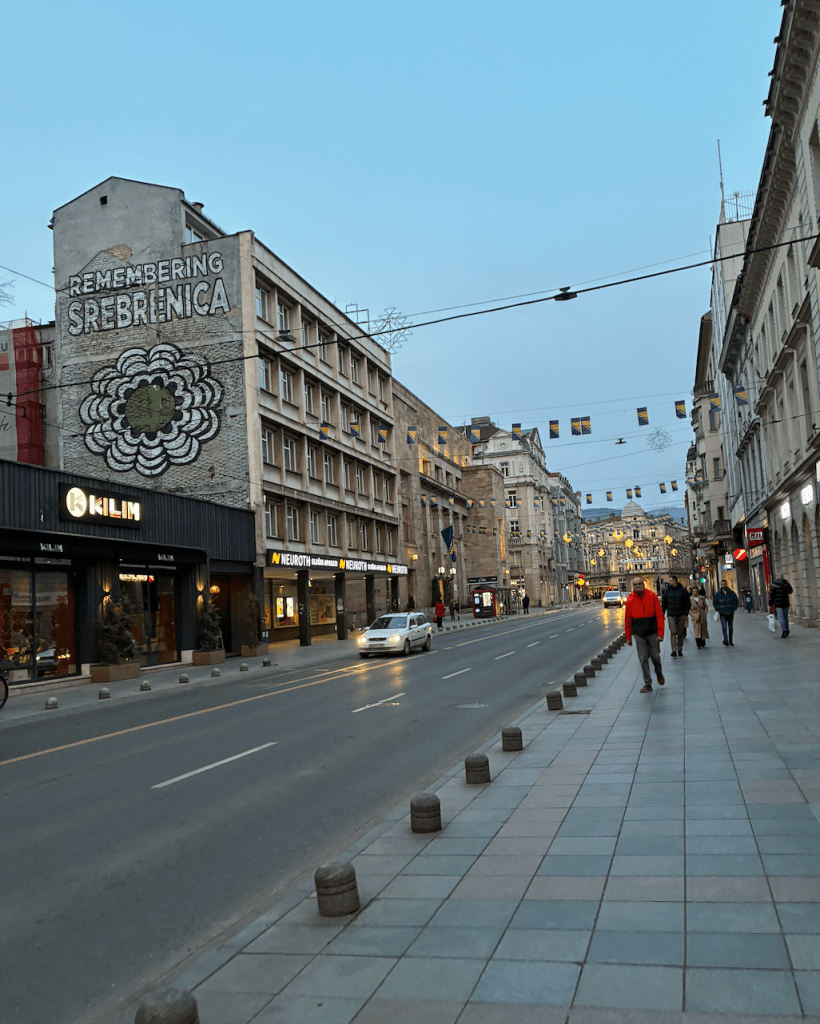
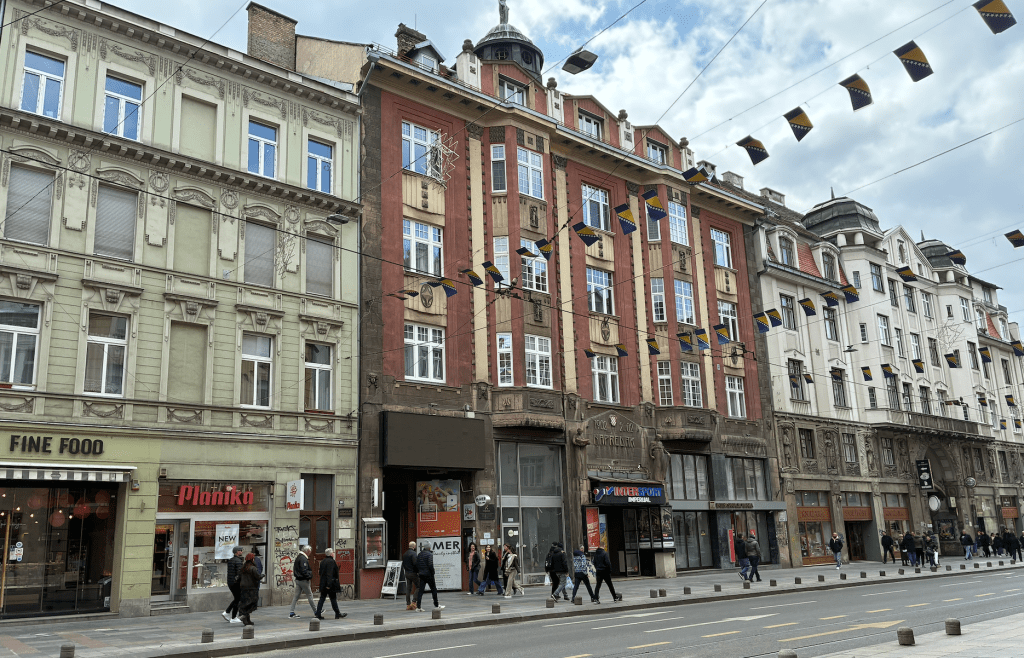
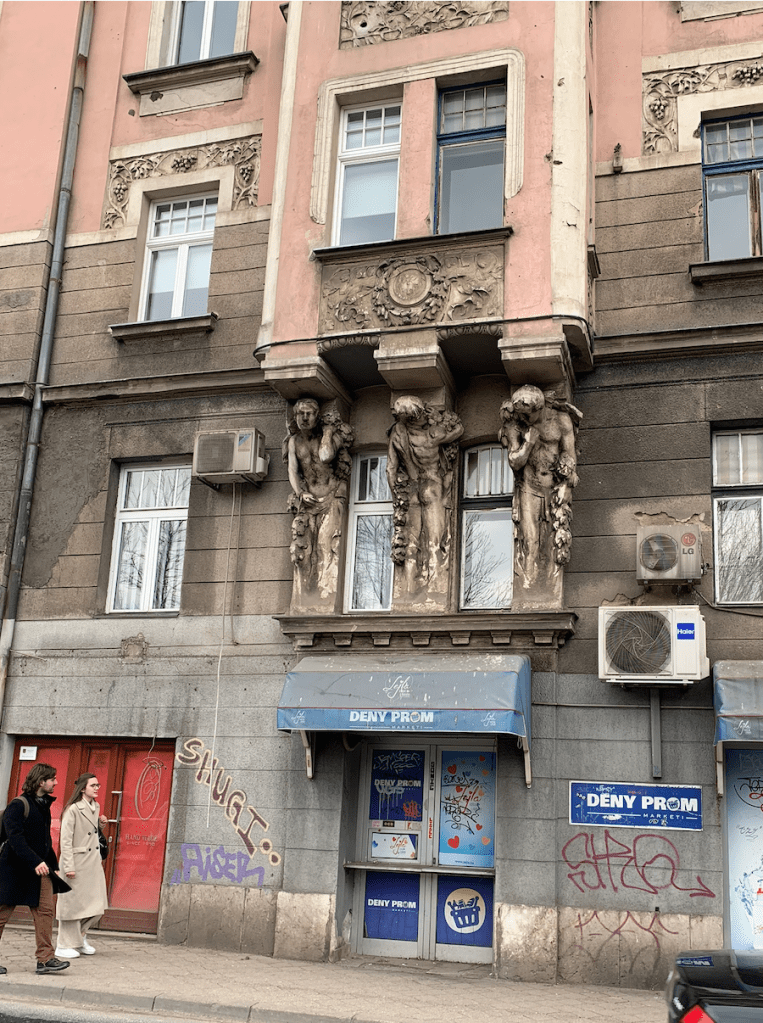
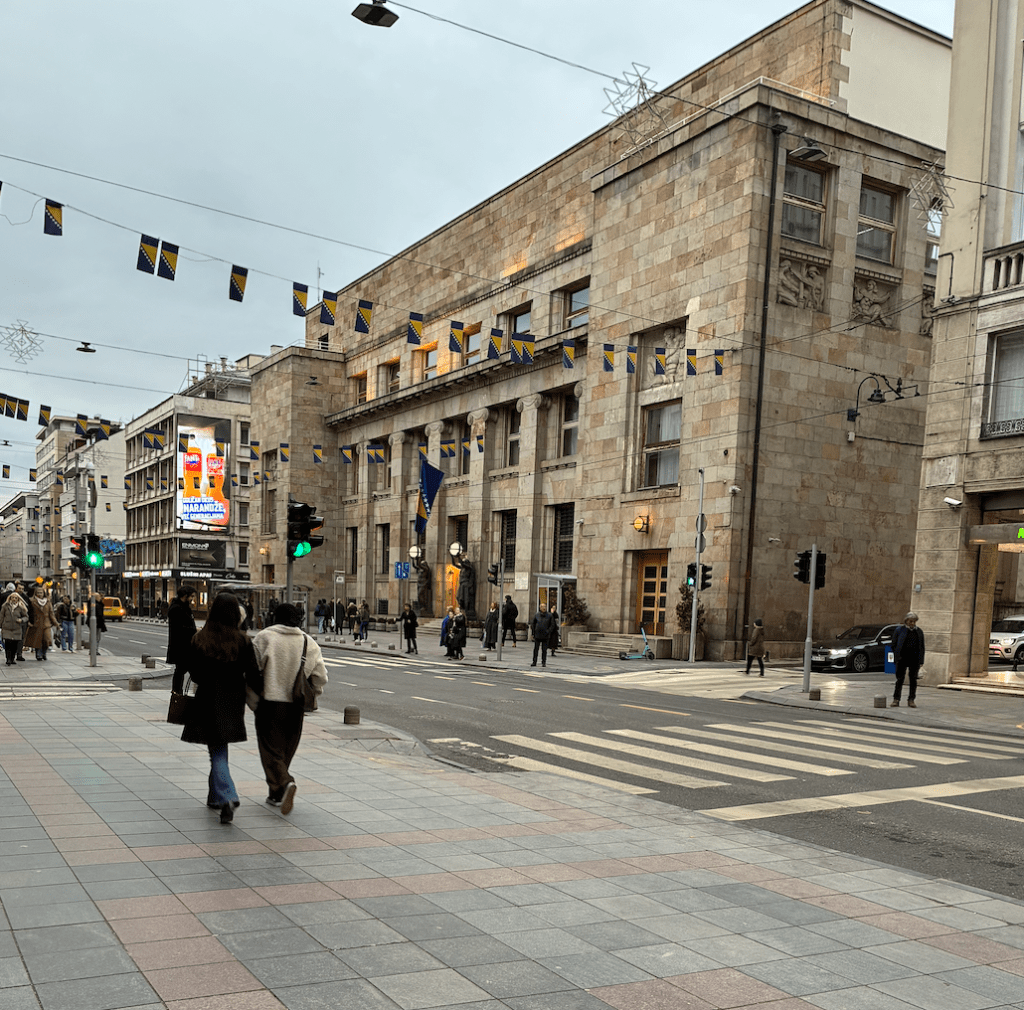
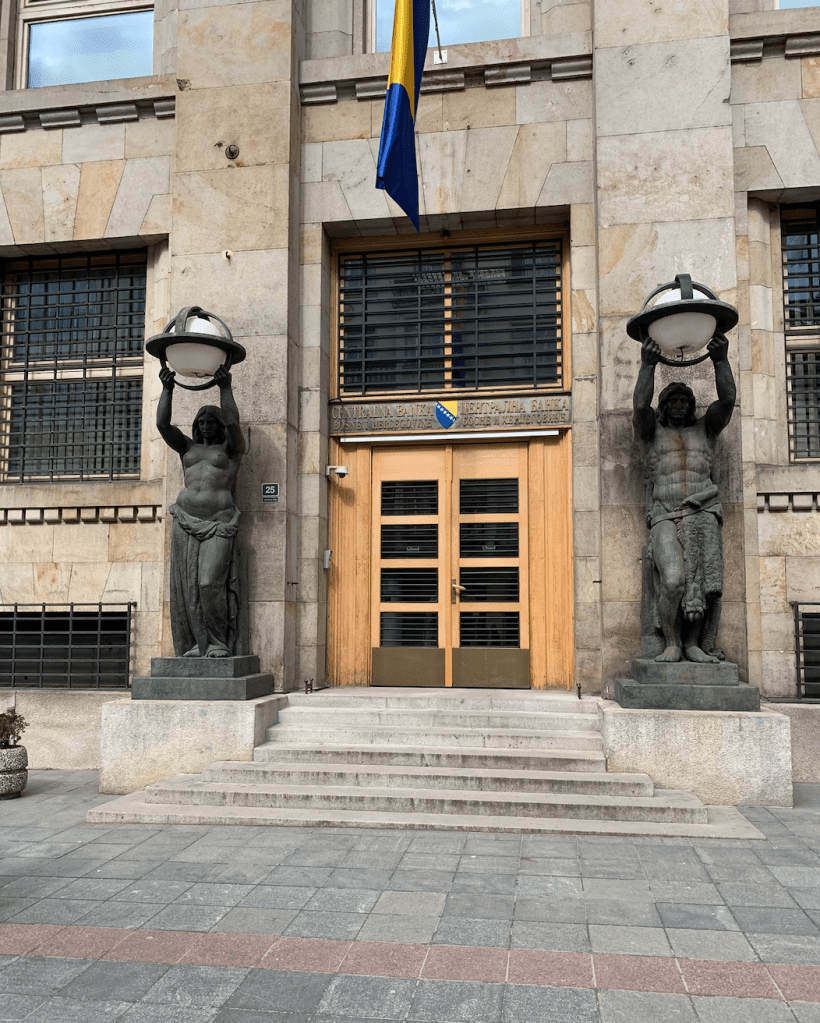
It’s always interesting to go to contemporary art museums in smaller countries, seeing artists that rarely are shown elsewhere. We had our own private tour with a great guide.
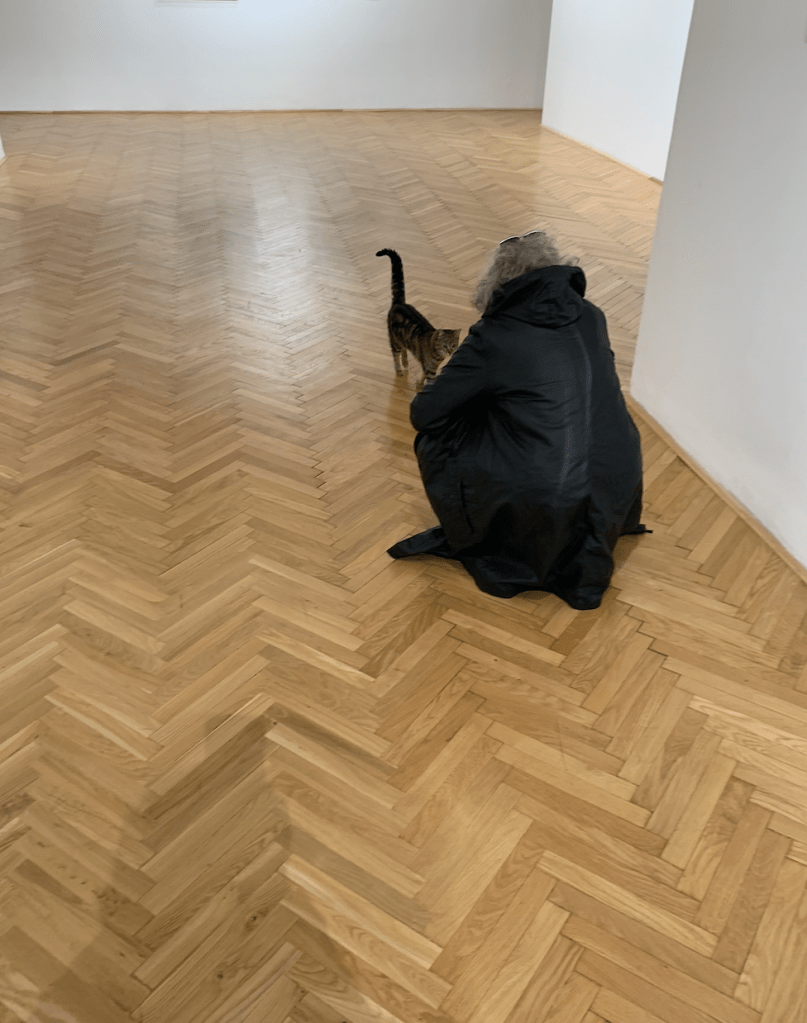
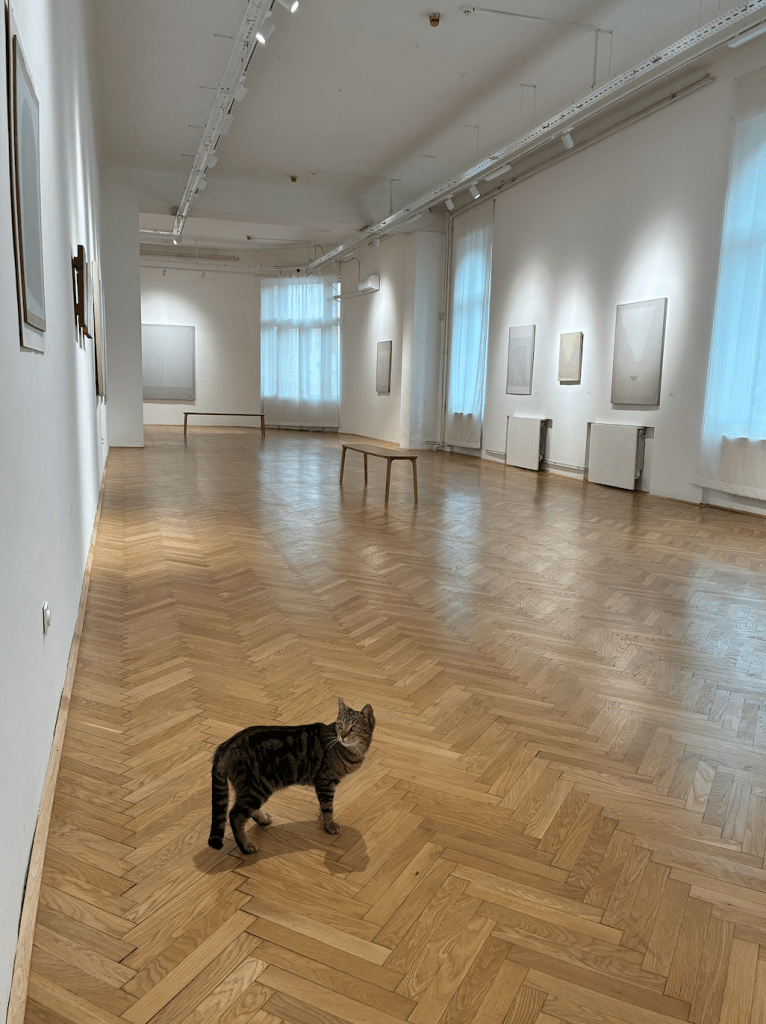
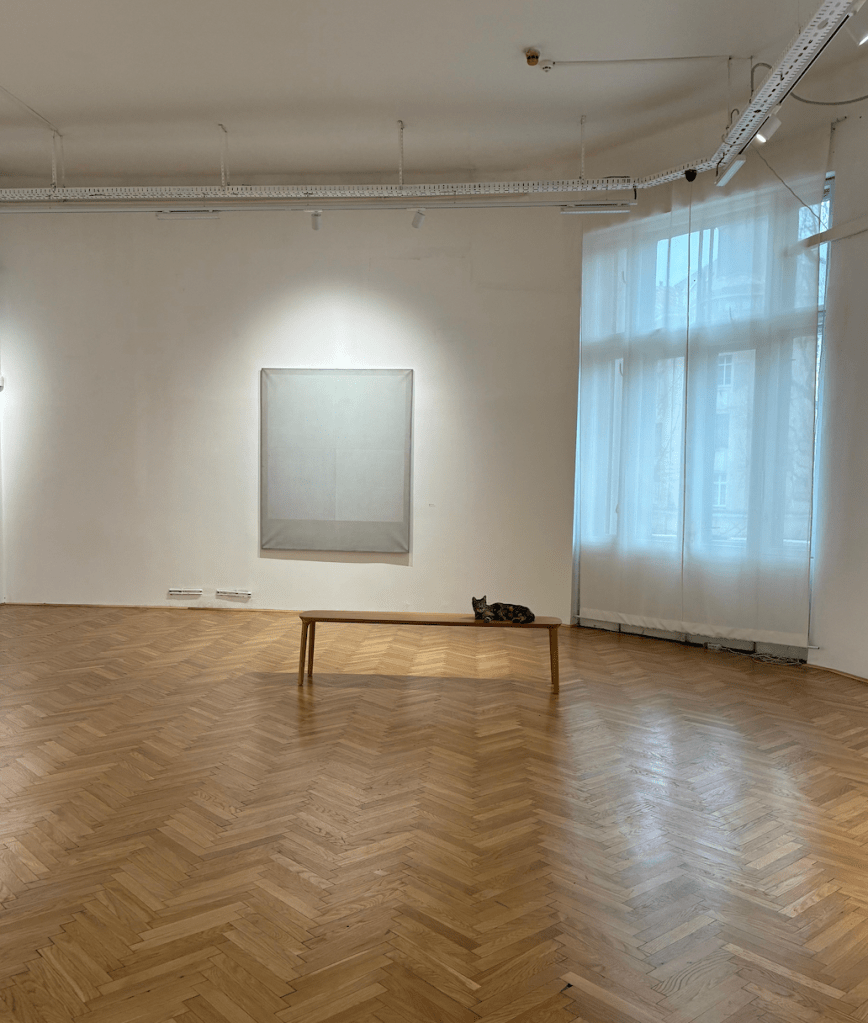
Keep going west along the river and you enter the new city; parks, high rises, shopping centers and a few soviet style apartment blocks and the Olympic stadium (hosted 1984 Winter Olympics).
Although the style of the buildings kept changing, the one thing that was constant were the bullet holes peppered on so many buildings (you can see them in many of the pictures posted). These remain from the siege. (pictures below from an exhibit at the History of Bosnia-Herzegovina Museum).
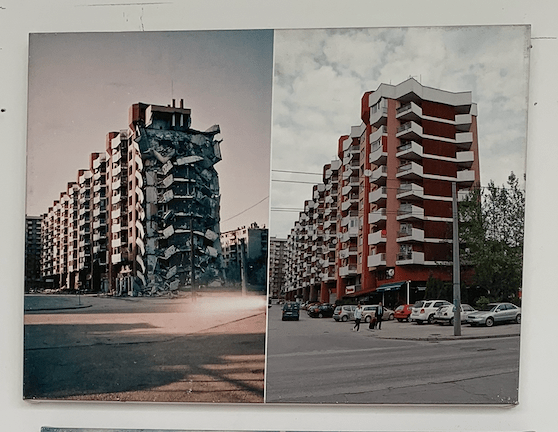
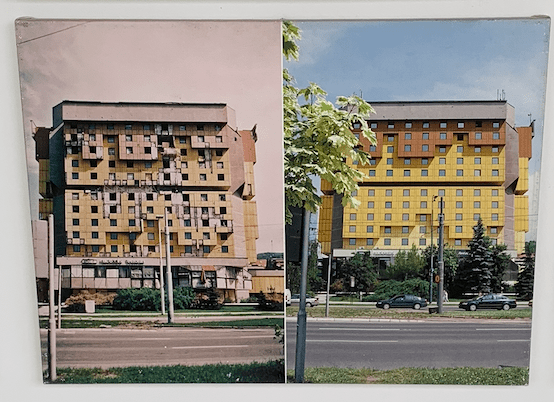
We keep referring to the siege which was kind of a cloud over the trip. The Siege of Sarajevo lasted from April 5 1992 to February 29 1996 triggered by the establishment of the multi-ethnic country of Bosnia-Herzegovina in 1992 after the fall of Yugoslavia. Instead of a mixed country, Bosnian Serbs (usually referred to as Chetniks) wanted to create a Bosnian Serb state of Republika Srpska that would include Bosniak majority areas- including Sarajevo-just without the Bosniaks. The Chetniks blockaded Sarajevo. For 1,425 days, Sarajevo was isolated; limited water, scarce food, intermittent electricity and constant bombardment from snipers in the hills surrounding the town. Hills that before April 1992 were neighborhoods, now, neighborhoods were commandeered by the Chetniks and anyone who was not a Serb was kicked out of their homes or killed.
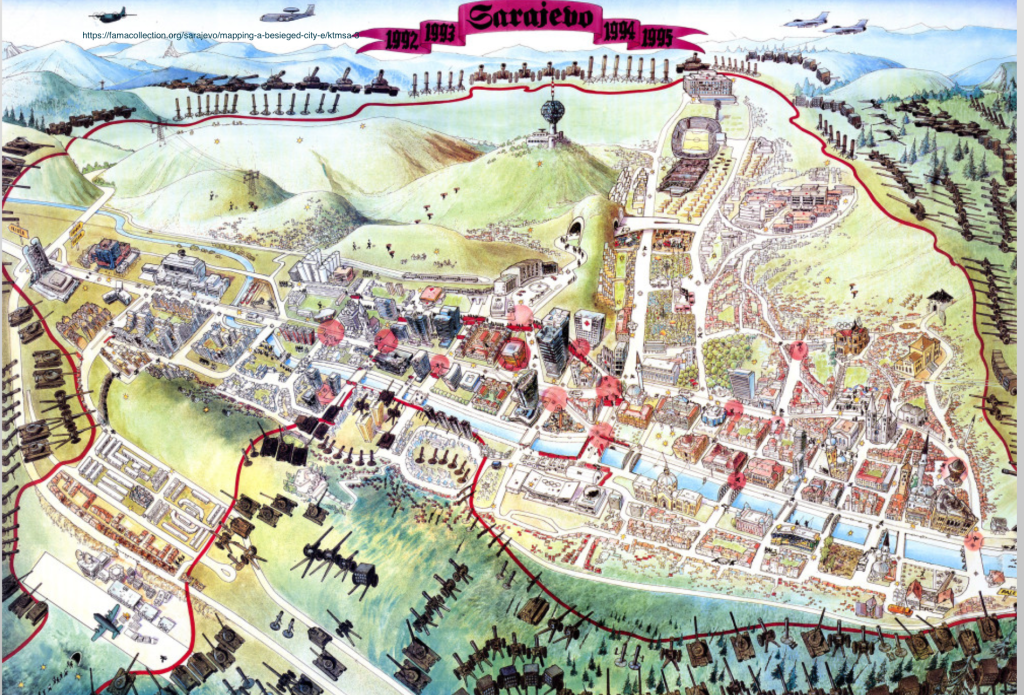
Sarajevo sits at the base of a bowl shaped river valley; allowing the prolonged siege and isolation of the city by the Serbian forces. Due to the mountainous topography of Bosnia-Herzegovina, similar sieges occurred in other Bosnian valley cities such as Gorazde, Srebrenica, Mostar and Tuzla.
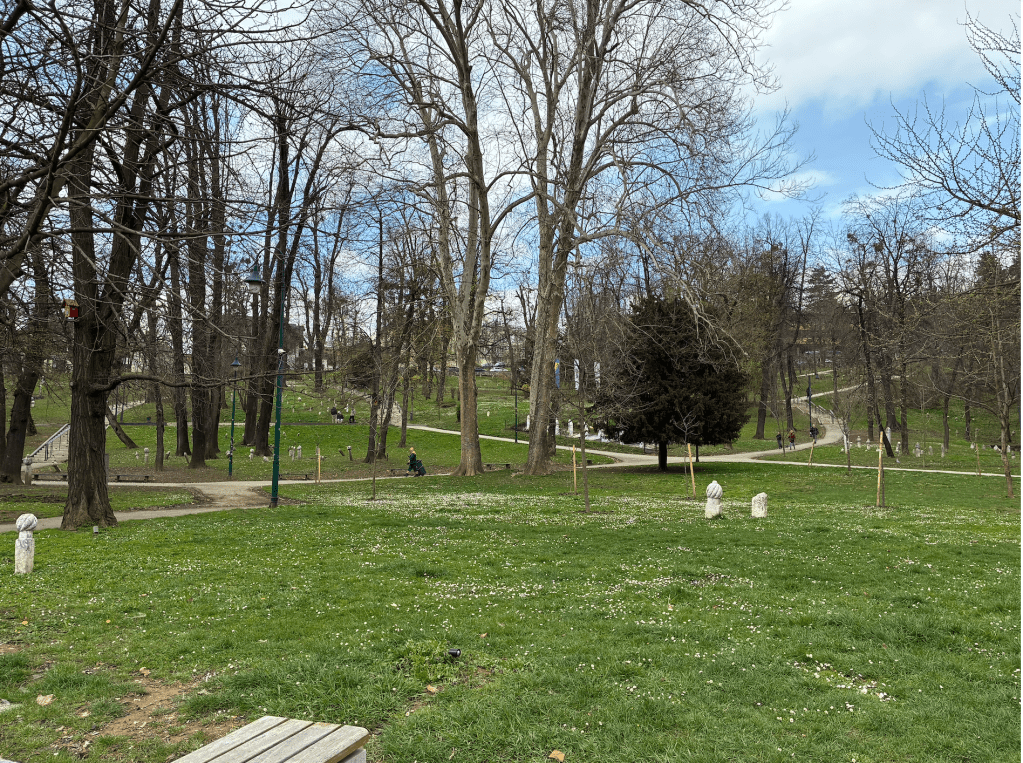
Look back at most of the pictures and you can see how close the surrounding hills are to the center of the city. We walked up to the old Jewish cemetery, the second largest in Europe after Prague. It was a little disturbing how it was in such disrepair (a new and poor country rightly has other needs), but what was far more disturbing was this was used as a sniper nest to bombarb the city. (irony or tragedy that the holocaust memorial to the right was shot up in the middle of a genocide?)
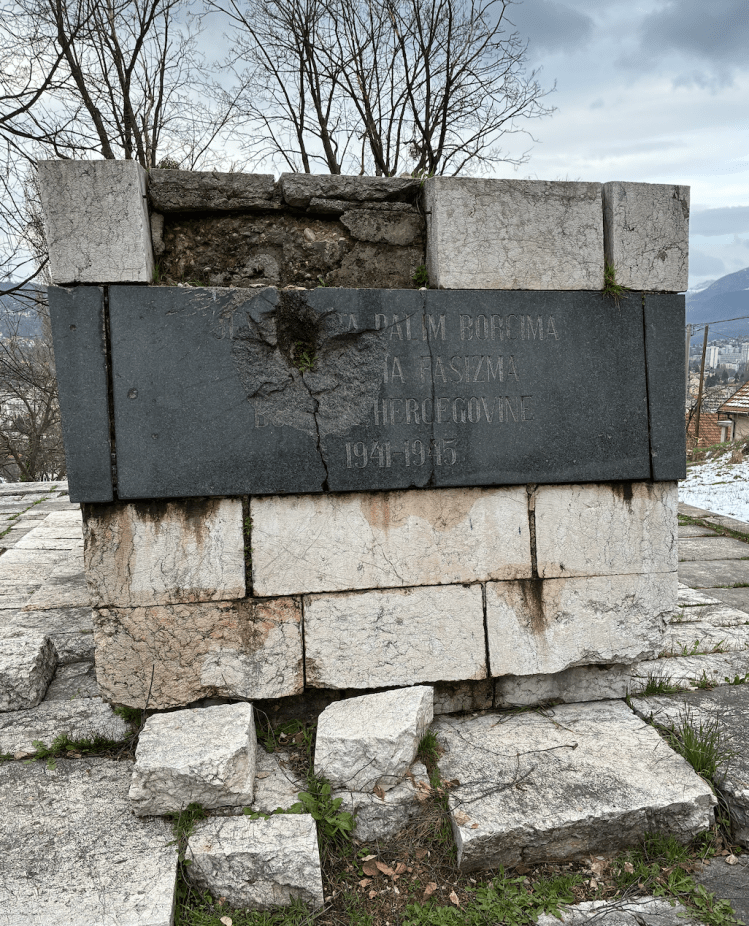
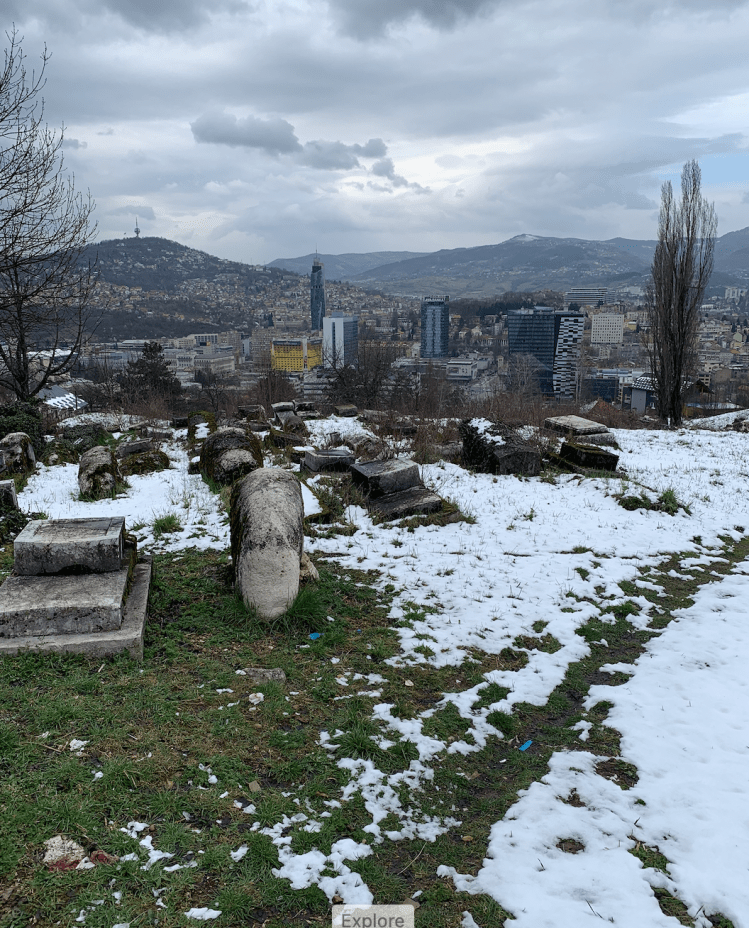
The short documentary film Miss Sarajevo was made during the siege, worth watching (click it). Snippets of the film are included in the video for the U2 song of the same name https://www.youtube.com/watch?v=gdczQ2LsY0I The Bosnia-Herzegovina History museum presented life during the seige; describing how they got water (risking their lives to do so), got food (many died lining up for food), held concerts and tried to live. Most of the collection were items donated from people who lived it.
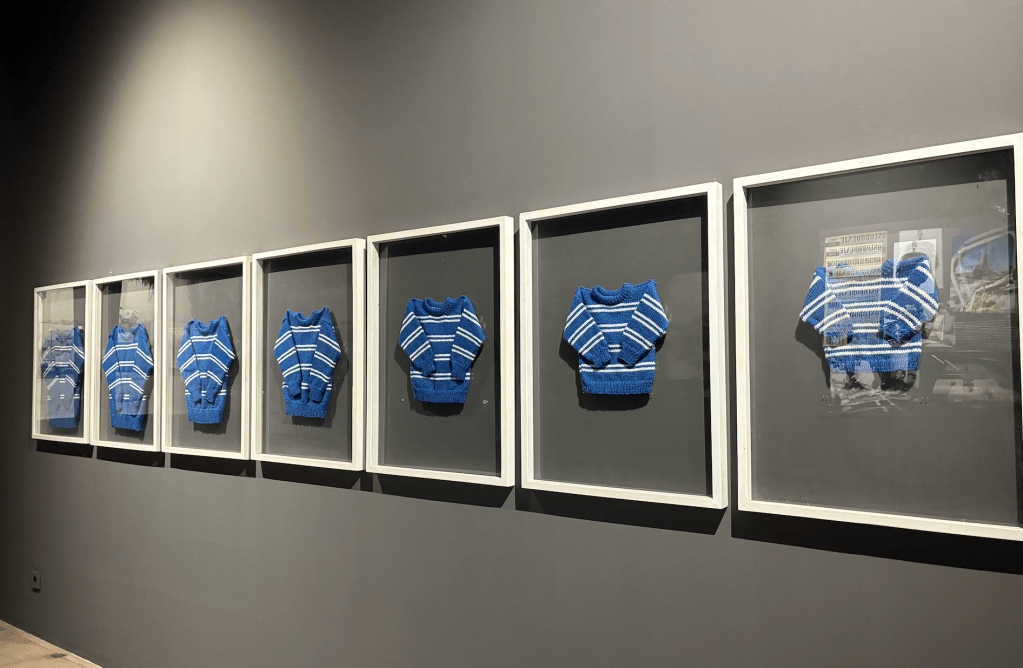
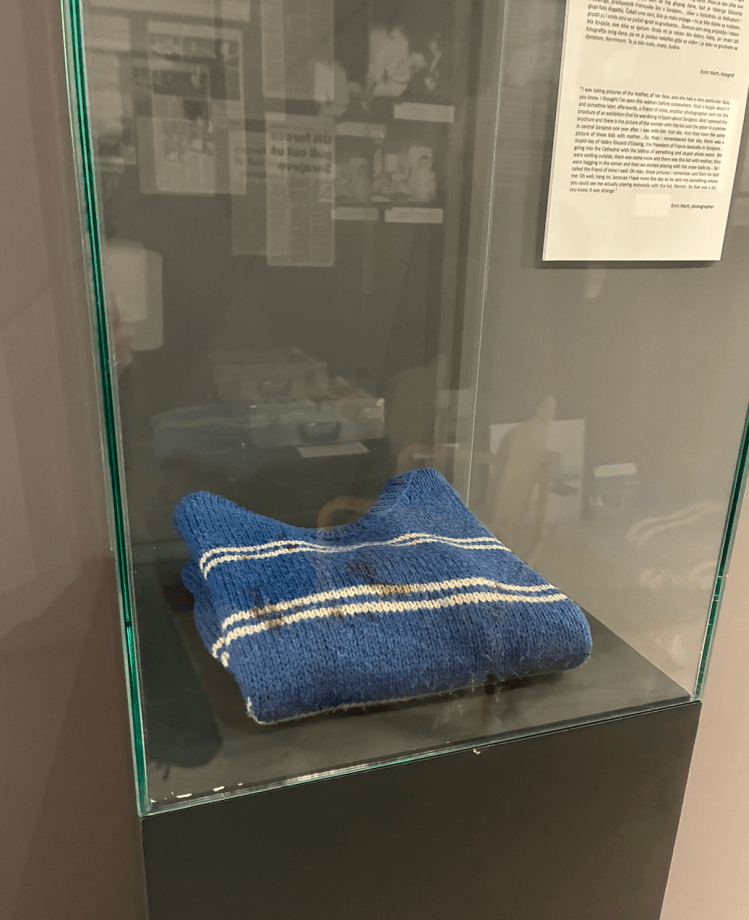
As Sarajevo was tortured, the Chetniks were massacring Moslims throughout Bosnia. Gallery 11/7/95 is a memorial gallery dedicated to documenting the ethnic cleansing of Bosniak Moslim towns along the Bosnian-Serbian border, including the Srebrenica massacre https://galerija110795.ba/exhibitions/permanent-exhibition-srebrenica/.
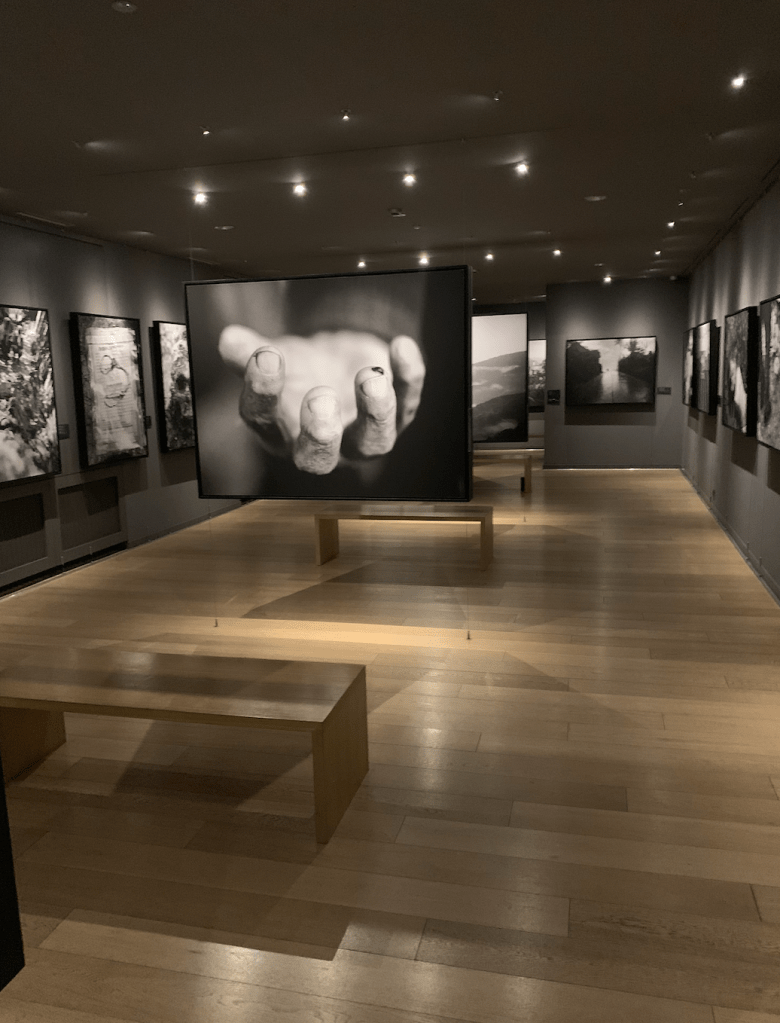
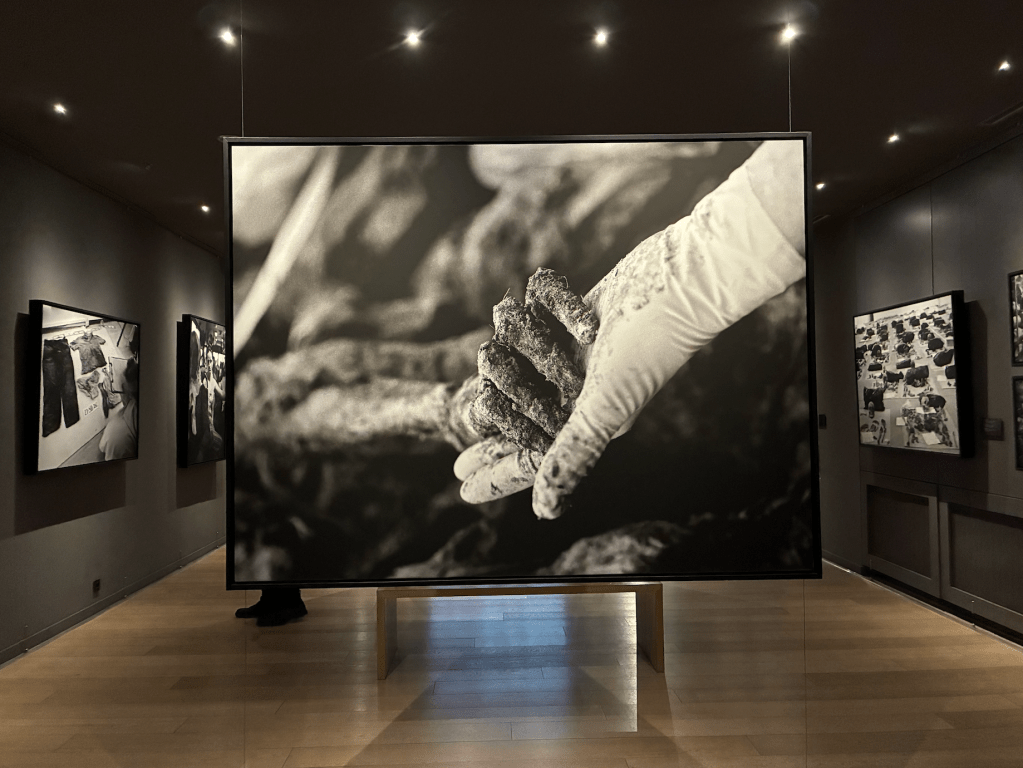
You can watch the film shown at the gallery here https://tariksamarah.com/srebrenica-video/.
Up more hills to just outside of the Olympic stadium, rows and rows of graves of people who died in the siege.
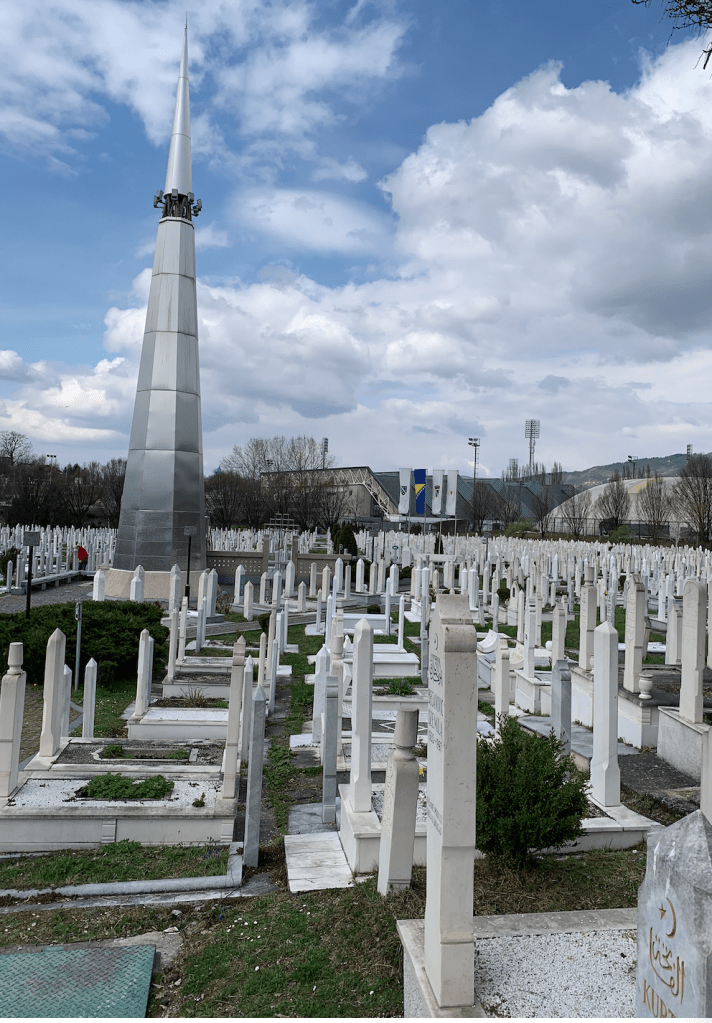
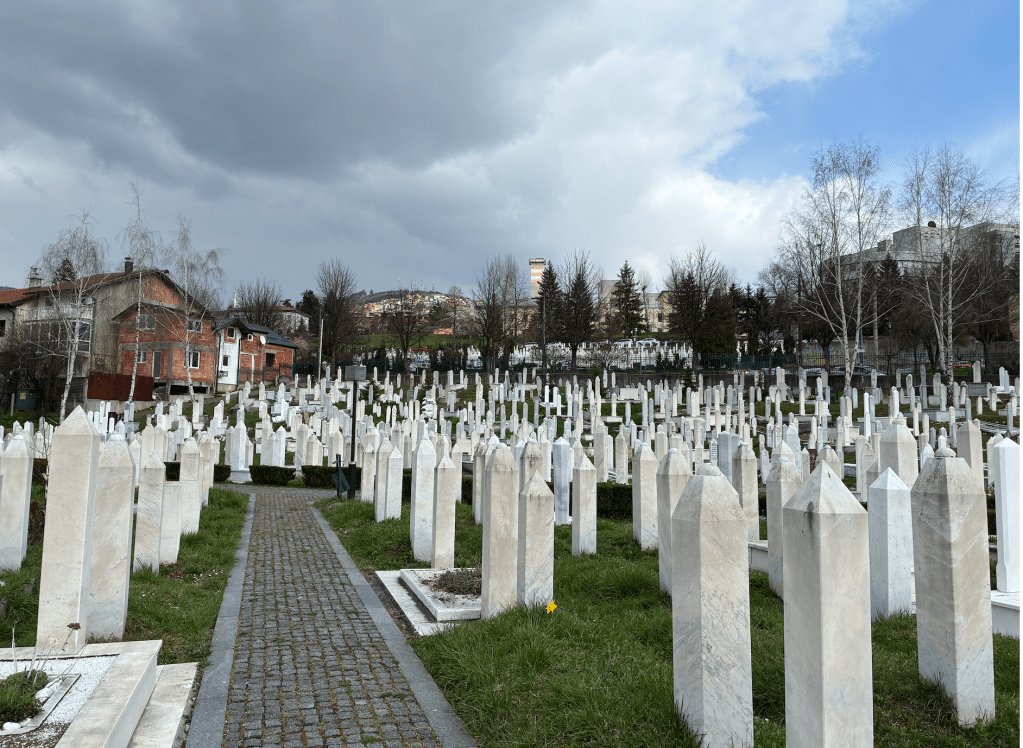
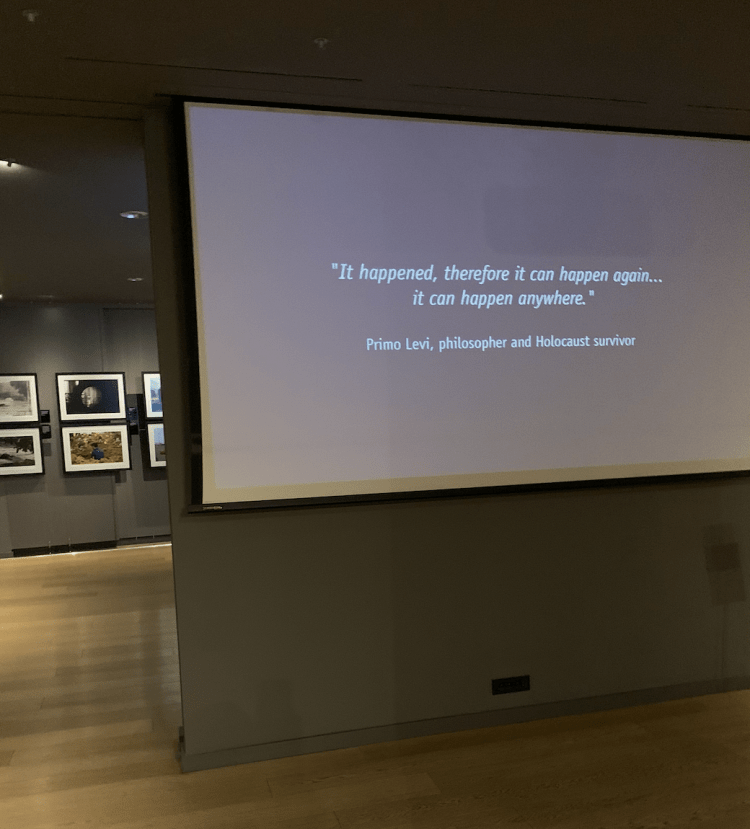
History repeats itself. So many correlations with current events in Ukraine, Gaza, Sudan and now Iran.
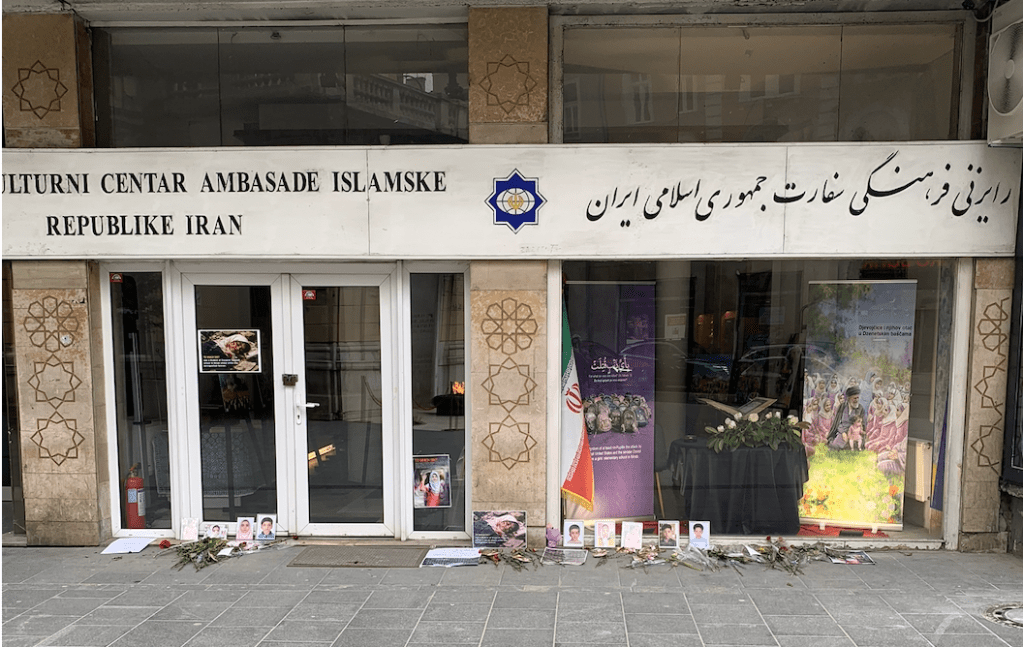
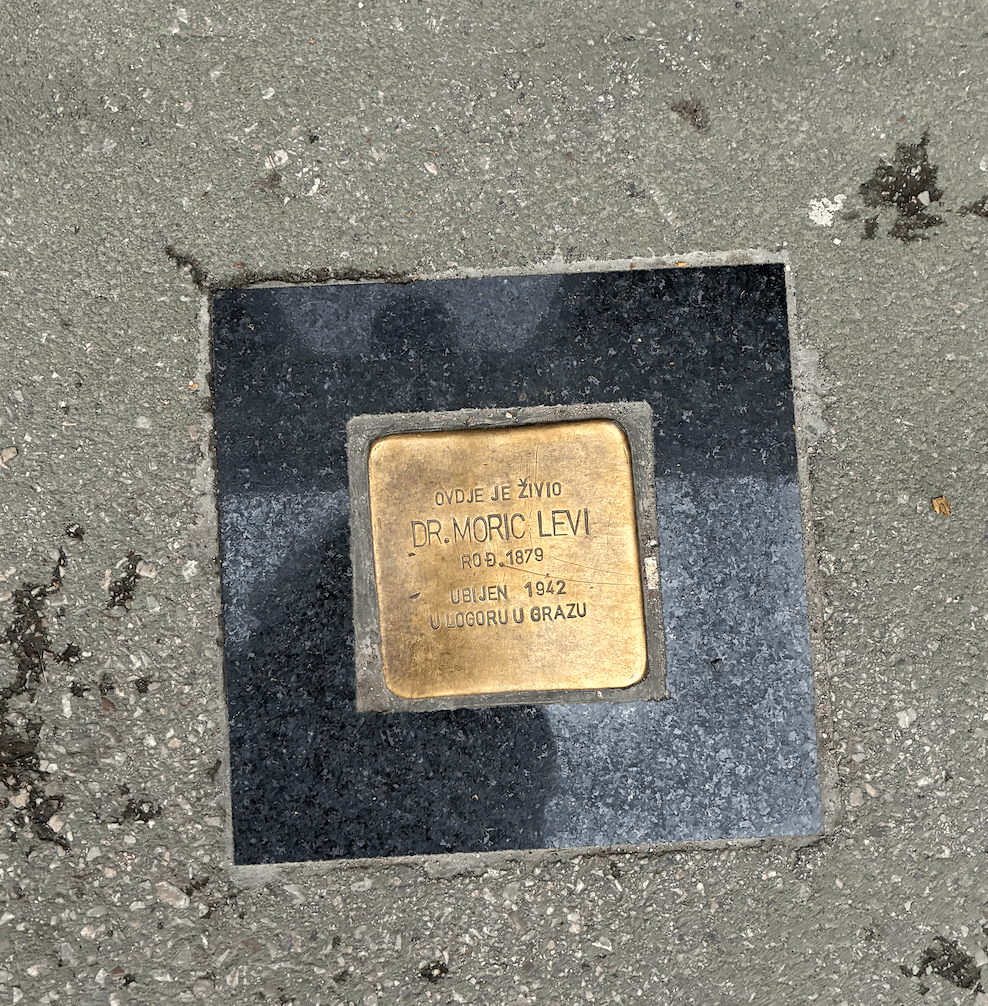
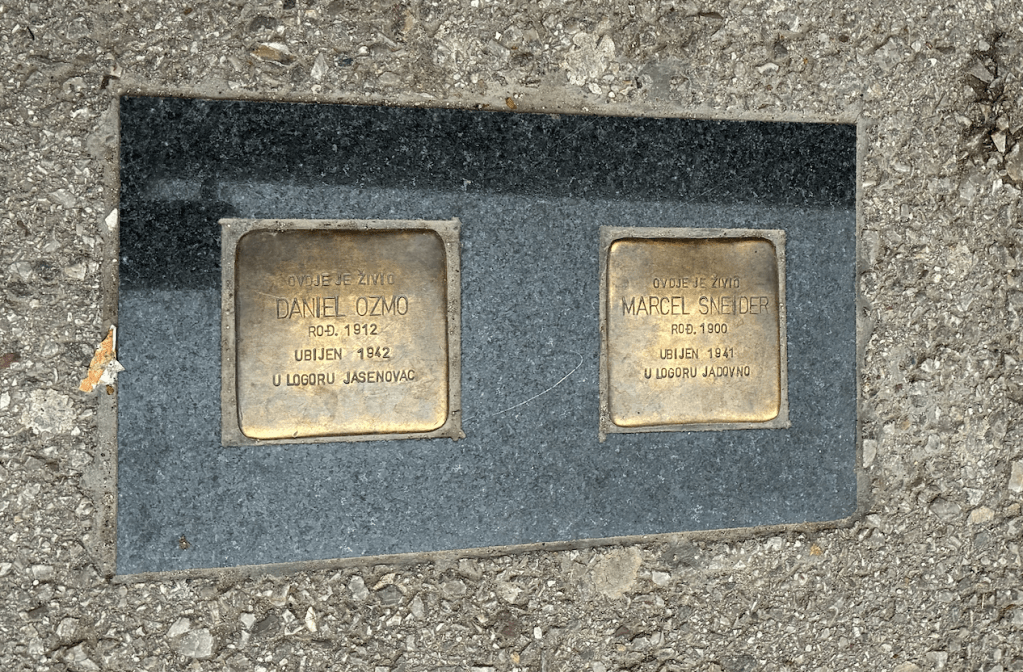
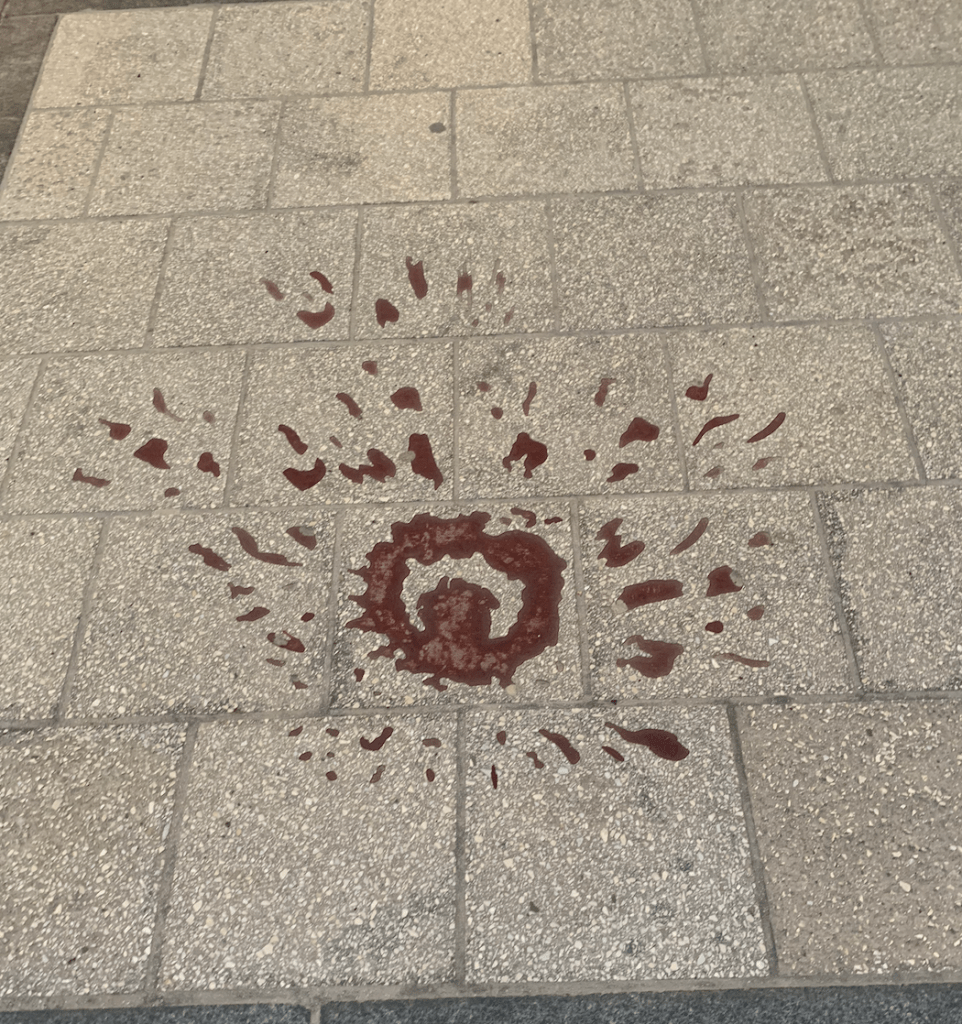
The problem about going to a place with so much history, so much tragedy, is not taking the time to experience it’s present. Sarajevo is a vibrant, growing, struggling city. Worth a visit. These books (and Wikipedia) helped us understand:
Available in the Libby (library app): How the Soldier Repairs the Gramophone by Saša Stanišić and Safe Area Goradze by Joe Sacco (graphic novel)
 Chosen Fugue