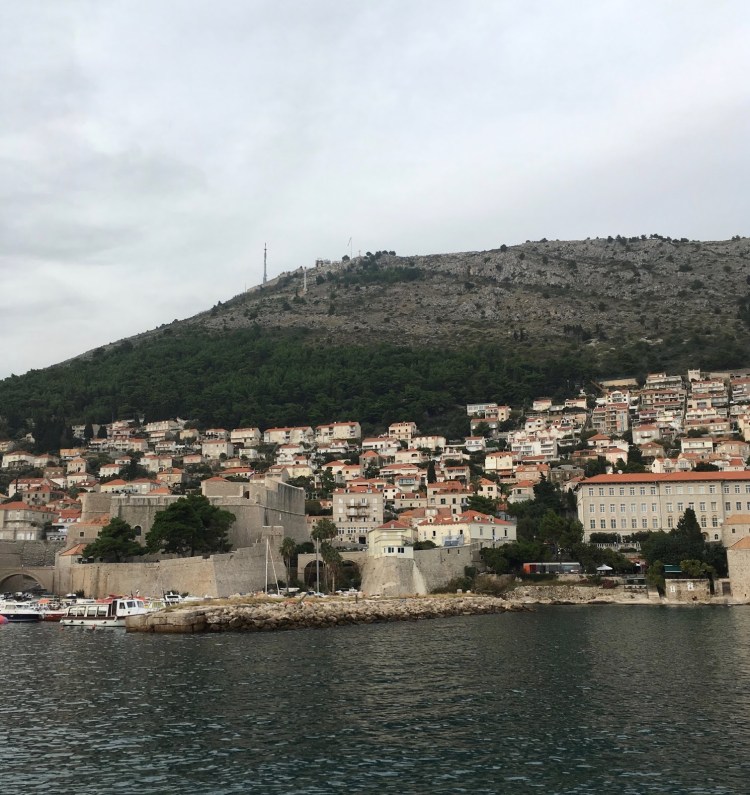
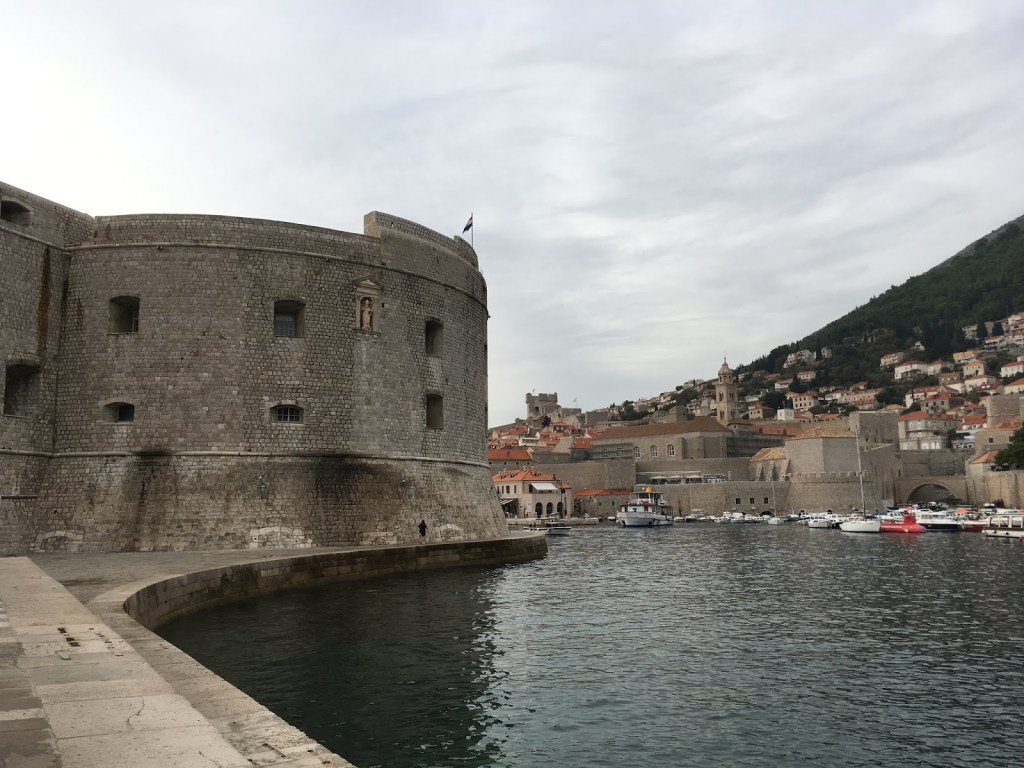
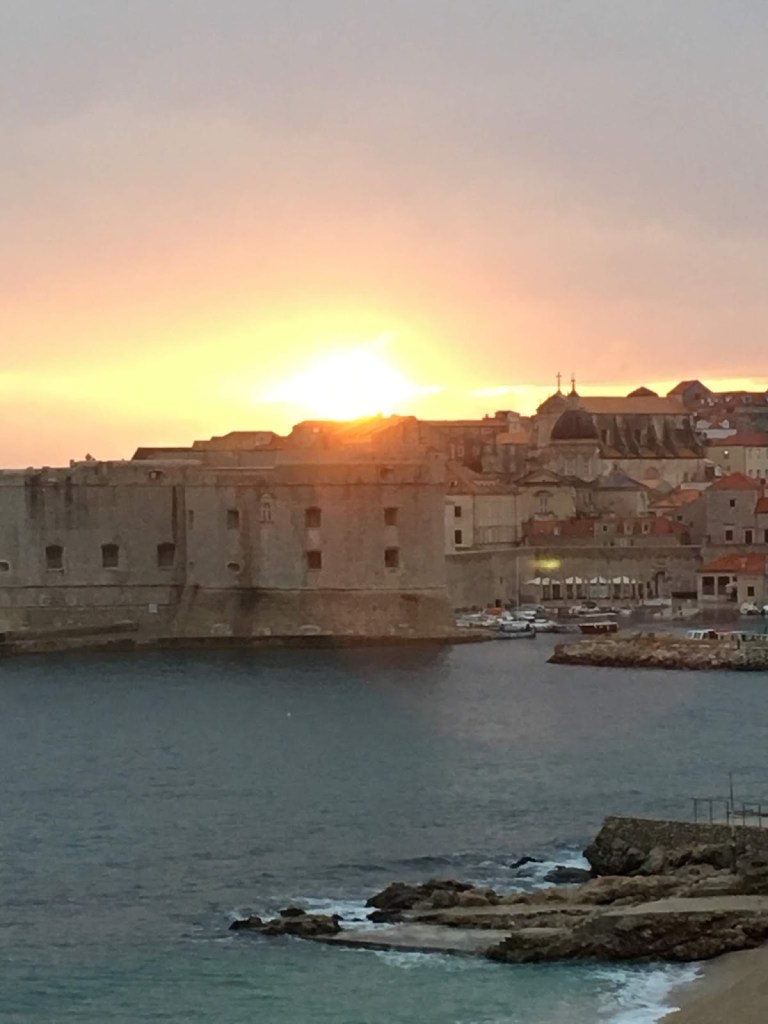
College tour and the Cotswolds

It\’s mid Fall, we\’re seniors, we don\’t know what we\’re doing next year. So, it\’s time for college tours.

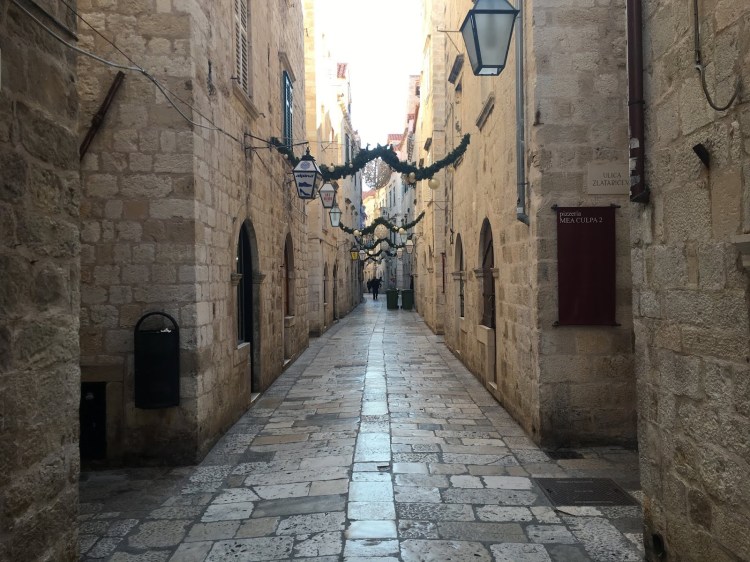
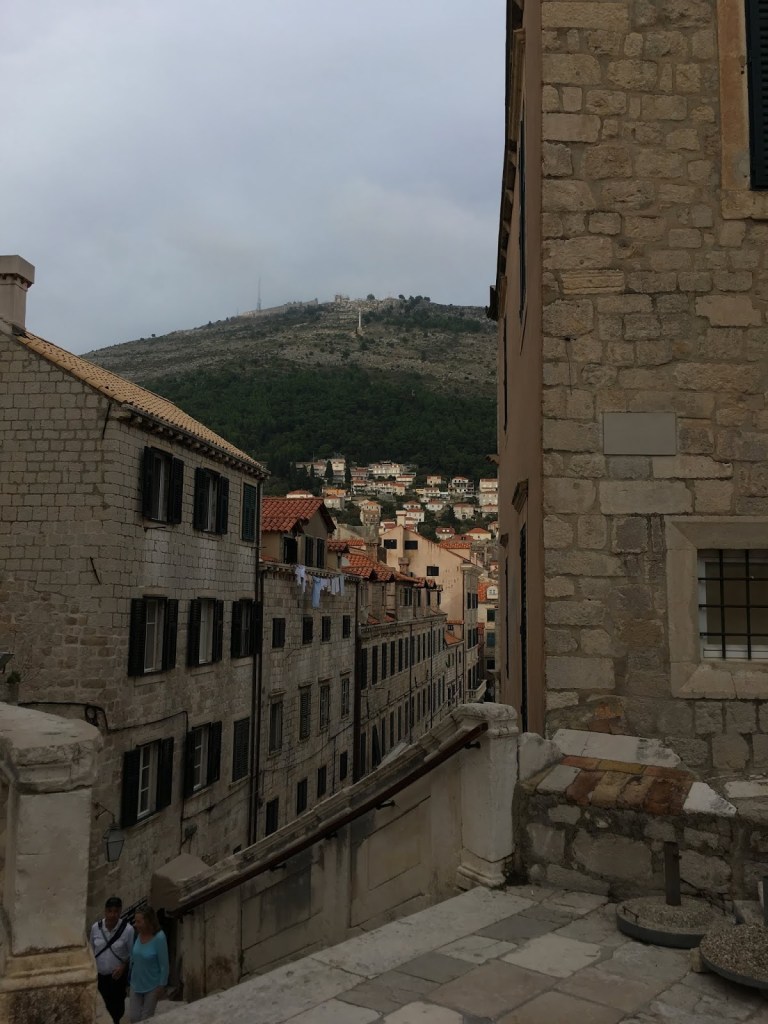
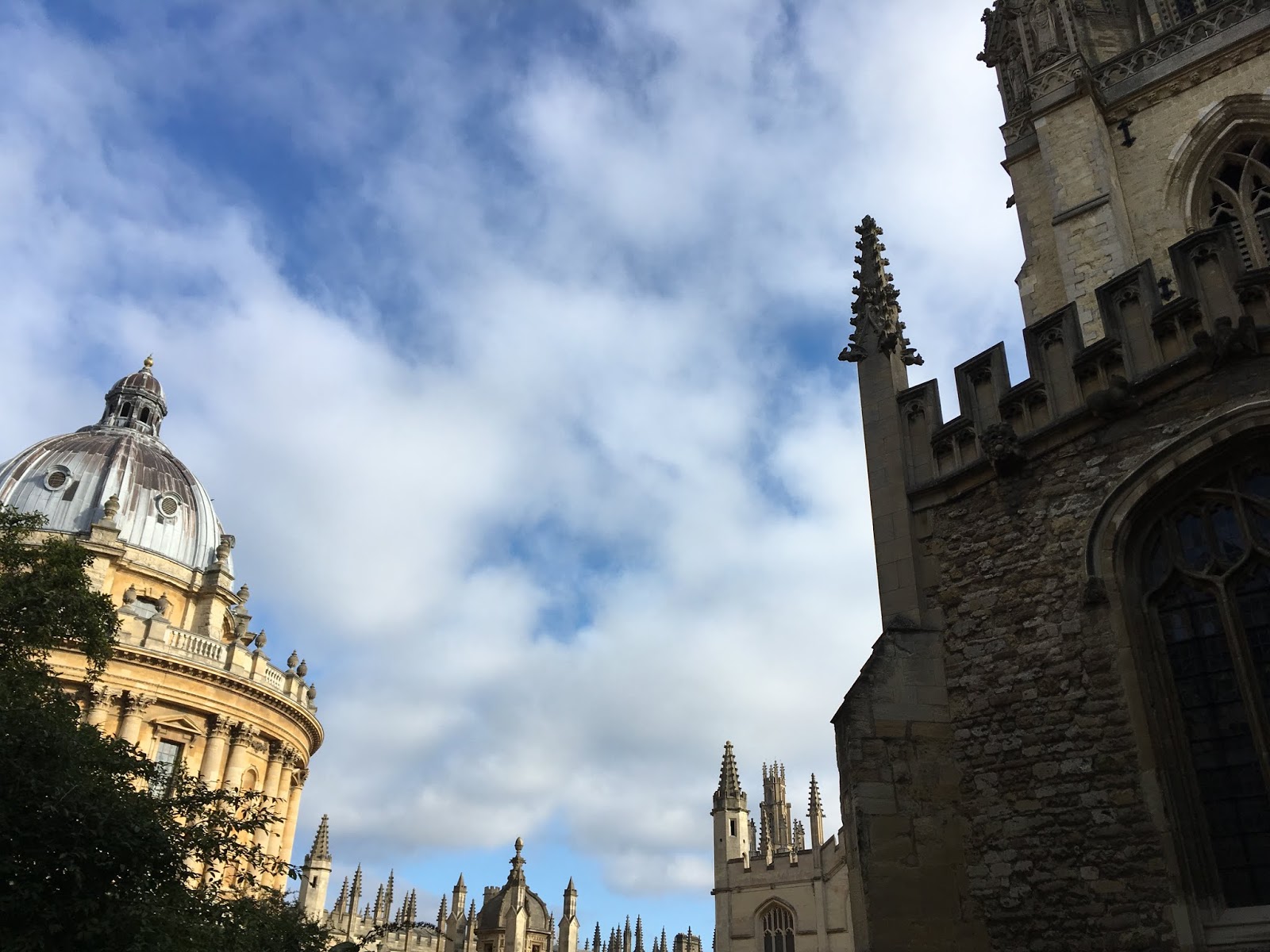
Oxford
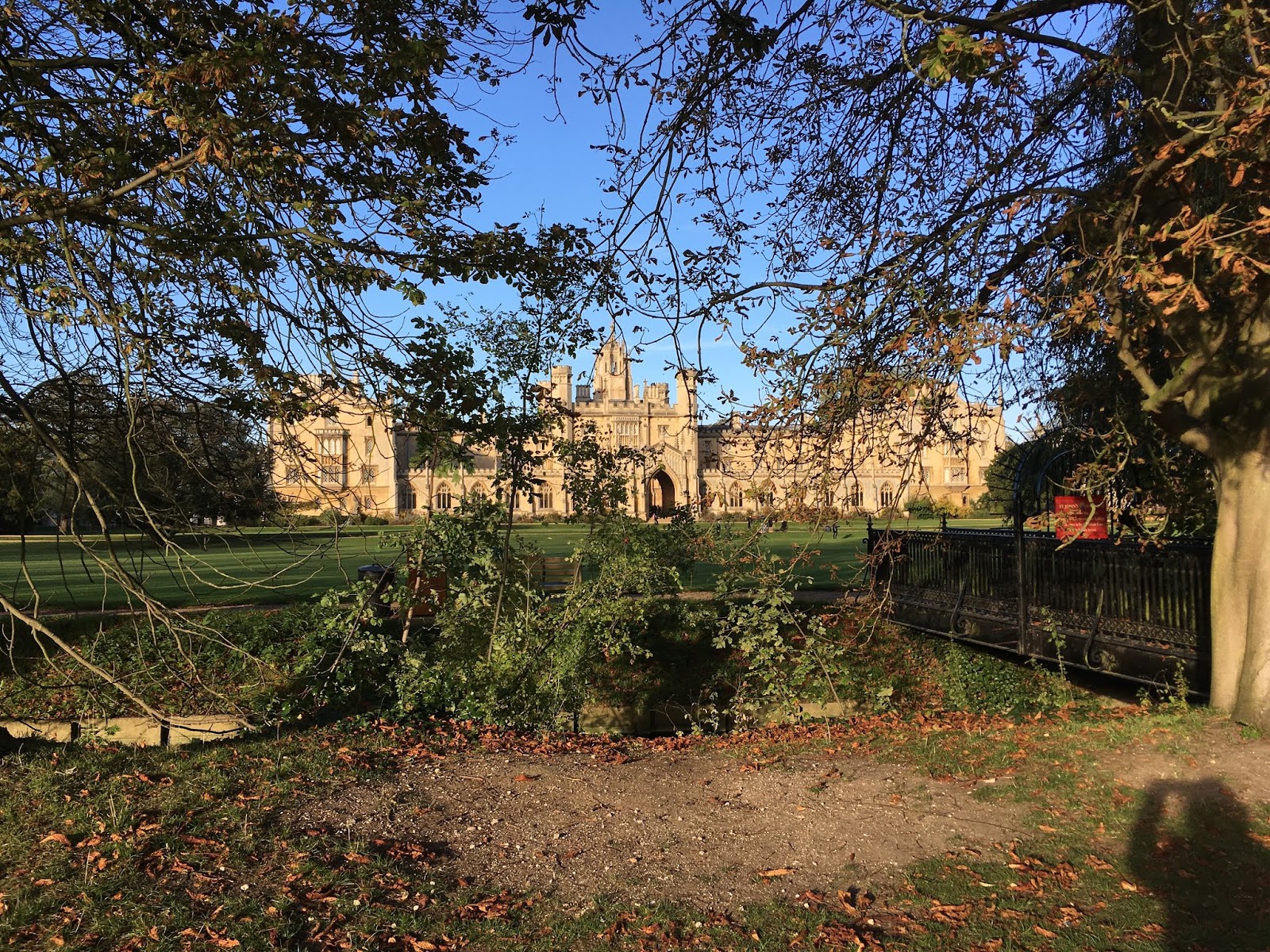
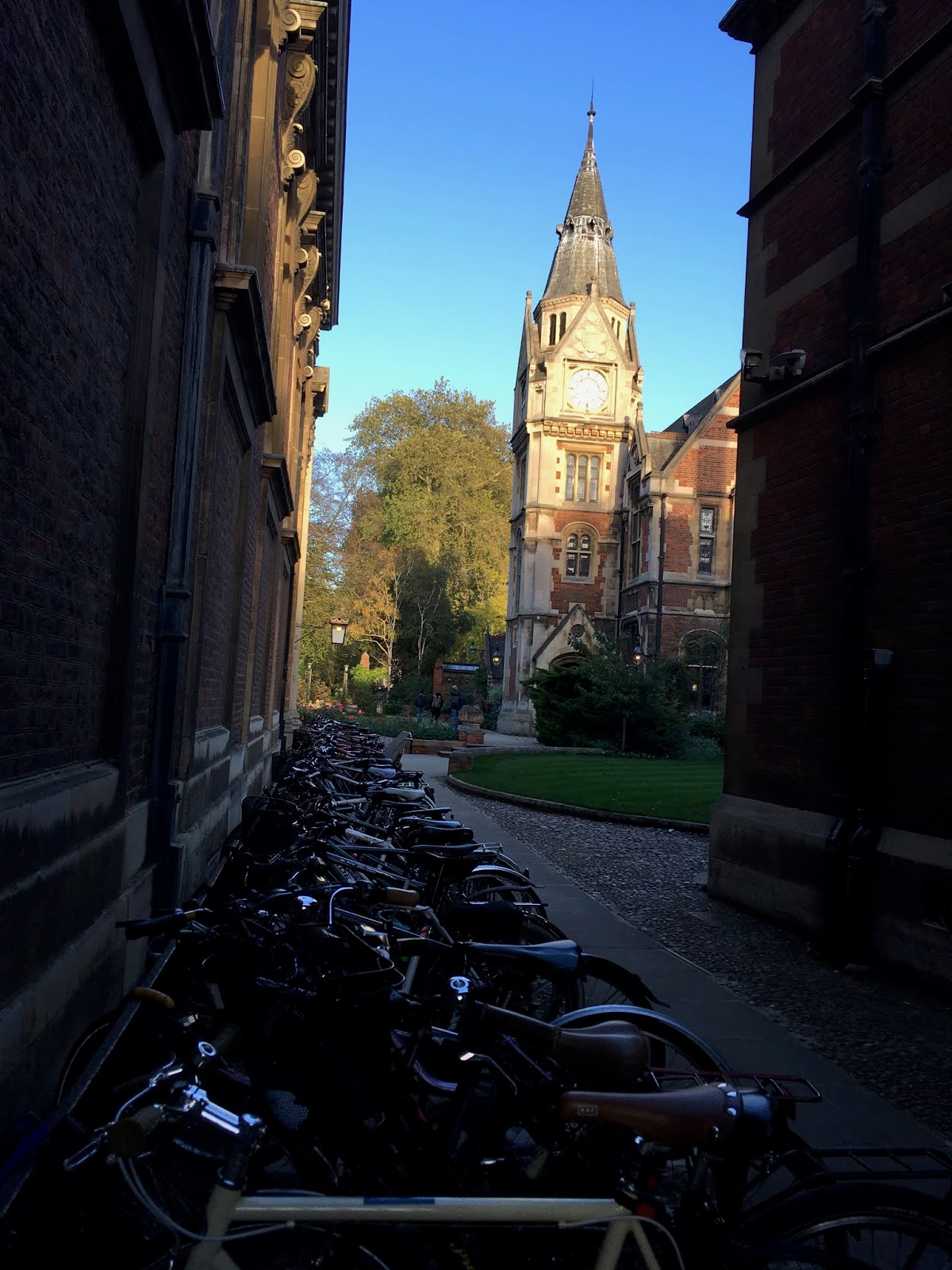
Cambridge
Cambridge

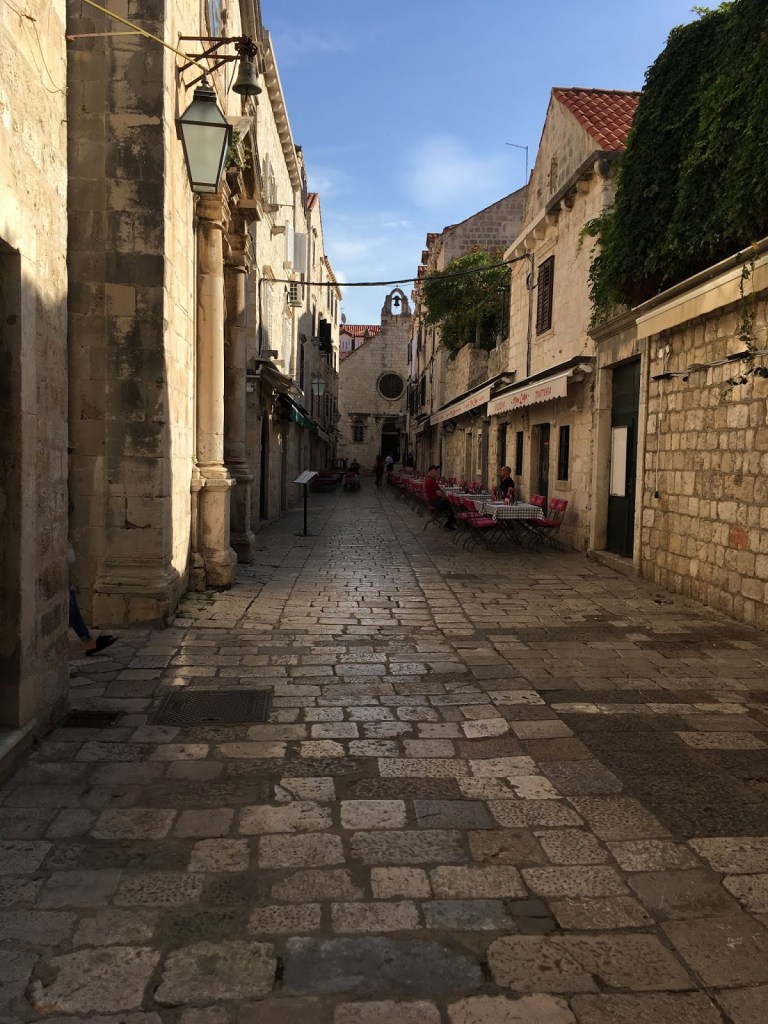
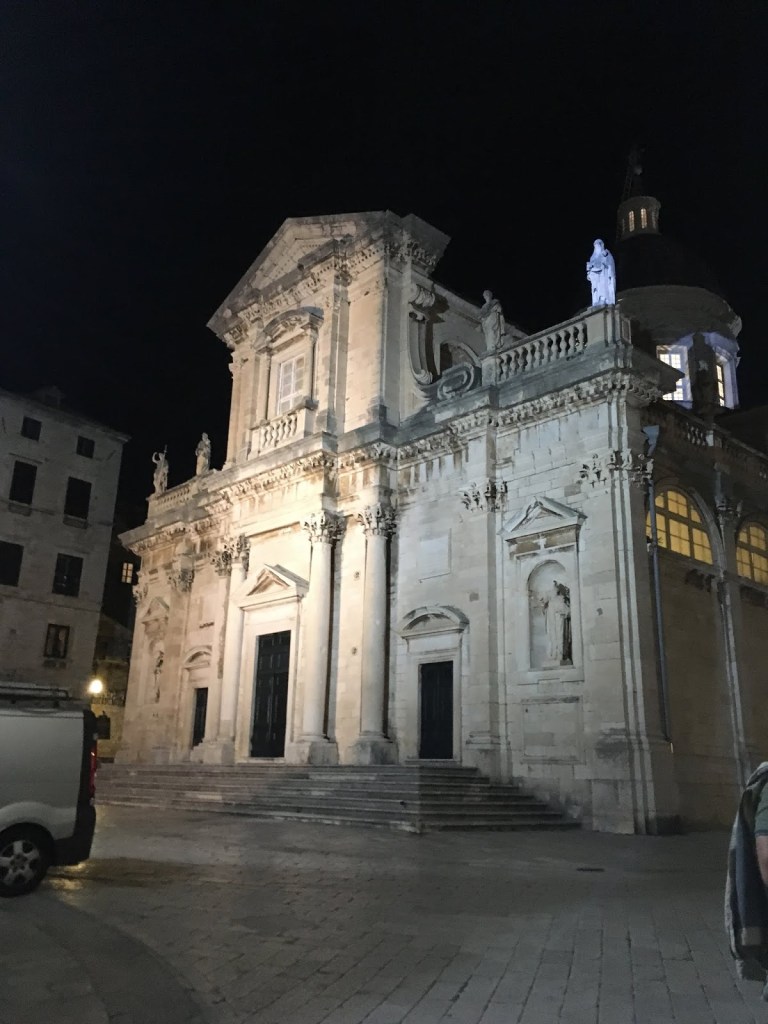
There are a lot of similarities between the University of Cambridge and University of Oxford. Both are actually a collection of multiple colleges, up to 30+ in each place  (Cambridge has 31, Oxford 38) with many same named colleges in both-e.g. Trinity College, Christ\’s College, Clare College, Magdalene College, King\’s College and Jesus College.  Both cities are filled with  historically beautiful old campus buildings dating back to 1200\’s,  Most of the colleges with photogenic/film recognizable central courtyards.  We respected that most of the college courtyards are closed to non students or cost to enter and tour (The cost of higher education). Both towns have lots of bicyclists, but the bigger risk were tourists.  Brought in by the busloads, the streets filled with tourists-all constantly stopping to take pictures/selfies.  We were endlessly photo bombing, dodging and bumping into people who would suddenly stop mid sidewalk.  (Dodging bikes was easier than the hordes of tourists)

So, these definitely weren\’t our safety schools.

Cambridge
Cambridge

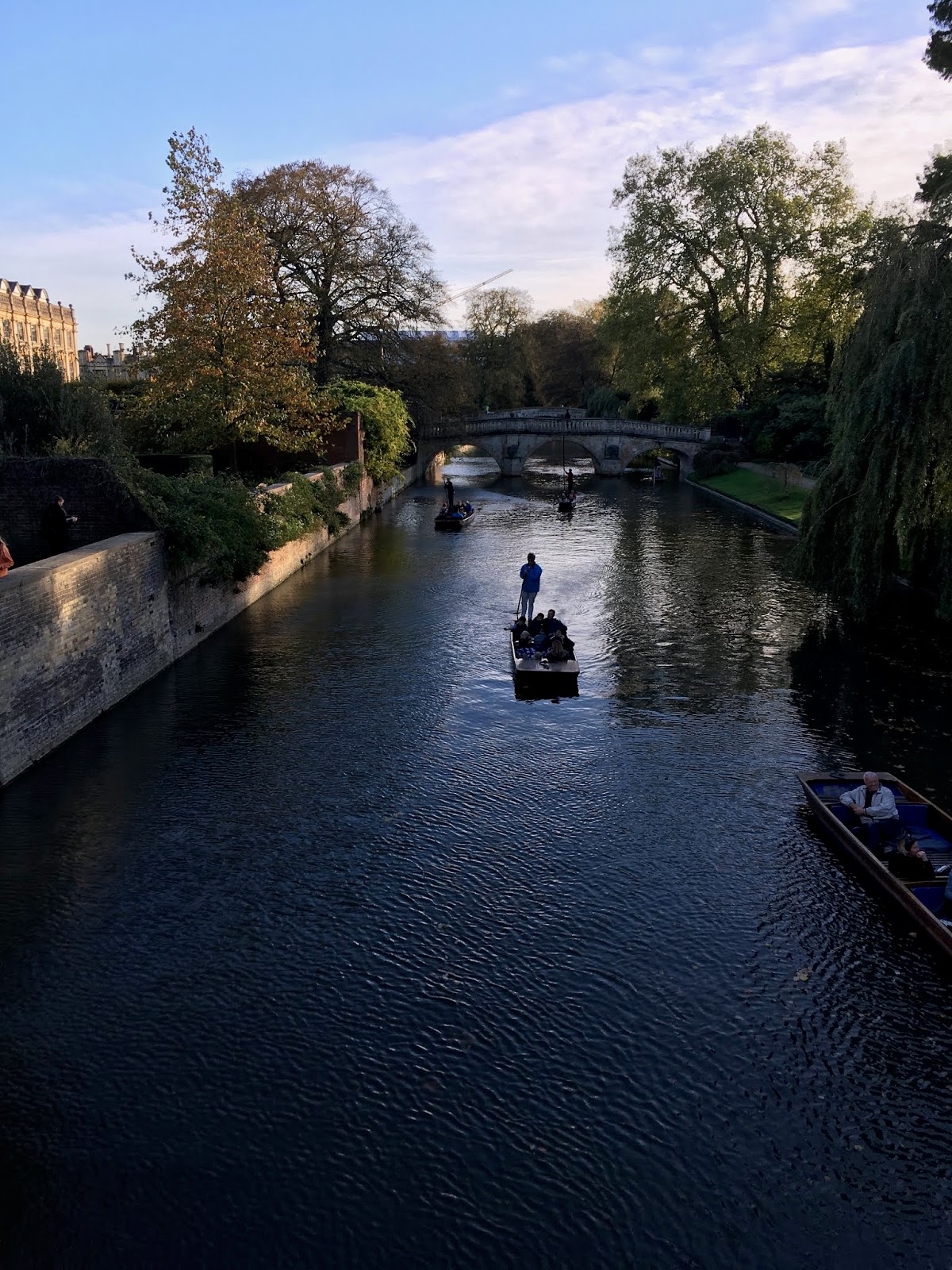
Despite all the overlaps, both college towns felt completely different.  Both had incredibly stunning old buildings, both had small river canals with flat boats for punting (standing with long poles to push the boat along A la Venice), but in Cambridge, the colleges felt slightly separated from most of the town and had more distinct boundaries along the River Cam.  So, the beauty of the  buildings stood out more against greener surrounding parks and quads.

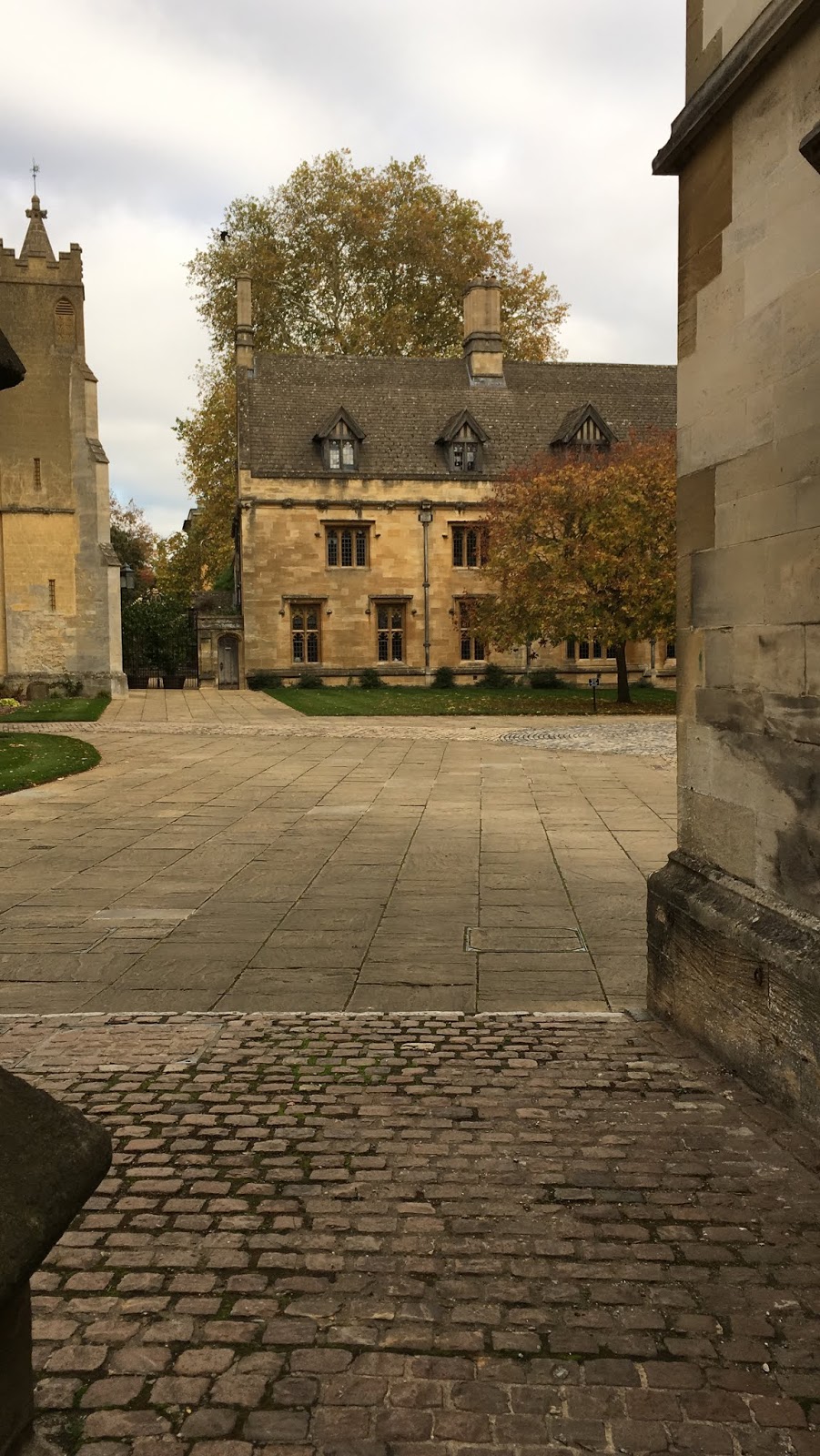
In Oxford the campuses were more incorporated into the town center, muting the striking visuals of the buildings.

As far as next year-the reality is we are not ready for college.  It will probably end up being (another) gap year as we are still trying to find ourselves and figure out what we really want to do.

Oxford
Oxford


As with the majority of English towns, you just feel the history as you walk around, in Cambridge the town was captioned to help out.

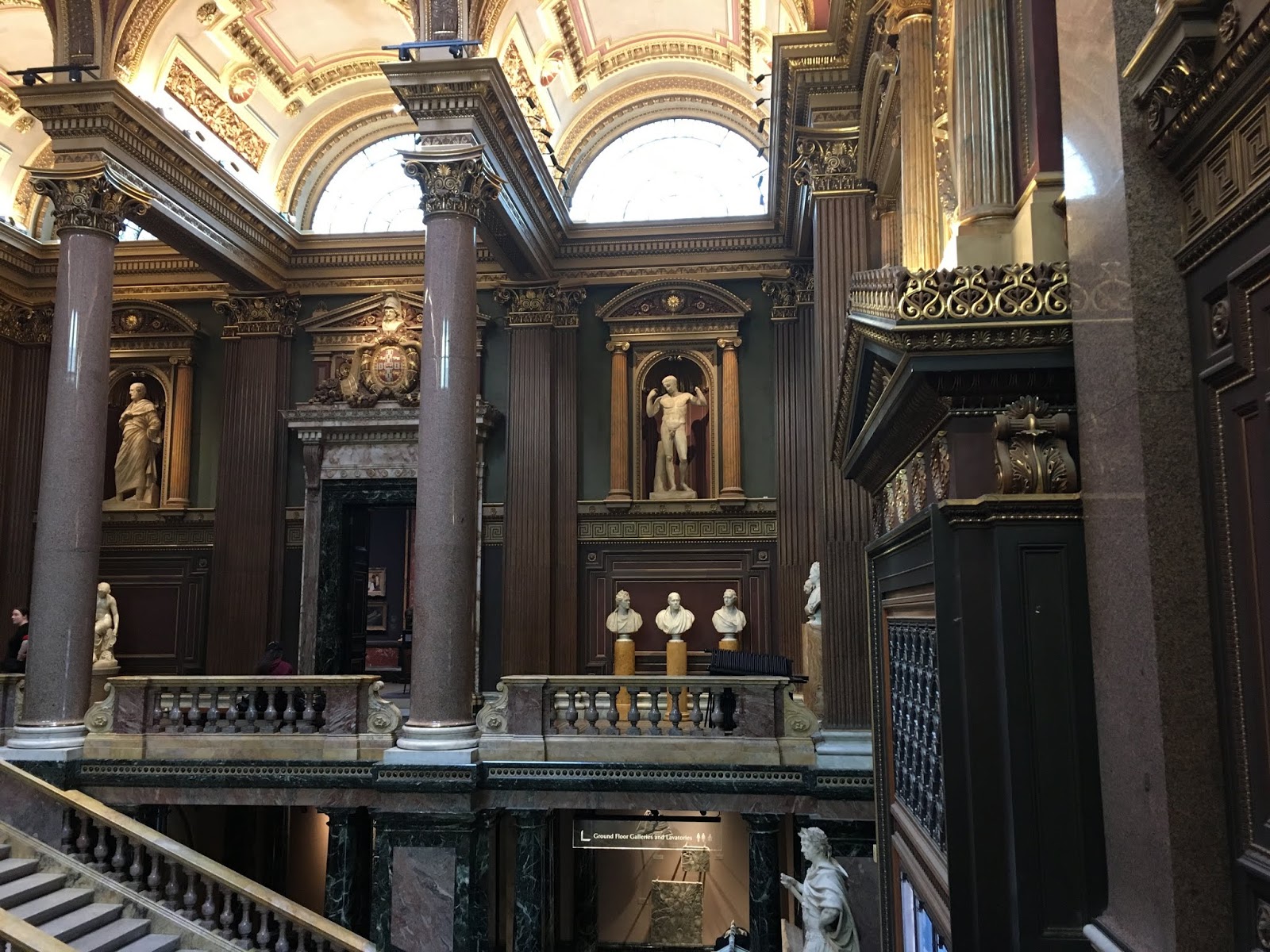
There were also a bunch of very idiosyncratic museums to choose from, each with it\’s own very unique claim to fame.  A lot of choices but we settled in Cambridge on the Fitzwilliam.

FitzWilliam
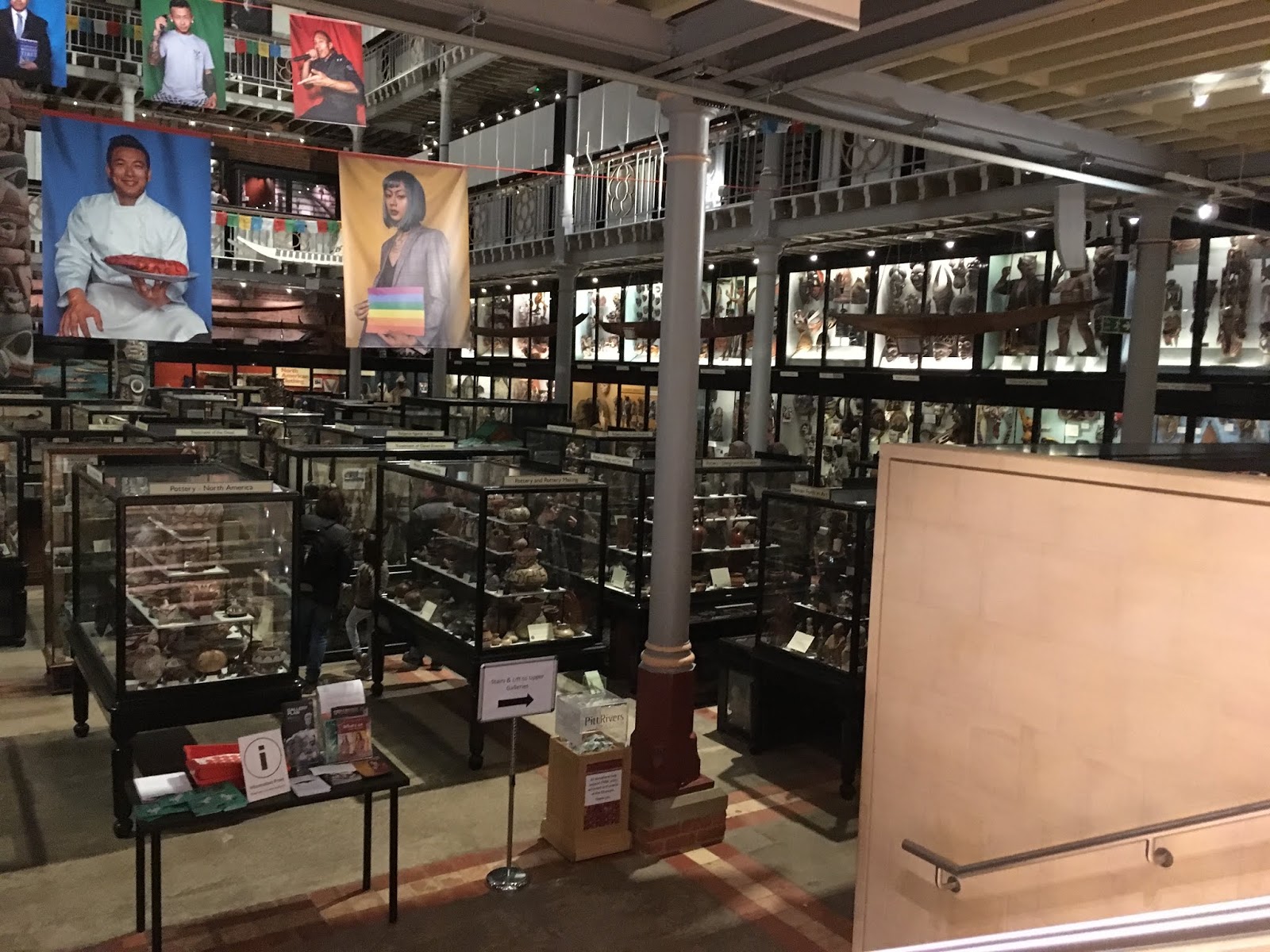
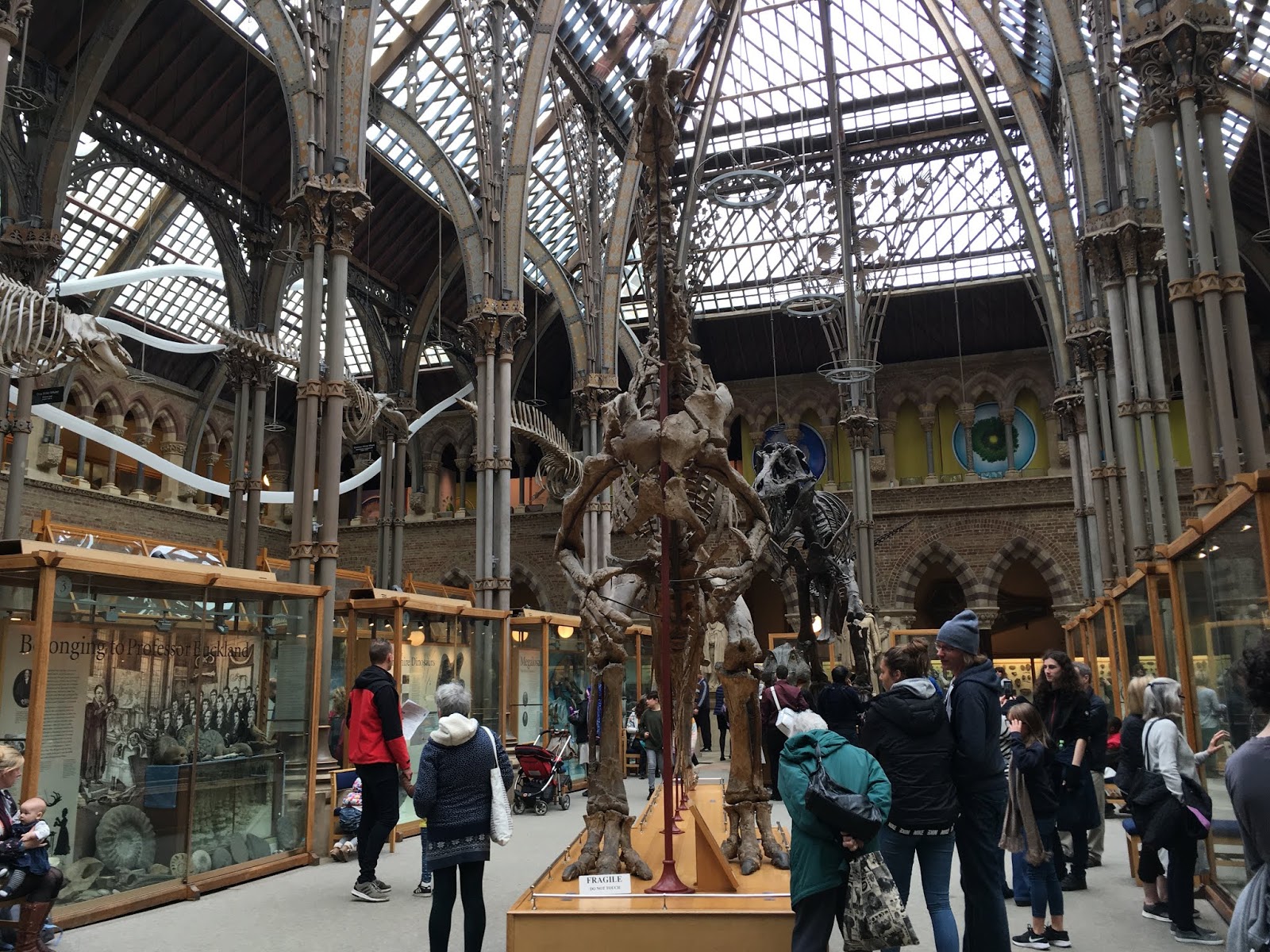
In Oxford, we had more time so more museums;  Bodleian Libraries -Tolkein exhibit and a display covering the (unhealthy) medical history of the Royal family, Ashmolean (the first modern public museum) and Natural History/Pitts River.  With each museum, we again found new favorites, saw variations of pictures/sketches we saw in other museums/countries and appreciated the differences between each museum and each country\’s individual take on what belongs in a museum. And as we walked through, periodically, you would just be hit with awe; pages from Mary Shelley\’s first draft of Frankenstein, mummified Dodo bird face and Venus de Willendorf (figured prominently in our daughters\’ 8th grade education). While we were very happy to spend a few days meandering through all of these, the Natural History/Pitts River was pretty high on the astonishing list.  Wandering through the collection of old bones and taxidermy coupled with huge sculptures of scientific giants with the sounds of laughing and screaming kids was very enjoyable.  As you walk past the skeletons of giraffes and elephants, you enter the Pitts River museum, which essentially looks like rows of antique store cabinets combined with your grandmother\’s junk drawer.  (or a garage sale under glass)


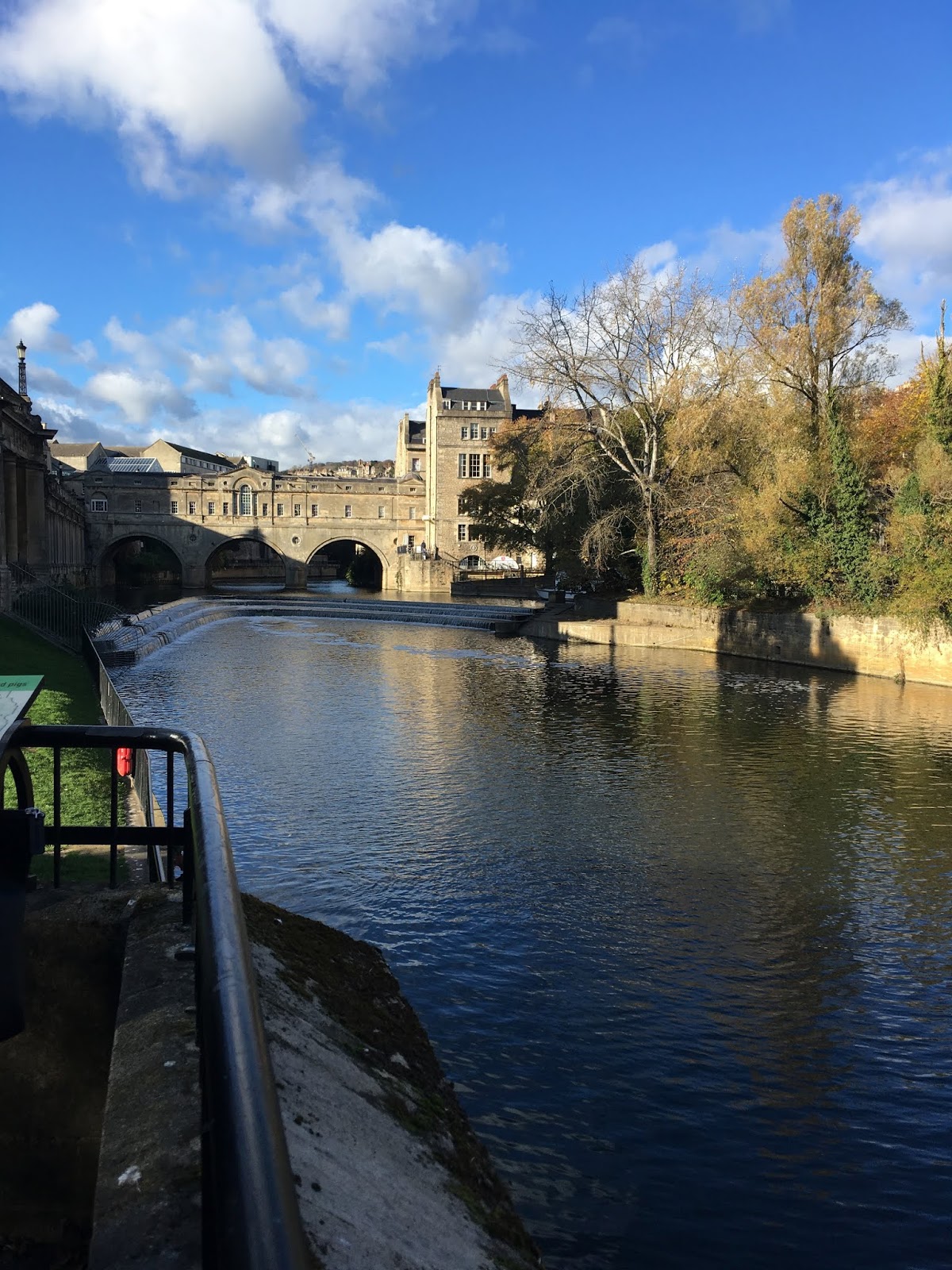
After all of the mental stimulation, we decided to take a day-trip to Bath at the southern tip of the Cotswolds for health/spa day.  Famous for it\’s Roman baths/mineral springs, but our first stop was to a travel clinic (in an sporting goods store) to get flu shots, however the clinic was closed.  Bath had some very pretty areas,  but it seemed to predominately be shops.  The town center felt like an outdoor shopping mall with big box stores and specialty shops.  Once out of the center we were able to see the landmark sites such as the Royal Crescent, The Circus, the River Avon, before stopping at the thermal baths. There the line went out into the street, and we didn\’t want to be in hot water with anyone we saw in line.  So instead we got ice cream and walked around the shops some more but sadly, there wasn\’t any Bath House of Pies, or Bed, Bath Bath and Beyond.

Update: We were able to get our flu shots two days later in Oxford.  Here they are called flu jabs, it was done by a pharmacist at a Boots Pharmacy (we were walk-ins and it cost 13 pounds each), she didn\’t wear gloves or use an alcohol wipe, and called the cotton ball applied after the jab a cotton wool which immediately fell on the floor, but she said that was ok because it wasn\’t needed because there was no bleeding.

Site of the Labrador in the \”Venice of the Cotswolds\”

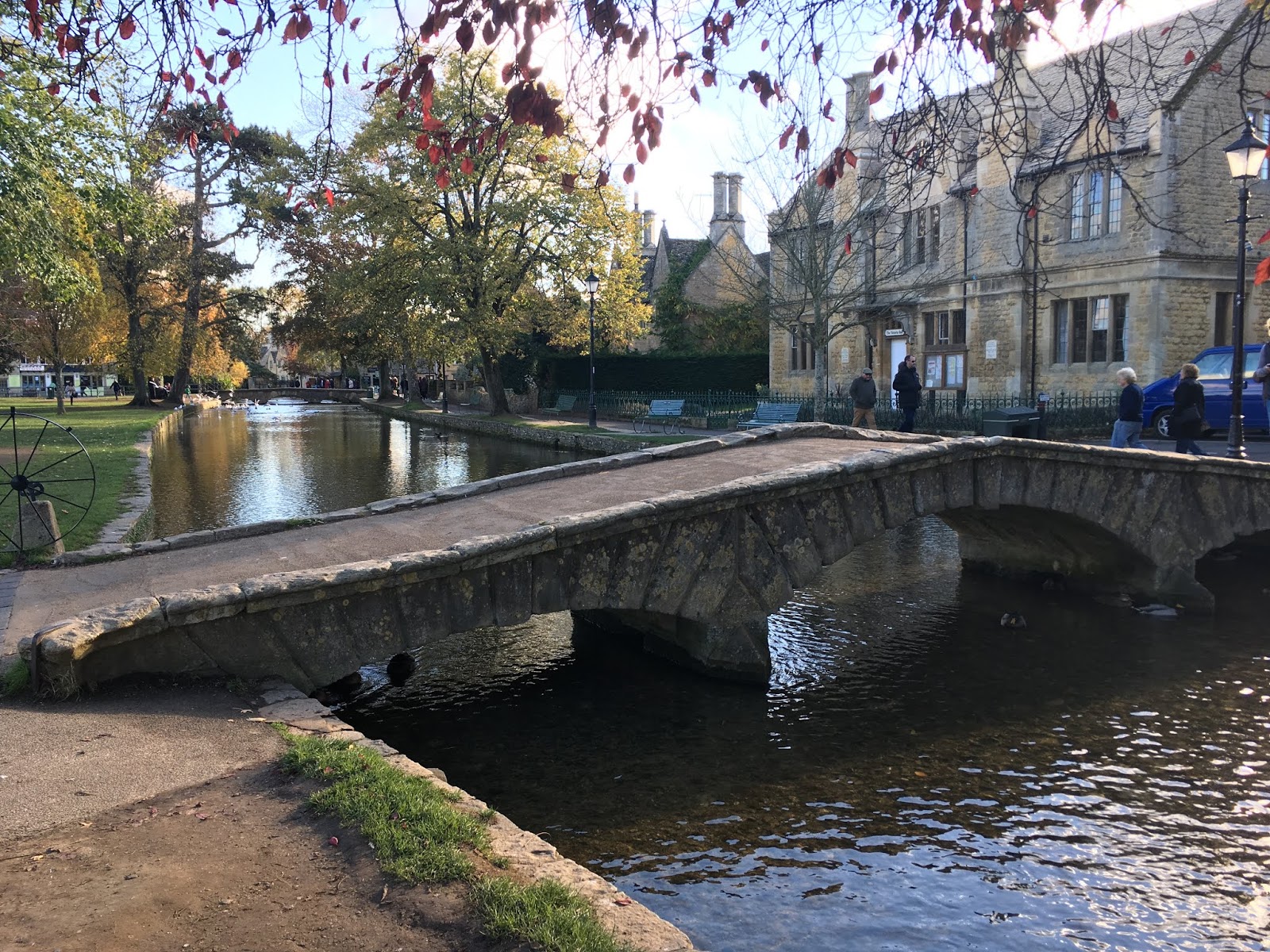
Cotswolds-we took the train to Moreton-in-Marsh, bus to Stow-on-the-Wold, hiked 4 miles to Bourton-on-the-Water.  Lots of silly names, we by-passed Chipping Norton, Hook Norton, Icomb, Great Rollright and we did see a Labrador in the Water (not a town name, an actual labrador in the water in Bourton-on-the-water) which was kind of a highlight of the trip.


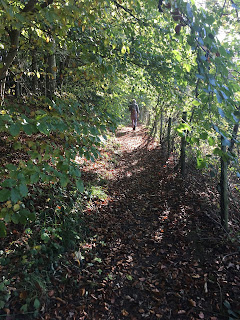
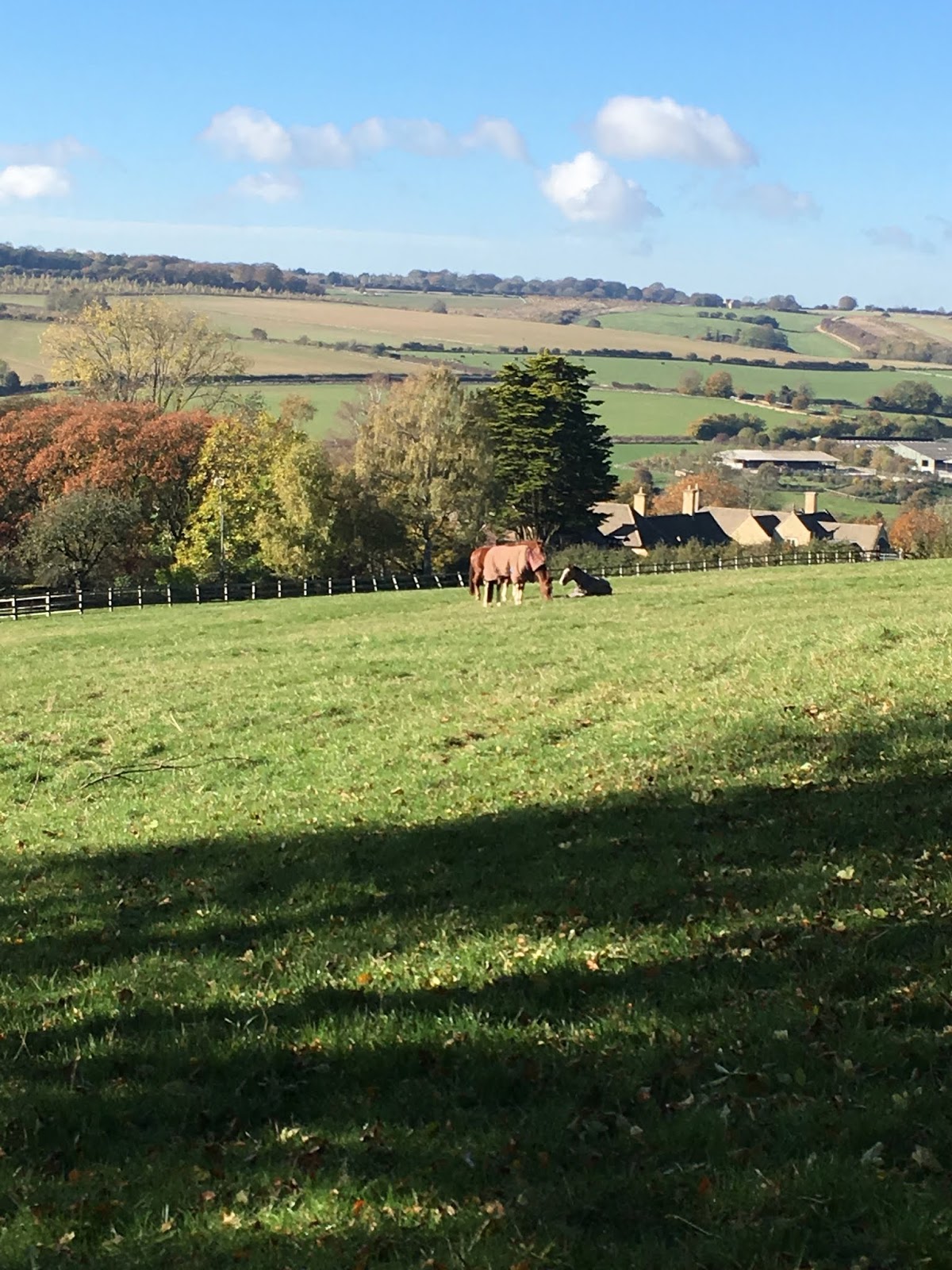
England is full of walking paths and we were excited to venture out, this time aided by an official copy of instructions purchased for 10 p from the Stow-on-Wold librarian.  As with the Yorkshire walk, these instructions, while highly detailed ( \”turn half-left through a farm gate then follow the hedge line across three fields\”) lacked any mention of distance or how to tell which hedge line with there are many  or how to tell when one field began and another ended. Luckily, there were random fence posts along the way with tiny arrows indicating that you were on the Monarch Way or the Heart of England or the MacMillian path. Regardless of our befuddlement, we enjoyed a beautiful day with less aggressive animals then our past walks.

After our day-trip to the Cotswold, we returned to our last day in Oxford to find:

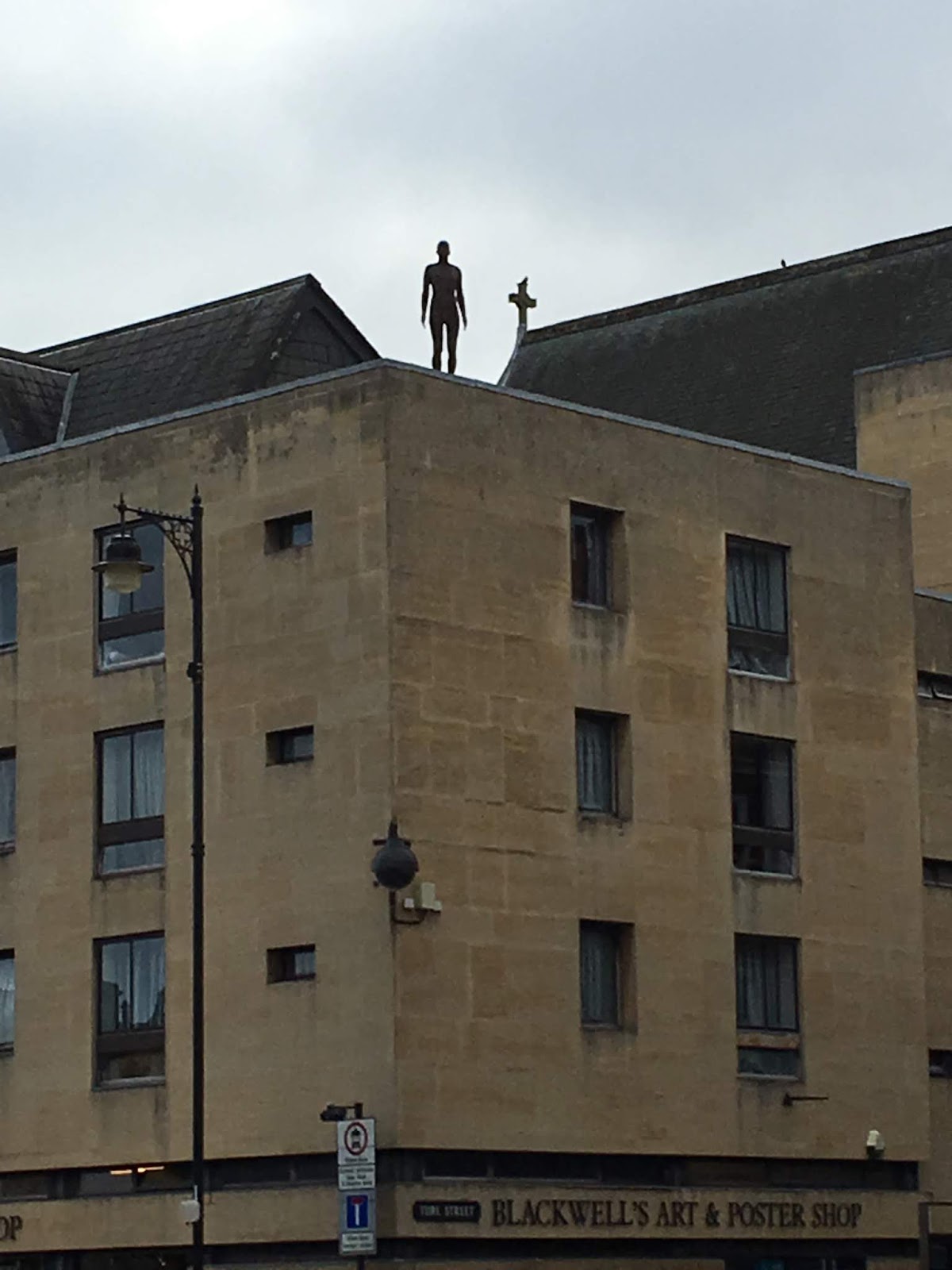
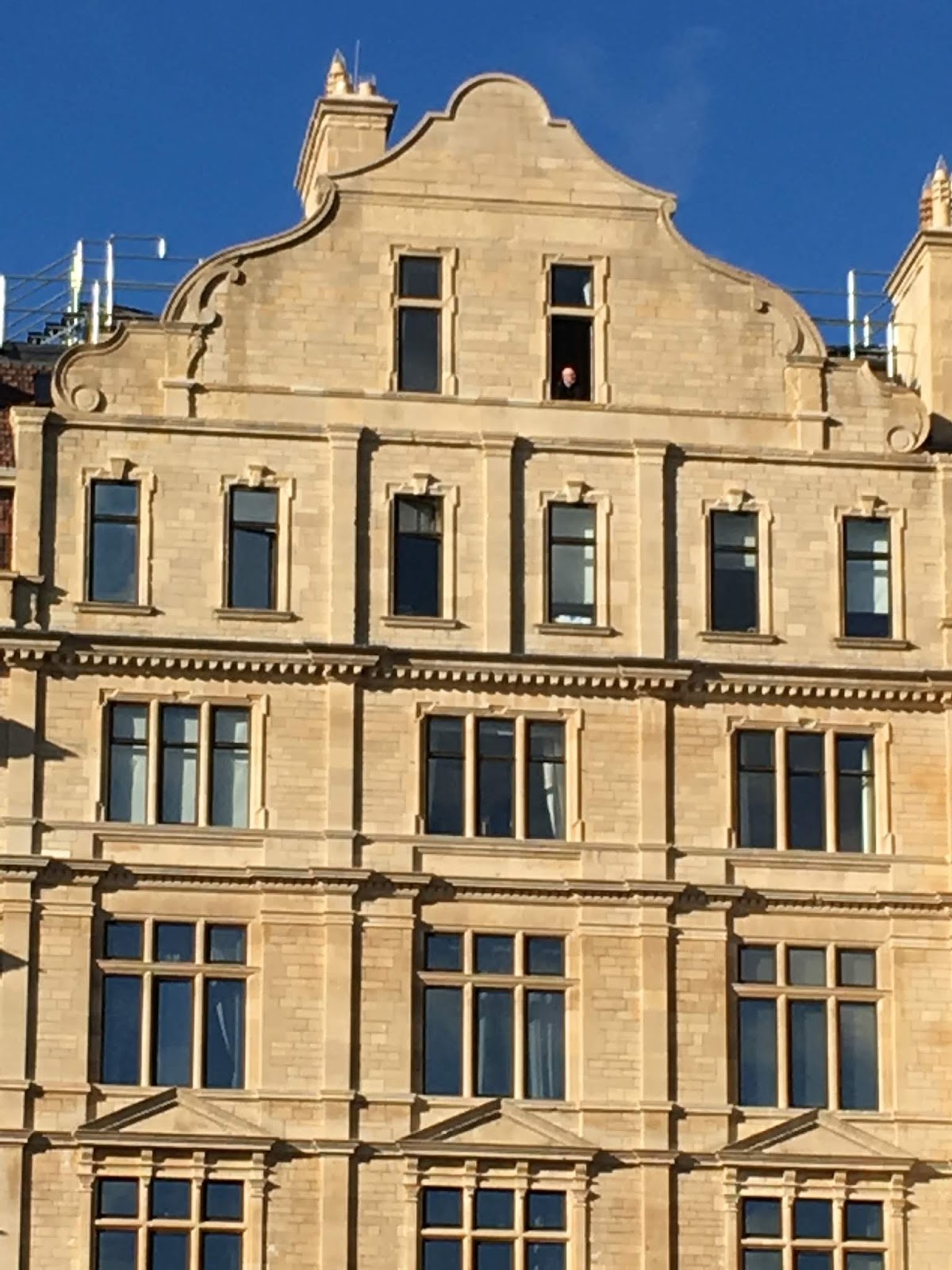
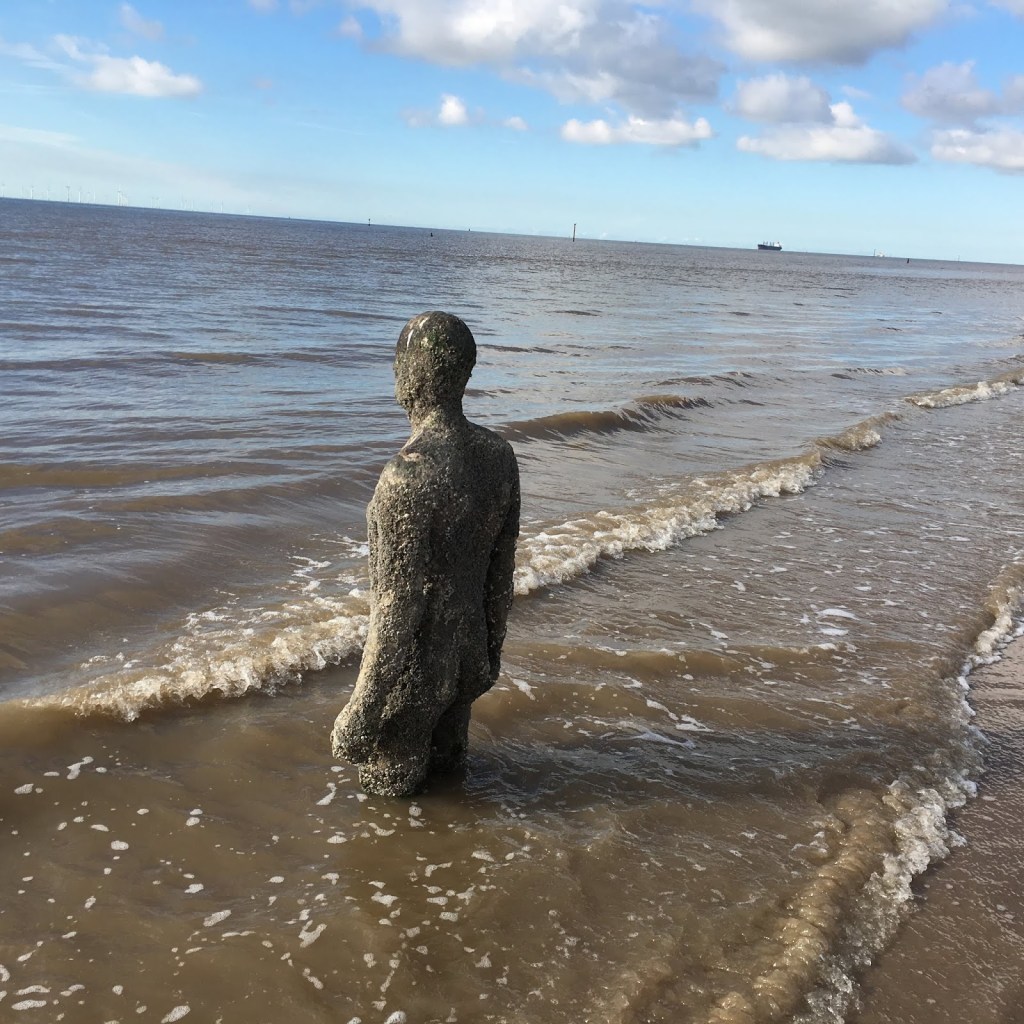
Topless old man? Yes, home from a day at the beach, Antony Gormley piece, Another Time II.

This week\’s photo of topless old man looking out window contemplating his life: Halloween edition \”I\’m Batman!\”

Scarborough fair, moor or less

The Scarborough Fair, a popular song by Simon & Garfunkel in the \’60\’s is actually an old English ballad.  The song is a dialogue between a man and a woman each asking the other to do impossible tasks before they can win the other\’s heart.  For example, the woman must make him a shirt without a seam or needlework, and wash it in a dry empty well.  The man must find her an acre of land between the salt water and the sea sand, plow it with a ram\’s horn and sow it with one peppercorn.

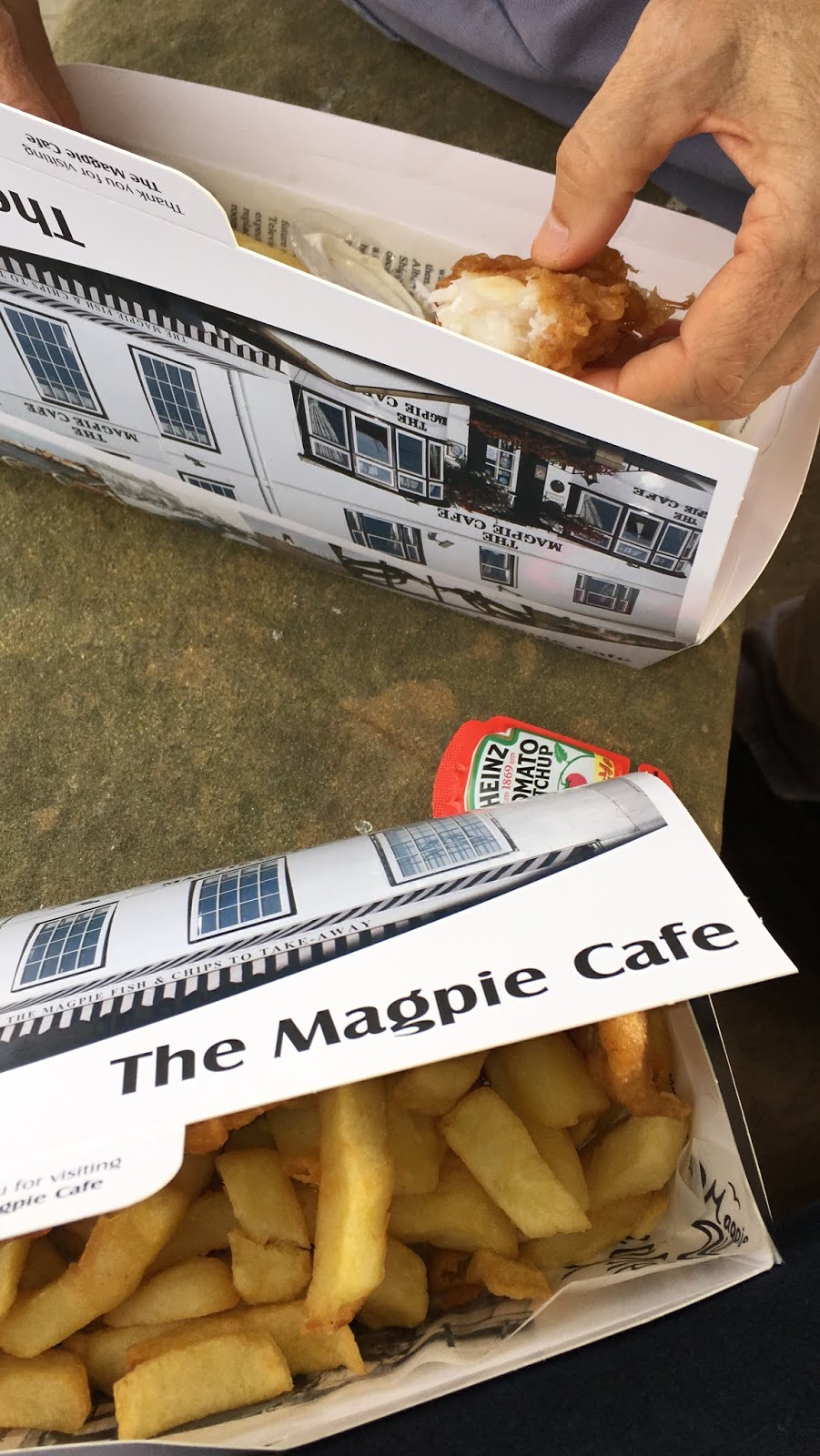
We decided when we arrived in the Scarborough (Yorkshire)  our own impossible task-to find tasty uniquely English food.  Ten weeks into our travels we\’ve discovered that being together 24 hours a day on the road allows a lot of time for conversation, not that we\’ve utilized it.  But, we did discuss that we should take advantage of our trip to sample local cuisine that we couldn\’t normally get in the US.  So, after further prolonged debate, we finally decided on \”fish and chips\”.  Patricia did extensive research, apparently the North Yorkshire Moors are one of the best areas in England for fish and chips.  Whitby, which is north of Scarborough is considered the best town in the area for fish and chips and had a take away restaurant that also served a required gluten free style.
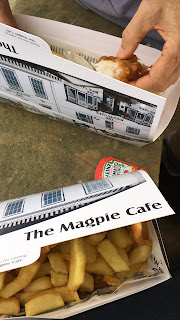
Usually, when we eat something questionable on our travels,  especially from a restaurant, we say we\’ll find out in a couple of hours if we\’re going to survive.  One of us, the one that has been a vegetarian longer, did not tolerate the fish and chips well, research did not include that traditionally prepared fish and chips are fried in beef tallow. 
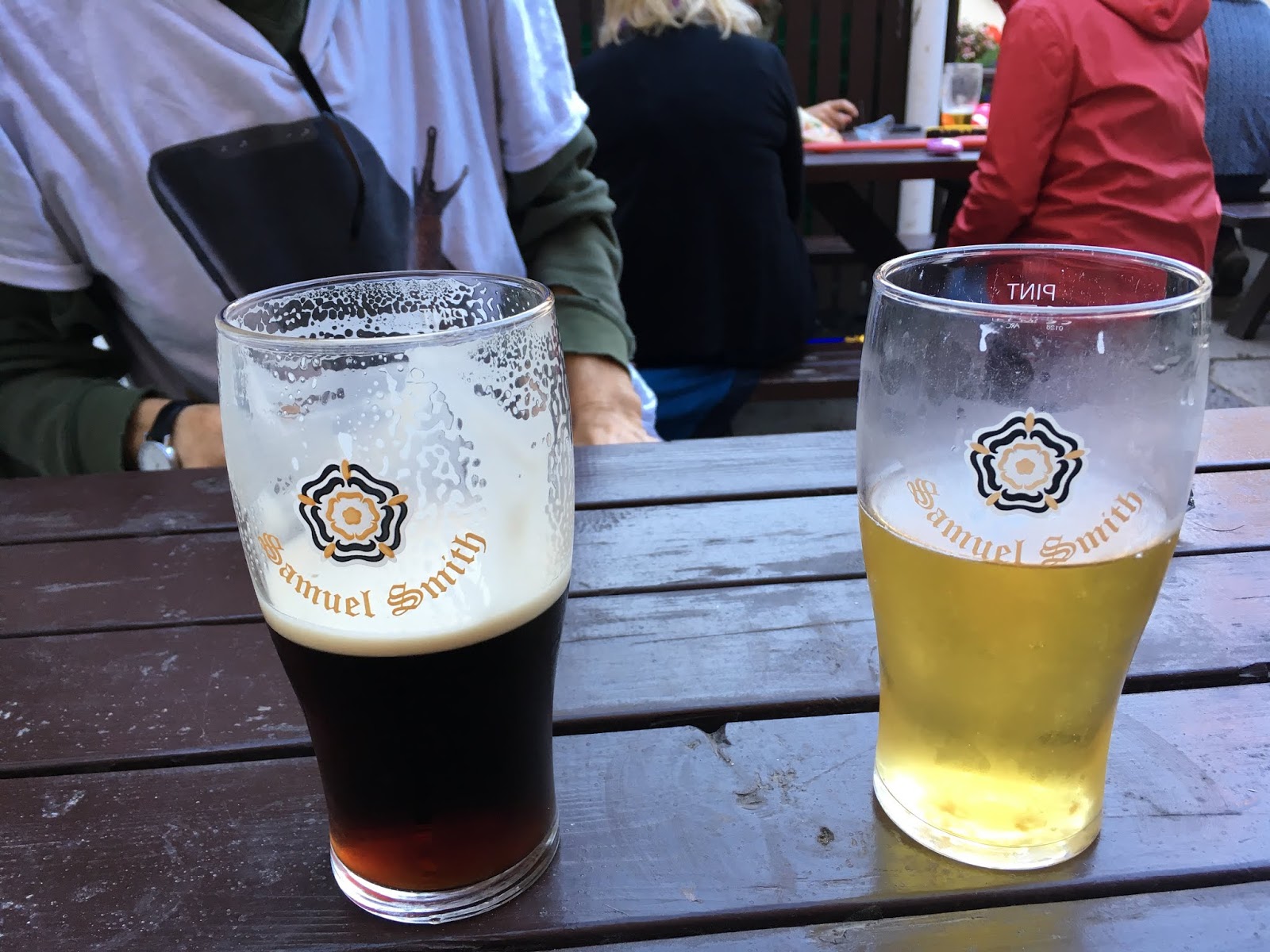
The local beer however went down well.  Samuel Smith pints for just over a pound, very tasty.
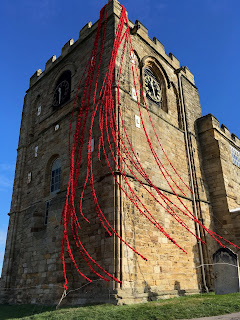
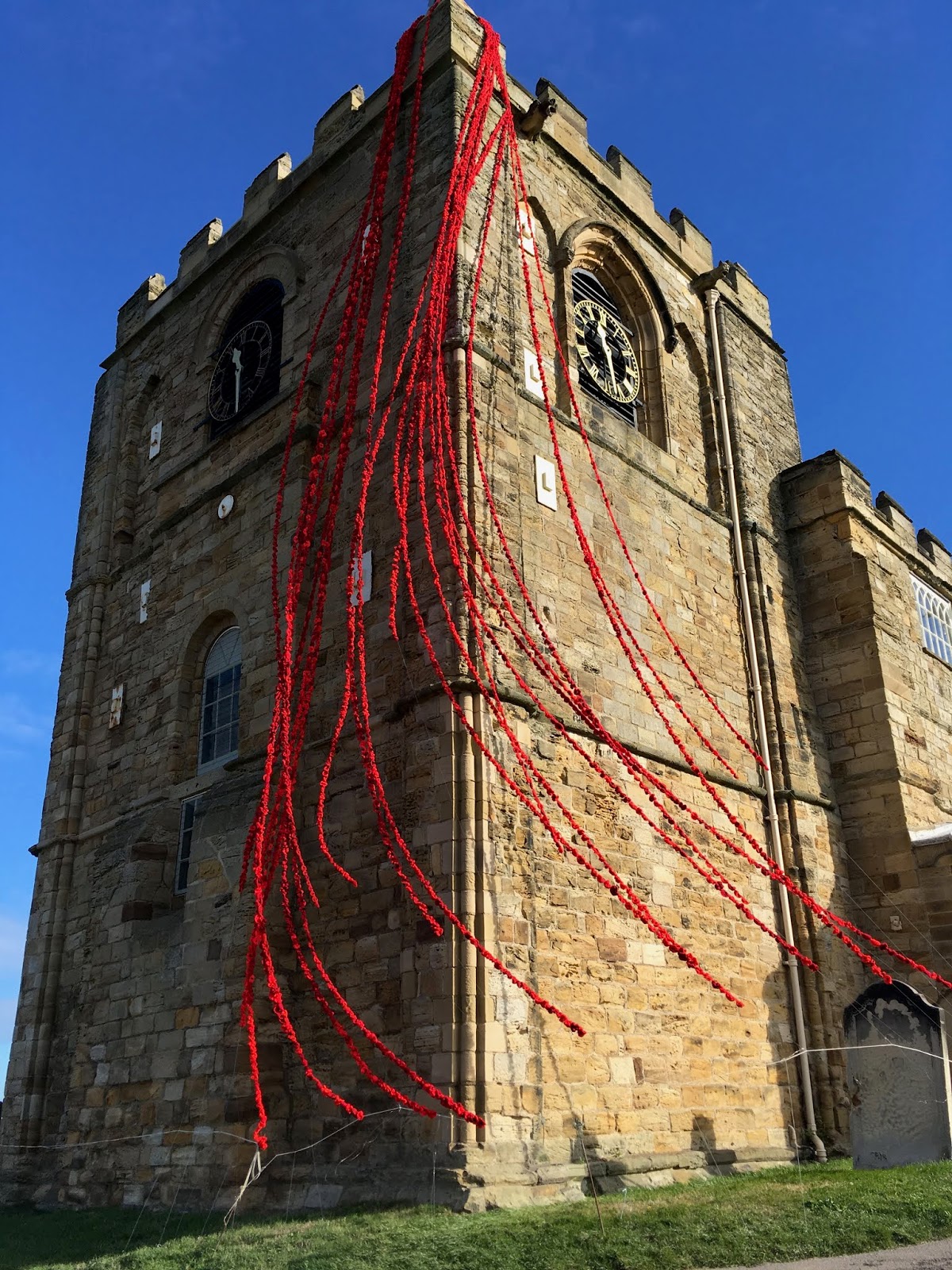
Poppies on a church

Our Airbnb was situated between a cemetery and a Japanese inspired park.  In England, we  constantly, unintentionally ended up walking through cemeteries because they are attached to churches, which historically were the center of town. The cemeteries seem to be  part of daily life full of dog walkers, commuters, kids and cyclists.  Every cemetery has memorials to locals lost in \”the Great War\” and WWII.   This is our second time being in  England around Armistice Day and it is really striking how strongly it is observed, you see the symbolic poppies on everyone and everywhere.  This is in contrast to the US Veteran\’s day celebration which  seems to mainly be celebrated as a three-day mattress sale.
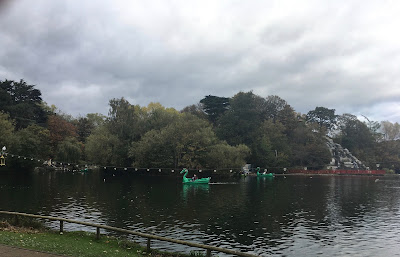
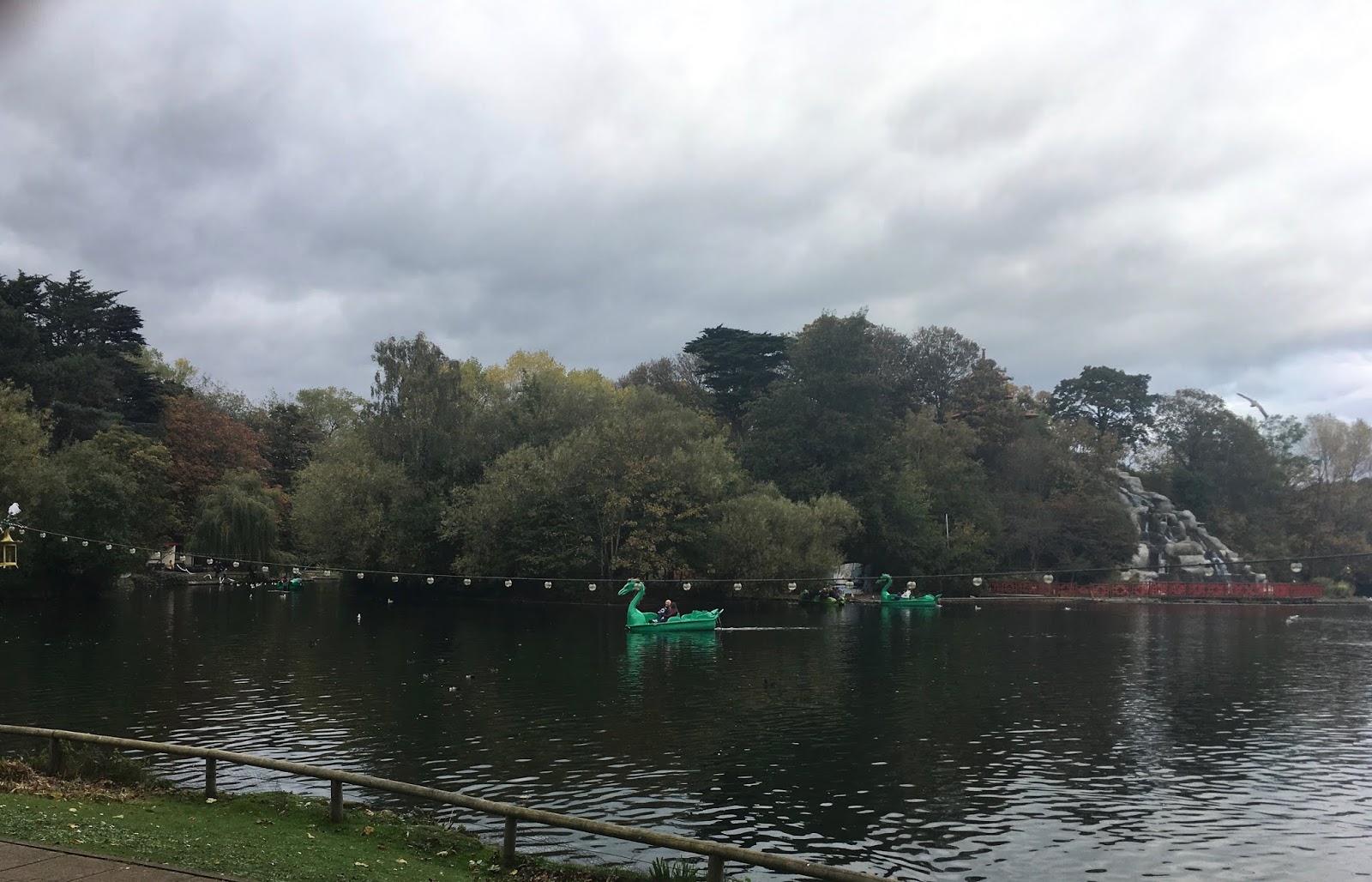
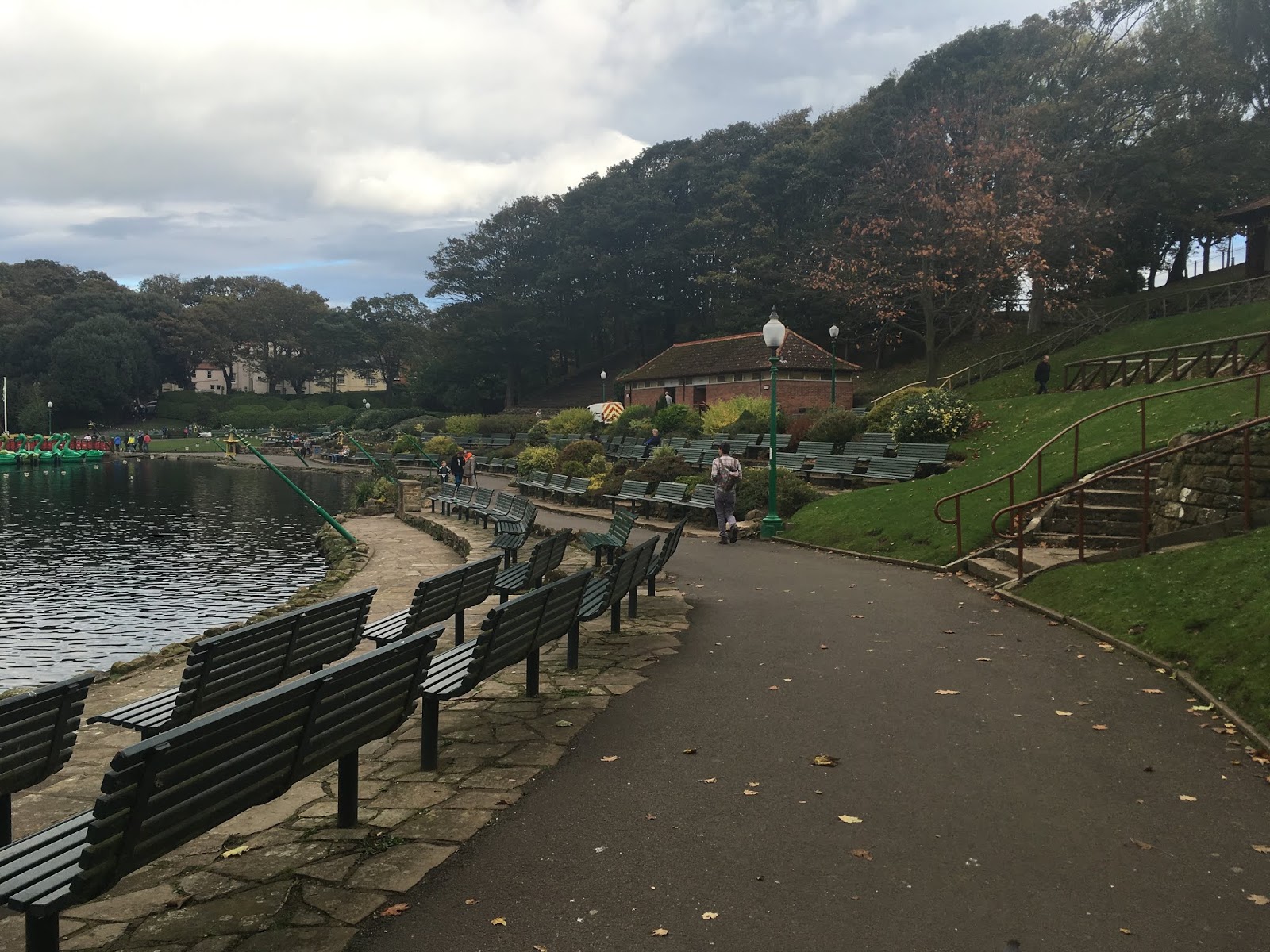
The park\’s Japanese interpretation is apparently well received, the pond was full of people in dragon paddle boats.  Judging by the number of benches, dragon boat viewing appears to be a popular spectator sport.

On past trips, when we have gone to large decentralized areas like the Badlands, the Lake District, National Parks or Los Angeles, there often isn\’t just one spot to visit.  So, usually we try to take multiple car, bus or train trips thru these areas to see as much as possible, then sometimes stopping off for hiking or walking around towns.  This was our approach in Yorkshire as well, to best see the towns, the coast, and the Moors.

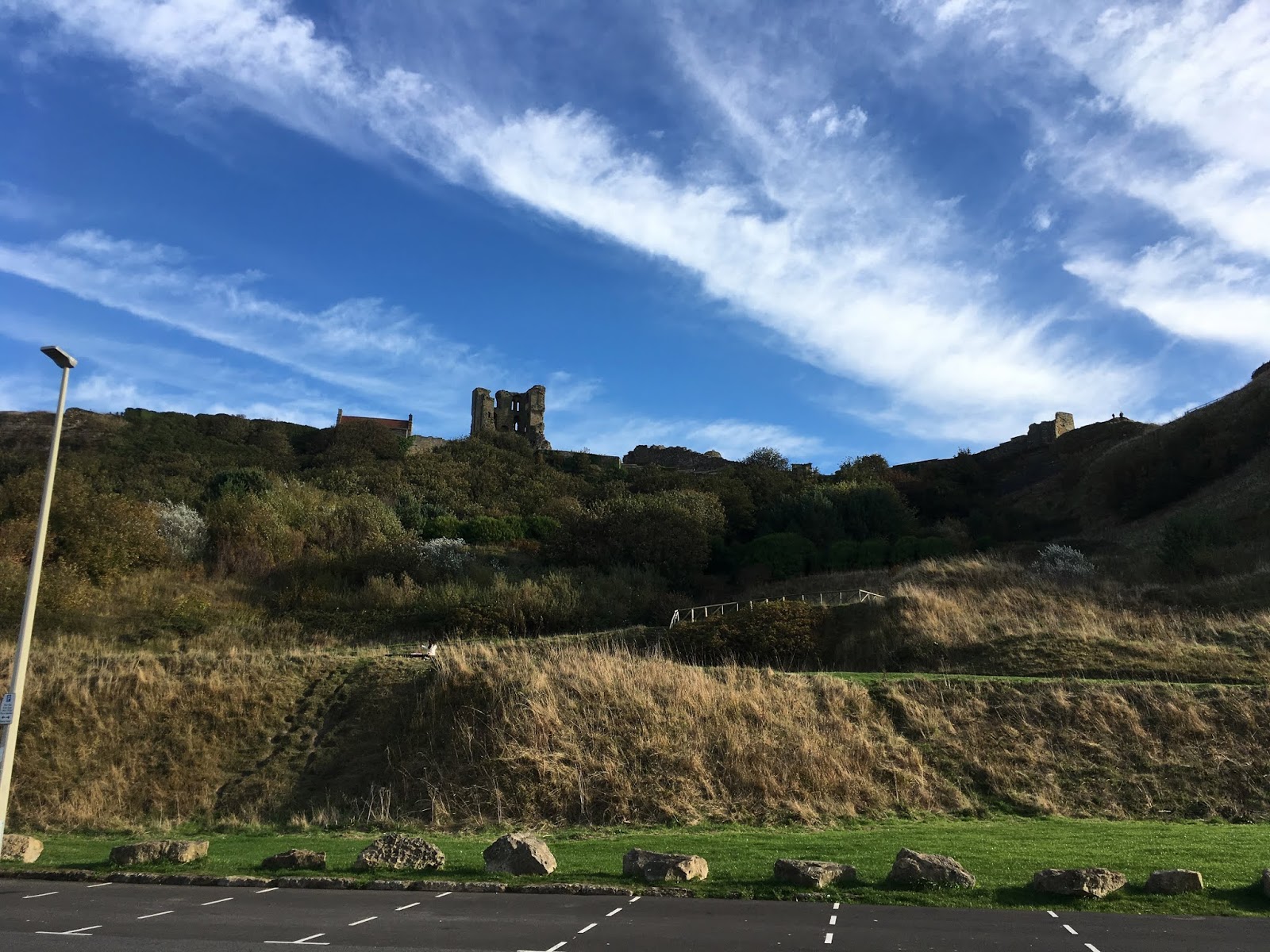
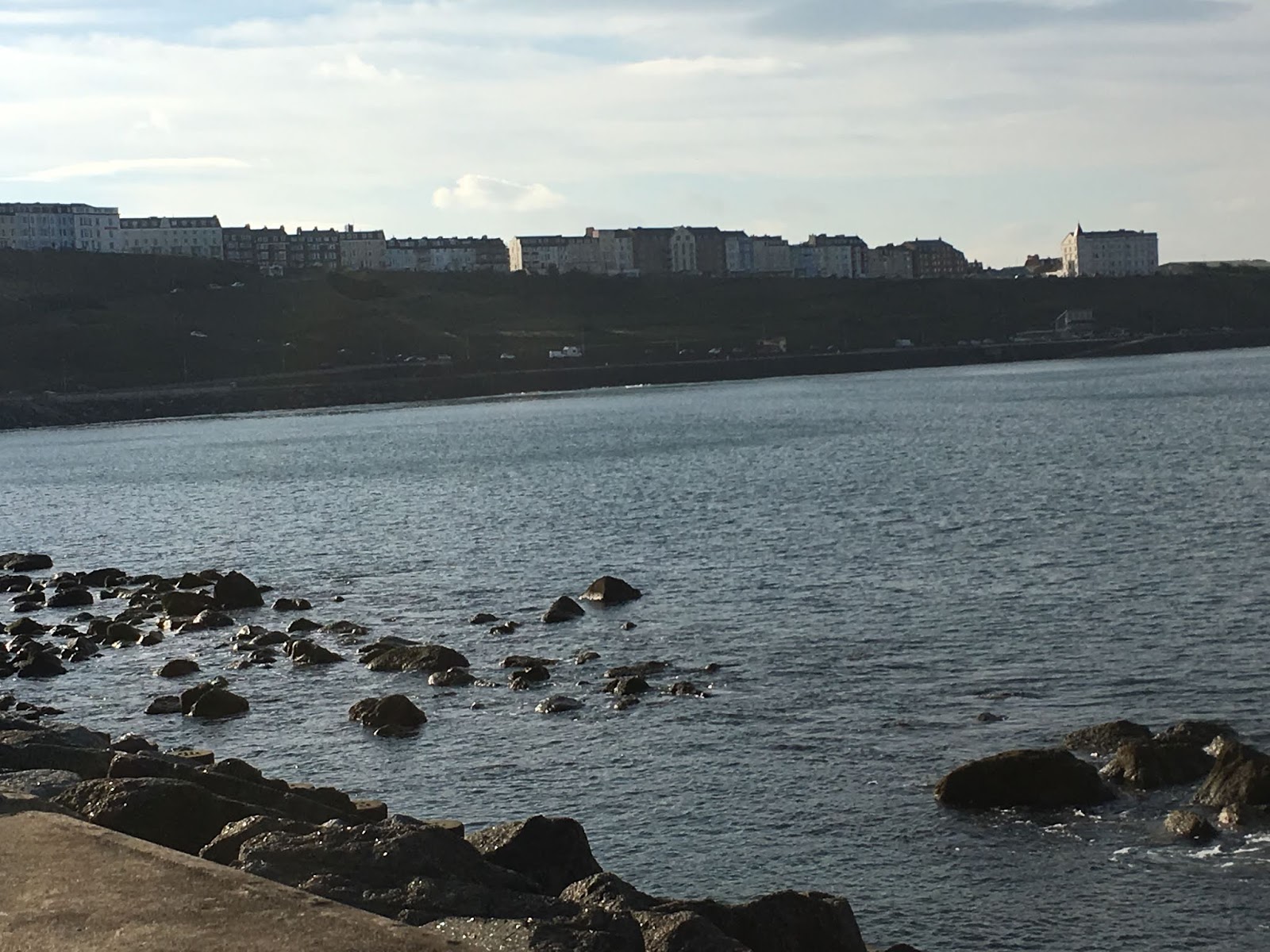
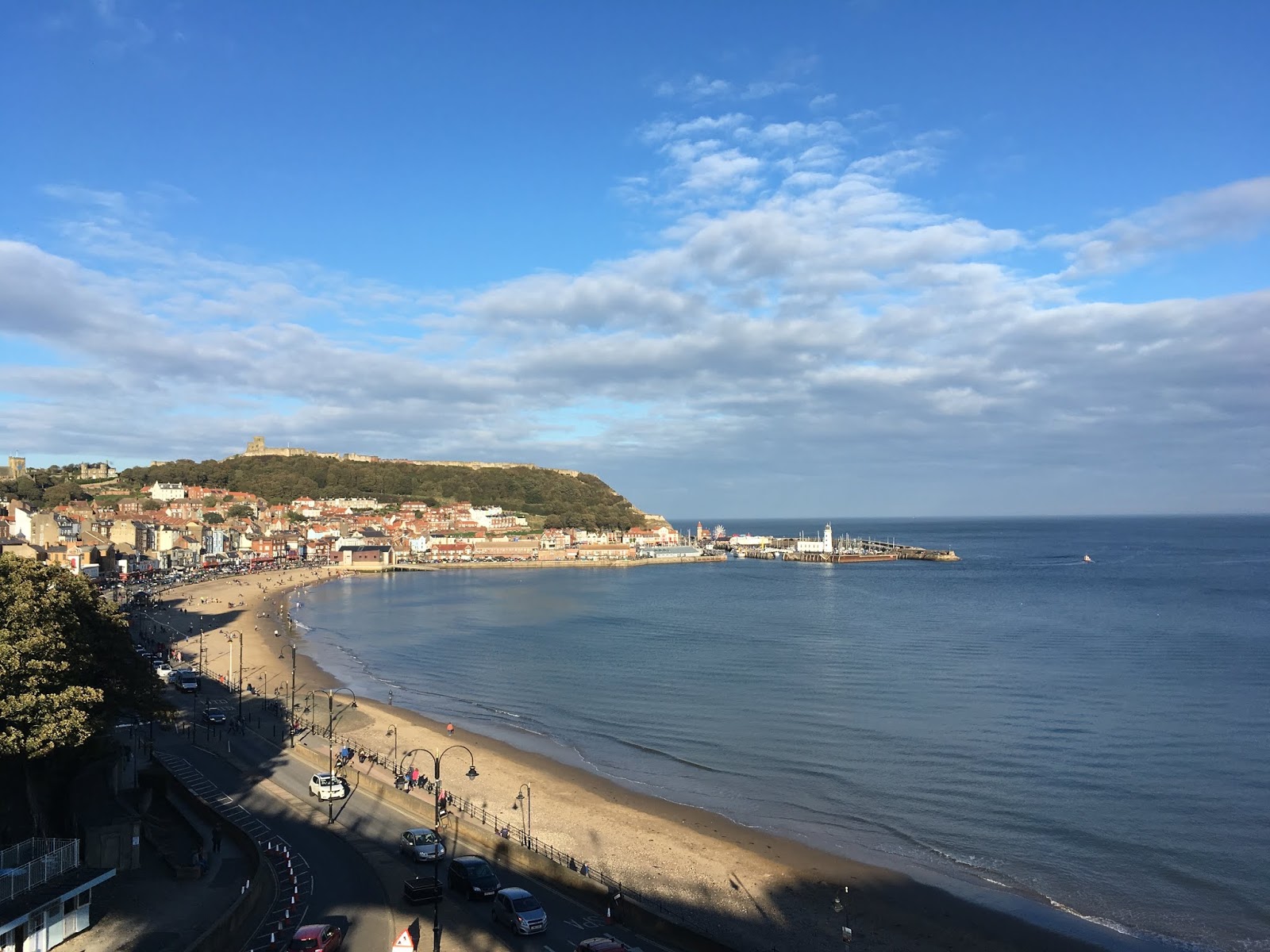
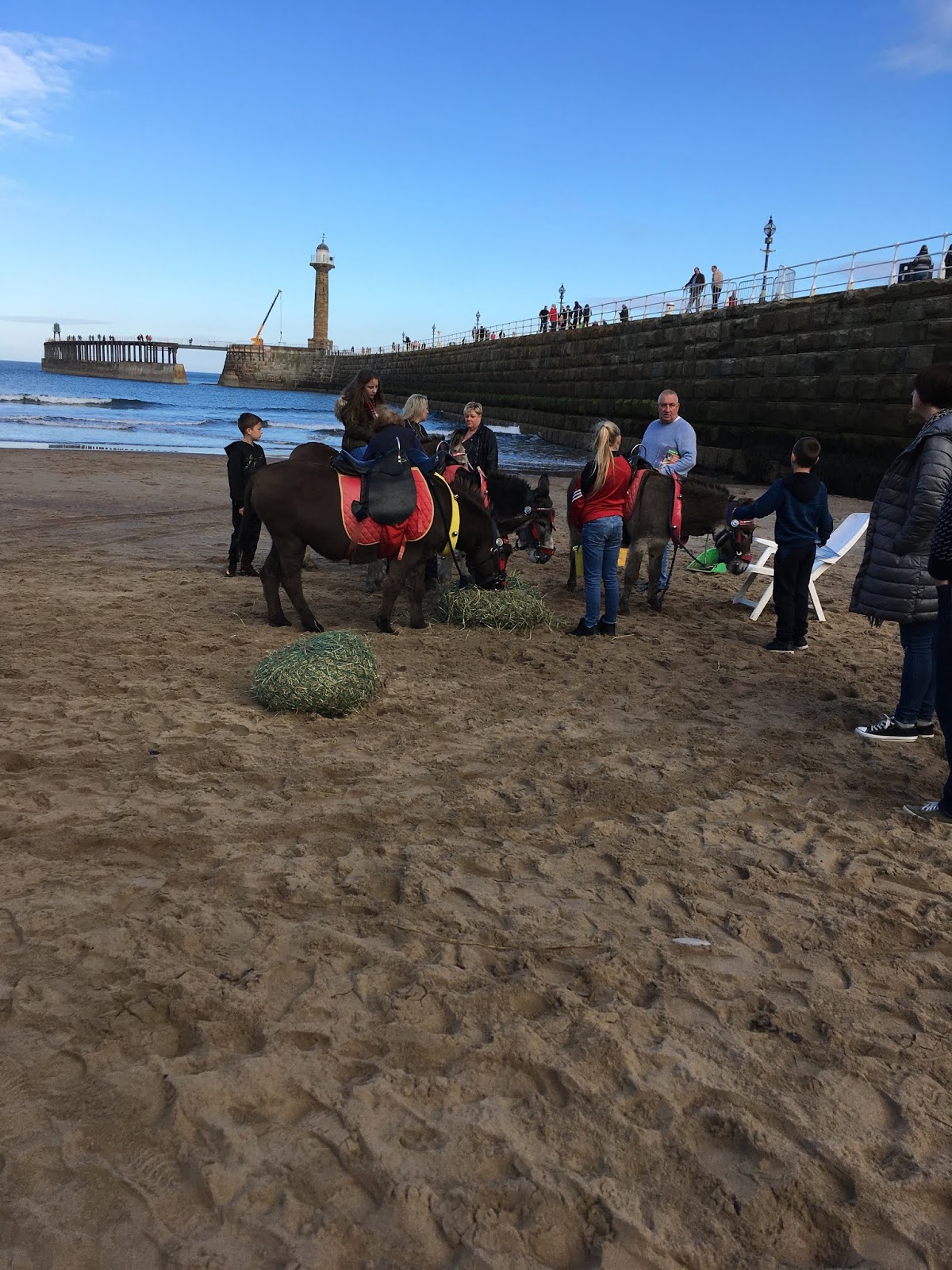
The Moors and the North Sea coast were lovely, We\’ve had good luck with the North Sea coastal towns in Holland and England.  Scarborough and Whitby (other than lunch) continued the winning streak.  Both, slightly cheesy English beach resort towns with their aging seaside hotels, stone-cottages along winding streets, arcades, lots of ice cream shops and English tourists on Holiday, but this time also with donkey rides on the (sandy, non rocky) beach.  Again, spectacular views in every direction – cliffs, statues, castles and ruins.

In Whitby, the big ruin is the Abbey.  It was here, in Whitby, looking at the sea and the Abby that Bram Stoker created Dracula  (one of Patricia\’s favorite books).  As with most English (and Irish towns) the literary links are well publicized and Whitby is not only famous for those fish and chips and ocean-front donkeys but also for their Dracula inspired Goth festivals.

But, the big Yorkshire literary attraction is the Brontes.   Anne, the \”forgotten, least famous\” Bronte,  is buried in Scarborough separated from the rest of the family\’s graves 70 miles away in Haworth.  Signs all over town direct you to her grave.  We got within 20 yards, but never bothered to check it out.  It would be similar to getting free tickets to a Tito Jackson Concert getting to the parking lot and not going.

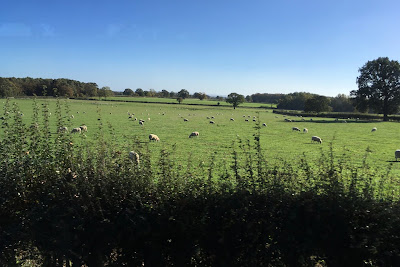
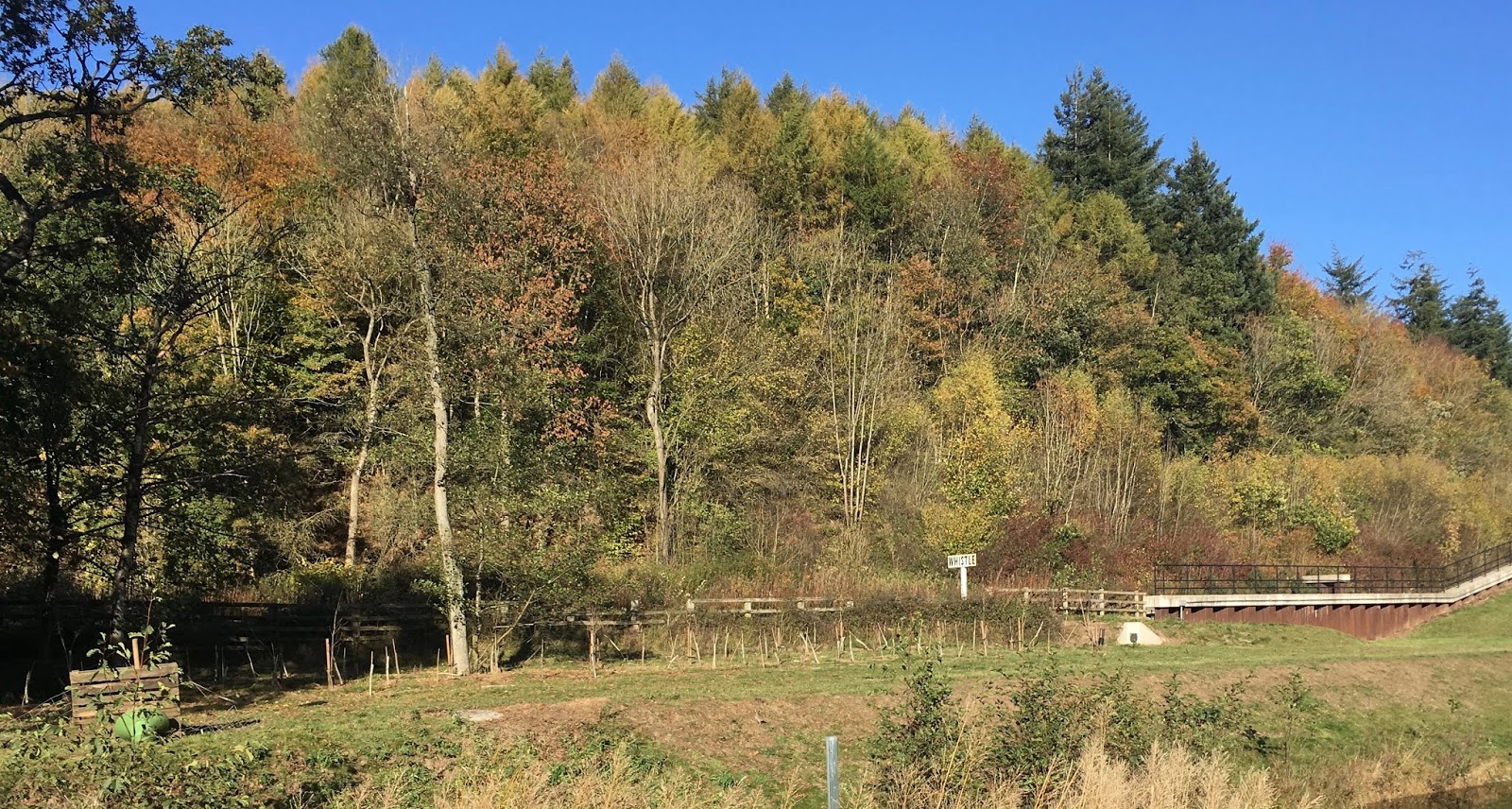
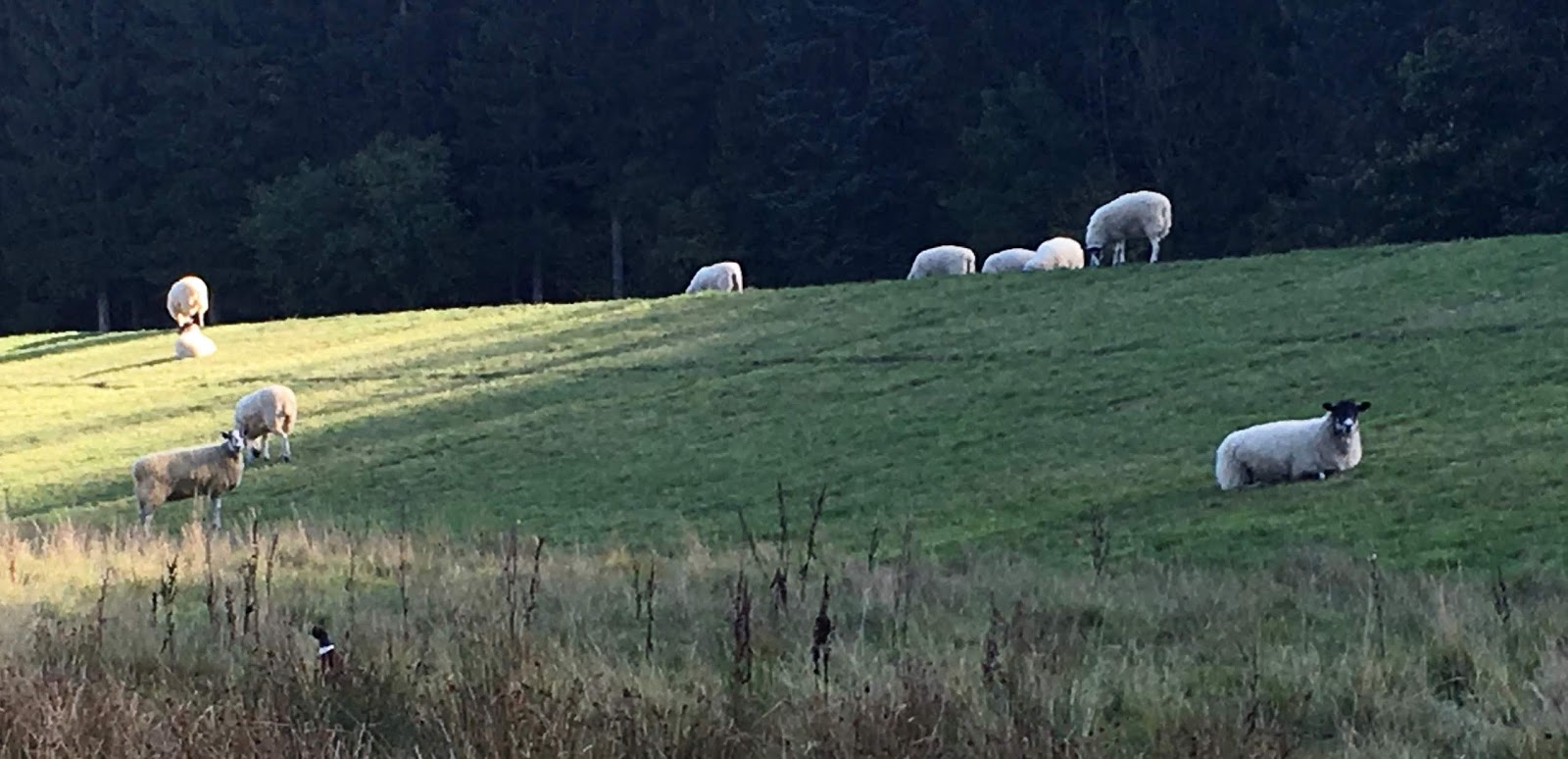
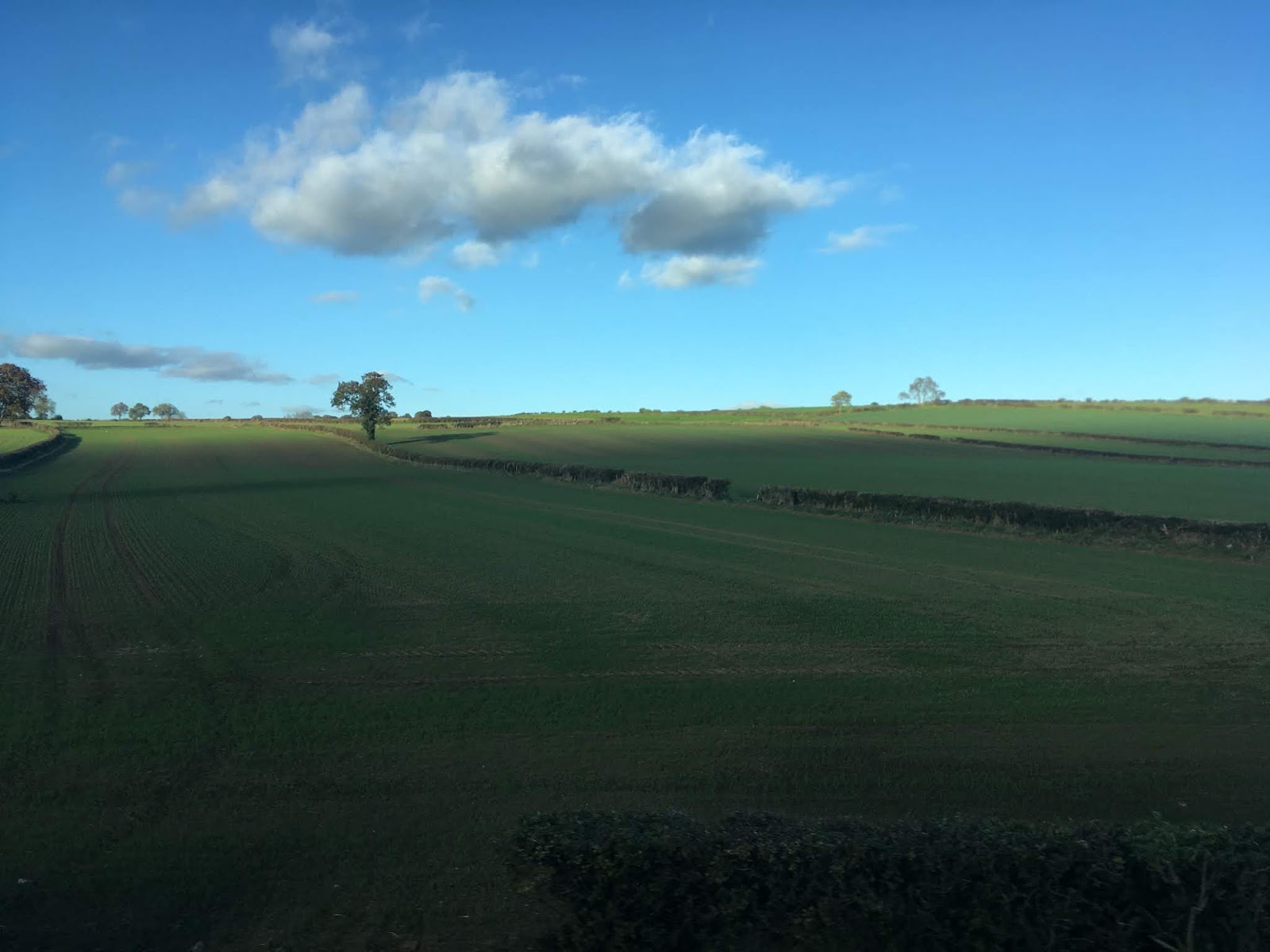
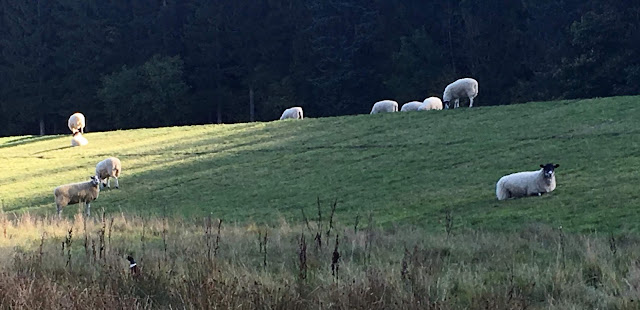
If you really like the color of grass, you would love the Moors.   Also, there were lots of sheep.  In the last few weeks we have seen thousands of sheep, and one observation from all this viewing is that it is rare to see a sheep move.  All they do is eat.  I guess we should have tried the local grass.
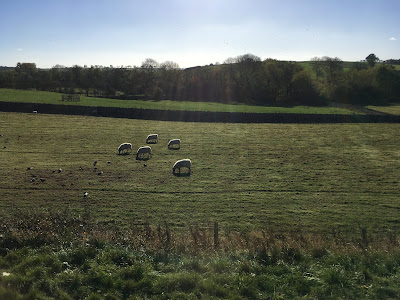
Our last full Yorkshire day we took another scenic bus ride into the southwest portion of the Moors to visit the towns of Pickering and Helmsley.  Helmsley was fine, but not terribly distinct.  Pickering, however, was a highlight.  We ended up hiking following some very detailed directions which included \”walk for awhile then turn left at an elegant house\” and \”pass a kissing gate but don\’t turn at that one, go through the sturdier one further down\”. We meandered (the directions had no distances noted) through a wooded area into a field of sheep, and flushing about 30-40 pheasant and grouse from the underbrush. It was very entertaining watching them scatter across the fields.  Our Wild Kingdom experience continued as one renegade sheep did not appreciate us disturbing it while it was eating some choice grain. It  stood it\’s ground stomping its feet , with a slightly hostile  stare down, before remembering it was a sheep and trotted back to the flock who were watching it all in disbelief from a few yards away. Then they all went back to eating. Apparently, it\’s not recommended to make prolonged eye contact with sheep.
The bus ride back continued our flirting with danger as we were the only adults on the top of the  double decker bus with a full load of boisterous adolescents returning from school, but we just averted our eyes and looked out the window at the green fields and rolling hills and made it back safely.

This week\’s photo of a topless old man looking out window contemplating his life

Note: Topless old men are endangered.  They are elusive, camera shy, and sightings are becoming rarer.  They only seem to be active and spotted at dawn or dusk.  We will continue to try to document their existentialism and hope for a grant to further our studies.
Liverpool

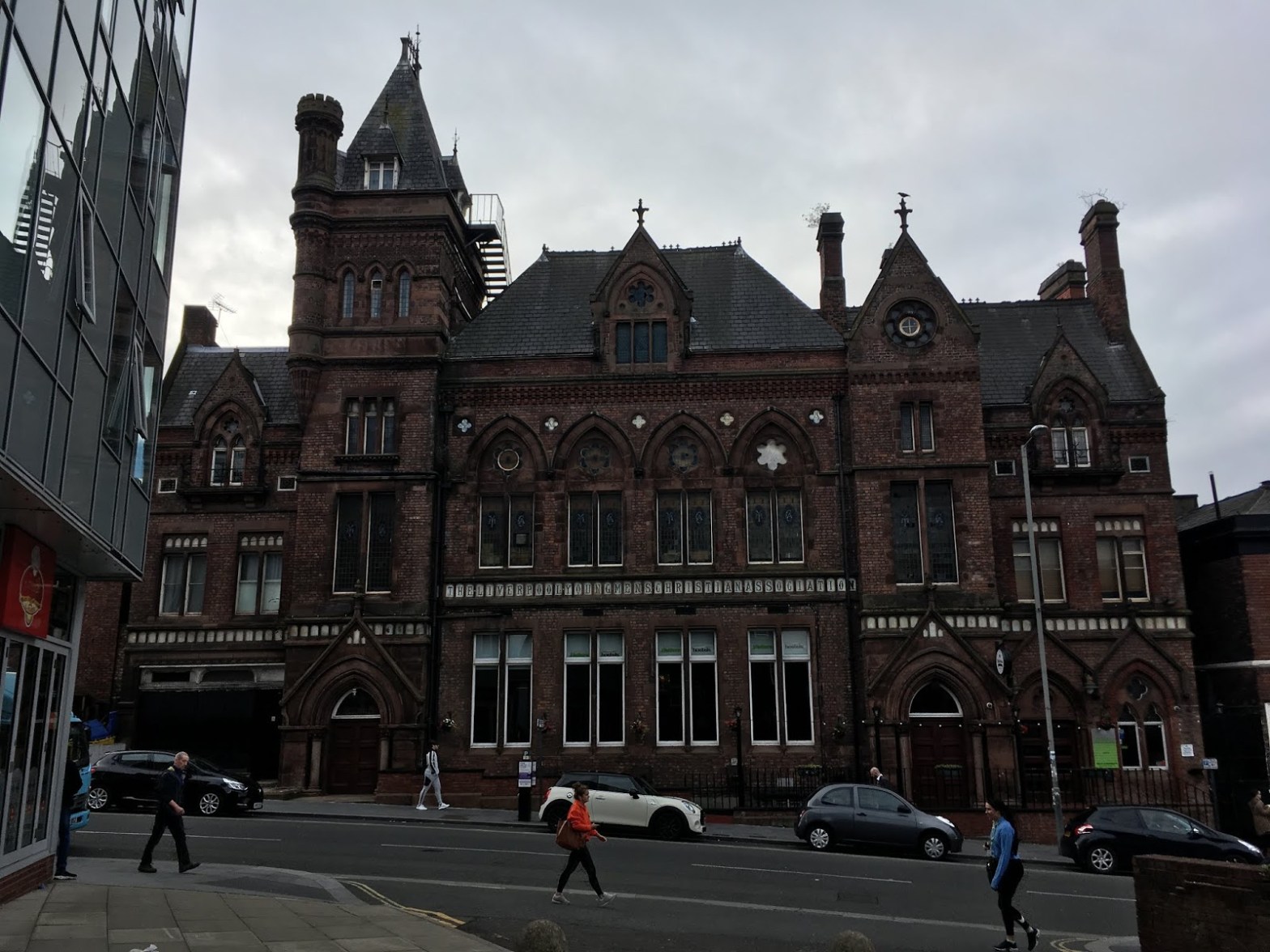
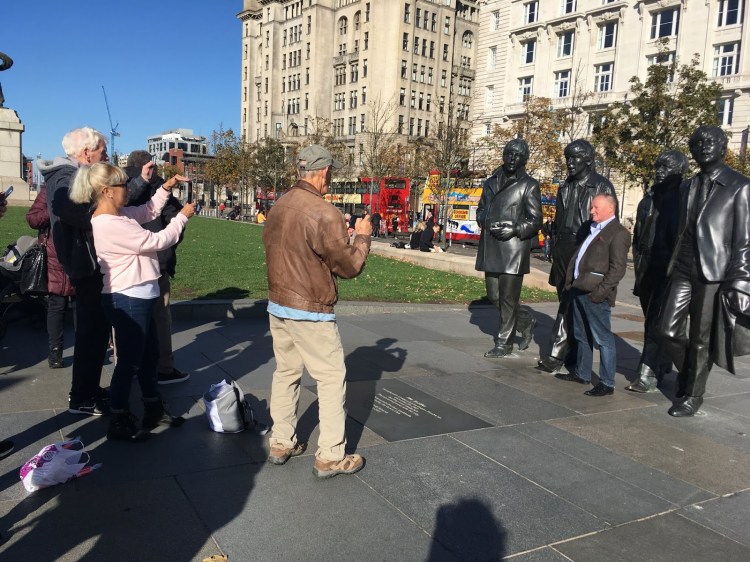
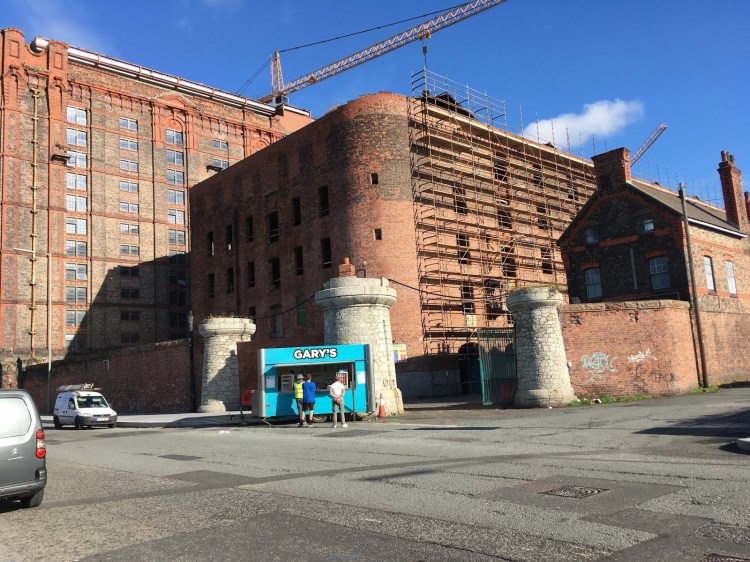
The first thing the clerk asked us as we checked in to the hostel in Liverpool (the picture above), “Do you like the Beatles?”, but what was strange was as we walked down Lime Street, we kept hearing different Neil Young songs being played from the bars.  Neil Young, the 5th Beatle?  Well actually, everyone thinks they are the 5th Beatle.

Liverpool is a port town, located at the mouth of the Mersey River as it flows into the Irish Sea.  Historically, most jobs centered around shipping and the sea.  This history is referenced throughout the town, for example,  the Rope streets, designed so that ropes for ships could be laid out while being braided.  It really has the feel of a blue collar town, and locals seem to have a great pride of their roots. Liverpudlians are called  “Scousers”, scouse is a contraction of “lobscouse”, which was a type of stew (Norwegian in origin), once popular among sailors, and is still eaten in Liverpool today.
Liverpool was the site of mass Irish immigration in the 1800’s due to its proximity to Ireland and job opportunities, and still has the largest Irish descended population in England. 

Antwerp, Belgium  had the Red Star Line, Liverpool had the White Star Line, both were major carriers of emigrants primarily to The Americas. To it’s credit, the White Star line, was the first to have more humane accommodations for third class passengers.   Due to it’s significant strategic port and shipping business Liverpool was heavily bombed in WWII  which affected almost every family, and shaped the collective psyche.  The Titanic and Lusitania were built here, so those disasters also were personally felt by many neighborhoods in Liverpool.  

We learned all of this from visiting a bunch of rather unique (and free) museums, each effectively portraying Liverpool’s  significant role in major world events over the past 200 years.
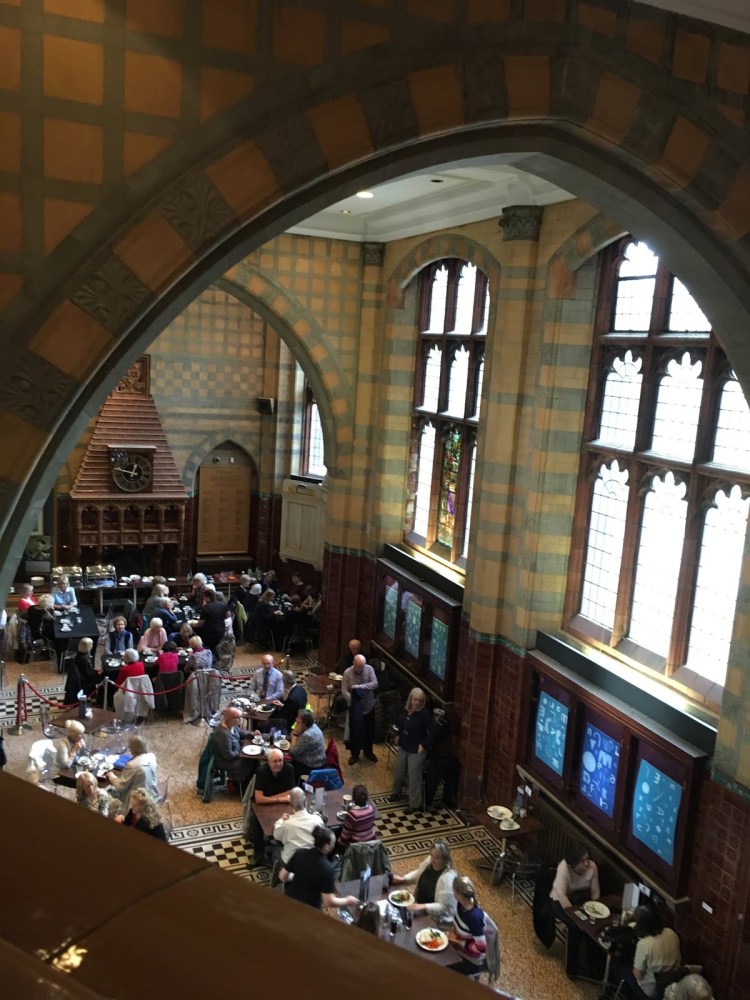
Everywhere we went there was this balance of pride in showcasing the city’s achievements (shipping, music, early abolitionists, first schools for blind/deaf) while honestly acknowledging shame in their participation supporting the slave trade, racism and abject poverty.  We left almost every museum with pretty strong emotions; often sadness although usually tempered with an appreciation of Liverpool.  Most of the museums were in beautiful old buildings that would be beautiful even empty.  The World Museum, in a beautiful building, had  among the tons of exhibits, tons of  findings from the early 1900 excavation of various Egyptian tombs, particularly Thebes, “discovered” by Liverpudlians. The Victoria Gallery, on the campus of the University of Liverpool, was also one of those beautiful buildings museums. You entered through a lovely food hall (campus meal hall?) and smelled peas and roast beef the whole time.

 
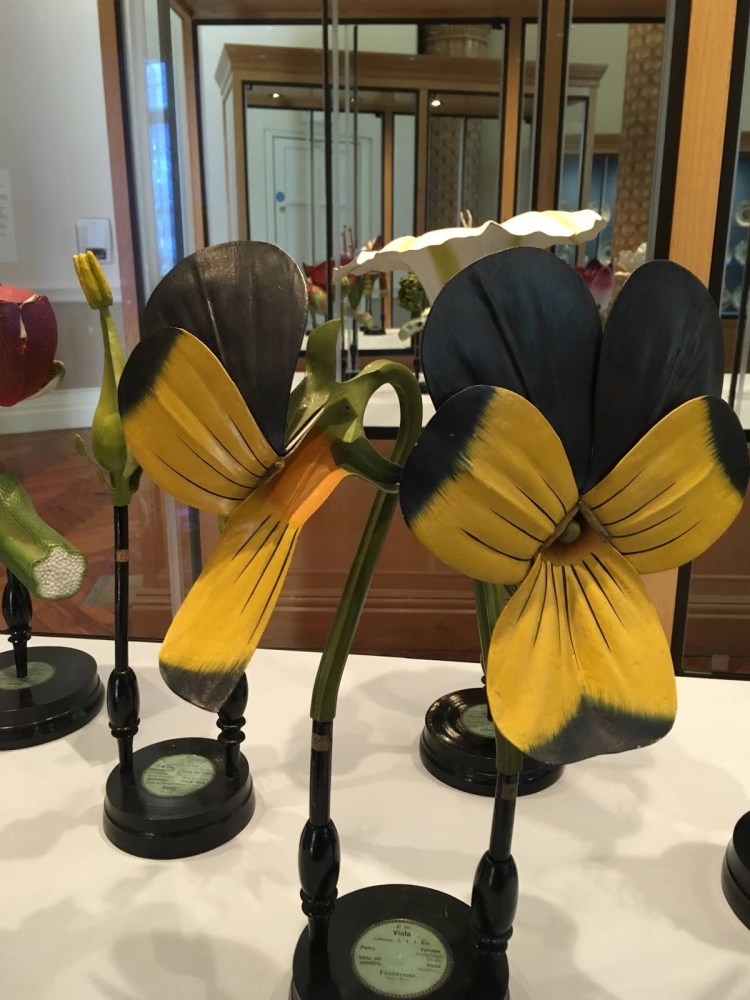
The museum was a mix of art (old and modern), biology (history of dentures), social commentary (history of the Rathbone family-abolitionists and progressive MP, great video on Russian treatment of ethnic groups) and botany models.
 
 
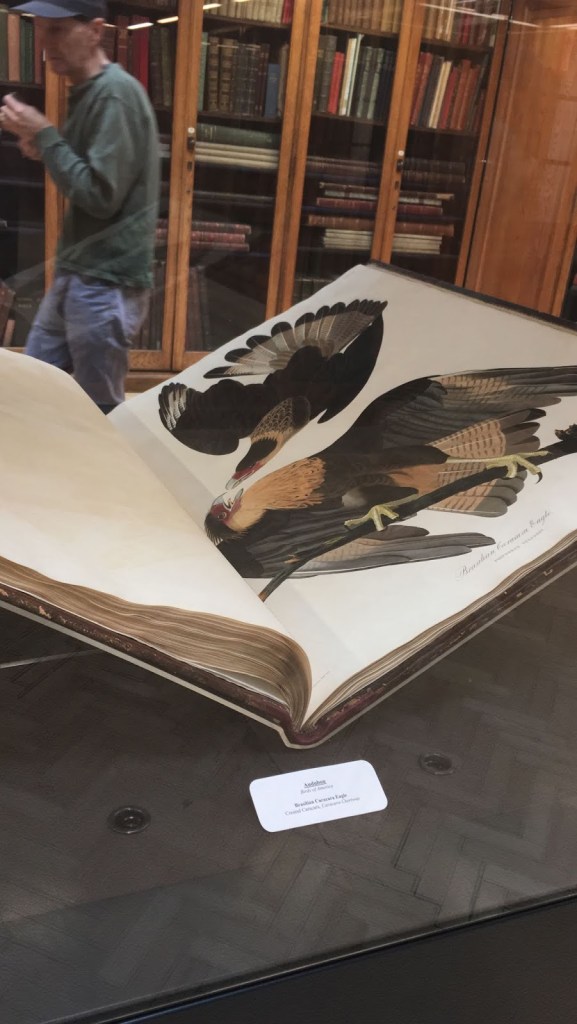
They also had an exhibit on Audubon who had a short stay in Liverpool (supported by the Rathbones) which dove-tailed with The Central Library permanent display of one of the few remaining original copies of Birds of North America .


Another standout museum was the combination Maritime and Slavery museum, sharing a building at the historic Albert Docks. The Slavery museum seemed a bit different then most as it not only presented the history but also the continued influence on modern life such as products and street names associated with slavery and the roots of racism as related to slavery. Slavery rebellions were highlighted- primarily in that they happened and were never publicized. Then we moved on to the Liverpool Museum. This museum and the MAS Museum in Antwerp were by far the best the “city” museums, although this one was super simple and very  low tech.
This is the museum that really showed Liverpool warts and all while managing to display a degree of pride.  While we skipped 99% of the Beatles heritage spots, we did go to the Yoko Ono and John Lennon exhibit at the Liverpool Museum, it was surprisingly touching- both how far ahead of the times they were and what a tragic loss.  
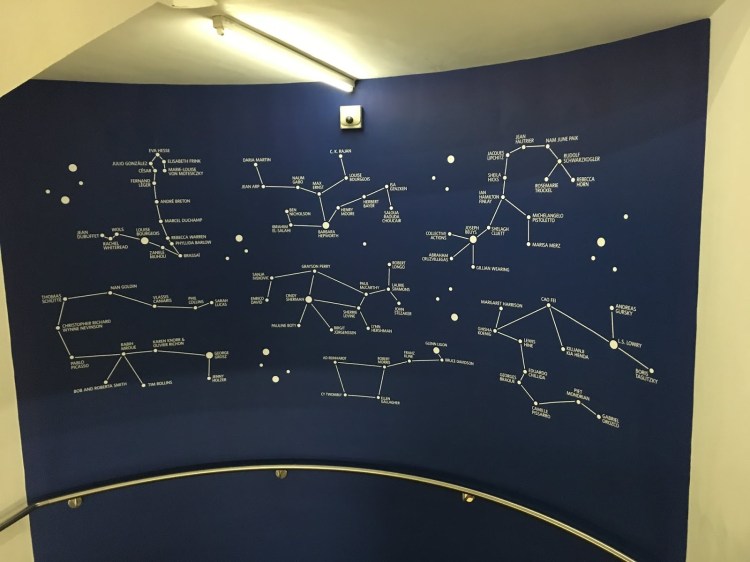
Next was the  the “Liverpool Biennial” at the Tate (could of skipped) although there were these cool “constellations”  linking artists which reminded us of the character charts our kids used to make in middle school- both effective.
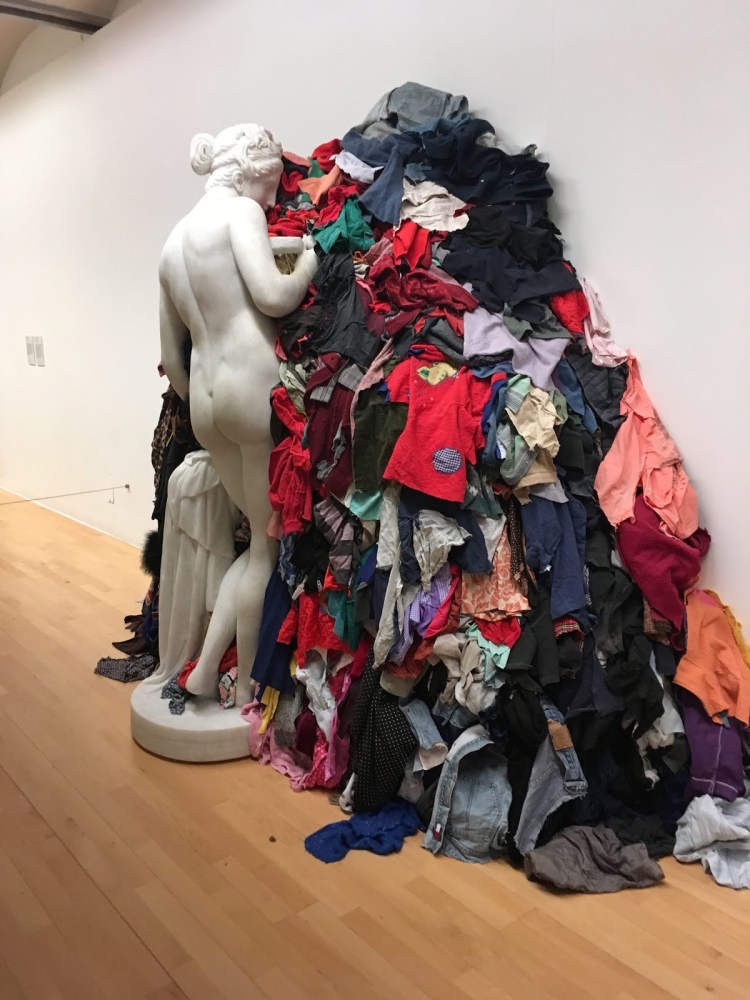
Another standout at the Tate, reminded us we really needed to do laundry.  Washing clothes in the sink or shower, which we do, not infrequently ,makes clothes smell like bad shower body wash gel, so on Liverpool day 4 we actually ended up using the washer at our Hostel.

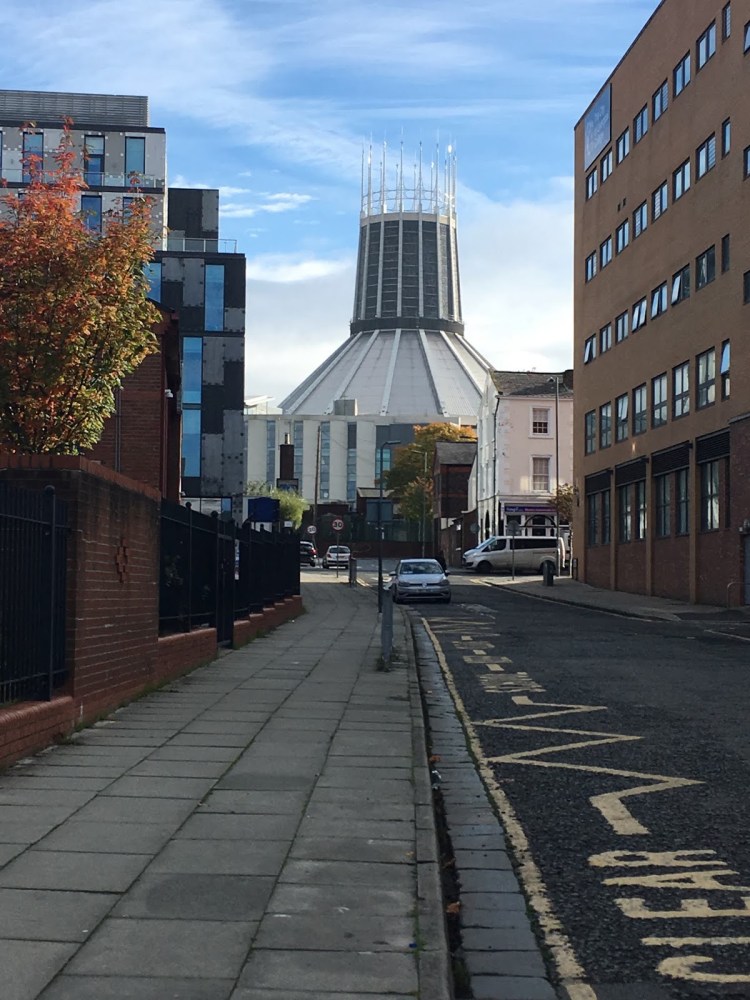
Liverpool continued to be full of surprises, we unexpectedly turned the corner and saw this, another laundry reminder?

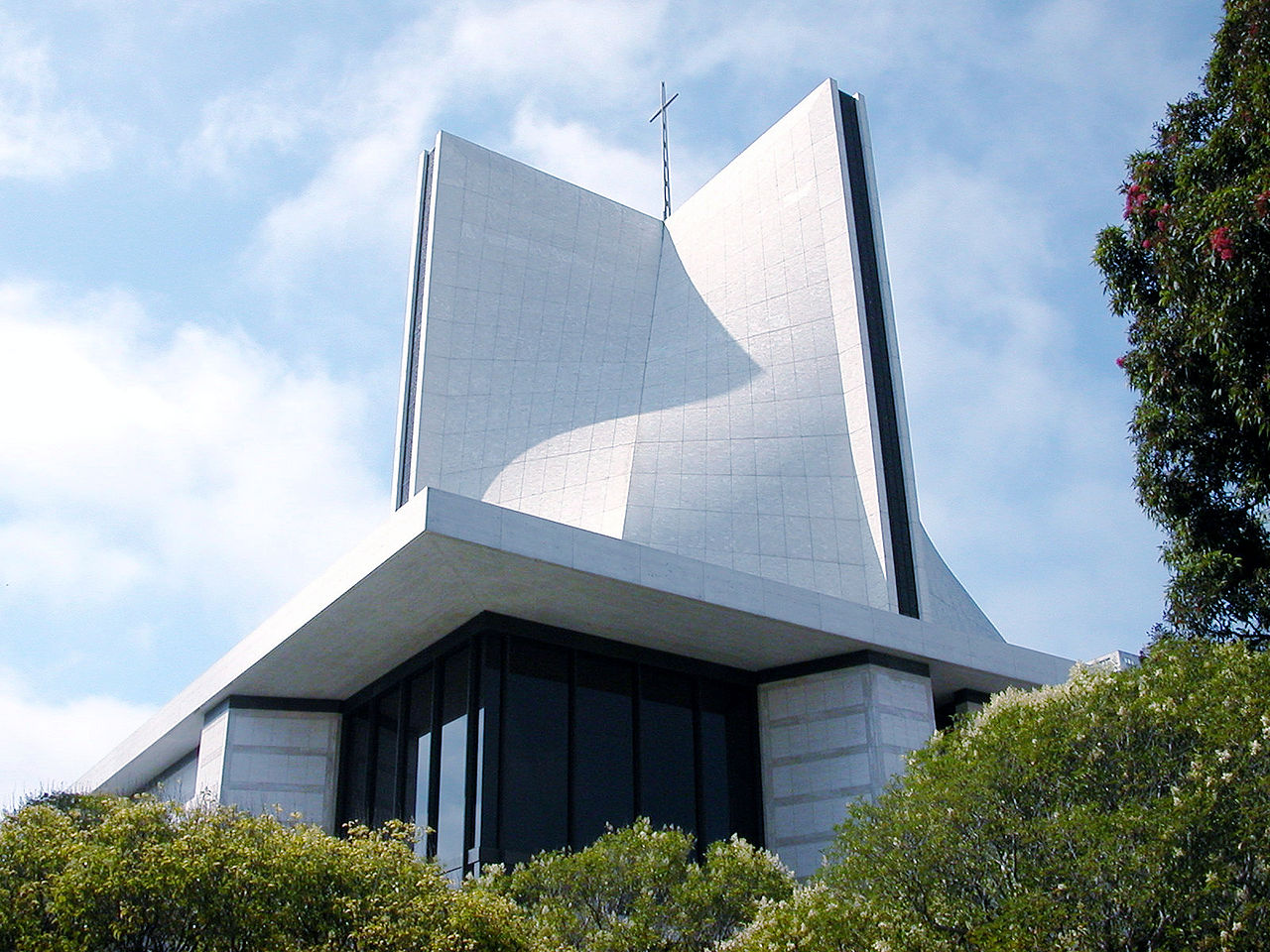
It actually was the Catholic Cathedral finished in 1967 and was all that you could imagine in an English sixties Cathedral. For us, it rivaled “St. Maytag” in San Francisco (actually St. Mary’s Cathedral) in terms of 1960’s major-appliance inspired church architecture.
 
All the back stories of Liverpool enhanced our interpretation of our long walk from the city center, along the Mersey River to the sea. We had no idea that rather than being bucolic, we would cover the entire industrial zone of Liverpool.  
 
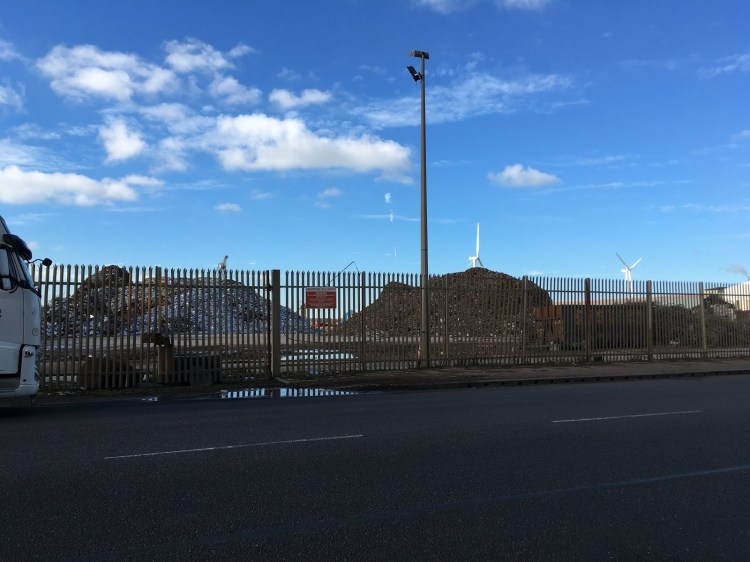
Past metal recycling, water treatment plants, abandoned buildings
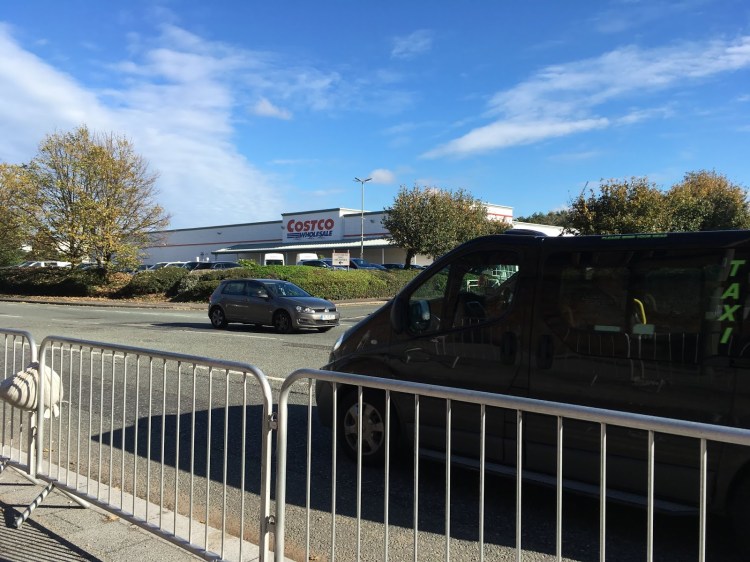
and weirdly a Costco, damn, forgot to bring the card.
Now we understand why google map did not present this as a walking option. 
 

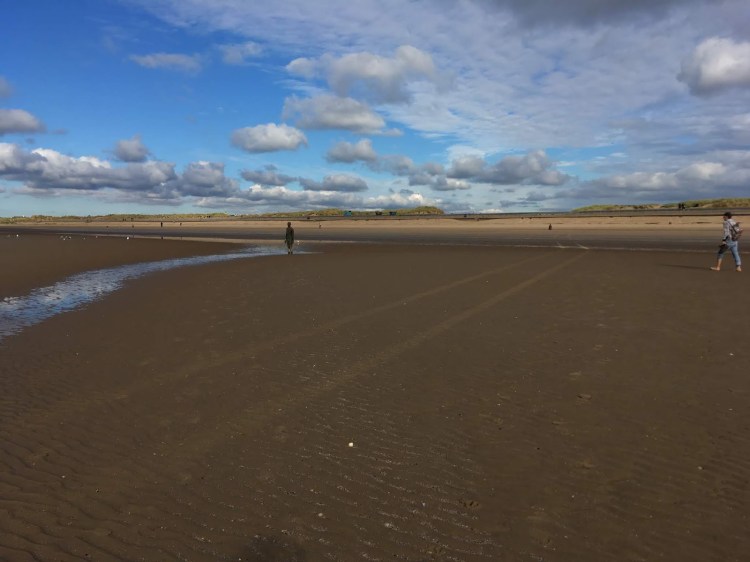
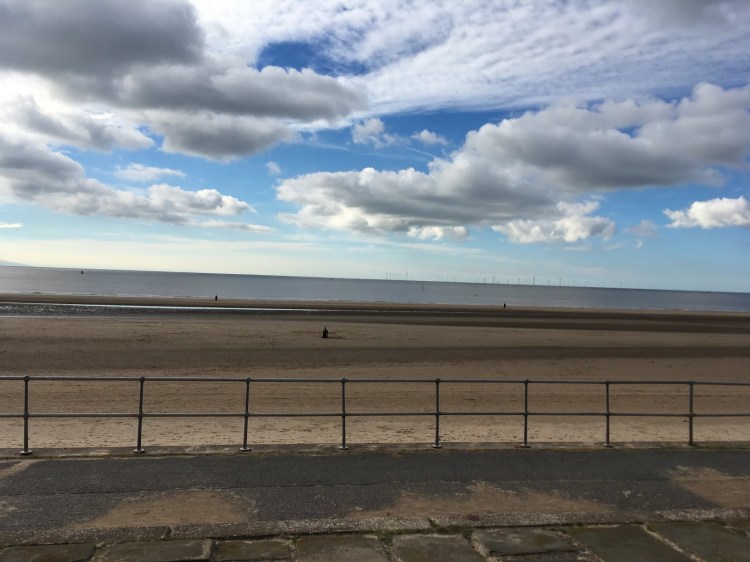
The goal of our 7 mile noxious walk was Crosby beach.  

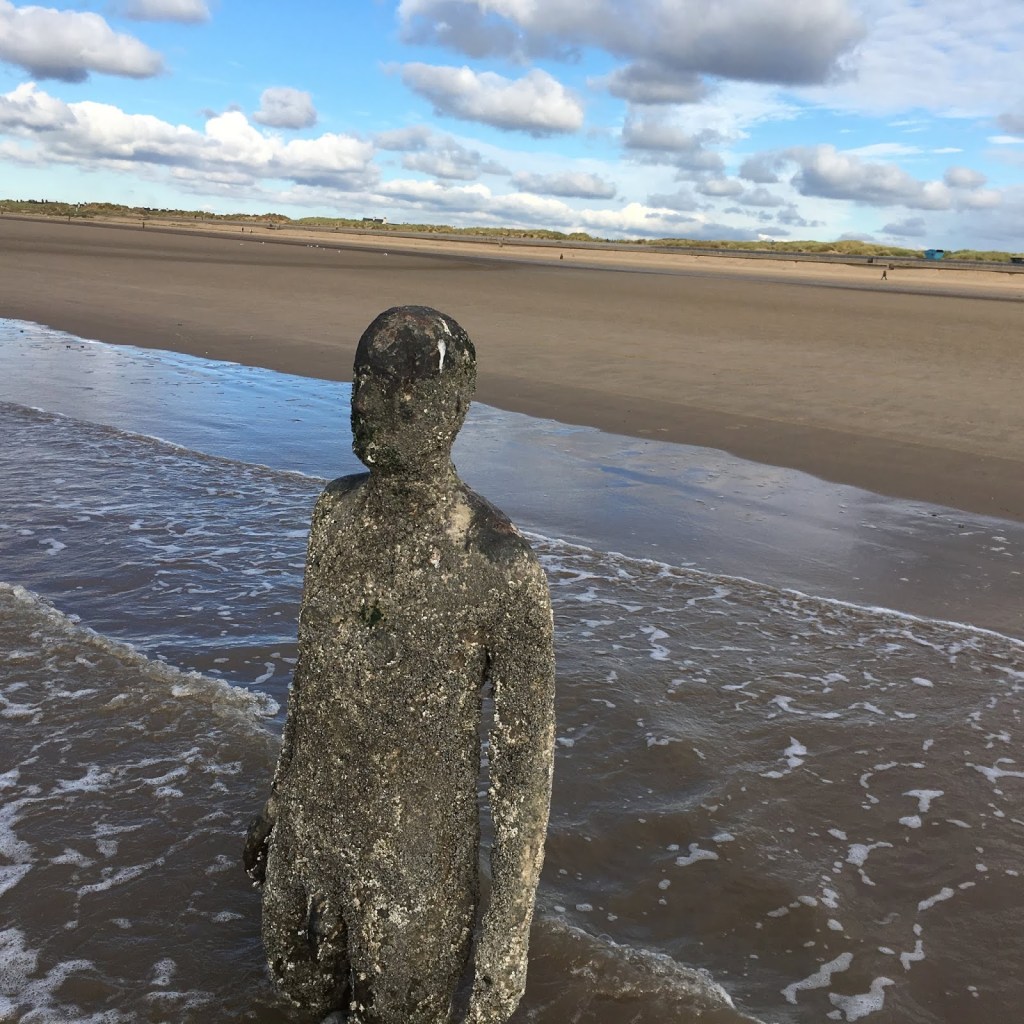
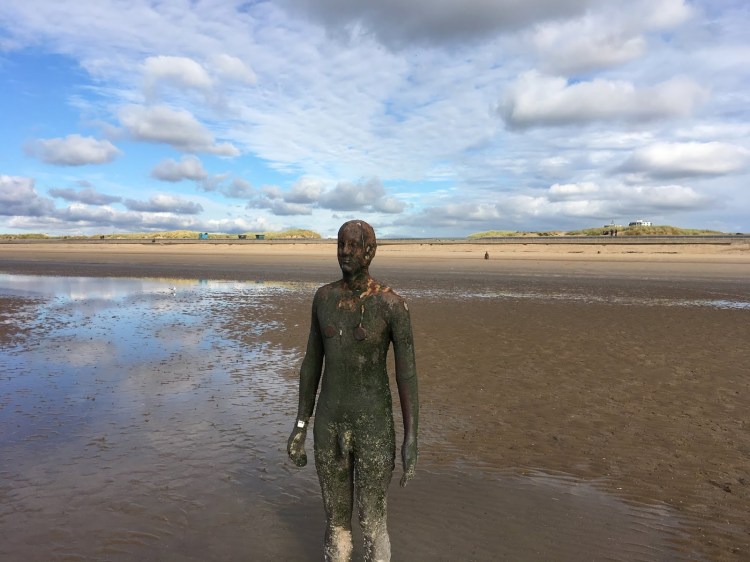
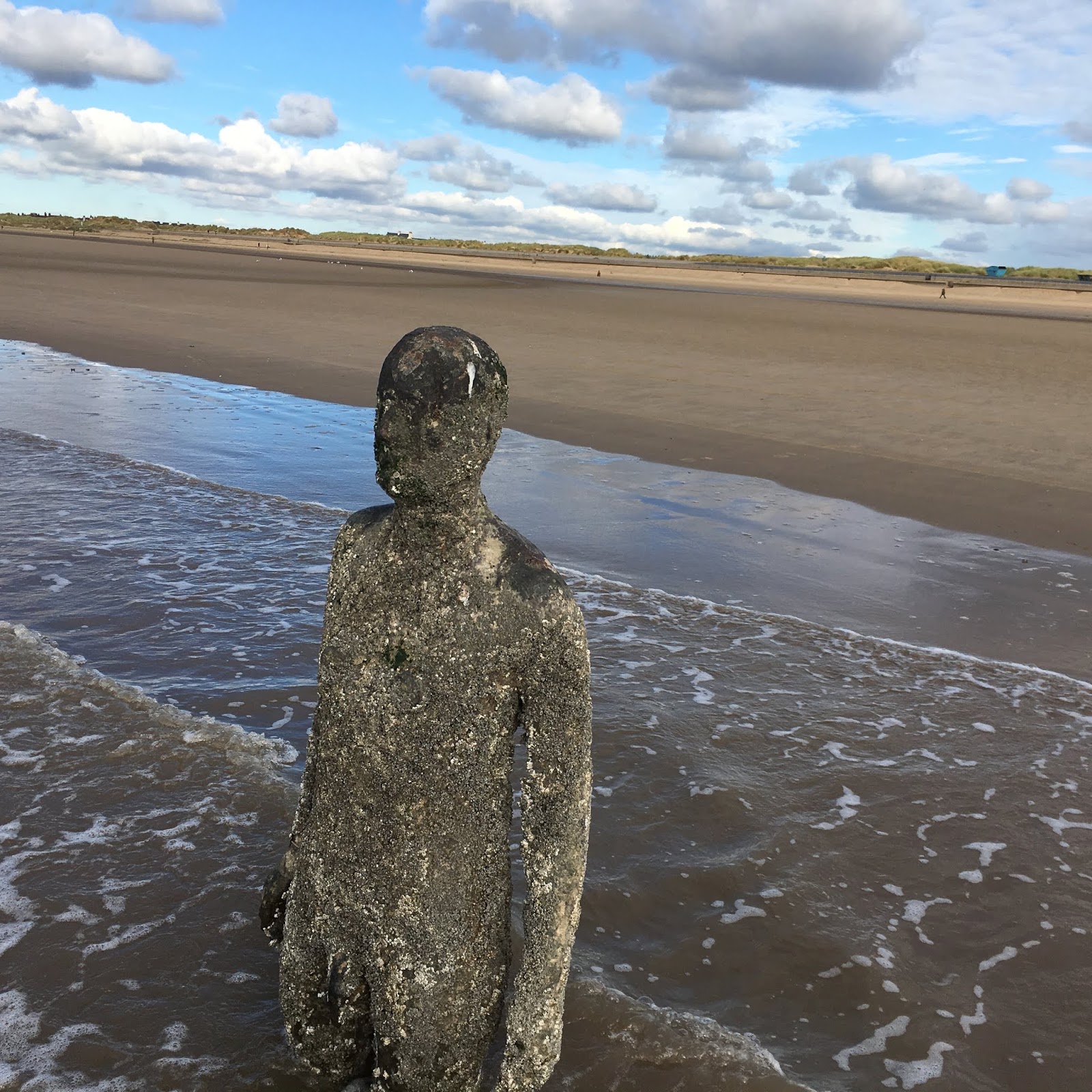
This is why we walked to Crosby Beach. A hundred sculptures of the artist are widely spread across the beach, some as far as 100 yards into the sea, are collectively and aptly called “Another Place” by Antony Gormley, they were originally exhibited in German in 1997, then Norway and Belgium, before finding a permanent home here in 2007. 

With Liverpool’s history of Immigration and Emigration; as the home of the Titanic and Lusitania; with its losses with the “Great War” and WWII,  these hauntingly beautiful statues staring out to sea, seemingly reflecting on life, welcoming or saying goodbye to family, friends and dreams or waiting for those who will never come home, completely captures Liverpool’s enduring history of hardships and longing for the better, making it the perfect location for this art. http://www.biennial.com/collaborations/another-place

This week’s photo of topless old man looking out window contemplating his life: A day at the beach…with friends.

Bristol, Cardiff and Storm Callum

Bristol is a quick hour south of Gloucester, but what a difference an hour makes.

In every European city we\’ve visited, we\’ve enjoyed the (usually) beautiful and vibrant pedestrian-only shop lined streets, associated with a square or cathedral or along the river (always a river in every town).  Gloucester\’s city center, however, was visually anemic and lacked energy.  The central tourist shopping area felt equivalent to being at a Sears and Radio Shack anchored mall. 
The exception was the three cute stores that are the home of The Tailor of Gloucester (Beatrix Potter), but in terms of tourist draw,  Beatrix is no Harry.

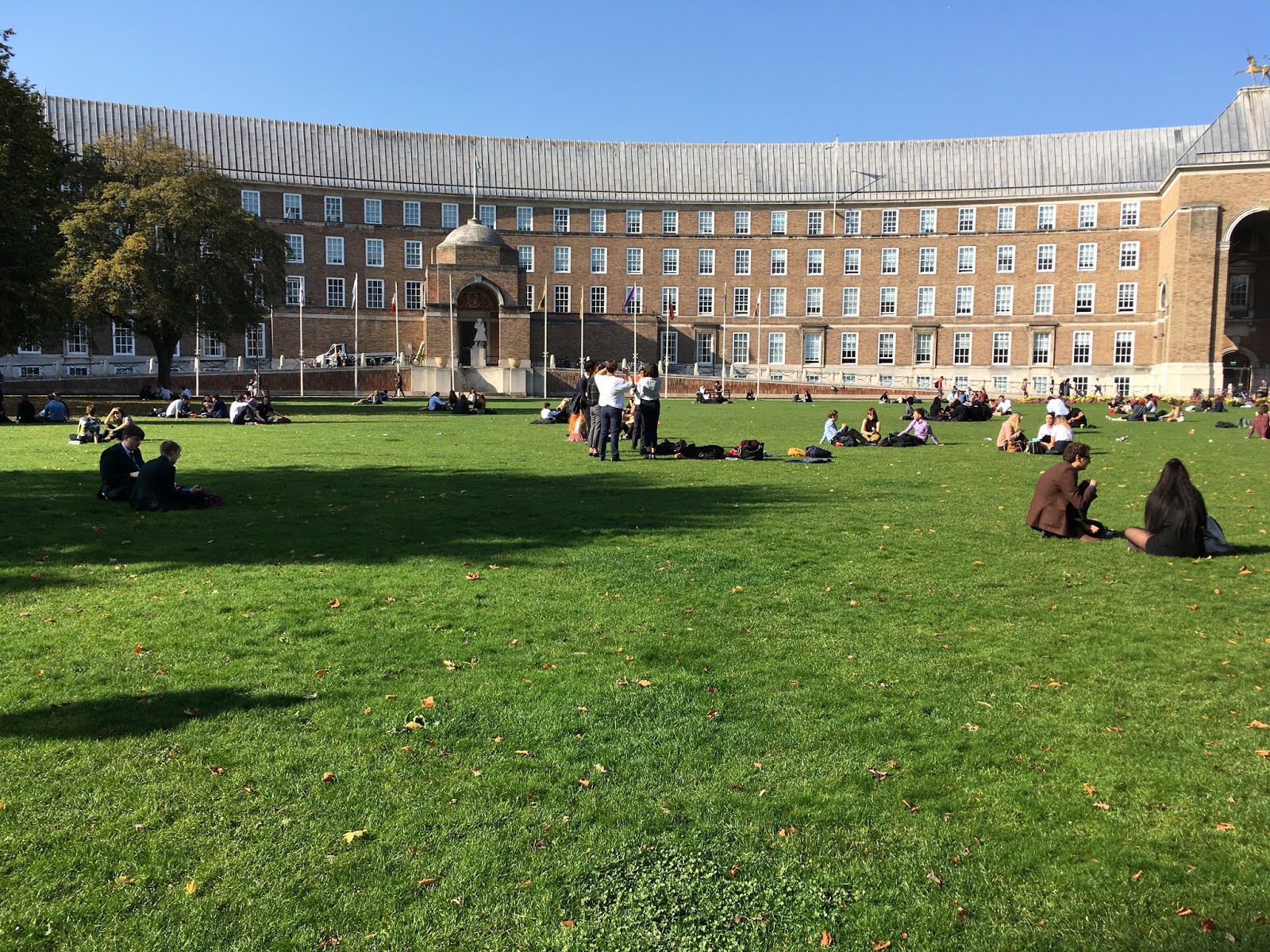
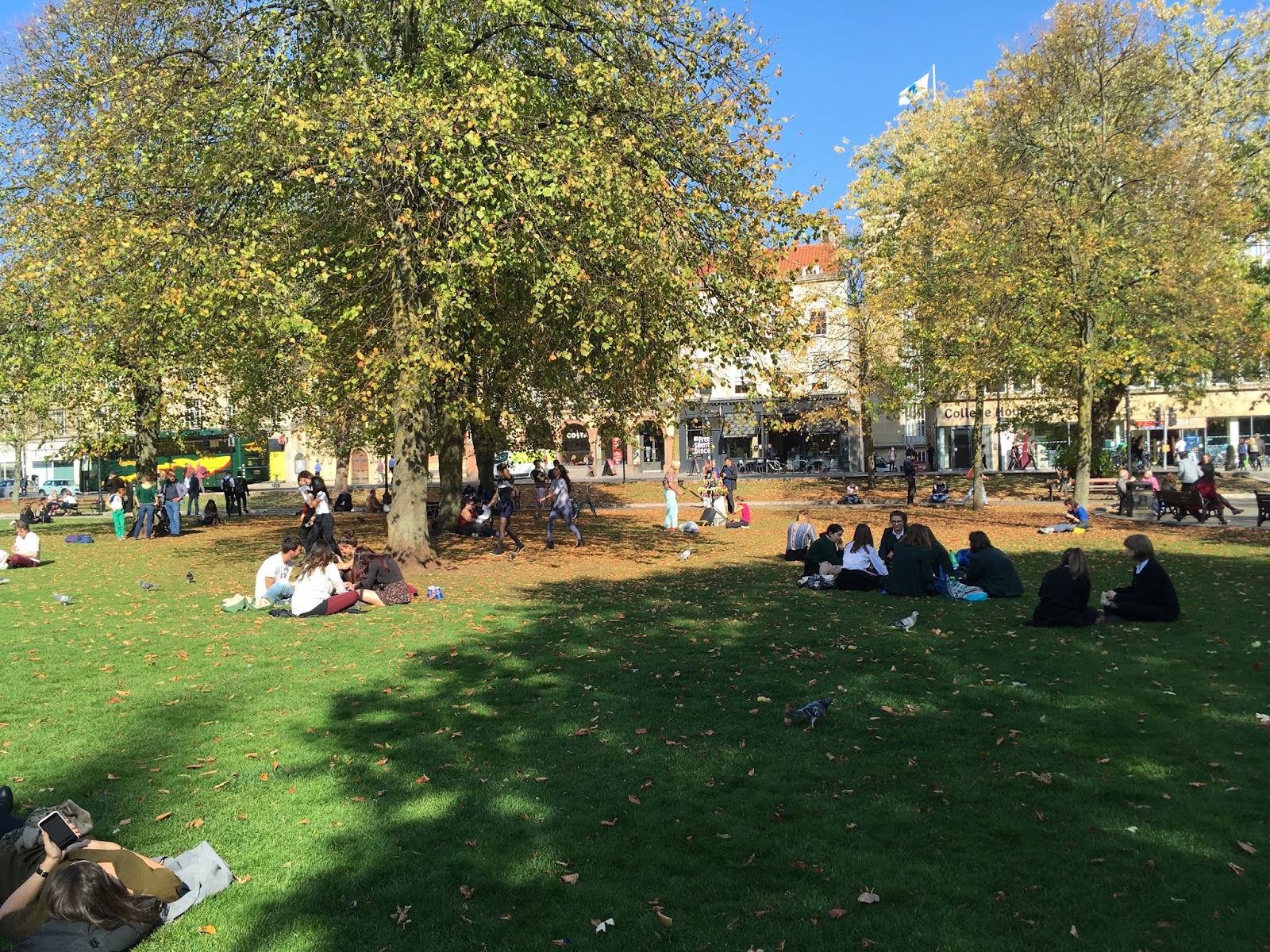
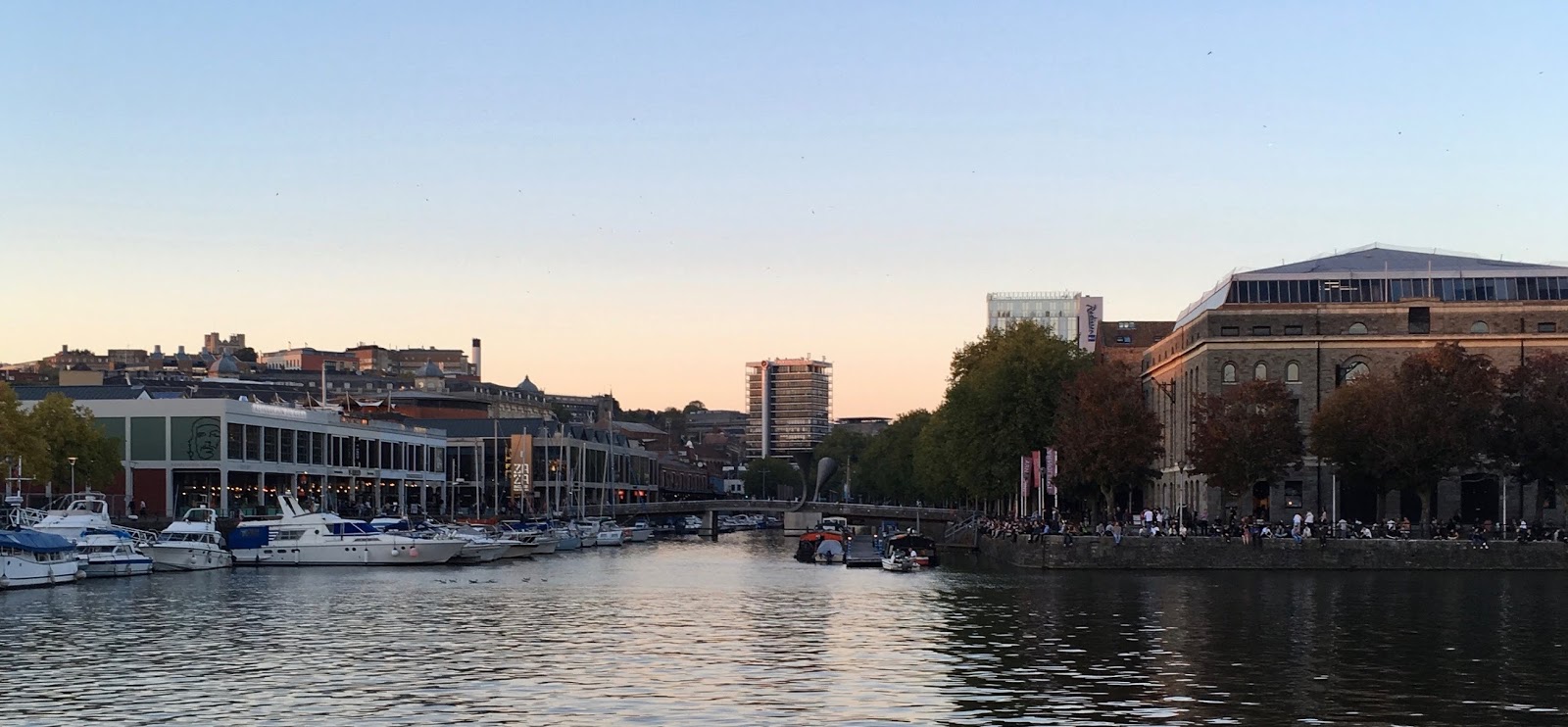
Bristol, in contrast was vibrant.  The streets were filled with art, diverse/striking buildings and university students. The central core, though, was not just a line up of \”quaint shopping lanes\”, although there were plenty of pedestrian only shopping areas;  winding, picturesque streets as well as large, open boulevards, even the Tesco Express (the ubiquitous English super market chain, similar to a 7/11 but with produce)  looked hipper. Rather the city center was made up of the boardwalk/piers along the River Avon that was lined with museums and shops.  Two large squares (Queens and College Green) were surrounded by stately buildings and FULL of people just enjoying the unusually warm end of summer day.At dusk, the food trucks left and the central area  filled with people drinking and picnicking along the river banks.

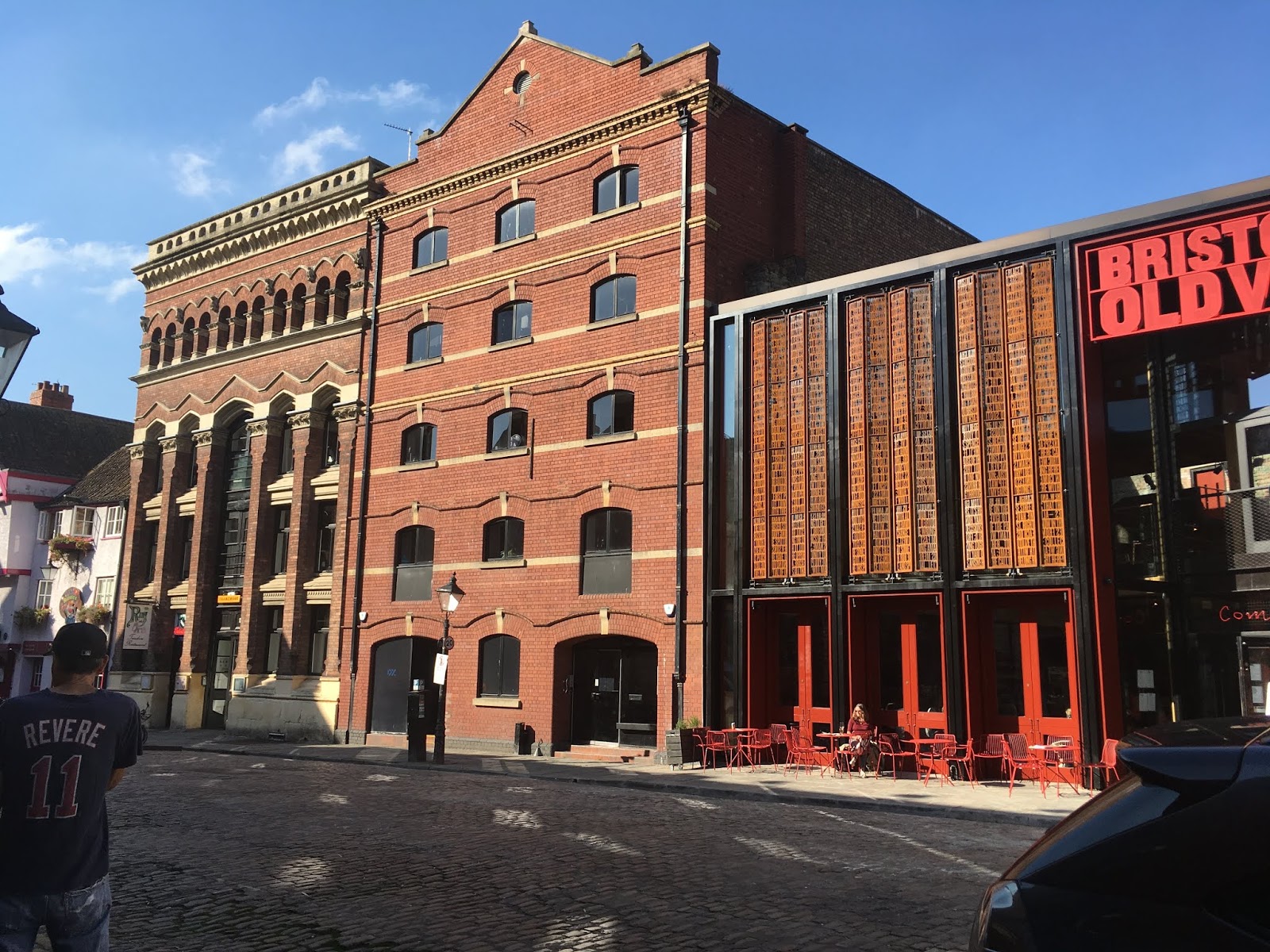
Compared to many European cities we have been to, Bristol seems to be more effective merging new buildings with historic and remodeled ones. (Bristol was heavily bombed in WWII.)
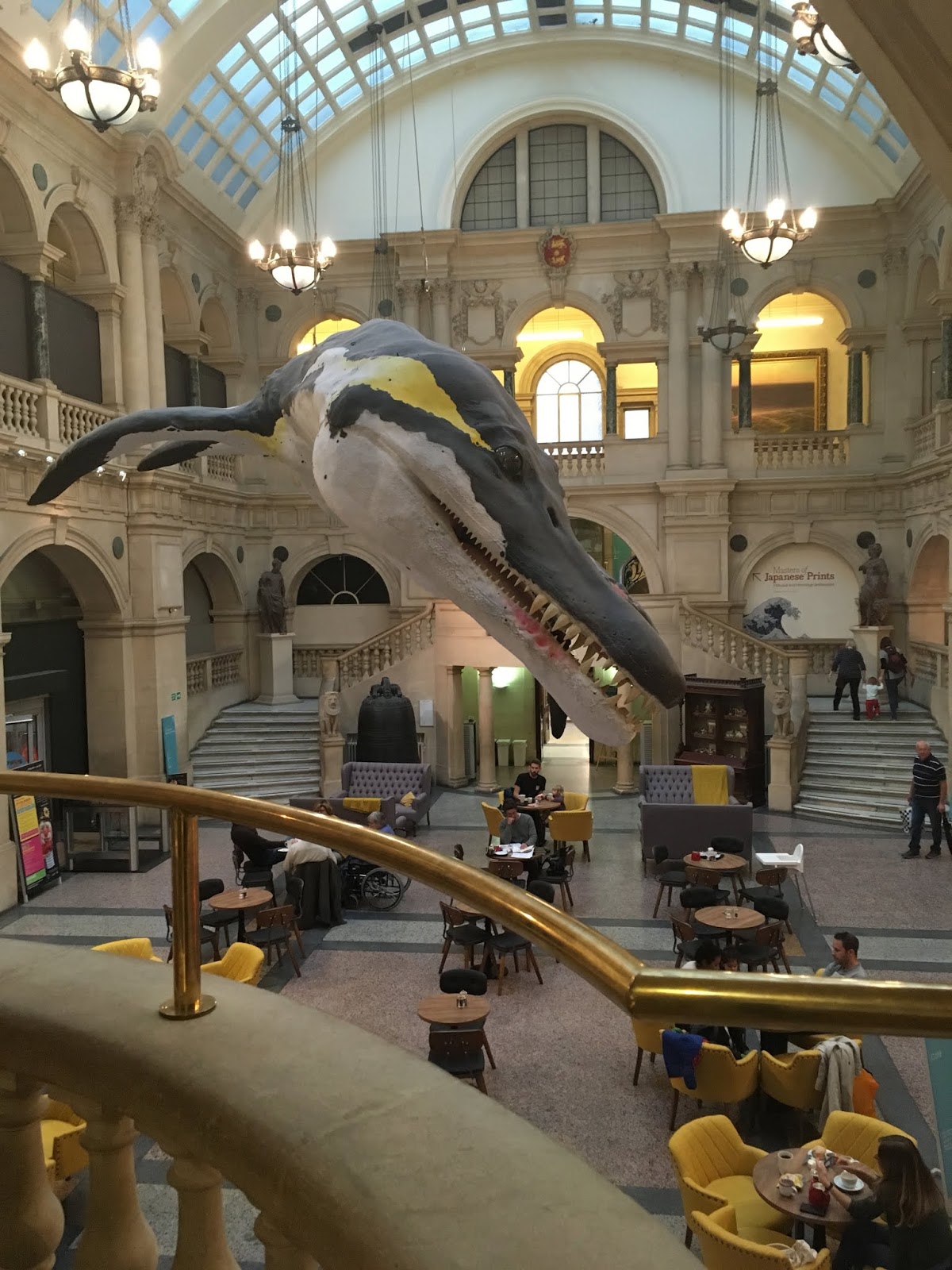
The Bristol Museum of Natural History and Art is in one of the those classic old buildings had a nice collection of both art and animals, a good place to spend an afternoon.

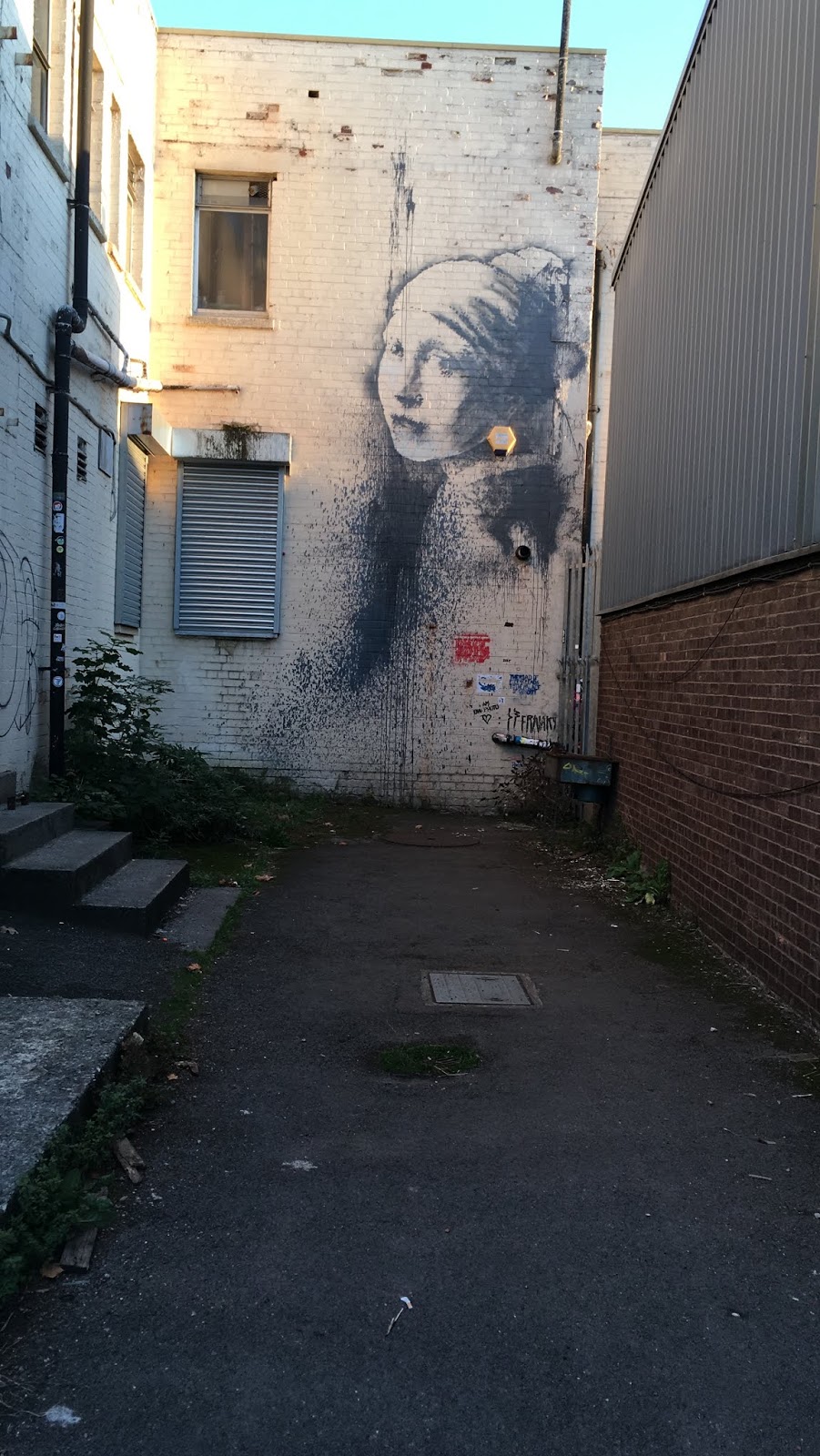
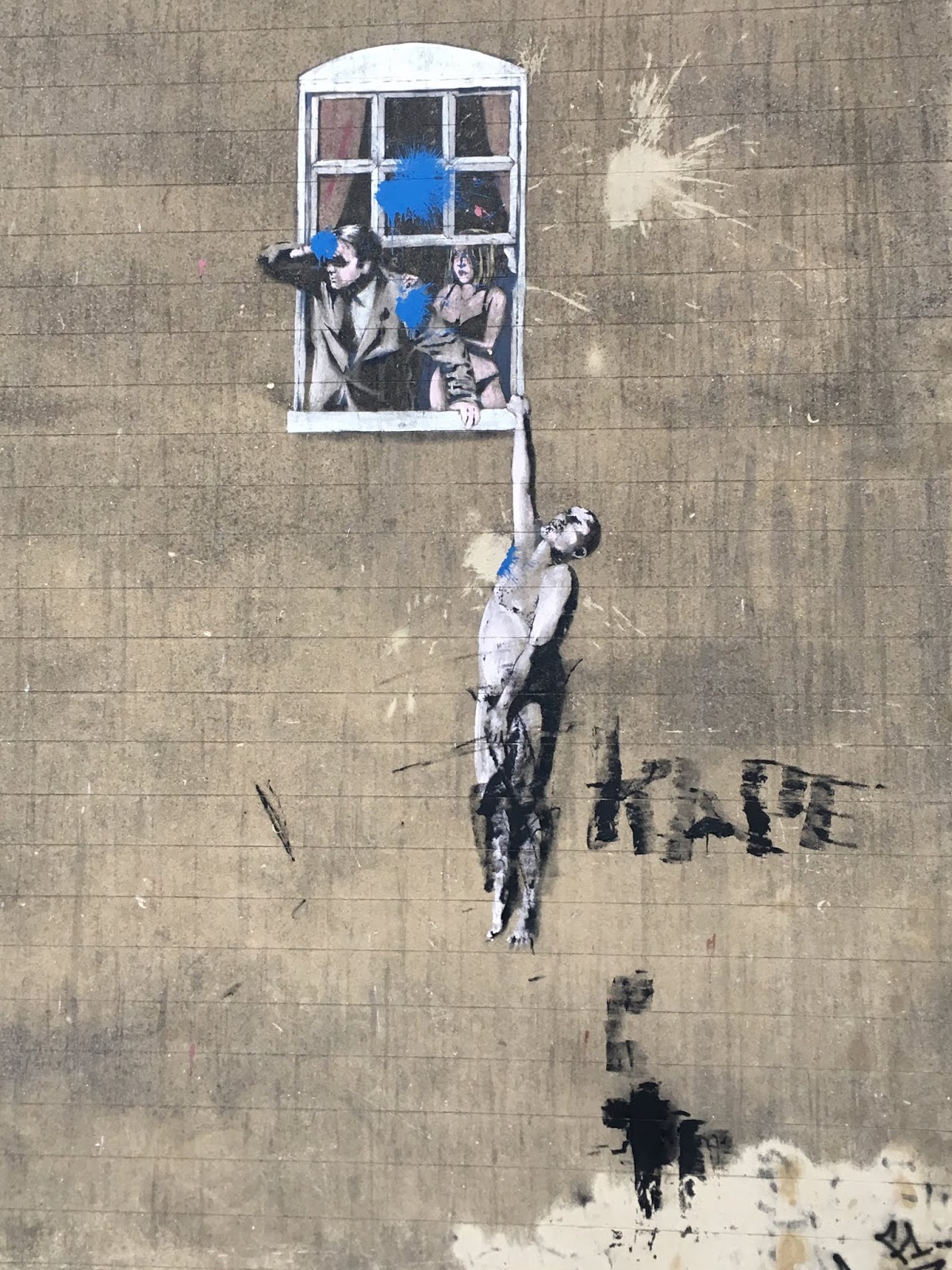
But the best art was in the streets.  Banksy is reportedly from Bristol, and his early pieces are scattered throughout town. It was kind of a scavenger hunt as we explored the city.  This is \”The girl with the pierced eardrum\”, the earring is an outdoor security alarm, a parody of Vemeer\’s the girl with the pearl earring. Street art/graffiti was everywhere as were walking tours to guide you.

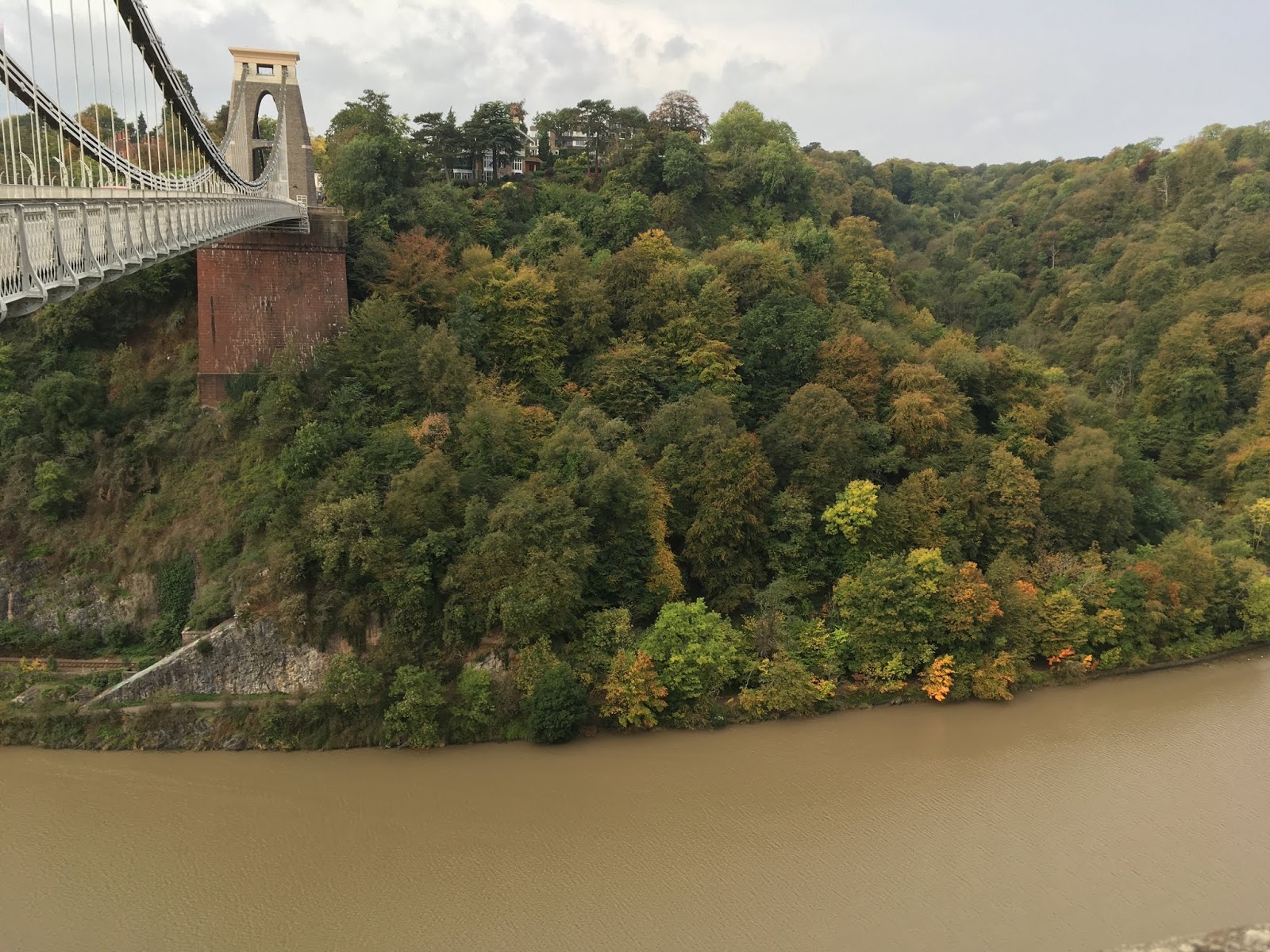
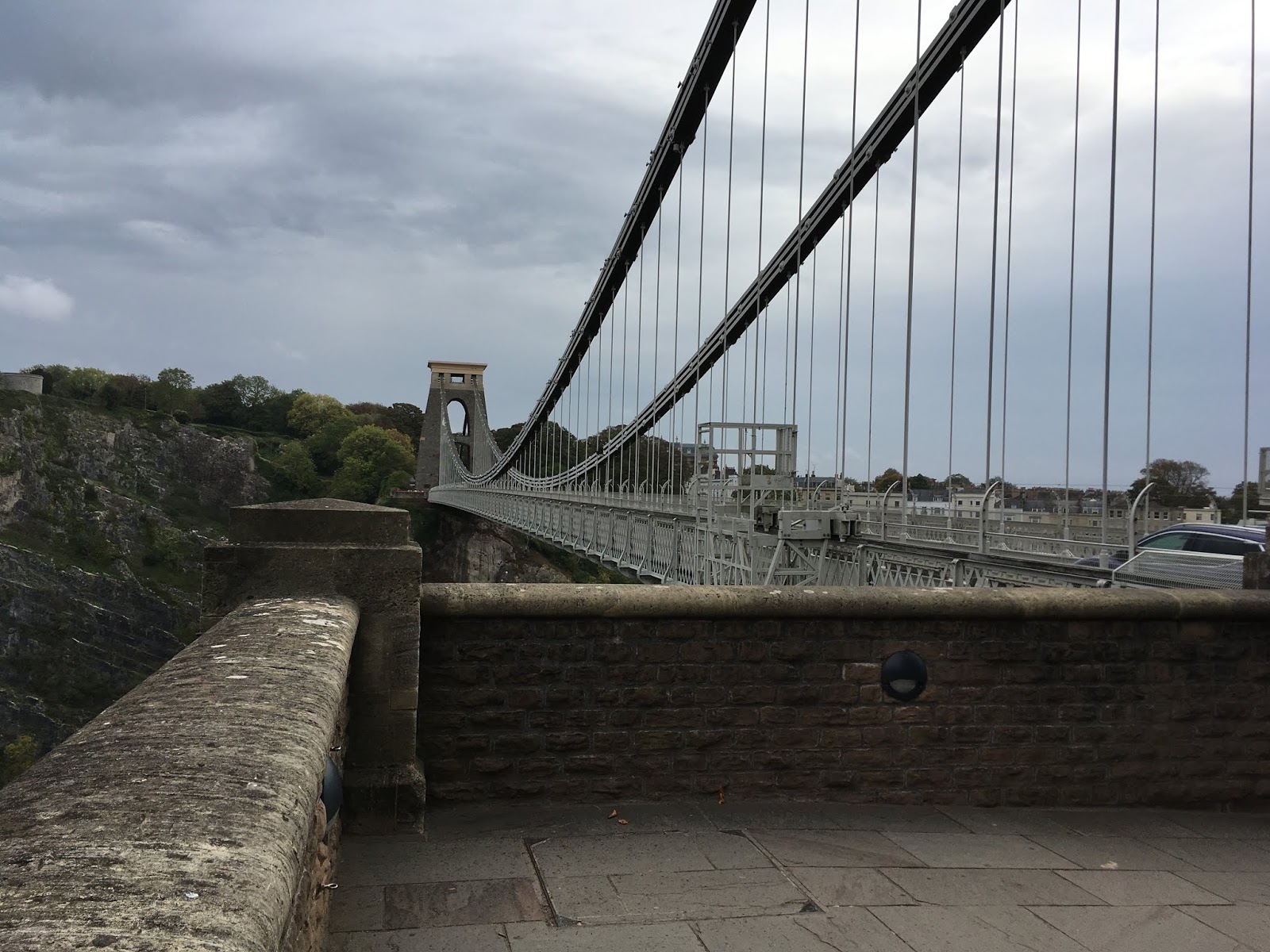
We walked through the very nice Clifton area, past the multicolored houses to the Clifton suspension bridge, an engineering marvel completed in 1864 which spans the breath- taking Avon Gorge.

All impressive, Bristol was just a high energy positive feeling city. The energy continued into the late night; from our 4th floor attic Air B and B, we could hear a boisterous, drunken choir singing bar-songs.

On to Cardiff.

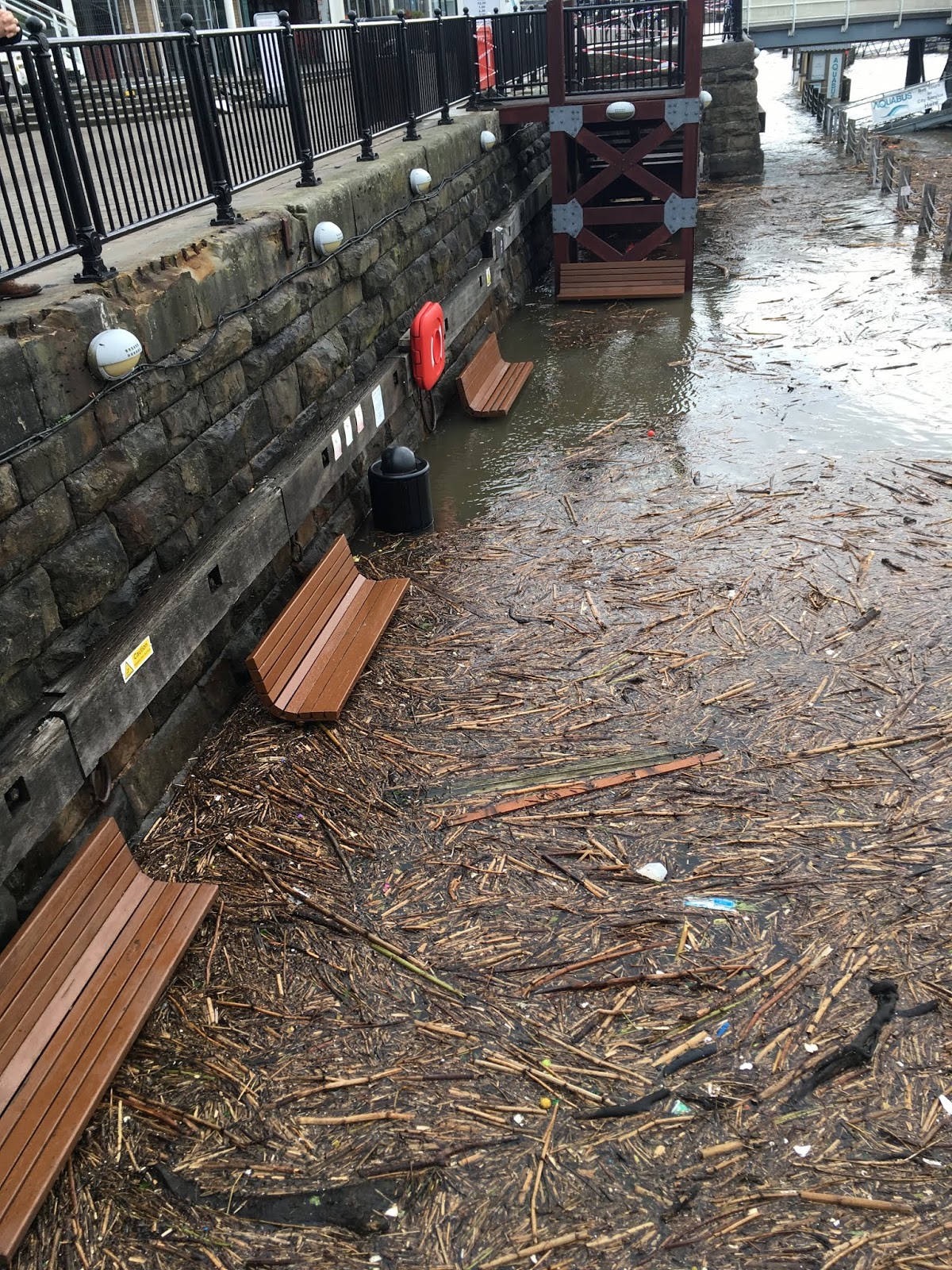
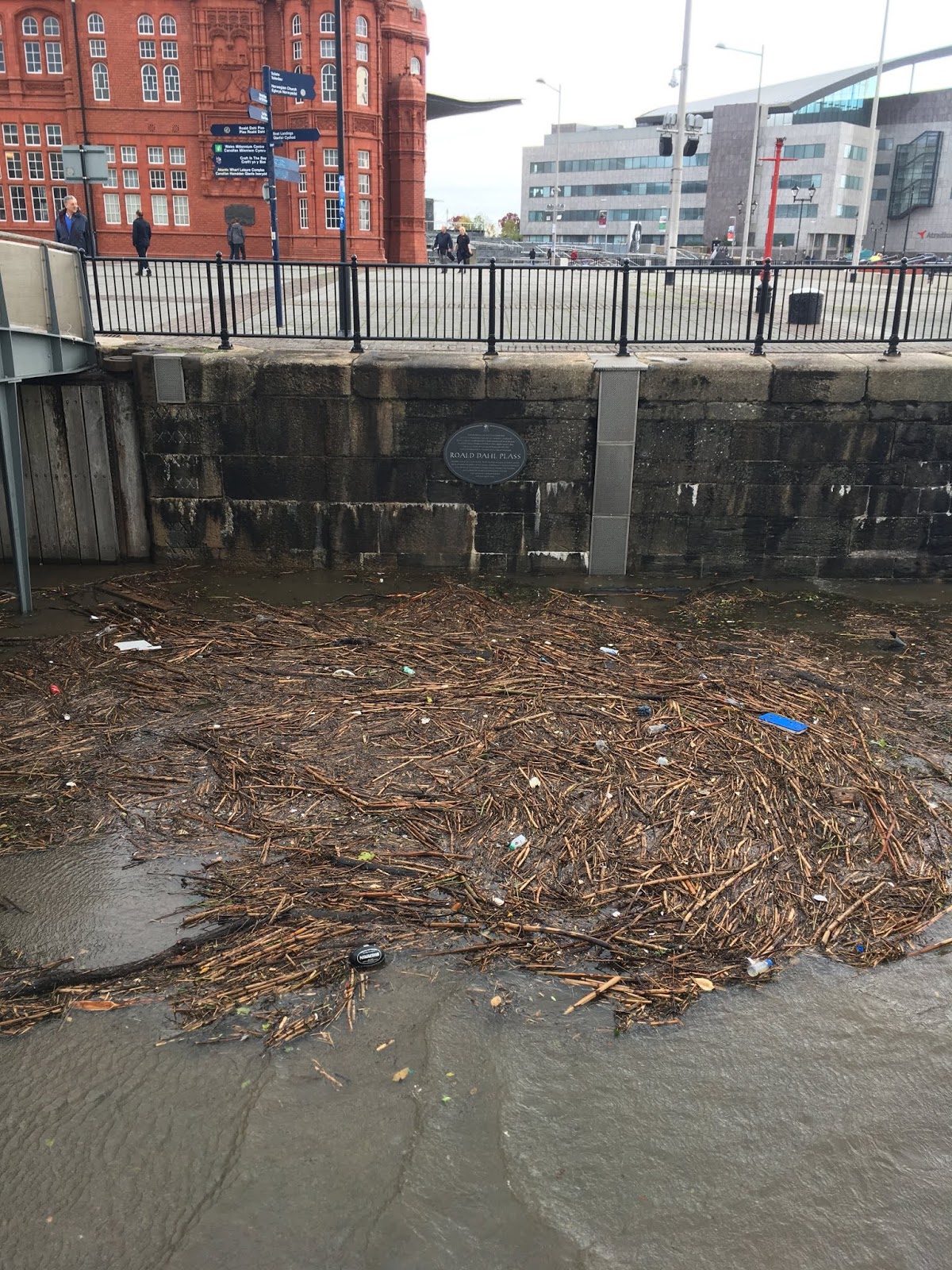
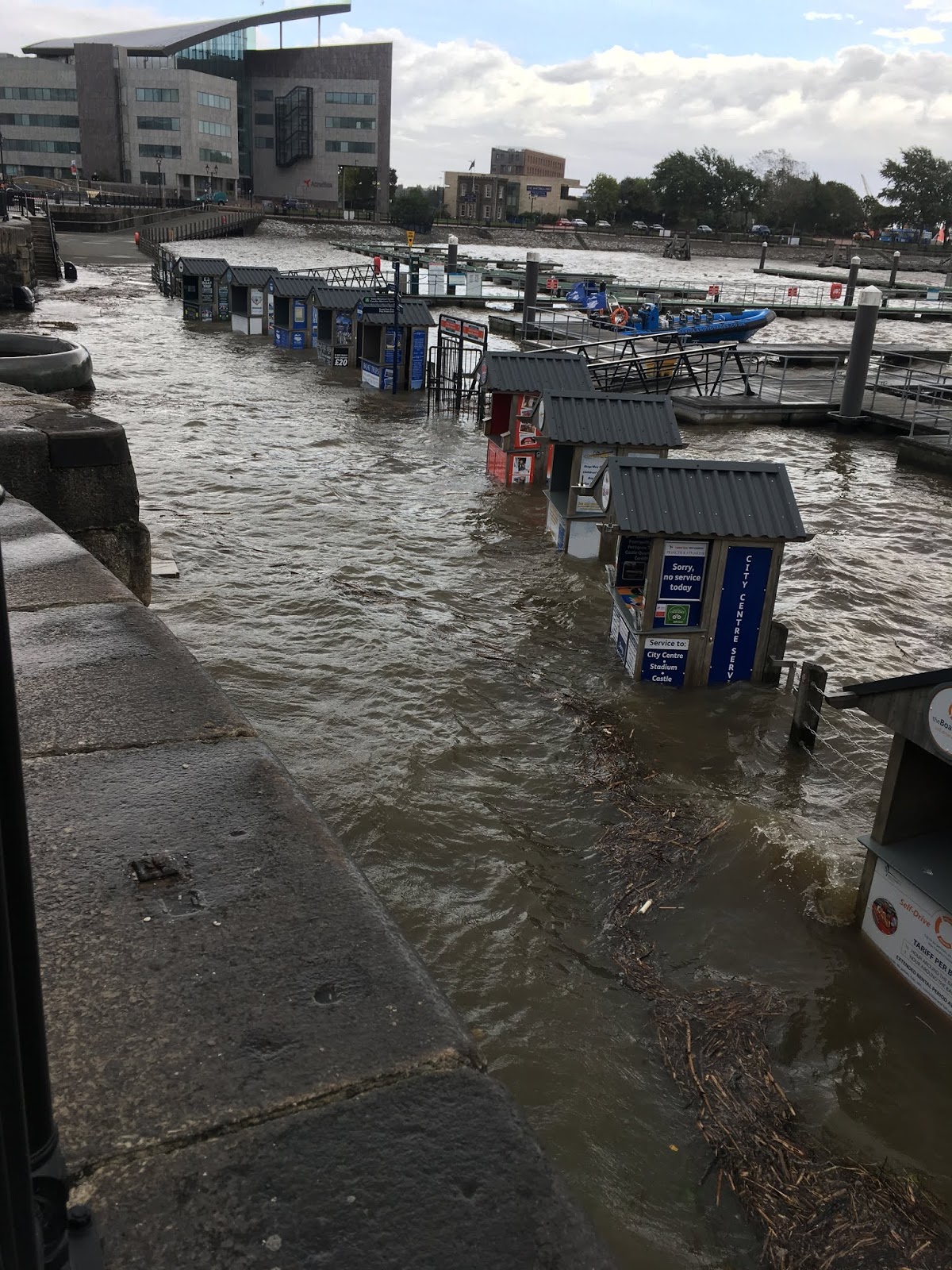
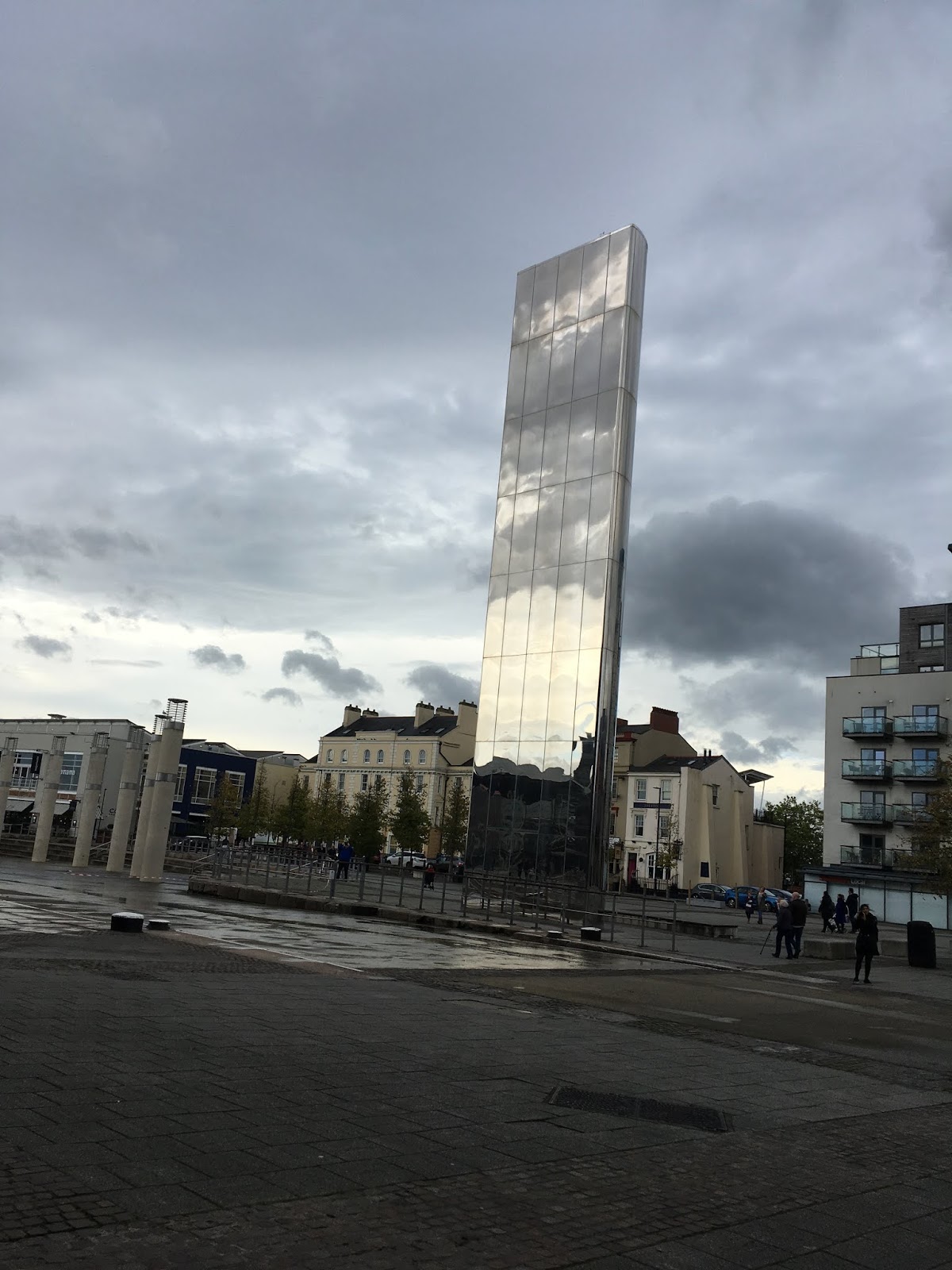
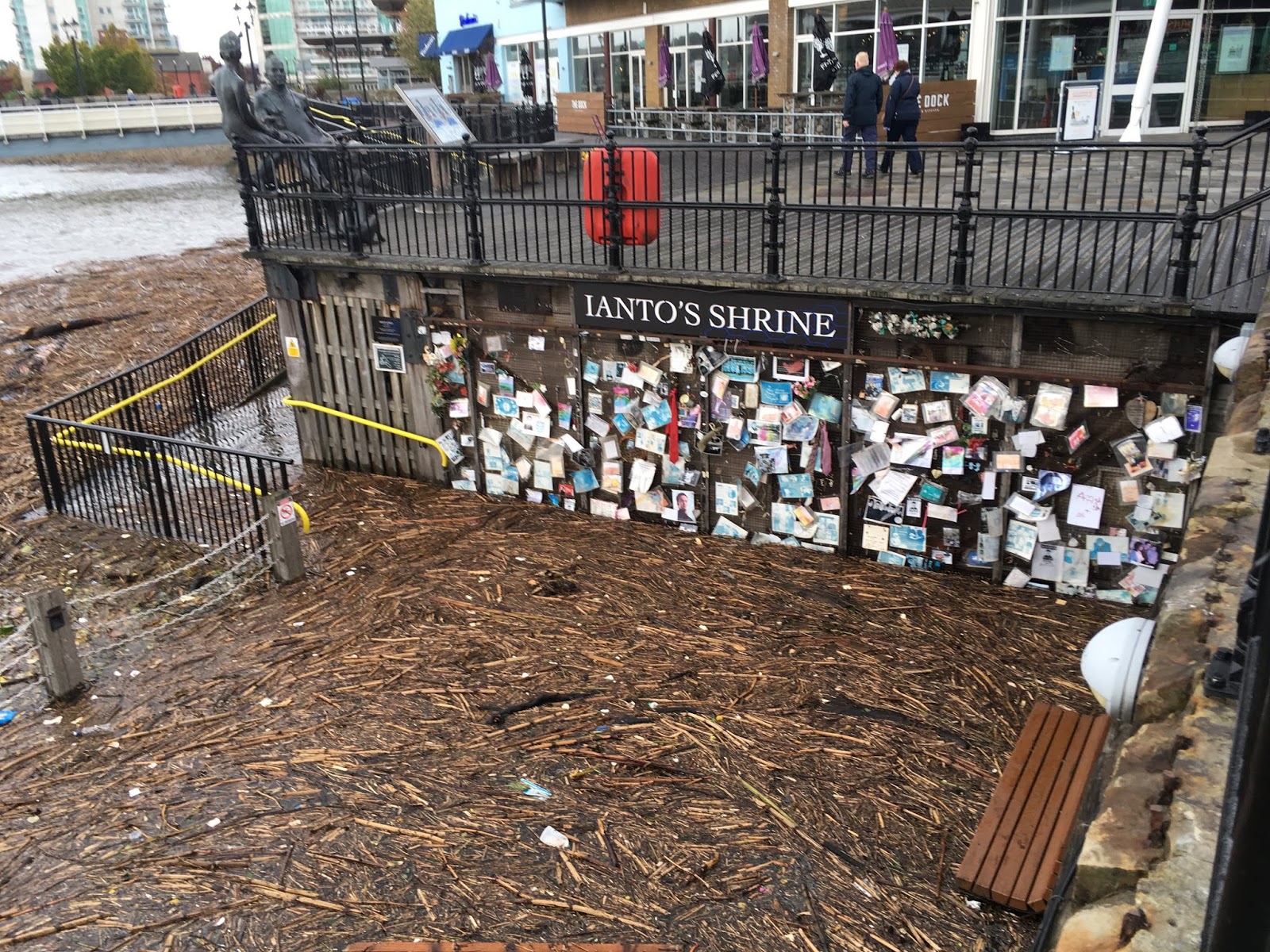
Our travel strategy has been to set up a home base somewhere and then do day trips from there.  The so called hub and spoke method.  This has worked well until we ran into Atlantic Storm Callum (which had been preceded this season by Storm Ali and Storm Bronagh).  From our base in Cardiff, Wales we had planned to visit the west coast of Wales and the mountainous mid Wales area.  Both normally accessible within a few hours by train and bus.  The heavy rains and wind, however, shut down the rails and roads, so we walked around Cardiff and assessed the storm damage locally, which included a crested river with a flooded pier area.   Unbeknownst to us, Cardiff, particularly the flooded pier area, is the site for some of the filming the TV shows Doctor Who and Torchwood,  fans may enjoy these (time portal?) pictures.

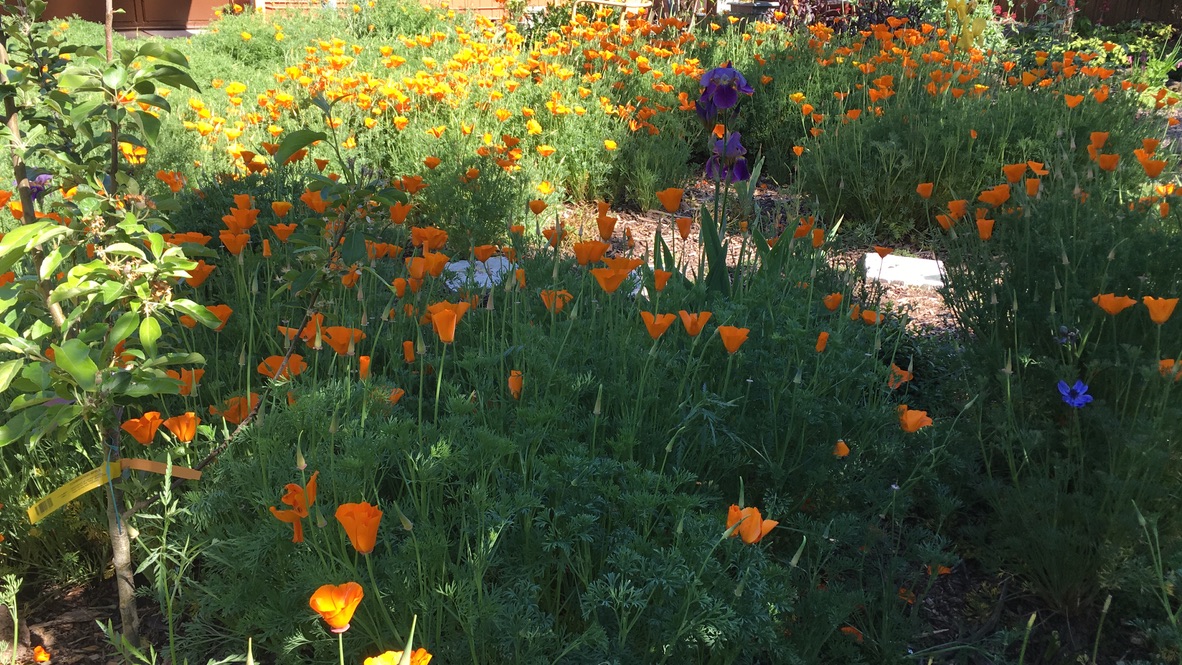
To stay dry we hit up the National Museum of Wales and as with most museums here, were introduced to an artist we had never heard of and liked, in this case the Welsh landscape artist Kyffin Williams.  There was also an exhibit on poppies- in drugs, art, mythology, symbol of war/peace- which was relevant for us and our spring/summer garden.

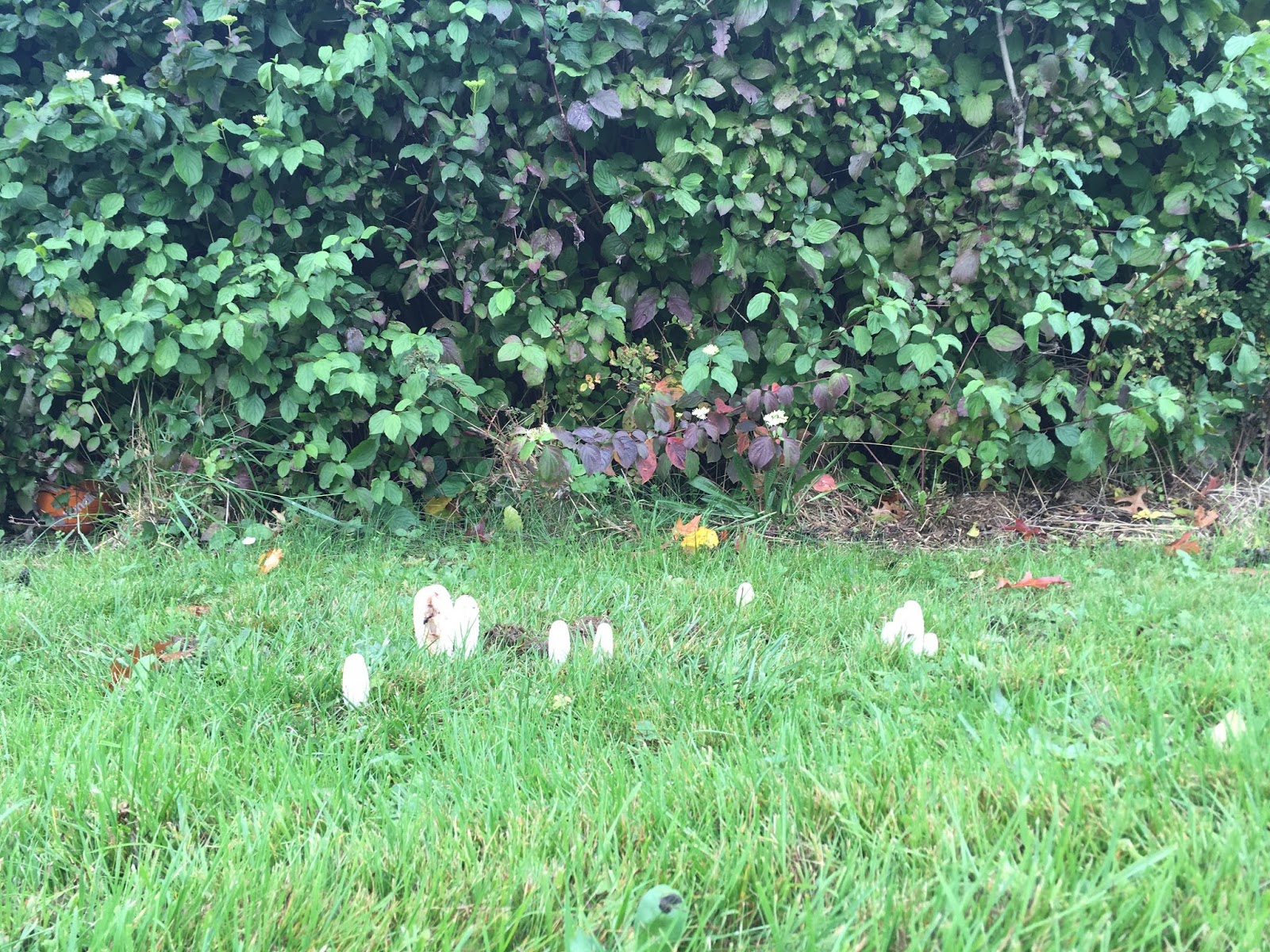
Finally, after the rain stopped we discovered mushroom Stonehenge. 

This week\’s photo of topless old man looking out window contemplating his life: Banksy \”Well hung lover\”

Wonders; man made and natural

This was written before the Word Press upgrade and it looks bad. Apologies. 

Our unplanned trip to England has allowed us to visit two sites we’ve longed to see.  First was

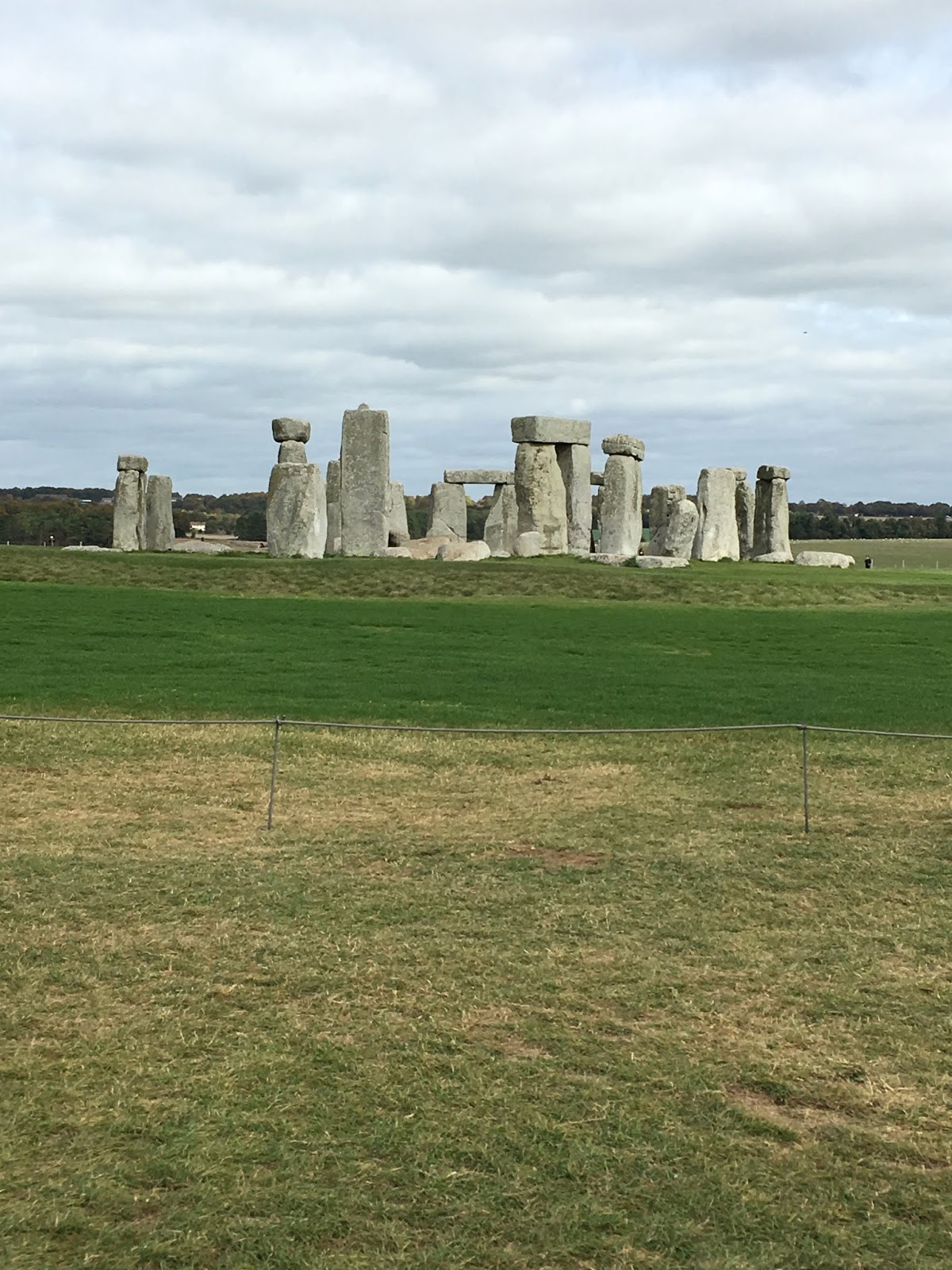
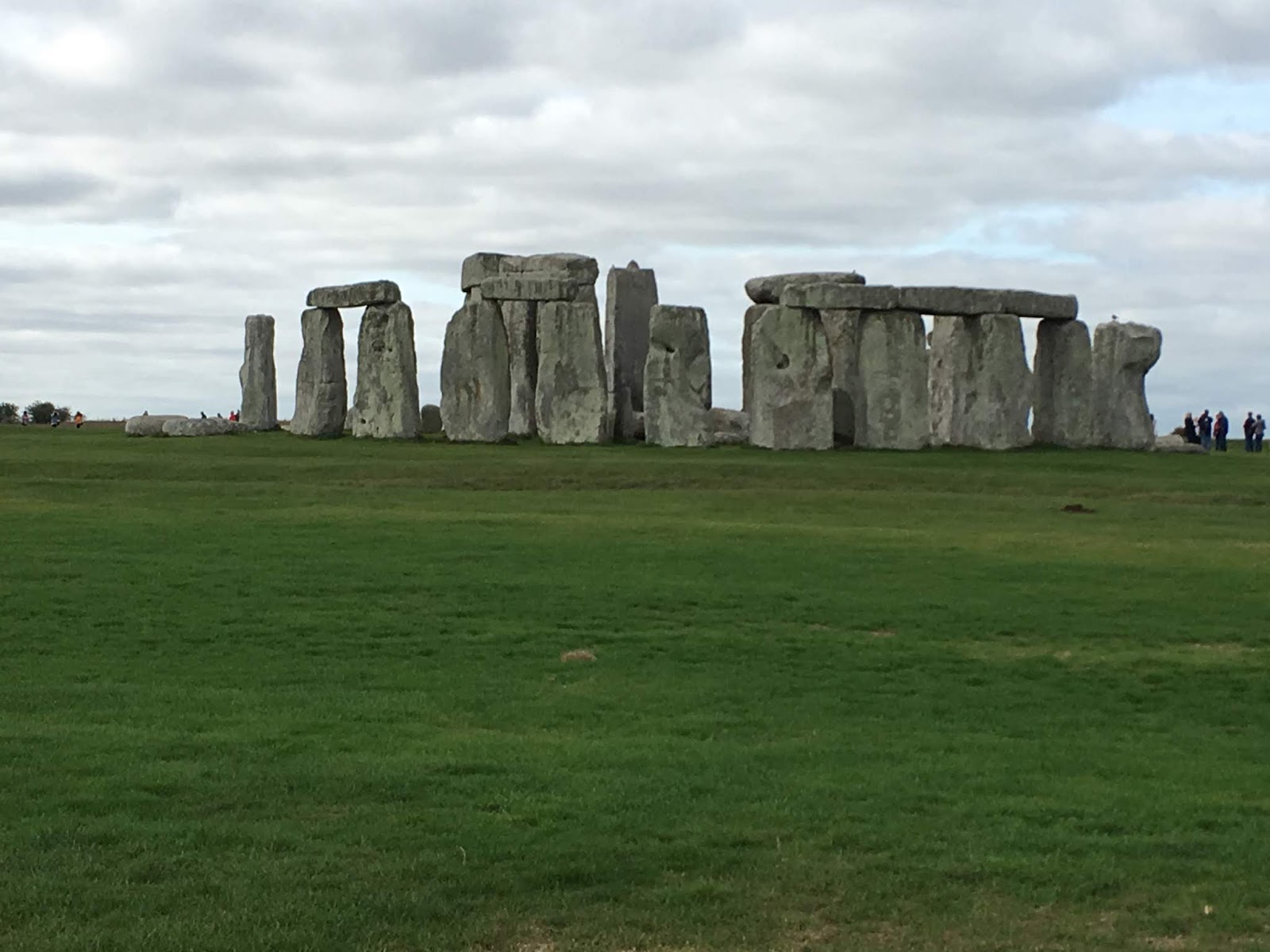
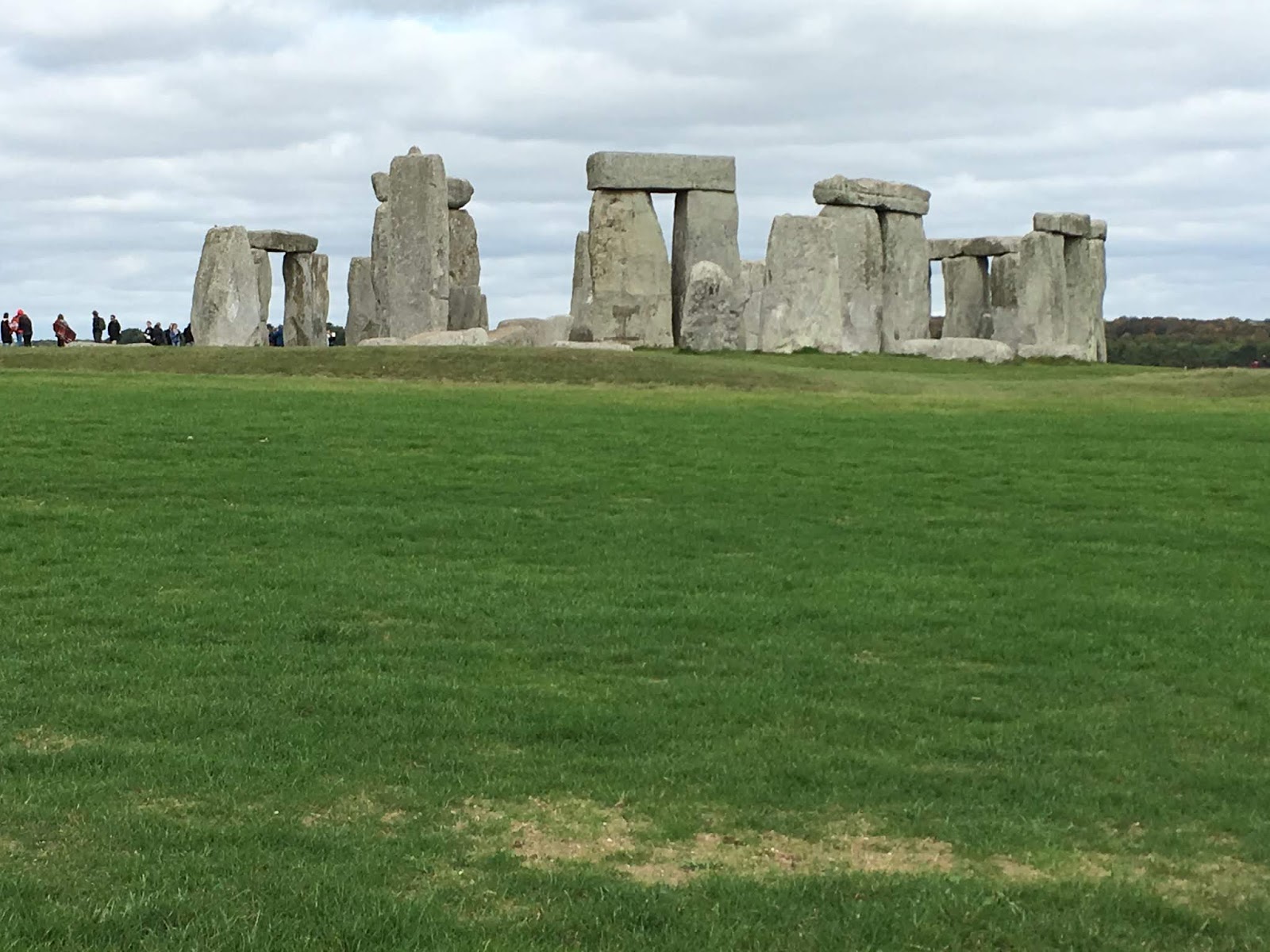
Stonehenge

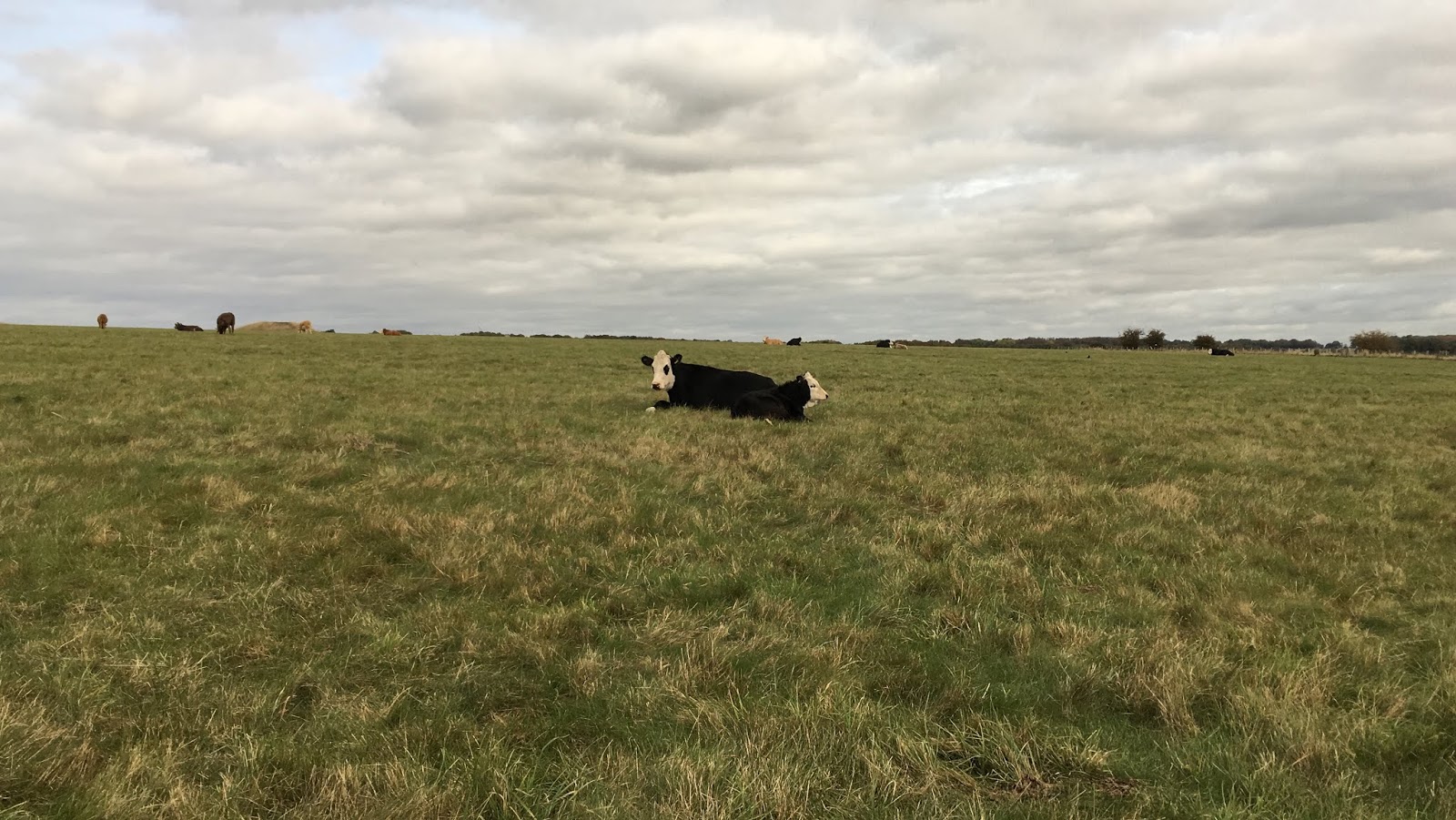
To get to Stonehenge we took a train north to neighboring town of Salisbury, a small town famous for the Salisbury Cathedral with the tallest church spire in the UK, and having one the four remaining copies of the Magna Carta.  From there a bus took us to the Stonehenge site.  From the visitor’s site the options were to take a shuttle out to the Stonehenge or 25 minute walk, we chose to walk.  Past a grove a trees, thru a field of cows grazing on ancient burial mounds and trenches which are part of the overall acres of architectural history of the site.


Finally, past the cows, you could see the Stones.  Stonehenge is incredible, although the image is familiar, seeing it in person from all different angles was spellbinding. It is an engineering marvel, especially for someone who has trouble assembling an Ikea cabinet.

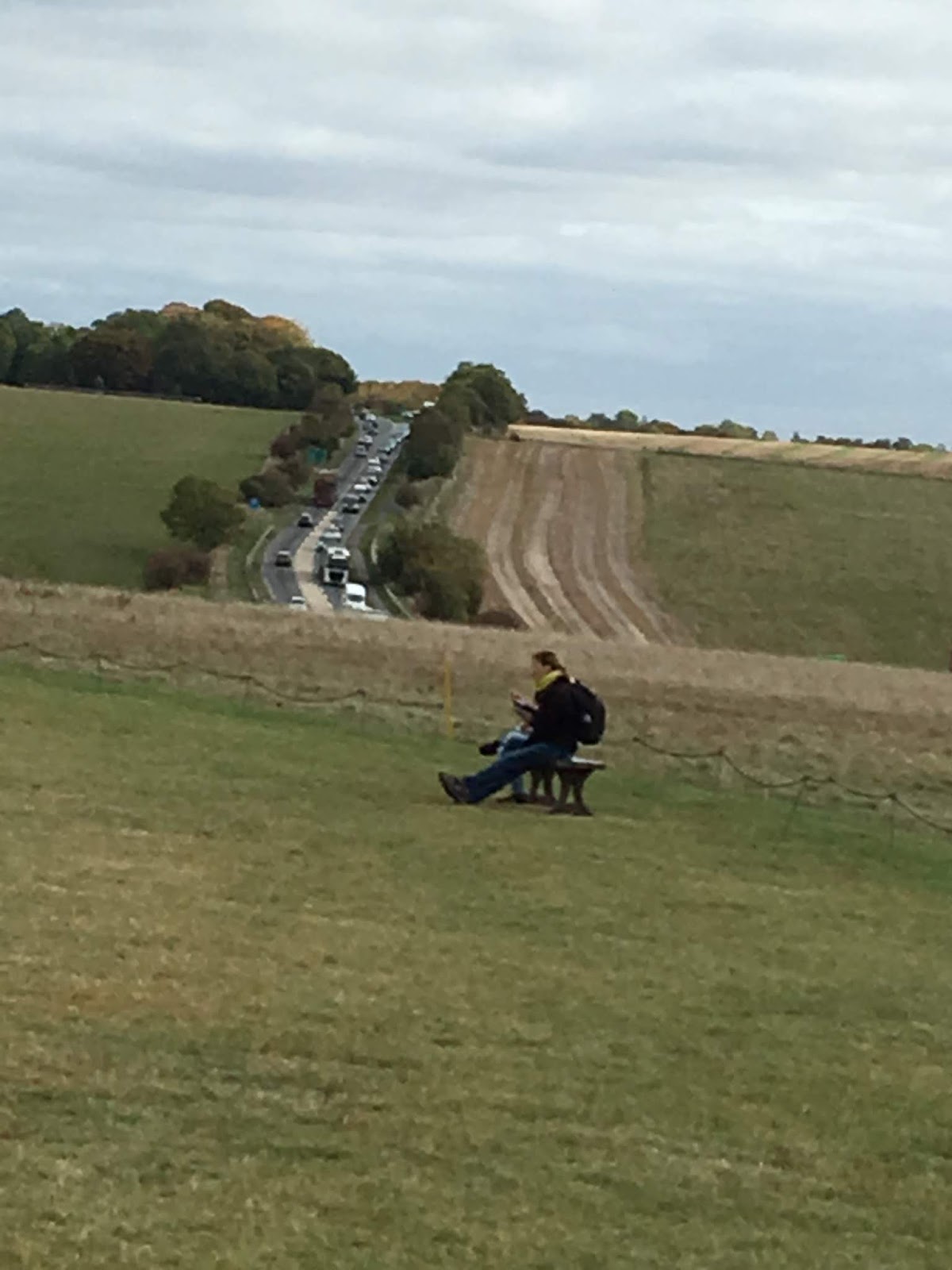
It was hilarious though, that we approached it walking through a bucolic setting, yet just on the other side of Stonehenge was a busy road a hundred yards away with a full view of Stonehenge.  Lots of rubber-necking causing traffic to back up significantly just like the LA freeways when there’s a ruin on the road.

On the way back the the bus dropped us off at the Old Sarum site of the earliest settlement of Salisbury and ruins of a castle dating back to the 400s.
We didn’t make the connection until that night reading the news, that Salisbury was the town where the two Russian agents went in March and poisoned the Skirpals, the former Russian spy and his daughter.  Crazy! Someone told us the next day that tourism to the area has been down since the incident.

The Severn Bore
Something we’ve wanted to see for years and the timing was perfect.  From wikipedia- A tidal bore, often simply given as bore in context, is a tidal phenomenon in which the leading edge of the incoming ocean tide forms a wave (or waves) of water that travels up a river or narrow bay against the direction of the river or bay’s current. 

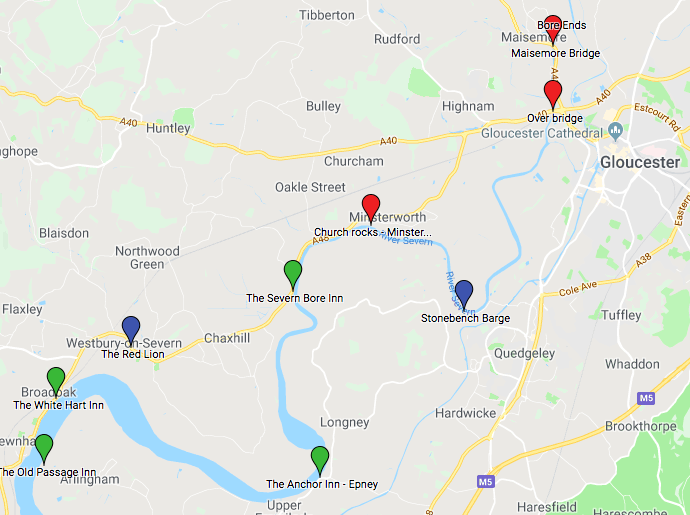
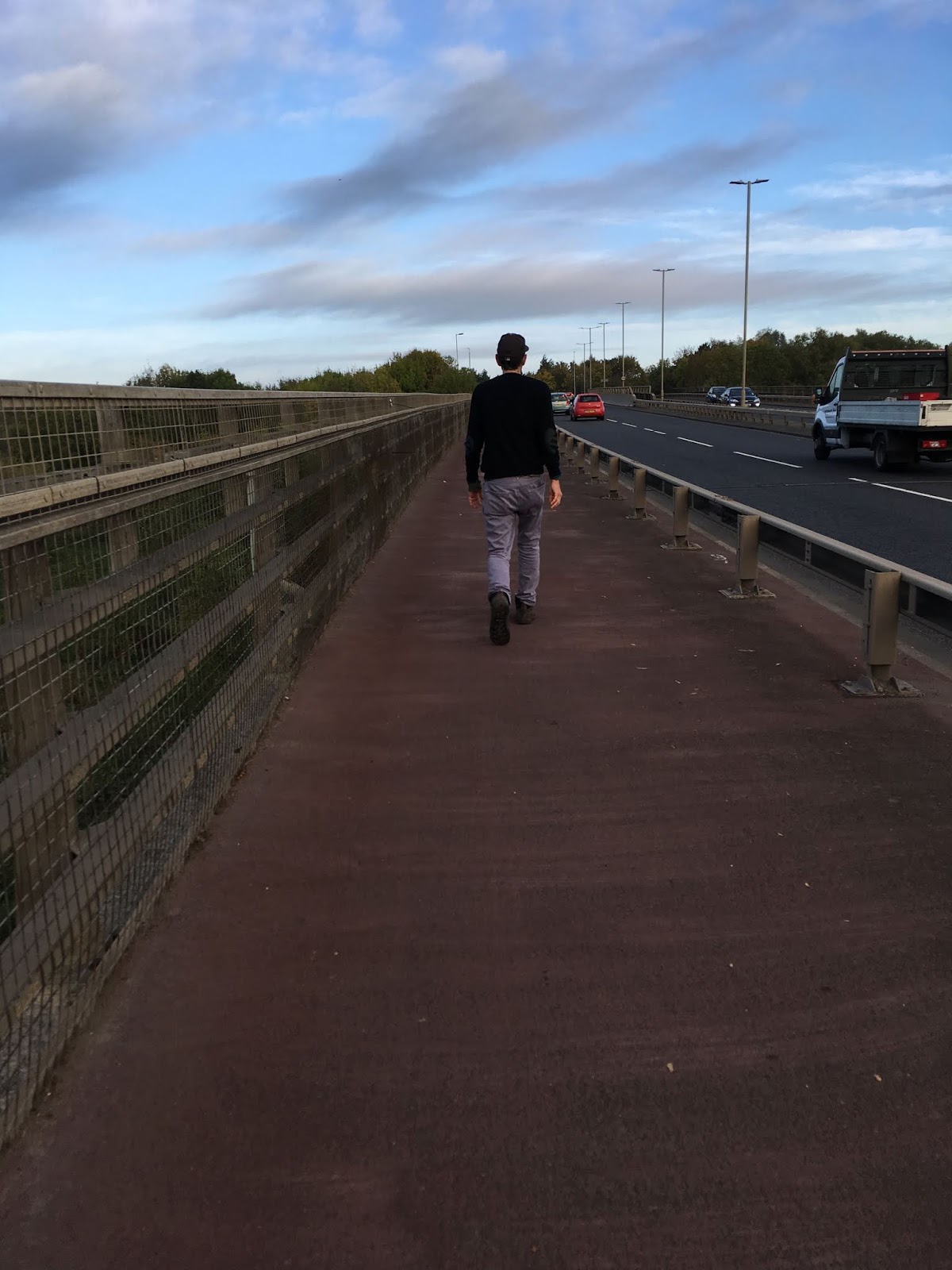
It happens about 10 times a year on the River Severn in Gloucester.  There are multiple places where you can view it along the river, and somehow we chose the most dangerous and difficult to approach on foot at Overbridge.  Basically, we had to walk across, on and along a freeway to an overpass bridge.  It would be similar to walking the 101 freeway in hopes of seeing a portion of the LA River.

We assumed it would be popular and crowded, although none of locals at the hotel we spoke to the night before had heard of it.  The popularity of our spot was confirmed when we noted we were first to arrive and were eventually joined by just two other senior couples, one local and the other from Scotland.  Two more couples eventually stopped by, although one may have been just walking their dog.  
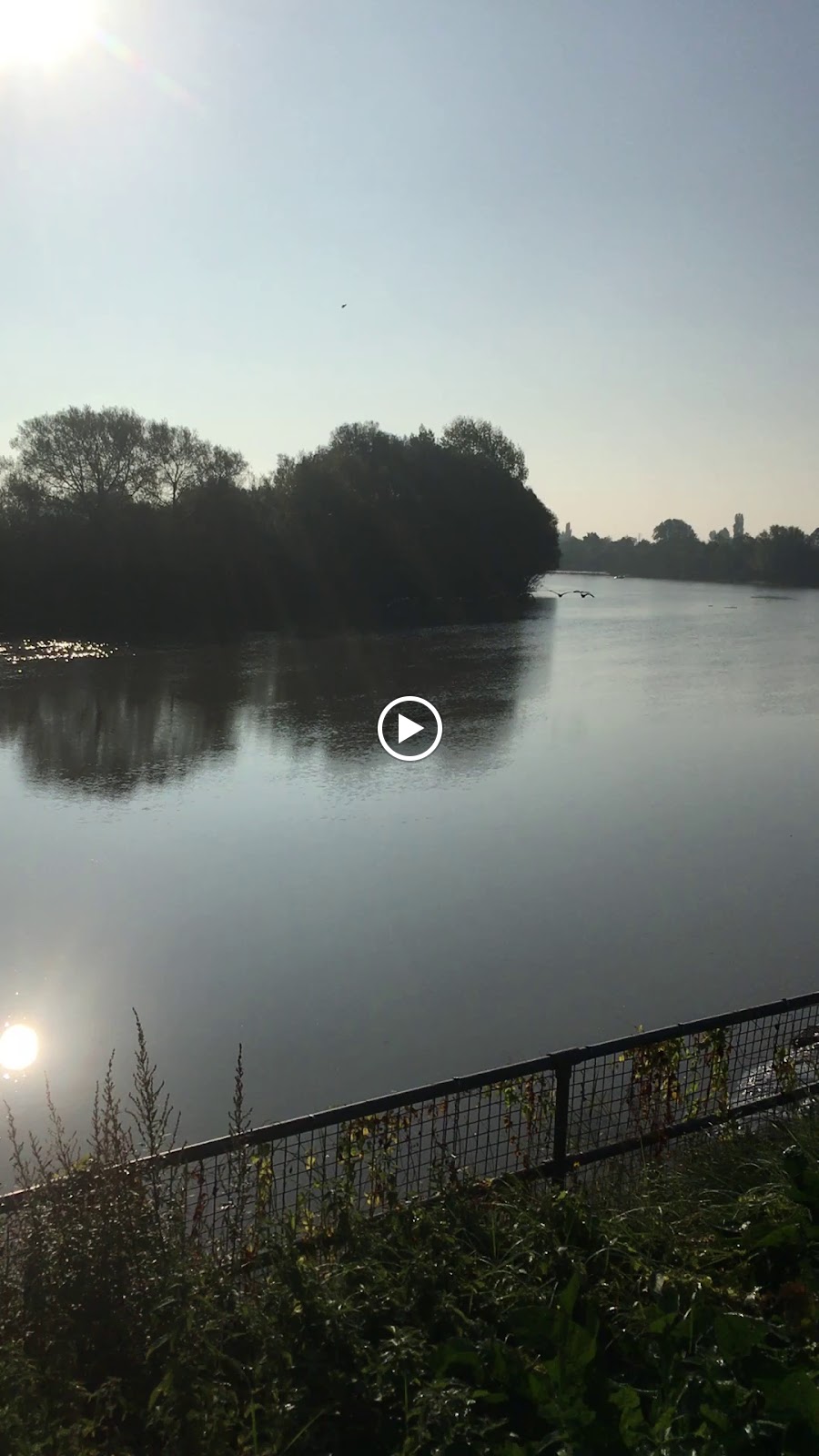
But, it was well worth it, just an incredible natural occurrence to witness.

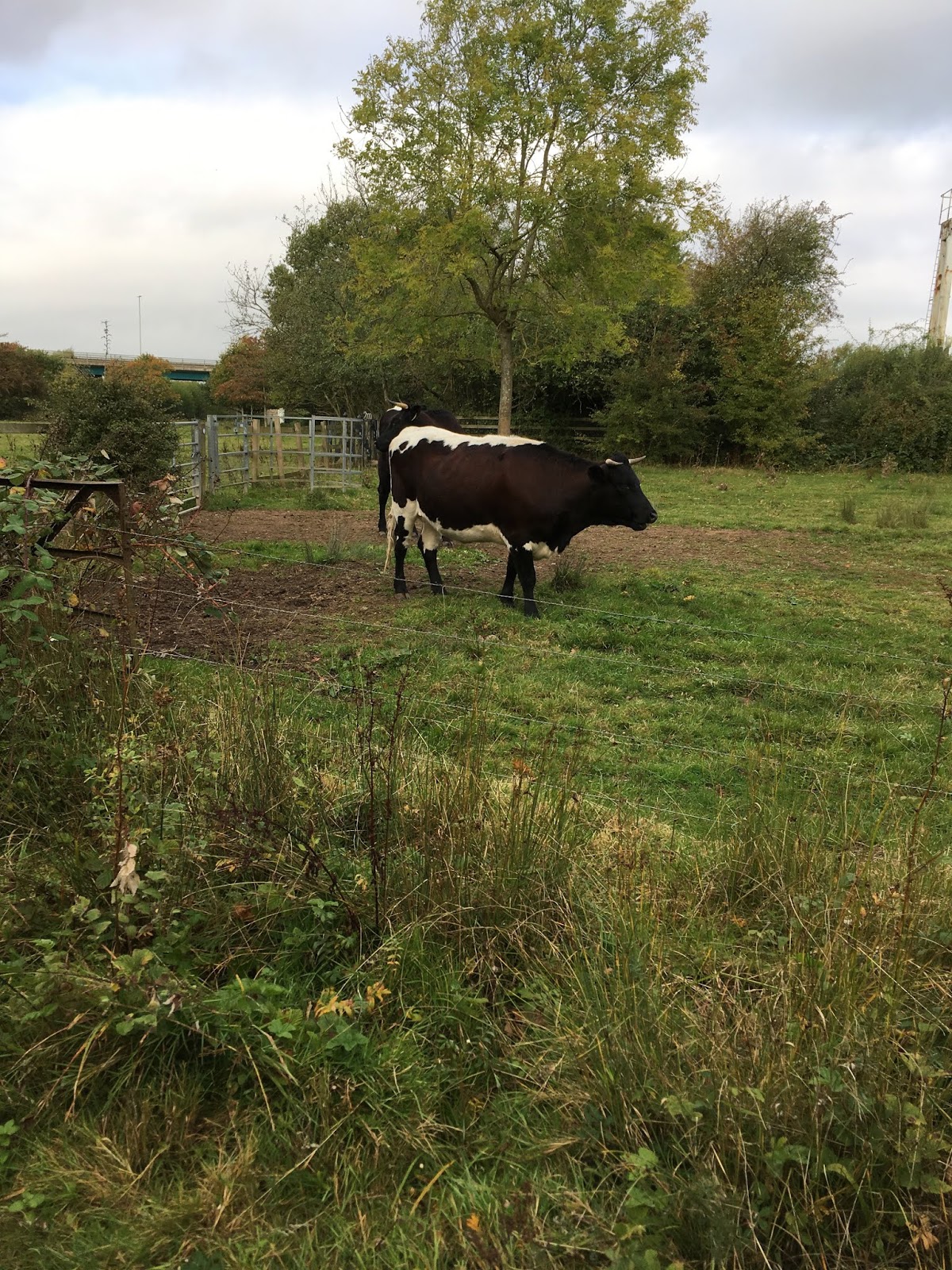
We walked back to town, finding a seemingly safer and quieter wooded route but then we had to pass some unfriendly looking cows, forcing us to hop a barbed wire fence to avoid them.
The bore happens twice a day for a couple days, but the night viewings are described as more night hearing. We saw it again the next morning this time we took a bus to the Severn Bore Inn to view and enjoy a cup of tea.  Novel for us to consider seeing something  in a civilized fashion. 
This was a much more pleasant setting, on a patio with a cup of tea.  A proper English bore.  Joining us for tea and breakfast was a little larger crowd about 15 people , including the couple with the dog. This one was also a tamer less wild bore; perhaps because the river was wider at this portion (?).  If lucky, a surfer can ride the waves for miles (the record is 12 miles).  A couple of surfers washed up at the Severn Inn shore, one joking that he was able to ride it for miles, before admitting he made it about 15 meters.  Then they were off in a van to try to catch the wave further up the road.

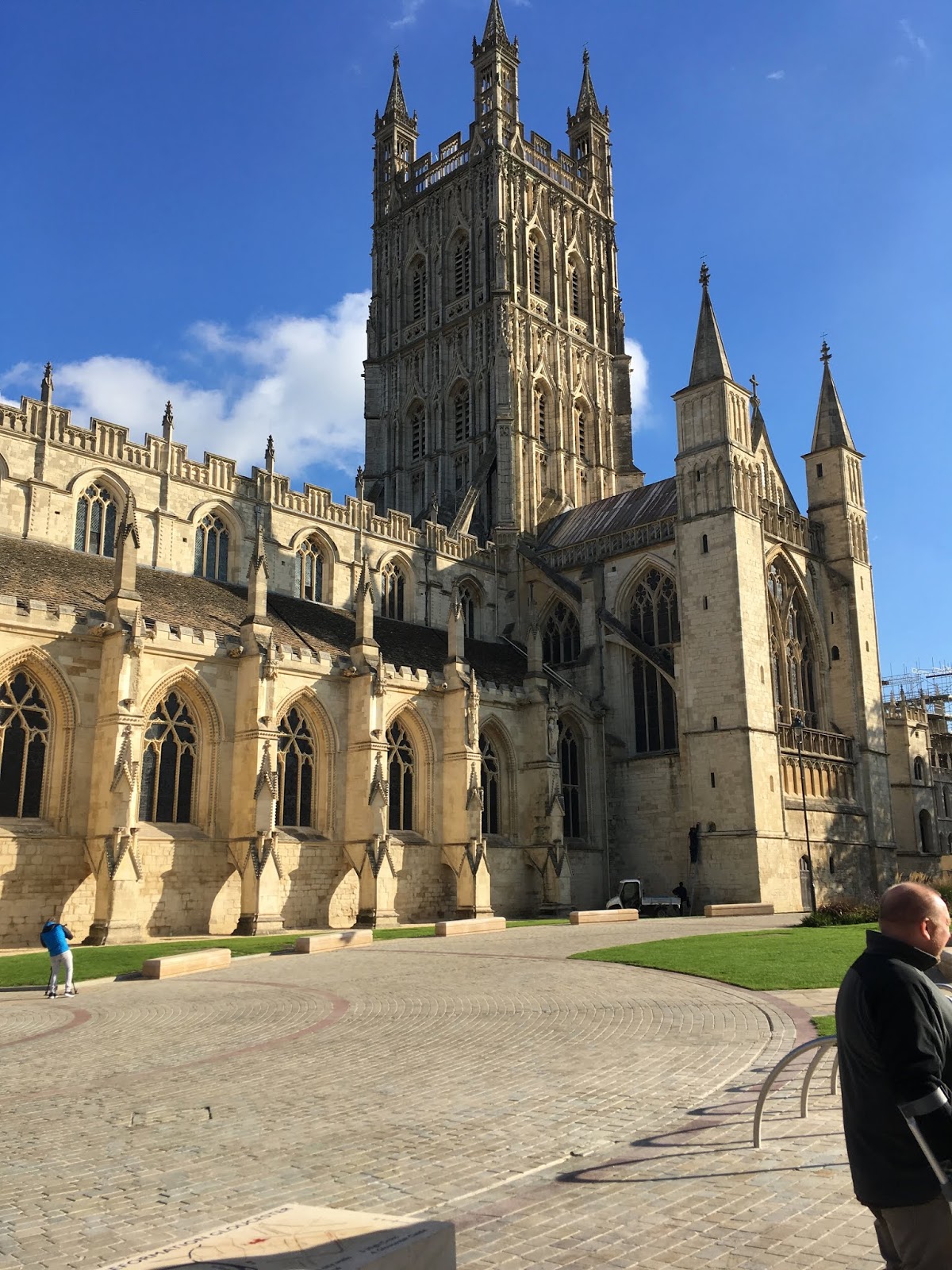
Gloucester is a mid sized city,  with quaint but slightly worn shopping lanes, and a Cathedral but otherwise indistinct.

The Cathedral, however was impressive and they really made an effort to highlight how it was made, the craftsman who made and maintain it; the plaster, the stones and the stained glass.

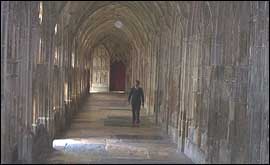
And a bonus were the special tour groups of Harry Potter fans, since parts of the movies were filmed in the cathedral’s historic cloisters.
After Gloucester, we are still trying to decide where to go in the next few weeks.  It seems every British town has a hook to bring in tourists; cathedral, medieval walls, thatched huts, TV show locations, oldest pub, etc,  although, all are pretty darn nice on their own.  Someone suggested we visit a village in Wales because it is the smallest town/village to have a cathedral.  Oookay.
The problem with getting advice from locals regarding places to visit is that everyone recommends somewhere different.  There are so many good places to see.  Which is amazing for considering the size of the UK.  United Kingdom is about the same size as Wyoming, and sorry Cowboys, but I don’t think there are as many places worth visiting in Wyoming.

The best part about getting advice is listening to the English accent.  No matter what people say, even the most inane snippet we hear on the street sounds either very intelligent or very funny.  Possibly a product of growing up on Masterpiece Theater and Monty Python.  Out of curiosity we searched online to see if Europeans like American accents-the answer was a resounding “No” maybe with the exception of southern accents to some extent.  Part of the dislike mentioned was also just the loudness and general rudeness of Americans.  So, we try to be polite and keep our mouths shut.

Bonfires, Bands and Beaches in Eastbourne

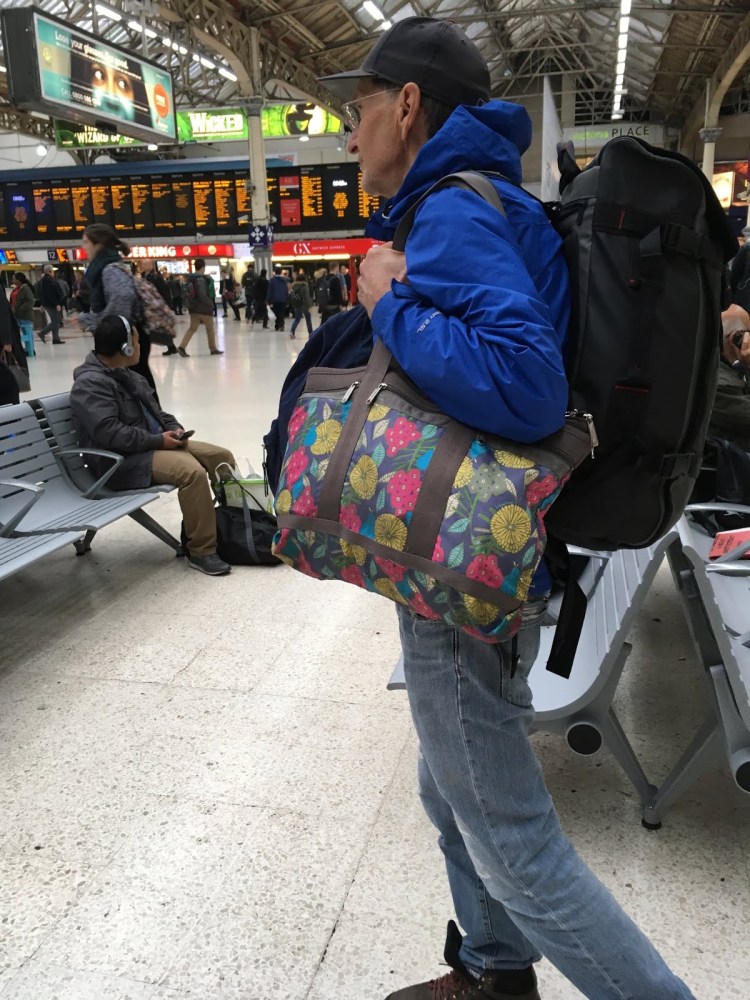
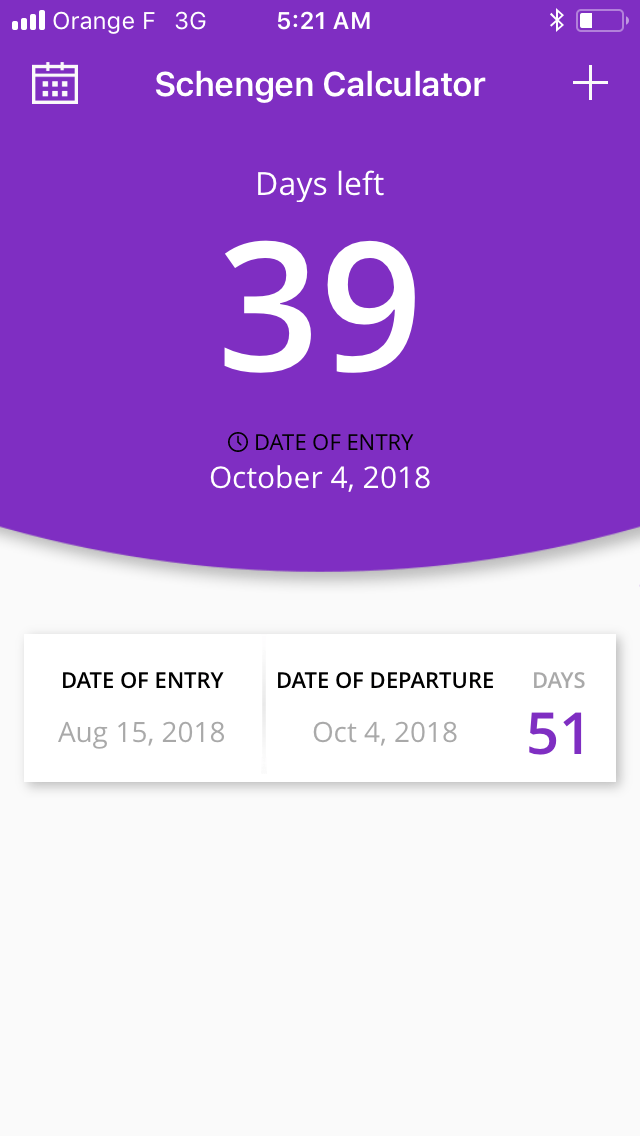
Our first random location worked out well. Trying to balance out our Schengen time https://chosenfugue.xyz/2018/10/07/schengen/, looking for somewhere easily accessed after our 14 hour bus ride, on the coast and a faded, Victorian seaside resort. Bingo.  A two hour layover in London, enough time for a walk past Buckingham Palace, buy adapters and a coffee then join the queue watching for our train gate number to pop up.  Short, picturesque train ride and we found ourselves walking down a street lined with charity thrift shops- Rainbow Bridge Equine Rescue, Cat Protection, Hospice, Heart Association- just to name a few (apparently there are 40).

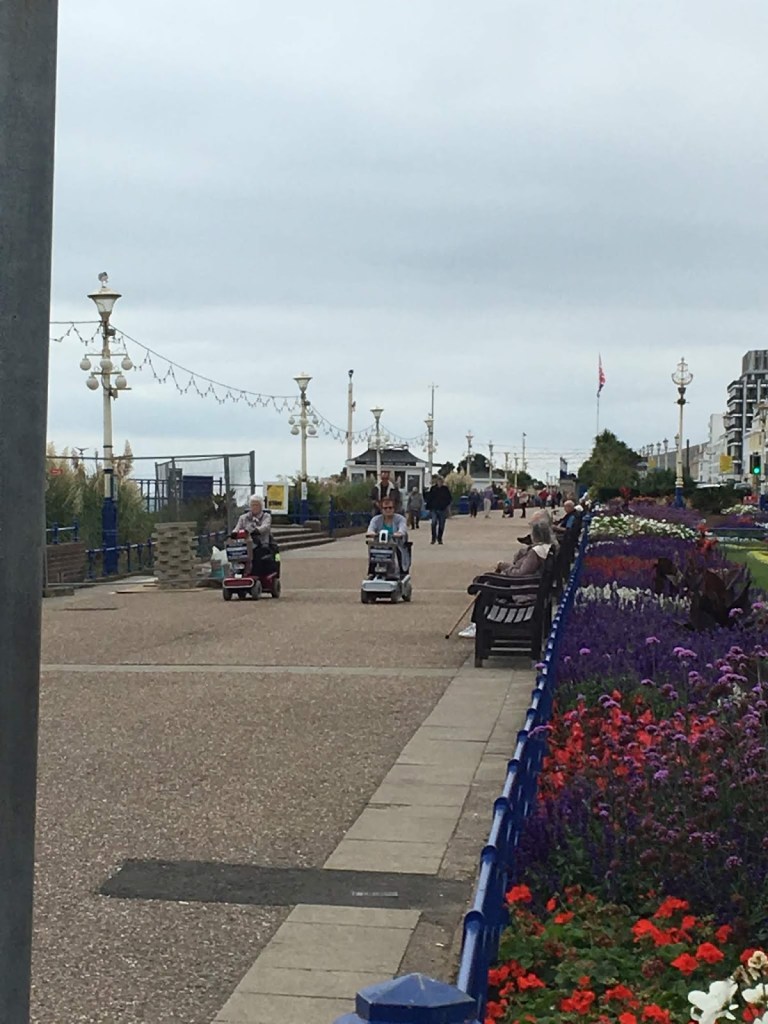
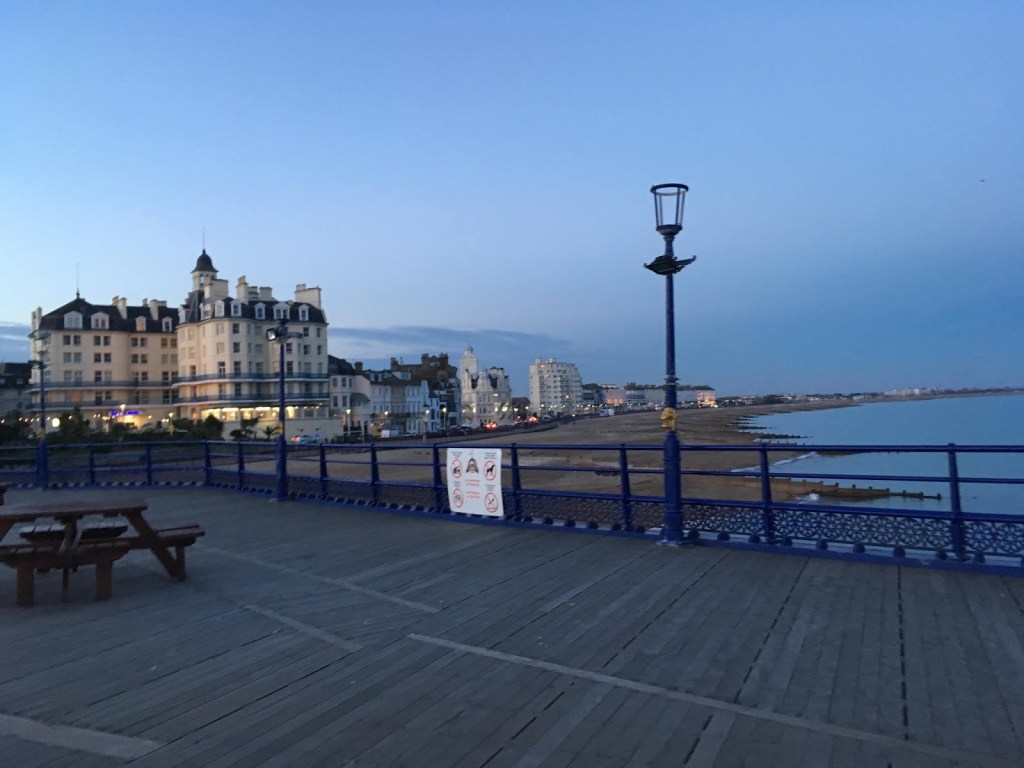
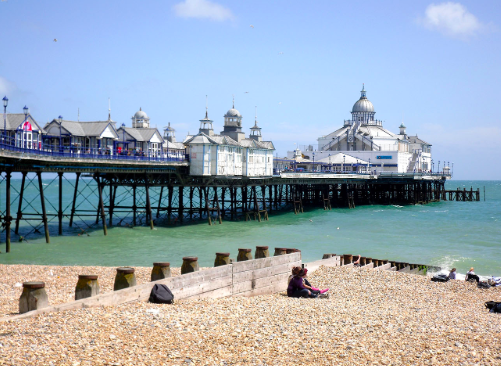
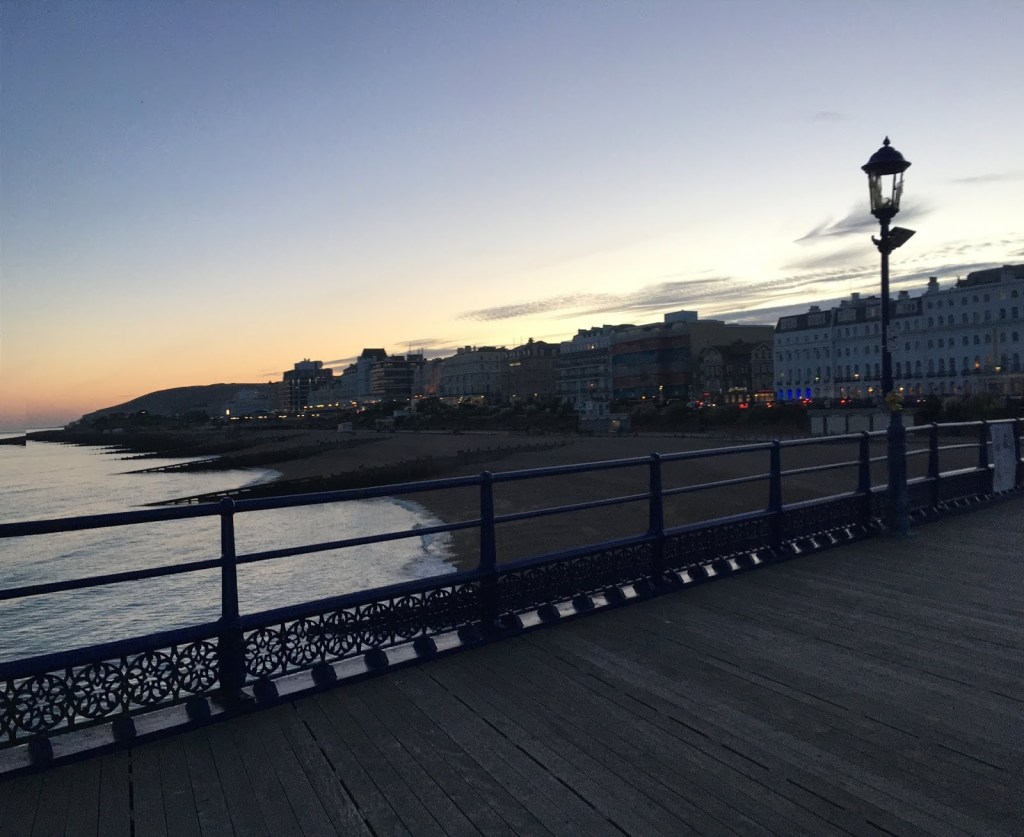
Around a turn, and there it was – the Victorian Beach Holiday Pier, the long pedestrian promenade along the rocky strand, busy with scooter traffic (much easier then Amsterdam’s bikes)


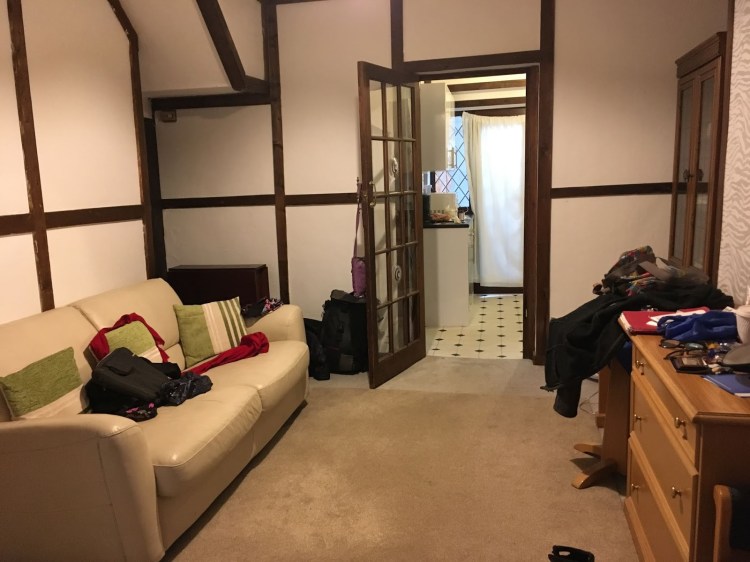
Our AirB&B was consistent with the ambience of the seen better days area with timbered walls and glitter zebra print wallpaper, although with a washing machine.


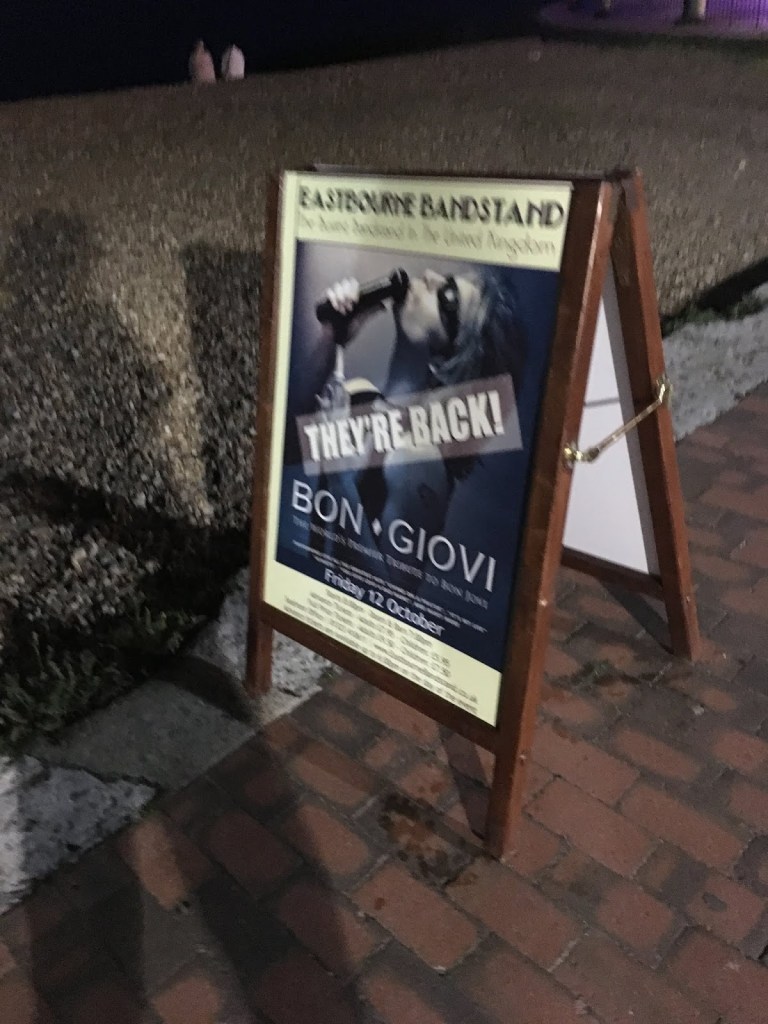
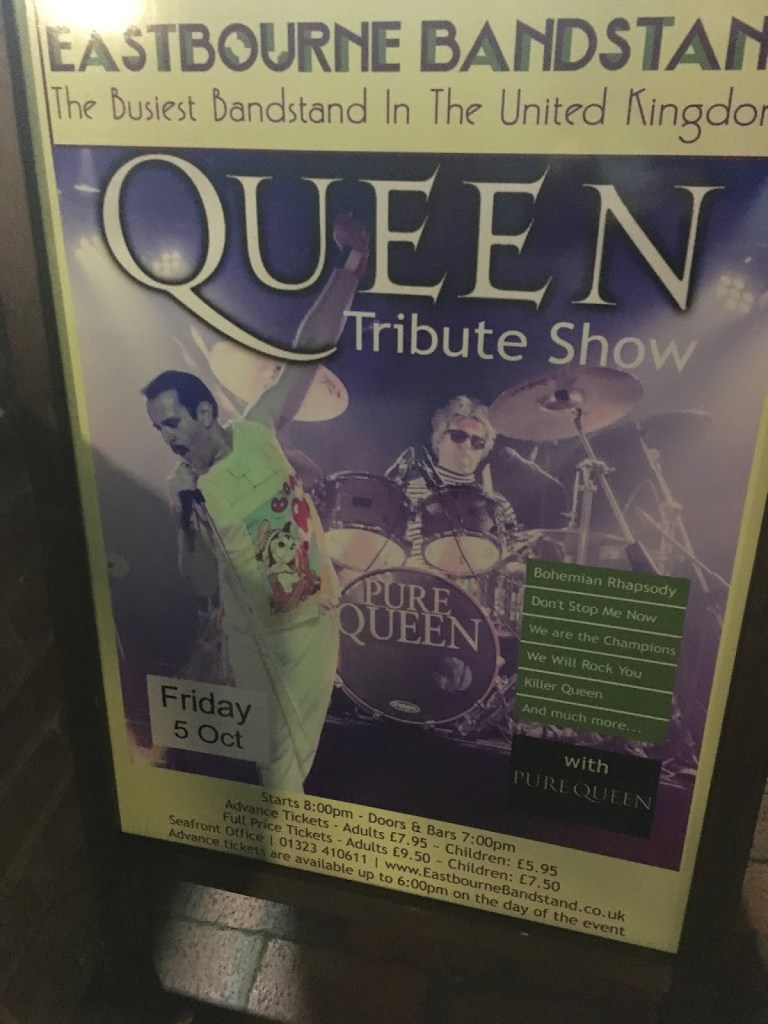
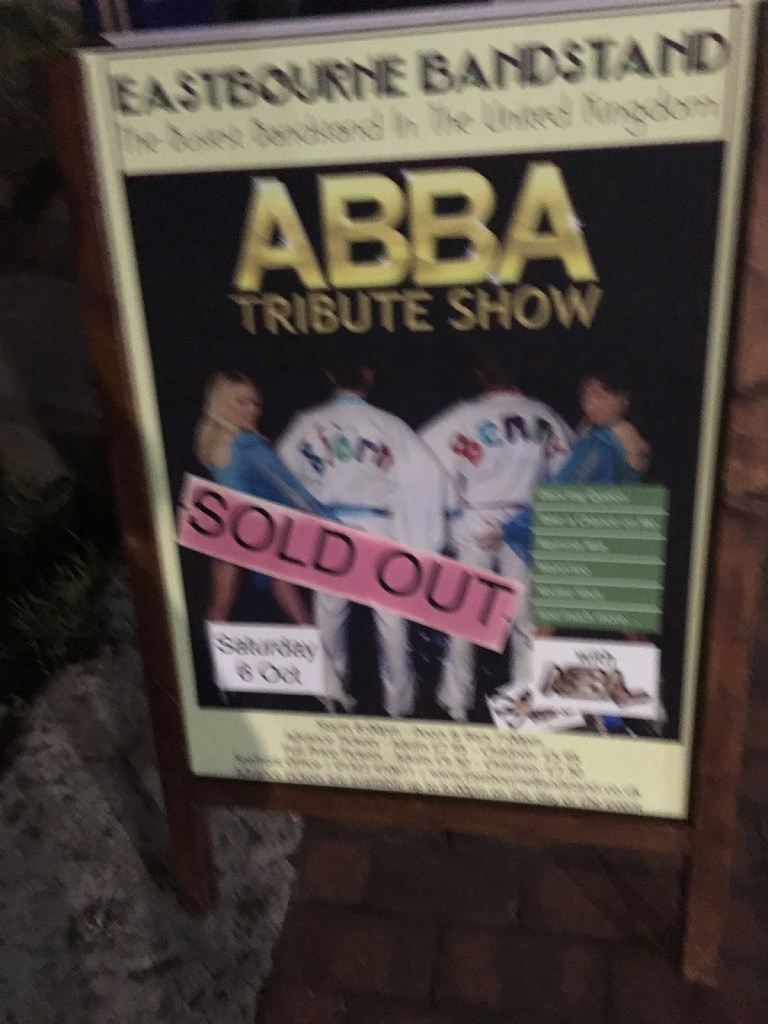
It was actually hard to find available lodging which we thought surprising since October is a little late for coastal holiday and all Eastbourne seemed to have (other then thrift shops) were boarding schools and assisted living homes.  Walking along the boardwalk, we thought we found the answer- Faux Queen, followed by a sold out Faux Abba, and then Bon Giovi (we began to wonder if we really were us)


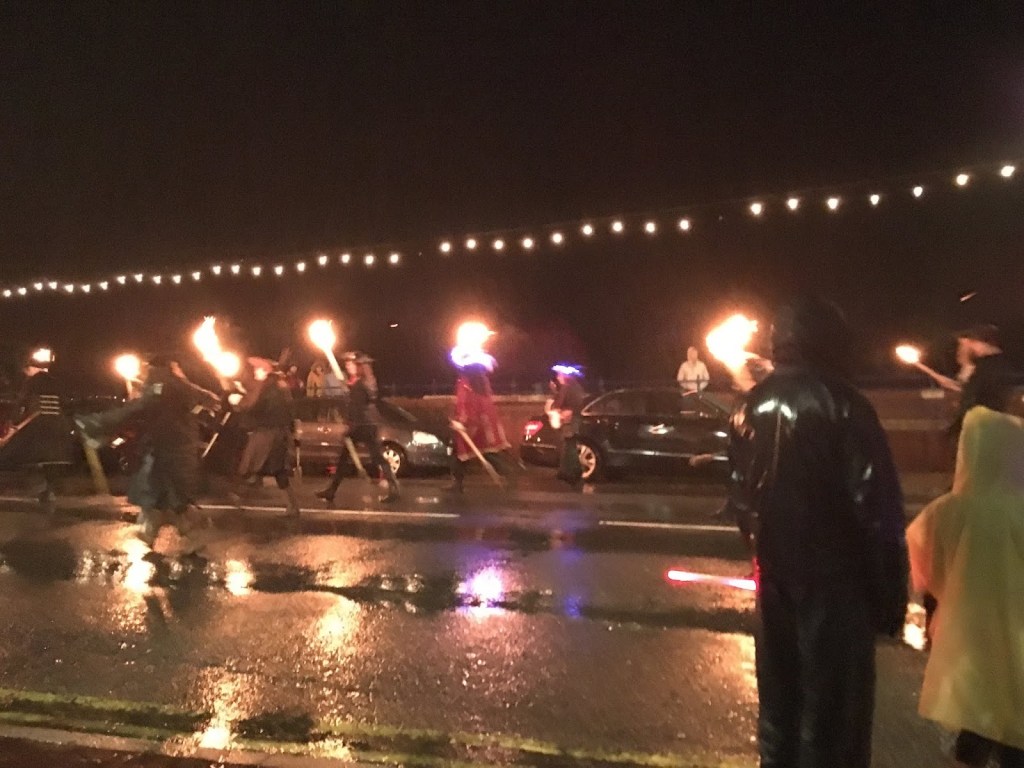
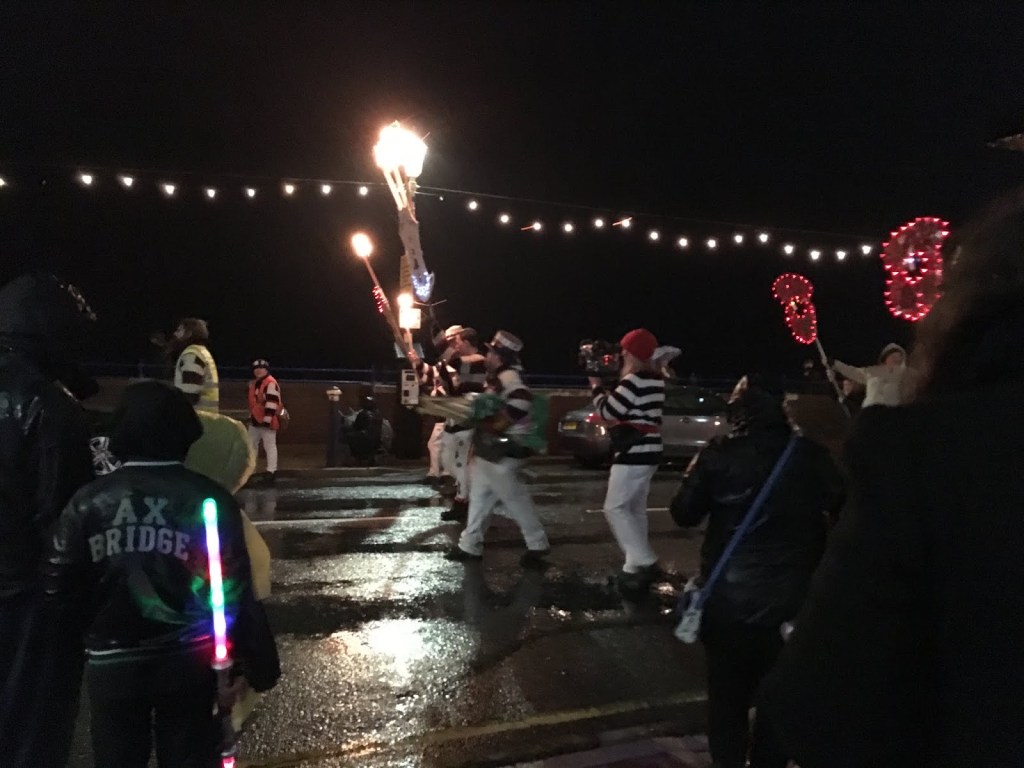
While these were a huge draw, all at an open Bandstand with tons of people singing and dancing outside the venue on the boardwalk (why would you pay?), they were not the big draw.  The event was the Sussex Bonfire https://en.wikipedia.org/wiki/Sussex_Bonfire_Societies.

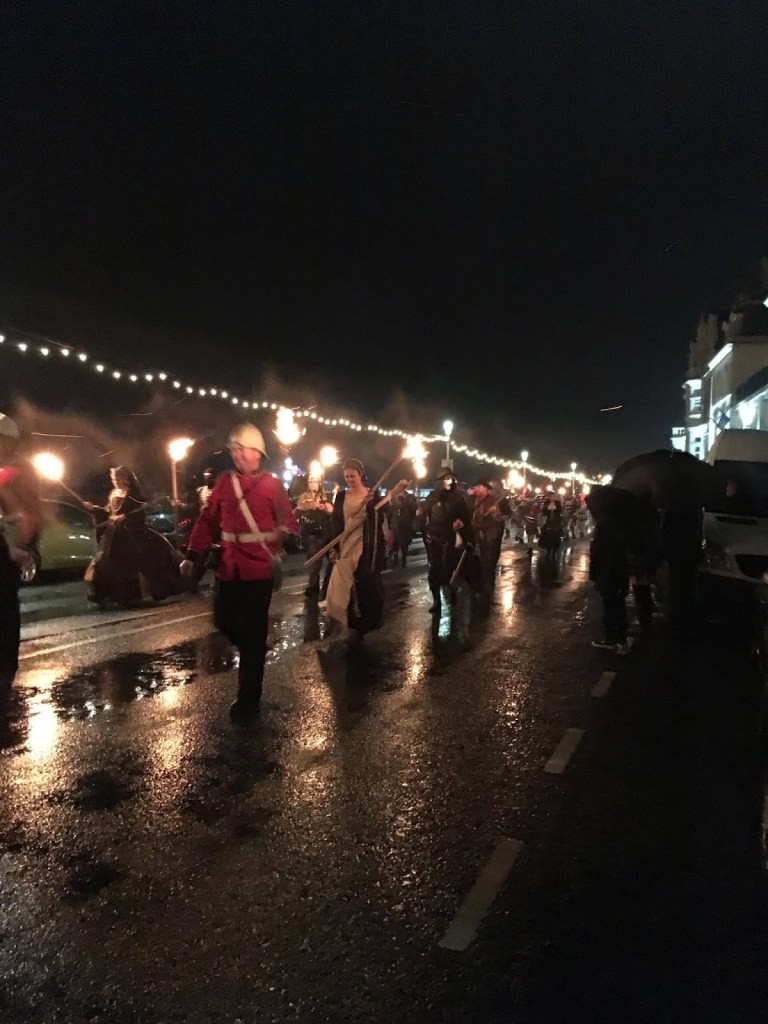
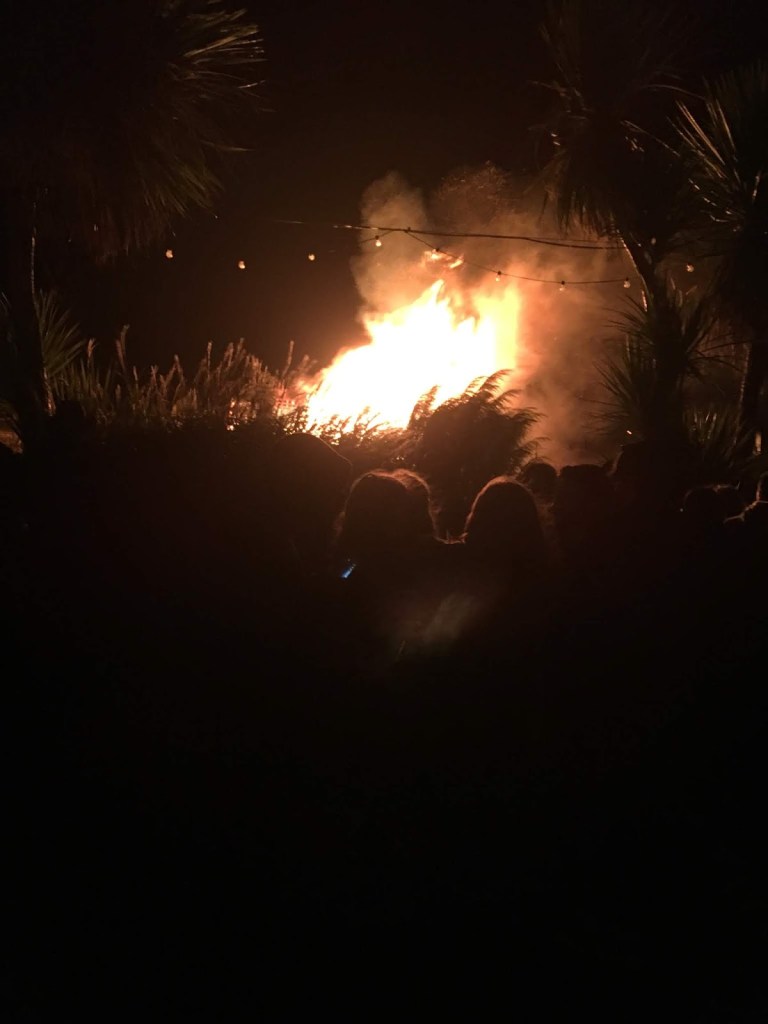
The Sussex Bonfire societies host huge parades, bonfires and fireworks throughout Sussex from late September until November 5 (Guy Fawkes day).  While the exact origin on these bonfires are not known,  they seem to have begun initially as a pagan ritual, evolving into a All Souls Day related celebration burning effigies of evil (since this happened on the night Kavenaugh was approved, we had some thoughts about this).  Over time these celebrations evolved to commemorate the 17 Protestant Martyrs burned during Queen Mary’s reign (1555-1557) and as an annual day of thanksgiving for King James surviving the Gunpowder Plot on his life by Guy Fawkes and friends. https://en.wikipedia.org/wiki/Guy_Fawkes_Night.
Regardless of the reason, the whole town came out to drink and watch the parade, and who doesn’t love a massive bonfire. Although, it was a high energy, festive feeling night, given the history of  torch-bearing mobs through the streets of Europe, it was a little creepy.

The parade and Queen tribute probably would have been enough, but there was so much more.
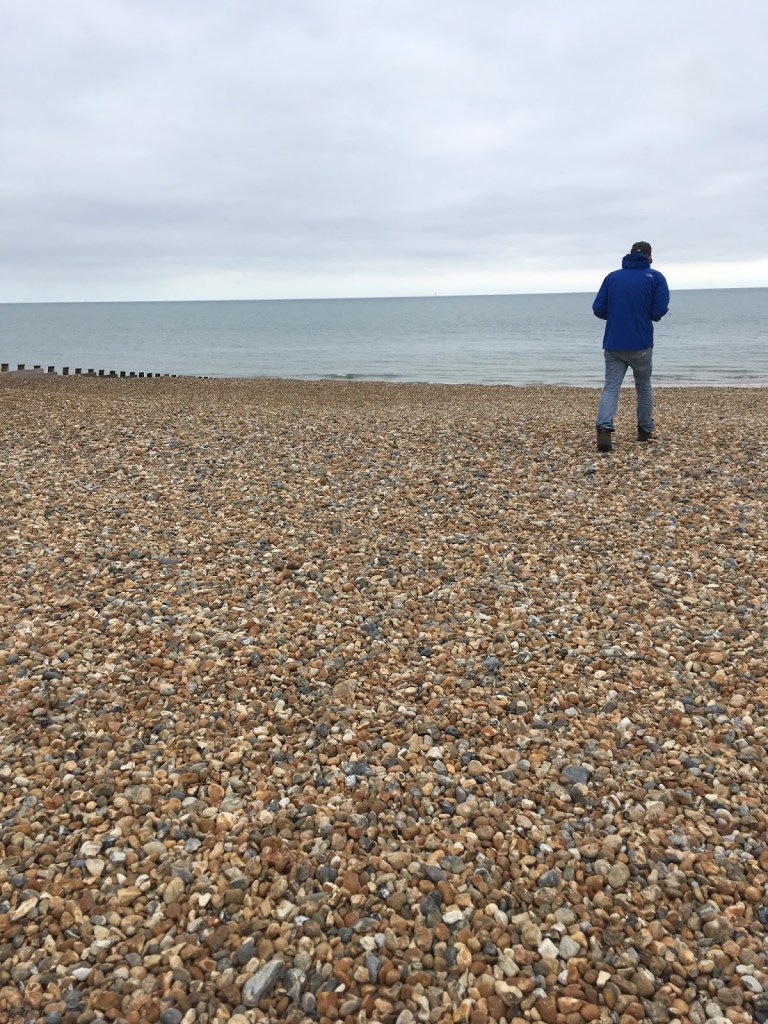
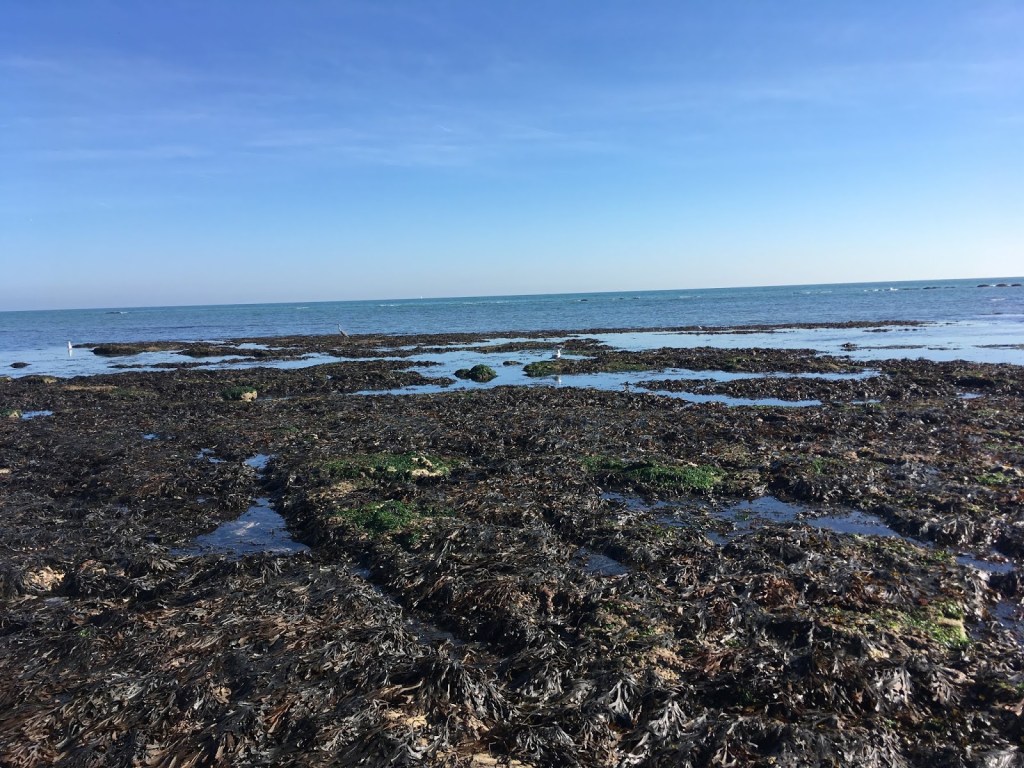
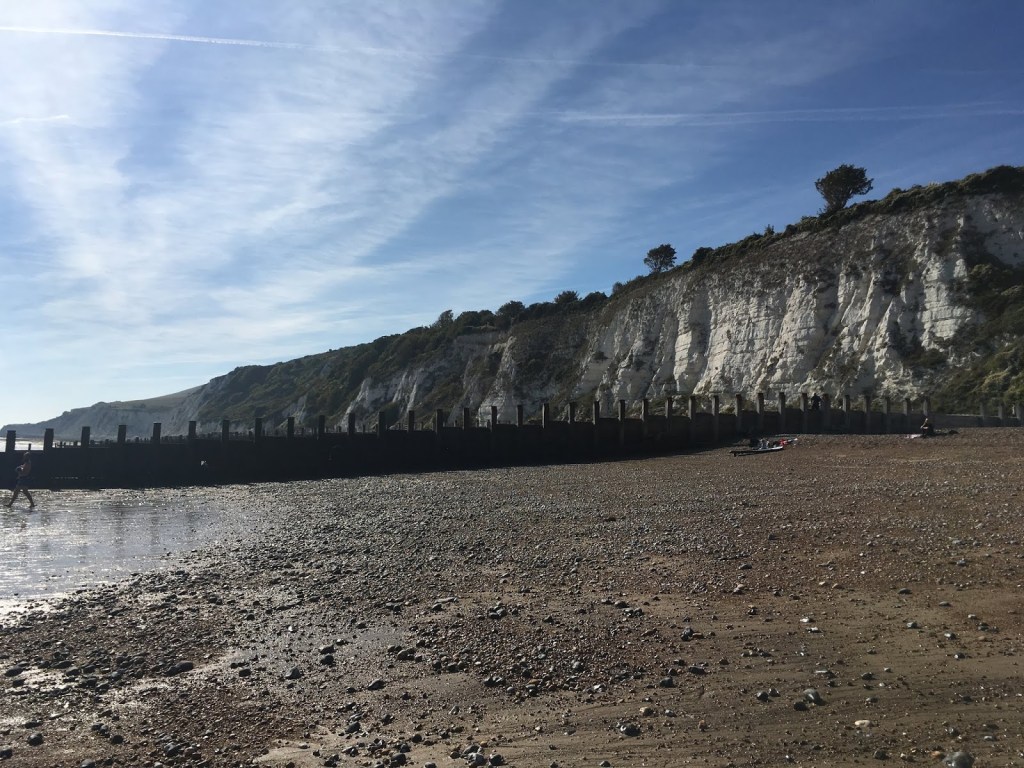
BEACHES: Sandless beaches, just tons of  beautiful, smooth rocks on the English Channel.  Tide went low enough to walk through thick seaweed blanketed  rocks. White cliffs, bigger then Dover, towering over the beach.


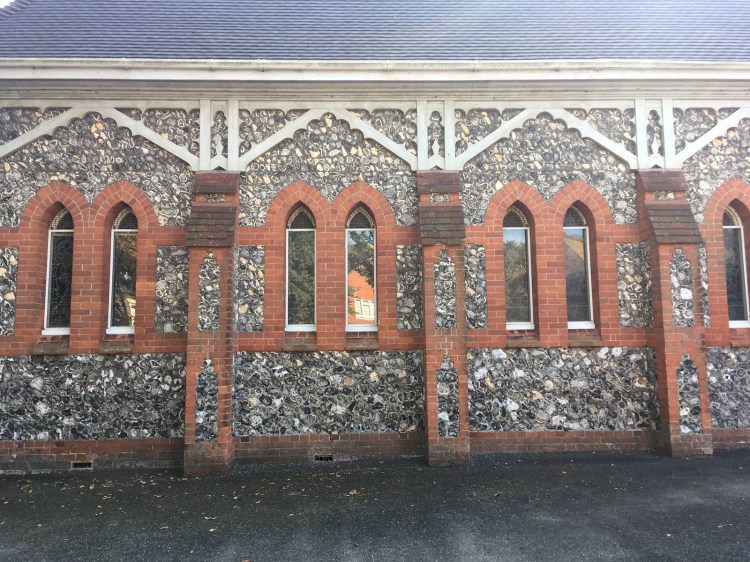
BUILDINGS: Rocks embedded into walls of houses and churches, characteristic of this area of England. Its called bungaroosh- a mixture of brick lime, sand, flint, and beach pebbles. Its considered to be very weak, but these buildings are old!


MUSEUMS: This little town had some impressive museums. The Towner gallery focused on contemporary art and had an Eric Ravillous show, a British artist and designer that we had never heard of and liked considerably.  Along the beach, in the Pavillion (essentially a coffeehouse/gallery) was a thoughtful and rather unique exhibit on Memories, Keepsakes and Heirlooms which is surprising given the venue.  It used items from Eastbourne a from the Romans,1800’s diarists,  a Czechoslovakian holocaust survivor and others to
 “uncover the memory triggers of nostalgic childhoods, heirlooms and commemoration of loved ones, exploring how we create memories – both true and false, and how we choose to remember, or in some cases, even forget”
Read more at: https://www.eastbourneherald.co.uk/lifestyle/unlocking-eastbourne-s-lost-memories-at-new-exhibition-1-8413960


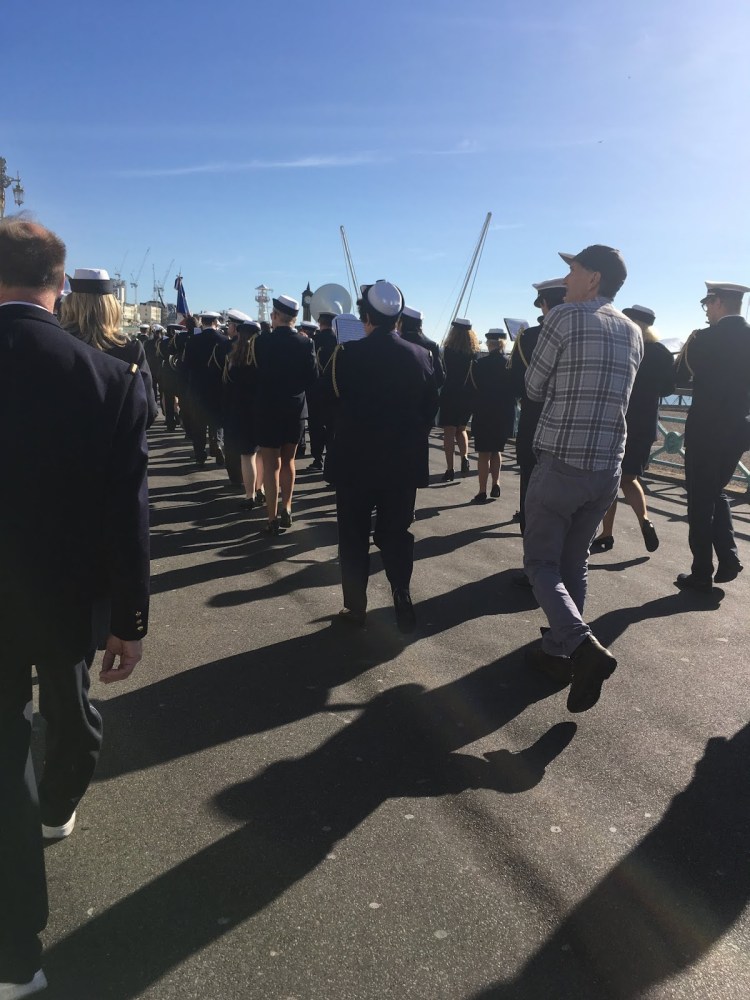
BRIGHTON: We took a local bus through fields of sheep and housing developments to the better known beach resort town.   Seems like towns like to meet us with parades. Don’t know why, but there was a marching band upon us almost immediately as we touched down. Nick fit right in.


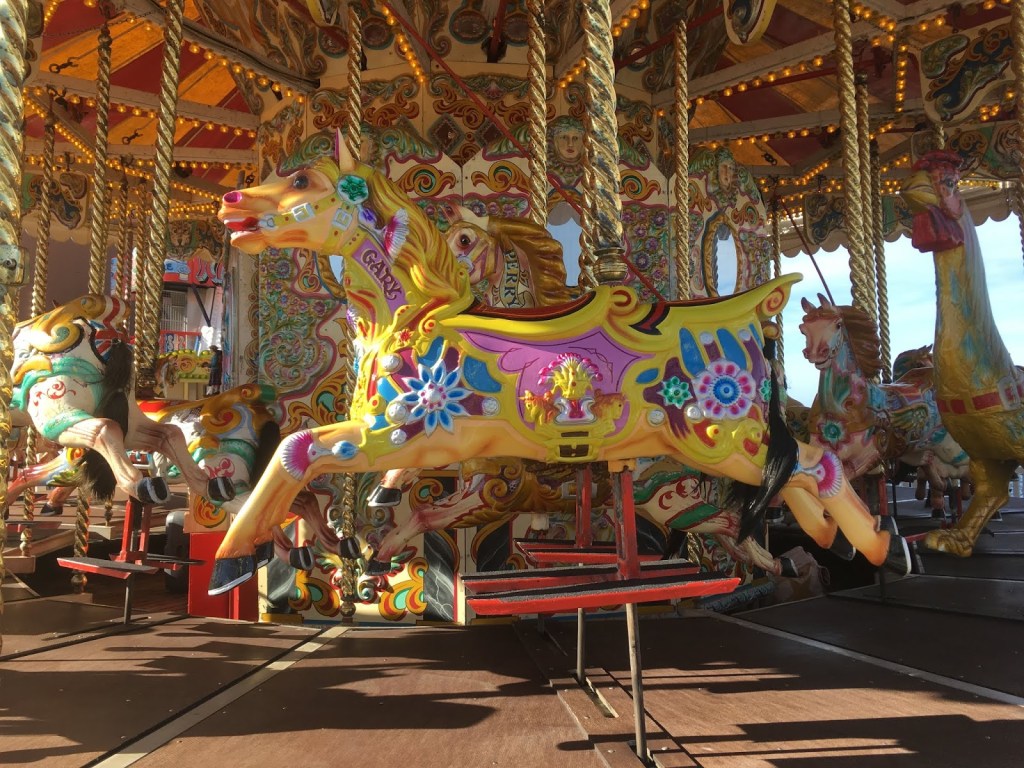
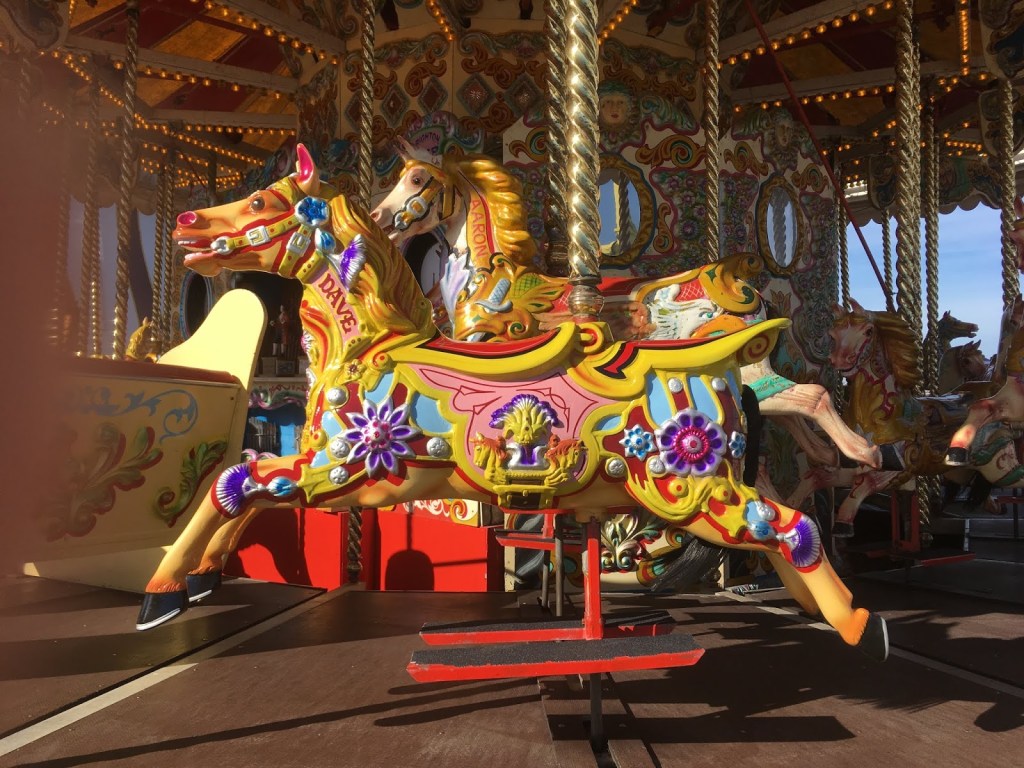
Brighton was bigger but not necessarily brighter then Eastbourne, although it did have a carousel with horses with names, but Gary, David and Aaron ?

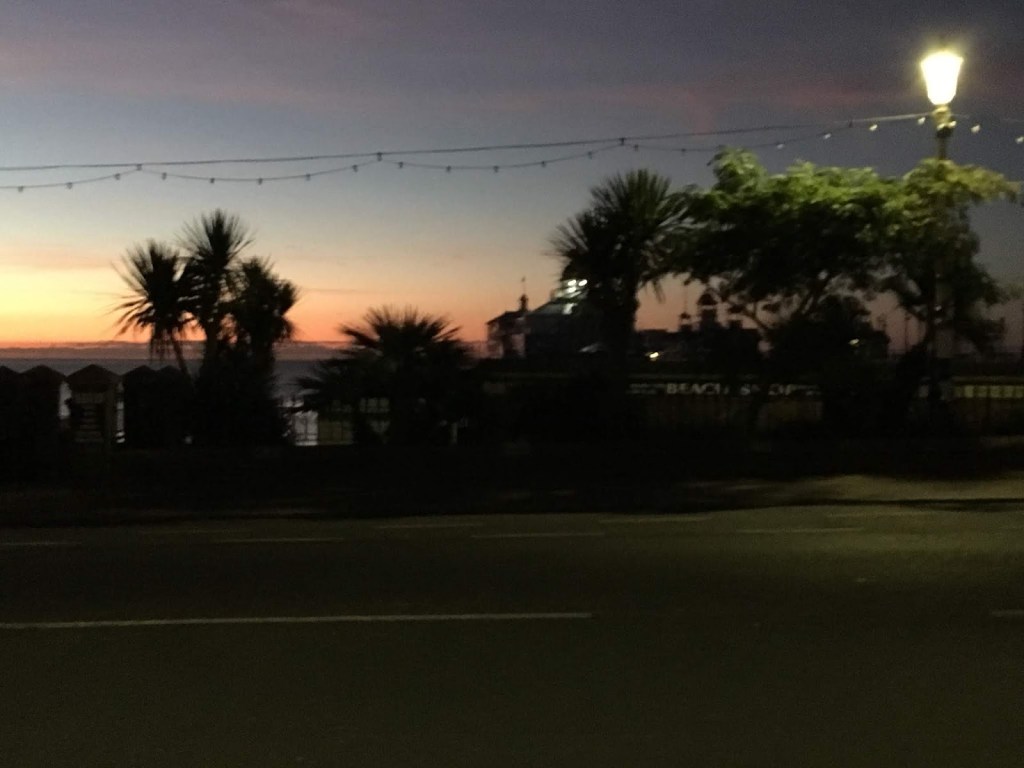
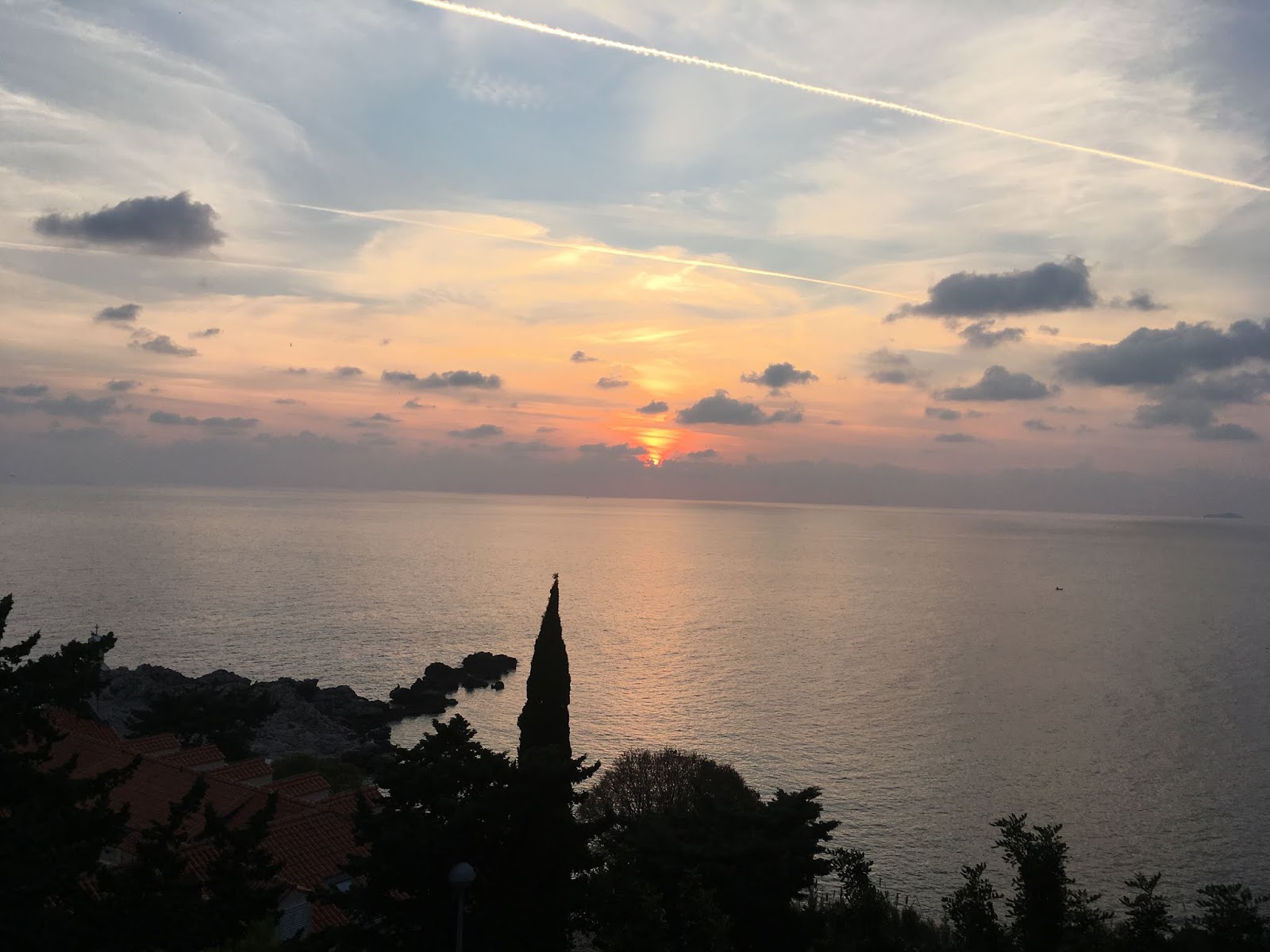
The southern Sussex coast was a great welcome to Great Britain. The only challenge we, as West-Coasters, had was coping with the sun setting AND rising over the sea.

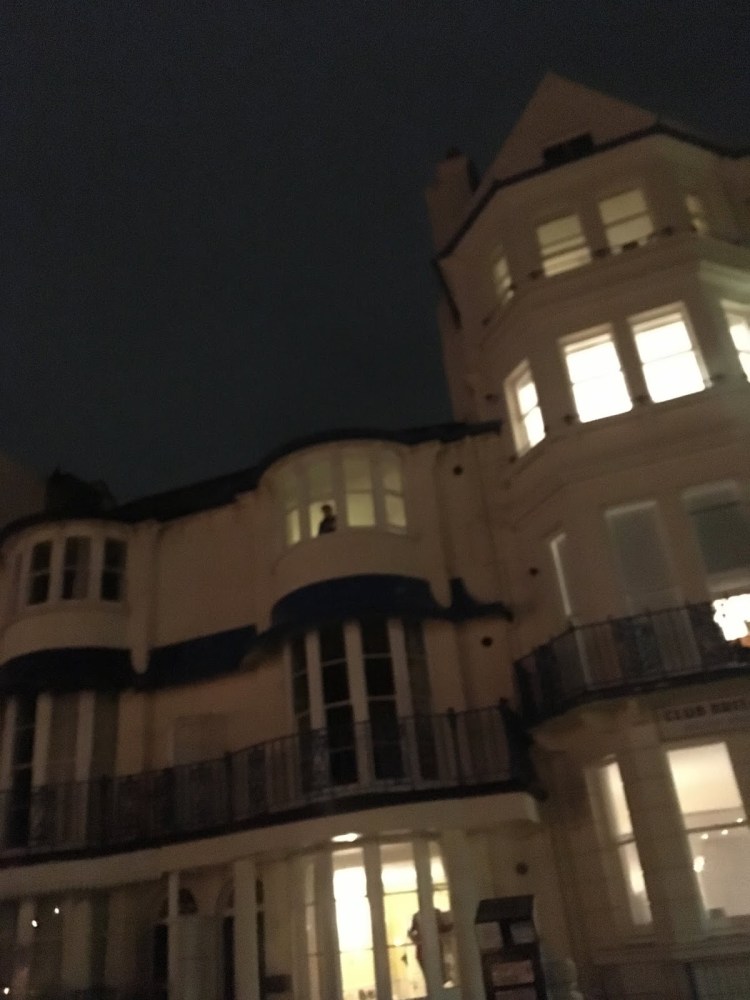
This week’s photo of topless old man looking out his window contemplating his life: everyone loves a parade.


Schengen

This is a bit of an update from our original post in 2018.

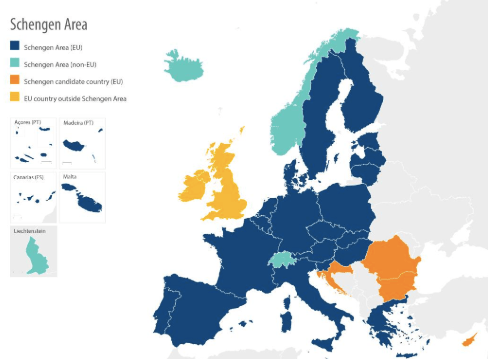
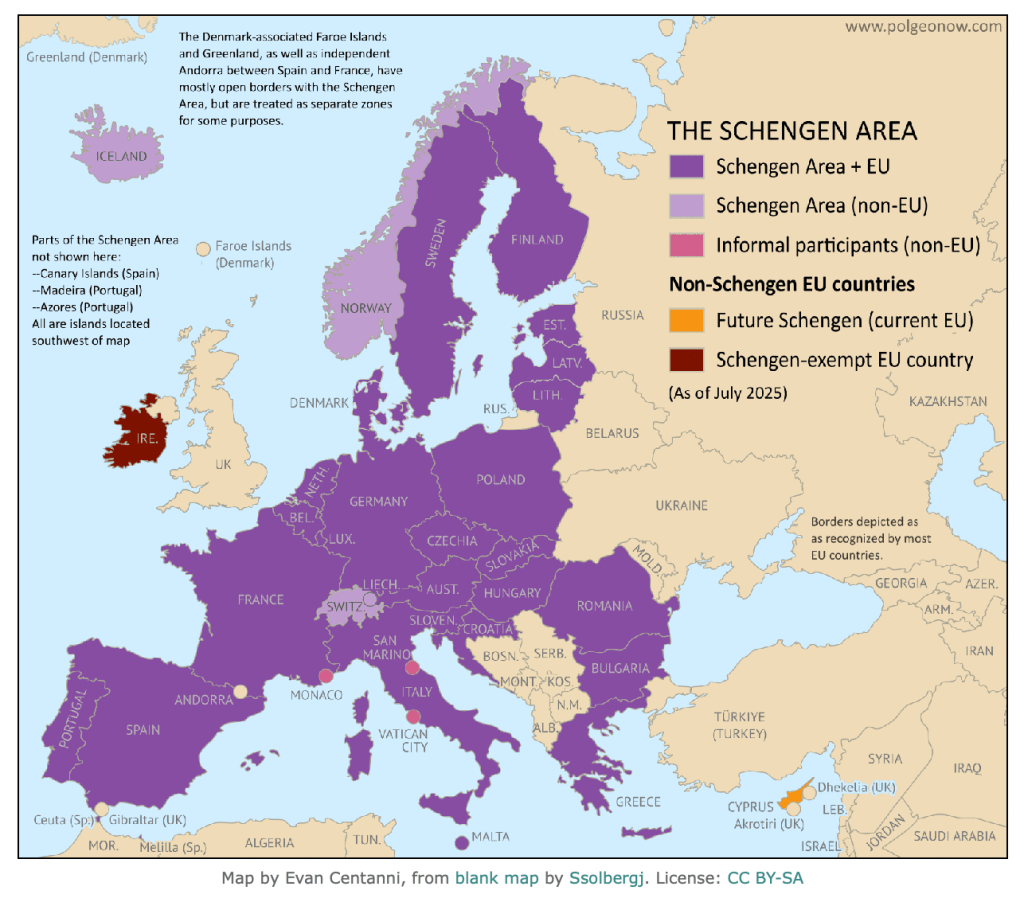
In visa language “Schengen” translates to travel math. Actually it is a name of a town where an agreement was reached between European countries to allow free travel between without going through border control. For the tourist, Schengen is an area, pretty much all of western Europe where you can stay for a total a total of 90 out of 180 days. It can get a little tricky calculating how many days you have left, a bunch of Schengen calculators online. If you overstay, you can be banned from coming back to any of the Schengen countries. Apparently, they are very strict.

In 2018, there were a few countries that were not part of the Schengen agreement so do not count towards your time in Europe- Great Britain, Ireland, Croatia, Bulgaria, and Romania. Most of the Balkans were also not included, nor was Cyprus.

In 2026, Croatia, Bulgaria, Romania and Cyprus are now all Schengen. As a tourist, this may not seem great, but it is great for these countries as it represents free trade and travel for EU citizens and by welcoming new countries, it acknowledges improved governance. It does impact our plans, BUT if we did not have those Schengen restrictions, we probably would not have gone to the non-Schengen countries and those were some of our favorites. Because of Schengen, long term travelers, like us, look to various plans offered by different countries for longer stays, often called “golden visas”. Some countries you can purchase property, but these schemes are being changed as it has impacted housing affordability in attractive places (Hello, Portugal). But for old people like us, it actually is not hard to get a year visa- just show health insurance and an income. There are restrictions like you have to stay in that country 6 months of the year but we are not ready to do that et.

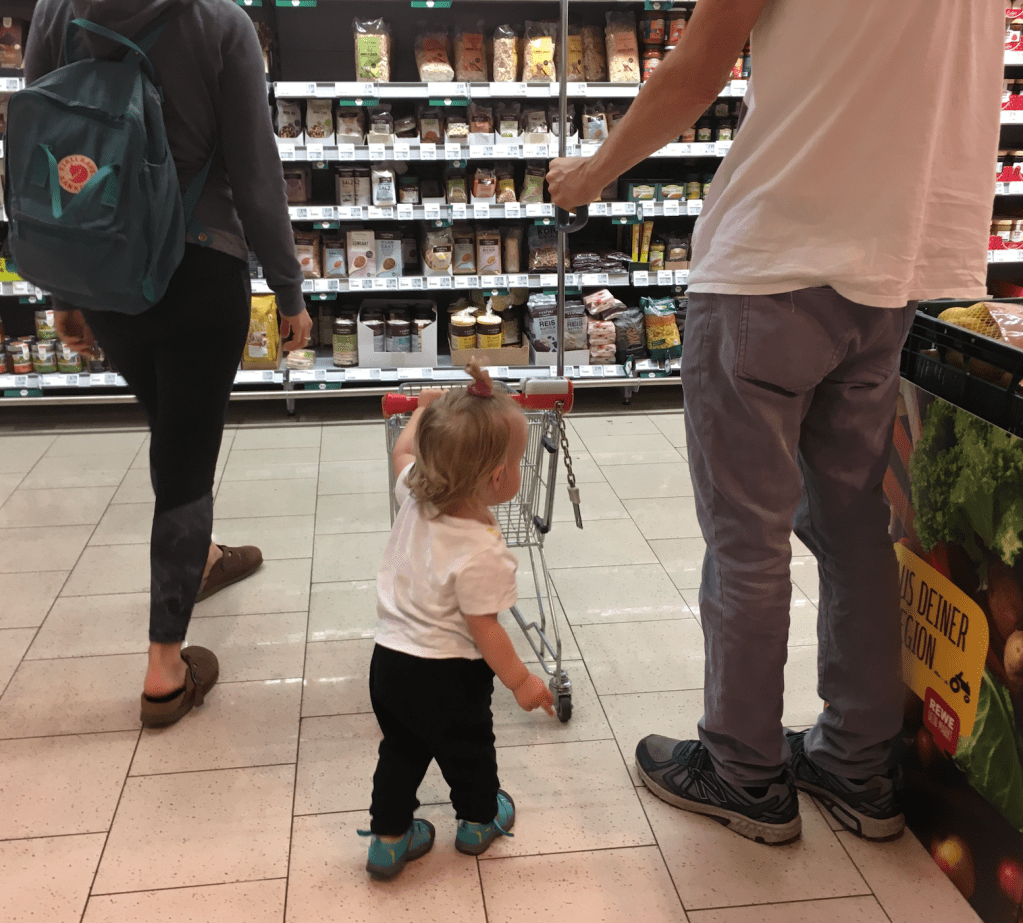
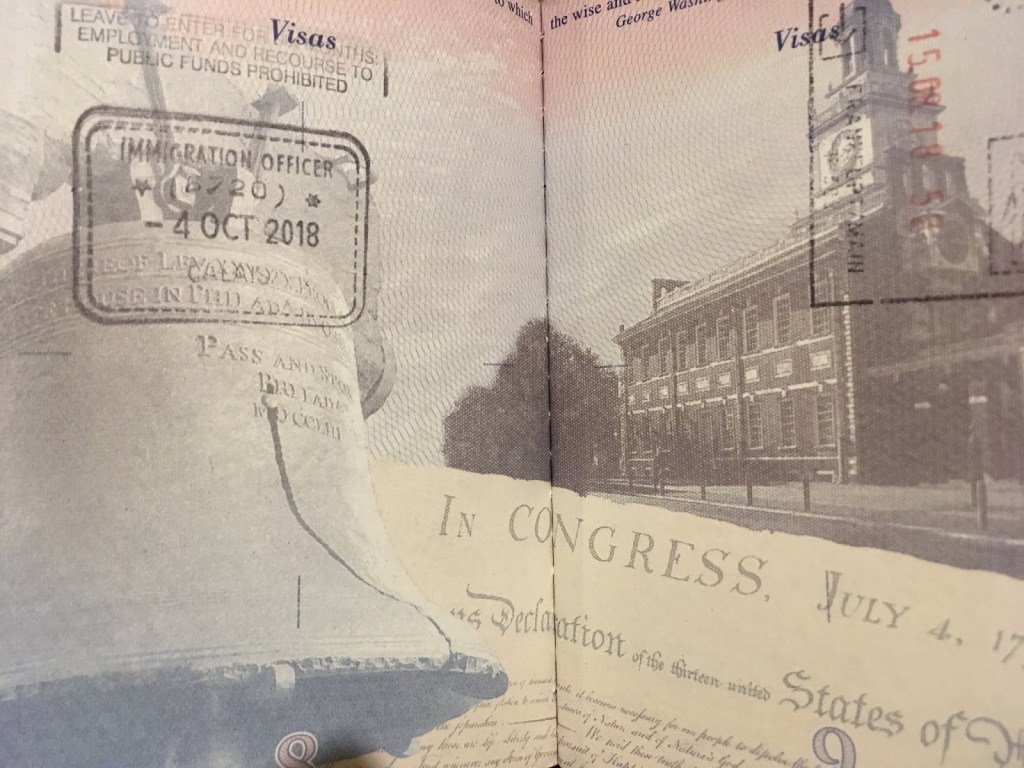
When we first started traveling in 2018, we had contacted the German consulate in hopes of getting a year long visa and bypassing the Schengen limitations. They told us it would not be a problem since we had a reason to be there (see picture!) but when we tried, it turned out to be more difficult. Showing we had health insurance was easy but we would need to open a bank account with $10,000 and rent an apartment for a year!


Instead, we just changed our itinerary. We had planned to travel north to Scandanavia, then south through Eastern Europe and end up in the Mediterrean, then back to Germany for Christmas. Instead we just decided to use our Schengen time in Germany, a couple of weeks at a time (see picture), and then all our other time would be in non-Schengen countries. So on Sunday, with plans to leave Germany and go to Amsterdam on Wednesday, we hit Rome2Rio.com, Flix Bus, CrazyTourist.com, Bookings.com, Hotels.com, Air BnB (which we no longer use since we try to have morals), to figure out where to burn off some Schengen time. UK would be up next.

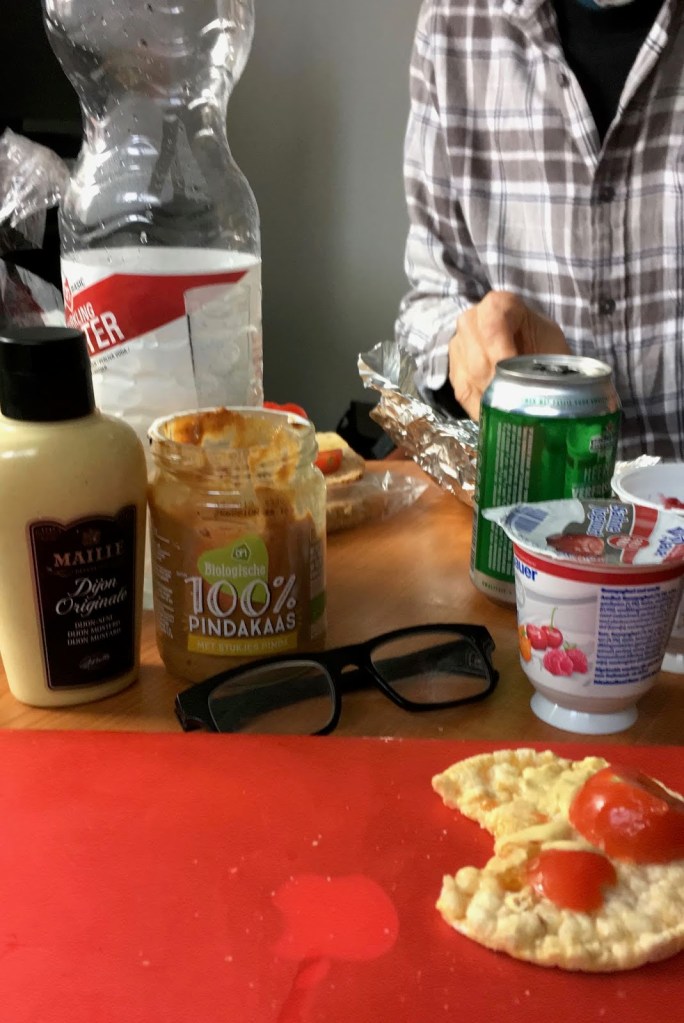
We are frugal. Always searching for the most economical lodging. Long term apartment stays, 4 nights in an Antwerp hostel (private room not dorms), 4 nights on an Amsterdam houseboat and nine nights on a futon in our daughter’s dining room. We rarely go out to eat, rather subsisting on yogurt, eggs, tuna, corn thins, mustard, cheese, nut butter, fruit and mixed nuts. We have been known to walk 5 miles and see a city, rather than take a bus.


So, when the opportunity arose to take a 12 hour red-eye bus from Amsterdam to London for 25 Euro, we jumped on it.  What a deal!  Transportation AND a place to sleep!  The journey started at the south Amsterdam train terminal, in the parking lot, waiting for our (late) bus at 7:30 pm.   (yes we know there are tons of cheap airlines, but when possible we try to take buses and trains, because we do try to be ethical).


Once we boarded, it was difficult to sleep, because there were stops in Utrecht, Antwerp and Brussels, plus our assigned seats in the third row gave us nearly front row seats to enjoy the surround sound  of the uninterrupted ’80’s  soft rock hits the bus driver was playing.  At 1:30 am we stopped just outside of Dunkirk for an illegal immigrant check. Luggage bins were searched, flashlights shone at our feet and under seats in an effort to find hiding migrants,  which would have explained the poor leg room.  Then to Calais where we de-bussed for interviews and passport checks with French and English customs.  We passed and got our cherished non Schengen English stamp.


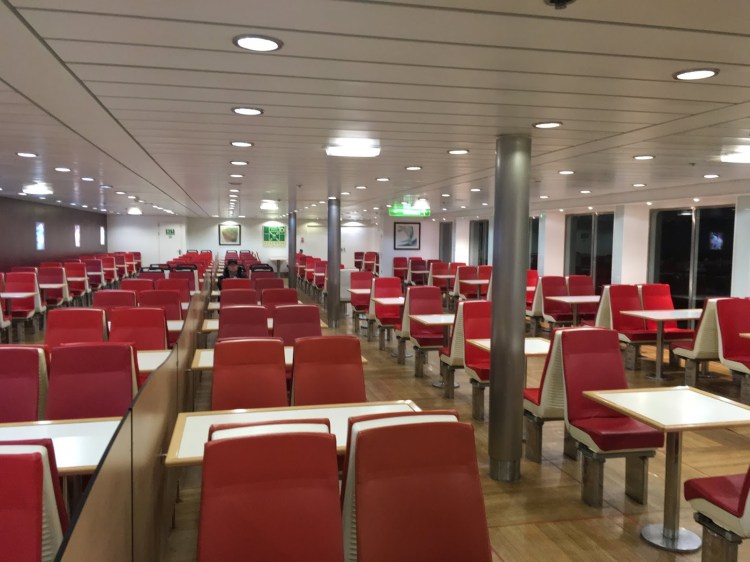
This week’s photo of topless old man looking out window contemplating his life: looking to make lifelong friendships on the ferry ride.


Amster, dam look out!

After a record heat spell in Northern Europe, the weather finally started to change with the beginning of October, leaves were turning colors, sweaters were pulled out of our backpacks, and for a few days raincoats too.  So, naturally, after Belgium we decided it was a perfect time for a beach holiday on the North Sea.
For long distance travel we utilize the trains or buses, mainly Flixbus, which if booked in advance can be as low 5 euro.  It had worked well, until we tried to leave on a Flixbus on an early near freezing, very windy Friday morning out of Antwerp to The Hague, Netherlands.  Standing out on the street with loud construction nearby (actually, all of Belgium seemed to be under construction while we were there-it takes a lot of work to keep everything looking old and functioning), we waited and bonded with our group of fellow travelers heading north.  Soon, we all started getting texts indicating the bus would be an hour late, then two hours late, then 5 hours late, then a text do you want a refund-(yes, but we still haven\’t gotten it.) So, we rushed over to the train station to catch a much more expensive train, saying goodbye to the hardy few still deciding whether to wait it out.
Upon arriving in The Hague, which looked slightly more modern, but otherwise similarly clean and beautiful as everywhere we\’ve visited. We walked 6 miles from the downtown through pristine neighborhoods,

wooded trails to the beach in Scheveningen.  We stayed at a Skotel, which was a hotel run by eager students from a nearby Hospitality School.

Each room was decorated with donated furniture from hotel chains. We got Euro-Disney Newport Harbor!

Still windy and cold, we headed for the beach.  It was just like Santa Monica (minus 40 degrees) a long strand of sandy beach with a pier, ferris wheel, shops, restaurants plus viewing an endless stream of freights and oil tankers crossing the North Sea.  It was great!


Amsterdam

We haven\’t looked up the statistics but thousands of tourists must be hit by bicycles in Amsterdam every year.  Everywhere, everyone is riding at top speeds on the streets.  Bike lanes adjacent to sidewalks filled with bikes and motorcycles buzzing past. Each step requires a full 360 degree look before proceeding.  Between the bikes, the crowds, trams, cars and the canals splitting every other street,  it is a horrible place to jaywalk ( a favorite hobby for which Nick has  been ticketed in LA).  The canals created originally for flood control, are equally crowded with both local small boats and tourist cruises.  Holland is obsessed with the fear of flooding and water control, rightly so, since the great storm flood of 1953 which killed a couple thousand people. We watched an incredible movie at the Rijksmuseum about the building of the dykes in Zeeland the lower portion Netherlands which suffered the big flood.

Amsterdam was the first place we had reservations about, but it eventually grew on us, somewhat.  Tourists (including us) everywhere, and because of the canals and bicycles we were all cordoned/herded into narrow sidewalks.  We didn\’t think it was a place we would want to live, because although very exciting and lively with pretty areas, and non stop fun; it felt like if you lived in Disneyland (Main Street adjacent, because that would be more affordable). The hordes of people were exhausting.

Of all the different areas of Amsterdam-Canal-land, Pot-land, Museum-land, Red district land, bicycle repair-land, and ER land, we mainly visited Museum-land, although Pot-land like \”It\’s a small world\” is hard to avoid. The smell of pot is ubiquitous, there was even pot smoking canal cruises (may be Amsterdam is the happiest place on earth).  Museum-land was special, but again crowded, not only tourists but students, which was great, because most were little kids (in museum issued lab coats) that were granted special access to pictures, necessary since  often hard to negotiate seeing pictures due to the crowds.
We visited the RijksMuseum, The Van Gogh Museum, and the Microbe Museum which showed how bacteria and fungus are everywhere, kind of like the tourists and makes you never want to touch or eat anything ever, again.

Housing was a challenge due to our spontaneous travel and the popularity of Amsterdam. With limited lodging choices,  we ended up at a B and B canal houseboat.  It was a different experience then what we have been doing so far, definitely enjoyed the ducks and swans swimming up to the windows.    The longer we were here, the more we ventured outside the central tourist core, the more we enjoyed Amsterdam.  However, we again suffered bad Mexican food, fooled by the name- the California Burrito Company.

Belgium, part 1

Belgium held some strong allure and it was the first place we went after leaving Saarbrucken.  Was it because it functioned without a government for 541 days starting in June 2010? Was it the creep/disgust factor after reading King Leopold\’s Ghost (great book)? Rubins? The Brueghels? Belgium kind of seems like a middle child, wedged between siblings France, Germany, Luxemburg and Netherlands. We were intrigued, not disappointed and surprisingly effective tourists. Antwerp was the first stop, a central spot to explore the area.  Although we appreciated being allowed 9 nights on A and W\’s couch in the tiny dorm apartment, surrounded by small plastic farm animals, dog toys, a kitchen table and furniture waiting to be moved from their temporary to permanent apartment, we were longing for a more barren space to sleep.

We found the ASH hostel in Antwerp. We like hostels (private rooms, not the dorms) because they usually are very simple, clean,  have access to a kitchen and hostels are almost always in great locations.  This was 2 blocks from an awe-inspiring central station and walking distance to almost everything, well for us almost everything is walking distance.

After the Lenten period of 40 days in quiet Saarbrucken seeing the same 10 people over and over, sidewalks full of people in Antwerp was actually a welcome sight.

Our first morning we left Antwerp arriving in Ghent at St Pietr (north) station. Thus starting here, and eventually leaving from Ghent Central (south) station to head for Bruges,  allowed us to walk from one end of the city to the other- residential, old, older, newer and University.   It was nice because, like Strausburg (https://thechosenfugue.blogspot.com/2018/09/day-trippin.html   ), this city with a rich gothic city center was still a modern vibrant city on the edges.  The Cathedral and other churches were, like most European churches, awe-inspiring for many reasons but Ghent\’s churches all had a twist, particularly the whale skeleton hanging in the Cathedral (part of the \”out of the box\” art installations).   Could this be the source of all those Mrs. Paul\’s fish sticks, eaten as a child on Fridays?

 Everytime you turned a corner in Ghent, there was something just waiting to be seen.


 Even Father Damian of leprosy fame in his home church. As we were leaving Ghent, another great thing happened, really good Mexican food.

Next up was Bruges, which was also really beautiful,

but we kept thinking of the movie \”In Bruges\” (very well liked) and were still kind of in-love with Ghent, but Bruges was still very much worth the trip.

Belgium part 2

Not sure what it was about Antwerp. The contrast of our monastic hostel room to the exquisitely tiled/painted/carved ceilings/walls/floors of almost every surface? Wide boulevards with huge, stately buildings with fingertips of narrow winding streets lined with delicately, detailed row houses? Waves of people- walking, riding bikes- there was a vibrancy with a super pleasant vibe.

Our second day in Belgium coincided with free museum day in Antwerp. We scored.
First stop, the Rubenhaus. A lovely tribute to Peter Paul in his own home.  His work, his student\’s work, art and gardens that inspired him placed his art in context- all tucked away in a brick house  just off a major shopping street.  It was an intimate glimpse into the artist and the period when he lived.

Second stop, was up at the port, the Museum aan de Stroom (MAS), probably one of the most entertaining and imaginative museums we have been to, starting with the building. You start at the top and see the whole city and beyond, putting the city of Antwerp into it\’s context.

Each floor considered various aspects of city life; from overarching themes like life and death as interpreted by the many different religions in the city- the chutes and ladders game included in that exhibit. Moving down the stairs, exhibits on shipping, on foodways- how the food is grown, how it gets to the city, how we digest and excrete the food with an impressive toilet exhibit.

Another floor focuses on celebrations, highlighting the history of the ommegang parades of giants (and we thought Ommegang was just another beer brand) and Pride celebrations.  Unsure if the way the Pride pictures were displayed were supposed to be like a peep show, but it did seem like it.  Finally, the last floor was an exhibit about museum storage, always fun.

The sun was still shining and we just finished 2 museums and it was still early. On to the third.
No pictures of this but it was stunning.  The Red Line Museum is a museum about emigration- since Antwerp was the major port for refugees to leave for the US and Canada (https://en.wikipedia.org/wiki/Red_Star_Line) . It was pretty brutal. Combined with the Tenement Museum in NY, the Famine museums throughout Ireland  and any Holocaust museum and you have a very real, very tragic picture of the last century. 
After that, we walked from the tip of Antwerp to the bottom, crossing through many different neighborhoods including the Orthodox Jewish neighborhood.  It was the last night of Sukkot and although there were no Sukkah standing there were a lot of people out and a rather significant carnival. Although Belgium has had difficulties with terrorism, the only time we saw armed police were in front of a Jewish school. Impact was even stronger after just going to the museum.  After a very long walk, we ended up at the University and just beyond the Middelheim Park, a huge sculpture forrest/garden.
Capped off the day with another attempt at Mexican food, although not as successful as in Ghent. A lot of walking, we were ready to put Antwerp to bed.

Brussels followed on the third day.  Brussels was beautiful, we spent the day enjoying the Royal Museum of Fine Arts, Magritte Museum and the Fin de Siecle Museum, a little overwhelmed especially with the first museum and pretty fascinated by artists we were not as familiar with in the Fin de Siecle Museum.  We found a wonderful diorama  (how could we not appreciate these after three daughters who each seemed to consider diorama the quiessential school project) 

We wandered through parks, around massive and ornate buildings, thinking about the Congo (you kind of can\’t help it if you have read King\’s Leopold\’s Ghost) and then we stumbled on the Grand Palace Square, (not our pics- from UNESCO) so overwhelmed, we forgot to take pictures

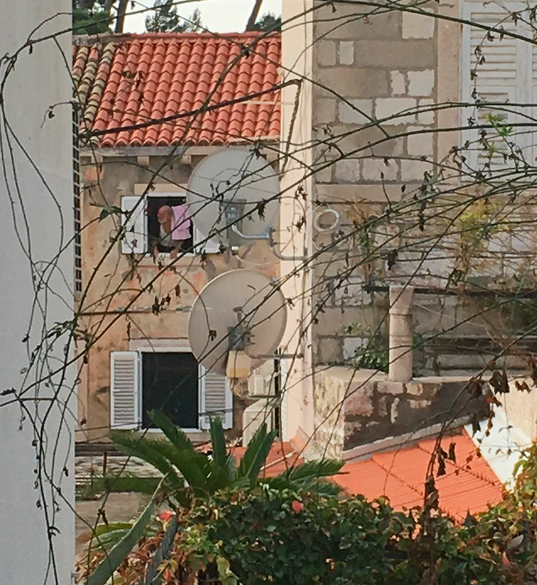
This weeks photo of a topless old man looking out window contemplating his life.