Ya-Sas Cyprus

This blog was imported from an old platform and looks bad, sorry.

 
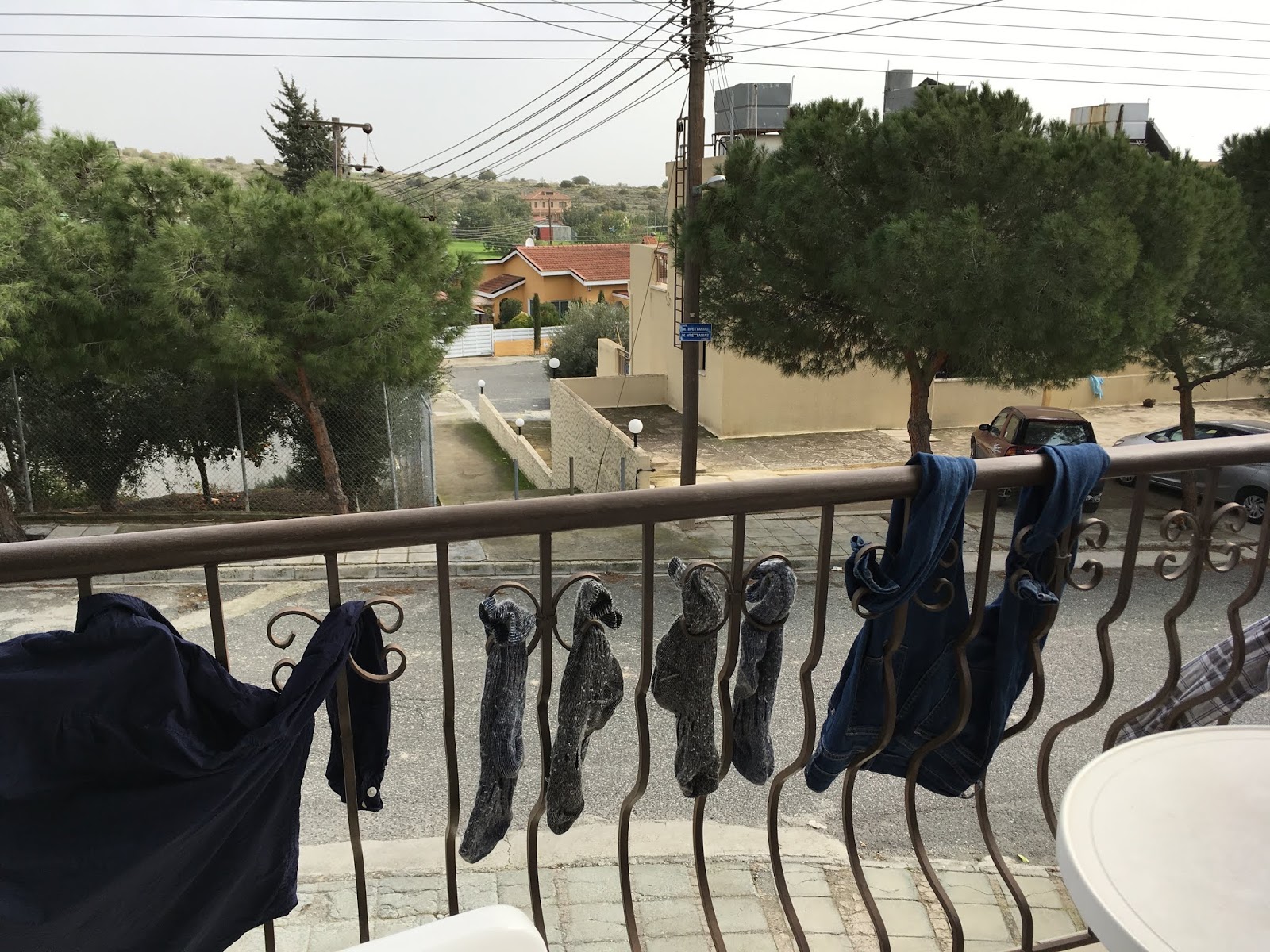
Laundry room with a view @ Club Aphrodite

Our last stop in Cyprus included more ruins and our free timeshare resort week. Ancient buildings repurposed many times, now deserted; toppled stones; relics from previous eras; villas passed through many hands over the years; rudimentary plumbing; signs of a previous bathing pool- that was the resort.  Club Aphrodite!  Only difference from the local ruins was the resort villa had a bowling green next door.  The ruins, while seeming to be not as old or poorly constructed as our resort, were pretty spectacular.

Club Aphrodite was indeed the last resort as it was at the remote end of an 80\’s style housing development a good mile from anything.  It would not have looked out of place in most American suburbs with the exception of the ubiquitous (and still sour) citrus trees lining the streets plus severely pruned trees and, of course, cats.
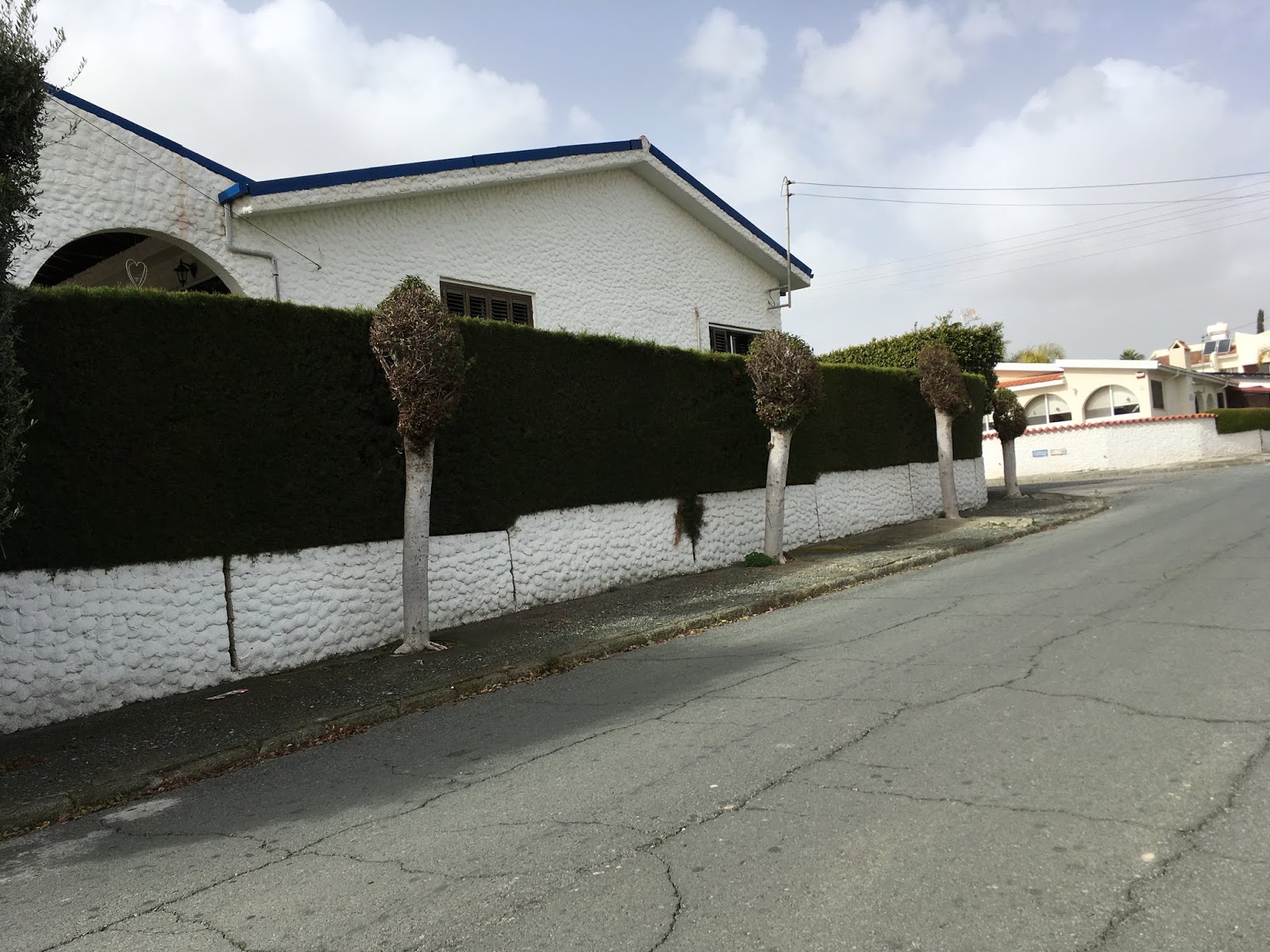
Q-tip trees growing around Club Aphrodite

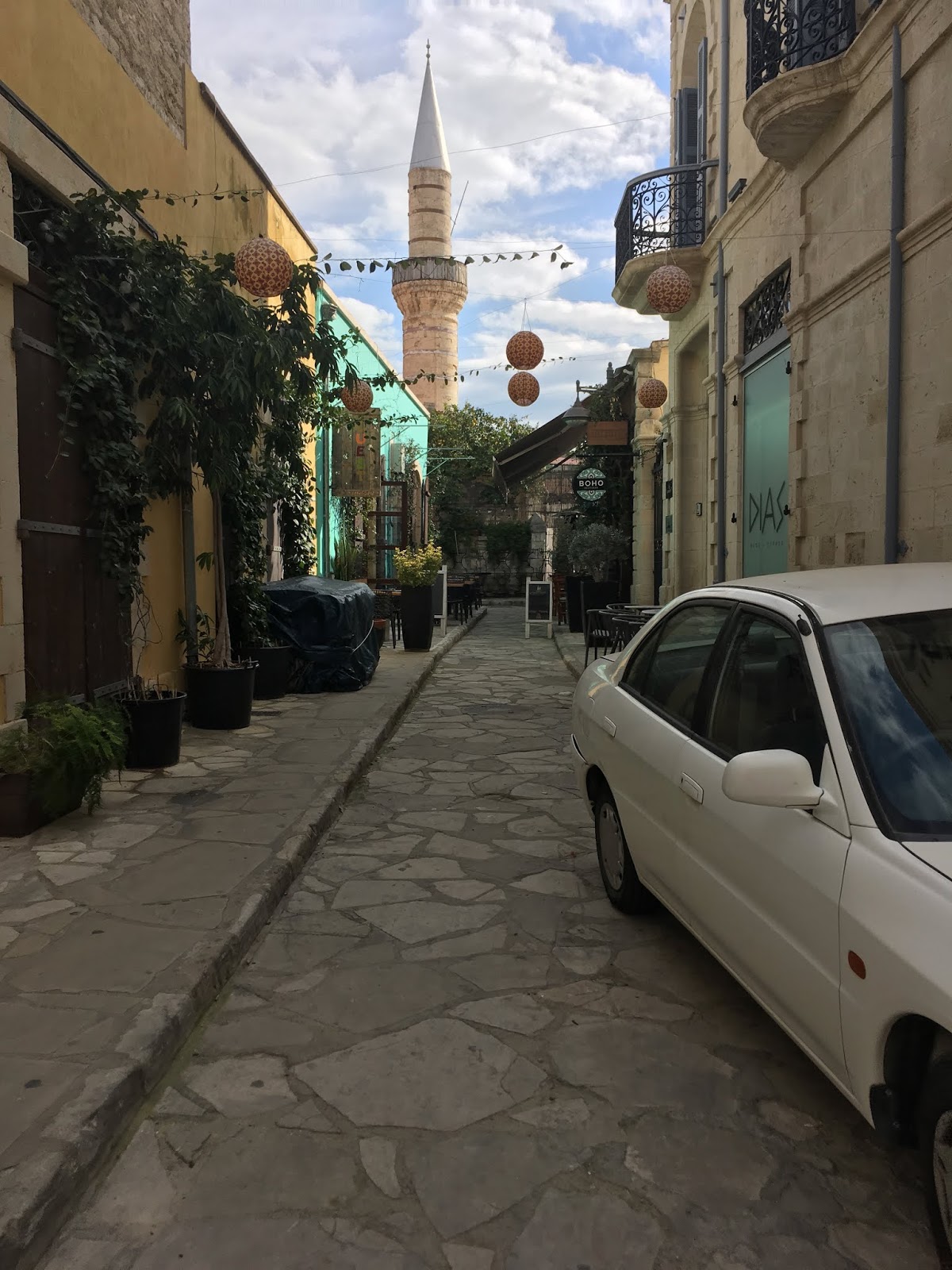
Our days in Limassol, continued our established Cypriot routine: staying at ruins, walking to ruins, wandering through ruins, walking along the coast and going to the market.  Due to Limassol\’s urban sprawl and the location of ruins, this also included a lot of bus rides (with a lot of unnecessary confusion).  Unfortunately, buses did not reach all of the ruins and required long walks on a thin ribbon of shoulder on very busy streets or freeways.

First stop was Kolossi castle where Richard the Lionhearted married Berengaria of Navarre  on May 12, 1191. Destination wedding!  Later in the year 1191, Richard sold Cyprus to Robert de Sable (the master of the Knights of Templar).  Robert then flipped it the next year to Guy of Lusignan beginning the three century reign of Cyprus by the Lusignans until the Ottomans began their three century reign in 1571. The country continues to be up for sale,  with housing construction all over every city with real estate billboards everywhere.  We just read that Cyprus is entangled in some of the Russian laundering which has surfaced in the Manafort conviction (Club Aphrodite time shares?).  A Russian oligarch whose name has surfaced in the case owns 9% of the Bank of Cyprus (should we have not used that ATM? )
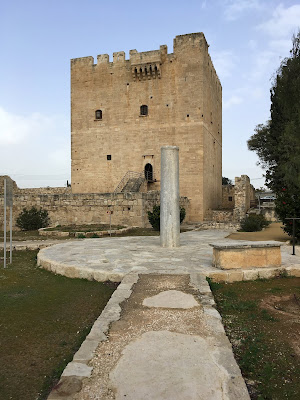
Kolossi Castle

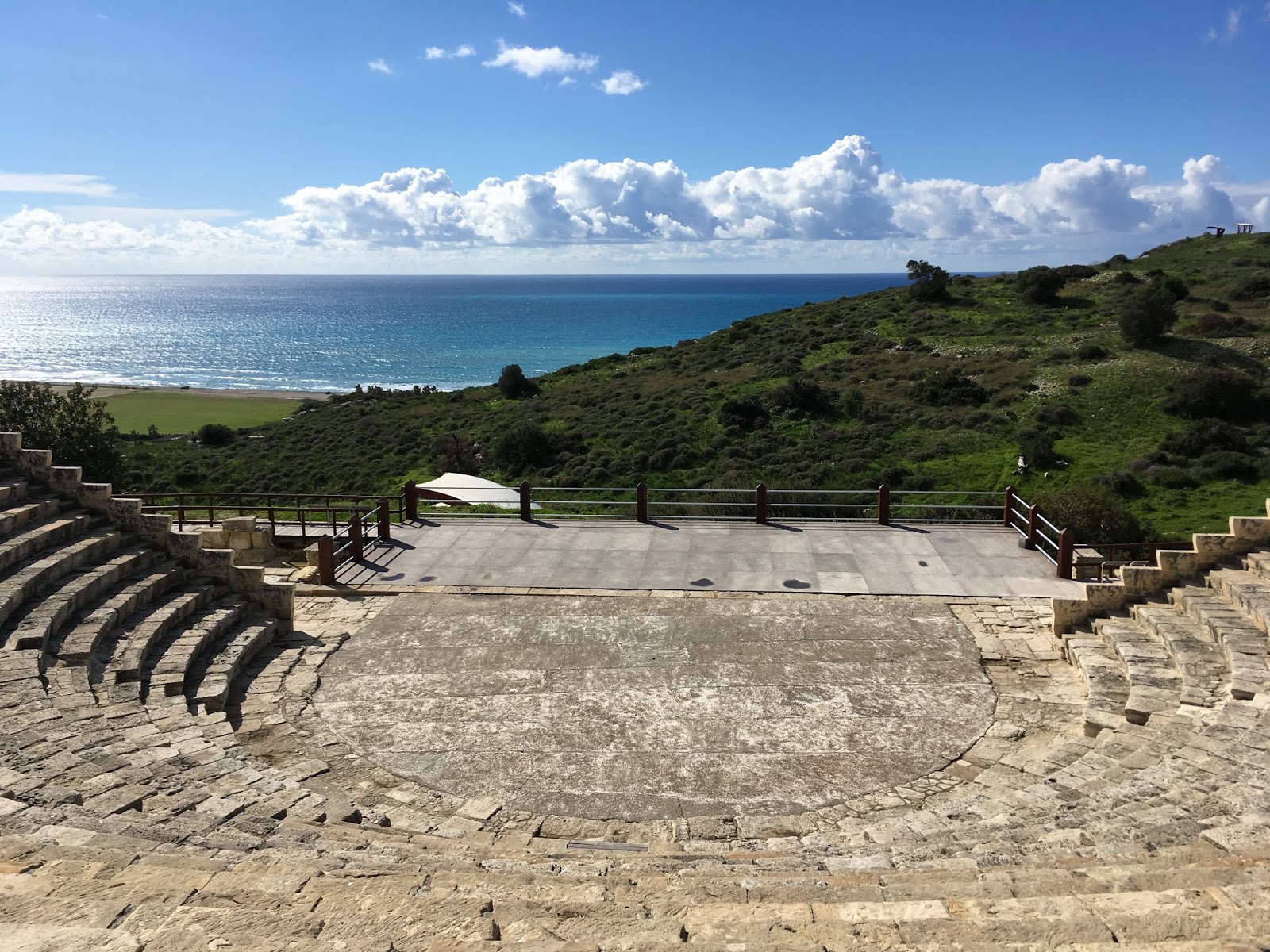
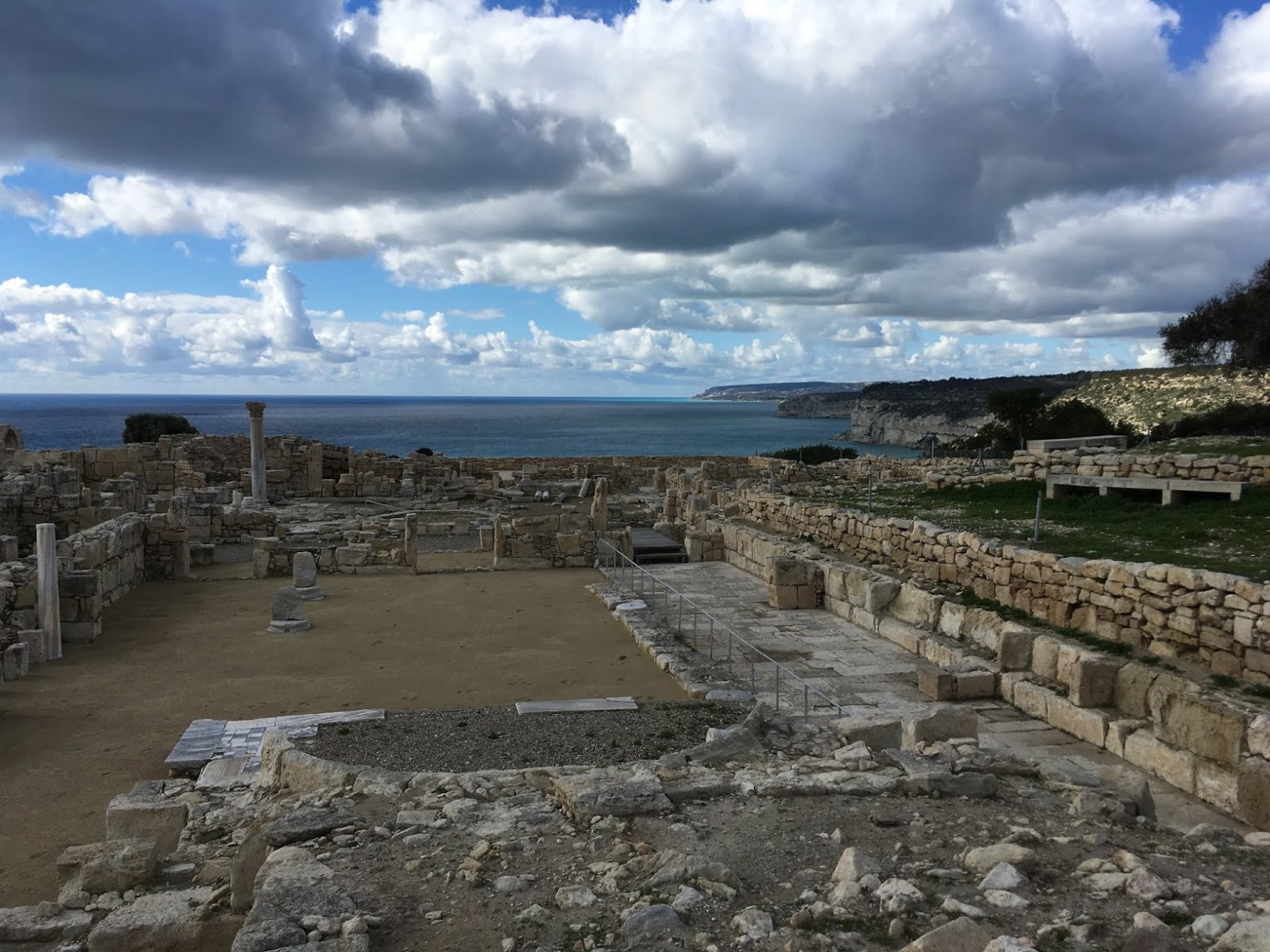
Second set of ruins  was Khourion, the remains of an entire city with more beautiful mosaics, striking still-in-use amphitheater- how could you pay attention to the the performance with this view?
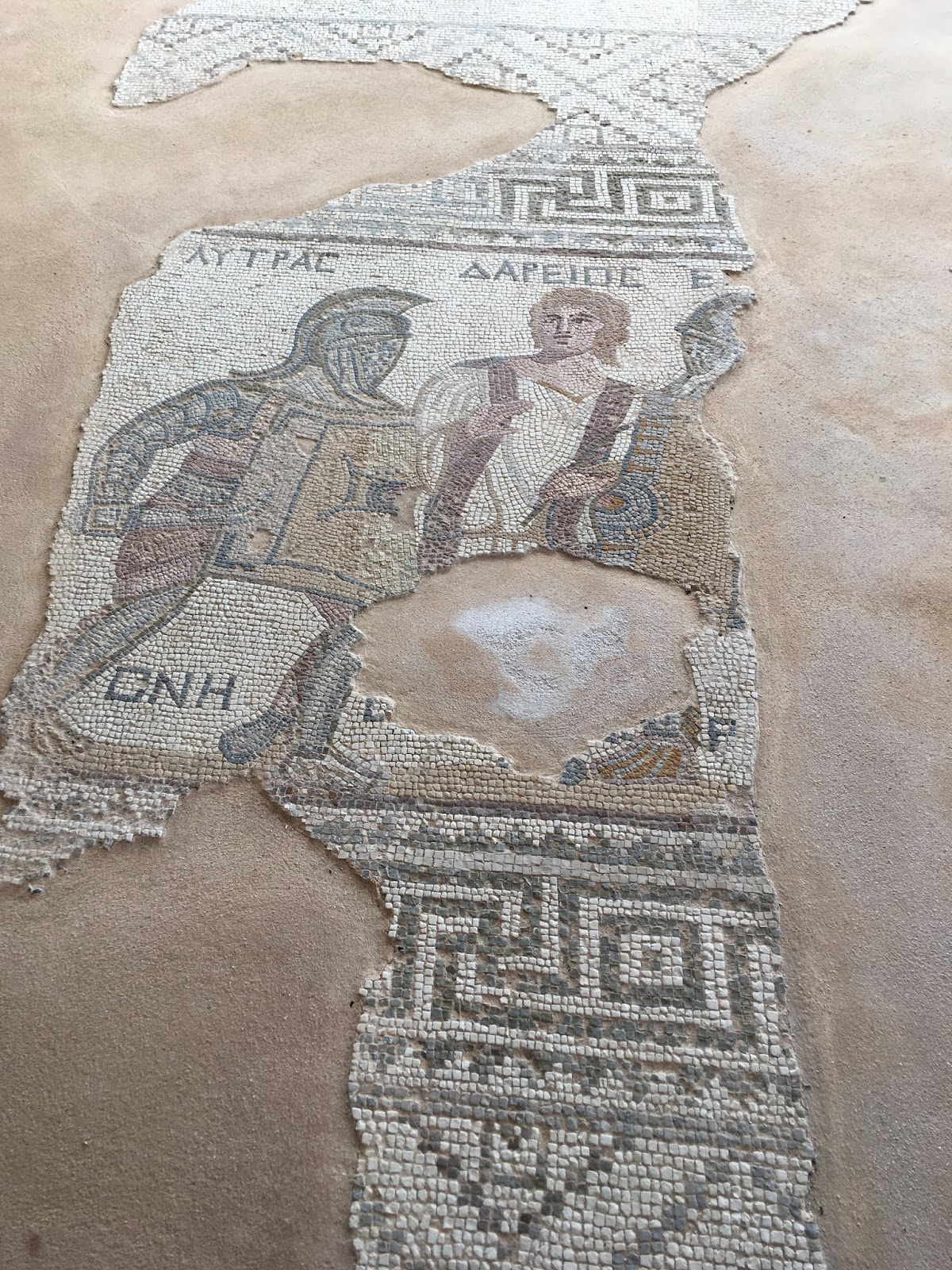
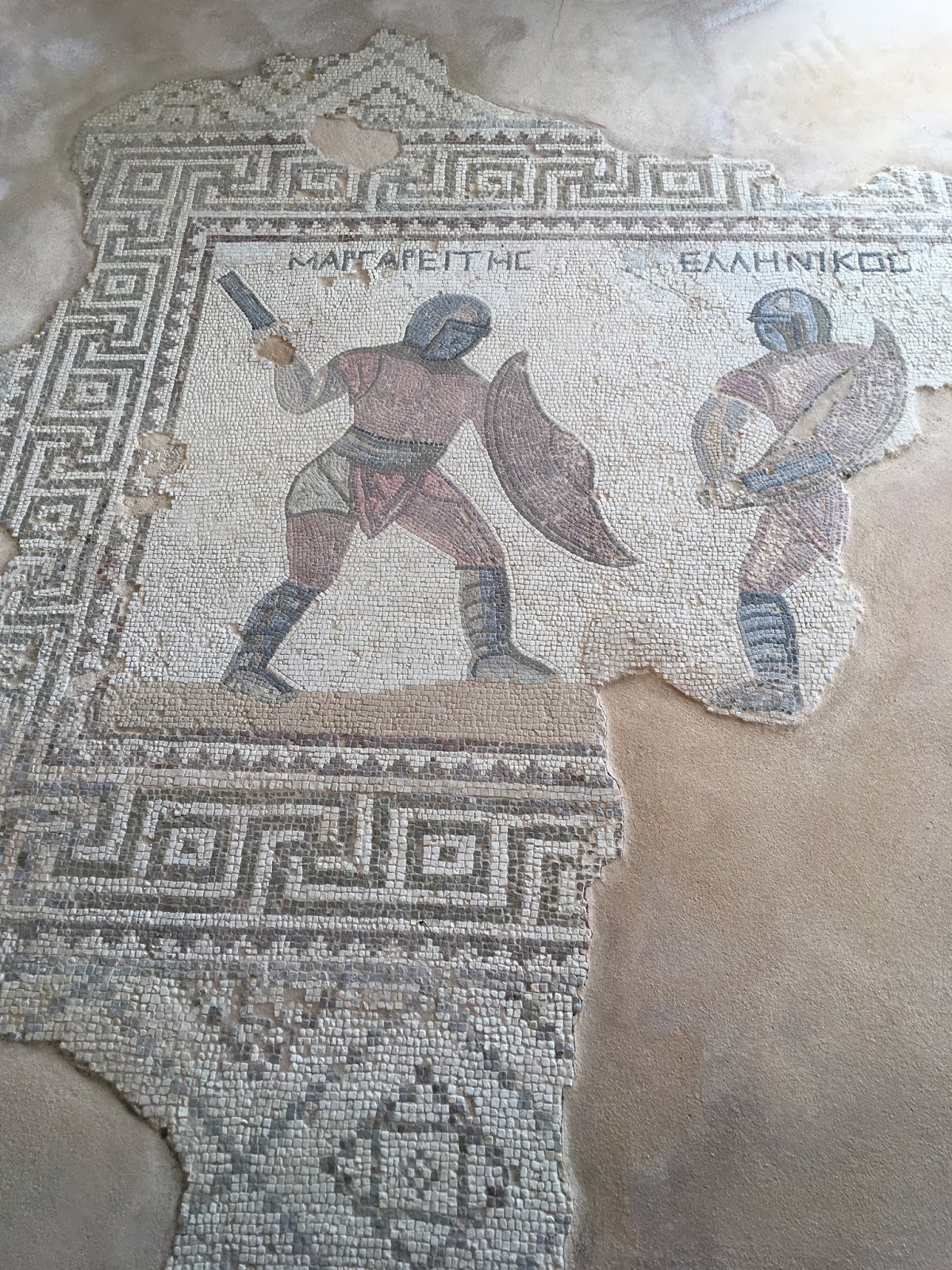
Khourion was an early adopter of gentrification with new civilizations building on top of the previous because location , location, location.
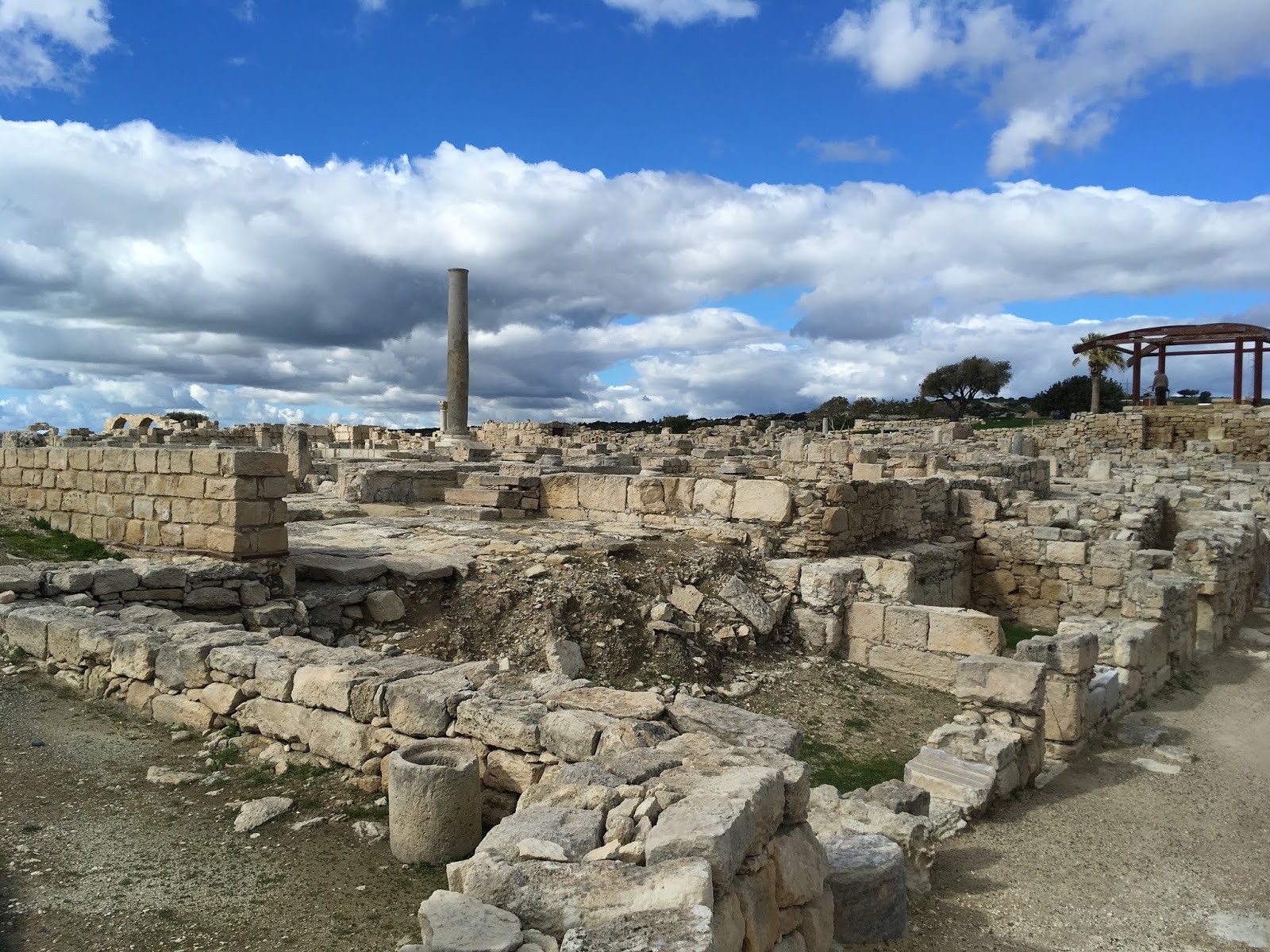
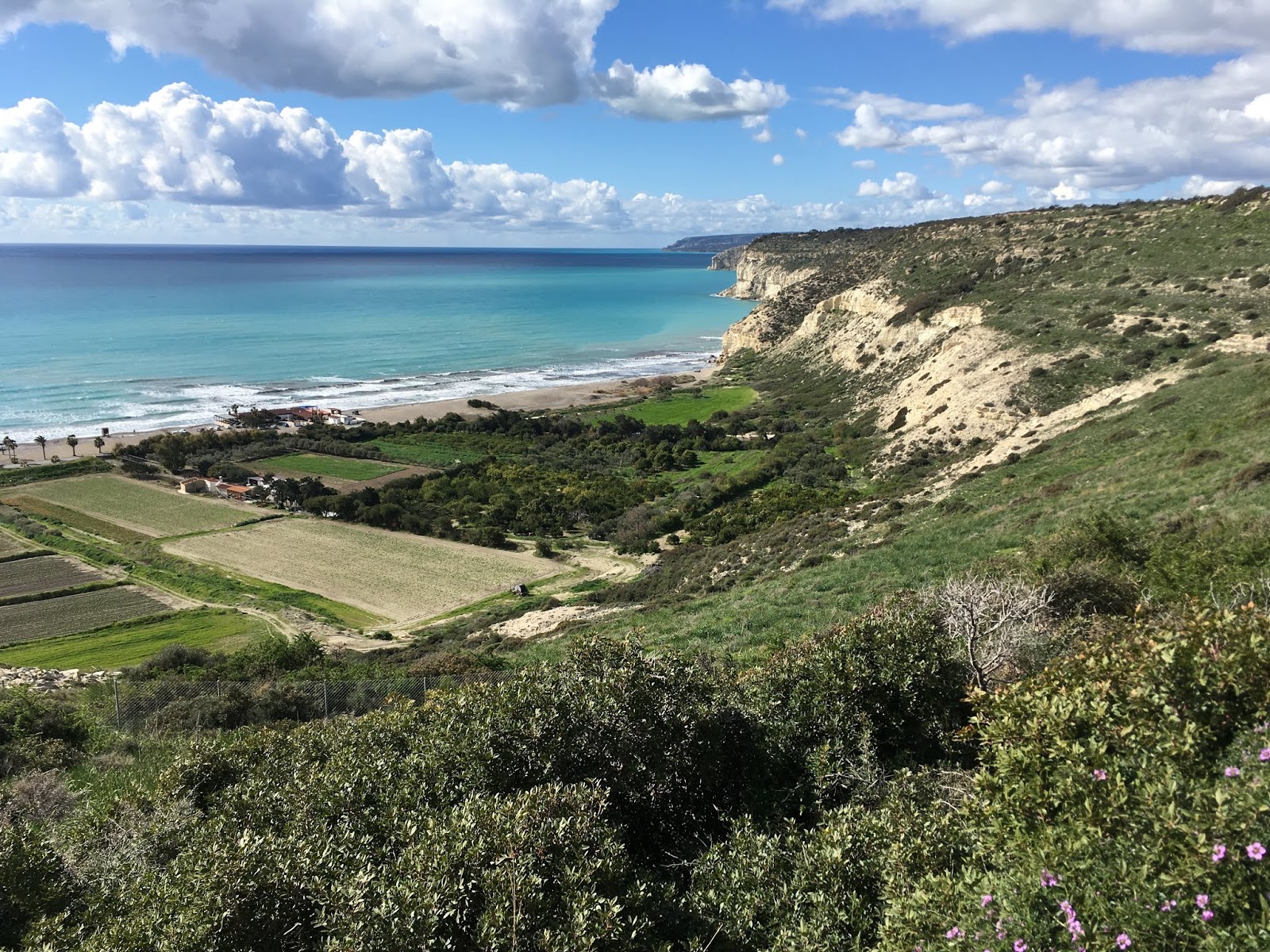
View from Kourion
View from Khourion

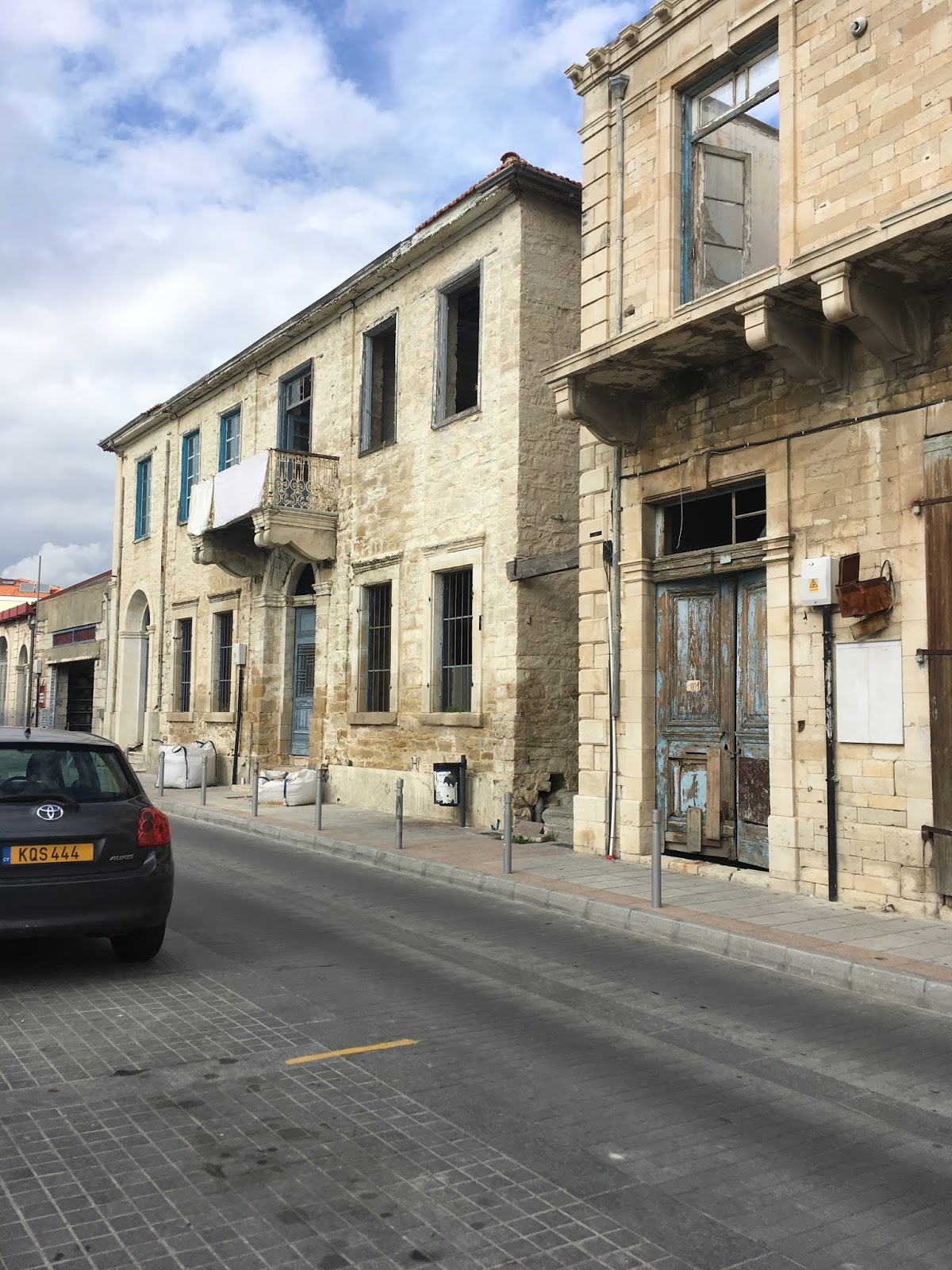
Another day,  another bus ride and walk- this time to the Molos (the beach promenade). We wandered through  the city which like other Cypriot cities was a mix of eras, churches and/or mosques. A combination of improvement and decay.

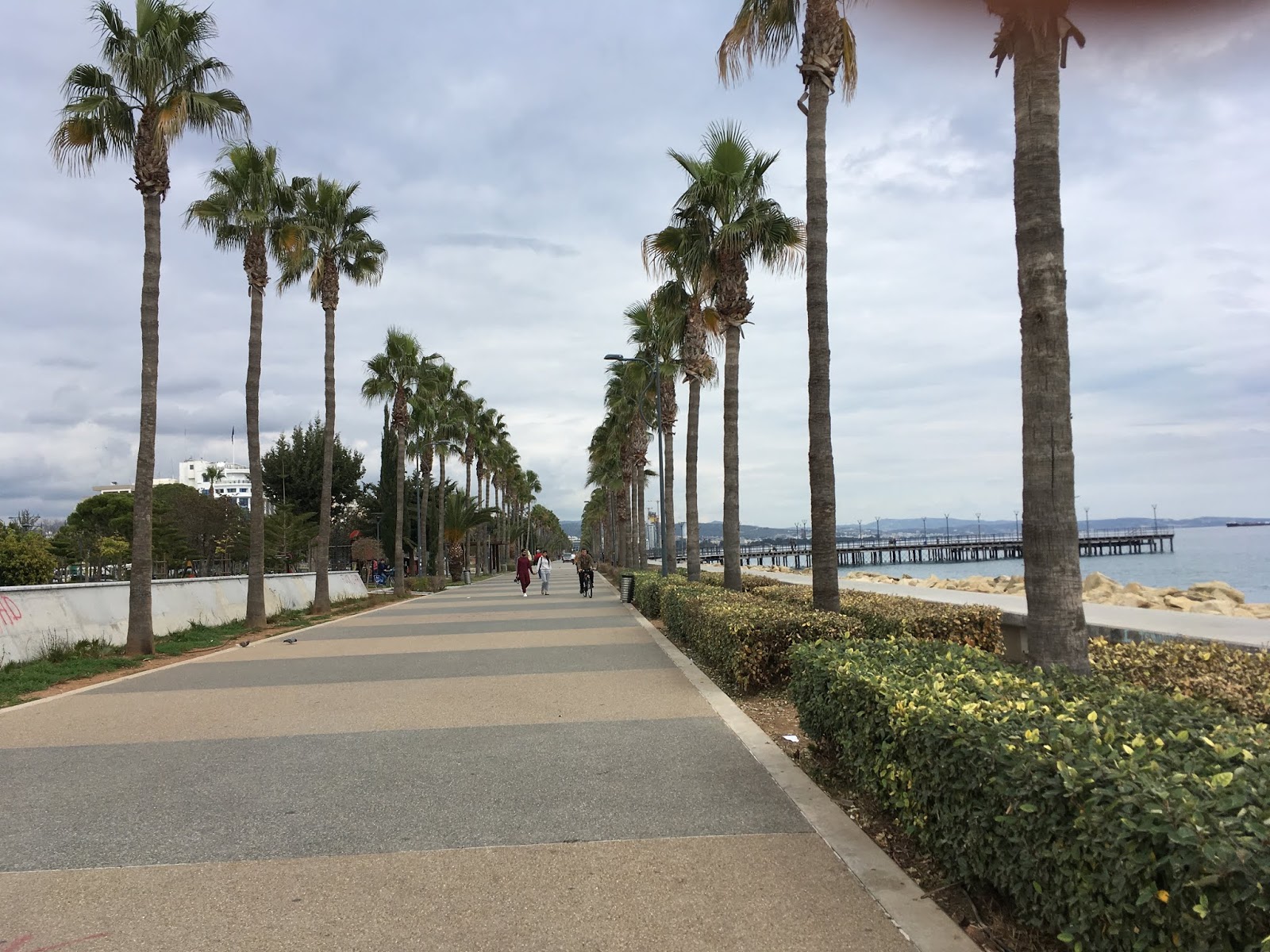
The Molos

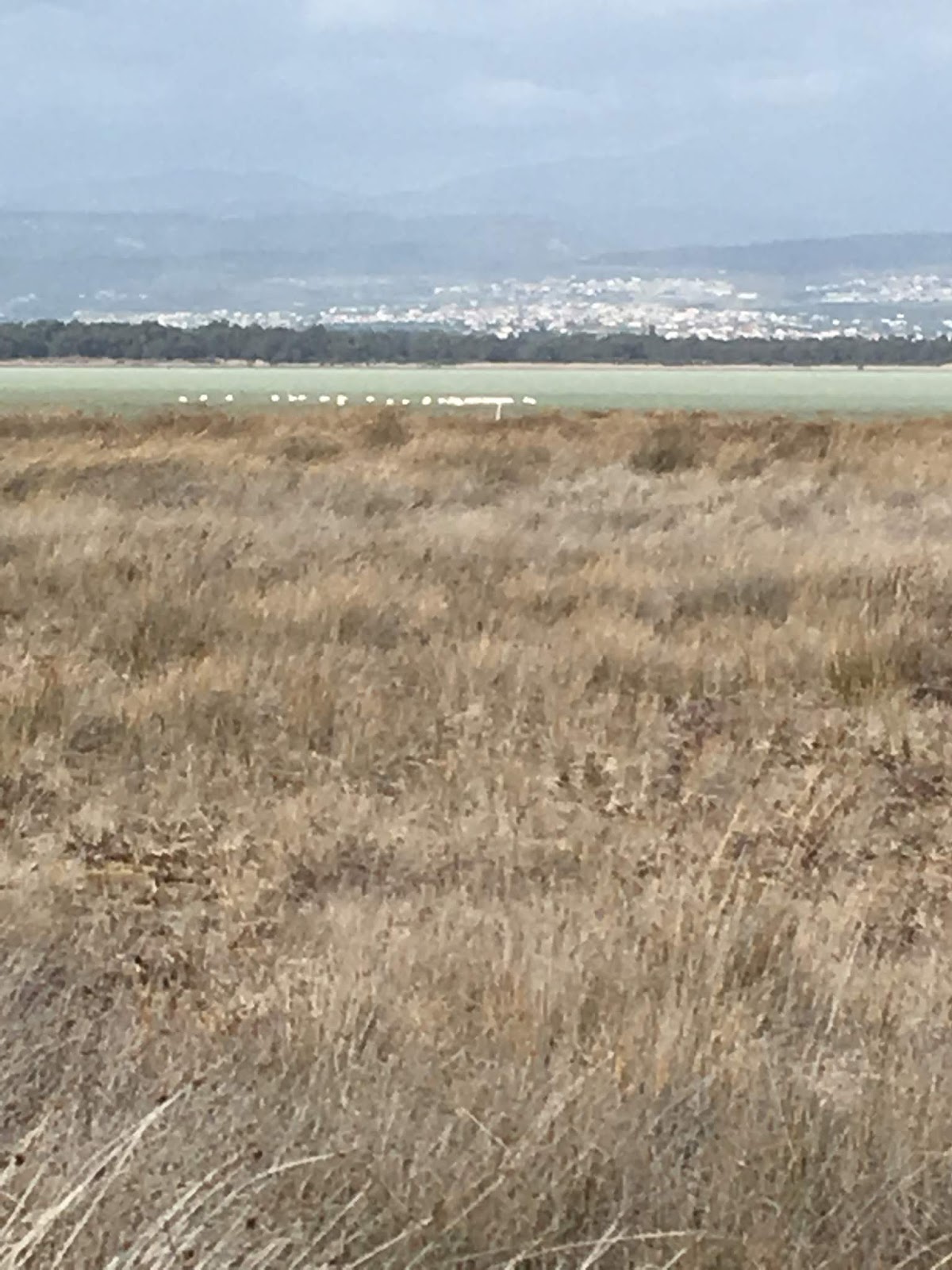
Our search for wildlife continued in Limassol when we went to another salt lake. This is where many of the migrating flamingos first stop to wait for sufficient November and December rains before going over to the Larnaca salt lake. We took two buses to get out to the Limassol lake. The area is actually part of British occupied land with a RAF military base.  There were still of few groups of wild flamingos, the lazier ones perhaps, that still hadn’t made the 40 mile flight over to Larnaca.

The area was very marshy so not walkable to the beach, but we were able to see the birds with the aid of telescopes at the environmental center.
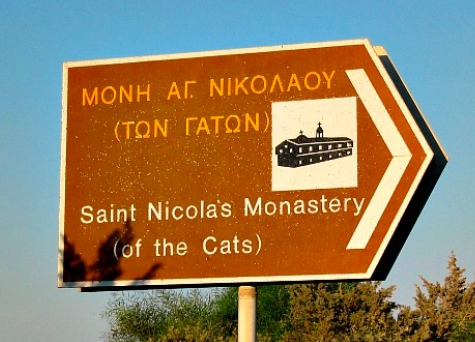
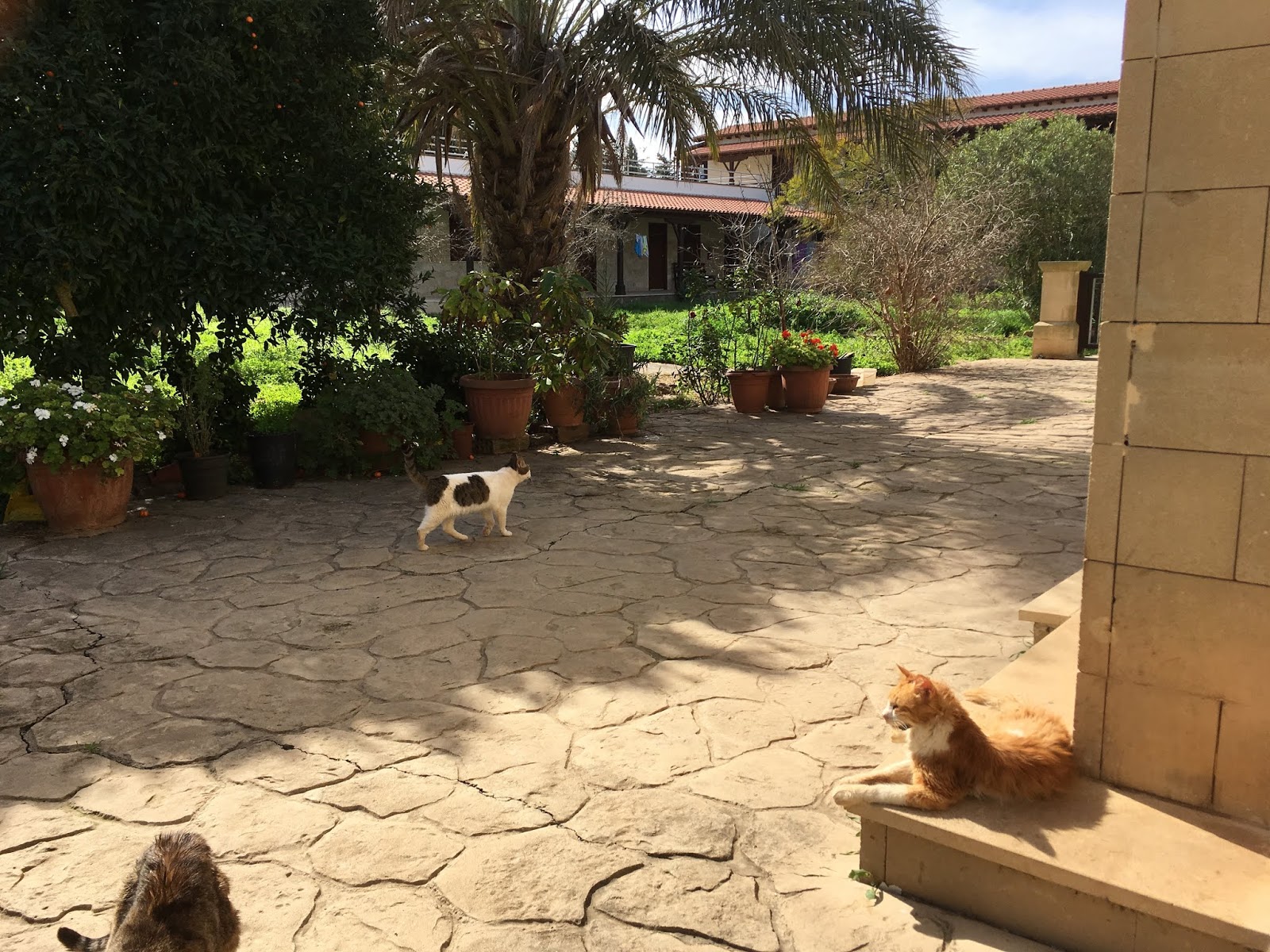
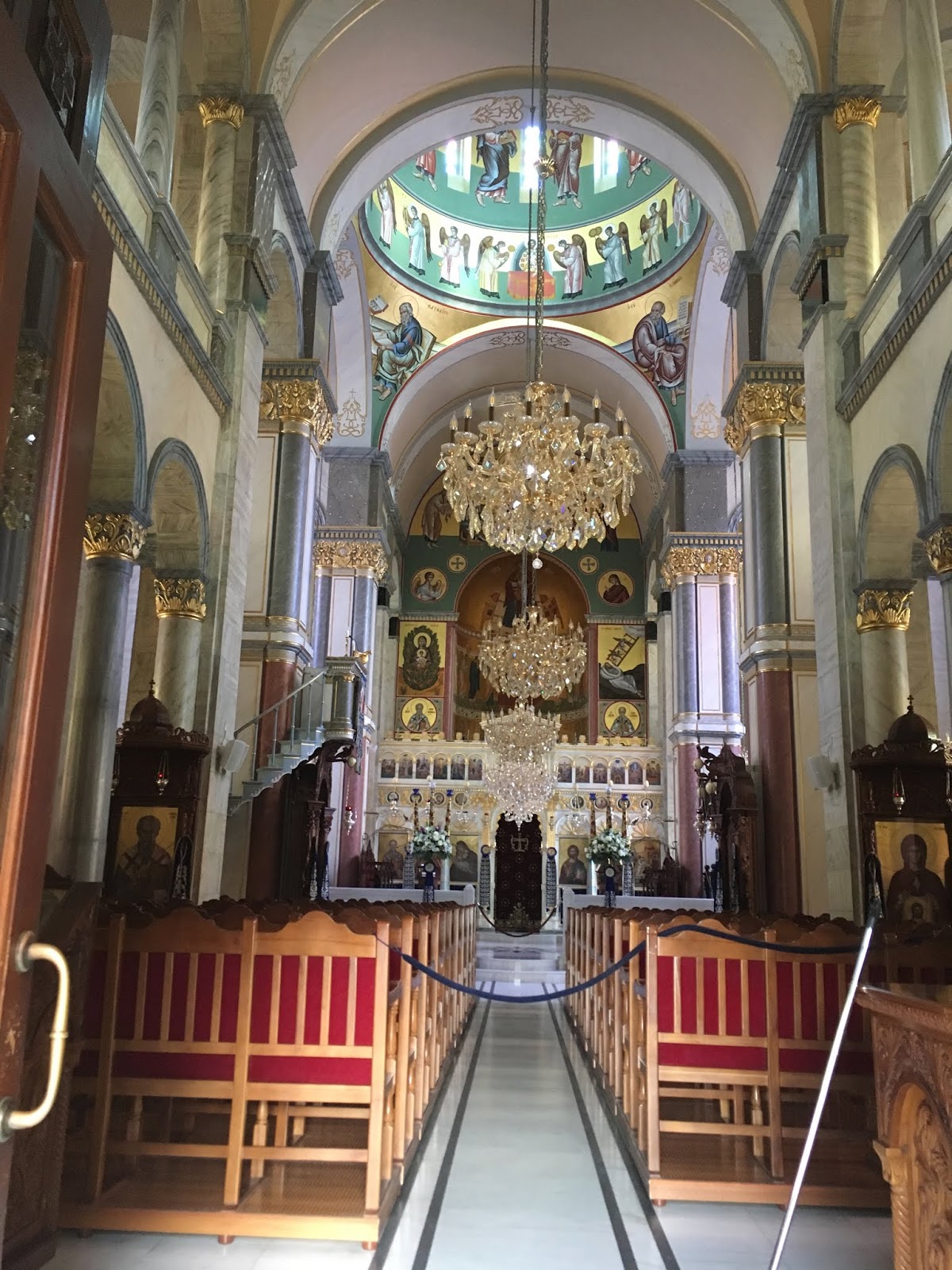
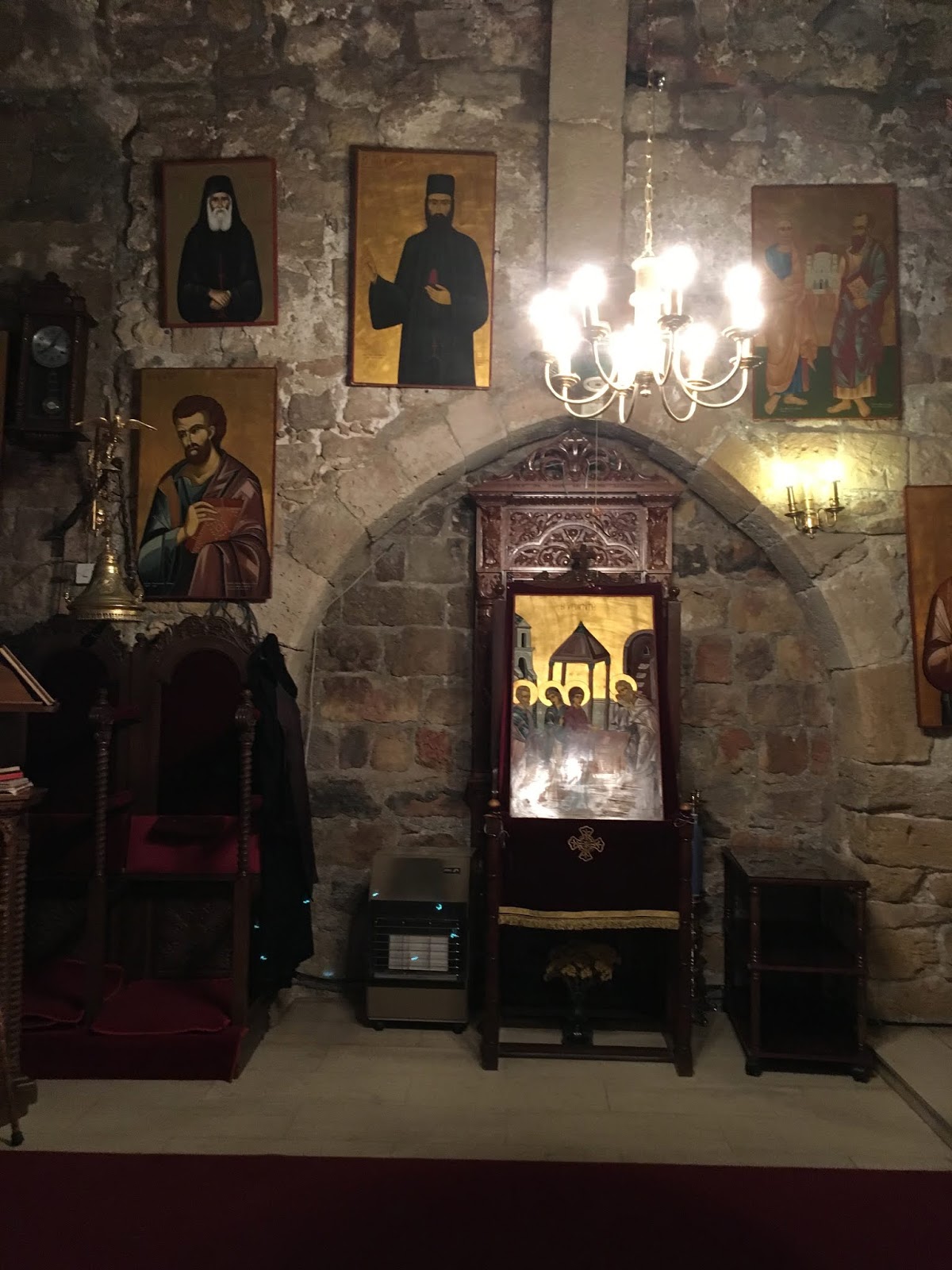
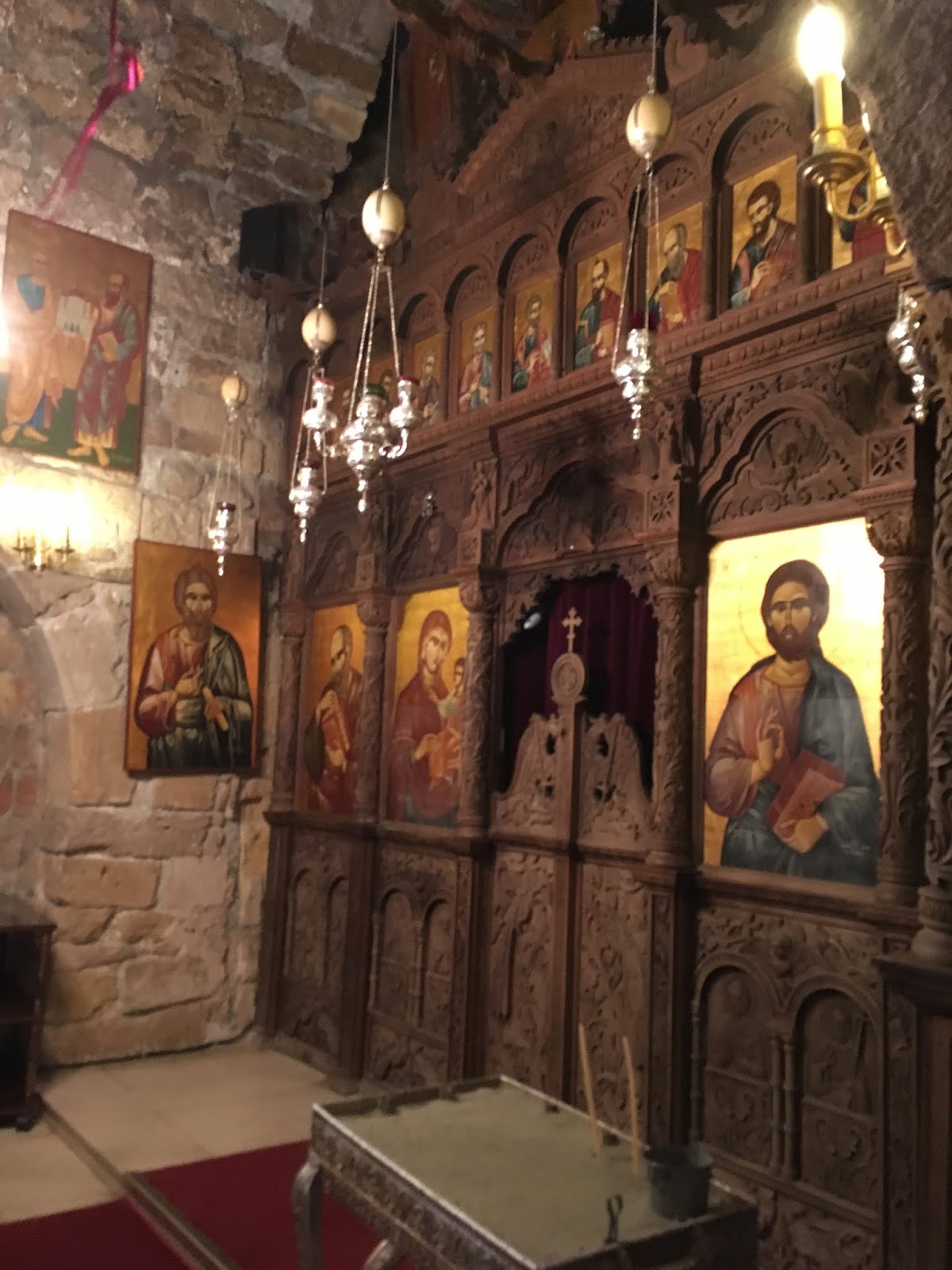
We then walked 2 miles over to St Nicholas Monastery of the Cats, which was a functioning monastery with a small church and, well, lots of cats. No false advertising here.
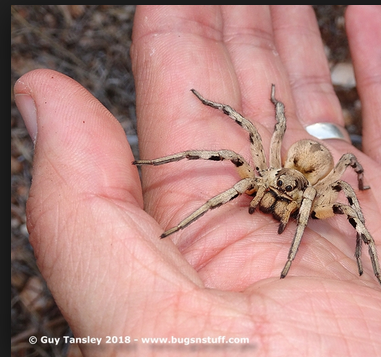
Wolf spider aka Cyprus Tarantula

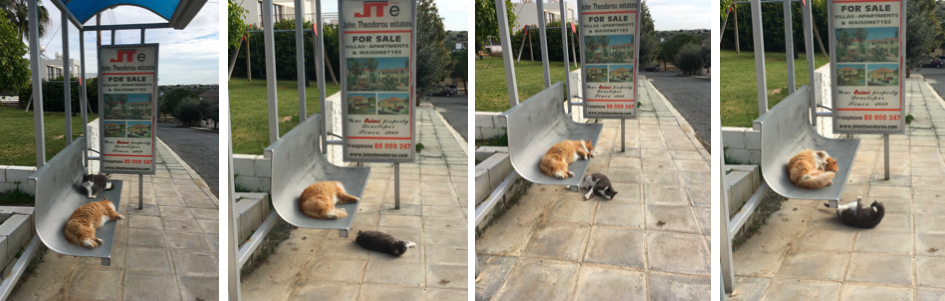
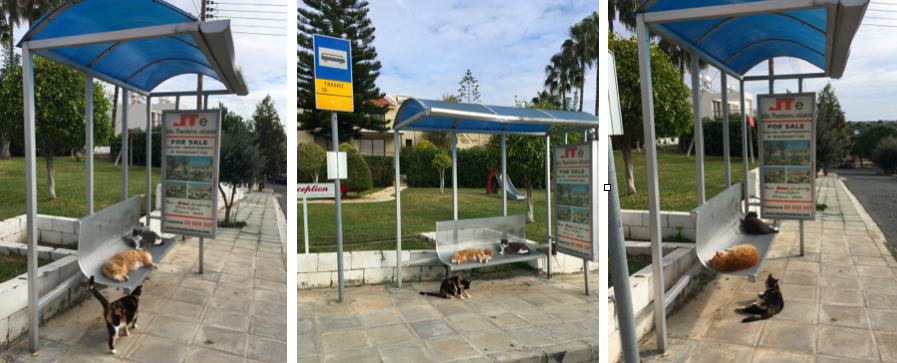
No other brushes with wild life in Limassol except what was encountered at Club Aphrodite.  Waiting for the bus with cats, black mold growing in the corner of our bedroom at the resort, (following our Cypriot traditions, they changed our room the next day) and a giant wolf spider the size of a mini tarantula that Nick noticed crawling on his shoulder toward his neck, but knocked off just in time (with a handy package of corn thins before smashing it on the kitchen floor).
Cyprus’s cities and towns began to merge together in our minds becoming almost indistinguishable  from each other.

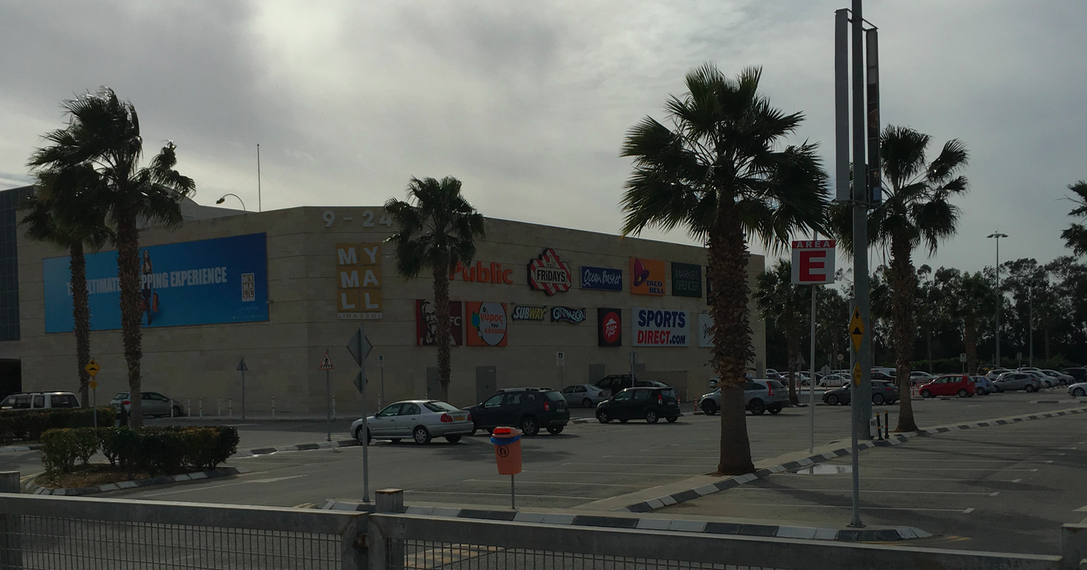
“My Mall”, something for everyone?

Nondescript buildings, neglected old town squares, beautiful & simple churches and mosques, identical & ornate churches and mosques, massive beach front hotels and condos, souvenir shops, old and new plus big malls with the same unsavory American eyesores of Cinnabon, Taco Bell, KFC’s and Pizza Hut, more so than any other European area we’ve visited.
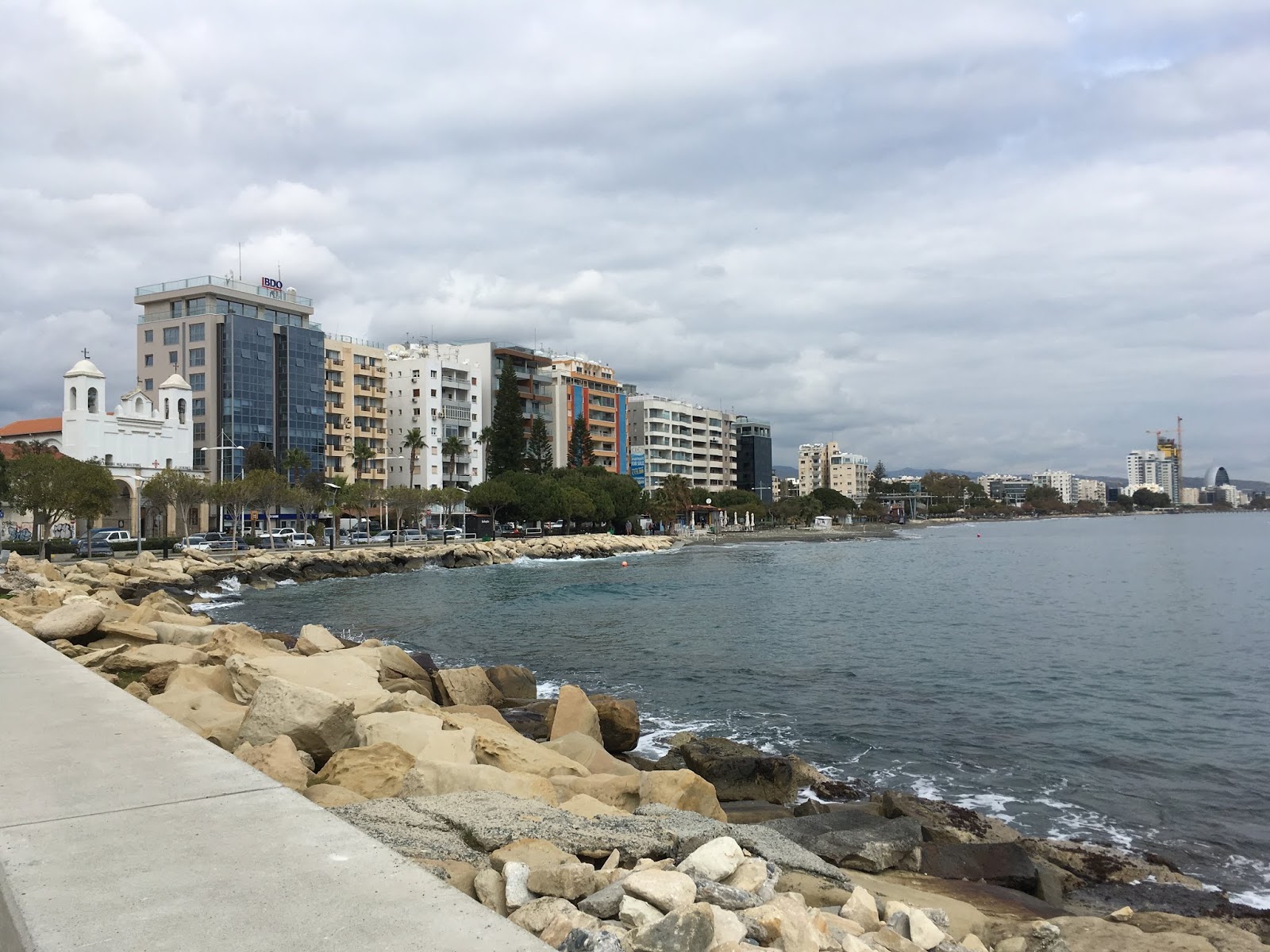
Coast with big hotels
Fusion

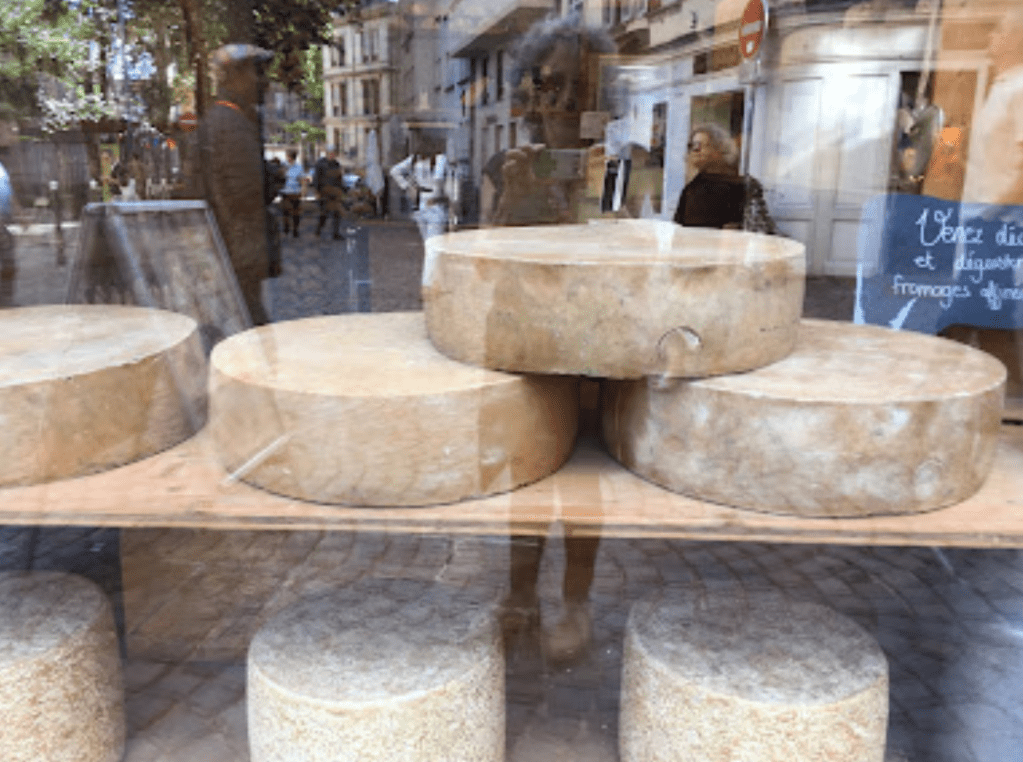
Not just American encroachment but there seemed to be as many Russian and British markets as Cypriot.  What was unique about Cyprus, other then halloumi cheese, was our inability to feel a concrete gestalt- there was this nebulous identify.  We never saw a Cyprus flag by itself, it was always accompanied by a Greek flag in the south, of course no Cyprus flags flew in the north instead a Turkish flag with a very similar looking Turkish Republic of Northern Cyprus flag.

Our last day kind of sums up our Cyprus experience.  Breakfast of halvah and halloumi. Walking miles past new condos, old stone houses,  renovated tourist areas and vacant city center buildings to reach an oddly placed intercity bus stop. Bus ride past war-memorials and beautiful coastline.
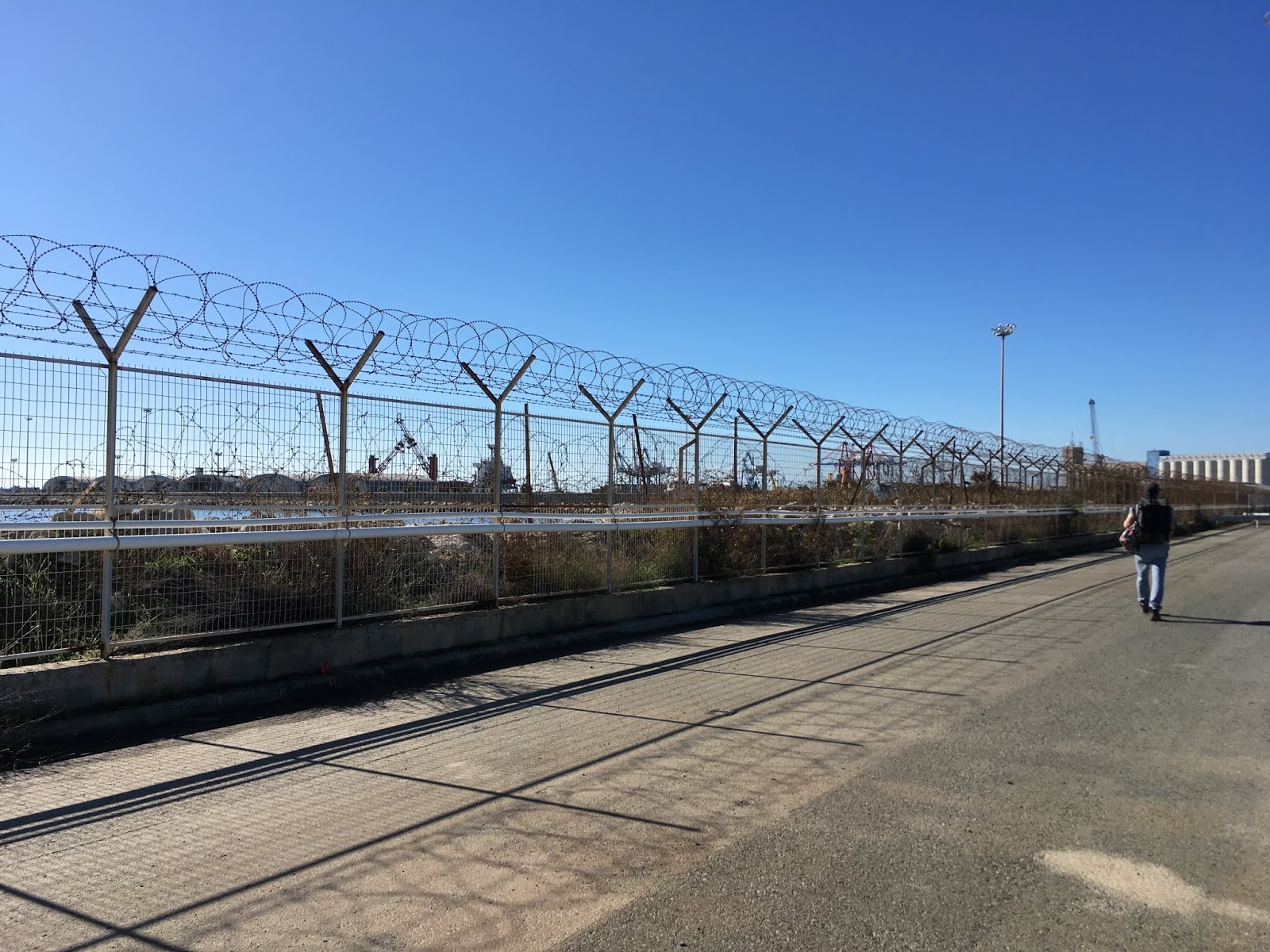
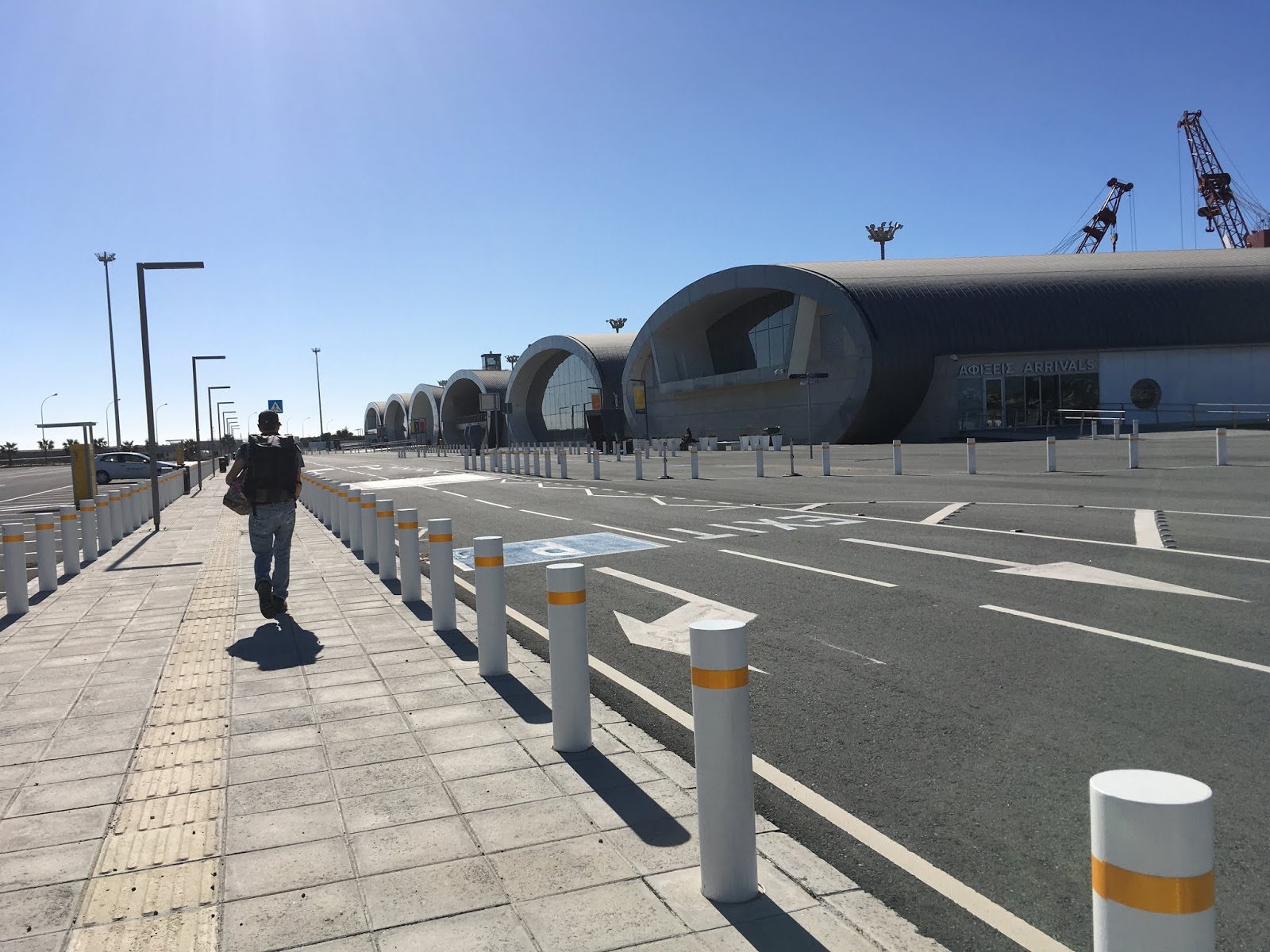
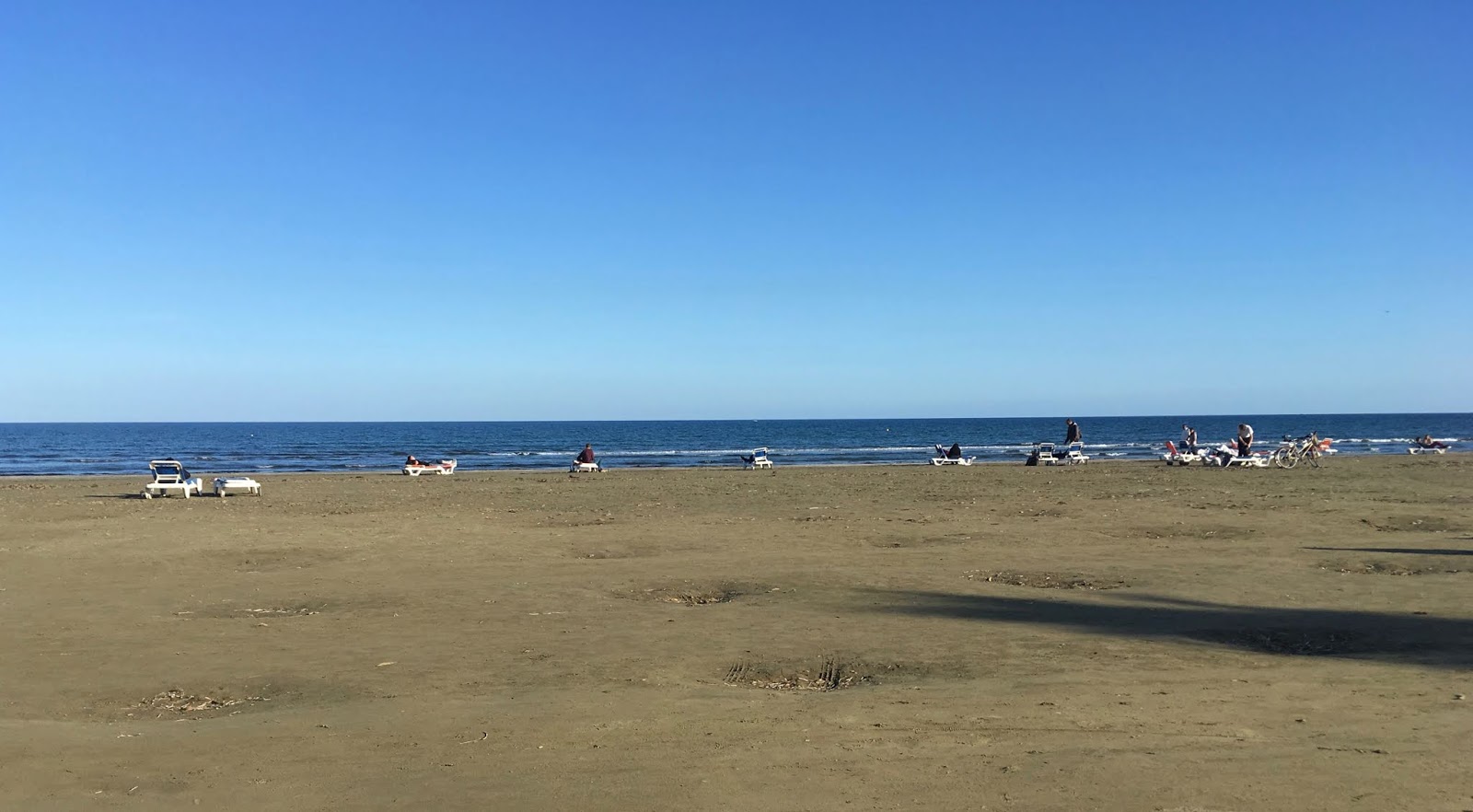
Appropriately, we ended our Cyprus experience at a beach side promenade eating an all-you-can-eat Asian buffet with American Style Philadelphia sushi rolls washed down with British beer.
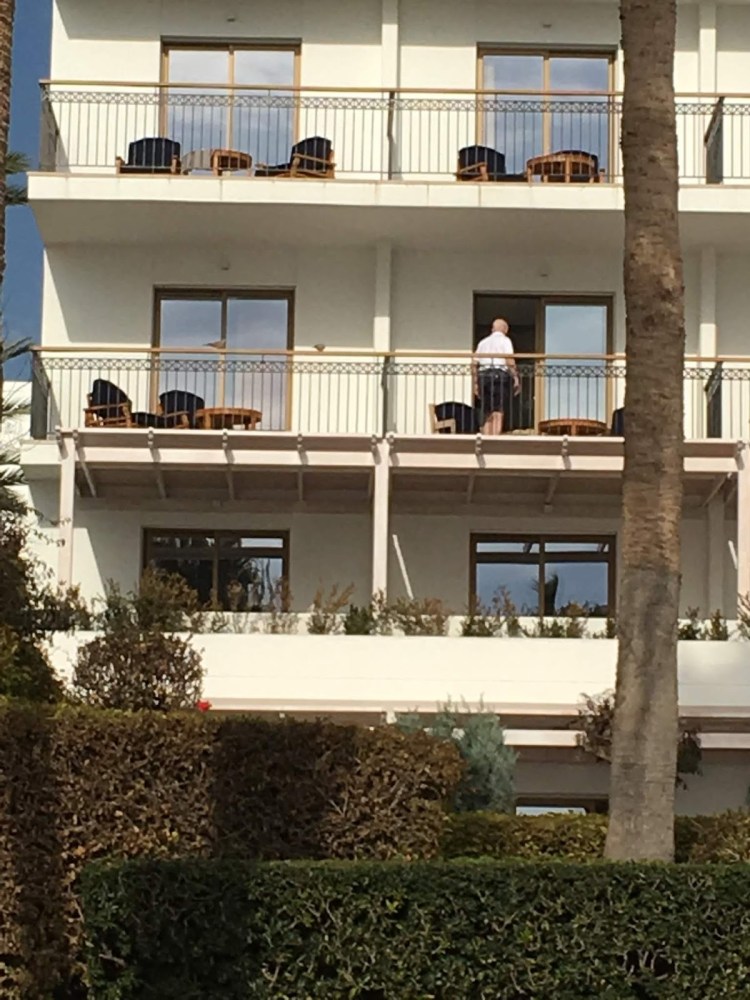
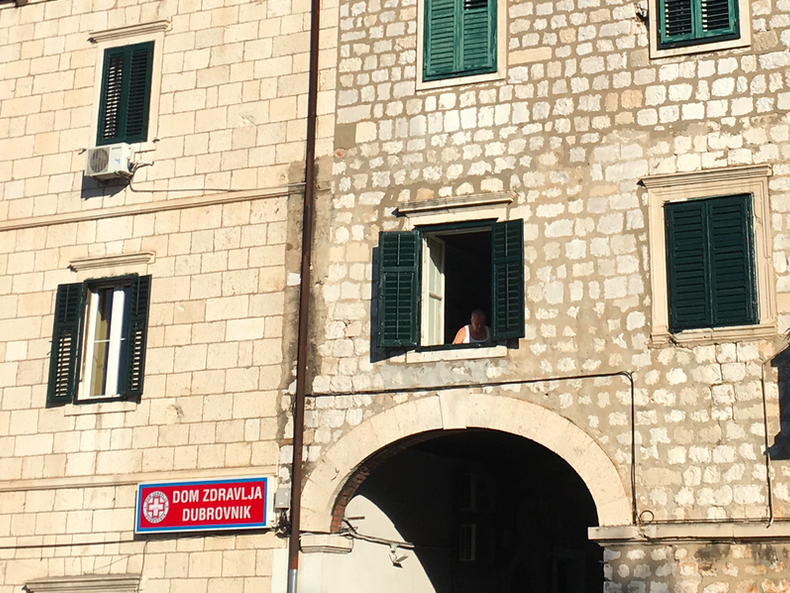
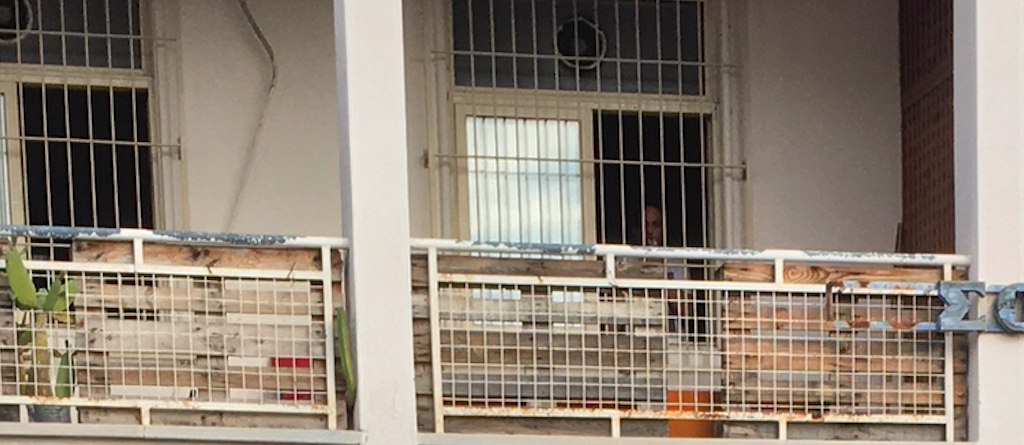
This week’s photo of a topless old man looking out window contemplating his life… 6-9 months timeshare
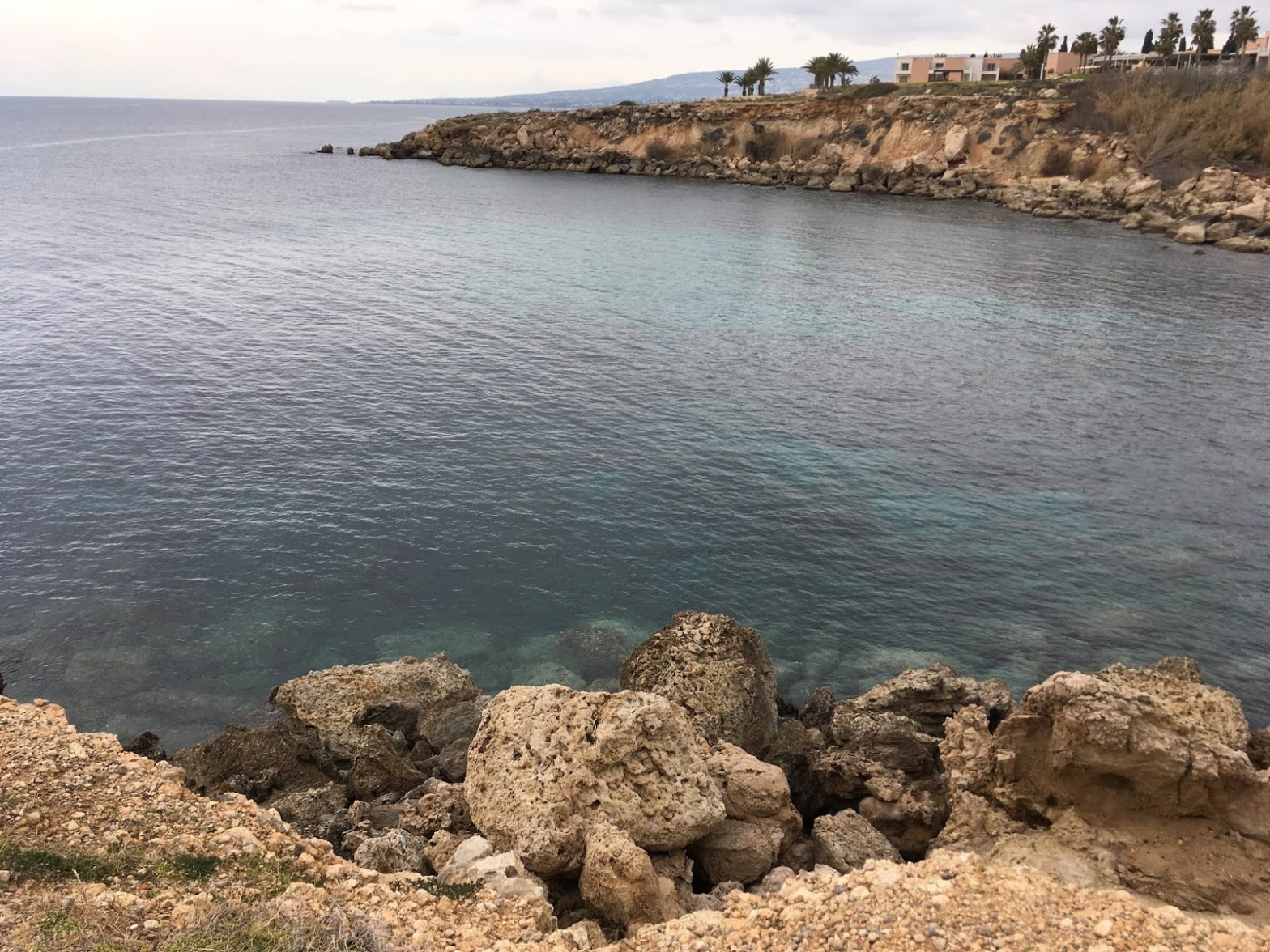
Paphos: The Redemption of Cyprus

Although Britain left Cyprus in 1960 seems like Britain did not completely leave.  Cyprus appears to have inherited the English language (a fair amount of English speaking Cypriots), driving on the left side of the street and the distinct electrical plugs requiring bulky adapters.  Britain seems to have lingered on in the west Cyprus town of Paphos, as almost everyone we’ve heard on the street has an English accent.

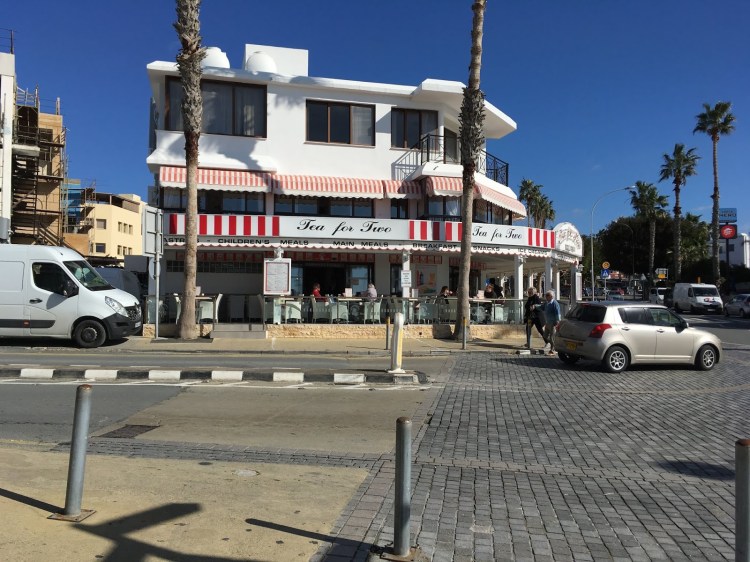
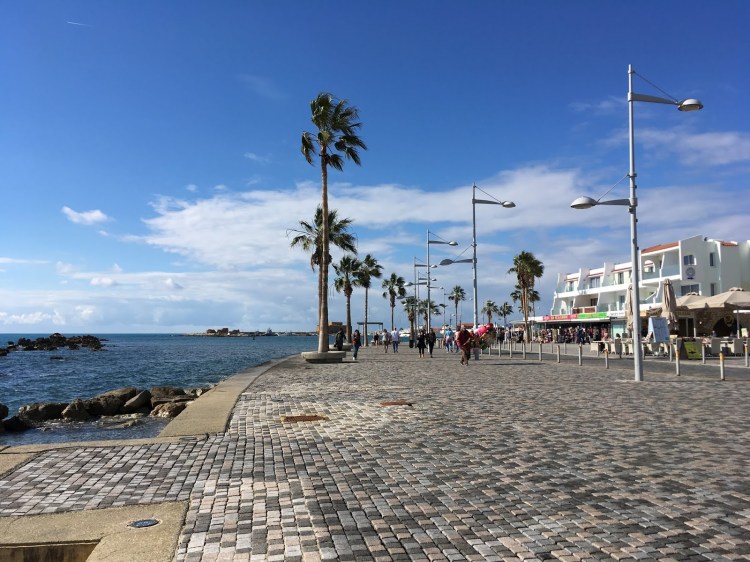
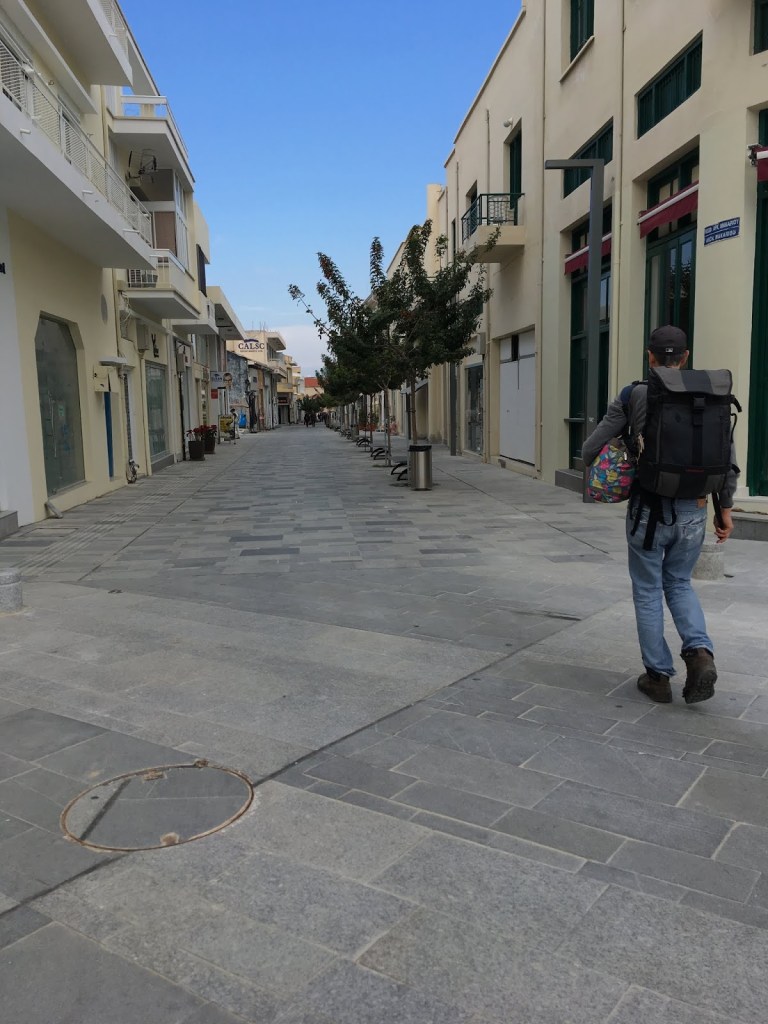
The streets in Paphos are filled with English specialty shops, betting parlors, pubs and restaurants offering full English breakfasts.  The pubs show English football leagues on big screen TV’s.   Walking along the beach promenade almost felt like being on the North Sea coastline, again, but with a bit more sun; https://thechosenfugue.blogspot.com/search/label/Scarborough , https://thechosenfugue.blogspot.com/search/label/Eastbourne
While Kyrenia is in the Turkish North, it also seemed to be a haven for British ex-pats, but we did hear a lot of Russian mixed in with Turkish https://chosenfugue.xyz/2019/01/21/cyprus-the-good-the-bad-and-its-mostly-ugly-part-2/.  Cyprus gets about 3 million tourists a year. 1.2 million from the UK, then 800,000 from Russia, so 2/3’s of the tourists are from just these 2 countries.  Israel is third but with only a ¼ million visitors a year.  The US is not even in the top 10. Cyprus also seems to welcome ex-pats, with housing developers advertising that a condo purchase is enough to earn you Cypriot (and EU) citizenship.  

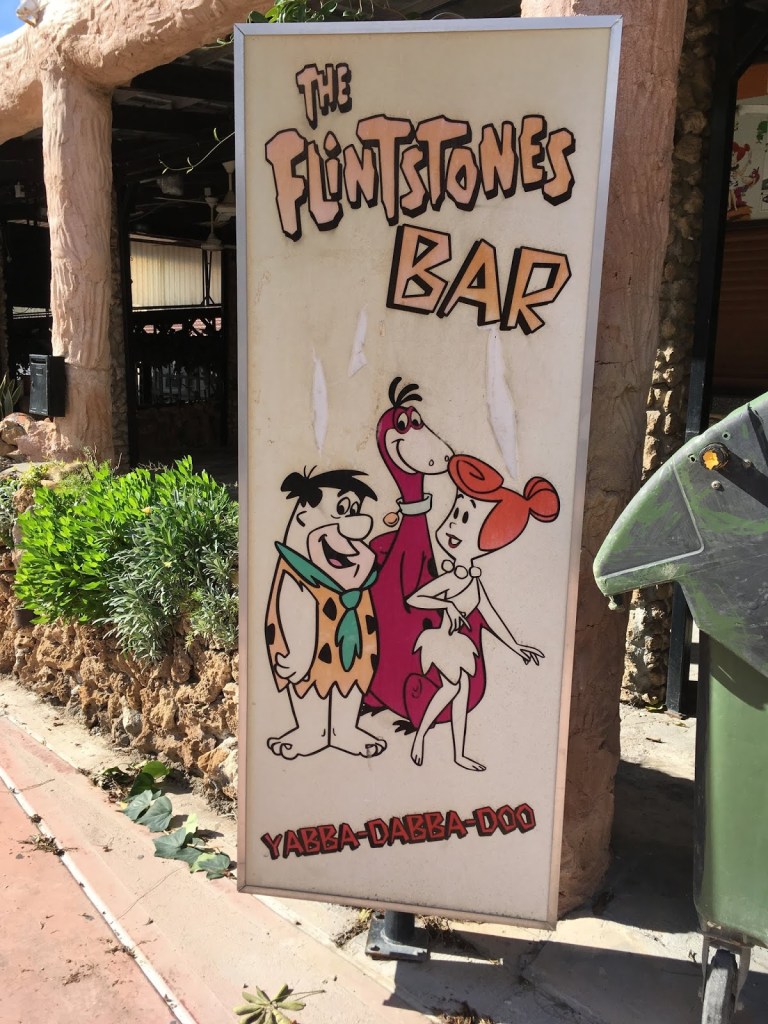
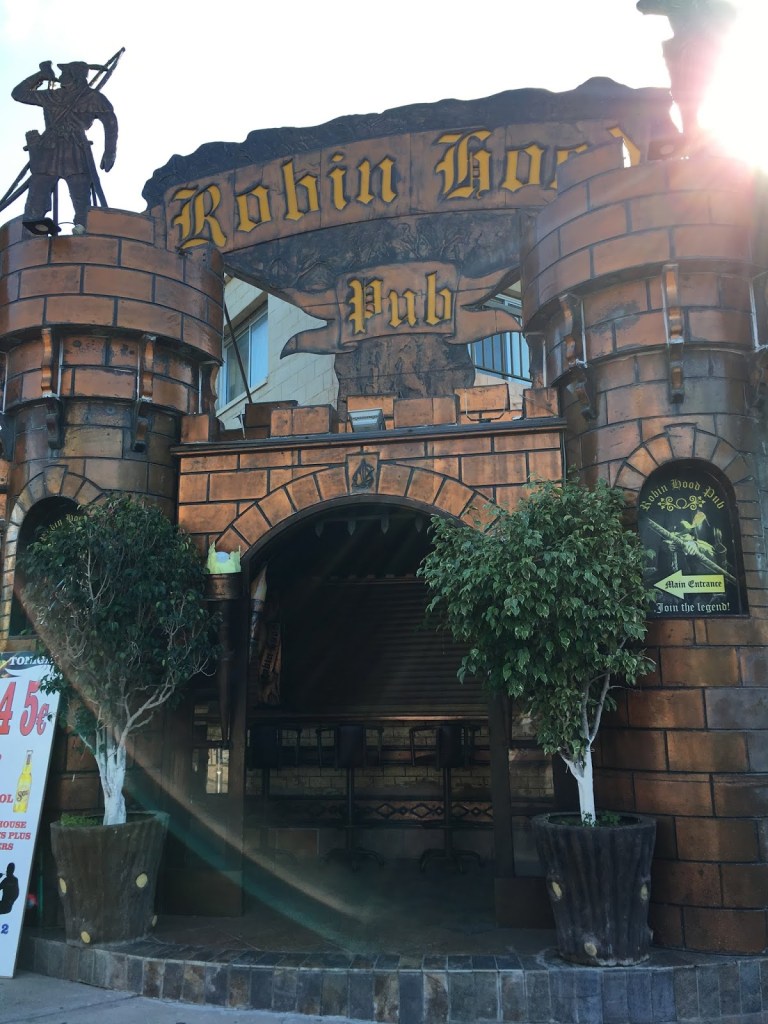
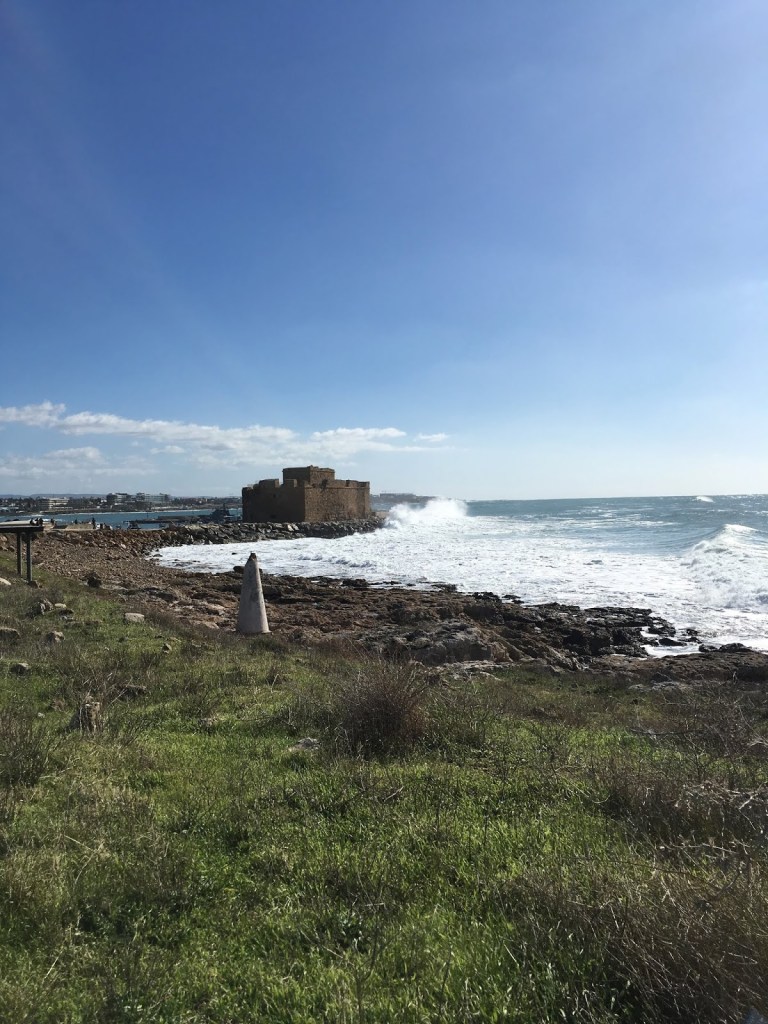
Paphos definitely tempts with its old downtown with renovated pedestrian area, ancient ruins with beautiful mosaics, and modern town with shopping mall (hello Taco Bell!-although it was very disappointing). The cheesy tourist area had a great mix of themed bars, including the second Flintstones bar we have seen in Cyprus, confirming that, yes, the Flintstones are from Cyprus.

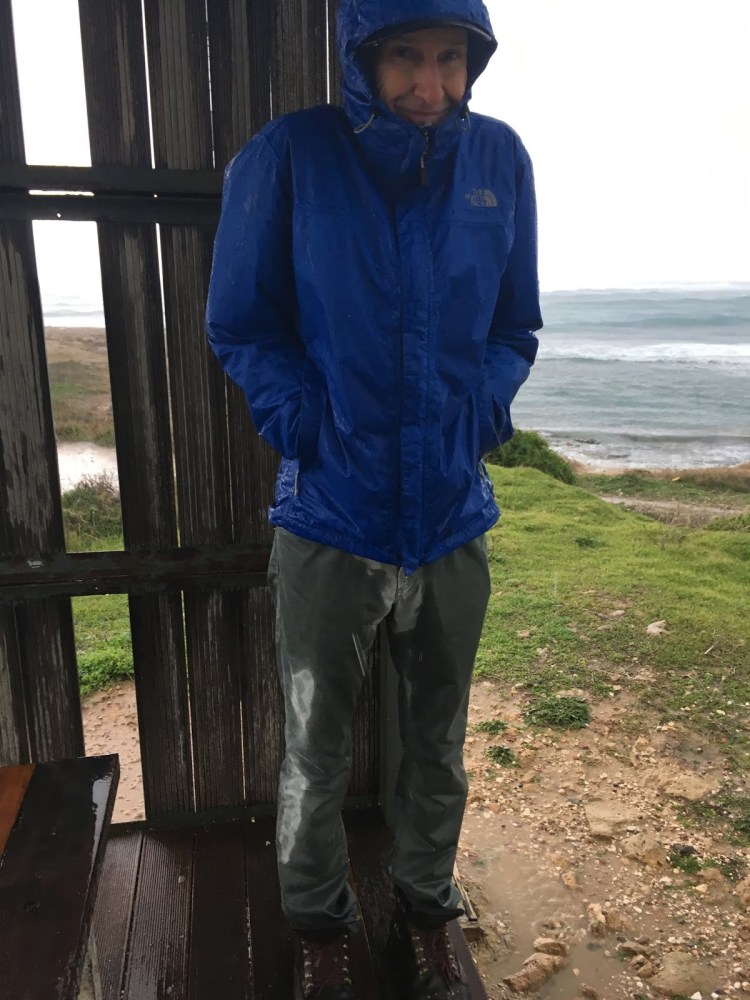
Paphos kind of has a Disneyland of Ruins, the Archaeological Park and down the road from that the Knott’s Berry Farm of  Ruins, The Tomb of the King. Our first attempt to go to the Archaeological Park was rained out with a very painful hail storm but the next day the sun was back out.


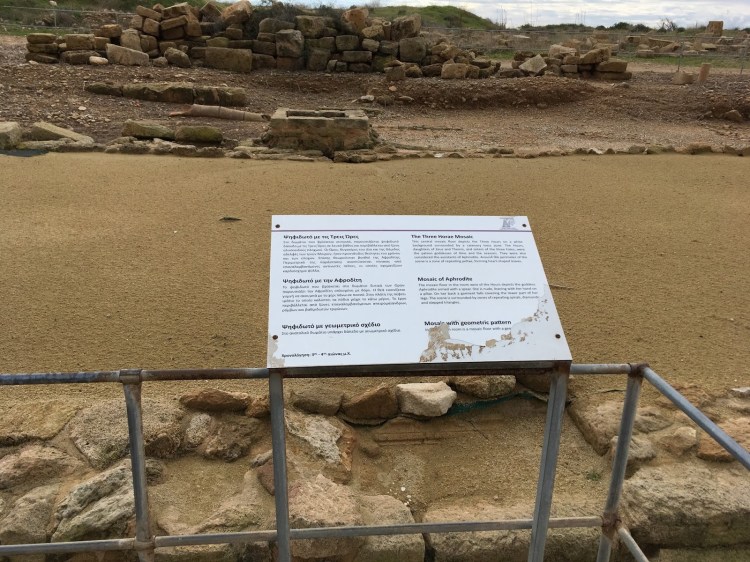
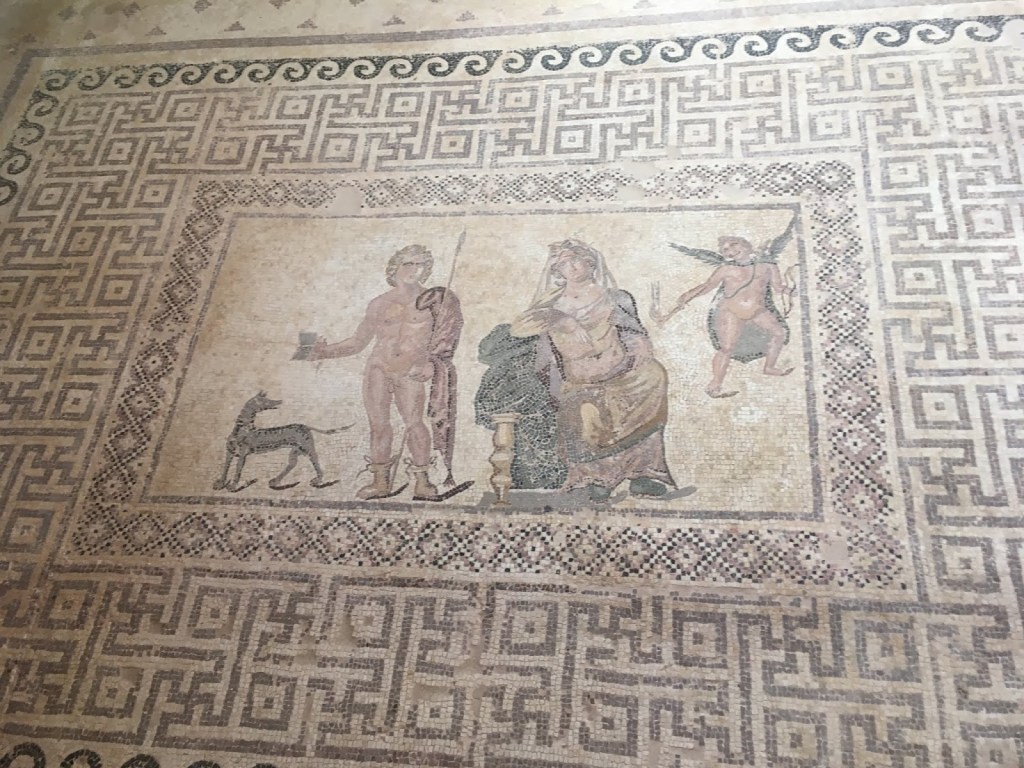
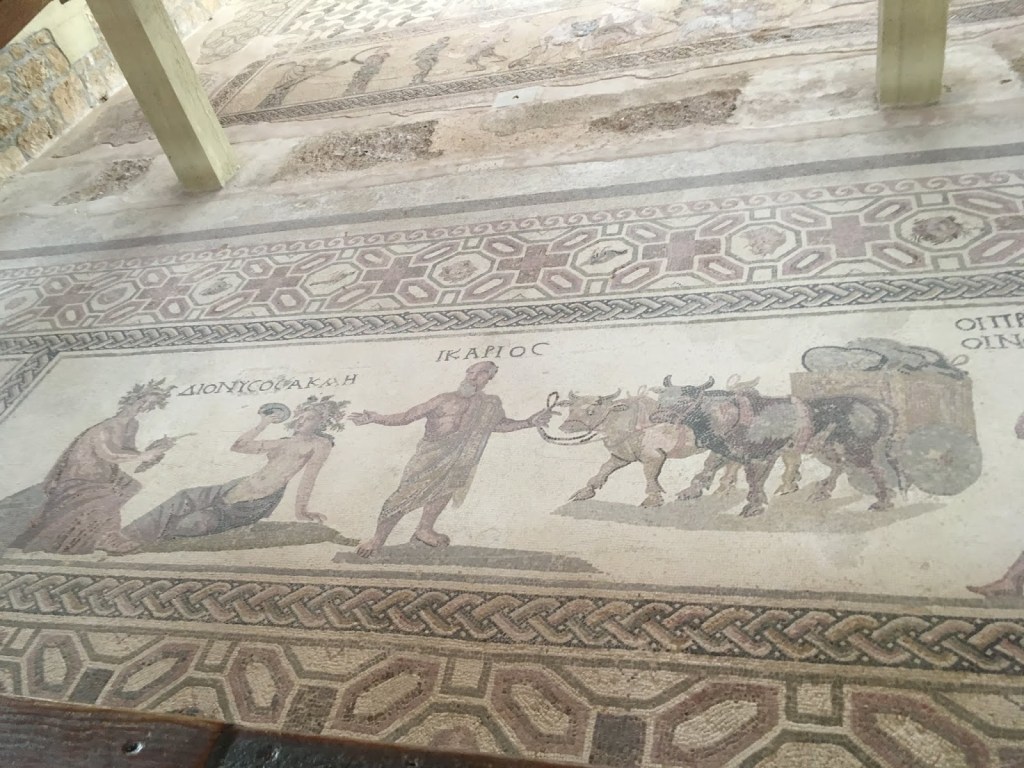
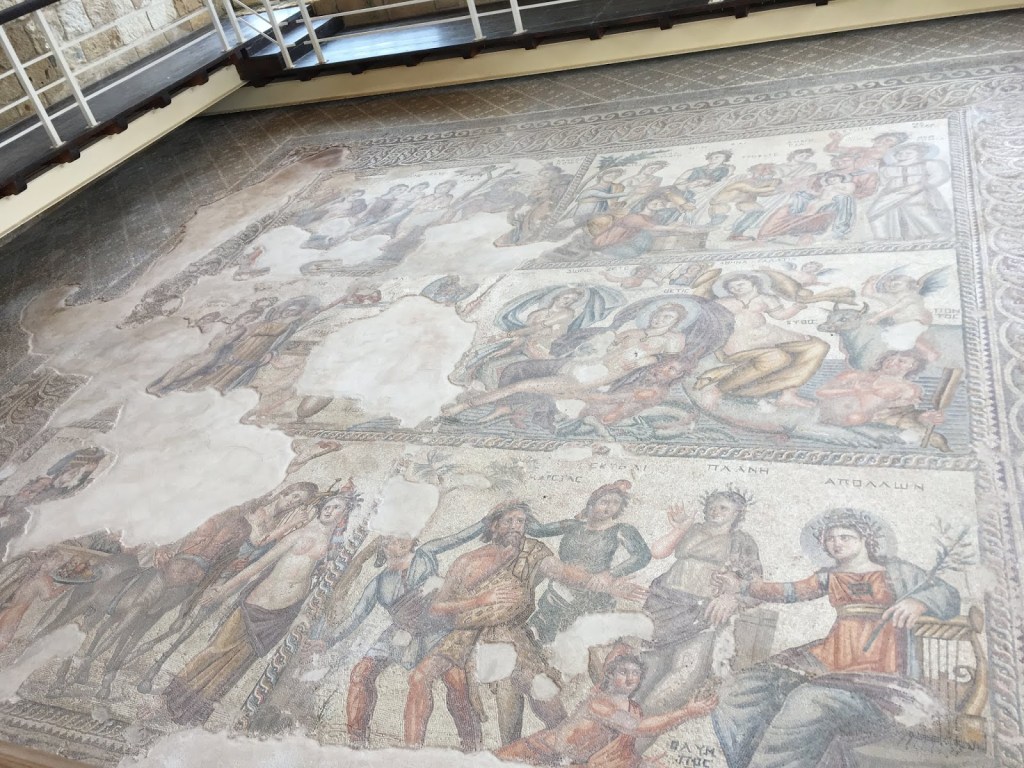
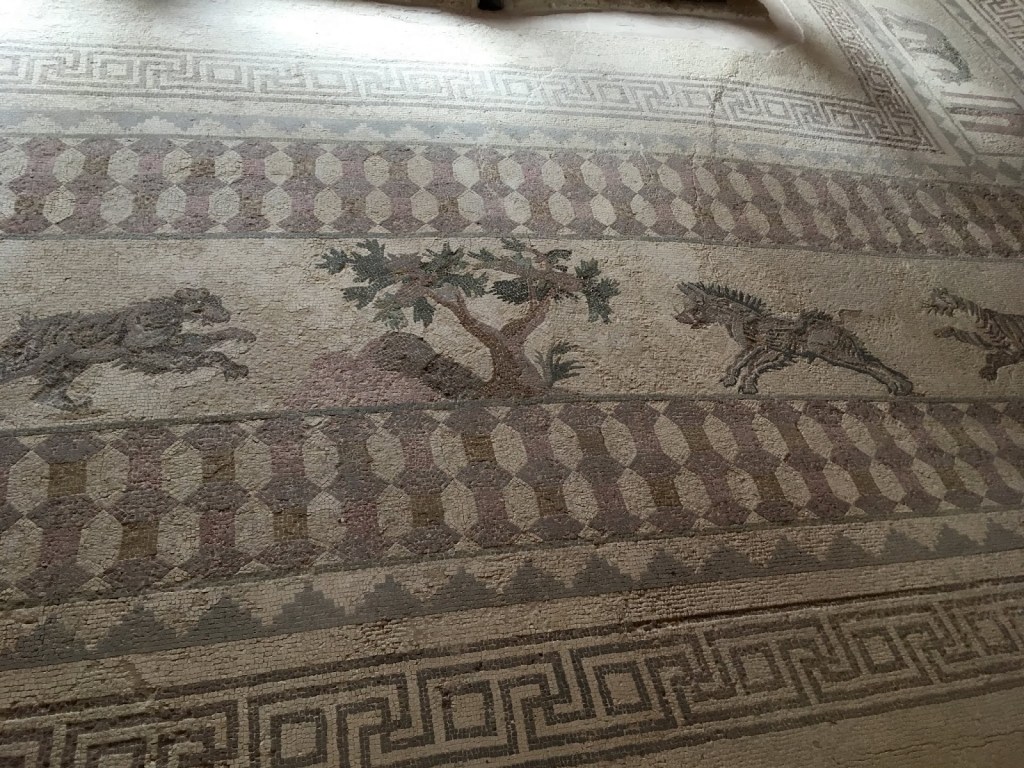
The park was essentially ruins of the posh part of the original town, 2nd-4th AC; an amphitheater, palace and homes.   Striking ruins with beautiful mosaics although, many of the mosaics were unfortunately purposely covered with sand and tarps- they still had the educational placards describing them.   We figured it was to protect from winter rains, and asked but the visitor center guide was the least informed person at the Park that day,  shrugging her shoulders and saying “I don’t know” when we asked a question that’s surely been asked thousands of times. The mosaics that were exposed, roofs protected these, were enough, though. 

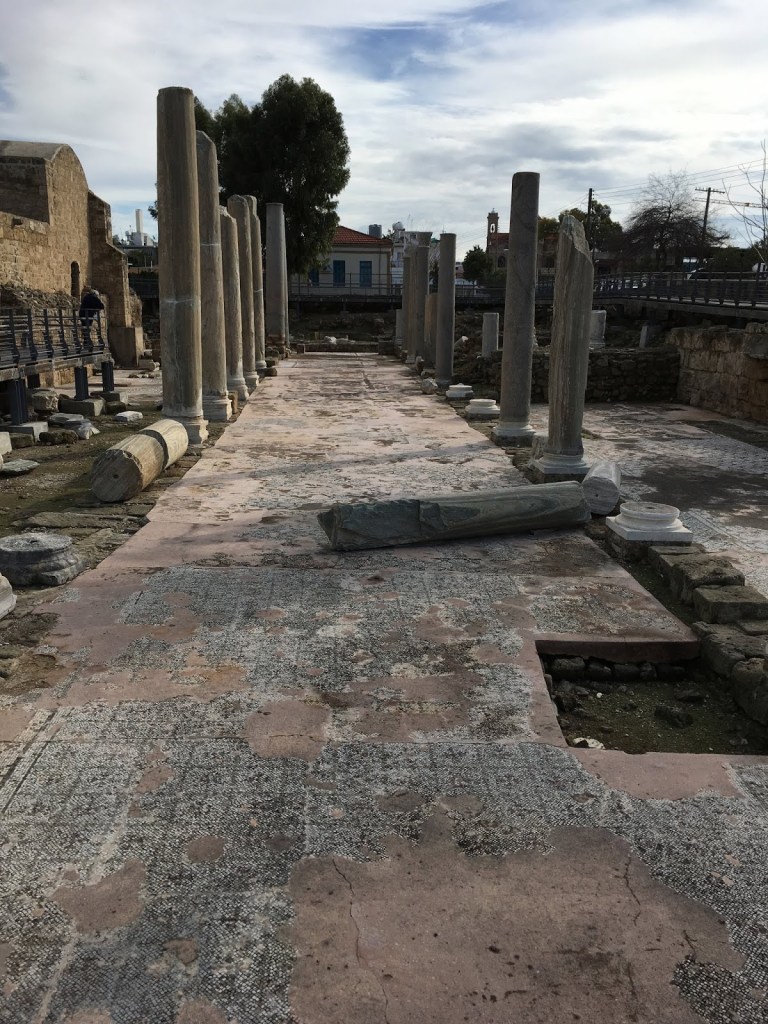
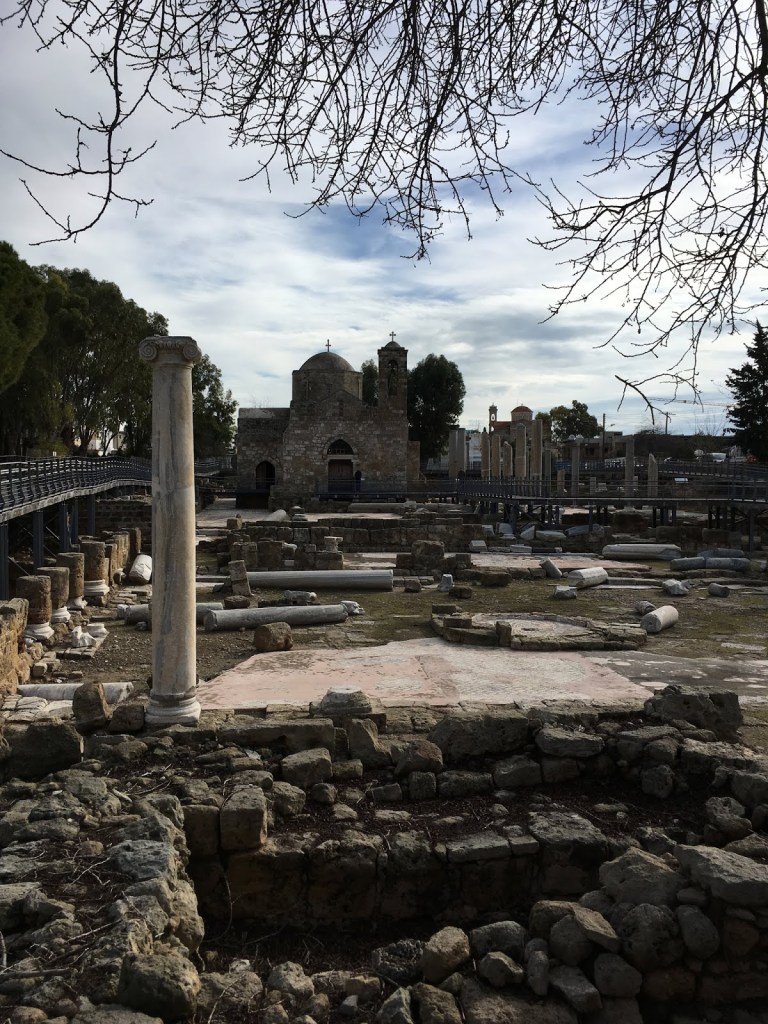
One of the great things about aimless wandering in Cyprus is stumbling across amazing places. This church  from the 2nd century AD. 

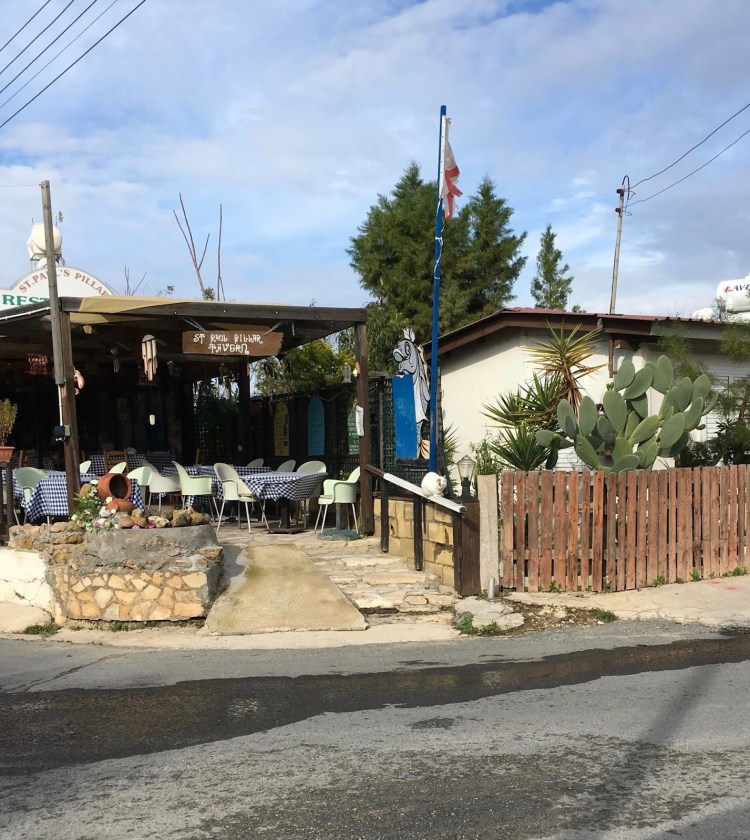
Not only were there  wonderful mosaics from the 4th Century but this church also had St. Paul’s pillar where he was apparently lashed 39 x’s,  impressing the King enough for the king to convert.  Apparently then they celebrated at St. Pauls’s Pillar Pub next door.  

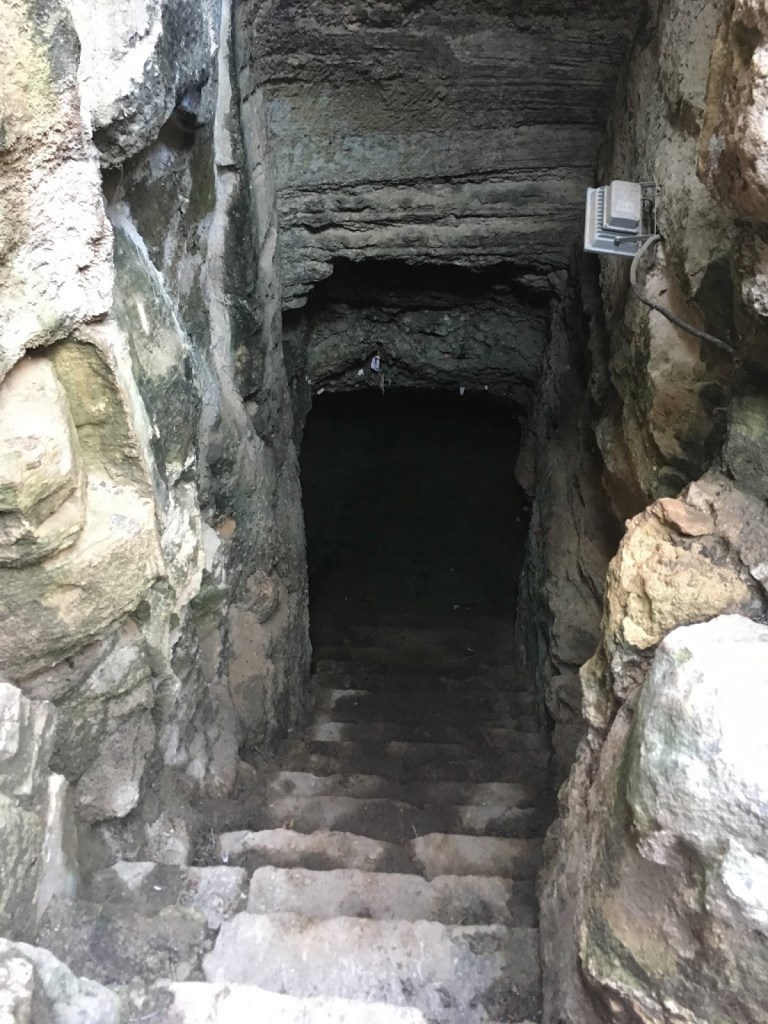
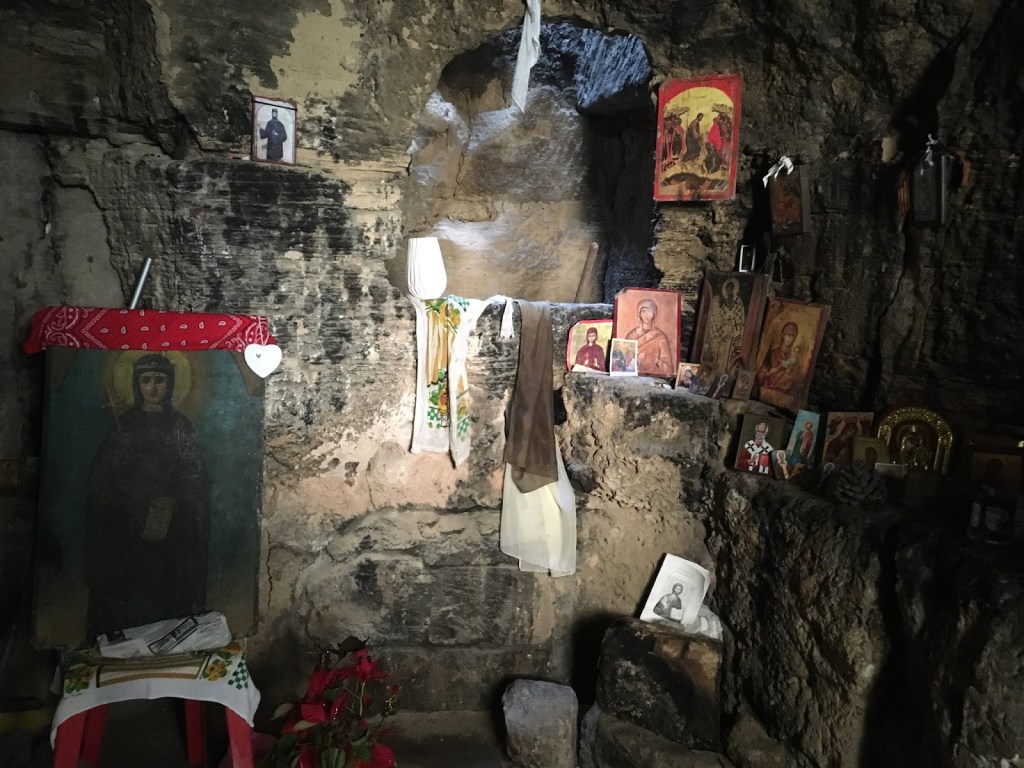
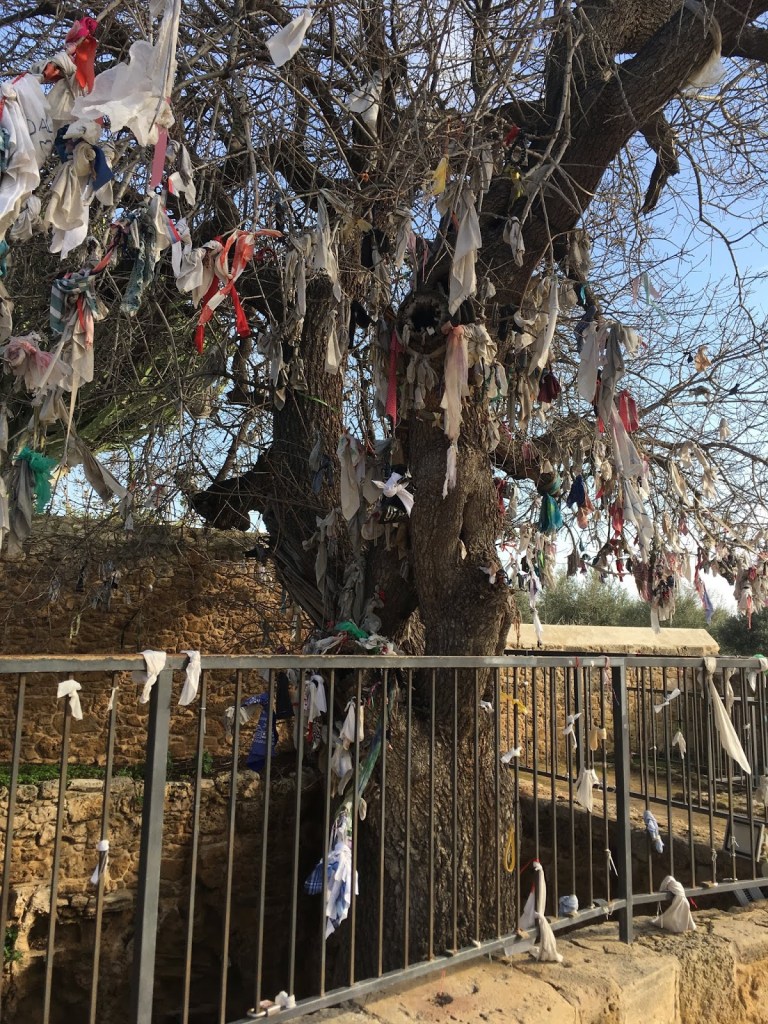
Without drinking, we also (literally) fell into the St. Solominus Catacombs. Underground shrine with deep caverns with steps leading down into an unseen pool of water, baptizing Nick’s feet.  This may have been one of our favorite spots in Cyprus. Good story, Jewish/Catholic/Pagan history- this is thought to have been a synagogue, converted to a church in the 9th century. It is the burial cite of the  Jewish Maccabee brothers killed by the Romans for being Jewish.  One story says the king asked them to eat pork and they refused saying they would rather die. Another story says they refused to worship idols and were killed. Their mother, Solomini became a Christian and one story says she was locked up in the catacombs and two hundred years came out alive.  In addition to these stories, people tie ribbons and rags (Pagan ritual) to the tree growing out of the catacombs to be cured of ailments.  As we approached, we saw two young men in track suits, deep in discussion, pause, kiss the tree and then continue their discussion. 

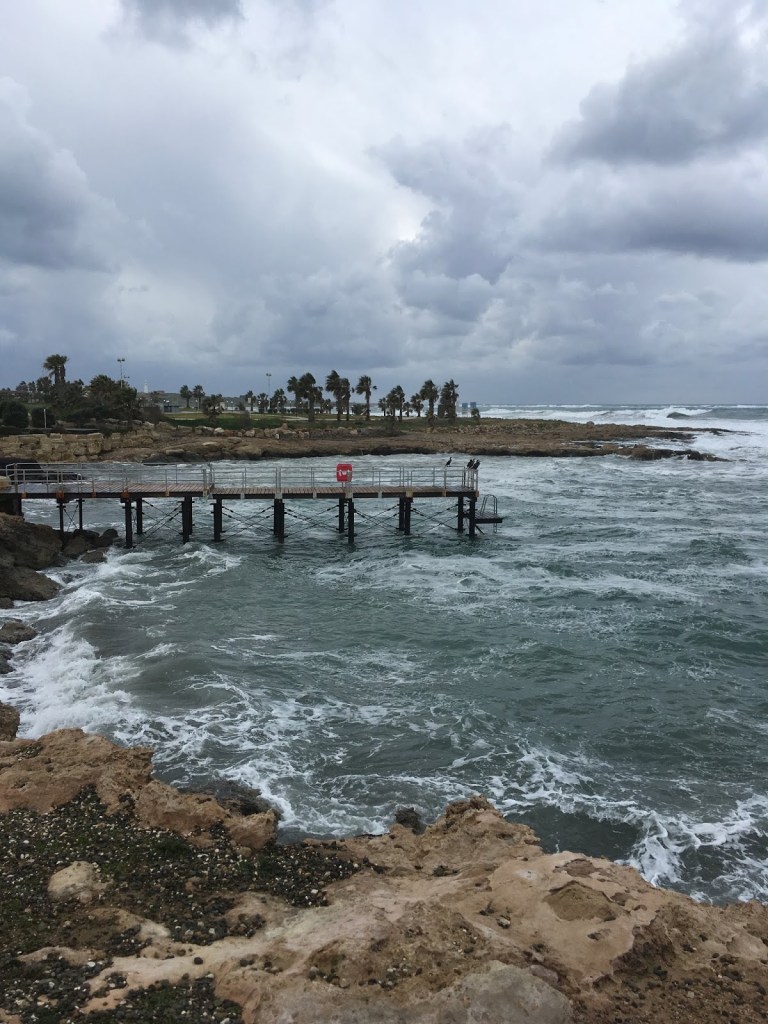
We walked pathways along the beach, from one end of Paphos to the other as well as along the the beach in Polis a small town we also visited just north of Pathos in the Akamas pennisula.  On either side of the town of Pathos are massive hotels (south end) or housing and hotels (north end) .  The hotel and beach condo/resorts were mostly deserted for the off season with the exception of the contingent of zombie like British pensioner couples combing the beaches, Russians using the outdoor exercise equipments and the ubiquitous cats.

Polis is not as developed as Pathos, a lot of condos but not the big hotels.  The bus between Pathos and  Polis  went through winding narrow mountain roads thru small villages to the Akamas penisula where Polis is.  The villages looked like Hollywood back lots of mountain villages with the back drop of beautiful lush green fields on sloping foothills of the Troodos mountains. These towns are apparently almost as deserted as a Hollywood set after hours, natives have mainly left and the old houses are holiday homes. Polis in Greek means city, so the town of Polis is aptly named as it felt kind of like a generic Cyprus town with non-distinct small commercial area, an “authentic” 2 block tourist area (which was fairly nice, small restaurants, souvenir and clothing stores plus a 115 year old simple stone church).

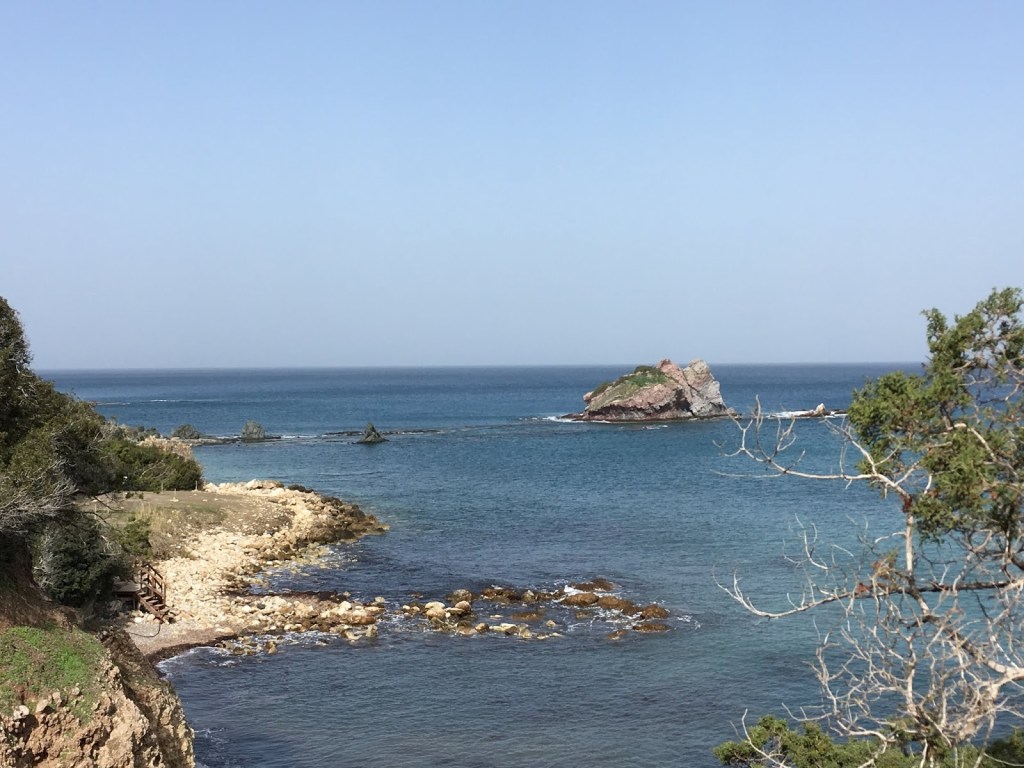
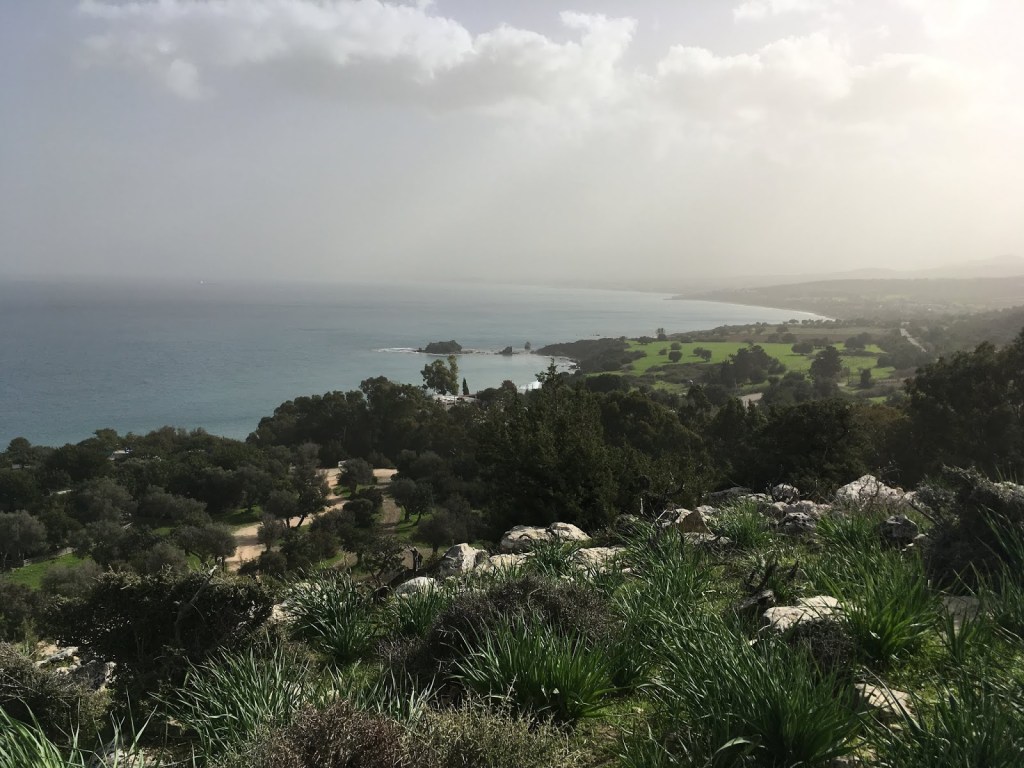
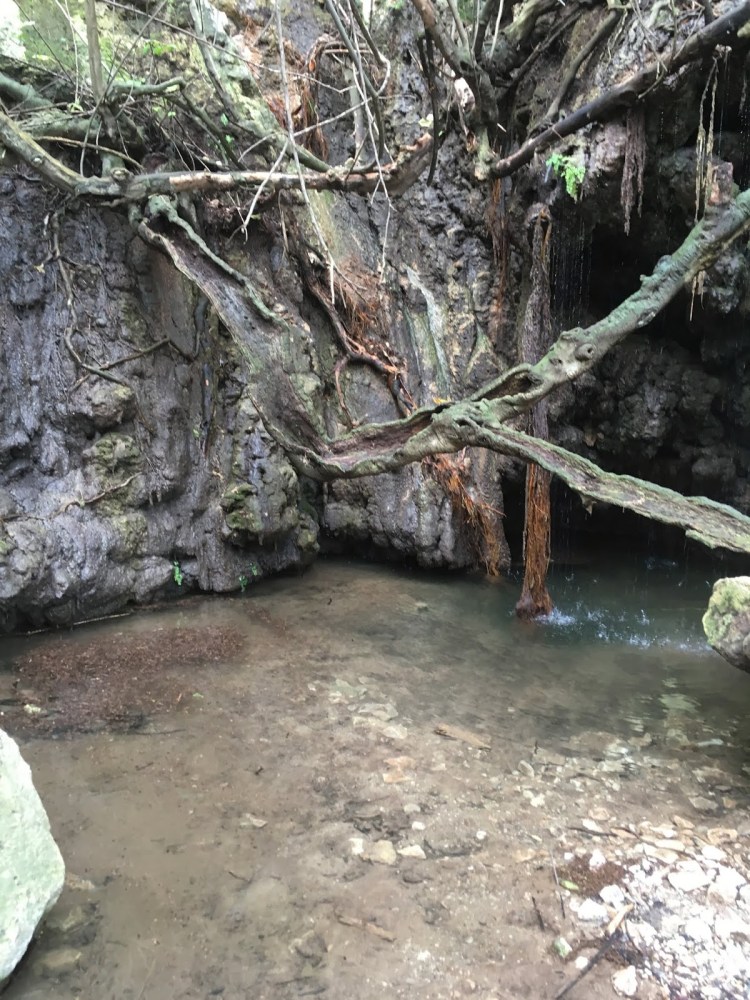
The draw here is the Baths of Aphrodite-if you bathe in it, you receive everlasting beauty, just like Aphrodite.  However, to discourage this they have stocked the pond with creepy freshwater eels-which we saw.  Everlasting beauty comes with a risk of feeling eel.  After visiting the baths, we walked up the Aphrodite Trail, apparently as she did after her bath (early Spa treatment?). Looking down at her beach, we thought this was Aphrodite’s rock where she was born arising out of the sea, but apparently she had her water birth (sea section?) closer to Limassol, but we took lots of pictures of this rock so didn’t want to waste it.  

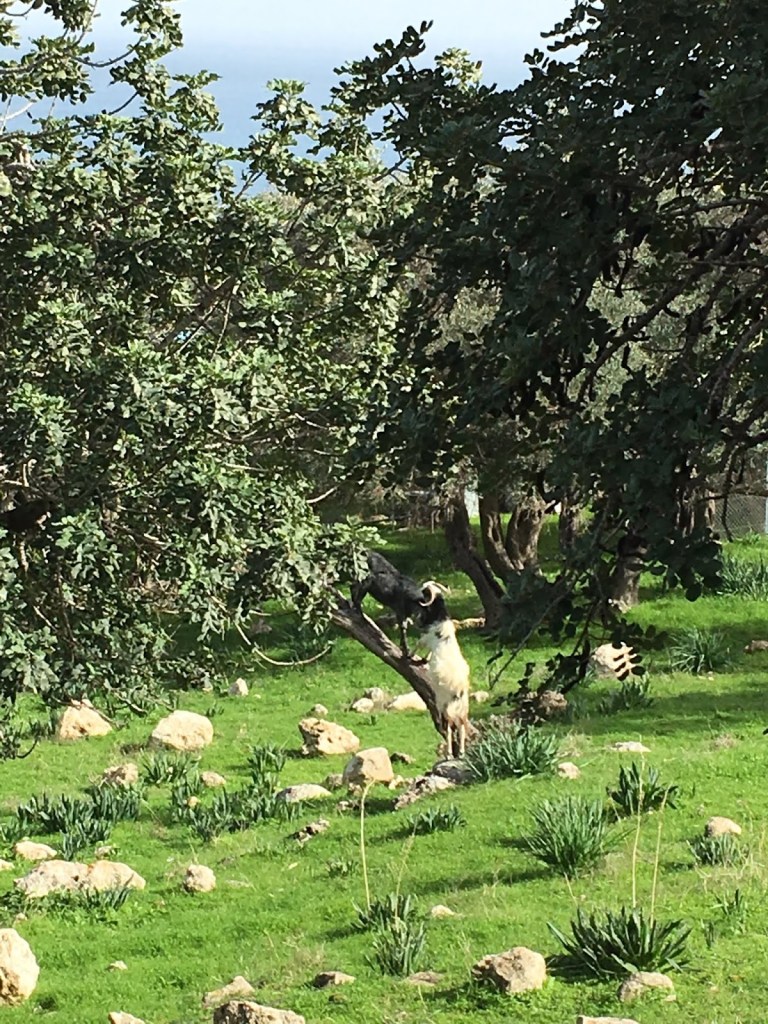
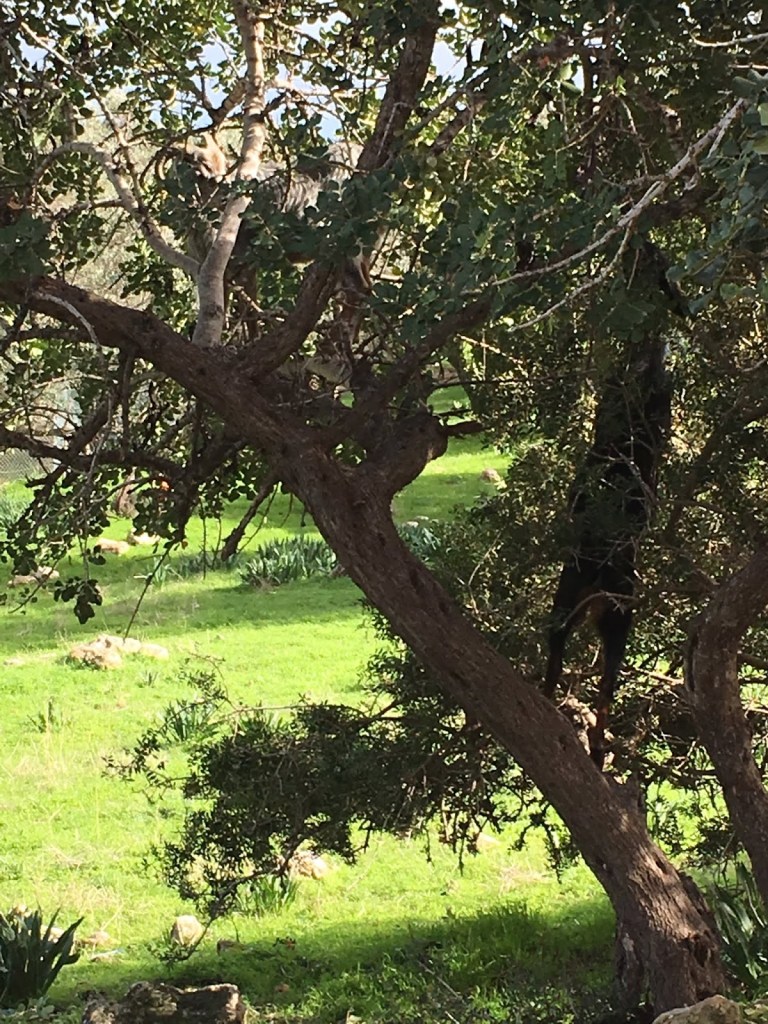
But the most exciting thing was seeing the wild goats climbing trees. 

We generally have not seen many animals (other then cats).  but generally just crows, pigeons, doves and of course cranes

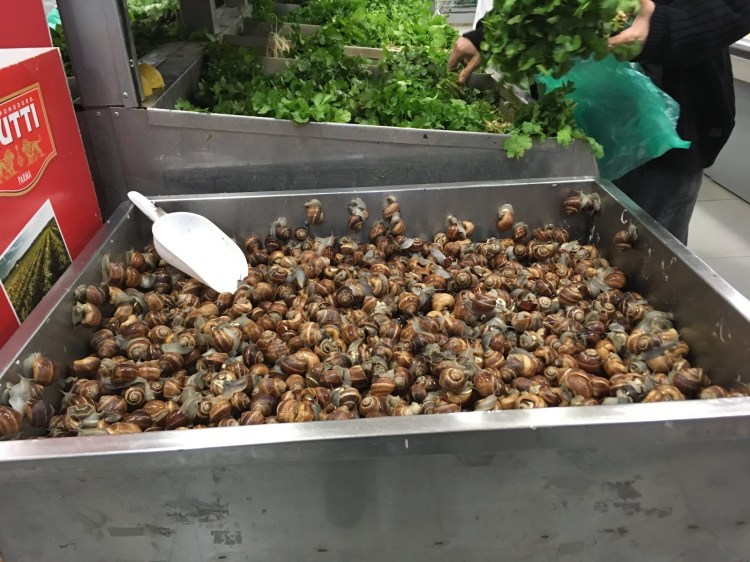
So Paphos and surroundings delivered. From the lovely place we stayed (and added on 3 days), the great supermarket with live snails in the produce department, to the really beautiful beaches. 

This week’s photo of a topless old man looking out window contemplating his life…
“just saw his shadow, which means another six weeks of Seasonal Affective Disorder”


Cyprus: the good, the bad and the ugly part 2

This post was before the word press upgrade, sorry it does not look very good

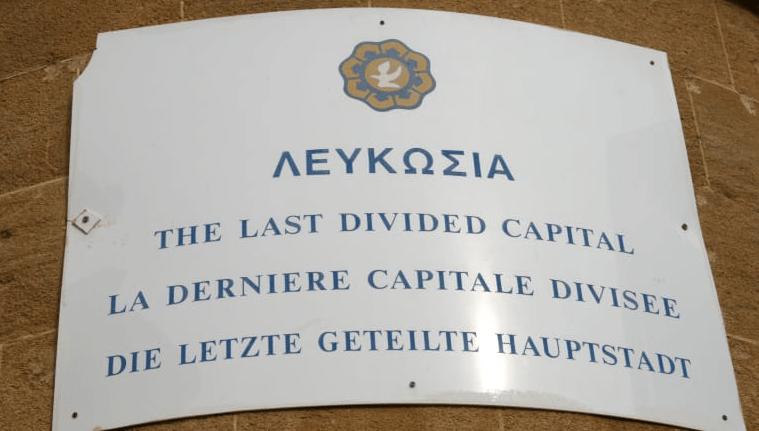
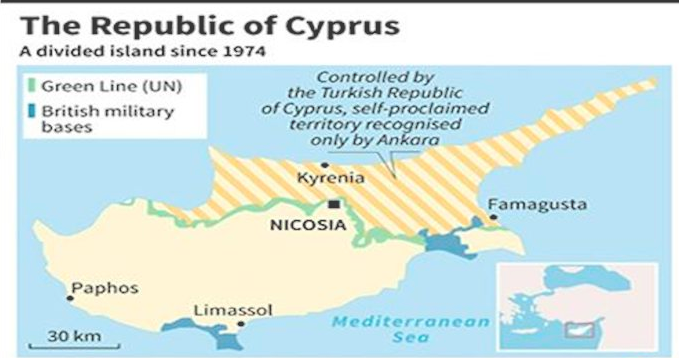
Nicosia (Lefkosia in Turkish) is the last divided country capital in the world. The division is marked by the Green Line, named for the color of the ink on the map to draw the country boundaries in 1964.  The southern 2/3 of Cyprus is “Greek”, the northern 1/3 is Turkish although Turkish rule is not recognized by any country other than Turkey.  Technically, the island is just Cyprus with an occupied northern terriority. 

The history of Cyprus appears to be as convoluted as the Balkans. Like the Balkans, different groups, Turks (18% of the population) and Greek Cypriots have lived together contently, for centuries.  Most spoke some of each language.  Also like the Balkans, roots of conflict go deep, all the way back to Greek mythology where the island has a significant role. Aphrodite and Adonis were born here. This deep attachment to Greece has led to modern Cyprus longing for enosis-return to Greece.

Even though Cyprus is a tiny country it is the 3rd largest island in the Mediterranean, it has been geographically significant as a gateway to the east.  For centuries it has been the stopping point for merchants, crusaders and armies.  Like all areas with a long history, villages dating back to 8000BC, it has traded hands multiple times-the Greeks, Alexander the Great, Byzantines, Lusignans (wow, new players, they are from France), Venetians, Ottoman, British-only Napoleon seems to have been off the Cypriot dance card.

With the fall of the Ottomans, Britain picked up Cyprus in 1878 but was ready to offload Cyprus after WWI. Turkey and Greece declined. After WW2, turbulence between Great Britain, Greece, Turkey and the Cypriots led to Great Britain finally giving Cyprus its independence in 1960. The turbulence only increased.  Years of political manipulation and maneuvering between Greece and Turkey leading to increased tension, hostilities and violence.

July 15, 1974, the Greek majority staged an unsuccessful coup to unite with Greece (Enosis). In retaliation, Turkey invaded 5 days later resulting in thousands dying, hundreds still missing and many thousands displaced from their homes.  180,000 Greek Cypriots were forced out of Northern Cyprus and their property confiscated. 80,000 Turkish Cypriots, prodded by their own leaders, were similarly forced to desert their lives in the south and live in camps in the north.  An entire northern city, Famagusta, previously Greek Cypriot remains a ghost town.  It is now a tourist attraction. In an effort to bolster the Turkish population, Turks were encouraged to move from the mainland to the island and now 28% of the population is Turkish.

Much of the continued animosity is due to the forced relocation, on both sides, with generations still hurting.

How 
For the tourist, the biggest difference is that there are two names for many cities-Greek and Turkish. In the south, the Euro is used, in the north, the Turkish Lira. Prices are reportedly cheaper in the North.
The Greek side felt more economically stable. We saw multinational shops and restaurants, cleaner streets and more parks.  The south has a well developed public bus system, the north has few public buses and rather use a network off individually owned, small well worn buses that go between cities, stopping in neighborhoods along the way.
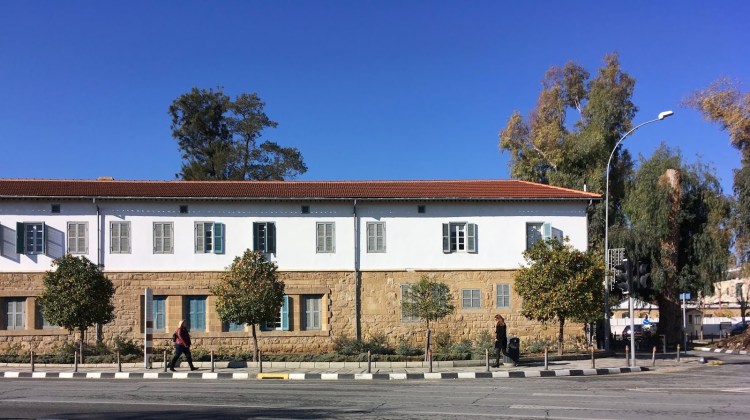
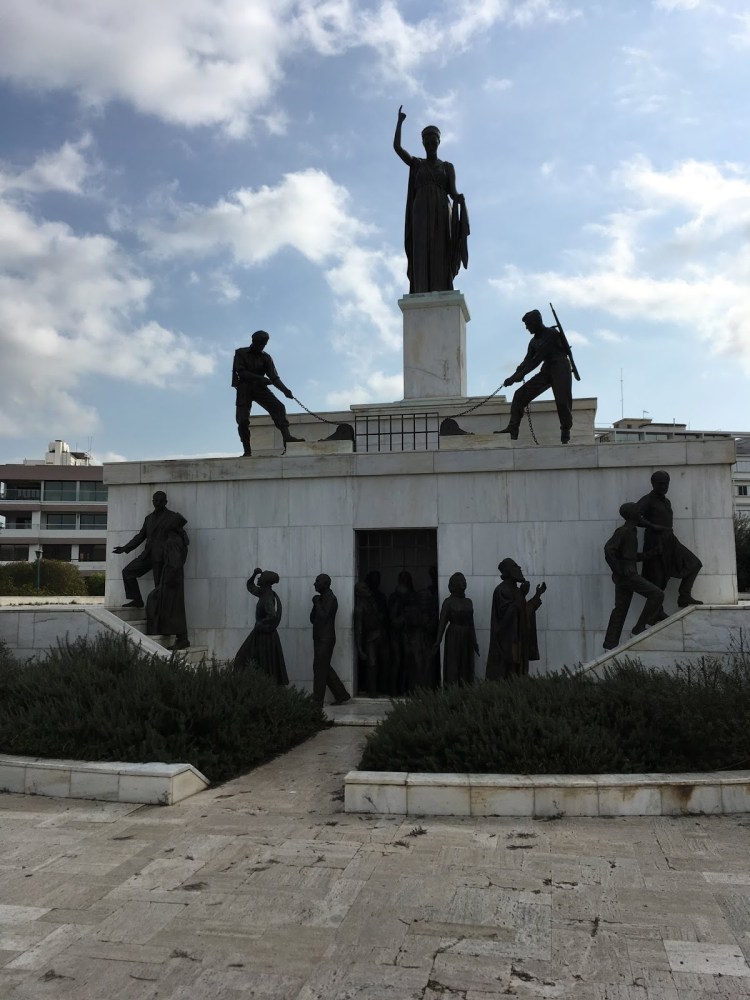
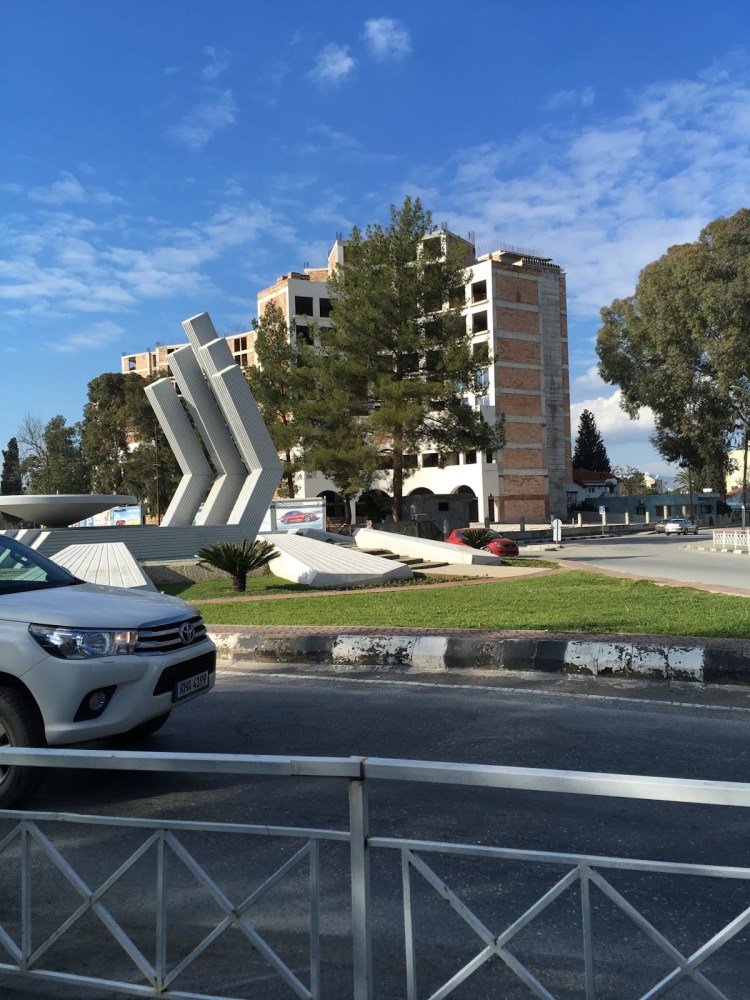
In the South, landscaped public buildings, monuments celebrating the British leaving.
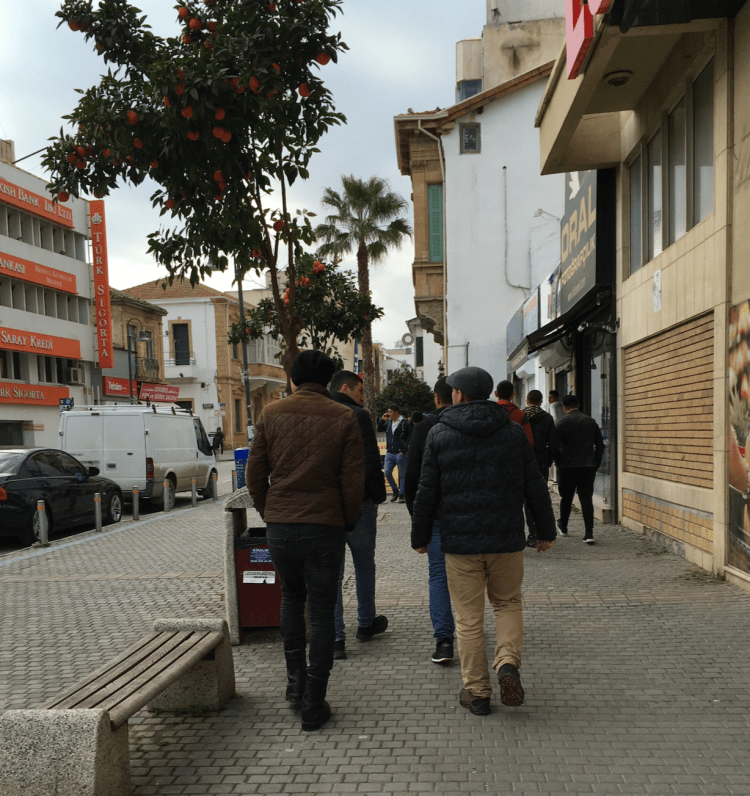
The north also had a lot of tangerine trees, we tried them on both sides, they were horrible.
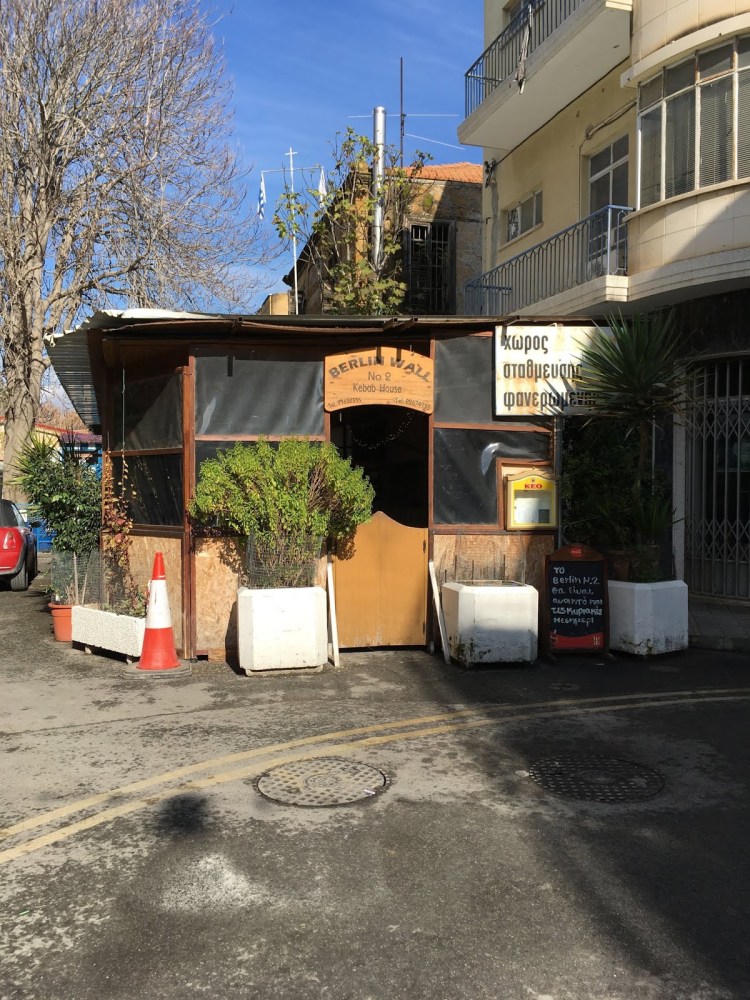
The most common monument on both sides seemed to be abandoned buildings- these are two pics from the North.- with a monument and concrete shell behind it.

Notable in the northern side, groups of young men wandering around

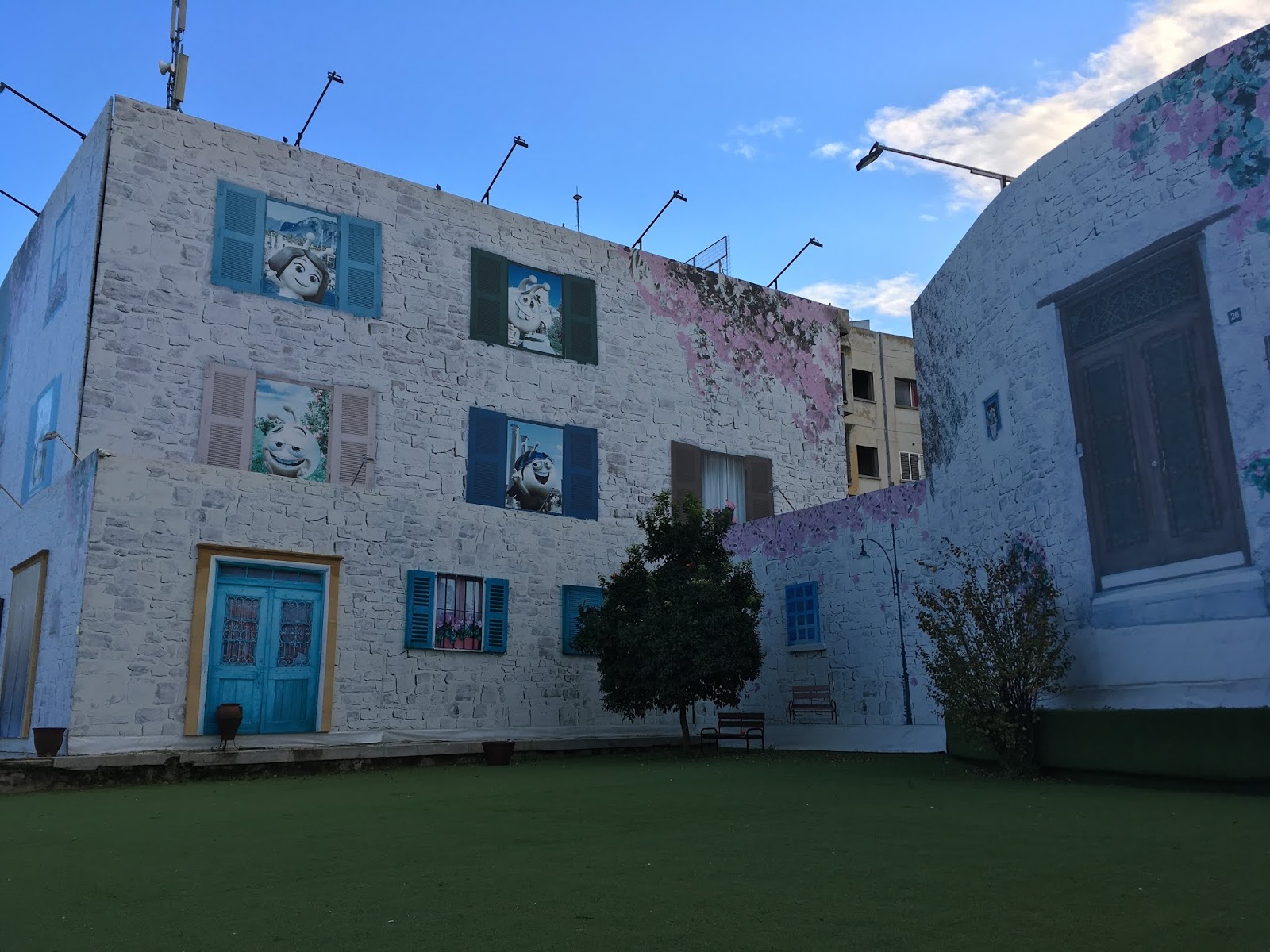
Urban renewal? A nylon facade wrapped around an empty building
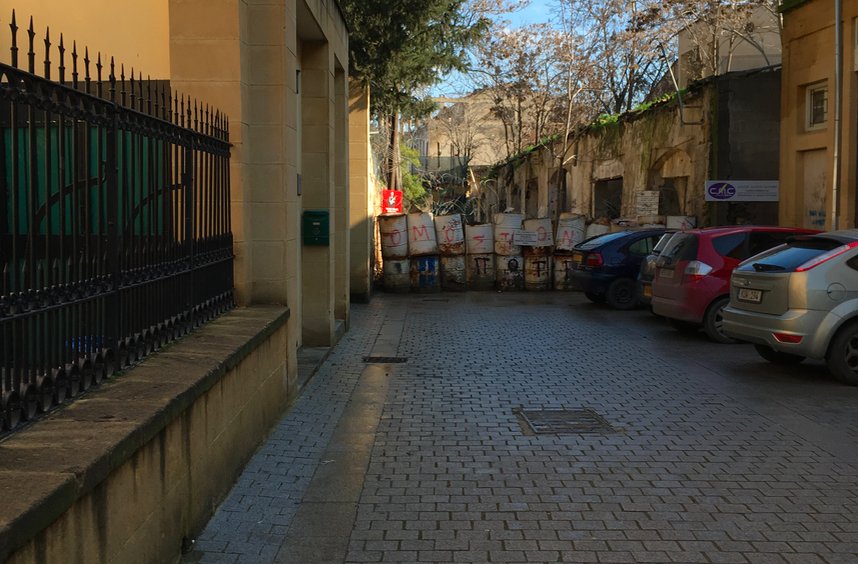
You can travel between the two sides in Nicosia by going through a passport check then walking 15 feet and going through another passport check.  We did it several times during our week in Nicosia, it was a benign process. There are UN guarded barriers and a DMZ along the green line, we were not allowed to take pictures. Nick was only asked to move along twice while trying to get a closer look.

There is a slight undercurrent of tension or maybe it is just or imagination spurred by the occasional sightings of Turkish or Cypriot armed military but really minimal compared to what we felt in Belfast and Jerusalem.  Again, unfortunately and stupidly, religion plays a role as the north is Muslim and the south, Greek Orthodox but from vantage point the country seems pretty secular.  We were in the south for Epiphany and Greek Orthodox Christmas and most stores were open, although there was a police presence around the churches.

In the north, it also felt secular. We heard the call to pray multiple times, but nothing seemed to stop. There were women with head scarves but most were in western clothes, not covered up, and men and women holding hands. Although, we did see a lot of groups of young men in the North just walking around.

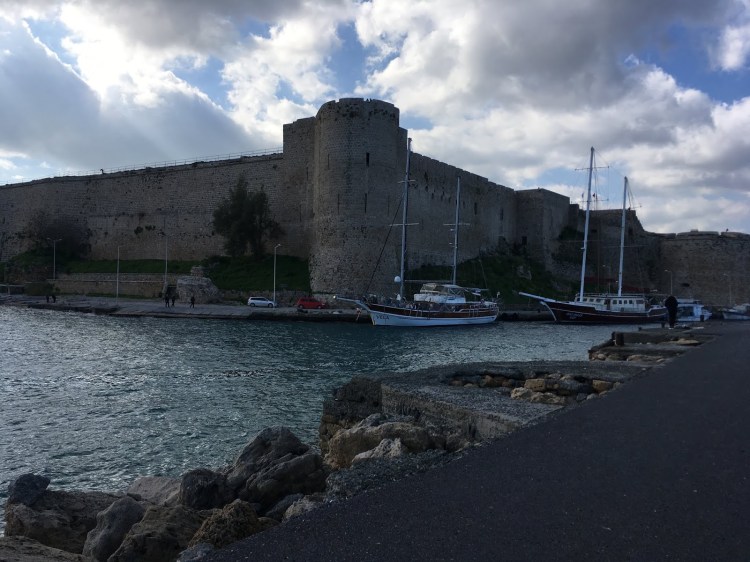
Despite the islamic ban on alcohol, there were plenty of bars in the north, including in the courtyard of the mosque. Gambling, illegal in other moslem countries is legal . Kyrenia (Greek)/Girne (Turkish), where we went, was kind of a mini-Las Vegas but with an ancient fort, Ottoman cemetery and beautiful coast line along with the multiple casinos

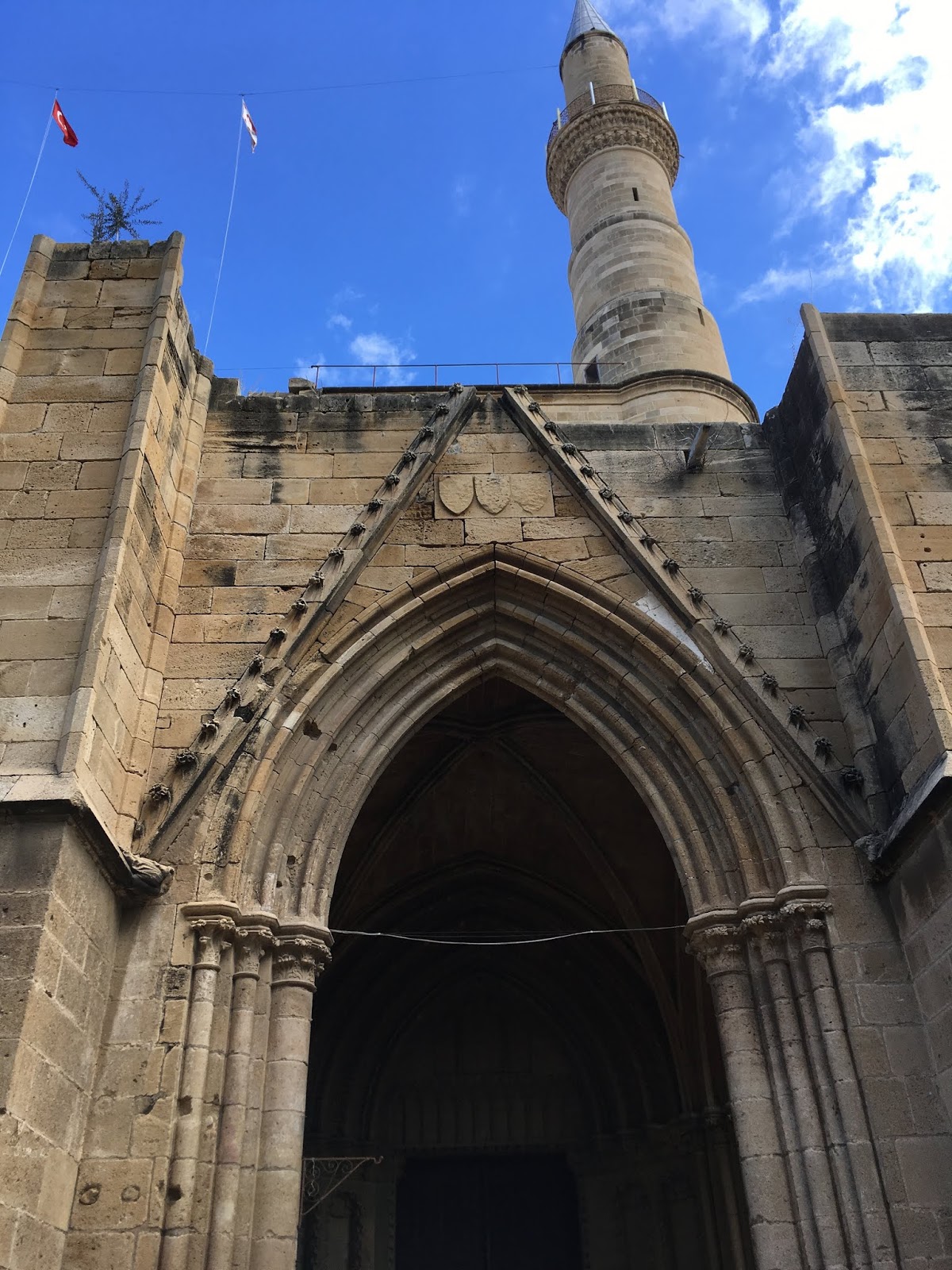
We have seen repurposing of buildings throughout Europe. Castles converted to shops and residences, forts to government buildings, palaces to hotels.  In Northern Cyprus, repurposing is commonplace. Almost all of the churches were converted to mosques or administration buildings during the Ottoman empire leading to fusion architecture with steeples side by side with minarets.
Our personal experience with repurposing was at our second accommodation in Nicosia. After our Northern Nicosia stay, we moved to the southern part of town. We went into the office of our little hotel to pay our bill and noticed medical diplomas on the wall, paintings of pregnant women and bookcase filled with gynecology books.  The owner explained that this had been her husbands OB/Gyn office which she converted.  That would explain our sterile room with paper sheets.
St Sophia minus  exterior gargoyles, angels and saints now Selimiye Mosque
 

Cyprus: the good, the bad and the ugly part 1

This post was done before WordPress upgraded so it looks really bad, sorry. 
“It’s the second half of the cruise and you know he hates to lose”  -Neil Young Cripple Creek Ferry
“Has your luck run out?” she laughed at him
Well, I guess you must have known it would someday”
-Bob Dylan Lily, RoseMary and the Jack of Hearts
Five months on the road, so we’ve definitely rounded the turn to the second half of our planned 9 month trip.  We celebrated Christmas and toasted the New Year with Sekt (German sparkling wine) in Saarbrucken, experiencing  many of the supposed local traditions for a lucky good year: although some locals we asked were apparently unaware of any these with the exception of drinking copious amounts of Sekt;

  • we ate lentil soup for prosperity because the lentils are shaped like coins,
  • ate tiny mushrooms (edible, non hallucinogenic variety, unfortunately) for luck – mushrooms are lucky in Germany,
  • we had a pig’s face shaped bread from the bakery also for luck (pigs are also good luck in Germany).
  • we bought napkins decorated with chimney sweeps and four-leaf clovers again for good luck
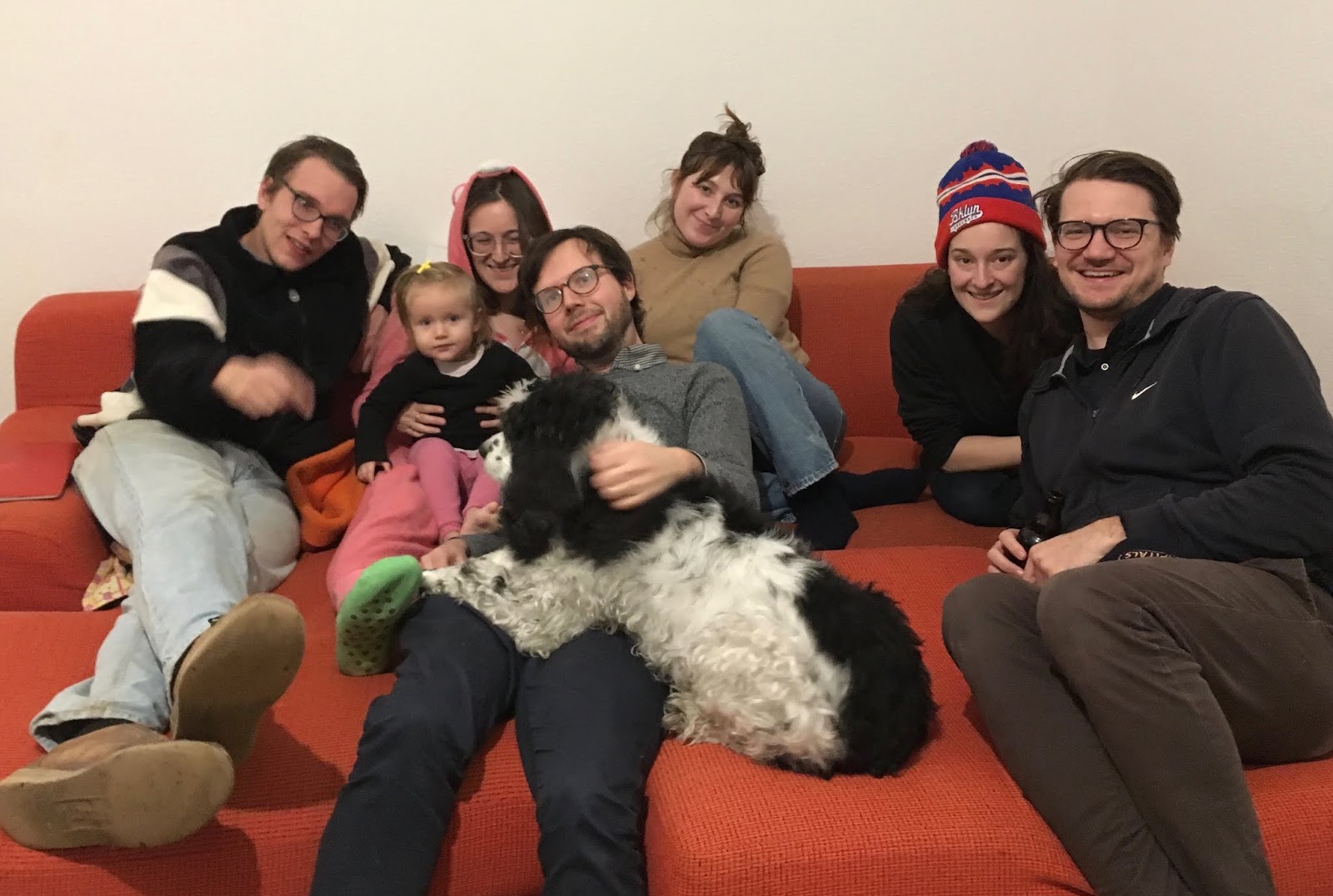
All together for Christmas in Saarbrucken

New Year’s Eve in Germany is also called Silvester, because St. Silvester’s feast day is December 31.   We were all in for Silvester 2019. The morning of New’s Year’s eve we spent in the supermarket buying all our lucky foods. Everyone else seemed to have a similar but slightly different idea, as the line to check out reached the back wall of the market and took us 45 minutes to check out. But while we were buying German lucky foods that no one in Germany knew about, they were buying Sekt and fireworks (yes, there were fireworks at the market).

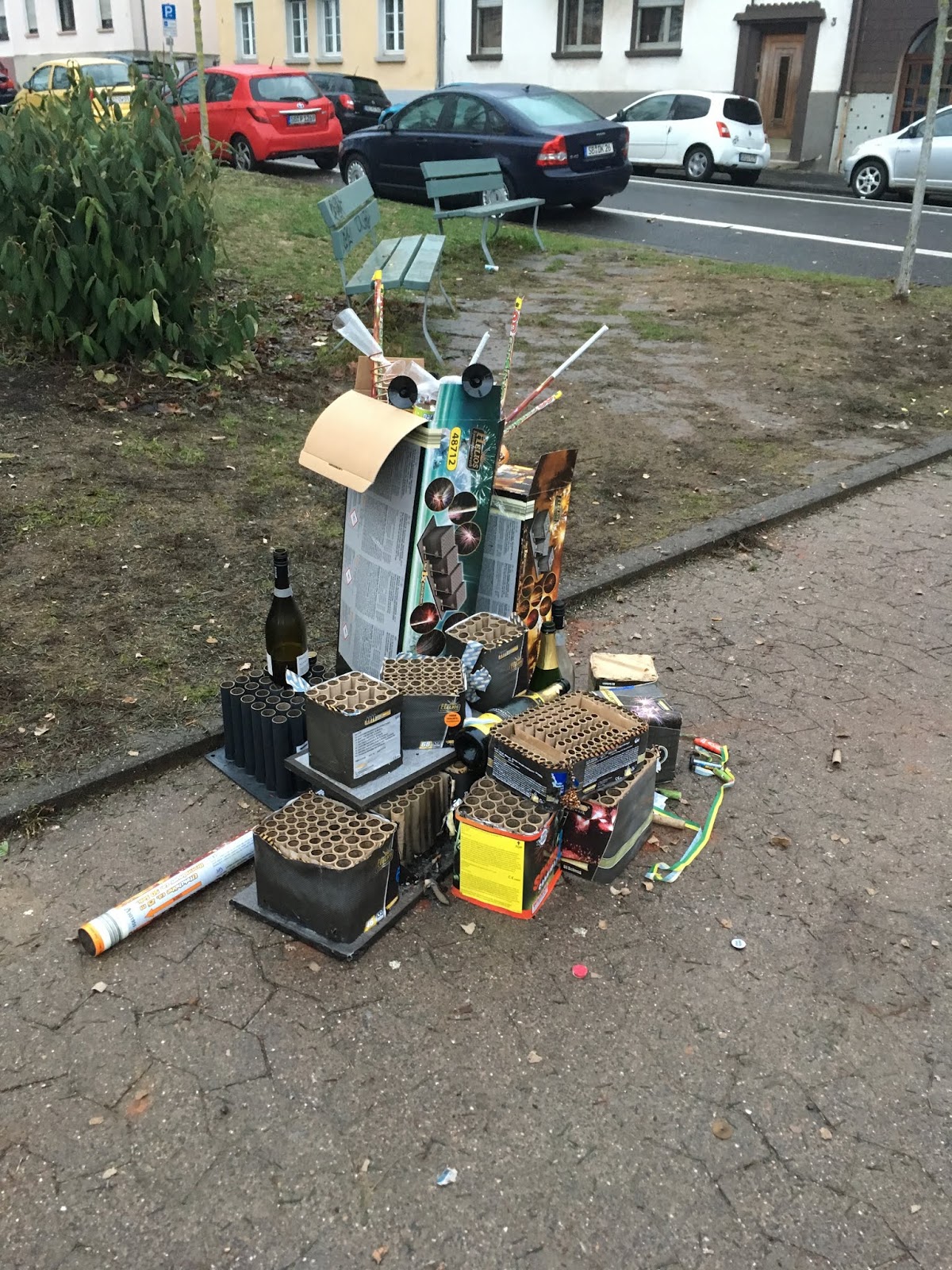
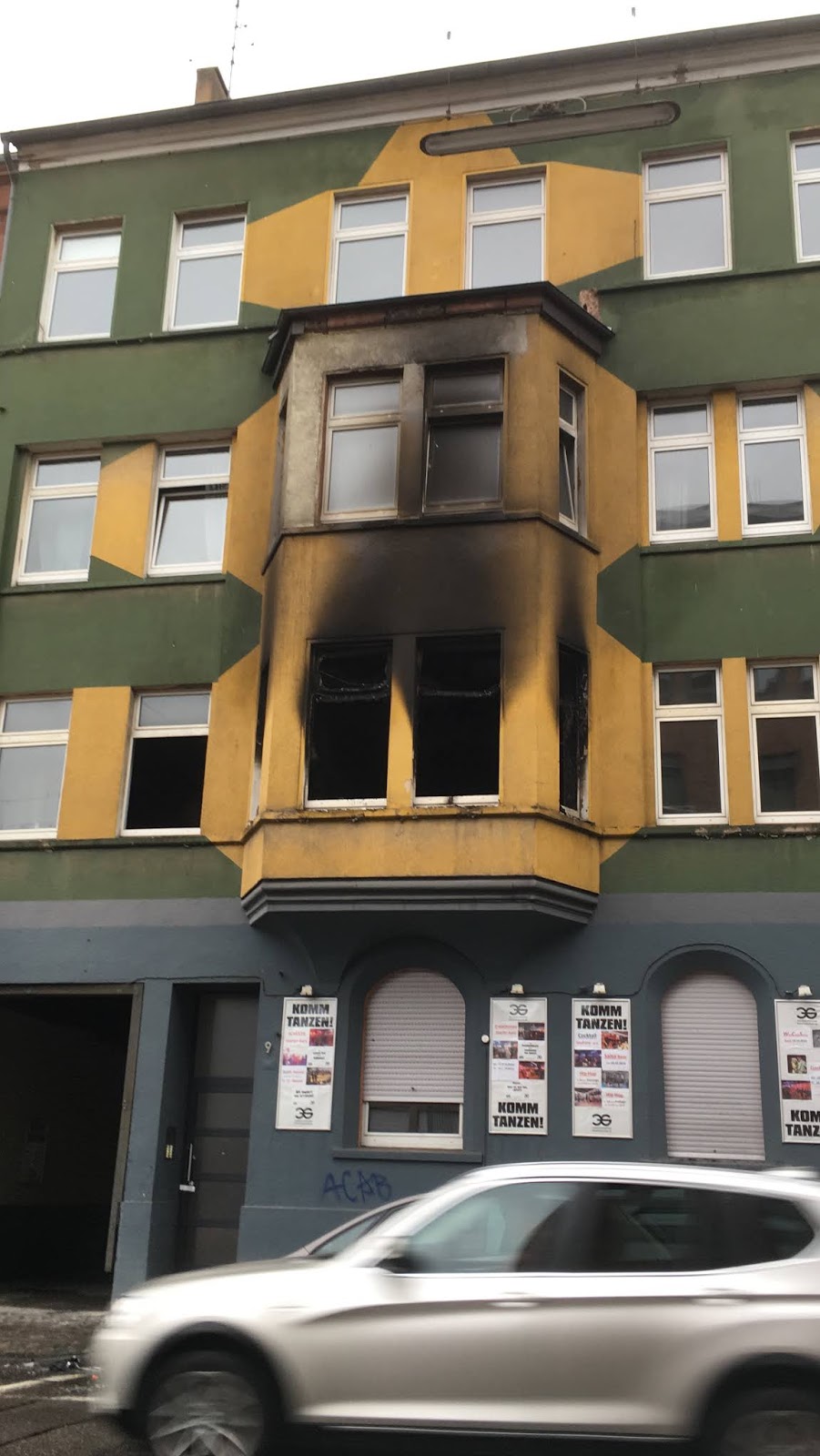
And at midnight we saw and heard their investments; a constant barrage of fireworks.  Colorful explosions were visible from every window.  This went on for at least an hour.   On our New Year’s Day morning walk  we saw neighborhood streets littered with firework remains and one burned out apartment, they should have had the lentils (or they had the other kind of mushrooms).  

Despite all of our New Yea\’s efforts, we have been losing and our luck seems to have run out. In particular, we have lost most of our Schengen time   https://thechosenfugue.blogspot.com/search/label/Schengen and we were unable to get a visa extension to allow us more Schengen time.
We chose non-Schengen Cyprus as our first stop for the new year but thus far it has come up short. Why Cyprus? It is about 30 degrees warmer than our initial other non schengen choices of Bulgaria and Romania and a little drier than Ireland (we thought.)
We have been unlucky as Cyprus thus far has been disappointing. Part of what brought us to Cyprus was some “luck”  last year. Last June at a Minnesota Twins / Seattle Mariner’s baseball game  in Seattle, Nick played a promotional game in the concourse,  60 seconds grabbing twirling, fake money while enclosed in a booth.  He got the lucky bill to “win” a free week at a resort any where in the world .  Actually what was won was  the opportunity to  endure a grueling high pressured 5 hour sales pitch for timeshares worldwide.  After  turning down every onslaught from the increasingly angry and annoyed sales people we walked out with our free week almost anywhere in the world that the company offered.  Unfortunately, the “free” week was a bit hard to find as most places required a financial upgrade, even in Lebanon and Bulgaria,  but…..  a week in late January finally came up in Cyprus, so later this month we will cash in, if we can make it that long in the rest of Cyprus

Cyprus has been surprisingly green (it has rained quite a bit), but not very attractive so far, and  it compensates with a lack of charm. It most closely resembles tacky America  especially tourist resorts like Panama City, Fort Lauderdale, or even Niagra Falls with familiar chains (TGIF, KFC, Pizza Hut), seedy shopping strips and strip clubs. In the off season, parts look ghostly.

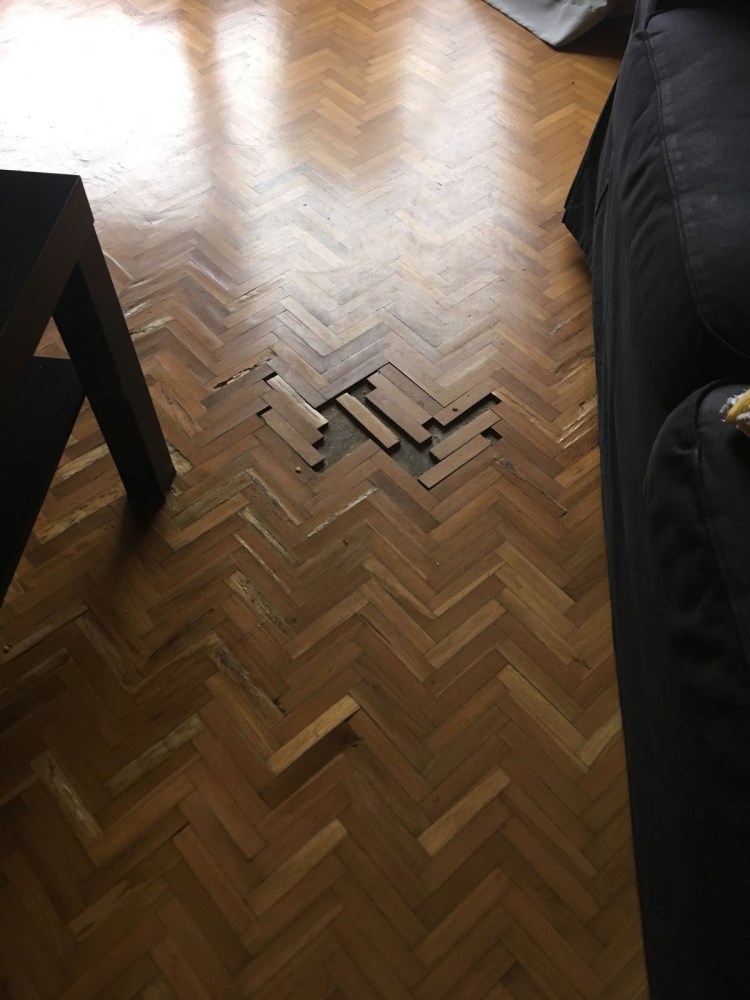
We have been in Cyprus 9 days and have had to change lodging 7 times.  This was not planned.  It was supposed to be twice.  Our first stop in Larnaca,  check in for our Airbnb was at a minimarket, where Nick almost knocked over a row of gin bottles with his backpack in the narrow aisles. We arrived at 1:45 to be told to wait 15 minutes until 2 pm before we could check in.  But within 15 minutes of checking in, we were ready to check out. The room was missing flooring, the internet did not work, and as a metaphor for our feeling of being trapped; the door had swelled from recent rains with no inner door knob so we couldn’t get out. It just was creepy.  Back to the minimarket. New room.  It had a stove that didn’t work,  internet that worked only when standing in one particular spot, a lot of twin beds and was equally creepy.  But we did learn something,  boiling eggs in the hot water kettle worked great, they were perfect. (that is not a puzzle, it is the floor)

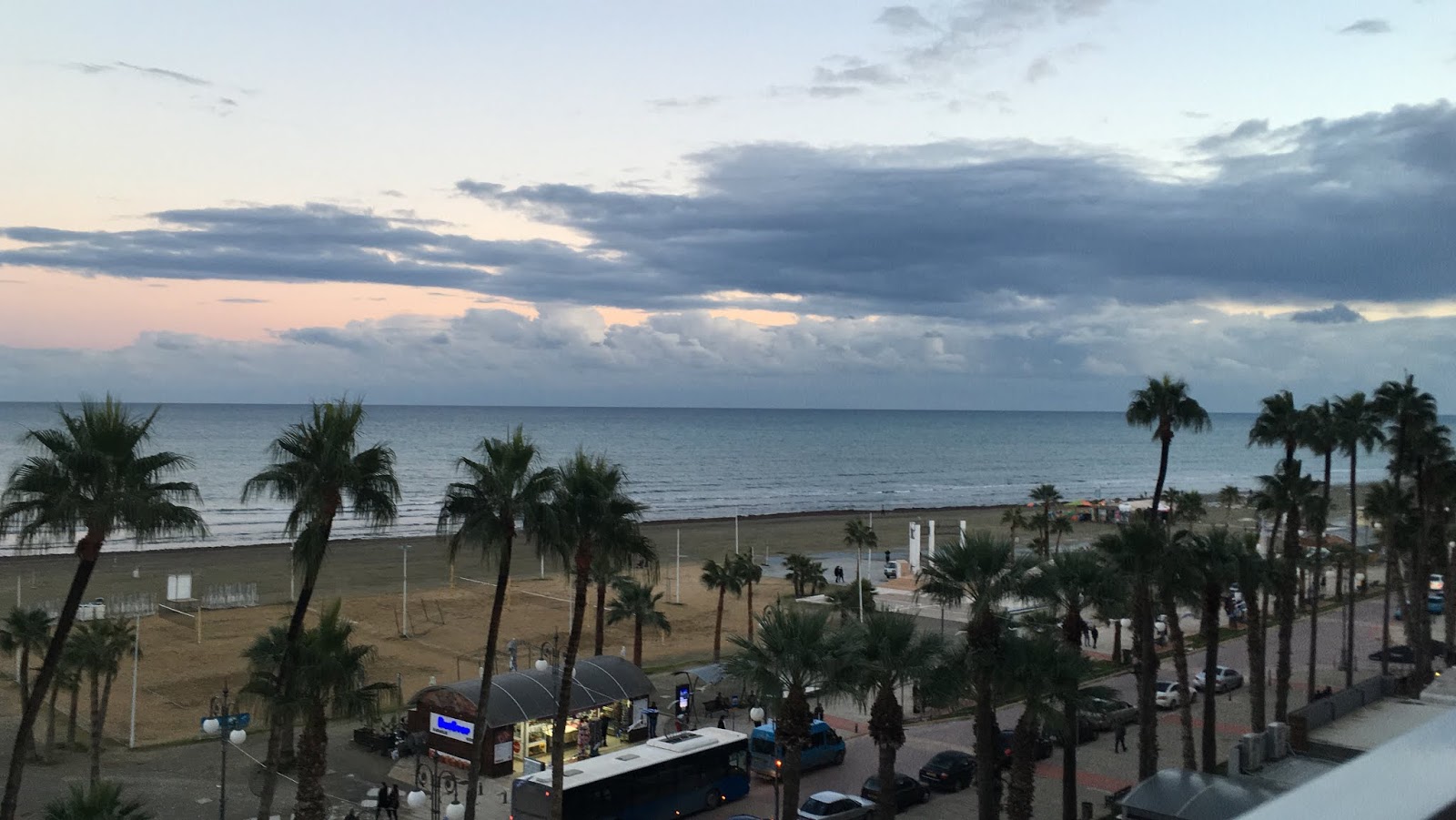
Standing on the balcony, the Mediterranean to the right with passing oil tankers. Across the way a forlorn looking young man smoking a cigarette and staring at the same tankers, it felt like the middle of a bad short story, and it was Epiphany (January 6th) . Back to the minimarket and our four night stay lasted one.
We quickly found another place around the corner, across from the beach with a luxurious balcony! It  would be  closing the next morning for 2 months of  renovations.  We asked, but there was no going away party on this last open night.

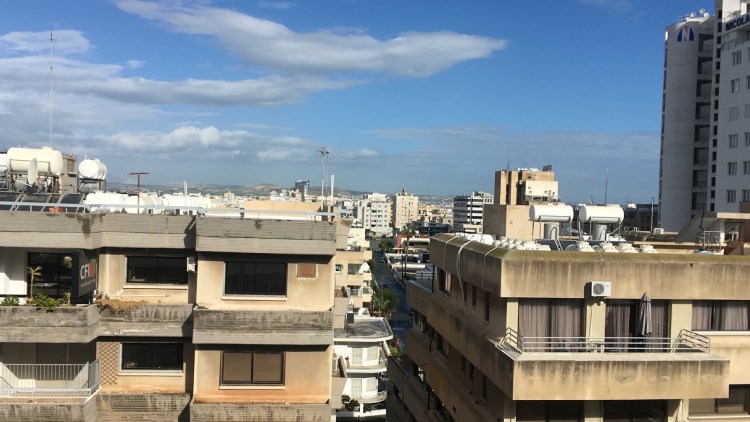
Perfect view at our second place, only one day since it was being torn down!

Four nights in Larnaca quickly became two.  Larnaca did have migrating wild flamingos, which were pretty fantastic but otherwise our Epiphany was to get out of town. 

Continue reading “Cyprus: the good, the bad and the ugly part 1”

They do make you stumble…


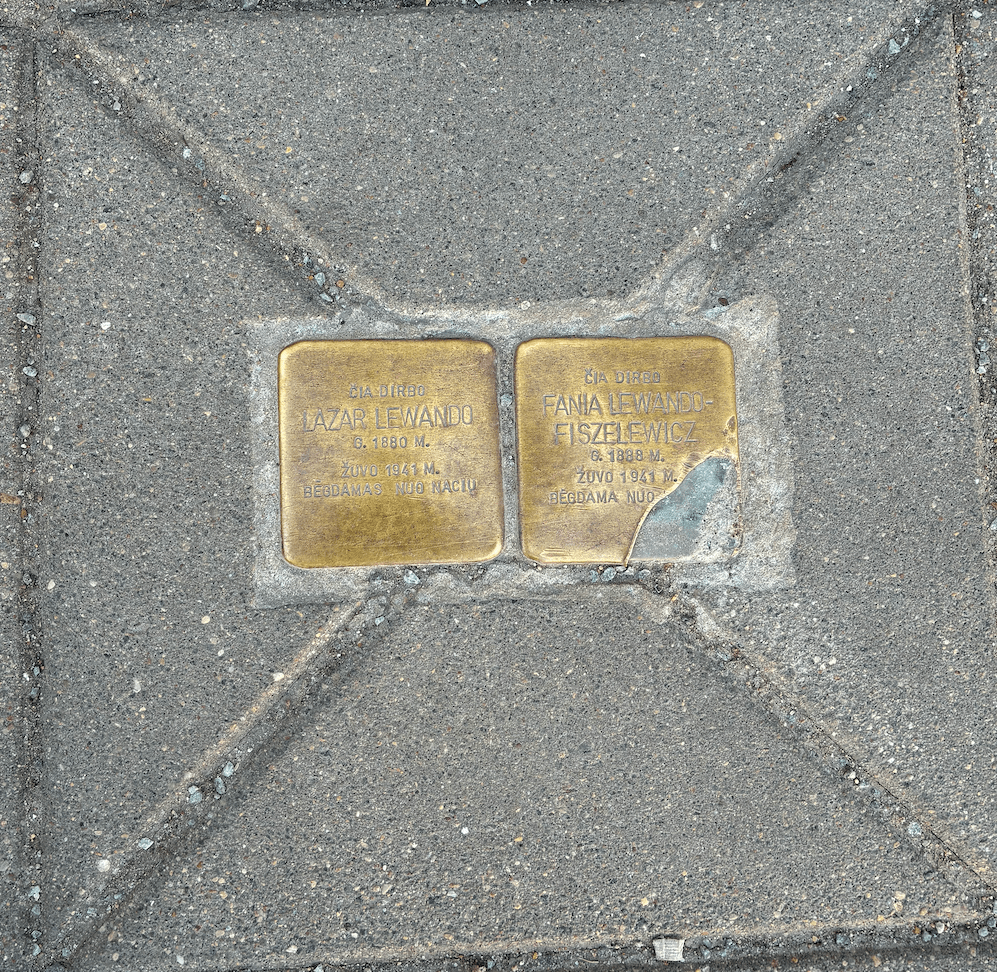
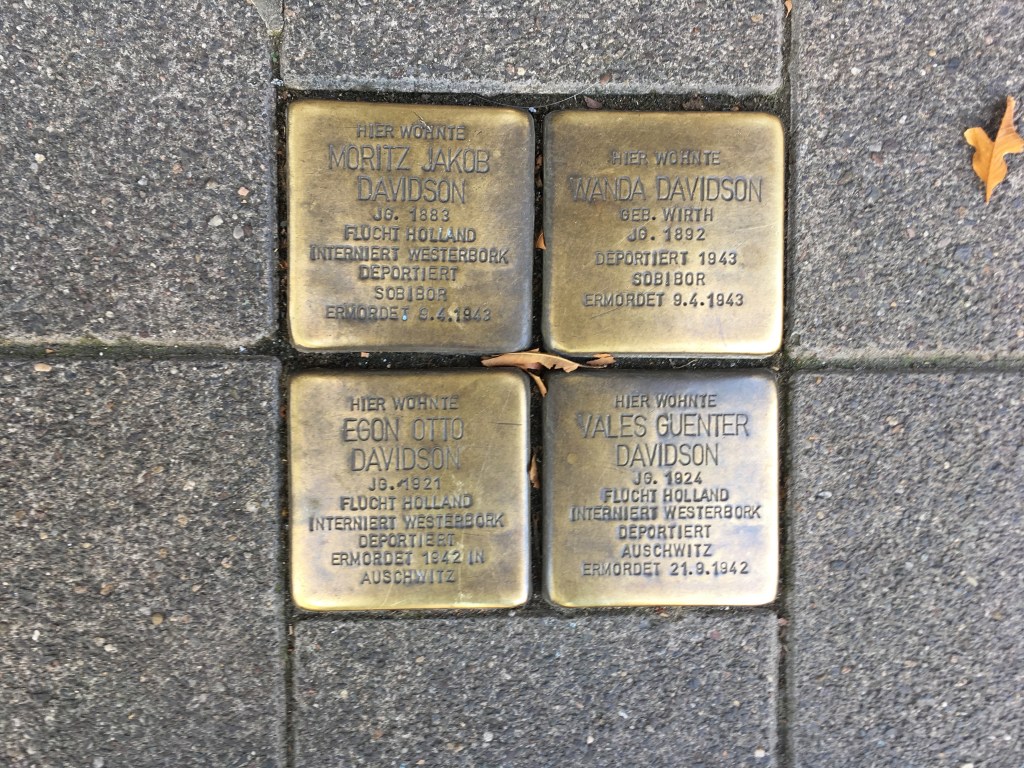
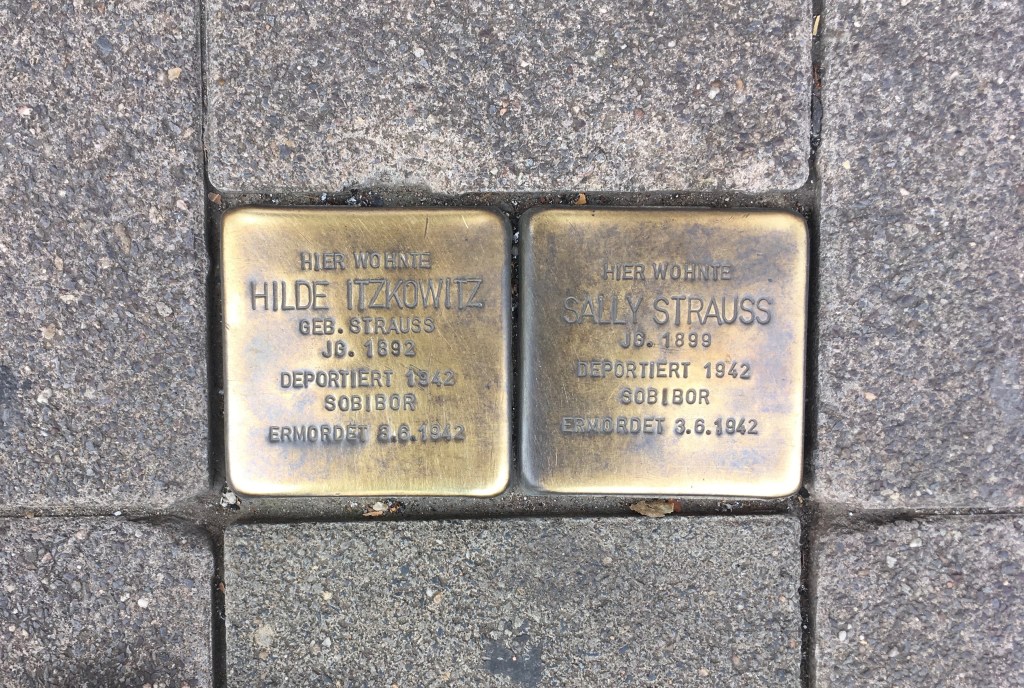
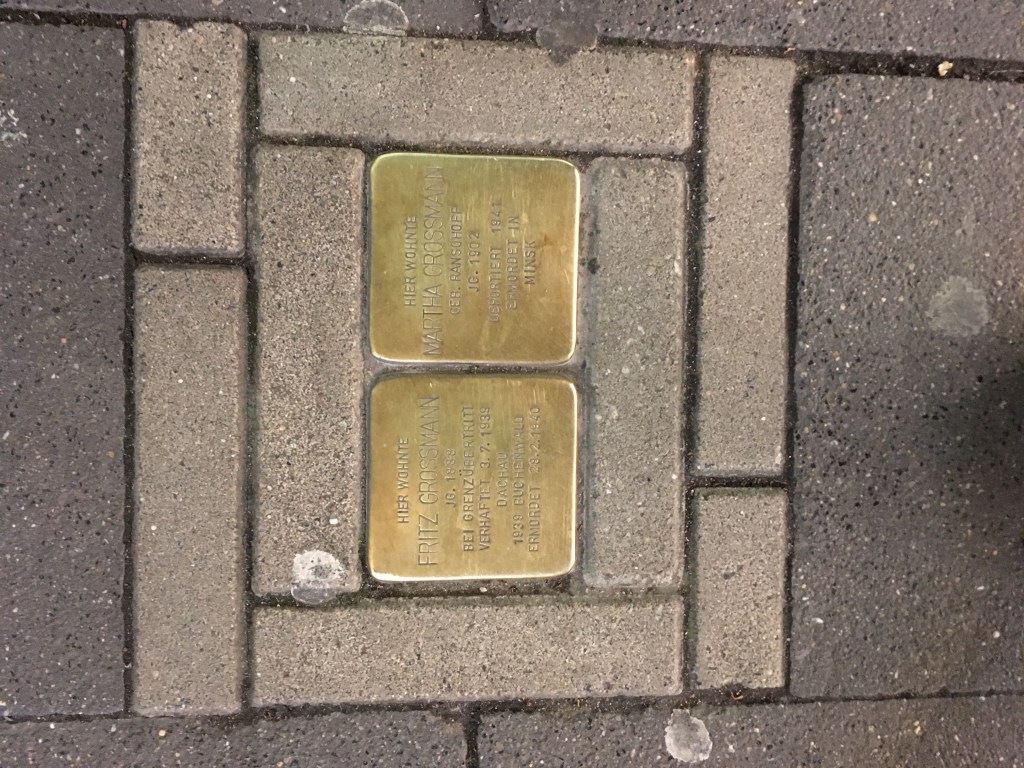
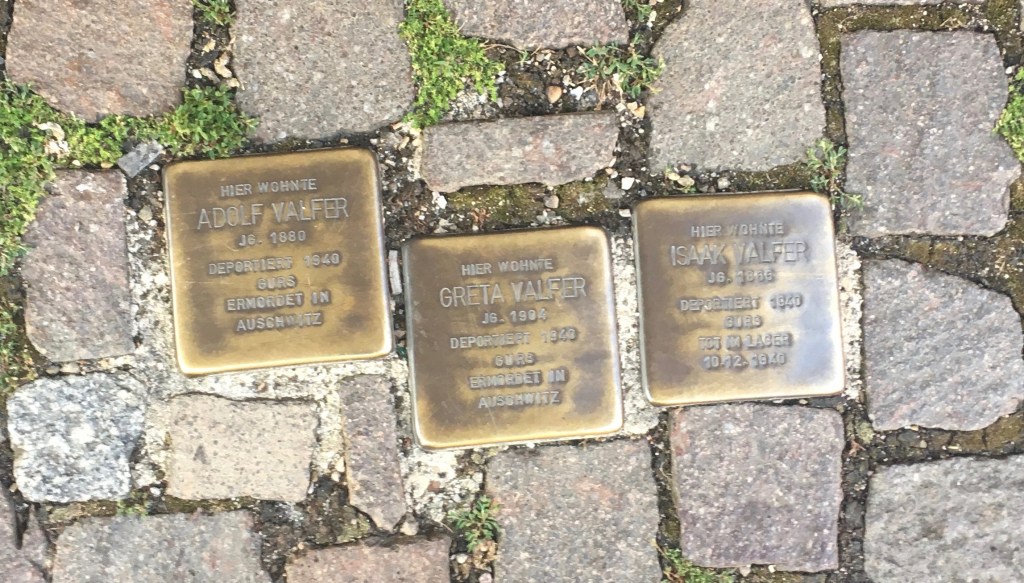
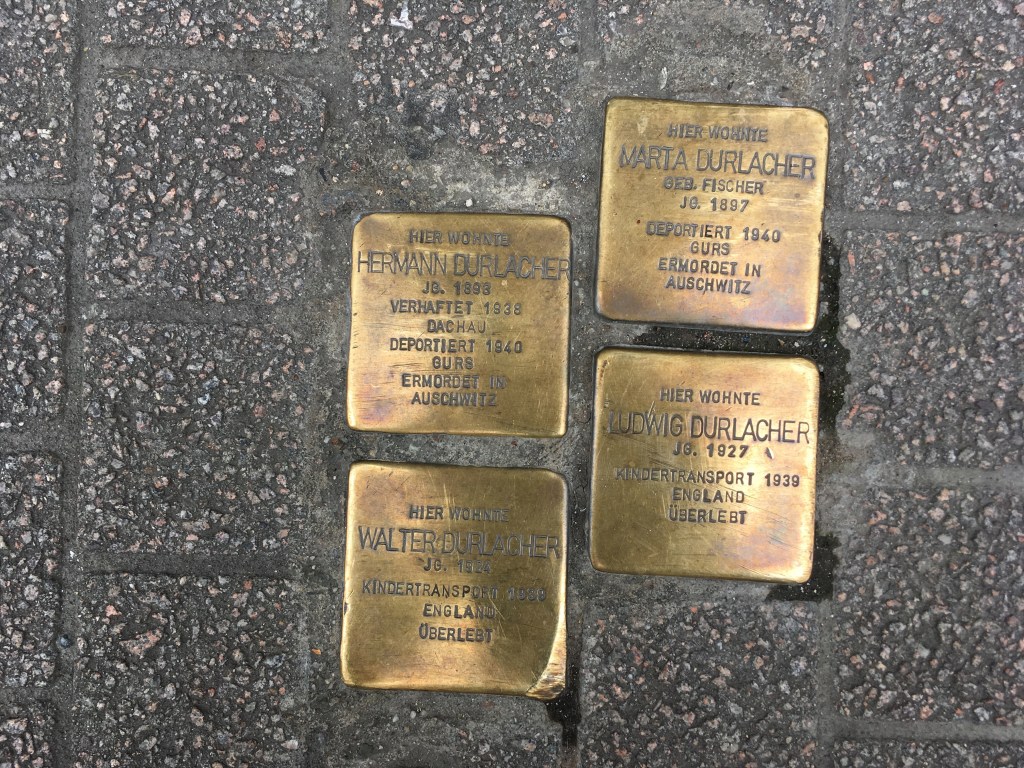
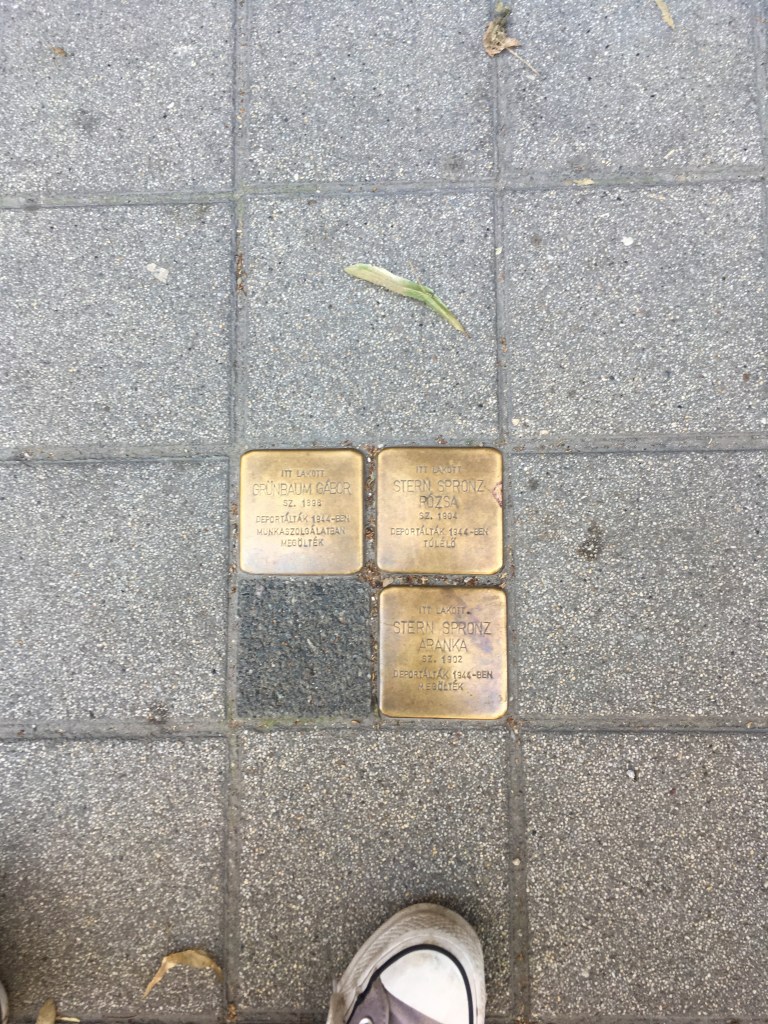
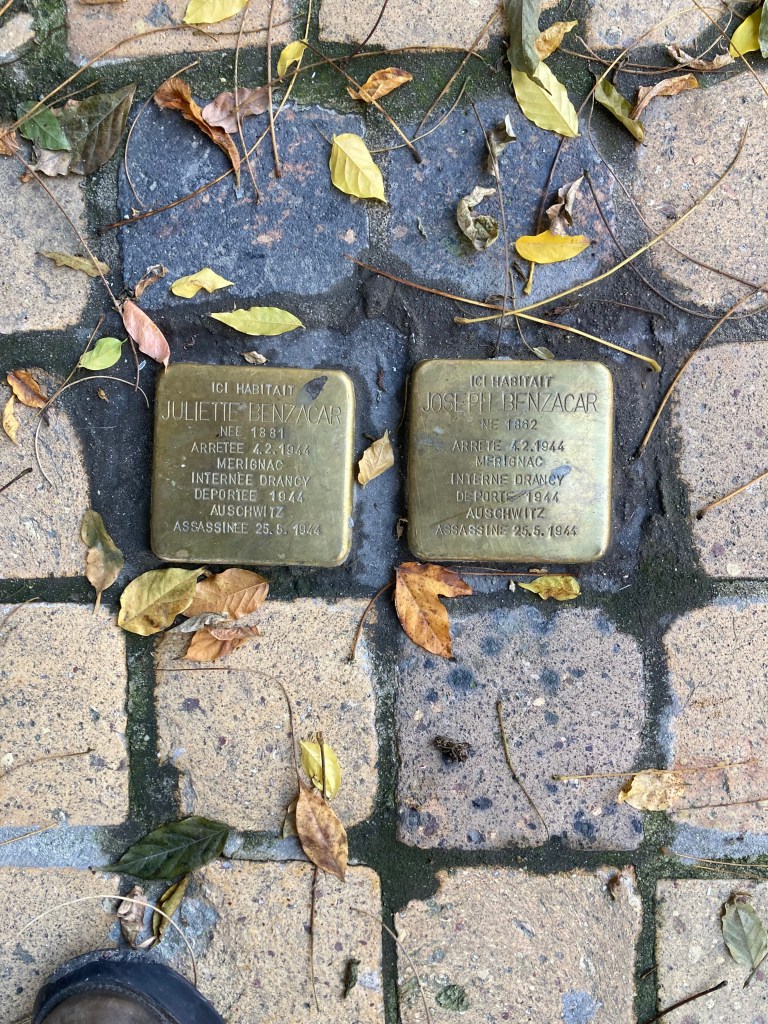
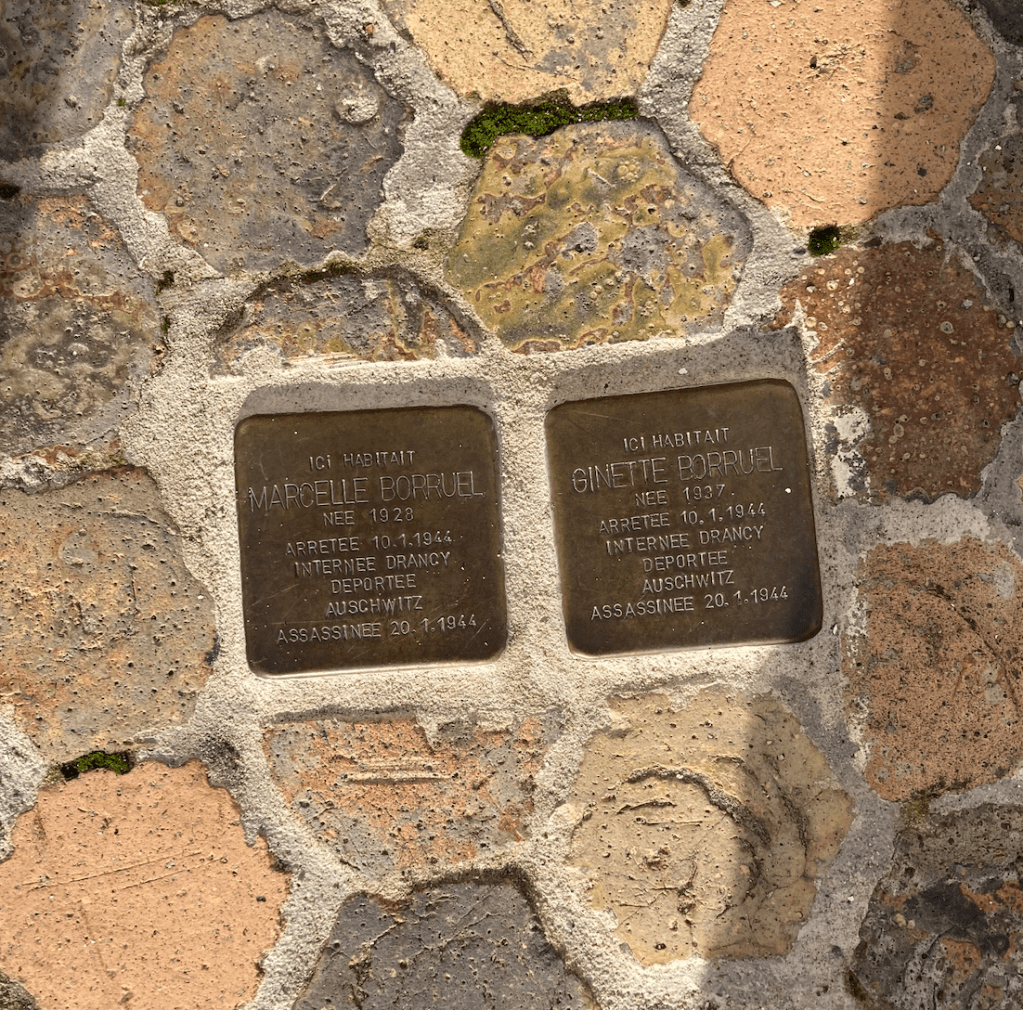
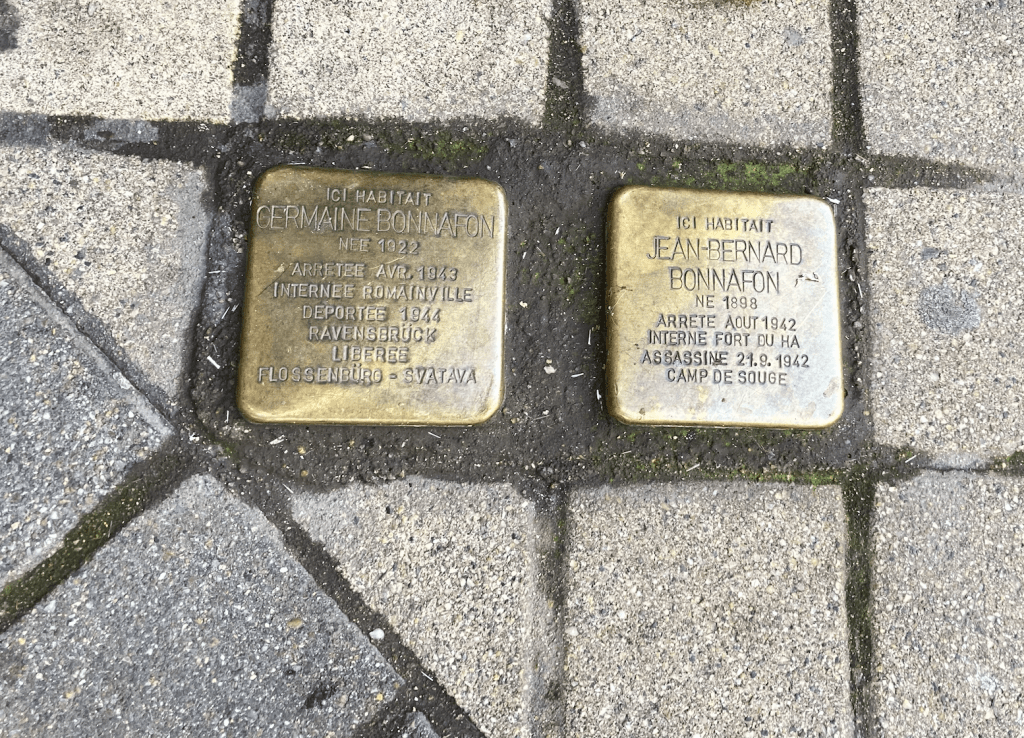
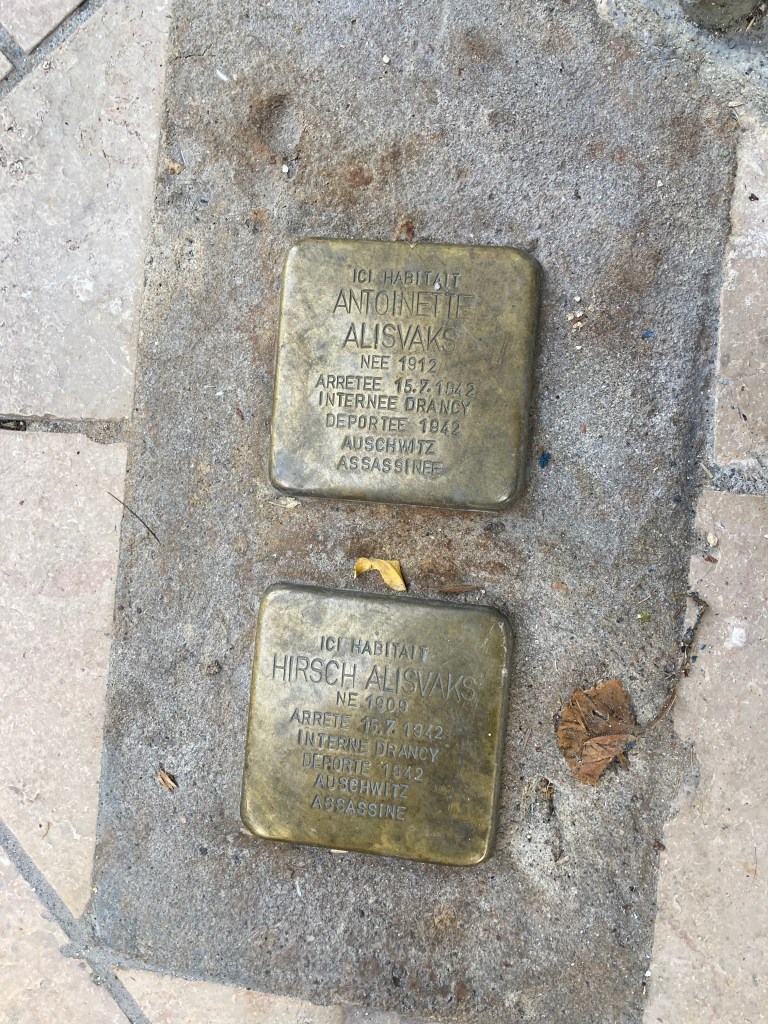
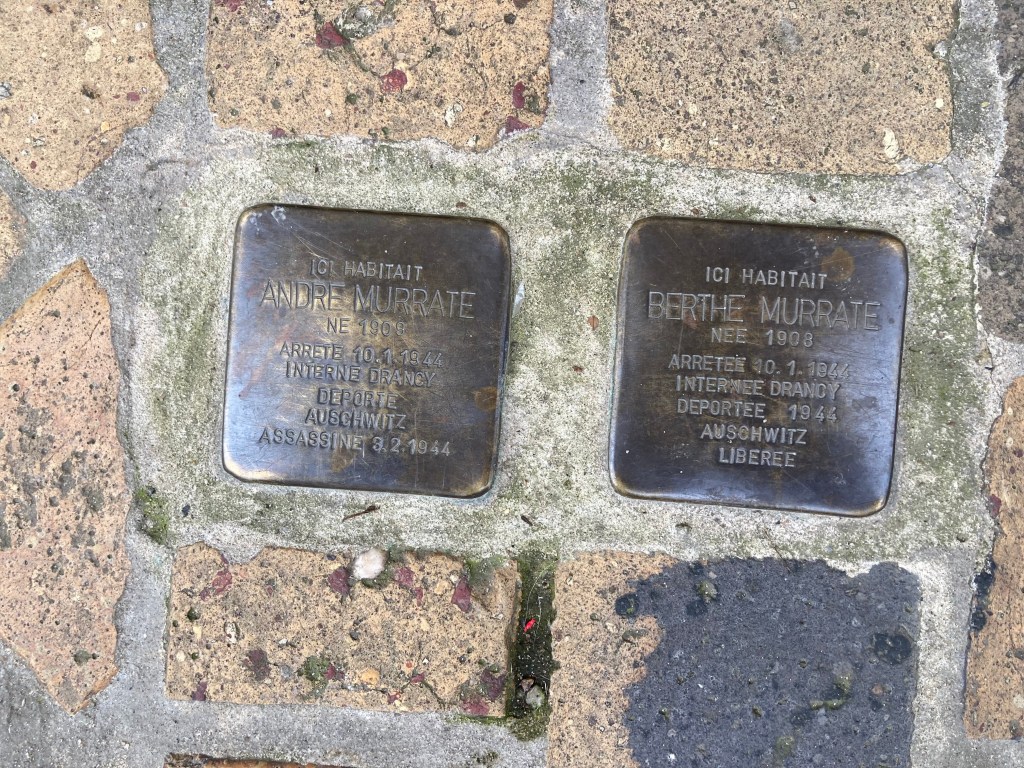
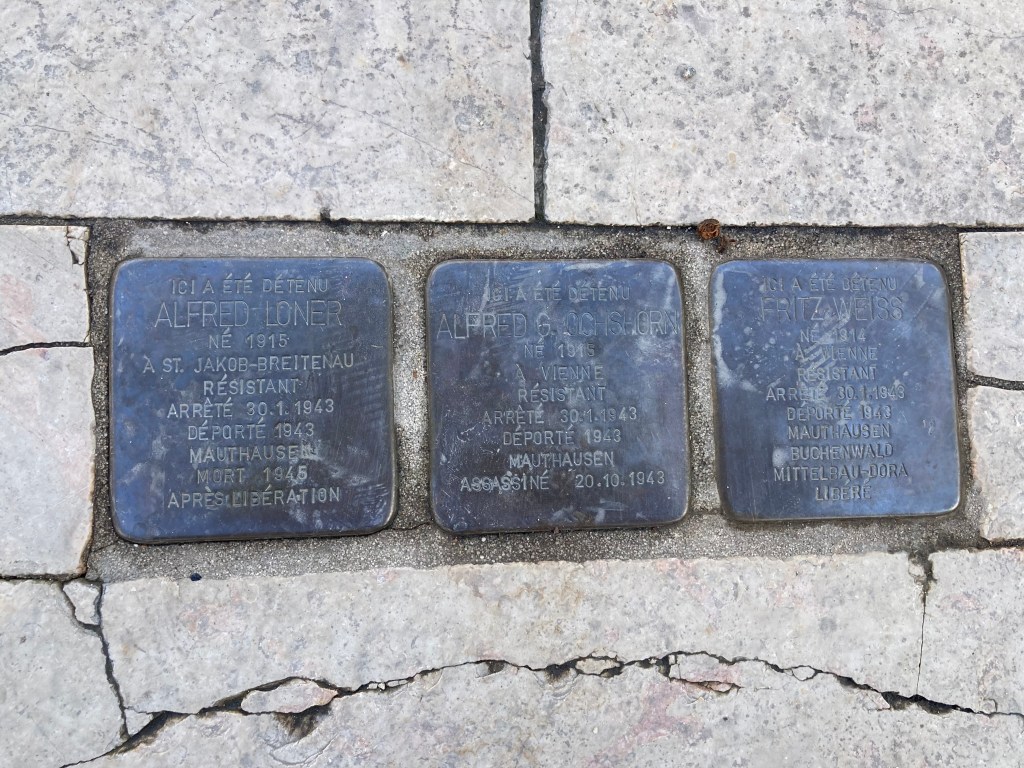
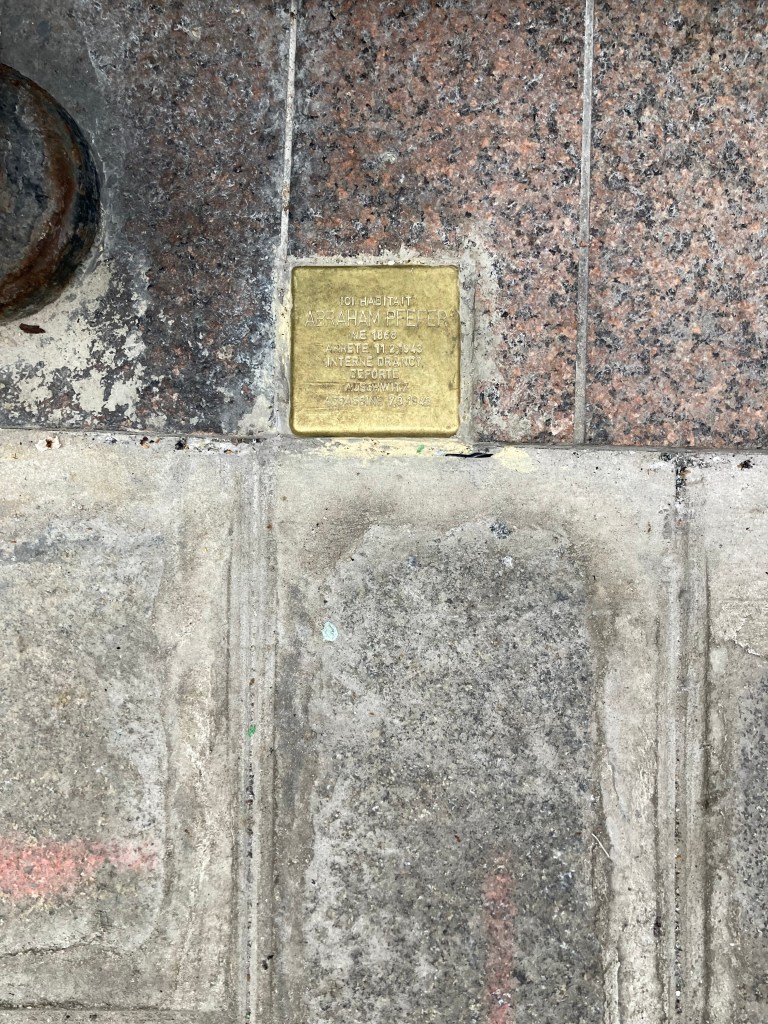
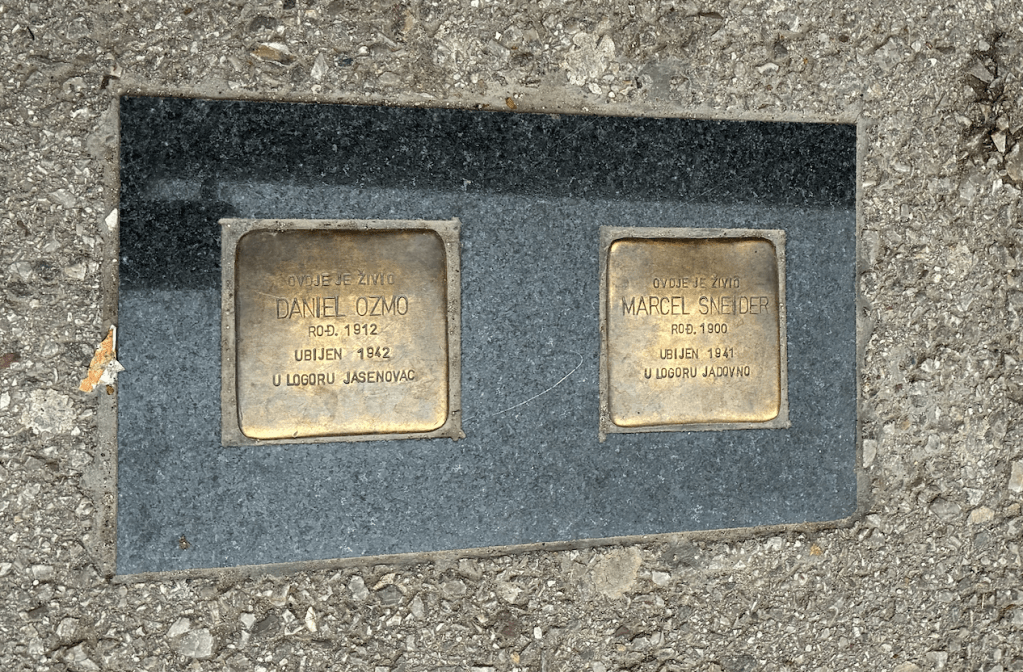
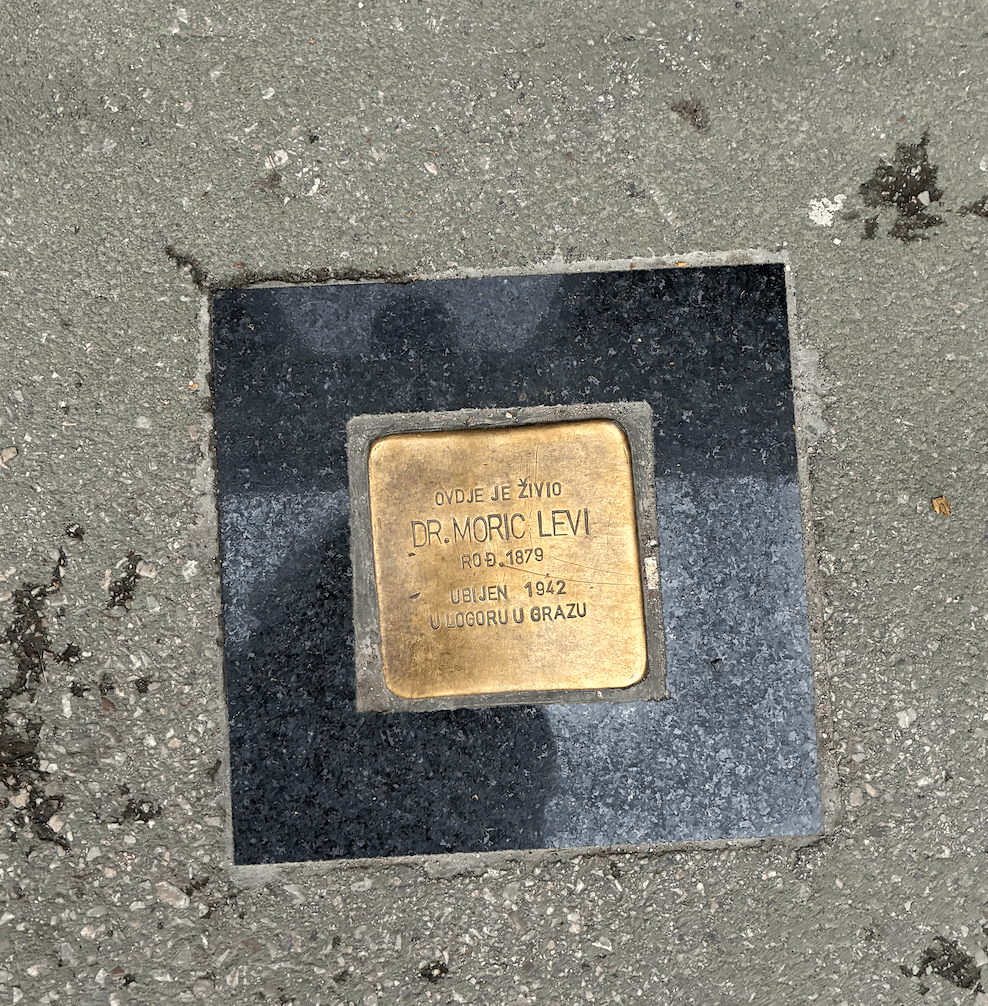
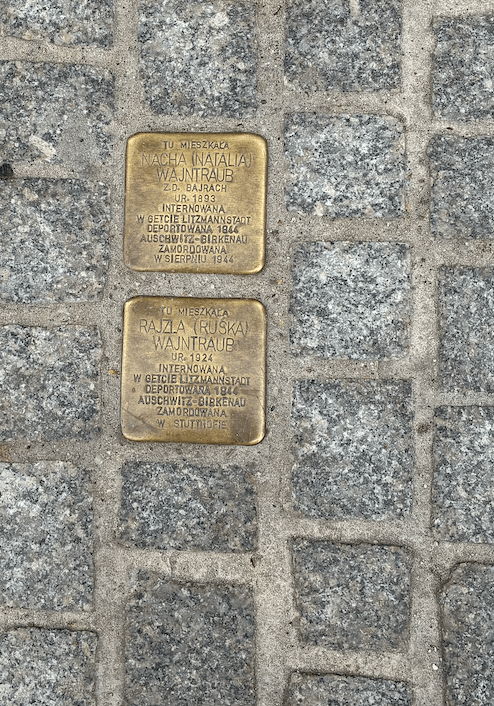
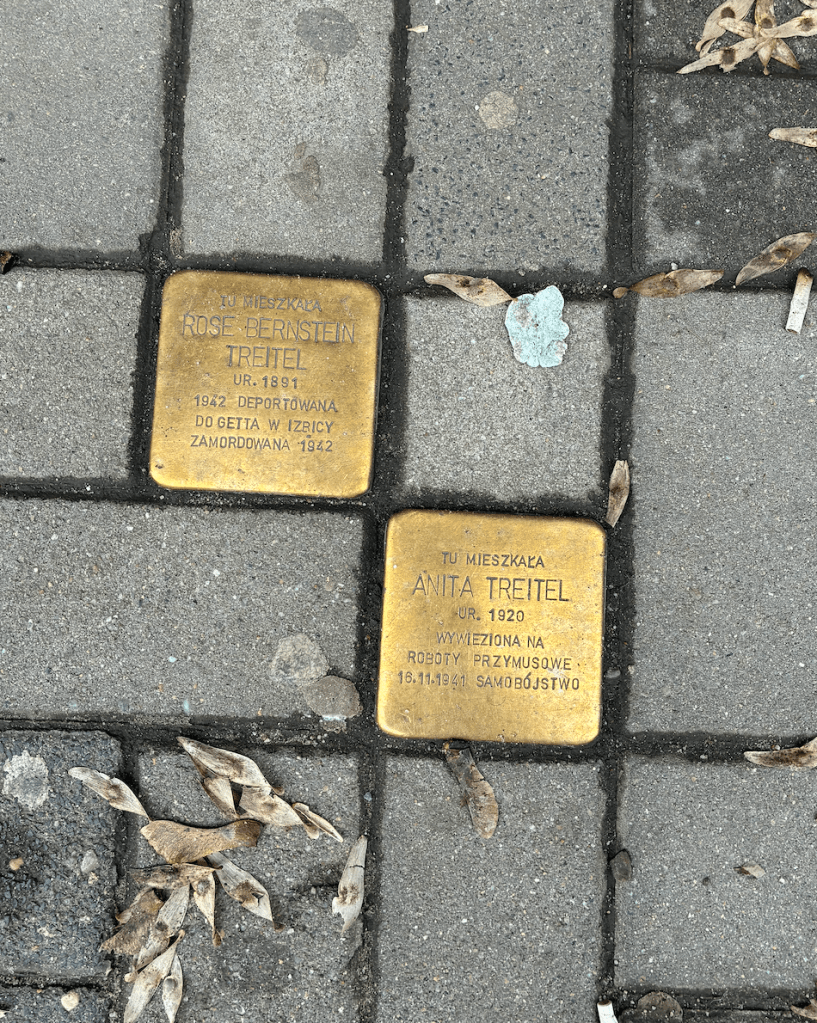
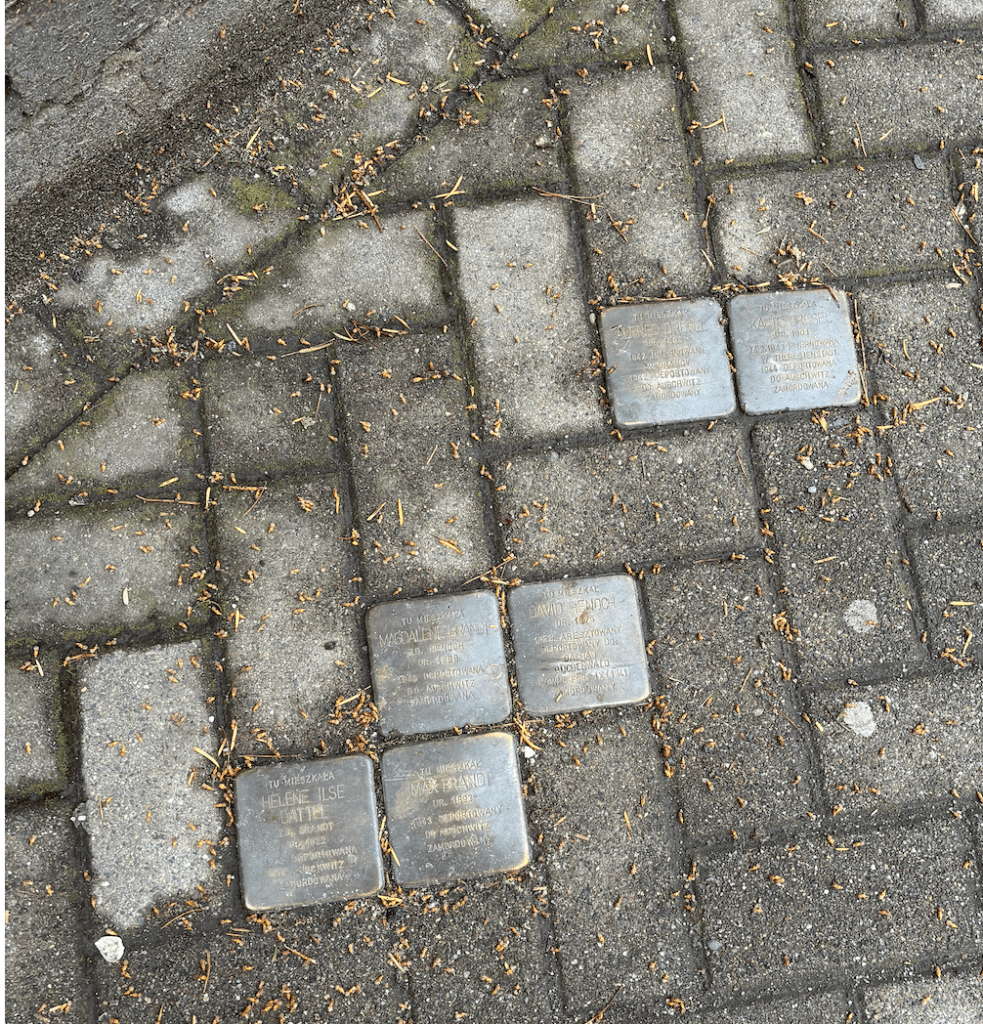
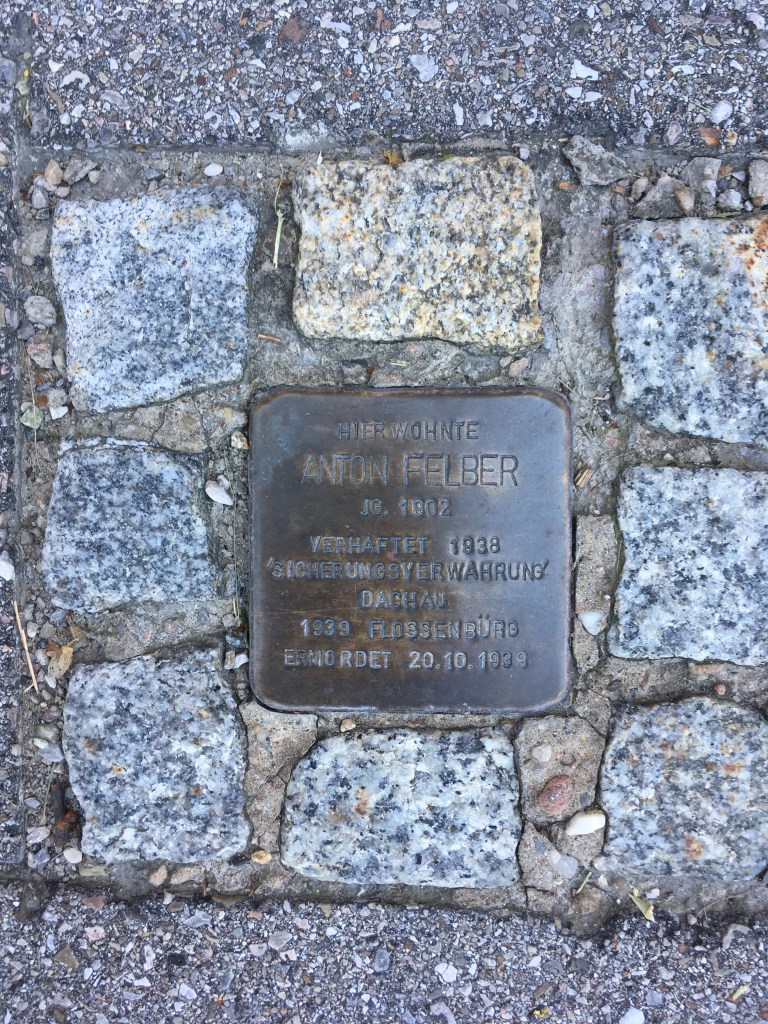
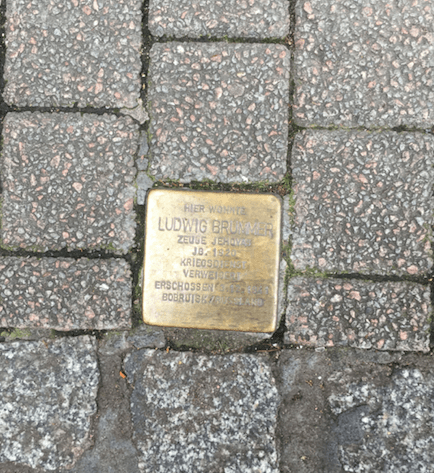
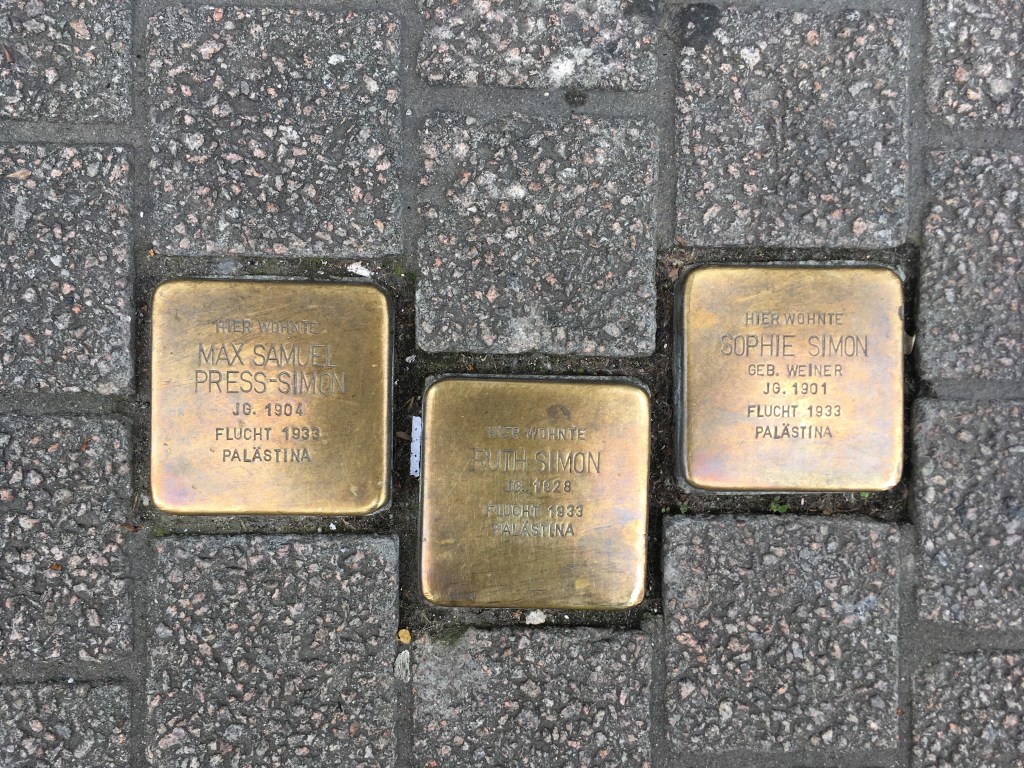
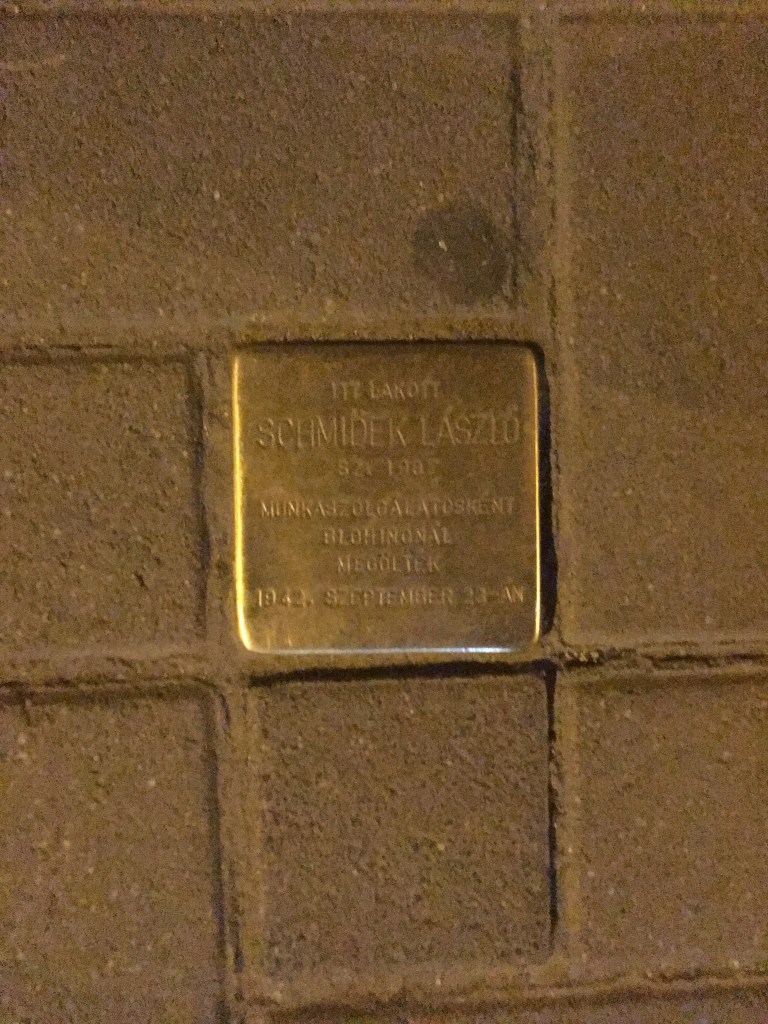
This was originally posted January 7, 2019.  Since then we have stumbled over many stolpersteine.  Each time we find one, either by chance or intent, we take a picture and add it here. Countries included- Germany, Hungary, Netherlands, Italy, Croatia, France, Bosnia-Hercegovina, Latvia, Lithuania, Poland. We see stoplersteine throughout Europe; big cities and tiny,  repulsed by the reach of such hate.
The past is far more salient in Europe compared to the US.  Being that we are long term Californians , our day to day life generally does not include walking past anything that is more then 75 year old  with the exception at our past LA subway commutes at Campo de Cahuenga http://www.laparks.org/historic/campo-de-cahuenga.

The past in Europe is at your feet on cobblestone streets around you when shopping, eating or sleeping in ancient buildings.
Just the existence of many towns are reminders of the past, but there are also many distinct memorials. We have found fascinating memorials, both formal and informal;  https://chosenfugue.wordpress.com/2019/07/21/the-budapest-marathon/

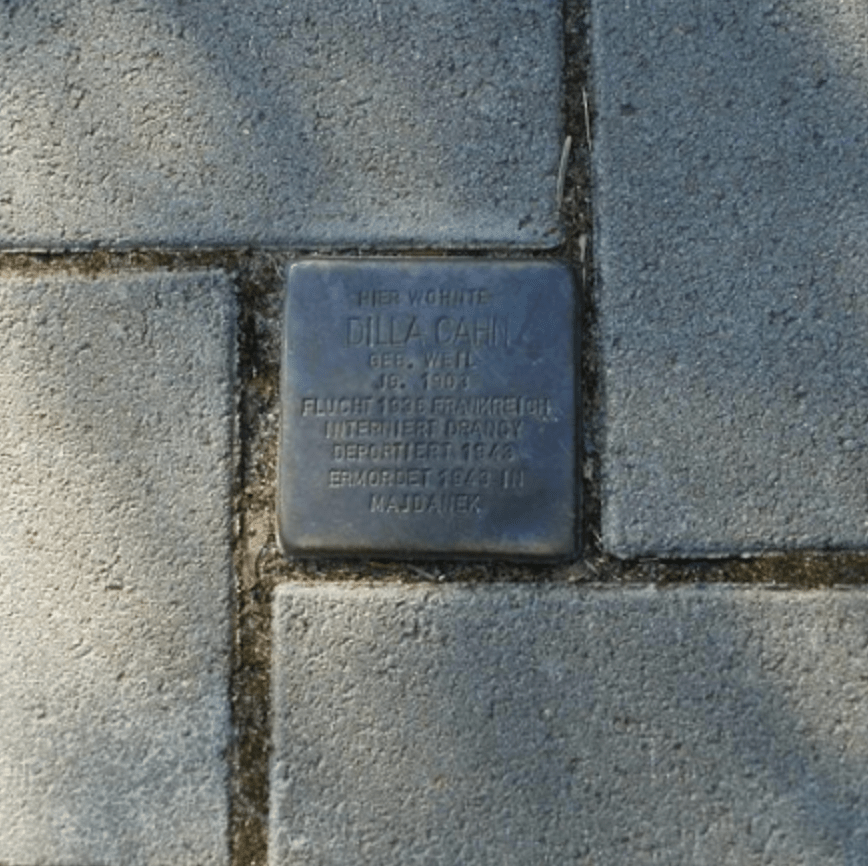
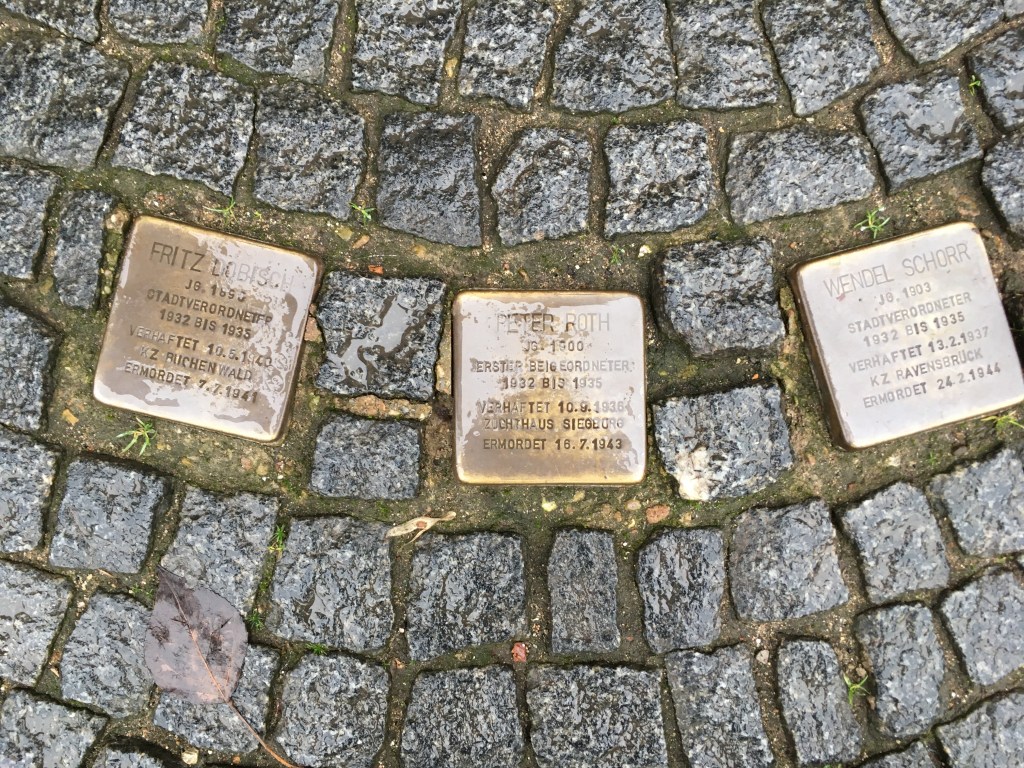
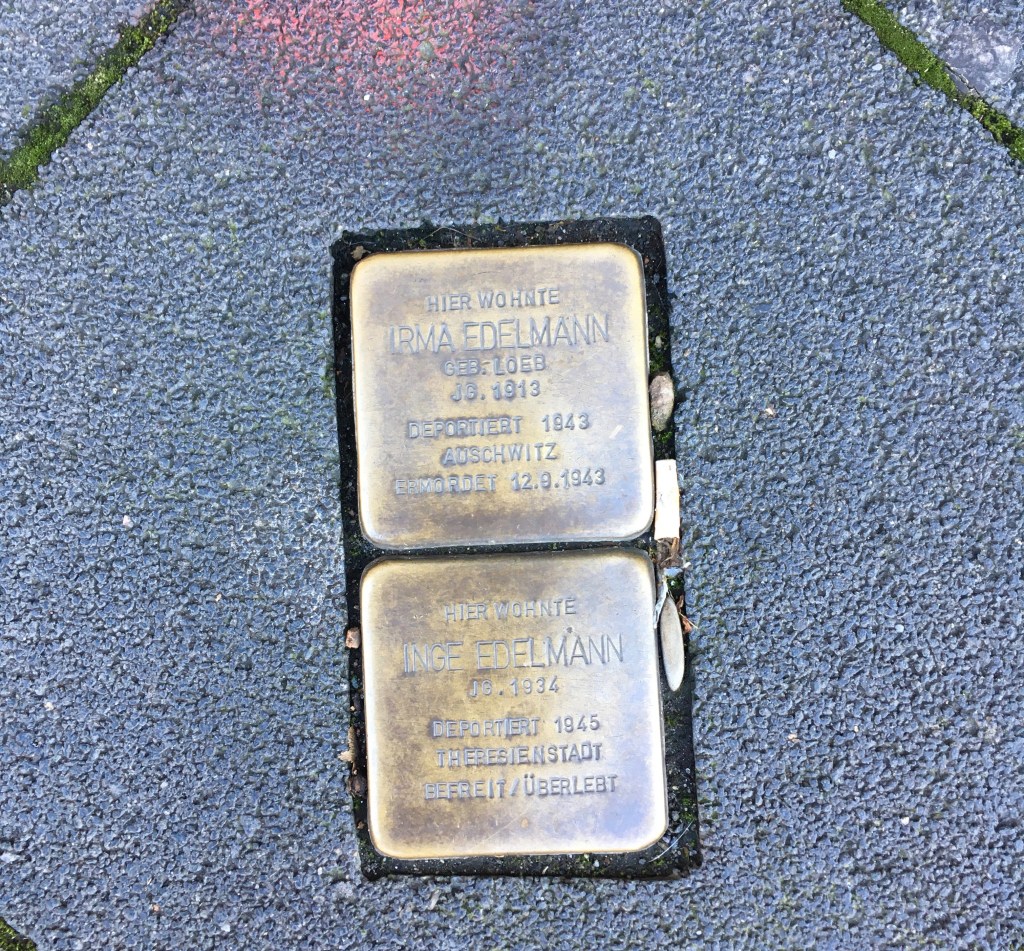
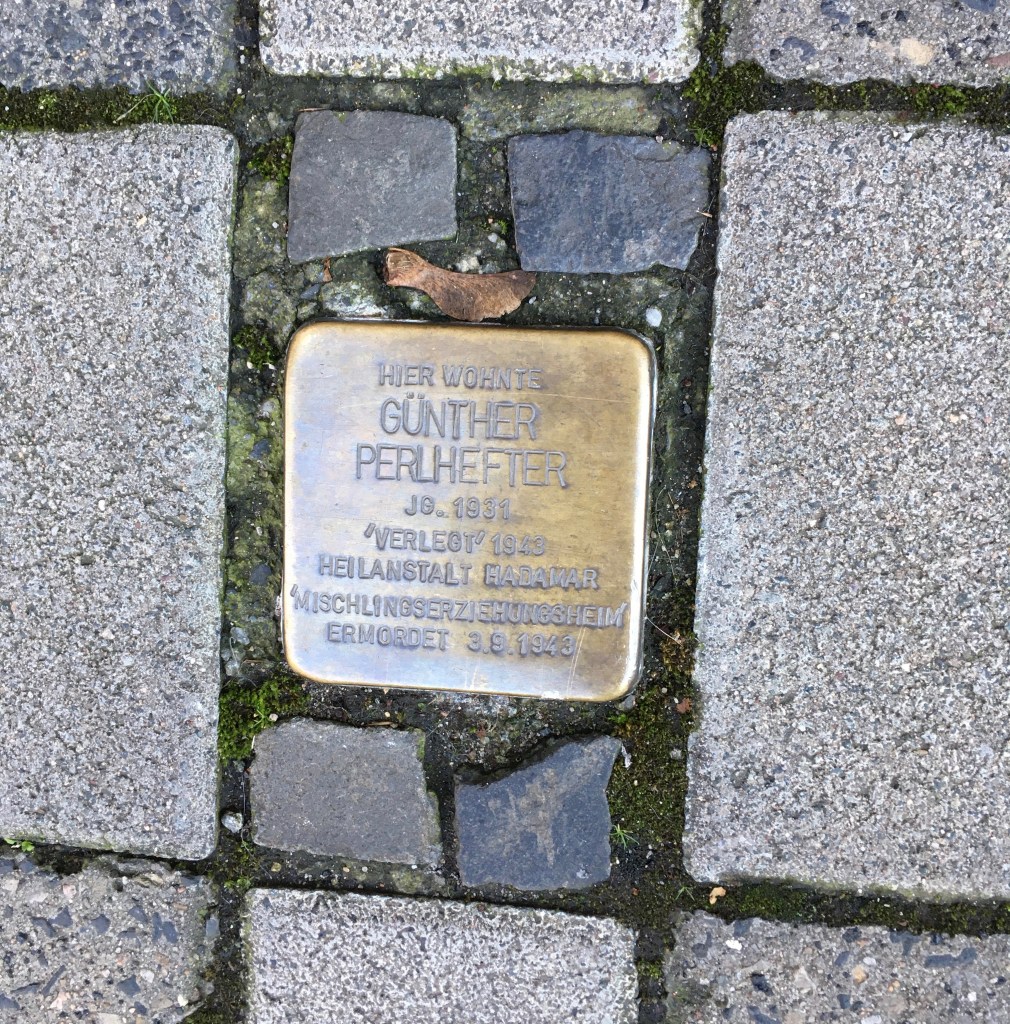
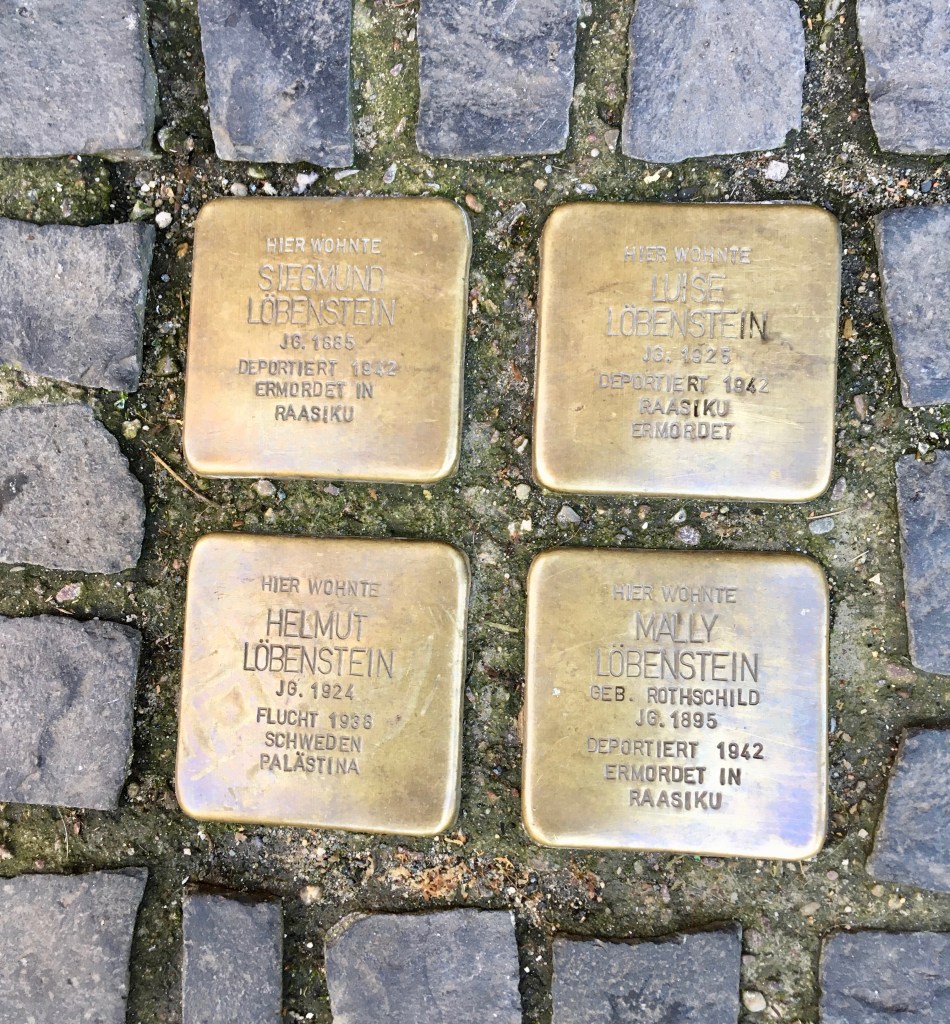
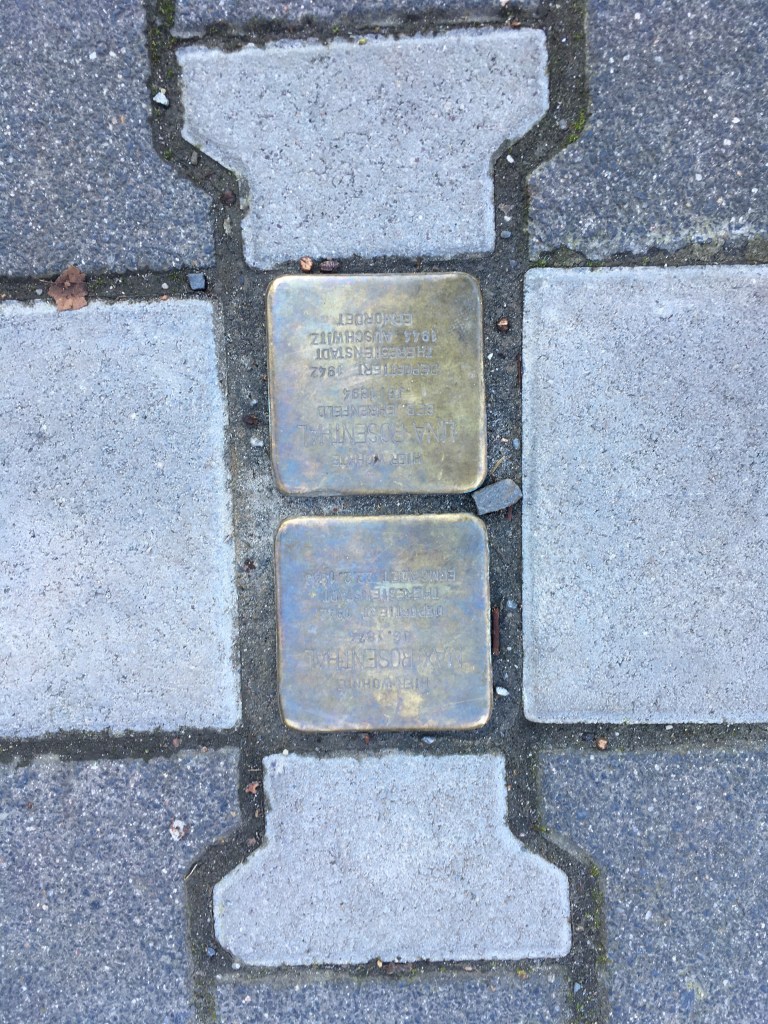
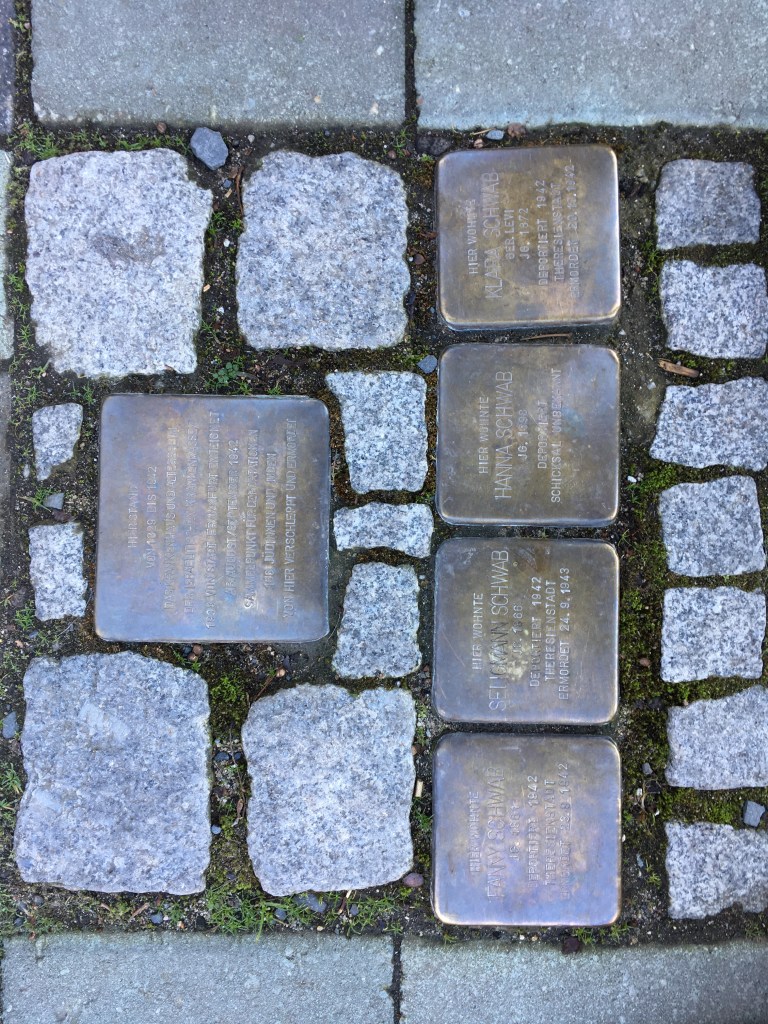
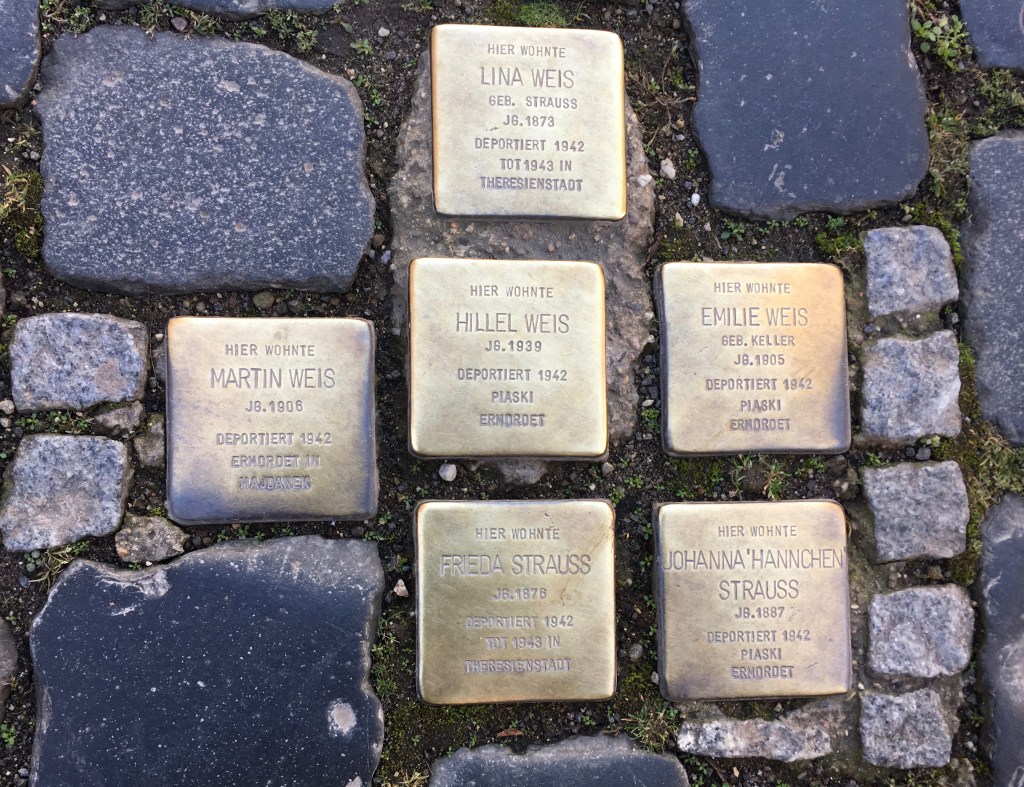
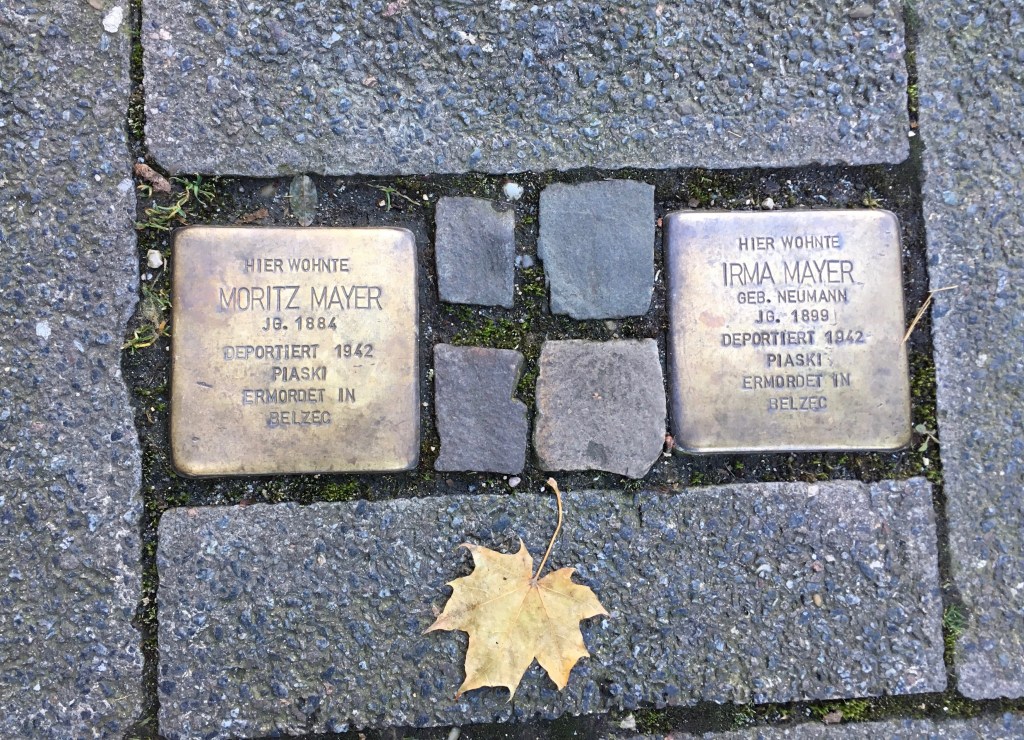
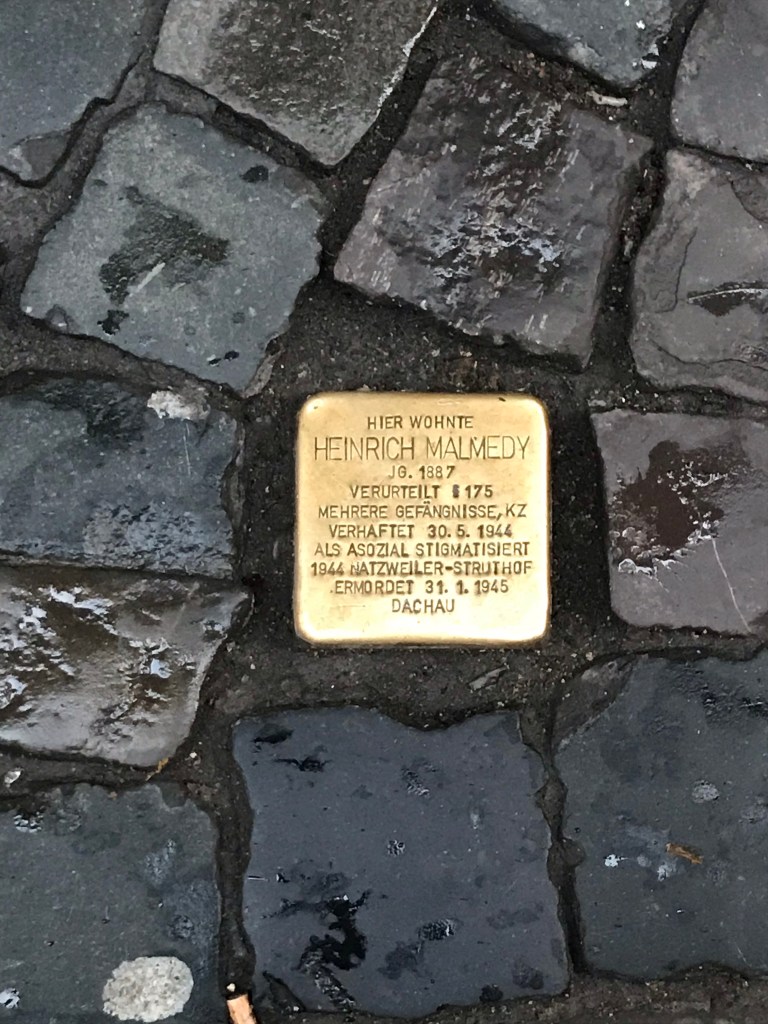
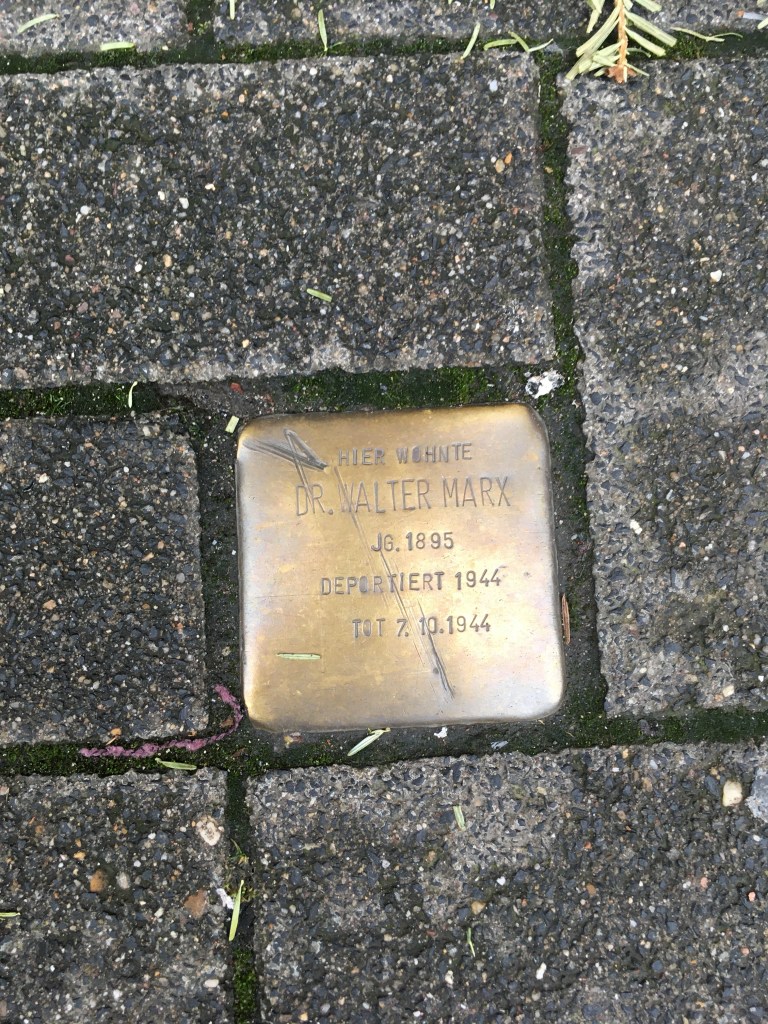
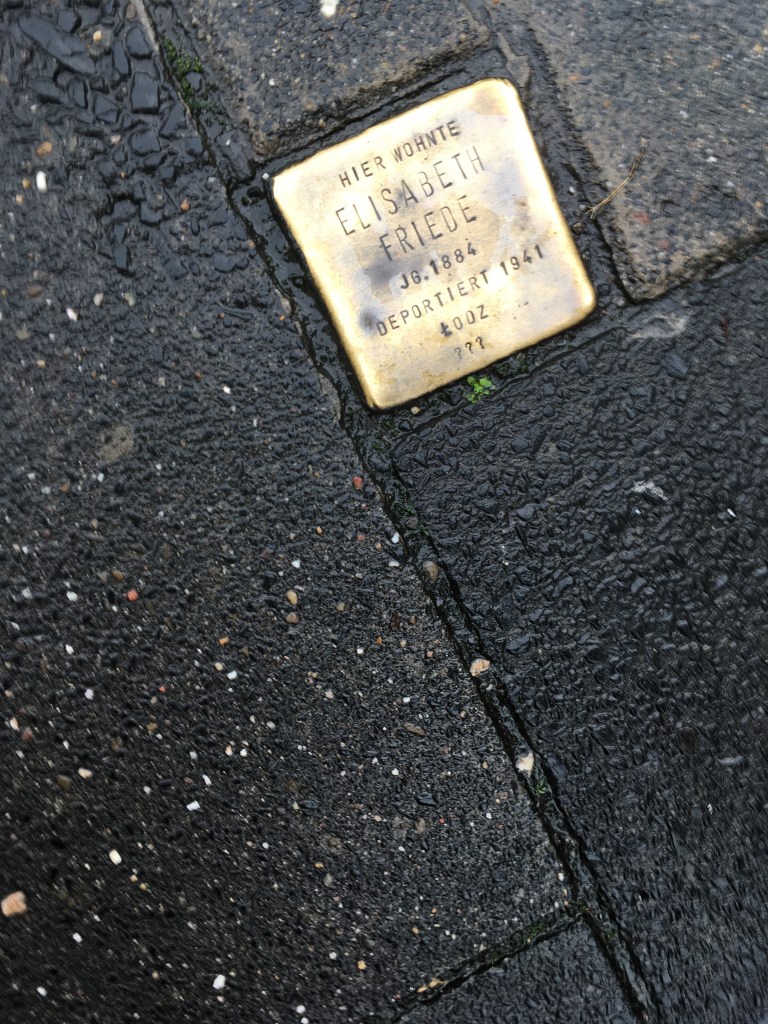
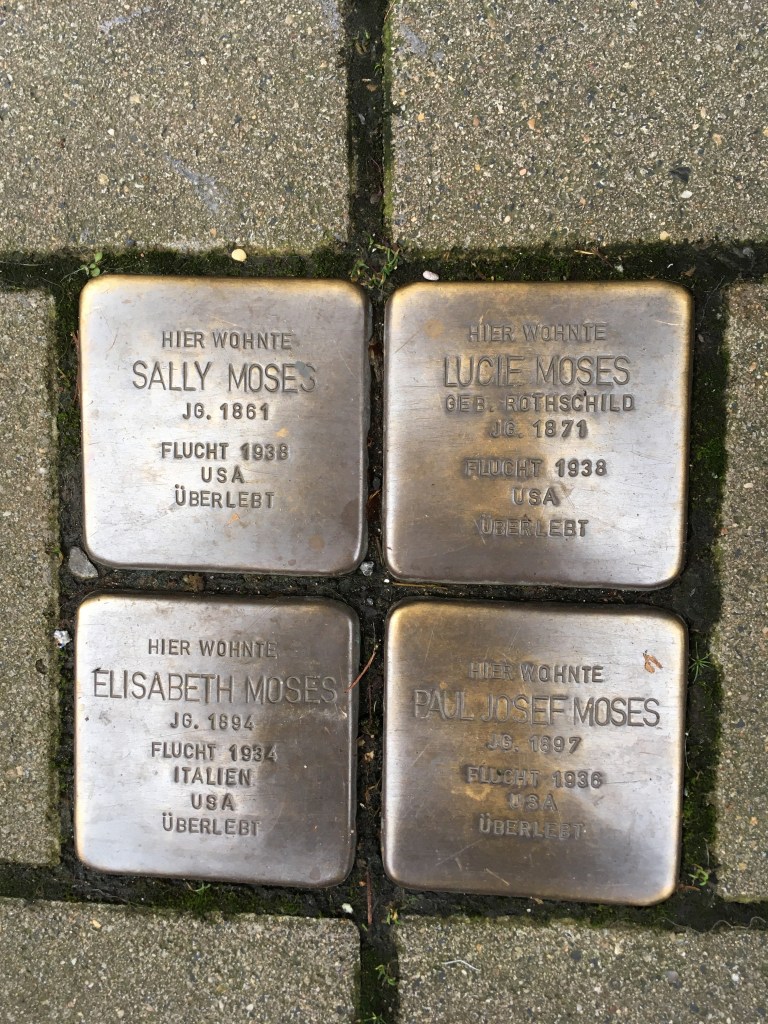
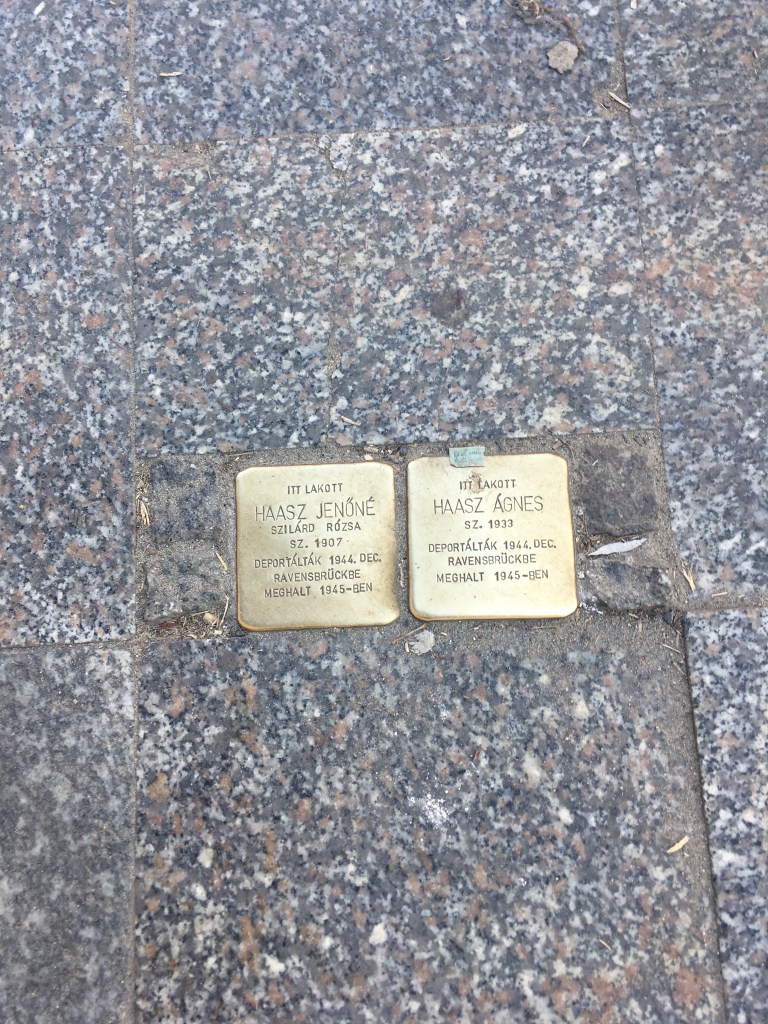
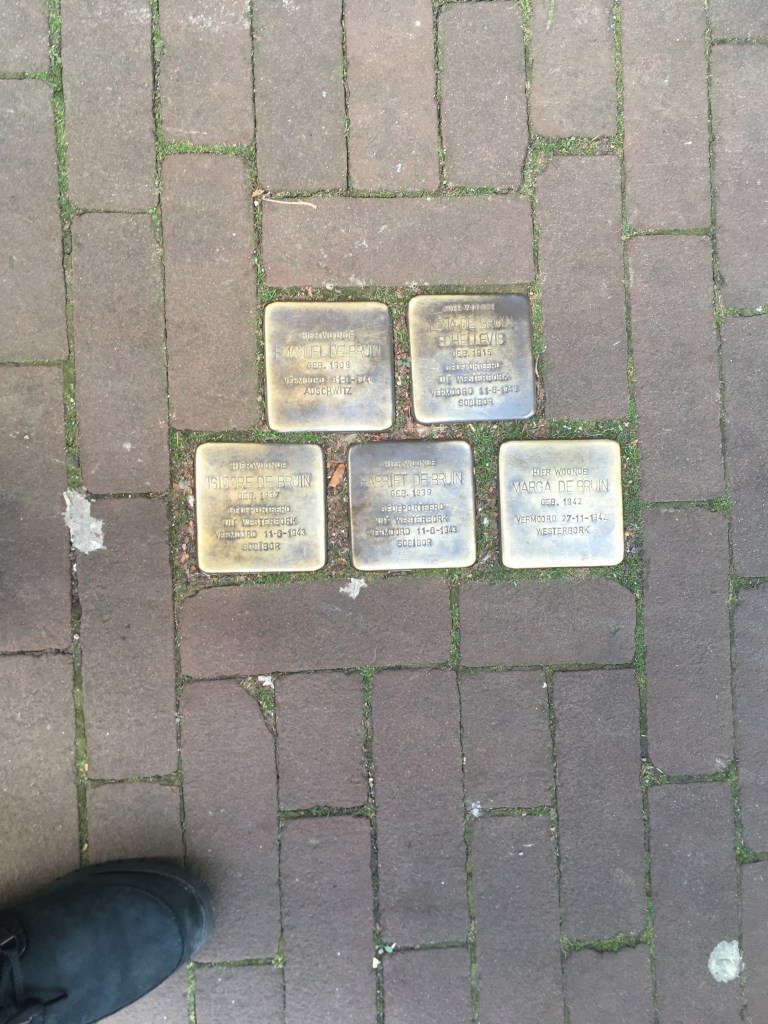
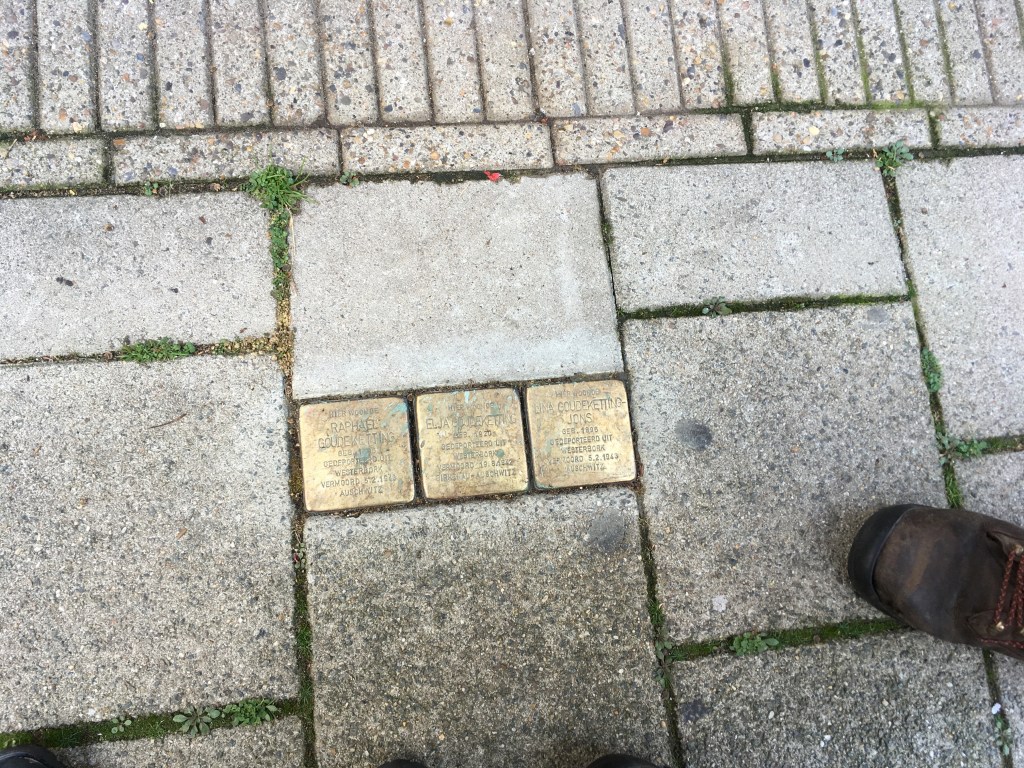
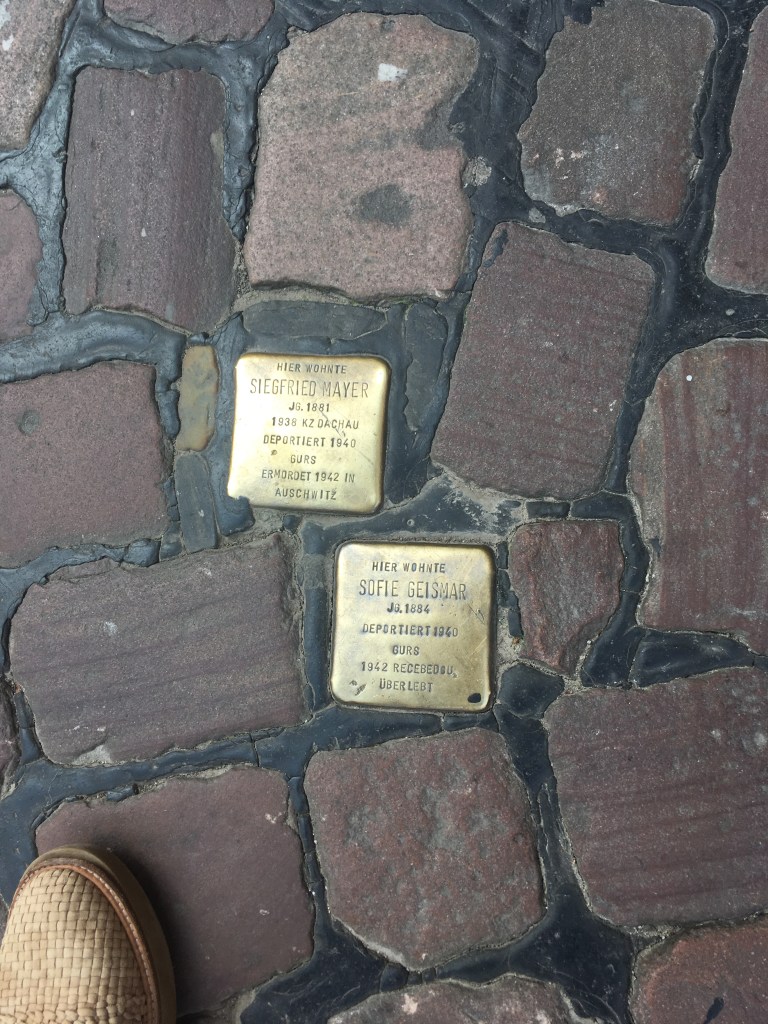
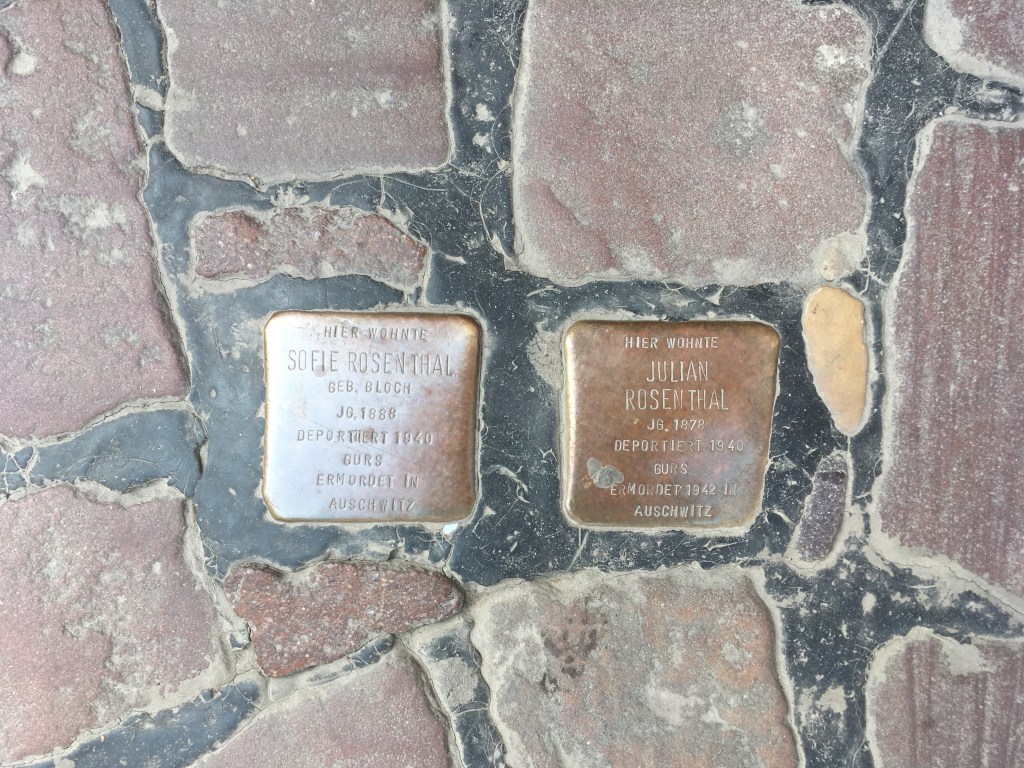
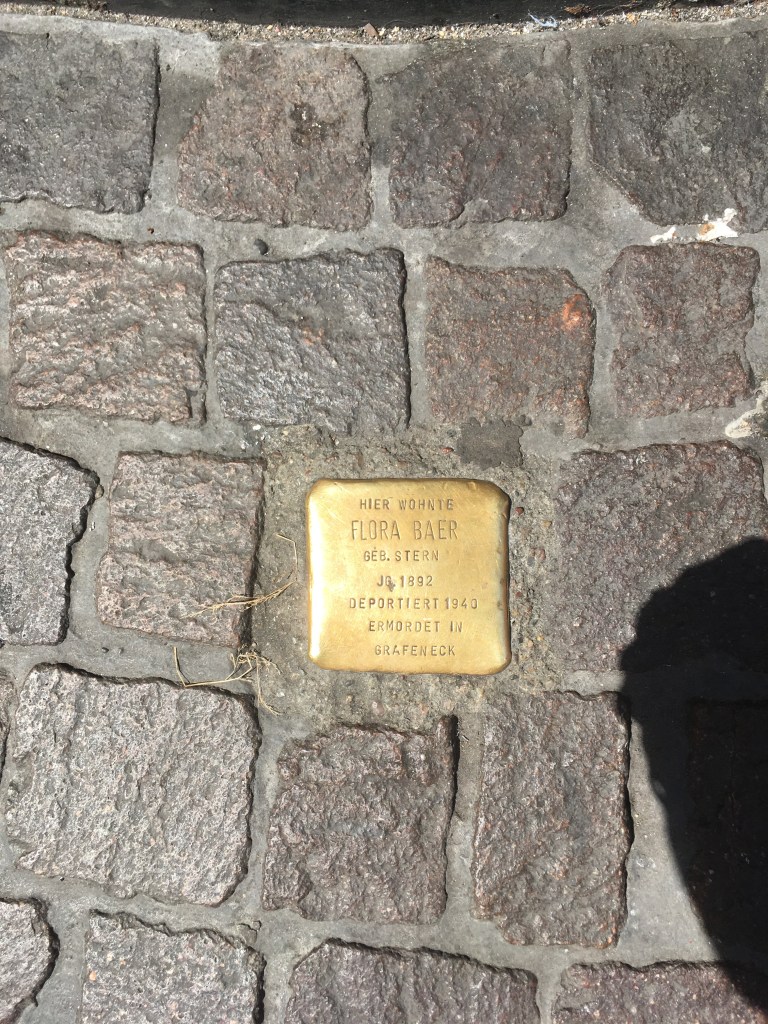
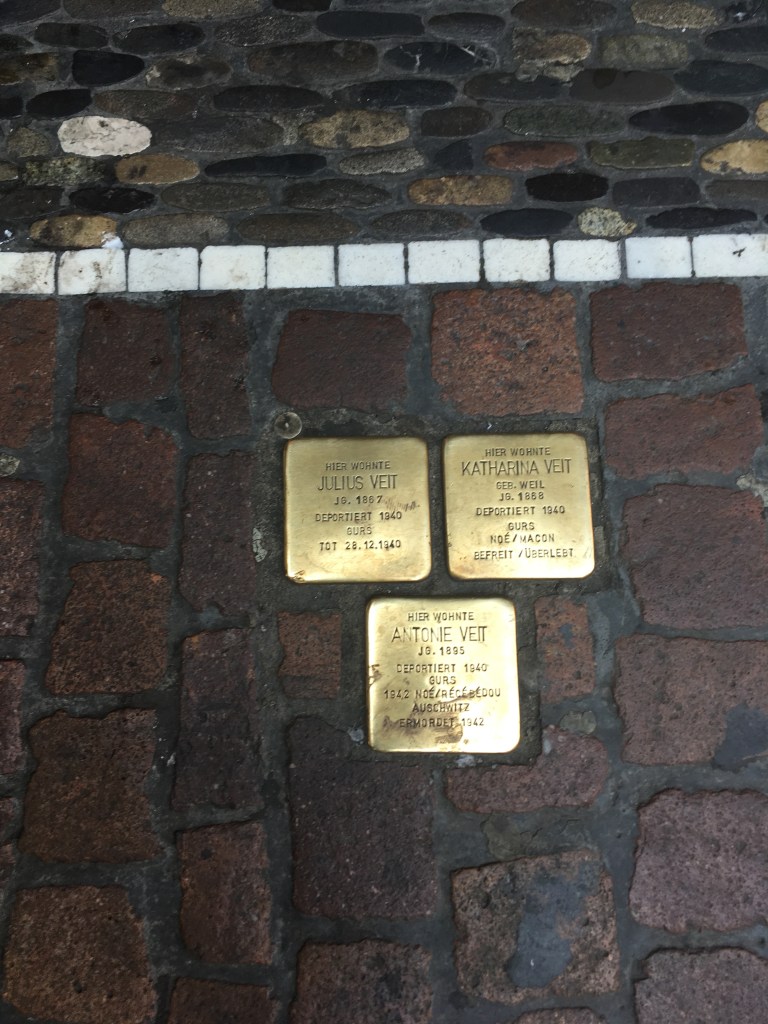
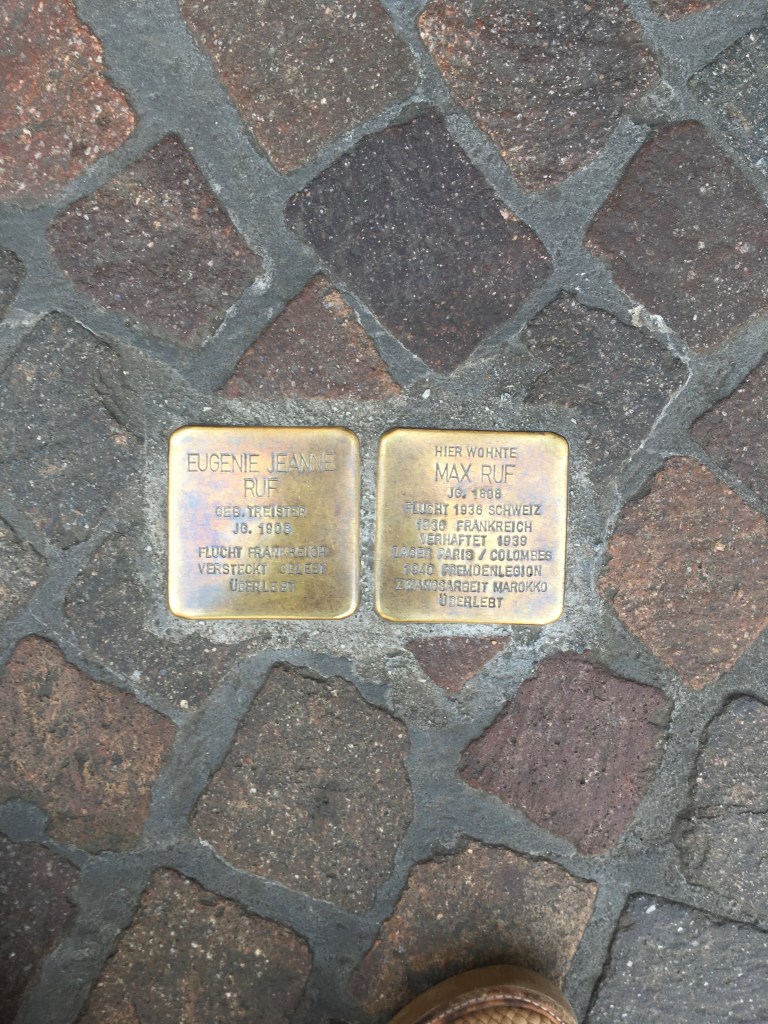
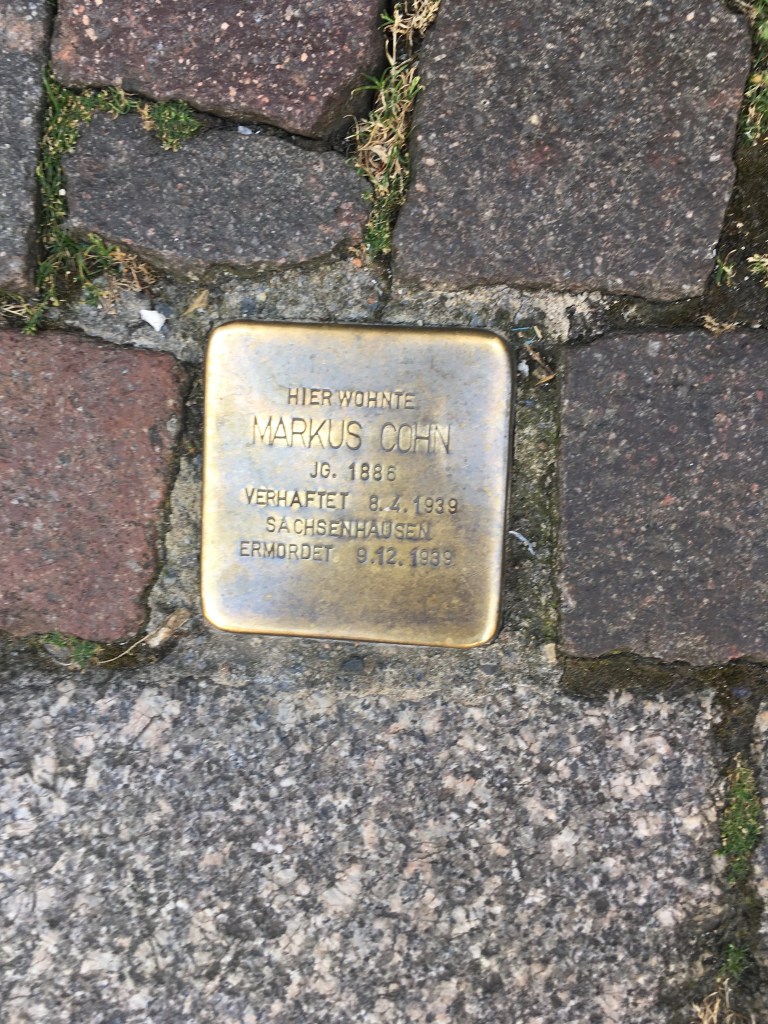
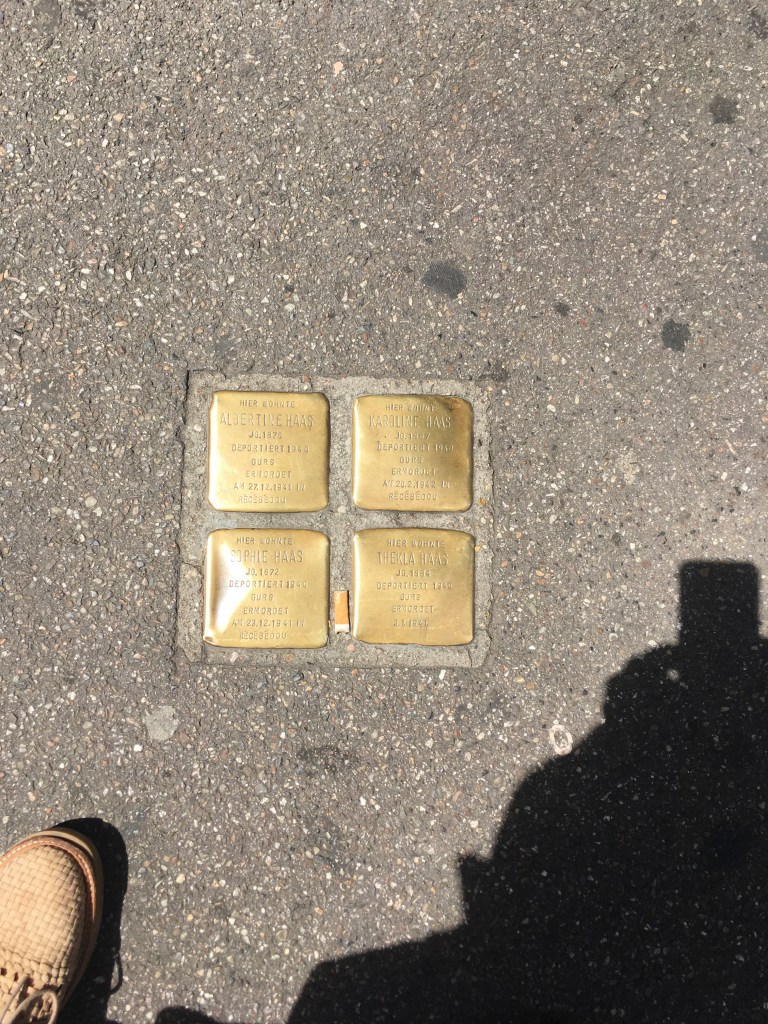
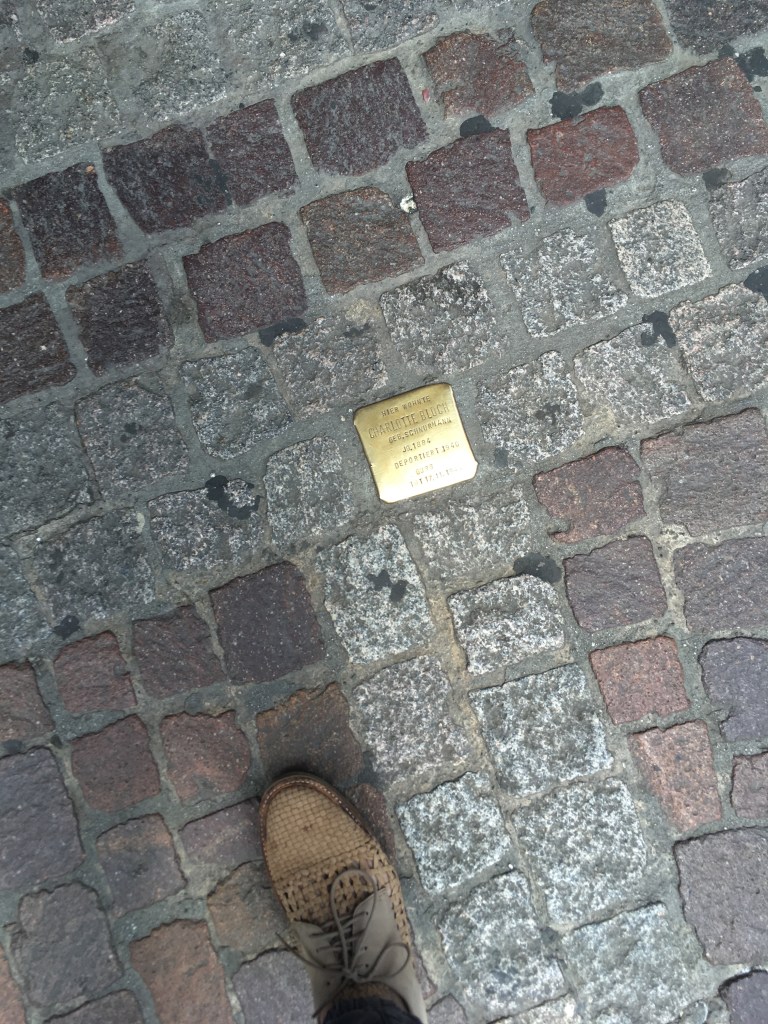
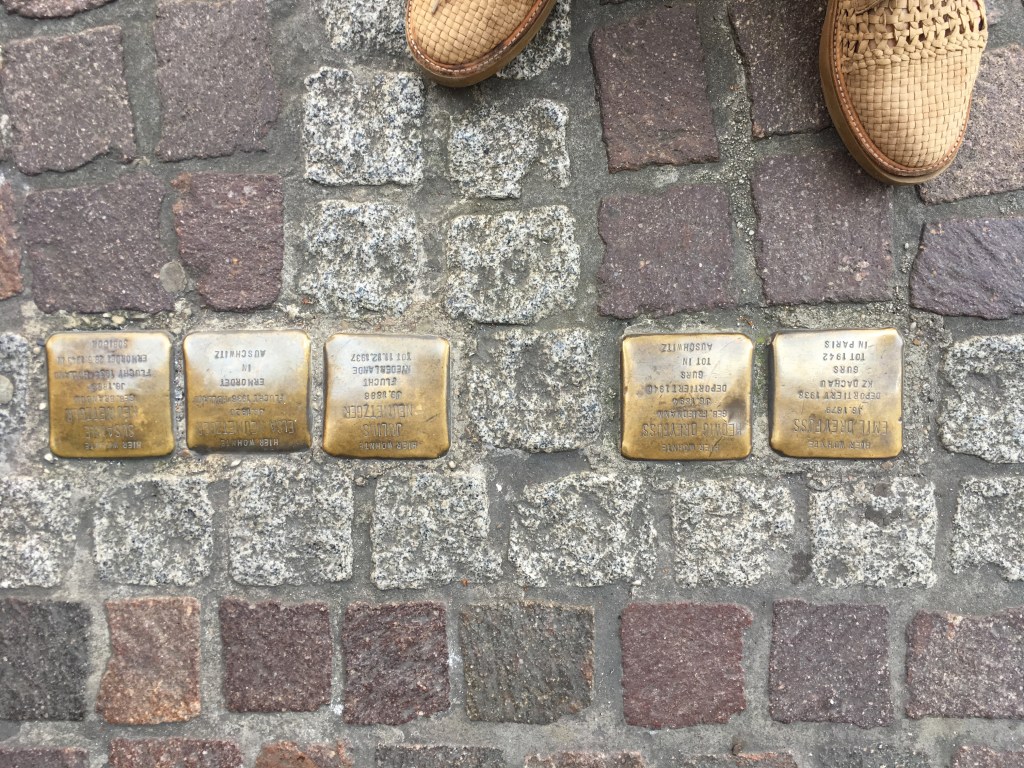
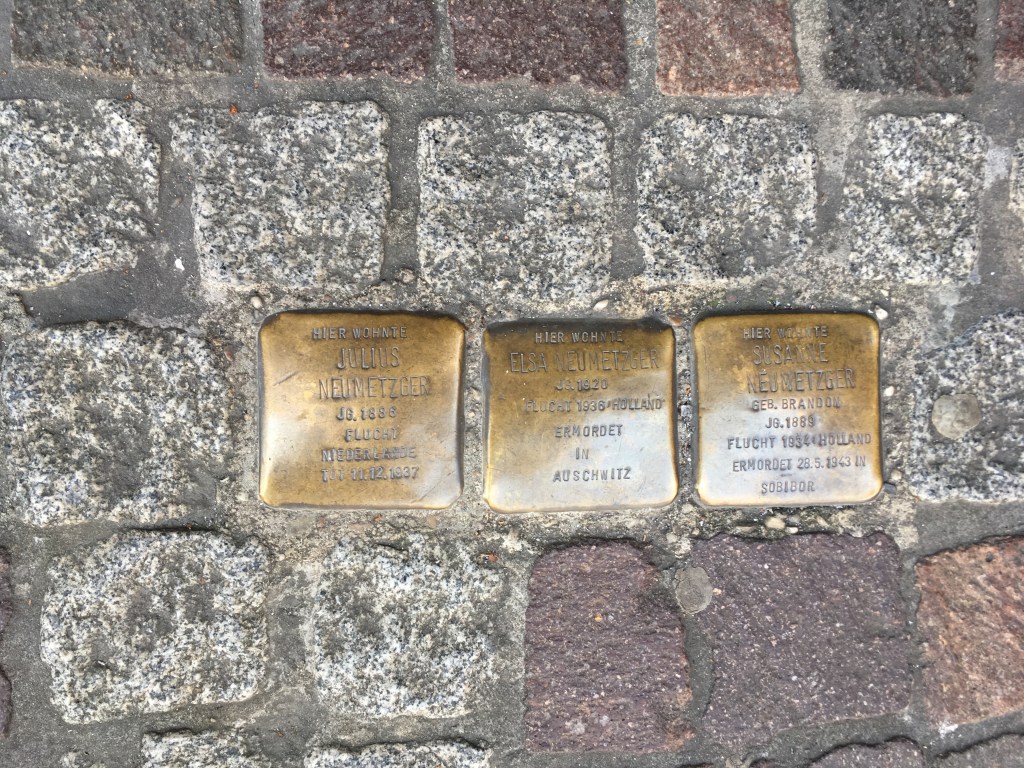
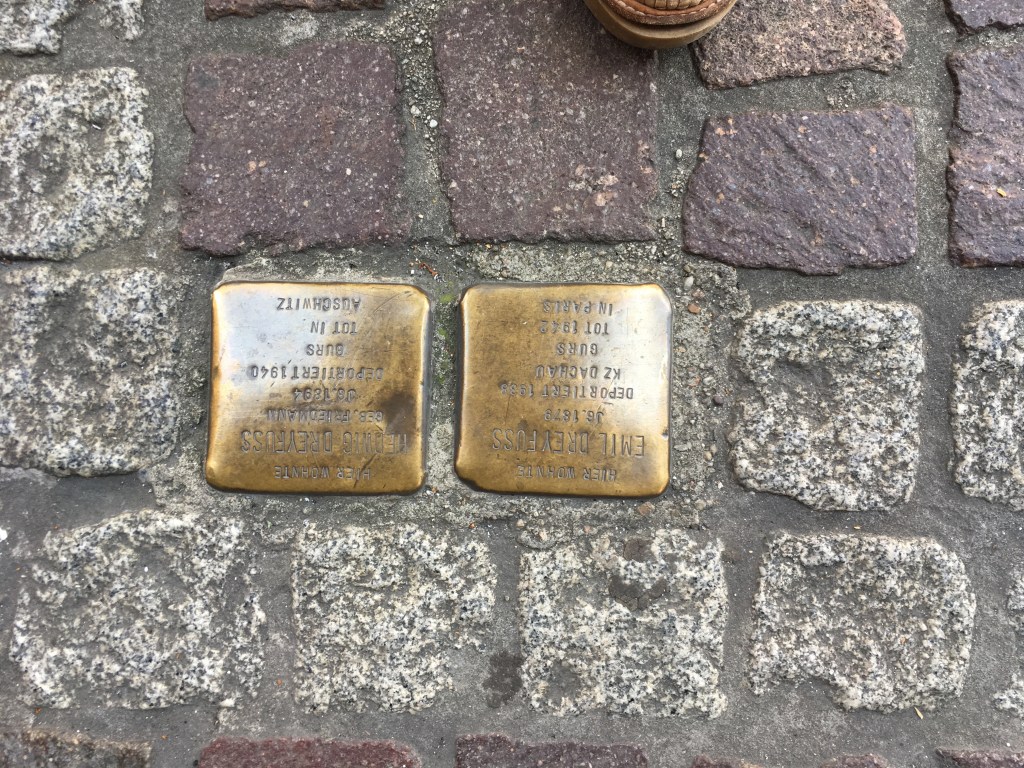
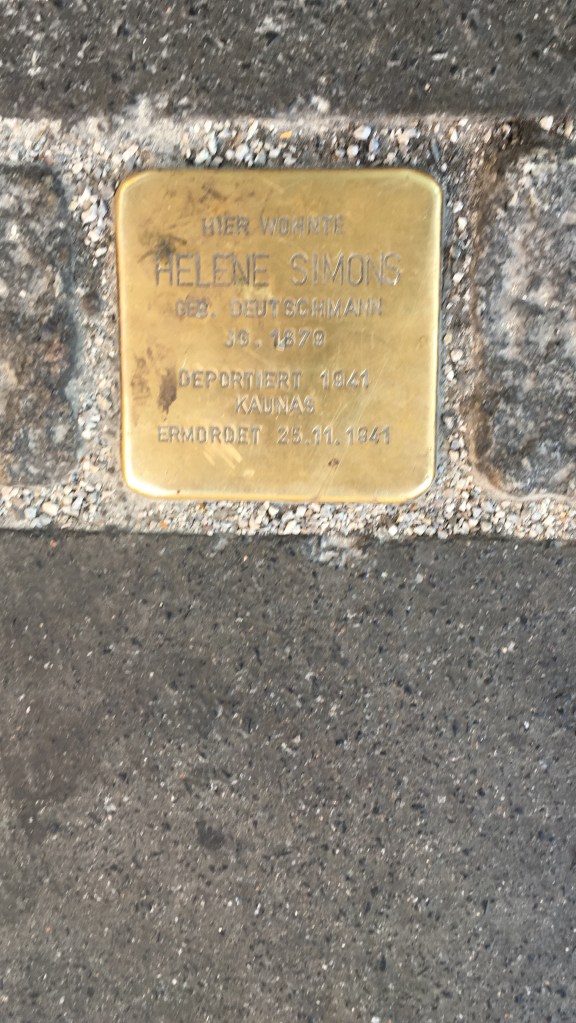
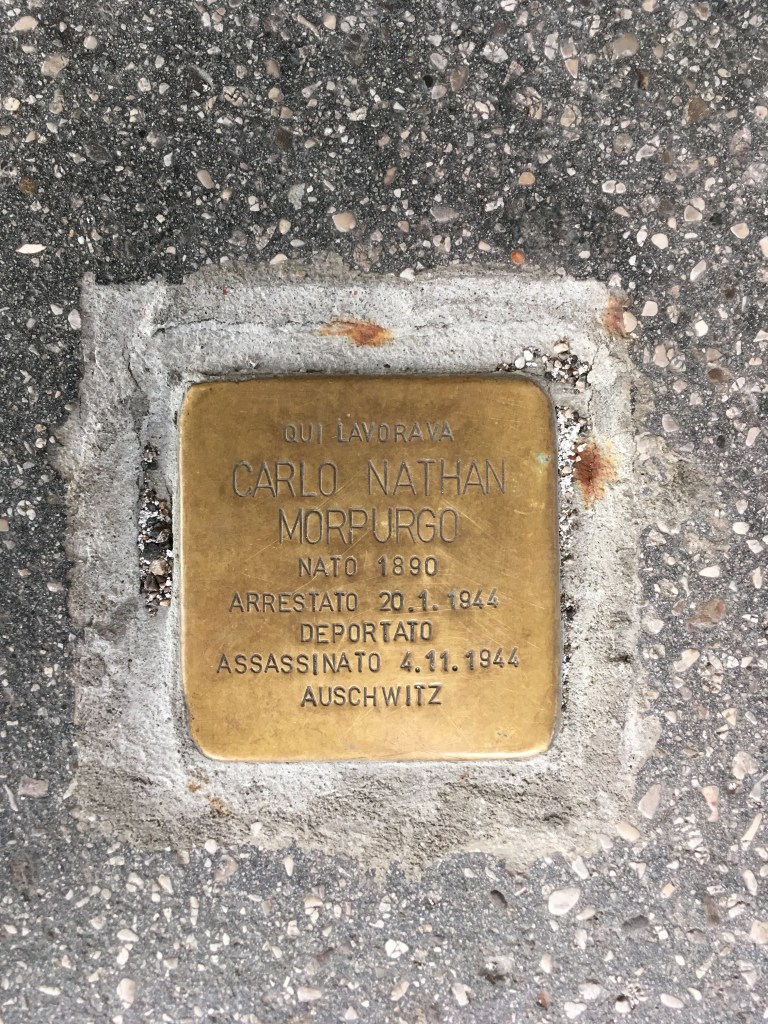
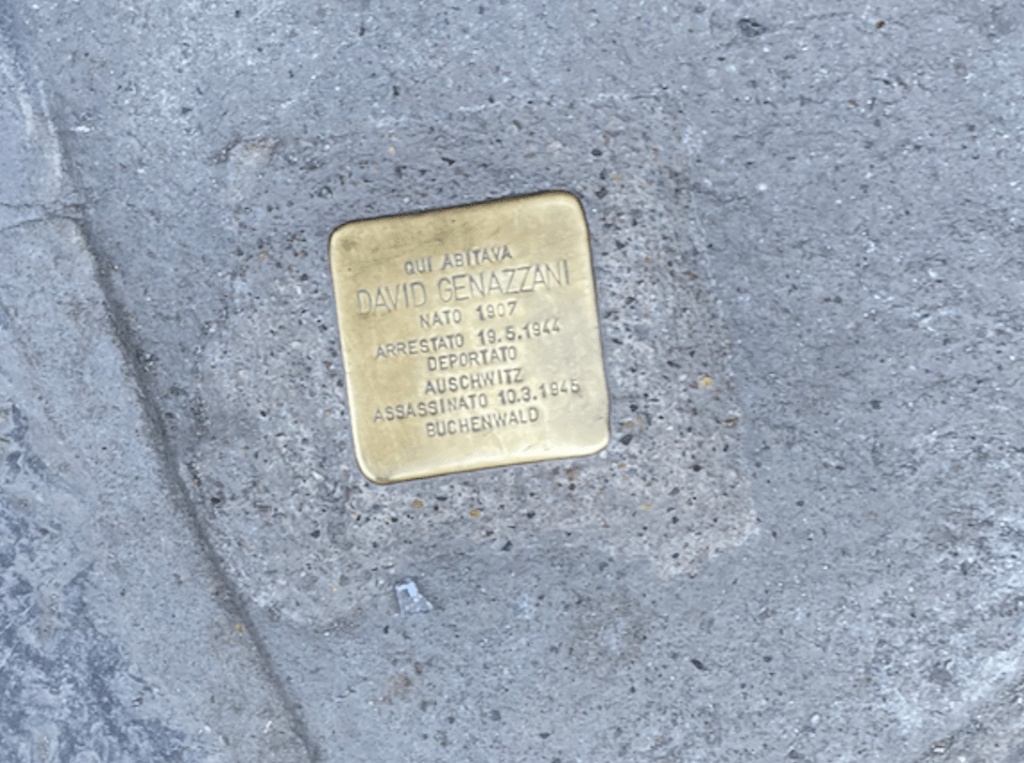
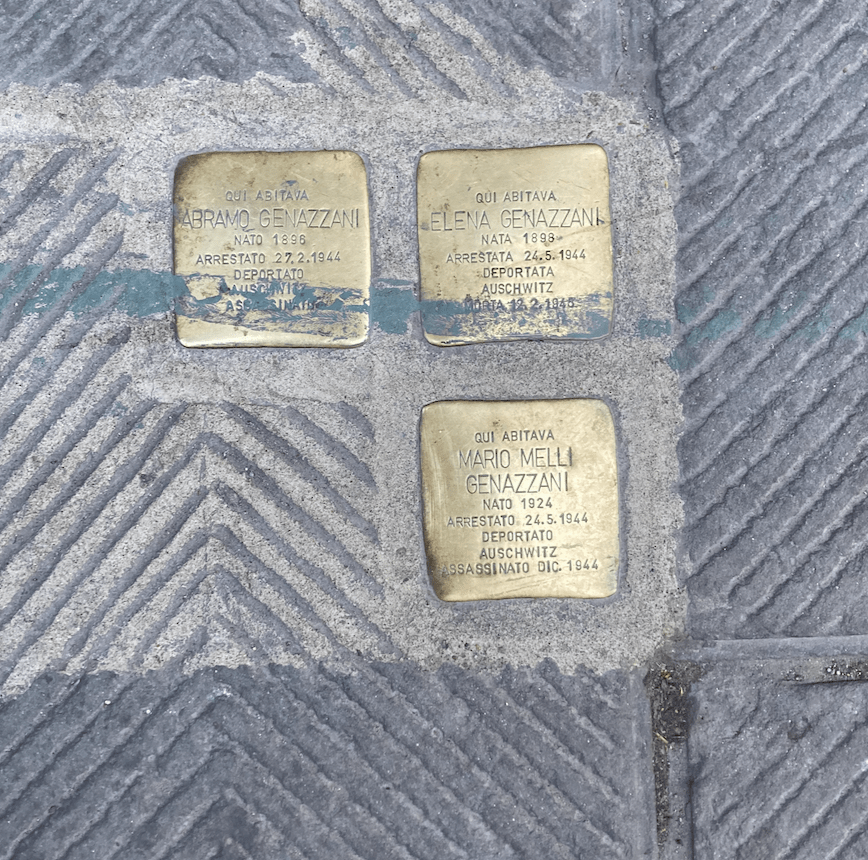
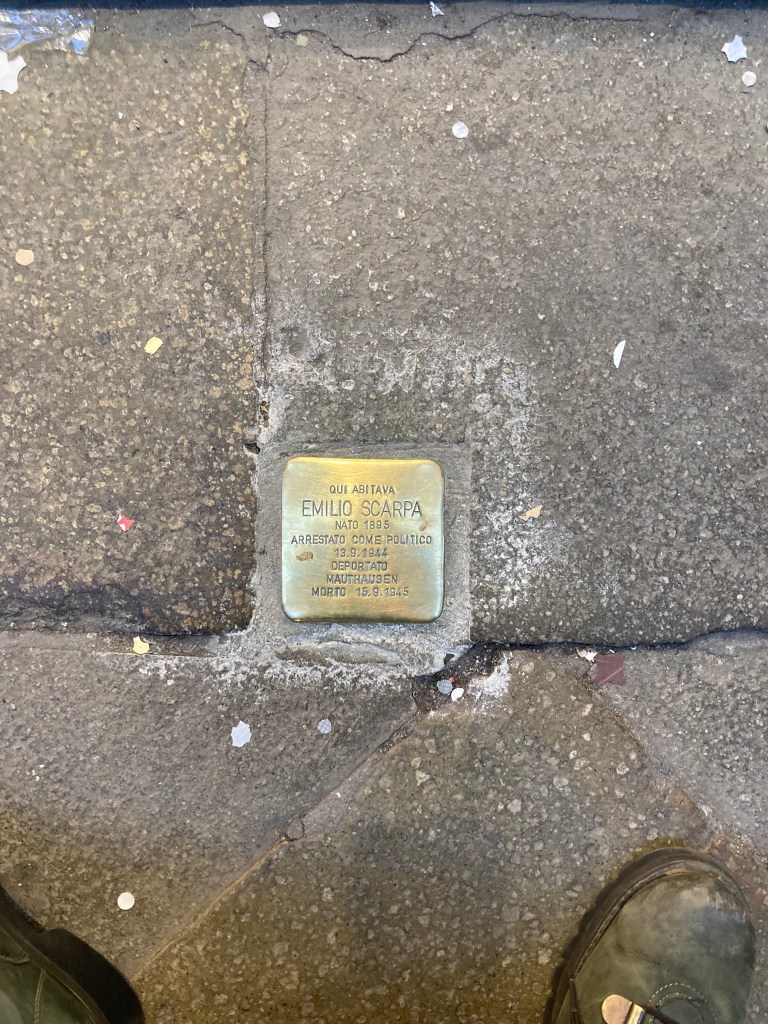
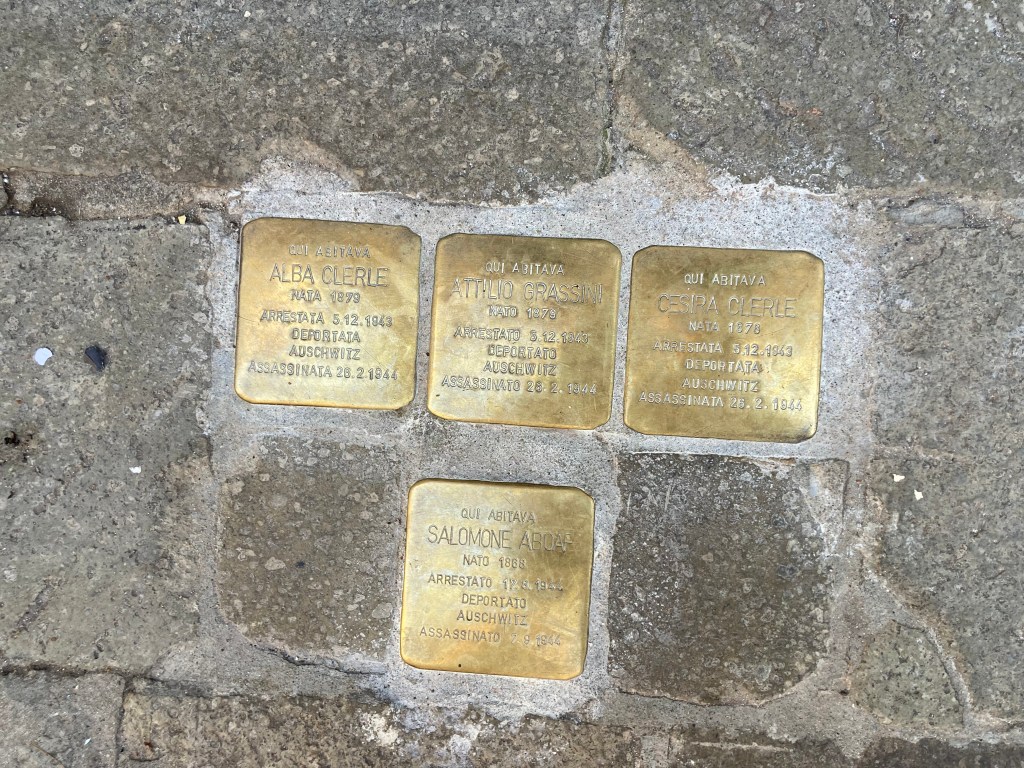
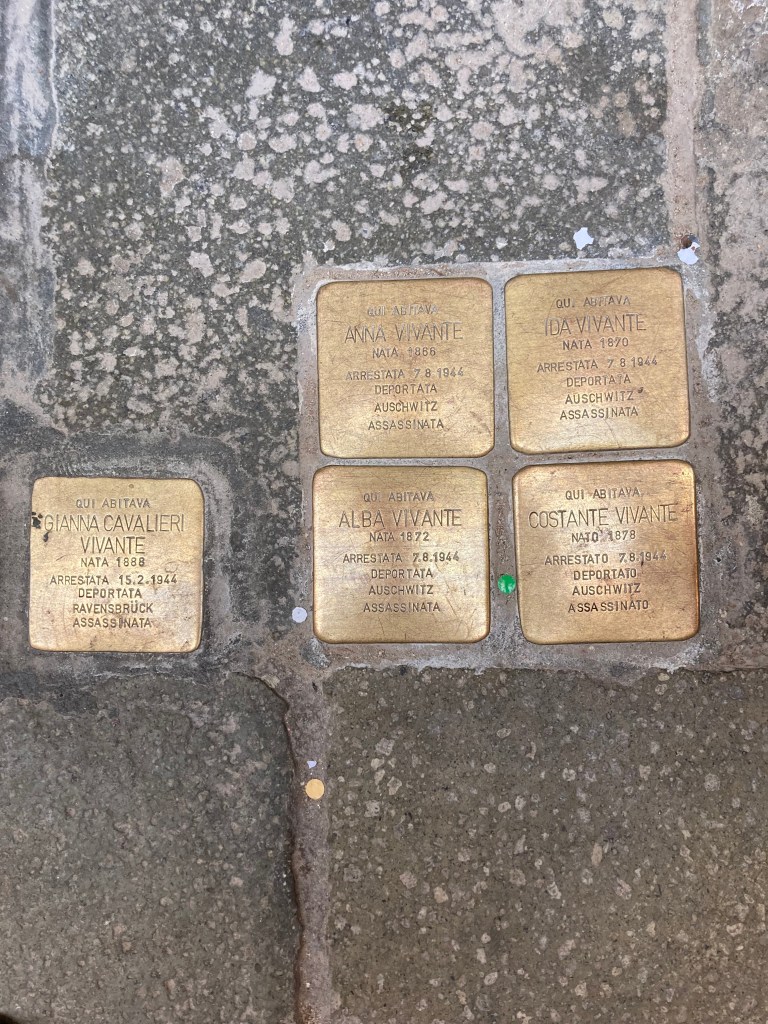
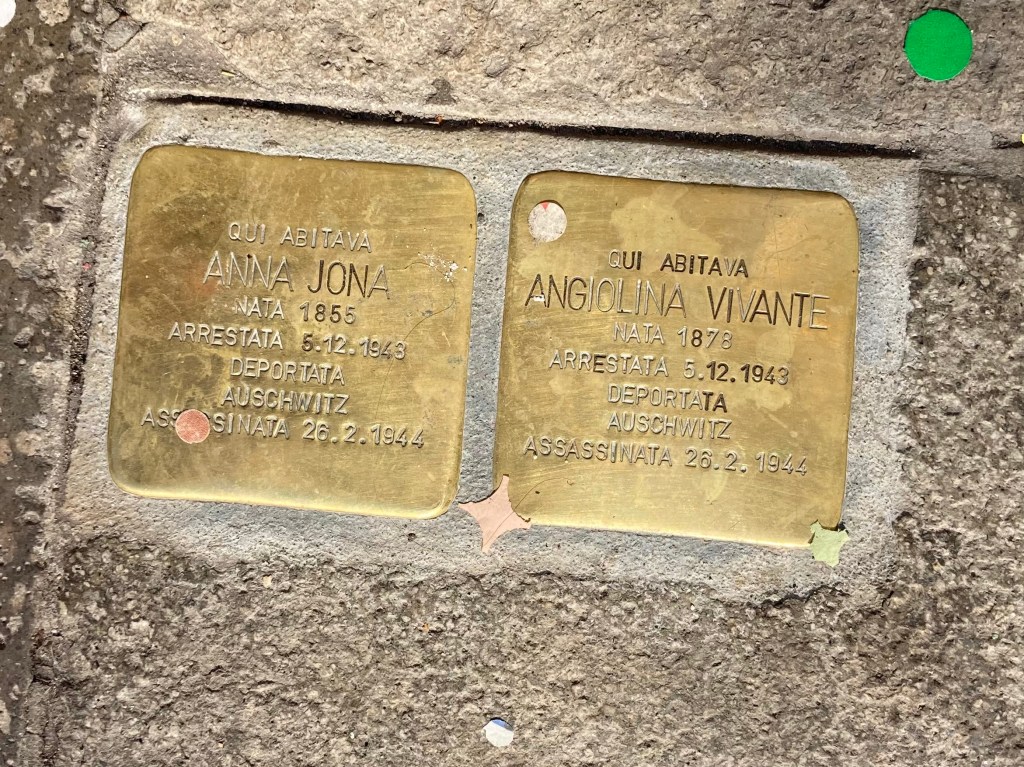
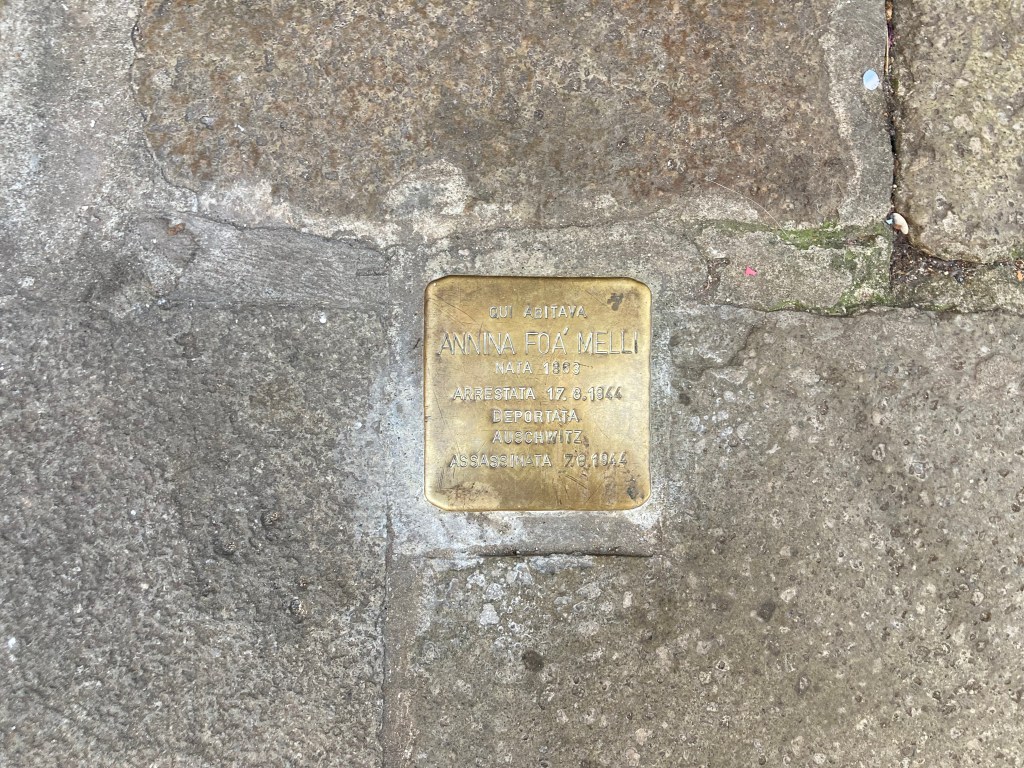
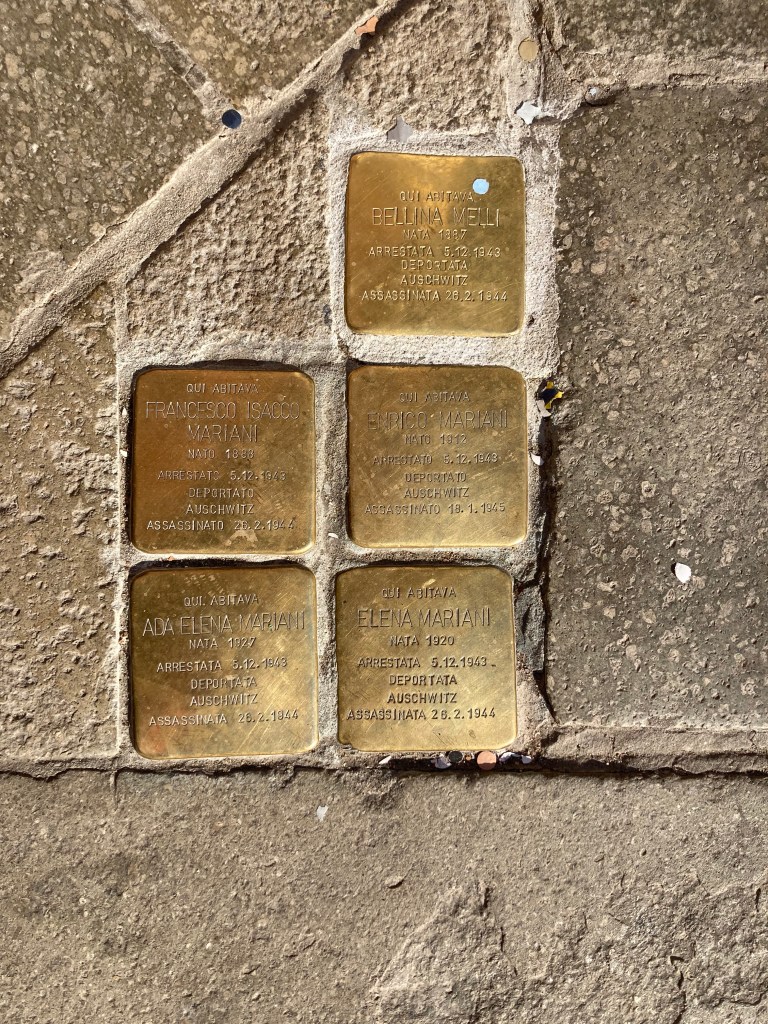
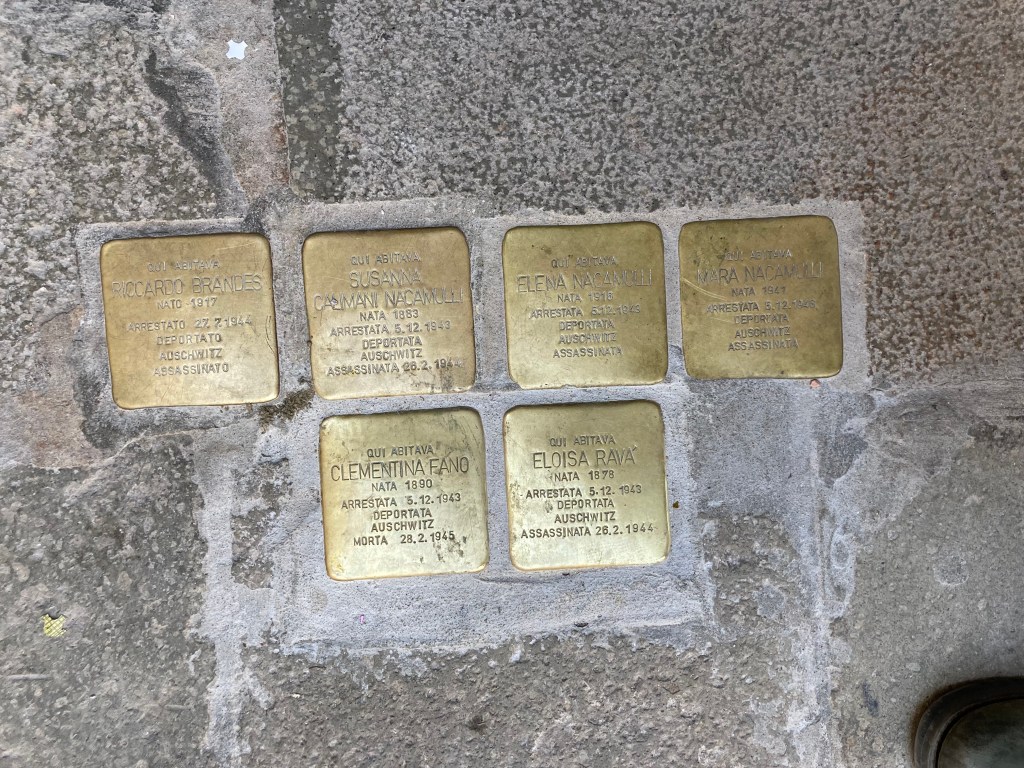
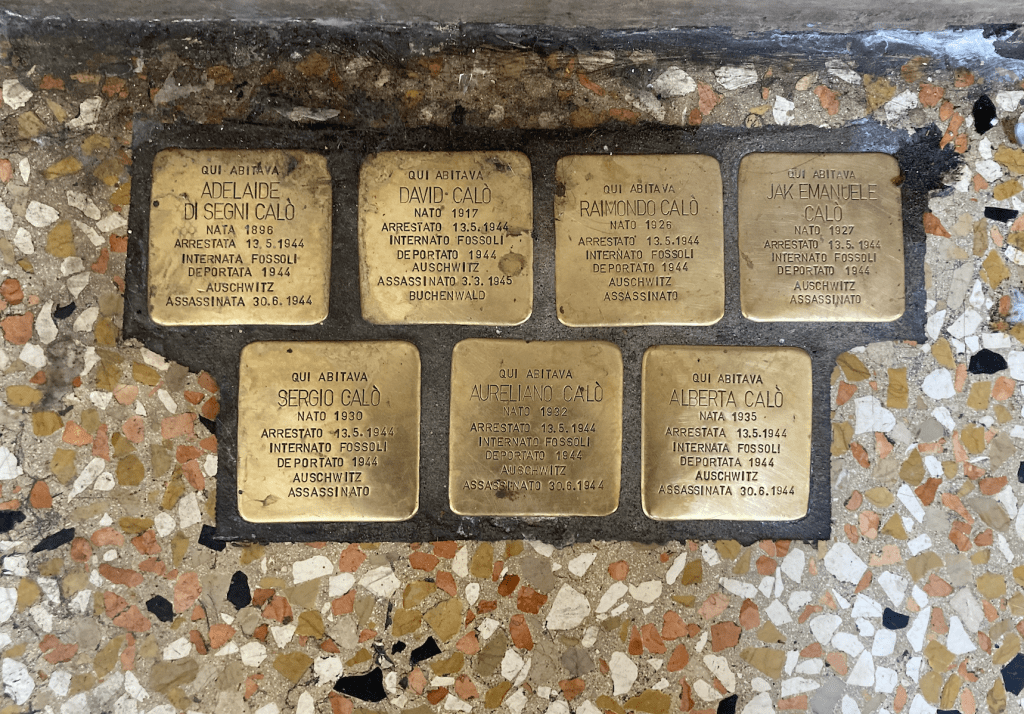
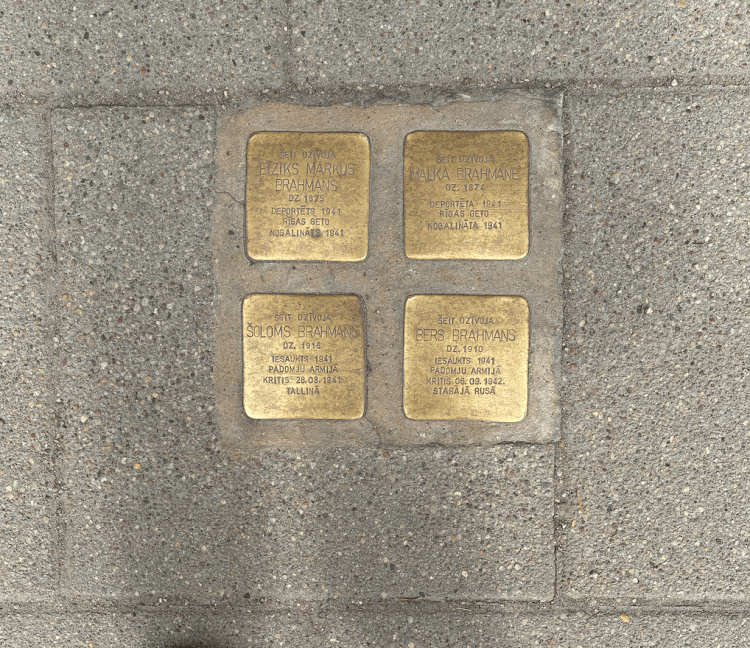
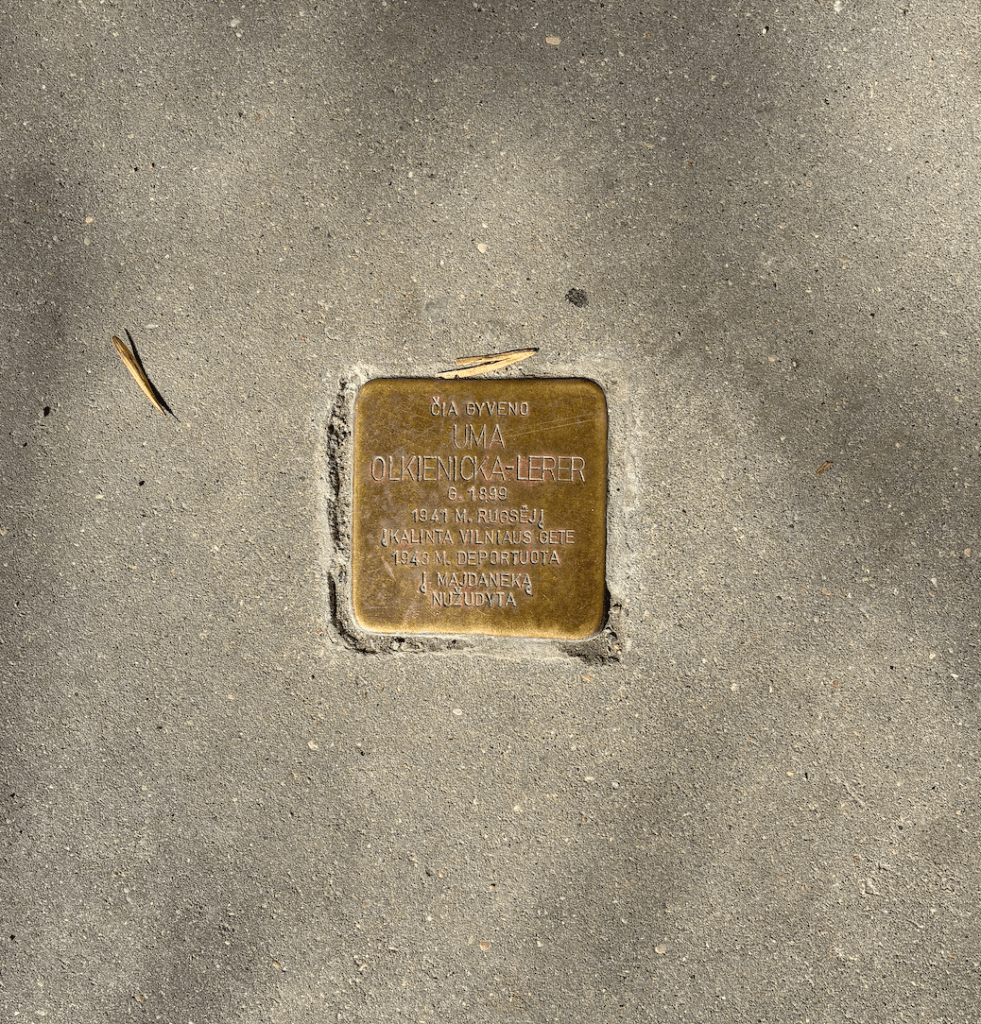
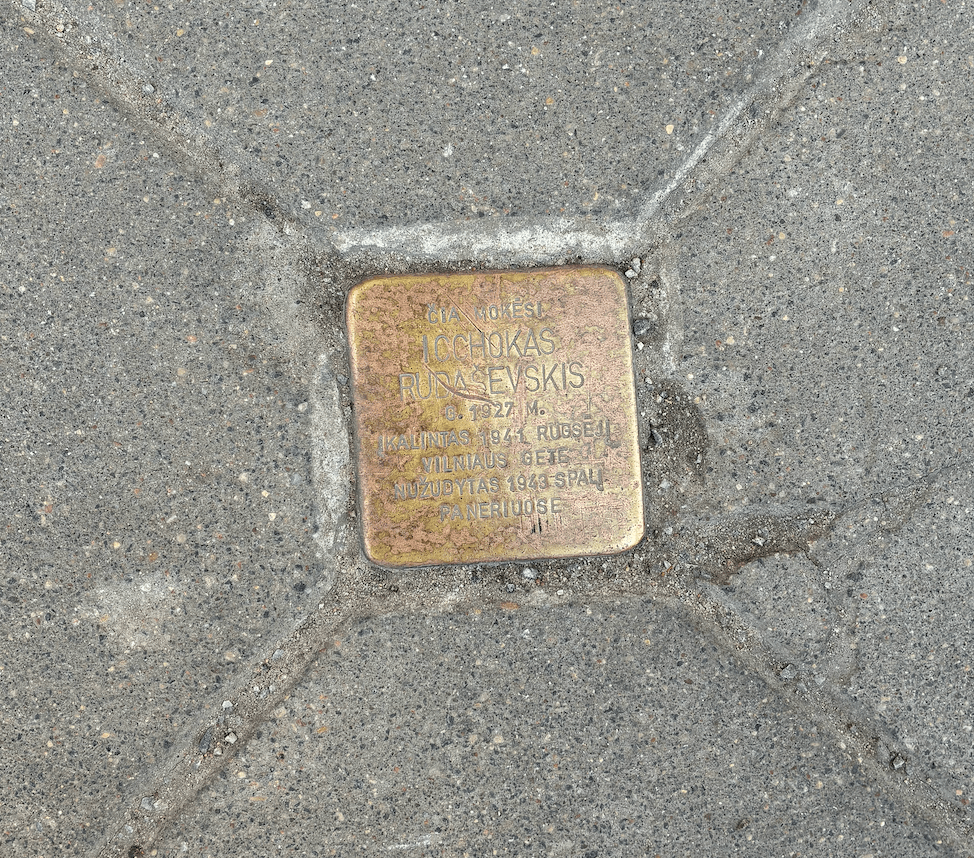
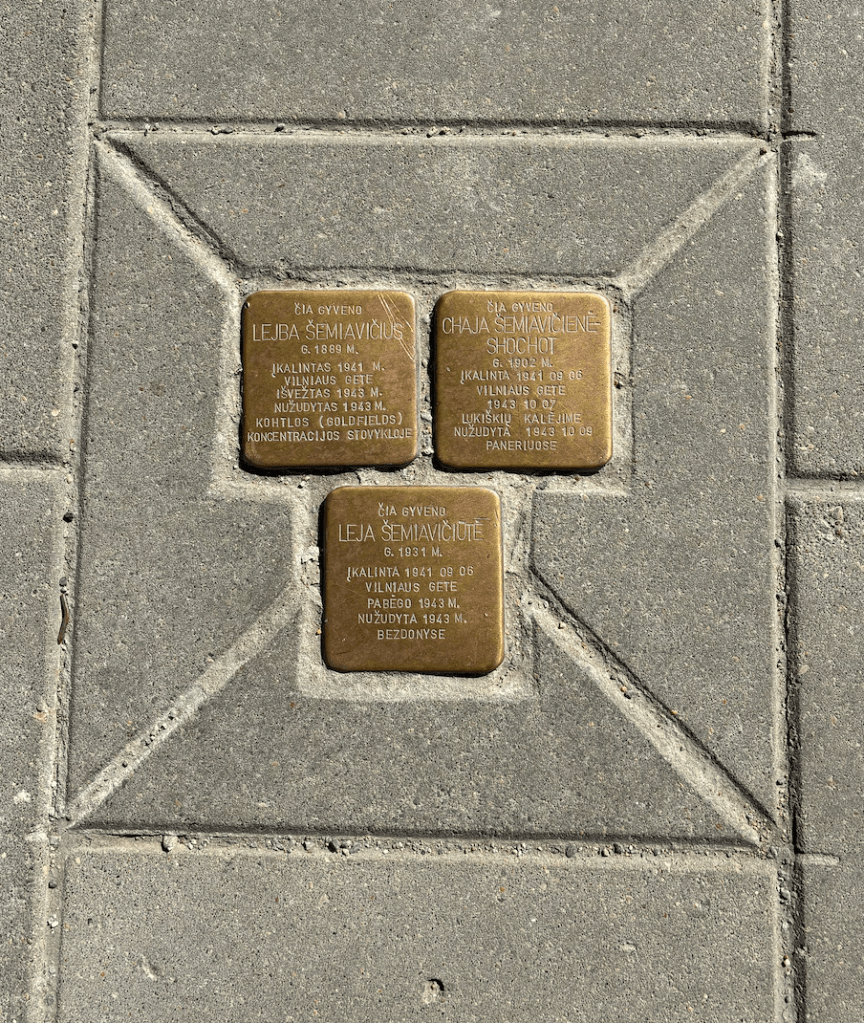
Effective memorials are difficult to create.   Stolpersteine are very effective. Stolpersteine, or stumbling block are remembrances of those murdered or displaced by the holocaust. They are placed at the last chosen home, work or school or where someone was forced to live. The people honored were murdered, forced to immigrate or just lost.  They are placed for individuals or whole families who are then “reunited” by the Stolpersteine.   http://www.stolpersteine.eu/en/

We first saw them in Berlin about 10 years ago, very concentrated in the old Jewish area.  Some countries or cities do not allow Stolpersteine or have proportionately few, many of these are countries that are reluctant to reflect on their own participation/complicity in the holocaust (Romania, Munich). Often they are hard to locate. Some cities/countries provide maps and biographies, others don’t.

https://en.wikipedia.org/wiki/List_of_cities_by_country_that_have_stolpersteine

This article really captures the power and potential of the Stolpersteine https://www.theguardian.com/lifeandstyle/2026/may/17/102-year-old-holocaust-survivor-berlin-australia-friendship-brass-plaques

It is decimating each time we stumble on the brass plaques.  You are there, in their place. They have somewhat been our constant companions through Europe.

Saarbrüken

while staying with our daughter, we passed Dilla almost daily (off and on) for 2 years
German resistance fighters

Frankfurt

Most of the Stopersteine are for Jews who were murdered since they were the primary group targeted but they also exist for slave laborers, the Sini, the Roma, developmentally disabled, Catholics, Jehovah’s Witness, partisans or LGBTQ who were also targets for extermination. Most are for individuals but there are some at hospitals or slave labor factories where the individual names will never be known.

Worms

Cologne (Köln)/ Bonn

Gegenbäch (Black Forest)

Heidelberg

Budapest

Amsterdam

Freiburg, they were everywhere (liberal, university town).

Even in countries where there are many throughout the country, like Germany, there was local controversy as we saw in Munich, allowed only on private property. https://thechosenfugue.blogspot.com/search/label/Munich.

Some countries, like Bulgaria, that do not have Stolpersteine have a history that is far more benign than most.
https://encyclopedia.ushmm.org/content/en/article/bulgaria

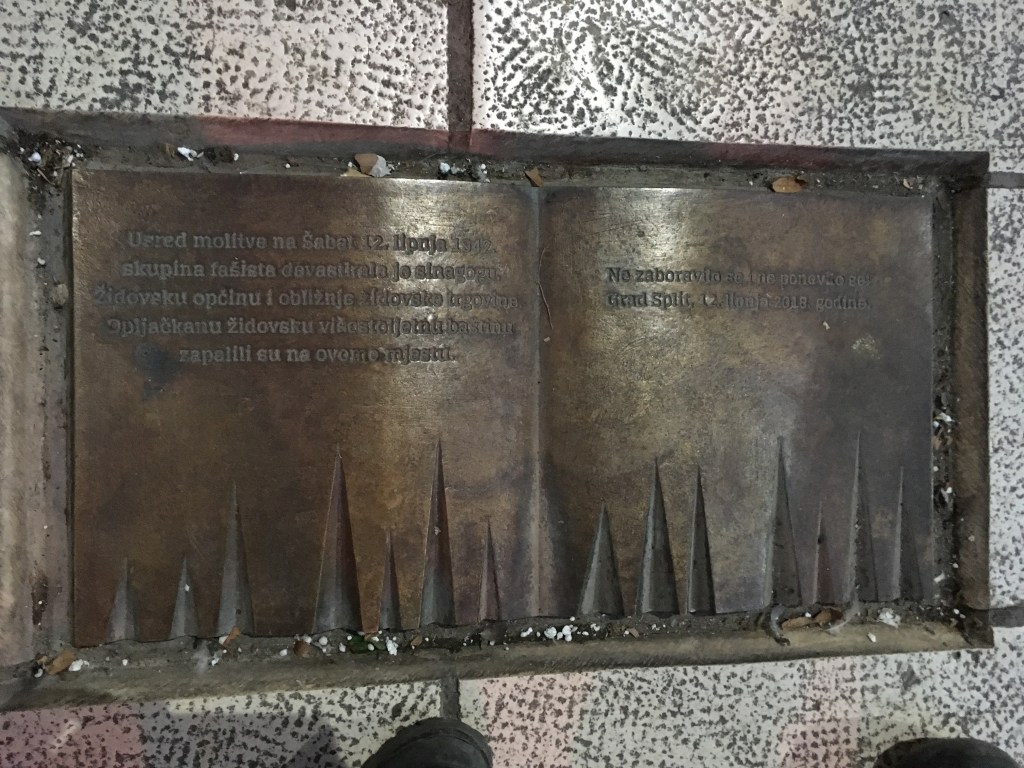
While others, like Croatia, have a more complicated history. In Split, Croatia, we did not see any Stolpersteine, but we did see this plague on the ground, which describes the destruction of the synagogue during Shabbat on 1942.

This was put in place in June 12 2018, 76 years after the attack on the synagogue  “for the sake of the Split residents so that they become aware of this event that was repressed from their memory and that it must not happen again” (Mayor statement).

As with the Stolpersteine, this was placed in a sacred space. The plaque is in front of the now closed (in 2017)  Morpurgo bookstore, which was the third oldest bookstore in Europe.  We stumbled across it just after visiting the Jewish cemetery and seeing  quite a few Morpurgo family member’s graves.  The Morpurgos  were the owners of the book store and the store (and family) were key players in the Croatian nationalism movement in the late 1800s. And then we saw a Stolpersteine for a Morpurgo outside the synagogue in Trieste, just up the coast from Split.

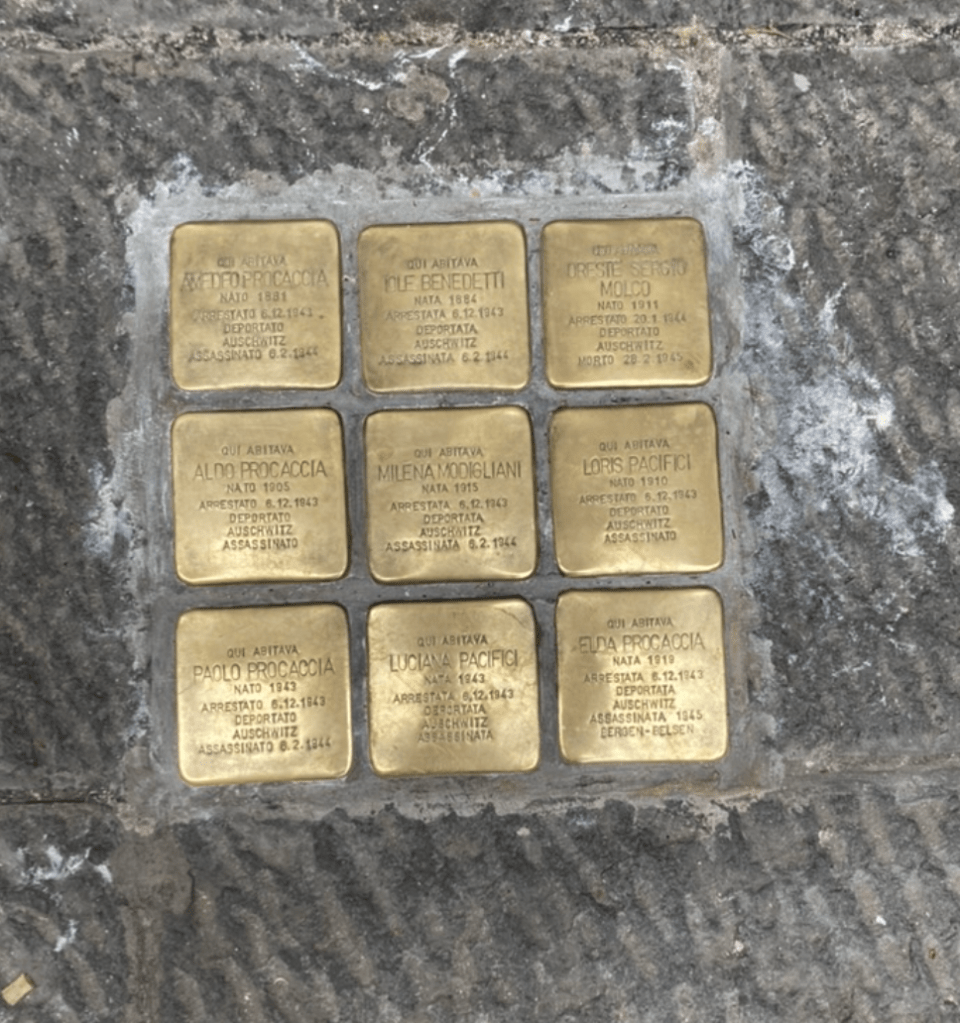
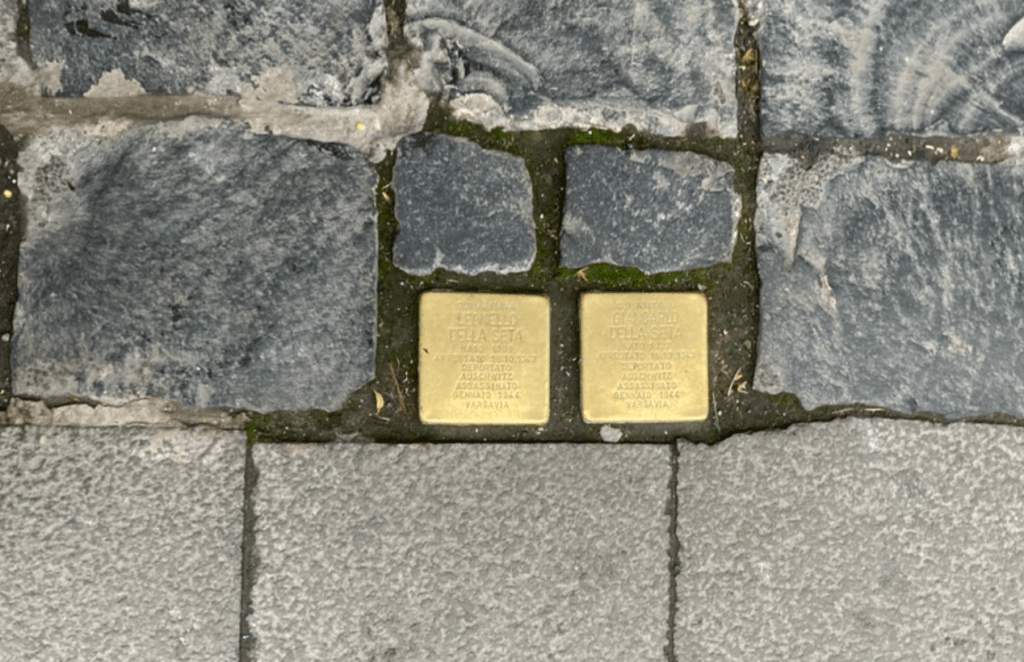
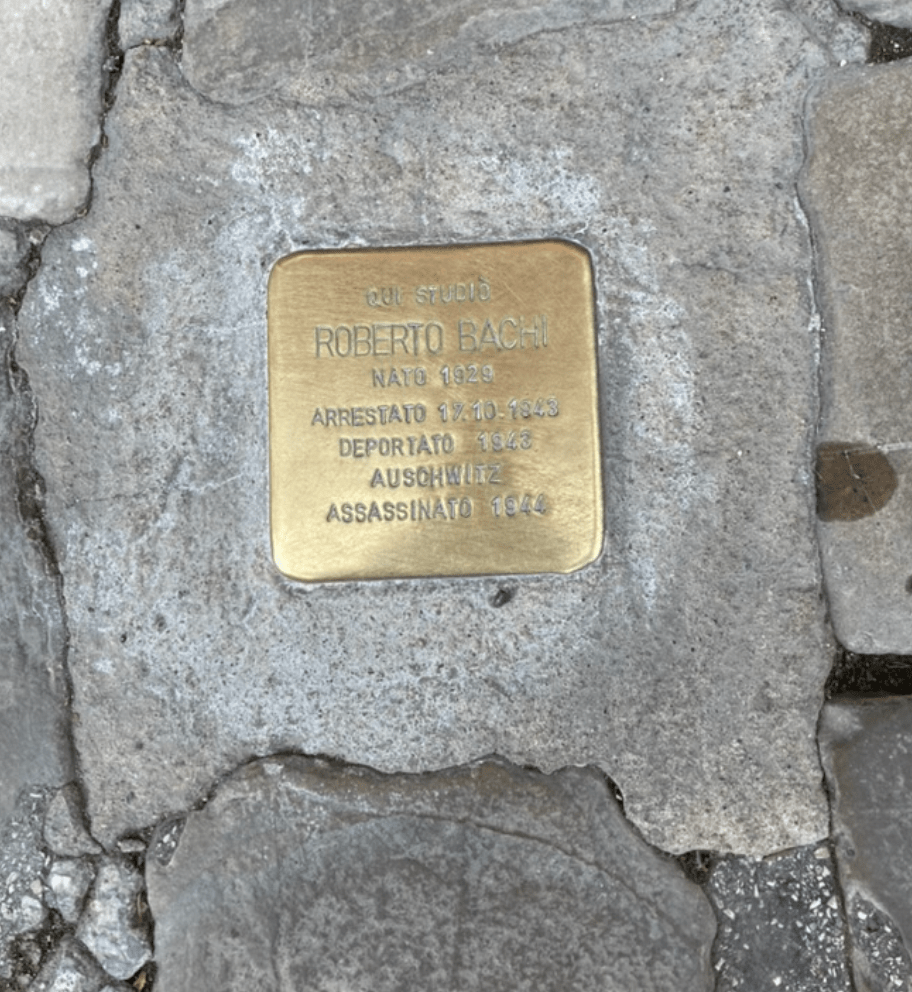
In Italy, they are called pietri d’inciampo and we found them throughout the country. These are just ones we saw, there were many more. Another reminder of how far the reach was.

While we did not go to Padua, the website for their pietri d’inciampo  was staggering. http://www.lepietredinciampoapadova.it/index_english.html

Genoa https://it.wikipedia.org/wiki/Pietre_d%27inciampo_in_Liguria#Provincia_di_Genova

Florence https://it.wikipedia.org/wiki/Pietre_d%27inciampo_in_Toscana

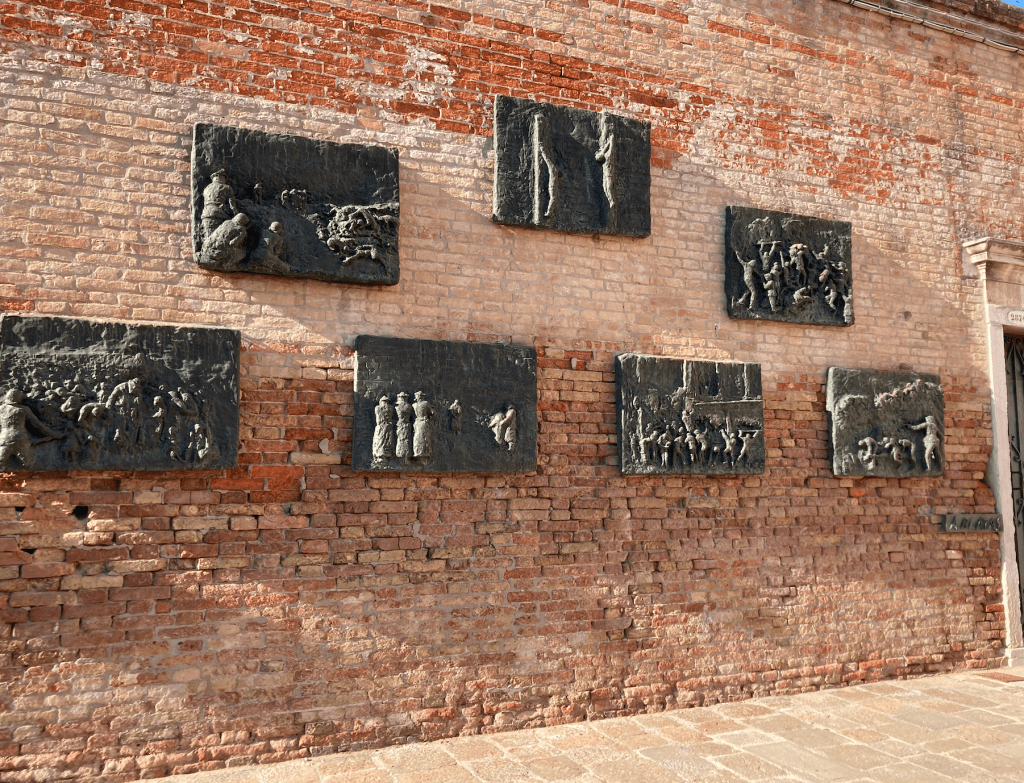
Venice was the home of the original Jewish Ghetto and pietri d’inciampo were scattered throughout.https://sites.google.com/view/pietreinciampovenezia/le-pose/2022

In the Novo Ghetto were also bronze reliefs detailing the round up of Jews between 1943-1944

Bologna https://www.comune.bologna.it/servizi-informazioni/pietre-inciampo

Naples

Rome https://it.wikipedia.org/wiki/Pietre_d%27inciampo_a_Roma

Ravenna, in front of an elementary school on a little side street.

Milan https://www-pietredinciampo-eu.translate.goog/persone-le-storie/?_x_tr_sl=it&_x_tr_tl=en&_x_tr_hl=en&_x_tr_pto=sc&_x_tr_sch=http

Bordeaux, France

Lyon, France

Sarajevo, Bosnia-Hercegovina

Riga, Latvia

Vilna (Vilnius), Lithuania https://manoteises.lt/atminimo-akmenys/english/

Łodz, Poland

Wroclaw, Poland (was called Breslau from 1251-1945)

Stolpersteine, have become a constant. Wherever we go,  we look for them, almost everywhere in Europe. Their presence or absence, in countries or cities that do not allow them, both serve as devastating memorials.

Dachau city, a few blocks outside of the concentration camp

Auf Weidersehen Croatia

For our last week (of five total weeks) in Croatia we continued our coastal tour southward spending several days in both Zadar and Trogir before catching our flight back to Germany on December 11. Zadar and Trogir, continued the theme of the Dalmatian Coast with ancient walled cities, ubiquitous limestone, Roman ruins, medieval churches, and rocky Adriatic beaches.

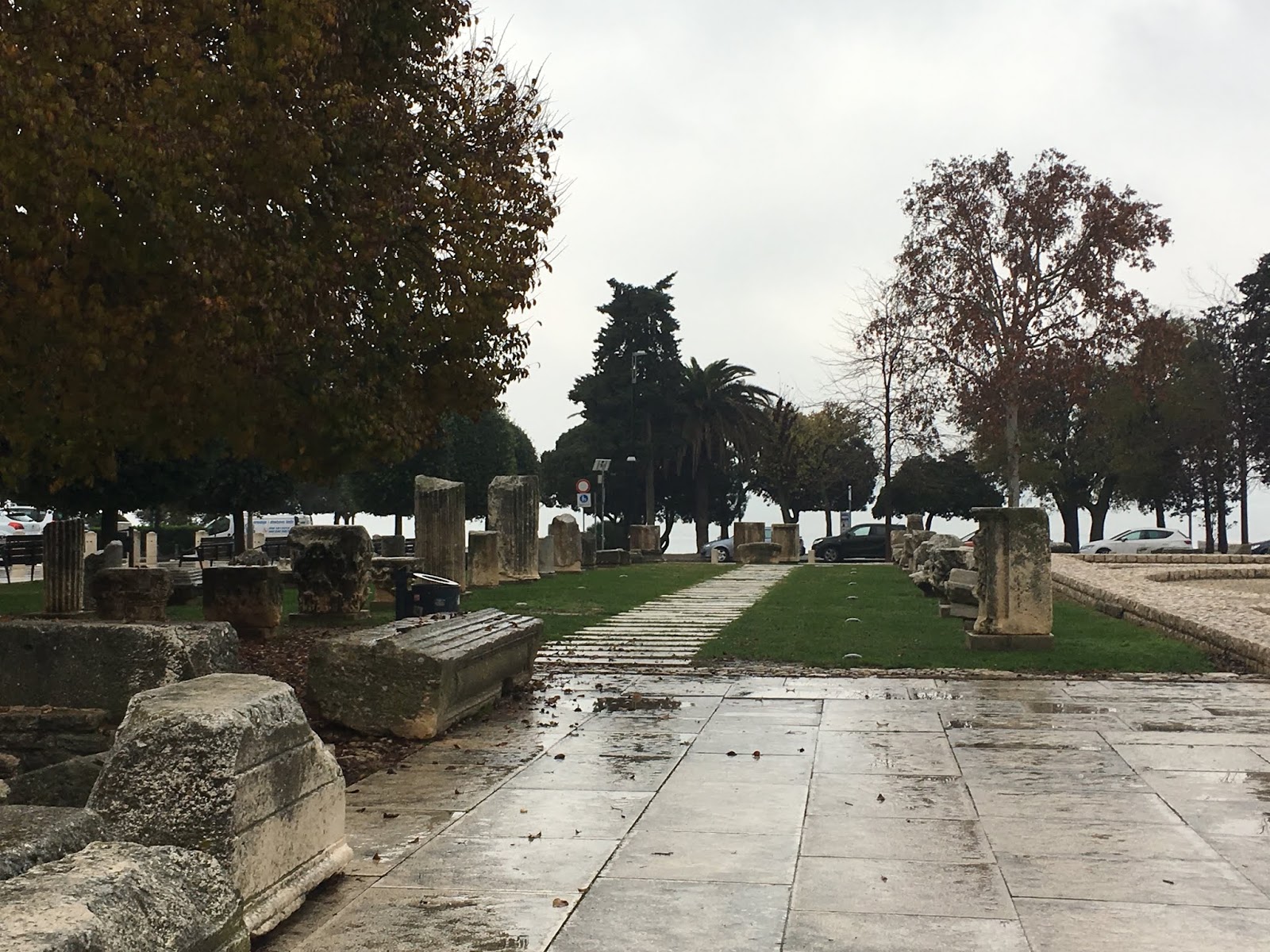
Miscellaneous pieces of Roman ruins creating a path

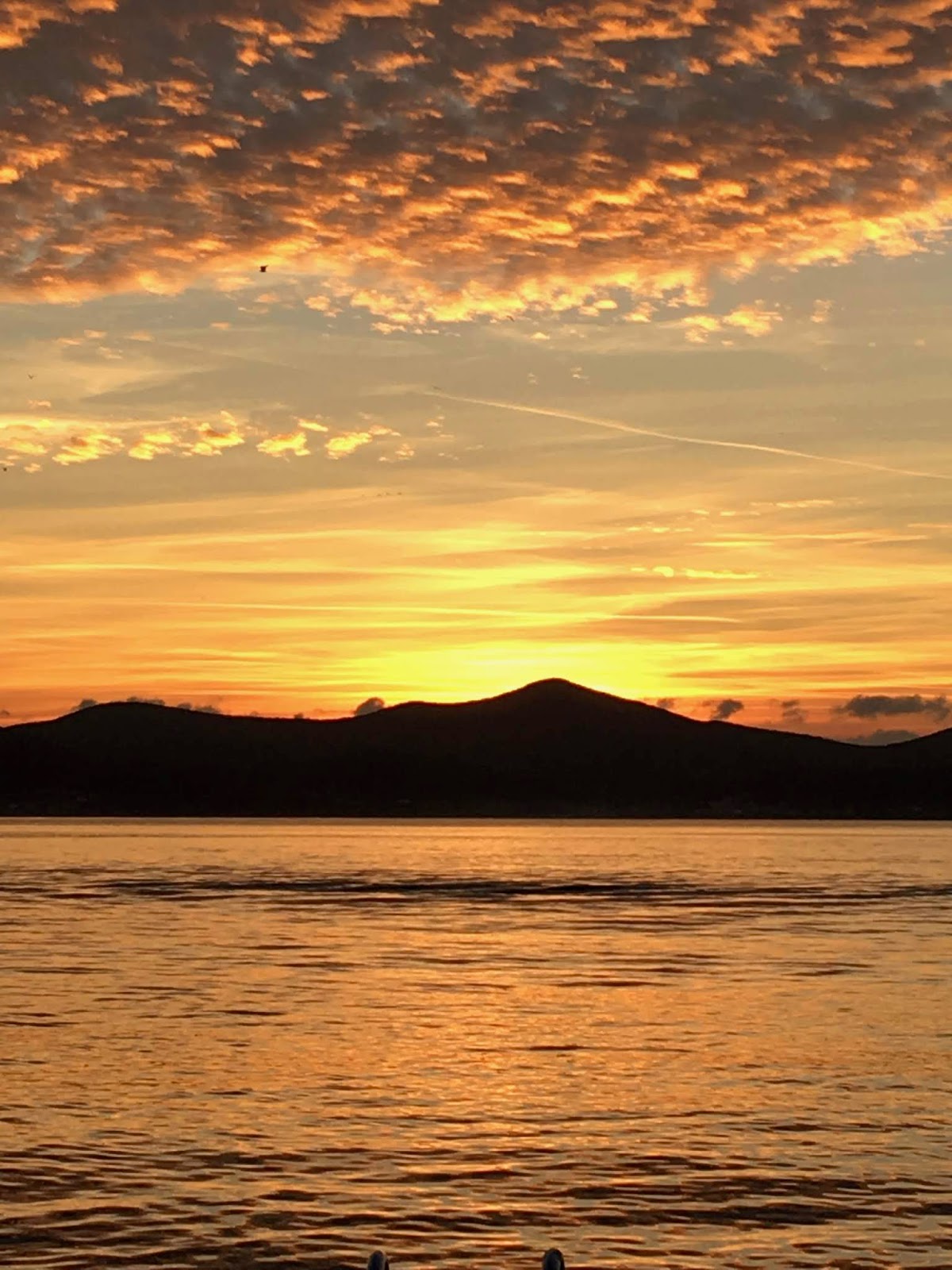
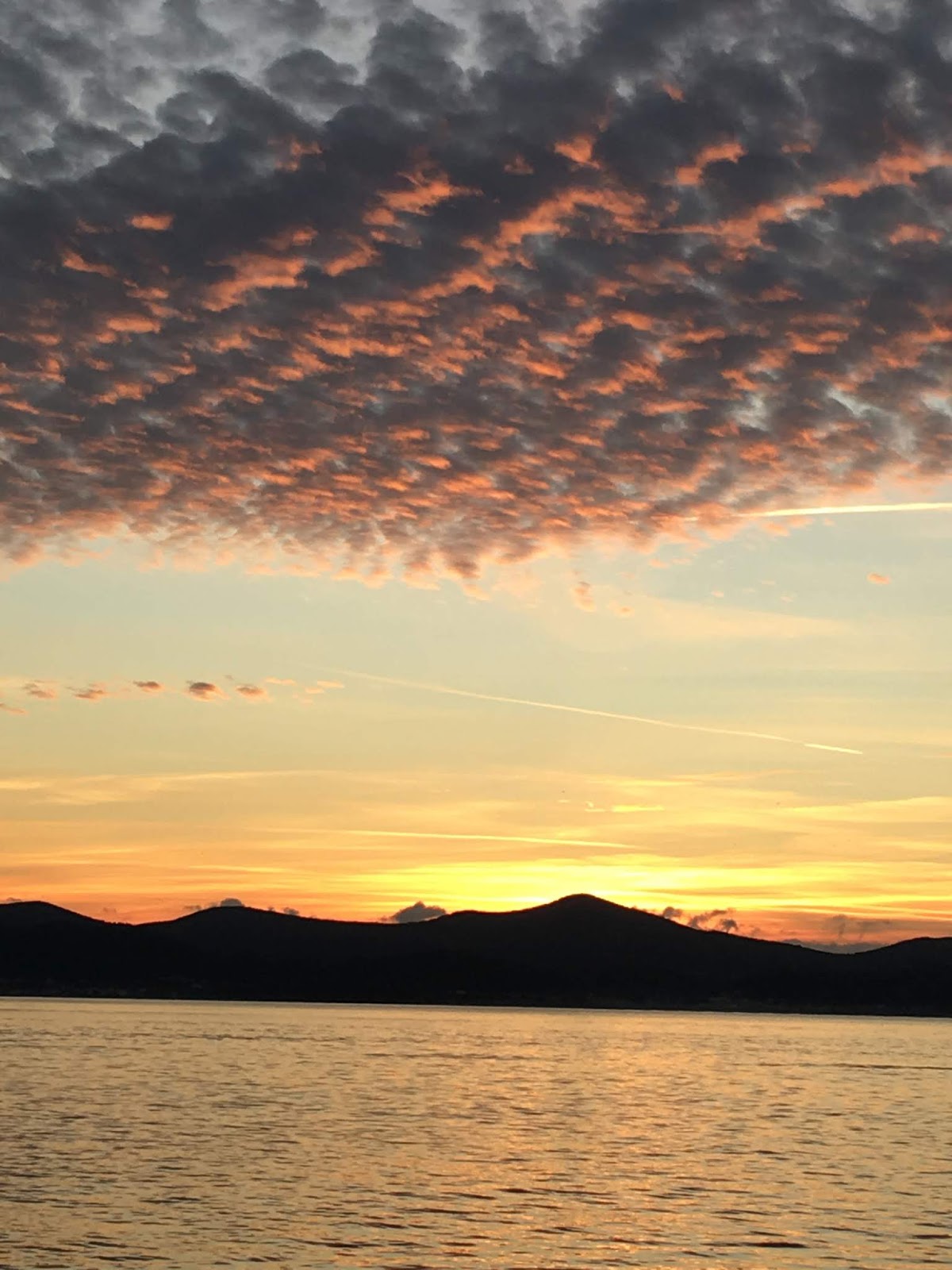
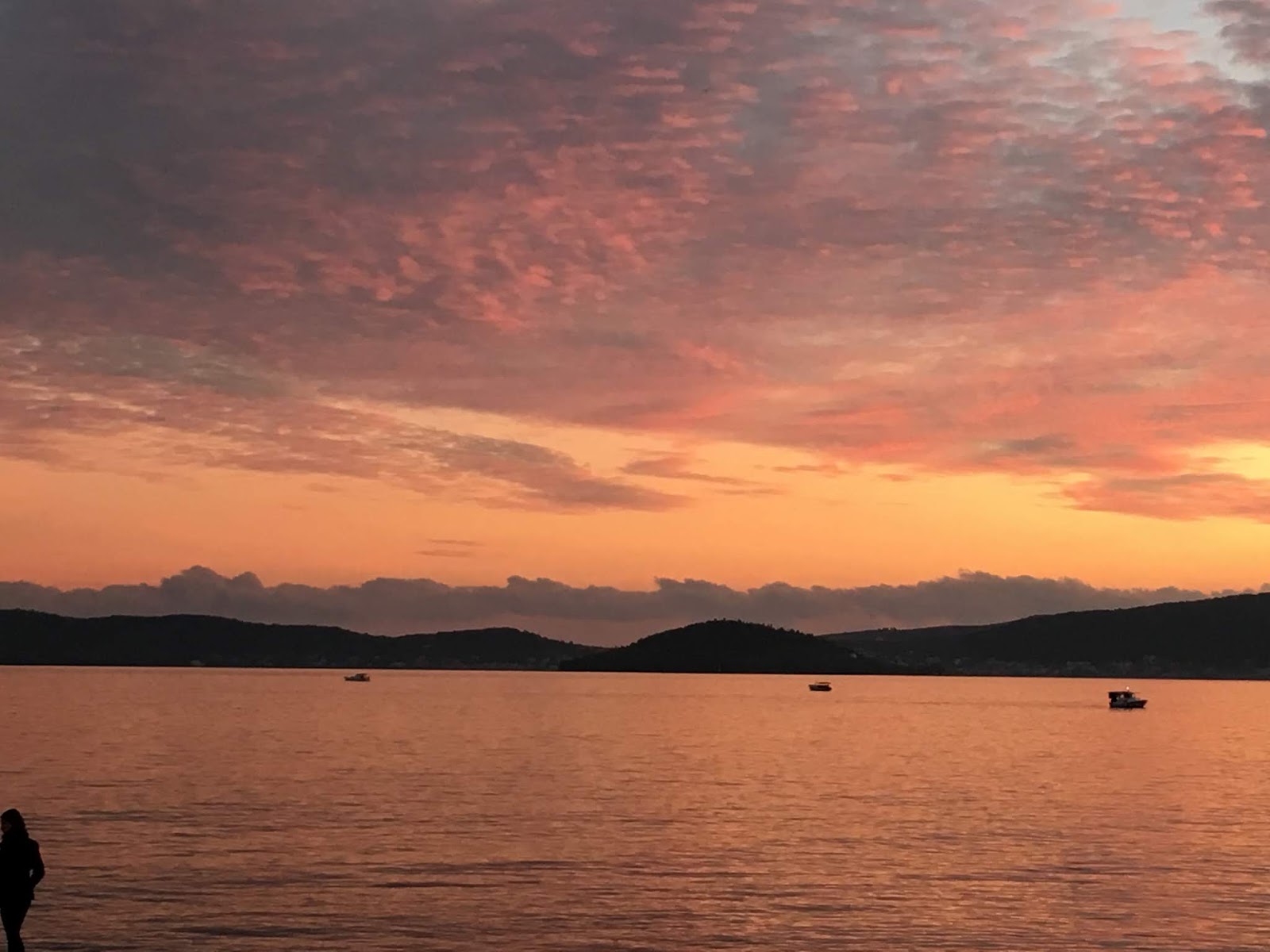
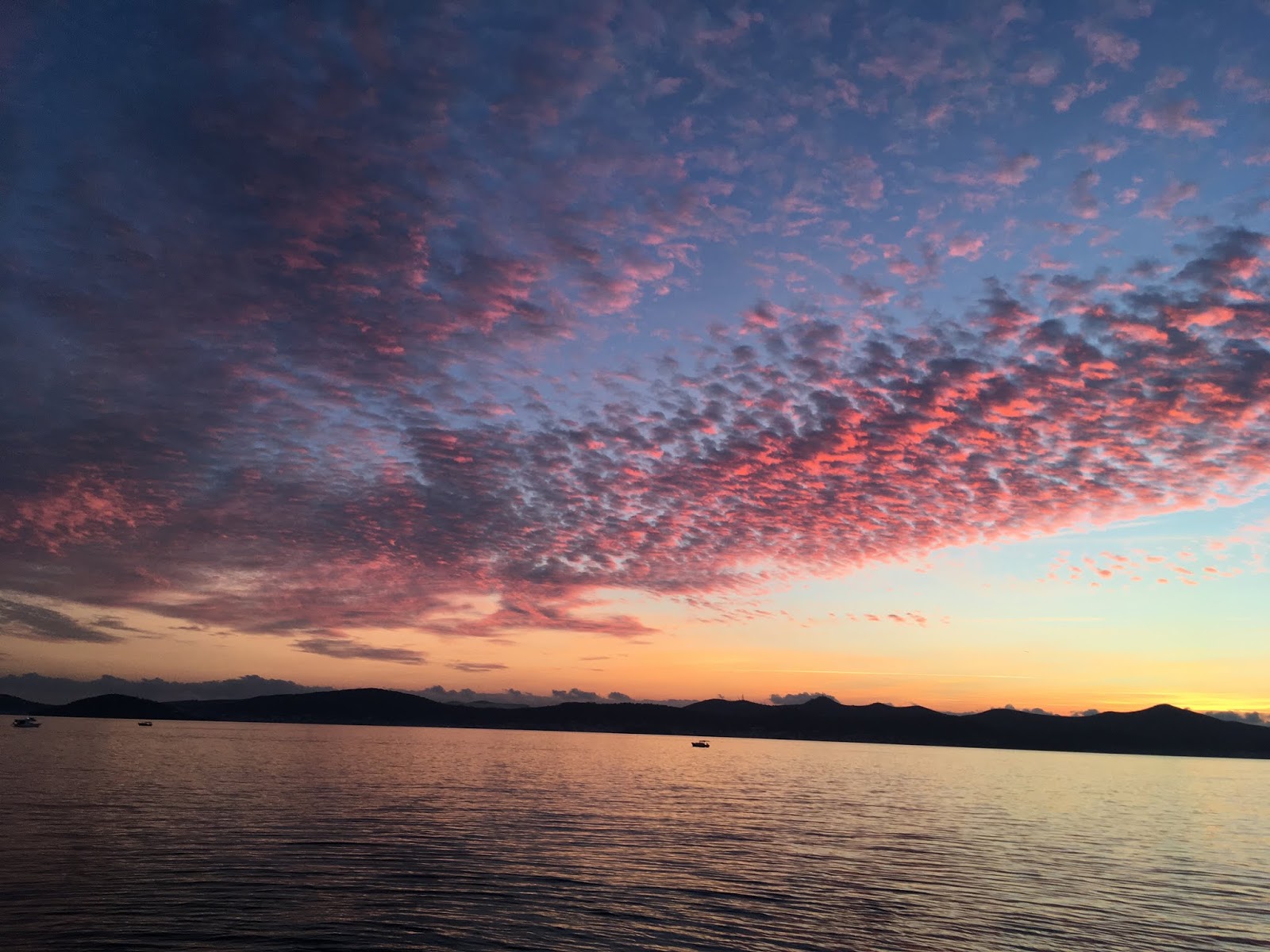
Alfred Hitchcock felt Zadar had the best sunsets in the world,

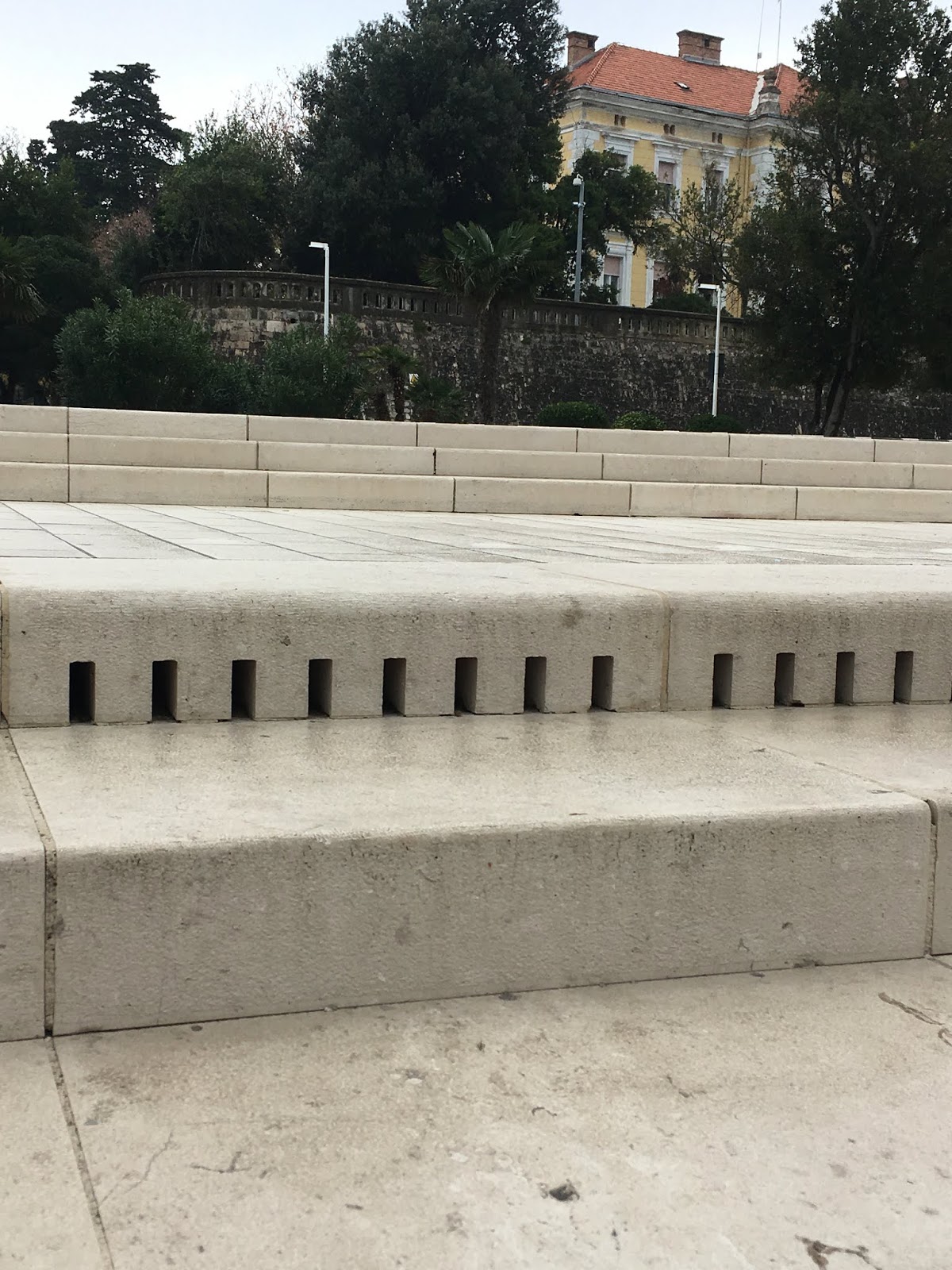
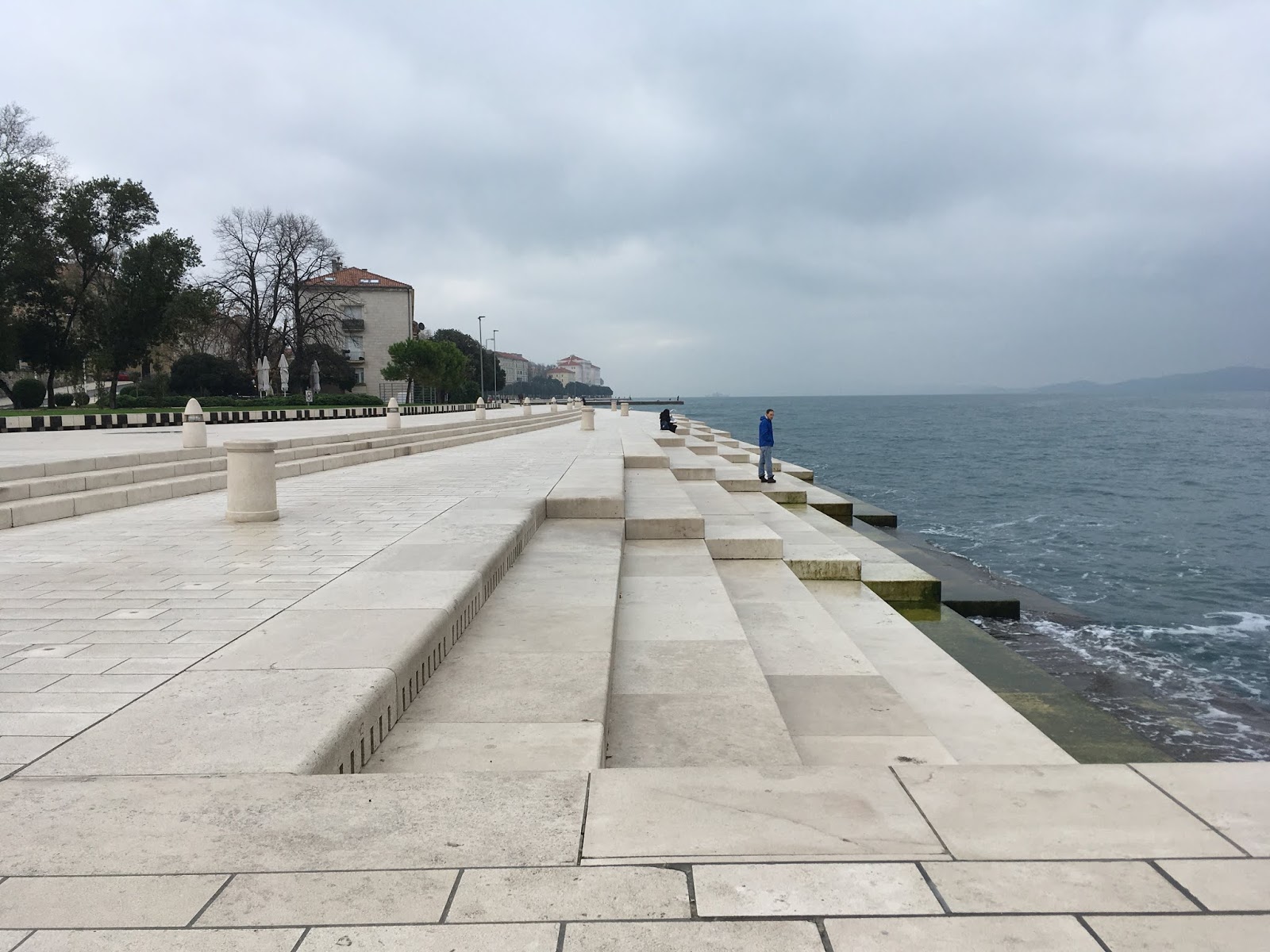
and these came with a sound track as an art installation design by architect Nikola Basic called the Sea Organ constantly plays musical notes from the waves. https://en.wikipedia.org/wiki/Sea_organ.

He also designed the adjacent Monument to the Sun which is an interactive dance floor of solar panels that light up in multiple colors after sunset.
https://en.wikipedia.org/wiki/Monument_to_the_Sun
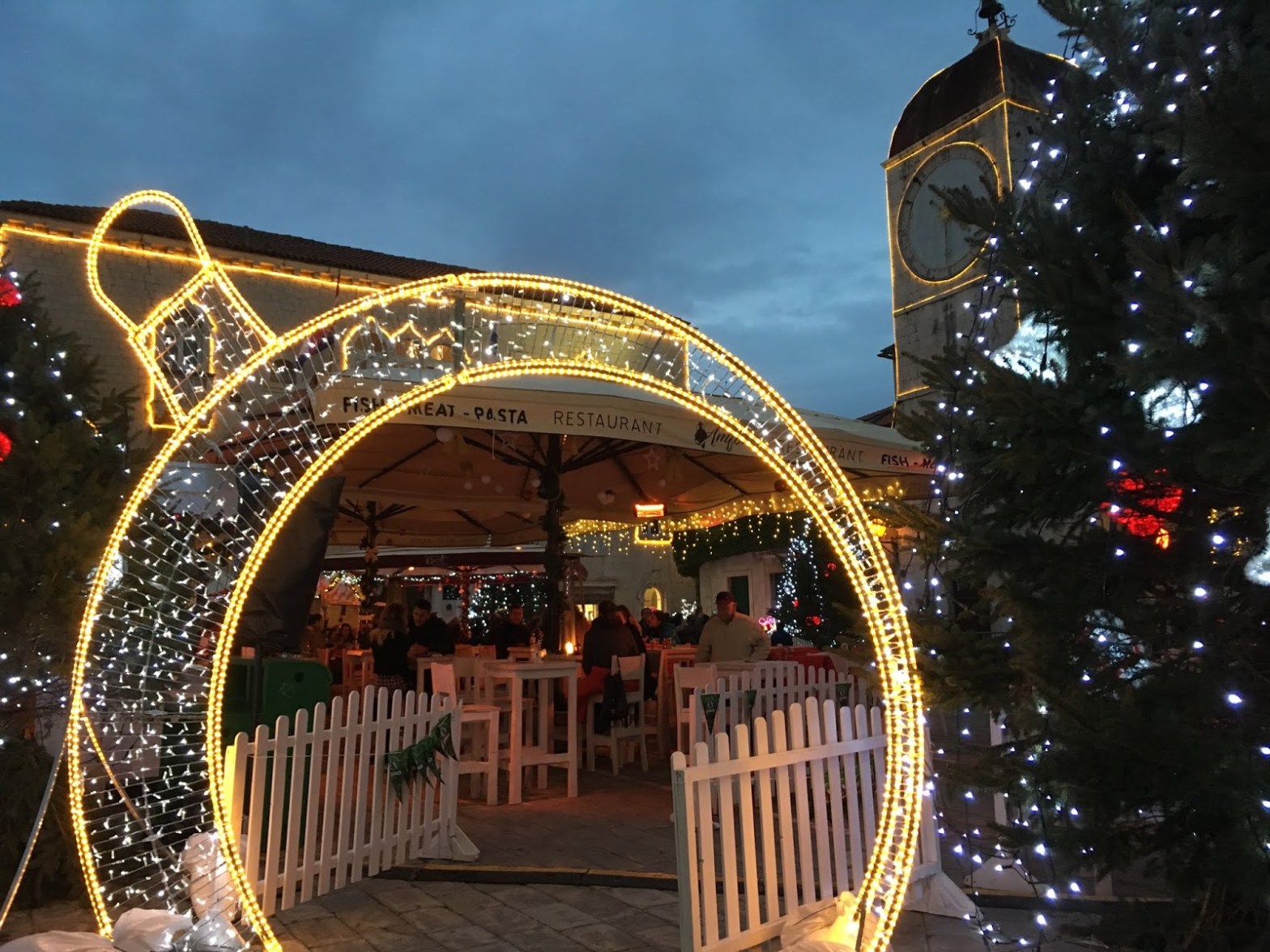
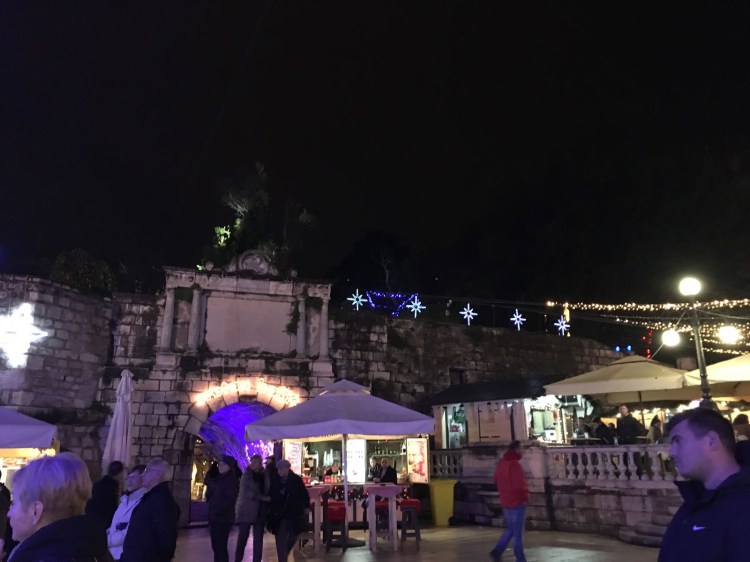
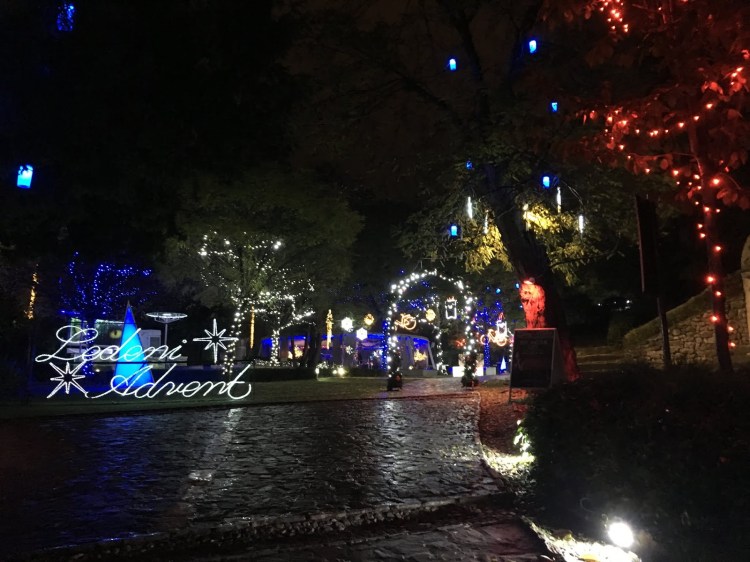
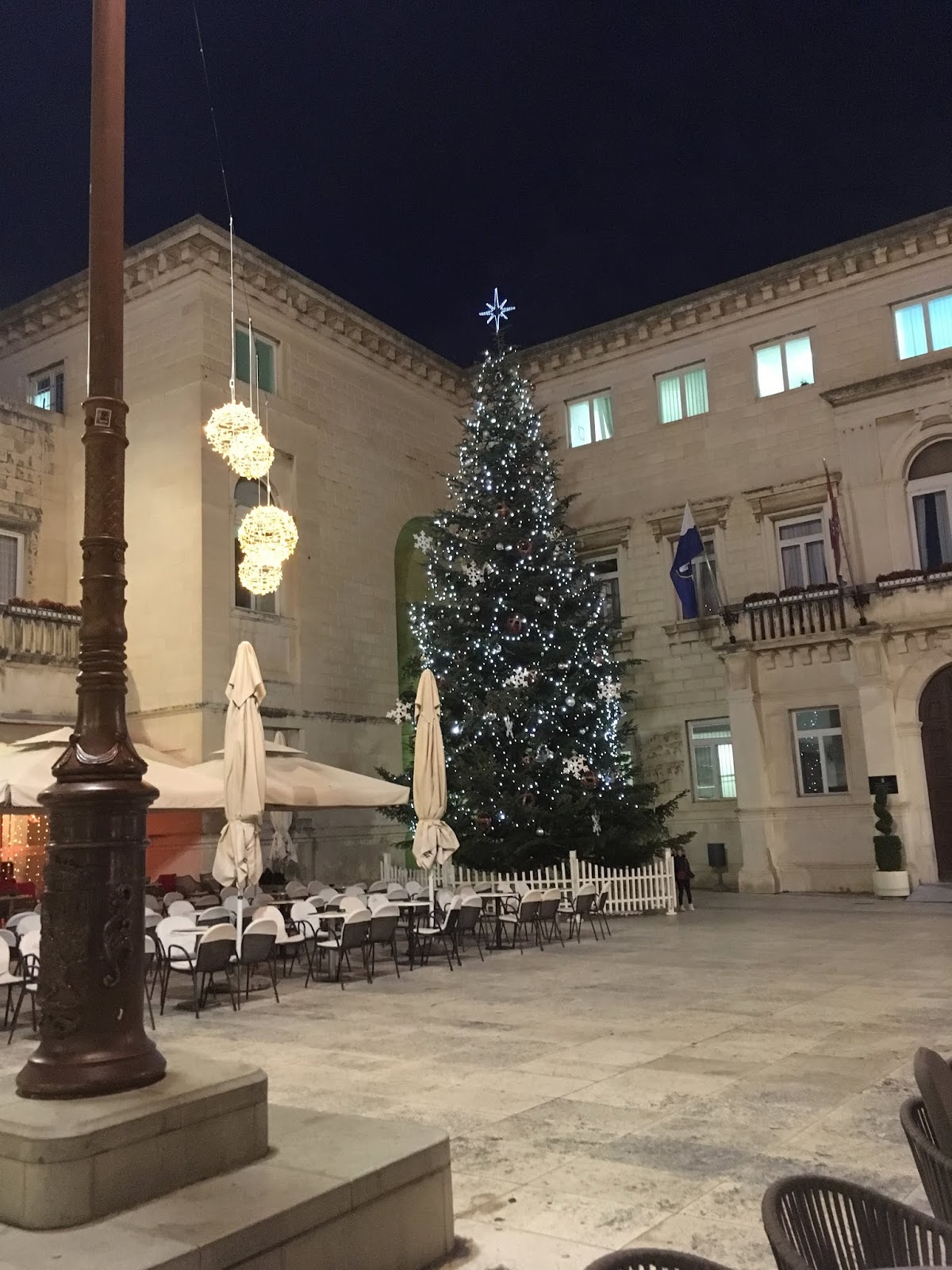
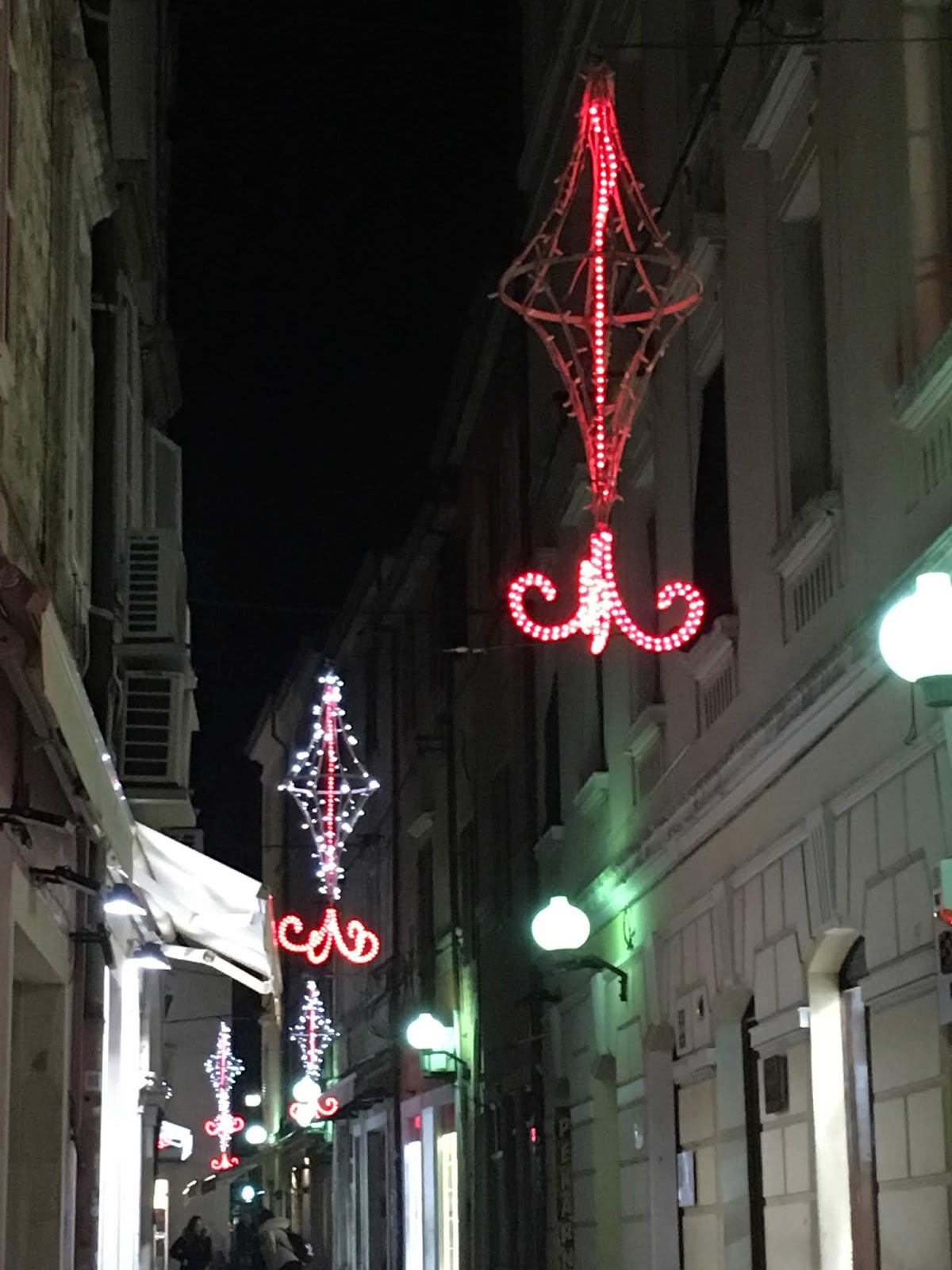
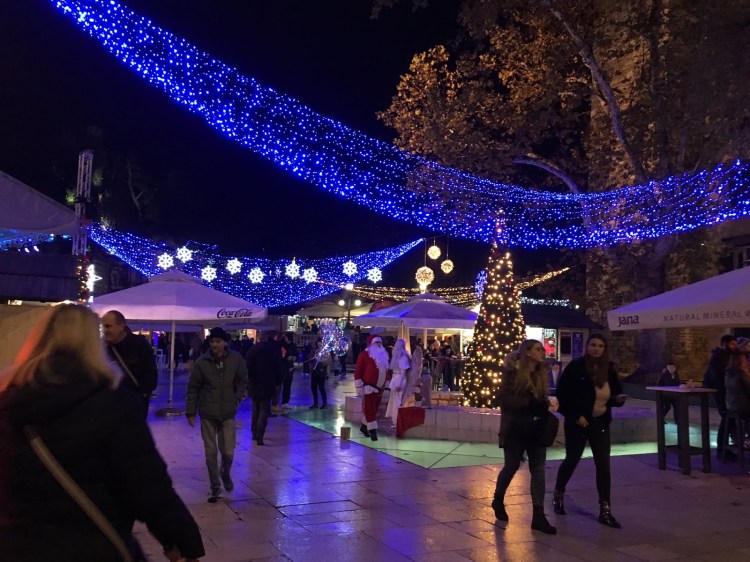
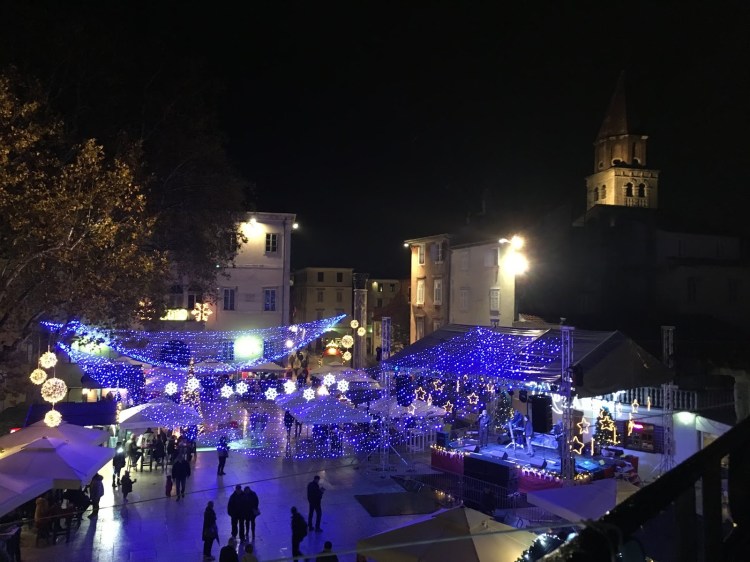
Unfortunately, this was being repaired while we were there, but there was other night life to be had, as the Advent/Christmas Program was in full swing.  Each chilly night there was a concert in the town square.  We even imbibed in the local rum punch, which tasted more like a stomach punch with an odd burnt cherry rum cough syrup edge.

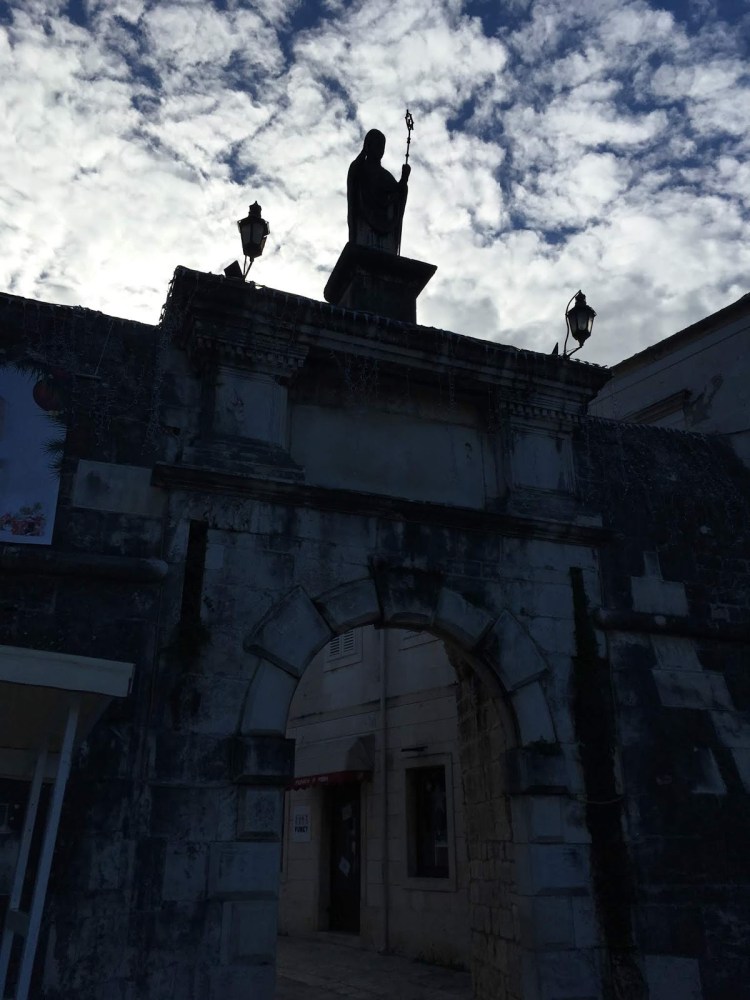
We arrived at our last stop, Trogir, in a torrential downpour with thunder and lightening (Croatian Callum).  It”s walled old city was a cramped confusing maze causing us to get lost in search of our place and subsequently drenched.

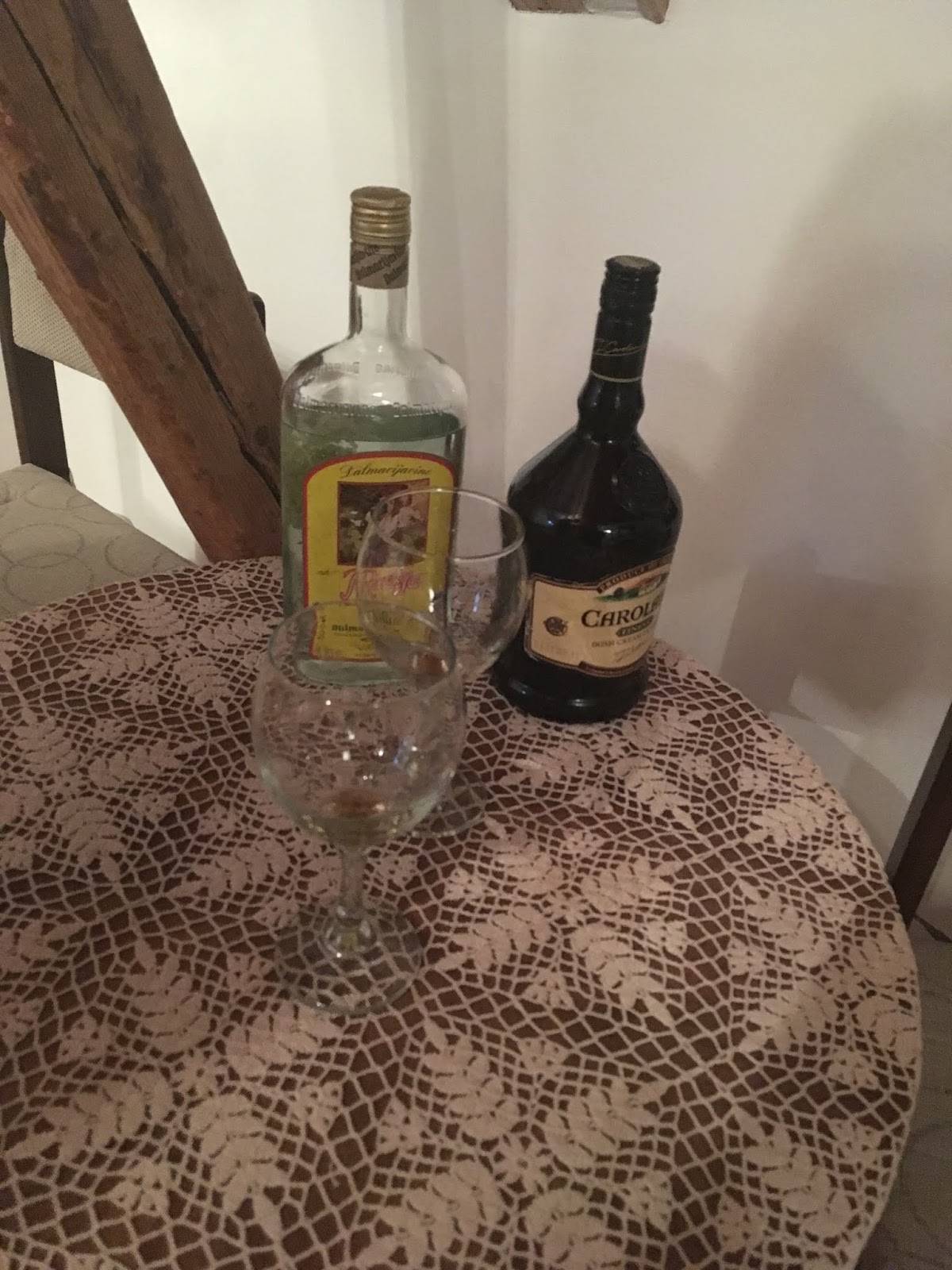
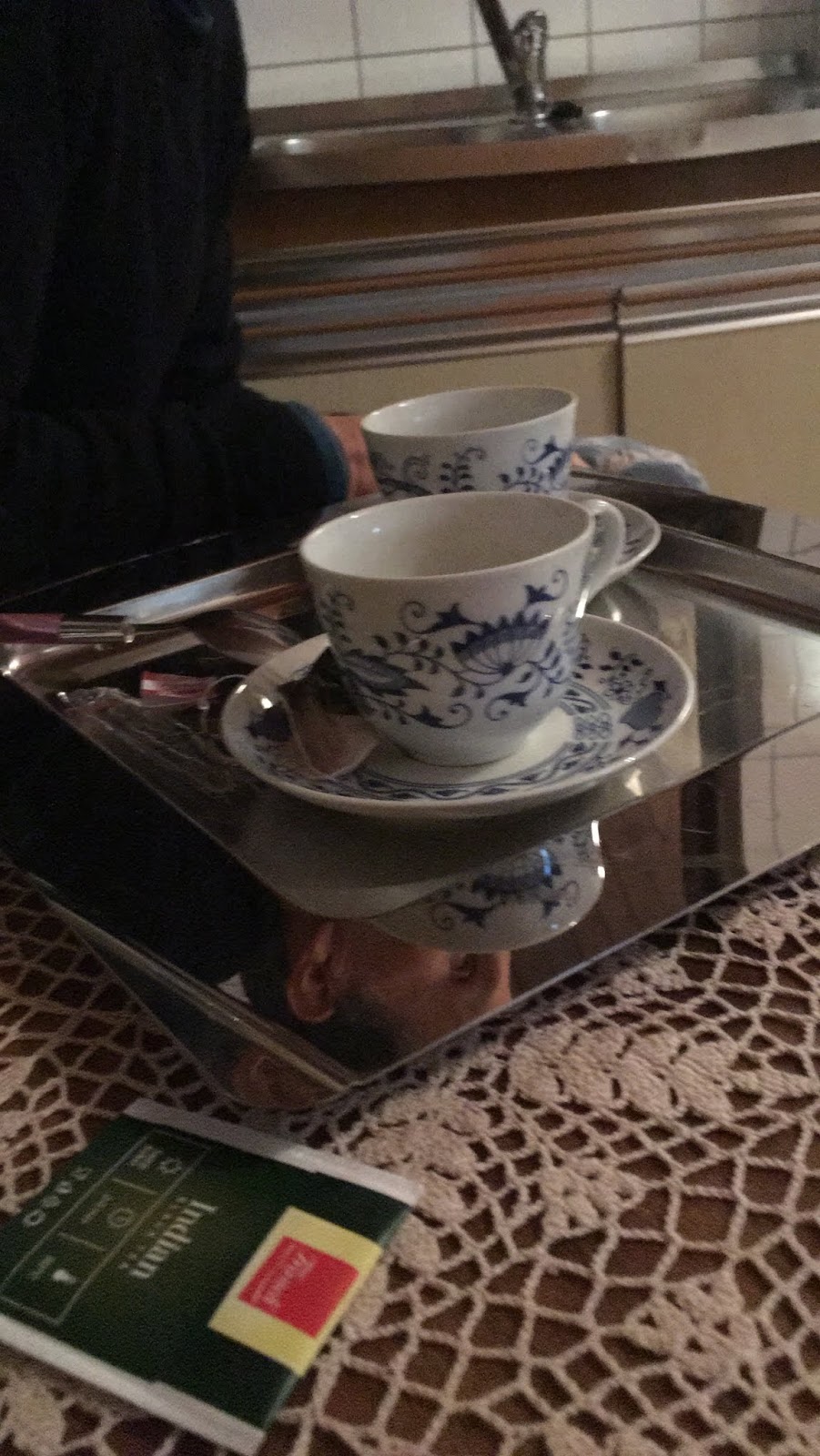
Completely soaked when we finally arrived, our host welcomed us with homemade walnut whiskey and hot tea. The walnut whiskey was incredibly tasty, maybe the best thing we’ve had the entire trip, and the best part was that she left the bottle. She also left a bottle of local favorite rikija, (like Italian grappa) but that gave us rum punch flashbacks.

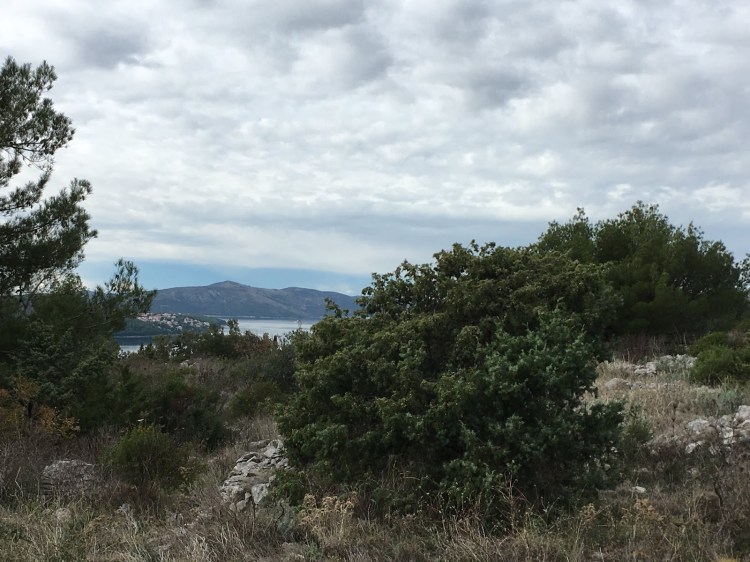
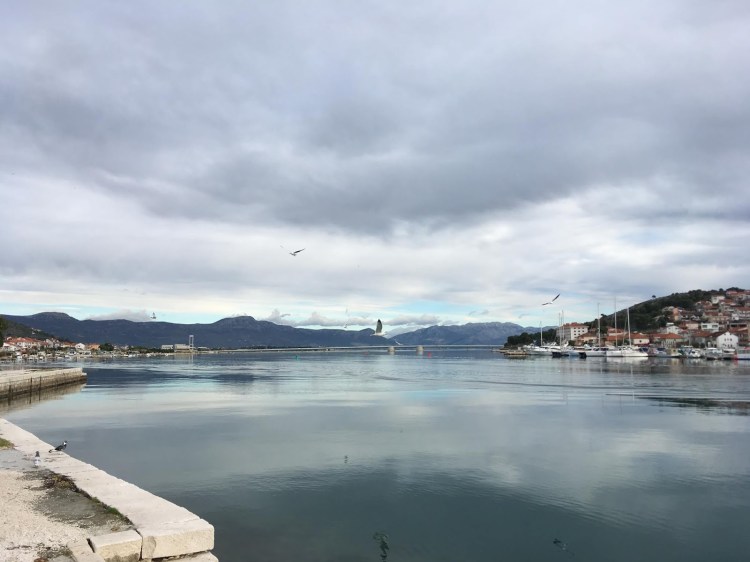
Trogir an a emblematic Dalmatian coastal city, a perfect conclusion to our five week visit.

An urban jungle

The sea

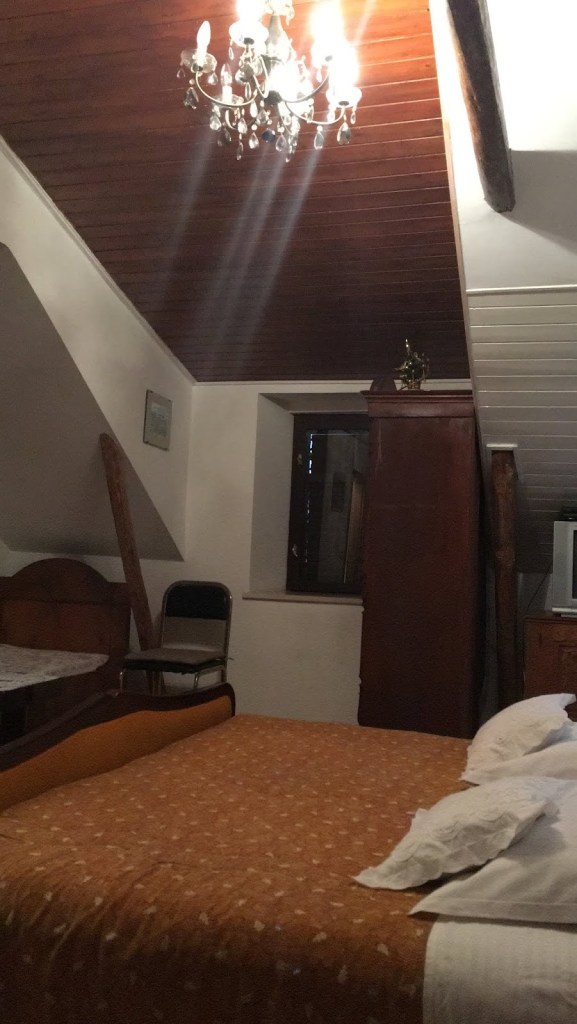
A cozy place to stay

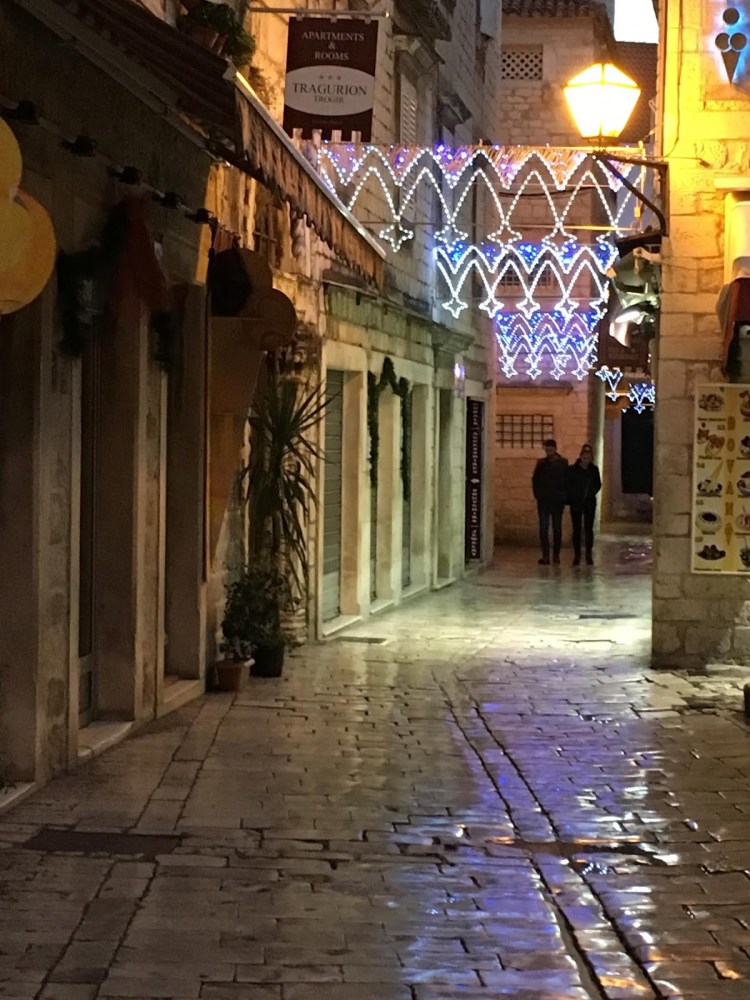
Limestone, limestone and more limestone with Advent lights

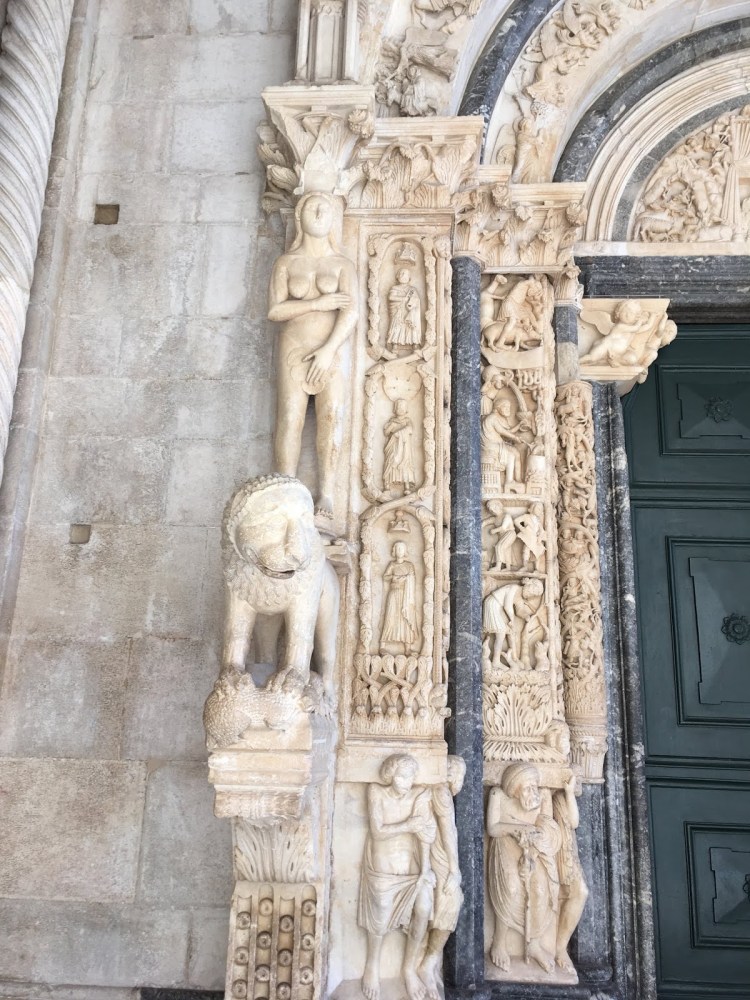
Churches on narrow streets 

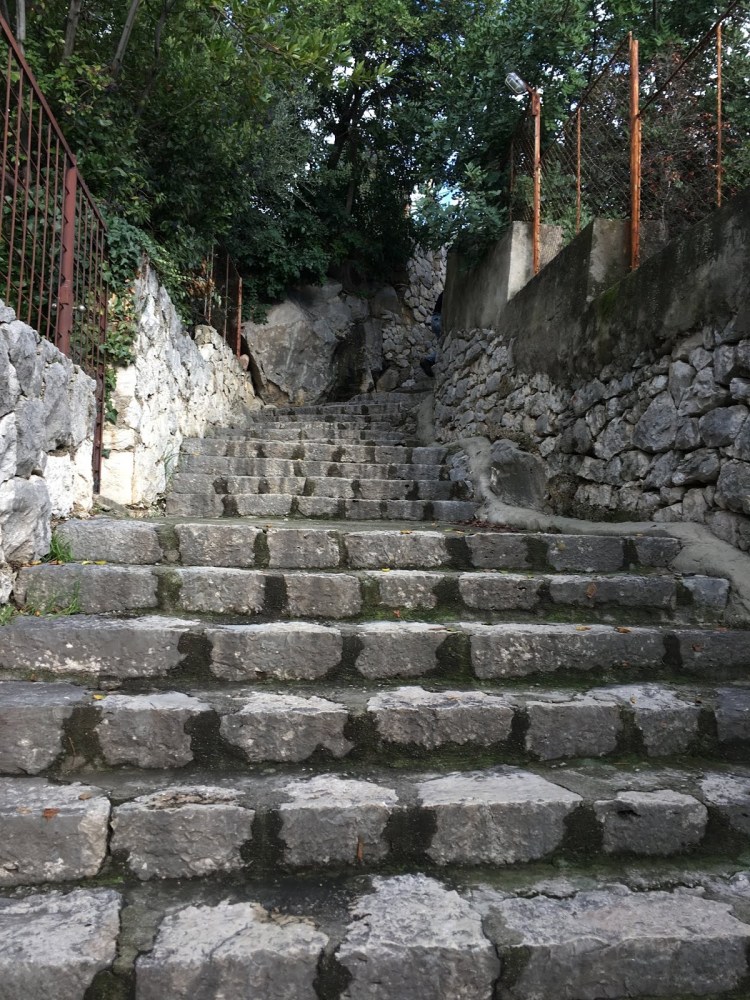
Stairs

After four months on the road, 119 in 22 different places, we are back to Saarbrücken with the granddaughter for the the holidays as we figure out the next phase.

This week’s photo of topless old man looking out window contemplating his life…

“first one to the office Christmas party”

.

Pula, Treiste and Rijeka, the Istrian Trilogy: Part 2

Rijeka

* see part 1
Rijeka, the last Istrian Peninsula trilogy stop, is yet another Croatian port-town with Roman ruins, Venetian influences, daily Farmer’s Market and old city charm.  But, for some reason, to us, Rijeka just felt right.
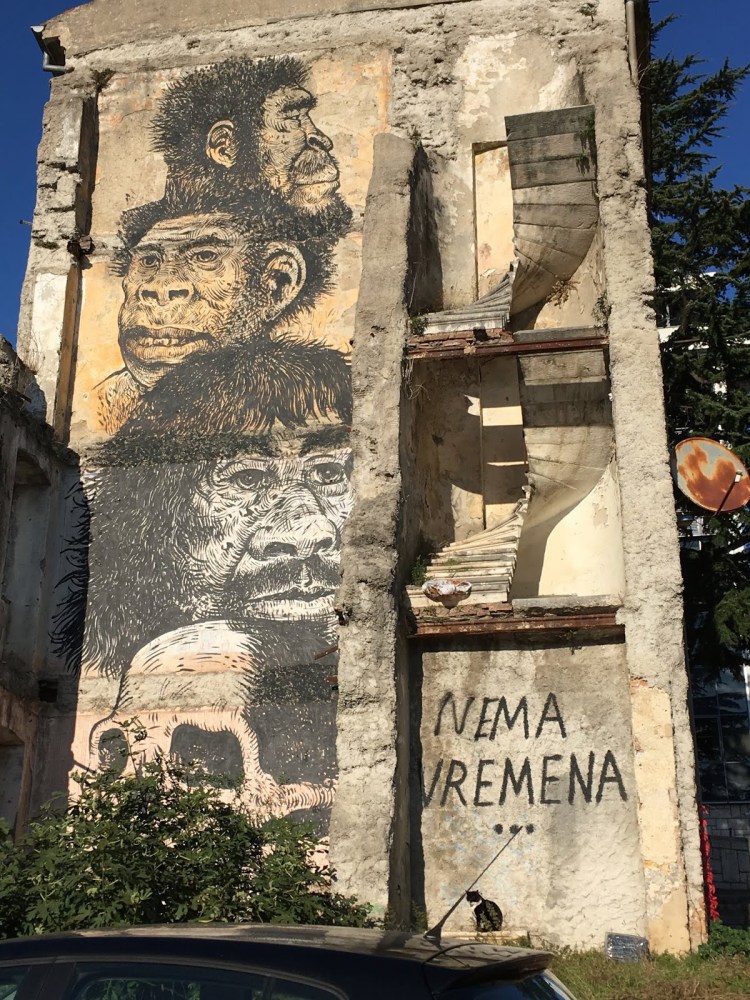
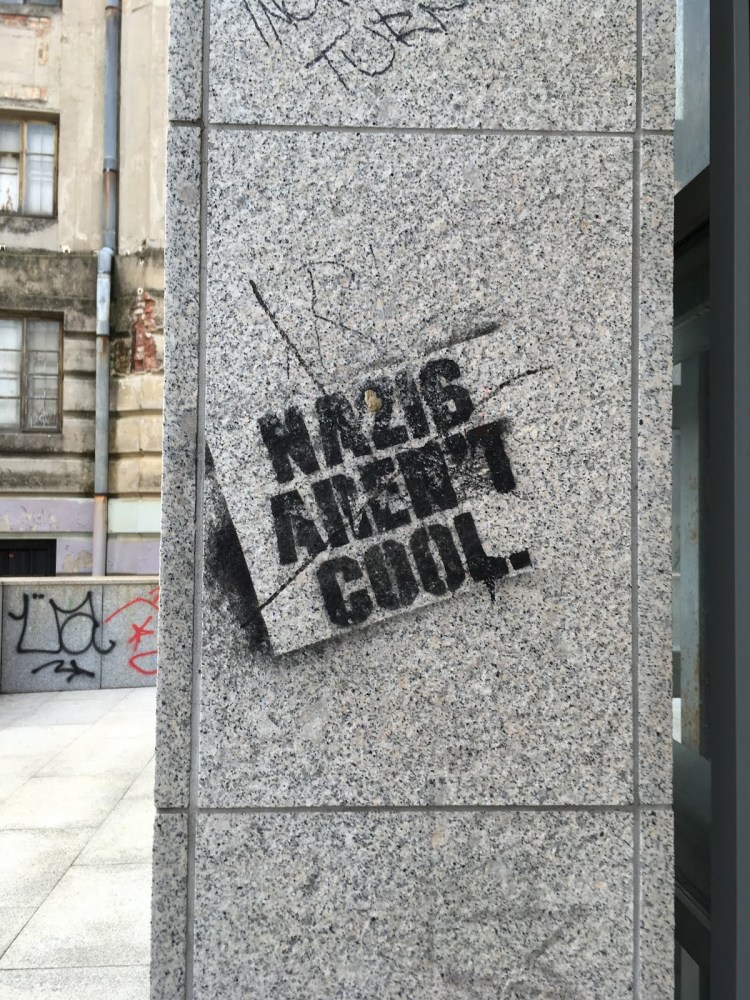
There were dilapidated buildings, neglected buildings and graffiti. 


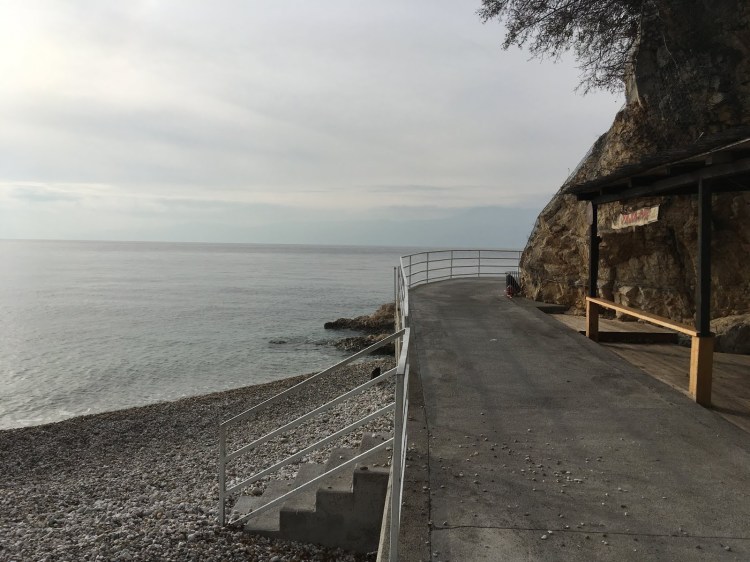
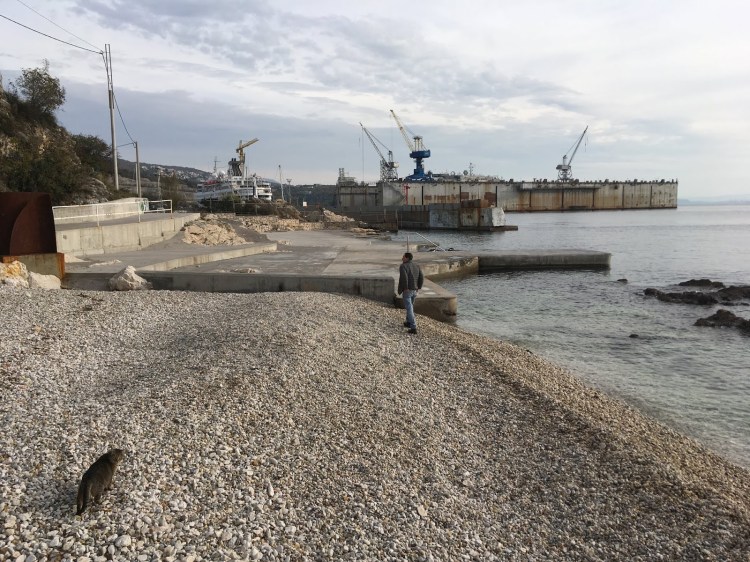
Beaches were both industrial and beautiful 


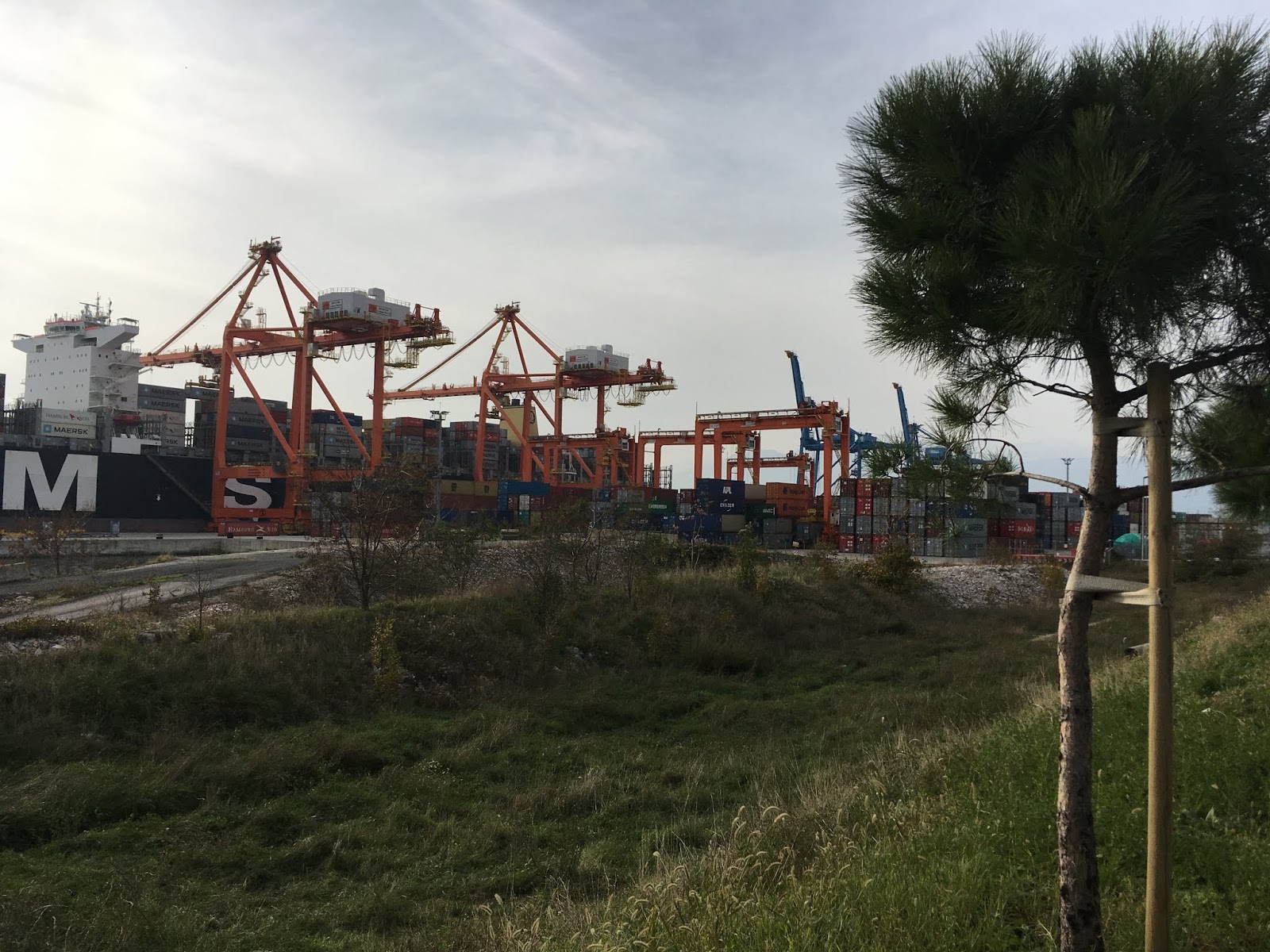
plus plenty of  cranes, the national bird of Croatia.

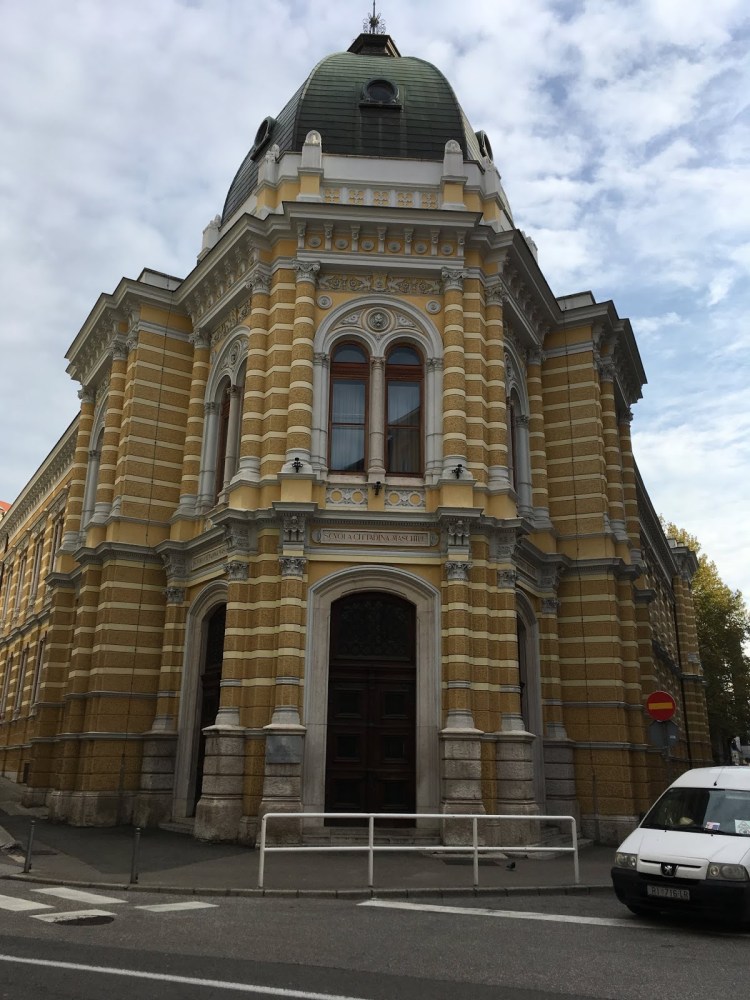
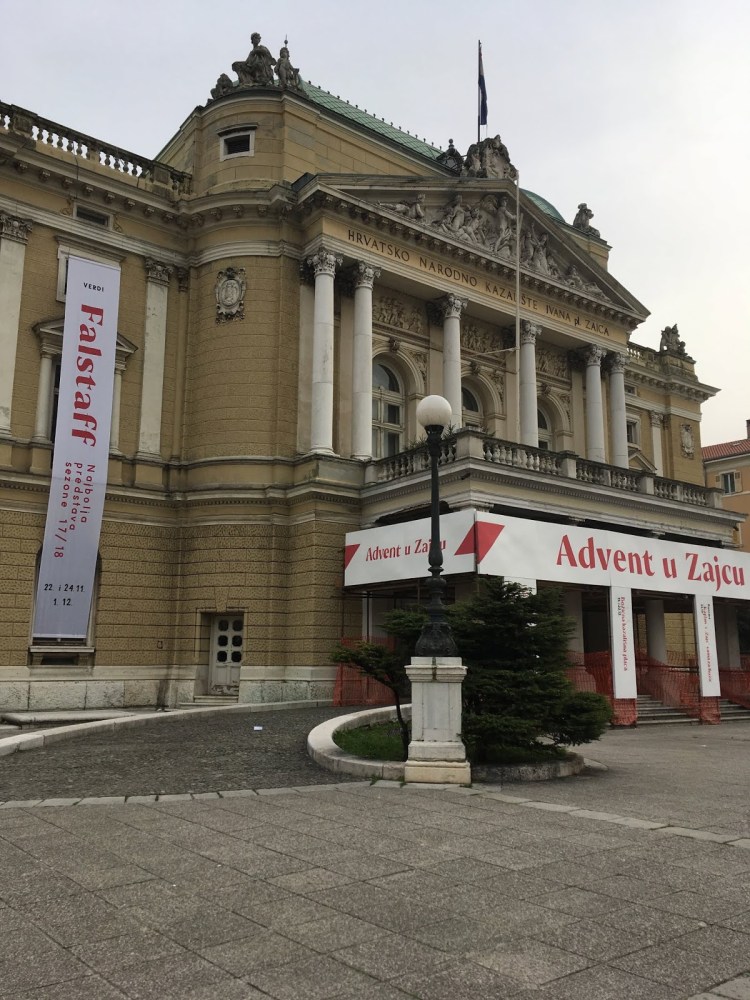
Buildings were beautiful 

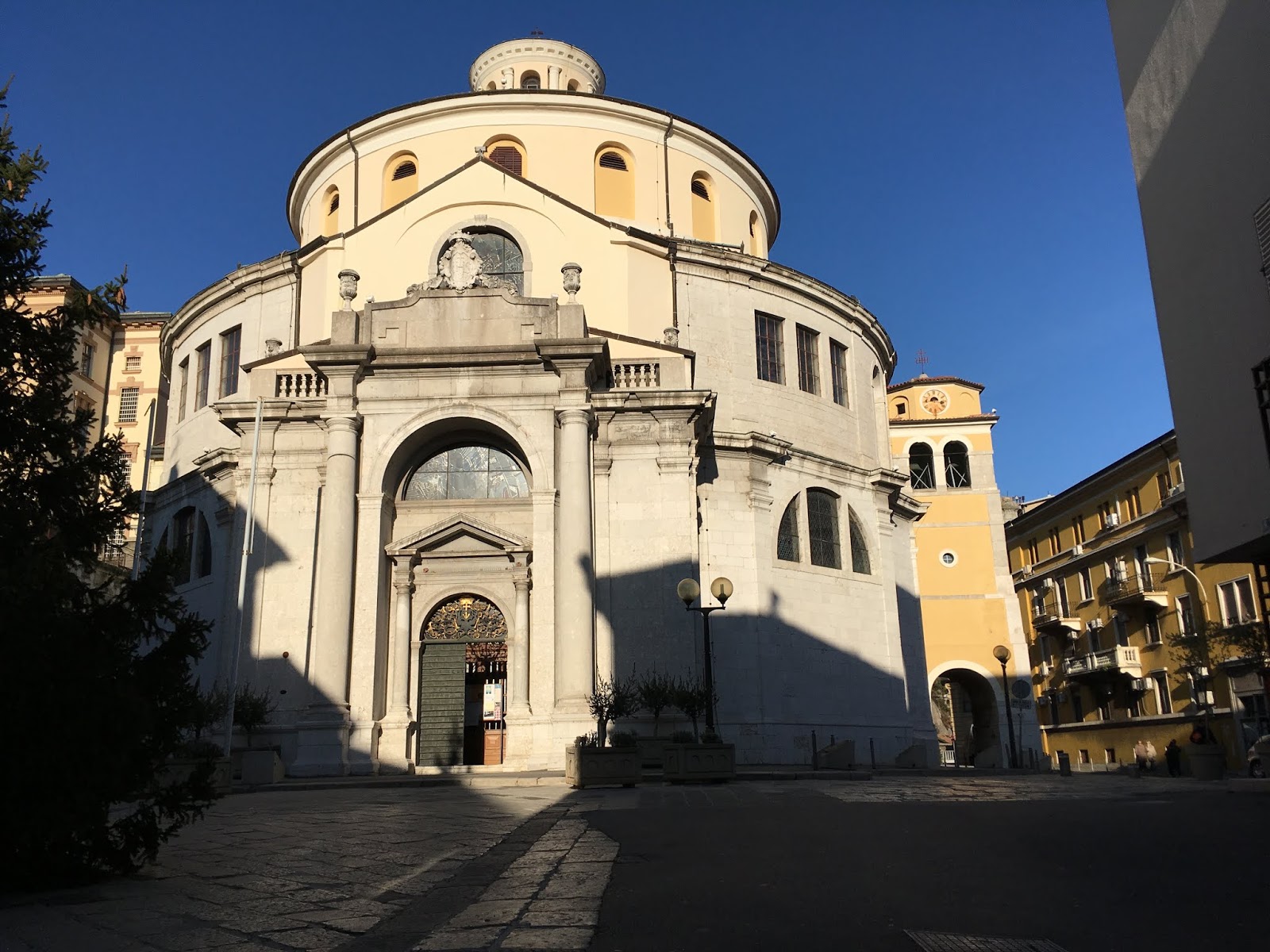
Churches inspiring 
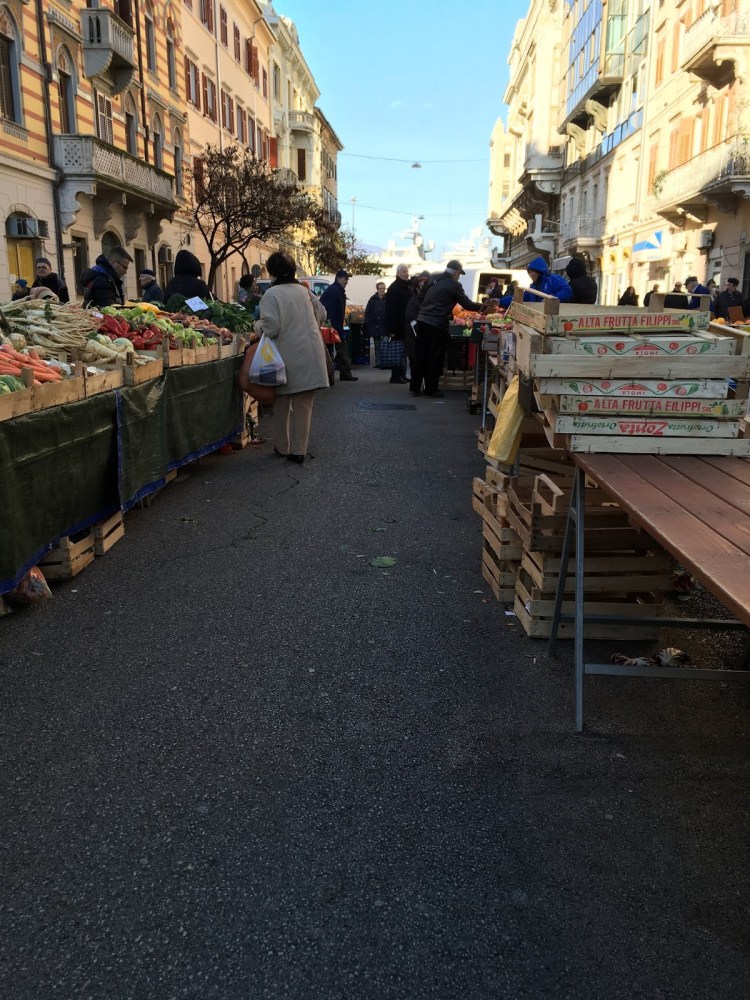
There were massive daily Farmer’s Market;
plus immaculate-limestone paved pedestrian shopping area (Korzo) with nice street art;
 
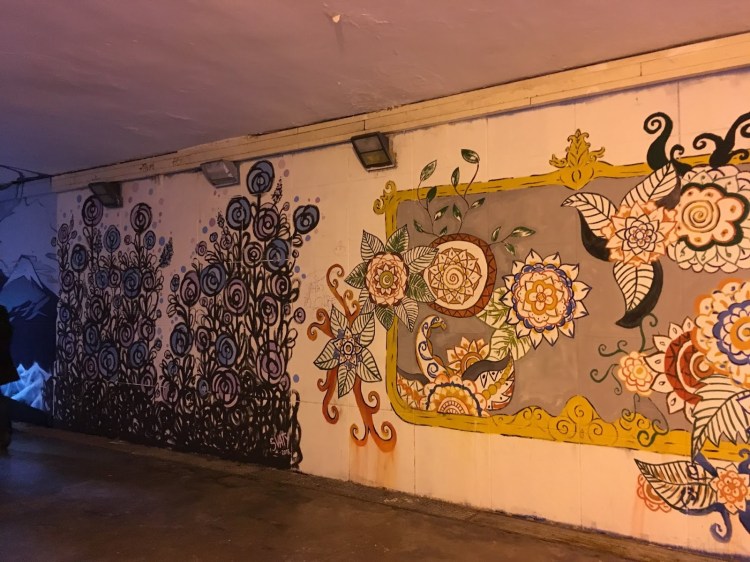
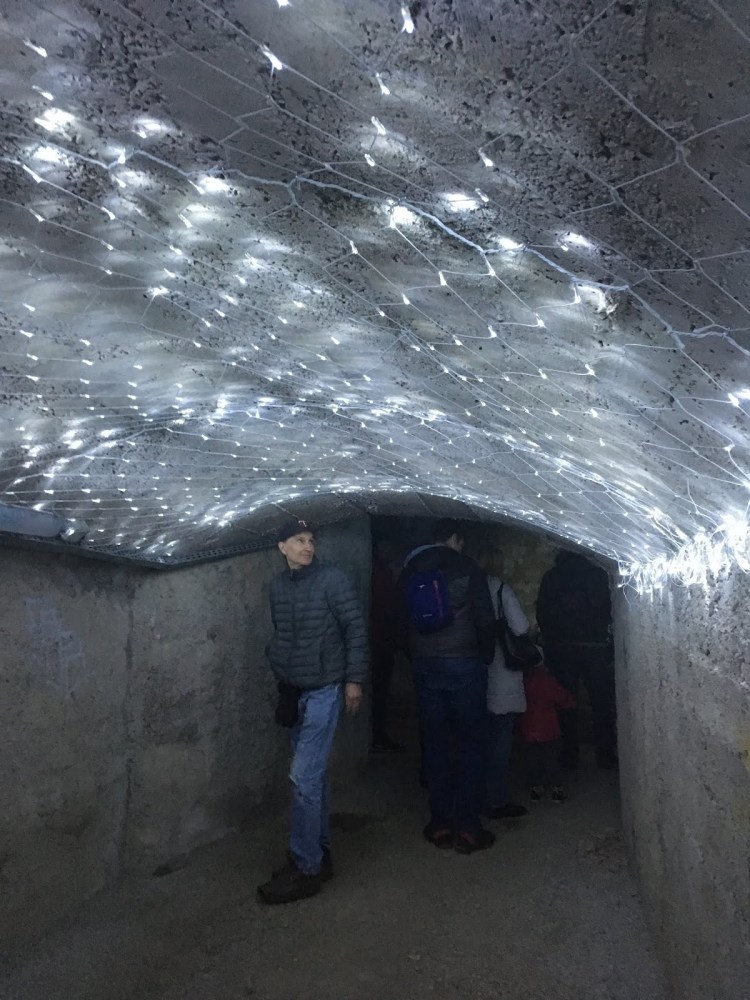
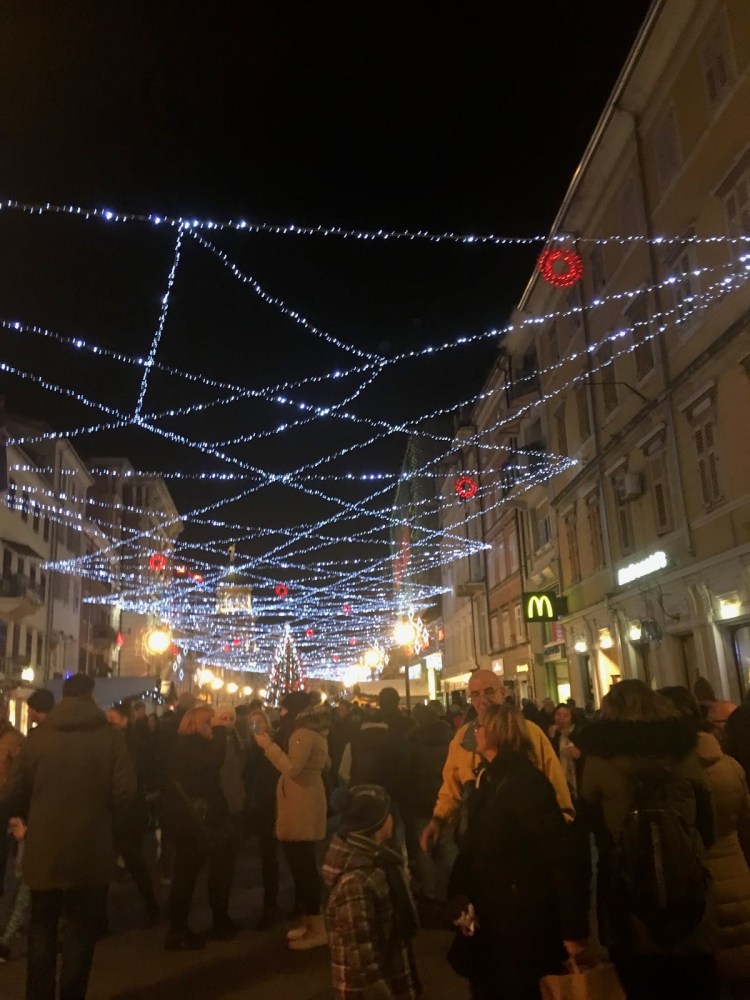
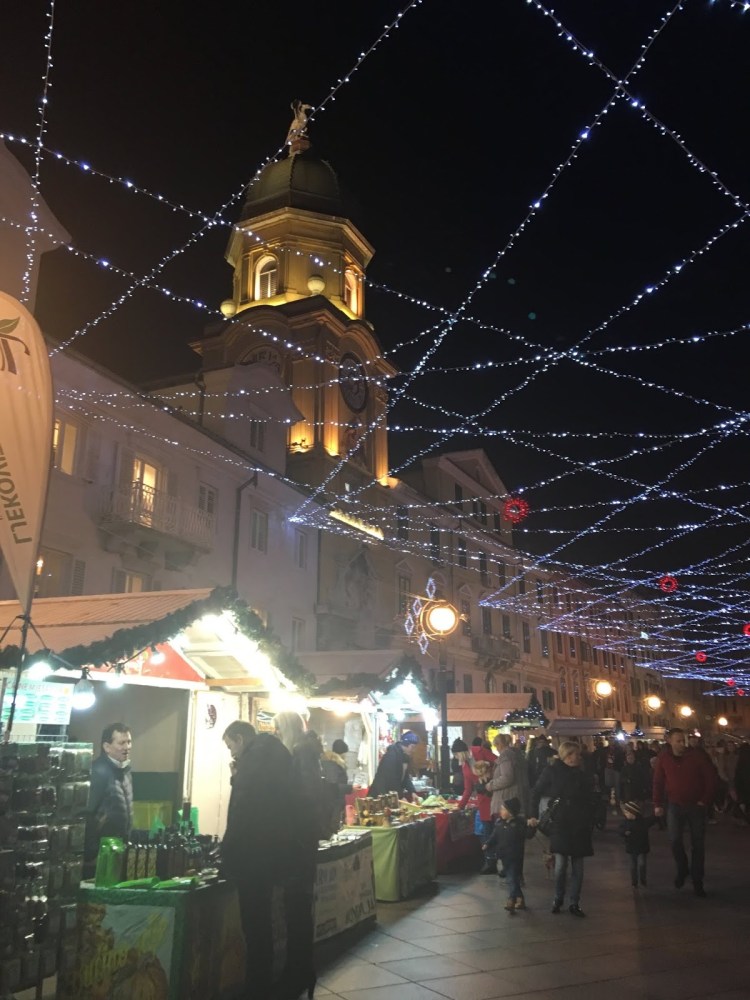
We were probably influenced by the exuberant opening of the Advent Market.  The highlight was the Rijeka  tunnel decorated for Christmas.  Originally built in 1939  by the Italian military as a bomb shelter. Solid rock, 400 meters in length running from St Vitus Church to the primary school in the old town.  After being closed for 75 years it was opened last year as a tourist attraction.  We went on Friday to check it out, they said come back on Saturday. On Saturday, they said come back Sunday night.  It was worth the wait. Rainbow and snowflake fairy lights, laughing children, pop up bars.  In a country that has been constantly recreated through repeated strife and turmoil, on the eve of Advent, it seemed fitting to have a bomb shelter reborn full of joy. It was great. 


We exited the tunnel onto the Korzo to find (what felt like) the whole city enjoying the Christmas Market and dancing to La Bamba and the Macarena.


A happy ending, close the book on a tale of three cities. 

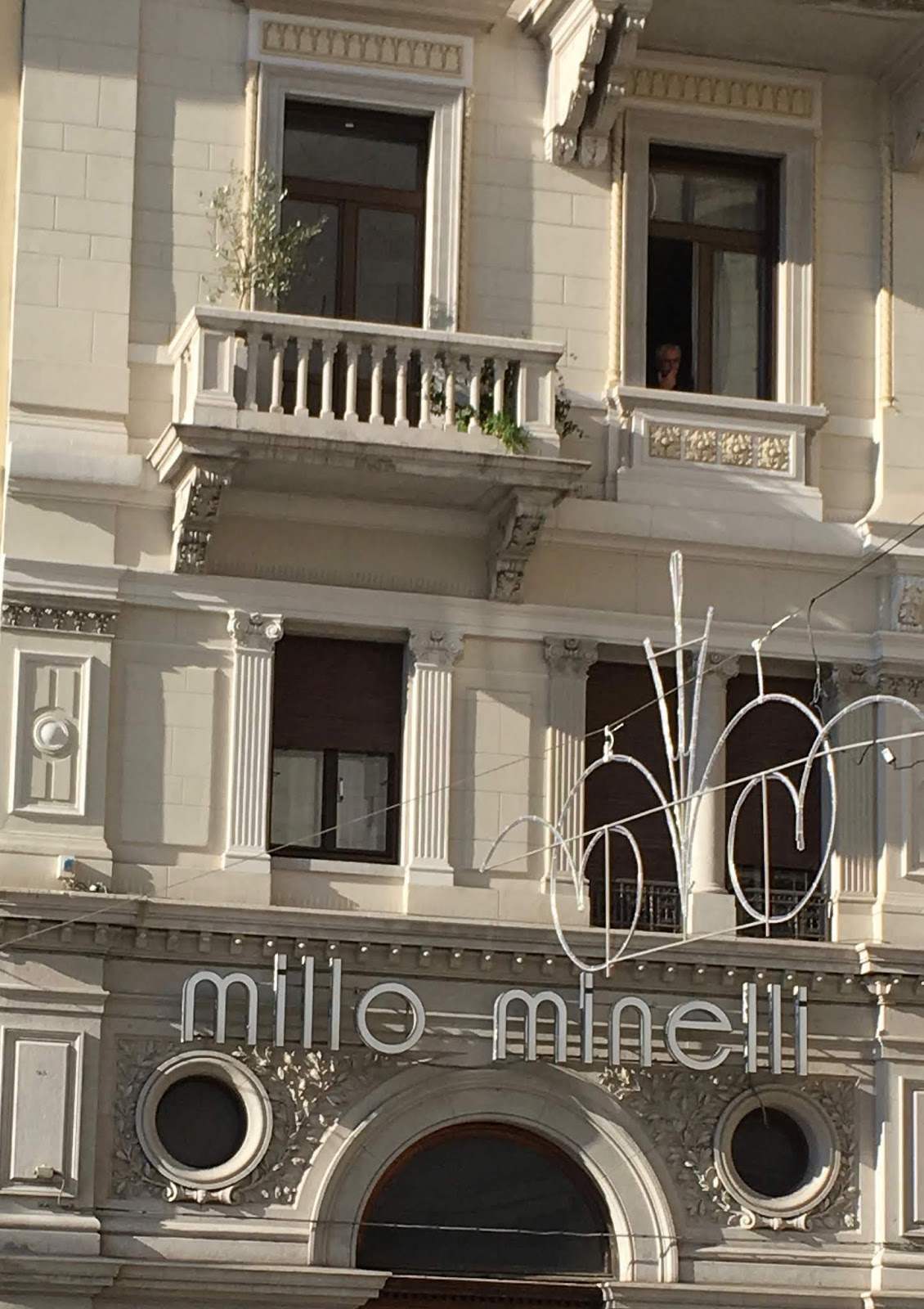
This week’s photo of topless old man looking out window contemplating his life \”woulda, coulda, shoulda”  the topless old man Trilogy.


Obligatory Food Blog

November 30, 2018

So, time to talk turkey, our obligatory food post.
We know you have all been waiting for the food commentary especially during the food lull between Thanksgiving, Hanukah and Christmas. We can start by showing our ex-pat Thanksgiving meal from our kitchen in Pula.

As we rolled into this Italian influenced town in Northern Croatia, we thought this would be the foodie portion of the trip, and it has been, we talk about food far more then usual. We even talked about going out to eat, reading more then one curbside menu and pointing out restaurants as we passed. We focused on pizza and seafood as options. We had neither, nor did we really go out, but you can quiz us on every menu in Pula.

For background, eating can be challenging for us. Our limitations are-gluten free (P for 15 years, which needs to be added so she does not feel trendy), vegetarian (both), no black or garbanzo beans (N).

What have been the highlights? Having a home cooked meal at a friend’s house in London and our first few days in Saarbrücken-

Considering our food choices at an all potato restaurant (Kerfuffle) in Saarbrucken
Decent Mexican food in Saarbrücken and Ghent, Belgium

Conversely, the lowlights have been going out to eat including the fish and chips failhttps://chosenfugue.wordpress.com/2018/10/27/scarborough-fair-moor-or-less/ the horrific Amsterdam interpretation of Mexican food and our attempt at getting British street food in Bath; a jacket potato for Patricia which was great and a Cornish pasty (cheese and spinach) for Nick which just tasted like a jacket. Surprisingly the other lowlight was not going out to eat. In Eastbourne UK on our first night, combining an unfortunate bag of gluten free noodles mixed with green (pea?) soup and then the next night mixing the other half of the noodle bag as an anchovy casserole which was even worse than it sounds (we are still tasting it).

Our most awkward meal moment was asking our very generous host at the Amsterdam bed and breakfast to eliminate the the tall stack of bread that she brought to us each morning along with jam, cheese, yogurt and fruit. She struggled to do so, each day treating the bread stack as a Jenga tower, maybe removing one slice without the height ever changing.

Our travels have been primarily through the aisles of supermarkets. We have gone to Rewe, Fredl, Aldi, Lidl, Netto, BioNature Mart, Delhaize, Albert Cuyp, Albert Heijin Bio and Bio, Spar, Marks and Spencer, Tesco, Morrison, Sainsbury, Spar, Tommy, Konzum, Waitrose, Istarski and many Farmer’s markets. Personal favorites were Albert Cuyp in Amsterdam and Waitrose in UK, Rewe in Germany (Nick), Aldi in Germany (Patricia) and every Spar in a variety of countries.

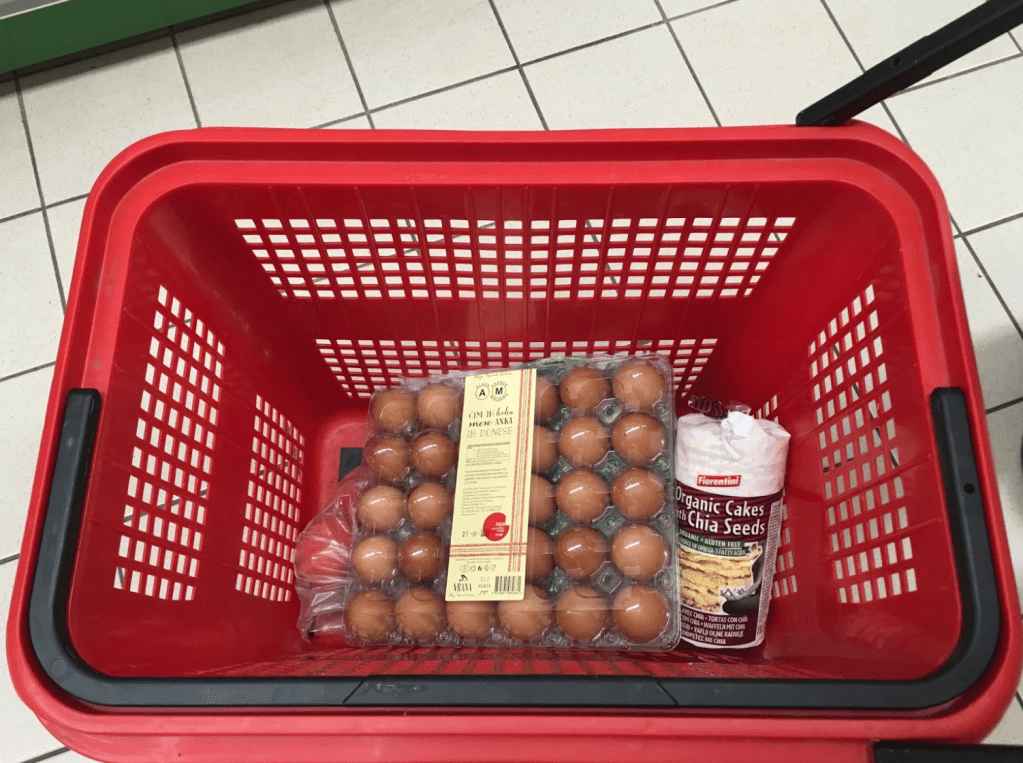
While there are differences between countries, there are some commonalities. Food staples are far less expensive than the US. In terms of our food essentials; eggs are very cheap $1-$2 for 10-12 eggs, milk $1 or less per liter, chocolate is dirt cheap and generally high quality especially in Amsterdam. One exception are nuts (one of our primary foods) which are more expensive than Trader Joe’s. There is also just less of processed foods. The packaged ready-to-eat food were usually decent as in the “1 main and 2 sides” of Marks and Spencer or Waitrose, like what you see in the prepared section at Whole Foods. Our prepared food phase in England consisted of buying fresh soup, pot pie, or vegetables.

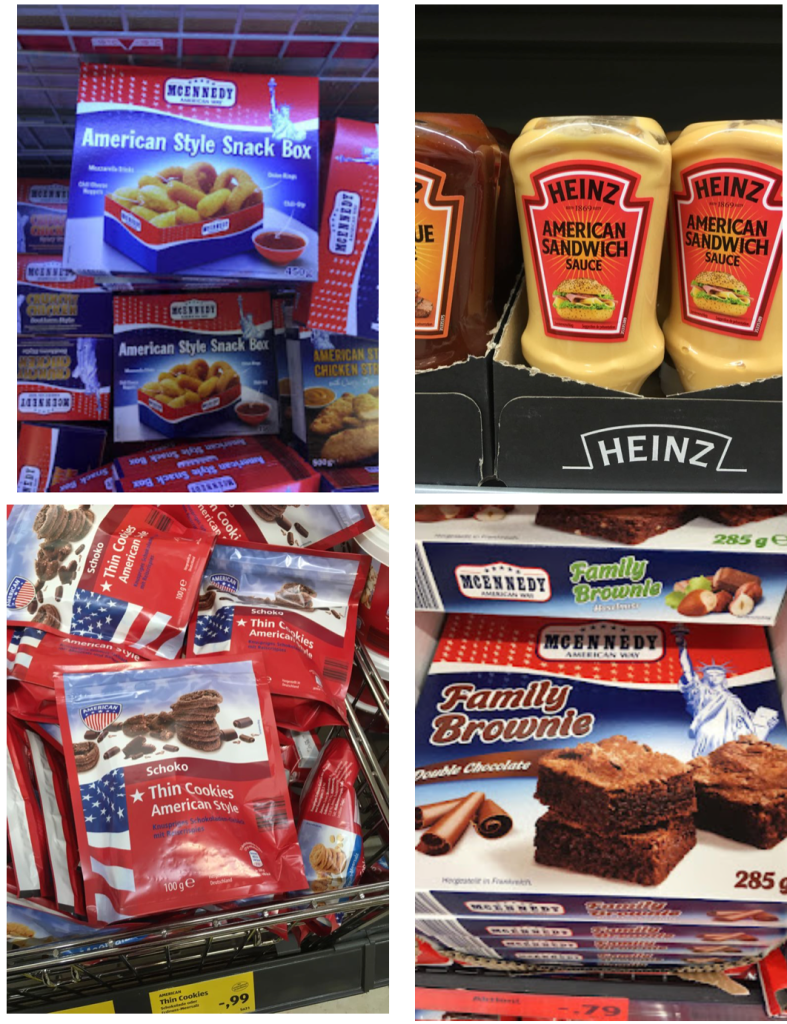
Whenever there was “American” food, it was disgusting (mostly seen in Germany).

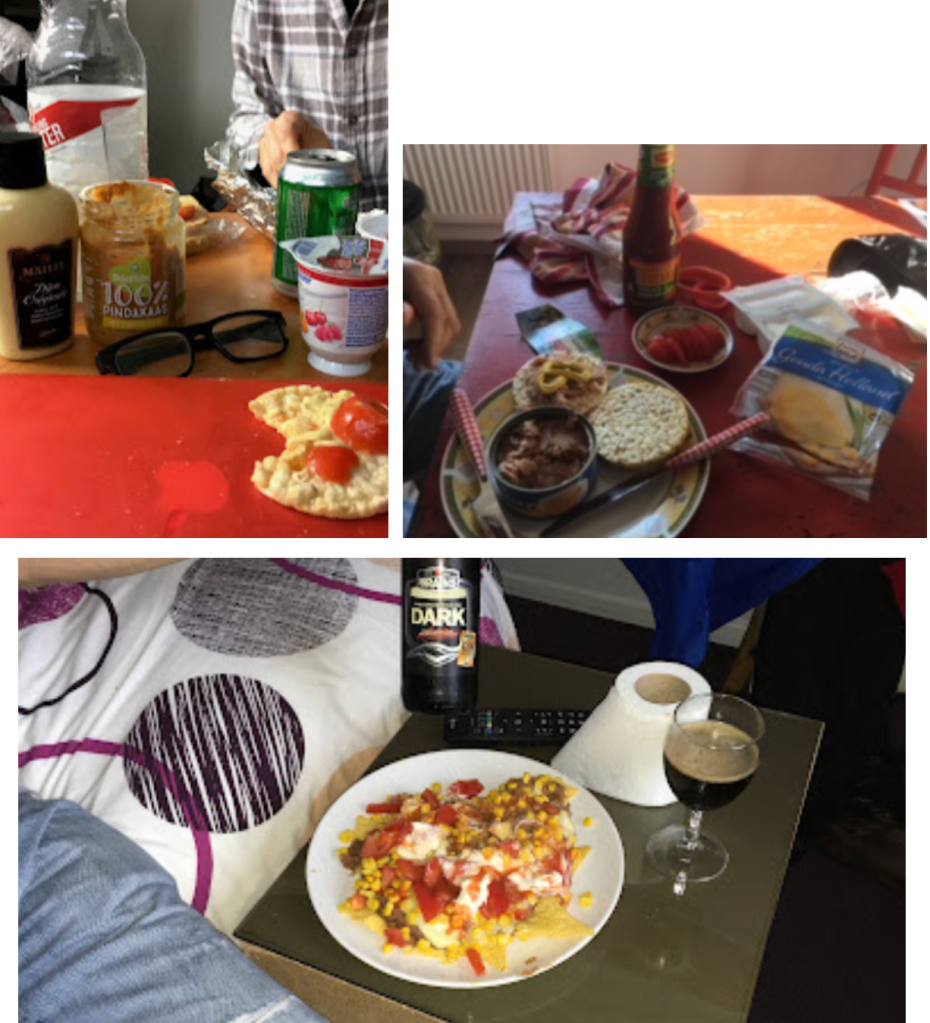
Of course there were differences in the markets in Europe and the US.There is no canned soup in Croatia, No one sells chocolate chips, rare to see salad dressing (which we don’t use and don’t miss), except in the UK, there are no 100% corn tortillas and “Mexican” is interpreted as Tex-Mex (usually) which is very sweet and spicy ketchup-like flavor, refried beans are a rare find, we substituted with whole kidney beans, Renal-Mex.

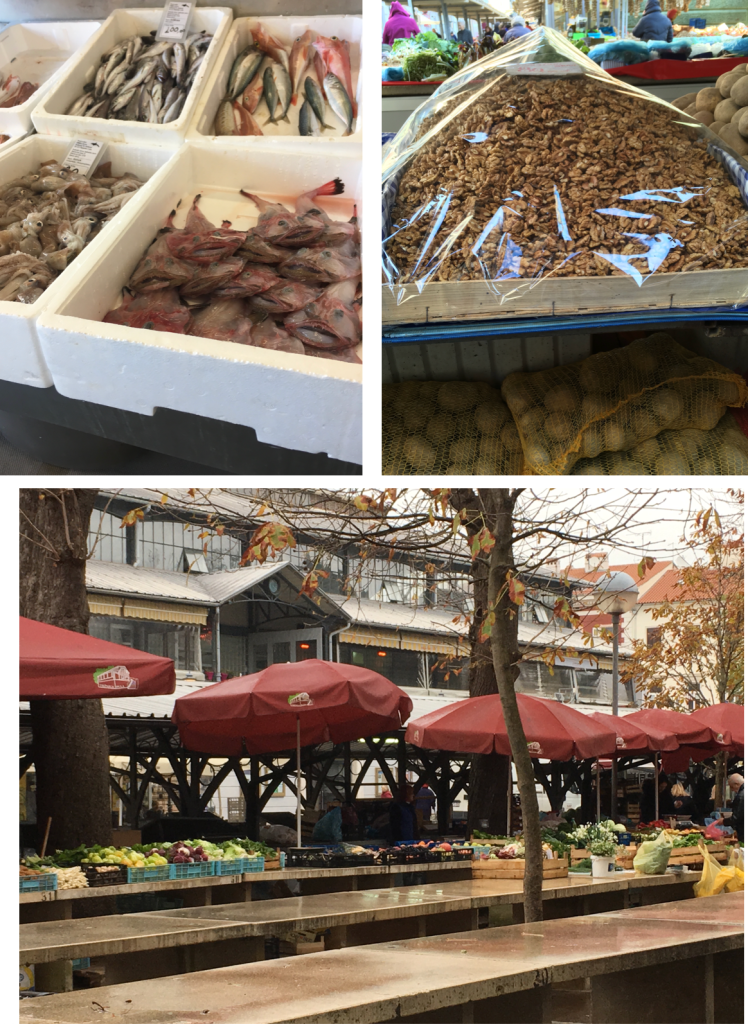
Farmer’s Markets are really Farmer’s Markets, they are daily and carry local, seasonal produce (and fish) at prices usually less expensive then the markets.

Croatia

We do make an effort to try the local beer, wine and food. In Croatia when buying what we thought was spinach, we were introduced to Mangel, which are the leaves of a type of beet root. It took us 4 days to go through our kilo. At the Farmer’s market we also have bought a variety of jams; Fig, Apricot, Berry, Pomegranate, Cherry-all have been great. We have tried various forms of cheese: Trapist Sir, Tilsit, Emmanthaler, ButterKasse, Gouda (old and young) and Gauda, Basa, goat, Feta and others that we have no idea what the name was.

Strasbourg

Since most places we stay at have, at minimum, a microwave and most have a full kitchen, we usually make our meals. Nick lives on eggs (next time we’re bringing our pet chickens). As an example, in Dubrovnik-66 in two weeks (with minimal help from Patricia). His other essential is his home-made “GORP” without the Granola or the Oats and more of a mix of cashews, raisins, almonds and peanuts, so “CRAP”. Sometimes walnuts and chocolates are added, to become, “WC CRAP”.

Our other go-to foods are carrots (which tasted better in Europe), apples, citrus fruits (amazing in Croatia), yogurt and berries, GF/corn pasta with whatever vegetables we get from the Farmer’s Market which sometimes works and sometimes not. We did make polenta once but it lasted for about 4 days overstaying it’s welcome (on day 1). But our staple is “anything you can fit on a corn thin” usually with either mustard, cheese and tomato or tuna. If we are partying then PB&J (100% peanut butter can be hard to find).

and yes, after eating, we often feel rather mangled

Surprisingly, after 15 weeks on the road and averaging over 6 miles a day walking we’ve each only lost about 10% of our body mass. Time to go read more menus.

unlikely

Food blog rehashed on May 1 2023 https://chosenfugue.wordpress.com/2023/05/01/obligatory-food-blog-rehashed/

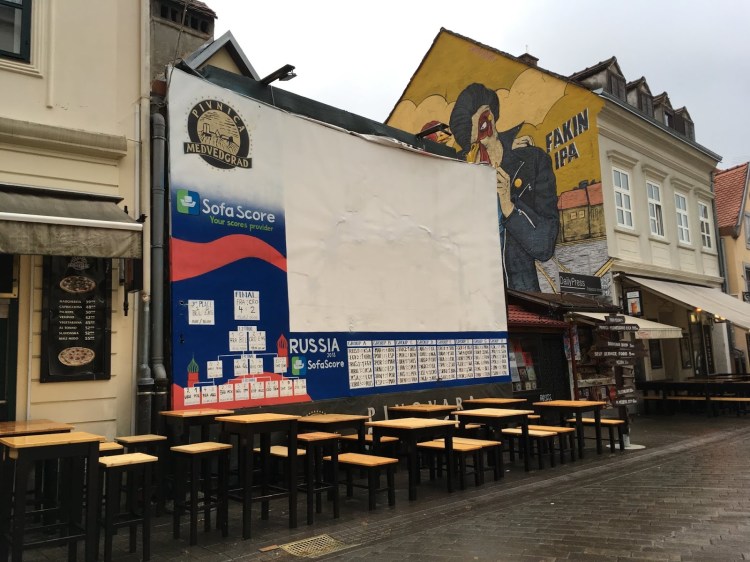
Bloc party in Zagreb

Another trip over the Alps, this time not by Easy Jet or elephant but by European Greyhound, the Flixbus, and this time not over the true Alps but the “Dinaric Alps” or also commonly called Dinarides (it’s highest peak is 8839 ft in Albania) the mountain range that runs north-south through the Balkans.

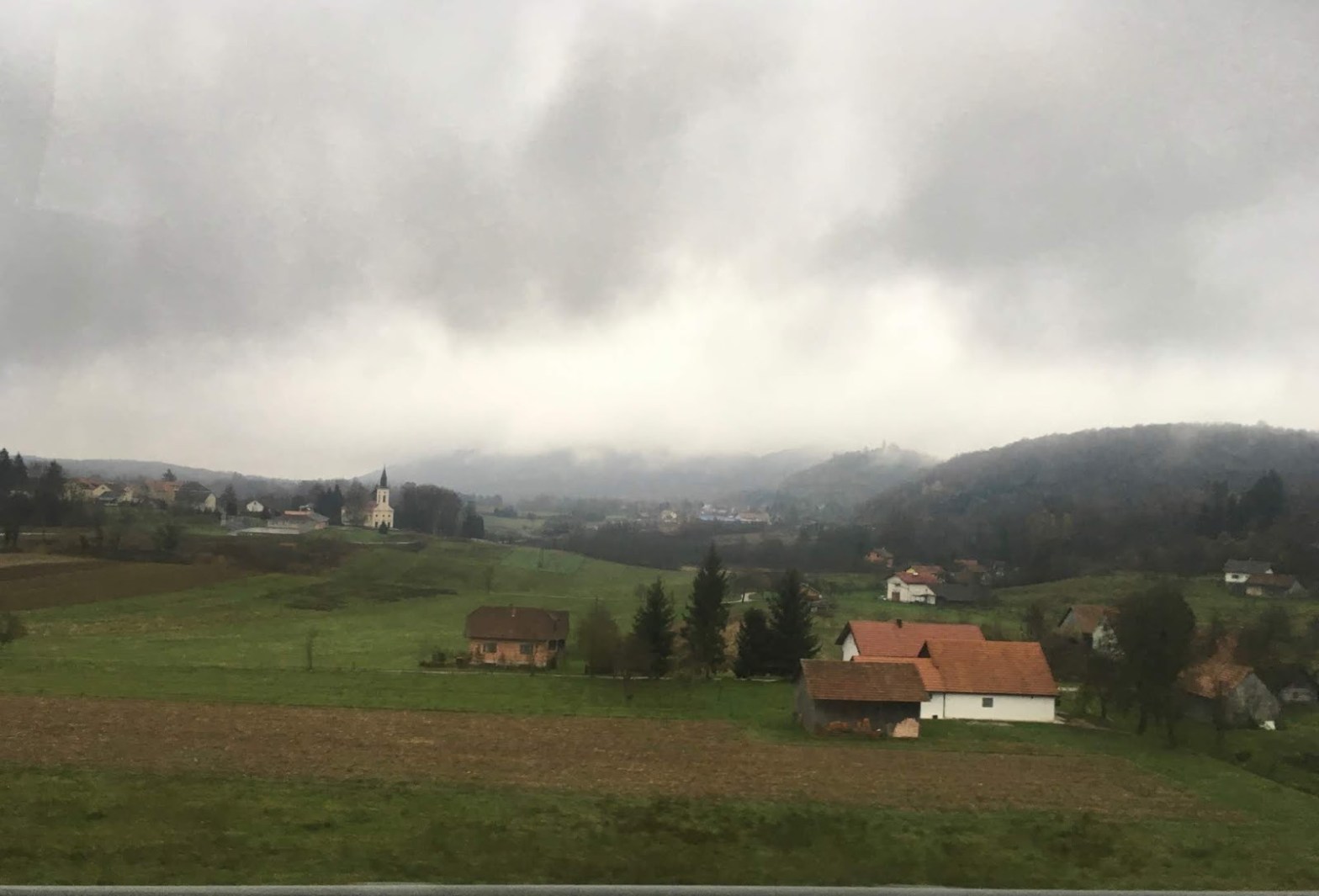
We arrived in Zagreb after a five hour bus trip from Split. Traveling  from rock, scrub and olive trees to lush valleys surrounded by pine, while listening to a group of Croatian teens play a dirty version “Never, have I ever…” in a combination of Croatian and English. They read the questions in English, but unfortunately answered each other in Croatian, with lots of giggling.The day was dreary, cold and gray as we entered equally gray and bleak looking Zagreb, which actually felt rather refreshing after the past few weeks of the stunning views of the ancient Adriatic coast.  Our rather drab first impression started to fall away as we were warmly welcomed by our very earnest apartment host, who texted us throughout our alpine journey to check on our arrival time so her son could pick us up from the bus station.

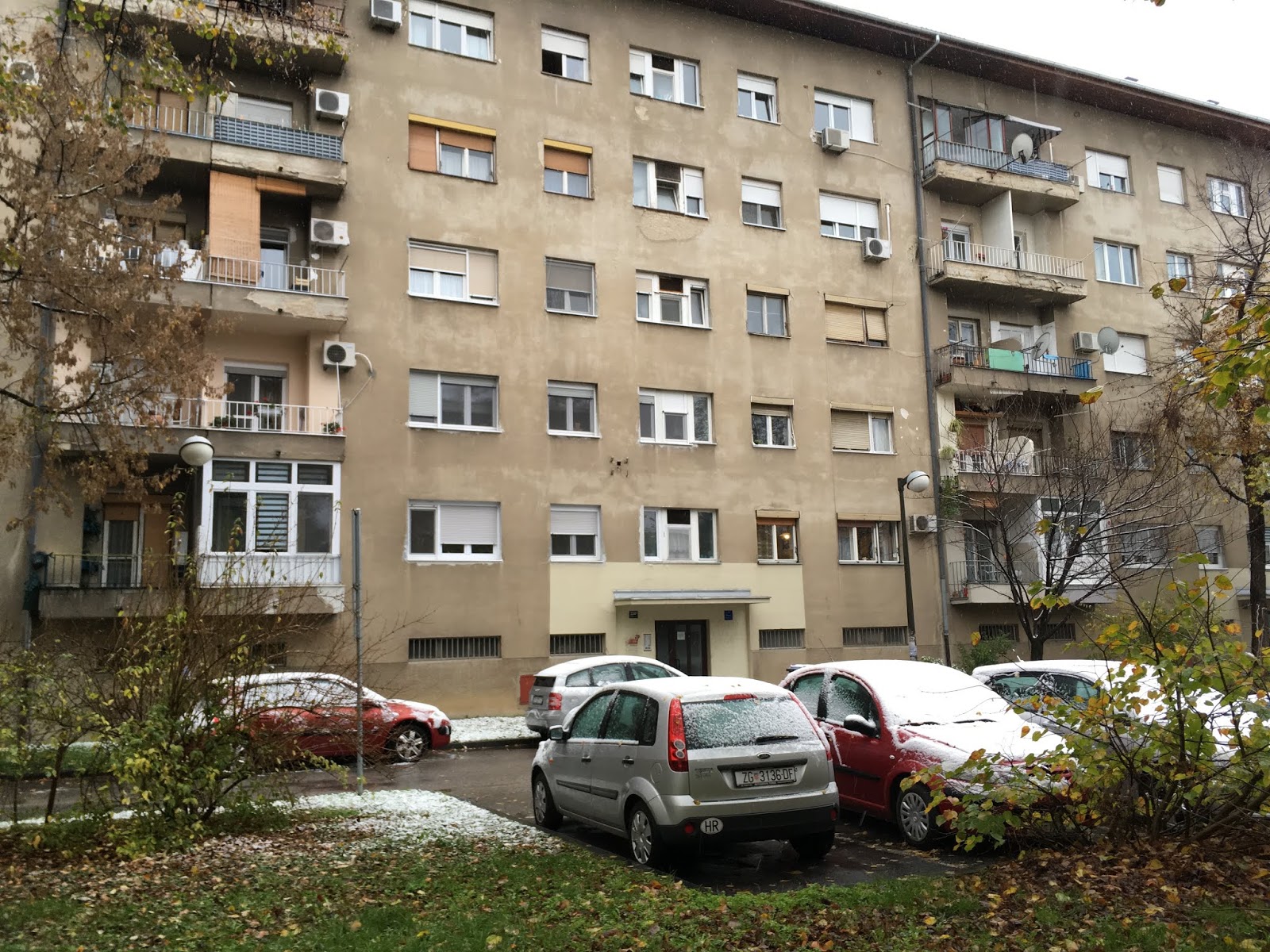
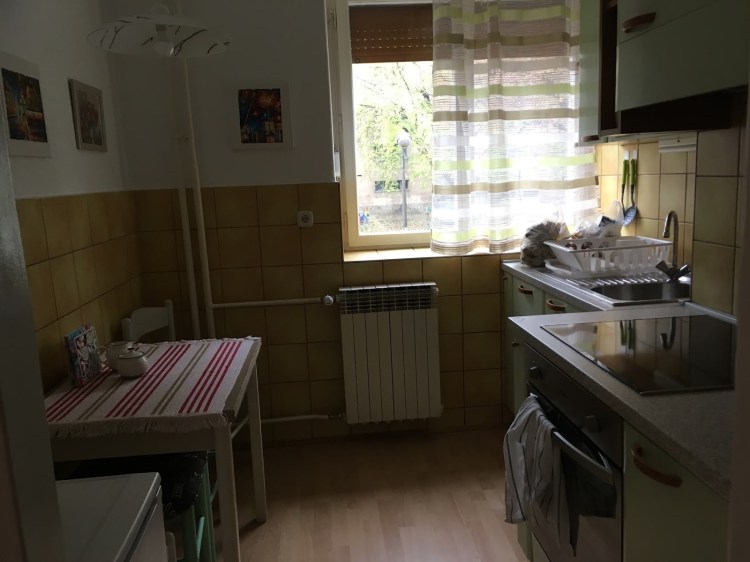
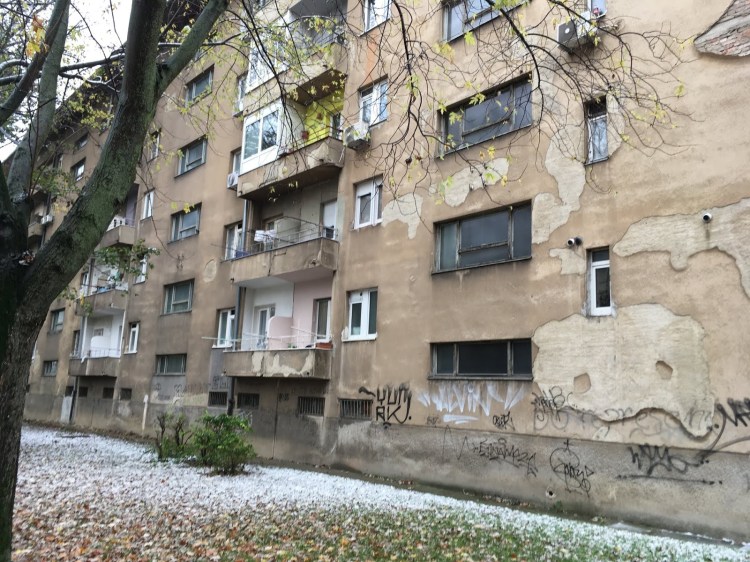
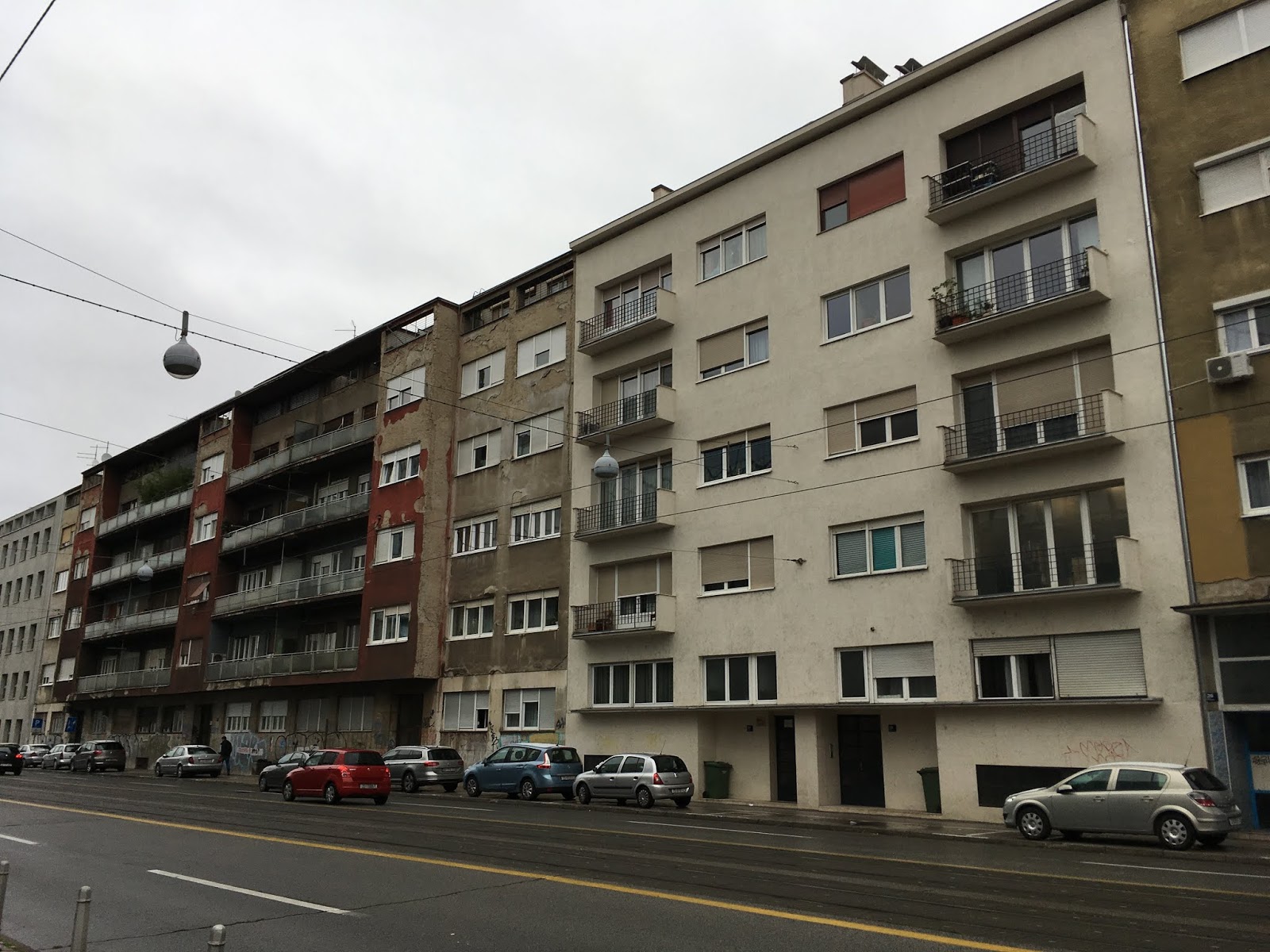
David met us and made a five minute walk a 3 minute walk to the car with a 1 minute drive to the apartment. We parked in front of a pockmarked concrete building in a massive housing block. All doubts about our housing choice were eliminated when we walked into a very homey apartment, probably the most pleasant we’ve stayed in.  They even left us a chocolate bar.

We immediately set out on our traditional first day scouting, walking along a very clean (consistent throughout Croatia) street. Vukovarska Street was lined by candles, which we  found out were there to commemorate the start of the Serbo-Croatian war on November 18, 1991 with the bombing of the city of Vukovar.

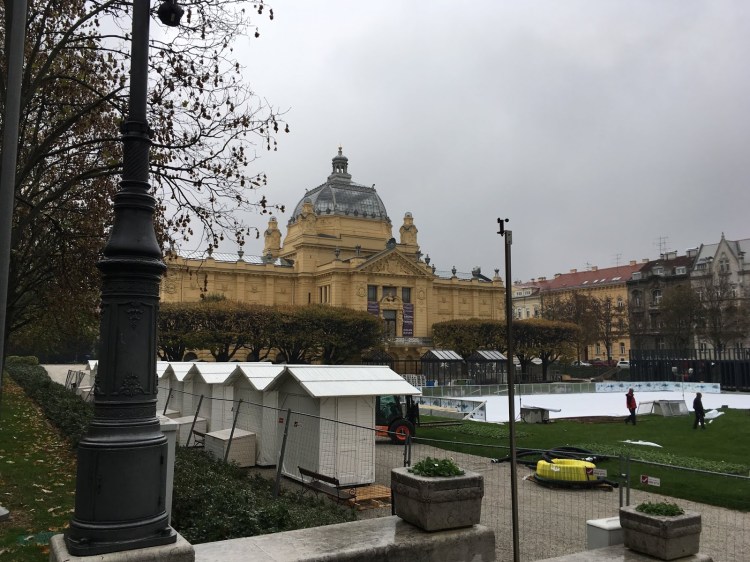
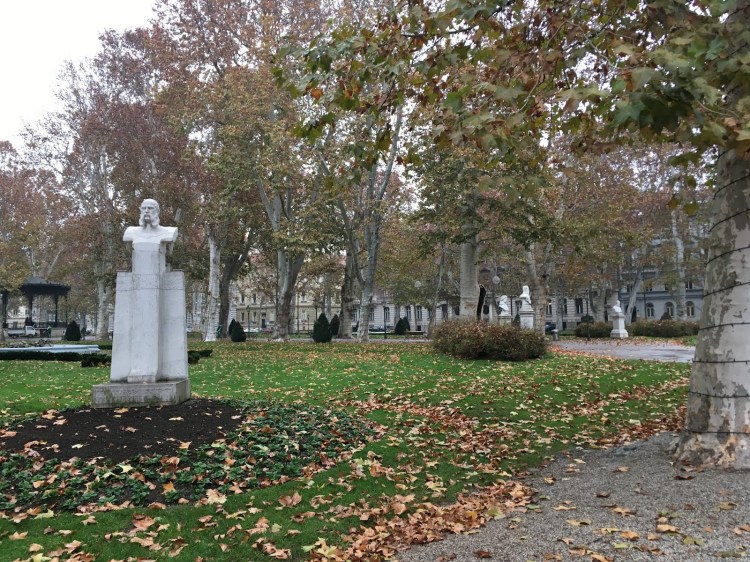
The walk was perfect! The boulevard flowed into an underground shopping street (below the train tracks) which opened up onto a classic, European grand square, complete with massive statues, beautiful buildings and the beginnings of a Christmas market-with a holiday skating rink/ track. This was the first of three Christmas markets we saw under construction as we wandered through Zagreb.

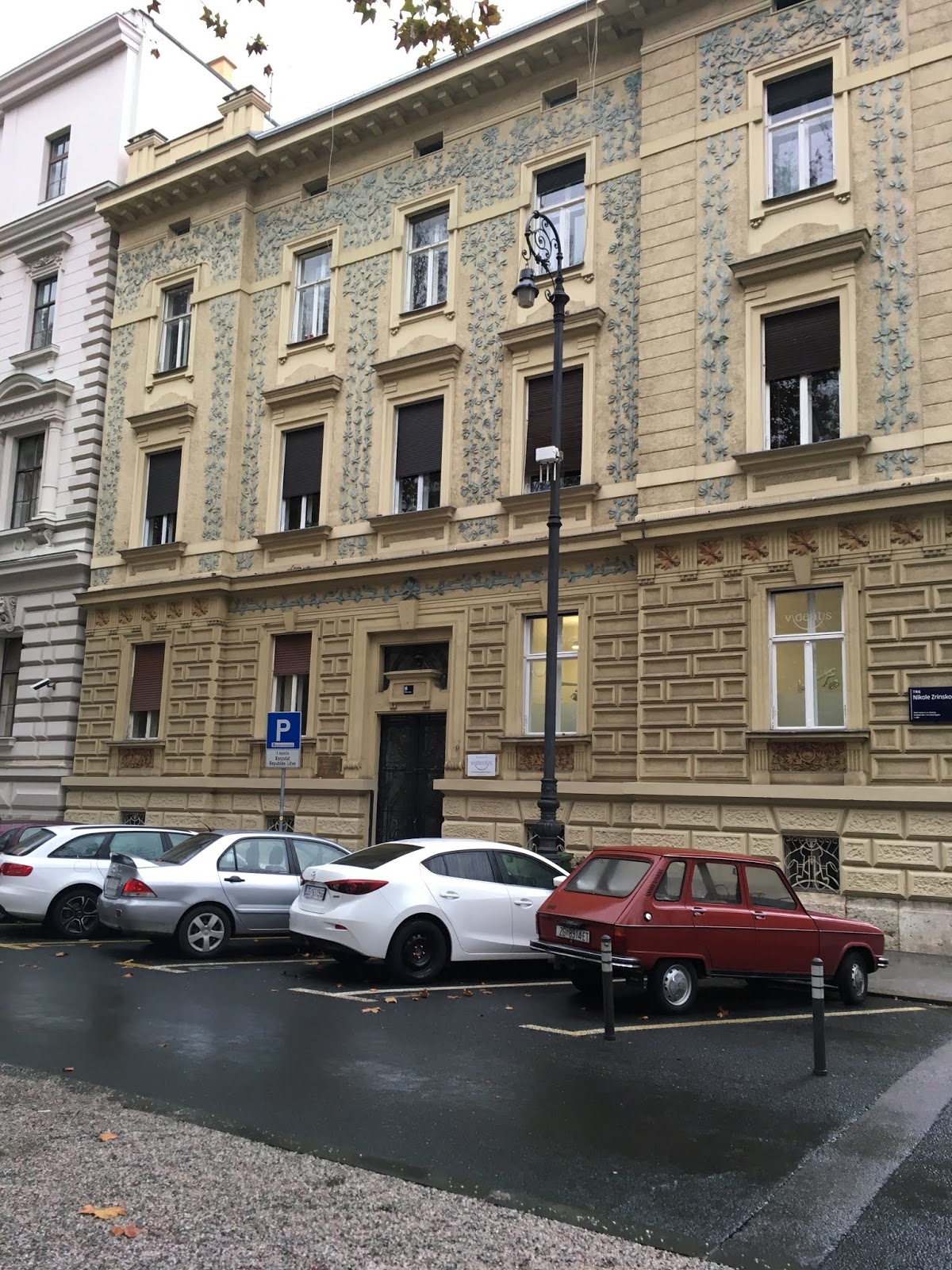
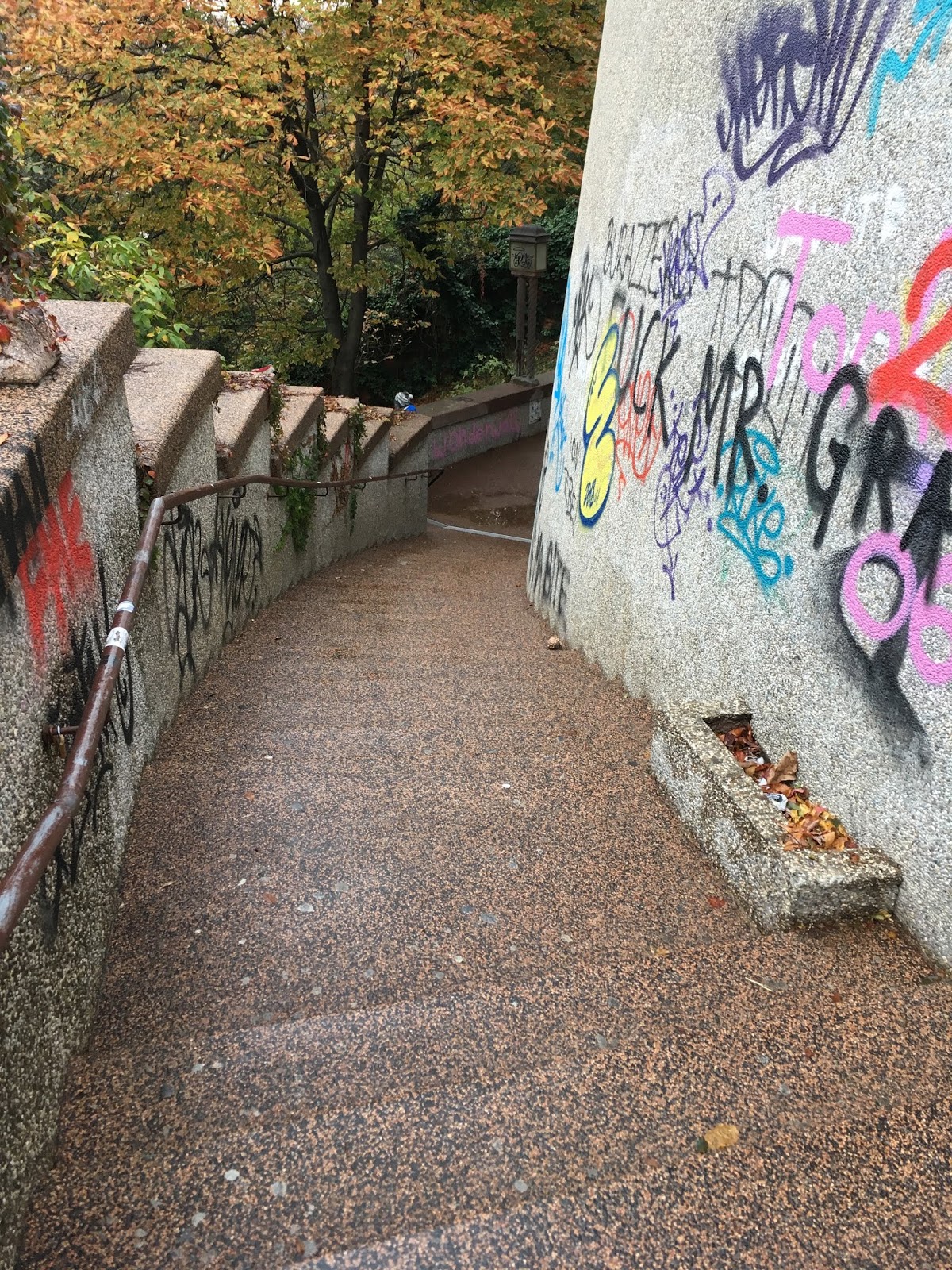
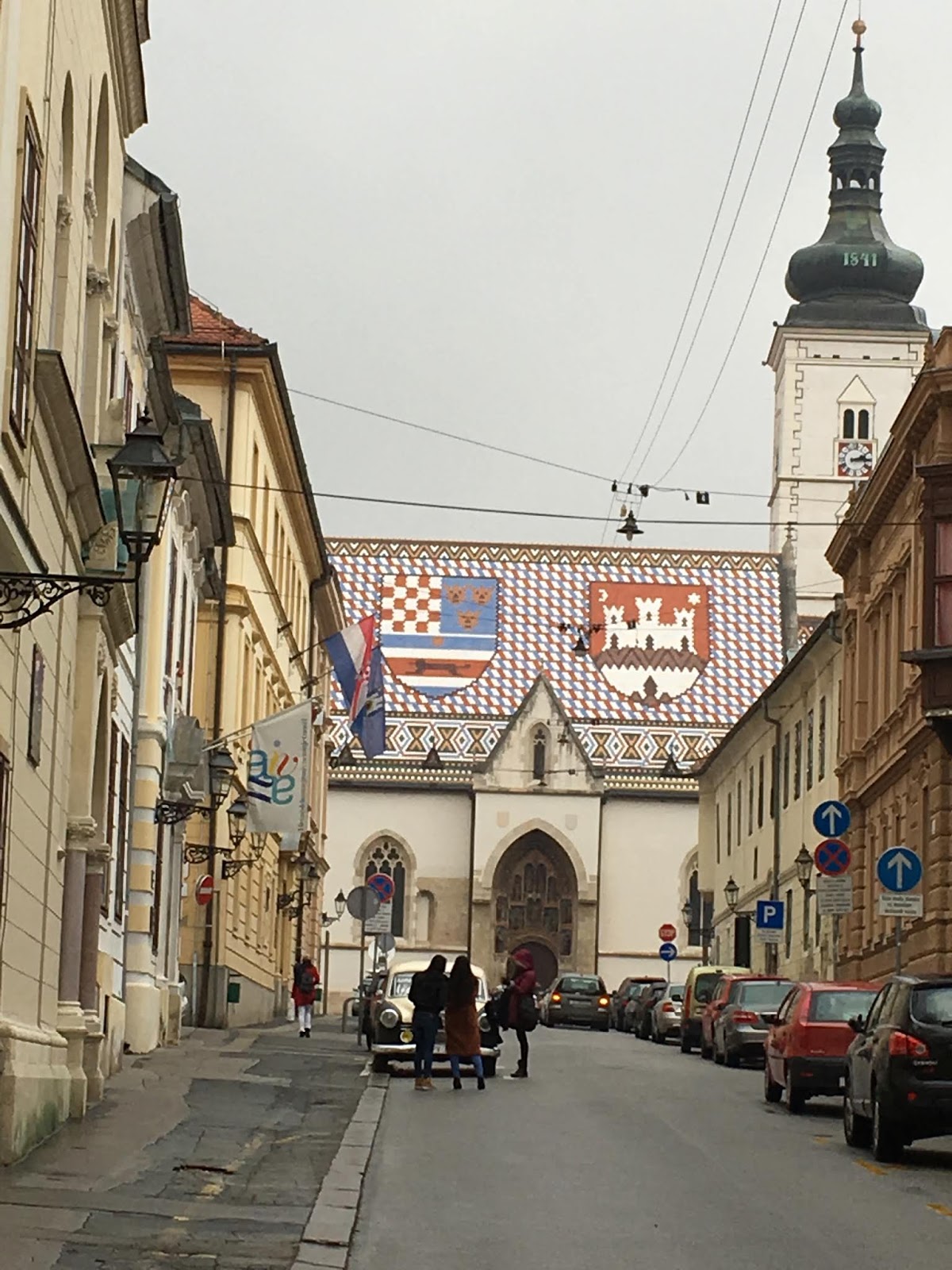
Zagreb is Croatia’s Capitol and largest city. Dubrovnik and Split felt and looked like coastal California if the California missions were limestone castles. Zagreb put us back into the Gestalt of Europe with grand buildings reflecting the changing roster of rulers; Roman, Ottoman, Napoleon, Austro-Hungarian and Communist Tito.  The ubiquitous graffiti being the contribution of the new generation.   Unlike the coastal cities clinging to the cliffs, Zagreb is in a spacious valley with plenty of room for multiple town squares surrounded by majestic churches,  government buildings and palaces, a pleasing mishmash of styles, with a richer varied architecture and art than the old fort cities  of Dubrovnik and Split.

While there was a lot to see, and since this was Croatia, a lot of stairs to climb, we were able to hit most of the tour-book sites in an afternoon.

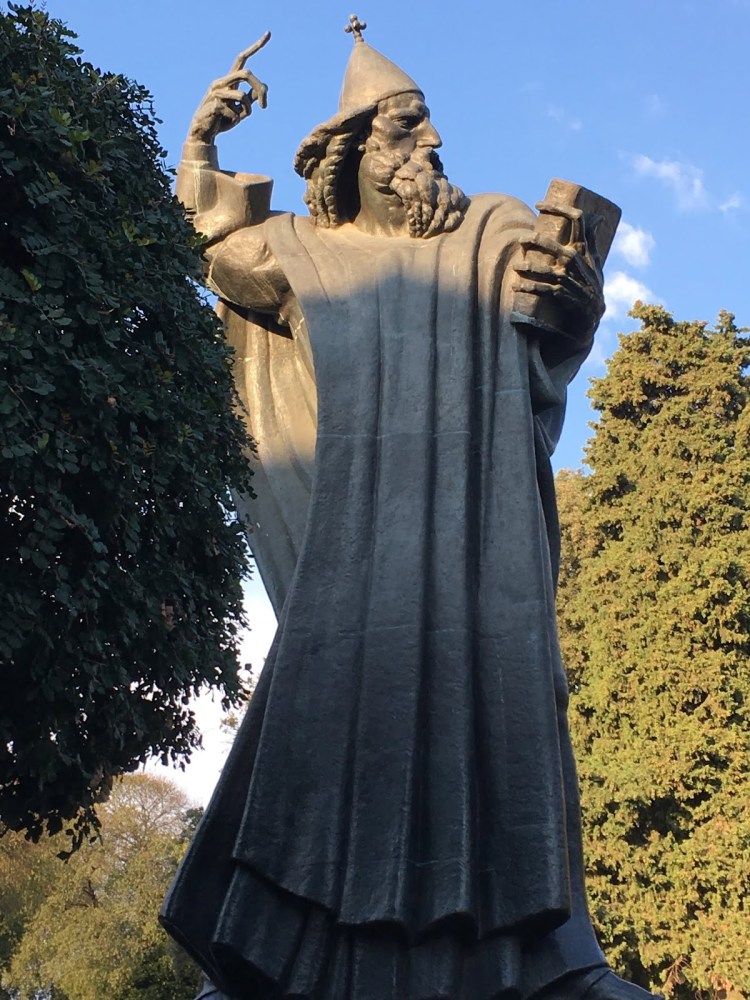
Zagreb is like a layer cake- the top is the Kaptol where the clerics reigned. Here were government buildings, old convents and  monasteries converted into museums.One museum was the former studio of favorite son, sculptor, Ivan Mestrovic.  His sculptures have been a constant and familiar feature on our wandering through Croatia.

Gregory of Nim

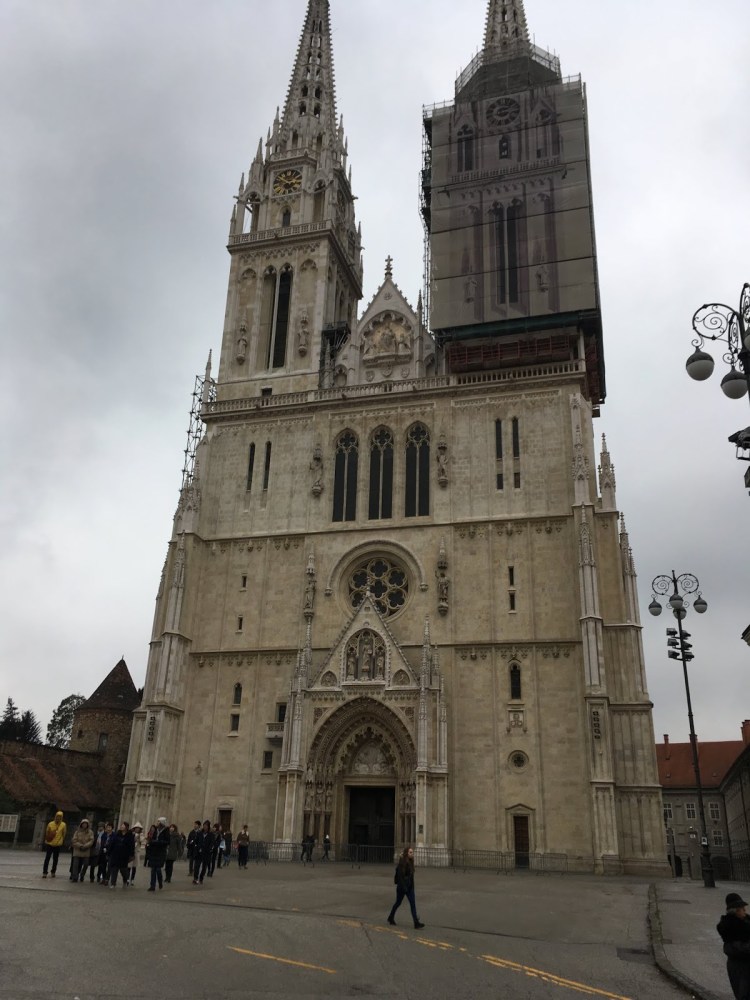
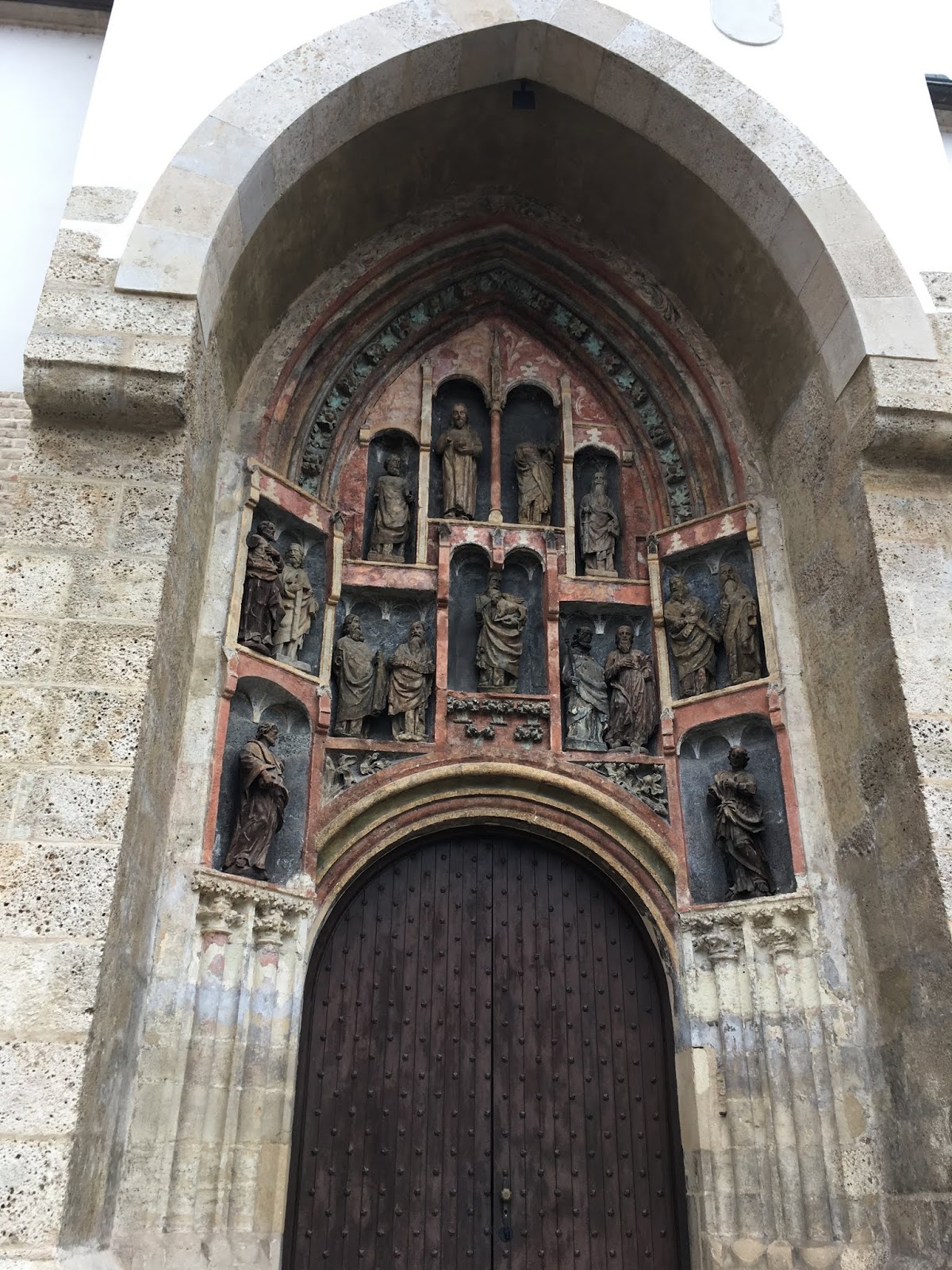
The Cathedral, like most, has been a work in progress for hundreds of years, remodeled by fires, earthquakes, wars and priorities of religious and secular (Communist) governments.


The middle layer is the Gradec where the secular rulers built their fancy buildings and squares. Gradec dropped into the bottom layer or Lower Town with  restaurants, squares, more churches and interesting shops (not that we would buy anything). Many of these buildings were designed by architect Hermann Bolle (native German, adopted by Zagreb as their own) with streets and squares named after the prodigal son who never came home inventor Nikola Tesla (sculpture also by Ivan Mestrovic).

This was a far livelier area then our apartment in the surrounding crumbs.

On our walk back down, the candles were lit, another reminder of how recent the war was.  In May of 1995, Zagreb suffered two days of civilian targeted cluster bombing in the waning days of the war.

After our usual stop at the market, we came home and made potato soup.
Our potato-rationed  dreams were fulfilled as we awoke to snow.

In the morning, sitting in a warm kitchen, drinking tea and instant coffee, watching snow fall outside our window, and a stereotypic elderly, overweight Eastern European woman dressed just in her black bra hanging out laundry on her porch across the courtyard. Feeling the old Republic of Yugoslavia.  Yeah, we could live here.

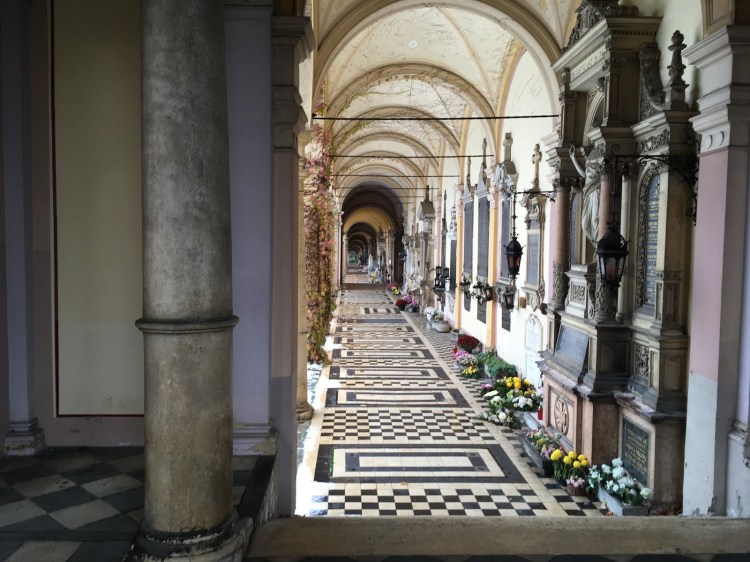
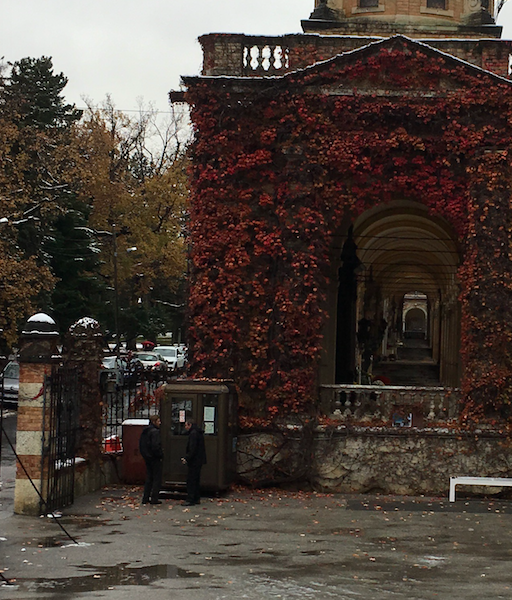
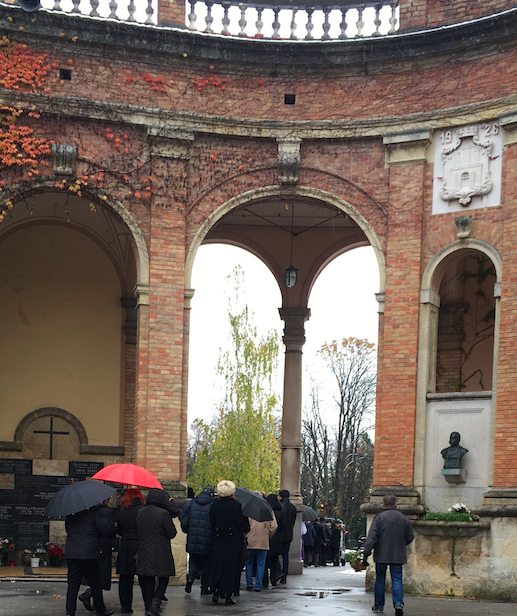
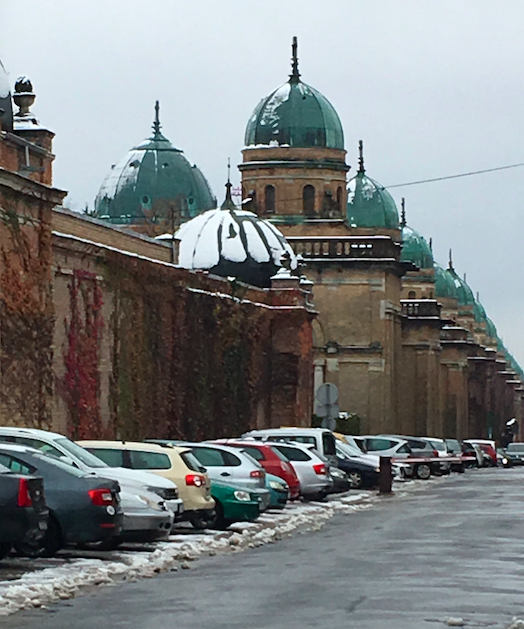
What better way to spend the snowy day then at the famous cemetery, Mirogoj Cemetery designed by Herman Bolle, as well.    We walked around for nearly 2 hours absorbing the sublime beauty of the acres of buildings and grounds housing nearly 300,000.
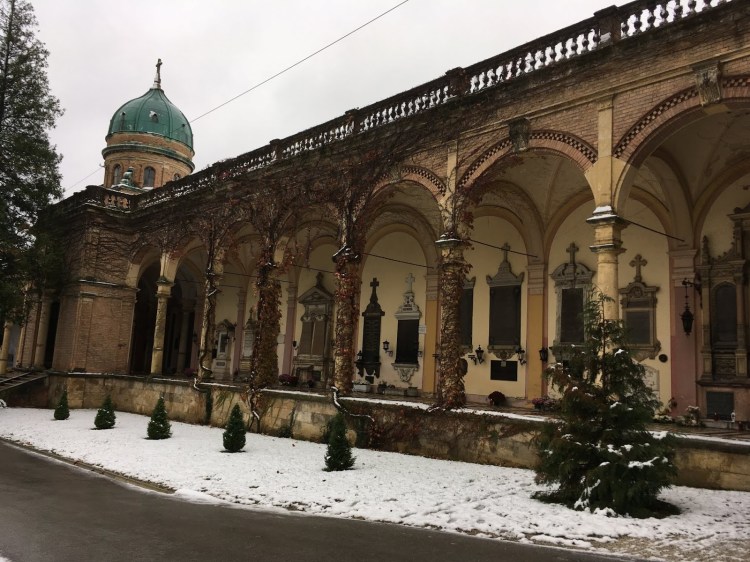
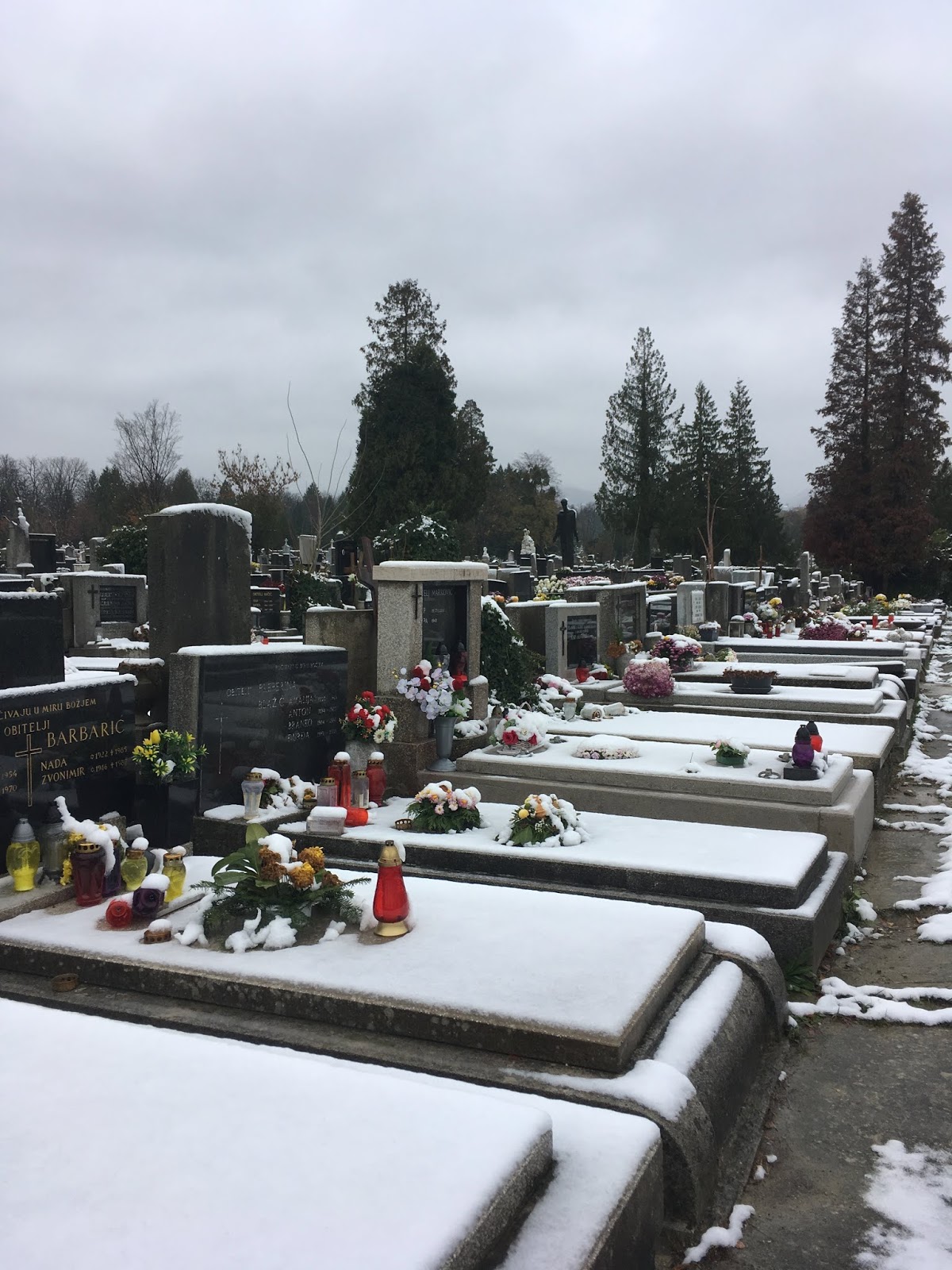
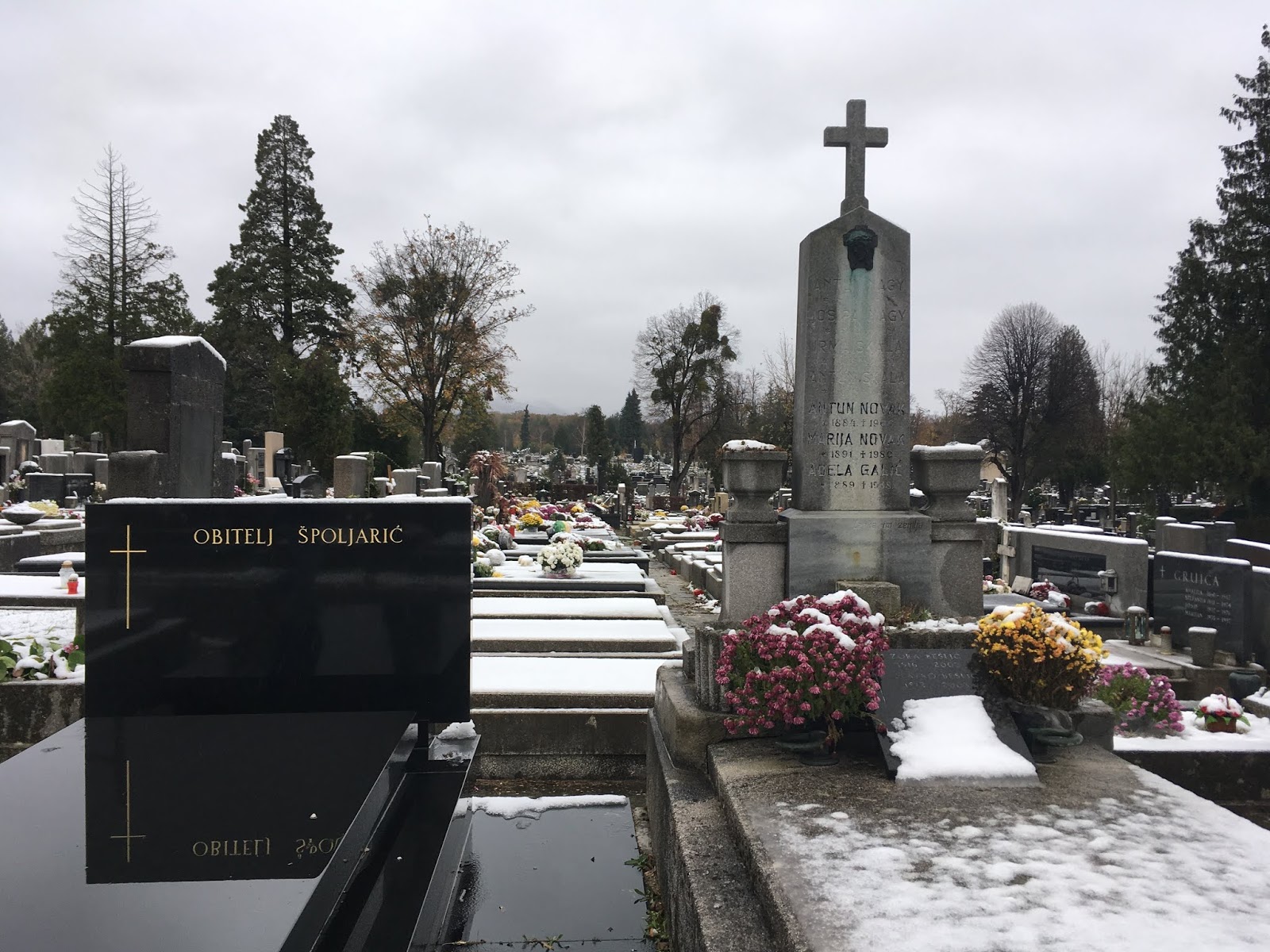
A hand-bell was rung, as funeral processions passed, another reminder of the deep attachments to Old World traditions.

In contrast to the current and historical Balkan fighting,  Catholics, Christian Orthodox, Muslims and Jews lie mixed together in peace. Although the tour-books mentioned Jewish graves and memorials, we could not find them on the map or during our fairly thorough exploration. This is pretty consistent with what we have read and seen about Croatia’s relationship with Jews; minimal references, poorly memorialized coupled with revisionist history. In the old cities of Split and Dubrovnik, we had to search to find the kiosk sized synagogues which seemed to exist only as tokens for the Jewish tourists.  The one Jewish cemetery we have seen (Split), was completely neglected and no mention of why it was not used after 1945. It”s poor condition is most likely related to the virtual absence of Jews in Croatia, down from about 30,000 pre-WWII to about 500 now.

Walking down from  Mirogoj Cemetery through the layers of the city, again, experiencing the Balkan melange of beauty and ugly- passing the Children’s Hospital that was deliberately targeted on the last few days of the war,  deterioration of the buildings due to neglect and, those magnificent buildings.

We loved Zagreb.  It had a positive energy, it reminded us of Liverpool in some ways.  It was mix of everything good and bad in Croatia, and consistent with it’s Cathedral, with each disaster and revolving government, it perseveres.

This week’s photo of topless old man looking out window contemplating his life “Never have I ever, …anything”

Hvala Dubrovnik, Dobar dan Split

Most tourists are only here for a few hours unloaded from tour group buses then repacked at the end of the day.  So, since we’ve been here almost 2 weeks we are now eligible to vote.  We qualify because we have done  everything you can do here besides the stuff that costs money.
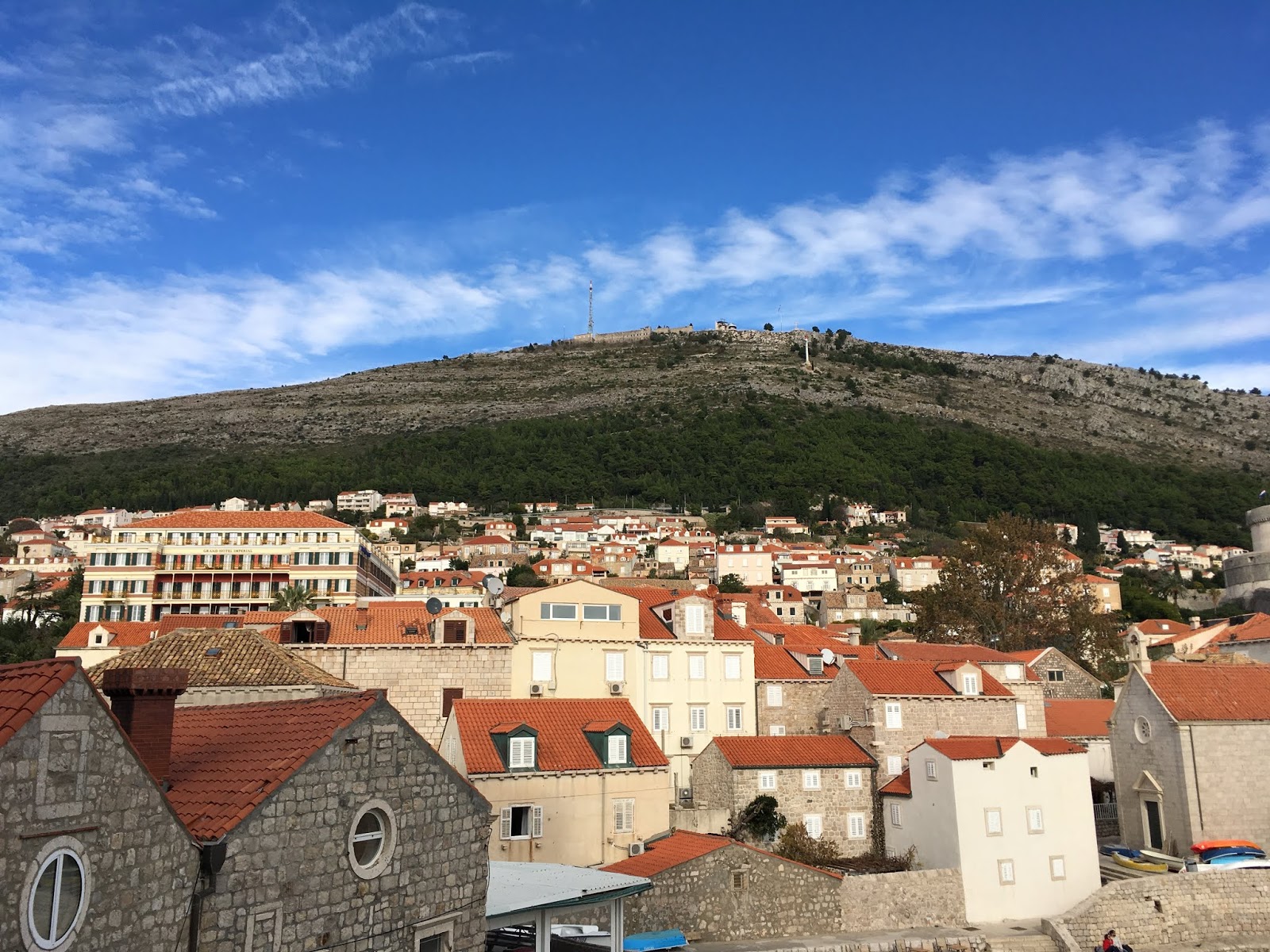
That included climbing Srd Mountain, the steep 1352 foot mountain directly behind the Old City.
Since it was there, we had to go to the top.  There is a  gondola  that can take you to the top in a few minutes but where\’s the fun in (paying for) that so we hiked for an hour instead.

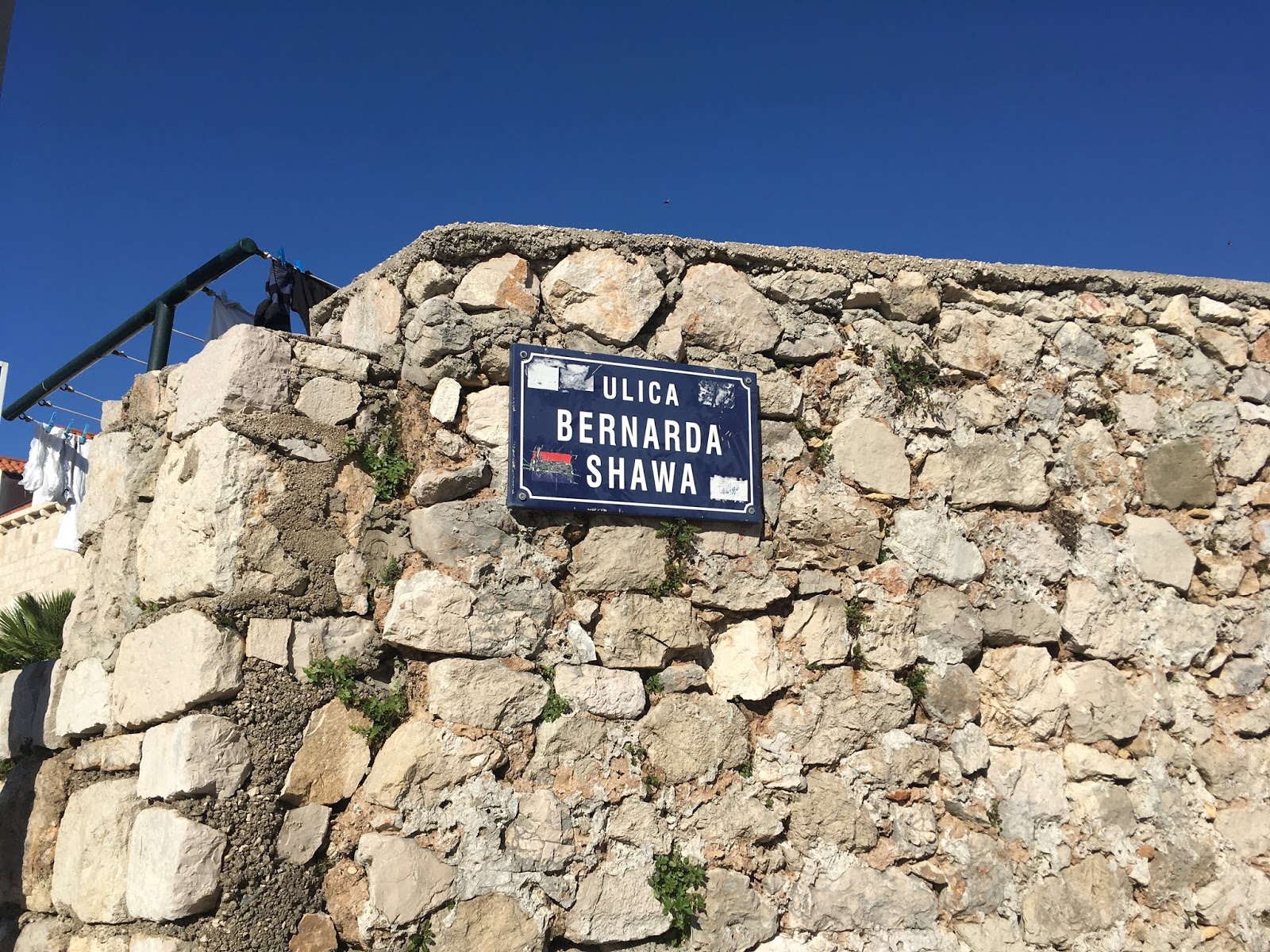
The hardest part was finding the direct way to the entrance, which we didn\’t find although we did find Bernard Shaw St and took that to the entrance,  crossing the main highway to get the the start of the trail.
George Bernard Shaw once called Dubrovnik \”the pearl of the Adriatic, those who seek paradise on Earth should come to Dubrovnik\”.  So, naturally they named a street after him. 

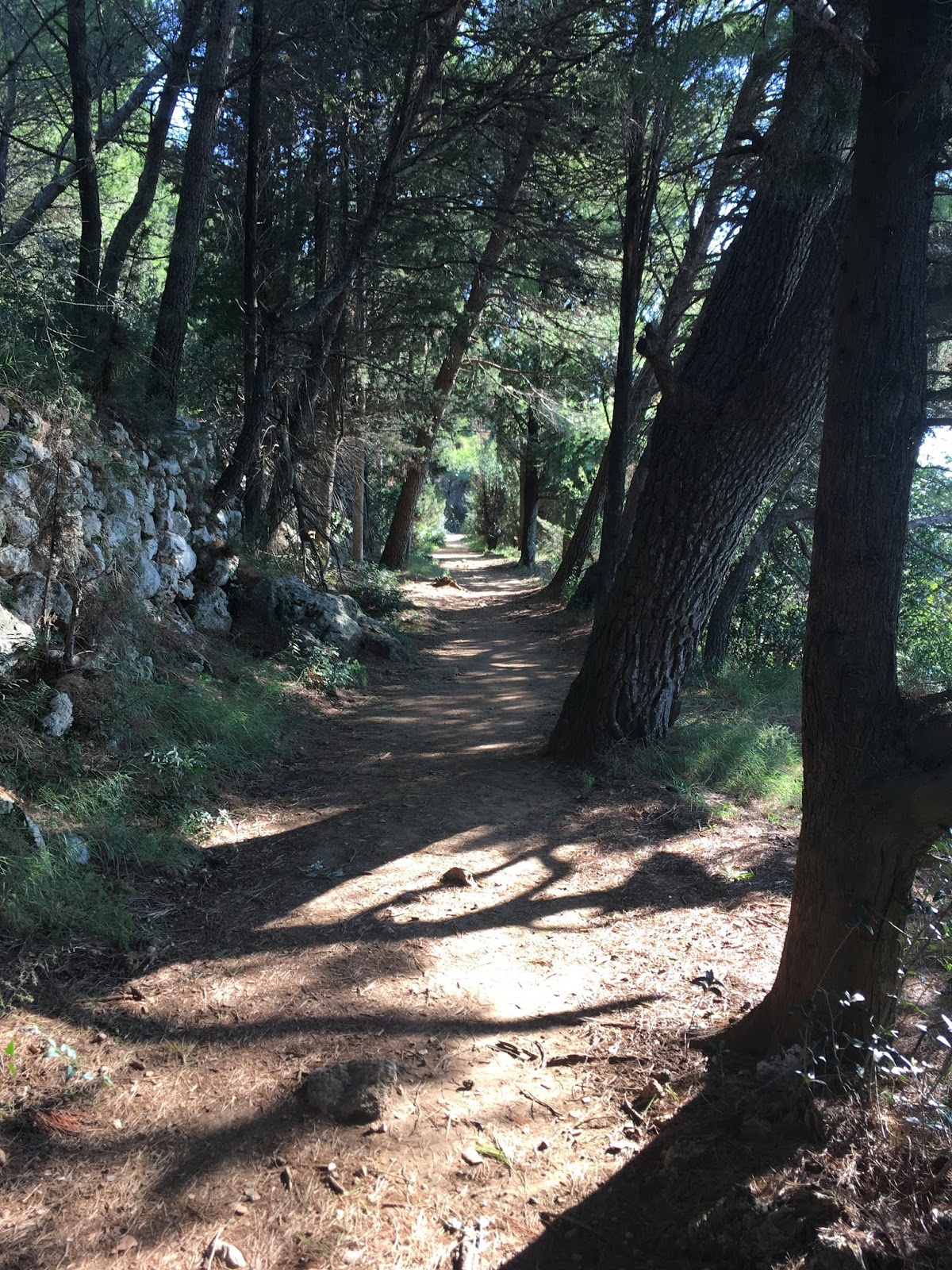
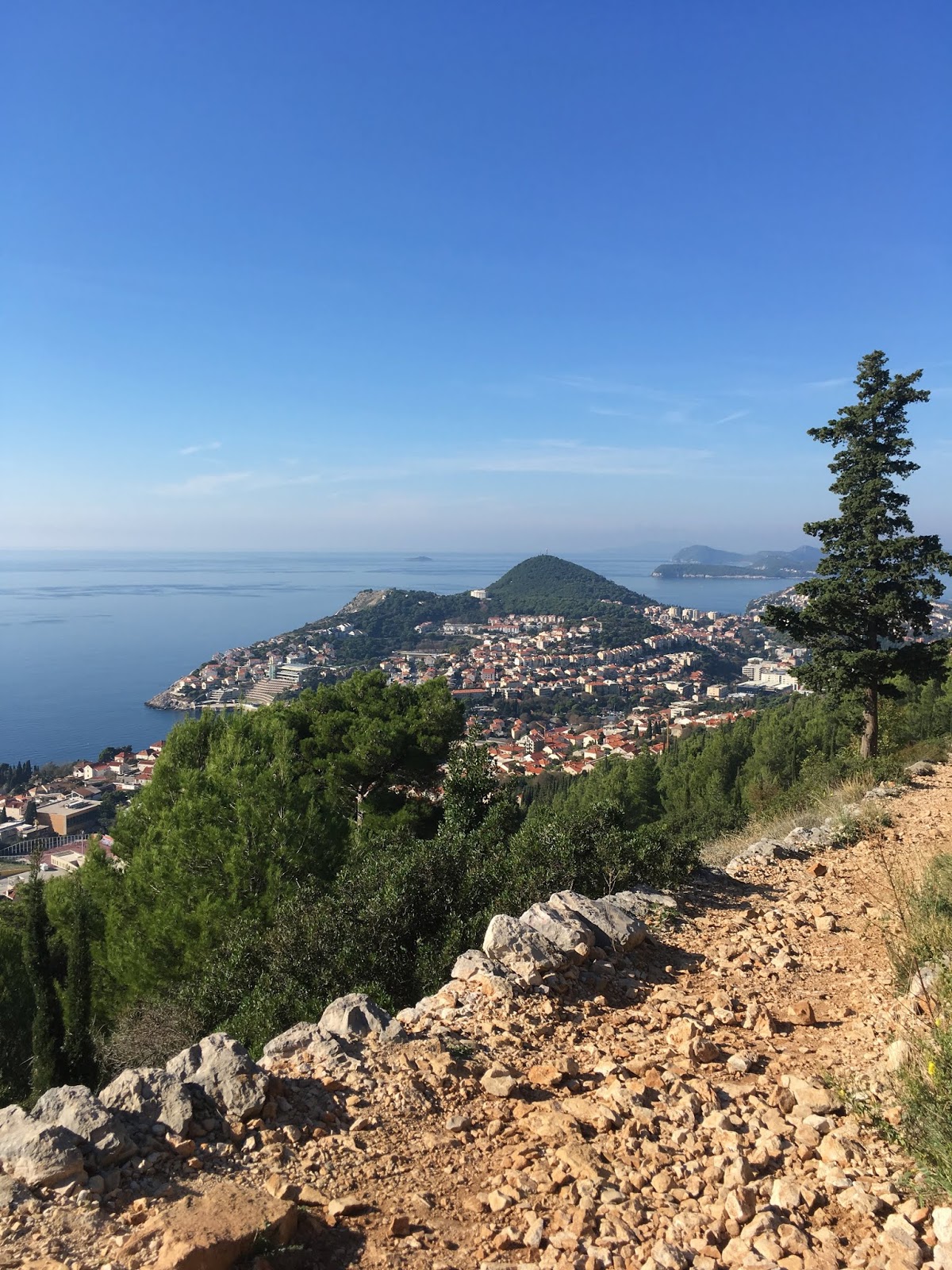
The trail up Srd Mountain was initially cool and wooded with cypress and pine trees transitioning to  a barren, rocky landscape as we climbed higher.
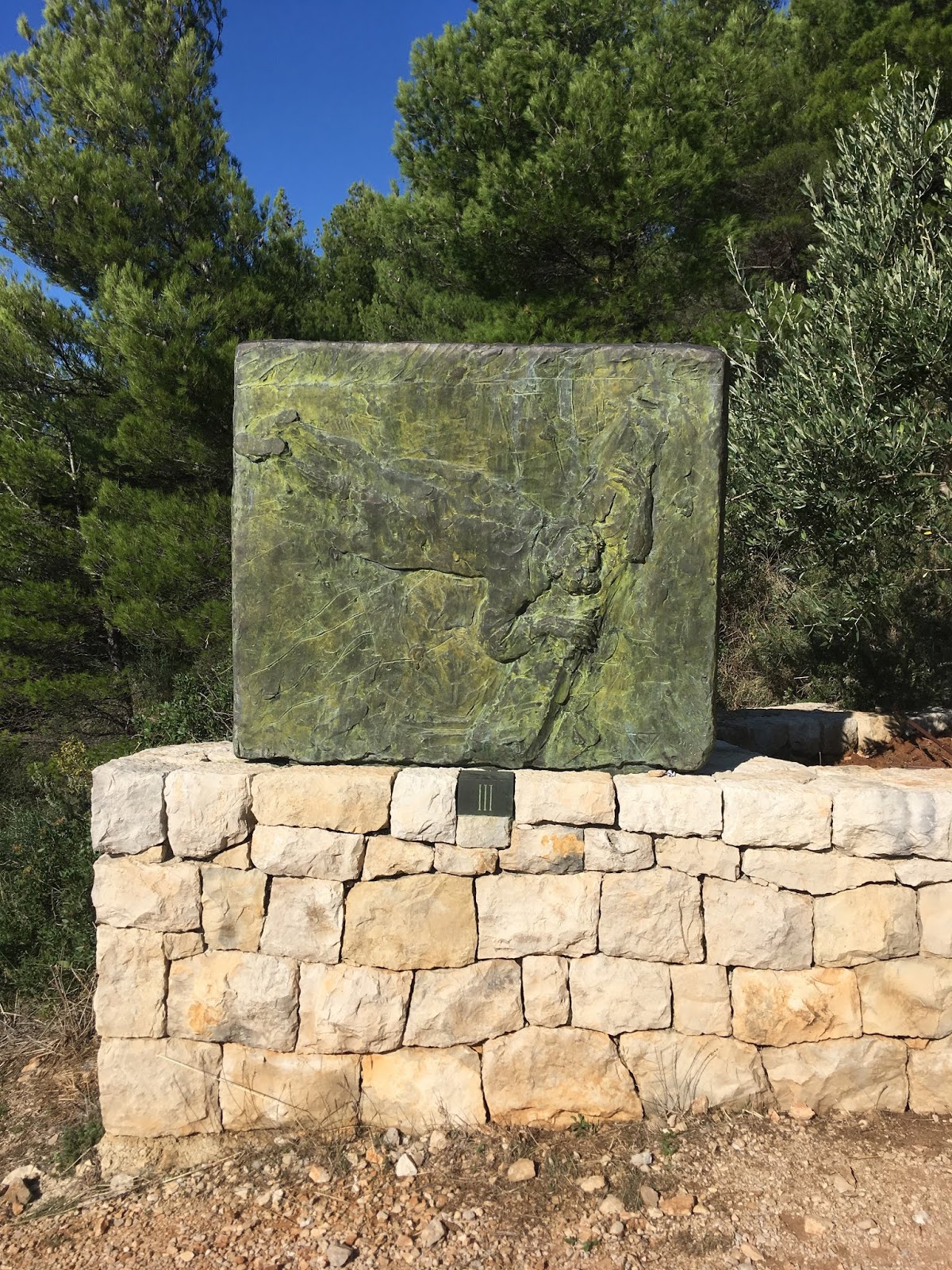
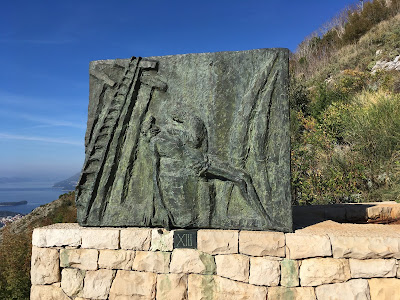
The trail was steep with numerous cutbacks and at the end of every cutback turn was a large Station of the Cross plaque.  Going off the trail was discouraged because it is not clear if all the Serbian landmines have been removed from the mountain. 

The unseasonably hot day coupled with the uneven  rocky trail and threat of unexploded mines made this Stations of the Cross journey a little less intense than Nick\’s three hour Queen of All Saint\’s Good Friday ordeals growing up.
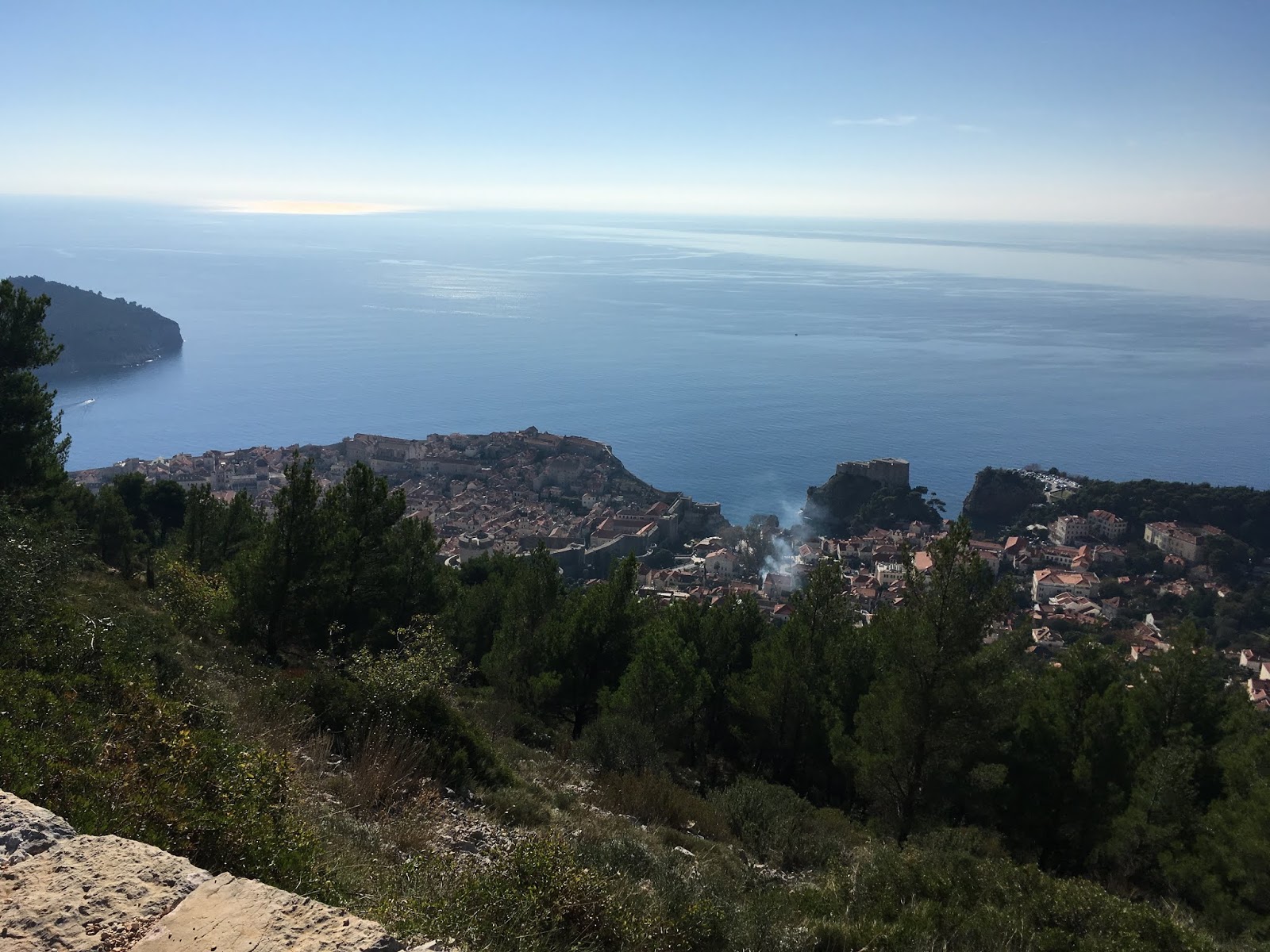
Pine, laurel and cypress were being burned below smelling sort of like incense so there were flashbacks as well.

Once we got to the top we stayed for few minutes trying to avoid other people\’s selfies in front of the Imperial Fortress built by Napoleon in1806.  Another aha moment,  realizing that Napoleon got this far east.  The fortress was repurposed by Serbia  to launch attacks/bombs during their siege of Dubrovnik and now repurposed by the Croats for a war memorial museum.

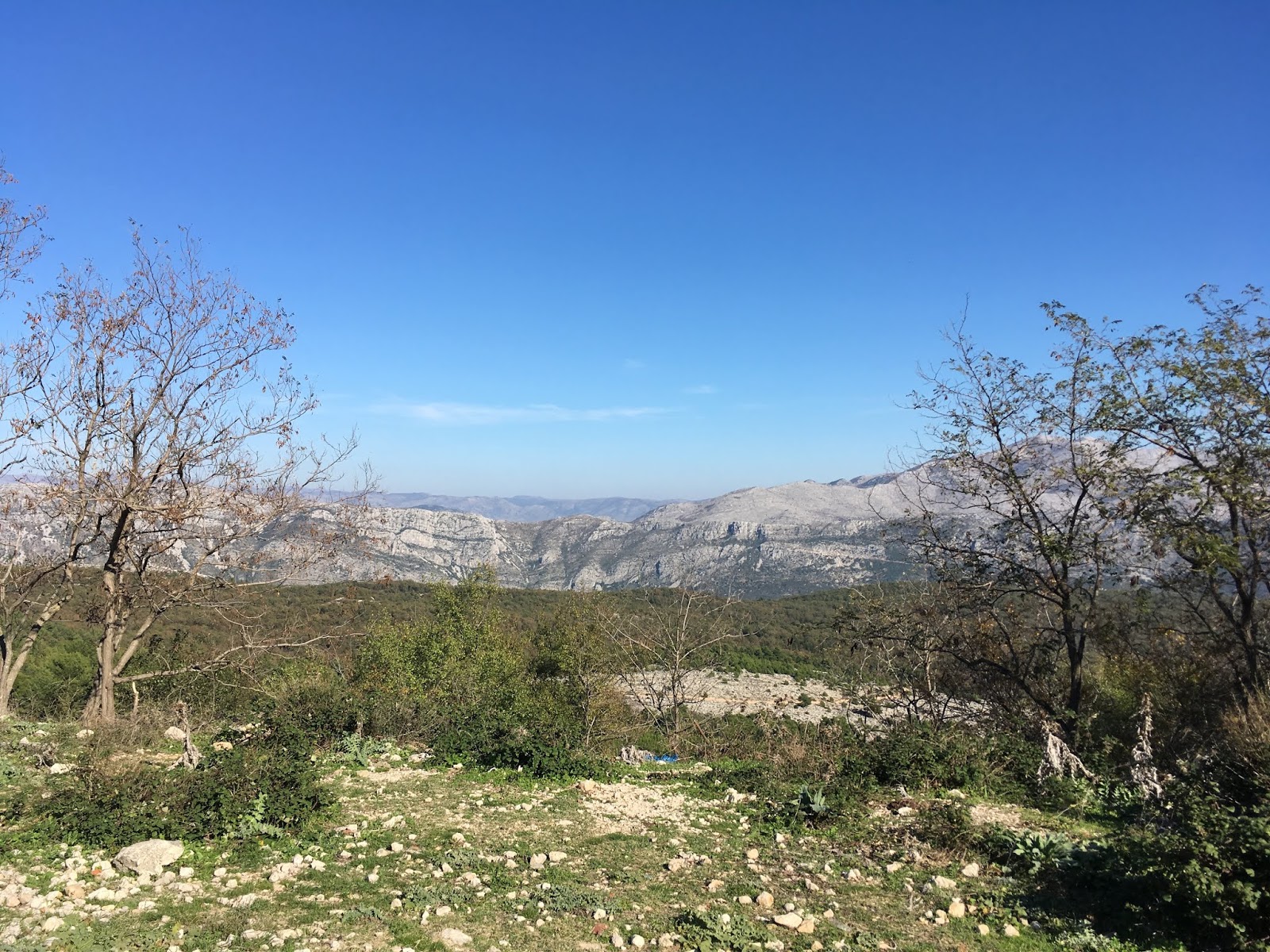
Over those hills, Montenegro and Bosnia/Herzegovina

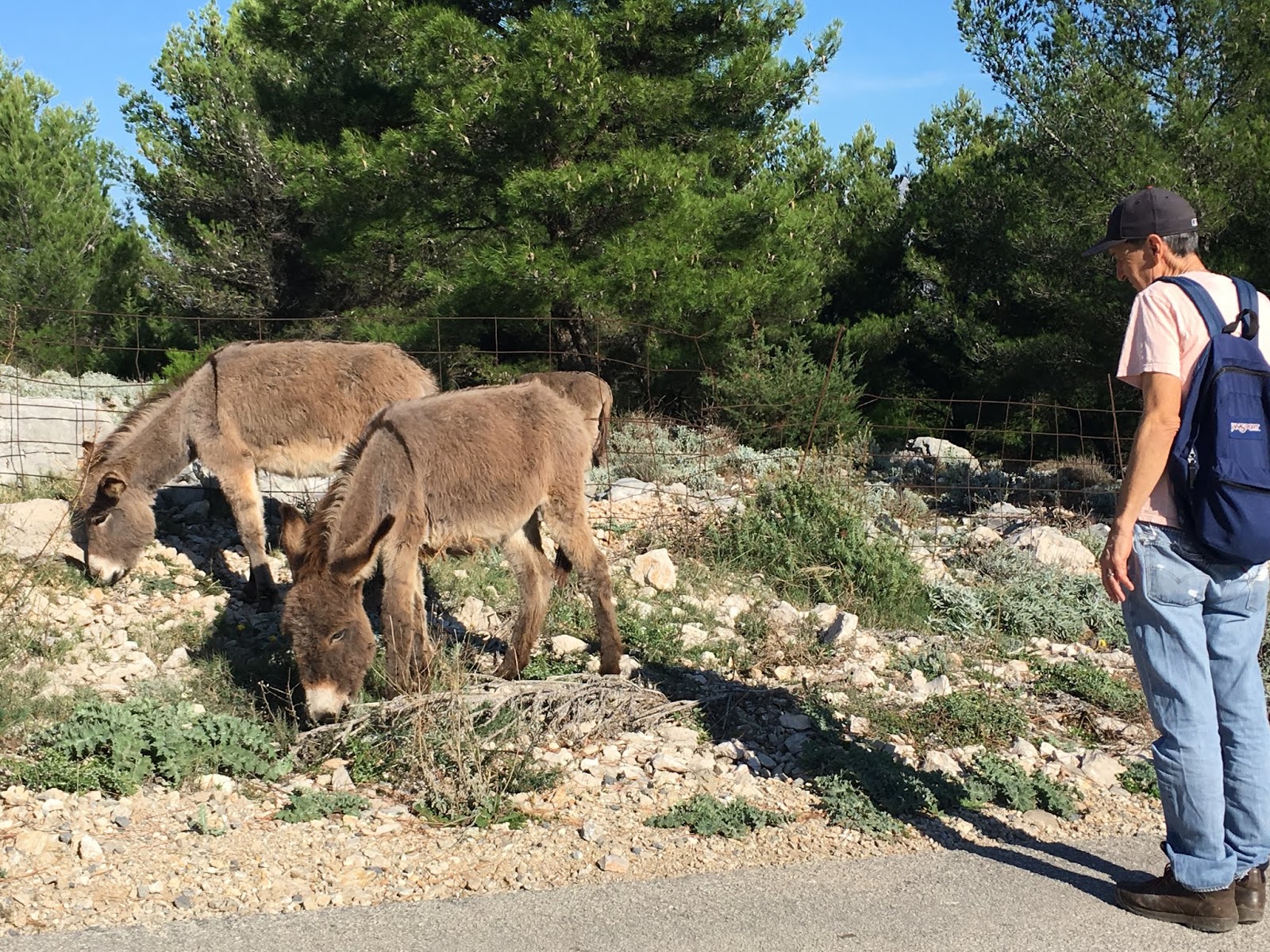
In order to allow Patricia some childhood flashbacks, we walked down the other side of the mountain which resembled the hills surrounding the San Fernando Valley.    We had our wild animal moment,  encountering some Jackasses on the road just like the 101 freeway. 

Note goal nets

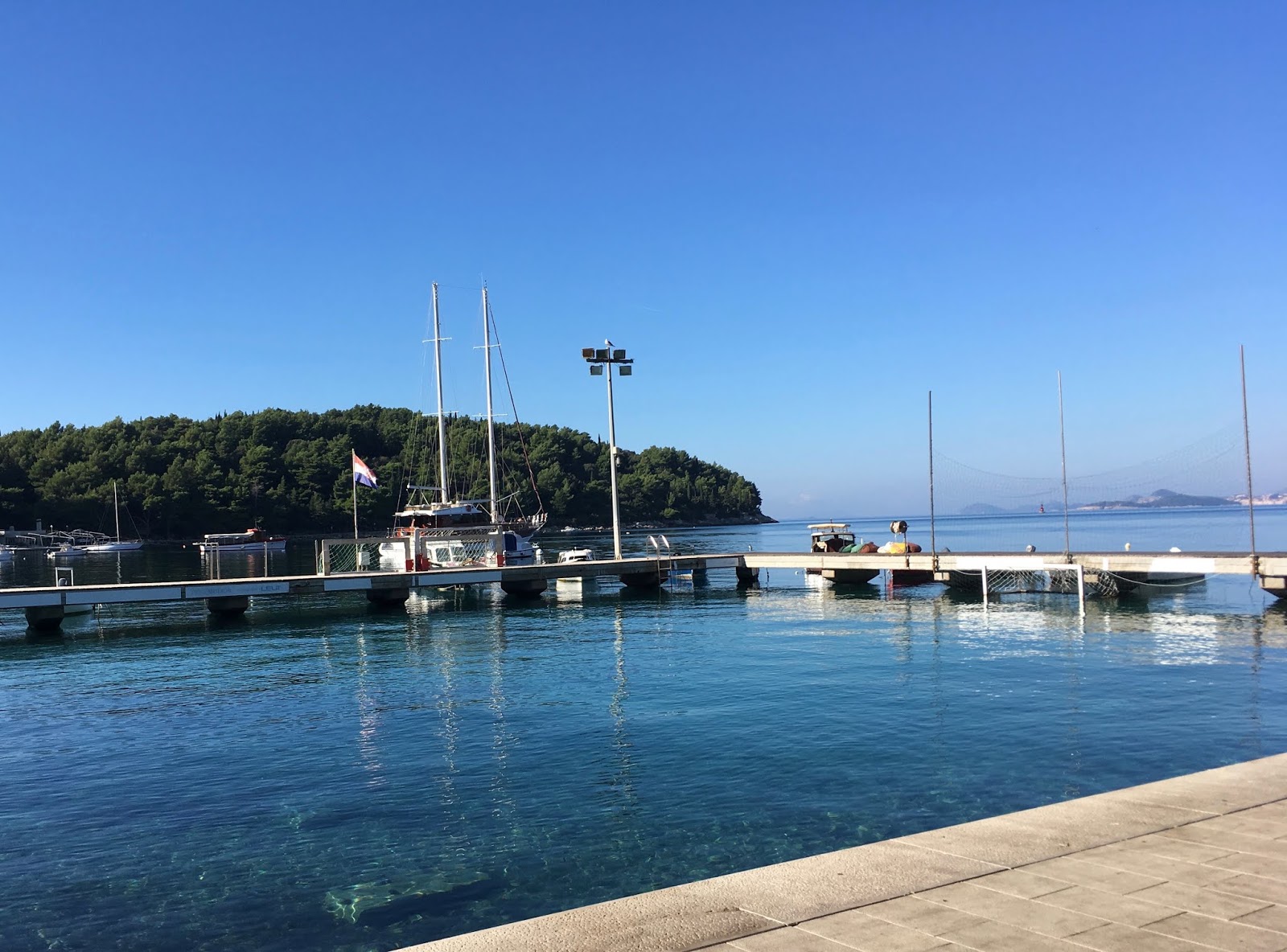
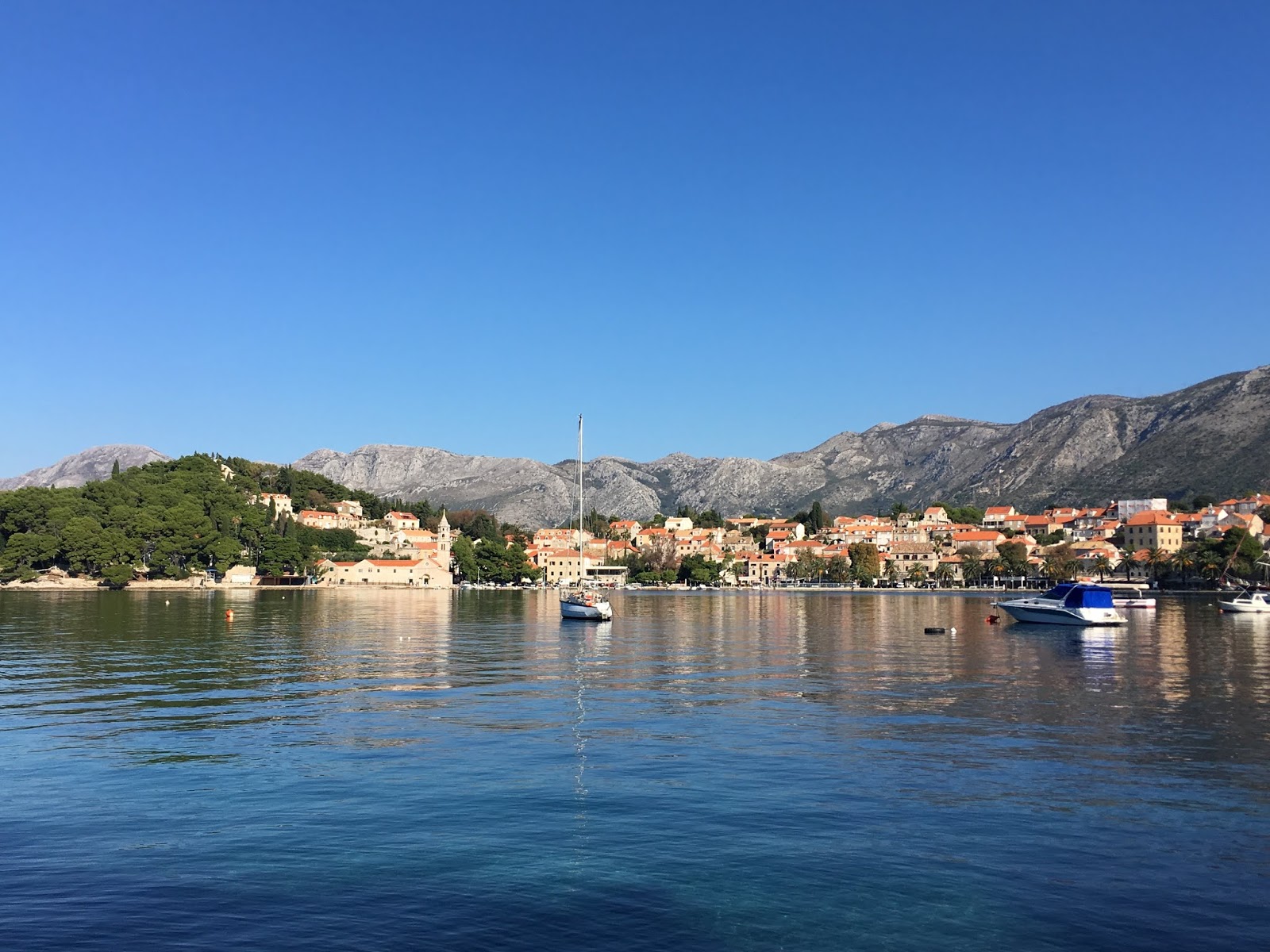
Continuing our civic experience we took a local  bus to Cavtat about 12 miles south of Dubrovnik, another pretty Croatian coastal town. We sound jaded because we are now locals, but it did have it\’s unique charms; water polo area in the harbor (salt water polo)?

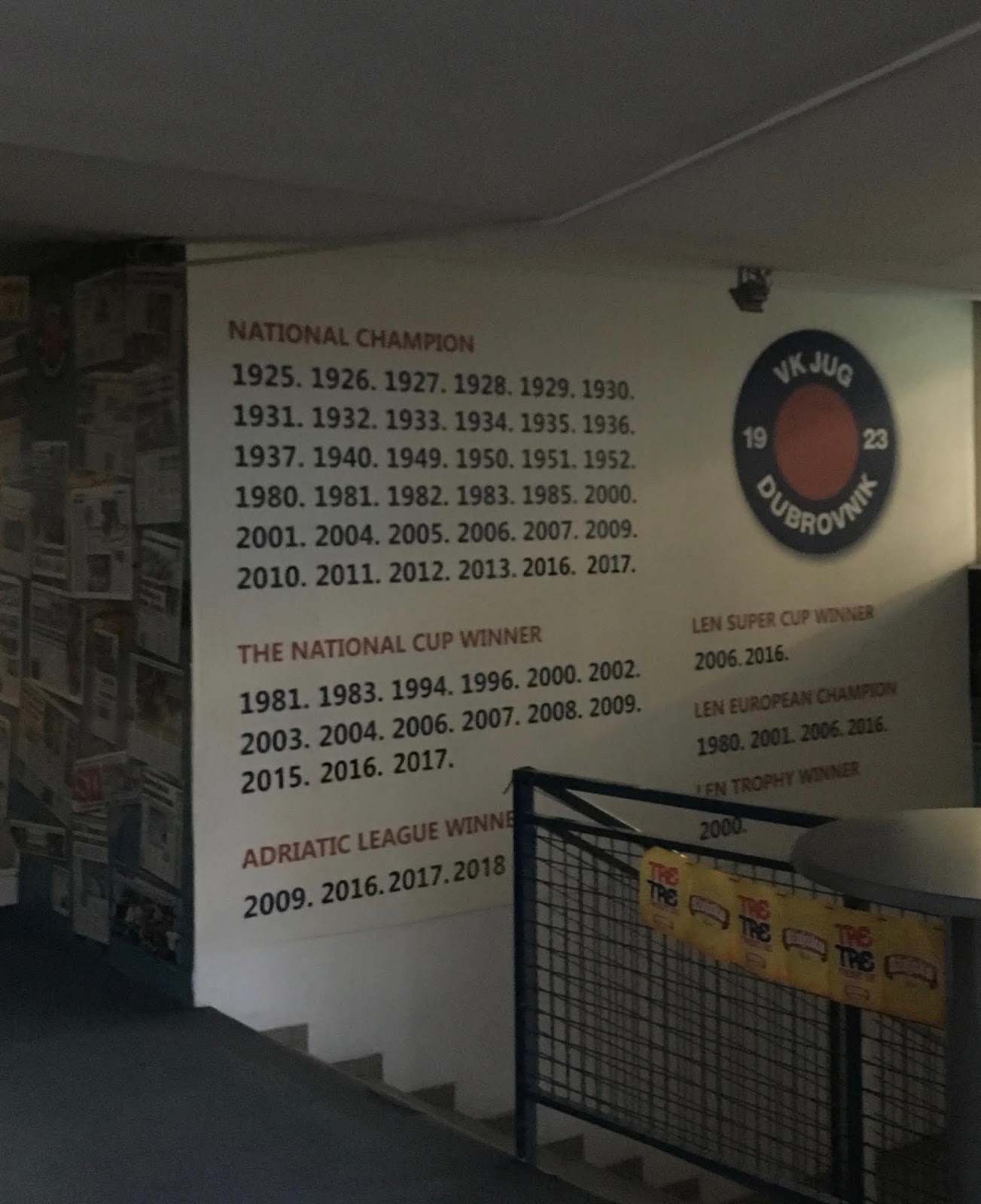
Greater Dubrovnik  is apparently famous for its water polo teams winning multiple championships

According to our Mostar tour guide, Croatia excels at sports most other countries are not interested in, as with Dubrovnik and water polo, the tiny village of Metkovic, which we drove thru, is famous for its handball champions.

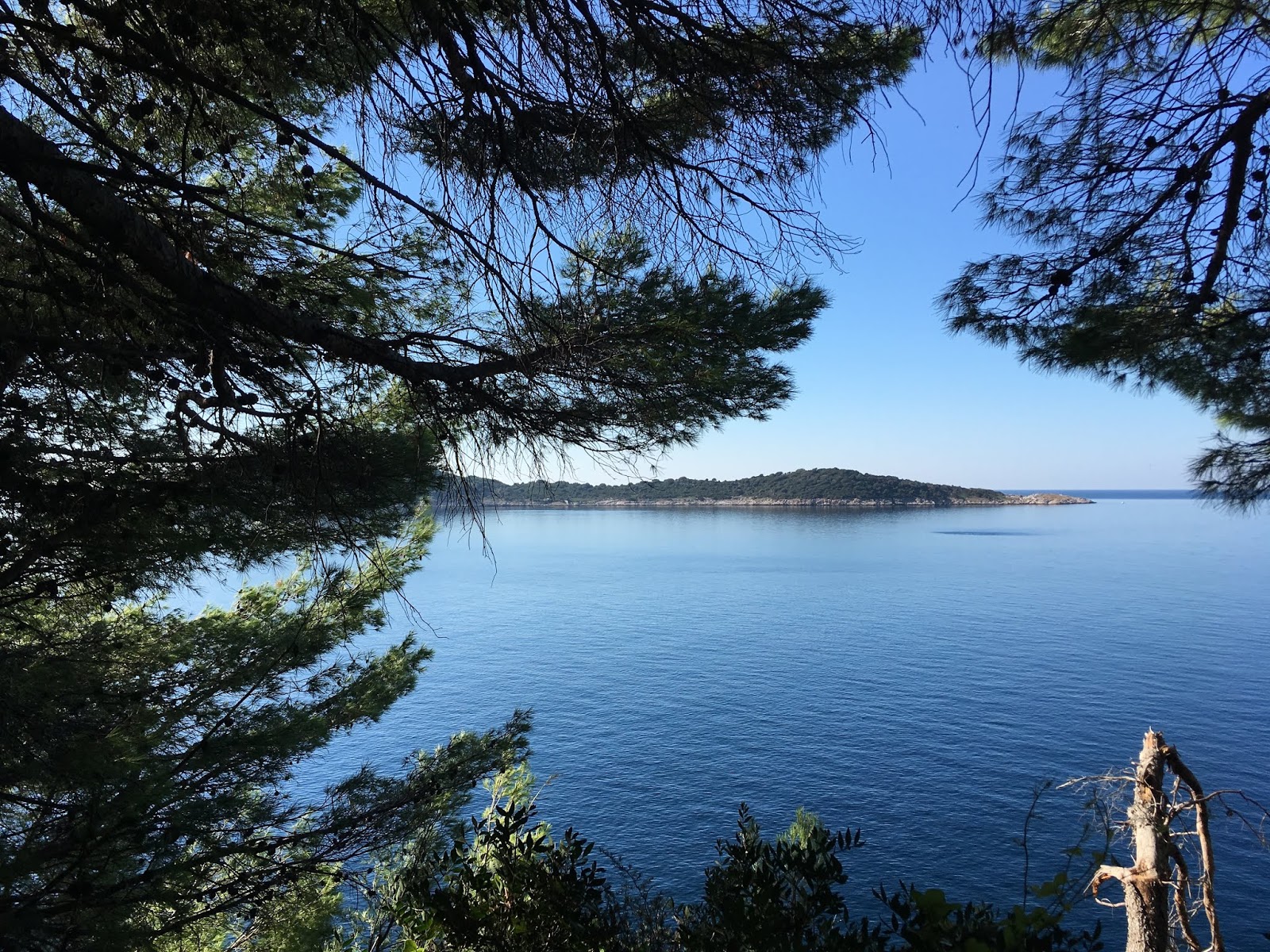
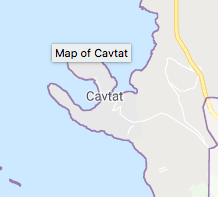
We hiked along the beach for a few miles and somehow ended up back where we started not realizing we had walked along a finger-like peninsula.  Then we walked in the other direction and  the same thing happened,  it was like walking a Mobius strip. The town is made up of two thin polyp- peninsulas it gave us the finger twice for our geographic ignorance.


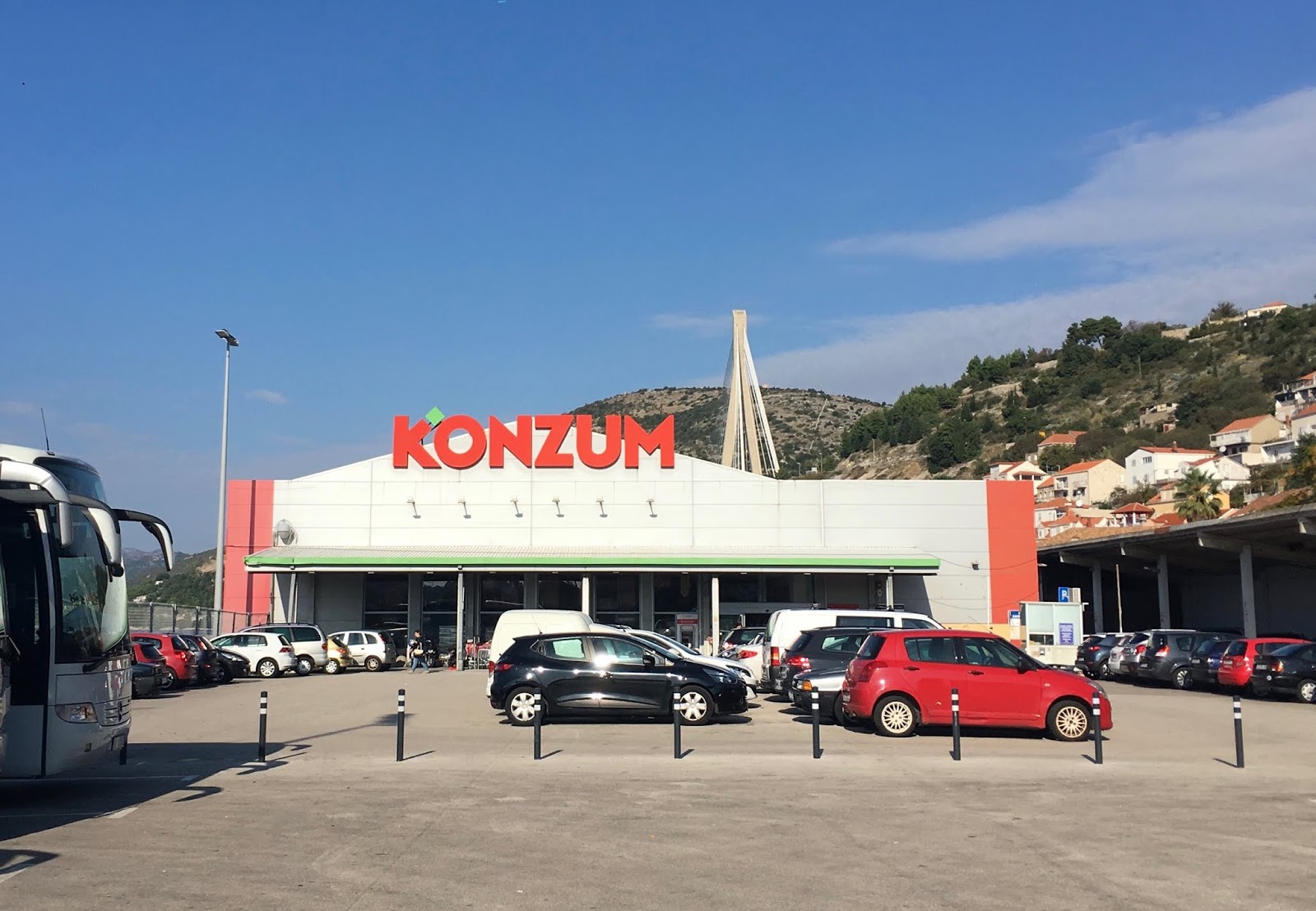
We are also now experts on the supermarkets of Durbornik, usually going to either Tommy or  Konzum (means consumption in Croatian) and which we hope is pronounced consume.

Language-wise, we are still struggling. Nick has been mocked in his earnest attempts.  One native commented that he speaks better Chinese than Nick speaks Croatian, and all Nick said was \”ne hvala\” (no thank you).  Ouch! We can see why they were always fighting.  Or, maybe he thought he was speaking Serbian, which actually is the same language, or used to be. Since the war, each country has taught  their own slight variation of the original, unified Serbo-Croatian/Yugoslavian language. Croats have even gone so far as outlawing the Cryllic alphabet which Serbia has readopted and of course, Bosnia Herzogovina uses both.

Here\’s a link to an article in the NY Times (11/20/18) about Mostar similar to what we witnessed, better explaining the continuing differences which frighteningly portents the path the US and other nations are taking with the nationalism/ populist movements https://www.nytimes.com/2018/11/19/world/europe/mostar-bosnia-ethnic-divisions-nationalism.html


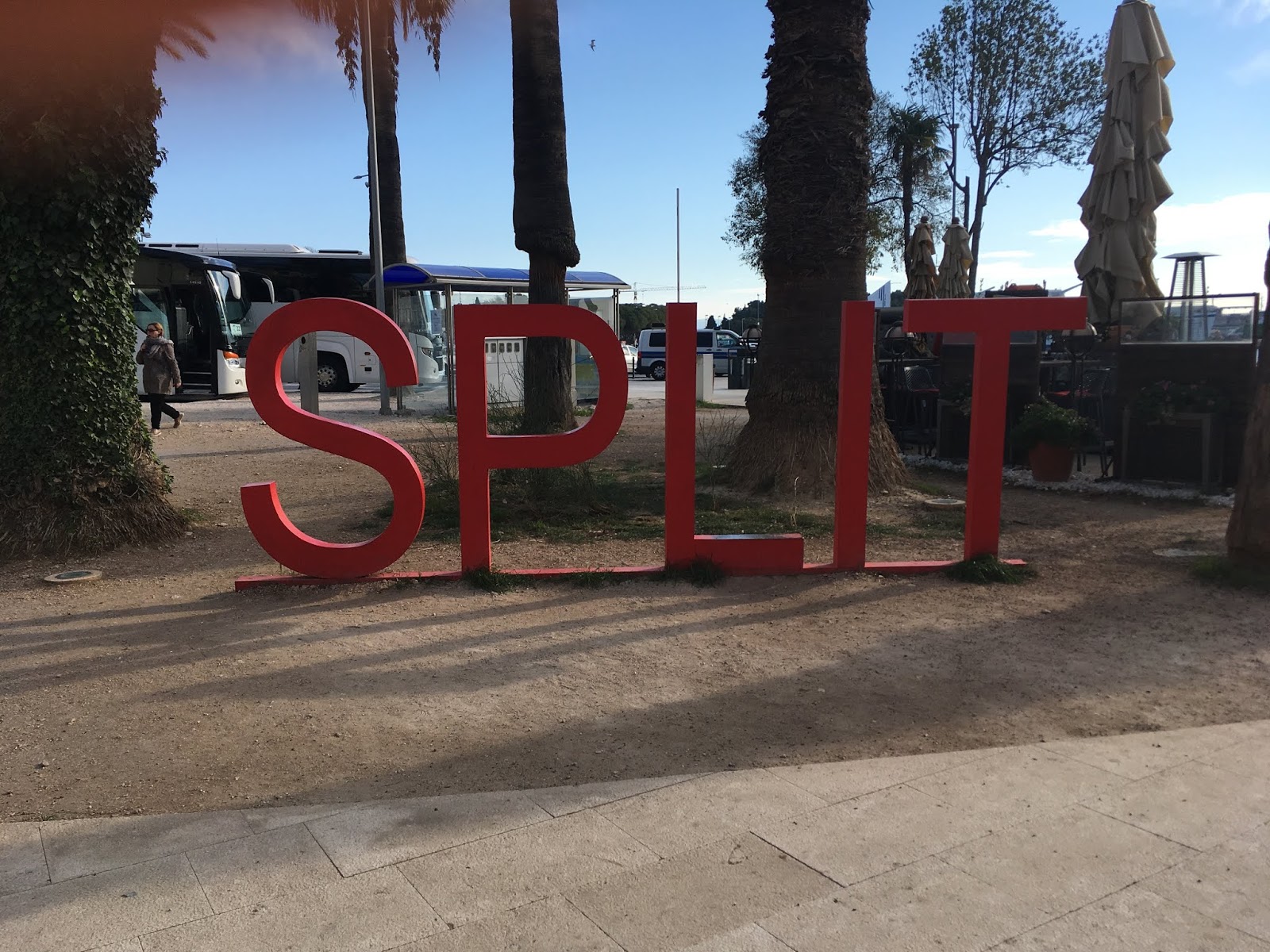
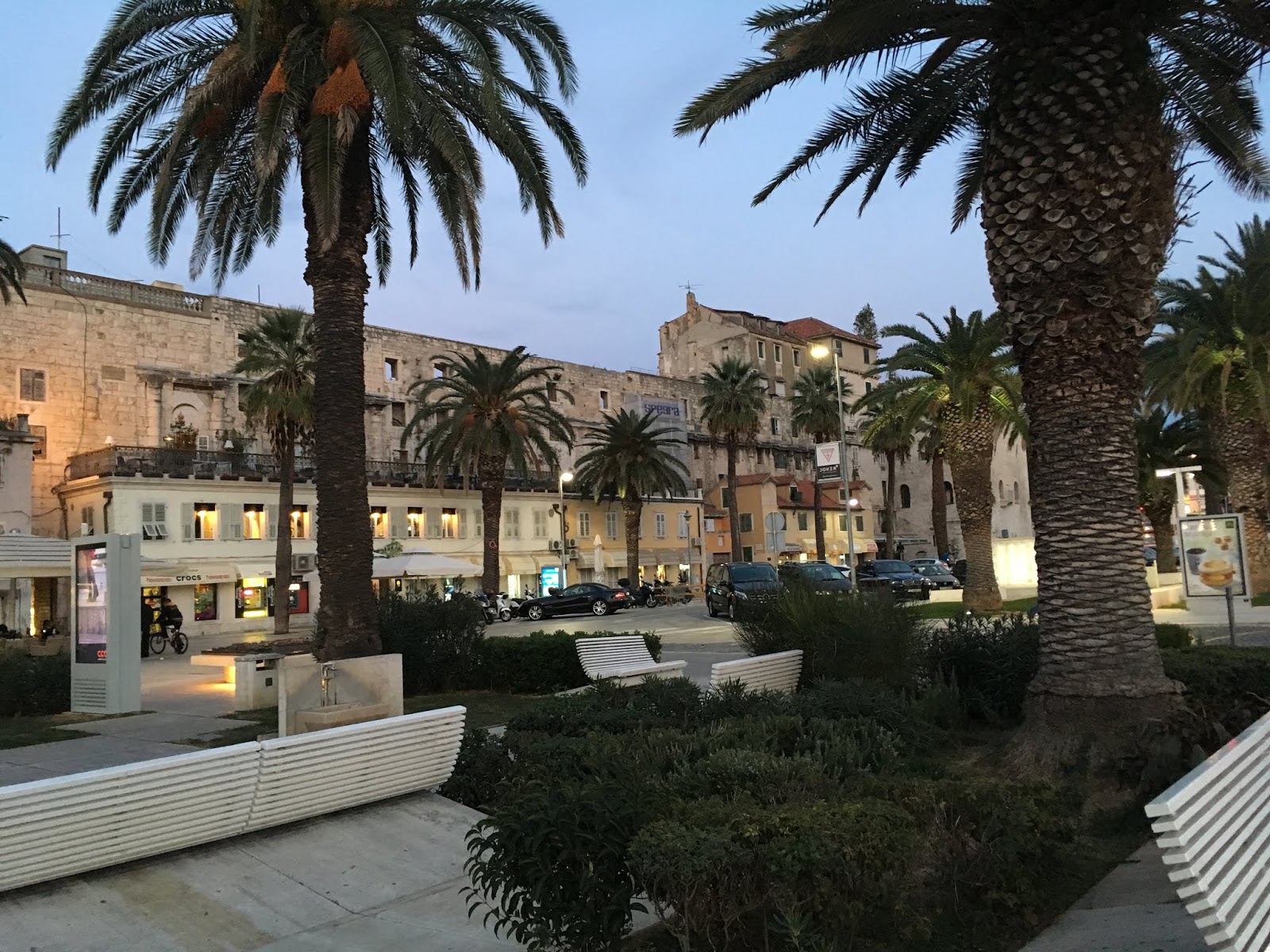
Dubrovnik was still on our minds as we drove into Split. Starting with the bus station, rarely a good start, we were turned off by an initial feeling of neglect and general tackiness with restaurants, kiosks and  shops obscuring  the main attraction of the tourist draw- Diocletian\’s Palace. 

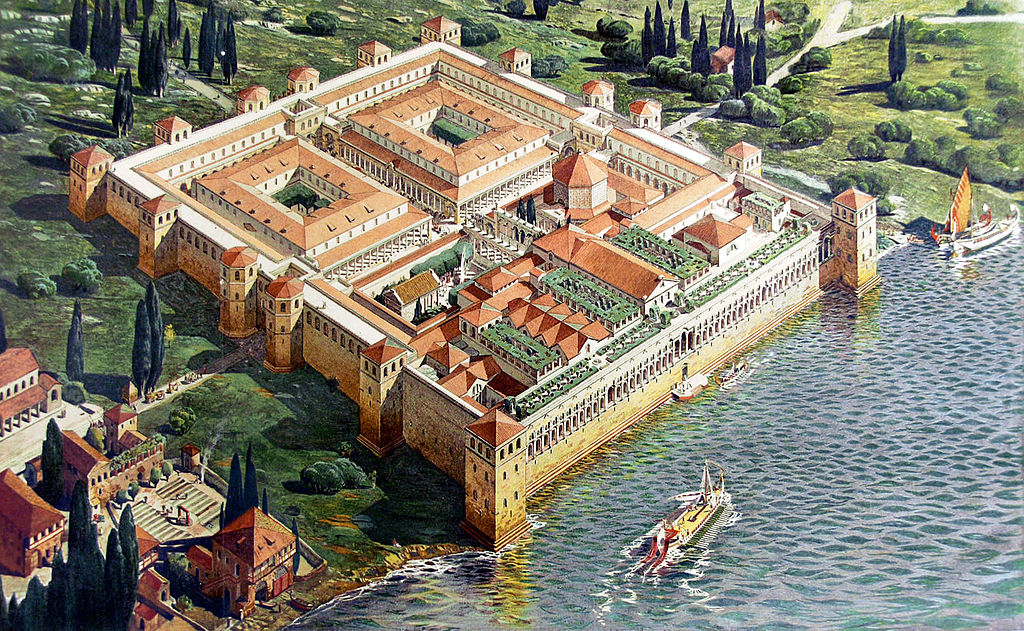
Original walls went right up to the water, thanks Wikipedia
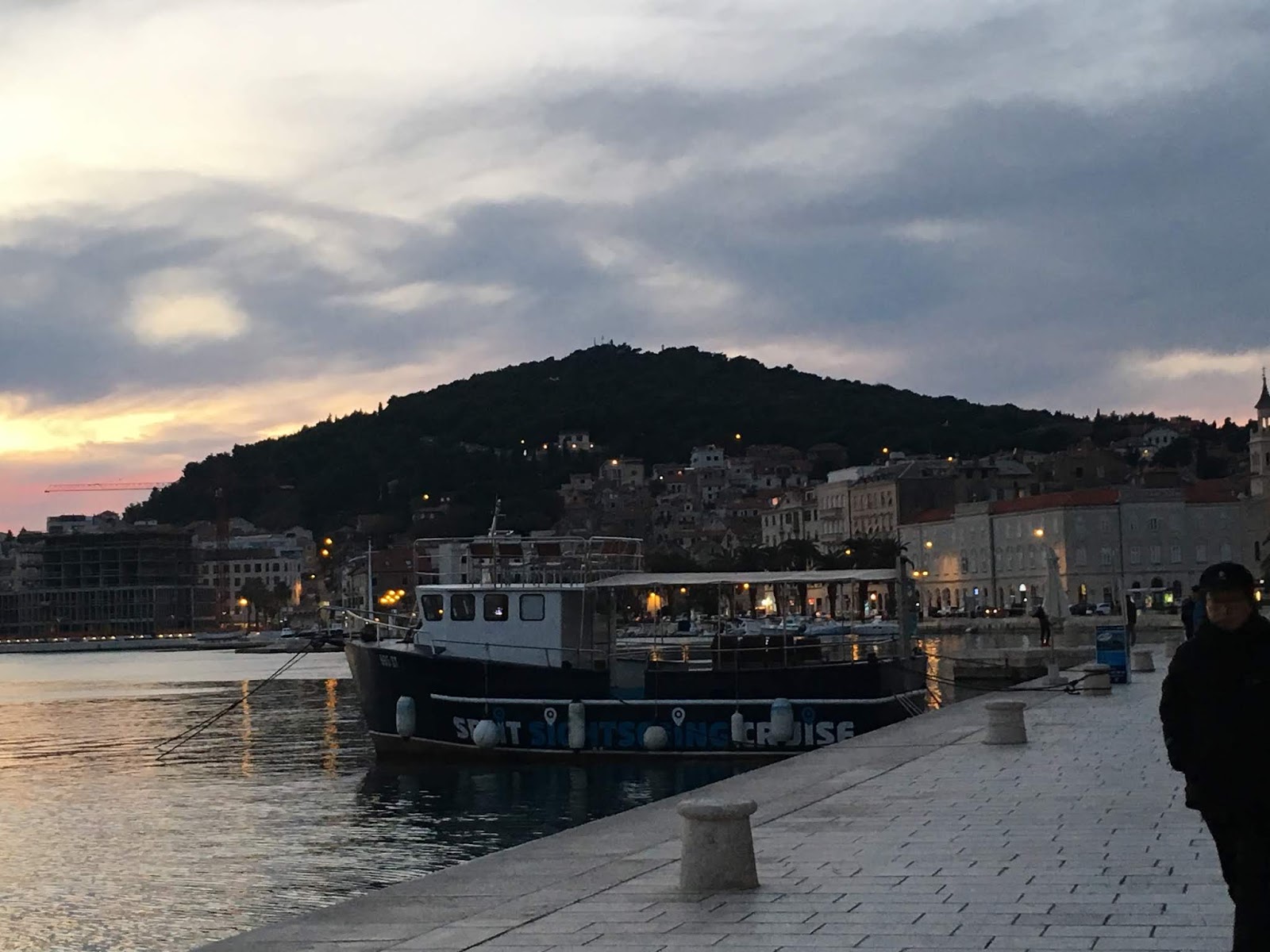
Remodel; paved paradise, put up a boardwalk


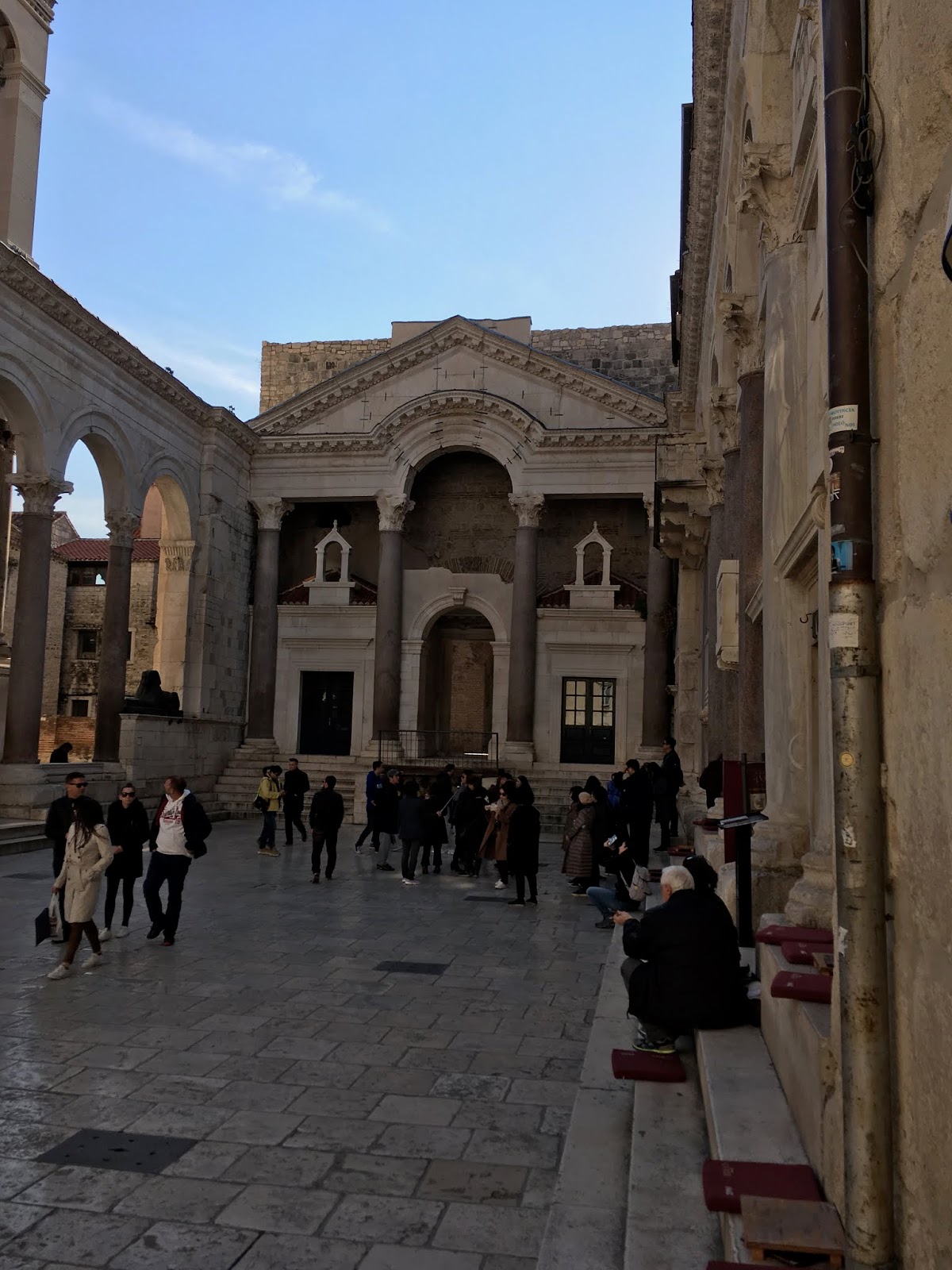
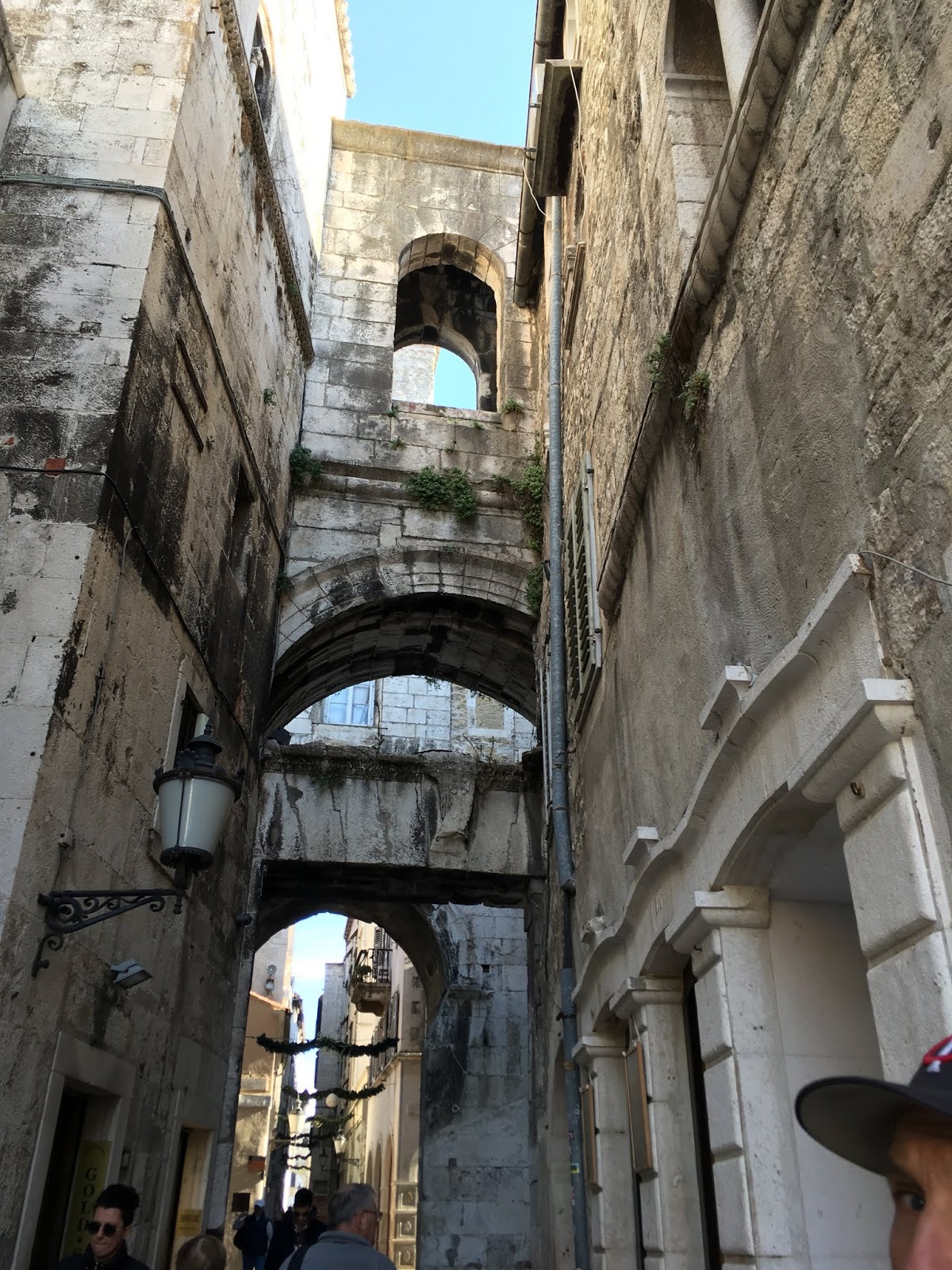
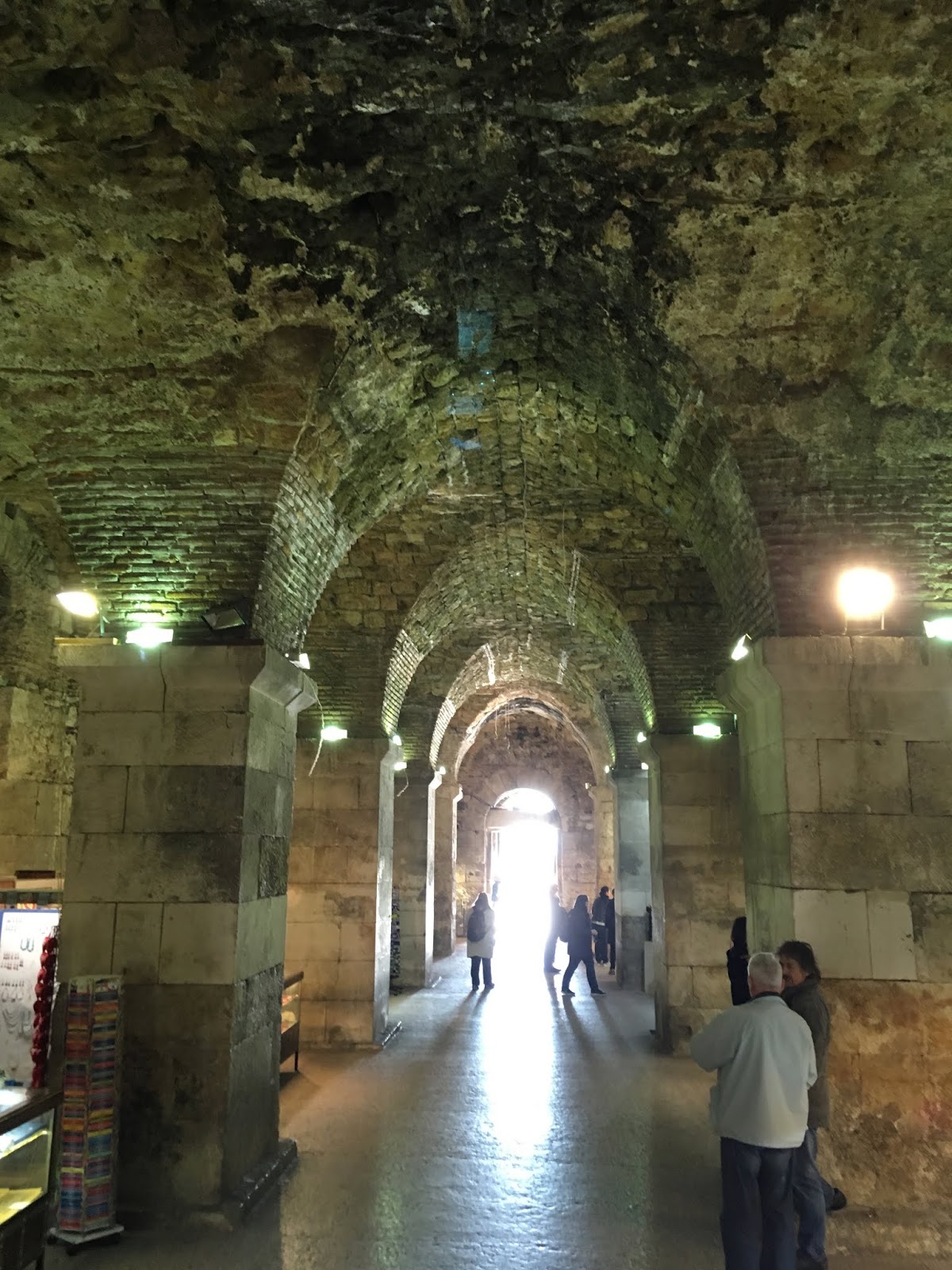
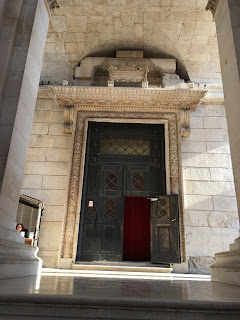
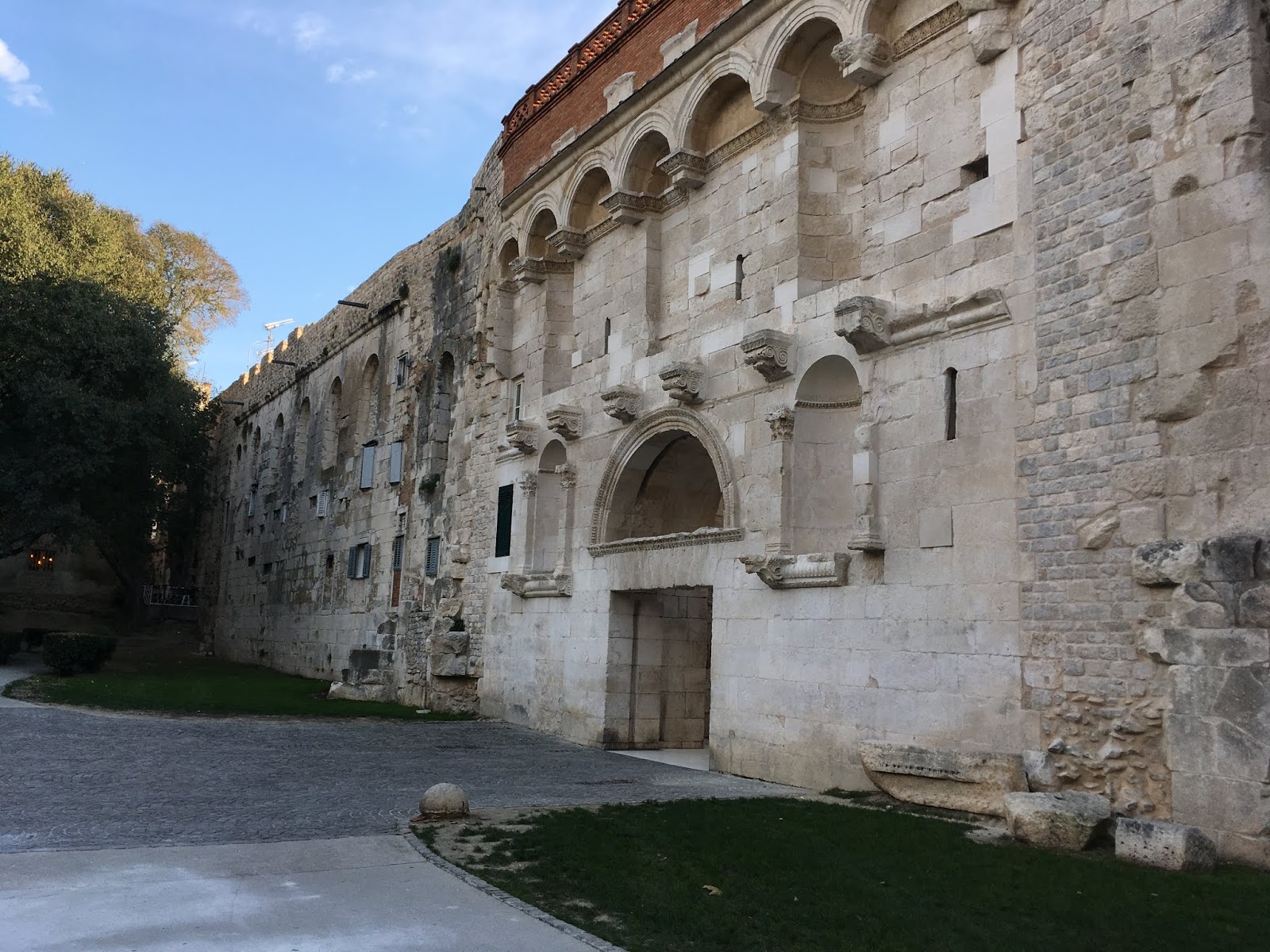
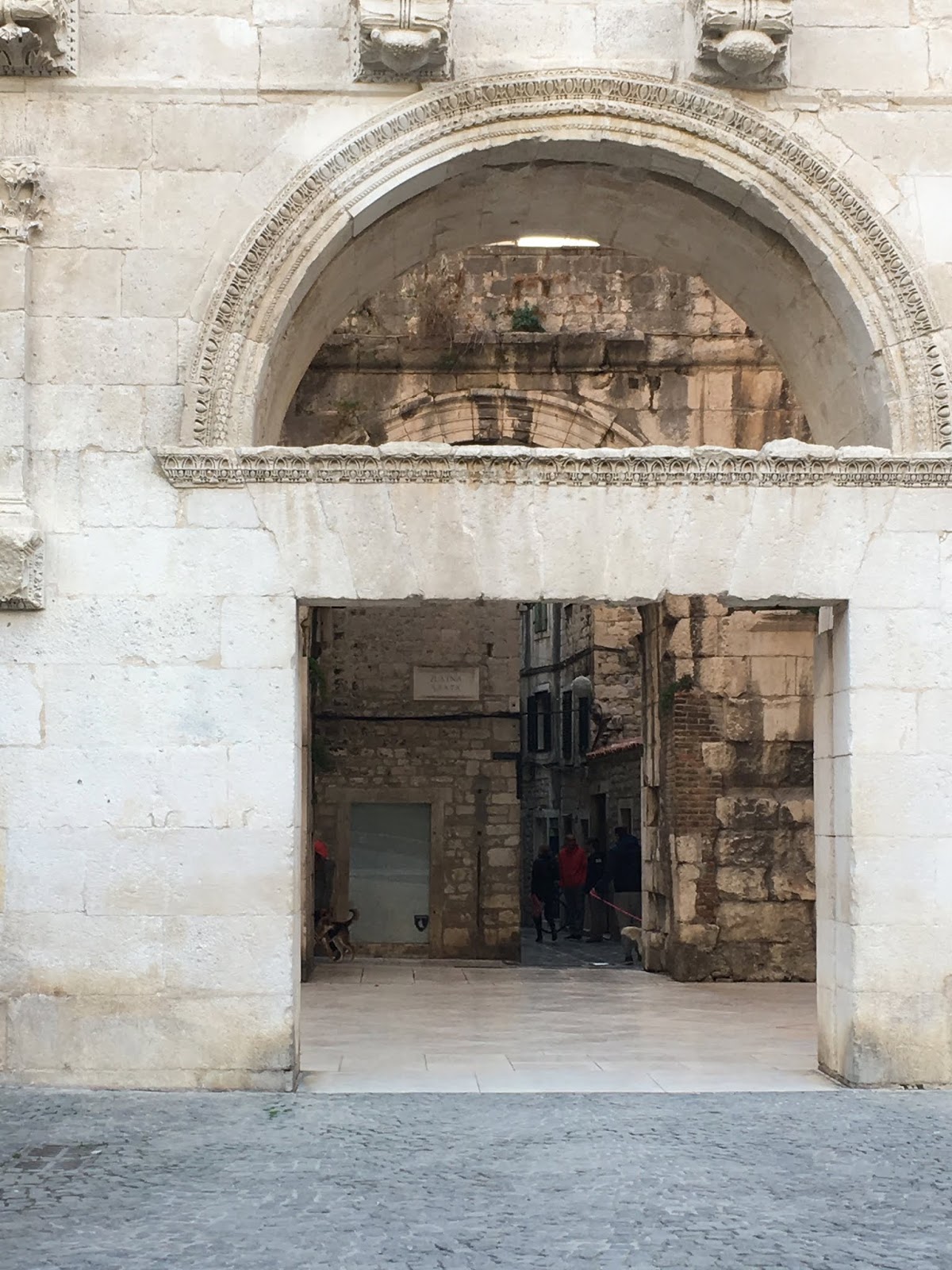
Diocletian was a 4th century Roman Emperor who  retired to Split, using his 401K in 305 AD. His retirement palace was used as a fixer upper by each subsequent generation, adding, tearing down and repurposing the original along the way.  The palace and later, medieval fortifications became a framework for the growing city, utilized for both residential and commercial.  The mausoleum became the cathedral, a Roman temple became a museum and the bed-chambers became a Konzum.

Everything else became either a Game of Thrones filming location, upscale shops or an Air B&B. We thought our Air B&B might have been the old palace bathroom at first, but then realized the smells  were due to the adjacent fresh fish market and sulphur hot springs, which are housed in Patricia\’s favorite building in Split.

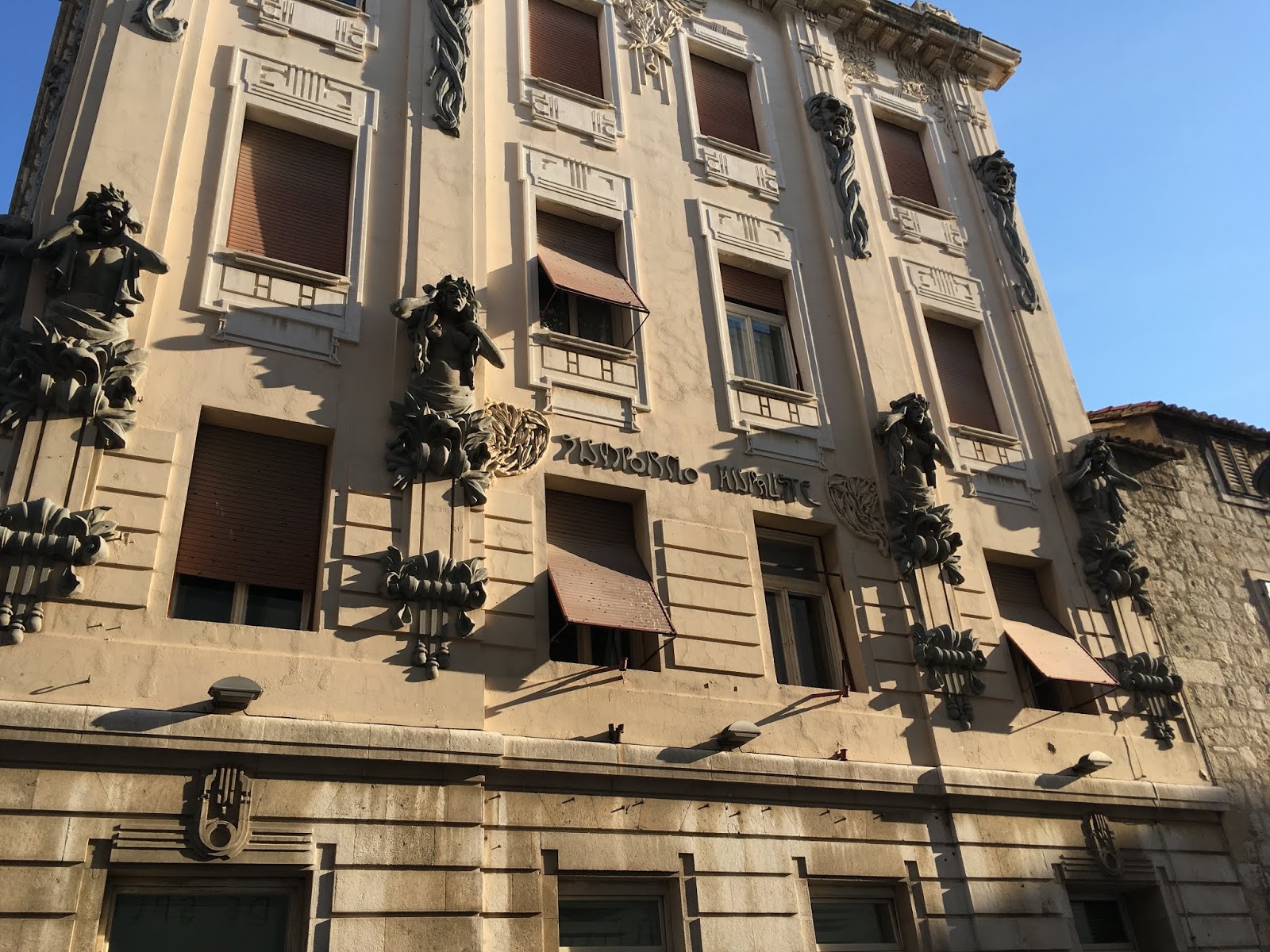
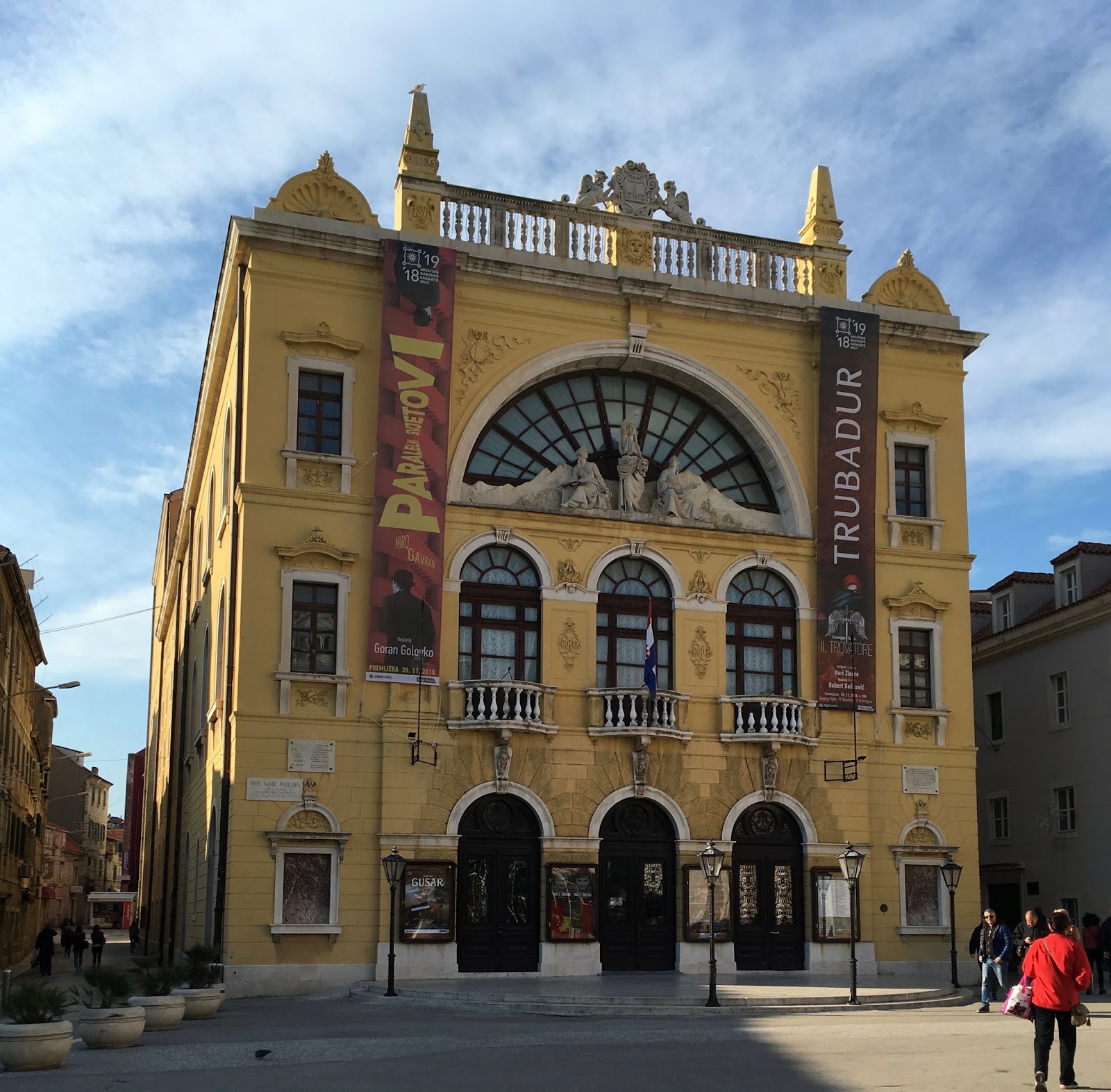
Outside of the old city, the Venetian and Austro-Hungarian influences are strongly felt with beautiful Secession-style architecture tempered with the benign neglect of communist years.

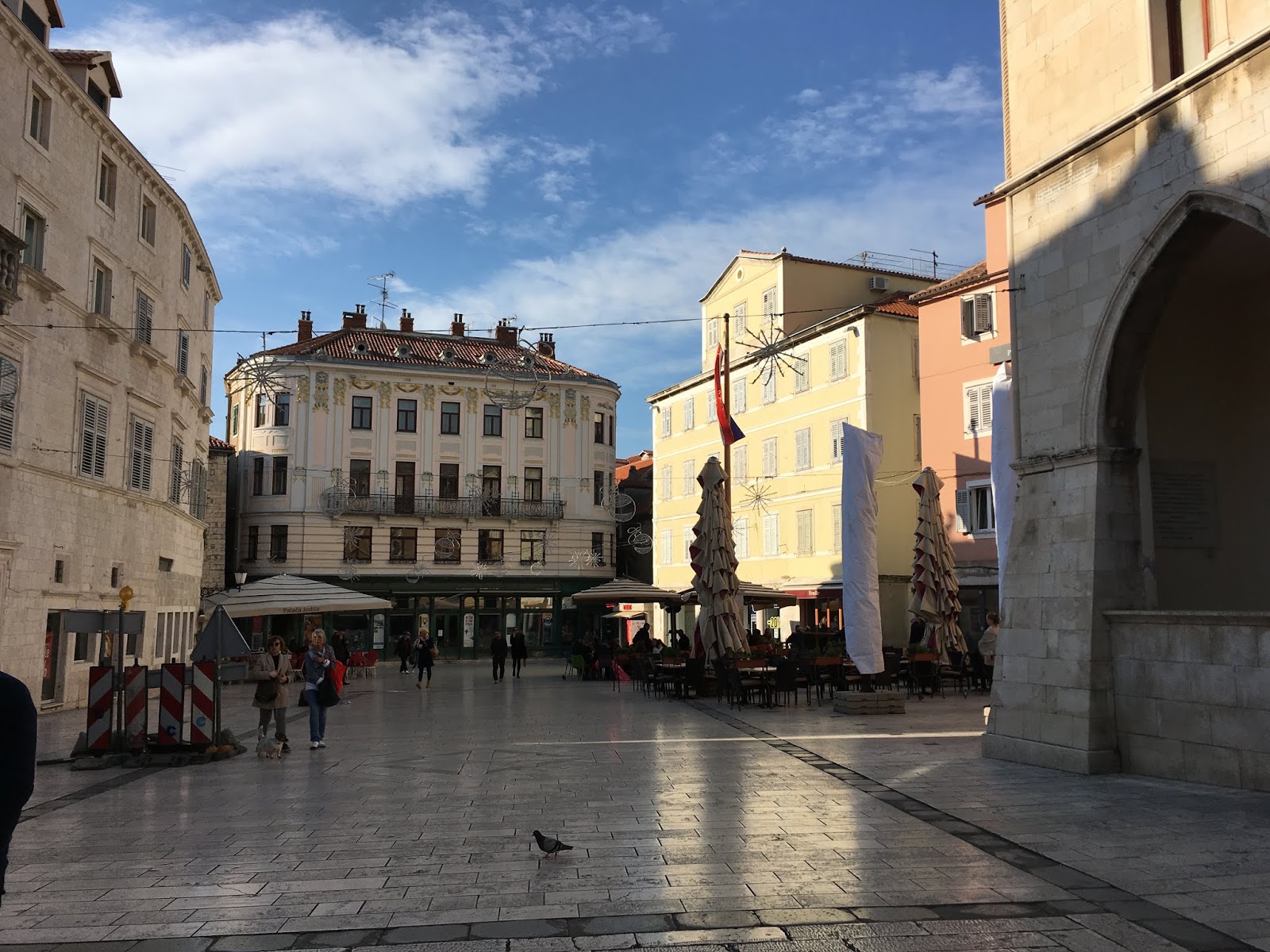
As we walked through the city, we appreciated it more.  There was this odd functional blend of every period, using what was there to fit the needs of the time.   While the beauty was evident in many places, sometimes we needed to squint to see it, obscured by multiple centuries of remodels.

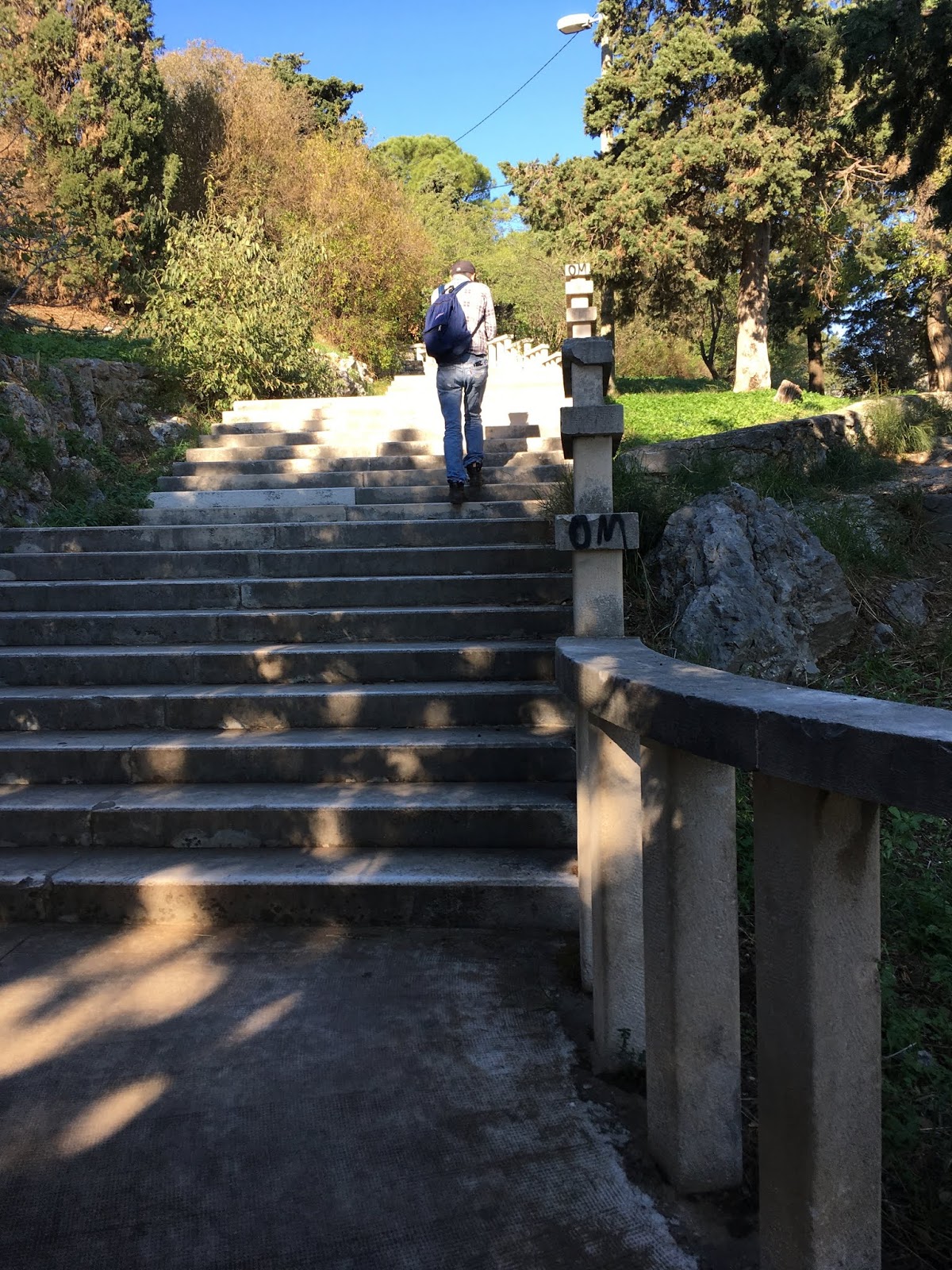
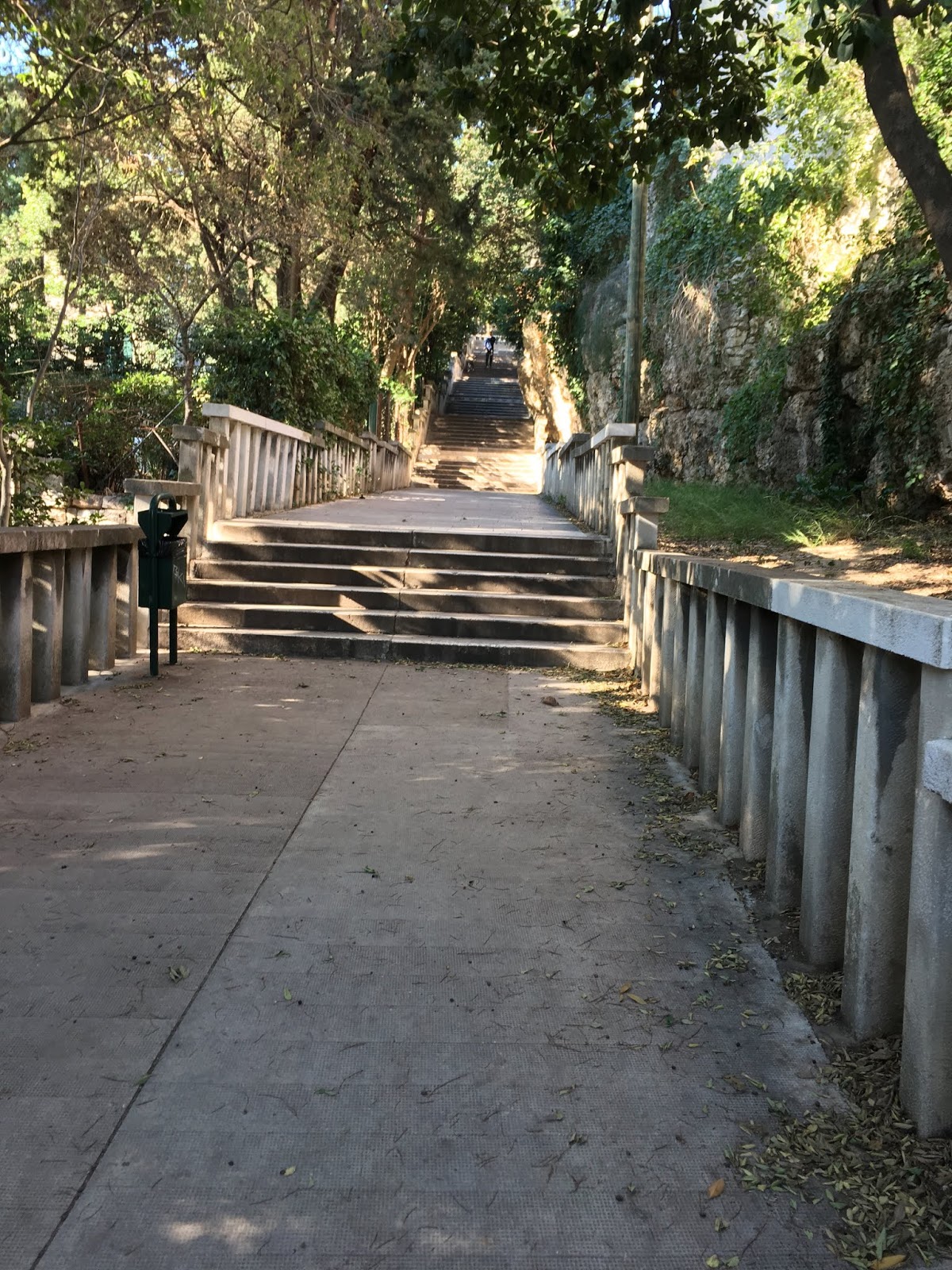
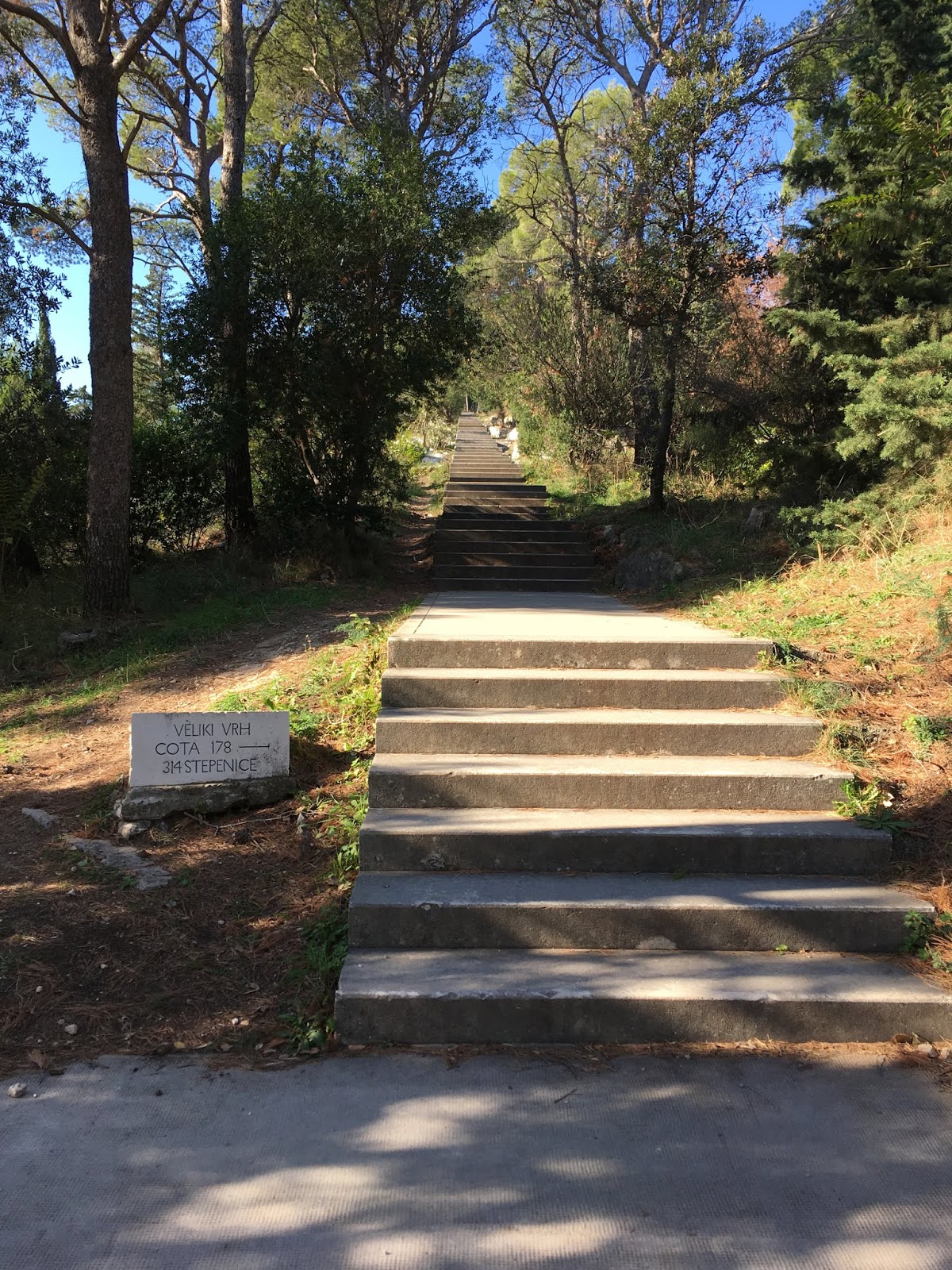
After our first day requisite walk through the city, the second day we hiked Marjan Hill, all 584 feet. 

Marjan Hill seen later that evening

We were joined by half of the city of Split, going for a Sunday morning walk. The inventor of the Fit-Bit must have been Croatian, because they seem to be obsessed with steps, always identifying how many steps until the destination.

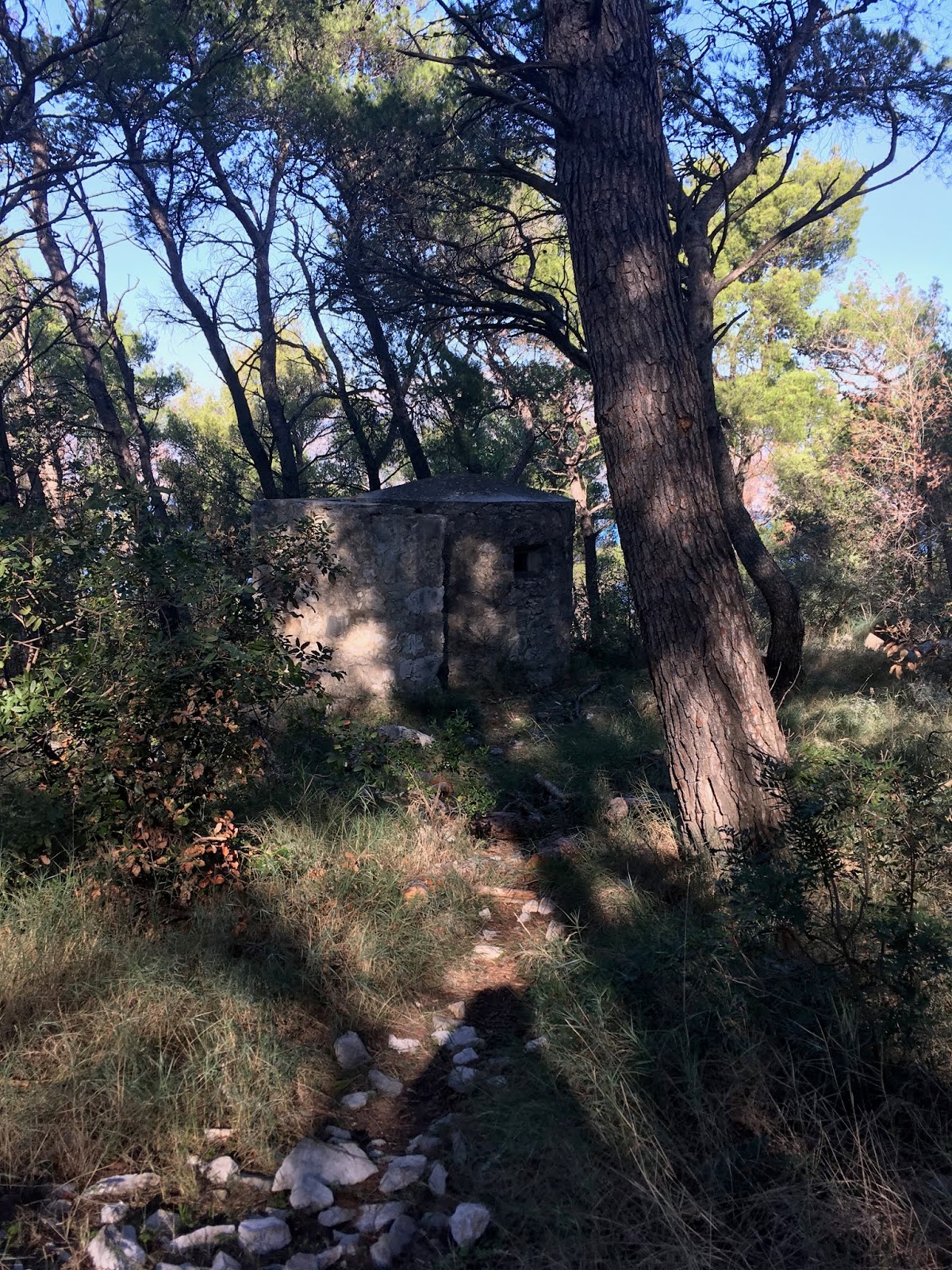
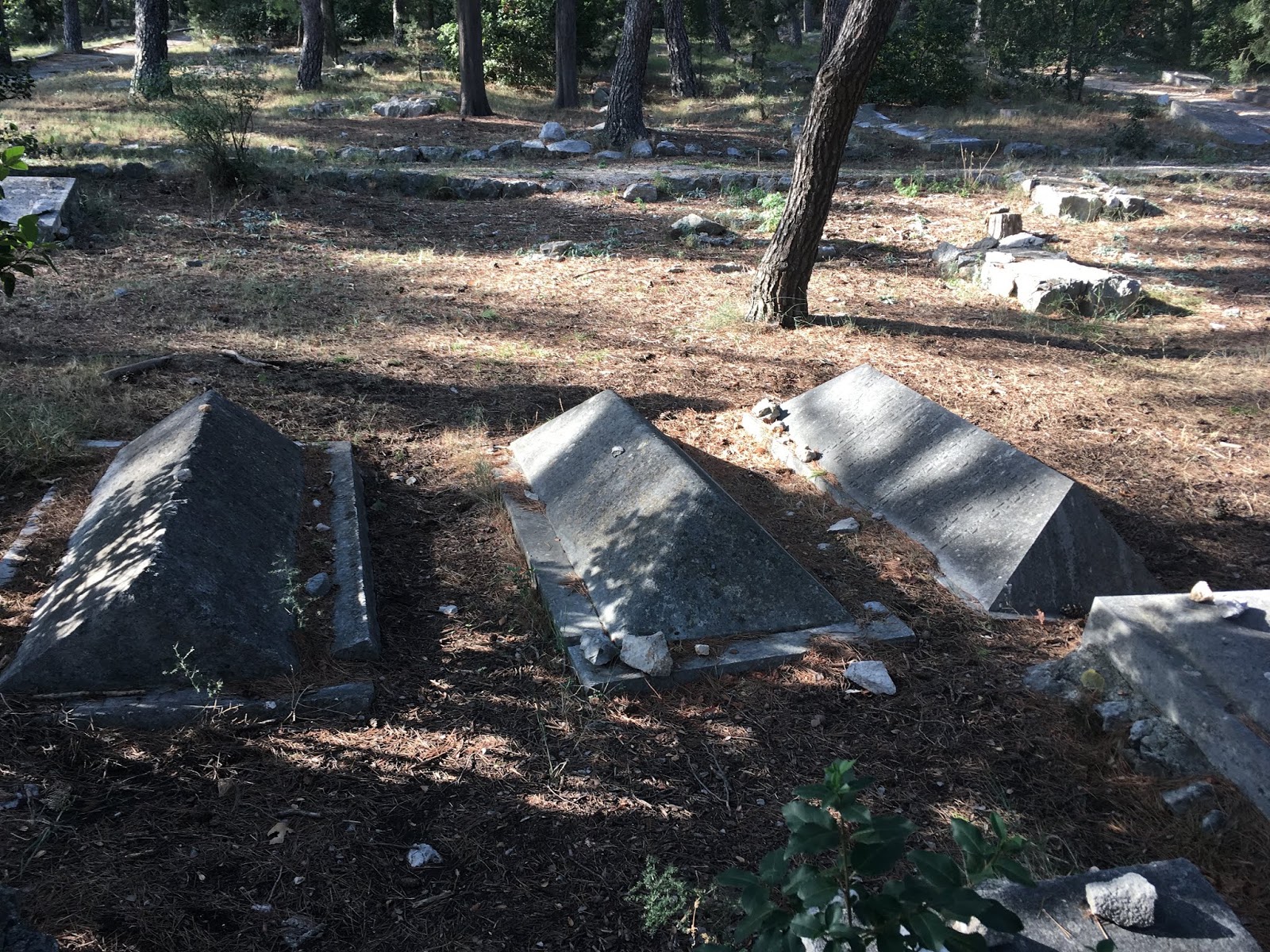
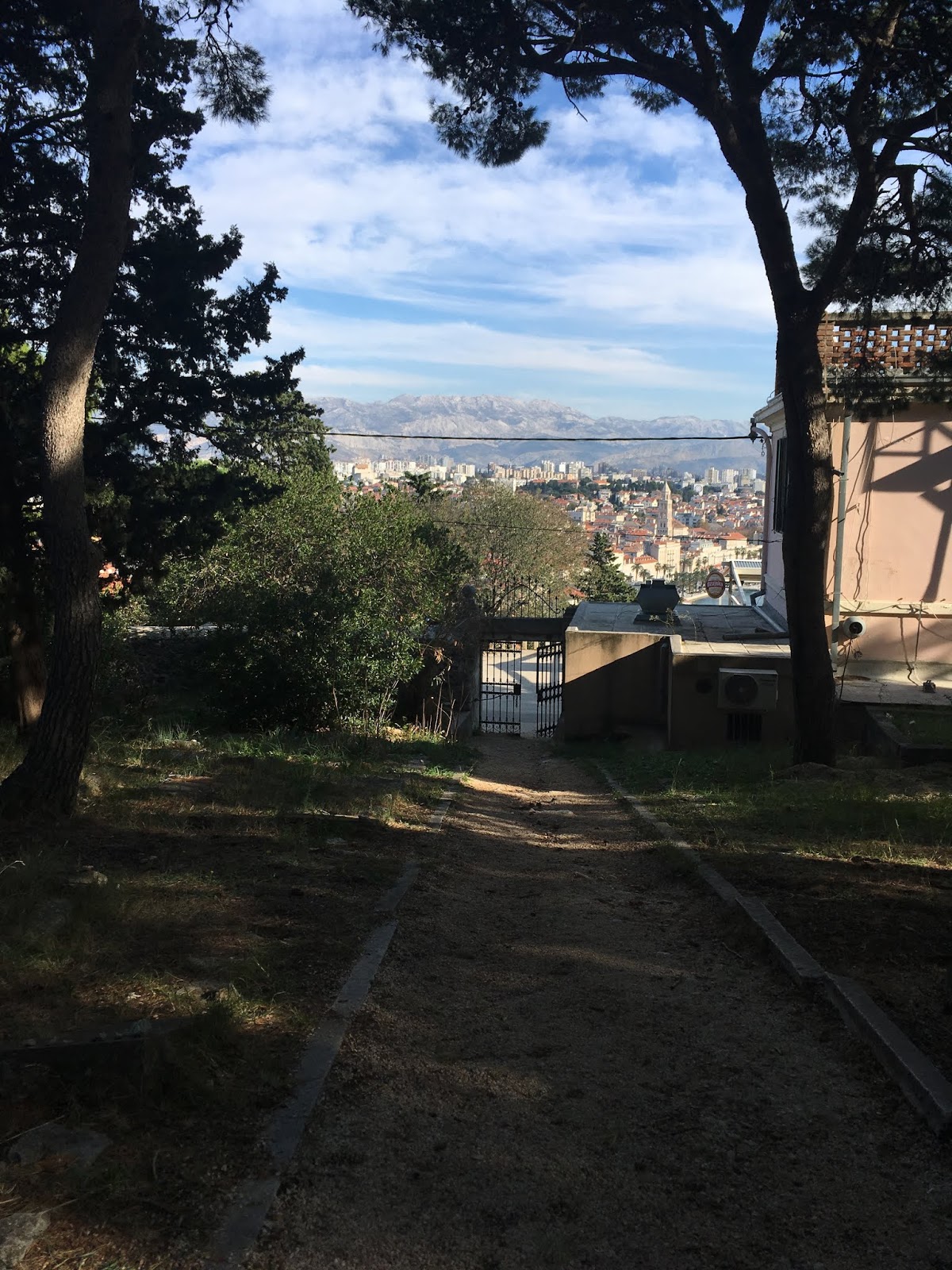
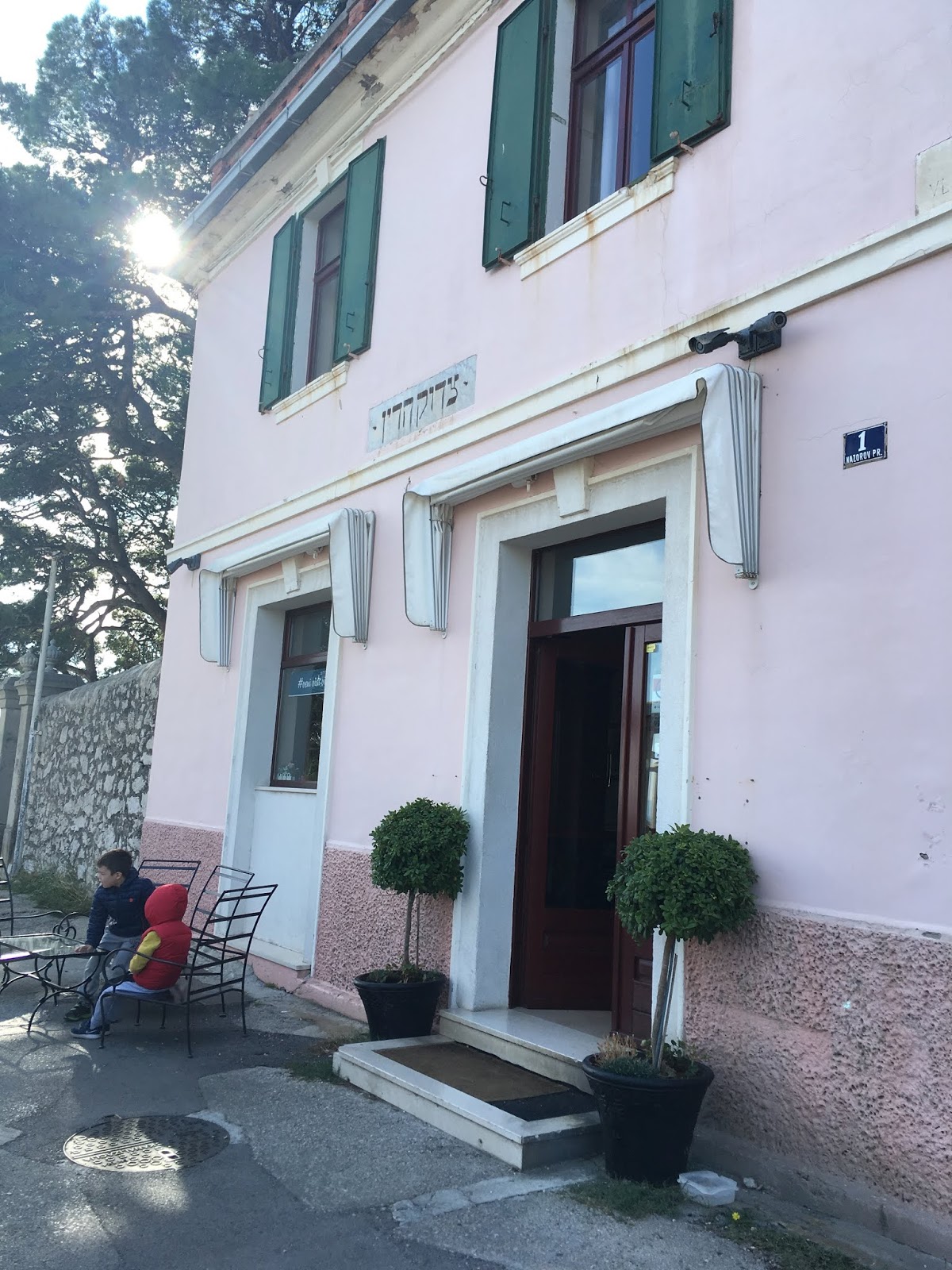
 Marjan is a lovely in-town forest with ancient hermitages (little rock hermit houses), 12th century St. Nicholas church (everywhere has at least one St. Nicholas church, he and Napoleon definitely got around) and the overgrown, Jewish cemetery.  Although the cemetery has not been used since 1945, the building is still in use, repurposed as a restaurant with a very nice view.

Hmm, why not used since 1945?

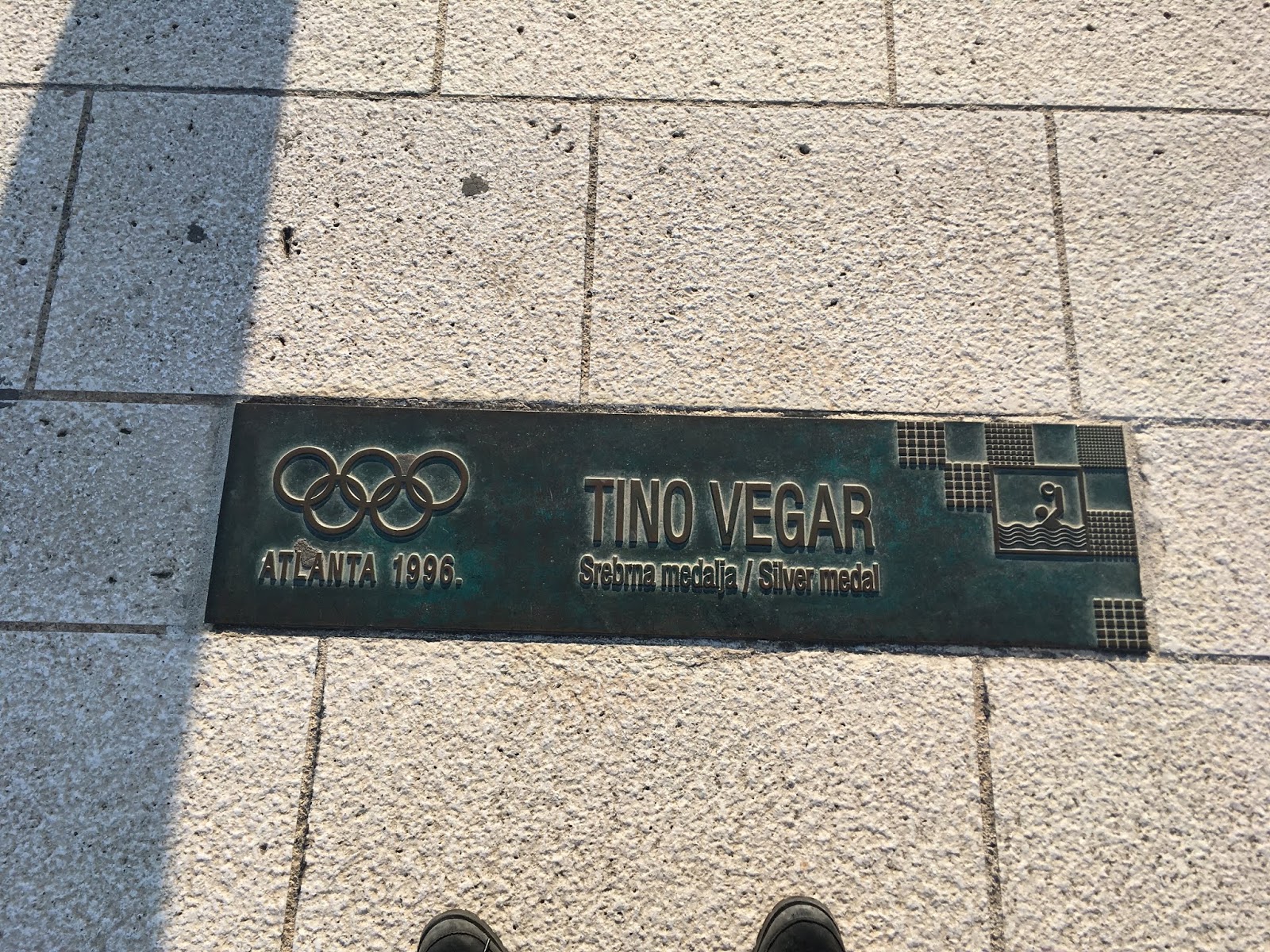
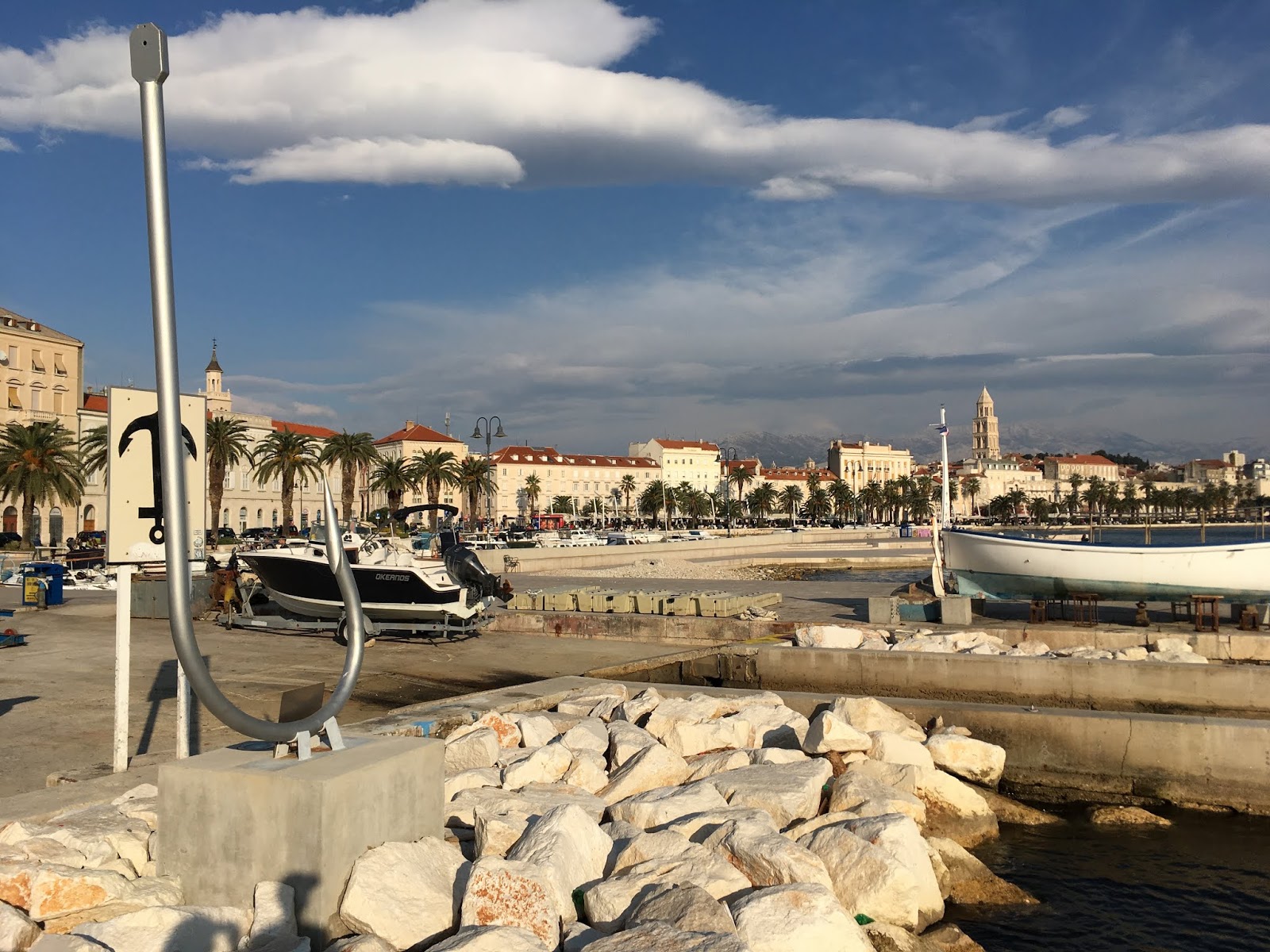
Split considers itself the \”sportiest city in Europe\” with more than  90 Olympic athletes hailing from Split.  Their Hollywood Walk of Fame is a series of plaques honoring Olympians along the very busy boardwalk, the Riva, along the marina.  Olympics, handball and water polo championships and almost winning the World cup this summer, losing in the finals to France.  Very impressive for a  27 year old country of about 4.2 million people-it must be the steps.

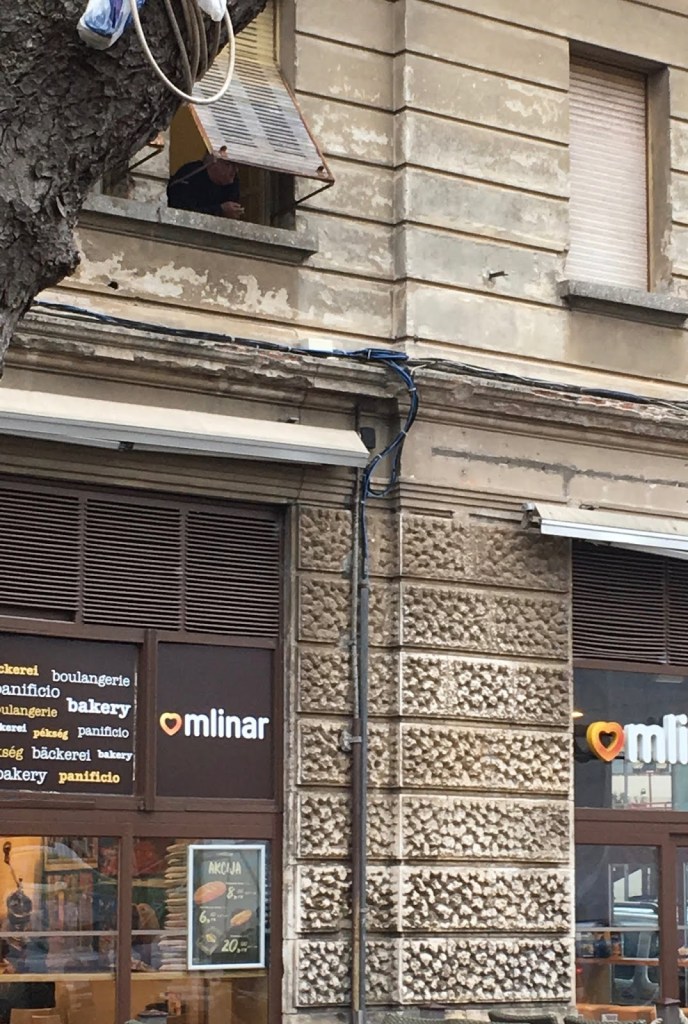
This week\’s photo of topless old man looking out window contemplating his life: \”I did 12 steps today.\”