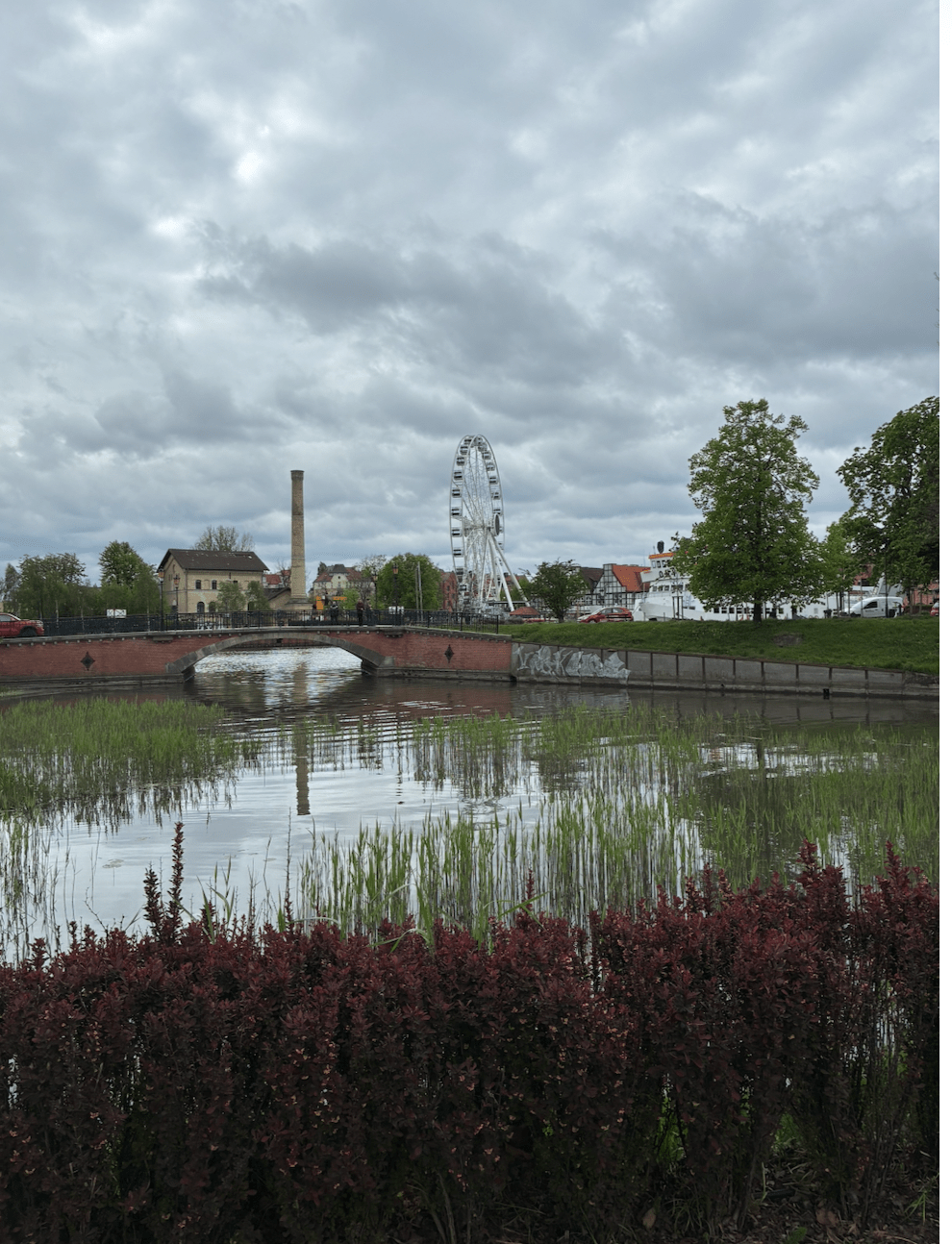
Dziękuje, pronounced Jen Koo Ya is thank you. As suggested by the mismatch of spelling and speaking for us English speakers, Polish was as difficult to attempt as the Cyrillic and Hebrew we attempted in the past. We always try to learn the basics- “good morning”, “hello”, “thank you”, “excuse me”. A lot of times, it feels a bit performative to do this, and usually the response is in near perfect English so it feels awkward, especially when everyone just says “hello” or “ciao”. But it was different in Poland. We got a surprised smile from the stoic Jubilat supermarket cashier and even better, our young train conductor gave us a solid “Niiiice” in response to our Dziękuję.
Our Poland reports probably sounded redundant. On the surface many things in Poland were repetitive, but the overlay of familiarity kind of made the unique things of each city stand out, like a splotch of color on a black and white background.
From 1794- 1918, Poland was ruled by others. After a brief 20 year of self rule, Poland was occupied by the Nazis in 1939, followed by Soviet control from 1945-1989. Since 1989, independence has been fluid- a totalitarian government followed by a more democratic, Western oriented one. Maybe it is just our perception, but Poland seems to be working out how to tell their story which makes sense since it is a very long and messy one. Sometimes, the story told defines Poland to include all cultures and ethnicities that have lived there and shaped it; including (but not limited to) Poles, Slavs, Germans, Roma, Jews, Ruthians (always mentioned, never knew who they were- Eastern Slavs https://en.wikipedia.org/wiki/Ruthenians).
Other times, Poland was rigidly defined; with the focus on the glory of pre-1790s Poland with a strong exclusive, nationalistic bent, like many countries now. With Poland’s history, and the horrors that occurred on their soil, we would have hoped for something else. We saw these differing narratives, in museums, memorials and most things tourist related.

How Poland sees itself also plays out in what is rebuilt, like Warsaw’s old town or what is remembered.
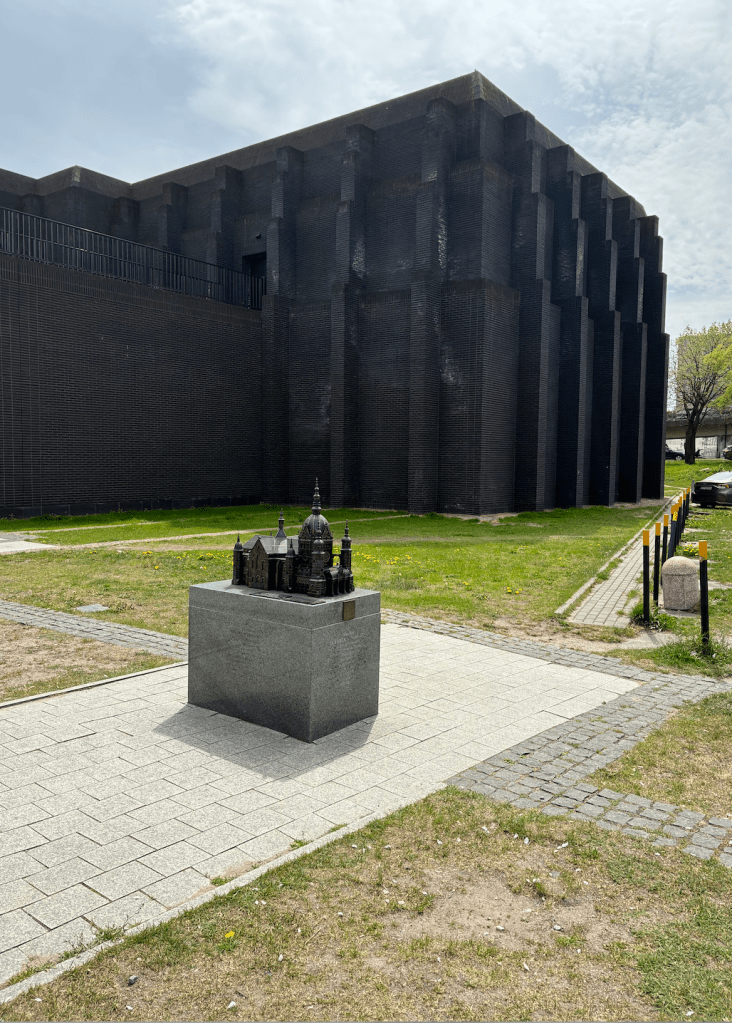
To us, Poland was a giant casserole, each bite emphasized a different ingredient. What did we think? Poland elicited an array of feelings, and we are still digesting them.
Other than its complicated history and beautiful cities, what stood out?
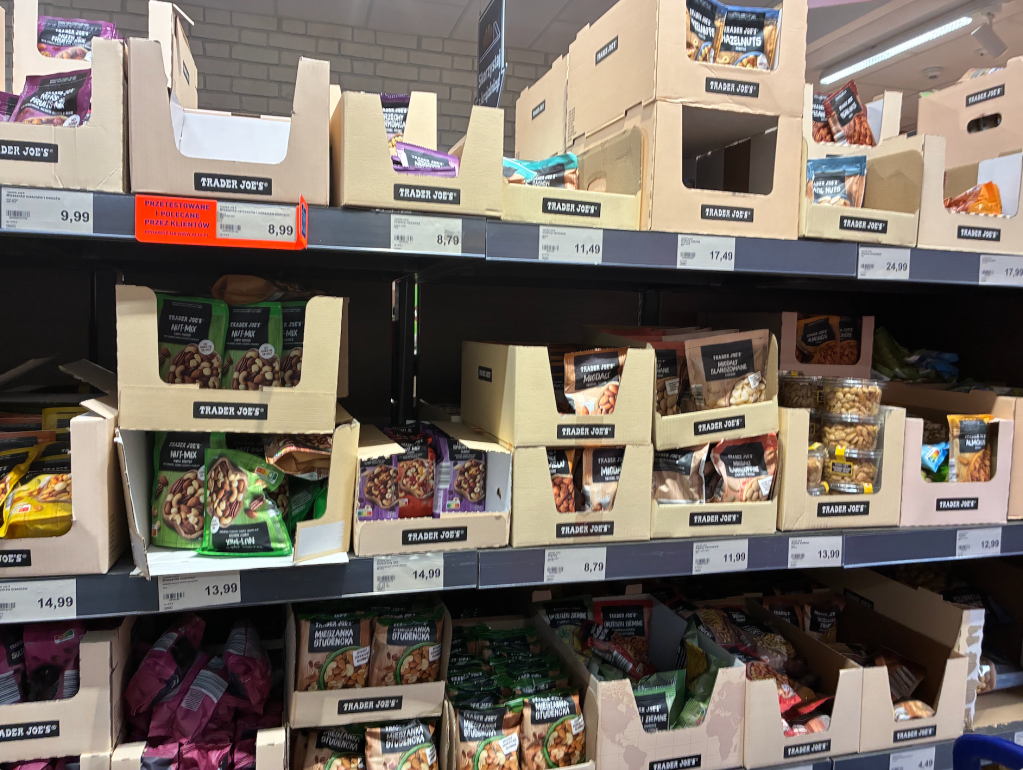
Supermarkets. Supermarkets were everywhere, in each neighborhood, easily walked to no matter where you were. Most small by US standards, some German chains; Lidl, Netto or Aldi (Owner of Trader Joe’s) that were moderately sized.
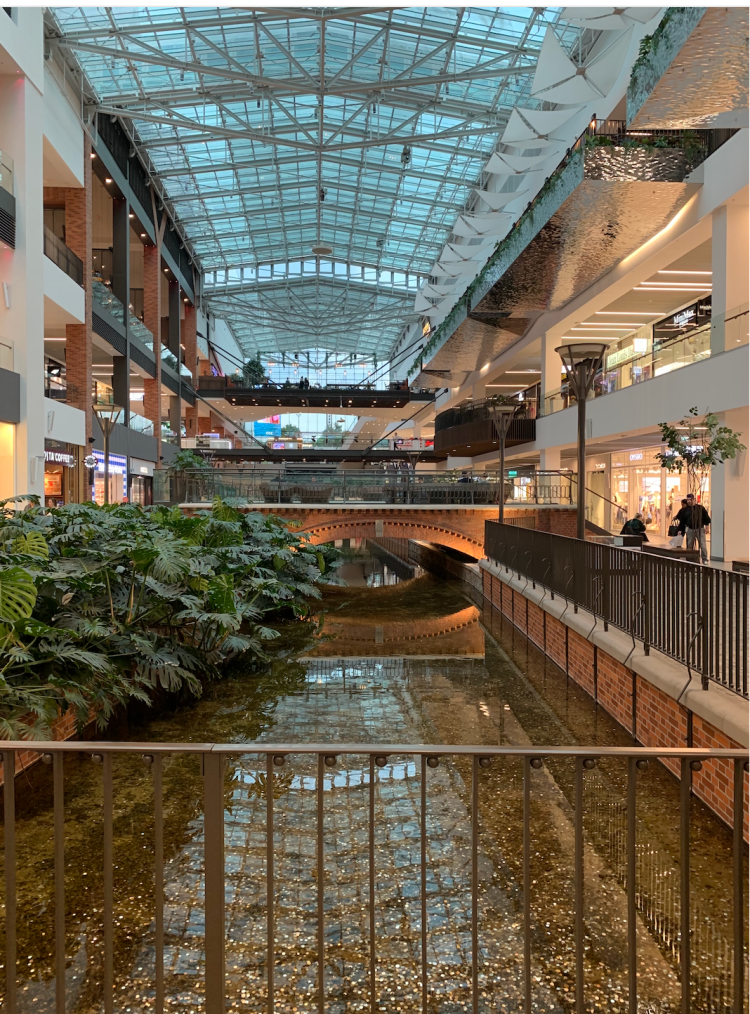
But occasionally we found ourselves in a giant Carrefour (French chain) usually in a mall (embarrassed to say how much we enjoyed encountering a Carrefour).
It was hard to find our beloved Kahuke in Poland. We discovered them in Estonia and ate them multiple times a day throughout the Baltics https://chosenfugue.xyz/2026/05/06/baltic-balagon/. This food geography reminded us that while the Baltics WERE part of Russia, Poland was not. Thankfully, although it was hard we did find them.
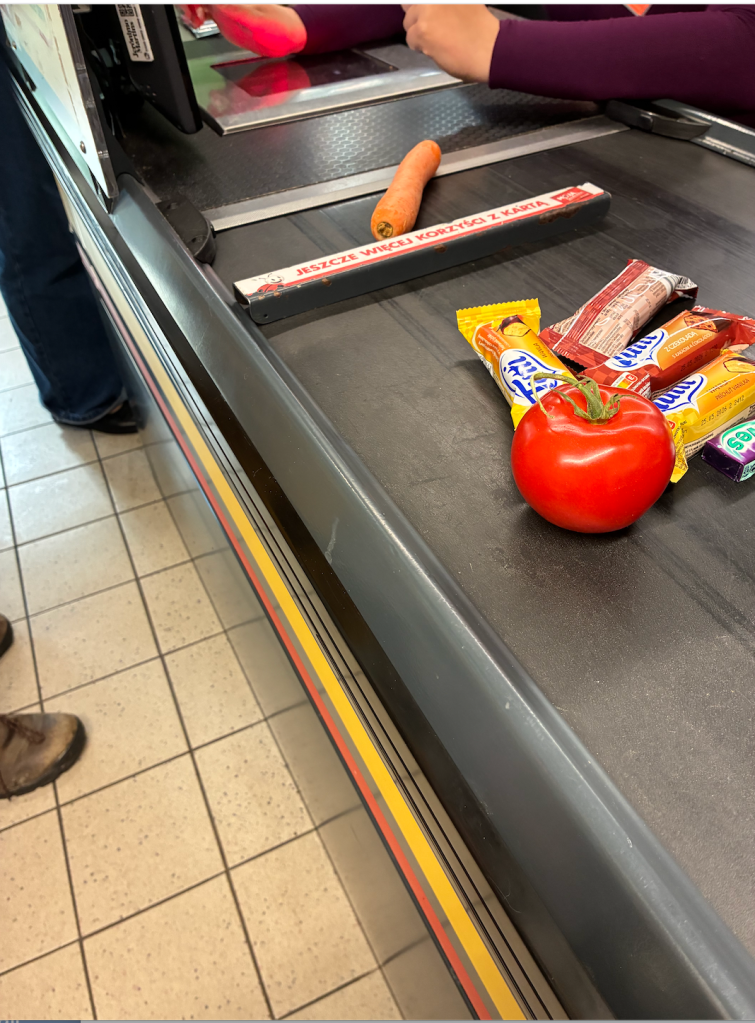
The market also was one of our last stops in Poland. Instead of Euros, Poland has its own currency, the Polish zloty, the PLN, which we enjoyed as those are Patricia’s initials, so everything at the market had a PLN value. Our goal was to leave Poland with just our PLN. The last day was spent doing market math. We were down to 9.72 zlotys (about $2.56 USD). Nick’s math word problem was to spend 9.72 PLN with the purchase to include our last kahukes, Airwaves gum (with flavors not seen elsewhere), while calculating in the 5% tax, the confusion of “on sale” item tags (3 for the price of 2, buy 7 get one free). To add to the arithmetic level of difficulty, Nick decided to purchase fruit and/or vegetables of an exact weight, knowing the price per kilogram, but utilizing a poorly calibrated (not exactly zeroing) scale. The final answer was……. Nick purchased a single carrot (which elicited an appreciative smirk from the cashier). He then handed over the change to Patricia to purchase the mathematically determined 4 kahukes (on sale) 1 pack of Airwaves and a tomato of appropriate weight. 9.62 PLN’s spent, 0.10 zloty in change which Nick attributed to a vegetable scale error. The remainder 10 zloty cents (.026 US cents) were given to a guy drinking a can of beer in front of the store.
We did explore Polish foods, as much as possible for us to do. We define authentic food as what we find at the market. In contrast with US, Poland’s prepared soups were frozen not canned, so we had to try some, with added vegetables and sour cream; corn thins, walnut pate, mustard and cheese along side.
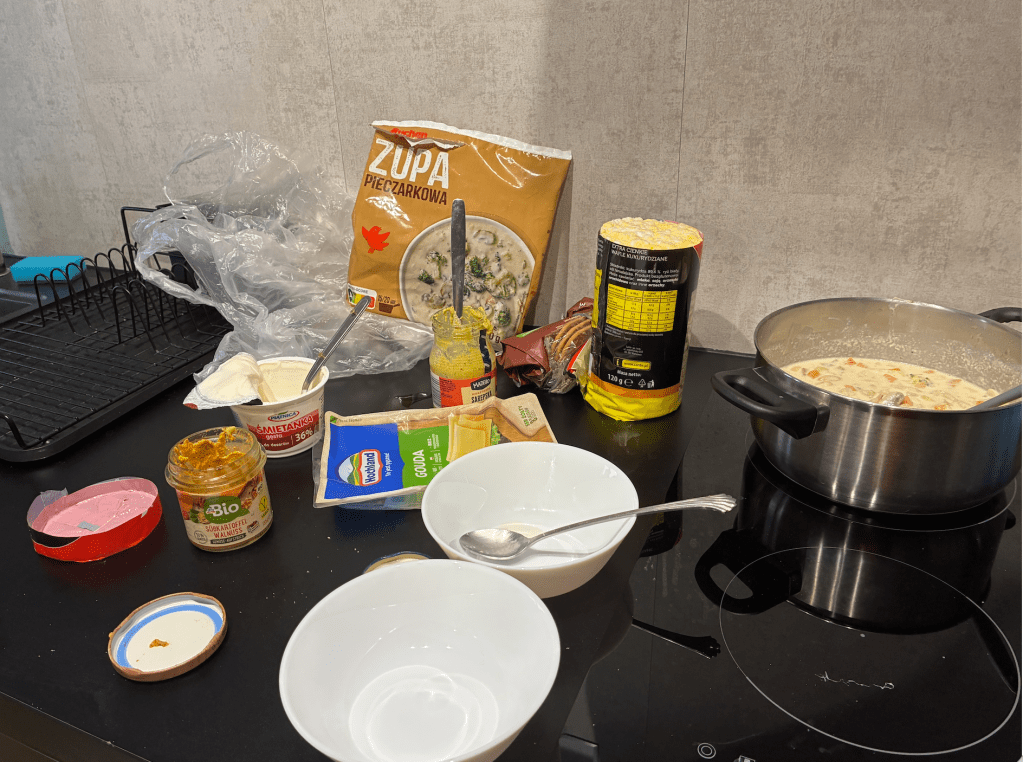
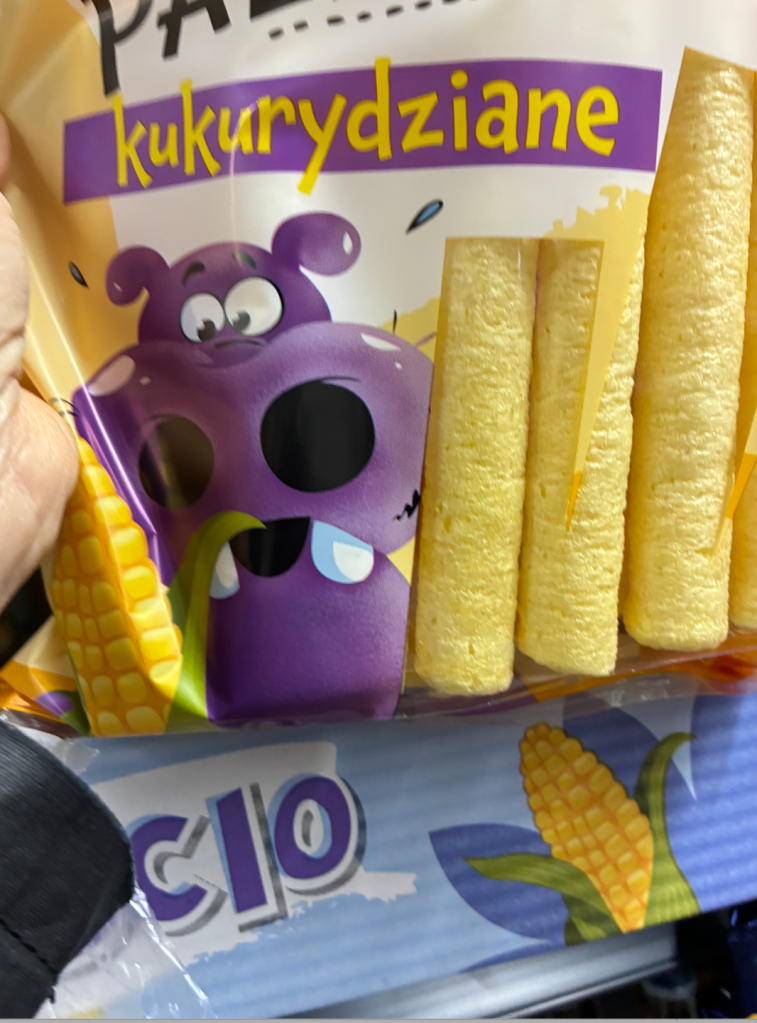
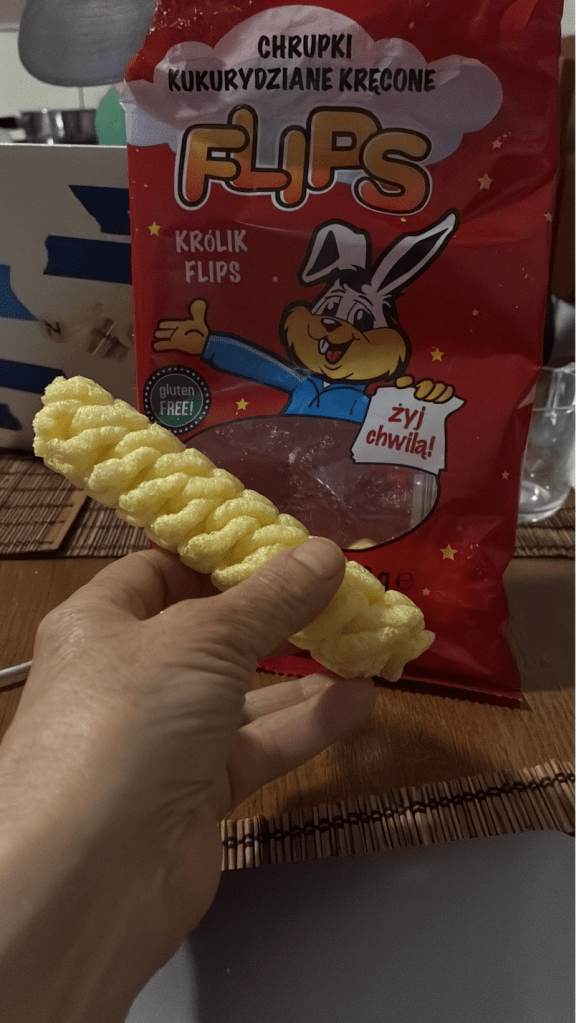
Like it’s neighbor Lithuania, a lot of basic (at least the non-meat) Polish food looked like typical Jewish-American food although Patricia’s favorite Polish food were kukurydziane
Also like their Baltic neighbors, Poland showed respect for street lights and crosswalks. You just look at a crosswalk and the cars stop for you. Everywhere sidewalks and bike paths are separated, a big plus for us. Transportation was great. Trains and buses were plentiful, reasonably priced and on time. Often there was no difference in price or duration between the two. We needed to take a car (a taxi) just once, to go to and from the train station to Treblinka. It felt icky that other than Auschwitz, many of these sites were hard to get to; somewhat understandable since they were usually out of the way.
Surprises.
We saw multiple walks of fame.
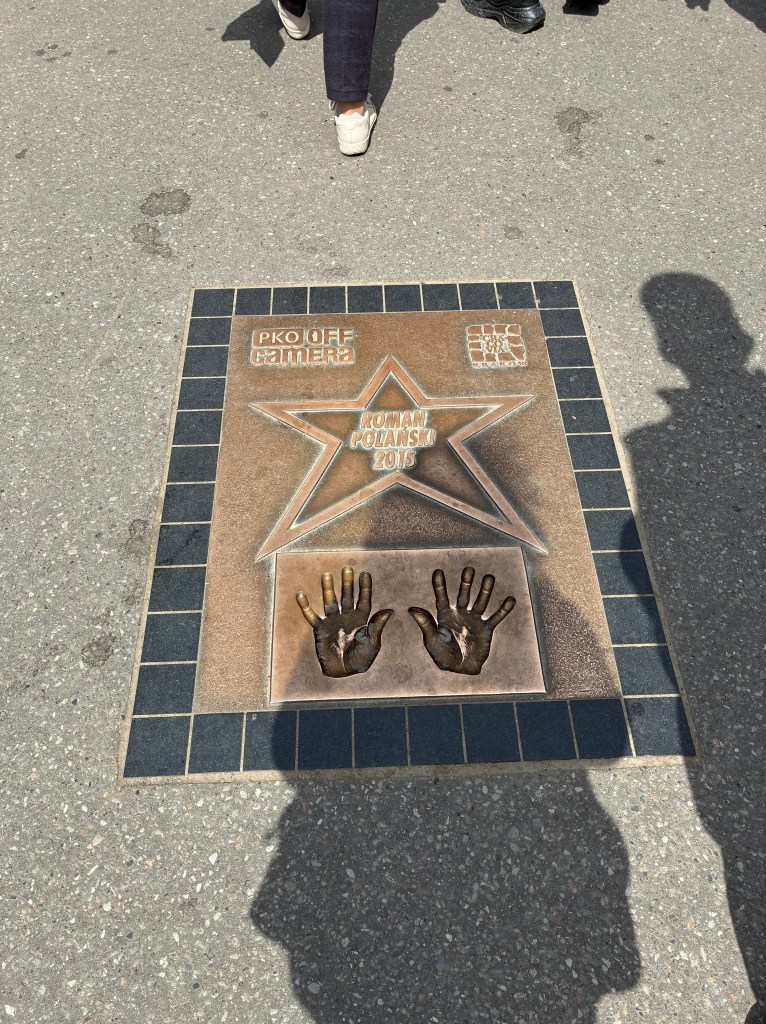
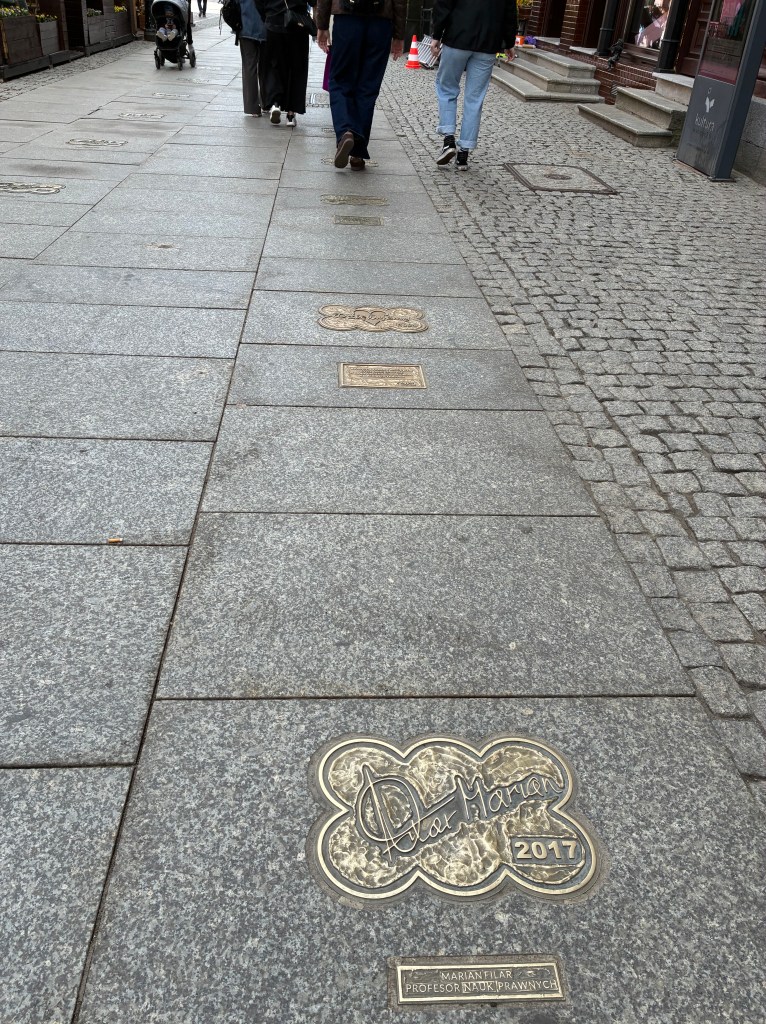
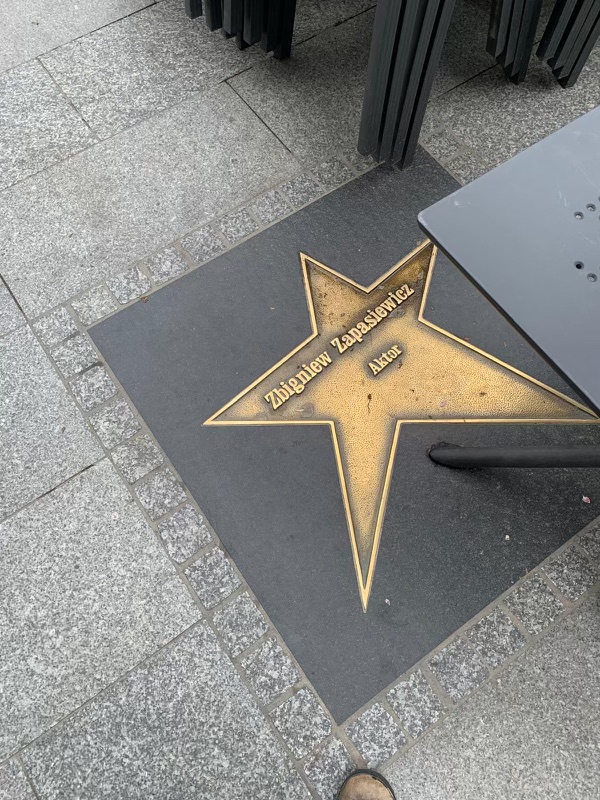
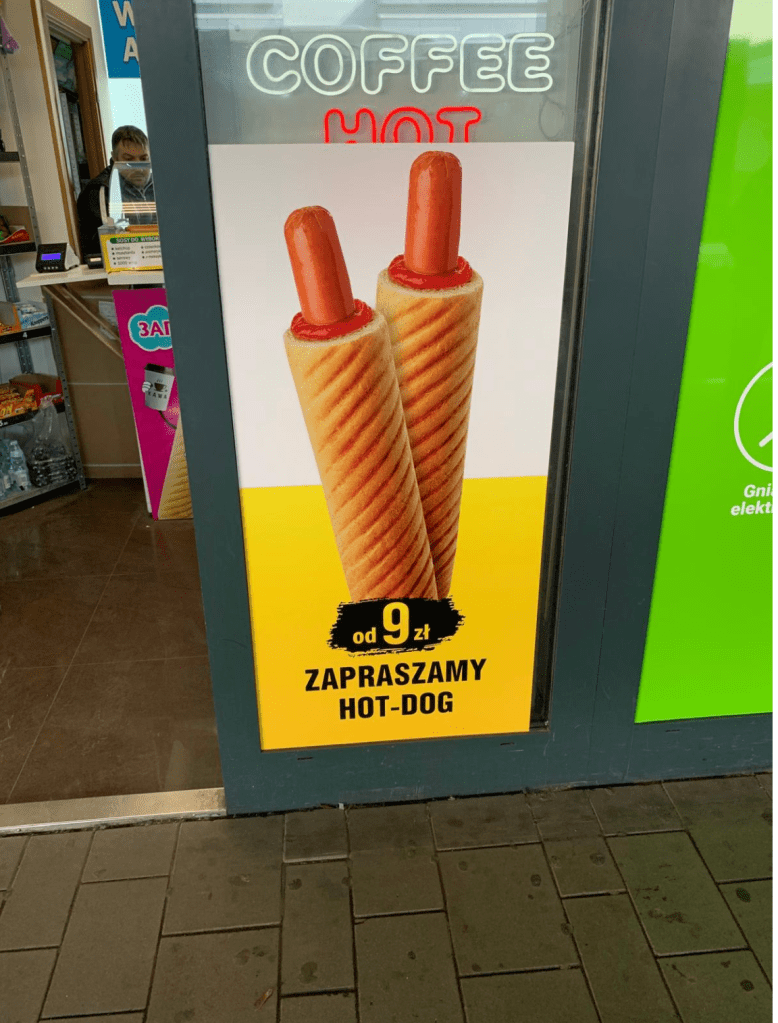
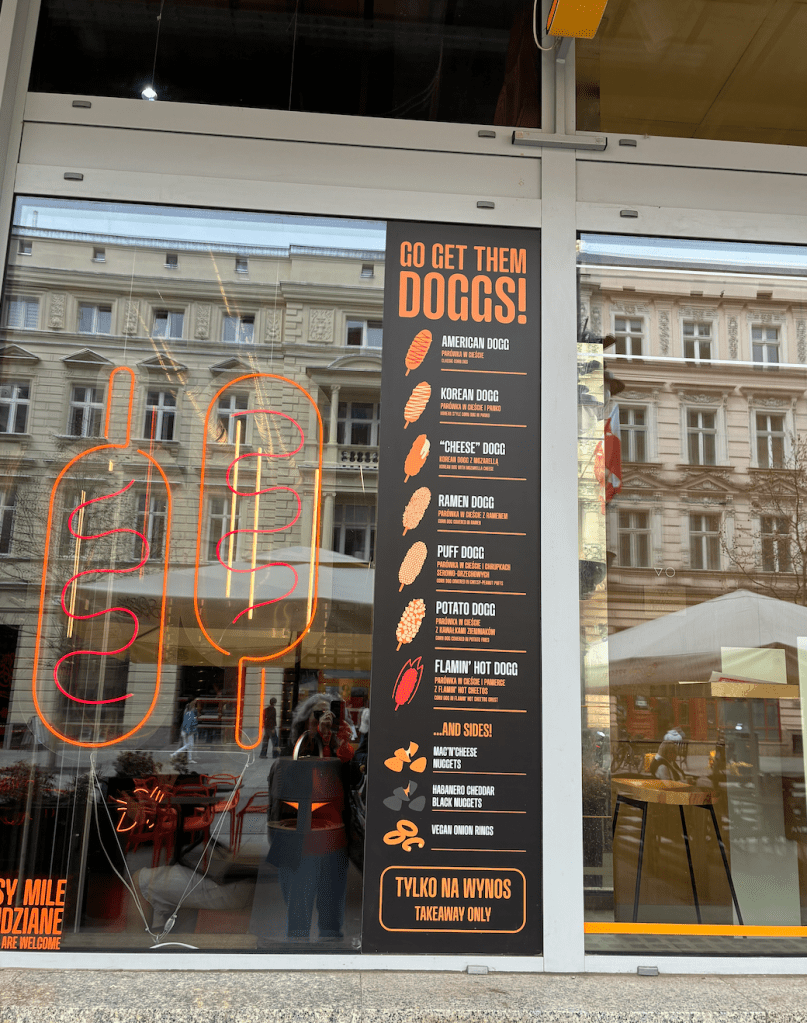
Everyone always seemed to be eating hot dogs or ice cream (especially on the holiday weekend).
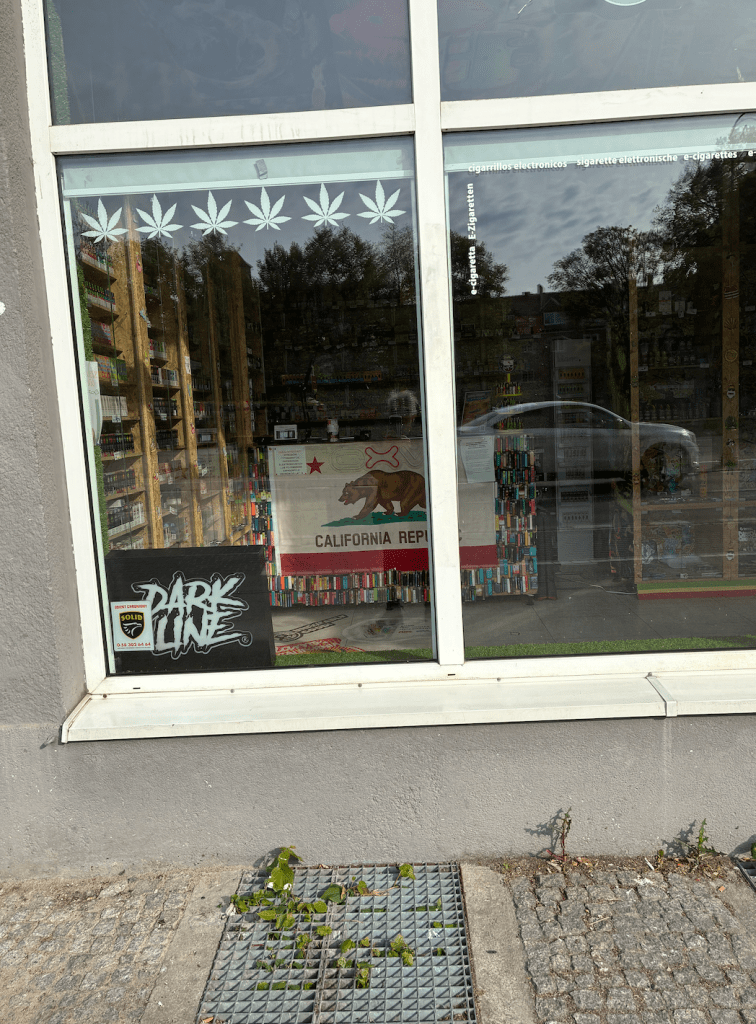
California was represented, multiple vape/smoke shops bore the bear flag.
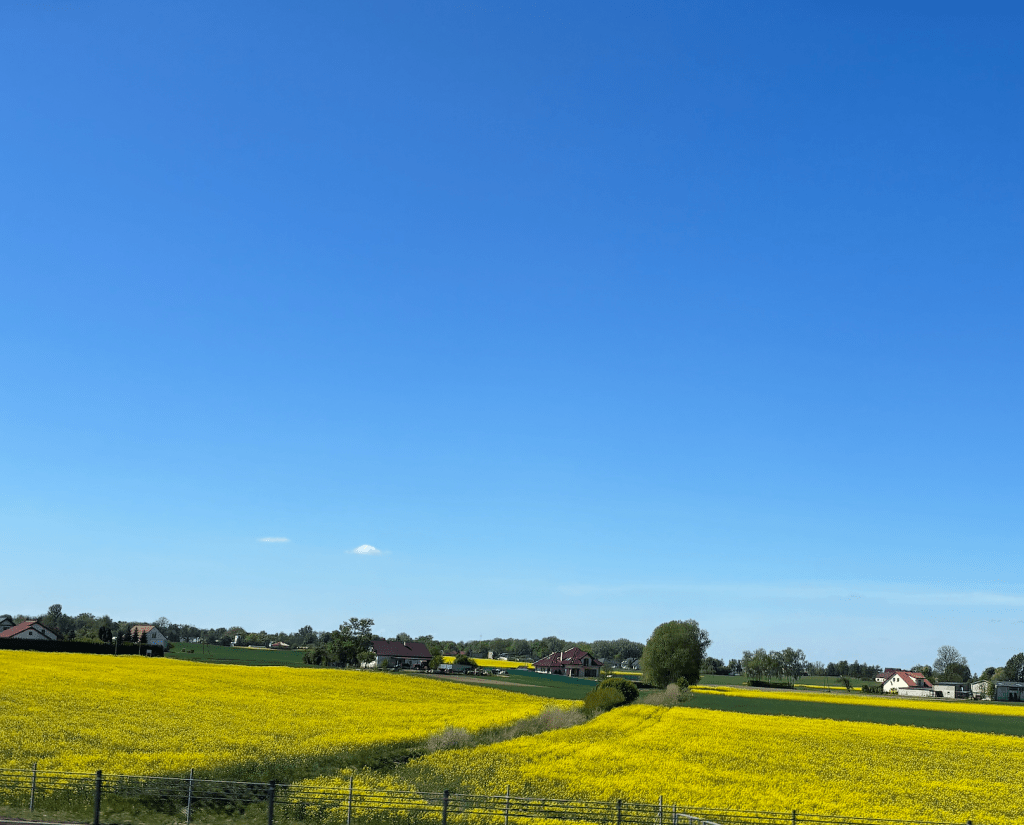
We were also surprised by the fields and fields of yellow rapeseed (canola) viewed from our train or bus windows. These were a constant sight during our three weeks in Poland as we crossed and recrossed the Vistula river going from city to city.
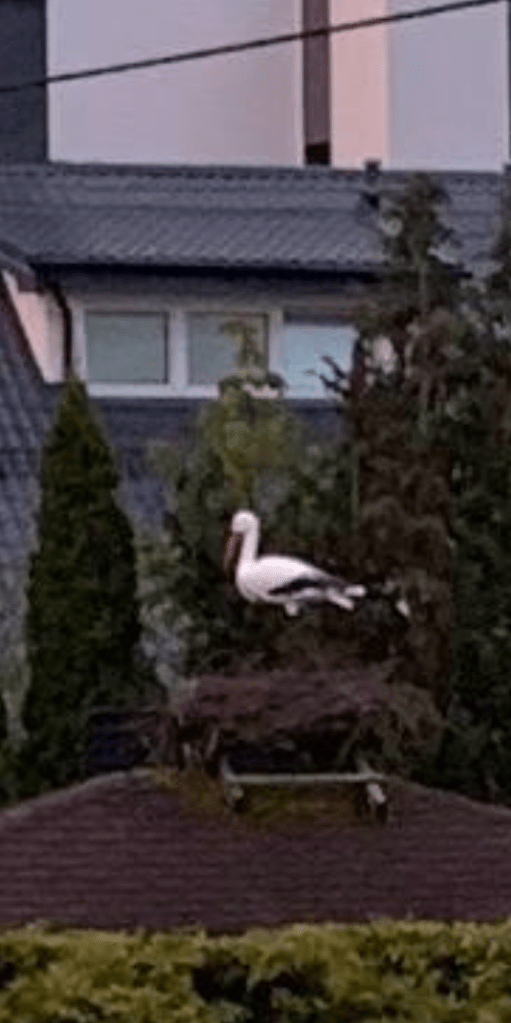
Our last surprises were as we were walking at dawn to the Gdansk airport from our nearby hotel. A lovely goodbye from an equally early rising stork, still in it’s nest.
An even more memorable good bye was waiting for us at the airport, a morning mist rainbow
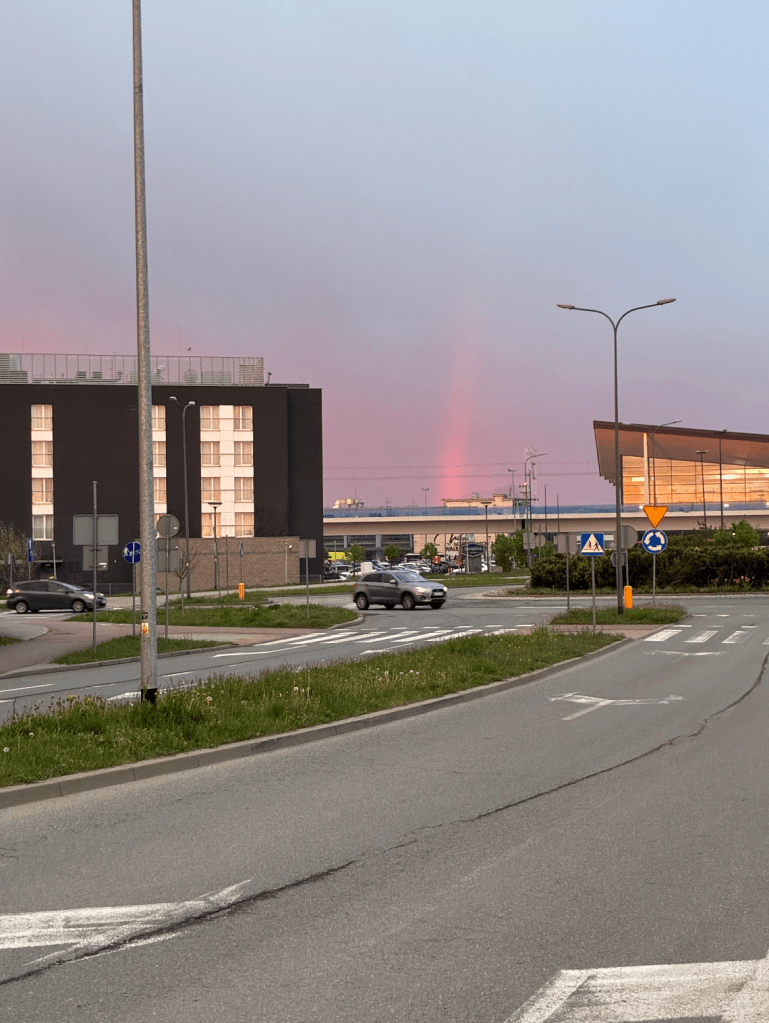
Dziękuję Polska!

