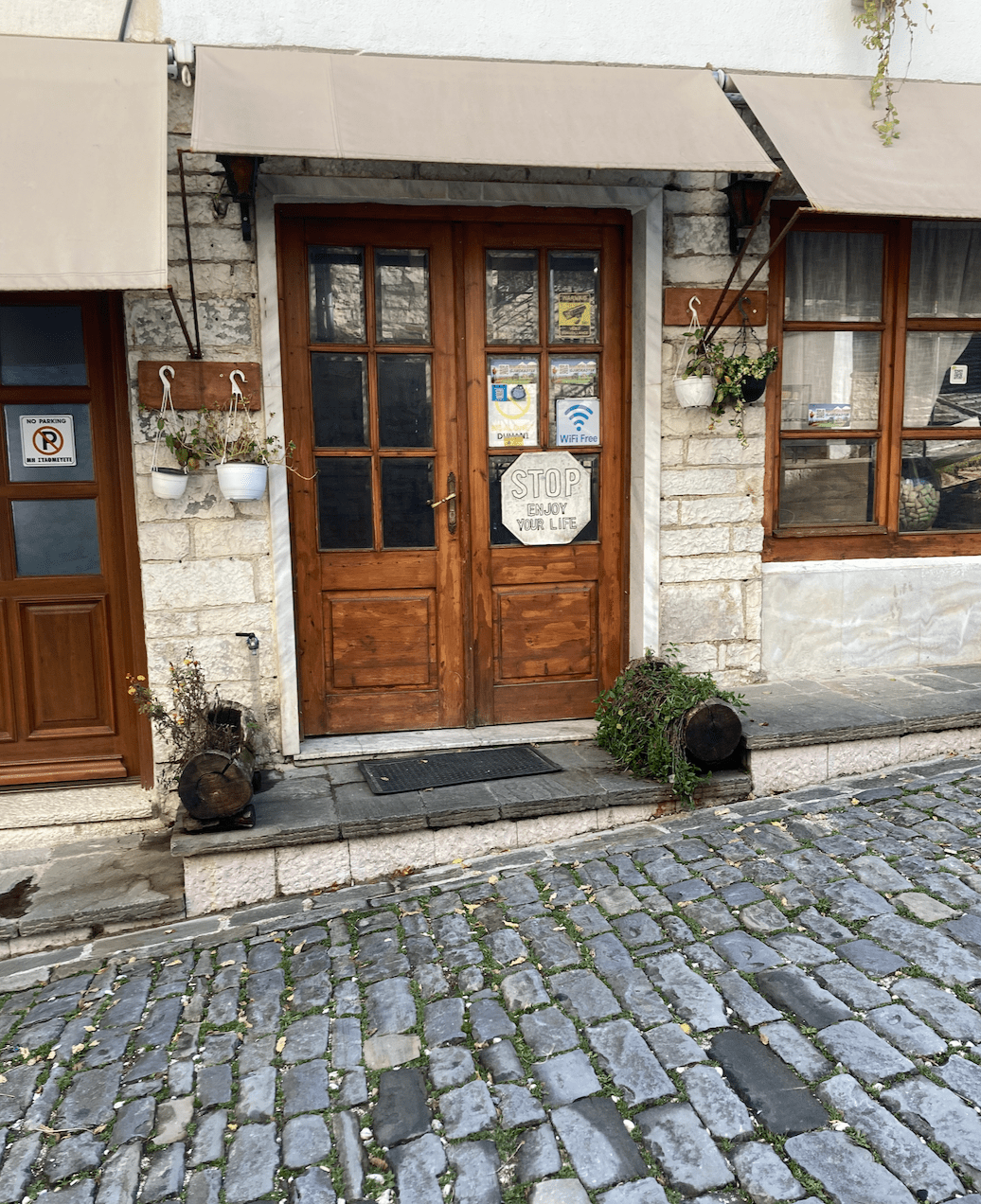
There’s a degree of inherent awkwardness to foreign travel, and we took it up a notch in Albania. Simple conversations, grocery shopping, figuring out other countries appliances. Anything can turn strange, and everything turned strange in Albania. That’s a part of the experience we really enjoy.
Since there are virtually no trains in Albania, our only option to get to our next stop, Greece, was by bus. We truly enjoyed Tirana and were not ready to leave Albania. We had heard the coast of Albania was amazing, the beaches were being strongly promoted as the Albanian Riviera, it was January, but why not go?
We decided to work our way down towards the Greek border by first attempting the intercity bus from Tirana to the nearby coastal town of Durres. Sounded straightforward, as it was only 25 miles away. The Tourist Information Center agent gave us guidance and assurance that our plan to head south to Greece via the Albanian bus system was indeed sound and straightforward. She also awkwardly mentioned that she had heard that the LA fires (it was January 2025, the LA fires were raging) were started deliberately by homeowners so they could build new nicer homes. Conspiracy theories everywhere. This should have been our first clue that we shouldn’t trust the Tourist Information Center.
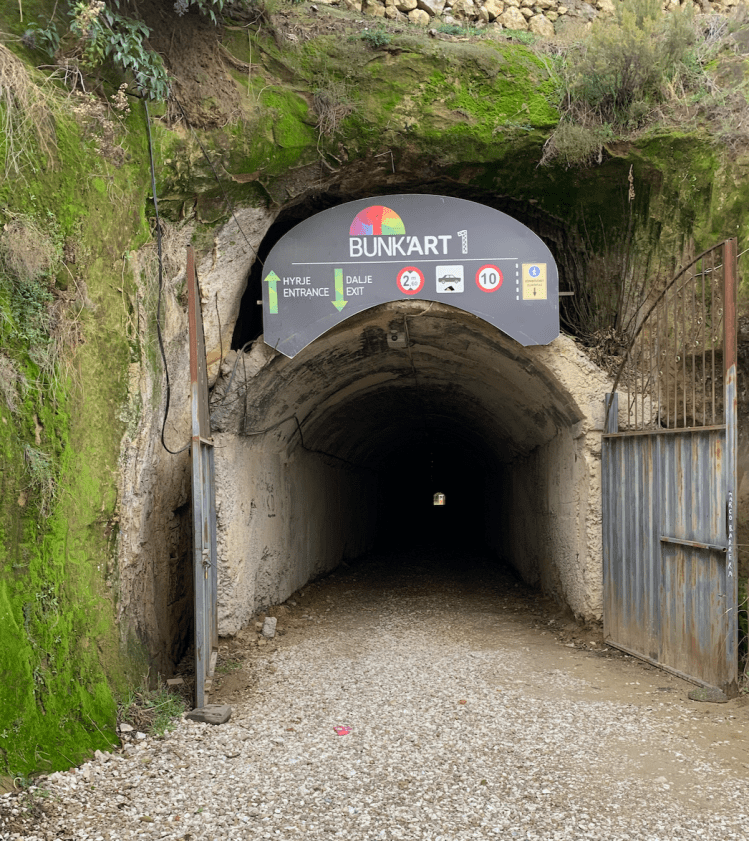
So, we headed out to Durres. We quickly learned that the bus system in Albania is arbitrary and we were clueless (but, we knew that). They do not follow any listed schedule, not online or posted at a bus depot. Actually, bus depots, were empty lots or a spot on the street, maybe identified by a food stand. We took a regular city bus to the edge of Tirana, fortunately, a local rider, an older woman with shopping bags told us where to get off – without us even needing to ask, she knew (otherwise we may have ended up in a bunker in the hills). It was a large lot with buses coming and going, white minibuses/vans, food stands, and multiple guys hustling around trying to convince us to let them take us the final 24 miles to Durres. Everything had to be in cash (in Albanian Leks which convert to about 1/100th of a dollar, so 100 L equaled 1 US dollar). We were able to bypass the hustlers find a bus, not the bus we were looking for, but still headed to Durres.
Durres in Duress.
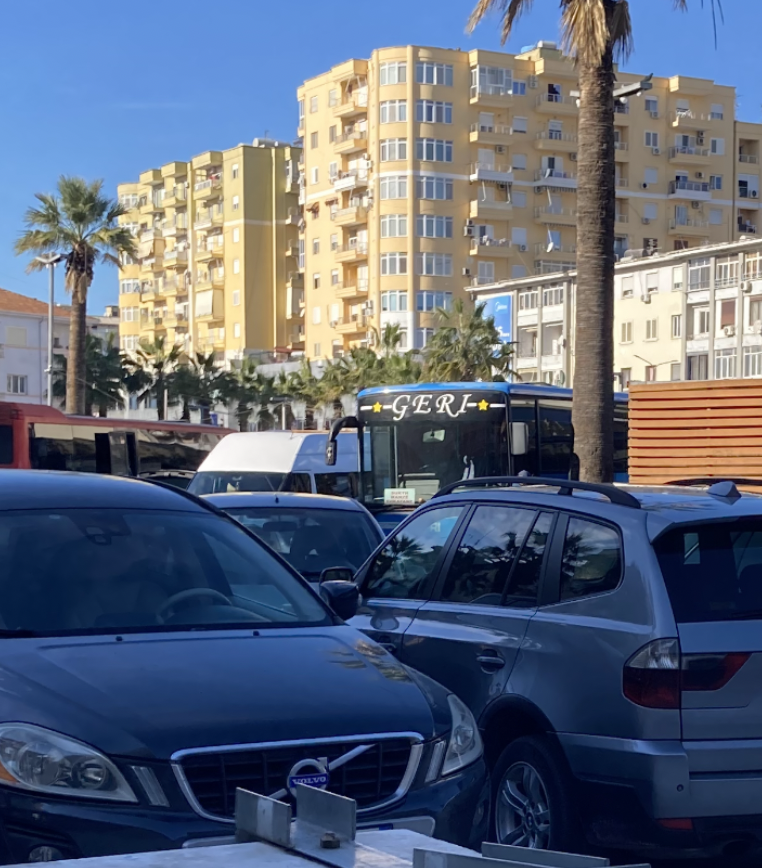

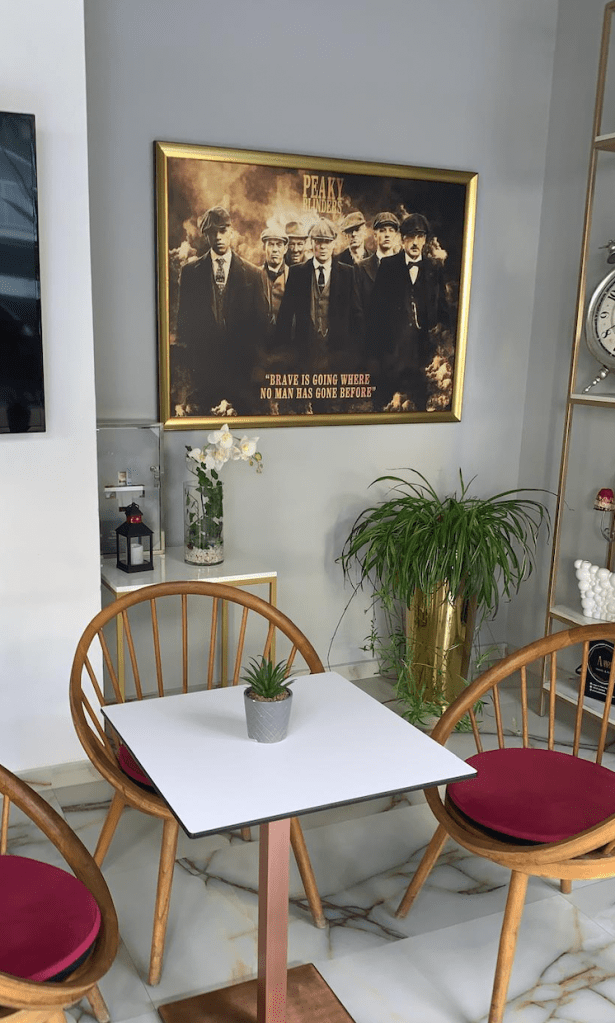
We were dropped off in a new busy lot with vans and buses and a new group of transport hustlers inviting us to get on their bus or van, we successfully ignored them, and walked through the city, along the beach boardwalk to our hotel- The Peaky Hotel. The best part of the Peaky Hotel (unknown to us until we entered the lobby) were the multiple references to the British TV show Peaky Blinders, apparently the hotel owner was a huge fan of the show. Admirable attention to theme.
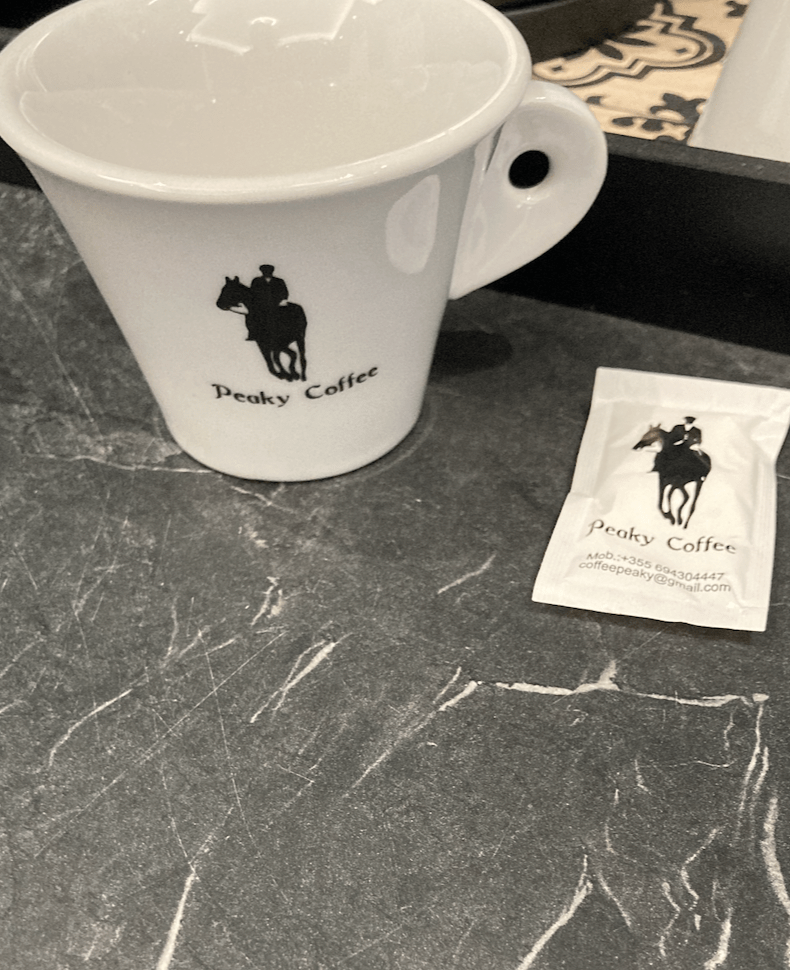
Our rate included breakfast (fancy for us) and we finally got to taste homemade Albanian mountain tea (which every Albanian kept pushing on us), not bad.
Another awkward Albanian moment occurred in the Peaky Hotel. First, we had to pay. We assumed in Leks and had gotten the exact amount ready, but it was Albania, so the receptionist preferred Euros, but didn’t want any Euro coins). Then Nick needed to count it out, again. A bit problematic since we needed the Euros for the transport to Greece and Albanian ATMS give Leks. So, the receptionist took most of our Euros. Use of credit cards, like trains are rare in Albania.
An hour later the power went out, so Nick went out to the hall to check, then a young man also came out into the hall from next door, except he was only wearing a towel. Apparently, he was in the shower when power went out. He spoke minimal English. Nick started to go to front desk via emergency stairs, and the hotel neighbor followed in his towel. We were on the second floor but, the door to the first floor was locked so the toweled guy started banging on the door. Finally, someone opened door, the receptionist Nick had just flashed all this cash while checking in. Some Albanian irritation and shrugging between toweled neighbor and front desk woman while Nick innocently looked on. Then, the lights went back on mid conversation. Towel guy started to leave back upstairs, Nick smiled at receptionist and she gave him a weird smile back. Nick confused said thank you in Albanian and followed the towel guy back up the stairs.
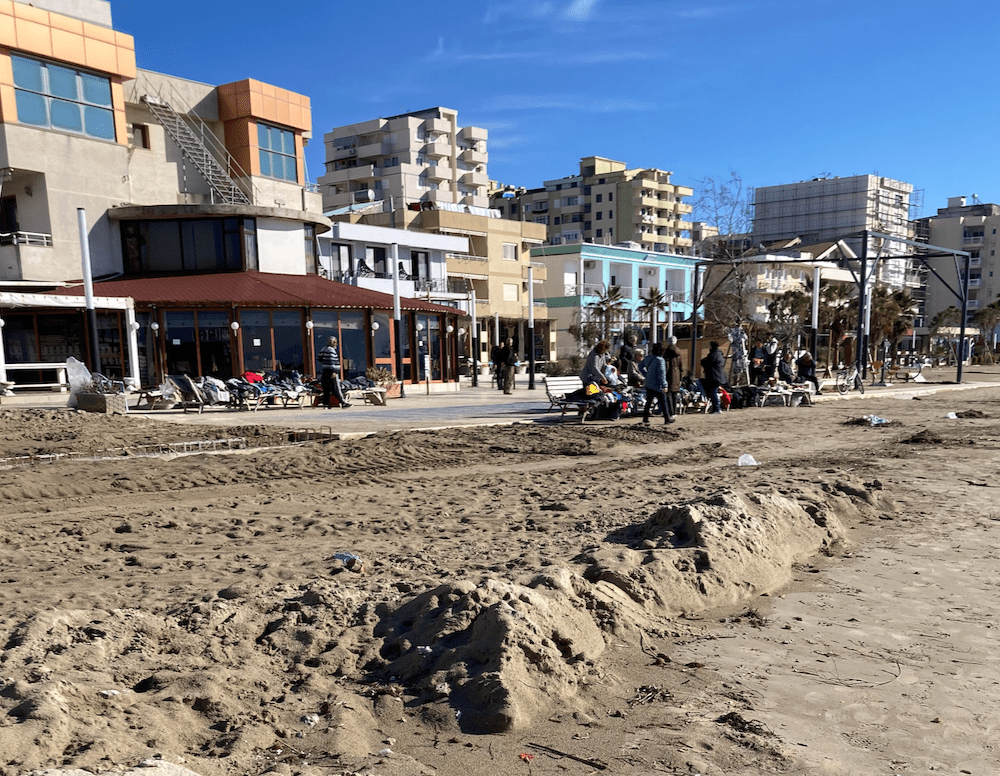
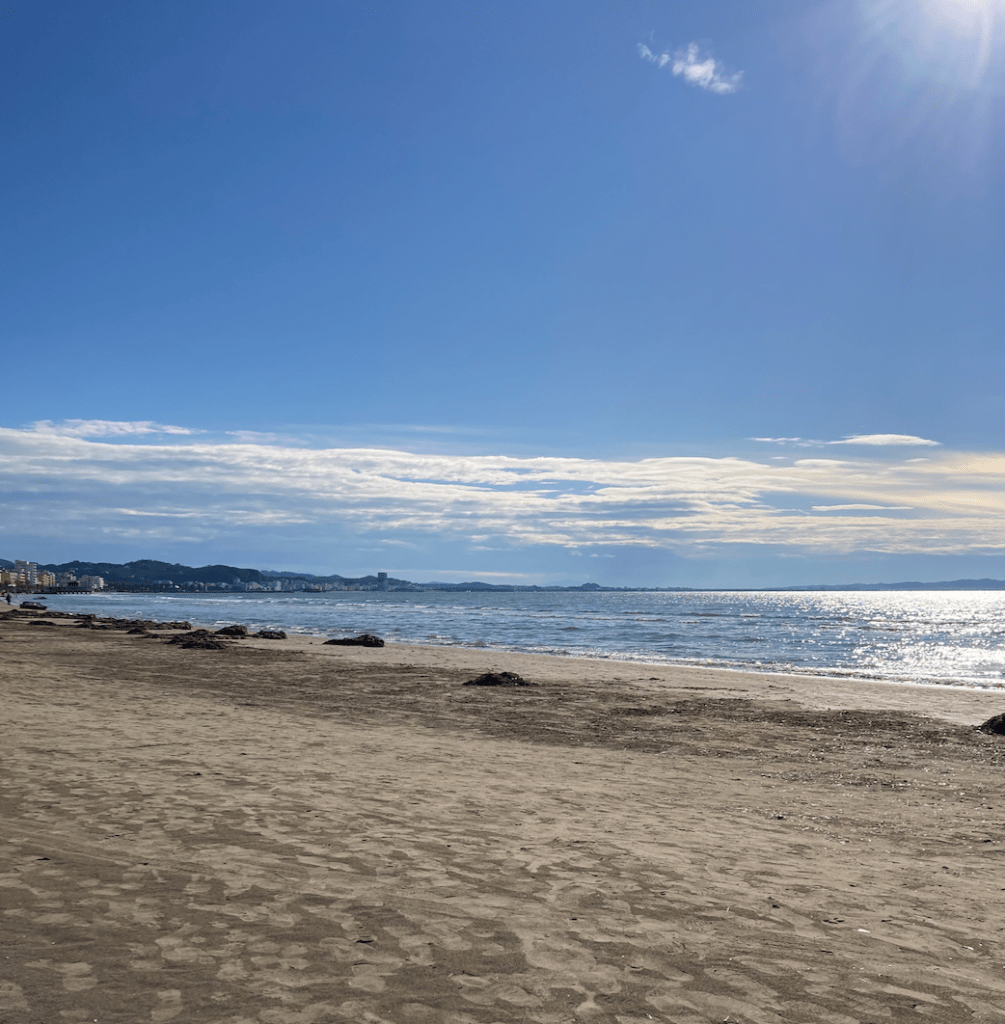
Durres beaches seemed fine, nothing incredible, but it was hard to judge due to the extensive construction of new hotels/resorts that was going on along most of the beach front.
Although, we did get to see Tina , John, Bob and Mick along the promenade.
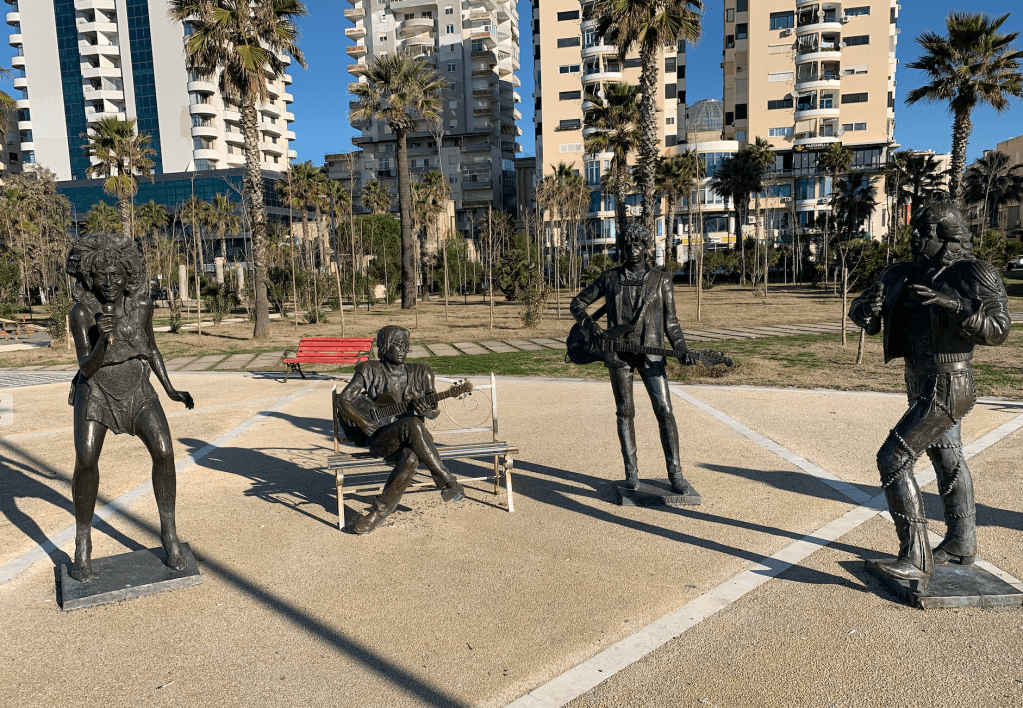
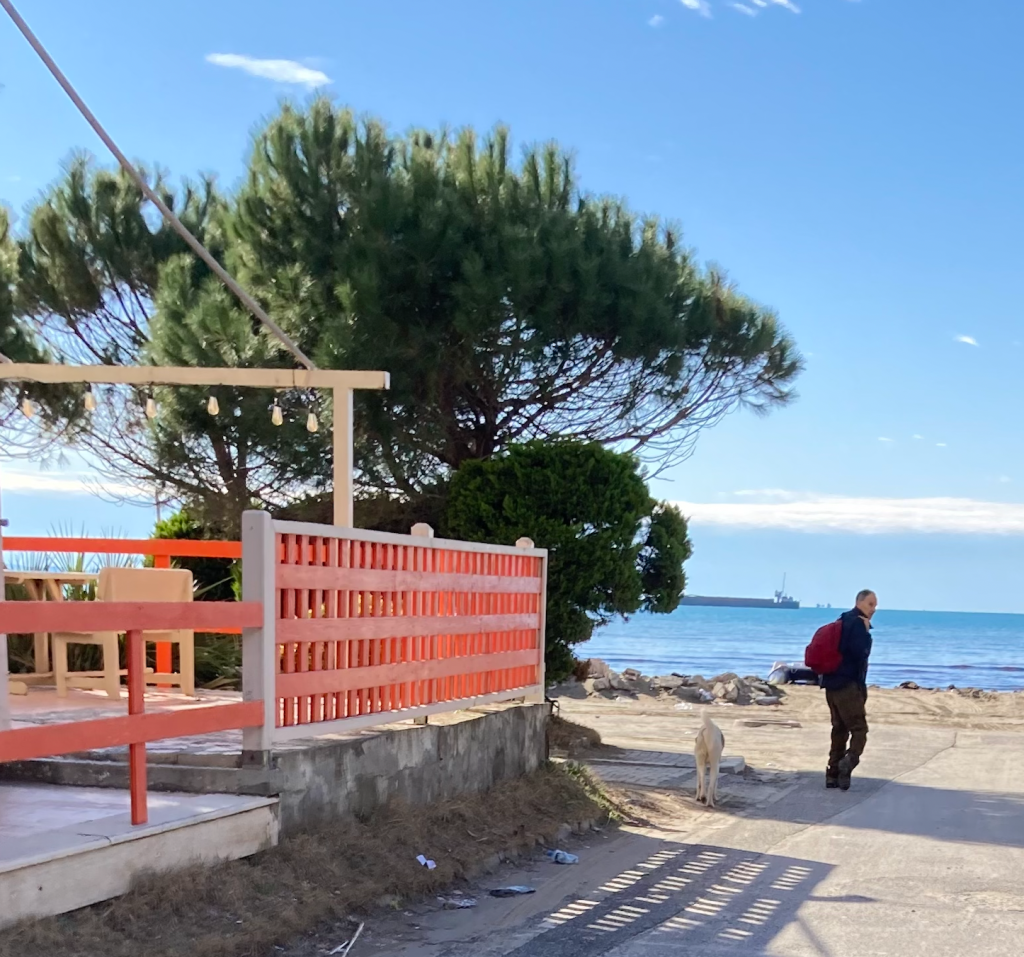
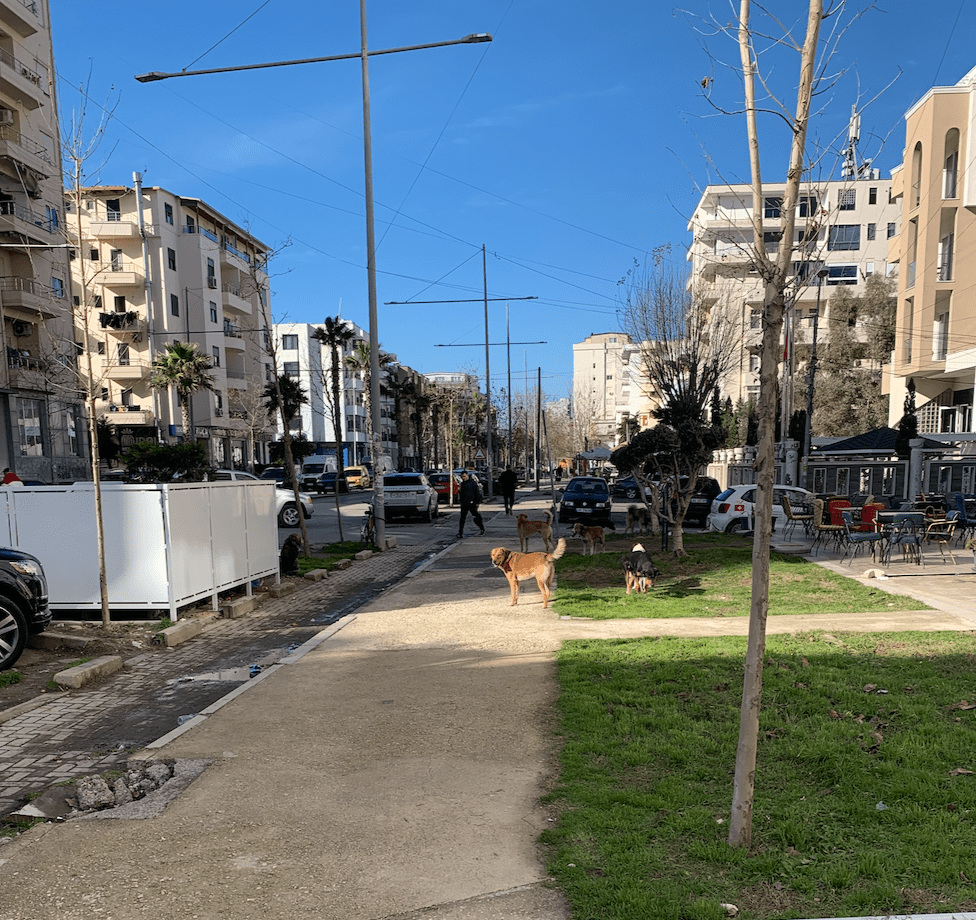
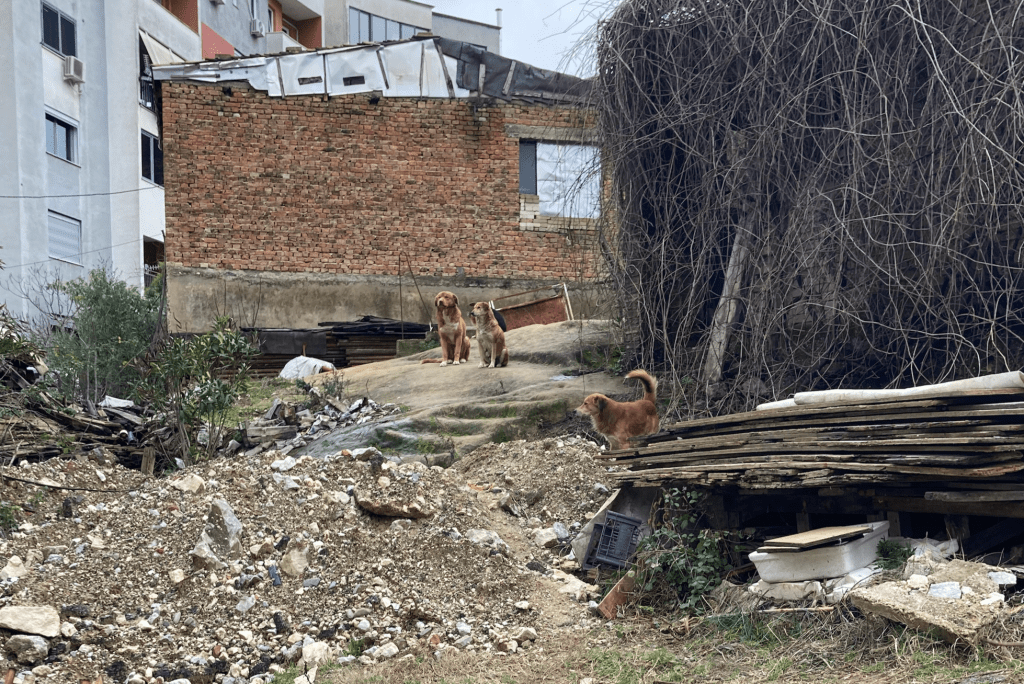
Not sure how these famous four were chosen. We were more intrigued by all the stray dogs roaming the streets. Many European cities have numerous street cats, Albania had some, but the dogs were everywhere. And, they were extremely friendly, big, beautiful and seemed very healthy. They also seemed to understand the roads and when to cross much better than us.
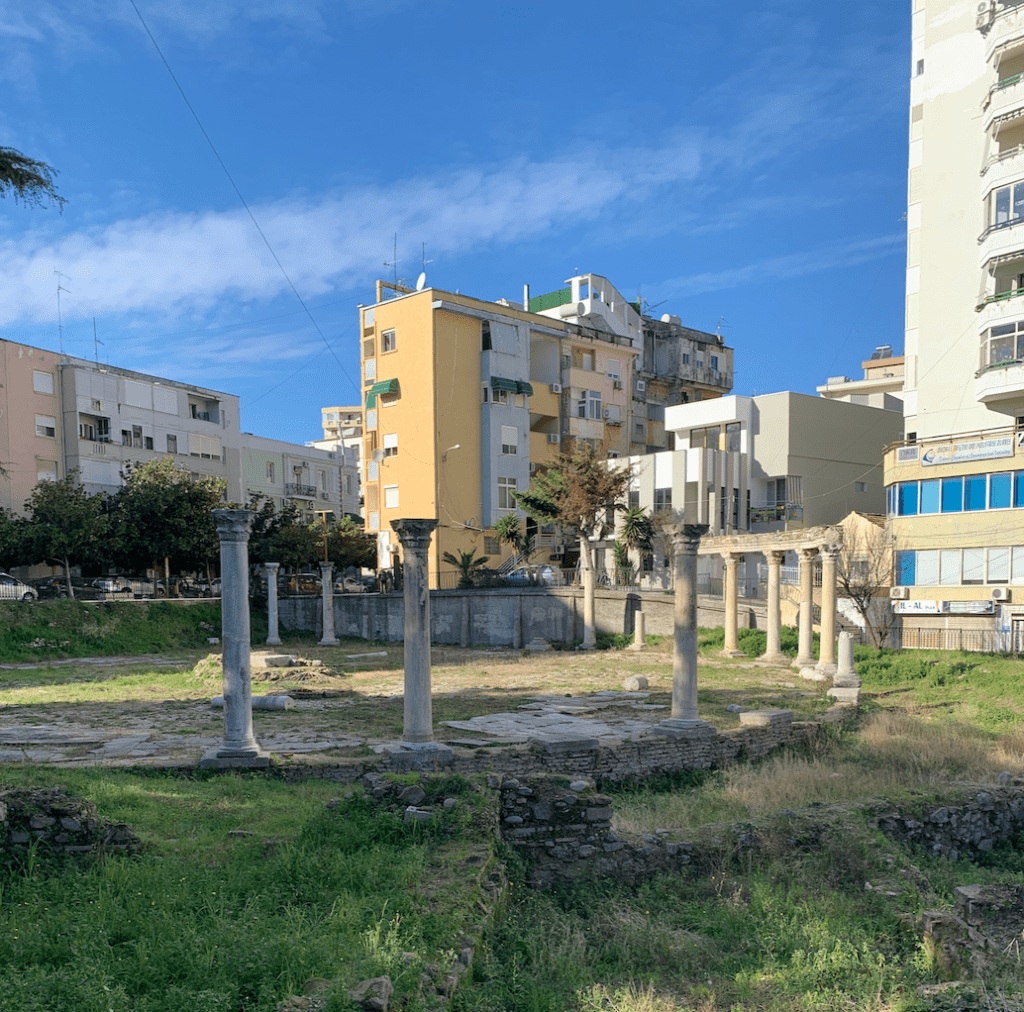
Similar to other European cities, there were the requisite Roman ruins (even Albania couldn’t keep the Romans out), but Albania differed in these were just “there”. In the neighborhood.

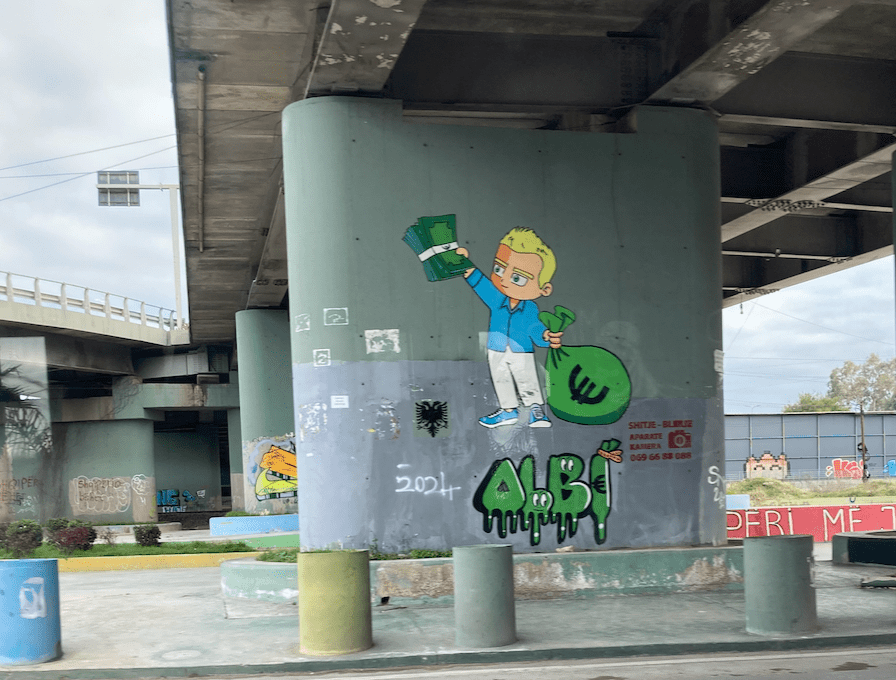
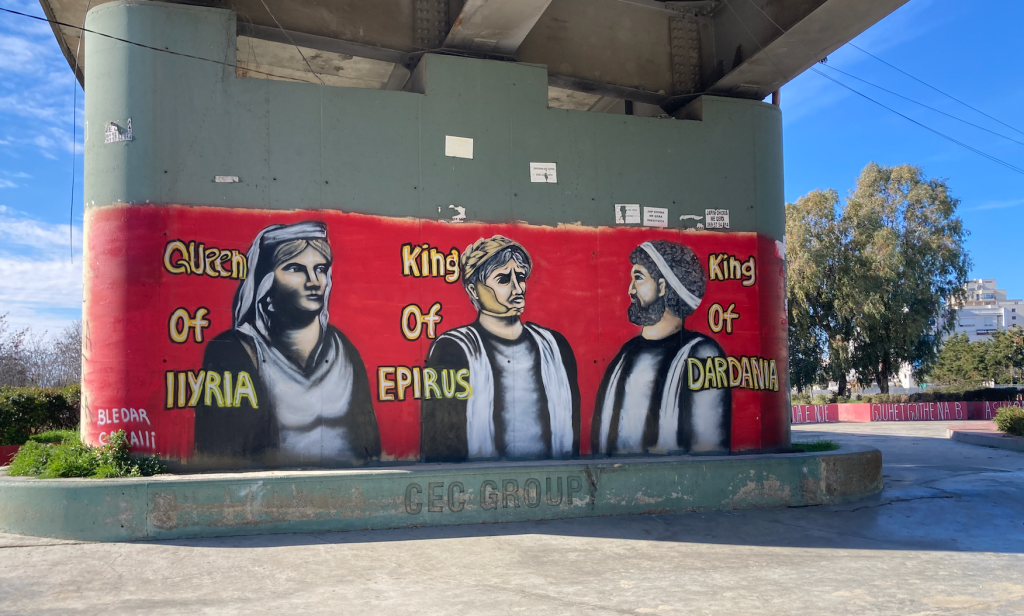
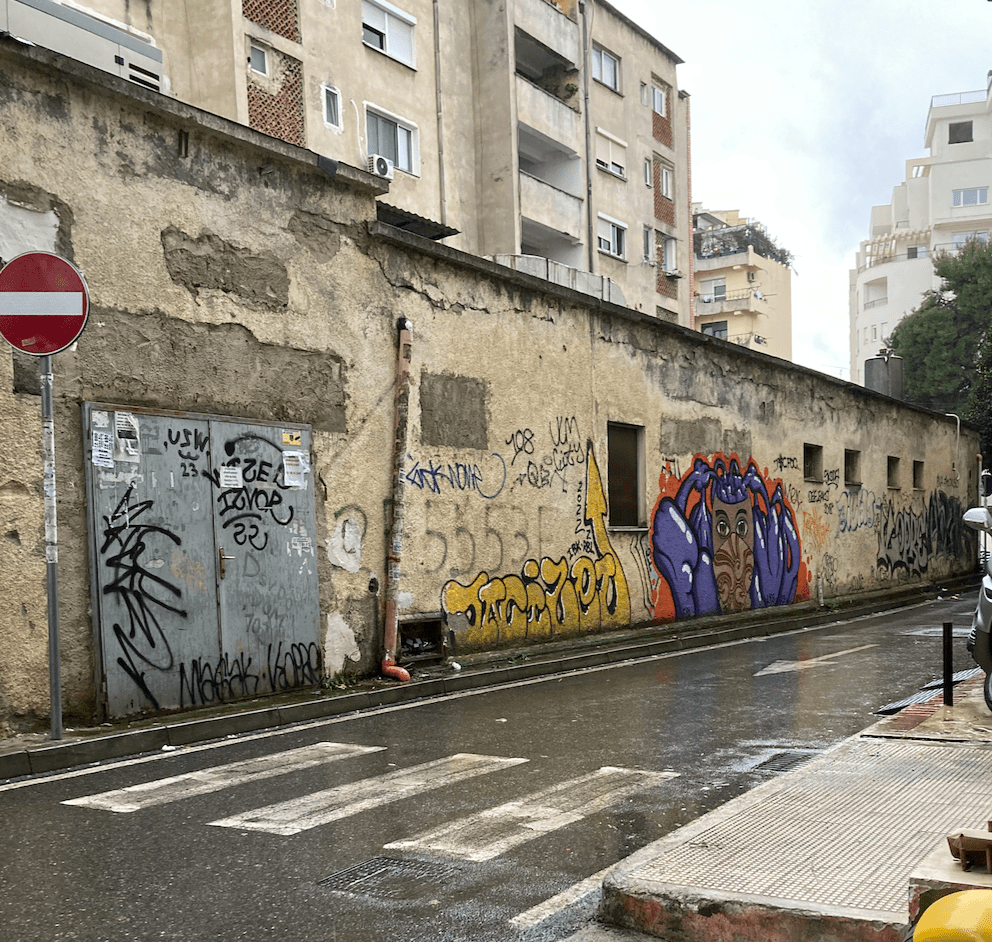
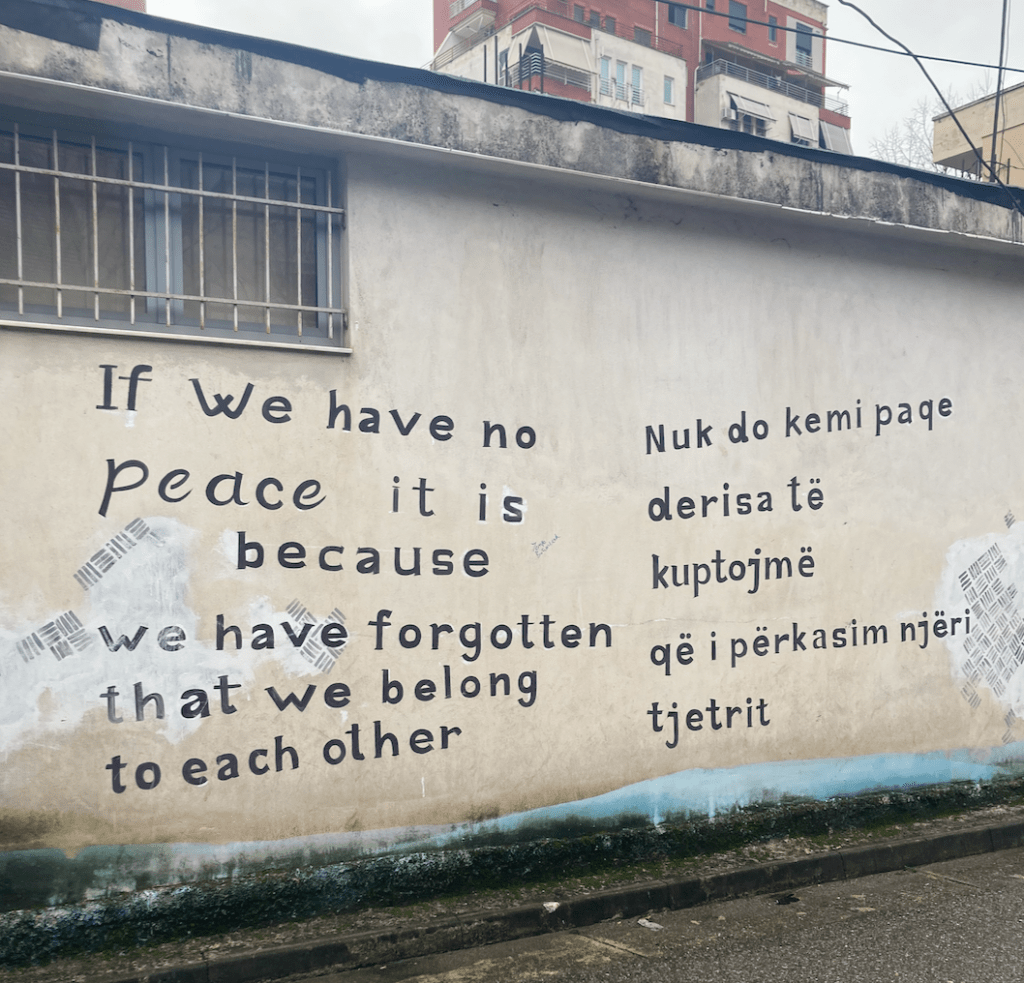
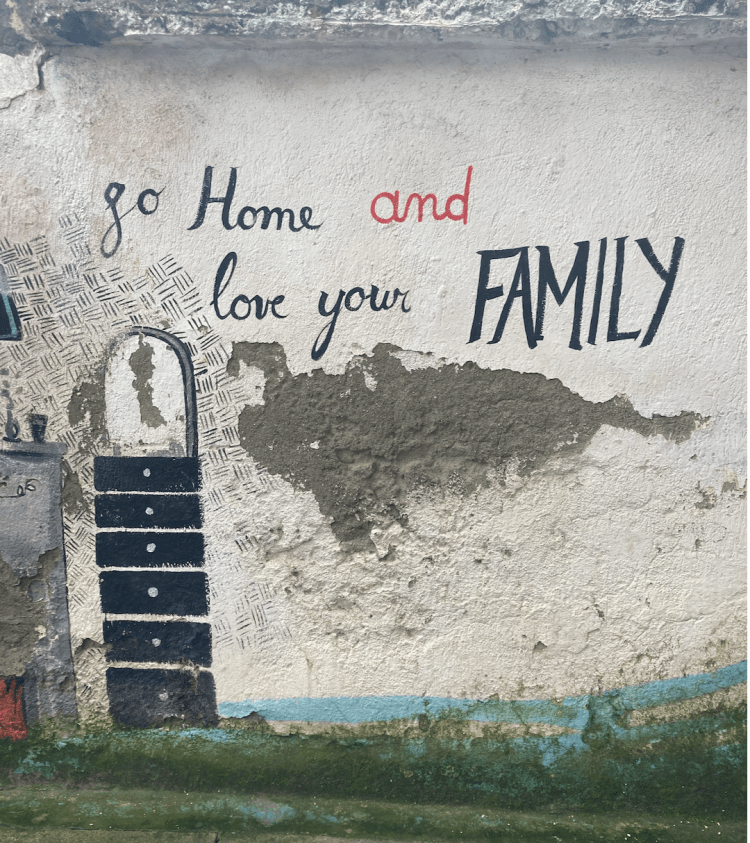
Again, consistent with post-communist countries, a lot of graffiti and we generally like street art, but knowing how novel it must have felt to be able to actually DO street art for Albanians, made these even better.
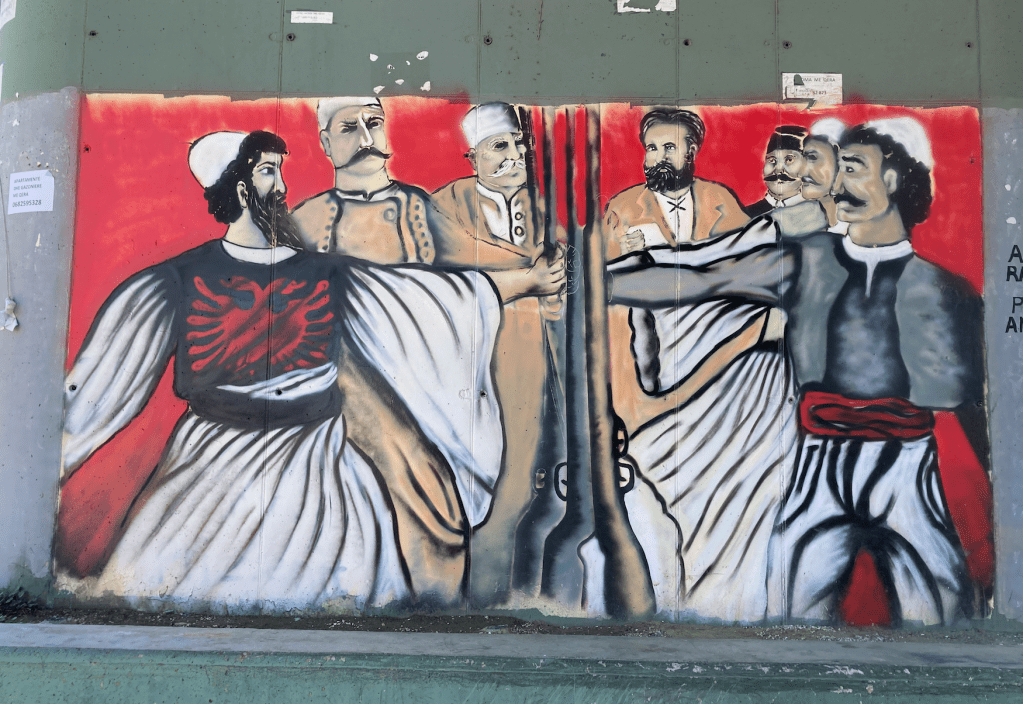

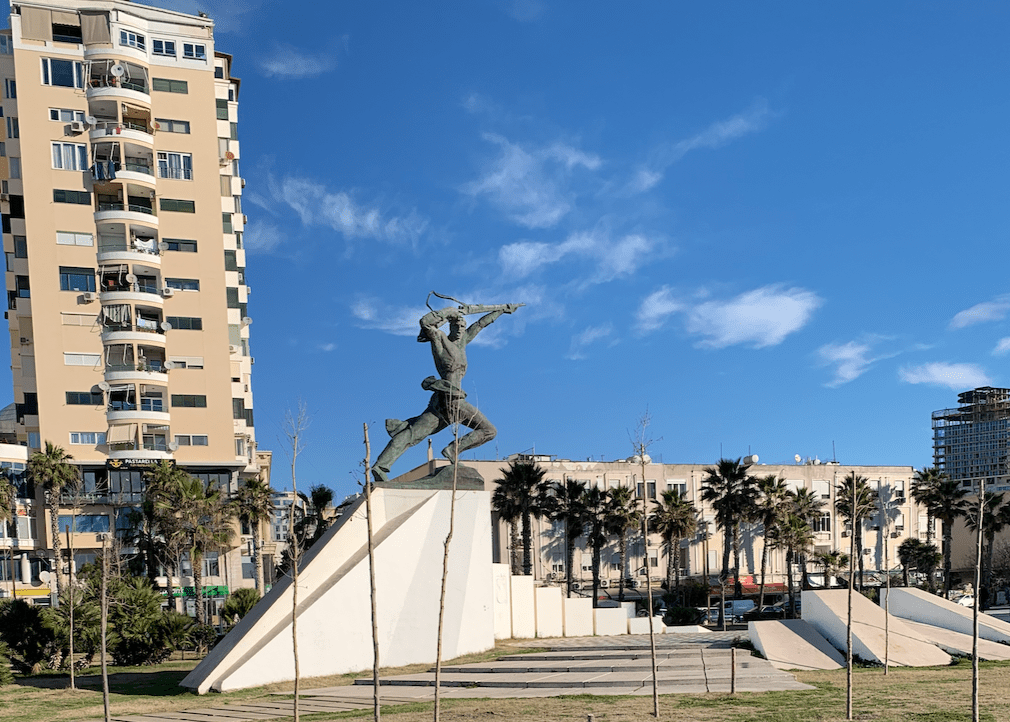
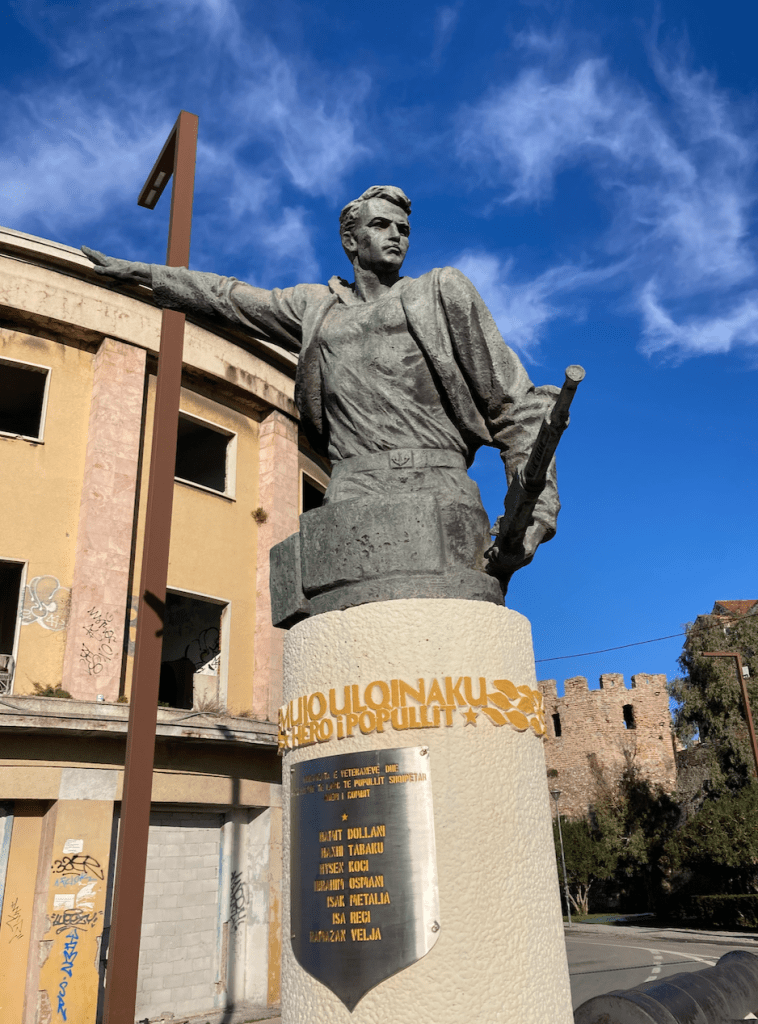
And of course, statues honoring invasions and war
After two nights of Peaky Blinders, we continued our blind path to Greece. Our goal was Gjirokastër, Albania near the Greek border. Per the internet there was a direct 4 hour bus once a day from Durres to Gjirokaster. We walked a mile to the original pseudo bus station, they told us to go stand at the “semaphore”(whats a semaphore? A traffic light, at least in Spanish-semaforo) to catch another bus to the southern direction pseudo bus station. At the semaphore bus stop, a local bus for 40 Leks (about 40 cents US) took us to another empty lot with a snack bar on the outskirts of Durres. No physical station, just guys trying to get you on their minibus or taxi. We talked to the food stand guy, he pointed out a guy to talk to. By this time we were running low on Leks, and didn’t want to convert anymore Euros, so we began to barter for transportation. We asked about the daily bus to Gjirokastër. Guy said no bus (not sure if he was completely honest) but he would take us to Lushnje for 400 lek each ($4) in his minibus and his friend would pick us up and take us to Gjirokastër for 800 Lek. He then drove us in a very slow white van (no 4th or 5th gear), the whole time he was making phone calls. Finally, he dropped us and our backpacks off at a gas station next to a roundabout outside Lushnje(?), said wait here for 10 minutes.
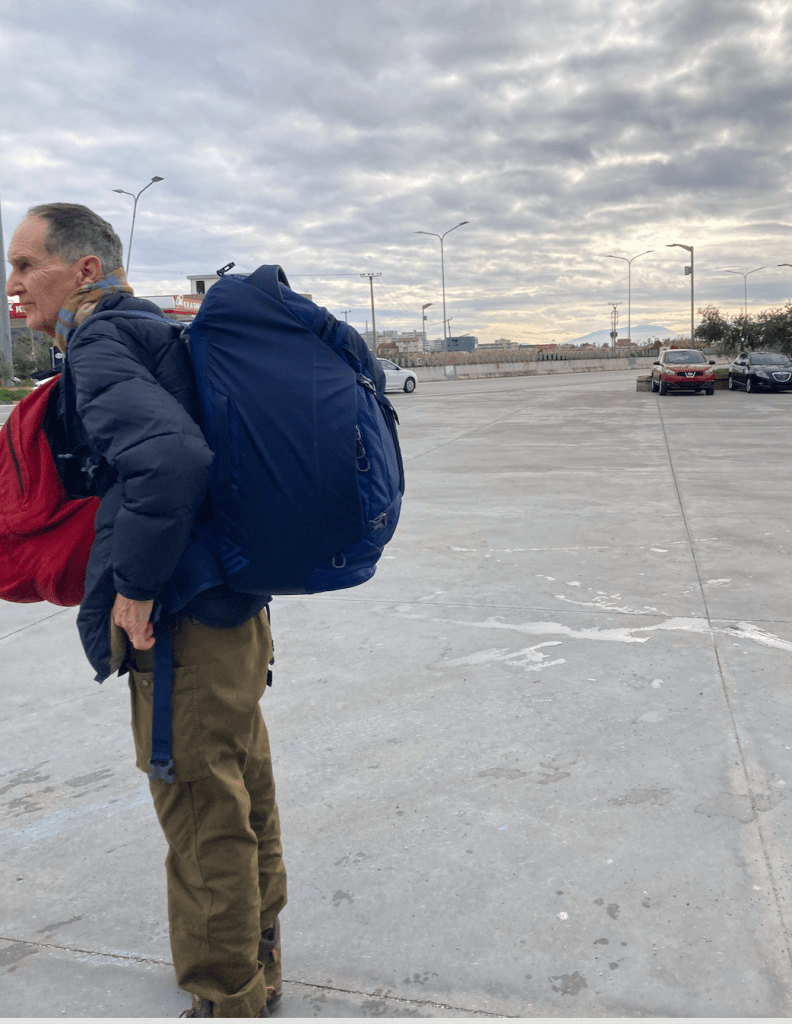
Another white van eventually did come, not in the promised 10 minutes, but maybe all the white vans lacked 4th and 5th gears. The new driver asked for another 1000 leak each, but the other guy had said it would be 800 each (and that’s all we had left), so he took us. He then drove most of the way before dropping us and another woman (she was not happy) off to an older couple (we think the driver’s in-laws).
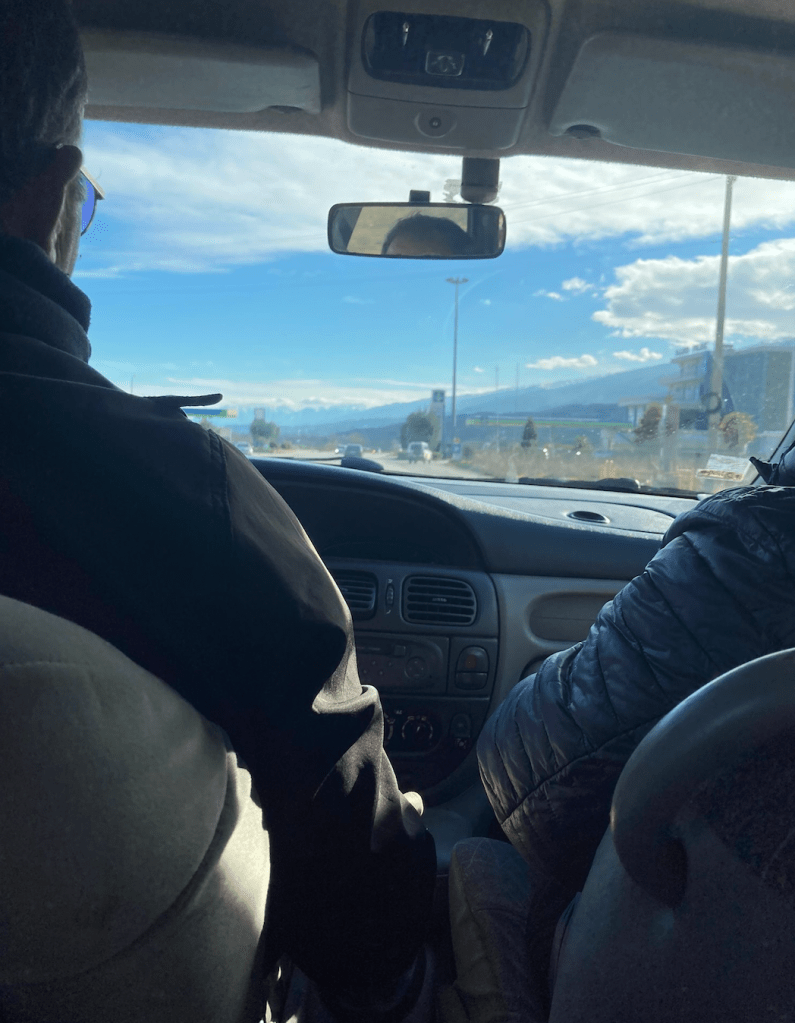
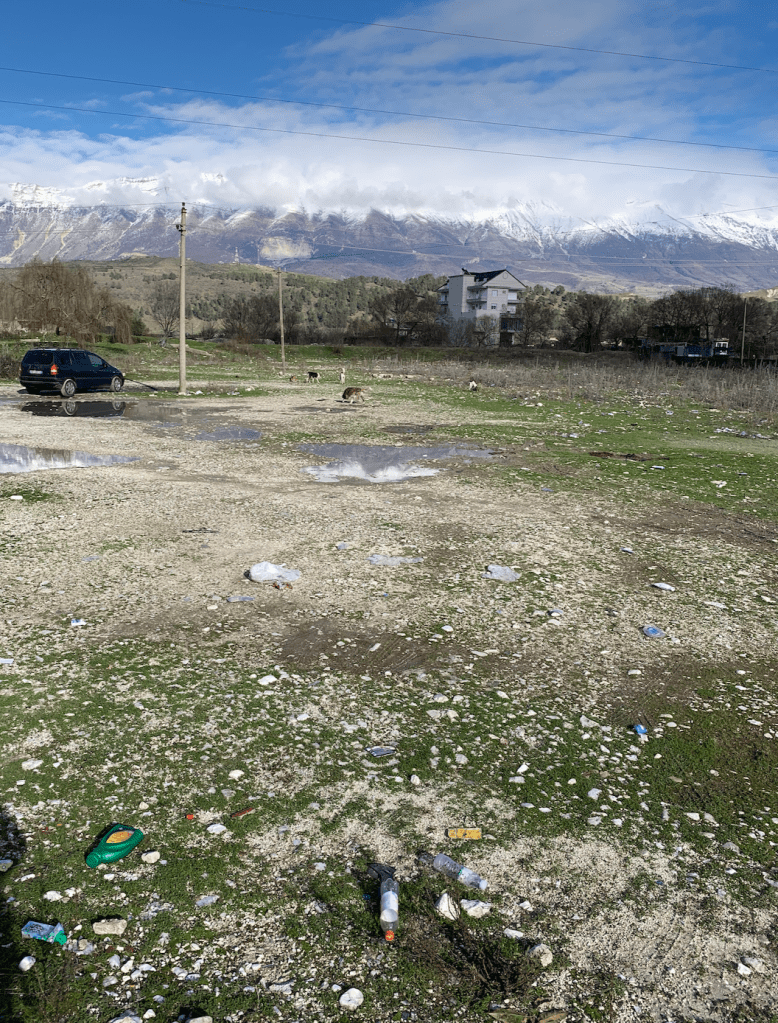
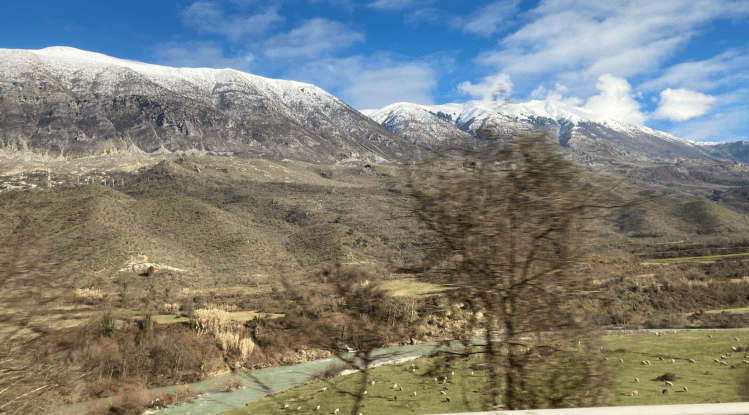
The father-in-law loaded the three of us into the backseat of the car for the final stunningly beautiful 15 mile drive (40 minutes) to Gjirokastër before unloading the 3 of us at some random corner in Gjirokastër. Once in town, we (minus the woman from the backseat), found the private bus company to buy tickets to go over the border to Kalabaka, Greece with our last 40 euro. An exact change trip. (With a lot of left over awkward.)
Little tiny Gjirokastër has had a huge impact on Albania as the birthplace of the dictator Enver Hoxha (and author Ismail Kadare). Its history is as multi-layered as is the town. It was Greek, it was independent Epirus, it was Albanian, etc. Then about 1300 it was contested by Serbians and Italians, eventually won by Albanians, then eventually taken by the Ottomans, followed by the Albanians again in 1909-1912 The Greeks tried to reclaim it during the first Balkan wars (1912-1913). The Italians took over during WW2 and of course the Germans had a short stay. Despite the constant change, Gjirokastër seemed to stay uniquely itself.
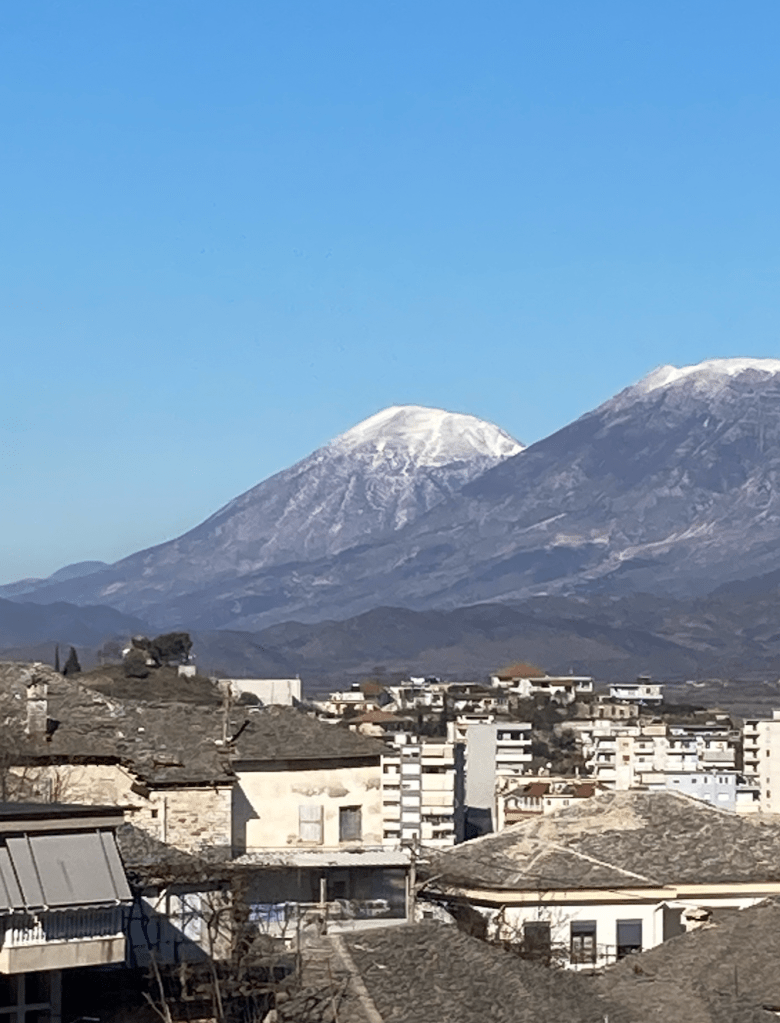
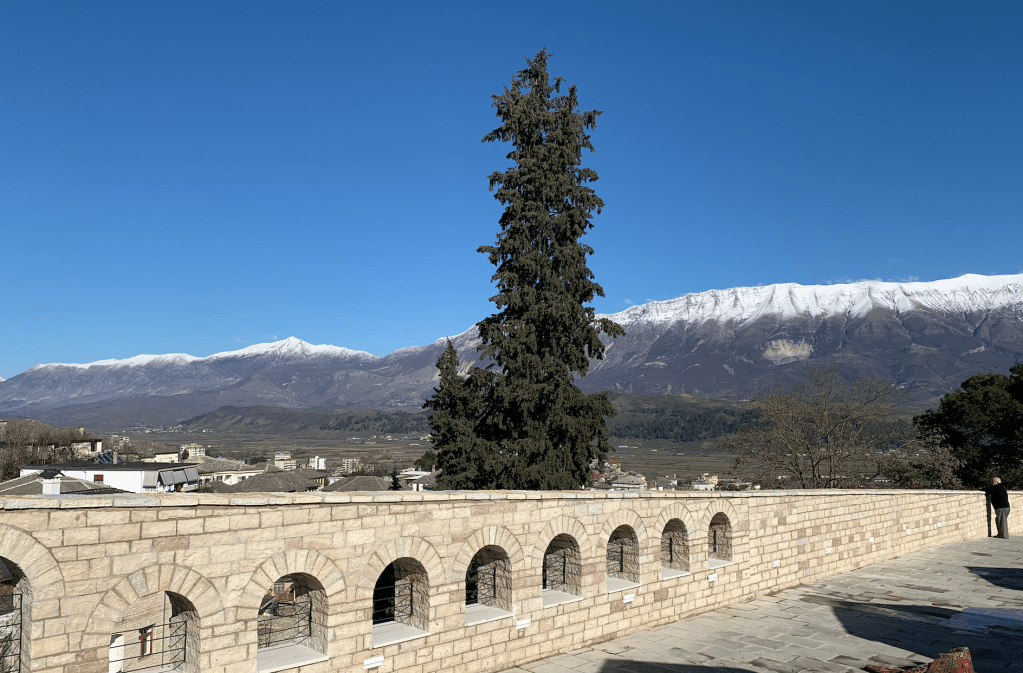
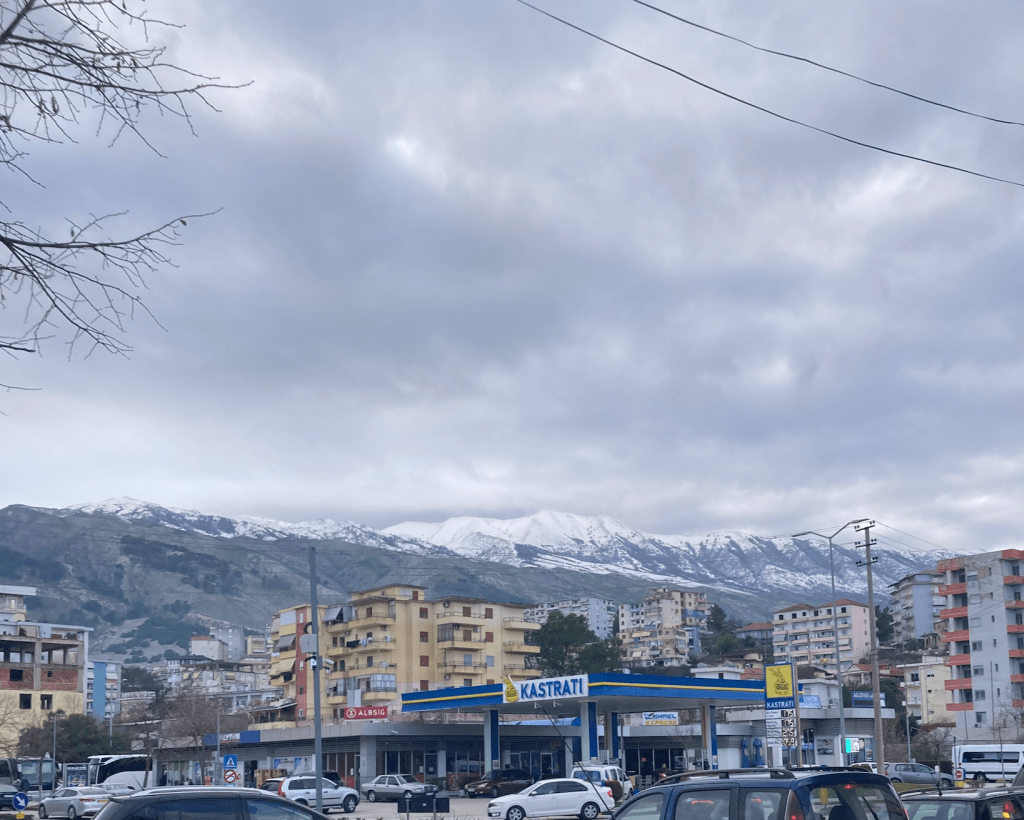
The ugly new town was at the bottom
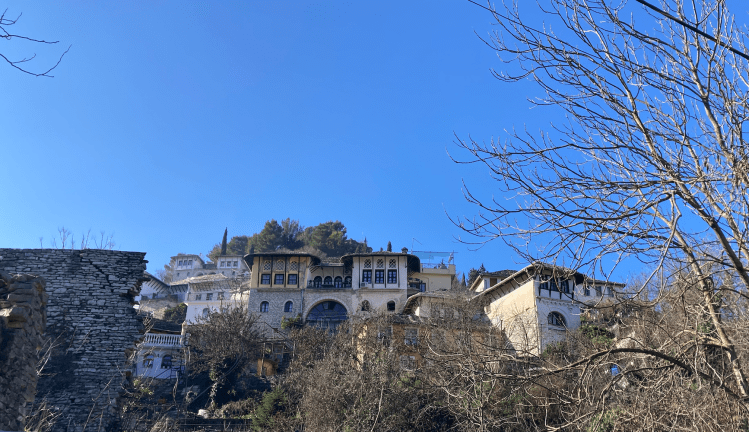
and the old town was just straight up beautiful and straight up the mountain.
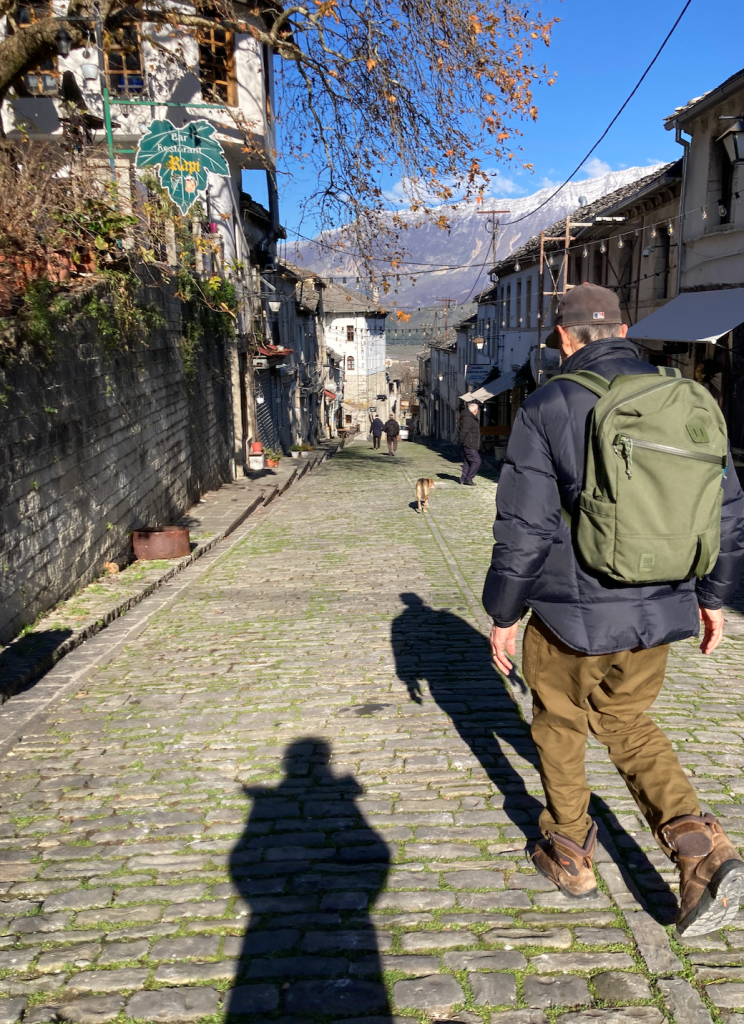
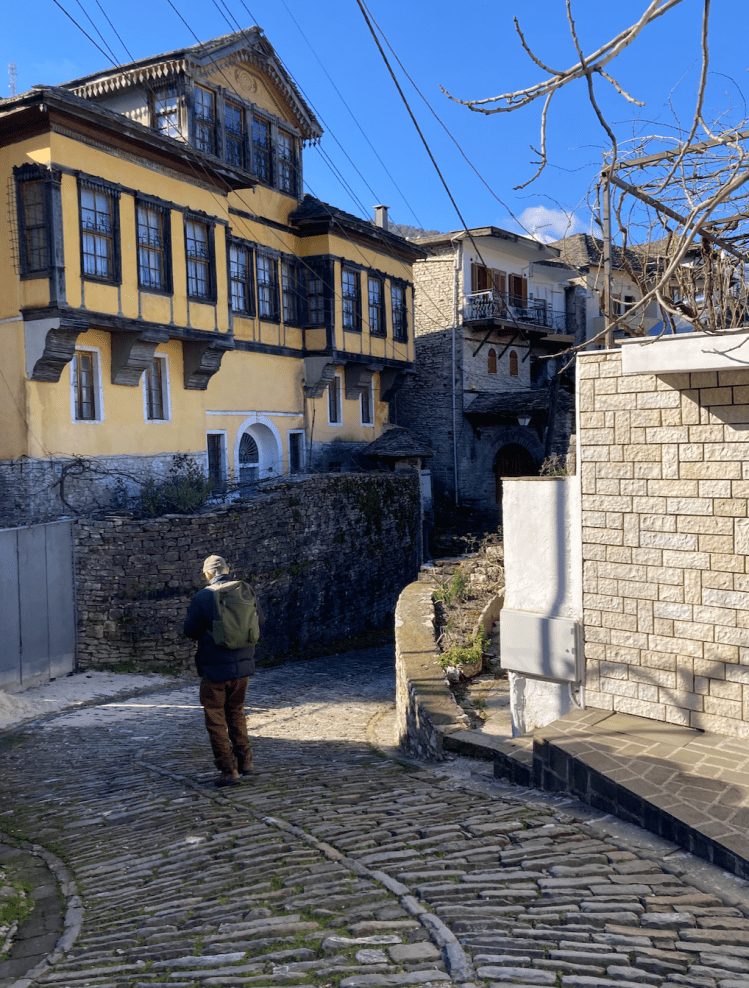
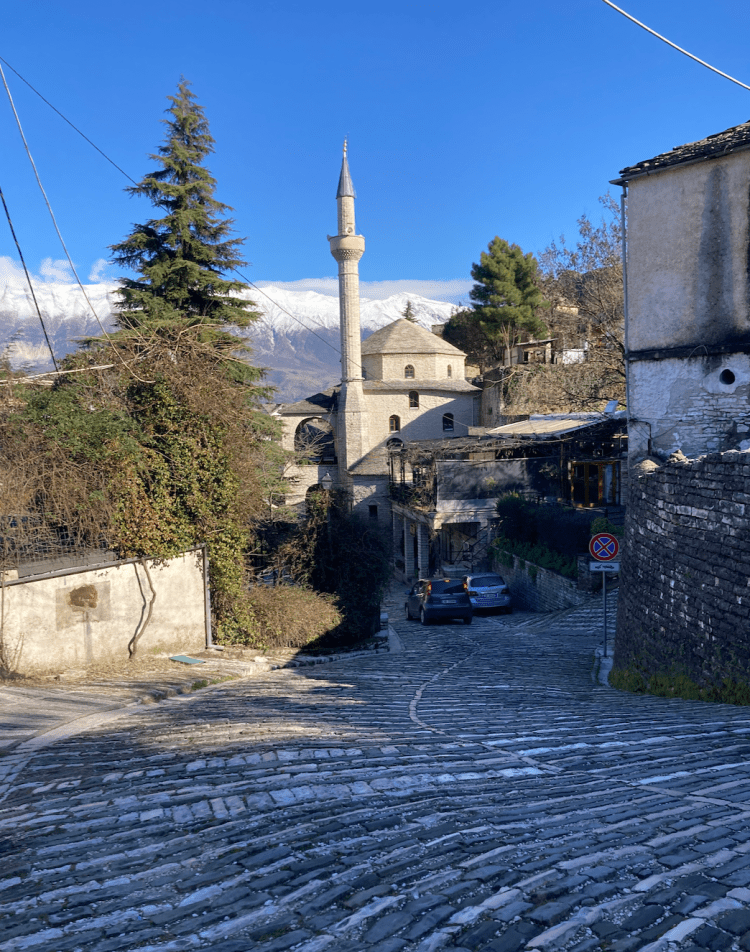
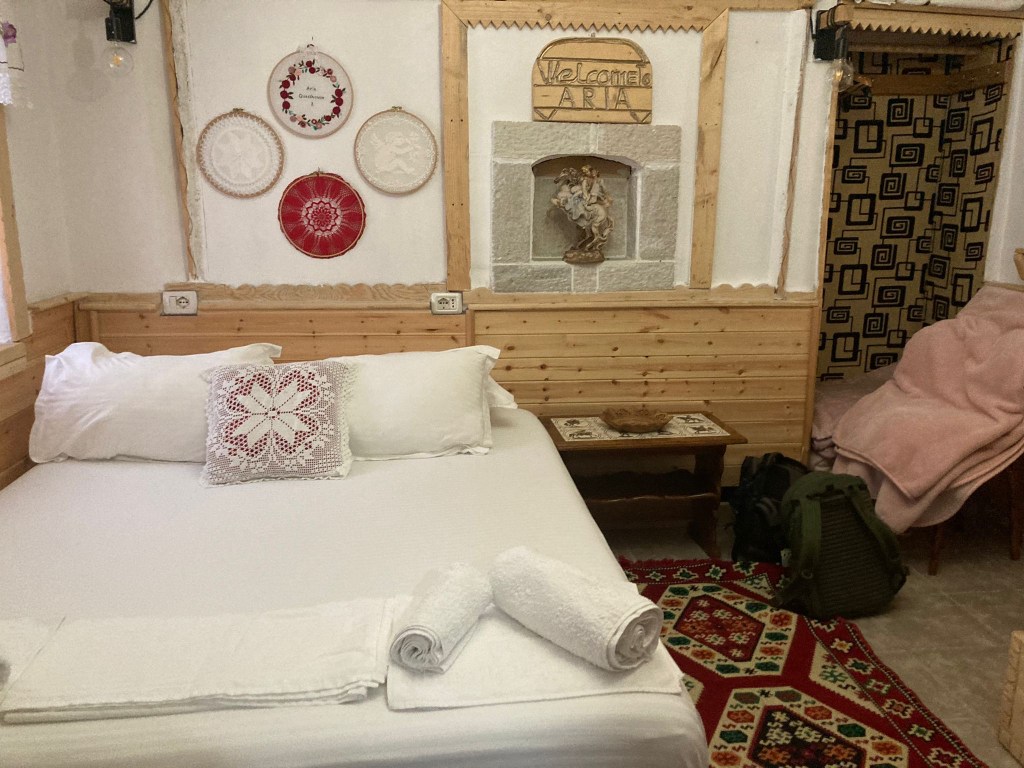
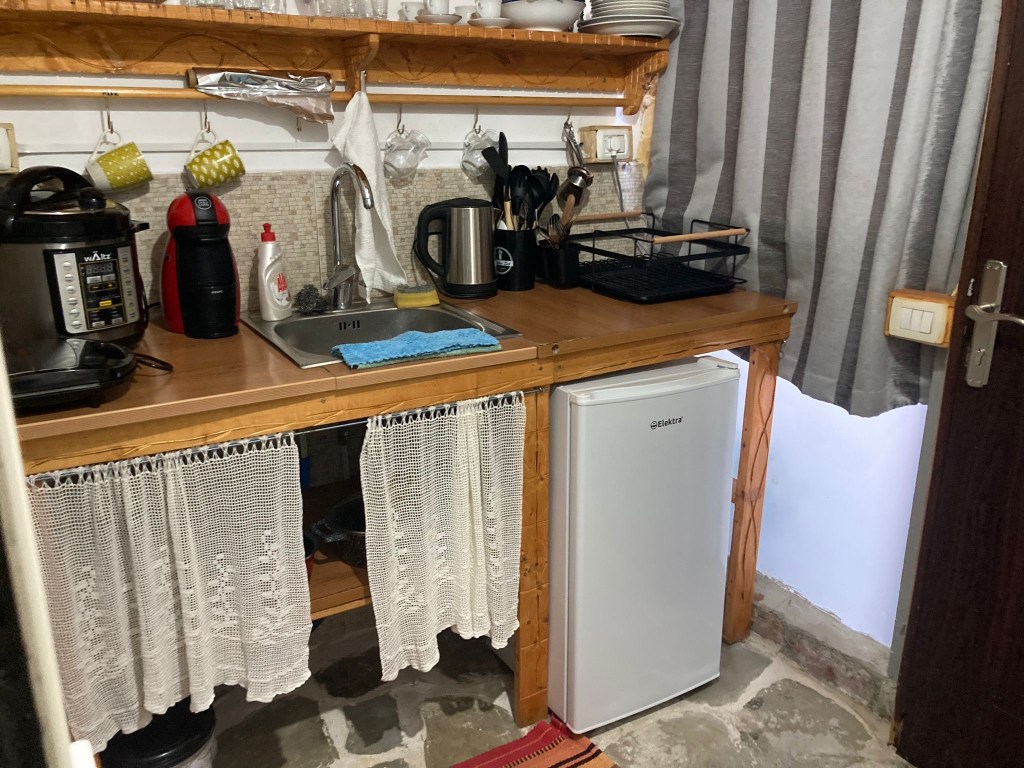
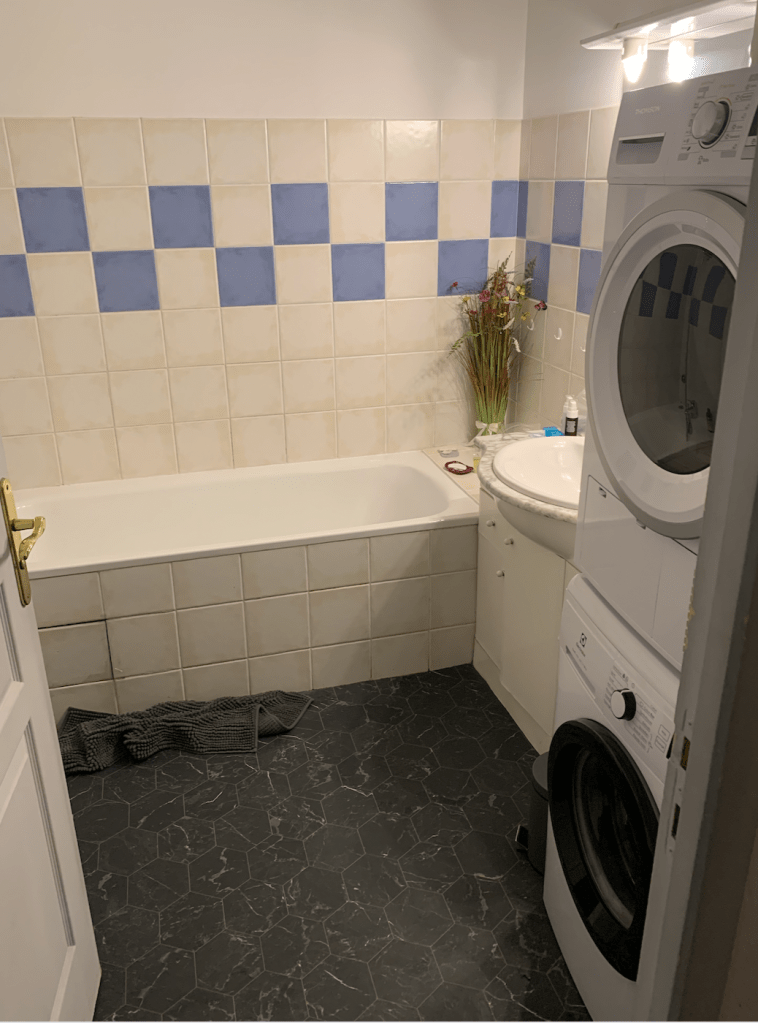
Our tiny apartment was just as cute as Gjirokastër, but colder than being outside. It was good that we were just here for 2 nights because it was just way tooo cold to shower.
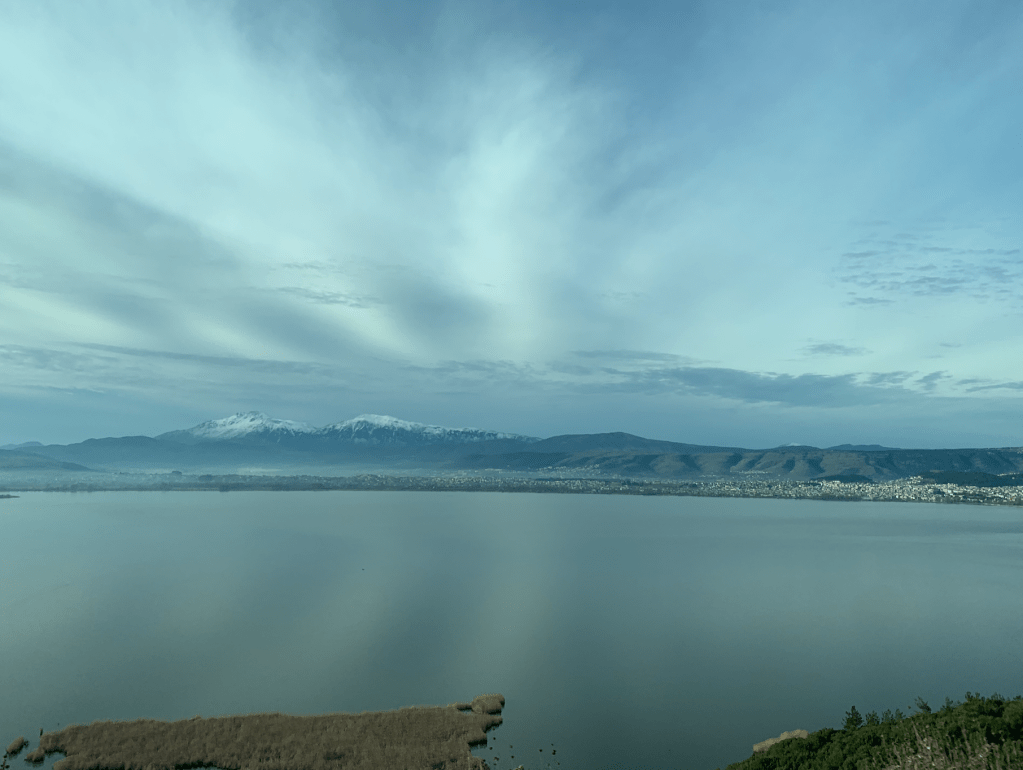
A more successful attempt to find our bus this time, first going to the bus company office where we had bought the ticket, they pointed us across the street to in front of the gas station which was apparently the bus stop du jour. Tucked in the warm bus, another strikingly beautiful drive to Northern Greece.









 Chosen Fugue
Leave a comment