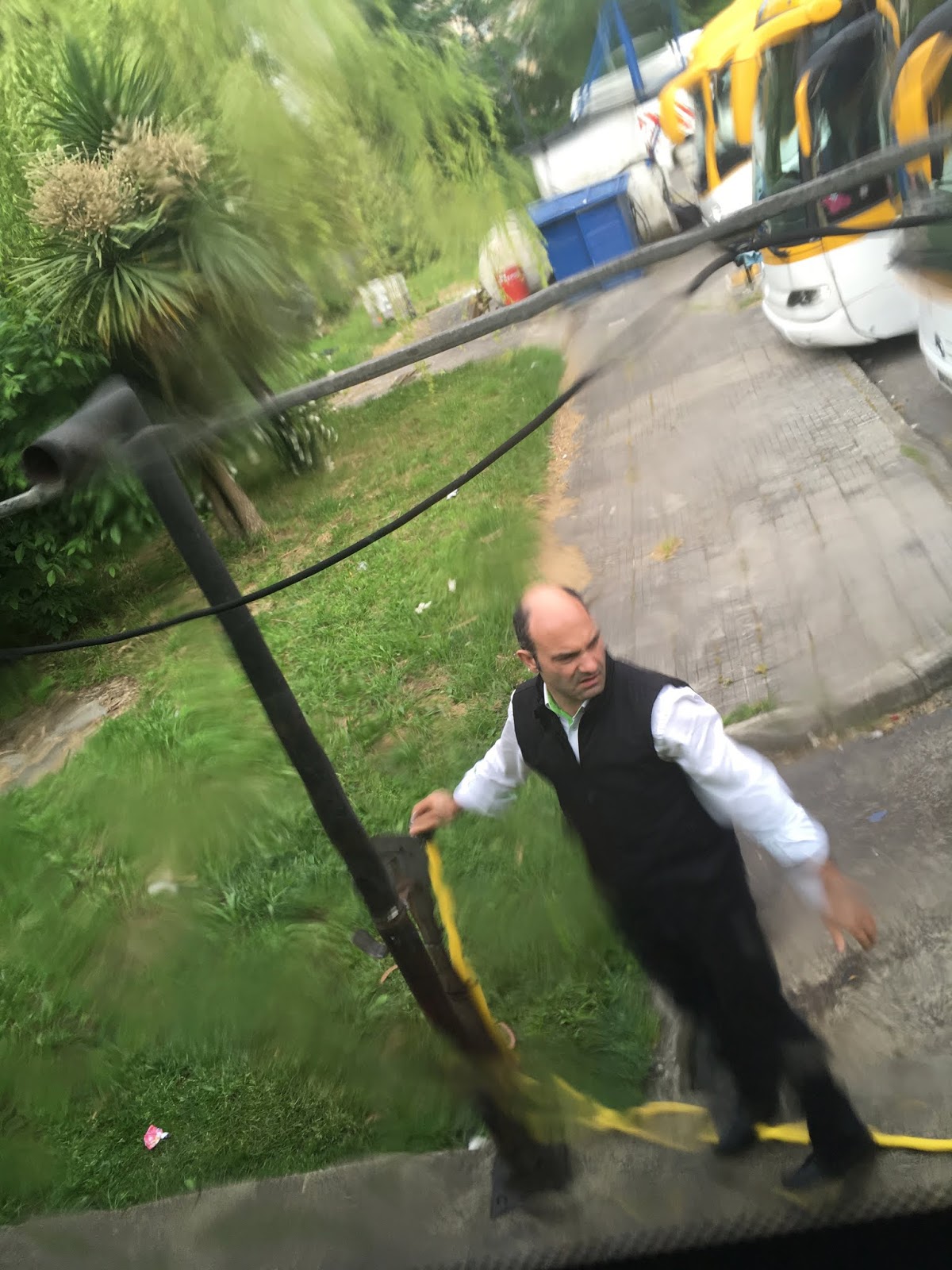
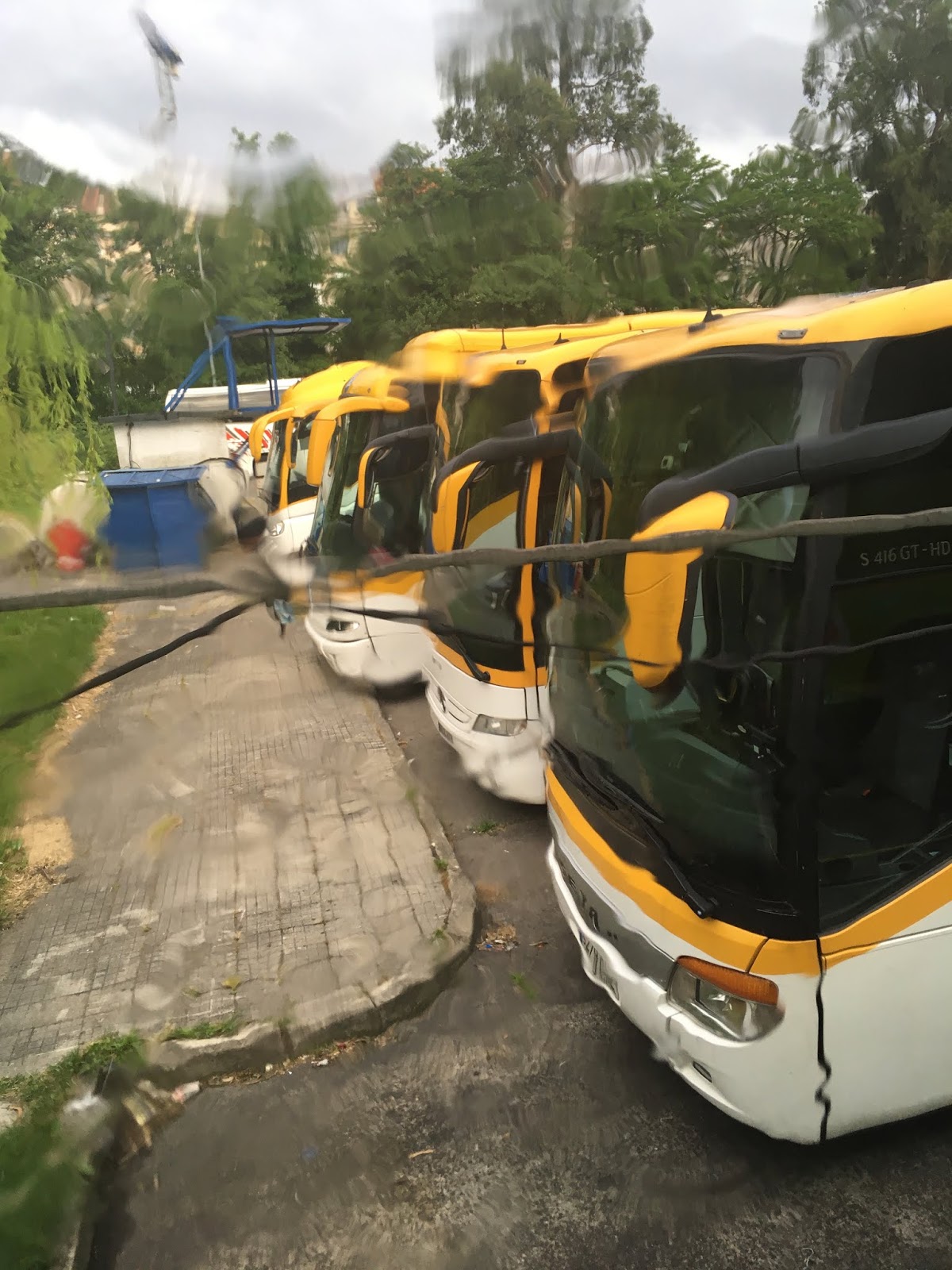
The upside and downside of traveling is obviously the unknown. You get to experience the surprise bus wash, but everyday is a crap shoot. Simple actions usually done without consideration can turn into a hurdle. Making the mistake of drinking lots of tea in the morning then going on our usual walking tour of the area can be painful when you can’t find a restroom. (The joys of owning a 1958 model bladder.)
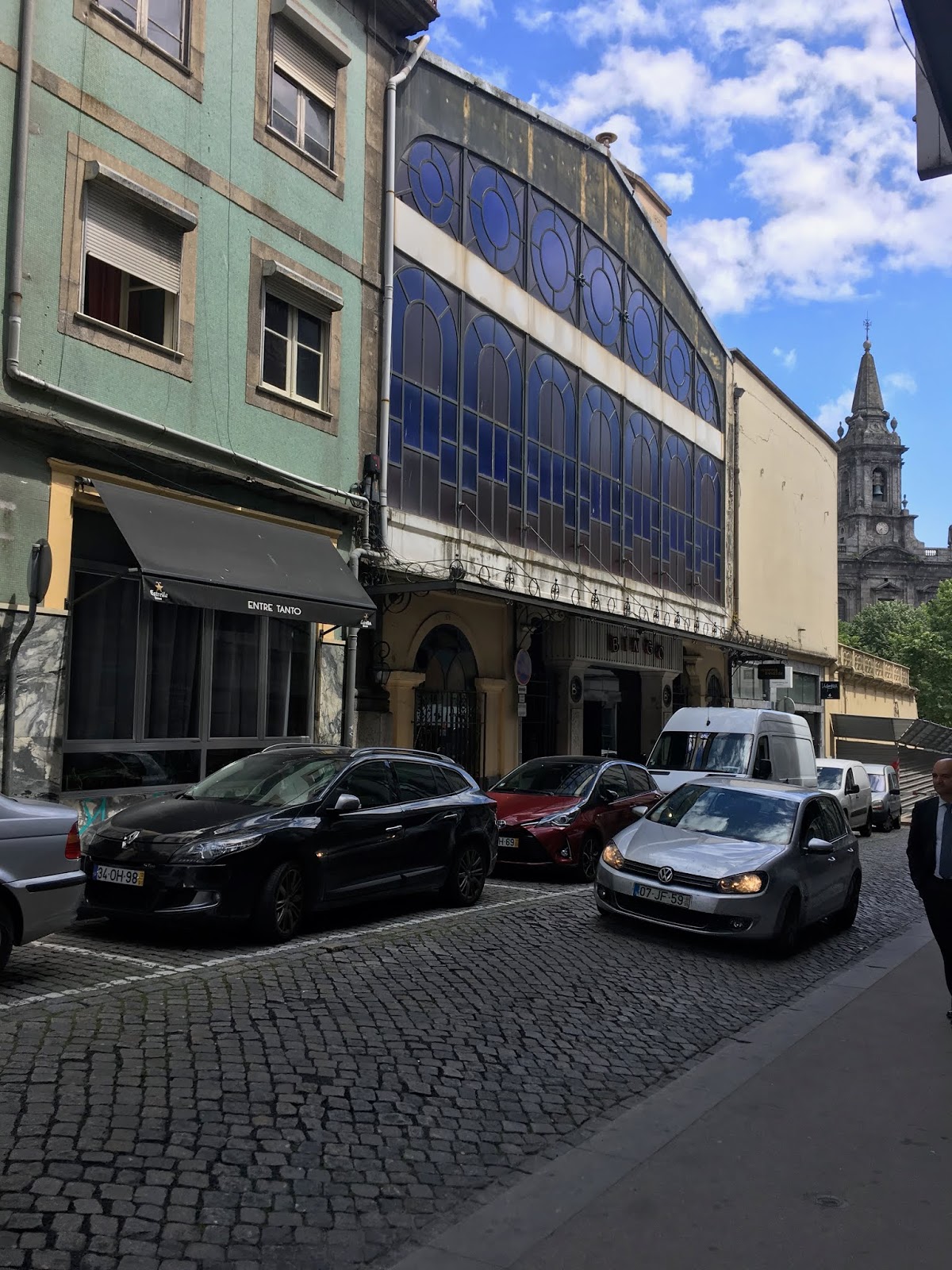
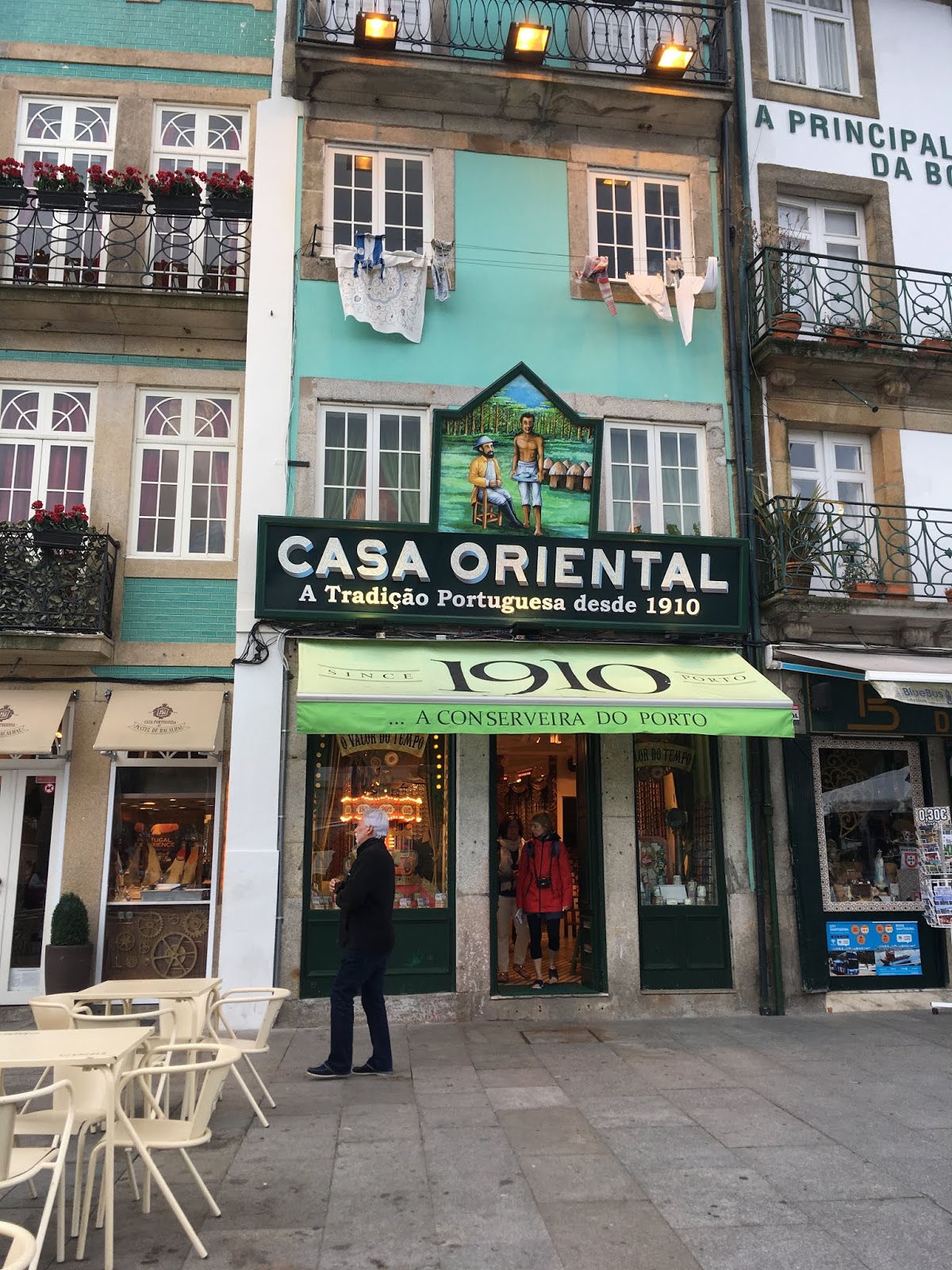
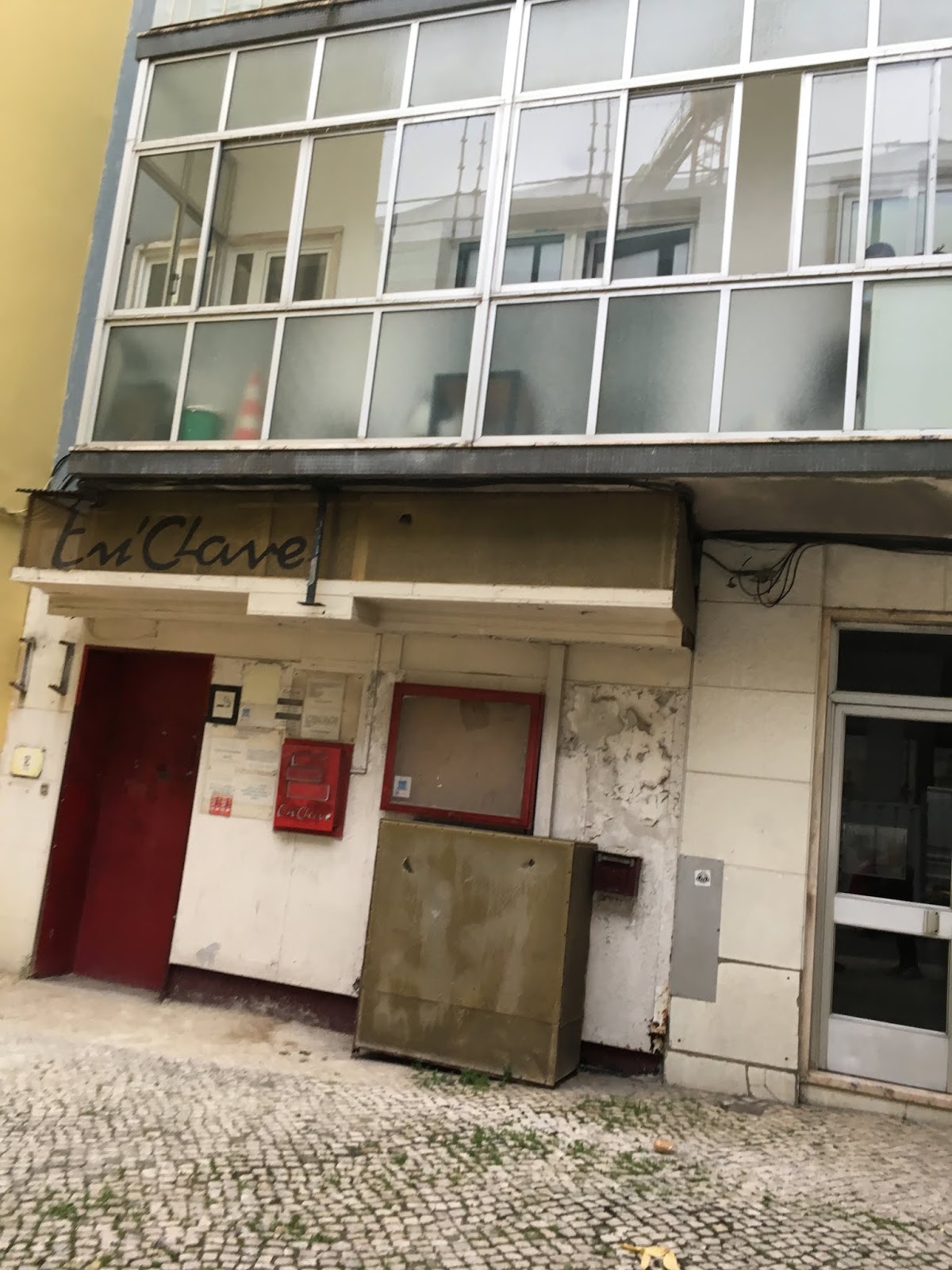
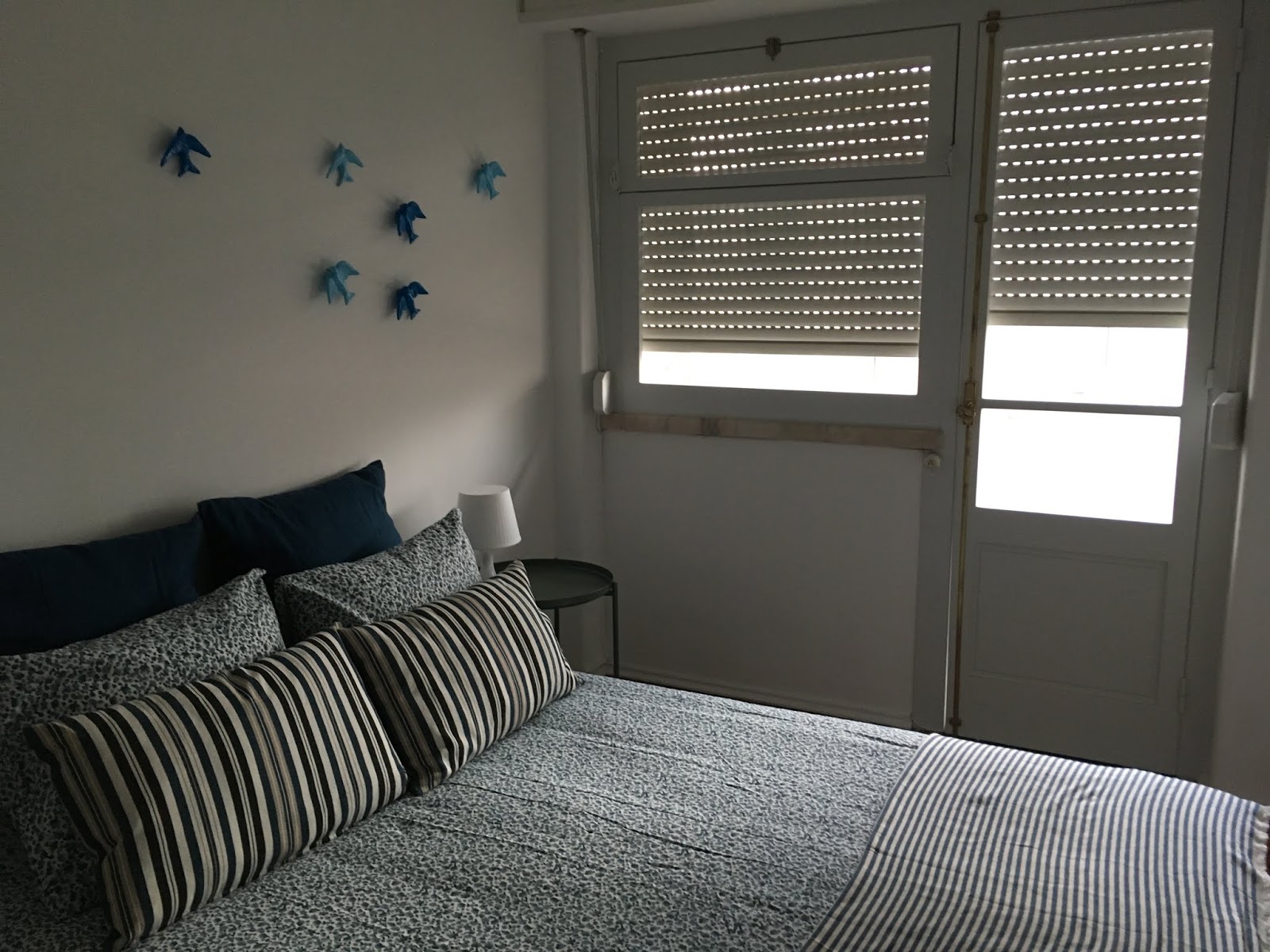
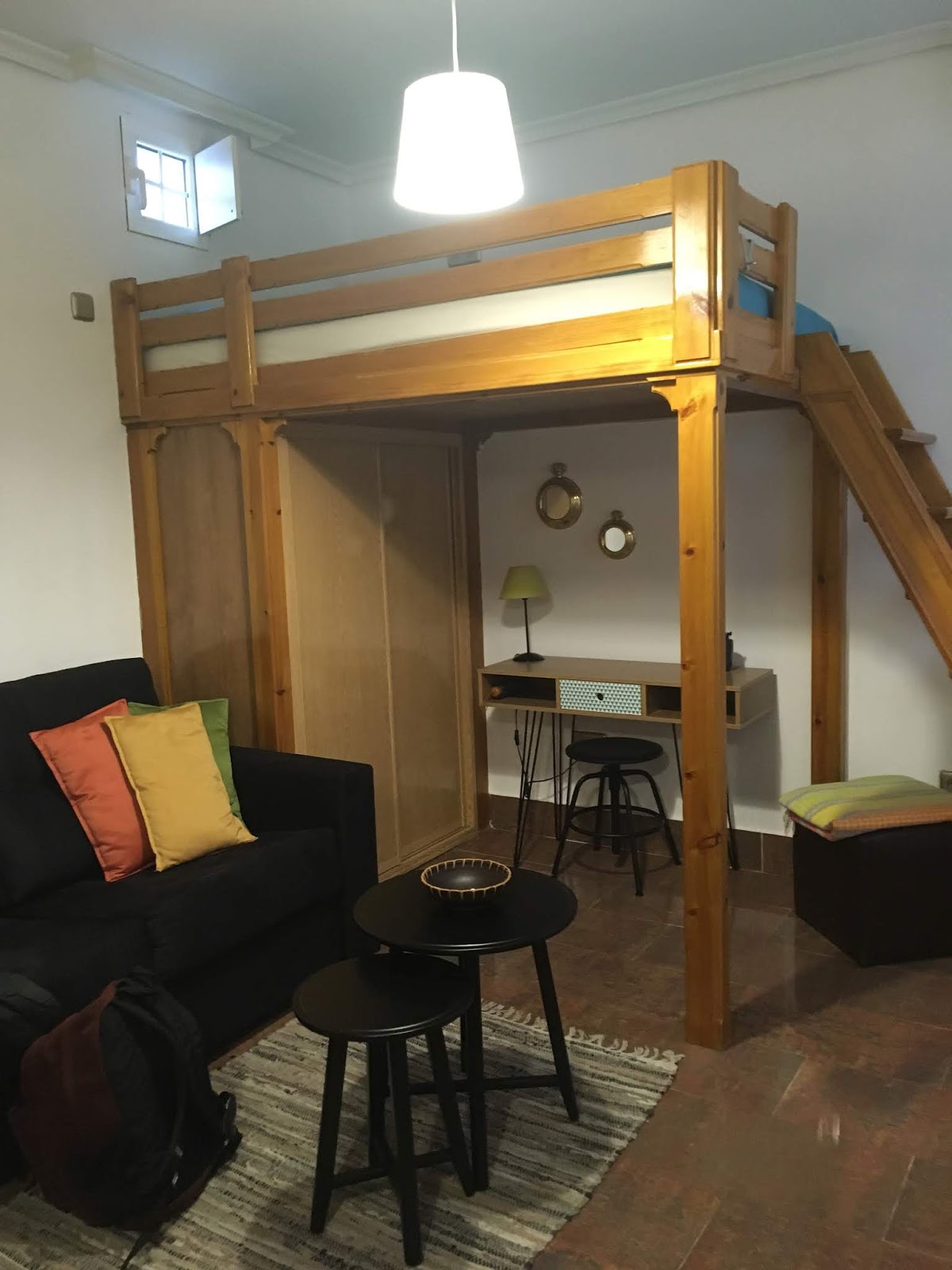
Bookings.com listings have a number of \”bait and switch\” listings (more so then Air B&B or Hotels.com). In Porto, we had our third experience (the first two in Cyprus). We met our host at the apartment we chose on a very picturesque street across from a Bingo hall only to be driven to a a street across from a highway over-pass. The apartment was not bad except that the shower flooded the entire tiny apartment each time you showered (cork pipes? yes, the apartment was that small), requiring a 10:30 pm visit from a plumber. While this did not need to color our time in Porto, it did. Since in our present homeless state, where we stay is our \”home\” so our lodging seems to have a greater influence perhaps then it should (especially for Patricia).
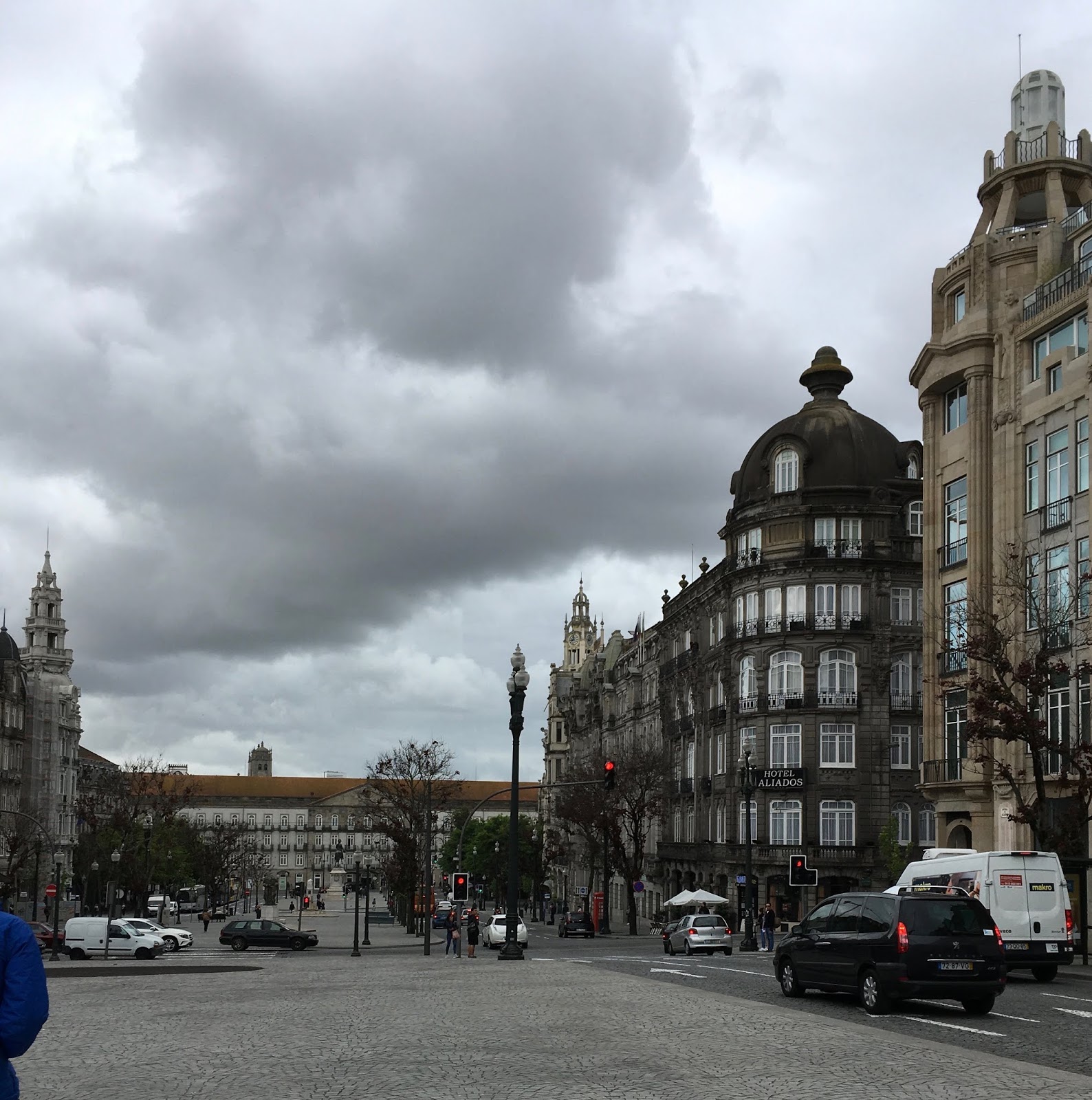
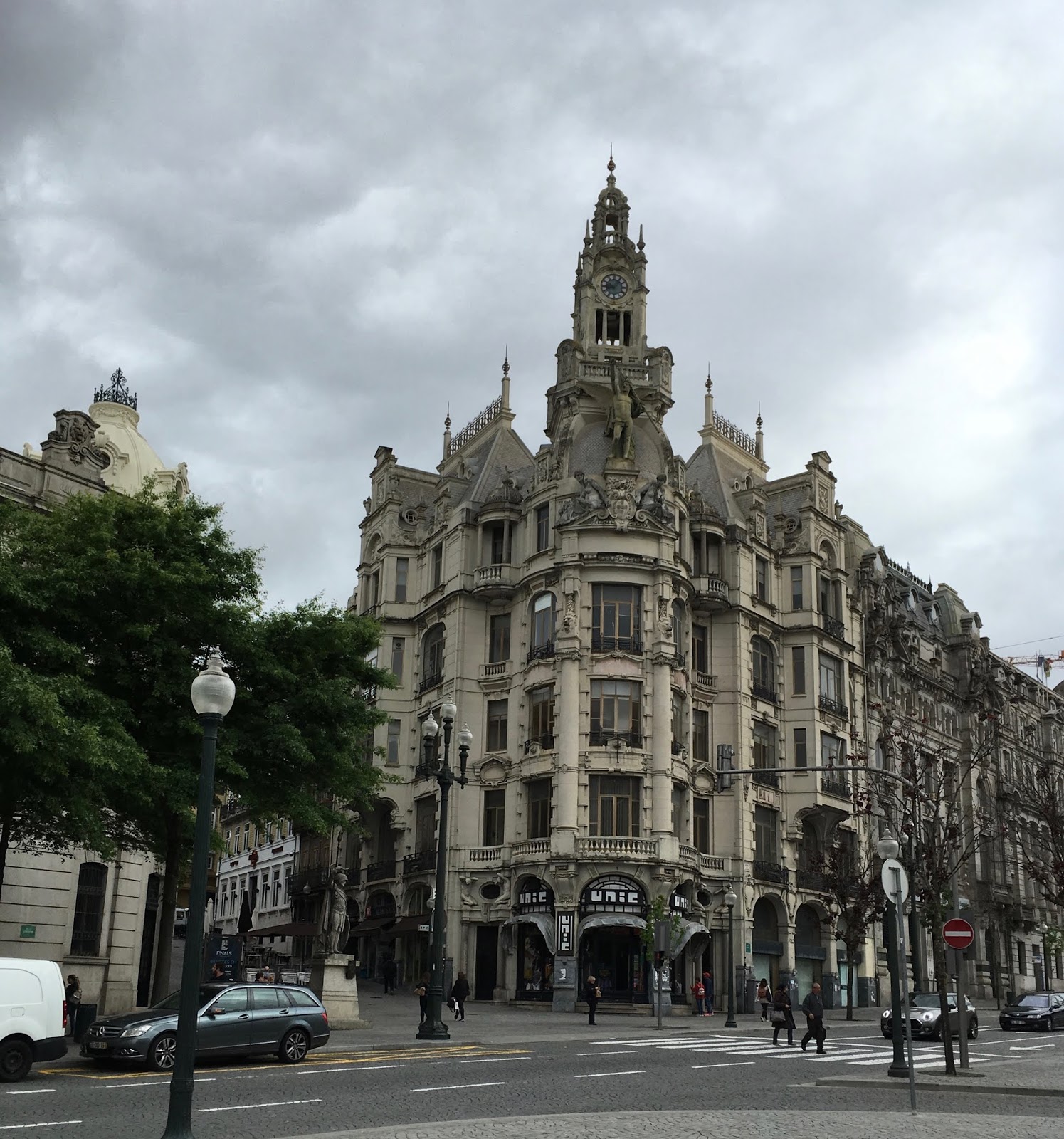
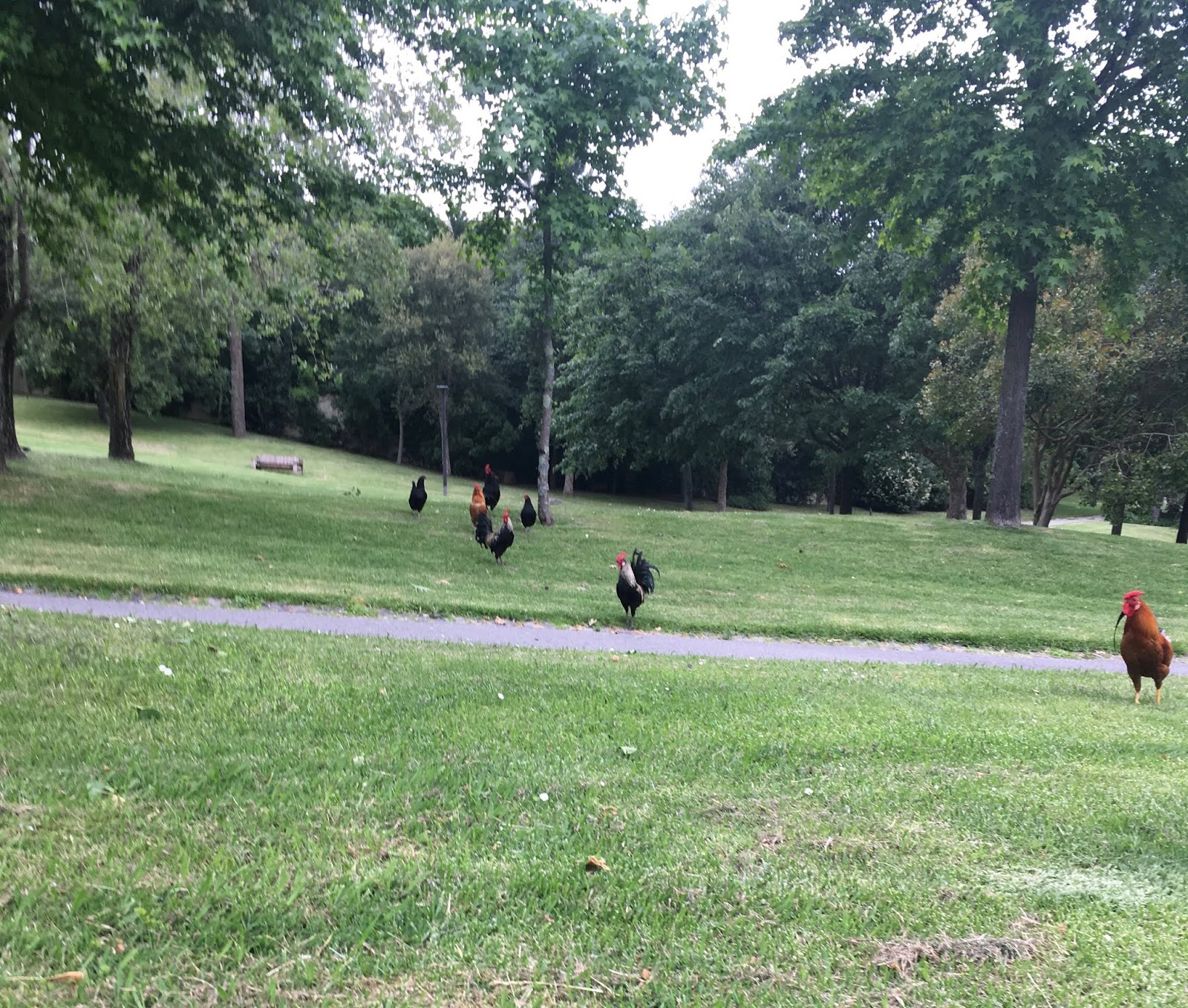
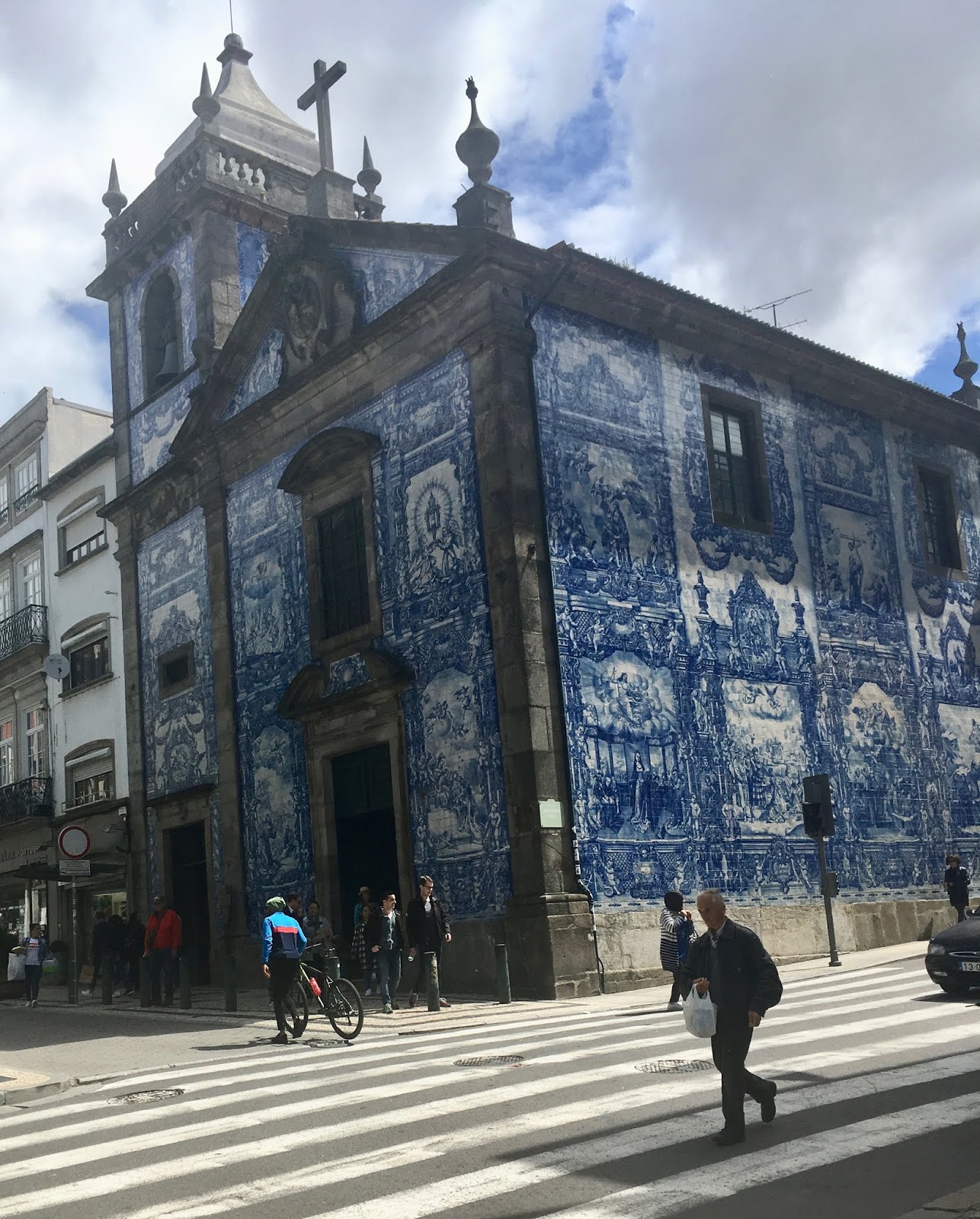
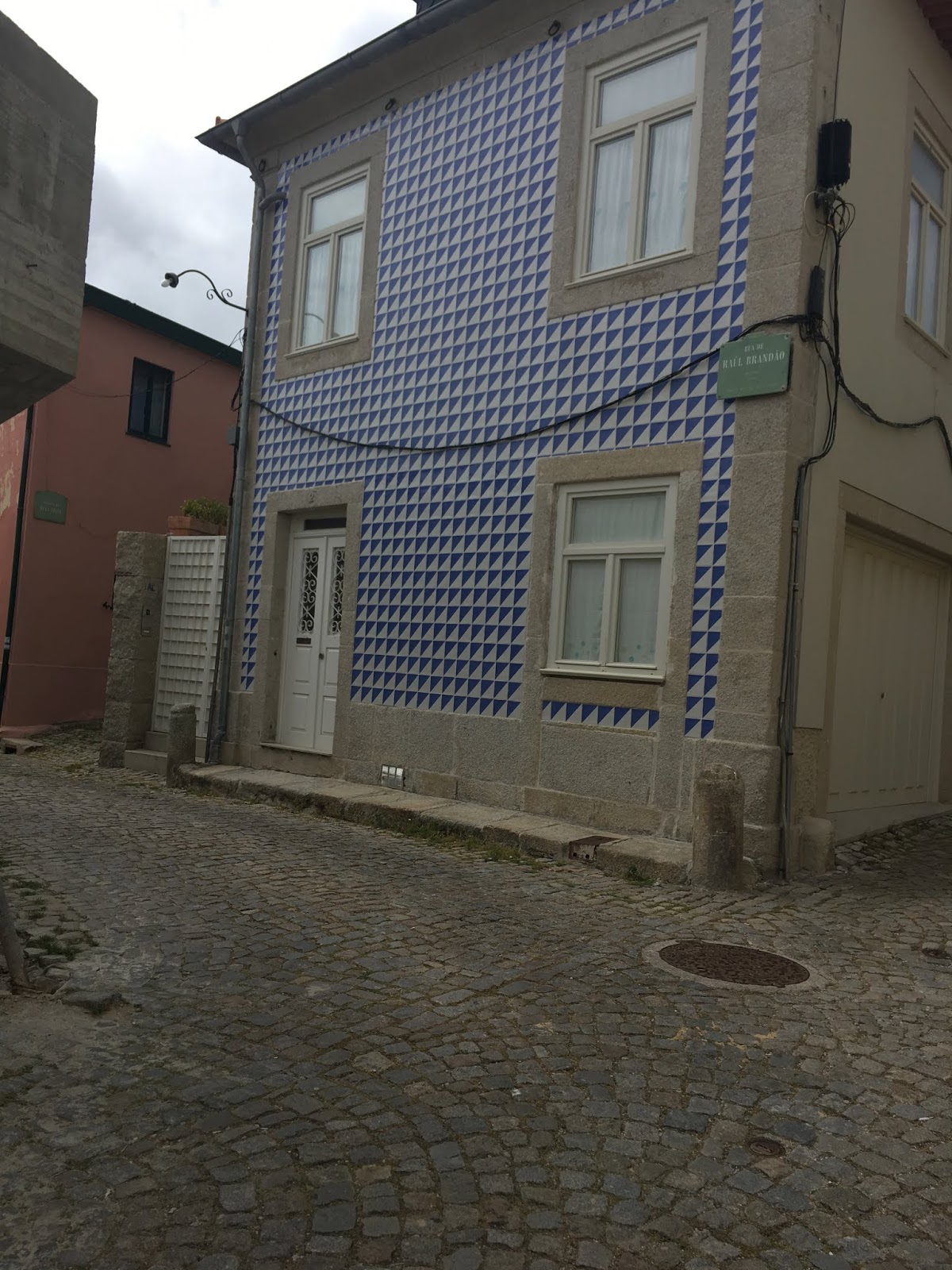
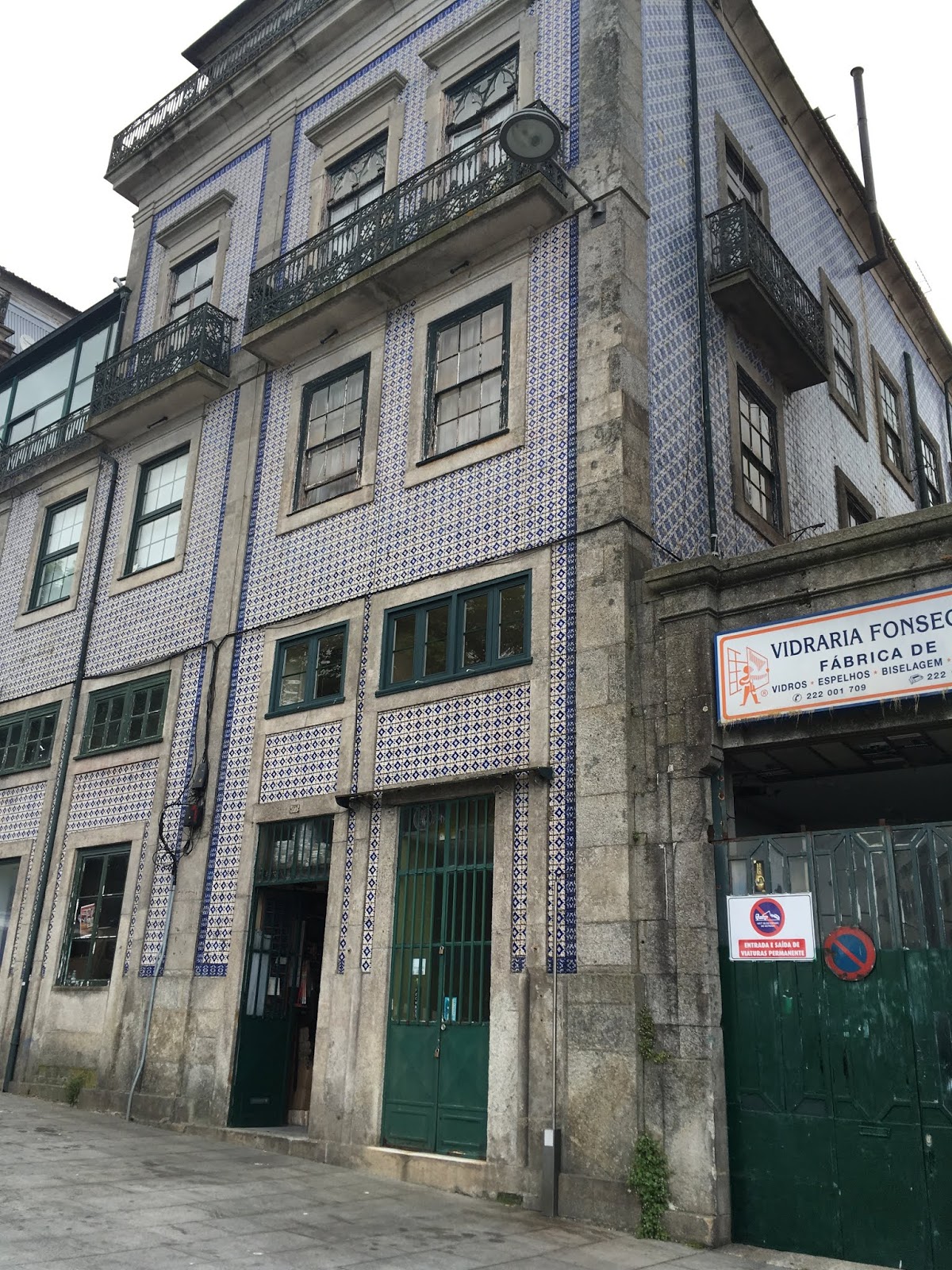
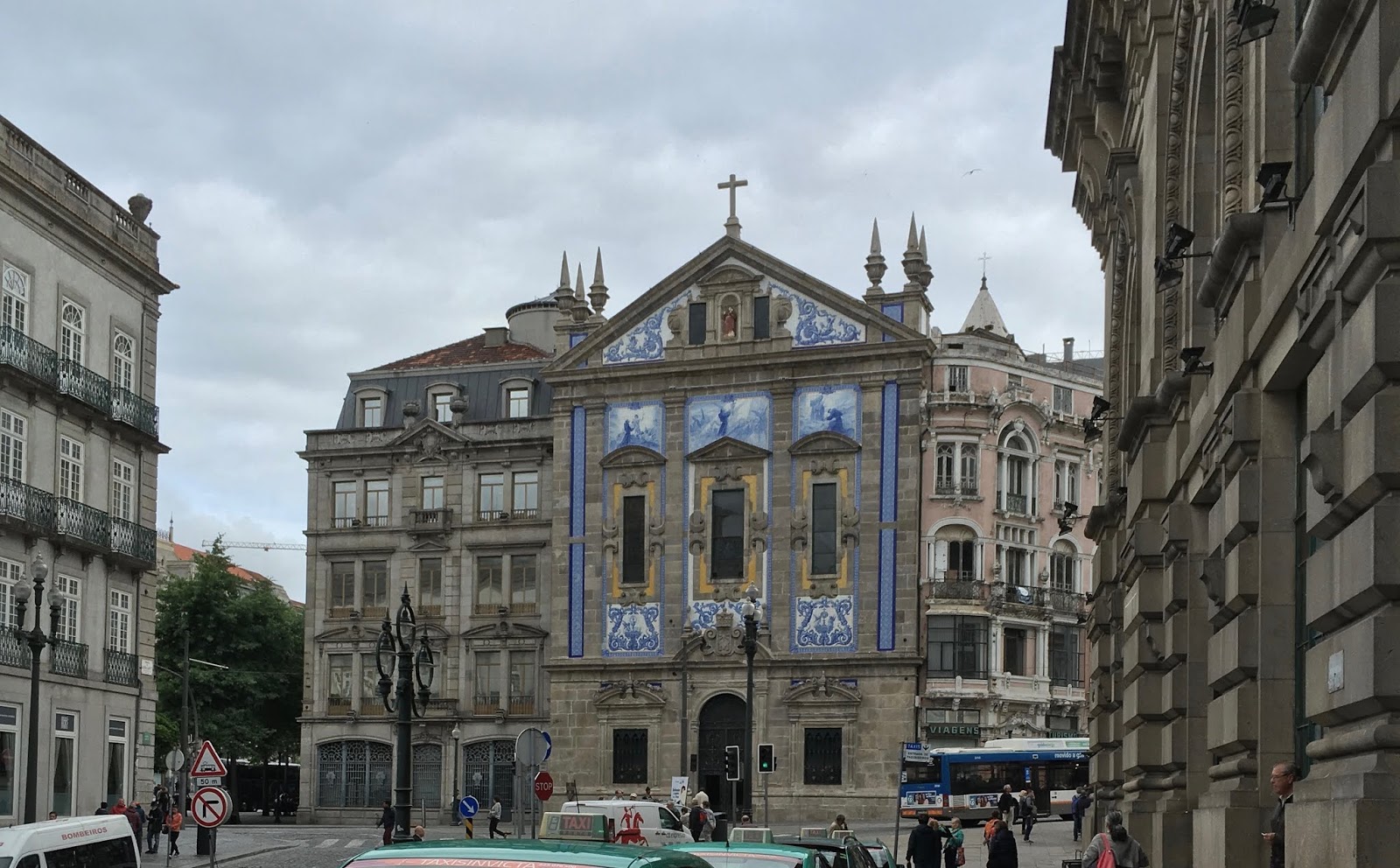
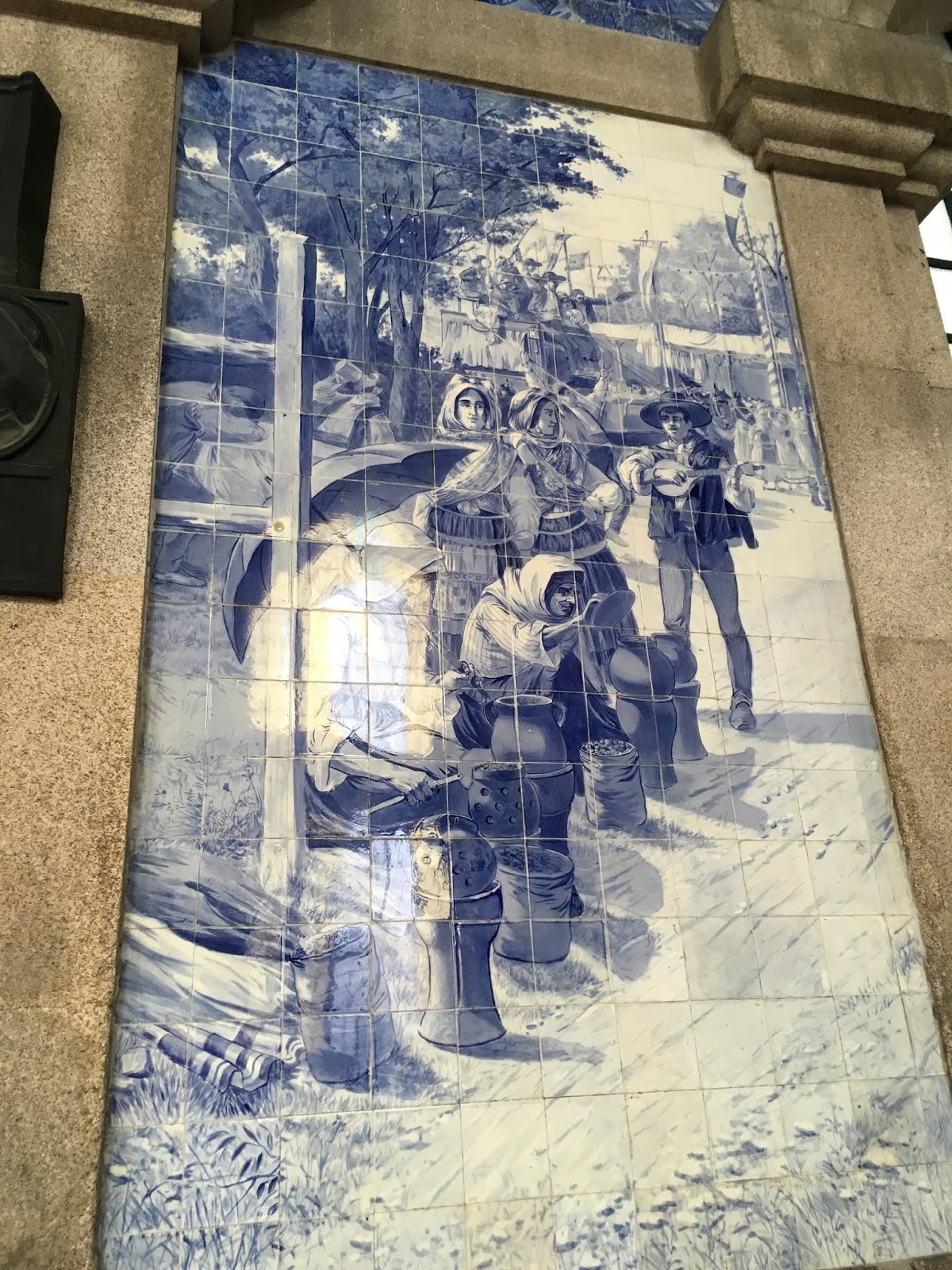
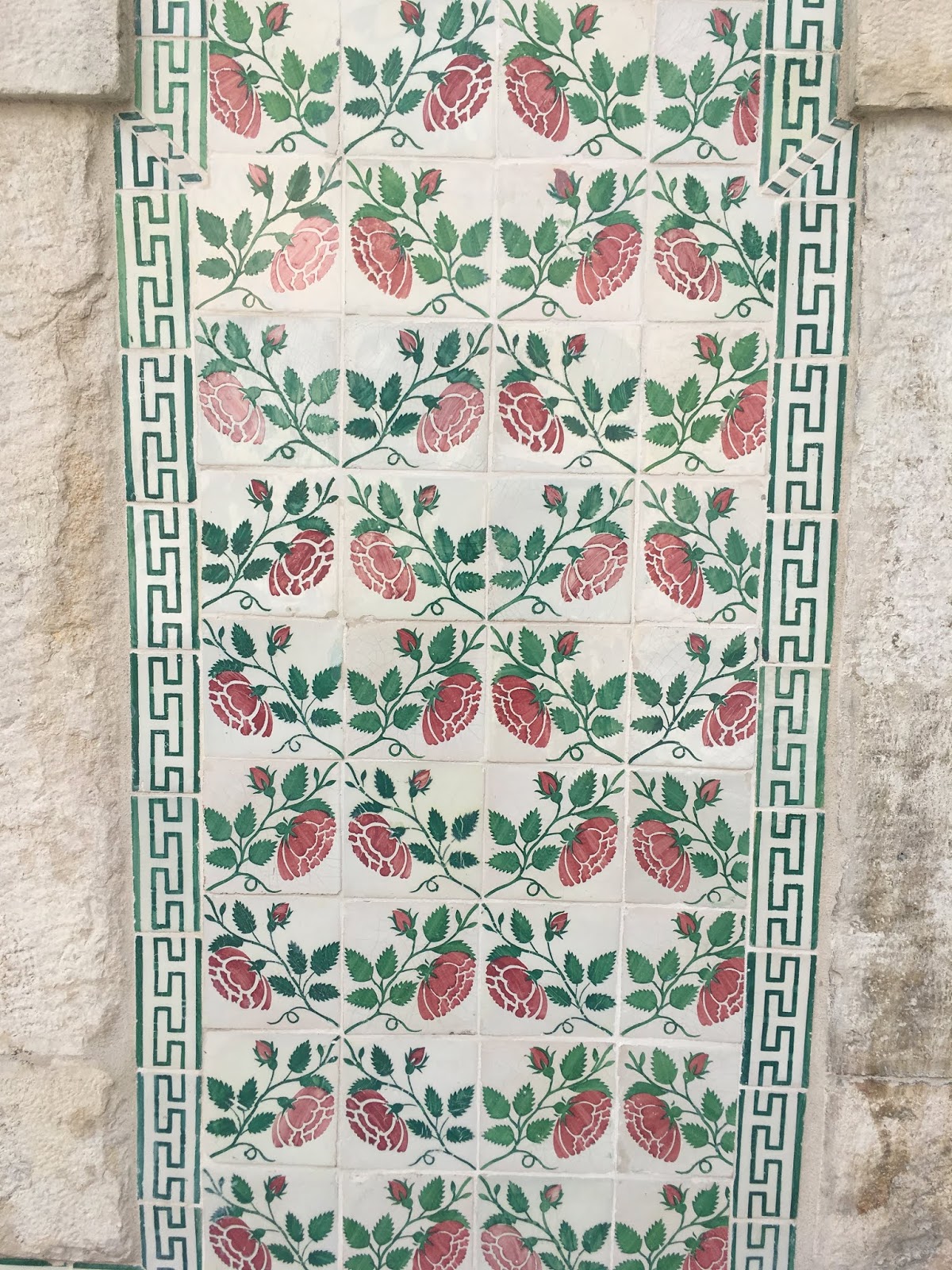
Walking through any Portuguese town feels like entering a magnificent tile showroom. Many of the old tile houses are being re-tiled with subway tiles.
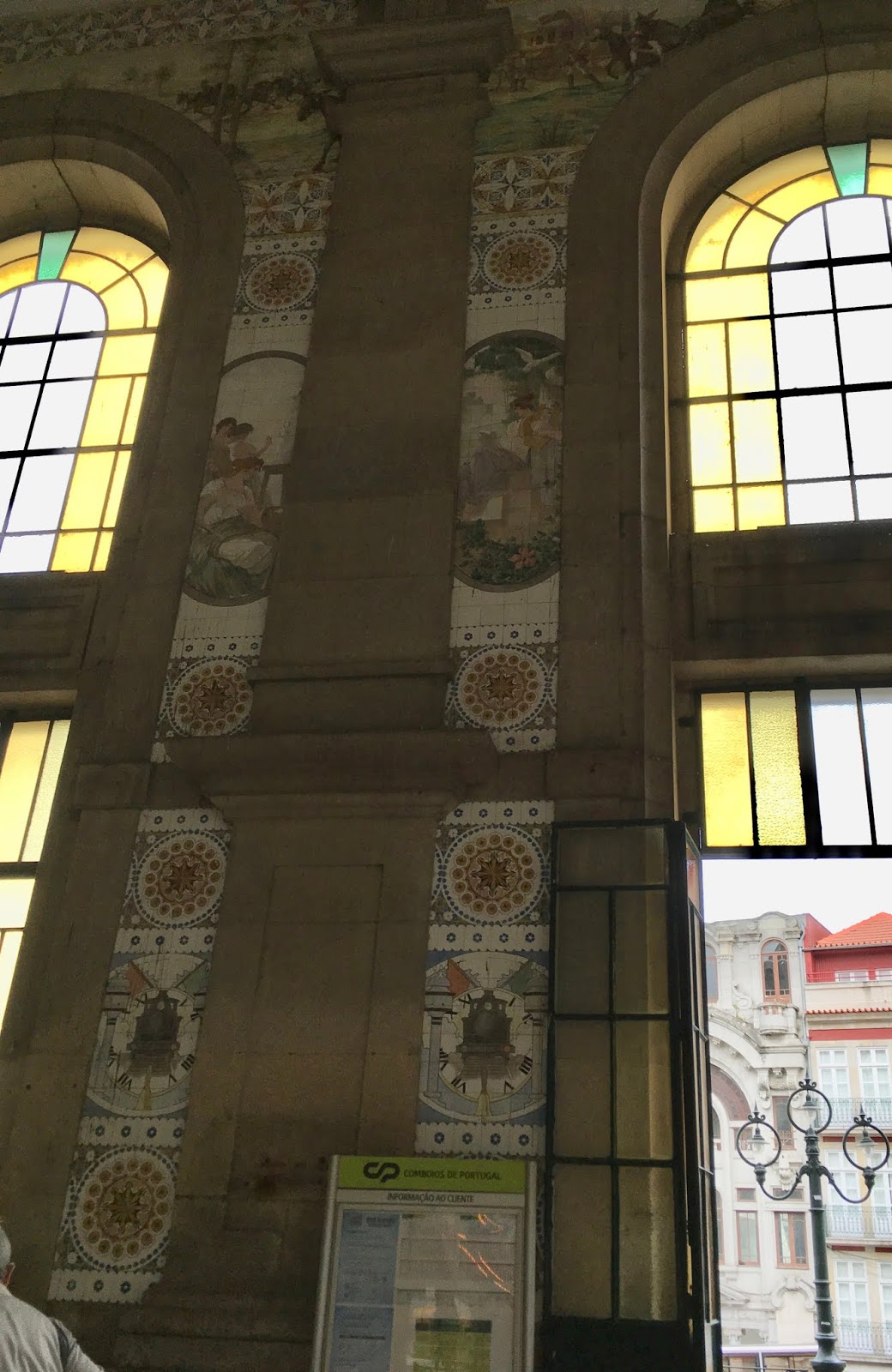
Amazing tile inside some of the buildings as well, this is one of the train stations.
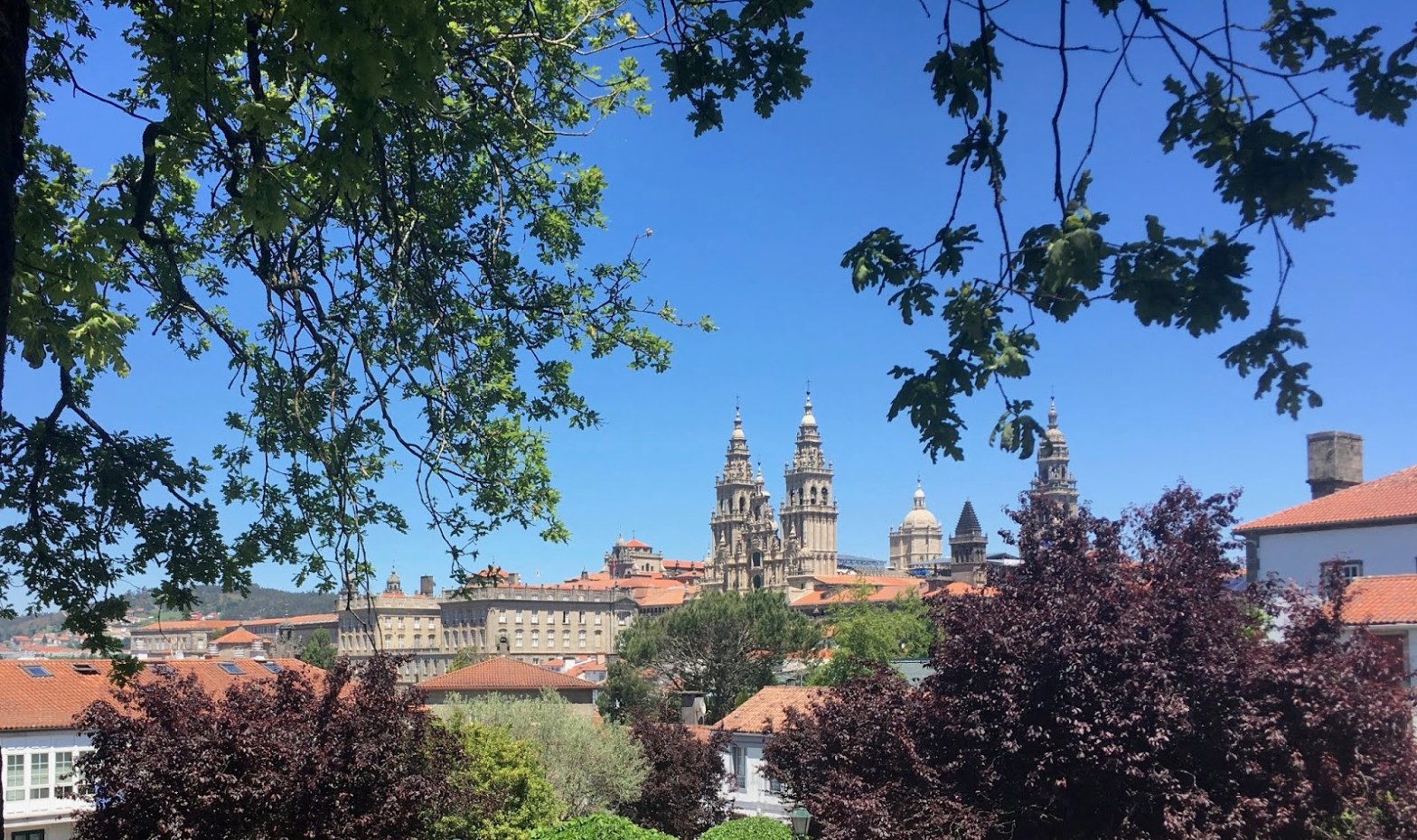
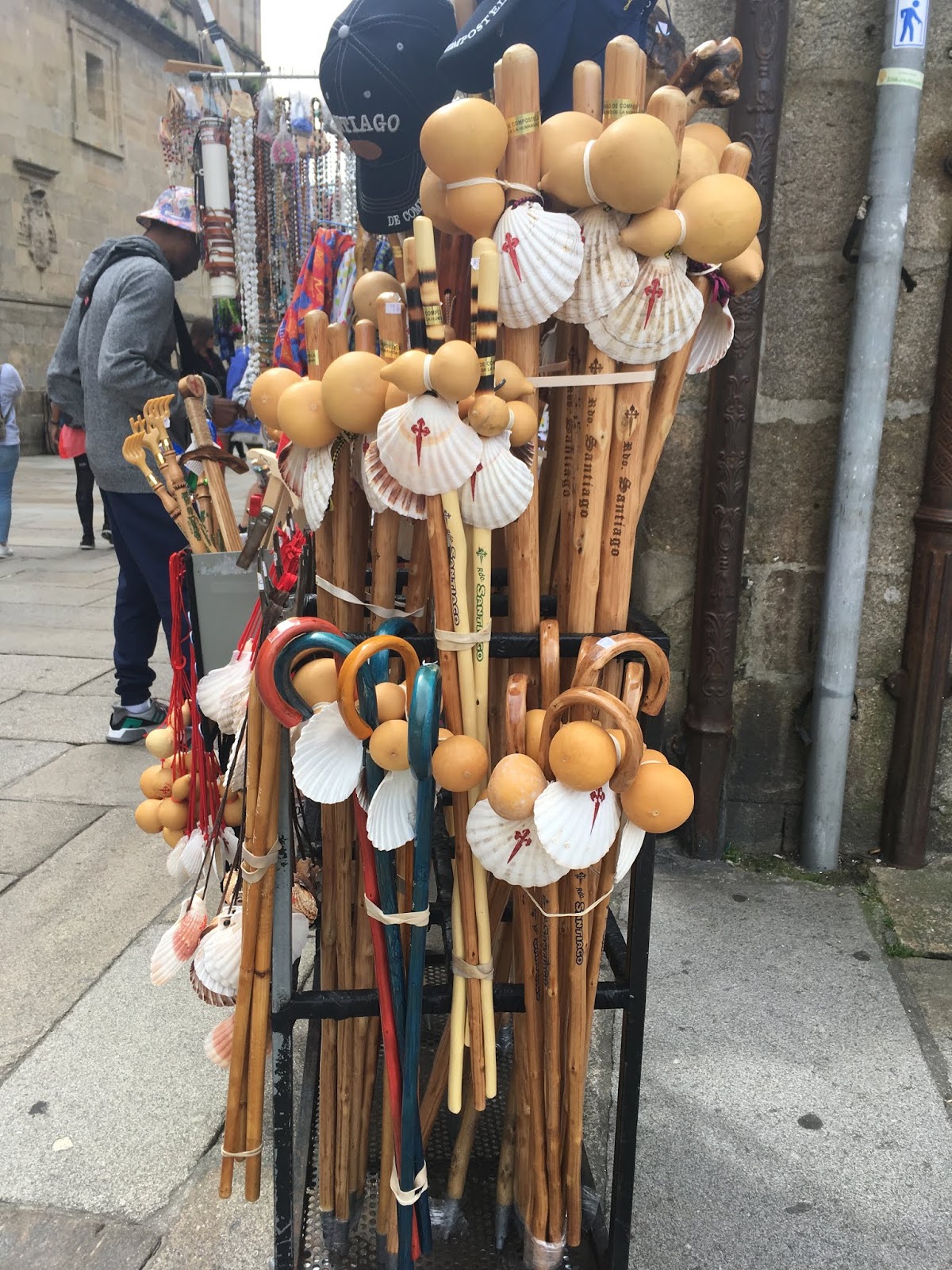
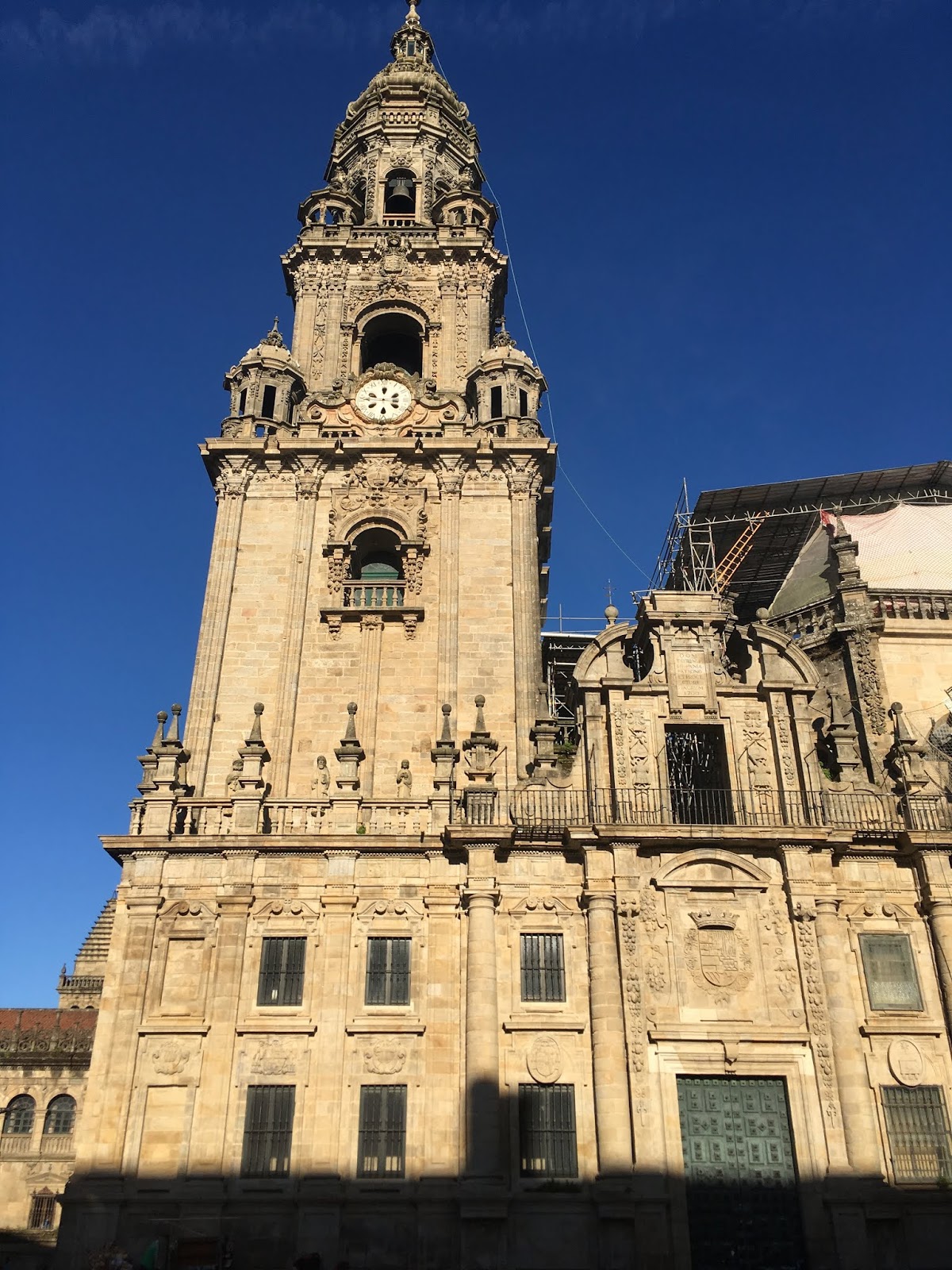
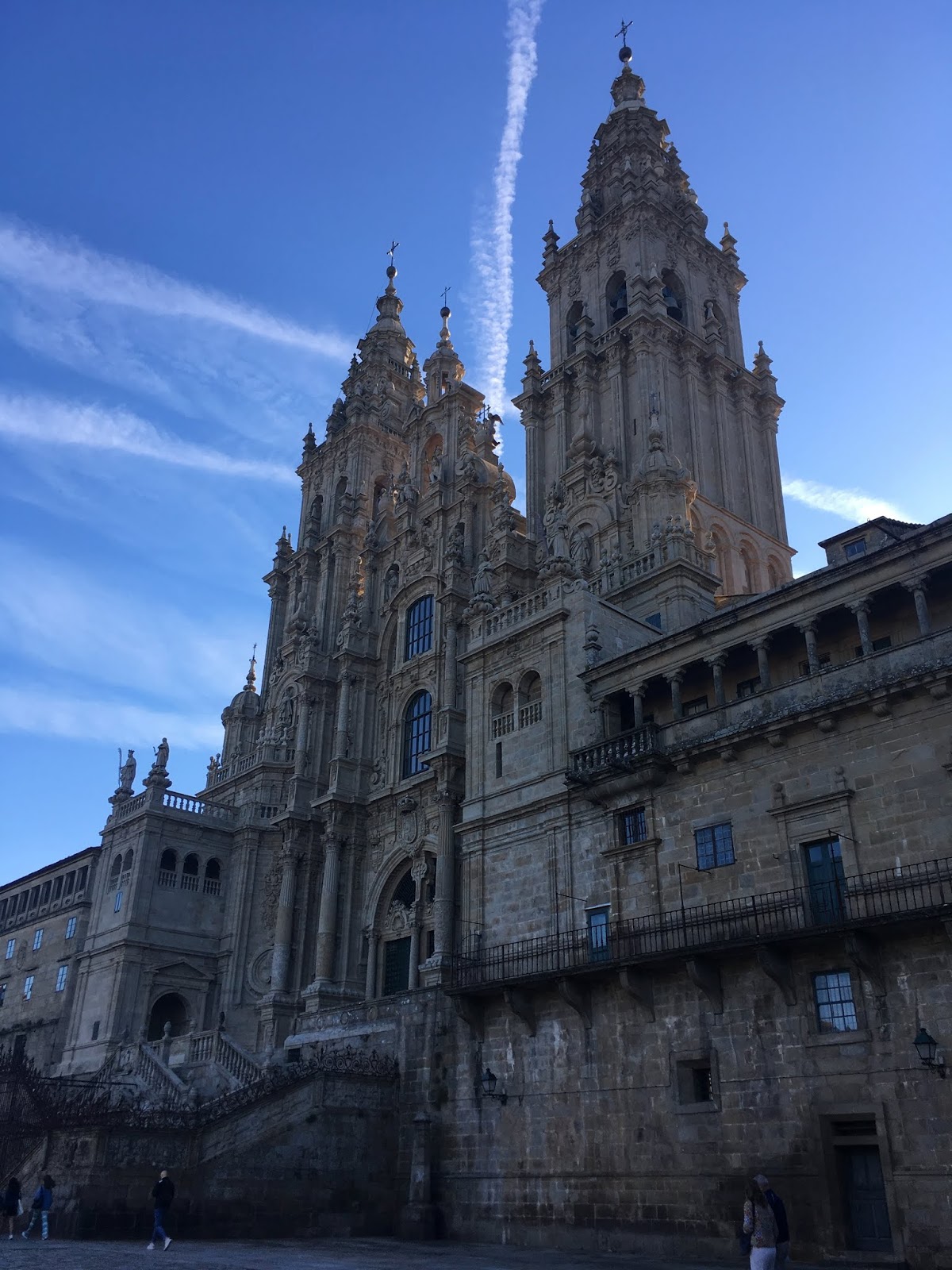
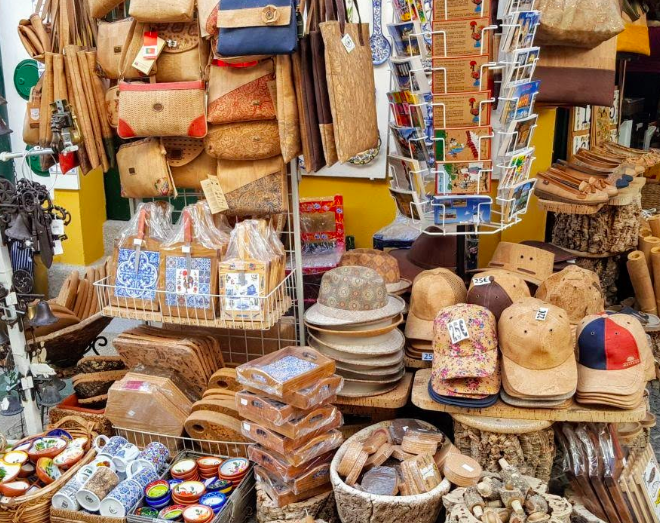 One thing we have noticed everywhere we have gone, is the themed souvenir. In Santiago de Compostela, it was a seashell everything since the shell is the symbol of the Camino. Ireland has it\’s sheep and Guinness, Cyprus had Aphrodite and Portugal has everything made of cork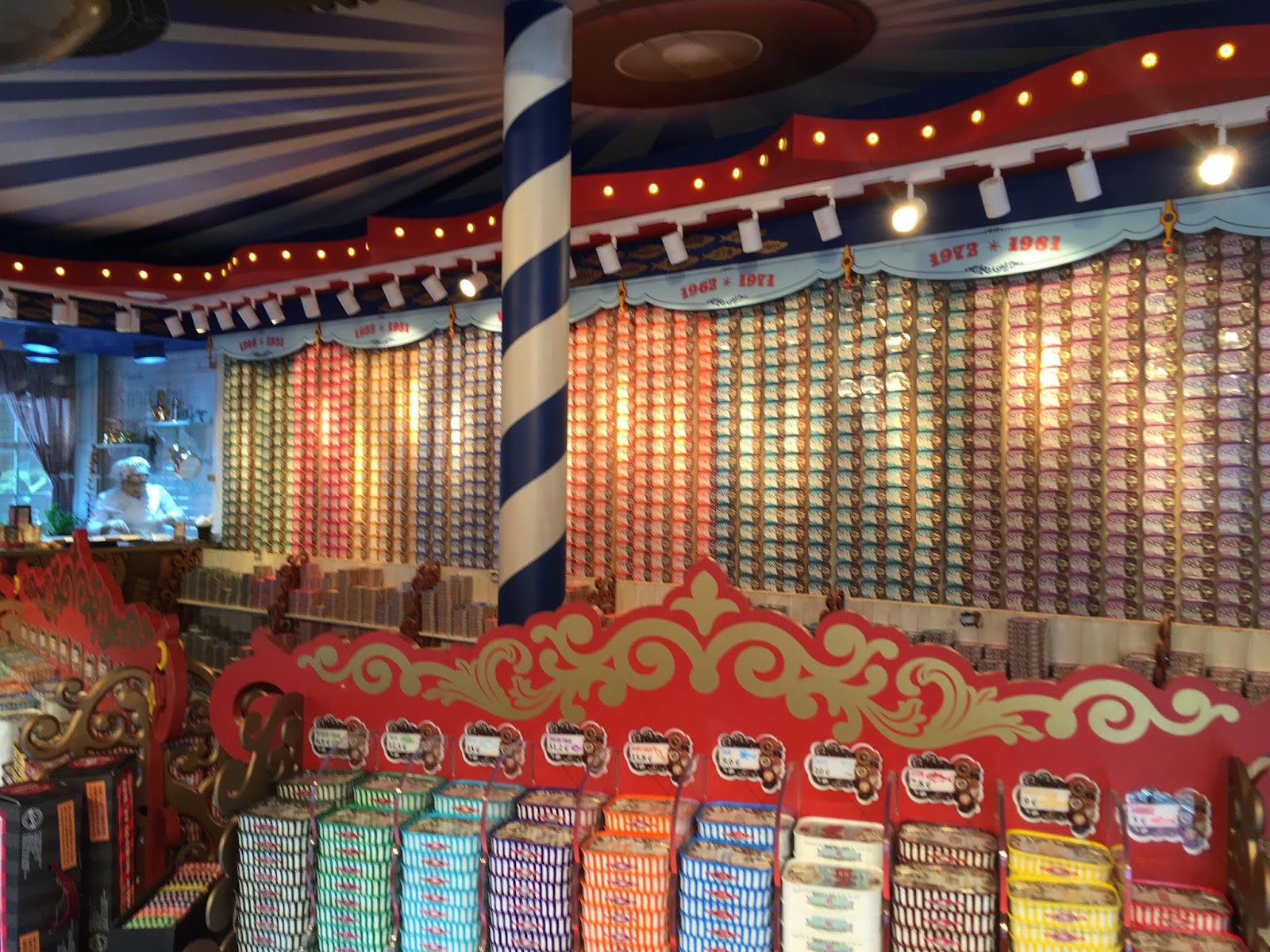
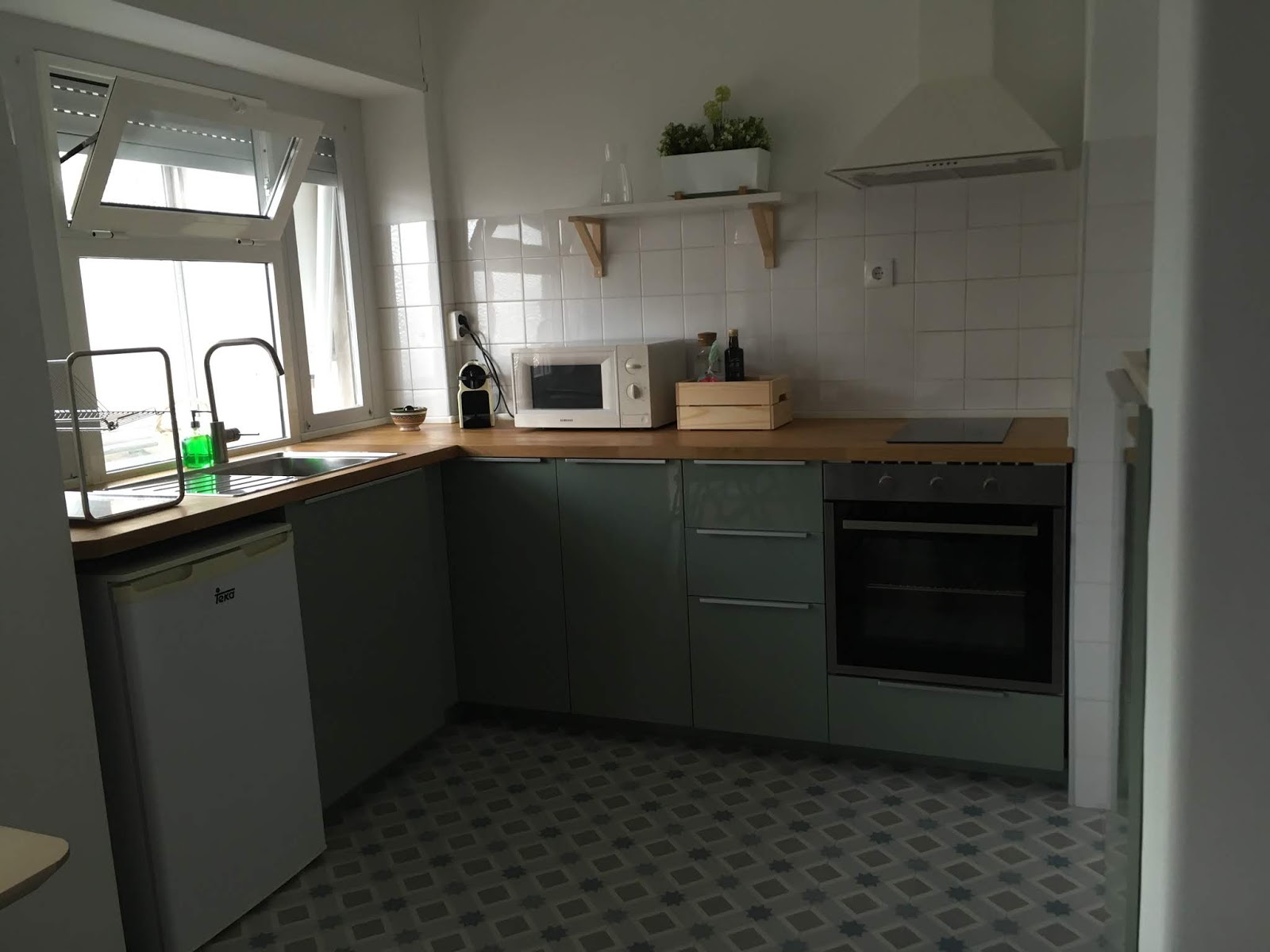

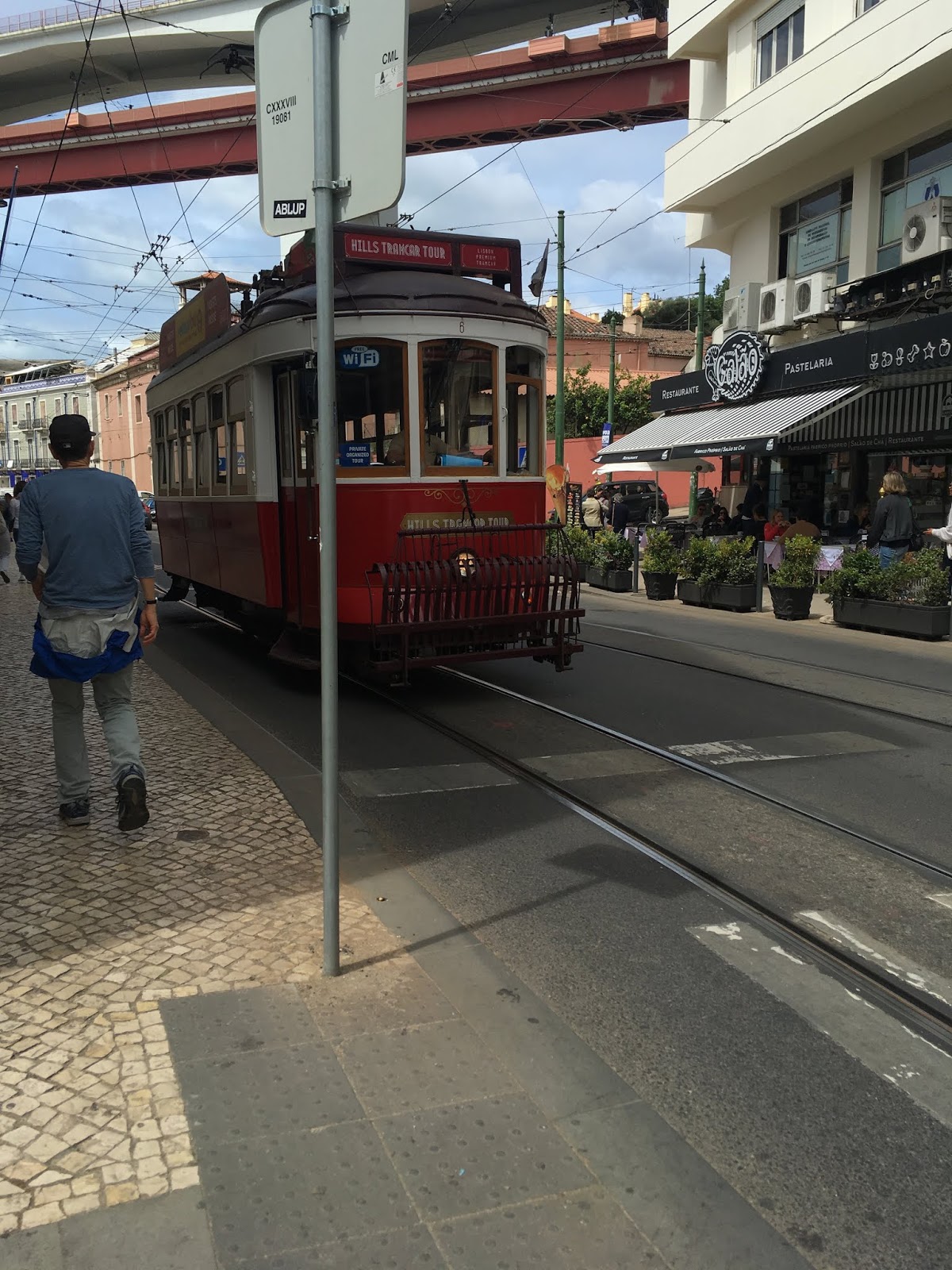 There were cable cars and a MUNI like tram line (probably also locally hated). Lisbon also has steep hills and we traversed every hill without seemingly the corresponding downhill. Lisbon however (sorry BART) had an excellent, clean, easy-to-use (even for non-native speakers), and very extensive subway system.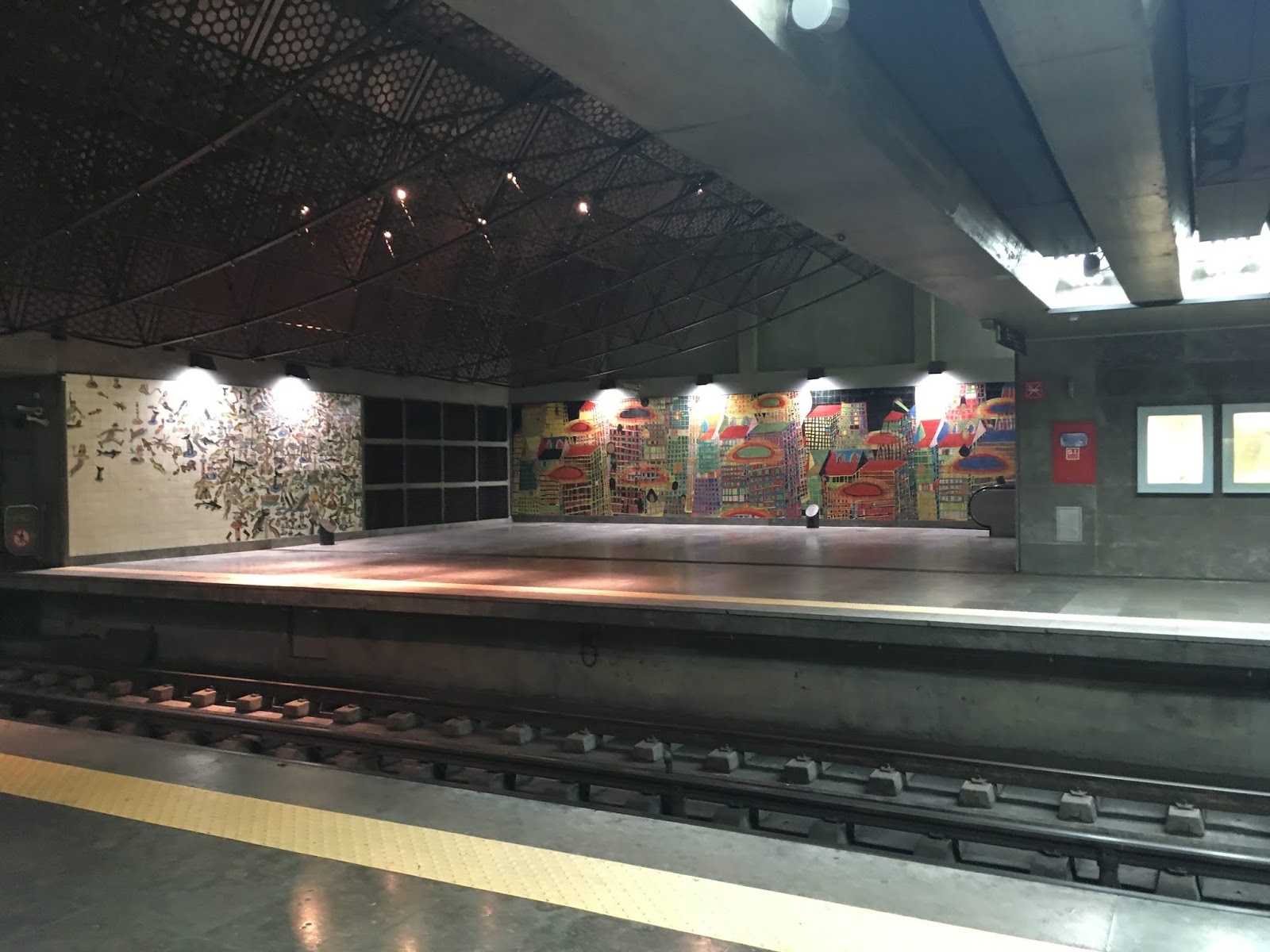
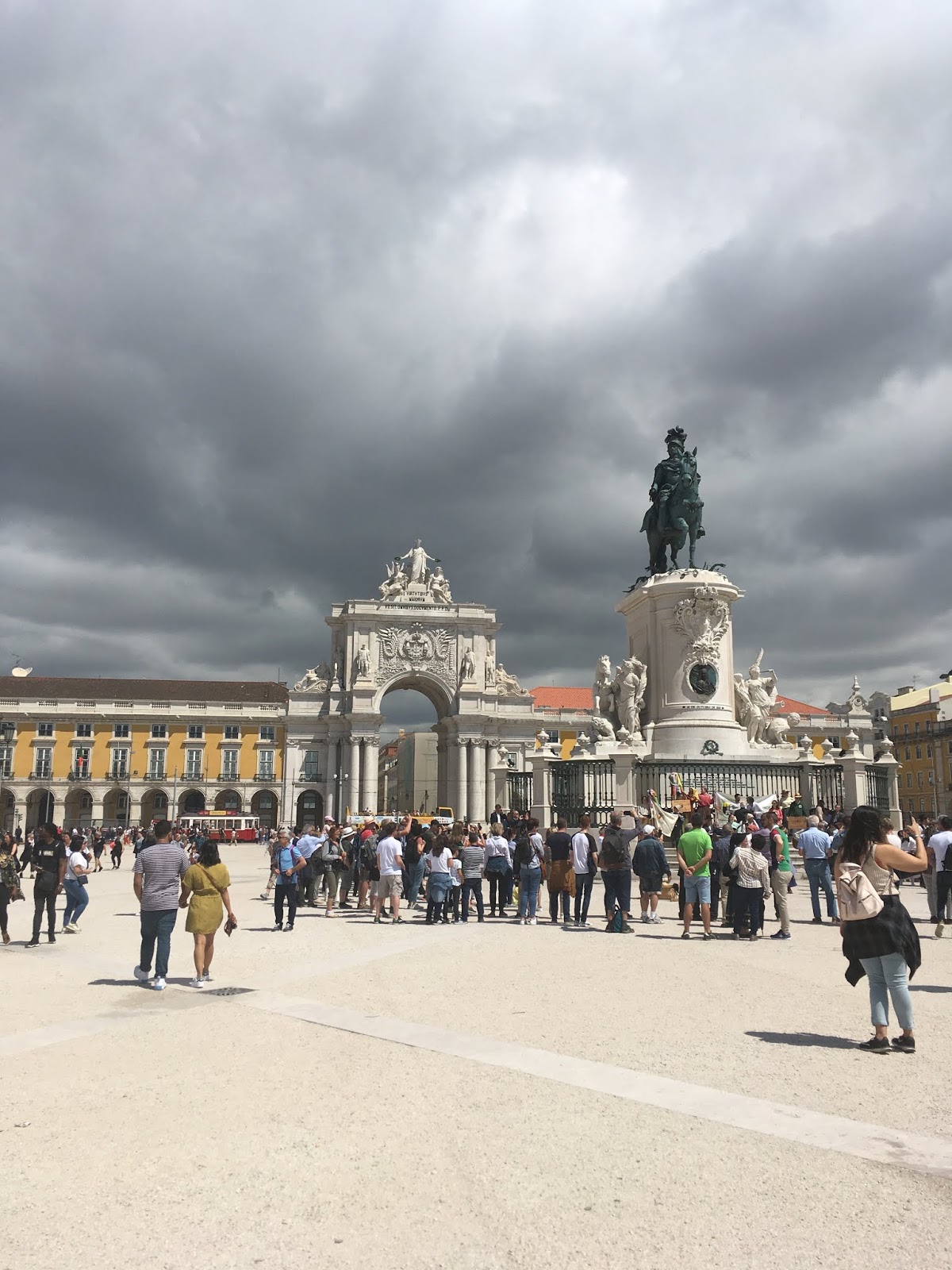
In Lisbon, the city felt vibrant just like San Francisco. We started to see the summer tourist season crowds form, but it was worth it, plus the neighborhood we stayed in was just outside of the tourist area. While at some level it is convenient to stay in the thick of things, but that can limit how you experience the city. If you have to get somewhere, you have to walk through somewhere. Walking different routes to see the sites led us past big, glorious buildings around open squares, side streets lined with buildings ranging from shabby chic (a generous description sometimes) to breath-taking beauties. Buildings from almost every century, within blocks of each other.
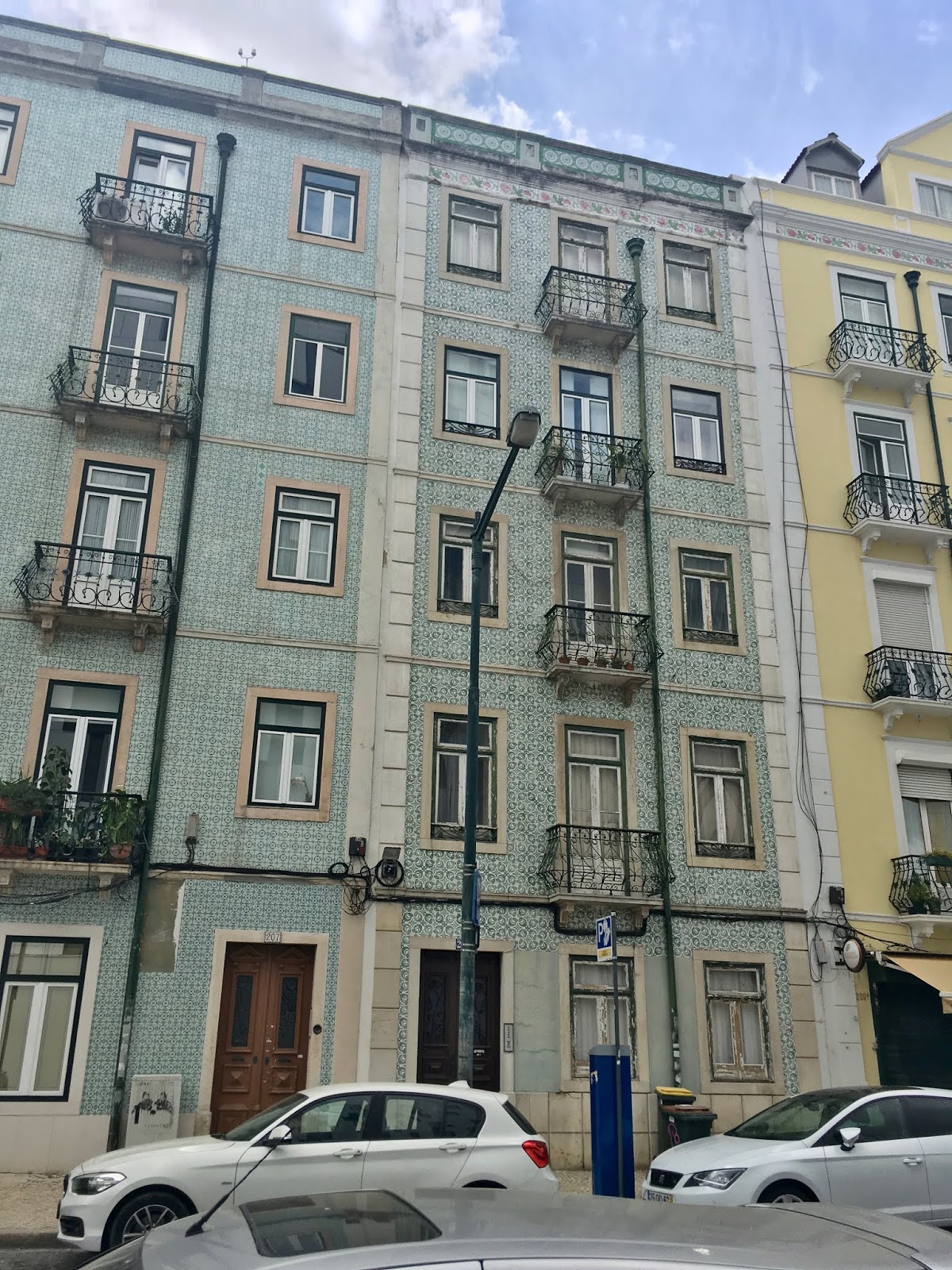
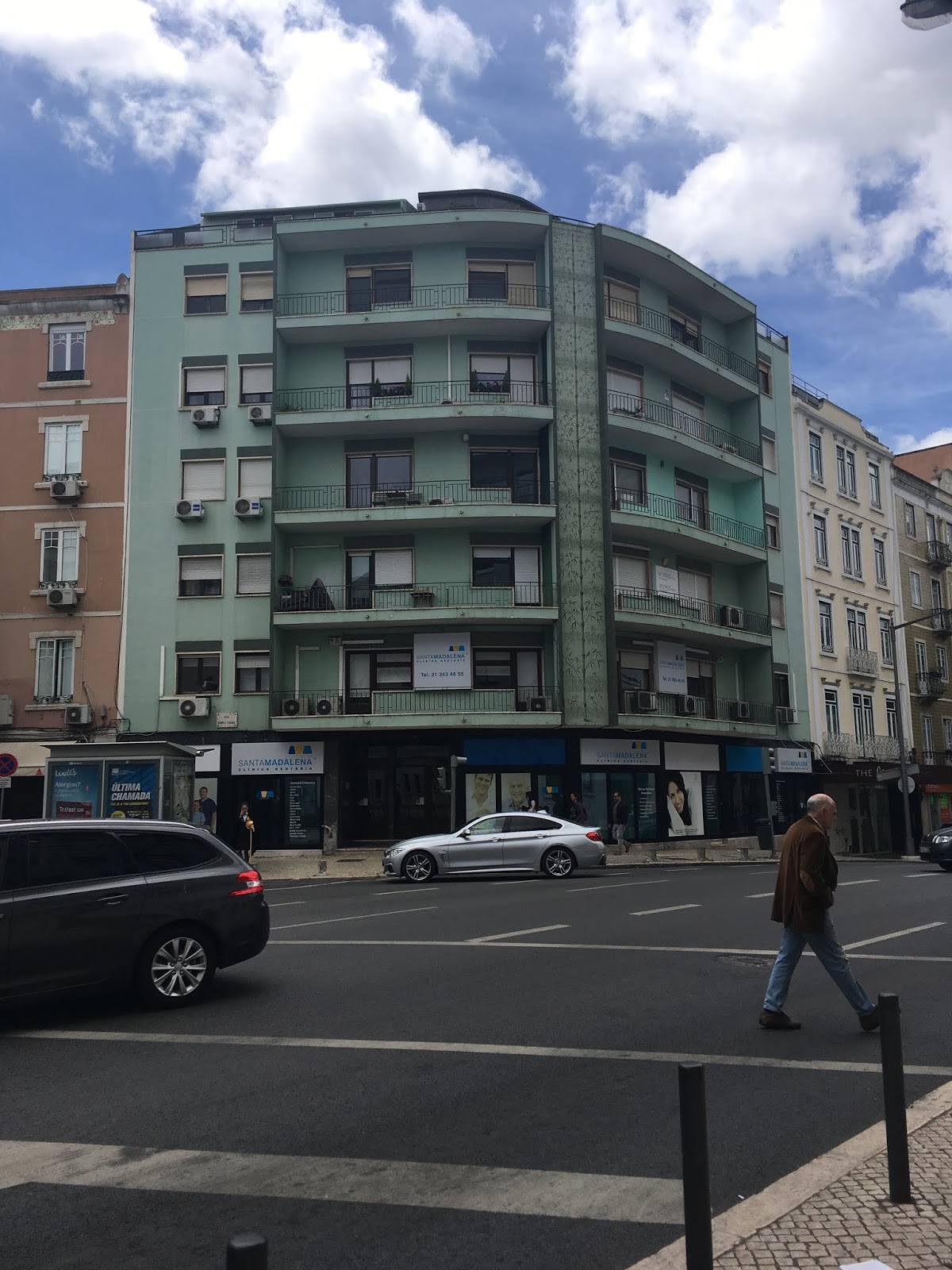
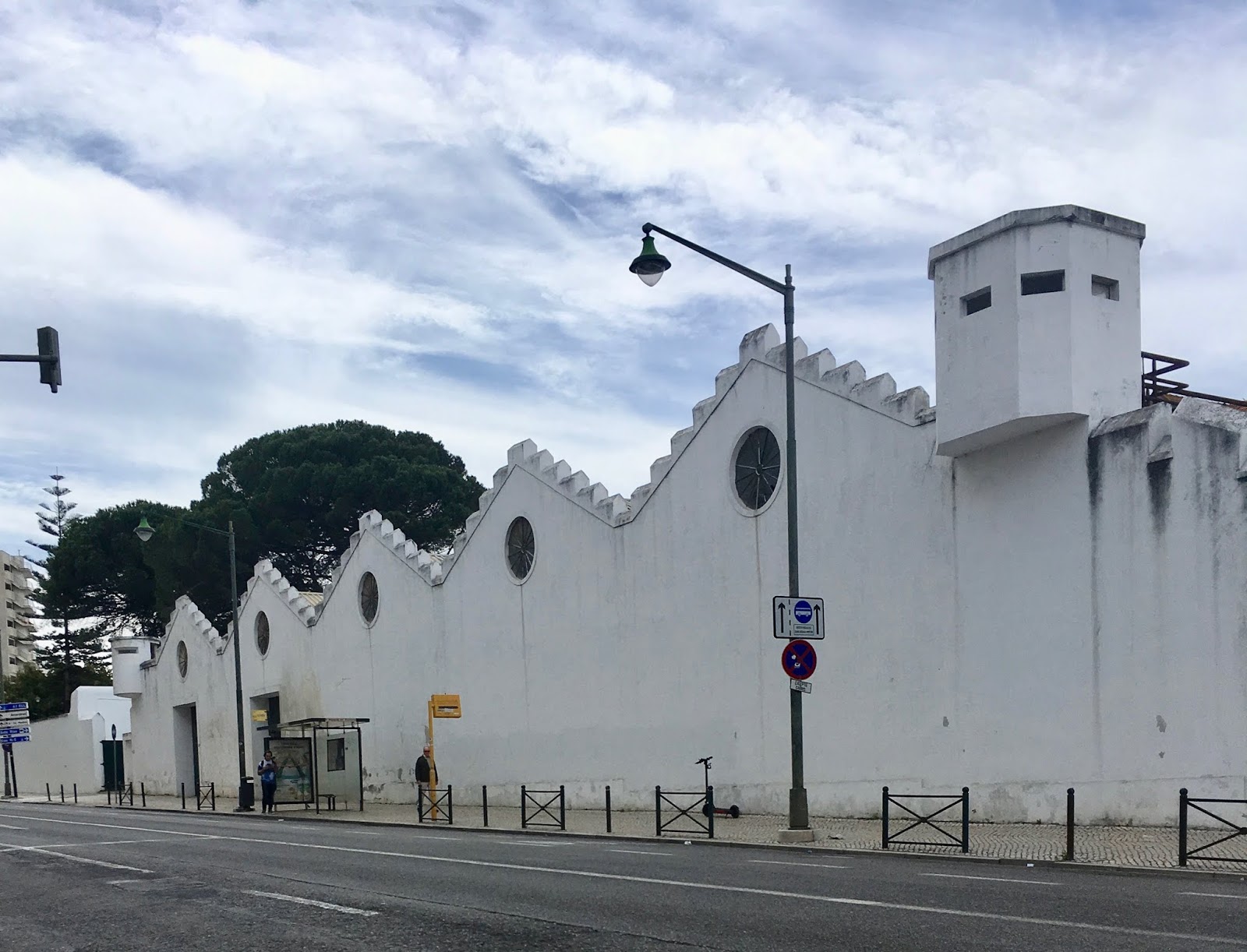
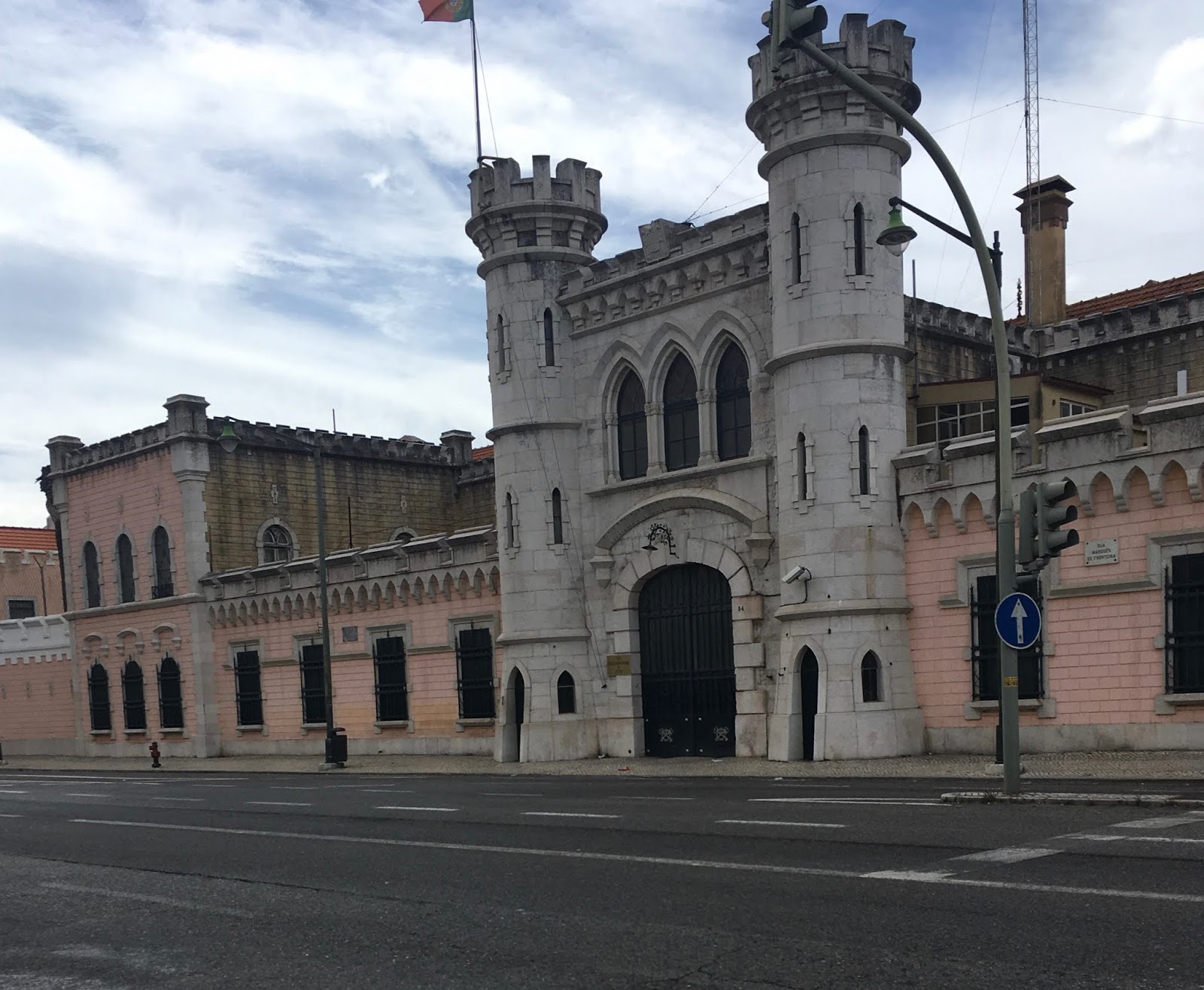
We marveled at Lisbon\’s sidewalks, along busy streets and serene urban pathways.
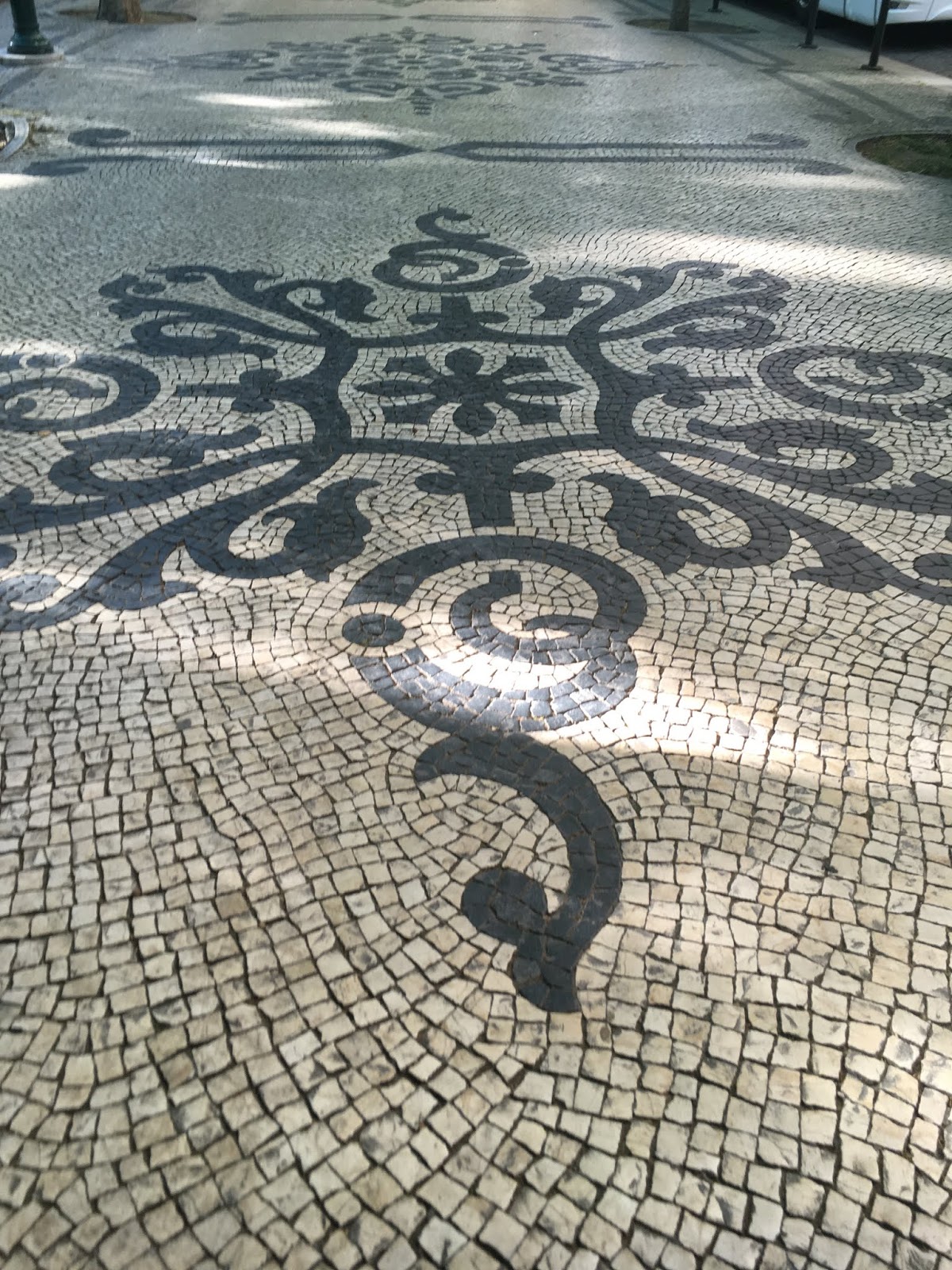
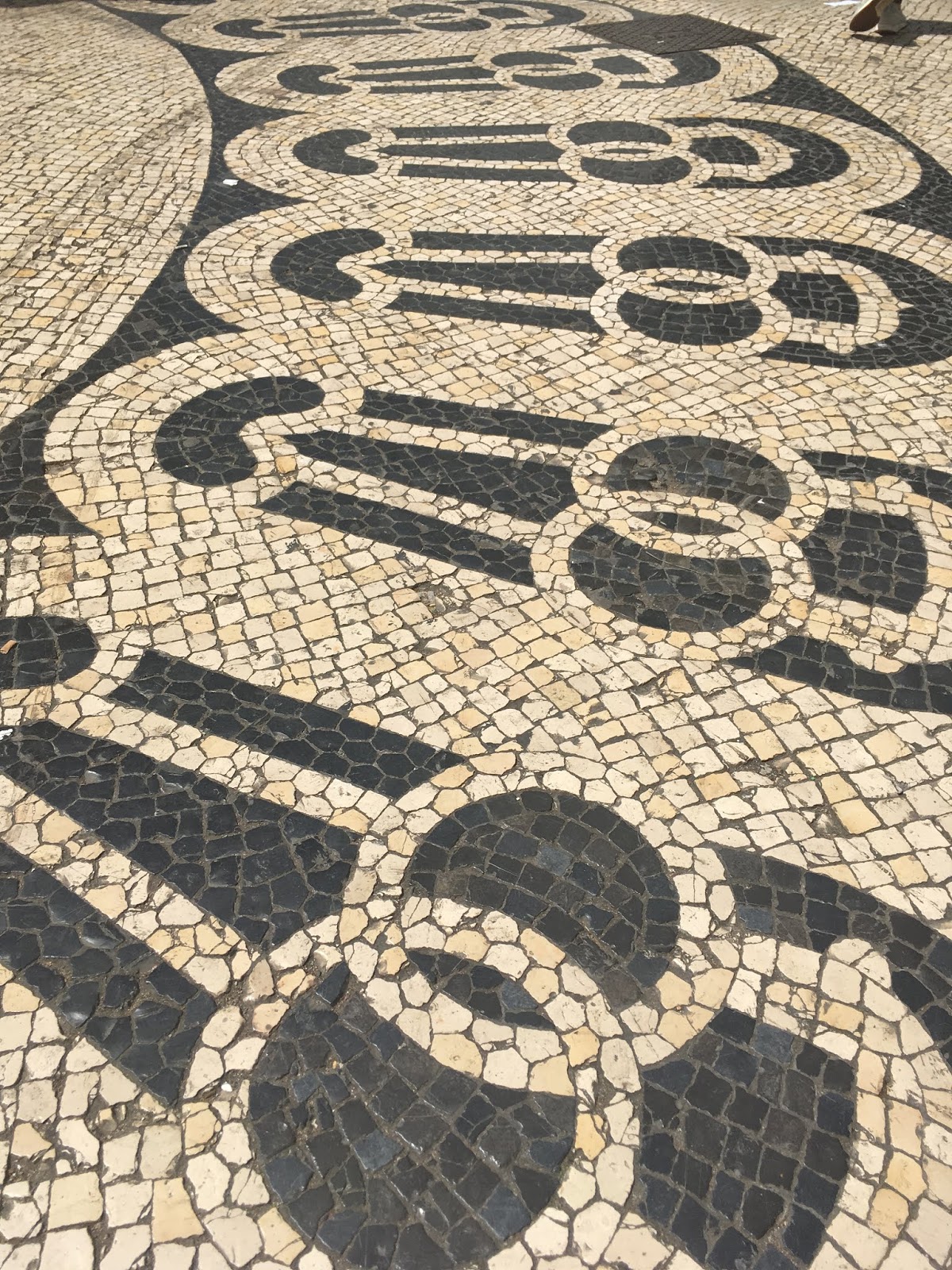
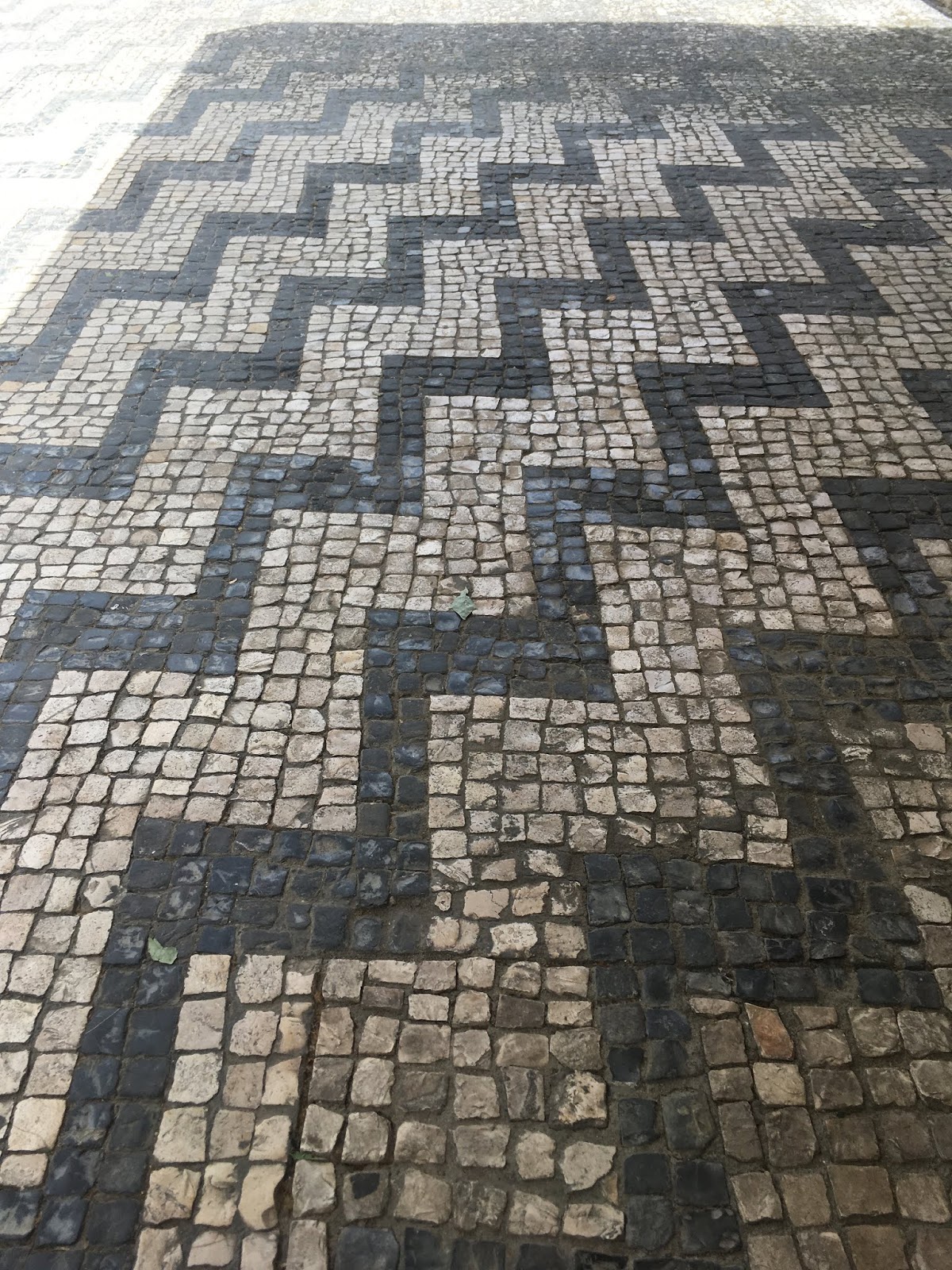
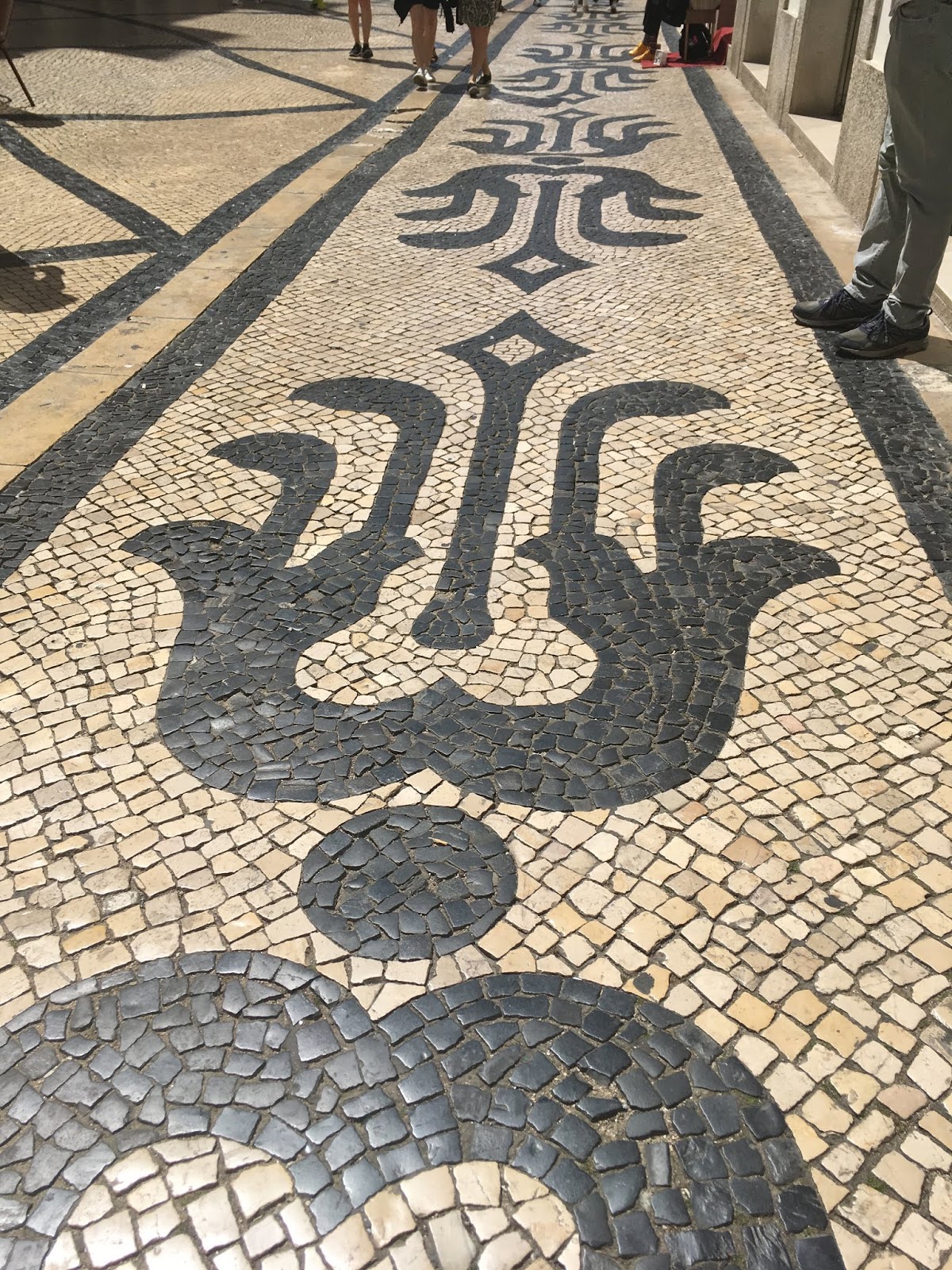
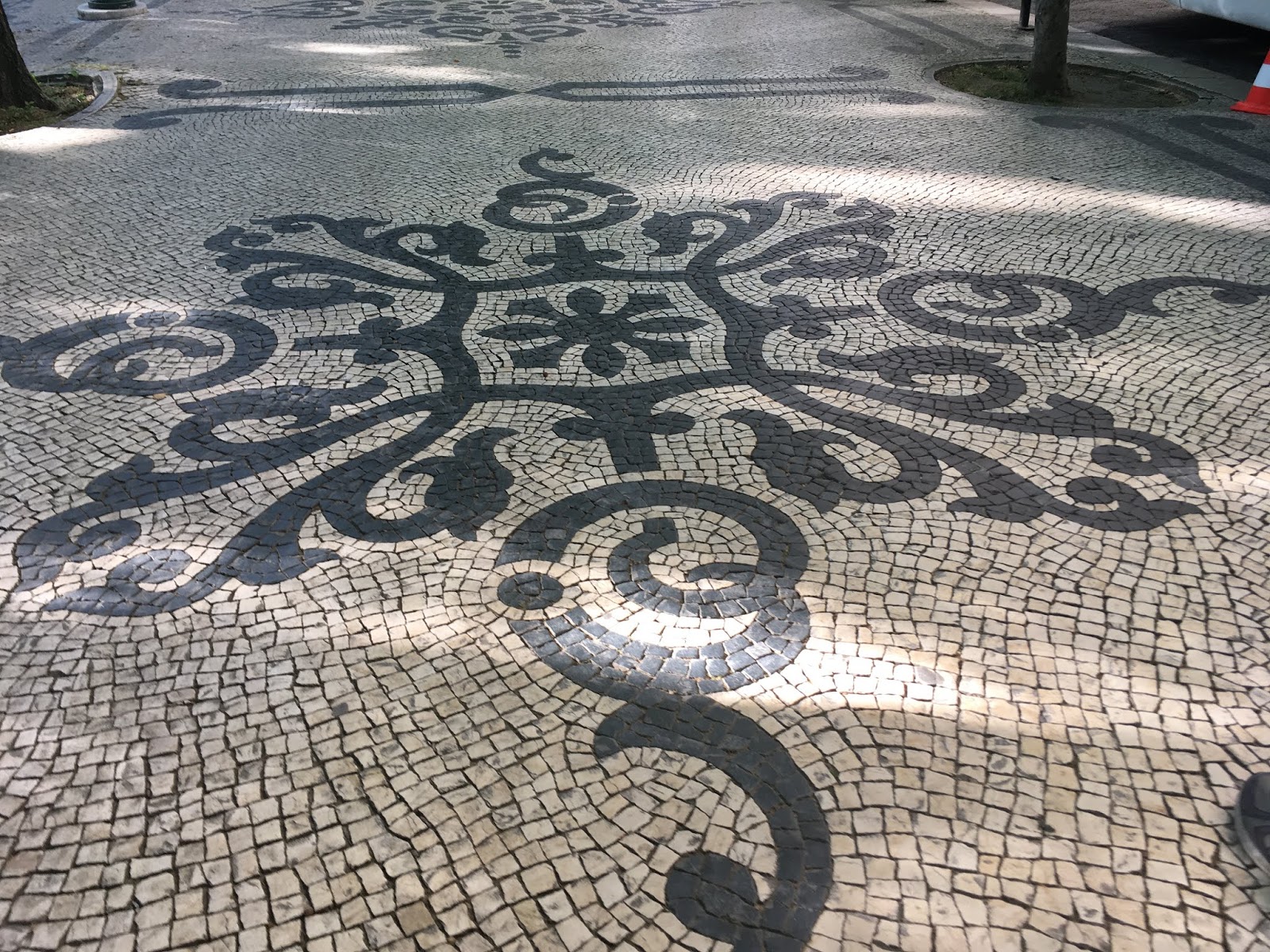
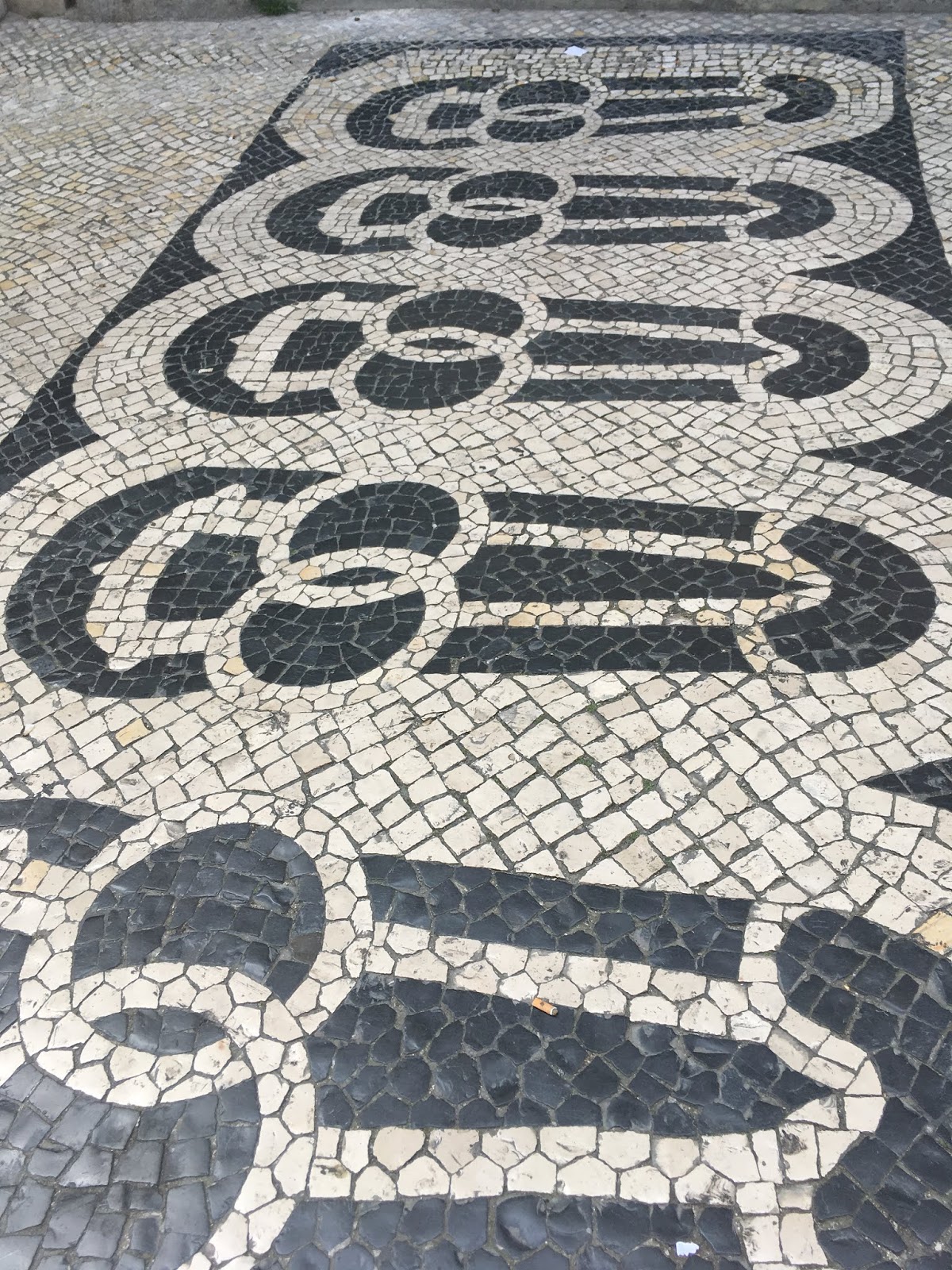
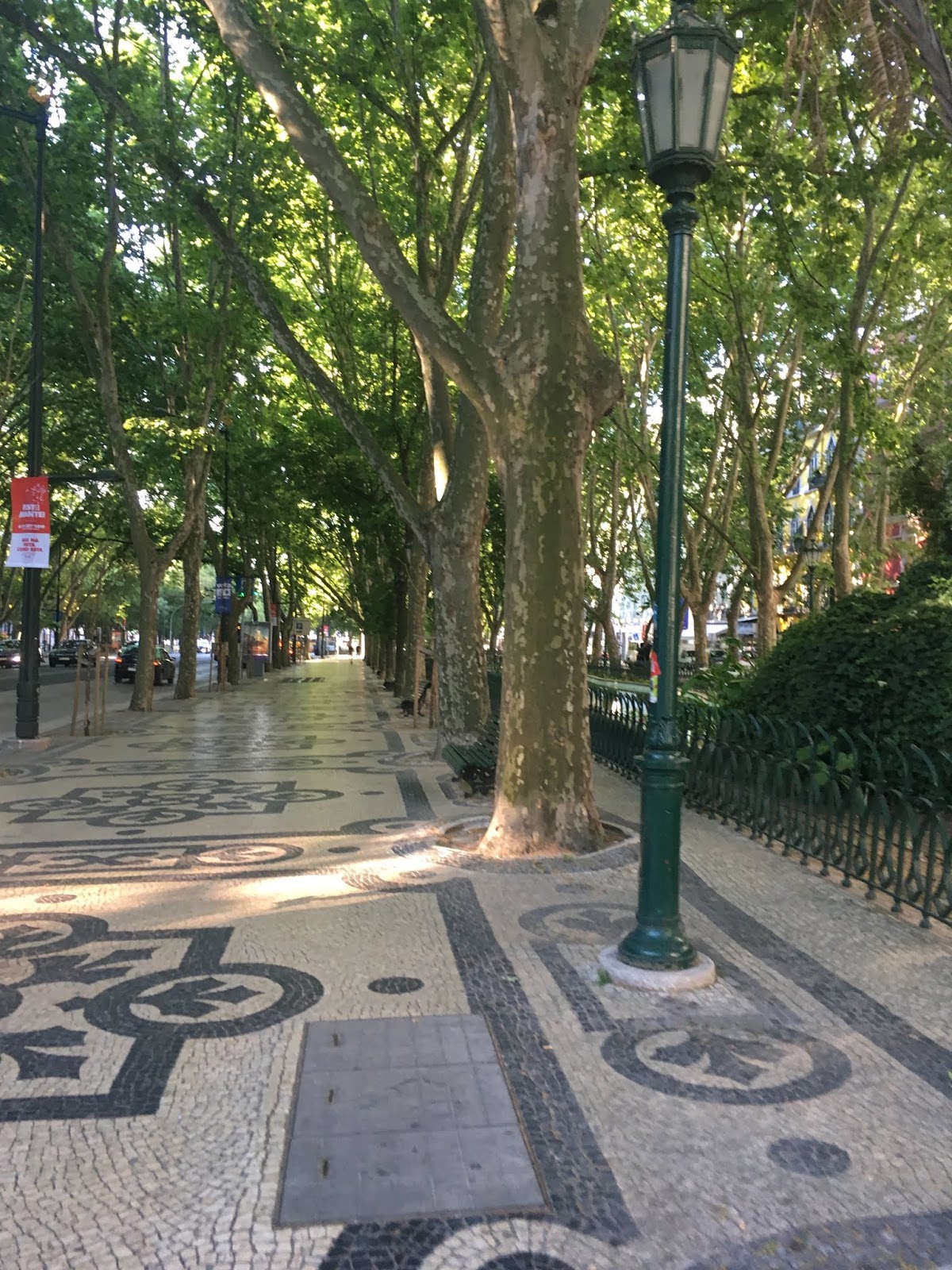
and continued viewing of spectacular tile.
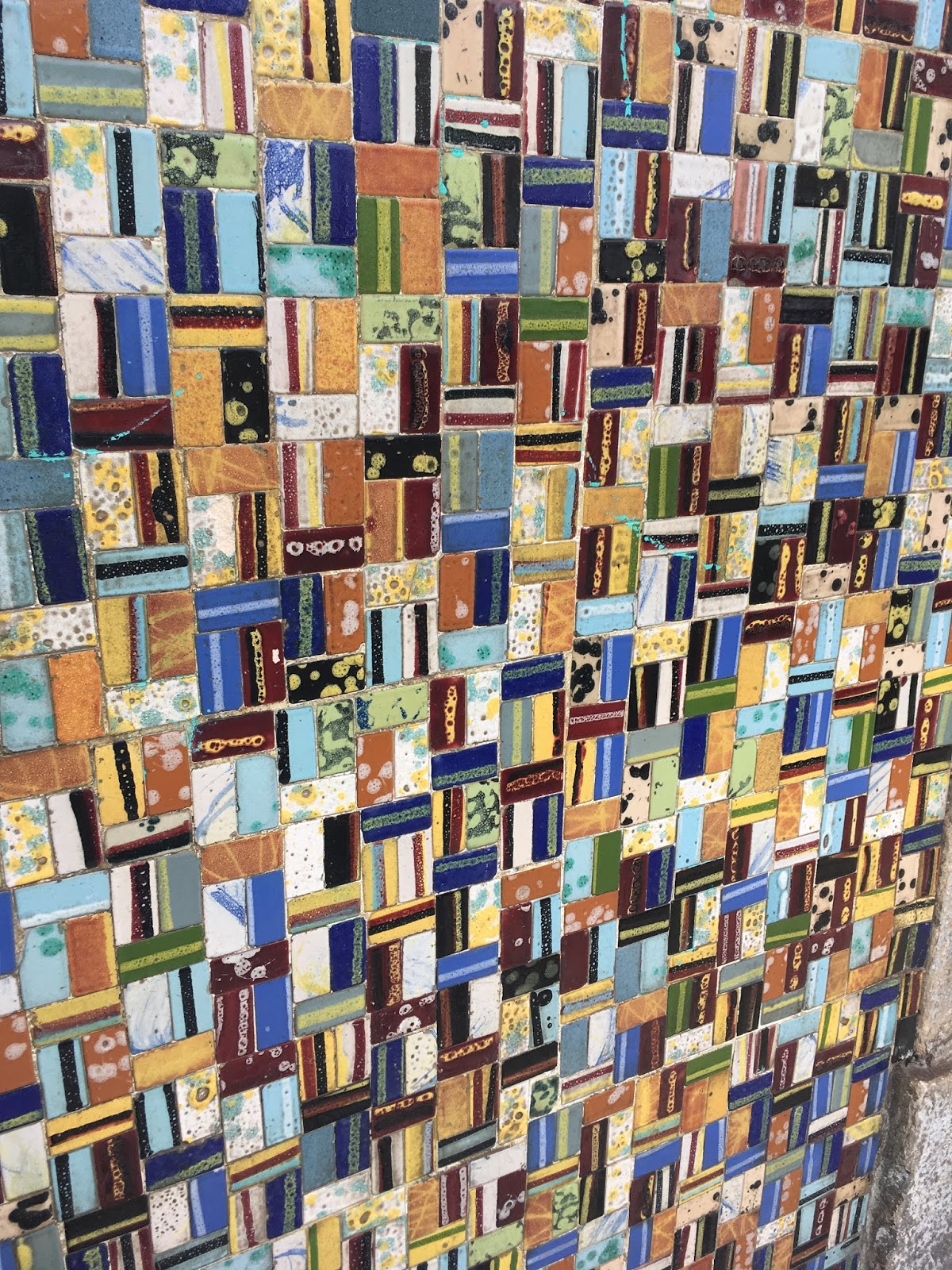
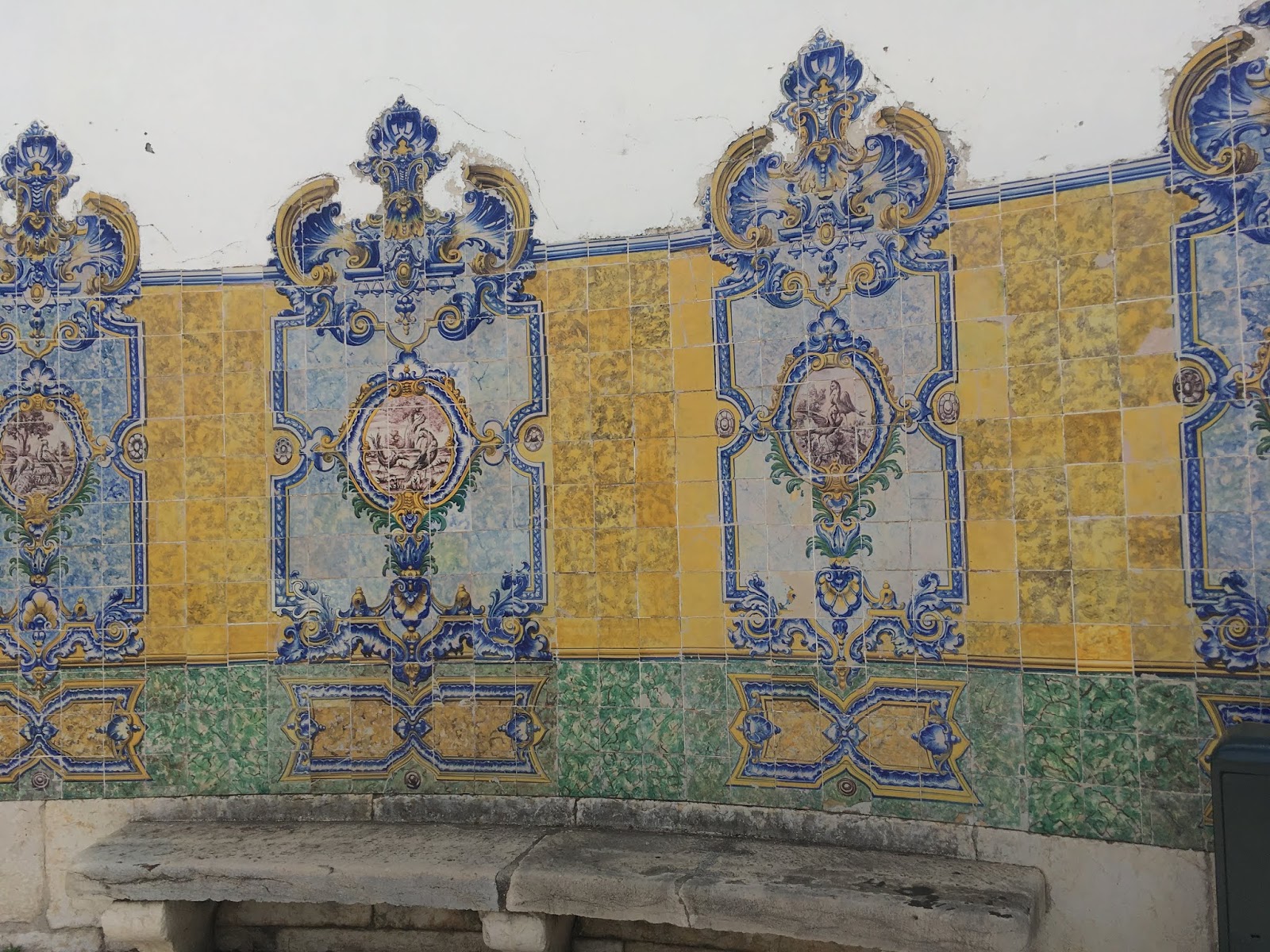
We wandered through very distinct neighborhoods
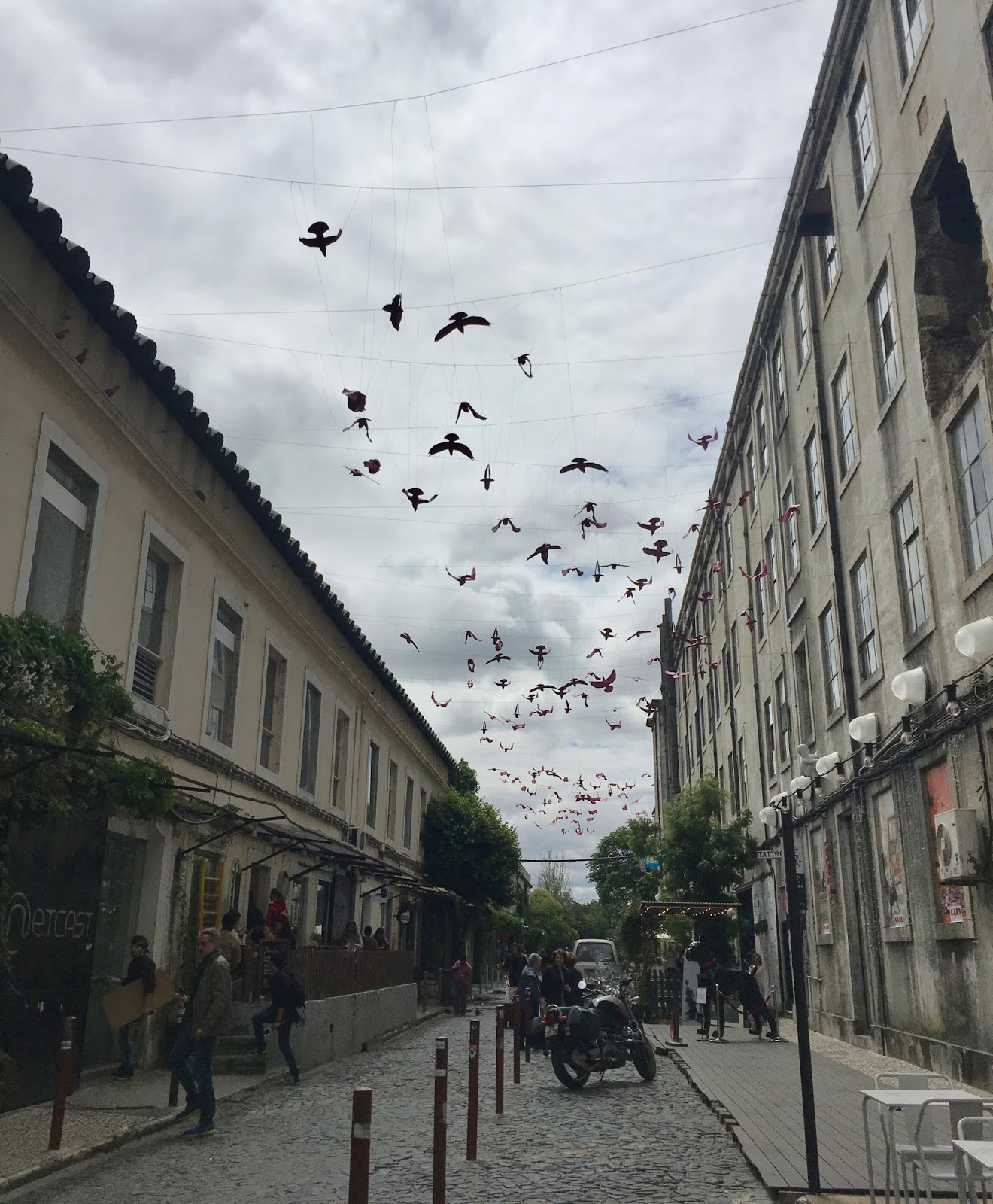 |
Called the Brooklyn of Lisboa
 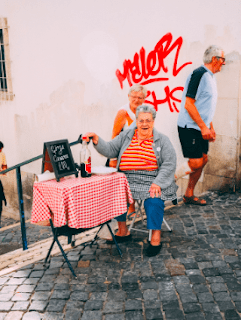 In the Alfama section, old women selling cherry liqueur shots for 1 Euro just like a lemonade stand (disclosure, took pic from internet, did not want to ask an old lady if we could take her picture).
|
and found the square in our neighborhood where we stumbled on a poetry reading followed by first an elderly couple dancing, who were joined by others in the audience and then joined by a bunch of graduates dancing in their graduation gowns.
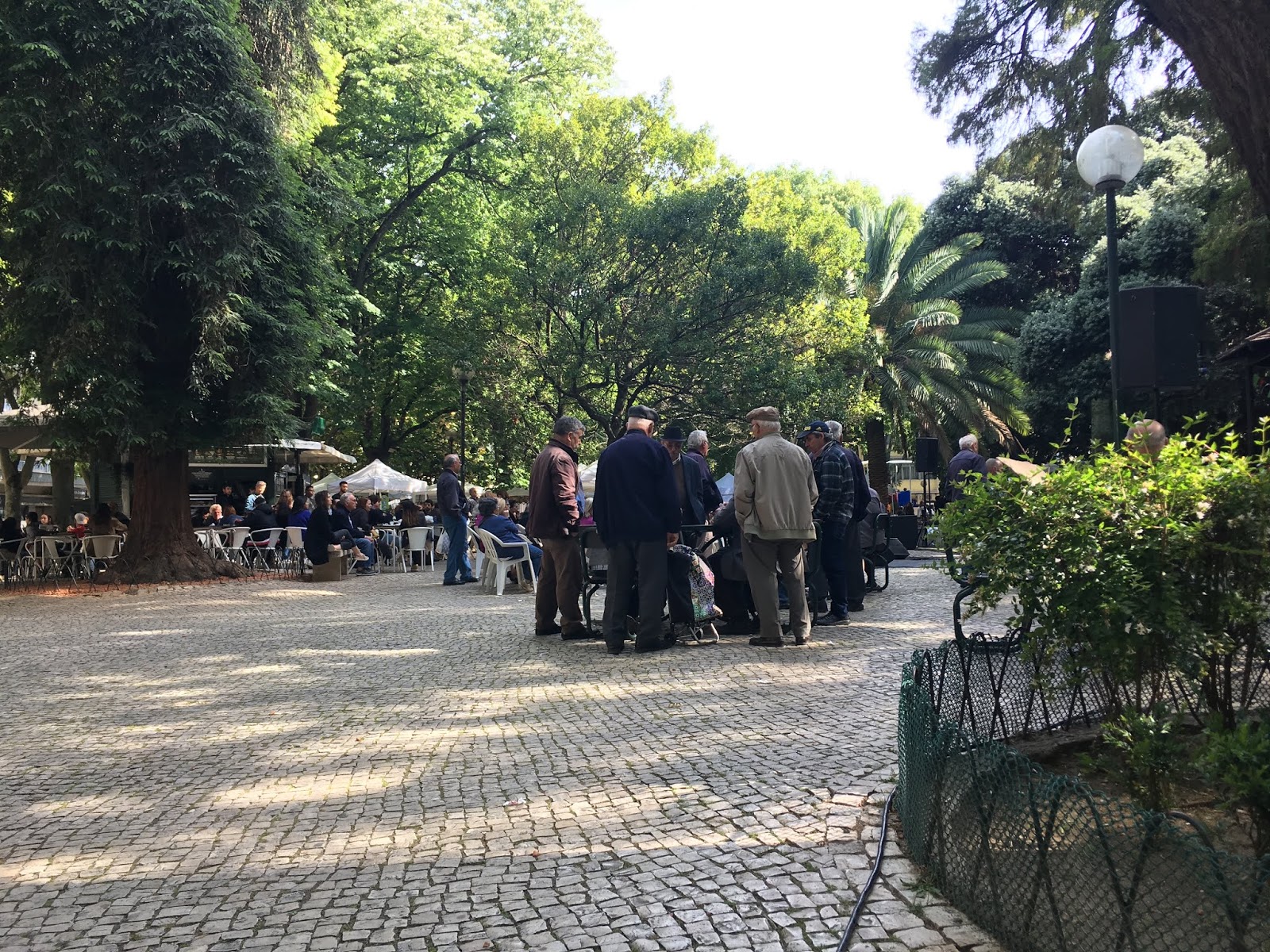 |
| Ubiquitous old men at tables in the park |
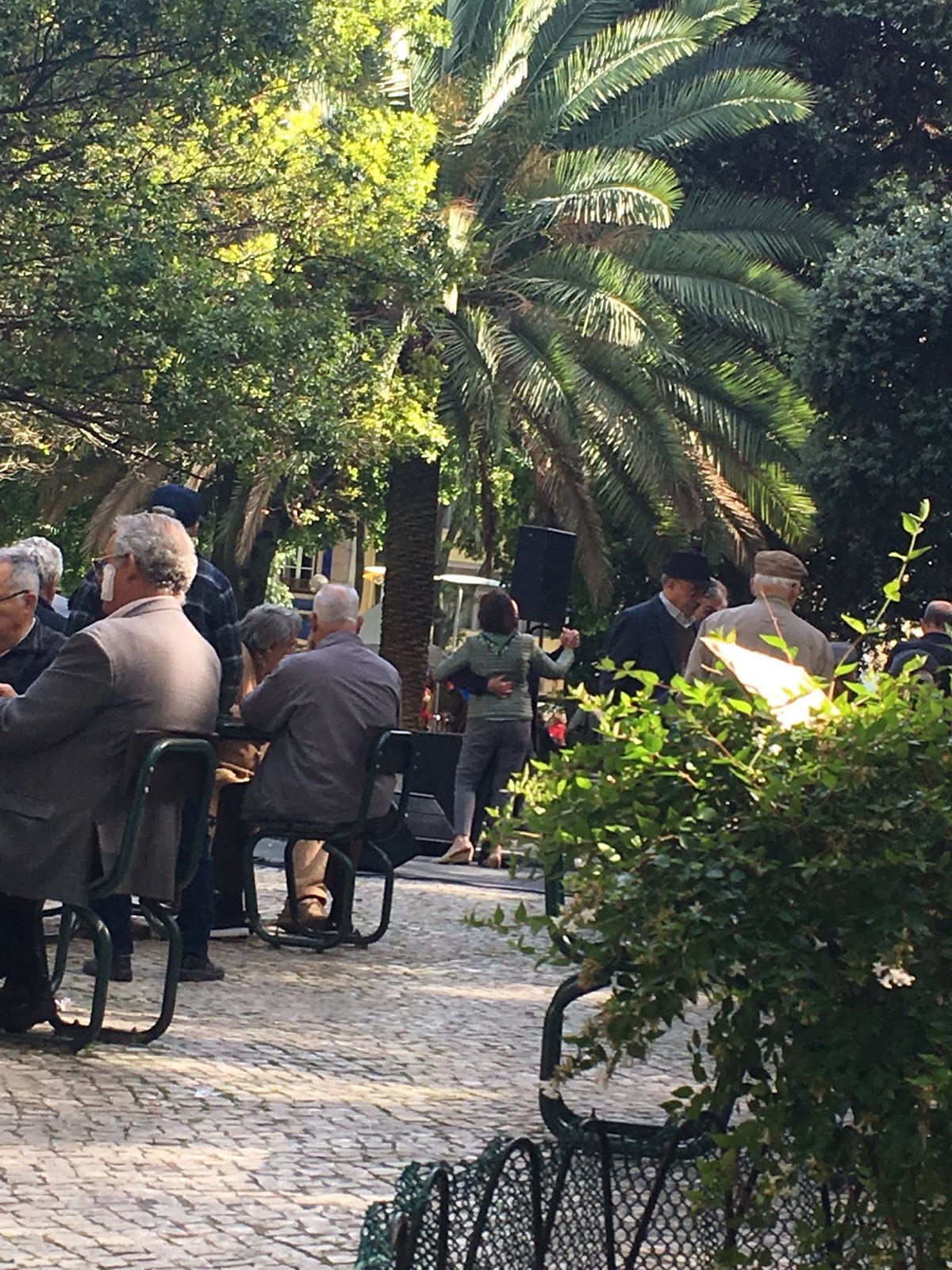 |
| Dancing after poetry reading |
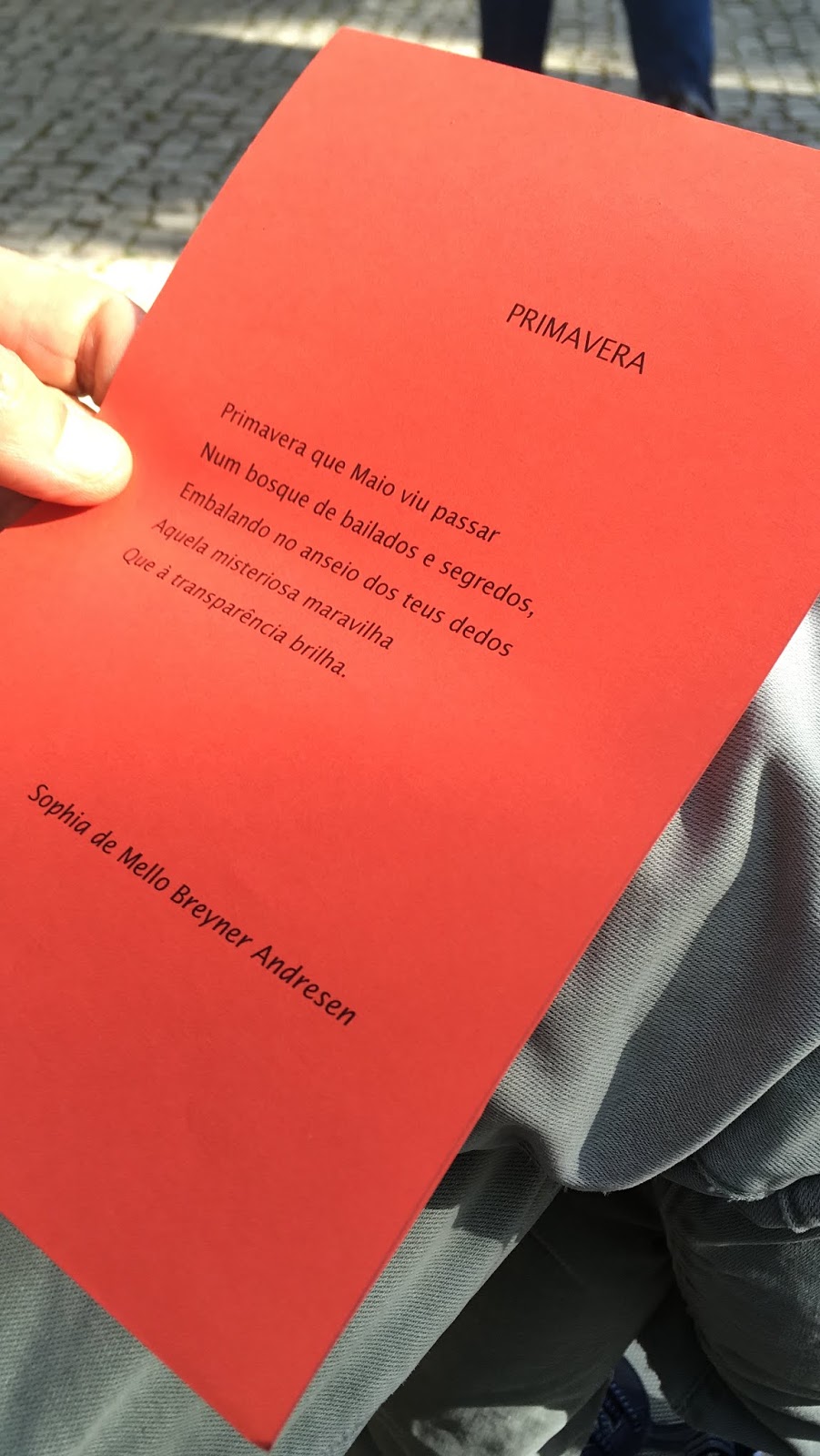 |
| A poem we were given |
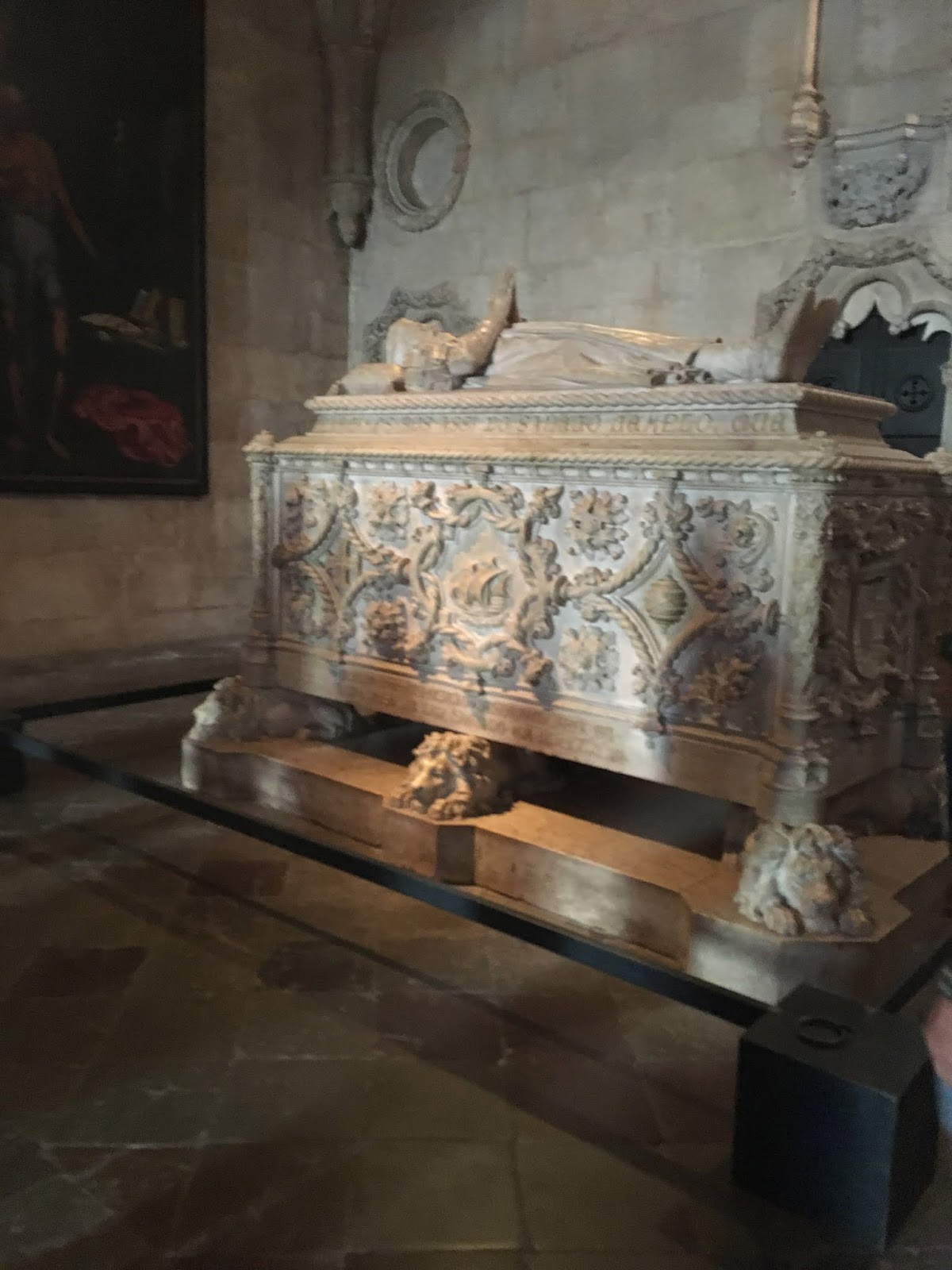
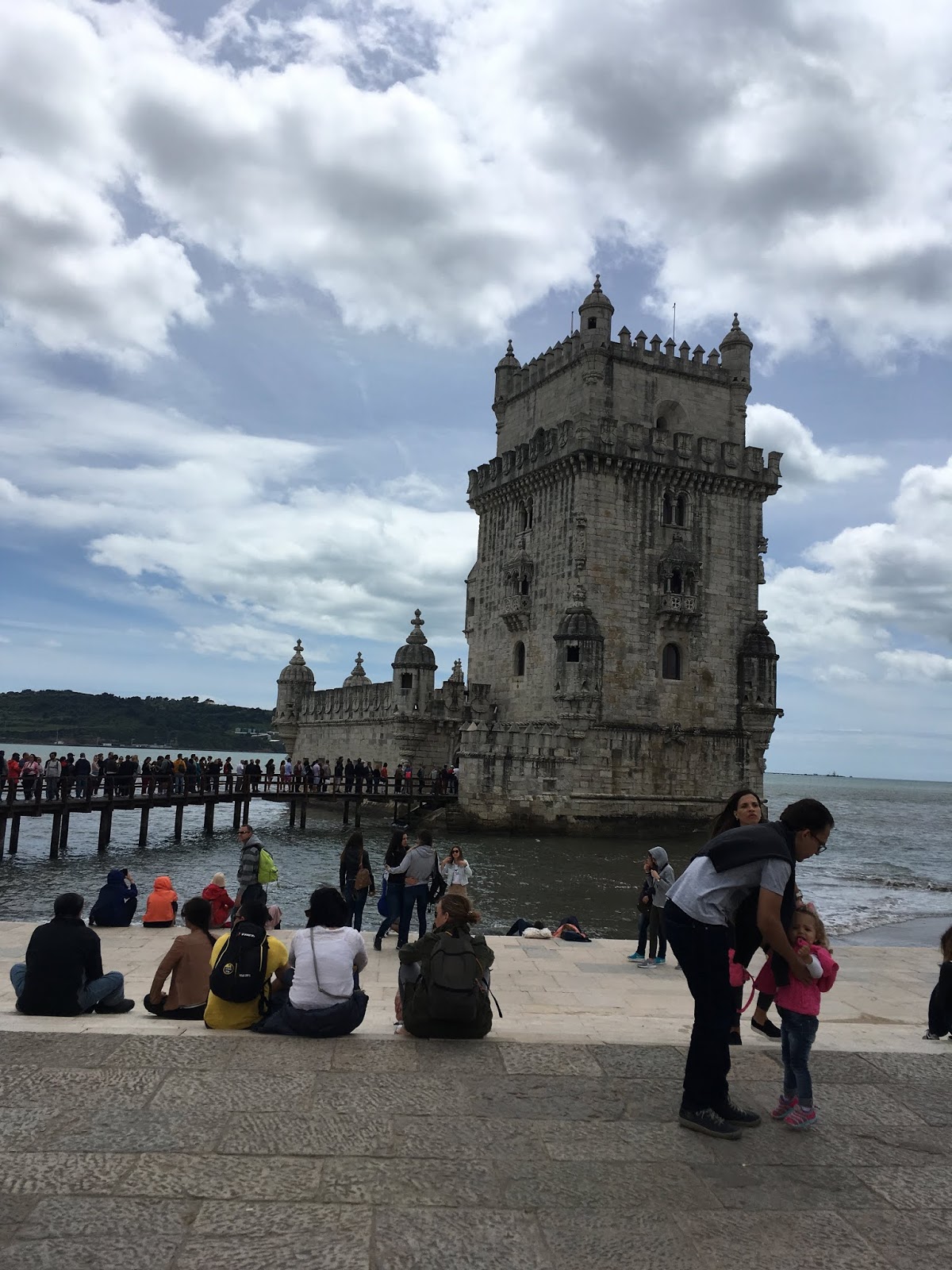
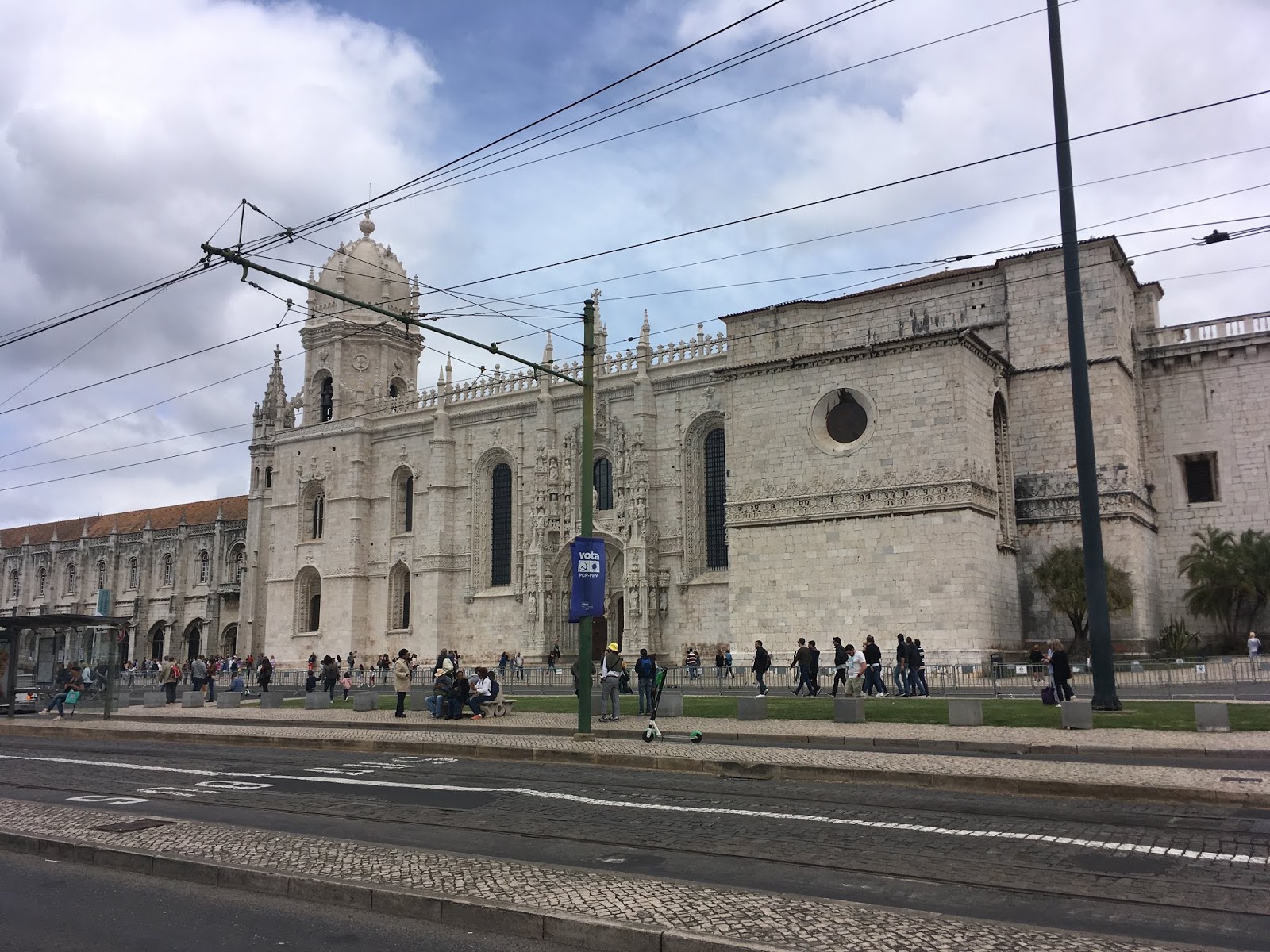
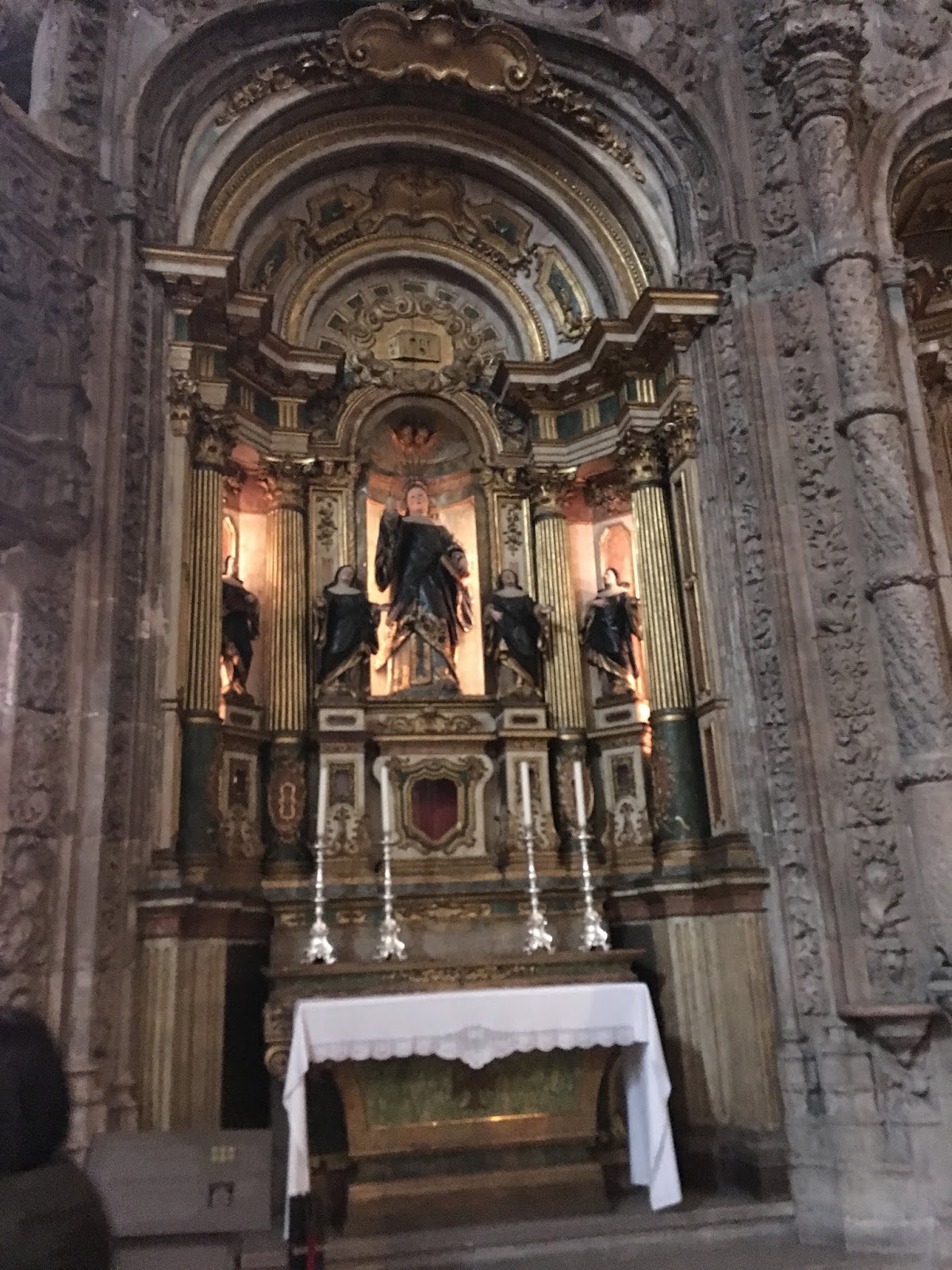
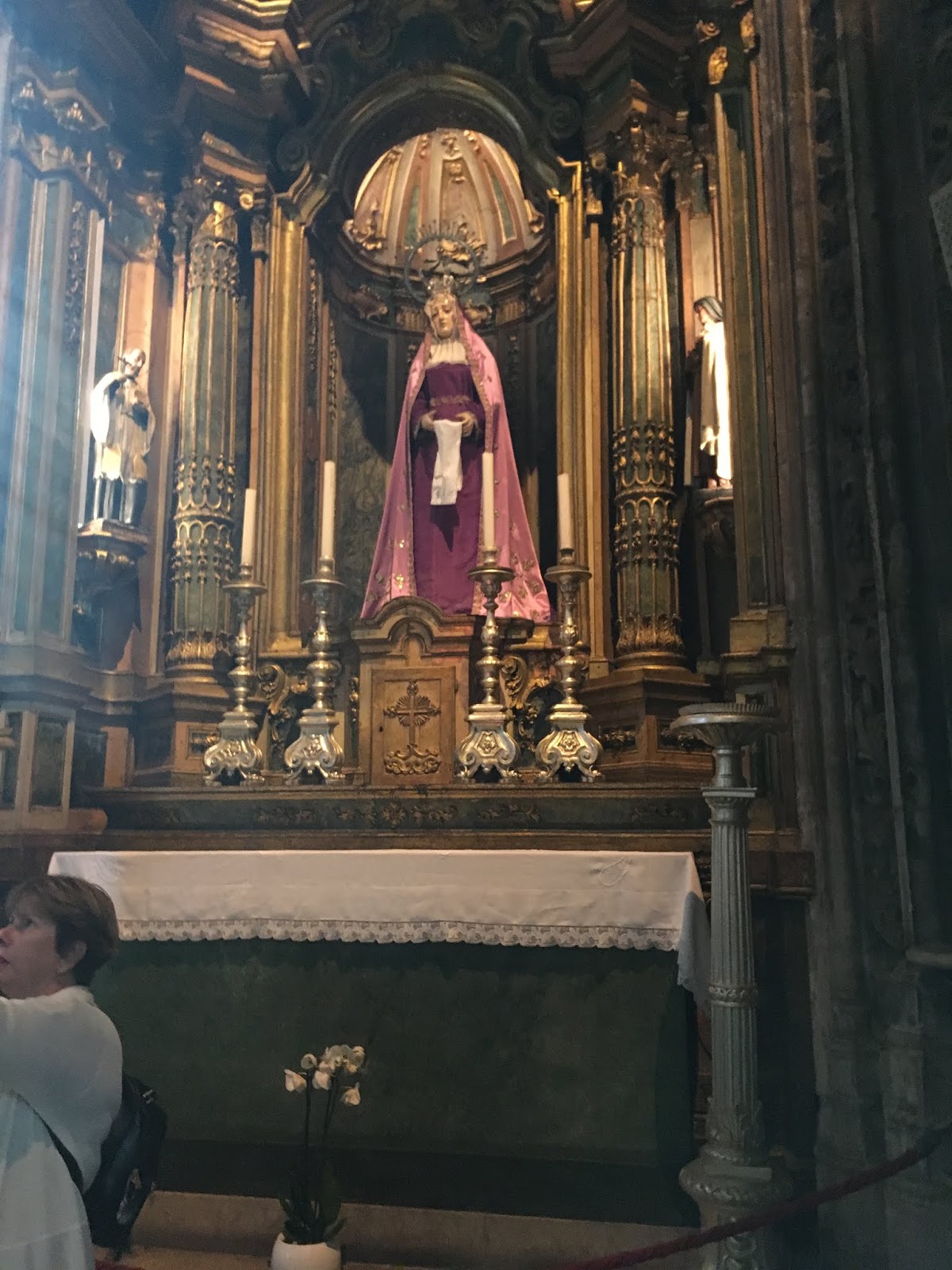
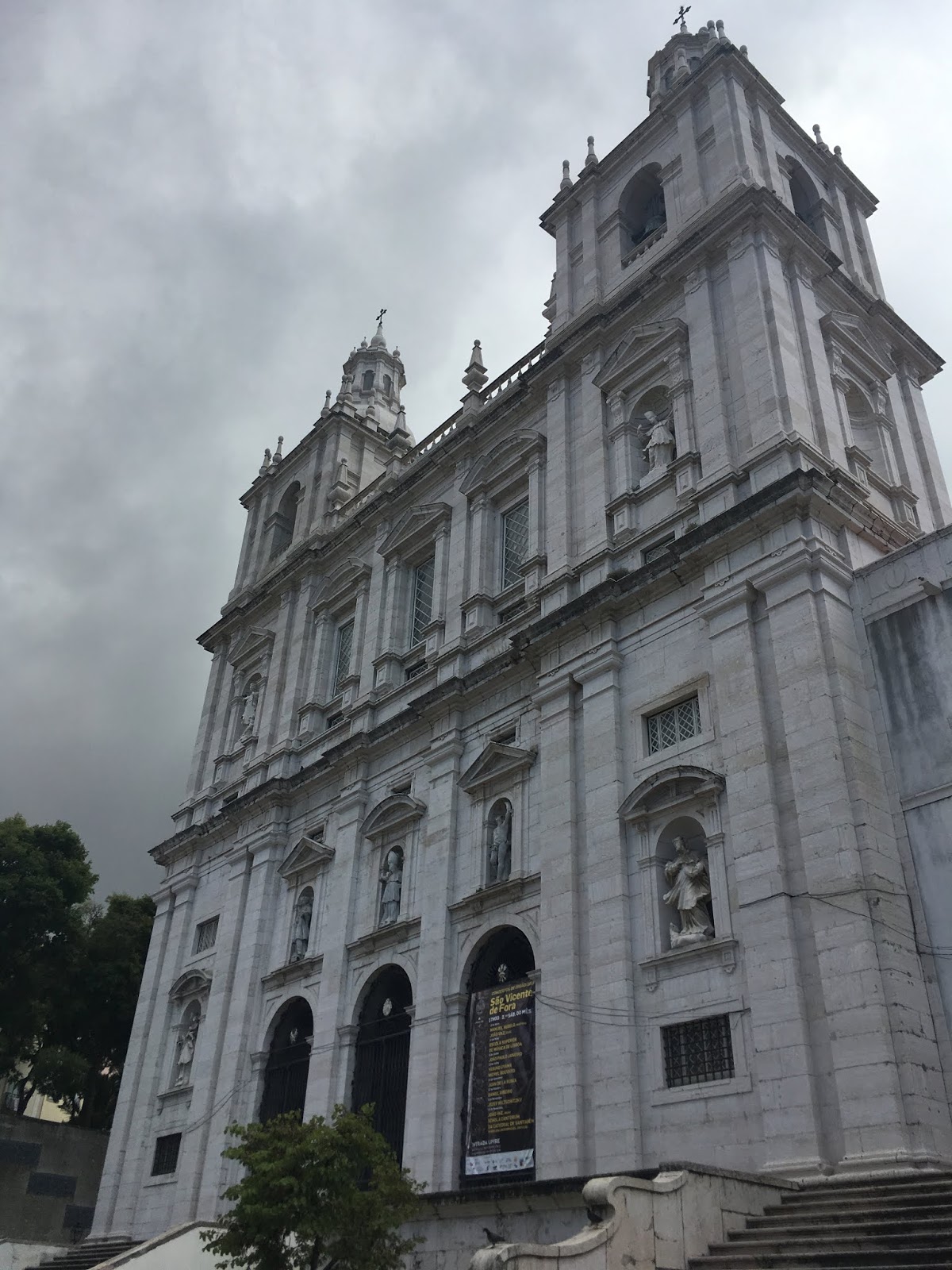
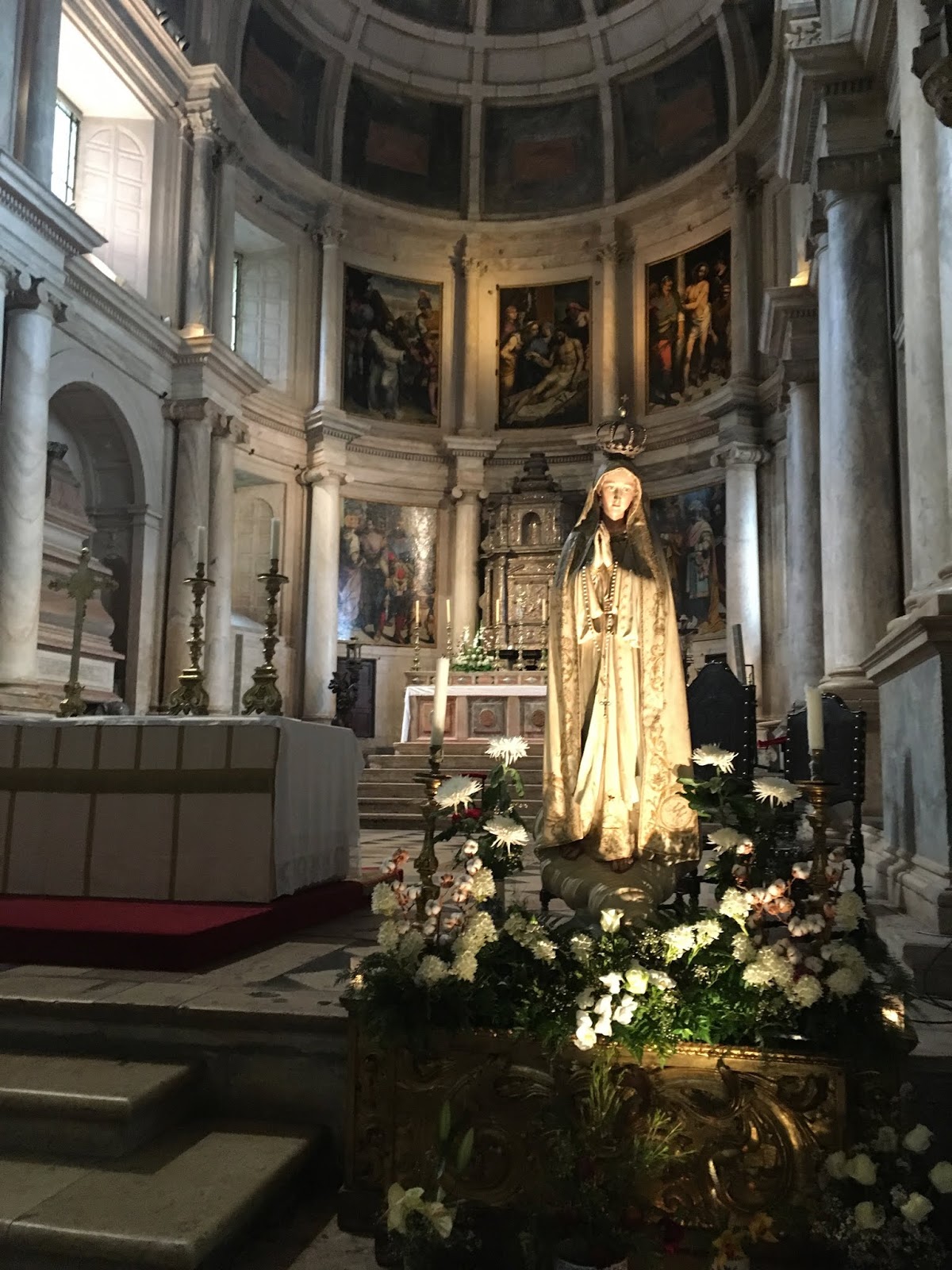
Usually, we find, that a lot of the standard tourist attractions are over-hyped which often leaves us underwhelmed after visiting but not so in Lisbon. The tourist attractions were actually attractions. Tomb of Vasco de Gamma! Monasteries! Churches! Museums!
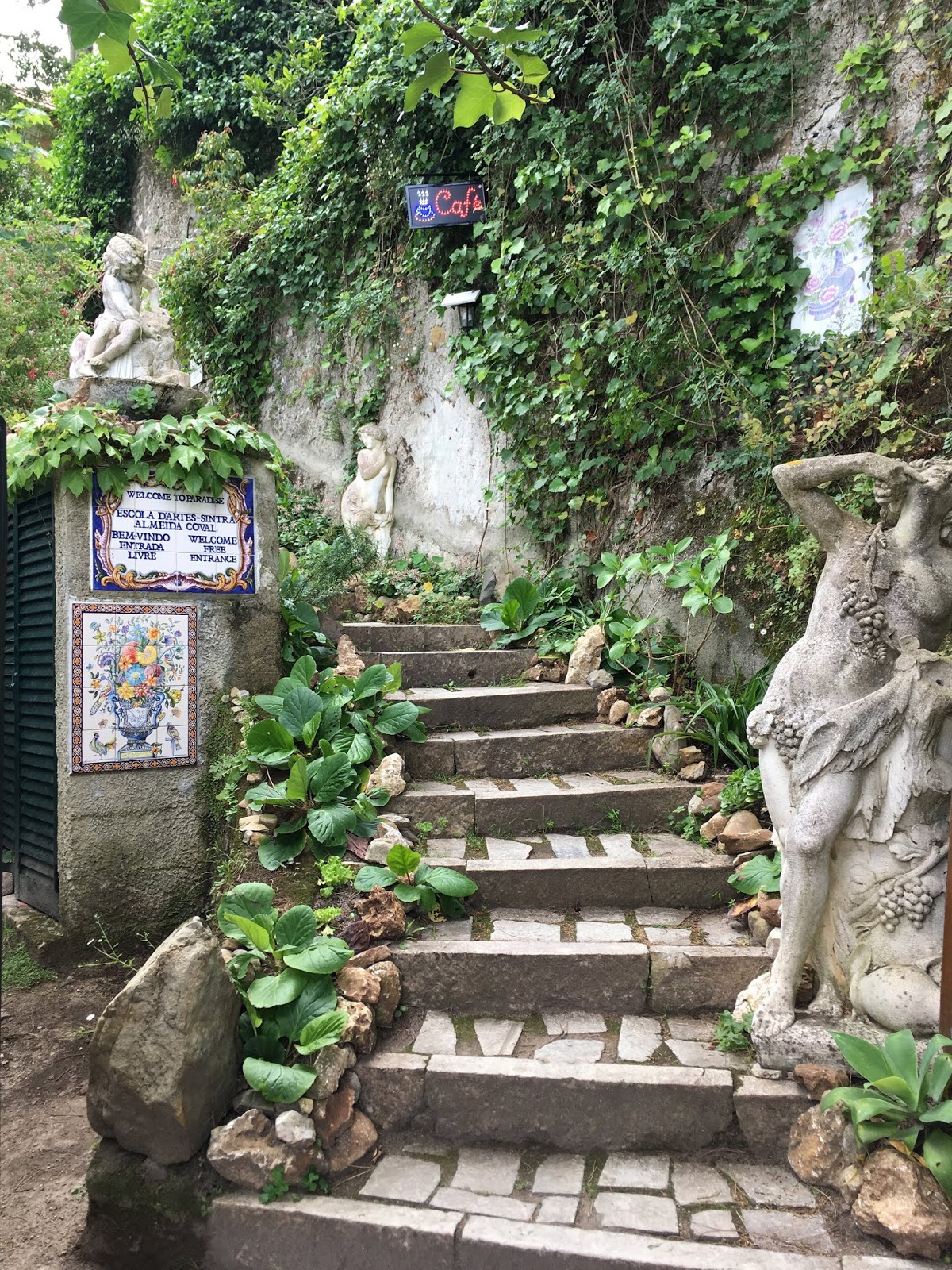
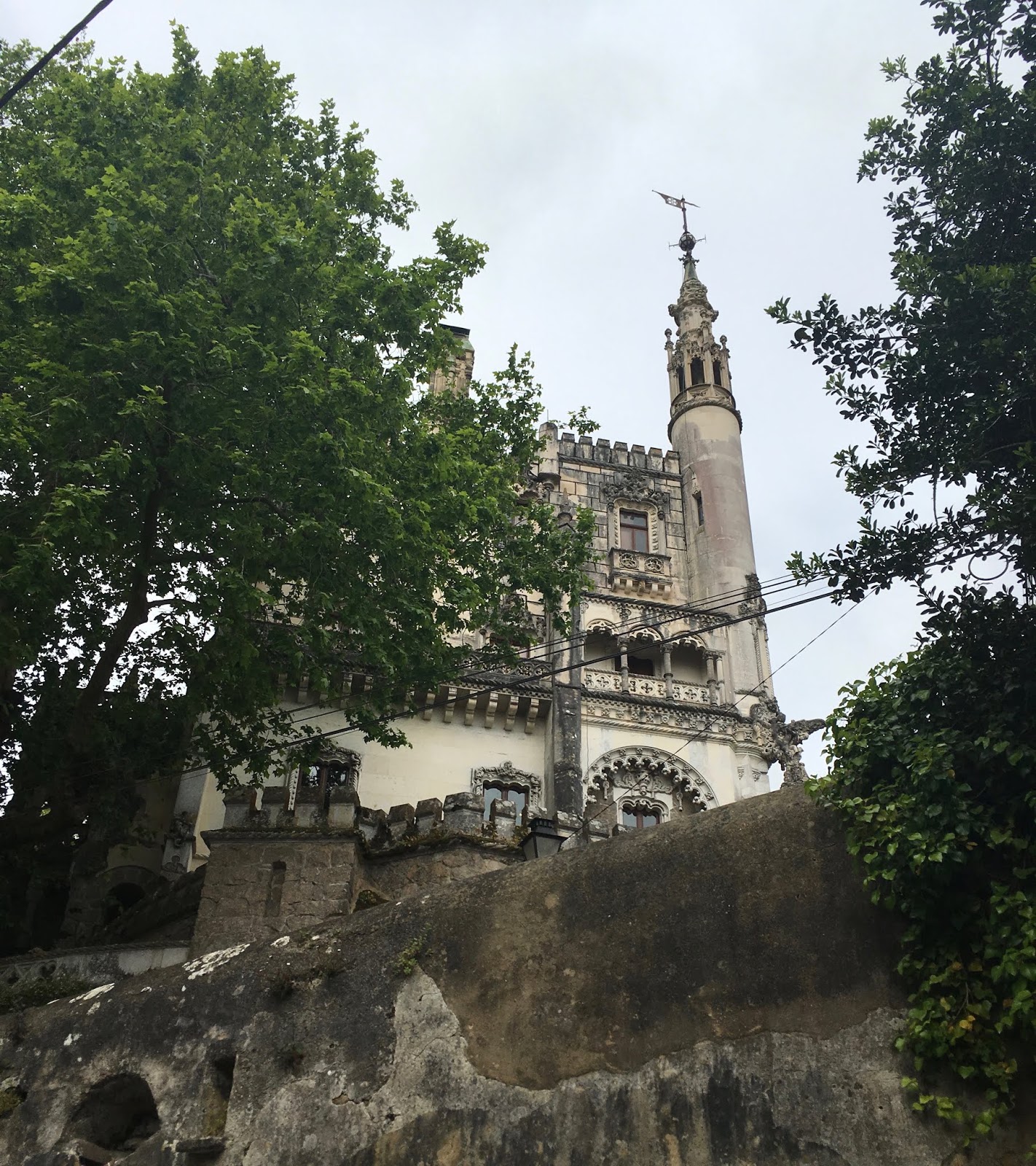
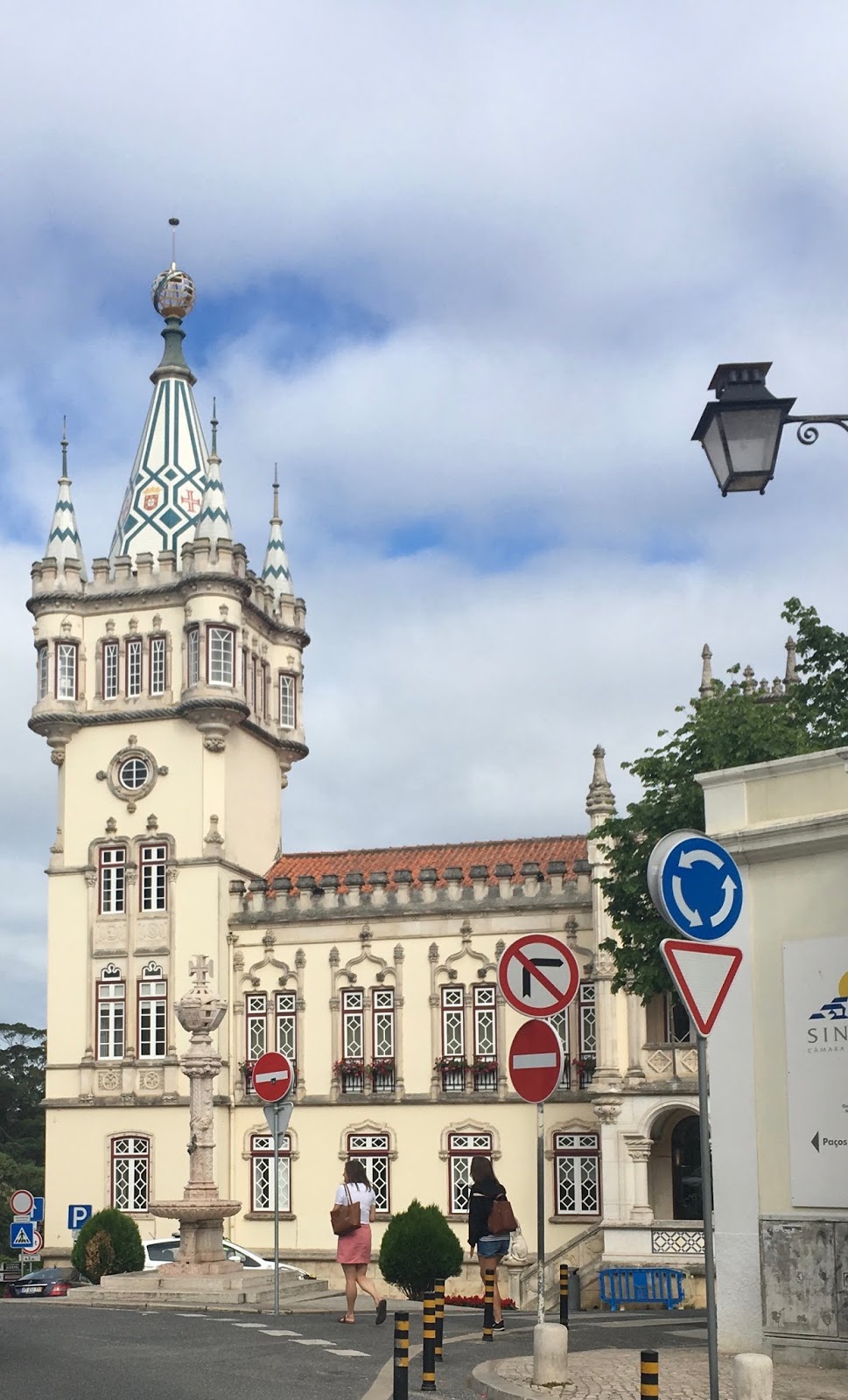
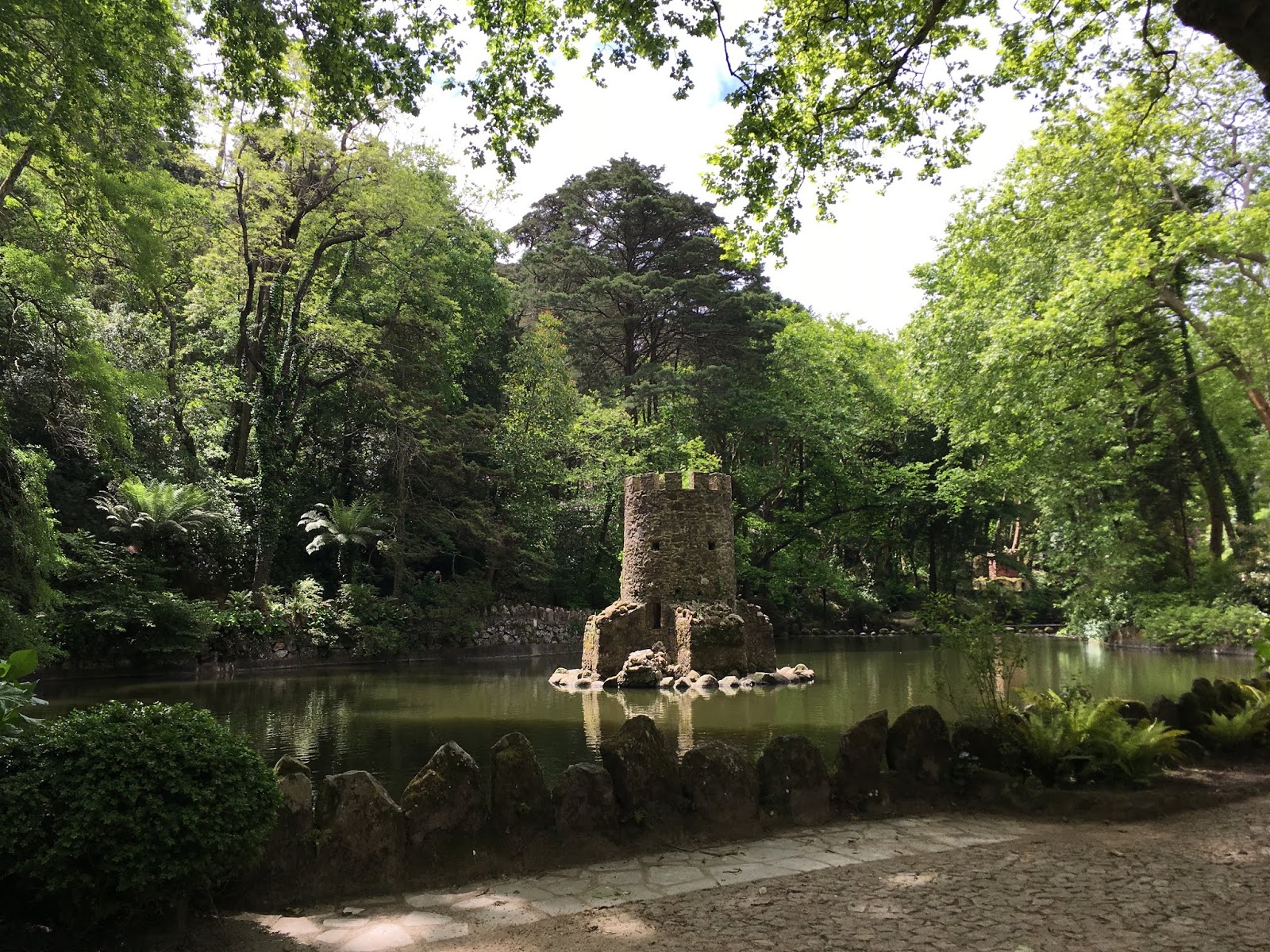
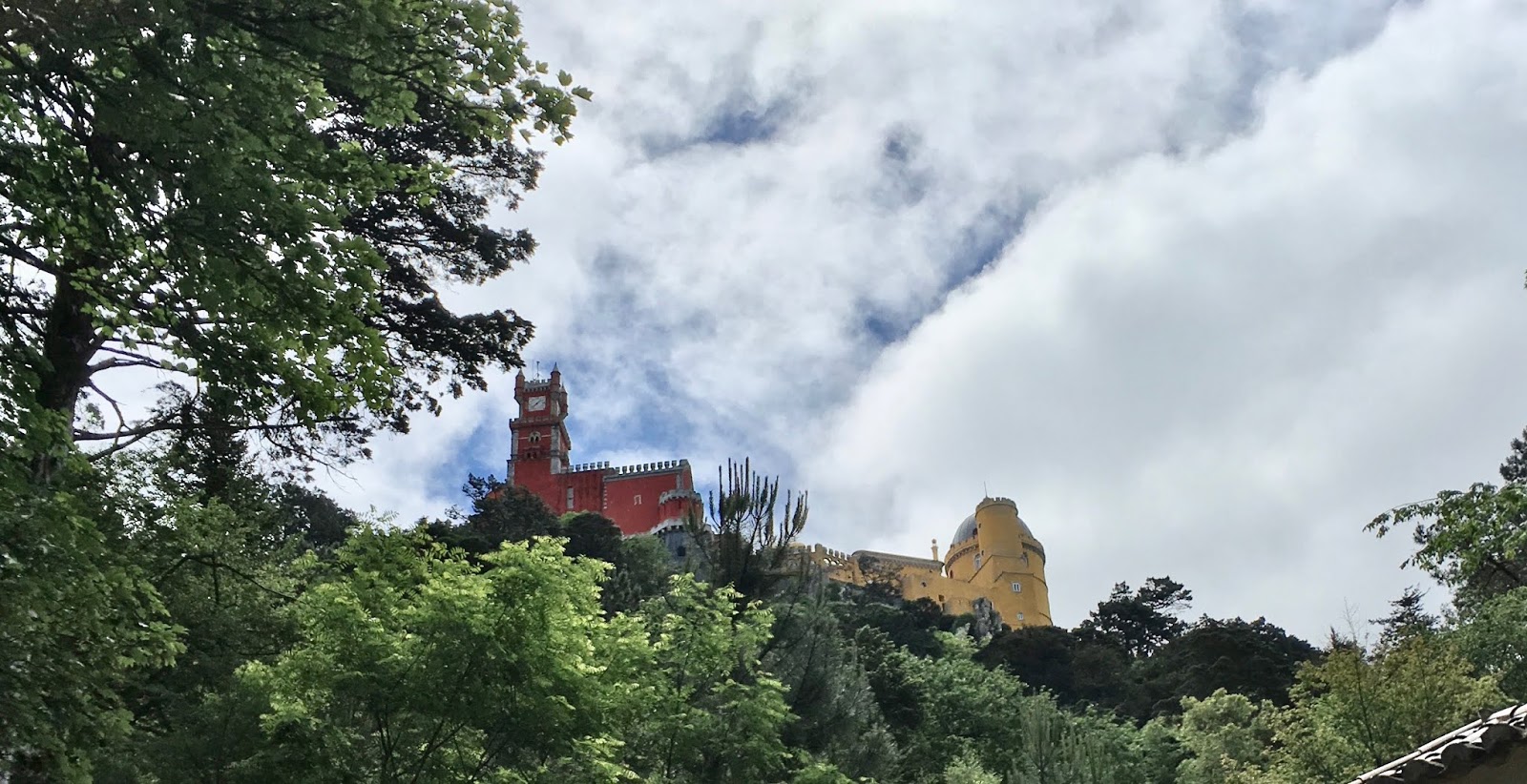
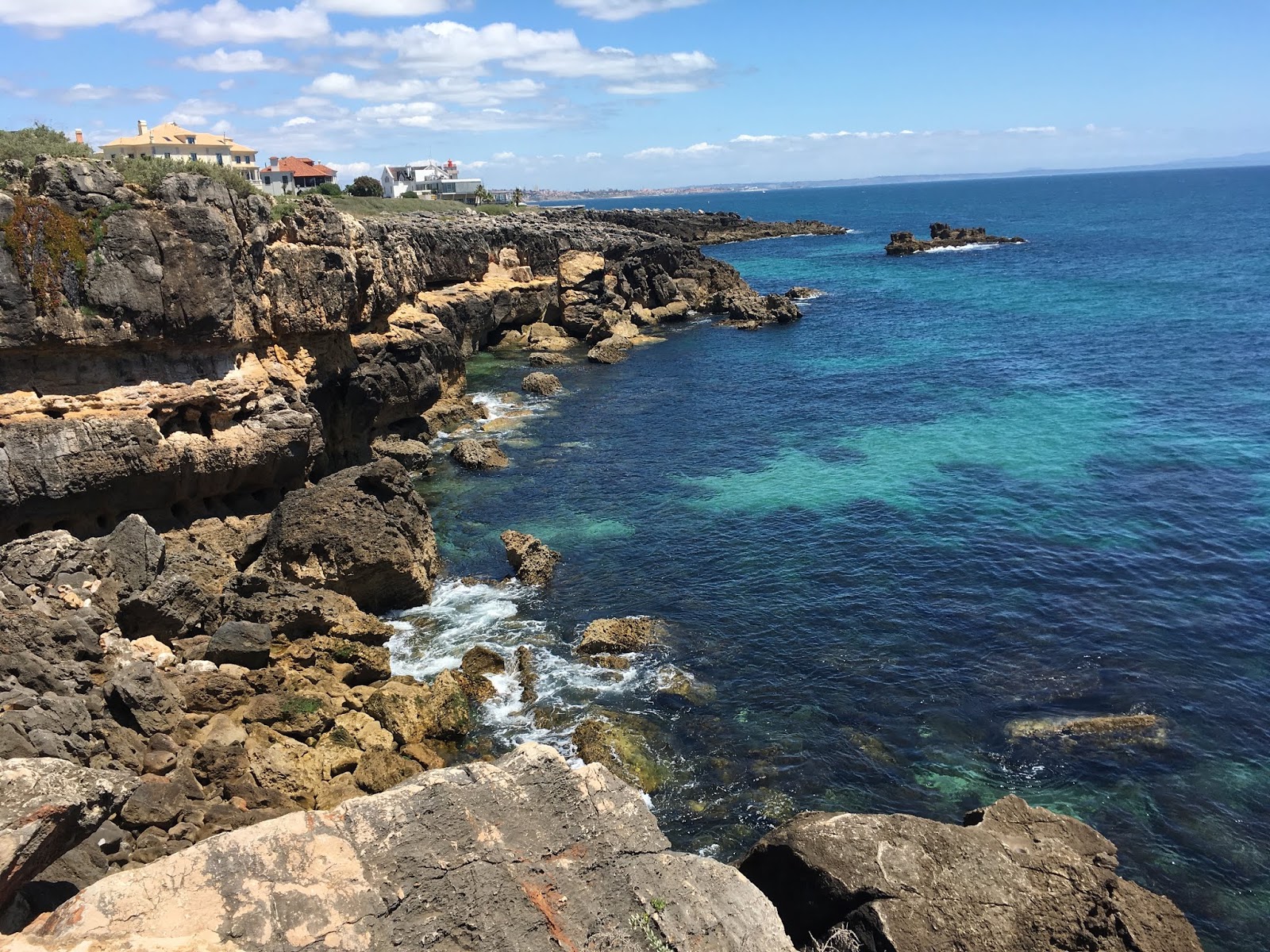
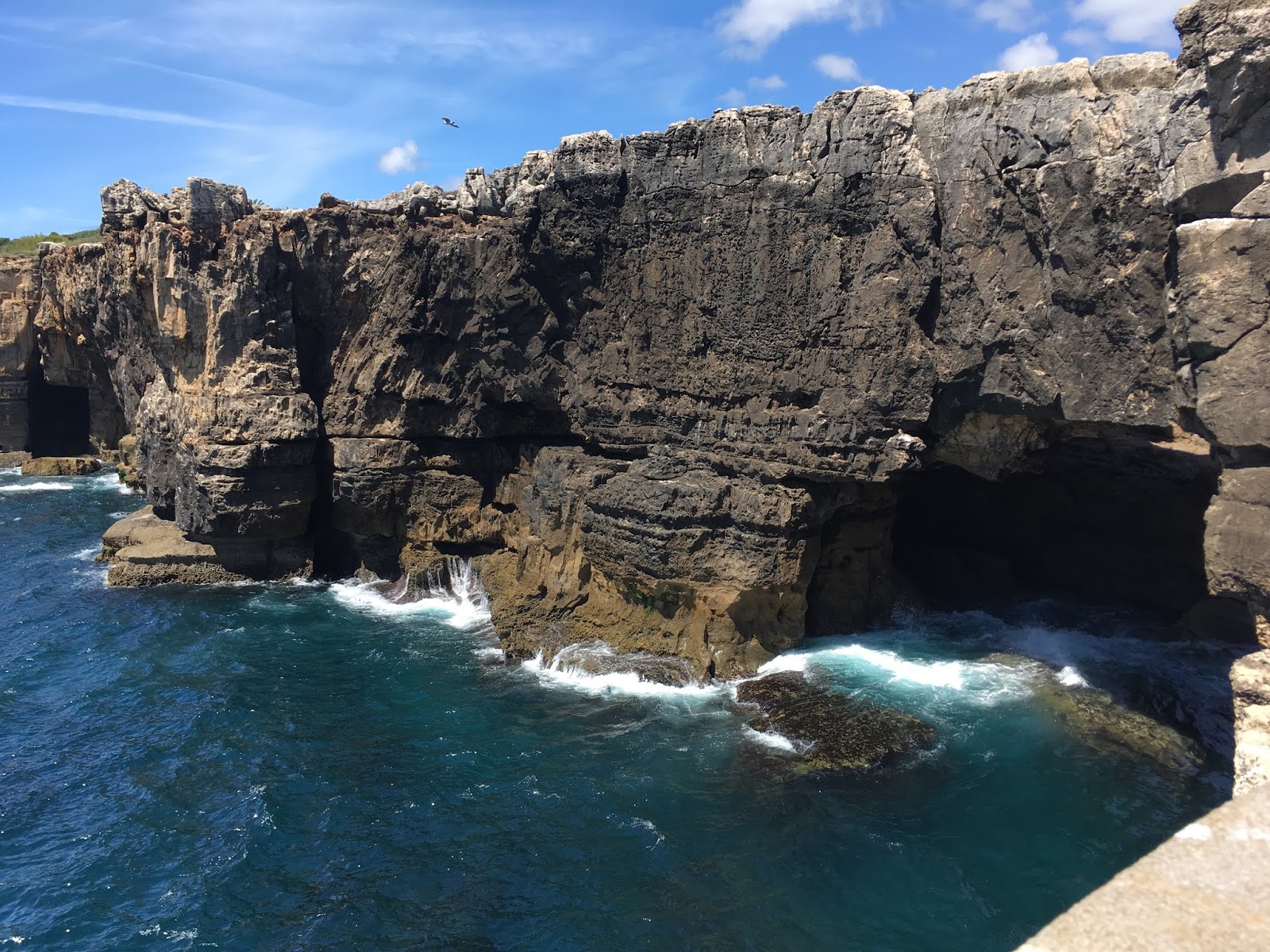
We also went to nearby Cascais, a touristy beach town but with a very dramatic shoreline.
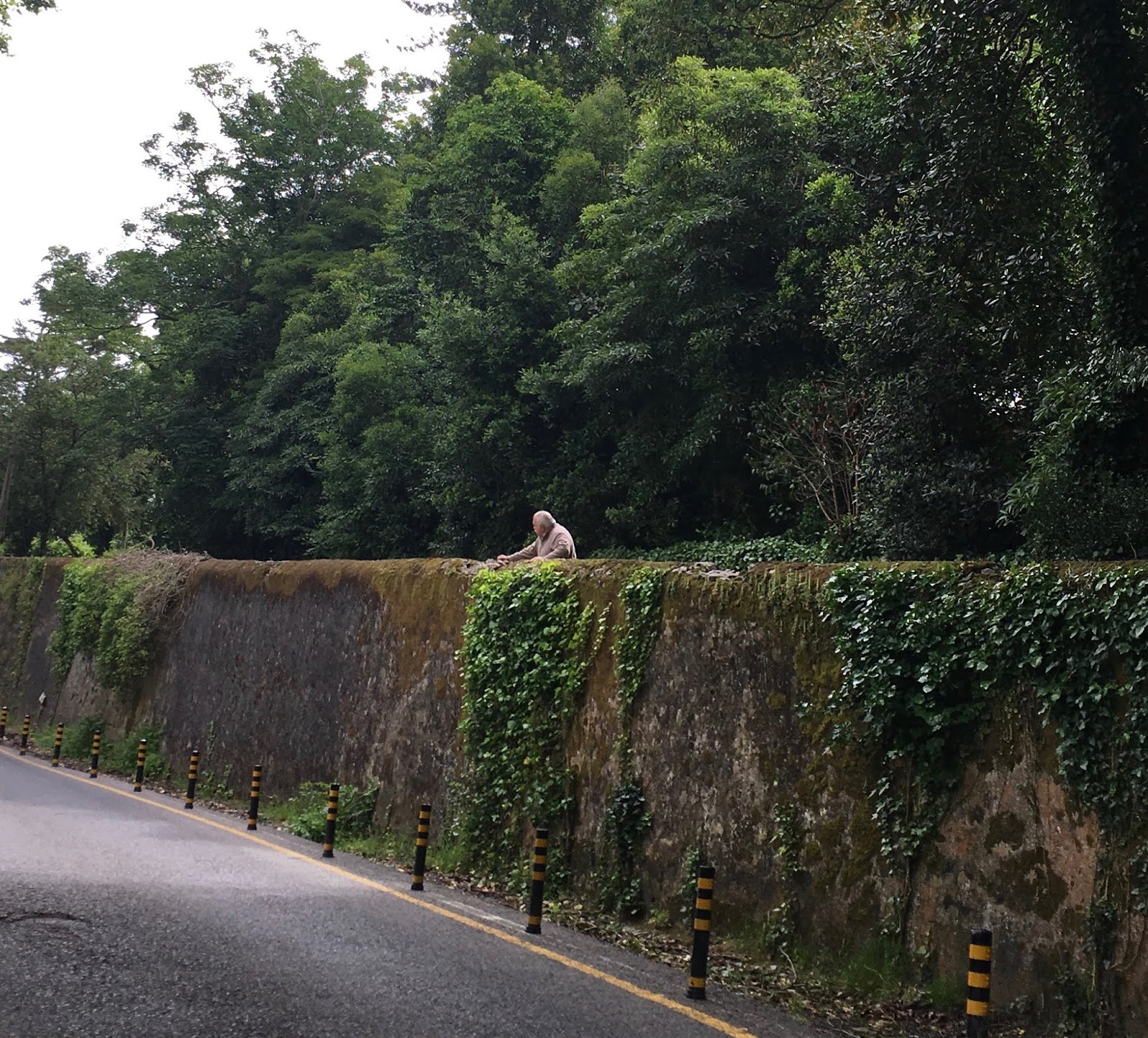
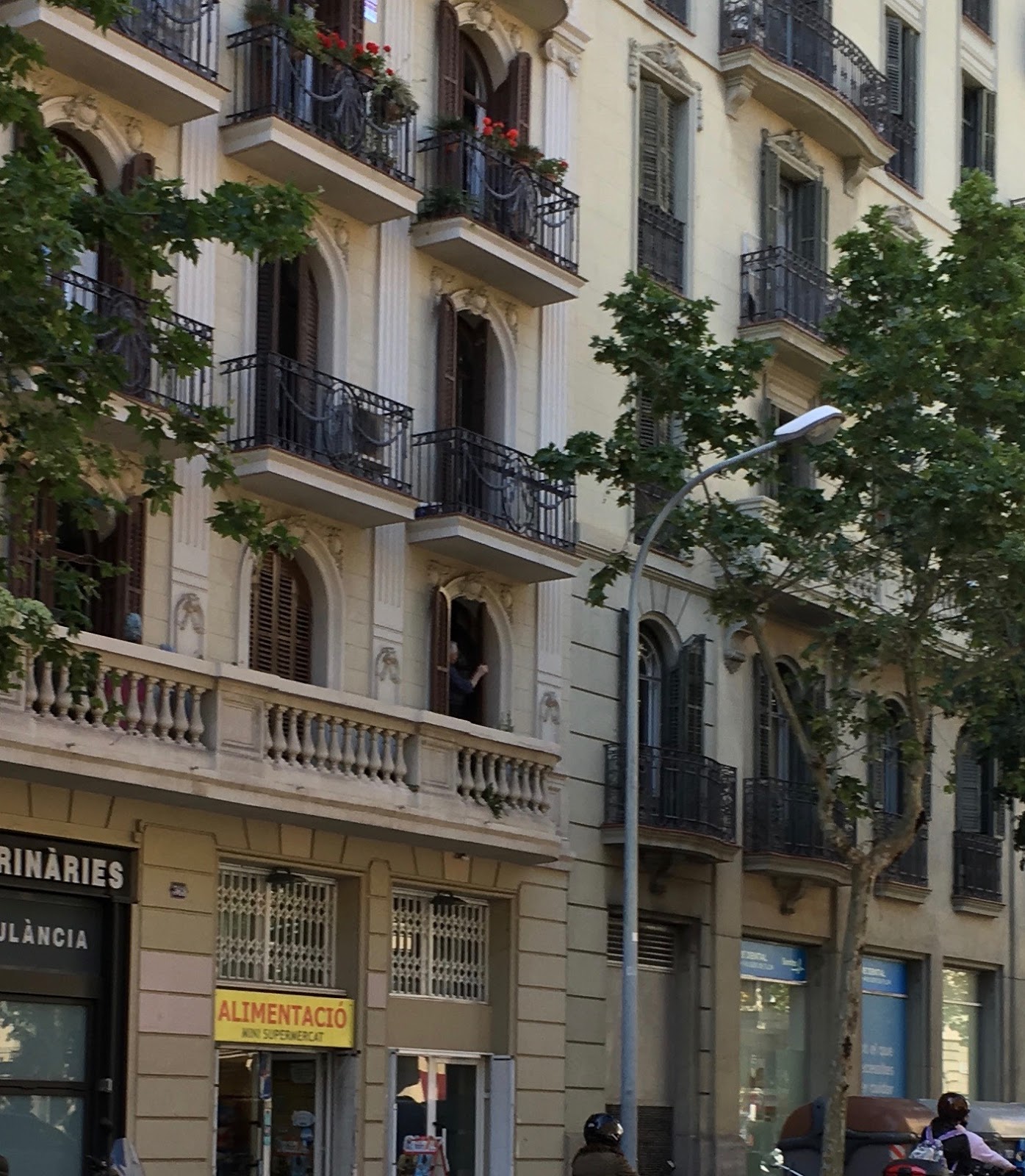
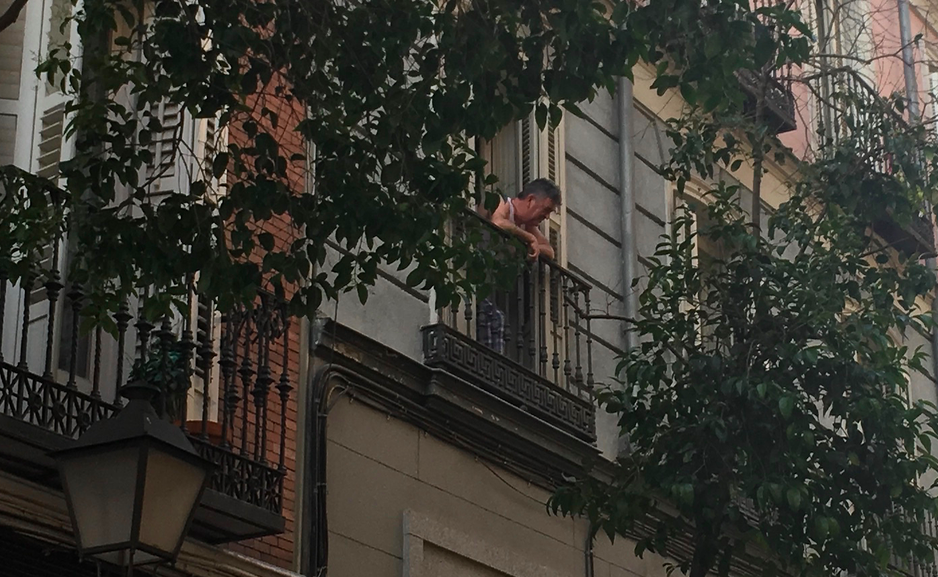
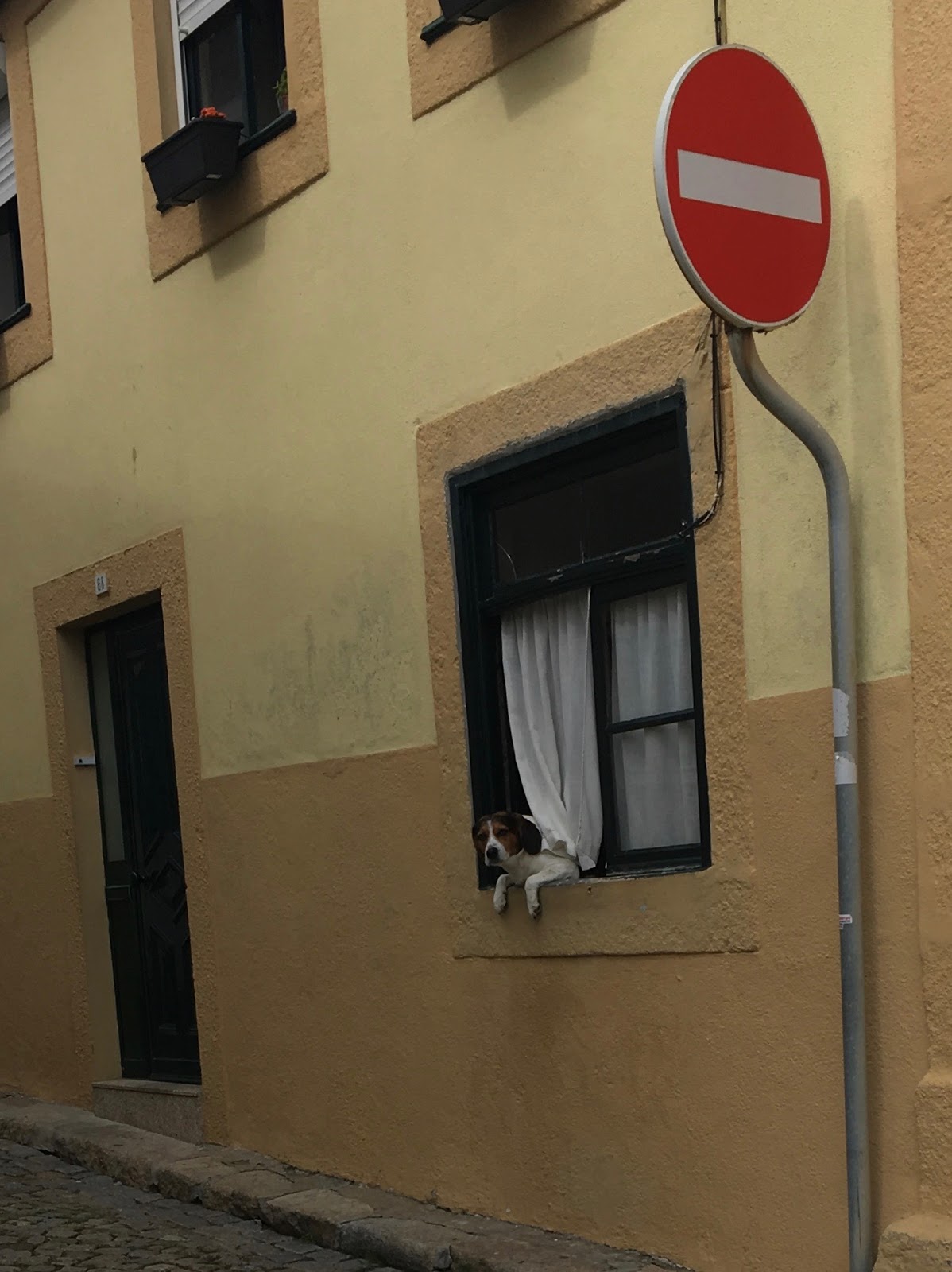
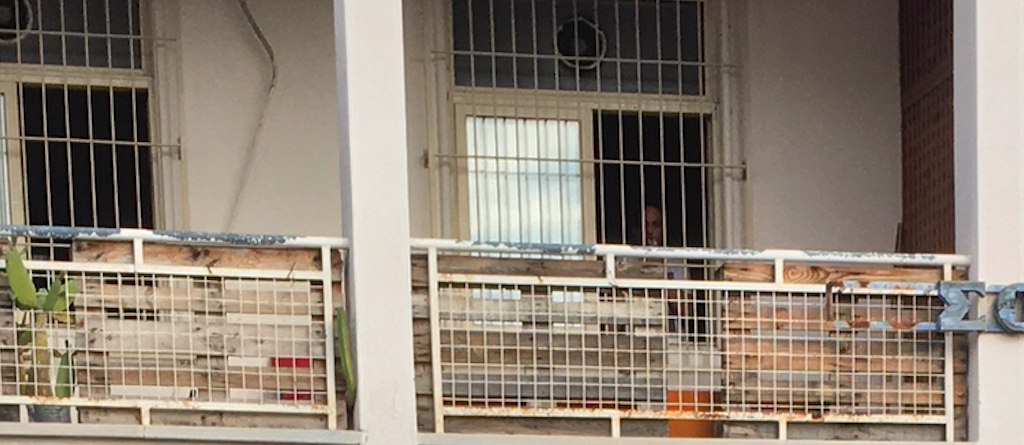
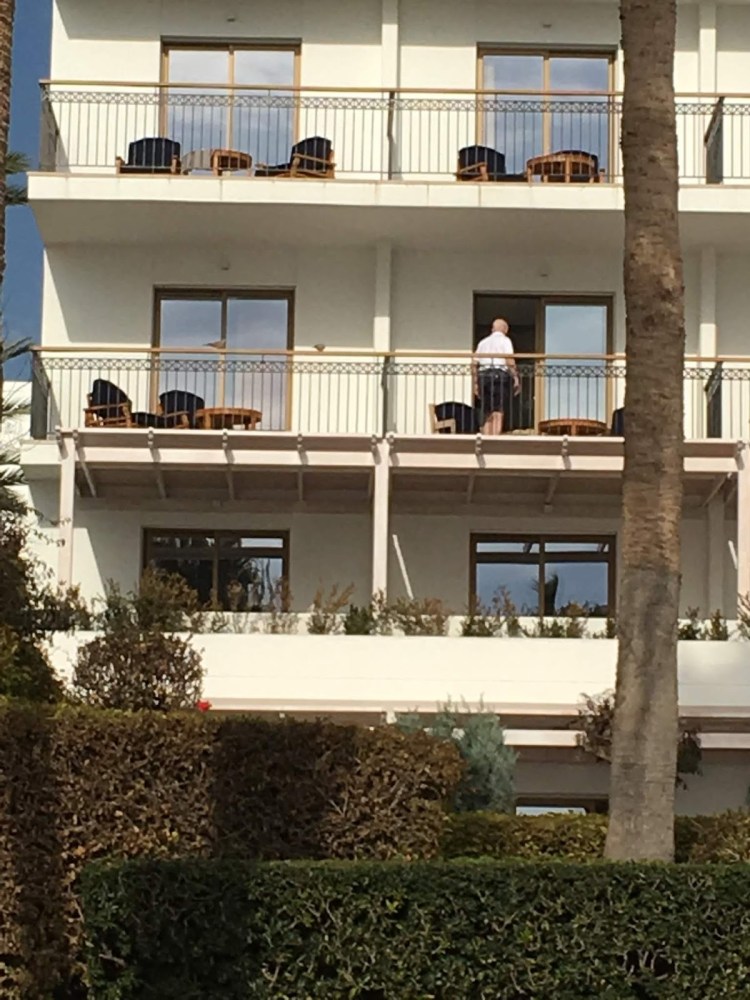
This week\’s photo of topless old man looking out window contemplating his life …\”Damn, the pavement is always grayer on the other side of the fence.\”


















 How
How 



 Chosen Fugue